Combo Efectivo was formed in November 2024 in Bogota in a studio in the Teusaquillo district, at the invitation of Jazztropicante. It brings together an all-star cast from Bogota's neotropical movement and three iconic brass players from the current French jazz scene.
The chemistry was immediate and the energy palpable: a sound that was both playful and demanding, exuding groove, rich material rooted in contemporary jazz structures, and breathing the spirit of brass bands and the splendor of popular expression from the Colombian Caribbean.
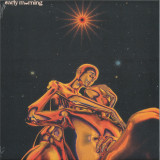
A two-track EP was produced from this unique studio session, recorded and mixed at Mambo Negro Records, with the expertise of Daniel Michel. Mastered in Paris at Loom, this first 45 rpm single was released in February 2026 with The Pusher, officially marking the birth of the Casa Maguey Records label, which promotes the catalog resulting from Jazztropicante's encounters.
On the French side, three musicians who are making their mark on their generation: Stéphane Montigny on trombone, Antoine Berjeaut on trumpet, and saxophonist Léon Phal, the spearhead of a new generation of jazzmen. The Colombians are a cocktail of musicians from the most exciting groups on the current scene: Karen Nerak on vocals, rap, gaita, and percussion, Ruben Aragon on keyboards, Pelango on bass, and Kike Narvaez on drums.
Combo Efectivo magnifies the alchemy between the finesse of European jazz and the power of Colombian rhythms. A tropical trance fueled by improvisation, where the contemporary jazz scene and neo-tropicality meet in a spirit of openness and exploration.
Suche:re birth
2026 Repress
One of the leading names in contemporary underground music, Guy J, embarks on a new journey. As a dedicated futurist and sound enthusiast who pushes boundaries akin to science fiction, Guy delivers the first track on his new label with an abstract vision of the layered future of sound. This 15-minute preview of Guy J's forward-thinking, innovative work indicates a promising future for his label. Experience the birth and transformation of a new era in sound from day one!
Every beginning carries excitement and unpredictability, requiring something extraordinary. Whether rooted in creationism, biblical narratives, or the Big Bang Theory, both theological and scientific origin stories resonate with events echoing millions of years into the future. One of the leading names in contemporary underground music, Guy J, embarks on a new journey. As a dedicated futurist and sound enthusiast who pushes boundaries akin to science fiction, Guy delivers the first track on his new label with an abstract vision of the layered future of sound.
From the opening patterns till the end, A Million Years From Now offers an adventure, blending moments of free-flowing thought with a perfectly engineered audio collage that evokes a spectrum of abstract emotions-from melancholia and psychedelia to breathless excitement and, ultimately, pure euphoria.
The layered creativity transcends realism, leading listeners into a state of trance. The second piece, Just Rain, kicks off with a bass-heavy, pumping kick drum that vibrates speakers on any sound system.
However, Guy J transforms this from a rhythm-based track into a melodic epic. Its power lies in the seamless transitions and manipulation of effects and in the compositional structure that evolves over the eight-minute arrangement. Despite its subtle atmosphere, the melody culminates in an explosion of emotions that stimulate every frequency of the audible sound spectrum.
This 15-minute preview of Guy J's forward-thinking, innovative work indicates a promising future for his label. Experience the birth and transformation of a new era in sound from day one!
- A1: Beirut
- A2: Free Spirit Feat Jon Batiste
- A3: Red & Black Light
- A4: All I Can't Say Feat Sting
- A5: Kalthoum (Movement I)
- B1: Harlem Feat Marcus Miller
- B2: True Sorry
- B3: Les Quais Feat Kronos Quartet
- B4: Happy Face
- B5: Shadows Feat M
- B6: All Around The Wall
This autumn, on the occasion of his fortieth birthday, Ibrahim Maalouf will release his 12th studio album named "40 Melodies". Maalouf has teamed up with his longtime friend and collaborator Belgian guitarist François Delporte for an intimist duet album. The duet revisits Ibrahim's most memorable melodies, through his albums, to the soundtracks, including a few exclusive new tracks.
This album includes many renowned surprise guests (Sting, Matthieu Chedid, Alfredo Rodriguez, Richard Bona, Trilok Gurtu, Hüsnü Senlendrici, Jon Batiste, Arturo Sandoval, and others). Ibrahim gets back to his roots, and to the basics: a trumpet, a guitar, and 40 melodies to celebrate his fortieth anniversary.
Synaptic Cliffs is thrilled to welcome the synthetic humanoid Fleck E.S.C. to its neural family.
He is planet-wide known as a master of Electro Space Cookie productions and a legendary figure among 4D wanderers since his voluntary transmigration to the Tokyo Null Zone. This release is not merely a collection of tracks but a detailed, musically decrypted analysis of post-human consciousness. The pieces were extracted directly from the non-Euclidean circuits of his own, self-constructed Franck Collin Android body. Prepare your brainstems for a complete recalibration and enjoy this perfect fusion of French precision and the wild, uncontrollable energy of Neo-Shinjuku.
"It's like hearing the entire evolutionary history of humanity played backward in a single millisecond while a synthesizer scores the birth of a new star," says
pdqb.
- A1: Piano
- A2: Eyes
- A3: 海のにおい - Umi No Nioi
- A4: Little Rascal
- A5: 天使はどこに - Missing Angels
- A6: こんにちは今日 - The Sun’s Song
- B1: 月光 – Moonlight
- B2: Kujira
- B3: 水と風のダンス - Dancing With Water And Wind
- B4: なみだのうみ - The Sea Of Tears
- B5: Birth
- B6: Fine
Towa Mafune is a rare singer-songwriter known for her gentle voice and warmly embracing melodic sensibility. As suggested by the title, means "Sleeping with the sea in my arms",
this record is a conceptual work inspired by Mafune’s upbringing in a seaside town and her lifelong connection with nature.
The album imagines a dialogue between the artist herself and natural elements such as the sea, wind, and light.
Layered arrangements featuring the album’s striking introductory piano, along with strings, horns, acoustic and nylon-string guitars, and rich vocal ensembles, create a liberating and
expansive soundscape. The album also marks new artistic territory for Mafune, supported by trusted musicians including paya (Yūtai Communications), Kota Yamauchi, and
Keitaro Kanamine.
Ed Nine hails from the birthplace of house and brings plenty of Windy City magic to this EP on Spanish label MATE. It's deliciously emotive tackle drenched in meaningful pads and, in the case of opener 'Feel It In Your Soul', an aching vocal sample that really sets it alight as the organic drums jack down low. 'Free Acid' is a stomping workout with prickly 303 lines defining the peak time vibe, then 'Out Of Line' cuts back into a more sunny sound with synths rising up through the mix and bringing joy. Closer 'The Drum Tool 3' is just that - a raw jam to help you get the floor locked in while moving through the gears.
The Éthiopiques series returns! Essential archive recordings from an extremely fruitful period in Ethiopian music.
Before “Swinging Addis” took over the world, there was Moussié Nerses Nalbandian — the Armenian-born composer who shaped modern Ethiopian music. Mentor, arranger, and pioneer, he laid the foundations of Ethio-jazz.
This Éthiopiques volume revives his forgotten legacy, recorded live by Either/ Orchestra First issue ever with new exclusive photos and in depth liner 8-page insert.
“Ethiopian jazzmen are the best musicians that we have seen so far in Africa.
They really are promising handlers of jazz instruments.”
Wilbur De Paris
(1959, after a concert in Addis Ababa)
አዲስ፡ዘመን። *Addis zèmèn* **A new era.**
The time is the mid-1950s and early 1960s, just before "Swinging Addis" bloomed – or rather boomed – onto the scene. Brass instruments are still dominant, but the advent of the electric guitar, and the very first electronic organs, are just around the corner. Rock’n'Roll, R’n’B, Soul and the Twist have not yet barged their way in. Addis Ababa is steeped in the big band atmosphere of the post-war era, with Glenn Miller's *In the* *Mood* as its world-wide theme song, neck and neck with the Latin craze that was in vogue at the same period. Life has become enjoyable once again, with the return of peace after the terrible Italian Fascist invasion of Ethiopia (1935-1941). The redeployment of modern music is part and parcel of the postwar reconstruction. *Addis zèmèn* – a new era – is the watchword of the postwar period, just as it was all across war-torn Europe.
The generation who were the young parents of baby boomers** were the first to enjoy this musical renaissance, before the baby boomers themselves took over and forever super-charged the soundtrack of the final days of imperial reign. Music is Ethiopia's most popular art form, and very often serves as the best barometer for the upsurge of energy that is critical for reconstruction. Whether it be jazz in Saint-Germain-des-Prés or the *zazous* who revolutionised both jazz and French *chanson* after the *Libération*, be it Madrid's post-Franco Movida, or Dada, the Surrealists and *les années folles* that followed World War I, the periods just after mourning and hardship always give rise to brighter and more tuneful tomorrows. Addis Ababa, as the country's capital, and the epicentre of change, was no exception to this vital rule.
**Two generations of Nalbandian musicians**
Nersès Nalbandian belonged to a family of Armenian exiles, who had moved to Ethiopia in the mid-1920s. The uncle Kevork arrived along with the fabled "*Arba Lidjotch*", the** "*40 Kids*", young Armenian orphans and musicians that the Ras Tafari had recruited when he visited Jerusalem in 1924, intending to turn their brass band into the official imperial band. If Kevork Nalbandian was the one who first opened the way of modernism, pushing innovation so far as to invent musical theatre, it was his nephew Nersès who would go on to become, from the 1940s and until his death in 1977, a pivotal figure of modern Ethiopian music and of the heights it. Going all the way back to the 1950s. Nothing less. And it is Nersès who is largely to thank for the brassy colours that so greatly contributed to the international renown of Ethiopian groove. While the younger generations today venture timidly into the genealogy of their country's modern music, often losing their way amidst a distinctly xenophobic historiographical complacency, many survivors of the imperial period are still around to bear witness and pay tribute to the essential role that "Moussié Nersès" played in the rise of Abyssinia's musical modernity.
Given the year of his birth (15 March 1915), no one knows for sure if Nersès Nalbandian was born in Aintab, today Gaziantep (Turkiye/former Ottoman Empire) or on the other side of the border in Alep, Syria... What is certain is that his family, like the entire Armenian community, was amongst the victims of the genocide perpetrated by the Turks. Alep, the place of safety – today in ruins.
Before Nersès then, there was uncle Kevork (1887-1963). For a quarter of a century, he was a whirlwind of activity in music teaching and theatrical innovation. *Guèbrè Mariam le Gondaré* (የጎንደሬ ገብረ ማርያም አጥቶ ማግኘት, 1926 EC=1934) is his most famous creation. This play included "ten Ethiopian songs" — a totally innovative approach. According to his autobiographical notes, preserved by the Nalbandian family, Kevork indicates that he composed some 50 such pieces over the course of his career. This shows just how much he understood, very early on, the critical importance of song as Ethiopia's crowning artistic form. Indeed, for Ethiopian listeners, the most important thing is the lyrics, with all their multifarious mischief, far more than a strong melody, sophisticated arrangements or even an exceptional voice. (This is also why Ethiopians by and large, and beginning with the artists and producers themselves, believed for a long time — and wrongly — that their music could not possibly be exported, and could never win over audiences abroad, who did not speak the country's languages).
Last but not least, one of Kevork's major contributions remains composing Ethiopia's first national anthem – with lyrics by Yoftahé Negussié.
Nersès Nalbandian moved to Ethiopia at the end of the 1930s, at the behest of his ground-breaking uncle. Proficient in many instruments (pretty much everything but the drums), conductor, choir director, composer, arranger, adapter, creator, piano tuner, purveyor of rented pianos,... he was above all an energetic and influential teacher. From 1946 onwards, thanks to Kevork's connexion, Nersès was appointed musical director of the Addis Ababa Municipality Band. In just a few years, Nersès transformed it into the first truly modern ensemble, thanks to the quality of his teaching, his choice of repertoire, and the sophistication of his arrangements. It was this group that would go on to become the orchestra of the Haile Selassie Theatre shortly after its inauguration in 1955, which was a major celebration of the Emperor's jubilee, marking the 25th anniversary of his on-again-off-again reign.
At some point or other in his long career, Nersès Nalbandian had a hand in the creation of just about every institutional band (Municipality Band, Police Orchestra, Imperial Bodyguard Band, Army Band, Yared Music School…), but it was with the Haile Selassie Theatre – today the National Theatre – that his abilities were most on display, up until his death in 1977. To this must be added the development of choral singing in Ethiopia, hitherto unknown, and a sort of secret garden dedicated to the memory of Armenian sacred music, and brought together in two thick, unpublished volumes. Shortly before his death (November 13, 1977), he was appointed to lead the impressive Ethiopian delegation at Festac in Lagos, Nigeria (January-February 1977).
His status as a stateless foreigner regularly excluded him from the most senior positions, in spite of the respect he commanded (and commands to this day) from the musicians of his era. Naturally gifted and largely self-taught, Nerses was tirelessly curious about new musical developments, drawing inspiration from the very first imported records, and especially from listening intensely to the musical programmes broadcast over short-wave radio – BBC *First*. A prolific composer and arranger, he was constantly mindful of formalising and integrating Ethiopian parameters (specific “musical modes”, pentatonic scale, and the dominance of ternary rhythms) into his “modernisation” of the musical culture, rather than trying to over-westernise it. It even seems very probable that *Moussié* Nerses made a decisive contribution to the development of tighter music-teaching methods, in order to revitalise musical education during this period of prodigious cultural ferment. Flying in the face of all the historiographical and musicological evidence, it is taken as sacrosanct dogma that the four musical modes or chords officially recognised today, the *qǝñǝt* or *qiñit* (ቅኝት), are every bit as millennial as Ethiopia itself. It would appear however that some streamlining of these chords actually took place in around 1960. It was only from this time onward that music teaching was structured around these four fundamental musical modes and chords: *Ambassel*, *Bati*, *Tezeta* and *Antchi Hoyé*. A historical and musical “details” that is, apparently, difficult to swallow, especially if that should honour a *foreigner*. Modern Ethiopian music has Nersès to thank for many of its standards and, to this day, it is not unusual for the National Radio to broadcast thunderous oldies that bear unmistakable traces of his outrageously groovy touch.
To celebrate Bugged Out’s 30th anniversary, Disco Pogo has produced a book dedicated to the legendary club night - one of the UK’s most formative and enduring.
Edited by Bugged Out promoter Johnno Burgess, the book features new interviews with regular guest DJs including The Chemical Brothers, Erol Alkan, Tiga, Miss Kittin, Hot Chip, and 2manydjs. It also comprises oral histories written by journalists including Jim Butler, Ralph Moore, Luke Bainbridge, and Johnno himself, charting the club’s pivotal periods: Manchester’s Sankeys Soap in the 1990s, Liverpool’s Nation in the ‘90s and ‘00s, The End in London during the 2000s, and their much-loved five-year run of Weekenders at Butlin’s in the 2010s.
The book is not only a history of Bugged Out but also a chronicle of UK club culture from the mid-1990s to the present day. Told era by era, it reflects shifting fashions - from the utilitarian workwear of the ’90s, to the flamboyant electroclash era, to the neon excess of new rave - as well as the growing dominance of photography, evolving from a handful of disposable 'fun camera' shots to today’s flood of professional images in the Instagram age.
It is equally a story of the highs and lows of running a club night: from the exhilaration of seeing an idea grow from a 600 capacity club in Manchester in 1994 into a sold-out 12,000-capacity 30th-birthday party in London last year, to the painful, financial losses that came from significant failures.
The narrative is punctuated with idiosyncratic anecdotes: the time Daft Punk may or may not have played in Ibiza; Miss Kittin tearing up the rule book one night in Heaven; or Erol Alkan making his first unforgettable appearance in what he called “a proper club”.
'It’s Just A Big Disco' - named after one of the club’s iconic slogans - features hundreds of flyers and lineups, alongside photography by acclaimed event photographers including Luke Dyson, Mark McNulty, Tom Horton and Alistair Allan, plus candid snaps from friends and clubbers and a portrait of Miss Kittin by Wolfgang Tillmans.
Chaos is fundamental for creating something powerful. It teaches us to be at ease with how things are, to listen to ourselves, and find our own order’. (Enrico Sangiuliano)
Pioneering, avant garde yet chart-storming sound designer/producer/live performer Enrico Sangiuliano drops EP ‘Order In Chaos’ as release #1 in his self-destructing countdown imprint ‘NINETOZERO’, out 20th November. The EP’s three tracks respectively represent a triptych of sound exploring tension, release, and dissolution, with violinist and composer Vito Gatto joining Italian techno/melodic maestro Sangiuliano for tracks 1 and 3. The EP blends electronic, classical and electro-acoustic genres, resulting in a fresh, unique product that defies typical techno expectation, as Sangiuliano and Gatto explore the concept of disorder as a creative playground.
‘With this chapter, we dive into chaos – something that can be uncomfortable, but is the place in which you can find unexpected or new ideas. Chaos is fundamental for creating something powerful. It teaches us to be at ease with how things are, to listen to ourselves, and find our own order’. (Sangiuliano)
The ‘Order In Chaos’ EP continues a momentous year for Enrico Sangiuliano, and heralds his upcoming all-night-long SOLO show at Nitsa in Barcelona (Nov 28th, tickets here). His highly acclaimed NINETOZERO label has also previously featured Charlotte de Witte, Antonio d’Africa, Mattia Saviolo, GMS, Alex Lentini, STOMP BOXX, Zimmz, Secret Cinema and About Sofiya.
Vito Gatto is a Milan-based violinist, composer and sound explorer. He is the founder of label/collective NeMu (‘Neutral Mutation’) producing Italian projects at the interface of electronic and organic sound. His self-description as ‘Making sounds, looking for silence’ makes him the perfect collab partner for ‘Order In Chaos’, which ‘embraces the paradox: chaos births order, and order dissolves back into chaos.’
‘Whilst classically trained, I have always been fascinated by the world of electronic music, in all its expressive forms’ Gatto says. ‘I use real instruments and natural sound sources processing them through electronics to enhance their unpredictability, always remembering that the core of music - whether classical or electronic - is communication and storytelling. This philosophy guided our creative synthesis on this release.’
The collaborative workflow combined remote and in-person studio work over roughly a year, culminating in these three key tracks reflecting different musical and conceptual layers.
‘Order In Chaos’ EP tracks:
Enrico Sangiuliano & Vito Gatto ‘Adaptation for Strings and 909’: A cinematic overture built from the raw intimacy of Vito Gatto’s violin, processed and layered with unquantized 909 drums. Out of grid, out of rules. Drama and turbulence surge until thunderous kicks strike like sudden storms. ‘This track symbolises both of us. Vito sent the strings, I added the iconic Roland 909. It has no structure and no grid, the arrangement is not precise, it’s a very pure track and a great example of disorder and freedom.’
Enrico Sangiuliano ‘Order in Chaos’: The title track is a pure techno weapon and dancefloor igniter: rolling, stripped, euphoric. A shape-shifting lead synth constantly mutates, flirting with disorder until the kick restores gravity. Chaos becomes dancefloor order.
Enrico Sangiuliano & Vito Gatto ‘Dissolution’: The closing moment. Strings and drums dissolve into a weightless drone. Beatless and infinite, it invites surrender into space. ‘This cinematic track slowly melts ‘Order in Chaos’, adding processed organic sounds and field recordings from the mountains.. coming back to nature, and silence.’ (Gatto).
Still #0 to go in the NINETOZERO countdown… And then what? With Sangiuliano, it’ll be something unexpected and brilliantly innovative.
Opsin- the new collaborative alias of longtime friends and producers Keydell and Kincaid - announce their debut LP on wax, Through The Wall, from London-based record label Hypnic Jerks.
Artist Info:
Opsin is the debut project between artists Keydell (Liam Keydell Myers-Cook) and Kincaid (Joe Arthur). The Pair have previously released on the following labels: Well Street Records, Banoffee Pies, Redstone Press & Bliss Print.
Both have extensive work in sound design and collaborated on the soundtrack for Mithridate at London Fashion Week 2024. Kincaid also produced the soundtrack for Alexander Whitley's Anti-Body Ballet.
Release Info:
The album is named after the birthplace of its creation. Sharing files between bedroom walls during COVID-19. Keydell's meticulous Ableton-based resampling of found audio and modular synth racks, and Kincaid's Reaktor-driven synthesis in Logic.
Draws on a wide spectrum of electronic influences the album infuses elements of rave, techno, industrial and ambient sounds, whilst never quite landing in any specific genre.
Second release from London label Hypnic Jerks on 4 sides of 180 gram vinyl, in a gatefold sleeve designed by Jacob Wise and mastered by Rashad Becker.
A followup from their first release - Toumba's debut physical release 'Rosefinch', which saw later releases from Hessle Audio and Nervous Horizon.
After the seminal Musica da Discoteca trilogy, l’oggetto continues his exploration of electronic music subcultures with DANCE. This new series expands his research into the mutual connections between Italian and American sound cultures that gave birth to house music in the ’90s, while venturing into more introspective territories between Balearic beats, deep house, and techno.
The new 12” EP, DANCE vol.2, unfolds across four tracks that capture the night’s shifting moods and tempos, balancing collective euphoria with moments of personal transcendence. Seksy Tango opens with staccato synths and rounded basslines, channeling Mediterranean swagger and the faded glow of a summer night on the Italian Riviera. Smoothismi’s percussive groove and jazz-infused Rhodes warm bodies and souls, while analog-filtered pads sweep through the after-hours. In Tek, sharp stabs reverberate through the concrete pillars of an abandoned warehouse, as digital flutes shimmer like dawn breaking over an illegal rave. The EP closes with Enigmatico, a downtempo drift into the liminal space of the chillout room, reconnecting dancers to their surroundings and themselves.
l’oggetto is the musical side of NY-based Italian multidisciplinary artist Marco Scozzaro. With roots in ’90s subcultures, he DJs and produces underground house music, blending jazz/funk grooves, electronic transcendence, and a distinctly Italian vibe. Together with Pietro Di, and true to a shared DIY ethos, he co-founded MKDF Records to release and distribute his uncompromising sound.
With his new offering"The Stone Tablet", New Jersey native Brainorchestra solidifies his legacy in underground hip-hop, carving out a raw and unfiltered masterpiece that feels as timeless as it is bold. Produced entirely by Brainorchestra himself, the album is a testament to his relentless pursuit of authenticity and artistry, drawing listeners into a world where intricate beats meet introspective bars, and sticking to his proudly independent operation.
Featuring guest appearances from UK’s SonnyJim and Toronto's Raz Fresco, "The Stone Tablet" brings together diverse voices that seamlessly blend with Brainorchestra’s visionary beats. Each track adds to the album’s mystique, with moments of reflection, hustle, and sharp wit, all contributing to Brainorchestra’s mark on the modern hip-hop landscape.
The album cover, crafted by Italian artist Claudio Scialabba, embodies the album’s theme with its raw, textured feel — reflecting Brainorchestra’s relentless, chiseled approach to his craft. "The Stone Tablet" is a statement, a monument that etches Brainorchestra's name alongside the genre’s most revered creatives.
- A1: Liminal – Tzatziki Bay
- A2: Joe Harvey-Whyte & Bobby Lee – Smoke Signals (Flying Mojito Bros Refrito)
- B1: Intrallazzi & Piana – Plutos
- B2: Tigerbalm – Mexicana Feat. Joi N’juno (Pete Herbert Remix)
- B3: Lex (Athens) – Stolen Dance
- C1: Payfone – Dime Algo
- C2: Emperor Machine – Eumig
- D1: 40 Thieves – Such A Great Trip
- D2: Bo Wosticz – Bs As
- Bonus | 10”
- A1: Tigerbalm - Mexicana Feat. Joi N’juno (Original)
- B1: Emperor Machine & Mudd – Road To Nikko
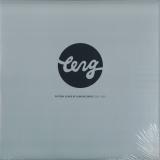
When Leng Records founders Paul ‘Mudd’ Murphy and Simon Purnell marked the imprint’s 10th birthday, they did so via a celebratory compilation that mixed classic catalogue cuts, remixes and exclusives. Five years on, and with the label’s 15th birthday upon us, they’ve decided to look to the future via a compilation made up entirely of fresh productions from Leng’s roster of current and new artists. Presented on limited-edition gatefold double vinyl with a bonus 10” single, the collection offers an updated showcase of Leng’s much-loved trademark sound, a distinctive fusion of mid-tempo sleazy-disco, Balearica and chugging house interspersed with elements of electronic psychedelia and synth-powered space disco. Fittingly for a compilation that wholeheartedly looks to the future, you’ll find first contributions from a handful of label newcomers.
Fast-rising duo Flying Mojito Bros give their spin on ‘Smoke Signals’ by label debutants Joe HarveyWhyte and Bobby Lee, turning in a heady and inspired revision that sits somewhere between dusk-ready cosmic disco and flash-fried desert blues. There’s also an appearance from Swedish producer Bo Wosticz with the dreamy and ultra-deep nu-jazz of ‘Bs As’. Naturally, you’ll also find plenty of heat from those who have already proved their mettle through prior releases on Leng. Danish duo Liminal, who made their debut earlier this year with the much-played ‘Keep Coming Back To Me’, open proceedings with the tactile, slow-disco flex of ‘Tzatziki Bay’ where sweet synth melodies and a heady electric piano riff ride a warming groove.
Roberto Intrallazzi and Dario Piana from Italy’s original Afro-cosmic movement return with ‘Plutos’, a typically deep dubbed-out cosmic chugger. Then there’s Rose Robinson AKA Tigerbalm, whose ‘Mexicana’ featuring singer Joi N’Juno is presented across the package in two different forms. Pete Herbert, who contributed to some of the earliest Leng releases, drops a driving dub disco take on the main compilation, while Robinson’s original mix – a more organic, percussive and horn-heavy affair blessed with plenty of hallucinatory intent – opens the bonus 10”.
There’s a welcome return to Leng for the brilliant Payfone, whose ‘Dime Algo’ is a typically classy, analogue-rich affair in which attractive Rhodes riffs, atmospheric female vocals and pitched-down house pianos rise above shuffling drum machine beats and a slow-motion bassline. Long-serving label contributor Lex (Athens) delivers the loose-limbed nu-disco breeze of ‘Stolen Dance’, while the imprint’s San Francisco connection – the ever-brilliant 40 Thieves collective – drop the dubbed-out Bay Area brilliance of ‘Such A Great Trip’.
Then there are the contributions of the label’s most storied artist, Andrew Meecham AKA Emperor Machine with ‘Eumig’, a deliciously slow, synth-rich chugger full of colourful chords, bubbly electronic melodies and jaunty electronic bass. Then, to round off the bonus 10” single, Meecham joins forces with Paul Murphy (as Mudd) on ‘Road To Nikko’, an extended, Japanese musical culture-influenced slab of pitched-down alien-funk packed to the rafters with squelchy synth sounds, effects-laden percussion, chiming melodies and rubbery bass guitar.
phatmedia presents UK Rave Flyers 1988 – 1989 includes over 800 flyers from iconic events like Shoom, Hedonism, Future, Spectrum, Land Of Oz, Apocalypse Now, Hypnosis, Sunrise, RIP, Coozz, Trip, Sin, Genesis, Rage, Wetworld, Rave At The Cave, Boilerhouse, Trip City, the Hacienda and many more one-off and smaller promotions.
It also includes commentary from Dave Little, Andy Boilerhouse, Pez, Steve Reid (Shoom), Ellis Dee, Chalk E White, Nicky Holloway, Mr C, Ratpack & many more. Plus, photos from clubs of the era taken by Dave Swindells, Kevin Cummins, Peter J Walsh and Gavin Watson.
Quotes
“We would be lost without Dave’s incredible documentation of flyer history. If we didn’t have his absolute precision in sharing dates within the timeline. So much of the exact history would be lost. phatmedia is an asset to the entire rave scene and history.” Billy Daniel Bunter
“Rave flyers capture an essential piece of cultural history. More than just advertisements, they reflect the creative energy of the early rave scene and serve as a window into the underground music culture of the time. Each flyer tells a story about the events, people, and communities that helped shape the movement.” Eddie Richards
“This book is more than just a collection of flyers; it’s a time machine. It’s a tribute to the birth of a culture that shook the world. We built something from nothing. Every flyer, every illegal rave, every risk we took, it created a movement that would become a multi-million pound industry.” DJ Phantasy
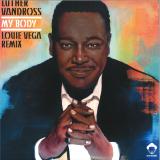
On April 13th, 2019 Record Day, Vega Records celebrates with the new release 'My Body' performed by none other than the Legend and King Luther Vandross. This is a song that was never released and was recorded back in 1979 by Luther Vandross when he was working on the colossal album 'Never Too Much'. Brought to Louie Vega by artist and renowned background singer to the greats Mr. Fonzi Thornton, Vega was able to work on the immaculate sounds of Vandross. As Vega recalls 'When I put up the tracks in my studio it sounded as if Luther were singing today, it made it so easy to come with the house grooves having such a perfect vocal performance and one of kind tone. Once I came with the music, I felt I needed to call his original background singer team, which Fonzi organized in a flash. He called upon the genius background singers Brenda White, Lisa Fischer, Cindy Mizelle, Tawatha Agee and Fonzi himself. We are talking the A-Team of background singers, a dream come true in my studio', Vega recalls.
The Result is a stunning art piece by Richard Wilson on the cover of the vinyl double pack 12'. There are seven versions to choose from ready to work back to back.
So not only is it record day, it's also the birthday of Luther Vandross which is on April 20,
HAPPY BIRTHDAY LUTHER VANDROSS!!!
LOUIE VEGA SENDS A BIG HAPPY BIRTHDAY TO LUTHER VANDROSS & THANK YOU TO FONZI THORNTON, SEVETA WILLIAMS, AND VANDROSS MUSIC, LLC.
Following a string of acclaimed collaborations, including Agua Dulce with percussionist Laura Robles and Mapambazuko alongside Congolese guitarist Titi Bakorta, Peruvian artist Alejandra Cárdenas (aka Ale Hop) returns with her most personal work to date yet, A Body Like a Home. Marking her first album under her birth name, the project is a sonic memoir exploring the tangled realms of trauma, recovery, and love through autobiographical soundscapes.
A Body Like a Home is the artist at her most exposed. Comprising 13 songs and 15 poems, the album sees her set aside collaborative fusions for solo catharsis, channeling years of turbulence - intergenerational scars left by colonialism, racism, domestic violence, and alcoholism - into a work that oscillates between brutality and tenderness. Cárdenas states: “I grew up under Alberto Fujimori’s dictatorship, when a veil of hopelessness seemed to settle over everything. This is the backdrop of the album. The songs and poems trace the inevitable loop between private wounds - addiction, domestic violence, fractured intimacy - and Peru’s national scars, carved by colonialism. It’s not a straight story or a resolution. Writing and composing became a ritual of digging for meaning, into what’s buried, disguised, or renamed, until the body itself became a living archive.
” At the heart of the album is Cárdenas’s own voice - part witness, part confessor - reciting over layers of electric guitars, electronic textures, the haunting violin of Mexican musician Gibrana Cervantes, and a collage of field recordings, from rainfall, muffled whispers, broken glass, to archival protest footage from Peru. The result is a work that resonates like a diary written in sound.
The first single, "Motherland", is a searing testimony where Cárdenas voice cracks under the weight of history and personal loss. Amid a storm of distorted guitars, she traces the cyclical legacies of colonialism, from state massacres branding Indigenous bodies as “terrorists” to the spiral of addiction as an unavoidable future. The lyrics draw parallels between political and domestic violence: a mother’s drunken knife pressed to her chest, and a motherland where racism is currency. She utters: “sacrifice demands a body.” Yet, amid the wreckage, a willful grip on love and faith persists. Ultimately, A Body Like a Home is a document of transformation. Tracks like "Evangelina" and the title piece "A Body Like a Home" hold space for resilience, spirituality, and love, while "Early Road" and "Going South" thread subtle nods to Peruvian folklore, opening up bright vignettes into a sense of belonging.
The poetry chapbook accompanying A Body Like a Home (five of its pieces are also recited on the album) extends the work, building a parallel architecture. Oscillating between the documentary and the mythic, the intimate and the forensic, the profane and the oniric, these poems practice a theology of the ordinary, where everyday objects - cameras, knives, moth-eaten cotton - are charged withspiritual and historical weight. Here, the body is land, house, battlefield, collective pain, geological territory; and trauma is, in contrast, archival, cellular, ritualistic, inherited. Read alongside the music, the stories refract across two mediums: songs give them breath and poems give them bone.
- A1: No Future
- A2: Twisted
- A3: Til I Beg For Mercy
- A4: Wake Up
- A5: Scene One
- B1: From Nothing To Nothing
- B2: Some Time
- B3: Your Product
- B4: Watch You Bleed
- B5: No Answers No Solutions
- C1: Lies
- C2: I Am The Labyrinth
- C3: Force Majeure
- C4: Flesh
- C5: Denial (Excerpt)
- D1: Pretender ('94 Mix)
- D2: Life Before Death ('94 Mix)
- D3: I Am The Labyrinth (A_Maze Mix)
- D4: From Nothing To Nothing (Edit)
- D5: No Answers, No Solutions (No Time)
Advanced Art was formed in Tampere, Finland, in 1985 by Jana, Pete, and Vince. Too young to be part of the first wave of Finnish groups inspired by German synth pioneers and New Romantics, they instead forged their own path and soon became pioneers themselves. For the next ten years, Advanced Art defined and dominated Finland’s small but growing electronic underground. They inspired a new generation of Finns to experiment with synthesizers, built an international cult following, and were deeply involved in the local scene—running clubs, organizing events, and performing at some of the very first warehouse parties in the country.
Although the line-up shifted over time, the group’s creative drive consistently came from the partnership between Jana, who supplied the voice and words, and Vince, who shaped the music with his machines. Together they defined the band’s distinctive blend of sharp electronics and lyrical vision.
After several cassette demos and two 7-inch singles, Advanced Art signed to Poko Rekords in 1991. The EPs Scar and Time raised their profile both at home and abroad, especially thanks to valuable exposure on MTV Europe’s 120 Minutes. Known for their perfectionism, they finally released their debut album Product in January 1993. On Product the line-up was Jana (lyrics, vocals), Vince (music, production), and Factor (percussion, studio work). Having moved through phases of synth pop, EBM, and industrial, the album showcased Vince’s vision of a unified sound and style more clearly than ever before.
Force followed in 1994, conceived as a multi-part concept album (Update / Live / Retro). Recorded with live percussionist PW joining Jana and Vince, it expanded on the groundwork of Product with new beats, ideas, and a sharper, more defined identity.
By 1995, exactly ten years after their founding, Jana and Vince decided to bring Advanced Art to a close on the band’s birthday, 13 October. Their run had been precise: one decade of creative output, ending with a legacy that laid foundations for Finland’s electronic scene.
Now, conveniently coinciding with the band’s 40th anniversary, Advanced Art present Forced Product. This double-LP set, fully remastered, features Product in its entirety, alongside the Update and Retro sections of Force, plus additional EP tracks and remixes recorded between 1991 and 1994 at “Audible Art” – less a studio than a concept, existing wherever machines and people met.
Limited to 450 copies, Forced Product comes in a gatefold sleeve with poster and sticker, offering a definitive document of Finland’s pioneering electronic cult heroes — a band that helped invent their country’s scene and left a lasting influence far beyond it.
Daniele Baldelli
Considered one of the first DJs in Italy, Daniele Baldelli began his career in 1969 mixing vinyl at the Tana Club in Cattolica (his hometown),
predating the birth of the modern DJ by several years. In the following years, he solidified his talent and technique at histor such as the Tabù Club, Baia degli Angeli, and Cosmic. From 1979 to 1984, Baldelli created his unique and eclectic style, blendi ic clubs ng seemingly distant sounds and musical styles, complementing them with tempo adjustments (bpm) and deliberately extreme equalization,
creating a truly distinctive sound, known as "Afro Disco." Soundscapes and tribal percussion blend with early electronic music experiments, and Baldelli's sets become truly mystical experiences, where, for the first time, the temples are replaced by the dance floor.
The documentary film "A Cosmic Life" has just been released, starring Daniele Baldelli alongside other illustrious guests from the nightclub scene, recounting the history and formation of this movement from the 1970s to the present.
Gaudi
A producer/musician among the most highly regarded on the international dub/electronic scene, over the past 30 years Gaudi, from his
London studio, has contributed significantly to expanding the boundaries of musical genres with high-profile releases and innovative
music production techniques. Recently nominated for a Grammy Award with 'Mass Manipulation', the album he produced for the reggae
band Steel Pulse, and also nominated for a World Music Award with his album 'Dub Qawwali' with Pakistani singer Nusrat Fateh Ali
Khan, Gaudi has collected a series of number 1s on the international charts: Billboard - with the album 'Heavy Rain' by Lee "Scratch"
Perry, 'Vessel of Love' by singer Hollie Cook and with 'Mass Manipulation' by Steel Pulse -, UK Chart n.1 with the album 'Prism' by the
band The Orb (with whom he has collaborated as a producer and keyboardist since 2008), with 'Blue Monday' - by Gaudi himself with
the band Dub Pistols -, UK Dance Chart n.1 with 'Jus Come rmx' produced with DJ Angelino for Cool Jack. He also reached no. 41 the UK charts with the album ‘Midnight Rocker’ by reggae singer Horace Andy (known to the general public for his hits with Massive in
Attack), no. 13 with the album ‘Dubwise 2’ by the band Dreadzone and no. 5 in the Italian charts with the song ‘Lasciala Andare’, written
by him for Irene Grandi. With 19 solo albums and 350 remixes and productions under his belt, Gaudi, with his artistic versatility, has
worked with Groove Armada, UB40, Simple Minds, Brian Ferry, Devo, Big Audio Dynamite, Damian Marley, Seun Kuti, Mad Professor,
Trentemøller, Grandmaster Flash ft KRS-One, Lamb, Don Letts, The Beat, Deep Forest, African Head Charge (in which Gaudi is a keyboardist and dubmaster), Elisa, Scientist, Dub FX, Roedelius, Caparezza, Caravan Palace, EMF, Sizzla, Jovanotti, Sly & Robbie, Piero Pelù, Youth of Killing Joke, and Maxi Priest, to name just a few. Capleton,
Daniele Baldelli & Gaudi
DJ Daniele Baldelli and producer Gaudi first met three years ago at the Jazz Cafe in London. Mutual respect and an innate need to
create new stylistic fusions were the catalysts for Baldelli and Gaudi, leading to a series of subsequent meetings that inevitably culminated in the need to create music together. The project began at Gaudi's Metatron Studio in London using analog equipment and later
moved to Baldelli's studio in Cattolica, where the two organically defined their sound, also inspired by Baldelli's precious record collection. The duo consolidated a powerful compositional symbiosis, and the project, born from a simple initial groove, later transformed
into an entire EP consisting of four original tracks and a highly innovative sound, featuring fusions of psychedelic-funk, tribal-dub,
electronic-disco, and, of course, "Afro-Cosmic"! Daniele Baldelli and Gaudi began their sonic collaboration without setting any stylistic
direction and with the intention of not creating pre-established goals to achieve; it is a project of pure artistic freedom guided by their
compositional instinct and their experience. Constantly active with their evenings and live concerts, Baldelli and Gaudi have performed
individually in many of the best international clubs and festivals.
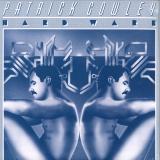
Cybernetic disco maestro Patrick Cowley graces Dark Entries once again with Hard Ware, an LP of far-out funk and synthpop celebrating what would have been Cowley’s 75th birthday. Best known for his chart-topping disco anthems, Cowley left us with an incredible body of work before his tragic death in 1982 due to AIDS-related illness. Since 2009, Dark Entries has been working with Cowley’s friends and family to uncover the singular artist’s lesser-known sides, including his soundtracks for gay pornographic films, which the label chronicled on compilation albums School Daze, Muscle Up, and Afternooners. Hard Ware presents the closing chapter in a trilogy of unreleased Cowley dancefloor bangers that began with 2022’s heavy-hitting Male Box and was continued with the soul and garage-inflected From Behind in 2024. The most expansive release in said trilogy, Hard Ware delivers ten tracks of pure, uncut Cowley: sultry, psychedelic, sarcastic, and just a bit sleazy. Cowley devotees will delight in “Tech-No,” a sparse instrumental demo version of his epically dystopian “Tech-No-Logical World.” You could soundtrack your next aerobics session with cheeky numbers like “Pajama Party Massacre” or “Shake It Up,” both of which feature Cowley himself on vocals. The frenetic “Big Ass in Motion” is built around samples from Rudy Ray Moore and The Madam’s infamous “Sensuous Black Woman,” an X-rated comedy record that would later feature in classic booty house records. Mid-tempo cosmic groovers are well-represented with jams like “Hellfire” and “Megablue,” which perfectly capture Cowley’s bathhouse-in-outerspace sensibilities. No collection of Cowley’s work would be complete without an interstellar floor-filler, and we’ve got quite a few here, like “Jungle Jump,” which pits whirling beats with dub-laced swirls of synth, or “Spellbinding Lover,” a Donna Summer-indebted melancholic boogie masterpiece that features Sylvester backup singer Jeanie Tracy. Hard Ware closes with the chilling synth-hymn ”Ice Age,” in which Loverde vocalist Peggy Gibbons sings of a coming frosty apocalypse. The story told in “Ice Age” mirrors the coming AIDS crisis and feels like a haunting premonition from Cowley. The record comes in a sleeve with a hand-airbrushed circuitboard-inspired design by Gwenaël Rattke, and includes lyrics as well as liner notes by Andrew Ryce and Peggy Gibbons. Hard Ware is another crucial document of a tremendous talent taken too soon.
Repress 2025
Classic Drexciyan dance floor moment like 'Digital Tsunami' is considered as the signature track of the 'Harnessed the Storm' album. It is accompanied here by three titles that are not present on the 2LP vinyl version of the album.
Originally released in 2002, 'Harnessed the Storm' was conceived as the opening chapter of the legendary seven Storms - a series of seven albums created within a single year and released via several labels under different names.
'Harnessed the Storm' was the sole one in the series credited under the main Drexciya project.
This 12' also includes 'Aquatic Cataclysm' which ranks with the most abstract, alien and stark in their catalogue.
Another masterful lesson in futurist dance music from one of its strongest forces.