Hello Spiral returns to the same North London block, the same triangulated geometry of balconies and courtyard, but with a shift of orientation. His previous record looked outward from the eighth floor, these four new recordings move inside, into the building’s arteries. Joe explores the hallways of the complex where he has lived and listened for years, using the same tool as before, an iPhone and its voice memo app. The recordings were made in situ, each exactly eleven minutes, captured without ceremony.
The hallways feel different. Less private, less scenic, more neutral. They are the connective tissue between hundreds of domestic units, a space of transit rather than rest. The carpet absorbs certain frequencies. The fire doors catch and release pockets of air. The lights hum. Elevators drone in soft cycles of arrival and departure. These are the institutional sounds of shared living, yet once recorded they begin to behave strangely. A kind of internal weather appears.
As with the previous album, Joe remains attentive to what is often overlooked, irrelevant or discarded. The hallways, with their scuffs and signage, their coded access and polite functionalism, provide an unexpectedly rich field. The ambience is not shaped by storms or scaffolding, not by birds or street spill. Instead the material is the building’s own breath, its mechanical rhythms, the low frequency traces of neighbours, the occasional shuffle of footsteps that pass but do not return.
Joe talks about this record as a possible middle chapter in a trilogy. If so, it sits between the exposed openness of the balcony and whatever comes next. A hinge point. These recordings continue Joe’s long practice of defamiliarization, sharpening attention to the unnoticed while withholding narrative. They invite repeated listening, not for revelation, but for the subtle shifts that occur when a familiar space is treated as an instrument.
Big mental growing sound, from the deep acid to the acidcore... Twirling and totaly trippy. With a long mental middle-of-the-night grower and 2 techno pumpin acid starters. Sweet and dancefloor !
'In 2023, sound artist and composer Weston Olencki toured across the American South. Beginning in their hometown in South Carolina, they snaked a circuitous path from the mountains of West Virginia to the banks of the Mississippi River. As the miles accumulated, so did the initial seeds of new work.
'Instruments and artifacts they acquired hitched a ride in the backseat, while songs and sounds filled their portable recorder: water in its various states, the familiar insectoid buzz of those summer nights, trains cutting through the landscape, the traditional music that lived alongside the communities that kept it. Olencki took it all in, and over time, found ways that these experiences coalesced into a bramble-like perspective of time, where past, present, and future intersect in ways both barbed and beautiful.
'Broadsides, Olencki’s newest solo full-length is the multilayered result of this journey. The album follows their landmark release Old Time Music from 2022, which presented radical interpretations of traditional tunes from Appalachia and throughout the South alongside original compositions that drew significantly on archival recordings. On Broadsides, Olencki rejects delineations between the unmoored avant-garde and the rootedness of one’s cultural heritage, revealing their porous and intertwined nature. “My mother was a quilter. Her mother before that,” they write in the album’s liner notes. “Quilting, like music, is a practice of embedding knowledge and remembrance into the very core of the thing you are making. It’s not just about the materials, but how they’re reassembled, recontextualized, stitched, woven to form new patterns - the minutiae of craft holding significance to those looking to find it. Stories woven from stories, never told the same way twice.”
'Like all great road trips, Broadsides unfolds slowly and continuously, with moments of dramatic reverie punctuating the endless melt of highway in the rearview. We’re immediately confronted by the uncanniness of revisiting old haunts, as Southern storms break through the initial churn of the freight locomotives of Alabama. Olencki’s interpretation of the bluegrass standard “Foggy Mountain Breakdown” captures the euphoria of melancholy in motion. The permutational plucks of banjo are bounced around the frame by a computer, its pitches determined within algorithmic sequences and transcriptions of classic three-finger licks. The tonalities of old-time are smeared and stretched until all that’s audible is the insistence that Heaven might be real.
'In the album’s second half, “Omie Wise,” a murder ballad made famous by Doc Watson, follows an interlude recorded on the river in North Carolina in which the titular character’s body was laid. Ghostly echoes of a dozen other renditions float through the substrata as Tongue Depressor’s Henry Birdsey accompanies them on the pedal steel guitar. The album’s central composition, “all my father’s clocks,” is a profound meditation on entropy and impermanence. The sound of their father’s extensive clock collection ticks away as Olencki pulls a bow across the length of an autoharp sourced from a rural strip mall. The instrument was left as detuned as it was found, the resonance of its deep bass drone and clanging high-end the result of years of neglect and the warping effects of Southern humidity.
'Historically, broadsides were an early form of broadcasting, an often- musicalized telling of current news pasted in the public square. The name was later taken up by Sis Cunningham and Gordon Friesen in the 1960s, whose Broadside magazine published songs and social commentary when American folk music resurfaced as an urgent way of communicating the multifaceted politics of its time.
'Olencki borrows the phrase to recall both this old form of songmaking and that later prominent reexamination of traditional music’s role in modern life, but also to draw attention to the fragmented and machine- mediated way heritage is diffused in this very different, but no less pivotal, moment.
'As a sanitized past is used as justification for current violence and domination, we can turn to these artifacts to better understand the history of ourselves, but only if they are consciously pushed to evolve. Broadsides represents one personal, striking vision of what far-flung futurisms could be respun from = these high, lonesome sounds: a reflection of the unbridled joy and deep sorrow inherent to living together through time, and a desire to push further into the untold and unknown.'
*13 ripping songs totalling 33 minutes from the original 20-song 65 minute master reel tapes, recorded in early February 1978 for producers Flo & Eddie, the night before DMZ (the raw-assed pre-Lyres outfit that never made it!) spent 3 days trapped by a blizzard recording their Sire album. **4 page insert with info, pics and Rick Coraccio's ultra-detailed journal on how it all went down! ***LP includes DOWNLOAD CODE Kapital Ink zine: "In the annals of R&R history, as far as local American rock'n'roll scenes go, Boston is hardly ever looked upon in the same shining light as, say, NY, Detroit, San Francisco or even Austin or Seattle. Unlike those other towns, there's never even been a definitive book about the scene. Maybe it's because Boston is a perennial hard-luck place (just witness the Red Sox) with a serious New York inferiority complex hanging over its head. Boston is ignored by the industry at large, despite the fact that the city has spawned countless heavyweights in both a commercial (Aerosmith, Boston, the Cars) and aesthetic (Modern Lovers, Real Kids, Mission Of Burma) (Crypt editor note: and DMZ!! and LYRES!!) sense. Boston was the first US city to directly reflect the influence of the Velvet Underground, as epitomized by the Modern Lovers, who've proven to be almost as influential in their own right. Fast forward to the days of hardcore, and Boston was one of the pre-eminent strongholds of shave-head mania, shoring up its rep as an angry, intolerant New England outpost. Naturally the town has produced more than its share of local legends: Willie Alexander (who actually was in the Velvet Underground, albeit when the band was on its Lou Reed-less last legs); Jonathan Richman (geekus supremus no small thing considering the subsequent indie hordes, to whom he's a savior); and most of all, the great Real Kids, (Crypt editor note: and DMZ!! and LYRES!!) who could've been the equivalent of the MC5, Stooges or Flamin' Groovies in the annals of American rock if it hadn't been for a series of bad breaks but let's not get into that because it'll only reinforce Boston's eternal self-pitying plight. The fact is, the scene in Boston was more or less built by a string of bands who are so organically-interconnected that it seems like an act of God."
Whitelands' second album Sunlight Echoes builds on their elemental debut - that won them fans from Slowdive to David Jonsson - with a more expansive sound that takes them out of the shoegaze shadows to somewhere bigger, better and brighter. Produced by long-time collaborator Ian Flynn and mixed by double Grammy Award-winner Eduardo De La Paz (New Order, The Horrors, The Charlatans, The KVB, Drug Store Romeos), there are soaring string arrangements (by Iskra Strings) and Lush guest vocals from labelmate Emma Anderson. "We're coming back with a lot more maturity and realness," says singer and guitarist Etienne Quartey-Papafio of their step up. "It shows in how much more emotional our music has become." With maturity comes a newfound confidence, so not only are there stunning melodies everywhere, but Etienne's vocals are front and centre throughout. "It's been really cool to watch Etienne push through boundaries," adds bassist Vanessa Govinden. "I like the direction we've taken on this album. We're taking a risk. It's half and half." She's right - the first half of the album has an almost Britpop breeziness, that belies the serious subject matter that inspired the songs, while the second half gets heavier, in all senses, with added grit and gravitas."This album is one of enduring," says Etienne of the overarching theme. "We had family that were dying, I was broke, there was a shortage of my ADHD medication_ I was suffering, but not just me, everyone around me was too." "The last two years have been challenging," concludes Vanessa. "The universe really fucked with us. That's why there are themes of loss, disconnection, fragmentation and yearning, but on the other side there is also unity and hope." Sunlight Echoes is a poetic, melodic statement of intent from this formidable band. Whitelands have fought back and triumphed in the face of adversity.
We Jazz Records continues their 7" series with a new release by Oaagaada, a fresh quartet from the rural parts of Southern Finland. "Oag-ada / A Swimming Trip" appears on 30 October and presents the band's ability to create fiery and flowing jazz music with strong avantgarde leanings. Think Art Ensemble Of Chicago on their groovy mode and add a strong DIY mentality, four people in a room creating music in the now. The lows are low and the highs are high, with the trumpet firmly on the red, adding just the right amount of blurriness into the picture. Perhaps it's not "lo-fi jazz" per se, but rather music which is more concerned with other things than the cleanest of hi-fi imagery. This is "real jazz for real people".
The quartet includes Tuure Tammi (trumpet), Sami Pekkola (sax), Tero Kemppainen (bass) and Simo Laihonen (drums). Laihonen has recently appeared on We Jazz Records with Stanley J. Zappa and previously with Black Motor, and more Oaagaada can be heard on the recent "We Jazz Live Plates" album "Lonna 2019".
True to We Jazz style, the 7" single comes with old school heat-pressed labels and a plain brown paper sleeve.
out of Stock
Last delivered 5 years ago available to reorder, subject to availability
Repress
2x12" Clear vinyl
This new album is the product of a 2 year process. The LP reflects what I love about the diversity of drum & bass and all its sub genres as well as what I enjoy playing at clubs and festivals.
It was crucial to me that this new chapter was a step up in content, sound design and song writing which influenced the decision to include only solo material and even master it myself.
Manifest is Mefjus 2.0 Martin
Pressed on 2 x 12 coloured gatefold vinyl
Comes with a download card for the full album in 320 kbps MP3.
Artwork and typography by Rutger Prins / Regime
Logo by Philipp Meindl-Grausam
Focusing on their craft, staying out of the fray and
holding fast their faith to find new ways to express the
discord and delight of being alive, to turn the duality of
existence into hymns we can share, Low present ‘HEY
WHAT’.
These ten pieces - each built around their own
instantaneous, undeniable hook - are turbocharged by
the vivid textures that surround them. The ineffable,
familiar harmonies of Alan Sparhawk and Mimi Parker
break through the chaos like a life raft.
Layers of distorted sound accrete with each new verse
- building, breaking, colossal then restrained, a solemn
vow only whispered. There will be time to unravel and
attribute meaning to the music and art of these times
but the creative moment looks forward, with teeth.
‘HEY WHAT’ is Low's thirteenth full-length release in
twenty-seven years, and their third with producer BJ
Burton.
Low’s 2018 album ‘Double Negative’ was a critical and
commercial success (including 8.7 / Best New Music
at Pitchfork), introducing new noise / experimentalbased textures and pop elements to their sound and
revitalizing their fanbase.
Founded in 1993, Low are influential pioneers of
minimalist, artful indie-rock.
Low’s track ‘Congregation’ was recently featured in an
episode of FX’s Devs.
Noctourniquet And then everything went black, at least for a while, at least for The Mars Volta. In the months and years following their fifth full-length, Octahedron, Omar kept on at his usual fearsome creative pace. In fact, he ramped up his output considerably, starting up his own Rodriguez Lopez Productions label and releasing a slew of solo albums. It was a practice he’d begun shortly after De-Loused’s release, with his solo debut A Manual Dexterity: Soundtrack Volume One, but as the decade reached its close, Omar grew to rely upon his solo recordings as an outlet for his prolific creativity, these albums often exploring musical pastures far beyond even The Mars Volta’s wide-ranging parameters. Before choosing to release music under his own name, Omar would always play it to Cedric first, to see if the frontman thought it had potential to become Mars Volta music. Shortly after Octahedron’s completion, Cedric flagged one batch of tracks Omar had cut with Deantoni Parks, a brilliant drummer and composer who’d briefly occupied the Mars Volta drumstool in-between Jon Theodore and Thomas Pridgen’s tenures, and whose volcanic creativity and unique, unpredictable approach to rhythm and composition had quickly made him one of Omar’s favourite artistic foils.
As with the music that made up Octahedron, the new tracks Cedric had optioned for The Mars Volta often veered far from the riotous, Grand Guignol visions of their earlier releases. It possessed the punchy, song-based focus of Octahedron, though this was a considerably darker, more menacing strain of pop, with synthesisers figuring heavily in the productions. Cedric took the tracks in 2009 and set about writing songs to the music. But no more new Mars Volta music would be heard until 2012. The years that passed in-between were nonetheless momentous, and busy, witnessing an unexpected reunion of the members of At The Drive-In, and Cedric joining his own side-project, Anywhere. But there wasn’t any sign of life within the Mars Volta until Omar, Cedric and their bandmates took to the road for a series of live shows in the spring of 2011, billed as The Omar Rodriguez-Lopez Group, debuting the songs that would become Noctourniquet. The album followed the next year, and it remains one of The Mars Volta’s finest, its electronic textures staking out unfamiliar but fertile new ground.
An unsettling, subtly turbulent listen, Noctourniquet found Cedric sketching out a story about “some sort of device that stops the darkness from bleeding”, drawing influence variously from the nursery rhyme Solomon Grundy, the Greek myth of Hyacinthus and the song Birth, School, Work, Death by British underground rockers The Godfathers. It was an album of dystopian futurism, signalled by the paranoid cyber-rock of opener The Whip Hand and its unnerving chorus, “That’s when I disconnect from you”. But it was also an album of inspired, unexpected moves and uncanny invention, like how Dyslexicon seemed to eerily evoke Blondie’s Rapture, before rushing headlong into its bruising chorus, tempos shifting restlessly throughout like quaking earth beneath the listener’s feet, or how Aegis put a brave new spin on The Mars Volta’s trademark rewiring of salsa’s overdriven passions, or how Cedric had never sounded as scary as he did on The Malkin Jewel’s mutant burlesque shuffle. Tracks like Molochwalker were sleek and concise in a way The Mars Volta had never really attempted before – which was all part of Omar’s plan.
“It had all been guitar, guitar, guitar, overdubs, everything fighting for space in the same frequency,” he explains. “So for Noctourniquet, it was all about subtracting elements, of sticking to how I made demos.” Deantoni’s presence helped revivify the group, playing against cliché and expectation, and taking each song in unexpected directions. “I’d beatbox a rhythm for him to play, to go with my guitar part, and he’d come back with three or four alternate options. It was so great.” Similarly, Cedric had never sung better than on Noctourniquet, staking out a fearsome spectrum from the chilling Tom Waitsian growl of The Malkin Jewel to the keening, beautiful vocalisation on Vedamalady, rising to match some of Omar’s most deft, most immediately effective and melodic songs yet. Indeed, Noctourniquet is the sound of a band discovering new ways to do familiar things, renewing their commitment to their mission, finding fresh inspiration a decade in, and shaking off any complacency that might have come with ten years of acclaim and success.
Whether in the studio or the club, Daphni has always been a pursuit where Dan Snaith lets the music find its own path. With Cherry this is more evident than ever, this sense of the tracks as objects with life and desires outside of Snaith’s control has now become a driving force in their creation. "There isn't anything obvious that unifies it or makes it hang together" Snaith says, "I think it was good that it was made without worrying about any of that. I just made it."
Recorded over a prolonged period, Snaith let the music go where it wanted to go. It wasn’t until he put everything he’d been tinkering with together that he realised what he had. "It's weird that when the tracks were put in what felt like the right order it took on a new coherence" he says, "where it pings quickly from one idea to the next and, at least for me, hangs together in way that feels unified. Maybe because it's hard to avoid the musical fingerprints I leave on the music I make, whether I want to or not."
The component parts have this same sense of independence, the essence of Daphni always present over music that is more free-wheeling than it’s ever been, almost escaping Snaith's grasp as it tumbles and spirals. "As is often the case when you're working quickly and intuitively, new pieces of equipment played a part" he says.
New gear and ways of working meant Snaith was able to sit at the centre of the music but let things get away from him a bit more as equipment began to make its own decisions before reeling it back in to suit his purposes, or as he puts it "getting the snake to eat its own tail".
out of Stock
Last delivered 6 months ago available to reorder, subject to availability
Following our first LP of Tom Jones’s finest soulful performances on the radio, “Soul Man”, we present a second album of soul songs that we think he should have released but never did. This time we concentrate on his TV performances, the bulk of which come from 1969 and reflect his personal preference for covering Stax, Atlantic and Motown material. So put aside your preconceptions if you have any and listen to his collaborations with Aretha, Smokey, Janis, Cher, Dusty and don’t forget that Wicked Wicked Pickett. With a tight, funky band led by Herbie Flowers, this is Big Band Soul at its very best.
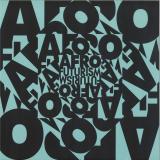
Following our acclaimed Chez Damier release, Skylax proudly welcomes back the brilliant Byron The Aquarius. A true craftsman from Alabama, Byron blends the spirit of Detroit's deep house with live jazz energy, echoing legends like Theo Parrish and Moodymann. This new EP, Afrofuturism, is a statement of intent: four deeply musical tracks rooted in soulful rhythm and cosmic funk. From the spiritual groove of the title track to the introspective dub of Sunday’s Ain’t The Same, this is Byron in top form — keys blazing, grooves flowing. With past releases on Sound Signature, Axis, Eglo, Apron, and Shall Not Fade, Byron’s music continues to light up the underground from Detroit to Berlin. Artwork by H5 – the legendary studio behind visuals for Daft Punk, Air, and Vitalic. Whether you’re a house head or jazz lover, Afrofuturism is a timeless piece for real dancers and dreamers. Strictly for the heads. Vinyl only. No repress. Skylax Records.
British singer-songwriter Lucy Kitt unveils her highly anticipated second album, Telling Me, a deeply personal collection that shifts focus from introspection to storytelling, capturing the lives and struggles of those closest to her. Drawing from her love of 70’s Laurel Canyon folk, 90’s indie rock, and country music, Kitt crafts narratives that blend her own experiences with compassionate observations of loved ones. Based on a raw acoustic “three chords and the truth” style of songwriting that ripples throughout, the album expands with full-band arrangements that give a huge range and richness to the sound.
Though influenced by American musical traditions, the Essex-native maintains her distinctive voice and authenticity, ensuring the music remains unmistakably her own. Following her 2018 debut Stand By, this new record represents a more mature approach to songwriting, written during her early 30s and completed in the 2021 lockdown – a storybook of songs capturing that moment in time.
Musically, Telling Me showcases Kitt's stripped-down acoustic foundations, while incorporating fuller arrangements that blend her love of Nick Drake, Bob Dylan, Gram Parsons, Joni Mitchell and Joan Baez, with music she loved as a teenager such as The Lemonheads and Veruca Salt. The album features collaborations with an impressive roster of musicians, including Jay Starkey on drums, Nashville-based pedal steel virtuoso Spencer Cullum, Treetop Flyer’s Sam Beer and longtime collaborator Pat Kenneally on drums and piano.
Recorded between 2021-2023 at London's Lightship 95 studio at Trinity Buoy Wharf, the album was co-produced and engineered by Dave Holmes, with some musicians contributing remotely from Nashville and London.
Kitt's commitment to authenticity extends to every aspect of the album, from the down-to-earth, home-based album artwork which represents her life right now as a musician and a working mum, with all the wonderful chaos that comes along with it. Also her decision to maintain her natural accent throughout her vocals. "I have always retained my authentic self in my songs," she explains. "Always singing with my own accent, despite the influences of all the bands and artists over the years."
Kitt has been songwriting and performing for over 20 years, starting in a riot grrl band in her teens in her hometown of Romford, Essex, before evolving into the thoughtful folk storyteller she is today. A semi-finalist at the BBC Young Folk Awards in the early 2000s, she has performed at major festivals including Glastonbury and Cambridge Folk Festival, building a reputation for intimate, lyrically-focused performances.
Telling Me is a resplendent collection of songs, capturing the human experience with great empathy, honesty and musical sophistication that has become Lucy Kitt's signature.
Joyce Manor are California pop-punk legends and I Used To Go To This Bar is this epochal band operating at the top of their game. They continue to deliver relentlessly satisfying rock music in a manner that makes it look simply effortless. The Torrance, California-hailing trio of Barry Johnson, Chase Knobbe, and Matt Ebert are at a point in their career where their position as one of the most beloved rock bands is a foregone conclusion. Their seventh album finds the group continuing to find rich new veins to tap in their short-and sweet songcraft without losing an ounce of bite that gained them such repute in the first place. I Used To Go To This Bar further situates Joyce Manor in the rich lineage of their influences and inspirations. Think AFI"s rapid-fire burn, Weezer"s indelible power-pop acumen, and the dusky emotionalism of The Smiths while further establishing them as leading lights in the current rock landscape. The fresh burst of inspiration that fuels I Used To Go To This Bar proves that Joyce Manor are far from content to rest on such laurels, moving forward with their sound and style in a way that reminds you of how they got to this point in the first place. Catch them live at Coachella 2026.
“The album explores the duality between nature and mankind, and the blurred line where we become both the executioner and the victim. I’ve always felt this inner struggle, the pull between instinct and reason, between animality and humanity. This album reflects that ambivalence: an intimate journey where I allow myself to be consumed by my contradictions in order to be reborn. It’s a cry, a waking dream where we shed our masks to become whole again. I blend wildness with tenderness, fury with poetry — because deep down, I’m an animal who dreams, and a man who roars.” Sébastien Tellier
Compilation of contemporary Hawaiian music on Aloha Got Soul. Inspired by a 1970s compilation series that featured emerging talent from the Hawaiian Islands, Aloha Got Soul’s Mix Plate provides a snapshot of what Hawaii sounds like today. This is the second installment in the ongoing series.
Founded in 2012, Vision String Quartet quickly became one of the most innovative ensembles in contemporary chamber music. What sets them apart is their fearless flexibility: combining classical stringquartet mastery with fearless, genre-defying creativity. They perform from memory, showcasing extraordinary musical communication and freedom on stage. They write and perform their own music, blending influences from folk, rock, jazz, minimalism and improvisation.
Based in Berlin - part of a vibrant creative scene, constantly experimenting - Vision String Quartet are expanding the definition of chamber music by making it accessible, relevant and visually engaging for a new generation.
‘In the Fields’ is the young quartet’s bold return - their ACT debut and first recording in five years. It’s a single, choreographed journey that fuses the spirit of folk, the pulse of dance and the depth of classical tradition into one seamless arc.
Inspired by Béla Bartók’s Fourth String Quartet and its dramatic fivemovement form, the album reimagines the string quartet as a living, breathing band, one that thrives on improvisation, rhythm and fearless experimentation. Movements from Bartók are interwoven with music by Ravel and Dvořák, original works by the quartet’s own Florian Willeitner and their guest collaborators, and arrangements of traditional folk tunes.
Joined by pianist Joel Lyssarides, guitarist Mahan Mirarab and drummer Bernhard Schimpelsberger, the ensemble expands the sonic possibilities of the string quartet, exploring new tonal Worlds where classical mastery meets jazz, folk and global influences.
‘In the Fields’ is an album that bridges past and future - timeless yet full of fresh energy - and a declaration that the string quartet still has endless horizons. The quartet invite listeners to press play, lean in and be carried across fields of sound, memory, invention and tradition.
Known for their warm harmonies, live energy, and poetic lyrics, Boy & Bear explore on Tripping Over Time themes such as embracing life's journey and its contradictions: "It's about the subtle lessons of life. Often you don't realise you've gone through something until you've truly experienced it. You keep learning, stumbling forward, and embracing the chaos with a smile. It's optimistic, nostalgic and playful, just like life itself," says frontman Dave Hosking. The record feels like one big celebration of joy, laced with a bittersweet, happy-sad energy. Since their breakthrough with the double-platinum debut Moonfire, Boy & Bear have released multiple #1 albums and earned a reputation as one of Australia's most compelling live acts.
The Ruins Of Beverast narrate fables of the darkest secrets in human history and present. ‘Tempelschlaf’ is The Ruins Of Beverast’s seventh full-length output and sees the band continue with their sonic morbidity, noises and melodies of a human habitat in its sunset era, while maintaining and refining the widescreen low end that has been sustaining their sound from the beginning. On the instrumental side, ‘Tempelschlaf’ is stripped of some fat, forging the songs with a reduction in length and layers, cautiously leaning towards the stage part of things. While synths and samples have always played an adamant role in The Ruins Of Beverast’s sound, they reach yet another level of psychedelia and insanity on ‘Tempelschlaf’. The Ruins Of Beverast were formed in early 2003 and named after the most bloodcurdling occasion of the collapse of the giant bridge Bifröst. This incident bears analogy to the musical aura of The Ruins Of Beverast, which builds a sonic landscape of massive, surreal, barren mountain formations. Seven full-length albums and several EPs, splits and compilation releases have been published through Ván Records so far. As a live act, The Ruins Of Beverast became a strong force after Roadburn 2013, a festival the band have played again since with exclusive shows. The Ruins Of Beverast have embarked on several European tours with acts like 1349, Grave Miasma and King Dude, as well as a highly acclaimed US tour that eventually concluded with an iconic show at Fire In The Mountains festival. The band have played such well-established club shows and festivals as Hellfest, Inferno, Incubate, Party.San Open Air and Beyond The Gates, to name just a few.
Audio taken from a live performance by Anar Band (Jorge Lima Barreto and Rui Reininho) with E.M. de Melo e Castro in November of 1978 at Cooperativa Árvore, Porto. The performance was filmed. A segment was included in »Obrigatório Não Ver«, a weekly programme presented by Ana Hatherly on Public Television’s Second Channel. It was not possible to determine the exact date of the event, and no documentation seems to be available in the relevant archives.
»Encontro que Tenho« and »Profissões«: these titles are specific to this release. Having failed to locate the respective poems after a thorough search in E.M. de Melo e Castro’s body of work, it was deduced both texts were created for the occasion.
Even without a full contextualisation, the sound transmits the spirit of cultural agitation proper to these sessions. When this show happened, Anar Band were Jorge Lima Barreto (ARP Odyssey synthesizer) and Rui Reininho (Ibanez double-neck guitar), with the addition of E.M. de Melo e Castro, whom we shall call a poet but whose creative intervention was far reaching. Besides poetry, also continued his efforts in linking up diverse artistic areas (painting, drawing, collage, performance, video) and his official training in textile engineering. He was one of the artists featured in Henri Chopin's »OU Revue« in 1966, establishing his natural connection to the European concrete/visual/sound-poetry avant-garde. Melo e Castro was also proficient in the agitation of minds and political awareness. A good example in »Profissões«, where initially separate professionals (an intellectual, a fisherman, a soldier, a factory worker) are gradually mixed in a show of interdependency. Symbolically, through his words one listens to a transformation of society, although the same conclusion arises twice: surplus always finds its way to the hands of the capitalists.
That was the state of affairs many were looking to change, an economic and social malaise that the 1974 Revolution in Portugal fully uncovered, when dissident voices could finally be heard in public. Each in his own way, all three participants in this recording were non-believers in the structure of society such as it was presented. Through his books and press writings, mainly concerned with Jazz, Jorge Lima Barreto pushed his way into Portuguese artistic and critical circles since the late 1960s. Consciously and unwittingly, he collected enemies and pointed them by name, people he labelled as reactionary, people who delayed progress, social and cultural mixes, the avant-garde; they even delayed the chaos from which new forms and attitudes arise.
Rui Reininho, a non-conformist by heart, experienced incomprehension from an early age. His anarchic ways, a tendency to baffle others, were revealed through the choice of clothes and accessories, public behaviour, and »real life« performances. Just as Lima Barreto, and even together with him, he enjoyed provoking the extremes: Maoists on one side, right-wing conservatives on the other. He translated leftist books and joined Anar Band precisely on the day a duck or swan or goose (one of them) was thrown on stage in Porto, 1976.
This record documents a concrete action, a snapshot of the agitation, something we have no problem calling punk activism, something which allowed two people with little to no musical training to play and record music. By then, Anar Band had managed to release their only LP in 1977. It’s this performance, however, that reveals the naked rawness of the music: improvisation, mutual listening, and choice of intervention between both musicians and Melo e Castro, clearly sensing when the synth has to change tone, the voice has to make pauses, the guitar punctuates both and finds the space to… scream. The sound was captured by the film crew, adding to the rawness: the instruments are palpable, the voice often too close to the mic. Everything was preserved. First time on disc.
The label ORED Recordings was founded in 2013 by Circassian friends and fellow musicians Bulat Khalilov and Timur Kodzoko, in order to start an activity which is dedicated to documenting and preserving the traditional and post-traditional music of the North Caucasus. Khalilov and Kodzoko, were just as excited about this music as it sounded like a force that transcends borders and in which time dissolves and community becomes the only compass.
Through hundreds of field recordings, which have been made at communal gatherings, local festivities or family meetings, the label has captured a wide range of individual voices and their unique acoustic manifestations. All recordings on this album capture the raw expressiveness of the mountainside villages. Music performances being played by people who dedicate their love to music and an additional willingness to share intimate emotions.
Whereas most academic ethnomusicologists travel around the world in order to study foreign cultures, Bulat Khalilov and Timur Kodzoko were fascinated by what they just heard in the familiar regions of their then home town Nalchik. In resolute contrast to Russian academic circles, they soon developed a DIY Punk ethos for their far reaching work, beginning to formulate their own language in the field of ethnomusicology and to push the traditions forward.
However, the label’s work goes far beyond mere preservation. »We started traveling around the North Caucasus and did recordings with people from many different ethnic groups. In the North Caucasus, our work had a political dimension because there used to be (and still are) a lot of conflicts between different ethnic groups. We quickly understood that our work is not just about music and art,« states Bulat Khalilov.
The work of the label aims to reflect not only the great music of the Caucasus and its various communities but also to tell the stories behind it. They are stories of struggle, of independence, of working with historical memory in the present times of the 21st century.
Since Bulat Khalilov and Timur Kodzoko are now based at the University of Göttingen, we were able to meet each other many times and to eventually exchange ideas which resulted in the release of this collection of recordings. The compilation »Music from the Caucasus« provides a first introduction to the comprehensive work of ORED Recordings. For this collaborative release on TAL the recordings are being made accessible for the first time ever on vinyl, CD and various digital formats, all coming with extensive liner notes and yet unpublished photographs.
Bulat Khalilov and Stefan Schneider, November 2025
RYOZO BAND’s New Single “QUIET FOG / FUGITIVE” Coming to 7-Inch Vinyl!
Following their previous release Pleasure and a remix by French beatmaker Lex (de Kalhex) that drew attention from multiple directions, RYOZO BAND
kicks off 2026 with a two track single available on streaming and 7-inch vinyl.
The lead track, “Quiet Fog,” is a mid tempo piece highlighted by a powerful horn ensemble, with an awe-inspiring saxophone solo that steals the spotlight.
It’s a track that showcases the band’s evolving groove and ensemble maturity.
Released simultaneously with the 7-inch, “Fugitive” is a cover of a hidden gem by Jamaica’s legendary ska band The Skatalites.
While paying homage to the original, RYOZO BAND reimagines it with their signature energy and dynamism, delivering an uptempo arrangement full of drive
and vitality. The result is an energetic yet sophisticated sound that promises to ignite live audiences.
RYOZO BAND is led by Ryozo Obayashi (SANABAGUN.), joined by an all star lineup: drummer Masaaki Nagata (Zainichi Funk), saxophonist Takehide
“KIDS” Hashimoto (Zainichi Funk), guitarist Tetsuta Otachi (SAHAS), keyboardist Yusei Takahashi (Setagaya Trio, Terumasa Hino Quintet), percussionist
Ryotaro Miyasaka (Yuta Orisaka Ensemble), and trumpeter Kyotaro Hori (ACO, TAMTAM). Each member brings a highly acclaimed background, blending
their influences into an ensemble rich in depth and vitality, modernizing ska and jazz elements with a contemporary twist.
A release brimming with passion and love for music—perfect for ushering in 2026. This single is proof that RYOZO BAND is evolving to the next stage.
Ace’s small but ever-evolving “Black America Sings…” series has been quiet of late, but it springs back into action this month with the 2-LP and CD releases of “Highway Of Diamonds” – a second dip onto the catalogue of Bob Dylan, as reimagined by some of the foremost African-American artists of the 20th century.
From almost the start of his songwriting career, Dylan’s words and music have impacted on black American music, with ‘Blowin’ In The Wind’, speaking to an America that was still mostly segregated and becoming an anthem for all colours and creeds. As Dylan’s own career progressed, so did the number of covers he received, with a significant amount coming from what might be termed ‘non-traditional’ sources such as those heard here.
The 20 songs on “Highway Of Diamonds” continue the story that was told in part on the earlier “How Many Roads” compilation, with an almost entirely different selection of artists lending their voices to some of the best songwriting of the 20th century, and an almost entirely different selection of songs (with the exception of ‘Blowin’ In The Wind’ itself, which provides a common thread linking the story told across the two sets).
Big names from the worlds of soul, gospel and jazz, timeless songs and, for many, new ways of appreciating ever-durable material make “Highway Of Diamonds” as essential a purchase as its predecessor.
As ever, the great audio is complemented by a handsomely illustrated package on both CD and double vinyl, with a plethora of illustrations and in depth song-by-song-and-track-by-track annotation by Ace legend Tony Rounce.
"Ballad of a Small Player" ist eine der großen Veröffentlichungen von Netflix im Jahr 2025. Der Film mit Colin Farrell erzählt die Geschichte von Brendan Reilly, einem in Ungnade gefallenen irischen Finanzier, der sich als der aristokratische "Lord Doyle" ausgibt und in Macau lebt, nachdem er vor seinen Finanzverbrechen im Vereinigten Königreich geflohen ist. Reilly wechselt zwischen Hotels und Kasinos, während seine Abhängigkeit von Alkohol und Glücksspiel wächst.
Die Musik für diesen Film wurde von Volker Bertelmann komponiert, einem der bekanntesten zeitgenössischen Filmkomponisten. Nach "Conclave" und "All Quiet on the Western Front" ist dies die dritte Zusammenarbeit zwischen dem Komponisten und dem Regisseur Edward Berger. Bertelmann verleiht dem Film eine angespannte, paranoide Atmosphäre, die die Welt von Brendan Reilly perfekt einfängt.
"Ballad of a Small Player" ist auf Translucent Red Vinyl erhältlich und enthält eine Beilage.
In 1991, Chris Whitley made his debut with the beautiful album Living with the Law, which immediately showcased his brilliant songwriting and unique guitar playing. Blending blues, roots and folk, the debut was positively received by critics and aficionados of these more traditional genres. Growing up, Whitley listened to Southern radio, which played artists such as Muddy Waters, Howlin' Wolf, Bob Dylan and Jimi Hendrix. His career started by playing with artists like Arto Lindsay and Michael Beinhorn. Interestingly, Whitley lived in Belgium for a short time in the 1980s, where he started his career playing guitar for 2 Belgen and Nacht und Nebel. In the 1990s, he started his solo career at Kingsway Studio in New Orleans, owned by none other than Daniel Lanois. The result was an album characterized by the use of traditional instruments such as the slide guitar and banjo. All of this is accompanied by his splendidly timbred voice and honest lyrics exploring themes such as freedom, desire and human struggle. Sadly Chris Whitley passed away in 2005, but his influence on contemporary songwriters and blues artists remains strong. a_Living with the Law is available as a 35th anniversary edition of 1000 individually numbered copies on gold coloured vinyl and includes an insert.
King Gizzard & The Lizard Wizard’s 2023 thrash metal epic ‘PetroDragonic Apocalypse’–their 24th studio album at the time–gets the Fuzz Club Bootleg treatment with this new live version pieced together out of recordings from their 2024 North American tour. Pulling from shows in/at The Gorge, Oregon, New York City, Las Vegas, Red Rocks and St Augustine, these live versions of the album tracks were recorded from the soundboard by the band’s crew and are exclusively mixed and mastered for this release by James Plotkin using the stems provided by the band. This is a double LP release on buzz-saw shaped vinyl, housed in a gatefold jacket with artwork by Elzo Durt.
Grupo um celebrate 50 years with release of lost dictatorship-era album nineteen seventy seven!
First time release - vinyl comes with printed innersleeves
Brazilian avant-jazz vanguardists Grupo Um celebrate their 50th anniversary, sharing a second previously lost 1970s album from the vaults. Nineteen Seventy Seven (titled after the year it was recorded) is another rip-roaring instrumental fusion treasure from the band which spawned from within Hermeto Pascoal’s famed mid-1970s São Paulo collective.
Like their debut album Starting Point, Grupo Um’s Nineteen Seventy Seven was recorded when Brazil's military dictatorship was at its most repressive. “There were no open doors to those who dreamt to be protagonists in creative instrumental music”, remembers drummer Zé Eduardo Nazario, “even popular composers and singers had to submit their songs to censors and many records were banned and confiscated from the stores.”
Just like Hermeto Pascoal's Viajando Com O Som (1977) and Grupo Um's previous album Starting Point (1975), both of which remained unreleased until the 21st century, Zé Eduardo asserts that the 1977 album was flatly 'without any chance to be released at that time."
Recorded at Rogério Duprat’s Vice-Versa Studios in São Paulo, the group were under both time and space restraints, “we chose the small Studio B,” Lelo Nazario recalls, “which had a Tascam (TE AC) 12x8 console and a 4-channel AMPEX AG 440 machine. Therefore, we had to record without overdubs, everything straight to tape.”
Expanding from a trio to a quintet, original Grupo Um members Lelo Nazario (keys), Zé Eduardo Nazario (drums), and Zeca Assumpção (bass) were joined by saxophonist Roberto Sion and percussionist Carlinhos Gonçalves. Carlinhos, Zé and Zeca had already played together in the group Mandala, while brothers Lelo and Zé had just finished a stint backing Hermeto Pascoal during his years in São Paulo.
Lelo was deeply immersed in modular synthesizer experimentation during this period, working extensively with the ARP2600 and EMS Synthi AKS. These electroacoustic explorations formed the sonic foundation for "Mobile/Stabile," one of his first compositions to merge modular synthesis with Brazilian music, a fusion that would ripple throughout the Brazilian jazz scene. The piece premiered at the first São Paulo International Jazz Festival in 1978, performed by Grupo Um with guest trumpeter Márcio Montarroyos. In a shocking moment, festival organizers interrupted the show mid-performance, sparking fierce backlash from both audience members and journalists who denounced the incident as artistic censorship during Brazil's era of political and cultural repression. The version on Nineteen Seventy Seven is the first recording of the composition.
Nineteen Seventy Seven combines Afro-Brazilian rhythm, modular synthesis and a plethora of whistles, percussion and effects pedals. Album opener “Absurdo Mudo” - so titled for the absurd difficulty it poses to the musicians performing it - starts out in a cloud of mysterious dissonance, before the haze breaks for a glorious keyboard and saxophone interplay atop an uptempo samba groove. “Cortejo dos Reis Negros (Version 2)” (Procession of the Black Kings), based on the maracatu rhythm, inverts the traditional jazz song structure by beginning with improvisations, which are followed by the theme and a final coda. “The studio also had two Parasound electronic reverb units,” Lelo notes, “and the timbre is very audible on the soprano sax and percussion.”
Grupo Um’s daring music represents a manifesto of resistance during the dictatorship years, but it’s one which remains just as relevant today. As Lelo puts it: “For me, the aesthetic issue has always been about combining contemporary avant-garde languages with Brazilian music, independent of categories and commercial interests. The result of this fusion takes music to a new level.”
Recording credits (1977)
Recorded at Vice-Versa B Studio, São Paulo, November 9, 1977
Produced by Lelo Nazario and Zé Eduardo Nazario
Engineered by Ricardo “Franja” Carvalheira
Lelo Nazario – Wurlitzer electric piano, acoustic piano, signal generator, percussion
Zé Eduardo Nazario – drums, percussion
Zeca Assumpção – electric bass
Carlinhos Gonçalves – percussion
Roberto Sion – soprano sax, clarinet
Release credits (2025)
Produced by UTOPIA Studio, São Paulo
Project Coordination in Brazil by Irati Antonio (Utopia Studio)
Tape Restoration and Digital Mastering by Lelo Nazario at Utopia Studio, July 2025
Liner Notes by Lelo Nazario and Zé Eduardo Nazario
Photography by Jorge Las Heras, Lelo Nazario, and artists' personal archives
Photo Restoration by Lelo Nazario
Artwork and Design by Alessandro Renaldin
RUHR is a project born between Verona and Berlin, mixing rough analog synth sounds inspired by the beginning of the minimal noise experimental wave in the 70's and the need of violent dance moves coming from the repetitive structures of early EBM. Minimal aestethic, High Contrasts and screamed dadaistic/political lyrics portrait a vision of sensual industrial soundscape and the need of social riot.
After Differently (released in 2024), The Tighters (Roots Reggae) are back with a
new showcase album: Lovely Love — a celebration of unity, spirituality, love, and
freedom.
Side A brings together the vocal versions, while Side B features the dubs. The album was mixed and dubbed by Roberto Sánchez at A-Lone Ark Muzik Studio (Spain) and mastered on tape by Dr Charty at Bat Records Studio (France).
Recorded at Jah Jazz Studio with Julien “Yout” Barker, Lovely Love captures all
the spontaneity and strength of the band.
The album unfolds like a spiritual and emotional journey: from the meditative
Countryside to the love song Lovely Love, and the radiant Worship the Sun. The high point comes with Africa Will Rise, a true freedom anthem performed by the legendary Jamaican duo Keith & Tex (on the Lovely Love riddim).
After their acclaimed collaborations with Oku Onuora (Balance) and Jah Myhrakle
(He is Haile) in 2025, The Tighters continue their path with this new opus, asserting
their identity within the international reggae scene.
A sincere album, blending rich musicality with a powerful, deeply relevant message.
Having taken their name from a line in Hooray For Hollywood – inspired by the song’s jarring use in Robert Altman’s Philip Marlowe detective movie The Long Goodbye – there is an aptly cinematic quality to Any Young Mechanic’s music.
With intricate scenes, enthralling narratives and unique characters cropping up across the lyrics, and a kaleidoscopic yet coherently interwoven spectrum of moods and emotions stretching through the music, the Adelaide five-piece bring a fresh language to folk music’s natural propensity to spin a good yarn.
So rather than offering borrowed references illuminated by the cosy flickers of campfire flames, on their debut album The Modern Shoe Is Ruining The Foot, the Australian band’s urgent songs conjure up vivid, widescreen vistas that blend the genre’s enduring charms with a musical dexterity and sharp vision reaching beyond folk’s usual corners.
“We are trying to make folk music for now,” suggests frontman Sam Wilson. “Turning it on its head in a new, sometimes uncanny way, because we don't want to just do the old thing again. I don't think it’s interesting to make things again, so we’re searching for a contemporary edge.”
The roots of this original yet inclusive approach, in part, go back to the Adelaide music scene that helped to forge Any Young Mechanic.
Since 2018, BBE Music’s J Jazz Series of compilations and album reissues has been at the forefront in focussing attention on the hitherto cloistered and rarified world of Japanese jazz. True to the ethos of the series, curators Tony Higgins and Mike Peden have once again dug up a truly rare gem in the form of a 45 from the mysterious Christal Zone, originally released in 1971 only as a promo and reissued here for the very first time. Several years before pianist Tohru Aizawa and brothers Tetsuya and Kyoichiro Morimura formed the now-celebrated Tohru Aizawa Quartet — whose 1975 private- press spiritual jazz LP Tachibana Vol 1 has become a cornerstone of the J Jazz canon and previously reissued by BBE — they were already venturing into bold, experimental territory. Their 1971 single Rai Rai, released as a promotional 7-inch on Liberty Records under the short-lived moniker Christal Zone was written and arranged by koto player and composer Hideakira Sakurai. An almost unclassifiable hybrid of jazz, Japanese folk, Algerian raï, and free improvisation. Sakurai’s visionary approach dominates the track, blending traditional Japanese instrumentation with a dense polyrhythmic groove that evokes not only avant-garde jazz but also the raw street energy of Algerian raï — celebratory, unfiltered, and joyfully unrestrained. The story behind the recording of Rai Rai is as spontaneous as the music itself. While casually rehearsing at Sakurai’s villa, the group was overheard by producer Kunihiko Murai, who was so stunned by what he heard that he arranged a studio session for them the very next day. The resulting 7-inch — Rai Rai / Kanashiyana, released under the one-off Christal Zone name — is now one of the rarest artefacts in Japanese jazz, with original copies fetching astronomical prices among collectors. BBE Music has faithfully reproduced the original artwork and packaging to celebrate this extraordinary and super rare piece of J Jazz history. A piece that bridges the ancient and the future, Japan and North Africa, in under four minutes of controlled chaos. A truly one-of-a-kind artefact, Rai Rai is a manifesto from a generation unafraid to rip up the rulebook and follow their own path.
Another previously unreleased gem from Jah Life's mid 80s sessions at Channel 1 with the Gifted Roots Band, which we return to after a long while. Absolutely killer rhythm with brilliant added melodica, and youthman Patrick Cool at the mic. This rhythm is truly one of our favorite unreleased finds to date. The other cut with Nathan Skyers and this one by Patrick Cool are each backed with different dub mixes.
Continuing our Parish series, here's two bad pieces of a killer driving uptempo digi rhythm with the classic '87 sound. Total vibes of the time, with a youthman singjay & deejay both giving you a slice of everyday reality via the tune. One of the best rhythms of this style, both tunes are truly hard to find on originals and both reissued here straight from master tapes, as with all in our Parish series.
"Key To The Kuffs has aged into excellence in the nearly five years since it first came out" Pitchfork
"On paper, a full collaborative album from NYC's notorious rap villain DOOM and space-age production from Jneiro Jarel can't fail. In practice, it's even better. DOOM is in the form of his life here." Mojo
"Here be GMOs and dead Indians and food and water as a 'secure investment' and an earthquake in Iceland and a discourse on melanin. Here also be the priceless couplet: 'Not to interrupt / But anybody else notice time speeding up?'" 9/10 Robert Cristgau, VICE
"Key To The Kuffs has aged into excellence in the nearly five years since it first came out" Pitchfork
"On paper, a full collaborative album from NYC's notorious rap villain DOOM and space-age production from Jneiro Jarel can't fail. In practice, it's even better. DOOM is in the form of his life here." Mojo
"Here be GMOs and dead Indians and food and water as a 'secure investment' and an earthquake in Iceland and a discourse on melanin. Here also be the priceless couplet: 'Not to interrupt / But anybody else notice time speeding up?'" 9/10 Robert Cristgau, VICE
Adventure's self-titled 2000 debut is finally getting the reissue treatment, remastered by Jacob Holm-Lupo. This album got great reviews at the time, and helped kickstart a new Norwegian prog scene. The music was inspired by bands like Kansas, Uriah Heep and Camel, with an added touch of folk music. ADVENTURE is the brainchild of the Norwegian multi-instrumentalist Odd Roar Bakken, who had 23 years of experience in Rock bands playing guitars & mandolins, and singing in bands like Tammatoys and Nordagust until 1990, when he met Nils Larsen, Torkel Aune and eventually the talented guitar player Terje Flessen. They started working together, each time getting closer to the Symphonic sound they aimed for But they still had a hard time finding a singer that could fit their style - until 1995 when they finally met Verbjorn Moen. They soon started work on their self-produced and self-released, self-titled debut album, a process lasting all the way until November 1999, with a release in the year 2000. The album is a great expression of Symphonic Prog - inspired mostly by Camel, but with an added hard rock influence from bands as Ayreon and Uriah Heep. The lineup of their debut album is consists of Odd-Roar Bakken (Keyboards, Acoustic Guitar, Mandolin, Lead Guitar and Backing Vocals), Terje Flessen (Lead Guitars, Rhythm Guitars, Acoustic Guitars and Bass Guitars), Vebjorn Moen (Lead Vocals and Backing Vocals) with some guests like Elisabeth Nilssen and Stine Mostervik on flute and Stein Egil Bratland on drums and backing vocals. ADVENTURE is a rare example of a band that didn't played Progressive Rock by nature: They set out to perform music in the vein of the classic symphonic prog genre - but adding some Norwegian Hard Rock, inspired by the Byron & Thain Uriah Heep line-up, something entirely different manifested itself.
The rubber of ER Jurken"s pure pop fantasias meets the road on his second album, aided and inspired by a power trio of players from Chicago"s Junegrass to crank it up and out of the park. Paul Von Mertens" string and horn arrangements highlight the gritted teeth and dripping sweat that belie Ed & Co"s easy riding rock, while Jurken"s heavenly vocal choir provides balm to transcend and defy the stings of everyday misfortune.
Originally released in 1999, Everything Is Green is the debut album from Brooklyn based The Essex Green, a seminal band within the Elephant 6 collective. Combining chiming guitars, warm harmonies, and subtle psych-pop textures, the album stands as a timeless document of late-90s indie pop creativity. This official vinyl reissue brings back the band's beloved debut in a beautiful transparent lime pressing, giving fans and collectors a chance to experience its delicate, sun-drenched melodies on wax for the first time since their original release in 1999. A must-have for those discovering the Elephant 6 universe or revisiting a modern classic of indie pop. For fans of: The Apples in Stereo, The Olivia Tremor Control, Camera Obscura.