Tropical Fu*k Storm revisit the live album concept on ‘Inflatable Graveyard Vol. 2’, their second live album and the follow-up to the critically acclaimed ‘Fairyland Codex’. Recorded over three nights during a sold-out residency at New York venue TV Eye, the album finds the band at the height of their incendiary powers, turning already combustible songs into something even more ferocious and unpredictable.
Fine-tuned and road-tested through heavy touring, songs from ‘Fairyland Codex’ are stretched into new forms. Ballad “Stepping on a Rake” takes on heavier undertones, “Irukandji Syndrome” becomes a launchpad for a guitar solo worthy of the Velvets’ “I Heard Her Call My Name” and “Moscovium” sounds more urgent than ever.
The band also revisit back catalogue favourites including “Who’s My Eugene” and “You Let My Tyres Down”, alongside a cover of Australian punk heroes The Saints’ “This Perfect Day”.
Tropical Fu*k Storm have built a catalogue worth obsessing over, but their live show is where the band’s brilliance really breaks open, and ‘Inflatable Graveyard Vol. 2’ catches that chaos in the act.
Key Quotes:
“Tropical Fuck Storm are masters of tension and release.” The Guardian.
“If anyone's qualified to make music about all-encompassing terror, it ought to be Tropical Fuck Storm.” Pitchfork.
“Thrilling noise-rock pranksters” Uncut.
“End times chaos… A gloriously imperfect storm” MOJO.
“A galvanising opus of incredible political bite” The Line Of Best Fit.
“One of the most rewarding listens in rock music” Consequence Of Sound.
An evolution of her radio show, event series and Bandcamp community under the same name, this compilation plots a globe-spanning day-into-night voyage across 16 tracks, from artists, countries and scenes that have shaped Jamz' musical worldview. Each track, many of which are exclusive to this comp, tells a story of heritage and roots, whilst pushing boundaries and pioneering new sounds in their respective regions. From the Reunion Island to Latin America, East Africa to the Caribbean and Pacific, it's a 24-hour cycle moving from downtempo to dancefloor. The concept of Dance Around The World began in the summer of 2025 but has ultimately been a part of Jamz' journey in music since the beginning. At the centre of it is her 15-year career as radio presenter - her tastes evolving from the early days on Reprezent Radio, to a 1Xtra residency and now a Saturday daytime show on BBC 6Music. There has always been a desire to highlight music from underrepresented scenes to new audiences.
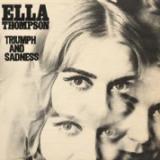
Standing up for joy and pain and all the messy, confusing, beautiful details that make life worth living. Soulful and timeless, her songs tell stories of the heart, finding universal truths in the honesty of personal experience. Released on UK label Mr Bongo and College of Knowledge in Australia and New Zealand, Triumph & Sadness is her most profound album yet - a powerful and unique record inspired by a classic sweet soul sound and rooted in the contemporary moment. Reaching out with vulnerability and poise, it is a plea for connection in a world gone numb. Recorded over four fruitful days at an all- analogue studio in the stunning natural surroundings of rural Victoria (with additional sessions for horns vocals and overdubs at Sound Park in Northcote), Triumph & Sadness was cut directto-tape with all the urgency and warmth of the iconic '60s and '70s sessions that first inspired her. Written alongside Liam McGorry (Temporary Blessings), featuring collaborators from bands Surprise Chef and Karate Boogaloo and mixed by Daptone and The Womack Sisters collaborator Wayne Gordon, it captures the live energy of a band at the top of their game.
Swivel inaugura su nuevo sello Swivel Traxx produciendo cinco tracks originales recién salidos del horno.
Swivel Traxx steps up with ‘Out of Circle EP’, a 5-track trip delivered by label head Swivel. Blending raw 90s vibes with modern hypnotic soundscapes, the EP shifts gears from tense ambient to direct, Birmingham-influenced techno and high-energy cosmic madness. Built for both deep head-trips and pure dancefloor mayhem:
A1. Out of Circle (Prelude): A beatless atmospheric opener setting a mystical vibe for the whole record. A hypnotic, bell-like arpeggio glides over a warm Moog bassline and thick tension, teasing the concept behind the EP.
A2. Out of Circle: The title track drops straight into club territory while keeping things dark and mysterious. Massive cavernous pads, a driving rhythmic base, and a relentless sequenced synth loop pay homage once again to classic Birmingham techno.
A3. The Black Knights: A dark, dystopian trip. Driven by a hypnotic groove and sharp triplet hi-hats, this one brings a combat-ready energy made for peak-time dancefloor moments.
B1. Starlight: The fastest joint on the record (140 BPM). Equal parts melodic and club-focused, it locks TR-909 drums, Moog bass, and lush pads together for an astral trip into the unknown.
B2. Roundtable: A heavy, mental, and dark closer. Packed with raw analog-filtered synths, broken beats, and a relentless interplay of open and closed hi-hats, it delivers pure energy for the floor.
Wewantsounds is delighted to continue its Ziad Rahbani reissue program with Ana Moush Kafer, a classic album by the Lebanese legend Ziad Rahbani, recorded at his By-Pass Studio in Beirut during the height of the Lebanese Civil War in 1985. Showcasing Rahbani’s signature blend of Arabic music infused with touches of jazz-funk and bossa nova, the album has attained cult status over the years. Originally released on cassette, it has never before been available on vinyl. Newly remastered, this edition features the original Relax-In cassette artwork from 1985 and includes new liner notes by Mario Choueiry of the Institut du Monde Arabe in Paris.
Ziad Rahbani, who passed away in 2025, remains one of the most influential figures in modern Arabic music and a cultural icon in Lebanon. A musician, composer, pianist, producer and playwright, he helped modernize Arabic music over five decades. The son of composer Assi Rahbani and singer Fairuz, he shaped her late 70s–80s recordings producing Wahdon and Maarifti Feek, while building a major solo career with classics such as Abu Ali and Houdou Nisbi, which have become cult favourites for a new generation of DJs and music lovers.
Released in 1985 in Lebanon, Ana Moush Kafer stands as one of Rahbani’s key achievements. Recorded at his By-Pass Studio during the Lebanese Civil War, it blends Arabic melodic traditions with jazz-funk, bossa nova and Western arrangements. Originally cassette-only, it became one of his most revered releases. Throughout the album, Rahbani’s writing reflects the turbulence of wartime Beirut with a blend of sharp social observation, political satire and melancholy. It captures a moment in Lebanese cultural history where experimentation, satire and popular song intersected, giving the album its enduring influence among music lovers.
Sung by Rahbani and Sami Hawat, alongside Beirut-based musicians, the album features both Western and traditional Arabic instruments. It balances refined arrangements with lyrical irony, social commentary and political reflection, which remain deeply resonant in today’s context in Lebanon.
One of the highlights of the album is the song “Shou A’ada Ma Bada,” with lyrics by Joseph Harb, which reveals a clear bossa nova influence, while the closing track, “Al Mokawama Al Watania Al Lobnani,” offers a deeply human view of war, avoiding patriotic cliché in favour of a nuanced perspective rooted in lived experience.
As Mario Choueiry observes in his liner notes, “Ana Moush Kafer stands as one of the high points of modern Arab political songwriting, yet transcends its historical and geographical context through the universal relevance of its themes and the timeless quality of its music.”
Forty years on, Ana Moush Kafer remains a landmark of Arab music. Wewantsounds presents it on vinyl for the first time, newly remastered and featuring original artwork. This long-awaited reissue restores one of Ziad Rahbani’s most important works to circulation, reaffirming its place as a defining statement in modern Arabic music.
a 1. Ana Moush Kafer 5:03
b 2. Shou Hal Ayyam 5:46
c 3. A'anitham 4:37
d 4. Shou A'ada Ma Bada [3:45]
[e] 5. Yessa'ed we Yea'en [5:05]
[f] 6. Bi Halyawmayn [3:46]
[g] 7. Bharf Esheen [1:12]
[h] 8. Bhaneek [5:34]
[i] 9. Al Mokawama Al Watania Al Lobnani [3:06]
[a] 1. Ana Moush Kafer [5:03]
[b] 2. Shou Hal Ayyam [5:46]
[c] 3. A'anitham [4:37]
[d] 4. Shou A'ada Ma Bada [3:45]
[e] 5. Yessa'ed we Yea'en [5:05]
[f] 6. Bi Halyawmayn [3:46]
[g] 7. Bharf Esheen [1:12]
[h] 8. Bhaneek [5:34]
[i] 9. Al Mokawama Al Watania Al Lobnani [3:06]
[a] 1. Ana Moush Kafer [5:03]
[b] 2. Shou Hal Ayyam [5:46]
[c] 3. A'anitham [4:37]
[d] 4. Shou A'ada Ma Bada [3:45]
[e] 5. Yessa'ed we Yea'en [5:05]
[f] 6. Bi Halyawmayn [3:46]
[g] 7. Bharf Esheen [1:12]
[h] 8. Bhaneek [5:34]
[i] 9. Al Mokawama Al Watania Al Lobnani [3:06]
[a] 1. Ana Moush Kafer [5:03]
[b] 2. Shou Hal Ayyam [5:46]
[c] 3. A'anitham [4:37]
[d] 4. Shou A'ada Ma Bada [3:45]
[e] 5. Yessa'ed we Yea'en [5:05]
[f] 6. Bi Halyawmayn [3:46]
[g] 7. Bharf Esheen [1:12]
[h] 8. Bhaneek [5:34]
[i] 9. Al Mokawama Al Watania Al Lobnani [3:06]
[a] a1. Ana Moush Kafer [5:03]
[b] a2. Shou Hal Ayyam [5:46]
[c] a3. A'anitham [4:37]
[d] a4. Shou A'ada Ma Bada [3:45]
[e] b1. Yessa'ed we Yea'en [5:05]
[f] b2. Bi Halyawmayn [3:46]
[g] b3. Bharf Esheen [1:12]
[h] b4. Bhaneek [5:34]
[i] b5 Al Mokawama Al Watania Al Lobnani [3:06]
[a] a1 | Ana Moush Kafer [5 03]
[b] a2 | Shou Hal Ayyam [5 46]
[c] a3 | A'anitham [4 37]
[d] a4 | Shou A'ada Ma Bada [3 45]
[e] b1 | Yessa'ed we Yea'en [5 05]
[f] b2 | Bi Halyawmayn [3 46]
[g] b3 | Bharf Esheen [1 12]
[h] b4 | Bhaneek [5 34]
[i] b5 | Al Mokawama Al Watania Al Lobnani [3 06]
[a] a1 | Ana Moush Kafer [5 03]
[b] a2 | Shou Hal Ayyam [5 46]
[c] a3 | A'anitham [4 37]
[d] a4 | Shou A'ada Ma Bada [3 45]
[e] b1 | Yessa'ed we Yea'en [5 05]
[f] b2 | Bi Halyawmayn [3 46]
[g] b3 | Bharf Esheen [1 12]
[h] b4 | Bhaneek [5 34]
[i] b5 | Al Mokawama Al Watania Al Lobnani [3 06]
[a] a1 | Ana Moush Kafer [5 03]
[b] a2 | Shou Hal Ayyam [5 46]
[c] a3 | A'anitham [4 37]
[d] a4 | Shou A'ada Ma Bada [3 45]
[e] b1 | Yessa'ed we Yea'en [5 05]
[f] b2 | Bi Halyawmayn [3 46]
[g] b3 | Bharf Esheen [1 12]
[h] b4 | Bhaneek [5 34]
[i] b5 | Al Mokawama Al Watania Al Lobnani [3 06]
For UnExposed Records first vinyl release, Uruguay’s Marcos Coya wanted to show the world a different side of his artistic approach. In a world of monotonous copy/paste, Marcos wanted to bring something unique to the table. A compilation of spacey, dreamy & emotional tunes custom built for the dance floor yet still experimental as well. Deep grooves & long developments. No fluff. No overbearing bangers. True underground production principles. Crafted for those with a refined palate.
The A-side is dedicated to Marcos Coya’s four to the floor production work. This sonic expedition begins w/ a bang: the record’s title track “Moon Trippin”! A showcase of freaky melodies accompanied by groovy percussions which bolster a vocal of Prince speaking his mind about the true essence of creating musical art & his disdain for mainstream music industry critics.
“Delirium” closes out the A-side w/ a dreamy acid house tune adding an emotional touch to the record. After hours material. A real step forward for Marcos and his production work. Leaning heavier than ever into trusting his melodies. Taking a bit more risk with his approach by creating something you’ve never heard from him on any of his nearly 20 vinyl releases over his career.
For the B-side we shift over to a more breakbeat approach with 2 absolute heaters. B1 introduces the track Hearthug has claimed to be one of the tracks of the year: “Rage Dog”. Rage Dog is a Marcos Coya signature track due to its rock & hip hop influences developed during his adolescence. Marcos even purchased new synthesizers specifically to improve this track & its melodies. The cherry on top is the vocal from Rage Against The Machine’s front man, Zack de la Rocha, which adds a rebelliously political undertone to the record, something UnExposed & Marcos both are very proud to address w/ passionate conviction during this time of war and injustice.
We close out the record with “D.N.A.”, the most experimental piece of art on this vinyl release. A wild combination of breakbeats, guitars, melodies & crazy vocals. The perfect bizarrely fascinating conclusion to this wild trip to the moon and back.
Early support from heavy hitters such as: DJ Koolt, Anthea, Velasco, KT, Hearthug, Mario Liberti, Daïf & many more!
NYC’s Kanyon debuts his new label “Solitary Works” with an EP paying homage to the old-school. A1-B1: 3 raw, jacking techno tracks relay Kanyon’s vision of classic loop techno revival. On B2, Kanyon flexes his live production madness showcasing an electro track which is sure to convert the non-believers.
2026 Repress
30 years of Fuse means 30 years of road paving.
An ode to the past and a hint to the future, Fuse shares this milestone with its original guests from 1994 all the way to its fresh party goers of the past years as a promise to keep its dance floor focused on quality music and timeless moments.
In over a quarter century, the Brussels club has stood the test of time by rooting itself in ageless music and employing pioneering artists - large or small, international or local - to command the decks of Belgium's longest running dance floor. A celebration of this legacy and the renewed imprint is in order, coming in the form of a 30 track compilation of techno's best and brightest from around the world. One track for one year, this collection of recordings highlights the status quo of enduring club music, beginning with a nod to the past: a re-release of Jeff Mills iconic 'Step to Enchantment' from 1993. This glance to the past quickly shoots us forward into the current state of techno with legendary artists like Planetary Assault Systems, DVS1, Steffi, Rodhad, Donato Dozzy, DJ Nobu and many others who headlined the club in recent years. Cementing itself as a respected escapist institution, Fuse also calls on its growing local scene to prove why Brussels continues to remain a reference in the scene even outside of its own borders.
Teal return on October 2 with Love Comes Thru, the trio's nine-track debut album. Expanding their emotionally resonant blend of downtempo trip-pop, the record reaches into street soul, dub, and experimental grooves, marking a confident new chapter for the group.
At its core, Love Comes Thru is a reflection on the quiet strength of love—not through grand gestures, but through the steady presence that carries us through uncertainty, change, and connection. Written over the course of a year of bi-coastal collaboration, the album became a testament to the bond Teal share as artists, friends, and family.
From the lush synth landscapes of "Aries Moon" to the footwork-inspired pulse of "Time Is Blind," the album explores themes of patience, vulnerability, longing, and intimacy. Standout singles "Kissing in a Dream" and the title track lean into left-field street soul, while stripped-back, 808-driven tracks like "Change Your Mind" and "Anomaly" demonstrate the power of restraint without sacrificing momentum. Building on the group's love of ambient improvisation, Love Comes Thru also features instrumental pieces with percussion by Brandon Valdivia (Mas Aya/Lido Pimienta).
The album closes with the sensual "Bubbling," bringing the journey full circle with a reminder that love ultimately comes through in its most embodied, physical form. Love Comes Thru is presented in a deluxe, limited-edition matte-finish, double-embossed jacket with a printed inner sleeve. Available on LP and digitally through Rubadub, In Sheep's Clothing, and Forced Exposure beginning October 2.
Om Unit says of this release 'For me it's another milestone as a DNB fan.. Being allowed to come back to 31 again with another shadow boxing version, being one of only a tiny handful of people being allowed to remix this classic truly is an honour, let alone twice! Also working with Thing on "something ancient" was a real blessing not only because he's original and convincing with his own work but also I think he's like me, he does his own thing without adhering to too many of the insular rules that have made dnb such a closed room over the years, and so creating this cinematic piece just happened naturally and I really love the results.
A tasty slice of early 90s New Jersey hip-hop makes this inaugural release from Concrete Flowers a real doozy. Apache's 'Gangsta Bitch' was produced by Q-Tip and taken from his 1993 debut Apache Ain't Shit, so it is a portal back to the raw, unfiltered energy of a time when the Flavour Unit collective was at its most vital. Apache had already appeared alongside Naughty By Nature, Queen Latifah and 2Pac before this record landed and the Q-Tip production connection to A Tribe Called Quest gives it a lineage that still hits hard. The Beatnuts' 'Hit Me With That' on the flip doubles down on the era's boozy, sample-heavy swagger, making this a perfectly paired two-sider that reminds you exactly why the golden era was so golden.
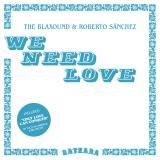
Gatzara Records present a soul version of “We Need Love” by Johnny Osbourne, produced by The Blaxound and sung by Roberto Sanchez. On the B side, there is a hip hop version built from samples of the A side, featuring Rel McCoy, an MC from the United States.
San Francisco electronic pioneers Darwin Chamber and DJ Spun head down the arcade for four tracks of the unmistakable flavour of modified 8 Bit sound chips from the 80s. 'LFO's Are Real' definitely nods to the Leeds duo that kicked the Warp Records revolution off, but that's just a starting point for some rough edged electro machinations and some spooky extra-terrestrial samplings. '8-Bit Phantasy' connects Chicago-style piano magic with acid undertows and gets brought to dancefloor life by a serious injections of funky ass breakbeatery. 'Intruder Alert' is the gnarliest of the lot, the bass end nothing if not speaker threatening, before 'We Gotta Get' is wonderfully disorientating disco dub delirium. Raw and direct, this will set the floor alight quicker than a can of petrol and lit match.
Fully licensed ! Ltd to 500 copies. Singer and guitarist Ram John Holder was born in. 1939 in Georgetown, British Guiana, then moved to Cincinnati
in 1954, and to the East Coast to work as folk blues singer in the early 1960s. In 1963, he took residency in England where he recorded several
albums. Released in 1969 Black London Blues is surely is masterpiece. A socio-political manifesto the album chronicles the trials and tribulations
that were the result of being a black-immigrant in London, and it contains all the pathos and pain one can imagine. Self-conscious, as concept
albums often are, the record is almost like an audio A-Z or pub guide. It’s funky/soul and represents his own black experience. It is a must have
for all the blues revivalist out there, a record to rank along the lines of early Mike Cooper and American stalwarts like Eugene McDaniels or Sixto
Rodriguez!
Tracklist:
SIDE A: 1. Loie - 2. Lloro Tu Despedida - 3. Goin’ Home - 4. Me ‘N You
SIDE B: 1. Liebestraum - 2. Shu Shu - 3. Blue Samba - 4. Favela - 5. Linda Flor
SOULGRA
For the second installment of its renewed imprint, Fuse's own in-house resident and one of Belgium's proudest exports Phara takes the reins for a deep dive into thick percussion and vibrant club landscapes. 'The Wall' puts current dance music under a microscope with a brush of truly vintage spontaneity, merging techno's confrontational nature with house's harmonic genuineness. This duality is reflected through Phara's own relationship with his home base Fuse and the complementary contrast between its two rooms.
The EP's title track serves as a hypnotic introduction for the A1, imposing a bass-heavy rhythm and a persistently oscillating synthline. A dense production full of energy, 'The Wall' inspires intrigue throughout its duration, revealing its true intentions through a capable sound system. Sharing the first side of the press is 'Blaes 208', a name that Fuse club goers will likely recognise, that guides the listener from effect into embrace. With lush keys echoing past a comforting drum sequence fit for a close-eyed dancefloor experience, Phara's impactful tendencies meet his affinity for the melodic through a blissful six minutes of crowd to selector connection. Switching sides, a return to a cold cold aesthetic is quickly apparent through 'Hush Now 206'. A pummeling, saturated bass competes with a kick of equal effect, rolling through a storm of metallic stabs. Mastering the message of urgency, Phara presents a lightshow of resonating percussive work, defining his space just to cut right through it. To close out with a lasting impression, the producer mutes the acoustics of his work through razor-sharp sound design dotting along playful snares, a duality reminiscent of the dynamism of Detroit electro. 'Motion Steps', referring to the stairs that ascend from Fuse's main room to its more left-field counterpart, captures the atmosphere of the almost shimmering music that can be expected to be played there; a place where Phara and many others have been known to explore the extremities of their music. He swiftly throws in melodic elements to recontextualize an otherwise pressing composition, and after three chapters of considerable weight, he concludes his record with infectious groove that flaunts technical ability.
Hector Ram and Ricky Ramirez are starting to celebrate ten years of Short Attention Records and it's US house stalwart DJ Aakmael they've enlisted to pop the champagne cork and cut the cake. He's one of those artists who turns out plenty of music, much of it sounding within the same consistent deep house framework. But there's always a little something to his tunes that keeps you coming back for more - a perfectly chosen sample, a nagging bassline, a sense of melancholy that you cannot escape. All of that is true on his latest. 'Things Always Happen' has keys that convey beautiful pain, then 'If You Believe' is a deep house haze with smudgy samples and blues-y ache. 'Free' is more light with trilling jazz-funk keys and earthy guitar frets sprinkled into the mix. 'Stopmotion' shuts down with a signature Aakmael bump. Just timeless stuff.
Part celebration, part reflection, THE TIME OF OUR LIVES arrives as both the final release of Lancey’s twenties and the closing chapter of a creative world he has spent the last decade constructing. The most expansive statement of his career to date, moving freely between trap, alternative R&B, dance music, Afro-influenced rhythms and more, Lancey explores triumphant highs and lows of stark vulnerability across the album, interrogating ideas of success, freedom, loneliness and what it truly means to have the time of your life. Lancey Foux stands at the forefront of UK rap’s evolution, blending elements of hip-hop, cloud rap, trap, Jersey club, drill, and more into a sound that’s uniquely his own. Since emerging from Newham, East London in 2015 with a clutch of freestyles and SoundCloud singles, Lancey has occupied a lane entirely of his own making. As he closes out his twenties, Lancey looks ahead to the next decade full of more unpredictable artistry as he continues to break the rules and change the game.
Type-303 is the project of Tampere-based Finnish producer, DJ and vinyl collector Dan Greijer. His releases for labels including Super Rhythm Trax, I Love Acid, Verrazzano, Zeitnot and 45 Live Records explore the connections between acid house, rave, early-'90s house and Balearic-influenced electronic music.
Enigmatic Dreams is Type-303’s first release on Cold Blow, a six-track 12" focused on the melodic and atmospheric side of classic electronic sounds. The release features Dr. Rhythm aka Mark Woollard, connecting Type-303’s production with the Cold Blow catalogue following the label’s previous compilation of Dr. Rhythm’s original 12"s, Hits The Vibes 91-92. Across the EP, Greijer draws from late-'80s acid, Italian dream house and early-'90s Balearic influences, using classic sounds including the Roland TB-303, 808 rhythms and M1-style piano tones.
In 2000, after almost two decades of hibernation under the ambient waves and dub currents of the Sargasso Sea, LSD revived the seminal ‘Auntie Aubrey's' series, an Orb Remix Project. Released as a 2 x CD compilation, Part 3 is a veritable smorgasbord of classic, new and unreleased labour-of love remixes that span three decades yet still transcend space and time.
Many influential artists have been involved with The Orb since the beginning, and the project keeps evolving and adapting. Dr. Alex Paterson, the gravitation centre of the Orb is known for his playfully subversive remixes and true to form this album highlights the diversity of his musical mind.
We see the good doctor remix the melancholy and evocative “The Last Lighthouse Keeper” from The Transit Kings, an early British electronic music group that included Jimmy Cauty of The KLF, one of the original members of The Orb. The remix of ‘Davy Jones’ Locker’ from System 7 takes you surfing on a sun-dappled sea of ambient dance nostalgia, while Killing Jokes’ ‘European Super State’ remix (in which LSD label founder Martin ‘Youth’ Glover plays bass guitar) sounds like the soundtrack for an imaginary spy thriller with the powerful lyrics and hypnotizing voice of Jaz Summers.
Legendary producer Youth teams up with Lx yet again on a psychedelic rocker with spellcasting vocals by Lara Smiles, and this is just the beginning! Boasting an all-star lineup, the compilation includes many of our scenes most esteemed electronic music producers such as Coldcut, David Harrow, Sendelica and Gaudi as well as the ambient blissed out vibes from the enigmatic DF Tram, Duende India Collective and The Gyuto Monks of Tibet, this collection offers up such the variety to appease even the most dedicated Orbsessives and music connoisseurs
Since the release of DAMAGED in 2024, Michael Fiedler aka GHOST DUBS has been surfing intensifying waves of adulation, earning praise from such diverse underground legends as Justin Broadrick (Godflesh/Jesu), Regis, Stefan Betke (Pole) and Steve Von Till (Neurosis). With second album Oblique, his mastery of sculpting sound waves results in a spellbinding set of alien soundscapes: larger in scale, richer in tone and considerably more cinematic than its predecessor. Lower, deeper and moodier, its cloudy abstractions, shadowy pulsations and submerged rhythms find Fiedler reaching further into his own sonic void, crafting blurred melodies and addictive narco loops into something simultaneously heavyweight and hypnotic.
Lead single and album opener “Low Times” sets the atmospheric pressure to maximum, resembling a dream date between prime dirt-house era Andy Stott and Berlin dub-tech pioneers Basic Channel. From there, Oblique descends into a series of enchanting mood scenes: the furtive, balletic gyrations of “After All”, the haunting ambience and buried heartbeat throb of “Soft Collapse”, and the noirish atmospherics of “Blackout Dust”, which worms its way into the mind like some forgotten David Lynch scene. The spirit of reggae is more distanced here than on DAMAGED, but the ghost of Jamaican dub still permeates these foggy soundscapes, particularly on “Bombed Suburbs”, where Augustus Pablo-style melodicism is chopped, screwed and slowed into a magnetic lock groove.
Superficially minimal but maximal in its minute detail, Oblique is a record of contorted reflections, mesmeric echoes and tantalising audio mirages. By the vaporous mist of closing track “Almost a Structure”, obvious rhythm has been craftily filtered away, leaving a blurred and blunted residue full of mystery and implied narrative. Dense in the best possible sense and crushing when played loud yet equally potent played quiet, Oblique imagines dub techno burning its own rigid rulebook: sensual, funky and concussive rather than dry or alienating. Following Fiedler’s recent work scoring Sound of Falling, recognised at Cannes in 2025, Oblique finds Ghost Dubs shedding his influences and making it clear he has arrived at a sound entirely his own — essential deep listening and a bewitching dose of future shock.
Repressed LP on Neon Orange Vinyl. Come Away With ESG - 35-year anniversary release of the classic genre-busting debut album by the Bronx sisters ESG. The sample-friendly opus that’s the inspiration for hip-hop, house and post punk. Music that falls outside of the no wave, new wave and post punk library, it’s for the dance floor but it’s not funk, there’s no horns, no driving organ; it’s the opposite of Sly And The Family Stone but no less cool and no less groovy. “A lasting document of their unique brand of minimal funk that would influence subsequent post-punk, hip-hop, and dance music acts. Stripped down to the most basic of drumbeats and rudimentary bass lines, ‘Come Away’ confirms the notion that the real rhythm is what happens between the beats. AllMusic // “This is dub disco with a punk edge.” Paste // “Uncut punk-funk straight off the streets of the South Bronx.” Record Collector // “ESG are that rare thing” Guardian // “Come Away with ESG sounds so shockingly current.” Paste // “A musical snapshot of New York City at the beginning of the '80s.” Allmusic
On Chuck Strangers’ latest opus, Glory Of The King’s Hand, he raps, “I still rap from the perspective of my government name…” The stage name “Chuck Strangers” is, of course, an alias but it’s not necessarily an alter ego. For the man born Che Jessamy, his rap moniker isn’t some over-the-top rock star persona contrived for public consumption, it’s just a name. What you hear on his records is really who he is - a heavy-tongued griot from East Flatbush, Brooklyn with a gift for vivid stream-of-consciousness storytelling. His bars are imbued with the wisdom he’s gained in his lifetime - especially in the 14 years since he first made his debut with the Pro Era collective.
The elaborate title of his new album, Glory Of The King’s Hand, speaks to his gratitude for the hand that life’s dealt him, which is a pretty good one. At age 34, he does what he loves professionally and does it on his own terms. That’s something to be thankful for.
Glory Of The King’s Hand, not only represents Chuck’s matured attiGlory attitude but also his matured sound. Key to this refined approach was tude collaboration. Chuck is a proficient beatmaker in his own right as evidenced by his production for himself and artists like Joey Baevidenced Badass, and Boldy James. But this time around Chuck chose to be a dass, producer in the Quincy Jones sense of the word, bringing together vocalists, producers, and musicians instead of handling all of the beats and rhymes himself. d Up Reprise
The list of contributing producers is a who’s who of underground sound scientists including The Alchemist, Animoss, Theravada, Kensound Kenny Segal, Preservation, Child Actor, and Morriarchi.
Killer Groove Records presents a new 7" by Electric Circus, pairing "High Fever" and "Ogres": raw, hypnotic funk built on obsessive bass lines, sharp horns, dub delays and wah-wah guitars.
Both tracks are taken from Rites, the band's second studio album, out November 27 on limited-edition LP, CD and digital. The 7" is limited to 500 copies worldwide and is out September 25.
On the A-side, "High Fever" maps Electric Circus's territory: '70s funk, Afrobeat and psychedelia meet in a steady build toward a climax of synths and groove. The track grew from a bass line written over one feverish weekend and runs as a single continuous rise in tension.
The groove takes its cue from The Meters, locking syncopated accents into place while a punchy horn section cuts through from the opening bar. Dub delays and layered textures then open the arrangement out, trading space with wah-wah guitars and a treated clavinet that sounds vintage without dating the mix. After a darker, nocturnal passage, the saxophone rises over percussion and synths for the climax.
On the B-side, "Ogres" was the first track conceived for the album and the last to be completed. It began as a bass-and-percussion ostinato in an Ethiopian pentatonic scale, modelled on a war march, and grew into a dense groove with psychedelic and trip-hop textures. Its rhythm conjures a twilight bestiary of dark, menacing or perhaps merely curious creatures, building to a tense climax before resolving into a smooth, dreamlike finale that suggests awakening, or re-emergence.
Like the rest of Rites, both tracks started in jam sessions and were recorded in stages: live takes of the core arrangements first, then dedicated sessions for synths, horns and overdubs. Marco Sirio Pivetti engineered at Metrò Rec Studio in Riva del Garda, Gio Solo at Sberdia Studio in Turin. Overdubs were reamped through tube amplifiers and analog outboard. The band co-produced with Pivetti, who also mixed; Riccardo Ricci mastered at Velvet Room Mastering Studio in Brighton.
Electric Circus are based in Turin. They released their debut album, Canicola, in 2018 and have toured the U.S. Scoring Contrecourant (2021), a documentary series shot in Senegal and Mali, led them to Sahel Roots, a duo from the north of the country. The two groups recorded On est ensemble (Mieruba, 2023) remotely between Turin and Bamako, each writing two pieces for the other to finish.
For fans of The Heliocentrics, Calibro 35, BADBADNOTGOOD.
Anyone who has had the sheer pleasure of seeing and hearing Leroy Burgess perform in concert will know just how amazing the live renditions of his iconic compositions of Disco Boogie hits and classics sound with a full band and a fully fueled audience. Accompanied by the ten piece French band and long time Leroy Burgess collaborative outfit Saving Coco, BBE Music is releasing live versions of two of those classics Let’s Do It and Big Time. Recorded and released by Rick James in 1980 Big Time is an absolute killer of a track that sounds so fresh decades later in this crowd energising performance. Famously released by Convertion Let’s Do It was a huge club hit in the early 1980s and is the perfect track to accompany Big Time on this release. Leroy Burgess is a certifiably genuine legend of Black music; his compositions have moved dancefloors across the world since the early 1970s as a member of Black Ivory, then Convertion, Paradise Garage favourites LOGG, Kleer and electro outfit Aleem. His collaborations with Patrick Adams, Inner Life, Dazzle and solo artists such as Eddie Kendricks, Rick James and Fonda Rae have cemented Leroy Burgess’ place in the annals of Black Music History. As a founder-member of the Universal Robot Band he co-wrote the massive perennial favourite Barely Breaking Even. Leroy Burgess feat. Saving Coco-Big Time/Let’s Do It is released as a 12″ vinyl and digital download and definitely belongs in the ‘make sure you get this’ category. Mixed by Marc Mac and mastered at the Grammy-nominated Carvery Studio by Frank Merritt. Available as 12″ vinyl and digital download. Release date September 25th, 2026
Hidden Sounds Record store – with the help of Emotional Recordings – launches the Dark Times label with the first of two club orientated EPs from Canadian brother-production duo Lex and Rew MacCrimmon and their project Alkahest.
Released on their own Post Contemporary label between 1994 – 1996, Alkahest contrasted with the spacious electronica of their influential and still on-going project, Legion Of Green Men.
Growing up in suburban city life in Burlington, Ontario, the MacCrimmon brothers’ interest in music and collecting records started early, always looking for interesting sounds in new places. With a limited local music scene or record stores, the alternative and college radio stations were the only way to discover new music or the type of music they sought.
The German electronic sounds of Kraftwerk, Klaus Schulze and Tangerine Dream were early obsessions, alongside Neu, Cluster (& Eno) and the post punk and synth pop emanating from Britain. The Flying Lizards, John Foxx / Ultravox, Gary Numan and The Normal were favourites, before diving into the 80s industrial experiments of Cabaret Voltaire, Severed Heads, Nurse With Wound and Throbbing Gristle.
Making their own music soon followed, first experimenting with 4 track cassette and digital delay, drum machines and synths soon followed, steadily building their own studio. All these influences merged in the early 90s with the dawn of house and techno and the progression to start the Post Contemporary label launched in 1992.
With the project Legion Of Green Men achieving early success, their diversion with Alkahest explored a post-industrial techno hybrid. Unsubtle, night music, the rhythm and sonic textures are more prominent over melody.
Contact High covers this Alkahest sound, from the 133 bpm trippy, psychedelics of opener Black Tabs, the acid breaks of Ground Zero or the charging nature of closing Séance 333, where all bets are off – together this 4 track EP perfectly captures the early spirit of Canada’s electronic music scene finding its place in dance culture, from the raves of the Toronto’s outer rim to the beaches of Anjuna.
However, in the title cut Contact High, there is something else happening, as electronic dub is explored, where the space in the music, between the beats, is as important at what happens on the surface. A love of this ethereal feeling would lead the brothers to head further in this direction and here is a perfect example of that early journey.
A couple of years after his last outing on Constant Black, Rotterdam-based Fabio Santos is back with another precision -tooled tech house EP that mangles dub, tech, minimal and house. 'Slow Burner' isn't really - it's a full-flavour sound with a dubby undercurrent and weighty kicks. 'Fever Dreams' pulls back and zones out musically, but with another forceful and deep groove that burrows into the cosmos. 'Changes' is balmy tech house that marries an irresistible snap down low with nice swirling pads up top, perfect for smooth cruising in the club. There is a more playful vibe to 'Feeling It?' With its tribal percussion and wigged-out synth details, 'Dancing To The 00's' throws it back to prime tech house dons like Terry Francis. A very useful EP
An assorted mixtape-style collection of recordings from Constantin Brăiloiu's World Collection of Folk Music archive, originally broadcast on NTS Radio in July 2017, issued as part of DINTE's 10th anniversary series.
Comprising field recordings made by the pioneering Romanian ethnomusicologist of English, Irish, Gaelic, Norwegian, Breton, Japanese, Italian, Swiss, Basque, Fulah, Sardinian, Estonian, Georgian, Greek, Turkish, Judaeo-Spanish, Portuguese, French, Chinese, Russian, Hausa, Tuareg, Indian, Corsican, Ethiopian, Romanian, Walloon, Flemish, German, Kabyle, Bulgarian, Macedonian, Bosnian and Caribou Eskimo folk songs & dances.
Djrum's first release since 2019, the Meaning’s Edge EP is an introduction to a whole new world. For the artist also known as Felix Manuel, it was created in the final stretches of six rather traumatic years work. Having carefully honed his techniques and aesthetics, and learned some hard-won emotional lessons over this time, finally he began to work in a quicker, lighter fashion – and to cleanse his palate a little by bringing in a fresh ingredient: his own flute playing. For listeners, though, it will serve as an appetiser, a way into the delights and complexities of this new phase of his creativity.
It’s a serious work in its own right, mind. The use of flutes – including Bansuri, Shakuhatchi, Western Classical, and synthesised all blending and blurring into one another – gives it a coherence and a sense of airiness that unites the five tracks over half an hour, however divergent their beats get. And as in all his music, Felix’s whole life is in here. Ethnomusicology studies, untold hours of DJing everywhere from the gnarliest squat raves to the most rarefied deep house clubs, explorations of his own neurological and emotional makeup, and the technical finesse of someone who is never not creating music or art, all roll into an experience that’s dazzling, delightful and keeps on giving.
Just the opening track ‘Codex’ alone touches on OG dubstep, Aphex Twin-like braindance, post-classical exploration, movie themes and more. The gentle tones and melodies that rise up out of it perfectly conjure Felix’s running theme of a protective bubble that provides a sense of safety and tranquillity even as the beats and acid gurgles and spurts all around it conjure up the slings and arrows of life’s difficulties.
The tone set, the EP moves through ultra-rarefied glass-like percussion in an almost ambient setting, hints of grime’s counterintuitive patterns, and even more hectic patterns influenced by Tanzania’s hyperspeed singeli style of dance music – but always with that perfect balance of chaos and control, unpredictability and protection. It rewards playing and replaying endlessly, it’s a profound and often joyous experience… and it’s only just the beginning. This is the return of a master craftsperson more focused than ever on his vision and vocation and ready to blow your mind all over again.
Mastered and cut on 140g black vinyl by legendary mastering engineer Matt Colton at Metropolis Studios, London. Pressed at optimal media, Germany.
Often credited as the father of multi-media theatre, Alwin Nikolais (1910-1993) took complete creative control over his productions - including cutting-edge approaches to lighting and costume that transformed human bodies into shifting sculptural shapes, while also composing wildly innovative electro-acoustic and synth-based audio as accompaniment.
After initially experimenting with musique concrète and tape manipulation (as demonstrated on the 1959 LP Choreosonic Music of the New Dance Theatre of Alwin Nikolais) Nikolais became the first owner of Robert Moog's synthesizer at the Audio Engineering Society convention in New York in late 1964. Relying heavily on the Moog and later the Synclavier synth/sampler, these 21 tracks document Nikolais' highly-prescient compositions across the mid 1960s through to the late 1980s - existing not only as extensions of his other-worldly choreographic productions, but standalone pieces of foundational mid-century American electronic and experimental music.
"Born in Southington, Connecticut in 1910, Nikolais’s early years and early career were in acting, music and puppetry. It was not until the late 1930s that he began his work as dancer/choreographer in Hartford, Connecticut, where he was commissioned by the Avery Memorial Theatre, a part of the Wadsworth Atheneum, to create an evening-length work to the music of Ernst Krenek. Previously his work and study as a pianist-organist found him accompanying silent films. This sort of accompaniment required from the musician not only a playing skill but also a versatility in improvisation, matching movement to sound, and evoking mood to situation.
Nik was drawn initially to dance by his involvement with the percussion scores used by the illustrious early twentieth century German dancer Mary Wigman. In trying to learn more about percussion, he was lured into dance class and thus his career began. His development of music and dance occurred simultaneously. His introduction to the twelve-tone technique opened his mind to the expanding areas of atonal music, and his dealing with music as sound per se. In 1948, after being appointed director of the Henry Street Playhouse in New York, Nikolais formed the Playhouse Dance Company, later known as the Nikolais Dance Theater, and began his aesthetic orientation toward dance as a study of motion. By the 1950s, he had ceased creating literal dances and began his explorations and eventual milieu as an abstractionist.
Sound became an important part of his abstract theatre. For his first dances, which involved his new thinking of dance as both a visual and kinetic art, he used live percussion scores in which he directed his dancers to play instruments of all nature. There was a combination of children’s toy instruments as well as harsh and resonant automobile brake drums, and other pitched auto parts which he also used to accompany classes. Once he installed his own tape recording machines, he quickly used the limited range these instruments provided in a new way, slowing and increasing speed and reversing sound. He also made the sounds adhere to the choreographic structure (not the other way around), thereby giving the dance its independence from the musical phrasing. But the real need remained: the search for new sound. Nik made a sound library, recording noises and percussion and vocal sounds, which the French aptly called musique concrète. Needless to say, he became a master at splicing bits and pieces.
From 1956 to 1962 Nikolais composed eleven major scores for his theatre pieces using such techniques. In 1963, James Seawright, who at the time was assisting Nik in his productions and also working at the Columbia-Princeton Center for Electronic Music, recorded a sound bank for the production Imago (1963). With this material, Nikolais created his first synthesizer score. Imago won the Paris Grand Prix in 1968 and launched the Nikolais Dance Theatre towards its national and primarily international acclaim.
During the same period, Seawright came to Nik and told him of a young man who had invented and constructed a simplified synthesizer and insisted that Nik visit the electronic fair currently being held in New York. Nik did so and met Robert Moog. He was completely taken by the new machine and after making some suggestions to Moog, (which Moog made), Nik bought the inventor’s first machine with the aid of a Guggenheim Fellowship. Moog himself was astonished by what his machine could produce for Nik. This machine was later acquired by the Museum of Musical Instruments at the University of Michigan at Ann Arbor as the first Moog synthesizer. The Synclavier was Nik’s next source of sound and since the mid-1970s remained the major instrument in the Nikolais soundroom.
Alwin Nikolais has been honored and awarded throughout the world. He has received the French Legion of Honor, the Kennedy Center Honors, National Medal of the Arts, two Guggenheim Fellowships, as well as Mellon, Ford, and Rockefeller grants. He has been a recipient of NEA grants since 1966, been awarded five honorary doctorates, all for his remarkable achievements in Dance Theater. His genius has influenced several generations of artists."
—Murray Louis
Communique Records continues with the next re-issue of the sublabel Country Western. This time in the re-bound the most wanted of the series from David Spaans called 3D Bingo. Originally released in 1997. The 20205 version is re-mastered!
Did you know that Judy Freeman and Blackrock cut more songs than the 4 that were put out in 1971? We know of at least one.
"I Know Where You're Coming From" is a 70s funky Northern Soul masterpiece. We've rescued a lost, never heard before, track by the group for the A-Side here. Fans of their music will immediately connect with this blistering anthemic Northern Soul monster. Go ahead and grab the talcum powder, and prepare to dance up a storm to this one.
We've selected the completely unrelated, previously unreleased Marshall Hooks "She Is All I Need" for the B-Side on this one. A relatively straight ahead Otis Redding-styled Soul original that thumps and a nice compliment to the A-Side. If you aren't familiar, Marshall released one LP on Blue Horizon and a monster R&B 7" in 1965 on the Muriel label.
Muyei Power or Orchestre Muyei (muyei means 'our country') was one of the top dance bands of the1970s in Sierra Leone. Soundway Records' first collection of music from this West African country ('Muyei Power: Sierra Leone in 1970s USA') is an album of rock-infused, 'afro' music from a group that traveled the world throughout the mid 1970s. Fusing elements of electric Congolese and Nigerian music with fast, syncopated, uptempo modernised arrangements of traditional music, Muyei Power produced a series of unique single-only releases that have been unavailable for 35 years. The rare recordings featured here are a glimpse of a dynamic and powerful band at the very height of its powers.
Even though lyrically Orchestre Muyei focused on traditional themes and songs, the arrangements and formulation of the instrumental side of things still very much reflected the mixed nature of urban Sierra Leone music, exemplified by a small collection of bands that also included Afro National, Sabanoh 75 and Super Combo.
For the early part of 1970s the band toured extensively throughout Sierra Leone, Liberia and Côte d'Ivoire before making a handful of 45s in local TV and radio studios. The recordings featured here however come from a period of touring the college circuit in California during late 1975 and early 1976. Later that year, as they played the colleges of the east coast, they gave the tracks to the owner of the African Record Centre in Brooklyn, New York. He initially released two of them on his in-house Makossa Records label as 7-inch 45rpm singles in 1976. The tracks from 1975/6 were then not heard of again until 1979/80 when the African Record Centre released many of them on a series of Makossa Records 12's that sounded far superior than the records that had been released a few years earlier.
Orchestre Muyei Power finally split up in 1979 leaving no proper album releases and only a handful of recordings for us to enjoy all these years later.
Accomplished trumpeter, composer, bandleader and educator, Kamal Abdul-Alim has been actively involved in creative music for decades. He has toured Africa, Europe, the Caribbean and the United States. He has recorded with all kinds of bands, large and small, and performed in festivals all over the world. “He takes the postbop of the 50s and free-form jazz of the 60s and turns it into an even balance of fine textures. Alim, who is highly underrated, has one of the most beautiful tones and concepts of jazz. A master of improvisation, he knows the art of weaving different ideas, whether they stem from Manhattan’s lower East Side or Europe” (Hugh Wyatt, New York Daily News). “Dance” was recorded in 1983 but first released on vinyl in 1987. Rhythm section includes drummer Idris Muhammad. Original pressings are extremely rare and expensive. “Brotherhood” is a much sought after track on the jazz dance scene. There is a high demand for this title again on vinyl and pressings are limited to 1000 copies, all individually hand numbered.
High Focus Records are proud to present the latest collaboration from Verb T & Illinformed. ‘Stranded in Foggy Times’ both continues and completes the trilogy that began back in 2015, with ‘The Man with the Foggy Eyes’, before broadening the horizons with last year’s release ‘The Land of the Foggy Skies’. This final chapter returns to the same conceptual landscape as its predecessors, but also sees Verb T & Illinformed returning to a more classic approach to album making. In spite of its concept, the Foggy Trilogy is something of a personal outpouring for Verb T, with the original aim being to vicariously discuss the trials and tribulations that play a part in his life, including his struggles with chronic illness and the feeling of alienation from leaving his hometown, while also reflecting on the state of the world as a whole. Their approach to making the album meant taking it back to the most natural form, where the idea for the track would be outlined, Illinformed would make the beat, Verb T would write to it and then they would tweak and adjust accordingly. The result is 19 of the most finely crafted tracks to emerge from the UK shores this year. As with the previous albums, ‘Stranded in Foggy Times’ finds Illinformed moving away from the more rugged sound that has shrouded the British scene over the last few months, thanks to his collaborations with the likes of Datkid and Wish Master, instead providing Verb T with an arguably more mellow backdrop. From the string and piano driven introduction on ‘Legacy’, to the blissful head-nod vibes of the closing track, ‘Blind Faith’, the union between beats and rhymes sits at the perfect level. The album also boasts one of the most impressive guestlists of the year, one that is very much a product of both players’ worlds. Thanks to Illinformed’s Bristol connection, there are features from the likes of Res One, Datkid, Leaf Dog, Smellington Piff and Chillman, as well as some locally sourced cuts from DJ Rogue. While on Verb T’s side of the fence, we have features from Rye Shabby and Moreone, along with a collaboration that reignites the same creative spark he found in his early days, as King Kashmere steps into the booth on Feeling Strange. All in all, ‘Stranded in Foggy Times’ does exactly what it sets out to do, by drawing the trilogy to a close while also providing insights into Verb T’s personal world and the world at large. The fact that it also happens to be one of the strongest rap albums of the year is the icing on the cake
The Nu’rons were a family group consisting of two sets of brothers and cousins, the four young men in question being brothers Daryl Howard and Raymond Gibson (Daryl’s mother registered him under his father’s surname of Howard and Raymond under her maiden name of Gibson) together with Otho Bateman and Charles Bateman. They were all born and raised in Salem, New Jersey and from the age of ten and eleven began singing with a fifth member and Gibson brother Rudolph as a group called The Gospel 5. They eventually decided to crossover to secular music and as a group known for their energetic dance routines they came up with the new performing name of ‘The Nu’rons’ (taken from the word ‘Neuron’ which is a cell that transmits nerve impulses). However Rudolph was soon to leave the group due to physical illness. Also Daryl Howard and Charles Bateman had also been part of a working group known as The Devotions prior to becoming The Nu-Ron’s.Following hours of practice The Nu’rons eventually felt confident enough to put their own shows together and began to perform at local dances and parties around New Jersey and Philadelphia, often being used as a non-paid warm up act for bigger named artists. They moved between several different managers including Jimmy Bishop (Duo Dynamic Productions) until they came under the tutelage of WDAS radio DJ Georgie Woods (his wife Gilda, being the owner of the Philadelphia Gil, Dion and Top & Bottom record Labels). It was Georgie who introduced them to Manny Campbell who in turn invited them to an audition at his and partner Charles Bowen’s Emandolynn Music studio in Chester P.A. The song The Nu’rons chose to audition with was the self penned “I’m A Loner”, the audition went well, as during late January/early February of 1970 Manny and Charles took The Nu’rons into the Sigma Sound Studio’s with Tom Bell and the TSOP musicians to record “I’m A Loner” and “All My Life” which was released on the Nu-Ron label in April of the same year. The two studio takes presente don this release came short after the band moved on from the collaboration with producer Emanuel Campbell to take music matters in their own hands. Beside recording "Disco Hustle" to be part of the disco boom in Philly of the times, they recorded also “You Came Thru”, a rough yet beautiful heavy bassline driven soul funk recording, and the just amazing “Hurry Up Tomorrow”, here presented in one of the original Studio takes.
In 1991 Coil released the third of their early classic full-length albums “Love’s Secret Domain”, seemingly casting aside the gloom and funeral beauty of its predecessors in favour of a painstakingly multi-layered hallucinogenic electronic beast, which unlike some of their fellow ex-industrial contemporaries’ releases of the time wasn’t an attempt at easy accessibility or (the-gods-forbid) danceability, but a vibrating psychedelic masterpiece unrivalled in their discography and still a landmark album. artwork by Steven Stapleton released in co-production with Infinite Fog Prod.
Nous'klaer Audio presents Nikos: A central figure and driving force of the Rotterdam nightlife, behind the scenes as well as on stage with powerful, ever-evolving live performances. Four tracks to make your body move, cut loud and going deep. The release marks the start of a new series on the label dubbed Spine. Supporting the head, connecting the brain to the body, a base for movement. The Spine series will focus on flow, while remaining energetic and driving. The sound design is bending and twisting, the solid sub bass will keep you grounded. The release comes in a special sleeve designed by Alice Vink aka Dirtydms.
Swedish visionary Boko Yout is releasing their long-awaited debut album GUSTO, out via Hoopdiggas Recordings.
GUSTO is Boko Yout’s debut album – a kaleidoscopic journey through memory, trauma, humour and healing. Framed as a fictional therapy programme led by the eccentric Dr. Gusto, each track represents a confrontation with a different shadow of the self: unspoken fears, inherited burdens, or unresolved inner conflicts. But GUSTO is not just about darkness – it’s also about hope, longing and the light that makes those shadows visible in the first place.
Boko Yout weaves together raw emotion, spiritual symbolism and bold experimentation. Referencing vodun philosophy, Jungian archetypes and post-genre production, they draws inspiration from artists like Yves Tumor, Odd Future and LCD Soundsystem. The result is a debut that feels more like a sonic manifesto – driven by love, intention and a deep commitment to artistic freedom.
Original Press Release: ‘Headsoup’ is a new compilation that deepens the legend of mysterious Swedish psych collective Goat even further. Collecting rarities from across band’s celebrated career, including standalone singles, B-sides and digital edits and two enormous brand new tracks. It’s a globetrotting acid trip of a record that’s even bigger in its scope than their acclaimed studio LPs.
From the incendiary heavy psych of their earliest work, like debut B-side ‘The Sun And Moon’, to the serene Requiem’-era alternate take ‘Union Of Mind And Soul’, to the simmering menace of their latest material, it’s a record as multifaceted as Goat themselves, packed with detours in every conceivable direction. Taking in jazz-flute solos, pounding Afrobeat rhythms, ferocious desert blues, drifting Ethio-jazz, this is, as the name of Goat’s first album made clear, ‘World Music’ in its most complete form, a sound unrestrained by genre boundaries. Yet the band are anything but lazy appropriators. They approach their forebears with upmost reverence, articulating a celebratory cultural cross-pollination.And what about these two new tracks? ‘Fill My Mouth’ is a scuzzy psychedelic funk knockout, the sleaziest thing the band have ever recorded. ‘Queen Of The Underground’, meanwhile, is truly herculean, a swaggering psychedelic powerhouse of the very highest order. Sometimes dark and heavy, at others joyous and beautiful, like Goat themselves ‘Headsoup’ is mysterious, and constantly shapeshifting, difficult to properly pin down but constantly enthralling. Almost a decade since Goat first emerged from the depths of Korpilombo, there is still no other band on earth that sounds quite like them.
Breakbeat Paradise Recordings returns with another heavy dose of raw funk and breakbeat pressure in the ever-growing Toxic Funk series – this time bringing together two seasoned groove specialists: The Fritz & Funkanizer. On Toxic Funk Vol. 21 the duo delivers two party-starting cuts packed with vintage breaks, heavyweight basslines and undeniable dancefloor energy.
Opening the A-side, Big Crush rolls in with chunky drums, infectious funk guitars and a soulful groove that feels tailor-made for packed club floors and sweaty late-night sessions. Flipping over to the B-side, Respect 900 turns up the heat with crisp breaks, old-school attitude and a driving funk workout loaded with signature Toxic Funk flavor. Both tracks blend classic funk roots with modern breakbeat production, perfectly capturing the spirit of the series.
With Toxic Funk Vol. 21, The Fritz & Funkanizer continue the tradition of delivering timeless DJ weapons for funk heads, breakbeat lovers and vinyl collectors alike. Another essential 7-inch release from Breakbeat Paradise Recordings, guaranteed to keep the grooves spinning and the dancefloor moving.
Selected by Lea Lisa, Many Shades Of House - Vol 2 is a reflection of time, movement and memory. Built from decades of digging, collecting and playing records, this new chapter captures the many emotional layers of house music.
From uplifting, groove-led moments to deeper, more obscure and cerebral territories. Each track has been chosen not only for its musical strength, but for the stories it carries: nights behind the decks, connections on the dancefloor, and the quiet influence these records have had along the way.
True to the spirit of the first volume, this selection celebrates diversity and timelessness without compromise. It is a tribute to the artists’ vision, to the culture that surrounds this music, and to the shared experience that continues to unite listeners, dancers and selectors across generations.
'Double Seven, released by Trojan in late 1973, was the last album Lee 'Scratch' Perry would release on the label for some considerable time, and it was essentially the final album project he put together before establishing his own Black Ark studio. Opening track 'Kentucky Skank' sets the tone with a slow creeper whose frying sounds underscore its role as a praise song to the Colonel's KFC recipes; the cosmic Moog blips come courtesy of Ken Elliott at Camden's Chalk Farm studio, also prominently featured on U-Roy's double-tracked, stereo-panned gambling ode 'Double Six.' David Isaacs' 'Just Enough' was cut a few years prior, which makes it slightly out of phase with the rest of the set, though the enigmatic 'In The Iaah' sounds mightily fresh, with its uncredited chorus said to come courtesy of the Wailers. Perry's own 'Jungle Lion' has hilarious roars from the maestro at the start, strangely grafted atop a reggae re-make of Al Green's 'Love and Happiness.'
'Overall, Double Seven melds the soul, funk, reggae and dub elements that were constant in Perry's work during this phase. His enhanced audio spectrum and endless reference points would keep his music continually apart from that made by his peers.'
—David Katz (excerpt from the liner notes)
180g Heavy double vinyl LP with liner notes by Tyran Grillo. Limited Japanese Obi for the first pressing. Original artwork by Russell Mills and photography by Jean-Baptiste Mondino.
The third Time Capsule is a body of dub reinterpretations by celebrated producer Bill Laswell of Ethiopian singer Gigi. Curated by Tokyo record collector, music researcher and seasoned reissue supervisor Ken Hidaka, it is the first time Illuminated Audio is pressed to vinyl after its CD release in 2003.
Ejigayehu Shibabaw was born in 1974 in Chagni, northwestern Ethiopia and by pursuing a career as a singer, went against her father’s strict, traditional gender roles. As Gigi, she embraced the same musical freedom she had strived for in her personal life, incorporating the Ethiopian church, funk, hip-hop, West and South African music into her work. She first settled in Nairobi, then Addis Ababa, where she quickly established herself as one of the city’s leading singers. A move to San Francisco in 1998 led to a long and fruitful creative partnership with bassist and producer Bill Laswell.
Around the same time, Chris Blackwell had stepped away from Island Records to start the art house film company and label Palm Pictures. He took an interest in Gigi and together with Laswell, pulled together an all-star cast of musicians for her self-titled US debut album, including Herbie Hancock, Pharoah Sanders and Wayne Shorter. It won international critical acclaim, not just for its musicianship but for making Gigi a “defining voice for the Ethiopian expatriate community”, as journalist Tyran Grillo praises in his Time Capsule liner notes. From the nation-defining 1896 victory over Italian invaders to the quiet revolutionaries who wear simple shemma garments, Grillo believes the themes in Gigi make it “a shower of sunlight on her homeland for those ignorant of its struggles.”
After its success, Blackwell encouraged them to go back into the studio to rethink the album and Illuminated Audio was born. “Anyone can make a voice sound worldly”, Grillo remarks, “but rare are those who can make one sound inner-worldly.” Gigi was clear with Laswell to give her vocals a minor role “because it’s already been done.” Instead her Amharic verse is fleeting, exhaling through the textures like ghostly fragments; soaring yet muted. Yet the album is still titled under her name, an assertion by Laswell of her central role in the album’s creation. Not only was it a fully endorsed project by Gigi, but she would be present throughout its development, giving feedback on half-finished ideas as Laswell played them back in the studio. “It works perfectly”, she reflected after the album’s release. “We wanted to capture the whole spirit of each track, and Bill’s remixes create a different music language that really puts you in a pleasant place”.
This new vocabulary takes its lead from a technical approach that Laswell had been perfecting during a furtive creative period at the turn of the millennium. Much like his ambient interpretations of Miles Davis (Panthalassa, 1998), Bob Marley (Dreams of Freedom, 1997), and Carlos Santana (Divine Light, 2001), Laswell approached Illuminated Audio by returning to the original multitrack masters. Gigi wasn’t just reworked, but recomposed into an expansive lattice of instruments, submerged in a watery ambience of dub and trance undercurrents.
Sonically, this new language that Gigi refers to, is manifested by the original album’s more understated parts being pushed to the fore. Explaining his contrasting methods, Laswell saw Gigi as being “put together in a way that fits”. Contrastingly, in Illuminated Audio, “a lot of things that I featured in the remix weren’t as audible in the original.” Instrumentation laying near-dormant, deep in the mix, are brought to the fore: the acid rock guitar and Wayne Shorter’s saxophone on ‘Tew Ante Sew’, Graham Haynes’ flugelhorn on ‘Nafekeñ’, Laswell’s bass on ‘Kahn’, the melodica in Mengedegna or the floating synths and talking drums in ‘Gud Fella’.
Brought to his attention by mentor DJ Nori, Hidaka describes Illuminated Audio as a “masterful sonic exploration into ethereal ambience and dub” and made sure this reissue also contained a full remaster to give its “deep musicality” much better dynamics and density in the overall sound. Hidaka admits that Laswell's music “is sometimes so out-there, it is often misunderstood” and, indeed, to dub album non-believers this might seem like a prolific producer imposing himself on another artist’s work; eternally developing rearrangements that never quite get to its destination. But that’s missing its true power and triumph. This is more than the reissue of a remix, but “a wholly unique musical entity”, as Hidaka describes. Illuminated Audio refers to the illuminated manuscripts that comprise the major part of Ethiopian art and its new compositions stand in proud solitude as a rare body of reworks that both informs and enhances their originals.
Vinyl Packaging: Gatefold LP + download card. Indie Exclusive Transparent Orange vinyl in gatefold jacket Limited to 1000. CD 6 panel Digipak. Gnosis is the highly anticipated 8th full length from Russian Circles. Across the span of their previous seven studio albums, Chicago-based instrumental trio Russian Circles traversed a diverse topography of sounds, moods, and approaches with their limited armory of drums, bass, and guitar. It’s difficult to chart an evolution in their sound when their records have always felt like well-curated playlists. It wasn’t uncommon to hear drone-heavy meditations, dazzling prog exercises, knuckle-dragging riff-fests, haunting folk ballads, and tension-baiting noise rock all within the span of one album. Still, it’s difficult to ignore the progression from the pensive and intricate melodies of Enter (2006) to the layered distorted dirges of Blood Year (2019). It’s been a gradual sonic shift owing to the band’s rigorous tour schedule and a predilection towards playing their more authoritative material on stage. But with their latest album, Gnosis, Russian Circles eschew the varied terrain of their past work and bulldoze a path through the most tumultuous and harrowing territory of their sound. As was the case for so many artists in the age of COVID, the obstacles of geography and isolation forced Russian Circles to reevaluate their writing process. Rather than crafting songs out of fragmented ideas in the practice room, full songs were written and recorded independently before being shared with other members, so that their initial vision was retained. While these demos spanned the full breadth of the band’s varied styles, the more cinematic compositions were ultimately excised in favor of the physically cathartic pieces. Gnosis was engineered and mixed by Kurt Ballou. Drums and bass were tracked at Electrical Audio in Chicago to maximize the natural room sounds of the rhythm section. Guitar and synth overdubs were conducted at God City in Salem, MA to take advantage of Ballou’s vast inventory of amps and effects pedals. Despite the entirety of the album being written remotely, the songs were recorded with the full band playing together to retain the live feel of the material. Owing to the climate of the times and a new writing method, Russian Circles created their most fuming and focused work to date—an album that favors the exorcism of two years’ worth of tension over the melancholy and restraint that often colored their past endeavors. European Co-Headline tour with Cult of Luna slated for Marc 2023 (Dates TBA). Russian Circles have received coverage from most notable press including Pitchfork, Rolling Stone, Stereogum, FADER, AV Club, Consequence, Decibel, Revolver and much more.
New pressing on black vinyl (500 units). Following the recently released and highly praised Trees 50th Anniversary box set on Earth Recordings, Trees reissue their debut album ‘The Garden of Jane Delawney’as a standalone release. It’s now over fifty years since Trees’ formation, a band who helped define ‘Acid Folk’, creating a sub-category in the lexicon of record dealers and music critics alike. “When we are talking about psych folk or acid folk, we are really talking about music like this by Trees” Stuart Maconie, BBC6 Music. Trees first album, ‘The Garden of Jane Delawney’ (1970) snuggles nicely into contemporary nu-folkies’ idea of the genre, and shares some of the pastoral-whimsy that characterised The Incredible String Band or Donovan, offset by some stunning interpretations of traditional material and Bias’ own songs. The record includes readings of ‘Lady Margaret’, ‘Glasgerion’, the old standard ‘She Moved Thro’ The Fair’, and the extended fade of the group’s own ‘Road’, presage the explosive instrumental duelling that would come to characterise the follow up album, ‘On The Shore’. // “The music’s arcane power remains intact” Mojo. // “A fantastic band” Record Collector. // “Spectacular” Uncut. // “Sublime” Shindig. // Timeless” Prog. // “It’s these two original albums that stand as pinnacles of form” The Wire. // Track listing: A1. Nothing Special A2. The Great Silkie A3. The Garden of Jane Delawney A4. Lady Margaret B1. Glasgerion B2. She Moved Thro' The Fair B3. Road B4. Epitaph B5. Snail's Lament
Spiritual, intimate and revolutionary, yet firmly rooted in Brazil's folklore. Africadeus was the breakthrough album of the mighty Naná Vasconcelos, in which he discovered the berimbau to the world and took the instrument to a universal level, abstracting it from its original context of capoeira. Having played in the shadows for other artists such as Milton Nascimento, Gato Barbieri or Som Imaginario, Naná is here finally in the spotlight.
Recorded in 1973 in France for Pierre Barouh's Saravah label, this is the album that definitely imprinted Naná's name in the international scene, on his track to becoming one of the best percussionists of all times.
Immensely proud to offer a quality reissue of both his early 70s albums for the French label Saravah.
Africadeus comes in its original gatefold cover, and is available in standard black vinyl and a limited edition of 200 copies on red transparent vinyl.
Dire Straits' arresting self-titled debut arrived in the midst of punk's reign but couldn't have been further removed from the era's slash-and-burn style. Recorded in West London in February 1978, the band's tasteful, jazz-inflected set embraces folk, blues, and pub rock while also tracing a direct line back to the beat-oriented sound of early rock n' roll. Country and roots accents further distinguish the British quartet's stripped-down music from any 1970s peers, as does the transparent production, which has remained revered among audiophiles the world over – and which has never been better than on this meticulous pressing.
Mastered from the original master tapes and pressed at RTI, Mobile Fidelity's 180g 45RPM 2LP version of Dire Straits features natural tonalities, superb balances, you-are-there imaging, deep-black backgrounds, and pristine clarity. Even if you've heard this album hundreds of times before, you've never experienced it with such lifelike sonics and premium richness. This numbered-edition collector's set immerses you within the smoky, laidback atmospherics of every song. This is how all vinyl should sound.
Crucial to every arrangement, Mark Knopfler's winding guitar lines emerge with supreme transparency and multi-hued textural detail. His intricate playing comes across as if it's being transmitted via his 60s-era Fender Vibrolux amplifier placed right before you. The cleanliness, dimensions, and live feel are that good. His bandmates, too, benefit from the extra groove space afforded by this 45RPM edition. Rhythms skate and swirl; percussive effects resonate with crispness and attack; the leading edges of notes naturally decay.
Dire Straits' strong, well-edited batch of original material further enhances the overall enjoyment and makes the record one whose pleasures go far beyond the organic sonics. Just as Knopfler's narratives pour forth with poetic and surrealist texts, the musical settings – an intoxicating combination of easygoing shuffles, back-hall boogies, and pop-honed ballads – mirror the old-fashioned soulfulness inherent in the classic recordings of the late 50s and early 60s. The lyrics are equally captivating.
Drawing from his time as a youth in Newcastle, Leeds, and London, Knopfler invests tunes with an autobiographical slant and emotional connectivity that become obvious the moment he opens his mouth to sing. "Down to the Waterline," "Wild West End," and "Lions" all feature colloquial touches that add to their reach. By extension, "In the Gallery" functions as a tribute to Leeds sculptor Harry Phillips (father of future Knoplfer collaborator, Steve Phillips) while the record's breakout smash, "Sultans of Swing," pays homage to struggling bar bands.
Through it all, Dire Straits performs with a subtle cool and clever poise that no band ever matched. Just how good is the chemistry? Bob Dylan heard the quartet and invited Knopfler and drummer Pick Withers to play on Slow Train Coming. But even Dylan himself didn't hear Dire Straits sound this magnetic back in its original heyday. Now, everyone can.
After running a sound system and studying electronics overseas, Spanish Town-based Harry Mudie began releasing rhythm and blues recordings by local performers, enjoying more concerted success during the reggae era of the late 1960s and mid-1970s, crafting lasting hits with artists like Dennis Walks and the Spanish Town-based toaster I Roy.
The first volume of the Dub Conference series, made with King Tubby, has stripped-down cuts of some of Mudie’s greatest productions, including ‘Lorna’s Dance,’ a percussion and horns take of ‘Caught You In A Lie’, and a strings cut of the Heptones’ ‘Love Without Feeling.’
STAR TREK: STRANGE NEW WORLDS is based on the years Captain Christopher Pike manned the helm of the U.S.S. Enterprise. The series will feature fan favorites from season two of STAR TREK: DISCOVERY: Anson Mount as Captain Christopher Pike, Rebecca Romijn as Number One and Ethan Peck as Science Officer Spock, and follows Captain Pike, Science Officer Spock and Number One in the years before Captain Kirk boarded the U.S.S. Enterprise, as they explore new worlds around the galaxy. Drivers: * Focus track scored written, produced and conducted by Emmy Award winner, and 3 time nominee, Jeff Russo (The Man Who Fell To Earth, Legion, Fargo, Oslo, The Night Of, Umbrella Academy, Altered Carbon, Star Trek: Discovery, Short Treks, Strange & New Worlds, Picard series, Love & Death) * Jeff is a founder, lead guitarist and songwriter of 2x Grammy Award nominated, multi platinum rock band, Tonic. * Russo's main theme is a modern adaptation of Alexander Courage's original Star Trek theme, and includes a theremin as a way to foreshadow Courage's vocal arrangement of the theme. * Tracks taken for Season 2, episode 9, titled, Subspace Rhapsody
Follow up to Goodge's 2023 album Echoes Of Yesterday. Previous releases found on Hip Dozer and Cascade Records. Tracks found on the popular Spotify Mellow Beats playlist. 11th in 'Jet Set' Cold Busted series. Designed and manufactured similar to the vintage 60's style rice paper sleeves. In his latest EP, Sunday Soul, Goodge takes listeners on a four-track journey through the heart of funk, masterfully blending elements of R&B, jazz, and chilled lo-fi. Released as part of Cold Busted's Jet Set series, this four-song offering follows Goodge's 2023 album Echoes Of Yesterday and showcases his dedication to crafting timeless music. "Lights Out" kicks off the EP with heavy funk and stirring breakbeats, accompanied by a scratchy guitar that summons the revolutionary spirit of the '70s. Horns serve as a call to action, while a rollicking bass line and chunky electric piano might inspire listeners to go out and fight crime. "Promised Land" follows, featuring a formidable funk bass guitar and lead guitar chords that rhythmically play off the delightfully busy drums, creating an atmosphere reminiscent of the city's bustle. The title track, "Sunday Soul," is a rowdy affair with a speech-over-beats leading to crispy snare rolls and chiming electric piano. Shaker magic, staccato horn bleats, and spiral flute bits combine to create a swirling vintage-hued photograph of sound. The EP concludes with "Within Myself," a spacier sonic experience that could serve as the soundtrack for chasing someone across rooftops. It's funk spelled with a capital K. Sunday Soul is a must-listen for fans of of the heavier side of funk, solidifying Goodge's position as a master of his craft, creating a nostalgic yet fresh soundscape that keeps listeners grooving back for more.
The fifteenth album by Stevie Wonder, originally released in October 1972. As the second of five consecutive albums which made up Stevie's classic period, Talking Book found Wonder at the top of his game, combining tight song writing with warm electronic arrangements and effervescent vocal performances. Released in 1972 and sandwiched between the release of Music of My Mind and Innervisions, Talking Book saw the then 22 year-old Wonder enjoying more artistic freedom from Motown, taking over the production reins and playing most of the instruments himself. As a result, the sound of the album is sharply defined by Wonder's exquisite keyboard work, and his use of the Hohner clavinet model C on Superstition became widely regarded as one of the definitive tracks featuring the instrument. Despite making the majority of Talking Book himself, the album also benefits from the talents of guest guitarists Jeff Beck, Buzzy Feton and Ray Parker, Jr who featured on Maybe Your Baby and Lookin' For Another Pure Love.
The process of making this mini-album “anaiis & Grupo Cosmo” was truly life-altering for me. It changed my approach to making music and really brought me back to the roots of what creation is about. I went to Salvador for a month-long artist residency in February 2020 and during that time, I not only fell in love with Brasil’s culture and music, but I also wrote “Toda Cor” with the wonderful Luedji Luna. A few years later, I reached out Biel who’d co-produced “Estrela Acesa” with Sessa to see if they’d be interested in re-developing “Toda Cor” with me. They were enthusiastic and we fully reproduced the record in December, remotely. The connection between us all was electric and it felt like there was a collective enthusiasm for creating more together so I flew out to Brasil in April 2023 to continue this exploration. The beauty behind this record really lies in the experience of making it. We all stayed together in Biel’s house in Ilhabela for a week with Cabral, who co-produced the record with us and plays bass. We would go to the beach, eat communally, share stories, be around the kids, but then spend most of the days creating and jamming together. Each day we would record our songs live to tape, not a computer in the room. By the end of the week we had this album. It was refreshing to make music in this way. The music and approach really held us in that moment and gave us a chance to create freely, in a big moment of transition in our lives in a way that truly embraces imperfection, spontaneity, just very human.
Tomu DJ’s debut on CST Imprint shares ten atmospheric wistful ruminations on being, living, and the spiritual undercurrents that alchemize these experiences into song. Hazy memories recalled through glitchy lush lullabies, moving through whispered skittery percussive states into warm melodic vocal confessions. Playful yet exacting productions ebb and flow between pensive indietronica pop interspersed with blissful club tracks that swing from ambient, drum and bass, breaks and house for the dancers. A sanguine daydream, to be free.
Her fourth album since 2021 but first on vinyl, Tomu’s deceptively simple compositions bely complex emotions. Minimal, every element just so, nothing unnecessary. Her ability to create ideal environments for collaboration on full display.
Since 1992, Robin Storey (founding member of the pioneering post-industrial band Zoviet*France) has been creating innovative and thought-provoking music under the Rapoon moniker. Drawing inspiration from his early days with Z*F, he continues to push the boundaries of ambient, industrial, and world music genres, earning him a dedicated following across the globe.
Originally available in 1994 as a limited-edition DAT tape through Staalplaat Records, Cidar was later included as a bonus CD in the reissue of another Rapoon classic, Fallen Gods. Now, after years of anticipation, fans can experience this mesmerizing work as a stand-alone release – remastered and expanded with three previously unreleased tracks from the original 1994 recording sessions.
Cidar showcases Robin’s signature sound – a seamless blend of Z*F-inspired drones and loops intertwined with vibrant African percussion and hauntingly beautiful Asian string instruments. This combination creates an immersive, trance-like atmosphere that transports listeners into a world of meditative sonic exploration.
With its enchanting rhythms and deeply textured layers, Cidar stands as a testament to Robin’s unparalleled ability to craft music that defies genre boundaries while remaining instantly recognizable. Fans of both Zoviet*France and Rapoon will find themselves drawn into the hypnotic sounds of this timeless masterpiece.
The standalone release of Cidar marks an important milestone in the history of experimental music, offering audiences worldwide the opportunity to rediscover or experience for the first time one of Robin Storey’s most influential works.
Manchester-based producer Lily Mumby, the creative force behind Lapalace, has chosen Lavender as her botanical muse for this sixth instalment. Like the aromatic herb that grows from tiny seeds to fragrant purple stalks, her compositions unfold with a similar patience and elegance. Her synthesisers breathe with a natural rhythm, creating textures that emerge and recede like morning dew on lavender buds waiting to bloom.
The standout track ‘new age night’ – a stunning love child of William Basinski's decaying tape loops and Aphex Twin's intricate programming—carries subtle lavender-inspired tones, balancing the plant's calming essence with hypnotic rhythms. Just as lavender requires thoughtful tending before rewarding the gardener with its distinctive aroma, Lapalace's landscapes reveal deeper complexities with each listen.
Much like gardening itself, Mumby demonstrates an innate understanding of when to intervene and when to allow natural development. This approach echoes throughout her career, from her debut EP "Ephemera" which caught the attention of Insult to Injury Records' Timothy Clerkin, through to her contributions to Chez De Milo's "So It Goes" Remix EP and Manchester label Skiptrace's various artists compilation.
Her work across BBC Introducing and fossil.radio reflects this same philosophy – creating environments where sound, space, and organic movement find their natural harmony. But this composition really feels that Mumby has come of age. "Music To Watch Seeds Grow By Vol. 6" represents the continued cultivation of Lapalace's distinctive sound and demonstrates the maturity of an artist way beyond her years. This music stands as a lighthouse through a thick fog of nostalgia, much like lavender standing tall amidst an English cottage garden.
Early DJ support including - Auntie Flo, Ruf Dug, Courtesy, Vladimir Ivkovic.
Demilitarize follows Nazar’s remarkable 2020 debut Guerrilla, which reprocessed Angolan kuduro music with rough textures, field recordings and media clips, telling a personal story of the civil war that exiled his family to Europe, while his father, a rebel General, fought a losing battle in the jungle back home. After Guerrilla, and an extended period of serious illness, now Demilitarize is motivated by a reckoning with mortality and the flowering of new love, turning the ‘rough kuduro’ of Guerrilla inside out.This is a deep sound world, genuinely dreamy, the arc of the album describing shedding the armour of trauma and surrendering to this new situation. A constant and unexpected aspect of Demilitarize is Nazar's gentle, submerged vocal. Insistent and mantra-like, it’s like a cross between Elisabeth Frazer, Arthur Russell and Frank Ocean, and the music is fragile and opaque in response. The rhythms of kuduro are still here,but move around his voice like fish around a swimmer, while precise sound design illuminates from different angles. Chords spiral, ripple and shoot through the beats giving tracks the loosest of settings; songs disassemble; vocals float off-centre.
Released in 1982, Upstairs at Eric's is the groundbreaking debut album by Yazoo. It features the international hits ‘Don’t Go’ and ‘Only You’, alongside fan favorites ‘Goodbye 70s’ and ‘Midnight’ plus the haunting ballad “Winter Kills.” Produced by Eric Radcliffe and Yazoo, the album is a masterclass in electronic pop, blending Vince Clarke’s innovative synth work with Alison Moyet’s idiosyncratic vocals. Pressed on limited edition Crystal Clear Vinyl.
This fourth album, released on 01 January 2002, features hit singles such as "Evolution" "M" and "Dearest"
This masterpiece features many of Ayumi Hamasaki's signature hits and showcases Ayu's explosive creativity, including her work composing under the name
CREA.
DJ Himitsu is a Tokyo-born, London-based producer and DJ, known for his understated approach and deep knowledge of Japanese vinyl and book culture. Following a debut EP of acid house on Australian imprint Lunatic Music in 2023, 'Exotic Animals' marks a new waypoint in Himitsu's artistic evolution.
On this debut full length, driving 303 basslines and kickdrums are traded in for obscure recordings and convoluted samples, which spiral and fuse to form shuffling, heady new compositions. Like shattered pottery reassembled into top-heavy sculptures with golden glue, 'Exotic Animals' shapes and juxtaposes opposing forms and fragments, with lolloping aplomb.
When not producing, DJ Himistu runs Caravan - a vintage Japanese record, ceramics and bookshop in London. It's with the same warmth, care and curiosity that he arranges his findings in the plunderous grotto of 'Exotic Animals'. In this way, stepping inside this work is like entering a remote trading post of instruments, memoirs and other sonic curios - as Himitsu stands patiently at the counter.
Recommended for fans of Jon Hassell, Giovanni Venosta, Discrepant.
Italian cinematic funk heroes Calibro 35 announce a limited edition 45 rpm vinyl featuring two previously unreleased singles. The record is pressed on clear orange vinyl, limited to 600 copies, making it a must-have collector’s item.
On the A side, Calibro 35 reimagine Grover Washington Jr.’s jazz-funk classic “Mister Magic” with an ultra-groovy cinematic funk stormer, perfect for DJs and collectors alike. On the B side, the Milan-based combo revitalizes Can’s krautrock anthem “Vitamin C” with a fresh jazz-punk energy, a track recently brought back into the spotlight through Kanye West’s sampling. Both tracks are taken from the Deluxe Edition of their latest studio album Exploration, set for digital worldwide release on February 6th via Record Kicks.
Praised by Rolling Stone as “the most fascinating, retro-maniac and genuine thing that has happened to Italy in the past few years,” Calibro 35 have built an international reputation as one of the coolest independent bands around. Their music has been sampled by Dr. Dre, Jay-Z, and The Child of Lov (featuring Damon Albarn), and they’ve collaborated with icons such as PJ Harvey, Mike Patton, and Stewart Copeland, continuing to push their cinematic funk universe further.
To celebrate the release, Calibro 35 will hit the road starting mid-October, with two special U.S. shows in Miami and Los Angeles, followed by a European tour including Barcelona, Berlin, Paris, and London.
Rob Smith, RSD is not only a successful dubstep producer and pioneer of the Bristol sound, but also a very popular deejay travelling the world sharing his music. Coming from a reggae background and well-versed in sound system culture, Rob kept some of his best productions for his exclusive use when deejaying, the only way you would hear these gems was being played in one of Rob's sets. Fortunately, we've managed to persuade Rob to let Reggae Archive Records share these dubplate specials with a wider audience on a limited-edition vinyl LP. Compiled and sequenced in conjunction with Rob, the LP features nine tracks newly edited and mastered by Rob to enhance the bass playback on vinyl - it's cut heavy!
The tracks were recorded between 2006 and 2011, a time when one strand of dubstep heavilyembraced reggae and dub. Rob calls these tracks reggae infused dubstep and that's what they are, but Reggae Archive Records is a reggae label and this selection of dubstep tracks will most certainly appeal just as much to reggae and dub fans. Fusing dubstep beats, reggae samples, and seriously heavy basslines, this is a joyous celebration of musical cross fertilisation that has been tried and tested in clubs worldwide. In keeping with the dubplate origins of the tracks, we have designed the labels to replicate an old school acetate, while the sleeve pays tribute to seventies pre-releases albums with a replica stamp giving just the artist and title on a plain white sleeve with aged effect.
“Bâzsâzi” sees the group rearranging their oeuvre for the dancefloor, starting with a raw excerpt of Zolfonoon, taken from their first ever show in August 2023, before they had a name. Caleb dons his Wavemap alias to rework it into a tunnelling, heads-down groover, in the lineage of Mike Dehnert and Luke Hess. Raf Reza (as Raf Rizzla) sends Parisa shapeshifting through the hardcore continuum with a nod to UK Drill, in continuation from his recent debut Ekbar Telephone Explosion. Jason (as Neonlichter) turns Delkash into a jungle montage – all mutant bass and vocal tessellations.
Devotional music most often gets distilled into earthy chants and ancient folklore, it doesn't always ascend to the sky like Julinko’s ‘Naebula’ an album that from the first organ note clearly trades in terrestrial dreams for ethereal visions. A feverish quality permeates the whole record, as if a ritualistic performance was being captured from start to finish, a collection of hallucinatory doom, synthetic neo-folk hymns and ghostly art-rock.
Julinko, stage name for Giulia Parin Zecchin, has long been one of the best kept secrets of the experimental community in North-East Italy, with three records that helped define her unique blend of heavy psychedelia, slowcore and dark ambient. On ‘Naebula’ what really stands out is how powerful and soaring her voice is, a weapon of undeniable force that can transform into a vessel of raw fervour or glide effortlessly as a delicate lament. Her unconventional approach shines through on tracks like ‘Jeanne De Rien’, where a marching pulse acts as a pillar for an extended mantra, almost verging into powwow territory. ‘Peace Of The Unsaid’ uses its arrhythmical structure to create space, a crepuscular night ode that reaches the heights of Sinead O’Connor’s most intimate force-fulness while retaining a sweet composure. Whether it’s glacial murderous shrieks or gospel-esque vitality, songs like ‘Cloudmachine’ or ‘Kiss The Lion’s Tongue’ seem to draw as much from a tradition of European minimalism, the use of drones and repetition, to the tradition of folksongs as hymns, where modal harmonies make way for an apparent stasis. Another key element in Julinko’s songwriting is the seamless blend of her minimalistic approach with these dense textures borrowed from a distant outsider metal heritage, Lynchean noir on steroids or wordless exorcisms with deep undercurrents.
Joe Fujinoki centered the compositions of his latest album Glass Torso round the idea of the fragility of the human body. Fujinoki described the narrative thread of the album as that of “holding the shape of a human body as if it might shatter like glass”. The precariousness of the body, the essence of the body as defined by Fujinoki as the torso, and the object relations between the boundaries of dialectical exercises pack themselves into his creative process.
Fujinoki recorded Glass Torso exclusively with analog synthesizers, stumbling in and out of structural loops to find space for accidental discoveries. The ten pieces of recorded material feel somewhere on the edge of typified form, feeling like a vascular system pumping in and out its undulating liquidities. Maybe this is the hollowed space held together by Fujinoki’s notion of the torso where you hear a microscopic world, dubby and generative. Fujinoki is adept at organizing this realm of subtle sound sources, giving proper considerations of shared tonal space. Seemingly, this handling of the precarity of sonic material elucidates Fujinoki’s mature attention to detail.
Ambient music genre tropes often affirm the listeners vessel for escape and dissociation. It provides an intoxicating allure by respite from an overwhelming exterior reality far outside the listeners controls. Here this space becomes apolitical, or its protest vocabulary softer and subtle. Fujinoki does not aim to tackle hyperobject topics on how to course correct the world, but he does something increasingly rarer to come across. On Glass Torso an alternative space is created not as shelter, but as a meditation on negotiation and compromise. This twenty eight minutes of audio lays down a foundation for imagination, for imagining how to negotiate the fragility of the self. Zoomed out, the implications of his negotiative sonics can be a playground for broader reflections on distributive care and attention.
Fujinoki says he feels “alert” to his physicality and placement in the world amidst vast digital cultures creating impositions on him and his surroundings. On Glass Torso he creates a concretized space on a vinyl record, where the virtual and the tangible antagonize one another that create the spectacle of the listening experience. This spectacle is a soft one, a considered one, and an utmost enjoyable one. Fujinoki juggles opposing forces brilliantly, and formulates an exquisite palette of soft passing music so he can also help the listener with the exquisite burden of their own Glass Torso.”
In Gianfranco Rosi’s portrait of Naples, Sotto le Nuvole, the ground shakes periodically. Between Mount Vesuvius and the Tyrrhenian Sea, the fumaroles of the Phlegraean Fields hiss volcanic gas and steam. Below the sleeping volcano, modern day Naples emerges in black and white and fills with voices, with lives. From the traces of history and the concerns of the present, Rosi documents a city immersed in its continuous past, with Daniel Blumberg’s minimal soundscape hovering in a sonic space between liquid and air.
Tasked with creating a soundscape that would suspend space within Rosi’s film, Blumberg called upon the extended technique of saxophonists Seymour Wright and John Butcher to create a gossamer fabric of traces and sounds abstracted from their instruments. Having transitioned from theoretical physics to the saxophone, John Butcher has always deeply considered space in the context of his playing. His concerns are with flow, density and how the saxophone is situated in the living world. Zeroing in on the core sonic properties of the mechanical and acoustic components of the saxophone, Seymour Wright has integrated its every breath, reed vibration, keypad clatter and hissed microtone of his alto into his own, unique improvisational language. In his work with these two seminal players, Blumberg makes his most concentrated soundtrack to date - reinforcing the film's sense of overlapping time and space, and pushing at the limits of experimentation.
Initially recorded in Daniel’s flat in London, Butcher and Wright centre themselves around long, consistent tones, so soft that it seems breath is being gently pulled from the saxophone's bell by an invisible hand. Blumberg himself adds haunting bass harmonica, and recordings of Wright’s launeddas - a traditional and ancient triple pipe polyphonic reed instrument from Sardinia, Italy. Blumberg then travelled to the volcanic region of Baia, next to Pompeii. Once a flourishing classical Roman city loved by Nero, Baia slowly sank under hydrothermal pressure, leaving the city in a kind of geological purgatory. Using specialised geophones and hydrophones, Blumberg took those initial recordings and amplified them underwater, sending them calling out across the ruins of Baia’s mosaics, Nymphaeum statues and villas.
“It was important to me that the music was whispered in the same landscape that Gianfranco has worked for the past three years, so that you can hear the volcanic air gulping, the lapping of the waves, the steam and bubbles popping against John and Seymour’s saxophone breaths – an echo from a suspended time.”
What emerges is deeply melancholic, tender, subtle and right at the edges of audio technology. Submerged in an aquarian mausoleum, the mysterious vibrations of the saxophone and its bell become an echo of an echo, wading from the future into the past. ‘Sotto le Nuvole’ is less a soundtrack than a process of aeration - a sonic puncture in the material of the film which allows its central message to breathe, and a remarkable experiment at the limits of the saxophone’s possibility.
Parra for Cuva returns in 2026 with a new LP – Nacar – and world tour, marking the next step in his ongoing artistic evolution. Known for creating immersive electronic soundscapes that combine organic instruments with detailed, emotive production, he now extends his vision with a renewed visual language and live experience that deepen the connection between sound and space.
"US funky drummer Les DeMerle who is one of the representations of rare groove scenes. hisA1st album which was released in 1968 is finally reissued as vinyl for the first time!AMany killer tracks for diggers are included, such as ""A Day In The Life"" which is also known as sampling material of HIP HOP classic OC ""Time's Up"" and the US No.1 hit great funk numberA ""Aquarius"" by Fifth Dimension.A
In addition, great musicians were joinedAfor this great funk album such as Frank Foster, Lew Tabackin,AArnie Lawrence, Charles Sullivan etc...you can find how young Les DeMerle was a talented drummer even though he was just around 20 years old at that time!"
Hiroshi Sato's masterpiece “Awakening” has been reissued for the fourth time in a new color “Pastel Blue Vinyl”. The album was cut by world-renowned engineer Bernie Grundman based on high-spec sound data digitally converted to 96KHz/24bit from the original master tapes. The pressing was done at Sony Music's factory in Japan. This is Hiroshi Sato's fourth original album released in June 1982 after his career in Los Angeles, and his first album for Alpha Records. Featuring Canadian female vocalist Wendy Matthews and using the most advanced drum machine at the time, “LinnDrum,” this mellow and soulful album is a perfect fusion of Sato's sound sense and the atmosphere of American West Coast, and has transcended generations, continues to influence many musicians. Guest guitarists include Tatsuro Yamashita, Tsunehide Matsuki, and Yuji Toriyama! Limited edition.
The Suicide Handbook is Ryan Adams’ most elusive and mythic recordings. The album is a raw and intimate collection of songs that captures the songwriter at his most unguarded. Recorded at the beginning of his solo career and long circulating only through bootlegs, the album has earned a legendary status among die-hard fans and fans of the americana genre alike for its stark stripped-back beauty.
Acoustic arrangements and hushed, late-night vocals, these songs feel like private confessions set to tape. Adams leans into themes of heartbreak, isolation, and emotional vulnerability, delivering recordings that are as fragile as they are compelling. There’s an immediacy here that sets The Suicide Handbook apart from his studio releases. These are the original recordings in their rawest and un-touched form.
Released officially for the first time, experience the record as a cohesive piece, bringing warmth and depth to its lo-fi origins. The analogue format enhances every subtle nuance, from the quiet creak of strings to the tremble in Adams’ voice.
For longtime fans and collectors alike, The Suicide Handbook stands as a haunting, deeply personal snapshot of an artist laying everything bare—an essential addition to the Ryan Adams collection.
Podcast platform and event promoter based in Milan since 2019, Clausura now launches its label imprint with a vinyl-only four-track VA. The release features contributions from the label’s founders, Brolpi and THEOREM, alongside guest artists who embody the project’s musical vision.
This first record sets the tone for the label’s future direction, shaped by its community, a spirit of musical exploration, and a strong focus on the dancefloor.
Indie shops only. Limited red vinyl rerelease. 500 for the World (just 80 copies for the UK) After falling out with Sir Coxsone, the legendary head of the Kingston label Studio One, Lee Perry first founded his own band and then, in 1973, set up his own studio in his backyard. What was born out of necessity developed into a unique success story. With both the Upsetters and the Black Ark, Perry made music history - most notably with the 1976 release of the album Super Ape, on which he made the genre of dub bubble and boil from the mixing desk in previously unheard ways. For Perry, the studio is like a living organism. Whether he truly experiences it that way or simply lets too much ganja go up in smoke, for Perry the equipment is organic, empathetic, and intelligent. The catch is that the results sound exactly like that as well. Long before sampling was invented, he layered tracks of deep basslines, echoes, and reverb with various self-recorded sound sequences – often played in reverse - on top of, into, and beneath each other. In other words, Perry was the first producer who made the music instead of the band. Among other things, this earned him the title ‘Salvador Dali of Dub.’
Building up from his multiple appearances on the label, one of our closest producers, Luca Durán, makes his full studio album debut on TraTra. This work is meant to showcase the vast world of influences the diasporic experience comes with: his rhythm-driven tracks coexist in high contrast, but fluidly, with the experimental and textures of his european school of sound. The title itself works amongst these two edges of Luca's aesthetic existence, the softness from the flight of a Mariposa with the harsh hit of a death blow.
Killing Mariposas is filled with seemingly clashing techniques, field recordings, acoustic instruments, and analogue synthesis, which converge with modern and forward-thinking production tools to build heavily layered music. Constructing an emotional narration from the contemplative to the euphoric. A sort of contextual shapeshifter, with hints of cumbia, grasps of reggaetón and dembow, but always submerged deeply in a windy and fragmented memory.
This whole project gets rounded up by the packed lineup of collaborators, both vocal features and production partners. Astute minds from distinct internet niches: Kelman Durán, Gavsborg, Iceboy Violet, Debit, Rosa Pistola, BEBE YANA, Kamohelo & Kacha.
One true reflection of Luca's production abilities and sonic poetry.