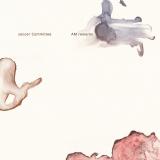
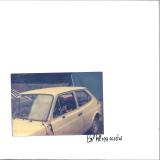
Since 2005, Mariska Baars aka soccer Committee, has quietly carved out a singular space where folk, ambient and experimental music dissolve into one another. Working with little more than her voice, an acoustic guitar and delicate loops, Baars creates songs of a remarkable intimacy. There's nowhere to hide in these arrangements, and that's precisely where their magic lies.
For Accidental Meetings, Baars revisits a selection of songs from across her catalogue, gently reshaping and reimagining some of her finest work. The result is a deeply personal, evocative listen that feels both familiar and newly discovered.
out of Stock
Last delivered 6 days ago available to reorder, subject to availability
Elektronische Klangreisen zwischen pulsierendem Techno, treibendem House und atmosphärischer Ambient-Electronica. Treibende Grooves, verspielte Beats und futuristische Effekte schaffen Kopfkino, Bewegung und positive Energie – perfekt für Dancefloor, Afterhour oder entspannte Hörmomente.
EN
The electronic sound goes from pounding techno to driving house and atmospheric ambient electronica. Driving grooves, playful beats and futuristic effects create mental images, movement and positive energy – perfect for the dance floor, after-hours or relaxed listening moments.
The latest release from Rainbow Disco Club’s label imprint, Beyond Space And Time, is the debut compilation from The Melting Hours, a live project by Wata Igarashi and Kuniyuki. WataIgarashi continues to make his mark on the history of techno, whilst Kuniyuki has long been revered as one of Sapporo’s greatest treasures. The two artists, who have long held mutual respect for one another, met whilst performing at the Draaimolen Festival 2025, and this encounter gave rise to The Melting Hours.
‘Blue Sun’ is imbued with a freshness reminiscent of the ambient jazz masterpieces released by prestigious labels such as ECM and Windham Hill. ‘Liquid Dunes’ sees the organic tones of the flute and percussion melt into over ten minutes of abstract sound textures, whilst the breathtaking ‘Cloud Touch’ awakens amidst a swirling vortex of pulsating downbeats and arpeggios. It is said that ‘Blue Sun’ was created by reconstructing studio rehearsal recordings, whilst ‘Liquid Dunes’ and ‘Cloud Touch’ were crafted from live recordings at Draaimolen 2025. The essence of these works—and indeed of the project The Melting Hours itself—lies at the heart of their improvisational nature.
It brings to mind the Rainbow Disco Club event back in 2026, where they wove their sounds amidst fresh greenery and surrounded by listeners under a clear blue sky. It felt as though the pulsating energy was spreading across the dance floor, guided by a session from The Melting Hours that seemed almost like a living creature. The organic breath one senses in this work not only evokes precisely that scene but also allows us to feel the unique, ephemeral nature inherent in this project—and, consequently, the boundless possibilities that stem from it.
Rainbow Disco Club のレーベル・ライン'Beyond Space And Time'から放たれる最新作は、Wata IgarashiとKuniyukiによるライブ・プロジェクト、The Melting Hoursによる初の音源集だ。テクノ史に残る実績を現在進行形で刻み続けているWata Igarashi、長きに渡り札幌の至宝として尊敬を集めてきたKuniyuki。兼ねてよりリスペクトを送り合ってきた両名がDraaimolen Festival 2025への出演を契機に邂逅し、始動したプロジェクトがThe Melting Hoursである。
快晴の元で新緑とリスナーに囲まれ音を紡いでいった、去る2026年のRainbow Disco Clubを思い出す。まるで、生き物のようなThe Melting Hoursによるセッションに導かれ、脈動するエネルギーがフロアに伝播していたようだった。この作品から感じられる有機的な息遣いは、まさにそんな情景を思い起こすものであると同時に...このプロジェクトが宿すその場/その時限りの唯一無二性と、それ故に広がっていく限りない可能性をも感じさせてくれる。
Garefowl is a project connected to the archipelago of St Kilda, Scotland. Ewan Macdonald and his father Murdo, relatives of one of the men who killed the last Great Auk (Garefowl), conceived the project to reflect on and mark this family history. Garefowl is an international collective of musicians combining strings and electronics: Nathan Bontrager (viola da gamba/harmonium/banjo), Stuart Graham (bouzouki/harmonica/harmonium), Chris Jones (concertina/mandolin), Ewan Macdonald (fiddle/smallpipe drone), Richard O’Flynn (island sounds/percussion/XRD drones), Jess Whelligan (cello).
Things That Vanish was recorded on Hirta, the main island of St Kilda, at night. The soundscapes of Hirta breathe across the record: a quiet rolling swell of winds, waves, birds, and the otherworldly thrum of the snipe. Taking influence from the traditional folk music of St Kilda, the tunes on the record are inspired by the threatened seabirds of the islands. The band were intrigued by the folk stories around these birds, and how they often are depicted to imbue a primal, dark and haunting nature. In such tales, the birds retain a quality akin to a sea monster: preying upon calves and sheep, and believed to be the pelagic souls of drowned sailors or the cursed spirits of cruel captains.
No synthesizers were used on the recording. Instead, the production draws entirely on sampled and processed field and hydrophone recordings collected on St Kilda. Additionally, drones were created through a process pioneered by Richard O’Flynn and Joe Gardner. Rock or bone samples are analysed using X-ray diffraction (XRD), which creates a spectrum with peaks corresponding to the sample’s chemical composition; this spectrum can then be mapped to sine waves, forming a drone.
Created in collaboration with Florida-based production duo The Still Brothers, the album pairs Rollo's songwriting with beautiful analogue production and rich, organic arrangements. The project was further elevated by producer and mixer Mike Hill, before Grammy Award-winning mastering engineer Dan Millice put the finishing touches on the record.
Recorded over the course of several visits to The Still Brothers' studio in Florida, The Jelly Man was shaped by both its surroundings and the creative partnership at its heart.
Together, Rollo and The Still Brothers crafted a beautifully warm, analogue-sounding record, deeply inspired by Florida's natural beauty and the laid-back atmosphere. Recorded with an 8-channel Tascam tape machine, the album radiates warmth, vibrancy and character, while a host of carefully chosen collaborators bring their own distinctive voices to each track.
Rollo Doherty is a multi-instrumentalist, songwriter, producer and composer, as well as an accomplished filmmaker, illustrator and animator. His previous EP earned him support slots on Skinshape's UK tour and Palace's European tour, alongside airplay and support from BBC Radio, KEXP and NPR.
The Jelly Man marks an exciting new chapter for Rollo Doherty—an album that captures a sense of place, collaboration and timeless craftsmanship.
Created in collaboration with Florida-based production duo The Still Brothers, the album pairs Rollo's songwriting with beautiful analogue production and rich, organic arrangements. The project was further elevated by producer and mixer Mike Hill, before Grammy Award-winning mastering engineer Dan Millice put the finishing touches on the record.
Recorded over the course of several visits to The Still Brothers' studio in Florida, The Jelly Man was shaped by both its surroundings and the creative partnership at its heart.
Together, Rollo and The Still Brothers crafted a beautifully warm, analogue-sounding record, deeply inspired by Florida's natural beauty and the laid-back atmosphere. Recorded with an 8-channel Tascam tape machine, the album radiates warmth, vibrancy and character, while a host of carefully chosen collaborators bring their own distinctive voices to each track.
Rollo Doherty is a multi-instrumentalist, songwriter, producer and composer, as well as an accomplished filmmaker, illustrator and animator. His previous EP earned him support slots on Skinshape's UK tour and Palace's European tour, alongside airplay and support from BBC Radio, KEXP and NPR.
The Jelly Man marks an exciting new chapter for Rollo Doherty—an album that captures a sense of place, collaboration and timeless craftsmanship.
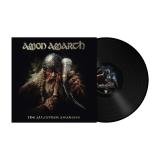
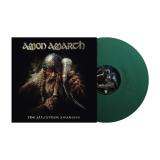
On The Allfather Awakens, Amon Amarth created a definitive 10-song masterwork that further cements the legacy of the lineup’s spectacularly memorable riffs and unflinching aural power. The opening track of The Allfather Awakens, the epic tale of “Gjallarhorn,” is followed by the heroic battlefield tale “Eight Legs of Thunder,” while “Upphaf,” a translated stanza from the prophetic poem Völuspá, marks the band’s first-ever acoustic offering. The iconic Swedish melodic death metallers took a new songwriting approach for The Allfather Awakens, the band’s 13th album since 1998’s Once Sent from the Golden Hall. The Allfather Awakens came to life across two recording sessions, months apart, at producer Jacob Hansen’s studio in Denmark. Amon Amarth began writing songs while touring, rather than waiting until they were off the road. The first session was Spring 2025; the final recording was completed in March 2026.
On The Allfather Awakens, Amon Amarth created a definitive 10-song masterwork that further cements the legacy of the lineup’s spectacularly memorable riffs and unflinching aural power. The opening track of The Allfather Awakens, the epic tale of “Gjallarhorn,” is followed by the heroic battlefield tale “Eight Legs of Thunder,” while “Upphaf,” a translated stanza from the prophetic poem Völuspá, marks the band’s first-ever acoustic offering. The iconic Swedish melodic death metallers took a new songwriting approach for The Allfather Awakens, the band’s 13th album since 1998’s Once Sent from the Golden Hall. The Allfather Awakens came to life across two recording sessions, months apart, at producer Jacob Hansen’s studio in Denmark. Amon Amarth began writing songs while touring, rather than waiting until they were off the road. The first session was Spring 2025; the final recording was completed in March 2026.
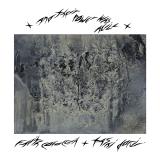
And Their Power Is Alive is a collaborative record between the Vashon Island based artist Faith Coloccia and Ashville based guitarist Tashi Dorji out September on Whited Sepulchre Records. Coloccia and Dorji’s longstanding collaborative relationship and friendship bolsters this massive conceptual weight –– the music is as stirring as it is gorgeous, as exploratory as it is surefooted. And Their Power Was Alive manifests and rises up as a profound iteration of the interrelatedness of the personal and the political, poetically. Coloccia’s plaintive voice, as always, is clear and stirring, intimate, close, and notably here recorded without reverb. She is steady and her lyrics echo dream phrases which visited her during major life shifts: a drive through the arid desert, explaining the concept of private property to the next generation, intergenerational knowledge and caregiving. All of this establishes a melancholia of reflections on land, history, scale. The first words sung on this record are: “Cosmic Horror! I am nothing, I am no-one” and even here, Coloccia is steady. Dorji’s glacial layers of distorted howling guitar create a rise and crest and fall –– symphonies of noise, roaring but distant like fire in the hills, interwoven with piano, organ, and tubular bells.
Pain threaded with joy is the sound of survival. On The Hard Truth, Wynonna isn"t letting go of either one, carrying everything she"s endured and reinventing herself as an artist. This ten-track tribute to deep sorrow and dogged persistence strips away layer after layer of the lush production that defined Wynonna"s previous recordings, delivering in its place her most personal and powerful work yet. ANTI- is proud to continue its tradition of embracing American legends and giving them a platform to reach new heights. The Hard Truth has a major contributor in the form of producer Cactus Moser, Wynonna"s partner in music and life. Wynonna and Moser shared songwriting duties on The Hard Truth, and the resulting tracks were recorded to capture and compliment the raw power he"d witnessed decades ago. What they"ve created together is an unvarnished elegy to the dead and the missing, an album that pays tribute to choosing love in the face of suffering. Through instrumentation and arrangements unlike any record in Wynonna"s four-decade career, The Hard Truth rolls in like a night train hitting listeners on the blind side.
BIT30-2 THE CROWDPLEASERS "I Want You To Know 30th Anniversary E.P." The first B.I.T Productions 12" was released on single sided white label on 11th December 1995 and became a rather big track across the country with its big synths, catchy vocal hook and a massive break in the middle that lead to a dirty, well-known synth melody that created a huge hands in the air moment, as well as the "Make some f**king noise" vocal. Now 30 years later, we have the “I Want You To Know 30th Anniversary E.P.” that features new remixes by The Crowdpleasers and Pianohead, as well as including the Original 1995 Mix. Also included is the NEW TRACK “I Know” which features the Original Mix with uplifting Piano and catchy vocals and the Stu Chapman Remix with dirty synths, banging breakbeat and a top piano riff. To finish off this 6 Track E.P., the previously unreleased Original Mix from 2000 of “Celestial”, a pumping house track with atmospheric melody.
out of Stock
Last delivered 12 days ago available to reorder, subject to availability
Living Weapon returns with Death In The Family, a full-length that confronts mortality, meaninglessness, and the aftermath of existence. The release broken down over 23 minutes toward an unresolved end — life examined at its start and its finish, with the universe indifferent to either. Recorded, produced, and engineered by Jeremy Martin over fall 2025 into spring 2026 — the band's first time tracking a full album internally. Mixing handled by Taylor Young of The Pit Recording Studio and Mastering by Nick Townsend. The album is introduced with "The Leaving Process” laying out the album's core idea: life as connection, not permanence — matter created and destroyed, briefly aware of itself in between.
Liberation Front is a statement of pure intent from Sydney, Australia's TO THE GRAVE. Brutal and uncompromising in both sound and message, TO THE GRAVE create ugly music for uglier times. They rage against animal cruelty and environmental destruction, translating their death metal-infused deathcore into something unforgettable and utterly uncompromising. From the breakdown-laden assault of opener "MEAT THE HUMANS", Liberation Front is a suffocating return to form for the veganism-espousing quintet. While recent releases explored more hardcore-oriented territory, this album embraces deathcore at its most savage and relentless. Lead single "EYESTALK ABLATIONS" is a devastating statement, accompanied by a video every bit as violent and unforgettable as the music itself. Over the past 15 years, TO THE GRAVE have established themselves among the leading names of Australia's emerging deathcore scene, sharing stages with fellow Australians Thy Art Is Murder as well as international heavyweights including Lorna Shore. The band continues to tour extensively throughout Europe and North America, returning to the US and Canada in Fall 2026 alongside Crown Magnetar. Liberation Front is more than an album—it is a musical and lyrical call to arms, designed not only to rage against the machine but to educate, provoke and challenge listeners on every level.
'Quiet Pieces' initiates Abul Mogard’s personal imprint Soft Echoes with a definitive self-portrait of calm, contemplative, and discreet inner landscapes made audible. It is the first solo album on vinyl in four years. RIYL Alessandro Cortini, William Basinski, The Caretaker.
While sifting through archived material left idle from earlier projects, a chance encounter with a late uncle’s trove of beloved 78rpm classical and opera records prompted the reworking and completion of what would eventually become the album. Spinning dusty records at 33 and 45rpm, Abul Mogard recombined their enduring spectres with unfinished sketches from his archive. The resulting soundscape blurs distinctions between his memories and those of another, exquisitely short-circuiting the senses with its waking, dream-like lucidity.
This was a process I hadn’t explored in my earlier works. I began sampling brief moments from these records, altering them with studio effects and playing them at slower speeds. In many cases, I wasn’t entirely sure how the original music sounded. These fragments, once further processed, became a source of inspiration for my new compositions. Over time, I realised that the old pieces from the archive and the new material derived from the samples naturally complemented each other.”
The resulting pieces hover over a threshold, a liminal space that harmonises the old and older material. Voluminous waves of quiet and loud undulate between consonance and dissonance, conjuring imagery of a decaying grandeur that humanity’s decadence has surrendered to the elements. Abul Mogard’s seemingly abandoned yet vast landscapes are nevertheless intimate with timbral frissons of red-lined distortion. Elusive, yet as tangible as sea spray or smog, they affect the olfactory senses with a rarified, synesthetic quality that modestly engages one’s emotional register – a hypnotic, distinguishing feature long hailed as one of the hallmarks of his work. A fidelity to memory and dream recall is sensitively probed in the journey from the stately symphonic stasis of 'Following a dream' to the almost industrial, untethered brutality evoked by a looming silhouette that’s never fully visible in 'Constantly slipping away', culminating in the foreboding coda of 'Like a bird'. Those pieces appear to shield the album’s sentimental core, where the tempestuous play of light and shadow of 'In a studded procession' escalates to breathtaking, panoramic climax, while 'Through whispers' evokes an out-of-body-like experience encountered with visceral poignancy.
Looking back, Mogard notes an unexpected influence: “I realise being inspired by Phill Niblock, whose work I had barely known at the time but explored after his passing in 2024. His album 'Boston Tenor Index' changed the way I approached dissonance. It encouraged me to push my sound further, to the edge of a space where I began to feel uncomfortable.”
The album artwork, created by longtime collaborator Marja de Sanctis, features a photograph taken at the Temple of Jupiter Anxur, an archaeological site overlooking the Mediterranean Sea. Captured with an iPhone, the image traces the residual presence of construction techniques and architectural forms of the Romans, where material history is transcribed through contemporary tools. The convergence of ancient and modern technology aims to reverberate the site’s lasting spiritual presence – an echo persisting in what is now perceived as a quiet, emptied space. The spiral gestures towards infinity and light. Past and present dissolve into one another, reflecting 'Quiet Pieces' meditation on sound, memory, and time.
RIYL Alessandro Cortini, William Basinski, The Caretaker
out of Stock
Last delivered 8 months ago available to reorder, subject to availability
LUMINA marks a new chapter in C"mon Tigre"s evolution, where electronic music moves from the background to the core of the band"s sound. Across thirteen interconnected tracks, synthesizers, arpeggiators and club-inspired rhythms merge seamlessly with acoustic instruments such as oud, cello,vibraphone and percussion, creating an immersive, continuous listening experience. Rather than opposing tradition and innovation, LUMINA embraces their constant coexistence. The album explores how technology is reshaping not only the way music is created, but also how we experience sound, time and physical presence. Inspired by the rave as a space of collective ritual and temporary freedom, it treats repetition and rhythm as tools for communion rather than escapism, turning listening into a deeply physical experience. The music was first developed and tested live at Robot Festival (Bologna) and JazzMi (Milan) in late 2025. Those performances became a laboratory where the interaction between the music and the audienceultimately shaped the final record.
Baxter Dury’s eighth album, 'Allbarone', seemed to be done and dusted after release last autumn, yet super-producer Paul Epworth (Adele, U2) decided it was a good idea to work on extensions of five of tracks from the album. Not just extensions - full on electro-disco mixes that take tracks apart from the edges and reorder them into relentless dance floor tools built to perfectly soundtrack the small hours.
Each track finds a groove and takes its journey right through the middle of the original track, to create classic 12" extended remixes, adding a whole load of echoing dub over flickering percussion tracks, madly addictive basslines and gloriously languid disco rhythm tracks. From 'Kubla Khan’s hefty low-end groove to 'Alpha Dog’s deconstructed nightclub dub via 'Schadenfreude’s Eurodisco bass and fizzing hi-hat pulse, Paul Epworth’s phenomenal new mixes lift Baxter’s tracks up to another level.
Norway's Aura Noir was formed in 1993 by Aggressor & Apollyon in pursuit of a more thrash- based form of black metal than much of what was coming out at the time - particularly in their homeland - citing bands such as Slayer, Sodom & Kreator as inspirations along with purveyors of the scene such as Venom, for a dirtier, stripped down, violent black/ thrash metal sound. Their first official release was the 'Dreams Like Deserts' EP on Hot Records, & from there-on the band became a truly cult act, releasing a string of albums among ongoing live performances over the subsequent decades. All members of Aura Noir have had illustrious careers to date, with Carl-Michael Eide (Aggressor) notable for his work in Ved Buens Ende, Dodheimsgard, Virus, & Fleurety, as well as being part of other scene icons such as Ulver & Satyricon in their formative years. Apollyon, currently also seen in Coffin Storm with Darkthrone's Fenriz, previously featured in Dodheimsgard, as well as Lamented Souls & Immortal. Completing the trio is Blasphemer, formerly of fellow Norwegian legends Mayhem, as well as being current mainman in his recently established band, Ruim. Originally released in 2012, 'Out To Die' was the band's fifth full length release, & a continuation of the savage raw & ugly feast offered by its predecessors, containing eight relentless tracks in praise of the old thrash masters & early primal black metal forefathers of the 80's. 'Out To Die' features additional guest lyrics by Dirge Rep (Gehenna/Enslaved), & Fenriz, whilst the fittingly underground cover art was created by the prolific artist, Costin Chioreanu.
Initially forming under the moniker of Black Death back in 1986, the star of Darkthrone has ascended with reverence & a degree of infamy over the course of four decades, to become one of the most notable metal bands to have emerged from Norway. Highly inspirational to a whole generation of bands, & also uncompromisingly steadfast throughout their now extensive catalogue, the long-standing duo of Fenriz & Nocturno Culto have remained dedicated to the art of the riff & forging their own path, relentlessly steering the band against the tide of trend. From the death/ doom technicality of 1991's debut masterpiece 'Soulside Journey', through the spearheading of the notorious "second wave of black metal" period of the earlier 1990s, & the integration of punk & heavy doom elements along with way, the Nordic titans have undoubtedly carved an exquisite & eclectic legacy. After a sequence of albums under the Moonfog label throughout the mid-latter 90's & into the new millennium, Darkthrone made the leap back to their original home at Peaceville, for a spectacular return in the shape of 'The Cult Is Alive', released in 2006. With the band's own newly-established Necrohell 2 studio in operation, this allowed the duo to make everything purely on their own terms & in their own time. Creative boundaries were also further removed in order to embrace some of the punk influences which had to date been more subdued, & in the process, created the beginnings of a new era for the band, first revealed in the form of lead track 'Too Old, Too Cold'.
Their music was never confined by genre limitations. It drew equally from Doom Metal's oppressive weight, Gothic Rock's romantic desolation, and the emotional grandeur of Dark Wave, creating a soundscape that was uniquely their own. "Seasons " marked the beginning of this remarkable journey. A debut album rich in atmosphere and emotional depth, it introduced a band already possessing a mature artistic identity. Its songs unfold like chapters from a forgotten gothic novel, where every melody is wrapped in shadows and every lyric resonates with profound emotional sincerity. EverEve expanded their vision with "Stormbirds", an album that many regard as one of the defining moments of European Gothic Metal. Majestic, dramatic, and emotionally overwhelming, it elevated the band's songwriting to extraordinary heights. The interplay between crushing guitars, haunting keyboards, and deeply evocative vocal arrangements created a listening experience that remains as captivating today as it was upon its release.
Their music was never confined by genre limitations. It drew equally from Doom Metal's oppressive weight, Gothic Rock's romantic desolation, and the emotional grandeur of Dark Wave, creating a soundscape that was uniquely their own. "Seasons " marked the beginning of this remarkable journey. A debut album rich in atmosphere and emotional depth, it introduced a band already possessing a mature artistic identity. Its songs unfold like chapters from a forgotten gothic novel, where every melody is wrapped in shadows and every lyric resonates with profound emotional sincerity. EverEve expanded their vision with "Stormbirds", an album that many regard as one of the defining moments of European Gothic Metal. Majestic, dramatic, and emotionally overwhelming, it elevated the band's songwriting to extraordinary heights. The interplay between crushing guitars, haunting keyboards, and deeply evocative vocal arrangements created a listening experience that remains as captivating today as it was upon its release.
Three years following the critically acclaimed "A Journey told through Fire" (2023), the new album navigates a sprawling conceptual narrative, tracing the cyclical nature of the cosmos from its initial spark in the void to its inevitable dissolution. Lyrically, the album explores the terrifying scale of cosmic darkness and the fragility of existence within a primordial emptiness. Sworn investigates the philosophy of becoming and unmaking, where reality and time emerge from nothingness only to eventually collapse back into the same unfathomable origin. Musically, "Null Crowned the Infinite" pushes the boundaries of the band's established sound, balancing their signature melodic tension with newfound levels of aggression and atmospheric depth. The record features "The Starless Origin", a twelve-minute epic that stands as their longest composition to date, alongside " Fracture of Aeons ", which the band identifies as their most aggressive track ever recorded. Sworn collaborated with renowned producer Jens Bogren at Fascination Street Studios , who handled the mixing and mastering. Bogren's legendary portfolio, featuring giants such as Opeth, Arch Enemy and Behemoth, brings a polished yet devastating edge to the performances of Max Wilson, Christoffer Kjorsvik, Goran Hope and Tom Ian Klungland. The album artwork is equally striking, created by Par Olofsson, known for his iconic work with Aborted and Kreator.
Three years following the critically acclaimed "A Journey told through Fire" (2023), the new album navigates a sprawling conceptual narrative, tracing the cyclical nature of the cosmos from its initial spark in the void to its inevitable dissolution. Lyrically, the album explores the terrifying scale of cosmic darkness and the fragility of existence within a primordial emptiness. Sworn investigates the philosophy of becoming and unmaking, where reality and time emerge from nothingness only to eventually collapse back into the same unfathomable origin. Musically, "Null Crowned the Infinite" pushes the boundaries of the band's established sound, balancing their signature melodic tension with newfound levels of aggression and atmospheric depth. The record features "The Starless Origin", a twelve-minute epic that stands as their longest composition to date, alongside " Fracture of Aeons ", which the band identifies as their most aggressive track ever recorded. Sworn collaborated with renowned producer Jens Bogren at Fascination Street Studios , who handled the mixing and mastering. Bogren's legendary portfolio, featuring giants such as Opeth, Arch Enemy and Behemoth, brings a polished yet devastating edge to the performances of Max Wilson, Christoffer Kjorsvik, Goran Hope and Tom Ian Klungland. The album artwork is equally striking, created by Par Olofsson, known for his iconic work with Aborted and Kreator.
Spring 2026 saw The Proclaimers recording their new album, You May Offend. It is brothers Craig and Charlie Reid’s first album since 2022’s hugely acclaimed Denture’s Out (“Proves you don't need to be a young pretender to land hit after palpable hit,” – MOJO magazine). Their 13th studio album’s 12 tracks – punchy and punky, rousing and carousing, tender and tough – were recorded at Monmouth’s legendary Rockfield Studios with producer Dave Eringa, their crack live band – Steven Christie, Garry John Kane, Zac Ware and Clive Jenner – and frequent guest guitarist, Manic Street Preachers’ James Dean Bradfield. The result is an album, as ever, concise as well as incisive, and about looking forward. Pushing on and digging into the issues and feelings that matter to them here, now and tomorrow, not yesterday, as with the title track, and first single, a lament for the state of free speech, with Charlie approving of the fact that the title can be taken two ways: “As in: ‘Look, careful what you do, you may offend someone.’ Or: ‘OK children, you may now offend.’ Is it an instruction or an invitation? Or a warning?” A powerful accompanying video for the You May Offend single is being created by Emmy & BAFTA award winners, director Douglas Mackinnon in partnership with Peter Anderson Animation. “My favourite band of all time. They write the most spectacular songs, big hearted, uncynical passionate songs.'” - David Tennant “There is a whole other world of music behind that song that I’ve just been discovering, and they’re a wonderful, wonderful band. Now we live in the age of coolness that doesn’t mean anything, it's just quality and soul. The Proclaimers make more sense than ever.” – Chris Martin after Coldplay performed Sunshine on Leith at BBC’s The Piano Room
Plush ‘60s Pop-Psych Soundtrack With DVD Of Feature Film! In 1967, the Cyrkle recorded The Minx, an intriguing soundtrack laden with three-part harmonies and breezy arrangements. This legitimate, white vinyl reissue (created from the master reels, with full participation of the band members) includes bonus tracks and extensive notes, and also features a DVD with the original, outrageous film!
New super-groovy one-off pressing purple double-vinyl very limited edition of Miami Sound 2 housed in gatefold sleeve, complete with two full-colour inner sleeves containing extensive text and exclusive photography from TK Records in-house photographer Larry Warmoth. Soul Jazz Records’ Miami Sound 2 is a superlative collection of 70s soul, funk, disco and boogie featuring tracks from legendary artists such as Betty Wright, Timmy Thomas, Gwen McRae, Milton Wright, T-Connection and many more, all released on the mighty TK Records musical empire based in Miami, Florida.
Throughout the 1970s founder Henry Stone’s TK Records rose up to be one of the most important forces in black music, successfully pioneering the evolution in musical fashions from the early gritty funk and soul at the start of the decade to the arrival of disco in the mid-70s. This album is a rollercoaster journey across soul, funk, disco and boogie, a party-rocking dancefloor-filling collection of monster tracks that includes million-selling hits such as Betty Wright’s classic ‘Clean Up Woman’, Timmy Thomas’s ‘Why Can’t We Live Together’, T-Connection’s ‘Do What You Wanna Do’, anthemic rare groove club hits including Gwen McCrae’s massive ‘All This Love I’m Giving’ and Milton Wright’s ‘Keep It Up’, plus a host of hard-to-find gems and rarities from the likes of Raw Soul Express, Chocolate Clay, Beginning of the End, Robert Moore, Clarence Reid, Little Beaver, Paulette Reeves and many more. TK Records functioned more like a close-knit family than a typical record company. Based in the industrial Hialeah district of Miami, music man Henry Stone surrounded himself with a host of creative artists, musicians, songwriters and producers who created an immediately identifiable TK sound as well as making musical stars out of many of its artists
Flug brings his singular vision to Backspin Records with 'From My Soul', a 7-track EP that marks a powerful new chapter for both artist and label, rounded out by a remix from Kashpitzky. Moving between deep emotional techno, raw percussive functionality and high intensity, the release showcases Flug's signature precision and narrative depth while keeping things classy and never falling for overused tropes. Kashpitzky completes the package with a remix that reinterprets the source material from a darker, more straight-forward angle. ??
Opening with the title track 'From My Soul', Flug sets off on an epic 8-minute journey built on reverberating melodic layers, shimmering chord pads and a strong low endthat unfolds slowly and deliberately, balancing emotional weight with a hypnotic drive. 'Make It Loud' follows with a more stripped, functional direction, where warm low-end energy, minimal percussion and reverb-drenched sine wave synth hits create a tight, circular groove anchored by a subtle but sinister vocal presence. ??
On the flip side, 'Human Instinct' turns the energy more direct and physical, driven by a saturated kick drum, looping synth motifs and sparse vocal cuts that heighten tension without disrupting the flow. 'The Awakening' expands the emotional scope with a deep kick and tom-driven bassline, expansive droning pads and dragging percussion that build a rich, cinematic atmosphere. Kashpitzky's remix reimagines the original at a faster BPM with distorted chord stabs, off-grid hi-hats and layered synth work creating a tense, industrial atmosphere that breaks into a spacious breakdown before dropping back into a stripped,high-impact groove. ??
With the 'From My Soul' EP, Flug marks a strong first statement on Regal's Backspin Records, delivering a cohesive body of work that balances depth, emotion and dancefloor utility, reinforcing the label's dedication to innovative techno.
The story of each re-release begins with the original. In the late 90s, Uwe Zahn (Arovane), along with Robert Henke (Monolake) and Stefan Betke (Pole), began releasing music on Torsten Pröfrock’s (Dynamo) newly launched DIN label. This was a very inconspicuous undertaking, but fans of the flourishing IDM, glitch, and constantly evolving abstract techno genres quickly picked up on the quality of sound coming out of Germany. After a few successful EPs, Zahn began working on his debut full-length, Atol Scrap. The release was a success, at least in the underground circles, where followers of the melodic harmonies, stuttering off-beat rhythms, and, most importantly, advanced sound design feverishly consumed the imprint’s output. There was only one thing missing – the album was never pressed on vinyl, and for decades remained in the digital domain. The fans, of course, inquired. There were multiple offers on the table, but Zahn retained control until he was assured that it was properly attained. “I thought of taking everything into my own hands and releasing the record myself,” says Zahn, “but at the end of last year, Matthias from Keplar asked me to re-release Atol Scrap on vinyl.” The label and its owner revolve in the Morr Music universe, and so it made sense for Zahn to trust the platform to treat the record right.
Listening to Atol Scrap over twenty years later it is inane not to admit how well it has held up. Where other genres clearly aged, becoming stale, bland, and dull, the music on eleven tasty tracks still keeps the neurons tickled with each note. More than an echo of the past, the bottled sound truly has matured. Many of the newly evolving techniques are recognizable on the album. “I created the digital artifacts with a digital multi-track recorder, the Fostex D80,” recalls Zahn. “The thing had a scrub wheel with which I could achieve wonderful glitch effects by winding through the audio data. I have sampled and further processed these artifacts.” And this approach is still embedded in Zahn’s sound design. “I still use my 24-track analog desk from Tascam to mix my audio. I love to use hardware synths and samplers. I’ve definitely built upon my studio experience in the 90s.” From this debut to the most recent output, Arovane’s sound has evolved to become more intricate, detailed, and pronounced. “My music has become much quieter and much slower. But that’s probably also due to the noise in the world.” And just as Atol Scrap reminds Zahn of the past, retaining charm preserved in a container traveling through time, it also jitters memories of long ago, when we were twenty years younger, less experienced, and bold. For me, among the many records of the time, this album held a special place in life, my heart, and many CD boxes moved across the world. And now I’m only happy to restock the vinyl space, where Atol Scrap belongs among the beloved records. Welcome home. - Mike Lazarev
Remastered and cut to vinyl by Kassian Troyer @ D&M. Cover art by Jim Kühnel based on a photograph by Uwe Zahn.
out of Stock
Last delivered 12 days ago available to reorder, subject to availability
First Principles marks the debut release on Groove Disciples Series, a new DJ-focused vinyl catalogue from 80147, created as a natural extension of the Groove Disciples Podcast. While the podcast has connected DJs and selectors from local scenes across Europe through guest mixes and conversations, the new series continues that mission through carefully curated vinyl releases from artists who are both DJs and producers.
Opening the catalogue, Bloody G delivers four dancefloor-oriented cuts that explore the space between deep house and Detroit-inspired techno edges. From the melodic and melanchonic "Message in the Sound" to the driving "Regroup Reclaim Rebuild" and "Machine Funk" with a reinterpretation by Southbound Sounds, the EP is built with club functionality at its core, favouring groove, analogue warmth and musical restraint over passing trends.
First Principles establishes the philosophy behind the series: music first, DJs at the centre, and vinyl as the medium that continues to connect local clubbing scenes through music, collaboration and community.
out of Stock
Last delivered 12 days ago available to reorder, subject to availability
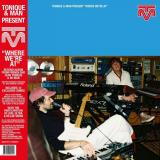
With Where We’re At, Tonique & Man deliver a warm and vibrant second album blending indie pop, soul and soft disco. Staying true to the groove that has become the duo’s signature, the record reveals a more mature and personal side of Jean Tonique and Mi Man.
Both recently becoming fathers, the two musicians are entering a new chapter in their lives, one that naturally shapes the album’s songwriting: a more intimate reflection on how far they’ve come, what they’ve built, and what continues to drive them to create.
Recorded at the legendary Studio Ferber in Paris, Where We’re At also features collaborations with Girl Ultra and Rejjie Snow, bringing new textures to the duo’s sound. An elegant and generous album where pop immediacy meets more intimate songwriting, opening a new chapter for Tonique & Man.
Call of the Wild and Void is the sixth studio album by Hunter Complex and arrives on the Seattle-based label SFI Recordings. It features contributions from Aquiles Navarro (trumpet), new age legend Kat Epple (flute) and many more. Call of the Wild and Void is the follow-up to the critically acclaimed albums Airports and Ports (Burning Witches, 2022), Dead Calm and Zero Degrees (Burning Witches, 2020) and Open Sea (Death Waltz, 2019). The artwork was created by Andrew Crawshaw for Broken Press.
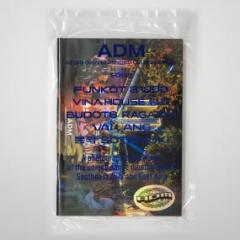
228 page photobook, printed on high quality Japanese paper.
Paperback
Size: 257 x 182 x 7mm
Enclosed in a printed clear plastic bag
Soi48 proudly presents this book, a photographic document of the unique dance music clubs
and culture of Southeast Asia and East Asia. The photos, from the years 2017 through 2025,
were taken in nightclubs, discos, festivals, raves, sound system parties, private parties and
migrant worker clubs — the places where Asia’s unique dance music genres are born and
thrive. ADM, with its exclusive on-the-spot snapshots, provides an extraordinary visual
archive of Asian contemporary dance music. Journeying through Thailand, Vietnam, Laos,
Malaysia, Indonesia, Philippines, Myanmar, Taiwan, Korea and Japan, Soi48 captures
glimpses of how people create their nights, visually comparing the differences between
countries in fashion, dance style, lighting, club interiors, flyers and more, showcasing the
distinctive entertainment culture that each country has created. The 167 photos also feature
the pioneering DJs and track makers who built unique music genres in each country, such
as Budots (Philippines), Vina House (Vietnam) and Saiyo (Thailand). Also of note: the book
provides a valuable record of nightlife during the COVID-19 pandemic; captures the energy
that migrant workers release in clubs on weekends; and in general showcases the ingenuity,
wit and passion of music lovers throughout the region.
Soi48:
A duo, comprising Tokyo natives Keiichi Utsuki and Shinsuke Takagi, that promotes the
magic of Asia and Asian music through DJ-ing, writing, design, and party activities. Their
interests range from traditional music to cutting-edge dance music, released on physical
media as well as on the internet. In addition to supervising the film Bangkok Nights (Kuzoku)
and the EM Records Thai music series, they introduce the joys of Asian music and travel
through talk events, TV, radio appearances, etc. Their books include TRIP TO ISAN: A
Traveling Thai Isan Music Disc Guide (DU BOOKS), OMK#001 (OMK), and ADM: Asia's own
unhinged club culture. As ever, they enthusiastically continue to research dance music and
sound system culture in Asian countries.
'Music aged in time, resonating from the surface to the core through layers and sediments of stones - the strata. Four morning recording sessions with a separation between them of between three and ten months - a chronozone that will rest for a time and on which the next one will be added, thus forming the total of the six pieces of the album - becoming six strata.
'A slow-moving album that develops landscapes of subtle but continuous evolution, where we find layers of diverse nature created from different procedures, bathed in the calm waters of wabisabi, where melancholy, immensity, insignificance, the potential of the unemerged, coexistence and simplicity converge at the same time.'
maya ongaku has always been searching for what exists just beyond the edge of perception. Since forming in the seaside towns surrounding Enoshima, the trio has followed a path guided less by intention than intuition, allowing songs, ideas, and experiences to emerge through a process they describe as 自然発生 (shizen hassei), spontaneous occurrence. Nothing Space Music is the deepest expression of that philosophy to date.
Written in the aftermath of several years of international touring, the album emerged from a growing desire to reconnect with silence. As stages became larger and the world around them moved faster, the band found themselves drawn toward the quieter spaces beneath it all. What began as a reflection on stillness & silence eventually expanded into the idea of "Nothing Space". To realise the album, maya ongaku created an entirely new environment for themselves. Near a seaside shrine in their hometown, the trio transformed a large soundproof building into Nothing Space Studio, a space built specifically around the needs of this record.
Nothing Space Music: a meditation on presence, perception, and the possibility of rediscovering the world through attentive listening.
out of Stock
Last delivered 8 days ago available to reorder, subject to availability
Bad Company has helped shaped the sound of an entire rock era with iconic powerhouse rock anthems and popular ballads. Having unearthed the original multi-track tapes and discovered previously unreleased tracks, takes, and mixes the band has remastered their first two albums to create new Deluxe Editions.
Singer, songwriter and multi-instrumentalist Rodgers, along with guitarist/songwriter Mick Ralphs, bassist Boz Burrell, and drummer Simon Kirke released the band's second album Straight Shooter in April 1975, 40 years to the month of the new deluxe edition. The album rose to #3 on the U.S. album chart and was certified 3x platinum behind the hit singles Feel Like Makin' Love' and Good Lovin' Gone Bad' as well as the rock radio staple Shooting Star.'
All bonus tracks on the Deluxe LP version are previously unreleased. Among the standouts is a stripped-down version of Shooting Star,' and a remix of Good Lovin' Gone Bad' with alternative guitar and vocals tracks.
Side One
1. Good Lovin' Gone Bad
2. Feel Like Makin' Love
3. Weep No More
4. Shooting Star
Side Two
1. Deal With The Preacher
2. Wild Fire Woman
3. Anna
4. Call On Me
Side Three
1. Good Lovin' Gone Bad (Alternate Vocal & Guitar)*
2. Feel Like Makin' Love' (Take Before Master)*
3. Weep No More (Early Slow Version)*
4. Shooting Star (Alternate Take)*
Side Four
1. Deal With The Preacher' (Early Version)*
2. Wild Fire Woman (Alternate Vocal & Guitar)*
3. Anna (Alternate Vocal)*
4. Call On Me (Alternate Take)*
Gradient returns to Alt Dub with Random Layers, a deeply focused EP built around his exceptional control of minimal elements.
With a restrained palette of kick, bass, chords and texture, each track evolves with patience and precision, allowing subtle shifts and carefully placed layers to create a powerful sense of depth and space
Sound layers are introduced with such control that the music evolves naturally, revealing its depth over time. Nothing feels rushed and nothing is unnecessary.
Gradient’s productions have a rare ability to make minimalism feel rich and alive. Nothing is excessive; every sound has a purpose. The result is four timeless, immersive dub techno pieces that balance classic dub techno atmosphere with a distinct sense of detail and control.
The EP also features a timeless remix from Echospace Detroits CV313, One of the most respected figures in the deeper end of dub techno, he brings his unmistakable sense of space and depth to the release, making this a particularly fitting and exciting collaboration.
Elegant, restrained and deeply atmospheric, Random Layers is another strong statement from Gradient and a perfect fit for Alt Dub.
PRAANA unveil their highly anticipated album Insight Out on Colorize, a deeply immersive body of work that explores reflection, connection and emotional growth through the duo’s signature cinematic lens.
Built around themes of reflection, presence and human connection, Insight Out creates a rich sonic landscape where atmospheric textures, subtle rhythms and emotive songwriting coexist with effortless grace. Featuring collaborations with Susie Ledge, Tina Parol, Freddie Elmberg and Courtney Storm, the album showcases PRAANA’s ability to create music that feels both intimate and expansive. An alias of Tritonal, PRAANA have amassed over 30 million streams, earned sustained support on SiriusXM Chill and recently completed U.S. tour dates in Chicago, Denver and a sold-out Elsewhere Rooftop show in Brooklyn.
Insight Out stands as a fully realised artistic statement, offering a space for stillness, reflection and meaningful escape through sound.
out of Stock
Last delivered 15 days ago available to reorder, subject to availability
Recorded spontaneously in Brooklyn and created entirely without written compositions, this album is an essential release for fans of ambient music, spiritual jazz, meditation, and deep listening. Features ISAIAH COLLIER on drums and tenor sax and produced by SONNY DAZE
Life Creates Itself is the new album by Bill Baird, releasing September 25th, 2026 on Royal Oakie Records. After years of restless wandering that took him from the Bay Area to India to Abbey Road and back again, Baird has returned home to San Antonio, Texas. Inspired by Lone Star legends Doug Sahm and Roky Erickson, the album inhabits a world where outsider country, avant-garde pop, and psychedelic folk dissolve into one.
Produced by longtime collaborator Jasper Leach (Tony Molina, Color Green) and mastered by indie-rock legend KRAMER (Galaxie 500, Daniel Johnston, Will Oldham), Life Creates Itself was recorded at Sear Sound in New York City in a single remarkable day — fitting for an album as indebted to Arthur Russell and Captain Beefheart as it is to Sir Douglas Quintet and Townes Van Zandt. The sessions brought together a constellation of collaborators around Baird and Leach, including Pedrum Siadatian (Allah-Las, PAINT), Phil Carluzzo, Austin Day, Oliver O'Haver, Jordan Johns, Michael Vattuone, Clara Kennedy, and Carluzzo’s dog Ernie.
Lead single "Yanaguana" — the original Payaya name for San Antonio, meaning either "land of many waters" or simply "where I am right now" — serves as a thesis statement for the album, a restless soul reckoning with what it means to finally come home. Meanwhile, "Karma Loan" is a fuzzy, sprawling psych track that spilled out of Baird during a deep immersion in Bach that features cello by Clara Kennedy and closes with a sound collage of spiritual gurus hawking easy paths to enlightenment. Then there's "Horse Moon" — built around pedal steel that shimmers like rays of moonlight, drifting through vignettes from a late night walk across New York City, with Pedrum Siadatian's lead guitar lending the whole thing an unhurried, dreaming quality. The night they tracked it, Baird climbed to the roof of Sear Sound and watched a full moon wash the city in a warm glow.
Baird has never sounded more at home, and Life Creates Itself may be his most cohesive record yet – a songwriter record through and through that stands apart from the rest of his discography. Royal Oakie Records is proud to release Life Creates Itself on September 25th, 2026, available on vinyl LP, CD, and digital download/streaming worldwide.
Our favorite London duo „ddwy“ are back on Public Possession with a 4 track EP titled „Tell Me, Told You“.
„Drink the real flowers“ is soft, emotional, cinematic stuff, giving hard late 90s early 2000s Trip Hop vibes. Check the B-Side for a very lush D.J. mix by „Stone“.
The title giving „Tell Me, Told You“ is peaking psychedelia, a warm, intense hug.
„Told You, Tell Me“ is orientated more towards the dancefloor and can surely create some serious ecstasy if played in the right moment.
In all this, the multiple layers of sounds intertwined with Naomi’s voice create one remarkable, organic whole that is full testament to the continuous evolution of these super talented musicians.
Dive in, fall slowly, land very gently.
»Pipe Dreams II & III« presents two new, side-long organ works by Mary Jane Leach, extending the sonic investigations of her 1989 landmark »Pipe Dreams«. Recorded in Ghent and Cologne, the two side-long pieces use shifting stops, resonance and beating tones to turn the pipe organ into a vivid, physical field of sound.
When »Pipe Dreams« was issued on vinyl for the first time by Blume in 2017, it was effectively the first time many of us encountered Mary Jane Leach’s music, finally placing her work in its proper historical context amid the searching Downtown milieu of Julius Eastman, Arthur Russell, Arnold Dreyblatt, Ellen Fullman, Philip Corner, Daniel Goode, and Peter Zummo. Leach collaborated with most of these artists at one point or another, either in Downtown Ensemble or as a guest on their records.
Now »Pipe Dreams II« and »Pipe Dreams III« arrive, recorded in 2023 and 2024 at Miry Concertzaal in Ghent, Belgium, and Kunst-Station Sankt Peter in Cologne, respectively.
»When I was a young child, my family lived next door to a church, where my mother was the organist. I spent many hours lying on the floor of the sanctuary listening to the music, letting the sound of the organ envelop me. I also liked to play the piano loudly with the pedal down, producing clouds of sound, much to my family’s annoyance. These two organ pieces explore some of my earliest musical interests and aesthetics.
In 1989, I lived in a tower attached to St Peter’s Church in Cologne, where I had access to its organ. It had two sets of pipes, front and back, which could create antiphonal effects. I spent countless hours exploring the possibilities of all the permutations of notes, space, and the resulting sound phenomena. I wrote »Pipe Dreams« for that organ. Fast forward to 2023, when I was asked to create a piece for organ for a concert at the Miry Concertzaal in Ghent, Belgium: »Pipe Dreams II«. I had a few days to familiarise myself with the organ, its available stops, and the layout of the console. I choreographed stop changes for a volunteer, as I couldn’t reach them myself. Some amazing sounds began to happen, and at one point the sound was so visceral that I felt as though I were taming a wild beast.
»Pipe Dreams III« was performed in 2024 on the organ that I had spent so much time playing in 1989–90. One big difference, though, was that the console was totally new and computerised. Having access to the organ for only a few hours before the concert, I decided that I did not have enough time to feel comfortable with the console and should not attempt to recreate the piece I had written in 1989. I would instead use the same sequence of stops and perform an improvised piece. I loved the sounds that were being created, and I was having so much fun that at one point I even started to laugh quietly. I began to visualise the beating notes as if they were atoms, opening them up to expose their innards, with the beating, higher-pitched notes — neutrons and protons — shimmering at the top, and the lower notes — the electrons — throbbing away at the bottom. I was playing notes not so much for their pitch value, but for how they affected the notes and sound phenomena already being played. Instead of a time signature, I timed the entries by listening to the beating patterns, waiting for the right moment to enter. And no, I wasn’t hallucinating.«
After regular appearances at Berghain since his debut two years ago, Altinbas now presents his contribution to Ostgut Ton, tying together five tracks that outline an expedition through celestial bodies in ‘Beyond the Veil’. Deepening his research on intricately crafted ambiance, the EP strikes a balance between commanding rhythm and blossoming synth work that reaffirm his inimitable style. ‘Beyond the Veil’ is a conceptual collaboration between an artist and a room; describing the dancefloor as an organism and the architecture of its surroundings.
Over the years, harmony has become synonymous with the Belgian artist’s sound. Deeply tuned and cohesive, Altinbas’s productions walk the boundary between insistent anticipation and unparalleled warmth. Although dancefloor effect remains a central theme for him, ‘Beyond the Veil’ is the latest chapter in a long study of obscurity in music that qualifies almost as ritualistic. Tracks like ‘Beyond the Veil’ and ‘Charming the Cosmic Snake’create tension in the keys that resonates like an expedition into new soundscapes. With weight and stability in the percussion, airy textures and hypnotic synth lines roll off the rhythm to mesmerize the listener. Sculpting his arrangements around the development of rich, dubby and atmospheric tones, Altinbas capitalises on the natural flow of his elements to provide an organic touch to tracks that are tuned especially for high pressure sound systems. ‘Entanglement’ and ‘Winter’ are both examples of this : soulful techno that ebbs and flows with each transition. Dimension is pushed dramatically into each of the five pieces of the EP as a direct response to the current climate of tool oriented techno. Keeping a safe distance from this approach, Altinbas invites listeners to explore the shape of his sound in an embrace rather than submit to its abrasion. The project concludes with ‘Antichamber’ - the fifth track of the EP that announces a departure from strict club codes. Dampening the rhythm from a pulse to a sway, a dreamlike landscape rises from deep within the record, smoothing over any of the rougher residuals from the preceding tracks. The descent that is ‘Antichamber’ is the result of an accumulated euphoria, gently guiding the listener back to consciousness.
‘Beyond the Veil’ represents a checkpoint for Altinbas in his research of moving a dancefloor not only physically, but emotionally. Carving out his own space in dancefloor-oriented music, he offers highly expressive compositions in defiance of the status quo. Altinbas offers this EP as a personal statement of where he stands; five tracks of carefully tended tone and harmonic glow create an emotional urgency for the collective experience.
out of Stock
Last delivered 6 days ago available to reorder, subject to availability
Trá Pháidín are a mutable collective of musicians who are geographically, culturally and mentally torn between Conamara Theas, Cathair Chorcaí, Ciarraí, Uíbh Fhailí, Sligeach and Port Láirge, active in one form or another since 2019. The music they make, which to date has mostly been self-released, is of an ambitious breadth, embracing traditional Irish absurdity, jazz, folk and krautrock influences, whilst remaining tantalisingly beyond any one specific understanding of either the world around them or even themselves. More defined however, is their overall conceptual approach, focusing upon original Gaelic music and what lies beyond simply “conas atá tú?”.
Cloch ‘s Claí (trans. Stone & Wall), their first record to be released by World of Echo, develops their established interests into more adventurous waters (and walls!) than ever. Based on the historical significance embedded into dry-stone walls, the album presents a satirical view of Éire’s relationship with her native tongue and the Gaeltacht (regions where Gaeilge - Irish Gaelic - remains the primary language). Constructed of ten tracks, each representative of a stone in a metaphorical stone-wall, Cloch ‘s Claí draws from styles of improvisation in Irish traditional music, exploring avenues of ornamentation and accompaniment in the tradition. As such, the arrangement changes in every performance, a new stone-wall articulated each time - the recording on this album represents just one such arrangement in one such performance. Inspired by Myles na gCopaleen’s An Béal Bocht, the wall comes to embody a variety of themes scattered across the landscape and psyche of na Gaeltachtaí - tokenism, housing, gentry politics, ribbon developments and so on. The result is a music expressive of regional styles in traditional music, krautrock, free jazz, post-rock, minimalism and drone presented in a way that feels instinctively fluid and reflective of a hushed existentialism from the west of Ireland.
On Cloch ‘s Claí, Trá Pháidín are: Conal Ó hAinmhuighe, Ultan Ó Labhradha, Peadar-Tom Mercier, Micheál Fitzgerald, Pól Ó Lionáird, Ruairí De Búrca. Cloch ‘s Claí will be released digitally and as a limited edition LP on 25th September via World of Echo. This record was created through the support of the DEIS Recording Grant & Ealaín na Gaeltachta.
A classic album recorded in 1976, featuring a superb lineup including Sam Jones, Kazumi Watanabe, and Fumio Karashima, with expansive cello solos. Highlights include an exhilarating duo number with the seasoned bassist Sam Jones, as well as Kazumi Watanabe’s hip guitar solos throughout.
East Wind was a groundbreaking jazz label established in 1974 through the full cooperation of Ai Music, as it was then known, and Nippon Phonogram, as it was then known. Over a period of about five years, the label produced albums not only by Japanese musicians such as Masabumi Kikuchi, Sadao Watanabe, and Terumasa Hino, but also by musicians who were engaged in creative activity on the global jazz scene at the time. In addition to the quality of the performances, the artwork, created with leading designers and photographers, brought a fresh new image to jazz albums and had a major influence on later record production.
Kosuke Mine’s electric album, with a strong rock and funk flavor, is set for reissue as part of "Spin This Now!" Vol. 9. This classic album shines with the outstanding combination of Mine’s saxophone with a wah-wah pedal and Mikio Masuda’s psychedelic keyboards.
East Wind was a groundbreaking jazz label established in 1974 through the full cooperation of Ai Music, as it was then known, and Nippon Phonogram, as it was then known. Over a period of about five years, the label produced albums not only by Japanese musicians such as Masabumi Kikuchi, Sadao Watanabe, and Terumasa Hino, but also by musicians who were engaged in creative activity on the global jazz scene at the time. In addition to the quality of the performances, the artwork, created with leading designers and photographers, brought a fresh new image to jazz albums and had a major influence on later record production.
World-famous pianist Tsuyoshi Yamamoto’s second East Wind release, "Life," appears in the lineup for "Spin This Now!" Vol. 9. Backed by a golden rhythm section with Sam Jones on bass and Billy Higgins on drums, Yamamoto delivers a supremely swinging performance. His delicate ballad playing on "If You Could See Me Now" is also essential listening.
East Wind was a groundbreaking jazz label established in 1974 through the full cooperation of Ai Music, as it was then known, and Nippon Phonogram, as it was then known. Over a period of about five years, the label produced albums not only by Japanese musicians such as Masabumi Kikuchi, Sadao Watanabe, and Terumasa Hino, but also by musicians who were engaged in creative activity on the global jazz scene at the time. In addition to the quality of the performances, the artwork, created with leading designers and photographers, brought a fresh new image to jazz albums and had a major influence on later record production.
This album is the soundtrack to Absolum, a fully hand-drawn universe with a unique story, created by the team behind Streets of Rage 4, TMNT: Shredder's Revenge, and more.
Known for Ori and the Blind Forest and Halo Infinite, lead composer Gareth Coker brings his signature emotional depth, blending dark fantasy orchestration with medieval-inspired themes and somber atmospheres.
From orchestral soundscapes to thrilling boss battle themes, this soundtrack features guest tracks from Mick Gordon (DOOM 2016, Wolfenstein: The New Order, Atomic Heart), Yuka Kitamura (Elden Ring, Dark Souls III, Dark Souls II), Motoi Sakuraba (the Dark Souls series, Mario Golf, Star Ocean), and Rachel Hardy (Stray Gods, Eternal Strands), setting the tone for the events unfolding in this cute yet twisted fantasy world.
Magic may be forbidden in these lands, but the music is no less enchanting!
Over the years, Faust has become many things, distinct as fingers, yet united as the hand that forms the fist. This series of new LPs on Bureau B sees each living member of the legendary 1971-1974 line up present their own interpretation of the Faustian myth, working alone or with collaborators to create new material that reflects their contemporary vision of what Faust can be.
Over the years, Faust has become many things, distinct as fingers, yet united as the hand that forms the fist. This series of new LPs on Bureau B sees each living member of the legendary 1971-1974 line up present their own interpretation of the Faustian myth, working alone or with collaborators to create new material that reflects their contemporary vision of what Faust can be.
Over the years, Faust has become many things, distinct as fingers, yet united as the hand that forms the fist. This series of new LPs on Bureau B sees each living member of the legendary 1971-1974 line up present their own interpretation of the Faustian myth, working alone or with collaborators to create new material that reflects their contemporary vision of what Faust can be.
Over the years, Faust has become many things, distinct as fingers, yet united as the hand that forms the fist. This series of new LPs on Bureau B sees each living member of the legendary 1971-1974 line up present their own interpretation of the Faustian myth, working alone or with collaborators to create new material that reflects their contemporary vision of what Faust can be.
Over the years, Faust has become many things, distinct as fingers, yet united as the hand that forms the fist. This series of new LPs on Bureau B sees each living member of the legendary 1971-1974 line up present their own interpretation of the Faustian myth, working alone or with collaborators to create new material that reflects their contemporary vision of what Faust can be.
Over the years, Faust has become many things, distinct as fingers, yet united as the hand that forms the fist. This series of new LPs on Bureau B sees each living member of the legendary 1971-1974 line up present their own interpretation of the Faustian myth, working alone or with collaborators to create new material that reflects their contemporary vision of what Faust can be.
Over the years, Faust has become many things, distinct as fingers, yet united as the hand that forms the fist. This series of new LPs on Bureau B sees each living member of the legendary 1971-1974 line up present their own interpretation of the Faustian myth, working alone or with collaborators to create new material that reflects their contemporary vision of what Faust can be.
Over the years, Faust has become many things, distinct as fingers, yet united as the hand that forms the fist. This series of new LPs on Bureau B sees each living member of the legendary 1971-1974 line up present their own interpretation of the Faustian myth, working alone or with collaborators to create new material that reflects their contemporary vision of what Faust can be.
“Tough love is a sonic dark romantic experience. Each song represents a different form of “Tough love”. A dark romance in Hollywood. Growing up in LA at the age of 17, now being 23 I’ve experienced a lot and learned so much about my self and love itself. All of these songs are written either about my own experiences, lessons and who I am today or inspired by a fantasy I’ve created in my mind and heart. These love songs tell the truth of what I desire and crave deeply, a love that is exciting and passionate and impossible to find in Hollywood, writing these songs are the closest I’ll ever get to living it. Words are spells. Songs are spells. I love writing about love because though it’s fleeting in those moments while I’m creating the record, its true. I live in it, feel it on my skin, close my eyes, taste it and make it real. Whether it’s something I want, something I had, something I’m missing, it is mine all the same. Tough love is about the darkest and toughest parts of love, songs for those themselves who are tough to love, and songs for love that’s tough to find.
Sonically I was inspired by, Massive attack, Portishead, Fleetwood Mac, Eagles, Alice in chains, nostalgic music from the 70s through the 90s and add my own dark twists. ” - Nessa Barrett
Radically exploratory, Raphael Loher’s Figuren is an album shaped by process and experimentation. Guided by intuition, listening, and a deliberate distancing from his primary instrument—the piano—, the LP marks a decisive step in the Swiss pianist and composer’s artistic development, expanding his sonic vocabulary while maintaining a distinct and personal language.
Figuren draws on ten intimate concert recordings from Keemuun—Loher’s debut for Three:four Records—created during the pandemic and performed in his studio for just one or two listeners. This source material was subsequently developed during a residency in the Blenio Valley, where Loher deconstructed melodic elements, isolated individual tones, and extracted resonances, reassembling them into new configurations. The process generated around 30 initial pieces and also informed his sophomore album, Hug of Gravity, released by Hallow Ground in 2025.
In a further stage of transformation, Loher processed these fragments through a Revox B77 tape machine, subtly altering their pitch before digitizing and reshaping them once again. This iterative cycle of manipulation and recombination forms the core of Figuren’s sonic language.
Departing from the more structured frameworks of his earlier work, Figuren foregrounds experimentation as both method and aesthetic. The compositions range from finely layered rhythmic microstructures to sparse, evolving melodic fragments, each unfolding with a precise sense of restraint.
Modi Bardo, an alumnus of Moonshine Recordings, is another who on the surface appears to be at the nascent era of their sound experiments, but in truth is a longtime explorer of outer realms of Dub.
There is much to mention here which can be uncovered with the correct keywords, but one of the early bright points would be Spacelings and Bassheads, the Detroit-based Psych duo Modi Bardo was half of, who although seemingly limited in the realms of recorded output (with only a compilation appearance each via the Electro visionaries Interdimensional Transmissions and Booty bass / Techno orientated Intuit-Solar) where in fact not-so-limited in the era in the way of public performance, even performing at the renowned Packard Plant renegades in the 90's with UR on occasion.
Forward to now, and Modi Bardo has created something that reaches for unknown territory in Dub. With an establishing A side that is deep and primordial in tone, a' la Challenger Deep and Babe Roots releases, this proves to be merely a fantastic tone setter for the B side, which seems to find a zone where Dub Techno, Half Time, and Autonomic DnB have not quite gleaned yet. Truly a record unlike any other, while somehow being an invaluable tool for DJ's exploring the links between the aforementioned sounds and even Dancehall and Jungle in the mix.
A must for all those chasing the evolution of dub reflective arts, and the adventurous DJ in general.
Reissue of the second album by the almighty TDeK, an absolute classic and one of the very best and most important Spanish Hardcore Punk records ever, originally released in 1986. An even more focused and destructive effort than their legendary debut, "Esto es Una Empresa Capitalista" (1984), with the band in top, killer shape ripping through 13 nasty, explosive and unforgettable songs. A memorable, ugly and fierce milestone of Spanish Punk and Hardcore created by an infamous band, absolutely essential! Includes two inserts.
Following the 2023 album Young Hearts, produced in collaboration with Kenny Beats, 22 Durnham Dew finds Benny Sings turning inward for his most personal album to date.
After decades of touring and recording, Benny has embraced a more grounded, family-focused lifestyle. 22 Durnham Dew was created with and about his immediate family, featuring contributions from both his wife and daughter. Across its songs, Benny reflects on fatherhood, family life, and the everyday moments of adulthood.
Long celebrated as one of the most distinctive voices in modern pop, Benny Sings continues to showcase the warmth, craftsmanship, and effortless charm that define his work.
Christophe Chassol's brilliantly-dazzling third album, crowns his trilogy of ultrascores (a method he elaborated for harmonizing, symphonizing real life, the 'here and now'), which started out in Creole-speaking New Orleans (Nola Che?rie, 2011) before pursuing its route through India (Indiamore, 2013).
In March 2014, Christophe Chassol took off for Martinique, his family's birthplace; these West Indies that epitomize everything he dreamt of expressing, from the purely personal to the perfectly panoptic. Hand-in-hand with the production sound mixer Marie-France Barrier and the sound engineer Johann Levasseur, the trio filmed and recorded a myriad of extraordinary encounters, scenes of everyday life, the carnival... a highly-evocative documentary that was to become the matrix of Big Sun.
Back in France, he composed, edited, rehearsed and created the 27 tracks of a 70- minute West Indian space odyssey. Big Sun is a weaveworld of birds' songs and Pipo Gertrude's whistling, Joby Bernabe?s poetry and a te?te-a?-te?te with a lady mountain-dweller, Sissido and Samak's rap, Mario Masse's flute, the Fort de France carnival, conch shell echoes, the ocean's music and the hullabaloo of a game of dominos. And sumptuous pieces of music like La Route de la Trace or Reich & Darwin, which suddenly spring up at a bend in the road and take our breath away.
HOL1D4Y’s debut album "Topology" explores the invisible connections that bind us together in an increasingly fractured world. Created by Scott Holiday, lead guitarist of Rival Sons, The record blends dreamlike textures with cinematic psych-rock, while embracing dance rhythms and free-form instrumentals, themes of love, technology, identity, and healing. Both expansive and intimate, Topology looks for meaning and human connection beneath the noise of modern life.
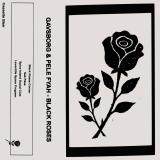
Picture the scene - October 2025, while staying at a friend’s apartment in Chennai, Gavsborg created umpteen ideas and contacted his good friend and bassist from back home, Delroy Pele Fyah Hamilton to collaborate. Hamilton, now based in Singapore performs and records regularly with F.Y .A.H. (successor band from Raging Fyah).
Both Blair and Hamilton share a love for Caribbean music. With this foundation the two set out to create something a bit different that sits between Bouyon, Dancehall & Dennery. The amalgamation resulted in this unique four-track instrumental EP . While the track titles are packed with broader Caribbean references, the project name and title track is an ode to the 90s dancehall pioneers, “Black Roses Crew” , who were based in Arnett Gardens (aka Jungle), Kingston, Jamaica, one of the important homes of 90s dancehall. Roses helped shape dancehall culture through dance, style, crew affiliation, and performance, largely soundtracked by Computer Paul’s Corduroy Riddim with Gerald Levy aka Bogle being the poster human.
Arnett Gardens (Jungle) is one of the key engines that produced the version of dancehall both Gavsborg and Pele draw here from. Think tight, bubbling, bouncing riddims, rolling basslines unlike anything you’ve heard before. Jamaican Dance Music for the movers and shakers
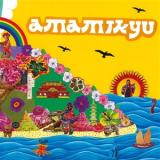
Tropical East Asian folk fused with psychedelic electronic rock and noise driven by a winding and jagged Sanshin guitar, shape forming vocals, odd percussion and spacey sounds. A Sgt. Peppers tour through the folklore of Okinawa. Amamikyu is the creation Goddess of the colourful Island of sound visited by Phil MFU ( formerly Vanishing Twin ) on his journeys through expanding his scope of experimental electronic music effortlessly locking style in with master Sanshin player and vocalist Yuko Tsubame to create a psychedelic trippy island of sound, revisiting classic folk songs in a new far out funky light. Amamikyu are a London based band of Phil MFU ( ex Vanishing Twin ) and Okinawan electric Sanshin player and singer Yuko Tsubame, with an expanding group of live musicians.
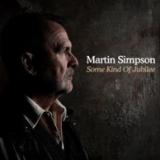
For acclaimed folk artist Martin Simpson, this release reflects not just a remarkable 50-year recording career, but over six decades shaped by song, tradition, and continual artistic growth. Yet this is not a retrospective, it's a forward-looking work, carrying the depth, skill, and passion of a lifetime into the present. Marking 50 years since his debut album Golden Vanity, Simpson describes Some Kind of Jubilee as "my best work to date." To realise this landmark project, he brings together an exceptional group of collaborators drawn from across his long and distinguished career. Among them are renowned pedal steel guitarist Greg Leisz, guitarist Zac Hobbs, cellist Liz Hanks, guitarist Louis Campbell, and double bassist Ben Nicholls. Together, they create a rich and textured soundscape that honours tradition while embracing fresh perspectives. Recorded at Groovemaster Studio in Santa Monica and completed in Yorkshire, the album blends newly written songs with reimagined traditional material and inspired reinterpretations from Simpson's own catalogue. The result is a deeply rooted yet vibrant collection that reflects both heritage and innovation. As Greg Leisz puts it, "This music has some profoundly deep roots - so dig in." With Some Kind of Jubilee, Martin Simpson honours his past while continuing to shape the future of folk music, reaffirming his place as one of the genre's most respected and enduring voices.
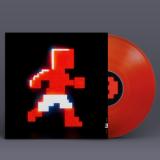
Featuring Nicholas Semrad (Empire of the Sun), Stu Brooks (Nine Inch Nails, Danny Elfman), Tim Lefebvre (David Bowie) and vocalist Gretchen Parlato, this new hardhitting, synth-fueled album distills Guiliana's vision into eight cinematic compositions that fuse retro production with futuristic playing. Transmitted through an original 8-bit visual universe created by artist and long-term collaborator Steve Wall, BEAT MUSIC 2.0 draws inspiration from early gaming culture and electronic music, looking both to the past and the future for answers. Guiliana's compositional voice is on full display alongside the energetic and precise grooves that define his singular approach. In an age increasingly shaped by automation, BEAT MUSIC 2.0 keeps its focus on human connection and collaboration.
Hypnos , a new collection of his own mesmerising compositions, enchants us with sublime, atmospheric guitar intricacies beautifully constructed over soul- drenched hammond sound-beds. "With Hypnos , I wanted to create something paired back and super simple. These pieces were initially written as etudes for solo guitar, and they reflect the wide range of influences found in the music I love to listen to. A life spent listening to Django Reinhardt and Philip Glass! The inclusion of the Hammond organ came from a desire to pair the nylon- string guitar with an instrument you don't usually hear alongside it. For me, the Hammond evokes gospel and the classic organ trios of Wes Montgomery - it's a soulful, funk sonic and very spiritual. It was a real blessing to have Nathaniel Ledwidge play Hammond on the record and to showcase the softer side of this iconic instrument. Hypnos is the Greek god of sleep, the father of Morpheus, the god of dreams. Is the music dreamy and hypnotic, a brief slumberous escape from the madness out there? I hope so." - Robin Katz It's available as a limited- pressing 180g vinyl 'Gearbox Cut' LP and gatefold CD digi sleeve with obi strip & photo insert.
It pairs Virelles - who is known for his all-encompassing approach to creativity that is deeply-rooted in the Cuban influences of his upbringing - with two towering figures of creative music, whose individual work have helped shape the evolution of modern jazz for more than six decades. Together, they create music that is spacious, lyrical, and uncompromisingly inventive, grounded in profound listening and collective imagination. The group evolved out of Trio 3 , which featured saxophonist Oliver Lake alongside Cyrille and Workman. Following Lake's retirement, the remaining members invited David Virelles to help continue the group's legacy. Recorded at the legendary Van Gelder Studio , the album captures three master improvisers in an intimate, deeply expressive dialogue that unfolds through shared intuition, revealing an ensemble whose interplay is marked by subtlety, trust, and fearless exploration.
Originally released by CRI in 1974 and now reissued on vinyl for the first time by Death Is Not The End, Music by Earle Brown is a concise overview of the composer's landmark early experiments with graphic notation, open form structures and magnetic tape.
_______________________________
Times Five (1963): Govert Jurriaanse (flute), John Floore (trumpet), Harry Sparnaay (bass clarinet), Jaring Walta (violin), Roelof van Driesten (violin), Gerrit Oldeman (viola), and Harro Ruijsenaars (cello). Ton Hartsuiker acts as piano leader, with Earle Brown conducting the acoustic instruments alongside pre-recorded magnetic tape.
Octet I (1953): Composed, created, and realised entirely by Earle Brown using multi-channel magnetic tape.
December 1952: Composed by Earle Brown, solo piano by David Tudor.
Novara (1962): Govert Jurriaanse (flute), John Floore (trumpet), Harry Sparnaay (bass clarinet), Jaring Walta (violin), Roelof van Driesten (violin), Gerrit Oldeman (viola), Harro Ruijsenaars (cello), and Ton Hartsuiker (piano), with Earle Brown conducting.credits
Originally released by CRI in 1974 and now reissued on vinyl for the first time by Death Is Not The End, Music by Earle Brown is a concise overview of the composer's landmark early experiments with graphic notation, open form structures and magnetic tape.
_______________________________
Times Five (1963): Govert Jurriaanse (flute), John Floore (trumpet), Harry Sparnaay (bass clarinet), Jaring Walta (violin), Roelof van Driesten (violin), Gerrit Oldeman (viola), and Harro Ruijsenaars (cello). Ton Hartsuiker acts as piano leader, with Earle Brown conducting the acoustic instruments alongside pre-recorded magnetic tape.
Octet I (1953): Composed, created, and realised entirely by Earle Brown using multi-channel magnetic tape.
December 1952: Composed by Earle Brown, solo piano by David Tudor.
Novara (1962): Govert Jurriaanse (flute), John Floore (trumpet), Harry Sparnaay (bass clarinet), Jaring Walta (violin), Roelof van Driesten (violin), Gerrit Oldeman (viola), Harro Ruijsenaars (cello), and Ton Hartsuiker (piano), with Earle Brown conducting.credits
Founded in 2019 by Nick Whaley and Luca Tantari, Piss Drunk Records was born in Northern California from a shared passion for underground electronic music and the DIY ethos that has always driven independent scenes.
Rather than waiting for opportunities, the label was created with a simple philosophy: if nobody releases the music you believe in, do it yourself. Every release represents that independent spirit, putting artistic freedom before commercial expectations.
Nick Whaley has been an active figure in the Northern California underground electronic scene for many years, continuously releasing music, cutting lathe records, and performing live sets while keeping the local DIY spirit alive. Luca Tantari, originally from Italy, lived in California where the idea for Piss Drunk Records was born. After returning to Italy, he continued developing the label, expanding its international reach while preserving its original vision and underground identity.
Although founded in California, Piss Drunk Records has always maintained strong roots in both the United States and Italy, creating a bridge between two underground communities.
The label embraces a broad spectrum of electronic music, from raw industrial techno, experimental electronics and noise to old-school hardcore, gabber and more dancefloor-oriented productions. Style is never the priority—authenticity is.
The first five releases were issued as hand-cut lathe records and a limited cassette, reflecting the label's commitment to small-run, handcrafted formats. PDR006 marks Piss Drunk Records' first professionally pressed vinyl release, representing a new milestone while remaining true to the DIY philosophy that inspired the project from day one.
Piss Drunk Records exists for one reason only: to release music that deserves to exist—without compromise, without trends, and without waiting for permission.
out of Stock
Last delivered 18 days ago available to reorder, subject to availability
Following the success of Naturalisten’s release “Forms”, E2-E8 is back with the latest offering from Milan-based artist Joseph Tagliabue. “Espansione” presents a meticulously crafted sonic exploration that transcends conventional genre boundaries. It is a double LP consisting of four distinct parts: an ambient concept presented in Part 1 & 2, and four techno tracks in Part 3 & 4. This structure makes for a multifaceted listening experience, seamlessly blending organic textures with synthetic manipulations.
Part 3 & 4 pivot towards the dancefloor, presenting four tracks of driving, progressive techno. This transition from meditative ambient to hypnotic rave is executed with precision, showcasing Tagliabue’s versatility. These cuts are designed for late-night immersion, while maintaining the album’s overall sense of depth and trance and channeling a deep, immersive rave experience.
The album as a whole is a sophisticated sound collage, highlighting Tagliabue’s mastery of sonic manipulation. The dense sonic flow, characterised by echoes of distant temples and molten synthetic modulations, creates a compelling auditory and potentially visual experience. The interplay between organic and synthetic, combined with the album’s thematic depth, makes Espansione a noteworthy evolution in Joseph’s artistic expression. A work designed to be both deeply listened to, and physically experienced.
Early support comes from Vladimir Ivkovic, Marco Shuttle, Konduku, among others.
out of Stock
Last delivered 11 days ago available to reorder, subject to availability
'La Proyección' is the debut LP by Jose María Lluch, featuring 11 compositions developed between 2015 and 2024. Recorded and assembled in his home studio, the album combines fingerpicked guitar, field recordings, tape manipulation, and ethereal soundscapes into a deeply personal listening experience. A reflection on memory, imperfection, and the freedom to create without external expectations. 'La Proyección', the debut LP by Jose María Lluch, an architect and musician from San Sebastián, emerges as a transition-a gradual shift that unfolded over time. Intimate and innocent, disconnected and erratic at times, the 11 compositions presented here are drawn from recordings spanning nine years, between 2015 and 2024. Humbly assembled in his home studio, the music invites listeners to let their minds drift as the processes of composition, recording, and editing intertwine. Field recordings from everyday life, fingerpicked guitar, soothing harmonics, tape manipulation, and ethereal soundscapes are combined with a naïve openness. The album reveals the joy found in imperfection. Rarely do we have the chance to glimpse someone's work in its most unguarded form, without a specific context, after years spent making music simply as a way to break away-not for anyone else, but for oneself. The songs on 'La Proyección' reveal that very essence, shaped by a shared memory.
out of Stock
Last delivered 18 days ago available to reorder, subject to availability
Named after a now-shuttered nightspot that overlooked the beach on Italy's picturesque Tuscan coast, Maxime Denuc's 'Club Imperiale' is a work of speculative historical fiction, a record that imagines a point of creative symbiosis between the Catholic church and the ecstatic dancefloors of the early '90s.
Using a MIDI-controlled pipe organ, Denuc creates dense clouds of impossible-to-play notes that ricochet backwards and forwards through history, from Rome's reverberant cathedrals to the white, sandy beaches of the Balearic Islands.
Two years ago, the Brussels-based French composer was forwarded a surprising video by a Belgian fan. It was shot during a Wedding at a church in Menorca, where the organist was playing 'Infinite End', the lead track from 2022's 'Nachthorn'. Immediately, Denuc knew that this was the thematic backdrop he'd been waiting for; he imagined the aftermath of the event, wandering through small villages and teetering on a cliff's edge, finding a provincial nightclub and retracing his steps back to the beach to witness the
sunrise.
out of Stock
Last delivered 11 days ago available to reorder, subject to availability
One more year and our annual compilation 'Hate & Tenderness' is back. This time in its fifth edition, where we have agreed a group with some of our favorite artists from the last years to create a wonderful compilation full of love.
Being faithful to our philosophy based on contrasts, legendary artists such as DJ Shufflemaster, Truncate or DJ Dextro join youngsters such as Gene Richards Jr, Phil Berg, Mathys Lenne, Kashpitzky, Nicolas Vogler or Damian Vargas to name a few, all of them accompanied by the label heads Fixon & Dig-It, to leave a release that moves us indescribably and that we want to share with everyone!
credits
out of Stock
Last delivered 18 days ago available to reorder, subject to availability
Marcal has emerged as one of the most distinctive voices of a new generation of techno producers, combining rhythmic precision with an instinct for detail, tension and movement. On Four Small Escapes, he delivers four tracks built around subtle shifts and carefully placed moments of surprise, where intricate sound design and groove remain in constant dialogue. Opening with Smoke from Respawn, Marcal immediately establishes the record's character. Syncopated rhythms, intricate percussion work and subtle sound design details unfold within a streamlined framework, creating a groove that feels both spacious and forward-moving. Wooden rimshots and glassy textures interact across an open arrangement, giving the track a fluid and trippy quality. Arapuca shifts into darker territory while maintaining the same sense of control. Organic percussion, rolling low-end momentum and sharply placed accents continuously reshape the groove, creating a track that feels alive through movement rather than dramatic intervention. On Ultimamente, Marcal introduces one of the record's most immersive moments. Fleeting sonic details appear and disappear throughout the arrangement, while a carefully integrated vocal element adds depth and emotional weight without disrupting the flow. The result is a track that invites complete immersion while remaining firmly focused on the dancefloor. Closing the EP, The Surprise Test delivers its most direct statement. Rough and driving without leaning into industrial aesthetics, the track is powered by rolling energy, syncopated claps and a series of subtle electronic details that continuously animate its surface. The contrast between rawness and precision gives the record a powerful closing moment. Across all four tracks, Four Small Escapes highlights Marcal's ability to create tension through detail rather than excess. Reduced yet expressive, the EP balances functionality with a strong sense of character, allowing small gestures and unexpected shifts to leave a lasting impact.
out of Stock
Last delivered 4 days ago available to reorder, subject to availability
Japanese acid pop outfit Cho Co Pa Co Cho Co Quin Quin channel the globe-trotting spirit of Haruomi Hosono’s 1970s tropical boogie on their debut album, Tradition.
Named after one of the basic rhythms of Cuban folk music and drawing on influences from across the globe, Cho Co Pa Co Cho Co Quin Quin are quite simply a world unto itself.
Comprised of three childhood friends, Daido, Yuta and So, who reconnected during the coronavirus pandemic, Cho Co Pa initially emerged as a playful way for the three 23-year-olds to pass the time. Tapping into their youthful connection, they created a sound that exudes confidence and curiosity, a homage to the masterful world of YMO’s and Happy End’s Haruomi Hosono, rooted in the trio’s own idiosyncratic experience of the present.
Recorded at home and promoted on hugely popular DIY TikTok videos, their debut album Tradition is a technicolour exercise in armchair travelling – a kind of lockdown exotica for the housebound whose nostalgic flights of fancy are laced with a sense of whimsical melancholy for the lost freedoms of youth.
Referencing everything from Afro-Cuban percussion to lo-fi beats, Buddhist spirituality to trap, each member of the band brings different musical inspirations to the table. Latin American and Middle Eastern styles sit adjacent to a fascination for the electronic music of Aphex Twin, Dorian Concept, Underworld and Daft Punk. At times, the music verges on acid pop bliss, at others, it grooves with the instrumental funk sensibility of BADBADNOTGOOD.
“In the first place, when I create a song, my goal is to transport the listener to a mysterious place,” vocalist Daido explained in a recent magazine interview. Using lyrics as another sonic texture in the composition of ideas, Cho Co Pa paint beguiling sonic postcards of far-flung moods across 12 highly original tracks.
Marrying the organic and the electronic on rhythmically sophisticated compositions like ‘Chichibu’ and ‘Watatsumi’, it is on the album’s standout track ‘Gandhara’ that the experimental sound of Cho Co Pa comes to the fore. Referencing the ancient city of Gandhara through which Buddhism made its way from India to China, the track is a vocoder-trap-inspired, Udu drum-driven pop jam that lilts with unmistakable Balearic flair. If that’s difficult to imagine, then know simply that ‘Gandhara’ sounds like nothing else on this side of Saturn. Even Daido seemed surprised by the outcome: “I feel like we were able to create something that exceeded our abilities. That was huge!”
Hugely popular in Japan, with festival appearances lined up alongside BADBADNOTGOOD at Asagiri Jam in October, it's safe to say the success of Tradition has taken Cho Co Pa by surprise. You won’t have heard anything like it."
For over 11 years, Nowadays Records has been shaping the French electronic music scene with boundless energy and total artistic freedom. Much more than a label, Nowadays is a big musical family where every release, meeting and event becomes a real celebration. With over a hundred albums and nearly a thousand titles to its credit, Nowadays Records embodies musical diversity across a variety of genres: abstract hip-hop, house, electronica and alternative pop.
It's in this festive spirit that the Club Nowadays project is born, a true embodiment of the collective's vision. Through its club compilations and evenings featuring label artists and outside guests.
Today, the label continues to chart its course with the release of Club Nowadays Vol. 6, a new opus in its series of compilations, which fully embodies its vision of club music. This sixth volume brings together emblematic figures of the label and emerging artists around the following dance tracks.
Don't Lie, the first single from the compilation, is a heartfelt track born of a broken heart, but turned towards the light. Mira Ló composed this track as an act of resilience, following a break-up in love. She transforms her pain into positive energy, hoping that everyone can recognize themselves in it and find a little sweetness to soothe their own grief.
R1D1 brings together his groovy house and garage influences to create the track Marsupilami around a hand-crafted synth, sharp drums and deep bass. Influenced by hip-hop beatmaking, he incorporates vocals from radio and interviews, transformed into rhythmic elements. The name, a nod to the famous character, comes naturally through the sampled “houba houba”. Between offbeat textures and assertive groove, the track embodies R1D1's singular, hybrid universe.
OOGO & Blanka, two pioneers of the label, offer us Phô Real, a hybrid track between soulful deep house and hip-hop groove, mixing organic and digital textures. A track to get the dancefloor moving, with a delicious nod to La Fine Équipe's culinary universe.
With Tracksuit & Loafers, Yambow creates a bridge between groovy French Touch elegance and the effervescent energy of UK house, in the tradition of producers like Salute and Oppidan. The track is conceived like an acid cocktail: funky, euphoric and dancefloor-friendly. The title is a nod to cultural contrasts - between English tracksuits and French loafers - which translate into a musical interplay between sophistication and fervor.
Finally, Laaanky, the Parisian producer, breaks codes and gives free rein to his passion for raw sound, efficiency and groove on the track Bloom. Between textured house, dub echoes and Afro-tinged post-dubstep rhythms, he explores a danceable, minimalist and percussive electronica. Less is more.
out of Stock
Last delivered 22 days ago available to reorder, subject to availability
In the ever-evolving landscape of the underground music scene, few bands have made an impact quite like Selofan, an immensely talented duo of Joanna Pavlidou and Dimitris Pavlidis, has carved a niche for themselves within the international pantheon of darkwave, post-punk, and '80s synthpop, blending these influences to create a sound uniquely their own. Their journey, marked by a commitment to artistic integrity and evolution, has taken them from the cozy confines of local venues to the grand stages of international festivals, earning them a dedicated following and critical acclaim along the way. Their sixth album, Partners in Hell, released in October 2020, navigated the band through unprecedented times, testing their adaptability and resilience. Despite the hurdles to performing live and the global pandemic's challenges, Selofan emerged stronger, embarking on international tours with a newfound appreciation and connection with their global audience, during this period of introspection and isolation, Joanna Pavlidou embarked on a new venture, GIOVANNA, released under Selofan’s house label, Fabrika Records. GIOVANNA, which places Pavlidou at the helm of vocal and lyrical composition, represents a full on foray into synth-pop. showcasing a different facet of her artistic identity, with lyrics entirely in Greek. In 2023, Selofan hit the circuit hard, lighting up revered festivals with their presence. They stood shoulder to shoulder with heavy hitters like Molchat Doma and Lebanon Hanover at Grey Scale and performed with with the likes of The Sisters of Mercy, VNV Nation, and She Past Away at the Death Disco fest in their hometown of Athens. With each album they have released Selofan made significant strides in their evolution, deepening their engagement with their art. And their forthcoming seventh full length studio release, Animal Mentality, is poised to be their most compelling work yet. Animal Mentality unfolds as a labyrinthine journey through the elemental aspects of human emotion and experience, set against the backdrop of Selofan's signature darkwave sound. Each track on the album delves into different facets of the human condition, from the depths of desire to the pangs of isolation, encapsulating the duo's profound understanding of the intricate spectrum of human emotion and subjective experiences. The album kicks off with "Sticky Fingers," a track that melds cinematic scope with a haunting storyline, reminiscent of Jean-Michel Jarre's icy synths and a lyrical nod to Joy Division. This opening salvo revisits the tragic allure of classic car accident songs, weaving a tale of joy turned to sorrow amidst the snowy Alps. "Love's Secret Game" delves into the depths of forbidden desire, with vocals that echo the melancholy timbre of Xmal Deutschland, Lebanon Hanover, and Nico. It's a tale of passion and ephemeral connection, promising an enduring presence despite the inevitable fracture of time and distance. In "Lucille," sung by Dimitris Pavlidis, the plot is ensnared in the machinations of a tempestuous affair, with gothic undertones evoking the dramatic soundscapes of Ultravox and Clan of Xymox. The lyrics are steeped in danger and desire - a dance with the shadows. "Sacrifice Me" plunges into the abyss of despair, driven by a Bauhaus-esque bassline. It's a plea for release from the chains of alienation, a yearning for a final gesture of solace in the face of overwhelming darkness. "Bluebirds" offers a poignant reflection on solitude, with the fleeting imagery of bluebirds symbolizing the elusive quest for happiness. The song serves as a meditation on the internal struggle to maintain hope in a world shaded by sorrow. The narrative shifts with "Glassplitter," where German lyrics paint a portrait of deceptive allure and toxic entanglement. We are confronted with irresistible danger, masked by a veneer of beauty. "Ignoranz" continues the exploration in German, pondering the universality of misunderstanding. It's a reflection on the subjective nature of truth and the shared human experience of ignorance. "Behind My Eyelids" closes the odyssey, a contemplation on melancholy and metamorphosis. The phoenix rises from the ashes of betrayal to the brighter realm of renewal - a beautiful homage to the resilience of the human spirit amidst the often harrowing cycles of life. More than just an album, Animal Mentality is a milestone in Selofan's career, marking a decade of musical innovation and growth. It's a testament to their enduring spirit and a bold step into new realms of artistic expression. As Selofan continues to evolve, they remain at the forefront of their genre, pushing boundaries and exploring the depths of the human psyche through their haunting melodies and poignant lyrics.
For her new and most radical album »Electroacoustic Works for Halldorophone«, Martina Bertoni used the electronic instrument at EMS Stockholm to create four pieces that are massive in scale and incredibly intimate, sonically restrained and emotionally overwhelming—almost ambient and always demanding your full attention.
Martina Bertoni returns to Karlrecords with »Electroacoustic Works for Halldorophone,« her most radical album yet. The foundation for the four electroacoustic pieces was laid during a residency at Stockholm’s legendary Elektronmusikstudion (EMS) that the Berlin-based cellist and composer used to explore the curious instrument, originally designed by Halldór Úlfarsson in 2008, as an algorithmic system in order to examine tunings and the mathematical relationships between Aiming to analyse and understand their interaction beyond the composer’s control, Bertoni sought to engage more deeply with the concepts of time, tuning, and, most importantly, control. Accordingly, her four »Electroacoustic Works for Halldorophone« seem both massive in scale and incredibly intimate, sonically restrained and emotionally overwhelming— almost ambient and always demanding your full attention.
While the halldorophone—famously used by Hildur Guðnadóttir for her »Joker« score—roughly resembles a cello and can be played like one, it is an electronic instrument. The vibration of its strings is being picked up, amplified, and then routed through a speaker. This creates a feedback loop that becomes increasingly complex depending on how much gain is added to individual strings. Úlfarsson gave Bertoni a carte blanche for how to handle the instrument, but she stresses that she relied on »minimal interventions—some string strumming and plucking« that set the interactions of different sounds and frequencies into motion. »I decided to not approach it like a cellist would,« she explains. »Instead I used it as a kind of generative organ by turning it into a feedback machine, with tuned feedback triggering more feedback depending on the tuning, which was based on tetraphonic scales that I could apply on the four main strings as well as the sympathetic group of strings.«
Bertoni recorded the material in the EMS studio, later composing and arranging the four complex pieces in her home in Berlin, after which they were mixed and mastered by Ciaran O’Shea. While this can be considered a compositional abstraction process, traces of her concrete work as a performer are firmly ingrained in the music. »The halldorophone doesn’t have a line output, just a double set of speakers, which is why I recorded all sounds with two microphones in the EMS studio,« she explains. »That’s why there’s plenty of breathing sounds here and there—label owner Thomas Herbst and I jokingly refer to the album as my ›chamber music record‹.« And indeed, there is a striking sense of intimacy to these four pieces throughout which individual sounds, harmonic frequencies, and even subtle rhythmic figures seem to move both on their own accord but also according to a underlying vision that steers their interplay.
Indeed, »Electroacoustic Works for Halldorophone« is an album built on and marked by contrasts. The soothing polylogue of single sounds in the higher register on opener »Omen in G« is counterpointed by massive bass drones, while the second piece, »Nominal in D,« plays a cunning game of repetition and difference by combining thick textures with all kinds of rhythmic elements. »Fades in C«—the longest of the four pieces, clocking in at 17 minutes—unlocks the emotional potentials of the sonic qualities of the halldorophone, sounding at once serene and anthemic, and »Organon in D« closes the album by underscoring how Bertoni’s unconventional approach allows her to seamlessly transform simple, quiet tones into complex, towering walls of sound.
Forest Swords' debut album 'Engravings' is back in print on vinyl and CD for the first time in years, newly remastered by Rashad Becker with previously unheard bonus tracks exclusive to this edition.
Created by electronic producer and composer Matthew Barnes, and originally released via Tri Angle Records, 'Engravings' received instant acclaim from the likes of Resident Advisor, Pitchfork, The Guardian and saw Barnes take his hypnotic live show across festivals like Sonar, Glastonbury, Unsound and Le Guess Who.
While much of British electronica is defined by its inner cities, 'Engravings' was recorded in Barnes' hometown on the banks of an ancient river in Merseyside, the album's earthy, organic soundscape reflected the landscape and climate: all silt and sandstone, woodlands and wind, with the ghosts of Liverpool's pop music and clubbing history echoing in the near distance.
The album was a prototype for a sonic vocabulary Barnes has expanded on over the next few years: in critically acclaimed studio albums ('Compassion' and 'Bolted' via Ninja Tune), collaborations with Massive Attack and Neneh Cherry, remixes for the likes of Bjork, as well as commissions for video games, ballet and film scores - of which he has carved a career as an in-demand composer and sound designer.
'Engravings' is a snapshot of an artist confidently defining their own language: a piece of work that distills influences like dub, ambient, rave, post-rock and psychedelia into an ancient-futurist musical vision that feels timeless and vital.
FKJ returns with Tyber— a project that captures a period of personal and creative transformation following the release of his acclaimed album ‘V I N C E N T’. Written and recorded across multiple continents, the album reflects years spent navigating movement, solitude, collaboration and renewal.
The result is FKJ at his most expansive and uninhibited. Across ‘Tyber’, groove-driven compositions sit alongside jazz-led instrumentals, sample-heavy explorations and more direct songwriting moments, moving seamlessly through genres without ever losing cohesion. The album feels both deeply personal and globally informed, spotlighting an artist documenting his evolution in real time. It captures musical snapshots across London, Los Angeles, Paris, Brazil, and beyond to create music that combines intricacy and intimacy seamlessly.
Anchored by themes of emotional equilibrium and self-care, Tyber balances vulnerable storytelling with an unmistakable, groove-laden optimism. The album seamlessly weaves together spontaneous, late-night collaborations with artists like Labrinth, Bas, and Baby Rose, alongside deeply personal solo compositions. Ultimately, Tyber is a vibrant celebration of human connection and resilience, offering listeners an immersive, cinematic invitation into FKJ’s newly restored world.
out of Stock
Last delivered 22 days ago available to reorder, subject to availability
DE-CMG / DE15YR Dark EntriesBooks21.09.202621.SEP.26
Dark Entries Collected Music Graphics Compiled by Josh Cheon and Eloise Shir-Juen Leigh To celebrate 15 years of Dark Entries, this zine showcases the label’s visual aesthetic, bringing together some of the most iconic designs that we’ve released. While Dark Entries’ sonic mission has included sounds as diverse as synth-pop, Italo disco, darkwave, house, and techno, it is equally staggering to see the breadth of visuals the label has encountered and collected over the years. Included here are selected typography, logos, and illustrations from the label’s extensive catalog — well over 300 releases to date. Designs have been created using DIY analogue techniques as well as more contemporary digital approaches. A full discography is included at the end for reference and an essay by Shawn O’Sullivan (Led Er Est, Further Reductions). This zine serves as a source of inspiration for artists as well as a means of preserving and documenting these distinct graphics. DARK ENTRIES RECORDS is a San Francisco-based record label that was born in July 2009. Helmed by Josh Cheon, a vinyl-focused DJ and collector, the label has focused largely on excavating the 1980s underground era – but releases have spanned from sultry vintage disco to bleeding-edge contemporary techno. Graphic designer Eloise Shir-Juen Leigh has been responsible for most of the label’s artwork, whether reproducing original designs accurately for reissues or creating exciting new ones. Much care and attention is given to each release to represent the music in a memorable way as well as tell the stories behind these projects. Hand-stamped and limited to 200 numbered copies. 64 pages with neon cardstock covers. Measures 5×7 inches.
"Fuera del cielo" (1975) is an art rock/space jazz masterpiece infused with prog scents from one of the true legends of Argentinian rock. The sounds of floating acoustic pianos, organ and harpsichord, basslines and even bandoneon combine with Litto's own voice and create a unique blend of deep and delicate beauty. 'La Balsa' was the first Argentine massive rock hit. In 1967 Los Gatos became the most famous local rock band with this song. At the front, as composer and singer, was Litto Nebbia. Although this milestone has remained eternally linked to Nebbia's name, almost eclipsing the rest of his work, it is really his solo career that unveils the artist's overwhelming talent and his determination to create music freely, regardless of commercial considerations. It is an album to be filed next to the highly acclaimed "Bazar de los milagros" and "Cosas que no quieren morir", released the following year, creating an outstanding body of work that represents Nebbia's talent at its best. Nebbia's genius transcends beyond the Southern Hemisphere. The international scene of DJs and vinyl collectors shows signs of its taste for Litto Nebbia recordings, now highly sought after in their original editions, probably as part of a rediscovery of little-explored global sounds, within a journey through music always hungry for exciting new sounds. First time vinyl reissue, remastered sound.
I’dgained some notoriety as a music producer and DJ but I hit a horrible case of writers block around 2018.
The problem I was finding was that I was trying to shoe horn every smart arsed clever dick musical reference I had into the music I was making, but the function of dance music is to make people dance, not to show people who broad your musical references are, so I was making pretty shitty music that landed in the middle and didn’t achieve either aim.
To tackle this I ended up committing to just trying to make the most expressive and wanky experimental stuff I could. I was immersed in club culture at the time so the whole enterprise started as a joke, hence the name “Bed Wetter”. However when I fully submitted to just naked exploration the really unexpected thing that happened was that I found myself unavoidably having to deal with a lot of my own bullshit. That bullshit turned into the “Billy Mill is Dead” album, which was essentially the sound of me excavating my own life and looking at how I felt about where I was from, where I was headed, my family, my history, my region and all of the things i have conflicting feelings about.
It was partially catharsis and also a bit of deprogramming around being able to call myself an artist after being raised to believe that wasn’t an option for me.
I self released Billy Mill is Dead in the months before the pandemic and it found it’s fair share of love in the places I hoped would connect with it, and just the right amount of being ignored by people who I’m pleased didn’t feel it. This all lead to me being emboldened enough to apply for an artist in residence position at a big regional opera house months later in the middle of lockdown.
My feeling was that if my DJ career was potentially over for the remainder of my lifetime then there was no harm in exploring this alternative method of expression to see where it could take me.
I submitted a ridiculously ambitious plan for what I would like to do as a project, and to my absolute shock I was selected for the position.
I was 40 years old and from a scarcity background so I had a potentially unique response to that kind of validation for the first time and what followed next was a process of me just coming back with bigger and more ridiculous ideas just to find out at whatstage they’d tell me to stop.
The thing is, nobody did. I got as far as suggesting writing a full symphony to be performed by an orchestra before my own nerve gave out and I decided that was probably as far as I should push things.
The problem with people giving you permission to do things is that you then need to go out and figure out how to do those things.
The biggest issue for me, beyond raising the money to pay for everything, was how does a person actually write a symphony?
I was introduced to Fiona Brice, a multi instrumentalist and orchestral arranger. She’s also a recording artist who releases on Bella Union. On top of that she’s a violinist who used to be part of the band Placebo and who used to appear regularly playing for other bands on things like Top of the Pops.
Not only was Fiona uniquely placed to not look down on the strange provenance of someone from an Acid House background wanting to write a symphony, but more to the point we really hit it off from day one.
Fiona coached me in the essentials of writing for an Orchestra, and then I went off and wrote the 8 movements.
I’d love to say I laboured for years over this bit, but it took about 2 weeks in total. I’d also love to say what I wrote was a complete symphony, but the version of this which is solely me feels like looking at something without your glasses on. The shape,feel and borders were all there, but the definition was absent. Fiona taught me the broad language of a symphony, but without her it would have lacked all intonation, nuance and detail. Where I had shaped ideas with a hammer, she brought out my meaning with precision using a scalpel.
I think the prodigiously quick turnaround for the music is as much proof of how conceptually and musically aligned Fiona and I are. I know we’re both incredibly proud of what we’ve created.
It took nearly 2 more years to stage the debut performance in what was potentially the most traumatic period of my life which saw me embroiled in an international crisis with my own family and the death of my father, all with the backdrop of COVID.
The work itself is inspired by the working class experience, but it’s also a comment on how we get to decide what we are and how we’re defined, and we get to choose what we do to prove these things.
The original recording was contractually impossible to ever share again, so we re-recorded it in a working men’s club with jobbing (albeit world class) players. In many ways it’s a record that feels like it shouldn’t exist, which is why we’re all so happy that it does.
Freddie McGregor's Showcase album, released in 1981 and known in the UK as Lover's Rock Showcase Jamaica Style, marked a pivotal moment in the singer's career. Prior to this, McGregor had enjoyed only modest success, though his work, crafted with various producers, had consistently showcased a talented artist with an authentic voice.
A major turning point came in 1979 when he teamed up with producer Winston "Niney" Holness to create the acclaimed 'Mr. McGregor' album. That record significantly boosted his profile. On this record Roots and Romance are in perfect harmony as Niney's Dub magic meets McGregor's spin on classic soul, just as the title promises.
Lover's Rock Showcase Jamaica Style is available as limited numbered edition of 750 copies on orange vinyl.
From Berlin to Lagos: Jembaa Groove expand their sound on "Be A Lover"
Berlin-based outfit Jembaa Groove return with "Be A Lover", a four-track EP set for full release on 18 September via global soul imprint Agogo Records. Following two critically acclaimed albums and an intensive period of touring across Europe and the US — including a SXSW showcase and a widely acclaimed KEXP session — this latest release marks a new chapter in the band’s trajectory. Built around highlife rhythms and shaped by Afro-jazz and the more organic edges of Afrobeats, "Be A Lover" unfolds with a warm, languid and deeply soulful feel, capturing different strands of today’s multifaceted Afrofusion scene.
Here, the band strips back from a seven-piece ensemble to its two founding members, while at the same time opening outward into a deeply collaborative space. At its centre is a close creative partnership with celebrated Nigerian highlife revivalists The Cavemen., alongside contributions from London-based, Nigerian born soul artist Azekel, Lagos vocalist Tim Lyre, and Malian icon Fatoumata Diawara.
“This record has a different flavour,” says Owusu. “It’s really about collaboration — different feelings, different thoughts, different energies coming together.” While centred around the Lagos contemporary scene, the record is shaped by a wider diasporic network stretching across London, Lagos, Berlin and Amsterdam, cities producer and bass player Yannick Nolting describes as “the pillars where everything that is happening in today’s highlife and Afro-fusion scene.”
Formed in Berlin in 2020, Jembaa Groove began after a chance meeting between bassist, producer and composer Yannick Nolting and percussionist, vocalist and songwriter Eric Owusu. Drawing on their respective musical journeys — Nolting’s years working with Lusophone artists in Lisbon and Owusu’s deep roots in Ghana’s highlife tradition, including work with Pat Thomas and late highlife legend Ebo Taylor — the project quickly took shape: their debut album Susuma established a powerful, poly-rhythmic sound grounded in highlife, jazz and soul, while 2024’s "Ye Ankasa | We Ourselves" expanded that vision through collaborations with artists across Ghana and its diaspora, including UK based Ghanaian singer, rapper, percussionist, and arranger K.O.G and legendary Ghanaian highlife musician Gyedu-Blay Ambolley.
The collaborative spirit continues on "Be A Lover", most of which grew out of a meeting with sibling duo The Cavemen. at Supersonic Jazz Festival in Amsterdam in 2023, leading to a sustained exchange of ideas between Berlin and Lagos. With two acclaimed albums behind them, The Cavemen. have emerged as central figures in both Lagos’ alternative music scene and the wider contemporary highlife revival, bringing the genre to a new generation through a stripped-back, melody-driven sound. “There was some kind of magnetism towards Lagos,” says Nolting; for Owusu, who is Ghanaian but spent much of his life in Nigeria, the connection runs even deeper. “I feel lucky to be able to bring different cultures together and make something really beautiful,” he says. A key part of that process was a close working exchange between Nolting and The Cavemen.’s Kingsley Okorie, who effectively stepped into a co-producing role on three out of four of the tracks.
The one exception is opener No Pain No Gain, which features Nigerian-born, East London-based Azekel, whose smooth, R&B-leaning vocal moves through a slow-burning arrangement of bright keys, gently rising horns and atmospheric synths, anchored by Owusu’s organic percussion.
The title track Be A Lover, featuring Afro-fusion Lagos artist Tim Lyre, distills the EP’s central message into its most immediate form. Backed by syncopated percussion and a gently smouldering arrangement, Lyre’s voice moves with a laid-back, melodic ease, delivering a simple refrain: “be a lover, not a fighter.” “It’s a very simple message,” says Nolting, “It’s about showing more love, on a personal level but also more broadly… just show love.” That same sense of warmth runs throughout the record, reflecting its core idea.
On Obi, The Cavemen. take centre stage, with Kingsley Okorie leading through melancholic, plaintive vocals rooted in classic highlife. In contrast, his brother Benjamin James punctuates the track with high-pitched vocal interjections, heightening the emotional tension against a backdrop of slow, restrained instrumentation.
Waka follows with a more melodic, hook-led refrain from Eric Owusu, whose loose, almost conversational delivery creates a striking contrast with Fatoumata Diawara’s unmistakably powerful, raspy vocal. The collaboration grew out of a chance meeting while Owusu was on tour, with ideas exchanged quickly and Diawara returning a finished vocal within days. “We are so proud to have her. It’s a privilege” says Owusu. "Be A Lover" is a record shaped by connections like these — between people, scenes, and cities. “It was partly intention, partly destiny,” says Nolting. “We met these people along the way, and somehow Lagos was meant to come into our path.”
"Originally released in 1979 on Sly & Robbie's Taxi label, this album was Black Uhuru's second LP. Recorded at Channel One it set forth a new sound in recorded music technology. The songs blend into dub versions and the mixing is simply stunning. The track Shine Eye Gal also features guitarist Keith Richards"
(but hey, nobody's perfect).
"Hear the meticulous song writing of Michael Rose, joined by Puma Jones & Duckie Simpson, to complete the vocal line-up.
Sly & Robbie and the Taxi Gang created a sublime sonic masterpiece at Channel One studio in Jamaica. They were at their absolute peak of their powers, before being launched as global superstars with Grace Jones.
Black Uhuru went on to be an extremely popular live outfit, touring endlessly around the world, breaking down barriers and making new inroads to territories previously unknown to Jamaican artists.
This Classic reissue is a must for all reggae collectors."
out of Stock
Last delivered 7 months ago available to reorder, subject to availability
With the release of "Wildnis" in autumn 2026, Klangwart celebrate 30 years of the group"s existence. During numerous sessions in their own Inkiek studio in Unna/Germany and a residency in Montoriol/France in 2025, Klangwart have created their new work "Wildnis" ("wilderness"), inviting Sébastien Del Grande to add tenor and alto saxophone, drums, marimba and other various percussion instruments to their electronic textures. Catalan composer and performer Ivan Chin aka Ivan Telefunken also participated in the recording sessions by contributing to a Catalan version of Swiss group Grauzone"s famous new wave hit "Eisbär" under the title "Os Polar". Timo Reuber"s arrangements, production and mastering gave the album its final touch. Klangwart started their musical expedition into for them unknown territories already in 2014 when they went to Bogotá/Colombia in order to record with protagonists of the local music scene: Damián Ponce (drums), César Quevedo (bass) and Eblis Alvarez (violoncello), members of The Meridian Brothers, and singers Juanita and Valentina Añez Rothmann a.k.a. Las Añez. The result, released on Markus Detmer"s Staubgold label in 2019, was Klangwart"s trademark sound permeated by a Latin American pulse and pitch. With "Wildnis" the story continues: field recordings from Latin America are interwoven with delicate electronic structures, Del Grande"s iconoclastic approach to the saxophone meets Klangwart"s familiar organ drones, Catalan folk meets German Krautrock.
My fourth album begins and ends in nature, a space that has continually shaped and inspired my artistic work. I spend much of my time in forests and landscapes, listening, observing, and absorbing the subtle rhythms and structures of the natural environment. These impressions do more than accompany my music; they become an integral part of it, influencing its atmosphere, form, and sonic character. As a result, this has become my most emotional and profound album to date. The journey begins with captured moments from a Mediterranean island. Fragments of distant church bells, the ticking of a clock, and the hum of insects in the sun are gently joined by my piano... In this way, the opening piece, “Time,” serves as an introduction to the central idea behind Ellipsis. The term derives from the Ancient Greek word λλειψις (élleipsis) and refers to the deliberate omission of ἔ words or parts of a sentence.
What remains unsaid can carry just as much meaning as what is spoken. This idea runs like a thread throughout the entire album. A reduction to the essential, yet enriched with the necessary details that continually create space for imagination, personal interpretation, and those emotions that are not prescribed but emerge through the act of listening. Ellipsis exists within this tension between presence and absence, between acoustic and electronic sounds, between nature and the studio, between memory and perception. It is a place where meaning arises not only from what is audible, but also from what remains unspoken.
Originally released in 1971, "Satori" is Flower Travellin' Band's groundbreaking masterpiece and one of the most visionary albums of the early heavy rock era. It fused hard rock, psychedelia, progressive music and Traditional Eastern influences into a sound unlike anything heard before. Originally released in 1971, "Satori" is Flower Travellin' Band's groundbreaking masterpiece and one of the most visionary albums of the early heavy rock era. It fused hard rock, psychedelia, progressive music and traditional Eastern influences into a sound unlike anything heard before. Unlike many rock albums of the era, "Satori" is structured as a continuous musical journey, with its five tracks presented as interconnected movements rather than conventional songs. The band's powerful rhythm section, extended guitar passages, and the commanding vocals of Joe Yamanaka create an atmosphere that feels both intense and hypnotic. Recorded during a period when Japanese rock was developing its own identity, "Satori" drew inspiration from Western hard rock and psychedelia while incorporating a unique sense of space, improvisation, and spiritual exploration. Over the decades, the album has gained international recognition among collectors, musicians, and fans of vintage heavy rock, often cited as an overlooked classic that anticipated elements of later hard rock, stoner rock, and heavy metal. Created for an international audience and revered by generations of musicians and collectors, more than fifty years after its release, "Satori" remains as one of the most influential and forward-thinking records in Japanese rock history. LP includes insert.
Remastered limited edition double vinyl with double-sided screenprinted poster-cover (sleeve folds out to be one huge poster). A real collectors item!
When Off Off came out around June 1984, one couldn’t speak of an independent music scene in Portugal. Warm Records’ vague existence didn’t have any impact and Dansa do Som’s inaugural release appeared only in December. 10 years after the revolution, after two IMF interventions, a lot of political instability (not to say turmoil, in the first couple of years) and the natural excesses of a sudden burst of freedom, the Portuguese consumer had more choices but a generally poor standard of living. There was no entrepreneurial culture and serious second thoughts about investing private money in risky ventures.
After many complaints about the whole music scene (institutions, critics and record label executives, popular and classical music alike), something that would continue well beyond the end of the decade, Telectu decided to finance, record, produce, release and sell an album with complete independence from outside structures. Their karmic reward was profit. According to Vítor Rua, Off Off was the only album fully payed by the duo and the only one that really payed off. Not an easy accomplishment for a double LP housed in a large (also double-sided) screenprint with complicated cuts and folds. The artwork was conceived by António Palolo, a friend and multidisciplinary artist. It was based on a collage of heavily saturated and xeroxed polaroids framed in shocking pink and green. Palolo was considered the third member of Telectu, regularly producing slides, video and other visual support for their shows. The inspiration for the type of cover came from GRM’s Gramme series.
Off Off is divided in four distinct sides, each one corresponding to a “theme” or “function” related to Telectu’s manifold artistic interests and interactions. The titles are also gateways to influences and a small portion of Portuguese cultural life:
- Side 1 / “Diagonale” is dedicated to Egídio Álvaro, art critic and gallery director (he opened Diagonale in Paris). Performance art was arguably his main artistic concern over the years, so the music on this side is suggested for use by one or more performers in live or playback situations. The three tracks segue into each other, linked by a synth arpeggio much in the same way as Telectu’s previous “Belzebu” álbum (1983);
- Side 2 / “Anarké” is dedicated to the composer Filipe Pires, one of Jorge Lima Barreto’s recurring invocations when asked about worthwhile contemporary music in Portugal. It is subtitled “concert music”, proposing «a new form of listening». Three tracks also, and these are separated by “clap interludes”, which basically consisted in the following: JLB and VR each had a pair of headphones on, and they clapped their hands according to the rhythm of the music each one was listening. Both musicians were interacting with a different Steve Reich piece: Vítor with “Music for Mallet Instruments”, Jorge with “Six Pianos”. The result is disjointed clapping, an awkwardly deliberate celebration of their own music. Telectu applauded themselves.
- Side 3 / “Cornucópia” is subtitled “music for theatre” and dedicated to Luís Miguel Cintra and Luís Lima Barreto (JLB’s brother), both connected to the Cornucópia theatre company. The side consists of several short pieces previously used as interludes in the Cornucópia staging of “Mariana Espera Casamento” (1983). Field recordings, mood pieces, ambience and a numeric poem (“Soneto Soma 14x”, by E.M. de Melo e Castro) read by João Perry, a quite well-known stage actor. His voice is treated with a flanger effect;
- Side 4 / “Palolo” is “video music”. It’s a one-take mix recorded from cassette sources (Telectu studio experiences) and done live while watching António Palolo’s Om film (1978) projected on the living room wall. It’s a deep, immersive, quasi-mystical 20-minute piece perfectly suiting the meditative, abstract, fluid images created by Palolo by mixing paint and water inside a bathtub. One imagines the Cosmos, hardly suspecting the technique. The film is 90 minutes long, so the music on the LP is of course edited.
The six titles on sides 1 and 2 evoke demons, all of them with conflicting symbolism, since it varies from culture to culture, religion to religion. No explanation is given and Vítor Rua has no idea where this imagery comes from. During virtually the whole stretch of the 1980s, Jorge was the one in charge of titles and concepts, and Vítor didn’t bother too much even reading the liner notes :) In any case, when you synchronize the listening experience with the imagery, a powerful impression emerges, a feeling of being in the presence of these entities while placing yourself inside the sonic narrative.
Off Off is undoubtedly a seminal album in the history of electronic music, as much Heldon as Fripp & Eno, jazz and American minimalism, cosmic out-thereness, mantric miniatures. Telectu at the height of their powers, still very early on, delivering an album-manifesto advocating intermedia art and the fierce independence of Portuguese musicians «from the scum of capitalist music industry monopolies. It’s a path to follow, albeit one that requires enduring hardships and retaliation from music industry gangsters.» Despite a few journalists deemed «capable of being free», the media are «enslaved by the dominant and fascist imbecility of the speculators of light music.» Off Off is addressed to those journalists «and to an audience angry at the cultural misery imposed upon us ..., certain that this music will open new horizons of musical pleasure in the conception of Portuguese avant-garde music, and in the open consciousness of us all. OFF OFF repeats Freedom.»
Those two words are a direct lift from Alberto Arbasino’s 1968 book Off Off, the basis of which is a critical analysis of Theodor Adorno’s and Dwight MacDonald’s ideas concerning the stratification of culture in different levels (high, mid and low) and the pervasiveness of mass culture in the form of a culture industry. In very simplistic terms, and that is precisely the point that inspired Jorge, Arbasino argued that it was possible and desirable to effect a revolution from below, cultivating alternative circuits completely cut-off from what he termed the in-in reality. Telectu’s record was a deliberate demonstration that it could be done, displaying Freedom in the face of all the gatekeepers and other human obstacles.
After nearly two years, Okonski returns with Entrance Music — an album that finds the trio at the height of their improvisational prowess and celebrating the spontaneous and meditative. On the heels of 2023’s debut Magnolia, pianist and leader Steve Okonski has reconvened long-time musical collaborators (Durand Jones and the Indications bandmate Aaron Frazer on drums and bassist Michael Isvara “Ish” Montgomery) for another session in the spirit of artists like the Bad Plus, Gerald Clayton, and The Breathing Effect. Ultimately Entrance Music serves as an invitation to early hours, where songs linger in the doorway, announcing their presence before returning to the air, in a meticulous drift into the next.
Recorded over a five day session, Entrance Music was one of the first albums committed to tape at Portage Lounge, Terry Cole’s studio in Loveland, OH. “It was a new setup, but with Terry behind the dials it was very familiar,” says Okonski. “I can’t emphasize enough how much Terry feels like a fourth member of the band because of the space he’s curating, the energy he is bringing, and the production ideas.” The energy and sound created with the Colemine labelhead at the helm makes for a listening experience equally at home with ECM or Stones Throw catalogs.
From the rippling notes of the pastoral opener, “October,” Entrance Music is lush with anticipation, both band and listener feeling the tension in the tranquility — where the interplay of jazz improvisation and boom bap beats never shortchanges the musicianship but the talent is ever in service of the song.
While the band does not play together as often as they would like, not much time is needed for the three to lock in. Montgomery’s bass opening to “Passing Through” bends and moves with a singular meditative grace before piano and percussion joins the daylight filling a room with breath and light. If Magnolia resonated with last calls and late nights, Entrance Music counters with early mornings and first cups of coffee.
Whereas much of the debut resonates with his time in New York, Entrance Music “feels a little less ‘on the streets at 2 A.M.’ and a little more nature-based…a little more ethereal,” says Okonski. “It’s definitely age, environment, and family — all of that does come through in the music.”
“A lush, heatwave-friendly piece of dancefloor innovation…” Clash Magazine
First Word Records is delighted to bring you the debut EP from Ships of the Pharaohs.
Ships of the Pharaohs are a London-based collective led by producer Last Nubian, who’s had releases in his own right on labels like CoOp Presents, Eglo Records & Touching Bass. Blending jazz, soul, bossa nova, d&b and house-influenced grooves, the band also consists of vocalist Achanté, keys player Goldbar & bassist, Dougan.
The 7-track EP kicks off with the high-energy, vitamin D-saturated lead single ‘Sun is Rising’, featuring the guest vocals of brilliant Berlin-based singer Red Bird, who appears on three tracks on this project (‘For You’ and ‘Seasons’). ‘Can’t Quit’ follows on a smooth soulful house/bruk tempo, and invites in the thought-provoking spoken word prose of AKEEM. ‘Seasons’, ‘For You’ and recent single ‘Joys’ add another element to the band’s eclectic take on fusion, leaning heavily into the bossa side of the quartet’s influences. The latter track sees Achanté’s soulful harmonies gracefully float across a warm bed of keys, percussion, guitar picks & synth strings. We take a short jazzy breather on the ‘Interlude’ cut, featuring the resplendent sax of multi-talented Norwegian artist, Bror Havnes, who also features on the outro cut ‘One’ - this one seeing the crew ride out with a sonic salute to jungle/d&b, closing this first opus from the group with the energy levels remaining high.
Tre Wright (aka Last Nubian) explains “Our debut EP is a reflection of who we are, both individually and as a collective. Drawing inspiration from jazz, jungle, bossa nova, house, r&b and the music that's shaped us, we've explored our own interpretation of these sounds and how they come together in a way that feels true to us. It gave us the space to experiment without boundaries, trust our instincts, and create something that genuinely reflects where we are creatively right now.”
Originally conceived to perform Last Nubian material live for a Touching Bass showcase at We Out Here festival in 2023, the project soon took on a life of its own, as the group effort unleashed a unique chemistry & sound of its own merit. Thereafter followed numerous sessions in a studio-converted bedroom of a Brixton flat, developing this new sound. The finishing touches were taken care of at the infamous Total Refreshment Centre in North London, resulting in the formation of captivating new original material, which appears across this first extended release.
Ships of the Pharaohs have additionally performed live across London at Brick Lane Jazz Festival, House of KOKO, Jazz on Wick Festival, Peckham Levels, 91 Living Room & GROW in Hackney. Developing their powerful stage presence has gone hand in hand with the creation of their own material.
The initial singles from this project received praise & support from a variety of DJs, press outlets & tastemakers from the worlds of jazz, soul and clubland, including Shy One (NTS), Tony Minvielle (Jazz FM), Rohan Rakhit (Worldwide FM), Somewhere Soul & Clash Magazine to name a few.
With sonics somewhat reminiscent of Acid Jazz legends Incognito, merged with the class of Nuyorican Soul, and the dynamic fluidity of 4Hero, the 4-piece have cooked up a set of style & flavours uniquely their own, fresh for modern dances, incorporating organic improvisation with more contemporary club sounds.
The Ships of the Pharaohs are about to set sail for what is sure to be an exciting journey ahead.
‘Part 1’ will be released on 12” vinyl & all digital platforms on September 18th 2026.
When we go searching for a Black avant-garde, we have to be prepared to look in unexpected places. The route to a Black avant-garde involves walking down – what some might consider – peculiar highways. Where they see strangeness, a road leading them nowhere, we see nothing but beauty. The paths Darren Cunningham went down, the highways he took to make Actress, are a chapter in the story of the Black avant-garde. Cunningham the footballer. Cunningham the Wulfrunian. Cunningham the ex-footballer. Cunningham the DJ. Cunningham the Londoner. Cunningham the producer. Cunningham the painter. Cunningham the writer. Cunningham the composer. This is where the Black avant-garde in Britain is made. This is where you have to go to find it.
Across an expansive discography of more than ten LPs, Actress has created his own arcane language of hermetic references and inter-dimensional electronic composition.
Radical Frame arrives 18 years since debut album Hazyville, and it feels like an apotheosis. The image realised. We get the full gamut of Actress signatures. Short bursts of broken down music. Tiny sketches of zoomed-in sound. Refracted dance floor heat. And we get more.
Perhaps Radical Frame is a container for everything that Cunningham has built so far. A frame he is handing over to the next in line. The next artist to make their own way in the Black British avant-garde.
Wenn wir nach einer schwarzen Avantgarde suchen, müssen wir bereit sein, an unerwarteten Orten zu suchen. Der Weg zu einer schwarzen Avantgarde führt - wie manche finden mögen - über ungewöhnliche Pfade: wo sie Fremdheit sehen, einem Weg, der nirgendwohin führt, sehen wir nichts als Schönheit. Die Wege, die Darren Cunningham beschritt, die Highways, die er befuhr, um Actress zu erschaffen, sind ein Kapitel in der Geschichte der schwarzen Avantgarde. Cunningham, der Fußballer. Cunningham, der Wulfrunianer (Anm.: Einwohner von Wolverhampton). Cunningham, der Ex-Fußballer. Cunningham, der DJ. Cunningham, der Londoner. Cunningham, der Produzent. Cunningham, der Maler. Cunningham, der Schriftsteller. Cunningham, der Komponist. Hier entsteht die schwarze Avantgarde in Großbritannien. Hier muss man hingehen, um sie zu finden.
In einer umfangreichen Diskografie von mehr als zehn Alben hat Actress seine eigene, geheimnisvolle Sprache aus hermetischen Referenzen und interdimensionalen elektronischen Kompositionen geschaffen.
„Radical Frame” erscheint 18 Jahre nach seinem Debütalbum, „Hazyville”, und fühlt sich wie eine Apotheose an: das Bild ist vollendet. Wir bekommen die ganze Bandbreite von Actress' Markenzeichen zu hören: Kurze Ausbrüche reduzierter Musik, winzige Skizzen von vergrößertem Klang.
Vielleicht ist „Radical Frame“ ein Gefäß für all das, was Cunningham bisher geschaffen hat. Ein Rahmen, den er an den Nächsten weitergibt. An die nächsten Künstler:innen, die seinen eigenen Weg in der britischen Avantgarde der Schwarz.
When we go searching for a Black avant-garde, we have to be prepared to look in unexpected places. The route to a Black avant-garde involves walking down – what some might consider – peculiar highways. Where they see strangeness, a road leading them nowhere, we see nothing but beauty. The paths Darren Cunningham went down, the highways he took to make Actress, are a chapter in the story of the Black avant-garde. Cunningham the footballer. Cunningham the Wulfrunian. Cunningham the ex-footballer. Cunningham the DJ. Cunningham the Londoner. Cunningham the producer. Cunningham the painter. Cunningham the writer. Cunningham the composer. This is where the Black avant-garde in Britain is made. This is where you have to go to find it.
Across an expansive discography of more than ten LPs, Actress has created his own arcane language of hermetic references and inter-dimensional electronic composition.
Radical Frame arrives 18 years since debut album Hazyville, and it feels like an apotheosis. The image realised. We get the full gamut of Actress signatures. Short bursts of broken down music. Tiny sketches of zoomed-in sound. Refracted dance floor heat. And we get more.
Perhaps Radical Frame is a container for everything that Cunningham has built so far. A frame he is handing over to the next in line. The next artist to make their own way in the Black British avant-garde.
Wenn wir nach einer schwarzen Avantgarde suchen, müssen wir bereit sein, an unerwarteten Orten zu suchen. Der Weg zu einer schwarzen Avantgarde führt - wie manche finden mögen - über ungewöhnliche Pfade: wo sie Fremdheit sehen, einem Weg, der nirgendwohin führt, sehen wir nichts als Schönheit. Die Wege, die Darren Cunningham beschritt, die Highways, die er befuhr, um Actress zu erschaffen, sind ein Kapitel in der Geschichte der schwarzen Avantgarde. Cunningham, der Fußballer. Cunningham, der Wulfrunianer (Anm.: Einwohner von Wolverhampton). Cunningham, der Ex-Fußballer. Cunningham, der DJ. Cunningham, der Londoner. Cunningham, der Produzent. Cunningham, der Maler. Cunningham, der Schriftsteller. Cunningham, der Komponist. Hier entsteht die schwarze Avantgarde in Großbritannien. Hier muss man hingehen, um sie zu finden.
In einer umfangreichen Diskografie von mehr als zehn Alben hat Actress seine eigene, geheimnisvolle Sprache aus hermetischen Referenzen und interdimensionalen elektronischen Kompositionen geschaffen.
„Radical Frame” erscheint 18 Jahre nach seinem Debütalbum, „Hazyville”, und fühlt sich wie eine Apotheose an: das Bild ist vollendet. Wir bekommen die ganze Bandbreite von Actress' Markenzeichen zu hören: Kurze Ausbrüche reduzierter Musik, winzige Skizzen von vergrößertem Klang.
Vielleicht ist „Radical Frame“ ein Gefäß für all das, was Cunningham bisher geschaffen hat. Ein Rahmen, den er an den Nächsten weitergibt. An die nächsten Künstler:innen, die seinen eigenen Weg in der britischen Avantgarde der Schwarz.
out of Stock
Last delivered 29 days ago available to reorder, subject to availability
Get On Your Knees' (1968) was the global hit recorded by the Spanish band Canarios, a true anthem that took the British soul scene by storm and still today gets regular plays at '60s clubs. 'To Be A Man,' on the b-side, is a rare gem by Camilo Sesto, packed with fuzz bass guitar and sophisticated arrangements, making it perfect for the dance floor. Canarios, the band led by Teddy Bautista, was one of the first Spanish groups to incorporate the sounds of emerging musical trends-primarily from the English-speaking world-into its repertoire. It was also one of the first Spanish bands to tour the States (they even recorded an album there under the name The Canaries). In 1968, 'Get On Your Knees' was released, a stunning soul track recorded by Swiss producer Alain Milhaud that quickly climbed the charts in numerous countries. Its appeal remains undiminished, and it still gets regular spins in the 60s scene today. 'To Be A Man' is something of a rarity in the discography of Spanish singer Camilo Sesto, whose songs typically lean toward straightforward melodic pop and ballads. Surrounded by an international team of collaborators under the direction of former Brincos member Juan Pardo as producer, he recorded this psychedelic-tinged pop song. Its sophisticated arrangements and sinuous fuzz-laden bass line create an effective and irresistible dancefloor-filler that was released as a 7" single in several countries but, curiously, not in Spain. First-ever single reissue of both songs.
out of Stock
Last delivered 26 days ago available to reorder, subject to availability
This release is more than just a collection of tracks—it’s a statement of identity. Rooted in the raw energy of acid, techno, and house music, every sound, groove, and hypnotic sequence reflects a commitment to authenticity and creative freedom. In a world that constantly pushes artists to follow trends, staying true to who you are is one of the most powerful things you can do.
This project was created without compromise, driven by a genuine passion for underground electronic music and the belief that honest expression always resonates the deepest. The acid lines cut through with intensity, the techno rhythms drive relentlessly forward, and the house elements bring soul and movement to the journey.
We truly believe in this release because it represents exactly what we stand for as artists: originality, integrity, and a dedication to the music that inspires me. This isn’t about fitting in—it’s about creating something real. Turn it up and experience the sound of staying true to your identity.
Almost Starlight is the extraordinary new album by Jem Finer (hurdy-gurdy) and John Matthias (violin). Produced by Jay Auborn and recorded in a Medieval Church, deep in the Devon countryside, in the Summer of 2025, the music is suffused with light, heat and the natural acoustics of the space.
The album defies categorisation; forced to pigeon hole it the nearest approximation would be ‘modern-classical’ but this ignores its myriad influences and explorations which encompass inspiration from Arvo Pärt through Terry Riley to Can via Delius, Alice Coltrane and a subtle reimagining of electronic music played purely with acoustic instruments, bending and shaping their possibilities in surprising and unexpected directions.
Jay Auborn plays cello on a number of the compositions and his production opens up and expands the music through a skilled and imaginative use of space, paying homage to the atmosphere of the church; ‘the sound evolved… chasing the imagined acoustics of that church in my mind; a place for worshipping light with sound.’
Almost Starlight will be released on the 4th September by Touch, available as CD, vinyl, cassette and on streaming platforms.
BIOS OF THE ARTISTS
Jem Finer
Since studying computer science in the 1970s, Jem Finer has worked in various fields, including photography, film, experimental and popular music, sound recording, sculpture and installation.
Much of his work relates to systems, extended processes and extremes of scale and includes Longplayer, a musical composition repeating once every 1000 years, and the Gurdy and Hurdy stones, ancient rocks set upright in fields in East Sussex and Gloucestershire with Jimmy Cauty. Their work together includes a band, The Standing Stones, whose most recent release is Twa Sisters, featuring Iona Zajac and Daragh Lynch.
He was a founder member of The Pogues, with whom he has played, written and recorded since 1981.
Recent music revolves around a fascination with the hurdy-gurdy and includes hrdy-grdy, a cassette released by Benedict Drew’s Thanet Tape Centre. His latest collaboration, with John Matthias, Almost Starlight, will be released by Touch in September 2026.
John Matthias
Since studying Theoretical Physics in the late 1980s and 1990s, John has created music and sound in many forms, including for installation, popular music, music for film, for dance and orchestra.
Much of John’s work plays with the physics of complex systems but he is also greatly influenced by stories and song. John has collaborated with Matthew Herbert, Stanley Donwood, Jay Auborn, Radiohead, Thom Yorke, Nick Ryan and many others to create music with a variety of textures and sonorities. He is particularly interested in simplicity and form and how context informs the way music sounds.
His latest collaboration, with Jem Finer, Almost Starlight, will be released by Touch in September 2026.
out of Stock
Last delivered 28 days ago available to reorder, subject to availability
'Baroque Sunburst is proud to present Melaponica, the unique and unheard music of the interdisciplinary Brazilian artist João Machado, entirely created by electronically processing the recordings of stingless bees.
'Machado's work with field recordings of native bees form a sound library held in international collections such as the British Library and the Animal Sound Archive in Berlin, and his research into stingless bee communication has unfolded into experimental electronic music, finally finding its way on vinyl for the first time.
'Within its 40 minutes of never-stopping music, Melaponica reveals its unique sonic universe, flawlessly moving from complex percussive rhythms to melodies and soundscapes that seem to come as much from earth as from outer space. With an impressive ability to explore the potential of its original audio sources while pushing it to the limits, João Machado's idea of music never loses musicality and groove, even in its more intimate moments.'
Frazer Ray lands on Time Is Now with Masha EP. Four tracks of killer, stripped back FWD facing proto/future garage effortlessly pushing the sound into a new direction.
FACTS:
1. Frazer Ray knows how to make a dance. IYKYK…. Recently he’s been shelling Live UKG cooked right in front of you on a custom modular rig. Mad energy. 100% party business.
2. Frazer Ray knows a thing or two about making UK soundsystem music. The artist FKA Soundbwoy Killah is now a decade deep in his discography. And first as ‘Soundbwoy Killah’ and now as ‘Frazer Ray’ he is 2 for 2 with aliases that never miss.
3. New Frazer Ray is always something to get excited about. For 10+ years he’s kept it super tight. Quality over quantity. Always holding dubplates. When releases have landed they drop on only the best labels; including both Rinse and Rinse’s new INGRAM imprint, Ninja Tune’s Technicolour imprint, Sneaker Social Club, Interplanetary Criminal’s Locked On and IPC & Main Phase’s ATW Records. (side note - his Soundbowy Killah - ‘Halcyon Daze’ LP on Sneaker is IMO an all time classic - do not sleep on that one). Aaaannd… if the dubplates got too heavy he’s also occasionally dropped weight on his own U-Phorix label.
Also…..what has always struck me about Frazer’s music is that it’s simultaneously integral in the hardcode continuum while also pushing it forward. It’s always complete. Fully formed. You never bristle. There’s no failed experiments. Just a firm nod to the future for anyone looking.
OK… Run the tracks.
Masha’s vocal licks tell it straight, this one is “Fire”. Proper club business to test the stacks. The drums roll steady in front of a wall of sub bass. A killer mix of post dubstep era goodness, techno sound design and the shuffle & swing of proto dubstep.
Settle Down There’s something 90’s tek step about this one. Dark and moody with a wall of bass. It bristles with texture and atmosphere before – a moment of reprieve in this absolute weapon – Frazer opens up into a dubwise oasis before skittering back into the darkness.
Syren Song is exactly what it says on the tin, alluring Dancehall vocals chatter and roll. Who knew auto-tune and Garage paired so well… Frazer did that’s who.
No Reasons Left is an ethereal closer for the end of the night / start of the morning after. Gliding warm & introspective dubwise breaks with a Reese bassline that hangs in the space between garage and hardcore.
Frazer says…
“This EP feels like I've finally nailed integrating my modular setup (and VCV rack for all you nerds out there) into my productions. I wanted to create deeper production while still ensuring the tracks translate well in the club.”
If this is only the beginning then strap in.
out of Stock
Last delivered 29 days ago available to reorder, subject to availability
“I like to work with a variety of instruments and set ups,” says Mark Van Hoen, sometimes known as Locust or Autocreation but here working under his own name on the excellent Plan For A Miracle, his first physical release of solo music since 2018’s Invisible Threads. ”Sometimes it’s literally in my studio, with all the hardware electronics available. Sometimes the laptop, using software instruments. Some of the tracks on this record were recorded in the desert (Joshua Tree) using a 4-track tape machine and small modular synthesiser set up. Each track was recorded in different location using different instruments, which accounts for the distinction between each piece. It’s also about my own reaction to my environment, and what’s going on in my life at the time.”
The Croydon-born Van Hoen started musical life in the early 1990s, signing for R&S records in 1993 but developing his own, myriad and distinctive style across a range of releases on Touch, Editions Mego and other labels, using a battery of instruments, including analogue synthesizers and taking a number of different approaches to recording, rather than ploughing a single sonic furrow. He has worked on a number of collaborations, including with Nick Holton and Neil Halstead of Slowdive, under the moniker of Black Hearted Brother - their Stars Are Our Home was released in 2013. “I have known Neil Halstead since 1992,” says Van Hoen. “He shared a house with me for a couple of years, and the music I was making and listening to along with clubs I was attending had an influence particularly on Pygmalion, the final Slowdive album on Creation.”
Each track on Plan For A Miracle does indeed sound like a world unto itself, a mini-environment, a weather condition, an ecosystem created for the moment. It’s a collection of tracks recorded over the past few years, released on Bandcamp - despite his apparent absence, Van Hoen works constantly. Opener “Climates”, in its exquisite limpidity, feels like a homage to Brian Eno, one of his most formative influences in his teen years, commencing with Music For Films, which he bought in 1979. “This Is For Them”, feels like a ghostlike throwback to early drum & bass or electronica, reminiscent of his own, earliest outings. “There have been a number of requests from labels to make some more music like my very early releases on R&S,” says Van Hoen. “This is part of ‘letting go’ and realising that there’s nothing less creative about going back to those styles again.”
“Pencil Of Spheres” is something else again, a magnificent, imaginary glass structure, shimmering, refracting, without visible means of suspension, a thing of impossible beauty. “Electric Lights” evokes an abandoned fairground, its lights still pulsating, its music lingering. “The Underpass”, meanwhile, insofar as it reminds of anything at all, is faintly reminiscent of Cluster or Neu’s! West German ambience, the urban mundane rendered magical, the sodium lights, the whitewashed walls. The reverberant, faintly oriental chimes of “Insight” transport us yet again, burgeoning and intensifying.
The landscapes, the skyscapes rendered on Plan For A Miracle feel unpopulated as a rule - but when he does introduce vocal elements, Van Hoen has a history of doing so to spectacular effect - think of “Real Love” from 1998’s Playing With Time, the seductive intonation of its title recurring throughout like a series of massive holograms, echoing, stuttering, breaking up, surging. Here, there are just the faintest of vocals, barely distinct, disquieting. “There’s been a bit of a game changer in recent times,” explains Van Hoen. “AI software that enables you to extract vocals and instrument parts from virtually any recording. That means sampling individual parts from existing sources is no longer limited to the original mix exposing certain parts soloed. The vocal parts I use are from multiple sources and often pitch shifted altered rhythmically and melodically.“ There’s further vocal chatter on “I Really Do”, proceeding at a faster pace as if giving chase, or being pursued - distant, enigmatic. “The Music”, meanwhile, its beat tolling, lost in its own fog of static, features a curious intonation, like the ghost of a lost Walker Brother.
Sadly, the album’s title is in reference to a personal tragedy on Van Hoen’s part - the loss of his wife. Titles such as “I Won’t Give Up”, which faintly reminds of another Eno masterpiece, Another Green World, in its nautical hurly-bury, or the pastoral strains of “Mrs Who”, heavily clouded with sadness, seem to allude to this. “In fact the record was recorded entirely before she passed away,” says Van Hoen, “most of it before she even became very ill. The title was given to the album when it started to look like she wasn’t going to make it beyond a few months. It was something Osho said - “plan for a miracle” - so it was a statement of hope. Unfortunately it was not to be.” Although the album is non-thematic, non-specific in its atmospheres, sound paintings, elegant structures it most certainly stands as a magnificent monument to Osho’s memory.
-David Stubbs.
out of Stock
Last delivered 29 days ago available to reorder, subject to availability
British composer Simon Goff interprets space, both within ourselves and the objects that surround us with Interior Realms - vol.1; a wondrous, contemplative work of electronic chamber music.
The idea first came from the philosophical idea underpinning the book Interior Realms, published by Theatrum Mundi in 2021. In it, a collection of essays reflects upon architecture’s influence on the human spirit. It challenges us to think not only about music as space, but also about how architecture can shape our ideas of composition. It also asks us to think about how space can make us experience music internally differently.
Interior Realms, the album, inhabits this idea and creates a dreamlike, atmospheric arch between its outer and inner parts. Joyous, immense and light-filled compositions sits side by side with the almost pure silence and introspect of its inner core. Goff wanted to create parallel compositional voices, performing them in various locations, each offering its own sonic character, unique spatial sounds, and reverb. Together with his long-time collaborator, Lynn Wright, the album was recorded in the Großer Wasserspeicher, Berlin's oldest water tower, and at the Grunewaldkirche, a location known amongst others from being the birthplace of many great works by artists such as Nils Frahm, Dustin O´Halloran and more. Cellist Anne Müller appears alongside Goff’s violin and viola on several pieces as they improvised and interacted with each other in the resonance of the space.
In addition to his own endeavors, Simon composes primarily for film and has collaborated with Hildur Guðnadóttir, Jóhann Jóhannsson and Peter Broderick among others. His collaborators has left an inspiring mark on him, all while standing firmly on his own feet with grand intention and results as heard on this absolutely brilliant atmospheric work.
If you’re as obsessed with unfairly unheralded bands as we are, bringing out a proper, well-deserved official re-release to change that course is always an honor. Case in point, Jackpot Records proudly announce GANDALF’s 1969 self-titled release as one of our proudest moments. Working alongside band member Peter Sando from the original master tapes, it is time for the rest of the uninitiated to catch up with this beautifully crafted haunting psych-pop record (fans of THE LEFT BANKE, KALEIDOSCOPE, THE MILLENNIUM, and THE ZOMBIES, take note!). Recorded at Century Sound in Manhattan with Grammy-winning producer Brooks Arthur (who engineered Neil Diamond’s “Sweet Caroline” and Van Morrison’s “Brown Eyed Girl”), the production of the album was created on the spot in the studio with arrangements being thrown about and the incredibly haunted vocals being recorded directly from the band’s PA using a Binson Echorec to make this innovative sound (Pink Floyd later used the same echo unit to great effect). Add to that sitars, vibes, B3 organs, harpsichord, minor tragic guitar chords, and bass drones aplenty, and you’ve got the recipe for an album that bears listening to with eyes closed, music cranked, mind open. So get in on the beauty of this record, and as Sando says on the liner notes: “Put the needle in the groove, sit back, and take the trip with GANDALF.” Enough said.
Source Code Memory is a deep and hypnotc house journey built around rhythm, memory and reconnecton. With this new EP, Marcus Raute explores the point where body, mind and dancefoor energy meet, shaping four tracks that move between spiritual refecton, raw groove and soulful release.
Opening track “Reconnect” features legendary Detroit visionary Abu Qadim Haqq, whose spoken words bring a symbolic and cosmic dimension to the record. Hypnotc percussion, warm organ textures and jazzy piano lines create a deep house atmosphere where storytelling and rhythm become one.
“Body Code” moves into a more direct dancefoor space, driven by stripped-back drums, rolling grooves and old-school house energy. On the B-side, “Inner Transmission” brings a warmer and more emotonal tone, with rich chords, vocal cuts and live Rhodes and organ improvisatons inspired by the depth of 90s deep house.
Closing the EP, Giomini reworks “Inner Transmission” into a powerful, tmeless house remix, keeping the soulful spirit of the original while pushing it further into club territory.
out of Stock
Last delivered 32 days ago available to reorder, subject to availability
Northern Earth is Dean McPhee's sixth full-length album and the second release on his own label, Bass Ritual. Expanding on the low-end focus of 2024's Astral Gold and last year's The Bradford Boar on the Folklore Tapes label, Northern Earth integrates overdriven guitar, a wooden snare drum pedal and a powerful 18-inch subwoofer, pushing his sound further beyond the sparse fingerpicked solo guitar of his earlier releases. Drawing on influences from psychedelic rock, British folk, dub and underground electronic music, the album's three expansive compositions - including the side-long title track - were honed through live performance and recorded live with no overdubs at McPhee's home in Bradford. His solo setup - stacked valve amps, subwoofer, guitar, percussion pedals and expansive pedalboard - now functions as a single self-contained instrument, layering hypnotic basslines, ritualistic loops and fluid melodies with physical weight and a deep sense of space.
“At this point in his career, each new Dean McPhee release feels like a legitimate event” – Brainwashed
“There’s really no one else who can create (and sustain) the darkly seductive mood that’s embedded within his work.” - Aquarium Drunkard
“Dean McPhee stands out as a true one-off in a crowded field.” - Loud & Quiet
Essex punk duo The Meffs return with their second album BUSINESS, due this September via Frontiers Label Group, following their 2024 release What a Life. After a huge 2025 touring with major acts, selling out shows across the UK and Europe, and playing festivals like Glastonbury, 2000 Trees and Download, Lily (vocals/guitar) and Lewis (drums) headed into the studio with producer Dan Weller to create 11 of their most intense and politically charged tracks yet. Blending frantic punk energy with sharp commentary on the music industry and modern life, BUSINESS captures the raw sound of their live shows while showcasing the band’s anger, vulnerability and refusal to be pigeonholed.
A first-generation Nigerian-American hailing from Katy, TX, singer-songwriter Blessing Jolie creates pop music that straddles the line between introspective indie-folk and R&B. Like Tracy Chapman and Alanis Morissette before her, her songs are stories steeped in the vulnerability and messiness of a young woman growing up– from experiencing love for the first time to the effects of imposter syndrome to finding your place in between cultures and expectations. "I watched all my old friends graduate college while I was still chasing a dream. I wondered who I would’ve been if I took the same four-year route—but I’m learning to stand by myself through clarity, mistakes, and every detour. My life is mine to build and experiment with however my heart leads." - Blessing Jolie on Software Developer "Software Developer" is the third single leading up to Blessing Jolie's debut album with Thirty Tigers, 20Teens.
Born and raised in Kanagawa (Japan) Iu Takahashi is a sound artist based in Tokyo. She produces her own musical worldview mainly using synthesizers, ambient sounds, and voices.
Previously, Iu Takahashi pursued a career as a singer and since 2018, she has focused primarily on creating ambient music and provides her tracks to serve as background music for exhibitions or promotional videos.
Inspired by Japanese ambient music such as Hiroshi Yoshimura and Satoshi Ashikawa, Iu Takahashi creates some sounds works based on Japanese ambient music. As part of the "soundscape" concept, she always takes care to offer music that takes the listener’s thoughts and feelings into account, as well as music that resonates with the subconscious.
The bleak, hard-driven third LP by the Wipers (originally released in 1983) offers Greg Sage at his most chased and breathless, lashing out with sharp staccato notes as if melody were his only defense. The 3rd LP from the PDX punks finds them tightening up their sound to create what is arguably the Wipers' definitive album statement. Kurt Cobain listed it in his top 50 albums of all time. A distant cousin of the preceding Youth of America but undoubtedly no less excellent and no less venomous, Over the Edge is a return to the easily digestible song lengths of Is This Real?; however, it all but leaves that debut in its wake. On the strength of some brave/smart radio stations that decided to play this album's "Romeo" (a propulsive horn-flecked slammer in the vein of "Youth of America"), Wipers solidified their status as a certifiable force in the American underground of the early '80s. Songs like "Messenger" and "What Is" show Greg Sage's increasing skill as a pop songwriter. Despite the fusion of punk and pop, the record hardly mirrors the bands that would later be called punk-pop. In fact, this collision of the two elements makes what followed decades later seem twee.
The compositions recorded here are a product of work with computers in synthetic speech, song and vocal sounds and were created between 1972 and 1975. The music was realized on two different computer music systems and takes advantage of, and attempts to extend and explore their features. The system employed to realize speech songs was created at the Bell Telephone Laboratories for research in synthetic speech and speech communication. Since the system was not designed for musical purposes, its limitations were severe and its musical use a great (and often rewarding) challenge. The system used for In Celebration and The Story of Our Lives was designed with the expressed purpose of creating synthetic musical voices, and was therefore much better suited to the task at hand. As with any high technology project, there was extensive collaboration in the production of the works.
The works on this disk are called computer music because the sounds were created numerically in a computer before reaching magnetic tape and loudspeakers. The computer did not compose the music. However, it was only used as a sound synthesis and analysis medium. In order to hear the sounds which are represented in the computer as successions of numbers it was necessary to attach a digital-to-analogue converter to the computer. The converter transformed the succession of numbers into a fluctuating voltage which was recorded directly on to audio tape.
The technique used to create the synthetic voices is called speech synthesis-by-analysis. For this method of speech synthesis, only those words, phrases and sentences which have been spoken into the computer previously (via an analogue-to-digital converter) may be synthesized. First the digitally-recorded speech is analyzed by programs which extract the attributes (parameters) of the speech for short time segments (.01 sec.). From these parameters the speech may be recreated in a form which resembles the original recording very closely. But for musical purposes the parameters are most often altered before synthesis. It is possible, for example, to change the natural pitch contour of the speech into a melodic line or to change the speech speed without altering the natural pitch level.
The variety of musical patterns which may be created from the analytic parameters is limited only by the composer's imagination. Most of the speech sounds on the recording were created by changing the pitch and duration attributes of the original on resynthesis, but for a few, the resonances (the formants) of the speech were altered as well. The voice of the book in The Story of Our Lives was created by replacing the program which simulates the sound of the human vocal cords with one consisting of 64 sine tones glissandoing at different rates. All the textures in which more than one voice is heard were obtained by mixing the synthetic voices together digitally.
Bonobo alias Simon Green returns with "Distance In Static", his new album, which will be released on September 11, 2026, by Ninja Tune.
On "Distance In Static", Bonobo collaborates with a characteristically impressive lineup of artists, including Arooj Aftab, Joy Crookes, Nilüfer Yanya, Ichiko Aoba, Nicole Miglis (Hundred Waters), and Aanya Martin. The lyrics are written in English, Urdu, and Japanese, while historical Iranian samples and guzheng recordings stand alongside Bonobo's carefully crafted instrumental sounds. These were created during recording sessions in Los Angeles, Tokyo, London, and beyond: a significant part of the album was completed at Neil Young's legendary Broken Arrow Ranch in California, where he had retreated for several weeks earlier this year.
The album's title - "Distance In Static" - aptly describes Bonobo's current situation: it evokes images of distorted transmissions and fleeting frequencies, memory fragments and glimmers of meaning that echo through more than two decades at the forefront of electronic music. He sees the traces of his work reflected in a younger generation rediscovering trip-hop, downtempo, and experimental electronic music of the 1990s from a contemporary perspective. "I think the beginning of my work is relevant to younger people today," he says. "I liked the idea of listening for a distant signal - finding something in the noise," he continues. The entire album conveys the feeling of a search for transcendence: music that hovers between intimacy and vastness, the familiar and the unknown.
Within the universe of "Distance In Static", there is also a sense that this album marks something truly monumental. It is a moment of transition, a celebration of Bonobo's 25th anniversary, but perhaps also his last album in the traditional sense: with numerous guest contributions and a multi-year world tour with a full live band.
Whatever comes next, one thing is certain: "Distance In Static" is arguably Bonobo's best album to date; as ambitious and forward-thinking as ever and a reminder of why he has influenced so many people so strongly for so long.
Cosada Records returns with its third release “Blue Hour”, crafted by label founder Laseech. Moving deep into the warm twilight of the Adriatic, this EP delivers a beautiful blend of mature underground sounds and soulful grooves. Side A opens with “Blue Hour”, a cut filled with pure, classic deep house sweetness. It is followed by “The Orient”—co-produced by Julian Grgorovic—which guides listeners on an unpredictable journey powered by flowing flutes and hypnotic synth lines. Flipping over to Side B, Chicago luminary Vick Lavender brings a brilliant new dimension to the release. Created alongside Justin Dillard, his “2AM Time Traveler Remix” delivers late-night house exploration at its finest. Distributed worldwide by Mother Tongue.
out of Stock
Last delivered 14 days ago available to reorder, subject to availability
In Thin Air, forms a musical companion piece to Robert and Jackie's book The Book of Birds - a book that is a love letter to the splendours and mysteries of birdlife, and a clarion call to halt the loss of birds from land, sea and sky. The music was created within the contemplative green oak roundhouse of Ty Sanctaidd (Sacred House) in the grounds of Ty Trefacwn in South West Wales, and recorded at Castle Sound Studio in Pencaitland, East Lothian. As with our other albums In Thin Airhas been recorded and produced by Andy Bell of Hudson Records. Throughout The Book of Birds there runs a gentle mantra - " Nest, Egg, Beak, Song, Feather, Flight, Migration -- these are the Seven Wonders that together conjure the miracle of Bird ". Intrigued by this concept, the seven musicians have created an intricate new album that has an overarching narrative, capturing the remarkable world of birds from birth to flight.
In Thin Air, forms a musical companion piece to Robert and Jackie's book The Book of Birds - a book that is a love letter to the splendours and mysteries of birdlife, and a clarion call to halt the loss of birds from land, sea and sky. The music was created within the contemplative green oak roundhouse of Ty Sanctaidd (Sacred House) in the grounds of Ty Trefacwn in South West Wales, and recorded at Castle Sound Studio in Pencaitland, East Lothian. As with our other albums In Thin Airhas been recorded and produced by Andy Bell of Hudson Records. Throughout The Book of Birds there runs a gentle mantra - " Nest, Egg, Beak, Song, Feather, Flight, Migration -- these are the Seven Wonders that together conjure the miracle of Bird ". Intrigued by this concept, the seven musicians have created an intricate new album that has an overarching narrative, capturing the remarkable world of birds from birth to flight.
When Drop Nineteens disbanded in the mid-'90s, singer Greg Ackell decided he would never make music again. He wouldn't noodle around on a guitar in his basement. He wouldn't get a group of friends together just to jam. He was done with music entirely. Following the release of the shoegaze masterpiece Delaware in 1992, and the intricate experimentations on National Coma in 1993, the group disbanded. They shared stages with Radiohead, Hole, Blur, PJ Harvey and Smashing Pumpkins. They went from being teenagers in Boston to mid-twenty-somethings with a few MTV videos, a couple BBC sessions and numerous festival appearances under their belt. So when Drop Nineteens ceased to be, Ackell felt content. He had the rest of his life in front of him to figure out what he wanted to do. Music was a closed chapter.That was until 2021, when a friend from the band's early days got Greg on the phone to suggest making some music together, just to see how it felt. Instead of shutting it down like he had been doing over the years, he decided to entertain the prospect. For the first time in nearly 30 years, he picked up a guitar with intent. He immediately called up Steve Zimmerman, the band's bassist and fellow guitarist, and the two got writing. It felt effortless for Ackell, like he never stopped writing music. "We were off to the races," he says, "But also the question came up: what does a Drop Nineteens song sound like today?" Enter Hard Light, the band's stunning third record. It's the band's proverbial follow up to Delaware, a modern Drop Nineteens record that is completely singular in its sound and vision. The first task making Hard Light was, of course, getting the rest of the band back together. Drop Nineteens is an inherently collaborative project. Ackell writes the lyrics, and he works with band members Steve Zimmerman, Paula Kelley, Motohiro Yasue, and Peter Koeplin to create the sonic world. The record came together over the course of a year, recording at a patchwork of studios all around the country: Boston, Brooklyn, San Francisco, Los Angeles. When Kelley and Ackell first heard their vocals recorded together on the opus album closer "T", the chemistry was undeniable. Making music together felt natural, fluid, exciting.Hard Light is a romantic record in the literary sense. Beauty from longing; longing from beauty. You put the album on and want to be clad in a velvet dress sprawled across a fainting couch. You want to be holding someone's hand while you sit back in the tall grass. The guitars are expansive and expressive as ever. Ackell and Kelley's vocals are cool, crystalline, and luminous. "Gal" comes on like a dream. The vocals pour in when you least expect them, once in the middle, where Ackell delivers one of the strangest (and best) lyrics on the record, "And there were snakes/with cats at the wheel." Hard Light's first single, "Scapa Flow" is triumphant and an excellent example of what a modern day Drop Nineteens song sounds like. The guitars glide cloud-like, floor toms shuffle and rumble in the background, searching. Ackell and Kelley's vocals are as toned as they are bound. Hard Light is every bit the ride that Delaware was, diverse in its sounds, with surprises at every turn. Drop Nineteens have brought clarity and cool in 2023 to the genre they helped create. A portrait of a band 30 years later, as talented and dedicated to their craft as ever. To put it more bluntly, they're at the top of their game.
Over the course of more than four decades, Andrew Chalk has created one of ambient and experimental music's most distinctive, influential, and enduring bodies of work. Though his recordings have taken many forms—from the raw, post-Industrial sounds of Ferial Confine in the 1980s to the fragile guitar meditations, blurred keyboard studies, and richly textured collages that populate the Faraway Press catalogue—they remain united by a singular sensibility: an uncommon attentiveness to atmosphere, nostalgia, and the power of restraint.
Mystical Obscurant offers a rare opportunity to encounter the expansive character of that oeuvre in miniature. Rather than documenting a single period or methodology, it functions almost like a survey of Chalk's musical language—a collection of new music that illuminates the breadth of his practice while distilling the singular vision that unites it.
“The Sea of Sorrow” and “Peacemaker” feel cut from the same cloth as the sacred guitar minimalism of The River That Flows Into the Sands, while “Against the Tide” would sit naturally alongside the smudged and distant keys of Blue Eyes of the March. Other pieces draw upon environmental sound and loop-based constructions, hallmarks of Chalk's more recent, vignette-like compositions. Though these recordings emerge from different moments in his long creative journey, each inhabits a recognizable world: one where melodies drift in diffuse, unhurried forms and sound gathers with painterly grace.
What is most striking when these pieces are heard together is not their difference but their coherence. Across changing instruments, collaborators, and approaches, Chalk has consistently pursued a subjunctive music of suggestion rather than declaration, creating spaces where memory and imagination are allowed to unfold at their own pace.
Defining the moment in sound and vision, Immersion are a snapshot of ‘the now’. Through constant reinvention, they have honed their sound into a startling present that references their past but refuses to live in it.
This perfect synthesis of their styles boldly creates a brave new world for core couple Colin Newman and Malka Spigel, along with satellite musicians Matt Schulz (Holy F*ck), whose drumming strongly features on many tracks, and Ed Chivers (AK/DK), who makes a guest appearance drumming on ‘Breaking Free, Diversity, Evolution’.
What Is Lost Will Return is the second ‘pure’ Immersion release in as many years and heralds their third UK tour since 2024. It follows 2025’s acclaimed WTF??, with the title reflecting the fact you can only say “What The F*ck??” so many times before looking beyond to see what endures.
With What Is Lost Will Return, the ever-productive ‘life and art partner’ duo present a reflective album of modular moods and stripped-down electronic psychedelia, leavened by a clipped guitar that you can nonetheless dance to, defying these chaotic times. It perfectly captures the yin and yang of the moment – or as Colin and Malka explain, “The emotion we feel the album invokes is a poignant mixture of joy and melancholy.”
“What Is Lost Will Return is an album of grooves, observational snapshots, hypnotic repetition, joyful creation, intoxicating melody and mystery, all threaded together by a fascination with new sounds and textures. It's both an underground gem and an album that bends pop into new shapes.”
John Robb, June 2026, MCR
William Onyeabor was born outside Enugu, a small, rural town in Eastern Nigeria, he created his own genre of African electronic funk in the late 70s and early 80s, making music completely unique for his time. Today, he is reaching cult status among a growing list of admirers, including everyone from Damon Albarn and Hot Chip to Carl Craig and Madlib, with some likening him to the Kraftwerk of West Africa, or a precursor to LCD Soundsystem.
Among the crate-digging few that knew of him, he is considered a complete myth. While he has never performed live and almost never given interviews, his fantastical biography is scattered and has to this day not been verified. And he refused to speak about anything regarding the past.
According to various rumors, he left home following the Biafran War and went to study cinematography in the Soviet Union, returning in the mid-70s to start his own film company and record label, Wilfilms. He then self-released eight remarkable records from 1978-1985. He wrote and produced everything on his own, and possibly played every instrument himself. Then, at some point of his life, he became born again and denounced his earlier music, deciding it is something he would never speak about.
Sex Magick Wizards is a Norwegian-Sámi quartet blending psychedelic rock, free improvisation and joik into hypnotic, ritualistic soundscapes. For years they have stormed Europe's underground and experimental music scenes, earning acclaim for intense and unpredictable live performances. The double album Suola ja Noaidi (The Thief and the Shaman) draws on themes of colonisation, weaponised religion and Sámi resilience. Working from this cultural material, Sex Magick Wizards have created a double album combining traditional joik elements with their signature experimental rock sound and freeform avant-garde improvisation. By combining fragments of Northern Sámi from the original poem with new lyrics in both English and Northern Sámi and focusing more heavily on vocals, the band creates a highly distinctive sonic language rarely heard within experimental rock. The album also contains a new interpretation of an old traditional joik from guitarist/singer/joiker Viktor Bomstad's childhood home, Ivgorássa.
Brixton Heights Records proudly presents the brand new single “Sweet Things”, a radiant lovers reggae release that blends classic roots, soulful warmth and contemporary finesse into a timeless feel‑good anthem.
Fronted by the legendary Keith Coley from The Silvertones, this masterfully crafted track features a heavyweight lineup of musicians and producers: Mafia & Fluxy on drums and bass, The Ital Horns on brass, Gavin Tate-Lovery on Saxophone and Gaudi on Piano and backing vocals, co-production and mixing. The track delivers a smooth, romantic groove rooted in classic Jamaican sound while feeling fresh and modern, making it equally at home on sound systems, radio playlists and summer sessions.
The Silvertones’ vocals remain rich, melodic and instantly recognisable, carrying the emotional warmth that has long defined their sound. The arrangement is layered with a bubbling organ, deep bass and tasteful percussions, guitars and keyboard, making The Brixton Heights Orchestra come together to create an irresistible groove.
Mixed and co‑produced by Gaudi at Metatron Studio in London (UK) and mastered at Anchor Studios in Kingston, Jamaica, “Sweet Things” is a celebration of romance, rhythm and authenticity.
In the B‑side the Brixton Heights Orchestra shines through in a full instrumental version of “Sweet Things”. The brass section takes centre stage throughout, weaving into the fabric of the song soaring trumpet lines, expressive saxophone melodies and rich trombone passages.
With the vocal removed, Gaudi shifts the focus on brass work, rhythm section and layered instrumentation, creating a continuum of different phrases, solos and riffs, carefully carved together into a reggae-jazz theme that executes in a cohesive and coherent way.
GEMINI, a new band formed around Shigetoshi Otake (cro-magnon), creates a unique instrumental jazz-funk sound that fuses diverse musical elements such as 70s jazz and soul, the beat/groove sensibility of hip-hop and beyond, the dynamism of South American music, the essence of smoky reggae/dub, and the thrill of improvisation/jam sessions. Their 1st full album "zed" is being released as a limited edition vinyl by Jazzy Sport.
A new masterpiece has been born, imbued with an exquisite, evergreen, and freshly exciting contemporary jazz-funk sound, created through the interplay of a dynamic rhythm section that incorporates improvisation while centering on a post-hip-hop beat/groove sensibility, and rich performances featuring solos on electric piano, saxophone/flute, and guitar.
Justin James has been turning out ambient, electro and techno soundscapes as Dreamlogicc for a quarter of a century. There have been six albums and 23 EPs in that time and plenty of it has come on Main Drain Studios, where he returns now with four more intricate and immersive tunes. 'Unincorporated Township' is sombre IDM rewired as a dusty techno cut, while 'Land Ho Live' is a jumbled blend of warped bass and half-time rhythms, broken beats and busted bass. 'Tu Long Live' has a bright synth glow and more gritty and glitchy details in the foreground that create an unsettling tension, and 'Snip Ette' is a similar contrast of synth wonder and textural anxiety. Beguiling stuff, for sure.
In a world increasingly shaped by disposable content, Chat Pile answer with something defiantly real and organic, a mentality that permeates Who Loves The Sun, their third full-length record. Since the band’s formation just over six years ago, the Oklahoma City-based quartet Chat Pile has grown from a scrappy passion project into one of the defining heavy acts to emerge from the 2020s underground. Ray B. (vocals), L. Manhole (guitar), Stin (bass), and Cap’n Ron (drums) create a crushing, crass, and cathartic take on noise rock that captures a raw, undeniably human essence in an age marked by technological overreach and the cold state of society. Nothing about Who Loves The Sun feels synthetic.
Whereas their debut album God’s Country depicted a particularly American flavor of dread, and the follow up Cool World showed a cruel planet defined by global systemic violence, Who Loves The Sun peels the skin back on how collective indifference defines this new century. Spanning imagery of coastlines devouring cities, dead-end jobs, and submission to data-driven inauthenticity, the album dissects the apathy-bloated state of 21st-century existence as a slow-motion apocalypse. As with much of Chat Pile’s work, Oklahoma City itself looms over the album like a character, its sprawling isolation, economic contradictions, and underlying sense of decay embedded in the fabric of the record. The perfect allegory for the thematic essence of Who Loves The Sun is the photo embossed on the record’s cover, where Devon Tower, a glassy, largely vacant monolith, looms high above the Oklahoma City skyline while a burnt-out home or storefront envelops the foreground. The album remains lyrically and sonically confrontational, but Chat Pile approached the songwriting with hooks in mind, drawing on melodic tones of pre-2000s indie rock, alt-rock, and new wave. From the blood-soaked vocal passages of “Christabel ’26” to the eerie trip-hop pulse of “Same Rules,” Who Loves The Sun is deeply human despite its allusions to a dying, divided .
In a world increasingly shaped by disposable content, Chat Pile answer with something defiantly real and organic, a mentality that permeates Who Loves The Sun, their third full-length record. Since the band’s formation just over six years ago, the Oklahoma City-based quartet Chat Pile has grown from a scrappy passion project into one of the defining heavy acts to emerge from the 2020s underground. Ray B. (vocals), L. Manhole (guitar), Stin (bass), and Cap’n Ron (drums) create a crushing, crass, and cathartic take on noise rock that captures a raw, undeniably human essence in an age marked by technological overreach and the cold state of society. Nothing about Who Loves The Sun feels synthetic.
Whereas their debut album God’s Country depicted a particularly American flavor of dread, and the follow up Cool World showed a cruel planet defined by global systemic violence, Who Loves The Sun peels the skin back on how collective indifference defines this new century. Spanning imagery of coastlines devouring cities, dead-end jobs, and submission to data-driven inauthenticity, the album dissects the apathy-bloated state of 21st-century existence as a slow-motion apocalypse. As with much of Chat Pile’s work, Oklahoma City itself looms over the album like a character, its sprawling isolation, economic contradictions, and underlying sense of decay embedded in the fabric of the record. The perfect allegory for the thematic essence of Who Loves The Sun is the photo embossed on the record’s cover, where Devon Tower, a glassy, largely vacant monolith, looms high above the Oklahoma City skyline while a burnt-out home or storefront envelops the foreground. The album remains lyrically and sonically confrontational, but Chat Pile approached the songwriting with hooks in mind, drawing on melodic tones of pre-2000s indie rock, alt-rock, and new wave. From the blood-soaked vocal passages of “Christabel ’26” to the eerie trip-hop pulse of “Same Rules,” Who Loves The Sun is deeply human despite its allusions to a dying, divided .
In a world increasingly shaped by disposable content, Chat Pile answer with something defiantly real and organic, a mentality that permeates Who Loves The Sun, their third full-length record. Since the band’s formation just over six years ago, the Oklahoma City-based quartet Chat Pile has grown from a scrappy passion project into one of the defining heavy acts to emerge from the 2020s underground. Ray B. (vocals), L. Manhole (guitar), Stin (bass), and Cap’n Ron (drums) create a crushing, crass, and cathartic take on noise rock that captures a raw, undeniably human essence in an age marked by technological overreach and the cold state of society. Nothing about Who Loves The Sun feels synthetic.
Whereas their debut album God’s Country depicted a particularly American flavor of dread, and the follow up Cool World showed a cruel planet defined by global systemic violence, Who Loves The Sun peels the skin back on how collective indifference defines this new century. Spanning imagery of coastlines devouring cities, dead-end jobs, and submission to data-driven inauthenticity, the album dissects the apathy-bloated state of 21st-century existence as a slow-motion apocalypse. As with much of Chat Pile’s work, Oklahoma City itself looms over the album like a character, its sprawling isolation, economic contradictions, and underlying sense of decay embedded in the fabric of the record. The perfect allegory for the thematic essence of Who Loves The Sun is the photo embossed on the record’s cover, where Devon Tower, a glassy, largely vacant monolith, looms high above the Oklahoma City skyline while a burnt-out home or storefront envelops the foreground. The album remains lyrically and sonically confrontational, but Chat Pile approached the songwriting with hooks in mind, drawing on melodic tones of pre-2000s indie rock, alt-rock, and new wave. From the blood-soaked vocal passages of “Christabel ’26” to the eerie trip-hop pulse of “Same Rules,” Who Loves The Sun is deeply human despite its allusions to a dying, divided .
In a world increasingly shaped by disposable content, Chat Pile answer with something defiantly real and organic, a mentality that permeates Who Loves The Sun, their third full-length record. Since the band’s formation just over six years ago, the Oklahoma City-based quartet Chat Pile has grown from a scrappy passion project into one of the defining heavy acts to emerge from the 2020s underground. Ray B. (vocals), L. Manhole (guitar), Stin (bass), and Cap’n Ron (drums) create a crushing, crass, and cathartic take on noise rock that captures a raw, undeniably human essence in an age marked by technological overreach and the cold state of society. Nothing about Who Loves The Sun feels synthetic.
Whereas their debut album God’s Country depicted a particularly American flavor of dread, and the follow up Cool World showed a cruel planet defined by global systemic violence, Who Loves The Sun peels the skin back on how collective indifference defines this new century. Spanning imagery of coastlines devouring cities, dead-end jobs, and submission to data-driven inauthenticity, the album dissects the apathy-bloated state of 21st-century existence as a slow-motion apocalypse. As with much of Chat Pile’s work, Oklahoma City itself looms over the album like a character, its sprawling isolation, economic contradictions, and underlying sense of decay embedded in the fabric of the record. The perfect allegory for the thematic essence of Who Loves The Sun is the photo embossed on the record’s cover, where Devon Tower, a glassy, largely vacant monolith, looms high above the Oklahoma City skyline while a burnt-out home or storefront envelops the foreground. The album remains lyrically and sonically confrontational, but Chat Pile approached the songwriting with hooks in mind, drawing on melodic tones of pre-2000s indie rock, alt-rock, and new wave. From the blood-soaked vocal passages of “Christabel ’26” to the eerie trip-hop pulse of “Same Rules,” Who Loves The Sun is deeply human despite its allusions to a dying, divided .
Shoal corrals three original solo productions into ISOTOOP’s fourth record, each demonstrating refinement of the artist’s sound and technique, finished by a fitting retelling of ‘Interlocking’ by Antony Linell.
It begins with helical hypnotism; ‘Strange Blue Knots’ drives directly forward on muscular bass, but pointillistic synthwork creates an aural illusion of a spiral aperture tightening; the landscape remains broad, but focus is drawn down to the loci of motion. All containment is blown away by the incomparable force of ‘Roxellana’. Here, the forward motion is not illusory but the irrefutable command of hurricane tailwinds. Thunder heralds full-band waves of unbridled sound, and though the rudder is surrendered to the billowing storm, no part of the weapon is directionless chaos.
Shoal’s tale concludes with ‘Interlocking’, a step back from the monstrous energy of the preceding track (anything and all would be); attention is built again on guile and quiet magnetism, commonly felt attributes throughout the artist’s repertoire. This concept of restraint as force receives a sharpening by Antony Linell, whose sonic influence is present throughout the record, like fossilised footprints. In the calm, sheltered lee of the mountain, the slope behind the wave’s punching crest, Linell’s calmer, stripped-back version feels like a fireside retelling of a myth; still full of the magnitude of the original events, the space surrounding the action is foregrounded.
Every tale may be reduced to the same core elements: the hand; the knife it holds; vivid silence presaging the moment of action. Fitting that the tale of three parts is summarised by a fourth, wider perspective.
out of Stock
Last delivered 39 days ago available to reorder, subject to availability
Shoal corrals three original solo productions into ISOTOOP’s fourth record, each demonstrating refinement of the artist’s sound and technique, finished by a fitting retelling of ‘Interlocking’ by Antony Linell.
It begins with helical hypnotism; ‘Strange Blue Knots’ drives directly forward on muscular bass, but pointillistic synthwork creates an aural illusion of a spiral aperture tightening; the landscape remains broad, but focus is drawn down to the loci of motion. All containment is blown away by the incomparable force of ‘Roxellana’. Here, the forward motion is not illusory but the irrefutable command of hurricane tailwinds. Thunder heralds full-band waves of unbridled sound, and though the rudder is surrendered to the billowing storm, no part of the weapon is directionless chaos.
Shoal’s tale concludes with ‘Interlocking’, a step back from the monstrous energy of the preceding track (anything and all would be); attention is built again on guile and quiet magnetism, commonly felt attributes throughout the artist’s repertoire. This concept of restraint as force receives a sharpening by Antony Linell, whose sonic influence is present throughout the record, like fossilised footprints. In the calm, sheltered lee of the mountain, the slope behind the wave’s punching crest, Linell’s calmer, stripped-back version feels like a fireside retelling of a myth; still full of the magnitude of the original events, the space surrounding the action is foregrounded.
Every tale may be reduced to the same core elements: the hand; the knife it holds; vivid silence presaging the moment of action. Fitting that the tale of three parts is summarised by a fourth, wider perspective.
out of Stock
Last delivered 39 days ago available to reorder, subject to availability
It is virtually impossible to describe with mere words how emotionally powerful this work of art is. Just listen. Listen, listen, listen...
A blissed-out 80-minute epic, Hatchback's Phaser For The Ocean, Chorus For The Moon is his magnum opus, a sprawling masterwork that encompasses ambient, new age and environmental music to wondrous effect. Moving, hypnotic and deeply meditative, it's FFO Mike Brooks, Deuter, Klaus Weiss, Innovative Communication, Harmonia, Cluster, Ashra's New Age of Earth, Stomu Yamashta, Haruka Nakamura, Yoshimura, Hosono, the works.
A record truly deserving of the deluxe Be With treatment, the vinyl was specially cut at Abbey Road Studios whilst the original stunning artwork has been pleasingly expanded. Now, an eye-catching holographic-foil layer moon is set against the original tones, wrapped up in a sumptuous double-gatefold jacket.
Soaked in Californian consciousness and limited to a run of just 500 copies for the world, this release is a treasured balm like no other for these troubled times.
Hatchback is the atmospheric, melodious ambient alias of California-based artist Samuel Milton Grawe. Sam creates music that sings of the Cosmos, full of deep resonant tones, glistening arpeggios, lush pads and harmonic motifs.
"When I first was getting into the creative side of music making in my teens, I was heavily influenced by concept albums like Quadrophenia and The Lamb Lies Down on Broadway, as well as epic pieces that took up an entire side of a record: Pink Floyd’s Echoes, Yes’ Close To The Edge, Klaus Schulze’s Nowhere Now Here, Miles Davis' Shhh/Peaceful and He Loved Him Madly. In the extreme, these ideas coalesced in double albums where each side of each record is occupied by a single title - Yes’ Tales From Topographic Oceans and Tangerine Dream’s Zeit being primary examples. When I returned to making music after moving back to Northern California in 2020, the first piece I recorded landed around the 20-minute mark, and the idea of creating three other long pieces to realize a full album felt like a natural - if indulgent - goal. From there, each new piece followed sequentially. Four songs. My fourth album." - Sam Grawe
Phaser For The Ocean Chorus For The Moon is a pure expression, informed by a lifetime of deep listening unbound by algorithms or AI. These are songs for the sunrise and the sunset - and every colour in between.
out of Stock
Last delivered 11 days ago available to reorder, subject to availability
When Leon Michels and El Michels Affair released their rst record, Sounding Out The City, in 2005, it was hard to guess what was next for Michels and his then-introduced, now-patented "cinematic soul" sound. Now, four EMA studio albums and scores of tribute and remix projects later - all while producing for some of the biggest names in the industry - Michels has trademarked his sound, with each project taking audiences somewhere new and pushing the boundaries of what he is known for. The man is a river, not a lake and this time he takes his golden touch into the realm of hip-hop laying down a musical bed for one of the greatest to ever rhyme into a microphone: Black Thought of The Roots crew. Releasing on Big Crown Records, the LP is called Glorious Game and it is a remarkable debut partnership in more ways than one. Michels provides his bottom-heavy, soul-tinged production for Black Thought who gives us some of the more personal and transparent verses we've ever heard from him. Michels and Black Thought have been in each other's orbit for a while now. The two first met in the 2000s when Thought was first getting familiar with the contemporary soul scene. "Out of that whole world, Menahan Street Band was probably my favorite," recalling the funk and soul group Michels was a founding member of back in 2007. Fast forward a few years and musicians from that collective - Dave Guy on trumpet and Ian Hendrickson-Smith on sax - are now full time players with The Roots. This connection eventually led Leon and Thought to doing a few fundraising events around NYC and Philly together. "Before long, Black Thought was coming around the studio and would jam with us from time to time," Michels explains. "Then, fast forward to 2020 and COVID lockdowns, he just hit me up out of the blue, wanting me to send him stuff to write to. We both were looking to stay busy" Being that Black Thought is the co-founder and emcee for, hands down, the best live-band group in hip-hop. Michels took a decidedly different approach to this project and instead of sending recorded tracks of live compositions, he pulled out the sampler and sampled himself and some records from his collection. "I'm a big fan of soul music," as if Michels has to remind us. "And part of hip-hop's appeal to me has always been the sample-based production" For Glorious Game, Michels would make wholly composed and recorded soul songs in his studio, sample himself, then chop and/or loop up his sounds and create instrumentals for Black Thought. On some tracks he took a more traditional hip-hop approach, starting from samples of other people's music but then adding live instrumentation on top. But for the most part, it's him reinterpreting his own compositions into something new. The result is an organic feel of loop-based tracks that breathe and uctuate enough for Black Thought to ex on. "What I write about is determined by the equation of the producer's energy and my energy," Black Thought says. "It's about where we meet." So armed with Michels sampled and re-sampled soul cinematics, Black Thought rhymes through personal memories.
out of Stock
Last delivered 41 days ago available to reorder, subject to availability
Golden Ape Records unleashes another foray from the outer reaches of bass, Luke’s Anger’s - One Machine to Rule Them All EP with a Radioactive Man remix! Available in super limited edition of 100.
His mastery of this one Analogue machine has brought forth a new EP of singular intent, to give the horns, tweeters and woofers of club sound systems a proper workout! Electro rules again - bass to crush bones, drums to jerk your body and synths to rewire your brain. The overall effect is an intense, exhilarating and liberating experience that breathes fresh life into a storied music genre.
He is ably assisted by Keith Tenniswood aka Radioactive Man on remix duties of the track No Undo. He brings to fore his sweet and nasty sides to create a growling bass ridden beast that begins with a blissful promise and then puts the boot into your pleasure zones.
Handle with caution!
out of Stock
Last delivered 41 days ago available to reorder, subject to availability
This is white08's debut EP on Spulenmusik, featuring four tracks pressed to vinyl and two additional digital tracks, including an Idu Berg remix. The percussion work is deeply layered, creating rhythmic textures that reveal themselves gradually as the music unfolds. Each track maintains a minimal aesthetic while building rich, organic layers of sound that feel natural rather than constructed. The energy throughout the release is present and purposeful, but it emerges from the textured foundation rather than announcing itself loudly. This is music that rewards close listening, where the interplay of percussive elements and careful arrangement creates a coherent sonic experience.
out of Stock
Last delivered 29 days ago available to reorder, subject to availability
Composing primarily with the piano, Kotaro Maruyama creates music for a variety of visual media, including commercials and short films. Influenced by the composer Toru Takemitsu, he places importance on the “silence” and "ambience" of sound, aiming to create works where the music quietly depicts a scene.
Kotaro Maruyama's first solo album, "Vapor Curve," is constructed entirely from the sound source of the OP-Z digital synthesizer. Notably, he avoids the concept of harmony for a single tone, instead pursuing a unique "woven harmony" created by intricately layering multiple independent melodies. Using only the OP-Z, and recording everything in a single take without using a computer, Kotaro Maruyama's "Vapor Curve" is distinguished by its uncompromising production style. The minimalist melodies that are layered to create an ambient soundscape, along with the incidental noise that gives an organic texture to the inorganic electronic sound, showcase the raw appeal of sound that is imperfect."
Originally scheduled for release September 2025, this album faced delays due to a series of errors involving the distributor, pressing plant, and cutting engineer. However, earlier this year, Personal Affair teamed up with a new distributor, Rubadub, who introduced them new pressing plant, allowing them to restart the entire pressing process from scratch. Emerging from Tokyo via Glasgow, this release is now ready to deliver a fresh sound to the world."
BUCHLA MEETS ORCHESTRA IN QUADRAPHONIC SPACE ON CIANI/ORKEST
Suzanne Ciani, Metropole Orkest and Simon Dobson release historic immersive performance in multiple immersive formats including quad vinyl.
Silverlake, CA \\ June 4, 2026 – Electronic music pioneer and five-time Grammy nominee Suzanne Ciani joins the internationally acclaimed Metropole Orkest, conducted by Simon Dobson, for the release of CIANI/ORKEST, a landmark live album composed entirely of new work, created specifically for this unprecedented collaboration.
Recorded at Amsterdam Dance Event (ADE) before a rapt audience, CIANI/ORKEST is not a retrospective. It is a bold, immersive meeting of the Buchla electronic instrument and 50-piece orchestral sound. The result is a sweeping sonic landscape, at once intimate and monumental.
Under the direction of the Metropole Orkest, renowned for its genre-defying collaborations with artists from jazz to contemporary classical - strings shimmer, brass swells and woodwinds echo the organic, fluid qualities that have always defined Ciani’s sound. “This project feels like a homecoming,” says Ciani. “The Buchla was always orchestral to me, an instrument capable of infinite color. Hearing those colors unfold through the Metropole Orkest has been profoundly moving.”
At the heart of CIANI/ORKEST lies Ciani’s lifelong commitment to quadraphonic sound. From her early Buchla performances in the late 1960s to her 2018 release LIVE Quadraphonic, Ciani has treated space as a primary compositional parameter. Working alongside immersive producer KamranV, Ciani continues to explore immersive sound as both artistic and human gesture. Kamran’s decades of work in spatial formats, converge here in service of a singular goal: to let sound behave as it does in the physical world. “For both of us, quad is musical,” Kamran notes. “The way Suzanne works, quadraphonic is nested in — not the technology per se — but the intent you bring to the work.”
The recording stands as a meditation on legacy, evolution, and the enduring dialogue between technology and human expression. The live album captures the electricity of performance, the immediacy of touch plates under Ciani’s hands, the collective of musicians responding in real time, and the audience’s shared immersion in quadraphonic-inspired space.
CIANI/ORKEST is released by Atmospheric/AKP Recordings/CyKiK in multiple double-disc quadraphonic 12” Record packages designed by grammy-nominated designer Rebeka Arce. Each pressing is made regionally to minimize carbon emissions and also contributes to nature via Brian Eno's EarthPercent, the music industry's climate and nature foundation.
The release is encoded using the dublab Quadraphonic Universally Accessible Resource Kit (QUARK). QUARK enables binaural listening via standard 2-channel playback or 4-speaker playback via Involve Audio hardware decoders, vintage Regular Matrix quadraphonic receivers, Dolby Pro-Logic II/Dolby Surround Upmixer (DSU) receivers, or any multi-channel audio interface equipped computer. This album is immersive via all formats: digital download, streaming (Qobuz, Spotify, SoundCloud, Bandcamp), radio broadcast, vinyl and high-resolution Dolby Atmos (Apple Music, Tidal, Amazon HD, IIA), Sony 360RA (Nugs, Amazon HD) and Eclipsa Audio (YouTube).
About Suzanne Ciani
Suzanne Ciani is a composer, pianist, sound designer, and electronic music pioneer whose work spans experimental, new age, classical, and cinematic sound. A five-time Grammy nominee and recipient of the Moog Innovation Award, she continues to perform internationally, captivating audiences with immersive modular synthesis performances.
About Metropole Orkest
Based in the Netherlands, the Metropole Orkest is one of the world’s leading genre-crossing orchestras, known for collaborations with artists including Brian Eno, Herbie Hancock, Snarky Puppy, Jacob Collier, and within contemporary classical and electronic spheres.
Dark Entries helps Suzanne Ciani come out of the closet as Steve! Legendary composer, sound designer, and Buchla maestra Suzanne Ciani has a staggering list of accolades and accomplishments, from scoring Hollywood films to releasing influential new age records to literally designing the Coca-Cola bottle-opening sound. In the late 70s/early 80s, Ciani, while living in New York, acquired an Eventide H 949 harmonizer, which offered high fidelity pitch-shifting. In her words, “When I adjusted the pitch of my voice to 0.80, my natural voice became re-invented as what was clearly a gay man, who I called Steve. I became Steve; and Steve expressed himself as only he could.” Ciani adopted the male persona and collaborated with Peter Baumann of Tangerine Dream on “Steve Goes to a Party.” The track features Ciani-as-Steve adlibbing in decadent and delirious fashion alongside Baumann’s robotically funky beats. Steve would emerge again a few years later at George Louvis’s Stardust Studios in New Jersey, to create “Steve Saves the World,” an absurdist and ecstatic proto-house groover complete with a gospel-esque chorus from the Stardust All-Stars. This EP is rounded out by a birthday wish to Ciani’s then-boyfriend Alfred on “Steve Happy Birthday Wishes” featuring Suzanne. Steve’s Out of the Closet perfectly captures the delirious techno-poptimism of the 1980s downtown avant-garde, with parallels in Robert Ashley’s Perfect Lives or Lynn Goldsmith’s project Will Powers, responsible for the track “Adventures in Success.” The Steve sleeve was designed by Eloise Shir-Juen Leigh, and the record also includes a birthday card with liner notes from Ciani.
Comes with liner notes and interview on the back of the sleeve.
Dennis & Christy Soares are a husband-and-wife duo whose prolific output - over 100 albums and nearly 2,000 songs recorded across CD, cassette, vinyl, and streaming - stands as one of the most quietly remarkable self-made catalogs in contemporary music. Based for two decades on the Big Island of Hawai'i before recently relocating to Centralia, Washington, the pair have been making music together since meeting at San Joaquin Delta College in 1986, channeling a DIY spirit rooted in sincerity, spirituality, and an unshakeable belief in the power of a song. Their work spans platforms most listeners have never heard of, distributed through sheer determination and an infectious enthusiasm for reaching new ears.
Free At Last is an 11-track anthology compiled by AGS founder Roger Bong, representing less than 1% of Dennis & Christy's total recorded output. Drawing from more than 600 songs considered over the course of 12 years, the collection makes no claim to being definitive - instead, it offers what Bong calls "simply an invitation": a way in for new listeners, and a distillation of the warmth and pure intention that runs through everything this duo creates. From their earliest recordings to the present day, Dennis & Christy have never stopped making music on their own terms. Free At Last is an introduction long in the making, and very much overdue.
Salt N Pepper Vinyl. New pressing of Mom Jeans. 2018 album, Puppy Love. The Berkeley, CA quartet is lauded for stream-of-consciousness lyrics and energetic performances that prompt audiences to shred their worries and simply bounce along. By trading the sappy for heartfelt and the melodramic for truthful, Mom Jeans have created a brand of emo that's self-aware but not self-indulgent. 2018's Puppy Love follows up 2016's Best Buds and oers up more of that sweet noise that fans of bands like Modern Baseball and The Front Bottoms, will love. Recorded by Ryan Ellery. Mastered by James Trevascus.
Released for the first time ever on vinyl, the original Bare Bones release was recorded entirely in the Spring of 2010, this album is a collection of acoustically arranged songs culled from concerts recorded during the "Bare Bones Tour", featuring pianist Gary Breit. For this latest version, a newer recording of "Here I Am" has been added that was recorded in Melbourne, Australia in 2025. Featuring special live versions of many songs from Adams" extensive and well loved catalogue, including "Cloud Number 9" and "Heaven" as well as rarities like "The Right Place" and "The Way You Make Me Feel". Originally released in 2010, this newly packaged version features new cover art and design, created especially for Bad Records (Adams" own label). The album contains 19 songs across 2X LPs packaged in a gatefold sleeve with printed inner sleeves, obi and shrink wrap.
Released for the first time ever on vinyl, the original Bare Bones release was recorded entirely in the Spring of 2010, this album is a collection of acoustically arranged songs culled from concerts recorded during the "Bare Bones Tour", featuring pianist Gary Breit. For this latest version, a newer recording of "Here I Am" has been added that was recorded in Melbourne, Australia in 2025. Featuring special live versions of many songs from Adams" extensive and well loved catalogue, including "Cloud Number 9" and "Heaven" as well as rarities like "The Right Place" and "The Way You Make Me Feel". Originally released in 2010, this newly packaged version features new cover art and design, created especially for Bad Records (Adams" own label). The album contains 19 songs across 2X LPs packaged in a gatefold sleeve with printed inner sleeves, obi and shrink wrap.
Salt N Pepper Vinyl. New pressing of Mom Jeans. 2018 album, Puppy Love. The Berkeley, CA quartet is lauded for stream-of-consciousness lyrics and energetic performances that prompt audiences to shred their worries and simply bounce along. By trading the sappy for heartfelt and the melodramic for truthful, Mom Jeans have created a brand of emo that's self-aware but not self-indulgent. 2018's Puppy Love follows up 2016's Best Buds and oers up more of that sweet noise that fans of bands like Modern Baseball and The Front Bottoms, will love. Recorded by Ryan Ellery. Mastered by James Trevascus.
BABON is a psychedelic instrumental band from Indonesia, formed in 2023 by Wahyudi T. Raupp, Rayi Raditia, and guitarist Rori Jiwa Putra. Their music blends traditional Indonesian genres such as Keroncong and Dangdut with global influences like Middle Eastern grooves, Latin rhythms, Spaghetti Western motifs, and Afro-funk, creating a sound they call "Tropical Desert" music. Their debut album, Tropical Desert, follows the 2024 release of the singles "Desert Rose" and "TNT" on London-based label Batov Records. Beyond their genre-bending sound, BABON is deeply rooted in environmental advocacy, using instrumental music and visual storytelling to address ecological issues. They are currently producing a live session featuring four tracks from the album, set against cinematic footage highlighting Indonesia's natural landscapes and environmental challenges.
BABON's distinctive sound has earned them strong international recognition, with radio play from major stations including BBC Radio 3 and Soho Radio (UK), RBB Radioeins and Byte FM (Germany), CBC Radio One (Canada), Triple R and 2SER (Australia), and WYEP and KALX (USA). Their 7-inch vinyl release was nearly sold out, further signaling their growing global appeal. The album's cover and packaging were created by Indonesian retro surrealist Christian Candra, contributing to the band's cohesive artistic vision. BABON is represented worldwide by PR and radio agency Only Good Stuff, helping to amplify their message and music to audiences across the globe.
Some people change your life in every way that a life can be changed. David Lynch is one of those people. When Alicia Witt first worked with him at age 7 in his classic Dune (1984) she had no idea what he meant to anyone as a filmmaker, nor that she would work with him 3 more times over the course of his life and that he would become one of her greatest influences. She only knew that she had found a kindred spirit and that she loved him. Between Heaven & Earth is a tribute to his energy, his legacy, and most of all, his love. When Alicia attended his memorial gathering shortly after his passing in 2025, she was struck by the depth of the relationships in that space. The knowing that if you were loved by David, you stayed loved. As those in the room spoke of their shared experience that David was still among them - directing from beyond - Alicia became ever more aware that she was being encouraged to create an album from this space of eternal unconditional love. ‘Use my name,’ David whispered. And so it was. Produced by renowned producer and singer-songwriter Joe Henry (Emmylou Harris; Milk Carton Kids; Bonnie Raitt; Rodney Crowell), this album was recorded live in studio in 5 days in New York City in January 2026. Alicia Witt on piano and vocals, accompanied by a band of 5 musicians, take you on a sonic journey that could never be recreated, channeling the energy that was brought together in this moment to honor the immeasurable effect that David Lynch had and still has on the world. He was palpably present in every moment of the making of this album. The 13 songs that were chosen reflect everything Alicia feels she learned about love from David - the acceptance, the insistent optimism, the curiosity, and the permanence. The final song, The Director, recounts messages he has sent to her from beyond over the year since he passed away.
LIMITED EDITION FIRST PRESS OF 300 COPIES ON TRANSPARENT RED VINYL WITH JAPANESE STYLE OBI. NON-RETURNABLE.
Osaka quartet HIBUSHIBIRE return this August with their fifth studio album ‘Phantom Fuzzy Exotica‘.
Phantom Fuzzy Exotica continues to find the band exploring their own little universe, where psychedelia, 70’s hard rock and folk rock influences collide. You’ve got the short punchy riff heavy songs, the mellow time-out bits, and of course the epic psych jams and more vocals then previously. It’s all here, and as always they deliver the goods.
Phantom Fuzzy Exotica … in the bands own words
The initial image behind this album was “phantoms”- things that seem to exist, yet somehow don’t. Another thing that sets this album apart from our previous releases is that four of the five tracks feature vocals. The only instrumental is “Invocation and Ritual Dance of the Electric Nonsense.” We didn’t consciously plan it that way; it just happened naturally. After finishing last year’s tour, we didn’t have much time, but everyone’s ideas came together, and I think we’ve created an album we’re truly satisfied with.
Mandrake Oracle: The opening track of the album.Built around a single guitar riff by changchang, while the other instruments and electronics keep pushing the music forward. Personally, I imagined Deep Purple playing a Pink Floyd song while writing this one.
Minagoroshi Western: Imagined as the soundtrack to a fictional spaghetti western. In the end … everybody dies.
Daydream Rendezvous: A piece of daydream acid psychedelic folk.
Invocation and Ritual Dance of the Electric Nonsense: Hard psychedelic jazz rock. The title is a little nod to Frank Zappa.
Ai Vist Lo Lop (Cover): I’ve always loved Ai Vist Lo Lop by the wonderful Occitan traditional band Mont-Jòia, and I’d wanted to cover it someday. We especially enjoyed creating the a cappella section and finding the right sound for the main melody.
We sincerely hope you enjoy listening to this album as much as we enjoyed making it. — changchang
The Phantom Fuzzy Exotica European Tour 2026
AUGUST
19th Archive, Liverpool (UK) , 20th Ivory Blacks, Glasgow (UK), 21st The Golden Lion, Todmorden (UK), 22nd The Bunkhouse, Swansea (UK), 23rd Beautiful Days, Devon (UK), 25th The Peer Hat, Manchester (UK), 26th Le Pub, Newport (UK), 27th Strongroom Bar, London (UK) with Black Helium, 28th The Holloway, Norwich (UK), 29th The Sunflower Lounge, Birmingham (UK), 30th The Piper, St Leonards (UK) with Black Helium
SEPTEMBER
1st DND, Dunkirk (FR), 3rd Pilsen Busking Fest, Pilsen (CZ), 4th Pilsen Busking Fest, Pilsen (CZ), 6th Riff, Budapest (HU), 7th Végállomás Klub, Szombathely (HU), 8th A Beton, Győr (HU), 9th Chemiefabrik, Dresden (DE), 10th Bar Neun, Berlin (DE), 11th Subsol, Dusseldorf (DE), 12th Magasin 4, Brussels (BE), 13th De Onderbroek, Nijmegen (NL), 14th La Bulle Café, Lille (FR)
HIBUSHIBIRE are
Changchang (Guitar/Vocal/Bouzouki/Electronics/Melting Eye Spectacle), Tetsuji Toyoda (Bass/Vocal/Mermaid Mountain), AOI HAMA (Drums/Vocal/Cat Tongue Queen), Kohei Katsuma (Conga/Vocal/Theremin/Percussion/God Dog Family)
Euronymous’ Deathlike Silence Productions in 1993, & with each subsequent release, Sigh grew to become one of the country’s greatest & most revered metal exports. With a journey through the strange & the psychedelic, incorporating a whole eclectic mix of genre styles & experimentation throughout their career, Sigh has remained a vital creative force in the avantgarde field whilst maintaining their old school roots, as witnessed with the stellar 2022 album, ‘Shiki’. 2025 also saw Sigh remaking their ‘Hangman’s Hymn’ album for a release on Peaceville as part of the band’s 35th anniversary celebrations, in the shape of ‘I Saw The World’s End: Hangman’s Hymn MMXXV’.
With the ongoing early line-up of Mirai Kawashima, Shinichi Ishikawa, & Satoshi Fujinami, ‘Scenario IV: Dread Dreams’ was the band’s fourth studio album, originally surfacing in 1999. This was also notably the final title in partnership with Sigh’s then-label, Cacophonous Records. Delving evermore into the experimental side of music to conjure an interlinked gallery of twisted soundscapes; ‘Dread Dreams’ became more of a journey into the realm of psychedelia & rock over black metal, with this Zappa-inspired odyssey acting as somewhat of a direct pre-cursor to what was to follow with the celebrated ‘Imaginary Sonicscape’ opus.
‘Dread Dreams’ was once more recorded at Shinjuku On Air Studio with J. Yamada, with a selection of guests including Damian Montgomery of Ritual Carnage lending lyrics plus guest vocals, along with King Fowley (Deceased), & Killjoy (Necrophagia) supplying additional song lyrics. Cover art came courtesy of renowned artist Joe Petagno (Motörhead, Autopsy).
Continuing with Peaceville’s re-issues of Sigh’s classic works, this edition of ‘Dread Dreams’ contains a new master created by Patrick Engel at Temple of Disharmony.
The release also includes a new interview with main-man Mirai Kawashima conducted by Dayal Patterson of Cult Never Dies, with his thoughts, influences & reflections on the album & its challenges.
Mariá Portugal has been active in the music scenes of Brazil and Europe as a drummer, composer, singer, and music producer. After graduating in composition, she has focused her research on free improvisation and its possible intersections with popular song. This exploration resulted in her acclaimed album EROSÃO (2021) and in the formation of two groups: the EROSÃO Septet and the EROSÃO Percussion Trio, both based in Germany.
She is also a member of the group Quartabê and has toured and recorded around the world with various artists, moving between pop, free jazz, free improvisation, and Brazilian popular music. She has performed and recorded with artists such as Elza Soares, Anthony Braxton, Joe McPhee, Fred Frith, and Tomeka Reid. She is a member of Fire! Orchestra, Fire! Trio, Endless Breakfast and MONSTER.
In 2020, Portugal was the 13th Improviser in Residence at the Moers Festival. As a curator, she has participated in the Soundtrips-NRW in Duisburg and currently coordinates the concert series “TOMA CHOCOLATE!” in Berlin, besides being the guest curator for this year's unlimited Wels festival. She also composes music for dance, theater, and film, including the award-winning soundtrack for the film “1976”, which earned her the Chilean Film Academy Award in 2025. She was nominated for the 2025 and 2026 German Jazz Prize in the drums and percussion category.
Emilio Gordoa is a Mexican sound artist, percussionist, and composer whose work focuses on sound and performance as primary means of expresion. Based in Berlin since 2012, he has been an active contributor to the city’s Echtzeitmusik scene and is involved in the international avant-garde music community.
His projects include solo and ensemble performances, sound installations, and compositions for film, theater and dance. He has collaborated with a wide range of artists, including Jérôme Noetinger, Ingrid Schomliner, Yuko Kaseki, Burkhard Beins, Don Malfon, John Butcher and Sabiene Vogel. Gordoa’s approach combines experimental percussive techniques with electronic elements, leading to invitations to perform at events such as the Moers Festival, Meakusma Festival in Belgium, A’larme!, and Maerzmusik in Berlin.
He founded WildSonico, a platform for experimental music, and has been part of artist residencies at institutions like the Akademie der Künste and Kunststiftung NRW. He also worked as the Improviser in Residence for the Moers Festival. His discography includes albums such as Substantial Myths (2022), Balderi Variations (2019), and GRIFF (2021), which reflect his ongoing engagement with music. His work has been supported by organizations such as the Goethe-Institut, Musikfonds e.V., and INM - initiative neue musik berlin, and he has received recognition, including an Honorary Mention at the Prix Ars Electronica.
Burkhard Beins was born in 1964 in Lower Saxony and has been living in Berlin since 1995. He is considered a stylistically influential percussionist as a composer/performer, due to his individually developed playing techniques. Additionally, he works with analog synthesizers and live electronics, plays electric bass, and has created various sound installations.
He collaborates as a soloist, as well as with artists such as Chris Abrahams, Keith Rowe, Sven-Åke Johansson, Axel Dörner, Andrea Neumann, and many others. He is also a member of several ensembles including Sawt Out, Activity Center, Polwechsel, The Sealed Knot, Zone Null, Perlonex, Trio Sowari, Vertigo Transport, the NoWave/Krautrock band Slurge, and the Berlin Splitter Orchestra.
Since the late 1980s, he has performed concerts and participated in international festivals for experimental and contemporary music across Europe, America, Asia, and Australia. He has released more than 70 CDs and LPs in collaboration with various artists.
Burkhard Beins has been an Artist-In-Residence at the Künstlerhäuser Worpswede (2009), EMS Stockholm (2014), Muong Studios, Hoa Binh/Vietnam (2015), the Robert Rauschenberg Foundation, Captiva/Florida (2017), as well as at DAR, Drsukininkai/Lithuania (2018), and the Agosto Foundation, Prague (2019).
John Tchicai (1936 – 2012) was one of the most important free improvising saxophonists of the 20th Century: an artist of rare vision and aptitude whose lines soared and stood out even in the most hallowed company, and whose body of work as a leader / composer is among the most singular and distinct within the entire canon of that music. But Tchicai’s importance doesn’t end there. Born in Copenhagen, Denmark, to a Danish mother and a Congolese father, his life and career represent a crucial bridge between the European and American traditions of free jazz. Initially trained on violin as a child, Tchicai shifted his focus to the clarinet and alto saxophone during his mid-teens, and began touring Europe as a professional musician by his early 20s, which landed him at a socialist youth festival in Helsinki, Finland, where he met the trumpeter Bill Dixon and saxophonist Archie Shepp. Impressed by what they heard, Dixon and Shepp encouraged the young saxophonist to move to New York, and in so doing changed the history of jazz forever.
Tchicai’s arrival in New York marks the rare occurrence of a European player joining the intimate circle that was first wave of American free jazz. Following his landing in the city in November of 1962, in addition to regularly sitting in with Don Cherry’s group, Tchicai began playing with Bill Dixon's band alongside Archie Shepp and Roswell Rudd, forming the nucleus of the foundation of the New York Contemporary Five - one of the most important groups of the era - which counted Tchicai, Shepp, Cherry, Don Moore, and J. C. Moses as its members. From the ashes of this group, Tchicai would go on to found the legendary ensemble, New York Art Quartet, with Roswell Rudd, Milford Graves, and Lewis Worrell, as well as working within Albert Ayler's band, recording “New York Eye and Ear Control”, Shepp’s band, recording “Four for Trane”, the ensemble that recorded John Coltrane's “Ascension”, and the Jazz Composer's “Orchestra”.
By the time he decided to return to Denmark in 1966, had Tchicai chosen to record little else, his legacy within the history of music would have been ensured. Incredibly ambitious, his arrival home marked the beginning of an incredible period of activity which saw him radically expanding his creative explorations, which by the end of the decade would include becoming a founding member of Amsterdam's Instant Composers Pool and helping to record John Lennon and Yoko Ono's “Unfinished Music No.2: Life with the Lions”. This, however, was proceeded the formation of a new orchestra, Cadentia Nova Danica, led by Tchicai, dedicated to radical cross-disciplinary exploration. Remaining together between 1966 and 1971, the group and its shifting membership regularly fell into collaboration with artists and composers, notably Musica Elettronica Viva, who existed beyond the realms of jazz, as well as participating within multi-media events that incorporated the visual realms.
Cadentia Nova Danica’s only two LPs - “Cadentia Nova Danica” (Polydor, 1968), and “Afrodisiaca” (MPS, 1969) - are effectively Tchicai recorded efforts as a leader, and are legendary. There’s little mystery, once heard, why the later landed on Thurston Moore’s iconic “Top Ten from the Free Jazz Underground”, published by Grand Royal in 1996. Sadly, despite playing extensively during their five year run, with exception of a CD documenting a performance at Jazzhus Montmartre, in 1966, until now there has been no other publicly available recordings that allow us to capture a glimpse of this astounding band at work. Alga Marghen / Formalibera’s vinyl pressing of a never before released body of recordings, made in Copenhagen between 1969 and 1970, changes that in the most exciting of ways.
Comprising three pieces - “Mc Gub Gub, (I–VIII)”; “Ode to Skt. John”; and “Pladepip” - the material on this stunning LP comes from two specific events. The first, which encompasses the first side, “Mc Gub Gub, (I–VIII)” was recorded by Cadentia Nova Danica - in this instance, Tchicai, Sune Weimar, Theo Rahbek, Christian Kyhl, Niels Holt, Jørgen Thorup, Michael Schou, Morgens Bollerup, Allan Gregersen, Ole Matthiessen, Pierre Dørge, Willy Jaegert, Anthony Barnett, and Jon Finsen - on May 29th, 1969, at the ABC-Theatre in Copenhagen. Penned by Tchicai, the piece is a sprawling, evolutionary composition at the outer reaches of free jazz, rooted in large blocks of colliding tonality and rhythm - a sound only accessible to larger ensembles - that push territories explored by Charles Mingus to previously unimagined heights, threaded by moments of hard blown fire. Writhing like a stormy sea - skronking and devilish - “Mc Gub Gub, (I–VIII)” is a work of profound complexity that singlehandedly illuminates not only Tchicai’s singular vision as a composer, but also the power and uniqueness of Cadentia Nova Danica during the band’s most vital period.
The two pieces - “Ode to Skt. John” and “Pladepip” - taking up the flip side, were recorded on February 21st, 1970, at the Danish Broadcasting Corporation’s Radio House, and are the outcome of Cadentia Nova Danica’s extended residency there between 1969 and 1970. In many ways, these two recordings offer some of the best insights into the broad collaborative approaches that defined the band, in this case encountering them working with Danish experimental composer, Svend Erik Werner, who was among the earliest in his country to embrace stylistic pluralism and the use historical forms within a modern context. “Ode to Skt. John” - based on aspects of Gregorian music - was penned by Werner, incorporating heady improvisation by the members of Cadentia Nova Danica, this time made up by Tchicai, Sune Weimar, Hugh Steinmetz, Theo Rahbek, Christian Kyhl, Michael Schou, Morgens Bollerup, Ole Kühl, Torben Enghoff, Mauritz Tchikai, Kjeld Ipsen, Willy Jaegert, Ole Matthiessen, Ole Thilo, Pierre Dørge, Steffen Andersen, Jon Finse, and Clause Bøje. The piece is a fascinating binary of the composed and improvised, utilising the band’s large scale to introduce a remarkable sound within its slow progressions and furious, driving free moments, in this incredible meeting of worlds.
The album’s final piece, “Pladepip”, is arguably its most historically significant: an entirely singular piece, unlike anything in Tchicai’s recorded canon as his foray into musique concréte. Drawing upon two recordings of full-band improvisations by Cadentia Nova Danica, for its creation Tchicai also gouged the surfaces of 78rpm records in his collection to skip and create repeated phrases and patterns, creating a stunning sound collage of hard angles and abrupt phrase, that creates a striking counterpoint to the band’s flowing improvisations that bookend those passages. The result is an engrossing listen and easily one of the most unique and culturally important gestures in the entire history of musique concréte.
Truly incredible, Alga Marghen / Formalibera’s vinyl pressing of this never before released body of recordings, made by John Tchicai’s Cadentia Nova Danica, in Copenhagen between 1969 and 1970, offers an unprecedented window into one of the most important groups working in Europe during that period, significantly expanding their rare and slim discography to date. Accompanied by extensive exploratory liner notes by veteran jazz writer, Ed Hazell, this is easily one of the most historically important archival releases of the year and is impossible to recommend enough. Absolutely essential on every count.
The compositions recorded here are a product of work with computers in synthetic speech, song and vocal sounds and were created between 1972 and 1975. The music was realized on two different computer music systems and takes advantage of, and attempts to extend and explore their features. The system employed to realize speech songs was created at the Bell Telephone Laboratories for research in synthetic speech and speech communication. Since the system was not designed for musical purposes, its limitations were severe and its musical use a great (and often rewarding) challenge. The system used for In Celebration and The Story of Our Lives was designed with the expressed purpose of creating synthetic musical voices, and was therefore much better suited to the task at hand. As with any high technology project, there was extensive collaboration in the production of the works.
The works on this disk are called computer music because the sounds were created numerically in a computer before reaching magnetic tape and loudspeakers. The computer did not compose the music. However, it was only used as a sound synthesis and analysis medium. In order to hear the sounds which are represented in the computer as successions of numbers it was necessary to attach a digital-to-analogue converter to the computer. The converter transformed the succession of numbers into a fluctuating voltage which was recorded directly on to audio tape.
The technique used to create the synthetic voices is called speech synthesis-by-analysis. For this method of speech synthesis, only those words, phrases and sentences which have been spoken into the computer previously (via an analogue-to-digital converter) may be synthesized. First the digitally-recorded speech is analyzed by programs which extract the attributes (parameters) of the speech for short time segments (.01 sec.). From these parameters the speech may be recreated in a form which resembles the original recording very closely. But for musical purposes the parameters are most often altered before synthesis. It is possible, for example, to change the natural pitch contour of the speech into a melodic line or to change the speech speed without altering the natural pitch level.
The variety of musical patterns which may be created from the analytic parameters is limited only by the composer's imagination. Most of the speech sounds on the recording were created by changing the pitch and duration attributes of the original on resynthesis, but for a few, the resonances (the formants) of the speech were altered as well. The voice of the book in The Story of Our Lives was created by replacing the program which simulates the sound of the human vocal cords with one consisting of 64 sine tones glissandoing at different rates. All the textures in which more than one voice is heard were obtained by mixing the synthetic voices together digitally.
René ter Horst (DJ Zki) and Gaston Steenkist (Dobre), credited here as René et Gaston, are a DJ and music production duo from Haarlem, Netherlands. Their stage names include Chocolate Puma, Klatsch!, Jark Prongo, The Good Men, and Riva.
Their most notable productions are "Give It Up" (1993) credited to The Good Men, "I Wanna Be U" (2001) credited to Chocolate Puma, and "Who Do You Love Now?" (2001) credited to Riva, and featuring Dannii Minogue.
Vallée de L'Armes became a massive international club hit in 1993. Throughout the years, multiple remixes were released. The best remixes are now bundled on this exclusive 12".
Andre Zimmer reworks Vallée De L’Armes into a modern dance floor weapon. and receives support by Danny Howard,, Green Velvet, Peggy Gou and many more.
Andrew Dum created a swerve-inducing Afrohouse remix as well. The new rendition preserves the emotional depth that made the original resonate through the years, while giving it a fresh contemporary edge.
The 2026 Marco Lys remix transforms the original’s iconic melodic hook into a high-energy House production tailored for contemporary sets. The remix replaces the 90s-era breakbeat elements with a driving, tech-influenced rhythmic foundation, ensuring the emotional resonance of the original melody remains functional for peak-time modern dancefloors.
Vallée de l’Armes remains an essential house tune. This exclusive 12" features all the extended mixes and is available as a limited edition on orange vinyl.
The pioneers of acid jazz strike back! Galliano, the first artist ever released on Acid Jazz Records and one of the true originators of the genre, return with
their first new album in just two years—following their remarkable comeback after a 27-year hiatus.
After returning to the scene with Halfway Somewhere, their first album in approximately 27 years, Galliano waste no time in delivering their latest statement,
Acid Jazz Revenge. The album expands upon the previously sold-out Bandcamp LP Unreliable Memories of Contested Conversations, adding three brand-new
tracks and returning in a completely refreshed edition.
The title says it all: Acid Jazz Revenge is a bold declaration from one of the genre's original innovators. Packed with the sophisticated grooves, soulful rhythms,
jazz-inflected arrangements, and unmistakable attitude that defined acid jazz in the first place, the album proves that Galliano remain firmly at the forefront of
the movement they helped create.
The album also features a newly recorded version of "Jus Reach" originally released as a 12-inch single on Talkin' Loud in the 1990s. Reimagined with a
contemporary sense of style and groove, the track perfectly demonstrates Galliano's ability to revisit their own history while keeping their sound fresh and relevant.
The Japanese edition includes three previously unreleased tracks exclusively, making it an especially attractive edition for collectors and longtime fans.
A MUCH SOUGHT AFTER SOUNDTRACK, THIS NEW VERSION FROM SILVA SCREEN CONTAINS MUCH NEVER BEFORE RELEASED MATERIAL!!
After a decade of creating pioneering puppet series made for children, Gerry & Sylvia Anderson took their first steps into live-action, with the 1969 feature film Doppelgänger (re-titled outside Britain as Journey To The Far Side Of The Sun). This science-fiction film approached its outer space subject matter with a gritty realism, and would set the tone for what was to be their first live-action television series: UFO. This new series took as a starting point the pioneering work of Dr Christiaan N. Barnard, the surgeon who performed the world’s first heart transplant operation. In UFO a dying race of aliens travel across vast distances of space to harvest organs from human beings to help ensure their own survival. To combat this threat the United Nations created SHADO, a top-secret organisation utilising the latest technology available to defend the Earth.
To complement the series, the Andersons frequent musical collaborator Barry Gray created a multifaceted score that gave the programme its own musical identity. Elegantly crafted and a firm favourite with Barry Gray fans, the sound of UFO, particularly its ethereal “World Music” closing credits is, quite simply, a joy. Includes a bonus track, Trampoline performed by The Spencer Davis Group from the episode Ordeal.
Matrix Music Arhiv (MMA) are proud to announce a re-issue of the highly sought-after album 'Resistance' by the seminal Yugoslavian electronic rock band Borghesia, originally released in 1989 on Play It Again Sam/PIAS (Europe), Wax Trax (USA) and Jugoton (former Yugoslavia). Available on 2Lp, 2CD & 1MC (MC original album only). The re-issue features a carefully remastered edition along with the exclusive bonus live album "Dal Vivo A El Paso", recorded in December 1988 during their performance in Torino, Italy, on one of their European tours. This recording features very different, raw and at times 'dubbed up' versions of their early tracks such as 'Naked, Uniformed, Dead', Am I? and Him (On). The historical perfectly captures the atmosphere and energy of their live appearances at the time. Borghesia (Italian for 'bourgeoisie'), who were formed in Ljubljana (Slovenia) in 1982, had always considered its art to be far broader than just sonic. Borghesia's transgressive, transdisciplinary alloy of film expression, distinctively physical performative practices, usage of new technology and conveniently abrasive EBM (electronic body music) musical production hasn't only been ground-breaking in terms of the holistic, visual/sonic presence of an art collective, but had a rather decisive influence on the general aesthetics of the immensely important Yugoslav subcultural landscape of the 1980s. Borghesia was one of the first bands from the East of the Iron Curtain who used the VHS video medium to distribute their art and was also one of few projects from socialist Yugoslavia to successfully penetrate the curtain itself, reaching international audiences. A series of their releases in the fruitful period between the years 1987 and 1991, including the Resistance album itself, was released by the legendary Belgian label Play It Again Sam (PIAS). The band dissolved in the mid-1990s and then continued their work in 2014. In line with Borghesia's unique social engagement, progressiveness and political criticism, Resistance is one of their most powerful statements. It's the ultimate fight the power manifesto, which makes punk and hip-hop albums of the time sound like children's songs. This is not music for nodding your head to; it's tactical broadcast for the nocturnal resistance to this very day. Borghesia didn't address control only - they sampled the political top, the secret police and explicitly connected authority with dominance. The production of the album isn't clean or polished. On the contrary - Resistance sounds like it was created in a bunker, using stolen military equipment and synthesisers. Borghesia's genius lies in their understanding that the relentless, mechanical EBM beat was the sound of the State - and by hijacking it, turning the system's own rhythm against itself they created the most powerful form of sonic insurgency. And since history repeats itself while the little man learns slowly, the re-release of 'Resistance' comes at the right time. The dark clouds of violence are already looming over Europe, they've never really left the Middle East, and the levers of power and capital ever so louder, not even covertly at all incite: war, war, war! In these times the only appropriate answer is: revolt, rebel, Resistance!
Matrix Music Arhiv (MMA) are proud to announce a re-issue of the highly sought-after album 'Resistance' by the seminal Yugoslavian electronic rock band Borghesia, originally released in 1989 on Play It Again Sam/PIAS (Europe), Wax Trax (USA) and Jugoton (former Yugoslavia). Available on 2Lp, 2CD & 1MC (MC original album only). The re-issue features a carefully remastered edition along with the exclusive bonus live album "Dal Vivo A El Paso", recorded in December 1988 during their performance in Torino, Italy, on one of their European tours. This recording features very different, raw and at times 'dubbed up' versions of their early tracks such as 'Naked, Uniformed, Dead', Am I? and Him (On). The historical perfectly captures the atmosphere and energy of their live appearances at the time. Borghesia (Italian for 'bourgeoisie'), who were formed in Ljubljana (Slovenia) in 1982, had always considered its art to be far broader than just sonic. Borghesia's transgressive, transdisciplinary alloy of film expression, distinctively physical performative practices, usage of new technology and conveniently abrasive EBM (electronic body music) musical production hasn't only been ground-breaking in terms of the holistic, visual/sonic presence of an art collective, but had a rather decisive influence on the general aesthetics of the immensely important Yugoslav subcultural landscape of the 1980s. Borghesia was one of the first bands from the East of the Iron Curtain who used the VHS video medium to distribute their art and was also one of few projects from socialist Yugoslavia to successfully penetrate the curtain itself, reaching international audiences. A series of their releases in the fruitful period between the years 1987 and 1991, including the Resistance album itself, was released by the legendary Belgian label Play It Again Sam (PIAS). The band dissolved in the mid-1990s and then continued their work in 2014. In line with Borghesia's unique social engagement, progressiveness and political criticism, Resistance is one of their most powerful statements. It's the ultimate fight the power manifesto, which makes punk and hip-hop albums of the time sound like children's songs. This is not music for nodding your head to; it's tactical broadcast for the nocturnal resistance to this very day. Borghesia didn't address control only - they sampled the political top, the secret police and explicitly connected authority with dominance. The production of the album isn't clean or polished. On the contrary - Resistance sounds like it was created in a bunker, using stolen military equipment and synthesisers. Borghesia's genius lies in their understanding that the relentless, mechanical EBM beat was the sound of the State - and by hijacking it, turning the system's own rhythm against itself they created the most powerful form of sonic insurgency. And since history repeats itself while the little man learns slowly, the re-release of 'Resistance' comes at the right time. The dark clouds of violence are already looming over Europe, they've never really left the Middle East, and the levers of power and capital ever so louder, not even covertly at all incite: war, war, war! In these times the only appropriate answer is: revolt, rebel, Resistance!
Matrix Music Arhiv (MMA) are proud to announce a re-issue of the highly sought-after album 'Resistance' by the seminal Yugoslavian electronic rock band Borghesia, originally released in 1989 on Play It Again Sam/PIAS (Europe), Wax Trax (USA) and Jugoton (former Yugoslavia). Available on 2Lp, 2CD & 1MC (MC original album only). The re-issue features a carefully remastered edition along with the exclusive bonus live album "Dal Vivo A El Paso", recorded in December 1988 during their performance in Torino, Italy, on one of their European tours. This recording features very different, raw and at times 'dubbed up' versions of their early tracks such as 'Naked, Uniformed, Dead', Am I? and Him (On). The historical perfectly captures the atmosphere and energy of their live appearances at the time. Borghesia (Italian for 'bourgeoisie'), who were formed in Ljubljana (Slovenia) in 1982, had always considered its art to be far broader than just sonic. Borghesia's transgressive, transdisciplinary alloy of film expression, distinctively physical performative practices, usage of new technology and conveniently abrasive EBM (electronic body music) musical production hasn't only been ground-breaking in terms of the holistic, visual/sonic presence of an art collective, but had a rather decisive influence on the general aesthetics of the immensely important Yugoslav subcultural landscape of the 1980s. Borghesia was one of the first bands from the East of the Iron Curtain who used the VHS video medium to distribute their art and was also one of few projects from socialist Yugoslavia to successfully penetrate the curtain itself, reaching international audiences. A series of their releases in the fruitful period between the years 1987 and 1991, including the Resistance album itself, was released by the legendary Belgian label Play It Again Sam (PIAS). The band dissolved in the mid-1990s and then continued their work in 2014. In line with Borghesia's unique social engagement, progressiveness and political criticism, Resistance is one of their most powerful statements. It's the ultimate fight the power manifesto, which makes punk and hip-hop albums of the time sound like children's songs. This is not music for nodding your head to; it's tactical broadcast for the nocturnal resistance to this very day. Borghesia didn't address control only - they sampled the political top, the secret police and explicitly connected authority with dominance. The production of the album isn't clean or polished. On the contrary - Resistance sounds like it was created in a bunker, using stolen military equipment and synthesisers. Borghesia's genius lies in their understanding that the relentless, mechanical EBM beat was the sound of the State - and by hijacking it, turning the system's own rhythm against itself they created the most powerful form of sonic insurgency. And since history repeats itself while the little man learns slowly, the re-release of 'Resistance' comes at the right time. The dark clouds of violence are already looming over Europe, they've never really left the Middle East, and the levers of power and capital ever so louder, not even covertly at all incite: war, war, war! In these times the only appropriate answer is: revolt, rebel, Resistance!
Hazel Eyes, the highly anticipated fifth studio album from multi-Platinum, GRAMMY®️, BRIT, Golden Globe and Oscar winning artist and songwriter Sam Smith, is released on 21st August 2026 via Capitol Records UK.
A heartfelt ode to the city of New York Sam now calls home, Hazel Eyes captures themes of emotional vulnerability, artistic freedom, and self-reflection. Created alongside longtime collaborator and friend Simon Aldred, the album includes the new single My Guy, along with To Be Free and Love Is A Stillness.
A rare masterpiece by Masahiko Togashi, Masayuki Takayanagi, Mototeru Takagi, and Motoharu Yoshizawa, some of the most important artists in the history of Japanese free jazz. Takayanagi’s guitar makes effective use of feedback techniques, Takagi’s dynamic tenor saxophone and corn pipe, a type of vertical flute, Yoshizawa’s utterly free and unrestrained string resonance, and Togashi’s intelligent drumming, combining precision with power, all come together in a true masterpiece that announces the arrival of a new era.
A deluxe double LP reissue of a rare 1997 indie cult classic, expanded with bonus material and featuring the formative recordings of musicians who would later create The Essex Green and The Sixth Great Lake. Originally released in 1997, Jeffersonville is a hidden gem of late-'90s American indie rock, blending heartfelt songwriting, melodic guitars, and the raw charm of the DIY underground. Formed in Burlington, Vermont, Guppyboy served as an early creative home for musicians who would later go on to form The Sixth Great Lake and The Essex Green, making this album an important chapter in the story of American independent music. This deluxe double LP edition presents Jeffersonville in its most complete form to date, featuring previously unreleased and non-album tracks not included on the original release. Expanding on the original album while preserving its intimate, homespun spirit, this definitive edition shines a new light on a long-overlooked cult favorite. With its blend of indie rock, power pop, and timeless melodic songwriting, Jeffersonville offers strong appeal to fans of the Elephant 6 universe and the wider American indie underground, while providing lasting catalogue value for retailers and collectors alike.