"The beauty of The Devil Makes Three is the way they take an old-time musical genre and, by putting their own imprint on it, turn it into something that lives and breathes anew, passing the torch to a new generation, just as stateside rock fans learned about the likes of pioneers Little Richard, Chuck Berry, Jerry Lee Lewis and Buddy Holly from the first wave of British Invasion bands. With their latest album, Spirits, the band continues this tradition by incorporating their signature punk, folk and bluegrass sound along with country and singer-songwriter leanings. “That’s what we set out to do. We wanted to use these musical forms to talk about current issues,” explains Pete Bernhard. “Folk music should be about what’s happening now, just as it was when Woody Guthrie and Bob Dylan did it.” The song titles alone describe the band’s return to a stripped-down, drum-less sound and songs that reflect the ongoing struggle to survive amid the uncertainties of the current volatile climate: “Dark Gets the Best of You,” “Divide and Conquer,” “Ghost are Weak,” “Hard Times,” “I Love Doing Drugs,” “Poison Well” and “The Devil Wins.” The tracks were recorded at Dreamland, part of a converted church compound outside Woodstock in upstate New York which offered some haunted moments of its own, with plenty of spooky thunderstorms and lightning. “There’s definitely a theme of ghosts and death running through this album,” acknowledged Bernhard, who lost his mother, brother and closest childhood friend while making the record. “It also has a good amount of political material, a reflection on how divided people are these days, just trying to find common ground. Not being able to perform our music live led to some deep reflections.”"
"Buena Muerte" is a concatenated anthem that explores death as a central theme, highlighting its benevolence towards a human being who cries out in all ways for its inevitable extinction. "Buena Muerte" is, in turn, an experiment in resurgent creativity where a vibe of the 70s, metal and chaos converge, on the dilapidating base of the heavy and crushing doom stoner that OCULTUM sacredly cultivates. Submerge yourself into a pool of acid joy and find the subaquatic tomb where all gone souls dance. Sadness and drugs builds character.
Violet vinyl, limited to 350 copies. "Buena Muerte" is a concatenated anthem that explores death as a central theme, highlighting its benevolence towards a human being who cries out in all ways for its inevitable extinction. "Buena Muerte" is, in turn, an experiment in resurgent creativity where a vibe of the 70s, metal and chaos converge, on the dilapidating base of the heavy and crushing doom stoner that OCULTUM sacredly cultivates. Submerge yourself into a pool of acid joy and find the subaquatic tomb where all gone souls dance. Sadness and drugs builds character.
"Get nostalgic with the Teenage Mutant Ninja Turtles III: Radical Rescue - Vinyl Soundtrack, the seventh release in a series of shellacious Turtles tunes.
It'll Take a Twisted Mind to Untangle the Turtles from their Worst Fiasco Yet! The whole sewer crew, except Michelangelo, is captured in a most heinous hideout. Who could be behind this travesty? Who else. Shredder has returned as Cyber Shredder - half-man, half-machine and he's created this twisty-turny ""fun house"" of Turtle Torture. Use Turtle strategy and all new moves to help Michelanegelo rescue the gang from Cyber Shredder's Fortress. Pressed on ETR Exclusive Pizza Variant (Limited to 300)."
"With all songs written by the band over the past year or so, the album was recorded and produced by Michael Giblin (The Split Squad) at Mechanicsburg, Pennsylvania in Sep 24 and mastered at Rare Form Mastering by Greg Reierson, Like all three previous Vapors releases, this album conveys an individual feeling of it's own, both lyrically and musically. The title derives from a line in the song ""Forever & Ever"" but it also describes perfectly the high velocity, guitar and bass, heavy punked up tempo that runs through a number of the songs, whilst conjuing up an image of bottled-up anger that runs through a number of the album's lyrics.
Best known for their major worldwide 1980 hit ""Turning Japanese"", The Vapors originally split in 1981 after two short years producing six singles, two albums, three major US tours and an Australian tour, and countless shows in the UK. After a 35-year hiatus, the band reformed for a series of four shows in Ireland and England in 2016 which were so well recieved that they continue to tour extensively, with over 160 gigs played since, with a comeback album ""Together"", in 2020 and several singles released along the way."
Ireland-via-UK artist Dorbachov releases the Ellesmere Street EP on his Scrap & Delete label 28th February 2025. It kicks off with the title track Ellesmere Street, a groove-laden roller with tripped-out plucks and dubby synths, expertly remixed by 90s techno artist Invexis, who ups the energy and turns it into an up-front, peak-time cut.
On the flip, Dorbachovs Just Bump is a proper old-school Techno track, complete with classic hardcore-influenced rave stabs and pumping club rhythms that will keep the dancefloor moving. Bog Rat then consists of moody sequences that ooze over hard-hitting drums, closing out this late-night underground offering.
Ellesmere Street is a nod to the past, but with a firm eye on the future. Its about capturing that raw energy and spirit of the rave scene, where the music did the talking. Its a reminder of why we fell in love with techno in the first place.
- Dorbachov
out of Stock
Last delivered 19 months ago available to reorder, subject to availability
Panamá-born, Chicago-based drummer Daniel Villarreal is known to many for his work in Dos Santos, Wild Belle, The Los Sundowns, Valebol Rudy de Anda, and many more. He's one of the busiest players on the Chicago scene. If you're in the Windy City, find him almost any night of the week at a bar, club, or venue near you, either behind the drumkit or behind the turntables, donning a beaver skin stetson hat, with his baby blue vintage Mercedes parked out front. For his lead artist debut Panamá 77 he engages a diverse array of friends and collaborators - including Bardo Martinez (Chicano Batman), Jeff Parker (Tortoise), Marta Sofia Honer (Adrian Younge), Anna Butterss (Jenny Lewis), and Aquiles Navarro (Irreversible Entanglements) - to create a vibrant and verdant suite of multi-textural psychedelic instrumental folk-funk.
out of Stock
Last delivered 19 months ago available to reorder, subject to availability
Do It With Soul is back with another healthy dose of dancefloor fun featuring a pair of well-executed new edits. On the A-side of this limited edition 7" is 'Get Up Gaff,' a James Brown-inspired rework with some nice analogue 808s driving forward the raw vocal loops and jacked-up drum hits. On the flip, 'Mango In the Jungle' channels more James Brown energy as it collides 'Mango Meat' with 'Give It Up and Turn It Loose.' The result is a wild mix of funk breaks, squealing organs and soulful vocal details that keep things moving and grooving.
out of Stock
Last delivered 19 months ago available to reorder, subject to availability
‘The Weightless EP’ is Viewfinder’s third release on Rescan Records. Side A offers two straight-up house tracks featuring sampled percussion & stabs. The flip side takes a techno turn, with ‘Roxtone’ pushing the BPM to the EP’s peak. Mihail P provides the fourth track ‘Natural High’ – expect breaks, bleeps and ethereal pads.
out of Stock
Last delivered 18 months ago available to reorder, subject to availability
A special ‘Submerge” 12” EP featuring a bunch of reworks of this pivotal track from Apta's forthcoming ‘The Pool’ album on Castles in Space.
Kicking things off, Apta's own rework of the original sees the shadowy textures and droning wall-of-sound backdrop turned into a static-strewn dreamland of a piece, underpinned by a flickering guitar riff, cracked snare drums and fuzzed-out Odyssey strokes before launching into the euphoric half-time vocal refrain.
The follow-up sees Clay Pipe boss, illustrator and musician step into her Hardy Tree guise for a beautifully hypnotic waft of wistful folk-tinged electronics and shimmering ambient textures. It's warmly nostalgic, and packed full of all the feel of a lovely Clay Pipe release.
Following on from that, modular wizard Polypores takes pieces of the original and stretches them into an organic swell of texture and movement, warping the low basses and flickering modular plinks (and / or plonks) into a beautiful, undulating wall.
Flip over and It's none other than the brilliant Pye Corner Audio, providing an organically blooming suite of saturated percussion and woozy drifting oscillators, in peak PCA fashion. There are few artists that can do as much as with little as Martin Jenkins can, and hearing his audio sunshine underpinning the vocal line is breathtaking.
It's good to get the ears nice and soothed too before the aural assault and hypnotic spirit-cleansing heft of the legendary Gnod. Dubby throbbing bass and cavernous reverb tear the original into shards and piece it together as a churning, industrial powerhouse before shooting the rest into the endless reaches of space.
Closing things out on a space theme is the ideal way to do things too, with Field Lines Cartographer's remix taking things waaay into the outer reaches. Grounding bass churns and stellar synth sweeps float below the modulated vocal line, resulting in a perfectly crafted drone, rich in melody but untethered to the earth.
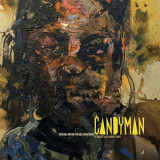
The Complete Film Music Composed by Robert Aiki Aubrey Lowe - 2xLP 180 Gram Colored Vinyl - Old-Style Tip-On Gatefold Jackets with Satin Coating and a Built-In Booklet Page - Composer Liner Notes - 12 Page Art Gallery Exhibit Catalogue // In partnership with Universal Pictures, Metro Goldwyn Mayer (MGM) and Monkeypaw Productions, Waxwork Records is thrilled to present CANDYMAN Original Motion Picture Soundtrack by Robert Aiki Aubrey Lowe. Directed by Nia DaCosta (next year's The Marvels) from a screenplay by Oscarr winner Jordan Peele, Win Rosenfeld and DaCosta, Candyman, currently in theaters nationwide, is a fresh take on the blood-chilling urban legend and a contemporary incarnation of the 1992 cult horror classic. About Robert Aiki Aubrey Lowe: Robert Aiki Aubrey Lowe (b.1975) is an artist, curator and composer who works primarily with, but not limited to, voice and modular synthesizer for sound in the realm of spontaneous music. Along with analog video synthesis works, he has brought forth an A/V proposal that has been a focus of live performance and installation / exhibition. The marriage of synthesis and the voice has allowed for a heightened physicality in the way of ecstatic music, both in a live setting and recorded. The sensitivity of analogue modular synthesis echoes the organic nature of vocal expression, which in this case is meant to put forth a trancelike state. Lowe's works on paper tend towards human relations to the natural/magical world and the repetition of motifs. The deluxe 2xLP vinyl release features 180-gram colored vinyl, old-style tip-on gatefold jackets with satin coating and a built-in booklet page, liner notes by composer Robert Aiki Aubrey Lowe, a 12-page art gallery exhibition catalogue, artwork by Sherwin Ovid and Julian Williams and puppetry art by Manual Cinema.
The heyday of American baroque pop – or chamber pop - ran from 1966 to the turn of the seventies. It used string quartets, harpsichords and woodwinds to create a summer-into-autumn melancholy that was quite new, and quite far removed from rock’n’roll as Eddie Cochran would have known it. Baroque pop’s musicians often came from a folk background, with an affinity for acoustic instrumentation. Linda Ronstadt's first band the Stone Poneys had introduced the autoharp to their line-ups in 1965, while the likes of Bonnie Dobson and Nico experimented with a string quartet’s, searching for different, post-electric Dylan directions.
Standard weight white vinyl remastered from the original tapes, restoring the original album on vinyl for the first time since 1995, including its original artwork. Includes download code.
In 1991, four kids from the suburbs of Chicago, IL formed Cap’n Jazz, arguably one of the most influential rock bands of the last 30 years. Those kids, brothers Tim & Mike Kinsella, Victor Villarreal, and Sam Zurick, were joined by Davey von Bohlen in 1994 and recorded their only full-length album before calling it quits - Burritos, Inspiration Point, Fork Balloon Sports, Cards in the Spokes, Automatic Biographies, Kites, Kung Fu, Trophies, Banana Peels We’ve Slipped on, and Egg Shells We’ve Tippy Toed Over - often referred to as Shmap’n Shmazz. Originally released on the Man With Gun label, the album quickly fell out of print after the band’s breakup, with the songs eventually making their way to the Analphabetapolothology compilation, released in 1998 via Jade Tree Records.
As a testament to this legendary debut, Polyvinyl is thrilled to announce the vinyl reissue of Shmap’n Shmazz, which has been remastered from the original tapes - restoring the original album on vinyl for the first time since 1995, including its original artwork. With the unmatched intensity heard in the opening track, “Little League,” coupled with eccentrically poetic lyrics, this iconic album has influenced countless artists since its release and unintentionally sparked a new genre. Pitchfork calls the album “a touchstone of Midwestern emo,” while Vulture placed “Little League” at #3 on their 100 Greatest Emo Songs of All Time list. Musician Devendra Banhart has also expressed his love for the band in a 2017 Joan of Arc documentary, describing Tim’s powerfully striking vocals like "going to the zoo on quaaludes, but all the other animals are on speed."
In addition to the band’s influential legacy, Cap’n Jazz was the catalyst to the formation of other notable bands featuring the original members, including American Football, Joan of Arc, The Promise Ring, Owls, Owen, Make Believe, Ghosts and Vodka and many more.
Agonis debut album Neutropia gets a high profile and well deserved remix treatment. Originally released in 2021 on his own co-founded amenthia recordings, the album was a strong statement in terms of sound. Formerly known for his excellent deep and incantatory techno, Neutropia opened the door to show more of his far reaching musical interests. It became a vital document of genre bending electronics, fusing half paced drum & bass, rolling amen breaks, forceful frequencies, dreamlike trip-hop and futuristic techno all together. For Neutropia Remixed the sound palette even got wider. Four artists that are highly appreciated by the amenthia camp were asked to rework their track of choice and make it their own. Carrier drops the pace of 'Thermo' and adds a brilliant touch of his stripped down half-time rhythm excellence. Christina Vantzou continues to build on the powerful frequencies that were present at the full original album with a mesmerizing drone trip. Amsterdam resident upsammy adds her glistering dynamics to the dark 'Algoflash' and Felix K does what he does best.. The Hidden Hawaii/Nullpunkt originator turns the rolling 'Pyrchid' into a heady drum work out.
out of Stock
Last delivered 19 months ago available to reorder, subject to availability
Dajusch unleashes the 'Ambition EP', a raw and uncompromising statement of techno tradition. Berlin-based producer, DJ and sound engineer Dajusch returns with his latest four-track EP, a high-powered offering that channels the essence of Detroit and Chicago techno while pushing the boundaries of contemporary club sound. Known for his deep connection to electronic music's pioneering roots and his work behind the scenes as a mastering engineer, Dajusch brings an intense and refined energy to this release. The EP opens with the single 'No Mas', a relentless percussive workout where hypnotic synths intertwine with driving drum patterns, setting the stage for an unyielding ride. The title track 'Ambition' follows suit with a high-octane groove, combining raw machine-funk aesthetics with a pulsating bassline and intricate, evolving textures that command the dance floor. On the flip side, 'Split' takes a darker and more cerebral turn, layering industrial-tinged sonics over a tight, rolling beat, blurring the line between peak-time energy and introspective depth. Closing out the EP is '36g', a heady, propulsive cut that builds into a whirlwind of syncopated rhythms and distorted stabs, rounding off the record with a powerful, no-holds-barred climax. With Ambition, the Spandau20 artist Dajusch reinforces his position as a purist and innovator, delivering a release that feels both timeless and forward-thinking. Whether experienced in the heart of a sweaty warehouse or through the pulse of a late-night drive, this EP stands as a testament to the raw, unfiltered power of techno.
out of Stock
Last delivered 7 months ago available to reorder, subject to availability
Album features and was co-produced by Joseph Shabason. String arrangements by Owen Pallett. Thom Gill has written songs for Chaka Khan, in addition to contributing to albums by The Mountain Goats, Owen Pallett, Joseph Shabason, Bernice, and many others. Way Through is a collaborative album by Toronto musicians Chris Cummings, Joseph Shabason, and Thom Gill (as Cici Arthur). Inspired by moments of discovery in familiar places, the album's title reflects the feeling of uncovering hidden paths in life. Musically, it blends mid-century influences like Jobim and Sinatra, with producer-instrumentalists Shabason and Gill crafting lush, expansive soundscapes. Featuring a 30-piece orchestra led by Owen Pallett, the album brings a grand scale to Cummings' intimate, reflective lyrics. The project began in 2020 when Cummings lost his job and turned to full-time music for the first time in his life. His collaborators tailored the arrangements to showcase his understated vocal delivery against sweeping orchestral backdrops. Songs like 'Cartwheels for Coins' and 'Prior Times' explore themes of regret and emotional complexity, contrasting the grandeur of the music with Cummings' quiet introspection. Tracks like 'Damaged Goods' provide upbeat moments with doo-wop harmonies, while the cinematic closer 'No Fight Or Flight' emphasizes the filmic quality of the album. Through its orchestral richness and deeply personal lyrics, Way Through captures the tension between ambition and realism, offering a poignant reflection on life's unpredictable journey
SHOLTO's 'Letting Go of Forever' is an expansive double LP that digs deep into his other-worldly blend of cinematic soul, and psychedelic library music. Drawing on influences spanning Mozart, Arthur Verocai, Piero Umiliani and David Axelrod, the record sits alongside contemporaries including Robohands, The Ironsides and Surprise Chef.
A captivating listen, well worth the investment of time across its 26-track run time, SHOLTO explores the concept of letting go as a painfully natural ritual, characterising the art of being able to do so as riddled with complexities and anguish. Morbid to some, but beautifully freeing to others, the art of letting go of the idea that anything should be forever can be relieving, allowing us to cherish what is in front of us in the moment.
Be it in the face of the deaths of friends and loved ones or weddings and celebratory moments, everything is just passing, and SHOLTO spins a delicate balance between this dark and light on the record, pursuing the narrative that you can always turn a negative into a positive.
out of Stock
Last delivered 19 months ago available to reorder, subject to availability
The word 'classic' gets thrown around a lot these days, often abused and attached to things that don't deserve the tag.
I think we can all agree that an outfit like Earth, Wind & Fire are truly deserving of such an accolade, since their first tentative steps in the early 1970's as an outfit the Chicago, IL pioneers have made themselves a force to be reckoned with and have sold over 90,000,000 units worldwide! Fusing together Jazz, Funk, Soul, African and Brazilian sounds EWF have been at the top of their game for decades, seeing them inducted into the legendary 'rock n roll hall of fame' at the turn of the millennium. Respect due. On this special, legit 12" reissue we are treated to 2 stellar reworkings by one of Disco and modern dance music's most respected names - Danny Krivit. Danny's tenure in dance music has almost been as long as EWF's themselves so it makes sense that he's on deck to breathe some dancefloor magic into their cult classics 'Brazilian Rhyme' and 'Runnin'. Both tracks are massive club anthems with them being generously sampled over the years and featuring in the playlists of too numerous to mention DJ's and selectors. Both of these amazing edits are extremely sought after and have been legally reissued by Above Board Distribution in conjunction with Danny Krivit and the legal rights holders - Sony Music Entertainment. This high quality repress features original Columbia white label Disco promo artwork and has been remastered from Sony's original sources by Optimum Mastering, Bristol UK.
out of Stock
Last delivered 3 months ago available to reorder, subject to availability
Dubstep and garage pushers Hotflush make a surefooted return, welcoming Perth producer Odd Occasion to their roster with an al dente next-gen garage cookoff. This 'Jukebox' offers six choices to the discerning listener, though you'd be hard-pressed to find a pub owner who'll take them on in toto - unless the landlords happen to be real heads, that is! All's well that this is a machine with niche appeal, with its formal calculations and dark contusions tempting fans of all things bass-led. Though the record begins on a volatile yet minimal note, the A3 'Simple' takes a glassy dubstep turn, virtifying the mix with hollow sound design and a stealthy grime vocal sample. The B-side betrays a sacrifice of genre focus, with 'Salt' bringing brutal trade zone techno via experimental trap sound design, and 'Tape' progressing through tender zithers, which help uptick the mix to reach a snappy folktronic finish.
out of Stock
Last delivered 19 months ago available to reorder, subject to availability
Loyle Carner will release his highly anticipated sophomore record, 'Not Waving, But Drowning' on 19 April via AMF Records.
'Not Waving, But Drowning' follows Loyle's BRIT (Best Male, Best Newcomer) and Mercury Prize nominated, top 20 debut 'Yesterday's Gone'. The bedrock of honest and raw sentimentality that you heard on 'Yesterday's Gone' left an inextinguishable mark on music in general and UK Hip Hop in particular, standing out as an ageless, bulletproof debut.
'Not Waving, But Drowning', Loyle's new album, gives yet more evidence - as if it were needed - of his razor-sharp flow and his unique storytelling ability. Yes, he can rap, but he allies that with the sensitivity of a poet, the observational skills of a novelist, and warmth of your best friend. The album opens with 'Dear Jean', a letter to his mother in which he's telling her that he has found the love of his life, 'a woman from the skies', and he's moving out.
It goes without saying that Loyle's music is hard to categorise, but what is even more impressive is that for someone who grew up listening to Mos Def, Biggie Smalls, Roots Manuva, and Wu Tang Clan, he doesn't sound like any of them. Although he might from time to time give lyrical nods to them, he's no imitator.
Loyle loves cooking. There are two tracks on this album named after chefs. The British-Israeli chef Yotam Ottolenghi, and the now deceased Italian chef Antonio Carluccio. 'Ottolenghi' the first single from the album was featured on the BBC Radio 1 B-list, BBC 6 Music A-list and has already been streamed over 5 million times.
Loyle refers to real life for everything, the title of 'Yesterday's Gone' came from a song of his step father, the title of his new album 'Not Waving, But Drowning' comes from a poem by his grandfather, which in turn came from a Stevie Smith poem. What you hear on the track 'Krispy' is real. He is pouring his heart out to his best friend Rebel Kleff after their relationship went downhill, he invites him on the track to say his piece but he doesn't turn up, so we get a flugel solo instead.
Loyle also has his own personal black consciousness movement. When he refers to his 'fathers' in the track 'Looking Back' he really is referring to two fathers. His biological father, a black man who he knows, but knows very little of, and his step father, a poet and musician who happens to be a white man but died a sudden unexpected death from epilepsy (SUDEP). With no real emotional ties to his biological father, but a deep connection with a deceased step-father, where does a young child turn He succinctly captures many of the great, unspoken, cultural and historical paradoxes of multicultural Britain on 'Looking Back'.
An album like this is hard to find. It is for those who like their Hip Hop to have soul, and their soul to have spirit. This is because it works on so many levels, but it is reflecting the personality of its creator. There are a host of collaborators here, Jorja Smith, Rebel Kleff, Kiko Bun, Kwes, Jordan Rakei, Sampha, Tom Misch and more, but none are overpowering. They blend righteously into place.
Loyle is not bitter with people who have let him down, or a society that lets so many down, but the combination of anger and love he has gives his voice the perfect blend of strength and vulnerability. This might be a coming of age album, but it's also a coming of ageless album. Loyle's 2019 Spring tour - which includes London's Roundhouse - sold out within 20 minutes of being on sale.
Not Waving, But Drowning
A rapper that raps about family is hard to find. The boys in the 'hood' tend not to be that interested in how much a 'brother' loves his mother, or how much he misses his dad, or even how much he misses his best friend. The boys in the 'hood' tend to be obsessed with the size of their cars, girls, bank accounts, and other personal 'possessions'. Loyle Carner's Mercury and BRIT Prize nominated debut 'Yesterday's Gone' (Released 2017), made it clear that he wasn't that kind of rapper. In fact, every time I talk to him about his work we talk about the world, and we tended to confuse ourselves by calling his work rap, poems, or songs, sometimes in the same sentence. They are in truth all of these things.
Here's some poetry.
Honestly I need them.
I hate them but I grieve them
I think I've finally found the reason
Trust
Like the fire needs the air.
I won't burn unless you're there.
'Not Waving, But Drowning', Loyle's forthcoming new album, gives us yet more evidence, (if it were needed), that he still has what rappers call, flow, but he hasn't lost any of his story telling qualities. Yes, the boy can rap, but a rapper with the sensitivity of a true poet, the observational skills of a novelist, and warmth of your best friend. The album opens with 'Dear Jean', a letter to his mother in which he's telling her that he has found the love of his life, (a woman from the skies), and he's moving out. He really loves the woman from the skies, but he still loves his mum, and so he reassures her that there is no competition, and tells her that 'She's not behind me or behind you, but beside we and beside two', his words. Or to put it another way, moving out without moving out. My words.
It goes without saying that Loyle's music is hard to categorise, but what is even more impressive is that for someone who grew up listening to Mos Def, Biggie Smalls, Roots Manuva, and Wu Tang Clan, he doesn't sound like any of them. Although he might from time to time give lyrical nods to them, he's no imitator. He says finding his own voice was something he always found easy. Although young, (in terms of a musical career), he has confidence in his own words and his own voice, and has never been tempted to sound like he's been hanging out in the USA, or rolling in 'Grime' on the mean streets of East London. And so when it comes to the creative process he doesn't simply find a beat to jump on and ride. Beats are important, but they are tenderly layered with samples, keyboards, or live drums, all imaginatively assembled for the laying on of words. Some tracks start with the idea, some with poetry, and some with a verse from a singer or some other melodic inspiration, but there is no formula.
Here's some poetry.
Don't hold any memories of us
Rather hold you everyday until the memories are dust
Yo we only caught the train
Cos you know I hate the bus
A prolific reader, who has dyslexia is hard to find. Add ADHD (Attention deficit hyperactivity disorder) to that and life should become even more difficult. To deal with your difficulties you devise coping strategies, which can differ from person to person. Loyle loves cooking. There are two tracks on this album named after chefs. The British-Israeli chef Ottolenghi, and the now deceased Italian chef Antonio Carluccio. Loyle describes himself as 'weird' because he is happy to read a cookbook as if he was reading a novel or a book of poetry. He has opened a cookery school for young adults not just because he loves food and wants to make more of it, but because it is one of the few things that can focus the ADHD mind. And when it comes to his other love, football, his approach is the same. Focus. He wanted to be a striker he says, up front scoring goals, but found his best position was in midfield because he was able to focus, check options, and see passes ahead of time, providing passes for other players just when they needed them. He says, 'You don't grow out of ADHD, you grow into it.' Loyle is also working with Levi's® on their music project where he is mentoring young musicians over a six month period, culminating at Liverpool Sound City festival.
More poetry.
When the going is tough
I wait till it falls on deaf ears
Hearsay
Without the boundaries of love
He also said, 'Ask most people and they will say that they love their mothers, but most are not going to rap about her'. On his first album Loyle's mum Jean wrote about the 'scribble of a boy' that growing up would take things apart to see how they worked. On this album she speaks with pride about a man who has found his place in the world.
Yes, poetry.
I'm still looking for the answers
Trying to find the right questions
Still waiting for my fathers
But can't break them in to sections
This poetry is serious. Loyle has his own personal black consciousness movement. He told me that he always felt safe at home, and being the darkest one in the family never meant a thing, but then when he had to face the outside world he felt hostility. It shook him up. Now he had to start asking questions, but what were the questions. This is serious. When he refers to his 'fathers' in the verse above taken from the track 'Looking Back' he really is referring to two fathers. His biological father, a black man who he knows, but knows very little of, and his step father, a poet and musician who happens to be a white man but died a sudden unexpected death from epilepsy (SUDEP). So to whom would a young black (or mixed race) kid turn He succinctly captures many of the great, unspoken, cultural and historical paradoxes of multicultural Britain when he says, 'My great grandfather could of owned my other one.' We are a people descended from enslaved people on one hand, and enslavers on the other, something we are still struggling to come to terms with, and this can be apparent in one family. A big book could have told you that, but here we get it in one line on the track, Looking Back.
Loyle refers to real life for everything. The album is peppered with captured moments that he records on his phone. These moments can range from conversations with taxi drivers, to capturing the moment when England scores a goal in the world cup. The title of 'Yesterday's Gone' came from a song of his step father, the title of his new album 'Not Waving but Drowning' comes from a poem by his grandfather, which in turn came from a Stevie Smith poem. What you hear on the track 'Krispy' is real. He is pouring his heart out to his best friend after their relationship went downhill, he invites him on the track to say his piece but he doesn't turn up, so we get a flugel solo instead. Yes people, this is real.
An album like this is hard to find. It is for those who like their Hip Hop to have soul, and their soul to have spirit, this is an album for those who have, (I'm sorry, I'm going to say it), emotional intelligence. This is because it works on so many levels, but it is reflecting the personality of its creator. There are a host of collaborators here, Jorja Smith, Rebel Kleff, Kiko Bun, Jordan Rakei, Sampha, Tom Misch and more, but none are overpowering. They blend righteously into place. Loyle is not bitter with people who have let him down, or the society that has let him down, but the combination of anger and love he has gives his voice the perfect blend of strength and vulnerability. This might be a coming of age album, but it's also a coming of ageless album. His first album worked, and this second album is a continuation of that work. Not creating a form, but being formless, as someone like Bruce Lee once said.
And here's some poetry from mum.
We talked long in to the darkest hours
Until we saw the burnished sky
And our eyes stung
As our words blurred and became thoughts
As we were silenced by the dawn
We clung to each other like sailors in a storm
out of Stock
Last delivered 20 months ago available to reorder, subject to availability
The original track came back in February and proved an immediate hit. Next to the original, versions from the likes of DJ Spen & Gary Hudgins also helped make this a breakout tune in the first quarter of 2021. Now comes the turn of Kenny Dope, one half of Masters at Work, the most seminal house duo of all time. Kenny Dope is an obsessive record collector, studio wizard and all-round musical encyclopedia whose influence on the scene cannot be overstated. He has been involved with numerous projects, from The Bucketheads to running his Dopewax label and never fails to impress.
This new remix from the Brooklynite is a glorious one baked in the sun's warming rays. It's built on a loose, Latin-tinged beat with big chords, expressive xylophone stylings and plenty of irresistible syncopation. The buttery smooth vocals bring the soul up top and help make this a timeless tune that will unite all dance floors. An instrumental mix is also included that strips things back, shows off the track's effortless musicianship, and draws out the beats for extra dance floor impact.
These two vital versions are the sort of life-affirming, and feel-good house sounds the world is desperate to hear right now.
out of Stock
Last delivered 11 months ago available to reorder, subject to availability
ŽUR (‘Zhure’, party) is absolute cult and one of the most rare Yugoslavian disco funk albums, originally recorded in 1981, reissued on Everland Music for the first time since the original vinyl came out more than 40 years ago. The album was carefully and brilliantly remastered by grammy nominated sound engineer Jessica Thomson.
Boban Petrović is a legend of Belgrade's sophisticated disco funk scene from the late 70s and early 80s.
Back in the second half of the 70s Boban started one of the first disco clubs in Belgrade and he was one of the biggest organizers of private house parties.
The finest balance between Boban Petrović's big-hearted party-maker-turned-philanthropist personality and his hustler one was achieved on Žur.
On Žur, he is at home, in his safe place, since the parties, the music and the people are the first out of many things he had completely figured out in his life. He is at the top of his game, occasionally bothered by a casual heartbreak, but always feeling himself, coming out playful and fundamentally peaceful, satisfied and ready to transcend himself in order to put the rest of the world in the limelight. In fact, Žur isn’t about the party, music, lyrics or its, hands down, beautifully balanced sonics. It’s about Boban and the funk he lived thoroughly. The funk before, but the funk he lived after this album even more so. All the ups and downs that he faced since the moment the first needle dropped on a Žur record to this very day are on this album as the unwritten destiny of that lighthearted character he played.
In short, ŽUR represents the essence of underground club life in Belgrade from the late 70s, when the album was recorded.
The quality of this trust is confirmed by the fact that Boban Petrovic's music is still actively listened to today, not just anywhere, but at the finest club events.
High end production and extremely authentic arrangements outside the mold of classic disco music, and lyrics that literally convey the vibe of his already jet-set lifestyle in Belgrade at the time.
Shortly after his musical career, Boban Petrovic became a businessman of the conscious class. He was living in Spain on his own luxury yacht for years, he had a private airplane, a car park. But all this time living on highest class level he never lost his identity. In all his offices, yacht, airplane and everywhere was playing loud funk music and he was dressed like a musician who just finished or need to start a gig.
Along the way Boban also wrote two books: Rokanje 1 & 2 describing the time when the album ŽUR was created.
The ŽUR album is one of the the holy grails of disco funk music releases on a global level.
out of Stock
Last delivered 19 months ago available to reorder, subject to availability
„Life has never been easy, so keep moving“ is the opening line of Making moves, the title song of SANTROFI‘s new album. Four years ago their celebrated debut ‚Alewa‘ introduced this 8 piece Highlife collective powerhouse from Accra to the world.
After five solid years on the road, SANTROFI is now ready to release some fresh material. co-produced and mixed by four-time Grammy Award winner Jerry Boys (REM, Ali Farka Toure, Buena Vista Social Club, Orchestra Baobab, Kronos Quartet). The band has continued an intense tour schedule, with 2024 seeing their first shows in the USA as well as a Japan tour of with 13 sold out shows 2024. where.
Making moves is both a celebration of SANTROFI’s roots and a leap into the future of Highlife. The opening track Amina is a Ghanaian childhood game turned Highlife Funk. It draws from the past, pushing it into the future. The title song Making moves sees Santrofi team up with the current booming Afrobeatscene in Ghana: It features Ghanas Newcomers Kofi Jamar and Arathejay. The song talks about trying to survive on the sometimes crazy streets of Accra without loosing your mind. Su nkwa sees Santrofi celebrating their love for typical Sikji Highlife music. And the nostalgic No money, no honey sums up yet another common truth from the streets of Accra. From the opening Highlife funk of Amina to the Ghanaian-childhood-game-turned- boogie-banger Gyae me how, this record will get you dancing.
Led by producer-bassist Kojo Ofori, SANTROFI unites 8 of Accra’s most gifted musicians with a passion for both vintage highlife grooves and a hip hop sensibility. Members of the band have played with leading Ghanaian artists including Ebo Taylor, Pat Thomas, Ambolley, AK Yeboah and highlife pioneer AB Crentsil with whom they recorded just before he passed away - watch out for that!
SANTROFI have shared stage and studio with rising stars of Ghana’s vibrant urban music scene such as Kidi, Yaw Tog, Black Sherif, AratheJay and even Nigerian superstar Wizkid (who has made Accra his second home). The upcoming album sees the band teaming up with some of the most exciting talents in Ghana‘s such as AratheJay and Kofi Jamar.
If you think it is impossible to play a funk groove (or even drill) over a pulsing Highlife clave: SANTROFI will prove you wrong. Listen to the phrasing of SANTROFI‘s horn section, hear the Highlife clave running through every bar of their music. Santrofi are pushing Ghanas Highlifegrooves into the future without loosing its sweet soul. And don’t forget to come and see them Making moves live in your city.
Blue Valentine Vinyl. Sometime in 2005, a lone box of master tapes escaped an estate sale and made its way through a network of collectors, record dealers, and "junkers" into the hands of leading Ohio soul expert Dante Carfagna, who linked them to Columbus, Ohio's mysterious Prix label (See: Eccentric Soul: The Prix Label). A bit of research turned up Prix proprietor George Beter, who identified most of the unlabeled material. All it took was an endless series of phone calls and letters and two fields trips in Columbus. But one complete mystery wended its way onto our final Prix compilation. "You and Me," a simple but irrepressible demo credited only to Penny & the Quarters, was found tacked onto a mixed studio reel. Our survey of every willing lifer left on the Columbus soul scene, including retired DJs, producers, and important local artists, produced not so much as a glimmer of recognition at the name Penny & the Quarters. Though we loved the song from the first play, it may've ended up a bit buried on our original compilation, as #18 of 19 tracks.Four years later, Eccentric Soul: The Prix Label hadn't exactly become a huge seller, although listeners had repeatedly told us that the unfiltered studio demos that fill out the record's back half were true diamonds in the rough. But neither Penny nor her Quarters had appeared to claim credit for their efforts. Then, completely out of left field, we heard from respected screen actor and avowed Numero fan Ryan Gosling that Penny's piercing bit of stripped down doo-wop was being considered for inclusion in Derek Cianfrance's indie-weeper film Blue Valentine. What we didn't know was that "You and Me" had won a major role in what became an indie circuit hit, and that Penny & the Quarters would instantly assume the role of world's most famous unknown doo-wop group.Every week is a slow news week in Columbus, Ohio, and early January 2011 found the city recovering from the thrill of elevating Ted Williams_the formerly homeless guy with the awesome voice for radio_into a national news sensation. But both major daily newspapers in town, as well as the city's alternative weekly, also ran stories about how a lost and unknown Columbus soul group had become the musical centerpiece of a film already garnering Oscar buzz. That mainstream spotlight aimed at Blue Valentine and Penny & the Quarters did the trick: we finally made contact with the widow of Jay Robinson, lead Quarters' singer and songwriter. Robinson, it turned out, had also been the leader of Columbus doo-wop pioneers The Supremes (later known as "The Columbus Supremes," for reasons which should be obvious). Jay Robinson never did give up on the dream of writing a hit record; even so, the posthumous realization of his dream is cold comfort for his widow and daughter. With their blessings, we returned to those estate sale masters and pulled down another neglected track ("You Are Giving Me Some Other Love") from the still-unknown Penny and her now-partly-known Quarters. "You and Me" is a song that could not be suppressed: not when Prix failed to release it; not when Penny & the Quarters were forgotten; not when Numero stuck it at the bitter end of a much overlooked compilation. Its evolution from estate sale trash to silver-screen gold has finally returned it to big-hole 45, where it probably should have lived all along.
Whereas Lewis used his transformative talents to newly illuminate renaissance man George Washington Carver onJesup Wagon, the saxophonist does the same here for gospel- music force of nature Mahalia Jackson. And this time it's personal, because Lewis lived her music growing up, nurtured by a grandmother who had received Mahalia's singing like a bolt from above. Much more than a tribute, this work is"really a three- way conversation between Mahalia, my grandmother and me."
The challenge was to turn these songs into jazz, the 21st century variety. What James and the band (William Parker- bass, Chad Taylor- drums, Kirk Knuffkecornet, Chris Hoffman-cello) conjure with this music is miraculous.
The CD & LP editions also exclusively include the contemporaneous suite, "These Are Soulful Days", JBL's first composition for strings; performed with the Lutoslawski Quartet. It is included as a 2nd disc on CD version & via an exclusive download card with the LP
out of Stock
Last delivered 20 months ago available to reorder, subject to availability
What started as an idea to update mixes turned into an unexpected family collaboration.
Berlin to Lisbon via Cork, Big Town Boy Small City Dreams released in 2018 on Dutch label XXX gets remixed and reimagined for 2024.
Debut record release, K.P. Ring blends a tapestry of lyrics into a hooky club tune with flair.
Cult Producer Bangkok Impact returns to the label and reaches for the Italo stars with a distinctive chugging rendition adding additional vocoder effects along the way.
out of Stock
Last delivered 20 months ago available to reorder, subject to availability
Blawan returns with ‘BouQ’, the follow-up to his acclaimed 2023 “Dismantled Into Juice” EP; one that was heralded by Pitchfork as “dazzling… part of a long, proud tradition of UK club tracks that turn the dancefloor on its ear” and Resident Advisor as “mind-melting… truly unchartered territory.” “Fires”, the first single revealed from his freshly-announced new EP, has received global support from the likes of Four Tet and Skrillex over the summer, and sees Blawan push his distorted, syncopated productions into a new broken-pop lane, his own vocal creating an intense, visceral hook that rips through the track's multi-layered, pulsing beats.
a A1 NPCs Making Hot Dinner 2m 35s
b A2 Fires 3m 39s
[c] B1 Done Eclipse [3m 30s]
[3m 23s]
out of Stock
Last delivered 5 months ago available to reorder, subject to availability
"Isolation Boulevard" ist eine Sammlung von 12 Re-Recordings aus dem umfangreichen Fundus an Sweet-Klassikern. Die Aufnahmen entstanden 2020 während der Corona-Pandemie. Vor diesem Hintergrund ist die Gesamtleistung aller Beteiligten umso beeindruckender, vom treibenden Schlagzeug und Bass bis hin zu den "in your face"-Gitarren und dem stratosphärischen Gesang. Obwohl das Album unter schwierigen Bedingungen entstand, war es am Ende für alle Beteiligten ein Vergnügen "Isolation Boulevard" einzuspielen. Das Resultat spricht für sich selbst.
It’s written in the Agreement Terms. There’s no getting out alive in Life. And yet, mankind keeps striving for eternal life; through art, through power, through cryogenics, through singularity. In that misguided quest against the inevitable, we all fall into the category of lost travellers. No one is exempt. In that understanding, Confucius MC and producer Bastien Keb offer no misgivings about the destination on the somber “Time Will Come”: Time will come for all of us / try to take your time.
Songs For Lost Travellers is a collaborative album by Con and Bastien Keb that merges unexplored pathways between rap, folk, and jazz into a spiritual triumvirate. Each genre is a balancing force within the record. The result is an album unlike either artist have made previously, possibly unlike any record in existence. Songs For Lost Travellers opens with bedtime stories and fairytales. Both “Tell Me Lies” and “Fairytale” present the creature comforts that trick us into forgetting the truth. Con’s first words spoken are “tell me lies ‘til I swear I can’t remember” over Keb’s lo-fi plucking that feels like it was lifted from a handheld recorder capturing a nursery mobile above a crib. Third track “Time Will Come” resets the album after acknowledging on “Fairytale” there’s “no nourishment in half-truths / no sustenance in eating lies.”
Honest and direct, Con and Keb imbue Songs For Lost Travellers with knowledge and truth from their lived experiences. There is grief hidden in the notes, an inherent sadness that is balanced with an awareness that grief is a protest against the social machinery of remaining numb. The record lingers in a meditative state, unafraid of restlessness and embracing solitude, with the expectation that peace is just as imminent as death.
The production contains a complimentary authenticity. Neither Con nor Keb bothered much with the professional studio in making Songs For Lost Travellers. Instead they opted for the raw state of their home recordings and first takes, matching the intimacy of being alone and reflective in their creative energies. Room static on “Tell Me Lies” makes it feel like you’ve entered their apartments. The immediacy continues on “Gutters,” as Keb plays guitar while watching the tele and Con hums along to the vocal melody in search of the proper pocket for his verse. Someone snaps their finger to mark a cue, but the snap never returns to the mix to keep time.
More drawn to Keb’s recent folk recordings on the Songs For Lilla EP than his funk roots circa Dinking In The Shadows of Zizou or the cinematic soul of The Killing of Eugene Peeps, Con leaned into the spacial freedom he heard in Keb’s lo-fi production cobbled from field recordings and voice notes. Both artists placed their families into the tableau. Con wrote “Little Man” for his son, hoping to add a positive contribution to the canon of parental rap songs. Later, his son appears at the end of “Paramount” to deliver a passage from Kahlil Gibran’s The Prophet. Keb secretly recorded his mum playing saxophone and sampled his cousin playing sax as well. The result is a near-drumless album (save for “Toulouse” and light tapping on “It Would Speak”) in which Keb’s raw production (plus a few sessions with Kofi Flexxx) gave Con a liminal zone, unencumbered by beats per minute, to craft melodies that turn his philosophical rhymes into mantras.
Perhaps there’s a message in the presence of family? It would be one of many. Con and Keb’s reflective, somber approach to Songs For Lost Travellers does not wallow in the mire. Music is action and it’s taking them through a portal to the other side of grief. We are welcome to join (which is also in the fine print of the Agreement Terms), but first there’s a password in the final song, a single request to answer: Tell me what you care about.
The third album Fort Sensible by Brisbane alt-rockers Tape/Off is a genuine labour of love, a passionate dose of opinionated heart-on-sleeve rock’n’roll representing not just a place but a time with its cache of meticulously-crafted guitars, robust rhythms and socially-conscious lyrics mining both the personal and the political.
While musically they veer seamlessly between intricacy and intensity their words cut straight to the quick, the songs caustic and catchy in equal measure, making Fort Sensible by far the most ambitious and accessible album in the band’s storied decade-plus history.
Tape/Off’s first two albums - Chipper (2014) and Broadcast Park (2018) - were both longlisted for the prestigious Australian Music Prize, yet Fort Sensible takes the tried and tested Tape/Off aesthetic to a whole new level as the band seek to both share the creative load and fully harness their innate collective chemistry.
The guitars of Nathan Pickels and Ben Green weave together like an electric tapestry, the resultant soundscapes both intricate and ambitious whilst still entirely capable of busting out massive riffs with the best of them, their inherent simpatico now built upon by years of experience playing off each other. From a rhythmic perspective Tape/Off's propulsive drummer Branko Cosic's immense power and Cameron Smith's robust, expressive basslines combine to provide the perfect rhythmic bottom-end throughout the record.
Excitingly Tape/Off's sonic palette has been broadened substantially on the new album, with Pickels' angry and angst-laden diatribes throughout Fort Sensible now augmented by Green and Smith taking vocal turns at junctures, adding a whole new dynamic and dimension to proceedings.
At a time when our leaders seem lacking and the world needs the redemptive powers of art and music more than ever, Tape/Off announce themselves as a serious force to be reckoned with the uncompromising power and beauty of Fort Sensible!
Berlin based label "Matasuna Records" kicks off the new year 2025 with a soulful 7inch featuring songs by Barcelona's "The Blaxound" and singer "John Vermont". Their common love for vintage soul from the 60s and 70s brought them together for this project to compose and record classic soul sung in Spanish. This 45 shows that the concept worked out wonderfully: Spanish Soul at its best, sounding authentic and contemporary at the same time!
Matasuna Records, known for its reissues of musical treasures from the past, also has an eye for exciting new discoveries in contemporary music. With "The Blaxound & John Vermont" the label has once again found an interesting project for soulful & contemporary music that fits perfectly into the label's sound spectrum and will appeal to lovers of authentic soul music.
The two songs "No Es Por Ti" and "Qué Más Te Da?" from their recently released album will be released for the first time as a 7-inch vinyl single on Matasuna Records. The instrumentation and the lovely harmonies are the ideal basis for John Vermont, who with his versatile voice, sometimes powerful, sometimes smooth - but always soulful - can fully develop his vocal spectrum and fill the songs with his presence. Instrumental and vocal arrangements are beautifully balanced and harmonious. Beatific!
Artist info
"The Blaxound" is a Barcelona-based music project with deep ties to the city's Funk and Soul sceney. The project started in 2003 under the direction of musician, songwriter and producer "Marta Roman". The Blaxound has released four studio albums between 2007 and 2024 on different labels.
Years ago, Marta focused on the idea of recording a classic soul album sung in Spanish, respecting as much as possible the original production and sound of the late 60s and early 70s. Luckily, she met singer "Ivan Espejo" aka "John Vermont", which was the turning point and led to the full vocal album "Déjalo Ir" released on "Love Soul Productions" in 2024.
All songs were composed, recorded and produced by Marta Roman in her own studio, Black Flamingo Recordings, in Barcelona, Spain.
out of Stock
Last delivered 20 months ago available to reorder, subject to availability
Vinyl Only / Heavyweight Vinyl / Original Glued Prints tip-on by hand on Thick Cardboard 700 gram / 2 Separated parts handily gluing / PVC Outer Sleeve / Insert sheet Q&A with Lloyd Miller by Tony Higgins / Handcrafted silk-screen "Lloyd Miller 1938/2024" on Vintage paper with 100% natural "Persian Blue" color.
Personnel:
Manucher Paydar - Tar Drum
Lloyd Miller - Dulcimer Santur, Oud, Shamisen, Dhol, Tabla
Marilyn Miller - Flute
Tú Trinh Dàm - Voice
Dusdi Siwi Jarn - Voice
Notes:
Made with the intention of exploring and experiencing the various musical and cultural perspectives of a territory as vast as that of Persia, "Near And Far East" is a significant historical document that transcends the restrictive concept of territory but rather inhabits a space of absolute time. The album's content is not just window into faraway places, but a leap into the times and cultures that have now been swallowed up by the incessant movement of globalization and capitalism. Listening to it is turning your ear into the true musical culture of countries whose rapid change has eliminated the cultural peculiarities at their roots. Inspired by his long journeys in Iran, Lloyd Miller takes us on a journey through the instruments and sounds of a time, giving us his interpretations of a musical world that was - and that now remains - an historical document for future explorers who are curious about the mysterious musical arts of the middle and far east. Certainly a holy grail for samplers and loopers who can find exotic panoramas here! (Tony Higgins)
Franco Rosso’s epic cinematic opus of reggae social commentary, Babylon, landed in November of 1980. Moving through the film’s opening frames of grey dreary London, two spars – Blue and Ronnie – run with unrestrained anticipation to link with their Ital Lion Sound System brethren. Simultaneously the rest of the crew does what sound crews have done from time: Load them boxes up in the van and trod with vigor to the dance.
But that bassline…The soundtrack notes that carry the celluloid movements of the film’s opening scenes…That bassline…Upside down…Jazzy…Dubby…A bassline like no other reggae bassline the Ital Counselor has ever heard. The hook that got me deep into UK roots music from the band that is my number one inspiration.
If there is bassline that represents the core imperative of Ital Counselor Records, it would have to be Aswad’s Hey Jah Children. It seemed therefore only fitting to bring its absolutely resplendent glory to a new generation. Lovers of sounds and blues, it is time for the dread ital lion sound to once again rise to meet the day. So it is with the deepest of gratitude and respect to the legacy of Aswad (RIP Drummie Zeb) and Franco Rosso, that we present a deeper than deep next cut…Christened here…the Ital Lion Serenade.
In line with all IC releases, we have enlisted top tier session musicians and studio men. Long time IC collaborator, Inyaki BDF, is at the center of the action as the musical maestro. Hopping on the BDF sonic lorry are Aratz Diez on Trombone and James Zugasti on the dub mixes. This crew bring the original composition up-to-date with a heady dubwise weight. Syndrums ricochet while Inyaki’s bassline rumbles teetering as it does somewhere between a modern dubstep warble and its core roots-wise influence in Tony Gad’s original playing.
Diez’s trombone playing comes across like an x-ray of the Aswad Horn Section and keeps intact the jazzy abstraction of the original. In turn, Inyaki goes full 70s synth on the psychedelic dubwise of the B-side’s Operation Swamp 81. UK history buffs better you know the reference in that title and its thematic echoing significance from the UK depicted in Rosso’s film and carried on in remembrance on this here hotter than hot 12”.
A warning: the Zugasti dub cuts are devasting to speaker boxes.
As soon as Martin Circus was born in 1969, the band laid foundations for the French "Pop Musique" genre, deliberately turning its back on both French yéyés and rock'n'roll to better embrace psychedelia and the French language. In 1971, they were a pioneering, innovative group moving as fast as a speeding train, building upon everything they found on the way. However, faced with band members changing often, management issues and music evolution, Martin Circus ended up trying to fit in every style: soul, R&B, glam rock, disco, new wave, 80s mainstream music. To follow their journey is to listen to the world shifting along music charts. Behind the scenes, since the very first days of the band, one man had been pulling all the strings. Manager and artistic director Gérard Hugé used to work for both the band and the label - this has never been good news. What he cared about the most was getting records out, no matter who played on them. In the mid-70s, he registered the Martin Circus name, granting himself full power over the band. Deciding that it no longer had either a lyricist or a composer, he made the remaining musicians embark on a series of American 60s hits adaptations. As a result, they made tons of money : "Marylène" was a huge hit and gave them a new impulse. The Martins adopted a new look by wearing shiny Courrèges-style suits and platform boots, and on stage they performed dance moves choreographed by the eccentric Amadeo. They completely fit into the disco craze which was about to take over. Still, their music blended doo-wop and rockabilly with glam rock and funk music. They eventually hit disco with a soundtrack in the mannerof French disco groups such as Space and Voyage. Effortlessly, they released the epic 14- minute "Disco Circus", a track which was to become a real underground gem. DJ and remixer François Kevorkian then released it on the American Prelude label in a self-edited version, shortened to 7 minutes while retaining all the dazzling passages of the original track. It came to be a hit in the clubs of New York and Chicago, making a lasting impression on everyone who heard it. It got sampled on at least 40 tracks over the following decades and featured in dozens of bootlegs and prestigious compilations - by Laurent Garnier, Carl Craig, Juan Atkins, Joey Negro, The Beatnuts, The Rapture, and by Danny Krivit in the DJ culture film Maestro. As the 80s arrived, Martin Circus once again changed the way they looked and their style. Inspired by Devo and their cold dance music, by Buggles' synthpop and Plastic Bertand's postpunk. Throughout their career full of ups and downs, Martin Circus nonetheless managed to keep up with one stable element: contrary to what they seemed, the musicians never took the easy way out. Their playing and arrangements were consistently flawless and polished, they relentlessly dedicated themselves to playing quality music and this can only compel admiration. As Coco Chanel once said, "Fashion goes out of fashion, style never does."
Like a passenger riding shotgun on a road trip, The Villagers Companion offers its own unique perspective and story to tell. Featuring tracks recorded alongside last year’s acclaimed villagers, TVC captures the miles between the start and destination—the faded gas station pit stops, the plastic saint statue stuck to the dashboard for safe travels or luck. It embodies the essence of the journey without the burden of driving—the experience of the ride itself.
The album takes us through the heart of Califone’s magic: reverb-drenched piano chords, electronic whirs, and layers of experimental noise. Guided by Tim Rutili’s abstract, fragmented lyrics—both strange and familiar—delivered through his warm, well-worn vocals, it creates an experience as evocative as it is haunting. Often passing through what seem to be the spaces between radio frequencies, the stations never meant to be heard. Crackles of static, feedback loops, and fleeting signals bloom into meditative moments, with each sound given space to breathe, unravel, and shimmer in slow decay. The result resonates deeply, transforming what might be noise into something profound, hypnotic, and totally immersive.
As with villagers, Rutili and company continue to explore what it means to get lost while surrounded by modern technology. Like a ghost in a machine or a whispered prayer stuck in a telephone line, Califone adds soul—be it damned or saved. And they do so with the kind of transformative magic granted perhaps only to artists a quarter of a century into their craft. The kind that turns a photograph into a tableau, or any darkened space with a microphone into a makeshift confessional. A song into a hymn, and a hymn into a soundtrack to a life.
Free jazz poetry by a spry, 85 year old Joe McPhee, adapting his renowned improvised practice to words - juxtaposed with Mats Gustafson’s sparing brass and electric gestures. It’s an utterly timeless and transfixing salvo, another shiny notch for Smalltown Supersound’s Le Jazz Non Series.
As a common ligature to the OG free jazz scene of ‘60s NYC, with formative binds to its European offshoots and the experimental avant garde, Joe McPhee is a true force of nature who has represented jazz at its freest over a remarkable lifetime. In duo with Swedish free jazz and noise standard bearer Mats Gustafson, he upends expectations with an astonishingly vivid and upfront example of his enduring contribution to freely improvised music. In 11 parts he variously reflects on everything from the neon sleaze and scuzz of NYC to contemporary US politicians and laugh out loud imitations of his previous sparring partners such as Peter Brötzmann, with a head-slapping immediacy that leaves you reeling, spellbound.
McPhee’s flow of rare, organic cadence, ranging from urgent to contemplative and dreamlike, is blessed with a unique turn-of-phrase that surely mirrors his decades of instrumental work. Gustafsson, meanwhile, dextrously takes up the mantle with a multi-instrumental spectrum of sounds, leaving McPhee unbound and able to float and sting on the mic. There’s obvious wisdom in his perceptively penetrative observations, as derived from a rich cultural life well spent, but also a playful naivety and levity in his ability to veer from almost melodic speech to explosive aggression and a knowing, bathetic wit. It’s perhaps hard to believe that McPhee only started incorporating and performing spoken word in his work in the past ten years, a half century since his declaration of “What Time Is It‽” announced his arrival on a legendary debut ‘Nation Time’ (1971), ushering in one of free jazz’s most singular characters in the process.
Oscillating between discordant reflections on life as a touring musician, set to Gustafsson’s skronk and culminating in a snort-worthy imitation of Peter Brötzmann’s gruff German accent, on ‘Short Pieces’ or the glowering growl and noise exhortations of ‘Guitar’, he evokes a more sweetly consonant calm in ‘When I Grow Up’ and eerie threat of ‘The Dreams Book’, and viscerality of ‘Disco Death’, where Gustafson’s tonal versatility comes into hugely mutable play, whilst McPhee’s extraordinary, unaffected voice is a constant. It’s perhaps McPhee’s balance of cool measuredness and wellspring of barbed energies that allows us, at least, to get the most out of this one; not stifling with mannered or manicured enunciation that can trigger certain icks; keeping close to the nature of spoken word in a way that avoids cliche and becomes inherently critical of it within his purposeful, non-hesitant clarity and unflinching approach.
Like a passenger riding shotgun on a road trip, The Villagers Companion offers its own unique perspective and story to tell. Featuring tracks recorded alongside last year’s acclaimed villagers, TVC captures the miles between the start and destination—the faded gas station pit stops, the plastic saint statue stuck to the dashboard for safe travels or luck. It embodies the essence of the journey without the burden of driving—the experience of the ride itself.
The album takes us through the heart of Califone’s magic: reverb-drenched piano chords, electronic whirs, and layers of experimental noise. Guided by Tim Rutili’s abstract, fragmented lyrics—both strange and familiar—delivered through his warm, well-worn vocals, it creates an experience as evocative as it is haunting. Often passing through what seem to be the spaces between radio frequencies, the stations never meant to be heard. Crackles of static, feedback loops, and fleeting signals bloom into meditative moments, with each sound given space to breathe, unravel, and shimmer in slow decay. The result resonates deeply, transforming what might be noise into something profound, hypnotic, and totally immersive.
As with villagers, Rutili and company continue to explore what it means to get lost while surrounded by modern technology. Like a ghost in a machine or a whispered prayer stuck in a telephone line, Califone adds soul—be it damned or saved. And they do so with the kind of transformative magic granted perhaps only to artists a quarter of a century into their craft. The kind that turns a photograph into a tableau, or any darkened space with a microphone into a makeshift confessional. A song into a hymn, and a hymn into a soundtrack to a life.
Sometime in 2005, a lone box of master tapes escaped an estate sale and made its way through a network of collectors, record dealers, and “junkers” into the hands of leading Ohio soul expert Dante Carfagna, who linked them to Columbus, Ohio’s mysterious Prix label (See: Eccentric Soul: The Prix Label). A bit of research turned up Prix proprietor George Beter, who identified most of the unlabelled material. All it took was an endless series of phone calls and letters and two fields trips in Columbus. But one complete mystery wended its way onto our final Prix compilation. “You and Me,” a simple but irrepressible demo credited only to Penny & the Quarters, was found tacked onto a mixed studio reel. Our survey of every willing lifer left on the Columbus soul scene, including retired DJs, producers, and important local artists, produced not so much as a glimmer of recognition at the name Penny & the Quarters. Though we loved the song from the first play, it may’ve ended up a bit buried on our original compilation, as #18 of 19 tracks.