'Good Time' is the debut album from Austin, TX noise-pop band DAIISTAR, due out September 8th via Fuzz Club. Creating a narcotic blend of noise and melody, the band takes their inspiration from the neo-psychedelic era of the 80s and 90s and pull it into the future with modulating synthesisers, heavy guitars, bouncing bass lines, and spiralling hooks. 'Good Time' was produced by The Black Angels' Alex Maas and engineered by James Petralli of White Denim. Made up of Alex Capistran (guitar/vocals), Nick Cornetti (drums), Misti Hamrick (bass) and Derek Strahan (keys), DAIISTAR formed in the spring of 2020, just weeks before the pandemic started. "To us, these songs were a glimmer of light", Capistran says: "Starting a band at the peak of the pandemic to some might seem ill-timed, but to us it was a way to escape for a moment. There was something to look forward to and we kept our heads in the future. These songs guided us through some dark times and hopefully they can do the same for you. GOOD TIME is here." Pressing info for LP: 180g neon orange vinyl, printed inner-sleeve, download card included
Aesthetically, Ed Schrader’s Music Beat hates to tread water. At the same time, the Baltimore-based two-piece of vocalist Ed Schrader and bassist Devlin Rice won’t force their songs to fit a preconceived style. “The next album’s always gotta be different from the last one. We’re different people from record to record. So, writing authentically to ourselves will always bring our work to a place that we haven’t been to yet,” Rice said. Schrader added, “We’re terrified of turning into AC/DC. We never want to be married to one scene or time or sound. We want to be the Boba Fett of bands! Constantly altering the way in which we make records has been pretty key in that process.”
For Orchestra Hits, the band’s latest, that alteration was welcoming longtime musical comrade Dylan Going into the fold as a co-writer and co-producer. A songwriter in his own right, a guitar sideman for ESMB on their last two tours, and a collaborator with Rice in the noise riffage band Mandate, Going had both a unique vision and an intimate familiarity with the ESMB vibe.
“Dylan came to every show we’ve ever played in New York—no matter how weird it was,” Schrader said. “He’d be standing there ready to move an amp or feed us barbecued cactus after the gig and toss on some Golden Girls so we could decompress. It felt like family as soon as we began working, but I honestly had no idea how damn good he was at tossing out these hooks.”
According to Schrader, the songs “just poured out of us” over the course of a highly caffeinated three-day weekend in a tiny room in Devlin’s house while his cat, Sandy Goose, screamed continually. “It was like three kids hiding from the world to get into some lovely mischief,” they said. The lack of external pressure in the process gives Orchestra Hits an almost paradoxical vibe. For all of the album’s layers, that mix live and sequenced instruments, it never loses the raw energy of a small handful of friends in the same room plugging in, cranking up, and playing until they pass out.
Lyrically, the album finds Schrader, now 45, meditating on experiences in their youth to make sense of the present moment. “We are not into the garden,” Schrader wails on the relentless “Roman Candle,” a song about the sad debacle of Woodstock ’99, and a direct response to Joni Mitchell’s “Woodstock,” a utopian ode to hippie idealism. A 19-year-old Schrader, having snuck into Woodstock ’99 through a hole in the fence, was there the night members of the crowd used candles intended for a vigil for victims of the Columbine High School massacre to set fires all over the grounds. Even before the fires, Schrader remembered feeling disconnected from the music, the nostalgic cash grab, and the meatheads in the crowd. After watching a press tower collapse, they boarded a random shuttle bus and were dropped off near a Denny’s. “It was a far cry from the Garden of Eden,” Schrader said. “That experience defined what I didn’t want to be a part of, and yet America is more like Woodstock ’99 than ever.”
With percolating synthesizer arpeggios, and climbing bass grooves, “IDKS” is the album’s dance-floor slapper. “’IDKS’ is a funny one,” Schrader said. “We already had a pretty satisfying suite of songs when Dylan was packing up to head back to New York, but he missed the train because of a freak snowstorm. Realizing he’d be stuck in town another day, he says to me, ‘Here’s this other weird thing I have.’ It was ‘IDKS.’ The hooks were so good I felt like Homer Simpson at a free donut convention. I just dove right in, and we cranked that baby out in like 20 minutes.”
Lyrically, “IDKS” is a letter from the true self to public-facing self. “It’s an angry song,” Schrader said. “Because the public-facing self is always looking for an easy escape, but it forces the true self into a cage. I honestly thought my lyrics were corny and was about to change them, but Dylan was digging it just the way it was. So that’s what you hear.”
With the soaring “Daylight Commander,” the band went against all of their musty-basement-bred instincts. “I went full High School Musical with the vocals,” Schrader said. “At first it felt almost embarrassing, but I remember reading somewhere that Bowie recommended always floating a little bit above your comfort zone, and that’s what we did here.” The song is part exercise in absurdity and part pop Trojan horse. “If ever we had a ‘Shiny Happy People’ moment, I guess this is it,” Schrader said.
Perhaps best described as a pioneer of the underground experimental scene, the signature of Jørgen Teller on the musical landscape of Denmark traces back to the late 1970’s. Sprung out of a whirlpool of post-punk and art school ideas, Teller has relentlessly been chiseling away on the constrictions of music in various bands, collaborations and solo projects ever since. Searching out its farthest outposts - be it free jazz, noise or acousmatic music - Teller has strived towards an approach to music without rules, often by way of improvisation and usually with the aid of electric guitar.
This album is based on a live performance held at the Inter Arts Center in Malmö in early 2022, where Teller performed a semi-improvised piece in homage to the poet Poul Borum, whom he had worked with in the mid-90’s closely before Borum’s death in 1996.
As a composer, Teller relies on a set of “basic choices” that becomes a “precise point of departure” - where he can then go against his “good knowing” of the science, trends and different schools of music and go straight into his own instincts as a performer. For this performance, he used pre- recorded material of three rhythm boxes (all out of sync), timbales and sessions on Erica synths.
In dialogue with the label, Teller has focused on extracting the recording of the rhythm boxes and timbales alone, emphasizing the tension between the rhythms. With minimalist drum sequences that could easily be placed in a proto-techno context, and the whooshing of what might be an ancient rhombus instrument, there is a feeling of a primitive presence to Teller’s rhythmic excursions. A throwback to the spiritual realms of a wordless society fighting the demons of chance.
Occasionally pierced by stark industrial drum crashes and rattling post-punk percussion, it also conjures echoes from the darker side of the 1980s. In citing Borum as its inspiration, Teller shares that he channels the poet’s energy and their shared love of “noisy stuff and darkness”.
But the pace can also go somewhere close to breakbeat on track B2, where a whirlwind of rhythmic elements clash into a deranged deconstructed club tune.
The album also features a remix by a fellow colleague of the acousmatic community; the composer Jacob Riis. On the closing track B3, Riis quietly manipulates and balances the elements of Teller’s recordings and gently releases them into a contemplative pool of static.
Brighton (UK) punks THE BAR STOOL PREACHERS have announced their new EP 'Below The Static', which features reimagined versions of songs from the bands 2022 album 'Above The Static'. The EP is out 13th September 2024 via Pure Noise Records. Speaking about the new EP the band said, "For this release, we really wanted to highlight how good the songwriting was. We were stoked with how well the album went down but we really wanted to expose some of the more vulnerable elements and fuck with the format a bit. To hear such strong fxmale vocals, and having heavy guitar riffs on cellos/violins etc. really got us excited about these songs again. Some of the versions are stripped right back to just a voice and one instrument. It's the band like you've never heard it before, and really breathes a different life into the songs."
"Glossolalia" ist das dritte Solo-Album von Dale Crover, dem weltbekannten Schlagzeuger der Melvins, Nirvana und Redd Kross sowie Sänger und Gitarrist von Altamont. Das von Crover und Toshi Kasai produzierte Werk strotzt nur so vor Nuggets-Garagenrock, Proto-Metal-Riffs und herrlich verschwommenem Psych-Pop. Die erste Single des 11-Song-Albums ist "Doug Yuletide". Der Track ist einer von zwei "Glossolalia"-Songs, bei denen Crover mit dem Gitarristen Dan Southwick zusammenarbeitet, seinem langjährigen Freund und Altamont-Bandkollegen. Aber Southwick ist nicht der einzige Freund, der auf Glossolalia zu hören ist: Kim Thayil von Soundgarden (Leadgitarre bei "I Quit" und "Rings"), Ty Segall (Leadgitarre bei "Spoiled Daisies" und "I Waited Forever"), Rob Crow von Pinback ("Don't Worry About It", "Rings" und "I Waited Forever") und Tom Waits' ungelenkes, in Zungen gesprochenes Intro beim Titelstück. "Glossolalia" ist Crovers bisher fokussiertestes Statement als Solokünstler. In seiner Gesamtheit zeigt das neue Album, dass Crover, so wie die Melvins in ihrem vierten Jahrzehnt weiter wachsen und sich entwickeln, auch als Solokünstler neue Schritte unternimmt. Inmitten des inspirierten Geplappers von Waits, des glorreichen Schredderns von Segall und Thayil und vielem mehr, sticht vor allem die Robustheit von Crovers Vision hervor. Diese Platte zeigt, dass seine Gesamtästhetik genauso stark wie sein legendärer Schlagzeugdonner ist. ENGAs he began plotting his new solo album, Dale Crover _ world-renowned drummer for the Melvins, Nirvana and Redd Kross, and singer-guitarist for Altamont _ realized that, unlike with his prior two full-lengths, he was starting from scratch. "I didn't have any songs," he says, "so I just went on this writing spree." The result is Glossolalia, Crover's third LP under his own name and arguably his most focused statement yet as a solo artist: 11 catchy yet eccentric tracks that move from Nuggets-y garage rock to crafty proto-metal riffage and gorgeously hazy psych-pop, touching on everything from a bad teenage trip to the charms of the late, great Jane Birkin, and featuring input by illustrious guests including Ty Segall, Soundgarden's Kim Thayil and none other than Tom Waits. What stands out across the record is the sturdiness of Crover's vision. He's modest about his ambitions _ "It's just kind of like extra credit," he says, about having a solo outlet apart from his main band _ but as this record shows, his overall aesthetic hits just as hard as his legendary drum thunder.
"Allegra Krieger’s ""Art of the Unseen Infinity Machine"", her second full-length album with Double Double Whammy, is a collection of 12 songs that pick at the fragile membrane between life and death.
Krieger’s previous album, ""I Keep My Feet on the Fragile Plane"", hewed more closely to the domestic spaces of city and mind. Rolling Stone regarded the album as “ten songs of heady philosophical meanderings packed with emotional dynamite,” and likened her “finely phrased lyrics” to those of “Joni Mitchell, Leonard Cohen, and David Berman.” Krieger’s existential meditations remain on ""Art of the Unseen Infinity Machine"", however her meandering melodies have taken on a stronger sense of direction. She narrates candidly and assertively; the full-band arrangements never overpower, only offer a robust platform on which Krieger’s voice reaches new heights.
The full band brings a heightened sense of drama to the album’s arrangements, which contrasts the quieter approach of Krieger’s previous LP. There are noisy interludes, jazz-inflected discursions, impactful stops and starts, and occasional spaces for Krieger to stretch out her impressive vocal range (most prominently at the dazzling climax of album stand out “Came”). In ""Art of the Unseen Infinity Machine"", Krieger invites us to a place where transfiguration is not only possible but actively happening. From this place, the beautiful and the banal and the terrible are all laid out before us. And Krieger asks us not to look away. Instead, she invites us to stare down the beautiful and terrible in the world, and to realize that sometimes the only way out is through."
The Petersons’ were a vocal trio from Waycross, GA, their performing name came from their founder, lead vocalist and drummer Kenneth Peterson, along with Keyboard player Salem Chatman and vocalist/bassist Johnny Members. The trio regularly performed shows along America’s East Coast, and it was while working in Philadelphia during early 1973 that the group answered an advertisement in Billboard Magazine quote “Masters Turned Down? We Are Looking for New Acts to Sign, Contact Omega Sound Productions, Philadelphia, PA”.
Omega Sound was a fledgling independent Recording Company formed by Frank Fioravanti a budding songwriter and former Encyclopedia Britannica Salesman for the initial purpose of find some extra work for the musicians of The Philadelphia Orchestra who were looking to earn some side money. As a result of answering the Billboard advertisement ‘The Petersons’ found themselves booked into Frank Virtue’s recording studio to record two Fioravanti and the late Alan Felder penned songs, the up-tempo “What’s It Gonna Be” backed by the melodic “Just What I’ve Been Looking For” Mel Omega (1833). With the release failing to make much noise, The Petersons returned to their native Georgia where they continuing to perform and record but under the group name of ‘Toll Darkness’. Fast forward circa 30 years and a couple of copies of this obscure Mel Omega 45 was introduced into the UK by Soul Bowl’s John Anderson where they gained belated recognition initially at the Soul Essence Weekenders through resident DJ Steve Guarnori with “Just What I’ve Been Looking For” being his chosen side. These initial copies had a paper sticker on them crediting the Artist as ‘Toll Darkness’ but the subsequent find of further copies with no sticker coverings, revealed the real artist to be ‘The Petersons’, intriguing? The reason behind the differing artist names is reputedly assumed to be that Ken Peterson took some copies of the Mel Omega 45 back to Georgia and pasted the ‘Toll Darkness’ group name stickers over the Petersons label credits to enable him to sell them at shows with his other ‘Toll Darkness’ 45 “Party/Love Makes Me Do Foolish Things on Alpha Records. The up-tempo backing track of The Peterson’s “What’s It Gonna Be” was a Frank Virtue arrangement that he had great faith in, hence it’s usage on plethora of other Philly artists recordings, i.e. Fred Mark, Liza Mae, Michael Christian, Cody Michaels etc over different record labels, Melomega, Concept, Fox Century Plaza and Merben.
Frank Fioravanti also founded the Sound Gems label which brought us the timeless classic “Your My Main Squeeze” recorded on the New Beford, MA group ‘Crystal Motion’. Omega Sound’s most notable achievement would be William DeVaughn’s 1974 hit “Be Thankful For What You Got”.
out of Stock
Last delivered 3 years ago available to reorder, subject to availability
'Good Time' is the debut album from Austin, TX noise-pop band DAIISTAR, due out September 8th via Fuzz Club. Creating a narcotic blend of noise and melody, the band takes their inspiration from the neo-psychedelic era of the 80s and 90s and pull it into the future with modulating synthesisers, heavy guitars, bouncing bass lines, and spiralling hooks. 'Good Time' was produced by The Black Angels' Alex Maas and engineered by James Petralli of White Denim. Made up of Alex Capistran (guitar/vocals), Nick Cornetti (drums), Misti Hamrick (bass) and Derek Strahan (keys), DAIISTAR formed in the spring of 2020, just weeks before the pandemic started. "To us, these songs were a glimmer of light", Capistran says: "Starting a band at the peak of the pandemic to some might seem ill-timed, but to us it was a way to escape for a moment. There was something to look forward to and we kept our heads in the future. These songs guided us through some dark times and hopefully they can do the same for you. GOOD TIME is here." Pressing info for LP: 180g neon orange vinyl, printed inner-sleeve, download card included
Black Truffle is thrilled to present a Song for two Mothers / Occam IX the first ever solo release from Laetitia Sonami. Born in France in 1957, Sonami studied with Éliane Radigue in Paris before moving to California in 1978 to study electronic music at Mills College, going on to make important innovations in the field of live electronics interfaces and multi-media performance. Sonami is perhaps most closely associated with one of her inventions, the Lady’s Glove, an arm-length tailored glove fitted with movement sensors allowing the performer fluidly to control digital sound parameters and processing, as well as motors, lights and video playback. Having performed with the Lady’s Glove for 25 years, Sonami retired it in 2016, turning her attention to the interface/instrument heard and pictured here, the Spring Sprye.
In Sonami’s own description, “The Spring Spyre is composed of three thin springs that are attached to reverb tank pickups, mounted on a metal ring. The audio generated when the springs are touched, rubbed or struck is analyzed in Max/MSP. The extracted features are then used to train machine learning models in Wekinator and Rapidmax and control the audio synthesis in real time. We never actually hear the springs.” After decades of aversion to documenting her work on recordings, a Song for two Mothers / Occam IX treats listeners to two side-long performances with the Spring Spyre: the very first piece developed for the instrument and the most recent, the two contrasting remarkably in sound palette, energy and form. A Song for two Mothers (2023) spins an intricate web of rippling synthetic burbles, rapid sweeps and fizzing textures. Performed in real time with the sensitive and partly uncontrollable Spring Sprye ("a bit tyrannical," Sonami calls it), the music is delicate yet chaotic. Abrupt gestures hover against a backdrop of silence, "devoid of spatial or temporal direction". After several minutes, the sound-world becomes metallic and percussive, tapping and ticking in pointillistic flurries before a wavering harmonic cloud emerges, sprinkled with resonant drips and pops.
Occam IX is a radically different proposition. At the outset of Sonami’s exploration of the Spring Sprye, she asked her former teacher Éliane Radigue to compose a piece for it—and her: like all of Radigue’s work since she ceased working with analogue electronics at the beginning of the 21st century, Occam IX is written not only for an instrument but also for a particular performer. These scores are developed verbally, through meetings and conversations between performer and composer; each is grounded in an image (usually kept from listeners, to avoid influencing their experience); all magnify the subtlest acoustic phenomena and require great commitment and patience from the performer. Sonami’s is one of the few Occam pieces to make use of electronics, bringing it closer to Radigue’s famous longform pieces for ARP 2500. Beginning from a rumbling low tone, the listener is gradually immersed in slowly lapping waves of synthetic tones, eventually thinning out into delicate bell-like pings against a background of white noise, reminiscent of one of the most beautiful sections of Kyema from the Trilogie de la Morte.
Accompanied by notes from Sonami, her longtime collaborator Paul DeMarinis, and Radigue, and illustrated with scores, photographs and images of the Spring Spyre, a Song for two Mothers / Occam IX is an essential document celebrating an under-recognised pioneer of electronic music and performance.
out of Stock
Last delivered 2 years ago available to reorder, subject to availability
On August 16, Toronto-based musician and producer David Psutka aka ACT! (fka Egyptrixx / Anamai / Ceramic TL) will release his latest project ‘Face to Face, Day by Day’ for his own Halocline Trance imprint.
This is is Psutka’s third album proper as ACT! following the release of the “sonic mixtape” ‘Universalist’ in 2018 and the augmented reality soundtrack ‘Grey Matter AR’ in 2021; a series of Snapchat filters created by artist Karen Vanderborght and soundtracked by ACT! which explored the poetic and existential potential of AR and social media.
“Aesthetic accidents in the periphery of the ‘work’ can be the message. In 2018, at an Egyptrixx concert at Bagni Misteriosi de Teatro Franco Parenti - a gorgeous, sprawling outdoor pool theatre in Milan - I had a clarifying moment. Gigs around then had mostly been in pummelling, dark music venues, so I wasn't prepared for this expansive space (and the thoughtful work of the organisers who had layered sheets of plastic film on the pool to parallel eco-materialist themes from a previous album). It was the midday soundcheck that struck me most - brittle digital sounds from the set echoed off the colonial Milanese facades and ricocheted down the Via Carlo Botta, pinging off buildings in the distance and clashing with the noise of traffic, tourists and whatever else. It was a strange, collisionist moment, and a reminder that my essential approach to music is, above all, a preoccupation with the materiality of sound.
Everything on Face to Face, Day by Day began as an improvisation. Openness to accidents and the emotional complexity that comes from centering them in composition has become important to my work, and helps the music go beyond the possibility of what is playable, imaginable. I also wanted to channel adventurous solo pop records of the 1970’s and 80’s, like Yasuaki Shimizu, Jon + Vangelis and Stevie Wonder. These came from an interesting era in commercial music as studio production techniques became increasingly formalised as compositional devices, like AMS RMX16 percussion sounds and early digital stereo effects.
Like many musicians, I’ve been travelling and performing less since the pandemic and as a result, have wanted studio sessions to feel more collaborative and improvisational. There were great writing and recording sessions for this album. Vox, synth, sax and guitar jams - much of what ended up on the record isn’t edited much, if at all. I jammed a sm57 into Colin Fisher’s sax bell and created feedback loops using various preamps and distortion units. The clunky sounds were sampled and used as percussion elements. I also had a great synth jam session with Jeremy Greenspan at Barton Building Studio in Hamilton, which was recorded by filmmaker Liz Adler.
I’ve had a few months to sit with this album and see clear throughlines connecting it to previous projects. There are aspects of the experiential and structuralist sound design ideas from the EGYPTRIXX records; and also some arrangement tricks borrowed from ANAMAI - specifically, the use of interruptionist sound events. Perhaps most of all, it feels connected to the Ceramic TL + Ipek Gorgun record ‘Perfect Lung’ and its splattered take on musical complexity. “ (David Psutka)
In addition to ACT!, Psutka has released music with numerous projects including Anamai, Egyptrixx and Ceramic TL, he has collaborated widely with artists such as Junior Boys, Ipek Gorgun, and Kuedo as well as Jessy Lanza (2016) and an official remix for Massive Attack’s ‘Hymn of the Big Wheel (2012). The contributions on this album, from Robin Dann and Ben Gunning, reflect the deeply collaborative nature of the Halocline Trance label and the Toronto creative scene more broadly.
Many of Psutka’s releases have received critical acclaim from media outlets such as Pitchfork, Exclaim, The Quietus and Resident Advisor. As a live performer, he has toured extensively including performing at Sonar Festival, Roskilde, Mutek, MOMA PS1 Warm-UP and CTM Festival. He’s also presented sound installations at various institutions such as Galeria Civica Commune di Modena, and Art Gallery of Ontario (AGO).
In 2015, Psutka launched Halocline Trance as a home for his various sound projects, events and collaborations. Now a creative collective and label, it has grown to include a diverse array of artists including Casey MQ, Xuan Ye, Myst Milano, Colin Fisher and others. The label is described as “genre-agnostic” and conceptually open, supporting work across a wide spectrum of creative fields including soundtrack recording, AR design and traditional artist albums. Their impeccable roster also includes, theorist/improviser Eldritch Priest, and AR/VR artist Karen Vanderborght. In recent years, Halocline Trance has established itself as a platform that facilitates many of Canada’s most exciting creative music projects. Many of the releases have received critical acclaim from outlets including Pitchfork, Exclaim, Bandcamp and Resident Advisor.
The impact, influence, and importance of Run-D.M.C.'s self-titled debut – the album that invented hardcore hip-hop and bridged rap, rock, and funk in then-unparalleled ways – cannot be measured. The first full-length record released by Profile Records, the 1984 set permanently changed the sound of music, broadcast streetwise wisdom to every corner of the country, and made the notion of a one-man band a distinct reality. Bolstered by an incendiary blend of staccato deliveries, stark beats, aggressive exchanges, evocative hooks, and socially conscious messages, Run-D.M.C. still hits listeners in the jaw with the same intensity it did nearly 40 years ago when it could be heard booming from ghetto blasters carried around city blocks nationwide.
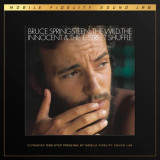
Sourced from the original master tapes, pressed on MoFi SuperVinyl, and strictly limited to 3,000 numbered copies, Mobile Fidelity's 180g SuperVinyl 33RPM LP is the definitive-sounding version of the groundbreaking work cited by Rolling Stone as the 378th Greatest Album of All Time. This reissue also represents the first time this gold-certified effort has been presented in audiophile quality. Benefitting from the ultra-low noise floor, superb groove definition, and dead-quiet surfaces of SuperVinyl, Run-D.M.C. now plays with a clarity, immediacy, punchiness, and directness worthy of the artistry, urgency, and intellect of the trio's material.
The brilliance of Russell Simmons and Larry Smith's production comes into view as if the music is being broadcast on a giant system in a small club — only more focused, lively, and unlimited. Free of dynamic constraints and fatiguing harshness, this LP invites you to turn up the volume and experience the raw, rough, invigorating songs that changed the look, sound, and feel of hip-hop overnight. Think the trio’s sparse framework of drum machines, tag-team rhymes, keyboard accents, and turntable scratches is stuck in the mid-80s? Spin MoFi’s SuperVinyl LP and gain new appreciation for the music, messages, and production on display on Run-D.M.C.
Recorded in the wake of two successful and pioneering singles, both included on the album, Run-D.M.C. effectively took a sheet of coarse-grit sandpaper to the polish, sheen, and linear presentation of all the hip-hop that preceded it. Stripped to bare-bones foundations, the songs grab your attention and shake you by the collar with a combination of industrial-leaning rhythms, staggered deliveries, dance drama, and hard, minimalist percussion. Then there are the lyrics.
The LP broadcasts a smart mix of boots-on-the-ground reports, uplifting advice, and then-nascent b-boy culture. In one fell swoop, its narratives and music rendered the scene’s proclivity toward glamor and softness passé. Run-D.M.C.’s tough, cool-minded fashion sense showed the trio walked its talk and gave fans — particularly those living in long-ignored urban areas — heroes which with they could identify. Kangol hats, black jeans, leather jackets, Adidas sneaks, and gold chains were the new currency.
In every regard, Run-D.M.C. signifies the birth of modern hip-hop. Never more obviously than on the groundbreaking “Rock Box,” where rap and rock were first fused. As the first hip-hop video to receive regular rotation on MTV, the track eviscerated racial and social boundaries, awakened musicians and listeners to new possibilities, and redefined both popular music and, ultimately, popular culture. As the Roots’ Questlove has stated, it “ knocked down many obstacles, enabling hip-hop to become the new gospel."
Such teaching includes the real-world scripture of “Hard Times,” utopian hopefulness of “Wake Up,” and observational truths of “It’s Like That.” Released as the group’s debut single well before its eponymous album, the latter tune established themes and outlooks Run-D.M.C. would embrace during its career. Namely, the keen awareness of various prejudices, economic ills, and disruptive violence as well as the knowledge that education, self-motivation, and hard work were the ways to escape disadvantages and disillusionment.
Inspired and inspirational, the song reflects the spirit and shrewdness that courses throughout Run-D.M.C. That includes a detailed account of the trio’s not-so secret weapon (“Jam-Master Jay”), purpose statement (“Hollis Crew (Krush-Groove 2)”), and a revolutionary hybrid autobiographical narrative-dis track (“Sucker M.C.’s (Krush-Groove 1)”) widely regarded as one of the best hip-hop songs ever created. The same can be said for every moment on Run-D.M.C.
MoFi SuperVinyl
Developed by NEOTECH and RTI, MoFi SuperVinyl is the most exacting-to-specification vinyl compound ever devised. Analog lovers have never seen (or heard) anything like it. Extraordinarily expensive and extremely painstaking to produce, the special proprietary compound addresses two specific areas of improvement: noise floor reduction and enhanced groove definition. The vinyl composition features a new carbonless dye (hold the disc up to the light and see) and produces the world's quietest surfaces. This high-definition formula also allows for the creation of cleaner grooves that are virtually indistinguishable from the original lacquer. MoFi SuperVinyl provides the closest approximation of what the label's engineers hear in the mastering lab.
out of Stock
Last delivered 2 years ago available to reorder, subject to availability
Human Worth are proud to present the killer second album ‘Celestial Devastation’ from UK supergroup COWER, featuring members of The Ghost of a Thousand, Petbrick, USA Nails, Yards, The Eurosuite and JAAW, with a portion of proceeds donated to charity. Featuring the musical might of Tom Lacey (Yards, The Ghost of a Thousand), Wayne Adams (Petbrick, JAAW, Big Lad) and Gareth Thomas (USA Nails, The Eurosuite) Cower is a collaborative project of 3 friends celebrating a lifetime of music exploration together. Each bringing their own distinct flavour to this new record, which pushes the boundaries even more than their acclaimed debut ‘BOYS’, exploring further into the realms on gothic darkness, but still with a real kick, highlighting the trio’s noise roots.
Recorded, mixed and mastered at Bear Bites Horse Studio by Wayne Adams, ‘Celestial Devastation’ explores the idea of technology becoming the guiding light in our lives, for better or worse. In the words of the band’s lyricist Tom Lacey “We give up a lot of decision making to the algorithm more and more, so these songs are an attempt to make sense of that. I think that kind of power speaks to certain type of men, they seem to want to try and harness it, make others see it’s value, so this record speaks a lot to tech bros and the weird cult of silicon valley.” Human Worth have pressed up a limited run of ‘Celestial Eco Mix’ vinyl, housed in a gorgeous package designed by Thomas Lacey using MidSommar AI – linking perfectly with the album’s themes. Featuring a super high gloss cover, with additional photographic inserts illustrated by Daniel Holloway. 10% of all proceeds will be donated to Hackney Foodbank, supporting people in crisis or trapped in poverty with compassion and dignity.
BBsitters Club is a rock band based in Chicago that features Doug Kaplan and Charlie Olvera on guitar and vocals, Max Allison on bass, and Paul Birhanu on drums. As the label’s de-facto in-haus band, BBsitters Club satisfies Hausu Mountain co-founders Allison and Kaplan’s urge to remain connected to the rock and roll music they grew up loving and playing — far across the spectrum from the experimental electronics featured on the lion’s share of HausMo releases.
A solid four years after the one-two-punch releases of BBsitters Club & Party, the band’s 2020 debut studio album, and Joel’s Pick’s Vol. 1, the first volume in a series of audience-recorded live takes from shows around Chicago, we find the BBs reviving the Joel’s Pick’s series with Vol. 2. Charged with the energy of a close-knit group of friends willing to follow along with each other’s most outlandish ideas both in composition and live performance, JPV2 offers us a bewildering yet always tongue-in-cheek palette of ideas cherry-picked and mashed together into amalgams that both embrace “rock traditions” and defy them with a cherubic grin.
BBsitters Club’s amorphous compositions land somewhere between the world’s most baked prog band and a jamband that’s never content to lapse into wheel-spinning complacency. On JPV2, BBsitters Club cartwheel between eras and styles of rock music with abandon — a TV stuck flipping channels after your dad falls asleep with one leg on the remote. We encounter the elliptical dueling guitars and autumnal atmospheres of midwest emo / math rock, the gregarious stomp of electrified country rock, blues rock that has melted from ingesting one too many hallucinogens, and fried Devo-style art punk that breaches into the realms of ska before melting into free-form noise rock flecked with the bizarro imitative instrument tones of Kaplan’s MIDI guitar.
GARDENIA is an existing land located at the Limpopo province of South Africa, right at the border with Botswana. The place's real name is Mmabolela and it's a private nature reserve covering 6500ha of subtropical savanna and part of Limpopo River.
In November 2019 I had a chance to visit the location and participate in an annual residency for composers and sound artists called 'Sonic Mmabolela', initiated and curated by Francisco López.
We lived in an isolated property in the middle of savanna having a unique opportunity to exist in undisturbed touch with the African wilderness.
For the past decade or so, Polish musician Michal Jacaszek has been exploring a new, resolutely modern chapter in Eastern Europe's long, storied love affair with classical music. His creations are painstakingly crafted collages of electronic textures and baroque instrumentation.
All the natural sounds later used to create Gardenia were captured there — during longtime recording sessions over the virgin interior of Mmabolela Reserve.
The album's field recording content was selected from several hours of birdsong, calls of frogs, insect noises, sounds of trees, bushes, grass as well as non-living natural elements like stones or shells.
These field recordings were later digitally processed and used as part of 9 musical arrangements.
However the recording sources and the location of Gardenia is defined, it was not my intention to document a South African natural soundscape nor create any other kind of strict concept album.
All I do in my work is an affirmation of beauty hidden in various aspects of the Creation. MJ
out of Stock
Last delivered 2 years ago available to reorder, subject to availability
Biomes are little worlds of organic relationships, full of struggles, symbiosis, and sheer obsolete noise. In "De Silenti Natura," Henrique Vaz is meticulously crafting synthetic auditory biomes, sprouting from their own fuzzy logic. Unfolding across two distinct acts, the Brazilian artist interprets and replicates the complex, often ambiguous sounds of (un)natural environments, creating imaginary systems to inhabit over two sides of tape. The soundscape of the first side and title track is entirely algorithmically synthesized, with no samples used, leveraging Supercollider for real-time sound generation. The environment thus built is a flourishing one, seemingly unable to escape its own grandeur as insect-like buzzing and crackles expands into mountain ranges and forests of erupting sonorous drama. The second side introduces 'hydrophone' water synthesizers, submerged in a goldfish bowl to interface with the unfurling waves of electronic chords, creating a unique blend of damp and unwieldy sloshing movements, prismatically scattered into a luscious soundscape, and resembling everything from the bridge of a starship to the echoed drip-drip of stalactites.
Both sides of the album slowly unwrap and uncrinkle, revealing layers of hisses, distant digital choirs, warm enveloping chords, and juddering bleeps. Despite their unwieldy and strange nature, myriad elements convey a familiar sense of environment, flitting between the blossoming of new (manmade) life and the doom and destruction of the (real) world.
As the ringing of bells (fully synthetic; no samples were used) hove into view during the closing movement of side one, a simulacrum cacophony of voices is ushered in. It’s a reminder of the holy nature of sound itself, beamed into our heads intangibly. The flipside’s water ritual, frantically dunking ‘water synthesizers’ to birth swooping melodies and yawning tones, is jabbing at sleeping giants. It’s pushing and pulling the stars in the night sky into place. It’s both a simple act of beautiful creation, and a storm in a teacup.
out of Stock
Last delivered 2 years ago available to reorder, subject to availability
To experience Justin R. Cruz Gallego's pulverizing Sub Pop debut is to get burned down to ashes and burst forth, born anew. Grim Iconic...(Sadistic Mantra), the Tacoma-based artist's second album, is driven by opposing forces: noisy abstractions and tightly structured beats, anguish and dissolution at the outside world and empowerment within, apathy and catharsis. Grim Iconic...(Sadistic Mantra) weds scouring electronics to hooky songs and Gallego's powerful drumming in a way that feels visceral and new. It's his most personal statement to date, at once playful and intent, driven and combustible, total fucking chaos mixed into glints of broken-glass beauty. Born in Tucson, Arizona, Gallego experienced culture shock as a child after relocating to the frigid climes of the Pacific Northwest. He found solace in the Seattle punk scene centered around Iron Lung Records and has since remained a fixture in the underground community. "I see this record as first and foremost a musical statement," Gallego says. "I grew up in punk and DIY subcultures, but before that I had Latin music playing in the background through my childhood and every phase of adolescence. It was surprisingly natural to incorporate. I realized I wanted to go deeper into these rhythms. I wanted to make a record that felt as experimental as much as it felt from the perspective of a Latino. When I got a glimmer of that possibility, it felt exciting." Lead single "Dogear" is a face-melting party starter that sounds like someone forced Talking Heads and Rudimentary Peni to share a practice space. "I wanted a song that felt playful in the way it attempted to be dissonant without taking itself too seriously," Gallego says. "Cholla Beat" is even more ambitious, an anthemic mix of WAR and Wire led by unruly synthesizers spiraling down a labyrinth of production. Gallego's influences for the album are vast, ranging from British documentary filmmaker Adam Curtis to electric Miles Davis to audio miscreants like Demdike Stare and Oneohtrix Point Never. But it's Gallego's assured sonic vision that resounds the loudest. And, while J.R.C.G. is a solo project, conceived and executed primarily in Gallego's home studio, he found strength in opening the project to others, starting with Seth Manchester as co-producer. Manchester's penchant for bone-rattling frequencies, as seen in his production work with The Body, Battles, and Mdou Moctar, made him a natural fit for Gallego. Together, they retained the intimacy of Gallego's home recordings while taking advantage of the hi-fi stylings of his Machines With Magnets Studio in Rhode Island. The closing song, "World i," offers a glimpse into the live experience of Grim Iconic...(Sadistic Mantra), with upwards of seven band members blasting off. The album features a fascinating mix of supporting players, many of whom cycle through J.R.C.G.'s live lineup: Morgan Henderson (The Blood Brothers, Fleet Foxes), Jason Clackley (Dreamdecay, The Exquisites), Jon Scheid (Dreamdecay, U Sco), Erica Miller (Casual Hex, Big Bite), Veronica Dye (Terminator) Phil Cleary (U Sco), and Alex Gaziano (Dreamdecay, Kidcrash, Science Amplification). Taken as a whole, G.I.S.M. is a whirlwind of sound, pummeling, and cleansing. It's a sweaty, thrilling aural adventure and, like a great basement show, it'll leave you breathless, exhausted, and wanting to repeat it all over again. As any good mantra should.
Fractal Void is an avant-garde duo based in Düsseldorf, Germany. Their experimental music blends electronic and contemporary genres located somewhere in the field of musical tension between ambient, drone, halfstep and floor-affine IDM. During their live sets, Fractal Void create vertical reflections by processing sounds through software and interaction with real instruments in every unique musical performance like the Chinese contemporary calligraphic practice Dishu.
Their debut album Elemental Collection unveils a dense and lavishly layered transformation of artificial organic signals, sculpting an auditory world filled with emotive landscapes, overgrown polyrhythms and futuristic elements. Embedded within each track are field recordings serving as the heartbeat of the album. Through innovative and expansive deconstruction, Fractal Void create an energetic and sometimes contemplative experience.
The persons behind Fractal Void:
Back in 2008, their musical journey began with winning a Spectrasonics competition using field recordings of a locker door, that was implemented as a bass synth. Their collaboration was continued as producers of the eight-piece electronic jazz project „Mothers of Guru“.
Marcus Scheltinga is a composer, producer and multi-instrumentalist. Besides studying jazz trombone at the Conservatorium Hilversum and the Folkwanghochschule, he works as a musical director, lecturer and coach in 39 countries around the world. From ZDF sound design to live and studio performances with international greats, his own productions have included such as Grammy winner Larry Carlton and Peter Erskine. Mid-east and Indian inspired, Marcus is a true story teller as a musician and composer.
BORGBORG is a producer and DJ. She moves freely in different styles of electronic music with a focus on avant-garde driving techno, dark hypnotic vibes seamlessly blended with deconstructed beats, noise and timeless elements of IDM. She is a member of About Repetition, a group of artists dedicated to the research of repetition through artistic means, collaborating with a wide range of other collectives across Europe and co-founder of the techno event series „SCHLEIFEN“.
out of Stock
Last delivered 2 years ago available to reorder, subject to availability
“Todavía No”, La Paloma’s debut album, consolidates the young band from Madrid as one of the realities of the current scene. Undoubtedly, it’s definitely a bold step forward in all senses: compositional, interpretative, and artistic. Noise-rock to combat all the noise out there.
In “Una idea, pero es triste”, their celebrated debut EP, La Paloma expounded something very serious, but they explained it only once. Five songs that instantly connected with an audience eager for new references. In “Todavía no” there is more depth; here practically each cut shows a different shade of being La Paloma. “Tiré una piedra al aire” is far from “Algo ha cambiado”, but both are unequivocally La Paloma. Surely, this is something that can be attributed to the baggage acquired during this time lapse, but it certainly speaks very well of the artistic ambition of a band to which now seems to have no ceiling.
We are not, therefore, facing a mere extension of their 2021 EP, although musically they pick it up from where they left off. “Todavía no” is an accessible and contagious work, equal qualities shared with “Una idea, pero es triste”. It’s a work that conveys discontent and liberation, ambition and boredom. In large part, it’s due to the accredited ability of its composers Nico Yubero and Lucas Sierra to observe the world with the right dose of skepticism and disappointment, avoiding tormented gesticulation.
The presentation tour that followed the publication of the EP was extensive and led La Paloma to defend their songs throughout the Spanish geography, as well as visits to Portugal, Mexico and the United States. That state of grace was transferred to the studio, where they tried to reflect their live sound and proposal. With an elegant production and without undue frills, the mission of preserving the sharp fang shown in concert halls was achieved, ensuring, in turn, that the elements, arrangements and the proposal of each instrument were heard crystal clear.
Right from the start, we notice in the sequence many of the virtues that make La Paloma one of the most advantaged groups of the current scene: gushing guitars, the solidity of its rhythm section with Rubén Almonacid on bass and Juan Rojo on drums and the color tone provided by the voices of Nico and Lucas, who share the vocal tasks on alternate tracks.
But there’s more: songs that destroy the most generic canon of noise-rock to take it to little-explored territories, frantic guitar games and a cascade of imaginative arrangements. It combines popular song constructions with unpredictable structures that prevent you from anticipating what twist is to come next, making listening experience exhilarating and addictive.
“Todavía no” is a tightly cohesive album, a remarkable fact considering the two creative inputs from which the band draws from and the artistic ambition with which they faced the building of this work. Because we are talking about a complete work, conceived as such. The first chords of “Sigo aquí” sound and the disorganization of reality… is still disorganized, but somehow it makes sense now.
It's already hard to describe what Deerhoof sounds like. So we'll skip that part and say this sounds a lot like Deerhoof with a different singer. And in keeping with 30-year Hoofian tradition, melodies soar, big hit earwigs abound, harmonies are complex, and keys change frequently and unexpectedly. Arrangements are in a constant state of impatient agitation. Emotions run high but delivery is usually a falsetto deadpan. We Sang, Therefore We Were is grief delivered in code. Greg plays everything save for a few birds who join in singing now and again. He keeps the instrumentarium severely limited, the sound shambling and anti-slick. It turns out Greg is a really good bass player and guitar player, if a bit more rudimentary and slicing compared to his Deerhoof bandmates. He does play more angry guitar solos. But don't expect another Chippendale/Saunier speed-drum freakout; the songwriting is gorgeous and sophisticated, and drums are almost an afterthought. Here, song is Queen. The singing is high and whispery, tending towards the three-part harmony. What we're saying is: We Sang, Therefore We Were sounds a bit like Deerhoof fronted by The Andrews Sisters. This is a peek inside the mind of one of indie rock's most celebrated drummers, many of whose fans may not even realize the relentlessness of his musicianship and compositional prolificacy. Mozartian chords and sounds insinuate themselves here and there on this record, finally taking over in a big climax at the end, when the drums break off unexpectedly into a laugh-or-cry orchestral outpouring that ironically may be the rawest part of a very raw album. "Satomi, Ed, John and I were chatting between shows in Austin in early December. They encouraged me to make a record on my own. With no one to please but myself, it came together way faster than usual. It was basically done by the holidays. I had been excited by the announcement that the new Rolling Stones record was going to sound 'angry.' I thought, 'Yes, I'm angry too.' But Hackney Diamonds turned out more like cotton candy than punk rock. So I went back to Nirvana. I always loved the catchy melody over massive distortion, the way their songs refused to conform to simple major or minor scales, the dark sarcasm which still resonates in this age of phony blue-check-washing of fascism." The album cover is all text, penned by Greg on the familiar topic of interspecies absurdist operatic anti-Cartesian revolution. The songs' lyrics are all drawn from this epic poem. White House spokespersons are recast as The Queen of the Night from The Magic Flute, The Queen of the Night is recast as a mockingbird singing all night in a battle for survival, and ultimately the mockingbird is recast as a campy drag artist taking pleasure in her own aggressive, tireless music-making.
*REMASTERED ROUGH TRADE DEBUT LP LIMITED TO JUST 500 COPIES WITH EMBOSSED OUTER SLEEVE AND ORIGINAL INNER SLEEVE ON BLACK VINYL*
Dream POP, they called it. Given AR Kane’s Alex Ayuli once worked for advertising agency Saatchi & Saatchi, it’s no surprise that he and collaborator Rudy Tambala invented their own genre before critics could stick their oar in. It was a canny move, but more importantly, it was accurate: the music of AR Kane was made for dreamers, by dreamers, and its languor and longing made it particularly bewitching listening; their music is often smeared and blurry, happily lost in its own indefinable pleasures. “We wanted dream pop,” Tambala says, “that feeling of a dream where the rules are different. Dream logic.”
-UNCUT REISSUE OF THE MONTH
"A.R. Kane carved out a unique musical path, welding elements of pop, psych, dub, electronica, funk, noise, jazz, ambient and more in a way that had never been done before. Or since. Their debut in particular is a work of unbridled brilliance."
*Electronic Sound*
‘Sixty Nine’ the group’s debut LP that emerged in 1988 had critics and listeners struggling to fit language around A.R. Kane’s sound. As a title it was telling - the year of ‘Bitches Brew’, the year of ‘In A Silent Way’, the erotic möbius between two lovers - and as originally coined by the band themselves, ‘dream pop’ (before it became a free-floating signifier of vague import) was entirely apposite for the music A.R. Kane were making. Crafted in a dark small basement studio in which Tambala recalls the duo had “complete freedom - We wanted to go as far out as we could, and in doing so we discovered the point where it stops being music”. There was an irresistibly dreamy, somnambulant, sensual and almost surreal flow to ‘sixty nine’s sound, but also real darkness/dankness, the ruptures of the primordial and the reverberations of the subconscious, within the grooves of remarkable songs like ‘Dizzy’ and ‘Crazy Blue’. Alex’s plangent vocals floated and surged amidst exquisite peals of refracted feedback but crucially there was BASS here, lugubrious and funky and full of dread, sonic pleasure and sonic disturbance crushed together to make music with a center so deep it felt subcutaneous, music constructed from both the accidental and the deliberate, generous enough to dance with both serendipity and chaos. ‘sixty nine’ remains - especially in this remastered iteration - ravishing, revolutionary – Neil Kulkarni
"A.R. Kane made some of the most exciting, forward-thinking, and science fictional music of their era".s*
out of Stock
Last delivered 2 years ago available to reorder, subject to availability
The 2019 released "Caligula" took the vision of Kristin Hayter's vessel to the next level of grandeur, her purging and vengeful audial vision went beyond anything preceding it and reached an unparalleled sonic plane within her oeuvre. Succeeding her self-released 2017 "All Bitches Die" opus, "CALIGULA" saw Hayter design an ambitious work, displaying the full force of her talent as a vocalist, composer, and storyteller. Vast in scope and multivalent in its influences, with delivery nothing short of demonic, "CALIGULA" is an outsider's opera; magnificent, hideous, and raw. Eschewing and disavowing genre altogether, Hayter built her own world. Here she fully embodied the moniker Lingua Ignota, from the German mystic Hildegard of Bingen, meaning "unknown language" _ this music has no home, any precedent or comparison could only be uneasily given, and there is nothing else like it in our contemporary realm. Whilst "CALIGULA" is unapologetically personal and critically self-aware, there are broader themes explored; the decadence, corruption, depravity and senseless violence of emperor Caligula is well documented and yet still permeates today. Brimming with references and sly jabs, Hayter's sardonic commentary on abuse of power and invalidation is deftly woven. Working closely with Seth Manchester at Machines With Magnets studio in Pawtucket, Rhode Island, Hayter stripped away much of the industrial and electronic elements of her previous work, approaching instead the corporeal intensity and intimate menace of her notorious live performances, achieved with unconventional recording techniques and sound sources, as well as a full arsenal of live instrumentation and collaborators including harsh noise master Sam McKinlay (THE RITA), visceral drummer Lee Buford (The Body) and frenetic percussionist Ted Byrnes (Cackle Car, Wood & Metal), with guest vocals from Dylan Walker (Full of Hell), Mike Berdan (Uniform), and Noraa Kaplan (Visibilities). "CALIGULA" is a massive work, a multi-layered epic that gives voice and space to that which has been silenced and cut out.
7A Records are proud to present our deluxe reissue of Mungo Jerry’s Electronically Tested. Released on July 19th, the album has been remastered and expanded with four bonus tracks and features extensive liner notes including Ray Dorset’s own recollections.
Electronically Tested, Mungo Jerry’s second album, was first released in March 1971. Even the title clued in listeners that this was no ordinary record. As Ray Dorset reveals, “I came up with the name of the album. Durex used to have ‘electronically tested’ written on their packets. I thought that was quite the talking point, if people in the know said, ‘That’s the same name as on the packet of condoms!’ It was taboo to mention stuff like that.” Electronically Tested offered hints of the familiar via its inclusion of the UK #1 Hits “In the Summertime” and “Baby Jump,” but elsewhere, the album was pure, eclectic Mungo Jerry. Every side of Dorset’s talents as a singer, songwriter, and musician came to the fore on Electronically Tested, with his bandmates John Godfrey, Paul King, and Colin Earl–as well as producer Murray– joining him to create a joyful noise: “It’s got a lot of tracks that could have been singles in their own right. It was good for me to be able to play all that kind of stuff”. Mungo Jerry’s singular sound has been described as rock, folk, blues, country, good-time music, jug band music, pub rock, and gypsy rock–and that’s just a partial list. One can hear all of those elements in the disparate, timeless songs that form Electronically Tested. How would Mungo himself describe it? “It’s kind of rocky stuff. It’s got social commentary. It’s got all sorts of influences in there. It’s really best to say it’s Mungo Jerry music.” Electronically Tested originally peaked at # 14 on the U.K. Albums Chart the week of April 14, 1971.
It’s been said before - in my house, at least - but all the best punk music right now hails from the land Down Under. Stiff Richards, Split System, C.O.F.F.I.N., Polute… that’s before we even get into that ‘Smoko’ band and a whole heap of other mullet-wearing reprobates. To this stack of names, we must add another: Cutters. It’s a raucous squall they make, that’s for sure. Much like setting off rockets at a petrol station, they’re beautifully, terrifyingly explosive - ‘Psychic Injury’ is their second album, following 2021’s gleefully cacophonic ‘Modern Problems’. Much like their aforementioned fellow Aussies, you can trace some of their stomp back to the UK’s 70s pub rock scene, a good chunk of their chutzpah to Chris Bailey and Kim Salmon, and even more to the fact that hardcore feels once more like a re-energised scene filled with purpose and drive (...and other words that rock hacks use to make it clear that certain noises are Really Fucking Important Right Now). They’re among the finest exponents of this stuff and it’s a joy to hear it. With titles like ‘Landlord Nation’ and ‘An Ode To Shoplifting’, it doesn’t take a genius to identify their targets; with lyrics like ‘I’m the first of many suckers’ you can tell they’re not above self-deprecation, even as they rage gloriously about a system that’s rigged against us. The album drips - like an icicle in the Sahara - with righteous rage, and even when that anger feels knowingly futile (“I hate the public / Get away from me”), it’s delivered with such wide-eyed venom that it still feels potent as fuck. Whether operating a top velocity or through brutal rifferama, ‘Psychic Injury’ delivers in spades. Apply it to your ears forthwith
LUMBEROB has always strived for maximalist sonic vaudeville, always hoped for real electro gabber hardcore noise art, always grabbed for frenzied illegibility, always lurched loosely improvised from a psych-swamp of love. On the new album, HUNTER GATHER, LUMBEROB swings swanky as proper pop deviance. Built from the same loopy logic which drives the stomping slaphappy force of his live show, these tunes are crafted out of lovely and weirdly thunk out loud and large soundscapes. Mixed and mastered by Shimmy-Disc founder Kramer (Daniel Johnston, JD Pinkus, Pan American), the album surprises, estranged from obvious categorization. These slippery little bouncy bangers are bold exercises in genre discovery. It sounds like nothing and it goes with everything. LUMBEROB is a tough act to follow, a surreally inventive performer who spins giddy with excitement, dancing dumb and banging hard. That's just what he does, and HUNTER GATHER is a refined encapsulation of that energy. There's truly a beautiful stupidity to be found here. HUNTER GATHER is noise-pop, art-rock, psych-primitive, dumb-dance. The album teams with bright sounds, spinning visions, and brut poetics. It curves furiously like a naughty noodle and, yes, it spins you dizzy at times. Nothing is old in that feeling ever. Listen loudly.
“Come my lady/Come-Come my lady/ You’re my butterfly, sugar baby”…If there was a song-track to the turn of the millennium, Crazy Town’s “Butterfly” was it, starting with its appearance on the 1999 album Gift of Game and winding up with its reign at #1 in the charts in February 2001. Anchored by a sample of Red Hot Chili Peppers’ “Pretty Little Ditty,” it forever defined the term “nu-metal power ballad,” and was a rare-for-the-genre love song to boot! But the album from whence it came didn’t fly as high as it did, with over 2.5 million copies sold, just because of “Butterfly.” The Gift of Game brings the noise with an all-out alternative metal assault, and the band’s rappers—bolstered by guest appearances from KRS-One and Mad Lion—are markedly better than their rap/metal contemporaries. And then there’s the album art, created by member Shifty Shellshock’s father and uncle, which lends a vivid rendering to the fantasies of every teenage boy listening to “Lollipop Porn.” In short, this was a freakin’ HUGE record that somehow…somehow!...has NEVER been on vinyl. So how to handle its momentous debut on its 25th anniversary? Well, first, we’ve created an inner sleeve with all of the lyrics (and there are a lot of ‘em). Our sources also tell us that the very explicit hidden bonus track on the CD release has mysteriously made it on here. But when it comes to the vinyl, given what we anticipate is going to be, ahem, crazy demand, we have pressed the record in two different colors, one in “Red Devil Velvet” vinyl and the other in “Yellow Butterfly” vinyl. Come dance with us and Crazy Town…twice!
*REMASTERED ROUGH TRADE DEBUT LP LIMITED TO JUST 500 COPIES WITH EMBOSSED OUTER SLEEVE AND ORIGINAL INNER SLEEVE ON BLACK VINYL*
Dream POP, they called it. Given AR Kane’s Alex Ayuli once worked for advertising agency Saatchi & Saatchi, it’s no surprise that he and collaborator Rudy Tambala invented their own genre before critics could stick their oar in. It was a canny move, but more importantly, it was accurate: the music of AR Kane was made for dreamers, by dreamers, and its languor and longing made it particularly bewitching listening; their music is often smeared and blurry, happily lost in its own indefinable pleasures. “We wanted dream pop,” Tambala says, “that feeling of a dream where the rules are different. Dream logic.”
-UNCUT REISSUE OF THE MONTH
"A.R. Kane carved out a unique musical path, welding elements of pop, psych, dub, electronica, funk, noise, jazz, ambient and more in a way that had never been done before. Or since. Their debut in particular is a work of unbridled brilliance."
*Electronic Sound*
‘Sixty Nine’ the group’s debut LP that emerged in 1988 had critics and listeners struggling to fit language around A.R. Kane’s sound. As a title it was telling - the year of ‘Bitches Brew’, the year of ‘In A Silent Way’, the erotic möbius between two lovers - and as originally coined by the band themselves,
‘dream pop’ (before it became a free-floating signifier of vague import) was entirely apposite for the music A.R. Kane were making. Crafted in a dark small basement studio in which Tambala recalls the duo had “complete freedom - We wanted to go as far out as we could, and in doing so we discovered the point where it stops being music”. There was an irresistibly dreamy, somnambulant, sensual and almost surreal flow to ‘sixty nine’s sound, but also real darkness/dankness, the ruptures of the primordial and the reverberations of the subconscious, within the grooves of remarkable songs like ‘Dizzy’ and ‘Crazy Blue’. Alex’s plangent vocals floated and surged amidst exquisite peals of refracted feedback but crucially there was BASS here, lugubrious and funky and full of dread, sonic pleasure and sonic disturbance crushed together to make music with a center so deep it felt subcutaneous, music constructed from both the accidental and the deliberate, generous enough to dance with both serendipity and chaos. ‘sixty nine’ remains - especially in this remastered iteration - ravishing, revolutionary – Neil Kulkarni
"A.R. Kane made some of the most exciting, forward-thinking, and science fictional music of their era".
*Reissue Of The Week In The Quietus*
out of Stock
Last delivered 2 years ago available to reorder, subject to availability
True Acid Wizards of the 1980s/1990s Psychedelic Underground TreaTmenT performed at Stonehenge Free Festival and at squats and clubs all over London including the now legendary Alice In Wonderland, The Crypt and Club Dog where they assaulted the minds of those present with their unique and somewhat terrifying blend of '60s psychedelia and '70s space rock all liberally spiked with a questioning punk attitude. Performing with Dr & The Medics, Ozric Tentacles, The Magic Mushroom Band, Naz Nomad and The Nightmares and other luminaries of the neo-psychedelic space rock revival, TreaTmenT were an integral part of the scene and possibly the most psychedelic band of them all.
Hardcore to the max, the band insisted on performing in a psychedelicised state, looking like a cross between Arthur Brown's Kingdom Come and early Pink Floyd and often with a lightshow. Firmly fixated on taking their audience on the trip of a lifetime TreaTment consisted of Adam Blake (Jacket Xerxophon) on guitar and vocals, Gordon Leach (Gordon Zola) on further guitar and vocals, Clive Leach (Evil C. Live, Ron Number, Curtis Vile) on bass/trombone, Paul Ross (The Big Beat, Mr Raagh) on drums/percussion and Paul McWhinnie (Mutant) on keyboards, noises and vocals. They were without doubt a live phenomenon, and although they released a couple of singles, cassettes, a live album and a studio album - Cypher Caput - on the Delerium label (home to Porcupine Tree), they never really managed to commit their mind-blowing magic to vinyl. Now, nearly 20 years after it was recorded TreaTment are releasing a limited-edition double vinyl LP of their second studio album How Much is Enough? in memory of guitarist Gordon Leach who sadly passed away in 2021.
The album was intended to be released on Delerium in 2000 but never was and whilst one track 'Keep Ahead' appeared on the Cherry Red box set Last Daze of The Underground - Delerium Records Anthology in 2011 nothing else has seen the light of day until now. Fans of the band will note cornerstones of their live set such as the wondrously trippy 'What The Hell to do' the humorous swipe at the music press 'Hate The Band' the melodic keyboard swirling 'Restless', the frenetic guitar cross fire of 'No Understanding' and the nihilistic nightmare 'Blot Out'.
Housed in a gatefold sleeve packed with photos and memorabilia as well as for the first time the full history of the band and limited to only 300 on 180-gram vinyl How Much is Enough? will no doubt be seen in the future as one of the landmark releases of the '80s/90s Neo-Psychedelic revival.
- Legendäre experimentelle Jazz-Aufnahmen von David Lynch und Angelo Badalamenti von Anfang der 90er Jahre. - die Musik wurde versatzweise in David Lynchs Film- und Fernseharbeiten verwendet, ist aber nie als richtige Veröffentlichung erschienen. Thought Gang wurde nach der Ausstrahlung der zweiten Staffel von ,Twin Peaks" geboren, als die Hauptproduktion des Kinofilms ,Fire Walk With Me" gerade erst begonnen hatte. Das esoterische Jazz-Side-Projekt von David Lynch und Angelo Badalamenti entwickelte sich ursprünglich aus dem Slow Cool Jazz, der die ,Twin Peaks" TV Serie mitgeprägt hatte. Thought Gang erblühte zu einem experimentelleren Sound: horizontlose Aussichten auf LSD-getränkten Freejazz, geschnürt mit gesprochenen Wortnarrativen und ausgedehnten Geräuschkulissen. Der Soundtrack zu ,Fire Walk With Me" präsentierte zwei vorläufige Tracks ("A Real Indication" und "The Black Dog Runs at Night") von einem Album, das von Mai 1992 bis 1993 stückweise aufgenommen und zweieinhalb Jahrzehnte lang nicht veröffentlicht wurde. In den folgenden Jahren tauchten Fragmente und Arbeitsversionen von Thought Gang-Material immer wieder auf: in einem von Lynch geführten Adidas-Werbespot; in Szenen in ,Hotel Room", ,Mulholland Drive" und ,Inland Empire"; in gelöschten Szenen von ,Fire Walk With Me" und am meisten in Showtimes dritter Staffel von ,Twin Peaks". "Frank 2000" und "Summer Night Noise" sowie ein alternativer Instrumental-Mix von "Logic and Common Sense" unterlegen Szenen der dritten Staffel und helfen, den ausgesprochen experimentellen, rauschhaften Soundtrack der Serie zu definieren. David Lynch über Thought Gang: "It's sort of like jet-fueled jazz in a weird way, but it's all based on stories. It's Modern Music."
*REMASTERED ROUGH TRADE 4 TRACK E.P LIMITED TO JUST 500 COPIES*
Everything on “Up Home!” is bigger, richer; the guitars are huge, as though they’re being played through the clouds, massive gusts of blue-green noise that move across the stereo spectrum like weather systems. “Baby Milk Snatcher” is built around face-flattening dub bass, with glinting piano and shards of guitar ricocheting through the song. “W.O.G.S.” is delirious to the point of expiration; “One Way Mirror” is their attempt at weird, lopsided ‘anti-funk’, the song’s melody crushed by avalanches of six-string interference. And the closing “Up” is AR Kane’s masterpiece, a disembodied thud pulsing at its heart as a six-note guitar melody spirals ever onward, Ayuli’s voice lost in its own reverie, hymning escapism via references to Jamaican political activist Marcus Garvey’s ‘black star line’.
• Jon Dale, lead review in Uncut Magazine
who grew up together in Stratford, East London. From the off the pair were outsiders in the culturally mixed (cockney/Irish/West Indian/Asian) milieu of the East End, with Alex and Rudy’s folks first generation immigrants from Nigeria and Malawi, respectively. The two of them quickly developed and fostered an innate and near-telepathic mutual understanding forged in musical, literary and
artistic exploration. Like a lot of second-generation immigrants, they were ferocious autodidacts in all kinds of areas, especially around music and literature. Diving deep into the music of afro-futurist luminaries such as Sun Ra, Miles Davis, Lee Perry and Hendrix, as well as devouring the explorations of lysergic noise and feedback from contemporaries like Sonic Youth and Butthole Surfers, they also thoroughly immersed themselves in the alternate literary realities of sci-fi and ancient history (the fascination with the arcane that gave the band their name), all to feed their voracious cultural thirsts and intellectual curiosity.
It was seeing the Cocteau Twins performing on Channel 4 show the Tube that spurred A.R. Kane into being - “They had no drummer. They used tapes and technology and Liz Fraser looked completely otherworldly with those big eyes. And the noise coming out of Robin’s guitar! That was the ‘Fuck! We could do that!
The duo debuted with the astonishing ‘When You’re Sad’ single for One Little Indian in
1986. Immediately dubbed a ‘black Jesus & Mary Chain’ by a press unsure of WHERE to put a black band clearly immersed in feedback and noise, what was immediately apparent for listeners was just how much more was going on here – a tapping of dub’s stealth and guile, a resonant umbilicus back to fusion and jazz, the music less a conjuration of past highs than a re-summoning of lost spirits.
The run of singles and EPs that followed picked up increasingly rapt reviews in the press, but it was the ‘Up Home EP’ released in 1988 on their new home, Rough Trade that really suggested something immense was about to break. SimonReynolds noted the EP was: Their most concentrated slab of iridescent awesomeness and a true pinnacle of an era that abounded with astounding
landmarks of guitar-reinvention, A.R. Kane at their most elixir-like.
If anything, the remastered ‘Up Home’ is even more dazzling, even more startling than it was when it first emerged, and listening now you again wonder not just about how many bands christened ‘shoegaze’ tried to emulate it, but how all of them fell so far short of its lambent, pellucid wonder. This
remains intrinsically experimental music but with none of the frowning orthodoxy those words imply. A.R. Kane, thanks to that second generation auto-didacticism were always supremely aware about the interstices of music and magic, but at the same time gloriously free in the way they explored that connection within their own sound, fascinated always with the creation of ‘perfect mistakes’ and the possibilities inherent in informed play.
out of Stock
Last delivered 2 years ago available to reorder, subject to availability
LIMITED EDITION LILAC COLOURED VINYL LP WITH DOWNLOAD CODE
It's a year later and everything has gone from bad to worse.
Machiavellian Art and Riot Season Records present "Population Control". A Sonic Examination of the Mechanisms of Control.
An intense exploration of societal and self-imposed controls, encapsulated in a dynamic contrast between Side A's visceral anger and the introspective ambiance of Side B. This duality mirrors the contrasting themes of external control versus internal reflection.
"Population Control" extends beyond its predecessor, "Indoctrination Sounds," in both musical depth and thematic scope. The album confronts a broad spectrum of modern-day addictions - not just to substances, but to technology, social media, and the relentless 24-hour news cycle. These themes manifest across tracks like "A Slow Death," "Population Control (1) + (2)," "Fear of the Outside World," and "Crisis," each exploring the resulting isolation, paranoia, fear, and hopelessness. "Seaside Holiday," a critique of environmental negligence, specifically highlighting the issue of untreated sewage being dumped into Britain's waterways by private companies.
Previous praise:
"Incredibly progressive, psychedelic but massively discordant, saxophone and static infused psych rock chaos" (Nineherz)
"Nasty noise rock with sax and freeform jam segments, but also—because you may have heard music which answers to that description before—a stamp of individuality." (Maximum Rock N Roll)
"Want a weird and dangerous album with a lot to say then Indoctrination Sounds is that album. " (Outlaws Of The Sun)
"Indoctrination Sounds is a total exercise in distorted, claustrophobic riffs, uneasy, anxious vibes, and industrial noise." (The Sleeping Shaman)
Machiavellian Art are: Amy Murphy, Benjamin Thomas, Joe Parkes, John Andrews,Sam Hunt
out of Stock
Last delivered 2 years ago available to reorder, subject to availability
Sunk in quicksand, doused in prosecco and soundwaves of glitches and Croatian choons, Bolka
is stuck in the raw state of desire. This love came into being under the sad ceilings, bearing traces
of fantastically naive melodies shredded by claws of intruding noises of the artist's debut EP.
And yet, radical sensitivity and optimism on the new EP do not remain just on the beach.
Žiadzasamy (loosely translated as Yearningforus) include love songs about love read in cards,
about overcoming insecurity, about scratching up the slippery walls of reality towards the dream
source of warmth that only SHE possesses.
Syrupy pop tunes in "nech sa ti páčim" ("i hope you like me") are led by a nursery rhyme about
the complex embrace of infatuation, from the head down to the shoulders, knees and toes of the
desired person. The sound wizard of peculiarities goes by the motto "let anything I wish for
come true", whether it's his white buttocks shining in the dark sea or him sweeping past barefoot
in search of seafood delicacies, and the same is heard in his music where euphoric and childish
moods sink arbitrarily to the depths of corroded and distorted rhythms of anxiety. "A smutek
utek" ("and the sadness is gone"), though, sets a new direction for the Bolka's musical piece;
after a slow mo deflation of the balloon of hopes, after wallowing in oozy and sticky blend of
delirious melodies, Bolka gets to spin the wheel of the real Balkan soap opera.
"More, mám ťa veľmi rád" ("sea/man, i like you very much") is the pinnacle of absolute
infiltration and absorption with infatuation and suddenly, the amusing nods to stereotypical
Croatian hits make it clear that all the joy and high spirits do not stem from holiday idleness. In
žiadzasamy, Bolka indulges in the ideal notion of love that is closer to reality with each passing
kilometer, impatiently speeding up the Latin tempo in the hyper-pop escalation in order to
venture into the most radical decision – that all will end well.
Žiadzasamy is hedonism injected right into one's vein, an ashtray always aglow with a lit
cigarette and a musical burst of new-born love that sets the Bolka's sound world on a single
course: from siesta to fiesta, and so on and on.
[d] 04: Žiadzasamy (Remix) [feat. Viktor Jenčuš]
"A sprawling patchwork of the artist’s dreams and fears, Parannoul’s third album After the Magic explores the enigmatic solo artist’s life in the wake of his second album’s overnight success.
Expanding on the shoegaze-shaded emo that made Parannoul’s To See the Next Part of the Dream so beloved by lo-fi and indie rock fans alike, After the Magic sees the anonymous auteur striving to write a follow-up as worthy of acclaim as the last.
Across the album’s ten songs, Parannoul plunges yet deeper into his diverse pool of influences, coming back to the surface with a record that captures and extends the magic of its predecessor. Unexpected flashes of orchestral ambient and glitched-out electronica meld seamlessly with Parannoul’s signature passages of noisy, distortion-laden shoegaze, offering a real time glimpse into the maturation of one of indie rock’s most exciting artists.
In the artist’s own words, “This album is not what you expected, but what I always wanted.”"
Waxwork Records is thrilled to release THE EXORCIST III Original Motion Picture Score by Barry DeVorzon. THE EXORCIST III is a 1990 American supernatural horror film written and directed by William Peter Blatty based on his 1983 novel Legion. The film is set fifteen years after the events of The Exorcist (1973) and follows a character from the original film, Lieutenant William F. Kinderman who investigates a series of demonic murders in Georgetown that have the hallmarks fo the Gemini, a deceased serial killer.
THE EXORCIST III features a dark ambient score by Barry DeVorzon (The Warriors, Night of the Creeps). It was the last film score he ever created and features synth drones, sampled chanting, synthesized voices and real voices, and experimental sound design. Of the score, DeVorzon provided exclusively to Waxwork for this album's liner notes: "I was exploring a lot of synthesized sounds and textures and trying to do something that would make the scenes more chilling. Anything that was different, eerie, and had nothing to do with an orchestra. This was new territory for me - it wasn't orchestral, it wasn't rhythm oriented. It was just a really different animal."
Waxwork Records is proud to present THE EXORCIST Original Motion Picture Score for the first time in any format. Sourced from the original masters and then mixed, mastered, and constructed into a cohesive double LP soundtrack experience. The album features 150 gram purple smoke colored vinyl, exclusive liner notes by composer Barry DeVorzon, heavyweight gatefold packaging with matte satin coating, a 12"x12" four page booklet, and new artwork by Suspiria Vilchez."
Remastered vinyl of the original album which came out on CD only in 2005. Limited to 200 copies on classic black vinyl. This is an album that’s as alive as any could be. Indeed, far from sounding like the last desperate set of half-baked ideas from a once vital band (hello Oasis?) Artists Cannibals Poets Thieves is more like a debut album from a bunch of teenage upstarts: free from cynicism, fired with worldly wonder and chock full of ideas. This is certainly a different outfit from that of 1998, when they first wowed us (via John Peel, naturally) with the utterly essential sprawling noise that was The Things We Make. Long since stripped down by a series of resignations from a five strong collective to a taut three piece featuring founding members Chris Olley, James Flower and Chris Davis, the music has simplified considerably. Gone are the soundscapes of old, and in their place we have a series of sharp basslines, swirling keyboards, cutting guitar lines and the passionate hollering of frontman Olley. Opener All I Really Want From You Is Love is a perfect introduction to proceedings – a truly wonderfully distorted slab of indie rock, recalling early Jesus And Mary Chain in both its fuzz and, crucially, its wonderfully crafted tune. Next, Nowhere To Go But Home sounds like New Order if they’d emerged from Detroit in 1966. Tonight (I Wanna Make It Out) follows likewise with the best bassline Peter Hook never plucked. Throughout, Six By Seven manage to sound so natural, so refreshing free of the flab and introspection that a band on its last legs would usually succumb to. And whilst the momentum is momentarily lost as the drum machine makes an appearance to fashion the Suicide-esque trawl of Stara Paris Rescued Me, it’s not long before Just Get It Down muscles things back on course with a whispered Olley diatribe perched on top of more raw cacophony, before we reach the bitter end via the Depeche Mode-on-smack You Know I Feel Alright Now. Tracklisting:
Nach ihrem angstgetriebenen, selbstbetitelten Debüt von 2018 und der geradezu eskapistischen Welt des zweiten Albums "On All Fours" (2021) tritt das Trio aus dem Süden Londons, bestehend aus Rosy Jones, Lottie Pendlebury und Holly Mullineaux, im Jahr 2024 in eine neue Ära ein. Gemeinsam mit Co-Produzent John "Spud" Murphy (black midi "Cavalcade", Lankum "False Lankum") ist Goat Girls Ansatz auf "Below the Waste" selbstbewusst und reif, während sie ihren Sinn für spielerische Neugier bewahren. Spuds Wissen, sein Enthusiasmus und seine Geduld haben Goat Girls ambitionierte Ziele im Studio zum Leben erweckt und einen unverwechselbaren Sound erzeugt. Die einzigartige Kombination von Stilen und unorthodoxen Aufnahmemethoden, die mühelos zwischen ausladendem Noise-Rock, delikaten Folk-Experimenten und befriedigendem Synth-Pop hin- und herpendelt, sind der Beweis. Wie eine Collage wurde die Instrumentierung größtenteils während eines 10-tägigen Aufenthalts in Irland in den Hellfire Studios aufgenommen, die im Schatten des berüchtigten Hellfire Clubs liegen. Zusätzliche Streicher (Reuben Kyriakides und Nic Pendlebury), Holzblasinstrumente (Alex McKenzie) und Gesang (einschließlich eines Chors aus Familie und Freunden) wurden den Tracks an verschiedenen Orten hinzugefügt, von einer Scheune in Essex bis zu Goat Girls eigenem Studio in Südlondon. Dieser Luxus an Zeit gab der Band die Freiheit zu produzieren, zu schreiben und zu arrangieren, so dass die Songs ihr volles Potenzial entfalten konnten. Thematisch wird die Absurdität unserer zunehmend dystopischeren Umwelt durch den entwaffnenden Realismus von Lotties Texten entlarvt, die oft das Surreale und das schmerzlich Erfahrbare nebeneinanderstellen. Wenn man einen tieferen Blick in die Lyrics wirft, kommen die Dinge zum Vorschein, die man im Leben schätzen sollte - die Schönheit und Freude, nach der diese Platte strebt. Es besteht kein Zweifel daran, dass "Below the Waste" das bisher größte Album von Goat Girl ist und gleichzeitig ihr kraftvollstes und authentischstes Statement geworden ist.
Released only eight months after his exhilarating debut, Bruce Springsteen's The Wild, the Innocent & the E Street Shuffle contains rousing dispatches from the boardwalk, the street, the beach, and the bedroom. It explodes with energy, dares to dream, teases with humour, crackles with tragedy, clings to hope, and overflows with discovery, youthfulness, and personality. It features an unforgettable cast of characters — corner boys, teenage hustlers, doomed lovers, jazz men, junk men, factory girls, fortune tellers, alley cats, pimps, escorts, and more — illuminated by vivid colour, breathtaking detail, and poetic action.
Musically, the heartfelt 1973 record is inhabited by sympathetic vignettes and cinematic arrangements steeped in rock 'n' roll, soul, jazz, and R&B. It finds the New Jersey native looking beyond the parameters of his preceding record and seeking to move on from environments he knows well (and chronicles here) by rushing headlong toward unknown territories, adventures, and people. Underpinned by the singer-guitarist's ambitious poetic enterprise and will to succeed, The Wild, the Innocent & the E Street Shuffle is the album on which Springsteen becomes the Boss.
Mastered on Mobile Fidelity's renowned mastering system, pressed at RTI on MoFi SuperVinyl, and strictly limited to 7,500 numbered copies, Mobile Fidelity's UltraDisc One-Step 180g 33RPM LP set is the definitive-sounding version of Springsteen's sophomore record. Benefitting from SuperVinyl’s nearly non-existent noise floor, superb groove definition, and dead-quiet surfaces, The Wild, the Innocent & the E Street Shuffle plays with a clarity, energy, presence, and openness that complement the expressiveness, dynamics, and scope of the seven restless songs that comprise a work Rolling Stone ranked the 345th Greatest Album of All Time.
Beyond the audiophile sonics that practically place you behind the console at 914 Sound Studios — listen to the separation between the instruments, natural decay of the notes, interplay within the widescreen soundstaging, and nothing-to-lose youthfulness of Springsteen’s voice — this reissue takes seriously this record’s influential merit by presenting it in packaging that underlines its status. Tucked in a beautiful slipcase, the LP is housed in a special foil-stamped jacket with faithful-to-the-original graphics. This reissue is made for listeners who prize sound quality and who want to engage themselves in everything involved with the invigorating set that busted Springsteen loose from the club circuit and landed him on the radio
Determined to liberate anyone within earshot and unafraid to come on strong, The Wild, the Innocent & the E Street Shuffle serves as the debut of the E Street Band — not only heard but seen for the first time by most of the public courtesy of the back-cover photograph. This is where saxophonist Clarence Clemons, organist-accordionist Danny Federici, and pianist David Sancious step out of the shadows — and drummer Vini Lopez and bassist Garry Tallent again stoke a fiery rhythmic engine that helps drive the untamed, reimagined big-band swing of “Kitty’s Back,” breathless R&B thrust of “Rosalita (Come Out Tonight),” and carefree dance steps of the funky “The E Street Shuffle.”
Of course, the main attraction remains a then-24-year-old visionary on the precipice of becoming a sensation and turning a then-bloated rock scene on its head. Recorded over three months while Springsteen and company were busy touring his debut LP, The Wild, the Innocent & the E Street Shuffle reflects the high-octane approach the vocalist embraced onstage and drifts away from the label-dictated acoustic-based frameworks of his debut. The set also witnesses Springsteen deepening his observational skills, with narratives such as the romantically tinged “4th of July, Asbury Park (Sandy)” and redemptive epic “Incident on 57th Street” mirroring changes taking place in the singer’s own life, small towns, and America at large.
A thrilling collision of memories, reflections, and composites — Sandy, Rosalita, and the latter’s parents are all based on actual people Springsteen knew, as is the community depicted in the opening track — the aptly titled The Wild, the Innocent & the E Street Shuffle resonates decades on due to its truths, authenticity, and spirit. Those characteristics — as well as the fact that many of its lengthy songs come on as the equivalent of sweaty, feverish soul revue that won’t stop until you’ve been exhausted — also explain how this now-iconic album triumphed over the reservations of industry “experts” that both demanded Springsteen re-record it and instructed deejays not to play it.
Yet there’d be no stopping a record that saw the past, present, and future, a band whose will would not be denied, and a phenomenon who was born to run. A never-ending invitation to act real cool and stay up all night, The Wild, the Innocent & the E Street Shuffle always feels alright.
SALTPIG is a bit of a mystery. The band just showed up seemingly out of nowhere, album in hand, with the music loudly speaking for itself. As it soon became known, SALTPIG is a two person band with Fabio Alessandrini (formerly of Annihilator) on drums and Mitch Davis handling vocals, guitar and all of the other layers of noise that can be heard on the record. The music that came out of this pairing has elements of doom/stoner/psych/occult metal and others, but they didn't go into it with anything that specific in mind. They just make the music they want to hear. Davis has been working with bands/artists including LA Guns, Damon Albarn, Billy Squier, Stephen Malkmus, Mark Lanegan, Sunbomb and U2, but SALTPIG is obviously a very different animal. For his own band, Mitch created a sound that is much darker. When he started writing the SALTPIG tracks, it pretty quickly turned into this debut album. Most of the tracking was done in their respective studios, with Fabio in Italy, and Mitch in New York where he'd do all of the final recording, production and mixing. It's melodic but embraces dissonance. It's noisy and dirty and evil sounding. Underproduced and real. It embraces imperfections as only a human can do.
SALTPIG is a bit of a mystery. The band just showed up seemingly out of nowhere, album in hand, with the music loudly speaking for itself. As it soon became known, SALTPIG is a two person band with Fabio Alessandrini (formerly of Annihilator) on drums and Mitch Davis handling vocals, guitar and all of the other layers of noise that can be heard on the record. The music that came out of this pairing has elements of doom/stoner/psych/occult metal and others, but they didn't go into it with anything that specific in mind. They just make the music they want to hear. Davis has been working with bands/artists including LA Guns, Damon Albarn, Billy Squier, Stephen Malkmus, Mark Lanegan, Sunbomb and U2, but SALTPIG is obviously a very different animal. For his own band, Mitch created a sound that is much darker. When he started writing the SALTPIG tracks, it pretty quickly turned into this debut album. Most of the tracking was done in their respective studios, with Fabio in Italy, and Mitch in New York where he'd do all of the final recording, production and mixing. It's melodic but embraces dissonance. It's noisy and dirty and evil sounding. Underproduced and real. It embraces imperfections as only a human can do.
Not God is the new album from Chicago's beloved two-headed monster, Finom (fka Ohmme). You can ask them to go into more detail about the boring reasons why they changed their name, but for now, the answer is going to be polite refusal. No. Co-fronted by Sima Cunningham and Macie Stewart, Finom's influences run vast and varied, and they put a premium on change. Produced by Jeff Tweedy in the Wilco Loft, Not God is a marvel of growth, a progression from the roots of this collaborative band whose history can be traced back to its improvised conception. This is owed in no small part to their hometown of Chicago, the life raft to so many persisters in musical adventurosity. That energy combined with Finom's dramatic vocal and musical gifts puts them in the peripheries of the legacies cemented by The Roches, Roxy Music, the B52s, Kate Bush, Cate Le Bon, and Wilco. Cunningham and Stewart are brilliant harmonizers, but harmony doesn't equate to a utopia. In Finom's maws harmony can also be a fight, holding the line until the volcano erupts. This realistic depiction of a creative relationship jolts throughout the songs of Not God, and brings the whole damn thing to life. Finom are more than one person with more than one dream. But still, they grow together, harnessed by their shared love of pop songwriting, control, chaos, and being generally freaky-deaky. Freaky in that way that is only really fun when you're doing it with a friend. As the globe spins and advancements advance, it can feel essential to return to relationships that make us feel whole, that generate energy of strength and relief. Which puts double the weight on the reality that Sima and Macie continue to pledge allegiance to each other, at the base of the volcano, in the front seat of the car as it pulls off the highway.
We are delighted to bring you the follow up to the successful 'The Bristol Punk Explosion (1977-1979) album released in November 2023 - a twelve-track compilation entitled 'The Bristol Punk Explosion Vol 2 (1977-1981).'The sleeve notes are written by Tim Williams author of the 1977 Loaded Fanzine. Tim talks about the transition from Soul to Punk, the demise of Prog Rock and the fashion culture that sat seamlessly alongside the music. There are three previously unreleased tracks never before available on vinyl. The Cortinas were the first. They played the Roxy Club, released two singles on Mark Perry and Miles Copeland's Step Forward label, graced the front cover of Sniffin' Glue and recorded a Peel Session. Taking their cue, bands like Social Security (the first band on Heartbeat Records), The Pigs (whose 'Youthanasia' single was released by Miles Copeland's New Bristol Records), The Media, 48 Hours and Private Dicks gave Bristol one of the strongest provincial early punk scenes. The area of Barton Hill gave us The X-Certs, who by 1978 could already pull audiences of five hundred into Trinity Hall. Though we did not realise it at the time, they effectively bridged the gap between the late 70s Bristol scene and what our American cousins like to term the UK82 bands. In time bands from the suburbs of Bristol started to appear on the scene, Misdemeanor (who were managed by the late Dennis Sheehan U2's tour manager for thirty plus years), Apartment from Downend (whose photo adorns the front cover) and Noiz Boiz from Weston Super Mare, the seaside town just down the road. This compilation is designed to give all fans of Punk a snapshot of what Bristol Punk was all about during that period. We close side Two of the album with The X-Certs Clash infused /reggae single 'Together' and follow it with one of Bristol finest Roots reggae bands Talisman and their single 'Wicked Dem'. The punky/reggae party had truly started as we move into the 80's Bristol Stylee! Bristol Boys Make More Noise!