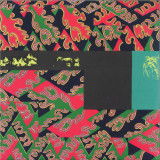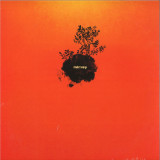
Mimsy describes himself as someone with many interests and few skills, and sure, you can put it that way. But more precisely, he is a seeker and finder who has always felt more at home in the intermediary spaces. Since his first releases on Karaoke Kalk under the names Saucer, Motel and Wunder in 1997, he has mostly been active as Wechsel Garland, working with samples beyond recognition and thus blurring the lines between his own songwriting and the musical material he uses.
In 2011, he ended the project with the album »Dreams Become Things« and is now opening a new chapter as Mimsy with »Ormeology.« The album was ten years in the making and saw the producer work with sounds, voices and text fragments that were gathered over time. The twelve pieces—based on guitar pickings, looped textural sounds, rhythm boxes and shimmering organ sounds—install themselves in the unconscious through sound, melody and subtle rhythmic shifts to send the listener’s perception on a journey into the unknown.
The name Mimsy is a nonce word coined by Lewis Carroll in his famous nonsense poem »Jabberwocky,« a combination of »miserable« and »flimsy,« while the term »Ormeology« refers to the Italian film »Le Orme« (»Footprints on the Moon«), in which the main character is haunted by memories of a fictional film of the same name. While this alone creates a rich thematic frame of references for the album, it does not at all define its themes. Instead, the references are reflected in the methods with which the pieces on »Ormeology« were designed—sound and language orbit freely around one another, images within images are being layered, following their path unconsciously. In »Sans mobile apparent,« the lyrics get to the heart of this: »die Widersprüche aushalten / die Folien übereinanderlegen« (»enduring the contradictions / laying the foils on top of each other.«) Creative frictions emerge not out of binary decision-making patterns, but from additive layering.
Mimsy followed traces forth and back through time and space, collaborating for a few tracks with set designer and musician Lydia Schmidt and letting Wolfram Wire record various lyrics based on automatic writing that were gathered by Mimsy. Furthermore, he asked the photo blogger Lilia Katherine from Brazil and the Canada-based Andrea Hernandez to translate and record his lyrics in their own respective languages. Human global coincidences resulted in collaborations which are presented as discrete and thus make the album as a whole and even more complex meditation on the interplay of the concrete and the abstract. This is best exemplified by the song »Ginster,« throughout which Schmidt and Mimsy’s voices overlap more and more until they enter a sort of call and response pattern, although they never seem to address each other directly.
»Ormeology« is an album that whirrs and flickers, seeking to mediate between the tangible world and the intangible by blurring the boundaries between words and sounds and space. It is an archipelago that is in many ways connected to what surrounds it, while at the same time opening up a space of its own.
Поиск:reference
Все
The Slow Show release their fourth studio album, their first for three years, entitled ‘Still Life’,
via PIAS. The four-piece, who first formed in Manchester, will support the release with a
European tour in February and March 2022, culminating in an already sold-out hometown show
at Manchester’s Hallé St Peters on 4th March.
Lead track ‘Blinking’ is a perfect taster to the new direction ‘Still Life’ offers. Same but different
again. “An ode to love and loyalty. The song is a defiant pledge to never giving up on the
people you love. Musically we wanted the song to have impact, a directness and powerful
punch that we’d previously shied away from.” - Robert Goodwin (vocals)
The making of ‘Still Life’ has been quite the ride. Following their breakthrough album, ‘White
Water’, it was clear The Slow Show were not just ‘another band from Manchester’. The legacy
of The Smiths, Joy Division and all those other great predecessors is not something to be trifled
with, but The Slow Show didn't need to wear their address on their sleeve: this was something
else, fully formed, with a mesmerising sound, rich in atmosphere and melody.
With the band’s desire to push each other outside of their respective comfort zones during the
recording process, ‘Still Life’ subsequently offers a more diverse, rich and interesting sound
than previous albums.
“We did develop our sound,” says Rob Goodwin. “We had to try something else. We felt we
owed that to ourselves, and to the people that come and enjoy the music. We explored a lot of
stuff: different sounds, different feelings, different ideas, different processes as well. Some of
them didn’t work at all, but some did. It was difficult and challenging, but it felt good in the end.”
This experimental side to the creative process allowed the band to introduce new elements to
their work. “Some new approaches and sounds crept in,” keyboardist Frederik ‘T Kindt admits.
“Some were far from our older work. For instance: after some initial encouragement from me,
Rob was keen to sing a bit higher on this record. Chris was encouraged to make his drums a
bit more present; some things almost sound like a breakbeat to my ears.”
Recorded remotely over the course of the past year, with Goodwin recording vocals from
Dusseldorf in Germany and the rest of band recording in the UK, ‘Still Life’, as a concept, takes
inspiration from the experiences of lockdown: “Before the virus arrived, I had a busy life;
spending two weeks in Germany with my girlfriend, and then flying to Manchester to work with
Fred or to a gig.” Goodwin remarks: “And then all of a sudden, life came to a halt. It took a little
getting used to, but I actually had a really nice realisation during that time. I understood that the
slower life got, the more I saw. I spent a lot of time in nature, seeing things in a different
perspective. And that's what you need when you're trying to create. You have to really look,
and then you see things happening everywhere.”
The tracks themselves are brimming with emotion and reverence towards the significant
relationships we encounter in life. Stand-out anthem ‘Blinking’ is a defiant pledge to never
giving up on the people you love. Musically the band wanted the song to have impact, a
directness and powerful punch that they’d previously shied away from. Whilst ‘Woven Blue’
deals with the aftermath of uncoupling. The idea that meaningful relationships are very often
woven and complex, making resolve difficult.
These very personal tracks are counterbalanced with the more topical, ‘Breathe’, which
documents some of the unjust and heart-breaking scenes of 2020 with spoken word references
to John Boyega’s emotional rallying cry in support of Black Lives Matter movement in London’s
Hyde Park.
In all, Still Life marks another evolution of a band that have never tried to fit in any particular
box but have inhabited their own unique universe.
LP pressed on white viny
Matasuna's latest tidbit takes us back to the South American continent once again - to Venezuela to be exact. The song "Zambo" by the band "La Retreta Mayor", which was released in 1976 on the self-titled LP, is now available as an official reissue and the very first time ever on a 7inch vinyl single! The 45 is complemented by an excellent rework of the American producer & DJ "King Most" from San Francisco.
The A-side features the original of the song. "Zambo" is a furious mix with versatile influences of Latin, Jazz & Funk. The rich horn section and percussion of the guest quartet bring pure heat to the track - the drums, bass and piano intensify this even more. An absolute heater for any dance floor!
The B-side features the "King Most" Redirection. The talented producer gently takes on the song, keeping the organic vibe of the original but still giving it a different, new side. His re-arrangement and additional in/outro and a new passage in the middle of the song fit exquisitely. Also his crunchy drums and own piano passages are very tasty and give the song an own flavour!
"Alexandro Rodríguez" was born in Caracas in 1952 and is considered one of Venezuela's most important jazz guitarists of the seventies. He studied classical guitar in his early years, played electric guitar in various rock groups and performed at various national music festivals. He also had the opportunity to play as a musician for renowned orchestras such as "Onda Nueva", "Renny Show's Orchestra" on Venezuelan Television and "Radio Caracas TV's Orchestra".
In the late 1970's he recorded two significant works that may be considered a reference in Venezuelan music history. He formed the short-lived band "La Retreta Mayor" to record a self-titled album, which was released as an LP on the Venezuelan label "Discomoda" in 1976. The 10-piece band and numerous guest musicians created a jazz-funk & fusion gem. The band unfortunately broke up right after the recording and did not play live or record any more music.
His self-released album "Busqueda", released in 1978 under his name, was recorded between New York and Caracas and has an excellent reputation not only in connoisseur circles. In 2012, the album was reissued on CD by a Japanese label, proving the influence Alexandro's music still has in the jazz scene today.
Between 1979 and 1982, Alexandro lived in "New York", where he worked as a composer, arranger, performer and orchestrator in the jazz scene with renowned orchestras before returning to Venezuela. Subsequently, his musical career turned to the classical guitar, both as a composer and performer. In 2013, he settled in "Pittsburgh", Pennsylvania (USA), where he continues his activity as composer, arranger, guitarist, bassist and teacher to the present time.
- A1: Angel Dream (No. 2)
- A2: Grew Up Fast
- A3: Change The Locks
- A4: Zero From Outer Space
- A5: Asshole
- A6: One Of Life’s Little Mysteries
- B1: Walls (No. 3)
- B2: Thirteen Days
- B3 10: 5 Degrees
- B4: Climb That Hill
- B5: Supernatural Radio (Extended Version)
- B6: French Disconnection
Black Vinyl Version Of Angel Dream (Songs From The Motion Picture ‘She’s The One’ previously only available as RSD Release.
Original album sales notes:
To celebrate the 25th anniversary of the film She’s The One, 2nd July will see the release of Angel Dream (Songs From The Motion Picture ‘She’s The One’), a remixed, remastered and re-imagined version of the soundtrack. The original album included several songs that were left off the original Wildflowers album (recently included as the All The Rest disc in the Wildflowers & All The Rest re-issue), so this re-release is an appropriate ending to the campaign celebrating the Wildflowers-era.
Ryan Ulyate (Tom’s long time engineer and producer) has remixed the audio, and the song selection is designed to work as a TPHB album, rather than a soundtrack album. Four unreleased tracks have been added; the rocker “105 Degrees” (written by Petty), a cover of JJ Cale’s “13 Days”, “One of Life’s Little Mysteries” (another Petty original), and an instrumental (“French Disconnection”) in the same vein as the instrumentals on the original album. An extended version of “Supernatural Radio” is also included. The new title is a reference to one of the stand out tracks on the album. The new album will have brand new artwork.
ACCIDENT IN HEAVEN was originally released in 1987 as a hand-made micro-edition of about 40 cassette tapes. It was only the third ever release on the short-lived now near legendary SDV label which had been established that same year by Konrad Kraft, Bernd Sevens and Dino Oon in Düsseldorf.
Finally finding a more substantial and appreciative audience on vinyl over 30 years after its original limited release, ACCIDENT IN HEAVEN is a strong testament to the explorative experiments of Detlef Funder a.k.a. Konrad Kraft, whose homebuilt studio sound attempted to bridge the clinical roughness of Severed Heads and the psychedelia of Coil with the density and force of industrial, post-punk and prototechno. Concurrent with his ever-expanding production skills, KONRAD KRAFT's sound work in the second half of the 80s stayed firmly rooted within a highly stylised underground spirit. Both his music and also the freshly launched SDV label first and foremost served as a medium for communication. The vital urgency of ACCIDENT IN HEAVEN underlines the record's core narrative which arguably sounds even more futuristic today than it did 30 years ago.
Hallmarks of ACCIDENT IN HEAVEN are an 8-track tape recorder, a Yamaha DX7 synth and a Roland 707 drum computer and the late 80s’ internationally ubiquitous shift from analogue to digital music production. Whilst its predecessor ARCTICA (another cassette-only release from 1986/87, previously reissued on TAL in 2018) was significantly more experimental and almost an in-between-states affair, ACCIDENT IN HEAVEN was the point at which Konrad Kraft really began to experiment with beat structures, sequenced synth pads and the framework of 'dance' music. However, the rhythmic elements are submerged so far beneath his expertly crafted drones it's almost impossible to label these sounds as “dancefloor oriented” work at all, as the tracks on the album joyfully disrespect the rules and boundaries of that or indeed any other genre.
ACCIDENT IN HEAVEN also epitomizes the decade's ending energy and sharp momentum with its successful merging of highly individual production and irresistible rhythm tracks.
The rich wealth of references is mirrored within the silhouettes and the graphics of the album’s unique artwork, which was created by Dino Oon. The new mastering has all sounds on ACCIDENT IN HEAVEN emerge in fresh shades and three dimensional plasticity, inviting the listener not to merely revisit the full palette of KONRAD KRAFT’s creation but offering an entirely new sound experience.
BARRERA follows up the NUEVO SONIDO BALEAR path started by ORDEN MUNDIAL, POU and PENA MÁXIMA with a debut release filled to the rim with lust, sex, power and distortion. Their songs are slow and acidic, with a tortured tone that would make GLOOM or BRAINBOMBS cry. The seven songs on “Visiones Nocturnas” are themed around the death of romantic love and are not afraid to look at the darkest side of life with a nihilistic conviction. Musically the record follows the path laid by STICKMEN WITH RAYGUNS or FLIPPER but are firmly rooted in Spanish Punk with DESECHABLES as a clear point of reference, both aesthetically and sonically. Although BARRERA occupy their own space with a sound that is clearly their own nightmare. Recorded and mixed by Chano Morales at Impala Uno Studio, Mallorca. Mastered by Shigenori Kobayashi at Noise Room, Tokyo. Artwork by Barrera.
- A1: Josef Strauss: Phönix-Marsch, Op. 105
- A2: Johann Strauss Jr.: Phönix-Schwingen, Walzer, Op. 125
- A3: Josef Strauss: Die Sirene, Polka Mazur, Op. 248
- A4: Hellmesberger Jr.: Kleiner Anzeiger, Galopp, Op. 40
- A5: Johann Strauss Jr.: Morgenblätter, Walzer, Op. 279
- A6: Eduard Strauss: Kleine Chronik, Polka Schnell, Op. 128
- B1: Johann Strauss Jr.: Die Fledermaus: Overtüre08:42
- B2: Johann Strauss Jr.: Champagner-Polka, Op. 211
- B3: Ziehrer: Nachtschwärmer, Walzer, Op. 466
- B4: Johann Strauss Jr.: Persischer Marsch, Op. 289
- B5: Johann Strauss Jr.: Tausend Und Eine Nacht, Walzer, Op. 346
- B6: Eduard Strauss: Gruß An Prag, Polka Française, Op. 144
- C1: Hellmesberger Jr.: Heinzelmännchen
- C2: Josef Strauss: Nymphen-Polka, Op. 50
- C3: Josef Strauss: Sphärenklänge, Walzer, Op. 235
- C4: Johann Strauss Jr.: Auf Der Jagd, Polka Schnell, Op. 373
- C5: Neujahrsgruß / New Year's Address / Allocution Du Nouvel An
- C6: Johann Strauss Jr.: An Der Schönen Blauen Donau, Walzer, Op. 314
- C7: Johann Struass Sr.: Radetzky-Marsch, Op. 228
In 2022, the Vienna Philharmonic's New Year's Concert could once again take place in front of an audience. However, 2G-plus rules and an FFP2 mask requirement applied throughout the Gesellschaft der Musikfreunde building in Vienna. Standing room was not offered this year and the number of seats in the Golden Hall was limited to 1,000.
Daniel Barenboim performed with the Vienna Philharmonic as a young pianist as early as 1965, and he has also conducted them since 1989. He already took the podium at the tradition-steeped New Year's Concert in 2009 and 2014. Barenboim's engagements as head of the Berlin State Opera Unter den Linden and the Staatskapelle Berlin, as founder and director of the West-Eastern Divan Orchestra, and as a pianist show him to be a true musical citizen of the world. As such, he is also an exceptionally good fit for Vienna's world-class orchestra and the message of the New Year's Concert: hope, friendship and peace for the whole world.
At the start of the new year, the Vienna Philharmonic once again presented a cheerful, upbeat and contemplative program of symphonic waltzes, polkas and marches by the Strauss dynasty and its contemporaries. The 2022 program showed a clear reference to the fantastic and fairytale-like. In addition to the phoenix, a siren and an indeterminate number of brownies and nymphs, there was also Johann Strauss' waltz "One Thousand and One Nights".
Six pieces had their premiere at a New Year's concert in 2022. The "Phoenix March", the Polka mazur "The Siren" and the Polka française "Nymph Polka" were performed by Josef Strauss. Eduard Strauss was represented with the quick polka "Kleine Chronik", Carl Michael Ziehrer with the waltz "Nachtschwärmer" and Joseph Hellmesberger with the character piece "Heinzelmännchen" among the repertoire novelties.
There is the 50th anniversary of the UNESCO World Heritage Convention to celebrate in 2022, which Austria also joined 30 years ago. In the intermission film of the concert, the twelve Austrian World Heritage sites showed themselves from their best side. Schönbrunn Palace in Vienna, on the World Heritage List since 1996, was also the setting for the ballet interlude with ten dancers from the Vienna State Ballet to the waltz "One Thousand and One Nights." The second performance was created at the Spanish Riding School, which has been designated as a UNESCO Intangible World Heritage Site since 2015. Eight magnificent Lipizzaner stallions and their riders demonstrated the high school of classical horsemanship to Josef Strauss's "Nymph Polka".
The phoenix, a very special bird from ancient Greek mythology, burns at the end of its life cycle, only to rise again from its ashes. The Vienna Philharmonic Orchestra paid tribute to it twice. The concert began with the "Phoenix March", followed by the waltz "Phoenix Swing". Such a concert opening - with a march and a waltz - should be a sign. It is to be hoped that a rebirth and renewal in the new year can really take place.
The third entry in Lucy's trio of adventurous full-lengths is visually introduced by artwork of a pearl-bearing shell, designed by Stroboscopic Artefacts' resident visual artist (and Lucy's brother) Ignazio Mortellaro. This drops a subtle hint as to the nature of its contents: just as a pearl slowly forms within its enclosing body in response to organic challenges, Lucy's work is also a kind of crystallization of memory and experience into an artifact of great value.
Listeners to this album will be struck immediately by how different it sounds from past Lucy productions, while still retaining the feel of relentless questing that defined his previous two solo LPs Wordplay for Working Bees and Churches, Schools, and Guns (or, as Lucy himself defines the feeling, the equal valuation of precision and exploration'). Initially feeling like Lucy is guiding his listeners on a slow and slightly apprehensive down-river trip through the Amazon, or some similarly thriving but as-of-yet undiscovered terrain, the album is enriched by several layers of ambience and by the wordless, improvisational (yet still somehow narrative) vocals and flute of Jon Jacobs. Without a doubt, it's an album with an initiatory' atmosphere that listeners should commit themselves to hearing in one sitting, with as little interruption as possible. However, unlike many initiatory rites, this is no arduous ordeal at all: great care has gone into connecting each chapter of the album with the same silver thread of entrancing story-telling. On standout pieces like She-Wolf Night Mourning,' electronic arpeggiation and persistent synthetic flutters perfectly merge with the unique tone colors of resonant acoustic percussion and pensive woodwind. Elsewhere, pieces like A Selfless Act' reconcile technoid pulses with melancholic, yet intoxicating echoes of Mediterranean musical traditions.
Interestingly, many of the tracks on Self-Mythology refer to old legends and well-known fairytales (e.g. the opening track which references Baba Yaga's magical hut), or to more broadly defined states of consciousness ( Samsara,' which features an especially strong, sustained choral interplay between glassy synth sequences and earthy flute sonorities). This is where the album is truly unique and relevant in its ambition. The interplay between the graphic design, the vocal and flute performances of Jacobs, and the sound design chosen by Lucy aims to be an intimate audio autobiography of its creators while also referring back to the stories that have shaped human destiny for millennia. This work is a meditation upon the reciprocity between personal hopes and fears and collective dreams and nightmares, an exploration of the endless interplay between the universal and the deeply individual. It is the tale of that uncanny process by which our own conscious experience draws from the pool of archetypal information, while also contributing to it.
Blue Vinyl
Making a splash on the European house scene for the past five years, Matthieu Faubourg is the perfect fit to Shall Not Fade, with his hazey pieces that carry just the right amount of groove. Since his breakout hit, "Please Stay", a ten-minute deep house voyage, Faubourg has played across Europe and last year dropped his debut album replete with subtle jazz and hiphop references.
- repress / comes without the inserts of the first pressing -
"The Unfinished Fight Against Humanity" is SNTS' third full-length album following "The Rustling Of The Leaves" in 2015 and "Losing Sight" in 2016.
Ten tracks that are born from the combination of historical, mystical and current references, which lead to a reflection of how the human being can complicate its existence due to behaviour and the consequences that derive from such actions. The dark, hard and energetic rhythms of the album narrate the coexistence of diverse human values throughout history, from peace to war, from love to hate, from empathy to ego.
In words of the artist SNTS, "the human being has been created to live in society, the problem arises when society fails to coexist or compete to survive".
On March 13, 2020, Yumi Zouma's highly anticipated album, Truth or Consequences, was released. One day prior, the band played their first show of a fully sold-out US tour, at Washington, DC's DC9. This was also the day the Word Health Organization declared COVID-19 an official pandemic, resulting in the band cancelling the entire tour and flying back to Europe the next day - the day of their album's release.
"So after returning home and spending a few numb weeks adjusting to this strange new way of life, April came, the reality set in, and we quickly started to miss that feeling of exploring our new songs by night," the band says. "Writing new music around them, we took the songs of Truth or Consequences and found ourselves a new way of re-contextualising them safely, amidst the tragedy and fear going on in the world outside our windows – and the Alternate Versions were born. We encouraged each other to be bold, fearless, and to experiment like we would on stage – but from the comfort of our own bedrooms, living rooms and hallways.
- A1: The Disappearance
- A2: 60 For The Lawyer
- A3: Diamonds
- A4: Just Another Rapper
- A5: Go Off (Feat. G-Herbo)
- A6: Uncle Ric (Feat. Benny The Butcher)
- A7: The Product
- B1: Money Or Power (Feat. Jim Jones)
- B2: The Storm
- B3: Dolla And A Dream (Feat. Steven Young)
- B4: Count It Up (Feat. French Montana)
- B5: The Win (Feat. Cruch Calhoun)
- B6: Yeah I Know (Feat. Kiing Shooter)
- B7: Red Fox Restaurant (Feat. Curren$Y)
It’s likely that Dave East was both ready and willing to lock in for a full-length Harry Fraud produced album well before he heard Fraud’s work with Jim Jones (The Fraud Department) and Benny the Butcher (The Plugs I Met 2). But it’s just as likely that the synergy and flawless execution of those projects couldn’t have hurt East’s inclination. Fraud shows up for East on HOFFA the same way he did for Jones and Benny, finding a sturdy balance between moody synth lines, obscure rock samples, and ’90s-hip-hop drum patterns to act as an idyllic backdrop for East’s hand-to-hand street-life memories, basketball references, and straight-faced acknowledgment of the way drugs have affected his own family. Fellow barsmiths Jim Jones, G Herbo, Benny the Butcher, and Curren$y round out the features, but longtime Dave East fans might be most excited to hear a new verse from Kiing Shooter, the Queens-hailing Dave East associate who passed away in 2020 following complications from COVID-19.
Spiralling through the space-time continuum, Alberta Balsam's debut EP amalgamates clipped breakbeat with lithe IDM and sawtooth electro. Inspired by the visionary author Ursula K. Le Guin, the vinyl is presented by Dekmantel Records together with a transcendental sci-fi narrative. Printed on a poster-inlay designed by British artist Alex Morgan, the story tells of a quest for survival on a planet ravaged by ecological collapse.
In a bid to rescue all lifeforms from impending destruction, a lone holobot frantically consults her neurobiological interface. Humans can no longer subsist on Earth: waterways are contaminated, and the unbreathable atmosphere has taken on a toxic purple, almost holographic hue. Faced with environmental apocalypse, she turns skyward, to take root among the stars. With nods to the utopian futurism, attunement to nature and alien visions of pioneering electronic artists such as Drexciya and Delia Derbyshire, Alberta transmutes a synergy that's entirely her own. Higher Dreams journeys elsewhere on a passage that's equal parts intergalactic and introspective, questioning how, on the brink of the abyss, we can find hope.
Blasting off the A-side with 'Atuan Tombs' – a reference to Le Guin's masterful Tales From Earthsea series – a cyborg voice narrates plundering through the skeletal remains of an urban landscape. Hollowed out kick-drums thunder in 'Cascade;' glitched-out beats that shatter into incandescent, intricate melodies. On the B-side, the titular track crescendos, it’s biblical vocals conveying the gravitas of an approaching dystopia. Yet Higher Dreams is far from doom-inducing – the EP closes off with ‘Suspended in the Manifold,' the vibrant Roland TR-808 rhythm fuelled by the colossal power of a solar flare.
Renowned for her live hardware-based sets, Alberta flexes her immeasurable skill as a tech-savvy producer adept at constructing danceable, yet simultaneously lush and expansive interludes. Having trained as an epidemiologist, the theme of care reverberates through her music. Crucially, she regards dance as medicine – a primordial remedy to sustain our interconnected existence.
Four Flies' new record series, ITALIAN LIBRARY SONGBOOK - Masters of Cinematic Music Reimagined into Song, hopes to build a bridge between the modern and the contemporary. Producers and songwriters from today's music scene put their spin on hidden tracks and outtakes from the catalogues of Italian soundtrack maestros, reimagining them into new, previously unheard songs poised between pop and club culture – a sound nestled somewhere in between Balearic, downtempo, and organic grooves.
Volume I focuses on Alessandro Alessandroni, a composer whose trajectory is emblematic with respect to Four Flies' journey as a label and publisher. Despite being best known in his lifetime for his unmistakable whistle in Ennio Morricone's soundtracks for Sergio Leone's spaghetti westerns, Alessandroni was way more than that. He was a refined composer and multi-instrumentalist, and one always ahead of his time. Partly thanks to Four Flies and its contribution to the rediscovery of the Maestro with releases such as the EP "Afro Discoteca" and the compilation album "Lost & Found", this has become unquestionably clear in the past few years, which have seen his name climb to the top of collectors' want lists and gain recognition in the international music industry.
This release goes back to one of Alessandroni's lesser known film scores, Sangue di sbirro (written for Alfonso Brescia's 1976 poliziottesco Cop's Blood), where he created his own version of the soul-infused jazz-funk music typically found in 70s Blaxploitation movies.
More specifically, Neapolitan producer pAd and London singer-songwriter Jessica Duncan reimagine the original "Philadelphia", which appears on Side B and whose title clearly refers to the city that, back in the 70s, saw the birth of (mellow) disco. The result of their collaboration is "Do You Wanna Get Close?" on Side A, a downtempo, jazz-funk and Balearic gem pervaded by warm, sexy and elegant pop-soul vibes that make it a perfect club track to enjoy the night until the early hours of the morning.
To ensure maximum audio quality, the mastering was done by Fabrizio De Carolis at his Reference Mastering studio in Rome's Prati neighborhood (the same neighborhood that was once the epicenter of Roman library music) while the vinyl cut at the The Carvery, the multiple Grammy-nominated London studio behind some of the best organic grooves records of the past decade. The result is a deep, full, rich and three-dimensional sound that enhances the beauty of both tracks.
The series and volume artwork is by graphic designer and calligrapher Luca Barcellona, an artist used to working with analog tools such as ink, brushes and pencils. He drew inspiration from the world of literature, imagining each release as one of the volumes in an elegantly bound classics book series - an analogy that reminds us of the tactile element that makes vinyl records so unique and precious, while also suggesting the cultural value of a music that aims to connect the legacy of the past and the creativity of the present.
Charismatic trombonist and pianist Malcolm Jiyane debut album as frontman is more than merely one individual’s breakthrough. Workshopped and recorded within two days in Johannesburg, UMDALI stretches the idea of what it means to improvise within the context of jazz.
Operating from the fringes of the South African jazz scene, the enigmatic yet charismatic trombonist and pianist Malcolm Jiyane delivers a major contribution to the canon -- one shaped around dedications to key figures in his personal and professional life. Several years ago, Jiyane was dealing with the death of a band member, the birth of a daughter and the passing of his beloved mentor Johnny Mekoa, founder of the Music Academy of Gauteng, which Jiyane attended from a young age. These life-altering events give shape to the music’s emotional register and its thematic concerns.
In Black Music, his book of essays and critiques, Amiri Baraka makes the point that jazz musicians, be it in the construction of solos or in other aspects of composition, always draw on the works of their contemporaries or elders. How much outsiders pick up on that is really dependent on how au fait they are with the music. In this album, Jiyane finds comfort in this well-trodden path. Two songs make for great examples. Umkhumbi kaMa, a jazzfunk track celebrating the creative force as inhabited by women, the motif to Herbie Hancock’s Ostinato (Suite for Angela) is a clear reference, connecting in one swift move, not only the musical traditions of the Black Atlantic but also the struggles and triumphs of women across space and time. On the same note, the free-form Solomon, Tsietsi & Khotso, conjured in the same jam session that yielded SPAZA’s UPRIZE!, appears here in a more fleshed out form as Senzo seNkosi; a tender dedication to Malcolm Jiyane Tree-O bass player Senzo Nxumalo.
Jiyane’s path to the realisation of his debut album as frontman is more than merely one individual’s breakthrough. Workshopped and recorded within two days in Johannesburg, UMDALI, not unlike Miles Davis’ landmark Kind of Blue, stretches our idea of what it means to improvise within the context of jazz.
Composer duo Kaae & Batz release hazy electronica single and announces new album L.U.S.H on vinyl. Kaae & Batz, the duo behind the Netflix series Bordertown’s score, is ready with a new album. The first single “Into the Void” is released 15th September, while the album L.U.S.H lands 29th October both digitally and on vinyl on Copenhagen- based record label StereoRoyal.
The album is a collection of reflective and melancholic cinematic tracks with clear references to jazz and neo-classicism where organic elements merge with electronic textures and emotional vocal samples. The album is teased with the first single “Into the Void (Part 1)” – a dark and hazy dystopia accompanied by beautiful piano chords. The album came to life on a 14-day trip to Istanbul and the majority of the tracks, including the first single “Into the Void”, are created entirely from samples and programming.
Kaae & Batz has previously released two albums, Basement Tales (2015) and Mosaic (2019), as well as composed scores for several international film productions which have garnered attention and critical acclaim in the industry. The story about childhood friends Kaspar Kaae (CODY) and Brian Batz (Sleep Party People) dates back to their teenage years in Bornholm where they were both born and raised. They went to high school together, cultivated their shared interest in music, and played together in bands. These years became the cornerstone of their friendship and musical collaboration.
With L.U.S.H, Kaae & Batz shines a light on Danish electronica. The album is released 29th October on a limited-edition LP (180g) and on all streaming platforms.
Peggy Gou's Gudu Records proudly presents 'Jack's Jive' - a long overdue re-release of a legendary lost South African record from 1987. Out of print for years and never available digitally, 'Jack's Jive' is the stuff of legend: a bold, bright synthesizer-led cut that has been demanding Discogs prices upwards of £150 and both referenced and ripped off by contemporary artists since. Re-mastered for 2021 and cut to vinyl for the first time in decades, it's backed with two remixes by DMX Krew.
Argentine producer Pedro Canale returns from a three-year sojourn with his long awaited third album. Originally coming out of Buenos Aires's famed digital cumbia scene, Chancha has notoriously broken way outside those boundaries to forge unprecedented mergers between Brazilian rhythms, Paraguayan harp, Andean mysticism and the solitude of Argentinian folklore - all processed through his own futuristic style of postdubstep.
Chancha's sound is without question truly unique and instantly recognizable to the point he has become a key reference point for an entire crop of artists that have begun to carry his genes.
Hailed by the Washington Post, the New York Times, Pitchfork, NPR and countless others, Chancha Via Circuito defies even the shrewdest of marketing geniuses. On one hand, he is something of a cult artist within micro-circles of electronic music, having been invited to perform at Montreal's MUTEK as well as the Roskilde and Vive Latino Festivals. At the same time, Chancha's music has found broad appeal outside of the avant-garde, most notably his magnificent remix of Jose Larralde's "Quimey Neuquen" which was heavily featured in 2013 as part of the final season of the critically acclaimed television series Breaking Bad. Fans of the show undoubtedly remember Walter White burying his millions in the desert, soundtracked by the wide and gentle grooves of Chancha Via Circuito.
Amansara is a natural progressing of Chancha's special strain of electronic South America. Lead single "Coplita" features the haunting vocals of previous collaborator Miram Garcia, while "Sueno En Paraguay" merges Andean folklore sounds with bleeps and blips and pounding drums in a way that sounds completely natural and ordained. "Jardines" features the driving vocals of Lido Pimienta merging with heavy synths, percussion and bells into an unforgettable track, while both "Tarocchi" and "Guajaca" ramp things up into deep, electronic dancefloor inna rainforest territory.
Art for Amansara comes from Argentinian psychedelic folklore painter Paula Duro who has crafted the look of all of Chancha's previous releases.
"(…) Pak Yan Lau, one of the most original pianists of the new European creative scene, has the ability to build complex formal architectures starting from minimal materials – insistent rhythms, barely hinted melodies, electronic effects as evocative as they are mysterious. Darin Gray uses his long experience as the backbone of many improvisational groups with a painstaking work on timbre and a deep and multiform sound, providing a solid support to extemporary creations that have the solidity of pondered compositions. The music of the duo develops on wide structural strings, elegantly combining the continuous surprise of free improvisation with the material suggestions of electroacoustic experimentation, in a game of references and narrative developments almost cinematic, which tell a fascinating sound world, strangely familiar yet constantly new and surprising."
(Nicola Negri, Centro d’Arte Padova, Italy)
This is the second issue of the new We Jazz Magazine, 128 pages 174 x 250 mm in size and printed on 140g Edixion paper with laminated 300g Invercote covers. All articles presented IN ENGLISH. Includes inspiring stories on music including John Coltrane by Ashley Kahn, Irreversible Entanglements by Daniel Spicer, Ben Lamar Gay by Stewart Smith, Linda Fredriksson by Arttu Tolonen, Marshall Allen by David Mittleman, French Caribbean Music by Markus Karlqvist, Pablo Held by HT Nuotio, record reviews, book reviews, plus more. This is a magazine put together by a quality cast of writers and illustrators/photographers with references such as The Wire, The Quietus, Pitchfork, Jazzwise, etc.
“The Colchester quartet’s first offering for tastemaker label Nice
Swan stands up as a vital, visceral cut from a band of any
demographic.” - DIY
“Anorak Patch are unquestionably an alternative godsend” - So
Young
“Rising Stars” - Daily Star
Already championed by BBC 6 Music, BBC Radio 1, Radio X,
Daily Star, BBC, i Paper, DIY, DORK, So Young and more,
Colchester’s Anorak Patch have been quick to grab the
attention of tastemakers across the UK. They were even
snapped up by label Nice Swan Records, who have put out
releases from some of the UK’s buzziest acts, including Sports
Team, Silverbacks, Hotel Lux, FUR, Courting and Malady.
Following breakout tracks ‘6 Week Party’, ‘Irate’ and ‘Blue
Jeans’, the 4-piece share new single ‘Delilah’, a tale of wanting
more than the small town you call home, and further proof of
why Anorak Patch are one of the UK’s most exciting young
bands to emerge in recent times.
Of the track, the band say, “‘Delilah is a story. It’s about a girl
who’s struggling her way through life... the song is sort of a
snapshot of how difficult life can be when you are in a bad
headspace without good people around you. It’s a lonely place
to be. The ‘town’ is just a reference to wanting something more
than the place you grew up in... I guess in that sense it’s a little
autobiographical. We are from a little place in Essex, it’s not a
bad place, but we collectively dream that by playing our music
we will have a chance to move out of its orbit.”
Anorak Patch are also set to perform their debut headline
shows, including in their hometown of Colchester next month,
and in London next year.
Keyboardist Effie Lawrence formed the group in late 2019 with
high school friends Luca Ryland (drums), brother Oscar (guitar)
and bass player Eleanor Helliwell. The drummer being just 15,
and the oldest member 18, the new single continues to show
the band’s immense musical talent at such a young age.
- A1: Kevin Hays - Yotam Silberstein - Safta
- A2: Kevin Hays - Yotam Silberstein - Limehouse Blues
- A3: Kevin Hays - Yotam Silberstein - Your Song
- B1: Nicole Glover - Alexander Claffy - One For Amos
- B2: Nicole Glover - Alexander Claffy - Spring Can Really Hand You Up
- B3: Nicole Glover - Alexander Claffy - Good Bait
- C1: Johnny O'neal - Paul Sikivie - You Showed Me The Way
- C2: Johnny O'neal - Paul Sikivie - I'll Take Romance
- C3: Johnny O'neal - Paul Sikivie - Just In Time
- D1: David Kikoski - Peter Bernstein - Old Devil Moon
- D2: David Kikoski - Peter Bernstein - Peace
- D3: David Kikoski - Peter Bernstein - Theme For Ernie
Beyond the reference to the « Blue Hours » and to the New York recording studio, these albums are a hymn to life.
The orange colour reminds us of the Sun’s light at dusk, the hopes of dawn, a promise of a new day .
In that regard, we asked each artist to express three wishes for the future.
Kevin Hays-Yotam Silberstein
Nicole Glover-Alexander Claffy
Johnny O'Neal-Paul Sikivie
David Kikoski-Peter Bernstein
Recorded in Brooklyn NYC at Big Orange Sheep Studios -October 2020-
Old Children is the latest multi-headed beast alliance of hip-hop minds HPBLK (HYPERBOLIC), Booda French and King Kashmere who takes the helm handling the production duties of the project.
On Push Start; HPBLK and Booda trade bars carved from out of this world imagery, left field references and forward-thinking quantum streams of thought over King Kashmere’s hypnotic futuristic lo-tech cosmic slop. A slick 6 track affair (also featuring Ramson Badbonez and DJ Jazz-T) this short but sweet project is a glimpse of what the magical trio have to offer.
New Zealand dreampop luminaries French For Rabbits have dedicated nearly a decade to creaming warmly detailed and expansive music together. Their third, prophetic, LP The Overflow is set for release via Reckless Yes (UK), AAA Records (NZ/Aus), and A Modest Proposal (Italy) is described by the band as their most “immediate and honest” record to date. The Overflow draws on the influence of contemporary artists Laura Jean, Hannah Cohen and Hundred Waters alongside the storytelling of folk and rap music, and even references 90’s cultural touch points such as Moby, Enya and The Lion King. Whilst its inspirations are diverse-the result is a singular album that is confident in its delivery. The album follows on from their elegantly stated second LP The Weight of Melted Snow and their 2014 break-out Spirits, which received millions of streams, and song placements everywhere from the Vampire Diaries to Netflix’s Never Have I Ever TV series. On their new album, the group, led by Brooke Singer, sweeps forward with their most dazzling body of work to date-from the introverts’ anthem ‘The Outsider’ to the unfurling end-of-the-world statement piece “Nothing in my Hands”. Written and recorded mostly in 2020 in Wellington, the songs on The Overflow cover a wide range of topics, with the common threads of introversion and anxiety woven throughout. Yet, on first listen, you could be forgiven for mistaking the album’s subject matter for something lighter and more upbeat, resplendent with featherlight vocals and delicate layers
Simona Zambolis first album on Mille Plateaux "Ethernity" is a piece of haunting music - vibrating, pulsing and cutting through the concrete and the chaos at the same time, when you listen close enough. The album is a journey through trans-reality, not only as a melancholic drama, but also as a travel to alien worlds, hence as a necessity of an electronic intervention. "Ethernithy" is radical fictioning in a non-expressive, non-melancholic and ultrablack sense. Profound music demands blackness, not silence. When we speak of communication or mediation, the reference is always that of the mystical tradition of the via negativa; mediation and communication always imply the dissolution of sender and receiver, leaving not only the message that is the gulf or abyss, but a perception out there, which senses should be able to recognize and even love.
Fine Place is a new duo comprising Frankie Rose (Vivian Girls, Crystal Stilts, Dum Dum Girls) and Matthew Hord (Running, Pop. 1280, Brandy). Based in Brooklyn, NYC together they’ve crafted a crystalline full length of nocturnal, electronic pop music that charts a way out the post-global, cyberpunk dystopian environment it was crafted in. Their debut album This New Heaven drenches minimalist song structures in post-industrial washes of sixstring delay and gothic post-punk synths. Presiding over it is the most evocative, emotive vocal performance Frankie
Rose has committed to tape to date.
Following Hord’s relocation from Chicago, the pair wanted to explore new avenues apart from their respective bands or solo projects. “The sound we were going for was an attempt to capture the dystopian feel of New York during a period of desertion by the wealthy. It was produced in a time-frame saturated in both uncertainty and serenity, and the soundscapes we created felt fitting and almost organic as a response to our surroundings. The title also reflects this in an arguably literal, maybe even satirical way.” Sonically, Fine Place references the pioneering mid-to-late 80s pioneers of icy melodrama The Cure and Cocteau Twins, while reflecting both the individuals’; music trajectories thus far. Modular synthesis triggers rhythm boxes and fluttery arps chirp around clanging 808-patterning as Rose’s reverb-laden vocal layering envelops the remaining headroom. The result is massive; a towering, shadowy music that embraces darkness while offering Rose’s bright vocal as chinks of light in the cracks; the production filling the head space of the beholder with preternatural imagery and emotional resonances that are real but not quite defined.
The title song propels forth out of the fog, scintillating with delayed guitar before the reverb-immersed vocal injects the human drama. The chorus constantly teases a big release but holds back creating a taut, dynamic tension. Cover Blind’s slow march makes full use of Rose’s layered vocal sinking and emerging from Hord’s bank of synths. Stand out It’s Your House is pure honey pouring from the speaker on a bank of of arps and near-hymnal vocal layering, a syrupy light offering in the mist. It’s an emotive highlight that only increases as the album progresses; Impressions Of Me is the Lynchian ballad that glides onward into the sunset. The album finishes on a choice re-interpretation of the 1989 track The Party Is Over by Belgian group Adult Fantasies, one of the great over-looked ballads of the era given an almost ecclesiastical makeover by Matthew Hord and Frankie Rose in 2021.
Says Hord: “This record was an incredibly challenging endeavor to make, as I had just come home from a European tour with another music project and wanted to invest into and focus on this collaboration with Frankie. I essentially reimagined how to approach writing basic sequences with the synthesizers I had been rehearsing and performing with for months prior to make something more accessible and pop- like for Frankie to build upon. Frankie is an unsung hero when it comes to mixing, and she was constantly mixing down and processing elements of the tracks to create different atmospheres as we forged forward with every song.”
This New Heaven is an ecstasy of sorts, a half-dream in the border between sleep and daylight.
- A1: Alpha – Anteludium – Omega Alive
- A2: Abyss Of Time – Countdown To Singularity – Omega Alive
- A3: The Skeleton Key – Omega Alive
- A4: Unchain Utopia – Omega Alive
- B1: The Obsessive Devotion – Omega Alive
- B2: In All Conscience – Omega Alive
- B3: Victims Of Contingency – Omega Alive
- C1: Kingdom Of Heaven Pt 1 – A New Age Dawns Part V – Omega Alive
- D1: Kingdom Of Heaven Pt 3 – The Antediluvian Universe – Omega Alive
- E1: Rivers – A Capella – Omega Alive
- E2: Once Upon A Nightmare – Omega Alive
- E3: Freedom – The Wolves Within – Omega Alive
- F1: Cry For The Moon – The Embrace That Smothers Part Iv – Omega Alive
- F2: Beyond The Matrix – Omega Alive
- F3: Omega – Sovereign Of The Sun Spheres – Omega Alive
For many years now, the comparative of epic has simply been EPICA. Since their formation in 2002 and their quick ascension to stalwarts of symphonic metal noblesse with trailblazing masterpieces “The Divine Conspiracy” (2007) or “Requiem for the Indifferent” (2012), Dutch metal titans only knew one way: Up. Especially with their last three releases “The Quantum Enigma”, “The Holographic Principle” and this years’ “Ωmega”, forming a metaphysical trilogy that’s both alpha and omega of all things symphonic metal, EPICA became rightful monarchs of a genre they themselves helped made become a global phenomenon.
Yet, as every other band, EPICA couldn’t take their latest installment of breathtaking cinematic grandeur to the seven corners of the world as they would have normally done. You know why. Thus, plans have been made and visions fulfilled to produce a once-in-a-lifetime event that couldn’t be further away from yet another streaming show. What EPICA unleashed upon the world on Saturday, June 12th, 2021, was a monument to their music, their career, and their enduring legacy as forebears of a whole genre. Now finally being released on Blu-ray and DVD and various audio formats, “Ωmega Alive” is the EPICA show of your wildest dreams, brought to life by blood, sweat, tears and a healthy dose of megalomania. Think Marvel meeting Cirque de Soleil in a Tim Burton universe.
Celebrating the release of their gargantuan new opus magnum, „Ωmega“, the streaming event saw fans from over a 100 countries flock to the screens to witness a show that has proven to be the defining moment in EPICA‘s concert history. A show that’s nothing short of the band’s most explosive performance to date, brought to life with an enormous production on an ever-evolving stage setting that’s full of visual surprises. For the first time ever, EPICA performed songs like ‘The Skeleton Key’ or the insanely monumental “Kingdom of Heaven Part 3” from “Ωmega”, alongside the band’s most popular songs, rare songs, fan favorites and huge surprises. “What started as a basic idea to do an online release show for “Ωmega” quickly spiraled out of control and became our most ambitious project to date,” creative director and keyboard wizard Coen Janssen says. “As usual, we wanted to push the boundaries, explore the limits, and think outside the box. We found ourselves back in our happy place. This concert film, our ray of light for you in the dark times that we have all been living in.”
For half a year, the band worked tirelessly on a show that’s been setting a new standard for concert films and streaming events. “What we wanted to do was the ultimate EPICA show where we could fulfill every dream we ever had, where there was room for all the ideas, effects and props that are just too big to be taken on tour.” Far from your usual streaming concert, the band developed a trademark feature called a “living backdrop.” Coen explains: “We built another stage right behind our stage where lots of things were going on the whole time. And we meant that very literally,” he laughs. “Every song got something extra, something unique that was fitting its world.”
He can say that again: Elaborate visuals, tailor-made videos and graphic effects, fire, and flames on a Nibelungen level, dancers and actors, artistic performances or fire performers all add to the aura of symbolism and cinematic splendor, setting the stage for a band that can’t be happier to finally bring their new album to life, harmonizing wonderfully and giving their A game for a show to remember. “It was so great finally playing with the band again, actually standing on stage with them. Boy, did we miss this,” Coen emphasizes and adds: “We also built a pretty cool new stage with some fire-breathing snakes and lots of rotating elements. Good thing is, we might also take it on the road when we can finally tour again.”
Until then, “Ωmega Alive” will be a more than efficient remedy against no-concerteritis – for bands, fans, and crew alike who all look back on an extra-long dry spell. Divided into five acts as there are letters in EPICA and “Ωmega”, each part gets a different theme, look, and feel, complemented with references to the history of EPICA, the symbolism of the band and the videos they did. It’s, in short, the best show they ever did, a two-hour spectacle spanning their storied career up to their latest endeavors and graced by Simone Simons’ breathtaking a-cappella rendition of ‘Rivers’ from “Ωmega” complete with choir, easily the most emotional and achingly beautiful moment in their entire career. Frankly, you don’t see this on a normal tour.
What EPICA brought to life here with the help of 75 artists and crew members is a testimony to their burning will to take their band ever higher – even now, in the darkest of times we ever had to endure. Let “Ωmega Alive” be your ray of light as it was theirs, a journey into the heart, body and soul of one of the most passionate and visionary metal bands alive today.
Honey Soundsystem Records (aka HNYTRX) is pleased to present its final twelve inch of 2016, the 'Sensual Works' EP by Beesmunt Soundsystem. Unbeknownst to each other, the Honey crew in San Francisco and the Beesmunt duo in Amsterdam have been brothers from another mother working away in their respective zones for years. A bit of internet sleuthing and the two entities found each other, perplexed by the similarities in namesake and good vibes. Before exchanging a single word, earlier this year David and Luigi of Beesmunt sent Honey some demos. They were a declaration of peace and understanding of sorts and both "sound systems" immediately fell into one. The three tracks romanced all the Honey sensibilities including references to San Francisco 80's Hi-HRG synths, early House drum machine workouts, and melodic lines you can make-out on a dancefloor to. To make the marriage official, Honey enlisted its own Jason Kendig to remix the A-side into a no-nonsense thumper with a heart of gold. We think these tunes are going to become as reliable on the dancefloor as the Sequential Circuits drum sounds and DX7 patches they employ. Whether it be ending sets with the euphoric Blissed Out' or peak-time banging call and response of Playin' Myself', Honey finally shares its best kept secret weapons of the year with the eager public.
Tape
SectorSept’s ‘954’ is a boldly original record, one which announces the arrival of a singular musical mind. Its creator states that he crafted this EP by trying to make tracks that were ‘a representation of how I believe music would sound in some distant land in the future’. On ‘954’ this vision takes flight in the form of eight multifaceted, genre-defying electronic productions.
To unpack this record one must first understand the myriad influences which feed into SectorSept’s style. The producer grew up between the UK and Florida - indeed, the record’s title references the area code he had while in the USA. His formative years were spent soaking in the dancehall sounds he heard around him in his Jamaican household as well as techno, jazz, Miami bass and the city’s ‘Love 94 Smooth Jazz’ radio station.
All of this and more can be heard in the fabric of ‘954’. The drum programming alone reveals SectorSept to be someone with extremely wide-ranging musical tastes. Cuts such as ‘Get Ready For The Programme’ and ‘Be There’ are powered by deft beats that have Miami bass, Jersey Club, juke and more in their make-up. Drexciya-adjacent machine-funk creeps into the mix in ‘954’s mid-section, ‘Golden Third Eye’ touches on trap, and closing duo ‘Tropic Universe’ and ‘Prize’ bring dancehall dembows to the fore.
The productions of ‘954’ are simultaneously driving and chilled, coasting nicely yet still plumbed with enough bite to do damage on the dancefloor. It’s a feeling which is heightened by SectorSept’s gorgeous textural work. Several of the tracks here soften up collages of vocal clips with wistful, dreamy synths - see the way that club-caller snippets orbit Boards Of Canada-esque keys on ‘Get Ready For The Programme’ or how closing cut ‘Prize’ works both the classic Warp/Planet Mu sound and the pitched-down stylings of DJ Screw. It’s a rich and fully-formed artistic aesthetic, something which is all the more impressive when you consider that ‘954’ is SectorSept’s first official release.
That said, while the overall flavour of ‘954’ is SectorSept’s and SectorSept’s alone, one also finds links to Gobstopper’s previous output here. Those dancehall influences on ‘Tropic Universe’ and ‘Prize’ line the record up with Gobstopper drops like Otik’s ‘Thousand Year Stare’ while the emotive, soulful synth work that has long been a Gobstopper calling card is also in evidence here. Perhaps the thing about ‘954’ which makes it feel most at home on Mr. Mitch’s label is SectorSept’s imaginative futurism. SectorSept is a keen scholar of anime composers Kenji Kawai and Joe Hisaishi, and as such it is no surprise that there is a slightly fantastical quality to ‘954’. This is most boldly expressed on ‘Intuition Segment’, a magic-realist vignette which looks to Oneohtrix Point Never.
Blending ethereal textures with hybrid electronic grooves, SectorSept’s ‘954’ EP uses the sounds, influences and cultural experiences that have shaped its creator in order to build a vibrant vision of the future.
It's a great pleasure to introduce Leed's based newcomer Alfred for his eagerly awaited debut release on 20/20 Vision following a string of cutting edge releases on Reference Mark Recordings.A'Direct Hit' is packed with an array of intricatelyAwoven electro, breaks and perfectly executed peak-time club weapons.A
'Direct Hit'Afuses techno andAbroken beats withAa bottom heavy bass theme reminiscent ofAclassic Kevin Saunderson,Asoaring arpeggiated synth lines, slick drumAprogramming and a killer break. TheAhighly sought after Dublin basedAproducer CignolAdelivers a perfectlyAexecuted acid electro remix that adds lush strings additional synths to the originalAtheme.A
'Iris', is a nifty high fidelity breaks workout, loaded with an abundance of Alfred's signature flourishing arpeggios and modulating synths backed by an infectious groove, and a fragmented bass line. 'Core Velocity' rounds off the record with perfectly nuanced synth polyphony giving it a deep, tripped out braindance flair, punchy bass and irresistible groove.
West Coast mainstay maverick Dave Aju launches his anticipated new label Elbow Grease with this timelessly sublime dance floor trip, dripping with outer space soul and deep ocean floor sonics. "X17", a reference to the hypothetical particle and Fifth Force discovery, is equal parts warm and cold, ruff and smooth, as a raw Detroit Electro-schooled rhythm base plows through various known musical barriers, adorned with worldly percussion hits, moving synth pads, and subtle jazz motifs. The generously unfolding "Main Mix" is accompanied by both a potent "Rhythm Dub" stripped back for maximum impact, and a beatless high "Viiibe" version offering a more immersive listen and alternative options for adventurous DJs to mix as they feel - a fine intro to the Elbow Grease credo.
1. Some records hit you with an instant impression of timeless brilliance, and Low Life’s Dogging is one of those records, what the wise call “an instant classic”. 2. From Squats to Lots: The Agony and the XTC of Low Life is more like their second album Downer Edn (read Edition), a little more withdrawn, a little more textured. Complex. Rich. Which is to say: you’re going to need some time with it. 3. Some show, some grow. Low Life have done both. This one is a grower. Spend some time with this one. It’s got that nuanced flavour. Don’t guzzle. Sip. Savour. 4. Sip it, and sense the recurring brilliance of Mitch Tolman’s lyrics, exploring the usual territory of gutter life, lad life, punk life, low life. The dirge. Disgust and shame in white Australia. Council housing, bills piled to the neck, substance abuse and rehabilitation, the fallen lads and lasses who stood too close to the flame, loss and loneliness, from squats to lots. Un-Australian gutter symphony. 5. There is a celebration of resilience and that’s a central theme of this record and a time like ours needs a record like Agony & XTC. Low times are coming through, but if you’re low they won’t get to you. 6. Iggy Pop’s Bowie produced studio rock masterpieces ‘The Idiot’ and ‘Lust For Life’ are important reference points to the 3rd album sounds of Low Life. Here comes success! 7. ‘The Agony and Ecstasy’ is a 1985 novel by Irving Stone about the life of Italian Renaissance painter Michelangelo. Stone wrote another novel about the single eared painter Vincent Van Gogh called ‘Lust For Life’. This synchronicity hit me. 8. Iggy and the Stooges are a pretty safe reference for Low Life (and all good rock music). Iggy and the Stooges are a low life’s Michelangelo, but solo Iggy like Lust for Life is a better reference for this particular incarnation of Low Life, which is to say they are studio rock albums. 9. Bowie later referred to this period of his life as profoundly nihilistic. But Iggy looked at it as the period of his life that saved him from an early grave. This confrontation is Low life lore. 10. Let’s stick to this, because there’s something about this era of Bowie that makes sense with Low Life’s new album, particularly Low. One should never miss the Low in our new album from Low Life. Producer and studio boss Mickey Grossman has the ear for the Low, and he has carved out a little statue of David right here. 11. Mickey’s ears are recording, mixing and producing the best of Sydney, most notably the Oily Boys Cro Memory Grin. A great companion record to this one. Use Agony & XTC AFTER Oily Boys. Not on an empty stomach, and don’t try to operate heavy machinery (bobcat, bulldozer etc). 12. The relationship between Low Life and Sydney hardcore should not be understated, but it also shouldn’t guide how to listen to Agony & XTC. This is not austere, disciplined music. 13. Think, like, if Poison Idea were given the kind of studio time and budget as Happy Mondays. You wouldn’t play it to a teenager. It’s not for children. This is a mature flavour, one for the adults who have had to contend with failure and hardship, medical bills and disappointed family members, betrayed lovers and worrisome growths, police brutality and tooth decay, humiliating bowels and collapsed septums, detoxing and drying out, for those who have seen themselves as corrupted and putrid and unloveable, for those who endure all of this and aren’t willing to lie down and cop it sweet: Low Life are still here and they ain’t going nowhere. NOTES ON HOW NOT TO LISTEN TO AGONY AND XTC OF LOW LIFE: 1. Don’t think of shoe-gaze. It suggests a safe passage to 90’s reminiscences, a vogue style of our time, but nothing to do with Low Life style. Low Life style is always of its time. The content changes. Agony & XTC shares weight of records like My Bloody Valentine’s Loveless and Slowdive’s Kebab, records that were laboured on after the songs were recorded, songs that were written as they were recorded. 2. We can call these “studio albums” as opposed to albums built in the heat of live performance. Studio albums from the 90’s are called shoe-gaze by some journalist nerds, but we know better than to use words like this. 3. Studio albums are excessive and, at the same time, so empty. Agony & XTC, Loveless, Kebab, Rumours: excessive! And empty. This is not to suggest this is Low Lite, some throwback, soft. A band like Low Life can make an overproduced studio rock album without having to use the word shoe-gaze. So, don’t think studio albums mean anything especially 90’s. Don’t look back. 4. Let’s lose these distasteful labels, like “shoe-gaze”, “rehab rock”, “stab”, “guitar OD overdrive”, “western Sydney wonder”. They can fade out. A low life was once referred to as a vagabond. Who uses this term today? Nobody. Language can murder. Words can die. Kill ‘em all! - Daniel 'DX' Stewart, Melbourne, 2021.
The release is a reference to the party sound of 90s - funny, clear and bright music with punchy kicks and running grooves. The touch of techno without any excess subliminal messages. Syberian98 goes further exploring simple tropes and melody loops. Game samples set up a computer-like joy, happiness of arcade delight. In short, these tools are dancefloor oriented to swing & rock, highly charged with love.
We used to enjoy presenting Chapelier Fou's work using the idea of music in the form of a treasure hunt. However, while the phrase in itself it still just as relevant today, we would never have imagined that it would become such an integral part of one of his albums. Or two of his albums to be perfectly exact - Méridiens and Parallèles. Two records with twelve songs each which answer each other back in the form of anagrams. They are like the two sides of the same planet - similar but simultaneously so different. They need to be discovered one after the other taking the time necessary to travel through the sound territories produced by his imagination. The starting point is a sombre night in Uqbar… Chapelier Fou's opening reference to Borgès was obviously not made by chance. He subsequently confided in us the objective of his diptych, namely to combine reality with fiction to question certainties and our relationships with the imaginary sphere. He has continued with his traditional classical-contemporary electronic approach which, although now known to a wide audience, has the advantage of opening up a whole range of possibilities right up to the infinite scale. Moving away from an "État Nain" (Dwarf State) to take refuge on an asteroid...Throughout Méridiens, each composition can be seen as a universe in itself or a specific landscape with its own temporality. Proof of this is the introduction to the chamber music format composed for and performed by only strings which can only be given the date we want to give it. This is "État Nain" in which violins are played like guitars. In some parts we find the spirit of the Penguin Cafe Orchestra and the idea of cheering up classical instruments and not taking everything too seriously. In other parts, we find something close to a mischievous and childish unplugged grunge anthem that could be from the French series Les Shadoks. This mischievous view of things is shown to full effect in Am Scharchtensee. The introduction shows Chapelier Fou's whole classical universe and mastery of orchestration in which "modular" electronics provide a subtle and discreet backdrop. Then, the record suddenly switches to a surrealist dialogue between these classical sounds and modular synthesizers with the flavour of the German pioneers Kluster/Harmonia to name but one example. Timelessness and imaginary places. La vie de cocagne confirms this choice of total freedom. It's traditional music with old sounds, a kind of forgotten bourrée (old French dance) in which electronic sounds disturb the established order and thus reach another musical dimension. Le méridien du Péricarde followed by Désert de Sonora push this idea of a trompe l'oreille and a hall of mirrors even further. The latter track ends almost like a catchy 80s melody and we can no longer find any logical meaning. We let ourselves be carried away by this profusion of madness and are a little amazed by this mastery of sound, composition and space. It sometimes all seems like a succession of conjuring tricks. Chapelier Fou takes not being serious very seriously indeed. The end song Everest trail is the perfect conclusion, a deadpan track in which the primary aspect of a totally classical melody in all its straightness is underpinned by a permanent exchange of electronic tweets which mocks the main musical posture. This impertinence harks back to Pierre Schaeffer who directed the ORTF's very serious experimental department in another era and allowed the development of Jacques Rouxel's series Les Shadoks thus introducing the general public to the notion of concrete music. This is also perhaps why Louis Warynski's stage name is French – because he has opted to use his French musical heritage. Thus the first singles selected from this album, Constantinople with its groovy and jazzy allure and Le Triangle des Bermudes evoke composers like Michel Magne or Michel Colombier both of whom have totally open minds and consider all music to have the same importance, namely that of sound. In absolutely all the tracks that make up Méridiens, you will find at least one detail - a pattern, melody, sometimes a simple sound - that will draw you back to explore it a little more. And the words are carefully weighed for sure. It's quite simple. This is undoubtedly his most hypnotizing and catchy album. Chapelier Fou has become a complete master of his own universe. He draws the start and finish lines himself and no one can follow him in a field that now belongs to him alone. Composed imaginary spheres, illustrated territories...Music is just as meaningful as the more visual arts. Therefore the artwork of Méridiens had to project each of the twelve tracks considered individually and not just the whole album as such. Chapelier Fou therefore asked his old friend the contemporary artist Corentin Grossman to create twelve windows to represent glimpses of the twelve worlds composed for the record. Windows or mirrors when it comes to that? You can never be sure of anything...Space OK. But what about time? The years go by and sometimes we forget that fact. But a simple glance back is often enough to gently touch the time that has passed. It is over 10 years since his first official record and he has been composing, recording and sharing his music for almost 20 years. 20 years is a long time. It makes some people look old while others fall into reassuring but sterile nostalgia. Chapelier Fou, on the other hand, has released his most ambitious project and tried to take a higher view of his discography that was itself nevertheless irreproachable. Although the journey is over we can see Parallèles universes on the horizon. Chapelier Fou has announced 12 additional tracks which are like echoes of the compositions on Méridiens' and will be released on the album Parallèles next spring. They are neither twins nor opposites – they are instead totally original new compositions which go further in exploring a universe which is already richly abundant.
Paz en La Tierra is a result of a search by the Meridian Brothers & Conjunto Media Luna of the heart of something that can be called a 'power format' of Colombian Caribbean music; Accordion , Guacharaca, Caja, Congas, Electric bass, and vocals.
Departing from this idea, and casually working with the music of a documentary on the famous singer Diomedes Diaz, Iván Medellín (accordionist of Conjunto media luna), and Eblis Álvarez from the Meridian Brothers, embarked on a new work building a sound exclusively on the traditional format, searching for several spaces between the lines in the universe of accordion in Colombian music.
The duo departed from the basic: the line of vallenato, the most famous in the country but not the only one, the line of sabanero music more of the lands of Sucre and Córdoba inclined towards cumbia, bullerengue, son vallenato among other airs fed the group's ideas. The Barranquilla center deserves a separate mention, due to its cosmopolitan approach, using all kinds of influences, from the Caribbean islands to ancient rhythms or even modern rock and funk, also used as an inspiration for this record.
In the process, new ways of melody appeared and new ways of expression emerged. Although the rhythms used in the record are rooted in the traditional, the duo glitched those rhythms turning them into new directions in the style, using exclusively the past references to transmute the sound into something that looks inside a parallel future.
Using several theatrical situations, alterations in musical structures, and slight deformations of the traditional harmony (a tonal center and its dominant) the result of "Paz en la Tierra" is enigmatic and charming, and at the same time directed towards the dance floor keeping the past alive and flourishing the essence of the tradition.
Distilling order from a crushing whirlwind of chaos has been the stock in trade for Red Kite since the Norwegian jazz-rock supergroup joined forces in 2014. Apophenian Bliss, the much anticipated follow-up to the quartet’s powerhouse 2019 self titled debut references the tendency in the human brain to find patterns and connections even when none actually exist. While it may be a stretch to call Red Kite’s blistering alchemy of surging psychedelia, steamroller rock and fringe-dwelling jazz “benign,” it’s at least a far less harmful application of the term than the conspiracy theories warping minds across the globe.Still, corralling the heady pandemonium of heavy prog, free jazz, combustible fusion and avant-metal into a cohesive sound is one thing; bringing that music to life in the face of the real-world chaos of a global pandemic is something else entirely Musicians : Even Helte Hermansen – Baritone guitar Trond Frønes - Bass Bernt André Moen – Rhodes Torstein Lofthus – Drums and percussion For Fans Of: Mahavishnu Orchestra, Return To Forever
Stephan Bodzin proves once again why he is one of the most innovative techno artists in the world with new album Boavista. The expressive 17 track full length lands on Herzblut Recordings on October 8th 2021 and is proceeded by lead single 'Boavista' on the Afterlife label.
German icon Stephan Bodzin is globally recognised on a number of fronts - his live show is one of techno's most celebrated, his productions constantly push the genre forward with his own trademark sound. He has put out well-received solo long players Liebe Ist and Powers of Ten as well as worked on many other iconic projects under a range of aliases.
In the last year, Stephan had the chance to look back on the vast archives of music he has recorded but never finished. While spending time in Brazil, he picked his 25 favourites and finished them properly, with the best 17 making up Boavista. His simple aim was to tell stories with each track, to paint musical pictures that conjure up very real emotions in the listener. As always, playing the album live was in the back of Bodzin's mind throughout the creative process. This means each track is a powerful piece that is both emotional and honest, physical and straightforward, but also true to the authentic Bodzin sound. The lack of DJ gigs and club experienceshad no impact on the music: Stephan has long since done his own thing and has never tried to conform to expectations.
And so it proves. The album kicks off with the lush 'Earth' which pays homage to all the elements of life - water, fire, wind, as well as time, light and the rotation of the planet. 'LLL' is an electronic lullaby track defined by a sense of love for the people in Stephan's life and 'Astronautin' has a lead synth that came about after Stephan's daughter said she would like to be an astronaut when she grows up. It truly takes you to the stars before the simple but effective melodic patterns of the title track light up a night sky with real hope.
Elsewhere there 'Infinite Monkey' which was a freeform jam that was led by the music itself, the epic pads of 'Dune' and interstellar explorations of the more thoughtful and melancholic 'Cooper Station’. 'Nothing Like You' was written in a hotel room before Stephan's last pre-lockdown gig, then 'Isaac' is another powerful journey through space and time, different worlds and alternative realities.
Further hypnotising highlights come from the soft melodies but powerful basslines of 'Collider', the expansive synths of 'Trancoso' and the delicate beauty of 'Ataraxia', which references German composer Klaus Doldinger who was a huge influence on Stephan's understanding of melodies and harmonics. 'Breathe' is a second spindling vocal track featuring Luna Semara next to 'Nothing Like You' and closer 'Rose' isa heartbreaking piano piece.
Boavista is another exquisitely crafted album of rich, synth-heavy electronic music that takes you into new worlds of emotion and leaves you in awe
HIGHLIGHTS: For the first time a sample of the essential work of Mesías Maiguashca, covering a period that goes from 1967 to 1989. This release includes historical pieces of electronic music, such as "El mundo en que vivimos" (1967) or "Ayayayayay"(1971), which are early references for electronic music in Latin America. DESCRIPTION: Mesías Maiguashca is a relevant figure on the map of contemporary avant-garde composers. Born in Ecuador but currently based in Germany, he has been a composer who, since the 60s, would constantly expand his possibilities in fields such as electronic music (where he stands out as a pioneer), mixed works, expanded interdisciplinary pieces and the creation of unconventional instruments, where the encounter between his country of origin's popular folkloric tradition and the new European music has produced a universe of tension, as fascinating as it is startling. Mesías Maiguashca: Música para cinta magnética (+) instrumentos (1967-1989) presents for the first time a sample of the essential work of Maiguashca, covering a period that goes from 1967 to 1989. This is the first of a new collection, a new series of albums that seeks to document the extensive recorded work of Maiguashca, with pieces that date from the mid-60s to the present. This first release is a good introduction to understand the various aesthetic options developed by the artist throughout his career. It includes his historical pieces of electronic music, such as "El mundo en que vivimos" (1967) or "Ayayayayay"(1971), which are early references for electronic music in Latin America, and also mixed pieces, such as "Intensidad y altura" (1979) for six percussionists and magnetic tape, "The wings of perception" (1989) for a string quartet and tape, and "Nemos Orgel" (1989) for organ and magnetic tape. As the critic Fabiano Kueva has pointed out: "During six decades of musical creation, Maiguashca has outlined diverse aesthetic axes, raising questions about the aural experience and generating a sound flow, a permanent oscillation between Latin America and Europe. Therefore, the blend of Western and non-Western concepts, techniques and timbres, the literary references or the historical approach are perceived as a complex gesture that reveals the tensions, the memories, the place of the artist." Mesías Maiguashca studied at the Quito Conservatory, the Eastman School of Music (Rochester, N.Y.), the Di Tella Institute (Buenos Aires) and the Musikhochschule Köln (Cologne). He has made recordings at the WDR music studio (Cologne), Center Européen pour la Recherche Musicale (Metz), the IRCAM (Paris), the Acroe (Grenoble) and the ZKM (Karlsruhe). In 1988, together with Roland Breitenfeld, he founded the K.O.Studio Freiburg, a private initiative for the cultivation of experimental music. He has been living in Freiburg since 1996. Mesías Maiguashca: Música para cinta magnética (+) instrumentos (1967-1989) is released as a double vinyl LP, in a limited edition of 300 copies, including photos and detailed information on the pieces. Liner notes by Mesías Maiguashca and Fabiano Kueva. Mastering: Alberto Cendra at Garden Lab Audio. Desing by Martín Escalante. Project carried out thanks to the Ibermúsicas fund.
This one is about the 14th district of Paris.
On the first side, you'll find a track by MLM which invites you to a minimal trip between the René Coty Street and the Montparnasse tower. The track name is a reference to a french poetic movement.
Next is L-e-o's track which takes you around the parisian "prison de la santé" in a very trippy way.
On the side B, you'll find Soufflé Caramel's track that brings you to the Alésia neighborhood and reminds us the early hours of Minimal music.
Then, the maestro Djebali pleases us with a reference to his now world-known Ideal Ghetto Touch.
Finally, the geniuses KERAW make you lose your head with this galactic jungle that will get you travelling around the famous Montsouris Park.
We hope you'll like it !
LMR003, 12", Paris 2021.
Master by SFX Mastering.
This double album is a new collaboration between long-time Umor Rex artists Andreas Gerth (one half of Driftmachine) and Carl Oesterhelt (11 Pieces for Synthesizer). Both developed their shared musical cosmos during their time with the now defunct Tied +Tickled Trio. Oesterhelt is also known for his solo compositions for orchestras and for collaborations with Johannes Enders and Hans-Joachim Irmler of Faust.
As futurism seems inherent to electronic music, the backward-looking view is alien to its nature – consequently, a dialectical struggle between these principles is rarely expressed with the means of electronics. Especially today, its essence as a medium of progress stands in opposition to a sceptical position. By reconnecting us with history, The Aporias of Futurism seeks to define a critical location, that stands in opposition to the postmodern concept of interpretation, deconstruction and reformulation and the belief in progress that goes with it.
The working method for the album Andreas and Carl followed was the usual musique-concrète-technique – cut/assemble/edit/process pre-recorded sounds – but instead of deconstructing the concrete noises into an abstract sound entity, they followed a different path: the organic interweaving of orchestral structures with the electronically processed noise layers into a composition in the sense of classical modernism at the beginning of the 20th century.
Carl started with sketches recorded via a broken CD player, processed through a ring modulator, which sounded like old electronic music from the 1950s. To interact with these fragments Andreas recorded and processed a plethora of everyday noises, atmospheres, tonal fragments from the modular, industrial and shortwave radio noise, percussion in the form of door slamming, falling metal sheets, ball tracks, and so on. So, while they still played within the futuristic discipline, the reference to the past is actually unmistakable. One can hear it in the tonality of the contrasting orchestral passages, in the sound character of the processed samples and the sonic electronic layers. But it is precisely here, where a narrative tension develops. Theses and antitheses, extreme (unresolved) opposites, contrasts… essentially inner contradictions, or expressed in another word aporias… … but there is another factor at play here, something that plays a subordinate, almost ostracized role in the post-modern context: beauty (albeit the beauty of ruins) – beauty, the only refuge of the pessimist.
In the course of the process, a wide range of motifs and ideas emerged from the fog of memory. Free associations of concepts, books and authors from a wide period of time, such as Milton's Paradise Lost, William Blake, Robert Graves, ancient Rome, as well as Borges and Juan Rulfo. This flood of images is also incorporated on the album cover as a "free interpretation" of cultural objects and their relations in time.
The overarching motif of a sceptical rejection of the idea of Futurism is illustrated by a quote from Emile M. Cioran, the writer who most closely embodies the common spirit of the work presented here.
"But here comes the strangest thing: the Futurist idolizes becoming only until he has enforced that order for which he fought; then the ideal conclusion of time becomes apparent to him, the ‘always’ of utopia, which concludes and crowns the historical process. The conception of the Golden Age of Paradise par excellence, thus grips believers and unbelievers alike. But between the original paradise of the religions and the eschatological of the utopia there is the whole distance that separates a nostalgia from a hope, a repentance from a delusion, an achieved from an unrealized completion."
All music composed by Andreas Gerth and Carl Oesterhelt between Berlin and Munich, Germany in 2021. Produced and mixed by Andreas Gerth in Berlin. Mastered by John Tejada in Sherman Oaks, USA. Artwork by Daniel Castrejón in Mexico City.
- 1: Gier
- 2: Es Funktioniert
- 3: Unterwerfung
- 4: Stirb Es Gleich
- 5: Jahrhundertfick
- 1: Paradies
- 2: Manchmal Wage Ich Mich Unter Leute
- 3: Die Wand
- 4: Stumpfer Werden
- 5: 3:3 Uhr
- 1: Deutsch
- 2: Nichts In Mir Ist Einer Liebe Wert
- 3: Pawlow
- 4: Kein Mensch
- 5: Guter Junge, Böser Junge
- 6: Pandora
- 1: So Geht Die Geschichte
- 2: Tier
- 3: So Soll Es Sein
- 4: Szene Einer Ehe
- 5: Wir Sind Sicher
Gewalt - "Paradies" A cross-reference of music influences may be difficult for even the most inclined listener to deconstruct. Partly due to our personal limits and partly because of the short time for songwriting and production, we didn’t arrive with a plan. Instead, we went for it. We indulged ourselves. We owned it. And this is what it is.
“ When I started working on the piece in March of 2020, I had only decided to record it in the way I wanted to. The coronavirus was spreading globally, and the situation was gradually changing into something very serious. With no gigs scheduled and hardly seeing anyone, I felt as if my spirit was in a slightly deeper place than usual during the production. I sat down in front of my equipment as if I were dropping a fishing line into a quiet lake. I kept feeling that something new was lurking beneath the water surface. I was trying to catch that something that seemed to be just out of reach, that floated in and out of sight like a speck of smoke. “ _Referenced from: Afterword of 7FO「Ran - Bouten」
2021 brings a new album by Osaka electronic musician / producer 7FO. This work is a departure from the recent global ambient / new age approach, and the unique sound aesthetic created using only hardware equipment is a new frontier of 7FO or a return to his origin. "Ran - Bouten" is a new electronic music album with a poetic sensibility using machines.Discovered by overseas labels such as RVNG intl., Bokeh Versions, and Metron-and with the release that followed EM Records in his hometown Osaka, it's like his personal folk craft that was once quietly played at his own pace. Music has reached listeners around the world. In recent years, he has been touring from a famous performance with Tapes at the Belgian "Meakusma Festival 2019" to a Japan-Korea tour. "Ran - Bouten" was born as a result of facing the sound alone without being asked by anyone to cool down the heat when the steaming and intense experience had settled down. Inside the cool electronic sound like a water bath, you can feel the maker's heart sending hot blood.Peep into the condensed universe of a home-recorded miniature world that looks like an independent production of unknown age. He was alone in a dark room, making full use of KAWAI's 1990 digital and FM synthesizers , tracing the shape of nature and resonating the micro and macro sound worlds. The Rhythm and melody that continues to the Paradise Pure Land, which floats in a dreamy atmosphere, is the true value of 7FO even without his guitar play.Mastering by Makoto Oshiro, which supports everything from home listening to club sound systems. Hiroaki Hidaka designed the jacket to make the image of the sound appear cool and friendly everywhere.
Ellesmere, a symphonic-prog music project founded and led by Italian multi-instrumentalist Roberto Vitelli, author of all the music and lyrics, surprisingly comes back just one year after their second album "Ellesmere II / From sea and beyond" with an amazing work in terms of freshness, energy, impact and meticulous attention towards its sound and arrangements.
First of all, "Wyrd" deserves admiration starting from the cover artwork made by Rodney Matthews, an iconic illustrator at least equal to the legendary Roger Dean. Musically, it evolves on the same path of "Ellesmere II", so the main references are classic prog outfits Yes, King Crimson, Kansas, plus a good amount of jazz-rock, present in every song; but there are also references to contemporary progressive rock and to artists such as Transatlantic, Flower Kings and Spock's Beard. "Wyrd" is therefore a third epic and even more enthralling chapter than the previous one, almost completely instrumental and captivating from the first minute to the very last one.
As per tradition, "Wyrd" also involves a series of prog-related prestigious guests: Mattias Olsson (Änglagård, White Willow / drums), Tomas Bodin (The Flower Kings / keyboards), David Cross (King Crimson / violin), John Hackett (brother of the famous Steve Hackett and a constant presence in his solo records / flute), David Jackson (Van Der Graaf Generator, Osanna / saxophone), Tony Pagliuca (Le Orme / keyboards), Luciano Regoli (Raccomandata Ricevuta Ritorno / voice), Fabio Liberatori (Loy & Altomare, Lucio Dalla, Ron / keyboards), Fabio Bonuglia (keyboards) and Giorgio Pizzala (vocals).
In a path of musical and stylistic evolution that started from the acoustic and pastoral prog of "Les Châteaux De La Loire" (2015), we hope that "Wyrd" does not represent point of arrival, but another passage towards new unexplored lands!
Portico Quartet announce Terrain, a three-part suite drawing on American minimalism and ambient music alongside their own rich heritage as they explore new musical vistas
When Duncan Bellamy and Jack Wyllie – the driving force behind Portico Quartet got together in their East London studio in May 2020 and started work on the music that would become their new album, the world, or most of it, was in the midst of the first lockdown. The unique impact of the events of 2020 became the backdrop to their time composing and recording; causing them to take stock, re-think, and plot a new musical path.
Indian novelist Arundhati Roy expressed the sense of grief and rupture from the pandemic as "a portal, a gateway between one world and the next", and as they created the music that would become Terrainthey were drawn towards longer, slowly unfolding pieces, which are perhaps the most artistically free and also the most beautiful they have ever made.
These are compositions more in the lineage of Line and Shed Song (Isla/2009), Rubidium (Portico Quartet/2012) and Immediately Visible (Memory Streams/2019). Wyllie expands: "We've always had this side of the band in some form. The core of it is having a repeated pattern, around which other parts move in and out, and start to form a narrative. We used to do longer improvisations not dissimilar to this around the time of our second record Isla. On Terrain we've really dug into it and explored that form. I suppose there are obvious influences such as American minimalism, but I wasparticularly inspired by the work of Japanese composer Midori Takada. Her approach, particularly on 'Through the Looking Glass', where she moves through different worlds incorporating elements of minimalism with non-Western instruments and melodies were at the front of my mind when writing this music".
Terrain I, II & III are all subtly different, but a short rhythmic motif that repeats is the starting point in all three movements. There is a sense of a shared journey to all these pieces, they move throughdifferent worlds, with a sense of horizontal movement that lends the music real momentum. Terrain I was the first piece they worked on and it started with a hang drum pattern, improvised by Bellamy, who added cymbals and synthesiser. From there on it grew, Wyllie adding saxophone, another synthesiser section, strings. For Bellamy "It felt more like filmmaking than music making, a bricolage of conflicting, shifting signs, subtle tension and multiple narratives. Andrei Tarkovsky's 'Mirror' and British artist John Akomfrah's incredible 'Handsworth Songs' were pivotal points of reference for me." Wyllie expands the point. "There is a sense of conversation between us both, in that someone presents a musical idea, the other person responds to it with something else, which would then be responded to again... until it feels finished. These responses are often consonant with each other but there is also a dissonance to some of this work. The music slowly evolves through these shared conversations."
It is this sense of dialogue, both between the composers, and between tranquillity and a subtly unsettling melancholy, that makes Terrain such a powerful statement. One that speaks to both our interior and exterior worlds, to our own personal landscape, to our Terrain.
What happens when you put four of the most creative musicians from the Norwegian jazz scene in lockdown? They create. In march 2020, when the corona pandemic forced Norway into lockdown, Flukten found their oasis. Flukten springs out of one thing - the will to create music. Flukten consists of musicians from some of the most critically acclaimed jazz groups in Norway: Hanna Paulsberg Concept, Atomic, Moskus, GURLS, Wako, Espen Berg Trio, Hullyboo, Skadedyr and Trondheim Jazz Orchestra.After Flukten's debut concert last year one music critic wrote: "if there is one band debut that really has left their mark in soul and heart, it is this".With a musical reference library filled with the likes of John Scofield, Joe Lovano, Per "Texas" Johansson, Salif Keita and Paul Motian, they take detours through hip hop, soul and folk music from all over the world. Here, all spontaneous whims can be cultivated and explored. Flukten gives you dirty jazz that makes you move, and soft, fine tuned jazz that makes you think. This is music that celebrates life and embraces the unbelievable. In February 2021, the four musicians entered the recording studio with the same open attitude as when they first jammed together. On Flukten`s debut album you hear saxophonist Hanna Paulsberg's eternal vocabulary and multifaceted tone unfold completely without compromises. You hear guitarist Marius Klovning somewhere in the middle of John Scofield, sharp soul, western and Norwegian folk music. Hans Hulbækmo's drumming is tempting to compare with the playing of a solo pianist in his melodic repertoire. Bassist Bárdur Reinert Poulsen drives everything with his punchy, hard swinging hand, but also provides us with emotional solos.Together, Flukten are an explosion of joyful playing from some of Norways most talented musicians. The songs of Flukten's debut album span from playful melodies to dissonant harmonies. Sometimes it's a composition based on a voice memo of someone humming. Other times we hear snapshots from improvisations in the vivid studio atmosphere. The music dances, other times it is like a soft caress. Suddenly they fly into ecstasy. This album is the sonic equivalent to jumping from a hot sauna and into cold water. The music wakes you up. This is music that could only appear this exact moment from these exact musicians. Maybe you spend hours lying on the floor, lost in a book. Maybe you get drunk, or you run into the woods? We all need to escape now and then.
“I want total freedom, total possibility, total acceptance. I want to fall in love with the rock.” That’s how Lillie West describes the theme of “DIVER,” the song she calls the thesis of Lala Lala’s third record, I Want The Door To Open. The rock in question is a reference to Sisyphus, the mythical figure doomed by the gods to forever push a boulder up from the depths of hell. To West, it is the perfect metaphor for, in her words, “the labor of living, of figuring out who you are, what's wrong with you, what's right with you.”
Coming off of 2018’s acclaimed The Lamb, an introspective indie rock album recorded live with a three-piece band, West knew she was ready to make something sonically bigger and thematically more outward-looking than anything she’d done before; a record that would be less a straightforward documentation of her own personal struggles and more like a poem or a puzzle box, with sonic and lyrical clues that would allow the listener to, as the title says, open the door to the greater meaning of those struggles.
The result is I Want The Door To Open, a bold exploration of persona and presence from an artist questioning how to be herself fully in a world where the self is in constant negotiation. From the moment West declares “I want to look right into the camera” over a cascade of dreamy vocal loops on opening track “Lava,” I Want The Door To Open distinguishes itself from anything she’s done before in scope and intensity. The ultra-magnified iteration of Lala Lala is fully encapsulated in the monumental “DIVER.” Inspired by a character from a Jennifer Egan novel, it’s a pop song of Kate Bush-esque proportions replete with layered synths and booming, wide open drumming by fellow Chicago musician Nnamdi Ogbonnaya, and West pushing her vocals to the ragged edge. I Want The Door To Open is a musical quest undertaken with the knowledge that the titular door may never open; but it is through falling in love with the quest itself that one may find the closest thing to total freedom, total possibility, and total acceptance available to us on this plane of existence.
“I want total freedom, total possibility, total acceptance. I want to fall in love with the rock.” That’s how Lillie West describes the theme of “DIVER,” the song she calls the thesis of Lala Lala’s third record, I Want The Door To Open. The rock in question is a reference to Sisyphus, the mythical figure doomed by the gods to forever push a boulder up from the depths of hell. To West, it is the perfect metaphor for, in her words, “the labor of living, of figuring out who you are, what's wrong with you, what's right with you.”
Coming off of 2018’s acclaimed The Lamb, an introspective indie rock album recorded live with a three-piece band, West knew she was ready to make something sonically bigger and thematically more outward-looking than anything she’d done before; a record that would be less a straightforward documentation of her own personal struggles and more like a poem or a puzzle box, with sonic and lyrical clues that would allow the listener to, as the title says, open the door to the greater meaning of those struggles.
The result is I Want The Door To Open, a bold exploration of persona and presence from an artist questioning how to be herself fully in a world where the self is in constant negotiation. From the moment West declares “I want to look right into the camera” over a cascade of dreamy vocal loops on opening track “Lava,” I Want The Door To Open distinguishes itself from anything she’s done before in scope and intensity. The ultra-magnified iteration of Lala Lala is fully encapsulated in the monumental “DIVER.” Inspired by a character from a Jennifer Egan novel, it’s a pop song of Kate Bush-esque proportions replete with layered synths and booming, wide open drumming by fellow Chicago musician Nnamdi Ogbonnaya, and West pushing her vocals to the ragged edge. I Want The Door To Open is a musical quest undertaken with the knowledge that the titular door may never open; but it is through falling in love with the quest itself that one may find the closest thing to total freedom, total possibility, and total acceptance available to us on this plane of existence.
Piero Umiliani's Africa was released in January 1972, a years-ahead record that includes the prog-tinged black rhythm of "Africa To-Day", the 'fourth world' inspiration coming from Jon Hassell's "Green Dawn", the 'exotic' references in Martin Denny's style ("Lonely Village", "Echos"), the electronic new wave (hearing is believing!) of "Sortilège", the folk music ("Rite", "Folk-Tune"). An incredible album summarizes sounds and styles that will make the fortune of much more celebrated and popular musicians and artists.
Einen schönen Fang hat das Chicagoer Label Trouble In Mind vor Kurzem mit DUMMY gemacht: Das Quintett aus Los Angeles verblüfft auf seinem Debüt ,Mandatory Enjoyment" mit einem derart ausgereiften Noise-Pop-Entwurf, das man kaum glauben mag, dass es sich hier um ein Erstlingswerk handelt. Nach gerade einmal zwei veröffentlichten EPs aus dem letzten Jahr, haben DUMMY ihren mit einem wundervollen Groove ausgestatteten Sound auf ,Mandatory Enjoyment" sichtlich gefunden und bis zur Perfektion destilliert. Das spielfreudige Debüt kombiniert geschickt Einflüsse aus Krautrock, Dream-Pop, Ambient, Psychedelic und Shoegaze zu einem Soundgebräu, das sowohl avantgardistisch als auch immer noch genug im Pop verwurzelt ist. Songs wie "Daffodils" und "Fissured Ceramics" zeichnen sich durch unerbittlich treibende Energie und reichlich psychedelischen Lärm aus. An anderer Stelle gleicht Dummy die Aggression mit meditativen Synthesizerlandschaften aus, die sich auf Sounddesign und Studioexperimente konzentrieren, wie bei dem motorischen "X-Static Blanket". Das Herzstück "H.V.A.C." und der letzte Track des Albums, "Atonal Poem", versuchen schließlich, diese beiden Pole miteinander zu verbinden und bieten mehrteilige Reisen durch unbekanntes Klangterritorium. Im Gegensatz zu der glückseligen Instrumentierung untersuchen Dummys sardonische Texte die Last des modernen Lebens, den Konsumismus, den Zusammenbruch der Umwelt, die Entfremdung und andere Ängste, die aus dem Leben in diesem absurden Moment der Geschichte entstehen. Innenarchitektur, Meeresverschmutzung, die Psychologie kommerzieller Architektur und Atomtests sind Themen, die aufgegriffen werden. Die rastlose Kreativität von Dummy treibt die Band immer weiter voran, sie fordern sich selbst ständig heraus und treiben ihren Sound in aufregende und erheiternde Bereiche. Dies ist - wie der Albumtitel schon sagt - "Mandatory Enjoyment". ENG Los Angeles band Dummy refuses to slow down. After releasing two cassette EP's in 2020 (on Popwig and Born Yesterday respectively), Dummy's debut full-length album arrives via Chicago's Trouble in Mind Records. Employing pummeling guitars and celestial ambience within the same breath, the band folds a myriad of reference points into their drone-pop style. Influence from '60s melodicism and '90s UK noise pop can be found woven in with inspiration from spiritual jazz, Japanese new age, and Italian minimalism. Dummy dodges the brooding, dark, dramatic tropes of contemporary "artistic" music often found in punk, experimental, and electronic, instead insisting on joyous and euphoric sonic palettes. They refuse to be artistically stagnant, continuously shifting their approach to writing across 12 tracks. Shaped by performances around Los Angeles in 2019, songs like "Daffodils" and "Fissured Ceramics" feature relentless driving energy and ample psychedelic noise. Elsewhere, Dummy counterbalances the aggression with meditative synthscapes focused on sound design and studio experimentation, like on the motorik "X-Static Blanket". Finally, centerpiece "H.V.A.C." and the album's final track, "Atonal Poem", seek to synthesize these two poles, offering multi-part journeys through uncharted sonic territory. In contrast to blissed-out instrumentation, Dummy's sardonic lyricism examines "the burden of modern life, consumerism, environmental collapse, alienation, and other anxieties born out of living in this absurd moment in history". Interior design, marine pollution, the psychology of commercial architecture, and nuclear testing are all featured subjects. Dummy's restless creativity keeps them moving ever-forward, continuously challenging themselves and pushing their sound into exciting and exhilarating places. This is - as the album title suggests - "Mandatory Enjoyment".
- A1: Converted
- A2: Speed Of The Sound Of Loneliness
- A3: Woke Up This Morning
- B1: U Don't Dans 2 Tekno
- B2: Bourgeoisie Blues
- B3: Aint Goin' To Goa
- C1: Mao Tse Tung Said
- C2: Hypo Full Of Love (The 12-Step Plan)
- C3: Old Purple Tin (9% Of Pure Heaven)
- D1: The Night We Nearly Got Busted
- D2: Sister Rosetta
- D3: Peace In The Valley
They have been called, amongst other things, "the best live band in Britain." Their music has graced everything from The Sopranos to The Simpsons, and celebrity fans include Irvine Welsh and the world's biggest selling author, Stephen King. They are undoubtedly the greatest American act the UK ever did produce, and their heady combination of techno and C&W, alongside a proclivity for rock 'n' roll decadence and an acute social conscience means that they are effectively a unique entity in modern music. Exile on Coldharbour Lane is the debut album by Alabama 3, originally released in 1997. The name and cover are references to Exile on Main St. by The Rolling Stones and Coldharbour Lane a major street in Brixton, South London best known for containing several after-hours clubs. Upon its release, the album received favourable reviews, including an 8.9 review from Pitchfork Media. The song "Sister Rosetta" was featured in the film "Barnyard". "Woke Up This Morning" is best known as the opening theme music for the television series, The Sopranos, which used the "Chosen One Mix" of that song.
- A1: Dat Luit Van Freverts Hoff 03 00
- A2: Mammes Lütket Aum 02 47
- A3: Wach Up, Jakob 02 55
- A4: De Junge Van´n Kutsker 03 07
- A5: Püiper 06 10
- A6: Dat Iuerdeil 02 28
- B1: Trewwer 03 07
- B2: Bärgmusüik 02 58
- B3: Lütker Moses 03 14
- B4: Sprinkuiße 02 50
- B5: De Junge Van´n Schlächter 03 05
- B6: Sunnenlucht 03 04
- B7: Müin Nome Ess Plöger 03 12
Faitiche presents, for the first time on vinyl, a selection from the 84-track (!!) remix project originally released in 2013 as a three-tape set by Trip Shrubb aka kptmichigan aka Michael Beckett. Known to many from bands like Tuesday Weld or The Schneider TM Experience, Beckett remixed his way through Harry Smith’s famous Anthology of American Folk Music – a compilation of American folk, blues and country recordings released in 1952, soon to become key point of reference for the emerging folk revival movement. Having translated the title into the local dialect of the part of Germany where he lives, Beckett began reinterpreting all of its 84 tracks using sampler, effect pedals and loops – sometimes making several tracks in a single day. A colossal undertaking whose results are beyond accomplished and that is summed up in the selection of thirteen tracks on 'Trewwer, Leud un Danz'.
Murray Royston-Ward writes about 'Trewwer, Leud un Danz':
"Total sacrilege ... A collection of remixes of tracks from Harry Smith’s Anthology of American Folk Music which was originally released in its entirety. The album is titled Trewwer, Leud un Danz (sorrow, song and dance) which is drawn from an endangered ‘Low German’ dialect (lippisch Platt) and is poetically approximating Smith’s volumes Ballads, Social Music and Songs.
The hardware employed encompasses analogue, virtual analogue and digital. A primordial soup of electrical fields, striated granulation, micro-circuitry, molecular oscillations and mathematical manipulation; communicating directly with the guitars, zithers, mountain dulcimers, fiddles, jaw harps, banjos, harmonicas and human voices of 1930’s America: itself a reterritorialization of African and European folk traditions that reach back farther and farther into our collective pasts. (…)"
- A1: Waterlogged
- A2: Guv'nor
- A3: Banished
- A4: Bite The Thong Feat. Damon Albarn
- B1: Rhymin Slang
- B2: Dawg Friendly
- B3: Borin Convo
- B4: Snatch That Dough
- C1: Gmo Feat. Beth Gibbons
- C2: Bout The Shoes Feat. Boston Fielder
- C3: Winter Blues
- D1: Still Kaps Feat. Khujo Goodie
- D2: Retarded Fren
- D3: Viberian Sun Part Ii
- D4: Wash Your Hands
On paper, a full collaborative album from Doom and space age production from Jneiro Jarel
can't fail. In practice it's even better. Doom is in the form of his life here. JJ produced all the
tracks, Doom provided the bulk of the vocals and compiled the cut and paste skits. Doom
recorded the album while 'banished' from the States and back living in london. He references
British culture throughout the album, name dropping British institutions, and possibly being
the first emcee to reference My Big Fat Gypsy Wedding. Jneiro recording the beats in the dirty
south, got into a UK state mind, and turned in heavy hip hop production that leans towards
grime, dubstep and British techno. The album will appeal to fans of classic Doom material.
JJ's tough, far out hip hop production will appeal to fans of Dilla, Flying Lotus and el-p. It also
features guest appearances from Beth Gibbons, Damon Albarn and Khujo (goodie mob).
Album artwork is by graffiti artist Steve Powers aka Espo.
Tape
Marc Romboy presents his upcoming album "Voyage de la planète' his first solo full-length production in over eight years. Released on his newly launched Hyperharmonic label, Voyage de la Plantète signifies an exciting new chapter for Marc as he experiments with his sound - pushing the boundaries between classical and electronic music to create both an emotional and atmospheric experience.
The first impression of this new sound can be heard on album opener forerunner 10" "Monde futuriste" (February 17th 2017) which blends together beautiful strings and soft flittering synths. "Jules Verne" named after the French science fiction writer, combines echoing arpeggios and a subtle woodwind harmony to create a cosmic soundscape. Whilst "Atome de danse", "Symphonie oblique" and "La machine du temps" use elegant strings to further enhance an unearthly effect, title track "Voyage de la planète" mixes the two mediums together with fluttering synths and somber strings before "La lune et l'étolie" builds introduces the bustling sound of the piano to create an upbeat melody.
Whilst there is a strong classical influence, there are tracks on the album that reference Marc's electronic background. This can be heard in
"L'univers étrange", which has an ambient sound, whilst pitched-down chords take "L'universe parallèle" to a dark and moody space.
"Phénix" is a bass-driven track, layered with crashing synths, taking the journey to a high before the celestial experience draws to a close on an uplifting note with "Nocturne" a laid-back soothing track that exudes optimism and wonderment.
Inspired by a concert with the Dortmund Philharmonic Orchestra where he performed Claude Debussy works in a contemporary way, "Voyage de la planète' signifies the start of a new chapter for Marc Romboy. Combining the strange, fascinating sounds of electronic music with the sublime beauty of classical music to create an extraordinary sonic experience for the listener.
Born in Majorca, Marc Melià is a composer/producer, who’s been based in Brussels for over 10 years. First spotted alongside Françoiz Breut, Lonely Drifter Karen or Borja Flames, he released Music for Prophet in 2017. It was issued on Gaspar Claus’s label Les Disques du Festival Permanent, as part of Flavien Berger’s curation.
On that first album, Marc Melià had explored the possibilities of a mythic synth; on Veus, as if sloughing, he applied the process of sound modification to his own voice, until becoming an android. But an android who sings of love and dreams, a sensitive automaton who plays with the tropes of pop music. Through this device, Marc Melià knowingly seeks poetry and beauty within transgenics, in the search of a universe where one can surf though waves of profoundly moving chord patterns, hear voices unconstrained by range limitations, or dance freely, as in zero gravity.
Part of the album has been recorded in Une ferme dans les Vosges, courtesy of Rodolphe Burger. It was recorded with Roméo Poirier, one of the most promising figures of ambient, and the elegant multi-talented Lou Rotzinger. As if progressing in parallel with his own linguistic experience, to add another layer to the sloughing, side A is sung in Catalan, Marc Melià’s mother tongue, and side B in French, his adopted language.
Like an echo to his previous album, Veus opens with an instrumental, “Pulse on a E”, which starts with a sequence created with a single note transposed to its octave, just like “Fata Fou”, the last song on Music for Prophet.
Although the title seems to reference an iconic 80s synth, “DX7” is actually about the seven days of the week. It is a love song, about the temperamental oscillations which make every morning the blank canvas of an unpredictable story. Wednesday, I hate you, Sunday, I love you. With few words and a lot of emotion, a synthetic voice is trying to grow more human each day.
“Dent de Serra” deals with the weight of memory on our relationships, but also with the way we revisit them constantly in order to integrate souvenirs within present relationships. Suddenly, the song stops and enters a new dimension, everything is different, as if what had just happened was now forgotten forever.
Oxytocin (“Oxitocines” in Catalan) is said to be the hormone of love. This song deals in a playful way with the duality between science and faith, between rational and magic, when it comes to sentimental relationships. Love is a universal theme, it is everywhere in the world, and love songs have been written for a very long time. But this particular love song is an ode to an aspect of love that has been less sung about: biology, which makes it possible to feel like you’re floating in space when you fall in love.
“Les étoiles” is a trio with Flavien Berger and Pi Ja Ma. The song is about attraction. What attracts humans to each other, but also the inevitable gravitational attraction. The song is also about accidents, magic moments that take us outside of our daily lives and give us the possibility to imagine a sidereal, infinite love.
“A propos d’une chanson” was born after Marc Melià had dreamed he had written the most beautiful song he’d ever created. When he woke up, he realized that song was actually O Superman by Laurie Anderson.
Aside from these songs, Marc Melià offers a few breaks, instrumental but no less narrative.
“Final d’hivern” conjures these quiet moments between two intense events; sleeping at night between two days; the calm that settles in after a hard winter, right before spring properly starts.
Using a musical language that clearly references Ryuichi Sakamoto, “Romain”, with its theme based on a melancholic chord pattern, could be the soundtrack to a 1970s movie lost in time. Little by little, elements that seem to come from a completely different context find their place, while turning the initial mood into something strange and unexpected.
Finally, “Retorn”, which finishes the album, is a reprise of the theme of “DX7”.
From the chords that make up a song, to the days that make up our lives, existence is but a cycle, and Veus is an exploration of them. Marc Melià keeps on drifting on his personal path, between homage to the past and visions of the future.
Odd, Ordinary & Otherwise,’ the third full-length record from New Orleans
country-folk songsmith Chris Acker, is a collection of songs brimming with
true tales, eloquent songwriting, and fearless honesty.
During his decade-long songwriting career, Chris has explored musical terrain
tread by contemporary folk music’s greatest champions: Prine, Dylan, Guthrie,
etc. With ‘Odd, Ordinary & Otherwise,’ Acker has forged an unmistakable lyrical
style that’s truly his own, containing more reverence than reference to those
who came before him.
The songs of O-O-O are equally as influenced by months of isolation during
COVID quarantine as they are by Chris’ place in the New Orleans dancehall and
busking communities in years previous.
The album’s thirteen tracks flow gracefully from introspective, quiet tunes worthy of the modern Folk Music cannon, to downright barn burners ready for
the dancehall and all the space in between. Acker’s creative response to the
heartbreak and anxiety that defined the year 2020 is primarily one full of life.
The vividly painted scenes and stories that define the record are his and no one
else’s. Paired with his signature pop sensibility, playful and sometimes humorous language, and a professional sonic presentation, ‘Odd, Ordinary & Otherwise’ is a compelling record that merits close investigation.
Covering various classics is not uncommon in Italo Disco. Hardly a song that has not been pressed through the synth mill and spit out again with its own charm.
This is also the case with the premiere release from the label “Mattoni Pazzi” with the “Monomax Band”: As the song title already reveals, you will find a reference to the Led Zeppelin classic on side A. In full 80’s Italo fashion, this version is peppered with synth riffs, glittering arpeggios, a thundering DX-7 bassline and almost gothic-tinged vocals.
Side B is a remake of the remake and drifts off into the cosmic at a much higher tempo. A hypnotic repetitive bassline is underpinned with loving, oriental-inspired, lead melodies and vibrating soundscapes.
Truly, the luscious, soulful new album from Manchester singer-songwriter Caoilfhionn Rose (pronounced Keelin) moves through a tapestry of curious musical inflections; nods towards folk, jazz, ambient, electronica and even a subtle influence of psychedelia, it never stands still to take a breath, despite its ethereal and delicate core. Out April 9th on Gondwana Records (Mammal Hands, Portico Quartet, Matthew Halsall, Hania Rani), in Truly, the young singer-songwriter has accomplished a body of work that is both sonically and lyrically wise beyond her years.
Co-produced by Kier Stewart of The Durutti Column following Rose's collaborative endeavours with them on their album Chronicle LX:XL, the musician's song writing draws from a diverse palette of influences, including Building Instrument, Rachel Sermanni, Alabaster dePlume and Broadcast. Rose also professes to a love for beautiful, stripped back, piano based music, such as Dustin O'Halloran and label mate Hania Rani.
Truly came to exist due to a deep-routed need to create – even though its conception was interrupted as Caoilfhionn Rose recovered in hospital from an illness, she found strength within writing music. "In Spring 2019 I took part in a gig swap with my good friend and fellow musician Kristian Harting who is from Denmark. We played several gigs in the UK but unfortunately the Denmark part of the tour was cut short as I was taken ill. I was hospitalised for several weeks and have taken the last year out to recover" says Rose. "I gradually returned to finishing my second album" she continues. "Coming back to creating after being unwell was challenging but also therapeutic. This record marks a difficult time of my life and writing it helped get me through that. I am really grateful to have music as an outlet." It may be this tremendously challenging period that has abetted its characterising qualities.
Rose's beautifully restrained vocal is all at once soothing yet mesmerising. She demands and holds attention through her evident talent yet hypnotises the listener into a trance with her experimental tendencies. "After being unwell, getting back to recording helped me recover my voice after not singing for so long. Finishing bits of songs, writing lyrics and recording vocals helped me get back on my feet and get better."
Lead single from the album – 'Flourish' – is an intoxicating song that meditates on being present in the moment, allowing peace to come to you. "The song 'Flourish' is about looking forwards with hope and possibility, 'let it flow away, let it turn around and flourish'. It's about finding peace and feeling wonder again" says Rose about the track. "'Flourish' hints at the ideas of what could be, how things can unfold if you let go 'and just be here'."
A message of hope is instilled throughout the record, echoed again in 'Fireflies', a song inspired by a campsite in France, which became filled with fireflies at night. "To me 'Fireflies' has a nostalgic and comforting feel. It's about feeling hopeful about the future 'though there may be dark clouds the sun will always come'. There are references to older lyrics I have written. The line 'free from all the chaos' is a nod to a song I collaborated on with The Durutti Column. The song is about acknowledging the past and moving on as 'time is always healing'."
A recurring theme of reflection and being grounded in the present, acknowledging the past and looking forwards with courage is one that envelopes 'Truly', and is something that is echoed in its beautiful swelling flourishes and its tranquillity – resonating with atmosphere, the album all at once sounds so large and yet so subdued. "The line on Every Waking Minute; 'we forget what lies behind the eyes' is about remembering that everyone has their own things going on and challenges to face but we should 'feel every waking minute', become aware of what's unfolding around us outside of our own stories. It's a self-reflective song really, reminding myself that 'life can take you bysurprise', there are going to be ups and downs along the way"
Elsewhere on the album, Rose explores the connection between nature and life on single To Me. "I love going on long walks and the healing power of nature is a recurring theme in a lot of my lyrics. I have a very optimistic outlook and I find solace in the small things like being outdoors."
Caoilfhionn's debut Awaken, co-produced with label mate Matthew Halsall, saw the singer, songwriter and producer tie together remnants of Manchester's musical past with its evolving present. Prior to this, the artist collaborated with one of her biggest musical influences, Vini Reilly of The Durutti Column. The musician worked with the Manchester band on four songs on their album Chronicle LX:XL. "I've learnt a lot from collaborating with musicians like Vini Reilly, Matthew Halsall and my bandmates" says Rose. "This is reflected in my current style and approach to making music. I no longer just write as a therapeutic or reflective process; I can write more abstractly and outwardly."
Kier Stewart of The Durutti Column co-produced her latest offering, Truly, following his band's collaborations with Rose. "I befriended Kier after we worked together. Collaborating with The Durutti Column was my first experience of recording music with other people in a studio." Together, the pair have created something expansive yet fragile – and altogether unique. "He's brought so much to this project" she says. "I feel Keir has brought out the best in the songs, adding really intricate and subtle details and effects. It was inspiring getting to work with Keir and I've learnt a lot from his approach of just experimenting and seeing what works."
MILKY CLEAR VINYL.
''The lightness of the C86 Sarah Records guitars come with the significant counterweight of more ominous Factory Records basslines.The lyrics and vocals are stark, sandpapery and sardonic, akin to Jonathan Richman, Kiwi Jr and, Bodega.'' Ducks Ltd. - EP Review - God Is In The TV
Toronto’s Ducks Ltd. (formerly Ducks Unlimited), the bright jangle-pop duo of Tom McGreevy (lead vocal, guitar, bass, keyboards) and Evan Lewis (guitar, bass, drum programming), accomplish the impossible. The pair craft songs that play to very specific inspirations without drowning underneath them—immediately evidenced on their critically acclaimed EP, Get Bleak, and sharpened on Modern Fiction, their debut LP. “The Servants, The Clean, The Chills, The Bats, Television Personalities, Felt,” Evan rattles off. “Look Blue Go Purple is one I reference a lot with our production.” Echoes of ‘80s indiepop abound, but they never overwhelm. This is not a nostalgic record, after all, nor is it a derivative one. Instead, across 10 cheery-sounding songs, Ducks Ltd. explore contemporary society in decline, examining large scale human disaster through personal turmoil (hence the title, taken from a university course called Gnosticism and Nihilism in Modern Fiction, influenced by Graham Greene novels. Bookish indie fans, look no further.)
Writing the album was intimate. Tom drafted the nucleus of a song on an unplugged electric guitar and brought it over to Evan’s apartment, where the pair sat in his bedroom, placing percussive beats from a drum machine under nascent melodies, passing a bass back and forth, adding organs and bridges where necessary. “It’s computer music trying extremely hard not to sound like computer music,” Tom jokes. Fearful that limited and expensive studio time would kneecap the project creatively, eroding their charming naivete, the pair re-recorded the album in a storage space owned by Evan’s boss. Ornamentation through collaboration followed: there’s Aaron Goldstein on Pedal Steel in the Go-Betweens’ “Cattle and Cane”-channeling interlude “Patience Wearing Thin,” Eliza Niemi on cello (“18 Cigarettes,” a song loosely inspired by a 1997 Oasis performance of “Don’t Go Away”), and backing harmonies from Carpark labelmates The Beths (on an ode to friendship at a distance, “How Lonely Are You?,” “Always There,” and on the sped-up Syd Barrett stylings of “Under The Rolling Moon.”) While in his native Australia due to covid-19, Evan worked closely with producer James Cecil (The Goon Sax, Architecture in Helsinki) on Modern Fiction’s finishing touches—at one point, in the mountains of the Macedon Ranges in Victoria, recorded a string quartet (featured on “Fit to Burst,” “Always There,” “Sullen Leering Hope,” “Twere Ever Thus,” “Grand Final Day.”)
It’s danceable, depressive fun, with some relief: in “Always There” and “Sullen Leering Hope,” Modern Fiction’s faithful heart. “There’s a tendency in my writing, because of my world view, to be very bleak.” Tom explains. “A quality I don’t always see in myself and really appreciate in others is the courage to go on.” And yet, the record manages resiliency—enough for pop fans to fall in love with.
Dark Star Safari is a musical entity comprised of Jan Bang, Erik Honoré, Eivind Aarset, Samuel Rohrer and John Derek Bishop. Their second fulllength offering Walk Through Lightly is the first to feature all five musicians together in the studio from the outset, making for a more organic refinement upon their already established methodology: gradually sculpting distinct songs out of collective improvisations, or using the raw material from initial recordings as the basis for more carefully articulated compositions. The final mix is one that invites few stylistic comparisons to other musical peers, and in fact few comparisons to existing genres. Though this second offering from the project is frosted over with a Scandinavian sense of spatiality and
melancholy, it’s best listened to without considering any origin points, geographic or otherwise: from the opening moments of “Walk Through Lightly,” listeners will feel as if teleported directly into the middle of an enigmatic film-in-progress.
The album opener immediately and successfully sets the table for what is to follow. The electronic and acoustic instrumentation is pensive, but not passive, with restrained scrapes and stridulations in the background combining with backwards-looped passages and perlescent or granulated sound effects to better emphasize the carefully arranged latticework of guitar, percussion, strings, and bass. In some places, such as on “Father’s Day” and “Measured Response,” the silences or breaths between passages are pronounced enough to be an instrument in their own right (and an elegant confirmation of the fact that silence is also a conveyor of information). This nuanced production, which wisely opts for intimacy instead of relying on overdone "instant atmosphere generators" like lengthy reverb, provides just enough tension to contrast with the sense of elevation provided by Bang’s vocal contributions: smoky, evanescent, and impressionistic recitations offering not snapshots of specific events, but rather complete emotional environments for the listener to hover through and explore.
Within these environments, the lyrical imagery focuses upon coming to grips with sudden transformations on both micro and macro levels (the opening “this was a perfect place / till we lost our way” from “Patria” or the foreboding “Poems that explore / Their silence / Crush their violence / Now their time ends” from “Measured Response.”) It focuses as well upon coming to thresholds or crossings, be they physical crossroads or internal states of mind, or both (see especially the striking turns of phrase from “Murmuration.”) With such things in mind, it’s only natural that there would be consideration of dreaming as well, and indeed four different titles on the LP make different reference to a dream or dream state, seemingly valuing dreams as part of the continuum of consciousness rather than something totally cut off from waking experience.
Given the sense of foreboding, anticipation, and even unease that these kinds of subjects often bring with them, the spare and un-hurried music is all the more intriguing, especially when the eponymous finale arrives and the percolating sound bed seems to hint at a coming resolution, but then leaves the listener with more questions than answers. By competently fusing a mature, economical approach to sincerely romantic lyrical themes, Walk Through Lightly is a rare accomplishment.
Already renowned for a ball-tearing live show, The Sniffers
made their international debut as one of the hottest tipped
acts at The Great Escape in 2018. Soon afterwards, they
signed deals with both Rough Trade Records and ATO
Records, made a massively hyped appearance at SXSW,
and finally released their self-titled debut album in 2019,
landing them an ARIA (Australian Recording Industry
Association) Award for Best Rock Album, capping off a wild
year for the lunatic, likeable punks.
Late in 2020, Amyl and The Sniffers went into the studio with
producer Dan Luscombe to record their sophomore album,
‘Comfort To Me’. Written over a long year of lockdown, the
album was influenced by and expanded on a heavier pool of
references - old-school rock’n’roll (AC/DC, Rose Tattoo,
Motörhead and Wendy O Williams), modern hardcore
(Warthog and Power Trip) and the steady homeland heroes
(Coloured Balls and Cosmic Psychos).
Lyrically, the album was influenced by Taylor’s rap idols and
countless garage bands and, in her words, “I had all this
energy inside of me and nowhere to put it, because I couldn’t
perform, and it had a hectic effect on my brain. My brain
evolved and warped and my way of thinking about the world
completely changed.”
Seventeen songs were recorded in the ‘Comfort To Me’
sessions and the top thirteen made the cut. They were mixed
long distance by Nick Launay (Nick Cave, IDLES, Yeah Yeah
Yeahs) and mastered by Bernie Grundman (Michael
Jackson, Prince, Dr Dre).
‘Comfort To Me’ demonstrates the same irrepressible smarts,
integrity and fearless candour as their debut but, as you’d
expect of any young band five years on, their sound has
evolved - in Amy’s words, it’s “raw self-expression, defiant
energy and unapologetic vulnerability.”
- A1: Judgment, Rage, Retribution And Thyme
- A2: Generation Spokesmodel
- A3: What Moves The Heart?
- A4: Today, Is A Good Day
- A5: Into Yer Shtik
- A6: In My Finest Suit
- B1: F.d.k. (Fearless Doctor Killers)
- B2: Orange Ball-Peen Hammer
- B3: Crankcase Blues
- B4: Execution Style
- B5: Dissolve
- B6: 1995
- C1: Mudhoney Funky Butt
- C2: West Seattle Hardcore
- C3: Sissy Bar
- D1: Carjack ‘94
- D2: Sailor
- D3: Small Animals
MyBrothertheCow isthefourthstudioalbumbytheAmerican grunge band Mudhoney. The album includes several direct references to bands that influenced Mudhoney’s sound. For instance, “F.D.K. (Fearless Doctor Killers)” refers to the Bad Brains song “F.V.K. (Fearless Vampire Killers)”, “Orange Ball-Peen” alludes to Captain Beefheart and Led Zeppelin, and “1995” pays tribute to The Stooges.
Available as a limited edition of 1500 individually numbered
copies on turquoise coloured vinyl.
SEX was composed during the formation of Imhof’s art show of the same name, previously exhibited at Tate Modern, London, The Art Institute of Chicago and forthcoming at Castello di Rivoli, Italy, this September. Imhof, Douglas and Bultheel, reworked the songs from how they appeared in the exhibition ‘SEX’. The result is a compelling record that acts as an imaginative accompaniment to the ‘SEX’ performances, as well as standing alone as a progressive collection of contemporary compositions.
SEX references punk, industrial and grunge, and boldly juxtaposes these forms with music of the classical and baroque period. The album combines classical formals and orchestration with vocals that are rooted in subcultural traditions, thus beautifully overdrawing and overwriting these forms with the composer’s own. Harpsichord and oboe are combined with distorted electric guitar, or exuberant string ensembles with heavy industrial drums.
The amalgamation of genres contained in the album was also integral to the choreography of SEX, where walzes and tangos were contrasted with stage diving, slam dancing and moshpits. What resulted was a surreal ballroom, loaded with desire and aggression. In the same vein, the record fearlessly shapeshifts, blends genres and styles evoking an impressive array of moods. Oscillating between fragility and flamboyance, Imhof and Douglas’ versatile voices reinvent themselves from one song to the next, while singing songs of love and hate.
The last song on Sex is ended by a quote of the band LOW, `All you Pretty People, you`re all gonna die`. This ambiguous moment, a prophecy sung in Douglas’ vibrating baritone voice, rattles the listener despite the mundane truth of the statement. This complexity is reflected in the album itself, allowing for an unusual multiplicity of emotions and interpretations with impressive depth and dynamism.
The album is mixed & engineered by Ville Haimala and mastered by Rashad Becker, featuring design by ZAK Group and photography by Nadine Fraczcowski. All tracks by Anne Imhof, Eliza Douglas & Billy Bultheel, track 6* by Eliza Douglas & Ville Haimala.
After his excellent debut EP 'Dance Class', which garnered a lot of love and attention from many DJ's across the dance music world, Sangre Voss returns with a superb new 6 track EP on Al Zander's A-Z Records.
Ranging from slow, balearic rhythms to dystopian atmospheres reminiscent of Detroit Techno, equally perfect for both a longing summer's day or a recently reopened dancefloor.
Subtle yet diverse musical references and idiosyncrasies run throughout this six-tracker, which together create a unique, genre-blending style that really stands out.
Label boss, Al gives his own take on 'Bona Fide Friday', potentially the most club or House ready out of the lot, with its dramatic breakdowns and acid melody.
This time you'll find the Wax's #plectrum with the vinyl; a little gadget to stimulate your musical fantasies. (only for the first 200 orders!)
Four years and ten releases later we can say that Apparel Wax -the vinyl-faced hero- has been able to always renew itself and its sound because, as our manifesto says, we try not to submit to any genre. We wanted every release to be the outcome of a long research through uncommon sounds and APLWAX010, yet again, is an unidentified sonic object picked up by our radar. The last one though! We didn't plan it, we just felt like the time has come -eventually- to close this beautiful chapter. More than one factor led us to take this decision: the progressive concern about the planet (therefore the impossibility to keep producing plastic bags and gadgets), the desire to leave at our peak and to invent something new are just two of them. The constant process behind the renewal of our sound -which we embraced ten years ago with the birth of Apparel Music- sometimes passes through hard choices and we need to feel again that sensation of 'void' in order to create something fresh, different, as we did when we started Apparel Wax. We won't drag our masked hero to a point of sonic stagnation. We'd like to send you all a big greeting and a heartfelt thanks for every second of your time spent listening to Apparel Wax, it literally meant the world to us. What was initially just a bold idea became a musical reference point for many people around the world, and we will be forever grateful to y'all because, without you, it would have never been possible. Finally, a huge thanks to all the artists involved in the project. They contributed with their art to a bigger cause, the biggest: music. YOU are the true masked heroes, you are Apparel Wax. As for us, we'll live on and our sound too. Our ideas, our passion and dedication for the one and only thing that really makes us happy will never die. Something new will always come on our end because that's our purpose, our philosophy. Manman, what a journey has been, now on to the next one!
Kamarads Records is finally back
and presents its second release made with four European producers from France & Italy,
Jef K, icon of the Parisian house has collaborated on a track with Ilyes from the new generation of electronic producers based in France and you will also find Reda Dare who you already know, an important component of the new landscape of French house.
For Italians: Nicola Brusegan, ambassador and prolific producer of a fresh and romantic vintage deep house, made of analog synths and Mpc grooves and textures from Venice, and Laurent Ci who produced more of a minimalist house tinted with Romanian atmosphere and atmospheres.
The second Kamarads reference will be a Vinyl Only.
We are happy to present you our second reference LV002. It contains three new tracks from Oxygeno, alongside a remix from the Swedish atmospheric techno master Lakej.
The A-Side starts with "Bad Habits", a raw track with distorted bassline and an hypnotic synth sound moving around your head trying to call your attention. This is followed by "Endless Carousel", the high energy track of the EP.
On the B-Side, "Time Is Running Out" pretends to be a deep brain melter, taken to a new level by Lakej, who increased its tension and shaped the track direct to the dancefloor.
- A1: The Way Of Discreet Ten
- A2: Woman Of Water _ Music
- A3: Claudia Wilhelm R _ Me
- A4: Shadow Player
- A5: The Sneerer (Mr G C)
- A6: Improbably Music
- B1: Loa Song
- B2: Night Music
- B3: Dalangs Dream
- B4: Lidia After The Snow
- B5: Drums On Chambri Lake
- B6: Katak Dance For H Partch
- C1: Kami Shintai
- C2: Lazy Raga
- C3: Night Music Ii
- C4: Okkulte Stimme
- D1: Tantric Hymes
- D2: The Age Of Fragmentation
- D3: The Story Of The Serpent Who Created The World
- D4: The Time Of Fine _ Dream
- D5: Vinaya Pitaka
Italian experimental music is notoriously resistant to definition and location. If ever there was an object to encapsulate the spirit of that movement, it is the composer and musician Roberto Musci’s debut album from 1984 - The Loa Of Music. Recorded after a decade travelling the world - drifting between African, Indian, and the Near & Far East - studying music, making field recordings, and collecting instruments, not only is it a perfect culmination of such an experience, but a lens into the rigorously democratic and international spirit of the generation of artists to which Musci belongs. Phenomenally ambitious,The Loa Of Music entirely refuses the well trod path - distilling a remarkable range of sonic reference and reality. A work of field recording, musique concrète, electronics, synthesis, and instrumentation, pulling from countless musics from across the globe, the result is nothing short of brilliant and stunningly beautiful. A near perfect work - an egoless gesture, which rather than attempting to find consensus, offers every voice equity and cohabitation - harnessing the history music, with all of its cultural diversity, as a vision for a more ideal future. Geographies and their sounds intertwine, while Musci’s interventions and instrumentation thread a path. Ambiences ripple, sounds and voices converse in a vision of unity that may only exist within sonic realms. Unquestionably seminal, and one of the most important works to emerge from Italy in the last 50 years. Never before issued on vinyl since it’s original release, and surely not to be around for long, this is one not to miss.
Skuggministeriet “Caged” is the first reference of Scandinavian artist Celldöd under this new pseudonym which shows a sweeter and more melodious side of him. Four astounding tracks swinging between the roughness and urgency of 80’s low-fi electro and the freshness and emotivity of the pioneers of the beginning of the 80’s. Limited edition of 300 copies.
In the most literal sense, globally renowned whistler Molly Lewis makes her gorgeous
and curious compositions out of thin air.
New entrees into the Exotica canon; sprawling, would-be Spaghetti Western scores;
and a dash of Old Hollywood glamour - the whistle-led songs on her debut EP ‘The
Forgotten Edge’ are as complex, delicate and indelible as anything performed with
viola or piano.
“Whistling is like a human theremin,” said Lewis, an Australian native who’s spent the
last several years in LA and whose performances there and around the world are
changing any preconceived notions of whistling by the room-full.
That’s not to say Lewis is all serious and snooty about the craft. Quite the contrary.
Her sense of humour is witty, self-deprecating and zany. She’s as likely to reference
the slapstick Leslie Nielsen film series ‘Naked Gun’ for music video concepts as she
is a classic piece of noir cinema.
Look no further than the equatorial and breezy opening cut ‘Oceanic Feeling’, a
lovely walk across the flotsam-sprinkled sands in the rum-pumping vein of Les
Baxter. Meanwhile, the title track - and really, the entire collection here - is a loving,
albeit rather haunting, salute to one of Lewis’s heroes, the Italian composer and
musician Alessandro Alessandroni, whose whistle and guitar you hear on the title
theme of Ennio Morricone’s ‘A Fistful of Dollars’. Lewis and her ensemble create
classic cinema for your mind.
Her own love for the artform began when, around the age of twelve she was given
the CD ‘Steve ‘The Whistler’ Herbst Whistles Broadway’. Something contained in it
clicked. “It wasn’t that I was immediately obsessed, but I knew it was something I
could do well,” Lewis said.
The daughter of a musician mother and a documentary filmmaker father who often
focused his films on niche communities and topics, Lewis recalls watching a
television documentary with her parents about The International Whistlers
Convention in Louisburg, North Carolina. “My dad said, ‘If you ever make it into the
competition, I’ll take you there’,” Lewis said. Turns out, there was no bar to entry, just
a small fee. And so, several years later, she and her father travelled to the
convention. New to the form, Lewis didn’t take home one of the bigger prizes but they
were awarded the prize for Whistler Who Traveled The Greatest Distance. “We really
just used the trip to drive around the United States,” she said.
After studying film in Australia, Lewis moved to Los Angeles to be close to the film
industry. There, her circle of artist friends grew naturally and with providence - her
unique talent drawing more and more recognition. And over the last few years,
Lewis’s Café Molly events at LA spots like Zebulon, Non Plus Ultra and The Natural
History Museum have become fabled, elegant happenings with appearances from
guests like John C. Reilly, Karen O and Mac DeMarco.
Recorded with a crack team of friends and musicians during 2020’s quarantine, ‘The
Forgotten Edge’ is rife with incredible performances from Thomas Brenneck (Sharon
Jones & The Dap-Kings / Budos Band), Joe Harrison (Charles Bradley, Lee Fields),
Eric Hagstrom (Brainstory), Abe Rounds (Meshell Ndegeocello, Andrew Bird, Blake
Mills), Leon Michels (El Michels Affair), Gabriel Rowland and Dave Guy.
Charlie Parr’s album, ‘Last of the Better Days Ahead’, is a collection of
powerful new songs about how one looks back on a life lived, as well as
forward on what’s still to come.
Its spare production foregrounds Parr’s poetic lyricism, his expressive, gritty
voice ringing clear over deft acoustic guitar playing that references folk and
blues motifs in Parr’s own exploratory, idiosyncratic style.
When it comes to what it all means, Parr says it best: “Last of the Better Days
Ahead is a way for me to refer to the times I’m living in. I’m getting on in years,
experiencing a shift in perspective that was once described by my mom as ‘a
time when we turn from gazing into the future to gazing back at the past, as
if we’re adrift in the current, slowly turning around.’ Some songs came from
meditations on the fact that the portion of our brain devoted to memory is also
the portion responsible for imagination, and what that entails for the collected
experiences that we refer to as our lives.
Other songs are cultivated primarily from the imagination, but also contain
memories of what may be a real landscape, or at least one inspired by vivid dreaming. The album represents one full rotation of the boat in which we
are adrift looking ahead for a last look at the better days to come, then being
turned around to see the leading edge of the past as it fades into the foggy
dreamscape of our real and imagined histories.”
“Like John Hartford jamming with St Francis of Assisi, Parr strikes a fine balance between immense generosity toward humanity and barely contained
outrage towards humanity’s tendency towards coldness and conformity.” 8/10
Uncut
“Hypnotic stories of low-key endurance and universal questions, like Raymond
Carver’s fiction set to a louch, crystal-clear soundtrack” **** Mojo
Working his mellow magic on the Growing Bin, Sorcerer entertains your inner child with eight tracks of instrumental west coast pop suitable for dancing, dreaming and surfing a wave or two.
While Basso sat in a Teutonic treehouse, feeding his head with the sounds of the woodland, Dan Judd danced on the sands of San Francisco's Baker Beach. Stretching between them, like the world's longest tin can radio, was the Dream Chimney. This legendary forum, run by Ryan Bishop, better known as The Beat Broker, helped to launch a thousand labels, and the Growing Bin is one of them - all hail the Chim!
Here, Dan, naturally mystic in his Sorcerer guise, satisfies all our sensory needs with a Kinder Surprise of sweet melodies, coastal cool and playful rhythms inspired by his children's earliest responses to music. Following his feelings and avoiding overthinking, he creates open, enticing and accessible cuts; each living and breathing that mellow magic you only get on the West Coast.
'Kids World' kicks into gear with the spheric bass of '2000 Studio', a bouncy embodiment of that spacious San Francisco sound. There's a nod to nu disco but the dreamy dubiness takes the track much deeper, especially as those surf guitars start to detune in the summer heat. The breezy fretwork continues on 'Disco Drums', topping a wriggling groove tailor made for the terrace. Shades of rave refract through a healing crystal at the midpoint, encouraging al fresco dancing from sunrise to sunset. The A3 sees Sorcerer get into the groove of 'Bahia Brothers', rolling that rubberised B-line out of his own Paradise Garage before putting the top down for the carefree Balearic pop of 'Spray Paint.'
The B-side glides into being via the night dubbing grooves of 'Fire Feel', a reverb laden journey though glassy tones, off beat perx and gorgeous chord progressions. Next up, the new wave inspired 'Crunchy' translates Sheffield's daring synth pop into a wide eyed blast of psychedelic house, boosting our mana ahead of the loose limbed and light footed 'First Wave'. Ringing guitars reference Ghanaian highlife, shimmering in the heat haze as Dan funks up the drum kit ready for the broken beat and blissed out energy of sundowning set closer 'Escape Route'.
2LP[36,56 €]
Turquoise and Black splatter vinyl[27,69 €]
Gold LP[25,63 €]
Black Vinyl[26,85 €]
Forest Green Vinyl[39,08 €]
Red / Blue Splatter Vinyl[29,37 €]
Black Vinyl[29,37 €]
Vinyl[35,92 €]
Clear Vinyl[28,53 €]
Clear Vinyl[30,21 €]
LP[30,21 €]
LP2[38,87 €]
Black Vinyl[29,37 €]
Creme White Vinyl[31,89 €]
Clear Green Vinyl[31,89 €]
Lavender Marble[30,63 €]
Yellow w/ red & black splatter[30,63 €]
Black VInyl[30,21 €]
Cassette[15,08 €]
Black Vinyl[33,19 €]
Tidewater Tri Color Vinyl[34,87 €]
Though most debuts are the culmination of a lifetime of influences
and experiences, few artists succeed in mapping their musical
journey quite as vividly as Baba Ali has on ‘Memory Device’.
Tracing his Nigerian heritage, an adolescence absorbing No Wave
and the hip-hop on NYC’s Hot 97, time immersed in the techno
scene in Berlin, and the experimental punk spirit of his current
base in London, ‘Memory Device’ is an enthralling introduction to a
musician who resolutely defies pigeonholing.
Written during lockdown and recorded with Al Doyle (LCD
Soundsystem, Hot Chip) in East London, ‘Memory Device’ is both
a dizzyingly inventive exploration of Baba’s complex musical DNA,
and a thought-provoking treatise on the collective angst of modern
existence; a dance record dealing in small ‘p’ politics that,
spiritually, has been three decades in the making.
It was after moving to London that he began writing new music as
a solo artist, with his debut EP, ‘Nomad’, released in 2017. Soon
after he met British guitarist Nik Balchin while they were working
together at a bar in Whitechapel. Nik brought with him an entirely
new set of references, ranging from LCD Soundsystem and the
Pixies to Suicide and Iggy Pop. The new collaboration resulted in
the February 2020 release, ‘This House’, an eclectic four-track
collection fusing funk, blues and soul and featuring production
from Jamie Hince of The Kills. In July the same year the duo
released an unofficial mixtape, ‘Rethinking Sensual Pleasure’,
which they wrote while locked down together at Baba’s parents’
house in New Jersey, having been temporarily stranded in the US
following their New York shows.
Today Baba describes this process of producing a longer body of
work as being akin to “ripping a Band-Aid off,” giving them the
confidence to begin writing their debut. Work on ‘Memory Device’
began shortly afterwards, culminating in the pair recording the
album between November 2020 and February 2021 with Al Doyle,
who was chosen for his vast experience operating at the
intersection between dance and rock music. There’s no question
that Baba is leading by example with ‘Memory Device’.
Black vinyl[22,65 €]
2LP[36,56 €]
Gold LP[25,63 €]
Black Vinyl[26,85 €]
Forest Green Vinyl[39,08 €]
Red / Blue Splatter Vinyl[29,37 €]
Black Vinyl[29,37 €]
Vinyl[35,92 €]
Clear Vinyl[28,53 €]
Clear Vinyl[30,21 €]
LP[30,21 €]
LP2[38,87 €]
Black Vinyl[29,37 €]
Creme White Vinyl[31,89 €]
Clear Green Vinyl[31,89 €]
Lavender Marble[30,63 €]
Yellow w/ red & black splatter[30,63 €]
Black VInyl[30,21 €]
Cassette[15,08 €]
Black Vinyl[33,19 €]
Tidewater Tri Color Vinyl[34,87 €]
Though most debuts are the culmination of a lifetime of influences
and experiences, few artists succeed in mapping their musical
journey quite as vividly as Baba Ali has on ‘Memory Device’.
Tracing his Nigerian heritage, an adolescence absorbing No Wave
and the hip-hop on NYC’s Hot 97, time immersed in the techno
scene in Berlin, and the experimental punk spirit of his current
base in London, ‘Memory Device’ is an enthralling introduction to a
musician who resolutely defies pigeonholing.
Written during lockdown and recorded with Al Doyle (LCD
Soundsystem, Hot Chip) in East London, ‘Memory Device’ is both
a dizzyingly inventive exploration of Baba’s complex musical DNA,
and a thought-provoking treatise on the collective angst of modern
existence; a dance record dealing in small ‘p’ politics that,
spiritually, has been three decades in the making.
It was after moving to London that he began writing new music as
a solo artist, with his debut EP, ‘Nomad’, released in 2017. Soon
after he met British guitarist Nik Balchin while they were working
together at a bar in Whitechapel. Nik brought with him an entirely
new set of references, ranging from LCD Soundsystem and the
Pixies to Suicide and Iggy Pop. The new collaboration resulted in
the February 2020 release, ‘This House’, an eclectic four-track
collection fusing funk, blues and soul and featuring production
from Jamie Hince of The Kills. In July the same year the duo
released an unofficial mixtape, ‘Rethinking Sensual Pleasure’,
which they wrote while locked down together at Baba’s parents’
house in New Jersey, having been temporarily stranded in the US
following their New York shows.
Today Baba describes this process of producing a longer body of
work as being akin to “ripping a Band-Aid off,” giving them the
confidence to begin writing their debut. Work on ‘Memory Device’
began shortly afterwards, culminating in the pair recording the
album between November 2020 and February 2021 with Al Doyle,
who was chosen for his vast experience operating at the
intersection between dance and rock music. There’s no question
that Baba is leading by example with ‘Memory Device’.
A modern and powerful interpretation of traditional Italian Pizzica.
The Pugliese group Canzoniere Grecanico Salentino is known for its powerful
rhythms, vocal harmonies and constant groove. Canzoniere has a knack for
bringing together all their references, ancient and contemporary, into a coherent narrative, both hybrid and fluid.
Their new album Meridiana (Italian for “sundial”) contains twelve tracks like
the twelve hours of the sundial and tells the story of each of the seven band
members’ relationship with time. It is co-produced by guitarist Justin Adams,
long-time collaborator of Robert Plant, and producer of some of Tinariwen and
Rachid Taha’s cult albums.
The production and instrumentation, combining synth, electric bass and loops
with traditional folk instruments, give a modern and powerful reading to this
age-old music.
Fractal City, the latest Cubenx album is a collection of terrestrial jams and arachnean ambient ballads that are particularly apt for urban listening. If its predecessors cracked the musical codes in force and shone by the versatility of their references, this new opus offers its listener an intense and symbolic sound environment.
The raw material of Fractal City was first conceived as a series of sound patches, designed to run in parallel with Canadian digital artist Maotik's installation. Broadcasted in real-time by generative patches reacting to various external and non-human data, those musical excerpts have been rendered in hundreds of nuances and extended over infinite durations. This unusual approach confers to the recording of the finished album's outstanding immersive strength.
Recorded live on a single track over a short period of a few weeks, the nine compositions of Fractal City capture the obsessions of its author for postmodern urban landscapes, and the revelation of new perspectives on the city of Paris.
The opening piece `Ssarg´ seems to hide the figure of the Mexican ambient producer Jorge Reyes. Cubenx built a cocoon of energetic layers, a new home of the mystical kind harmoniously integrated in a flourishing rainforest ecosystem.
`Transect ´refers to the urban development model of the same name, which is based on a division of the city into autonomous "fractal" zones. It also echoes the concept of "metro polarities" which considers the city as a mosaic of social groups. "By cycling in the evening with a friend, we could get away from the city centre to the suburbs of Paris. The contrasts are striking. You move from chic districts to bedroom communities, from industrial zones to improvised caravan camps. But there is a kind of energy in this heterogeneity that pushes you to always pedal further."
A few miles away, it would look like Art and urbanism have tried to level the cultural and social discrepancies of the outskirts of Paris. "Architectural sites like the Arcades of Bofill are splendid. There are completely extravagant projects, which seem to emerge from nowhere."
These buildings with ambitious aesthetics off the beaten tourist track, deteriorate over time and often remain far from the expectations of the local population. A feeling of nostalgic beauty is particularly perceptible on the slowest and most introspective ballads of the album as 'Urban Decay', 'Hagel' or 'Axe Majeur'. The producer leaves nonetheless no room for melancholic emptiness. "Every time, I have the impression that urban culture is taking its rights back and that young people appropriate the places in one way or another."
Just like `Transect', ` Quantified' and `Fractal City' present themselves as mirrors of a daily urban life in constant motion. All three are empowered by an overheated factory, which dispatches hypnotic beats and burst of analogue compressors with a clinical precision and direct them straight away to the reptilian areas of their listener's brains.
The sequencing leaves however space and time to take breath and makes way for aerial sonic excursions of spiritual and enlightened nature. On `Human Dilemma', Cubenx shows some concerns to opening the Pandora's box of transhumanist theories. While a long cosmic wave gives the listener a feeling of perfect fullness, a dizzying guitar distortion cast doubts on long term outlooks. `Smash Other' on the other way alternates gentle dissonances over an ocean of white noise and concludes the album on ethereal note.
With ´Fractal City", Cubenx eludes his irreconcilable love for shoegaze pop song and techno to concentrate exclusively on the production of mutant experimental materials. The result is an uncanny musical object, rich in image and sensation. Cubenx give us a guiding framework, enthralling enough to engage the listener to a tour of town. But he leaves it to the sole listeners to design their own projection of the city.
Over the last 3 years, original 90’s D&B imprint Odysee has been steadily building its profile, both through its ‘Remix/Remaster’ series as well as a growing number of new releases. Label Partner Andy Odysee continues to develop his own unique sound with this third solo E.P. All three tracks work together as a triptych, whilst simultaneously maintaining their own unique identity.
Ruthless (In Purpose): Insidious (In Design) immediately establishes an ominous mood of brooding menace with its creeping bass stabs. As the drums enter, the track builds towards a drop of deep subs and driving breakbeat fury, punctuated by the ripped synth basses and curling drum edits that are fast becoming characteristic of Andy’s productions. There are subtle nods to the later Hokusai releases such as Sculptures Hide and even Black Domina; with eerie chiff-flute phrases, and those signature Mirage-style film-noire and dark avant-garde Jazz sounds nestling amongst the tapestry of beats and basslines.
As a contrast, Provocateur has a sweeter, almost sexier feel. A dreamy oscillating pad soon gives way to razor-sharp curling Jazz breaks and deep subs. The vocals border on the ‘saucy’ with their tantalising suggestions of ‘who thinks the technique is to make love to me’ and ‘the sexiest thing about me is my a**!’ There is a subtle darkness nonetheless to this track, with its plethora of dark film-noire samples. Although the framework of breaks & bass is strident enough for the dance floor, it is also the kind of track that is loaded with all those little production details that will reveal something fresh with each hearing.
The third track Status Anxiety is a frenetic, tense piece of music. Underpinned by a relentless bass synth stab that slips and slides throughout the track, the drum patterns are more elaborate, cutting between several different breaks, with abrupt stops to expose dark string sweeps, hammered Rhodes strikes and shimmering china cymbals. Again there is a subtle reference to the Hokusai releases, but with a fresh twist on that darker Jazz-infused style of Breakbeat D&B.
DJ Support
Source Direct, Law & Ben Repertoire, Mister Shifter, Basic Rhythm, Voodoo & Sensenet
After his first adventure in the endless universe of instrumental music where he made known “Man With a Plan” in 2018, Minus & MRDolly now presents the new EP Broken Hearts Make Broken Beats. This new work is the result of a recording session at the Groove-Wood studios promoted by João André - who mixes two of the three originals of the EP - to which Hugo Danin joined on drums and Sérgio Alves on keyboards and electric piano. In trio, Minus, Hugo and Sérgio rearranged and explored the original sketches, previously composed by Minus & MRDolly.
Floating, or as if to say, with one “foot inside and the other outside” of his so familiar home that is Hip Hop, “BHMBB” is the reflection of some musical references previous to that house, where “Britfunk” or “Broken Beat” serves as an example. This EP intends to marry the acoustic character of the interpretation with the aesthetic and electronic universe of dance music.
“Salame”, “The Break” and “A Thousand Miles”, the three originals that make up the EP Broken Hearts Make Broken Beats, also count on the participation of percussionists Manu Idhra and Rui Ferreira, the voice of Mary Raisekings, and the Pardal saxophone. The theme "The Break" has remixes by Pedro and Max Graef.
Airplay from Mary Ann Hobbs, Liz Alker and Tom Ravenscroft and beyond
Reviews in Mojo, The Wire, Quietus, Uncut and more
On October 9ththe multi-instrumentalist Jack Wyllie (Portico Quartet/Szun Waves) presents his new project Paradise Cinema. It was recorded in Dakar, Senegal in collaboration with mbalax percussionists Khadim Mbaye (saba drums) and Tons Sambe (tama drums).
The impressionistic and dream-like quality of 'Paradise Cinema' is a stunningly effective realisation of Wyllie's experience, in ahypnagogic state of aural consciousness:
"I had a lot of nights in Dakar, when the music around the city would go on until 6am. I could hear this from my bed at night and it all blended together, in what felt like an early version of the record."
Atmospherically 'Paradise Cinema' is vaporous and enigmatic, but also percussive; existing in a paradoxical sound-space that's amorphous,yet still purposeful, serene, but propulsive and aesthetically sharp.
Khadim Mbaye and Tons Sambe, provide the rhythmic backbone of the record. There are traditional elements of mbalax rhythm, but it is often deconstructed or played at tempos outside of the tradition, so while it hints at a location it occupies a space outside of any specific region.
'Paradise Cinema' is also informed by notions of hauntology – a philosophical concept originating in the work of French philosopher Jacques Derrida– on possible futures that were never realised andhow directions taken in the past can haunt the present.
On the album's title Wyllie comments, "there are a handful of old cinemas in Dakar – these big modernist buildings dotted around the city built around independence. They're old and derelict now, but feel to me like monuments to that period, when the city was flooded with utopian ideas about its potential futures."
As such it sits closely to 4thworld music – situated in an imagined culture and time that never came to pass. And while it contains rhythmic references to Senegal it combines these elements with ambient and minimalist music to produce a sound that sits outside of any tradition.
Setting the tone for the long-player's themes is the optimism-driven, balmy beauty of 'Possible Futures', where rich-toned drums throb and levitate in a stratospheric ether.
Like a time-lapse video of plants in bloom, 'It Will Be Summer Soon' is the sound of anticipation and growth. Rhythmically it flickers and flutters, evoking rainfall, or the blurred wings of a bird in in flight.
Casamance moves through field recordings drifting in and out of focus, beats pitched-down low and unfurling saxophone, whilst the ambient 'Utopia' was made mainly with processed saxophone and suggests a longing for a perfect world.
Galloping percussion juxtaposes with a wistful mood on 'Liberté' – a title that referencesa derelict modernist cinema in Dakar of the same name– a hauntological landmark, made more poignant by the its name being part of the French national motto.
Tying into the cover artwork, Jack explains, "the 'Digital Palm is a telecommunications mast disguised as a palm tree in central Dakar. As a modern piece of technology that on first glance looks natural, it mirrors the combination of modern and acoustic elements."
Perhaps eliciting a time that never came, or maybe still in hope of it yet to come, 'Eternal Spring' concludes the LP's otherworldly beauty with hypnotic drums powering a subtly-building, sparkling and powerful crescendo.
Jack Wyllie is a musician, composer, electronic producer who draws on influences of jazz, ambient, and the trance-inducing repetition of minimalism.
Wyllie performs and records in Portico Quartet, Szun Waves (withLuke Abbott and Laurence Pike)and Xoros. He has also collaborated with Charles Hayward, Adrian Corker and Chris Sharkey and released on Ninja Tune, Babel, Leaf, Real World and Gondwana.
Khadim Mbaye and Toms Sambe play in various mbalax groups in Dakar. Khadim has also toured internationally with Cheikh Lo.
Originally released on cassette by Good Person Recordings in 2016, Impressive Almanac is the culmination of Dan Shaw's bedroom experiments making minimalist post-punk. The entire album was tracked by himself at home shortly after moving from Seattle to his hometown of Holyoke, Massachusetts. Dan did not yet have any backing band at the time. The album shines with his raw and unfettered creativity, repetitive DI'ed guitars, and disaffected yet deeply personal lyrics about the banality of modern life.
Shaw says of the record: "Sharing this tape with friends in the Western Mass DIY scene soon led to the formation of Landowner as a full band. Even though we're a real band now with a real drummer and everything, the drum machines and repetitive riffs of these songs still serve as an important reference point for the vibe we strive to attain in our music today."
The album was quite formative for Born Yesterday Records. Co-owner and now Deeper bass player Kevin Fairbairn met Dan at a show in Western Massachusetts. Dan gave him a cassette of Impressive Almanac. When Kevin returned from tour, he was eager to show it to me and I quickly became obsessed with it. A year or so later when we were discussing starting a record label, we both knew that Landowner had to be one of the bands we talked to first. This release will roughly mark the three year anniversary of Born Yesterday's first release, Landowner's Blatant.
Standing in the Doorway: Chrissie Hynde sings Bob Dylan.
The songs were recorded in lockdown by Chrissie and her Pretenders bandmate James Walbourne, almost entirely by text message. James would record an initial idea on his phone and send it off to Chrissie to add her vocal, before the tracks were mixed by Tchad Blake (U2, Arctic Monkeys, Fiona Apple). The nine-track album will be released via BMG on 21st May.
Speaking about how the album came together and its inspiration, Chrissie says:
‘A few weeks into lockdown last year, James sent me the new Dylan track Murder Most Foul. Listening to that song completely changed everything for me. I was lifted out of this morose mood that I’d been in.
I remember where I was sitting the day that Kennedy was shot - every reference in the song. Whatever Bob does, he still manages somewhere in there to make you laugh because as much as anything, he’s a comedian. He’s always funny and always has something to say. That’s when I called James and said, ‘let’s do some Dylan covers’ and that’s what started this whole thing.’
Standing in the Doorway: Chrissie Hynde sings Bob Dylan includes Chrissie and James’ versions of In the Summertime, You’re a Big Girl Now, Standing in the Doorway, Don’t Fall Apart on Me Tonight and Tomorrow is a Long Time.
When Walter Smith III released his fourth solo album ‘Still Casual’ in 2014,
people listened, and the album was heralded as one of the top
releases of the year.
Now, fans of the saxophonist and composer can experience the tenorist’s wideranging release on vinyl for the first time on this special 2xLP, 180 gram limited
edition pressing with gatefold artwork.
Smith’s discography is pleasingly joined-up. As ‘In Common 2’ follows ‘In Common’, ‘Still Casual’ references his 2006 solo debut ‘Casually Introducing’. The
title might be another one of Smith’s trademark riffs, but the album is as committed to exploration as any other. Over the course of ten original tracks, Smith
covers a swathe of musical and emotional ground.
The players assembled for ‘Still Casual’ speak volumes for the quality of Smith’s
company. Trumpeter Ambrose Akinmusire joins Smith for explosive soloing on
‘Fing Fast’ and ‘Something New’. In Common co-convenor Matthew Stevens
provides reflective harmonic support and muted solo colours alongside the
understated backings of Taylor Eigsti. Together, Harish Raghavan and Kendrick
Scott provide moments of tension and intrigue from the backline, adding suitable punch to the opener ‘Foretold You’.
Chronologically, the album precedes the In Common projects, and comes right
as Smith hits his stride as a composer and arranger. From the elaborate (‘About
360’, ‘Processional’) to the personal (‘Greene’ is dedicated to saxophonist Jimmy Greene, whose daughter was killed in the Sandy Hook school shootings in
2012), Smith shines across fast-flowing vernacular and reflective, tender tones.
Still Casual showcases a group stretching themselves in a way that never seems
hurried, delving into a powerful collective energy to test their limits instead.
’Angelo lost his shit over it. Aaliyah’s 3rd favourite track of all time is on it. David Bowie rocked up with it to a TV interview, declaring it “the most exciting sound of contemporary soul music”.
In 1996, Lewis Taylor released his self-titled masterpiece. A true modern classic, it’s an album that was years ahead of its time. Forget 25 years ago, it could easily have been made in 2021. An effortless blend of neo-soul, sophisticated pop, smart grooves and laid-back white funk, it enjoyed rapturous reviews from critics and music legends alike. But the album never managed to make an impact and given what was likely a token vinyl release at the time, the original records have long since been near-impossible to find. Lewis Taylor’s Lewis Taylor remains a holy relic for some and criminally unknown to most.
Lewis Taylor’s impeccable influences created a dazzling sonic palette: the LP as a whole suggests the visionary brilliance of Prince; the vocal stylings evoke the yearning power of Marvin Gaye; the effortless guitar playing shares the virtuosity of Jimi Hendrix; the haunting tones conjure Tricky; the innovative production and engineering invite comparisons to studio mavericks like Todd Rundgren and Brian Eno; the multi-layered, complex harmonies flash on Pet Sounds-era Brian Wilson; the dark, drama is reminiscent of both Scott Walker and Stevie Wonder; the complex arrangements create textures and moods with the feel of Shuggie Otis on Inspiration Information; the bold experimentation is akin to progressive artists like Faust and Tangerine Dream; the atmosphere is in conversation with Jeff Buckley’s Grace… and we could go on. That might all sound like marketing hyperbole, but not as far as Be With is concerned. It is a genuine wonder how an album this good could’ve passed so many people by.
But despite all the reference points, the similarities are really only skin-deep because the album sounds truly original. It occupies its own distinct, strange universe that feels dark and brooding one moment, bright and joyous the next. Ultimately, Taylor sounds like Taylor.
Although you wouldn’t know it from the credits, the album wasn’t the work of Lewis alone. Sabina Smyth gets an executive producer credit on the original sleeve, but in fact she worked with Lewis on the production and arrangements, did a lot of the backing vocals and she co-wrote Track, Song, Lucky and Damn with Lewis.
Lewis clarified all this in a Soul Jones interview with Dan Dodds in 2016. He explains how not giving Sabina the credit she was due at the time was an unfortunate consequence of where his head was at and he’s now trying to set the record straight.
Together they created an exquisite and sensually-charged record, with a freshness to the writing that makes the songs catchy, melodic-yet-deep and sometimes even funky. The music is predominantly guitar-led and a mixture of organs and synths, live drum loops and electronic percussion make for a sort of modern soul backing orchestra.
On the surface the album is gorgeously laidback, but beneath the lush, sometimes slick, production there’s a murkiness in the seriously gritty funk/hip-hop instrumentation. Lewis Taylor can be a claustrophobic listen. Even its one-word, often seemingly throw-away track titles add to the sense of unease. In its most positive moments, there’s still a sense that things aren’t quite right. The magic comes from this compelling tension.
The languid, strutting “Lucky” is a sensational opening statement. Sinuous electric guitar winds around the shaking percussion with a killer bass line rattling your bones, and Lewis’s voice is sublime. Its six-and-a-half unhurried minutes manage to distill the work of Marvin, Al Green and Bobby Womack because yes, it’s *that* good. Up next is the tough, dusty drum and jazzy, unsettling psych-guitar workout of “Bittersweet”. Aaliyah described it the “perfect song”, which says it all. By turns loping and soaring, tightly coiled and blasting free, 25 years on its discordant, swaggering majesty still sounds like future R&B.
The swinging, blue-eyed funk of “Whoever” oozes sophisticated sunshine soul for hazy days before “Track” sweeps in. The music tries to lift us up, beyond the reach of the vocals trying to drag us back down as Taylor sings “my mood is black as the darkest cloud”. The spare, dubby electro-soul of “Song” closes out the first half of the album with barely contained dread as it creeps towards the lush, synth-heavy coda.
The smouldering “Betterlove” eases us into the second half, coming on like a languorous response to the call of “Brown Sugar”, before sliding into the shuffling, softly-rocking “How”. Somehow the remarkable “Right” manages to both warm things up and smooth things out even more. Taut yet luxurious, it’s definitely not wrong.
“Damn” was to have been the album’s title track and you might also be able to hear its influence on D’Angelo’s Voodoo, maybe most obviously in the chaotic closing moments of “Untitled (How Does It Feel)”. Building to a screeching wall of noise that suddenly cuts dead, “Damn” sounds like the natural end to the album, with the celestial a cappella “Spirit” serving as a heavenly reprise.
When it came to the sleeve, art director Cally Callomon heard Taylor’s music as “sideways off-camera glances at a plethora of influences he had” and wanted to interpret that visually: “I went off into night-time London to see if I could find his song titles in off-beam low-fidelity photographs. I even found a shop called Lewis Taylor”. With a slide for each of the album’s ten tracks, nine of them are on the inner sleeve and the slide for “Damn” makes the front cover. It should’ve been the album’s title, but concerns over distribution in the US scuppered this.
One of UK soul’s most fascinating artists, Andrew Lewis Taylor is an enigmatic figure and a hugely under-appreciated talent. A prodigious multi-instrumentalist who got his start touring with heavy blues/psych outfit the Edgar Broughton Band, he released two albums of psychedelic-rock as Sheriff Jack before Island signed him on the strength of a demo alone. But Taylor was destined to be one of those artists unable (or unwilling) to be pigeonholed and despite the best efforts of Island’s publicity department the music never sold in the quantities it needed to or deserved to. Island eventually let him go in the early 2000s and in June 2006, Lewis Taylor retired from music.
Typical for the mid-90s, this CD-length album was squeezed onto a single LP for its original vinyl release. Simon Francis’s fresh vinyl mastering now spreads out the ten tracks over a double LP so nothing is compromised. And as usual, the records have been cut by Pete Norman and pressed at Record Industry. The original artwork has been restored at Be With HQ and subtly re-worked to work as a double.
This sprawling psychedelic soul opus really is a forgotten should-be-classic. We know that there are those of you who know, and as for the rest of you, we’re a bit jealous that you’re getting to hear Lewis Taylor for the first time.
REISSUE - from original press release: For three decades the reclusive Revolutionary Army of The Infant Jesus (RAIJ) have confounded musical classification and studiously declined every invitation to explain their unique form of musical and artistic experimentation. Initially the Liverpool outfit built their reputation on their extraordinary immersive multi-media performances combining multiple layers of visual imagery, elements of ritual, enigmatic samples, field recordings and mesmeric live music. Their cult status was further reinforced with the release of the now much sought-after two studio albums The Gift of Tears (1987) and Mirror (1990) and two EP collections, Liturgie Pour La Fin Du Temps (1992) and Paradis (1995). After an 18-year hiatus the appearance of a new RAIJ album, and the apparent relaxation of their strict vow of silence, are generating predictable excitement and expectancy. Beauty Will Save the World does not disappoint. RAIJ's intoxicating mix of ethereal beauty, dazzling soundscapes and oblique mystery reach new levels of intensity and subtlety. The album title - a quote from Russian novelist Fyodor Dostoevsky - is one of the many literary, cinematic and spiritual references underpinning RAIJ's unexpected comeback. Founder members Paul Boyce, Jon Egan and Les Hampson, joined by a fresh wave of collaborators, have crafted an album of unique beauty and originality. Prolonged silence seems to have deepened rather than dimmed their creative impulse. As ever it is the breadth of musical genres, cultural references, borrowings and retrieved sounds that define the RAIJ aesthetic, but there is also a more consistently meditative and melodic strain that underpins the album's integrity and purpose. In a rare insight into the RAIJ's creative method, Jon Egan explains: "Although our work takes elements and inspiration from many disparate sources we have never viewed it as deconstruction. We are looking for the thread that connects every manifestation of beauty, however fragile, transitory and seemingly accidental. " In addition to the album release on Occultation, RAIJ's second coming also includes a live performance at this year's Greenbelt Festival and the re-release on vinyl of The Gift of Tears by California-based label Feral Sounds. "There is renewed interest and appreciation of our music and that's great", said Leslie Hampson. "We have never tried to cultivate obscurity or anonymity, we simply wanted to avoid having to explain and justify a creative process that isn't necessarily premeditated. Isn't it enough to listen to and experience it?"
Latin-infused Hip-Hop project by The Breed and Richard Holzmann feat. FLKS, Cy Leo, Kid Taro, Phlocalyst and Franz. Cover photo by the legendary Estevan Oriol (Netflix / LA Originals)
It all started in 2020 when producer The Breed and guitarist Richard Holzmann decided to start their own project called PAPI CHURRO. The two german musicians came up with a unique combination of latin-folk and HipHop Sounds. Almost like a Lo-Fi Beat version of guys like João Gilberto or Carlos Jobim. But also the typical Mexican sounds of Druglord Movies like „Narcos“ are part of their soundcollage. In very short time PAPI CHURRO gained a fanbase and millions of streams on the net. Since all the instruments are played live the songs are not your average Samplebeat but come with some more complex arrangements. But still producer The Breed clearly references those „Chops and Breaks Roots“ on the songs.
Now it’s time for their first full-length LP. El Clásico features all of their recently released tunes but also comes with a bunch of new material. It features a lot of talented guest musicians. Blue-note artists Phlocalyst on some trumpet parts, Harmonica world champion Cy Leo from Hongkong. Lo-Fi producer Kid Taro and Bassplayer and producer FLKS appear throughout the record.
- A1: Che Noir X Klass Murda – Section
- A2: 38 Spesh X Benny The Butcher - Paper Trail
- A3: Klass Murda, Benny The Butcher & Che Noir - Business As Usual
- A4: 38 Spesh - Dark Nights
- A5: Black Geez - A Few More Holes (Feat. Eto, Klass Murda & 38 Spesh)
- B1: Flee Lord X 38 Spesh - Loyalty + Trust Intro
- B2: 38 Spesh - Black Horns
- B3: 38 Spesh - Hurt Souls
- B4: Che Noir - Kiss The Ring (Feat. Termanology)
- B5: 38 Spesh - Flour City (Feat. Eto)
Having produced full albums for numerous buzzing names in the last couple of years, 38 Spesh has become recognized as one of the most prolific beatmakers in the new era of hardcore Hip-Hop. So, to mark this achievement, he has decided to start giving fans the instrumentals to their favorite songs with a new series titled Speshal Blends. The first volume of the series includes beats off of Che Noir's Thrill of the Hunt II, Flee Lord x 38 Spesh's Loyalty + Trust, 38 Spesh's 5 Shots EP, and more. The title of the series is a homage to MF DOOM’s classic instrumental collection, Special Blends. The album art also references DOOM’s series, but instead of playing on the Zig-Zag motif, the Speshal Blends covers riff off the logos of popular cigar brands most commonly used for blunts
Cut Ups was produced by the band and Geoff Sanoff (Nada Surf, Luna, Jets To Brazil) at Renegade Nation Studio in New York City with additional recording done by the band at their Brooklyn practice space and homes. This is an album for listeners who don't seek authenticity, but intuitively know it when they hear it; for people who are interested in language and sound. This is not lifestyle marketing. This is not going to cover your bald spot or shrink your waistband. This is not this year's model. Or last year's model dressed up as tomorrow's hope. This is the sound of four adult men in Brooklyn, New York, sharing their world as they see it. They are not afraid to write about politics or personal failings. They are not afraid to celebrate love. Or yearn for a better world. They may be cut up, but they are here to stay. For those who need references, the band suggests Neu!, The Gun Club, Agent Orange, The Fall, Magazine, Love, Mission of Burma, Gang of Four, The Byrds, Television and dub music, spy movie soundtracks, international folk music, free jazz, spoken word, comedy, food, travel, books, and just trying to sustain humanity in an increasingly hostile world.
Joshua is the follow-up album to Olympic. While the second album, typically, often shows what critics call “maturity”, here Simon has released instead an album of adolescence. The musician opened up his own memory box to contemplate his childhood souvenirs, and dust them off of all nostalgia. At that time, he would VHS-record movies from TV and tape record soundtracks directly from the TV speaker, so he could listen to them in his bedroom. This is when he “discovered the power of music, the way it makes you enter another world, far from reality. I wanted to pay tribute to the era I shaped myself in – the ’80s and ’90s”. Tangerine Dream, Kraftwerk and Soft Machine. Logically, these are the sonic signatures that seem to haunt the album. The timeless pioneers of synthetic music constitute the sound references, without any established chronological timeline, that blend with the atmosphere of typically “French Touch” movie soundtracks – long before the term was even coined. “I use a musical palette that acts as a flashback to my favourite teenage movies: the synth sounds of Close Encounters of the Third Kind; the synth pads in Jean-Jacques Cousteau’s fascinating documentaries about the sea world; the melodies in the manner of François De Roubaix; the themes that evoke the soundtracks of late-night TV sessions (those by Verneuil, those with Belmondo, Depardieu, etc.); and the sci-fi ambiences like in Blade Runner.” In short, an aesthetic was decided on by Simon very early on: French analog synths instead of North American symphonic orchestras.
The name Joshua has two meanings for French 79: one is linked to the idea of nostalgia, the other to adventure. On the one hand, the computer in the 1983 movie Wargames, and on the other, the boat of French sailor Bernard Moitessier.
The track titled Joshua synthesizes the spirit of the album – an odyssey, a neverending crossing of the world in search of oneself, a spontaneous escape into the future, under the benevolent eye of the past. This epic invites everyone of us to a specific place in our imagination, which is also the source of an indescribable pleasure for French 79: a gust of wind, a sailboat ride, a skateboarding trick, the smell of freshly fallen snow, or the dull roar of an impatient audience.
The same aesthetic preferences are found in the videos that illustrate Joshua’s first tracks: for Hold On, the skateboarder chose to recall the cult ’90s skate videos that he would watch on repeat as a teenager, while Hometown hints at Close Encounters of the Third Kind. Although he now calls Marseille home, Simon continuously draws with passion from the anachronic contemporaneity of his childhood in the Eastern French region.
“I need escape to be able to create. A two or three-day sailing trip gives me enough inspiration to lock myself in the studio for a week when I’m back on dry land.” His boat takes him far away from everything, far from the Old Port where she moors, the rest of the time Simon would escape by walking the streets of his city or climbing the Alpine mountains.
Not only does the new version French 79 reveal a few biographical pieces of Simon henner's history, but it also inaugurates the first vocal track for the musician. One feels a guilty pleasure when hearing him take the lead on the first track, The Remedy. The electronic fugue that opens the album sets the tone: Simon has found the cure for his inner turmoil and wants us to discover our own treatment too. Hold On is a sonic explosion that celebrates the feeling of freedom - what's more of a teenage dream than this feeling - and it eventually command one to feel the same way too. Echoing Olympic, the electronic argonaut invites his muse again, singer Sarah Rebecca. On By Your Side and Touch The Stars, the native of Ocean Springs, Mississippi, now based in Paris, hoisted the mainsail of dream pop. First, though a dialogue that surfaced their unfailing attachment to the bonds of friendship, then through the light hearted atmosphere that leaves us with no choice but to believe in our own dreams and do anything possible to fulfill them. The quest for peace in the midst of the daily din is heard in both Code Zero and the title track Joshua, two majestic journeys in search of hedonism, combined with introspection.
REPITCH Recordings welcomes VTSS to its ranks. The Polish DJ and producer (real name Martyna Maja) being a proud alumni of Warsaw’s Brutaz club night and Jasna1 club (as well as one of Discwoman’s most recent acquisitions), it is no wonder her style overflows with dark energy and tenacious ravey vibes. Her REPITCH debut channels this same ardor into four heavy-hitting bangers that serve as sonic power conductors and ecstatic stamina enhancers. The industrialized pounding of her drum sounds is always accompanied by a taste for reimagining the classic vestiges of techno, rave, and even hardcore: from hoover sounds and sampled vocal refrains to classic Berlin style staccato synth pulses. Her approach is though far from just piling a set of tokenized references, and the raw urgency that fuels her creative energy keeps her production as fresh as her behind-the-decks manifestations.
- 1: Don’t Ever Pray In The Church On My Street (02:46)
- 2: I Hope I Never Fall In Love (0:56)
- 3: The Biggest Fan (02:47)
- 4: Uncommon Weather (01:5)
- 5: A Kick In The Face (That’s Life) (02:01)
- 6: I Wouldn’t Die For Anyone (02:35)
- 7: I’m Sorry About Your Life (02:05)
- 8: The Record Player And The Damage Done (02:22)
- 9: Pictures Of The World (03:11)
- 10: Life At Parties (02:52)
- 11: Sing Red Roses For Me (03:54)
- 12: The Songs You Used To Write (02:49)
- 13: Sympathetic (03:11)
From the many musical lives of artist Glenn Donaldson emerges The Reds, Pinks and Purples, a project that sifts out the purest elements of pop music and in the process chronicles the point of view of an assiduous San Francisco-based songwriter. The Reds, Pinks and Purples’ third album, called Uncommon Weather, is both an elusive portrait of San Francisco––during one of its fluctuations as an untenable place for musicians and artists––and also a self-portrait, however inverted, of a songwriter who has dispatched another treasured collection of timeless sounding DIY-pop songs.
How The Reds, Pinks and Purples arrived here is a story with many roots, the most consequential of which is perhaps the musical aftermath of his earlier band, The Art Museums, whose brief tenure in the late ’00s coincided with an explosive period of the Bay Area rock scene and was followed by a hermetic musical period of Donaldson’s. Disenchanted with the dissolution of his band, Donaldson averted the DIY-pop sound with an instrumental, conceptual project called FWY! but meanwhile started a habitual songwriting practice, sharing nascent songs with friends in an email exchange. In 2013–2014, The Reds, Pinks and Purples took shape as the moniker for Glenn’s most direct expressions in the DIY-pop mode, enabled by this new disciplined output. By then, San Francisco was already a changed place. The tragic loss of his former bandmate in Art Museums was another source of discontinuity and rupture. You can hear in The Reds, Pinks and Purples’ earliest songs this grappling with life, anxiety, and atrophying subcultures. For an artist with an overriding interest in the aesthetic principles of discrete musical genres, this turn toward his immediate world for subject matter was a major shift, setting The Reds, Pinks and Purples apart from Donaldson’s other musical ventures.
Preceding the release of Uncommon Weather was the Reds, Pinks and Purples’ 2nd album, one of the record buying joys of 2020, You Might Be Happy Someday, and, earlier, their first proper full length Anxiety Art, a title that might nod to the classic Television Personalities song “Anxiety Block.” Donaldson’s music continuously reckons with the influence of Dan Treacy, whose own forays into drum-machines, echo, and reverb in the early 1990s is an important reference point for The Reds, Pinks and Purples’ musical template. Paul Weller, Robert Smith, and Sarah Records also come to mind. But, as important, Donaldson sees his projects as visual expressions too, often blurring the lines of records and physical art objects. They could just as well be “art multiples” as well as records. The pattern for Reds, Pinks and Purples’ records is to document San Francisco’s Inner Richmond district in photographs: the muted, pastel colours and unpeopled compositions unfold in a series of images that read like counter-melodies to Donaldson’s distinctive voice, a vocal tone that always complements the colours.
Self-recorded and mostly self-performed, Uncommon Weather features pinnacle versions of songs Donaldson has honed since the beginning of the project. The album arrives with grateful timing, quick on the heels of You Might Be Happy Someday, and alleviating, for a brief window at least, whatever it is that keeps us coming back to this elemental music. Donaldson imagines his listeners are just like himself: fascinated and addicted to the spiritual power of uncomplicated pop classics. Anthony Atlas
Great follow up album! Led by Derya Yıldırım’s hypnotizing bağlama and vocals, the group draw a meaningful continuity from the Turkish folk repertoire to their original songwriting, with a strong sound identity and a dancefloor - friendly energy.
Grup Şimşek is a fresh and modern pop - group which combines Anatolian Folk and contemporary grooves, often contaminated by Psychedelia and progressive rock flavours.
Turkish singer and saz player Derya Yıldırım has been burning the candle for Turkish folk and psychedelia since her infamous performance at the New Hamburg Festival back in 2015. Soon after, Grup Şimşek was born and there started a ri ch journey of musical feast, exploring and rendering new versions of Anatolian classics as well as building a songbook of original compositions, with references to the music of The Doors, west coast US psych, Turkish musical activist and hero Selda Bagçan and many heroes of musical Anatolia.Grup Şimşek are itinerant by nature. They live apart across various European homes and span Turkish, German, French and English heritage with Derya living in Berlin. Despite this spatial incongruence, the group's harmo ny oozes through their music with a rich stew of funk - noir groove, organ energy, hypnotic saz (Turkish stringed instrument) and synths all layered beneath Derya's warm sometimes heartfelt vocal, singing verse and poetry, borrowed, evolved and new.
- A1: Peach Of Immortality
- A2: Umbrella Spinner
- A3: Dialogue Between A Grandmaster Of The Knights Hospitaller & A Genoese Sea-Captain
- A4: Vulning
- A5: Lathe Of Heaven
- A6: Sirin
- A5: Nowhere Much Narrower
- A6: Charioteers
- A7: Milk Street
- B1: Magic Mountain
- B2: Ophir
- B3: Paradigm & Places
- B4: Threadneedle
- B5: Ferae
- B6: Forest Of Materials
Black Truffle is pleased to present Sylva Sylvarum, an epic new work from Ora Clementi, the collaborative project of crys cole and James Rushford. Primarily conceived and recorded over several months together in Melbourne, Sylva Sylvarum is a stunning step forward from the mumbled, creaking sound world of the duo’s debut, Cover You Will Softer Me (Penultimate Press, 2014). From the opening ‘Peach of Immortality’, which takes an unpredictable journey from layers of chiming bells, vocal harmonies and lush synth pads to a desolate landscape of half-animal, half-digital wooshes and cries, it is immediately clear that cole and Rushford are working here with an entirely unique sound palette. Throughout the record’s four sides, we hear a large array of carefully detailed synthesizer sounds (many of them recorded at the remarkable Melbourne Electronic Sound Studio), sparse drum machine hits, wind instruments and field recordings of animals, often with a twistedly late 80s/early 90s flavour that at various points calls up New Age references, Robert Ashley’s later operas or the thinned-out textures of early digital GRM.
Threaded through this distinctive array of sounds are the two musicians’ voices, sometimes singing, sometimes speaking through varying degrees of manipulation. A guiding thread through the pair’s collaboration, beginning with their initial experiments with lip-readings, the presence of these two voices – cole’s crisp and sibilant, Rushford’s rich and low – reinforces the sense that the music is immersed in itself, less performed by two people than occurring between them. On Sylva Sylvarum, these voices first come to the forefront on the third piece, ‘Dialogue Between a Grandmaster of the Knights Hospitaller and a Genoese Sea Captain’, where in unison they intone fragments of a description of an imaginary space taken from a 17th century utopian text. The two voices resurface periodically thereafter, most stunningly in the unexpected turn into cushiony dream pop on ‘Magic Mountain’. At other points, the subtle manipulation of pitch and intonation in the close-miked vocal performances filters the recitations through a fog of abstraction that climaxes with the almost incomprehensible alternating syllables of the side-long closer ‘Forest of Materials’. Like the album’s title, these textual elements are drawn from various literary descriptions of utopias, a theme that also informed the pair’s musical approach. Far from anything dryly illustrative, utopia figures into Sylva Sylvarum as an invitation to inhabit otherworldly spaces that, like the empirical details that proliferate in these literary utopias, are grounded in mundane reality but shot through with the eldritch. Admirably framed by the abstracted digital topographies of Sabrina Ratté’s artwork, the uncanny sweep of the album’s fifteen pieces is expansive enough to take in stretches of crackling austerity, warped microtonal keyboard etudes and moments of stunning beauty, the latter most strikingly when cole and Rushford are joined by Callum G’Froerer on trumpet and Joe O’Connor on trombone for a series of dream-like moments moving from growling overtones to poignant lyricism.
Presented in a deluxe gatefold sleeve with stunning artwork by Sabrina Ratté and pressed on mint green vinyl. Mixed and mastered by Joe Talia at Good Mixture, Berlin.
In January 2019, at the invitation of fiddler Hans Kjorstad, Alasdair
Roberts travelled from his home in Glasgow, Scotland to Oslo,
Norway, where the two men convened with five additional
Scandinavian musicians at Riksscenen, Oslo’s centre for
Norwegian traditional arts and music. Thus newly-formed, the
group worked on arrangements of songs - self-written and
traditional - from Alasdair’s back catalogue, in preparation for
performances at Riksscenen as well as at ALICE in Copenhagen,
Denmark and the bucolic western Danish island of Fanø. The
group was named Völvur (The Seeresses), a reference to the
ancient Icelandic apocalyptic text Völuspa (The Prophecy of the
Seeress).
In January 2020, Völvur visited England and Scotland, to perform
with Alasdair Roberts at Cecil Sharp House, London and at
Platform, Glasgow, the latter as part of Celtic Connections festival.
The group had new material - freshly written songs by Alasdair
and several traditional Norwegian songs sung by Marthe Lea - and
over a couple days at Sam and Rachel’s Studio in Hackney, laid
down the music which now flows forth as ‘The Old Fabled River’.
The musicians who make up Völvur - Marthe Lea, saxophone,
clarinet and voice, Fredrik Rasten, guitars and voice, Andreas
Hoem Røysum, clarinet, Egil Kalman, bass and electronics, Jan
Martin Gismervik, drums, percussion and the aforementioned
initiator of the project, Hans Kjorstad on fiddle - are a busy and
artistically inquisitive group, involved in a diverse range of projects
with a wide variety of musical interests, from folk and jazz to free
music, modular synthesis, microtonality and beyond. They make
an ideal pairing for such voyages in the alchemical world as
Alasdair pursues in his own music.
On ‘The Old Fabled River’, Alasdair Roberts og Völvur meld their
worlds: fiddle and vocal styles formed in the Norwegian valleys
blending now with exploratory clarinet, saxophone and metallic
bowed guitar drones, now fashioned into baroque folk
arrangements. In one case, instrumental accompaniment is laid
aside, as three voices locate a questing fullness harmonizing
together.
Dissolution Sessions' is the first release by art punk rockers The Imbeciles since their well received eponymously named debut album earlier this year. The six-track EP
features a new band line up - and a different sound. 'We've slimmed down from a meandering, vegan, six member prog rock combo, to a tight-knit, guitar-led, steakeating 4-piece,' says lead Imbecile, Butch Dante. 'The guitar sound is fuzzy punk beast-master AF, and we like it.'
The band had originally gone into the studio earlier this year to record a radio session for 6Music. That ended up being cancelled because of the pandemic crisis. 'We
were there anyway so we started riffing on some new songs and everything came together real fast,' continues Butch. The result is three new songs and three new
versions of tracks that first appeared on the album. 'The music is still weird; but everything just gets to the point faster,' he adds. "You can hear that energy in 'Yes I
Am'; it's the sound of a band having fun being creative again after a difficult year.'
That particular new track is a Foo fighters/STP/Stooges-style banger, but played on Imbeciles terms - one note leads and guitar scrapes, with off beat stabs and a pop
punk drum track that pulls the whole together. And the overall vibe of the EP is a NSFW hybrid of 1979 London punk (Skids and Ruts), with second guitar stolen from
eighties Echo and Bunnymen and a leavening of Bauhaus art rock.
'Sunday Leaguer' was inspired by Butch's love of English football. The song is both a banging punk celebration of the beautiful game, and a lament to the gaping hole left
in peoples' lives when Coronavirus forced the cancellation of all football in March. As well as the Premier League, MotD and other football staples, the song also
celebrates the unsung legends of amateur Sunday League football. Dante, a Crystal Palace fan, enlists Palace's Holmesdale Fanatics on the track, who are heard chanting
'Eagles', while the video for the song pays tribute to the club's mascot, Keya, who sadly passed away this summer.
Charlie Conkers makes his debut on the EP as the band's drummer. 'He's young, good looking, and talented. It's quite annoying, actually,' Butch says. New lead guitarist
Stan Moseley makes a sideways move into the band from his previous role as The Imbecile's chief engineer and co-producer - the producer role now being occupied by
music legend, Youth, with whom the band has just started working on a new album, to be released in 2021.
'Having Youth involved as producer and co-writer is the most dope thing that has ever happened to the band,' says lead singer and bass player Kip Larson. 'Everyone is in
a super positive, hyper creative place right now and we can't wait to see what we come up with.'
So what about the name, Dissolution Sessions? Was it a nod to the pandemic, or a reference to the band breaking up and reforming again with its new members?
Neither, according to Butch. 'Kip was super hung over at the session. too many Dos Equis, yo. Hence: Dissolution Sessions.'
John R. Miller is a true hyphenate artist: singer-songwriter-picker.
Every song on his thrilling debut solo album, ‘Depreciated’, is lush with
intricate wordplay and haunting imagery, as well as being backed by a band
that is on fire.
One of his biggest long-time fans is roots music favourite Tyler Childers, who
says he’s “a well-travelled wordsmith mapping out the world he’s seen, three
chords at a time.” Miller is somehow able to transport us to a shadowy honkytonk and get existential all in the same line with his tightly written compositions. Miller’s own guitar-playing is on fine display here along with vocals that
evoke the white-waters of the Potomac River rumbling below the high ridges
of his native Shenandoah Valley.
‘Depreciated’ is a collection of eleven gems that take us to John R. Miller’s
home place even while exploring the way we can’t go home again, no matter
how much we might ache for it. On the album, Miller says he was eager to combine elements of country, blues, and rock to make his own sound. He wanted
‘Depreciated’ to conjure references to recently lost heroes like Prine, Walker,
and Shaver without sounding derivative.
Miller has certainly achieved his own sound here with an album that is almost
novelistic in its journey not only to the complicated relationship Miller has with
the Shenandoah Valley but also into the mind of someone going through transitions. “I wrote most of these songs after finding myself single and without a
band for the first time in a long while,” Miller says. “I stumbled to Nashville and
started to figure things out, so a lot of these have the feel of closing a chapter.”
Thomas Köner is one of the most influential modernist minimal composers. Alongside Wolfgang Voigt's "Gas" project, Köner has been centrally responsible for electronic music's fascination with depth and reduction. His signature sound is vast, seemingly endless, which at first seems homogenous and infinite, but once exposed to it, when our senses calibrate to the fine nuances of changes, we discover and immerse into abundance of textures, richness of modulations and almost infinite range of sonic titilations. Köner's work was inspired by his frequent travels in the Arctic, and listeners feel his music as a journey to mysterious worlds of the Arctic region. The experience of being exposed to the extreme cold, the hightening of our senses and ability to notice even the slightest changes in color, sound, light or density that creates this dangerously reductive environment, is like an immersion in the sonic world of this German artist, where masterfully crafted layers of sound open into colossal spaces, teeming with aural life, waiting to be discovered by those who venture into it. The titles of Köner's highly regarded albums from the 90's ever so often play with this affinity - Nunatak, Permafrost, Teimo - all reference to the world of the Artic region, just as his album Nuuk that points us to the capital of Greenland. Subdued and minimal at first glance, this album is brimming with low-end frequences, shadowy resonances and boreal ambience, but at the same time, constant fluctuation and vulnerability of sonic events, makes it very organic, human and almost comforting, like the tiny harbour existing in the sea of ice, it is named after.
- A1: Shooter
- A2: Back Up 2021 (Feat Debby Friday & Sb The Moor)
- A3: Wriggle
- A4: Hot Fuck No Love (Feat Cakes Da Killa & Maxi Wild)
- A5: Our Time (Feat Nailah Middleton)
- B1: Wriggle (Homemade Weapons Remix)
- B2: Back Up (Dave Quam Remix)
- B3: Hot Fuck No Love (Jana Rush's Naughty Bitch Remix) (Vinyl Exclusive)
- B4: Wriggle (Cardopusher's Ebm Remix)
Loser Edition[18,45 €]
This LP finally brings a Clipping fan-favorite, 2016's Wriggle, onto vinyl in an improved, expanded version that features new art, previously unreleased remixes, and a track that's exclusive to the vinyl format. The original, digital-only Wriggle EP was six tracks that weren't finished in time to make it onto the group's 2014 Sub Pop debut, CLPPNG. For "Shooter," Clipping recorded themselves firing fifteen different guns, the sounds of which exclusively constituted the beat's drums, augmented only by a synthesized tone-row. The verses referenced the well-worn technique of "hashtag rap," but instead of using it to boast about the rapper's personal wealth and masculine prowess, Clipping put forth imagistic narratives of three violent encounters. True to much of the group's music, "Shooter" was an attempt to reframe a familiar style and test the limits of its formal capabilities. "Hot Fuck No Love" contains what might be the most explicit verse to date from Clipping's favorite New Jersey rapper Cakes Da Killa. The EP's title track, "Wriggle," was built around a sample of the influential power-electronics song "Wriggle Like a Fucking Eel" by Whitehouse, transforming William Bennett's torturous imperative into a instructional dance-floor banger. "Wriggle" and "Shooter" have become classic Clipping tracks and staples of their live show. With this vinyl edition, Clipping fans old and new - and there are many new fans thanks to their breakout 2020 album, Visions of Bodies Being Burned, and Daveed Diggs' thriving acting career - get the vinyl version of Wriggle they've been clamouring for.
Binding a deep social and political conscious with rigorous musical experimentation, the Brussels based, Italian pianist, performer, composer, Giovanni Di Domenico, delivers Downtown Ethnic Music, the 4th instalment of Die Schachtel’s Decay Music series, focused on inspired contemporary experimental efforts in the ambient, ethereal, and emotively abstract music.
Over the last decade or so, Giovanni Di Domenico has carved a deep path through a diverse number of discrete fields within experimental music, working in various ensembles - Abschattungen, AufHeben, Bonjintan, Cement Shoes, Delivery Health, Going, etc. - as well as producing a discography of critically heralded solo efforts, and intimate collaborations with Jim O'Rourke, Tatsuhisa Yamamoto, Akira Sakata, Arve Henriksen, Tatsuhisa Yamamoto, Alexandra Grimal, Nate Wooley, Chris Corsano, and others.
Downtown Ethnic Music encounters Di Domenico reimagining the future of urban music, pluming the mysterious and emotive depths of self, to arrive at vision of sonorous utopia, radically divergent from those of the past. Hybridizing numerous forms of musical practice, while making a conceptual nod to Jon Hassell’s notion of the "fourth world”, as well as the cross-temporal transnationalism of Roberto Musci, Aktuala, Futuro Antico, and the Third Ear Band, Di Domenico’s vision of democracy - rendered through the creative metaphors of sound - is a true to life, bristling conflict, as open-ended as it is ordered, and as dramatic and tense as it is beautiful, playful, and refined.
A colorful tapestry of ideas, experiences, histories, and reference points, woven from a pallet of electronics, synthesis, and various acoustic sources - the intervening rhythms of drummer João Lobo, vocals by Pak Yan Lau and Patshiva CIE women choir, the horns of Ananta Roosens and Jordi Grognard etc. - across the length of Downtown Ethnic Music, the boundaries between idiom, expressive concept, collective, and individual blur, giving way to a visionary, forward-thinking rendering of electroacoustic music, that subtly reminds us of the social and political potential of art.
Seamlessly incorporating bubbling electronic abstraction, sprawling ambience and long tones, throbbing kosmische, acoustic free improvisation, and the human voice, Giovanni Di Domenico’s Downtown Ethnic Music represents a high-water mark in an already astounding career. Issued by Die Schachtel in a one-time edition of 250 copies, pressed to 180g marble vinyl and housed in a pro-printed inner sleeve and jacket, contained in a silk-screen PVC sleeve.
- A1: Shooter
- A2: Back Up 2021 (Feat Debby Friday & Sb The Moor)
- A3: Wriggle
- A4: Hot Fuck No Love (Feat Cakes Da Killa & Maxi Wild)
- A5: Our Time (Feat Nailah Middleton)
- B1: Wriggle (Homemade Weapons Remix)
- B2: Back Up (Dave Quam Remix)
- B3: Hot Fuck No Love" (Jana Rush's Naughty Bitch Remix)
- B4: Wriggle (Cardopusher's Ebm Remix)
LP[17,19 €]
This LP finally brings a Clipping fan-favorite, 2016's Wriggle, onto vinyl in an improved, expanded version that features new art, previously unreleased remixes, and a track that's exclusive to the vinyl format. The original, digital-only Wriggle EP was six tracks that weren't finished in time to make it onto the group's 2014 Sub Pop debut, CLPPNG. For "Shooter," Clipping recorded themselves firing fifteen different guns, the sounds of which exclusively constituted the beat's drums, augmented only by a synthesized tone-row. The verses referenced the well-worn technique of "hashtag rap," but instead of using it to boast about the rapper's personal wealth and masculine prowess, Clipping put forth imagistic narratives of three violent encounters. True to much of the group's music, "Shooter" was an attempt to reframe a familiar style and test the limits of its formal capabilities. "Hot Fuck No Love" contains what might be the most explicit verse to date from Clipping's favorite New Jersey rapper Cakes Da Killa. The EP's title track, "Wriggle," was built around a sample of the influential power-electronics song "Wriggle Like a Fucking Eel" by Whitehouse, transforming William Bennett's torturous imperative into a instructional dance-floor banger. "Wriggle" and "Shooter" have become classic Clipping tracks and staples of their live show. With this vinyl edition, Clipping fans old and new - and there are many new fans thanks to their breakout 2020 album, Visions of Bodies Being Burned, and Daveed Diggs' thriving acting career - get the vinyl version of Wriggle they've been clamouring for.
The Spaces Between were formed out of creative studio sessions in the summer of 2020 and comprises of bona fide house legend Terry Farley, electronic music producer Wade Teo and renowned author and co-owner of Club Chi’ll Records, Ian ‘Snowy’ Snowball. The idea for ‘Ghosts’ came from Terry’s idea to reference the Jazz greats who have gone to glory leaving behind their astonishing musical legacies. Within days of emailing a comprehensive list of jazz artists to Chicago House luminary and The It/ Jungle Wonz member, Harry Dennis, an answer with Harry’s sparse, haunting vocals was received. These were laid down over a bed of live instruments and electronic sounds and the combined talents of The Spaces Between created the compelling jacking jazz vibe of ‘Ghosts’.
Snowy ran the track past Jo Wallace at F*CLR Records – it was love at first listen. Jo suggested the track should be part of an EP with remixes from the newly reformed Black Science Orchestra. It was agreed and provided an ideal opportunity for Ashley to work with Terry once again, reinforcing the Junior Boy’s Own heritage.
The first incarnation of Black Science Orchestra began life in 1992 when Ashley Beedle joined forces with Rob Mello and their debut release, ‘Where were you’ exploded onto the global dance scene via the iconic UK house label JBO. Broken in the US by the Godfather of House, Frankie Knuckles, ‘Where were you’ entered into the hallowed halls of immortal dance music. Black Science Orchestra has become one of the most respected deep house acts of the 1990s, with the revered album ‘Walter's Room’ and the legendary genre crossing 'New Jersey Deep' track that is considered one of the top dance tracks of all time and rarely leaves discerning DJs' record boxes. Fast forward 29 years and original BSO founding fathers, Ashley and Rob decided that both they and the world needed the sound of Black Science Orchestra again and decided to reform, inviting long time musical and studio accomplice Darren Morris to join the collective now in its 6th incarnation!
When presented with the original version of ‘Ghosts’, Rob, Ashley and Darren loved it and all heard various ways it could be reworked in a true Black Science Orchestra way. Donning their pandemic production hats and remotely getting their feet back under the studio desk again, they worked together to create distinctly different remixes ranging from the deep, spacy electronic to the tough and psychedelic sleazy funk. With original BSO productions included on this EP, 'Ghosts' has helped square off the circle and the Black Science Orchestra conductors are back and mean dance floor business!
Giancarlo Erra Returns With Spellbinding New Lp ‘Departure Tapes’ On
Kscope. Gatefold Oxblood Coloured Vinyl Edition.
UK based Italian composer, multi-instrumentalist and visual artist Giancarlo
Erra started his career in 2005 with one man studio project Nosound. In 2008
Erra signed with Kscope and released a string of albums under the Nosound
banner before recording the first album under his own name ‘Ends I-VII’ in
2019.
He now returns with a new album ‘Departure Tapes’, reflecting what has been
a difficult year with the loss of his father to cancer.
In Giancarlo’s own words “The end result is the most experimental (and darkest at times) material I ever wrote, without compromise or set plan. It contains
all the elements of my music in a very unconscious free flow way. It’s the first
album I wrote without knowing I was writing it, intrinsically linked to one of the
hardest and yet more healing parts of my life.”
‘Departure Tapes’ is an album of contemplative recordings, written while travelling between the UK and Italy. Most of these tracks have been recorded live
by Erra, so for the most part they are totally unique and hold a sincerity which
cannot be replicated.
Max Richter, Olafur Arnalds, Nils Frahm and the more electronic / ambient
recordings of Brian Eno may offer a reference point by which to enter Erra’s
world, but the depth within these recordings is truly original.
‘Departure Tapes’ is available in a gatefold sleeve on oxblood coloured vinyl and
The DVD-A/V includes high resolution stereo & 5.1 mix: DVD-V: stereo 24/48
LPCM lossless mixes, Dolby Digital 5.1 Surround, DTS 96/24 5.1 Surround DVDA: 5.1 Surround 24/48 LPCM lossless mixes
- A1: Never (A Perpetual Transhumanist Curse)
- A2: Demons (Conditioned Noosphere)
- A3: Necropolitics (Loose Remembrance)
- A4: Alucard And Alive Again (Melancholic Rage)
- B1: Sacrificing Your Heart (It Could Be Bloody Marvellous)
- B2: Crossed Realities (Drained Vectoralisation)
- B3: Demons Ii (Wardrums And Noises Of An Attention Crisis)
- B4: Silent Together (Somewhere Alone)
- B5: Necrorose For The Illdisciplined Void (Dark Euphoria)
- C1: Nicola Kazimir - 9 Eternities In Doom Ep (7Inch) - Midnight Fury (9 Eternities In Doom)
- D1: Nicola Kazimir - 9 Eternities In Doom Ep (7Inch) - Maniac (Resentment Of The Alienated)
In Post-Heretic Dracula X Chronicles II the Dracula figure functions as a part fictive and part autobiographical metaphor. Dracula mirrors certain systematic (therefore also internal) conditionings and attributes in its whole ambivalent fluctuations. This character represents the complex relationships of a loving/living person in a neo-liberal capitalist system while oscillating between melancholia & rage, facing the preservation or loss of his love and standing in an alienated position towards the ruling order. The eleven featured compositions and their respective song names (both of them are riddled with references) playfully touch on conflicts between love, life and system-critique, without being too upfront about the subject-matter.
Nicola Kazimir (*28.05.1990 in Zürich, Schweiz)
A DJ, producer, musician, artist, space-owner, record label owner and party organizer, Nicola Kazimir works freely across platforms and communities. For Kazimir, these numerous positions are not static, and they can actfluidly and reciprocally as a whole, or as separate entities. His artistic and acoustic productions are mostly based on topics that include the institutionalization of techno, copyright, dividualism and the human perception of repetitive rhythm patterns mixed with aesthetic codes of b-movie horror movies or occultism. He is one of the founders and still part of the labels Les Points/ Gentrified Underground / Infoline and the offspace Mikro Zürich. Other projects include a supporting role in the organization of Zentralwäscherei Zürich and being part of the Clubbüro-team at Rote Fabrik.
Since the release of the first volume in 2019, we knew we couldn't stop there. In 2021 we are even more excited to present the 'Drum'n Voice Remixed 2' album by the legend Billy Cobham in collaboration with Italian producers and composers Nicolosi / Novecento. As a taster to the album we are very happy to be releasing an EP containing remixes of ‘Interactive’ from the legend Louie Vega.
Acclaimed as jazz-rock fusion's greatest drummer, Billy Cobham has dedicated his whole life to musical exploration and creative expression. Born in Panama, he has been surrounded by music. His father was a pianist, his mother was a singer and Billy started playing drums at four years old. Throughout his career he has collaborated with artists like Miles Davis, Horace Silver, Airto Moreira, George Benson and appeared on over 300 recordings, including icons like Peter Gabriel, Quincy Jones, Jack Bruce, Bob Weir, and James Brown, and to date, has produced and released more than forty albums as a leader. The first album ‘Spectrum’ is a masterpiece and still considered a reference album today.
Billy and Nicolosi composed so many songs of the highest quality and class that we immediately wanted to get to work preparing a second volume of remixes. We are really happy to present the Louie Vega remixes of ‘Interactive’ in the run up to ‘Drum’N Voice Remixed 2’ collection that's set for a release later in the year.
‘Little’ Louie Vega does not need any introduction. One half of the Masters At Work (that are back now after a long time with their new single), he is one of the most important House Music duo of the last 30 years, even receiving a nomination in the last Grammy Awards. With the collaboration of Josh Milan (aka Honeycomb and former one half of Blaze) at the keyboards, these incredible remixes of 'Interactive' make track shine thanks to a powerful blend of funky cosmic disco and a perfect killer groove that makes us dance on Brian Auger's magnificent Hammond improvisation.
RIYL MELVINS/GOATSNAKE/NEUROSIS/ASCEND
Asclepius comprises two long-form tracks, “Healing The Ouroboros” and ‘Dahlia Rides the Firebird’, the latter is based on an old traditional Greek tune. With some members majoring in classics/philosophy, music/composition and studying ethnomusicology - classic mythology has always been a key reference point for the themes of their music. That the new record is named after the god of healing and medicine and arriving at this moment in time is coincidence, as the band comments, “It felt like we needed healing even before this pandemic hit.”
The line-up on Asclepius represents the core of Iceburn through the early formative years. Iceburn, later the Iceburn Collective, initially existed from 1990 to 2001. Later reuniting in 2007 with this current lineup again at the core. The band's initial output slowly evolved from hardcore and metal to free improvisation and noise, The 10 year arc saw the band following their own path and becoming more and more obscure as they got deeper into unknown musical worlds. By 2000 the cycle seemed complete and Iceburn did their final tour in Europe 2001. In 2007 this early core crew reunited to play a local anniversary show focused on the earliest material. Every few years since they would get together for another 'reunion' until that word became more of a joke, it was clear the band was back, getting together every week, and working on new material.
ICEBURN LINE UP:
Joseph 'Chubba' Smith - drums, founding member of Iceburn from 1990-'93 then 2007-present
James Holder - guitar, was also a founding member from '90-'95 and '07 to present
Cache Tolman - bass, '91-97 off and on, and '07 to present
Gentry Densley - guitar and vocals, 1990 to present
Asclepius was recorded and engineered by Andy Patterson (SubRosa, INVDRS, Insect Ark, and The Otolith) a collaborator also for Gentry's other band's Eagle Twin and Ascend.
Includes Download Code and Special Insert Drawing !
Quindi Records continues to yield intriguing prospects as we reach the third edition, moving from Woo's astral ruminations via Cabaret Du Ciel's sonorous meditations on to the dusty, dusky mantras of Dead Bandit. Maintaining the ambiguous creative practices of the label's previous releases, From The Basement r eaches to the earth for the malleable grit of post-rock while making the most of the broader sonic outlooks afforded by kosmische and electronic effects processes.
Dead Bandit are Chicagoan songwriter Ellis Swan and Canadian multi-instrumentalist James Schimpl. Swan has previously released solo works including the stunning, inward-looking album I'll Be Around, a lo-fi Southern gothic dragging the husk of country ballads through battered signal chains. In Dead Bandit, Swan and Schimpl's artistic vision casts its gaze outwards on a vast expanse, where the distortion has space to stretch its legs and the drums pound out into open space. There's a common tonality at work here, the duos guitars telling a thousand hard-bitten tales where Swan's voice falls silent. It's no surprise to learn Swan and Schimpl's reference points include Neil Young's Dead Man soundtrack, SF noise rockers Chrome and the imperial work of the late, great Mark Sandman of Morphine.
You can sense Jim Jarmusch's America just lingering behind the road-weary thrum of 'These Clouds' and detect the shadow of Tom Waits lurking in the raunchy lurch of 'FF M'. The pointedly titled 'Sedated' calls to mind the slowcore movement and its rejection of rock n' roll's fixation on speed. Instead, tonality and atmosphere are key across From The Basement , although the ambient lull of 'I See Her There' is the exception rather than the rule. Dead Bandit's desert sound has vibrancy and immediacy to match its moodiness, from the sultry swagger of opening track 'Mud' to the bold and borderline bombastic 'When I Looked Around'.
Like the previous Quindi releases, this record is inherently experimental in nature, but not at the expense of its warmth and instant appeal. From the basement, an inquisitive pair with primitive tools look out and imagine a colossal plain as the canvas on which to paint their picture
Documented during peak isolation times in Los Angeles, between December 2020 and January 2021. These pieces were performed as Live AV pieces from 2017-2019, at Coaxial Arts, Zebulon and Desert Daze 2019, but not documented in a release until later. Signal processing and sequencing frameworks built in Max 8 with signals generated from Prophet '08, a broken AW16G, 0-coast, Max, and a MC-909. With the context of the electromagnetic medium, the absence of live performance and moving visuals and the new "spirit" of the pestilent times, "Cutting Them All Off" should barely be represented as reworks of the originally performed pieces. What was once pulsing and blasting out of PA speakers live is now referenced as a distant past document. These pieces (for better or for worse) have been removed and cut-off from their contextual source and can only be presented in their displaced/liberated state. Like a fish out of water gasping for air, or the only drunk survivor of a car crash that was his fault.
Christopher Reid Martin started Rotary ECT in 2016. The project focuses on highly active signal processes on synchronized Audio -> Visual signals, with many signals being constructed to self-generate. Much like a rotary machine's rotation, the process is consistent and signalled when turned on. Much like electroconvulsive therapy, a human need to be there to actively monitor and attend to the process and generation of the signals being emitted.
Christopher currently works for Cycling '74, is a curatorial/programmer at Coaxial Arts Foundation and ⅓ of curators (alongside J.Prey and J. Rivera) behind the ephemeral stream Cathode TV/Cathode Cinema. Christopher continues to show gallery works, both virtual and physical, digital and video works and performs in other numerous events and projects such as Bailouts, CGRSM (with Gabie Strong), Shelter Death, Gate (with Michael Morley) and Via Injection. He has performed and collaborated with artists Joseph Hammer, Bryce Loy (RIP), Tetuzi Akiyama, Christopher Thompson, James Roemer, Andrew Scott, Gabie Strong, Michael Morley, Lev Abramov and many others.
Push For Night is the New York City based duo of Oliver Chapoy and James Elliott. Trafficking in dark, liminal electronics, the duo's sound is an ever shifting morass of psychoacoustic textures and spectral utterances. Evoking eerie, unnatural, and hidden spaces, this is music that exists in the threshold – locked in a constant push and pull of thwarted expectations and sublime release, hovering in a trance state of the always in-between. These seven tracks reference dark ambient, post-industrial, electroacoustic, 90s IDM, even fourth world explorations, but the music never truly slides into any definable style. The uncertain and illusory rule this sonic soil. Recorded by PFN in NYC and CDMX, 2017-2020 using various synthesizers, drum machines, heavily processed field recordings and guitars.
Salford-based choreographer, MC, poet and performer Blackhaine, and Hull-born contemporary artist Richie Culver join forces on DID U CUM YET / I'M NOT GONNA CUM, a two-track 20 minute audiovisual project released by UK record label and creative studio Participant. The release is an extension of Richie Culver's now infamous canvas work ‘DID U CUM YET?’, itself a wry reference to the inherently masturbatory act of posting art on social media.
Having destroyed the original painting and released a 300 page book featuring the vitriolic Instagram comments received in response to the original piece, DID U CUM YET / I'M NOT GONNA CUM is a sonic extension of the Instagram project gone rogue, the coming together of two artists that share working-class roots and a commitment to low culture, as well as a belief in thev transcendent potential in creative expression. Each artist has one leg planted firmly in Northern soil and both are united in their unflinching focus on England’s liminal spaces.
Accompanying the EP is a film, assembled by British/Belgian filmmaker William Markarian-Martin. Recently nominated for Best International Music Video at the 67th International Short Film Festival Oberhausen, the film weaves together footage gathered in the UK towns of Preston and Salford, shot in an underground carpark ‘to represent a kind of purgatory’, as if the artist has fallen through the pavement into a hellish place.
Weird.ltd presents its second reference in the hands of the AREA 51 duo made up of Camilo Gil & Rodrigo Valdivia.
Four fresh house cuts in their deep nuances, and hypnotic cuts of minimalism with a South American flavor.
Plus two remixes, like ASTRAL, by UK legend TOMMY VICARI JNR.
And the Venezuelan based in Berlin, ARGENIS BRITO.
Undoubtedly a must for lovers of dance worship.
Here I leave you the support, and the feedback from the djs, so you can listen, and hopefully these days contact Jordan, to make that possible.
support of Djs such as:
Rick Wade - Dj Aakmael - Dorian Paic - Maher Daniel - Sascha Dive - Jef K - Norm Talley - XDB - Delano Smith - Politics of Dancing - Djebali among others ..
Feedback:
Jorge Caiado: Remix for Argenis its for me.
Dorian Paic: Remix for Vicari Jnr Killer!
Gari Romalis: All the stuff its for me, thanks
Amir Javasoul: A2 and B1 for me, strong stuff.
Mariano: All tracks for me !!!
XDB: argenis brito did a killer remix --- from first listen seems to be a dancefloor weapon,
Norm Talley: World of deep, yeah!
Peter Grummich: Solid Ep, Remix Argenis Brito its for me
Djebali: "Love the Ep, great music with superb remixes! Will play"
Ahead of their sophomore album, ‘Now is a Long Time’, subversive electronic-punk provocateurs Otzeki are unveiling the latest track, ‘Unthunk’, alongside a striking visual directed by Frankie Roberts. ‘Now is a Long Time’ is set to be released on 19th March 2021 via Akira Records. Singer Mike Sharp on the song: “Unthunk is a sardonic ‘maditation’ on pop. In terms of musical references, I was inspired by the kitschiness of Billy Joel’s ‘We didn’t start the fire’ after overhearing it at the Stapleton Tavern in Finsbury Park, I was also watching a bunch of music videos by the band Devo, Daft Punk, Throbbing Gristle and Kendrick Lamar. The seed grew out of a quirky drum loop Joel and I made using his TR8 drum machine, which gave the song a far slower vibe before Beni Giles later introduced vocoder and synths into the mix, taking it back to the 80’s.”
Ian McDonnell is an Irish producer living in Wicklow near Dublin. Alongside his solo releases as Eomac he's also one half of the duos Lakker, noeverything and Lena Andersson. 'Cracks' represents a change of scenery and a change of practice from his previous two albums which were both conceptualised from the outset and recorded while living in Berlin. In contrast 'Cracks' was made in a beautiful rural part of Ireland without any outside pressure. These circumstances allowed Ian to wipe the slate clean and make an album guided by his mood on any particular day, connecting into the subtle power of his new environment and reflecting it, rather than working to please the suffocating demands of clublife. The title 'Cracks' comes from the idea that, to quote Leonard Cohen, a crack is "how the light gets in", but also of course it's a title that bears witness to the cracks fomenting in the world right now. The music comes across with depth and passion, sounding deep and mossy with Eomac's penchant for punchy, shuffling drums underpinning the emotive tracks. From the off, the furious 'Mandate For Murder' flips and repeats Akala's protest about systemic racism, rushing deep into the panicked sirens of 'Portuguese Man O' War'. The album settles into a sense of mystery, wildness and dark otherworldliness with the foggy drone and timber kick of 'Ancient Self' reflecting the awe and spiritual connections to his new environment, much like the gorgeous strings and aqueous bleeps of 'Seashells' or the pitch-shifted shoegaze of 'Prophetess'. At other points it responds to the human condition, for instance the cathartic 'Falling Through the Cracks' where a broken scream is pitted against clattering drums. At other moments it simply reaches out; 'Reasons to Live's' whispered mantra of "I know you are loved by somebody" is gently insistent. It ends with a reference to a place he's left behind, seen through the lens of nature. 'All the Rabbits in the Tiergarten' could be a missing track from Aphex's Ambient Works, albeit with cut-up scissoring drums. The album is a fruitful move, inwards and forwards.
Ulna’s OEA is a “bar-rock getting sober record.“ The first full length solo record of Ulna, aka Adam Schubert of Cafe Racer, OEA is an ode to reinvention. Along with the release comes a rebranding--formerly Ruins, Schubert’s new pseudonym ULNA is a reference to a pivotal moment in his childhood. At the age of 14, Schubert shattered the bone on the inside of his forearm in a skating accident, and took up the guitar. “That’s what made me serious about playing music,” says Schubert.
This name change also accompanied Schubert’s shift towards sobriety--OEA was created right as Schubert reconfigured his life without drugs or alcohol. With the exception of the final track, “Dead Friends,” the whole album was written while in a recovery program. “You have to reinvent your whole personality, you have to be a different person,” says Schubert.”Who am I if I’m not the crazy drunk dude who’s doing drugs in the bathroom?”
OEA is an intensely personal record, in subject matter but also quite literally--Schubert plays every instrument, though the record feels far from a home-demo, recorded and mastered by Robby Hanes at Strange Magic Recording in Chicago’s Logan Square. Schubert’s songs are ambling and full of picked guitar and retro harmonies, a stylistic sensibility he attributes to a love for the Beatles and “acoustic rock with a weird punk edge,” a-la Big Thief and Kurt Vile. Though instrumentally sunny, his vocals hint at something else - there’s an underlying ache. OEA is an easy listen, but with a depth of emotion that demands listeners’ attention.
OEA explores the range of emotions experienced in the transition to sobriety, from fear to backslide to self doubt. At first listen, “Turn The Record On” feels almost like a love song, with a chorus of “turn the record on/ you’re my favorite song,” but in actuality the song is the story of an empty encounter rather than romance. “It’s kind of about this sad hookup with someone else who is equal in your addiction, you’re just using each other because you don’t want to be alone in your using,” says Schubert. “We both have this problem and we can have fun in it together because we both understand. They know the score.”
While “Turn The Record On” speaks to a moment of shared addiction, other tracks examine what comes after sobriety. “And I took the pill like I should / and I stayed clean just like I said I would,” begins “Last Song,” which Schubert cites as one of the hardest tracks to write. “I got sober and I take medication and - I’m doing all this stuff now but nothing’s changed,” says Schubert. “ I think that’s pretty common in people who get sober. I did all this stuff and now what?”
The penultimate track on the album, “Last Song” fades into a noisy interlude that gives listeners the feeling of motion, like entering a tunnel and emerging into a quieter, lo-fi recording, the closing track “Dead Friends.” The only non-studio track, “Dead Friends” was recorded in Schubert’s home, and carries with it a warm intimacy. “I wanted it to sound like you’re outside somewhere, you're walking, and you step inside somewhere that feels safe,” says Schubert.
This closing track embodies the mood of OEA- warm but with a melancholy edge, like coming in from the cold but still feeling a lingering chill. It’s an album that feels comfortable and cohesive--though individual tracks stand alone, OEA works best when listened through start to finish. It’s a record to put on while cooking dinner and let sink in.
Marcus Schmickler's music is designed for multi-channel sound projections and references German electronic music tradition, spectral music, experimentalism as well as 1990s club music. His artistic practice explores avant-garde trajectories in electronic music composition, formal systems, sonification and psychoacoustics. EMEGO 296 features two new major works from this audacious sound explorer.
Sky Dice / Mapping the Studio premiered at Donaueschinger Tage fur Neue Musik 10.20.2018 having being commissioned by SWR and realized at the Experimentalstudio (EXP) in Freiburg. This is a work for ARP 2500, Publison DHM89B, Publison Infernal Machine and Computer. Taking cues from Bruce Nauman's Mapping the Studio I (Fat Chance John Cage) (2001) the piece draws a fragmented acoustic map of the SWR facility itself; the studio serves as a source-model for the sonic display of historical signal flow graphs. Various acoustic and psychoacoustic effects come into play including the Larsen effect, as well as Style Transfer and Topological Sonification. The result is a daring and dizzying display of disorientating audio. Sound moves in most unusual ways, rising and falling simultaneously, appearing and disappearing like apparitions, nothing here behaves in expected ways. To paraphrase Albert Einstein's now famous quote regarding quantum mechanics, this is spooky audio at a distance.
Fortuna Ribbon is a selection of sonic material that emerged from a research based on how DPOAEs (Distortion Product Otoacoustic Emission) can be designed in the context of musical frameworks, augmenting the compositional pallets in regard to spatial hearing. In this manifestation, the materials are presented without context. The resulting emissions from the ear that are excited in varying ways from the 6 examples on display here. Playback in undisturbed acoustic environments is recommended at >82 dB/A.
Schmickler's ongoing investigation of sound matter conjures impossible audio that delight's in the extremity of form and resulting effects on the listener. Schmickler's audio invocations explore the capabilities of contemporary technology resulting in dizzying new worlds of sound.
Thanks to the Experimentalstudio crew, Detlef Heusinger, Björn Gottstein, Julian Rohrhuber and Peter Rehberg.
RED FANG return with their highly anticipated new album, Arrows! Their first album in five years, everyone's favorite beer-crushing, zombie-killing, air-guitar-contest-judging metal heroes are back in action, doing what they do best- AND MORE. “This record feels more like Murder The Mountains to me than any record we’ve done before or since,” bassist/vocalist Aaron Beam ventures. “It doesn’t sound like that record, but Murder the Mountains was us doing whatever the fuck we wanted, and that’s what this is, too.” Arrows was recorded at Halfling Studios in the band’s hometown of Portland, OR, with longtime collaborator Chris Funk, producer of Murder The Mountains and 2013’s Whales and Leeches. “Chris is a major influencer as far as the weird ambient stuff in between the songs and the creepy incidental noises within the songs,“ guitarist Bryan Giles points out. “I think he definitely creates an added layer of atmosphere that we wouldn’t have otherwise.” Arrows is also a proper title track, which is new territory for the band. “This is the first time we’ve named an album after a song that’s actually on the album,” Beam explains. “We have other albums that are named after songs of ours that are not on those albums. So this time we’re really fucking with you because we didn’t fuck with you.” Similarly, fans might not believe what the song “Arrows” is partially about. “If you’re confused by some of the lyrics to the song, that makes sense,” Beam explains. “But it makes reference to meditation. I started meditating six years ago, but I can only do it when I’m not feeling too anxious. So, when I don’t need it, that’s when I can do it.” Elsewhere, “Fonzi Scheme” was named after legendary Happy Days cool guy Arthur Fonzarelli—if only because it’s in the key of his famous catchphrase, “Aaay.” Producer Chris Funk came up with the idea of bringing in string players from the Portland Cello Project to class up the track. Meanwhile, the opening riff of closer “Funeral Coach” was written 11 years ago. But it took until recently for the song to blossom into its full double-entendre glory. “I was driving around and I saw a hearse that said ‘funeral coach services’ on the back,” Beam explains. “So the first thing that popped into my head was a dude with a headset and a clipboard going, ‘Alright, dudes—more tears! Five minutes in is when the tears are critical, or no one’s gonna believe that anyone cares that this person died.’” In a nod to tradition, Arrows will be available in formats that include all the drums, bass, guitars and vocals. But it could’ve gone another way. “Our original idea was to release the album with no vocals or guitar solos,” Beam explains. “If you want the guitar solos, it’s an extra five bucks. If you want the vocals, it’s an extra ten bucks. So basically people should feel lucky that we didn’t do that. You get to buy the whole thing altogether.” RED FANG think of it as a generous display of gratitude toward their fans. “Yeah,” says Sherman, “Thank you for buying our album, you lucky bastards.”
It’s a given that timing is everything in music – most obviously in terms of composition and production but often just as much in regard to conception and release – the latter two doubly poignantly so in the case of this massive DOOM vs The Sugarcubes mash-up LP from turntablist and producer Krash Slaughta.
Which is why the tale of this project’s gestation is perhaps what should be told about it before anything else.
Begun last August and finished on 25 October, the album started life as an idea born from a casual listen to final Sugarcubes album Stick Around For Joy that Krash had bought a copy of years before in a charity shop. Contemplating the cover art while listening to the LP and the track Hit in particular, it came to him that here might be the musical basis for a concept LP in the grand tradition of the hip-hop mash-up album. Thus the project was born, becoming something of an obsession as lockdown restrictions recommenced through a sanity-testing autumn. As it developed, the provisional title of Stick Around For DOOM morphed into Sugar Coated DOOM and Brighton artists Leigh Pearce and Rob Crespo were roped in to create the artwork. So pleased was Krash with the results that he decided to self-finance the pressing of the LP to vinyl which in turn would allow him to send a copy to DOOM in the most fitting format. On that basis, along with his dad’s advice that if you want something done properly; do it yourself’, he initiated the process for a limited press run as soon as the project wrapped and telephoned his dad (who’d been shielding and who he hadn’t seen for months) to say he’d done precisely that. In a tragic twist, this turned out to be their last ever conversation, for Krash’s dad died suddenly the next day. Two months later of course, while waiting for the Covid-slowed vinyl pressing process to complete, came a further tragic twist as the world received the delayed news that DOOM himself had also passed away back in October – in the event, only five days after Krash’s father. So it’s no understatement to say that Sugar Coated DOOM carries significant emotional resonance for its maker, forever linked as it will be to the deaths of two of his personal heroes.
Which brings us to the content. The album contains seven vocal tracks, with an alternate version of one and instrumental versions of five of the seven across two sides of an album with the music, track names, LP title and cover art mashing up musical, lyrical/ textual and visual elements of The Sugar Cubes’ Stick Around For Joy with DOOM acapellas, track names and references. Listeners won’t need long to appreciate that Krash Slaughta was right to be proud of his creation, almost certainly correct in thinking DOOM would dig it and no doubt The Sugarcubes too. Also, who would have thought The Sugarcubes had so much potential for beat-mining? But then seeing potential in the unexpected was always a vital skill from the golden era of sampling in hip-hop and those who follow in the tradition. The first track proper, for example, swipes Madlib’s lo-fi beat from underneath the vocals for Figaro and replaces it with the looped and beefed-up opening bars of the Cubes’ I’m Hungry. The result is a natural fit. But then the blending of elements in every track on this release provides evidence of the effort and love put into its creation, reinvigorating DOOM’s classic vocals while re-purposing The Sugarcubes in a manner that will delight. Indeed, if you’d didn’t know the work of Bjork’s former band, you’d be unlikely to pin an early 90s alt-rock LP as the sample source. I imagine listeners will have a hard time picking a favourite too. Perhaps Hit It (based on the track which triggered the project idea in the first) which splices the Bond-theme-ish Hit with My Favourite Ladies might prove the most popular, or the monkey’s favourite, Nurse Chong, which blends Happy Nurse with Raedawn (named for Tommy Chong’s daughter) from Viktor Vaughn LP Vaudeville Villain. Whichever one punters pick though, anyone who hears anything off this will know it’s one to rank alongside your other favourite hip-hop mash-up albums. And who knows – perhaps even Mr Daniel Dumile himself might have considered it a not unfitting epitaph.
It was already a reference among the diggers’ community, and one day, our friend from
Chouf made us listen to the record before Dizonord. We found Uli, one of the musicians, who still
had a fair number of copies of this 1990 LP, a tricky year for vinyl. This record is a mix between
jazz, funk and ambient but with a very special pop touch to it.
Moving into 2021 Pure Space is excited to deliver another year of Australian electronic music. Lately we’ve found therapy through regular body movement to help us see that better days are ahead. We hope you feel this too with this new release…
For our first release of the year, Melbourne’s Third Space captures his most club-focussed exploration to date. It offers a broad path which melts genres, instead showing us an alternate domain.
Having started his own label ‘Nice Setting’ in 2020 and self-releasing an album and an EP, Third Space has established his sound of complex undulating rhythms. For his release on Pure Space, ‘Pattern of Spring’ continues this exploration of dramatic structures with continually shifting timbres - morphing them as they progress through energies, rumbles, and struck surfaces.
The two A-side tracks are powerful displays of organic instrumentation with fluttering pads and subtle resonations. An upbeat tempo and abright atmosphere underpins the opening side, anchored by dnb leaning programming and off-kilter polymetric rhythms.
‘170 Shitshow’ showcases complex percussion underwritten by a formidable resonating karplus-strong section throughout the track. Whilst ‘Pulsing Delay Mod’ builds upon this notion of polymetric rhythms continually at play with one another, it offers a crisp and menacing drum pattern pulsating amongst metallic timbres.
Flipping to the B-sides; ‘Cyclical Pan Workout’ reflects an unruly and evolving atmosphere, anchored by a wonderfully cerebral drum pattern and delicate pad toward the close.
The final track ‘Nonlinear (For Pillows)’ offers re-contextualised melodies and percussion, providing a sense of closure and sonic bookending by linking tones and timbres referenced throughout the EP into a pillow like state.
HIDE are an electronic duo based in Chicago. The pair create dark and heavy sample - based compositions using a combination of self - sourced field recordings and various pop culture and media references. Their music is textured, minimal, and powerful, giving raw vulnerability an opportunity to unfurl. Their work is honest, confrontational, powerful and thought - provoking.
HIDE's third album, Interior Terror further abandons traditional concepts of song structure in favor of splintered rhythms and fevered, immediate release. Expanding on previous themes of autonomy and empowerment, Interior Terror addresses and questions the corporeal and immaterial body in a physical and metaphysical sense. Turning to the dread inside, reflecting on the world around us,
HIDE gives voice to the power of destruction as a c atalyst for hope, and to the collective experiences of those who've come before us as a wellspring of our own power. Raw vocal delivery of mantra - like prose issued forth yields a raging, plaintive wail that lulls, mocks, questions, proclaims and decries. A dearth of collected field recordings give way to more fluid arrangements while retaining a scathing urgency. The result is minimal, spacious, and jarring; a distant knocking grown into the pulse of a hypnotic dirge, drones emerge from shards of decomposed sound, bending, seething their way through your body.
"Do Not Bow down" is a self - directed spell for fire and regeneration. “Nightmare” explodes, unrelenting; conflating time and space to the beat of repeated blows to the head. A reflection on perpetual suffering, generational traumas and the transformative action of release. Title track “Interior Terror” belies a new brand of body horror informed by the systemic enforcement of a contemporary Western gender binary, touching on experiences of dysphoria and disassociation . “Fear” answers the question 'Where do cops come from
HIDE are an electronic duo based in Chicago. The pair create dark and heavy sample - based compositions using a combination of self - sourced field recordings and various pop culture and media references. Their music is textured, minimal, and powerful, giving raw vulnerability an opportunity to unfurl. Their work is honest, confrontational, powerful and thought - provoking.
HIDE's third album, Interior Terror further abandons traditional concepts of song structure in favor of splintered rhythms and fevered, immediate release. Expanding on previous themes of autonomy and empowerment, Interior Terror addresses and questions the corporeal and immaterial body in a physical and metaphysical sense. Turning to the dread inside, reflecting on the world around us,
HIDE gives voice to the power of destruction as a c atalyst for hope, and to the collective experiences of those who've come before us as a wellspring of our own power. Raw vocal delivery of mantra - like prose issued forth yields a raging, plaintive wail that lulls, mocks, questions, proclaims and decries. A dearth of collected field recordings give way to more fluid arrangements while retaining a scathing urgency. The result is minimal, spacious, and jarring; a distant knocking grown into the pulse of a hypnotic dirge, drones emerge from shards of decomposed sound, bending, seething their way through your body.
"Do Not Bow down" is a self - directed spell for fire and regeneration. “Nightmare” explodes, unrelenting; conflating time and space to the beat of repeated blows to the head. A reflection on perpetual suffering, generational traumas and the transformative action of release. Title track “Interior Terror” belies a new brand of body horror informed by the systemic enforcement of a contemporary Western gender binary, touching on experiences of dysphoria and disassociation . “Fear” answers the question 'Where do cops come from
** 12” LP edition of 300 copies with cover artwork and booklet featuring illustrations by Ettore Tripodi ** In September 2019 Alessandro Bosetti was invited by fellow composer and curator Riccardo La Foresta to create a new work for a newly created ensemble as part of a residency program hosted by Centro Musica in Modena, Italy. The very first encounter took place on Skype – kind of a prediction of the forthcoming physically distanced pandemic times. The first, straight-to-the-point question Bosetti posed to each musician was to tell him the history of their life. The materials collected in the interviews subsequently underwent a process of anonymization, selection and cut-up in order to create the imaginary autobiography of Didone, a genderless character on whom Bosetti composed a combinatory poem in 84 aphorisms, six of which have been translated into music. The ensemble consists of extremely different musical profiles: the contemporary soprano Giulia Zaniboni, minimalist banjo and acoustic guitar player Glauco Salvo, and four musicians with a jazz background such as guitarist Luca Perciballi, drummers Andrea Grillini and Simone Sferruzza, and saxophonist Dan Kinzelman (also part of Hobby Horse trio and long-time collaborator of Enrico Rava). Some of the stylistic features of Bosetti’s project Trophies (along with Kenta Nagai and Tony Buck) can be detected here and there. Persistent repetitions, mesmerizing sonic masses and extended, oblique melodic lines are here led by the clear and precise voice of soprano Giulia Zaniboni.
The voice is at the heart of this work: the textual fragments of the autobiographies are filtered through Zaniboni’s contemporary vocality, while informing the instrumental writing as well. Themes and textures unveil traces of words or sentences; fragments of biographies are embedded in the intricate instrumental dialogue between the two drummers. A final layer was added by Ettore Tripodi, a unique and out-of-time visual artist who imagined Didone in a series of illustrations accompanying the poem. "Didone" is a work about the reconfiguration and recombination of identities, where every specific sense of belonging melts into an indistinct swarming of possibilities.
Alessandro Bosetti is a Marseille-based composer and sound artist with a particular interest in the musicality of language and in the voice, conceived as an autonomous object and an instrument of expression. His works enact a dialogue between language, voice and sound within complex tonal and formal constructions, often crossed by oblique irony. He builds surprising devices, often linked to the radio medium and to a tireless reflection on the relationships between music and language, questioning aesthetic categories and listening postures.
His work has been shown in reference venues such as the GRM / Présences Electronique festival in Paris, Roulette and The Stone in New York, Café OTO in London, the Liquid Architecture Festival in Melbourne and Sydney, the Serralves Museum in Porto and the San Francisco Electronic Music Festival. His music is released by labels such as Errant Bodies Press, Holidays Records, Rossbin, Sedimental, Unsounds, Monotype, Weird Ear Records.
After getting a handful a couple of weeks back, we now have a good supply of this wonderful album coming in: in for 14th May release date.
With her ambidextrous and pedidextrous, multi-instrumental
techniques of her own making and influences ranging from video
games to West African griots subverting the predominantly
white male canon of fingerstyle guitar, Yasmin Williams is truly
a guitarist for the new century. So too is her stunning sophomore
release, Urban Driftwood, an album for and of these times.
Though the record is instrumental, its songs follow a narrative
arc of 2020, illustrating both a personal journey and a national
reckoning, through Williams’ evocative, lyrical compositions.
Williams, 24, began playing electric guitar in eighth grade,
after she beat the video game Guitar Hero 2 on expert level.
Initially inspired by Jimi Hendrix and other shredders she
was familiar with through the game, she quickly moved on to
acoustic guitar, finding that it allowed her to combine fingerstyle
techniques with the lap-tapping she had developed, as well as
perform as a solo artist. Deriving no lineage from “American
primitive” and rejecting the problematic connotations of the
term, Williams’ influences include the smooth jazz and R&B
she listened to growing up, Hendrix and Nirvana, go-go and
hip-hop. On Urban Driftwood, Williams references the music
of West African griots through the inclusion of kora and hand
drumming of 150th generation djeli Amadou Kouyate, on the
title track.
Yasmin Williams is virtuosic in her mastery of the guitar and
in the techniques of her own invention, but her playing never
sacrifices lyricism, melody, and rhythm for pure demonstration
of skill. Storytelling through sound is important to her too. As
detailed in the liner notes, the songs on Urban Driftwood were
completed during the COVID-19 pandemic and subsequent
lockdown, in the midst of a national uprising of Black Lives
Matter protests in response to the killings of George Floyd and
Breonna Taylor. But while Urban Driftwood illustrates current
struggle, can’t help but open-heartedly offer a timeless solace.
After he became one of the most respected name in the global Balearic scene skipping rocks across water and moving through an amazing and different philosophy. A Vision of Panorama's latest release is an extremely well-designed album which is morphing his synth-o-logy on even more subtly and glistering shapes. With previous 12'' releases on Mellophonia, Cala Tarida Musica and Omena gave us the first sings ''Tiger'' was a matter of time. Boogie-crafted sound with squelching percussions and a touch of 'jazz in the house' which representing the charismatic sound of Larry Heard is managing not only to satisfy his already fans but to be discovered by tones of new ones who their musical references are not only the European 'state of Balearic music' but the breezy US sound too
AL presents the first musical collaboration between Hamburg based Asmus Tietchens and Japanese artist Miki Yui, operating out of Düsseldorf for almost 20 years now. Highly respected and hugely influential artist Asmus Tietchens first made his mark on the electronic music scene in the late 1970s, whereas Miki Yui debuted her sonic settings in1999.
Their first joint album NEUES BOOT envelops the listener with a poetic sound sensibility and a conceptual clarity which was processed and passed back and forth between their individual studios in Hamburg and Düsseldorf.
Asmus Tietchens: After Stefan Schneider suggested to release a Yui-Tietchens album on his TAL imprint Miki and I quickly developed some ideas towards our eventual collaboration. We agreed upon an ongoing mutual exchange of material. We have both been very familiar with each other's music for a long time and we found our individual approach towards sound design to be uniquely compatible. We do not use our electronic tools in order to merely achieve the maximum of technical possibilities, but to illustrate aesthetic necessities. This entails a deliberate reduction and refined perception of the sonic characteristics of the material. Only this approach enabled us to fully realise the complete spectrum of the sounds and noises we were working with in order to construct this New Boat. Each and everyone of my treatments is e x c l u s i v e l y based on a track supplied by Miki. I added no new sound sources. Naturally the spatial and temporal dimensions of the source material were thus altered. These transformations are exactly what makes our collaboration special and unique. Very early on we had agreed on New Boat as a working title and a guiding light . Of course in the beginning we had no idea where this New Boat might take us. Now we do know. After several months of ship-building the boat has now set sails for new sonic horizons. Ahoi!
Miki Yui: The title of the album as well as the individual tracks have been inspired by conversations with Asmus. When we had a chat after one of his concerts, he told me about Kōdō, the Art or the Way of the Scent. It is a 8th century Japanese incense ceremony. Very frequently the names of Japanese incense sticks are derived from natural themes, e.g. Bairin is the plum grove, the scent of the first blossom heralding the end of winter. This poetry, the ephemeral nature of the world reminded me of Kigo, words from a Haiku (a form of Japanese poetry), which reference a particular season or a natural phenomenon. So I chose the names of the individual pieces from Kigo as if The Boat was exploring nature whilst sailing through the seasons. Only in retrospect I realised that the titles combined create this poem:
Early spring a hazy view in the night (Oboro)
Plum groves (Bairin)
Over a Dayfly (Kagerou)
A Milkyway (Amanogawa)
Dawn (Akatsuki)
Art of fragrance (Kōdō)
On fragile thin ice (Usurai)
Juan Wauters’ fifth solo album, Real Life Situations, is a multifaceted ode to sur- rendering control and taking life as it comes. References to radio abound on its 21 tracks, and with good reason - the album spans genres, narrators, languages, and perspectives with the ease of spinning a rotary knob. Mining older songs, phone notes, new material, and snippets from TV and YouTube, Wauters has crafted an aural document of the year through his eyes.
Despite the circumstances of its creation, Real Life Situations is not a quarantine record. In many ways it’s the opposite of one, taking togetherness as both its subject and its primary medium. Pre-lockdown collaborations with Mac DeMar- co, Peter Sagar (AKA Homeshake), Nick Hakim, Cola Boyy, El David Aguilar, and more playfully offset Wauters’ more pensive solo tracks, and even in its sparest moments the album pulses with life. This is due in part to an impressive array of interludes and samples, most of which are field recordings that Wauters collects on his phone, ranging from the innocuous (“A Peter Pan Donuts Conversation”) to the intense (“Crack Dabbling”).
Under his care, these small moments become coordinates for the peaks and valleys of human experience, coloring the album with Wauters’ unique shade of realism. “Some people think I’m an optimist”, he explains, “but I’m not. I’m always seeing all sides of things.”
Of course, Wauters himself never disappears in the boisterous crowd - he lends his chameleonic songwriting to experiments in hip-hop (“Unity”), lo-fi R&B (“Mon- soon”), and deft indie folk (“Lion Dome”). Themes of loneliness, personal growth, patience, and companionship arise again and again; we can feel Wauters navi- gating a rapidly-changing world in real time. Jubilant choruses and spoken word poetry bleed into city noises and overheard conversations. Real freedom, the album suggests, comes not from gaining control, but from accepting its artifice. Like the programming on a radio station, there’s something here for everyone. All you have to do is listen.
As if the ever evolving style and sprawling narratives of Creeper didn’t already keep him busy enough, Will Gould reacted to last year’s initial lockdown by delving into the archives to complete the debut EP from his side project SALEM. Working alongside his friend and collaborator Matt Reynolds, SALEM quickly sold-out the first vinyl pressing of their self-titled debut EP while also earning fresh acclaim and streaming an In The K! Pit show for Kerrang!.
Now the second chapter in the SALEM story emerges from the underworld with the news that they’ll release their new EP ‘SALEM II’ on May 7TH and now share the first taste of the EP in the shape of the new single ‘DRACULADS’.
‘DRACULADS’ opens with the kind of larger-than-life b-movie horror love letter that can only come from Gould’s poison pen: “Maybe the blood of Jesus Christ is laced upon your lips / I get a little closer to God and too drunk each time we kiss.” It sets the tone for a blitzkrieg rush of melodic punk and raucous rock ‘n’ roll that only stops for breath for the song’s cabaret croon breakdown.
Elsewhere, the EP builds upon the style that SALEM established with their debut. From the tongue-in-cheek reference to The Smiths on the opening track ‘William, It Was Really Something’ to the closing ‘Heaven Help Me’, SALEM play it fast, frenetic and fun. As with the best old school punk EPs, ‘SALEM II’ is an escapist rush of attention that commands your attention for 15 minutes before it’s time to drop the needle back to the start.
All music improvised by Michael Wollny, Emile Parisien, Tim Lefebvre
and Christian Lillinger (except ‘Nostalgia for the Light’, written and
arranged by Michael Wollny).
The music we hear doesn’t fit into any category. We’re in uncharted
territory, so a good way to capture its essence might be to break it
down into its four component parts. First there’s Michael Wollny, here
for the very first time playing only on electronic keyboard instruments.
He creates a characterful world of retro-futuristic sounds that is very
much his own. We find the occasional nod to early Jean-Michel Jarre,
references to science fiction and horror movies and also vivid
memories of the sounds of avant-garde Krautrock: Can and Irmin
Schmidt and Klaus Schulze.
As for Tim Lefebvre, here is a musician who has plied his very great
craft with stars such as David Bowie, the Tedeschi Trucks Band, John
Mayer, Knower, Steely Dan, Elvis Costello and Wayne Krantz. Here
he is like a rock in a tempestuous sea. He propels the music forward
with a combination of bass and effects. He builds structures and
tames unruly elements. The way he lays down a groove is
overwhelming.
As a counterbalance we find the explosive yet highly sensitive playing
of drummer Christian Lillin-ger. He stacks layer upon layer of rhythms
and textures.
And the melodic lines of Emile Parisien on soprano saxophone
always have an astonishing springy inventiveness. Such is Parisien’s
latent energy, it seems as if at any moment he could suddenly
become airborne.
The players’ eager curiosity as to what the next turn, the next
impulse, the next push will be is palpable to the listener. One can
sense the tension between the urge to construct forms, lines,
grooves, harmonies, textures, versus the illicit joy of tearing such
fragile structures apart before they have even been heard. There are
beats and patterns from the 90s, 80s and 70s, all coalescing into
cinematic bacchanalia of sound. These four master improvisers and
composers all have the urge to rewrite the rules of their musical world
- and to do so in real time.
LP pressed on 180g vinyl with digital download code.
Recorded sporadically over five years from 2015 to 2019, Sixty Summers was shaped profoundly by Stone’s key collaborators on the album: Thomas Bartlett, aka Doveman, and Annie Clark, the Grammy-winning singer, songwriter and producer known as St. Vincent. Bartlett and Clark were the symbiotic pair Stone needed to realise her first pop vision. A wizard of production and songwriting, Bartlett helped coax Sixty Summers’ independent, elemental spirit from Stone, writing and recording over 50 demos with her at his studio in New York. Itself a thoroughfare for indie rock luminaries, some of whom, such as The National’s Matt Berninger and Bryce Dessner, ended up on the album, Bartlett’s studio was perfect fertile ground for Stone’s growth.
Clark was the incisive yang to Bartlett’s yin, a sharp musical polymath who, when presented with the work Bartlett and Stone had made together, quickly helped fashion Sixty Summers into the album it was destined to be. Contributing vocals and guitar in addition to production, Clark’s revered acidic touch ignited the sparks of Stone’s creations.
The scope of Sixty Summers is dizzyingly vast; miles away from Stone’s past work, it is a world unto itself, a surreal and breathtaking new landscape. Where Stone’s previous solo records, 2010’s The Memory Machine and 2014’s By The Horns, found her grappling with the natural darkness that comes with loving too much, Sixty Summers finds Stone claiming every part of herself: fire, fury, love, lust, longing. Touching on reference points as disparate as the avant-funk of Talking Heads (on ‘Break’) the romantic 2am musings of Serge Gainsbourg (‘Free’, ‘Dance’) and the sleek, ecstatic synth work of Lorde’s Melodrama (‘Substance’), Sixty Summers is an album you can dance to and one you can lose yourself in completely.
After two UK #1 albums, 2 million album sales and an array of international acclaim, you might’ve thought you knew what to expect from Royal Blood. Those preconceptions were shattered when they released ‘Trouble’s Coming’ last summer. Hitting a melting pot of fiery rock riffs and danceable beats, they delivered something fresh, unexpected and yet entirely in tune with what they’d forged their reputation with.
The reaction was phenomenal, with highlights including 20 million streams, a premiere as Annie Mac’s Hottest Record and a run on Radio 1’s A-list and earned alternative radio support and media attention across the globe. In short, Royal Blood are primed to be bigger than ever before. That feat is set to be realised when they release their eagerly anticipated third album ‘Typhoons’ on April 30th via Warner Records.
When Mike Kerr and Ben Thatcher sat down to talk about making a new album, they knew what they wanted to achieve. It involved a conscious return to their roots, back when they had made music that was influenced by Daft Punk, Justice, and Philippe Zdar of Cassius. It also called for a similar back-to-basics approach to what had made their self-titled debut album so thrilling, visceral and original.
“We sort of stumbled on this sound, and it was immediately fun to play,” recalls Kerr. “That’s what sparked the creativity on the new album, the chasing of that feeling. It’s weird, though - if you think back to ‘Figure it Out’, it kind of contains the embryo of this album. We realised that we didn’t have to completely destroy what we’d created so far; we just had to shift it, change it. On paper, it’s a small reinvention. But when you hear it, it sounds so fresh.”
Those traits pulsate throughout the new single and title track. Kerr’s spiralling bass riff casts an hypnotic allure as it grows in intensity, while his vocals switch at will between a raw rock roar and a soulful falsetto. It’s underpinned by Thatcher’s thundering beats, his taut rhythms infused with groove-laden hi-hats.
After setting the tone with ‘Trouble’s Coming’, the album opens in breathless, take-no-prisoners style with the fierce metallic grooves of ‘Who Needs Friends’ hitting an early visceral peak. Royal Blood further reference their fresh array of influences by deploying vocodered vocals on ‘Million & One’ before dynamically switching between the biggest contrasts of their sound with ‘Limbo’. Already a fan favourite having been a regular during the duo’s 2019 shows, ‘Boilermaker’ lives up to its reputation and is more than matched by ‘Mad Visions’, which evokes a hyper-aggressive Prince. It ends with a final surprise in the shape of the stark piano ballad ‘All We Have Is Now’, a vulnerable and revealing reminder to live in the moment.
That song’s unguarded sentiments gives the album a redemptive finale. Whether directly or allusively, the album focuses on exploring the flipside of success that they’ve experienced. It comes from the realisation that success is much more complicated than it seems and that having the time to regain perspective is a precious commodity which becomes ever more elusive. The situation called for reflection and change, which Kerr addressed in Las Vegas. He downed an espresso martini and declared it to be his last drink, and soon discovered that his new-found sobriety would have a positive impact upon his creativity and life as a whole.
That new approach manifested itself in the duo’s decision to produce the majority of ‘Typhoons’ themselves. ‘Boilermaker’ was produced by Queens of the Stone Age frontman Josh Homme, the two bands having first connected when Royal Blood supported them on a huge North American tour. Meanwhile, the multiple Grammy Award winner Paul Epworth produced ‘Who Needs Friends’ and contributed additional production to ‘Trouble’s Coming’.
After two UK #1 albums, 2 million album sales and an array of international acclaim, you might’ve thought you knew what to expect from Royal Blood. Those preconceptions were shattered when they released ‘Trouble’s Coming’ last summer. Hitting a melting pot of fiery rock riffs and danceable beats, they delivered something fresh, unexpected and yet entirely in tune with what they’d forged their reputation with.
The reaction was phenomenal, with highlights including 20 million streams, a premiere as Annie Mac’s Hottest Record and a run on Radio 1’s A-list and earned alternative radio support and media attention across the globe. In short, Royal Blood are primed to be bigger than ever before. That feat is set to be realised when they release their eagerly anticipated third album ‘Typhoons’ on April 30th via Warner Records.
When Mike Kerr and Ben Thatcher sat down to talk about making a new album, they knew what they wanted to achieve. It involved a conscious return to their roots, back when they had made music that was influenced by Daft Punk, Justice, and Philippe Zdar of Cassius. It also called for a similar back-to-basics approach to what had made their self-titled debut album so thrilling, visceral and original.
“We sort of stumbled on this sound, and it was immediately fun to play,” recalls Kerr. “That’s what sparked the creativity on the new album, the chasing of that feeling. It’s weird, though - if you think back to ‘Figure it Out’, it kind of contains the embryo of this album. We realised that we didn’t have to completely destroy what we’d created so far; we just had to shift it, change it. On paper, it’s a small reinvention. But when you hear it, it sounds so fresh.”
Those traits pulsate throughout the new single and title track. Kerr’s spiralling bass riff casts an hypnotic allure as it grows in intensity, while his vocals switch at will between a raw rock roar and a soulful falsetto. It’s underpinned by Thatcher’s thundering beats, his taut rhythms infused with groove-laden hi-hats.
After setting the tone with ‘Trouble’s Coming’, the album opens in breathless, take-no-prisoners style with the fierce metallic grooves of ‘Who Needs Friends’ hitting an early visceral peak. Royal Blood further reference their fresh array of influences by deploying vocodered vocals on ‘Million & One’ before dynamically switching between the biggest contrasts of their sound with ‘Limbo’. Already a fan favourite having been a regular during the duo’s 2019 shows, ‘Boilermaker’ lives up to its reputation and is more than matched by ‘Mad Visions’, which evokes a hyper-aggressive Prince. It ends with a final surprise in the shape of the stark piano ballad ‘All We Have Is Now’, a vulnerable and revealing reminder to live in the moment.
That song’s unguarded sentiments gives the album a redemptive finale. Whether directly or allusively, the album focuses on exploring the flipside of success that they’ve experienced. It comes from the realisation that success is much more complicated than it seems and that having the time to regain perspective is a precious commodity which becomes ever more elusive. The situation called for reflection and change, which Kerr addressed in Las Vegas. He downed an espresso martini and declared it to be his last drink, and soon discovered that his new-found sobriety would have a positive impact upon his creativity and life as a whole.
That new approach manifested itself in the duo’s decision to produce the majority of ‘Typhoons’ themselves. ‘Boilermaker’ was produced by Queens of the Stone Age frontman Josh Homme, the two bands having first connected when Royal Blood supported them on a huge North American tour. Meanwhile, the multiple Grammy Award winner Paul Epworth produced ‘Who Needs Friends’ and contributed additional production to ‘Trouble’s Coming’.
Rich in musical associations yet utterly singular in its voice, joyous with an inner tranquility, the music of Natural Information Society is unlike any other being made today. Their sixth album in eleven years for eremite records, descension (Out of Our Constrictions) is the first to be recorded live, featuring a set from London’s Cafe OTO with veteran English free-improv great Evan Parker, & the first to feature just one extended composition. The 75-minute performance, inspired by the galvanizing presence of Parker, is a sustained bacchanalia of collective ecstasy. You could call it their party album.
This was the second time Parker played with NIS. Joshua Abrams: “Both times we played compositions with Evan in mind. I don’t tell Evan anything. He’s a free agent.”
The music is focused & malleable, energized & even-keeled, drawing on concepts of ensemble playing common to musics from many locations & eras without any one specific aesthetic realization completely defining it.
“The rhythms that Mikel plays are not an exact reference to Chicago house, but that’s in there,” Abrams says. “I like to take a cyclic view of music history, can we take that four-on-the-floor, & consider how it connects to swing-era music? Can we articulate a through line? I dee-jayed for years in Chicago & lessons I learned from playing records for dancing inform how I think about the group’s music. The listener can make connections to aspects of soul music, electronic music, minimalism, traditional folk musics, & other musics of the diaspora as well. It’s about these aspects coming together. I don’t need to mimic something, I need to embody it to get to the spirit, to get to the living thing.”
For jazz fans, the sound of Parker’s soprano & Jason Stein’s bass clarinet might evoke Coltrane & Dolphy, even though they didn’t necessarily set out to do that & they play with complete individuality. Abrams sees a bridge to the historical precedent, too. “Since we first met in the 1990s, one of the things that Evan and I connected on was Coltrane’s music,” he says. “I hoped that we would tap into that sound world intuitively. In this case, I think that level of evocation adds another layer of depth, versus a layer of reference.”
Indeed, this is a performance in which the connections among the ensemble & the creative tension between improvisation and composition build into a complex mesh of associations & interactions. While the band confines itself to the territory mapped out by Abrams’ composition, they are remarkably attentive & responsive, making adjustments to Parker’s improvisations. When Parker’s intricate patterns of notes interweave with the band, the parts reinforce one another & the music rockets upward. Sometimes, Parker’s lines are cradled by the group’s gentle pulse & an unearthly lyrical balance is struck.
Drummer Mikel Patrick Avery is locked-in, playing with hellacious long-form discipline, feel & responsiveness. Jason Stein’s animated, vocalized bass clarinet weaves in & out with Lisa Alvarado’s harmonium to state the piece’s thematic material; the pulsing tremolo on the harmonium brings a Spacemen 3 vibe to the party. Abrams ties together melody & rhythm on guimbri, a presence that leads without seeming to. Like his bandmates, he shifts modes of playing frequently, improvising & then returning to the composed structure.
“As specific as the composition is, the goal is to internalize it & mix it up,” Abrams says. “The idea is to get so comfortable that we can make spontaneous changes, find new routes of activity, stasis & byways every gig. It’s like a web we’re spinning. If someone makes a move, we all aim to be aware of it, make room for it. Experiencing & listening is what it’s about, & Evan supercharges that.”
& “supercharged” is the word for this album. With Parker further opening up their music, descension (Out of Our Constrictions) is the sound of Natural Information Society growing both more disciplined and freer, one of the great bands of its time on a deep run.
Aguirre edition: Mastered by Helge Sten, Audio Virus, Oslo. Lacquers by Dubplates & Mastering. Liner Notes by Theaster Gates. LPs pressed on premium audiophile-quality vinyl at Pallas Records. US 2xLP edition available thru Eremite records.
A metaphor about diversity and passion for athletics. Looking for inspiration in our environment, as diverse as quality electronics, as extensive as a marathon. Biome Laps wants to take a lot of laps within the IDM universe, electro and the most evocative ambient. This new Madrid electronic music label of José Merinero, which in 2021 celebrates 20 years in music, 15 since he launched his �rst references on his own labels such as City Archives or Ultrix Records and 10 since the creation of .Àrtico Netlabel, his pretty girl, which has allowed him to move in the national underground, and in festivals like L.E.V. and what has been your home to look for that diversity, to �nd that electronics without labels under the name of JM. Here, in addition, it has been able to count on the collaboration of great spanish producers in some references. Passion for electronics speaking of José, he falls short, so he decides to create Biome Laps, where we will �nd timeless music, on vinyl and digital, and above all local music, made with a lot of passion. A veteran who debuts with his own name, showing himself without more, with a single objective, to give back to the music he believes in, everything he has received in return…
Isasa’s fourth LP is a guitar excursion from a skillful, humble guide. Minimal, contemplative songs, rich in atmosphere and warm in spirit.
Some musicians give their name to their first album, signifying introduction. Some hold it in reserve — it took Wire 39 years to get around to calling an LP Wire. But whenever they do so, they are making a statement. For Conrado Isasa, an acoustic guitarist from Madrid, Spain, the decision to call his fourth album Isasa reflects the fact that his music’s relationship to his own identity has evolved. Isasa presents an artist whose work reflects that he knows and accepts where he comes from.
Between 1993 and 2003, he played electric guitar in the hardcore metal band Down For The Count and the post rock combo, A Room With A View. These were collective statements, communications between small groups and a select underground community. After the latter group’s demise, Isasa stepped back from recording, and for a while from guitar playing as well. He spent some time learning to play the trumpet, but was inspired to return to the guitar in 2007 after he heard Geoff Farina play a Mississippi John Hurt song for the encore of a Glorytellers gig. Then came another period of learning, during which he studied the playing of Hurt, John Fahey, Jack Rose, and Glenn Jones.
Performing as Isasa, he made three records, each of which can be heard as confrontation with an artistic challenge. Las Cosas (2015) is between the man and his acoustic guitar; what could he do with his fingers, a slide, six steel strings, and a box of wood? Los Días (2016) faces the broader issue of how to deal with the requirements of the American Primitive guitar style. Like Fahey, Rose, and Jones, Isasa sought to make an album that used a cohesive sequence of guitar and banjo instrumentals to express personal experiences. With its references to the sights, sounds, and tastes one might encounter in Madrid, it is like a poetic diary written with the distance that comes from having mastered a second language. After making that record, Isasa toured parts of the United States, and played at The Thousand Incarnations Of The Rose, a festival that gathered representatives of American Primitive guitar’s past, present, and future in Takoma Park, the town where the style’s original synthesist, John Fahey, was born. Insilio (2019) began to look beyond that style, dealing with Hindustani raga forms and adding other instrumental textures.
And now comes Isasa. The name suggests something very personal, and it’s true that it draws upon Isasa’s closest relationships. Two compositions are either named for or feature the voices of his children, but their presence helps this music to transcend the purely personal. For what could be more universally shared than the joy and love one feels for children? Others invoke concepts — absence, liberty, love, reunion. They may mean one thing to Isasa, and another thing to you, but by sharing his reactions to them, he invites you to recognize yours. Isasa isn’t just using his experiences to tell you about his life; he is using what he knows about life to help us know a little more about ours.
- A1: Cowboy
- A2: Who’s That Girl?
- A3: Let Me Blow Ya Mind (Feat Gwen Stefani)
- B1: You Had Me, You Lost Me
- B2: Got What You Need (Feat Drag-On)
- B3: Gangsta Bitches (Feat Da Brat & Trina)
- C1: That’s What It Is (Feat Styles P)
- C2: Scream Double R (Feat Dmx)
- C3: Thug In The Street (Feat Lox)
- D1: No, No, No (Feat Stephen Marley)
- D2: You Ain’t Gettin None
- D3: Life Is So Hard (Feat Teena Marie)
- D4: Be Me (Feat Mashonda Tifrere)
Scorpion is the second studio album by Eve. It was by Ruff Ryders Entertainment and Interscope Records on released 6th March, 2001. The album’s title is a reference to Eve’s zodiac sign, Scorpio. It features the Grammy-winning hit single, “Let Me Blow Ya Mind”, a duet with Gwen Stefani, winning their first Grammy Award for Best Rap/Sung Collaboration, a new category at the time.
Scorpion was a critical and commercial success, debuting at number four on the US Billboard 200 and became her second consecutive number-one album on the Top R&B/Hip-Hop Albums chart. Scorpion was later certified Platinum by the RIAA on 10th May, 2001. Scorpion was also nominated for Best Rap Album at the 44th Grammy Awards in 2002
Scorpion will release on 16th April in 2LP 180 gram black vinyl.
Surrender is the debut full length from DJ, producer, and songwriter Endgame. Stepping out for the first time as a vocalist, and lyricist, Surrender is his most ambitious and vulnerable work to date; a striking statement of intent, with moments of beauty and brutality. Endgame has carved an iconoclastic niche in club culture. Breaking into the scene as co-founder of the legendary collective Bala Club, and resident of the radical club-night Endless. Whilst continuing almost a decade hosting his infamous NTS radio show (and now label) Precious Metals, he has forged a path against the tide of formulaic club music. A visionary DJ and producer, Surrender sees Endgame continue this trajectory, with a project that both amplifies the ferocious club constructions he's known for, whilst making space to open up wounded memories and with sombre unfeigned requiems. Having previously released records on Hyperdub, PTP, Golden Mist and Infinite Machine, Endgame's first release on his own Precious Metals imprint, is him at his most reflective. Surrender is a deeply personal record, about loss and finding meaning in despair. Death is a prevailing theme, with the passing of his father a totemic subject. The recollection of his father's torturous final moments leaves him to mournfully contemplate temporality. Using this sense of anguish, he blurs reality-creating a world where angels and demons are among us in a decaying cityscape; akin to the work of Todd McFarlane. The opener Faithless, propels us into this world, with the slow build of industrial precision amidst the sombre build of harsh melodic synths. We descend deeper into this vision with Barbed Heart, featuring a defining vocal from scene staple and long time collaborator Yayoyanoh, as 808's and skittering hi hats ricochet off one another beneath his bass driven vocal. No Heroes continues our journey into the unknown with a chaotic rush of acidic riffs, pounding percussion, and a reference to the brutalist anthem from hardcore punk band Converge (where the track borrows its name). Requiem acts as the turning point of the record as Endgame steps into the foreground as a vocalist. As the name suggests, this lament is a sombre reflection of grief; its minimalist instrumental allows Endgame's haunted verse to rise into the foreground, like an apparition amidst the smoke in the depths of a dimly lit club. The dark clouds fade into the distance in Exhumed, as the elegant melancholic vocal of Bala Club affiliate and gifted vocalist Organ Tapes reflects off Endgame's sanguine verses bringing hope into the heartfelt instrumental filled with melodic flourishes and bass-bin rattling subs. The thematic haze thickens in Abyss, as the pulsating and doom laden instrumental interweaves with Endgame's sepulchral vocal. Like a message from the void, his words act as an agnostic hymn that pulls apart his sense of self. The contrast of his plaintive verse with the intensity of the instrumental creates a contrast that is symbolic of the record itself, a duality that presents moments of soft reflection against a severe sonic palette to create moments of transcendence.
Soundclash or romance? Androo versus Bony Fly have composed six tracks finely balanced between the care given to sound experimentation and the explosive ardor of the dancefloor. Love Affair EP was born from this particular research, the fruit of a common passion for dub music, dancehall and its infinite variations. Radical and popular, the EP carries within it this generous and spontaneous quest for dance, naturally provoking body movements. It is also combined with a particular attention to sound textures, subtle and harmonious, whose multiple references (to jazz in particular) testify to an overflowing curiosity.
Making Covid-19-references when writing about popular culture can feel tiresome, living in the midst of it but let “Taken From A Fixed Point” by In Fields console you in this age of pandemic. This album pierces through you like sunbeams through the blinders of your quarantine-ridden apartments’ windows.
This isn’t In Fields first appearance on the label. In 2019 the artist released a collaboration with Golden bug and the exiting dynamics of that album resounds in this one. Though a little easier on the disco influences and a turn towards ambient, In Fields’ music is still “tension and release” dance music produced to perfection. In Fields characteristic sound contain contrasting elements where soft airy synth pads meet more frightening sounds dug up from somewhere deep and dark like in “Ghostnights”.
The tracks are dynamic where growing crescendos fast and suddenly fades out and you realize your mind have been focusing on a completely different part of the sound. Underneath those surprising elements sits a skeleton of well-sounding bones keeping the songs together tight and steady.
“Taken From A Fixed Point” is dance music for a dance floor in your head and triggers the muscle memory in quarantinenauts tired of hard lock-down. Though produced in a dark place, this album gives a somewhat positive vision of the future and life on the other side.
For Böser Herbst, Thomas Fehlmann returns to the sediment of ages, drawing from a similar lexicon of sounds to that used on 2018’s ‘1929 – Das Jahr Babylon’. Like that album, Böser Herbst was produced as the soundtrack to a documentary made by Volker Heise, ‘Herbst 1929, Schatten Über Babylon’, which offers historical insight to the third season of the television series Babylon Berlin. It adds yet another string to the bow of this most forward-thinking and creative artist, whose history takes in NDW (Palais Schaumburg), techno (3MB) and psychedelic ambience (The Orb), plus a clutch of gorgeous solo albums that explore wide terrain, from the dancefloor through supine home listening to compelling soundtrack work. Fehlmann’s approach here was to ‘capture’ samples of contemporaneous music, “picking up the dirt and dust of original 1920s archive sound and music excerpts and shaping the essence into this selection of tunes,” he recalls. After delivering the material to the editing room, Fehlmann “threw all the pieces up in the air, deliberately lost the overview in consequence, researched the atmospheric thread and assembled it for this album.” That explains the singular nature of the material here, and its ability to sit together so neatly and discretely, as its own entity. For Böser Herbst is a music box of possibilities, shadowed by its historical provenance, but never crudely beholden to it, rather “keeping the references only as a distant nod, a scent.”
It’s certainly an evocative listen, a cornucopia of textural pleasure and sensual, tactile assemblage. The spiralling, psychedelic cycle of “Karnickel” winds its way between the ears like thread to the needle; “Mit Ausblick” immerses the listener in deep, gaseous tones, only to be lifted into the air by the glassy drones of “Umarmt”. “Wunschwechsler” crackles with the unpredictability of weather systems while a guitar-like loop unspools across the horizon. Throughout, you can catch tiny tastes of the source material, but they’re pressed into greater service, Fehlmann using these sources for their evocative capacity and then saturating them with grain and rumble, abstracting outwards. It’s a music of temporal disjuncture and clairvoyant resonance, “speaking with the past – alert, distant and quixotic.”
Für “Böser Herbst“ schürft Thomas Fehlmann tief in den Sedimenten der Zeit und schöpft dabei aus ganz ähnlichen Klangquellen wie auf dem 2018 erschienenen Album “1929 - Das Jahr Babylon“. Auch “Böser Herbst“ wurde als Soundtrack zu der von Volker Heise gedrehten Dokumentation “Herbst 1929, Schatten über Babylon“ produziert, die den historischen Background der dritte Staffel der deutschen Fernsehserie “Babylon Berlin“ beleuchtet und dabei Archivmaterial mit Stimmen unterschiedlichster Zeitzeugen verknüpft. Das neue Album fügt eine weitere Saite zum Bogen dieses überaus voraus denkenden und kreativen Künstlers hinzu, dessen Geschichte NDW (Palais Schaumburg), Techno (3MB) und psychedelischen Ambient (The Orb) umfasst, plus eine Reihe von großartigen Soloalben, die ein weites Terrain erkunden, von der Tanzfläche über entspanntes Hören bis hin zu Soundtracks.
Fehlmanns Herangehensweise auf diesem Album war es, Samples aus jener Zeit "einzufangen", "den Schmutz und Staub der originalen 1920er Archiv-, Sound- und Musikaufnahmen zu sammeln und als Essenz in die einzelnen Tracks einfließen zu lassen", erinnert er sich. Nachdem Fehlmann das Material im Schnittraum abgegeben hatte, "warf er alle Teile in die Luft, verlor dabei absichtlich den Überblick, suchte sich dann einen atmosphärischen roten Faden und setzte alles wieder zusammen." Das erklärt die Einzigartigkeit des vorliegenden Materials und dessen Eigenschaft, sich fein säuberlich und gänzlich unangestrengt zu einer Einheit zusammenzufügen. “Böser Herbst“ ist eine Spieldose voll unbegrenzter musikalischer Möglichkeiten, umspielt von düsteren historischen Quellen ohne darin zu ertrinken – Fehlmann ging es stattdessen darum, "die Referenzen nur wie eine flüchtige Geste, wie eine Ahnung von etwas zu behandeln."
“Böser Herbst“ löst eine Vielzahl an unterschiedlichen Vorstellungen beim Hörer aus, es ist ein wahres Füllhorn an lustvollen Texturen und sinnlicher, taktiler Assemblage. Der spiralförmige, psychedelische Kreisel von "Karnickel" dreht sich in die Ohren wie ein Faden ins Nadelöhr; "Mit Ausblick" lässt den Hörer in tiefe, gasförmige Töne eintauchen, um anschließend von den transparenten Drones von "Umarmt" in die Luft gehoben zu werden. "Wunschwechsler" knistert mit der Unberechenbarkeit eines aufziehenden Unwetters, während sich ein gitarrenartiger Loop am Horizont abzeichnet. Überall kann man winzige Spurenelemente des Ausgangsmaterials erhaschen, aber sie werden in einen größeren Kontext gesetzt; Fehlmann benutzt seine Quellen nur als Mittel zum Zweck, um eine bestimmte Wirkung hervorzurufen, die einzelnen Teilchen werden angereichert mit Struktur und Körper und schließlich abstrahiert wieder ins Außen gesendet. Es ist Musik, an der die Zeit sich bricht und in die Zukunft schaut wie in einen Resonanzraum: Musik, "die mit der Vergangenheit spricht - hellwach, mit aller gebotenen Distanz und voller Rätsel".
‘The Bridge’ is Indubious’s debut album on Easy Star Records, but it is the culmination of nearly a decade of hard work and growth from the Oregon-based trio, led by the brothers Spencer and Evan Burton.
Their previous release, ‘Beleaf’, debuted at number one on Billboard’s Reggae Chart in 2019. ‘The Bridge’ combines their own contemporary take on reggae with more overt references to classic dancehall and new age spiritualism and features high profile guest appearances from Jamaican legends Sizzla, Capleton, and Anthony B, along with Mike Love, Jah9, Zion I, Skillinjah, Alcyon Massive, Ze-Ion, and the jam band Wookiefoot.
The album has extra poignancy with the song “I Can Breathe,” which was written following a double lung transplant for Evan; both of the Burton brothers were born with Cystic Fibrosis and were not expected to live past their teens, but have instead turned that around and established themselves as one of the new rising stars of the US reggae scene.
There’s something new under the sun. If you look at it closely,
something new is only (and always) created at crossroads –
when different and signi¦cant traditions are connected and
combined. On their own, these traditions have often existed
for a while. However, in this new form they have never
appeared together. The latest manifestation of something
new can now be found on the album “No Future Dubs”, the
interpretations of “No Future Days” – the most recent album
by German band Messer – by Finnish producer and old
friend of the group Kimmo Saastamoinen aka Toto Belmont.
The intentional traditions that merge on this grand and
digni¦ed album are post-punk, dub and techno. A new
chapter in the culturally constant narrative of dub is written
here. Through their past and parallel activities in hardcore
and post-punk bands, Messer drummer Philipp Wulf met and
befriended Kimmo, originally a drummer too. In their
continuous dialogue discussing their musical journey, Philipp
and Kimmo over the years more and more immersed
themselves in the aesthetic possibilities of dub and reggae.
Indeed, lots of musicians do not listen to the type of music at
home that they write and play in their respective projects
(Take me as an example: House is the music that I produce
and put on as a DJ. On my own, I listen to various stuff,
music by Monk and Messer for example). The same applies
to the protagonists involved here. By discussing dub und
through Toto Belmont’s steadily increasing producingexpertise, the idea of creating dub versions of selected
Messer tracks was born. The Messer album “No Future
Days”, released in 2020, proved to contain the perfect raw
material as the songs on this album are already produced in
a much more transparent way than on previous LPs – and
are hence more suitable for dub. Still, it’s a giant leap from
the originals to the dubs. These add a third dimension to the
described character of the post-punk/dub amalgam: techno.
The result is a sound that hasn’t existed before, especially
not with German lyrics (which scarcely, however, carry
meaning or messages here. Hendrik Otremba’s voice is used
more like an instrument, as if he was the ghostly ¦gure which
he often sings about and which now §oats and screams
through the sound space). The history of mutual contact and
in§uence of (post-)punk and dub (reggae), which Messer
have kept on writing, is glorious and reaches back far in
musical history. Still, it has always been a rather marginal
chapter not only in punk but also in dub history. But already
in the beginnings of punk (the British version, less the
American one), the presence and in§uence of reggae was
obvious in many places as both are united in their resolute
attitude as rebel music. This is how the two genres
recognized each other – especially the punks regarded
reggae as rebellious. As is known, already Johnny Rotten
mainly listened to dub in private. By using the name John
Lydon, he then – together with bass player Jah Wobble –
established the group PiL as one of the most exemplary
bands at the crossroads of dub and punk. The Slits, Pop
Group, Killing Joke, The Ruts and last but not least The Clash
along with the Mick Jones offshoot Big Audio Dynamite –
the thriving British music scene in the early 80s was full of
dub-in§uenced acts. The echoes meandered everywhere. In
the USA, it took longer until the in§uence of dub became
noticeable and it has never been as distinctive as in the UK.
The history of US hardcore, however, cannot be told without
bands like Bad Brains from Washington D.C. who on their
albums occasionally inserted conscious reggae and dub
tracks between breakneck hardcore tracks. Another
important group is Blind Idiot God who similarly included
dub tracks on their LPs – the contrast between densely
droning rock tunes and widely breathing dub versions can be
experienced very vividly here. In the 90s, dub’s in§uence on
post-punk decreased while turning up even more distinctively
somewhere else: Techno was in many respects susceptible
to dub, to say nothing of the music from the so-called British
hardcore continuum (jungle, drum & bass etc.), which directlydeveloped from dub and reggae. But also “pure” techno –
meaning techno without breakbeats – discovered its a¨nity
for the possibilities of dub at an early stage, in England for
instance in projects like Left¦eld or The Orb. In addition, the
project Rhythm & Sound was established in Berlin with close
ties to the Hardwax record store. With regard to this project,
you can’t really say where dub ends and where techno begins
(or vice versa) because of the interconnection of the two
genres here – everything is based on the steppers pulse
which links the two styles like a common DNA. With dub
techno a new genre was created. Until the present day, there
are producers who don’t produce anything else and DJs who
don’t put on any other music. The Messer dubs are
characterized by a grand majestic manner and force that
presumably someone like Mad Professor is able to produce
and that is also inherent in many Scandinavian productions
of the last 15 years; a crystal-clear aesthetic which locates
itself far away from Kingston or Brixton, but features a pulse
referring clearly to Berlin and Helsinki. The songs appear in a
completely new and deconstructed form, the instruments are
exclusively used as particles and raw material, not as riffs;
merely glaring guitar textures ¦ll the wide dub space. There
are many new elements that were added by Toto Belmont,
especially synthesizer sounds and drums. The ¦nal result
creates an enormous aesthetic power and dignity, and an
atmosphere you don’t want to leave anymore. “No Future” is
a well-chosen title as a reference to the protagonists’ punk
association; as a main thrust of the album, however, a
comma between these two words is imaginable as well.
Controversial glam act New York Dolls were the epitome of rock ‘n’ roll excess, prefacing
the rough edges of punk. Formed in late 1971 and initially known as Actress, the earliest
incarnation featured bassist Arthur Kane, guitarist Rick Rivets and the guitarist that would
become Johnny Thunders, with drummer Billy Murcia and singer David Johansen; soon,
Rivets was replaced by Egyptian-born Sylvain Sylvain. Decked out in androgynous clothing,
including platform boots, lipstick and body stockings, The Dolls toured England in 1972,
which was ruptured by Murcia’s tragic alcohol-and-drugs-related death, bringing Jerry Nolan
into the group. Signing to Mercury, they issued a self-titled debut, followed by Too Much Too
Soon, but disappointing sales saw Mercury drop them. Live At Radio Luxembourg was
recorded in December 1973 and features hot live versions of songs from these two seminal
studio albums; with plenty of banter delivered in cod-French accents between the tracks, the
set reveals the group in their prime, their no-limits attitude taking the form of raucous guitar
riffs, shouted vocals, crashing drums and driving bass, and in addition to classic Dolls like
“Puss N Boots” and “Jet Boy,” there are some blues references too.
Digital Introversion is the first studio album of Aboukir, the new project of multi-instrumentalist and songwriter Ralph Maruani, also known as Flabaire for his electronic music pieces.
Throughout the 8 tracks of the LP, psychedelic guitars and dreamy vocals lie down on bluesy bass lines and subtle rhodes keys, putting great emphasis on instrumental sequences in every song.
Inspired by the sound of the 60s and 70s rock, the album conjures references to bands like Crosby, Stills & Nash, prog-rock pioneers Pink Floyd and more modern musicians such as Khruanghbin or Air. Recorded in 2018 and 2019 in his home studio, every instrument is played and arranged by Maruani himself except for the drums, performed by friends and family on several tracks. No samples here, just pure talent from an experienced producer and a lifelong vinyl collector.
Aboukir’s Digital Introversion will be available in April 2021 on Rotary Phono Lab in limited edition vinyl and digital.
A year characterised by a pandemic, lockdowns, political ineptitude and oh, so much staying the fuck at home is enough to make anyone want to blow off a little steam. One overused piece of glib idiocy at the start of the Trump era was 'at least punk will be good', as though punk can only be good when it flips the bird to right-wing, authritarian shit-headery rather than amplifying anything else. Sure, there've been plenty of great records over the last four years, but sometimes (across the whole of 2020, for instance) the levels of anger, fear and frustration can be overwhelming and you need a little space to goof around. For some of us, though, goofing around is serious business - and here's a record to illustrate that perfectly. Smirk is the solo project of Public Eye's Nick Vicario, and while you'll hear similarities to his main outfit across these 12 excellent tracks (from the off, you can imagine how PE might refine garage-carved nuggets like 'S Construction'), here there's less sang-froid and more_ well, fun. The reference points you might expect are still there (Killed By Death comps and Wire, especially their 80s period, to name a couple), but with added scuzz and something even approaching joy - the whirling synths of 'Eyes Conversing' feel ominous, but they also convey a sense of delirious excitement. And dammit, it's all fucking cool too. With a name like Smirk, your first instinct might well be to wonder whether Vicario is laughing at us. The first line of the album (a defiant 'it's not funny') should tell you that this isn't the case, but the album certainly finds him in playful mood. The tasteful acoustic instrumental 'Lude 2' descends deliberately into farce as it speeds up and slows down like a turntable alternating speeds, or a record warping in real time.
- I Remember Clifford (Benny Golson)
- Pandemic Of Ignorance
- (David Helbock)
- Prelude In E-Minor, Op
- 28: No. 4 (Frédéric Chopin)
- Truth (David Helbock)
- Hymn For Sophie Scholl (David Helbock)
- Time After Time (Cyndi Lauper & Rob Hyman)
- Solidarity Rock (David Helbock)
- I Feel Free (Jack Bruce)
- On The Shore (Arne Jansen)
- Korona Solitude #1 (Sebastian Studnitzky)
- Angel Eyes (Matt Dennis)
- Surrounded By The Night (Peter Madsen)
“It was my wish to cool things down a bit,” says David Helbock. The
Austrian-born pianist has formed a new trio with guitarist Arne
Jansen and trumpeter Sebastian Studnitzky and it is clear when he
talks about it how far he has already moved on since his previous
group: “In the Random Control Trio we had a lot of instruments on
the stage, there was a lot of changing from one instrument to
another… and a lot of notes.” And the new group? “It is more about
emotions. And emotions are the most important thing in music.”
There are other differences too. Whereas Helbock’s previous groups
have consisted of musicians from his native Austria, he has now lived
in Berlin for five years, and ‘The New Cool’ presents his first group
formed with players who have also adopted Berlin as their home city.
With Arne Jansen, originally from Kiel, what appeals to Helbock is
that “he is such an unselfish player, very centred and very calm - and
subtle too. With him it’s all about the music.” Studnitzky is originally
from the Black Forest and Helbock liked “his style of playing with that
very airy sound” and the fact the range of timbres and moods he
creates with just one effects device. And how does it work in the
trio? “All three of us are melody players, but we are all capable of
holding back and giving space to the others.”
It would be wrong, however, to see the elegiac feel of much of this
album as a response to the pandemic. Helbock and producer Siggi
Loch were having “a productive and fruitful discussion” about these
ideas a full year before the recording sessions took place at the Emil
Berliner studios in August 2020. Loch has a fascination for the way
cool jazz “turned the wheel around” to connect with a wide audience
and references and connections with the cool jazz movement are
scattered throughout this album. It is also the very first time that
Helbock has included a tune by his teacher for over a decade,
American pianist Peter Madsen, who toured extensively with Stan
Getz and also taught Maria Schneider.
Helbock has been inspired by the innovations and concepts of Lennie
Tristano and his sense of affinity with the Chicago-born genius runs
deep. Tristano once decreed that “the jazz musician’s function is to
feel.” Helbock, Jansen and Studnitzky have taken that maxim to their
hearts.
LP pressed on 180g vinyl with digital download included.
Dream Violence, Michael Beach’s fourth full-length, is an epic album that explores the duality of the human condition. Or, as Beach himself puts it, the album is about “human futility, passion, desire, anger, frustration, and the struggle to maintain hope in a somewhat hopeless time.” Dream Violence, then, addresses the existential crisis of being an artist in 2020.
Known for his work touring with the Australian guitar pop band Thigh Master and the late, brilliantly eccentric Israeli guitarist Charlie Megira, currently the focus of a number of reissues by the Numero Group, Beach is the architect of a sound that is both well-built and ramshackle, straightforward and indeterminably complex, out of the norm yet familiar in all the best ways.
Dream Violence unfolds like a revelation, filled with sonic tumbleweeds that reference Neil Young’s On the Beach, Bruce Springsteen’s Nebraska, the Velvet Underground’s Loaded, and the Go Betweens’ Before Hollywood. Influences ranging from the enigmatic outlier Megira to Glenn Branca to the Oblivians are combined to create a new, exhilarating sound, part of the path that Beach has been on since 2008’s Blood Courses. A veteran of year-end indie rock round ups beginning with Golden Theft in 2013 and continuing with Gravity/Repulsion, released in 2017, Beach distills the best of those early albums and adds sharpened intent.
Dream Violence works beautifully as a start-to-finish album. There are magnificent stand-alone moments: “Spring,” a raggedly building ballad that perfectly captures the ennui attached to new beginnings; “De Facto Blues,” a born-to-lose anthem that, says Beach, “is the sound of people totally at their wits end;” “Curtain of Night,” a simultaneously derelict and bright tribute to the late Megira, which sounds like it could’ve been cut at Muscle Shoals Sound Studio after the Rolling Stones wrapped up sessions for Sticky Fingers; and the delicately vulnerable “You Found Me Out,” which evokes equal parts Lou Reed and Joni Mitchell. On the latter, the lyrics “You found me out, on a ship at sea, you pulled me in, made a wreck of me,” encapsulate “the aimless of a modern world view in a future without hope and the draw/dependence of love in those times,” Beach explains.
Through music, Beach strives to convey both passion and compassion, energy and action. “My hope is that something gets communicated that makes people think outside of themselves or their surroundings,” he says. “To ask questions, and consider the effects of their decisions. To communicate some essential part of the human spirit that understands intuitively how to feel connected to each other rather than divide, exploit, separate, ignore, and all the other heinous shit we have the ability to do with each other.”
Recorded on two continents, Dream Violence documents Beach’s move from Oakland, California to Melbourne, Australia as he navigated a new music scene, plenty of bureaucratic red tape, and, ultimately, citizenship. Parts of the album were recorded and mixed at Tiny Telephone Recording in Oakland, at the end of a 2019 tour with Kelley Stoltz producing. Other tracks were recorded at Beach’s new home in Melbourne, where he could be “relaxed and sloppy in all the right ways,” and partially remixed at Phaedra Studios.
At the Memphis-based Goner label, Beach joins an increasingly unique roster of international musicians that reaches far beyond garage or indie rock to encompass artists like gospel singer Rev. John Wilkins, Kentucky rockers Archaeas, New Orleans iconoclasts Quintron and Miss Pussycat, and no-wavers Optic Sink.
Dvne are a band of great contrasts, weaving titanic heaviness and intricate gentleness together, complex lyrical ideas with engaging storylines, and this has only been expanded upon and concentrated on second album Etemen Ænka. “It is a very dense and layered album which will reward multiple listens, and while this is becoming a recurring aspect of our music, we feel that we went further with it this time. It’s also a very polarising album, emotionally speaking. The heavy sections are, well, very heavy, while the clean sections are much more intricate and delicate and in a way wouldn’t be out of place in a Studio Ghibli anime soundtrack.” , explains the band. Their name is a reference to the timeless sci-fi epic Dune by Frank Herbert, this is very much a genre that they happily inhabit, and is once again reflected in the lyrical content of the record. While wanting to create a universe of their own, they also cover more serious topics related to the society we live in, and while Asheran was very much focused on their relation to their surroundings and the environment, Etemen Ænka focuses much more on social issues and more specifically on inequalities and the human relationship with power.
- 1: Leo'flash Return To The Underworld
- 2: All Flights Cancelled
- 3: Ding Dong. You're Dead
- 4: Gimbal
- 5: Magic Moshroom
- 6: The Art Of Being Jon Balkovitch
- 7: Four Candles
Hedvig Mollestad Thomassen - guitar/Ellen Brekken - bass/Ivar Loe Bjornstad - drums. Only nine months after her momentous debut solo album Ekhidna, the guitarist is back fronting her trio. With their previous album, Smells Funny, this explosive and expansive trio experienced a breakthrough of sorts, having gone from strength to strength through five albums since their 2011 debut Shoot!, gathering respect from both rock and jazz camps, sharing big stages with the likes of John McLaughlin and Black Sabbath, and being equally comfortable on jazz and rock stages. Hedvig enforced this breakthrough with Ekhidna, appearing on both jazz and rock best of 2020 lists, like coming in third in Prog's "Album of the Year" poll. She was included in Downbeat's "25 for the future" and received heaps of international attention and great reviews.With the hypnotic title track, the spacious ballad Four Candles and generally a more varied mood, Ding Dong. You're Dead. is the trio's most dynamic album to date. That said there's still enough solid and creative riffing here to satisfy the headbangers, as well as the jazzheads, as they further explore the free and open landscapes most notably started with their Black Stabat Mater album and continued with Smells Funny. As Nate Chinen wrote about "Black Stabat Mater" in JazzTimes: Her trio, which has Ellen Brekken on bass and Ivar Loe Bjornstad on drums, caught my ear then with its audacious style references: the loose swagger of early Black Sabbath; the density and prowl of peak Led Zeppelin; the expeditionary urge of Jimi Hendrix; the incantatory fervor of John McLaughlin. As recent performances have shown, online and in the flesh, this trio radiates confidence and have become a surefire hit on the Norwegian live scene. Hedvig first picked up her mother's acoustic guitar at ten, before discovering a whole new world through her father's jazz and rock record collection as a teenager. She was given her first electric guitar and amplifier as a confirmation present. Hedvig met Ellen and Ivar at the Music Academy in Oslo and asked them to join her after she received the Young Jazz Talent of the Year award at Molde International Jazzfestival in 2009. They have stayed together since, and all previous albums have been released on Rune Grammofon to wide international acclaim.
It took Sibille Attar five years and a lot of soul searching to produce Paloma’s Hand, the 2018 EP that served as the long-awaited follow-up to her debut album, Sleepyhead. Both that record and her first EP, 2012’s The Flower’s Bed, seemingly left her with the world at her feet, with widespread critical acclaim, television appearances and a Swedish Grammy nomination for Best Newcomer. The years that followed, though, involved both creative and personal turmoil, and left her feeling increasingly adrift musically as the uglier side of the industry reared its head.
“For a long time in my life, I tried to sit in certain constellations to please other people,” she says. “And it didn’t work, because I could only do it for a little while before I’d get frustrated and want to do things my own way. There was a time when I felt like I couldn’t trust the business, and it was draining me of my love for the music. Eventually, I realised you can’t live your life trying to fit into somebody else’s mould all the time.”
Paloma’s Hand, a six-track pop odyssey that slalomed through genres, brought years of struggle to a long-overdue end. Just as importantly, though, it served as a much-needed palate cleanser for Attar, breaking through the barrier of writer’s block. Just two years later, she’s back with her second full-length, the aptly-titled A History of Silence, a reference to that long period of searching for her voice. “I thought about calling it A History of Violence, because in many ways, the album is like a violent attempt to tell my own story when I’ve been silenced,” she explains.
Key to the pace at which she was able to work this time around was a realisation that she functions best on her own - “I just felt like, “fuck it - I can’t be bothered dealing with other people and their opinions.” Accordingly, A History of Silence was written, recorded and mixed entirely by Attar herself, and where she needed a little bit of outside help - sweeping strings on the epic "Dream State", for instance - she penned the arrangements herself and had friends record them exactly as directed. “It seems like that’s the way I have to work to get things done, and it helped things come together really quickly - the first song was done at the start of 2019, and the last one was finished around the time the pandemic was taking hold. It was frantically fast, but I work one song at a time, so it was never too chaotic."
The album never sounds too chaotic, either; like Paloma's Hand, it takes a broad approach to pop, but one that’s anchored by the key through-lines of sharp melodies and atmospheric soundscapes. Largely recorded in Attar’s Stockholm apartment, A History of Silence finds room for everything from sparse alt-rock ("Go Hard or Go Home") to spacey, electropop (the Madonna cover "Oh Father"), via the more up-tempo likes of "Somebody’s Watching". “On some tracks, I had really specific influences in mind,” says Attar. “There’s a lot of eighties stuff going on, and I was deliberately tracking down those kinds of synthesizers to try to capture that sound.”
Attar shies away from talking in too much detail about the themes that run through A History of Silence - she wants the record to be received as universally as possible - but it’s clear that the album marks the beginning of a hugely exciting new chapter after the rebirth that Paloma’s Hand represented. “If anything, it’s like a preacher’s album,” she says. “I’m preaching to myself, teaching myself, telling myself off in the lyrics. It’s about accepting loss of power, changing expectations, and getting rid of some heavy baggage. That’s the way I made the album, and it meant I had no limits - every single idea I had, I tried. When I said I was falling out of love with music, that feels like a very long time ago now.”
Following his latest contribution to Innervisions Limbo compilation and a personal EP on TAU, Skatman returns to his home of Scatcity Records.
This release defines Skatman's current artistic direction as well as his vision for the future of his label and the melodic scene. We see him bring his sound forward as a more minimalistic approach to the deep and melodic sounds that have shaped him over the years.
Skatman’s mission is to bring back the integrity to the sound he loves, taking it to a new level and triggering a change of direction within the niche that is melodic electronic music. The name ‘Aromanticism’ is a reference to the revolutionary aspect of the realism movement that happened as a reaction to what dominated art and literature in the age of romanticism in the 19th century.
Zwen makes a strong impression as they circumnavigate the stars to impart their strain of machine music. This first release on Trapid has little to no reference point, placing all the focus on the tunes contained within. "Space Zone" aptly launches this mission in a muscular fashion with a hefty kick and some strafing synth blasts, while "Etching" gets tangled up in a more tightly wound loop with a raw, deliciously early 90s finish. "Restriction" keeps things stripped back, but it's certainly still orbiting the same quadrant as the other tracks. "Trapid" switches focus by embracing a more dub techno-informed approach, and Zwen does a masterful job of capturing that vibe too.
White Void is absence of direction and sense in life. It’s a description of the fundamental disharmony between the individual's search for meaning and the meaninglessness of the universe.
Eclectic hard rockers White Void are a curious bunch. Forged in the space between the occult rock of the seventies, the no-excuses-hard rock of the eighties and the British New Wave movement, they balance on the event horizon that separates old from new. Aggression from melody. Dream from drive.
Add to that the fact that the bandmembers of White Void have their backgrounds in Norwegian black metal, chiptune electronica, pop music and blues, and you’ll see why “Anti” is an album that’s hard to pin down. It’s darkly melodic, it’s driven, and it’s infused with earworms, hooks and licks. Boasting a shameless attitude, though, it comes forth as deeply true to the core of our shared hard rock heritage.
In the center of White Void stands Lars Are Nedland, long time member of Borknagar and Solefald. Leading a team of musicians including Tobias Solbakk of Ihsahn fame, electronica staple Vegard Kummen and blues rock virtuoso Eivind Marum, he navigates the waters of hard rock riffs, new wave harmonies and blues rock solos with determination and elegance.
Still, “Anti” probably doesn't sound like you think. It’s an album riddled with contrasts and references, musically as well as philosophically. The concept is based on Albert Camus’ Absurdism and deals with how you cope with an existence that is in its core absurd. Musically it draws on the past while forging towards the future. And the result? Well, enter the Void to find out!
Andrew Kötting is one of the UK’s most highly regarded film makers, having worked on films such as ‘Gallivant’ (1996), ‘Swansdown’ (2012), ‘Edith Walks’ (2017) and many more. His new film, ‘The Whalebone Box’, was released in 2019. The soundtrack is composed by Andrew Kötting, Riz Maslen (Grand Theft Auto, Neotropic, Small Fish With Spine) and Oliver Cherer (Gilroy Mere, Dollboy).
For the soundtrack to ‘The Whalebone Box’, Kötting used various pieces of music by Dollboy,
The Assistant and musician Riz Maslen among others. Kötting chopped, processed and repurposed the songs for the film’s soundtrack, described as “a gentle, savage, unnerving warm bath of noise, music and references that is an integral part of the film and as much Andrew as it is the original tracks.”
The tracks were then remixed again by Cherer and Maslen for this 2LP release on Invada Records.
Pressed on ‘One Disc Green, One Disc Blue’ coloured vinyl and housed in a deluxe spinedsleeve with printed insert included.
Corvair is what happens when you trap two Scorpio songwriters in a house together. Comprised of a Portland-based husband / wife duo of two seasoned musicians (Brian Naubert and Heather Larimer), Corvair’s debut album charts a starcrossed love story over three decades, five cities, and six continents. Spanning from atmospheric pop to jangly confessional, 70s AM to 90s FM, this work is laden with stunning turns of phrase and prodigious melodies, two voices leaping to meet in the ether. Corvair’s debut album was largely created during the COVID pandemic shut-down of Spring 2020. It includes work with drummer Eric Eagle (Jesse Sykes, Wayne Horvitz) and Engineer Martin Feveyear (Brandi Carlile, Mark Lanegan, Mudhoney), who also mixed the record. Larimer explains, “Being stuck in a house together with very little outside influence made us more emotionally raw, definitely weirder, and also more patient and intricate in developing the songs. And because we were in a bubble, cooking dinners from paranoidly-disinfected groceries and listening to old records, really disparate references from some of our favorite music ended up colliding in odd ways--an emotional Judas Priest bridge, an anthemic Pixies outro, a spacey keyboard sound from Steve Miller, Jeff Lynne's acoustic guitar tone, a Carpenters-style lush harmony. I think it's a wonderfully weird record, but also very in-your-face pop because what else are you going to do when the world feels like it's ending?" Separately, Naubert and Larimer have created or appeared on more than 20 records. Heather’s musical mainstay was the garage pop band Eux Autres, broadly hailed as a “veritable cult classic” band, radio-debuted by the legendary John Peel, and featured in many shows, movies and commercials. Brian is a longtime fixture of the Northwest rock community, having played in vital bands such as Tube Top, Pop Sickle, and the critically-lauded Ruston Mire, since 1993. More recently, Brian released his first solo record, Hoffabus and a record with the NW Supergroup, The Service Providers. Naubert and Larimer’s decades of separate music making have finally combined, culminating in this tour de force from two formidable songwriters. Corvair sounds like nothing you’ve ever heard and everything you’ve always loved.
Press quotes: “Smart, infectious, jangly pop.” Everett True // “An irresistible set of bouncy indie-pop tinged with surf music and ‘60s girl groups, contrasted with the band’s often-biting lyrics.” KEXP.org // “One of the more exciting independent releases of the year...a veritable cult classic.” Under The Radar // “Three chord garage pop that hangs on a raunchy guitar line and crisp production from Janet Weiss (Sleater-Kinney, Quasi).” MAGNET Magazine // Brian Naubert - vocals, guitars, bass, keyboards, percussion. Heather Larimer - vocals, keyboards, percussion.
LIMITED TRANSPARENT RED WITH BLACK SWIRLS DOUBLE VINYL
Nine years after it’s initial release, 'The Ripper At The Heaven's Gates Of Dark' is back. The original black vinyl and CD editions sold out pretty quick, and have been a constant source of repress requests ever since. So, at Makoto’s personal request here it is. And I agree with him that it’s definitely the best AMT studio album from that short lived four piece line up.
With the exception of the album's opener 'Chinese Flying Saucer' and it's unashamedly obvious musical references to Led Zeppelin II (hello 1969!) the rest of the album locks into a much more laid-back groove than on recent AMT releases. This dynamic shift is best displayed on the 22 minute jam, 'Shine On You Crazy Dynamite' and also the album's closer 'Electric Death Mantra'. The band opt for less frantic explosions of electric guitar overload and fuzz, replacing those elements with a more epic, blissed-out and at times brooding Japanese psychedelia, with more emphasis on acoustic guitars, sitar, organ, synthesiser and at times, really trippy vocals (most prevalent on 'Back Door Man Of Ghost Rails Inn'), recalling the twisted psychedelics of early Pink Floyd. Yet still, their sound remains so expansive that it is easy to become totally immersed in this album.
Epic in proportions, cloaked in a cosmic haze and shimmering in a synth utopia. 'The Ripper At Heaven's Gates Of Dark' maintains AMT's status as masters of out-of-this-world music and reveals their darker side of the moon.
Acid Mothers Temple & The Melting Paraiso U.F.O. at the time of this recording were :Tsuyama Atsushi : monster bass, voice, soprano sax, cimpo flute, soprano recorder, acoustic guitar, cosmic joker Higashi Hiroshi : synthesizer, dancin'king Shimura Koji : drums, latino cool Kawabata Makoto : electric guitar, electric bouzouki, sitar, organ, percussion, electronics, speed guru
Recorded at Acid Mothers Temple, Japan Produced & engineered by Kawabata Makoto
Digital mastered by Yoshida Tatsuya.
LIMITED TRANSPARENT BLUE WITH BLACK SWIRLS DOUBLE VINYL HOUSED IN A NEWLY REDESIGNED FULL COLOUR GATEFOLD SLEEVE/JACKET.
Nine years after it’s initial release, 'The Ripper At The Heaven's Gates Of Dark' is back. The original black vinyl and CD editions sold out pretty quick, and have been a constant source of repress requests ever since. So, at Makoto’s personal request here it is. And I agree with him that it’s definitely the best AMT studio album from that short lived four piece line up.
With the exception of the album's opener 'Chinese Flying Saucer' and it's unashamedly obvious musical references to Led Zeppelin II (hello 1969!) the rest of the album locks into a much more laid-back groove than on recent AMT releases. This dynamic shift is best displayed on the 22 minute jam, 'Shine On You Crazy Dynamite' and also the album's closer 'Electric Death Mantra'. The band opt for less frantic explosions of electric guitar overload and fuzz, replacing those elements with a more epic, blissed-out and at times brooding Japanese psychedelia, with more emphasis on acoustic guitars, sitar, organ, synthesiser and at times, really trippy vocals (most prevalent on 'Back Door Man Of Ghost Rails Inn'), recalling the twisted psychedelics of early Pink Floyd. Yet still, their sound remains so expansive that it is easy to become totally immersed in this album.
Epic in proportions, cloaked in a cosmic haze and shimmering in a synth utopia. 'The Ripper At Heaven's Gates Of Dark' maintains AMT's status as masters of out-of-this-world music and reveals their darker side of the moon.
Acid Mothers Temple & The Melting Paraiso U.F.O. at the time of this recording were :Tsuyama Atsushi : monster bass, voice, soprano sax, cimpo flute, soprano recorder, acoustic guitar, cosmic joker Higashi Hiroshi : synthesizer, dancin'king Shimura Koji : drums, latino cool Kawabata Makoto : electric guitar, electric bouzouki, sitar, organ, percussion, electronics, speed guru
Recorded at Acid Mothers Temple, Japan Produced & engineered by Kawabata Makoto
Digital mastered by Yoshida Tatsuya.
- A1: Wouldn't It Be Nice
- A2: You Still Believe In Me
- A3: That's Not Me
- A4: Don't Talk (Put Your Head On My Shoulder)
- A5: I'm Waiting For The Day
- A6: Let's Go Away For Awhile
- A7: Sloop John B
- B1: God Only Knows
- B2: I Know There's An Answer
- B3: Here Today
- B4: I Just Wasn't Made For These Times
- B5: Pet Sounds
- B6: Caroline No
The ultimate pressings of the Beach Boys discography from Analogue Productions!
Original mono mix produced by Brian Wilson
One of 10 titles featuring 33 1/3 mono and stereo remastered editions: Surfin' USA, Surfer Girl, Little Deuce Coupe, Shut Down Vol. 2, All Summer Long, Today!, Summer Days (And Summer Nights!!), Beach Boys Party!, Pet Sounds and Smiley Smile
Mastered by Kevin Gray at Cohearent Audio, most from the original master tapes or best sources available
Lacquer plating by Gary Salstrom and 180-gram vinyl pressing by Quality Record Pressings!
"It was Pet Sounds that blew me out of the water…I love the album so much. I've just bought my kids each a copy of it for their education in life. I figure no one is educated musically 'til they've heard that album." – Paul McCartney
"All of us, Ginger (Baker), Jack (Bruce), and I consider Pet Sounds to be one of the greatest pop LPs to ever be released. It encompasses everything that's ever knocked me out and rolled it all into one." – Eric Clapton
"For those in search of an original mono in pursuit of sonic quality, search no more. This Analogue Productions pressing is now the definitive pressing and the one we chose to feature at our Classic Album Sundays events to honour the 50th anniversary of Pet Sounds, an album that helped change the course of pop music." — Colleen ‘Cosmo' Murphy, Classic Album Sundays
"Overall though, this new reissue is the best sounding of all. The bottom end has more weight and solidity and the instrumental separation and front to back layering is nothing short of astonishing compared to the pleasing mush offered up by other editions. ... Pet Sounds belongs in every serious rock record collection and if you're going to have but one version this one from Analogue Productions is the one to have." — Music = 11/11; Sound = 11/11 - Michael Fremer, AnalogPlanet Read the whole review here.
"What I can say is that Kevin Gray has been able to extract every last bit of information from whatever tape is in the box, and present it in a way that is pleasing and natural to the ear. ... in my opinion, the Analogue Productions pressings are now THE definitive issue of each Beach Boys album, and will be my reference copies until if and when something better comes along — which may be never." — Lee Dempsey, Endless Summer Quarterly, Summer 2015 Edition
To meet the standards of Analogue Productions, our Beach Boys album reissues had a mission to achieve: Present the band's music the way that Brian Wilson — famed co-founder, songwriter and arranger — intended. Mono mixes created under Wilson’s supervision were how the surf rockin’ California crew rose to fame! And we’ve got ‘em!
For the early part of the Beach Boys' career, all of their singles were mixed and mastered and released only in the mono format — they didn't release a single in stereo until 1968. In those days, hits were made on AM radio in mono. And the mono of those times worked well for Wilson, who suffers from partial deafness. In fact, for their first 13 albums, Wilson originally turned in all the final mixed Beach Boy albums to Capitol Records only in mono. The mono mixes were where Wilson paid intense attention, and the dedication paid off!
We’ve taken 10 of the most classic, best-sounding Beach Boy titles ever and restored them to their mono glory!
But there’s no disputing that the close harmonies and one-of-a-kind rhythms of hits like “Surfer Girl,” “In My Room,” “Little Deuce Coupe” and more lend themselves naturally to stereo. So we’ve got your 2-channel needs covered with prime stereo mix versions as well.
Mastered by Kevin Gray, most from the original master tapes, and plated and pressed by Quality Record Pressings, the finest LP pressing facility in the world, these are awesome recordings to experience. And the look of each album befits its sonic superiority! Presented in "old school" Stoughton tip-on jackets, these time honoured favourites shine brighter than the originals!
Pet Sounds is famous for its use of multiple layers of unorthodox instrumentation as well as other cutting edge audio techniques for its time. It's considered the best Beach Boys album, and one of the best of the 1960s. The group here reached a whole new level in terms of both composition and production, layering tracks upon tracks of vocals and instruments to create a richly symphonic sound.
Conventional keyboards and guitars were combined with exotic touches of orchestrated strings, bicycle bells, buzzing organs, harpsichords, flutes, Theremin, Hawaiian-sounding string instruments, Coca-Cola cans, barking dogs, and more. It wouldn't have been a classic without great songs, and this has some of the group's most stunning melodies, as well as lyrical themes which evoke both the intensity of newly born love affairs and the disappointment of failed romance (add in some general statements about loss of innocence and modern-day confusion as well). The spiritual quality of the material is enhanced by some of the most gorgeous upper-register male vocals (especially by Brian and Carl Wilson) ever heard on a rock record. "Wouldn't It Be Nice," "God Only Knows," "Caroline No," and "Sloop John B" (the last of which wasn't originally intended to go on the album) are the well-known hits, but equally worthy are such cuts as "You Still Believe in Me," "Don't Talk," "I Know There's an Answer," and "I Just Wasn't Made for These Times." It's often said that this is more of a Brian Wilson album than a Beach Boys recording (session musicians played most of the parts), but it should be noted that the harmonies are pure Beach Boys (and some of their best).
VH-1 named Pet Sounds as the No. 3 album in the Top 100 Albums in Rock 'n' Roll History, as judged in a poll of musicians, executives and journalists. It's been ranked No. 1 in several music magazines' lists of the greatest albums of all time, including NME, The Times and Mojo Magazine. It was ranked No. 2 in Rolling Stone's 500 Greatest Albums of All Time list.
Fountains of Wayne is one of those rare bands that digs back into what pop music is all about -- good, fun tunes. Their self-titled debut studio album was released in 1996. Recorded when the band was just a duo, Chris Collingwood and the late Adam Schlesinger provided almost all the instrumentation during the recording. Schlesinger and Porter had also been members of The Belltower, and bassist Danny Weinkauf later played with Lincoln before joining They Might Be Giants. Although the songs were written over a period of years (as outlets to make each other laugh through inside jokes and references to suburban New York and New Jersey), the album was recorded in just five days. The songwriting is straightforward and wonderful; nearly every song is a pop gem. The result is an innovative album - very few albums released in the 90’s are this pleasant, charming, and all-round likeable. The record is now available on transparent red coloured vinyl, in a limited edition of 1500 copies.
- Limited edition first pressing on Coke Bottle Clear vinyl. - Features from Ms. John Soda and BADBADNOTGOOD's Leland Whitty - Part of Jagjaguwar's Friends Of serie "For this EP I was trying to live less in nostalgia and function less off obvious references. I worked on Pout while becoming a dad, sitting a lot in my garden, and trying to kill my ego. Tracks like 'Mountain Access' make me think about driving around Hamilton, Ontario, my home as of a year ago. I hope people can still get a chance to walk around with this on headphones or daydream while listening to this project." - Ryan Hemsworth
Fuera de Ambiente (2006), the latest album by Uruguayan musician and reference, Jaime Roos, now first time on vinyl! Includes a new cover artwork, designed especially for this edition, and a new audio master that far exceeds the original. Groove and introspection in the new millennium. With a unique mix of music roots and cosmopolitan sounds, Jaime Roos would become one of the most successful and influential artists of Uruguayan music. Released in 2006, Fuera de Ambiente is his last album of original material so far. Without leaving aside the groove of candombe fusion music, the eloquence of murga and his distinctive blend of Latin-American rhythms with pop and rock touches, this is one of his most introspective and sophisticated works. A timeless record that has gained recognition over the years as one of Roos' greatest albums. This is the first time ever that Fuera de Ambiente is released on vinyl.
Freestyle Records are proud to present the first ever reissue of this rare Black Ark-era Lee "Scratch" Perry production on LP & CD w/ bonus tracks. Both formats feature liner notes from author of the acclaimed People Funny Boy: The Genius of Lee 'Scratch' Perry and Solid Foundation: An Oral History of Reggae, David Katz.
The late Bunny Rugs was best known as the frontman for legendary reggae band Third World, but prior to that he completed an apprenticeship at Lee Perry's Black Ark resulting in this solo LP, originally released in 1975 and credited to Bunny Scott.
The album captures the laid-back sessions of the early Black Ark, with a few surprising innovations lurking amongst the soul covers and love ballads. Highlights include the sought after Blaxploitation-influenced funk track 'Kinky Fly' featuring members of The Chi-Lites' backing band, passing through Perry's infamous studio whilst in Jamaica for a series of shows - their horn section and Chinna Smith's wah-wah guitar give the track its outstanding difference as synth overdubs add to the moody feeling, underpinned by the ghostly click tracks of the Conn Rhythm Unit (constituting one of Perry's earliest experiments with drum machines).
Breakup track 'Second Avenue' shows how suited Rugs' powerful, deep tenor was suited to a soul framework, the Chi-Lites' horns again making a striking difference. The Bee Gees' evergreen 'To Love Somebody' takes James Carr's soulful rendition as its reference and 'Big May' re-works the 'Return Of Django'/'Sick And Tired' rhythm, with a new drum part. while the broken-hearted 'What's The Use' was cut at the request of Sonia Pottinger, who ultimately failed to release it.
Somehow the sublime rendition of William DeVaughans' 'Be Thankful', recorded during the same session, was left off the LP - but appears here as a bonus track on the CD along with I Never Had It So Good & Hip Harry + it's version track.
Looking back on the sessions documented on this LP, Rugs said that Perry's creativity taught him that music could be limitless. As he explained, 'It was so simple that it became complex. The approach he has to music and to recording, I think the music nowadays lack that kind of intuition. He's somebody that would use pliers and a screwdriver to create percussion; he wouldn't hesitate to experiment. He was a little...not crazy, but somebody with that kind of thinking must be somewhere else, in another zone sometimes.'