With influences ranging from Burt Bacharach to Quincy Jones, Tilsley Orchestral No.10 belongs on the shelves of all record collectors. Sweeping strings, pounding drums, leaping flutes, and polished horn sections take the listener on a sonic journey of late 60’s orchestral pop. Composed and arranged by the library legend Reginald Tilsley, this eponymous collection of recordings digs deep into jazz harmonies that adds a level of complexity while maintaining the simplicity of easy listening, highlighting the true genius of the composer.
Tilsley Orchestral No. 10 spans a spectrum of spirits, from the lows of lost love (Sue) to the highs of winning the big game (Grand Slam). This LP features a favorite of hip-hop producers, Warlock, which has been sampled in songs by artists including Cam’ron, KRS-ONE, Soulja Boy, and Jay Electronica.
Das von Percussion und Bläsern getragene 'Night Of The Wolf' wurde bei Northern Soul-Events in GB als auch in Brooklyn-Discos in den 1970er Jahren gespielt und war ursprünglich ein italienischer Progressive-Rock-Albumtitel. Es wurde 1975 als äußerst seltene US-45er unter dem Namen Al Foster Band herausgegeben und ist die erste offizielle Neuauflage. Der 70er-Jahre-Modern-Soul-Midtempo-Klassiker 'It's The Same Old Story' von ACT 1 wurde auch in den frühen Discos von New York, Chicago und LA gespielt, war aber immer nur ein Albumtitel. Dies ist die erste Veröffentlichung überhaupt als 7inch.
out of Stock
Last delivered 21 months ago available to reorder, subject to availability
WRWTFWW Records is happy to announce the first-ever physical release of Louisiana-based composer and producer Jammin’ Sam Miller’s full HD re-creation/restoration of the beloved Super Metroid video game soundtrack. The limited biovinyl double LP is packed with 27 tracks and features an exclusive artwork by French illustrator Pierre Thyss, as well as an obi strip.
Composed by Kenji Yamamoto and Minako Hamano, the soundtrack for 1994 SNES exploration / action-adventure / sci-fi / alien video game Super Metroid has always been a fan-favorite. A true masterclass in music storytelling, it beautifully evokes the epic and eerie adventure of the game’s protagonist Samus Aran with superb use of atmospheric sounds, space-operatic arrangements, rumbling bass, oppressive techno-futurist moods, tribal drums, and airy synth themes, admirably balancing the ominous feel of a dark menace and contemplative, even soothing, ambient soundscapes.
Jammin' Sam Miller assiduously recreated the soundtrack note by note, by finding the original equipment used to create it, translating the MIDI into a modern studio context, adding in keyboard samples, and re-mixing and re-mastering the whole score. He explains: "This was made possible by locating the original instrument samples from workstation keyboards and drum machines before they were put into the game and rebuilding the soundtrack from the ground up, applying some modern mixing techniques along the way to lift the veil of 16bit compression and create an updated listening experience."
Super Metroid is pressed on biovinyl, a sustainable alternative to traditional vinyl. Biovinyl replaces petroleum in S-PVC by recycling used cooking oil or industrial waste gases, resulting in 100% CO2 savings in bio-based S-PVC production. Furthermore, it is 100% recyclable and reusable, embracing the circular economy ideology.
out of Stock
Last delivered 8 months ago available to reorder, subject to availability
Standard Edition, Mastered at half speed, 140g vinyl, Sticker We Release Jazz (WRWTFWW Records' new sister-label) is thrilled to present the official reissue of criminally overlooked Japanese jazz gem Mellow Dream (1977) by Hokkaido pianist wunderkind Ryo Fukui, released in conjunction with the its legendary predecessor Scenery, sourced from the original masters and mastered at half speed. Firmly standing on the foundation he laid down with Scenery, Ryo Fukui continues his exploration of modal, bop and cool jazz sounds with meticulous grace and absolute mastery. As its title suggests, Mellow Dream ventures into slightly mellower, more soulful, and sometimes more contemplative territories (the Bill Evans-reminiscent 'Mellow Dream' and 'My Foolish Heart") while still packing the commanding punch Fukui's work is loved for, as heard on the amazingly bombastic 'Baron Potato Blues' or the gigantic McCoy Tyner/John Coltrane-influenced 'Horizon' which sees each member of the trio (Satoshi Denpo is on bass and Yoshinori Fukui is on drums) demonstrating their virtuosity for 9 exhilarating minutes. With his sophomore album, Ryo Fukui swings from melancholy to vibrant joy with ease, reminding us that jazz is best served with a pinch of blues, and displays an immensely rare combination of pure talent, unique personal approach and focused discipline. The man undeniably deserves a spot in the pantheon of all-time great jazz pianists. After releasing the outstanding Scenery and Mellow Dream back to back, Ryo Fukui worked on developing his live skills, often performing at Sapporo's Slowboat Jazz Club (which he co-founded with his wife Yasuko Fukui), and even releasing 2 live albums. He sadly passed away in March 2016, leaving behind a legacy of works that all jazz lovers should explore.
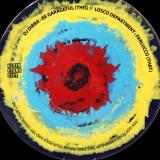
Uluru is back with another tasty 7”.
Making his debut on the label, Italian producer Losco Department jump into the dancefloor with a lovely Arabic rework.
Flip it to find Dj Dibba dropping another Uk Garage Reggae Remix.
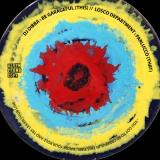
Uluru is back with another tasty 7”.
Making his debut on the label, Italian producer Losco Department jump into the dancefloor with a lovely Arabic rework.
Flip it to find Dj Dibba dropping another Uk Garage Reggae Remix.
"Spiritual Jazz 19" besteht aus zwei Doppel-LP-Sets, die den Einfluss und die Ausdrucksformen jenes Underground-Jazz beleuchten, der sich in der zweiten Hälfte des 20. Jahrhunderts in Kalifornien und den angrenzenden Bundesstaaten entwickelte. Die insgesamt 24 Titel erscheinen in Gatefolds und enthalten Liner Notes, Fotos und Download-Codes.
Die US-Westküste wird oft mit dem Boom des Cool Jazz in den 1950er Jahren in Verbindung gebracht; doch überall dort, wo Jazz gespielt wurde, florierten auch modale, afrozentrische und spirituell geprägte Strömungen – und die Westküste bildete da keine Ausnahme. In der Nachkriegszeit rangierte die Central Avenue in L.A. als bedeutendstes Jazz-Viertel Amerikas direkt hinter Manhattan. Auch wenn Manhattan in jenen Jahren das faktische Zentrum des Jazz-Universums war, übte Kalifornien eine stärkere Anziehungskraft auf die Kultur im Allgemeinen aus und zog Menschen aus dem ganzen Land in den Bann seiner aufkeimenden Gegenkultur der 1960er Jahre.
Hier untersuchen wir die Auswirkungen dieser Gegenkultur auf den Jazz. Wir beleuchten den Einfluss der Black Panthers – der prägendsten Kraft innerhalb der schwarzen politischen Bewegung nach der Ära der Bürgerrechte – und widmen uns den neuartigen spirituellen Praktiken und Religionen des aufkommenden New Age. In Kalifornien waren zahlreiche eigenwillige Independent-Labels wie Arhoolie, Theresa und Nimbus sowie viele weitere private Unternehmungen ansässig; wir präsentieren die Ergebnisse ihres Strebens nach musikalischer Freiheit. All diese Faktoren beeinflussten die Entwicklung und Blütezeit des Jazz und der Jazzmusiker an der Westküste – und die Evolution des Spiritual Jazz in dieser Region wird hier eingehend betrachtet.
Spiritual Jazz 19" besteht aus zwei Doppel-LP-Sets, die den Einfluss und die Ausdrucksformen jenes Underground-Jazz beleuchten, der sich in der zweiten Hälfte des 20. Jahrhunderts in Kalifornien und den angrenzenden Bundesstaaten entwickelte. Die insgesamt 24 Titel erscheinen in Gatefolds und enthalten Liner Notes, Fotos und Download-Codes.
Die US-Westküste wird oft mit dem Boom des Cool Jazz in den 1950er Jahren in Verbindung gebracht; doch überall dort, wo Jazz gespielt wurde, florierten auch modale, afrozentrische und spirituell geprägte Strömungen – und die Westküste bildete da keine Ausnahme. In der Nachkriegszeit rangierte die Central Avenue in L.A. als bedeutendstes Jazz-Viertel Amerikas direkt hinter Manhattan. Auch wenn Manhattan in jenen Jahren das faktische Zentrum des Jazz-Universums war, übte Kalifornien eine stärkere Anziehungskraft auf die Kultur im Allgemeinen aus und zog Menschen aus dem ganzen Land in den Bann seiner aufkeimenden Gegenkultur der 1960er Jahre.
Hier untersuchen wir die Auswirkungen dieser Gegenkultur auf den Jazz. Wir beleuchten den Einfluss der Black Panthers – der prägendsten Kraft innerhalb der schwarzen politischen Bewegung nach der Ära der Bürgerrechte – und widmen uns den neuartigen spirituellen Praktiken und Religionen des aufkommenden New Age. In Kalifornien waren zahlreiche eigenwillige Independent-Labels wie Arhoolie, Theresa und Nimbus sowie viele weitere private Unternehmungen ansässig; wir präsentieren die Ergebnisse ihres Strebens nach musikalischer Freiheit. All diese Faktoren beeinflussten die Entwicklung und Blütezeit des Jazz und der Jazzmusiker an der Westküste – und die Evolution des Spiritual Jazz in dieser Region wird hier eingehend betrachtet.
Sweet Apricots presents its first vinyl release: Daniel Masson – Baul Dimension EP.
In the early 2000s, French composer and producer Daniel Masson travelled to Dhaka to record musicians and singers from Bangladesh’s Baul tradition, a mystical musical culture centred on freedom, inner exploration and universal love.
Originally released as a 13-track album, Baul Dimension appears here on vinyl for the first time through a carefully selected four-track EP. The record brings together the original version, Daniel Masson’s hypnotic Anniversary Version, and two remixes by Lucas Desmottes, aka Roy Vision.
A regular guest at Sweet Apricots parties, Roy Vision translates the spirit of the dancefloor into two deep, percussive and jazz-informed versions: the uplifting Higher Self Mix and its spacious, powerful dub counterpart.
Between organic voices, traditional instrumentation, electronic textures and hypnotic rhythms, Baul Dimension EP is a journey made for attentive listening as much as for adventurous dancefloors.
Cut at The Carvery, London and pressed with particular care by Disques Garcia
Annie Bloch’s luvt is a quiet reorientation of the organ: away from its monumental image and ritualised spaces, towards the delicate mechanics of touch, air and friction. Across seven compositions marking her debut on OOH-sounds, the Cologne based organist and composer turns to the chest organ, a small and mobile counterpart to its larger relative, traditionally used to accompany Baroque music. On luvt, Bloch limits herself to just three stops of wooden pipes, using the instrument’s sensitive keyboard, mechanical subtle effects to crystalline sound world shaped by meditative strategies and fanciful detailing. Bloch’s approach sits at the crossroads of modern composition, new psychedelia, ambient and minimalist traditions, with occasional traces of an avant pop sensibility, while keeping the unique sound and physical character of the chest organ at its core.
The title luvt derives from the German luven, “to turn to the wind” and Luft, “air”, a gesture Bloch extends beyond the mechanics of the chest organ towards what cannot quite be grasped or put into words. Bloch follows the organ into quieter, more intimate territory, letting its monumental potential fade into the background while exploring the sensual its sound. luvt is a gentle and immersive meditation on the sound of the chest organ, revealing the instrument’s contemporary relevance while pushing its expressive possibilities into new territory.
Annie Bloch (*1994) is an organist, composer and songwriter based in Cologne, Germany. As an organist she performs solo and in alternating constellations with an improvisational and situational approach. The reality that every pipe organ as well as the space it speaks in is unique, is something she not only adapts to, but actively works with. The resulting composed improvisations explore states of change. Her pieces focus on the in-between-spaces, that are already leaning towards the next event. Searching for the ambivalences in a sound and lingering on them, her music resists singular truths. The musical material she draws from is informed by her engagement with the experimental music scene, but also by compositional styles of pop and ambient music. She has performed at Huddersfield Contemporary Music Festival, Orgelpark Amsterdam, Philharmonie Köln, Moers Festival and others. As an indie-folk artist Annie Bloch released the album „I DEPEND“ (Papercup Records) with a chamber orchestral band, that she regularly performs with.
From the fires and floods of the Australian bush on her debut, Soon, which Phil Elverum reissued via his label, P.W. Elverum & Sun, tiarn now takes us to the shores of the Pacific Ocean where classical and electronic arrangements move with an ever-present longing for connection and nature. Stretton has weaved a new world, set on the brink of night, when the world is soft and suspended in blue. Living in isolation near the ocean, overlooking the winter migration of whales, Stretton would regularly swim during the brief 20-minute period known as the blue hour. Ideas would come to her in the icy salt water, and walking home in the dark, she would carry melodies back to record that night. At its heart, tiarn reflects ecological grief and the search for connection in a changing world. tiarn is also inspired by a piece of home camera footage Stretton found of her family in Japan where they lived in the ‘90s before she was born.
It shows the distant mountains, and Stretton’s young family looking over the valley in the soft static of one summer evening. Decades later, using the untouched synth her parents had bought in Tokyo in 1991, Stretton began recording music directly to that footage, letting the images dictate the melody. Voices, insects, weather, movement, and the ambient sounds of the valley are woven throughout the record itself, blurring the line between documentation and composition. The result is an album that feels less created than uncovered — something remembered rather than made. Stretton’s work continues to carve a singular path in contemporary music, balancing environmental awareness, experimental composition, and deeply personal storytelling.
Repress 2026
Two years after releasing the acclaimed Crash Recoil, Anthony Child aka Surgeon returns to Tresor with new LP, Shell~Wave. Retaining the minimal equipment list and studio-version-of-live-show-sets approach of the previous album in order to focus on the work itself, Shell~Wave is a deeply personal document of both where Surgeon is and has been, converging three decades of experience with a continued curiosity in the untested.
“To make this project, I had to dig really deep in terms of what my relationship was to techno; I’ve been involved with it for a really long time and there’s a lot about it I feel dislocated from, so I had to really think hard about what techno is to me. I often get asked “what is techno to you?” but I can’t answer that with words; this album is the answer.” From the complex, twisting track Infinite Eye to the caustic Soul Fire, the eight tracks that make up the body of the album are single-take explorations of the vast, hard yet minimal techno Child is synonymous with.
Neatly dividing the record in two, the emotional centre of the record comes in the form of Dying, a vibrating, beatless piece that with a mantra-like vocal loop steeped in reverberating effects. Further echoes of dub production appear throughout the record as tracks like Divine Shadow, and Empty Cloud have an almost ever-present mist of reverberation, driven by the appearance of a new delay unit in the equipment list; while much of the philosophy of Crash Recoil’s creation is present, the process and the instruments have changed as Child again switches up his approach to studio work.
This insistence on trying novel techniques doesn’t preclude returning to old ones, as this use of modern digital machines with live, hands-on takes that are as inspired by 60s producer Joe Meek and 70s reggae as they are by this year’s synthesiser expos.
“For me, it’s an interesting experience returning to old techniques again after 30 years. I’m always exploring and finding myself back at the beginning. Connecting the present with the past.”
This philosophy of ‘time travel’ is inherent to the music itself as the synchronised loops repeat while the delay and effects branch out, forming unique eddies; distinct quantum moments within the circular whole; the future leaking through the spaces between the sounds. All of the concepts on the album are perfectly communicated through the painting by Taiwanese artist Jazz Szu-Ying Chen which suggests the movement of water, sound waves, and the chitinous shells of sea creatures.
To kick off our 5th year party celebrations the label begins its new set of releases starting with the joined forces of Regal86 and IMOGEN. The artists contribute two tracks each to the four track vinyl alongside remixes of each other's work, meeting at sonic crossroads.
The EP journeys through rave nostalgia filled with warmth and hope for the future, recollecting some favourite memories of the dance floor.
The A side is fast, driving with a sense of longing for the Halcyon Days and the offline times of partying when things felt easier. The release opens with ‘One Night In 1992’, IMOGEN’s nostalgic ode to an earlier rave era, built around a vocal recollection of her mother’s experiences on the dancefloor in the 90’s. Raw, hazy and deeply personal, it sets the tone for a record rooted in memory while remaining firmly in the present. Regal86 follows with ‘Rush’, bringing a different energy to the record. Driven by rolling rhythms, playful movement and a strong sense of groove.
The B side takes a more optimistic turn looking into the future with dubby aquatic pads and euphoric breakdowns, carrying a feeling of forward motion. There is a lightness to the tracks, a sense of joy running beneath NC Station and keeping the momentum locked whilst turning inwards on the final track, IMOGEN’s ‘Midnight At Bret’ rounds out a release that moves naturally between nostalgia, propulsion and the shared language of the dance floor.
As the next release launches, IMOGEN takes wigs on tour for a five year special run of shows starting on release at Tresor for a two club take over following with further cities: London, Milan, Dublin and more.
SIGNUM REGIS was founded in 2007 and stands for finest melodic Power Metal with both progressive and symphonic elements. Their upcoming new and eighth studio album „Beyond Spacetime“ will be released on October 9th through Fireflash Records and will feature different vocalists. Among them their current singer Mayo Petranen, who just returned to the band, his successor Jota Fortinho as well as top class names, such as Ripper Owens (ex-JUDAS PRIEST), Matt Smith (THEOCRACY), Ralf Scheepers (PRIMAL FEAR), Johnny Gioeli (HARDLINE, AXEL RUDI PELL), Tasos Lazaris (STEEL ARCTUS, WHITE WIZZARD), David Åkesson (SYMPHONITY; QUANTICE), but also Victor Smolski (ALMANAC, ex-RAGE), with a guitar solo on the first single-release „Throne Of Gold“.
„We are so satisfied and proud of it! Even though the last 3 years were not easy for the band, this is definitely not just a ""next"" Signum Regis"" album, we are a band, we are always aiming to create something special - for us and for fans“, comments guitarist Filip Koluš, who also mixed and produced the album.
„Beyond Spacetime“ is rounded up by an excellent artwork from Uwe Jarling, known for his work for acts like HEAVEN’S GATE, GRAVE DIGGER or recently FRONT ROW WARRIORS. „The result is awesome! We are definitely a band that considers the artwork a very important part of our artistic vision. Over the years this approach has only grown stronger, so having a real cover artist has become an absolute must for us“, comments Tommy.
SIGNUM REGIS will celebrate their 20th anniversary next year. „Beyond Spacetime“ already feels like kind of a best-of journey through their past, present and future. „We grew up on the values of traditional melodic metal - this focus will most probably never change“, says Filip Koluš and explains: „At the same time, we are also a group of great friends, who have a common goal - to make the best quality metal music together.“
Ariwa Sounds started in a front room in Thornton Heath, South London. Four tracks, some homemade equipment, and Neil Fraser, better known as Mad Professor, at the controls. That was 1980. Over four decades later, the label has more than 300 albums to its name and a legacy that stretches well beyond the reggae scene.
This compilation pulls twelve tracks from across the catalogue. Dub, lovers rock, heavy roots music, digital dancehall — it's all here. What ties it together is the Ariwa studio sound all going through Mad Professor’s desk.
Mad Professor is the backbone of it. Dub Me Crazy got him known and his production credits run from Jah Shaka and Horace Andy to Massive Attack, Sade and The Orb. The tracks here — the Dub Sampler, H2SO4, Disco Dude, Kathmandu Dub — show why.
The Jah Shaka collaboration Only One God is a landmark. Two of the UK's most important dub figures on one track. Dark and heavy roots music.
The Robotics appear twice — Hong Kong Flew! and Miss Mood. They are Ariwa's house band and have backed U-Roy, Lee Perry, Big Youth and more over the years.
Aisha closes things out with Can You Feel It. A track that crosses reggae, soul and boogie funk. Collectors have been after original pressings for years.
Starky Banton, Ragga Doll, Professor Doppler and Earl Lawrence complete the compilation. Exactly the kind of thing that reminds you how wide the Ariwa net was cast.
Sleeve design is by Trevor Jackson. One of the UK's most respected graphic designers. His work has defined the visual language of British music for thirty years. His involvement here signals exactly the kind of release this is. A serious serious catalogue and compilation of music, treated with the respect it deserves.
Ariwa sits alongside Greensleeves as the most important reggae imprint this country has produced. This compilation shows why.
Inspired by the ska and reggae sounds crossing the border from Belize, the Mexican band Ely Combo was among the first in the country to incorporate Jamaican rhythms into its repertoire in the early 1970s. This single brings together two funk classics—Isaac Hayes’ ‘Shaft’ and the dancefloor favorite ‘Express Yourself,’ originally recorded by Charles Wright & The Watts 103rd St. Rhythm Band—reimagined here as two explosive reggae tracks.
A remarkable anomaly within the Latin American music scene of the 1970s.
'Come Into My Life' is a deep vocal house spine-tingler from Nathalie Capello and Rose Lonegran that is the subject of three separate remix EPs on Jus-Ed's top drawer Underground Quality label. This one begins with German house head Damiano Van Erckert layering in some humid chord work, before Reggie Dokes's Jazzy Adlib has fingers dancing nimbly across the piano keys to bring a brighter sound and Machillado's House Again remix is pulled apart and rebuilt as a rough-edged and dusty beatdown. Kossi Emmanuel keeps things bouncy and chord-laced for the ultimate soulful release.
KYSH returns to wax with its third vinyl release — another milestone in the label’s steadily growing catalogue. More than a year and a half into the journey, KYSH feels more in its element than ever, bringing together five names that represent both the label’s own extended family and fresh acts joining the ranks. All well-established and highly respected figures in the modern techno landscape, they deliver a sharp selection of contemporary club weapons. Kashpitzky opens with “Blush”, a raw, boomy cut where rough-edged rhythmics meet crisp modern production, channeling the spirit of industrial techno at its best. “Tarmac” by Regent follows with a dense, restless groove, while Chontane’s “Gyuto” dives into hypnotic territory, layering rhythmic elements around subtle dissonant melodies. On the flipside, Temudo & Pierce join forces for the threatening, aggressively contemporary “Highest Clarity Grade”, balancing intricate sound design between rhythm and atmosphere. Closing comes GCOD with “Sleeper Agent” — dancing sub bass, a striking hook and a relentless hi-hat groove keeping the weight firmly down low. Another strong statement on wax, KYSH-003 confirms the label’s vinyl output as a mark of quality, with five floor-tested cuts drawing from a fresh, current take on the industrial influences that shaped techno a decade ago. A new lineup, a distinct direction, and five tracks ready to speak for themselves on a proper soundsystem.
Marcus Gad, one of France's top reggae artists, hailing from the Pacific island of New Caledonia, returns with a powerful new album, FOR ALL Produced with his longtime collaborator Tamal, along with instrumental backing from his band Tribe, the record brings 12 new songs that continue Gad's thoughtful and catchy approach to modern reggae. Lush production, killer musicanship, along with modern vibes and riddims all make the album one of his best yet. Lyrically, Gad tackles many of the topics that have concerned him for years - liberty, equality, fighting against injustice and the problems of the world today.
Karen Morrison - stage name Bryck Rose formerly known as K Vibes on the Reggae Dancehall scene. Currently a gospel singer, songwriter, poet, and aspiring playwright and one of the younger members from Studio One of Jamaica.
Hip-hop royalty returns—Bun B and Statik Selektah team up once again for the fourth chapter of their blazing collabo-rative saga: TrillStatik 4. Recorded in real-time with that unmistakable underground urgency, this album is a master-class in modern rap chemistry, blending Bun B’s Southern grit with Statik’s boom-bap precision.
The guest lineup is nothing short of legendary. From DJ Premier setting the tone on “Live From Houston,” to Griselda heavyweights Westside Gunn, Conway The Machine, and Boldy James blessing “Trillselda 2,” every track hits with purpose. Regional flair runs deep, too—Paul Wall, Maxo Kream, and Lil’ Keke represent H-Town with pride, while East Coast lyricists like Termanology and Tek bring bar-for-bar fire.
This is more than a record—it’s a cipher of cultures, connecting street narratives, soul-drenched beats, and coast-to-coast talent.
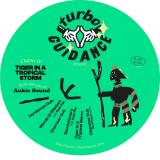
Following his debut 12" on Futura Resistenza, Aukio Sound returns with a new release on Turbo Guidance Entertainment — a deep dub techno exploration rooted in heavy reggae influence, featuring the late Baba Ras. A solemn tribute to a singular voice. Like Rousseau's Tiger in a Tropical Storm, this record paints a dense, dreamlike fresco — where rhythm and texture grow wild beneath the surface. The record also includes a remix by Non Posso, a mysterious duo. Mastered by Carsten Dämbkes and pressed on 180g vinyl for the full listening experience.
Keroxen presents Spandauer Damm 103, a new album by Dancelwerk.
Bringing together modular systems, worn drum machines and digital synthesis, the record nods directly to the first decade of Warp Records and the early logic of bleep culture.
Dancelwerk is a Tenerife-based electronic pioneer and one of the foundational figures of the Canary Islands underground. Active for over 30 years, Spandauer Damm 103 marks both a personal milestone and a renewed point of focus, reaffirming his role in shaping the region’s electronic lineage. The album draws on 1990s electronic futurism, filtering those references through a contemporary production approach rather than nostalgia.
The music moves between places and periods: from the early rave circuits of southern Tenerife, where Dancelwerk built his reputation through DIY releases and warehouse-level experimentation, to his later relocation to Berlin, famously arriving with a shipping container of vintage synthesizers and modular equipment.
Balancing melody and impact, Spandauer Damm 103 sets custom-programmed percussion against detailed sound design. FM, spectral and wavetable synthesis shape its harmonic and textural focus, resulting in music that remains physical without sacrificing clarity.
A long-standing practitioner reconnecting with his roots while pushing the system forward.
* 2026 REPRESS *
Handed to the legendary Channel One Soundsystem in exclusivity over a year ago, Don Fe's Jericho has been on constant rotation around the globe ever since. Cut to dubplate by Mikey Dread this tune has been securely locked down and spun exclusively as Channel One's last tune at places such as Notting Hill Carnival and many of the soundsystem's international sessions and festival appearances. After a very patient wait Steppas Records are extremely pleased to be able to offer this plate to the world, pressed to 12' vinyl, featuring two new mixes of Jericho and two exclusive cuts of the equally powerful Weep Not.
UK born musician and producer based in Spain for over 20 years, Don Fe's passion since the age of five has been music, classically trained in piano, flute and theory and as from sixteen reggae. From his humble beginnings in the 80s with a 4 track and a TDK D90 his riddims and productions are now being played by the world's most respected sounds - Channel One, Jah Shaka, Aba Shanti, Iration Steppas and many more all over the world.
* 2026 REPRESS *
Ashanti Selah – Musician & Dub Producer hailing from the UK, is the eldest son of the world-renowned soundman, Aba Shanti-I. Ashanti's musical journey began at a tender young age, during his formative years of soundsystem exposure through his father's musical infrastructure he learned the art of the Dub. His education continued as he attended his father’s long-standing annual sessions at the Notting Hill Carnival and traveled the globe as a crew member and diligent student. Via his Steppas Records imprint, Alpha Steppa, son and nephew of pioneering dub-duo Alpha & Omega presents a unique collaboration between two second generation Dub / Reggae producers. 'Ashanti Selah Meets Alpha Steppa' is a testament to their teachers and the product of a life spent in dub. Steppas Records delivers four unique cuts of the long-time Aba Shanti-I exclusive 'Violin Step', featuring the uplifting and transcendental strings of Ras Divarius. New generation soundsystem music with a deep roots foundation.
Across the past decade, KAS has established herself as a unique voice in experimental electronic music, a composer and synthesist whose work dissolves the boundaries between ambient electronica, contemporary classical, composition, and immersive sound design. Her new album “Ruin: It’s Not Just Music” arrives with a distinctive gravitational pull. The record moves with greater physical force, placing rhythm and impact at the centre of its architecture, revealing a more confrontational and embodied dimension of KAS’s musical language.
The first single “Ruin” arrives May 22nd, with the full album released October 2nd via SOMEONE SPECIAL the new label co-founded by KAS.
Where much of KAS’s earlier work explored harmonic environments, the forthcoming album is built around tension and release. Inspired by the sound of drum and bass, breakbeats fracture through dense fields of synthesis, percussive patterns and her signature melodic fragments – motions that feel closer to the kinetic language of club music than the meditative spaces often associated with her past catalogue. The result is a body of work that feels both recognisably hers and newly charged, music that moves through the body as insistently as it engages the mind.
For listeners who first encountered KAS through the glowing synthesis of “Ears” (2016) or the intricate experimental pop of “The Kid” (2017), this direction may feel initially surprising, yet the shift has been quietly unfolding across the past several years. KAS’s practice has steadily expanded beyond the expectations placed upon experimental electronic artists, moving between orchestral composition, audiovisual installations, film scoring, and large-scale commissions while retaining the unmistakable sonic signature that defines her work.
The 2022 albums “I Could Be Your Dog / I Could Be Your Moon” (2022) and “Let’s Turn It Into Sound” (2022) explored a deeply immersive approach to composition, expanded her reputation and instinct for constructing detailed sonic ecosystems while continuing to blur the lines between experimental electronics and contemporary pop structures. KAS’s most recent output has continued to widen that field including the rhythm oriented electronic album “Gush” (2025) and her return to more orchestral roots with “Thoughts on the Future” (2025). Together these releases underscored the breadth of her practice.
Her prolific collaborators and creative partners have ranged from Patti Smith and Suzanne Ciani to Danny Elfman, Tycho, Glass Beams, RY X, Caribou, Four Tet, Reggie Watts, and Max Richter, while her compositions have appeared in projects with Apple, Chanel, Meow Wolf, the BBC Orchestra, and major film and television productions.
On “Ruin: It’s Not Just Music”, that vocabulary becomes more kinetic than ever before. The record draws energy from jungle, drum and bass, and dance-floor focused electronic music while retaining the intricate synthesis and tonal curiosity that have defined KAS’s work from the beginning. The result is a record that feels equally at home within club culture, contemporary composition, and the experimental spaces that have long championed her artistry.
On May 27th KAS will present a major performance at London’s Barbican Centre alongside the London Contemporary Orchestra, marking the ten-year anniversary of her landmark album Ears. The evening will trace the arc of her creative evolution while also introducing material from the new album.
The collaboration we’ve all been waiting for is finally here! Thee Sacred Souls asked him to... and Victor Axelrod delivers with two massive platters sure to usher summer in with a swing.
Thoughtfully plucked from their sophomore album, Got a Story to Tell, the Cupid struck ‘Waiting for the Right Time’ gets a soulful reggae reboot from Axelrod and session team The Inversions.
Josh Lane’s emotional delivery and impressive vocal range meld with the raw, heavy rhythms as if preordained—transforming the beloved tracks into something exciting and fresh whilst leaving its DNA intact. A testament to what a skilled producer can do with rock-solid compositions. Comes complete with respective HEAVY B SIDE DUB VERSIONS. Get into it!
What an unbelievable record. From the wild cover to the iconic breakbeats, Roots from Ian Carr’s Nucleus is one of the dopest albums we know. This is seriously thick, funky-prog jazz-rock heaven. Originally released on Vertigo in 1973, other than a couple of versions at the time for other territories, Roots was never re-pressed since so it’s gone on to become another one of those impossible to find records.
Maybe it was a little too out there for the time, but it’s aged very, very well indeed and this Be With re-issue, re-mastered from the original analogue tapes, shows off just why this deserves to be back in press.
Genius trumpeter and visionary composer Ian Carr was one of the most respected British musicians of his era. He was a true pioneer and saw the potential in fusing the worlds of jazz with rock, just as Miles Davis and The Tony Williams Lifetime did in the US. In late 1969, following the demise of the Rendell-Carr quintet, and tiring of British jazz, Carr assembled the legendary Nucleus. Regarding music as a continuous process, Nucleus refused to “recognise rigid boundaries” and worked on delivering what they saw as a “total musical experience”. We can get behind that.
Under bandleader Carr, Nucleus existed as a fluid line-up of inventive, skilled musicians. This constant evolution and revolution was all part of the continuous musical exploration and discovery that took jazz to new levels.
Working together with producer Fritz Fryer and engineer Roger Wake, the seven compositions by Carr, Brian Smith and Dave MacRae that make up Roots flirt with perfection, and Nucleus at that time made up of the cream of 1970s UK jazz with Brian Smith on tenor saxophones and flutes, Dave MacRae on piano and electric piano, Jocelyn Pitchen on guitar, Roger Sutton on bass, both Clive Thacker and Aureo De Souza on drums and percussion, Joy Yates delivering the vocals and of course Carr on trumpet.
The spellbinding title track immediately renders the album indispensable. Riding the illest of loping breakbeats, “Roots” is low-slung, doped-out heist-funk. An absolute monster. If it sounds familiar then that’s likely down to it being sampled by Madlib for Lootpack and Quasimoto’s “Loop Digga”, as well as by a whole host of beat manipulators. “Roots” conjures prime instrumental hip-hop / beat music, only 20 years ahead of its time. Truly, these are the roots. Through sinuous bass, twinkling keys and a hypnotic guitar riff, a smoky brass motif weaves its way into a gloriously deep haze around Carr’s solos. “Roots” is over 9 minutes long, but there’s not a single wasted second, not surprising given that this is a condensed version of an originally 40 minute long commissioned composition.
The soothing vocal fusion delight of “Images” follows. Meticulously constructed, with gorgeous flute work from Brian Smith, with Joy Yates’ silky vocals and Dave MacRae’s Rhodes never sounding better. The cool, driving “Caliban” closes out the first side. Originally the third movement in a four part commission to celebrate Shakespeare’s birthday it stands up on its own, all robust rhythms and blended brass. Keyboard colour and Carr’s trumpet are splashed across the funk drums and basslines (and there’s even some bamboo flute). This really is fusion: the elements of jazz and rock coming together in beautifully synthesis.
Side two opens in riotous fashion with the short, thrilling samba of “Wapatiti”. Next up, “Capricorn” forms a smoothed-out, jazzy constellation. Mellow and dreamy, its twinkling percussion and languid horns slowly build the vibe before head-nod drums and a killer bassline enter the fray. With a distinct heaviness that Black Sabbath would’ve envied, “Odokamona” is a venomous slice of riff-soaked jazz metal (yes, you read that right), elevated by Carr’s wah-wah horns.
The album closes with MacRae’s exceptionally cosmic “Southern Roots and Celebration”. Very much in conversation with Weather Report, it opens as a languorous, spiritual jazz of chiming keys and serene guitar that turns slowly, gorgeously into a mid-paced, brass-laced banger. It’s another sure-fire party starter and the sound of the band having a righteous blast, building an ecstatic chaos that ends with Yates screaming.
And of course we need to talk about Keith Davis’ cover for Roots. Perhaps the coolest record cover of all time? Certainly one of the most bonkers. Just your run-of-the-mill high-gloss, acid-tinged airbrush dystopian/utopian living-room party scene. Consider this your chemical flashback trigger warning.
Front-and-centre the hip-to-death green robot holds court with their giant ball of yellow barbwire wool, hooked up to… something(?) being teased out from under the stairs (probably best not to ask). A thoroughly zoned-out, long-legged Pop Art party-goer lounges half-plugged in to the painting behind her as a pair of legs flail into shot from the the top of the stairs opposite. We won’t even begin to guess what the chap’s up to in the middle, but the view out of the windows is rather nice, and someone’s already got the hoover out ready to tidy up. All of the Nucleus sleeves are something special, but this particular one? Crikey.
This Be With edition of Roots has been re-mastered from the original Vertigo master tapes, Simon Francis’ mastering working together with Pete Norman’s cut to weave their usual magic with these wonderful recordings. The crazy cover has been restored at Be With HQ as the finishing touch to this long overdue re-issue.
The premise of this compilation is simple: music we’d like to hear at the airport.
The idea came after learning that Honolulu’s international airport has been playing AI-generated music over its speakers since November 2025. First reported by Civil Beat, the news has caused frustration and disappointment among residents and visitors, as well as within the local music community.
Everyone knows Hawaii is one of the most musically rich regions in the world — why then is the airport using AI music? 'Music For The Airport' is our response.
Located in the middle of the Pacific at the outskirts of one the most remote cities on the planet, Honolulu’s Daniel K. Inouye International Airport (HNL) is for most people the first place they encounter when they arrive in Hawaii. Warm sun, tropical tradewinds, playful palm trees and majestic mountains welcome every traveler, as do the sounds of birds, familiar music from Hawaiian artists like Aunty Genoa Keawe and Israel Kamakawiwo’ole, and—at least for now—seventeen “island-themed” AI-generated songs.
In late 1977, while sitting in Germany’s Cologne Bonn Airport on a Sunday morning, Brian Eno noticed how terribly uncomfortable he felt hearing the airport’s “muzak” overhead. For a harried, hurried place like the airport where travelers scramble to their gates, stand in long border control lines, and wait impatiently for their luggage at the carousels, music can create more anxiety than calm. Asking himself, "What should we be hearing here?", Eno soon created ‘Ambient 1: Music For Airports’, a sonic remedy aimed at reducing nervousness in public spaces.
When we heard the news that HNL airport is playing AI-generated “muzak”, we were immediately reminded of Eno’s genre-defying 1978 album. And we were similarly inspired to react. But how? Recreating an ambient masterpiece wasn’t in our wheelhouse. We started digging through our catalog of licensed music which we haven’t yet re-released. We quickly realized this was our chance to highlight some of favorite songs from the so-called CD era: the 1990s and 2000s (with a few exceptions). In less than 20 minutes, we pulled 17 original songs recorded by local artists between 1984 and 2017.
The speed at which this project came together surprised us; reactionary gut instinct often produces swift and lasting results. Ironically, our new compilation likely took less time than it did for the state Department of Transportation to commission its AI songs in question. But even though ‘Music for the Airport’ came together in less than one week, the truth is that this collection of 17 songs is the result of years of hard work, trust, sacrifice, patience, and understanding. Building relationships with and licensing music from artists doesn’t happen overnight, but more importantly: these songs are the result of people pouring their hearts and souls into something they believe in. This music wouldn’t exist today without the artists and their loved ones who supported them along the way.
As of this writing, the DOT states its intention in creating AI-generated songs is to “highlight different aspects of the islands, aviation and the airport” and that “no state funds were used to produce them”. Okay, but at what cost? Technology disrupting the music industry isn’t news to anyone. AI music in public spaces are cost-saving measures, since its users (airports, for example) don’t have to pay the licensing fees typically required, which can be a worthwhile source of revenue for artists. But what happens when a place like HNL airport, which hosts more than 21 million passengers annually, uses music created by machines instead of people to represent Hawaii? The identity of a place beings to erode, diluted by a language learning model’s conceptual summary of what a people and its culture sounds like. To echo Brian Eno: what should we be hearing here? In other words: what should the music of Hawaii sound like?
We believe in the power of music, especially when it comes from the soul. We believe in supporting artists, especially as AI disrupts our lives. We believe that Hawaii must be represented authentically, especially when it comes to song. And of course we believe in vinyl, especially since it was a record from 1978 (Mackey Feary Band’s debut LP) that inspired Aloha Got Soul’s origins in 2010.
We hope you find as much joy in this compilation as we have. Perhaps it’ll soundtrack your next journey to Hawaii. At the very least, we hope some people take a moment to hear these sounds: in your headphones for now‚ maybe someday overhead at the airport in Honolulu.
There is a hush most of us only knew as children, the warm drift between familiar household sounds and being carried to bed, a place that belongs to you and to some self you have not met yet. June McDoom’s debut full-length, Follow the Light, lives in that dream space and then keeps walking, slipping out of time and waking somewhere new, barely familiar enough to feel like home yet wholly your own. She came up in a Jamaican household on the edge of the Florida Everglades, an existence built of extended family, communal care, bass and harmonics. Her father, a carpenter and a student of sound, built his own speakers and kept three sound systems going across as many rooms. His low end would rise through her bedroom floor like some wayward cat while she lay above it with folk records, finding harmonies that were new and hers alone. Two musics in one room. Lushness as past and premonition. She found folk on her own, somewhere between the cast recording of The Sound of Music and Simon and Garfunkel, while everyone around her called it sleepy music. She did not mind being the only one. The solitude let her fall for harmony first, before words, before anything else, and harmony is still the thing she reaches for. Generationally speaking, the music was already in the air. Her grandfather, Colin Smith, is a distinguished mento man who played banjo and guitar and built his own rumba boxes, worked to keep Jamaica’s oldest acoustic folk form alive. Mento is the root of all of it: ska, rock steady, reggae, dub and everything after. He is the one who put a guitar in her hands. An inheritance, a gift and a map. Even her name is part of it, though she will tell you she landed on it more by feel than reason. She records as June McDoom, born Alyssa, June being a nickname one of her grandmothers, Joan, went by, a name she thought was cool to carry and simply liked the sound of. An etheric channel that reverberates all the same. A dub all its own.
Made slowly and by hand with her longtime partner Evan Wright, Follow the Light lays the harmony of folk over the rhythm of dub, with Dionne Warwick, Minnie Riperton, Pentangle and the washed guitars of Cocteau Twins haunting its outer edges. Voice and guitar seeking each other out first, then everything else stacked across long days in the studio they keep at home, restraint kept on purpose. The lead single “Without You” is the whole method surfacing, split open and sparkling like a geode in a creek bed. Angelic heroics, and nothing less.
At the heart is family. Her grandmother Aggie, the light behind “Memory,” guiding still. And underneath, the quieter truth the record keeps: none of us are only one person, but a continuum of selves, the ones who shaped us and the ones we have yet to meet. Future you is an ancestor your current self gets to greet. Press play and the same invitation is yours: A few minutes out of time, a place that turns familiar the longer you stay until you surface somewhere new and find it was yours all along
There is a hush most of us only knew as children, the warm drift between familiar household sounds and being carried to bed, a place that belongs to you and to some self you have not met yet. June McDoom’s debut full-length, Follow the Light, lives in that dream space and then keeps walking, slipping out of time and waking somewhere new, barely familiar enough to feel like home yet wholly your own. She came up in a Jamaican household on the edge of the Florida Everglades, an existence built of extended family, communal care, bass and harmonics. Her father, a carpenter and a student of sound, built his own speakers and kept three sound systems going across as many rooms. His low end would rise through her bedroom floor like some wayward cat while she lay above it with folk records, finding harmonies that were new and hers alone. Two musics in one room. Lushness as past and premonition. She found folk on her own, somewhere between the cast recording of The Sound of Music and Simon and Garfunkel, while everyone around her called it sleepy music. She did not mind being the only one. The solitude let her fall for harmony first, before words, before anything else, and harmony is still the thing she reaches for. Generationally speaking, the music was already in the air. Her grandfather, Colin Smith, is a distinguished mento man who played banjo and guitar and built his own rumba boxes, worked to keep Jamaica’s oldest acoustic folk form alive. Mento is the root of all of it: ska, rock steady, reggae, dub and everything after. He is the one who put a guitar in her hands. An inheritance, a gift and a map. Even her name is part of it, though she will tell you she landed on it more by feel than reason. She records as June McDoom, born Alyssa, June being a nickname one of her grandmothers, Joan, went by, a name she thought was cool to carry and simply liked the sound of. An etheric channel that reverberates all the same. A dub all its own.
Made slowly and by hand with her longtime partner Evan Wright, Follow the Light lays the harmony of folk over the rhythm of dub, with Dionne Warwick, Minnie Riperton, Pentangle and the washed guitars of Cocteau Twins haunting its outer edges. Voice and guitar seeking each other out first, then everything else stacked across long days in the studio they keep at home, restraint kept on purpose. The lead single “Without You” is the whole method surfacing, split open and sparkling like a geode in a creek bed. Angelic heroics, and nothing less.
At the heart is family. Her grandmother Aggie, the light behind “Memory,” guiding still. And underneath, the quieter truth the record keeps: none of us are only one person, but a continuum of selves, the ones who shaped us and the ones we have yet to meet. Future you is an ancestor your current self gets to greet. Press play and the same invitation is yours: A few minutes out of time, a place that turns familiar the longer you stay until you surface somewhere new and find it was yours all along
* long version / previously unreleased on vinyl
** exclusive / previously unreleased
Felix Laband's highly acclaimed electronica masterpiece album "Dark Days Exit" (2005) is now available as an Extended Version 2LP vinyl. Originally planned for last year's 20th anniversary, this special edition features a new design by Felix Laband and includes a double-sided DIN A2 art print. Dark Days Exit features four exclusive tracks, alongside five vinyl-only tracks available for the first time in their original long versions. Listening to the key track, Sleeping Household, on Dark Days Exit is unsettling: like being an impostor rambling around an uncanny house, a Lynchian leitmotif in the form of a young girl divulging secrets that you probably shouldn't hear. Dark Days Exit is an album that paints an interior landscape, an invitation to transgress private thresholds. Made with old-school production tools that require hands-on application, Dark Days Exit is a sound-production tour de force. The music is as wide as the savannah and microscopic at the same time, a lesson in what can be achieved when 'music' is placed on an equal footing with sound as a phenomenon, by an artist who decides to apply themselves without reserve. The masterful manipulation of reverb and delays and hyper-detail was a generation ahead of its time, and Dark Days Exit is preferred by audiophiles for testing their systems. Dark Days Exit is intimate, demanding, and a masterclass in tension, and Laband's ability to use all sound without hierarchy to paint a detailed personal vision — one that is less overtly political and streetwise than on subsequent albums — is unsurpassed. Most discerning listeners are into music because, in the hands of a master, it can manipulate our mood and transport us. Felix Laband opens with a sonic portrait of spring happiness and gradually dismantles the atmosphere in front of our ears, as epitomised by the haunting track Black Shoes. No sooner are we afraid than the artist drops us off where we started. In many ways, the intimacy derives from the tight group of friends and believers whom Laband corralled as contributors: Mark van Niekerk (xylophone, "Miss Teardrop"), Jane Rademeyer (clarinet, "Black Shoes," "Radio Right Now"), Brendon Bussy (mandolin, "Black Shoes"), and Derek Gripper (sampled violin, used throughout) and Alex van Heerden on Minka. The difficulty in categorising Dark Days Exit is probably due to Laband listening mostly to ambient and classical music at the time, and consequently registering the album at the lush, cinematic end of the electronic spectrum. There is poise and restraint in the spare use of beats, and when they do appear, they hit hard. Forged in the optimistic post-apartheid years, Dark Days Exit is music about life and death, spanning hope, despair, terror, tension, with humour and empathy. Twenty one years on, the album's gravity endures, due to its almost perverse authenticity, its timeless themes of hope and despair, and its apex level of technical mastery. The additional, immaculately produced tracks add new rooms to the uncanny house we are invited into.
2026 re-issue, 180g vinyl, remastered from the original tapes
Be With have raided the KPM archives to re-issue another of our favourites from the KPM 1000 series. They say: Hard Afro Pop featuring large percussive rhythm section and front line. We say: One of the best-loved of all the KPM LPs. Afro Rock was recorded at Morgan Studios by John Cameron and Alan Parker in London in 1973 as a collection of stripped-down African rhythms, virtuoso jazz instrumentation, fuzzed up wah wah guitars and spaced out library breaks. The percussion is effortlessly funky, and those flutes so melodic, it’s as if the LP was crafted with the beat lovers of the future firmly in mind. As Cameron himself described it in Unusual Sounds, this is “heavy duty drum-and-bass salsa music”. As with all of our KPM re-issues, the audio for The Road Forward comes from the original analogue tapes and has been remastered for vinyl by Be With regular Simon Francis. We’ve taken the same care with the sleeves, handing the reproduction duties over to Richard Robinson, the current custodian of KPM’s brand identity. And don’t worry! Those KPM stickers aren’t stuck directly on the sleeves!
Across four tracks of lean and potent workouts with his unmistakable sonic signature, Peverelist returns to Livity Sound with his first release of 2026. After three years shaping out the Pulse series, Pace The Wrecks EP finds Pev shifting focus in subtle ways while upholding his focus on impactful, sprightly club modernism.
It's clear there are fresh inputs into the Peverelist sound from the very first note of 'Wreck I', which opens on an ominous lower-register piano note leading into a brooding house-tempo cut laced with sci-fi synth licks. On 'Wreck II' the dial shifts towards a more rapid-fire, electro-informed rush before swerving towards the bass-heavy, bleep-loaded jack of 'Wreck III'. 'Wreck IV' closes the EP out on a more sparsely arranged broken beat tip primed for lighter moments in the mix.
True to Pev's singular sound while maintaining the consistently fresh, uplifting energy of his recent output, Pace The Wrecks opens up the next phase in his studio work with assured poise and a sustained commitment to keep pushing forwards.
Corps Perdu emerges from Lamin Fofana’s ongoing practice of creating immersive and multisensory sound environments, informed and inspired by the historically rich texts of scholars and poets working in the tradition of Black Studies. The words of W.E.B. Du Bois, Sylvia Wynter, Dionne Brand, Fred Moten, Édouard Glissant, Suzanne Césaire and Aimé Césaire are transmuted and circulated as sound, offered to listeners through radio, live events, albums and installations. Fofana honours his sources with an audible historical awareness, yet his sounds always simultaneously open out into the turbulent uncertainties of the present.
The music we hear on the album Corps Perdu was previewed within a series of collective reading and listening sessions carried out in Paris, Barcelona, Tunis and New York City, where voices from the audience read aloud fragments from a body of texts Fofana had selected. The spontaneous unfolding of close reading and listening, mixed live by Fofana in these collective listening experiences, speaks to the open-ended quality of Corps Perdu. The album, now published, is but one iteration of this ongoing inquiry into the relationship between sound and text.
Corps Perdu presents an introspective journey with no return, and as such is full of omens of all kinds. Across ten tracks Lamin Fofana creates a sibling or companion to the transformation he initiated in his previous album Works in Metal, building a narrative that takes us into Krakatoa prior to its eruption, and lets us listen to Césaire’s ‘flying seed dreaming very loudly’. The album’s track titles and narrative arc hum in and out and alongside Césaire’s poetry, mainly Césaire’s 1950 collection Corps Perdu, in which the ten poems are accompanied by engravings by Picasso merging fragments of bodies and plants—a collaboration that emerged from their first encounter two years earlier, at the Communist-led World Congress of Intellectuals for Peace, in Wroclaw, Poland.
The music on Corps Perdu labours intuitive hand-held melodies through dense processing. There are many rhythms throughout, though these never surrender to the density of the dancefloor grooves we’ve heard Fofana craft on previous albums (think of the ‘Obscure Light’ pair from Works in Metal for example). Instead, Fofana gently releases the clenched hands Césaire’s Corps Perdu begins with: ‘Among me, from myself, to myself, outside any constellation, clenched in my hands only, the rare hiccup of an ultimate raving spasm, keep vibrating word’. The album carries through sound the scattering and liquid fragmentation that shape the desperate metamorphosis of a ‘lost body’.
Verdad Y Error (2026) resides in the tension between the thrashing of external noise and beating centred internal calm. Gibrana Cervantes is known for her work across experimental music and contemporary performance, a practice with focussed intensity and surging physicality, often pushing the limits of endurance, presence, and embodiment. A central axis of her performance practice is her ongoing collaboration with acclaimed choreographer Florentina Holzinger, including composing the music for SEA WORLD (2026), Florentina Holzinger’s critically acclaimed installation for the Austrian Pavilion at the Venice Biennale. Alongside this, she is a core member of the experimental ensemble Amor Muere (Mabe Fratti, Concepción Huerta, and Camille Mandoki). Cervantes maintains an active recording practice that directly informs her live output including her collaboration Memoria (2025), with Colombian Drone Mafia (Nyksan) for Ambie-Tón (Tratratrax),
Verdad y Error is a record of her artistic approach which expands her body and the violin’s horizon of possibility to near breaking point. Cervantes uses a register closely associated with Metal, yet buried deep in the alchemy of these pieces are motifs which hark back to her classical background. Across these pieces the violin is used as an instrument with a fragmented and shifting voice — blurred, repeated, and reshaped through distortion. “Many of these pieces come from images, memories, and sensations that have stayed with me for years. I'm interested in the blurring of what actually happened and what time transforms.” The recordings are built with layers of violin tones which oscillate between recognisable, processed, stretched and shifted, and lay embedded in a frequency stratum of volatile static and noise. “The violin on this album doesn't appear as a clean instrument. I process it, repeat it, distort it, and multiply it until it begins to feel more like memory than melody. Something blurry, shifting, difficult to grasp.” The origins of the album were born at a time when Cervantes was seeking inner calm amidst a relentless external noise, questioning the validity or possibility of memory and its radically changing perception in relation to experience. Subsequent reflection on this contemplative moment allowed her to develop a relational music which moves through memory, erosion, repetition, and emotional ambiguity. Creating a space that feels both intimate and unstable, mercurial with the patina of lived imperfection.
Akin to the unreliable narrator and linguistic instability, each piece functions as an emotional landscape suspended between clarity and confusion. An album which balances melody, brutality, fragility and noise
throughout its sprawling recordings and artwork, which operates as an analogue to the music. The visual world of the album developed in collaboration with Mauro Ventura was compiled across various media with a mix of handwritten texts, burned typography, metallic textures, and fragile physical materials. “I wanted the record to feel tactile and imperfect — something emotionally direct but physically worn.” says Cervantes. More than offering explanations, verdad y error exists as a conversation between memory and disappearance, noise and stillness, truth and error.