'My first deep exposure to LEONARD COHEN was the "Bird on a Wire" documentary by Tony Palmer, which was, against the odds, broadcast on public television in New Zealand around 1974 or 1975. At age 15 or 16 I thought it was too dark. A few years later, in the late '70s, I wanted things darker. The first Cohen LP was very clever but a little too "up." The second was too public and political for me. Songs of Love and Hate seemed more honest, more about personal failure. I liked it, although Cohen tended to disown it, especially 'Dress Rehearsal Rag' and 'Last Year's Man', neither of which he performed live later on. I like 'Last Year's Man' for the same reason I like Nick Drake's 'Poor Boy'. It wallows and parodies at the same time. I came across the Suzuki OMNICHORD OM-27 because it was mentioned in relation to another Canadian, Joni Mitchell. It looked like a mystery box of potentially very good or very bad sounds, like a Bontempi chord organ customized for space travel in a Stanley Kubrick film. Irresistible... I was fortunate to meet JESSICA MOSS because of the 12 hour Drone event at Le Guess Who Festival in Utrecht in November 2017. I thought it would be cool to jam with some of the other people scheduled to play their own pieces so I asked the organisers, Bob Helleur and Jacob Hagelaars, to sound out the other droners a few weeks before the festival. Jessica replied, I sent a sample piece, and we talked, more than rehearsed, a day before the performance. We did our piece live and then some months later I sent her a recorded piece to which she added her magical playing.'
Roy Montgomery
Cerca:rela
The third release on U-TRAX in 1993 was also a third debut, this time by Natasja Hagemeier and Jeroen Brandjes. Early in their career, they used several artist names, but became most commonly known as The Connection Machine. With their debut mini-album The Dream Tec Album they more or less described their style: dreamy techno. It became an instant Dutch techno classic and U-TRAX is proud and delighted to offer a fully remastered re-release, including three never before released bonus tracks (one of which is digital-only).
Natasja and Jeroen resided in Utrecht back in the 90s. In 1991 they assembled all their ideas and recorded the track "24 Hours" with DJ Paradize. Soon after this experience, they started to buy their own gear, all strictly MIDI (which wasn't too obvious in those days). In their early recording years, they had three producer-names (Syndrome, The Connection Machine and Bitch&Bites), that were all collected under the The Utroid Machine Missions umbrella, which was used for their debut on U-TRAX.
All tracks on The Dream Tec Album are The Connection Machine's earliest works, from the 1991/1992 years.
"An Overflow of the Mind" is a beautiful, dreamy track with almost divine sounds and strange voice-samples that serves perfectly as an introduction to their entire repertoire.
Their first production was "24 Hours", and what a brilliant one it is! A well-known jazz-musician talks about a "24 hour party going on", on top of a sinister and trancey rug, woven of sampled sounds from pioneers in electronic music and nailed down to the floor with a deep pounding bassdrum. At the time they made this track, 141 bpm was unbelievably fast...
"Evilish Cosmos" is all about a very sad and personal emotion, so everything we say about it will be absolutely wrong. Just listen to the meandering piano line, distorted voice samples - and feel it.
The first bonus track on this release is "Recognized Pain", which was intended to be part of the original The Dream Tec Album. It had appeared on the Phuture Classical Section C cassette in 1993, on the famous Drome Tapes label that formed the roots of U-TRAX. It truly is an amazing track: pure sonic terror with haunting rhythms, psychedelic synth lines and shards of voice samples that make the listener feel slightly uncomfortable.
"X_Manray" is many electronic music lover's favorite track. It is sooo deep that it is hard not to get hypnotized by it. Warm strings are coupled with deep beats that show up and disappear every now and then. Could serve perfectly to start off any DJ's set, as long as she or he has the guts.
Though "Braindrain" is probably the most danceable track on this album, it is carefully designed to tease the listener. Everything in this track drops in too late and every tone, melody or loop last exactly a few bars too long. Designed as a DJ-teaser and so it is.
The second bonus track, "Cafe d'Anvers", is another previously unreleased work, of which unfortunately no master recording was saved. All that is left, as far as we know, was an old VHS Hifi tape from the U-TRAX Archives. And that is where this bonus track was taken from. Mastering engineer Thee J Johanz managed to restore the quality of the recording somewhat, while at the same time maintaining its dark, clubby sound, a tribute to the famous club of the track's name in Antwerp, Belgium.
"Dream Affected Dream" is one of the most recent productions on this album. It was recorded with CNN playing live on top of it. At this exact moment, CNN was having an interview with David Koresh, the leader of the infamous Branch Davidians sect from Waco, Texas, while they were under siege by an armed police force. Natasja and Jeroen were just ready to record Dream Affected Dream, and spontaneously decided to mix in the audio from CNN. Not very long after that, the cult members set fire to themselves. A very strange and oddly funky track, that also serves as a time-document.
The final track is another bonus track. Like Cafe d'Anvers, "Voight-Kampff" is taken from on old U-TRAX VHS Hifi tape and masterfully mastered into a lovely relaxed dreamtech piece. Very suitable to start the Sunday after a long night of clubbing. This track is available for free to buyers of the complete digital album only.
Original release date: July 1993.
Orfeu Da Conceição was originally a stage play in three acts by poet and lyricist Vinicius De Moraes with music by Antonio Carlos Jobim. Premiered in 1956 in Rio de Janeiro. The play put the basis for the classic films Orfeu Negro. Needless to remember that Jobim and De Moraes were two seminal figures in Brazilian music, two modernists whose work was a major influence for generations to come. In fact Orfeu Da Conceição can be considered the beginning of their songwriting relationship. First released as 10" in the same year of the theater premier, the album features vocalist Roberto Paiva and guitarist Luiz Bonfà. An essential release for all Brazilian music fans out there.
Returnal sees Daniel Lopatin fine tune his craft for creation of deep atmospheres and texture even further.
"Returnal" is the fourth album from Daniel Lopatin's Oneohtrix Point Never project, after "Betrayed In The Octagon" (Deception Island, 2007), "Zones Without People" (Arbor, 2009) and "Russian Mind" (No Fun, 2009). All 3 albums being superbly compiled on the "Rifts" double CD (No Fun, 2009). It sees Lopatin fine tune his craft for creation of deep atmospheres and texture even further. Starting off with the mind blowing triptych of "Nil Admiari / Describing Bodies / Stress Waves", which fires off into a noise / rhythm excess before entering a zone of relative calm building to the melancholy of the final part. This sets the tone perfectly for the albums title track, a stunning out of this world ballad featuring Lopatin's near desperate vocal delivery, ending what could be seen as one of his most chilling and thought provoking sides to date. The atmosphere is slightly lifted as the darkened sun comes up over the ruins on "Pelham Island Road" and "Where Does Time Go", with the album closing with edgy broken beats and fourth world possible landscapes of "Preyouandi", which fades into the distance with echoes of the "Returnal" chorus, closing the loop. What's burnt into memory here is Lopatin's love affair with the long, slow path back home... the cycle... the hypnotic sector... the ghost in the machine... and whether people are making dance music or hip hop or space head music or metal, the ouroboros is present in every sector - as it was in Bach's study, and in the elephant songs of the Ituri forests. Available on CD in digipack and LP in gatefold cover.
In 1958 the painter Isson Tanaka (22 July 1908 – 11 September 1977) moved to Amami Ōshima, an island in the Ryukyus. There, in self-chosen isolation, he committed himself exclusively to his art until his sudden passing in 1977. In 2018 Seiha Kurosawa, Kanako Azuma and Hideki Umezawa visited Amami Ōshima to create a video installation about Tanaka’s insular life. The work, entitled “Dokkyaku” (tr. The Lone Visitor), shifts between the texture and materiality of Tanaka’s paintings in relation to the natural world of Amami Ōshima and its people. The video invites viewers to understand—poetically—the artist’s sensitivity to nature and the expressivity of his works.
During his stay on Amami Ōshima, Hideki Umezawa recorded a lot of natural sounds to recreate a sort of simulated ecology of Tanaka’s mind – or: of the painter’s mind. On this long playing record these recordings are blended with electronically generated sounds. Next, Andrew Pekler, who has never actually visited Amami Ōshima, upon hearing Umezawa’s field recordings creates - in the spirit of Isson Tanaka - a complementary dreamscape of the island’s phenomena. Of what could be.
This is a work that doubts between site specific and creative imagination. With sounds echoing between the anecdotic and the imaginary. It is a sensitive and highly stylized interpretation of a world that Isson Tanaka had also carefully studied. A painter at work; a way of seeing. So, after Christophe Piette’s ‘Six Tableaux de Quelpaert’, released by Edições CN in 2019, we again moore an island in the nautical footsteps of a painter. While Piette drew a story through – among other things - recording dialogues at his island home, at the restaurant table, et al. Pekler and Umezawa paint their pictures in a more musical fashion. Where natural sounds evaporate into electronic clouds of imagination.
Hideki Umezawa (b.1986, Gunma) is Japanese artist / composer. He won 1st prize at Luc Ferrari’s international competition – Presque Rien Prize 2015 (France), and the Contemporary Computer Music Concert 2015 (Japan). “Dokkyaku” was originally created for "Fukami – Une plongée dans l'esthétique japonaise", an exhibition at Hôtel Salomon de Rothschild in Paris, France as part of ‘Japanismes 2018’.
Andrew Pekler (b. 1973, Samarkand) works with techniques of digital sampling and analog synthesis to re– contextualize found sounds and archival musical materials. In addition to numerous album releases, Pekler has also produced a number of video, installation and web-based works, as well as music for theater, dance, and film.
Acclaimed US DJ and producer Maceo Plex has announced the release of his long awaited studio album ‘Solar’. The climax to a lead up that included last year’s 7-track ‘Journey to Solar’, and 2015’s 2 track ‘Solar Sampler’, ‘Solar’ is due for release on his brand new label Lone Romantic on the 16th June.
Lone Romantic is a new electronica based label; it will focus on albums and will also open its doors to releasing more avant guard and leftfield singles.
Meanwhile, the ‘Solar’ album allows Maceo to utilise the long format to explore and expose his less explicitly club leaning and more reflective side, taking the listener on a journey through shades of electronica, techno, breakbeats, dub and more. Named after his son Solar, the album also chronicles his new found fatherhood; “the ups and downs in the first few years and its effects on life, marriage and more”.
There’s still dancefloor suitable music within the album; opener ‘Sparks of Light’’s propulsive drums make for an attention grabbing first track, just as the driving 4/4 bassline of closing track ‘The Tesseract’ is a memorable climax. ’Polygon Pulse’ also features the hefty low end that Maceo has become known for, yet underneath breakbeat style drums and sighing vocal snippets.
Vocals are a prominent defining feature of ‘Solar’ that mark it out as a departure towards more of a home listening, experimental album. ‘Indigo’ marries Maceo’s characteristic signature sounds with a slower tempo and gritty male vocals for a stirring, downbeat piece of indie electronica, whilst following track ‘Separation’s breathy vocals and subtle DnB cymbals feel more relaxed.
‘Kepler’s Journey’ marks a stylistic break midway through the album, before the vocoded vocals of ‘Solar Wind’ and ‘Wash Away My Tears’ (the 12” mix of which was included in the Solar Sampler) bring to mind a forward thinking, indie take on French touch. Elsewhere, the lilting, dub techno influenced ‘Swan Dive’ sees this effect take on a more eery, thoughtful tone.
The release of ‘Solar’ sees Maceo Plex enter a new, more developed chapter of his long career - taking the sounds that have made him so popular and building upon them to push himself forward artistically, the album is a very personal use of the long format and an education in the producer’s musical influences.
- A1: 20/20 Vsn 00 03:11
- A2: Karþýlýklý (Talk To Me) 00 02:19
- A3: Holy Waters Feat Mulay 00 04:06
- A4: Being Alive Feat Sedric Perry 00 03:17
- A5: Dayrunner Feat Ndo 00 02:14
- A6: Power Feat Young Naughty Soul 00 03:00
- A7: Dream On 00 04:02
- B1: Interlude 00 01:12
- B2: On Me Feat Mike Nasa 00 03:18
- B3: Sex'n'ghetto 00 02:37
- B4: Wholesome Feat Barne 00 03:04
- B5: Resilience 00 04:01
When Berus debuted in January 2021 on Kommerz Records with his “Voyage EP”, he had no idea how precise the title would be for the coming months. A little over a year before the release of “Voyage” the Berlin based multi-instrumentalist and producer had taken his focus away from his, more than a decade lasting, house and techno career towards a new sound, inspired from neo soul and hip-hop. Whilst his electronic projects found home on Kerri Chandler's Madhouse Recordings and DVS1’s infamous Mistress and gained his moniker Frag Maddin worldwide attention, it was part of his progress to focus on himself and Berus, his real name. He took this step not knowing it would lead him into a dark journey of self revelation, identity finding and for the foremost new hope: blue hope.
Berus was born to a Zaza family in Kurdistan, which eventually migrated to Germany escaping prosecution and discrimination of the nationalist regime in Turkey. The family settled in Hamburg and Berus grew up to be a New Release Information
musician. He played the drums, formed teen punk bands and started producing at an early age experimenting and shaping his future as an artist.
Since the beginning of his career Berus releases can be seen like a diary, always expressing his very personal state at the time. For the work on “Blue Hope” two main topics fall into the production of the album: love relationships and seeking identity.
There is a blue melancholy and reflection leading through the album. On “Talk to Me (Karþýlýklý)” Berus opens up about his feelings of true love and the need to set free when they are not answered. Whilst the incredible Mulay who is featured on “Holy Waters” answers with her female perspective. And there is hope. The hope (“Dream On”) and fears (“Being Alive” feat. Sedric Perry) of a young migrant generation. “Blue Hope'' is a coming of age story that’s relatable and yet unique, honest but vulnerable and for the foremost: 100% Berus.
The album is a neatly curated mixtape and delivers a wide range of styles like the jiggy sounding Mike Nasa on “On Me” all the way to “Wholesome” on which Barne delivers a John Mayer-esque performance.
On “Blue Hope” Berus gathered a mixture of old friends and new talent around him to produce the record. The outcome is an LP referencing different influences without the use of any samples.
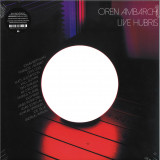
Black Truffle is pleased to announce Live Hubris, documenting the hypnotic and electrifying live performance of Oren Ambarchi’s 2016 LP Hubris by a fifteen-strong band at London’s Café Oto. Over three days in May 2019, Oto toasted Oren Ambarchi at 50/Black Truffle at 10 with Ambarchi and a large group of close friends and collaborators in a series of performances that interspersed existing projects with new collective endeavours, culminating with this: fourteen members of the extended Black Truffle family together on stage, joined by one special virtual guest, to translate the intricately studio-constructed layers of Hubris into a muscular live band workout.
Operating with only the bare minimum of pre-gig preparation after the planned afternoon rehearsal had to be wrapped up prematurely due to noise complaints, the gargantuan group lurches into motion with a 21-minute rendition of ‘Hubris Part 1’, powered by the pulsating electronics of Konrad Sprenger (the ‘ringmaster’ at the ensemble’s core) and no less than seven electric guitars spinning a web of intricately interlocking palm-muted polyrhythms. The layers of closely related but metrically distinct lines create ripples of shifting accents, flickering changes in emphasis that ricochet along the endless central pulse. Gradually building in density, this motorik continuum becomes the backdrop for the haunting tones of Eiko Ishibashi’s processed flute and an extended feature from long-distance guest Jim O’Rourke on guitar synth.
After the brief interlude of the second part, where Albert Marcoeur-esque guitar arpeggios accompany a halting attempt at phone conversation, the full ensemble gears up for the epic side-long rendition of ‘Hubris Part 3’. Now joined by the astonishing triple drum line-up of Joe Talia, Will Guthrie and Andreas Werliin, the layered pulse of the opening piece becomes a burning funk-fusion groove. Beginning on a medium simmer, the ensemble initially stick to its pulsating one-note mantra, over which Ambarchi unfurls a beautiful example of his signature shimmering Leslie-toned guitar harmonics, eventually joined by Ishibashi’s flute and some brooding, distorted dissonance from Julia Reidy’s guitar. Building steadily for the first nine minutes, the heat then rises dramatically with a first, gloriously loose chord change: with the all drummers now rolling and tumbling like a twice-cloned Jack DeJohnette circa 1970, Mats Gustafsson enters on baritone, his tortured roars and shrieks driving the band to peaks of insane intensity. Finally, the exhausted ensemble drops out, leaving only the jagged, skittering fuzz of Ambarchi’s guitar, brought to an abrupt conclusion at the command of crys cole. Arriving on hot pink vinyl with artwork by Lasse Marhaug and an extensive selection of live photos by Ivan Weiss and Fabio Lugaro, Live Hubris brings this ambitious and outrageous evening of music to the safety of the home stereo.
- A1: Kumi Nakamura - Kimagure
- A2: Miyuki Maki - Indo No Michibata
- A3: Haruyoshi Yamashina - Osake To Joke
- A4: Sumiko Yamagata - Natsu No Hikari Ni
- A5: Hatsumi Shibata - Party Is Over
- B1: Makoto Iwabuchi - Moonlight Flight
- B2: Hiroshi Sato - Saigo No Tejina
- B3: Arakawa Band - Paradise's Dream
- B4: New Generation Company - I Wander All Alone (Part Iii)
- C1: Kiyohiko Ozaki - Ojosan Oteyawarakani
- C2: Kengo Kurozumi - Juggler
- C3: Ken Nishizaki - Koi No Paradigm
- C4: Jadoes - Simply Another Love
- D1: Midori Hara - Aamar Jabar
- D2: Hitomi 'Penny' Tohyama - Tuxedo Connection
- D3: Mizuki Koyama - Oh! Daddy
- D4: Haruo Chikada & Vibra-Tones - Sofa Bed Blues
- D5: Mitsuko Horie - Chigasaki Memory
A stylish selection of city pop, funk and modern soul from Japanese label Nippon Columbia, selected by DJ Notoya and featuring cult classics and rarities by Hiroshi Sato, Hatsumi Shibata, Hitomi 'Penny' Tohyama & many more.
Annotated by Notoya with journalist Nick Luscombe and artwork by Optigram.
Newly remastered audio.
The selection on ‘Tokyo Glow’ starts with 'Kimugare' a relaxed mid-tempo track by Kumi Nakamura, actually a famous actress who only recorded one album in 1980 for Columbia.
The set continues and flows effortlessly with the sunshine grooves of Miyuki Maki, Hatsumi Shibata and cult keyboard player Hiroshi Sato before the pace starts going faster and funkier with New Generation Company, Kengo Kurozumi - with his superb boogie, 'Juggler'
- and one of the queens of the genre, Hitomi 'Penny' Tohyama with 'Tuxedo Connection'.
Another fine example on the set is the mid-tempo groove of "I Wander All Alone Part III" by New Generation Company, an aggregate group of some of the best Japanese session musicians led by arranger Katz Hoshi and including Hiroyuki Namba (key), Kazuo Shiina (gtr) and Yutaka Uehara (ds) who all played with Tatsuro Yamashita among many others.
There are many other excellent examples in 'Tokyo Glow', showcasing the diversity and specificity of Japanese City Pop during the late 70s and 80s.
Nippon Columbia opened their much-guarded vaults to curator DJ Natoya. Tracks were remastered in Tokyo and the result, ‘Tokyo Glow’, is a unique insight into a most creative period in Japanese music.
Yellow Vinyl
From his early years on the music scene in Edinburgh, Theo Kottis has built a buzz as one of the UK's most exciting DJs. He is also the curator of his own unique sound, crafted on his Beautiful Strangers series, and gained clout from star DJs the world over.
The Mirror EP is fronted by a euphoric party track inspired by Kottis' lockdown yearning for "the kind of party where you don't stop dancing" - and crafted perfectly for this purpose. The raw energy of breaks and rave piano stabs is permeated by Busola's pep talk, getting the listener and the dancer geared up for the summer of release after a year of restrictions.
On the B Side, "Onda" takes its name from the Spanish word for waves. This is a blissed out relaxation after the intensity of the A-Side, an ode to an Ibiza poolside which still maintains a strong groove. Playful
pads pop out under sublime strings for an instantly nostalgic vibe.
Theo Kottis words on the release "Earlier this year during peak winter lockdown, craving the kind of party where you don't stop dancing, I took matters into my own hands, producing this new single "The Mirror", featuring Busola - who is the life of the party - to bring euphoric sounds to my living room and now to yours.
The thought of the impending "Summer of Love" got me through lockdown and I wanted to create something energetic and fun to mirror that excitement. I'd seen Little Gay Brother, the LGBTQ+ party and community perform at many festivals and knew their vibe would be an ideal source for this raw energy - I was introduced to Busola who provided the ultimate summer of self-love pep talk, something we all needed to get back out there post lockdown!
The second track is a nod to my summer escape to Ibiza where I played Pikes poolside and spent time in the sea and watching waves - "ondas" in Spanish - to reset and relax.
Unforgotten is a British crime drama television series. The program follows a team of London detectives, led by DCI Cassie Stuart (Nicola Walker) and DI Sunny Khan (Sanjeev Bhaskar), as they solve cold cases of disappearance and murder. Each season deals with a new case, introducing seemingly unconnected characters who are gradually revealed to have some relationship with the victim. Seasons 1 to 4 were broadcasted between 2015 and 2021. A fifth series was announced, scheduled for release in 2022.
Unforgotten has received critical acclaim, with Tom Courtenay winning the 2016 BAFTA TV Award for Best Supporting Actor for the first series and Mark Bonnar winning the 2017 BAFTA Scotland for Best Actor in Television for the second series.
Michael Price is one of the UK’s most sought after composers. His debut album Entanglement (2015) was critically acclaimed by furthermore Rolling Stone, Uncut and Clash. His work for film and television has been widely recognized in general, winning an EMMY award in 2014, a BAFTA nomination and 2 further EMMY nominations for his score with David Arnold for the critically acclaimed BBC series Sherlock.
This is a limited edition contains of 1000 individually numbered copies on crystal clear vinyl. The LP package contains liner notes by Andrew Collins and Michael Price.
New solo record from Philip Frobos of Omni (Sub Pop, Trouble in Mind), this record is released in conjunction with a novel by Philip of the same name.
Philip Frobos' ‘Vague Enough to Satisfy’ will be released on 180g black vinyl - Only 500 Pressed Worldwide October 1st 2021. The novel will be published by Hex Enduction Books in Seattle on the same day.
‘Vague Enough to Satisfy’, is Philip Frobos’ debut solo album, it is also the original soundtrack to his debut novel of the same title. This lounge-inspired punk album acts as the musical bedrock for the story of a young man who revels in the day to day details (both romantic and mundane) of his experiences in Leipzig and Atlanta. The tone of the record reflects the tides of the protagonist’s confidence and self-doubt throughout the novel.
‘Vague Enough to Satisfy’ rushes straight to the point with it's bossa nova beat and seductive lo-fi musings. ‘Vague Theme’ opens the album with a groove reminiscent of ‘Whammy’ era B-52s while the vocals tell the story of a young romantic confused of his place within a relationship and the city around him.
‘Vacant Street’ proceeds with a hooky bassline, the revolving, cryptic sort that Frobos is known for as a member of Atlanta post-punks Omni. ‘No Packages Today’ is similarly sprightly and circuitous, sounding like the Au Pairs refining an obsession with Bowie’s ‘Lodger’. “I’m afraid that you need more than I can offer” opines Frobos bedecked by shuffling beats and burgeoning waves of saxophone. ‘Never Noticed’ and ‘Through with Buzz’ introduce notes of tension and intrigue to the frisson of the story, “you’re stuck in the same day” confesses Frobos in the former.
Instrumental tracks help to prolong an uneasy feeling of ambiguity too, with compositions like ‘Pool Disturbance’ and ‘Inflatable Flamingo’ taking their musical cue from Henry Mancini. Curious flourishes, a metronomic headiness and shuddering xylophones bring to life the intensely vivid imagery and cynical humor that suffuse the novel.
‘Pathetic’ collides the casual, magnetism of Serge Gainsbourg with tight Cars-style vocals and choruses. Meanwhile ‘Singer Not The Song’ and ‘Saturn Return’ showcase a more sedate approach, languid and arch. ‘Vague Enough to Satisfy’ is a trip, plunging you into a curious world populated by the unexpected.
Son d’Étroit boss Boran Ece reveals label’s second release ‘Reprise’, backed by a remix from Mihai Popoviciu.
Following the label’s first release, founder Boran Ece returns to Son d’Étroit with the imprint’s second offering this December. First drop ‘Relance’ set the tone for the label, featuring in Spotify’s Lo-Fi House playlist, picking up support from John Digweed, Alexi Delano and Guy J, and selling out on vinyl within a few weeks.
Hot on its heels, the Basel-based DJ and producer now steps up to deliver his latest single, ‘Reprise’ - accompanied by a remix from Romanian favourite, Mihai Popoviciu.
Ece’s original showcases a vibrant medley of dynamic vocals amongst refined melodies, punchy kicks and subtle dubby chords throughout to offer a hypnotic and heady house cut. Next, Mihai Popoviciu’s slick take on the track introduces a skipping, snaking groove guided by swinging percussion, resonant stabs and tripped out vocal snippets.
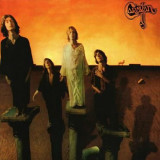
For their first album, Caravan was surprisingly strong. While steeped in the same British psychedelia that informed bands such as Love Children, Pink Floyd, and Tomorrow, Caravan relates a freedom of spirit and mischief along the lines of Giles, Giles & Fripp or Gong. The band's roots can be traced to a British blue-eyed soul combo called the Wilde Flowers. Among the luminaries to have passed through this Caravan precursor were Robert Wyatt, Kevin Ayers, and Hugh Hopper and Brian Hopper (pre-Soft Machine, naturally). The Caravan album never sold in serious numbers, and for much of 1968 and early 1969, the members were barely able to survive -- at one point they were literally living in tents. Suddenly, Caravan was an up-and-coming success on the college concert circuit, even making an appearance on British television's Top of the Pops. With national exposure and a growing audience, the group was at a make-or-break moment in their history. They rose to the occasion with their second Decca LP, In the Land of Grey and Pink, which showed off a keen melodic sense, a subtly droll wit, and a seductively smooth mix of hard rock, folk, classical, and jazz, intermingled with elements of Tolkien-esque fantasy.
Fools Meeting is an album by Carol Grimes with the British blues/progressive rock band Delivery, founded in the late 1968. The band was one of the wellsprings of the progressive rock Canterbury scene.
"Delivery was formed during the British blues boom of the late '60s. However, its sound is jazzier and more progressive than most of the music that emanated from that era. Rhythm & blues serves as a springboard for forward-looking tracks like "Blind to Your Light" and "Harry Lucky." Singer Carol Grimes is frequently compared to Janis Joplin. While Grimes has a powerful voice, she does not reach the level of histrionics that were a showcase of Joplin's. It should come as no surprise that Delivery members joined Canterbury related bands upon Delivery's demise. The reissue CD of Fools Meeting features several live bonus tracks, as well as a post-breakup demo recording featuring Caravan bassist Richard Sinclair. That demo session, one of the highlights of the collection, spurred the musicians to form Hatfield and the North. Fools Meeting is an essential part of any Canterbury collection, and should also appeal to progressive jazz fans." (Jim Powers / All Music Guide)
Editions Mego is proud to welcome Powell to its roster with a bizarre and strangely emotive new LP of synthetic computer works entitled Piano Music 1-7.
Via his own Diagonal Records imprint, his work on XL Recordings and, most recently, the opening of audio/film platform A Folder afolder.studio, Powell has firm footing in the contemporary electronic landscape. During a wry and obstinate musical life he has twisted myriad synthetic forms into shapes that explore and expand upon the districts of post-punk, techno, noise + computer music, and in the the last year alone he has released four albums of hi-def abstractions, each inspired by a formalisation of music proposed by Iannis Xenakis.
As an extension of this intense period of work/research/play with stochastic functions using probabilities to compose music, various processes emerged that Powell then began to apply to more traditional musical events. Where ordinarily in his work the probabilities and relationships are used to define parameters such as wave-shape, folding, FM, filter modes etc., he now began to use them to create musical formations and visual scores that could be played back using any software/MIDI instrument one of these can be seen on the rear cover of the LP release. While mapping out this cartography of relations, he used a basic Grand Steinway sampler as a placeholder instrument; the longer the process went on, though, the more he began to embrace the acoustic properties of the synthetic piano and make it the bedrock for this new constellation of work.
Piano Music 1-7, subtitled 'Music for Synthetic Piano and Assorted Electronics', consists of seven different synthetic islands strung together into a single composition. All were composed using the aforementioned processes that allowed Powell to play a piano, even if he never learned to do so with his hands. After all, 'In writing electronic music,' Robin Mackay once wrote, 'you also have to direct the invention of new tools.'
At times the piano skips gleefully over shadowing synthesis, whilst at others the synthetic sheets swarm and envelope the keys. The interplay between the two create a fantastical alternate reality, a cosmic machine in which time is eroded, shrunk and expanded, like a wax upon which operations and relations are inscribed or engraved. Many of the pieces express a playfulness or optimism verging on vitalism, as bundles of piano notes dance and interpolate with a never-repeating range of electronic gestures. The feel is of a brightly coloured flower-bed in various stage of bloom. This interplay of the artifical acoustic and the electronic builds on the pioneering processes developed by David Behrman in works such as Leapday Night, and Piano Music 1-7 could also be posited as a modern take on Conlon Nancarrow's investigations for player piano. Similarly, the razor-sharp sonic properties and unfolding of non-human events recall the computer works of Xenakis and the surgical precision of Mego mainstay Florian Hecker.
Recorded in late 2020, these new Powell works propose not just a bold and bright vision of electronic music but serve also as a map with which, for 35 minutes at least, we can navigate our way out of the current milieu. As the artist himself remarks in the sleeve-notes, '. . . What emerged from this fog or soup for me were ideas and processes that felt affirmative and life giving — sensations I had always hoped to convey in my music. Perhaps the optimism or positivity I felt at these musical events unfolding, these clusters and knots tumbling in different directions across time, can also be felt by you.'
Westbound 1976 Funk classic - Featuring an all-star Parliament/Funkadelic line-up - Limited 180g TANGERINE COLOR Vinyl Edition (400 copies) - Comes in Deluxe Gatefold Jacket with Obi Strip - Comes with liner notes // A co-founder of the P-Funk movement, Clarence Eugene "Fuzzy" Haskins was born in West Virginia in 1941 and started as a singer in the doo-wop vocal group The Parliaments, led by George Clinton in the late 1950s. He was a founding member of the groundbreaking and influential 1970s funk bands PARLIAMENT-FUNKADELIC. Fuzzy Haskins toured and appeared on P-Funk albums as a singer, and occasionally as a guitarist, throughout the 1970s. He is a member of the Rock and Roll Hall of Fame, inducted in 1997. Despite the success of Mothership Connection, Fuzzy Haskins was growing frustrated that his songs were no longer being featured on albums by Funkadelic and Parliament. He also watched as Bootsy Collins, a relative newcomer to the family, embarked upon a solo career. This added to Haskins' frustration and at the height of P-Funk's popularity, Fuzzy left the ensemble to pursue a solo career. Fuzzy Haskins released his first solo album, A WHOLE NOTHER THANG, in 1976. The album features funk `all-stars' from the likes of Bernie Worrell, Donald Austin and Bootsy Collins. Haskins wrote eight of the nine songs and served as producer, singer, songwriter, guitarist and even drummer. The result was an album that oozed quality. With his brand of earthy and heavyweight funk, Fuzzy Haskins' solo work fits right in with many of the other great P-Funk side projects. Also featured on the album is the track "Cookie Jar", which was later recorded by Prince. Despite the quality of music, the album didn't sell in vast quantities and didn't find the audience it deserved. `A Whole Nother Thang' is a true gem to funk fans, mint vinyl copies are hard to find and pricey these days. If you are a Funkateer_this one's for you. Originally released on Westbound Records in 1976, now back available as a limited deluxe 180g TANGERINE COLORED vinyl edition packaged in a gatefold jacket featuring the original artwork and liner notes.
GENOCIDE PACT return with their eponymous new album. An overdose of gut-wrenching Death Metal, Genocide Pact is heavy, engrossing, and undoubtedly brutal. "This album reflects on the feeling of watching the world crumble while dealing with personal tragedy," says guitarist/vocalist Tim Mullaney. True to his word - every track on Genocide Pact is a sonic assault brimming with palpable malaise. From the guttural screams in the album's opener "Led to Extinction", to the driving double bass that carries "Perverse Dominion", and a head rattling low end on "Deprive Degrade" - Genocide Pact is wholly negative Death Metal. The fury behind Genocide Pact captures the band's collective frustrations and personal journeys through these turbulent times. "You turn on the news and see mass shootings, a global pandemic, endless war, and corporations and politicians trying to sell you bullshit. You pick up your phone and another friend or family member has died. On top of that, you’re broke as fuck and work endlessly for a boss that doesn’t even know your name. You find yourself paranoid, pissed off, and embracing nihilism," Tim Mullaney says. GENOCIDE PACT have learned to embrace the negativity, churning out one of 2021's ugliest and unforgiving records.
- Melody
- Ballade De Melody Nelson Valse De Melody
- Ah! Melody
- L’hotel Particulier
- En Melody
- Cargo Culte
- Je Suis Venu Te Dire Que Je M’en Vais
- Vu De L’extérieur
- Panpan Cucul
- Par Hasard Et Pas Rasé
- Des Vents Des Pets Des Poums
- Titicaca
- Pamela Popo
- La Poupée Qui Fait
- L’hippopodame
- Sensuelle Et Sans Suite
- Nazi Rock
- Tata Teutone
- J’entends Des Voix Off
- Eva • Smoke Gets In Your Eyes
- Zig Zig Avec Toi
- Est-Ce Est-Ce Si Bon ?
- Yellow Star
- Rock Around The Bunker
- S.s. In Uruguay
- L’homme À Tête De Chou
- Chez Max Coiffeur Pour Hommes
- Marilou Reggae
- Transit À Marilou
- Flash-Forward
- Aéroplanes
- Premiers Symptômes
- Ma Lou Marilou
- Variations Sur Marilou
- Meurtre À L’extincteur
- Marilou Sous La Neige
- Lunatic Asylum
- Javanaise Remake
- Aux Armes Et Cætera
- Les Locataires
- Des Laids Des Laids
- Brigade Des Stups
- Vieille Canaille « You Rascal You »
- Lola Rastaquouère
- Relax Baby Be Cool
- Daisy Temple
- Eau Et Gaz À Tous Les Étages
- Pas Long Feu
- Marilou Reggae Dub
- Overseas Telegram
- Ecce Homo
- Mickey Maousse
- Juif Et Dieu
- Shush Shush Charlotte
- Toi Mourir
- La Nostalgie Camarade
- Bana Basadi Balalo
- Evguénie Sokolov
- Negusa Nagast
- Strike
- Bad News From The Stars
- Love On The Beat
- Sorry Angel
- Hmm Hmm Hmm
- Kiss Me Hardy
- No Comment
- I’m The Boy
- Harley David Son Of A Bitch
- Lemon Incest
- You’re Under Arrest
- Five Easy Pisseuses
- Baille Baille Samantha
- Suck Baby Suck
- Gloomy Sunday
- Aux Enfants De La Chance
- Shotgun
- Glass Securit
- Dispatch Box
- Mon Légionnaire
- La Decadanse Avec Jane Birkin
- Sex Shop
- Comme Un Boomerang
- L’ami Caouette
- Le Cadavre Exquis
- My Lady Heroïne
- Trois Millions De Joconde
- Goodbye Emmanuelle Avec Jane Birkin
- Sea Sex And Sun Version Longue
- Mister Iceberg
- Je Pense Queue
- Dieu Fumeur De Havanes Avec Catherine Deneuve
- La Fautive
- Je Vous Salue Marie
Here is the second volume of Serge Gainsbourg's complete vinyl collection which traces the artist's career from 1971 to 1987. In order to provide the best sound quality, the original mixed tapes were entrusted to the sound engineer Miles Showell ( responsible for the reissues of the Rolling Stones, Queen, etc.) who did the mastering at Abbey Road studio with Half Speed Master technology. 180 gram vinyl box.Reviews and Ads –, London Macadam, Mojo, Sunday Times, R2
‘Paint It Blue’ is dedicated to the man who, for many still today embodies
the central figure at the genre’s source: Julian Edwin ‘Cannonball’
Adderley (1928 - 1975). Maybe he didn’t invent Funk. Together with his
co-musicians in his 60s quintet, Cannonball’s alto sax style, his attitude,
humour great musicality, and his love for his audience allowed him to
become a synonym for funk.
Nils Landgren, born in 1956, grew up between the music of his father, a
Jazz cornet-player, and the music of his grandfather, a pastor on the
island Gotland. He first heard Cannonball Adderley on ‘Kind Of Blue’. In
this Miles Davis Sextet of the late 1950s, they were all together: “Miles,
the master of beauty. Coltrane, the master of sound. And Cannonball
Adderley, the master of funk,” Nils Landgren writes in the liner notes to
‘Paint It Blue’. From that point on, he procured everything of
Cannonball’s that he could lay his hands on. “Without the soul of
Cannonball it would have been impossible to form my group Funk Unit
many years later,” he writes.
Landgren edited Cannonball’s live concert announcements into his own
arrangements, so that the time jump between the original and the
nouveau arrangement appears non-existent. An effective device that
literally brings this revered musician into the fold of Nils Landgren’s Funk
Unit.
Whoever speaks of Cannonball Adderley, must also speak equally of his
brother Nat Adderley. It was an obvious thought to invite the most
important brothers in Jazz after the Adderleys to guest on ‘Paint It Blue’;
with the high energy Funk-Jazzrock of the late 70s, the Brecker brothers
have proven worthy heirs to the Adderleys. Both of them solo on
Landgren’s track ‘You Dig’.
The equally noble and forcible groove is delivered by the sideman to
countless Soul greats, Bernard Purdie. Bernard’s own stylistically related
production with the Brecker Brothers, Nils Landgren, amongst others is
now strongly in the public consciousness on ‘Soul To Jazz’. Much like
Cannonball Adderley, Airto Moreira owes important impulses to his time
with Miles Davis.
‘Paint It Blue’ is possibly Nils Landgren’s most lavish record to date and
with some certainty also his best. Landgren’s playing is cool and smooth,
with warmth, temperament and thought. Here his sound combines
organically with everything he surrounds himself with. The album sounds
as if the recordings for it were a pure joy for all participants. Nils
Landgren has the prerequisite for serious fun, the gift of intelligent
serenity.