Househead London launch their 2nd 12" release - a limited-edition Chicago Vs London sampler featuring Glenn Underground and Emmaculate Remixes.
Following a string of critically acclaimed events featuring Chi-Town royalty, Househead London further cement their relationship with Chicago on this vinyl release which features two of the city’s esteemed producers - Glenn Underground & Emmaculate - remixing two sterling new tracks from two of the UK’s most exciting producers - Prefix One and Wez Whynt.
Opening the EP is an artist who needs very little introduction, Glenn Underground. A leading international producer & DJ who seems to effortlessly slide between Deep, Soulful, Disco, Jazz and beyond, Glenn boasts an exceptional discography that very few could compete with. His Cosmic Disco Journey Mix here weaves its lo slung groove in a funky off-kilter disco style with piano ripples as Nambi’s voice shimmers on top. Nambi’s heartfelt soars across Glenn’s Cosmic Journey remix unfurling beautiful piano and taut Chi-town beats. Deep and vocal, it’s got that raw soul power that both Glenn and Chicago are known for.
Known for his exquisitely high attention to detail and quality, Emmaculate is one of the go-to producers and sound engineers in Chicago. Working closely with Terry Hunter on a multitude of projects and a shining light across the global soulful house scene, he’s regularly featured across impressive labels such as Dopewax, Yorubasoul, United Music, Soulstice Music and S&S Records. His lush, tough-edged Remix of ‘Feelin’, rolls on with melodic piano hooks to unlock the groove and boosted with extra keys and vocal refrains before the full vocal unfolds. Solid and deep, “Feelin’ is pure joy for the dance floor.
out of Stock
Last delivered 4 months ago available to reorder, subject to availability
Slip is Paul Abbott’s response to his 3 day residency at OTO in 2023. It’s a continued exploration of the acoustic-digital hybrid drum setup Abbott has been developing for some time, which involves drum kit and synthetic sounds combined closely—through an entanglement of limbs and cables—in an intimate but strange relationship with each other.
Paul Abbott hasn’t had any formal musical training, but has a long history of making music, having collaborated for years with Seymour Wright, Pat Thomas, Michael Speers, Cara Tolmie, Anne Gillis and many others. Eventually, led by a profound suspicion of what is fixed or limited, Abbott began finding other ways to organise sound - or what he calls ‘material’:
“I wanted a way to 'persuade' or guide the possibility of something happening - my activity or the events of an algorithmic composition - for example, but without certainty or formalism. It felt to me, during playing, that certain ideas had a particular sort of shape, but more than the form of a line. I began to write alongside (before/after) playing the drums, and ‘characters’ began to enter the scene as a more wobbly, and therefore appropriate option to notation. Working with these characters allowed me to simultaneously approach body, imagination, language and music: without dividing things up or separating these aspects from each other. It allowed me to leave things messy and entangled, whilst trying to deal with form and specificity: wanting to have some things feel or respond differently to other things at other times.”
In approaching his residency, Abbott developed a fixed cast of characters - crystal, lleaf, reiy.F, reiy.C, strike, nee, qosel, sphu and aahn. They each communicate using different kinds of movement and drum kit/s, and Abbott choreographed them as ‘dances’ based on different feelings, or outlines of behaviours suggestive of ways of moving (body, drums, sounds). He then arranged these characters into ‘compositions’: one for each performance day, with each composition featuring multi-layered activity - options for behaviours, ways to move around the rooms, play drums, develop synthetic sounds, change the lights or re-distribute the sound in the space.
After the performances, Abbott took home 9 hours of recordings split into up to 28 multitrack channels for each day, and re-organised his cast once more into a performance for 2LP, CD and digital. It’s an enormous amount of work - but Abbott is activated by the process. For him, the pleasure of unstable edges, possibilities, slippages, is the vital attraction. Like all living organisms, Abbott’s characters have malleability and responsivity. They stimulate a bundle of possible behaviours, a tendency to act a certain way, a temperament, a boundary of respective limits or affordances.
It’s an affective way of working, inclusive of Roscoe Mitchell, Sun Ra, Nathaniel Mackey and Milford Graves. In ‘Pulseology’(2022), Milford Graves reminds us, ‘Breath varies, so cardiac rhythm never has that (metronomic) tempo. It’s always changing. All the alignments of the heart are determined based on the needs of the cells, specifically tissues and organs. The heart knows if it needs to speed up.’ In Slip, to slip, in a heartbeat, is to descend not into the grid of the even metre accorded to the heartbeat, but into a play of mutability and modality. To change is the condition of the heart.
If people were unaware of the significance of Joan Baez to western culture, her portrayal in the Bob Dylan biopic A Complete Unknown (played by Monica Barbaro) underlines how central she was to the popularization of folk music in the early 1960s. And it is her decade- previous relationship with Dylan that hovers joyously over Diamonds & Rust. The title track is about a thinly disguised ex-lover who calls up out of the blue; it remains one of her most loved songs in a 65- year- career.
There's a playful cover of "Simple Twist Of Fate" from Dylan's then just released Blood On The Tracks, complete with impersonation in a later verse; and "Winds Of The Old Days", written in response to Dylan touring again after a lengthy hiatus. Diamonds & Rust is a perfect, sunshine- drenched album of west- coast folk- tinged rock, full of star session players. It could almost have been a signal to all the recent comers on her patch many of them friends and colleagues, Joni Mitchell, Carole King, Maria Muldaur that Baez was here first and was sweetly reasserting her authority. Just listen to her mastery on "Children & All That Jazz", her cover of Stevie Wonder's "Never Thought You'd Leave In Summer" and the poignant closing medley of "I Dream Of Jeannie/Danny Boy".
Brand new music from the space cavern for 2025. "Intersatelital" is the new exploration in sound from Vinnum Sabbathi, encompassing the relationship between us humans and the machines we have created to aid in our quest towards the expansion and conquest of space beyond our home planet, taking special focus on a pivotal point in time for Mexico. Back in 1985, two satellites (Morelos I & II) were put in orbit under the NASA missions STS-51-G and STS-61-B. These satellites became crucial for advancing communications in Mexican territory and were controlled and monitored by Mexican engineers in the heart of Mexico City. Mission STS-61-B also featured the first-ever Mexican astronaut, Dr Rodolfo Neri, who set several experiments in orbit as well as taking photo documentation of the country from space, and, with all of this, Mexico entered a new era of technology and communications. A sonic testament of the intricate human-machine comradeship from the last century.
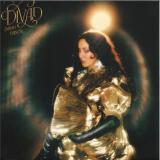
After two self-produced EPs, Sarah Maison (2018) and Soleils (2021), and the EP Karma (2021) with Anoraak, French singer, musician, author, composer, arranger, and producer Sarah Maison finally unveils her first album, DIVAD, the fruit of four years of creation. Sarah opens up, tackling personal themes through an exploration of the soul and existential questions. She also ventures into more autobiographical subjects such as melancholy, derealization, the search for meaning, and the breakdown of romantic or friendly relationships: often through coded language but always with a touch of humor. DIVAD is a manifesto of artistic independence, boldly and uncompromisingly fusing French chanson, Egyptian music, 70s disco, synth-pop, and English pop. Her influences draw on musical history while reinventing it, bringing together Alan Vega and Martin Rev, the 70s Egyptian band Al Massrieen, the king of Iranian psychedelia Kourosh Yaghmei, as well as Brigitte Fontaine and Françoise Hardy. Each track is a cinematic tableau, where the artist"s theatrical voice, both imperious and vulnerable, carries an intimate narrative with universal overtones. Co-produced with Steve Surmely (sound engineer) and Timotée Pédron (sound designer), the album blurs the lines and asserts an artist who defies categorization. Throughout these twelve tracks, we witnessa rebirth, with Sarah fully embracing her character as a dark, grandiose, and tragicomic diva straight out of a Dario Argentofilm, a sort of tribute to her Italian muses. Danceable, elegant, and elusive, DIVAD is a flamboyant work that reflects Sarah Maison"s image: free, sunny, and daring.
out of Stock
Last delivered 10 months ago available to reorder, subject to availability
Ne$$ and Baby J’s 3rd album comes after a long collaborative working relationship from previous group A-Alikes. Ne$$ has recently done a series of UK shows in London, Leicester and Birmingham as well as an upcoming feature on 05.21 YouTube channel and interviews on Itch FM. The tracks have also been supported on Soho radio and by Shotry Blitz. The album represents an original voice in hip-hop, addressing working-class proletariat stories of street life, and the effects of capitalism on black and poor people. Ne$$ has been a successful part of the US hip-hop seen over the past two decades, working with the likes of Mos Def, Dead Prez and Bilal. Baby J is an established UK, hip-hop producer whose production credits include Amy Winehouse, Skinnyman, Dead Prez, Plan B and Mark Ronson. The album is sonically broken and dark with a raw purist Hip Hop sound.
Old-time and traditional music stay exciting for their contrasts. Exacting instrumentation honed through mentorships and late-night jams at fiddler's conventions tangles with a community-sourced inventiveness that influences variants and new sounds. Joseph Decosimo is a master of this genre for this very reason, blending deep technique with an openness and curiosity that keep his music crackling with life. A "marvelous fiddler" (No Depression) and banjo player who braids "exultation and veneration" (INDY Week) into his music, on his third solo album Fiery Gizzard Decosimo gathers a close-knit ensemble of friends from his musical career to infuse his interpretations of fiddle and banjo pieces with a contagious communal joy. As an artist working with traditional music from the South and Appalachia, Decosimo chooses songs based not only on historical significance and lineage but also his own sensory approach. For Fiery Gizzard, his ear was tuned to otherworldly tones and mystery, sourcing from field recordings such as Virginia fiddler Luther Davis' hypnotic version of "Shady Grove" while amping up the music's psychedelic potential. On the middle Tennessee banjo composition "Flowery Girls," a VHS of bluesman Abner Jay inspired Decosimo to rig up a pickup inside a fretless banjo and play it thr ough a tube amp to capture some of Jay's edge and funkiness. But to round out the sound and keep it kinetic meant galvanizing a genre-eschewing crew to jam out - and not in a "spaced-out drooly" kind of way, he laughs, but as a sort of "responsive conversation." Decosimo has always been a community-minded artist. He began playing as a seventh graderin Tennessee, fostering relationships with older players at jams and in homes, a learning mode natural to his inquisitive nature and desire for musical connection. A folklorist by intuition, he later became one by profession, studying with old-time legend Clyde Davenport, teaching in East Tennessee State University's renowned bluegrass program, and receiving his PhD at the University of North Carolina with a dissertation titled "Catching the `Wild Note': Listening, Learning, and Connoisseurship in Old-Time Music." In North Carolina, Decosimo kicked about in the verdant environment of Durham and Chapel Hill's folk and indie scenes, collaborating with artists including Alice Gerrard, Hiss Golden Messenger, and Jake Xerxes Fussell. This community has influenced his own music, including his "sublime and strangely heartening" (Bandcamp Daily) 2022 release While You Were Slumbering and Beehive Cathedral, Decosimo's 2024 "Appalachian mountain music treasury" (New Commute) trio album with Luke Richardson and Cleek Schrey for Dear Life Records. Continuing on this path, Fiery Gizzard is home base for a loose outfit of mostly Tarheel-based musicians from within and beyond traditional music. Inspired by a tour with fiddler Stephanie Coleman (Nora Brown), guitarist Jay Hammond, and synth builder and multi-instrumentalist Matthew O'Connell, Decosimo assembled studiomates based on close friendships and comfort. Coleman, O'Connell, and Hammond contribute to Fiery Gizzard, along with bassist and producer Andy Stack (Helado Negro, Wye Oak), horn player Kelly Pratt (Beirut, David Byrne), Mipso and Fust's Libby Rodenbough, Joseph O'Connell (Elephant Micah), and trad/experimental artist Cleek Schrey. Decosimo's fiddle and banjo work is virtuosic, intricate and simple simultaneously, a testament to his many years of study. On some tracks, his playing or lovely, plain-hearted singing is the centerpiece, such as on his interpretations of Texan street preacher Washington Phillips' 1929 recording "I Had a Good Father and Mother" or the Eastern Kentucky fiddle barn-burner "Glory in the Meetinghouse," famously played by Luther Strong for Alan Lomax. But there's also a trusting open-door policy, like where Southern Appalachian tune "Ida Red" relaxes into Coleman's sweet, confident fiddling and Hammond's loping guitar. As a bandleader, Decosimo's confidence and enthusiasm for the music reveal the heart of traditional music and how it can come to life through community. Fiery Gizzard is Joseph Decosimo as a powerful champion of traditional music - a sponge who soaks up as much as he squeezes out, a responsive artist who makes his genre accessible, and a magnet who can bring musicians of all sorts into his orbit with his same passion.
From the maniacal opening notes and carnival barker howl that launch the album, The Ugly Organ wasted no time searing itself into a listener's ears and quickly established Cursive as a musical force with which to be reckoned. A selfaware examination of artistic constraints (or lack thereof), relationships, sex, and the intersection of all three, The Ugly Organ wowed critics and audiences alike with its cerebral, cathartic blend of songs. Fiercely intelligent and cohesive - the liner notes laid the songs out like a play, complete with stage directions - across its diverse sonic landscape, the album landed Cursive on the Sunday Arts & Leisure section cover of The New York Times (which also called it "a marvelous collection of riddles and left turns, conceived as a single piece of musical theater") and earned accolades from Rolling Stone ("a brilliant leap forward"), Entertainment Weekly, Billboard, Alternative Press, MAGNET ("The best punk record you'll hear all year"), Esquire, and SPIN, among many others, as well as a place on numerous year-end best lists. The Ugly Organ feels as vibrant and vital today as it did upon release more than 20 years ago. A landmark album, it not only catapulted Cursive from the simmering indie underground to the forefront of a genre, but also served to inspire a host of young bands in its wake.
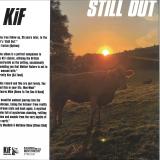
Recorded in a remote cabin on the Devon coast, STILL OUT is an album-length collaboration between musician-filmmakers – and childhood friends – Will Cookson and Tom Haverly. A reflection on friendship, landscape and the passing of time, it inspired a road trip from North Yorkshire to North Devon they took together in the summer of 2024, and forms the soundtrack to a film of the same name which had its premiere screening as part of Stroud Film Festival in March 2025.
Like the film, STILL OUT is also an oblique homage to The KLF’s iconic 1990 album Chill Out, which the Gloucestershire-based pair revisited after it turned up unexpectedly a few years back in Tom’s dad’s record collection. Inspired to create their own recording using a similarly free-spirited process, Will and Tom relocated to the Devon coast in late summer 2023, splicing together a 40-minute mix from their personal archive of recordings and found sounds in a remote cabin with no electricity or mobile reception.
"It came together using cut-and-paste techniques, with ongoing shifts and tweaks,” says Will. “The final result was an audio collage that felt like something legendary hip hop producers The Bomb Squad might make - if ambient music was the only material in their sample library."
Using ‘ambient’ as a starting-point rather than an end in itself, they took inspiration from across the musical spectrum – classic-period Brian Eno, Philip Glass, Bill Evans, plus outliers such as 80s singer-songwriter Virginia Astley and the late DJ-producer Andrew Weatherall. The connections, though, are anything but obvious as the audio shifts seamlessly from field recordings and spoken-word interludes to mood pieces and snatches of vintage pop.
Edited and assembled using freely available open source programs, the source material was often radically altered using tools such as “PaulStretch”, a digital sound-morphing algorithm that allows users to stretch audio files to extreme lengths.
"When we found ourselves in a creative slump or unsure how to navigate a tricky part, we'd say, ‘Let's put some syrup on it and slow it down,’” says Tom. “That always helped us get back on track during late-night recording sessions at the cabin."
Part-soundtrack, part-meditative experiment, STILL OUT is intended as a reflection on the mental and emotional shift that occurs when stepping away from the routine of daily life – an album that forms a celebration of our ever-changing relationship to the world around us and the mystery of what it means to pass through time and space.
“The true follow up, 35 years later, to The KLF’s ‘Chill Out’”.
JD Twitch (Optimo).
An ambient journey reflecting on friendship, the British landscape - and The KLF’s landmark album Chill Out
"This record and film are just lovely. You need this in your life. Moo-Moo!” Balearic Mike (Down To The Sea & Back)
"The album is a perfect companion to the KLF classic, utilising the British countryside as the setting, occasionally reminding you that Mother Nature is not to be messed with.” Strictly Kev (DJ Food)
"A beautiful ambient journey into the landscape, taking the listener from reality to dream state and back again. A mystical realm full of mysterious chanting, rattling trains and sounds from the very depths of the earth."
Lally MacBeth & Matthew Shaw (Stone Club)
out of Stock
Last delivered 11 months ago available to reorder, subject to availability
Comes with 4 page insert, English and Japanese liner notes and lyrics.
A contemporary folk wonder from Cornwall (Falmouth), England.
"We at EM Records love to transport our listeners to new worlds, other worlds; “Pantilde”, this magical new album from Cornish avant-folk performance artist The Worm, is indeed an ethereal new world: otherworldly, but somehow rooted; an imaginary oral and musical story of everyday village life in an alternative Celtic landscape. The music here is strange yet familiar, fantastical and enchanting while remaining simultaneously attached to the earth. Amy Lawrence, aka The Worm, plays cello, harp, recorders and percussion, accompanying and framing her rich voice, which is often overdubbed into lovely homespun vocal ensembles; they tell song-stories of mythical and mystical village life, of nature and the human relationship with the natural world. The Worm can be considered part of a lineage which includes The Incredible String Band, Shovel Dance Collective, Bridget St John, Dorothy Carter, Vashti Bunyan, Jessica Pratt, Cathrine Howe, Mary Lattimore, Tristwch Y Fenywod and of course many others. “Pantilde”, a time-trip to a dreamlike, pastoral world that nevertheless feels distinctly realized, is a remarkable avant-folk fantasia, co-released with Prah Recordings.
Emile Sornin has a robot in his life. It's not love, but it's not friendship either, and Forever Pavot is releasing an album documenting the affair on Born Bad. After a bunch of bold pop studio albums and a small stack of soundtracks, Emile needed a break. To put an end to it, he embarked with handyman extraordinaire Jonas Euvremer on the manufacture of an automaton destined to make his musician’s life easier. Melchior, who gave his name to the record, has the face of a ventriloquist's dummy, two plastic left hands, preppy clothes and a primitive logic circuit. This goodie two-shoes cousin of Bender’s is supposed to be doing the interviews and deal with socials for Emile. The plan worked admirably : Melchior is a perfect cover-boy, and his very existence has put our man back to work.
They set a path for phat electronic ventures (and by the way, mostly english-speaking). Sub- continental bass & massive drums, heavy-footed and unabashed : as much appreciated as unexpected. The half-android shares songwriting credits and vocal parts vocoded to perfection. Not a jealous lad, Melchior makes way for a guest of choice on “UFO” and “Waiting for the sign” : Lispector. Julie Margat sings and collaborated on the lyrics for these two bangers that provide a lot of context (robot angst is real). Kumisolo, our favorite Japanese « it » girl in Paris, also sent her “Postcard”, more vapour than song, unreal musical cotton candy of arrangements.
Domotic, who mixes and co-produces, gives a nice spin to “Count to 10”, a hip-hop/kraut crossover with a BEAK> flavour. The Forever Pavot, once a big-band, will be touring as a bass/ drums/keys & vocals trio, with Melchior as guest.
Record after record, Emile Sornin has become an increasingly literate musical illiterate. When needed, his music can still become a thicket of ancient and modern finds. « Le robot gentilhomme », a skillful pastiche of baroque composer Jean-Baptiste Lully, would stand a few rounds against Wendy Carlos. His love for oldies also shines through “Skyway”, a nod to the late Pierre Arvay, France’s Colonel Sanders of library music nuggets.
Forever Pavot may have gone wild, but remains indebted vis-à-vis the golden age of film music. Forebears deluxe Ennio Morricone & François de Roubaix make Hitchcock-style cameos: discreet appearances that you’ll watch out for (those syncopated cascades of syllables at the end of « UFO », and I guess we can indulge with some clavichord/ondioline Victoria sponge). His new flirt is all but a toxic relationship. « Melchior, Vol. 1 »: the robo-bromance is not over yet.
Cambridge’s acclaimed psych-folk quintet Fuzzy Lights return with their fifth album ‘Fen Creatures’. Following on from 2021’s critically lauded ‘Burials’ the band have created their most conceptually focussed work to date – a mediation on environmental crises that uses the folklore and history of East Anglia as a lens to examine humanity’s fractured relationship with the natural world.
The album operates across multiple historical timelines, from Iron Age hill forts to medieval plague houses, from Byron's Romantic-era environmental warnings to the immediate threat of rising sea levels, creating a temporal tapestry that weaves ancient stories with contemporary concerns.
Musically, the quintet, Rachel Watkins (vocals/violin), Xavier Watkins (guitar/electronics), Chris Rogers (guitar), Daniel Carney (bass), and Mark Blay (drums), have pushed deeper into experimental drone territories while maintaining the crystalline folk sensibilities that have become their signature.
Lead track ‘Greenteeth transforms the traditional cautionary tale of Jenny Greenteeth, the water spirit who lures children to their deaths. "When I read this story to my daughter, she was instantly drawn into it," Watkins notes. "There's something timeless about these tales and the way they speak to fundamental fears and connections that span generations."
Elsewhere, 'War Ditches' imagines the Iron Age dead of a Cambridge hill fort keeping watch over the land, their vigil ending as modern people lose connection with the earth. 'The Promise' creates an imaginary encounter with the ghosts of Landbeach village across multiple eras, connecting the 1665 plague with our recent pandemic experience through shared narratives of community resilience and loss.
Critics praised ‘Burials’ as "way beyond folk and folk in essence all at once" (Backseat Mafia) and "folk-rock looking back squarely at the early 1970s" (Financial Times), and 'Fen Creatures' promises to cement Fuzzy Lights' reputation as one of Britain's most vital contemporary folk acts. The album positions them firmly within the lineage of artists like Fairport Convention, Trees, and Comus who understood that engaging with tradition isn't nostalgic escapism, but a way of accessing older wisdoms about how to live in the world.
‘Burials’ press:
“...the musical battle between the fuzzy and the light makes Fuzzy Lights special.” MOJO ★★★★
“...a simmering, sinister undercurrent which often explodes with apocalyptic fervour.” SHINDIG ★★★★
“...subverting genre expectations and folk melodies.” FINANCIAL TIMES ★★★★
“Way beyond folk and folk in essence all at once, it's a record that’ll bring you much reward.” BACKSEATMAFIA - 8.3/10
“a genuine delight....a stirring and unsettling listen, goosebumps adding to the pleasure of timeless music played well, with perfect precision. Don’t leave it another eight years, eh?” FOLK RADIO
“...re-inventing the folk-rock playbook and dragging it screaming through an array of influences...Fuzzy Lights’ most unique, reflective and ambitious record to date” FOR THE RABBITS
A Single Woman was reissued in 2006, adding seven of those performances left behind. Now, four more previously unissued recordings from those sessions have been added to create A Single Woman: The Complete Elektra Recordings—21 tracks on CD and double-LP. Newly remastered, this collection also contains new liner notes from the British Ambassador of Soul, David Nathan, outlining both the recording of the album, but also recounting his nearly three-decade relationship with Dr. Simone—beginning when he formed the UK Nina Simone Appreciation Society in 1965. Experience this icon’s final studio recordings in the most comprehensive way with A Single Woman: The Complete Elektra Rcordings.
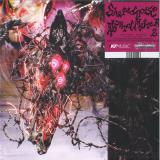
Arriving two years after the first chapter, Absurd Matter 2 isn’t just a sequel, it’s an evolution, redrawing the boundaries established by its acclaimed predecessor. The Berlin-based Italian producer tempers his confrontational sonics with rare moments of introspection, shifting seamlessly between blown-out noise, warped hip-hop, mutant club experimentation, and weightless ambience. Textures disintegrate and reassemble, rhythms flex and crumble, and every detail balances on the edge of fantasy. It’s a poetic, layered response to Nino Pedone’s changing physical reality: the gradual hearing loss and perceptual renegotiation triggered by Ménière’s disease, which struck him in 2022. At first, the experience felt like betrayal, a brutal disconnection from the very sense that had shaped his life. But over time, the disorientation turned into a strange kind of focus. The silence between sounds became as expressive as the sounds themselves.
The first Absurd Matter was a visceral reaction to trauma; the second is more reflective – an ambiguous chronicle of sensory recalibration. Pedone doesn’t represent his altered inner reality through extremes, but through depth, zooming in on illusory distortions, tense rhythmic fluctuations, and fragmented sonics. Dense, immersive, and mystical, the album mirrors Pedone’s evolving relationship with perception itself.
Tinnitus-like feedback wails and noir-ish strings introduce “Repeater”, making it immediately clear that Pedone is painting a more delicately finessed image this time around. Fleshed out by raps from cult MCs billy woods and E L U C I D, the track is marked by subtle, sophisticated contrasts: the blurred, inverted rhythms that couch Armand Hammer’s haunted back-and-forth, and the glitchy interference that offsets the lavish orchestral phrases. Backwoodz associate Fatboi Sharif lends his Lynchian drawl to “Bandage Chipped Wings”, grounding Pedone’s lysergic rhythmic distortions with syrupy, horror-inspired couplets. Pedone also invites discomfort into “Crash Landing”, with droning, metallic tones that contradict South Central rapper ICECOLDBISHOP’s elastic flow. “Bitch, I don't give a fuck about anybody,” he squawks over Pedone’s incongruous rasping textures and time-warped beats, “cash out at any party.” Working alongside London’s Loraine James on production, Pedone reunites with Moor Mother on “I Saw The Light”, blending James’ soft-focus atmospherics with soundsystem-damaging, overdriven bass hits and rusted percussive snips. Moor Mother’s assertive words hover over the wreckage, tightening Pedone’s themes of overstimulation and altered awareness as they stutter and veer off course, vanishing into the backdrop.
Contrasting his more pensive experiments, Pedone’s dancefloor deviations are more concentrated on Absurd Matter 2 than ever before. He torches a stuttering dembow structure on “X”, obfuscating the rhythm’s familiar energy with disturbing audio hallucinations. On “Splintered”, he reunites with Kenyan prodigy Slikback, mangling neon-lit trance arpeggios with dissociated trap rhythms. He sharpens his skills to a fine point on “Oblivion Step”, observing 2- step through a lens of distortion and personal abstraction, shaking blipping synth leads over neck-snapping drums and counteracting the momentum with airless sci-fi soundscapes.
Perhaps the album’s most surprising moment arrives with “Viel”, which features vocals from Los Angeles-based composer Kaitlyn Aurelia Smith. Together, Pedone and Smith chance upon their notion of dub techno, fogging synth stabs and ghostly vocal traces into eerie harmonic distortions. On some level, it’s almost pop music, a far cry from the bleak dissonance of Absurd Matter and a hopeful way to reframe turbulence as transformation. Absurd Matter 2 doesn’t simply document a process; it enacts one. It doesn’t offer clarity; it invites disorientation. It’s not a map of the labyrinth, but a foghorn piercing the darkness.
out of Stock
Last delivered 10 months ago available to reorder, subject to availability
Autodidactic musicologist and sample collagist U turned his archival eye on the melting pot of ‘80s post-punk with his debut ‘Life Isn’t A Fountain?’ EP for Lex. He follows up with an experimental exploration of regional identity with ARCHENFIELD, a deeply personal collection of ambient music and found sound that examines the relationship between geographical space and aural histories.
To construct this record U mined a wealth of recorded material relevant to the area. With a nod to traditional music, he takes samples from these records and creates beautifully atmospheric sound pieces that are often mixed with painstakingly researched snippets to create a stirring reflection on local history and broader themes of how we interact, or even fail to interact, with English folklore today.
Pressed on 180g vinyl, the album comes with a 24-page visual companion that expands on its themes and folk stories through imagery and narrative, echoing the album’s soundscape. : The Caretaker, Oneohtrix Point Never, JG Bie1berkopf, Maxime Denuc, Leon Vynehall
Milian Mori shares his deep interest in combining mathematics, geometry, and data with emotion, dance, and fulfillment: technology meets nature, binary meets fluids, algorithm meets spirituality, dualism meets triality, machine meets human, randomness meets self-similarity.
His second album, »Triality«, consists of 16 tracks and is being released via raster as a double LP vinyl, CD, and digitally. Composed to be experienced seamlessly, the 53-minute-long album can be listened to from beginning to end like an audiobook, with no pauses between tracks, creating a continuous sonic experience.
Triality explores the ›unspeakable third in the second‹—a quality that is present everywhere but remains immeasurable. This concept strongly influenced Milian Mori during the composition of the album. In his live performances, he attempts to visualize this unique relationship through the strobe light, which exaggerates the interplay between light and darkness, creating a non-binary space between 0 and 1. The album can be experienced like a film without images—a film that speaks of a vision yet to unfold.
out of Stock
Last delivered 11 months ago available to reorder, subject to availability
The anticipation is there in Elizabeth Stokes’ solo guitar riff under the opening lines of “I’m Not Getting Excited”: a frenetic, driving force daring a packed Auckland Town Hall to do exactly the opposite of what the track title suggests.
As the opener of The Beths’ Auckland, New Zealand, 2020 expands to include the full band, the crowd screeches and bellows. It’s a collective exhalation, in one of the few countries where live music is still possible.
The album title, and film of the same name, deliberately include the date and location, lead guitarist Jonathan Pearce says. “That’s the sensational part of what we actually did.” In a mid-pandemic world, playing to a heaving, enraptured home crowd feels miraculous.
In March 2020, everything seemed on track for another huge year for The Beths. Home after an 18-month northern hemisphere tour, they had just finished recording sophomore album Jump Rope Gazers and were primed for more extensive touring. But within days, New Zealand’s lockdown split the band between three separate houses. All touring was cancelled.
“It was existentially bad,” Stokes says. As well as worrying about economic survival, they lost something crucial to the band’s identity: live performance. “It's a huge part of how we see ourselves... What does it mean, if we can't play live?”
The band found an outlet through live-streaming, returning to the do-it-yourself mentality of their early days to connect with a global audience. The album and film have their genesis in that urge to share the now-rare experience of a live show, as widely as possible.
The fuzzy-round-the-edges live-streams pointed the way aesthetically. Native birds, wonkily crafted by the band from tissue paper and wire, festoon the venue’s cavernous ceiling while house plants soften and disguise the imposing pipes of an organ. The presence of the film crew isn’t disguised: much of the camerawork is handheld; full of fast zooms and pans.
With much of the material still fresh, the band was less focused on re-invention than playing “a good, fast rock show”, Pearce says. The tempo is up on crowd favourites “Whatever” and “Future Me Hates Me” (released as a live single on its third anniversary) as both band and audience feed off the mutual energy in the room.
Certain songs have taken on special resonance post-Covid. Pearce has found “Out Of Sight”, a tender rumination on long-distance relationships, hits particularly hard with live audiences.
Album closer “River Run” visibly brings Stokes to tears as a mix of achievement and relief kicks in. “You can finally relax at that point … You play the last note, breathe out a sigh and look up - and you’re in a giant room full of people happy and smiling.”
An’archives presents Kagome Kagome, the first collaboration between France’s Delphine Dora and Japan’s Ayami Suzuki. Curious listeners might know Dora from the string of lovely, idiosyncratic albums she’s released over the past two decades, most recently for labels like Modern Love, Morc and Recital; she’s also worked with the likes of Michel Henritzi and Sophie Cooper. Suzuki’s performances, predominantly for voice, place her within a tradition of Japanese improvised music – see the music she’s made with artists such as Takashi Masubuchi, TOMO and Leo Okagawa – but her approach also takes in folk song, ambience and claustrophobic drone.
On Kagome Kagome, Dora and Suzuki play to their many strengths: a gentle, free-willed folksiness; long, aerated drone constructs; ghostly, time-warping explorations for voice. They met on Dora’s May 2024 tour of Japan, though they’d been in touch beforehand, with Dora proposing the collaboration to Suzuki, developed around “concepts of ‘otherworldliness’ and ‘impermanence’,” the latter says, “and explored the relationship between ‘the invisible’ and sound in Japanese culture – a common interest we share.”
They recorded across several days that month, with the sessions for Kagome Kagome taking place in Kanumi, in Tochigi prefecture, at a space named Center. “I was particularly looking forward to seeing Delphine encounter the vintage 104-year-old harmonium from Nippon Gakki Seizo Co. that had just been repaired at Center,” Suzuki recalls. “It was as if the harmonium had been waiting for Delphine to draw sound from it. I felt it was a beautiful relationship where they could guide each other.”
Indeed, there’s something channelled about the music that Dora and Suzuki made together in the session that constitutes Kagome Kagome. Dora’s harmonium might be the spine of the album, but Suzuki’s free- floating voice, and gaseous, muddied banks of electronics, wrap around the wheezing, ancient tonality of the harmonium beautifully – they, too, sound as though they were just waiting to be willed out of the daytime air. Their voices nestle together beautifully – “when we sang together in a tunnel,” Suzuki says, “there were times when we sang the exact same melody without planning. It happened so naturally that the boundaries between us became blurred.”
And that title? It’s drawn from a Japanese children’s song, and the song titles themselves constitute the song’s lyrics, in alternating Japanese (Romanized) and French language. Urban legend connects the song “Kagome Kagome” to the Nikko Toshogu Shrine, nearby Center, that Suzuki and Dora visited while they were in Kanumi. “The mysterious lyrics of ‘Kagome Kagome’ and its puzzle-like connection to Nikko Toshogu were a perfect fit for this mysterious album,” Suzuki reflects, “which I think has its own kind of puzzle-like elements.”
A deep album of prayer and magic, of divination and ritual, Kagome Kagome’s sense of serious play, its rich beauty, feels somehow dislocated from our time. If you’ve ever enjoyed the music of Nico, Kendra Smith, Charalambides, or other channelers of ghostly mystery, its eerie otherness will, somehow, feel oddly familiar.
out of Stock
Last delivered 11 months ago available to reorder, subject to availability
Official reissue of the self-released first Mac Machine single from 1983. This little gem brings a boogie funk, early rap slap on the a-side; and a deep, soulful tune on the flipside. Both mark the cornerstone of this band from Kassel, North Hesse, Germany. With its playfulness, solid skills on the instruments and a brilliant singer, it revealed a first glimpse of what to expect musically by the band that was founded by former US soldiers in 1982. The re-release comes in a picture sleeve including an insert with liner notes.
'In This World' is starting the party, bringing raps with a critical view on the early 1980s state of the world, featuring a musical remedy that chases all your blues away: "Just shake your head one time and move that behind. Just listen to what I say, and you will go through every day!"
'Let Me Go' tells the agonizing end of a relationship. Too much has happened, and it just doesn't work out anymore. The powerful vocals make one feel the pain, while the female chorus, piano and percussions deepen the sentiments. A funky good-bye, that could make you cry.
out of Stock
Last delivered 9 months ago available to reorder, subject to availability
Unlike anything we have heard from her before, Okkyung Lee returns to Shelter Press with "Just Like Any Other Day: Background Music For Your Mundane Activities", a deeply intimate body of recordings at the juncture of ambient music, minimalism, and the baroque, that stands as radical intervention with what experimental music can be, and the place that organisations of sound occupy in our lives. For more than two decades, Okkyung Lee has stood at the forefront of the most radical trajectories of experimental music: a virtuosic cellist and improviser, renowned for her creative rigour and emotive depth. Particularly noteworthy for her range, dexterity, and adaptability, over the last five years Lee's output has revealed unexpected shifts and developments that move far afield from the realms of free improvisation for which she is most well known. 2020's "Yeo - Neun", a heart-wrenching, ambient chamber work - drawing inspiration from the Korean popular music of her youth - was issued by Shelter Press to great critical response, followed closely by "Teum (The Silvery Slit)" - one of a series engrossing electroacoustic works created at Groupe de Recherches Musicales in Paris - on Portraits GRM, and then "Na-Reul" in 2021, regarded by Lee as a closing statement of more than two decades living in New York, which set the precedent of her allowing her emotions to fully occupy the forefront of the music for the first time. Marking her return to Shelter press, "Just Like Any Other Day": Background Music For Your Mundane Activities", encounters Lee upturning the apple cart once again, weaving a profoundly intimate artistic statement on completely unexpected terms. Like its three aforementioned predecessors, "Just Like Any Other Day" belongs to broadening shift in Lee's approach to composing that roughly aligns with her return to her native South Korea, having lived in the United States since her late teens. Infused with a deep reengagement with her own culture and relationship to memory, it is equally a response to those critical challenges and questions provoked by significant life change. Worked on in isolation, and continuously returned to, over the course of four years, the album's nine pieces began with a simple recognition that experimental music is not always what we imagine it to be. It is a practice and a pursuit - a music for which, at its inception, the outcome is unknown - rather than an idiom defined by certain syntaxes, approaches, and qualities of structure and sound. From this departure point, Lee began to inquire after the utility of music itself: what is it for, what does it do, and what place does it (or can it) occupy in our lives? This solitary and durational journey, each composition gradually moving through different phases and evolutions over years, led Lee toward uncharted ground: a music that is not only playful, introspective, and seductive, but also intended to provoke a relationship to experimental music beyond its normative expectations. Rather active or deep listening, it pursues passive listening. Rather than a grand statement, it is discreet. Rather than virtuosity, it embraces the elegant and direct. Even more strikingly, for the first time, the music of "Just Like Any Other Day" encounters Lee leaving the cello entirely behind. Created at home on keyboard, computer, and an inexpensive cassette recorder, "Just Like Any Other Day" presents a remarkable form of ambient music - organisations of sound that become their own environment, to be occupied - intended, as the album's subheading infers, as Background Music For Your Mundane Activities. An expansion of the creative pathways opened by the Korean pop imbued compositions of Yeo - Neun, aspects of electronic process explored by "Teum (The Silvery Slit)", and the emotive foregrounding of "Na-Reul", each of the pieces presented across the two sides of "Just Like Any Other Day" implies something far greater than the limits of its own temporarily: a mood, provocations of memory and place, mirrors for the solitude within which it was made, and palpable emotion lingering just out of grasp. For Lee, each of the album's compositions could be continued or looped for an indeterminate duration: straddling a ground between the minimal and the baroque, enveloping the listener in endless cycles of appreciating, repetitive and rhythmical notes, flirting with the melodic and implying a disembodied imagism that borders on the profound. Remarkably beautiful and direct, Okkyung Lee's "Just Like Any Other Day: Background Music For Your Mundane Activities" - issued by Shelter Press on vinyl - represents a radical reconfiguration of experiential music, stripped to its bare essence in defiance of the widely presumed aesthetic signifiers. Unlike anything we've heard from her before, this immersive body of intimate recordings not only reveals new dimensions of Lee's striking range as an artist, but also of how we might regard and occupy music itself: an ambience to lived and felt like a second skin.
out of Stock
Last delivered 12 months ago available to reorder, subject to availability
Erik K Skodvin's feature-length score to Thomas Roth's thriller "Schächten" feels like the epitome of all his musical projects, conjuring a dark cinematic trip through 1960's post-WWII Vienna in a film that touches on topics such as law, justice & revenge.
Releasing a soundtrack as a stand-alone album can be challenging; and "Schächten" is by no means a typical listening experience. The record contains 24 more or less short pieces evolving through dramatic movements, underlaying menace and deep emotive scenes. One thing that stands out is the linear atmosphere throughout the story which creates a wholeness that keeps your attention to the very end. Set in wintery Austrian landscapes in dimly saturated colours, the film's dramatic events with dark political undertones feels like a perfect situation for Skodvin's atmospheric collages - perhaps sounding closer than ever to his early works as Svarte Greiner or Deaf Center. Cello, violin, piano, analogue synth and plenty of hardly recognizable instrumentation come together in a record that feels very organic in its subdued tones. The score also features percussion by Andrea Belfi as well as a Chopin piano interpretation by Kelly Wyse to the bizarrely schizophrenic piece "Judenfreund".
With the contemporary world sliding into darkness again, listening to the soundtrack feels like coming to terms with ones own anxieties - something that in the end comes through as a cleansing experience. As quoted in the film "Everyone is their own devil. And we make this world our hell".
Short synopsis : "Vienna 1960s - The young Jewish business man Victor has to witness how the prosecution of a Nazi crime against his family fails. The political and legal system is still virtually run by former Nazis with large parts of society being entangled in the past. When Victor also loses his grief ridden father and his girlfriend’s family opposes their relationship and his identity, Victor begins to loose faith in formal justice and takes matters in his own hands."
out of Stock
Last delivered 11 months ago available to reorder, subject to availability
Returning to Die Schachtel with his fourth full-length with the label, the Genoa born, Bologna based, guitarist and electroacoustic composer, Stefano Pilia, delivers “Lacinia”, a new, immersive cycle of compositions, delving deeper into the realm of metaphysical, spiritual, and divine meaning, weaving astounding arrangements of sonority from a palette of synths, strings, brass, organ, various electroacoustic instruments, and percussion. Resting at a refined intersection of the acoustic and electroacoustic, drone, and chamber music - overwhelmingly beautiful, delicate, and bold, - “Lacinia” stands as a high-water mark in Pilia’s already remarkable and forward-looking career.
Since its founding in Milan during the early years of the new millennium, Die Schachtel has occupied a singular place in the landscape of experimental music, issuing a carefully curated body of reissues and archival releases by historically significant figures and projects like Christina Kubisch, Luciano Cilio, Marino Zuccheri, Prima Materia, Claudio Rocchi, Lino Capra Vaccina, Gruppo di Improvvisazione Nuova Consonanza, Roland Kayn, and numerous others, balanced against bristling contemporary counterparts by the likes of Jim O'Rourke, Giovanni Di Domenico, Nicola Ratti, Luigi ArchettI, Valerio Tricoli, etc. Running like a spine through the label’s output is a deep dedication to the work of the Italian guitarist and electroacoustic composer Stefano Pilia. Now Die Schachtel returns with “Lacinia”, Pilia’s forth full-length with the label and their first release of 2024. Building on the ground of deeply personal engagement with metaphysical, spiritual, and divine meaning, explored within his previous LP with Die Schachtel, 2022’s “Spiralis Aurea”, “Lacinia” encounters the composer working in close calibration with various ensembles, including the Bologna based Ensemble Concordanze and Comunale di Bologna String Orchestra, weaving synths, strings, brass, organ, various electroacoustic instruments, and percussion into an astounding reconfiguration of immersive, contemporary minimalism that stands among Pilia’s most noteworthy releases to date. Issued by Die Schachtel in two special double vinyl editions and a CD edition, “Lacinia” features artwork by Bruno Stucchi/Dinamomilano, and is an absolute marvel that draws you in and doesn’t let go.
First emerging during the early 2000s, over the past two decades – via solo releases and numerous collations with artists like Oren Ambarchi, Valerio Tricoli, Alessandra Novaga, Z'EV, Andrea Belfi, David Grubbs, and numerous others - the Genoa born, Bologna based, guitarist and electroacoustic composer, Stefano Pilia has presented a singular voice within Italian experimental music, harnessing visceral energy and hands-on immediacy within delicately woven tapestries of sonority, each investigating the sculptural properties of sound and illuminating its relationship to space, memory, and the suspension of time. “Lacinia”, Pilia’s forth solo venture with Die Schachtel, encounters the composer reentering his longstanding practice of collaboration with various ensemble forms, including the Bologna based Ensemble Concordanze, for the albums central piece, “Lacinia Off Axis”, spinning stunning string confirmations by Pietro David Carami and Elena Maury on violin, Alessandro Savio on viola, and Mattia Cipolli on cello.
A new, important cycle of compositions by Pilia, “Lacinia” (meaning "lace" in Latin) builds upon the exploration of the metaphysical, spiritual, and divine dimensions through numbers, geometry, and the creation of tonal forms explored by 2022’s “Spiralis Aurea”, mirroring archetypal, immutable forms at the juncture of the abstract realm of mathematics and architectural structures in the physical world, expands the poetics and compositional ideas featured in its predecessor. Regraded by Pilia as both a series of individual compositions and a single work, “Lacinia” was conceived to “define a circular path (a sort of "rhizomatic lace") where the beginning and end touch, suggesting the concept of time not only as linear but also cyclical and ritualistic—an eternal return, a process of transformation where matter changes, its state changes, but without altering the invisible internal principle of mutation”, embarking upon a a series of “steps, degrees, and energetic quanta in a progression of archetypal whole numbers and transcendent creation.”
The resulting 16 tracks unfold as a series of complex sonic meditations. While deeply resonant with the minimalism of composers like Arvo Pärt, LaMonte Young, Pauline Oliveros, and Eliane Radigue, Pilia digs deep and moves far beyond the predictable tonal relationships and structures of that idiom, echoing the ancient liturgical and devotional music of composers like Gesualdo da Venosa, Monteverdi, and John Dowland, at a refined intersection of the acoustic and electroacoustic, drone, and chamber music.
Fascinatingly structured as a whole to include a number of motif returns, across which we encounter works like “Lacinia Off Axis” appearing in slightly different rendering, states, or evolutions three times, and compositions like “Eve” appearing twice in subtly different forms and arrangements - first for four oscillators, guitar and voice and then for string orchestra - as well “Maris Stella”, which similarly makes two appearances, first for horn trio, organ and percussion, and then for string orchestra, with “Lacinia” Pilia delves further into the world of chamber music than ever before, creating a deeply inward, mediative body of work the totality of which, guided by its rich string arrangements of arching, sorrowful tone, feels almost like a mass for some unproclaimed loss; simultaneously locked in the nuances of a moment, while managing to suspend time.
Perhaps most remarkable is Pilia's ability to create a remarkable sense of sonic cohesion while using such a varied number of ensembles and instrumentation. From the sprawling string arrangements delivered by Comunale di Bologna String Orchestra, under the direction of Paolo Mancini, and Ensemble Concordanze, and a flute trio (Cadux / Plectere) brilliantly played by Manuel Zurria, to pieces for sax, organ and percussion, violin duo and percussion, organ and percussion, Pilia manages to create a sense of singular, encompassing world that flows forward like a shifting stream.
Overwhelmingly beautiful, delicate, and bold, “Lacinia” is unquestionably a high-water mark in Stefano Pilia’s already remarkable, forward-looking career. Nothing short of a marvel of contemporary Minimalism that, through its shifting arrangements of harmonics, tonality, and texture draws flickering images of ancient forms of music into the present day, “Lacinia” is Issued by Die Schachtel in two special editions on double vinyl and a CD edition, featuring artwork by Bruno Stucchi/Dinamomilano. This is an immersive all-consuming listen that can’t be missed.
out of Stock
Last delivered 12 months ago available to reorder, subject to availability
When Are You Leaving? is the second full-length album from LA-based Korean-American artist NoSo (Baek Hwong), and it marks a bold evolution in both sound and storytelling. Where their 2022 debut Stay Proud of Me introduced a deeply earnest voice navigating identity and belonging - earning praise from NPR's All Songs Considered, Paste, The Guardian, and a stunning performance at Tiny Desk - this follow-up turns the lens inward with even greater clarity and confidence.
Across a vibrant palette of disco grooves, jagged guitars, and atmospheric ballads, NoSo captures the quiet power of letting go - of fractured relationships, old narratives, and the need to be understood by others. The album is rich with emotional contrast: thorny truths wrapped in dreamy production, vulnerability delivered with the assuredness of an artist coming fully into their own.
Self-produced and sonically fearless, When Are You Leaving? is a coming-of-age record for anyone still in the process of becoming, and a testament to NoSo's place among the most compelling songwriters of their generation.
"Prudência / Praga", or "Prudence / Plague", is a double single with these two songs that I composed and which were originally recorded by two of my heroes: Maria Bethânia and Alaíde Costa. Curiously, they are two sambas: although I come from the rock and roll scene in Sao Paulo, I wound up writing a samba as if it were the 50s. At the time of my first heartbreak, at the age of 17, I had the record Jamelao canta Lupicínio with the Orquestra Tabajara on my iPod, and I identified with those dramatic sorrows, almost a hundred years old. In a way, I felt that Lupicínio Rodrigues was bloody and direct, like Tarantino, and Nelson Cavaquinho, heavy metal like Black Sabbath. So, I feel it's a compact 45 of sambas but it's also very Rock n Roll to me. Raw and coming from hell. "Prudência" is that internal battle between the passionate side and the controlling side in the head of the former romantic bohemian. I wrote it for Bethânia to record on her album Noturno. Her version turned into a moving bolero. When I saw her singing it live and the audience singing along with her, I couldn't believe it. I cried, hidden in the audience. She said that when she showed the record to her brother, Caetano Veloso, he thought that "Prudência" was some old classic that she had dug up to bring back to light. Nothing could be a greater compliment than this mistake on Caetano's part. "Praga" also has to do with MPB heroes of mine that I never imagined I'd see up close or have any relationship with or any connection with. I was asked to write these lyrics in partnership with the main man Erasmo Carlos for Alaíde Costa's album! Surreal. Like many people, I got acquainted with Alaíde listening to "Clube da Esquina," her singing with Milton Nascimento. And the idea was to do a poisonous cabaret song samba. The curse of a woman who has dumped a drunk. I love it when Alaíde sings "BIBIDA" in her recording of the song_a total legend. I wanted to produce a kind of horror samba recording, because if it wasn't rock and roll, it wouldn't be much fun for me. I went over to Bielzinho's, and we recorded this chorus that explodes with the percussion and the choir of my friends Tulipa, Maria Beraldo, and Luiza Lian. This take of "Prudência" came from the unpretentiousness of recording two live sessions of the song with Fred Joseph with the cameras of the 70s' program "Ensaio" (MPB Especial) by the great Fernando Faro. The video take ended up being so unexpected and raw that it unseated the studio version, and that's what you hear on the single. The idea behind the video is a sort of this temporal mindfuck; like found lost tapes of the MPB Especial from the early the 70s. Same microphones, same cameras, that zoom_time travel. Between Mil Coisas Invisíveis, the end of the cycle with O Terno, and starting the new album process, I decided to take advantage of the respite to release this rock and roll 45 of sambas, without thinking too much or over-producing the thing. "Prudence? Don't talk to me about prudence!" ;) Tim Bernardes, 2025
Nigerian-born, London-based singer, songwriter, musician and producer Steven Bamidele presents his keenly anticipated sophomore album, 'THE CRASH!' – a sonically rich exploration of purpose, doubt and personal reckoning. Written against the backdrop of an ever-changing world, the album combines soul, rock, jazz, acoustic and electronic textures, along with daydream-esque storytelling for a thought-provoking journey in pursuit of something real in an age of hyper-curation and superficiality.
At its core, 'THE CRASH!' is a soulful meditation on the weight we place on relationships, the fundamental cost of growth, and the search for direction in an imperfect world. It's a deeply personal project, shaped by Steven's own journey through faith, disillusionment and self-discovery. Raised in a strictly Christian household, Steven's first crisis of belief came at 17, when he began questioning the very foundations of existence. As his faith unravelled, music became his new guiding force – a source of direction, discipline and identity. But as he turned 30, disillusionment crept in once again. The stark realities of the music industry, coupled with global uncertainty, reignited that same despondent weight he had battled in his youth.
"It was an intoxicating feeling when I was younger and had no responsibilities, to foolishly believe I was the first person in history who'd worked something out that no one else had. It gave me this twisted sense of power and was a big creative motivator. Where I'm at now, nihilism is debilitating, boring and unhelpful. I've worked to find a way to channel those feelings into this project. I'm really proud of it."– Steven Bamidele
out of Stock
Last delivered 9 months ago available to reorder, subject to availability
To share this event in the best way i asked him a few questions...
Official Interview now begins :)
Tool : The last Analog Records USA was in 2000... Why did you stop it and why do you wish to realese vinyls again ?
Mr Fresh : Ii actually never stopped I just made alot of other styles of music that I do not think were proper for my Analog and E.M.F. labels (Analog is now run by Mike McLure of SAuto Kinetic we work together on that label and Electric Music Foundation is all my label.. we did some great digital releases on E.M.F. recently with ADSX / Scott Radke/Dave Olson / Poor Boy Rich etc.. and can be found here
for me my last Techno Analog vinyl 12” Release was in 1997 Quiver 12"
But I did release a few Techno/Electro style tracks on my Electric Music Foundation labels as 12” singles
in 2003 I made these
Black Out
Orange Krush
I always continue to make music and have hundreds of unreleased songs that I think some are not worth putting on 12” single as I fear to weird, experimental etc.. I try to isolate myself and make unique music hopefully not sounding like what others are making but try to be my own self
Tool : What are you favourite machines or software to make music these days ?
Mr Fresh : I still use many vintage synths like my Jupiter 8, Arp 2600, Roland System 100M, 303’s etc.. but now I also use some Eurorack Modules E950, Clouds, Metropolis Sequencer etc.. also TR8, Twisted Electrons Acid 8, Teenage Engineering Factory, PO Calculators, Korg Volca Sampler, Electrix Filter Factory, Space Echo (Boss) and MPC 4000 controlling Hardware and I usually record random ideas to a flash recorder and sometimes import into ableton tracks etc.. then use Reaktor or some other soft synths but I always start Analog. I also use Critter and Guitari Looper to record organic sounds to use for percussion.
Tool : What are your forthcoming projects on vinyl in the near future ?
Mr Fresh : I have a remix electro style for New Zealand Independent Cardboard and Computers soon on 12” single
I have COMACID EP coming out of Belgium on 12” single very soon which features some older tracks (Binder, Scared, Slow Death, Spacefunk) mainly re-release of Techno/Acid stuff all analog of course
Then I have two releases with Toolbox Records and possible new stuff with Acid.Paris and hopefully we start a nice relationship with Toolbox for a long term ha ha! My daughters start school next month so I am preparing new Eurorack Modules and getting Syncussion to really hit it and spend some serious time in the studios. I am really inspired to do the more electronic vibes now and feeling the A.C.I.D. alot lately with the newer technology
out of Stock
Last delivered 3 months ago available to reorder, subject to availability
Names Records in conjunction with Two Piers Editions are delighted to announce the long awaited 21st Anniversary reissue of the debut album from The Earlies.
'These Were the Earlies' was released on Names Records / 679 Recordings in July of 2004 and quickly became one of that summer’s essential albums.
"The Best Debut Album of 2004” – UNCUT
"Insane Pop Genius. Scintillating” - 10/10. NME
NME #1 Top Rated Album 2004
There is much here to love” - The Sunday Times
"This rustic hymn to imperfect pop is a reminder that Britain and the States still have a special relationship.” - The Observer
This Numbered Limited Edition Vinyl (1000) will be issued on Double Cream Vinyl, includes a poster and new refreshed artwork by Rina Donnersmarck. Produced by the band and Tom Knott. Beautifully Remastered by Shawn Joseph (Portishead, Beak, PJ Harvey).
The Alien Dub Orchestra is ragtag collective of Bavarian musicians, featuring members of The Notwist and G.Rag y los hermanos Patchekos. The cohort formed around the idea of performing the standards of the fabled Breadminster Songbook, aka the back-catalogue of lone dubman Elijah Minnelli. Minnelli is known for constructing wheezy, forlorn odes to his hometown, both as highly sought-after self-released 7" singles, and a critically-acclaimed debut album, ‘Perpetual Musket’ for FatCat Records, lauded by the likes of The Guardian, The Wire, and The Quietus. ‘The Alien Dub Orchestra: Plays the Breadminster Songbook’ finds group covering Minnelli’s cumbia-infused dub reggae with full band, playing an eclectic array of instruments including: guiro, accordion, melodica, sousaphone, trumpet and assorted percussion.
The tale begins in 2022, when Minnelli was invited to lend his unique dubbing style to a pair of remixes for The Notwist, and what followed was an ever-flourishing relationship between the Breadminster native and the wider Munich scene. The seeds of the Alien Dub Orchestra were sown during a support gig for The Notwist, where assorted musicians joined Minnelli for a encore, reinterpreting one of his dub remixes across woodwind, brass and assorted percussion.
“The idea of real, competent professionals playing something you’ve muddled together on a computer in a damp basement is quite overwhelming,” reflects Minnelli on the process, “hearing them interpret and improve these melodies is a real joy and privilege.”
Despite the non-traditional origins of the source material, the inherent musicality of Minnelli’s songwriting shines through across his releases, and this creative kinship is what attracted the Orchestra to reimagining his work. The first live collaboration led to recording sessions and further gigs, with the Orchestra building a full set of Minnelli’s music.
The resulting album puts forward the strongest case yet of the shared musical throughline between the acts, where cumbia, dub and folk sensibilities coalesce to something all together unique. The tracks are wrought new, with melodies fleshed out and broader instrumentation expanding the sonic possibilities of the compositions. The tactility of the tracks is perhaps best demonstrated on the gorgeous ‘Vine and Fig Tree’, with it’s layed vocals and expressive bassline returning as a cavorting sousaphone line. Elsewhere, fan favourite ‘SLATS’ sounds as if it was simply written to be performed this way.
To further instill the cylindrical nature of these collaborations, the entire second half of the album is made up of dub versions of the Orchestra’s renditions. For these dubs, Minnelli is joined by Raimund Wong, who had caught his ear with his ambitious live sets, a daisy chain of tape machines and FX pedals. Again, despite their differing creative processes, the two bonded over a shared love of dub music. Each dub was a one-take, with Minnelli riding the faders and Wong’s filters and FX supplying a sound that doesn’t seek to imitate dub, so much as it tries to be it’s own chaotic self. The droning, psychedelic hypnosis of ‘Pundit Dub’ stretches the material to a whole new realm that feels outside of anything else Minnelli has produced before, an ode to the benefits of recycling sound if ever there was one. The whole second half is a perfect closing note to an album that is undoubtedly a love letter to folk tradition, dub ideology and, most importantly, the joy of uninhibited collaboration.
Elijah Minnelli - voc, guiro, percussion
Philip Gross - accordion, melodica
Theresa Loibl - clarinet, melodica
Cico Beck - electronics, keyboards
Sascha Schwegeler - congas, steel drum, percussion
Micha Acher - sousaphone, trumpet
Markus Acher - drums, voc
Dub mixes performed live by Elijah Minnelli & Raimund Wong at Breadminster County Council Studios
out of Stock
Last delivered 12 months ago available to reorder, subject to availability
GAISTER (Olivia Salvadori, Akihide Monna and Coby Sey) release their self-titled LP.
The record captures the embodiment of an encounter, one moment of the trio’s ongoing relationship as artists who communicate with each other through sound, voice and music.
After orbiting in the same circles at each other's shows around 2016 in London, Sey and Salvadori eventually crossed paths. In 2017 Sey joined Salvadori’s artistic collective Tutto Questo Sentire on a residency in Capalbio, the southernmost part of Tuscany, Italy, and started working together. Down the line the pair ended up joining with Akihide Monna (of Bo Ningen), performing together in 2019 at Camden Art Centre on Cork Street in London.
When the trio come together something new is created, brought out after laying dormant, like an Icelandic Geysir. The setting of this particular encounter amongst the trio is essential in the album’s sonic palette, process and emotion. The album was recorded in Iceland at
Greenhouse Studios, where the trio formalised a set of intuitions; how nature can provide a guideline in the choices of the instruments, their materials and related rhythms; reflections on the voice as a sculptural element, pure sound and words.
As Akihide has said of the experience during their short and intense recording period: “The sound spontaneously spun out as if we were pulling at each other's hearts and minds with a strange internal connection and sensation. Something pure was brought out.”
‘Gaister’ itself is a made up word, sprung from the German ‘Geist’ to mean ‘spirit’, and made into a sound of its own. A purity, spirit and essence is pulled from the trio, in spite of their varying mother tongues (Italian, Japanese and English), musical genres and identities to create something new. Olivia Salvadori’s operatic vocals run free, flowing and moving in
synergy with Monna’s rhythmic drumming. Sey sings freely with Salvadori, their voices braided together like a waterfall.
This flowing nature is reflected in the album itself, its timestamps and scores are marked by encounters rather than tracks themselves. This album can be considered as one constant piece and a journey of its own that is not foreclosed, in keeping with the band’s ethos of
constant conversation and collaboration.
As Sey speaks of the trio’s relationship: “Olivia, Monchan and I had performed live together once before, several years before this song and this album came to be… and yet, we fully trust each other’s intuition when performing and creating music together because of our unified belief in the ability of sound and music to communicate and connect.”
credits
releases November 1, 2024
Shhh. The command to be quiet is not just part of the title of one of the two sprawling compositions on this pioneering album. It's also an apt metaphor for the relaxed hypnotism and spaced-out atmosphere that define In a Silent Way, a record that pushes the boundaries of studio possibilities, artist-producer relationships, and rock-jazz chasms. Recognized as Miles Davis' first full-on fusion effort and part of his "electric" era, the 1969 landmark claims a Who's Who line-up that sends the music into an ethereal stratosphere.
Mastered from the original master tapes and pressed at RTI, this unsurpassed 180g LP edition lifts the veil on the cutting-edge assembly process that created the pair of lengthy suites. Helmed by three electric instruments, the bevelled compositions melt away all preconceived notions of "jazz," ˜rock," and "ambience," following a loose theory Davis dubbed "New Directions."
Few albums are so delicately textured. And on Mobile Fidelity's meticulous reissue, such sulcate elements pour over ink-black backgrounds on a canyon-wide soundstage. In particular, Tony Williams' inventive percussive touch – he causes the cymbals to shimmer as a pieces of silver tend to do when exposed to sunlight – is broadcast with lifelike three-dimensional qualities, the panoramic view extending to Davis' nocturnal trumpet, Wayne Shorter's ribbon-unfurling saxophone, Dave Holland's extrapolative bass, and the mosaic of keys.
If the record's only accomplishment is its introduction of guitarist John McLaughlin to the world, it alone would be enough. Yet In a Silent Way continues to bedazzle, puzzle, and inspire for myriad reasons – not the least of which is the seemingly telepathic communicative methods employed by the group's members. The line-up is great on paper, but, if it's even possible, the octet sounds even better in practice, with the instruments and tonalities conjoining in avant-garde communion like hyper-sensitive tentacles exploring the stippled landscapes of an undiscovered planet.
Diverting from expectation, tubular grooves twist, turn, and spin, sometimes piling atop of each other, always shying away from structure and melody. Ellipsoidal solos provide hesitant guidance, ranging from Chick Corea's Fender Rhodes phrases to Davis' decorative spirals. And as colour is the primary unit of currency on Davis' Sketches of Spain, laid-back episodes, geometric spaces, and quiet sensuality reign here, with the set's maverick reputation attained via musings on solitude rather than explosions of noise.
Controversial for the period, the heavily edited production of In a Silent Way blew open the once-locked doors on what producer's could attempt – and how artists could assist them. Knitted together as one would construct a cross-hatched quilt, songs contain grafts of repeat passages that provide unifying structure and experimental continuity. What a statement.
out of Stock
Last delivered 12 months ago available to reorder, subject to availability
South London singer, songwriter and cultural powerhouse Joy Crookes has today unveiled the news that her worth-the-wait second album Juniper will be released on September 26th ahead of a full UK & EU headline tour.
A stunningly candid and fearless body of work, the album reaffirms Joy as one of the UK’s most vital and original voices. A once-in-a-generation talent, Crookes delivers a record that is both emotionally raw and sonically rich; humorous, heartbreaking and profoundly human.
Following the success of her 2021 debut Skin, which earned BRIT and Mercury Prize nominations, went Top 5 in the UK charts, and drew acclaim from The Guardian, NME and many more, Joy set out to make an album that pushed her further both musically and personally.
Juniper is the result: a project defined by its depth and dynamism.
Written with a stripped-back approach and produced by long-time collaborators including Blue May (Kano, Jorja Smith), Tev’n (Stormzy) and Harvey Grant (Arlo Parks),
Juniper features standout guest appearances from Vince Staples on the incendiary ‘Pass The Salt’ and Kano on the bittersweet confessional ‘Mathematics’.
Crookes describes the record as “more nuanced” than Skin: “With Juniper, every situation is visceral and I’m very much in it. It’s me in the centre of it all.”
The title itself nods to resilience (an evergreen that thrives in harsh conditions) and the album dives deep into themes of body politics, mental health, queer love, anxiety, industry hypocrisy and the ecstasy (and terror) of falling in love.
Lead singles like ‘Pass The Salt’ and ‘I Know You’d Kill’ showcase Crookes’ lyrical agility – blending poetic detail with razor-sharp wit. Meanwhile, the euro-pop inspired ‘First Last Dance’ channels euphoric melodies to mask deep emotional struggle, and the cinematic ‘Perfect Crime’ sees Joy fully self-actualise in the style of a Western showdown.
On ‘Paris’, the closing track, Joy reflects on a formative queer relationship: “Something I feared so much finally, actually felt like love.” It’s a sentiment echoed across Juniper – a record that captures the beauty and brutality of emotional openness.
The album arrives after a period of personal upheaval for Crookes, including a mental health crisis that shadowed the album’s creation. “I was in the trenches,” she says. “But the studio became my solace. What you hear is live and direct from that time.” Despite the darkness, Juniper radiates warmth, levity, and life, powered by Crookes’ ever-restless creativity and artistic excellence. Ahead of her performance this weekend at BBC Radio 1’s Big Weekend event in Liverpool, followed by a slot at Glastonbury, Joy is pleased to announce a full UK & EU headline tour for the backend of the year.
In celebration of Juniper's release, Joy will head out to all major cities including Dublin, Manchester, Bristol and London where she’ll play the much coveted 02 Academy Brixton for the first time. See below for full routing and ticket info.
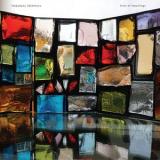
Nobukazu Takemura"s music is singular in its ability to create a musical sense of childlike wonder and curiosity, with gracefully executed yet complex compositions. His pieces embody an innocence and the intricacies of self discovery that every human is faced with as their worlds become more complex. An acclaimed producer and composer, Takemura is known for his idiosyncratic music and video artistry as well as his prolific collaborations including those with Tortoise, Yo La Tengo, DJ Spooky and Steve Reich. knot of meanings, Takemura"s first proper album in a decade, finds the Japanese artist wrestling with the rise of technological influence on art and culture in the modern era, in tandem with his own relationship to religion, and where those struggles meet. Like the colorful, irregularly shaped glasses on the cover, the album is a mosaic of technicolor elements that come together to form a complete picture, a dense portrait of interconnected struggles and triumphs.
Den Grundstein für ihre musikalische Karriere legten SPRINTS zweifelsohne mit ihrem Debütalbum 'Letter To Self' im Jahr 2024. Allein in diesem Jahr tourte die Band um Frontfrau Karla Chubb zwei mal durch Europa, UK und die USA. Das neue Album 'All That Is Over' ist ein bemerkenswertes zweites Werk, das die Dynamik der Band noch weiter vorantreibt, noch nuancierter klingt, aber nichts an Rohheit einbüßt.
Während viele Bands nach einer solch hektischen Anfangszeit ausgebrannt wären und eine Pause bräuchten, wurde Karla umso produktiver und kreativer. 'There was just so much happening and so much to process,' erklärt sie. 'I was going through a big break up with my partner who I’d been with for eight years; Colm had left the band; we’d really progressed into being professional musicians, and I was at the start of a new relationship. But then you’d look outside and it’s like the world has never been uglier. I was writing every day because there was so much going on.' In diesem Spannungsfeld aus Wut, Ambitionen und tausend weiteren Gefühlen dazwischen legt 'All That Is Over' die Karten auf den Tisch. Das Album wurde in Tourbussen, bei Soundchecks und in Echtzeit geschrieben. Vor dem Hintergrund einer Litanei von Grausamkeiten - dem Krieg in Nahost, den Waldbränden in Los Angeles, Trumps Executive Order, die die Rechte von Trans-Personen schneidet - versuchen SPRINTS, einer verrückt gewordenen Gesellschaft einen Sinn zu geben.
Das neue Album 'All That Is Over' der irischen Band SPRINTS erscheint am 26. September 2025 via CITY SLANG (in den USA über Sub Pop Records). Im Sommer ist die Band mit Fontaines D.C. bei einigen Konzerten in Deutschland live zu sehen.
Den Grundstein für ihre musikalische Karriere legten SPRINTS zweifelsohne mit ihrem Debütalbum 'Letter To Self' im Jahr 2024. Allein in diesem Jahr tourte die Band um Frontfrau Karla Chubb zwei mal durch Europa, UK und die USA. Das neue Album 'All That Is Over' ist ein bemerkenswertes zweites Werk, das die Dynamik der Band noch weiter vorantreibt, noch nuancierter klingt, aber nichts an Rohheit einbüßt.
Während viele Bands nach einer solch hektischen Anfangszeit ausgebrannt wären und eine Pause bräuchten, wurde Karla umso produktiver und kreativer. 'There was just so much happening and so much to process,' erklärt sie. 'I was going through a big break up with my partner who I’d been with for eight years; Colm had left the band; we’d really progressed into being professional musicians, and I was at the start of a new relationship. But then you’d look outside and it’s like the world has never been uglier. I was writing every day because there was so much going on.' In diesem Spannungsfeld aus Wut, Ambitionen und tausend weiteren Gefühlen dazwischen legt 'All That Is Over' die Karten auf den Tisch. Das Album wurde in Tourbussen, bei Soundchecks und in Echtzeit geschrieben. Vor dem Hintergrund einer Litanei von Grausamkeiten - dem Krieg in Nahost, den Waldbränden in Los Angeles, Trumps Executive Order, die die Rechte von Trans-Personen schneidet - versuchen SPRINTS, einer verrückt gewordenen Gesellschaft einen Sinn zu geben.
Das neue Album 'All That Is Over' der irischen Band SPRINTS erscheint am 26. September 2025 via CITY SLANG (in den USA über Sub Pop Records). Im Sommer ist die Band mit Fontaines D.C. bei einigen Konzerten in Deutschland live zu sehen.
The songs of Louisiana's Francophone and Creole heritage have flowed through the bayous for centuries, shaped by African, Native American, French, and Caribbean influences. Combining a vinyl record and a bilingual book, Pasé Bél Tan: Francophonies and Creolities in Louisiana celebrates this cultural legacy. It pairs historical recordings with contemporary reflections, inviting artists and scholars to explore this ever-evolving soundscape. Bridging a vibrant present with a painful past, it creates a space for dialogue around identity, memory, and the ongoing transformation of Louisiana’s musical traditions.
The double vinyl compilation and its OBI strip features a staggering 34 songs, ranging from French ballads and Creole renditions to zydeco hooks and reinterpretations by a wide array of contemporary artists such as Madteo, Tanz Mein Herz, Radio Hito, Cyril Cyril, and Deafkids, among others. With archival recordings and contemporary creations side by side, it serves as a bridge across the vast bayou of Louisiana music.
The book is a 272-page bilingual (French/English) publication that seeks to encapsulate the far-reaching implications of Louisiana’s musical heritage within both Louisianan and American society. It explores how this culture has shaped—and been shaped by—its surroundings. With contributions from many key figures of the scene—musicians, researchers, club owners, and other vital witnesses—it aims to present the intricate and singular relationship that exists between Louisiana and its music.
The book only is not available through distribution but only as a bundle with the 2LP version.
The songs of Louisiana's Francophone and Creole heritage have flowed through the bayous for centuries, shaped by African, Native American, French, and Caribbean influences. Combining a vinyl record and a bilingual book, Pasé Bél Tan: Francophonies and Creolities in Louisiana celebrates this cultural legacy. It pairs historical recordings with contemporary reflections, inviting artists and scholars to explore this ever-evolving soundscape. Bridging a vibrant present with a painful past, it creates a space for dialogue around identity, memory, and the ongoing transformation of Louisiana’s musical traditions.
The double vinyl compilation and its OBI strip features a staggering 34 songs, ranging from French ballads and Creole renditions to zydeco hooks and reinterpretations by a wide array of contemporary artists such as Madteo, Tanz Mein Herz, Radio Hito, Cyril Cyril, and Deafkids, among others. With archival recordings and contemporary creations side by side, it serves as a bridge across the vast bayou of Louisiana music.
The book is a 272-page bilingual (French/English) publication that seeks to encapsulate the far-reaching implications of Louisiana’s musical heritage within both Louisianan and American society. It explores how this culture has shaped—and been shaped by—its surroundings. With contributions from many key figures of the scene—musicians, researchers, club owners, and other vital witnesses—it aims to present the intricate and singular relationship that exists between Louisiana and its music.
The book only is not available through distribution but only as a bundle with the 2LP version.
After the conceptual depth of "Parallel Traces of the Jewel Voice" (2021), dj sniff returns to Discrepant with a more direct and visceral document: Turntable Solos.
Composed from live recordings made during the latter half of 2024, Turntable Solos captures dj sniff’s improvised performances in their rawest form. At the core of his setup is Cut ’n’ Play, a software sampler he originally built in Max / MSP in 2007. Since then, he has continued developing custom tools and instruments that extend what Derek Bailey called the “instrumental impulse” — the tactile, responsive relationship between musician and machine that defines improvisation.
Following a summer 2024 tour of Japan with Gonçalo Cardoso, sniff was encouraged to document and release a selection of his live sets. Not long after, a performance at 20α (Alpha) in Hong Kong would become the emotional and conceptual anchor for the project.
In the liner notes, sniff reflects on the eerie parallels between recent footage of protestors in Los Angeles — assaulted by police using so-called “less-lethal” weapons, and civilians being abducted into detention centers — and the 2019 Hong Kong protests. A place once filled with personal nostalgia began to feel like a grim foreshadowing of what might unfold in Western societies.
In this turbulent context, 20α stands out as a space of resistance and renewal — a beacon for a new generation of experimental musicians, growing in defiance of increasing censorship and surveillance. "Turntable Solos" is both a personal statement and a public act of sonic resilience.
out of Stock
Last delivered 13 months ago available to reorder, subject to availability
Singer-songwriter and cult anti-folk troubadour Stanley Brinks returns with Happy New Year, a 10-song collection of lo-fi gems recorded in Berlin. Happy New Year is a warm and celebratory record. Over simple rhythms and minimalist arrangements, Brinks delivers lyrics that oscillate between surreal humour, earnest wisdom, and playful melancholy. Happy New Year features contributions from longtime collaborator Clemence Freschard, plus appearances from Jyoti Sekhawat, Monica Kremidi, Rachel Lipson, Irma Ignataviciute, and Elisa Aseva, weaving together voices from across Brinks' musical community. Their harmonies lend the songs a communal intimacy. Stanley Brinks is renowned for his unique anti-folk style: both playful and suggestive, insightful and entertaining. Brinks was born in Paris, France, in 1973. He studied a bit of biology and worked as a nurse for a while. Half Swedish, half Moroccan, strongly inclined to travel the world, he soon began spending most of his life on the road and developed a strong relationship with New York. By the late 90s he'd become a full time singer-songwriter - Andre' Herman Düne - as part of three piece indie-rock band, Herman Düne. Several albums and Peel sessions later and after a decade of touring Europe, mostly with American songwriters such as Jeffrey Lewis, Calvin Johnson and early Arcade Fire he settled in Berlin. The early carnival music of Trinidad became a passion, and in the early 21st century he became the unquestioned master of European calypso, changing his name to Stanley Brinks. Under this moniker he has recorded considerably more than 100 albums, collaborated with the New York Antifolk scene on several occasions, recorded and toured with traditional Norwegian musicians, and played a lot with The Wave Pictures. The vinyl is of silvery color.
Second part of second album! Originating from Normandy, France, psychedelic noise-pop quartet You Said Strange presents a unique blend of indie rock that incorporates elements of psych pop-rock, shoegaze, and proto-grunge. Thousand Shadows volume 2, a second chapter was needed to highlight the many shadows that still linger everywhere. The shadows that linger on the borders, hiding the violence of the fights for them. The shadows that time has on the relationships and their persistence, because the shadows move. Plato's cave, modern version, would be the one of toxic relationships, antidepressants and the acceptance of the regression of freedom and/or the vision of a dying world... Between shoegaze, noise pop and psychedelic rock, You Said Strange absorbs its time to incant a music in which melancholy, love and the search for plenitude meet. The band recorded their first album, Salvation Prayer, in 2018 in Portland (USA), with Peter G. Holmstrom from The Dandy Warhols, which saw release via Fuzz Club Recirds. In 2022, the band shared their LP Thousand Shadows Vol. 1. Mythomaniac kings, the Mediterranean, the colors of mourning _ these are the detailed subjects, described against a backdrop of psychedelic pop, proto grunge, and shoegaze. The first part of a powerful, reverberant, melodious second album, drawing its inspiration and production stem from encounters during their 2022 European and North American tours, between Normandy, New York, and Oregon. Most recently, You Said Strange shared the second part of their sophomore release, a follow-up to Vol. 1 entitled Thousand Shadows Vol. 2.
"Laurel Hell" ist ein Soundtrack zur Transformation. Eine Landkarte für den Ort, an dem Verletzlichkeit und Widerstandsfähigkeit, Trauer und Freude, Fehler und Transzendenz in unserer Menschlichkeit Platz finden und als würdig angesehen werden können - um letztendlich anerkannt und geliebt zu werden. "I accept it all," verspricht MITSKI. "I forgive it all." Auf "Laurel Hell" festigt MITSKI ihren Ruf als Künstlerin, die die Kraft besitzt, unsere wildesten und zwiespältigsten Erfahrungen in ein heilendes Elixier zu verwandeln. "I wrote what I needed to hear. As I've always done." Nach der Veröffentlichung von "Be The Cowboy", einem der meistgelobten Alben des Jahres 2018, das von Outlets wie Pitchfork (u.a.) zum Album des Jahres gekürt wurde, stieg MITSKI vom Kultliebling zum Indie-Star auf. Mit spürbaren Folgen: Die Schinderei des Tourlebens und die Fallstricke die mit der erhöhten Sichtbarkeit einhergingen, beeinflussten ihre Musik ebenso wie ihren Geist, die sich in der ersten Single "Working For The Knife" niederschlägt. Ein Song, wie ein Prüfstein für das Gesamtgefühl von "Laurel Hell": "I start the day lying and end with the truth / That I'm dying for the knife." "Be The Cowboy" wurde von weiblicher Stärke und Trotz angetrieben, lebte jedoch von seinem Spiel mit Masken. Wie der Berglorbeer bzw. die "laurel hell", nach dem das neue Album benannt ist, kann die öffentliche Wahrnehmung, wie das berauschende Prisma des Internets, eine verlockende Fassade bieten, hinter der sich eine tödliche Falle verbirgt. Die sich immer enger zieht, je mehr man sich anstrengt. "I got to a point, where I just knew that if I kept going this way, I would numb myself to completion." Erschöpft von diesem verzerrten Spiegel und unserer Sucht nach falschen Binaritäten, begann MITSKI, Songs zu schreiben, die die Masken abstreifen und die komplexen und oft widersprüchlichen Realitäten dahinter offenbaren. MITSKI dazu: "I needed love songs about real relationships that are not power struggles to be won or lost. I needed songs that could help me forgive both others and myself. I make mistakes all the time. I don't want to put on a front where I'm a role model, but I'm also not a bad person. I needed to create this space mostly for myself where I sat in that gray area." Die daraus entstanden Songs verkörpern genau diesen Raum. Wie die zweite Single des Albums, "The Only Heartbreaker", die gemeinsam mit Dan Wilson geschrieben wurde und der erste Song dieser Art in ihrer Diskografie ist. "The Only Heartbreaker" verbindet treibenden 80er-Pop mit einem trügerisch einfachen Text, dessen aufrichtiger Refrain ins Ironische kippt, sobald dieser "the person always messing up in the relationship, the designated Bad Guy who gets the blame," beschreibt und sich zugleich fragt, ob "the reason you're always the one making mistakes is because you're the only one trying." MITSKI schrieb viele Songs für "Laurel Hell" während und teilweise vor 2018. Das Album wurde allerdings erst im Mai 2021 final abgemischt. Es ist die längste Zeitspanne, die MITSKI jemals für ein Album gebraucht hat und für die Musikerin inmitten einer radikal veränderten Welt endete. MITSKI nahm "Laurel Hell" mit ihrem langjährigen Produzenten Patrick Hyland in der Zeit der Isolation während der Pandemie auf, als einige der Songs "slowly took on new forms and meanings, like seed to flower." Das Album als Ganzes entwickelte sich "to be more uptempo and dance-y. I needed to create something that was also a pep talk" erklärt MITSKI. Die Spannung, die zwischen ihren raffinierten, aber wehmütigen Texten und dem sprudelnden Pop-Sound der 1980er Jahre entsteht, ist eine dringend benötigte Infusion in Zeiten wie diesen und das Werk einer reifen wie unwiderstehlichen Künstlerin, die auch zu fröhlich ansteckenden Dance-Beats immer noch etwas Profundes beizutragen hat.