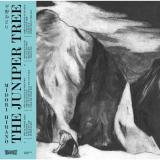
While composing the music for The Juniper Tree, Hirano drew on her own memories of touring Iceland, which included a stop at a waterfall featured in the film and rendered in sound on “Mother’s Path.” Folktales, like the origins of The Juniper Tree, are often attempts to contend with humans’ place in the natural world, with all its mysteries and intricacies, and both the film and Hirano’s soundtrack draw their sense of breathless wonder in part from the sensation of being engulfed by one’s environment. Margit, played by Björk, possesses a sublime sensitivity to her environment that allows her to receive messages from her mother, who was murdered for their shared inheritance of witchcraft. Hirano captures the relationship between the transcendental awe that is felt as supernatural and the private feelings of being immersed in that experience, creating a musical dialogue between the self and what lies beyond.
In the final sentences of her liner notes describing the film’s philosophical and feminist throughlines, Anna Bogutskaya says, “what we call Margit’s witchcraft is maybe just her willingness to listen.” This is the magic of music, and Hirano composes with an alchemist’s pen. Just as Keene seems to break down barriers between binary poles, Hirano uses both electronic and acoustic means to communicate the film’s emotive cues, uniting approaches she has explored under her own name and the alias MimiCof. There is an understanding that stillness can be understood as peaceful or foreboding, that dissonance and consonance are contextual, that efforts to protect one’s own kin can lead to tragic ends. At the film’s end we see Margit enthralled with birdsong, understanding it as something deeper, a connection to those she has lost. Through sound, we understand what lies beyond sight, beyond convention, and with this new soundtrack we hear the story anew.
Mothers of All is Mark Gomes' second album as Blue Chemise for Students of Decay, following 2018’s acclaimed Daughters of Time. Though built from very different materials, it shares its predecessor's economy, sense of proportion, and fascination with the ways domestic life can open onto larger and less easily defined realms. Where Daughters of Time evoked tender, if alien, nursery songs, Mothers of All takes the form of spectral salon music heard at a temporal and geographic remove.
These pieces feel fundamentally receptive, with Gomes allowing his chosen fragments to retain their own histories - both personal and aesthetic - while revealing unexpected tonal relationships through their idiosyncratic arrangement. The resulting music is at once deeply personal and strangely unmoored, a space where the intimate and the distant occupy the same plane.
What lingers about this project as a whole is the paradox that the most private experiences can also be the least singular: that family, memory, and devotion become most legible at the point where they cease belonging to any one life.
»Baby Ghost« is the debut album by double bassist and vocalist Jordan Sand. Released through Hallow Ground, it blurs the lines between different genres and modes of expressions, improvisation and composition and showcases the unique playing style the composer has developed. Sand blends her voice with the bowed harmonics and subharmonics of her double bass. At once conceptually rigorous and musically open-ended, Sand’s wordless meditations on death and what comes after are both visceral and explorative.
Sand is a boundary-crossing instrumentalist, performer, and session musician who has worked in folk, free jazz, pop, classical and new as well as experimental music. In 2020, she took a hiatus. When she picked up the bass again, she began stripping down the relationship to her instrument to its core elements, searching for a way to melt the sounds of bow and voice together. This resulted in the appearance of ghost notes, tones emerging from the addition or subtraction of two frequencies, and harmonics that she adds with her falsetto.
On »Baby Ghost,« Sand utilises this acoustic sound and the spontaneous precision of her improvisational practice for pieces that deal with the subject of dying. They move from more polyphonic improvisations toward abstraction, touching upon harsh noise and minimalistic bow-chants before returning briefly to a melodic soliloquy, and finally landing on an extended subharmonic drone. This progression reflects the journey of the spirit after death; the experience of visions, memories, ecstasies and terrors before the dissolution of the self.
Sand performs this process physically, blending her voice with her instrument to explore how the senses might dissolve and merge when they enter a state between life and beyond-or-between-life. Born out of the moment and dedicated to a lost friend, »Baby Ghost« is quite literally an otherworldly achievement.
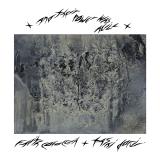
And Their Power Is Alive is a collaborative record between the Vashon Island based artist Faith Coloccia and Ashville based guitarist Tashi Dorji out September on Whited Sepulchre Records. Coloccia and Dorji’s longstanding collaborative relationship and friendship bolsters this massive conceptual weight –– the music is as stirring as it is gorgeous, as exploratory as it is surefooted. And Their Power Was Alive manifests and rises up as a profound iteration of the interrelatedness of the personal and the political, poetically. Coloccia’s plaintive voice, as always, is clear and stirring, intimate, close, and notably here recorded without reverb. She is steady and her lyrics echo dream phrases which visited her during major life shifts: a drive through the arid desert, explaining the concept of private property to the next generation, intergenerational knowledge and caregiving. All of this establishes a melancholia of reflections on land, history, scale. The first words sung on this record are: “Cosmic Horror! I am nothing, I am no-one” and even here, Coloccia is steady. Dorji’s glacial layers of distorted howling guitar create a rise and crest and fall –– symphonies of noise, roaring but distant like fire in the hills, interwoven with piano, organ, and tubular bells.
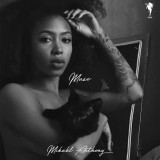
Hailing from the West side of St. Louis, Missouri, Mikahl Anthony’s sonic roots spread far across the global Alt-Soul / Hip-Hop scene. A highly soughtafter multidisciplinary artist (who has collaborated with the likes of Mick Jenkins, Chance The Rapper, Joey Purp, Smino and more), as well as being a founding member of Chicago’s THEMpeople collective, he now prepares to unveil his masterful full-length debut Muse via R&S Records.
Accompanied by several beautiful, self-directed film pieces, Muse is a record with storytelling at its core. Interspersed with commentary from a range of sources telling their stories to Mikhal, whilst collaboratively analysing their personal experiences, it speaks a candid and honest narrative, which reinforce the heartfelt lyrics within. With the project’s name anchored around a dual meaning acronym (1. Ms. Using sensual energy and 2. Making use of seclusion every day). The record is an audio version of docufilm, that creatively interprets the idea of self-therapy, an internal/interpersonal reflection of life experiences that serendipitously connect to Mikahl’s personal romantic relationships. Mikahl explains: ‘I wanted to use a unique style of songwriting, arrangement and filming with the intention of soundtracking my self-development/maturation process’.
On the project’s lasting impression on the listener, Mikahl elaborates ’The exploration of inner truth and vulnerability is key to the future of good music. I want this project to act as symbolism that highlights the mantra that honest approaches and authenticity still has the most value. I also want people to see how important the use of community is when you can connect them to your subject matter...I'd like my audience to observe and engage in their own self-reflections, approaches by way of listening or interacting with the story.’
Drifting to an elevated state of consciousness, Muse is a deeply intoxicating and engrossing listening experience from front to back. From the sliding, kaleidoscopic shadows of opening track ‘La Flare’, via the trepidation-laced atmosphere of ‘Polyamorous’ and the hazy, reverb drenched saxophone notes of LP closer ‘Eddie Kane’ - Mikahl channels moments of joy and pain, infused with spirit enriching instrumentation and gritty textures.
Visual stimuli play an integral role within Mikahl’s music. His songs represent transparency and openness dipped in funk. Layers of soft velvety vocals emerge from jazz harmonies, trap rhythms, and social commentary sourced from voiceovers/excerpts. His creations are the musical representation of documentary films. His art is imagery embodied.
out of Stock
Last delivered 18 days ago available to reorder, subject to availability
Trá Pháidín are a mutable collective of musicians who are geographically, culturally and mentally torn between Conamara Theas, Cathair Chorcaí, Ciarraí, Uíbh Fhailí, Sligeach and Port Láirge, active in one form or another since 2019. The music they make, which to date has mostly been self-released, is of an ambitious breadth, embracing traditional Irish absurdity, jazz, folk and krautrock influences, whilst remaining tantalisingly beyond any one specific understanding of either the world around them or even themselves. More defined however, is their overall conceptual approach, focusing upon original Gaelic music and what lies beyond simply “conas atá tú?”.
Cloch ‘s Claí (trans. Stone & Wall), their first record to be released by World of Echo, develops their established interests into more adventurous waters (and walls!) than ever. Based on the historical significance embedded into dry-stone walls, the album presents a satirical view of Éire’s relationship with her native tongue and the Gaeltacht (regions where Gaeilge - Irish Gaelic - remains the primary language). Constructed of ten tracks, each representative of a stone in a metaphorical stone-wall, Cloch ‘s Claí draws from styles of improvisation in Irish traditional music, exploring avenues of ornamentation and accompaniment in the tradition. As such, the arrangement changes in every performance, a new stone-wall articulated each time - the recording on this album represents just one such arrangement in one such performance. Inspired by Myles na gCopaleen’s An Béal Bocht, the wall comes to embody a variety of themes scattered across the landscape and psyche of na Gaeltachtaí - tokenism, housing, gentry politics, ribbon developments and so on. The result is a music expressive of regional styles in traditional music, krautrock, free jazz, post-rock, minimalism and drone presented in a way that feels instinctively fluid and reflective of a hushed existentialism from the west of Ireland.
On Cloch ‘s Claí, Trá Pháidín are: Conal Ó hAinmhuighe, Ultan Ó Labhradha, Peadar-Tom Mercier, Micheál Fitzgerald, Pól Ó Lionáird, Ruairí De Búrca. Cloch ‘s Claí will be released digitally and as a limited edition LP on 25th September via World of Echo. This record was created through the support of the DEIS Recording Grant & Ealaín na Gaeltachta.
Jim Legxacy's mixtape homeless n*gga pop music arrives on LP & CD for the first time via XL Recordings. The 3x BRIT Award nominated and MOBO Award winning artist broke through with the 2023 project to critical acclaim, with the South-Londoner grappling with his relationships, identity, and homelessness. The mixtape is an impressive collision of midwest emo guitar samples, UK drill, afrobeats, and Jersey club, not only reshaping what UK music can sound like, but what it can stand for — a bold, fully-formed record that could only have come from one mind.
Boom Boom by Belgian photographer Jente Waerzeggers offers a unique glimpse into his work at night over recent years. In this book, Waerzeggers explores his deep fascination with self-expression in all its possible forms. Clothing, make-up, tattoos, piercings, hairstyles and accessories all reveal something about the individual. Presented as a series, the images reflect contemporary nightlife culture.
As an integral part of the nightclub’s scenography, the dancer becomes a body of symbols. Waerzeggers’ photographs are filled with bootlegged corporate logos, wordplay, subversion and references to pop culture.
Waerzeggers builds a relationship with his subjects that is entirely mutual. He documents while participating, and his subjects want to be seen. The night is dark and not easily captured, but Boom Boom succeeds remarkably well in doing so.
Jente Waerzeggers (•1999) is a Belgian photographer and musician. He is part of Not So Difficult Magazine, the label Kontakt Group, the band Lieve Jongens, and is the founder of (Y)-Publishing.
From 2018 until 2026 Jente Waerzeggers worked as a nightlife photographer; this book marks the end of that endeavour. Starting out at friends’ parties and ‘nacht’ in Stelplaats, Leuven, he has gone one to photograph for venues and collectives in Brussels, in Belgium and abroad such as V23, Slagwerk, Horst, C12, Listen Festival, Celebration of Life, and Dekmantel.
Waerzeggers is interested in the ways people consciously and unconsciously present themselves in society. What do their houses look like, their trash, their advertisements, their selfies? By sifting through his archive of photos and screenshots, he looks for through lines that paint a bigger picture.
280 pages
150x210mm
Soft cover with remarkable textile texture
A Flower to Water, the staggering new album from Greek Progressive-Post Metal outfit Playgrounded, finds the five-piece pushing their boundaries even further; welcoming the unquantifiable depths of loss, grief and finitude into their meticulous, fractal process as friends in defiance of neglect. Hailing from Athens, Greece but predominantly based in Rotterdam, Netherlands, Playgrounded have never ceased to push the envelope of Post Metal with genre-defying contemporary electronic and cinematic neo-classical elements since the band's inception almost two decades ago. A Flower to Water is Playgrounded's third full-length offering and sees the band thriving in their creative relationship with Pelagic Records. Recorded and produced by the band across multiple studios back home in Athens and Rotterdam, Playgrounded enlisted the help of longtime collaborators C. Cederberg (Leprous, Anathema) who mixed the album at Cederberg Studios in Kristiansand, Norway and George Tandero (Madrugada, Satyricon, Jaga Jazzist) who mastered it in Oslo. A profound sense of patience is keenly felt throughout the album. The deliberate spaces between each hammerblow guitar riff, pulsing bass line or hypnotic drum groove; each heavy, breathless pause and fizzing glitchy whisper all tell of unspoken loss and absence as an indelible part of A Flower to Water and indeed of Playgrounded forever more. In marking this absence however, in embracing loss head on, Playgrounded reify memory in defiance of neglect. By extracting such a colossal, breathtaking piece of work from a seemingly unassuming collection of sounds, clips and sonics; the quintet slow time to a standstill to present grief in bloom; a beautiful, perpetual flower with its roots in loved ones lost. FOR FANS OF Karnivool, Katatonia, Nine Inch Nails, Deftones, Moderat, The Ocean, Vola, Leprous, Skyharbor, Anathema
A Flower to Water, the staggering new album from Greek Progressive-Post Metal outfit Playgrounded, finds the five-piece pushing their boundaries even further; welcoming the unquantifiable depths of loss, grief and finitude into their meticulous, fractal process as friends in defiance of neglect. Hailing from Athens, Greece but predominantly based in Rotterdam, Netherlands, Playgrounded have never ceased to push the envelope of Post Metal with genre-defying contemporary electronic and cinematic neo-classical elements since the band's inception almost two decades ago. A Flower to Water is Playgrounded's third full-length offering and sees the band thriving in their creative relationship with Pelagic Records. Recorded and produced by the band across multiple studios back home in Athens and Rotterdam, Playgrounded enlisted the help of longtime collaborators C. Cederberg (Leprous, Anathema) who mixed the album at Cederberg Studios in Kristiansand, Norway and George Tandero (Madrugada, Satyricon, Jaga Jazzist) who mastered it in Oslo. A profound sense of patience is keenly felt throughout the album. The deliberate spaces between each hammerblow guitar riff, pulsing bass line or hypnotic drum groove; each heavy, breathless pause and fizzing glitchy whisper all tell of unspoken loss and absence as an indelible part of A Flower to Water and indeed of Playgrounded forever more. In marking this absence however, in embracing loss head on, Playgrounded reify memory in defiance of neglect. By extracting such a colossal, breathtaking piece of work from a seemingly unassuming collection of sounds, clips and sonics; the quintet slow time to a standstill to present grief in bloom; a beautiful, perpetual flower with its roots in loved ones lost. FOR FANS OF Karnivool, Katatonia, Nine Inch Nails, Deftones, Moderat, The Ocean, Vola, Leprous, Skyharbor, Anathema
Released on Tip Top Recordings, the album features 10 songs that that brim with melody, wit and understated charm. After years of singing downbeat songs of melancholy & loss, after waving goodbye to a long-term relationship, after working at a care home during the Covid pandemic, after seeing people off from the platform of life in his role as a Funeral Celebrant, Pete Fij has decided to have a reset. Slinging back on the electric guitar, ditching the job, upping the BPMs, and falling in love again has resulted in Pete embracing his fuzzed up dream- pop past but also throwing in elements of pop and electronica.
Intentions, the debut of LA-via-Chicago beat maker, composer, and multi-instrumentalist megiapa, is a 40 minute master class in synth-heavy, jazz-informed Neo-soul.
megiapa's lush and emotionally layered album feels less like a collection of songs and more like a living archive of transformation. Across its warm synths, fluttering basslines, meditative voice notes and spiritual grooves, the Los Angeles-based producer, vocalist and composer maps the uncertain terrain between heartbreak, healing, fear, and surrender.
The album's title is genuine.
"The record is literally my intentions," she says. "It's a representation of my intentions, my dreams over the last five years or so."
Those years carried the weight of upheaval: the pandemic, the collapse of a long-term relationship, a move away from Chicago, and the disorientation that follows when the structure of your life suddenly disappears beneath you. But Intentions never sounds defeated. Instead, it radiates the quiet confidence of someone learning to trust herself in real time.
out of Stock
Last delivered 22 days ago available to reorder, subject to availability
For her new and most radical album »Electroacoustic Works for Halldorophone«, Martina Bertoni used the electronic instrument at EMS Stockholm to create four pieces that are massive in scale and incredibly intimate, sonically restrained and emotionally overwhelming—almost ambient and always demanding your full attention.
Martina Bertoni returns to Karlrecords with »Electroacoustic Works for Halldorophone,« her most radical album yet. The foundation for the four electroacoustic pieces was laid during a residency at Stockholm’s legendary Elektronmusikstudion (EMS) that the Berlin-based cellist and composer used to explore the curious instrument, originally designed by Halldór Úlfarsson in 2008, as an algorithmic system in order to examine tunings and the mathematical relationships between Aiming to analyse and understand their interaction beyond the composer’s control, Bertoni sought to engage more deeply with the concepts of time, tuning, and, most importantly, control. Accordingly, her four »Electroacoustic Works for Halldorophone« seem both massive in scale and incredibly intimate, sonically restrained and emotionally overwhelming— almost ambient and always demanding your full attention.
While the halldorophone—famously used by Hildur Guðnadóttir for her »Joker« score—roughly resembles a cello and can be played like one, it is an electronic instrument. The vibration of its strings is being picked up, amplified, and then routed through a speaker. This creates a feedback loop that becomes increasingly complex depending on how much gain is added to individual strings. Úlfarsson gave Bertoni a carte blanche for how to handle the instrument, but she stresses that she relied on »minimal interventions—some string strumming and plucking« that set the interactions of different sounds and frequencies into motion. »I decided to not approach it like a cellist would,« she explains. »Instead I used it as a kind of generative organ by turning it into a feedback machine, with tuned feedback triggering more feedback depending on the tuning, which was based on tetraphonic scales that I could apply on the four main strings as well as the sympathetic group of strings.«
Bertoni recorded the material in the EMS studio, later composing and arranging the four complex pieces in her home in Berlin, after which they were mixed and mastered by Ciaran O’Shea. While this can be considered a compositional abstraction process, traces of her concrete work as a performer are firmly ingrained in the music. »The halldorophone doesn’t have a line output, just a double set of speakers, which is why I recorded all sounds with two microphones in the EMS studio,« she explains. »That’s why there’s plenty of breathing sounds here and there—label owner Thomas Herbst and I jokingly refer to the album as my ›chamber music record‹.« And indeed, there is a striking sense of intimacy to these four pieces throughout which individual sounds, harmonic frequencies, and even subtle rhythmic figures seem to move both on their own accord but also according to a underlying vision that steers their interplay.
Indeed, »Electroacoustic Works for Halldorophone« is an album built on and marked by contrasts. The soothing polylogue of single sounds in the higher register on opener »Omen in G« is counterpointed by massive bass drones, while the second piece, »Nominal in D,« plays a cunning game of repetition and difference by combining thick textures with all kinds of rhythmic elements. »Fades in C«—the longest of the four pieces, clocking in at 17 minutes—unlocks the emotional potentials of the sonic qualities of the halldorophone, sounding at once serene and anthemic, and »Organon in D« closes the album by underscoring how Bertoni’s unconventional approach allows her to seamlessly transform simple, quiet tones into complex, towering walls of sound.
The record is largely sung in Scots language, one of Scotland’s three official languages along with Gaelic and English. “Scots gives me a way of expressing myself which is connected directly with the landscapes I love. It brings the songs alive and it is a fascinating language. The name of the record is in Scots - Forefowk means the people who came before, or ancestors. When we say ‘mind me,’ we can mean a few things- remind, remember, watch over or care for me. The record explores how tradition needs to be constantly reconnected with, built upon, looked after, and shared.”
Quinie sings with a style inspired by Scottish Traveller singers. “I began singing unaccompanied Scots Song in 2015 after hearing Scots Traveller singer Sheila Stewart on the radio. Initially I felt like I shouldn't sing these songs because I'm not a Traveller, and I saw people around me doing that in a way that made me uncomfortable. But on the other hand this music made sense to me and I felt driven to learn. Over the years I have met Traveller friends who taught me that settled people sharing these songs could contribute to raising awareness. Scottish Travellers are marginalised and discriminated against in modern Scotland, despite being custodians of so many of our important traditions. So I started to perform them and tell this story. From there I built on my repertoire and started writing my own songs”.
To develop this record, Quinie travelled across Argyll with her horse. They went on a pilgrimage of sorts through the ancient landscapes of the West of Scotland to explore the interconnected relationships between people, ancestors, animals, and place. The album’s vinyl release is accompanied by a book and film, documenting this unusual research process.
Forefowk, Mind Me was recorded in August 2024 at The Big Shed in Highland Perthshire with support from Creative Scotland. Quinie is accompanied by an ensemble of musicians: Ailbhe Nic Oireachtaigh (viola), Oliver Pitt (duduk, bouzouki, percussion), Harry Górski-Brown (small pipes, violin), and Stevie Jones (double bass, recording, and mixing). Each of these artists brings their own distinctive voice, bridging contemporary experimental practice with worlds of traditional and early music.
Chelsea Wolfe enters a new era with The Dark, forged in newfound sobriety and deep self-reckoning. Lead single "Cold" is the album's emotional doorway: the ache of being in relationship yet feeling utterly alone, of loving someone and still knowing they are toxic for you. It's about letting go of the person, the path, and the version of yourself that kept returning to the same wound — not dramatic escape, but the quiet terror of finally saying it plainly: "I'm letting you go."
"Based in Thiers (63), Ernest Bergez, also known as Sourdure, has been walking a tightrope for the past ten years, combining a spirit of experimentation with a personal, handcrafted approach to traditional music. Affirming and transfiguring the ""Sourdure-esque"" aesthetic, Outredore unfolds a surprising array of discoveries in Occitan and French: hallucinatory laments, oblique rhapsodies, and carnivalesque odes.
A generous and respectful invitation to build unexpected bridges between disparate sonic worlds, the album extrapolates the modal vocabulary specific to traditional Occitan music, blending it with stylistic elements from around the Mediterranean. Carried by a voice more raw than ever and caught in the ebb and flow of a troubled era, Outredore's songs explore the relationship between the personal and the political.
Vulnerable, faltering and visceral, Outredore evokes a nova cançon occitana that has traded folk guitars for electronic machinery."
Spiral code is the second album released on An’archives by the Japanese trio archeus, after 2023’s Kusōzu: Nine Death Stages, and their seventh release altogether. It’s also the most staggering evidence yet of the single-minded pursuit of group-sound explored by Keiko Higuchi (voice, drums, percussion, trombone), Shizuo Uchida (4 strings), and TOMO (hurdy gurdy). For two tracks, “awakening, beyond recurrence” and “where points and lines intersect”, they’re joined by Kiyotaka Moriuchi, an improviser who’s played with the likes of Shoko Numao and Ensemble Shippolly, on percussion and darbuka (a goblet-shaped drum played widely across South East Asia).
Always able to scour magic from both their relationships with their instruments, and their non-idiomatic interplay, on spiral code they’ve widened their net further; the results oscillate from humid and claustrophobic blocks of noise to rivulets of tone coursing across post-volcanic landscapes, and on into simple gestures suspended in arctic space. Spiral code was recorded in a single day, on March 20 th 2025, at a studio in Koenji, Tokyo, the morning session with the original trio, and afternoon and evening session with Moriuchi – the first time archeus have played with a guest musician.
When asked about the music archeus makes together, TOMO is quick to isolate the singular characteristics of their collaboration: “we are trying to explore some new, unknown musical vocabulary every time we play. And what we are trying to achieve from every session is something unique, an interesting chemistry or, I should say, alchemical reaction among the three of us.” You can certainly hear that alchemy in the dynamic arc of their performances, the way they seem to be able to switch on a dime and push the music into unexpected terrain, all while sounding intimately archeus. “We have been playing for many years,” TOMO continues, “so I think that among three of us, we can telepathically sense, feel and understand what each of us is trying to express while we are playing.” It’s telling that guest musician Moriuchi fits so effortlessly into the archeus soundworld, able to hitch a ride on the intimate telepathy of Higuchi, Shizuo and TOMO; “I think he gave us some fresh air to our music,” the latter smiles. But that telepathy extends, even, to the name of the album itself, with all members pointing toward spiral imagery when naming the title track, whether TOMO’s evocation of Kundalini serpent imagery and Caduceus, to the spiral shape of DNA, what TOMO calls “the code of life.” It’s certainly deeply entwined music: spiral code is a helix of sound, a cylindrical coiling of possibility.
Portugal's Dextro returns for second EP of stylish deep techno on Mutual Rytm with ‘Planets And Stars’. Dextro’s tunes have long been a staple of Mutual Rytm label head SHDW's sets, with the esteemed veteran previously landing on the label with his ‘Covil Dos Abutres’ EP last year. His return with ‘Planets And Stars’ features a selection of his most requested IDs from recent times, with the Portuguese DJ/producers featuring as a longstanding favourite within the European underground since the 90s through his stripped-back, economical sound that is rooted in masterful design and intuitive grooves. He is a true studio craftsman, whether going deep or more destructive, and that range is on show here as he makes a splash for his sophomore outing. SHDW notes, “‘Planets And Stars’ feels like his most refined and focused work to date. It also further strengthens our relationship, rooted in a shared vision and values around music and how it should be presented.” The EP kicks off with the heavyweight ‘1000 Places’, a track that will rattle walls as eerie synth whispers and sonar blips snake through the mix. ‘Industria Acéfala’ is just as hypnotic with a deep blend of rolling bass and rooted kicks, while unsettling tension comes in the one-note synth loops and scratchy texture. ‘Planets and Stars’ provides an intergalactic trip with cosmic dust, conscious spoken words and an infinite horizon that has you gazing off into the distance. The all-consuming ‘Perpendicular’ is shadowy with impish motifs darting about the mix as watery droplets fall into cavernous kicks. ‘Winter Letter’ is the final 12”cut and is perfectly deep, linear techno with gorgeous ambient details that turn your thoughts inwards. Three digital bonuses expand the trip: ‘Torresmos com Pão’ is unsettling and sparse, ‘Historia da Vida’ ramps up the tension with oversized hi-hats and rising synth turbulence and finally ‘Ghost Particles’ has shimmering bell sounds evoking a spooky moon-lit church in the dead of night.
out of Stock
Last delivered 10 days ago available to reorder, subject to availability
Erin LeCount returns with the release of EP PAREIDOLIA, now on limited edition transparent glitter vinyl and with the addition of hotly-anticipated track THE CINEMA.
Available for pre-order on the 1st July at 5PM BST and set for release on 11th September 2026.
Erin LeCount is a 23-year-old self-taught artist and producer. A visionary sonic architect and the sole writer and producer of her music, her sound ranges from luscious baroque-pop arrangements to alluring gothic-pop. At the foreground of her music are diaristic lyrics and captivating synths which offer an enchanting interplay of vulnerability and power. The themes within her music explore everything from identity to relationships and the meaning of life. Erin’s influences include Fiona Apple, Kate Bush, Lorde, Imogen Heap, Charli xcx, and Sampha.
Bondage-Music proudly welcomes back Markus Homm with his latest vinyl EP, "It's Safe To Say." Continuing his long-standing relationship with the label, Homm once again delivers the warm grooves, crisp rhythms, and unmistakable dancefloor sensibility that have become his trademark.
Across four carefully crafted tracks, Markus Homm combines rolling basslines, soulful vocal touches, and refined house grooves with subtle techno influences. From the infectious swing of "My Alibi" and the driving title track "It's Safe To Say" to the soulful energy of "I Got All This Love For You" and the hypnotic flow of "Rush," the EP is built for both peak-time club moments and extended listening sessions.
As a special treat for vinyl collectors and DJs, two exclusive tracks are available on vinyl only, continuing Bondage-Music's tradition of offering unique content for the format.
Eden Samara grew up in the mountains of western Canada, writing folk songs and performing in the theatre. Following a trip to Europe where she had her first formative clubbing experiences, she relocated to London in 2019 where she’s become a consistent presence and voice in the city’s underground, collaborating with artists like Parris, Ciel and Loraine James and earning praise from The Guardian, Pitchfork, Rolling Stone, Crack and DJ Mag.
2022 saw Eden release her debut album Rough Night on Local Action, blending freaky club-pop, introspective R&B and more while collaborating with leading scene figures TSVI, Call Super and Shanti Celeste. Described by Dazed as ‘an embarrassment of riches’ and by Mixmag as one of the best albums of the year, in Eden’s words it was simply ‘a tragicomedy in seven scenes and an interlude’. She’s downplaying things: to us it was a rich tapestry that explored everything from fleeting moments in smoking areas to the Madonna-whore complex. Both, for better or worse, still make the world go round.
On her second album Odyssey, Eden brings more elements into her ensemble (jungle, choral singing, live harp) while honing her song-writing – it’s an expansion and a tightening at the same time. Inspired by epic literary works like Homer’s Odyssey, The Alchemist and The Picture of Dorian Gray, the album reimagines the archetypal quest through a personal lens: a healing journey amid the collapse of close relationships to addiction, mental illness, and the weight of codependency disguised as love. In Eden’s words: 'This work is a narrative and sonic expedition - part myth, part memoir - that traces my path through the emotional aftermath of watching loved ones struggle with drug addiction and mental health crises, and the impact it
had on my own mental wellbeing. The album addresses substance abuse, toxic relationships, and the internalised belief that love must come through sacrifice, even at the cost of one’s selfhood.'
For this special release, Barcelona’s Lapsus and London’s Local Action join forces for the first time in their respective journeys, reflecting the affinity between both platforms and their shared vision of contemporary electronic music.
Back for its 29th (!) birthday, No Use's fifth full lenght! "Bay area punk wonder-boys No Use For A Name have begun pleading for your friendship. Show your love for the boys, who were each reared with the ideals of Boy Scout Troup #221, by giving 'em wet sloppy ones when they come to your town." No Use for a Name was a melodic punk band from San Jose, California blending blistering skate-punk speeds with deeply melancholic, unforgettable pop melodies. What began as a scrappy late-80s hardcore act grew into a defining pillar of the 90s punk rock explosion, earning fans through relentless international touring and releases that perfectly balance grit and heart. Drawing comparisons to Lagwagon, Millencolin, and Strung Out, No Use for a Name pairs introspective, emotionally raw lyrics with fast-paced, harmony-driven arrangements built for sweaty club shows and massive circle pits. Their songs tackle alienation, broken relationships, and the struggles of everyday life, creating a connectionthat feels both intensely personal and universally cathartic. Their first two albums were released through the New Red Archives label, after which they signed to Fat Wreck Chords where they would remain, releasing seven studio albums and shifting to a melodic punk rock sound. With their fifth album `Making Friends,' the band continued to build on their momentum, delivering their tightest, most emotionally resonant, and career-defining collection of songs in 1997. 2026 it comes in brown vinyl color.
Across two song cycles separated by nearly four decades – Richard Wagner’s »Fünf Gedichte für eine Frauenstimme« (the »Wesendonck Lieder«) and Johannes Brahms’ late »Vier ernste Gesänge« (»Four Serious Songs«) – Wagner’s songs, written under the spell of his relationship with Mathilde Wesendonck and already pointing towards »Tristan und Isolde«, and Brahms’ final composition, which gives the album its name and was shaped by grief, illness, and meditations on biblical texts, circle the same existential questions.
Desire and mortality, ecstasy and resignation appear less as opposites than as mirrored states. The voices of Wesendonck’s poetry seem to answer the solemn reflections of Ecclesiastes and Corinthians, revealing an unexpected dialogue across time.
Without seeking historical authenticity or revisionist spectacle, »Serious Songs« listens for what still resonates beneath these works: the suspended moment where love, loss, and transcendence become indistinguishable. The harp assumes the role of the piano as the foundation, pulse, and emotional compass. The vocal line, liberated from classical convention, inhabits a contemporary expressive space without severing its bond to the original scores. It is Romantic music viewed through the acoustics of the present. The project emerged from a moment of professional disillusionment familiar to many classically trained musicians. This led to a confrontation with some of classical music’s traditional flaws that became an invitation to reimagine it.
Sissi Rada approaches the spinal properties of the Romantic Lieder, fragile enough to transform and resilient enough to survive. Intimate, lucid, and quietly radical.
To celebrate the launch of the 4th and last DLC of Atomic Heart, Kid Katana Records teamed up with Mundfish to bring you this high quality album for the first time on an exclusive double vinyl.
With over 10 million players since its release, and a nomination at the 14th Hollywood Music in Media Awards, Atomic Heart has kept on bringing new content in the game, enriching the players’ experience with new Stories, Threats and Music to pursue the fight for freedom and progress.
The physical edition is a premium 2LP designed in close relationship with the game's creative team: Track selection handpicked by Atomic Heart team, including tracks from Mick Gordon, GeoffPlaysGuitar and Boogrov, and 1 new track (DLC #4 trailer exclusive) 2-colored vinyls with unique red and black “corona” effect: handmade vinyl effect melting red and black colors to shape a unique vinyl color on each product, mirroring the cover art.
Exclusive cover art with mat finishing and glossy effect on the Twin and motorcycle
out of Stock
Last delivered 8 days ago available to reorder, subject to availability
For this second EP, Void Control continues to explore the relationship between rhythm, space, and low-frequency energy. Each track is built around movement and atmosphere, combining organic percussion, spacious dub textures, and weighty sub frequencies.
Drawing influence from reggae sound system culture, tribal rhythms, dub techno, and contemporary bass music, the release exists at the intersection of multiple underground traditions. Rather than treating these influences as separate genres, Void Control allows them to interact naturally, creating a cross-pollination of sounds that feels both familiar and forward-thinking.
150 White coloured vinyl, hand stamped and stickered with inlay.
out of Stock
Last delivered 45 days ago available to reorder, subject to availability
This Mirror Weighs a Ton, Interpol’s first album in four years and debut for Partisan Records, finds the band turning inward while continuing to move forward. Across the record, reflection, distortion and perception become a lens through which familiar shapes are refracted into something slightly alien, as if seen through a different kind of light.
Produced with Grammy- and Oscar-winning Andrew Wyatt (ROSALÍA, Charli xcx) and mixed by Dave Fridmann, the album introduces vibrant new textures into Interpol’s world. Synthesizers, strings, acoustic guitars and percussion are integrated into the fabric of the songs, expanding the palette while revealing colors already latent within it. Nothing feels imposed. Instead, the additions deepen the band’s language of restraint, atmosphere and tension. At its center remains the creative relationship between Paul Banks, Daniel Kessler and Sam Fogarino, a partnership now approaching three decades and defined by intuitive alignment and momentum that continues to generate new possibilities. The result is an album that feels expansive, uncanny and alive with forward motion, not a reinvention but an evolution that allows Interpol to continue transforming without losing their identity.
“This Mirror Weighs A Ton” / “See Out Loud” is a study in duality, with Interpol moving fluidly between familiarity and departure. The title track unfolds from a skeletal progression into something vast and textural, built from warped bass, a wordless female voice and a sense of motion that feels tidal, bending the band’s familiar language into somewhere more expansive and unfamiliar. By contrast, “See Out Loud” carries the DNA of Interpol’s earliest work, sharp, propulsive and direct, while complicating it through layered vocals, shifting perspectives and a rare lead vocal turn from Kessler. Both tracks reflect the interplay between structure and spontaneity that defines This Mirror Weighs a Ton, expanding Interpol’s world through fresh textures while keeping the instinctive chemistry between Banks, Kessler and Fogarino at the center.
The double single is accompanied by two visualizers directed by Nick Steinhardt.
This Mirror Weighs a Ton, Interpol’s first album in four years and debut for Partisan Records, finds the band turning inward while continuing to move forward. Across the record, reflection, distortion and perception become a lens through which familiar shapes are refracted into something slightly alien, as if seen through a different kind of light.
Produced with Grammy- and Oscar-winning Andrew Wyatt (ROSALÍA, Charli xcx) and mixed by Dave Fridmann, the album introduces vibrant new textures into Interpol’s world. Synthesizers, strings, acoustic guitars and percussion are integrated into the fabric of the songs, expanding the palette while revealing colors already latent within it. Nothing feels imposed. Instead, the additions deepen the band’s language of restraint, atmosphere and tension. At its center remains the creative relationship between Paul Banks, Daniel Kessler and Sam Fogarino, a partnership now approaching three decades and defined by intuitive alignment and momentum that continues to generate new possibilities. The result is an album that feels expansive, uncanny and alive with forward motion, not a reinvention but an evolution that allows Interpol to continue transforming without losing their identity.
“This Mirror Weighs A Ton” / “See Out Loud” is a study in duality, with Interpol moving fluidly between familiarity and departure. The title track unfolds from a skeletal progression into something vast and textural, built from warped bass, a wordless female voice and a sense of motion that feels tidal, bending the band’s familiar language into somewhere more expansive and unfamiliar. By contrast, “See Out Loud” carries the DNA of Interpol’s earliest work, sharp, propulsive and direct, while complicating it through layered vocals, shifting perspectives and a rare lead vocal turn from Kessler. Both tracks reflect the interplay between structure and spontaneity that defines This Mirror Weighs a Ton, expanding Interpol’s world through fresh textures while keeping the instinctive chemistry between Banks, Kessler and Fogarino at the center.
The double single is accompanied by two visualizers directed by Nick Steinhardt.
For any other artist, an album like Asher White’s Love Aggregates might come out of a conscious push to treat no idea as off-limits, to make something bold and new. Jubilant art-funk about cocaine addiction—absolutely. Swooning orchestral pop about Jerry Garcia—why not? Rippling electronic noise, jazzy brushed drums, an elderly motorcyclist with dementia, a profoundly emotional bass solo—put them all in one song. There are threadbare folk tunes, glammed-up power-pop bangers, “Sir Duke” horn charts, Morton Feldman string arrangements, layers of guitar feedback like violins made of liquid chrome. Yes, for another artist, Love Aggregates might be the most adventurous album in their catalog. For Asher White, it’s what passes for settling down.
White is 25 years old and has been making records—writing, recording, producing, and playing almost everything herself—for over a decade. She’d released two dozen of them on Bandcamp before catching the indie-rock industry’s attention with 2024’s Home Constellation Study and last year’s 8 Tips for Full Catastrophe Living. The latter album’s dizzy eclecticism and formidable craft landed her on Rolling Stone’s Future 25 list with the likes of xaviersobased and Oklou, along with a slew of other accolades. That came as something of a surprise to White, who didn’t craft the chaotic 8 Tips with a breakthrough in mind. Love Aggregates feels like a chance, for one of the most thrilling musical talents of her generation, at a more deliberate introduction.
She wrote and recorded her new album while her previous one was gathering
momentum, tinkering in the DIY recording studio where she always works, acutely conscious now that people would be listening to whatever she came up with. At around the same time, her years-long romantic relationship ended in a flurry of betrayal and addiction, her first experience of devastating heartbreak. Even so, Love Aggregates is not a bitter album about wallowing or seething, but instead making use of those impulses as raw materials in work that transcends the specificity of its origins, fashioning them into something surprising and new.
Some people change your life in every way that a life can be changed. David Lynch is one of those people. When Alicia Witt first worked with him at age 7 in his classic Dune (1984) she had no idea what he meant to anyone as a filmmaker, nor that she would work with him 3 more times over the course of his life and that he would become one of her greatest influences. She only knew that she had found a kindred spirit and that she loved him. Between Heaven & Earth is a tribute to his energy, his legacy, and most of all, his love. When Alicia attended his memorial gathering shortly after his passing in 2025, she was struck by the depth of the relationships in that space. The knowing that if you were loved by David, you stayed loved. As those in the room spoke of their shared experience that David was still among them - directing from beyond - Alicia became ever more aware that she was being encouraged to create an album from this space of eternal unconditional love. ‘Use my name,’ David whispered. And so it was. Produced by renowned producer and singer-songwriter Joe Henry (Emmylou Harris; Milk Carton Kids; Bonnie Raitt; Rodney Crowell), this album was recorded live in studio in 5 days in New York City in January 2026. Alicia Witt on piano and vocals, accompanied by a band of 5 musicians, take you on a sonic journey that could never be recreated, channeling the energy that was brought together in this moment to honor the immeasurable effect that David Lynch had and still has on the world. He was palpably present in every moment of the making of this album. The 13 songs that were chosen reflect everything Alicia feels she learned about love from David - the acceptance, the insistent optimism, the curiosity, and the permanence. The final song, The Director, recounts messages he has sent to her from beyond over the year since he passed away.
A boundary-pushing musician and multi-media artist from Brooklyn, New York, Frances Chang disrupts accepted reality through her unique and enchanting compositions. Chang’s songs are an exercise in communication, probing the tension between idiosyncratic personal experience and the drive to understand, and be understood, through a collective language.
For “I can feel the waves,” Chang’s new single and debut on RVNG Intl., a piano-centric melody is ornamented with primitive electronics and poetic vocals. The track boldly demonstrates Chang’s strength for unconventional yet contagious songwriting, and pioneers a genre the artist refers to as “slacker prog”: roomy and playful, offbeat and occasionally jarring, brimming with spiritual and emotional resonance.
The b-side, “Marry,” is a rollicking yet laid-back composition, with undaunted wobbly kicks bubbling under pianistic textures until a dialogue, acted out between Chang and Sylvia Gorelick, takes the foreground in the final moments of the track. As the instrumental carries its freewheeling pulse forward, the conversation, inspired by films like Kenneth Lonergan’s Margaret and Catherine Breillat’s Fat Girl!, along with Broken Social Scene’s “Anthems for a Seventeen-Year Old Girl,” turns toward the relationship between internal subjectivity and the external necessity of “staying small.”
Where is Frances headed from here? A piano is at the center, synths and strings swelling around its shoulders. A little less tension, a lot more production. Some shadows will be encountered, some forgotten skeletons unearthed. Music excavated from the subtler, deeper layers of cerebral and shared experiences. Music that is truly its own.
Berlin’s Phil Berg, one of techno’s most distinctive rising names, debuts on Mutual Rytm with his ‘Dārin’ EP. First invited as the debut guest DJ for Mutual Rytm’s inaugural label night back in 2022, Berlin’s Phil Berg has maintained a close relationship with the imprint ever since. Known for his shadowy, immersive sound, Berg has carved out a singular position within the scene - equally respected for his high-impact DJ sets, his improvisational live performances, and a production style defined by clarity, tension, and a deeply recognisable sonic identity. While his live shows remain a vital part of his artistic DNA, often shaping the raw ideas that later evolve in the studio, his work extends far beyond the club floor, marking him out as a fully formed and increasingly essential voice in contemporary techno. That connection between stage and studio is fully realised on ‘Dārin’, where Berg delivers a darker, more driving statement for his Mutual Rytm debut, with the title track already becoming a standout in the sets of label founder SHDW. The title cut opens the EP with great urgency, as flaming drums and machine-gun synths are fired across the night sky, with sensuous whispers and sonar pulses adding the pull of the groove. Next, ‘Tempest’ brings big, banging hits, nailing down the kicks while rising tension appears through the backlit synths and distant bass rumbles. ‘Tanoo’ releases the pressure with a more luminous synth line that locks you in a trance as linear drums race on, while ‘Mephisto’ keeps you on edge with twitchy motifs and a burrowing bassline that drills down deep into a moody underworld. The EP closes with ‘Destiny Bond’, which rises with undulating, tactile lines, sleek synth smears, and a cosmic sense of travel. As digital bonus cuts, ‘Seiko’ and ‘Nyx’ bring anxiety and foreboding to the fore with two more muscular and physical deep techno hitters crafted for maximum impact.
out of Stock
Last delivered 16 days ago available to reorder, subject to availability
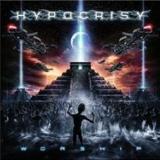
With governments finally admitting that UFOs do in fact exist, and humanity attempting to heal from a state of recent crisis, the timing couldn’t be more appropriate for the newest addition to the HYPOCRISY catalog: WORSHIP, due to be released Fall 2021 via Nuclear Blast Records. Aptly titled, the album cover shows a mass of humans reaching up mindlessly to the sky as glowing spaceships shaped like the HYPOCRISY crosses sigil beam down to descend upon earthen civilizations and Mayan temples. Designed by artist Blake Armstrong (Kataklysm, In Flames, Carnifex, etc.), WORSHIP’s artwork speaks to the history of the relationship between humanity and extraterrestrials. “They’re coming back to collect,” explains founder and HYPOCRISY mastermind Peter Tägtgren.
A track entitled CHEMICAL WHORE breaches the subject of pharmaceutical addiction, and those who engineer it. “We are all chemical whores. We regularly consume prescriptions and drugs because we think we need it; we use one pill to heal the damage done by another medicine... it’s a vicious cycle.” Musically, it’s the only song that was written by all 3 core members of the band and translates into a recognizable, mid-tempo HYPOCRISY sound much like ERASER or FRACTURED MILLENIUM. Traveling from Sweden to Russia, the band also shot an official music video for CHEMICAL WHORE.
The DEAD WORLD music was written by Peter Tägtgren’s son, Sebastian. “We actually started to write an album together, something like 11 or 12 songs, but we never put any vocals in there and we just sort of set it aside. Then when I started writing HYPOCRISY I realized I really liked the song… it feels fresh. I think my kid got some new blood in there.” While the song comes equipped with a modern feel, the writing is still old fashioned at its core. Going into detail about the illuminati and black ops government, the lyrics examine how miserable these figureheads and theories can make us. “Call it fantasy, call it sci-fi, there are plenty of conspiracies in the world but I find these ones interesting,” explains Tägtgren.
GREEDY BASTARDS is another track outlined by simplicity and catchiness. Chugging riffs encapsulate a sound that almost verges on the realms of thrash while still keeping its feet firmly planted in the world of death metal. The lyrics touch on the greed and methods of control that we see various governments around the world today; how they manipulate people against one another and abuse the masses.
For Tägtgren, the inspiration to write new HYPOCRISY comes in waves. “I believe we were out on tour for another project and I began to get hungry again. I started spitting out some new riffs and when I had 7-8 songs done, I invited the rest of the guys to join me and contribute, and from there we started putting everything together. We had a break for a few months, continued recording, went back on tour… it never stops. There was a lot of jumping back and forth, and then COVID came and things got really weird.”
Tägtgren was one of the many musically inclined who was forced into sudden isolation upon the onset of COVID 19, only for Tägtgren, this is common practice when creating new songs. “A lot of things in the world stopped, and it was time to finish everything I hadn’t finished.” As usual, all recording and mixing took place at Tägtgren’s home studio in Sweden.
It has been 8 long years since the last record, and HYPOCRISY fans can feel the itch. WORSHIP is 11 tracks of precise, ferocious musicianship. Commonly inspired by the fusion of the modern and the ancient, HYPOCRISY has once more found a way to combine innovative ideas with classic sound in order to deliver something metalheads can enjoyably consume with awe and brutal vigor. HYPOCRISY is Peter Tägtgren (Lead Guitar & Vocals), Mikael Hedlund (Bass Guitar), and Reidar “Horgh” Horghagen (Drums).
"Nido de Espinas" is the fourteenth studio album by Buitres. Uruguayan Punk Rock band formed in 1989, heirs to the legacy of the iconic Post Punk band "Los Estómagos" It began to be composed in 2022 and was recorded in early 2024. The texts are inspired by the Diary of a Desperate Heart, an arbitrary overflow of feelings written disorderedly with an improvised rein, which demanded exhaustive work from the band to reach maximum expression in each track. Artistic production was handled by Ale Vázquez (Spinetta, Intoxicados and more) and Sebastián Teysera (La Vela Puerca), who landed the runaway chariot set on fire. buitres formed in late 1989, following the dissolution of the group Los Estómagos, a band that sparked a new era of Uruguayan rock in 1983. José "Pepe" Rambao, a close friend since childhood, joined the Parodi-Peluffo duo. Buitres has toured extensively throughout the entire Uruguayan territory and has participated in massive international shows both in Uruguay and abroad. Additionally, they have completed six tours across Spain, where the album En la Vuelta (CD and DVD) was released. Their discography features 14 studio albums. They have released three live albums, two documentary DVDs, and three live DVDs. Three books have been published about the band. The band has received numerous acolytes and awards, but most importantly, after more than thirty years, they continue to maintain a close and emotional relationship with their audience - one that has endured throughout their history and grows over time. For this reason, the band dedicates their absolute best effort to every new work and every performance. "Nido de Espinas" is their new Studio album. These are wild and excessive times. Perhaps this statement applies to our life history just as it did to ordinary people in bygone eras. However, we assimilate the changes, adapt, and move forward. Nothing new under the sun. We grew up assuming static realities without trying to understand that they were newborn and would not last forever. The "forever" was declining into premature obsolescence. Every accessory is fleeting in the dizzying change of language.
The fourth chapter of The Third Room's curator-led series is shaped by Freddy K, one of techno's most enduring and uncompromising voices. Through decades behind the decks, an unwavering commitment to vinyl culture and his work with Key Vinyl, he has helped shape a generation of artists rooted in functionality, precision and a direct connection to the dancefloor. For his curation, the focus lies on alignment. The selection brings together artists who reflect that same discipline: a reduced but expressive approach, stripped to essentials yet rich in detail. With contributions from Toobris and Sons of Hidden, both previously featured on Key Vinyl, the release also reflects the long-standing artistic relationships behind his vision. Bat by Toobris opens the record with a powerful, straightforward statement. Driven by a steady pulse and minimal elements, the track feels alive through its control - direct, efficient and highly expressive without excess. Before Mirrors by Sons of Hidden continues this direction while expanding into a more spheric space. Tension is held consistently, with subtle accents carefully placed to shift the energy and draw the listener deeper into the track. On the B-side, Clouds Cream by Quelza stands out as a more intricate and exploratory piece. Deep and immersive, it unfolds through detailed sound design and evolving structures. Rather than relying on repetition alone, the track develops its own internal logic - balancing complexity with clarity, and allowing each element the space to contribute to a larger whole. Closing the record, Swing of Time by Jin Synth shifts into a rougher, more moody territory. Subtle pitch modulation and shifting textures create a sense of instability, giving the track a distinctive edge while maintaining its functionality. Across all four tracks, the release remains focused and cohesive - built on reduction, tension and control, but carried by small, defining moments that shape its movement. A1 Written and Produced by Lennard Miessner | A2 Written and Produced by Sons Of Hidden | B1 Written and Produced by Leo Na?t A?ssa | B2 Written and Produced by Jin Synth Mastered by Ahmet Sisman (The Third Room Studios) Artwork by Charlotte Ernst Design by Daniel Bornmann (STUEDIO.XYZ) Distribution by Clone Pressing by Matter Of Fact
out of Stock
Last delivered 2 days ago available to reorder, subject to availability
Crossing borders between traditions, sonic territories, and instruments, musicians Tomáš Niesner and Aldana Duoraan created their first collaborative album Plot. The sound of khomus meets guitar melodies simplified into pentatonic scales, intertwining in a dialogue that remains playful while moving between meditative passages and bewitching, hypnotic moments. Solid yet ever-changing, these melodies explore a delicate relationship between the present interactions, their past, and possible futures. “I feel that the essence of our collaboration is not to close the songs off, but to leave them open so that they can develop and be interpreted a little differently each time, depending on the circumstances,” Niesner explains when describing the duo’s artistic approach. The recording therefore captures only the most essential moments and ideas, which continue to unfold in new directions during live performances.
Each segment of Plot, word meaning “fence” in Czech, while also referring in English to a narrative structure or hidden plan, represents a different constellation shaped by the pairing of specific khomuses and guitar tuning. The track titles, such as The Key of Radiance or The Key of Humbling, are inspired by the ancient Chinese text I Ching (usually translated as Book of Changes). Like the classical cosmological text itself, the compositions meditate on similar fundamental principles. The ideas explored in the chapters of the I Ching are thus loosely translated into musical language. Themes of Radiance, Attending, or Nearing thus loom over the reflective realm of Aldana and Tomáš.
The two musicians first met in 2021 through a collaboration organized by Konektiv, an event series that aims to create new connections between genres and musicians with diverse backgrounds. Aldana Duoraan is a Prague-based artist born in the Sakha Republic, whose experiments with the khomus (also known as the jaw harp) draw on the traditional music of her homeland. Tomáš Niesner, a sound artist and guitarist based in Brno, navigates the realms of American primitive guitar while incorporating influences ranging from folk to drone. Because the duo rarely finds themselves in the same city, an important moment in the development of Plot was a showcase at Cafe OTO, organized by mappa. The album, capturing the fleeting energy of this encounter and several others, has now been released on the Slovak experimental label, which helped bring the collaboration to life.
Great Television unfolds as a loose, emotionally driven narrative about navigating love, identity, and self-destruction against a backdrop of memory, movement, and Southern imagery. It begins with “Sunset Promenade,” where a deep, possibly lifelong bond offers comfort amid internal turmoil, establishing a desire for connection strong enough to withstand a restless mind. This sense of identity expands in “Girls of Atomic City,” where independence and womanhood are celebrated, though tinged with performance and uncertainty.
As the story progresses, songs like “Okeechobee Mud” introduce instability and intensity, portraying relationships that are passionate but corrosive, where love becomes inseparable from pain. “Thiokol Tripwire” honors the lives lost in the 1971 Thiokol Chemical Explosion and those affected in the south Georgia community of Woodbine. “Razorwire Wall” reinforces this devotion to chaotic love, suggesting loyalty even in destructive circumstances. A turning point arrives with “The Easy Kind,” where Cook reflects on attempts at self-repair, acknowledging her contradictions and rejecting simplicity in favor of a more fractured self-understanding. This awareness deepens in “Caldonia and The Love Convoy” and “In Your Veins,” where freedom blurs into recklessness and love takes on addictive qualities, revealing her complicity in cycles of harm. “19th Nervous Breakdown” provides crucial context, tracing her instability back to a turbulent upbringing marked by neglect and emotional disorder. “Feverfew,” leaves the narrative unresolved, as she recognizes her repeated attraction to destructive paths yet continues to follow them. In contrast, the closing track “Lightly” offers a rare glimpse of pure, protective sisterly love. Altogether, the album portrays a cyclical journey of longing, damage, and partial self-awareness, where clarity emerges but transformation remains uncertain.
15 pop songs about animals by 15 of the best indiepop bands in the world: Pets Sounds is as simple as that. Ranging from the playful (Sassyhiya, Gay Skeleton Club) to the heartbreaking (Caleb Nichols, Jetstream Pony) to the enigmatic (Railcard, Oh Hippo) to the satiric (The Magnetic Fields, Brian Bilston and The Catenary Wires), there's more diversity on this album than you can shake a stick at. Or throw a bone at. The LP comes with a full colour insert and the CD comes with a booklet featuring artwork by Elodie Ginsbourg. Musicians spend a lot of time working at home, with their pets for company. The pets sit around, happy in their own worlds, sublimely indifferent to their humans' endeavours. As familiar as family members, but as unknowable as aliens, pets are the perfect muse. They can be treated as objects of adoration - `Rufus' by Tugboat Captain is an expression of pure joy - or they can be treated as metaphors. More reliable than lovers but less dangerous than heroin, pets are a great vehicle for singing obliquely about something else. Swansea Sound's `I Don't Like Men In Uniform' is about an ageing, irascible terrier, but it's also about men striving to maintain their potency as territorial aggressors. The Magnetic Fields' `Fido, Your Leash Is too Long' is a libidinous and unreliable partner, as well as a dog that likes sniffing other dogs' private parts. For the most part, animals come off better than humans on this album. In `Kings Of The Animal Kingdom', The Burning Hell dramatise our indulgent love of pets in order to expose our cruelty to other human beings. In `Bo's New Haircut', The Cords express the injustice and unfairness of an innocent animal having to submit to human demands. In `Crayon Potato' by Sassyhiya, the magnificent Crayon contemptuously rejects the gifts offered by her besotted human owners. In `Lola', the opening track, Lande Hekt tries to put this enigmatic human-animal relationship into words. And concludes that however much we love our animals, and no matter how much we manage to communicate with them, we can never really know them. A melancholy conclusion maybe, but the music - as with all the songs on this album - is expressive of the wonderment and the joy that comes from sharing your life with a member of another species. The tracks by Brian Bilston and The Catenary Wires, Jetstream Pony and Railcard are previously unreleased. These three bands are also playing a launch show at The Water Rats, London, on 9th July 2026.
Nollman and his cohort took a considered approach to developing sonic relationships with the orcas and other animals they encountered, always keeping a respectful distance as they found one another with their ears. Orcas' Greatest Hits collects hydrophone recordings drawn from over 60 hours of interspecies collaboration recorded between 1985 and 2002, showing the playful ways in which Nollman engaged the orcas from the portable studio floating above their home. What we hear is the focused listening by the cetaceans and humans as they search out sonic space among one another, finding in that dialogue potential common ground for deeper understanding.
There are two version of the LP - limited to 100 numbered copies with transparent wax and classic black wax edition. Both 180g with special OBI strip.
Maciej Envee Goliński is an artist who probably needs no introduction. He has been working with U Know Me practically since the label's inception. His last album ("Time & Light") made a huge impact worldwide, but we had to wait eight years for the next vinyl release. In the meantime, Maciej has certainly been busy – he has released numerous club singles under several aliases, and has helped record and mix numerous albums from the world of jazz, soul, and electronica. "Wyszymory" is a carefully crafted concept album, inspired by our roots. "Wyszymory" is an album on which every open-minded listener will find something that has been playing in their soul for a long time...
"Of all things visible and invisible, my life is most filled with music and a fascination with sound. It matters not whether they are natural or artificial, isolated or resonating through space. Sounds that evoke
memories, as well as those entirely new. Some of them have resonated unchanged for thousands of years. Certain resonances and rhythms have remained unaltered for generations so distant that they have left no other trace in human civilization.
This bond with our ancestors truly fascinates me. Ever since I realized it, I have become more attuned to inspiration. Listening to traditional and classical music, I kept finding new anchor points. I was constantly surprised by new invitations to ponder what connects – or divides – the pulse of our region’s traditional music with the rhythms of Africa, the tribes of the vast East, or the frozen North. My great authority, Tomasz Stańko, in interviews conducted by Tomek Michałowski, used beautiful parables of love and creativity to bring me closer to the Cro-Magnon cave artists. The Icelandic literary magician Andri Snær Magnason, in his book On Time and Water, captivated me with the fascinating observation that through emotional contact, words, ideas, or memory, we reach back and forward two or even three generations – spanning a period of about 270 years. Then there is Sam Kowalski, who with his wonderful obereks played on the gitalele, took me on a hypnotic journey, from which one returns with a deep admiration for the art of musical storytelling, passed down from generation to generation. Finally, my own children surprise me with talents, behaviors, and increasingly distinct features of those generations that now dwell only in my hazy memory and on old photographs.
I wanted the protagonists of this album to be the very phenomena that modern humans share with their ancestors, regardless of the level of civilization. Most vital among them is the relationship between humans, nature, and their own emotions. Wyszymory has nothing to do with an academic study, though I did delve into Slavic mythology, archaeology, and history in search of inspiration. Nor is it an album of traditional music, even if such music is present thanks to wonderful instrumentalists. I managed to invite artists who cross boundaries daily, working not only with Polish music but also with Hindu and African traditions, and even jazz, with its long history of blending influences. Naturally, the album became a kind of sonic comic book, where individual scenes and stories – the sounds, pulsations, and ideas on how to use them – came to me over time, often under unique circumstances and in inspiring contexts."
Envee