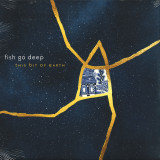
KITCHEN. LABEL is proud to present AGATE, the latest album by Japanese artist MEITEI, marking a deepening of the world he first shaped through his Kofū trilogy released between 2020 - 2023.
Named after the mineral agate, a stone formed through slow accumulation, pressure, and time, the album reflects MEITEI’s patient approach to sound. AGATE brings together extended and newly rearranged works from across the Kofū cycle alongside new compositions and passages, refining material developed through years of performance and sustained practice.
The album presents seven tracks:
HAŌ (Previously unreleased track)
SHIN-OIRAN (Remodeled from Oiran I, Kofū 2020)
SHIN-SADAYAKKO (Remodeled from Sadayakko, Kofū 2020)
SHIN-WAROSOKU (Remodeled from Wa-rōsoku, Kofū III 2023)
KYŪGEKI (Remodeled from Shinobi and Akira Kurosawa, Kofū II 2021)
SHIN-OIRAN II (Remodeled from Oiran II, Kofū 2020)
SHIN-EDOGAWARANPO (Remodeled from Edogawa Ranpo, Kofū III 2023)
Across these works, MEITEI expands the musical vocabulary first introduced in Kofū, a sound he once described as “lost Japanese mood.” While Kofū drew from fragments of folklore, theatre, ghost stories, and forgotten urban memory, it was never an act of historical reconstruction. Rather, it reflected a sensibility of the past observed from the present. With AGATE, this worldview is clarified as Shinpu, a process of discovery in which historical awareness becomes a foundation for contemporary creation rather than a constraint.
During five years of Kofū tours across Japan, Europe, and Asia, MEITEI performed this material in a wide range of spaces, from underground live houses and listening rooms to culturally significant sites. These environments influenced pacing, dynamics, and structure, shaping how the material evolved over time. AGATE is therefore not only a studio album, but the result of material refined through repeated performance.
If the Kofū albums were windows into forgotten eras, AGATE explores what lies beneath, sediment and strata formed through time and pressure. MEITEI’s approach to sound mirrors the nature of agate itself. Grains become texture. Texture becomes narrative. Voices drift through decaying layers of sound, while ancient instruments are used in non-traditional ways, forming distinctive percussive rhythms and melodies that appear and vanish without fixed resolution.
The album’s visual materials were developed under MEITEI’s direction through physical art-making processes. The cover artwork originates from a letterpress print created by Kamisoe, a Karakami atelier in Nishijin, Kyoto, using Kyo-karakami paper. The original artwork, produced through traditional woodblock techniques on handmade washi, was subsequently reproduced on print for the album edition. Kamisoe continues to reinterpret this historical Kyoto craft with a contemporary sensibility.
The title calligraphy was created by Bio Xie, whom MEITEI personally invited to participate in the project. During his performances abroad, MEITEI encountered in Taiwan a lingering atmosphere reminiscent of “Shitsunihon” — a sense of old Japanese memory that quietly endures beyond time. He was deeply drawn to Bio Xie’s distinctive use of Chinese characters, which resonated with this experience, and asked him to contribute to the visual expression of AGATE.
In parallel, MEITEI continues to reinterpret Japanese sensibility through his concept of “Shitsunihon,” presenting it as a contemporary musical language. The refined Kyoto motifs envisioned by Kamisoe and the distinctive calligraphic expression by Bio Xie intersect with MEITEI’s singular artistic direction, weaving together a newly articulated worldview.
The accompanying visual imagery, including the liner photographs, was created by photographer Hiroshi Okamoto, who was also responsible for the visual direction of MEITEI’s previous work, “Sen'nyū.” It draws from MEITEI’s lived experiences of winter seas, solitary cliffs, and breaking waves. These scenes symbolize the inner conflicts of the ten years he spent living in Hiroshima, and his confrontation with solitude and the sounds he creates.
AGATE will be released on 17 April 2025 via KITCHEN. LABEL on 180g vinyl, CD, and digital formats. The album is mastered by Kelly Hibbert, known for his work with Flying Lotus, Madlib, and J Dilla.
With AGATE, MEITEI returns to the material of Kofū with greater focus and discipline, continuing an ongoing process of working forward with inherited material.
Поиск:reminiscent mood
Все
- 1
It’s True What They Say is the debut EP from Edinburgh-based, husband-and-wife duo Sarah/Shaun (pronounced simply Sarah Shaun), aka Sarah and Shaun McLachlan (pronounced “McLochlin”).
“Sarah and I both have a love for nostalgia,” explains Shaun. “We watched that amazing old 80’s Sci-Fi, (John) Carpenter movie, Starman, a few months back. Myself and my brother David used to watch it all the time. We must have been, roughly, 5-7 at the time. I remember loving the movie but the end, you know, with the beautiful, atmospheric, synth ending, I love that particular moment the most - best part of the movie, you know, when he goes home… It’s heartbreaking but stunning, all the same. It’s the music that moves you most… It did when I was 5 and it still does to this day. It must have had some form of a (much deeper) impact on me.”
The duo narrates stories across themes of love, hope, family, friends, dreams and sadness - the good that comes with the bad in everyday life, not just on a personal scale but within a community as well.
“Starbed is the first song I have ever written and just came out of the blue really, with Shaun playing a melody and me singing along,” says Sarah. “It’s simple and just about two people in love. Love songs are always the best songs, after all… Music has been a big part of my life from a young age. I was unwillingly dragged to piano and violin lessons, which I’m thankful for now! I’d say the first band I really became obsessed with growing up were the Beatles, and on the back of that a lot of 60s music and fashion. From then on, I had a love for music.”
“Shaun definitely opened my ears to a lot of sounds and got me thinking about soundtracks and all the noises that can be made,” she goes on. “We love just spending time experimenting in the house with instruments, pedals etc and Ali is a real magician to work with, too…”
The recordings took place over the summers of 2022 and 2023, with fellow Delta Mainline member Ali Chisholm (aka Jaguar Eyes) plus long-term friend and collaborator Gavin King. Further collaboration then came via the ‘net from the (international) likes of Chris Dixie Darley (Father John Misty), Darren Coghill (Neon Waltz) and Daniel Land (The Modern Painters), among others (see a full list of credits below).
Both Sarah and Shaun have a love for uber-soundtrack producers such as Hanz Zimmer, Max Richter, Cliff Martinez plus live acts such as Beach House, Spiritualized, M83, Suicide, Moby and OMD (to name a few). Shaun also credits the work of Kyle Dixon & Michael Stein (from Survive) on the Stranger Things score… “Even a moment in a movie, whether it be just 30 seconds during a particular scene, it grips you,” he says. But there’s something much deeper at play as well. “Music is a healer,” he goes on, “and I write from my own perspective but more so for others. Once I've done my bit, it doesn't belong to me any longer. It belongs to whoever wants it or needs it.”
The result is a cinematic, synth-wavey, dream poppy and downright beguilingly beautiful body of work. And they’re just getting started…
REVIEWS/RADIO/FEEDBACK:
“Starbed is folky, flavoured by pedal steel, cello, and brass. Dust Tears, in stark contrast, is a mini synth-pop rave epic. Part Bicep. Part Human League. Keep Your Eyes Closed summons a mood that’s romantic, but also dark and potentially doomed – like David Lynch’s Twin Peaks meets Cliff Martinez’s Drive score. My pick though is It’s True What They Say, whose interwoven jangle and picking recalls New Order’s more introspective moments (Love Vigilantes, Love Less… ). Drums crashing, cathartic. Guitar raising dramatic arcs. Its chorus a rush, like a reprise of Pains Of Being Pure Of Heart’s ‘Higher Than The Stars’.” BAN BAN TON TON
"Dust Tears sees them sharing vocal duties over a synth foundation reminiscent of Moby’s Go - Artist Of The Week” THE SCOTSMAN
"Woozy pop" NEMONE (Mary Anne Hobbs Morning Show, BBC 6Music)
"Nice one, very David Lynch meets Euro dream pop" YOUTH (Killing Joke, Paul McCartney, U2, The Orb, Spiritualized etc)
"Music sounds killer! Real emotion” DAVID HOLMES
"I’m enjoying it” TIM BRINKHURST aka LONDON (IKLAN, Young Fathers, Callum Easter)
“Oh, this is lovely!” SEAN JOHNSTON (A Love From Outer Space)
"It’s totally my cup of tea with milk and biscuit" BRENT RADEMAKER (Beachwood Sparks/GospelBeach)
"Beautiful, ecstatic electronica! Short and to the point" KEVIN BALES (Spiritualized, Julian Cope, Soulsavers, BE)
"Makes me wanna sit in the sun and sip an Arnold Palmer" CHRIS DIXIE DARLEY (Father John Misty)
“Really beautiful - Cocteau Twins / Spiritualized vibes but has its own thing going on, too - worth checking out!” JULIAN CORRIE (Franz Ferdinand, Miaoux Miaoux)
‘Sounded nice on a sunny day, makes me think of Twin Peaks, nice moods’ EAMON HAMILTON (Sea Power)
"Dealing in nostalgia, no bad thing at all, great to play that (Dust Tears) for you” RODDY HART (BBC Radio Scotland)
“I'll give the vocal tracks a spin before the release." VIC GALLOWAY (BBC Radio Scotland)
"Rather good!" IAIN ANDERSON (BBC Radio Scotland)
CREDITS:
Lyrics, Guitars, Keys, Synths, Drums, Drum Programming, Percussion, Mandolin, Glockenspiel: Shaun McLachlan
Lyrics, Vocals, Keys by Sarah McLachlan
Guitars, Synths, String Arrangements, Drum Programming, Engineering: Jaguar Eyes Percussion/Drums/Effects, Fire Extinguisher: Darren Coghill (Neon Waltz)
Guitars by Daniel Land
Slide Guitar by Chris Dixie Darley (Father John Misty)
Brass by Bruce Michie
Keys, pre-production & engineering on “It’s true what they say”: Gavin King
All produced by Jaguar Eyes and Shaun McLachlan and then mixed at Glasgow’s Chem19 Studios by David McCaulay (From Scotland With Love, Rick Redbeard, BBC TV’s Attenborough and The Mammoth Graveyard score).
Artwork: Jamie Walman (Fourteen Admirals)
MORE INFO:
Although Shaun released a pair of solo singles (When We Dance and Give Your Love To Me) during Lockdown, he will be better known to many via his work as the multi-instrumentalist in Edinburgh band Delta Mainline. With two albums released to date, Oh! Enlightened and Bel Avenir, both rapturously received by fans and critics alike, Delta Mainline have developed an international, cult following. Oh Enlightened (2013) achieved widespread critical acclaim on release, earning the band comparisons to Arcade Fire and Echo & The Bunnymen, while 2019’s Bel Avenir pulled in references to The Flaming Lips, Pink Floyd, David Bowie and krautrock. A third DM album is currently being mixed and due for release later this year…
The breakout underground star of the past year, the deservedly hyped Thought Leadership returns with another X ideas: the deck this time chooses the suit of Cups. This new collection is closer to the Post-Punk tonality of Pentacles, than the breezy Balearic Jazz of Swords. Gone are the brushed drum samples and airy synths and in their place are BIG guitars, 808 thumps and a decidedly more prominent use of bass as a melodic device.
As the suit of Cups reflects the emotional heart of the Tarot, presented within are a further X pieces, this time displaying the full range and fervour of Thought Leadership.
You know the drill by now. Originally out on cassette only, we present the first ever vinyl issue. It's a hideously limited pressing of 300 for the world, so don't sleep on this.
Side A explores the emotional levels of consciousness; angst, joy, love, sorrow, relief, regret – they are all represented across the first seven tracks, and often within the same piece. XXI kicks us off with a huge tumbling D minor passage, layers and layers of guitar front and centre, whilst the drums pound away in the distance. Release is provided with a gorgeous G Dorian section, where we hear the bass take flight with a high melodic line.
We’re still in familiar Durutti Column meets Dif Juz territory here, but things switch up with XXII. This piece showcases a darker, more angular palette of guitars; think Alan Rankine (The Associates), or Deb Demure (Drab Majesty) in the unexpected harmonic shifts, knotty arpeggiated patterns and heavy, goth-adjacent modulation. A real love letter to 45+ years of darkly inclined guitar heritage.
XXIII enters the fray with tight, thumping 808s and Marr-esque guitar figures; and again, the bass providing heavy melodic counterpoint to the guitars. Enter chiming, lyrical lead phrasing, reminiscent of the eternal opening to "Everybody Wants To Rule The World". Another accidental perfect pop moment from the Thought Leader. Whilst on the topic of Tears For Fears, XXIV comes swinging out of the gate with some serious Sophisti-chug; we’re reminded of "Shout" in the A section, before being beautifully juxtaposed in the B section with more Vini-eqsue patterns, reminiscent of his timeless classic, Another Setting.
XXV gives us welcome pause to take stock midway through the A side. No drums this time, but instead a heartbreaking conversation between two guitars; think Kevin McCormick and David Horridge’s masterful Light Patterns, or perhaps even the early solo-Bill Connors mid-70s cuts for ECM. The moment of quiet reflection passes, and is quickly shattered by the thudding march of XXVI – this piece comes across like The Associates playing "Wicked Game"; heavy, moody, and utterly compelling. XXVII ends our journey across Side A with more Marr-inspired playing; one for the heads and already featured on mixes, this one is real testament to the vision of Thought Leadership.
Side B again takes us on a trip through three long-form semi-improvised pieces. XXVIII is like those classic Jonny Nash, early Melody As Truth releases, slowly unfurling, additional details introduced deliberately piece by piece, this idea builds across 7+ minutes culminating in some utterly joyous ebow fireworks at the end – well Balearic.
XXIX again, like XXV before it, dispatches the drums with a focus purely on melody and mood. The piece feels like a lost Save Room Theme from the Resident Evil series, pure golden age Capcom Sound Team vibes. Unadulterated aural nostalgia for hours spent with a PS1 in haze of hash.
XXX completes this majestic voyage with another Modal exercise; this time the Thought Leader has opted for the Lydian Mode. Beautifully dreamy, undeniably Soundtrack-y, and arguably the most concise distillation so far of everything this project stands for; drum machines, guitars, pedals, one-take improvised solos – XXX has the lot, and is surely destined for greatness.
So, another X epic statements for guitar, homespun with the humblest of means, for all the dreamers out there. The first ever vinyl release of IV Of Cups has been carefully remastered by Be With's engineer Simon Francis to ensure it sounds better than ever after its initial tape release. Cicely Balston's expert skills have made sure nothing is lost in the cut at Abbey Road Studios whilst the records have been pressed to the highest possible standard at Record Industry, in Holland. The original tape cover artwork, so crucial to Thought Leadership's striking visual aesthetic, has been rejigged for vinyl issue here at Be With.
The last 2 LPs flew. You have been warned.
Commissar Lag - Absolution EP (Earwiggle)
The 38th Earwiggle release comes from one of our favourites, and a debutant on the label, Serbian studio supremo Commissar Lag. The "Absolution EP" finds Lag delivering his playful vision of techno, dipping into the past while also pointing us to the future, all framed through an exquisite production gleam. Dense, rolling rhythms reminiscent of early '00s Stockholm techno, combined with a catchy repeating vocal sequence (one of Lag's trademark techniques) and rising sirens, result in the monster opening title track "Absolution". "Aim Without Mercy" is another club destroyer - jabbing keys, broken jagged beats, and a series of rising pressure points making it another winner. "The Blessed" meanwhile, shifts the mood from mental to majestic, with interchanging leads and reverb-drenched climaxes marking the big-room peak of the record. Rounding things off is Irish wunderkind Dylan Fogarty, who reimagines "Aim Without Mercy" through a deep and psychedelic lens, layering textural collages over surging, jacking
909s.
2026 Repress
When Guy J launched his new label, Early Morning, it was clear each release would carry his signature intensity. Now, with this third release, Guy J continues to prove that Early Morning is an intimately personal venture.
Comprising nearly 15 minutes of music, the material presents a hypnotic experience through two meticulously crafted tracks. The opener, Silver Lake, showcases the hallmarks of his style, building layer upon layer until the arrangement transforms into a dynamic fusion of deep emotion and unbridled energy. With a controlled balance of musical motifs, frequency shifts, and refined arrangements, the track oscillates between moods, culminating in an exhilarating high made to ignite the dance floor.
The second track, Evo, opens with a melody-infused bassline that nods to the 1980s, interwoven with synths reminiscent of early Frankfurt's electronic scene. Overlaid with vocal elements evoking meditative depth, Guy J uses every technique in his repertoire, shifting unexpectedly between structured sequencing and bursts of psychedelia. The track takes listeners on an immersive, unexpected journey.
This third release from Early Morning solidifies the label's vision, promising a bright future for dance floors worldwide.
ROTCIV is back with his new EP ‘Memory’, which marks the 20th release on Beartrax’s label Melodize. Throughout the record, the Berlin-based and native Brazilian producer explores his signature dark, mysterious, and atmospheric vibes shaped by the underground and queer club nights and dance-floors that fuel his sound, refined by over almost 30 years behind the decks.
Maintaining Melodize’s specialized sound deep-rooted in moody electronic principles, the EP opens with ‘Memory’, a piercing, dark, synth dynamic alongside rich tonal textures in both harmony and melodies alike. Unapologetic, yet calming and reminiscent of a slow drive through the winter nights; cold, yet bold, sharp, and comforting.
First to remix ‘Memory’ with a nostalgic, synth-heavy 80’s remix is Frankfurt-based DJ, producer, and visual artist Chinaski. Integrating his signature bold synth hooks into the track, Chinaski knows how to roll in with longing sentimentality. The remix features a bouncier approach with re-envisioned acoustic percussion and catchy synth arps, along with an eery dark disco feel.
On the B side, Rotciv kicks in with ‘Trintage’, which gives a sinister sensation with its hypnotising bass synth lines alongside contrasting, choir-like pads. Seeping with articulate poly-rhythmic synth arps, Trintage guides the listener to be indulged into a dream-like state on the border between both digital and analogue soundscapes, blurring the lines between fantasy and reality.
Next up is New York-based and founder of Samo Records, Facets, who takes on the next remix for ‘Trintage’ with a more electro-grunge techno approach consisting of heavier four to the floor kicks in company of Rotciv’s hypnotic textures. Having shifted the synth melody rhythmically, a sense of space and tension is created within the soundworld of this track. The play between gritty bass-end synths along with softer, textured high-ends helps emphasize the groove injected into this remix.
One last remix of ‘Memory’ by Melodize’s own label founder, Beartrax, rounds out the EP. Available exclusively via digital bonus, Beartrax features his deeply hypnotic aesthetic by driving in ethereal synths alongside cosmic arps and slow-rolling rhythmic and pulsating groove lines.
Helsinki based newcomer DJ Sofa debuts on Up Ya Archives Records with the release of 'Lionheart’, the title track to their forthcoming EP, landing on the 12th November 2025.
Drawing inspiration from pioneering duo Digital & Spirit, ‘Lionheart’ channels a moody, mysterious energy. Driven by an organic-meets-machine dub sensibility, the track weaves hypnotic chants and meditative basslines into a soundscape that’s both harsh and mesmerizing. Letting the amen break breathe, ‘Lionheart’ captures an emotional intensity that runs throughout the wider EP.
Rooted in a love for 90s and early 2000s jungle, DJ Sofa’s production pays homage to the era’s raw sound and spirit whilst pushing it forward. Conceptually, the record explores bravery, self-determination, and finding strength in uncertainty. It’s a personal statement of resilience and creative growth from an artist carving out their own path.
Despite operating under this alias for only a few years, DJ Sofa has already made waves with standout releases on Future Retro, with a Tim Reaper collaboration titled ‘Helsinki to London Connection’ and N4, Straight Up Breakbeat, and Ruff n Tuff. Alongside other statement releases which are reminiscent of nineties jungle and their childhood love of The Prodigy, their performances at iconic nights such as Rupture London have cemented their rising status in the scene.
'Stronger' sees legendary House and Soul vocalist Peven Everett team up with antipodean beat wizard and rising star Inkswel for this soulful, genre bending single. Peven known for classic vocal house anthems, underground neo soul full lengths, and works with the likes of pop luminaries the Gorillaz.
Inkswel the prolific producer known for Hip Hop to experimental club musings with an extensive list of collaborators from Moodymann to Talib Kweli, Crazy P to Amp Fiddler.
The pair blend harmoniously on 'Stronger'. Inkswel's main Boogie Mix centers around heavy gated drums, prince esque basslines and lofty pads whilst his rework with long time collaborator Leonard Charles takes things into Broken Beat leanings reminiscent of 2000 Black, Bugz In the Attic and IG Culture . The single gets the remix treatment from legendary NYC producer- DJ Spinna with his Intergalactic soul rework and then a genre bending polish from up and coming Aussie House and Techno producer Ed Temple.
STRANGER STILL was Julian Cator (guitar), Paul Cator (piano, organ, synthesizer), Tim Warnes (bass), Frank Warnes (vocals, drums) and Ian Johnson (vocals, drums) from King’s Lynn, Norfolk, UK. The two sets of Cator and Warnes siblings had been playing together in bands since 1974, with Ian joining in 1979, and with their musical style evolving from glam influenced rock to punk/new wave (punk came late to Norfolk) and finally post-punk, influenced by Ultravox!, Magazine, Joy Division, Bauhaus and Killing Joke. Their first gig together was in September 1979 with John Peel being in the audience. The Solitude/Survivor single was recorded in July 1981, released in November and sold well locally. John Peel played Solitude, between singles by Winston and Screen 3. When Julian left in autumn 1981 the others continued, later changing their name to Nothing Sacred. Ex-members have since played in a number of other bands, most notably Paul and Tim in Shine!, and Julian and Paul in Ivy.
Solitude opens in a perfect analogue way with a ‚primitive’ rhythm machine pattern and a dark synth sound fading in. We shall be glad for the band’s move towards electronics while knowing „given the negative reaction we got from some of the local bands when we got the synth a Moog Satellite“, quoting Julian. When the real drums, guitar, bass and vocals also come in, you’re in for one of the most perfect post-punk songs, yet playful but ultimately bleak. “And then I can feel nothing more. Alone again, with no sensation.“ Survivor is more uptempo and bass-driven, reminiscent of early Death In June (who came later though). Lyrics like “4 minute warning warning – the sound of today. Our new dream world – Enola Gay.“ set the mood there.
The band composed a dozen of songs, demos to get gigs, which were unfortunately never recorded properly in a studio. So these are demos or rehearsal tracks, never released to the public and presented here for the first time ever as an additional 15 tracks download-only (due to the poor sound quality). You’ll find fantastic tracks like Brave New Berlin or Cardiac Arrest, which is reminiscent of Death In June’s In The Nighttime, and then, there is a demo of Solitude too!
Here’s to a piece of post-punk history!
Nearly two decades after it was first released, Norken’s sleek cult classic album ‘Our Memories Of Winter’ is being reissued on vinyl via Hydrogen Dukebox on 6th December 2024.
With its unique sonic blueprint of early 2000s electronica, ‘Our Memories Of Winter’ is a record that is at once both deeply reminiscent of a particular era and place, yet remains a timeless invocation of Norken’s idiosyncratic palette of minimal, techno, house and British IDM.
This vinyl reissue presents all 12 tracks from the original release, with the inclusion of 'Df23' and 'Flirt' making this the first time that ‘Our Memories Of Winter’ is available on vinyl with the complete album tracklisting.
Norken is one of the many pseudonyms of Lee Norris, a producer who is considered by those in the know as one of the unsung heroes of UK electronica. With a slew of releases throughout the years as Man-Q-Neon, Nacht Plank, Norken, Tone Language and Metamatics, this reissue shines a light on his soulful, immersive output under the Norken name.
As Norris explains, “The release of ‘Our Memories Of Winter’ has a nostalgic, warm feeling for me. I made his album in a garden shed with a wood burner, an Atari computer and a few synths in the depths of an English winter. I still had the thought process of making emotional style techno that would warm any soul on a cold day.”
First released in 2005, ‘Our Memories Of Winter’ carries the echoes of electronic luminaries such as the Detroit ambient techno of John Beltran, through to the immersive atmospherics of Biosphere and the innovative IDM of fellow British outfits Autechre and The Black Dog. Yet as Norken, Norris retains a distinctive musical voice that has continued to deepen in stature over the years since the album’s initial release.
Opening with the brief intro cut ‘Fern 2’, the album slides into the dreamlike groove of ‘Memories’, where rich, resonant chords wrap around cool, galactic-sounding synths and a compelling bass undertow.
On ‘It Might Have Been Rain’, that signature bass texture again propels a luxuriant mid-tempo rhythm, while Norken layers in hypnotic washes of string-like synths, gentle electronic pulses and the brief murmur of a vocal, across seven-plus immersive minutes.
Vocal textures, often subtly looped and distorted, also add a distinctive depth and personality to tracks like ‘Eastern Soul’ and ‘Here’. Throughout the album, there’s a feeling of intricate microcosms unfurling, as Norken coaxes a myriad of contemplative moods and emotions from his machines.
Whether shaping the smooth, lulling ambient gauze of ‘Ty Canol’, or letting the kaleidoscopic, dancefloor-leaning drive of ‘Audic Strable’ loose like a coiled spring, ‘Our Memories Of Winter’ presents the singular voice of an artist whose innovative contribution to UK electronic music has only become heightened with the passing of time.
It’s True What They Say is the debut EP from Edinburgh-based, husband-and-wife duo Sarah/Shaun (pronounced simply Sarah Shaun), aka Sarah and Shaun McLachlan (pronounced “McLochlin”).
“Sarah and I both have a love for nostalgia,” explains Shaun. “We watched that amazing old 80’s Sci-Fi, (John) Carpenter movie, Starman, a few months back. Myself and my brother David used to watch it all the time. We must have been, roughly, 5-7 at the time. I remember loving the movie but the end, you know, with the beautiful, atmospheric, synth ending, I love that particular moment the most - best part of the movie, you know, when he goes home… It’s heartbreaking but stunning, all the same. It’s the music that moves you most… It did when I was 5 and it still does to this day. It must have had some form of a (much deeper) impact on me.”
The duo narrates stories across themes of love, hope, family, friends, dreams and sadness - the good that comes with the bad in everyday life, not just on a personal scale but within a community as well.
“Starbed is the first song I have ever written and just came out of the blue really, with Shaun playing a melody and me singing along,” says Sarah. “It’s simple and just about two people in love. Love songs are always the best songs, after all… Music has been a big part of my life from a young age. I was unwillingly dragged to piano and violin lessons, which I’m thankful for now! I’d say the first band I really became obsessed with growing up were the Beatles, and on the back of that a lot of 60s music and fashion. From then on, I had a love for music.”
“Shaun definitely opened my ears to a lot of sounds and got me thinking about soundtracks and all the noises that can be made,” she goes on. “We love just spending time experimenting in the house with instruments, pedals etc and Ali is a real magician to work with, too…”
The recordings took place over the summers of 2022 and 2023, with fellow Delta Mainline member Ali Chisholm (aka Jaguar Eyes) plus long-term friend and collaborator Gavin King. Further collaboration then came via the ‘net from the (international) likes of Chris Dixie Darley (Father John Misty), Darren Coghill (Neon Waltz) and Daniel Land (The Modern Painters), among others (see a full list of credits below).
Both Sarah and Shaun have a love for uber-soundtrack producers such as Hanz Zimmer, Max Richter, Cliff Martinez plus live acts such as Beach House, Spiritualized, M83, Suicide, Moby and OMD (to name a few). Shaun also credits the work of Kyle Dixon & Michael Stein (from Survive) on the Stranger Things score… “Even a moment in a movie, whether it be just 30 seconds during a particular scene, it grips you,” he says. But there’s something much deeper at play as well. “Music is a healer,” he goes on, “and I write from my own perspective but more so for others. Once I've done my bit, it doesn't belong to me any longer. It belongs to whoever wants it or needs it.”
The result is a cinematic, synth-wavey, dream poppy and downright beguilingly beautiful body of work. And they’re just getting started…
REVIEWS/RADIO/FEEDBACK:
“Starbed is folky, flavoured by pedal steel, cello, and brass. Dust Tears, in stark contrast, is a mini synth-pop rave epic. Part Bicep. Part Human League. Keep Your Eyes Closed summons a mood that’s romantic, but also dark and potentially doomed – like David Lynch’s Twin Peaks meets Cliff Martinez’s Drive score. My pick though is It’s True What They Say, whose interwoven jangle and picking recalls New Order’s more introspective moments (Love Vigilantes, Love Less… ). Drums crashing, cathartic. Guitar raising dramatic arcs. Its chorus a rush, like a reprise of Pains Of Being Pure Of Heart’s ‘Higher Than The Stars’.” BAN BAN TON TON
"Dust Tears sees them sharing vocal duties over a synth foundation reminiscent of Moby’s Go - Artist Of The Week” THE SCOTSMAN
"Woozy pop" NEMONE (Mary Anne Hobbs Morning Show, BBC 6Music)
"Nice one, very David Lynch meets Euro dream pop" YOUTH (Killing Joke, Paul McCartney, U2, The Orb, Spiritualized etc)
"Music sounds killer! Real emotion” DAVID HOLMES
"I’m enjoying it” TIM BRINKHURST aka LONDON (IKLAN, Young Fathers, Callum Easter)
“Oh, this is lovely!” SEAN JOHNSTON (A Love From Outer Space)
"It’s totally my cup of tea with milk and biscuit" BRENT RADEMAKER (Beachwood Sparks/GospelBeach)
"Beautiful, ecstatic electronica! Short and to the point" KEVIN BALES (Spiritualized, Julian Cope, Soulsavers, BE)
"Makes me wanna sit in the sun and sip an Arnold Palmer" CHRIS DIXIE DARLEY (Father John Misty)
“Really beautiful - Cocteau Twins / Spiritualized vibes but has its own thing going on, too - worth checking out!” JULIAN CORRIE (Franz Ferdinand, Miaoux Miaoux)
‘Sounded nice on a sunny day, makes me think of Twin Peaks, nice moods’ EAMON HAMILTON (Sea Power)
"Dealing in nostalgia, no bad thing at all, great to play that (Dust Tears) for you” RODDY HART (BBC Radio Scotland)
“I'll give the vocal tracks a spin before the release." VIC GALLOWAY (BBC Radio Scotland)
"Rather good!" IAIN ANDERSON (BBC Radio Scotland)
CREDITS:
Lyrics, Guitars, Keys, Synths, Drums, Drum Programming, Percussion, Mandolin, Glockenspiel: Shaun McLachlan
Lyrics, Vocals, Keys by Sarah McLachlan
Guitars, Synths, String Arrangements, Drum Programming, Engineering: Jaguar Eyes Percussion/Drums/Effects, Fire Extinguisher: Darren Coghill (Neon Waltz)
Guitars by Daniel Land
Slide Guitar by Chris Dixie Darley (Father John Misty)
Brass by Bruce Michie
Keys, pre-production & engineering on “It’s true what they say”: Gavin King
All produced by Jaguar Eyes and Shaun McLachlan and then mixed at Glasgow’s Chem19 Studios by David McCaulay (From Scotland With Love, Rick Redbeard, BBC TV’s Attenborough and The Mammoth Graveyard score).
Artwork: Jamie Walman (Fourteen Admirals)
MORE INFO:
Although Shaun released a pair of solo singles (When We Dance and Give Your Love To Me) during Lockdown, he will be better known to many via his work as the multi-instrumentalist in Edinburgh band Delta Mainline. With two albums released to date, Oh! Enlightened and Bel Avenir, both rapturously received by fans and critics alike, Delta Mainline have developed an international, cult following. Oh Enlightened (2013) achieved widespread critical acclaim on release, earning the band comparisons to Arcade Fire and Echo & The Bunnymen, while 2019’s Bel Avenir pulled in references to The Flaming Lips, Pink Floyd, David Bowie and krautrock. A third DM album is currently being mixed and due for release later this year…
Orlando Voorn, the famed Dutch DJ/producer that embraced the Detroit electronic sound from the early nineties, has graced us with three OG sounding tracks that we are proud to offer! As a tribute of respect and thanks to Mr. Voorn, we aptly titled this EP - Legendary (limited run 300 copies, special thanks to Small Black Dots, Analogcut, and R.A.N.D. Muzik).
This release has a mood for any part of the night.
Whassup! is an upbeat banger, somewhat reminiscent of a ghetto tech track, with its repetitive morphed vocal; Inner Self is a foray into the deeper side of dance music - both quite dancefloor friendly. Sparkles is a beautiful techno ambient dreamland, perfect for an intro or a reset.This EP is rounded out by a sick avant garde remix of Inner Self by Abstracta Audio's co-founder, Loner.9 of Detroit Techno Militia.
Hanagasumi Records presents the fifth release, this time you will hear multi-genre electronic music in compilation format from wonderful artists who have their own unique and inimitable musical vision. Many of the artists previously released on labels such as Udacha, Rough House Rosie, Kimochi, Runout, Resonance, Faktura.
On the cover you see the numbered minerals of one large gem, the mineral number is also the track number. Minerals come together to create something beautiful, just like the tracks on this album.
The compilation opens with the instrumental track "Kamerton" by Shine Grooves, which combines classical piano playing with atmospheric synth sounds. The second track "Gods Gave" by Seal Bient & Jon'Smu is filled with mystery and melodic sequences that gently fall on electro rhythms. Continuing the journey, we come to the third track - "Caleidoscope" from the legendary band Bipolardepth, very fragile and thin sound matter, reminiscent of crystals, is connected with an ambient mood. The fourth track "The Sun Changed To Rain" is the work of two musicians - Michel and Shine Grooves, the composition is filled with house percussions and magical synth parts, but has a relaxing effect. The last track on side A is "Smelles" by Psor, you will hear house rhythms, lots of delay and vocals - first class dub! The second side is opened by the melodic IDM track "Muy Fragil" by Jon'Smu, atmospheric melodies are combined with broken rhythms and futuristic percussion. The second track "Fabrika" from the live improvisational band Ryabina is filled with crystal clear sounds, electro rhythm and cosmic chimes. The third track "Kwas" by Ronin combines a very slow and deep house groove that runs very smoothly through synth sequences. The fourth track "Lionwave" from the mysterious musician Phoboz, is an incredibly beautiful dub techno that slowly leads to hypnosis. The album closes with the ambient track "Runout 08.03" by X343 - a loop-shaped synth sequence that can run endlessly in your head.
Part 2[20,97 €]
he year 2020 saw NNHMN release two stellar EPs, Deception Island I & II. A fascinating vintage exposure with a true minimalist approach. The typical melodic strings, dry snares and icy sequences are reminiscent of the 80s.
Each EP is a solid work of incredible dark electronica teetering between cold-wave, post-punk, minimal-synth and other related genres. The nocturnal, synth-driven production is led by Lee’s captivating and compelling vocals, whose seductive and sardonic delivery is inescapably entrancing.
Deception Island as a whole taps into a variety of moods and is of course undeniably dance floor friendly. Physically released by Oraculo Records as two separate vinyl EPs, both vinyl editions again quickly sold out. LONG CUT vinyl by Connor Dalton.
Mood Child label owners Sirus Hood and Manda Moor curate a sonic journey featuring global talent as they proudly present their latest compilation, ‘Various Moods’. A kaleidoscope of experiences, the release showcases six tracks from diverse artists, each contributing their unique vibe to this eclectic musical package.
Hailing from Brazil, Wayne Le’s ‘This is How’ pays homage to the origins of electronic music with a rolling bassline and a vocal tribute to classic Roland machines, the 808 and the 303. The track’s energy crescendos, making it a highly sought-after ID. Spanish duo Fourth Phase brings ‘WTF’ to the compilation, a groovy masterpiece characterized by 909 drums, a massive bassline, and a playful vocal, reminiscent of the 90s. From Curitiba, Brazil, guerrA. presents ‘Storno’, a fast-paced old-school beat that weaves chopped vocals from a rap DJ tool into a groove enriched with analog drums and a powerful bass sound.
A fusion of French and Taiwanese influences, Nathan Alzon’s ‘Flashback’ captures the essence of a new beginning. The track features a vocal saying “take me away”, blending seamlessly with the groovy sound characteristic of Alzon’s productions. Representing Mexico, Gama delivers ‘Tatata’, an explosion of Latin percussive elements blended with a hypnotizing groove. Inspired by his hometown Cancún, Gama experiments with new rhythms and sounds, infusing a significant Latin influence into the track. Marseille’s Malikk, known for his releases on Hot Creations and Hottrax, collaborates with Palermo-based Side B. The duo draws inspiration from '80s disco, funky, soul, and retro movies, crafting ‘How I Feel’ with punchy drums, a heavy bassline, and unique grooves.
Over three years after the release of his latest record, Belgian singer-songwriter Bram Vanparys finally returns with breathtaking new music. His songwriting has often drawn comparisons to the music of Bob Dylan and Neil Young, but the new record 'Silent Days' reveals that Vanparys has been on a journey into new musical territory.
After 'Wild Flowers' (2015), which he recorded in Los Angeles with Ray LaMontagne's former live band, Bram Vanparys kept his guitars locked away in their cases for months. Too many questions had been bothering him and soon he found himself struggling with his musical direction and his artistic integrity. Partly so because he felt that his almost archaic approach on songwriting was pushing him down a dead end street and partly because his interest in rich and complex arrangements started to grow stronger. In 2016 he bought an old trailer and went living in the countryside to work on his new sound. A harsh winter and a tragic breakup with his wife set the mood for a new set of songs and soon Vanparys started recording again.
'Silent Days' comprises both classic songwriting reminiscent of the old masters such as Leonard Cohen and Bob Dylan and on the other hand dark, complex arrangements that refer to late Talk Talk and even Radiohead. Guitars were played with kitchen knives and the heavily manipulated acoustic sounds reveal that Vanparys might have been listening to Kurt Vile. Bram's lyrics are deeply honest, touching, but never sentimental and his once so angelic voice now sounds hoarse and mature.
The Bony King of Nowhere is the pseudonym of Belgian singer-songwriter Bram Vanparys. He released his debut album 'Alas my love' to critical acclaim in 2009, which was followed by his second and most celebrated album 'Eleonore' in 2011. In the aftermath of 'Eleonore' he was asked to write the film score for the movie 'Les Géants', for which he was awarded by Les Magritte du Cinéma for best original soundtrack.
L
After the successful 7-inch release of Agip, Roman producer and composer Azzurro 80 is back on Four Flies with another triple-single that continues his love affair with dreamy synth-pop and Italian Eighties culture and society.
"Notte Inchiesta", on side A, could be the title music to an imaginary '80s investigative/true-crime program broadcast on late-night television. Clearly reminiscent in mood and texture of the soundtracks of late-70s/early-80s Italian detective-action films, it brings back the jazz-funk, post-prog and fusion overtones that characterized the music of those films. In short: a contemporary-retro sound nestled somewhere between Goblin's funk-oriented recordings, Azymuth's "Jazz Carnival", and electronic disco with a sprinkle of new wave.
Side B opens with "Equilibrio", which could serve as additional, more dynamic music for the same TV program mentioned above. The style is once againelectronic jazz-funk, but here we have abreak built upon a trail of notes chasing each other.
In contrast, "Sambuca", the single's closer, is deliberately nostalgic and melancholy. Perfectly suitable for visual narratives of an Italy that no longer exists, it sounds like one of those great Italian soundtrack themes that are able to convey tension and calm at the same time. The track is titled after the anise-flavoured liqueur that Italians often drink after their espresso, because "making references in my music to things that are part of our national popular culture is really important to me", as the artist has explained.
Drawing from a strong history of electronic influence, Tomashevsky has created his own underworld of foreboding techno. We enter this EP with Incoherent, which exudes ominous sounds - reminiscent of murky radar blips that may be heard deep underwater in the metallic bowels of a submarine. Bubbling electronic delays remain adjoined to these metronomic blips and oer lateral, spontaneous movement around an otherwise sturdy song structure. Jittery melodies scatter nervously under lead elements, remaining disjointed and resulting in increased energy and a darkened excitement.
As we move through the EP, we face ups and downs, both in tempo and mood. Leading on from the first, Rollback is destabilizing, energetic and mean in all the right ways. Wobbling low ends open into a mood of uncertainty, held in place only by the stability of the drums. Rollback suits a peak-time club atmosphere thanks to the gritty synth leads and fast-paced feel.
Ending with the two tracks on the B-side, Tomashevsky still seeks to surprise. Rejected seems to be a distant relative of the Incoherent, following the synthetic blip structure but allowing snares and other percussions to build more prominently. Finally, we arrive at the closing track which marks itself as more obscure. Leaning on kick drum patterns initially reminiscent of electro/breaks, the use of half-time tempo gives a change of pace and a platform for a slightly different song structure and mixing potential.
Mesmeric and entrancing, these songs give any DJ or listener to chance to turn mind chatter o and lock into a hypnotic groove. Drawing on classically techno foundations, Tomashevsky has tipped his hat to the founders of the genre whilst adding his own flavour and subtle techniques that make this EP shine.
Home is a powerful concept with an abstract definition. This solo album takes those subjective ideas and unifies them under one roof. Evolving from Jerve’s #dailypiano posts in 2019, ‘The Soundtrack of My Home’ relays thoughts and improvisations that trace his journey from childhood home to adult and now, father. Nurturing a mood or feeling, each song begets a sonorous story of someone close to him, expressed through the language of piano playing.
Jerve makes use of his hands as a human step sequencer, often programming two or more motifs of varying lengths in a polymetric fashion. These melodic patterns and arpeggios evolve at varying rates but grow around clear progressions with standard 8-bar forms.
The first track - ‘Kjetil’ enters with an earnest, gentle and endearing character - like a young river near its source. As with such a river, it will grow to varied sizes throughout the album but must begin as a humble expression from the source. The following titles sketch his interpretations of the people that have made up his home.
There is a theme across the album that unites the songs, so much so that differentiating tracks can at times be difficult. Though, Jerve punctuates this overarching mood with a few distinct structures, as found in tracks ‘Karoline’ (wife), ‘Espen’ (brother) and ‘Sven’ (father). ‘Turid’ (daughter) and ‘Jon Eirik’ (brother) seem less directive and welcome more intrigue, reminiscent of a curious child wandering through the dappled light of a forest.
‘Iben’ (daughter) and ‘Eivor’ (daughter) have a hypnotic, three-pointed melodic structure that leaves the listener suspended; transfixed - while ‘Sussi’ (cat) carries unique momentum and suitably feline autonomy. ‘Mette’ (mother) has a mood of ascending, like that of a child's upward gaze at their maternal carer. Utterly nuanced in structure, Jerve leaves ample space for subjective interpretation and allows the listener to weave their own life into the tones.
As expected from the founder of Dugnad rec - this album signifies a deeply personal sentiment. Sometimes we are forced to confront the music and other times, we are left to wonder. Here, we find a balance and unity that allows little thoughts and worries to drift away, bringing us warmly to rest in the present. The LP edition's bonus track features producer/performer extraordinaire Stian Balducci, drawing a line to the next chapter of piano-based music from Dugnad rec: TOKYO TAPES: PIANO RECYCLE.
Sheffield's thatmanmonkz is quite the sonic force to be reckoned with. With an impressive discography across the board, dropping his most recent album "Columbusing" on Delusions of Grandeur in 2016 and running his own successful imprint "Shadeleaf", we're very happy to welcome him to Dirt Crew and present his latest EP "Shade Throw". Kicking things off rough and ready in true Detroit "Hight Tech Jazz" style, "Manna for Poppa" is a Saxed up dance floor bomb ready for the taking. "Intrinsic Divine", a sonically soaring breakbeat outing lightens the mood a little, think classic trip hop meets modern deep house. The cinematic string arrangement is accompanied by freestyle piano and licks of ad-libbed sax over a steady kit. "Space Jam 2017" sees thatmanmonkz team up with New York City's Clyde Phalanx to create a pure psyched up space house outing. We can picture this one over a sun-drenched Balearic scenery or deep in a dark and smokey basement somewhere. Jazzy freestyle drums underpin a live guitar improvisation that gets truly nasty on this interplanetary journey. Slow and sexy is the tempo for the closing track. "Evolver" is a soulful disco burner reminiscent of Idjut Boys, grooving along with smooth RnB vocals and salacious keys while intoxicating strings lift the energy to pure cosmic goodness.
Madame E. is a musical setting of Georges Bataille's 'Madame Edwarda', a short novel that interlaces themes of eroticism, religiosity and death, and was written under the pseudonym Pierre Angelique in 1941, during the occupation of Paris.
Composer Mirco Magnani wrote eleven electronic pieces and presented them to actor/singer Ernesto Tomasini. They turned them into songs by adding vocal melodies and together they produced a libretto based on Bataille's French text. The result of their dynamic interpretation is a hypnotically spellbinding performance where the audience is transported through worlds - ancient and new - and where Tomasini's haunting falsetto conveys the tormented emotions in Bataille's work and becomes the instrument that articulates the writer's famously obscure themes.
The experimental operatic performance captures the atmosphere of heightened human passion, reminiscent of opera seria and revisited through hazy and minimalistic lens. The resulting dark and twitchy mood amalgamates old vintage electronic devices, string piano and Stella Veloce´s touching violoncello. The stage becomes a space where Eros and Thanatos, real and virtual, analogue and digital, cluster and melody, spirituality and technology are intermixed and turned unidentifiable, hence collapsing the binary logic of dualism.
Written by Magnani/Tomasini and produced by Mirco Magnani, with lyrics taken from "Madame Edwarda" by Georges Bataille, Madame E. was developed between Berlin and London where Magnani and Tomasini are respectively based. Recorded in Berlin, mastered by Murcof and released by Magnani's label Undogmatisch, a collective that also includes Nicolas Defawe (Urban Spree) and Valentina Bardazzi, the painter responsible for the album artwork.
First time reissue of JP / US free jazz rarity.
The 1970s were Marion Brown’s most searching decade, a period during which he sought to move beyond the free jazz of the previous era and find more personal approaches to structuring improvisation and composition. After leaving New York for Europe in 1967, Brown began reshaping his music into what he described as “a more deliberate kind of music that had more structure to it,” pacing it so that moods and modes could develop over time. Albums such as In Sommerhausen, Afternoon of a Georgia Faun, Geechee Recollections, and Sweet Earth Flying trace this evolution: rhythmic structures moved to the foreground, harmony receded, and composition became a matter of orchestrating interlocking rhythmic parts as one would polyphonic lines.
Released in 1976, Awofofora is an overlooked but crucial entry in that sequence. At the time, its use of funk and reggae beats, electric guitars, and grooves drawn from contemporary Black popular music led some to misread it as a jazz-rock detour. In retrospect, it is entirely consistent with Brown’s methodology. As he admired in the Art Ensemble of Chicago, the stimulus comes from within the community. Here Brown filters Afro-Caribbean rhythms and funk through his own sensibility, abstracting their structural qualities rather than adopting surface style.
“La Placita,” making its first recorded appearance, layers distinct rhythmic phrases in a manner reminiscent of African drum ensembles, over which Brown and trumpeter Ambrose Jackson spin extended improvisations. The standard “Flamingo” is reshaped through diasporic rhythm and lyrical soloing, while “Pepi’s Tempo” and “Mangoes” harness crisp funk and reggae grooves to generate what Brown called a “manifestation of community” through collective improvisation. Even the overdubbed solo feature “And Then They Danced” reflects his structural thinking, ingeniously re-voicing a duet composition for two alto saxophones performed by one player.
This was the only recording by a short-lived band that briefly polarized audiences during festival appearances in 1976. Yet Brown consistently sought unity across change: different sounds, same principles — rhythm as structure, melody as architecture, collective improvisation, and above all, the primacy of tone. Awofofora stands not as a departure, but as a vivid synthesis of the elements he had been refining since the late 1960s, its grooves and golden alto lines conveying a sound drawn, in his words, “from life and from the world of experience.”
Brooklyn-based techno experimentalist and filmmaker Michelle Roginsky (aka mother) joins Delusional Records with her first-ever musical offering, a cinematic concept EP that weaves medical anxieties into a thematic tapestry of arresting club sonics.
In A Simple Procedure, Roginsky evokes the bleak and euphoric duality of femme embodiment; the soundtrack to an unreleased body horror film narrated by ethereal ambience and driving dancefloor grooves. The title track begins with sweeping, densely-textured synths disintegrating into a foreboding bassline, humming steadily alongside tidal waves of ominous arpeggios and plodding drums reminiscent of 90s trip-hop. In Sublingual, body-shaking club drums become a vessel for distorted vocals and granulated textures as they pass through thick membranes of saliva-drenched bass. Metamorpher follows with a hypnotic 4x4 trip that metabolizes deep anxious grooves into a rave-ready wiggler, while Angel Gossip keeps the blood flowing with a pounding peak-time techno roller guaranteed to keep the floor locked. Finally, There Are Two Rooms sends us off with a pensive meditation of wailing synths and dark, Lynchian atmosphere... the final scene of a dream half-remembered upon waking from anaesthesia.
NYC's Laenz delivers the epilogue with a shaking, subterranean remix of A Simple Procedure, injecting the opening track's textures into the fissures of deep and trembling grooves.
With its darkly seductive moods and high-concept execution, A Simple Procedure is a perfect addition to Delusional's genre-ambiguous catalog of queer and femme-forward sonic offerings.
- A1: I Need A Break
- A2: Little Claws
- A3: Kill The Lie
- A4: Set In Motion
- A5: Wrong Shape
- B1: Don’t Gotta Think About U
- B2: No Regular No Chance
- B3: Everything’s Under Control (Feat. Pink Siifu)
- B4: Really Really Right
LA-based producer Real Bad Man and LA musician Genevieve Artadi announce their new collaborative album Everything Is Under Control, out October 3rd via the producer’s own Real Bad Man Records. Alongside the announcement, the duo are sharing two new singles from the forthcoming album, “Don’t Gotta Think About U” and “Little Claws”. The former is an electro pop banger that propels Artadi’s intoxicating vocals to the forefront and arrives with an accompanying visual. With Everything Is Under Control, Real Bad Man is proving his versatility as a producer, crafting intricate and lively electronic-forward foundations for an old friend in Genevieve to explore an eclectic, funky approach to her vocals.
Speaking about the single, Artadi says, "'Don’t Gotta Think About U' is about a person celebrating the explosion of her most recent unhealthy romantic relationship. Her spitefulness and delusion of freedom indicate she’s still inside the pattern she hasn’t yet realized she keeps signing herself up for. The sound is melancholic pop, the thread that has always tied Adam and me together despite our musical differences."
"I love juxtaposing dense drums and a very pretty voice," Real Bad Man says of collaborating with Artadi. "That’s what 'Don’t Wanna Think About U' is. We’re also trying to make something catchy at the same time, that’s what I’ve always been drawn to musically is blending genres and moods and get them to work together. As well as pulling Genevieve away from what she does with Knower and her solo stuff.
Real Bad Man’s collaboration with Artadi is a radical shift in approach for the producer, whose previous full-length projects this year were rooted in the distinct strain of underground hip-hop that he’s amassed an extensive catalog in. Everything Is Under Control marks an entirely different, and unpredictable, sonic approach for the duo, embracing experimentation and synth-led electronica that’s reminiscent of Artadi’s work as part with Pollyn (her former band with Adam/Real Bad Man) as well as current duo KNOWER with Louis Cole. Real Bad Man’s latest project extends his prolific run of collaborations this year, embarking in a new genre and sound entirely after releasing full-length projects with ZelooperZ (Dear Psilocybin), Boldly James (Conversational Pieces) and Willie The Kid (Midnight) in the first half of 2025.
Known for her complex, yet playful writing style, Genevieve Artadi has made a name for herself through four solo albums that stretch the gambit of jazz, dream pop and dance music. The last three albums were released on iconic label Brainfeeder Records and the fourth (Another Leaf) was made as part of her being a composer-in-residence with Sweden’s Norrbotten Big Band. She’s also been an accomplished collaborator with her bands Expensive Magnets, Pollyn and KNOWER, and performing and recording with the likes of Thundercat and Snarky Puppy.
Check out “Don’t Gotta Think About U” and “Little Claws” above, see below for more details on Everything Is Under Control and stay tuned for more from Real Bad Man coming soon.
- A1: Les Marie Louise
- A2: Ces Gredins De Légumes
- A3: Le Rêve De La Maison Dans La Maison
- A4: Coteau Caché
- A5: La Paix Du Dimanche
- B1: Ce Que Le Chien Veut
- B2: A Qui N'a Rien
- B3: Le Jus D'une Cerise
- B4: Sur Les Chemin De Contrebande
- B5: Les Morsures D'escargo
Vol.2[17,94 €]
With the album Cousin Zaka Vol. 3, Blundetto is closing the series he began in 2019, ending it on a psychedelic note.
A voodoo spirit of harvests, Zaka is the guardian of agricultural activities and, by extension, a protector of nature.
It is under his protection that Max Guiguet delivers his wandering music and instrumental escapades — those in-between states he strives to capture in his notebooks, mood journals composed between each album and collaboration.
Rooted in the landscape and nourished by long observation, it allows itself to distort, stretch and blur the outlines of this peaceful scenery.
For this last volume of Cousin Zaka, the atmosphere is psychedelic, hippie, and free.
A freedom drawn as much from the poetry of Francis Picabia as from that of musicians Pierre Barouh, Moondog, and Eden Abhez — free spirits whose work informed the composition of this record. The idea is to take a path and let oneself be carried away, to drift as one would during a long walk in the forest.
Cousin Zaka, Vol. 3 is a wide, gentle experience, reminiscent of 1970s freedoms.
KIK is the new project of two core strategists of sonic enigma HHY & The Macumbas: Jonathan Uliel Saldanha & João Pais Filipe. Ditching acoustic instruments in favour of drum synthetics & tightly controlled sound design, the duo's debut album NIGHTSHIFT focuses on off-kilter club tracks that thwart 4-on-the-floor flavours whilst maintaining trance-inducing extended cycles. If the devil is in the details, this is all about the spectromophology of the details.
Beginning with moving morse code blips in an odd time signature We Can't Dance announces the characteristic unlife of the album's pulse. Once the kick enters, syncopations progressively accumulate into a weave of interacting rhythmic lines. Smoke Machine's groove is reminiscent of the riddims Saldanha explores in his HHY & The Kampala Unit, adding scintillating pads and snippets of blitzed out laughter.
The album's third track, Proff, hearkens back to the initial pulse, displaced and pitched down in register. Here's a more meditative temperament on display, where the regular geometries of the club have been moved into higher-order structures. Segments rise & fall into earshot. Deepening the meditative mood, Back Room explores a short melodic leitmotif anchoring the track's wander- lust.
The rhythmic assault continues in Tactical Gear, bringing further experiments into polyrhythmic contours exacerbated by preci- sion movements of echo & delay. Limping can be heard as a what-if sonic fiction taking Autechre-inspired abstractions through Durbanoid Gqom terrains. The album closes with its longest track, Night Shift, that segments into shifting sound worlds.
Drawing from industrial grit, cybernetic percussion and the eerie fluorescence of after-hours energy, NIGHTSHIFT exists in the liminal space between body music and abstraction——a soundtrack for phantom warehouses and malfunctioning machines. This isn’t just music; it’s an immersive sonic environment, a journey into the heart of deconstructed dancefloors.
For fans of Rian Treanor, Proc Fiskal, Jlin and Lorenzo Senni.
Most recently, HHY has been collaborating with Nyege Nyege through projects such as Kampala Unit and Arsenal Mikebe, performing live with the ensemble alongside Valentina Magaletti, and producing records for artists like Fulu Miziki, as well as collaborations with Phelimucasi, Rey Sapiens, Kingdom Choir and others. He also released Camouflage Vector: Edits From Live Actions 2017–2019 on the label, a live album featuring two tracks with Adrian Sherwood.
Previous collaborations include Tunnel Vision with Badawi (released on Tzadik), the HHY & The Macumbas album Beheaded Totem on House of Mythology, and Fujako (Wordsound, with MC Sensational), along with double-bill shows with acts such as Clipping and Death Grips.
ATA Records are proud to present the new release by Work Money Death, A Portal to Here. This album continues WMD’s exploration of Spiritual Jazz and the sounds and styles that evolved out of the 60s New Thing, particularly the recordings of
Alice Coltrane and Pharaoh Sanders. The first WMD album released since the tragic death of ATA guitarist Chris Earl Dawkins in early 2025, all four tracks reference the journey that band members and the studio have been on – in many ways this record is a testament and tribute to Chris, his musicality and creativity.
Featuring WMD stalwarts Tony Burkill, Neil Innes, Sam Hobbs, and Sam Bell, the album introduces Sorcererskeyboardist Johnny Richards to the WMD sound. Richards brings a fresh new take to the piano role here, drawing on what is clearly a broad knowledge of jazz history and channelling that through his own unique 21st century musical perspective.
The album also features contributions from Alice Roberts on harp, bringing the spirit of Alice Coltrane, Ben Powling on baritone saxophone, Richard Ormrod on woodwind, and Kev Holbrough & Steve Parry on brass. Those Sun Ra-esque horn sections lift the mood whenever they appear.Standout tracks are the second, Dance of the Spirits, with a strong core of Baptism and The Blues and some lovely playing by Richards, and the third track, Brother Earl, which begins with Tony on flute over rhythms that are directly reminiscent of open-hearted, late-60s spirituality. Tony later moves to tenor and, as on all four tracks here, eventually builds to the peaks of shattering emotional intensity that fans of Work Money Death - and spiritual jazz in general - love.
Are you Looking for Love? Advice? Good Luck? Then you’ve come to the right place. Fortune Three, the third release in the Psychic Readings catalog, Peach continues to explore her sound bringing 4 tracks dedicated to the dance.
It starts with In Ur Dreams, an ode to the dreamers and lovers in your fantasies. Peach gives some subtle organ hits a whirl with deeper basslines and punchy drums. Next, a track inspired by and sampling an old Christina Aguilera interview, What U Got is a warm, beachy roller which is reminiscent of hotter temperatures. Pretty pads, shiny stabs, and a weighty bassline create an endlessly playful groove – a Peach signature.
On the flip, we see Brady’s Song mixed two ways – the first being the deeper cut of the two, Brady’s Song slowly unravels melody after melody, playing with sassy stabs and a bassline on the subbier side. The Afters Edit takes a more upfront and jacking approach, focusing on the ability of the bass to roll through the whole track – shimmering percussion and the same stabs from the B1 carry us through until the last second.
All the tracks are a testament to her many moods as a DJ. From club use to home listening, this is an EP dedicated to the dance.
Innitial pressing soul out at once, now repress in neon green vinyl colour available! Ride bassist Steve Queralt's debut solo album Swallow is a beautifully brooding nine-track collection that combines the darkly textured soundscapes of early M83 and Sigur Rós with an electronic sheen reminiscent of Boards Of Canada. It also features guest vocals from Sonic Cathedral labelmate Emma Anderson (formerly of Lush and Sing-Sing) and Verity Susman (Electrelane, MEMORIALS).Swallow has been slowly but surely pieced together between Ride albums and tours over the past five years and, perhaps as a result, has a slightly dystopian, Blade Runner feel that reflects the liminal spaces in which it was created. Despite the fact that the majority of the album is instrumental, there is plenty of power and emotion poured into these moody, moonlit soundtracks. When words do appear, an underlying anger and political slant emerges and amplifies the album's dark intensity. This is most notable on the closing track, `Motor Boats', where he overlays words from Julie Sheldon's polemic poem The Same Boat ("We're all in the same boat they say, but I would disagree"). According to Steve, these simple words of rejection "capture the reality of our times perfectly". However, it was the collaborations with the two guest vocalists that tied the whole thing together and paved the way to the finished album. "After a few false starts, I had started to doubt the project altogether. It was going nowhere," says Steve. "Then, out of the darkness, Emma got in touch to tell me that she'd found her voice and could I send her some tracks. A few files back and forth and an afternoon in the studio later and we had `Lonely Town' and `Swiss Air'."In the meantime, Verity from Electrelane had added vocals to the song `Messengers' and transformed the track. Matthew Simms, now her bandmate in MEMORIALS, would go on to mix the finished album."Swallow has turned out so much better than I had hoped," enthuses Steve. "I'd fallen out of love with it so many times I was thinking of calling it Loveless. But then, that wouldn't be the whole story...
Na Nich returns to his roots after a series of successful releases on respected labels such as Delsin, Semantica, On Board, and Fur:ther Sessions. The Ukrainian producer's latest EP pays tribute to his foundation in broken beats and bass music - the core of his craft before adopting the Na Nich moniker.
Co-founder of Rhythm Buro and formerly known as Sunchase, Oleksandr Pavlenko shifted from his decades-long bass music career towards house and techno about ten years ago. Yet those early influences never truly disappeared. On Your Curves, Oleksandr skillfully blends his bass-heavy legacy with the sonic palettes characteristic of his later work, merging two worlds into a cohesive sound.
The A-side opens with 'Unfulfilled Expectations', a deep roller rich with bass textures and mellow synths. It's followed by 'Everything', a slow burner infused with '90s vibes, featuring oldschool vocal samples and a drum pattern reminiscent of UK garage. On the flip side, 'Rain Inside' delivers the EP's grooviest moment, with broken beats crafted for the dancefloor and an intimate, close-your-eyes 4 a.m. mood. The title track, 'Your Curves', closes the EP with a deep and melancholic atmosphere.
This release stands out amid contemporary offerings, reminding listeners that essence always triumphs over form.
Since our first contact with NYC based producer Thavius Beck in 2018, he sent us over 100 unreleased tracks, or beats, as he calls them. 25 of them have been selected for releases on U-TRAX, good for over 2 hours of music, across this album and the Lovesick EP.
Growing up in LA, Thavius Beck entered the hip-hop scene as member of Global Phlowtations, and released several solo albums under the Adlib moniker. In later years, he released five albums under his own name on labels like Mush, Big Dada and Plug Research, and also produced albums for artists like Saul Williams and K‑the‑I???, and did some remixing for amongst others Nine Inch Nails.
Nowadays he combines making music with a career as a succesful certified Ableton and Bitwig trainer and as a music teacher at Berklee NYC.
The tracks vary in style a lot, but what they have in common is that they either are moody – in U-TRAX lingo: deep - or they are drum heavy. The common denominator would probably be 'experimental/instrumental hip-hop', reminiscent of producers like Flying Lotus. People have tried all sorts of comparisons to pinpoint Thavius' sound, ranging from 'between DJ Shadow and Orbital' and 'a mix of Massive Attack and The Orb'. None of these are spot on, yet quite a few of these tracks feel like a happy marriage between hip-hop beats and techno sounds.
Despite the fact that some tracks are 20 years old and have been made with widely different gear (one track was even made on a PlayStation 2), this selection sounds remarkably balanced, yet diverse.
From the irresistible single 'Lovesick/Still Sick' to the dark and massive 'Birdsong' (that echoes the sound of his popular song 'Atmos'), and from the head-nodding 'Work!' to the soothing 'Reunited With The All' - if this collection showcases anything, it's Thavius' brilliant production and composing skills, as well as his wizard-level sampling techniques. The result is a luscious electronic music album with a broad appeal.
Available on double 180 grams colored vinyl vinyl, comes in gatefold picture sleeve.
* 140gm vinyl in charcoal black reverse-board disco bag, with red/ hot pink/ blue/ off-white patterned wraparound sticker, and embossed play:musik icon on front sleeve.
* Kuttin Edge arrives on p:m with (115), a musically adventurous set that draws from a range of influences - West African funk, UK and US electronics, Autonomic moods, minimal techno, and Brutalism; while a focus on analogue feel, overdubbing, and textural detail processes tie it together. An interesting, experimental, yet firmly dancefloor friendly EP.
* Tracklist:
A1. Onyeabor: a unique track full of vintage-sound synths, bright melodic lines, Moog-style arpeggios, and rhythms built on a CR78, layered with live drums, tambourines, and bass guitar. Disco funk samples and fx add texture, alongside heavy overdubbing. Inspired by early William Onyeabor aesthetics.
A2. Dark Horse: Dark Horse: an atmospheric arrangement of phase-y pads reminiscent of the peak Autonomic era, filtered through the abstract lens of artists like Actress or King Britt. The pacing and negative space give the tune a weighty but airy feel, punctuated by heavy toms and documentary-style foley. Soulfully cosmic.
B1. Loop Me: polyrhythmic arpeggios, swirling delays, unstable harmonic structure, and chromatic movement form a tense, shifting progression. Built around a single bell sample, the track is reshaped through layering, modulation, subtle changes in texture, and filtered transitions. A techno stepper.
B2. Geiger Scale: experiments with playful but controlled randomness, minimal structure and off-grid sequencing. The idea centres on a toy synth with loose notes and laidback groove formed of irregular, rhythmic patterns. Geiger Scale perfects restraint as the arrangement bubbles along with sparse melodies. Smokey and potent.
Following the resounding success of the first volume, which sold 600 copies during its confinement, Aktshun returns with a second E.P. featuring 6 vibrant, eclectic tracks. This new opus is rooted in smooth Detroit house, high-energy disco-funk, the wild nights of Paradise Garage and the unique ambience of Bronx block parties.
The Aktshun duo, formed by Marotti - producer and creator of electronic instruments - and Marrrtin - DJ, graffiti artist, producer and member of Funky Bijou -, unite their passions for house, disco, hip-hop, funk and musical illustration to offer a rich and captivating sonic experience.
The first track, “Light Headed”, featuring the American singer Saucy Lady, priestess of modern funk, who has collaborated with E Live and J-Zone, among others, blends frenzied percussion, warm Fender Rhodes chords and a heady melodic chorus, ideal for rocking dancefloors this summer.
“Respect” offers a hybrid fusion of house and disco, where we imagine Moodymann crossing paths with Chromeo, buoyed by a hypnotic Moog solo.
“Vibration” pays homage to Loleatta Holloway and her iconic ‘Love Sensation’, evoking David Mancuso's legendary evenings at the Loft, between gospel and dance.
“Brokjazz” has a deep house vibe, blending tropical vocals with bewitching sensuality.
“Chaussette” offers an irresistible jazz-funk groove, while ‘Gonalate’ is inspired by classic disco-funk sounds, with a piano reminiscent of the legendary compositions of bands such as Change, D-Train and West End Records legends.
Finally, the cover of this new E.P. is signed by Brazilian artist NIHAO, bringing a unique and colorful visual touch to this musical creation.
Monde UFO follow the celebrated ‘7171’ album with a trip to the mysterious ‘Flamingo Tower’. In the shadows of the Los Angeles bustling music scene, the enigmatic collective led by visionary Ray Monde create a trance-like fusion of psychedelia and avant jazz, mantra-like evocations, brash moody ambience and passages reminiscent of long-lost library music.
Magnifying Monde UFO’s idea of musical chaos, their early sonic escapades into off-kilter exotica is now elevated with sweeping atmospheric waves of sound inspired by an eclectic brew of Arto Lindsey, Khan Jamal’s ‘Drum Dance To The Motherland’, Keith Hudson, Milford Graves, Marion Brown, Don Cherry and Lennie Tristano.
Cast deep into number theory with occasional quasi-religious touchstones, ‘Flamingo Tower’ bustles with background sounds overlaid with intimate melodies conjuring plenty of suitably strange illusions; a synthetic orchestra plays baroque pop, a guitar is set to auto destruct and Ray Monde’s hushed vocals carry a bracing narrative. It’s an evocative album, one for the heavy music nerds, sprinkled with ear candy and proliferated by mysterious numbers which litter the song titles.
“Monde UFO wander through a humid mist of exotic samba shuffles, shamanic whispers, and reverberating laser beam synthesizers.” New Commute
How would you like to hear it? This project is the brainchild of Andy Baxter, a multi-talented musician and multi-instrumentalist from London. His recording career began in 2018 when he released his first album, Green, on Village Live.
Buoyed by this initial recognition by his peers, he quickly released a second self-produced opus the following year, entitled Dusk. But it was his third LP, Shapes, released by KingUnderground, that took him to the next level.
Conceived during the first period of confinement, Andy played almost every instrument on the album (a few musicians joined in here and there): drums first and foremost, his instrument of choice, but also bass, guitar, keyboards and even the flute, which he had just learnt at the time of the album's creation. Largely inspired by the library music of the 70s, including some of his mentors such as Piero Umilani, David Axelrod and Brian Bennett, the album is nonetheless resolutely modern. But there's no denying the cinematic atmosphere that emanates from his compositions.
From the opening track "We're From Nowhere", with its heavy, funky bass, you get the impression of being plunged into the Harlem blaxploitation of the heyday, and you can't help but see a musical nod to Roy Ayers' "We live in Brooklyn, baby". But you soon realise that far from being a nostalgic musician, Baxter also listens to his contemporaries like Khruangbin and BadBadNotGood, as can be heard on tracks like 'Leaves', 'Odysea' and 'Ikigai', with their atmospheric guitars and Fransesca Uberti's haunting backing vocals, which instantly invite you to travel and escape! But there are times when the mood gets a little tense, like on the more angst-ridden 'Villains', with its almost free jazz flights of fancy. Finally, his drumming also comes to the fore on the last track, 'Stay Free', with its Afrobeat rhythm reminiscent of a certain Tony Allen and evoking creative freedom as a common thread running through his values.
In nine tracks, Shapes takes us on a neo jazz journey that once again demonstrates the vitality of the English scene in this field for several years now! At the start of 2022, Robohands released their latest album, Violet, on the same label, confirming all the good things we thought about them! By allowing a number of musicians to join him on this new opus, Andy Baxter has shown a willingness to work with more accomplished collaborators.
Founded in 2020 by Austrian producer Lee Stevens, Rising Seed has evolved into a joint venture with Ken Hayakawa and a collective of guest musicians. Blending Acid Jazz, Trip Hop, and Disco, the project bridges the warmth of live instrumentation with the depth of electronic production.
With a strong focus on recording and re sampling real instruments, Rising Seed crafts a rich, organic sound—where vintage samplers, drum machines, and analog textures meet hypnotic grooves and cinematic atmospheres. Inspired by artists like Moby, Kruder & Dorfmeister, and Massive Attack, their debut album True Lies unfolds like a layered collage, blurring the lines between past and future, truth and illusion.
The opening track, “Follow Me,” perfectly embodies this fusion: sampled instruments and vocal snippets blend seamlessly with live recordings of flute and saxophone, all set against a funky drum break. “Gone West” does the unthinkable—marrying a house groove with esoteric vocals, live sitar by Amrith Jan, and—why not?—a touch of harmonica. “Like A Lion” is a dub-infused downbeat track packed with crusty blues samples.
On “Freedom,” we hear a more minimalist side of Rising Seed, with a tight brush-drum arrangement and densely layered sitar melodies. Another high point is “Soldier of Peace,” featuring even more funky sitar and a subtle acid line, reminiscent of the early days of big beat. It’s followed by “True Lies,” which elegantly distills the downbeat sound of the late '90s while staying true to the Rising Seed formula.
“Psych Jazz” is, as the title suggests, both psychedelic and jazzy, albeit with a somber, low-slung trip-hop feel, while “Don’t Worry” is equally trippy yet more upbeat, carried by a moaning vocal sample that urges us not to worry. Finally, “Stay with Me” closes the album with a jazz-infused vibe that is both moody and uplifting, its shuffling drum groove and elegant piano melodies providing a fitting conclusion.
Matthew Herbert and drummer/vocalist Momoko Gill announce the release of new album Clay, via Strut Records in collaboration with Accidental. A soulful, elastic collaboration, Clay treads nimbly between the dancefloor and the more introspective moods of the early hours, both reminiscent of Herbert"s iconic album Around The House while taking off in a compelling new direction. Agile and open-hearted, Clay is a thrilling, sonically adventurous record from two of the UK"s most forward-thinking artists.
- A1: Pharoah Jones
- A2: Ghost Gospel
- A3: Ill Feeling
- A4: Capital Punishment
- A5: Do Not Adjust
- A6: Cool Green Trees
- A7: Chill Scratch
- A8: Poisonous Fumes
- A9: Welcome Aboard The Starship
- B1: Keep On Runnin
- B2: Sounds Impossible
- B3: Painted Faces
- B4: The Knew Style
- B5: Chicken Wing Blues Sauce
- B6: Kool Breeze
- B7: Sexx Bullets
- B8: Soul Child
- B9: Take Off Runnin
- B10: Centurian
- B11: Bozack
- B12: Church
- B13: Splash One
- B14: Hank
- B15: 73 Goatee
"Chasing the funky symphonies that filled my head and my dreams..."
December 25th, 2023 - an Instagram post. Stimulator Jones shared half a dozen FIRE tracks from his beat tape archive. We were immediately drawn to the rough hewn boom bap.
"I'd release that", Rob commented.
Hours of material was shared and the result is this: Cool Green Trees (1999-2005). A collection of beats and loops Stimulator Jones created between the ages of 14-20 at home in his basement, bedroom and computer room in Roanoke, Virginia.
You will not believe the profound soulful genius contained within these naive schoolboy melodies.
December 25th, 1998 - 25 years ago to the day and his much-coveted Yamaha SU10 sampler was finally bestowed upon young Stimmy AKA Sam Lunsford: "I immediately hooked up a CD Walkman to the input jack and looped the beginning two bars of Grover Washington Jr.'s "Mercy Mercy Me". I don't know what exactly was so thrilling about hearing two measures of music repeating over and over but it was so infectious and hypnotizing and enthralling to me. I'll never forget that ecstatic rush of making my first loop - an uncontrollable, gleeful smile plastered all over my face." When you hear the pocket breakbeat symphonies featured here on Cool Green Trees, you'll feel the same sense of frisson.
In the wake of his Stones Throw breakthrough - Exotic Worlds & Master Treasures - Stimulator Jones was pegged by many as a 90s throwback artist. However, he literally IS a 90s artist. He's been recording music most of his life and he's now 40. He created the bulk of Cool Green Trees as a teenager. Everything before 2004 was recorded when Sam was still in school. He was in 8th grade when he made the 1999 tracks - he didn't even have his learner's permit. This album is a snapshot of a young man in a simpler time. Things were still mysterious back then and he was flying blind, relying on his ears and having to figure things out for himself: "I had no road map for becoming a beatmaker. I have been collecting music since I was a kid, I am a lifelong digger and seeker of cool and interesting sounds. I was there in the golden age of Hip Hop, and while I may have been a suburban white kid in Roanoke, Virginia, I was tuned in and I bought so many classic albums when they came out. I was attracted to Hip Hop because of the musical and poetic quality. I was hypnotized by the rhythms, partially because I was a drummer. I didn't brag about collecting my breakbeat records or making beats - it was something I did in isolation. It wasn't something I generally wanted to bring attention to and it didn't really score me any cool points. I certainly wasn't flexing on social media about it."
Hell, he can do that now!
Opener "Pharoah Jones" was inspired by Yesterday's New Quintet and Madlib's ability to capture that classic 70s sound whilst playing all the instruments. Sam created this one stoned afternoon by laying down a 2 bar loop and a shaker loop on his Yamaha SU700 sampler. He hung a microphone from the ceiling and played his Yamaha Stage Custom drum kit over the top before adding ender Rhodes and playing his dad's Selmer tenor sax through an Electro Harmonix Memory Man echo pedal. Yes! Up next, "Ghost Gospel" utilises a dope loop from a gospel record and adds some soul-funk drums overtop, whilst working that filter knob. Says Sam: "The loop reminded me of something Ghostface would rap over. The sample was in 3/4 waltz time but I flipped it for a 4/4 groove, a technique I picked up from RZA. "Ill Feeling" uses sped-up pieces from a dusty old funk record and putting them over a classic NOLA drum loop; gain chopping up a slow, bluesy 3/4 time signature and bending it to a 4/4 groove. Classy shit. "Capital Punishment" features drums tapped in live, inspired by MF Doom's Special Herbs series. "Do Not Adjust" consists loops found on a compilation of 70s French music at Happy's Flea Market, a classic Roanoke digging spot.
The sublime, evocative title track, "Cool Green Trees" was created when Sam was still living at home. He dumped samples off his SU10 into the family desktop and arranged them in a demo version of Pro Tools: "This track was sort of my ode to the DJ Shadow style of sample based production. Super spacey, slow, and moody. The heavily filtered drums were inspired by Alec Empire's 'Low on Ice' album. I later added some scratches and sounds from a Spider Man storybook record." "Chill Scratch" snags the final bit of a bossanova record and pairs it with a drum loop before adding experimental scratching run through an Electro Harmonix Memory Man echo pedal. "Poisonous Fumes" was made using a sampler, mixer and a turntable; a kind of mixtape beat collage with added scratches and sounds from various records. Using dialogue from superhero records was a nod to Madlib. "Welcome Aboard The Starship" is dark, downtempo trip-hop with a spooky bent. Sam paired a slow, hard drum loop with a guitar sample grabbed off a psychedelic rock record. To finish, he added various backwards sounds and weird atmospheric effects and a little scratching. Swoon.
Side B opens with "Keep On Runnin", made on a borrowed Roland SP202 sampler. Having always loved the sound of the Lo-Fi filter on those machines, reminiscent of the Emu SP1200, Sam always imagined Del or another of the Hieroglyphics crew rapping over this beat. You can certainly hear why. "Sounds Impossible" sees Sam experimenting with layering multiple kick samples at different volumes to create patterns similar to those heard by Showbiz and Lord Finesse during their God-level 1995 period. "Painted Faces" was made by chopping up a REDACTED record which he had gotten from Happy's Flea Market and paired it with a REDACTED drum loop. By the time Sam recorded "The Knew Style", he had acquired a shitty old 1960s portable turntable off eBay. It didn't function properly when he bought it but his brother opened it up, cleaned it out and got it working: "I remember he told me that there was a bunch of sand inside of it when he opened it up, as if its previous owner had taken it to the beach. I would take that turntable on my Happy's Flea Market digs so I could preview records...that's how I found this loop."
"Chicken Wing Blues Sauce" loops up a classic blues joint and pairs it with some REDACTED drums. A bit of filtering and arranging et voilà! "Kool Breeze", from 1999, is one of Sam's oldest surviving beats, as is "Sexx Bullets". The Roots sampled the same record, leaving Sam frustrated yet vindicated. "Soul Child" was an early SU10 creation, looping a dusty old Soul Children 45 and pairing it with 70s rock drum loops to great effect. "Take Off Runnin" was another loop found digging with a portable turntable. Paired with some boom bap drums it makes for a hypnotic head-nod groove. "Centurian" was intended to be a little beat interlude a la Pete Rock. The sample is from a sun-dappled soft-psych record and it's paired with a Robin Trower drum loop that just happens to fit perfectly. Sometimes you slap things together kind of haphazardly and magic happens. "Bozack" was the first beat Sam made using Pro Tools, his first foray into using chopped sounds instead of loops, an exciting new world. "Church" is beat interlude using a Phil Upchurch loop with the "Long Red" drums - a favourite break of Dilla et al. Sam was really on a tear in late 2004, probably because he was unemployed and phoneless and able to just make beats all day. He made "Splash One" on a borrowed Yamaha SU700 and again was experimenting with tapping the drums in live with his fingers, instead of using a loop or sequenced pattern. Channeling 9th Wonder, Sam used a water splash sound effect from a Batman record as a percussive element, hence the title (also a 13th Floor Elevators reference). The main loop is a backwards portion of one of his favourite Roy Ayers songs.
"Hank" is another fun little beat interlude thing, created on a borrowed Roland SP202 sampler with the fantastic Lo-Fi effect that resembled the Emu SP1200 at a fraction of the price. "73 goatee", from 99, is another of his oldest surviving beats, created in his bedroom with his Yamaha SU10 and his brother's Vestax MR-300 4-track recorder: "This one will always feel special. I can remember having a feeling all the way back then on the night that I created it that this was a solid beat with a catchy loop. There was something in the Fender Rhodes melody that resonated with me emotionally, and I had never heard a producer sample that portion before. I felt like I had found my own unique sound, my own unique loop. It came from an Ahmad Jamal '73. I actually even recorded myself rapping and scratching over this beat way back then, I still have that version in all its imperfect sloppy glory."
Sam explains just how much these tracks mean to him: "They all have immense historical and sentimental value and I'm proud of them. These beats come from an innocent, simple time when I was just figuring out how to craft these sounds. They're something very personal to me. They are the initial part of a journey that I really was taking *alone*. There was no YouTube. I couldn't Google shit. I didn't even know any other beatmakers, producers or DJs in my town that could teach me anything. It was always just me, alone, in a room with some equipment - chasing the funky symphonies that filled my head and my dreams. What I was doing wasn't cool. Most of my peers thought I was a weirdo and couldn't care less. Creating these sounds was an anti-social endeavour. In a sense, I felt like it was me against the world, and all I had to instruct and assist me were the recordings produced by my heroes - RZA, DJ Premier, Erick Sermon, Beatminerz, Showbiz, Diamond D, Beatnuts, Prince Paul, The Bomb Squad, Pete Rock, Q-Tip, E-Swift, Mista Lawnge, DJ Shadow, Cut Chemist, Peanut Butter Wolf, El-P and so many more...I dedicate this collection to them, and to my older brother Joe who has always been a musical and technical guiding light for me.
This was a time before every kid was a self-described producer and beatmaker, before everyone had a DAW, before Kanye and "chipmunk soul", before Red Bull beat battles, before there was any social media beyond chat rooms and AOL Instant Messenger, before Soundcloud, before SP-404 mania, before lo-fi beats to study to, before Splice, before targeted ads for MIDI chord packs, etc. In 99 when I told people that I had a sampler and made beats I was mostly met with bewildered confusion and indifference. Kids and adults alike would wonder why I got this weird machine for Christmas instead of something worthwhile like a Playstation or a mountain bike or even a guitar for that matter because at least that could be used to make "real music". Back then, sampling was still not widely respected as an art form - it was seen as lazy, talentless and unoriginal at best and outright criminal theft at worst. I had gotten respect for playing drums and guitar and things of that nature but this was a step in the wrong direction in the eyes of many."
The cover photo is a picture of Sam standing on his back porch in the latter part of 1998, just before he got his first sampler. He was 13 years old, in 8th grade. His dad took the picture with his 35mm film camera: "I actually wanted to be pointing my dad's .22 pistol at the camera lens but he wouldn't let me. He gave me an old walking cane to use instead. The Tommy Hilfiger puffer jacket came from the lost and found at William Fleming High School where my mom worked as a secretary. I was thrilled when she brought it home because we never spent money on expensive name brand clothing like that - we were for the most part strictly a sale rack, bargain bin, thrift store, yard sale, flea market kind of family when it came to clothes. My watch is some cheap off-brand fake gold department store watch." Mastering for this vinyl edition was overseen by Be With regular Simon Francis and it was cut by the esteemed Cicely Balston at Abbey Road Studios to be pressed in the Netherlands by Record Industry.
- Mission Creep
- Lonely Town Feat. Emma Anderson
- High Teens
- A Porsche Shaped Hole
- Swiss Air Feat. Emma Anderson
- I Don’t Know How To Sing
- Messengers Feat. Verity Susman
- 1988:
- Motor Boats
Neon Green Vinyl[27,94 €]
Ride bassist Steve Queralt’s debut solo album Swallow is a beautifully brooding nine-track collection that combines the darkly textured soundscapes of early M83 and Sigur Rós with an electronic sheen reminiscent of Boards Of Canada. It also features guest vocals from Sonic Cathedral labelmate Emma Anderson (formerly of Lush and Sing-Sing) and Verity Susman (Electrelane, Memorials).Swallow has been slowly but surely pieced together between Ride albums and tours over the past five years and, perhaps as a result, has a slightly dystopian, Blade Runner feel that reflects the liminal spaces in which it was created.Despite the fact that the majority of the album is instrumental, there is plenty of power and emotion poured into these moody, moonlit soundtracks. When words do appear, an underlying anger and political slant emerges and amplifies the album’s dark intensity. This is most notable on the closing track, ‘Motor Boats’, where he overlays words from Julie Sheldon’s polemic poem The Same Boat (“We’re all in the same boat they say, but I would disagree”). According to Steve, these simple words of rejection “capture the reality of our times perfectly”. However, it was the collaborations with the two guest vocalists that tied the whole thing together and paved the way to the finished album. “After a few false starts, I had started to doubt the project altogether. It was going nowhere,” says Steve. “Then, out of the darkness, Emma got in touch to tell me that she’d found her voice and could I send her some tracks. A few files back and forth and an afternoon in the studio later and we had ‘Lonely Town’ and ‘Swiss Air’.”In the meantime, Verity from Electrelane had added vocals to the song ‘Messengers’ and transformed the track. Matthew Simms, now her bandmate in Memorials, would go on to mix the finished album.“Swallow has turned out so much better than I had hoped,” enthuses Steve. “I’d fallen out of love with it so many times I was thinking of calling it Loveless. But then, that wouldn’t be the whole story.”
SAISEI founder Junki Inoue continues his vital archival work uncovering the riches of Japan’s distinctive electronic music scene and bringing them to new audiences around the world.
HERO U.D.A. aka Hiroyoshi Udaka is not someone you can easily google, but he’s sure lived a life worth retelling. His story starts back in the late 80s when, inspired by the acid house emanating from the UK — during what was fondly christened the Second Summer of Love — he picked up DJing and made the move from Japan to London. Throughout the 90s he DJed at underground techno institutions like London’s The End, CLUB UK and Silver Fish, as well as at the infamous Tribal Gathering raves, periodically returning to Japan to support techno greats like Colin Dale, Mad Mike, Suburban Knight and D. Wynn on tour.
The tracks on this EP, previously unreleased except for one, were all recorded after Udaka moved back from London to Tokyo, between 2002 and 2005. Yet they sound strikingly modern, drawing on a rich range of sounds that have come back round again two decades later: broken beat, acid jazz, dub and breaks. Deceptively simple grooves are given depth by layers of textures and micro samples, for example the surface noise on ‘On The Way’ that glues together an otherwise sparse skeleton of dubby pads and body popping drums. ‘Mature Missile’, ‘So Good’ and ‘Night Driver’ employ raw broken beat templates with acid accents, whimsical melodies and vocal interjections for a playful mood. ‘Sin City’ takes a darker turn, off-key piano hits and plunging bass adding to the wonkiness. The EP closes with a wiggly vignette, ‘222AM’, reminiscent of early 00s contemporaries like Mouse On Mars. Now these hidden treasures from Udaka’s archive gain a new life on SAISEI.
———
SAISEI is a Japanese word which translates to ‘reproduction’ and ‘to play’ (as in playing records). Japanese culture is widely known for its traditional nature just as much as it is for being forward into the future and this label’s concept does justice to exactly that. Having started digging for records as early as 16 years old, Junki Inoue delved into productions from 1990s Japan to uncover these native gems. SAISEI’s core concept is to recapture and reintroduce unique pieces of Japanese electronic music onto vinyl, to an audience it never reached before as most of this music was only released in Japan.
b A2. So Good Acid Funk
Iron Curtis and Johannes Albert return to orbit with their highly anticipated Moon IV, the next chapter in their acclaimed lunar album series. Building on over a decade of collaboration and the cosmic groundwork in Moon I, II, and III, this fourth instalment is a testament to their ever-evolving artistry and expansive vision.
Released on their beloved Frank Music imprint, Moon IV sees the duo starring an 11-track journey that once again defies genres, challenges conventions, and charts a vivid course through the electronic cosmos.
From the warm opener "Void Gathering" and wistful melodies of "Silverclub" to the driving rhythms of "Sounds (The Feels)," which echoes the relentless pulse of NYC Post-Disco, Moon IV encapsulates the duo's signature blend of moods and eras.
"Club L'Avenir" & "Daso" serve up euphoric moments with a nod to the French Touch, while the ambient vignette "Into Somethin' (Interlude)" calms you down again. Electro cuts like "Pipeline" are reminiscent of earlier works in the Moon album series, and new paths are forged when the two are exploring Balearic Pop Music (BPM) territory in "Ohne Dich".
Returning from space with the elegant deepness of "Bliss (The Short Finale)", the duo gets you home safe and sound. Their unique studio alchemy shines brighter on this moonlit, flaring long-player than ever. So, buckle up and off we go.
third album, "Magic Seeds". The record represents his most personal and collaborative work and blends live recordings and analogue synths to create an organic, rhythmic sound reminiscent of trip-hop and hip-hop.
"Magic Seeds" explores themes of growth and reconnection, featuring unexpected musical moments and influences from 90s electronic music to neoclassical. Tracks like "Smoke in the Air" and "Inner Child" highlight his ability to balance emotional peaks with deep, moody atmospheres. The album’s dynamic range and authenticity reflect James's commitment to musical freedom and societal reflection, making it a compelling sonic collage of his recent experiences.
Over the past few years, Leifur James has steadily built a reputation as a vital new voice in electronic music on both sides of the Atlantic. He’s played prestigious London venues like the Barbican and Village Underground in London and toured Europe, as well as being named Pitchfork and KCRW’s ‘best new music’ in the US, and his music has been championed by the likes of tastemakers Gilles Peterson, Mary Anne Hobbs, Bradley Zero and actor Cillian Murphy, and from BBC 6Music to NTS via KCRW and RMC Italia. James has also enjoyed further flagship press support from Consequence of Sound, Clash, CRACK, Passion of the Weiss, XLR8R, Complex, MixMag, DJ Mag, The Vinyl Factory, and more
- Cantern N2
- Blue Monk
- Lennie
- Tango
- Kenny's Blues
- Body & Soul
- Cantern N1
- Don't Worry Baby
- Mr P.c
CLEAR MARBLE VINYL[43,28 €]
2LP - 180 Gram Vinyl Jazz Standards Live is a remarkable collaboration between two iconic jazz musicians: Kenny Wheeler, a legendary trumpeter and composer known for his versatility, and Rain Sultanov, a saxophonist celebrated for his rich tone and innovative style. This album captures an unforgettable performance that has never before been released physically. Blending the expressive power of Wheeler's trumpet and Sultanov's saxophone, the quintet delivers a warm and resonant sound that harks back to the golden era of jazz in the late 1970s and early 1980s. Fans of Herbie Hancock's V.S.O.P. quintet will recognize the vibrant interplay reminiscent of Freddie Hubbard and Wayne Shorter. This double vinyl LP is a treasure trove for jazz enthusiasts, featuring a mix of beloved standards and original compositions by Wheeler. Adding depth and character to the performance is Shahin Novrasli's masterful piano work, which infuses the album with a distinctive mood. Meanwhile, Paul Clarvis on drums and Ruslan Guseynov on bass provide a dynamic and cohesive rhythm section that elevates each track. Jazz Standards Live is not just an album; it is a testament to the boundless creativity and artistry of two jazz maestros, uniting their talents to create an experience that is both timeless and fresh. Whether you're a longtime jazz aficionado or a newcomer to the genre, this album promises to captivate and inspire.
Black Vinyl[38,45 €]
2LP - 180 Gram Vinyl Jazz Standards Live is a remarkable collaboration between two iconic jazz musicians: Kenny Wheeler, a legendary trumpeter and composer known for his versatility, and Rain Sultanov, a saxophonist celebrated for his rich tone and innovative style. This album captures an unforgettable performance that has never before been released physically. Blending the expressive power of Wheeler's trumpet and Sultanov's saxophone, the quintet delivers a warm and resonant sound that harks back to the golden era of jazz in the late 1970s and early 1980s. Fans of Herbie Hancock's V.S.O.P. quintet will recognize the vibrant interplay reminiscent of Freddie Hubbard and Wayne Shorter. This double vinyl LP is a treasure trove for jazz enthusiasts, featuring a mix of beloved standards and original compositions by Wheeler. Adding depth and character to the performance is Shahin Novrasli's masterful piano work, which infuses the album with a distinctive mood. Meanwhile, Paul Clarvis on drums and Ruslan Guseynov on bass provide a dynamic and cohesive rhythm section that elevates each track. Jazz Standards Live is not just an album; it is a testament to the boundless creativity and artistry of two jazz maestros, uniting their talents to create an experience that is both timeless and fresh. Whether you're a longtime jazz aficionado or a newcomer to the genre, this album promises to captivate and inspire.
Born in Zary and currently based in Poznan, Julia Rover is a singer, songwriter, and DJ. She has been active on the music scene for several years. She has recorded several tracks, performed numerous concerts, and collaborated on productions with other artists. All this inevitably led to what has just happened-her debut EP.
"Co z Toba" ("What's happening with you?" ) is the first entirely new and original (no samples!;) release in the label's catalog, simultaneously inaugurating the series The Very Polish Originals.
This record tells a story on multiple levels. The lyrics reflect tales of relationships. Of emotions. Of questions. Of dilemmas. Of disappointments. Of hopes. Of cold breakups and passionate reunions. The musical layer is also a kind of storytelling, only expressed through different means. Each track musically corresponds with the lyrics, the singing style, and the interpretation.The music complements the lyrics, embedding them in a mood-appropriate "setting."
The EP opener "Co z Tob??" moves within the climate of coldwave basslines. After that comes "Sen" (Dream), veering into territories closer to '80s synth-pop. As it fades, we catch our "Oddech" (Breath) at a slower tempo reminiscent of italo or rather neo-italo styles. We remain 3-4 decades behind. However, this journey does not feel regressive. Instead, it's reinterpretative. Constantly immersed in the DNA of the label, which has been bringing the best of musical history to light for years. The fourth and final track on the record slows down almost into a dark, psychedelic, leftfield ballad, slowly floating towards the '90s. It carries.
And that's almost everything. But it's worth getting here. Because at the end, as a sort of postscript, the title track "Co z Tob??" reappears in a danceable version. So, as it began, so it ends. Just more acid-like.
The last couple of years have seen a renaissance for West Coast singer-songwriters. LA-based youngsters such as Drugdealer and Sylvie have attracted considerable attention releasing warm and mellow records tonally reminiscent of the early 70s. Most fans of this new/old sound are unaware of Bart Davenport's early explorations in the same sonic territory. His now 20-year-old "Game Preserve"album should gain an appreciative new audience with its first ever vinyl release.
In the year 2000, Bay Area troubadour Bart Davenport and several other musicians were recruited by a major tech corporation in Seattle to work on an algorithm-based music matching/search engine. It was what looked like the beginning of a promising career. After a year, however, the project was shelved. Bart and his colleagues were laid off with a healthy severance package... on the 12th of September, 2001. Not only had the musician's life changed, so had the world. Rather than blow the money on a holiday or new car, Bart knew he had to make a record. A proper album that meant something.
Back in Oakland, he entered Wally Sound Studios with former Kinetics bandmate Jon Erickson at the controls, and a swathe of talented local musicians. "With Game Preserve," Bart explains, "Jon and I really wanted to knock it out of the park. I wanted to utilize people from my old bands like Loved Ones drummer John Kent. I also invited my newer indie-pop friends from Call & Response, and a young Nedelle Torrisi. Harmony singing by The Moore Brothers was an essential ingredient on Game Preserve as well."
Both Erickson and Davenport fondly recall growing up in households where the music of The Carpenters, Joni Mitchell and The Eagles soundtracked their young lives. By the early 00s they were ready to reconnect with what is often referred to as the "Laurel Canyon" sound. "I'd buy used tapes at garage sales and play them in the car. "Ladies Of The Canyon" by Joni and Jackson Browne's first album were both in heavy rotation. Jon Erickson was getting deeper into the Steely-Mac-Doobie yacht-rock sound in earnest. A certain amount of childhood nostalgia led a lot of us back to that part of the 70s. I'd flirted with classic soft-rock on my first album, but that record was pretty scattered esthetically. I wanted my next one to be more focused. Jon and I made some ground rules: no electric guitars (except on 'Bar-Code Trees'). No synths. Most importantly, all the songs have an air-tight, super dead, close mic'd drum sound. Putting these sorts of limitations on the sessions will give your record a specific quality. In the case of "Game Preserve"it's mostly about tight drums, acoustic instruments and analog production. We used a 24-track, two-inch tape machine for tracking, then ran the mixes through an analog board straight to a 1/4 inch master tape."
While the album's sonic palette may be firmly planted in 1970, Davenport's songwriting covers a sizable landscape of moods and reflections. From the quasi-flamenco intro of 'Sweetest Game' to the somber Wurlitzer of 'Nowhere Left To Go', to the 12-string shimmer of 'Intertwine', "Game Preserve" tells a story of young love, lost innocence and redemption, crossing borders and oceans along the way.
Released in 2003 on family-run Oakland label Antenna Farm, the ultra-analog sounding "Game Preserve" was only made available on digital formats, including CD. Copies were later pressed by labels in Germany and Spain; the latter being one country the album actually did well in, establishing Bart Davenport with a small but loyal fanbase he still enjoys today. Two European tours as support for Kings of Convenience also helped gain a foothold on the continent. Back in the US, however, Davenport and his sophomore album remained quite obscure.
Limited promotion meant it did little, but for the music lovers that heard it, the album undoubtedly remains a classic of the era, deserving far more. Twenty years on, it now finally receives its vinyl debut. "I personally think it holds up well," says Bart of the album two decades later. "The idea was to make something that could be an homage to late 60s/early 70s West Coast pop but hopefully timeless as well. Years on, I hear it as just that. It was a colorful and brief period of my life that felt at times like it could last forever. I discovered the joy of working in a proper studio with a perfect cast of characters. I'm still very close with all these people and still play music with many of them."
third album, "Magic Seeds". The record represents his most personal and collaborative work and blends live recordings and analogue synths to create an organic, rhythmic sound reminiscent of trip-hop and hip-hop.
"Magic Seeds" explores themes of growth and reconnection, featuring unexpected musical moments and influences from 90s electronic music to neoclassical. Tracks like "Smoke in the Air" and "Inner Child" highlight his ability to balance emotional peaks with deep, moody atmospheres. The album’s dynamic range and authenticity reflect James's commitment to musical freedom and societal reflection, making it a compelling sonic collage of his recent experiences.
Over the past few years, Leifur James has steadily built a reputation as a vital new voice in electronic music on both sides of the Atlantic. He’s played prestigious London venues like the Barbican and Village Underground in London and toured Europe, as well as being named Pitchfork and KCRW’s ‘best new music’ in the US, and his music has been championed by the likes of tastemakers Gilles Peterson, Mary Anne Hobbs, Bradley Zero and actor Cillian Murphy, and from BBC 6Music to NTS via KCRW and RMC Italia. James has also enjoyed further flagship press support from Consequence of Sound, Clash, CRACK, Passion of the Weiss, XLR8R, Complex, MixMag, DJ Mag, The Vinyl Factory, and more
Scored by the legendary Italian film composer Armando Sciascia, Sea Fantasy is a conceptual suite of twelve exotic themes evoking the many moods and dramas of life under the sea. Recorded in 1972 for Sciascia's own Vedette label, the album is a key recording within the micro-genre of Italian underwater library music. A mosaic of evocative modern classical, flamenco textures and a surge of raw analogue synthesizers. Mysterious aquatic music that sits comfortably alongside other Italian Soundtrack and Library recordings including the lush bossa of Daniele Patucchi's Men Of The Sea (CAM) as well as the experimental electronics of Biologia Marina by Amedeo Tommasi & Alessandro Alessandroni (Rhombus). With several cues used for the English-version soundtrack to Harald Reinl's 1976 (Erich von Däniken inspired) mondo-documentary Mysteries Of The Gods, Sea Fantasy is reminiscent of the exotic mood-music scored for Folco Quilici's documentary Oceano composed by Ennio Morricone as well as Luigi Scattina's legendary tropical sexploitation film Il Corpo composed by Piero Umiliani. This new 2019 edition has been newly remastered and expanded with additional liner notes and photos.
Remastered and expanded edition.
Legendary Italian underwater Library recording
Replica vinyl reissue of the rare 1972 LP
Mysterious aquatic mood music
In 2007 an Italian film festival invites Mouse on Mars to score a film of their choice. The organizers claim to be able to clear the rights for any movie the band chooses. Werner Herzog’s fictional documentary Fata Morgana, which merges footage of several desert explorations by Herzog and his team into one continuous association, has long been a band’s favorite. The film comes with a soundtrack by Mozart, Leonard Cohen, Third Ear Band and field recordings. Andi Toma and Jan St. Werner are sent a DVD to Düsseldorf and start working. The idea is to score the film in real time so instrumentation has to be readily at hand: guitar, percussion, electronics, mouth harp, pedals, software, tapes, samplers. Once the arrangement for the three-part film is sorted Mouse on Mars bring their score to stage. Herzog Sessions is performed twice: first when the band still thought the rights had been cleared, and a second time at London’s Southbank Center knowing that Herzog would have never approved a new score.
--
Mouse On Mars – London Queen Elizabeth Hall soundtracking Werner Herzog.
By Mike Diver, 24.04.2009
Filmed in 1971, Fata Morgana is perhaps not one of Herzog’s best-known works (think Grizzly Man, Rescue Dawn, et cetera…), but then Mouse on Mars have never been ones to embrace the mainstream, quietly letting their modern, experimental take on krautrock do the talking over the years, thus producing some quietly brilliant electronica that far outweighs their modest profile.
The film itself is not altogether dissimilar to the wonderful, Phillip Glass-scored Koyaanisqatsi, with sweeping landscape shots and no obvious plot or narrative, though Fata is concentrated purely in one place – in and around the Sahara Desert, switching from images of barren wasteland to desert tribes and dead, skeletal cattle.
The obvious thing to do when soundtracking such powerful imagery is to vie for dreamy electronic soundscapes which can be sustained for a long period, and whilst this ambient shoegaze approach was present and correct (also carefully constructed and highly effective), Mouse on Mars added a human element to the performance, incorporating a live dimension by using and looping guitars, harmonicas, processed vocals and even a live horn player (quite possibly a flugelhorn. Look it up if you don’t believe me) for the final section of the film.
Some of the most interesting points arose when the duo suddenly switched from solemn, ambient tones to glitchy, bouncing electro (reminiscent of their more upbeat work) whilst on the same film shot – causing the audience mood to flick from tripped-out bliss to attentive semi-wired, utterly subverting any idea of a narrative the film may have possessed. Clever stuff.
Ranging from sinister to surreal to humorous, all the moods portrayed in Fata Morgana were successfully matched by Mouse on Mars’ live rescore – no mean feat. The duo also went above and beyond the call of duty with their own soundtrack, adding a fascinating personal signature to an already unique film.
A1 - Desire
Opening the EP in quietly epic fashion, Desire begins with a delightful beat pattern with adistinctive cymbal hit set over warm bass tones and whale song samples. A smooth, thoughtful bass melody is introduced which joyfully intersects with gorgeous piano keys while swirling strings and atmospheric vibes layer and recede like tides of the ocean, creating a truly unique journey of a track that will linger anywhere it may be heard.
A2 - Voidscaping
Instantly setting the scene with crisp, striking breaks, Voidscaping is an atmospheric treatfor the senses with serene throwback pads reminiscent of the halcyon days of Good Looking. Bringing the piece up to date for the Spatial era is the typically intricate blending of reflection and intrigue ASC conjures with his sampling and reverb work, effortlessly thickening the soundscape with memories old and new.
AA1 - Let Go
Opening with the vibrant sounds of twilight nature and metallic bongos, ASC sparinglydeploys a glorious choral vocal before the breaks take off with an energetic pattern drivenby constant, playful hi hats. As the track develops, questions are asked of the listener bythe curious atmosphere, gradually unraveling with strings, synths and trademark vocalusage, offering a new perspective with each listen.
AA2 - Meltdown
A darkly, anxious undertone floods the mix as Meltdown grips the listener from the first barwith skillfully sequenced minimal breaks, hi hats that whoosh in and out like evening crickets you can't quite track, and intense ambient padwork. A longing female vocal occasionally yearns over the various melodies which enter at will, discreetly developing the mood with purpose, unfurling a stream of aural consciousness from this incredible producer.
Words by Chris Hayes (Spatial / Red Mist)
With "The Mirrored Mask", Dutch band Harlem Lake announces their highly anticipated second album, set to be released on September 27th under Jazzhaus Records Following their critically acclaimed debut album "A Fool's Paradise, Vol. 1" from 2021, the band from Haarlem, near Amsterdam, once again presents an eclectic mix of blues, rock, and Americana. However, Harlem Lake refuses to be pigeonholed, using these genres definitions merely as loose creative inspiration, resulting in a fresh and timeless sound. "The Mirrored Mask" is an energetic work, opening with two outstanding singles: "Carry On" and "Fooled Again." While "Carry On" impresses with powerful vocals by frontwoman Janne Timmer and sophisticated brass arrangements, "Fooled Again" showcases a funkier side of the band, with guitarist Sonny van den Berg displaying his distinct skills. The album features a wide range of styles and moods, from danceable tracks like "Beggars Can't Choose" to moving ballads like "The Thought Of You." The latter is characterized by its gentle instrumentation and melancholic lyrics, reminiscent of folk- Americana greats like Kacey Musgraves or Katie Pruitt. With tracks like "Crying In A Desert," Harlem Lake then also surprises listeners with a uniquely atmospheric road song a la J.J. Cale, complete with an impressive guitar solo. The highlight of the album is undoubtedly the title track "The Mirrored Mask," which showcases the full range of Harlem Lake's musical abilities. Concluding the album, the band presents two more highlights, "Temptation" and "Jack In The Box," skillfully rounding out the album with blues, jazz, and Americana flair. Harlem Lake, consisting of Janne Timmer (lead vocals), Dave Warmerdam (keyboard), Sonny van den Berg (guitar), Kjelt Ostendorf (bass), and Benjamin Torbijn (drums), created "The Mirrored Mask" as an album that impressively demonstrates their musical maturity and passion for songwriting. From powerful rock numbers to intimate ballads, the album offers a multifaceted listening experience that will captivate both fans and newcomers alike. Known for their dynamic live performances as winners of the European Blues Challenge 2022, the band will be presenting the songs from "The Mirrored Mask" on an extensive tour through Europe.
Belarusian post-punk / synth pop group Molchat Doma have always exuded the kind of brutalist aesthetic of the architecture that adorns their album art. It's cold, gray, imposing, industrial and yet there are human hearts beating within those foundations. In the wake of their breakthrough success in 2020, the trio endured a polarity of experiences, from the nadir of an uprooted life and forced relocation away from their native Minsk to the apex of headlining massive shows across the world. It was in this headspace that the band settled into their new home of Los Angeles to finish writing their fourth album Belaya Polosa, a testament to change in difficult times, a love letter to the digital pulse of the `90s, and a technicolor reinvention of the band's somber dancefloor anthems. From the opening synth swell and drum machine throb of "Ty Zhe Ne Znaesh' Kto Ya," to the goth / post-punk austerity of "Son", to the swirling electronic textures mixed with reverb-drenched guitar flourishes, expansive space, and yearning vocals of title track "Belaya Polosa" - that suggests Depeche Mode at their most reflective or The Cure at their most downtrodden - to the sultry and seductive "Chernye Cvety"_ a track reminiscent of Duran Duran's early `90s output in its fusion of dreamy guitars and authoritative mechanized beats _ and the interwoven layers of instrumentation, soaring chorus, and melodic sophistication of "Ya Tak Ustal", it's clear that Molchat Doma are operating on another level. Molchat Doma gained following with earlier albums that sound like third-generation bootlegs of banned recordings from the Eastern Bloc made after a few key entries in the Factory Records catalog were smuggled in from the West. Belaya Polosa propels them into a new direction while retaining their cold minimalist delivery they're known for. The basement grime and dirty tape-head sound of their previous work are now making space for digital luster and shimmering production values. And while Molchat Doma's broadened aural spectrum adds a synesthetic power to Belaya Polosa, the mood remains rooted in stark and unflinching self-reflection. Molchat Doma retain the duality of being both cold and feverish in their delivery while pushing their music into expanded territories through an armory of new textures. The trio continue to harness the sound of harrowing beauty thriving under harsh realities.
‘SUNNY DAY’ PRO UNO presented by THE REGIME
Smooth loved-up and sun kissed soul, melting over jazzy road-trip and summertime vinyl dust. The Regime’s sophomore release is strictly vintage, playfully psychedelic, smothered in funky soul, and irrefutably ‘on the One’.
Spawned from 70s soul, jazz and funk, combined with the plethora of free time the covid pandemic demanded, THE REGIME’s jazzy-soul outfit PRO UNO rose from the ashes, dousing the public with a whiff of the good ol’ days, where music was real, authentic and pure. Their 70s aesthetic and full in house production combines sounds reminiscent of Al Green, Steely Dan, Bill Withers and America, to create a state of total nostalgia and peace love n harmony vibes. This iteration of the Funk Collective THE REGIME is their most exciting and tasteful project yet. Expanding on the original hip hop, funk niche, ‘SUNNY DAY’ in undeniably one for all, and indeed all for one.
- Old Friends
- Cadmium
- Then Again
- Aphasia
- Visiting
- Waveform
- Size Of The Moon
- New Friends
Debut LP by Pinegrove from Montclair, New Jersey. On Cardinal, the band's captivating blend of indie rock, pop and country elements is more vivid, fine-tuned and addictive than on their previous released EP's. Painting his emotions onto these songs with colorful and kinetic strokes, vocalist and guitarist Evan Stephens Hall moves through Cardinal's eight songs with an unforgettable energy and passion, with a vocal performance that is pleasantly reminiscent of Will Oldham and Built to Spill's Doug Martsch. Highlighted by the downtrodden nostalgia of twangy opener "Old Friends" and the climactic refrain of "Size of the Moon," where the confession "I Don't Know What I'm Afraid Of" is just as much of a sing-a-long as it is an emotional breakdown, moods don't stay in one place for very long on Cardinal - they are carefully crafted and revisited throughout to continually evoke the album's central themes of memory, longing and deep introspection.
- A1: Be Happy
- A2: There And Back
- A3: The Day Moon Died
- B1: Ikoreek
- B2: As X Is To Geff
- C1: The Hangman's Ball
- C2: Khun Cap Taxi
- D1: Distonto
- D2: Lowly Low
- E1: Cap Rot Taxi
- E2: So Young It Knows No Maturing
- E3: Mahil Athal Nadrach 05 55
- F1: Dirt Ride
- F2: Dark End Sparse
- F3: Moody Circles
- F4: Plink Plonk
- F5: Screaming Itch
The music released as Amulet (or The Amulet Edition) is Peter "Sleazy" Christopherson's semi-secret testament. Originally available in exceedingly limited quantities at live shows and via direct mail-order in 2008 as a hand-assembled 4 miniCDR set housed in a circular Thai Amulet case and never properly distributed, the material finally receives the wider re-release on vinyl and CD it so richly deserves.
Only the second and sadly already the final release in his post-Coil solo guise as The Threshold Houseboys Choir "Amulet" sees Christopherson in a more playful mood than ever, don't be fooled by reviews calling this suite of songs "incomplete" or "working stage", these are rough little diamonds, often imbued with a bittersweet melancholy joy, unsurprisingly reminiscent of some of the final Coil offerings, but additionally steeped in exotica, inspired by his new East Asian home and the ghostly voices of his digitally generated choir ("a vocalist that wouldn't crash", as he would say). At times these tracks sound like a warmer, less analytically complex counterpart to the work he created simultaneously with CoH's Ivan Pavlov in the celebrated Soisong project.
Bonus tracks feature rare earlier THBC compilation tracks and a few previously unreleased exclusive sketches. Let's be perfectly clear though, "Amulet" is not some half-finished cutting-room floor left-overs, it's a genuine but very little heard fully fledged album released by Christopherson with some of the tracks performed live on his last ever tour, the unforgettable intimate Evenings with Uncle Sleaz.
The Infinite Fog edition, presented as a 3LP in a triple heavy Gatefold sleeve and a 2CD Digipak, both including a poster of Peter Christopherson in his infamous Cruella Deville coat has been respectfully and expertly remastered by grammy-nominated Jessica Thompson. Artwork by Oleg Galay overseen and with additional guidance from "our man in Thailand" Peter Jenx.
For fans of Duster, LSD and The Search for God, The Microphones. Double LP (NO BOOKS!) First official physical copy of fan-made compilation of alternate tracks and demos from cult phenomenon album Deathconsciousness. Freshly remastered. With the broader adoption of the internet around the turn of the century, how people would engage with and discover underground music would change forever. As a result of the new digital era, DIY was now worldwide, and no band embraced this new frontier better than Have A Nice Life. Formed in 2000 by duo Dan Barrett and Tim Macuga, the Middletown, CT-based pair would, throughout the 00s, self-release and share a number of demos and home recordings via early social media channels as well as establish its in-house label ENEMIES LIST HOME RECORDINGS. These first steps set in motion Have A Nice Life’s rise to renown as an icon of underground music in the internet age, culminating with the release of its pivotal 2008 debut album, Deathconsciousness. Through word of mouth and online discussion, Deathconsciousness became subject to viral praise thanks to its synthesis of bleak post-punk, lo-fi shoegaze, and carpets of hypnotic drone music. Eventually, this humble self-released project would attain the status of a post-internet cult classic, amassing Have A Nice Life a fervent online following that the band would interact with in kind. In an effort to thank and continue to engage with Have A Nice Life’s internet cult following, Barrett and Macuga would regularly share links to old demos, works in progress, and outtakes from the recording of Deathconsciousness. Over time, a group of fans would compile these demos into an unofficial release. Dubbed Voids, this fan-made compilation several alternate takes of tracks from Deathconsciousness, as well as a handful of early versions of songs that would appear on Have A Nice Life’s two following albums, The Unnatural World and Sea of Worry. While undeniably reminiscent of their final album version counterparts, the earlier versions of these tracks each feel distinct in a way that makes the moody, decidedly lo-fi aura of Voids an essential slice of the Have A Nice Life discography. Hungry for more from the enigmatic duo, fans swarmed around this compilation, accompanied by loud calls for it to receive a physical release. Seeing that demand and with the band’s blessing, a pair of fan-made tape pressings of Voids would be released via Music Ruins Lives, a DIY label run by Have A Nice Life superfan Thom Wasluck, also known for his band Planning for Burial. Between both instances of the tape swiftly selling out and the compilation’s long absence from streaming services, Voids has historically been an elusive release to track down, only available in the obscurest corners of the internet or physically on the secondary market at eye-wateringly high prices.
Over a decade since its initial, unofficial release in 2011, The Flenser is proud to reissue Have A Nice Life’s Voids for the first time ever in an official capacity in physical form. Originally released digitally in early 2023 and freshly remastered for the occasion, this reissue of the beloved compilation will receive its first-ever wide release on physical formats (CD/LP/Cassette). This release also marks the first time fan-favorite tracks from Voids “Sisyphus”, “I’m Doctor House”, and “Human Error” will be available on vinyl and CD. Like a symbolic passing of the torch, the physical versions of the 2023 Voids reissue come with a foreword essay written by Wasluck, the previous custodian of Voids during the Music Ruins Lives days.
The only proved efficient time traveling method to date is through listening to music, particularly evident when indulging in Jona Jefferies' latest EP released by Spanish house specialists Apersonal Music. It's a refreshing nod to the golden era of 90s electronic music. Across its three tracks, Jefferies masterfully blends elements of ambient, downtempo, and electronica, evoking a sense of nostalgia as if plucked from a bygone era. In contrast to today's TikTok-dominated landscape of short, immediate singles, this EP harkens back to a time when music was crafted with depth and complexity. Drawing inspiration from legendary acts like Boards of Canada and Underworld, it seamlessly transports listeners to the Gen-X decade, when acts like Daft Punk, Orbital and The Chemical Brothers reign supreme and exploited the electronic scene during the MTV era.
On the A side, "Es Camp" embodies the seamless influence of British electronic music on the Balearic scene of the 90s, and viceversa. Feels like Moby’s “Porcelain” if the film "The Beach" had been set in Ibiza. Max Essa's "Romantic Breaks Mix" elevates the track to pure Balearic bliss, setting the perfect mood for any sunset terrace around the globe.
Side B, tailored for the dance floor, runs through “Lost in Paradise”, a track that channels euphoria reminiscent of the underground rave culture during the final years of the 20th century. Apersonal's trusted remixer, Eddie C, delivers an extended rendition of the track that continually evolves, echoing Jim Morrison’s words: 'the music was new, black polished chrome, and came over the summer like liquid night.'
Anna Gréta goes gentle...into her second album on ACT, “Star of Spring”. The Reykjavik-born pianist, singer and a songwriter, who has lived in Stockholm since 2014, has her own way of approaching the art of quiet, artful, deeply personal songs, often drawing inspiration from the beauty and power of Iceland’s natural landscape. Her 2021 ACT debut "Nightjar in the Northern Sky" was named after a bird, and this follow-up album lands gracefully on a flower, the “glory of the snow”, also known as the "star of spring", which symbolises the ending of winter and the arrival of spring.
But look closer, and there are always other levels of meaning. Her "Nightjar”, the rare bird she once saw in front of the northern sky, was a metaphor for the search for the things which are special and essential. In fact, almost all of Anna Gréta's lyrics have more than one significance, and her storytelling has now taken a leap forward on "Star of Spring". She says of the little flower on the title track: "I wasn't just inspired by the way it takes over the meadows in spring and turns them from green to blue, but also by the fact that it blooms because it is compelled to do so. It cannot do anything else."
Anna Gréta's starting point to creating music was and is the piano. She first studied classical music, then switched to jazz. She only started singing later, when she was writing the songs for Nightjar and wanted to express herself in words. Anna Gréta's debut as a singer, pianist and songwriter earned her international acclaim: Downbeat Magazine called it „an album with the metamophoric diversity of a year’s seasons and a voice like the everchanging colours of the Northern lights“, France Musique “a remarkably immersive experience” and Jazzwise “starkly beautiful”.
On "Star Of Spring" Anna Gréta has further developed her individual style. Her vocal lines can resemble piano motifs, often doubling them and resonating with an impressively quiet vibrato, sometimes quirkily reminiscent of Björk, at other times with the brooding ease of Norah Jones. The album also bears a very distinctive production style. For each of the songs, Anna Gréta has created her own little world of choirs, rhythmic textures and various smartly used keyboard instruments. The album ranges from the hymnal and elegiac - in "She Moves" or in the title track - to the playful and cheerful "Space Time" or the extremely pared-down melancholic ballad "Denouement". And even if the general mood of the music exudes above all warmth and comfort, Anna Gréta also deals with serious topics, such as the forced birth control of women in Greenland during the 60s and 70s in the song "The Body Remembers".
There is a directness of expression and emotionality, even sensuousness about the new album, and that is not least because Anna Gréta’s band has developed and become a properly played-in unit with the experience to take this album’s more complex arrangements in its stride. The sheen and brightness of her piano playing is contrasted with a deeper voice, that of her father Sigurður Flosason's bass clarinet, on three tracks. "This album is more playful and experimental," she says. "A lot of things were easier for me than on the first album. And while I was still completely focussed on my own world then, now I was even more conscious and aware of what was going on around me."
The result is music that is rooted in jazz, but at the same time goes far beyond it in a very subtle and deeply touching way.
DOODSESKADER (Dutch for “Death Squad”) is a merging of the minds of Tim De Gieter (Amenra, Much Luv Studio) and Sigfried Burroughs (Kapitan Korsakov, Paard).
Throughout their three years of existence, DOODSESKADER has been relentlessly pushing the envelope of what it means to be a “heavy” band. From the grunge-infused sludge on their EP “MMXX : Year Zero” to the punishing blend of hiphop and hardcore of their debut album “Year One” and the sonic onslaught of relentless rapping on standalone singles such as “FLF” and “Still Haven’t Killed Myself”, they’re breaking free of any form of categorization.
The duo has been compared to genre-defying trailblazers such as Ghostemane, Show Me The Body, and Ho99o9, however, they clearly bring their own sonic palette to the table.
The red thread in all of this has been their brutally honest and introspective lyrics. Far from your run-of-the mill type of band, DOODSESKADER uses their instrumentation as a sonic backdrop for the emotion and message they try to convey; their music serves as a mirror for life itself. Sometimes brutal, sometimes fragile, sometimes energizing, but always unexpected.
Now, on March 8th, with the arrival of their sophomore album “Year Two”, DOODSESKADER takes things up another couple of notches. From silky-soft “Pastel Prison” to the absolute carnage of “The Sheer Horror Of The Human Condition”, this record is a testament to both their creativity and their will to leave their mark on this world. It’s a trip in every sense of the word, tapping into even more genres such as R&B, techno, hardcore punk, and moody ballads reminiscent of the 90s, all blended seamlessly in their musical vocabulary and making for a sonic journey unlike anything you’ve heard before.
Where their last record “Year One” saw the duo struggling with their inner demons both past and present, “Year Two” is an undeniable display of progress; not only introspectively, but also musically. De Gieter and Burroughs sound outright bloodthirsty, ready to take on anyone in their way. Tracks like “Bone Pipe” or “I Ask With My Mouth, I’ll Take With My Fist” paint a vivid picture of the band’s will to plot their own their path through this world, while at the same time slowly coming to terms with their pasts on tracks like “Peine” or “People Have Poisoned My Mind To A Point Where I Can No Longer Function”. “Year Two” undeniably sees DOODSESKADER’s promise fulfilled: it’s both a complete teardown of genres and boundaries, a sonic wrecking ball wielded by two people trying to get better.
Live, DOODSESKADER proves to be an absolute must see, translating into their sold out AB-release and a sleuth shows over Europe playing with acts such as Brutus and Amenra and on the stages of festivals such as Hellfest (FR), Mystic Fest (PL), Lokerse Feesten (BE), Fluff Fest (CZ) and much more.
Two years after the release of his first self-titled album, DJ producer Massimo Napoli aka Galathea presents the new 'Sacred Love', in which he once again avails himself of the collaboration of his friend producer and bass player Salvo Dub, as well as a combo of respected musicians: singer Kadi Koulibaly - originally from Burkina Faso - already featured on the first album, Giulia La Rosa, author of the lyrics and performer of the title track, pianist Mario Pappalardo, percussionist Sergio Spitaleri and drummer Luciano Cantone.
'Sacred Love' is definitely a more mature, intense and profound journey than the previous album of the same name, which enhances the magical dreamlike and spiritual atmospheres of a certain African culture.
The album guides the listener along a path of multi-ethnic contaminations: "Divinité", "Ouaga" and "Koloko", well interpreted by Kadi, touch on the sacredness and mysticism of the African continent and blend well with the Spiritual Jazz sounds that have evolved in the West.
"Divinité", through the spoken word of French poet Diego Hernandez, tackles the themes of faith, life and the relationship with one's 'self', with references to French chanson productions, in which Kadi's spiritual song, at times 'Saharan', intersects and expands into cosmic space.
The title track, the first single from the album, also released on 7" (45rpm) in two versions, is an Afro-American gospel with a typically afrobeat rhythm, vaguely reminiscent of Nina Simone's 'See-Line Woman'.
North Africa is represented by "Equator", while we climb further north into the middle of the Mediterranean Sea with "Medican Blues", to land in Stromboli with the Deep Jazz of "Ginostra", whose title recalls the village of the marvellous island in the Aeolian archipelago.
Then we have the Cuban track "Caminito", a sort of Cha-Cha with a romantic piano melody (à la Chucho Valdez) well performed by maestro Mario Pappalardo; and then again "Eos", strongly Balearic with a Brazilian mood; "Impression", a dreamy journey of impact; "Sirens", already present on the first album and here reworked in a new Spiritual-Ambient version produced by Agosta.
"Sacred Love" is thus an original and musically borderless album, which expands a certain African sacred culture and naturally blends Afrobeat, Jazz and Blues atmospheres with the Balearic sounds of Mediterranean culture.
Enjoy listening!
A1 - Synergy
A long-awaited release for seasoned fans of the label familiar with ASC's DJ sets since creating Spatial, Synergy has been requested for release many times and is finally here - and it hasn't aged a bit. A track which lifts you gradually through a true journey of escalating, dynamic atmospheric soundscapes with crisp detailed break patterns that ebb and flow to an intricate collage of synths, keys and vocal hits to an inquisitive melody. A
stunning piece which somehow has something new to offer each time you hear it.
A2 - Suspended Animation
Conjuring an ethereal feeling with grand atmospheric backdrops reminiscent of early Intense, Suspended Animation is a calming yet suspenseful track which slowly builds with expressive break patterns and minimal kickdrums as subtle basslines rumble below. Long echoing effects and melodies gently nudge the proceedings forward, ASC once again showcasing the diversity of his production toolset.
AA1 - Repetition
It's been a while since a pure two-step drum loop has had this much impact - make no mistake - the breaks of Repetition will bore their way into your brain like Pulp Fiction did in the mid 90's with a thumping kickdrum and stabbing snare tweaked to perfection. While the beats drive the track along, a collage of audio texture surrounds them with a signature female vocal sample closing out phrases filled with finely tuned synthwork.
AA2 - Pharaoh
Landing with immediate impact and building the mood with a subdued urgency, the Hot Pants breaks of Pharaoh surf the dunes of sound to an abundance of sheer atmosphere as ASC crafts a stunningly evocative track which is aptly titled, transporting the listener to mystical Egyptian sands, the synths and horns whispering like the echoes of of a bygone era demanding their timely reprise through the medium of Spatial.
Epic.
Words by Chris Hayes
Repress!
Little Dragon return with a spectacular second album offering in August, a pulsating electro pop epic that Prince would be proud of (only fronted by a beautiful Swedish lady with a sultry voice). A bold and surprising side/two step onwards from their self titled debut, released two years ago to great acclaim especially among specialist circles. Machine Dreams, with its nagging hooks and gloriously infectious tunes, should finally see the band break out into the mainstream.
Recorded in their home city of Gothenburg, Machine Dreams is a gigantic leap on from previous material but still maintains a distinct sound that can only be Little Dragon. Be it Yukimi s warmly inviting vocals, Erik s dextrous drumming, the vast array of synths and bleeps created by Hakan or Frederik s bubbling bass lines, together they don t sound like anything else around right now. The move towards a more electronic sound was a conscious one, as Yukimi explains; The title Machine Dreams seems obvious. These days, humans seem more and more like machines, and as technology evolves, machines feel more human and it becomes fuzzy and beautiful and science fiction-ish. We feel dependent on our machines to create and live, and their sounds reflect us .
Album opener A New breaks us in gently with a single whirring note on the synthesiser, an almost alien sound that gradually morphs into a slow, thumping bassline. Yukimi s vocals flow alongside Hakan s assortment of sound effects interspersed with militaristic drums breaks. A magical opener that sets the scene and seems to sink into itself, taking us with it, until the pace is swiftly ratcheted skywards with Looking Glass , the massive snare, crisp driving beat and experimental synths revealing the band s current penchant for the 80 s. This influence continues apace into stand out track My Step . Utilising a solid drumbeat that nestles next to jagged and playful synthlines, the track breaks down into motorik propulsion with a scuzzy techno bassline that Yukimi works with ease.
Upcoming single Feather finds Yukimi s voice at its most detached and blaze, seemingly nonchalant yet magnificently seductive. Backed by Hakan s keyboard atmospherics, the song creates a soundscape reminiscent of Tears For Fears more reflective moods. Gradually layering more vocals, synths, echoes and reverb, it builds to a quietly psychedelic, dreamy cosmic swirl. Runabout brings forth a mini Airto style percussive breakdown at the tail end of yet another Little Dragon pop gem. Swimming bursts forth into vision with stabbing keys and reflective bass alongside yet another wonderful vocal performance from Yukimi who sings of young love and now so many years have past, my memories as clear as glass . The song is over as quickly as it started, flowing into the next miniature masterpiece in the form of Blinking Pigs
The album closes with the stunning track Fortune , which has already caught the attention of none other than DJ Shadow. It s no wonder really, as the textured melodies blend with the drifting percussion, creating a blissful sonic mood. With a smattering of drums and bass and the magic of Yukimi s voice and Hakan s electronic dynamics floating on top, it s the perfect track to end this fascinating journey through Little Dragon s brave new world.
With disparate influences from Depeche Mode to Prince, LCD Soundsystem to James Holden, Dancehall to R&B, Jazz and Soul, Little Dragon take their place among artists who straddle many genres, yet somehow create their own and in doing so create sounds that make time stop (Yukimi). Futuristic yet somehow retro, Machine Dreams sees Little Dragon achieve something timeless; that elusive pop classic.
Gloam is the highly anticipated sophomore album from alternative folk band MAYBEL. Similar characteristics from their debut, Gathering, are carried forward: elegant harmonies, soft instrumentals and a shared optimism coupled with a wide open vulnerability. The songs still echo the intimacy, warmth and closeness of their relationships, yet the band has matured. MAYBEL's evolution shines through with ambitious compositions, thoughtful songwriting, and a deeper understanding of themselves as the album’s themes pierce with growing pains, anxieties and hopes for change. It’s a record about movement and stopping; the ongoing act of coming apart and coming together. Gloam is for listening in your bedroom or in transit, missing friends, on your way to see them. It holds an optimism that rings clear yet nestles and dwells in a brooding, muddy darkness - placing it firmly in the illustrious Canadian folk canon. This is the first album for which all four members (Fez Gielen, Ali Hendra, Loris Kecaj and Lauren Spear) wrote songs. For the most part, they were written during the pandemic separately and then shared in the upstairs living room where Lauren, Ali and Loris used to live together. The result is a shared diary on love, grief and moving on. The band's ability to effortlessly blend traditional folk elements with modern production techniques is reminiscent of the collaborations between Emmylou Harris and Daniel Lanois. Just as Harris and Lanois brought a fresh perspective to country music, MAYBEL embraces experimentation in their sound without compromising the warmth and intimacy inherent to folk music. As with their debut Gathering, MAYBEL recorded Gloam with producer/engineer Jonas Bonnetta at Port William Sound in Mountain Grove, Ontario. Resonating with a sound borne of the studio’s deeply intimate rural environs it is no wonder the band chose to return. Here they were joined by Eliza Niemi on bass/cello, Caylie Runciman on bass/drums with Jonas adding synths and percussion. Gloam is an old Scottish word for twilight. It appears like a fantasy between the day and night, a time seemingly frozen, drifting, or ignored all together. Gloam is the mood and time within which the album takes place. MAYBEL describes it as being: “In transition, between sleeping and waking—a quiet underworld where one is alone with their thoughts, in true presence with the in-between.” The final track on the album, “For Nothing”, captures something of the album’s twilight hope. It begins with lilting solos and gracefully builds in energy and color. MAYBEL sings to its listeners, “All that work for nothing” with a buoyancy and radiance that chimes against the lyrics. They repeat: “All that work for nothing”. For all of the band, the last few years have resulted in significant change and stress. Yet they continue to try, through their music, to will themselves towards optimism. They ask for you to marvel with them at the charming and terrifying possibility of life. They harmonize again, not despairingly, but almost ecstatically “All that work for nothing!”
A1 - Theia
Opening his Spatial account in an historic release for the label and a moniker dormant for over 25 years, JLM Productions opens the EP with Theia - a track which will take you right back to early Progression Sessions days - delicately introduced with blippy effects and hi hats, ushering in crisp metallic beats and relaxing padwork. The track develops continually with soothing melodies and amens added into the mix, resulting in a stunning and varied collage of finely tuned elements that never sound too busy to the ear - JLM Productions, welcome back!
A2 - Derealization
Changing things up while still showcasing the ability to combine a crazy level of detail into a cohesive mix, Derealization is a suspenseful, slightly moody track with JLM Productions laying down distinctive snappy breakbeats and sudden, fierce bassy hits, with tension rising from the eerie synthwork to envelop the listener throughout a track which demands repeated listens and will surely do damage on the discerning dancefloor.
AA1 - Quadrature
With a vibe reminiscent of his output in the mid-90's Reinforced era, JLM Productions drops Quadrature which takes that inspiration and brings it right up to date for Spatial in 2023, effortlessly combining synthetic breaks with understated echoing bongos, restless wavy notes and old school melodies punctuating the immersive atmosphere of the piece. This one thoroughly deserves pride of place in the "old school brand new" club.
AA2 - Translight Velocity
Continuing the old school theme, Translight Velocity quickly shows it's intent with inspired off-key notes before a lesson in joyous 90's style breakbeats leaps out of the speakers - not a single head in the room will be still with this on deck! Bouncy basslines and finely crafted drums from a variety of break samples jump around chaotically, sending your mind to the dancefloors of old in a way that feels incredibly fresh today
Words by Chris Hayes
ATA Records are proud to announce this new double A-side from The Sorcerers featuring, on the flip, the first release by The Outer Worlds Jazz Ensemble.
Exit Athens marks the start of a new era for The Sorcerers. Continuing their investigations of Ethio-Jazz and 60s and 70s European library music, the group is now formed around Joost Hendrickx (Kefaya, Shatner's Bassoon, Abstract Orchestra), Richard Ormrod (saxes, flute & keys) and ATA label head, bassist Neil Innes. Exit Athens features a driving funk engine room with exotic percussion, vintage keyboards, and the classic Addis Ababa combination of vibes, flute and horns. The aim is to double-down on previous album successes The Sorcerers and In Search of The Lost City of The Monkey God, expanding their tonal palette whilst tightening their focus, with the intention of producing multiple albums of solid analog cuts, every one of which will appeal equally to DJs and audiophiles alike.
On the AA side, Beg, Borrow, Play marks the debut of The Outer Worlds Jazz Ensemble. The first in an ongoing series of 45s and LP issues, each Outer Worlds release will feature the immaculate grooves of the hard-working, unsung sidemen of the Leeds Funk, Latin and Ethio/Afrobeat scenes. The Outer Worlds series was conceived to feature visiting soloists who have made a beeline to ATA in search of a specific setting for their material, and represents ATA's ambition to encompass the very best in contemporary jazz/club/rare groove/exotica sounds.
Beg, Borrow, Play kicks this off with ATA veteran Chip Wickham on baritone sax, and a slice of jazz exotica that owes as much to New Orleans Street Beat as to the Eastern moods of artists like Yusef Lateef and Ahmed Abdul-Malik. The result is loose and limber, with horns reminiscent of classic Art Ensemble of Chicago, and will appeal to fans of contemporary Afro-Futurist fusions
Rotterdam rising star Danou P steps up to Jamie 3:26’s label with a three-track EP of emotive deep house.
The title track ‘Allez Hoop’ is deep, moody and somewhat reminiscent of an electronic ‘Riders On The Storm’. Lush strings, analogue leads, classic Rhodes and a barely containable synth sequence stacked on top of a driving groove.
‘Jazz Dummy’ sees Danou P collaborate with fellow Rotterdam based artist Kems Kriol. It’s a classic sounding track drenched in live percussion and that good old M1 saxophone.
Closing out the EP ‘So Fruit’ is an homage and inside joke gone wrong in a good way. Funky electric piano stabs and rhythmic synths in a sandwich of punchy drums and thick bass. It pays tribute to an absolute classic track and features an epic flute solo by Moises Toscano Fuentes.
The Complex Inbetween is a mesmerising journey inspired by the spirit of krautrock early electronic music and experimental rock. JeGong return with their second full- length album which sees them continue their musical journey inspired by the spirit of krautrock, early electronic music and experimental rock. With The Complex Inbetween Dahm Majuri Cipolla (MONO, Watter) and Reto Ma"der (Sum Of R, Ural Umbo) put a dazzling spin on the timeless music of genre innovators like Can, Faust and Neu!, incorporating noisier and more abrasive elements to create a mental odyssey into the uncanny. Born from the collision of the most unreal moments of Ma"der's free-flowing musical associations with Cipolla's stick-wielding hands, these eight compositions form the duo's own mythical realm after the rhythm has been set. As the cradle of electronic music, krautrock is often viewed by outsiders in terms of the mechanical rather than the human, yet Ma"der and Cipolla manage to uncover a human side that has always been present in the music of their forebears. That driving beat which powers album opener «Come To The Center» was never meant to be called `Motorik', as explains its inventor Klaus Dinger of Neu! in one interview. "It is very much a human beat. I like to call it the endless straight. It's a feeling like a picture." With Cipolla behind the kit the machine becomes human, testifying to the power that rhythm can hold over us as a deeply communal obsession. Like their debut, The Complex Inbetween shows the profound knowledge these two musicians have of their source of inspiration as well as their tremendous skill in applying its principles. With the piece «Night Screaming Moves» JeGong expands their sound with atmospheric drone rock elements. A feedback laden guitar motif surrounds the oscillations of mellotron sounds, behind it pounds a slow motion drum beat that is reminiscent of dragging, shuffling footsteps in the dark of night. Evoking feelings of trench coat wearing film-noir or the cloying darkness of cult 70s horror flicks, «Night Screaming Moves» shows that not only are the duo of Ma"der and Cipolla experienced musicians, but cinephiles and soundtrack lovers with a strong sense for moods and emotions. RIYL Neu!, Cluster, Tangerine Dream, Swans, Mogwai, Sonic Youth, John Zorn Ltd Coloured Vinyl!
Unlike the majority of previous Davis albums, E.S.P. consisted entirely of new compositions written by members of the group. Despite the profusion of new material, only one tune ("Agitation") is known to have appeared in the group's live performances. "Little One" might be best known for being revisited on Hancock's landmark album, Maiden Voyage, recorded a few weeks later. This version is somewhat more embryonic; Carter's bass is halting, and Davis and Shorter state the theme with winding, interlocking contrapuntal lines that evoke Davis and Coltrane's version of "Round Midnight". Hancock's solo on Carter's composition, "Eighty-One", also presages his work on that LP - particularly its title track.
The title track is reminiscent of Jackie McLean's "Little Melonae", which Davis had recorded with John Coltrane in 1956. "Iris", by contrast, is another Coltrane-like ballad, not too dissimilar to "Infant Eyes" on Shorter's Speak No Evil album. Shortly thereafter, Shorter's compositions would begin to dominate the Quintet's recordings, though here he contributes only two of the seven songs.
This was the first time Wayne Shorter recorded with Miles, and the band - in this configuration - had been together for less than a year. As you will hear, the connection between the musicians is uncanny, as if they had been playing together for decades. Especially notice Wayne Shorter's brilliant interplay with Miles on the closing track "Mood," the haunting ballad written by bassist Ron Carter. At over forty-eight minutes, E.S.P. is one of the longest jazz albums of its period.
Lee Stevens returns to Luv Shack Records for his first solo EP in over ten years, after exploring a more relaxed sound under his Rising Seed moniker.
The opening track “Right On” creates a sonic universe where Ennio Morricone and John Carpenter have joined forces to make synth heavy dance music.
„Maskaron“ sounds like a full homage to new wave and the obscure side of italo disco, topped with chanting reminiscent of 1970s western movies.
On "Trippin´ On Your Love" Lee Stevens taps into early proto-house and synth-dance, complete with arp bass and occasional breakbeats.
Track number four, "Ju Know," features Lee Stevens and long-time collaborator Simonlebon in a moody, upbeat jam with heavy low-end synths, bittersweet vocal samples, and 80s pop-style piano chords.
Finally, the closing track "Destruction" features tight 808 drums accompanying a dark bassline and eerie vocals, with uplifting synth chords reminding us there is still hope.
Descend into the vast underwater world of Melbourne/Naarm producer LOIF. LOIF's imagination of the mysterious world beneath the shores needs not words to describe it, but your ears to envision it. 'Plunge' presents four tracks of varying liquid moods which illustrate LOIF's versatility and tendency to hop between genres and moods. 'Plunge' travels through the depths and rhythms of techno, electro, bass, breaks, psy, glued together by a bubbly warmth reminiscent of oceanic exploration and dance floor groove.
After almost two years of work, we're glad to invite you to a new journey through the fog of time and enjoy the upcoming reissue of the great Ambient/Folk record from 1984. A well-known to collectors but extremely rare record by Jon Iverson a multi-instrumentalist from Palo Alto and his college friend, mandolinist Tom Walters. They shared a love for singer/songwriter fare and gigged around campus playing covers of Neil Young, CSN, and Loggins/Messina in the late '70s.
"First Collection" was recorded during the Spring of 1984 in a small garage that had been converted to a one-room apartment in the seaside community of Los Osos, California.
With an instrumentation of 12-string guitar, piano, mandolin, analog synthesizers, and sampler, the duo has recorded nine bright, weightless, and diverse compositions where electronic experiments mix with ethnic rhythms, sweeping through inspired folk reminiscent of the work of William Ackerman, John Fahey, Master Wilburn Burchette, and Robbie Basho, to homemade pastoral space folk exuding sophisticated, pale, lunar sonic moods that somehow might remind of the work of Roedelius from the early 80s.
Equipment used for tracking included a rented 1/2" 8-track Otari MX5050 analog tape machine and assorted mics. With only a few thousand albums pressed, First Collection has become a collectable in some circles.
Now, almost forty years later, First Collection has been remixed and remastered from the original 1/2" tapes for this release.
Bečva is a river located in the Eastern part of Czech Republic. In September 2020, several chemical leaks into the river caused the poisoning and subsequent death of 40 tons of wildlife in the waterway – an unprecedented catastrophe. Growing up in Přerov, Bečva was an ever-present part of Tomáš Niesner's youth and this environmental disaster affected him deeply. In an effort to understand the river better and inspired by Werner Herzog's 'Of Walking in Ice', Niesner set out on a journey from the spring of Bečva to its confluence with river Morava, a journey of over 100km. It was a romantic quest in wholly unromantic circumstances, an attempt to expiate the irreversible.
Bečvou, the album, is a travelogue of sorts, an aural chronicle of this journey. Arranged and composed around field recordings from the river banks, it also features Tomáš Niesner on guitar, zither and modular synthesizer, unlike many of his previous releases where he'd zero in on one instrument. Combining elements of fingerstyle guitar, musique concrete and drone, it's an elemental tapestry of enveloping textures, shimmering guitar motifs and soaring synth sounds. At one moment reminiscent of the meandering improvisations of East of the Valley Blues, at others calling to mind the ecstatic minimalistic compositions of Caterina Barbieri and oscillating between moods like dread and hope thoughout, Bečvou is Tomáš Niesner's most complete statement to date, fascinating in both concept and execution.
Repress!
Just over a year after his last solo project on The North Quarter, FD returns to the label with ‘Pleasure Rooms’. For this four-track EP, the London-born producer once again shows off his bass line dexterity, along with his trademark grooved percussion and mood-building samples. Heavier, grime-reminiscent tracks ‘Shawn Kemp’ and ‘Mama Told Me’ featuring Bristol MC Hella are combined with a more melody-driven, colourful sound present on ‘Double Drizzle’ and ‘Sails’. Following the major success of his minimal, experimental project LIN000 with Satl, this EP further shows the wide-ranging progress FD has been making in recent years.
Named after the Tottenham venue where FD went to his first rave, ‘Pleasure Rooms’ pays homage to the place that spawned his love for Drum & Bass. FD:
“Pleasure Rooms was an old rave venue in Tottenham. My main memory is seeing Brockie & Det in a small room, sweat dripping off the ceiling and columns with mirrors on, totally fogged up. And going fucking mental. Being totally immersed in the music and the vibe, super excited and just hyped.
My Pleasure Rooms EP was made with thoughts of these kind of raves and parties in mind as this is a vibe and sound I've been enjoying quite a lot again recently - and it was such an important time for my love of Drum & Bass.
With I was born by the sea, Richie Culver brings to a close a period of intense introspection and emotional reckoning with a debut album that serves as both an optimistic statement of intent and a final glance back at the painful places it explores. Following recent work with Blackhaine and Pavel Milyakov, I was born by the sea picks up where Culver’s EP for Italian label Superpang, Post Traumatic Fantasy, leaves off, painting an unabashed portrait of contemporary malaise, detailing a life lived behind closed doors, pinned under the crushing weight of austerity, sapped of the strength to do anything other than gaze out to sea and all the grey possibilities it represents. Where Post Traumatic Fantasy saw Culver returning to his hometown of Hull after a period spent entangled in London’s relentless sprawl, his first full length project reaches further back to his formative years working in a caravan factory and going to raves in and among Hull’s outskirts. Unspooling like a fever dream, I was born by the sea is the anxious clutter of a racing mind spoken clearly, a stark reflection on how it feels to have too many ideas and too much time to act on them.
Though unquestionably a snapshot of a time of significant difficulty, Culver reflects on this period with tender empathy and pitch-black humour, stitching together unflinching observations from England’s neglected corners, ‘there’s more mobility scooter repair shops and bookies than there are bookshops,’ and devastating vignettes of everyday struggle, ‘tears on the tin foil’, with surreal depictions of industrial grit, ‘skimming stones in a small pond by the slaughterhouse’. His DIY approach to production stretches the rough sinew that connects these fragments of memory, a process he describes as using a paired back collection of synths and drum machines to the best of his ability, ‘but to the least of their capabilities,’ wringing out visceral sound with self-taught urgency. During the album’s most impressionistic passages it’s as though Culver has transposed past internal turmoil into powerfully resonant noise, the Sisyphean sonics of ‘Create A Lifestyle Around Your Problems’, which evokes in its concrète clatter and MRI machine barrage the sound of making the same mistake again and again, or the stuttered jumble of ‘Its Hard To Get To Know You,’ its garbled vocal modulation and frayed edges of distortion channeling the paranoia of somebody listening to muffled voices through thin plaster, climbing the walls of their bedroom with the curtains closed, a nervous breakdown in stereo.
In counterpoint to this glides the ever-present spirit of the dance floor, which haunts the record from the moment it is invoked in its first few seconds. Opening onto a sea wall of bright synthesis, the stuttering vocals and bass tone chops of ‘Nervous Energy’ dump us directly into post rave ecstasy, the echoing cry of a voice amplified by loudspeaker carrying the loose energy and surge of crowds moving in darkness. The incessant, dead phone line beep of ‘Pigeon Flesh’ builds to a pulse that suddenly swells into an anxious technoid surge, shapeshifting at lysergic speed into head shrinking audio hallucinations, a descent into the void of the present via machine music hypnosis. Even ‘Its Hard To Get To Know You’ summons the ego death drive of hardcore techno within its scorched textures, flickering indiscernibly between attritional noise and frazzled hardware stomp. Paying homage to both the parties of his youth and a countless succession of Sundays spent offering himself up within Berghain’s hallowed architecture, Culver’s experiments in addressing his formative relationship with rave provide an energetic glimpse at where he might take his sound next.
Between spikes of propulsive energy and grim mood pieces Culver returns to suspended passages of aching, glacial drift, the cold swell of the North Sea, accompanied by some of his heaviest testimonials. The gauzy ebb of ‘Daytime TV,’ its tumbling loops reminiscent of boats bobbing off a distant shore, sees the artist at his most checked out, slumped in front of his television, seven days a week. ‘I used to dream of doing something,’ he admits, ‘anything to get out of this town.’ ‘Love Like An Abscess’ pairs swirling currents of ambient shimmer with violent images of baseball bats lying next to beds and blood-stained mattresses, next to which Culver pleads in a desperate mumble, ‘let our love grow, like a broken abscess.’ Yet it’s with the album’s final word and title track that Culver reveals a glimmer of cautious optimism, a parting gesture of exposition and closure. ‘I knew I had to get away,’ he asserts, ‘so I did and I never looked back.’ What follows builds from a low throb, the flutter of a tiny heartbeat, to a resonant glow, embellished with unfurling synthetic burbles, oil rigs sparkling in the distance, golden light spilling across the sea. In reckoning with the place he had to escape, Richie Culver is now free to look towards the promise of something new, something hopeful.
'Swooping, sub-heavy sci-fi from Riz Maslen. Leda Maar is a new moniker for the established artist who’s released a crop of downtempo and electronic music as Neotropic and Small Fish With Spine, as well as collaborated with the likes of Future Sound of London, filmmaker Andrew Kötting, and featured in PSP-era Grand Theft Auto soundtracks.
Mana’s long lasting love of Riz’s 1996 Laundrophonic EP, released under her Neotropic name, spurred this new release. That 12” was a deep and dark web of rhythm and ghostly urban found sound that one Discogs reviewer aptly named “coin-slot Dubstep”. With elements mostly sourced from tape recordings made in and of her local laundromat, it still stands out as a remarkably contemporary feeling work; more like a post-Fisher, post-hauntology observation of urban life from the last decade, taking the ambient temperature and undercurrent pressures of the 90s. Asking if she had anything in continuity with this slice of her discography, and describing our interest in her take on “space and bass”, Maslen returned to us with Stairway 13.
Heavy-lidded and ethereal in long form, the album’s balance of bass weight, mechanical metre, and darkly tinted new age feels like a cinematic re-approach to some of the textures, moods, and themes of Laundrophonic. Originally designed for an installation, Stairway 13 folds in her decades’ experience in sound design and theatre, along with shards and elements abstracted from her more recent folk-like music, zoning into a deep, retreated, altogether dreamlike and expansive atmosphere. The scale and soundscape is reminiscent of Geinoh Yamashirogumi and their Ecophony album series, resonating to similar frequencies and exploring themes of chaos and re-birth in feature-length form.
Stairway 13’s four parts spread and swoop as single extended sides across this double LP. Carried by waves of sub bass and heavenly chorus, and later punctuated with autonomic clicks of machinery, whirrs, and pulses - sometimes reminiscent of FSOL’s weirder and more clipped staccato sampling in sections of their cyberpunk ISDN - the work forms a gothic, otherworldly ambience. A subtle space opera.'
We are proud to present "I'm Always Right" by Imagination, an unreleased jazz rock LP from 1977. Comprised of five tracks with a playtime of roughly 30 minutes, you will hear one of the finest German late-70s rock-tinged electric jazz albums of the era. The recording is a delightful stand-out with unique compositions, aspiring solo work, and a soulful spirit throughout. Additionally, the album veritably glows with exceptional sound quality, as it has been remastered from original tapes that were cut more than four decades ago at the WDR Funkhaus, Cologne.
Here is the story of how label founder John Raincoatman became aware of these lost tapes:
"I first got in touch with members of Imagination from Düsseldorf (not to be confused with the UK disco band under the same name) in 2017 for licensing the track "Strawberry Wine" from their collectible "Shake It" album from 1980. A couple of months later, when I was speaking with Willi Hövelmann, the guitarist for Imagination, he told me about some recordings the band had made a couple of years before, when they had been invited to to the studio of the WDR, a major German broadcaster. A couple of weeks later, when Hövelmann finally sent me the files that he had requested from the WDR, I could not believe what I heard - not only that the songs were totally different from what I expected, but that they were also very very good! The music wasn't comparable to any other kind of fusion release that I knew of. These five songs were straight forward, tight and soulful electric jazz rock, a combination rarely heard from Germany from that time period."
How come Imagination - at that time a young newcomer band consisting of musicians between 19 and 22 years of age - was able to record at the well-equipped Funkhaus studio of German radio and television? Hövelmann explains: "The WDR got to know us from a newcomer band competition called "Pop am Rhein" (Pop at the Rhine) which was set up to support local bands and was promoted by several bigger newspapers. Imagination was one of the 5 contestants which were picked from 59 bands by a jury of music journalists and our band was invited to play a concert at the Philipshalle in front of about 3500 guests. Although a band called "Accept" won the contest (yes, the heavy metal band that gained international success in the following years!) and Imagination only made 3rd place, we were invited by music host and journalist Wolfgang Neumann to record in a professional studio."
Neumann's broadcasting show at the WDR was called "Rock Studio", and one of his special goals was to help push newcomer bands by giving them airplay. As a side note, Neumann actually compiled a series of three LPs on the Harvest label from 1979-1982, each of them featuring four bands. However, the earlier recordings of Imagination had only been used for broadcasting reasons, they were aired a couple of times but never made it to a vinyl or CD release.
So, on October 10th, 1977, it was time for the band to show up and prove themselves in the studio. The tracks were all recorded in one afternoon, mainly as one takes. In some cases flute, saxophone were overdubbed, as well as the vocals on "Love is Genesis", as Hövelmann remembers.
The first song, "Jazzgang" can probably be seen as Imagination's most characteristic composition out of their early period: heavy bass, saxophone leads and speedy solos by the band members. A genuine, rough, yet funky uptempo jazz rock tune. But it's "I'm Always Right", the second track on the album, that raises the bar as the key track of the release with its 10-minute length. The song starts with a great piano solo by Mario F. Demonte. In fact, "Demonte" was a pseudonym of Ratko Delorko, a classically trained piano virtuoso who is still active today as conductor, composer and performer. At that time, it was simply impossible for him to officially be part in a band like Imagination and hence the alias was invented. Anyway, the speedy intro leads to a very soulful mid-tempo jazz funk groove that offers space and time for the band members to perform a solo. First off is Uwe Ziss with sax and flute combined. The second solo belongs to Willi "Sultan" Hövelmann on electric guitar. For the furious ending the pace is set back to high speed. Delorko serves us with one of the most brilliant uptempo piano solos you may have heard in a while on a jazz record.
The next song stylistically stands out from the rest. "Biting My Time" incorporates a rhythm and blues feel with a 60s soul jazz attitude. The track was composed by Uwe Ziss who leads through the track with aspiring flute solos which feel like an easy summer breeze after the first two rock tinged tunes.
"Himalaya" sees Imagination move away from jazz quite a bit, rather approaching the psychedelic rock genre with a vibe reminiscent of the sound of the early 70s. Again starting with a piano solo by Ratko Delorko the pace is quickly at 150 bpm with the full band laying down an energetic jazz rock sound. Just after a little over one-and-a-half minutes there is a breakdown to a slower tempo with overdubbed mysterious vocals and psyche-y screams which may remind more of the legendary krautrock band Can than what is typically known as "jazz". The mood continues with tense saxophone and guitar solos, just to speed up again towards the end with furious drumming by Andreas Oelschläger.
"Love Is Genesis" concludes the release. It was composed and sung by former bassist Robert Schlickmann. Though most of the band members didn't really like the song at that time it still is a one-of-a-kind soft rock pop ballad which partly reminds of some of the vocal song tracks later to be found on the "Shake It" LP from 1980. The track manifested that Imagination were never really supposed to be solely an instrumental band.
We are now happy to have cleared the exclusive rights for this recording from the WDR and are proud to re-present this amazing collection of songs. It should appeal to fusion, jazz rock and jazz funk aficionados but also to late krautrock collectors. We are also certain that it will also please fans of the "Shake It" album, simply in terms of being such a bright and soulful debut with great music overall.
For Fans Of : The Black Keys, Otis Rush, J.B. Lenoir, The Ramones, Hound Dog Taylor, Christone Kingfish Ingram, Magic Sam. GA-20 clearly is on to something big. It’s a movement, a new traditional blues revival. The dynamic, throwback blues trio are disciples of the place where traditional blues, country and rock ‘n’ roll intersect. “We make records that we would want to listen to,” says guitarist Matt Stubbs. “It’s our take on the song-based traditional electric blues we love.” Stubbs, guitarist / vocalist Pat Faherty, and drummer Tim Carman have been at the forefront of this traditional blues revival since they first formed in 2018. It’s no wonder they skyrocketed to the top of the Billboard Blues Chart. According to Stubbs, “Since we started the band we’ve focused on the story, the melody, and on creating a mood. Playing live as much as we do, we’re finding more and more that people are discovering how cool it all is. Traditional country, soul and funk music have all had these massive recent revivals, but traditional blues so far has not.” With their new Colemine album, Crackdown, and an intensive tour schedule, that’s all about to change. On Crackdown, GA-20’s third full-length release, the band creates an unvarnished, ramshackle blues that is at once traditional and refreshingly modern. Expanding on their previous releases (2019’s Lonely Soul and 2021’s Try It…You Might Like It! GA-20 Does Hound Dog Taylor) GA-20 finds inspiration on the edges of the genre, where early electric blues first converged with country and rock ‘n’ roll. The album’s nine original songs include the loping, Louisiana-flavored Dry Run, the dirty, and bare-bones Easy On The Eyes and the melodic, garage-tinged Fairweather Friend. With tight, propulsive performances and a brevity and punk energy reminiscent of The Ramones, Crackdown is rowdy and fun, filled with instantly memorable, and well-crafted songs. Tracks: 1. Fairweather Friend 2. Dry Run 3. Easy On The Eyes 4. Crackdown 5.Just Because 6. By My Lonesome 7. I Let Someone In 8. Double Gettin' 9. Gone For Good 10. Fairweather Friend (Final Goodbye)
With Panorama, Frank Maston pays homage to the classic era of library records and Italian soundtracks of the 70s. A blissed-out, grooving collection of filmic cues, it continues the unique brilliance of Tulips and Darkland. Elegant and easy, subtle and stylish, breezy and beautiful; this is his Maston-piece. Commissioned by legendary label KPM, Panorama cements Maston as a master of modern classics and the most mesmeric of contemporary composers.
In early 2020, Be With suggested to Frank that he should make a KPM record. He wasn't aware that they were still putting out new library records - but he was super keen: "It was completely surreal and it still hasn't fully sank in that I have a record in that catalog, sitting alongside those incredible albums that were so influential to me."
Frank was visiting family in his hometown of LA in March 2020 when the world ground to a halt so the KPM project arrived at a fortuitous moment. Having fantasised about committing to a record with no distractions, with a proper budget, access to his gear and space to work in - to really dig in and try to write and arrange the best work he could possibly make - it was a real "be careful what you wish for" moment. But, as Frank explained, "it completely saved my year and sanity to have something to focus on and get excited about. It was my lifeline." He spent seven months on it, working almost every day.
Maston had already been making library-influenced music so when KPM outlined the criteria for the tracks it was exactly what he had been doing all along. He thought the best approach would be to make a follow-up to Tulips that had a parallel life as a KPM record. Enjoying complete creative freedom, “gave me the drive to power through and dig in deep. I'm not sure if I could have kept myself on such a rigorous recording schedule under my own steam, and I think the momentum I had writing and recording it is part of the strength of this record."
Maston’s sleek retro-groove instrumentals emulate the classic KPM “Greensleeve” reel-to-reel recordings that provided mood-setting music for mid-century cinema, television, and radio programs. Apparently in close conversation with the John Cameron-Keith Mansfield KPM pastoral masterclass Voices In Harmony, Maston's Panorama could be heard as that record's funky follow-up. Yes, it's *that good*. Another reference point from the hallowed library would be Francis Coppieter's wonderful Piano Viberations.
Opener "First Class" is a blissed-out groove, featuring the soothing vocals of Molly Lewis and a glistening harp over drums, a two-note bass motif (from Eli Ghersinu of L'Eclair) and an assemblage of guitars, synths, French horn and glowing vibraphone. Acid Lounge, anyone? The irresistibly funky "Easy Money" is a gorgeous cut led by more of Molly's vocals, pastoral flute and Rhodes, underpinned by drums and percussion, grooving bass, chilled guitars and synth strings. Kicking the tempo up, the percussive "Storm" is a vibin' filmic-fusion jam where psychedelic guitars (courtesy of Pedrum of Allah Las/Paint) organ, jazzy flute, Rhodes and vibes all compete for a place in the sun, over drums and walking bassline.
The heavenly "You Shouldn't Have" is a delicate, melancholic wonder; a dreamy instrumental where the melody is shared by a whistle, harpsichord and celeste, over a cyclical piano chord sequence and bass, synths, guitars, organ and distant French horn. The tempo rises again with the passionate, sticky "Fling", a summery, nostalgic groove with skipping drums and percussion, warm bass and electric guitar, yearning flute and synth strings. The brilliantly titled "Fool Moon" has that Voices In Harmony sound down pat. A romantic slow-mo dreamscape of Rhodes and harpsichord, piano, light drums and softly strummed acoustic guitar.
Side B opens with "Medusa", a hopeful, mellowed-out track with shuffling drums, feel-good flute, muted horns, glowing Rhodes and synth strings. The soft and gentle "Morning Paper" is an elegant way to start the day; a beatless blend of flute, guitar, percussion, ambient synths and vibes. The upbeat head-nod jam "Scenic" has that widescreen car-chase feel, uptempo drums and percussion, grooving bass, piano, synths and ambient electric guitar. "Adieu" is a smooth summer vibe, relaxing with brushed drums, Rhodes, flutes and horns. Molly Lewis's gorgeous vocals steal the show, alongside vibes, jamming organ and synth strings.
"Hydra" is another laid-back 70s-sounding retro cinema cue with light drums and percussion, walking bass, spacey synths, clavinet, glowing vibraphone, vintage organ and electric guitar. Closer "Jet Lag" is a laconic bow out; bass-driven drum machine soul, featuring hand percussion, Rhodes, vibes, synths and organ.
Multi-instrumentalist Frank played a bit of everything across Panorama. Yet, humble as ever, he believes the time, energy, and enthusiasm of all of the musicians invited to the sessions helped him realise his vision: "There were two Italian flautists who really understood what I was going for. Two french horn players, cor anglais, a vibraphonist and a flügel horn player. I've never involved this many people in my projects before, and yet the result is the most "me" record I've ever made."
Musically, a strong Italian theme runs through the record. Frank is fascinated by ancient Rome and both his parents are Italian (Maston was originally Mastrantonio before anglicisation). So, it felt natural to fully embrace these strands and tie everything together with the striking artwork. The Romans were influenced by Greek culture, emulating their art and architecture, which, in turn, influenced Renaissance era artists. Frank acknowledged this tradition when reflecting on his place in the lineage of library and soundtrack composers. He then asked his friend Mattea Perrotta, a painter and sculptor, for some sketches. What he received was exactly what he had in mind: "Especially the theater mask, which really captures the range of moods on the album". Frank arranged them as per the cover and it soon felt right: "I wanted to make a cover that was reminiscent of the classic KPM albums without making it too pastiche - so it has its own identity and looks at home alongside other library records, while still fitting in nicely in the KPM catalogue." The last step was for us to introduce Frank to Be With-KPM’s Rich Robinson, who helped put together the back and centre labels and align it all within the KPM standard.
Panorama is a perfect title for the album. With no opportunity to travel for tours or recording projects, Frank arranged postcards from his collection on his desk with beautiful views of the mediterranean coast, the Roman Colosseum and Cinque Terre. These also served as visual prompts: "That was part of the sonic concept - imagining myself driving down the mediterranean coast with this music on, with the top down." Additionally, the range of moods and vibes - "I tried to make each song very different from the previous one in terms of tempo and arrangement and feeling" - speaks to the idea of a Panorama of music and sounds and emotions. The last track was originally called Panorama, but KPM already had that title in their catalogue so it was changed to "Jet Lag", which, as Frank notes, "is perhaps even more fitting, since the trip is over".
GA-20 clearly is on to something big. It's a movement, a new traditional blues revival. The dynamic, throwback blues trio are disciples of the placewhere traditional blues, country and rock `n' roll intersect. "We make records that we would want to listen to," says guitarist Matt Stubbs. "It's our take on the song-based traditional electric blues we love." Stubbs, guitarist/vocalist Pat Faherty, and drummer Tim Carman have been at the forefront of this traditional blues revival since they first formed in 2018. It's no wonder they skyrocketed to the top of the Billboard Blues Chart. According to Stubbs, "Since we started the band we've focused on the story, the melody, and on creating a mood. Playing live as much as we do,we're finding more and more that people are discovering how cool it all is.Traditional country, soul and funk music have all had these massive recent revivals, but traditional blues so far has not." With their new Colemine album, Crackdown, and an intensive tour schedule, that's all about to change. On Crackdown, GA-20's third full-length release, the band creates an unvarnished, ramshackle blues that is at once traditional and refreshingly modern. Expanding on their previous releases (2019's Lonely Soul and 2021's Try It_You Might Like It! GA-20 Does Hound Dog Taylor) GA-20 finds inspiration on the edges of the genre, where early electric blues first converged with country and rock `n' roll. The album's nine original songs include the loping, Louisiana-flavored Dry Run, the dirty, and bare-bones Easy On The Eyes and the melodic, garage-tinged Fairweather Friend. With tight, propulsive performances and a brevity and punk energy reminiscent of The Ramones, Crackdown is rowdy and fun, filled with instantly memorable, and well-crafted songs.
The remarkable nine track debut from USELESS USERS is a lesson in style and eloquence. The band is comprised of former Sarah Records alumni, (members of Action Painting! and Secret Shine, and featuring Even As We Speak). This is sonically adventurous Pop Music, packed with melody, dreamscape swashes and élan. Bold and opulent, and brilliantly constructed, Useless Users are pushing the boundaries of preconception, poised to grasp attention and reward the listener. "Reminiscent of Pulp's Fire Records Years, in both chord choice and vocal delivery" The Quietus "..the odd twist or two along the way." Whispering and Hollering "... a real gem, a moody piece with debts owed to late Sixties psych" A Pessimist Is Never Disappointed RIYL - The Associates, Bowie, Dreampop...
The seductive first full-length from electronic composer and multi-disciplinary visual artist Amosphère. Born in China, partly educated in Japan and now residing in Paris, her work came to the attention of a wider circle of listeners when she was invited by Laurel Halo to perform as part of a 10-hour durational ambient concert at London's Mode Exchange in 2019. Amosphère uses a careful selection of vintage electronics, sophisticated harmonic sense, and keen compositional intelligence to invite listeners into a meditative sonic space. Time expands and contracts, simplicity reveals complexity, and repetition becomes patient transformation. Spreading out over six expansive yet self-contained tracks, more die of heartbreak serves as a perfect introduction to Amosphère's warmly enveloping approach to analogue sound. Developed from scores (contained in the accompanying booklet) using techniques from concrete poetry and graphic notation as well as fragments of traditionally notated material, these six pieces take in a broad sweep of moods and approaches, from the gently burbling layered monophonic patterns of the opening 'circuit of unconsciousness', reminiscent of the sun-drenched synth figures of 70s Alvin Curran, to the haunted gliding tones and reverberating pops of the closing 'melting a piece of cadmium'. At times starkly minimal and making bold use of the stereo field, Amosphère's production approach keeps the grit and grain of her analogue gear intact, at times calling to mind the work of pioneers like Delia Derbyshire and Eliane Radigue.
North London-by-way-of-Suffolk soundsmith Gerry Read delivers his first release for Circus Company with the Lean on Something EP. After countless examples of his bold production moves on many of our brother and sister labels including Herbert’s Accidental Jr to more recently on Koze’s Pampa Records, Read has always displayed a kindred spirit mindset to ours in his adventurous musical angles, and we are very happy to present this particular set of rock-solid and uniquely diverse pieces.
The title track “Lean on Something” starts things off in fine and classic Read form, with knocking found-sound percussion, fizzing textures and slick use of chopped and disorienting vocal sample
bits, as the track layers unfold into a whimsical and wondrous melodic stargazing anthem. “Wooer at the Well” then follows and picks up the tempo with those fly live acoustic drum lines that gives
Gerry’s tracks that special beyond-electronic feeling, while once again the deft layering of such a rich sound palette builds and builds giving other mavericks like Four Tet a sincere run for their money. The mood then brilliantly shifts on the next track “Paramol”, where Read treats us to an almost Robotnik-era Italo sprinkling amidst his otherwise forward-thinking club floor-filling tendencies, with an amazing array of synth sections and an arrangement that should satisfy even the neo-purists out there amongst us. Finally, “Risotto” wraps up the proceedings with a warm, jazzy bouncer reminiscent of both Read’s as well as our own catalog’s charming early offerings, and a kind of landing-at-home-base sensation with smoky cubist funk feelings and an equal parts rough-yet-undeniably cool effervescent groove.
ODE TO 97 marks his first official release on the newly established Departure Lounge label, aiming to pay homage to evocative, ambient driven house with nostalgic tinged floor movers reminiscent of bygone times, whilst retaining a progressive edge. DL001 debuts this sound foremost on the A-side, featuring "Consider It Spun" - which endeavours to traverse the barrier between deep and minimal house, built from atmospheric pads bending and weaving amongst rolling percussion and driving string sections, cemented atop a subby bass line with tripped and delayed vocals pinning the track together - primed and ready to lay down suitably on discerning dance floors.
The B-side features "Labour of Love" - a sedating and melodic take to its A-side counterpart. We witness a more moody transition with warm delayed keys, accompanied with a skippy drum pattern and gliding pads rising to a sparkling crescendo beneath sweeping, yet stabby percussive elements. A perfect accompaniment to the start or end of the evening.
Greg Dowling and Shane Johnson return to the Go Deep label for their third album, ‘This Bit of Earth’. Beginning work in the relative normality of 2019 and finishing over the strange summer of 2020, the resulting music mirrors the thoughts that such upheaval brings out - our world and our place in it - while also functioning as a kind of travelogue of journeys past and planned, real and imaginary.
Mixing samples with modular synths, programmed drums with jazz loops, and quirky plugins with outboard gear, the album ranges far and wide while retaining a warm, natural core sound.
The title track opens proceedings on an ambiguous note. A simple double bass motif weaves around a misheard vocal sample, layers of piano and vibraphone take up the call, and the whole thing gradually spins off axis to a distorted, disjointed finish. ‘Suburban Key’ follows on a groove of busy drum work and deep sub bass, the stately piano and strings setting the stage for an undulating synth solo.
Further in, ‘Alice on Jupiter’ takes a deep breath and blends field recordings, gently swelling pads, modular bursts and a recurring picked melody.
‘Back Trace Dub’ strolls the imagined streets of Irish author Kevin Barry’s ‘City of Bohane’, noting the “taint of badness” in the air and revelling in the tense, dub-noir atmosphere. Later on, the spoken word intro of ‘I Could See’ expresses the dread of confinement and the relief and ecstasy of release, a theme the music reflects as it steadily builds to a joyful climax.
And closing the album on an optimistic note, the languid, emotional Culatra Ferry remembers better, beautiful days in the sun and looks hopefully forward to more.
“Highlights are the stunning sonics of Suburban Key, with its dusty groove and fast paced drums, stately piano, and cinematic strings reminiscent of a Four Hero orchestral masterpiece. High As Scaffold is full of warmth and soul and is yet another example of Fish Go Deep going even deeper into the dark blue waters of their brilliant musical minds.” Ban Ban Ton Ton review, Japan
“So good. Real beauty” Laurent Garnier, Radio FG, France
“Really liking this, would love to support on radio” Colleen 'Cosmo' Murphy, WorldwideFM, UK
“Lovely album” Osunlade, Yoruba Soul, US
“Very very nice album...love the new directions here” Charles Webster, Openlab, SA
“Absolutely beautiful piece of work” Darimont, RWAV, Germany
“A lovely LP of eclectic sounds” Jimpster, Freerange Records, UK
“Delightful album this. Very much appreciate the musicianship and we need that in the world right now as the commercial music world starts to fire up its nonsense for the new beginning” Vince Watson, Yoruba, Netherlands
“Such a fucking great body of work, and on par with ANY of the great albums I've listened to recently” Billy Scurry, Ireland
“There’s some REAL magic here. Possibly the deepest year from this duo” Charles Levine, Soul Clap, US
“A fabulous surprise. I'm sure if he were still alive Jose Padilla would have hailed this as his number one album of the year, it certainly is mine” Steve Miller, Afterlife, UK
“Great album... will play in next shows” Franck Roger, Real Tone, France
“Beautifully produced and great atmospherics” Ashley Beedle, Black Science Orchestra, UK
Radio and DJ support from Ron Trent, Hector Romero, Ame, Cian Ó Cíobháin, Bill Brewster, DJ Sprinkles, Harri, Honey Soundsystem, Alexkid, Moodymanc, Hifi Sean, Kassian, Freddie Garcia, 6th Borough Project, Stuart Patterson, Lars Behrenroth, Fred Everything, Mark Roberts, Cut n Shut, Will McGiven, Stefano Tucci, Tristan Jong, Matthias Schober, Trevor Fung, Ben Davis, Max P and more.
"Deficiency" is the first solo release of Gyeongsu. This record is a collection of 10 songs recorded in the past three years, ideas and sketches initially conceived separately and evoking different moods at the time of birth.
Supported by NTS's Ony, Maria Sommerville, Okonkole Y Trompa ...
To the empty-stadium rock opener "after diner not yet" to the buzzing closing "a post", through the fading down cello on "gratitude" to the burgeoning arpeggios of "1,2,3", the record is continuously fournishing elements of guitar in different states of work, juxtaposed on additional drums, bass lines, nebulous voices and samples sometimes reminiscent of a psychedelic state or confused dream with many elements hard to reassemble.
All songs have been mixed by Yohann Henry at Plush Space Studio, Paris. Mastered by Lorenzo Targhetta.
"This is the kind of songwriting I've always been drawn to," says Jeremy Ivey. "The perpetual motion, the intricate melodies, the sprawling arrangements. This album is the real me." Juxtaposing raw, unflinching personal reckonings with jaunty, buoyant melodies and rich, kaleidoscopic production, Invisible Pictures, Ivey's third album for ANTI- Records, is indeed a revelation. Though the songs are rooted in a 21st century swirl of chaos and uncertainty, the record is, at its core, an undeniably feel-good collection, one that refuses to surrender to the existential ache it so artfully captures. Instead, Ivey embraces the sheer, unmitigated joy of creative freedom and sonic exploration here, drawing on everything from flamenco and classical music to vintage indie rock and British Invasion tunes to craft a passionate, transcendent album more reminiscent of John Lennon or Elliott Smith than anything coming out of Nashville these days. "I try to put a little bit of hope into everything I do," Ivey reflects. "No matter how heavy, no matter how dark things may get, there's always a little bit of light shining through."
Los Angeles-based duo SANA SHENAI began in 2009 when their Dublab radio-affiliated ambient quintet Golden Hits went on hiatus. Jimmy Tamborello (Dntel, The Postal Service) and Mitchell Brown (LAFMS, Sun Araw, Sissy Spacek) have since amassed a mountain of material culled from 10 years of home recording. In late 2018 the 5-song digital EP "Forewarm" was released by Leaving Records, which now joins seven other pieces on this physical debut double LP for Les Albums Claus, "WARM FORMER".
Brown reveals: "We initially set out to make oddball minimal techno using 50's-80's musique concrete studio techniques and modular synthesizers. This almost happened, perhaps best exemplified by the cut "Humid Beings", but even by the first session's end we'd given in to the open-endedness of our gear, jamming entirely different stuff." Warm Former's sound palette is vast with plenty of almosts and could be's, hosting shape-shifting polyglot sound-field games to investigate, decipher and redecipher. Tracks "Frozen Host" and "Laqua" might be considered uncanny and reminiscent of memories not quite your own. "No One There to Confirm" is the moody melodic sprawler that heavily features both Serge and Buchla synths. Wonky, splicey 1/4" analog tape loops are hiding all over this album but are definitely the stars on "Wizard A Baby". "Worm Farmer" might be the most accessible tune, falling near the crossroads of motorik 70's krautrock and the sprightlier side of Tamborello's own Dntel catalog.
- A1: Deep In The Forest, A Sacred Pool
- A2: As I Fear The Ground Opening
- A3: Unturned
- B1: One Hundred Ideas
- B2: My Own Moon
- B3: The New Face Of England
- C1: Nothing Is Enough
- C2: The Myth Of Visibility
- C3: Void Hopping
- D1: Prisoner Of The Sun
- D2: Summer Of '18 Ft. Guy Liner (Album Version)
- D3: Let These Waves Wash Upon You
Following the release of Twisted Heads comes Slacker’s most complete work to date. The artist's debut LP - What Would I Do With Saturn - arrives on Lobster Theremin on Friday 2nd July and demonstrates Slacker’s killer ear for capturing the cross-sections that exist within UK sound; floating between the artist's drum & bass upbringing and introspective, world-building electronica.
“The main idea was to think 'what would an outside observer to our planet think when looking down at this moment in time, what does the moon think when looking down on us?'” he says. “It was a way of me both building another world whilst also expressing the strife of the world that we were living in. I was lucky enough to be quite secluded in the first lockdown around a lot of nature, but then feeling the isolation ten-fold as I was so far away from civilisation. I think that the album has this schism represented in it with the more classically "nice" tracks standing next to the more aggressive and expressive tracks; it is both an escape and capturing of the world we live in.”
Designed to have inward-gazing and aggressive tracks side by side - to represent the day to day mood swings that only extensive isolation can bring - the record is a tripped-out voyage through rich, flora-drenched ecosystems and Halo ring worlds. A cathartic release to heavy isolation, the album opens with ‘deep in the forest, a sacred pool’ - angelic tones and tranquil chords symbolising a melting in the ocean, the contemplative silence that comes when one puts their head beneath water, shutting out the outside world.
‘As I Fear The Ground Opening’ represents the anxious rush when the bubbles start to rush and your time of total freedom reaches its inevitable end; it’s frantic drum patterns scoring an intense scene, trancey atmospherics enticing you to keep turning the corner. ‘Unturned’ continues down the cinematic route, before the B-side introduces Slacker’s breaks heritage: ‘One Hundred Ideas’ sounding reminiscent of the fire wave of experimental, stripped-back percussion currently championed by the likes of Al Wooton and his TRULE label; green fields, optimism and wicked breaks.
‘My Own Moon’ channels open-the-clubs energy with a percussive melter, before completing the B-side with a call to arms on ‘The New Face of England’; it’s trap-techno energy encapsulating the anger and frustration felt in the face of rising English nationalism.
Staying true to the testament of his most complete work to date, Slacker relentlessly switches up his sonic palette in pursuit of differing - yet uniquely connected - experiences, entering future-electro territory on the C-side; ‘Nothing Is Enough’ giving off Tron Legacy largeness - temporarily paused by the emo-ambience of ‘the myth of visibility’ - before ‘Void Hopping’ crashes back down to earth with that rough-edged, raw aesthetic that has become so synonymous with the Slacker name.
The climatic D-side provides the most mixed bag yet; ‘Prisoner Of War’ opening an unmarked door as we venture further into the UK’s underground; the smells and sights of a packed-out jungle rave being expressed through ripples, blares and vaporous breaks, while the nostalgia inspired ‘Summer Of ‘18’ - featuring Guy Liner - offers a synthy, nu-disco vibe that manages to incorporate the emotional aesthetic that has been built throughout the album.
‘let these waves wash upon’ you draw the curtains as we take a deep breath to venture back into a scary world that lies beyond the door. A world of dreams, fears, love and sadness. Optimism, hopelessness, anxiety and inspiration. The world is opening up, and Slacker’s rise is imminent.
’Angelo lost his shit over it. Aaliyah’s 3rd favourite track of all time is on it. David Bowie rocked up with it to a TV interview, declaring it “the most exciting sound of contemporary soul music”.
In 1996, Lewis Taylor released his self-titled masterpiece. A true modern classic, it’s an album that was years ahead of its time. Forget 25 years ago, it could easily have been made in 2021. An effortless blend of neo-soul, sophisticated pop, smart grooves and laid-back white funk, it enjoyed rapturous reviews from critics and music legends alike. But the album never managed to make an impact and given what was likely a token vinyl release at the time, the original records have long since been near-impossible to find. Lewis Taylor’s Lewis Taylor remains a holy relic for some and criminally unknown to most.
Lewis Taylor’s impeccable influences created a dazzling sonic palette: the LP as a whole suggests the visionary brilliance of Prince; the vocal stylings evoke the yearning power of Marvin Gaye; the effortless guitar playing shares the virtuosity of Jimi Hendrix; the haunting tones conjure Tricky; the innovative production and engineering invite comparisons to studio mavericks like Todd Rundgren and Brian Eno; the multi-layered, complex harmonies flash on Pet Sounds-era Brian Wilson; the dark, drama is reminiscent of both Scott Walker and Stevie Wonder; the complex arrangements create textures and moods with the feel of Shuggie Otis on Inspiration Information; the bold experimentation is akin to progressive artists like Faust and Tangerine Dream; the atmosphere is in conversation with Jeff Buckley’s Grace… and we could go on. That might all sound like marketing hyperbole, but not as far as Be With is concerned. It is a genuine wonder how an album this good could’ve passed so many people by.
But despite all the reference points, the similarities are really only skin-deep because the album sounds truly original. It occupies its own distinct, strange universe that feels dark and brooding one moment, bright and joyous the next. Ultimately, Taylor sounds like Taylor.
Although you wouldn’t know it from the credits, the album wasn’t the work of Lewis alone. Sabina Smyth gets an executive producer credit on the original sleeve, but in fact she worked with Lewis on the production and arrangements, did a lot of the backing vocals and she co-wrote Track, Song, Lucky and Damn with Lewis.
Lewis clarified all this in a Soul Jones interview with Dan Dodds in 2016. He explains how not giving Sabina the credit she was due at the time was an unfortunate consequence of where his head was at and he’s now trying to set the record straight.
Together they created an exquisite and sensually-charged record, with a freshness to the writing that makes the songs catchy, melodic-yet-deep and sometimes even funky. The music is predominantly guitar-led and a mixture of organs and synths, live drum loops and electronic percussion make for a sort of modern soul backing orchestra.
On the surface the album is gorgeously laidback, but beneath the lush, sometimes slick, production there’s a murkiness in the seriously gritty funk/hip-hop instrumentation. Lewis Taylor can be a claustrophobic listen. Even its one-word, often seemingly throw-away track titles add to the sense of unease. In its most positive moments, there’s still a sense that things aren’t quite right. The magic comes from this compelling tension.
The languid, strutting “Lucky” is a sensational opening statement. Sinuous electric guitar winds around the shaking percussion with a killer bass line rattling your bones, and Lewis’s voice is sublime. Its six-and-a-half unhurried minutes manage to distill the work of Marvin, Al Green and Bobby Womack because yes, it’s *that* good. Up next is the tough, dusty drum and jazzy, unsettling psych-guitar workout of “Bittersweet”. Aaliyah described it the “perfect song”, which says it all. By turns loping and soaring, tightly coiled and blasting free, 25 years on its discordant, swaggering majesty still sounds like future R&B.
The swinging, blue-eyed funk of “Whoever” oozes sophisticated sunshine soul for hazy days before “Track” sweeps in. The music tries to lift us up, beyond the reach of the vocals trying to drag us back down as Taylor sings “my mood is black as the darkest cloud”. The spare, dubby electro-soul of “Song” closes out the first half of the album with barely contained dread as it creeps towards the lush, synth-heavy coda.
The smouldering “Betterlove” eases us into the second half, coming on like a languorous response to the call of “Brown Sugar”, before sliding into the shuffling, softly-rocking “How”. Somehow the remarkable “Right” manages to both warm things up and smooth things out even more. Taut yet luxurious, it’s definitely not wrong.
“Damn” was to have been the album’s title track and you might also be able to hear its influence on D’Angelo’s Voodoo, maybe most obviously in the chaotic closing moments of “Untitled (How Does It Feel)”. Building to a screeching wall of noise that suddenly cuts dead, “Damn” sounds like the natural end to the album, with the celestial a cappella “Spirit” serving as a heavenly reprise.
When it came to the sleeve, art director Cally Callomon heard Taylor’s music as “sideways off-camera glances at a plethora of influences he had” and wanted to interpret that visually: “I went off into night-time London to see if I could find his song titles in off-beam low-fidelity photographs. I even found a shop called Lewis Taylor”. With a slide for each of the album’s ten tracks, nine of them are on the inner sleeve and the slide for “Damn” makes the front cover. It should’ve been the album’s title, but concerns over distribution in the US scuppered this.
One of UK soul’s most fascinating artists, Andrew Lewis Taylor is an enigmatic figure and a hugely under-appreciated talent. A prodigious multi-instrumentalist who got his start touring with heavy blues/psych outfit the Edgar Broughton Band, he released two albums of psychedelic-rock as Sheriff Jack before Island signed him on the strength of a demo alone. But Taylor was destined to be one of those artists unable (or unwilling) to be pigeonholed and despite the best efforts of Island’s publicity department the music never sold in the quantities it needed to or deserved to. Island eventually let him go in the early 2000s and in June 2006, Lewis Taylor retired from music.
Typical for the mid-90s, this CD-length album was squeezed onto a single LP for its original vinyl release. Simon Francis’s fresh vinyl mastering now spreads out the ten tracks over a double LP so nothing is compromised. And as usual, the records have been cut by Pete Norman and pressed at Record Industry. The original artwork has been restored at Be With HQ and subtly re-worked to work as a double.
This sprawling psychedelic soul opus really is a forgotten should-be-classic. We know that there are those of you who know, and as for the rest of you, we’re a bit jealous that you’re getting to hear Lewis Taylor for the first time.
The second compilation EP to commemorate the 20th anniversary of the establishment of Sound Of Speed!
A-1, by UK Kieron Ifill K15 (WILD OATS, EGLO, APRON) with an impressive sophisticated electric jazzy track that symbolizes the label.
The debut work "Wait" from DISTANT HAWAII is a cult hit, and also from RHYTHM SECTION INTERNATIONAL and MOODS & GROOVES.
A-2 by HIDDEN SPHERES from Manchester, who has release experience and has an impressive unique rhythm composition and airy synth usage.
The Japanese twin duo SATOSHI & MAKOTO, whose two albums released from YOUNG MARCO's label attracted a lot of attention.
Sapporo's KUNIYUKI participated in the music of his brother SATOSHI as percussion, a 90's synth riff reminiscent of the dawn of Detroit techno.
KUNIYUKI from Sapporo, who has live experience on the world stage, participated in the percussion with an ambient feeling that delicate keyboard
work is folded in multiple layers.B-1, which weaves a groove in a quiet humor, a masterpiece electric jazz world that draws you in from the beginning
of the song and gets caught up in the world view in a blink of an eye
Includes 4 songs including KUNIYUKI TAKAHASHI's new song B-2, which has been developed and acclaimed by DJ Sprinkles. KUNIYUKI is in charge of mastering.
dle Hands opens up 2021 with a new record from Dream Cycle. While being a new name on the label they continue on from a stellar run of records for Social Sneaker Club. Here they continue their exploration of the hardcore continuum via dubby garage, mellow house and electro.
Record opener ‘Jump Blue’ starts with dreamy pads creating blue moods; opening up into choral pads and a bouncy bassline reminiscent of early records on the label by Facta and Shanti Celeste. Next comes ‘All The Things’ which heads straight to the dancefloor with a swinging 2-step beat, chopped vocals and dubby chords.
On the flip ‘Sonntags’ is an electro track based on subtle keys and suspended chords. Perfect for the end of the night for those willing to experience the journey to the very end. Closing the record we have Deep Dream G rolling at a very casual 92bpm; low tempo vibes with style and grace.
- 01-01: Jiu Yue Noge _ September Song
- 01-02: Jia _ A House
- 01-03: Jian Wei Inoshi _ The Fruit Of Errata
- 01-04: Qiang Ifeng _ Storm
- 01-05: Keki _ Cake
- 01-06: Samishii _ Lonely
- 01-07: Aruri Yi Jiang , Sonota _ Since A Certain Day, Others
- 01-08: Gan Ikuai _ The Sweetest Mass
- 01-09: Shibuyakun _ Shibuya-Kun (Vinyl Bonus Track)
- 02-01: Sahuin _ Surfin (Vinyl Bonus Track)
- 02-02: Koregaxian Shi Da _ Thats Reality
- 02-03: Lai Tare, Si Yo _ Come Away, Death
- 02-04: Shi Gajiang Ru _ Raining Stones
- 02-05: Gui Huo _ Onibi
- 02-06: E Mo Noge _ The Devil Song (12_ Edit)
- 02-07: Shi Bai Wobao Kishimeyou _ Lets Hug Failure (Vinyl Bonus Track)
- 02-08: Ren _Nosan _ Umbrella People
- 02-09: Shi Zai Surushi Nozhong _ The World Exists
Following in the footsteps of the pathbreaking Minna Miteru compilation of Japanese indie music, Morr Music and Alien Transistor have again joined forces to release The Fruit Of Errata, a compilation introducing the world to the intimate DIY pop of yumbo. Led by songwriter, pianist, and occasional vocalist Koji Shibuya, the Japanese band has released four albums since forming in 1998. This compilation draws fifteen songs (eighteen on vinyl) from those albums, and some ancillary releases, to uncover a biographical narrative of yumbo, showing how Shibuya’s songwriting, and the group’s limber, sensitive playing, has developed over the decades. It also places them squarely within a tradition of home-spun but ambitious Japanese pop that takes in Maher Shalal Hash Baz, Tenniscoats, Nagisa Ni Te, Yuzo Iwata, Kazumi Nikaido and more.
yumbo is very much the vision of Shibuya, an amiable iconoclast whose songs seem informed by some of his early listening – there’s the playful seriousness of Maher Shalal Hash Baz’s Tori Kudo here, an avowed long-time hero for Shibuya, but also the flexibility of freely improvised music. You can also hear Shibuya’s fondness for Mayo Thompson and The Red Crayola in both the idiosyncracies of the writing and the egalitarian looseness of the playing. Shibuya also carries those energies into the group’s membership – there are fantastic stories of him having a conversation at a record shop, or overhearing someone speaking, and asking the person in question to join yumbo as one of their various singers. He seems open to chance as a driving force, as a way to make space for unexpected possibilities to blossom.
The great achievement of yumbo and Shibuya, though, is translating all of this into beautiful, unpredictable pop songs. There’s a gorgeous soul-inflected lilt to “A House” that makes it delightfully affecting; the swaying brass on “Storm” propels its melody to a moody, dreamlike conclusion; the nakedness of “The Sweetest Mass” is slightly reminiscent of Carla Bley’s more pop-focused writing, crossed with the classicism of the songs that spilled from the Brill Building in the ‘60s. Throughout, Shibuya renders pop a deeply personal experience; you can hear musings here on friendship, family, intimacy, the complexity of relationships, mortality, and imbalances of power. These musings are also shadowed by real-life events: the effects and impact of the Great East Japan Earthquake of 2011 are captured in songs like “Umbrella People” from Onibi.
Throughout the performances on The Fruit Of Errata, Shibuya and the group play with tenderness; they also often draw on other players to flesh out the music even further, two such guests being the aforementioned Tori Kudo (on “Umbrella People”) and Olympia, Washington’s LAKE (on “The Devil Song”). Community-minded and generous in approach, the writing of Shibuya and the music of yumbo is never less than lovely, and The Fruit Of Errata is a welcome introduction to their world. Open and gentle, confident and generous, these pop songs are filled with charm and spirit.
This one is a double first for Shall Not Fade - the launch of the new Killer Cuts series focused on groove-heavy dancefloor fillers, and Marc Brauner’s debut on the Bristol label. The born-and-raised Berliner has previously released on German labels Midnight Snacks and Pentagonik, and joins the Shall Not Fade roster with a collection of classic house tracks to make you miss the clubs. Brauner covers a breadth of moods on the record, the A-side filling you up with euphoria; opener ‘Too Real’ is a gorgeous bit of lofi house tinged with funky guitar inflections and a retro feel that sweeps across the whole release. ‘Things I Did’ and ‘Tool For Lovers’ drag you out of winter and into a 90s Ibiza summer, utilising a 303 bassline and classic house stabs to warm up your dancing feet. In comparison to the warmth of the first half of the record, the B-side gets more haunting in tone, first by introducing rolling breaks in ‘I Know You Would’ and especially in ‘Tears of a Fallen Angel’. This is the emotional core of Brauner’s offering, euphoria tinged with sadness over a punchy rhythm that juxtaposes the subtle vocals woven throughout. The record closes with a hint of post-disco; ‘Neptun’ is a real groover of squelchy electro synths that is reminiscent of Patrick Cowley and the early, smoky nightclubs of New York. The bonus digital track ‘Out of Time’ carries on a similar energy - it’s a piece that doesn’t keep still, glittering with playful synth melodies and a surging cacophony of vocal samples.
Live At Robert Johnson kicks off 2021 with a new cut above the rest thanks to Benjamin Fröhlich, who dons a cosmic Acid-to-Italo four-track EP. Whether „Club Fantasy“ insinuates the phantasy of clubbing in times of a pandemic shutdown in global club cultures, or a club by the name of it, lies within the ears of the listeners. Either way, Benjamin’s ties with the Robert Johnson club can be heard resonating throughout this fantastic EP.
Club Fantasy (Club Version) introduces a a happy 303 reminiscent bouncy bassline, supported by relentless rim shots, fast-forwards the Club Version of the title track directly into the uplifting domains of well-established sounds. Sparse echoing vocal snippets, encouraging us to dance, and by the time the piano stabs finally kick in, it’s all hands up for your very own club phantasies. Club Fantasy (Fantasy Version) boasts a less peaky signature, while working a more playful and driving treatment of the title track, supported by mellow strings, a harder kick and subtle room reverberation. On the flip-side, Escape presents a warm, emotional and cinematic Italo soundscape, featuring floating arpeggios, which flash like coloured strobes in the dark. Benjamin’s final track, Dream Machine, is a beautiful kaleidoscope of sounds, slightly more energetic yet moody, that is sure to catch everyone's ears on the dancefloor.
As a co-founder to Munich based record label Permanent Vacation, but also as a DJ and producer, Benjamin Fröhlich’s musical involvement traces back many years in the Cosmic Disco and Balearic scene, and into the networks of both Robert Johnson club and its label.
"Do you feel what I feel too?" Brijean Murphy floats the question at the start of Feelings, the full-length Ghostly International debut from Brijean, her collaborative project with Doug Stuart. Guided by a lush mix of charismatic keyboard chords, grooving bass lines, and radiant bongo-driven rhythms, the "Day Dreaming" lyric doubles as an invitation and a statement of intention. Brijean want you to move, physically, mentally, dimensionally; this is dance music for the mind, body, and soul. With Feelings, they've manifested a gentle collective space for respite, for self-reflection, for self-care, for uninhibited imagination and new possibilities. The album cultivates a specific vibe, a softness Murphy has come to call "romancing the psyche." Growing up in a family immersed in jazz, Latin and soul music, Murphy would become an accomplished DJ, session and live player in Oakland's diverse music scene and one of indie's most in-demand percussionists (Poolside, Toro Y Moi, U.S. Girls). In 2018, she began recording songs with multi-instrumentalist and producer Doug Stuart, who shares a background in jazz and pop in bands such as Bells Atlas, Meernaa, and Luke Temple. Following their first sessions, which resulted in the mini-album Walkie Talkie (released in 2019 on Native Cat Recordings), the duo continued freeform hangs in Oakland, inviting friends Chaz Bear, Tony Peppers, and Hamir Atwal. "We improvised on different feels for hours," says Murphy. "Nothing quite developed at first but we had seeds. We re-opened the sessions a couple months later, after returning from tours, and spent a month developing the songs in a little 400 square foot cottage." Aforementioned album opener "Day Dreaming" is a dynamic celebration of newness: the excitement in finding deeper understandings of yourself as you get to know someone, something, or somewhere new. "Wifi Beach" drops a pin in pure psych-pop exotica. With Atwal on drums, Stuart on bass, Peppers on keys, and Bear engineering, the group improvised the track's intro sequence based on the vision of a lavish 1970s pool party. Establishing the scene is a mid-frequency drum kit disco shuffle augmented by tight congas and timbale effect, as Murphy sings in spurts: "I want to be / Deep in love / I want to be / Say you love me too / I want to be / Honey." The stanzas cut between "reflective moments of wants and being overwhelmed by feelings of the present," she explains. "A lot of the `love songs' I write are to my psyche, self-reflections on how to encourage tender perspectives and make more time for the sweet stuff." Though there is a loose, dance-oriented motif throughout, the material gives way to somnolent turns. On "Ocean," Brijean's anodyne lyrics, reminiscent of Astrud Gilberto's airy croon, float atop a brushed drum pattern, sparkling rhodes lines, and pittering and softly funky woodblock bops. The opening line sets up the rest, "In this gentle space we lay" _ among the album's propensity for movement, tracks like "Ocean" stand out by leaning back for momentary sways of blissful introspection. Murphy calls the charming "Hey Boy" a "psychedelic guide _ the exploration of finding what feels good _ through sorrow, anxiety, apathy." This mentality applies to Feelings on the whole: in these nebulous and verdant worlds of hazy melodies, feathery hooks, and percussive details, the songs simply want us to feel alive. They radiate in wonderful abandon and with a sense of devotion to the self. RIYL: Stereolab, Astrud Gilberto, Air, Little Dragon, Broadcast, Khruangbin, Poolside.
LTD. BLUE & PINK SWIRL VINYL
"Do you feel what I feel too?" Brijean Murphy floats the question at the start of Feelings, the full-length Ghostly International debut from Brijean, her collaborative project with Doug Stuart. Guided by a lush mix of charismatic keyboard chords, grooving bass lines, and radiant bongo-driven rhythms, the "Day Dreaming" lyric doubles as an invitation and a statement of intention. Brijean want you to move, physically, mentally, dimensionally; this is dance music for the mind, body, and soul. With Feelings, they've manifested a gentle collective space for respite, for self-reflection, for self-care, for uninhibited imagination and new possibilities. The album cultivates a specific vibe, a softness Murphy has come to call "romancing the psyche." Growing up in a family immersed in jazz, Latin and soul music, Murphy would become an accomplished DJ, session and live player in Oakland's diverse music scene and one of indie's most in-demand percussionists (Poolside, Toro Y Moi, U.S. Girls). In 2018, she began recording songs with multi-instrumentalist and producer Doug Stuart, who shares a background in jazz and pop in bands such as Bells Atlas, Meernaa, and Luke Temple. Following their first sessions, which resulted in the mini-album Walkie Talkie (released in 2019 on Native Cat Recordings), the duo continued freeform hangs in Oakland, inviting friends Chaz Bear, Tony Peppers, and Hamir Atwal. "We improvised on different feels for hours," says Murphy. "Nothing quite developed at first but we had seeds. We re-opened the sessions a couple months later, after returning from tours, and spent a month developing the songs in a little 400 square foot cottage." Aforementioned album opener "Day Dreaming" is a dynamic celebration of newness: the excitement in finding deeper understandings of yourself as you get to know someone, something, or somewhere new. "Wifi Beach" drops a pin in pure psych-pop exotica. With Atwal on drums, Stuart on bass, Peppers on keys, and Bear engineering, the group improvised the track's intro sequence based on the vision of a lavish 1970s pool party. Establishing the scene is a mid-frequency drum kit disco shuffle augmented by tight congas and timbale effect, as Murphy sings in spurts: "I want to be / Deep in love / I want to be / Say you love me too / I want to be / Honey." The stanzas cut between "reflective moments of wants and being overwhelmed by feelings of the present," she explains. "A lot of the `love songs' I write are to my psyche, self-reflections on how to encourage tender perspectives and make more time for the sweet stuff." Though there is a loose, dance-oriented motif throughout, the material gives way to somnolent turns. On "Ocean," Brijean's anodyne lyrics, reminiscent of Astrud Gilberto's airy croon, float atop a brushed drum pattern, sparkling rhodes lines, and pittering and softly funky woodblock bops. The opening line sets up the rest, "In this gentle space we lay" _ among the album's propensity for movement, tracks like "Ocean" stand out by leaning back for momentary sways of blissful introspection. Murphy calls the charming "Hey Boy" a "psychedelic guide _ the exploration of finding what feels good _ through sorrow, anxiety, apathy." This mentality applies to Feelings on the whole: in these nebulous and verdant worlds of hazy melodies, feathery hooks, and percussive details, the songs simply want us to feel alive. They radiate in wonderful abandon and with a sense of devotion to the self. RIYL: Stereolab, Astrud Gilberto, Air, Little Dragon, Broadcast, Khruangbin, Poolside.
Three years in the making only to be held up nearly another whole year due to COVID, this dark brooding monster of an EP by Brussels based Strapontin, aka multi-disciplinary artist Patrick Belmont, is finally seeing the light of day.
Clocking in at over 35-minutes the record is almost album length and spans a multitude of depths and moods with elements of techno, new wave, rock 'n' roll, house and tribal…...all glued together with a sleazy atmosphere reminiscent of the electronic body music pioneered by Strapontin’s Belgian forefathers Front 242 and their German peers DAF.
Add to this a heads-down-no-nonsense darkroom beast of a remix by techno maestro Sascha Funke and the package is complete.
Strapontin provides us with some insight:
“It started with a desire to move away a bit from my 'dancefloor' side and go into more undefined fields, I wanted to work with blurry sensations that I can't understand. I like mixed feelings. Dramatex 300 is made of that ambivalent mood. The voice is saying 'I'm feeling empty' and 'I'm feeling healthy' at the same time. I like that paradox. Eunuque is a song but is also a character I will develop in a short movie (which will act as the 'music video' of the song). The Eunuque is a character full of anger yet he doesn't want to fight nor has he a target to aim at. A restrained aggressivity is boiling inside him/it that has no opportunity to escape from the body and gain release. The song is the fever he feels from these inner battles. I think Le Bain d'Huile and Anti-sceptical have the same slow and angry feeling. I'm proud of these tracks because they are a bit mysterious to me and it feels like they controlled me more than I controlled them.”
Getting plays from Monika Seta & Alexis Le-Tan
Vinyl Only
Hanagasumi - hazy curtain of flowers, cherry blossoms appearing from afar like a white mist - this phenomenon can be seen during the sakura blossom in Japan.
Introducing the second Hanagasumi release from Shine Grooves. This time the release has a slightly different sound character. The first side is minimalist and abstract rhythms filled with twisty synth sequences, seasoned with house sauce and stringy keyboards.
The second side has an ambient mood. The first 2 tracks contain soft synth parts and melodies, which are supported by broken rhythms and magical percussion. The final track in the release is reminiscent of the minimal and glitch house of the early 2000s, which will allow you to immerse yourself in an atmosphere of serenity.
Following on from a series of singles, 'Runnin' Wild', 'Confliction' and 'Jump The Line', First Word Records is very pleased to present a full-length EP from alt-soul artist Olivier St.Louis, produced by Oddisee - 'M.O.T.H. (Matters Of The Heartless)'
Olivier was born in Washington DC of Haitian and Cameroon heritage, but spent his teens studying in the UK. As a teenager, his CD and tape collection would encompass a wide range of genres, from hip hop and r&b to garage and British alternative rock. A bio-science student, Olivier couldn't suppress his true passion of music. After graduating, he took on a "Jekyll and Hyde" lifestyle; working as a scientist in the day, and a musician at night.
His work as a recording artist eventually lead to his debut release in 2011, 'The Mr. Saint Louis EP', released under the moniker Olivier Daysoul and produced by longtime collaborator and fellow Washingtonian, Oddisee, a revered hip hop producer / artist in his own right. From here on, Olivier began laying down vocals, collaborating and touring with a wide-range of artists over the following years, including Hudson Mohawke, C2C, Laura Mvula and German rockers, AnnenMayKantereit.
After taking a hiatus from feature work, Olivier decided to concentrate on nurturing his own sound. Embracing a newfound love for blues, rock and funk, a series of late night sessions saw him engulfed in new soundscapes, and reverting back to his birth name, Olivier St.Louis. This saw him release two critically-acclaimed EPs with Berlin-based label, Jakarta, and the release of 'The Serious EP' with Bibio on Warp Records.
Following world tours with many of the afore-mentioned, Olivier has been working on all-new material, which is now set to be unleashed upon the world via Worldwide Award-winning London label, First Word Records.
The 'M.O.T.H.' EP begins with the downtempo bump of 'Jump The Line' before the adrenaline-racing rhythm of 'Runnin Wild' steps up the pace. Next is second single 'Confliction'; a considerably moodier affair, with Oddisee on assist on the bars as well as on the boards. The flipside begins on a similar vein as the first with the smoothed-out soul of 'All In Love', before we head into the slightly jazzier tinged 'Quit'. 'Serotonin' follows next with a groove and bassline reminiscent of Sly Stone, before we close out with the feel-good uptempo boogie stepper, 'Steady'. With Oddisee on the boards throughout, this EP exemplifies Olivier's unique take on alternative soul.
Comparisons have already been made to something between D'Angelo and Shuggie Otis - big boots to fill, though easy to believe once you've seen and heard this man do his thing. This EP is essentially a classically-structured selection of soul-funk with a rock edge, and a touch of jazz. Each track is laced with Olivier's sweet harmonies and fuzzed-out guitar licks throughout, and mixed down with a little 2020 boom bap thump. A prime example of Olivier's unique talents and a set of quality contemporary alt-soul.
When asked his thoughts on his artistry, Olivier St. Louis simply states "no punches pulled, no compromises, just me".
'M.O.T.H. (Matters Of The Heartless)' is released via First Word Records in January 2021.
- A1: Mega Corp - Jon Sewi
- A2: Gladdics - Black Soyls
- A3: It's Tea Time - Renegades Of Jazz
- A4: Jagged - Serafin Plum
- A5: Opera - The Maenads
- A6: Sheikah - Double Screen
- A7: Put It On Ice - Stubby Dials
- B1: The Cards - Lucinate
- B2: Waving At A Melting Square Tooth Of A Specific Rabbit (Short Version) - Woodpecking Mantis
- B3: Lucempight - Wrenasmir
- B4: Poets And Rockets - Jay Solomon
- B5: Midnight Sun - The Motion Orchestra
- B6: What - Teis Ortved
- B7: The Last Recording From Earth - Funki Porcini
This compilation sees the coming together of independent music makers from across the globe to meet in one place and gather as a single entity. That simmering hub of warmth and affection is known as Motor Jazz - a place for artists to congregate and share their devotion for songs that are infused with rhythms created by anodic wires, buttons and other digital paraphernalia. That's electronic music to you and me, and in this case electronic music with swing, a sense of freedom and improvisation that some might call 'Jazz'.
The album opens with the ominous drone of the Mega Corp., sounding like one of the parties responsible for 2020's almost post-apocalyptic feel. It's perhaps an unlikely opener for a what's a positive and optimistic collection courtesy of young musicians from across the globe, but we all need to be reminded of who's in charge sometimes, and Dutch producer Jon Sewi does just that!
The mood soon lightens though, with the soulful strings and enticing keys of Gladdics by the mysterious Black Soyls, before well established German musical artisan Renegades of Jazz brings the family in for It's Tea Time with ticking clocks, warm tea pots and slices of cake, whilst being serenaded by a very vintage sounding horn section.
Serafin Plum almost steer us into drum & bass territory with their off-the-wall percussive nugget Jagged, whilst keeping a calming hand on the shoulder (as all good parents should) with soothing keys, before it's playtime once again.
There's nothing conventional about the Motor Jazz family though, and after tea time and play time, it's time to rave! In Greek mythology, The Maenads were female followers of Dionysus; their name literally translating as "the raving ones". Often they were portrayed as being inspired by the god into a state of ecstasy through a combination of dancing and intoxication, during which time they would dress in fawn skins and carry a thyrsus - a long stick wrapped in ivy or vine leaves and tipped with a pine cone. With a sound ranging between Jazz, Techno, Rave and Breaks their track, Opera, delivers a psyche and Jazz influenced piece with colliding styles, busy drums and rich melodies.
Heading over to Dublin, Ireland, and multi-talented producer, musician and DJ, Donal Sharpson (aka Double Screen) makes his presence known with grandiose brass preempting a four-to-the-floor wood block frenzy in the shape of Sheikah, complete with enthusiastic whoops and a persuasive bassline. Meanwhile, somewhere below the Irish Sea, aquatic artiste Stubby Dials delivers the bass worrying Put It On Ice the only way he knows how - living in a submarine, he emerges from time to time to leave his master tapes on the beach with a note saying "Release this!" before submerging, never been seen again.
Back in the Netherlands, Bram van der Hoeven, otherwise known as Lucinate, is an electronic Jazz producer par excellence. His effortless balance of organic musical roots like Fusion, Bossa Nova and Soul, into the world of modern beat orientated sounds is something to behold, and with The Cards he offsets life-affirming keys with rolling drums reminiscent of some of the seminal liquid Drum & Bass he grew up with.
As the global Motor Jazz family expands, we head to Canada, where the wonderfully monikered Woodpecking Mantis brings a little acid to the party with his squelchy, stuttering and brilliantly entitled Waving At A Melting Square Tooth Of A Specific Rabbit……. We're guessing they like acid a lot in Canada.
We're going down under to Newcastle, Australia next, where things take a more serene turn. Wrenasmir, known to his parents as Craig Smith, used to be a baroque pipe organist before he discovered samplers and synthesizers. Now he makes imaginary soundtracks at his studio for the twilight beachside city that lives in his head - full of vinyl and pixels and bittersweet memories. The gorgeous Lucempight is exactly that.
Keeping things low key and tranquil, Poets And Rockets, the latest offering from Jay Solomon is a horn driven slice of futuristic dub that makes way for The Motion Orchestra's majestic Midnight Sun, complete with Alexander Bednasch on double-bass, Mark Matthes on violins, Andy Sells on drums and David Hanke on electronics and production. Though influenced heavily by neo-classical and jazz sensibilities they occupy a musical space that sits in neither sphere, with a compositional style that deftly fuses the orchestral and electronic worlds. The full Motion Orchestra album, All One, will be released later this year on Bathurst.
Sixteen year old, self taught producer and multi-instrumentalist Teis Ortved is something of a prodigy. The Copenhagen based wunderkind has so far self-released two EPs, and if What, his offering here, is anything to go by, he's going to be making big waves across the eclectic music spectrum for years to come.
If Teis is the new kid on the block then what better way to round off this compilation that with its patriarchal figure. Funki Porcini has over a quarter of a century of recordings in his back catalogue, and has spent fifteen of those years dedicated to the independent UK behemoth that is Ninja Tune records. The Last Recording From Earth is exclusive to this album and is in many ways the perfect closing song. Perhaps more concept art than traditional piece of music, the idea behind it is that an alien archeologist has found this recording tens of thousands of years after humans have disappeared into the sand…. You never know, it might just happen, and hopefully Them To Us will take on a whole new meaning.
Our second release this year yet again explores the deep side genres of electronic music and deep house.
The man SMBD aka Simbad has been on our wish list for quite a while now and we are super delighted that It finally worked out to welcome him for a full release on our label after his contribution to the first Dampé Ep we did last year. After a string of releases on labels like Apron, Freerange and BBE there is not much introduction needed for this house veteran.
These five tracks range from soulful house to darker break beat material and ambient soundscapes. Especially the great title track “Purple Winds” is a beautiful emotional piece of music. The closing track “Man Madol” for us is very reminiscent to early Detroit electronic music. “Piano Lick” and “Glory” are packed with soul, funk, disco and basically just good times on the dancefloor while the moody and acid break beat excursion “ – 8 – “ is winding deeper and deeper and deeper …
Not much more needed to be said here, we will let the music speak and let you enjoy these excellent tunes!
After a long hiatus, Tokyo-based french producer Dela comes back with Électrique, a new project paying tribute to hip-hop legends André 3000 and Big Boi, known together as OutKast. This new 7inch record includes three tracks of Électrique : Yosky Wosky Pisky Wisky, Dimanche Matin, and the bonus track Cergy.
Known for his laid-back, jazz influenced, dreamy rap instrumentals, Dela introduced his music to the world with his Atmosphere Airlines mixtapes and his albums Changes Of Atmosphere (2008) and Translation Lost (2011). A student of Q-Tip, Pete Rock and J-Dilla amongst others, Dela’s work foreshadowed today’s increasively popular lofi hip-hop / chillhop movement.
Side A features Yosky Wosky Pisky Wisky, a remix of Stankonia’s classic Humble Mumble, featuring Eykah Badu. Dela changes the mood of the original track, mixing samples and live instrumentation together to turn a salsa-breakbeat groove into a melody infused otherworldly super-funk.
On side B, Dela remixes Sole Sunday, a Goodie Mob featuring Outkast track, edited to feature only the two ATLiens and renamed Dimanche Matin. The beat is reminiscent of his early work, layering boom bap drums over a haunting saxophone melody. Also on side B, the bonus cut Cergy turns a Brazilian MPB sample into an ode to Dela’s hometown with the help of live drums, bass, electric keyboards and a few of his friends singing.
Premisession’ pays homage to the pivotal but now defunct Minneapolis warehouse venue “Premises,” of which Craig Lambert aka Midnight Music Club founded, and where Kajunga hosted their rst ever all night party. The EP showcases MMC’s hardware uency with a lavish cruise through mesmerizing grooves and pronounced warmth.
Calling Card creates a welcome invitation to the record with sensual synth lines, paired with the drive of undulating tom rhythms. A New Day evokes the feeling of an acid soirée. Rich emotion and improvisational elegance resonate throughout the track.
Five A.M. starts the B-side off with spring-time air; blooming into a Sunday morning daydream. Private Guy seals the deal by providing a more moody take on A New Day, with melodies weaving through playful percussion.
Midnight Music Club has been collecting records for over 40 years, sharing them passionately for nearly 30 and studying music production for 20. This live artist’s timeless yet distinctly old school sound is reminiscent of early Chicago and Detroit pioneers, with a blend of deep house and techno that is uniquely his own.
He has released on Chicago’s Descendants of the Deep label, as well as Headphoniq and his own self titled outlet. His ‘Premisession’ EP is an ode to the pivotal but now defunct Minneapolis warehouse venue Premises, which he himself founded and which hosted Kajunga’s rst- ever all-night party.
dJ FeedbACK:
“Overall cool 12", Calling Card being my fav on here, the remix is nice as well!” - Kai Alce
“Dope!!!” - Fred P
“This record from Focus is off the chain! Analog funky grooves with real rhythms. Minneapolis coming with it on Kajunga.” - Ricardo Miranda
“Dope EP, A New Day does it for me.” - Roman Rauch
KAJUNGA is a record label, party series and monthly mix series formed in 2015; the result of four Minneapolis artists’ shared love for thoughtful music and unadulterated dance floor experience.
Golden Days is the late completion of Ethimm’s EP trilogy on Light of Other Days and it continues exactly where the group left off 4 years ago. What started as the groups signature „tension music“, oscillating between dark repetition and moody improvisations is slowly morphing into a production style that features a heavy pop sensibility infused with conciliatory optimism.
The opener and title track of the EP recounts the meeting of a new lover in an autumn sunset. Starting with dreamy piano chords, a rhythmic bass and handclaps, it provides a beautiful musical backdrop for Tizi’s longing voice. During the course of the track, modulating synths and plucked guitars join her vocals as she sings about the „Golden Days“ spent with her lover.
Over & Out starts off in typical Ethimm fashion. Dubbed guitars, minimal beats and a sparse piano melody sets the tone for Elisabeth Thimm’s fragile vocal. In Over & Out Elisabeth negotiates her wish for freedom and how she breaks with her daily constraints. Albeit initially being drained in melancholy, the track ends on a musically hopeful note when a beautiful chord progression suddenly appears, colliding with an extended synth solo from outer space.
On Echoes in the Distance, glorious arpeggios accompany a sophisticated 303-style bass line and haunting vocals. The track follows one of Elisabeth’s dreams into a frantic, nondescript, deserted backdrop and slowly morphes into the most ecstatic piece of the EP. The multi-layered arrangement combined with Ethimm’s yearning voice on top, sound like about 3 tracks seamlessly sticked together. The track ends in pure ecstasy and the listener is left with the exciting feeling of wanting more.
The EPs finale is made up of the hopeful and minimalistic Day by Day, a track reminiscent of the balearic pop from the 1980ies. Gracefully and drained in beachside sunshine, Ethimm reminds us not to waste our days with unnecessary actions and focus on the beautiful small things in life.
On his new record "Companionship", London-based Soft-Rock, Soul and Disco artist Joel Sarakula keeps the mood easy and the grooves deep. Ten new songs see Sarakula develop a deeper, more introspective lyrical style from his previous works as he celebrates and laments friendships, love and loneliness. Interspersed with a few standout up-tempo tracks to keep the ship sailing, "Companionship" is a chill-out album and listening experience of the highest order.
"Companionship" opens with "Midnight Driver", a driving soft-rock fantasy where the narrator laments his partner's nocturnal habits: 'When she's coming up, it gets me down'. The Californian sun-kissed guitars, vocal stylings and percussion all help to set a cinematic mood which unsurprisingly also makes it a great driving song. On the introspective "King Of Clowns", Sarakula creates a pop song that calls to mind the craftmanship of Hall & Oates and Elvis Costello. Both an admission of guilt and an unapologetic statement of intent, his low vocal careens in the dangerous divide between self-pity and self-parody: "My bad decisions worked out for a while, I'd do my dance tried to make you smile, I'll never wise up it's just the way I am". These confessions all occur over a down-tempo funk groove complete with some vintage synthesizer musings that makes the track ready to be sampled for a hip-hop record.
"Sunshine Makes Me" steps straight out of its mid-1970s swimming pool, heavily dripping in jazz fusion to dry off in the cold light of today's sunshine. The chorus is a mantra of desire, needs and reality that sees Sarakula sing 'Sunshine makes me lose my mind, thirty degrees and my eyes get so wide. Dreaming big and living slow, don't you know that time is on our side". On "Companionship", Joel Sarakula, prolific writer, producer, performer and multi-instrumentalist finally unleashes his chill-out pretensions. In this follow up to the critically acclaimed "Love Club" (2018) he develops a deeper and more mature compositions and production style. His love of all things vintage extends to a devotion to analog synthesizers and on "Companionship" you can hear a genuine love of synthesis that at moments is reminiscent of 70s synth production pioneers Todd Rundgren and George Duke.
Joel Sarakula will tour "Companionship" through Europe and the UK this Spring and Summer 2020 with his musical companions. Born in Sydney, based in London and a true internationalist, Sarakula tours with pickup bands sourced from each territory he plays in: a Barcelona band for Spain, a Berlin band for Germany and so forth. This cross-cultural exchange is a sly nod to the golden era of the 1960s and 1970s when travelling US pop, soul and blues artists would do the same.
Distorted Sensory Perception is back with a journey of deep space exploration in the form of their 2nd Various Artists release ‘Outer Solar System’. Featuring a diverse selection of deeper Electro and Techno of the broken beat variety.
The A-side boasts a nostalgic stripped back yet progressive cut ‘Persistence’ from Maltese duo Moodex. Next up, a deep ethereal musical statement ‘Early Morning Hours’ from fellow Maltese producer Sound Synthesis in his unique style.
The B-side opens with the moody, new school heavy hitter ‘Impulse Control’ from French producer and label co-founder Oshkossh. The penultimate track ‘Brainacid v2’ comes in the form of dusty machine music from Italian newcomer Caramel Chameleon that is reminiscent of AFX ambient works. Last but by no means least the record is brought to an epic conclusion with the frantically emotive and intricate ‘Grny89’ from France's Foreign Sequence.
Shcuro is the alias of João Ervedosa a DJ, producer and graphic designer based in Lisbon. He also runs the record labels Sombra and Paraíso, makes music as Jose Acid and hosts a show on Rádio Quântica. His first contact with a DJ setup happened at age 15, and that’s when Shcuro decided to buy his own turntables and mixer; and started producing his own beats, too. He’s since released music on Basal, Circus Maximus, Obscuur Techno, Golden Mist Records and his most recent collaboration with Photonz for Future Déjà Vu.
‘Particle of Memory’ is a hypnotic 6-track EP that explores new territories in contemporary dance music. Sonically Shcuro paints his sounds blending moody techno with industrial noises alongside fast, apocalyptic electro and breakbeat. He is influenced by Portuguese rave culture that was born in the mid-90s at Lisbon clubs Alcântara-Mar and Kremlin and the country’s first electronic label Kaos Records. Shcuro continues to expand and morph this rich dance heritage to create something entirely different. The bouncy, lead track “Afterlife” features vocals and lyrics by London's ELLES followed by a Decadent Dub rework. All songs have been mastered by George Horn at Fantasy Studios. Housed in a die-cut jacket designed by Eloise Leigh reminiscent of ‘90s escape/sci-fi films with futuristic bright pink pop flourishes
Haven is kicking off 2020 with a boom with a new EP of politically pessimistic dance-floor-ready weapons from label boss Keepsakes. Following on from his exploration of chunky slow rippers on 2019's "Modern Anxious Vernacular", this next edition in the Haven mastermind's discography puts greater emphasis on rhythmic groove for the dancers among us.
The record starts with "And So The Feckless Fall" on the A1, featuring shuffling drum rhythms and ethereal vocal work, descending in to a menacing, swung synth-line for maximum club effect. This is followed by "Blue Boy Fucks It All" on the A2. Reminiscent of the slo-mo bangers of Keepsakes' last EP, this crawler of a track is initially propelled by its moody synth melody and booming drums, with a mid-track switch up putting melancholic pad chords front-and-centre. The flip side begins with "Ignorant Irony" - a certified floor smasher prioritizing groove with it's swinging drum rhythms, cheeky vocal samples and sinister synth sounds. The record ends with a remix of the B1 from UVB - who re-imagines the track in to a sneering, ominous slammer, with brutal yet groovy drum work and sampling closing the EP with another no-nonsense banger.
All tracks produced and mixed by James Barrett
Mastered by Simon at The Exchange Vinyl
The Outer Circle drops a debut release full of flavour and grooves reminiscent of the golden era of UK/US tech house from Glasgow's Craig Hamilton, alongside London's tech house veteran Silverlining on remix duties.
"Let You In" a deep rolling sub laden groove sets the mood of the EP. Tight percussive elements drive the track, incisive from the offset as spacious chord stabs dominate over arpeggiated tones laced with an appealing fragmented vocal throughout. "Monday Groovin" the deeper of the cuts follows on with slick rhythms and choppy female vocals scattered over smokey pads and mesmerizing overtones.
Before continuing on the flip with the Silverlining remix of "Let You In". The tech house originators interpretation is a far darker bass driven analog work out. Upfront beats and spaced out atmospheric layers meander among rolling snares and peppered chord stabs with satisfying vocal elements, leaning this towards the deeper end of the spectrum.
The Goods are back with a second single, "Peach," a collection of moods with an obsession for chasing the funk. When their vocalist Black Tree heard the beat for the first time in the studio, lyrics and melodies flowed instantly. He says: "My hope is that it becomes a feel good anthem for sexual liberation. Freedom from shame is after all about opening yourself up to the world and that act of vulnerability breaks down walls and allows us to come together." Reminiscent of early Prince, "Peach" is sure to keep you dancing through the Summer with a tasty combination of sweet melody and juicy rhythm.
The „Sans rouge EP“ is a return to Greymatter’s sampling roots reminiscent of his early works on WOLF Music. A record that sits half way between house and hip hop, in terms of style and tempo. „Sans Rouge“ epitomises that mood: starting out with a hip hop groove that drops into a beat-down house chugger. „Royale“ drops things down to an even slower motion with another tough beat down groove, chopped and driven key samples and a catchy vocal chop. The B-side start with a nice goodie: this is the first time that the full length/12” mix of „Move Slow“ has a proper release (the short version appears on the „7 years who cares?“ 2x7“ on WOLF Music). Greymatter’s most popular track of recent years - more heavy soul chops this time pitched more towards peak time. „Billy O“ finishes things off with a slamming, choppy club jam laiden with strings and vocals. Another mighty fine Quintessetnials release that shows all the talent of Greymatter!
Alt-rock icon Josephine Wiggs is best known as bassist in The Breeders, rising to superstardom in the '90s and continuing to draw crowds and critical acclaim in the wake of their 2018 album All Nerve.
But over the years, Wiggs has released several of her own albums, all of which delightfully defy genre. Her new solo record, We Fall, is both a departure and a distillation of an enduring personal aesthetic: moody and spare but also melodic, at once contemporary and nostalgic.
Some influences are clear: We Fall is reminiscent of the experimentalism of Brian Eno's Another Green World and recalls the delicate, languid minimalism of Harold Budd. The album's classical inflections, sharpened by a dialog with electronic elements, evoke Alva Noto and Ryuichi Sakamoto. This is an album of juxtapositions: minimalist at moments, richly layered in others; ambient while also sharply focused; melancholy yet resolute.
There's something both dreamy and scientific about We Fall. Wiggs, an enthusiastic amateur mycologist, has an impressive collection of mushrooms she's photographed in her travels. We Fall could be the soundtrack to what can't be captured in a single photo—the growth and decay of miraculous creatures that a less astute and sensitive eye might overlook entirely.
Composed, performed and recorded by Wiggs, with drums and electronics by her longtime friend and collaborator Jon Mattock (Spacemen 3, Spirit , We Fall is a lyrical, bucolic album with an undercurrent of disquiet. Think of a wintertime walk in the woods as dusk falls too soon. True to the classic album form, the 10 almost entirely instrumental tracks on We Fall form a compelling whole: a crystalline meditation on paths not taken and words unspoken, an elegy for moments lost and last embraces.
JOSEPHINE WIGGS BIO
Josephine Wiggs grew up in an unconventional family north of London. Returning home from a summer holiday with a donkey riding in the back of the family's 1927 Rolls Royce was not considered at all bizarre. Wiggs studied cello as a child, segued from college in London to undertake a master's degree in Philosophy, and then, in a move few would have predicted, joined a rock band.
After making three albums with The Perfect Disaster (1987-1990), Wiggs left to join Kim Deal (Pixies), Tanya Donelly (Throwing Muses), and Britt Walford (Slint) in forming indie supergroup The Breeders, whose debut album Pod came out in 1990. Following a shift in line-up—with Kelley Deal on guitar and new drummer Jim Macpherson—The Breeders released Last Splash in 1993; with its hit single 'Cannonball' and 'Divine Hammer,' they became alternative rock superstars.
During the same period, Wiggs released two lower-key albums with Jon Mattock (Spacemen 3, Spiritualized): Nude Nudes (1992) under the name Honey Tongue, and Bon Bon Lifestyle (1996) using the moniker The Josephine Wiggs Experience. She also recorded and produced Klassics with a K (1996), the beloved and only album by the Kostars (Luscious Jackson's Jill Cunniff and Vivian Trimble). During a brief run of shows, Wiggs joined the band on drums, showing her range of musical ability.
In the late '90s Wiggs collaborated with Vivian Trimble as Dusty Trails, whose eponymous 2000 album is an homage to neo-noir soundtracks, spaghetti westerns, and Gallic pop. Time Out described it as 'one of the most subtly suggestive, understatedly elegant...things likely to have caressed your cochlea in years.'
Allusions in Dusty Trails to film music foreshadowed the next stage of Wiggs's career, writing scores for feature and documentary films—from Happy Accidents by Brad Anderson in 1999 to Appropriate Behaviour by Desiree Akhavan in 2014. Her new album We Fall began as a suite of short pieces for the documentary film Built on Narrow Land. Wiggs has also composed and recorded music to accompany live performance and short films by the acclaimed Brazilian choreographers chameckilerner.
In 2013, following the 20th anniversary of Last Splash, the classic lineup of The Breeders reunited for a world tour. Five years later in 2018 they released All Nerve, with Wiggs co-writing two songs and singing lead on the standout track 'Metagoth.' We Fall, Josephine Wiggs' third album of her own design and ninth album in a career spanning three decades, will be released on vinyl and available for download and streaming on April 12, 2019 by Sound of Sinners.
The Mandatory Eight first appeared on the compilation "Funk, Soul & Afro Rarities: An Intro To ATA Records" released in 2015 on Here & Now recordings with the song "Suckerpunch", which has since become the label's most requested song for re-release as a 45. ATA have dug deep in the archives to unearth two dance-tempo 45 killers to placate the calls until studio time is allotted to the band for a debut album.
The band's sound and ideology definitely lies in less refined eclectic soul. Feel over precision, passion over execution, soul-on-a-budget grooves.
From the opening drum pick up of "Soul Fanfare #3" it is clear that The Mandatory 8 are here to make you move. With proud horn lines reminiscent of something that you might find in the Stax vaults, Soul Fanfare definitely takes it's lead from backing bands such as the Barkays and the funkier side of Booker T and the MGs. One can imagine that this was definitely a set opener for the group, guaranteed to put foot to floor. Guitar and bass have a care free movement and feel, conjuring up tones of late 60's summer soul hits.
The B-side "Turn It Out" has a darker, moodier feel to the previous side. Still a dance floor filling groove, the band take a direction more similar to below the radar funk outfits such as Amnesty or LA carnival. Biting minor horn lines set the tone backed by a bubbling bed of congas, rhythm guitar, unruly bass and drums which don't dip below boiling for the duration. "Turn It Out" features a manzarek-esque farfisa organ solo which sets the sonic tone of a band without funds but with plenty of soul in the bank.
Both sides will reflect well for different moods on the same dance floor.
French producer Erell Ranson's affinity for the deeper shades of Detroit sound is well known, but his ability to absorb those influences and create beautiful music with his own signature is the reason we're so excited to welcome him into our family. Having previously released on labels such as Kalahari Oyster Cult, aDepth audio, Nice & Nasty Records and his own MySelf Recordings, amongst others, Erell's became quite skilled in crafting sophisticated and emotional tracks which still seem to feel perfectly at home in a crowded 3 AM club situation. EP for Barba, titled "Dreams Of Nila", is a 4-tracker consisting of "Dreams Of Nila", "Reminiscence 0f The Past", and "Far Away Of Your Side", with the latter receiving an additional remix treatment by a Rotterdam-based project Duplex. "Dreams Of Nila" is a somewhat more leaning towards Chicago-ish side of things, with its huge bassline enveloped by shuffling 707 drums. Soft-sounding synth pad sequences work as an emotion injection and appear perfectly timed, without removing the edge of this, essentially, club track. "Reminiscence Of The Past" is the most direct of the bunch. Syncopated bass drum, forward-leaning groove and those classic techno snare roll fills make this track hard to ignore as it is, without mentioning complex interaction of synth lines, chords and beautiful detroit-reminiscent string stabs. Wonderfully executed counterpoint of hard edge and soft touch is what makes this cut a truly special one. Techno in its fullest form. "Far Away Of Your Side" is somewhat closer to the energy level of "Dreams Of Nila", and is a well-paced deep cut perfect for later moments in the night when subtle approach is everything. Slow synth pads give your mind some time to relax while the groove keeps your body occupied. Duplex remix of "Far Away Of Your Side" takes the track another notch down but in a more sideways manner. Broken electro groove is what keeps the foundation of the track while Chris Aarse & John Matze (aka Duplex) masterfully work their synths and pads to keep the tension for the whole duration of the track. Melancholy mood is tangible here, and at its best, ready for the dancefloor.
Developer is back on Juxta Position's Failsafe imprint once more with 4 fresh cuts of techno, displaying a deeper side to his unique take on the style. 'Get this' is most reminiscent of the sound he is most known and loved for, with it's booming drums and strange wavetable voices, but 'Ethnic Identity' breaks away from more his usual template with it's organic sounding loops and dramatic strings. Likewise, mood setter 'Over Nepal', lays down an intense vibe whilst ep closer 'Zebra' pairs up a memorable melodic pattern with his more usual driving percussion. Developer once again displays his broad influences and unique production style, whilst pushing the sound of contemporary techno forward. PLAY LOUD!
Nino Šebelic, The Serbian Producer And Longtime Vienna Resident, Is A Man Who Lives And Breathes Techno. On His Premier Pomelo Release, 'jupiter Ep', He Channels True School Detroit Electro, Upgraded With His Energetic And Unique Touch. The Ep Starts Off With this Is For My Hood', A Peak-time Bass Monster Reminiscent Of Aux88's Most Intense Productions. It's Followed Up By church Of Tasmania', A More Stripped Down Affair That Is Destined To Unfold Its Magic On The Dance Floor. On The Flip Side baltimore' Explores The Space Between Electro And Techno, Oscillating Between Moody Synth Workouts And Pumping Ebm Patterns. 14357.977km' Equals Roughly The Distance Between Detroit And Vienna And Back, And For The Eponymous Track Šebelic Appears To Have Indeed Been Visiting The D For Its Glorious Chord Pads And Subaquatic Moods. Lastly get Brate' Closes The Ep With A No-holds-barred, Straight To The Point Electro Bass Banger In Best Electric Soul Style.
- A1: Lyrics Spree Ft Interrupt
- A2: Motorbike Ft Danny T & Tradesman
- A3: Talking Parrot Ft Interrupt
- A4: Dance Ft The 4'20' Sound
- A5: Mad Ft The 4'20' Sound
- B1: You Mi A Look Ft Mungo's Hi Fi & Charlie P
- B2: Dem A Try Ft Subactive
- B3: Skylark (Stalawa Mix)
- B4: Money Ft Stalawa
- B5: Galang (Danny T & Tradesman Mix)
For half a decade, Doncaster deejay Parly B has been a fixture of the UK and international sound system scene. His first album on Glasgow's Scotch Bonnet Records, Lyrics Spree, builds on 2016's EP 'This Is Digital'. Blessed with a voice as deep as Bounty Killer's, a crowing gimmick reminiscent of the great Dennis Alcapone and a bottomless bag of verbosity, Parly is the complete microphone talker. He rides a shopping trolley load of digital rhythms by likeminded producers - including Danny T & Tradesman, Stalawa, Interrupt and Mungo's Hi Fi - ranging from upbeat celebratory skanks to sweltering body winds. Tracks include the exuberant 80s vibes of the title tune, the brass-driven UK sound of You Mi A Look featuring fellow Mungo's mic man Charlie P, and the moody reality chant Skylark. Lyrics Spree is infectious, verbally dexterous dancehall, spraying lyricism in your direction
Boofy hails from Bristol's fine heritage of progressive bass music producers. Having made a name for himself as part of the Bandulu crew and his own Sector 7 Sounds imprint, as well as dropping killer releases on Innamind Recordings and No Corner.
Lucky for us, he's saved some of his deepest, heaviest hitting cuts for Tectonic! This 4 track EP is a masterclass in minimal effectiveness, with rhythms ready to set the dancefloor off that reveal ever deeper subtitles on repeated listens.
'Back In The Box' sets the pace with swinging hats, thumping kicks and a bass line that will sound like an earthquake on the right system! Follow up for 'Herbie' which takes things in dissonant direction, before dropping hard and with authority.
Flip then for the EP title track, an exploration around the paranoid edges of a creative mind, stretched to capacity. Finally the EP closes up with 'Perfunktion', a rolling rhythm with a lighter mood, somewhat reminiscent of Mala circa 2006. Quality stuff from an excellent producer who is going from strength to strength right now.
DJ Support from: Kahn & Neek, Mala, Tubby, RSD, Joker & many more
An artist whose sound is so distinct it couldn't be replicated by anyone else, PRAYER's productions are unmistakable creations influenced by ambient to breaks and jungle to classical. Returning to his family label GRADE 10, Prayer will release 'GOODBYE,' a moving three track EP out on vinyl and digital November 2nd 2018. A cinematic, moody and stripped-back offering, 'GOODBYE' is reminiscent of Prayer's earlier work, and finds an ideal home on his collective GRADE 10 imprint.
With a knack for crafting up-front, jacking house music, Danish producer Niles Cooper proves he's right at home with the Super Tuff family. Just after his first release on his own Pale Springs imprint, his follow-up EP for Brooklyn's Super Tuff appropriately pays homage to its NYC influences. The title track "House Gospel" is a heartbreaking peak hour track full of old-skool NYC garage flavor. It is impressively followed by a remix from Berlin's Black Loopsia certified deep house belter. On the B-side, "Floor Juuc" is a rolling early morning chugger with a bassline reminiscent of "I Get Deep." Rounding out the record, Cooper shows his versatility with "If We Try We Can Start Anew" jumping into darker DnB territory with well-cut breaks and moody ambient chords reminiscent of Burial. Welcome home Niles!
With its fifth EP Verdant Recordings finds a home for a debut release for Interjection from London. A covert producer who has been refining his production and sound under the radar for some time. Common Places is a beautiful 4 track EP of live analogue deep house jams. Subtle and yet drenched in soulful emotion the music is built around spacious, crisp percussion and warm deep basslines. The sounds are moods are reminiscent of early Chris Gray and DaRand Land....an EP for the heads.
Very LIMITED album discs available now:
This is the first album Oscar Mulero has released under his own name, after two acclaimed LPs under the moniker Trolley Route. Well known for his skills as a hard-edged, raw and floor-orientated techno dj, his productions go far beyond, digging deep into the intricate landscape of intelligent techno, floating moods, reminiscent atmospheres, harmony and detail.
Grey Fades To Green is the affirmation of his maturity as a producer, using both hardware and software in the pursuit of a highly coherent and diverse album.
The concept is split into two parts: The Grey and The Green, each one with its own character. The first part is rougher and meant for the dance floor, although pays full attention to detail and complexity. The second part is quieter, has a slower pace and is best enjoyed at home.
In The Green Oscar goes deep into the intellectual side of techno music and is heavily influenced by the post rave sound emerging from the UK in the nineties: Aphex Twin, Gescom, B12, Plaid, Autechre.. but with a contemporary approach.
This part of the album brings you melodies, harmonies, endless atmospheres, and hours of studio work. Each sound has been carefully constructed, nothing is left to chance: Every stereo panning, every change to the synth's parameters has been meticulously designed for your listening pleasure; just what you want when you listen to techno on headphones. Futuristic music made with the utmost care.
'Last Regrets' shows how melancholic harmonies can be a perfect match for abstract beats and a dub-step reminiscence. A fine piece of sci-fi techno.
'Grey Fades To Green' makes a clean break by offering us an industrial drum'n' bass piece with a techno approach that mutates as the minutes tick by. A dub-step melodic track. Futuristic breakbeat for the decades to come.
The final track of The Green, 'Silent Air', picks up the homage to the intelligent techno sound of the beginning and returns to random grooves, crunchy samples, impossible hi-hats and massive synthesizer and step sequencer routines. A perfect ending to this sound journey from the heart of the dance floor to the core of your mind.
A mature work that confirms Oscar Mulero as one of the most qualified studio animals on the techno landscape.
Following on from the release of FBA21 Collected Works 1996 -2017, which was released November 2017 Matthew Puffett decided to wrap up the project, with a handpicked selection of artists to remix key tracks from the compilation. Amongst these figures are some significant influences on Puffett`s early years The set includes Kirk Degiorgio, whose reworking of 'Cross Dissolve' reimagines the track in full machine mode, serving up a slab of driving techno for the main room. A fan since the early 90s, Kirk and Matt have been in contact over the years, culminating to this powerful re-creation. Steven Rutter (B12) has also reworked 'Cross Dissolve', but in contrast to Degiorgio, Rutter's mix brings out an almost abstracted, ambient mood, a characteristically expressive and textured piece from one of the leading figures in UK electronica. Hardway Bros, Sean Johnston (Andy Weatherall's partner in 'A Love From Outer Space) tackles 'Mourning', a piece of melancholic euphoria. In typical Johnston style, Sean slows it all down, bringing it to a mid-tempo Balearic vibe. A big influence on Matthew in the 1990s, Lee Grainge used to work at the infamous Fat Cat records. A renowned arbiter of sounds, Grainge turned Matt onto countless records from Detroit and beyond, which was crucial in shaping FBA's sound. Here, he remixes 'Diagram', in a manner reminiscent of classic dub techno, Basic Channel. Another influence on FBA's sound is former Eevo Lute Muzique boss from Eindhoven, Stefan Robbers. FBA recorded a mini album for EevoNext in 2009, and the pair team up again here to reinvent 'Machines Can Help'.
Reminiscent of the infamous quote 'There are four lights", the release kicks off with an homage to the will of resistance. From Captain Picard to Orwell - may the (referential) chain of command is not as evident as H4L's sci-fi passion, the title track's power structure couldn't be wielded more efficiently: While stomping kick drums and subtle hi-hats build up a foreplay full of suspense, the witty melody with its warped and distorted sounds grants 'Four Lights' the perfect authority. Following a similar approach, 'Fesch' with its bouncy and mantra-like groove, in which synths playing a ping-pong game, completes the swinging A-side. Deep'a & Biri, the Israeli DJ and producer duo from Tel Aviv, start the flip side with their interpretation of 'Four Lights". By using breaks and greater attention for details, the remix not only redirects the originals' energy into more hypnotic realms, Deep'a & Biri extract the melody's keys in order to create a moody and dense version. Resonating from two decades of warehouse reverberation experience, 'Disc 2 Dysnomia' finishes the release with an IDM-drenched workout, full of UK bass knowledge, unpolished electro grooves, and swirling synth poetry. Absolute freedom means absolute lawlessness.
Enigmatic producer Waxwood has a genuinely global outlook. Born in Russia, resident in Brooklyn and a regular visitor to Los Angeles, he can often be found jetting off to far-fung parts of the World in order to make feld recordings and immerse himself in different musical cultures.
You can hear these disparate global infuences and inspirations in
Waxwood's frst single for Claremont 56, which comes on the back of a near legendary 2015 cassette for NYC's Styles
Upon Styles, Sahasraha, which magically fused tropical hand
percussion and densely layered feld recordings with lilting ambient chords, hypnotic electronic rhythms and all manner of intoxicating
aural fourishes. 'Kama' is a slightly different beast from its' predecessor, with a sunny disposition and laidback breeziness throughout. Although underpinned
by a sturdy kick-drum pattern, its chiming melodies and metallic
percussion fourishes - reminiscent of indigenous music from far-
fung nations such as Malaysia and Indonesia - combine with gentle acoustic guitar motifs and waves of acid-esque electronics to create a beguiling and life-affrming mood. It offers more proof that Waxwood is a producer with a unique musical vision. The track's inherent gentle breeziness is explored in greater detail on the accompanying remix, which has been provided by Phantom Island regulars Fuga Ronto (AKA Swiss musicians/producers Ron Shiller and Tobi Schweizer). Riffng on Waxwood's original, they've added superb new vocals and instrumentation - think dreamy harmonies, tumbling synthesizer melodies and mesmerizing guitar parts - to create a sunset-friendly Balearic revision that's both stunningly beautiful and dazzlingly sun-kissed.
Wave Stu might just be the Platonic ideal of icy, emotionally fraught synth-pop. On his debut release for Origin Peoples, Stockholm-based musician Michel Isorinne puts paragons of this style like Orchestral Manoeuvres In e Dark in his slipstream. Laced with spoken-word passages from films and television shows, Wave Stu weaves a loose tale about the nature of time, physics, and mortality that can be summarized by the key phrase, uttered by a woman scientist somewhere throughout the album, 'magic is in the molecules...'
Isorinne essentially creates introverted minimalist symphonies in which sprightly synth leads peacefully coexist with melancholy, drone-y undercurrents. Throughout the record, Isorinne's melodies bear a fruitful contrast between the morose and the jubilant. He repeatedly places exceptionally delicate and beautiful tunes amid subliminal waves of pensiveness. It truly is a masterly balancing act. e zenith of this approach is Side A's closing track, in which gorgeous countermelodies intertwine like lovers on a tropical beach while a pistoning rhythm pumps up the libido. It's instant paradisiacal bliss.
Side B contains Wave Stu 's most cheerful, uptempo track yet it never bursts into full-on euphoria. Elsewhere, Isorinne reverts back to more somber moods: an eerie, methodical chiller full of quiet wonderment and subdued sparkle reminiscent of Casino Versus Japan, Plone, and others of their gnomic ilk; a low-key anthem in which '70s Vangelis grandiosi meets the workmanlike bass-synth chug of Ulrich Schnauss; an elegiac piece that conjures an intimate majes ; a bass-heavy dirge festooned with forlorn wisps of melodiousness.
The complex, paradoxical happy/sad pendulum at the heart of Isorinne's music lends Wave Stu a tingly resonance that will reward repeat listens. Please welcome an extravagantly rich synth-pop classic.
Solitary moods...
LCN was present on the 'Noblesse Oblige' compilation (Gooiland 23) with a sweaty EBM influenced track... on this 4 track EP you can expect dark and cold elektro sounds... it is reminiscent of Invasion Planete and Kommando 6 output but with a cleaner and more modern sound... still if you like(d) these early 2000's elektro sounds you will love this too... this EP follows up on the steady stream of releases LCN has been putting out lately... among them on labels as Frigio Records and Return To Disorder... but this is probably his most dark and freaked out release up till now...
French psych duo The Limiñanas today released their new single 'Istanbul Is Sleepy' through Because Music. Featuring Anton Newcombe (The Brian Jonestown Massacre) and produced at his Berlin studio, the single is taken from their 'Istanbul Is Sleepy' EP out 17th November. The band, who are set to release a new album early next year, will play their debut London show at Oslo on 5th October. Directed by Jean Luc Moly, the moody, Sixties-inspired video to 'Istanbul Is Sleepy' premiered on Brooklyn Vegan: link here
Reflecting on the single and their collaboration with Newcombe, Lionel explained, "'Istanbul Is Sleepy' is like the classic dream where you become the hero, the Captain Blood or Midnight Sultan(). The one who rescues and seduces Maureen O'Hara or Ava Gardner. Anton is singing and playing guitar on the track. He was inspired, in particular, by The Cult during their 'Rain' period. Last year, Mojo magazine asked us to record a cover for a special Kinks tribute. We chose 'Two Sisters'. Marie and I were thinking for the vocal part it would be great to approach Anton Newcombe, having opened for The Brian Jonestown Massacre at Le Trianon in Paris. The work began like that. We had an album to record and we decided to finish it with him. During the Christmas week we took our demos, flew to Berlin and recorded at Anton's studio. Six days later we had a finished album".
One of France's most beloved treasures, The Limiñanas are Marie (drums/vocals) and Lionel (guitar, bass, keyboards and vocals). Hailing from Perpignan, the duo straddles the boundary between psych, shoegaze, and yé-yé. With hazy, reverb-laden hooks, combined at times with noisy distortion, and fronted by effortlessly cool vocals, reminiscent of Serge Gainsbourg and Brigitte Bardot, the band is at once timeless and quintessentially French.
Very LIMITED album discs available now:
This is the first album Oscar Mulero has released under his own name, after two acclaimed LPs under the moniker Trolley Route. Well known for his skills as a hard-edged, raw and floor-orientated techno dj, his productions go far beyond, digging deep into the intricate landscape of intelligent techno, floating moods, reminiscent atmospheres, harmony and detail.
Grey Fades To Green is the affirmation of his maturity as a producer, using both hardware and software in the pursuit of a highly coherent and diverse album.
The concept is split into two parts: The Grey and The Green, each one with its own character. The first part is rougher and meant for the dance floor, although pays full attention to detail and complexity. The second part is quieter, has a slower pace and is best enjoyed at home.
In The Green Oscar goes deep into the intellectual side of techno music and is heavily influenced by the post rave sound emerging from the UK in the nineties: Aphex Twin, Gescom, B12, Plaid, Autechre.. but with a contemporary approach.
This part of the album brings you melodies, harmonies, endless atmospheres, and hours of studio work. Each sound has been carefully constructed, nothing is left to chance: Every stereo panning, every change to the synth's parameters has been meticulously designed for your listening pleasure; just what you want when you listen to techno on headphones. Futuristic music made with the utmost care.
The Green starts with 'Letters From Madrid', a dreamy and melancholy track, where an introspective melody leads to a slow-building drumbeat. Broken rhythms and distorted drums go side by side with the piano riffs and analogue bleeps: intelligent techno by definition.
'Dreams of Happiness' is a sci-fi soundtrack where pads and the different atmospheres are the main stars, and where subliminal drums add flow to this tune from outer space.
'After All' departs from calm dreamy territories with its grounded beat, complex 303 programming and micro synth sounds. A track which is as good for listening at home as it is for the dance floor.
'The Darker Days' uses a similar formula. Slow bpm, fat drums and weird 303 lines that make infinite layers of sound.
Never one to rest, our pal The Revenge has been busy as always. His latest LP as 6th Borough Project Find Your Rhythm' recently dropped on Roar Groove, he created a beautifully delicate remix of Auntie Flo's Waiting for a (Woman)", had a change of scenery relocating from Scotland to Denmark and his collab EP with Dirt Crew, flush with Nachtbraker remixes was one of our biggest records of 2016! Amongst the action he's taken the time and a more in yer face' approach to write us his latest EP, a four-tracker of proper club tracks. Every Night' brims with raucous disco energy. The French Filter House' reminiscent gem's strings shimmer and funk horns hit heavy, a jam destined to wear holes in shoes. Grit' attends to the easy-going Disco grooves we love so much from The Revenge, plenty of shake and soul it's overflowing with good-mood energy. B-side opener Never Learn' gives us a glimpse of the darker end of The Revenge's spectrum. Subby toms rumble, tweaked out synths bleep and slide and delayed key stabs shift the party into smoke hazed, underground rave mode. The closing track Krokodille' brings that Bass n Electro gritty booming sound! The acidic lead wraps around sturdy drums. Straight forward with plenty of kick, what an ending to a high quality EP!
"DaRand Land" finally follows up on his Heaven Electric EP that first surfaced through PULP in late 2014. This time around, the package contains another 3 original cut + a super breezy remix by Scotsman "Linkwood".
"Our Future Is Now" is the perfect opening track for the 2nd installment of the Heaven Electric concept. "DaRand Land" surprises friend and foe with some heavily vibrating strings and pads which collide beautifully with the mechanical sounding perc cuts that itch throughout. Clever textures and a soothing atmosphere that are reminiscent of Mediterranean club situations. "Our Future Is Now" also proves to be inspirational to remix artist "Linkwood" who carves up an extremely juicy electro cut that gives the original somewhat more edge and forces it into an entirely different direction.
On the flip we find "Emanation" and "Mellow-ism". Emanation is a classic sounding yet effective House cut for the dancefloor, Mellow-ism is a more mood altering hazy trip with acidic tones and smooth drum patterns.
Pomalo, means 'take it easy' in Croatian Dalmatia region's slang, is the latest addition to the Burek/Barba family.
A 12" by CL Dawkins titled 'Affirmation Of Love' comes as a wonderful postcard from Detroit. Written and produced by Alex Israel, remixed by Amp Fiddler, and with a vocal contribution by Lavell Williams, the record features three different generations of Detroit artists.
Alex Israel, here debuting his CL Dawkins moniker, is a mechanical engineer and synth aficionado with a deep respect for soul music.
Since 2011, Alex has released a string of successful releases under his real name on labels such as Creme Organization, Stilove4music, Night Gallery and W.T. Records.
In tune with the mood and title of the label, Alex delivers two mid-tempo jams which are hard to ignore. 'Affirmation Of Love' is a soulful tune that works equally as the last song of the night, in your living room, or at a boat party.
Mr. Williams, whose vocals envelop the song, is vice president of the Detroit Sound Conservancy, an organisation deeply involved with Detroit's musical heritage education.
CL's second tune on the record is 'Blue Falconry', an instrumental with a subtle synth line reminiscent of Alex's previous work threading through the whole length.
Finally, Amp Fiddler contributes his take on the vocal cut. Fiddler's career connects the worlds of George Clinton, Sly and Robbie, Prince, and Brand New Heavies to artists like Moodymann, J Dilla, Theo Parrish, and A Tribe Called Quest.
A one-man musical hub, and an artist whose impressive biography would take up more space than we have here, spins the title with a dancefloor edge while retaining all the things we love about the original, a soulful Detroit house take that leaves a lasting impression...
Zaquoir alias Matthias Groß is a producer and musician currently living in Leipzig. After sending us more than 10 GIGABITES of great music, we sat down together and tied a selection of his really eclectic styles of production together into one LP, creating some sort of showreel created in the timespan of over 15 years.
Zaquoir himself sees the record as a reminiscent mood of a donkey in the Sardinian sun and describes the record as a trip in itself, allowing the listener to traverse the lines of various acoustic landscapes.
The tracks on the LP where produced in six different places, including a historic house in the centre of Vilnius, the artist residency "Blumen" in Leipzig, a French-German art association and a village in Northern Bavaria.
Concept e25 is back! Wax Classic 15 sees Concept e25's third release on the label in the space of just a year! The demand has been overwhelming for more garage house hits with that added subtle, French flourish. We heard those cries, so here we have another slammin' four track record from the man himself! The opening track of the EP, 'Sing!', is destined for greatness this summer on dance floors everywhere. For me, this will be the go-to track of the record for most DJs out there. On this track, Concept e25 combines a pumping Kerri style bassline with beautiful sustained chords, feel good vox cuts and the occasional sax line. Proper hands-in-the-air vibes here! 'Giving It' takes the EP into a deeper realm, one that evokes images of late evening summer sunsets. However, the garage swing and signature Concept e25 bass sound is still present. 'Lies' leads with moody chords before introducing a vocal that will be stuck in your head for a long time! Again, we have a smooth sax line to accompany the vocal up to the track's climax. Rounding out this solid release is 'Feel This Way'. Here, the punchy bass hits are united with an acid line that bubbles underneath, before being unleashed halfway through the track in a warehouse-reminiscent burst of resonance.
During the '70s, work days at Umiliani's Sound Workshop Studios were hectic; thousands of sessions were held in order to keep up with a very busy Italian movie industry: Hundreds of soundtracks alongside with music library were recorded and released on vinyl in very limited quantities for TV and film production use only. Those LPs are now proper collectors' items, extremely hard to find.
Filled with hypnotic bass lines, heavy drums and screaming fuzz guitars "Underground", the first LP of the fictitious group known as Braen's Machine, is one of the rarest and the most expensive of them all, always "reaching" sky high prices throughout the second hand vinyl market. A fast-beat jam with hammond scales and a twin lead guitar theme ("Flying") opens the A Side soon followed by "Imphormal", a classicfunk-beat-meetsfender- rhodes-and-psychedelic-guitar number. The music then switch to "thriller territories" with "Murder" which is based on prepared piano swells and a deeply hypnotic walking bass, reminiscent of the best Morricone's soundtracks for Dario Argento's movies. Two highly percussive songs complete the A Side: "Gap" is an improvised song with guitar and keyboards dwelling over an infectious drum rhythm while a marching snare and a vibraslap effect are the special features on "Militar Police".
The mood relaxes slightly on the opening of the B Side with a lazy jazz groove on "New Experience" but the rock influences are soon brought back on the following track "Fall Out". "Obstinacy" is all about keyboards with syncopated rhodes themes and distorted hammond sustained notes whilst the fuzz guitar is back again screaming through the left channel on the last song of the album, "Description". We could happly say that that was the golden age of the Italian music library. But who's behind the name "Braen's Machine" On the original cover the songs are credited to the composers Braen and Gisteri. Braen was a pseudonym often used by Alessandro Alessandroni, an extremely skilled and versatile musician, and one of Umiliani's closestcollaborators. He could write, conduct and arrange, he could sing (ever heard "Mah Na Mah Na"), he could whistle (ever heard Morricone's "For a fistful of dollars") and he could play almost anything: guitar, bass tuba, accordion, sitar and the list grows..... His first album "Alessandro Alessandroni e il suo complesso" (Sermi, 1969), had transformed the Italian library music from orchestral sound beds into the psychedelia we all love; the extremely fuzzy guitars are very "present" on "Underground" too. For a long time Gisteri's real identity was rather mysterious; often wrongly attributed to Umiliani. Gisteri was the pseudonym of Oronzo De Filippi, art name of Rino De Filippi, music supervisor to the Italian public broadcast company (RAI) between the '60s and the '70s. De Filippi composed other notable pieces such as "Riflessi" (Edipan, 1975) and "Nel mondo del lavoro" (Sermi, 1972).
De Filippi passed away few years ago but we were able to contact Alessandroni to talk about this LP. Remembering "Underground" recording session as one of the thousands he took part of, Alessandroni told us that this record was produced very quickly, in two days maximum. This was made possible by a team of wonderfully capable session musicians and the creative genius behind the mixing desk; this incredible combination helped to focus on the mood of each track even more. Unfortunately there are no liner notes but Alessandroni's memories and speculations, based on other music tracked in the same period at Soundworkshop by resident engineer Claudio Batussi, led us to identify this as the most probable lineup: Munari on drums, Majorana on bass, Vannucchi on keyboards and Alessandroni himself on guitar. For this reissue the sound has been restored and the cover art reproduced exactly as it was.
Mario & Vidis, the top Lithuanian House duo, is back with a real treat. A solid remix package to follow up the original release of their perfect-set-closing track of summer 2012. Even though all ticking at the same tempo four different remixes and remixers on the plate represent a wide spectrum of moods and styles. From Garage and Bass infected sounds of up and coming Lithuanian producer Darius Vaikas, via Miami Bass rooted Dub version of steady groovin' American Danny Daze, to golden French Touch era reminiscent slick grooves of German combo Trickski, and summery New Disco vibes of two Lithuanian comrades from Downtown Party Network.
Top Canadian DJ Todd Omotani enlists the amazing vocalist Jaidene Veda for his debut release on Amenti Music, a fine deep house outing reminiscent of Mood II Swing. The EP features none other than the legendary Charles Webster on two excellent remixes! Receiving major support from Jimpster, Osunlade, Atjazz, Danny Krivit, Mark Farina, Fred Everything, Blaze, Pepe Bradock & many others.
- 1