
нет на складе
Закажите сейчас, и мы закажем товар для вас у нашего поставщика.
Последний логин: 81 дн. назад
11,13 €
Закажите сейчас, и мы закажем товар для вас у нашего поставщика.

La Califfa" (1970) is a rare example, probably very rare, in which the director and author of the book on which the film is inspired coincide, we're talking about Antonio Bevilacqua, who won the Nastro D'Argento prize as Best New Director with this film.
The film deals with the issue of the class struggle, and in particular the love-hate relationship between a businessman (Ugo Tognazzi) and a female worker (Romy Schneider, almost too sensual here) who lost her fiancé at the working place. A romantic and dramatic work, as the music written and orchestrated by Ennio Morricone, here often surrounded by an impressive aura of sacredness. This LP also features, as guests on voices and choirs, Edda Dell'Orso and I Cantori Moderni di Alessandro Alessandroni. Surprisingly, despite the success of the film and its soundtrack received at the time, "La Califfa" has never been reissued on LP since the early '70s.
This new edition on Vinyl Magic record label eventually fills this gap and, except for the front cover image, the artwork has been completely renewed: the inner sleeve contains in fact many reproductions of posters and lobby cards of the film. Various tracks, never released on LP until today, have also been added to the final tracklist.
Limited edition on 180gr. pink vinyl.
он должен быть опубликован на 15.12.2023

Freestyle Records releast eine dringend benötigte und vollständig lizenzierte 12"-Reproversion von 'Front Line s/w Saving All My Love' von Midnight Energy, die 1984 ursprünglich auf Wal-Brooks Records erschien. Zwei Knallerseiten mit teurem Electro-Boogiefunk aus New Jersey, geschrieben und produziert von Tony McLachlan von der Fresh Band (bekannt durch 'Come Back Lover').
Закажите сейчас, и мы закажем товар для вас у нашего поставщика.

Box Set #6 ist die neueste in einer Reihe von umfangreichen Box-Set-Neuauflagen des beliebten Backkatalogs des Afrobeat-Pioniers Fela Kuti. Nach früheren Ausgaben, die von Künstlern wie Chris Martin, Erykah Badu, Ginger Baker, Brian Eno und Questlove kuratiert wurden, wurde das neueste Box Set der Reihe von dem Schauspieler, Produzenten, DJ, Rapper und Sänger Idris Elba alias Big Driis zusammengestellt und enthält die Klassiker Open & Close (1972), Music of Many Colours (1980), Stalemate (1977), I Go Shout Plenty!!! (1977), Live in Amsterdam (1983) und Opposite People (1977).
Die auf 5.000 Exemplare limitierte Box enthält das Artwork jedes Albums, das originalgetreu von den Vinyl-Originalpressungen reproduziert wurde, sowie ein 24-seitiges Booklet mit den Songtexten, Kommentaren des bekannten Afrobeat-Historikers Chris May zu jedem Album, bisher unveröffentlichten Fotos und einer Einführung von Elba. Alle Boxen werden von einem speziellen 16" x 24" Poster begleitet, das von Lemi Ghariokwu, der kreativen Kraft hinter vielen von Felas bahnbrechenden Albumcovern, entworfen wurde.
Закажите сейчас, и мы закажем товар для вас у нашего поставщика.

Das bahnbrechende Album von Decca aus dem Jahr 1966 - John Mayall's Bluesbreakers with Eric Clapton - wird neu aufgelegt und reproduziert originalgetreu die monoaurale Veröffentlichung von Decca Records UK aus dem Jahr 1966. Es wird auf hochwertigem
180g Vinyl gepresst. John Mayall stammte aus Macclesfield, Cheshire, und wuchs in Cheadle Hulme auf.
Er hatte sich bereits einen Namen in der Blues-Szene von Manchester gemacht, bevor er 1963 auf Drängen von Alexis Korner nach London zog. Eric Clapton schloss sich Mayall von den Yardbirds an, enttäuscht von der poppigen Richtung, die die Gruppe einschlug,
weg von seinem geliebten Blues. Als Ergebnis wurde Blues Breakers With Eric Clapton zu einem Eckpfeiler der Blues-Rock-Szene der Mitte der 60er Jahre, angefangen beim ikonischen Cover (ein desinteressierter Clapton, der das Comic-Magazin The Beano liest);
es war eine ernsthafte Hommage an die Musik, die die Musiker so inspirierte, und schuf einen schweren, warmen Sud; eine unverkennbar englische Interpretation einer amerikanischen Form. Es stellte auch einen chartbrechenden Durchbruch dar und erreichte im Juli 1966 Platz 6.
Diese Neuauflage reproduziert originalgetreu die monoaurale Veröffentlichung von Decca Records UK aus dem Jahr 1966 und wird auf hochwertigem 180g Vinyl gepresst.
он должен быть опубликован на 30.11.2023

T4T LUV NRG presents “Name It”, the latest album by Oakland’s Bored Lord, aka DJ Daria. The internationally beloved producer and DJ has created a truly stunning album of impeccably produced and mixed work, each song an enticing chapter in a complexly woven story about love. This album of uninhibited, hook-laden tracks conveys a narrative of love that is not only romantic and personal, but also communal and familial— a love that refuses to limit itself to just two people, but instead spills forth into the world, embracing everyone open to its power. With her emotive, tenacious album, Bored Lord reminds us that to truly allow yourself to be enveloped in desire, you have to endure the pain that comes alongside it. You have to adapt and stretch yourself in order to experience the immense growth love has to offer. You have to believe there's more to this world than suffering and isolation. You have to look within and accept whatever you find, even if it is ugly or difficult. Love is the peace you find amidst the chaos of living, and it doesn't just fall into your lap. You have to want it. You have to be ready for it. And if you are ready, you have to name it.
As a producer known in no small part for her edits, Bored Lord presents “Name It” as a work undeniable in its artistry, completely authentic in its messaging, and absent of the industrial notion of production. The songs on “Name It” have instant hooks and each is deeply inspired by the genres Bored Lord loves—broken beat, drum n’ bass, jungle, UK bass, Florida breaks and house among them—but rather than simply reproducing, these tracks expand each genre beautifully. Daria’s technique is decidedly hardcore, with samplers, romplers and a bone dry aesthetic, each song and sound all her own. In the artist's own words “I want the industry people to be confused while the ravers understand the very moment they press play. I want to challenge everyone to name it.” And we expect that indeed they will, play after play after play. Now, close your eyes and believe there is more, more, more….
Закажите сейчас, и мы закажем товар для вас у нашего поставщика.

Worthy re-issue of Robert Cotter's second late 70's soul album! Comprising five songs, with four of them being quite lengthy and well-structured for the dance floor, was entirely recorded in the United States by top-notch American musicians. "Timeless", a fresh and lively expression of late 70s soul music, was recorded at the Sundragon Studio in New York. This studio was home to legendary bands such as Talking Heads and Ramones, as well as a few 'disco studio groups' like Andrea True Connection, Tony Valor Sound Orchestra, and Camouflage, who recorded songs that later became considerable hits. For this reason, it's believed that the positive outcome of the album can be partially attributed to Ned Liben, an eclectic New York musician and co-founder of the studio in the Flatiron district of Manhattan, served as an exhaustive interlocutor for any artistic and technical needs. He was also the arranger of "Rock Me With Your Love", the most significant song on the album. Ned's successful mission was to capture the maximum timbral fidelity of Robert Cotter's voice using appropriate recording techniques, assisted by Michael George Ewing, a talented engineer who had previously worked on similar projects with well-known artists like Carol Williams, Maryann Farra & Satin Soul, Touch and Tony Valor. In fact, the piece features original and melodious lines, coupled with an excellent steady rhythm, spanning approximately 8 minutes and 30 seconds - in short, "a delightful sound for every beat." This ensured that the performance of the young singer-songwriter from New Jersey was faithfully reproduced without neglecting the overall musical landscape. The other four songs, arranged by Ben Lazzaroni with the same musicians as the first piece, are no exception. Best Record also delivered on the promise to Robert's older brother, Karl Potter, a powerful percussionist transplanted to Rome, for whom the roman label produced "Sweet & Salty Cha-Cha-Cha" (12", 1986). Robert Cotter, an artist about whom almost nothing has been written, is poised to gain recognition once word spreads about his album, which has been entirely remastered by Dom Scuteri and features a more congenial tracklist. This album is destined to be truly 'timeless', ready to captivate audiences around the world. Even the new cover artwork, created by Nerina Fernandez, pays homage to an artist who, despite expressing himself with elegance and simplicity, radiates energy and exudes love. "Timeless" is an inevitable revelation for anyone who missed it at the time, and for the next 40-plus years, it will remain an absolute must-listen for Robert Cotter's many fans, leaving them all in awe. In addition to the reissue on the classic glossy black vinyl, a strictly limited edition on red vinyl will be released exclusively by Clone Distribution.
Закажите сейчас, и мы закажем товар для вас у нашего поставщика.
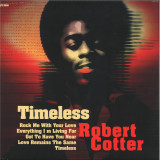
Worthy re-issue of Robert Cotter's second late 70's soul album! Comprising five songs, with four of them being quite lengthy and well-structured for the dance floor, was entirely recorded in the United States by top-notch American musicians. "Timeless", a fresh and lively expression of late 70s soul music, was recorded at the Sundragon Studio in New York. This studio was home to legendary bands such as Talking Heads and Ramones, as well as a few 'disco studio groups' like Andrea True Connection, Tony Valor Sound Orchestra, and Camouflage, who recorded songs that later became considerable hits. For this reason, it's believed that the positive outcome of the album can be partially attributed to Ned Liben, an eclectic New York musician and co-founder of the studio in the Flatiron district of Manhattan, served as an exhaustive interlocutor for any artistic and technical needs. He was also the arranger of "Rock Me With Your Love", the most significant song on the album. Ned's successful mission was to capture the maximum timbral fidelity of Robert Cotter's voice using appropriate recording techniques, assisted by Michael George Ewing, a talented engineer who had previously worked on similar projects with well-known artists like Carol Williams, Maryann Farra & Satin Soul, Touch and Tony Valor. In fact, the piece features original and melodious lines, coupled with an excellent steady rhythm, spanning approximately 8 minutes and 30 seconds - in short, "a delightful sound for every beat." This ensured that the performance of the young singer-songwriter from New Jersey was faithfully reproduced without neglecting the overall musical landscape. The other four songs, arranged by Ben Lazzaroni with the same musicians as the first piece, are no exception. Best Record also delivered on the promise to Robert's older brother, Karl Potter, a powerful percussionist transplanted to Rome, for whom the roman label produced "Sweet & Salty Cha-Cha-Cha" (12", 1986). Robert Cotter, an artist about whom almost nothing has been written, is poised to gain recognition once word spreads about his album, which has been entirely remastered by Dom Scuteri and features a more congenial tracklist. This album is destined to be truly 'timeless', ready to captivate audiences around the world. Even the new cover artwork, created by Nerina Fernandez, pays homage to an artist who, despite expressing himself with elegance and simplicity, radiates energy and exudes love. "Timeless" is an inevitable revelation for anyone who missed it at the time, and for the next 40-plus years, it will remain an absolute must-listen for Robert Cotter's many fans, leaving them all in awe.
Закажите сейчас, и мы закажем товар для вас у нашего поставщика.

The first release in a new catalog series dedicated to the 7" . Here are two reworks produced between Italy and the United States, inspired by Italian cosmic atmospheres of the late 70s: “Cascades” by Stephen Schlacks (1978) and “Pulsazioni” by Filippo Trecca (1979).
“Cascate Emozionali Volume One” is a tribute to these two composers, and to all others that, just like them, have created immortal melodies and atmospheres. This project is also a work of sound archeology, of careful research of the synthesizers and the sounds that have given life to the original versions, here reproduced with a contemporary luster, honoring their original essence.
This music is a container full of emotions, of nostalgia for an era that no longer exists, of faded memories that are suspended in the cosmos, of moments that we miss. All of them connected to our childhood, our family, to our loved ones, and to the objects that were there all along, like the “Selene” chair of Vico Magistretti, redesigned for the cover by French illustrator Alexis Jamet.
Music to remember.
Закажите сейчас, и мы закажем товар для вас у нашего поставщика.

Artist and multi-instrumentalist Flaer looks to the landscape to explore pastoral melancholy on debut release, Preludes.
Ensconced in his family home in rural Leicestershire in the early months of 2020, painter and musician Realf Heygate (b. 1994) picked up his childhood cello for the first time in several years and began to play. Setting himself parameters to only record onto 4-track tape with acoustic instruments – cello, piano and acoustic guitar – he assembled a suite of instrumental compositions that form the basis of Preludes, his debut album as Flaer and the inaugural release on Odda Recordings.
Channelling the tension and unease between the pastoral idyll of the English countryside and the darkness which lurks beneath the surface, the mini-album draws inspiration from the analogue aesthetic of 1970s folk horror films, weaving field recordings of birdsong, church bells and the natural environment into chimerical melodies that reflect on Heygate’s childhood experiences of rural England.
“It was really important not to isolate the sound from its environment,” he explains, describing the compositional and recording process as “site-specific”. Developed over a series of intuitive musical enquiries, the mini-album’s uncanny quality emerges from combining raw demo takes with overdubs of almost orchestral grandeur.
Heygate points to the final track as indicative of the work as a whole: “‘Follow’ really is the mantra for the release and embodies the practical approach I was taking to music making: not to force the music but see where it takes you.”
As a painter, Heygate’s practice takes artefacts through sequences of reproduction that embrace the fluctuating materiality of the copy. Since obtaining a degree in Fine Art from Central Saint Martins in 2017, he has exhibited solo at Peter von Kant and Springseason galleries in London, and has participated in group shows at Saatchi Gallery, Cob Gallery and Senesi Contemporanea.
Describing his artistic practice as one of self-erasure, music instead provides Heygate with a more personal and autobiographical outlet. Where the two worlds combine is on Preludes’ striking artwork, which features paintings of 13th century stone carvings from the font of the church in the town where he grew up.
Speaking to a time where people were connected to the land in a more profound way, each symbol is assigned to a track on the album, which Heygate likens to giving them a title.
“To add that one juxtaposition might open a whole new interpretation or language that might be hard to find otherwise,” he explains.“Over time it might reveal itself to you, which is why I'm excited about it being released. To throw them out there and see what comes of it.”
Закажите сейчас, и мы закажем товар для вас у нашего поставщика.

Dark Horse Records feiert den 20. Jahrestag von JOE STRUMMERs (The Clash)2003er Album Streetcore. Der Sound wurde von Paul Hicks (The Beatles, The Rolling Stones, George Harrison) neu gemastert und die Grafiken wurden von der Originalveröffentlichung reproduziert.
Dem Vinyl liegt ein exklusiver Druck von Strummers handgeschriebenem Text zu "Coma Girl" bei.
Das dritte Studioalbum von Joe Strummer and the Mescaleros, das die Single "Coma Girl" enthält, wurde nach Joes Tod im Jahr 2002 veröffentlicht. Daher wurden viele der Tracks als erste und einzige Gesangsaufnahmen veröffentlicht. Die bei den Fans beliebte Coverversion von Bob Marleys "Redemption Song" und der Track "Long Shadow" wurden von Rick Rubin produziert. Dark Horse feierte kürzlich den 70. Geburtstag von Strummer mit der Veröffentlichung von Joe Strummer 002: The Mescaleros Years.
Этот продукт еще не вышел. Ты можешь сделать предзаказ, как только он появится на складе, продукт будет подготовлен к пересылке.

Last summer the idea came up that the material of the Chillum Trio live act, which had been matured for years by then, would deserve a release on its own. The concept was to try to reproduce the experience of the live performances as close as possible, so a semi-mixed album was created, on which the seven tracks work separately, but the effect is best when listening to the record in its entirety. The musical world of Random Rituals is crazy dense and colorful, similar to Chillum Trio's previous releases, an exotic mix of contemporary electronics, world music and club sounds;s still, it has a unified character, which is due to the fact that it has grown from a live set that has been constantly developing over the years. Genre-wise, it is characterized by low-tempo, organic desert house, tropical acid drops, deep dub, hypnotic tribal beats and psychedelic episodes. Just like genres, eras and cultures are mixed as well: from the jazz-funk of the 70s, via tribal trance of the 90s to modern deep house, from Peru to Pakistan, from Sudan to Senegal: a real musical journey through space and time.
Géza Szekeres, the heart and soul of Chillum Trio, summed up the essence of the record as follows:
"Random Rituals shows me the paradox that recharges can be planned and ad-hoc at the same time. Rituals are characterized by a predictable scenario, but the effect can also be unexpected, so that events spin without a score. You don't walk into the ritual, but it comes to you, creating the same state that then fills you up."
Закажите сейчас, и мы закажем товар для вас у нашего поставщика.

LP Edition of 300 copies in Matt Laminated Sleeve with Black paper Innersleeve.
Ab'bhau's debut album was forged in fire in the year 2018 after mysterious live apparitions and rehearsal sessions. The aim behind this first exploration was void invocation, void materialization. The project is formed by established musicians of the Spanish underground noise, experimental, and metal scene. Connections to bands and projects like Black Earth, Suspiral, Inhumankind, Phicus, Triple Zero, Gárgara, or Sudaria can be traced. The ritualistic essence of this artistic incarnation is based upon the rupture of repetitive patterns through improvisation as a medium to convey abject forces into the shape of what the band has called 'Black Metal Destruktion', stemming Heideggerian terminology. A form that appears to disappear or to be registered, but impossible to reproduce. Even though the recordings vary on the album formats, they are the same album, the same whole, the same essence... exhaled through three different forms of sonic manifestation. Artwork by Heresie Studio.
он должен быть опубликован на 20.10.2023

Wewantsounds is delighted to announce the release of Ryuichi Sakamoto's classic LP "Ongaku Zukan", originally issued in Japan on his own School label in 1984.
The reissue will replicate the original Japanese release which offered two versions: a normal edition featuring the LP with a bonus 2-track 7" EP (WWSLP71), and a limited edition which includes a 3-track 12" EP in place of the 7" (WWSLP72)
Remastered by Saidera Mastering in Tokyo the reissue boasts the original gatefold artwork plus an extra 2-page insert with new liner notes by Andy Beta
The early '80s were a turning point for Japanese musician Ryuichi Sakamoto. As a solo artist, the smash hit soundtrack he had composed for 1983's "Merry Christmas Mr. Lawrence" (a film in which he had also acted), had put him on the verge of becoming a global superstar. Meanwhile he had called a halt to his work with Yellow Magic Orchestra; the influential, globally successful pop trio calling it quits after the release of their 1983 album "Naughty Boys".
Against this backdrop, Sakamoto descended on Tokyo's Onkyo Haus Studio to record his fourth solo album, "Ongaku Zukan" ("Musical Encyclopedia") accompanied by a handful of musicians including his ex-YMO partners Haruomi Hosono and Yukihiro Takahashi, and the prolifically talented Yasuaki Shimizu, Tatsuro Yamashita and Toshinori Kondo. Sakamoto began with no particular plan in mind, recording 30 basic tracks over the best part of 1983. It was on his return to the studio the following year that the album truly began to take shape. Accompanied by a newly acquired Fairlight CMI sampler, the musician made extensive use of the revolutionary equipment to create a wide palette of sound textures which he added to the tracks, a creatively fertile process that was captured on film for the French documentary "Tokyo Melody, A Film about Ryuichi Sakamoto".)
Released in August 1984 the album "Ongaku Zukan" proved a huge success, providing Sakamoto with his first top 5 hit in Japan. Filled with inspired melodies that showcase his unique gift as a composer, it offers up a fascinating mix of styles. Asiatic electro pop nuggets ("Tibetan Dance") share space with futuristic ambient pieces ("Hane no Hayashi de"), and brilliantly creative fusions of jazz, funk, techno and reggae ("Etude" and "Tabi no Kyokuhoki.")
Two simultaneous editions of the album were released in Japan: the regular one featuring a bonus 7" EP with two extra tracks: "Replica" and "Ma Mère l'Oye" while a limited edition added a 12" EP (in lieu of the 7") which included a third track, "Tibetan Dance (Version)." An international version was released two years later in 1986 by 10 Records/Virgin under the title "Illustrated Musical Encyclopedia," but with a very different track list. Five tracks from "Ongaku Zukan" were dropped, namely "Self Portrait," "Tabi no kyokuhoku," "Mori no Hito," "A Tribute to N.J.P" and "Tibetan Dance (Version)", to be replaced by two non-album singles from 1985, "Stepping Into Asia" and "Field Work."
This is the very first time that the two 1984 Japanese editions of Ryuichi Sakamoto's classic album have been released internationally in collaboration with the artist's management and Midi Inc., with remastered audio and the original artwork faithfully reproduced, paying tribute to one of contemporary music's undisputed geniuses.
он должен быть опубликован на 01.10.2023

Wewantsounds is delighted to announce the release of Ryuichi Sakamoto's classic LP "Ongaku Zukan", originally issued in Japan on his own School label in 1984.
The reissue will replicate the original Japanese release which offered two versions: a normal edition featuring the LP with a bonus 2-track 7" EP (WWSLP71), and a limited edition which includes a 3-track 12" EP in place of the 7" (WWSLP72)
Remastered by Saidera Mastering in Tokyo the reissue boasts the original gatefold artwork plus an extra 2-page insert with new liner notes by Andy Beta
The early '80s were a turning point for Japanese musician Ryuichi Sakamoto. As a solo artist, the smash hit soundtrack he had composed for 1983's "Merry Christmas Mr. Lawrence" (a film in which he had also acted), had put him on the verge of becoming a global superstar. Meanwhile he had called a halt to his work with Yellow Magic Orchestra; the influential, globally successful pop trio calling it quits after the release of their 1983 album "Naughty Boys".
Against this backdrop, Sakamoto descended on Tokyo's Onkyo Haus Studio to record his fourth solo album, "Ongaku Zukan" ("Musical Encyclopedia") accompanied by a handful of musicians including his ex-YMO partners Haruomi Hosono and Yukihiro Takahashi, and the prolifically talented Yasuaki Shimizu, Tatsuro Yamashita and Toshinori Kondo. Sakamoto began with no particular plan in mind, recording 30 basic tracks over the best part of 1983. It was on his return to the studio the following year that the album truly began to take shape. Accompanied by a newly acquired Fairlight CMI sampler, the musician made extensive use of the revolutionary equipment to create a wide palette of sound textures which he added to the tracks, a creatively fertile process that was captured on film for the French documentary "Tokyo Melody, A Film about Ryuichi Sakamoto".)
Released in August 1984 the album "Ongaku Zukan" proved a huge success, providing Sakamoto with his first top 5 hit in Japan. Filled with inspired melodies that showcase his unique gift as a composer, it offers up a fascinating mix of styles. Asiatic electro pop nuggets ("Tibetan Dance") share space with futuristic ambient pieces ("Hane no Hayashi de"), and brilliantly creative fusions of jazz, funk, techno and reggae ("Etude" and "Tabi no Kyokuhoki.")
Two simultaneous editions of the album were released in Japan: the regular one featuring a bonus 7" EP with two extra tracks: "Replica" and "Ma Mère l'Oye" while a limited edition added a 12" EP (in lieu of the 7") which included a third track, "Tibetan Dance (Version)." An international version was released two years later in 1986 by 10 Records/Virgin under the title "Illustrated Musical Encyclopedia," but with a very different track list. Five tracks from "Ongaku Zukan" were dropped, namely "Self Portrait," "Tabi no kyokuhoku," "Mori no Hito," "A Tribute to N.J.P" and "Tibetan Dance (Version)", to be replaced by two non-album singles from 1985, "Stepping Into Asia" and "Field Work."
This is the very first time that the two 1984 Japanese editions of Ryuichi Sakamoto's classic album have been released internationally in collaboration with the artist's management and Midi Inc., with remastered audio and the original artwork faithfully reproduced, paying tribute to one of contemporary music's undisputed geniuses.
он должен быть опубликован на 01.10.2023

Repress!
1981 SYNTH CLASSIC BY JAPANESE KEYBOARD WIZARD AND YMO PROGRAMMER HIDEKI MATSUTAKE REISSUED OUTSIDE OF JAPAN FOR THE FIRST TIME IN 40 YEARS. REMASTERED FROM THE ORIGINAL TAPES WITH STRIKING ORIGINAL ARTWORK BY LEGENDARY ILLUSTRATOR PATER SATO INCLUDING ITS STUNNING FULLY ILLUSTRATED
8-PAGE BOOKLET
His name may not be instantly familiar, but Hideki Matsutake has had a huge influence over Electronic music. Starting his career as the assistant of Japanese Electronic Music master Isao Tomita in the early 70s, he went on to work with Ryuichi Sakamoto and then Yellow Magic Orchestra as their keyboard programmer and unofficial fourth member. In 1981 he started his own Logic System project recording "Venus" that year in Los Angeles with Don Grusin, Nathan East and Michael Boddicker, brilliantly mixing Synth Funk, Ambient and Boogie with a touch of Fusion Jazz predating Vaporwave by a mere 30 years. Wewantsounds is delighted to reissue this visionary album, which
comes remastered from the original tapes and features Pater Sato stunning artwork including the rare beautiful 8-page insert with an exclusive interview of Hideki Matsutake by Hashim Kotaro Bharoocha.
The early 80s were prolific for Hideki Matsutake. As the go-to keyboard programmer for the tokyo music scene, he worked on Akiko Yano's "Gohan Ga Dekitayo", YMO's "BGM", Ryuichi Sakamoto's "B-2 Unit", Mkwaju Ensemble's "Mkwaju" and found time to record two Logic System albums in 1981. While the first album, "Logic" had a harder techno feel, the second one "Venus" was different affair. Recorded in Los Angeles at the new state of the art Yamaha Studio, it was loosely themed on the Greek goddess Venus and had a funkier more organic sound. For the album Matsutake had asked a handful of American musicians to provide songs he would then add his synth magic touch to. Michael Boddicker, Don Grusin, Nathan East and Roger Powell duly complied and also played on the album.
The updated sound was achieved by switching from the Moog III to the E-mu modular System (which Matsutake brought over to LA) and other synths like the Prophet 5, the Roland MC-8 and TR 808 and the Yamaha GS-1, a forerunner of the DX7.
The result is an amazing futuristic mix of electronic music and early 80s funk, announcing many genres to come, from techno and house to French electro and Vaporwave. From the breezy ambient synth of "I Love You" to the city pop edge of "Be Yourself" (originally written by Nathan East for Debra Laws) and the vocoder-led Daft Punk-ish "Take A Chance", Venus is a fascinating album that both pushes the boundaries of electronic music and is yet strangely accessible and beautiful.
The other key elements of Venus is the artwork designed by Japanese legendary illustrator Pater Sato. Sato had started in Japan in the early 70s doing many album covers for Japanese artists including Tatsuro Yamashita's cult Spacy LP before moving to New York in 1979 to pursue a career in fashion and advertising. His airbrush style became hugely influential over the years and in 2018, Stella McCartney dedicated a whole Men’s collection based on his Venus. Star make up artist Pat McGrath also regularly posts his artwork to her 3 million fans on her instagram.
The original album came with a beautiful 8-panel insert illustrated by Sato which Wewantsounds has reproduced on this deluxe reissue also featuring remastered sound, OBI strip and a second insert featuring credits and line up plus liner notes by Hashim Bharoocha. The notes will feature an exclusive interview with Hideki Matsutake reminiscing about the making of this visionary album which Wewantsounds is delighted to reissue.
Закажите сейчас, и мы закажем товар для вас у нашего поставщика.

Celebrated composer, performer, saxophonist, soloist, band leader, educator, activist, and mixed-media artist Matana Roberts returns with a new installment of their acclaimed Coin Coin series. For over a decade, Coin Coin has been the central artistic project for Roberts, a remarkable exploration of American ancestry and the nature of memory through "sound quilting": modern composition that draws on a wide range of musical sources and traditions, along with research-driven historical and genealogical narratives that yield prose and poetry both spoken and sung, field recordings, and graphic scores. The Quietus declares "when the 12-album cycle is complete, it will be regarded as a singular masterpiece of 21st century sonic and narrative art" and Pitchfork calls it "one of the most provocative ongoing bodies of work by any American musician." Coin Coin Chapter Five: In the garden... is the first new recorded audio chapter since 2019 and centers upon reproductive rights, summoning the story of a family ancestor who died in early adulthood, from a cause kept obfuscated and hushed, shrouded in disinformation and shame. Roberts reimagines diaristic and oral narratives, delivered in strident streams of spoken word that punctuate the hour-long work, with recurring musical themes frequently accompanied by the declarative refrain "my name is your name / our name is their name / we are named / we remember / they forget." As Roberts writes in the accompanying liner notes essay: I find it absolutely disgusting that the same trauma my grand ancestor, whose story we are telling in this chapter, is closely mirroring the experiences of some poor soul today as I write this... Our aforementioned grand, who perished at a young age, leaving her growing children motherless, did not have to die. The negative consequences of her death have reverberated down through generations in my family line, in the same way that a similar resounding might happen for someone else's ancestral line generations from today. While often jazz-adjacent, and with Matana's inimitable saxophone and indomitable voice at the core, Roberts situates Coin Coin outside the Jazz genre and within heterodox pathways of post-modern composition, electroacoustic music, sound collage, experimental voice, and sound art. In the garden... undeniably continues to express and expand upon the project's magnificent iconoclasm, nonetheless being the most jazz-inflected chapter since Coin Coin Chapter Two: Mississippi Moonchile(2013). Recorded in Brooklyn with a stellar acoustic ensemble that includes Stuart Bogie, Gitanjali Jain, Darius Jones, Matt Lavelle, Mike Pride, Ryan Sawyer, Corey Smythe, and Mazz Swift, abetted by some sparkling pieces featuring modular synthesis courtesy of album producer Kyp Malone (Bent Arcana, TV On The Radio), In the garden... traverses a vivid stylistic array of thematic overtures, excursions and set pieces, ranging from spacious textural invocations to gorgeously tempered horn-led compositions to driving free jazz and exhilarating through composed bursts of cacophony. With storytelling spoken-word lead vocals by Roberts channeled recurringly throughout, alongside various other deployments of layered and group voices, the album is alternately a meditation and fever dream of narrative potency. This is some of the most intense and intensive music Roberts has composed and captured to date, richly conceived and deeply felt, restless yet focused, unflinchingly substantive and unique. Coin Coin Chapter Five: In the garden... channels epigenetic trauma and tragedy with teeming complexity and fierce beauty _ a eulogy, testimony, and celebration, melding music and language in a stunning polychromatic flow of vernaculars and poetics. A powerful work of subjective commemoration and historical-cultural communion that speaks indelibly to the present moment.
2x10” in 350 gsm widespine jacket w/interior colour flood + 300 gsm printed inners + 20”x 10” fold-out insert + DL card
он должен быть опубликован на 29.09.2023
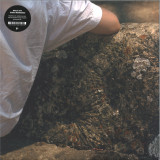
Black Truffle is pleased to announce Tender Membranes, the label’s first release from Swedish-Finnish sound artist and electro-acoustic composer Marja Ahti. Active for a decade in the Finnish underground music scene, in recent years Ahti has developed a distinctive approach to patiently unfolding electro-acoustic constructions, documented on a string of solo releases and collaborative projects with Judith Hamann and her husband Niko-Matti Ahti. Working with concrete and instrumental sounds, field recordings, and electronics, Ahti favours neither disjunctive collage nor monolithic consistency; rather, her work is composed of organically unfolding sequences of details and textures, which, as she says, ‘can stretch out or cut fast as long as they have a sense of inner stillness’, a sense that she connects to moments of heightened attention in everyday life. Tender Membranes consists of four lengthy pieces, partly inspired by the image of the senses and mind as membranes allowing for the passage between inner and outer spaces, sensation and its causes, creating a world. Ahti’s unhurried pacing encourages this sense of listening as an opening or surrender to sound, which can often create the impression that the listener is moving through a space zooming in on details. The opening Shrine (Aether) exemplifies this aspect of Ahti’s approach: a bell clears the air with a single long tone, followed by the ambience of outdoor spaces, crackling electronics, an archival recording of a horsefly on a windowpane. Dozens of these moments, varying in length, density, and intensity, move past the listener’s attention, momentarily brought into focus then slipping away. Like those of the masters of the French musique concrète tradition, Ahti’s sounds are not often recognisable, though they might suggest proximity or distance, open environments or closed spaces, the urban or rural, day or night. In Ahti’s work, we do not encounter spectacular metamorphoses à la Parmegiani but rather a state of ambiguity where the listener is often unsure what is organic and what is inorganic, where the careful productions of the synthesizer might end and sounds discovered in the environment begin. What Ahti calls her ‘poetic way of experiencing and organising the familiar and the unfamiliar’ is sustained throughout Tender Membranes, but each piece has its own character. On Dust / Light, human presence is more overt, as what appear to be whispers, singing, and distant speech thread between high frequencies, untraceable drips and pops, and metallic shimmers. In all this there is a melody that you can sing and to which you may dance makes more prominent use of musical instruments, gaining a sombre beauty from half-buried piano chords and organ tones. On the closing Oh Fragrant Witness, a delicate cloud of subtly bending pitches is repeatedly disrupted by a resounding, almost ominous mass of low tones, at once a strange detour from much of what has gone before and an almost classical finale. Arriving in a sleeve reproducing contemporary Finnish photographer Sini Pelkki’s fragmented visions of the everyday, Tender Membranes is a balm to reawaken tired ears.
Закажите сейчас, и мы закажем товар для вас у нашего поставщика.

Death Is Not The End sub-label 333 turns up the gold again with this repro of the much in-demand Flames cut of Nairobi Sisters' Promised Land. Sampled by Q-Tip for "Whateva Will Be" (appearing on ATCQ's final long-player) and on a range of earlier 90s boom-bap era productions, it is not at all hard to figure out why it's a coveted record. That break is as low-slung and funky as it gets, and best showcased on the superbly stripped-back dub on the flip.
The Nairobi Sisters were singers Terrie Nairobi and Judy Mowatt (later of the I-Threes, alongside Rita Marley & Marcia Griffiths). Promised Land was originally recorded together with The Gaytones for Sonia Pottinger's Gay Feet label, with this later version cut for Winston Jones' Brooklyn-based Flames Records. It is issued here under license from producer and songwriter Jones - the original singer and composer of Stop That Train (later made world-famous by Keith & Tex's version) with his Spanishtonians in the early 1960s - who later moved from JA to NYC where he established and ran the Flames label, a core imprint in Brooklyn's reggae scene from the mid-1970s until the early 1990s. 333 has licensed a range of Flames-era productions from the now Texas-based Jones, so keep and eye out for more as it comes... but for now, jump on this before it's gone!
Закажите сейчас, и мы закажем товар для вас у нашего поставщика.

On Rock Island, their second LP, Palm produces evidence of a distinct musical language, developed over time, in isolation, and out of necessity. On the island, melodies are struck on what might be shells or spines. Rhythms are scratched out, swept over, scratched again. Individual instruments, and sometimes entire sections, skip and stutter. There is the sense of a music box with wonky tension or a warped transmission in which all the noise is taken for signal.
Like other groups so acclaimed for their compulsive live show, Palm has been burdened by the constant comparison between their recorded material and their touring set. On Rock Island, they render this tired discussion moot, using the album form to present that which could never be completely live, reserving for performance that which could never be completely reproduced.
Despite appearing behind the instruments typical of rock music, Palm trades in sounds of their own making. On these songs, one of the guitars and the drum kit are used as MIDI triggers, producing an index that can be combed through later and replaced with new information. The percussion is sometimes augmented so as to suggest a multiplication of limbs. The strings are manipulated to choke, crack, and hum like other instruments, or other bodies, might.
Working again with engineer Matt Labozza, the band spent the better part of a month in a rented farmhouse in Upstate New York. With the benefits of time and space, Palm recorded the various elements piecemeal, only rarely playing together in groups larger than two or three. While some members tracked, others holed up in the next room, experimenting with quantization, beat replacement, and other methods borrowed from electronic music. Even accounting for the many labors that brought them to be, these materials seem produced by an organic logic. Their complex friction forms a habit of thought, scores a network of grooves on the floor of the mind.
This is music with dimensionality. Sonic objects are deployed, developed, and dissected in various states of mutation. The listener flits about between the field and the lab. The tone is warm in a way only the sun could make, the pace as forceful and as variable as a gale. Whether one locates Rock Island in a sea or in a refinished attic (as in Greg Burak's album cover), whether one escapes to there or is banished, its psychic environs are charted clearly enough. Only at this remove from the mainland can we sense the conditions necessary for such a strange species of sound.
Закажите сейчас, и мы закажем товар для вас у нашего поставщика.

Hammered Hulls' debut LP, Careening, may very well be the last record to be recorded and mixed at the famed Washington, D.C. area recording studio, Inner Ear. Engineered by studio owner Don Zientara and produced by Ian MacKaye, Careening was started right before the pandemic lockdown and completed in summer/fall of 2021.
A new band of long-time players, Hammered Hulls' music hews close to some of their early influences. Alec MacKaye is the voice, Mark Cisneros is the guitarist, Mary Timony takes a nimble and rarely-heard turn as bassist, and Chris Wilson commands the drums. Each of them bring their individual imprint to the total sound. This concussion of strength upon strength, unified by vulnerable songs, only barely contained, is the signature sound of Hammered Hulls.
он должен быть опубликован на 15.09.2023

Feiern Sie den 50. Jahrestag der Veröffentlichung von The Joker. Das zeitlose Album wurde ursprünglich im Oktober 1973 veröffentlicht und enthielt die Single ”The Joker”, die im Januar 1974 Platz 1 der Billboard Hot 100 Singles erreichte.
J50: The Evolution of The Joker wurde von Steve Miller kuratiert und enthält 30 bisher unveröffentlichte Demos, Live-Auftritte, Studio-Outtakes und Samples aus stundenlangen Aufnahmen, die jahrelang in Millers persönlichem Archiv schlummerten. Die 3LP + 7ff Box und das 2CD Set sind eine von Miller kommentierte Reise, die die ”Entwicklung” jedes Songs dokumentiert, der auf The Joker erschienen ist.
Die Box und die 2CD enthalten Linernotes von Steve Miller und Anthony DeCurtis. Die Box enthält außerdem eine Reproduktion eines alten The Joker-Covers und eine Lithographie. Ab dem 15.09.2023
verfügbar
он должен быть опубликован на 15.09.2023

Eigentlich wollten Station 17 nach einer Phase der Distanz nur mal wieder beim Musizieren gemeinsam in einem Raum stehen. Sie fuhren raus aus Hamburg, auf eine abgelegene Anlage im schleswigholsteinischen Hügelland der Hohen Geest, und spielten neue Songskizzen - den ganzen Tag und bis spät in die Nacht hinein. Das Ergebnis wollten sie im Anschluss auf einem Konzert in der Hamburger Fabrik live spielen. Dass zu den Resultaten dann gleich auch ein ganzes Album zählen würde, hatte keiner aus der Band erwartet. Doch die Musik sagte es ihnen mal wieder selbst: das, was hier in der Strahlkraft des Moments entstanden war, ließ sich nicht reproduzieren. Ein Glücksmoment für das Bandkollektiv. "Oui Bitte", Station 17-Album No. 11, war entstanden. Ganz unverhofft, zwischen Pool und Forellenteich... So zeigt sich hier wieder mal und dabei par excellence: Die Musik von Station 17 ist vor allen Dingen so gut, weil es eine so große Freude bereitet, sie anzuhören. Woran liegt das? Nun, zunächst einmal bietet sie ganz unterschiedliche Zugänge! So kann man sich wahlweise auf das intuitive Referenzspiel einlassen, das hier betrieben wird, kann dabei den nachgezeichneten Genrelinien folgen (also: mit Wissen hören), kann sich aber auch an den poetischen Erzählungen orientieren, die in wenigen Worten einen weiten Nachklang eröffnen. Oder man lässt sich ganz einfach vom treibenden, elegischen Rhythmusspiel mitnehmen; liegend, tanzend, wie es gerade kommt. Alles scheint möglich in der Grenzenlosigkeit dieser Musik. Die sieben Stücke nämlich spülen diese offenherzigen Einladungen in einen fließenden, ästhetischen Strom, bündeln sie zu einem Genuss, der die eigene Disposition vergessen lässt. (Hendrik Otremba)
он должен быть опубликован на 15.09.2023

repressed !
- Two previously unreleased tracks from the outsider disco outfit - Strange
Christopher Spraggins & The Strange Band out of Rochester, N.Y released a total of one record. . A spaced out druggy disco band that had a hint of Rick James with a deeper trippier vibe that's truly unique, reproduced for you here for the first time since 1978. The band was introduced to the world by Cleveland Unlimited Records who still exist to this day, unfortunately as these things go, the record failed to gain sales needed to justify further but a whole LP was recorded, here we bring you the best tracks from that unreleased LP on your favourite format
Закажите сейчас, и мы закажем товар для вас у нашего поставщика.
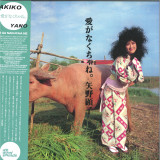
Wewantsounds continues its Akiko Yano series with the reissue of her cult classic 'Ai Ga Nakucha Ne' recorded in 1982 and co-produced by Ryuichi Sakamoto. Featuring Japan, the album includes additional recording in Tokyo with YMO and is mixed by Steve Nye and Shinichi Tanaka. It is the first time the album is released outside of Japan and the deluxe LP features the original artwork with gatefold sleeve and a lavish 24-page colour booklet with sessions photos by Pennie Smith (famous for The Clash's London Calling photo). The reissue also includes a new introduction by Mac DeMarco and a dual interview with Akiko Yano and Steve Jansen by journalist Paul Bowler. The audio remastered from the Original tapes by Mitsuo Koike.
'Ai Ga Nakucha Ne' ('there must be love' in Japanese) is Akiko Yano’s 6th studio album and follows 'Tadaima' in 1981. It continues exploring the electro-pop sound of its predecessor, hot on the heels of her touring with Yellow Magic Orchestra between 1979 and 1980. For this album, Akiko decided to try something new; she enrolled English fellow musicians Mick Karn, Steve Jansen and David Sylvian from Japan and booked the Air Studios in London under the supervision of engineer Steve Nye. Over a couple of weeks, the musicians created a fascinating soundscape full of catchy pop tunes, sung in both Japanese and English. Reminiscing about the studio sessions, Steve Jansen notes "Our music’s different but we maybe had a similar process of working. It was a great environment because the studio was a great place to work. It was very insular. There were four studios and there were always groups working in there 24/7."
The eleven tracks featured on "Ai Ga Nakucha Ne," mostly composed by Akiko - are a great collection of catchy tunes featuring her distinctive vocals and accompanied by the Japan musicians. As Akiko explains about the creative process, "I didn’t think to imitate or to make another Tin Drum. But I had Steve Jansen and Mick Karn, these excellent musicians. They were eager to understand the songs, then they put in everything they had. I knew the material was different from what they usually played in Japan. But it was a great experience working with them.
There are many highlights on the album, from the pop edge of "Aisuru Hito Yo" to the avant groove of "Another Wedding Song", each song is memorable and the album ends with the superb “Good Night” sung by Akiko and David Sylvian.
The original 1982 LP release included a 24 page booklet featuring many photos by Pennie Smith and Japanese photographer Bishin Jumonji. The booklet is reproduced in its entirety here and the album on top of contributions by Mac DeMarco, a longtime fan of the album, Akiko and Steve Jansen making this release of 'Ai Ga Nakucha Ne' a unique testament to Akiko Yano's greatness.
Закажите сейчас, и мы закажем товар для вас у нашего поставщика.

The show, which rolled over the open-air stage of the Greek Theatre night after night in the late summer of 1963, attracted fans as if on a pilgrimage to the mountains of Hollywood. Many who could not get hold of a map climbed the surrounding trees to be able to admire the Calypso man at least from a distance.
Also on the lookout and with sound equipment at the ready were the people of the company RCA, which released the eagerly awaited album the following year. Some of the songs like the wriggling "Zombie Jamboree", "Look Over Yonder" and the wonderfully dripping Schmonzette "Try To Remember" were previously only available as studio versions. Most of the other numbers were brand new and sounded for the first time in a sparkling live atmosphere, which is authentically reproduced on this record.
Here a laugh as a receipt for a casual saying, there a rumble of boards, then again concentrated silence of a spellbound listening audience - something like this only happens on stage.
For Belafonte connoisseurs, these recordings are regarded as the crowning glory of the artistically highly productive phase of the years 1959 to 1963. Of the many good albums, this is one of the best.
Personnel: Harry Belafonte (voc); Howard Roberts (cond); William Eaton (clavietta); Ernest Calabria, Jay Berliner (g); John Cartwright (b); Percy Brice (dr); Ralph MacDonald (perc), choir and orchestra
он должен быть опубликован на 31.08.2023

repress !
Since ancient times tribes commanded by shamans were experimenting with rituals in order to inherit higher states of consciousness.
We as descendants from those cultures disrupted their traditions by recording those sounds and reproduce it through a speaker. Although the principle remains intact.
AIROD and P.E.A.R.L. Are two contemporary artists well aware of that culture, as you can here through the 6 tracks of this EP that in good hands can catalice the ecstasy through repetitive drums, deep vocals and grinding melodies.
Every science starts as philosophy and ends as art.
Tribal science, for disc-jockeys and collectors.
Закажите сейчас, и мы закажем товар для вас у нашего поставщика.

In 2023, Kurt Vile is making numbers count. Just last month, Matador Records presented the iconic Philadelphia songwriter with a (vegan) cheesesteak trophy to commemorate the 100-millionth stream of "Pretty Pimpin" on Spotify. Today, though, we"d like to draw your attention to another significant KV digit: The 10th anniversary of his fifth full-length and first 2xLP, "Wakin on a Pretty Daze" (2013). To celebrate this milestone, we"ve brought the record back as a blue + yellow vinyl split available via KV and Matador webstores. This limited pressing will also include a reproduction of the "make your own cover" ESPO sticker sheet that accompanied the original 2013 special-edition. A yellow vinyl version of the record will be made available everywhere. Where previous albums alternated between gorgeous fingerpicking and heavy guitar workouts, "Wakin" blended the two into dreamy and expansive songs that frequently stretched well out beyond the five-minute mark. Back then we said: "It"s a record that would have sounded great 30 years ago, sounds great today, and will still sound great 30 years from now." Ten years down the line, we"re still confident that "Wakin" will deliver the goods - yesterday, today, and in 2043. The reissue serves as the latest entry in Matador Records" Revisionist History series, our ongoing campaign to jog the record-buying (and streaming!) public"s memory about our many catalog items now poised to celebrate a significant anniversary. Matador will mark these anniversaries with new reissues and re-pressings. So far, the Revisionist History class of 2023 has highlighted Bettie Serveert"s Palomine and Lucy Dacus"s Historian.
он должен быть опубликован на 25.08.2023

• “You can’t beat the classics” and in the Northern Soul world, no label is more renowned than Mirwood. The Sheppards ‘Stubborn Heart’ has been played since the early days of the scene but is still a guaranteed floor-filler.
• Its flip ‘How Do You Like It’ has also picked up many spins in more recent years. As is our habit, to distinguish from the originals, we have changed the label colour - this time we’ve gone for a fetching purple and gold.
он должен быть опубликован на 25.08.2023

In 2023, Kurt Vile is making numbers count. Just last month, Matador Records presented the iconic Philadelphia songwriter with a (vegan) cheesesteak trophy to commemorate the 100-millionth stream of "Pretty Pimpin" on Spotify. Today, though, we"d like to draw your attention to another significant KV digit: The 10th anniversary of his fifth full-length and first 2xLP, "Wakin on a Pretty Daze" (2013). To celebrate this milestone, we"ve brought the record back as a blue + yellow vinyl split available via KV and Matador webstores. This limited pressing will also include a reproduction of the "make your own cover" ESPO sticker sheet that accompanied the original 2013 special-edition. A yellow vinyl version of the record will be made available everywhere. Where previous albums alternated between gorgeous fingerpicking and heavy guitar workouts, "Wakin" blended the two into dreamy and expansive songs that frequently stretched well out beyond the five-minute mark. Back then we said: "It"s a record that would have sounded great 30 years ago, sounds great today, and will still sound great 30 years from now." Ten years down the line, we"re still confident that "Wakin" will deliver the goods - yesterday, today, and in 2043. The reissue serves as the latest entry in Matador Records" Revisionist History series, our ongoing campaign to jog the record-buying (and streaming!) public"s memory about our many catalog items now poised to celebrate a significant anniversary. Matador will mark these anniversaries with new reissues and re-pressings. So far, the Revisionist History class of 2023 has highlighted Bettie Serveert"s Palomine and Lucy Dacus"s Historian.
он должен быть опубликован на 25.08.2023

Remastered with extra tracks - extra disc also includes Sound Sun Pleasure LP. Features the original space nymph cover art, which only appeared in cropped and washedout reproductions on an early 60s version. Cosmic Myth Records is dedicated to issuing remastered and fully authorized out of print titles from Sun Ra's independent Saturn Records catalog. Sun Ra's Jazz in Silhouette was enshrined in the Penguin Jazz Guide's "Core Collection" as an album that "will someday be recognized as one of the most important post-war jazz records." Jazz in Silhouette is the quintessential record of Sun Ra's late 1950s Chicago period. Recorded and issued in 1959, it marks a coda for the bandleader's bebop/hard-bop stage, as his interstellar traveller persona began to transform the band (and the music). It also charts the future, showcasing the brilliant tenor sax stylings of John Gilmore, and introduces the iconic playing of Arkestra mainstays Marshall Allen, Pat Patrick, and Ronnie Boykins. Many of the early works on these recordings would remain staples in Arkestra set lists for the rest of Sun Ra's life. This expanded edition includes the complete, contemporaneous Sound Sun Pleasure, rare stereo mixes, and bonus tracks.
он должен быть опубликован на 21.08.2023

Der in Berlin ansässige Multi-Instrumentalist, Produzent und Fotograf Klaus Sahm begann sein musikalisches Leben damit, in einer Hardcore-Band Gitarre zu spielen. Er setzte seine Reise fort, indem er Klavier studierte, während er als musikalischer Leiter und Produzent für namhafte Künstler im Pop-Genre arbeitete. Seine eigene Musik und Kompositionen neigen zum Ruhigen, zu leisen Tönen und konzentrieren sich immer auf einen eigenständigen Klang und ein Gefühl, das irgendwie melancholisch und zugleich etwas bittersüß ist. Der Aufnahmeprozess beinhaltet immer echte Instrumente, echte Bandechos und analoge Hallgeräte - Dinge, die nicht ein zweites Mal reproduziert werden können. "Das Klavier ist das, was meinen Gedanken am nächsten kommt - wie eine Übersetzung für Dinge, die ich sagen möchte, Gefühle, die ich ausdrücken muss, und Sorgen, von denen ich mich lösen muss. Ich hoffe, dass sich einiges davon auch auf euch überträgt."
он должен быть опубликован на 18.08.2023

Fünf legendäre Charlie-Parker-Klassiker in einem luxuriösen LP-Set!
Würde man diese Alben als Original-LPs kaufen wollen, müsste man einen Kredit aufnehmen. Deshalb erscheinen die legendären Charlie-Parker-LPs jetzt als Special Collector’s Edition Box-Set! Fünf der größten (und meist-verkauften) Bebop-Alben aller Zeiten als Neuauflage im Original-10-inch-Format.
Neu gemastert von Alex Abrash bei AA Mastering, 180g- Vinylpressungen, originalgetreue Reproduktionen des Original Artworks von David Stone Martin. Im Schuber befindet sich auch ein 10x10-inch großes Buch mit neuen und exklusiven Linernotes von Ethan Iverson, einem neuen Aufsatz von Autor David Ritz und vollständigen Track-by-Track-Notizen.
Die Alben: „Charlie Parker With Strings“ (1950), “Bird & Diz” (1952), “Plays South Of The Border” (1952), “Charlie Parker With Strings Vol. 2” (1953), „Charlie Parker” (1954)
он должен быть опубликован на 17.08.2023

Stage Fright is the third studio album by Canadian American group the Band, released on August 17, 1970. Engineered by Todd Rundgren and Glyn Johns, it features two of the group's best-known songs, "The Shape I'm In" and "Stage Fright", both of which showcased inspired lead vocal performances (by Richard Manuel and Rick Danko, respectively) and became staples in the group's live shows.
* 5.1 surround and hi-res stereo mix of album (by Bob Clearmountain) + new bonus tracks + previously unreleased Royal Albert Hall (1970) performance on Blu-ray
* CD of new stereo mix album + new bonus tracks and unreleased Calgary hotel demo tracks
* CD of the Royal Albert Hall performance (stereo)
* LP of main album new stereo mix (180gram, 33rpm)
* 7" reproduction of original "Time To Kill" b/w "The Shape I'm In" Capitol single (Spanish pressing)
* Photo booklet with new notes by Robbie Robertson and a reprinting of the original 1970 Robert Hilburn Los Angeles Times album review
* Limited
он должен быть опубликован на 17.08.2023

How sad, if timely: this stunning reissue of the 1994 live album arrived in the very week that trumpeter Masekela passed away. One of the most successful ambassadors ever for African music, his fusing of the continent's rhythms and instruments with contemporary jazz and rock proved irresistible. Nearly every one of you has heard him, thanks to guess spots with The Byrds and Paul Simon. His breakthough hit from 1968 — the infectious "Grazing In The Grass" — is here, along with another 11 tracks recorded at Blues Alley, the U.S. club that gave us Eva Cassidy. Notably, despite its early-1990s origins, this is all-analogue." — Sound Quality = 90% - Ken Kessler, HiFi News, May 2018
"...Hope is one of those intensely visceral, large as life, and immediately present recordings that will make pretty much any system sound at least very good, and will cause better ones to raise goose bumps." - Wayne Garcia, The Absolute Sound, August 2008
"...The high quality original mix plus Analogue Productions' superb mastering has resulted in a terrific, very transparent sonic with great impact." - John Henry, Audiophile Audition
What more can be captured from the masterpiece that the late trumpet great Hugh Masekela left devoted fans, the effervescent Hope. Now cut at 45 RPM and spread over four 200-gram premium LPs, you're about to discover the answer to that question. The eight sides of vinyl reduce distortion and high frequency loss as the wider-spaced grooves let your stereo cartridge track more accurately. And this set is plated and pressed at Quality Record Pressings, Acoustic Sounds' own industry-lauded LP manufacturer. Virtually silent surfaces coupled with sharp delineation of musical detail are QRP pressing hallmarks.
Two Stoughton Printing old-style tip-on gatefold jackets house the four LPs, which are contained in a custom-designed slipcase reproducing the original artwork.
A longtime audiophile demonstration disc. Hope will show off your system's dynamic range as well as any record ever released. Hugh Masekela, the outstanding South African trumpeter, assembled a seven-piece group and recorded this great set live at Washington, D.C.'s Blues Alley. The songs stretch over a period of nearly five decades and serve as an informal guided tour of Masekela's life. The songs are honest and bare, and as for the sound — WOW!
Unlike a prior 45 RPM version that included seven songs, this 45 RPM reissue contains the full program as originally recorded with all 12 tracks included! Plus, as an added bonus, we've included a special insert — featuring an exclusive interview with Grammy/Emmy Award-winning engineer David Hewitt, who recorded Hope originally.
"Hugh's record is right up near the top for a lot of reasons," Hewitt says.
Hewitt and his team were afforded the time they needed, and they pulled out all the stops to pull off what's now recognized as an all-time great recording. They used better-quality microphones, they were mic-ing the room for ambient sound, and Masekela was performing for a sophisticated and appreciative audience.
"We used stuff from our stash of mics as opposed to what you'd find typically at a jazz club. We actually had control via the record label and producers, so we could take our time. We had the ability to mic the room for abient sound. ... you've got people that actually know and appreciate the music and respond accordingly. What you've got there is all the right stuff at the right time and the right people, and then something magical happens."
Listen to that magic unfold — put on this Analogue Productions 45 RPM 4LP reissue of Hope, and be transported.
он должен быть опубликован на 14.08.2023

Julian Cannonball Adderley's only Blue Note album, Somethin' Else, would likely forever be famous in music lore if just for the presence of Miles Davis. The iconic composer/trumpeter steps into the role of sideman on the 1958 set, one of just a handful of times he'd make such a move after the calendar passed the mid-1950s. Yet evaluating Somethin' Else strictly on Davis' involvement misses the big picture. Plain and simple, Adderley's jubilant work remains a jazz landmark due to the chemistry of its Hall of Fame personnel, enthusiasm of its participants, and sophistication of its arrangements – not to mention the reference-grade production and inclusion of the definitive renditions of two all-time jazz standards.
Limited to 6,000 numbered copies, pressed on dead-quiet MoFi SuperVinyl at RTI, and mastered from the original master tapes, Mobile Fidelity's ultra-hi-fi UltraDisc One-Step 180g 45RPM 2LP collector's edition pays tribute to the record's merit and includes the bonus track "Allison's Uncle." Offering reference-calibre sonics, this spectacular collector's version provides a clear, transparent, ultra-dynamic, and up-close view of a cornerstone effort that witnesses Adderley and Davis sharing horn duty alone for the only time in their fabled careers – an arrangement that occurred as a result of Adderley having joined Davis' majestic sextet a year prior.
The premium packaging and beautiful presentation of the UD1S Somethin' Else pressing befit its extremely select status. Housed in a deluxe slipcase, it features special foil-stamped jackets and faithful-to-the-original graphics that illuminate the splendour of the recording. No expense has been spared. Aurally and visually, this UD1S reissue exists as a curatorial artefact meant to be preserved, touched, and examined. It is made for discerning listeners that prize sound quality and production, and who desire to fully immerse themselves in the art – and everything involved with the album, from the iconic photos to the gorgeous finishes.
The vibrant potency reveals itself openly on an analogue set that provides full-range reproduction of an ensemble that also includes pianist Hank Jones, bassist Sam Jones, and drummer Art Blakey. Each and every snare hit, downbeat, and cymbal splash registered by the latter take on realistic proportions, blooming and decaying as they would right in front of you on a stage. Jones' foundational bass lines register with uncommon depth and palpability, the litheness of the strings and fullness of the instrument epitomizing the definition of rhythm. Stellar, too, are the surefooted 88s. Sublime in scale, tonality, and attack, with the delineation such you can practically separate the white and black keys in your mind. As for that liquid interplay between Adderley and Davis? Breathtakingly lifelike in timbre, naturalism, purity, and presence. This collector's version takes you there – there being Rudy Van Gelder's legendary New Jersey studio in March 1958 to witness it all unfold, again and again.
For reasons that extend far beyond the outstanding playing and flawless repertoire, Somethin' Else is without question a record you'll always want to watch and hear come together. As veteran critic Bob Blumenthal observed writing about the album four decades after its release, "The instant rapport achieved by the quintet is thus the product of much shared and common history, though the tensile strength that they create throughout created a totally unique feeling that can be attributed to the sensitive musicianship of all concerned, including the supposedly hard bopping leader and drummer." Such inimitable feeling, or emotion, courses throughout every passage, and no where more obviously than on "Autumn Leaves" and "Love for Sale."
Without question, the discreet interpretations of the Johnny Mercer and Cole Porter songs, respectively, found on Somethin' Else have long been considered part of jazz's alluring mystique. Adderley and Davis bring contrasting approaches to the table yet sound of a singular mind on "Autumn Leaves," with the latter's muted trumpet and the headliner's lush alto saxophone dovetailing into a performance that endures as a blueprint for expression, counterpoint, sophistication, fluidity, and linearity. Blues, melody, and romance pour from their horns. Their bandmates, picking up on the intimate vibe and calm mood here – as well as on the spry, head-over-heels spirit of "Love for Sale" – join in on the conversation with sharp economy and float-on-air roundedness.
Not to undersell the other three numbers, all deserving five-star status. Twelve measures in length, the title track offers a slow burn in swing. Written by Adderley's brother, Nat, the 12-bar "One for Daddy-O" transmits funk flavors. The closing "Dancing in the Dark" pops with lushness and temptation, its stream of bold colours and understated textures calling for a moonlight twirl, or at least fantasies suggestive of a memorable night. Somethin' else, indeed.
он должен быть опубликован на 11.08.2023

Trout Mask Replica is a touchstone in the history of recorded music. The mix of dada absurdist blues and previously unexplored experimental avenues has long been praised as one of the greatest albums of all time. As so eloquently put by John Peel, "If there has been anything in the history of popular music which could be described as a work of art in a way that people who are involved in other areas of art would understand, then Trout Mask Replica is probably that work.” In full partnership with the Zappa Family Trust and to celebrate the relaunch of the seminal Bizarre label imprint, Third Man Records is proud to announce Captain Beefheart and the Magic Band's Trout Mask Replica. Out of print on vinyl for nearly ten years, this remaster was helmed by industry legend Bob Ludwig and cut by the estimable Chris Bellman at Bernie Grundman Mastering. Utilizing crystalline-quality safety masters kept in the Zappa family vault for decades by the trustworthy Joe Travers, the audio here is positively glorious. Every last skronk breathes full life into the room. Every twisted guitar figure uncurls onto paths previously unpaved. Every last bark and howl shines resolute through the vast emptiness of your mind. Previous countless Trout Mask Replica repressings used scans of scans of scans of the cover image, but the original Cal Schenkel cover photo has been tracked down and reproduced here at its clearest — its resolution from the original release in 1969. If you’ve only ever seen a jpg online or fuzzy, smeared-looking CD issues from the 90’s, be prepared to be wowed by the fully engaging spectrum this iconic image casts. This 2xLP is pressed on heavyweight 180-gram black vinyl for that full-on frenetic feeling.
он должен быть опубликован на 04.08.2023

‘Mellifluous’... is a word you won’t hear much when conversation turns to early Pooh Sticks records. But ‘noise pollution’, sure: that comes up. I’ve even used it myself. So look away now if you must: ‘Straight Up: Noise Pollution C88-90’ is a selection of some of the most loved/despised/ignored tracks released by The Pooh Sticks on however many records it was before it all went wilfully ‘American’ sometime around dotted-lining for BMG mega-corp in 1991.
The record has highlights and lowlights. You and me, we’d probably agree on most of them. We chose a reasonable cross-section, I think (although there could’ve been more tambourine), including:
- “On Tape” - zeitgeist-nailin’ strum and strangle.
- “I Know Someone Who Knows Someone Who Knows Alan McGee Quite Well” - long title
- “Teenage High” - breathy sweetness sneaked onto the depraved Sympathy For The Record Industry label.
- “Dying For It” - the Vaselines cover which beat Nirvana by a full two years (though theirs sold better).
... and more! It’s like Christmas (no, blocking up the chimney won’t help: we’ve cut spare keys). And all of this in a nice gatefold sleeve, and on Steve McQueen’s- eyes blue vinyl. And there’s even a repro poster for the March ’89 Pastels/Pooh Sticks/Vaselines gig up London way (“I swear I was there”, people say).
On behalf of the group, I hope you enjoy it. No, really. It was all a long time ago but I remember we had fun. Maybe you were even there having fun with us.
он должен быть опубликован на 29.07.2023

Preservation Act 1 is a concept album and the 12th studio LP by The Kinks, originally released on RCA on 16 November 1973.
Preservation is the bands most ambitious project - a rock opera that uses the charming, small-town nostalgia of Village Green as a template to draw the entirety of society and how it works.
Epic opener ‘Morning Song’ sets the scene and mood for the record, followed by a classic sounding Dave Davies’ riff, ‘Daylight’, which echoes themes and sounds tones of one their most recognisable and highly acclaimed albums, ‘The Village Green Preservation Society’.
Standout tracks are the endearingly lazy ‘Sitting in the Midday Sun’ and the beautiful ‘Sweet Lady Genevieve’ – both strong contenders for overlooked Ray Davies masterpieces.
A critically acclaimed album, reviewed by Rolling Stone at the time as "A highly listenable, enjoyable album".
This release is a faithful reproduction of the original 1973 album, on heavyweight 180g vinyl. A must-have for any Kinks fan and its first vinyl re-press, apart from a limited edition 2008 US edition, since the original 1973 LP release.
он должен быть опубликован на 14.07.2023

Act 1[27,31 €]
Preservation Act 2 is the 1974 follow-up to The Kinks’ 1973 Preservation Act 1 RCA album, and their thirteenth studio LP.
The album is a finely produced concept of story, theatre, instrumentals, announcements, guest singers and songs.
A further installement of Ray Davies’ musical drama, with the character sketches, wry observations and ballads seen on Preservation Act 1.
Full of The Kinks’ distinctive and unique charm, featuring gems such as ‘Money Talks’, ‘He’s Evil’, ‘Mirror Of Love’ and ‘Artificial Man’.
This is a 2LP black heavyweight 180g vinyl in gatefold sleeve, with original artwork faithfully reproduced. The first repress, apart from a limited edition 2008 US pressing, since the original release in 1974.
он должен быть опубликован на 14.07.2023
