The Citadel Speaks marks the first recorded statement of ElektrAV as a curatorial imprint.
Rooted in Pamplona’s Citadel —and more specifically within the Arms Hall— this release brings together Alberta Balsam, Boris Divider, Bendiak, Komatssu and µ-Ziq, artists whose practices have resonated within the festival’s ecosystem through a shared sensitivity to space, experimentation and sound as cultural expression. Their contributions are not conceived as documentation of an event, but as part of an ongoing cultural dialogue.
The Citadel is not presented here as a venue, but as an active entity: a space that absorbs, transforms and emits sound. Each contribution responds to that condition, forming a collective statement shaped by place, time and intention.
This first volume initiates a living archive.
What follows is not a catalogue of releases, but a body of work.
French talent Hyden makes label debut on Mutual Rytm with conceptual new techno EP, 'To Whom It May Concern'. Hyden is a potent force in the French underground, creating powerful techno with dense percussion, immersive grooves and subtle nods to classic influences - all through his own unique lens. Having delivered standout releases in recent years, here he offers up sounds "anchored in psychoanalysis, time, and emotional residue" as he makes his mark on SHDW's Mutual Rytm imprint, delivering influences of dream logic and surrealism as the palette moves between brutality and introspection. "It's hypnotic music for moments of rupture where something breaks or breaks through". Opener 'Manifest Content' is inspired by Freudian theory and explores the surface illusions of thought and dream. It's about the dissonance between what we perceive and the deeper meaning that slips away beneath and is a deep and dubby techno track with flashes of unsettling melody. 'Bruises' is emotional trauma made sonic. This piece delves into invisible scars and traumas, residues of past conflict or intimacy - it's slow-burning, heavy and raw. 'Jikan' is a meditation built on time and its erosion. Inspired by the Japanese concept of impermanence, it reflects fleeting moments, decay and the tension between stillness and motion with jacked up but warm drums and turbulent bass. Next, 'Free Will' is born from inner conflict and plays with deterministic rhythms and evolving layers, questioning whether we are truly in control or just passengers in a prewritten sequence. The vocal mentions, "creatures, you're out of time" to bring darkness to the intense but sleek rhythms. The streamlined physicality of 'Swarm' channels the primal force of collective movement and is a nod to the loss of individuality in group behaviour. In addition, the package is loaded with digital bonus cuts. 'Yumehara' is a dive into surreal dream-states and evokes subconscious landscapes where logic dissolves and emotion reigns, while 'Lu Bu' is brutal and warlike and named after the legendary Chinese general that captures impulsive violence, betrayal and reckless glory with relentless energy and rhythm. Lastly, 'Neon Pale' is a synthetic dreamscape about fading beauty under artificial light - a melancholy ode to cities at night and the loss of warmth in modern life.
Berlin's Scheermann debuts on Mutual Rytm with deeply personal EP, 'Viciosa'.
Scheermann is at the heart of the Berlin underground as a DJ/producer, but also working behind the scenes at the Intakt Berlin vinyl pressing plant, where he first met Mutual Rytm founder SHDW. As a resident of the Lorem Ipsum party series, he delivers cultured and compelling grooves, and is also an active member of the Wesertekk collective - supporting and pushing club culture to the forefront in more rural areas. His music comes from a deeply personal place, never chasing hype or headlines, and is usually found at home on his own imprint, SAMMLER. This new EP marks his first appearance away from the label as he unveils a collection of records crafted over five years, with each track representing different moments in his life.
'Viciosa' kicks off with paranoid vocals panning about as swinging, warehouse-ready drums pound heavily below. The gritty synth craft adds plenty of texture as filters build the vibe. 'Placid Sin' is even more intense with unresolved synths tripping you in a loopy state while coarse percussion and cantering drums march on. 'Don't Care' is a rave-ready cut that injects your soul with urgent synth energy over more minimal and moody drums. 'Kano' brings a more elastic rhythm with dubby undercurrents and sleek sonar pulses infusing it with mystery, while 'Reika' is a nimble cut with icy hi hats and curious synth notes layering in late night suspense. First digital bonus 'Resoclap' is a heavyweight swinger with dark, groaning voices, before the second digital bonus 'Mizu' provides a speedy and supple workout for body and mind.
Scheermann 'Viciosa' lands on Mutual Rytm on 22nd August 2025.
Elevation, released in 1974 on Impulse! Records, finds saxophonist Pharoah Sanders expanding his spiritual jazz vision on an album that balances ecstatic expression with focused ensemble interplay. Produced by Ed Michel and recorded in 1973 across two live performances and a studio session, Elevation features a dynamic ensemble including Joe Bonner on piano, Calvin Hill on bass, and Michael Carvin on drums.
The album’s open forms, modal grooves, and spiritual themes underscore Sanders’s ongoing search for transcendence and cultural affirmation through sound. With chant-like melodies, circular motifs, and immersive rhythmic textures, pieces like “The Gathering” and the title track reflect a more meditative and exploratory side of Sanders’s aesthetic. Elevation comes towards the end of Sanders’ tenure on Impulse!— a cohesive and spiritually resonant statement that bridges the raw fire of earlier albums with a deeper, more spacious sound.
The album’s open forms, modal grooves, and spiritual themes underscore Sanders’ ongoing search for transcendence and cultural affirmation through sound. With chant-like melodies, circular motifs, and immersive rhythmic textures, pieces like “The Gathering” and the title track reflect a more meditative and exploratory side of Sanders’s aesthetic. Elevation marks the culmination of his Impulse! discography — a cohesive and spiritually resonant final studio statement that bridges the raw fire of earlier albums with a deeper, more spacious sound.
The Verve Vault series is always mastered from analog tapes and pressed on 180g vinyl at Optimal.
a A1. Elevation 18:26
b A2. Greeting To Saud (Brother McCoy Tyner) 4:15
[c] B1. Ore-Se-Rere (Nigerian Juju HiLife) [6:20]
[d] B2. The Gathering [14:09]
[e] B3. Spiritual Blessing [6:20]
[a] A1. Elevation [18:26]
[b] A2. Greeting To Saud (Brother McCoy Tyner) [4:15]
[c] B1. Ore-Se-Rere (Nigerian Juju HiLife) [6:20]
[d] B2. The Gathering [14:09]
[e] B3. Spiritual Blessing [6:20]
[a] A1. Elevation [18:26]
[b] A2. Greeting To Saud (Brother McCoy Tyner) [4:15]
[c] B1. Ore-Se-Rere (Nigerian Juju HiLife) [6:20]
[d] B2. The Gathering [14:09]
[e] B3. Spiritual Blessing [6:20]
[a] A1. Elevation [18:26]
[b] A2. Greeting To Saud (Brother McCoy Tyner) [4:15]
[c] B1. Ore-Se-Rere (Nigerian Juju HiLife) [6:20]
[d] B2. The Gathering [14:09]
[e] B3. Spiritual Blessing [6:20]
Lars Huismann returns to Mutual Rytm as he delivers the second instalment of his "Sounds From The Past" trilogy on the label.
As SHDW & Obscure Shape's Mutual Rytm imprint continues to grow, it's clear that the DJ and producer pairing have a strong vision for the label and are building an equally impressive roster of artists to form the imprint's core family members. One of the early standouts is Lars Huismann, who arrived to deliver a selection of impactful offerings influenced by the "golden years" of techno in his own unique style crafted by various production techniques. Having featured on the label's opening VA and delivered the first EP for MR002, racking up a wealth of global support in the process, mid-November welcomes a return for the Berlin-based talent as he serves up six fresh cuts in his signature sound for "Sounds From The Past II".
Opener "Sounds From The Past II" is an action-packed title cut fusing typically slick rolling grooves with hazy melodies and atmospheric releases of tension, while "Propulsion" takes cues from its title and sees precise drum shots, echoed background vocals and a tunnelling groove taking the track right into the thick of the action.
On the flip, B1 "Loucura" brings a percussive workout as frantic organic drums and resonant brass melodies bring a party
to proceedings, with "Stroke" and "Nudge" both armed with tough kicks, zipping synths and more subtle vocal work.
Digital buyers get an extra exclusive in the form of "Dub Division", welcoming a slightly more subdued but equally as impactful track guided by dubby chords and peppy hi-hats to close the show.
El Calefón's 1985 LP Salir Del Agujero is a rare bird.
Self-produced and privately released in Zurich, the albumdocuments one of the very few South American groups that were resident in Europe at the time, and certainly the only such band working in Switzerland. Co-founded by two Argentinians in Europe – the multi-instrumentalist, vocalist and composer Coqui Recaand the guitarist Pablo Miguez–the group consisted of Argentinian and Brazilian musicians, most of whom were present initially Europe as tourists, but had stayed on, without official sanction, as immigrants.Their music gathered its primary influences from the varied sounds of their home countries, fusing these elements drawn from the manifold indigenous styles of Argentina and Brazil with the international sounds of rock,jazz, pop and pan-Latin music.
Honed and polished by the steady gigging through which the group earned their living in Zurich, the music that appeared onSalir Del Agujero was sophisticated, original and filled with light. Resonating with a freshness undiminished in forty years, the album brims with possibility and hums with tropical warmth, bearing testament to the open-hearted musical freedoms of a mercurial musical era.
A label long synonymous with raw, off-centre electronics and uncompromising club tools, Bjarki’s bbbbbb recors welcomes a producer whose approach feels cut from the same cloth, London’s Henry Greenleaf. In an era where functionality often outweighs feeling, ‘Brawn’ is a record that doesn’t court approval; it insists on impact. Built for high-pressure systems and low ceilings, it channels force not as spectacle, but as design.
Greenleaf’s catalogue to date, spanning labels such as Par Avion, YUKU, and ARTS, sketches a restless trajectory between precision and collapse. His productions operate where rhythm becomes architecture: kicks land like poured concrete, subs buckle and flex beneath shifting percussive grids, and textures are stretched until they fray at the edges. Sound is treated as a physical material, layered and stress-tested, reshaped until the familiar mutates into something tactile and strange.
Across the EP, that philosophy takes full form. A1 ‘Brawn’ sets the tone with dense, piston-like drums and tightly coiled low-end pressure, balancing brute force with meticulous spatial control. ‘Jump Up To Be’ follows with a more fractured swing, percussive shards ricocheting across a framework that feels perpetually on the verge of rupture. On the flip, ‘Gawk’ strips things back to skeletal components, carving negative space between distorted pulses and menacing, warped rhythmic figures, before ‘UNTUNTUNT’ closes the record in driving fashion, delivering a raw, functional workout that reduces the groove to its bluntest, most hypnotic form.
True to the label’s ethos, ‘Brawn’ doesn’t chase trends or smooth its edges. It folds air and pressure into motion, pares club music down to its working parts, and leaves room for spontaneous chaos to erupt within the grid; moments where structure splinters, energy misbehaves, and control gives way just enough to keep things volatile. Engineered yet unpredictable, utilitarian yet unruly, the EP embodies the tension, unpredictability, and uniqueness that have long defined bbbbbb recors.
Guti returns to Crosstown Rebels with improvisational new EP, ‘You Know Ya Miss Me’.An exploration of instinct, groove, and the new Latin sound, the Argentinian live maestro returns to Damian Lazarus’ imprint on 13th March 2026.
A new wave of Latin-infused groove arrives on Crosstown Rebels, and South American favourite Guti is at the helm. Returning to Damian Lazarus’ imprint with a release that captures his music in its most immediate and expressive form, his four-track ‘You Know Ya Miss Me’ EP marks his first material on the label since 2020, reigniting a relationship that stretches back over 15 years. For the Argentinian artist, the studio has always been a living room, a jam space, a place where ideas can breathe, collide, and evolve naturally. Throughout his career, Guti has blended groove-driven house and Latin percussion into a signature sonic language in which spontaneity guides the process. The result here is a new release that feels as alive as it does intentional, designed for ears, hearts, and dancefloors alike.
Title track ‘You Know Ya Miss Me’ opens with warm rhythmic layers and subtle instrumental interplay, a space where melody and movement coexist freely. ‘What You Give’ follows, pulsing with the organic energy of jam-session dynamics, each percussive gesture and melodic line alive with intention. On the flip, ‘The Truth’ unfurls a rich tapestry of percussion, soulful vocals, and improvisational motifs, while ‘La Nueva Onda Latina’ closes the EP as a vivid statement; an embodiment of the “new Latin sound” at the heart of Guti’s ethos, where instruments, electronics, and collaborative energy meet on equal footing. At its core, ‘You Know Ya Miss Me’ is a showcase of a musical mind at work: deliberate yet free, precise yet flowing, rooted in tradition but open to the unexpected. It’s a reflection of Guti’s belief that dance music can be both kinetic and expressive, that improvisation and groove can coexist, and that the most resonant sounds are born when musicians let go in the moment. This EP invites listeners into that space, to move with the rhythms, and to experience a sound unmistakably Guti; organic, vibrant, and alive.
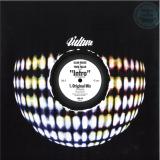
Released in 2000, Alan Braxe and Fred Falke's “Intro” is five minutes of faultlessly melancholy, perfectly elegant, dance music that nudged French House into the future.
“Intro” is now being re-released for its 25th birthday, using the remastered version of the song from the 2023 re-issue of Alan Braxe, Fred Falke & Friends - The Upper Cuts album, with Braxe and Falke also making new remixes of their golden child. Given that “Intro” was pretty much perfect the first time around, the results are astoundingly strong.
Falke’s remix takes “Intro” into new dimensions, cosmic and suspiciously dubby, a newly-recorded bass line sending the mix on its psychedelic way. Braxe’s remix is raw and dirty, a “hotel room edit” as he calls it, that nods to the history of French House as it sparkles up the spine.
Both tunes are evidence that - actually - you can remix the un-remixable, so long as it is done with infinite love and incredible skill.
DJ Amir takes another deep dive into the back catalogue of Detroit's legendary Strata Records to curate a 2nd volume in his Strata Records – The Sound of Detroit compilations. Whereas volume one took in the soulful edge of the Strata canon this volume, as Amir says, 'leans into the label's groovier, funkier edges whilst still celebrating its bold, avant-garde spirit.' DJ Amir's relationship to the Strata label has resulted in the release of the long lost Charles Mingus live 'Jazz in Detroit' box set released on BBE Music along with re-issues from The Lyman Woodard Organisation and re-imaginings of Strata's genre defying music by Berlin based DJ and producer collective, Jazzanova as well as remixes from Kai Alce, Wajeed, Henrik Schwarz, re.decay and DJ Amir himself and, of course, volume one of The Sound of Detroit. Featuring music from The Soulmates, Fito Foster, Keith Boone & Janice Coombs and The Contemporary Jazz Quintet amongst others, The Sound of Detroit volume 2 absolutely exemplifies the importance of Strata Records in the history of innovative Black music as well as its place in the cultural landscape of Detroit as a powerhouse city for art and music. Released by BBE Music in collaboration with 180 Proof Records as a triple vinyl LP and high res. digital download DJ Amir presents Strata – The Sound of Detroit volume 2 really is a gem of a compilation to grace any serious music head's record collection.
‘In Virus Times’ is an acoustic instrumental piece by Lee Ranaldo.
Composed during the pandemic, ‘In Virus Times’ is released as a onesided LP with an etching on Side B. The cover is a beautiful photo by
Lee’s friend, the great Brazilian photographer Anna Paula Bogaciovas.
Originally released as one track as part of a collaboration with Lucien
Jean for Le Presses du Reel, the music was featured on a mini CD that
accompanied a book that featured two short stories.
‘In Virus Times’, released by Mute, sees the track transformed into 4
pieces and is available on transparent turquoise vinyl with digital
download and an exclusive poster, designed, signed and individually
numbered by Lee Ranaldo. The poster design is based on an electron
microscope photo of the COVID-19 molecule.
Lee has written some of his own ‘loner notes’ for the release:
“This recording began on an evening in September 2020, stuck at home
in lower Manhattan during the dark days of the Covid-19 pandemic as
we came out of a deadly summer. A heightened sense of anxiety
stemming from the then-upcoming US Presidential elections as well as
the virus seemed to pervade all aspects of life, for myself and everyone I
knew. Its minimal quality reflects the sense of ‘motionless time’ that
many of us felt. I set up some microphones in our darkened living room
(studios being closed due to Covid restrictions), coaxing out one simple,
repetitive phrase, and then another, sounding them out into the air. The
casual home ambience - a siren or truck rumbling down the street out
the window; someone talking around the table in another part of the loft;
water running - intrudes at points. I worked to develop a few simple
thematic elements, but mostly I wanted to hear the notes and chords
ringing out, hanging in the air for a long time on that evening when the
world seemed close to stopped on its axis.
“I’d been listening closely to Morton Feldman’s catalog throughout the
pandemic. His sparse, long-duration music could often be heard playing
on repeat as we spent endless days locked inside. His willingness to do
very little, with very simple elements, and to such profound effect, has
been inspirational. I found the vast open spaces in his works thrilling,
miraculous, and comforting in those empty times. Additionally, the Drop
D guitar tuning used here has prompted my own variations on Bach’s
works for solo cello, open strings droning against melodic lines, so
simple and perfect…” - Lee Ranaldo, New York City, August 2021
BAR Musica is happy to come back with its BAR Musica Re-Present catalogue and is even happier to welcome back the Italian legend Ricky Montanari - to confirm the respect and friendship with us.
Ricky Montanari has always been a forward thinking in both his production and sets. The tracks in this H.O.M. Vol II are some unreleased gems produced together with his studio partners Davide Ruberto and Edo Lo Zio in the early 2000 that never got released.
This release is dedicated to all the respect and the gratitude to Ricky, for always be a friend!”
"Ed DMX has been part of Shipwrec since the label's inception. Under his DMX Krew moniker, this analogue wizard has released four Eps and one LP on the Nijmegen imprint. DMX Krew returns to Shipwrec for a brand new album, a collection that displays yet another side of this sculptor's sound. Brutal and cold, shadows are long and shades dark from the outset. Drum patterns twist in tempo and intent, from hard and punishing to gentle and fragile. Elements of breaks and industrial are also present in the percussion, this fragmenting allowing deep and soulful melodies to counter the battery. In fact, echoes of electronica permeate the harmonies across the LP such as deep and divergent "Interrupt." No single style is adhered to. Instead, the full palette of machine music is employed. From the squelchy Tudor electrofunk of "I Wonder Why" to the melancholic braindance of "Rephlections in Time", genre boundaries are given little credence. Instead, Ed DMX draws on his decades of experience to create sounds that are both familiar and completely one of a kind. The deep-sea dive of "Final Comedown" is juxtaposed with the ambling calypso of "Dinosaur Reaction", styles reimagined and reshaped to the creator's evolving purpose. Echoes of the halcyon days of Rephlex permeate the 2LP. The harshness and softness of the Cornwall imprint being present throughout, those more subtle tones coming to the fore in the delicate beauty of the "Phaser Level 2." A transcendent album and a certified future classic. To accompany this very special release, there will be a limited edition run with full cover art by Ruwedata. An artist very close to Shipwrec's heart, Ruwedata was responsible for the sleeve work on DMX Krew's Cosmic Awakening."
On 'Vesturgata Gaze', Hitam traverses a new biome. Geographically and metaphorically. Through this introductory release on Omen Wapta, a remarkable voice in techno lunges into artistic deliverance. Here we, the listeners, find ourselves with an EP that harbours the emotive voltage of a perspective-pivoting trip. Tectonic shifts reshuffle subterranean frequencies, rhythmic phrases carry the timbre of ancient rainfall and we humbly stand witness as ceremonial incantations demarcate indigenous land. In elusive ways, this record assigns a bardic function to mostly nonverbal music. All five tracks consistently resemble traces of life-affirming encounters by sculpting Iceland's geological features into sound. 'Vesturgata Gaze' shows that commitment and intimate collaboration, taking on bold artistic ventures, touching moss and glaciers - that's what can break the mould.
INDUSTRIAS MEKANIKAS is back with the third instalment of the ANTIKHRIST VISIONS saga. This release is particularly symbolic: it’s the ninth in the catalogue, marked by the infernal numerology that runs right through the whole series. It’s a descent into a sonic underworld, where noise becomes ritual and pleasure is just pure agony.
The artist tasked with opening this new chapter of the saga is the mighty Óscar Mulero, an essential figure on the national electronic scene and one of our biggest international ambassadors, whose career has left a deep mark on contemporary music. Here, with Faceless, he delves into dark, precise, and devastating electro territory; a spiritual machine that dictates the pulse of chaos.
Next up, we’ve got Pressurized Modulator with Reddrum: hard, crunchy, industrial electro, absolutely buzzing with electrical tension and twisted sonic matter.
Closing out the A-side is Jacko Volvone (aka Hoax Believers) with Quieren Cerrar Las Fábricas: a track that expertly blends electro, techno, and post-punk echoes, resulting in a tense, distorted, and combative sound, like a working-class echo shouting from the abyss.
Flipping over, the B-side opens with Hanging Nuts (made up of Waje Martín, Fake Robotik, and Ruben Montesco). They unleash a murky descent of filthy, distorted, primal electro, slashed through with guitars and raw, guttural vocals: a genuine chant from beyond the grave. The second cut marks the debut of Techselektah & Phil Fork with Champagne No Potable: a raging street anthem packed with fury, energy, and social criticism, where Spanish vocals emerge amidst EBM structures that have that ‘80s spirit, reinterpreted with today’s raw edge. And the big finish is down to HBK1 alongside Rigor Mortis, with Instinto Caníbal: a full-on explosion of electro-industrial and EBM that awakens the body’s most primitive urges.
Antikhrist Visions Vol. III is a sonic summoning from the lands of Hades: ritualistic matter, organic sound, and primal force. A testament to pleasure and torment—Tormento do Gostar—etched into the vinyl as if it were molten iron.
As Nathan Fake rises from the nocturnal subterranea and rave catharsis of his previous records, on Evaporator, he resurfaces into the domain of daylight, bringing a tangible sense of air rushing against your face, of big skies, and endless landscapes. The idea of pop accessibility that trickled into 2023’s Crystal Vision is refracted here through the prism of sweeping ambient, deep electronica, and trance uplift. Evaporator is Fake’s idea of “airy daytime music”, with each track a different barometer reading across the album’s varying atmospheres, which range from vibrant sunbursts, bracing rainscapes, and fine mists of clement melodics. “It’s not overtly confrontational electronic club music,” states Fake. “It’s quite pleasant, it’s accessible. As I was progressing through making the tracklist, I called it a daytime album. It doesn’t feel like an afterparty album.” For the past decade Fake has been gingerly introducing collaborations with heroes and friends alike into his lone, idiosyncratic working process. Border Community alumni Dextro AKA Ewan Mackenzie transmutes his ferocious drumming for Pigs Pigs Pigs Pigs Pigs Pigs Pigs into the blurred choral thump of ‘Baltasound’. ‘Orbiting Meadows’, meanwhile, is his second collaboration with Clark, an eerily idyllic duet where microtonal 18EDO piano clangs slowly twirl around wailing pads. Evaporator marks the junction point of old technology and ever fresh creativity for Nathan. The trusty “dinosaur” age software, particularly Cubase VST5, that has powered two decades of music is rarely updated. “I used to sort of feel a bit ashamed of using such old software, and then I kind of had an epiphany – that’s just how I work”, comments Fake. “That’s just how I play. I’m very fond of these old tools, and I get the most joy out of them, but now I’ve incorporated new technology too.” When an artist accumulates so much synergy with their instrument, music making becomes instinctual. By Fake’s account, much of Evaporator just fell into place. The album title arrived randomly in his head (“it felt completely perfect. Airy.”), ideas looped and developed until things locked into place and just felt right. ‘The Ice House’ is a fleeting glimpse of the sonic world he taps into in this creative state, its glassy FM synths built around a counterpoint between rough-hewn crystalline arpeggios and sparse yet gravitas-bearing bass. “That riff I just wrote out on the keyboard, I just played it forever and ever and ever. The original track ended up being really short. Here you go, and it’s gone!” These unplanned channellings of sound call forth records from Fake’s past while he looks ahead, perhaps getting at the very essence of his musicianship. The opener ‘Aiwa’ (“the breeziest,” he muses) reminds of the introspection that characterised Providence, excited by the fire and grit of Steam Days’ textural experiments, its chunky slams and clatters surging into a flood of harmonic buzzing as they reach out for old wisdom. ‘Hypercube’ stampedes in a similar chronological confluence, infusing an incessant synth line reminiscent of the golden age of rave with the crackling, ecstatic energy of modern festival anthems. Like the vaporisation of liquid to particles, everything that Evaporator presents has a mutant desire to be amorphous. Sounds rarely settle; the irradiated garage beat of ‘Bialystok’ is pitched downwards to driving, rebounding effect, while ‘You’ll Find a Way’ warps static into shivering energy, cinematic synth strings building anticipation into a gradual gush of chords. This translates into a more expansive stereo field than Fake has explored before. ‘Slow Yamaha’ saves the wildest, most kinetic transformations for last with a cornucopia of crispy melodies and fried drums; a sibilance of cymbals on the left, a susurrus of shakers on the right, and kaleidoscopic lasers pulsing and fizzing all around. Evaporation culminating in pure excited atoms. In a world where music has increasingly become background content, making albums remains lifeblood for Fake: “It makes me realise how long; twenty years is ages! It’s weird to see how much the world has changed. Release day back then you did fuck all, now you spend all day on socials. When I grew up the people who made the electronic music I was into were quite mysterious, and the artwork was very abstract. There was a massive distance between you and that music, and that was a key part of it, really. Now it helps to be an extrovert, and I'm just not, but the album marks the first time my face has graced the cover art. I’ve never wanted to do this before, I'm very shy, and generally I don’t like being seen,” he professes. “But, twenty years in, I supposed I could try something new. I'm very lucky that I'm somehow surviving in this world, where the media world favours extroverts and interesting looking people. It’s not my world but somehow I’m still in it.” Evaporator continues to prove Nathan’s necessary presence, with some of his most engaging, varied, and magical music yet.
That’s a project led by a flamenco guitarist who turns out to be a talented lyricist and singer.
Billy Sharp received early support from Billie Eilish on SoundCloud and later from Nils Hoffman, who fell in love with his toplines. This first glimpse into his musical landscape reveals an intriguing personality, touching contradictions, but beyond that and more simply: a voice, a guitar, and mesmerizing melodies.
We're talking about music that moves, transcends, and resonates with the listener's emotions. All the tracks are elegantly carrying the project's message: introspective and passionately intense.
Billy Sharp unveils "Rose Tint," an EP with a strong identity, destined to be one of those timeless pieces. Billy worked meticulously on each of the 4 tracks composing this debut EP, resulting in an impressive outcome. The first notes of the opening track are sure to captivate anyone with their touching vocals and top lines. The EP builds in intensity with each performance, culminating in "2013," a danceable and nostalgic track.
The upcoming release scheduled for 2026 is made by the Irish London-based artist Cherrie Bea. Emerging electronic artist carving out a distinct space in the UK scene with thoughtful, deep and atmospheric productions that blend house, ambient textures and soulful guitar work. Their debut EP Jafar’s 21st introduced a warm, late-night sound that’s already earned support from underground tastemakers and NTS. Their latest release, Pearlescent, highlights Cherrie Bea’s playful, experimental edge, a collection of carefully crafted tracks that invite listeners to feel, interpret and experience the music in their own way Cherrie Bea stands as a reserved and introspective figure within the electronic scene, serves as a true statement piece, live instrumentation, ethereal synths, processed vocals, and dense harmonies wrapped in a late-night / early-morning atmosphere. The forthcoming “Pearlescent” EP, released on Series of Taboo, fully embraces that mindset: 4 tracks blending house, funk, and a touch of electro.
Loto Azul (EP) distills EC13’s sonic identity into four focused pieces shaped for the 12″ format: cinematic atmospheres, cosmic resonance, and meticulously crafted rhythmic structures — infused with high-energy dynamics, epic tension, and textured distortions that add depth, grit, and dramatic weight.
From the mystical tension of Astrum Nox (Phase I) to the melodic, ascending narrative of Sinfonía Tercera, the EP moves between introspection and propulsion.
Perdiendo, in both its original version and the Jupiter Rhythms reinterpretation, forms the emotional core of the release — a hybrid between electro, techno, and celestial harmonic design.
A refined work that expands EC13’s role within the Cosmic Tribe universe, reaching toward new sonic dimensions with precision and depth.
M’Bamina – African Roll (1975)
The story of an album born between Africa, Italy, and the nightclub culture of the 1970s
In the heart of 1970s Italy — a country undergoing profound social change and a music scene just beginning to open itself to distant sounds and cultures — an extraordinary, almost improbable story took shape. It is the story of a group of young African musicians who found their way to Europe, of a Turin nightclub that became a crossroads for communities and experimenters, and of an album which, released in small numbers and largely unnoticed at the time, is now considered a rare jewel of Afro-fusion.
The band called themselves M’Bamina — an ensemble of musicians from Congo, Cameroon, and Benin, who arrived in Italy in the early Seventies. Settling between northern Italy and the Pavia area, they began performing in small clubs and community events, bringing with them a vibrant rhythmic heritage: African polyrhythms, call-and-response vocals, funk-infused bass lines, and Caribbean or Afro-Latin colours absorbed along their musical journeys. Their raw, contagious energy on stage quickly drew attention.
Meanwhile, in Turin, another story was unfolding. There was a venue becoming almost legendary: Voom Voom, one of the city’s liveliest nightclubs, run by Ivo Lunardi. The club attracted an eclectic crowd — students, artists, foreigners, night owls — and Lunardi quickly understood that the dancefloor wasn’t just a place for music, but a melting pot for a new kind of cultural energy. Out of this vibrant atmosphere came his idea: to turn the club’s name into a small independent record label, Voom Voom Music, capable of capturing the spirit of those years and giving voice to unconventional projects.
When Lunardi heard M’Bamina, he immediately sensed that this was the sound he had been searching for: fresh, different from anything circulating in Italy at the time, and capable of blending African tradition with funk and European sensibility. He brought them into the studio.
Production was handled by Lunardi along with Christian Carbaza Michel, while the engineering was entrusted to Danilo Pennone, a young sound technician with a sharp, intuitive ear.
The recording sessions — held in Turin in 1975 — produced a remarkably warm and direct sound. The music feels almost live: grooves rooted in African tradition, but open to funk-rock structures and modern arrangements. It is a natural fusion, never forced. Tracks move between tribal rhythms, funk basslines, light electric guitars, congas and Afro-Latin percussion, with call-and-response vocals and melodies that echo both Congolese tradition and the lineage of Latin jazz. Not by chance, one of the album’s most striking tracks, Watchiwara, reinterprets a Latin standard through M’Bamina’s own rhythmic language.
The album was titled African Roll — a name that was already a statement of intention. It is African music that “rolls,” that moves, adapts, transforms within a new geographic and cultural setting. It is not strictly Afrobeat, nor Congolese rumba, nor Western funk: it is a spontaneous, hybrid blend, shaped more by lived experience than by any calculated aesthetic program.
When African Roll was released, the world around it barely noticed. Distribution was limited, and 1970s Italy had yet to develop a cultural framework for receiving such music. The national music press rarely paid attention to African or “world” productions. The album slipped into silence — though the band’s own story did not.
M’Bamina continued performing across Europe and Africa, even sharing a stage in Cameroon with none other than Manu Dibango. By the late Seventies, they moved to Paris, signed with Fiesta/Decca, and recorded a second LP, Experimental (1978). Meanwhile, the peculiar record they had made in Turin began to resurface quietly among vinyl collectors, Afro-funk enthusiasts, and DJs hunting for forgotten grooves.
That is when the album’s fate began to shift.
Over the decades, African Roll emerged as an almost unique document: a snapshot of an intercultural Italy before the word “intercultural” even existed, a fragment of migrant history, a spontaneous experiment in musical fusion born far from major industry circuits but rich in authenticity. Original copies began commanding high prices on the collector’s market, and the album became recognized as one of the hidden classics of European Afro-fusion from the 1970s.
Today, more than fifty years later, this reissue finally restores visibility and dignity to a project that deserves to be heard, studied, and celebrated. It is not simply an album: it is the testimony of a rare cultural encounter, born in an Italy unaware of how fertile such exchanges would one day become.
It is the story of a visionary producer, an extraordinary band, and a fleeting moment in which music, migration, and nightlife came together to create something genuinely new.
African Roll is — now more than ever — the sound of a bridge: between continents, between eras, between cultures. A record that, after rolling far and wide, has finally come home.
Mean Field Mutation is a thermodynamic phenomenon occurring just below the vaporization point of voracious growth. It relies on the debris of false and almost forgotten narratives. Astral residue of consumer angst, echoes of obsolete newspeak and oscillations of promotional imbecilities collide with free floating particles hovering under the radar of the megamachine. In steady intervals, this results in a meltdown producing random waves of reconfigurations driven by cryptic but sanguine naivety.
Released on Lustpoderosa, Mean Field Mutation is the first musical output by Des Coda. Written and produced by Piero Scherer during the pandemic winter of 2021 in his bedroom studio in Zurich. Moving between playful
serenity and feral distortion, it was produced by layering sounds from field recordings, radio and TV clips, as wellas sequences from drum machines and analogue synthesizers. Taking a stance against commercial copyright, all stems of this production are available for download free of charge and ready to be reappropriated.
Des Coda is an open field for collaborative, cultural experiments beyond the conventional understanding of authorship and representation. It engages with an artistic position that defines the creative process as an interplay between context and concept. The resulting work is not a rigid product of authoritarian ingenuity, but a sensitive, living organism guided by the tensions between society and individual. Des Coda is the zestful curiosity rummaging through the rubble of the present in search of future aesthetics.
Celebrating five years deep in the trenches of techno resistance, the Greek label presents ENACT, a Various Artists compilation that captures the ethos of Renegade Methodz in its purest form and collects together a carefully selected group of music that embodies the Renegade Methodz philosophy.
In a sharp-angled, fiercely inventive reflection on the nature of club culture and digital fatigue, Simo Cell and Abdullah Miniawy reunite to deliver their new album, Dying is the internet, to Dekmantel's UFO series.
French producer Simo Cell has blazed a singular path from his dubstep-influenced origins to become a leading light in contemporary leftfield club music, twisting up adventurous rhythms and flamboyant production in pursuit of a perpetual freshness for the floor. Egyptian singer, poet, producer and composer Abdullah Miniawy has become equally omnipresent in the past 10 years, straddling the arts world and leading with his piercing Arabic lyricism while maintaining an eternally curious spirit that leads into open-ended, experimental music from the abstract to the propulsive.
Following up on their 2020 EP for BFDM, Kill Me Or Negotiate, Miniawy describes their sharply focused new album as "a playful prophecy about the triggers of a new global revolution." Cell considers the title, Dying is the internet, to be a mantra about "how the internet lost its soul," becoming "less about sharing ideas and more about surviving in a digital business ecosystem." Deliberately at odds with the reel-ready two-minute attention span of the average social media surfer (i.e. everyone), the pair set out to make an album that takes its time to reveal nuanced ideas and expressions. Rather than one-note despair for the modern malaise, Cell and Miniawy offer a philosophical reminder that this present moment in the human experience is a temporary phase, no matter how overwhelming it feels.
Dying is the internet finds Miniawy experimenting with auto-tune across the record, while Cell has developed his voice design chops and compositional instincts, moving closer to fully realised song structures without losing the fundamental 'clubbiness' of each track. The result is a cohesive, wildly original kind of heavyweight dance music that slings out hooks left right and centre, from Miniawy's laconic trumpet looming through low-slung 'Reels in 360' and 'Travelling In BCC' to the persistent handclaps that bring 'Living Emojis' to life. Miniawy's poetry explores the power of insistent, repeated phrases in a break from his more typically structured form.
Kenyan powerhouse Lord Spikeheart adds extra snarl to stripped-back, slow-burn opener 'I See The Stadium', but otherwise Dying is the internet is purely the work of Miniawy and Cell casting their considerable chops out into unexplored territory. The results are electric, bound together by a consistent economy of sound that burrows into a shroud of bass-heavy minimalism barely masking Cell's incredibly detailed studio flex. Even the beatless flourish of the Miniawy-produced 'Tear Chime' comes loaded with physicality — a sensory rush at the mid-section of the album bookended by some of the most idiosyncratic club music in recent memory.
Both Simo Cell and Abdullah Miniawy have already proved themselves as fearless innovators across different fields. The strength of their partnership lies in their ability to make space for each other while letting their distinctive sonic identities ring loud and true. Dying is the internet has immediacy and physicality to translate over a soundsystem, but its intricacies are purpose-built for repeat visits and contemplation, unveiling hidden dimensions the deeper you dive into it.
French DJ and producer Hemka makes a striking solo debut on Mutual Rytm with 'Introspection'.
Born in Marseille and based in Paris, Hemka has been shaping her take on techno for over a decade, steadily growing her international presence with music on respected imprints such as Token. Her music fuses the raw energy of 90s techno with modern textures and is fast-paced, groovy and laced with subtle psychedelia. By weaving in her own vocals, Hemka adds a deeply personal and authentic layer that resonates with both the body and mind. Following the strong reception of her track 'Fragrance' on the 'Federation Of Rytm III' compilation, this potent new EP is a powerful reflection of her bold, emotional and forward-thinking artistic voice and the start of an exciting new chapter with SHDW's Mutual Rytm.
'Abyss' kicks off with tightly coiled, heavy-hitting drum funk and eerie synths that never let up while ghoulish vocals layer in extra darkness and anxiety. 'Time' is another sleek, stripped-back but banging wedge of linear techno excellence and 'I Can't Shine' layers up paranoid vocals with high-speed glitches and rubbery drums to ensure maximum impact in the club. The excellence continues with 'The Bad Place' with booming drums and moody synth atmospheres, getting you up on your toes and keeping you there. Last, 'Unchanged' fizzes with static electricity as wordless vocals refract around the mix next to wispy synths and icy hi-hats. Digital bonus cuts 'Voice In My Head' and 'Eternity' round things out with more heady and intense techno for driving deep into the night.
Wolfgang Haffner is one of Europe's most respected jazz drummers, known for his impeccable sense of timing, groove, and atmosphere. Though rooted in jazz, his musical language transcends genre boundaries, guided by pulse and subtle nuance rather than tradition alone. For Cocoon Recordings, he now enters an entirely new dialogue, offering warm, organic reinterpretations that honor the spirit of the source material while opening a fresh sonic horizon. The result is a meeting of two artistic worlds where Sven Väth's timeless energy and Haffner's refined touch flow naturally into a new musical form, an encounter between two artistic universes, merging into something both unexpected and deeply musical.
Fusion is a groove driven piece built around a clear, flowing melody, allowing Haffner to reinterpret it acoustically through a jazz lens. Its straight, driving pulse lets him explore the track's rhythmic and melodic interplay with clarity and nuance.
L'Esperanza, originally a dreamy, trance like track, envelops listeners in strings, filtered downbeats, and a playful synth melody, a perfect canvas for Haffner's warm, organic touch. Its ethereal layers and subtle tension allow him to explore the track's emotional depth while preserving its entrancing charm.
Barbarella, emblematic of Sven Väth's early 90s vision, carries the energy and innovation of a club classic. Haffner's reinterpretation transforms it into a rich, acoustic exploration that honors its hypnotic essence. By emphasizing the track's iconic motifs and underlying drive, and by drawing out the track's essential elements, he bridges its electronic origins with a new, organic perspective.
Together, these three reinterpretations form a cohesive journey that celebrates the timeless essence of Sven Väth's music while revealing a new dimension through Haffner's masterful touch, a release that invites listeners to experience familiar classics in a completely new light.
The label Erdgeschoss celebrates the freedom of sound and vision at the bar of life, like football – only with a bass drum instead of a ball. And with beer. Because even with vinyl records, the ball has to go in the net.
Pop Vampires Cologne will kick things off; their surrealist debut masterpiece, Karianne, was already released at Total 25 last year. PVC lives up to its name. Like vampires, oskø and Wassermann once again sample their way through the pop supermarket of unlimited possibilities.
Almost overnight, in their illegal, digital garage, they clone hybrid sound structures, saturated with both foreign and self-injected blood doping. Forbidden fruit is known to taste the best. Consciously, explicitly, and provocatively, PVC explores sampling as an indispensable stylistic device, a universal tool for quotation and pop networking. Equally daring and respectfully irreverent, they oppose the new, all-disenchanting AI search engines on the internet with the freedom of art. The rest is surrealism. Just like the accompanying video, which isn't a video in the conventional sense, but rather a kind of making-of with Sabine as the main front character. And the digital versions of some tracks may differ slightly from the vinyl versions.
Because: Anything goes…
Das Label Erdgeschoss feiert an der Theke des Lebens die Freiheit von Sound and Vision wie Fussball - nur mit Bassdrum statt Ball. Und mit Bier. Denn auch bei der Schallplatte muss das Runde ins Eckige.
Den Anfang machen Pop Vampires Cologne, deren surrealistisches Debüt-Meisterstück Karianne bereits im letzten Jahr auf der Total 25 erschienen ist. Bei PVC ist der Name Programm. Wie Vampire sampeln sich oskø und Wassermann einmal mehr durch den Pop-Supermarkt der unbegrenzten Möglichkeiten. Quasi über Nacht klonen sie in ihrer illegalen, digitalen Garage hybride Sound-Gebilde, getränkt mit Fremd- und Eigenblutdoping. Verbotene Früchte schmecken bekanntlich am besten. Bewusst, explizit und provokant arbeiten sich PVC am für sie unverzichtbaren Stilmittel des Sampling als universelle Zitat- und Pop-Vernetzungsmaschine ab. Ebenso wagemutig wie respektvoll respektlos, halten sie den neuen, alles entzaubernden K.I. Suchmaschinen im Netz die Freiheit der Kunst entgegen. Der Rest ist Surrealismus. So wie das dazugehörige Video kein Video im herkömmlichen Sinne ist, sondern eine Art Making Off mit Sabine als Frontdarstellerin. Und die digitalen Versionen einiger Stücke sich leicht von den Vinyl Versionen unterscheiden. Denn: Erlaubt ist, was gefällt…
Early Dj plays from Louie Vega, Dj Sneak & Carl Cox!
Brand new vinyl-exclusive music for 2026 from 4 legends of electronic music.
Teachers is a new series from Only Cuts showing love and respect to the architects of our sound.
5th release from the Only Cuts label run by Sydney maestros, Mo’funk & Encee
All new music from these Teachers, Dj Sneak returns with one of his best works in a long time with ‘Hear The Music’ Todd Terry appears under his ‘House of Gypsies’ alias with a horn driven percussive groover. Junior Sanchez with a brilliantly produced Wham flip & The Stanton Warriors come at it with an anthem used in their live sets, appearing for the 1st time on vinyl!
BODJ & ROKSI in true magician style, wear their top hats & capes as they come together once more under their Adult Sonics alias, this time shuffling the deck for the inaugural vinyl release of London based record label, Stay Restless.
An original 3-track EP with the signature ADS sound - trippy and dark yet playful, created having big sound systems in mind, it’s already been in rotation from Sunwaves festival to SASH in Sydney and back.
A mythical deep house white label from Detroit, originally pressed in 1995 and long considered a grail among collectors.Two extended reworks of a Sade classic, blending hypnotic grooves and lush atmospheres in pure mid-90s US deep house style. Originally circulated only as obscure stamped or hand-written white labels, this elusive gem resurfaces after years in the shadows.
For their fourth release, Australian label Lunatic Music welcomes Chris Stoker (UK) and Jamie Blanco (UK born, AUS based) to the fray for a dubbed out analogue synth workout that is indisputably Ess O Ess.
Fusion unfolds in Simply Nothing. Analogue synths intertwine with exquisitely programmed percussion and George Humes' chorus-drenched, draped in a veil of spectral vocals by Sarah-May Brown. The result is a retro-futuristic sonic whirlpool that is as memorable as it is delicate.
A waterfall forms in The Lotus & The Banksman. An otherworldly mutant breakbeat techno floor filler. Ethereal pads and dubby textures ripple across the surface whilst the resonant bassline churns below. Gentle currents give way to surging momentum as the percussion kicks in wth the repetitive chant of Time Travelling Man throughout, again by Sarah-May Brown.
On Remix duties, Hybrid Man applies their refined proto-trance formula to Simply Nothing, drawing out its hypnotic core.
Mayurashka fractures The Lotus & The Banksman, sifts through the pieces, and assembles a mind-melting, wonky techno drum work-out from the fragments.
uper Deception dives into the uncanny beauty within the everyday, drawing inspiration from M.C. Escher’s idea of “super deception”: the art of creating the impossible without illusion. Nelson of the East translates that concept into sound: deep, tactile basslines and intricate percussion twist familiar rhythms into hypnotic new forms. Textures and samples are lifted from their origins and reimagined, creating tracks that feel both ancient and futuristic, physical and dreamlike. The result is an electronic landscape where sound folds in on itself: a timeless, shape-shifting exploration of rhythm, resonance and perception.
Nelson of the East is a Berlin-based sound artist, producer and educator. He operates at the intersection of experimental composition and club culture, shaping his craft both as a music teacher and behind the scenes as an experienced ghost producer.
Catapult yourself back to the early-'90s raves with this limited edition vinyl of Human Resource's 'Dominator'. Including legacy-championing renditions from Klubbheads, Frank De Wulf and Rebuke alongside the UK-charting original mix, this multi-track pressing represents the sound that's proven to be rougher and tougher than any other.
Fresh for 2026, Something System Records returns with its second four-track EP, showcasing a carefully curated selection of forward-thinking underground sounds from across the DnB and jungle spectrum.
A1 – Creativity Oxford-based producer SR makes his label debut with Creativity. Having already built a strong reputation through multiple vinyl releases and production collaborations with JEMONE on Metalheadz, SR delivers a powerful opener defined by tense atmospheres, razor-sharp drum programming, and weighty sub-bass. Designed to move both dancefloors and minds, this is a standout introduction.
A2 – 3 Times Around The Sun Duburban & Peeb return to Something System Records for their second appearance following a prolific period of releases on some of the scene’s most respected labels. This track channels lush, uplifting pads reminiscent of the golden era of Good Looking Records, underpinned by warm sub frequencies and expertly edited drumfunk breaks that evolve beautifully throughout. A deeply musical and rewarding listen.
B1 – Fresh Outlook Bristol-based producer Loma returns to the imprint with Fresh Outlook, a finely crafted 140 BPM jungle roller. Featuring intricately layered breaks, precisely placed subs, and an immersive atmospheric backdrop, the track takes the listener on a dynamic journey. With previous releases on John B’s BETA Recordings, Loma continues to demonstrate a bright and promising trajectory.
B2 – Tell Em Purdie Closing the EP, Something System Records proudly welcomes Pixl to the label for the first time, collaborating alongside Duburban & Peeb. A seasoned producer with releases on numerous highly respected DnB labels and founder of Loop Progression Records, Pixl brings depth and experience to this jazz-infused finale. Smoky club atmospheres, textured breaks, deep subs, saxophone lines, and a spoken-word sample referencing a legendary drummer combine to deliver a rich, soulful conclusion to the EP.
Creating music, sharing your sound, and performing — all from a small village on an island — is no easy feat.
Dear artist, do you find yourself in a similar situation? Then this record is dedicated to you.
Never forget your roots — and don’t forget to save your atoll!
Singer-songwriter and multi-instrumentalist Son Little expands his musical palette on his upcoming album, Cityfolk. Blending elements of soul, folk, and blues, Son Little captures his signature sound along with expressive yet personal lyrics. Cityfolk is a reflection on love, loss, and finding peace in the chaos. It"s about holding on, letting go, and learning to breathe again when the world feels heavy. Born Aaron Earl Livingston to a preacher and a teacher in Los Angeles, Little"s collaborations with The Roots and RJD2 helped him make a name for himself in his adopted hometown of Philadelphia. Critics were quick to recognize the unique power of Little"s solo recordings, which stripped the past for parts that could be reconstituted into something wholly new and original. NPR hailed Little"s "impeccably crafted songs" as "honest and unpretentious," while The Independent proclaimed him "a formidable talent." Since then, his catalog has racked up over 250 million streams, and Little has toured with everyone from Leon Bridges and Kelis to Shakey Graves and Mumford & Sons alongside festival appearances at Bonnaroo, Newport Folk, and more. Never one to rest on his laurels, Little also earned a GRAMMYî for his work helming Mavis Staples" acclaimed "See That My Grave Is Kept Clean."
Sicily's SLV is able to merge technical mastery with emotional resonance. His potent techno sounds have come via the likes of SHWD's Mutual Rytm and Slam's Soma, and unite timeless yet forward-thinking sonics.
On 'Fleeting Dreams', he continues to refine his signature sound while channelling introspection and intensity into a collection of meticulously crafted cuts that balance precision and feeling, energy and space. Each track reveals a different side of his sonic identity: hypnotic rhythms intertwine with evolving soundscapes, while layers of distortion and melody merge into a dreamlike tension between the mechanical and the organic.
'Fading Moments' kicks off with a sleek blend of driving, supple kicks and warm synth ripples, while a euphoric vocal cry is buried deep to amp up the emotion. 'Scenario' then brings icy hi-hats and sinewy synths bring a futuristic feel to the unrelenting, high-pressure drums down low. 'Daruma' has a darker energy with menacing textures and paranoid FX bringing the rolling drums to life, while 'Bass Grit' has a hunched up rhythm, with groaning pads and fizzing static electricity that charge up the party. To close, 'Shimmer' sinks down into a muscular and deep rhythm that's marbled with restless synths and ever-rising tension.
In addition, digital bonus cuts 'Trust' and '1990' offer different perspectives with slamming drums, seductive vocals and feisty synth loops making for two more bold, immersive techno weapons.
At the core of the creative process behind “HPC” and “Bor3d” lies meta-irony, a quality that permeates much of today’s digital content landscape.
Both tracks are a deliberate attempt to push the sound toward a barely perceptible absurdity and ironic unseriousness in their interpretation of well-familiar styles of dance club music. It is a play with form, expectation, and recognizability — balancing sincerity with sarcastic exaggeration.
Okay
Okay is built around interruption. Voices, fragments of dialogue, yawns, irritation — people seem to step inside the track uninvited. Someone is bored, someone is annoyed, someone tries to stop the flow entirely. Just like in real life, the process is constantly disrupted. The track reflects the experience of being surrounded by opinions, noise, and skepticism — especially the kind that will never be convinced, no matter what you do. “Okay” becomes a quiet, ironic response to this pressure: not agreement, not approval, but endurance. The track continues anyway.
Tripatura
Tripatura is a fictional creature — a warped echo of cryptid mythology. In this narrative, Tripatura doesn’t simply exist, it hunts. Once it finds you, it drags you into an endless trip with no exit point. Time stretches, perception blurs, and the track itself becomes the trap. Its prolonged, unresolved ending mirrors the experience of being stuck inside a loop that refuses closure. Tripatura doesn’t rush. It lingers, slowly pulling you deeper, until the trip no longer feels temporary.
Step into the spirit of the early rave years with “Parade006”, a high-energy EP rooted in the uncompromising sound of classic breakbeat. Drawing inspiration from the 90s, this release channels the raw pulse of a time when warehouse walls shook, kicks hit hard, breaks were chopped to the bone, and basslines pushed systems to their limits.
Right from the first track, the EP pulls you into a fierce rush of rough-edged samples, piercing rave stabs, and nonstop drive. Each cut blends heavy nostalgia with modern punch, fusing old-school hardcore attitude with contemporary production power.
Brace yourself for pure dancefloor pressure. Arms up. No restraint. The rave is back.
>>> comes in different marbled colored 12 “ Vinyl and ONLY on Vinyl <<<