Cerca:research

Generi
Tutto
Quinie - Forefowk, Mind Me LP

The record is largely sung in Scots language, one of Scotland’s three official languages along with Gaelic and English. “Scots gives me a way of expressing myself which is connected directly with the landscapes I love. It brings the songs alive and it is a fascinating language. The name of the record is in Scots - Forefowk means the people who came before, or ancestors. When we say ‘mind me,’ we can mean a few things- remind, remember, watch over or care for me. The record explores how tradition needs to be constantly reconnected with, built upon, looked after, and shared.”
Quinie sings with a style inspired by Scottish Traveller singers. “I began singing unaccompanied Scots Song in 2015 after hearing Scots Traveller singer Sheila Stewart on the radio. Initially I felt like I shouldn't sing these songs because I'm not a Traveller, and I saw people around me doing that in a way that made me uncomfortable. But on the other hand this music made sense to me and I felt driven to learn. Over the years I have met Traveller friends who taught me that settled people sharing these songs could contribute to raising awareness. Scottish Travellers are marginalised and discriminated against in modern Scotland, despite being custodians of so many of our important traditions. So I started to perform them and tell this story. From there I built on my repertoire and started writing my own songs”.
To develop this record, Quinie travelled across Argyll with her horse. They went on a pilgrimage of sorts through the ancient landscapes of the West of Scotland to explore the interconnected relationships between people, ancestors, animals, and place. The album’s vinyl release is accompanied by a book and film, documenting this unusual research process.
Forefowk, Mind Me was recorded in August 2024 at The Big Shed in Highland Perthshire with support from Creative Scotland. Quinie is accompanied by an ensemble of musicians: Ailbhe Nic Oireachtaigh (viola), Oliver Pitt (duduk, bouzouki, percussion), Harry Górski-Brown (small pipes, violin), and Stevie Jones (double bass, recording, and mixing). Each of these artists brings their own distinctive voice, bridging contemporary experimental practice with worlds of traditional and early music.

pre-ordina ora18.09.2026

dovrebbe essere pubblicato su 18.09.2026

41,13 €
Bachar Mar Khalifé - joue Christophe
  • A1: Les mots bleus
  • A2: La dolce vita
  • A3: Tangerine/Minuit boulevard
  • B1: Ferber endormi
  • B2: Emporte-moi
  • B3: Les paradis perdus
  • B4: Les amoureux qui passent

Bachar Mar-Khalifé Plays Christophe

The album title, Bachar Mar-Khalifé Plays Christophe, inevitably comes as a surprise: the Lebanese composer, singer, and multi-instrumentalist ventures into the world of the pop dandy who escaped the yé-yé era… From the very first notes, one thing becomes clear: splendor flows effortlessly from melodies restored to their fragility and simplicity. Bachar Mar-Khalifé explores the hypnotic melancholy of a world that is both sophisticated and crystal clear. A fascinating plunge “into this collapsing luxury,” as the lyrics of Paradise Lost say. Seven tracks with his collaborators Dogan Poyraz on drums and Aleksander Angelov on bass, seven narratives unfolding the musical richness of Christophe’s songs as much as that of Bachar Mar-Khalifé’s playing and singing. A captivating journey, both on record and on stage. It all started there, in fact. In April 2025, BMK dared to pay tribute to Christophe at the Fragile Festival, at the Cirque Zingaro, five years after his death. At first glance, it wasn't his familiar world. "I haven't idolized him my whole life," he explains. "I really knew Christophe personally before I knew his work in detail." During his childhood in Lebanon, and then after arriving in France in 1989 at the age of six, the music played at home left little room for Christophe's pop. "We listened more to Brassens, Brel, Ferré, Barbara. I hardly knew anything more than 'Les Mots bleus.' Then we met. Christophe loved the night, young musicians, exploring together..." In 2018, Bachar and Christophe recorded a Unik session for FIP, which involved recording a 45 rpm single live, followed by a concert at the Maison de la Radio. The younger brother has the opportunity to discover a legend, but also how it works: “His melodies allow you to go very far—even him, who seems to be searching for a new version with each interpretation, as if he wanted to return to the organic aspect of the song. A researcher who, out of a need for freedom, wants to escape the image people have of him.” So there was no question of overproducing these covers as one might do with the stage fright of tackling an intimidating work. “I tried to go very fast to deliver each song, as if I had composed it myself.” Working instinctively, very spontaneously, the bulk of the album comes from the trio's rehearsals and the concerts that followed. “I chose songs that moved me. Very beautiful melodies and very beautiful lyrics.” Whether the lyrics are by Jean-Michel Jarre or Alain Kan, “they often speak of love in danger.” “I like to hear this quote from Paradise Lost: ‘Dandy, a little cursed, a little aged / In this crumbling luxury.’ Here and there, he pruned the lyrics, as if to make them more audible, in Les Mots bleus, ‘The winter wind blows in April / I love the still silence’ – an evocation of the month of Christophe’s death. And he chose a little-known song from the yé-yé era, Les Amoureux qui passent, in which we hear the young trumpeter Siméon Petrov, who further expands the play on the archetypes of vintage romantic song. Between accepted fragility and the vertigo of feeling, between virtuosity of lightness and unfathomable depths, Bachar Mar-Khalifé unfolds an unexpected kinship with Christophe.” A kinship of silences and sonic surprises (a synthesized zurna sound in "Emporte-moi," for example) that will continue on tour. He is also preparing an album of original songs, his first since 2020, after many compositions for film and collaborations with other artists. He writes songs of love and dance, at a time when Lebanon and the world are experiencing such dark times. Perhaps this is yet another lesson from Christophe: to love and sing "in this crumbling luxury."

pre-ordina ora18.09.2026

dovrebbe essere pubblicato su 18.09.2026
22,48 €
SDS - I’M NOT PERFECT BUT I’M PERFECT FOR YOU
  • A1: Original
  • B1: Alex Neri Remix

Sarah de Scisciolo, known as the Brutalist Poet, presents a new project born from her collabora%on with
Alex Neri, long%me member of Planet Funk and a leading figure in the Italian electronic music scene.
Produced by Alex Neri and released on vinyl, the single emerges from the encounter between Sarah’s
poetry and performa%ve dimension and Neri’s electronic research. The project blends spoken word, vocals
and electronic music, transforming words into sound and crea%ng an original dialogue between
performance and club culture.

This collabora%on brings Sarah de Scisciolo’s poe%c language into the world of electronic music and vinyl,
shaping a release conceived for both audiences and professionals within the contemporary music scene.
PRODUCED BY ALEX NERI AND MANNIE FOR TENAX RECORDINGS

pre-ordina ora18.09.2026

dovrebbe essere pubblicato su 18.09.2026

17,44 €
João Machado - Meliponica LP

'Baroque Sunburst is proud to present Melaponica, the unique and unheard music of the interdisciplinary Brazilian artist João Machado, entirely created by electronically processing the recordings of stingless bees.
'Machado's work with field recordings of native bees form a sound library held in international collections such as the British Library and the Animal Sound Archive in Berlin, and his research into stingless bee communication has unfolded into experimental electronic music, finally finding its way on vinyl for the first time.
'Within its 40 minutes of never-stopping music, Melaponica reveals its unique sonic universe, flawlessly moving from complex percussive rhythms to melodies and soundscapes that seem to come as much from earth as from outer space. With an impressive ability to explore the potential of its original audio sources while pushing it to the limits, João Machado's idea of music never loses musicality and groove, even in its more intimate moments.'

pre-ordina ora14.09.2026
dovrebbe essere pubblicato su 14.09.2026

19,29 €
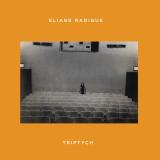
Eliane Radigue - Triptych LP 2x12"

The final collaboration between Eliane Radigue and Important Records is this double LP edition of Triptych. Radigue insisted that her music only be released on vinyl if the pieces would fit without being edited or cut. Triptych met those requirements leaving room for an etching on the 4th side.

Back to music after three years of silence... On the suggestion of Robert Ashley, Douglas Dunn commissioned Triptych from Eliane Radigue for choreography. Only the first part of Triptych was staged at the premiere at the Dancehall/Theatre of Nancy on February 27 1978. Recorded in the composer's studio in Paris.

After the 1974 premiere of Adnos in San Francisco, a group of French students introduced Eliane Radigue to Tibetan Buddhism. When she returned to Paris, she†began to explore this spirituality in depth, which slowed her musical production up until 1978. Triptych marks her return to composition, and draws its inspiration from "the spirit of the fundamental elements, water, air, fire, earth" Eliane Radigue likes to add that this has often been useful to her in her moments of research and transitions.

This three-part composition, with its great humility and contemplative simplicity, heralded a new period of her work and was the first in a series of masterpieces inspired by Tibetan Buddhism: Adnos Trilogy (1980), Songs of Milarepa (1983) - with the voices of Lama Kunga Rinpoche and Robert Ashley , "Jetsun Mila"(1986), as well as the Trilogy of Death: Kyema (1988), Kailasha†(1991) and Koume†(1993).

-Manu Holterbach (translation: Maxime Guitton)

pre-ordina ora11.09.2026

dovrebbe essere pubblicato su 11.09.2026
37,40 €
Charles Dodge - Synthesized Voices (Tape)

The compositions recorded here are a product of work with computers in synthetic speech, song and vocal sounds and were created between 1972 and 1975. The music was realized on two different computer music systems and takes advantage of, and attempts to extend and explore their features. The system employed to realize speech songs was created at the Bell Telephone Laboratories for research in synthetic speech and speech communication. Since the system was not designed for musical purposes, its limitations were severe and its musical use a great (and often rewarding) challenge. The system used for In Celebration and The Story of Our Lives was designed with the expressed purpose of creating synthetic musical voices, and was therefore much better suited to the task at hand. As with any high technology project, there was extensive collaboration in the production of the works.

The works on this disk are called computer music because the sounds were created numerically in a computer before reaching magnetic tape and loudspeakers. The computer did not compose the music. However, it was only used as a sound synthesis and analysis medium. In order to hear the sounds which are represented in the computer as successions of numbers it was necessary to attach a digital-to-analogue converter to the computer. The converter transformed the succession of numbers into a fluctuating voltage which was recorded directly on to audio tape.

The technique used to create the synthetic voices is called speech synthesis-by-analysis. For this method of speech synthesis, only those words, phrases and sentences which have been spoken into the computer previously (via an analogue-to-digital converter) may be synthesized. First the digitally-recorded speech is analyzed by programs which extract the attributes (parameters) of the speech for short time segments (.01 sec.). From these parameters the speech may be recreated in a form which resembles the original recording very closely. But for musical purposes the parameters are most often altered before synthesis. It is possible, for example, to change the natural pitch contour of the speech into a melodic line or to change the speech speed without altering the natural pitch level.

The variety of musical patterns which may be created from the analytic parameters is limited only by the composer's imagination. Most of the speech sounds on the recording were created by changing the pitch and duration attributes of the original on resynthesis, but for a few, the resonances (the formants) of the speech were altered as well. The voice of the book in The Story of Our Lives was created by replacing the program which simulates the sound of the human vocal cords with one consisting of 64 sine tones glissandoing at different rates. All the textures in which more than one voice is heard were obtained by mixing the synthetic voices together digitally.

pre-ordina ora11.09.2026

dovrebbe essere pubblicato su 11.09.2026

16,60 €
VARIOUS - LEFTO PRESENTS JAZZ CATS VOLUME 4 LP 2x12"

The acclaimed compilation series returns with volume 4! Fourteen tracks showcasing the most exciting emerging voices in Belgian jazz, ready to claim a permanent spot on your turntable.

The latest instalment in the celebrated compilation series once again shines a spotlight on the most adventurous and forward-thinking artists emerging from Belgium's jazz scene. Curated by Belgian tastemaker, DJ and broadcaster Lefto Early Bird, the collection continues a tradition of uncovering hidden gems and introducing them to a wider audience of dedicated diggers.

Over the years, the Jazz Cats series has become a trusted barometer of Belgium's ever-evolving jazz landscape. Long before many artists gained international recognition, they first appeared on these compilations, making the series both a discovery platform and a snapshot of one of Europe's most exciting musical ecosystems.

Jazz Cats Volume 4 captures a scene bursting with creativity, diversity and ambition. Across fourteen carefully selected tracks, the compilation explores the many directions contemporary Belgian jazz is taking today. Jazz, hip-hop, electronic music, afrobeat, spiritual jazz and experimental sounds coexist effortlessly throughout the collection.

The opening stretch of the compilation, led by Brussels-based Irreversible Entanglements band member Aquiles Navarro, Ola Tunji and HelenaCasella, offers an early glimpse into a scene that rarely stands still. Their music moves freely between traditions and contemporary influences, reflecting less concern with preserving genres than expanding them. Artists such as Lupo Spaccaro and Kunde, joined here by the raw soul voice of Fred Gata, draw inspiration from hip-hop and contemporary beat culture, yet neither approaches these influences in a conventional way. Instead, they reveal how naturally these sounds have become part of the vocabulary of a new generation of jazz musicians.

Experimentation emerges as another defining thread. KVR and BREAD FOR PIGEONS embrace unpredictability through unexpected textures, shifting atmospheres and confident compositional choices, creating music that constantly challenges expectations. Elsewhere, artists like Gaiko and VLIEGWERK favor immersive soundscapes that reward repeated listening. Whether there's a connection between musical adventurousness and a preference for capital letters remains a question for future research.

At the heart of the compilation lies a strong sense of movement and groove. Ragini Trio and Foutloos approach that rhythm from different angles, yet both build their music around powerful, pulsating foundations. Their tracks need close attention, revealing layers of detail and low-end richness that practically demand to be experienced on a proper sound system.

By the time it reaches its closing chapter, Lucid Lucia, SLAGADER and Kuna Maze bring the focus back to forward motion. Jazz and funk-infused grooves provide a fitting finale, reminding us that however far these artists push the jazz genre, they never lose sight of its ability to connect, uplift and move people.

The result is a body of work that feels remarkably cohesive despite its diversity: a portrait of a scene that continues to evolve through curiosity, collaborationand constant reinvention.

pre-ordina ora04.09.2026
dovrebbe essere pubblicato su 04.09.2026

30,04 €
SWEATY BETTY - THE SWEATIER THE BETTYER
  • 1: LIVE WIRE
  • 1: 2CONCRETE HORIZONS
  • 1: 3EARTHLIGHT
  • 1: 4DIED TRYING
  • 1: 5YELLOW BIRD
  • 1: 6ROCK N ROLL SINGER
  • 1: 7THE GODS THEMSELVES

Previously unreleased proto-metal album by this criminally forgotten UK band. Sweaty Betty were neighbours and friends of Black Sabbath and Judas Priest, all hailing from the West Midlands region of England. The Sweatier The Bettyer, was recorded in 1974/75 and features Budgie drummer Pete Boot. Also, on vocals was future NWOBHM cult legend: Rik Staines, who went on to form Dark Star. Their debut 45: Lady of Mars is considered a classic of the genre. After several years of strenuous research, Rise Above Relics is excited to bring this long-lost jewel from the crypts of the 1970s British underground scene. Mastered and cut from the original 1/4" tapes, it is a gargantuan feast for fans of the era

pre-ordina ora04.09.2026

dovrebbe essere pubblicato su 04.09.2026

39,71 €
Claudio PRC & CONCEPTUAL - Syklit

Claudio PRC & CONCEPTUAL

Syklit

12inch01211
012
04.09.2026

012 proudly presents 01211, a release marking the first-ever collaboration between Claudio PRC and CONCEPTUAL. A long-anticipated meeting of two like-minded artists, Syklit unfolds as a shared exploration of depth, restraint, and sonic research, supported by a masterful revisit by Marcal.

Built around the concept of cycles as continuous motion and transformation, Syklit develops through three original cuts that function as interconnected chapters of a single narrative. Hypnotic structures, stripped-back grooves, and carefully sculpted sound design define the EP. It blends techno sensibilities with an introspective, atmospheric approach. On top of that, Marcal delivers a striking reimagining of Sykli I, merging raw tribal energy with cutting-edge, sci-fi-driven sound design to unleash a relentless groove made for peak-time, late-night sessions.

The result is a cohesive and powerful release, equally suited for immersive listening and deep, forward-thinking dancefloors, celebrating a meaningful first-time collaboration and uncompromising shared sonic visions.

non in magazzino

Ordina ora e ordineremo l'articolo per te presso il nostro fornitore.

Last In: 24 days ago
16,77 €
Frankie Knuckles & Eric Kupper - The Director’s Cut Collection Volume Two 2x12"
 
8
disponibile anche

Volume 1[24,79 €]

V1 Clear Vinyl[31,72 €]

Volume 3 (Red Vinyl)[29,37 €]


2026 Repress in White Vinyl
There are few people across the globe, who will have not been touched by the work of Frankie Knuckles. Forever regarded as ‘The Godfather of House’. A Grammy Award winner, Frankie had a street in Chicago named after him where the old Warehouse once stood to commemorate the first ever Frankie Knuckles Day on 25th August 2004. Five years ago, Frankie passed away in Chicago on 31st March 2014 leaving behind one of the greatest house music legacies spanning almost four decades.

Now he is commemorated once again by long time writing and production partner Eric Kupper who will release part II of the special commemorative album on vinyl around this date. Eric, himself a seasoned DJ producer and writer, working side by side with Frankie on many his seminal classics, as well as personally working on over 116 Billboard #1 Dance Records. Having both worked together for many years they established themselves at ‘Director’s Cut’ from 2011 and set about producing original releases and remixes based on the classic ‘Def Mix’ sound while sharing equal credits for their creations.

The album features some of Directors Cut’s best works with the Re-Directed version of the seminal classic ‘Baby Wants To Ride’ plus their re rubs of Inaya Day, Sybil, Hardsoul and Lou Rawls - You’ll Never Find Another Love Like Mine (Kenny Summit, Frankie Knuckles & Eric Kupper Unreleased Anthem).

This album is to be released in collaboration with The Frankie Knuckles Foundation who work to continue Frankie’s legacy whilst focusing on music in schools, LGBTQ youth homelessness, AIDS research / prevention & diabetes research / education.

non in magazzino

Ordina ora e ordineremo l'articolo per te presso il nostro fornitore.

Last In: 13 days ago
31,72 €
Protocol - Channel Zero

Protocol

Channel Zero

12inchINT291
Interiør
30.08.2026

'Channel Zero is a new release produced by the London-based Brazilian artist Protocol. It is made up of 4 unprocessed live jam recordings of heavy, stripped-down techno. Composed over a period of 2 years, the artist focuses on experimenting on the far edges of techno, inspired by early avant-garde music, drone, and Musique Concrete. It comes in a hand-numbered limited edition of 180g black labels, in a 3mm inside-out cover with a black inner-sleeve.
'The work is a confirmation that techno still thinks forwardly, but pays homage to its mostly overlooked origins. The titles come from one of the early Cybernetic Culture Research Unit essays, also named Channel Zero.
'Lost Signal (Noise) opens up the EP with reverberated static noise, followed up by a deep bass with more layers of percussion and atmospheric noise patterns, slowly evolving into unexpected rhythms. The second track, Blind Belief, is composed of a deconstructed kick sequence, with machinic-like sound structures in the background and a hi-hat that morphs with various envelopes, together with a nostalgic 909 rim-shot. Turning to the B side, Electromagnetic Shadow is an atmospheric four-to-the-floor techno track, where deep kick drums and polyrhythmic noise soundscapes move into industrial noise pattern. Closing Protocol's debut EP, Black Snow Cult brings together the EP's sound palette into aggressive patterns of Birmingham-esque industrial percussions, where synthetic sounds are put together in primitive sounding sequences together with high pitched frequencies.'

pre-ordina ora30.08.2026

dovrebbe essere pubblicato su 30.08.2026

14,08 €
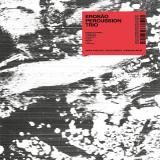
Erosão Percussion Trio - Erosão Percussion Trio

Mariá Portugal has been active in the music scenes of Brazil and Europe as a drummer, composer, singer, and music producer. After graduating in composition, she has focused her research on free improvisation and its possible intersections with popular song. This exploration resulted in her acclaimed album EROSÃO (2021) and in the formation of two groups: the EROSÃO Septet and the EROSÃO Percussion Trio, both based in Germany.

She is also a member of the group Quartabê and has toured and recorded around the world with various artists, moving between pop, free jazz, free improvisation, and Brazilian popular music. She has performed and recorded with artists such as Elza Soares, Anthony Braxton, Joe McPhee, Fred Frith, and Tomeka Reid. She is a member of Fire! Orchestra, Fire! Trio, Endless Breakfast and MONSTER.

In 2020, Portugal was the 13th Improviser in Residence at the Moers Festival. As a curator, she has participated in the Soundtrips-NRW in Duisburg and currently coordinates the concert series “TOMA CHOCOLATE!” in Berlin, besides being the guest curator for this year's unlimited Wels festival. She also composes music for dance, theater, and film, including the award-winning soundtrack for the film “1976”, which earned her the Chilean Film Academy Award in 2025. She was nominated for the 2025 and 2026 German Jazz Prize in the drums and percussion category.
Emilio Gordoa is a Mexican sound artist, percussionist, and composer whose work focuses on sound and performance as primary means of expresion. Based in Berlin since 2012, he has been an active contributor to the city’s Echtzeitmusik scene and is involved in the international avant-garde music community.

His projects include solo and ensemble performances, sound installations, and compositions for film, theater and dance. He has collaborated with a wide range of artists, including Jérôme Noetinger, Ingrid Schomliner, Yuko Kaseki, Burkhard Beins, Don Malfon, John Butcher and Sabiene Vogel. Gordoa’s approach combines experimental percussive techniques with electronic elements, leading to invitations to perform at events such as the Moers Festival, Meakusma Festival in Belgium, A’larme!, and Maerzmusik in Berlin.

He founded WildSonico, a platform for experimental music, and has been part of artist residencies at institutions like the Akademie der Künste and Kunststiftung NRW. He also worked as the Improviser in Residence for the Moers Festival. His discography includes albums such as Substantial Myths (2022), Balderi Variations (2019), and GRIFF (2021), which reflect his ongoing engagement with music. His work has been supported by organizations such as the Goethe-Institut, Musikfonds e.V., and INM - initiative neue musik berlin, and he has received recognition, including an Honorary Mention at the Prix Ars Electronica.

Burkhard Beins was born in 1964 in Lower Saxony and has been living in Berlin since 1995. He is considered a stylistically influential percussionist as a composer/performer, due to his individually developed playing techniques. Additionally, he works with analog synthesizers and live electronics, plays electric bass, and has created various sound installations.

He collaborates as a soloist, as well as with artists such as Chris Abrahams, Keith Rowe, Sven-Åke Johansson, Axel Dörner, Andrea Neumann, and many others. He is also a member of several ensembles including Sawt Out, Activity Center, Polwechsel, The Sealed Knot, Zone Null, Perlonex, Trio Sowari, Vertigo Transport, the NoWave/Krautrock band Slurge, and the Berlin Splitter Orchestra.

Since the late 1980s, he has performed concerts and participated in international festivals for experimental and contemporary music across Europe, America, Asia, and Australia. He has released more than 70 CDs and LPs in collaboration with various artists.

Burkhard Beins has been an Artist-In-Residence at the Künstlerhäuser Worpswede (2009), EMS Stockholm (2014), Muong Studios, Hoa Binh/Vietnam (2015), the Robert Rauschenberg Foundation, Captiva/Florida (2017), as well as at DAR, Drsukininkai/Lithuania (2018), and the Agosto Foundation, Prague (2019).

pre-ordina ora28.08.2026

dovrebbe essere pubblicato su 28.08.2026

33,19 €
Charles Dodge - Synthesized Voices LP
  • 01: In Celebration
  • 02: Speech Songs I: When I Am with You
  • 03: Speech Songs II: He Destroyed Her Image
  • 04: Speech Songs III: A Man Sitting in the Cafeteria
  • 05: Speech Songs IV: The Days are Ahead
  • 06: The Story of Our Lives I: We Are Reading the Story of Our Lives
  • 07: The Story of Our Lives II: We are Reading the Story of Our Lives
  • 08: The Story of Our Lives III: This Morning I Woke and Believed
  • 09: The Story of Our Lives IV: Before You Woke
  • 10: The Story of Our Lives V: If Only There Were A Perfect Moment in the Book
  • 11: The Story of Our Lives VI: The Day Goes On
  • 12: The Story of Our Lives VII: The Book Will Not Survive
disponibile anche

Tape[16,60 €]


The compositions recorded here are a product of work with computers in synthetic speech, song and vocal sounds and were created between 1972 and 1975. The music was realized on two different computer music systems and takes advantage of, and attempts to extend and explore their features. The system employed to realize speech songs was created at the Bell Telephone Laboratories for research in synthetic speech and speech communication. Since the system was not designed for musical purposes, its limitations were severe and its musical use a great (and often rewarding) challenge. The system used for In Celebration and The Story of Our Lives was designed with the expressed purpose of creating synthetic musical voices, and was therefore much better suited to the task at hand. As with any high technology project, there was extensive collaboration in the production of the works.

The works on this disk are called computer music because the sounds were created numerically in a computer before reaching magnetic tape and loudspeakers. The computer did not compose the music. However, it was only used as a sound synthesis and analysis medium. In order to hear the sounds which are represented in the computer as successions of numbers it was necessary to attach a digital-to-analogue converter to the computer. The converter transformed the succession of numbers into a fluctuating voltage which was recorded directly on to audio tape.

The technique used to create the synthetic voices is called speech synthesis-by-analysis. For this method of speech synthesis, only those words, phrases and sentences which have been spoken into the computer previously (via an analogue-to-digital converter) may be synthesized. First the digitally-recorded speech is analyzed by programs which extract the attributes (parameters) of the speech for short time segments (.01 sec.). From these parameters the speech may be recreated in a form which resembles the original recording very closely. But for musical purposes the parameters are most often altered before synthesis. It is possible, for example, to change the natural pitch contour of the speech into a melodic line or to change the speech speed without altering the natural pitch level.

The variety of musical patterns which may be created from the analytic parameters is limited only by the composer's imagination. Most of the speech sounds on the recording were created by changing the pitch and duration attributes of the original on resynthesis, but for a few, the resonances (the formants) of the speech were altered as well. The voice of the book in The Story of Our Lives was created by replacing the program which simulates the sound of the human vocal cords with one consisting of 64 sine tones glissandoing at different rates. All the textures in which more than one voice is heard were obtained by mixing the synthetic voices together digitally.

pre-ordina ora28.08.2026

dovrebbe essere pubblicato su 28.08.2026

22,27 €
Stefano Mainetti - Zombi 3 (LP)

2026 repress


ZOMBI 3 - THE SOUNDTRACK Classic Edition & Special Edition - Available Now on We Release Whatever The Fuck We Want ! WRWTFWW Records is delighted to unleash the complete uncut soundtrack for Lucio Fulci & Bruno Mattei's cult zombie-ploitation gem Zombi 3 (aka Zombie Flesh Eaters 2 aka Sanguelia 2, 1988) available on 2 different collector's edition vinyls for the first time ever. The Classic Edition comes in red is dead colored vinyl with a red Japanese Sanguelia 2 VHS obi and has a helicopter pictured on the back cover. The Special Edition has the same songs as the Classic Edition PLUS bonus skits/interludes with DJ Blue Heart talking (taken from the movie) on the b-side and comes in green inferno colored vinyl with a green Japanese Sanguelia 2 VHS obi and DJ Blue Heart pictured on the back cover. Both versions are housed in heavy old style Stoughton casebound tip-on jackets - pick your poison - get infected! This future deluxe edition OOP classic is packed with menacing synths, ghoulish melodies, and contaminated anthems remastered directly from the rare original reels of maestro Stefano Mainetti which were found at an abandoned top secret research facility.

non in magazzino

Ordina ora e ordineremo l'articolo per te presso il nostro fornitore.

19,20 €
MOPAR STARS - OFFICIAL RESEARCHERS OF THE NJ DEVIL
  • 1: WRECK THE BIKE
  • 2: DRINKALLNITE
  • 3: NJ DARKNESS
  • 4: ONLY BAR IN TOWN
  • 5: SUPED UP COUPE
  • 6: EVERYONE WANTS WHAT I GOT
  • 7: TEARS DON'T FALL (FROM GOVERNMENT EYES)
  • 8: SMOKING ROOM AT THE FEATHER NEST
  • 9: LIFETIME OF PAIN
  • 10: FEAST FOR THE SMILE
  • 11: AMERICAN FAST THING

Mopar Stars tauchten im Sommer 2023 mit ihrer beeindruckenden 4-Song-Kassette ,Shoot the Moon" auf. Sie sind eine Band, die einem so vertraut vorkommt, bei der man aber nicht genau sagen kann, wie sie klingt. Es ist ein Hexengebräu aus Power-Pop-Balladen, Slacker-Stoner-Rock der Mitte der 90er und Anspielungen auf geliebte Klassiker wie Bob Mould (Husker Du/Sugar), Teenage Fanclub, Big Star und die Gitarrenkünste der Stadion-Götter der 70er.

pre-ordina ora31.07.2026

dovrebbe essere pubblicato su 31.07.2026

22,27 €
SPOOKYMAN & HIS ACOUSMATIC ORCHESTRA - THE SPOOKALICIOUS SPACE SOUND OF SPOOKYMAN & HIS ACOUSM
  • 1: PROLOGUE
  • 1: 2THE GHOST'S LULLABY
  • 1: 3BLOOD SWEAT AND TEARS
  • 1: 4SPACE COWBOY
  • 1: 5TWELVE YEARS
  • 1: 6INTERLUDE
  • 1: 7EXOTIC MIRAGE
  • 1: 8THE BRIDGE OF SIGHS
  • 1: 9NO PEACE
  • 1: 0EPILOGUE
  • 1: OVUNQUE STAI
  • 1: 2HAVANA MERMAID
  • 1: 3WHERE LIGHTS WERE LOW
  • 1: 4MOKED SHIVER
disponibile anche

Cassettee[10,71 €]


Bist du verrückt genug um in die Welt von SPOOKYMAN einzutauchen, dem Klangforscher und Sound Tüftler Instrumenten Bauer aus Rom Italien, mit Weissem Operations Kittel und präzisions Brille, schickt er dich auf eine Zeitreise in Vergangenheit und Zukunft. Er benutzt Instrumente, die wie aus einem vergilbten Science-Fiction-Film entsprungen, zbsp ein Oszilloskop, das Schallwellen aufzeichnet, und einen Schallblaster, der mysteriöse Tonbänder abspielt. Seine Musik kann man unterordnen in einem Mix aus Library Music, Science-Fiction und Freak-Post-Blues und mann kommt sich vor wie in einem Spionagethrillers. SPOOKYMAN & SEIN AKUSMATISCHES ORCHESTER erwarten dich, um dich in eine Klangdimension zu entführen, in der die Zeit keine Rolle spielt und die Gegenwart in einer Mikro Dosis LSD aufgelöst ist. Summarized in VRR own words: "B-Picture Spy Explotation Movie sound researcher and tinkering instrument builder from Rome, Italy, he plays the oscilloscope that records sound waves and a sound blaster that plays mysterious tapes in a mix of library music, science fiction, and freak post-blues" Rabenschwarzes Vinyl und Kassette erhältlich!

pre-ordina ora31.07.2026

dovrebbe essere pubblicato su 31.07.2026

19,29 €
SPOOKYMAN & HIS ACOUSMATIC ORCHESTRA - THE SPOOKALICIOUS SPACE SOUND OF SPOOKYMAN & HIS ACOUSM (TAPE)

Bist du verrückt genug um in die Welt von SPOOKYMAN einzutauchen, dem Klangforscher und Sound Tüftler Instrumenten Bauer aus Rom Italien, mit Weissem Operations Kittel und präzisions Brille, schickt er dich auf eine Zeitreise in Vergangenheit und Zukunft. Er benutzt Instrumente, die wie aus einem vergilbten Science-Fiction-Film entsprungen, zbsp ein Oszilloskop, das Schallwellen aufzeichnet, und einen Schallblaster, der mysteriöse Tonbänder abspielt. Seine Musik kann man unterordnen in einem Mix aus Library Music, Science-Fiction und Freak-Post-Blues und mann kommt sich vor wie in einem Spionagethrillers. SPOOKYMAN & SEIN AKUSMATISCHES ORCHESTER erwarten dich, um dich in eine Klangdimension zu entführen, in der die Zeit keine Rolle spielt und die Gegenwart in einer Mikro Dosis LSD aufgelöst ist. Summarized in VRR own words: "B-Picture Spy Explotation Movie sound researcher and tinkering instrument builder from Rome, Italy, he plays the oscilloscope that records sound waves and a sound blaster that plays mysterious tapes in a mix of library music, science fiction, and freak post-blues" Rabenschwarzes Vinyl und Kassette erhältlich!

pre-ordina ora31.07.2026

dovrebbe essere pubblicato su 31.07.2026

10,71 €
LA MARR - MOOD PROGRAMS - EXTENDED PLAY

Music From Memory presents 'Mood Programs – Extended Play', a two-track release by LA MARR, a new project conceived by Ron Trent. Representing the first in an ongoing series of releases on Music From Memory, ‘Mood Programs - Extended Play’ opens a new chapter within Trent’s deep and continually evolving body of work, rooted in mood-driven composition, spatial depth and the emotional resonance of sound within physical space.

Influenced by ambient and environmental music, New Age, dub traditions, New Wave, Krautrock and HiFi sound system culture, LA MARR reflects many of the formative ideas that informed Trent’s evolving approach to sound and sonic architecture from the early 1980s onward. Rather than revisiting these influences nostalgically, the project recontextualises them through a contemporary production language, balancing analog warmth with precision and spatial depth.

Developed through years of sonic experimentation and research into the physical and psychological qualities of sound, LA MARR extends Ron Trent’s long-standing interest in the relationship between rhythm, acoustics and human connection. Built through a combination of analog processes and contemporary computer-assisted production, the project explores warmth, resonance, depth and sonic clarity through carefully sculpted environments of tone and texture.

Gently unfolding within a spacious, ambient-leaning framework, 'Mood Programs – Extended Play' moves beyond passive background listening toward something more intentional and immersive. Across both tracks, ‘Good Magic’ and ‘Clear’, layers of hypnotic synthesizer arpeggios and gently floating pads gradually unfold alongside organic percussion and subtle low-end movement, creating compositions that feel simultaneously meditative, physical and emotionally responsive. Sound is treated not simply as musical information, but as an environmental force capable of shaping perception, mood and awareness within a room.

'Mood Programs – Extended Play' will be released digitally and on vinyl through Music From Memory on July 15th. Sleeve art and design by Michael Willis.

non in magazzino

Ordina ora e ordineremo l'articolo per te presso il nostro fornitore.

Last In: 6 days ago
18,91 €
ErikM - Bidule 2.0

ErikM

Bidule 2.0

12inchSNS-27LP
NATURA SONORIS
30.07.2026

Bidule 2.0 is an unique reinterpretation of Pierre Henry’s little-known sound heritage combined with ErikM’s original composition. The album explores previously unused raw materials, transformed through ErikM’s highly digital approach, balancing fixed composition and unexpected sonic events, a singular sonic experience where where historical archives and contemporary creation converge.

"Bidule 2.0 is a composition by ErikM that revisits a selection of the unused sonic heritage of composer Pierre Henry, covering the period from 1950 to 1974, sourced from the Son/Ré studio and digitized by the BnF (Bibliothèque nationale de France). Over the decades, Pierre Henry and his team accumulated a vast collection of sonic materials from their studio research.This sound library, recorded on analog tape, is a testimony to the recording techniques of that era — including the quality of microphones and recording media, as well as the acoustics of the recording spaces — all of which define the sound of a time. Not wanting to create a remix from the composer’s iconic sounds, I chose instead to work with selections of raw material from unused recording sessions, 168 sequences ranging from one to twenty-two minutes each. Isabelle Warnier and Bernadette Mangin provided me with sessions of prepared piano, series of electronic sounds, feedbacks, and voice recordings. Pierre Henry’s analog sounds were, for the most part, processed through successive stages (up to five generations of transformation), using a custom electronic device: Idiosyncrasie 9.3, built on Max/MSP and Lemur." - ErikM

pre-ordina ora30.07.2026

dovrebbe essere pubblicato su 30.07.2026

23,95 €
Patricia Wolf - Music To Watch Seeds Grow By 009: Patricia Wolf (Yarrow) (Tape)

‘Yarrow’ is a bouquet of new music by Portland, Oregon-based musician and field recordist Patricia Wolf, marking the label’s ninth release and the third of Season Two. These works are her reflections on the life cycle of plants and their dynamic ecological relationships.

Wolf created the album in response to her artist residency at the Rocky Mountain Biological Laboratory in Gothic, Colorado, as part of the Art-Science Exchange Project in the summer of 2024. She worked closely with ecologists Dr Paul CaraDonna, Dr Amy Iler, Dr Jane Ogilvie, Dr Nickolas Waser, Dr Mary Price, and Dr Will Petry, spending weeks engaged in long-term research on plants, pollinators, and their interactions as the climate changes.

Each track on Yarrow looks at a different part of a plant’s life. The songs touch on the conditions that plants need to grow, the quiet life of roots, how flowers attract pollinators, and the strength of seeds. The first single, 'Inflorescence', the scientific name for the floral display that a plant makes in an effort to reproduce, captures this event in song. The music slowly builds layers, reflecting the album’s overall feel. The album ends with the majestic Boards of Canada-esque 'Adapted for Extreme Conditions', and the entire b-side features Patricia’s field recordings from around Gothic, Colorado, and a guided meditation by Dr Paul CaraDonna, whose research inspired the project, inviting listeners to tune into the sounds and activities of the ecosystem.

In stock dal02.10.2026

Last In: 19 days ago
12,56 €
Chaos In The CBD - Multiverse EP

repress !

'Multiverse' is a word used to describe an infinite group of disparate universes including the ones currently inhabited by humans. A myriad of realms that sit side by side, undetected by our senses, surround us at any given moment. The multiverse theory was first confirmed by tracking leakage of electromagnetic waves filtering from one dimension into the next. When these waves were transposed to fit into frequencies audible by the human ear, the recordings were studied by a team of scientists, who found that they contained rhythmic elements that resembled a speech pattern of an alien language.

After years of research and manipulation the audio was found to be a looping recording of an alien voice speaking the words: 'IDWT005; coming soon to a universe near you.'

non in magazzino

Ordina ora e ordineremo l'articolo per te presso il nostro fornitore.

Last In: 12 days ago
13,87 €
Rone - Megaptera

Rone

Megaptera

12inchIF1101LP
InFiné
09.07.2026

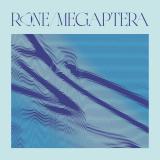
MEGAPTERA, the scientific name of the humpback whale, is also the title of the new album by French producer and composer Rone.


Born from an ambitious film project, the record was largely composed at sea, off the coasts of Brittany and Réunion Island, using a modular synthesizer and melodic sketches developed for an almost unreal proposition: attempting to resonate with whales through music.


Following Room With a View—a soundtrack to a performance created with the alternative dance company La Horde, exploring collapse and rebirth—Rone continues his investigation into new imaginaries. If that earlier work emerged from reflections on ecological, social, and technological tipping points, MEGAPTERA marks a shift: away from the city, toward the sea.


Gradually, he moved away from performance toward a more craft-based approach, extending his practice beyond the studio into a wider space of listening, exchange, and fieldwork. Early footage of sailors broadcasting his work into open water—seemingly answered by whale presence—circulated online, generating fascination, but also a growing unease for the artist regarding what these projections might imply.


This tension became the starting point for a longer period of field experimentation, developed in dialogue with scientists, environmentalists, sailors, and bioacousticians. The resulting 15-track album reflects this open-ended inquiry — not only into whether human-made sound can reach whales, but also into how this process can shape a new form of electronic music, and open it towards new deep-sea soundscapes.


Rather than seeking imitation, Rone works with reduction. Drawing on research into cetacean vocalisation, he pares back his language—focusing on frequency bands, repetition, and suspended structures. Minimalism appears less as reference than as natural convergence.

non in magazzino

Ordina ora e ordineremo l'articolo per te presso il nostro fornitore.

Last In: 81 days ago
24,58 €
Garo / Afroqbano - Cuban Beat & Fantasia 1970-1980

This tidy joint release between Future Rootz and Luchando Music compiles rare recordings from 1970s and 80s Cuba, all sourced from private archives and reel-to-reel tapes. This is the sort of selection to get serious diggers hot under the collar as it explores funk-driven arrangements, jazz-informed horn sections and rhythm-led compositions contoured with Afro-Cuban percussion. There is plenty of tape saturation and analogue noise present throughout that reinforces the archival origins of the music and instrumentation centres on brass, keys and layered percussion, with grooves built from syncopated patterns and live ensembles. Alongside the music, restored credits and contextual research foreground the musicians and recording histories behind these previously unavailable works. Do not sleep on this one.

non in magazzino

Ordina ora e ordineremo l'articolo per te presso il nostro fornitore.

Last In: 82 days ago
46,18 €
Ezekiel Honig - Surfaces Of A Broken Marching Band

Originally released in 2008 on Ezekiel Honig’s own Anticipate Recordings, Surfaces of a Broken Marching Band finds the artist refining a compositional language rooted in the methodologies of musique concrete, ambient, and beat research. Working from a palette of environmental recordings, instrumental fragments, and soft electronic treatments, Honig pushes the source material into an array of sympathetic forms ranging from pillow-soft, lowercase ambient to diffuse downtempo and minimal house. For its reissue on Keplar, the album has been remastered by Kassian Troyer (D&M), bringing a new clarity to its intricate, low-lit architectures.

Throughout the record, serving almost as audiographic guideposts, are faint but insistent gestures toward propulsion, an abiding and recurrent 4/4 pulse that guides the music laterally and instantiates a slow negotiation between its various elements. This music invites close listening precisely by not revealing itself all at once, allowing small collisions of timbre and subtle shifts in emphasis to carry the weight. The traces of lived environments that remain embedded in the mix - distant crowds, sounds of transit, the indistinct acoustics of interiors in flux - expand the frame without breaking its intimacy, creating a potent dislocation between the nearness of the sound and the scale of its sources.

Rather than foregrounding any single voice, this is music that distributes attention equally across its materials, allowing background details to assert their presence as much as melody or rhythm. Honig presents listeners with an astute practice that’s concerned less with building from the ground up than with uncovering what happens when disparate textures and structures are brought into close contact with one another. (Alex Cobb, 2026)

pre-ordina ora19.06.2026

dovrebbe essere pubblicato su 19.06.2026

23,49 €
Adrian Rew - Slot Machine Music, Vol. 1 & 2: Field Recordings from Middle American Casinos (Tape)
  • 01: 3/31/23 - Horseshoe Casino, Cleveland, OH
  • 02: 6/23/2013 - Horseshoe Casino, Hammond, IN
  • 03: 7/3/2013 - Grand Victoria Casino, Elgin, IL
  • 04: 1/1/2014 - Greektown Casino, Detroit, MI
  • 05: 1/11/2014 - Majestic Star Casino, Gary, IN
  • 06: 1/1/2014 - MotorCity Casino, Detroit, MI

"Chance animates the smallest parts of the universe: the scintillation of the stars is its power, a wildflower its incantation."
—Georges Bataille, Le Petit

"Even on my way to the gambling hall, as soon as I hear, two rooms away, the clink of the scattered money I almost go into convulsions." —Fyodor Dostoevsky, The Gambler

Video gambling addicts, academic researchers, and industry professionals alike describe the trancelike state into which problem gamblers suspend themselves with remarkable consistency: they unanimously call it the machine “zone,” a kind of inner experience during which the rhythmic flow of human-machine collusion borders on mysticism. Time is abolished in the act of contemporary video gambling —simulated slot reels roll, virtual poker decks deal, and all worldly concerns are lost—leaving only the aura of total zone immersion in its wake. Sometimes characterized as the crack cocaine of gambling, the intensity of the machine zone is a symptom of casino ergonomics: emotionally manipulative fragrance-saturation, mesmerizing lights, subtly controlling walkways and, as captured here, meticulously engineered sonic environments all play a role in evoking the timeless void of the zone.

Although I was not yet aware of the extent to which casinos tailor their environments for maximum comfort (and, correspondingly, profit), I did know as I crossed the threshold of my first casino floor last year that I would be back for more. Hit by a cornucopia of slot machine tones, triggering aleatorically and coalescing into shimmering masses, I was struck by the need to return and record the sounds that so entranced me. It wouldn't prove to be easy—casino security is intense—and due to the clandestine nature of the operation, my recording techniques were by no means sophisticated. Equipped with nothing but an Olympus LS-11 recorder's internal microphone stashed in a sweaty coat pocket, I allowed the lure of the zone to guide me through a series of ambling recording sessions, the best of which are included here.

I learned a lot about casino sonics in the process: game designers, for example, once tuned all their machines to the key of C major in order to optimize harmonic cohesion (strict adherence to the key is no more but C still dominates the game floor); one team of designers, the story goes, even spent a month perfecting a single 'ding' sound on one machine. In the interest of preserving the true ambient sounds of the casino these recordings are untreated, but lost in the sea of chance I did exert some affirmative control by means of meandering intent and my actual playing of the machines. And by participating in the games myself I got a taste of the financially debilitating consequences that accompany the enchantment of video gambling. The cassette in your hands represents my endeavor to bring you the zone experience without the harsh comedown of its unfortunate reality.

—Adrian Rew

pre-ordina ora19.06.2026

dovrebbe essere pubblicato su 19.06.2026

13,87 €
JEFF MILLS - THE TRIP TO VEGA LP 3x12"

The Trip To Vega is about deep outer space odyssey that occurs in the process of traveling from Earth through the Cosmos to another "favorable" star system 25.3 light-years away.

The time is year 2097, Sept 23rd.

To this day, Earthlings have managed to dodge some of nature's more dangerous extremities, massive volcanic eruptions, Earthquakes, solar burst that knocked out the Planet's entire electrical grid for 3 years, numerous plagues of disease, food and fresh water shortages, domestic and International Wars and many other life-changing operas, but for this event, what remains is a realization that has no remedy. The cause: Earth's physicality has changed. It is no longer favorable for living things.

It is the constant shifting of the planet's internal tectonic plates which has unfortunately produced an unexpected and impassable dilemma.

Because of the collisions, deep within the planet's core, the planet is now producing an extraordinary amount of sound that includes a specific harmonic frequency that erodes the natural senses of all life on Earth.

It is intensifying. It is intolerable and it is unlivable.

Yet, some humans prefer to stay, to "ride it out" like the Titanic captain going down with his ship. Some, in total disbelief as some have concluded it is the second coming of Jesus Christ. But for most, the decision is clear. Tolive another day, leaving is the only rational choice.

At an increasing rate, scientific research data shows that humans and most animals, excluding the Jellyfish will eventually lose the usage of hearing and are to greatly suffer from an array of other neurological and psychological effects. The sense of touch and taste, sleep depreciation, severe nerve damage, constant hallucinations. Everyone will lose many of their cognitive abilities within an estimated 12 months from now.

On this day and every 7 days afterwards until all registered passengers have departed, the first of a fleet of large number of massive size spacecraft carrying approximately 1 million humans per vessel will permanently leave Earth to begin the long and adventurous trek across outer space to a new home: Vega.

This is not a precautionary tale as there is nothing to learn. Instead, a decision has been made and a Trip To Vega is the consequence.

- Jeff Mills

non in magazzino

Ordina ora e ordineremo l'articolo per te presso il nostro fornitore.

Last In: 10 days ago
31,30 €
Cinna Peyghamy - Music for Tombak & Synth (LP)

Cinna Peyghamy unveils new album fusing Persian tombak and modular synthesis Five years in the making, "Music For Tombak & Synth" bridges heritage, technology, and personal identity. The project, initiated in 2019 during Peyghamy's master's thesis research on contact microphones, was conceived as a means to reconnect with his Persian roots while exploringexperimental sound design. In the album, Peyghamy seamlessly blends the traditional Persian tombak with modular synthesis and digital signal processing, creating a distinctive musical landscape that bridges live improvisation and studio production. The album’s genesis traces back to Peyghamy’s exploration of improvised electronic music and his desire to craft a performance-ready setup. Over
several years, the project evolved from capturing the energy of his live shows into a fully composed studio work.

"Music For Tombak & Synth" stands as the first record where Peyghamy unites his dual identities as a live performer and producer, resulting in a body of work that reflects his deep connection to family, memory, and cultural heritage. The album features personal elements such as his father’s voice reciting the poetry of Ahmad Shamlo on the track Dar Shab ,?? ??collaborations with long-time friend Quelque Bourdon on clarinet, and the evocative sounds of the Persian setar, all anchored by the physicality and rhythms of the tombak. A sentiment further reflected in the album cover; a photograph taken by his father, Khosrow ‘Payram’ Peyghamy, picturing both his parents and grandparents.

With this release, Peyghamy moves beyond conventional boundaries of "traditional versus contemporary" or "acoustic versus electronic," instead offering a nuanced exploration of identity through sound. Each track serves as a keepsake, referencing cherished memories, emotions, and musical influences that define his experience as a French-born artist of Iranian descent, unable to visit his home country. "Music For Tombak & Synth" invites listeners to engage with a deeply personal narrative, rooted in both cultural history and sonic innovation.

non in magazzino

Ordina ora e ordineremo l'articolo per te presso il nostro fornitore.

Last In: 83 days ago
21,81 €
Raymond MacDonald & Christian Ferlaino - A Jig in the Future

"All the tracks on this release come from a live concert at Sharmanka, a beautiful and unique museum of kinetic sculptures in Glasgow, and throughout the record, the sounds of the sculptures moving and emitting noises are incorporated into the music performed. The four pieces presented are entirely improvised. There was no discussion beforehand of what instruments or what approach would be taken, and each piece evolved as a musical negotiation as the performers individually made choices about what instruments to play and how to support and meet each other within the unfolding musical narrative. While Macdonald and Ferlaino both share a lifetime of work with their chosen primary instrument, the saxophone, they also share a passion for exploring other instruments and objects for their sonic and socio-creative potential. This record foregrounds both these aspects of their work: they use saxophones, but also incorporate bells, toys, bagpipes, accordions, percussion instruments and voice.
"Raymond MacDonald is a saxophonist and composer with an extensive career in music, cross-disciplinary arts and academia. He has played on and released over 100 albums, toured and broadcast worldwide and has composed music for film, television, theatre, radio and art installations. He is a founding member of the Glasgow Improvisers Orchestra, and his work is informed by a view of improvisation as a social, collaborative, and uniquely creative process that provides opportunities to develop new ways of engaging musically.
"Christian Ferlaino is an Italian saxophonist, bagpipe player, improviser, composer and ethnomusicologist. He composes for ensembles of improvisers, both from the jazz and improvised music scene, as well as for contemporary music ensembles. His work explores the relationships between composition and improvisation, and the expressive potential of improvised music. His musical research also focuses on creatively engaging with the sonic and musical realm of Calabria, with special attention to its performing techniques and approach to sound and music generation."

pre-ordina ora30.05.2026

dovrebbe essere pubblicato su 30.05.2026

23,23 €
ALEX LESAGE / EEKWAY - MILK

ALEX LESAGE / EEKWAY

MILK

12inchLAYVA010
LAYVA RECORDS
29.05.2026
  • A1: RuBBish
  • A2: Sure U Wanna ?
  • B1: Take Off feat. Anna Maehl
  • B2: PARTYPUS

MILK is the new EP born from the collaboration between Brussels-based producers Alex Lesage and Eekway. The project marks the convergence of two complementary approaches to contemporary electronic music, united by a shared vision: creating music with strong physical impact, designed for the club while maintaining depth and high production standards.


Developed in Brussels, the project's home base, MILK sits at the crossroads of Drum & Bass, Jungle, and IDM, combining the heritage of UK bass traditions with a distinctly modern sonic research. The EP explores sharp rhythmic structures, massive low-end pressure, and detailed sonic architecture, driven by extensive work in sound design, sampling manipulation, and spatial composition.

pre-ordina ora29.05.2026

dovrebbe essere pubblicato su 29.05.2026

17,02 €
Punky & The Brain - Plots Downfall

Punky & The Brain

Plots Downfall

12inchSPCS001
Species
28.05.2026

New label Species hits the ground running with its debut release. The outlet is an extension of globally-renowned booking agency Pieces, and will feature music exclusively from the agency’s roster, which includes some of the scene’s most formidable and talented DJs and producers. The first release comes from an exhilarating project - Punky & The Brain, AKA Otis and Paul Lution. Described by the duo themselves as “scientific experiments” the music is a fusion of playful excursions with their lab equipment, and their musical knowledge.

Together they have been experimenting in the studio, merging incisive technical prowess with straight up dance floor-focused rhythms. Their field research has tested emotional variables on numerous research subjects through live performances in the most renowned clubs. A Fender bass guitar and vocoder bring another dimension to their studio exploits, and this EP is the result of their preliminary scientific findings…

non in magazzino

Ordina ora e ordineremo l'articolo per te presso il nostro fornitore.

Last In: 4 days ago
13,03 €
Brunhild Ferrari, Eiko Ishibashi, Jim O’Rourke - L’oreille Voleuse

Persistence of Sound releases a new work by Brunhild Ferrari called »L’oreille Voleuse« (The Thieving Ear). The LP features an extraordinary live reinterpretation by Eiko Ishibashi and Jim O’Rourke, recorded in October 2025 in Paris.

»No, without listening at doors, the ear captures noises here and there and unexpected sounds without choice, but remains attentive to the messages of each one picked up over the years. It gathers surprises and impressions, bringing them together in a simple mix. In waking up these ear memories again, which were mostly recorded on magnetic tapes, I am very happy about the collaboration of Eiko Ishibashi and Jim O'Rourke in playing on this mix tape.« Brunhild Ferrari

Eiko Ishibashi is a Japanese composer, singer, and multi-instrumentalist who has developed a unique body of work blending experimental pop, improvisation, and film music. Her work, praised for its expressive intensity and sensitivity to sonic textures, has led her to collaborate with numerous musicians on the international scene, including Jim O'Rourke, with whom she forms a long-standing duo. She is also the composer of several film scores, notably for the films of Ryusuke Hamaguchi (Drive My Car, Evil Does Not Exist), which have helped to bring her work to a wider audience beyond experimental music circles.

Jim O'Rourke is an American composer, producer, and multi-instrumentalist, and has been a major figure in experimental and independent music since the 1990s. His work spans rock, improvised music, electronic music, and contemporary music. A former member of Sonic Youth and a collaborator with Wilco, Gastr del Sol, and Merce Cunningham, he has released numerous solo albums and film scores. Based in Japan since the early 2000s, he continues to pursue a rich and multifaceted musical practice, where formal rigor and freedom of invention coexist.

Persistence of Sound was founded in 2019 by Iain Chambers (Langham Research Centre, Rubbish Music). The label explores the world of electroacoustic music, contemporary global field recordings, and the unclassifiable music spanning these genres.

pre-ordina ora22.05.2026

dovrebbe essere pubblicato su 22.05.2026

29,37 €
Mahatmos - Aurora Spectralis

Mahatmos

Aurora Spectralis

12inchSPRND01
Superonda
08.05.2026

Superonda’s debut release, Aurora Spectralis, introduces the latest project from Mahatmos, a duo emerging from long-established practices in electronic music, sound design and composition for moving images. Released on 12” vinyl and digitally, the EP unfolds across four tracks of electronic ambient music shaped by atmosphere, con1nuity and restrained propulsion. Ambient textures open a broad emotional and spa1al field, while slow, insistent rhythms provide steady forward motion.
Superonda has created a space for Mahatmos to sharpen their focus on sound as material. Modular synthesis, analogue instruments and live processes techniques are balanced with precision and restraint, resulting in music that moves between progressive and hypnotic forms, informed as much by underground club culture as by cinematic composition.
Mahatmos is a Rome-based duo with complementary and deep-rooted practices. Gianluca Meloni brings a long-standing presence in techno and experimental music scene, with international releases and performances (as Laertes and as part of Modern Heads). Maurizio Loffredo contributes an extensive background in composition, production and sound engineering across popular music and film, with a refined sensitivity to timbre, structure and sonic narrative.
Superonda is a Rome-based label founded by artists engaged in deep sonic research and advanced technical exploration. Operating as an open platform, it connects collaborators working across recording, synthesis and composition, approaching music as a process-driven practice rather than a fixed genre. Each release stands as a distinct exploration, linked by shared sensibilities rather than formal constraints.
The physical edition of Aurora Spectralis is conceived as an extension of the work itself. Alongside a standard black vinyl pressing, a limited run of color and marbled copies has been produced, each one unique. Variability and tactility are embraced as part of the object’s identity, reinforcing the record as something to be experienced gradually, over time.

non in magazzino

Ordina ora e ordineremo l'articolo per te presso il nostro fornitore.

Last In: 4 months ago
14,92 €
Chessie + Contriva - Black Jacket LP 2x12"

Chessie + Contriva

Black Jacket LP 2x12"

2x12inchWAT09LP
Watusi
16.04.2026

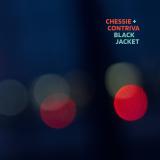
“Black Jacket” is a love letter between two bands separated by continents but united by mutual admiration. Contriva, of Berlin, and Chessie of Washington, DC, first came together in 2001 when sharing a stage, sparking a deep connection over their respective takes on textural, emotive, and mostly instrumental music that merges post-rock, ambient, and experimental elements into unique visions. Fast forward two decades and many trips to their respective studios and we now have “Black Jacket”, a double LP of musical alchemy that builds upon the expressionistic, idiosyncratic sounds of these two groups. A new classic that proves far greater than the sum of its parts.

Begun in the mid 1990's, Washington DC's Chessie is Stephen Gardner (also of noisy shoegaze pioneers, Lorelei) and Ben Bailes, whose various LP's for Slumberland's Dropbeat imprint and Plug Research pair abstract electronics and melancholy post-rock in search of the sounds and feelings of railways and train travel.

Berlin's Contriva, (Monika Enterprises, Lok Musik, and Morr Music) features Masha Qrella (known for her solo works for Morr Music), Max Punktezahl (also of Munich indie legends the Notwist and Berlin's Jersey and Saroos), Hannes Lehmann and Rike Schuberty. For over a decade beginning in the mid-1990's, Contriva crafted compelling instrumentals, grafting experimental textures onto beautiful and complex indie songs.

Together, the six of them have created “Black Jacket.”

non in magazzino

Ordina ora e ordineremo l'articolo per te presso il nostro fornitore.

Last In: 5 months ago
28,53 €
Quinie - Forefowk, Mind Me LP

The record is largely sung in Scots language, one of Scotland’s three official languages along with Gaelic and English. “Scots gives me a way of expressing myself which is connected directly with the landscapes I love. It brings the songs alive and it is a fascinating language. The name of the record is in Scots - Forefowk means the people who came before, or ancestors. When we say ‘mind me,’ we can mean a few things- remind, remember, watch over or care for me. The record explores how tradition needs to be constantly reconnected with, built upon, looked after, and shared.”
Quinie sings with a style inspired by Scottish Traveller singers. “I began singing unaccompanied Scots Song in 2015 after hearing Scots Traveller singer Sheila Stewart on the radio. Initially I felt like I shouldn't sing these songs because I'm not a Traveller, and I saw people around me doing that in a way that made me uncomfortable. But on the other hand this music made sense to me and I felt driven to learn. Over the years I have met Traveller friends who taught me that settled people sharing these songs could contribute to raising awareness. Scottish Travellers are marginalised and discriminated against in modern Scotland, despite being custodians of so many of our important traditions. So I started to perform them and tell this story. From there I built on my repertoire and started writing my own songs”.
To develop this record, Quinie travelled across Argyll with her horse. They went on a pilgrimage of sorts through the ancient landscapes of the West of Scotland to explore the interconnected relationships between people, ancestors, animals, and place. The album’s vinyl release is accompanied by a book and film, documenting this unusual research process.
Forefowk, Mind Me was recorded in August 2024 at The Big Shed in Highland Perthshire with support from Creative Scotland. Quinie is accompanied by an ensemble of musicians: Ailbhe Nic Oireachtaigh (viola), Oliver Pitt (duduk, bouzouki, percussion), Harry Górski-Brown (small pipes, violin), and Stevie Jones (double bass, recording, and mixing). Each of these artists brings their own distinctive voice, bridging contemporary experimental practice with worlds of traditional and early music.

pre-ordina ora03.04.2026

dovrebbe essere pubblicato su 03.04.2026

16,77 €
YASUHITO OHNO - MUSIC IN DNA

YASUHITO OHNO

MUSIC IN DNA

12inchEMC-029LP
Em Records
30.03.2026

Specs: Wrapped in shrink, DL code, insert with liner notes

"Music in DNA" is an album recorded in the early 1980s in New York City by Yasuhito Ohno, a young Japanese man breaking free from the constraints of his homeland. The album is a naive burst of outsider DIY enthusiasm, inspired by the multiple avant-garde movements of the era, in music, painting and performance, as well as the native energy of 80s NYC. Ohno channeled his youthful “edge” and zeal into open-minded lo-fi musical explorations using a mere two machines: the then-new technological glories of a four-track cassette recorder and that polyphonic synthesizer masterpiece, the Roland Juno-60; on several pieces he vocalizes. These seven tracks have a zestful, innocent, anything-goes charm, free from preciousness and self-consciousness: a raw and youthful human spirit at play in a new world. Ohno was also inspired by the humanistic promise of the general technological developments of the day, including DNA research, personal computing, and early computer graphics, an example of which can be found on the cover. Ohno later returned to Japan, becoming a renowned composer/producer. In an era of jaded cynicism, "Music in DNA" is a welcome taste of big-hearted innocence, a revival of a raw self. Available on CD/LP/Digital, with E/J liner notes.

pre-ordina ora30.03.2026

dovrebbe essere pubblicato su 30.03.2026

22,48 €
STEVE PEPE - AL DESTINO

STEVE PEPE

AL DESTINO

12inchIVR041
Ivreatornic
30.03.2026

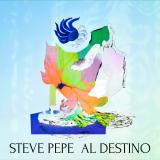
“Al destino”, the new album by Steve Pepe, began to take shape in 2023 after roughly a year of highly abstract sound research. The original intention was to create a dancefloor-oriented record, moving away from down-tempo structures, built around minimal, percussive compositions and high BPMs, with sound conceived primarily as a functional element.
In 2024, however, the process shifted. Less time was spent producing and more time reflecting. Emotions hovered between the urgencies of the present and unresolved past traumas, and almost without conscious intention, singing returned to the center of the project. It was not a calculated choice, but an inevitable one.
The resulting album does not draw its energy from distant places, nor does it focus on sonic experimentation as an end in itself. Instead, Al destino offers an intimate perspective on how memories and emotions shape the inner self, on the sensation of being simultaneously alone and deeply connected to everything, and on the struggle to reconcile feelings, sensations, love, and desire.

pre-ordina ora30.03.2026

dovrebbe essere pubblicato su 30.03.2026

23,49 €
Yasuhito Ohno - Music in DNA

Yasuhito Ohno

Music in DNA

12inchEMC029LP
EM Records
27.03.2026

When you notice the cheerful mystery playing with the synths, the edges of this small world start to look slightly distorted. In any era, someone is always creating mysterious music on their own. (7FO)

----------------------------

Music in DNA is an album recorded in the early 1980s in New York City by Yasuhito Ohno, a young Japanese man breaking free from the constraints of his homeland. The album is a naive burst of outsider DIY enthusiasm, inspired by the multiple avant-garde movements of the era, in music, painting and performance, as well as the native energy of 80s NYC. Ohno channeled his youthful "edge" and zeal into open-minded lo-fi musical explorations using a mere two machines: the then-new technological glories of a four-track cassette recorder and that polyphonic synthesizer masterpiece, the Roland Juno-60; on several pieces he vocalizes. These seven tracks have a zestful, innocent, anything-goes charm, free from preciousness and self-consciousness: a raw and youthful human spirit at play in a new world. Ohno was also inspired by the humanistic promise of the general technological developments of the day, including DNA research, personal computing, and early computer graphics, an example of which can be found on the cover. Ohno later returned to Japan, becoming a renowned composer/producer. In an era of jaded cynicism, Music in DNA is a welcome taste of big-hearted innocence, a revival of a raw self. Available on CD/LP/Digital, with E/J liner notes.

pre-ordina ora27.03.2026

dovrebbe essere pubblicato su 27.03.2026

21,81 €
Iivana Mišukka & Arja Kastinen - Iivana Mišukka (Tape)
  • 01: Maanitus & Tšiižik
  • 02: Markka
  • 03: Melkutus
  • 04: Letška
  • 05: Kuuen parin hoirola
  • 06: Brišatka
  • 07: Tšiižik
  • 08: Kirkonkellot
  • 09: Kirkonkellot korkea
  • 10: Hoirola, 3 parin
  • 11: Lippa
  • 12: Kyngäkiža
  • 13: Ristakondra
  • 14: Vanha polkka
  • 15: Viistoista
  • 16: Vanha valssi
  • 17: Kiberä
  • 18: Maanitus Kuokan kanteleella
  • 19: Tuuti lasta nukkumahe
disponibile anche

Vinyl[22,65 €]


Death Is Not The End present a further volume of Arja Kastinen's eerie amalgamations of 110 year old wax cylinders with her own meticulously transcribed takes, this time focussing in on Armas Otto Väisänen's field recordings of kantele player Iivana Mišukka (b. 1861 d.1919).

"Ivana Mišukka (1861–1919) was one of the Karelian kantele players recorded by the folk music researcher Armas Otto Väisänen on wax cylinders in 1916 and 1917. In the early 20th century, the remote areas of Border Karelia were undergoing the final phase of a transformation in musical culture, with the ancient runo song tradition giving way to newer forms of music. This transition is reflected in Mišukka's repertoire and choice of instrument. The ancient small kantele, hollowed out of a single piece of wood, was already rare at the turn of the century. Mišukka's kantele was a new type of instrument with 26 strings, constructed of several parts, but he played it using the traditional plucking technique. Like other Border Karelian kantele players, his repertoire consisted of music rooted in runosong culture, as well as newer dances and songs from the east and west. Most of the recorded material falls into the latter category.

Ivan Bogdanov Mišukka was born out of wedlock in Suursara village, Suistamo, on 1 May 1861. He began playing the kantele at the age of five or six, quickly mastering the instrument. In adulthood, he was considered one of the area's best master players. Mišukka was landless for most of his life and lived in different parts of the Suistamo parish. His first wife, Tekla Markintytär, died in 1897 at the age of 40, and his second wife, Jevdokia Filipintytär Jeminen, died in 1907 at the age of 50. Seven children were born from the first marriage, two of whom died young. The third wife, Maria Ignatintytär Gurnan (Kuurnanen), was a well-known master of lamentations. Together with Maria, Iivana Mišukka worked as a tenant farmer in the village of Suursara. Mišukka suffered from rheumatism, which prevented him from participating in physical work like Maria. This was apparently partly the reason why Iivana Mišukka went to earn extra money by playing the kantele on gig trips. He often had other traditional artists from Suistamo as his travelling companions, such as the runosingers Konstantin Kuokka and Iivana Onoila. Iivana Mišukka died in Leppäsyrjä village, Suistamo, on 18 May 1919 at the age of 58, and his kantele was donated to Teppana Jänis.

Mišukka only used 14 of the 26 strings on his kantele, playing the same tunes either a fourth higher or lower. He tuned his kantele to the major scale using fifths, except for a low seventh scale degree on the upper strings, but not below the fundamental. Since he did not use the seventh note of the scale on the upper strings at all, he could use the major scale both lower and a fourth higher with this tuning. According to Mišukka, the sound of higher, or 'finer', strings is 'more beautiful', while that of lower ones is 'greater'. Among runosingers, the size of the thirds varied, ranging from major to minor to neutral. A similar phenomenon can be observed in kantele tunings, where the third, sixth and seventh scale degrees vary in a comparable way.

During a meeting, Väisänen suggested that Mišukka play the smaller kantele belonging to Konstantin Kuokka. The idea was to bring it closer to the horn to improve the recording quality. However, the kantele was completely out of tune, and now Mišukka tuned it to the Lydian scale (track 18).

Using the old plucking technique, Mišukka placed his right middle finger on the fundamental tone, his right index finger on the second scale degree, his left middle finger on the third scale degree and his left index finger on the fourth scale degree, and his right thumb on the fifth. The thumb also played the notes above the fifth note of the scale. As Mišukka remarked to Väisänen: 'Peigaloll' tuloo enemb ruadoa' (the thumb has to do more work). However, he did not use the seventh note of the scale on the upper strings at all. Below the fundamental note, he played the seventh and sixth notes of the scale with his right middle finger of and the fifth note of the scale with his right ring finger. This fifth scale degree below the fundamental is almost always used as a drone. Sometimes, when the melody required it, Mišukka, like other players, also varied the fingering. He would also occasionally strike the same string with the side of his fingernail after plucking it.

The wax cylinder recordings of Karelian kantele players are kept in the archives of the Finnish Literature Society in Helsinki, Finland. Copies were made of them onto reel-to-reel tapes in both the 1960s and 1980s. The 1960s copies are mono and the 1980s copies are stereo. However, not all kantele recordings from these decades have survived.

The sound of the kantele is difficult to hear in wax cylinder recordings due to its low volume, and it occasionally becomes completely obscured by noise. During the copying process, the cylinder sometimes rotates unevenly, resulting in breaks or jumps in the music. Additionally, the rotation speed of the cylinder in the copies does not correspond to the performance speed of the original music, which alters the pitch. However, since Väisänen's precise notes are available in the archive, it is possible to deduce the melodies, their speed, and the tuning level of the kantele in the recordings. Of the copies of the original recordings from the 1960s and 1980s, I have selected the one that best met the requirements of this publication and adjusted the speed of the recording to align with Väisänen's notes. To enhance the listening experience, I have replayed the songs, which now partly overlap the old recordings on this release."

— Arja Kastinen

pre-ordina ora27.03.2026

dovrebbe essere pubblicato su 27.03.2026

16,39 €
Iivana Mišukka & Arja Kastinen - Iivana Mišukka LP

Death Is Not The End present a further volume of Arja Kastinen's eerie amalgamations of 110 year old wax cylinders with her own meticulously transcribed takes, this time focussing in on Armas Otto Väisänen's field recordings of kantele player Iivana Mišukka (b. 1861 d.1919).

"Ivana Mišukka (1861–1919) was one of the Karelian kantele players recorded by the folk music researcher Armas Otto Väisänen on wax cylinders in 1916 and 1917. In the early 20th century, the remote areas of Border Karelia were undergoing the final phase of a transformation in musical culture, with the ancient runo song tradition giving way to newer forms of music. This transition is reflected in Mišukka's repertoire and choice of instrument. The ancient small kantele, hollowed out of a single piece of wood, was already rare at the turn of the century. Mišukka's kantele was a new type of instrument with 26 strings, constructed of several parts, but he played it using the traditional plucking technique. Like other Border Karelian kantele players, his repertoire consisted of music rooted in runosong culture, as well as newer dances and songs from the east and west. Most of the recorded material falls into the latter category.

Ivan Bogdanov Mišukka was born out of wedlock in Suursara village, Suistamo, on 1 May 1861. He began playing the kantele at the age of five or six, quickly mastering the instrument. In adulthood, he was considered one of the area's best master players. Mišukka was landless for most of his life and lived in different parts of the Suistamo parish. His first wife, Tekla Markintytär, died in 1897 at the age of 40, and his second wife, Jevdokia Filipintytär Jeminen, died in 1907 at the age of 50. Seven children were born from the first marriage, two of whom died young. The third wife, Maria Ignatintytär Gurnan (Kuurnanen), was a well-known master of lamentations. Together with Maria, Iivana Mišukka worked as a tenant farmer in the village of Suursara. Mišukka suffered from rheumatism, which prevented him from participating in physical work like Maria. This was apparently partly the reason why Iivana Mišukka went to earn extra money by playing the kantele on gig trips. He often had other traditional artists from Suistamo as his travelling companions, such as the runosingers Konstantin Kuokka and Iivana Onoila. Iivana Mišukka died in Leppäsyrjä village, Suistamo, on 18 May 1919 at the age of 58, and his kantele was donated to Teppana Jänis.

Mišukka only used 14 of the 26 strings on his kantele, playing the same tunes either a fourth higher or lower. He tuned his kantele to the major scale using fifths, except for a low seventh scale degree on the upper strings, but not below the fundamental. Since he did not use the seventh note of the scale on the upper strings at all, he could use the major scale both lower and a fourth higher with this tuning. According to Mišukka, the sound of higher, or 'finer', strings is 'more beautiful', while that of lower ones is 'greater'. Among runosingers, the size of the thirds varied, ranging from major to minor to neutral. A similar phenomenon can be observed in kantele tunings, where the third, sixth and seventh scale degrees vary in a comparable way.

During a meeting, Väisänen suggested that Mišukka play the smaller kantele belonging to Konstantin Kuokka. The idea was to bring it closer to the horn to improve the recording quality. However, the kantele was completely out of tune, and now Mišukka tuned it to the Lydian scale (track 18).

Using the old plucking technique, Mišukka placed his right middle finger on the fundamental tone, his right index finger on the second scale degree, his left middle finger on the third scale degree and his left index finger on the fourth scale degree, and his right thumb on the fifth. The thumb also played the notes above the fifth note of the scale. As Mišukka remarked to Väisänen: 'Peigaloll' tuloo enemb ruadoa' (the thumb has to do more work). However, he did not use the seventh note of the scale on the upper strings at all. Below the fundamental note, he played the seventh and sixth notes of the scale with his right middle finger of and the fifth note of the scale with his right ring finger. This fifth scale degree below the fundamental is almost always used as a drone. Sometimes, when the melody required it, Mišukka, like other players, also varied the fingering. He would also occasionally strike the same string with the side of his fingernail after plucking it.

The wax cylinder recordings of Karelian kantele players are kept in the archives of the Finnish Literature Society in Helsinki, Finland. Copies were made of them onto reel-to-reel tapes in both the 1960s and 1980s. The 1960s copies are mono and the 1980s copies are stereo. However, not all kantele recordings from these decades have survived.

The sound of the kantele is difficult to hear in wax cylinder recordings due to its low volume, and it occasionally becomes completely obscured by noise. During the copying process, the cylinder sometimes rotates unevenly, resulting in breaks or jumps in the music. Additionally, the rotation speed of the cylinder in the copies does not correspond to the performance speed of the original music, which alters the pitch. However, since Väisänen's precise notes are available in the archive, it is possible to deduce the melodies, their speed, and the tuning level of the kantele in the recordings. Of the copies of the original recordings from the 1960s and 1980s, I have selected the one that best met the requirements of this publication and adjusted the speed of the recording to align with Väisänen's notes. To enhance the listening experience, I have replayed the songs, which now partly overlap the old recordings on this release."

— Arja Kastinen

pre-ordina ora27.03.2026

dovrebbe essere pubblicato su 27.03.2026

22,65 €
IGOR TAMERLAN - BALI VANILLI: EXPERIMENTAL POP FROM PARADISE ISLAND (1987-1991)

Igor Tamerlan is a stranger in his own land. Born in 1954 the Hague and spent most formative years in Paris, Igor suddenly had the urge to relocate to Bali in 1986. “I want to settle in Indonesia and marry a local girl,” he told his sister shortly before flying out.

His next journey would be as audacious as his time in the Fifth Republic. Born from a prominent Indonesian expatriate family in Paris with ties to Indonesia’s first prime minister Sutan Sjahrir, Igor earned a degree in architecture at Ecole nationale supe´rieure d’architecture de Paris-La Villette.

He could have been a brilliant architect or a political scientist (he was accepted to Sciences Po), but his passion for music distracted him from his academic works. He was after all named after Russian composer Igor Stravinsky.

During his brief stint at Sciences Po, Igor spent most of times hanging out at recording studios and rub shoulders with the likes of singer-songwriter Jean-Jacques Goldman and Michel Polnaref. He had a brief encounter with The Rolling Stones at the Cha^teau de Thoiry studio in the early 1970s.

But Igor’s musical education and his occidental eyes appeared to be ill-suited for Indonesia. His first record, titled Langkah Pertama (First Step) on the mainstream label Musica was met with a shrug and was a commercial dud. An experimental record blending the influence of Spanish motifs, Francophile production and a whiff of hip hop and ska was seen by critics as being too alien. His sarcasm-laden lyrics and his biting critique of excessive materialism among the upper tier of Indonesia’s nouveau riche in the album was met with confusion from the audience. He was just too far ahead of his time.

He left the label Musica – or may had been dropped – soon after Langkah Pertama and decided to go independent. He then relocated to Bali and set up a state-of-the-art recording studio in Sanur, across the street from Southeast Asia’s first boutique hotel where luminaries like Mick Jagger, David Bowie, Sting, Yoko Ono and Ringo Starr stayed for their holiday.

From the studio, Igor recording everything from the sounds waterfalls, geckos, minibuses to motorized rickshaw and mix them with hip hop, jazz, electronica, dub and Balinese gamelan. A visionary, Igor was the first musician to use MIDI, which started to be available globally in the early 1980s.

On paper, songs like “Bali Vanilli” should not work, a mish mash of disparate elements mentioned above, sung in three languages, Balinese, English and Bahasa Indonesia while tackling the subject of overtourism. The song was also the first to introduce rap to an unsuspecting audience. But for some strange reason “Bali Vanilli” became a sensation and overnight Igor became household name. And in 1987, long before overtourism was an issue, Igor broached the subject to a national audience in Indonesia on the possible destruction of nature and culture from tourism.

Ever an iconoclast, Igor decided to step out of the limelight following the success of “Bali Vanilli” and in early 1990s he relocated to Indonesia’s cultural capital, Yogyakarta. Here, he worked on some more experimental music while juggling as music video director. He passed away in 2018 at the age of 64.

The 10 songs in this compilation, Bali Vanilli: Experimental Pop from Paradise Island (1987-1991), are some of Igor’s best works, music that would have gone into obscurity had it not been for the diligent work of film director Alfred Pasifico Ginting, who managed to track down some of the master tapes while researching on a documentary on the musician.

These recordings have never before been released outside of Indonesia. Igor would have been proud with this reissue project.

pre-ordina ora20.03.2026

dovrebbe essere pubblicato su 20.03.2026

26,26 €
Articoli per pagina:

Language

N/ABPM
Vinyl