
non in magazzino
Ordina ora e ordineremo l'articolo per te presso il nostro fornitore.
Last In: 2 years ago
12,40 €
Ordina ora e ordineremo l'articolo per te presso il nostro fornitore.

Ordina ora e ordineremo l'articolo per te presso il nostro fornitore.

JK Flesh is the electronics-only project of Justin K. Broadrick
(Godflesh, Techno Animal, Zonal, The Blood of Heroes). He is a
absolute master of high quality, prolific electronic composition, and has
released JK Flesh on Downwards Records, Hydra Head, and Hospital
Productions. Submerged is the leader and founder of Ohm Resistance.
DJing internationally for 20 years, he has pioneered the sounds of hard
drum & bass and played in the furthest reaches of the globe.
Blacktacular is one of Portland’s most prominent MCs and promoters of
electronic music, dropping articulate, inspiring rhymes over every
Pacific Northwest drum & bass event spanning the last two decades.
Limited Edition Print by Pascuale Belvito
Ordina ora e ordineremo l'articolo per te presso il nostro fornitore.

Regis is the founder of one of techno’s most influential and
uncompromising labels, Downwards Records. His inimitable hard
techno sound, and collaborations with Surgeon as British Murder Boys,
have cemented his legacy as the definition of the Birmingham techno.
Luke Lund is one of the Finland’s fastest rising young composers, with
the ability to move seamlessly between the marshes of dark hop to the
silkiness of deep techno. His own Terranean Recordings label has
been fearlessly documenting the Finnish underground and beyond
since 2010. King Pin Frankie is treasure untold – a live Regis recording
from New Year’s Eve 1997 in Chicago. Pounding classic minimal TR
909 with an accelerating/decelerating arppegiator make this A side a
serious find, with distorted synth moving platforms occurring as the
track winds out. TIP! Luke’s Scourge is an electronic composition
masterpiece – pinning a straight kick underneath a shifting snare,
leaving the question open – is it techno? Is it dark hop? Whatever it
may be, the bass underneath tells it big and fills up a subwoofer.
Limited Edition Print by nem0
Ordina ora e ordineremo l'articolo per te presso il nostro fornitore.

Eraldo Bernocchi is SIMM – one of the originators of Dark Hop. The
Italian musician and producer has worked with Harold Budd, Mick
Harris, Bill Laswell, and Robin Guthrie, and is a versatile, masterful
studio composer, as well as a renowned live performer and improviser.
Odessa’s Medium (Igor Oklander, Pavel Kostyuk, and DJ Koss) are the
newest sensation out of Ukraine in the world of drum & bass. Their
technical production ability and live drum & bass show are unmatched
in the current era. Nailed is a classic, black silk creeper, a film noire
dungeon score sound. Eraldo’s distantly familiar horrorscore guitars
are backed with a stomping broken beat, and the deepest, darkest sub
to be found in the genre. Nailed is SIMM at the height of Bernocchi’s
dark power – crawling, surveilling, hunting. No Questions is what it
says it is on the wrapper – an absolute mauling 2018 dark hop
MONSTER – without question. The crew has cooked up a bass drop of
titantic, megalithic proportions, which must be heard to be believed!
Stepping out of their normative drum & bass format, they play with the
notion of half time drum & bass, while keeping it 100% dark hop tempo.
Limited Edition Print by Petullia Mattioli
Ordina ora e ordineremo l'articolo per te presso il nostro fornitore.

A True piece of Hardcore History, Reminiscent of the early Rave era, a time when there were no rules. ‘Hardcore’, just before the fruition of what Jungle came to be. Experimentation in Rave music was at its utmost: chopping up 8 Bit beats & breaks re–inventing a fresh Drum Sound, Bassline’s that make your eye socket’s shake, idea’s that followed no rules. This is some of that missing History...
Originally produced in 1992, this was scheduled to be Dlux’s first official solo release on ‘Brain’ records. With lots of hype about ‘The Darkness e.p.’ (Bizzy B & DJ Dlux) 1993, The Fontage E.P. release was delayed, & finally shelved, making way for Dlux’s updated sounds of ‘The Realtime E.P.’ which got released back in 1994 on Brain Progression.
The Fontage E.P. is Dlux’s earliest material to be featured on the ‘Lost Dat’s’ series. The Dat’s have since corroded beyond repair, this was salvaged & lovingly restored & remastered, so this piece of History could get an outing on ‘Existence Is Resistance’.
Don’t miss out on this authentic piece of music history from a true Underground legend!
Ordina ora e ordineremo l'articolo per te presso il nostro fornitore.

Ordina ora e ordineremo l'articolo per te presso il nostro fornitore.

UK Garage. Dubplate's. Persian. Breaks. Matrix. Riddims. Existence Is Resistance. Vibe. Old Skool. Dub. Shuffling. Bass. UKG. Bleeps. Groove. Love Song. R&B. Lost Words. Artist Formally Known As P.P. Undeground. Soul Singer. Smooth. Nicola Duncan. Archive. Nu Skool. Classic. Broken Beat. Persian Prince. Deejay. UK Funky. Same People. Bass Music. Garage. Pirate Radio. Beats. Unearthed. Vinyl. BreakBeat.
Ordina ora e ordineremo l'articolo per te presso il nostro fornitore.

Dubplate’s Don Persian has repressed this Hardcore Breaks Techno Riddim, seeing there were only 100 in existence before going for crazy prices, now including a mix from S.Bell capturing a shimmering soundscape vibe, adding perfection to his unsung abilities. This E.P. has some speaker destroyer’s on there, introducing the MixMaster Max into the pot alongside the Persian doing what can only be called world dub music. Sterling breaks shuffling at a downtempo 8 bit vibe with a really heavy bass! MixMaster Max’s history is interesting to say the least...
Born October 1966. Break Dancer in 1984, under the moniker Mad Max, started a crew named The Back Street Warriors, busking all over the UK at places such as Covent Garden/Leicester Square Performing on stage & in clubs. They once jammed with The Rock Steady Crew in Camden Palace in front of an audience.
Then in 1987 he became a DJ, playing all genre’s of music, he first played on RJR Radio, playing Electro, Hip Hop, Soul, R&B & Reggae. Moving forward he started playing Acid House & Four to the Floor Music styles, by the early 90’s he played on Weekend Rush & then went onto Defection, Touchdown, Don & Passion FM, playing Acid & Hardcore Jungle.
In the early day’s, MixMaster Max was one of the Innovator’s of Jungle music by mixing Hardcore, Reggae & Hip Hop together, helping other’s to produce, fuse & gain idea’s in the music industry. He was by Far the most Original, Innovative, DJ anybody had ever heard.
In 1991 he played alongside John Saunderson at the Camden Palace on a Friday night, he also played at the Famous Hacienda Club in Manchester.
He was the first DJ to create the Topsy Turvey, which is one turntable on top of the other, he came runner up in the DMC World Championships in the early 90’s.
He played at some of the Biggest Rave’s back in the day, Pirate club 93, Fantazia 92, Dungeon’s 91/92, Turnmills 92, to mention a few. He also played on Avenues FM & People’s Choice, which were legal Radio Station’s, not forgetting Kool FM & Centreforce.
He performed on stage with the We Papa Girl Rapper’s in 1990 at the Notting Hill Carnival. This Legendary Cult figure is a Master of the Nunchucker’s & TurnTable’s!
His innovative Mixes were ‘legendary’ he was a pioneer precursor to the Art form known as Jungle Music, not to mention his Scratching abilities, which was ‘extraordinary’!
For those that listened to pirate radio back in the day, he was the legendary cult figure that inspired us all, giving us the freshest musical styles that had never been heard before!
He can still be heard on Radio today...What an inspiration this Unsung Hero has been to us All!
Ordina ora e ordineremo l'articolo per te presso il nostro fornitore.

dovrebbe essere pubblicato su 25.01.2019

After 5 years of silence, Dadub are summoning their magic spell on BAS006. - Rituals of Resistance" makes use of tribal drums, ghostly echoing samples taken from the collective consciousness. Emotive techno in it's dubbiest prime evokes scenes of territories uncharted by global repression. Dadub present their very own vision of techno politics. Not shy to tap into a glitch, familiar sounds emerge from a well orchestrated chaos. An acutely bass driven sense for rhythm combines with the inevitable esoteric beauty of hand-crafted Italian techno. This is the sound track for all those who yearn for an inner revolution.
Ordina ora e ordineremo l'articolo per te presso il nostro fornitore.

Superb techno release for Dune records... With a long side from AcidUpDub, a minimal acid techno device, kind of a stable mental phase lost in the middle of the night.... After party style is possible too. Tribal. Second side brings 2 new commers for me. 909 Resistance for the beginning, with a hangar techno 909 acid device... Could have been an Old Tresor production. The EP finishes on something more experimental and inductrial, very downtempo from Geotropism, my fave tune here for its weirdness.. but really hard to play in a party ^^ ahahah:) A Great great production, once again big sound from Shane The Cutter. BIG UP !
Ordina ora e ordineremo l'articolo per te presso il nostro fornitore.

With his first EP on Orbis, Binny is ramping it up, once again.
We're very pleased & honoured to host him, his 11th appearance on a vinyl record so far.
Someone to watch out for!
"Resistance" & "Infinite Ratio" has a brilliant hypnotic tension to it.
We won't bother explaining these two. Simply Binny, UK tension building up and excellent for playing 3 decks.
Excellent DJ tools.
On the B-side, Lee takes it to the raw side of analogue techno.
Lee Holman, a veteran that should ring a bell.
Performing in clubs since the late nineties, he has travelled throughout Europe compounding a reputation for his unique vision on Techno.
Production has earned him international recognition, leaving his mark building a reputation for consistency, originality and delivering his dynamic sound on both cutting edge and classic Techno Labels. In other words, Perfect Orbis material!
"Instructional" is no-nonsense raw material, the way Lee likes to build up his tracks.
Straight forward. No compromises. Plain old good techno.
If you're a fan of some older and raw flavoured repetitive techno, you'll want this to light up the dancefloor!
"Urbanite" well. Quircky, filthy, heavy, stomping,... You get the picture.
We're very honoured to host these the gentlemen,
as we're convinced they are a very good fit that matches our vision: transcending mediocre electronic music.
Ordina ora e ordineremo l'articolo per te presso il nostro fornitore.

Richard Sen's last outing on (Emotional) Especial - the bleep revival brilliance of "Songs of Pressure" - was something of a stone cold killer, so hopes are naturally high for this belated follow-up. The title track again digs deep for inspiration, doffing a cap to the starry futurism of Detroit, psychedelic acid and the drum-machine driven jack of early Chicago house. The flipside Dub of the same track takes it into uncharted territory, with hazy, drawn-out chords and post-production effects only serving to emphasize the heavy nature of Sen's vintage groove. Bonus "Shoc Horracore" explores similar territory, while offering a knowing wink towards obscure 1980s horror movie soundtracks and the bold synthesizer lines of Italo-disco.
Ordina ora e ordineremo l'articolo per te presso il nostro fornitore.

dovrebbe essere pubblicato su 01.04.2016

Ordina ora e ordineremo l'articolo per te presso il nostro fornitore.

Ordina ora e ordineremo l'articolo per te presso il nostro fornitore.
dovrebbe essere pubblicato su 13.01.2006
2026 Repress
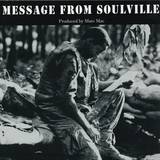
Eclectic Music Producer and DJ Marc Mac (from 4hero) returns with another Mixtape Style album following on from 'Extend The Knowledge" & "It's Right To Be Civil". Marc's formula of Boom Bap Beats, Breaks, Jazz and Soul pull together soundbites from the Vietnam War era. Beats are intertwined with soundbites from the 1960's Vietnam War protest era where African American's were sent to fight during the Civil Rights period in the USA.
Marking the 10th anniversary of this series of 'mixtape style', revolutionary and thought provoking albums, Omniverse Records have pressed a short run of never before on Vinyl releases. The complete set of records "It's Right To Be Civil", "Extend The Knowledge", "Message From Soulville" and the new "Generation - X" albums will be available each on single record continuous play vinyl. The albums are a must for the fans of Marc Mac's side projects, each album has a story to tell and the collection makes great listening both musically and subtly informative. This is most defiantly for the collectors. Not to be slept on.
Disponibile in Stock e pronto per la spedizione

Questo articolo non è stato ancora rilasciato. È possibile pre-ordinare il prodotto ora.

Funkadelic have created an enduring legacy, and the power of their impact is visceral in Detroit. Their records not only played with genre, but possessed a diabolical sense of humour that led to music domination by the late 70s with Parliament, Funkadelic, Parlet, Bootsy's Rubber Band and the Brides Of Funkenstein all releasing albums the same year for two years in a row.
The music itself is beyond stereotype, but equally huge is that they were a black band not allowing themselves to be limited by anyone else's notions of who they could be, having a massive impact on the next generation of Detroit music, Detroit Techno.
But more than just Techno, it is a freedom of thinking that extends beyond boxes, so we included all sorts of today's generation of Detroit musicians and producers to show the wide range of music that was Funkadelic and how these ideas are still contemporary, they endure and inspire.
Ordina ora e ordineremo l'articolo per te presso il nostro fornitore.

'Cohesion' is the third full album from Anchorsong - AKA Tokyo-born, London-based electronic artist Masaaki Yoshida. Taking inspiration from Classical Indian Percussion, and '70s and /80s Bollywood film soundtracks
Anchorsong creates a journey of psychedelic, danceable and free-spirited compositions that blur the boundary between rhythm and melody. It was whilst extensively touring his previous album, 'Ceremonial', that Masaaki
became deeply fascinated with percussion, and shifted his attention away from the African drums present on his last record to the music of the Middle East, South East Asia, and then more specifically to the sounds of India. 'The Indian
percussion was the one I was most fascinated with, so I began to dig into that genre deeper, I started with classics like Ravi Shankar, and the more classical Indian musicians. But then I began to explore the world of Bollywood and movie
soundtracks which is another world and the more I listened to composers like Sapan Jagmohan, Rajesh Roshan and Kalyanji Anandji, the more the concept of the new record began to form.
Choosing to work with traditional Indian instruments like the tabla and dholak, Yoshida wanted to use instruments that possessed melodic qualities, and could be tuned to work in the context of electronic music. He found that when Indian
percussions mixed with other instruments they began to sound like a melody that blurred the border between rhythm and melody. The concept of bringing together contrasting elements and cultures is evident from the album's title,
'Cohesion'. Here Anchorsong has brought together musical traditions and sounds from across borders, forging a truly unique body of work. Having reached new heights with 'Ceremonial' through accolades such as BBC 6Music's #5 Album
Of The Year, 'Cohesion' looks to build on such successes through the coupling of a comprehensive European tour kicking off around the release of the album.
Ordina ora e ordineremo l'articolo per te presso il nostro fornitore.

Max is back for his third EP for Sonic Groove. Titled the 'Art Of Rage' Max returns this time with a heavier syncopated synthesized sound in comparison to his previous two rhythmic industrialized techno releases for SG. Twisting and turning the sound of early 90's EBM , classic rave techno and acid vibes into the perfect modern day sound track. What else can one expect from a 30+ year veteran of the Techno scene!
Ordina ora e ordineremo l'articolo per te presso il nostro fornitore.

'It is now clear that humans are no longer the most important things in the universe, that their knowledge, creativity and intelligence are ultimately limited.'
The Posthuman realises that the ultimate questions about existence and being do not require answers and accepts that humans have a finite capacity to understand and control nature. Even just to know the ultimate nature of the universe would require knowing everything about the universe, everything that has happened and everything that will happen. If one thing were not known it would imply that all knowledge of the universe is partial, potentially incomplete and, therefore, not ultimate.
Humans privilege to order over disorder on the assumption that the essential laws of nature are gradually being discovered. This is a fundamental error; nature is neither essentially ordered or disordered. What we perceive as regular, patterned information we classify as order; what we perceive as irregular, unpatterned information we classify as disorder. The appearance of order and disorder implies more about the way in which we process information than the intrinsic presence of order or disorder in nature.
The humanist era was characterized by certainty about the operation of the universe and the place of humans within it. The Posthuman era is characterized by uncertainty about the operation of the universe and about what it is to be human.
What is a human Is there such a thing
No finite division can be drawn between the environment, the body and the brain. The human is identifiable, but not definable.
Consciousness, (the interaction body-brain) and the environment (reality) cannot be separated; they are continuous that defines the being.
All technological progress of human society is geared towards the transformation of the human species as we currently know it; the posthumans regard their own being as embodied in an extended technological world. In such 'synthetik' reality power no longer needs to impose physical regulations, as it is able to manipulate and shape up the minds directly, becoming part of it.
There won't be any resistance from the individual, as he will have embodied the needs of the system in his own being, and their ambition will serve the economy.
Currently the output of machines is predictable; the Posthuman era fully starts when the output of machines becomes unpredictable, so that complex machines, apparatus whose workings we do not fully understand or control, become an emerging form of life.
In the Posthuman era, the future never arrives.
..from ´The Posthuman Manifesto´, Robert Pepperel, 1995
Ordina ora e ordineremo l'articolo per te presso il nostro fornitore.

Kicking off Vivod's new pheasant series and making their debut on the label, UNI.OMNI are a Glaswegian duo comprising of MWX and Wave Energy Converter. Inspired by feelings of duality and the unpredictability of our dynamic world, UNI.OMNI respond with challenging dark electronic notes, driven vocals and expansive percussive backdrops. Their tracks emit contradictory feelings of chaos and calm, motion and stillness, frustration and excitement, whilst using the energy and turmoil of big city life as motivation for their first EP. "Acceptance Resistance" kicks things off with an experimental, cavernous foray that shifts to the rhythmic, subliminal undertones of "Metaphysical Lives". Both "Sequential Self" and "Viral Dread" are attuned to empowerment, exacerbated by the strains of the modern world, with strong vocals reiterating the need for resilience in the forgotten generation.
Ordina ora e ordineremo l'articolo per te presso il nostro fornitore.

Ordina ora e ordineremo l'articolo per te presso il nostro fornitore.

Musically and emotionally, Superpitcher's third full-length studio album, The Golden Ravedays is a one sound autobiography that exhibits the skill, feeling and style that the artist has honed over a period of twenty years, musically, and forty-plus-years, emotionally.
And full-length it is:
The Golden Ravedays is an epic album of 24 tracks that was released in January 2017 and is stretching over 12 respective chapter albums during a one-year period.
The sixth piece of The Golden Ravedays puzzle will be released on Hippie Dance in June 2017.
Number 6 of the series introduces two further tracks of the sound adventure that Superpitcher is taking us on this year.
Side A features Protest Song. If music is a way of transporting us to other places, Protest Song takes us to a desolate, scary and loveless environment, a burnt-down, burnt-out place where the flesh of its former inhabitants is smouldering, void of goodwill and kindness in a cloud of toxic and greedy smoke. It's all Kafka and Orwell and Suffering - the most twisted and eerie track so far in The Golden Ravedays saga. What is undeniably clear is an acute sense of regret and loss - a warning that it could have been avoided, had we only listened to our hearts and protested.
In the same vein on Side B we hear powerful Resistance. Produced after the Paris attacks of 2015 Superpitcher outdid himself with this strong message of Resistance. Where Protest Song paints a picture of under-worldly doom, Resistance's techno beat and insistent refrain sweeps us to the surface of the muck of hatred and intolerance we've politically been dumped in. A voice that seems like a trapped animal is calling out to us. What is it trying to say Is it crying out for help Is that animal all of us Resistance represents hope and encouragement and could be the perfect marching track to any demonstration against negative forces. Much needed in this age of bigotry where it seems like time has leaped backwards to a darker side of history. As for the dancefloor - Resistance is irresistible!
Ordina ora e ordineremo l'articolo per te presso il nostro fornitore.

Ordina ora e ordineremo l'articolo per te presso il nostro fornitore.

Ordina ora e ordineremo l'articolo per te presso il nostro fornitore.

Lunfardo presents Heroica, the fifth chapter in its conceptual series, inspired by the Three Defences of Paysandú, events that remain embedded in the city’s memory and the history of Uruguay.
Among them, the Heroic Defence of Paysandú (1864–1865) stands as the most enduring symbol: a weeks-long resistance led by Leandro Gómez against overwhelming forces during the Brazilian intervention and allied advance. Across generations, these events have come to embody resistance, sacrifice and permanence.
Heroica is Lunfardo’s tribute to Paysandú, the city where the label was born.
The release explores this narrative through the work of Andrew Lagowski, one of experimental electronic music’s enduring figures. Active since the early 1980s, Lagowski has released more than 60 albums and over 10 vinyl singles, leaving a lasting mark across electronic, experimental and techno music.
For Heroica, Lunfardo revisits selected works from Lagowski’s 1995–2000 CD era, presented on vinyl for the first time, alongside a contemporary composition produced in September 2024.
Bridging archival electronics and contemporary vision, Heroica unfolds through themes of resistance, memory and permanence.
Artwork by @estudio.polar
For more info @Lunfardo.records
dovrebbe essere pubblicato su 30.09.2026
Live performed at the "FREE PARTY GHOST BUSTERS" (Tribu Ktare - Mental Resistance - Poivro Family - Tellurik) 13,14,15,16-05-16 (south France).
Limited & Numbered to 100 COPIES
100 copies/ Ltd Numbered.
Each live set is different... Cannot do it twice. This is Hardware : instrument is a goldmine and everytime you dig another tunnel...
Mental.
dovrebbe essere pubblicato su 30.09.2026
Sea Glass Vinyl[32,35 €]
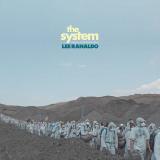
A quick scan of the world’s favourite crowdsourced discography reveals that Sonic Youth co-founder Lee Ranaldo was not a total stranger to crackling electric experimentation in the years following his songwriting turns of the 20-teens. Yet »The System«, ingeniously culled and sequenced from Ranaldo’s soundtrack work for Dutch filmmaker Joris Postema’s ›eco-doc‹ of the same name, nonetheless feels like a reawakening. Quietly released in a vastly different (and much more ›filmic‹) form by Doxy Music/Riva Media Records in 2025, this LP reimagines and reconfigures the initial release, including unreleased material written and recorded for the film, to lend it new stature as both a return to drone-improv form and a reunion with introspective Downtown angst.
Given the state of the world, it’s not surprising that the film Ranaldo scores – a documentary on three climate activists bruising their fists on the black iron prison of techno-fascist deathkultur – is a study in despair and futility. But rather than wallowing in navel-gazing doom and gloom, the film documents the unstoppable spirit that has animated human resistance since the time of the Pharaohs.
As it turns out, the gorgeous scope of Lee Ranaldo’s guitar palette is a perfect manifestation of the hope and despair that animates the film. But like other high-water marks in the guitar-centric soundtrack canon – the high plains raga of Bruce Langhorne’s »Hired Hand«, Neil Young’s sparse and ghostly solo transmissions on »Dead Man«, or the monolithic mantras of Popol Vuh’s »Nosferatu« – its devotion to spectral gestures and meditative song forms launches it firmly outside of the OST orbit into a universe fully its own.
It might seem like a long journey from the Lower Manhattan rhythmic grime of the album’s opener »Tajikistan (Nice to Meet You)« (reminiscent of guitar opuses like Robert Quine and Jody Harris’s »Escape«) to the ringing cowboy chords of the final track, but the narrative logic of the LP pulls the listener along as solidly as a pack horse. As the LP unwinds, and collaborators like Jim Jarmusch, cellist Leila Boudreil, Yeah Yeah Yeahs snare shaman Brian Chase, and guitarist Yonatan Gat take their places, new vistas unfurl: the ritualistic thrum of »Berlin Blockade«, the haunted overtone palaces of »Bergelmir«, and the cavernous acoustic strumming of »Instruments of Violence«. It all winds up with the high lonesome standard »Cool Water«, each unhurried note trailing off into long-tail reverb, layers of shifting vocal harmonies pulling everything skyward – a hopeful note in an album where existential dread never lurks too deeply below the surface.
In the end, »The System« functions both as a film score and a hallucinatory (mostly) instrumental guitar record, revealing a sensibility not too often spotted in the 21st century – a liminal space where the song, the jam, and the meditation merge into a blurred whole. »The System«’s expansive fabric, emerging from a collective sound circling around Ranaldo’s signature tones, envelops and ampl amplifies the contributions of its community of creators – the perfect antidote to narcissistic despair. Much like the subjects of the film light the way towards intra-generational resistance, the music of »The System« reveals a path through gathering darkness. The world could be yours if you follow.
– Tom Carter
dovrebbe essere pubblicato su 09.10.2026
A quick scan of the world’s favourite crowdsourced discography reveals that Sonic Youth co-founder Lee Ranaldo was not a total stranger to crackling electric experimentation in the years following his songwriting turns of the 20-teens. Yet »The System«, ingeniously culled and sequenced from Ranaldo’s soundtrack work for Dutch filmmaker Joris Postema’s ›eco-doc‹ of the same name, nonetheless feels like a reawakening. Quietly released in a vastly different (and much more ›filmic‹) form by Doxy Music/Riva Media Records in 2025, this LP reimagines and reconfigures the initial release, including unreleased material written and recorded for the film, to lend it new stature as both a return to drone-improv form and a reunion with introspective Downtown angst.
Given the state of the world, it’s not surprising that the film Ranaldo scores – a documentary on three climate activists bruising their fists on the black iron prison of techno-fascist deathkultur – is a study in despair and futility. But rather than wallowing in navel-gazing doom and gloom, the film documents the unstoppable spirit that has animated human resistance since the time of the Pharaohs.
As it turns out, the gorgeous scope of Lee Ranaldo’s guitar palette is a perfect manifestation of the hope and despair that animates the film. But like other high-water marks in the guitar-centric soundtrack canon – the high plains raga of Bruce Langhorne’s »Hired Hand«, Neil Young’s sparse and ghostly solo transmissions on »Dead Man«, or the monolithic mantras of Popol Vuh’s »Nosferatu« – its devotion to spectral gestures and meditative song forms launches it firmly outside of the OST orbit into a universe fully its own.
It might seem like a long journey from the Lower Manhattan rhythmic grime of the album’s opener »Tajikistan (Nice to Meet You)« (reminiscent of guitar opuses like Robert Quine and Jody Harris’s »Escape«) to the ringing cowboy chords of the final track, but the narrative logic of the LP pulls the listener along as solidly as a pack horse. As the LP unwinds, and collaborators like Jim Jarmusch, cellist Leila Boudreil, Yeah Yeah Yeahs snare shaman Brian Chase, and guitarist Yonatan Gat take their places, new vistas unfurl: the ritualistic thrum of »Berlin Blockade«, the haunted overtone palaces of »Bergelmir«, and the cavernous acoustic strumming of »Instruments of Violence«. It all winds up with the high lonesome standard »Cool Water«, each unhurried note trailing off into long-tail reverb, layers of shifting vocal harmonies pulling everything skyward – a hopeful note in an album where existential dread never lurks too deeply below the surface.
In the end, »The System« functions both as a film score and a hallucinatory (mostly) instrumental guitar record, revealing a sensibility not too often spotted in the 21st century – a liminal space where the song, the jam, and the meditation merge into a blurred whole. »The System«’s expansive fabric, emerging from a collective sound circling around Ranaldo’s signature tones, envelops and ampl amplifies the contributions of its community of creators – the perfect antidote to narcissistic despair. Much like the subjects of the film light the way towards intra-generational resistance, the music of »The System« reveals a path through gathering darkness. The world could be yours if you follow.
– Tom Carter
dovrebbe essere pubblicato su 09.10.2026
Confronting 2026, hope can seem in short supply, as the most divisive and toxic voices worldwide are amplified amidst an ever-rising temperature of conflict and alienation, yet hope is abundant in ‘Losey’, the latest release on Rocket Recordings from the mercurial duo Gnoomes. Just as this couple have taken a bold step into the unknown by leaving Russia and moving to Slovenia, so their music has thrown off all shackles to flourish in a defiant show of vibrant and revivifying colour. “The life of an immigrant is a strange thing.” says the bands Sasha Piankov “But luckily, that glow music brings us has never faded, even though the emotional landscape has definitely shifted.” Yet whilst the music that Sasha and his creative and life partner Masha Piankova came up with is testimony to a liberating triumph against oppression and adversity, it also goes beyond. What has emerged is a kaleidoscopic collision of styles which sends the ‘skygazing’ realm of their previous work spinning into electronic orbit. Whilst the opener ‘Foreign Agent’ explicitly tackles the pressures of the Russian state, it also throws a Stereolab-style motorik meditation through an in-the-red psychedelic prism. Elsewhere we can behold Bulgakov and Chris and Cosey as bedfellows amidst the mesmeric, 303-fried EBM of ‘Satan’s Ball’. “Rave as therapy. Pop as resistance. Love as endurance. ADHD as a production technique.” These are the primary ingredients of Losey, by the reckoning of the band themselves. This is an album that exists purely on its own distinct frequency, driven by defiance and positivity. Losey is a soundtrack to set fire to the old order, the better to dance in the glow.
dovrebbe essere pubblicato su 09.10.2026
The Trip Within EP moves through atmospheric and introspective soundscapes, carried by tribal grooves that draw you into an ecstatic, immersive experience. There are no roles to play, no resistance, no distance between what is felt and what is allowed to exist: only the strange clarity of standing face to face with yourself, embracing the contradictions, fragility, and strength that live within.
dovrebbe essere pubblicato su 09.10.2026

Psyché is an eclectic project rooted in the Neapolitan music scene. Conceived in 2018, the project includes Marcello Giannini (Nu Genea Live Band, Guru, Bassolino, La Famiglia), Andrea De Fazio (Nu Genea Live Band, Parbleu, The Funkin Machine), and Paolo Petrella (Nu Genea Live Band, Fratelli Malibu). They were recently joined by Roberto Porzio (Parbleu, Fitness Forever, 24 Grana, The Funkin Machine).
"Hurriya (We Must Resist)" is a sonic bridge crossing the Mare Nostrum, connecting the shores of Naples and Tunisia.
At the heart of this fusion is the voice and soul of Tunisian musician Ziad Trabelsi, whose Arab roots intertwine with the psychedelic, Mediterranean sound of Psyché.
In this track, Afrobeat and Arabic sonorities meet to create a hypnotic journey, one where Ziad's oud weaves an evocative groove that gallops like horses in the desert.
The song carries the echo of the ancient dominations and cultural exchanges that have shaped Naples—a millennia-old crossroads of civilization—where traces of Arab and North African influences continue to resonate in its streets and, most notably, in its music.
"Hurriya"—the Arabic word for freedom—is an anthem of resistance and resilience, a dialogue between East and West that dissolves the rigid boundaries of geography and politics. It is a collective song for the freedom of all peoples, against oppression, abuse, and injustice everywhere in the world. As Psyché emphasize: "Even if life tests us severely, and we often feel like giving up in the face of injustice, we must resist. We must refuse to disappear."
The single is available digitally and physically, on January 23rd, as a 7" vinyl. The B-side of the physical release includes an exclusive, extended version of "Hurriya (We Must Resist)", available only in this format.
Disponibile in Stock e pronto per la spedizione
Active Systems' debut EP, The Red EP (Split Lip Records), finds beauty in chaos and strangeness in the familiar: drawing from 90s/00s experimental grooves and stark electro (Underground Resistance, Boards of Canada, μ-ziq, Aphex Twin's Rephlex label) to create something rooted in the "dust, dirt and nostalgia" of underground electronica, Detroit techno and weirdcore. A genuine debut rather than an established alias, the four-track release moves from familiar patterns into unexpected new emotions, from the glacial hip-hop beat and starlit melancholia of "Gabbol" to the skippy rhythms of "Itsover" and the clock-shop funk of "Avoid”. This year, Active Systems has been invited to perform at Superbooth Berlin by Sequentix, played a debut show in Lost's much-hyped Club Room and closed Houghton Festival's The Warehouse stage on theopening night.
Disponibile in Stock e pronto per la spedizione
Cultivated Electronics celebrates two decades at the forefront of electro with its landmark 50th release on the main label, returning to the very beginning with a new release from Signal Type - the collaborative project of label head Sync 24 and Matt Whitehead. The anniversary EP pays homage to the sound that launched Cultivated Electronics back on CE001 A1, with Signal Type delivering "Break Through", a snappy, driving and psychedelic electro workout built firmly for the dancefloor. Funky, spacey and packed with the restless energy that has defined the label since its inception, the track feels both like a nod to CE's roots and a statement of where the label stands today. The celebrations continue with three remixes from long-standing Cultivated Electronics collaborators and influential figures within the electro scene. Keith Tenniswood, aka Radioactive Man, brings an old-school, Mad Mike-esque Underground Resistance flavour to his rework, injecting the original with raw Detroit-inspired energy and machine-driven propulsion. Carl A. Finlow, operating under his Silicon Scally moniker, takes things deeper, delivering a heady after-hours interpretation built around immersive, late-night club sonics. Rounding out the EP, Finnish electro pioneers Morphology deliver a hypnotic, 90s-inspired roller, bringing their distinctive analogue sensibility and futuristic groove to the original. The vinyl edition arrives on blue marbled translucent coloured vinyl, housed in a full-sleeve package featuring artwork from Geometric Love. From its first release to its 50th, Cultivated Electronics has remained dedicated to forward-thinking electro, connecting classic machine funk with contemporary club sounds. CE050 marks both a celebration of the label's history and a salute to the artists and sounds that continue to shape its future. Here's to another 50 releases.
dovrebbe essere pubblicato su 12.10.2026

Disponibile in Stock e pronto per la spedizione

Cassette[13,40 €]
PISS ist eine laute, genreübergreifende vierköpfige Band aus Vancouver, B.C. Durch die Kombination von Punk, Poesie, Soundcollagen, Performancekunst und bildender Kunst schafft die Band ein multidisziplinäres Gesamtwerk, das die Grenze zwischen Persönlichem und Politischem verschwimmen lässt. Angetrieben von durchdachter Musikalität, energiegeladenen Live-Auftritten und einer kristallklaren künstlerischen Mission schreibt PISS Punkmusik, die darauf abzielt, die Grenzen eines etablierten Genres zu überwinden. Ihre Arbeit schöpft Inspiration aus einer Reihe unerwarteter Einflüsse: literarische Größen, Philosophen, Filmemacher, Maler, Psychoanalytiker, Aktivisten, Kinder, Mitglieder einer deutschen anarcho-feministischen militanten Gruppe und Gespräche mit Zuschauern. Diese Stimmen repräsentieren unterschiedliche ideologische Überzeugungen zum Thema geschlechtsspezifische Gewalt und ermöglichen es PISS, Kunst zu schaffen, die herausfordernde und kontroverse Themen wie sexuelle Gewalt und verinnerlichte Geschlechternormen darstellt - ohne Vereinfachung, Romantisierung, Polemik oder Dogmatismus. you made me / skin on linen ist das Debütalbum der Band. Es schildert eine Kindheit, die von struktureller, systemischer und intimer Gewalt geprägt ist. Auf dem gesamten Album dienen Motive aus der Kunst als Metaphern für die unzähligen Arten, wie wir die Auswirkungen dieser Gewalt in uns tragen: Jede Erfahrung hinterlässt einen Eindruck und formt oder verzerrt nach und nach das Selbst - ganz wie ein Stück Ton, das durch jeden Abdruck, den es erhält, geformt wird.
dovrebbe essere pubblicato su 30.10.2026
