Five years ago, Curren$y proved once again that while the rest of the world might hit the brakes, the Jet Life never stalls. Released in the early months of 2021, Collection Agency arrived as a masterclass in "work-from-home" luxury—a smooth, ten-track victory lap that solidified Curren$y’s status as the most consistent architect in underground hip-hop.
Clocking in at just under 24 minutes, Collection Agency is the sonic equivalent of a pristine, low-mileage 911 Turbo. It’s lean, expensive-sounding, and devoid of filler. While the world was still grappling with a sense of stagnation, Spitta was in the garage, documenting the rewards of a decade-plus grind.
The 10-track release marks his 11th solo studio album, and 90th overall project. Even more impressively, the quality has remained consistent throughout his prolific career. The Louisiana rapper links up with several notable producers on the project including DJ.Fresh, Harry Fraud, Rsonist of The Heatmakerz, Trauma Tone, Purps, & Black Metaphor. We also see an appearance by longtime friend and collaborator, Larry June. Once again, Curren$y delivers another unforgettable round of smooth joints and cruising music.
Few songs from the late 90s managed to sound simultaneously utopian and paranoid quite like Jamiroquai's 'Virtual Insanity', a track that wrapped ecological anxiety and technological dread inside an absurdly slick jazz-funk strut. Thirty years on, it remains remarkably strange for a global pop hit. Jay Kay glides across bouncing basslines and gleaming Rhodes arrangements with irritating charisma, while the groove itself never stops twitching and mutating beneath him. 'Do You Know Where You're Coming From' goes further into sophisticated acid jazz territory through restless percussion and rich harmonic movement, then 'Bullet' adds a tougher funk bite. Some records become trapped by nostalgia, but this one still sounds futuristic.
Check The Description Before Asking For A Track ID is a thoughtfully curated four-track journey through modern deep tech house, balancing forward-thinking sound design with emotional depth and dancefloor functionality. The release unfolds across two distinct yet complementary sides, guiding the listener through evolving textures, moods, and states of energy.
On Side A, A1. Overt – Annular and A2. Third Echo – 31th Session introduce a spacious and immersive atmosphere. Built around shimmering arpeggios, airy melodies, and fluid progression, both tracks explore a subtle interplay between progressive motion, trance-like elements, and dub-infused textures. The result is a weightless yet driving experience — refined, hypnotic, and perfectly balanced for setting a tone that feels both futuristic and deeply engaging.
The B-side shifts into more introspective territory. B1. Eric Louis – Grooving In The Future and B2. Severin – Shiti bring a melancholic edge, focusing on emotive melodies and transitional energy. These tracks are crafted for pivotal moments within a set — where the atmosphere deepens, emotions unfold, and the narrative takes a new direction. Warm, bouncy grooves intertwine with cooler, more restrained tones, creating a contrast that feels both elegant and expressive.
Spanning a wide emotional and rhythmic spectrum, NRP006 is a versatile tool for selectors — designed to navigate the subtle shifts of a dancefloor with precision, intention, and depth.
NOREPRESS is a division of MixCult Records. Limited Edition.
Mr Bongo presents a reissue of one of the rarest releases on the illustrious and now ultra-rare tax scam label TSG Records. A label with a checkered past, operated by Lloyd Price and with alleged ties to boxing promoter Don King. The album in question, Disco Party by Reality, is a stunning journey through ‘70s dancefloor-focussed funk into early proto-disco grooves. Back in mid-‘70s Manhattan, Dr. Otto Gomez and a group of fellow New York musicians including Tony Dixon, Norman Drayton, Tony Dupree, Al Jones and Fred Nanton were brought in for a recording session by songwriter and producer, Billy Nichols. Laying down one of Nichols' songs and a selection of the group's own, they were paid as session musicians and thought little of it. The tapes came to the attention of Lloyd Price who struck a deal with Nichols unbeknownst to Gomez and the rest of the band. Price then pressed the album and put it out in 1976 on a newly formed subsidiary label, TSG Records, that would later be documented as one of the US tax scam labels of the ‘70s. Such labels were created to exploit a loophole in the US tax system, running up inflated production costs / losses that investors or the parent label could write off against their tax bills. Releases on these labels were never intended to have commercial success. They would usually be produced in incredibly limited pressing numbers and have little to no promotion or distribution. As such many of these records instantly fell into obscurity, becoming mythical amongst DJs and record collectors. Sadly, this meant that artists like Dr. Otto Gomez and friends never had the chance for their record and their talents to shine at the time. In fact, it was only when Jazzman reached out for their 2022 reissue that Dr. Otto Gomez became aware that the album had ever been released and heard the story behind it. Disco Party is a time capsule where ‘70s instrumental funk edges and intertwines into an early disco sound. The sessions are for the dancefloor, minimalist and groove-based. The bass and drums are at the forefront, providing the pulse of the album. Driving funky guitar licks, and a brilliant horn section weave their way in and out of the productions. Highlights include the uplifting feel-good ‘Let's Party People’, the early disco swagger of ‘Reality’, and ‘Disco Party (Let's Have A)’ with its wah-wah groove and percussion break, which could easily have found its home on a Blaxploitation film soundtrack of the period. It’s not just rarity that makes this record so sought after, but rather the fact that it is a superb example of dancefloor-focussed mid ‘70s funk and disco.
With Mr. Coconut, Cosmo Dance delivers a four-track EP that strengthens a distinctive sonic identity, blending retro aesthetics, club culture and cinematic sensibility into a cohesive body of work.
The title track unfolds through refined dynamic control. Warm multilayered percussion, textured guitars and a deep yet restrained bassline create an organic groove that evolves gradually rather than relying on obvious drops. The production favors subtle progression and hypnotic growth, resulting in elegant, mature dance music.
Goodbye expands the project’s narrative dimension. Inspired by the atmosphere of Italian ’70s library music, the track represents the protagonist’s theatrical exit from the club — not a melancholic farewell, but a charismatic closing scene. A playful detail emerges when Dandolo (Cosmo Dance’s alter ego) delivers an ironic “cough solo” precisely as an off-voice introduces Mr. Coconut, adding a self-aware cinematic twist.
Dub nuts explores deeper dub-informed territory. Built through layering and subtraction, the track showcases careful spatial control and restrained low-end management.
The EP closes with the Coccappella Version, a stripped-down reinterpretation of the title track focused solely on percussion and voice, revealing the rhythmic backbone of the project.
Mr. Coconut is a refined balance between club functionality and cinematic storytelling — controlled, elegant and unmistakably personal. It’s not about peak-time fireworks — it’s about atmosphere, detail and identity.
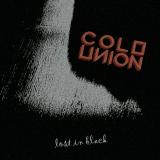
Cold Union emerge with “Lost In Black”, a coldwave signal suspended between haze and motion. An early glimpse of their upcoming album, where restraint becomes atmosphere and every element is reduced to its essential form. Icy guitars drift over deep, driving basslines, while distant, delayed vocals hover in slow, almost spectral, hypnotic atmosphere. There’s a clear understanding of the genre’s lineage here—echoes of classic post-punk codes reinterpreted with patience and intent. Minimal, precise, and emotionally distant, Lost In Black channels the core of post-punk into something colder, sharper, and built for the finest late hours goth parties.
MUSAR is proud to introduce Koloah, the newest voice in the family. Making his label debut with You Can Get Me EP, the Kyiv-born, Berlin-based artist arrives fully formed: three original tracks that move between restless grooves and expansive, immersive sound design, accompanied by a brain-melting remix from rising French star Binary Digit.
The EP opens with "You Can Get Me" - a UK-leaning groove anchored by a snaking acid line and fragmented vocal cuts that surface and dissolve, insistent and hypnotic, one of those tracks that lands fast and stays with you. "Get Me Close" follows, shifting the A-side into electro territory: harder edges, colder mechanics, but the atmosphere holds. Koloah keeps the tension tight and the space wide.
The B-side reaches further. The braindance producer Binary Digit takes "You Can Get Me" apart and rebuilds it in his own image - known for his deeply idiosyncratic approach to rhythm and texture, he turns the original into a real summer anthem, faster and focused, the same raw material carrying a completely different emotional weight
The EP closes with "Liminal Forest", a full IDM statement: intricate rhythmic programming, layered synthesis, and a sense of place that feels earned rather than constructed. Koloah signs off somewhere between the forest and the machine.
Recorded in Koloah's Berlin studio, the tracks were built in different periods - which is exactly why they breathe the way they do. Not a forced coherence, but a natural one.
"Atmosphere is the core of all my music and what I pay the most attention to."
- Koloah
This is the beginning of something. Welcome, Koloah.
Following his previous appearances on Figure, French producer Arkan returns with Mad Race, a four-track EP that further sharpens his distinct vision of mental techno. Balancing hypnotic restraint with driving intensity, the release finds the artist navigating deeper into textured, immersive territory while maintaining a strong sense of propulsion throughout.
The title track Mad Race opens the record in forceful fashion, locking into a tightly wound groove as restless synth movements and looming atmospheres continuously build pressure around the rhythm section. Revival follows with a more spacious approach, letting emotive chords and swelling layers unfold gradually over a firm, rolling foundation, capturing a feeling of momentum suspended somewhere between tension and release.
On the flipside, Sawlim pushes further into trippy terrain. Dense percussion and spiralling effects interact with pulsing low-end pressure to create a heads-down club tool filled with subtle movement and detail. Closing track Interlude shifts the focus once more, exploring a more restrained and introspective mood through cavernous textures and hypnotic repetition while still holding onto the EP's underlying drive.
Digital bonus track Make You Horny rounds out the package with a rawer and more playful energy, bringing punchy drums and jagged synth work together into a functional late-night workout.
With Mad Race, Arkan continues refining his own blend of deep, atmospheric and cerebral techno, further cementing his place within the evolving sound of Figure.
After more than a year and a half of consistent output, KYSH returns to vinyl with its second physical release. Following a streak of four VA compilations, nine solo EPs and a strong debut on wax, the label keeps its momentum — expanding its roster while refining a distinct, contemporary techno identity shaped by both emerging names and established forces. KYSH-002 brings together four artists representing different shades of the current sound. Opening track “Activ” sees SEIGG return shortly after his solo EP, delivering a signature glitch-driven banger with a powerful, instantly recognizable hook. Alarico follows with “Tears”, building emotional tension through his characteristic chopped vocal work and driving arrangement. On the flipside, Fenim0re’s “My Last Descent” shifts into a more restrained, hypnotic territory — a minimal yet groovy tool with a strong sense of forward motion. Closing comes from Toobris with “Zawyeh”, a low-end focused cut recalling early 2000s minimal techno aesthetics, reimagined with increased, modern pace. With KYSH-002, the label solidifies its presence on wax — delivering a focused, high-impact selection from some of the most vivid voices in modern techno.
For his sixth solo album, Ezéchiel Pailhès returns with a new collection of songs infused by a sunny wandering spirit.
Within each of the twelve songs on SOL is a thread of melancholic happiness that has permeated much of Pailhès’ music and songwriting. He addresses love, the passing of time, hope, lost illusions, fleeting moments of grace, the temptation of forgetting, a need to escape, and desire. All this is
insulated by understated orchestrations that blend acoustic and electronic instrumentation with deft confidence.
The Portuguese and Brazilian concept of saudade—a form of melancholic longing and nostalgia— pervades, thanks in part to Pailhès decision to record the album in Rio de Janiero and to reinterpret some of the finest works of Música Popular Brasileira (MPB). In particular, he revisits a handful of
lesser known classics from the mid-century samba and bossa nova era—originally written or performed by talents including Vinícius de Moraes, João Gilberto, Tom Zé, Dorival Caymmi, João Donato, Os Tincoãs, and Ataulfo Alves.
The shift from Brazilian Portuguese to French and the decision to adapt rather than perform a straightforward cover versions, allows Pailhès to invent a form of prosody and euphony (the musicality and harmonious combination of words) that feels vibrant and unlike anything else in today’s French
chanson landscape.
“Some lyrics are simple translations from Portuguese, in what I’d call an expanded version. For others, I started from a single word or a single phrase and embroidered an entirely new text that carried me elsewhere,” explains Pailhès. “I allowed myself great interpretive freedom, while preserving the humanist dimension of the original songs. I’ve always been deeply moved by the way Brazilians transfigure reality through heightened emotion. I love this visceral and spontaneous country, which always seems to live through emotion. And above all, I love its music both popular and unifying,
bringing together all social classes. In that sense, it’s very political music, but even more so utopian, made by the people and for the people.”
On this new album, however, the French artist was keen to avoid cliché. Each song is therefore built around a carefully balanced interplay between Pailhès’ piano and synthesizers, alongside restrained arrangements of percussion, brass, bass, and cavaquinho (a small four-string plucked guitar). These parts were recorded in Rio de Janeiro with two musicians who regularly perform alongside the legendary Caetano Veloso—Kainã Do Jêje and Alberto Continentino—joined by Thomas Harres, Antônio Neves, Eduardo Neves, and Gabriel Loddo.
Since the 1960s, France and Brazil have shared a long-standing cultural and musical relationship. Some Brazilian artists, most famously Gilberto Gil, took refuge in France during the dictatorship years (1964–1985). But above all, French chanson quickly fell in love with the richness and ingenuity of
bossa nova and samba, translating and reinventing them in the language of Molière. Throughout the 1960s and 1970s, albums and hits by Henri Salvador, Georges Moustaki, Pierre Barouh, Pierre Vassiliu, and Claude Nougaro all drew from the MPB repertoire.
Fifty years later, with SOL, Ezéchiel Pailhès reinvents this rich Franco-Brazilian musical legacy, bringing to it a personality and modernity that stand confidently alongside those of his forbears.
Faux Poly is delighted to release its first vinyl record release since 2023: NINA, a rising UKG/Dub prodigy, is arriving with Internal Makeup. Bristol-based NINA has steadily built a reputation as a forward-thinking
solo artist, dropping highly sought-after records with a distinct sound and craftsmanship that set him
apart. Just one year in, NINA has released on labels such as Innamind Recordings, 20/20 LDN, and
Locus Sound. This new chapter is a pure distillation of that journey - a sound informed by dub, garage,
grime, and soundsystem pressure.
Internal Makeup features four bass-driven club tools that are minimal, weighty and focussed on sub. Opening with “The World Is On Fire”, the only 4x4 track on the record, NINA sets the mood with a cavernous dub techno jam and spaced out vocals. The rest of the record - including the Rowl collaboration “When I Come” - hits firmly in UK Bass territory, with stripped compositions that focus on bass-weight and a strong Bristol influence.
Words from NINA: This EP came together slowly and surely over the space of about a year. I wanted to
encapsulate my true sound which can be extremely versatile which is why there is a bit of everything on there, from techno to garage to dubstep.
Mark Flash returns on DTFA with two late-night transmissions built for the floor and the mind. "Interstellar Dreams" opens the space. Warm textures, deep chords, uplifting strings, and floating atmospheres drift into Detroit's futurist side, combining Hi-Tech Jazz with a funky bassline by Jon Dixon.
"Midnight Scanner" moves with purpose—pulsing synth lines and restless energy cutting through the dark, like signal traffic across the city after hours. Direct, mechanical, and locked-in, it's a peak-time tool designed to drive the room forward.
Together, the two tracks capture both ends of the spectrum: street-level grit and cosmic lift-off—classic Mark Flash territory where funk, techno, and movement meet. Functional. Emotional. Built for DJs.
Following the celebrated reissue of Classics Vol. 1, Metroplex unveils Model 500 - Classics Vol. 2, a powerful new collection of essential works from Juan Atkins--pioneer of Techno and architect of some of the most forward-thinking electronic music ever recorded. Bringing together key cuts, rare mixes, and long-sought favorites from across Atkins' groundbreaking output, this compilation highlights the full spectrum of his sonic universe: deep, rolling machine funk, shimmering electro-techno hybrids, and timeless futurist grooves that helped shape generations of electronic artists. Each track has been carefully remastered to enhance its original energy while preserving the raw spirit and space that define the Model 500 sound. From expansive, atmospheric journeys to soulful vocal transmissions and Detroit-powered rhythmic science, Classics Vol. 2 presents Juan Atkins at his most inspired--an essential document of a visionary whose influence continues to echo across dancefloors worldwide. Three decades on, these tracks have lost none of their immediacy, imagination, or futuristic pull. Restored for a new era, Classics Vol. 2 celebrates the legacy of Model 500 with pristine sound and renewed force. Pure Detroit heritage. Eternal future music.
Guidelines launches its 2026 schedule with a heavyweight two-tracker from Toby Ross, pairing two cuts built for very different corners of the dance.
On the A-side, “Can’t Do It” lands as a straight-up dancefloor heater rolling low-end pressure, clipped vocal stabs and a hook that locks in quickly and refuses to let go. Built with peak-time intent, it’s direct, physical and engineered to hit hard on proper systems.
Flip it over and “Interruption” dives headfirst into classic amen territory. Chopped, urgent and restless, the track drives forward on tight edits and raw break energy, balancing precision programming with that unmistakable rough-edge jungle feel.
Together the two tracks showcase Ross’ approach: future-focused jungle rooted in foundation sounds — modern production, classic DNA, and zero filler.
If – in some parallel universe (or perhaps a not-so-distant-future version of the one we’re already sentenced to living in) – the evil overloads of artificial intelligence were actually successful in their attempts to create convincingly enjoyable “original music,” more specifically tasked with wholly encapsulating my own personal tastes by data-chugging some cocktail of – oh, I don’t know – the posters on my wall, the records in my “most listened to” pile, the mixtapes I made for others, intensive physical scans of my auditory cortex, amygdala, hippocampus, heart strings, whatever else they have splayed out on their autopsy table with the intention of generating one all-encompassing “perfect band” based on the fruitful sum of their findings – that band, for me, would be (or would at least sound exactly like) the Tara Clerkin Trio. It is, quite simply, without exception, the music I wish to hear.
Formed in Bristol UK (where none of them are from yet all of whom are deeply engrained) in 2020, the Tara Clerkin Trio – as it somewhat democratically exists today, despite the singular authority implied by its name – consists of the titular Tara Clerkin, her partner Sunny Joe Paradisos, and Sunny’s brother, Patrick Benjamin. I’ll confess, I don’t know what their respective roles are within the operation and there’s only a very small part of me that cares to learn, as one of my favorite qualities in an objective listening experience is the mystery of who is playing what, which sounds are “authentic” versus synthesized, which chunks are performed “live” in a room together versus meticulously Frankenstein’ed from measure to measure, or how exactly the overall sound is so (seemingly) effortlessly achieved. Though, I suspect, if and when I do witness a live performance by this band at any point, my enjoyment of the music will not be lost in my better understanding of it.
With two extraordinary mini-albums – In Spring (2021) and On The Turning Ground (2023) – making a splash on London’s formidable World of Echo label in wake of their self-titled 2020 debut, this upcoming Somewhere Good LP is, in many ways, the band’s most realised work. In running their usual gauntlet of idiosyncratic (*an overused adjective for which here there is regrettably no sufficient alternative) approaches, Clerkin & co. colour in and outside of compositional lines over the course of 40+ celebratory minutes - never wallowing, despite inherently somber subject matters of self-defeat, disease, displacement, restlessness, gentrification - allowing their arrangements and improvisations ample space and time to situate, stretch out, breathe, cross-pollinate, and ultimately take deeper hold on the listener’s imagination – all while somehow sounding more like themselves than ever before.
Of course, there are traceable influences herein, if one felt that such comparisons were necessary to properly examine and enjoy this music (they aren’t)… Being the big dumb American from the small boring town that I am, cornfed on ‘90s alternative radio with the enchantingly exotic sounds of Maxinquaye and Mezzanine emanating from my chunky tube television, I can’t help but to make a blatantly obvious reference to a “Bristol sound”, ie the whole trip-hop trip, the pastoral crooning over the suggestive urban grime of cracked electro/piano treatments, the digitally-yet-primitively reconstructed James Bond soundtrack string-beats, etc.. But the Tara Clerkin Trio is so infinitely much more than that. There are elements of avant-pop, modern classical, kraut-folk, audio verité, dare I say indie rock (and not of the beer guzzling, masturbatory fuzz-flex variety but perhaps more like a Trish Keenan-fronted Faust, Adrian Sherwood at the mixing desk of If You’re Feeling Sinister, or – in expanding on our alternate reality – a world in which High Llamas cut a full-length for Warp Records with Andrew Weatherall on coffee duty).
The hazy, unmappable skyline-mirage of droning harmonium, upright bass, peculiarly accentuated wind instruments, acoustic guitar, hushed yet literally mighty keys combine to hypnotizing effect. The band may make underlying nods to jazz, sure, but it’s not appropriation, it’s that they have the actual chops to build it out. Beneath the janky samples and oddball percussive embellishment lies actually great drumming. Beyond the manipulated vocal witchery and woefully reflective plain-spoke moments are Tara’s subtly inspired melodies, sung with what might honestly be the glue to the whole crazy equation. A calming consistency throughout the otherwise unpredictably dynamic, boldly intuitive, uniquely British exploration of this (their own) universe in song. – Ryan Davis (Chicago, February 2026)
Five years after their radiant debut Ufo Bar, Italian cinematic funksters Banda Maje are back with Costa Sud to take us deeper into their land of ‘Salifornia’—a Southern province of sun-drenched coastlines and decaying buildings where dreams of exotic escapism sprout and bloom.
Once again, behind the eight tracks in the album—and behind the wheel of the fiery red Alfasud on the cover—is composer and keyboardist Peppe Maiellano. He has meticulously tailored each piece to his virtuoso partners in crime: a 'family' of exuberant musicians spread between Salerno and Naples, all bound by deep-rooted ties to the region and a shared belief in the grit of independent artistry.
The Costa Sud (South Coast) imagined by Banda Maje is a shimmering ribbon of sun-baked asphalt stretched between the sea and the ancient pine forests of the Gulf of Salerno. It is a land of enchanting but wounded places, where the grace of Ancient Greek civilization sits in a restless silence alongside the scars of rampant building and neglect. “But if truth is beauty and beauty is truth,” Maiellano explains, inverting Keats’s famous line, “with the right eyes, you can find beauty and poetry even under a layer of moral and material filth."
Conceived and recorded entirely in the South, the album nevertheless looks beyond the horizon. While Neapolitan funk and golden-age Italian soundtracks remain the double helix of the band's DNA, this album welcomes new influences from across the ocean, weaving Italy, Brazil, Africa, and contemporary sounds into its unique vision of the 'global South.'
Side A is an immersion into Salifornian territory and its myths: from the carefree instrumental disco-funk of the title track, which sublimates local contradictions into enveloping cinematic atmospheres, to the mellow groove of “Baia”—a fusion of Neapolitan funk, afrobeat, and disco that pays homage to Salerno’s famous beach, squeezed between millennia-old sea rocks and mountains of shipping containers. The band’s heartfelt sense of belonging shines in their fresh soul-disco version of “Mo…” (a 1981 cult classic by Neapolitan legend Peppino di Capri) featuring Maiellano’s own vocals, while the reimagining of Tonico 70's “Jet Lag” celebrates a fraternal partnership with the Salerno-based rapper/producer, charting a musical itinerary that unites Brazil, the States, and Salifornia through evocative grooves, sharp synths, and Gianfranco Campagnoli’s exquisite trumpet.
On Side B, the sound becomes even more eclectic with the samba-funk warmth of “Samba Maje”, where Mediterranean melodies and lush vocal harmonies marry jazz-funk arrangements and disco-inflected Brazilian rhythms. The next track, “Africana”, is dedicated to a legendary dolce vita nightclub on the Amalfi Coast (and its founder Luca Milano); here, a rhythmic mantra incorporating tribal African elements blends with synths that evoke RAI television themes of the late 70s. The journey concludes under the sign of the silver screen: the disco-funk elegance of “Black Glamour Girl” (from the early-80s road-trip comedy In viaggio con papà), a tribute to the compositional genius of Piero Piccioni, and “Lovebossa”—an easy-listening homage to the "Cine Bossa" atmospheres that characterized so many Italian soundtracks of the 60s and 70s, finally carrying the listener ‘ncopp’ ‘e nuvole (above the clouds—which is basically Salifornian for "somewhere over the rainbow").
Open the doors of perception with 'Alchemy of Being,' a deep ambient exploration inspired by Jungian analysis, olfactory meditations and psycho-nautic navigations.
Dublab resident, LA-based DJ and producer Dor Wand invites us to practice ‘deactivation through music:’ a softening art he describes as guiding energy down gently, so the body can rest, the heart can open, and the mind can return to stillness. The album creates a space where movement turns inward, where rhythm becomes breath, and where sound holds us as we land.
A mix of mellow synths, live harp and tuned percussion, the album oscillates softly between tension and relaxation, a harmonizing journey that gradually brings together mind and body, inhale and exhale, a unifying yogic tool for heightened self-understanding.
A new voice enters the orbit. MBM carves three slow-burning studies in tension and release – merging patterns with fragile harmonics, melancholia, and restraint. Everything feels carefully placed yet emotionally exposed. Moments of pressure give way to space, steel meets softness, rhythm turns inward. No peaks. No breaks. Just pulse, texture, and tone – in constant negotiation. Music for the body, drawn from the depths. Soultones hits hard. Feel it.
You blink; eyes crusty. Last night went a little too late again, and as you stumble towards the kitchen you stare at the record player like it’s a cup of coffee. The rest of your life can wait. You stare at the record again and hit the lever and the needle falls.
First up: Gastón Cabrera’s Inhumano, a little relentless and unforgiving, like being thrown in the back of an Aston Martin and driven away. The groove builds to a haunting peak, and you want more. Then the record blurs into Alfalfa’s La Fiebre, which tickles your ears with eerie bells, and builds from bass fundamentals into something more driving. It’s hopeful, but makes you work for it – wading through acid; climbing the hill.
Everything stops. Fuck it. You flip the record, and Marcos Coya’s The Underdog starts off easy, but slips you down a dark path to a pool of churning, hypnotic synths. There’s a strange moment of quiet before the final track. vault. and Isaac Elejalde close with authority on Just Melt: a raw and writhing finale spiked with voices and sirens that will leave you out of breath, somewhere else.
Introducing The Goods. Four tracks; one abduction. Limited to 300 copies – vinyl exclusive, forever.
Unlike the main Magic Wand label, the imprint's offshoot 'Special Editions' series is a little more fluid about what it releases, with some EPs sporting original productions - many of which are admittedly sample-heavy - as well as re-edits. That's the case for this second missive from Matsoaka (real name Matt Lundgren). So, while the EP begins with a genuinely gorgeous and Balearic original cut (the dreamy and slow-motion folk-rock of 'Butterflies', featuring the emotive and harmonic vocals of Butterflies), much of the rest falls into the "Balearic re-arrangement" category. In this camp you'll find the immersive, trip-hop style dreaminess of 'Faith', the mid-80s Yellow Magic Orchestra-style Fairlight-sporting electro of 'Gin Yuzu', and the dollar bin brilliance of 'Sheriff' (a take on a Japanese city-pop cover of a reggae favourite).
Shed makes his first appearance on Dekmantel with Rave Echoes — a supple, mesmerising album of angular techno caught between the heat of peak time and the time-blurred hours after the club.
A combination of dreamlike atmospherics and rugged propulsion takes on many forms across the album. It's submerged and restrained on 'Loot 25', speckled with sharply sliced breaks on 'Everybody' and scattered across a sparse, steppy soundscape on 'Rave Predator'. Emotive, swooning strings collide with tough, squashed breakstep drums on 'Double Scoop' and 'Taking You Home' thrusts with urgency and rave romanticism in equal measure.
Wielding his signature blend of UK-school soundsystem pressure and Berlin-school techno momentum with poise and purpose, on Rave Echoes Shed offers a perfect impression of those wild, indescribable sensory overloads that leave their mark on anyone devoted to the dancefloor.
American ambient powerhouse zake is back with a meditation on stillness, memory and the quiet power of seasonal change. Rooted in the Midwestern winter that inspires much of his work, his latest album Cantus for Winter in Six Parts unfolds in slow-moving analogue drones, soft hiss and faint environmental textures that are both intimate and expansive and true to his signature style. Each piece drifts gently into the next, evoking cracked wood, falling snow, distant strings and the eerie calm of frozen landscapes. By the time the 19-minute finale arrives, you are lost in a world of solitude and reflecting deeply on many things that will ultimately leave you feeling restored.
FOIE GRAS, Destroy Boys' fifth album, feels like the record the band has been working toward all along. It's bigger, stranger, and more confident than what came before, without losing the immediacy that got them started. FOIE GRAS was built out of a series of risks that ultimately produced the band's most cohesive, ambitious, and best work yet. Those risks began with the title. Alexia Roditis (vocals/guitar), Violet Mayugba (backing vocals, guitar), Narsai Malik (drums), and David Orozco (bass) landed on FOIE GRAS while touring Europe, passing names around with the same openness that defined the making of the record. Roditis and Mayugba formed the band when they were 15, playing DIY shows around Sacramento while still in high school. Over the past decade, Destroy Boys have grown from those house shows into an international touring band, opening for Blink-182, Pierce the Veil, and Rise Against. Their songs have gotten harder to pin down, too: punk remains the foundation, but alternative, grunge, pop, postpunk, Britpop, bossa nova, and jazz all find their way in. Produced by Zach Tuch (Knocked Loose, Touche Amore), with additional contributions from Frank Iero, FOIE GRAS pushes that restlessness further. It's the sound of a band finally giving itself permission to follow its instincts, no matter the risk-and, in the process, making its best record yet.
FOIE GRAS, Destroy Boys' fifth album, feels like the record the band has been working toward all along. It's bigger, stranger, and more confident than what came before, without losing the immediacy that got them started. FOIE GRAS was built out of a series of risks that ultimately produced the band's most cohesive, ambitious, and best work yet. Those risks began with the title. Alexia Roditis (vocals/guitar), Violet Mayugba (backing vocals, guitar), Narsai Malik (drums), and David Orozco (bass) landed on FOIE GRAS while touring Europe, passing names around with the same openness that defined the making of the record. Roditis and Mayugba formed the band when they were 15, playing DIY shows around Sacramento while still in high school. Over the past decade, Destroy Boys have grown from those house shows into an international touring band, opening for Blink-182, Pierce the Veil, and Rise Against. Their songs have gotten harder to pin down, too: punk remains the foundation, but alternative, grunge, pop, postpunk, Britpop, bossa nova, and jazz all find their way in. Produced by Zach Tuch (Knocked Loose, Touche Amore), with additional contributions from Frank Iero, FOIE GRAS pushes that restlessness further. It's the sound of a band finally giving itself permission to follow its instincts, no matter the risk-and, in the process, making its best record yet.
We are pleased to announce the first FEX live album, Don't Look Back. The release features selected recordings from two concerts in Paderborn and Uelzen, both captured in 1985. All tracks on the album are previously unissued, including entirely unheard songs such as It's a Hard Life, Just Get Back, Legend, and Waiting Song, alongside a previously unreleased version of Subways of Your Mind, widely known as "The Most Mysterious Song on the Internet."
One of the most striking aspects of the album is the remarkable sound quality of the live recordings, as well as the strength of the performances themselves - particularly given that FEX were still considered a newcomer band at the time. The four-piece lineup consisted of singer, guitarist, and primary songwriter Ture Rückwardt, Michael Hädrich on keyboards and occasional second guitar, Norbert Ziermann on bass, and Hans-Reimer Sievers on drums. In 1985, the band was preparing for broader exposure through a nationwide tour organized by the small promotion company HBM-Musikbüro.
The album opens with the psychedelic Skyscraper, a track Rückwardt reportedly regarded as a personal favorite to perform. Hädrich contributes dynamic synthesizer layers, while Ziermann underpins the track with a distinctive slap bass groove. This is followed by the energetic rock number It's a Hard Life, which once again demonstrates that the band possessed multiple songs capable of matching the impact of their best known track Subways of Your Mind.
After this energetic opening, the album shifts into a more restrained mood with the synth-pop ballad I Got My Eyes On You. It is followed by Strange Feeling, presented here in a particularly compelling live version that arguably surpasses the previously released studio demo featured on the Skyscraper LP, with Rückwardt delivering one of his most expressive vocal performances. On Goldrush, another fan favorite, it is Hädrich's DX7 synthesizer work that stands out.
Don't Look Back continues to flow seamlessly, moving between styles such as new wave, synth pop, and a blues-influenced form of classic rock. On It's Good To Know, a song addressing the theme of stardom, the band returns to a heavier rock sound. In contrast, the synth-driven Just Get Back reflects on the conflict in Northern Ireland, then ongoing at the time. Lines such as "It's the money, it's the money why they come along" are directed at mercenary soldiers, while "even Sunday's a killing time" directly references Sunday Bloody Sunday by U2.
Previously known songs such as Dirty Slapstick and Heart in Danger lead into We Don't Want It No More, perhaps the band's most striking pop ballad. It is easy to imagine that the track had the potential to achieve radio success in the 1980s. The following piece, the epic Legend, explores themes of loneliness and love simultaneously. With poetic and abstract lines such as "some isolate in the falling rain" and "that's why I count all the reasons they call out for living, sadness is falling inside," it builds an almost eerie atmosphere.
One of the final highlights of the album is Subways of Your Mind, recorded in Uelzen. In this version, Rückwardt's vocal performance is even more on point than on the previously issued recording from Paderborn. Another notable moment is the driving, 1970s-inspired rock 'n' roll track Waiting Song. Both the composition and its live performance carry an energy that could easily stand alongside the repertoire of bands such as AC/DC. It was usually the track that FEX ended their concerts with, calling out each band member at the end of the song.
This leads to a broader reflection: it is striking that FEX did not achieve a wider breakthrough at the time. The performances captured here suggest a band capable of delivering consistently, song by song, note by note. It is not difficult to imagine FEX performing in large venues and engaging sizeable audiences. In reality, however, most performances in 1985 took place in front of relatively small crowds. The recordings featured on this album originate from the Roxy club in Paderborn and a small, unknown venue in Uelzen, likely in front of fewer than fifty attendees.
An essential figure behind these recordings is the engineer known only under his nickname Hase (German for "rabbit"), who was responsible for capturing not only these concerts but many other surviving FEX recordings. Bringing his own mixing desk to performances, he developed a deep familiarity with the band's material and was able to shape the live sound with precision, including the timely use of vocal effects. The original recordings existed only on cassette and required careful and extensive restoration work. Zoey Cairs was finally responsible for bringing them to their present quality.
This album marks the beginning of the Live Waves series, following the rediscovery of additional recordings that have gained international attention since November 2024, when they surfaced through what has been described as the largest "lost wave" music search to date. The title of this first live LP Don't Look Back carries a certain paradox. While the album invites listeners to revisit recordings from forty years ago, FEX themselves were always oriented toward the future. In that spirit, further releases of brand new material are already planned.
The cover artwork is once again based on an image by Magnussen from the Kiel archive, depicting the Prinz-Heinrich-Brücke. The bridge, once located in the northern part of the city, no longer exists. As a symbol, however, it remains fitting: a bridge stands for movement and connection - qualities that FEX sought to embody on tour, bringing their music to different places and audiences.
TECH040, titled INTRO, is a functional exploration of electronic music’s most delicate moments. The concept was born from Nastia’s personal experience as a globally touring DJ, identifying a distinct gap in the modern market: a scarcity of sophisticated, atmospheric tracks specifically designed to set the tone during the first minutes of a performance.
This compilation is more than just a collection of tracks; it is a professional toolkit. From deep hypnotism to restrained energy, each contribution has been meticulously selected for its ability to prepare the space and the audience for the journey ahead.
Conceived as a functional extension of the DJ set, the Intro / Outro series explores the moments that frame the dancefloor experience. Focused on beginnings and endings, each release navigates the subtle tension between anticipation and resolution – from the first pulse that opens a space, to the final echoes that dissolve it. Stripped of excess and driven by intent, the series reflects a deeper layer of Techno: not just as a peak-time tool, but as a language of transition, atmosphere and control.
The record, bringing together techno legends and contemporary tastemakers around the art of the "opening set," featuring the long-awaited production debut of the label head herself.
Terry Francis stands as one of the original architects of acid tech house, a genuine pioneer whose influence shaped the sound and spirit of London’s underground scene in the 90s. From the seminal projects with Housey Doingz to his enduring tenure as a core resident at fabric, Terry has remained a constant and uncompromising force at the heart of the scene.
His contribution is impossible to overstate. Across three decades, Terry’s unmistakable sound, forward thinking approach and steadfast dedication have inspired artists across the globe. His work helped define an era and continues to resonate today.
Following a widely acclaimed run of reissues from the golden age of the early 2000s London underground, where the label was born, Sushitech Records now joins forces with Terry for a landmark moment, his first Sushitech LP, featuring various tracks from over the years alongside unreleased session recorded at Strange Weather Studios in 1999.
This special collection brings together eleven tracks, officially remastered from the original tapes and source material for the very first time. These are timeless productions, restored to reveal new depth, clarity and detail while preserving the raw energy that made them so vital and sought after, pressed on 180g vinyl. The release also features standout collaborations with Ricardo Afonso, Gideon Jackson and Haris, further cementing its status as an essential document of an era. A landmark collection, restored with precision and reintroduced in its fullest form.
Refined, trippy, and beautifully hypnotic. PIRAT005 marks a deep and elegant statement from Pirat Records and delivers exactly the kind of timeless, hypnotic minimalism that turns heads on first listen and stays in the bag for years. A record built on restraint, texture, and atmosphere: rolling, seductive, and deeply functional for long sets and late hours. With a clear nod to that unmistakable Perlon-inspired aesthetic, Venedig moves with precision, subtle tension, and groove-driven detail, stripped back, but full of character. The collaboration spirit on this release gives it a special depth, while the overall sound remains focused, classy, and unmistakably underground.
The tenth anniversary edition of Venetian Snares' Traditional Synthesizer Music adds ten more tracks and alternative versions previously available only on a limited edition compact disc from the artist's Bandcamp.Traditional Synthesizer Music is a collection of songs created and performed live exclusively on the modular synthesizer by Aaron Funk. Each sound contained within was created purely with the modular synthesizer. No overdubbing or editing techniques were utilized in the recordings on Traditional Synthesizer Music. Each song was approached from the ground up and dismantled upon the completion of its recording. The goal was to develop songs with interchangeable structures and substructures, yet musically pleasing motifs.
Many techniques were incorporated to "humanize" or vary the rhythmic results within these sub structures. An exercise in constructing surprises, patches interrupting each other to create unforeseen progressions. Multiple takes were recorded for each song resulting in vastly different versions of each piece, a number of which are released for the first time on vinyl and digital for this updated version of the album. BIO Aaron Funk, mainly known artistically as Venetian Snares, is a Canadian electronic musician based in Winnipeg, Manitoba who’s been working since the mid nineties. He is widely known for innovating and popularising the breakcore genre being something of its breakout star. His signature style features complex drums and unusual time signatures and a knack for making ultra-vivid music that takes listeners into unusual places, from the aggressive and extreme, to the surreal, comic and sometimes plain beautiful. His musical explorations extend out in many different ways, from the complex Hungarian, classical-inspired Rossz Csillag Alatt Született, to acid explorations as Last Step, to innovations with modular synths on Traditional Synthesiser Music.
As a collaborator, he’s made music using intimate recordings as musical elements with the artist Hecate as Nymphomatriarch, as Poemss with Joanne Pollock, where they both sing over strange delicate pop. He’s recorded an album of rich, edited improvisations with producer and guitarist Daniel Lanois and he’s also part of the sometime duo Speed Dealer Moms with John Frusciante. Most recently he features on Rosalia’s album Lux on the song Reliquia, providing drum programming and production input.
One of the most innovative and ambitious albums ever made, Genioh Yamashirogumi’s Ecophony Rinne is a sonic masterpiece featuring over 200 musicians that expanded the limits of what music and sound could do.
Before Akira there was Ecophony Rinne. Originally released in 1986, Ecophony Rinne is a four-part symphony of “ecological music” by Geinoh Yamashirogumi that married ancient tradition with technological innovation, and changed the way we listen to music in the process.
Half-speed mastered at Abbey Road by Miles Showell, Time Capsule’s high-tech analogue reissue is the first to reproduce composer Ōhashi’s ground-breaking “Hypersonic Effect” theory on vinyl, cutting frequencies beyond the realm of human hearing into wax to capture the full spectrum emotional impact of this extraordinary work.
Founded by genius polymath Tsutomu Ōhashi aka Shoji Yamashiro, Geinoh Yamashirogumi is a shapeshifting collective of over a hundred members from across disciplines. Rejecting professional musicianship, Ōhashi cultivated an ethos where neuroscientists, psychologists, doctors, journalists, engineers and students could critique society through artistic expression and pursue their research in ethnomusicological performances that spanned global traditions, Eastern spirituality and Western classical form.
Ecophony Rinne represents the pinnacle of this vision - an expansive orchestral suite made with over 200 musicians that channeled Ōhashi’s thinking about mankind’s relationship with nature, and fundamental questions of life, death and rebirth.
Here pipe organ synths made from sampled Tibetan horns sit alongside field recordings from Central African forests, Buddhist mantras circle dummy head microphones, Javanese Jegog percussion ensembles pulse like verdant ecosystems, and the acoustics of temples, caves and landscapes are conveyed in the mix. Weaving together culture, nature and technology, it is a record that vibrates with the polyphony of life on Earth.
But Ecophony Rinne was not only musically innovative. Noticing the difference between vinyl and CD versions of the album where digital reproduction limited the sound, Ōhashi developed a theory of “Hypersonic Effect”, determining that ultra-high frequencies above 20khz can impact human perception even if they are inaudible. At once a physical and a psychological experience, to listen to Ecophony Rinne is to feel music differently.
The rest is history. After its release, Ōhashi was approached by director Katsuhiro Ōtomo to produce the soundtrack for Akira, the work for which Geinoh Yamashirogumi is best known. Emerging from the shadows at last, Ecophony Rinne was its transcendental blueprint, reissued in its most complete hypersonic form on vinyl for the first time.
Rather than describe nature, Ecophony Rinne embodied it. Rather than reflect culture, Ecophony Rinne defined it. Rather than explore technology, Ecophony Rinne changed it. As a work of art, it is more relevant than ever. You won’t have heard anything like it.
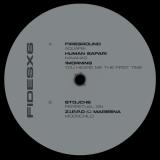
Fides Records proudly presents the second last chapter of its 10-year anniversary series: X6. Here, the narrative pivots toward groove and immersion between Detroit-rooted sounds, jazz-infused flair, glitchy futurism, and deep dub meditation. This chapter highlight the label’s love for movement, texture, and long-form atmosphere.
Side A opens with Fireground’s “Aquaria”, a sexy, bouncing techno cut carrying old-school Detroit spirit and harmonic fluidity: funky yet refined, shaped by the Italian duo’s live-set mentality, live improvisation and vintage synthesisers. Human Safari’s “Havanas” follows, merging jazz and techno through a standout trumpet solo and lush groove work, carving out a vibrant, genre-crossing mood that feels both bold and effortless. Closing the side, 1morning’s “You Heard Me The First Time” delivers early-2000s techno DNA with a modern edge: glitchy rhythms, unpredictable sequencing, and a playful sense of tension-and-release.
Flipping to Side B, Macedonian master Stojche leads with “Perpetual Sin”, a dub techno lesson in restraint: evolving through spacious layering and emotional subtlety until it fully envelops the room. The record closes with Z.I.P.P.O & Mareena’s “Moonchild”, a tribal, dub-infused deep techno immersion where percussive drive meets meditative energy—an internal journey built for big systems and late hours.
Building momentum around his moody, alchemical breakthroughs in the techno-bass laboratory, Buckley lands on Sneaker Social Club with a punchy quadruplex that marks him out as an innovative talent in the next generation of low end producers.
Manchester-based Elias Buckley first came to light with a lathe-cut drop on ec2a, followed up over the past two years with outings on Well Street, Dimeshift and S.P.E.C. That sets the tone for exploratory zone Buckley is operating in, and he maintains a forward-thinking slant to his physical, dynamic club weapons on this latest EP.
'City Dweller' rests on a creeping mid tempo 4/4 pulse, all the better to carry slithering layers of sound design that slide off the undulating sub bass throb. Minimalism is the order of the day here, but his approach is shot through with gully zaps and rude swagger that makes this a positively UK- centric affair. 'Carl's Floorboard' makes a sizeable swerve towards brutalist grime mutation, letting the space in the mix swallow you whole around the dislocated bass womps and whipcrack snares.
On the B side, 'Gawy' hits the mark squarely between techno propulsion and soundsystem swagger, plying slippery sound design to the bass blasts and working an offbeat groove designed for maximum lock-in. Making sure there are no doubts about his range, Buckley saves one of the deadliest joints on the record for the closer, whipping up a wide-as-you-like UKG bounce on 'M.O.B.S.O.T.' while maintaining the lean and mean sound that binds the EPs any angles together.
‘Sustained’ is the new album by Jungstötter, the solo project of Berlin-based songwriter and musician Fabian Altstötter. With sparse, poignant arrangements of piano, strings, electronics, and noise, Jungstötter composes a tender, raw, and poetic song cycle of exquisite romanticism, featuring a cast of close collaborators including the Berlin-based artist Ronja (Roomer). Evoking the fervent vocal versatility of ANOHNI and Scott Walker, Jungstötter adopts the human breath as a central metaphor in a miraculously moving opus of intimacy, vulnerability, and communion.
Across ten tracks of experimental pop songcraft, notes oscillate, soft strings linger, piano ambles, noise billows up and sears back into itself – and all of it is bound by a distinct voice that roams from a remote, warped undertone to an immediate melodic intensity.
Distorting the soft edges of vocal melody with rattling tactile noise, ‘Sustained’ is a mercurial portrait of layered lyric and contracting sound. The third album by Jungstötter, ‘Sustained’ bends away from the more dense, knotted sounds of his last two solo albums, ‘Love Is’ (2019) and ‘One Star’ (2023), toward a particular rawness that reestablishes the strength of poetics, of vocal sound, and the softness of song when reduced, restrained, redirected.
Aspetuck has been steadily carving out a name for himself through releases on Never Late and Oslated, garnering a respected following for his DJ mixes and festival performances. Aspetuck’s latest record, Immersion, was sequenced and curated from dozens of ideas spanning a transformative few years in Griff’s life. The album is less a snapshot in time and more of a memory bank - flashes of fatherhood, loss, modular rabbit holes, late-night studio sessions, and long walks by the Hudson River with his daughter.
The emotional undertow of the album is immediate. Opener Hit Me With Your Pet Shark is one of the earliest compositions in the collection, created just months after the loss of Griff’s brother and during the sleepless swirl of new parenthood. Built around a single sound from Spectrasonics Omnisphere, found while rediscovering his brother’s studio gear, the track sets the tone: restrained yet searching, personal without becoming precious.
From there, The Printing Press captures the raw energy of a live jam in Griff’s upstate New York basement, running through a 1980s Tascam mixer like a lo-fi assembly line of synths, pads, and drum machines. REI, named after a spontaneous family mission to find a pink water bottle, encapsulates his knack for imprinting daily minutiae into sound. And title track Immersion- once known simply as Tuesday 303 Jam- emerges from a dinner break and a blender, distilling modular sketches and distorted drums into a powerful, slow-motion march.
Under, Under The Tree hits hardest. Built around a grainy iPhone voice memo of Griff’s daughter singing by the Hudson. And closing the album is Bobik, a collaborative studio session with Moon Patrol channeling the playful chaos of a close friendship and modular exploration. Named after a joke about their golden retriever and filled with alien textures from Griff’s beloved EMU XL7 gifted years ago by his late brother, it’s a fitting send-off to an album that straddles celebration and mourning with grace.
The artwork comes courtesy of Peter Skwiot Smith, whose textured analog/digital aesthetic resonated immediately with Griff’s original vision. Peter’s treatment draws on Griff’s personal photography and leans into motion, blur, and the layered nature of memory, echoing the album's sonic tone without overexplaining it.
Mastered by Sven Weisemann, Immersion is available on blue smoke colored 12”
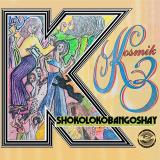
Shokolokobangoshay was a collaboration between three members of Pogo Ltd. The three of us felt we were crazier than the other members of Pogo Ltd. and decided to work together on the Kosmik 3 album. Robo was worked in the graphics department of NTA Benin. He was an amazing artist, a crazy guy, he was extremely creative, he invented a musical notation language that only he understood. He was amazing, he took me to his place in Asaba and showed me his compositions, he must have had over 500 songs.
Emman Osagie was my floor manager when I was a producer at NTA (Nigerian Television Authority) Benin. We were all on the same wavelength. He was a member of Severe 7, and heavily involved in the Bini music scene working with Ehi Duncan and others. we really enjoyed making Shokolobangoshay, it’s a river of influences, a bit of this, a bit of that, but it is really our thing. The musical ideas we were playing with at the time.
Emmanuel Ogosi. 3rd March 2026.
This record is why I went into reissuing records with Odion. The feeling to sharing records that went under the radar when they were initially released, with a greater audience. Shokolokobangoshay is uniquely Nigerian in a very personal way, it makes references to the societal and political ills that plague us in Africa. It’s title, Shokolokobangoshay, references a play song, kids in Lagos and western Nigerian sing when they play in the streets. Most Nigerians can relate. The music references afro beat, country music, reggae without falling firmly on any side. This is one for the ages. Amazing production, I personally love this record for the free spirit, creativity and excellent song selection. We had to licence it, we just had to. Limited repress only 500 copies.
It is also excellently produced. Big up to all involved, from the Vinyl Rip (James Law, Fidgit Studio, South Africa), to the master production by DJ Simbad (Cape Town, SA) and the cover restoration by Angelo Mitchell (SA). I am so happy to be doing it with the boys in the motherland. Peace and appreciation to all. Special dedication to Mother Tongue for creating a great pressing. Please file under Afro.
Blessings,
Francesco Passantino – Ground EP
With Ground EP, Francesco Passantino returns to essentials.
Five tracks that move through time and matter with natural ease. Ghianda and Terreno K resurface as defining points in his catalog, still carrying their original weight. Orlo reaches back to the late ’90s, channeling a raw, direct tension that reflects an attitude rather than an era.
Ground and Tuffata complete the release with minimal, physical structures: solid kick, subtle internal motion, a restrained palette shaped by live execution. The energy unfolds through repetition and breathes within small variations.
An EP designed for the club, grounded in rhythm and intention.
Rooted. Essential. Direct.
Hiriketiya is a small, enclosed bay on Sri Lanka's southern coast, where jungle leans toward the water and the days unfold without urgency.
Passing through in early 2025 on the way to Europe, Alex Albrecht spent a week here at MOND's artist residency, allowing the rhythms of the place to quietly shape the work that followed.
During the residency, Albrecht recorded and exchanged ideas with Sri Lankan musicians Dhyan Basho on sitar, Dinelka Liyanage on electronics, Uvindu Perera on double bass and Pasindu Herath on saxophone.
Their performances appear throughout the album, sampled and re-contextualised, influencing its melodic language, pacing and emotional tone.
Much of the music was shaped directly by its surroundings. Field recordings were gathered across Hiriketiya, and instruments were played wherever it felt necessary. This included rocks beside the ocean where waves set irregular rhythms, tall grasslands where wind and insects blend into the recordings, and open decks overlooking the sea. 'Round Table' captures this approach most clearly. Recorded while sitting together overlooking the ocean, a large steel table in front of the group gradually became part of the composition, used instinctively as an unplanned percussive element.
Not everything could be captured. Some of the most meaningful moments occurred before recording was possible. Those sounds exist only in memory, and the album is shaped in part by an attempt to hold onto their feelings.
Rather than documenting the residency in a linear way, the album gathers fragments, recordings, electronic sketches and field sounds, assembling them into a continuous listening experience shaped by place and recollection. MOND owners Jess and Renato foster an environment that supports artists without directing them, creating space for focus, trust and connection.
The result is a record shaped by Hiriketiya's enclosed bay, dense vegetation, heat and night air. Music formed through listening, restraint, missed recordings and the sensation of being temporarily held by a place.
Label Boss TSVI is back with a brand new release on Nervous Horizon: Dance Tripping EP! Inspired by his early years in London, where he spent countless nights at minimal and tech house raves, the EP draws elements from these styles through stripped back productions and groove driven basslines. Moving away from TSVI’s signature percussion focused sound, the record prioritises a more sound design approach, exploring texture, movement and club functionality.
The EP opens with Music is Moving, a high energy festival weapon built around a groovy bassline and a UK garage leaning swing. A sharp, restless lead drives the track forward before exploding into a euphoric climax of phased and distorted sawtooth waves. Next comes The Wasp Track, combining pitched down leads with a rolling tech house groove, built for peak time tension and release. The title track Dance Tripping sees TSVI at his most stripped back, featuring loopy analog textures and hypnotic rhythmic elements that focus on repetition. The last two tracks Kataklisma and Turbo Motion create a literal sonic apocalypse by pounding the club with heavy reeses and mean beats.
TSVI Dance Tripping EP is the ultimate club weapon for 2026!
Sounds of Sirius Music presents SOSNZ012 – Vedanā – Convergence / Polarity
All forces move in pairs. Light and shadow. Push and pull. Signal and silence.
Frequencies bend toward each other, magnetic fields collapsing into a single point of awareness. Tension becomes motion. Duality becomes flow.
New Zealand-based artist Vedanā leads the A-side with two original cuts, channeling a deep, hypnotic energy that moves between restraint and release. Each track reveals a different side of the same spectrum, balancing introspection with forward momentum.
On the B-side, label founder Herman Saiz delivers a reinterpretation rooted in his signature groove, bridging Chilean and New Zealand influences with a refined, driving touch. Romanian producer RQZ adds his own perspective, reshaping the original into a textured and immersive journey.
Convergence / Polarity captures the space where opposites meet — not as contradictions, but as essential counterparts in constant motion.
Another massive offering from the one and only Mick Harris, continuing on in his Culvert Dubs Sessions experimentations with a new 2xlp. Once again Mick delves deep into the shadow realm of slow beat, psychedelic heavily textured, grinding dub techno. Eight tracks of absolute industrialized, delay swept, full pressure, sound system shaking murk ridden, dark water dubs. Top form work when Mick lets loose in this wild style, just the right balance of beauty, restraint and brutality. Total heavy weight music!