BLIS701 by Chain Selector is a carefully honed two-track release from BLACKINSTOCK Records, a division of MixCult Records, showcasing Chain Selector’s mastery in blending emotional depth with atmospheric finesse. Designed for those who appreciate subtlety and sonic craft, this release moves between introspective melodies and immersive dub textures with remarkable control.
On Side A, School Days is a tender and timeless composition—melodic, cinematic, and evocative. It gently stirs memory and emotion, creating a world where every sound breathes with intent. On the flip, Autumn Guide opens a more shadowed dimension. Built on layered tension and low-end pulses, it introduces a restrained, dub-heavy soundscape ideal for setting the tone of a deeper set.
With BLIS701, Chain Selector delivers a refined double-sided vinyl, one to reflect, one to explore. Both tracks stand as elegant tools for shaping atmosphere with poise and intention.
The Armenian electronic underground has been quietly brewing something visceral. After years navigating the labyrinth of electronic production from his Yerevan studio, Dave N.A. strips away the excess to reveal six raw, uncompromising cuts that pulse with quiet intensity. Not the manufactured urgency of algorithmic dance floors, but the honest tension of someone who’s spent years refining his craft while the scene evolved around him.
Following his debut ‘Altura EP’ on no•id, where collaborations with freq444 showcased his ability to merge Armenia’s electronic scene with Brussels’ underground pulse, Dave N.A. returns with ‘Echoes EP’ after the label’s necessary creative hibernation. This isn’t about comebacks or grand statements. It’s about persistence. About the kind of restless creativity that emerges when you’ve been grinding in relative obscurity, releasing on labels like Uppers and Downers, Typeless, and Elicit Records, slowly building a sound that refuses easy categorization.
The EP opens hard and unexpectedly with “BLINK,” delivering a throat-cutting and all-consuming bassline. “ECHOES” builds around atmospheric sounds and percussive elements, driven by a straightforward yet effective drum sequence. “SHADO” ventures into darker and faster territory with sparse drum programming and heavy sub-bass emphasis. Both “RUSH” and “ORB” unleash torrents of unrelenting breaks, each percussive hit landing with surgical precision as sub-bass currents pull everything forward into hypnotic repetition. “HUNTER” closes the journey, stalking into frame with predatory low-end and razor-sharp hi-hats slicing through dense atmospheric fog.
The no•id ship continues to chart its course through Brussels’ underground, prioritizing artists who value craft over hype. With Dave N.A.’s return, the label reinforces its commitment to electronic music that functions on multiple levels: cerebral yet visceral, local yet universal.
Eclection’s lack of commercial success remains a mystery to this day. This selection of BBC Top Gear recordings demonstrates their song-writing strength and musical prowess. Only three tracks appeared on the band’s sole studio LP: the remaining nine songs suggest what a second LP might have sounded like. Highly recommended to fans of Fairport Convention, with whom Eclection share some musical DNA.
Comes with full recording credits and extensive sleeve notes.
Recording Quality Very Good/Excellent throughout.
At the end of the project’s 20th anniversary celebrations, ROME tolls in the next era of the band with a fresh and visionary album: ‘The Tower’. ROME’s new and ever more mature sound is informed by a radically minimalist folk approach, with nonetheless charmingly lush arrangements. ‘The Tower’ is an introspective and enigmatic work at whose centre stands nothing less than ROME’s raison d’etre: The Great Work and the sacrifices both necessary and essential on the demanding path to light. As an unreachable bulwark against the general decline of every value in life, the tower would have been erected long ago to defend the coast.
It would have been raised on a rocky platform resting on the sea floor. It would have been joined to the continent by a thin tongue of sand. It would have offered a heroic, magical point of view. A place for our claim to know and point out vaster horizons. It would have stood firm on the ramparts. This isolated tower would not have been just a refuge for more or less mystic escape, but also a post of resistance and combat.
The album that launched a thousand heavy-hearted singer-songwriters on their not-so-merry way, Sweet Baby James was arguably the first shot in what became the soft revolution of the early '70s. Taylor struck commercial gold with Sweet Baby James by augmenting his acoustic guitar and soothing vocals with laid-back accompaniment and penning a slew of songs that drew upon folk, soul, and rock influences. Musically mellow and lyrically restive, it put Taylor in the Top 10 and set the tone for a popular school of '70s sound.
'Nicolò's Static forays deep into liminal space, where signal decays, rhythm stutters and sub-pressure thrums.
'The four-track EP is the inaugural transmission from Nicolò’s own Exploring Records. Melancholy bleeds through the frequencies, yet the pulse remains restless, insectoid, off- kilter.
'Here we pace darkened corridors of flickering projections and half-remembered futures, setting the direction for what’s next...'
Carly Simon’s No. 1 smash “You’re So Vain” lingers as one of the most clever and famous songs ever recorded. The subject of mass speculation ever since its release, soon after which it occupied the top spot on multiple Billboard charts for weeks, the anthem kept a captive public guessing at the identity of its smug subject for decades. The question surrounding the protagonist’s identity remained perhaps the only mystery on the otherwise sexually open and autobiographically daring No Secrets, Simon’s commercial breakthrough and ‘70s singer-songwriter staple.
Sourced from the original master tapes, pressed at Fidelity Record Pressing in California, strictly limited to 3,000 numbered copies, and housed in a Stoughton gatefold jacket, Mobile Fidelity’s 180g 45RPM 2LP set affords the platinum-certified 1972 effort the finest sonic treatment it’s received on vinyl. Helmed by Richard Perry and recorded at London’s Trident Studios — where Beatles, David Bowie, and Elton John captured landmark LPs — No Secrets touts exceptional production qualities highlighted by this restorative reissue.
Audiophiles and record collectors, take note: This is the first time No Secrets has been available on 45RPM. The wider grooves and dead-quiet surfaces pay instant dividends. Simple, elegant, and disarming, songs seemingly float amid wide, deep soundstages. Simon’s voice takes on a confident, assertive tenor that emerges with accurate imaging, balanced tonality, and palpable presence. String arrangements and backing vocals come through with similar realism.
Enhanced by an all-star cast — Simon’s then-husband James Taylor, Paul and Linda McCartney, Mick Jagger, Lowell George, Klaus Voorman, Bobby Keys, Jim Keltner, Nicky Hopkins, and Bonnie Bramlett are among the renowned musicians who lend a hand — No Secrets advances Simon’s themes of personal introspectiveness, no-holds-barred reflectiveness, and feminist-inspired boldness. She makes every moment of No Secrets worth savoring. Simon invests her all in the songs, handling beautiful ballads, sassy folk-rock numbers, and bluesy fare with calm, composure, and candor.
While acknowledging her own regrets (“You’re So Vain”) and loss (“The Carter Family”), Simon champions the highs (“The Right Thing to Do”) and pains (“His Friends Are More Than Fond of Robin”) of love in a sincere manner indicative of her maturity as both an artist and singer. The New York native distinguishes “When You Close Your Eyes” with deep-rooted spirituality, recalls childhood joys via charming sentimentality on “It Was So Easy,” and and takes ownership of her persona on a cover of Taylor’s “Night Owl.”
“We have no secrets
/We tell each other everything,” Simon sings at the record’s midpoint, encapsulating both the themes and bravura of an effort that was nominated for four Grammy Awards and saw her write or co-write every song but one. Combined with Perry’s savvy instrumental arrangements, her self-assured performances and forthright lyrics grant No Secrets an edginess and relevance immune to the ravages of time.
Carly Simon’s quietly intense sophomore album comes across like an assertive notice nailed to a telephone pole for all to see. Bold, personal, and autobiographical, Anticipation announces the arrival of an artist who won’t back down. While Simon stands her ground on her eponymous debut, she elevates her passion and persona to heightened levels throughout this gold-certified record, dealing in private matters related to love, relationships, and desire. At times, Simon is nothing short of primal. She reflects on the difficulties of retaining your own identity while also giving yourself to a partner. Simon’s connection to her folk roots would never be stronger.
Sourced from the original master tapes, strictly limited to 3,000 numbered copies, pressed at Fidelity Record Pressing in California, and housed in a Stoughton gatefold jacket, Mobile Fidelity’s 180g 45RPM 2LP set of Anticipation lays bare the rich tapestries afforded by the spare blend of soft guitars, mellow orchestration, and dreamy melodies. Audiophiles and record collectors, take note: This is the first time Anticipation has been available on 45RPM. The wider grooves and dead-quiet surfaces prove extremely rewarding.
The rhythmic framework anchored by session pro Andy Newmark’s drumming sounds dynamic and balanced, with songs benefiting from a focused midrange and taut low-end. Simon’s attachment to and investment in each lyric is made evident by way of the intimate, hushed atmospherics and expansive responsiveness. And just as Simon’s vocals feel more transparent and direct, so, too, do the supporting choral arrangements.
Released before the singer-songwriter movement reached full bloom, Anticipation remains remarkable for the high-quality songwriting and Simon’s gutsy stance. The album cover — depicting the vocalist holding the gates at Queen Mary’s Garden in Regent’s Park and seemingly defying anyone to take her on — serves as a metaphor for the content within.
Known for having relationships with high-profile partners, Simon was heavily involved with Cat Stevens leading up to the recording of Anticipation. She draws from her experiences to craft tunes that resonate because of their honesty, realism, and strength. Few of those moments are better known than the Top 20 title track, which Simon composed in just 15 minutes as she waited for Stevens to pick her up for a date. Imbued with the nervousness, tension, and excitement that accompany the moments when a romance could go either way, the Grammy-nominated song presages the feminist-minded vulnerability and burning longing that informs a majority of the record.
On the soulful “Legend in Your Own Time,” also inspired by Stevens, Simon harnesses yearning as a conduit to feel-good paradise. Deemed by Rolling Stone an “absolute clincher, an awesome description of the psychic ravages of gone-nuts, know-nothing love,” her cover of Kris Kristofferson’s “I’ve Got to Have You” moans with no-holds-barred desire and breathtaking sensuality.
For all the wanting Simon pursues on Anticipation, her way of staying in control — vocally and personally — make the record a courageous statement of contemporary femininity. For further evidence, look to the bossa nova of “Summer’s Coming Around Again,” somber “Share the End,” soothing “Three Days,” and sincere “Julie Through the Glass,” a tribute to her young niece.
Simon would achieve international fame with her next album, No Secrets. Yet as this definitive reissue shows, Anticipation suggests the rest of the world was just a little late catching up to her.
Tokyo's Realrockdesign collective marks a full 30 years of cross-disciplinary creativity with the first of a planned trilogy. The A-side hands over a crown jewel from West Coast legend DJ Garth's Grayhound catalogue in 'Twenty Minutes Of Disco Glory', which gets remixed by DJ Harvey with a slow, deep, dark and come-to-me groove with a fizzy motif lingering like a trapped bee. The flip turns to German veteran Nectar, who is enjoying some deserved time back in the spotlight and shows why here: 'Fairy Trails' is a deliciously psychedelic descent into the underworld that perfectly befits its title. 'What Tha?' is paranoid and unsure with a writhing bassline, detuned synths bringing a freaky edge and a dubby, shuffling groove that is as inviting as the rest of the track is wonderfully weird.
Released in Nottingham at the turn of the millennium, when the city was at the heart of an exciting underground scene, Lounging sits between trip-hop's slowed breaks and deep house's low-end drive. Drum programming is loose but controlled, with swung rhythms underpinning warm basslines and restrained chord patterns. Tracks alternate between vocal cuts featuring Gea Russell and Isi Samuel, and instrumental pieces built on short sampled phrases and repeating hooks. It's a perfect record for either pre-club or post-rave, especially on warmer days, and this anniversary edition has been remastered by Shawn Joseph. A welcome return for a low key classic.
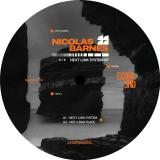
After years in the digital space, ECOUL SND finally steps onto vinyl. Next Link System EP is ECOUL SND’s first 12” and the first solo record by founder Nicolas Barnes — a long-awaited step for the label and a focused statement of its sound.
Four tracks of minimal deep and deep tech, built around low frequencies, restrained grooves and spacious delays. The music moves patiently, leaving room for each element to settle and connect. The artwork follows the same sense of space and distance: cliff, water, and a narrow passage between them.
"Next Link System" sets the tone, "Not A Bad Place" opens things up, "Get My Soul" moves deeper into the dark, and "It Was" leaves a lingering trace after the final track.
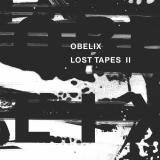
Obelix is the brainchild of UK producers Richard George and Corine Trembath, whose timeless take on house and techno has long been cherished by underground heads and vinyl collectors alike.
With releases on Pacific Records, Mosaic and Stickman, their music occupies a distinctive space between early house and techno, raw, hypnotic and deeply musical, built around rolling 909 rhythms, expertly programmed 303 acid lines and the unmistakable character of analogue hardware.
Following an extensive dive into their DAT archives, Pariter presents The Lost Tapes, a collection of previously unreleased recordings made in the mid-1990s. Carefully restored and curated by Yossi Amoyal, the material retains all the rawness, warmth and analogue
character of the original tapes, offering a rare glimpse into a particularly fertile period of UK underground dance music.
The two part release is completed by Whatever, their sought after classic originally released on Offshoot, a timeless slice that stands alongside the unreleased recordings as an essential piece of the Obelix story.
The Lost Tapes documents a sound that has lost none of its power, raw, hypnotic and unmistakably timeless.
Obelix is the brainchild of UK producers Richard George and Corine Trembath, whose timeless take on house and techno has long been cherished by underground heads and vinyl collectors alike.
With releases on Pacific Records, Mosaic and Stickman, their music occupies a distinctive space between early house and techno, raw, hypnotic and deeply musical, built around rolling 909 rhythms, expertly programmed 303 acid lines and the unmistakable character of analogue hardware.
Following an extensive dive into their DAT archives, Pariter presents The Lost Tapes, a collection of previously unreleased recordings made in the mid-1990s. Carefully restored and curated by Yossi Amoyal, the material retains all the rawness, warmth and analogue
character of the original tapes, offering a rare glimpse into a particularly fertile period of UK underground dance music.
The two part release is completed by Whatever, their sought after classic originally released on Offshoot, a timeless slice that stands alongside the unreleased recordings as an essential piece of the Obelix story.
The Lost Tapes documents a sound that has lost none of its power, raw, hypnotic and unmistakably timeless.
Straight from Girona, Roto lands on SPHERART Records with Sardaukar, five cuts of stripped-back electro. Dry drums, heavy basslines and raw machine funk run across the record, from broken grooves to colder, more introspective moments. Direct, restless and full of character, Sardauka carries Roto’s own language from start to finish.
Pirka returns with Messages, a four-track vinyl EP from Sibiu master craftsman Mihai Popoviciu, a producer whose name has long been synonymous with architectural restraint and functional minimalism.
Rather than chasing transient club trends, Popoviciu delivers a masterclass in texture, micro-groove, and spatial awareness. Messages captures an artist at his most refined, balancing analog warmth with clinical, late-night precision.
The first record in Crystal Mud's new CRYM series brings four dub techno producers together across five tracks — reaching from the Australian coast to Spokane, and out of the MixCult heartland.
Federsen opens the A-side with "Rouge Dub," a name long associated with vintage tape delays and Silent Season dub, then hands over to Klordop, whose "Silver Cord" comes from one of the most restless catalogues in the MixCult orbit. The B-side belongs mostly to Noosa Sound System, the Queensland producer who takes both his name and his unhurried dub from the coast; he opens with "Trope" and closes with the title track. Between them sits Gianni Cerri of Spokane, Washington, whose "Nine Mile Fall" shares its name with the falls just outside his hometown – a small, local marker pressed onto an international record.
Crystal Mud is a division of MixCult Records
Weight meets wriggle on DJ Life's five-tracker for Haŵs, and oh boy is it hefty. Gritty basslines get right under the skin, swinging drums sit deep in the pocket, and skippy FX keep things light on their feet. A murky, moody streak runs through the record, with an electric tension giving even the loosest grooves a touch of menace. Fat low end and a restless edge, with enough bite to leave a mark. Serious tackle with a wicked sense of swing, primed for the dancefloor. Use at your own peril, you’ve been warned!
Introducing the first reissue project on Rocky Hill with a compilation of Jozeph Sefian's hard to find tracks from the late 1970s into the early 1980s. A culmination of Armenian funk, soul, pop, and jazz. We're calling it "Melodies". Jozeph Sefian emerged as a distinctive voice in Armenian music, blending heritage with the evolving sounds of his generation. Beginning on drums and later embracing his voice, he crafted a versatile style rooted in Armenian, pop, jazz, and soul. Traditional melodies and emotional storytelling met familiar harmonies, expressive phrasing, and the rhythmic energy of funk, creating a sound that was both deeply Armenian and contemporary. During his years in Iran, Jozeph recorded with accomplished musicians and operated a music shop serving the Armenian musical community. Despite restrictions following the 1979 Iranian Revolution, he continued performing for Armenian audiences. His career took him across the Middle East, the United States, the UK, and Armenia, while writing his tracks in Iran and recording in LA. In 1977, Parseghian Records labeled him, "one of the most distinctive voices in Armenian music." We agree with Parseghian, as Jozeph's recordings continue to bridge generations, preserving Armenian culture through a uniquely soulful musical voice.
Paul Guido and Laron McNally, AKA Locomotive & Swan, conjured up ‘Way Out Here…’ in the living room of a tiny apartment in San Francisco in 2003. The duo were part of a bustling West Coast scene inspired by the pioneers that came before them, pushing the music into a more experimental direction. Their sound was a hybrid of looping tech-house with a freshly dubbed-out soul, soft-edged pumpers made with long sessions on the dance floor in mind.
The four versions of ‘Way Out Here…’ contain the same tripped-out samples and driving percussion, but with their own distinct attitude. The ‘Breakbeat Mix’ provides the most bone-rattling bassline of all time, balanced by the more restrained and stripped back ‘Bonus Breaks’. The ‘House Mix’ subtly plays with pressure and release, while ‘Posse Up’ goes full throttle lift-off.
With this four tracker all bases are covered - each track is suited to different moments across a night’s arc from warm up, to peak time, to after hours. This EP is a testament to the grooves and groovers of the time, reflecting an era of music that informed much of what we cherish today. The shimmy is strong with this one, and we are happy to give it another lap.
Devo Marries Gritty Guitars with Expansive Keyboard Canvasses on Duty Now for the Future:
Transitional Album Furthers the Band’s Satirical Stance, Includes Cover of “Secret Agent Man”
Hear the 1979 Record in Audiophile-Grade Sound and at 45RPM for the First Time:
Mobile Fidelity’s Numbered-Edition 180g 45RPM 2LP Set
Benefits from Enhanced Definition and Presence
1/4” / 15 IPS Dolby A analogue master to DSD 256 to analogue console to lathe
“Pop music needs a big enema.” Devo created Duty Now for the Future with that mission statement, relayed to the press by co-founding bassist/vocalist Gerald Casale, in mind. Though unfairly pegged by some as an example of the common sophomore slump, the record spurred the group’s interest in electronic instrumentation, extended its penchant for biting social satire, and contained another transformative cover song in the form of “Secret Agent Man.” Above all, the 1979 work proved the Ohio pranksters were anything but a joke even if they would have to wait one more year until for their mainstream breakthrough.
Sourced from the original master tapes, mastered by engineer Krieg Wunderlich, pressed at Fidelity Record Pressing in California, and housed in a Stoughton gatefold jacket, Mobile Fidelity's numbered-edition 180g 45RPM 2LP set presents Duty Now for the Future in audiophile-grade sound. Benefitting from the extra groove space on this first-ever 45RPM version, it plays with enhanced definition, deep-black backgrounds, and ultra-quiet surfaces.
Though certain band members later expressed regret with some of his decisions, the merits of Ken Scott’s production emerge like never before. A lurking edginess serves as a signpost in Devo’s progression before it fully embraced keyboards as a primary tool. Guitars possess punch and grit and, along with the crisp arrangements, are sharpened with an ear toward accuracy and vibrancy. It all helps give Duty Now for the Future a direct immediacy that answers the complaints of listeners who felt the affair too processed or sterilized.
Notably, a majority of the material here stems from the same grab bag of songs Devo banked before Warner Bros. signed it to a deal. The album marks a capstone to Phase One of a career that for all intents and purposes began in 1973. And just like many of the group’s performances of that era, Duty Now for the Future remains just as famous for the critical disdain it inspired as the music itself. A vicious review in Rolling Stone — the very publication that a few decades later would trumpet the band as one of the most important of its age — ended with the writer offering to send readers shards of the LP he planned on smashing to bits.
Perhaps he just needed to experience this new-wave effort with the restored sound that makes everything now feel so explosive and urgent. Whatever the case, the songs hold up and, amid a contemporary period which gives increasing license to artificial intelligence and behemoth conglomerates, seem more apt than ever before.
Consider “Blockhead,” which skewers the predictable appearances and numb-to-the-world actions of a rule follower. Or the similarly themed “Clockout,” an uptempo ditty whose thumbing-its-nose bravado and sardonic lyrics send up corporate culture with an irresistible smirk. As for the wiry, hard-hitting urgency of “Wiggly World” and Mark Mothersbaugh’s loud declaration that “They say the fittest shall survive/Yet the unfit may live”: Evidence these art-school rabble-rousers still had some punk fury to flush out of their system. And the sincere allure of the charged power pop and wishful circumstances of “The Day My Baby Gave Me a Surprize” cannot be denied.
To point to an interesting bit of history that makes Duty Now for the Future all the more intriguing, particularly for the most committed Spuds, more than half its tracks were selected for Greatest Misses — a 1990 anthology that celebrates lesser-known cuts and functions as a rejoinder to a hits compilation from the same year. (The only track from the 1979 album to make the “hits” disc: “Smart Patrol/Mr. DNA.”)
Indeed, tunes like the riff-driven albeit controversial “Pink Pussycat,” atmospherically twitching “S.I.B. (Swelling Itching Brain),” and ceremonial instrumental “Devo Corporate Anthem” may lack the catchy appeal and all-together coherence of what follows on the group’s third and most commercially successful effort, Freedom of Choice. Yet in order to get there, to de-evolve if you will, the band needed the smorgasbord that is Duty Now for the Future.
Move in Stereo: The Cars’ Eponymous Debut Album Functions as a Greatest-Hits Set with Classics Such as "You're All I've Got Tonight," "Good Times Roll," and "Just What I Needed"
Experience the Six-Times-Platinum Record in Definitive Sound on
Mobile Fidelity’s UltraDisc One-Step 180g 45RPM 2LP Box Set:
Strictly Limited to 4,000 Numbered Copies,
It Plays with Reference Definition and Presence
1/4” / 15 IPS analogue master to DSD 256 to analogue console to lathe.
Among the most critically and commercially successful debuts in history, the Cars' eponymous album doubles as a greatest-hits collection. Not one song on it is widely unrecognized or unknown. Consider the list: "You're All I've Got Tonight." "Good Times Roll." "Just What I Needed." "Moving in Stereo." "My Best Friend's Girl." "Don't Cha Stop." “Bye Bye Love.” Just call The Cars the best new-wave rock album ever made. And a natural candidate for preservation on a Mobile Fidelity UltraDisc One-Step pressing.
Sourced from the original analog tapes, pressed at Fidelity Record Pressing in California, mastered by engineer Krieg Wunderlich, and strictly limited to 4,000 numbered copies, MoFi’s UD1S 180g 45RPM 2LP box set presents the six-time platinum record in the most vivid, wide-spanning, three-dimensional sound it has enjoyed on vinyl. Compared to the label’s outstanding and out-of-print 180g 33RPM version, this collectible edition features richer textures, broader openness, greater presence, and bigger dynamics.
Benefitting from the extra groove space on 45RPM by playing with enhanced definition, deep-black backgrounds, and ultra-quiet surfaces, this reissue portrays the band’s oscillating rhythms, futuristic keyboard passages, and panned images with stunning realism. Songs take on an absolutely surreal quality. The Cars and producer Roy Thomas Baker manipulate arrangements at will to mesmerize listeners' senses. The concept of "moving in stereo” has likely never been truer.
The industry-leading packaging of the UD1S set gives fans another reason to gravitate towards the 1978 album. A deluxe slipcase, two foil-stamped jackets, faithful-to-the-original graphics, and MoFi inner sleeves make for a premium tactile experience. It invites you to immerse yourself in everything about the record, including the now-familiar cover art depicting Nataliya Medvedeva behind the wheel. Enhanced by her glistening ruby-red lips, her face flashes an expression caught between surprise, ecstasy, and disbelief — an apropos way of responding to The Cars whether you’re hearing it for the first or 1,115th time.
Introduced in 2024 into the National Recording Registry for its significance, and ranked the 353rd Greatest Album of All Time by Rolling Stone, The Cars explodes with emotion, energy, and hooks. Its songs unite then-disparate styles: bubblegum melodies, art-rock angularity, progressive structuralism, terse minimalism, and power-pop sheen. The stylish arrangements also benefit from a laidback cool and understated irony that remain uncommon in the world of contemporary mainstream music.
Equally rare is the deep chemistry the members shared before they entered London’s AIR Studios and knocked out the record in less than a month. Benjamin Orr and Ric Ocasek began their first band together in the early ‘70s. A subsequent group with future Cars keyboardist Greg Hawke preceded Orr and Ocasek bonding further by temporarily performing as a duo. One final pre-Cars ensemble, Cap’n Swing, brought guitarist Elliot Easton into the fold. A decision by Ocasek to take the band in a rock direction, a crucial lineup shuffle, and a name change begat the Cars so many listeners know and love.
Already a going concern in Boston, the quintet cut its teeth and woodshopped songs for nearly a year and a half before signing with Elektra and partnering with Baker. The Cars enjoyed success right out of the gate, hitting No. 18 on the Billboard Top 200 chart and netting a pair of Top 40 singles in the form of “Just What I Needed” and deceptively happy “My Best Friend’s Girl.” The sarcastic “Good Times Roll” climbed to No. 41, but soon enough, almost every track on The Cars became a radio staple — an honor far more meaningful than chart positions.
Obsessed with incorporating the latest technologies and sounds into its palette, the band spiced tunes with delightful and quirky accents — country-tinged guitar fills, echoing Syndrums, reggae splashes, hard-rock tones, robotic pulses. Orr's low, nuanced deliveries and Ocasek's cool, detached vocals lend shades of doubt and double meaning to the lyrics, which are further counterbalanced by synthesizer flourishes and electronic beats.
Accessible and eccentric, edgy and catchy: The results comprise a landmark whose characters come to vivid life with nuclear boots, dry-drip gloves, ribbon-festooned coiffures, suede-blue eyes, and rock ‘n’ roll hair. It's practically impossible to avoid humming along to every song, all enhanced by Baker's stellar production. Best known for his work with Queen, he ensured the record packed a punchy midrange, opened up with instrumental and vocal separation, and breathed with airy harmonies.
Indeed, from the timeless music to the sleek production and sonic restoration, The Cars on UD1S is just what you needed.
Presenting the eighth edition of the Bizarre Trax wax series and the second solo outing from bare-knuckle beatmaker B.Love. A Shape You Can Feel EP marks a subtle but deliberate evolution in the producer's sound. While the groove-led, funk-infused records that first put his name on the map are still woven into his DNA, this latest four-tracker strips things back in favour of a more understated, headsdown approach. Leaner drums, weightier low-end and hypnotic arrangements take centre stage, with each cut built for long blends and late-night dancefloors. Across four rolling club weapons, B.Love explores a deeper, more refined sonic palette without losing the character that's become synonymous with his productions. Chopped vocal fragments, unmistakable sample work and crisp, polished percussion remain at the core, but are now delivered with greater restraint, allowing space, tension and groove to do the heavy lifting. Designed for selectors who favour subtlety over spectacle, A Shape You Can Feel EP is a confident statement from an artist continuing to carve out his own lane; proof that sometimes the smallest shifts leave the biggest impression
The NE21 stands as one of the most mysterious and elusive projects within the contemporary post-punk and minimal wave landscape. With only two previous releases—through Domestica and She Lost Kontrol—the project has already secured an unquestionable place among the essential names of the genre. After five years of complete silence on the release front, “No Zone” marks their long- awaited return. The record expands the project’s unmistakable universe: cold synth lines, suspended atmospheres, hypnotic rhythms, and a haunting sense of isolation that moves between Trisomie 21 minimal wave austerity and Neon’s emotionally charged post-punk tension, aligned with other Italian wave visionaries such as DsorDNE while connecting with newer tendencies in electronic krautrock and proto-experimental music. Everything in “No Zone” feels deliberate and restrained, unfolding a ghostly elegance, balancing shadowy electronics with sharp melodic instinct. With “No Zone”, The NE21 not only return—they reaffirm their singular position as one of the most distinctive and enigmatic voices operating in the darker edges of underground electronic music. Presented in ONE-OFF truly limited edition of 300 copies lacquered pressed on 180 gr. high quality solid BLACK vinyl. All tracks have been specially remastered and mastered for vinyl by Daniel Hallhuber at Young and Cold Studios (Germany).
Key To World Peace is the third release by Prophetic Justice Ministry - aka Australian musician Sam Perry. An atmospheric, cinematic album that belies a striking pop songwriting nous at its core, its conductor Prophetic Justice Ministry is at the centre of a new wave of creative, rule-bending Melbourne artists. Romantic, smudged and hazy, Perry emerges from behind a wall of
half-light with a clutch of earworms and affecting emotions.
Recorded in home studios in Belgrade (Serbia), Christchurch (New Zealand) and Melbourne (Australia) over the course of three years, Key To World Peace offers a dichotomy in approach. Shifting on a dime between ambient, filmic washes of sound and more traditional song structures, the approach feels natural, casually acid-tipped and emotionally revealing. While Perry’s
distinctive keys and production melding with melody is evidenced in Melbourne group Who Cares?, as Prophetic Justice Ministry there’s a heightened sense of mystery and space being used.
Swirling in a psychedelic fog with dry iced chords falling down like melting stars, the album pulses with an ominous, distorted intro that sculpts air into blocks of sound before Psyop offers a glimpse through the gloom at the artist navigating through crushed, shoe-gazing chords, singing a consolation into an abandoned building. Side A’s more abstract tone veers from industrial tracks (T-A) to pastoral, impressionistic pieces (Trance) before album highlight Life’s A Party showcases the effortless, classic songwriting lurking in Prophetic Justice Ministry. Built on the tension between the upbeat lyrics and suppressed, rich delivery, the song lopes on an alluring loop with acoustic guitars and Perry’s voice walking a tightrope between irony and sincerity. The song blooms into a bright burst of light, almost inducing synesthesia in the listener and reminding a little of The Beta Band’s most outre and catchy moments.
Opening Side B, Naked Shine’s scintillating guitar is punctuated by a sub bass swell that offsets the yearning vocal performance. With palpable sensitivity the song is shepherded into short, atmospheric passages before Love Drum’s direct delivery: Perry’s vocal and guitar, dancing over a hint of distortion feels like Syd Barrett at his most casually brilliant. Carrying on the tradition of a single cover on every Prophetic Justice Ministry release, here Lana Del Rey’s Mariner’s Apartment Complex is given a stripped back but faithful treatment. With a sound that feels like a hushed, Chris Isaak classic it’s testament to Perry’s own compositions that the cover doesn’t outshine the rest of the album. Album closer and single Spirit House Party combines a classic chord progression with Perry’s double-tracked vocal into a murky but brilliantly catchy chorus. While nowhere near as lush in its production, there’s something in the atmosphere of Prophetic Justice Ministry’s vocal sitting in the mix just so that reminds us of The Electric Prunes’ Holy Are You-era work with David Axelrod.
Key To World Peace flits between displaying a spectrum of blurred emotional resonance in its instrumental passages and vulnerability in the shape of raw, melodic songwriting. With his first release outside of Australia and vinyl debut, Sam Perry’s Prophetic Justice Ministry is a beguiling dance in and out shadows.
Synaptic Cliffs proudly welcomes Annie Hall for her label debut. With the Future Sports EP, she once again expands the boundaries between machine funk, speculative sound design, and forward-thinking club music. Delivering her signature fusion of IDM, electro, fractured breakbeats and experimental electronics, she sculpts a metallic, high-definition vision that feels as though it has been transmitted directly from centuries ahead.
Future Sports imagines the sonic landscape of sport in the year 3024. In a future where society has paradoxically stripped itself back to the essentials, aesthetics have returned to the elegance and restraint of the 18th and 19th centuries. Amid this cultural shift, fencing has emerged as the defining global sport, elevated from historical discipline to mass obsession.
Throughout the EP, the sounds of these future arenas become musical raw material: the sharp clash of advanced foils, the resonant impact of engineered protective gear, the tension of ritualized competition, and fragments of other, unnamed sports from a distant age. Annie Hall transforms these imagined athletic acoustics into intricate rhythmic structures and futuristic melodies, allowing the machinery and choreography of competition to shape the record's sonic identity.
The result is a vivid soundtrack to a world yet to come - precise, kinetic, and unmistakably futuristic, where sport, technology and sound merge into a singular vision. Future Sports is both a speculative narrative and a club-ready statement from one of electronic music's most distinctive voices.
As a special bonus, the EP features an animated picture label. When played at 45 RPM and viewed under a stroboscopic light operating at 9 Hz, the artwork comes alive, revealing a hidden motion sequence. Blurring the boundaries between sound, design and optical illusion, this kinetic visual layer extends the EP's futuristic narrative into the physical realm, transforming the record itself into an artifact from the year 3024.
If you could ever stop thinking about... you know... for just a moment, you might hear something else...
Foehn & Jerome return to Perfumed Freedom for the label's first release of 2026. Three refined minimal house tracks, balancing groove, restraint and dancefloor energy. Understated, hypnotic and exactly where the duo's sound feels most at home.
A mix of post-Tropicalia Brazilian rock and some of the more soulful elements filtering through the country's music in the early 70s and one of the most enigmatic albums by this unique singer! Sergio's got a sound that's incredibly hard to describe at once sweet and melodic, but also kind of twisted, in an intimate singer/songwriter mode. The production of the album is compressed with a number of post-Beatles touches that make it sparkle like work by Caetano Veloso in the mid 70s, or some of the Peruvian rock by groups like We All Together and hearing the record gives us the same sort of excitement of new discovery as when we heard their best work. Titles include "Rulzito Seixas", Viajei De Trem, "Pobre Meu Pai", "Labirintos Negros", "Filme De Terror", and Lero E Leros E Boleros
If ever an album could transport you to the hazy sunshine and imagined halcyon paradise of Southern California in the mid-1980s, could capture the early evening warmth of hanging at an inclusive boogie jam as it approaches “magic hour” in Santa Ana or Anaheim, then it’s Vaughan Mason and Butch Dayo’s Feel My Love. A brilliantly produced deep slung, low rider funk classic originally released on Salsoul in 1983. It’s a masterpiece of “funk love music”.
Yes, this is indeed a perfectly formed five track “mini LP” of unparalleled heat, but there’s one song here that, above the rest, represents Orange County boogie-funk. A straight killer beloved by all that have had the pleasure of moving to it. A track that can fill up a dance floor within seconds of its starting. That song is the eternal title track, “Feel My Love”.
This is a work of art that made people fall in love with the funk. It transcends the limitations of genre. “Feel My Love”’s deceptive simplicity makes it perfect to drop during a house set, a classic funk party or at a west coast rap jam. It’s sexy, deeply emotional, melancholic, hopeful, passionate and just radiates so, so much raw energy. This is music.
The rest of the record is hardly filler though. Opener “Oh, Love” is a dizzying, emotional slow jam. With heaven-sent vocals riding gorgeous, sweeping keys that alternate between sweet twinkling lines and funk-fuelled stabbing. It’s sensational. A rollerskating jam named “Rollalong Songs” is an ultra-swish piece of dance floor dynamite. Its slick drums, staccato piano and neck snapping claps underscore Dayo’s buoyant vocals. It’s essentially “Bounce, Rock, Skate, Roll Part II”.
The flip begins with “Party On The Corner”. Smoother than silk vocals, day-glo synths, a bubbling bassline and guitar licks that surely received the Prince seal of approval. It’s another example of how Vaughan Mason and Butch Dayo flirt with perfection so routinely. The most majestic closer, the kaleidoscopic, cow-bell-assisted synth-funk heater “You Can Do It” is a proto-rap groover that truly smokes.
This prized LP is a stone cold jam and finding original copies on vinyl at affordable prices has been tough for years. Mastered brilliantly by Simon Francis, cut by Pete Norman and with lovingly reproduced artwork, this fresh Be With reissue ensures this legendary LP now sounds, looks and feels as sensational as it should.
As Selofan's fifth studio album, Vitrioli, from 2018, is a testament to the tragedy of life. The Greek duo, Joanna Pavlidou and Dimitris Pavlidis, who recorded the album in the Fabrika Records home studio, continue on in their poetic, but heartbreaking, music set to a dance beat. Between languages (Greek, English, German, and Spanish), Selofan feels on the brink of mania with Vitroli. However, the madness is controlled, the songs are restrained hysterics that culminate into the alchemic perfection of the band's specific moody sound.
From synthpop to synthpunk elements, the twelve-track LP leads listeners through dark corridors and into haunted, empty beds. There is a resignation to a doomed destiny with Vitroli—a trait that connects all Selofan releases—as a bitter pain and loneliness that cannot, or will not, subside.
The album begins with "Give Me a Reason" whose lyrics feel universal in this day and age: Give me a reason, to get out of bed / I could just watch the ceiling instead. Its heartbreak is profound as bells and voice pads echo under Joanna's voice. The adjacent music video for the song was directed by Dimitris Chaz Lee, and the band describes the video as "depicting the fragile nature, conflicts, emotional demands, and vulnerability of each person in a relationship."
"Billie Was a Vampire" is a story about an undead creature who works at a nightclub followed by the urgency of "Black Box." Brass sounds moan against the fast beat and suggest a frenzied need to escape.
"I'm Addicted" became the second single for the LP. I am addicted, you are mine, Joanna demands of the lover. The music video, also directed by Dimitris Chaz Lee, depicts a clean, white photoshoot primed for the most beautiful creatures of the Athenian wave scene. Alex Macharias, from the legendary Greek band In Trance 95, acts as the photographer for the session, as the models pose and flail under the bright bulbs. The director states: "Addiction is a mental state, something inside all of us. It altered our perception and created a parallel world of avant-garde beings and flashy lights making us part of this everlasting bond."
Now marking eight years in the underground, Blur Records delivers a various artist collection that reflects its sound across always floor-facing cuts across a house and disco spectrum tinged with retro flair. 'Back To The Disco' by Hotmood opens with big loops and a hands in the air grove that is high on funky-disco vibes, while Delfonic keeps things tight on 'Let's Do The Magic' which centres a vocal hook and busy chords. Elsewhere, Crackazat's sultry rework of Scruscru's 'Just House' adds a jazz-leaning touch and 'Touch Me' shifts into a more restrained, late-night mood. Closing with the deep, plump drums of Sven Wegner's sexy, sax-laced 'Chuck The Boom', the collection stays consistently accessible and groovy throughout.
The latest edition of 'Downtownsounds Classics' arrives from Dublin disco messers Fatty Fatty, just in time for the summer sunshine !
Fully licensed and cut loud on 12 inch vinyl the way God (aka Walter Gibbons) intended, it sees in-house producers Pablo and Shoey take on two choice cuts from the legendary Salsoul label.
Salsoul was the very first label to release a commercially available 12 inch remix - the aforementioned Gibbons and his 9 minute extension of Double Exposure's '10 Per Cent'. They would go on to issue a raft of underground disco classics with mixes by the legendary likes of Larry Levan, Tom Moulton and Shep Pettibone. Having robbed the famous 'Baker-Harris-Young' rhythm section from Philadelphia Records, they defined the disco sound in the second half of the 1970's and kept roaring well into the next decade.
The new mixes pay explicit tribute to two hugely formative influences on the Fatty fellas - The A extends the mysterious and wondrously wonky Big Bear edit of Bunny Sigler's 'By The Way You Dance'. Back in the day, these cosmic under-the-counter 12s helped show the Fatties how to disco real right, and they've stood the test of time wonderfully. This one has been at the front of Pablo's bag for longer than he cares to remember, and now the rest of the world can enjoy it, with some extra Pablo and Shoey disco magic thrown in for good measure...
Speaking of cosmic, the flip sees the lads turn in a stripped-back, ever-building mix of First Choice 'Hold Your Horses'. Having first heard this played by the Cosmic King himself, Danielle Baldelli, they found themselves let down by the commercially available mix. Through the disco haze, and with some subtle stemming, several outer-space whooshes and a string/vocal climax to die for, they've tried to recreate the way they heard Baldelli play it...
With the classic Salsoul artwork also present and correct, this is a love letter to perhaps the most important label in dance music history, with music that still sounds amazing five decades on... Don't sleep!
Deeply rooted in dub techno but reaching far beyond genre routine, weight, atmosphere, restraint and absolute emotional pull. This is dub techno at a truly exceptional level, elegant, deeply absorbing and crafted with the kind of vision that separates strong releases from genuinely unforgettable ones. A massive record with real staying power, and another stunning transmission from Notta Records.
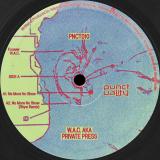
For the decennial release on Punctuality Warsaw duo W.A.C., aka Private Press step up with their Forever W.A.C EP. Moving away from their more techno-oriented offerings, Forever W.A.C. keeps the tempo and energy of their earlier work but suffuses the mood with warm, glowing trance and prog energy. This is peak-time Punctuality business in its purest form– on time as ever. “No More No Show” comes in hot from the get-go: galloping snare rolls, raved-up breakbeats, uplifting pads, big basslines, acid licks, and the low-end wubs that have become synonymous with the Punctuality sound. One for that point in the night when the dancefloor has melted into sweaty, eyes-closed, hands-up amorphia.
Barely recognisable to its original counterpart, the Rhyw remix strips the A1 down to the bare essentials. Preserving only a few percussive elements, the euphoria of No More No Show is replaced with hazy, cinematic synth washes that drone around a skeletal groove loaded with bassweight, warping the original into a dubbed out psychedelic UK stepper. Shifting to the morning light, “Only Froggerz” is a shimmering roller that ebbs and flows around barreling kick drums, kaleidoscopic synth lines, and vaporous FX, with lustrous chord work driving the emotion dial to 11. Elegant and restrained but relentlessly pummeling, it’s early-morning club gear at its finest.
Rounding out the EP with an essential slice of modern prog, “Close” utilises all the good bits: skippy basslines, filtered squelches, tribal-leaning percussion, and a relentless groove that builds around the subtle interplay between the stabs and the vocals. An epic closer that feels as true to the Punctuality canon as ever.
In their third collaboration, the shared project between Merzbow and Pedro Vian shifts towards less confrontational and more introspective terrain. Bardo Thödol, released as an LP, draws on The Tibetan Book of the Dead not so much as an explicit narrative framework but as a conceptual resonance: a passage, a suspension between states.
Where Inside Richard Serra Sculptures and The Wheel of Mani foregrounded a relatively defined dialectic between Vian’s environmental restraint and Masami Akita’s impulsive, textural excess, that friction here appears to dissolve in favour of a more homogeneous mass. Noise, far from its most abrasive edge, is reconfigured as a continuous field — dense yet permeable.
Within this flow, melodic structures emerge without assertion, surfacing almost incidentally as by-products of the accumulation of frequencies itself. The result is less a reconciliation of languages than a blurring of their boundaries: a space in which intensity is internalised and the radical gesture folds into a more sustained, contemplative mode of listening.
Pariter return with a second archival reissue from three key figures of the original London tech house movement, David Coker, Timmy S and Justin Baileys.
This double header pairs a heavyweight house groover on the A side with a rolling acid tech house cut on the flip. The A side is driven by commanding vocal samples and Timmy's finely tuned engineering, channeling the raw, sound-system focused energy that defined the era's most enduring club records.
On the B side, a relentless acid-fuelled roller emerges from the vaults, a secret weapon that has remained deadly on underground dance floors for more than two decades, quietly championed by those in the know.
Now, 26 years on, original copies are nearly impossible to find in clean condition with rare copies regularly changing hands for hundreds of euros on the collector's market.
Carefully restored and remastered by Yossi Amoyal, this reissue revives a long lost and highly sought after underground classic.
A bad idea rarely arrives all at once, it drifts in slowly, playful at first and impossible to resist. With Bad Idea, Warsaw-based Ukrainian artist uiava delivers Groovebox’s first-ever vinyl release: a five-track journey through house and electro, balancing warmth, tension, groove, and emotion across a 12” and digital EP. Bad Idea Pt.1 opens the record with a playful and constantly evolving house cut full of unexpected turns, swinging grooves, and subtle details. Fellow Warsaw artist PayoYayo reshapes the original into a driving, tool-focused reinterpretation, hypnotic, functional, and built for the darker hours of the dancefloor. On A3, Bad Idea Pt.2 sharpens the rhythm with restless percussion, rolling movement, and stripped-back energy designed to lock bodies into motion without ever standing still. Berlin-based artist Nat Wendell opens the B-side with a timeless nine-minute reform remix of Bad Idea Pt.3. Slowly unfolding and rich in detail, his version expands on the original’s emotional message, transforming it into a patient and powerful club journey suspended somewhere between introspection and peak-time energy. Closing the release, Bad Idea Pt.3 dives into deeper emotional territory, an electro piece filled with fragile melodies, playful tension, and a strong emotional message that lingers long after the last notes have faded away.
Chronicles Diary returns with WAYF VOL.2, the second chapter in its ongoing When Are You From? series. Exploring the idea of duality, the compilation unfolds across four tracks that balance tension and release, density and space, movement and stillness. Tensal opens with the driving Suspense, followed by Stanislav Tolkachev’s shifting and elusive Invisible Shapes. On the B-side, MMSS & Time Traveler deliver the hypnotic Interval, while Conceptual & Mohamad Kafarsoussa close with Sezione Aurea, a deep study in proportion and restraint. Four distinct visions converge around transformation, continuity and contrast, further expanding the sonic narrative of Chronicles Diary’s contemporary underground techno aesthetic.
Emotional Response presents Volume 2 of the LNS-ID series. Atmospheric, infectious, at times nostalgic, warm yet ghosty, the tension of Laura Sparrow’s music is her exploration in electronic music.
An introduction to DJing and music production has been a natural progression, applying skills in new and fresh formats. Built on the heritage of Chicago and Detroit house, alongside old IDM and electro, her first productions might have been raw, but the creativity was lit.
While her recent productions have explored club orientated, loud cut records, in collaborations with DJ Sotofett, that represent the sound found in her residency on the Globus floor at the Tresor club, LNS’s interest in the solo productions of the LNS-ID recordings and more organic-style explored in the recent Misiats EP burns bright.
LNS-ID 1 and LNS ID 2 are her latest offering. Two sets of four tracks based on the acid tradition in the more restless corners of 90s and early 00s Braindance. Acid lines drive the melodies, while drums move between sliced break fragments and the familiar sounds of the Roland TR-606 and TR-808.
Pads drift in with a warm glow or at times, quiet ghostly tension. The results are music that leans towards atmosphere and memory, something almost nostalgic that was built for those of us who still chase the more expressive edges of acid.
Easygoing Acid Express, Alive Acid, Blue Acid and Gentle Acid. Get the message. We call it Acid.
Emotional Response presents the first of 2 EPs by Laura Sparrow aka LNS, the Calgary raised, Berlin based producer and DJ with 8 acid-tinged cuts that are equally expansive and inspiring, personal and inventive.
After her debut Malinge Range (cassette) on fellow native Canadian 1080p label in 2016, LNS moved to Berlin and has released a steady stream of 12”s, exploring ambient, dub, electro and techno. Initially appearing on Vancouver émigré’s Jayda G’s (alongside Fett Burger) Freakout Cult label before settling at DJ Sotofett’s cult WANIA label and more recently on the legendary and ‘original’ German techno label, Tresor.
A love of the Roland TR-303, alongside deep diving into breakbeat creation, manipulation, mutation and production, plus some intrepid mixing and post-production assistance, development and support with DJ Sofofett, have led to a collection of some of her favourite music to date.
LNS-ID 1 and LNS ID 2 are the result. Recorded during a burst of creativity through dedication, new studio equipment and learning techniques, as well the necessity of artistic expression in the moment.
Two sets of four tracks based on the acid tradition in the more restless corners of 90s and early 00s Braindance. Acid lines drive the melodies, while drums move between sliced break fragments and the familiar sounds of the Rolant TR-606 and TR-808.
Pads drift in with a warm glow or at times, quiet ghostly tension. The results are music that leans towards atmosphere and memory, something almost nostalgic that was built for those of us who still chase the more expressive edges of acid.