Ukrainian Riot Grrl Trio 'Death Pill' Return With 'Sologamy' Their Much Anticipated Second Album. Two years on from their sensational debut, Ukrainian 'Riot Grrls' Mariana, Anastasiia and Nataliia, aka Death Pill are back. And back in full force, locked and loaded with a mighty set of tunes, _ as they put it. 'A bold exploration of personal empowerment'. 'SOLOGAMY' is fierce, heavy and melodic. The album's 10 tracks mark a bold evolution in the band's sound and Death Pill really deliver with ferocity and belief through multiple gear changes and genres as if it were easy. Hardcore, punk, grunge, thrash, riot grrrl, emo, are just some of the touchstones this album moves through, and all with the accomplished ferocity and memorable melody the band introduced on their debut. There are cellos, piano's, sound effects and ornate arrangements that open out their sonic palette, there's a bit of pop and even a bit of prog. But rest assured _ It's all pure 'Death Pill'. Thematically 'Sologamy' is, at its core, a celebration of the self! DP says: "The title, inspired by the concept of marrying oneself, speaks to the importance of making a personal commitment to self-care, happiness, and emotional well-being. In an era where that can sometimes be misconstrued as selfishness, Death Pill pushes back against these misconceptions, inviting listeners to embrace the power of prioritizing their own mental and emotional health." "Each track on the album is quite different from the last, and we see this as a way of accepting and supporting yourself in any emotional state. You arrive in this world alone and you leave it alone. The bottom line is: You're the only person you've got. "Every song on the album is a story that happened to us. Maybe it'll happen to you too. But every story deserves to become a song." "Sologamy" is more than just an album-it's a call to action" The very special LP version is not only frosted clear vinyl, but comes w/ foiled sleeve art, poster, sticker and free dlc! CD is nice too.
Hampus Lindwall’s Brace for Impact might just be the first album of post-internet pipe organ music. It’s an album of five new contemporary classical compositions, all performed by the composer himself on the 78-stop grand organ at St. Antonius church in Düsseldorf, Germany. Featuring the electric guitar of SUNN O)’s Stephen O’Malley on the title track. A highly visceral forty-five minutes of music with undeniable elemental power.
As 2024 came to a close, in New York and Paris chords rang out from thirty-two-foot pipes for the first time in half a decade. Following twin fires in 2019, the grand organs at the cathedrals of St John the Divine and Notre-Dame, amongst the largest instruments in their respective countries, had finally been restored. The news was justly celebrated in the international press, but the incidents were far from isolated. In England, the city of Norwich hailed the return of its cathedral’s five manual organ in 2023 and just two years earlier York Minster heralded a “once-in-a-century” refurbishment of its own 5,000-plus pipe instrument. Meanwhile, further organ restoration projects are ongoing at churches in Liverpool, Bradford, Bristol, Winchester, and Washington DC. Significant as they are to their respective communities, they’re also emblematic of a wider rebirth for one of humanity’s oldest musical instruments.
The organ is having a moment. Over the last few years, albums by the likes of Kali Malone, Ellen Arkbro, Anna von Hausswolff, FUJI|||||||||||TA, and Áine O’Dwyer, as well as projects in the visual arts by Sollmann Sprenger, Cory Arcangel, Massimo Bartolini and many other talented artists, have given a new prominence to the old ecclesiastical stalwart. The pipe organ bears historical traces which stretch back to the third century BC. But that doesn’t mean it can’t speak to a contemporary moment haunted by algorithms and networked culture. Hampus Lindwall’s Brace for Impact is an album of organ music for today.
Jens Brachvogel & Tilo Ciesla aka Studio 54, aka Dole & Kom is probably the most productive producer duo of German underground House Music. They did Disco House with heavy 808 & 909 beats in the mid 90s already – long before it stormed the German dance charts. They've remixed legends like Green Velvet, Black Box or Mateo & Matos or even pope heroes like Marc Almond. Their tunes came out on top tier labels like Nervous, Relief Records, Force Tracks and of course local Formaldehyd and BCC Music from Berlin.
Their Studio 54 project started in 1997 and quickly became their most popular moniker.
Due to copyright restrictions they had to rename it „Studio 45“, a name they're still using today. On their „Vol. 2“ record in 1997 they were inspired by Disco and Boogie tunes of the 70s and early 80s that indeed were popular at the famous New York night club.
What makes their tunes unique to this day is their hypnotizing, druggy approach to the original tunes. You never get a cheap, commercial copy, you'll get a mesmerizing mind trip back to the glory days of Disco, seasoned with the best classic drum machines got in them.
out of Stock
Last delivered 16 months ago available to reorder, subject to availability
To celebrate our 50th release, we dug deep into Juan's back catalog and rediscovered four gems that had never been repressed since 1993. After a proper restoration, a new mastering and a precise cut, we are happy to re-introduce those incredible tracks on vinyl and digital. The Future Sound EP is a great example of Juan Atkins' curation for Metroplex Records. Different artists were invited to the studio to give their interpretations of what the label is about.
out of Stock
Last delivered 12 months ago available to reorder, subject to availability
Khadim is a stunning reconfiguration of the Ndagga Rhythm Force sound. The instrumentation is radically pared down. The guitar is gone; the concatenation of sabars; the drum-kit. Each of the four tracks hones in on just one or two drummers; otherwise the sole recorded element is the singing; everything else is programmed. Synths are dialogically locked into the drumming. Tellingly, Ernestus has reached for his beloved Prophet-5, a signature go-to since Basic Channel days, thirty years ago. Texturally, the sound is more dubwise; prickling with effects. There is a new spaciousness, announced at the start by the ambient sounds of Dakar street-life. At the microphone, Mbene Diatta Seck revels in this new openness: mbalax diva, she feelingly turns each of the four songs into a discrete dramatic episode, using different sets of rhetorical techniques. The music throughout is taut, grooving, complex, like before; but more volatile, intuitive and reaching, with turbulent emotional and spiritual expressivity.
Not that Khadim represents any kind of break. Its transformativeness is rooted in the hundreds upon hundreds of hours the Rhythm Force has played together. Nearly a decade has passed since Yermande, the unit's previous album. Every year throughout that period — barring lockdowns — the group has toured extensively, in Europe, the US, and Japan. With improvisation at the core of its music-making, each performance has been evolutionary, as it turns out heading towards Khadim. “I didn’t want to simply continue with the same formula," says Ernestus. “I preferred to wait for a new approach. Playing live so many times, I wanted to capture some of the energy and freedom of those performances.” Though several members of the touring ensemble sit out this recording — sabar drummers, kit-drummer, synth-player — their presence abides in the structure and swing of the music here.
Lamp Fall is a homage to Cheikh Ibra Fall, founder of the Baye Fall spiritual community. The mosque in the city of Touba is known as Lamp Fall, because the main tower resembles a lantern. Soy duggu Touba, moom guey séen / When you enter Touba, he is the one who greets you. After a swift, incantatory start Mbene sings with reflective seriousness. Her voice swirls with reverb, over a tight, funky, propulsive interplay between synth and drums, threaded with one-two jabs of bass. Cheikh Ibra Fall mi may way, mo diayndiou ré, la mu jëndé ko taalibe... Cheikh Ibra Fall amo morome, aboridial / Cheikh Ibra Fall shows the way forward, he gives us strength, he gathers his disciples... Overflowing with grace, Cheikh Ibra Fall has no equal.
Interwoven with Wolof proverbs, Dieuw Bakhul is a recriminatory song about treachery, lies, and back-biting. Over moody, roiling synths and ominous, lean bass, Mbene throws out fluttering scraps of vocal, as if re-running old conversations in her head. The music shadows her despair to the verge of breakdown, at one moment seemingly so lost in thought and memories, that it threatens to disintegrate. Bayilene di wor seen xarit ak seen an da ndo... Dieuw bakhul, dieuw ñaw na / Stop judging your friends and companions... A lie is no good, a lie is ugly.
Khadim is a show-stopper; currently the centrepiece of Ndagga Rhythm Force live performances. The song is dedicated to Cheikh Ahmadou Bamba, aka Khadim, founder of the Mouride Sufi order. Serigne Bamba mi may wayeu / Serigne Bamba is the one who makes me sing. The verses name-check revered members of his family and brotherhood, like Sokhna Diarra, Mame Thierno, and Serigne Bara. Though Islam has been practised in Senegal for a millennium, it wasn’t until the start of the twentieth century that it began to thoroughly permeate ordinary Senegalese society, hand-in-hand with anti-colonialism. The verses here recall Bamba’s banishment by the French to Gabon, and later to Mauritania, in those foundational times. During exile, his captors once introduced a lion to his cell: gaïnde gua waf, dieba lu ci Cheikhoul Khadim / the lion doesn’t budge, it gives itself over to Cheikh Khadim. Deep, surging bass, steady kick-drum, and simple, reverbed chords on the off-beat lend the feel and impetus of steppers reggae. A reed plays snatches of a traditional Baye Fall melody; the dazzling polyrhythmic drumming is by Serigne Mamoune Seck. Mbene compellingly blends percussive vocalese, narrative suspense, exultant praise, introspection, and grievance.
Nimzat is a devotional tribute to Cheikh Sadbou, a contemporary of Bamba, buried in a mausoleum in Nizmat, in southern Mauritania. Way nala, kagne nala... souma danana fata dale / I call upon you and wonder about you... If I am overwhelmed, come to my aid. The town holds special significance for Khadr Sufism. An annual pilgrimage there is conducted to this day. The rhythm is buoyantly funky; the mood is sombre, reined-in, foreboding. Punctuated by peals of thunder, Mbene sings with restrained, intense reverence; huskily confidential, steadfast. Nanu dem ba Nimzat, dé ba sali khina / Let us go to Nimzat, to seal our devotion.
Mbene Diatta Seck: vocals.
Bada Seck: bougarabou, thiol, mbeung mbeung bal, tungune.
Serigne Mamoune Seck: bougarabou, khine, mbeung mbeung, tungune.
Text by Mark Ainley (Honest Jons).
Mastered by Rashad Becker.
Everything else by Mark Ernestus.
out of Stock
Last delivered 3 months ago available to reorder, subject to availability
In 1970, Italian composer Sandro Brugnolini recorded the two psychedelic lounge masterpieces Overground and Underground at Dirmaphon Studios in Rome. Featuring a lineup of some of Italy’s finest musicians—Silvano Chimenti (guitar), Angelo Baroncini (guitar), Giorgio Carnini (organ and piano), Giovanni Tommaso (bass and effects), and Enzo Restuccia (drums)—these sessions were deeply rooted in the late 1960s psychedelic sound but uniquely fused jazz improvisation, funk, and Latin and African rhythms with cinematic melodies.
This fusion defines their distinctive character and cements them as two of Brugnolini’s most impressive works, remaining among the most sought-after artifacts from the golden era of Italian library music. Overground—which Sonor Music Editions reissued in 2024—was originally released as the soundtrack to Persuasione, a documentary commissioned by Ente Provinciale Per Il Turismo Di Trento. Meanwhile, Underground was issued in two separate releases, RT 104 and RT 16, on the library and soundtrack label Record TV Discografica, founded by Alessandro Derevitzky in the late 1950s. In 2014, we compiled both versions for Underground's first-ever reissue (SME 3), featuring the longer version of ”Psichefreèlico" from RT 16, instead of the shorter ”Sostenuto” and ”Ballata" versions from RT 104, along with new artwork. Now, in this 2025 reissue, Underground returns in its original RT 104 attire, with its original track listing and artwork. Sourced and carefully remastered from the original mono tapes and lacquer cut by Jukka Sarapää at Timmion Cutting, this edition features carefully restored Record TV Discografica label design artwork, printed on high-quality card stock.
out of Stock
Last delivered 16 months ago available to reorder, subject to availability
A young doctor on the verge of greatness finds his career and life shattered after choosing to treat two children rather than the town mayor. The deaths of one of the children are inexplicable. What if he had saved a monster?
Monster, the manga created by Naoki Urasawa, is an acclaimed psychological thriller that has been a huge critical and commercial success. The complex and gripping story, which follows the moral choices of a surgeon confronted with a serial killer he has saved, has attracted a wide international audience. Monster has won several awards and is regarded as one of Urasawa's major works, affirming her place as a master of suspense in the world of manga.
Kuniaki Haishima is a Japanese composer best known for creating the soundtrack to the anime Monster. In addition to his contribution to Monster, Haishima has also composed music for TV series (Terra Formars and S-CRY-ed) and films (Tokyo Tribe and Helter Skelter).
out of Stock
Last delivered 2 years ago available to reorder, subject to availability
Iori Wakasa, one of the leading lights of the Tokyo club scene is set to release his second 12” from his own label, “BOTANICA” which he established to express his own primal sensibilities.
The Concept of the Label:
Tokyo-based DJ/producer, Iori Wakasa launched BOTANICA to assert that his label’s activities in itself is art and a palette for his creative, self-expression. It is also based on 2 main concepts: To integrate the sensibilities of both "nature" and “artificial and human activities" and to “contribute music that presents a scenery from the listener's point of view”.
For Iori, his label is an interface of some sort and is also a symbol of his own personal musical expectations.
Iori produced these 2 new tracks during the recent pandemic when the world was under severe restrictions. While taking into account and focusing on both 'his current outlook' and returning to “the roots of his own production aesthetic', he strived to produce something that would substitute it and as a result, created these two new tracks and the artwork that are presented in the label's second release, 'The Party Is Here EP’.
In this EP, he also attempts to express the sentiment that 'the experience that music provides to people is invaluably infinite' and that 'if you truly want to go out and party, it will happen, then and there!’.
About the tracks:
For the track, ’Bedroom Disco’, Iori tries to express his memories of 'a virtual night of partying’ that he experienced during Covid and created this track while being ‘in a state of wanting to break free from oppression’ and reminiscing about a party in a bedroom at night.
He also wanted to express the idea that no matter what situation or environment you are in, you can go to anywhere you want if you really want to and with that sentiment, he wanted to express a scenerio that transcends it and at the same time, he also wanted to convey his feelings of nostalgia for the past, rebellion against the environment and his feelings of desire.
For this track, Iori did not use any sampled voices or field recordings and created it by layering pure sonic imagery repeatedly folded and desolved which triggered the creation of new developments while imagining the thought that “a party actually begins when you step out” and the swaying of emotions that take place from it.
’Tropica' is a track that Iori produced by heavily mixing a utopian feel that people have inside of them with his own sensuality and is designed to ‘guide you to a tropical seaside', regardless of what the listener may have experienced in the past.
Unlike 'Bedroom Disco', this track uses a variety of samples and envisages "many elements intertwining with each other, working together to create this sound structure”. And it also expresses that equal opportunity exists for anyone who wants to visit an imaginary tropical land as well as the hope that even a brief break of the mind can be created by yourself and those close to you, if one pursues it.
About the artwork:
The cover of this new EP, the concept text 'Is your window open?', and the label's logo was designed by illustrator, HILOSHI SHINOZAKI who also worked on the first release, BOTANICA EP. For over 10 years, he has been a regular visitor of Hawaii, where he tries to cultivate his "true way of life” in his art.
And, artwork for the cover and label design of the EP is complemented by the label design and art direction of the record by hiro, a graphic designer who has been his partner and best friend since the first Botanica EP.
hiro expresses Bedroom Disco track's shifting compositional changes and its complex series of sound waves by creating an intricately multi-layered design that is a perfect representation of the way he sees it.
Also initially inspired by the fluctuations of waves, islands, sun, rays, sky and time, the artwork of Tropica also found inspiration from a drawing that made by Iori’s daughter who drew a picture of a scenery when she listened to the track. So through this design, one of the label’s concept of “the label’s activities is in itself art” was realised via the surprising contribution coming from his own family.
out of Stock
Last delivered 16 months ago available to reorder, subject to availability
"For Japanese people, min'yo is both the closest, and most distant, folk music" explains band-leader Katsumi Tanaka. "We may not feel it in our daily, urban lives, yet the melodies, the style of singing and the rhythm of the taiko drums are engrained in our DNA".
Initially indifferent to min'yo, a tragic event in recent Japanese history set Tanaka on his current path: "Following the Tohoku earthquake of 2011, I reflected on my life, work and identity. A fan of world music, I began searching for Japanese roots music I could identify with. Discovering mid-late 20th century acts like Hibari Misora, Chiemi Eri and the Tokyo Cuban Boys, I was captivated by their eccentric arrangements and how they mixed min'yo with latin and jazz music."
Lead singer Freddie Tsukamoto fell for min'yo after hearing a song from his hometown on a TV competition whilst in a restaurant. It was a revelation – until then he had been an aspiring jazz singer yet was uncomfortable singing in English. The restaurateur told him a min'yo teacher was his neighbour and the two connected. Tanaka and Freddie formed Minyo Crusaders in 2011 in Fussa, a city where the US military Yokota Air Base is located, in western Tokyo.
Recruiting other local musicians versed in afro and latin rhythms, they began hosting jam sessions at the Banana House, a building that was previously part of the military base and that used to house US soldiers. The band started recording their music, and their debut album "Echoes Of Japan" was released in 2017. It received huge acclaim in Japan and abroad, and was also released by British label Mais Um in 2019. Several European tours followed, as well as some US and South America gigs.
In this second opus, the Minyo Crusaders take us on a trip to Japanese folk songs fused with latin rhythms. Their unique arrangements breathe new life to classics like Kiso Bushi, Sado Okesa or Soran Bushi, among many other min'yo songs from all over Japan that were originally performed by Japanese fishermen, coal miners and sumo wrestlers hundreds of years ago. The magical groove created here proves once again that the Minyo Crusaders are one of the most dynamic representatives of the current Japanese world music scene. Yoi Yoi, Enjoy!
PHASE SHIFTING INDEX is a time capsule record of Jeremy Shaw's vast original artwork that includes audio excerpts, voiceover passages and music composed by There in Spirit and Konrad Black. Shaw's seven-channel video, sound and light installation-that premiered at Centre Pompidou in 2020-uses science fiction, documentary, visual effects and synchronisation to induce an ecstatic experience in narrative temporality. Each video details the belief systems of one of seven fictional subcultural groups spread across time that aspire to induce parallel realities that could redirect the evolution of the human species through embodied forms of ritual, ideology and movement. The vinyl release serves as a gathering of the piece's key audio elements, focussing on their importance to the engineering of the artwork and their stand-alone listening qualities. Side A of the record follows the dramaturgy of the artwork in full-swing, including audio segments from four of its five distinct chapters. Written by long time collaborators Konrad Black and Jeremy Shaw together as There in Spirit, "Cross- Temporal Sync" soundtracks the strobing peak of the installation at the moment when all seven disparate videos fall into a unified choreography in which every person on every screen performs the same ecstatic series of slow-motion movements. The pulsing, hypnotic dirge aligns with the locked choreography in mood and action, caught somewhere between ecstatic trance and somatic takeover. A steady sub line, clipped stabs and a swooping choral gasp harmonise with the dancers movements onscreen while restrained filters open slowly to reveal a submerged melody that builds in intensity towards the chaotic rupture of Black's "Mosh". Here the score breaks into digital shards as heard through analog bodies colliding and pixelating into each other. The dancers eventual dissolution into "Particles" sounds like the field recording of a disembodied neural cosmos. The B-side of the record contains a narrative outline edit of the artwork comprised of music, excerpts and pieces of narration from each video. Listeners can follow along in an accompanying thirty-six page booklet of full-bleed film stills documenting each of the seven groups as they move through the five chapter dramaturgy. Composer Konrad Black's authentically backwards-glancing production and sound design is as disparate as the groups represented on screen. From the bespoke-16mm-tribal-techno of "The Cyclical Culture" and retro-cyber-funk of the "Zero-Ones," to the VHSdark- wave of "The Violet Lux" and skewed vocal/piano minimalism of the "Quantum Modern," each group exists in its own custom-made world out-of-time. The record ends where it began, with the full sequence of "Ramping" playing out as each subcultural world begins to lose control, galvanise, sync, rupture, atomise and scatter throughout the universe, only to loop back into another inevitable beginning. Phase Shifting Index premiered at Centre Pompidou, Paris, in 2020 and has since been exhibited in nine international venues including ARoS, Denmark, MONA, Tasmania, MAC, Montreal and Hamburger Bahnhof, Berlin
Bonnie Banane and Joseph Schiano di Lombo present L'Orguasme, an album of bawdy and devotional songs accompanied by the organ of the Cité de la Musique / Philharmonie de Paris. Literally composed and written for pleasure, this work (of the flesh, naturally) pays tribute to the most spectacular expression of ecstasy - a paradise so near and yet so misunderstood. From the most restrained sighs to the most dazzling vocal outbursts, from the foreplay to the eruption, not to mention the bliss that follows the incandescence, Bonnie and Joseph sing about the art of reaching seventh heaven, of genuflection and "la petite mort" ("little death" a French expression for "climax") without shying away from the darker areas: those of guilty, forbidden, feigned, or selfish pleasures, for instance.
By turns light, explosive, mystical, burlesque, and poetic, this music diverts the organ from its centuries-old habits, achieving a union of the profane and the sacred, the crass and the beautiful, the body and the spirit, early music and pop - reminding us of the essential truth: it's better to come than to cry.
While the minimalism of the arrangements initially strikes the ear - no instruments other than the organ accompany these musical escapades - the album is infused with numerous unexpected influences: R&B (La petite mort), swing (Le cri), gospel (Simulation blues), jazz (Le calme après l'œuvrette), medieval ballads (Ronde génitale, Au plaisir), and even a famous 16th-century folk dance called the branle (Branle Censored).
A sexy, lush, stripped-down, and unabashed opus, glorifying what remains glorious: love, music, and the boundless joy of creation.
Neo Gibson, born in Virginia and based in New York City, records, performs, and produces as 7038634357. This numerical alias, under which Gibson has been releasing work since 2016, offers a window into the careful ambivalences of the musical project. It conjures the impersonal_the opacity and randomness of data, a number that is hard to remember or even say out loud_while also suggesting a direct line of communication with the artist, down to an area code indexing their biography. 7038634357 uses a restricted palette to achieve music that is formally precise and emotionally direct. Their digital-native approach to production, in which frank melodies cross paths with heavy distortion, contains traces of both trance's maximalist arcs and a songwriterly intimacy. Expressive details may appear submerged or abraded, subjected to a canny sense of dynamics and textural specificity. Waterfall Horizon, Gibson's second vinyl record with Blank Forms Editions under the moniker 7038634357, was written for live performance and workshopped over successive shows during their 2022 European tour. Here, hallmarks of their earlier, studio-crafted recordings_digital distortion that obfuscates their lyrics and a slow-burning ambience_are noticeably pared back. Instead, Waterfall Horizon takes on a pop inflection, adopting more traditional lyric scaffolds so that the interstices from verse to chorus or track to track can flourish within their limited tonal range.Across recordings and performances, Gibson activates wide-ranging mechanisms of audience connection: from the relative anonymity of internet platforms to live experiments with the spatial effects of amplification. They have a particular interest in site-specific performances in non-musical spaces, and have performed in a variety of contexts, including the mezzanine of the West 4th Street subway station in New York City and INA GRM/Radio France's Présences électronique festival. Under their own name, Gibson has maintained a longstanding collaboration with the artist Charles Stobbs, working primarily with FM transmission and techniques derived from the early-seventeenth-century English tradition of change-ringing bells. The first 7038634357 vinyl record, Neo Seven, was released on Blank Forms Editions in 2023; previous releases include self-released cassettes and CD-Rs, as well as a pair of EPs on Genome 6.66 Mbp (2018, 2019).
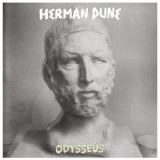
Nach 25 Jahren Herman Dune und 15 Alben freut sich BB*ISLAND, Odysseús zu präsentieren, eine neue Sammlung von Songs, die den Hörer auf eine Reise durch das turbulente Leben von David Ivar mitnimmt, eine Reise voller Sehnsucht, Schmerz, Liebe, Tod, Glaube und Erlösung. Es ist das erste Mal, dass Herman Dune mit einem externen Produzenten, David Garza, zusammenarbeitet. Das Set-up besteht fast ausschließlich aus akustischen Instrumenten, die live mit der Band in einem Raum aufgenommen wurden. Es ist Folk-Musik im typischen Stil von Herman Dune mit Anklängen an Americana, Country, jüdische und hispanische Traditionen, aber mit einer ganz neuen Wendung in Sound und Arrangements, vor allem im Vergleich zu seiner letzten rein akustischen Trilogie The Portable Herman Dune. David Herman Dune über die Produktion: "...David Garza getroffen zu haben war reiner Zufall. Ich mühte mich gerade mit einem Geigenarrangement für einen der Songs ab, als er sich in einem überfüllten Café in der Innenstadt von San Pedro an meinen Tisch setzte und mich fragte, woran ich gerade arbeitete. David, ein mit einem Grammy ausgezeichneter Produzent und Musiker, hatte mit Fiona Apple, Iron & Wine, John C. Reilly und den Milk Carton Kids gearbeitet und mit einigen meiner musikalischen Helden wie Lucinda Williams und Townes Van Zandt gespielt. Wir verstanden uns auf Anhieb, und er bot mir an, meine Songs zu produzieren. Wir begannen, die Stücke jeden Abend bei mir zu Hause zu spielen, und einmal pro Woche in einem französischen Restaurant namens Le Compagnon. David kannte die besten Musiker in L.A. - Leute wie Sebastian Steinberg am Kontrabass (Fiona Apple), Richard Edson (Schlagzeuger von Sonic Youth, Schauspieler in Jim Jarmuschs Stranger Than Paradise und Spike Lees Do The Right Thing), Odessa (violin, Edward Sharpe and the Magnetic Zeros) und Paul J. Cartwright (violin, Olivia Rodrigo). Als wir uns bereit fühlten, versammelten wir alle in meinem Haus für drei Tage Live-Sessions. Es war ein chaotischer, schöner Prozess, bei dem alle in einem Raum zusammen spielten, keine Kopfhörer, keine Overdubs - nur rohe, echte Musik. Aufgenommen und gemischt wurden die Sessions von Chris Sorem (ebenso Grammy-prämiert für seine Arbeit mit den mit den LA-Legenden Los Lobos). Chris brachte eine Wagenladung alter Mikrofone mit und konzentrierte sich auf "Raummikrofone" - djene, die die Atmosphäre des Raums einfangen. Er sagte, dies sei eine Technik, die auf Alben wie Buena Vista Social Club verwendet wurde, und es erzeugte eine Magie im Raum, die spürbar war. Sogar die traurigsten Lieder wurden lebendig mit so viel Freude, Energie und Elektrizität. Die Aufnahmen waren ungefiltert, organisch und hatten Seele. Als wir mit dem Abmischen begannen, waren wir alle vom Ergebnis erstaunt, wir hörten einen Moment in der Zeit, der sich gleichsam zeitlos anfühlte"
The Current Thing EP, first release in a series of three, marks the debut of 'Confusion is next to Happiness' (CINTH); a record label and party series unbound by restraint and defined by complete freedom to bridge idiosyncratic and divergent sounds into the world.
With home base at Sameheads and appearances across Germany with Säule in Berghain, Golden Pudel Club in Hamburg, and PRXXXT in Leipzig, CINTH is an emerging powerhouse for all things twisted and freaky.
Duo Lucas Brell and Marvin Uhde, known as Kinzua, deliver a three track EP featuring minimalist yet richly textured compositions with haunting ambience capturing the edge between intensity and transcendence. The trance-inducing atmosphere and subtle modulations will pull you deep into a meditative wormhole.
out of Stock
Last delivered 32 days ago available to reorder, subject to availability
Glossy Mistakes Reissues Resonance 001, a Proto-House & Trance Milestone from Belgium from 1992
Glossy Mistakes is proud to announce the reissue of Resonance 001, the groundbreaking debut EP by Belgian producer Fabrice Lagrange, created in collaboration with Frank Beekman and originally released in 1992. Long overlooked, this forward-thinking record captures a pivotal moment in the early European evolution of house and trance-melding minimalism, emotion, and club-oriented experimentation into a sound that remains strikingly fresh over three decades later.
Resonance 001 stands among the earliest European records to explore the fertile intersection of hypnotic house rhythms and atmospheric trance. The A-side, featuring The Awakening Earth and Pure Self, channels a stripped-down yet euphoric energy-deeply inspired by the spirit of Detroit techno but undeniably forward-looking. As Frank Beekman recalls: "This record was recorded in a very simple studio, with minimal gear, inspired by the Detroit techno sound."
On the B-side, the EP ventures further into experimental territory. Paris By Night offers a dreamy, tech-tinged house excursion, leading into Redondanz, a meditative downtempo closer that perfectly encapsulates the release's subtle charm.
The enduring appeal of Resonance 001 lies in its restraint: crafted with minimal tools, it delivers maximum emotional depth. It seamlessly blends hazy trance atmospheres, early house grooves, and ambient-inflected textures, capturing the open-minded, exploratory ethos of early '90s electronic music.
Now remastered for vinyl by Wouter Brandenburg, Resonance 001 returns in pristine form-faithfully preserving its original character while bringing new clarity to its timeless sound.
out of Stock
Last delivered 4 months ago available to reorder, subject to availability
Marconi Union, one of the most influential names in contemporary ambient and electronic music, announce their twelfth studio album, The Fear of Never Landing, set for release 6th June via Just Music. The news is paired with the release of first single Eight Miles High Alone, out 20th March on all major streaming platforms.
Known for their ability to craft cinematic, immersive soundscapes that blur the lines between ambient, electronic, and experimental music, the Manchester-based duo once again push the boundaries of sonic exploration. The Fear of Never Landing takes us on a dynamic journey that’s atmospheric, diaphanous and never short of mesmerising. While the new record is certainly infused with a sense of hope, there’s more than a soupçon of anxiety too, as the title suggests.
A 55-minute odyssey presented as one seamless piece divided into nine movements, they transcribe the nexus of modern living into a mostly wordless odyssey. The album encapsulates Marconi Union’s ability to translate the complexities of the human experience into sound, all while maintaining a stunning sense of cohesion.
While the music feels effortless, the creative process was anything but. During the two years it took to complete the album, members Jamie Crossley and Duncan Meadows faced creative struggles that even led them to briefly question the band’s future. A pivotal moment came when they performed a live soundtrack to the 1975 skateboarding film Downhill Motion, rekindling their connection to atmospheric composition. By testing new material live and returning to their roots, Marconi Union redefined their creative process, leading to some of their most emotionally impactful work to date.
“We’ve always made atmospheric music but we had started to lose that aspect. Other than some rough ideas, we had no sense of what we were doing anymore, a kind of musical wilderness. Eventually a couple of things fell into place, and it was like, ‘Ah, okay.”
With a foundation to build upon, they went back to basics and decided to take their time going forwards. “We tried out a few new tracks live which gave us the opportunity to see what worked and what didn’t. We've never given ourselves that luxury before.”
The first track to be shared, Eight Miles High Alone, is a mesmerizing sequencer-driven track that builds an immersive, atmospheric soundscape. Its hypnotic pulses and intricate layers evoke a sense of solitude and weightlessness, perfectly capturing the album’s blend of tension and introspection. “Eight Miles High Alone was the first piece that we managed to complete and helped to inform our approach to the rest of the album.”
Formed in Manchester in 2003, their debut album, Under Wires and Searchlights (2003), introduced their signature sound, but it was their 2011 release of Weightless that brought international acclaim. Developed in collaboration with a sound therapist, Weightless was scientifically recognised as “the world’s most relaxing song”, praised for its ability to reduce anxiety and heart rates. With over 900 million streams and widespread coverage across media, the track remains a cultural phenomenon.
Over the years, Marconi Union has continued to evolve, producing critically acclaimed albums such as Signals (2021), Ghost Stations (2016), and Tokyo+ (2017). Their work has been hailed for its emotional resonance and sonic depth, with The Quietus noting their ability to find “beauty in the bleakest places” and The Sunday Times describing them as “amongst today’s most talented musicians.”
Beyond their studio albums, Marconi Union has collaborated with visual artists, provided soundtracks for installations, and remixed notable acts like Max Richter and Vök. Their invitation by Brian Eno to perform at Norway’s Punkt Festival further cemented their reputation as innovators in the ambient music sphere.
With The Fear of Never Landing, Marconi Union once again showcases their unmatched ability to create immersive soundscapes that resonate deeply. The album reaffirms their position as masters of atmosphere and emotional storytelling, making it an essential addition to their storied catalog.
This is not the end of a dark alleyway in some US city, this is not the bottom of a platform heel in England, this is not the back corner of some dusty drawer at a record fair in Holland. These are not the places you’ll find rock and roll. This is Quebec: A different sensory perception of rock and roll. A heightened awareness of the highest highs and the lowest lows. This is Belgium with snowmobiles, Catholic Texas, Ugly France. All the crumbling highways, the coldest beers, and the loudest joints. Guitars do different things in Quebec. PUFFER shimmy across the invisible barricade between Montreal and the rest of the world not just as another crop of punks but as the great descendants and inheritors of modern greats like INEPSY’s “Rock and Roll Babylon” and ANNIHILATION TIME's “II.” Loud, brash, unrelenting. You’ll go deaf before you get bored of it.
Self produced, self recorded, and mixed by the band, this is the vanguard of punk that has lived long beyond it’s moments of origin. This pure blast of 1979 by way of the hellish weimar end-times of 2025 never made the necessity of punk rock feel so real.
FFO SLAUGHTER AND THE DOGS, the 222s, THE DISCORDS, MOTORHEAD, INEPSY, AA Restaurant, Montreal pool room, Katacombes, and the eternal flame of punk in La Belle Provence.
Available 13 June 2025 on double translucent orange vinyl, Trios captures the magic of Buddy Rich's legendary three- man jam sessions-- performances that have never been officially released until now. Recorded live during international concerts in 1976 and 1977, Trios showcases Rich alongside extraordinary talents: bassists Jon Burr and Tom Warrington, and young piano prodigy Barry Kiener. These trio interludes--recorded by Rich's alto saxophonist Alan Gauvin--feature Rich playing with brushes in an intimate setting, spotlighting his dynamic range and nuance. "These trio sets were often played to give the brass section a break," says Gauvin. "But what Buddy did with those moments was extraordinary. It was a masterclass in restraint, creativity, and musical interplay." Among the album's ten tracks are beautifully reimagined standards such as "Just Friends," "Stella by Starlight," and "My Romance." Each performance highlights Rich's desire to step back and allow the piano and bass to shine--something unheard of for a drummer of his stature. The release also serves as a tribute to Barry Kiener, the immensely gifted pianist who tragically passed away at 30. "Barry had been like a son to him," remembers Buddy's daughter Cathy Rich, who serves as an Executive Producer. "This album is a rare glimpse into Barry's brilliance and the deep musical bond he shared with my father." Trios was recorded and produced by Alan Gauvin, mastered by Tom Swift, with cover art by Michael Patterson, the award-winning visual artist and USC professor known for his work on a-ha's iconic "Take on Me" video.
The legendary London based Get Fucked is set for highly anticipated reissue, bringing back two timeless classics and sought after tracks from the early 2000s. This special edition features a meticulously remastered version of the classic Charlie’s Knickers, alongside a previously unheard take on Nils Hess’ Alcohol Is My Favourite. Expertly restored and reimagined by the revered reissue series Endell Street, this is a pure gold collector’s number.
out of Stock
Last delivered 12 months ago available to reorder, subject to availability
When one makes mention of Deee-Lite, the 90's house-funk trio of Lady Miss Kier, and DJs Dmitry and Towa Tei, invariably their Billboard smash single “Groove Is In The Heart” will come up, and for good reason. With its Herbie Hancock-sampling bassline, some classic rhymes from Q-Tip, and guest vocals by Parliament-Funkadelic legend Bootsy Collins, the song became an indelible classic of 90s music, a massive commercial hit for Deee-lite and is widely considered one of the greatest dance songs of all time. Although a massive success for the group, “Groove Is In The Heart” led to some pigeonholing from critics and reviewers, who had specific expectations for future records. Rather than deliver more of the same free-wheeling, breezy dance music of World Clique, Deee-lite took a more politically-minded approach with their second album, spurred largely by front-woman Lady Miss Kier, who had a lengthy history of political activism prior to forming the group. 1992's Infinity Within rendered several Dance-chart hit singles, but was not as commercially or critically lauded as its forebear. Deee-lite were undaunted by their change in commercial fortune, regrouping with the addition of junglist DJ Ani, replacing the absent Towa Tei to record their third record. 1994's Dewdrops In The Garden was the result of their efforts, which struck a remarkable balance between the celebratory grooves of World Clique, and the social justice-driven Infinity Within. Lady Miss Kier had done a lot of world-traveling in the time between albums, and the material in Dewdrops was a reflection of her experiences, applying a spirit of global togetherness to their house-funk grooves. Regrettably, Dewdrops In The Garden was not a commercial success, yet it still managed to render its share of #1 Dance Chart singles; the atmospheric techno bounciness of “Bring Me Your Love”, and the spacious funk-house track “Call Me.” Though Deee-lite would disband soon after Dewdrops In The Garden's release, the record remains an unheralded favorite among dance music devotees for its coupling infectiously bright, and soulful melodies, with banging dance-floor grooves, and unshakably optimistic vibes.
out of Stock
Last delivered 16 months ago available to reorder, subject to availability
José James just can’t leave the ’70s alone. Or maybe it’s the other way around. The singer, songwriter, bandleader, and producer was born in 1978, after all, but over his past 17 years of fundamentally forward-looking, blessedly mercurial music, he keeps getting pulled back in. His 2013 Blue Note breakthrough No Beginning No End revisited the hooky, funky, jazz-streaked songcraft of the time through a modern crate-digger’s ears. On 2020’s No Beginning No End 2 — James’ debut on his own Rainbow Blonde Records — he went back through the portal with a small army of fellow celebrated eclecticists. Just last year, there was the album 1978, a richly layered love letter to said year that felt deep, luxe, and cool. It’s as if — vested with the restless fluidity of jazz, the tuned-in sensitivity of soul, and the revisionist grit of hip-hop — he is trying to play his way into the exact moment when, culturally speaking, everything was about to change.
“I'm still so fascinated by the tension in that era of all these seemingly clashing things happening at once,” says James. “The loft scene, the jazz scene, Elton and Billy, Bob Marley, the Isleys, Funkadelic, disco being this behemoth in a way I don't think we even understand today… And then there’s where everybody went from there — into hip-hop, into punk rock, exploding jazz. It's like a summation of the ’70s, and it's about to transform. It's the peak of the rollercoaster.”
Literally breaking into history is impossible, of course, but James’ new LP, 1978: Revenge of the Dragon, does feel like breaking through or bursting out. In loving contrast to its predecessor, the fresh set plays hot, like a Friday night out at the Mudd Club in its prime. Though he’s dreamt up albums with collaborator counts approaching the dozens, James gathered a tight crew for this one. Himself and Taali on vocals. BIGYUKI on keys and analog synth. Jharis Yokley on drums. Bass split between David Ginyard (Blood Orange, Terence Blanchard) and Kyle Miles (Michelle Ndgeocello, Nick Hakim). And an all-star brass lineup: Takuya Kuroda on trumpet, young lion Ebban Dorsey on alto sax, and genre-spanning ronin Ben Wendel on tenor sax. They set up in Dreamland Studios near Woodstock, a restored 19th century church, and recorded live to tape, two tracks, drums pushed to the max — “a small homage to the rise of punk,” says James.
In that place out of time, the band laid down a handful of choice covers and some wild originals, like the single “They Sleep, We Grind (for Badu),” a decades-collapsing cut powered by an ugly groove. Steeped in dub, funk, and sampledelia, James chants an artists’ mantra (“They sleep, we grind / Man, f--- your nine to five”), makes lyrical callouts to Marley and Nas, and channels everything from George Clinton to J Dilla, not to mention the earthy mysticism of Erykah Badu. In 2023, James released and toured his Badu covers LP, On & On. “Living in her musical house for a year was transformative,” he says. “This is my summary of everything I learned through her, tying it to this idea that artists move differently. We are in society but we are outside, too, looking out and in at the same time. Our hours are different, our schedules are different.”
To that point, James and co. actually began each day in the woods, filming the album’s visual companion piece, Revenge of the Dragon, an honest-to-God kung-fu short complete with bad overdubs, training montages, camera tricks, and plot twists. The film pays tribute not only to the genre’s greatest year (1978, of course), but also its cinematic exchange with Blaxploitation, plus James’ own recent Shaolin training and admiration for Bruce Lee as a culture-bridging force (the LP’s cover recreates an iconic shot of Lee). On top of that, says James, “We had this immediacy in the studio. Live, one take, no overdubbing. I feel like that's where the martial arts piece comes in, where it's about being relaxed but also aware, and there's immediacy in your movements.”
Across the project, tribute takes that refracted, multifaceted form. From his personal late-’70s playlist, James chose four covers reflecting the era’s disco-fied churn: the MJ-meets-Quincy dancefloor masterpiece “Rock With You”; Herbie Hancock’s prescient vocoder fever dream, “I Thought It Was You”; and a pair of Black-radio hits from two bands whose fans typically wouldn’t have been caught dead in the same stadium: “Miss You” by the Rolling Stones and the Bee Gees’ “Inside and Out.” All of it gets filtered through a contemporary Black (and beyond) lens, coming out loud, free, funky, and buzzing — dynamic, yes, but also of a joyous piece.
1978: Revenge of the Dragon transports you to a crowded room where all this is playing out in real time. That feeling is helped out by opener “Tokyo Daydream,” a bass-driven swan dive into a neverending night of boutique bar-hopping and neon revelry. Later, “Rise of the Tiger” finds James bringing rare braggadocio to a propulsive track with growling synth lines and a hunger for whatever comes next. And then there’s the closer, “Last Call at the Mudd Club,” which with its upbeat energy and string of Stevie-inspired pickup lines, evokes the sort of unabashedly elated track the DJ throws on at 3:56 a.m. before everyone is kicked out. “I wanted to leave the album on that note,” says James. “If this was a night out in New York, this would be the last thing you hear before you get in that taxi and go back to your apartment.” Or, perhaps, back to 2025.
out of Stock
Last delivered 16 months ago available to reorder, subject to availability
Included are all 9 tracks from the two titles that have been highly acclaimed and talked about overseas.
This is an analog vinyl record pressed in Japan by Memory-Tech, the developer of high-quality CDs and UHQCDs, on 180g heavy vinyl.
Analog vinyl featuring all 9 cover and original songs from the 2024 album “Beyond The Window ~Mado no Mukou ni~” and the 2021 album “Another Answer”
by Kanae Izutsu, a singer who boasts strong popularity among music fans and audiophiles.
The two titles, which were ranked No. 1 on the domestic distribution site rankings and also ranked high on overseas distribution and streaming sites, were cut
by Katsutoshi Kitamura (MIXER'S LAB), one of the best cutting engineers, and by Memory-Tech, the company that developed UHQCD, a high-quality sound
quality CD. The 180g weight vinyl is made by analog pressing, which is also concerned about the sound quality. Please enjoy Izutsu's unique worldview, which
has both strength and fragility, and is clothed in lingering sound and space, on the analog disc as well.
Where the Butterflies Go in the Rain is the third studio album from the enchanting songstress, Raveena. Blending powerful storytelling with early 2000s pop, Where the Butterflies Go in the Rain sees music continuing to play the central role as both a catalyst and medium in her personal and creative growth. With newfound clarity, Raveena delves into themes of new love, maturity, comfort, and domesticity that reflect the peace of mind she currently inhabits. Speaking on this evolution and how it informed the album’s creative, she shares, “Butterflies are so delicate that they have to hide in leaves and flowers until the rain passes so that their wings don’t get crushed in the rain. I felt like that was kind of a metaphor for where I was in my life. I needed to go back to comfort—to deep rest—and stop weathering storms.” On the most instinctual level it’s an album that should conjure simple pleasures like the joy of a summer road trip with loved ones.
Embracing the sounds of classic artists like Fleetwood Mac, Brandy, Bob Marley, Joni Mitchell, and Marvin Gaye, to name a few, Where the Butterflies Go in the Rain draws inspiration from people who, “are really good at capturing the beauty and loss of life in the same breath,” she describes. In her signature style, Raveena seamlessly unites that expansive songwriting with traditional Indian instruments and feel-good early 2000s pop hits —putting forth a work that’s more unabashedly herself than any that’s come before.
Raveena reflects on her forthcoming album, “I don't think I've ever understood a record so well before—It wasn’t like the process I used to have with past albums where I was more anxious about being at my best. This time, it was all intuition, and I knew the album was right when I finally had the feeling of rest.”
The deluxe release sees the addition of 3 tracks. Sun Don't Leave Me - contemplating the feeling of wanting to hold onto one more beautiful sunset, one more passionate embrace, before things change again and hard times strike again - and a reimagined version of Lose My Focus with UMI, bringing fresh energy to an album that’s more unapologetically Raveena than ever.
On her debut album, Lucy Gooch stays true to her electronic foundations, while incorporating more acoustic instrumentation and digging deeper into her folk roots through songwriting. But at the heart of Lucy's music is her rapturous vocal, with which she has experimented more than ever over the course of her first full-length. Many of the pieces on 'Desert Window' started out as vocal improvisations from which she pulled a narrative. Taking cues from the incantatory chanting found in middle English poetry such as 'The Names of the Hare', as well as the prescient imagery in contemporary works like 'The Hearing Trumpet' by Leonora Carrington (1974). "To a larger extent, this became an experiment in placing my voice in a more narrative way, while remaining oblique," Gooch explains. While her previous work could be compared to drawn-out landscapes punctuated with moments of romance and radiance, this album feels grounded in materiality and the everyday. Gooch's voice is at times strident, while elsewhere restrained and broken. "I lost connection to my voice and then had to rediscover it, which was exhilarating. There were these bursts of energy where I'd be messing around and occasionally stumble upon something". There are hushed melodies and exhausted squalls, creating dissonance and space. The result is an atmospheric balance between Kate Bush and Cocteau Twins harmonies, Vangelis major chords, and a juxtaposition of folk ambience reminiscent of the offset madrigals of The Third Ear Band and Italian cult film composers Goblin. It is a complex and elegant album, an all-consuming series of songs that reach into jazz, electronica and classical song construction.
On her debut album, Lucy Gooch stays true to her electronic foundations, while incorporating more acoustic instrumentation and digging deeper into her folk roots through songwriting. But at the heart of Lucy's music is her rapturous vocal, with which she has experimented more than ever over the course of her first full-length. Many of the pieces on 'Desert Window' started out as vocal improvisations from which she pulled a narrative. Taking cues from the incantatory chanting found in middle English poetry such as 'The Names of the Hare', as well as the prescient imagery in contemporary works like 'The Hearing Trumpet' by Leonora Carrington (1974). "To a larger extent, this became an experiment in placing my voice in a more narrative way, while remaining oblique," Gooch explains. While her previous work could be compared to drawn-out landscapes punctuated with moments of romance and radiance, this album feels grounded in materiality and the everyday. Gooch's voice is at times strident, while elsewhere restrained and broken. "I lost connection to my voice and then had to rediscover it, which was exhilarating. There were these bursts of energy where I'd be messing around and occasionally stumble upon something". There are hushed melodies and exhausted squalls, creating dissonance and space. The result is an atmospheric balance between Kate Bush and Cocteau Twins harmonies, Vangelis major chords, and a juxtaposition of folk ambience reminiscent of the offset madrigals of The Third Ear Band and Italian cult film composers Goblin. It is a complex and elegant album, an all-consuming series of songs that reach into jazz, electronica and classical song construction.
Domino hat heute die Wiederveröffentlichung von Pete Shelleys ersten beiden Soloalben "Homosapien" und "XL-1" für den 6. Juni 2025 angekündigt. Beide Alben erscheinen in einem Gatefold-Cover mit dem restaurierten Original-Artwork, einer zusätzlichen Disc mit B-Seiten, Dubs und erweiterten Mixes sowie neuem Bildmaterial und Sleeve Notes vom renommierten Autor Clinton Heylin. Beide Alben werden erstmals seit 2006 wieder auf CD veröffentlicht.
Die Alben markieren einen entscheidenden Wendepunkt in Shelleys Karriere, als er sich nach den Buzzcocks musikalisch neu erfand. Mit Produzent Martin Rushent entwickelte er einen elektronisch geprägten Sound, der sich radikal von seinen Punk-Wurzeln unterschied. "Homosapien" wurde 1982 veröffentlicht und sorgte für Kontroversen: Die BBC verbannte den Titelsong aus homophoben Gründen, doch in den Gay-Clubs wurde er zur Hymne. 1983 erschien "XL-1", auf dem Shelley noch weiter in elektronische und experimentelle Klangwelten vordrang. Er blieb zeitlebens ein Künstler, der musikalische Grenzen auslotete. Seine Soloalben zeugen von einem unermüdlichen Innovationsgeist, der weit über die Punk-Bewegung hinausging.
Domino hat heute die Wiederveröffentlichung von Pete Shelleys ersten beiden Soloalben "Homosapien" und "XL-1" für den 6. Juni 2025 angekündigt. Beide Alben erscheinen in einem Gatefold-Cover mit dem restaurierten Original-Artwork, einer zusätzlichen Disc mit B-Seiten, Dubs und erweiterten Mixes sowie neuem Bildmaterial und Sleeve Notes vom renommierten Autor Clinton Heylin. Beide Alben werden erstmals seit 2006 wieder auf CD veröffentlicht.
Die Alben markieren einen entscheidenden Wendepunkt in Shelleys Karriere, als er sich nach den Buzzcocks musikalisch neu erfand. Mit Produzent Martin Rushent entwickelte er einen elektronisch geprägten Sound, der sich radikal von seinen Punk-Wurzeln unterschied. "Homosapien" wurde 1982 veröffentlicht und sorgte für Kontroversen: Die BBC verbannte den Titelsong aus homophoben Gründen, doch in den Gay-Clubs wurde er zur Hymne. 1983 erschien "XL-1", auf dem Shelley noch weiter in elektronische und experimentelle Klangwelten vordrang. Er blieb zeitlebens ein Künstler, der musikalische Grenzen auslotete. Seine Soloalben zeugen von einem unermüdlichen Innovationsgeist, der weit über die Punk-Bewegung hinausging.
Diese Ausgabe des bereits traditionellen Begleitalbums zur Redux-Veröffentlichung strotzt nur so vor faszinierenden Künstlern und spannenden Kollaborationen, die allesamt den Punkgöttern RAMONES huldigen. Möglich wird diese kunterbunte Versammlung durch die kurzen Punk-Tracks der Amerikaner. Mit nur drei Akkorden und plakativen Texten revolutionieren die RAMONES im Jahr 1976 in Form ihres selbstbetitelten Debütalbums "Ramones" die zunehmend im Bombast erstarrende Rockszene mit dem rohen Energieausbruch des Punk. Die New Yorker beeinflussten über Jahrzehnte einige der bekanntesten Rock-, Punk- und Metal-Bands wie BLACK FLAG, NIRVANA, METALLICA, CIRCLE JERKS, WHITE ZOMBIE, PEARL JAM und GUNS N' ROSES - um nur einige zu nennen. MOTÖRHEAD haben den RAMONES sogar einen Song gewidmet. Die Band verkörperte den Punk-Underground, den sie beginnend im Jahr 1974 mit ins Leben gerufen hatten. Die Amerikaner blieben ihrem Sound und Stil über mehrere Dekaden treu, inspirierten Generationen von Musikern und erlangten ewige kulturelle Bedeutung, obwohl sie selbst kaum große kommerziellen Erfolg feiern durften. Die Redux-Serie von Magnetic Eye wurde als Hommage an klassische Alben aus der Musikgeschichte ins Leben gerufen. Zusammen mit "Ramones Redux" präsentieren wir auch das Begleitalbum "Best of Ramones Redux", das weitere Klassiker und Raritäten aus dem ebenso umfangreichen wie einzigartigen Katalog der US-Punk Legende enthält. Die Magnetic Eye Redux-Reihe lässt ausgewählte Künstler handverlesene klassische Alben aus der Geschichte des Rock und Metal komplett neu interpretieren und respektvoll in das neue Jahrtausend übertragen. Bisher hat das Label solche Meilensteine wie PINK FLOYDs "The Wall", HELMETs "Meantime", BLACK SABBATHs "Vol. 4", JIMI HENDRIX' "Electric Ladyland", "Dirt" von ALICE IN CHAINS, AC/DCs "Back in Black", SOUNDGARDENs "Superunknown" und den JETHRO TULL-Klassiker "Aqualung" in Redux-Versionen veröffentlicht. Unter vielen anderen haben sich solch herausragende Künstler wie MATT PIKE, PALLBEARER, THE MELVINS, ALL THEM WITCHES, KHEMMIS, ASG, ZAKK WYLDE, MARK LANEGAN, SCOTT REEDER an diversen Redux-Projekten beteiligt. Angeschnallt und zugestiegen bei Magnetic Eyes neunter Expedition ins Redux-Abenteuer, mit dem wir den legendären US-Punk Pionieren RAMONES die gebührende Ehre erweisen!
Diese Ausgabe des bereits traditionellen Begleitalbums zur Redux-Veröffentlichung strotzt nur so vor faszinierenden Künstlern und spannenden Kollaborationen, die allesamt den Punkgöttern RAMONES huldigen. Möglich wird diese kunterbunte Versammlung durch die kurzen Punk-Tracks der Amerikaner. Mit nur drei Akkorden und plakativen Texten revolutionieren die RAMONES im Jahr 1976 in Form ihres selbstbetitelten Debütalbums "Ramones" die zunehmend im Bombast erstarrende Rockszene mit dem rohen Energieausbruch des Punk. Die New Yorker beeinflussten über Jahrzehnte einige der bekanntesten Rock-, Punk- und Metal-Bands wie BLACK FLAG, NIRVANA, METALLICA, CIRCLE JERKS, WHITE ZOMBIE, PEARL JAM und GUNS N' ROSES - um nur einige zu nennen. MOTÖRHEAD haben den RAMONES sogar einen Song gewidmet. Die Band verkörperte den Punk-Underground, den sie beginnend im Jahr 1974 mit ins Leben gerufen hatten. Die Amerikaner blieben ihrem Sound und Stil über mehrere Dekaden treu, inspirierten Generationen von Musikern und erlangten ewige kulturelle Bedeutung, obwohl sie selbst kaum große kommerziellen Erfolg feiern durften. Die Redux-Serie von Magnetic Eye wurde als Hommage an klassische Alben aus der Musikgeschichte ins Leben gerufen. Zusammen mit "Ramones Redux" präsentieren wir auch das Begleitalbum "Best of Ramones Redux", das weitere Klassiker und Raritäten aus dem ebenso umfangreichen wie einzigartigen Katalog der US-Punk Legende enthält. Die Magnetic Eye Redux-Reihe lässt ausgewählte Künstler handverlesene klassische Alben aus der Geschichte des Rock und Metal komplett neu interpretieren und respektvoll in das neue Jahrtausend übertragen. Bisher hat das Label solche Meilensteine wie PINK FLOYDs "The Wall", HELMETs "Meantime", BLACK SABBATHs "Vol. 4", JIMI HENDRIX' "Electric Ladyland", "Dirt" von ALICE IN CHAINS, AC/DCs "Back in Black", SOUNDGARDENs "Superunknown" und den JETHRO TULL-Klassiker "Aqualung" in Redux-Versionen veröffentlicht. Unter vielen anderen haben sich solch herausragende Künstler wie MATT PIKE, PALLBEARER, THE MELVINS, ALL THEM WITCHES, KHEMMIS, ASG, ZAKK WYLDE, MARK LANEGAN, SCOTT REEDER an diversen Redux-Projekten beteiligt. Angeschnallt und zugestiegen bei Magnetic Eyes neunter Expedition ins Redux-Abenteuer, mit dem wir den legendären US-Punk Pionieren RAMONES die gebührende Ehre erweisen!
The long-anticipated debut LP from Atlantik has finally arrived on Feines Tier. Hailing from Cologne, childhood friends Georg and Clemens have spent over a decade refining their passion for hardware-driven live techno.
Whether as a regular touring act, resident duo at Berlin’s legendary Sisyphos, or an opening act on Fusion’s Turmbühne, Atlantik has captivated audiences with their high-energy approach to techno.
While their sound continues to evolve, its roots remain in Cologne’s minimal techno golden era. Atlantik blends glitchy percussion, delicate melodies, and hypnotic atmospheres—always maintaining the precision and restraint of minimalism. Enjoy the journey!
out of Stock
Last delivered 16 months ago available to reorder, subject to availability
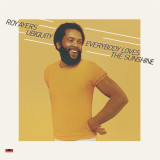
In "Everybody Loves the Sunshine" (1976), Roy Ayers seamlessly blends genres, creating a timeless sound that continues to influence musicians and DJs around the world. He makes the vibraphone the central instrument, a jazz-funk approach that defines his unique style. Over time, the album has remained an essential reference in Roy Ayers' discography and in the history of 70s Black music. Summertime soul classic! 180g vinyl.
In 1976, legendary musician and composer Roy Ayers released one of the most iconic albums of his career: "Everybody Loves the Sunshine." This album not only solidified Ayers as a key figure in the world of jazz-funk but also marked a milestone in soul music and contemporary jazz. It features a sophisticated blend of irresistible grooves, smooth melodies, and a unique sound that has endured over the years, becoming a reference for multiple generations of musicians and listeners.
By the mid-70s, Ayers had already established his reputation with his band, Roy Ayers Ubiquity, and his distinctive use of the vibraphone, which became his personal trademark. However, with this album, Ayers ventured into a smoother, more accessible sound, partly in response to the rise of disco music and the growing interest in more experimental sounds within the music scene. Throughout its ten tracks, Ayers managed to create a sonic atmosphere that evoked both the warmth of summer and the sophistication of jazz from that era, set against a backdrop of modern soul. The production was carried out by Ayers himself, along with his producer and friend, David R. Williams, and features the wonderful sound of Phillip Woo's Fender Rhodes and the powerful energy of the rest of the band, achieving an unmistakable authenticity and freshness. Some of its most well-known songs include the title track, ‘Everybody Loves the Sunshine,’ ‘The Golden Rod,’ and ‘The Third Eye,’ which quickly became classics of jazz-funk and soul. This album is crucial in Roy Ayers' career, as it demonstrates his ability to remain relevant and creative in an ever-changing music industry. Over the years, "Everybody Loves the Sunshine" has become a cult album, frequently featured in DJ sets by artists like Gilles Peterson, Theo Parrish, and Lefto. Summertime soul classic!
Oh yes, we love it when Theo represses some of his most sought after tracks and this one is particularly well-timed. Leron Carson is still an unknown figure, a kid who used to make viciously raw and futuristic techno tracks in the late 1980's! "China Trax", alongside the rest of his tracks on a different Sound Signature double 12", is totally ahead of its time and if it was truly made in 1987 then it is nothing short of amazing. Of course, it's not just the year it was made in that's interesting but also the fact that it's music without an age, able to be appreciated by any generation of techno freaks. Theo's own "Insane Asylum" on the flipside is also pretty monumental; rigged beats, off-kilter grooves and that familiar spontaneity so heavily associated to the label. RECOMMENDED.
out of Stock
Last delivered 14 months ago available to reorder, subject to availability
Returning to an aphotic minefield of sound – Seismic Records is back with its third release, Drum Ring, crafted by Norwegian producer and Ute Records co-founder Ekkel. Emerging from the forests of Nordic electronic heritage, Teo Bachs – aka Ekkel – channels the raw energy of ’90s progressive sounds into his mind-bending productions. From the studio, his signature blend of breaks and intricate percussion create soundscapes that are as cerebral as they are propulsive. Titled Drum Ring, the EP captures the feeling of a complete mental trip through a narrative of tension, ancient textures, and enchanting melodies.
Poised with a sense of urgency, the A-side unfolds with a neatly rolling rhythm. Hradec Fog Fever builds a controlled frenzy of percussive elements, with layers stripping in and out, consistently driving the track forward. Slipping into A2, Owl Foot casts a sonic mist, a haze that tentatively creeps forward, flickering between atmospheric dips and shadowy contours. Vocal-cut whispers transcend through the soundscape, shy yet impactful, drawing you closer. It’s a tender introduction to a minimalist, dark progressive journey – a delicate balance of intrigue and mystery, where each sound lingers like a secret waiting to be discovered.
The B-Side strikes with poignant, powerful drum kicks that reverberate through layers of distortion. Drum Ring displays echoes of tension and unease, building a restless energy that urges deeper introspection. Ancient, enchanting tones weave through the chaos, grounding the frenetic soundwaves in something timeless and mystical. Sealing the EP, Endphase begins with faint, distant string notes that offer a fleeting, hopeful moment of rest. Growling chords and textures swirl, edging you to a meditation, only to be punctuated by sharp, deliberate drum patterns, adding a sense of momentum and purpose – a glimmer of light breaking through the mist. Experience the full cycle of a delicate trip as Ekkel guides you through Drum Ring – a precious and dark progressive journey.
out of Stock
Last delivered 15 months ago available to reorder, subject to availability
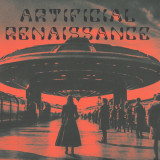
Welcome to the era of “Artificial Renaissance”. Humanity and technology stand at a crucial and fundamental intersection. Echoing past cultural revolutions in a modern, technologically advanced world, everything is set to be redefined—our lives, our thoughts, and the way we move forward.
Dutch EBM/synth duo Staatseinde returns with “Artificial Renaissance”, an electrifying new mini-album. Fusing the urgency of classic EBM with the boldness of futuristic synth-punk, the band crafts an interstellar sonic journey fueled by pulsating rhythms and dystopian narratives.
The album blends space punk, italo-disco and electro into a dark, cinematic exploration of rebellion, euphoria, and dystopia. “Space Scream” launches with a cosmic punk battle cry, while “Tanzverbot” pulses with defiant energy against restriction. “Suicide Tuesday” captures post-club emptiness with shimmering 80s nostalgia, and “The Trip” unravels themes of environmental doom. “Freight” propels an italo-disco-infused space odyssey tackling exploitation, while “Une Mémoire Sans Fin” dives into AI’s eerie hold on human emotions. The fast-paced “Mutant Whispers” transforms the dancefloor into a space of fluid identity and resistance, closing with “The Mansion”, a hypnotic synth-driven descent into surreal miscommunication.
With “Artificial Renaissance”, Staatseinde ventures into unexplored sonic territory, expanding the boundaries of their lyrics, balancing artificial futuristic aesthetics with raw human emotions. As the lines between past and future blur, their pulsating music reminds us: the new age is already here.
out of Stock
Last delivered 15 months ago available to reorder, subject to availability
Wilson Tanner come to shore with a new album of floating melodies, lightly salted. Throwing electroacoustic conventions overboard, Andrew Wilson (Andras) and John Tanner (Eleventeen Eston) recorded this new work aboard a 1950s riverboat with a resourceful array of weatherproof electronic instruments and a long extension lead. These eight compositions pull in a by-catch of maritime folklore; of Siren and Selkie, Seagull and engine oil slick. A change of course from their debut album 69 (Growing Bin Records, 2016), the ambient temperature drops as II casts out to sea in uncertain weather and returns to the safe harbours of Port Phillip Bay.
The seafarers head out to My Gull's poised optimism. The birds watch but do they listen? By the arrival of Loch and Key, the shoreline has dissolved completely, the boat floating in serene infinity as the rest of the world spins. Conditions soon take a treacherous turn on Killcord Pts I-III - a 12 minute odyssey that battens down the hatches as these sailors eye merciless waves and blinding ocean spray, jointly channelling Berlin-school electronics and sea legs. In the aftermath, the waterlogged bleeps of Idle survey the damage as our parched crew sound the distress signal and ultimately descend into delirium.
Known for navigating individual courses as solo musicians, Wilson and Tanner's collective storytelling is saturated in detail, buoying between tension and harmony. II modestly stands as some of both artists' most accomplished material.
out of Stock
Last delivered 5 months ago available to reorder, subject to availability