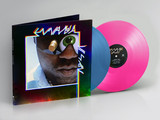
Durban's 23 year-old producer Emo Kid has announced he is to release eight-track debut EP, 'Gqomtera', through Gqom Oh! on September 22nd. Although titled 'Gqomtera', which Emo Kid explains is a slang term he and others use for the music, the record actually explores Sgubhu — another strain of South African dance music that shares many stylistic parallels with Gqom, though is always written with a 4x4 beat. Like DJ Lag before him, an artist widely considered the king of Gqom, Emo Kid is also considered a pioneer in Durban; 'Some people call me the Sgubhu king, but I'm just happy they're enjoying my music', he says. Based in Inanda, in the Etafuleni area township in Durban, Emo Kid's house looks out over an area called Isandlwana — the spot where the Zulu army famously defeated the British Army in the Battle Of Isandlwana in 1879. It is from this backdrop that he has written the majority of his music over the last few years, including new record 'Gqomtera'. At eight tracks long, 'Gqomtera' provides a comprehensive overview of the Sgubhu sound, with the aim of taking the listener on their own 'Durban Journey'. 'I wanted to show the uniqueness of my own style which I would describe as more musical', Emo Kid explains, 'you can feel the music when you listen but it still hits hard with that Gqom flavour.' That Gqom flavour, powered by hard, fast, uncompromising drums, provides a solid core from which everything else functions. Bright, shimmering trance synths feature on 'Futuristic Gqom', while on 'Enkwarini' — 'another word for a party or fantastic get together' — vocalist Fawell skips over light, playful Sgubhu rhythms. There's also space for harder, deeper cuts like 'Ground Shaker', cut with a twinkling melody line, the charging pace and power of 'Insimbi Yase Dubane' and the anthemic 'Asbambeki' featuring local crew TLC Fam, translating loosely to being unstoppable; 'It means you can't catch us basically', Emo Kid says proudly, 'On the dance floor, you can't touch us, we're on fire.' Capturing the raw, street sounds of his city, Emo Kid is the latest Durban artist to take the music global and with 'Gqomtera', put Sgubhu firmly on the map.
Underground Jazz, Street Funk & The Roots Of Rap 1968-79. Soul Jazz Records' new release 'Soul of a Nation: Afro-Centric Visions in the Age of Black Power' is released in conjunction with a major worldwide art exhibition, Soul of A Nation: Art in the The Age of Black Power which takes place at the Tate Modern, London, UK (July-Oct 2017) and The Brooklyn Museum, New York, USA.
The album shows how the ideals of the civil rights movement, black power and black nationalism influenced the evolvement of radical African-American music in the United States of America in the intensely political and revolutionary period at the end of the 1960s following the assassinations of Malcolm X, Martin Luther King and the rise of the Black Panther party.
Featuring groundbreaking artists such as Gil Scott-Heron, Roy Ayers, Don Cherry, Oneness of Juju, Sarah Webster Fabio, Horace Tapscott, Phil Ranelin and many others, Soul of A Nation shows how political themes led to the rise of 'conscious' black music as new afro-centric styles combined the musical radicalism and spirituality of John Coltrane and radical avant-garde jazz music alongside the intense funk and soul of James Brown and Aretha Franklin and the urban poetry and proto-rap of the streets.
The Soul of a Nation exhibition draws on the links between Black art forms - art, music, poetry - and how they came together during the civil rights and black power era as part of the wider black arts movement across the United States.
Iconic African-Amercian revolutionary figures such as Martin Luther King, Malcolm X and Angela Davis, John Coltrane, Muhammad Ali all appear in the radical artworks of Barkley L. Hendricks, Romare Bearden, Norman Lewis, Lorraine O'Grady and Betye Saar.
A selection of original radical jazz record sleeves artworks which appear in Soul Jazz Records' earlier groundbreaking Freedom, Rhythm and Sound - Revolutionary Jazz Original Cover Art book will also be on show at the Tate, London throughout the exhibition. The Freedom, Rhythm and Sound book is also newly back-in-print in conjunction with this major exhibition and the release of the Soul of a Nation album.
Stuart Baker (founder of Soul Jazz Records) will appear on the panel of Jazz for Soul of a Nation: Art in the Age of Black Power discussion at the gallery as part of the show. Soul of a Nation comes with extensive sleeve-notes and exclusive photography in a large 36-page outsize booklet and slipcase. Double gatefold vinyl album edition comes with full colour inners + bonus download code and includes full sleeve-notes/photography.
out of Stock
Last delivered 3 years ago available to reorder, subject to availability
With FBNM now celebrating their fifth year of operation, Lorenzo has marked the occasion by assembling his biggest project to date - an impeccably curated collection of obscure Italian production music circa 1974 - 1985. The project, nearly a year in the making, has been very close to Lorenzo's heart - beginning unexpectedly in the record fairs of Buenos Aires and leading him on several trips to Rome and Milan, tracking down the original musicians and licensors.
"In this compilation, I have tried to include some of the most interesting cuts I have collected over the years. Tracks like the entirely electronic "Nitrogen" from Alberto Baldan Bembo's "Sound Orchestra" LP on Star Track Records, featuring a wild evolving bassline leading us through frantic rhythmic experimentations. "In the Space", by French born composer Albert Verrecchia and taken from Italian poliziesco drama 'Il Tempo Degli Assasini' (Season for Assasins), tells the tale of wistful longing, played out with serenity on strings and keys, but unexpected interruption from its stop-start arrangement brings an unforeseen tension into the mix... And how could I not include the wonderfully charming "Screw Driver" by Fabio Fabor, from his collaborative album "Superman" with a young Antonio Arena. Featuring an orchestra of beautifully programmed ARP and Oberheim sonorities alongside the Commodore 64 programmed graphical artwork by Antonio Arena himself."
The music itself was partly sourced from Lorenzo's own collection, archived and then restored especially for this release. Where possible, tracks (such as "Vision", "Nitrogen" and "Blue Magnolia") have been lifted directly from the original master tapes kindly lent by the repertoire owners. Every track, however, has been carefully restored, remastered and cut for vinyl by the cautious hands of Andreas (LUPO) Lubich at Calyx Mastering, Berlin.
Deconstructed royal-court music from the forgotten kingdoms of the Buganda, reconstructed electronic wedding music, fluorescent pink African pop, crunched 8-bit drum machines and a 10-foot long monster xylophone are just a few of the many sounds of Ennanga Vision.
This post-modern African soundtrack follows London producer Jesse Hackett's heady musical journey into the heart of Uganda - recording with chief collaborator, multi instrumentalist and singer Albert Ssempeke and featuring assorted vocal legends from the north of the country. The music blends a fully electronic sensibility with unusual, hand-crafted, African one-string fiddles, a 200-year-old harp and an enormous, group-played xylophone. It mixes traditional Ugandan folk songs and modern pop forms into a new PLASTIC ORGANIC VISION.
Hackett is influenced as much by the music of the African continent as he is by European electronic compositions and soundtrack scores. The sounds of hauntingly-dark vocoded vocals, crushed electronics, and poly-rhythmic drum machines sit alongside chiming African fiddles, rippling harps and children's laughter. He is a member of Owiny Sigoma band having sung on and co-written a lot of their work spanning three albums. He is also touring keyboard player for the Gorillaz and has released records on Stones Throw, Honest Jon's and DEEK Recordings, to name a few.
Albert Ssempeke is the son of a prestigious royal court musician who played in the days of the old Buganda kingdom - one of more than twenty five musical siblings, Albert is simultaneously an educator, performer and preservationist of this intricate and complex traditional form of music. Here he plays over ten traditional Ugandan instruments including Amadinada (xylophone), Ngindidi (fiddle), Endongo (harp), Ennanga (flute) and many more
Deconstructed royal-court music from the forgotten kingdoms of the Buganda, reconstructed electronic wedding music, fluorescent pink African pop, crunched 8-bit drum machines and a 10-foot long monster xylophone are just a few of the many sounds of Ennanga Vision. This post-modern African soundtrack follows London producer Jesse Hackett's heady musical journey into the heart of Uganda - recording with chief collaborator, multi instrumentalist and singer Albert Ssempeke and featuring assorted vocal legends from the north of the country. The music blends a fully electronic sensibility with unusual, hand-crafted, African one-string fiddles, a 200-year-old harp and an enormous, group-played xylophone. It mixes traditional Ugandan folk songs and modern pop forms into a new PLASTIC ORGANIC VISION.
Hackett is influenced as much by the music of the African continent as he is by European electronic compositions and soundtrack scores. The sounds of hauntingly-dark vocoded vocals, crushed electronics, and poly-rhythmic drum machines sit alongside chiming African fiddles, rippling harps and children's laughter. He is a member of Owiny Sigoma band having sung on and co-written a lot of their work spanning three albums. He is also touring keyboard player for the Gorillaz and has released records on Stones Throw, Honest Jon's and DEEK Recordings, to name a few. Albert Ssempeke is the son of a prestigious royal court musician who played in the days of the old Buganda kingdom - one of more than twenty five musical siblings, Albert is simultaneously an educator, performer and preservationist of this intricate and complex traditional form of music. Here he plays over ten traditional Ugandan instruments including Amadinada (xylophone), Ngindidi (fiddle), Endongo (harp), Ennanga (flute) and many more
Espen Beranek Holm is a Norwegian musician and comedian, born 1960 and began his music career as a clarinetist. Inspired by early synthesizer bands Kraftwerk and The Residents, he began making experimental pop music. His debut single Dra te' hælvete' was released in 1981 and was immediately banned by national TV/radio channel NRK due to explicit lyrics. This gave the young artist tons of publicity, helping the single spend almost 6 months on the national charts.
Beranek returned to the Starholm Studios in Oslo from June - September 1981 to record nine new compositions. His debut album, Sound of Danger', was released on Mind Expanding Records in November 1981. Nowhere near as accessible as the previous single, the album fared poorly commercially. Withdrawing from the single's fun, kitsch pop, the album is cool and static, driven by thin rhythm boxes, cold synths, and glacial guitars. Taking heavy cues from David Bowie, all of the songs are sung in a nasally English accent, a rare occurrence in Norway at the time. The lyrics are melancholic, but tinged with paranoia. There are also upbeat tracks that evoke a prog or glam sensibility a la King Crimson, Alan Parsons, or Roxy Music.
All songs have been remastered for vinyl by George Horn at Fantasy Studios in Berkeley. Housed in the original jacket featuring red, black, and white lines that evoke a visualized Richter Scale designed by Monica Moltzau. Each copy includes a 2-sided 8x11' insert with lyrics and an autographed press photo of Beranek.
*Singer-songwriter Amelia Harmony is a welcome addition to the Partial Records roster. Although relatively a new comer, over the last few years, Amelia has been playing with bands of varying genres and styles in and around her native Derby, as well more roots reggae-orientated releases on labels such as King Earthquake, Instrument of Jah, Mellow Vibes and her own recently established Soulshine Music label.
*`Fear and Love' is an uplifting rootsy steppers rhythm with a positive message and soulful vocals topped off with some tasteful acoustic guitar licks. Amelia's delivery oozes cross-over appeal. We will be hearing lots more from her.
*Produced by Liam McGurk for his own well-established Partial Records label.
*The Dub version is mixed by UK dub master legend Dougie Wardrop at Conscious Sounds studio, London
First issue of this previously unreleased Oriental psych monster from the organ king of Casablanca, combining traditional rhythms with spaced out modern sounds. Second part of Abdou El Omari's Nuits-trilogy. This albums contains heavenly compositions for The Moroccon diva Naima Samih and some moody instrumentals in a similar vein to the previous album.
COMPILED BY PETE PASQUAL, ERICA OLSON & DJ KINETIC
Following on from acclaimed compilations like 'Down Under Nuggets' and 'Heavy Soul' (and two other new titles 'Running The Voodoo Down' and 'Dodgy Bossa (& Silly Sambas)' - details below), Festival Records presents another deep dig into the archives, this time shining a light on rare Australian soul-jazz, jazz-funk, and freaked-out groove rock from the late '60s and '70s.
BACK ON THE STREET AGAIN - AUSTRALIAN FUNK, SOUL & PSYCH (MOSTLY) FROM THE FESTIVAL VAULTS is a stunning 20 track CD and 2LP release that highlights a point when the previously disparate styles of rock, jazz and soul all started influencing each other, and exciting new genres were created. To quote the liner notes (by DJ Kinetic):
Australia produced some amazing music during the 60s and 70s that sat outside of the normal rock mould. Avant guard artists like John Sangster pushed boundaries and experimented with the fusion of local and overseas influences, artists like Dalvanius recorded soaring disco music that was lost amongst the popular music of the time, only to be rediscovered by DJs overseas who were searching for unknown sounds, composers like Brute Force and His Drum took risks and recorded left-field funky sounds hidden within their more mainstream compositions, and popular artists like Billy Thorpe occasionally strayed from their A&R directions and took leaves from the books of American artists who were largely unknown in Australia at the time. Beneath the veneer of bland rock and roll lay an unknown multitude of funky sounds hidden from mainstream view.
In addition to the artists that Kinetic mentions (and the compilation features two John Sangster tracks - stunning versions of 'Hair' and the Beatles' 'A Day In The Life'), the collection includes iconic names of the era like the Daly-Wilson Big Band (featuring Kerrie Biddell), Renee Geyer and the Johnny Rocco Band. '60s sides from Ross D Wyllie and The ID (featuring Jeff St John) reveal the various styles' roots in American rhythm & blues, and the unexpected inclusion of some legendary Australian rock outfits like Tamam Shud and Blackfeather reveals the psychedelic and progressive rock influences at play. The full range of the music is highlighted by the inclusion of both cabaret/daytime TV performer Al Styne and outrageous Kings Cross club act Count Copernicus & The Cosmic Fire as well as the in-house studio 'pops' orchestra, Festival Studio 24 Orchestra.
Co-compilers Pete Pasqual, Erica Olson and DJ Kentic to undertake interviews with specialist media around release. Facebook ad's around release.
Bordello A Parigi. Ali Renault. A gin and tonic combo if there ever was one. The UK synthesizer savant lands with a four tracker of leftfield electro pop. 'Altro Mondo' screams out of the traps, bulbous bass lines elbow sweetened chords and snapping beats. 'Fume' grows from the same soil. Analogue warmth is brushed, even bruised, by the crack and whip of rhythms; a touch of EBM bitterness blended with Italo hope. Nowhere is this more evident than in...'Nowhere', a buckled dancefloor romp with the king of Milano, Fred Ventura, offering vocals. Uabos maintains the tension for the finale, uplifting house currents coursing through his remix of 'Lenticular'.
Heavily grounded in the UK Steppas sound from the late 90's, Adam Prescott has enlisted the help of UK veteran, King General, on his latest single, 'World Gone Crazy'. King General steps up with real conscious lyrics backed by AP's rootical rhythm section, the duo come together to provide a reality check. On the flip, Adam's Dub is a stripped back, raw take on the original, in true dubwise fashion. Expect real heavyweight digital pressure built to test any sound system.
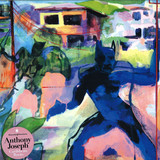
Strut team up for the first time with respected French label Heavenly Sweetness for the brand new album by the inspired poet, novelist and musician, Anthony Joseph.The Caribbean is an influence that runs through Joseph's discography, obliquely or headon, suggested or on full display. It resonates on each of his albums, from the furious trance of 'Bird Head Son' to the more polished 'Time'. On 'Caribbean Roots', he has now decided to turn a guiding thread and a reference point into a communications cable - a powerful bond that makes light of distance and braves the seas to link his island to that of his friends in the Caribbean arc, dancing to the strains of tumbélé and mendé only a few miles
from Port of Spain where people live it up to rapso and soca beats. Caribbean Roots' represents a return to his roots for Anthony Joseph, who has always remained true to a powerful, deep-seated sense of his Caribbean identity. Having started
out as a joint project with the outstanding percussionist Roger Raspail (Cesaria Evora, Papa Wemba, Kassav), 'Caribbean Roots' swiftly grew into a creative force incorporating
the rhythms, sounds and vibes that rock the Caribbean from San Fernando, Scarborough, Kingston and Les Abymes to Port-au-Prince and Havana. Backed by a band made up
of a blend of local musicians, the album attempts to unite the different islands into a single entity whilst ensuring that the identity of each is in no way diluted by the mix instead creating a richer and stronger alloy. The saxophones of Shabaka Hutchings (The
Heliocentrics) and Jason Yarde, the trumpet of Yvon Guillard (Magma), the bass of Mike Clinton (Salif Keita) and the trombone of Pierre Chabrèle (Creole Jazz Orchestra) all combine to form a group of Caribbean All Stars to which Andy Narrell, the master of the steel pans, brings ringing drum beats. The album features bursts of catchy rhythms and slow percussive riff progressions, as on a film soundtrack, incandescent voodoo funk and rhythmic high-speed frenzies shot through with free-jazz sax. This reunion of the Caribbean diaspora was never meant to come up with a formula divisible into eleven separate tracks - its goal was to explore and discover new sounds. And all of this under Anthony Joseph's guidance, as he spins his lyrical blend of afro-futurism and surrealism, commemorating the Caribbean people's sometimes violent resistance to colonialism. Anthony Joseph, one moment a chronicler reciting his text against a background of simple percussion, the next a storyteller possessed by the power of a hypnotic bassline, then an adventurer chanting among mangroves where the rhythm section and the brass have created an impenetrable thicket. At turns, an MC too, strutting to a fat, throbbing groove in vocal tandem with Sly Johnson or David Rudder to pay tribute to Mighty Sparrow, the undisputed and indisputable king of calypso
St. Petersburg talent Ivan Latyshev drops a killer EP on the ever-dependable Dessous Recordings. Ivan has been making waves over the past couple of years with his distinctive brand of deep, groove-heavy house music on labels such as What's in the Box, Street King and Spaghetti Monster - but this To My Youth EP sees the young Russian step up to another level. The title track shows a deep affiliation for classic house vibes, mixed with some jazzy flourishes and swung grooves. The sense of euphoria is tangible, and the spoken word vocals add a level of house mysticism that will be always welcome on deeper leaning dance-floors. Can't Go Away goes a shade deeper still, bringing layers of delay and reverb to the track that help shape a true slow burner. Old Ages also highlights Ivan's love of jazz rhythms and sounds, building from a live drum break into a rolling deep house monster - it's infectious stuff and suggests Ivan Latyshev is going to be name to watch in the next months and years.
The Sound Of Young Jamaica - More Early Cuts From The Vaults Of Studio One 1959-63
This is the second collection to bring together many of the visionary producer Clement 'Sir Coxsone' Dodd's early recordings made with Jamaica's most exciting young artists and musicians who helped define the world of reggae music over the decades following Jamaican Independence. These recordings were made when Sir Coxsone ruled the dancehalls of Kingston in the late 1950s and early 1960s with his number one Downbeat Sound System, where songs were tested out on dub plates at a dance to see a crowd's reaction - the most popular of which were then released commercially. Featuring early material by Roland Alphonso, Don Drummond, Tommy McCook (all of whom would form The Skatalites), Toots and The Maytals, young singers such as Bob Marley and The Wailers, Delroy Wilson, Owen Gray all captured in their formative days. The music here spans a wealth of styles - Jamaican rhythm and blues, jazz, gospel, proto-ska, Rastafarian - all of which were drawn upon to create the future sounds of Jamaican reggae that Sir Coxsone and the artists featured would soon create at Studio One which opened its doors in 1963. This collection is released on heavyweight triple-vinyl plus download code and double CD with slipcase. Sleevenotes and text is by the author Noel Hawks.
After last year's well recieved album 'The Phoenix', King Britt returns under his Fhloston Paradigm moniker for the first in a series of 'Cosmosis' EPs. 'Cosmosis Vol 1' is three spacey perfumed hardware workouts of the kind that Fhloston Paradigm built his name on. The EP starts with 'Sonic Six', matching bumping drum machine rhythms with gurgling bleeps, and mournful strings building the emotion through the noise.The second track is the slowly evolving ambience of 'Faith', which builds up into radiant, shimmering clouds of sound before a bass line drops midway, grounding the track melodically and switching the emotion from ecstatic to bittersweet. The EP closes with 'Past', where broken sounds are dragged over a warping piano line, and a flickering static melody engulfs the track as the noise dies out. 'Cosmosis Vol 2' will follow early in 2016 ...
Norman Jay MBE presents his latest compilation, titled 'Good Times Skank & Boogie', set for release 9th October 2015 on Sunday Best Recordings. This is his first compilation since 2011's Good Times 30th Anniversary Addition and follows on from his hotly anticipated Good Times Goes East party at St John Church at Hackney on 29th August.
Norman Jay is undoubtedly one of the finest and highly respected DJs in the world today and yet again pulls from his impressive collection to provide the ultimate eclectic selection.
For this 12th compilation, for those of you counting, Norman kicks off with St Germain's version of Henry Mancini's Pink Panther Theme. A cult favourite from 2004s Pink Panther Penthouse Party album, it of course immediately brings Peter Sellers to mind and a smile to your face. Next up former Uniques front man Slim Smith's Everybody Needs Love is a classic from 1968, cut at the legendary Duke Reid's Treasure Isle studio. Penned originally by Motown heroes Norman Whitfield and Eddie Holland and covered by household names including The Temptations and Glady's Knight & The Pips, Slim's version became something of a signature tune until his mysterious death in 1971. Sticking with Motown, Stevie Wonder's Living For The City is up next but it's the Michael McDonald rendition from his 2008 album Soul Speak, which proves the man who gave us the sublime Sweet Freedom had lost none of his class 20 plus years on.
D-Influence's Good Lover takes things up and brings them closer to home, to the streets of London infact. After a couple of independent releases the band, who had strong connections to the London Jazz and Soul scenes, served up this contemporary boogie tune as part of their 1992 debut long player for East West. They would subsequently score hits as a production team for a number of British R&B acts. Homegrown soul continues with Paul Johnson's Better Than This, released here via longstanding UK soul imprint Expansion to deserved acclaim last year. It's quality and appeal are simply timeless, whilst master Dego and Kaidi's mix adds a classic 80s soul dimension to proceedings.
The Chi-Lites I Keep Comin' Back To You and The Real Thing's Love Takes Tears continue and expand the 80s theme, bringing in 2-step and boogie, as does Deodato's Never Knew Love from the same period.
We switch again with Delroy Wilson's Better Must Come, a massively popular sufferers lament from 1971 by this former Jamaican child star, it would go on to be used in election campaigns by various Jamaican political parties. Kent People by Laurel Aitken & The Gruvy Beat is the next one out the box and was the flip to the 1969 anthem Skinhead Train. It features the UK's top reggae band of the era The Rudies, who along with Aitken, the widely-proclaimed Godfather of Ska, comprised of Earl Dunn (lead guitar), Trevor White (bass), Sonny Binns (keyboards) and Danny Smith (drums). They would go on to enjoy UK chart success backing singer Freddie Notes before they evolved into Greyhound. From the same year Splash Down by The Crystalites is another slate that ignited dance floors in both Jamaica and the UK upon release. Some of you will have noticed the rhythm track is the same as that of the earlier Kingstonians' best-seller, Sufferer, which came courtesy of legendary producer Derrick Harriott.
As the end draws close The Stone City Band featuring Rick James serve up some hard edged boogie, hotly followed by a classic Tom Moulton slice of late 70s disco courtesy of The Fantastic Four and their I Got To Have Your Love. If that doesn't have you dancing then Chanson's superb Don't Hold Back featuring James Jamerson Jr. on bass will leave you no choice. Classic Good Times indeed.
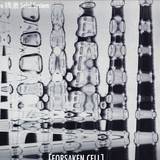
Defined as an independent entity, drawing its inspiration from the deconstructed walls of an imaginary and utopian society where music is king and artist is servant, Forsaken Cell is a Paris and Lyon based structure composed of a small ravers community, aimed to show an indie, radical and experimental face of the french underground scene.After showing a raw and anarchic vision of techno with Deikean's debut release, the Forsaken Cell keeps on exposing a radical and experimental face with, this time, a brighter and oniric aspect. This EP, debut of TheSolid System, presents itself as a fine mix of industrial and psychedelic textures inspired by the diversity and eclecticism ubiquitous in the rave culture. Thus this character, as discreet as he is, shows up at the scene: naked, assuming from the outset to be as much influenced by the bass music sharp rhythmic and dusty textures of industrial dub techno, that warm colorings and transcendent sounds of psychedelic music.
out of Stock
Last delivered 10 years ago available to reorder, subject to availability
Bunny Lee's Flying Cymbals or flyers rhythms dominated the Dancehalls and the charts during 1974 and 1975.The style based around the Philadelphia disco or the Philly Bump ,the sound of an open and closed hi-hat was not necessarily novel but Striker's innovations of bringing a number of different elements into play most certainly was.
Johnny Clarke's interpretation of Earl Zero's 'None Shall Escape the Judgement' not only opens this se but also opened the floodgates for the flyers style.
The story had begun the previous year with Lowell'Sly'Dunbar.
'Sly played the flying cymbals first'....I said to Sly' You played it on the Delroy Wilson tune for Channel One named 'It's a Shame' AND Sly played it before that was with Skin, Flesh & Bones on 'Here I am Baby Come and Take Me' the Al Green tune, when Al Brown sung it for Dickie Wong with the 'tsk,tsk,tsk' sound on the hi-hat,I named it flyers but they didn't know what flyers was!!!'..Bunny Striker Lee
Before too long 'Every tune we put out we put the rhythm behind it' and every Kingston producer followed suit with their own variation of Striker's Flying Cymbals Rhythms...........
Leroy Smart the self proclaimed 'Don' carries much respect in the Jamaican musical community, he came through the Alpha boys school in Kingston that provided us with the cream of Jamaican artistic talent.
Such legends as Don Drummond,Tommy Mc Cook and Johnny Dizzy Moore to name but a few.
Leroy Smarts talent lay in his vocal attacking style that gives his lyrics and tune that extra meaning.
His best work came in the heady mid 70's working with 'The Hitmaker from Jamaica' Mr.Bunny Striker Lee.
Bunny put Leroy Smart on some of his best rhythms starting in 1973 with 'God Helps the Man' and 'Wreck up my Life'.
Other killer hits were to follow such as 'Mr.Smart','Pride and Ambition','Bad Minded People' and the attacking 'Mr.Richman'.
All tracks telling it like it is.............
We have compiled all these cuts together,every song a story in itself,told only as Leroy Smart could.
Tapper Zukie's 'Man from Bosrah' album still stands up today many years after its initial release, as only great music seems to do.
Tapper was one of the few Jamaican artists in the late 1970's that crossed over with the emerging punk/new wave audience.
Punk poet Patti Smith had practised her poetry over the rhythms from Tapper Zukies 'Man Ah Warrior' album, before reworking them as songs with her band.
Acknowledging this influence she brought Tapper on stage with her at the Hammersmith Odeon 23 October 1976 and introduced Tapper to a whole new audience. An audience that accepted Reggae as a music that also dealt with struggle and oppression.
The great cover shot shows Tapper standing at the back gates of the school yard in Trench town which was opposite his own yard...so sit back and hear what was happening back then that made this such a time defining album....
The productions of producer Bunny 'Striker' Lee were so extensive in the early to mid 1970's that labels were created just to handle his ever expanding output.
Three labels that came about during this time when dub was king were Jackpot. Justice and Attack.
Here we look at the Jackpot label and have compiled a collection of some of its finest dub cuts.
Jackpot Records was formed in the early 1970's as a subsidiary of Trojan Records to handle the output from the hitmaker from Jamaica..Bunny 'Striker 'Lee
Bunny was at the birth of dub and worked closely with Dubmaster King Tubby,having his masters stored at Tubbys allowed his rhythms to be worked on by Tubby, whether it was to remix or add vocals to an existing tape,the new interest in the dubbed version would see the next single being worked on for its version side.
We have gathered here what we think are some of the best dubcuts from this label and era..
Hope uou enjoy the set
Lee Perry's time at WIRL Records, later to be renamed Dynamic Sounds Studios, was a very productive time
in his career. A run of great singles and the shaping of a new sound, the beginning of what we know today as
Reggae .
Lee Perry (b. Rainford Hugh Perry, 28 March 1936, Hanover,Jamaica) began his entry into the music business at
the age of 16.Moving up to Kingston Town and working around various Sound Systems, before finding
employment at Coxonne Dodd's Studio One set up, in the late 50's early 1960's. Perry started out as a record
scout, organising sessions and supervising auditions at Dodd's record shop on Orange Street. Helping to make
hits for Delroy Wilson ( 'Joe Liges','Spit In The Sky') and the Maytals, which would lead to his own vocal records
released through Studio One.The musical backing for which, came from legendary Studio One house band The
Skatalites. Another important relationship for Perry, his first recordings with Bob Marley came in the form of
the Wailers, also providing backing, alongside the Soulettes who featured Rita Marley. Cutting such tunes as
'Chicken Scratch' around 1965/1966. This tune was also to provide him with one of his future nicknames
'Scratch'. A dispute over credits and money saw Perry leave Studio One and work with various producers
including Clancy Eccles and J. J. Johnson, before arriving at the door of producer Joe Gibbs in 1967. Here he
would write songs and produce hits for artists such as, Errol Dunkley and the Pioneers. A tune cut during his
time with Gibbs, voiced a snipe at fellow employee Dodd, a trademark that would become an outlet for his
frustrations in the business.This particular tune 'The Upsetter' would also provide another moniker and a name
for his label 'Upsetter'. Again lack of musical credit and financial reward saw Perry move on this time to WIRL
(West Indies Records Limited) Records, working alongside manager Clifford Rae, who would provide studio
time and pay for pressings in return for helping to promote and distribute WIRL product, which Perry would
carry out on his trusted Honda 50 motorcycle around Kingston town.
This period at WIRL saw some inspired work from Perry. 'Run For Cover' was another musical blow to a
previous employer, Coxonne Dodd and featured the Sensations on backing vocals and Lynn Taitt's guitar
picking skills. 'People Funny Boy' was a massive hit for Perry going on to sell over 60,000 copies. Joe Gibbs
would be at the end of this musical attack. Perry had felt Joe Gibbs had turned his back on him, after he had
provided hits for groups like, The Pioneers amongst others. The song would be one of the first records to
feature a New Beat (Reggae) inspired by the sounds coming out of a Pocomania Church, Perry had heard one
night.The congregation inside, wailed in a more slower way than the current musical style of the time Ska!. Perry
worked up this new style with Clancy Eccles, who would come under attack himself in 'You Crummy'. Their
closeness, which as detailed in that song would find them, 'Even shared the same Gal' but 'Now it's plain to see we
reached the end'. 'Set Them Free' was an answer record to Prince Buster's 'Judge Dread' (which had
featured Perry on it) a plea to the Judges in Jamaica that handed out extremely harsh sentences to the young
offenders of the time. The track was cut on the same rhythm as 'Run For Cover' . 'Django Shoots First'
inspired by the Spaghetti Western film of the same name, features Sir Lord Comic. One of the early DJ's who
used a jive talking style over rhythms. 'Night Doctor' was a hit instrumental that featured the organ talents
of Ansel Collins, that really push the tune along. 'Something You Got' was a cover of an USA R& B track by
Chris Kenner and 'Wind Up Girl' was cut at the same session. 'Water Pump' was a rude style track that
was cut later and originally released in 1974.As was 'People Sokup Boy' a later version of 'People Funny Boy'.
'Labrish' which means idol talk and gossip, was one of the first great talk over tunes that features Lee Perry
and producer Bunny 'Striker' Lee talking about the Political situation in Jamaica at the time and their own
financial situation and stories of various comrades.The track was originally released in 1973.
Bunny Lee would play a major part in lee Perry's career around this time and they were very close, often
sharing sessions and rhythms. Ironically it would be Bunny Lee that took over Perry's roll at WIRL and become
responsible for the labels products in years to come. Clifford Rae who give control to Bunny for a lot of the
WIRL product and even gave him his shop 101 Orange Street. So here we have a collection of music born out
of a time spent at WIRL Records and providing an important chapter in Lee Perry's career and indeed to the
story of Reggae itself.
Hope you enjoy the set.
Niney the Observer is well known for his great productions,collaborations,with the likes of Dennis Brown and for some of the best rhythms to come out of Jamaica.Maybe less known is that he began in the music business as a singer.Here for the first time is a collection of songs culled from his career that feature the outstanding voice of the Observer himself.
*Niney the Observer (b.Winston Holness,1951,Montego Bay,Jamaica) grew up in Montego Bay, Jamaica and began singing in school bands in and around the area and the nearby town of Lucea,where one of the bands he sang with,featured future Studio One guitarist Eric Frater.Two other singers that Niney grew up with were Derrick Morgan and Eric 'Monty' Morris. The Derrick Morgan connection brought Niney to the attention of Beverly's Records to whom he sold some of his songs.Producer Coxonne Dodd of Studio One began noticing Niney's talents and offered him some studio time and a base to work out of on Charles Street in Kingston Town. The year was 1957 and Coxonne Dodd released some of these early recordings featuring the vocal talents of Niney on his Studio One label .If Niney The Observers work as a singer was ever in doubt or overshadowed by his many other talents,then we hope that this album will put that to rest.Niney behind the microphone as compared to a mixing desk is a great,great,thing.....
Hope you enjoy the set...
01. BLOOD AND FIRE
02. MESSAGE TO THE UNGODLY
03. BRING THE COUCHIE COME
04. KEEP ON PUSHING
05. MIX UP
06. JAH FIRE
07. ITAL CORRECTION
08. RASTA NO PICK POCKET
09. AILY AND AILALOO
10. HAIL I
11. EVERYONE IS A RASTA
12. BEG IN THE GUTTER
13. OBSERVING THE OBSERVER
14. HIDING BY THE RIVERSIDE