Here at Z Records, we believe, quite simply that the world is a better place thanks to our good friend Madam Disco. Where would we be in 2021 without Chic, Sylvester, or Donna Summer? Let alone all the wonderful underground disco releases both new and old. A world not worth thinking about in short, this is why we have collected together the finest, most exquisite collection of disco music and presented them to you here.
We have exclusive brand new remixes, re-masters, and unearthed some of the rarer cuts from the vaults of the label and disco world in this bumper package that celebrates Disco in all its forms. Highlights include a brand new Dave Lee remix of Italo disco classic Firefly 'Love is gonna be on your side' and previously vinyl only remixes from Larry Levan and Blaze. A new song 'Sensationalized' from Crackazat. Digital exclusives from Ruffneck, Masters of the Universe, and a Walter Gibbons mix of the classic 'Set It Off'. Disco is a beautiful thing.
Search:rhythm masters
Don Tiki, the leaders of exotica's turn-of-the-21st-century revival, bring their soundtrack for a Technicolor Polynesian pop paradise to Aloha Got Soul in 2021.
Each LP includes a pair of custom Don Tiki 3D glasses.
Don Tiki debuted from Honolulu in 1997 with the album, 'The Forbidden Sounds of Don Tiki', featuring the legendary Martin Denny in what would become one of his final recordings before his passing. The group, led by Fluid Floyd (Lloyd Kandell) and Perry Coma (Kit Ebersbach), draws inspiration from the original masters of the exotica sound, Denny, Arthur Lyman and Les Baxter, to bring such evocative music into the 21st century.
Following 'The Forbidden Sound', Don Tiki's recordings further deepened the group's reverence for and exploration of the poly-rhythmic, mid-century sounds pioneered by Denny, Baxter, and Lyman. Those albums, originally available on compact disc, include 'Skinny Dip with Don Tiki' (2001), 'South of the Boudoir' (2009), 'Don Tiki's Hot Lava Holiday Songs' (2012), and a remix album entitled 'Adulterated' (2004).
'Hot Like Lava' collects the group's top instrumentals for an exhilarating, paradisiacal ride through the world of tiki subculture on lava-colored vinyl.
About Don Tiki:
"Tiki supergroup Don Tiki knows the world, the subculture of tiki…it really doesn’t get much better than this!” ~ Anthony Bourdain, No Reservations
"Don Tiki is providing the soundtrack for this Technicolor projection of a Polynesian pop paradise." ~ Sven Kirsten/The Book of Tiki
"A great band from Hawaii, friends of ours...keeping the spirit of Martin Denny alive." ~ Jimmy Buffett
Don Tiki is:
Kit Ebersbach – keyboards, bandleader
Lloyd Kandell – producer, congenial host
Lopaka Colon - congas, bongo, bird calls
Hai Jung - bass, vocals
Sherry Shaoling – vocals, dancer
Abe Lagrimas, Jr. – vibraphone, percussion
Ryoko Oka - keyboards
Bonny B. - drums
Tim Mayer – reeds
Violetta Beretta – dancer, costumer, vocals
After a vigorous start from the freshly formed Alzaya label, next up is the Chilean rising talent Paula Tape who has teamed up with Volantis for the new brand release ‘Octava Dimension’, including the remixes curated by the prince of Netherlands, Elias Mazian and the Australian icon Tornado Wallace, masters like few others.
Paula Tape has developed a signature style in front of listeners eyes and ears with her drum patterns and her voice samples. After ‘Agua Congas EP’ on SOBO was welcomed warmly around the world and opened the door for club-oriented releases on Rhythm Section and Permanent Vacation. The original track channels electro and dreamy vibes carefully crafted by Volantis with Paula Tape’s hypnotic voice, all blending together for a single summer heater.
Remix by Elias Mazian, that recently pleased us with a sophisticated electronic pop release, kicks things off with a beautiful, melodic, overwhelming tune.
Tornado Wallace revisited the original version with his spacious sense of deep house groove and an unique, relentless drum programming.
Black Truffle is pleased to announce Parampara Festival 13.3.1992, a stunning performance by Amelia Cuni captured live in Berlin almost thirty years ago. Milanese by birth and resident in Berlin for many years, Cuni lived in India for over a decade, studying the classical vocal style of dhrupad under masters of the form. Though perhaps known to many listeners primarily through her performances of the vocal music of John Cage and collaborations with Werner Durand and Terry Riley, she is recognised internationally as one of the great contemporary proponents of traditional dhrupad singing. These recordings document her performance at the 1992 Parampara Festival at the Haus der Kulturen der Welt, a landmark event celebrating the global spread of Indian classical music, bringing together Indian teachers with their international students.
Accompanied by Gianni Ricchizzi on vichitra vina (a plucked zither played with a glass ball slide) and her own tanpura, Cuni stretches out for a languorous side-long performance of the late night Raag Bageshri, the limpid tones of her vocal improvisations illuminating the droning strings like flashes of the moon revealed by rushing clouds. Initially working patiently through a series of subtle dialogues between Cuni’s melodic extemporisations and phrases in response from Richizzi’s vichitra vina, the performance builds to a series of strikingly beautiful, virtuosic held notes from Cuni at the beginning of its second half, before picking up some brisker rhythmic articulation on the way to its conclusion.
On Devino Amor, Cuni presents her own composition, a setting of mystical texts by the 13th century Franciscan friar Jacopone da Todi, elaborated through various traditional raags. Like the words used for most dhrupad compositions, the text Cuni has selected from da Todi praises divine love, thus linking her otherwise unorthodox use of Italian text to the dhrupad tradition. The result is a performance of a yearning intensity that communicates across any language barrier. On the final performance, Cuni and Ricchizzi are joined by Helmut Waibl on the two-headed pakhawaj drum for a piece using a 14 beat rhythmic pattern that sets in motion a cycle of tension and release, metrical dissolution and resolution, possessing a subtle grandeur.
Illustrated with archival images of the performance and accompanied by new liner notes from Peter Pannke and Lars-Christian Koch, Parampara Festival 13.3.1992 invites listeners to lose themselves in Amelia Cuni’s unique approach to ancient tradition.
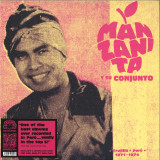
Following the 70s Peruvian cumbia compilation by Ranil last year, Analog Africa returns to Latin America to highlight the work of one of Perú’s undisputed masters of the electric guitar: Manzanita. This 13th release in the Limited Dance Edition Series includes 14 mostly instrumental compositions of electrifying Peruvian cumbia and guaracha. Manzanita's unique guitar lines rest on confident foundations that shifts gears effortlessly. Limited Edition LP in Gatefold Cover pressed on 180g high quality virgin vinyl
"I was in Lima, hanging out with collector-extraordinaire Victor Zela, who had spent the previous few years pouring his passion for Peruvian Cumbia into the blog „la cumbia de mis viejos“, a trove of incredible music. But after the birth of his first child, his priorities shifted and he decided to part with some of his rarest LPs. I was one of the lucky few given an early chance to examine his treasures, and when I picked up the album Manzaneando com Manzanita, Victor said: “Take it! its one of the best LPs ever recorded in Perú … easily in the top five”. That was all the encouragement I needed … two years later many of the songs from that masterpiece have made it onto Manzanita y su Conjunto, a compilation of electrifying Cumbia sides from Manzanita’s golden era.
Berardo Hernández – better known as Manzanita – first surfaced during the psychedelic Cumbia craze. At the head of the scene were the magnificent Los Destellos, whose leader, Enrique Delgado, was such a six-string wizard that other guitarists found it impossible to escape his shadow. But when Manzanita arrived, his electric criollo style sent shockwaves through Lima’s music scene and posed a serious threat to Delgado’s dominance as king of the Peruvian guitar.
Manzanita had come to Lima from the coastal city of Trujillo, five hundred miles up the coast – a place where Spanish, African and indigenous populations had been living and making music together for centuries – and came of age at a time when the first wave of psychedelic rock from the US and UK was starting to sweep the airwaves. But the sounds of Cream and Hendrix disappeared from the radio just as quickly in 1968 when Juan Velasco seized control of the country in a military coup. The new regime, which favoured local traditions over cultural ‘imports’ from the north, was a blessing in disguise for the Peruvian music scene.
Record labels flourished as new bands, raised on a hybrid diet of electric guitars and Cuban rhythms, rushed in to fill the vacuum created by the lack of imported rock. A new genre, known as Peruvian cumbia, was born and Manzanita quickly became one of its most original voices.
Starting in 1969, Manzanita y su Conjunto released a steady stream of singles that used Cuban guaracha rhythms as the foundation for dazzling electric guitar lines. After countless 45s and several years on the touring circuit, the band signed to Virrey, an important Peruvian label, and recorded two LPs acknowledged as masterpieces among aficionados of tropical music. Most of the songs on Analog Africa’s new compilation Manzanita y su Conjunto are drawn from those legendary sessions of 1973 and 74.
Although he scored a few more hits in the later 70s, his dissatisfaction with the music industry caused him to withdraw from the scene for several years; and when he finally retired for good, the golden age of Peruvian cumbia was a distant memory. But when Manzanita was at the top of his game he had few equals. Victor Zela was right: this is some of the best music ever recorded in Perú."
Repress! This is the first full length release from The Sure Fire Soul Ensemble. The Sure Fire Soul Ensemble - If you are a fan of the organ, gritty Funk, and beautiful original soundtracks, these guys are for you. The SFSE is a heavy, original, instrumental soul band based out of San Diego, CA that released their debut self titled album on Colemine Records in June of 2015, and the band will be releasing their sophomore album in the fall of 2016 on the same label. The Sure Fire Soul Ensemble has recently shared the stage with Lee Fields and the Expressions, Big Sam's Funky Nation, Kung Fu, Polyrhythmics, New Mastersounds, Monophonics, Kamasi Washington, and many others. They draw influence from the masters of the style from the past and modern day, including: The Meters, Isaac Hayes, El Michels Affair, Mulatu Astatke, Budos Band, The Nite Liters, Menahan Street Band, Fela Kuti, and The Poets of Rhythm.
Disco Reggae Funk & Punk sensibilities are effortlessly fused in these classic recordings from the undisputed masters of rhythm - Sly & Robbie.
These Compass Point recordings became the bed for some iconic songs, however the backing tracks themselves were missing in action.
Washed up on a distant shore, the original tapes have revealed these previously unheard Instrumentals, showcasing the talents of Shakespeare, Dunbar, Badarou & crew.
Catch these legendary heavyweight grooves on 180g 12" Vinyl Limited Edition EP.
Drumcode treasures Alan Fitzpatrick and Joel Mull link for their debut collaboration, complemented by a rare Adam Beyer remix. This is special in every sense.
Tis the season for something different; interesting collaborations and the broadening of creative boundaries is the order of the day. Long-time friends and techno colleagues Alan Fitzpatrick and Joel Mull are the latest to connect for a fresh production outing, ‘We Don’t Know Anything Yet’. Inspired by the Buddhist saying ‘Nothing is forever except change’, the duo work alongside Swedish band Frangie to craft an ascendent techno cut that explores existential questions about the future, all the while being propelled by a strong rhythmic underbelly.
Beyer’s first remix in two years is inspired. The boss sharpens his focus on the vocal, while teasing out the melody, ripening the track for a mid-morning post-peak-time moment when the sun starts to bathe the dancefloor is a hazy gentle glow. A masterstroke.
“Listening to the track, it’s obviously very connected to what’s going on in the world right now. When I heard it for the first time, I fell in love with the parts so much I decided to do a remix on the spot. It’s two of the old school crew, so the release is very dear to my heart.” – Adam Beyer
Kolonel Djafaar’s ‘Cold Heat’ packs a mighty punch, combining the irresistible charm of Ethio jazz and psych rock with the power of a big band brass section, that has made them a formidable live force across Belgium. As they come into their own cinematic sound, now is the time for them to be enjoyed more widely, thanks to masters of exotic groove, Batov Records.
Kolonel Djafaar’s debut release for Batov is an all-killer-no-filler EP. On "Bactrian Camel’’ the four-man brass section picks up a thundering groove, only for the organ-led rhythm section to answer with their own snaking retort. Joris Wendelen’s electric guitar riffing adds a further Middle Eastern flavour to the stew. Written by trombonist Willem De Mol, who delivered the song after two months alone in Russia, "Lamentation" continues the Ethio vibe with a little
Latin panache. The brass-led tone here is mysterious, the melody lingers. An almost surf-esque guitar solo transports the listener before the main groove on organ and brass recalibrates us to the solid rhythm.
Comparable to, but distinct from, The Budos Band and The Comet is Coming, the low-slung sounds of "Recording 68" in particular reveal Kolonel Djafaar coming into their own. The tempo drops, emphasizing the depth of the groove. The EP is appropriately closed in cinematic style on "The Heist". The pace picks up. Drums of death, in the mode of DJ Shadow or Unkle, hold up the distorted synths and that sharpest of horn sections. A song ready for the dirtiest of chase scenes. "Cold Heat" is suitably titled. Fast or slow, killer grooves that will take no prisoners. A taste of Kolonel Djafaar’s power on stage and the clearest picture yet of their direction in sound.
- A1: It Should've Been Me
- A2: Losing Hand
- A3: Heartbreaker
- A4: Mess Around
- A5: Sinner's Prayer
- A6: The Midnight Hour
- A7: Greenbacks
- B1: Bags Of Blues
- B2: The Man I Love
- B3: Doodlin
- C1: Mary Ann
- C2: I've Got A Woman
- C3: Hallelujah, I Love Her So
- C4: Lonely Avenue
- C5: It’s Alright
- C6: Am I Blue
- D1: What'd I Say (Part 1 & 2)
- D2: Come Rain Or Come Shine
- D3: Hit The Road Jack
- D4: Let The Good Times Roll
- D5: Unchain My Heart
- D6: Georgia On My Mind
Raymond Charles Robinson was not just a legend, “the genius”, a “force of nature” and “a presence”. He was also pure energy, the source of a radiant glow that dazzled everyone who ever came near him. His passion for music, women, and rhythm, coupled with his love of life and laughter, were ingredients that made his work a monument of 20th century culture. He left essential traces – in jazz, blues, soul and R&B – because music is something inseparable and Ray lived its rhythms from the inside.
Born in poverty, raised in America’s racist South, blind at seven and an orphan at 15, Ray had all it took to be a success… Those attributes, plus a few titles in his case that he’d recorded for Swing Time, made such an impression on Ahmet Ertegun that he signed Ray to Atlantic in 1952. The next ten years forged the legend of Ray Charles. And now, six decades later, the tracks on this album are still hits hummed by all generations.
- I Can Be Your Man - Linval Thompson
- Good Thing Goin’ On - Luciano
- Hey Sexy Lady - Courtney Melody
- I Love To Smoke - Gryphan
- Sounds A Go Dead Tonight - Jah Thomas & Junior Vibes
- All A The Gal Them - Pinchers & Jose Wale
- Me Glad She Gone - Super Cat
- Drunk And Stage - Jah Thomas
- Since I Laid Eyes On You - Daville
- Love Songs Are Back Again (Adopted Song) - Tony Curtis, Ghost & Mitch
When Nkrumah Jah Thomas hit Number 1 on the
Jamaican Charts in 1976 with his debut single
‘Midnight Rock’ on Alvin Ranglin’s GG label it gave the
new DJ a theme song and an entry into the world of
music. Within three years he had launched his
Midnight Rock label and, alongside more music under
his own name, he produced a series of classics by the
likes of Tristan Palmer, Anthony Johnson, Early B and
many more.
In 1997 he signed a deal with Acid Jazz’s Roots label
and since then his career as a producer has been
developed and anthologised; the release of a series of
archive King Tubby and Scientist mixes, the use of his
masters to be sampled by Nas (on ‘The Don’), Protoje
and others, plus reissues of his classic albums.
To celebrate 40 years of Midnight Rock, Thomas went
back into his tape archive to unearth another 10
tracks, either with original vocals or guest names
brought in.
Behind original rhythms recorded at Channel 1, Tuff
Gong and others, featuring the Roots Radics and The
Midnight Rock Band and mixed in places like King
Jammy’s and Tubby’s we are presented with a line-up
of stellar talent - Linval Thompson with the plaintive ‘I
Can Be Your Man’, the forthright Super Cat on ‘Me
Glad She Gone’ and Luciano on the rare ‘Good Thing
Goin’ On’. They are joined by Courtney Melody,
Pinchers and Joesy Wales, Daville and more. Keeping
the circle complete, Thomas appears on two tracks,
including the future classic ‘Sounds A Go Dead
Tonight’ with Junior Vibes.
Guitarist Paulo Morello and his three equally talented co-musicians merge jazzy bop and the variety of rhythms, forms and moods of Brazilian music into something new and beautiful.
Paulo Morello has put together an exquisite band for ‘Sambop’, Lula Galvo (born 1962), is the star guest from Brazil on the acoustic guitar and one of the masters of his profession, who has played with Caetano Veloso, Rosa Passos, Ivan Lins and Guinga.
The rhythmic drive is provided by Eduardo ‘’Dudu’’ Penz on electric bass and Mauro Martins on drums - two Brazilians living in Switzerland, for Paulo Morello ‘’the best Brazilian rhythm section in all of Europe’’
Hawkwind have always been associated with music festivals, most notably the free festivals, where Dave Brock has said that, at
those events, the band is not shackled to appease an audience by giving them what they expect and have paid to see. With that obligation removed, the band can relax and experiment more than usual and gigs become even more fun. Their sessions, where they played for free, sometimes with the Pink Fairies, at Canvas City, outside the official site of the Isle Of White Festival in 1970, are a matter of legend and Nik Turner gained much attention when he painted his face silver and was much photographed as a result. During his set, Jimi Hendrix referred to him as 'the cat with the silver face'. However, when we think of Hawkwind and festivals, the word Stonehenge leaps to the fore.
The band always loved being there, enjoying the whole event as well as the freedom of how and when they played. This was not a time of business, but a time of fun. The most important one of these was Stonehenge 1984, which proved to be the last festival before the authorities moved in the following year to block the festival from being set up and Hawkwind ended up playing a few miles away instead. It was the sad end to an era. It had taken place twelve times and, had it been allowed one more time, it would have become a public event and the powers that be were determined to prevent that from happening. Happily, the 1984 festival was recorded and filmed and the Hawkwind Solstice Eve and Solstice Morning were both preserved...and we should be grateful for that.
The fact that Hawkwind were playing for free didn't mean it was a basic show. As well as the line-up of Dave Brock, Harvey Bainbridge, Huw Lloyd Langton (who played the evening session, but not the following morning), Nik Turner, Alan Davey and Danny Thompson, there were half a dozen dancers, a mime artist and fire spitting. A free event, it was the ideal time to introduce the new rhythm section to the band in the form of Danny Thompson on drums and Alan Davey on bass, with Harvey moved to keyboards. A move which was to have a long term affect in the way he made music, leading to his solo career, as well as years playing synths for Hawklords, in years to come, after his stint as the Hawkwind keyboards player came to an end.. Danny fitted the bill comfortably and drummed for the band until he left in 1988, to be replaced by Richard Chadwick. Danny went on to play for other bands including Bedouin and Pre Med. He also recorded a cassette album called Skinwalker. Alan made a good team alongside Dave Brock and it can be seen on the video just how pleased he was to be playing alongside Dave Brock, a man whom he had only met for the first time in November 1982, backstage at the Ipswich Gaumont. He went on to be the longest serving Hawkwind bass player, before moving on to pursue solo projects and form a nmber of bands. So in terms of the line-up, Stonehenge 1984 had a notable impact on the formation of the band for a number of years and, indeed, the destinies of Harvey, Danny and Alan. As if that were not enough to make the event special in the annals of Hawkwind, they played an interesting and varied main set in the evening, featuring a blend of old and new Hawkwind songs, along with numbers from Inner City Unit and
Bob Calvert's Lucky Leif And The Starfighters album. In keeping with the relaxed atmosphere, there was a considerably extended
version of Ghost Dance, lasting around ten minutes. The sunrise set was special too, with a long, laid-back, jam at dawn, in fitting with the occasion.
A lovely and relaxing start to the day and the kind of jam they couldn't really play to a paying audience. It's good to have the
memories of this significant festival gathered together in three formats.
Enjoy this special set, which commemorates a special event, not only in the history of Hawkwind, but of the saga of Stonehenge festivals.
Old Dark House: Suspenseful cinematic ambience and subliminal rhythmic sorcery by Andrew Crawshaw and Corey J. Brewer. Andrew Crawshaw (aka Meridian Arc) and Corey J. Brewer have come together to make music as Old Dark House. This is great news, as these Seattle musicians have proved themselves to be masters of suspenseful cinematic ambience and subliminal rhythmic sorcery. Crawshaw has hosted the Depths night at Substation, at which he and other musicians create new soundtracks for cult-classic films. Brewer famously crafted an alternate score for Stanley Kubrick's The Shining, which he performed at Northwest Film Forum in 2017. As Old Dark House, the duo have recorded their debut album, Welcome Home, with another excellent film-music head, Erik Blood, mixing. Welcome Home's 11 tracks combine Crawshaw's penchant for expansive yet intimate synthscapes and Brewer's mastery of morose songcraft. The latter's voice pitches somewhere between Nick Cave and Edwyn Collins, adding a lugubrious luster to Old Dark House's midnight-blue atmospheres and tension-building rhythms. "Through the Trees" is perhaps the record's most chilling and dramatic moment. The song at once drifts and stomps ominously, as Brewer sings like an opiated Chris Isaak, haloed by a synth motif of vaguely Eastern-sounding grandeur. _ Dave Segal
In his essay ‘The Meaning of My Avant-Garde Hillbilly and Blues Music’, Henry Flynt talks about how his music should be analysed as an intellectual tribute to the music of the autochtone, setting aside plain folk references, but adopting academic insights to mold the music one makes as a folk creature. Much of Flynt’s discourse applies to the music of Glen Steenkiste’s Hellvete. Over the past twenty years he has been thoroughly investigating both the ethnic musical language of various regions as well as the contemporary pioneers that preceded him as a drone musician, internalizing concepts such as e.g. deep listening or just intonation. Casting off any redundant ideas or sounds, and stripping down the focus to develop singular concepts, his working method lead to pieces such as ‘Droomharmonium’, in which he shapes the endless variations on a theme, emphasizing detail and nuance rather than multitude. The Indian harmonium here serves as the main device to worship ancient ghosts and masters, and to preserve a continuum in a tradition that touches both folk and avant-garde culture. The materialisations are sustained tone compositions which become a means of appreciation of the people and cultures that paved the way for forms of mutual escapism. This might well be the core of what Hellvete’s music is about. As much as it is a form of self-entertainment – like folk music in the old days – it also invites the listener to a shared experience of sonic reverie, it is a casual gift to the community.
This is certainly true for the pieces presented on this album. They were first presented in a smoke filled and darkened art space in Ghent, Steenkiste surrounded by only a couple of candles and just enough stage light to see him erratically moving to the rhythm of the piece, occasionally twiddling the knobs of a Doepfer synth that processed the prerecorded harmonium tracks. Unlike most of his other performances this piece embraced the audience in a trance that was similar to that of an old-school rave club. Flynt writes: ‘The music should be intellectually fascinating because the listener can perceive and participate in its rhythmic and melodic intricacies, audacity of organization, etc. At the same time, the music should be kinesthetic, that is, it should encourage dancing.’ ‘Voor Harmonium’ does exactly that; it builds on the artistic ideas that have long been established in Hellvete’s oeuvre, but the ecstatic nature of these pieces merges the usual spiritual transcendence with one of determined physical bliss. It encourages both mind and body to step into the sound, to be enraptured, to celebrate.
ACCEPT ARE BACK! The German kingpins of heavy metal will release their new, eagerly-awaited studio album via Nu- clear Blast on January 15th 2021. The ingenious title of the masterpiece is “Too Mean To Die”.
Speaking of heavy metal kingpins, when ACCEPT first launched at the end of the 70s, the metal genre didn’t even exist - at first the band could only be labelled with the (quality) seal “crazy loud and crazy wild”. Today we know that this was (and is) metal par excellence. And we also know that ACCEPT opened the door to thrash metal, inspiring giants such as Metallica. Guitarist Kirk Hammett recently stated in the German magazine “Gitarre & Bass”: “Wolf Hoffmann has a huge influence on me.“
ACCEPT, who once had their origins in the city of Solingen, a city of sound, have been a worldwide music phenomenon for more than 40 years. They still impress with razor-sharp guitar licks and a steel-hard sound. The band created all-time metal classics like “Balls To The Wall”, “Metal Heart” and many more.
Countless world tours and headline slots at the biggest, cutting-edge festivals cemented the band’s reputation as one of the best, hottest and loudest live acts ever. In addition, the band has sold millions of records, has achieved gold status in the USA, top 10 chart positions worldwide and a number 1 album (Germany, Finland) for “Blind Rage” (2014).
Now with “Too Mean To Die” their 16th studio album is in the starting blocks - it is the fifth album that US vocalist and front man Mark Tornillo has put his incomparable vocal stamp on.Recorded in the world music capital of Nashville (USA), ACCEPT’s music was once again produced by British master producer Andy Sneap, who is responsible for the mix. Sneap, who works for Judas Priest and Megadeth among others, has also been responsible for all ACCEPT productions since 2010.
Special circumstances often lead to very special albums. This is certainly true for “Too Mean To Die”, which of course alludes to the Corona period, although in a different way than one might assume. Hoffmann says: “Its to be expected that many musicians will address the Corona situation in their songs. There will certainly be slogans for cohesion, through which positive vibes should be spread, which is also good. But we have decided to not let ourselves be influenced by it. The fans will get a hard, direct and uncompromising metal album, but of course accompanied with a wink: We are too mean to die! Weeds do not go away! ACCEPT do not let themselves get down!”
Wolf isn’t wrong - the title track is a classic Accept cracker: dynamic and unwavering, turned up to eleven!
Zombie Apocalypse’, also relentless and hard, strikes the same note in the band’s signature style.
The first single - which will be released on October 2nd 2020 together with a remarkable video - is different. Titled ‘The Undertaker’, its a terrific midtempo number with great vocals and a built-in character that chugs along – certain to deliver some mermorable live moments! According to Wolf Hoffmann its one of the most catchy, pleasing pieces of the album.
New to the band, and thus to be heard for the first time on an ACCEPT album, is Philip Shouse (Gene Simmons Band, among others). The US guitarist fights hot duels with Hoffmann, while Uwe Lulis makes the guitar trio perfect and pro- vides the right rhythm. “Phil was part of our orchestra project and was also completely convincing live. We recognised his great talent immediately and simply didn’t let him go,” explains Hoffmann.
Just how varied the ACCEPT guitar trio performs on the new album is proven by one of the secret highlights: ‘The Best Is Yet To Come’ – a beguiling ballad in which Mark Tornillo is at his best. The metal world knows that Mark can scream like no other, but here it shows once again that the frontman can also sing magnificently. “Mark sang this, for us rather unusual song stunningly well. The fantastic thing about Mark is that he not only masters the typical metal screams, but can also sing melodically and beautifully. He proves this impressively in this song”, chief guitarist Hoffmann raves.
In addition, ACCEPT have strengthened their team even further with newcomers Martin Motnik (bass) and Philip Shouse (guitar), thus forming an unbeatable team together with “Drum God” Christopher Williams and “Rhythm Mas- ter” Uwe Lulis.
There’s no doubt that with “Too Mean To Die” Accept are once again playing at the top of the Champions League of the genre. Wolf Hoffmann & Co. present the (music) world eleven masterpieces at the beginning of 2021 - eleven songs for eternity!
- Unreleased full version of this rare 45 for the first time.
- Cut from tape to lathe by the masters at Timmion Cutting Lab.
Western Michigan had a very healthy music scene throughout the '60s and '70s, with Georgia-born soul legend Jackey Beavers (aka Jackie Beavers) and producer Palmer James forging that area's soul identity. Beavers produced the recording by this obscure band from Battle Creek and issued their only 45 on his Jaber label. The rhythm section of Wright, Teasley and Scurlock were better known as Jr. Walker's All Star group, and they made this recording shortly before leaving the bandleader's ranks. The Us would share ties with the Apachies (track 20), for both bands included at some point members of Jr Walker's All Stars. Trombonist Jack Hill would be involved in both bands and would help create the unique arrangement on 'Let's Do It Today.' Bassist Larry Scurlock recounts the origin behind the song's theme, "We were ready to get on with it. No draggin' around, let's do this now, today is the day! I've lived this motto for all of my life."
The full-length version here shows The Us head into psychedelic regions in the final minutes of the song that have never been heard since they were recorded over 30 years ago. "I wrote it in less than half a day to get some royalties" remembers Scurlock. "We were experimenting with tuning, a quarter tone below the note. We were sure under the influence back in those days!"
The album 'Balance' by Frank Bretschneider & Taylor Deupree was originally released in 2002 by Mille Plateaux on CD only. The 9 tracks on 'Balance' are a perfect example for the aesthetics to arise within the Click & Cuts scene and (ambient-)glitch music movement of the late 90s and early 2000s.
The two masters of microscopic sounds and sine wave/white noise-based music constructed these seamlessly mixed pieces around rhythms and melodies, which grants the album plenty of dynamics. The wide variety of carefully chosen ambient sounds throughout the whole work endows 'Balance' warmth and intimacy.
The recordings are now available for the first time on vinyl within the KeplarRev series, presented in a new updated artwork based on the original layout with photographs by Taylor Deupree.
From the original press release in 2002:
"Balance is the first and so far only collaborative release from Frank Bretschneider (Berlin) and Taylor Deupree (Brooklyn). Both of these artists are no strangers to the ears of many; Taylor Deupree is one of New York's most vibrant electronic producers. From his early techno days as a member of Prototype 909 to his current status as one of N. America's key "microscopic" electronic composers and to add runs the prestigious 12K and LINE labels. Frank Bretschneider is a key member and founder of the prestigious Raster Music label, he has critically acclaimed releases under the names Komet and Produkt. It's easy to say that Frank Bretschneider has created some of the most influential spatial electronics of the late 90's.
Utilizing both artists keen ears for carefully crafted sounds, Balance blends the clean sine wave / white noise of Bretschneider with the defined grit of Deupree's granular synthesis. Realized entirely on Nord Modular synthesizers, Bretschneider and Deupree exchanged patch files through email and began constructing foundation loops. Bretschneider then created initial mixes of 9 songs and then sent them to Deupree who remixed and re-processed them. This digital exchange allowed for them to work using their own methods and aesthetic while combining the similarities of each others interests. The result is a looping and churning rhythmic work that is both synthetic, warm, dubby and tonally challenging. Thus Balance creates an engaging balance between the 2 artists aesthetics."
- A1: Road To Earth (With Peter Thomas)
- A2: It's The Music (With Afrika Bambaataa, Charlie Funk, Hektek & Deejay Snoop)
- A3: In The Dark (With Nichola Richards)
- A4: The Spell Of Ra-Orkon
- A5: Political Power (With Afrika Bambaataa, Charlie Funk & Donald D)
- A6: Drifting Stars
- B1: Not Get Caught (With Derobert)
- B2: Locked & Loaded
- B3: Catfight
- B4: Hot Stuff (With Afrika Bambaataa, Charlie Funk & Deejay Snoop)
- B5: The Showdown
COLOUR VINYL[16,77 €]
The Mighty Mocambos' new album "Showdown" sets another cornerstone in their prolific career as a globally active instrumental funk outfit. While maintaining their organic approach of recording real musicians live on tape, the group has refined their trademark sound with a dramatic edge, a hard hitting production and ventures into less obvious musical territories. While highly enjoying themselves as the tight unit they are, The Mighty Mocambos invited an exciting list of guests to contribute to their musical "Showdown": German film composer icon Peter Thomas, hiphop godfather Afrika Bambaataa, rap legends Charlie Funk aka Afrika Islan (member of the original Rocksteady Crew) and Donald D (of Ice-T's Rhyme Syndicate), plus Nichola Richards, Shawn Lee, DeRobert from peer label GED Soul in Nashville, Zulu Nation MCs Deejay Snoop & DJ Hektek and organ genius Guillaume Metenier all joined the group for their new musical adventure. "Showdown" is released on vinyl LP by Mocambo Records and on CD and digital incarnations by Légère Recordings.
About the Mighty Mocambos:
The Mighty Mocambos and their many incarnations have released dozens of 45s and several albums on their own imprint Mocambo Records and other labels such as Kay Dee, Truth & Soul, Tramp, Légère and Favorite Recordings, to name a few. They have collaborated with musical legends such as Afrika Bambaataa, Lee Fields or Kenny Dope, put new talent like Gizelle Smith and Caroline Lacaze on the map, brought Caribbean steel drums to funk clubs with their alter ego Bacao Rhythm & Steel Band, and have toured through all civilized parts of the continent and beyond for the better part of the last years. Their unique style and trademark sound are loved by peers, fans and critics alike and distinguishes them from mere retro-copycat-acts as well as overproduced plastic soul. The Mighty Mocambos continue to deliver their brand of funk with blazing horns, soulful guitars, driving drums and basslines combined with an extra bit of quirkiness. When not producing records for one of their many incarnations and collaborations, the band is touring steadily. Whoever witnessed a concert will tell you about the musicality, passion, energy, humour and joy that the band loves to bring to the people. Background What started out years ago as a take on "deep funk" and its associated vinyl culture has completely grown into its own oeuvre d'art. With the launch of their production studio and record label in 2006, things started to gain momentum. Apart from self-releasing the group's own recordings, Mocambo Records became a household name by putting out highly collectable vinyl 45s by today's best funk outfits as well as unearthing lost library funk treasures. The Mighty Mocambos however did not restrict themselves solely to their own label. Their interpretation of the Furious Five classic "The Message", released under a pseudonym on an obscure phantasy label without proper distribution, got picked up and remixed by Grammy- nominated producer legend Kenny Dope (Masters at Work, Bucketheads). Their first single with UK funk singer Gizelle Smith, "Working Woman", became an overnight smash and a prime-time club favourite of funk & soul DJs worldwide. Initially released on the Finnish private press imprint Old Capital, it got the remix treatment by Kenny Dope and a re-release on Kay Dee Records as well. After earning their credits through vinyl 45s, the band stepped up their game with the full- length "This Is Gizelle Smith & the Mighty Mocambos" in 2009. The album received rave reviews, got lots of airplay - and sold a bunch of physical copies too. Its success led to an extensive tour throughout Europe with club dates from Marseille to Oslo, performances at massive festivals such as the Printemps de Bourges in France and live radio appearances at respected FMs such as the BBC and Radio Nova. With the following album "The Future Is Here" (2011), the band stepped further into the spotlight and explored new sounds with features by hiphop legends Afrika Bambaataa and Charlie Funk, French singer Caroline Lacaze and German rare groove queen Su Kramer, while manifesting their unique raw funk sound and refining their unmistakable instrumental style that had long gained international reputation. The album was toured extensively, including a legendary performance with Afrika Bambaataa at Hamburg's Reeperbahn Festival (covered by ARTE TV), support gigs for Lee Fields and headline shows at renowned venues such as Amsterdam's Paradiso, Islington Assembly Hall in London, Paris' Bellevilloise, Tempo Club in Madrid, or at home at Hamburg's Mojo Club. After producing the critically acclaimed debut album "En Route" (2013) of French soul singer Caroline Lacaze, where their adapted their sound to deliver a stunning mix of French Beat, Soul & Psychedelic Rock, the band went on to record a full length under their moniker Bacao Rhythm & Steel Band. Their interpretation of 50 Cent's P.IM.P. had long become a cult classic and was often mistaken for the original sample. The group's approach in stretching the boundaries of funk by adding Caribbean steel pans caught the interest of Brooklyn's finest label Truth & Soul who signed the band for the album "55", an explosive mix of funk and hip hop cover versions as well as original compositions that showcase the band's singularity in today's funk circuit. The Mighty Mocambos' recent album "Showdown" (2015) sets yet another cornerstone in their prolific career as a globally active instrumental funk outfit. While maintaining their organic approach of recording real musicians live on tape, the group has refined their trademark sound with a dramatic edge, a hard hitting production and ventures into less obvious musical territories, with a diverse list of special guests ranging from German film composer icon Peter Thomas to hiphop pioneer Afrika Bambaataa.
Volume part 2/4 solo album set. (Monstruos Y Duendes). The music of Myrddin goes through marrow and bone and is both complex, passionately rhythmic and profoundly emotional. He fully masters the compás of flamenco, which gives him the freedom to converse with elements of jazz or classical music.
It is possible that a deeply fickle Bryn Jones, who was never happy with remixes of Muslimgauze music apart from his own, might be with this one.
Extreme, an earlier Muslimgauze label, had a long history of remixing the material Bryn sent to them and this was the main reason for the artist to move to the staalplaat label.
It’s an interesting coincidence that Extreme hired Anders Peterson to remaster Muslimgauze for them. In the process of listening to masters and studying the music, the idea of a remix or ‘rework’ seemed an intuitive next step, reflects Peterson, “The remixes are based on various material from about 6 DAT tapes. I did not choose any specific tracks, rather sections and parts of all the recordings on those tapes. I did not seek to do a remix, it just grew up of that remastering project. I think I could not find any artist in any genre, anywhere, that would be more interesting to rework / remix than Muslimgauze, so I definitely feel very honored having been able to record these remixes.”
Musically, this release falls in line with the more deep spiritual, meditative, abstract side of Muslimgauze, which is often overlooked. The music remains timeless, the production as crisp as ever. Those familiar with the Muslimgauze oeuvre know this music is more than just a series of infectious rhythmic works. Rather a historical document, a musical commentary on the tumultuous times that inspired it; a reflection on the Iran/Iraq war, Operation Desert Storm, the Soviet invasion of and retreat from Afghanistan and the first Intifada. Anders Peterson brings the music of Muslimgauze and successfully found new ways to reveal the artistries from one of the 20th century’s more intriguing artists. Through circumstance, Staalplaat is to ensure that the remix project sees the light of day, now available on the evidently timeless medium of a vinyl record.”
- A1: Kosei Fukuda - ?? - Enso (4 18)
- A2: Uchi - Zro (6 42)
- A3: Ypy - Circulation (6 44)
- B1: Recent Arts - My Default Emotion (5 43)
- B2: Renick Bell - Organize And Unite (4 09)
- B3: Ma + Kosei Fukuda - ????(????)- Enso No Ma (Furutsuki) (1 30)
- B4: Yvesdemey - The Chosen Home (6 11)
- C1: Tobias - He Turned Into Him (5 52)
- C2: Katsunori Sawa - The Stonewall (5 21)
- C3: Yuji Kondo - Zenith (6 09)
- D1: Rabih Beaini - Circle (8 03)
- D2: Ena - 42 1 (4 36)
- D3: Lemna - Moments In Eternal Recurrence (5 00)
Japanese sound artist and producer Kosei Fukuda’s presents a collaborated vision of the first edition of ENSo¯, a two-day audio-visual event collated around the REITEN label. The ENSo¯ Festival invites its artists and audiences alike to appreciate the merging of the improvisational, with the contemplation of rhythmic cycles, based around the conception of enso¯ – ?? – meaning a hand-drawn circle created by one uninterrupted stroke. Now, with an elongated stretch of time in front of us before the next edition of the festival, the compilation stands to provide a sustained glimpse into the world imagined by Fukuda. Blending spontaneity and gravity alike, the record features an array of idiosyncratic artists set to play ENSo¯, all purveyors of their own shaped sound-worlds.
For the A-side, we have Fukada’s own contribution ‘?? – ENSo¯’; a slice of ambient techno dotted somewhere within a faraway galaxy. Venezuelan noise artist UCHI crafts a fourth-world hymn with tribal percussion on the expansive ‘ZRO’, and Osaka based experimentalist YPY aka Korshiro Hino shapes an elusive polyrhythmic ambience on ‘Circulation’. The B-side presents a colossal improvisational track ‘My Default Emotion’ from Berlin based duo Recent Arts. Formed of Chilean artist Valentina Berthelon and German musician Tobias Freund, the duo are masters in audio-visual experimental performances that both surprise and challenge an audience. Renowned artist, programmer and teacher Renick Bell is noted as a pioneer for live coded performance, conducting mutated rhythms that cut across the landscape of electronic sound. His addition to the compilation is a luminescent IDM piece, titled ‘Organize and Unite’. A polished ambient club track from Fukada and MA titled ‘????(????)’ provides a state of organized tranquility, whilst the track ‘The Chosen Home’ from Belgium artist YvesDeMay, whose move from breakbeat to experimental producer has produced gratifying results for all, is a welcome slice of pensive dub- techno.
The C-side brings us a textured and haunting techno track ‘He Turned Into Him’ with revered German artist Tobias, veteran mainstay with an expert hand in shimmering sound design; Kyoto based 10 Label heads Katsunori Sawa and Yuji Kondo brings sample-heavy rushes of sound, the former with ‘The Stonewall’ and the latter with ‘Zenith’, both multi-faceted in their reference points. The D-Side presents the grainy and expansive ‘Circle’ from Lebanese producer Rabih Beaini, who expertly combines club tropes and avant-gardism in his DJing and music. Hypnotic skeletal beats circulate on the pulsating ‘42.1’ by Tokyo artist ENA. Japanese composer Lemna, the alias of Maiko Okimoto rounds it off with a dreamy noise ambience on ‘Moments In Eternal Recurrence’. Released on vinyl July 24th, the compilation stands as a traversable artefact of the festival, rich in spontaneous beauty.
- A1: Walkin' My Baby Back Home (Nat King Cole With Orchestra)
- A2: What Does It Take
- A3: Walkin
- A4: I'm Hurtin
- A5: Where Were You
- A6: Angel Eyes
- A7: Nature Boy
- B1: I'd Rather Have The Blues (Nat King Cole In The Charts)
- B2: Unforgettable
- B3: Autumn Leaves
- B4: Pretend
- B5: Mona Lisa
- B6: Too Young
- B7: Smile
- C1: Hit That Jive Jack (The Nat King Cole Trio)
- C2: (Get Your Kicks On) Route 66 (Get Your Kicks On)
- C3: Sweet Georgia Brown
- C4: Straighten Up & Fly Right
- C5: Laura
- C6: Embraceable You
- C7: Dream A Little Dream Of Me
- D1: Besame Mucho (Nat King Cole Goes Latin)
- D2: Rex Rhumba
- D3: Rhumba Azul
- D4: Calypso Blues
- D5: Boulevard Of Broken Dreams
- D6: Rhumba Blues
- D7: Papa Loves Mambo
With the sole exception of Louis Armstrong, Nat "King" Cole was one of therare black artists to enjoy such celebrity in the Forties and Fifties. He began his career as a pianist, forming a trio in 1937 with guitarist Oscar Moore and bassist Wesley Prince, but he was so successful as a singer that he went on to make many recordings as a vocalist.
Capitol, his record label, was quick to capitalize on Nat Cole's velvet tones. The hits came one after another: Straighten Up and Fly Right (1943) sold a million copies, and Nature Boy (1948) and Mona Lisa (1950) sold over three 3 million each. Some of his other (numerous) popular hits can be found on Side B.
Nat Cole's popular songs, however — some were so sentimental they were even slushy — should never conceal his talents as a pianist and musician, which he displayed with the best jazz orchestras around (Side A), his own trio (Side C) or in outings with Latin rhythms (Side D).
His fame earned him his own NBC television show in 1956, while Presidents Truman andKennedy would consult Nat on complex racial issues. He also appeared in some fifty films, and continued to record profusely (at least a hundred of his titles entered the sales charts). Nat "King" Cole deserved his title: not only did he sell over fifty million albums, but he also belongs to those artists who wrote jazz history.
Actual Music is a Swiss record label with a focus on Detroit House, Deep House, and Nu Disco. Taking inspiration from the masters of Detroit, the label was started by Alexandre Gazzola & Michel Catanese in 2017.
Alex Mota is a DJ and producer based in Switzerland and as a member of Los Cruzeiros, he released on Crossfontier Audio, Monique Musique and Tenampa Recordings, working with Pier Bucci, Marc Poppcke, Hernan Cattaneo and Nima Gorji.
Here Mota provides us with a diverse four tracker. Opener ‘Senses’ is an uplifting nu disco stomper with nods to New Order with the vocal. ‘Buenos Aires’ fuses Flamenco guitar and Latin flavours a plenty fitting for the most Balearic dancefloor scenes, whilst working itself up into a rhythmic house beat too.
The relentless ‘Chicago’ goes heads down and four to the floor with some well-placed trumpet flourishes. Closing out the EP is ‘Bogota’. Latin flavoured House as the title would suggest, with scattered percussion and cheeky vocal samples.
- A1: Let's Face The Music
- A2: Putting On The Ritz
- A3: Top Hat
- A4: Cheek To Cheek
- A5: How Deep Is The Ocean?
- A6: Isn't This A Lovely Day
- A7: I've Got My Love To Keep Me Warm
- B1: Easy To Love
- B2: It's Alright With Me
- B3: What Is This Thing Called Love
- B4: You Are The Top
- B5: Night & Day
- B6: I've Got You Under My Skin
- B7: Too Darn Hot
- C1: The Lady Is A Tramp
- C2: Where Or When
- C3: I Didn't Know What Time It Was
- C4: Ev'rything I've Got
- C5: My Funny Valentine
- C6: Blue Moon
- D1: I've Got A Crush On You
- D2: Fascinating Rhythm
- D3: How Long Has This Been Going On?
- D4: Soon
- D7: The Man I Love
- D5: Somebody Loves Me
- D6: But Not For Me
Ella is the most celebrated of divas, and she dominated the jazz scene for over fifty years, from her first hit A-Tisket, A-Tasket in 1938 to her gradual retirement from the stage in 1989 due to illness. She left her signature on every jazz universe to which she contributed.
The Essential Works 1956-1959 throw light on her talents as a performer of the greatest standards, with songs written by Cole Porter, Irving Berlin, George Gershwin and Rodgers & Hart. Ella succeeded in making popular melodies her own, most often songs taken from musicals that she transformed into as many pearls of vocal jazz.
The four sides of this album bring together the indispensable inner soul of Ella Fitzgerald's recorded work.
Control is the incredible debut album from Sydney based vocalist Natalie Slade, produced by Hiatus Kaiyote's Simon Mavin and featuring contributions from other members of the Grammy Nominated group.
Combining Soul, Jazz, Folk and RnB, Natalie's timeless vocals dazzle across 10 stunning tracks, perfectly complimented by rich, live instrumentation and Mavin's vibrant production. The album is classic to its core, whilst taking a fresh and energetic approach to a long tradition of Soul/RnB long players. Familiar broken rhythms and jazz heavy motifs, notorious with Hiatus Kaiyote's writing and arrangement style are present, reminding us throughout that we are in the hands of true masters. The result is a kaleidoscopic reimagining of sounds and styles from an exciting new vocal talent.
Recording began after a chance encounter between Natalie and the Hiatus keys player Simon Mavin, resulting in a writing session that quickly escalated into a full blown album project. The chemistry was clear and the creativity flowed. Spontaneous recording sessions ensued, with visitors to the studio jumping in to play on tracks, the levels of musicianship on the album never fall short of stunning and Natalie's poetic and enchanting song writing shines throughout.
The album kicks off with an energetic flash on 'Cloud Cover', an arpeggiating bass line bubbles over skipping drums and aquatic synths. The title track 'Control' puts it's foot on the gas with a driving synth bass, broken beats and soaring vocals. 'Colour' see's Natalie pouring out her heart to the universe over a fluttering mellotron whilst the beautiful 'There Is Light In Everything' gives her a chance to show off her vocal prowess. Control is a truly unique and dynamic debut album from two masters of their craft, we hope you enjoy it just as much as we do
Recommend for fans of Hiatus Kaiyote, Rosin Murphy, Fatima, Yasmin Lacey, Khadja Bonet.
- A1: Lucid Dream - 04 54
- A2: La Marbrerie - 06 22
- A3: Sophora Japonica - 02 47
- A4: Ginkgo Biloba - 03 31
- B1: Nouveau Monde - 06 45
- B2: Room With A View - 03 31
- B3: Le Crapaud Doré - 03 30
- B4: Liminal Space - 04 05
- C1: Human - 06 55
- C2: Babel - 04 18
- C3: Esperenza - 04 22
- D1: Raverie - 07 56
- D2: Solastalgia - 04 00
- D3: Human 07:25
Color Vinyl[20,63 €]
2x12"
„Room With A View“ sees Rone returning to his musical roots and the set-up of his early albums: purely electronic, solitarily conceived without any musical collaborators. At the same time he was able to leave his comfort zone through a new kind of artistic liaison. The album was produced alongside a live show commissioned by the Théâtre du Châtelet in Paris and developed together with choreography collective (LA) HORDE and 20 dancers of the Ballet National de Marseille. This new kind of collaborative approach allowed Rone to produce his most sincere and far-reaching music in some time. Inspired by discussions of collapsologie and climate change, „Room With A View“ offers food for thought on how to deal with one of the most pressing issues of humanity.
The Fenchman manages to let his trademark sound shine in a new light, pleasing early fans as well as every electronica enthusiast. Typically melodic beats like „Ginkgo Biloba“ nestle against tracks that exhibit classic influences from Boards of Canada („La Marbrerie“) to SAW-era Aphex Twin („Raverie“), euphoric dancefloor rhythms sit next to contemplative synth work. Tracks like „Sophora Japonica“ showcase Rone’s mastership in atmosphere, which sometimes requires no drums at all. Elsewhere, Rone is clearly reviving the club-centric vibe of „Tohu Bohu“ and experimenting with elements of dub. It all makes for and adventurous and rewarding listen.
Most importantly, Rone is redefining the notion of „organic“ in electronic music through use of field and voice recordings. Be it his own child chattering, Aurelien Barrau or Alain Damasio debating, or the dance troupe rehearsing and discussing the show. "Because the writing process of the album was very machine focused, it seemed appropriate to feed back a human touch into the music and to still have bodies involved". Thus „Esperanza“ uses the steps of the dancers as a rhythm to start a new track, while in „Human“ they serve as a choir. This idea of extended human collaboration becomes apparent also on the album cover.
- A1: Lucid Dream - 04 54
- A2: La Marbrerie - 06 22
- A3: Sophora Japonica - 02 47
- A4: Ginkgo Biloba - 03 31
- B1: Nouveau Monde - 06 45
- B2: Room With A View - 03 31
- B3: Le Crapaud Doré - 03 30
- B4: Liminal Space - 04 05
- C1: Human - 06 55
- C2: Babel - 04 18
- C3: Esperenza - 04 22
- D1: Raverie - 07 56
- D2: Solastalgia - 04 00
- D3: Human 07:25
Black Vinyl[17,10 €]
2x12" Marbled Vinyl
„Room With A View“ sees Rone returning to his musical roots and the set-up of his early albums: purely electronic, solitarily conceived without any musical collaborators. At the same time he was able to leave his comfort zone through a new kind of artistic liaison. The album was produced alongside a live show commissioned by the Théâtre du Châtelet in Paris and developed together with choreography collective (LA) HORDE and 20 dancers of the Ballet National de Marseille. This new kind of collaborative approach allowed Rone to produce his most sincere and far-reaching music in some time. Inspired by discussions of collapsologie and climate change, „Room With A View“ offers food for thought on how to deal with one of the most pressing issues of humanity.
The Fenchman manages to let his trademark sound shine in a new light, pleasing early fans as well as every electronica enthusiast. Typically melodic beats like „Ginkgo Biloba“ nestle against tracks that exhibit classic influences from Boards of Canada („La Marbrerie“) to SAW-era Aphex Twin („Raverie“), euphoric dancefloor rhythms sit next to contemplative synth work. Tracks like „Sophora Japonica“ showcase Rone’s mastership in atmosphere, which sometimes requires no drums at all. Elsewhere, Rone is clearly reviving the club-centric vibe of „Tohu Bohu“ and experimenting with elements of dub. It all makes for and adventurous and rewarding listen.
Most importantly, Rone is redefining the notion of „organic“ in electronic music through use of field and voice recordings. Be it his own child chattering, Aurelien Barrau or Alain Damasio debating, or the dance troupe rehearsing and discussing the show. "Because the writing process of the album was very machine focused, it seemed appropriate to feed back a human touch into the music and to still have bodies involved". Thus „Esperanza“ uses the steps of the dancers as a rhythm to start a new track, while in „Human“ they serve as a choir. This idea of extended human collaboration becomes apparent also on the album cover.
Born in Paris, raised in Vienna, resident in Ibiza, saxophonist and composer Muriel Grossmann embodies the borderless, pan-continental energies of contemporary European jazz. Her music emerges from the lineage of European jazz that's absorbed the progressive music of Coltrane, Dolphy and Sanders. Today, she cites players such as Illinois Jacquet and Lester Young in the same breath as the masters of the avant-garde, and her playing marries the directness and eloquence of the older generation with the questing, spiritualised playing epitomised by Coltrane. The roster of musicians she has played with is long, and includes veteran European avant-gardists including Joachim and Rolf Kühn, Wolfgang Reisinger and Thomas Heidepriem, and she works tirelessly with contemporary groups and big bands across the continent.
Since her first recordings in the early 2000s, Grossmann has released a dozen albums as leader, featuring sounds ranging from hard-swinging modernist jams to free improvisation, expansive spiritual work to rhythm-focussed Afrocentrism. But at the centre of her work is a thread of pure and heartfelt spiritual music in the modal tradition defined by Coltrane and close collaborators like Pharoah Sanders and Alice Coltrane. You can't play this music successfully if you don't mean it – like the music of her contemporary Nat Birchall, Grossmann's engagement with the Coltrane tradition is sincere and deep. Her music resonates within the tradition – more than just a style, it adds a new chapter to the story of modal and spiritual jazz in Europe.
This Jazzman set draws a selection from her 2016 album Natural Time ('Your Pace', 'Peace For All') and from 2017's Momentum ('Elevation', 'Chant' and 'Rising'). Featuring her regular quartet of Radomir Milojkovic (guitar) Uros Stamenkovic (drums) and Gina Schwarz (bass), the music on Elevation is pure sound, soul and spirit!
- LP only with thick tip on sleeve- Download card included inside
"Timeless and innovative... a musical genius" Mike Gates, UK Vibe
"A listening experience akin to transcendence" Andrew Jones, Down Beat
"Vibrant, passionate, exhilarating. A monument of spiritual jazz" Mark Sarazzy, Impro Jazz
"A journey that takes off like missile, passes through meditation, reaches nirvana and ends with thanksgiving" Elliot Simon, NYC jazz records
"Timelessly beautiful" Christian Bakonyi, Concerto
Following on from the recent and well received half-speed masters of
‘Amplified Heart’ and ‘Walking Wounded’, Buzzin’ Fly are proud to release EBTG’s 1999 album ‘Temperamental’. The album is a follow on from the global success of Walking Wounded in 1996 and features a myriad of rhythmic pop styles, including deep house grooves, fierce drum & bass and hip-hop infused funk. It contains the singles Five Fathoms, Blame and the title track Temperamental. The original vinyl was released on a limited edition ‘DJ friendly’ vinyl which is now a collectable item. The artwork for this new edition has been re-created
from the original source material to bring it in line with the original CD version. Like the previous two releases, it has been Mastered and Cut at half-speed by Miles Showell at London’s Abbey Road Studios.
Getting stuck into the new year with a fresh, contemporary jazz attitude, Rocafort Records are proud to present the Kumadé EP from exciting Swiss-French quartet KUMA, led by keyboardist Matthieu Llodra and saxophonist Arthur Donnot.
Confidence, rhythmicality and solidity are the first impressions that hit you from this tight outfit of young but highly experienced musicians. After nine years of holding down a 10-night residency at the prestigious Cully Jazz Festival, Llodra and Donnot have honed down their skills in front of a live audience making tension, pacing and release their speciality in compositional strategy. Grooves and moods are created with just the right amount of rise and fall, push and pull, melodic catches and improvisational wanderings.
The EP is well balanced out with two spaciously laconic, ethereal tracks - Alfama and The Core - that could easily belong on some ECM-inspired soundscape, juxtaposed with Kumadé and I.G.A.T.F. that pack a fuller punch, fat and chunky in all the right places, hinting at a 1970s style George Duke at his funky-fusion best.
Despite a whiff of nostalgic reference, rest assured that the KUMA timbre is fresh and exploratory, as innovative and curious as any protagonist from the current UK jazz explosion. Keep an ear out for these young Jedi masters, all of them at the top of their game. More assured, impressive releases are due out this year.
Matthieu Llodra – Fender Rhodes
Arthur Donnot – Sax
Fabien Iannone - Bass
Maxence Sibille – Drums
Zacharie Ksyk – Trumpet (guest on Kumadé").
R&S welcome electronic composer Matthew Puffett AKA Future Beat Alliance with his killer single ’Never Forever’ a sublime slice of broken beat techno that originally had a limited release on his “Patience and Distance” album in 2009. It now comes backed with a first rate remix courtesy of R&S regular Afriqua.
A veteran of the UK electronic scene originally from Oxford but now located in Berlin, Puffett made his name in the late 90s with a string of sought after releases on Void Records under the aliases Mode-M and Soul Electrik before settling on the Future Beat Alliance handle. Notching up releases with the likes of Delsin, Rush Hour and Versatile as well as with the storied Tresor imprint, both as a DJ and an artist. In 2019 Matt started his new imprint Reward System to self release new creations.
Life long friend from Oxford, Mo’ Wax and Unkle maestro James Lavelle reached out in 2012, which led to a further creative chapter in Puffett`s story that culminated with him co-writing & programming on Unkle’s 5th studio album ’The Road Part 1’ as well as some singular work in film and television. “The moving image plays a key creative motive in my process,” Matthew explains. “Sound & picture married together is such a powerful combination that always inspires me every time to make my own version, 'Never Forever' is one of my many attempts to try and
capture that.”
Taking cues from modern cinema masters like Denis Villeneuve, Panos Cosmatos, Steven Soderberg and Jonathon Glazer and their respective composers, Puffett's widescreen sonic craftsmanship alongside his irresistible rhythmic sense are a key part of what makes Future Beat Alliance music so alluring; "I want my tracks to guide the listener on a exit route far from this world”
Another win for the Glowing Pin as Müller & Wandt drop a fresh new age groover on a killer club dub tip. Elsewhere Phazer Boys, Suzanne Kraft, Philipp Otterbach and River Yarra remix the pscht out of their favourite tracks from ‘Instrumentalmusik..’. Expect Goan hits, cosmic trips, loved up rave and chilled out wave on this flawless five tracker.
Growing Bin becomes Glowing Pin for the most anticipated rematch of the century. Back at the beginning of 2018, Wolf Müller and Niklas Wandt went head to head for a box office smash, throwing a high school percussion tray, wall of hardware and voodoo skull into the ring for the tribal trip of ‘Instrumentalmusik Von Der Mitte Der World’. Now the multi-instrumental duo face off once again, but this time it’s a royal rumble with Phazer Boys, Suzanne Kraft, Phillip Otterbach and River Yarra all bringing the noise to the Glowing Pin.
Müller and Wandt dominate the action on the A1, playing loose with sampler vox, serene pads and future primitive rhythms on the unreleased ‘Fun Dub’ of the also unreleased ‘Dub Dub’. Imagine Ferris Bueller’s trampoline tumble trading Chicago to the Weissenhof and you’ll sense the mood of this New Age groove. Germany’s number one party dudes, those freaky Phazer Boys take a break from dropping killer Candomblé cuts to reach for the lasers on the A2, taking ‘Ahu’ to another dimension. Dripping in neon body paint and armed with fire poi, the Düsseldorf duo power up progressive house sequences, didgeridoo bass and thumping tribal house percussion for a wall-shaking, speaker-breaking remix.
The B1 belongs to synth whiz Suzanne Kraft who revels in glistening, gliding glory on an expansive remix of ‘Auflösung’. Sleek, serene and futuristic, the track shimmers like Fritz Lang’s Metropolis, free from inequality and rendered with the 5D(ub?) majesty of a DMT breakthrough.
B2 hears Salon associate and serious talent Philipp Otterbach take over on a stripped back and psychedelic post punk dub of ‘Expedition’. Angular bass by Süne Große and a stuttering rhythm underpin astral flourishes and the hazy vocals of Lucas Croon before the African elements begin to move to the forefront.
Last man standing is Australian outlier River Yarra, who leads us into the Krautback with a chugging dub of ‘Weltraumsandalen’. Lent a lysergic sparkle by a percolating one-note bassline, this slow motion stunner masters perpetual motion amid the eerie echoes of the bush, organic percussion and electronic animal cries fading into the night. Let the pins glow again.
Patrick Ryder
Volume one of a four part solo album set. (Monstruos Y Duendes).
The music of Myrddin goes through marrow and bone and is both complex, passionately rhythmic and profoundly emotional. He fully masters the compás of flamenco, which gives him the freedom to converse with elements of jazz or classical music. His swiftness sometimes seems extraterrestrial, but whoever takes the time to listen intensively to his music will soon find an immense world of pure emotions, beauty and peace. After four CDs and numerous concerts Myrddin proves that great virtuosos of flamenco don’t necessarily have to come from Spain.
- A1: The Explosions - Hip Drop
- A2: Aaron Neville - Hercules
- A3: Bo Dollis & The Wild Magnolia Mardi Gras Indian Band - Handa Wanda
- A4: The Meters - Handclapping Song
- B1: Eddie Bo - Check Your Bucket
- B2: Professor Longhair - Big Chief
- B3: Cyril Nevilille - Tell Me What's On Your Mind
- B4: Lee Dorsey And Betty Harris - Love Lots Of Lovin
- C1: Mary Jane Hooper - I've Got Reasons
- C2: Lee Dorsey - Who's Gonna Help Brother Get Further
- C3: Huey Piano Smith & His Clowns - Free Single And Disengaged
- C4: Eddie Bo - Hook'n'sling (Pt Ii)
- D1: The Gaturs - Gator Bait
- D2: Danny White - Natural Soul Brother
- D3: Ernie K Doe - Here Come The Girls
- D4: Dr John - Mama Roux
- E1: Allen Toussaint - Get Out Of My Life Woman
- E2: The Explosions - Garden Of Four Trees
- E3: Robert Parker - Hip-Huggin
- E4: Chuck Carbo - Can I Be Your Squeeze
- F1: Gentleman June Gardner - It's Gonna Rain
- F2: Marilyn Barbarin - Reborn
- F3: The Meters - Just Kissed My Baby
- F4: Sonny Jones - Sissy Walk (Pt Ii)
Album features Ernie K Doe’s ‘Here Come The Girls’, The Meters, Eddie Bo, Professor Longhair, Lee Dorsey, Wild Magnolias and more.
This is the definitive collection of New Orleans Funk featuring acknowledged masters next to some of the earlier artists who shaped the meaning of funk. The album is also filled with many rare, sought after and undiscovered funk tracks. It covers the period from the emergence of New Orleans Funk in the early 1960's through to the mid-seventies.
The record is an essential part of anyone in any way interested in Funk's record collection. It has some vital ingredients in it that you can't find elsewhere. With the sound of the New Orleans Funeral March Bands, Mardi Gras Indian Tribes and Saturday Night Fish Fries all as inspiration New Orleans Funk developed into a unique sound.
New Orleans is a port town. Originally owned by the French, this was where many slaves were brought from the West Indies. Many of these slaves came from Haiti and brought with them the religion of Voodoo and its drums and music. It became one of the first parts of America to develop a strong African-American culture leading to the invention of Jazz in the early 1900's.
A main feature of Jazz in New Orleans were the Jazz Funeral Marching bands. Solemn Brass bands accompanying a coffin would, on burial, be joined by a second line of drummers and dancers which would turn the event into a celebration of the spirit cutting free from earth. This African tradition is strong in New Orleans and still goes on to this day. The backline drums play a syncopated style that is neither on the beat nor the off-beat. It is these rhythms that are the basis of New Orleans Funk.
The album comes with a booklet presenting a historical explanation to how and why this music came about, and with lots of information about the people involved.
Reviews: "A Perfect Primer For Funk Fans" Q (Top 5 albums of the year). "Probably the finest compilation that Soul Jazz has released. Essential" Time Out.
Pregnant Void returns with another of their deeply involving and thought-provoking albums, this time from Berlin based sound designer and live-performer Francesco Devincenti.
Devincenti has been making music all of his life and quickly established himself back home in Northern Italy. To further his talents he headed to Berlin to study at the S.A.E. Institute and soon went on to a job at Analogcut mastering studio. As such he is a sound design wizard with an exceptional ear for detail and someone who can get real meaning and soul of out the machines he often solders together himself. He is part of a couple of live hardware duos - MORK and TDV - and always fuses ambient, techno, distorted grooves, jungle beats and dub moods into his immersive recordings.
This new album draws on ten years of life experiences and uses music as a way of telling his own autobiographical story. "With the album I try to explain what I have inside in a way I cannot using only simple verbal communication: those moments of Brutal Reality where you lose something very important and cannot fully express yourself." Though always obsessed with finding his own musical voice, Devincenti is also inspired by studio masters like King Tubby, Adrian Sherwood and Mark Ernestus. His experimental music follows no existing path and is made on modular systems that result in unpredictable and unconventional ambience and rhythms. A number of collaborations add more flavours to this most rich and rewarding album, including friend Hi.Mo, label boss Simone Gatto and vocalist Alice Lobo.
Brutal Reality is filled with truly freeform electronic music - sounds without borders, but with very real narrative and an absorbing sense of emotion that makes it a moving listen in more ways than one.
Over the last decade, we’ve come accustomed to Jason Letkiewicz releasing material under a dizzying array of aliases, each utilized to explore a different side of his multi-faceted musical persona. Now, some 14 years after he made his recording debut alongside Ari Goldman as Manhunter, Letkiewicz has joined forces with Into The Light Records to release his first album under his real name.
The Reflecting Pool sees Letkiewicz exploring the uncomplicated and uncluttered in the pursuit of pure aural beauty. While his recent album as Opposing Currents was dense, dark, urban and industrial, The Reflecting Pool is stripped back, quiet and melodious. The contrast between the two projects is marked, with The Reflecting Pool drawing more on Letkiewicz’s love of crystalline ambient, slow burn synthesizer soundscapes, early ’80s library music and the kind of obscure electronic new age music that has been a hallmark of Into The Light’s releases to date.
The set’s 12 tracks gently ebb and flow, with Letkiewicz making great use of dusty old drum machines, effects units and a range of vintage analogue and digital synthesizers. It’s a set-up that results in a range of complimentary mood pieces and interludes, from the delay-laden military drums and lilting lead lines of “Out of Body Experiences”, to the drowsy, sunrise bliss of “Sunspot”, the bubbling Tangerine Dream style shuffle of “Mind Awake Body Asleep” and the outer-space atmosphere of “The Kill Fee”.
Throughout, Letkiewicz showcases his seemingly intrinsic grasp of mood, atmosphere and melody. It can be heard within the glacial guitar motifs, occasional beats and elongated chords of “The Reflecting Pool”, the rhythmic bustle of “Numb Drums”, the glassy-eyed melancholia of “Arhythmia” and the cinematic paranoia of “Burning Off The Morning Fog”. It’s also evident amongst the classically beat-less ambient of closing cut “Weightless”, whose alien electronics, effects-laden pulses and opaque chords recall established masters of the genre.
With The Reflecting Pool, Letkiewicz has provided us with a much-needed dose of stress-free musical escapism, at the same time offering hope that in these troubling times, love may still save the day.
Sound design masters Benjamin Brunn and Dave Wheels of the Workshop fame team up with the iconic Berlin based Sushitech for a beautiful double 12" LP release.
"2000" is an electronic masterpiece, lush melodies, dubby rhythms and some mesmerising synth lines that we can all recognise from previous milestone Benjamin Brunn releases such as Song From The Beehive that was already released a decade ago together with Move D.
This 2x12" with 8 full length tracks packed in a gatefold sleeve makes a beautiful pack that is a simply must have for any serious vinyl collector - BIG!
With a discography held in such high esteem amongst fans of conceptual French pop and soundtrack composition, the likelihood of finding an unturned stone amongst maestro Jean-Claude Vannier’s fertile psychedelic rockery falls somewhere between slim and skeletal. Even the most intrepid explorers of the most fearless and fastidious nature should naturally expect to encounter one or two shadowy characters when braving the oblique corners of the Vannier vault, but few lost souls cast a darker silhouette than the cinematic obscurity known only as La Bête Noire (The Black Beast).
Lost and presumed missing for decades the soundtrack tapes to this lesser-known 1983 French thriller (featuring a cast culled from films such as Alphaville, The Modern Couple and Sweet Movie) captures the revered composer and arranger of Serge Gainsbourg’s Histoire De Melody Nelson embarking on a darker exploration of free jazz, frenzied batucadas and cyclic carousel psychedelia. Counting key players of the French jazz scene within its ranks, The Insolitudes group comprises a crack team of Palm/Futura/Actuel/Saravah regulars such as saxophonist Philippe Mate´ (Acting Trio/Mate´-Vallancien/Tacet) alongside drummer Bernard Labat (Mad Ducks) and legendary Arpadys/Voyage rhythm masters Marc Chantereau and Pierre-Alain Dahan (Brutus Drums) all of whom alongside Michel Zanlonghi (Ensemble De Percussion De Paris) make up this thunderous, tumultuous, four-headed rhythm machine bridging an authentic gap between The Jef Gilson Groups and France’s signature “cosmic” revolution. Naturally these previously unheard compositions are spearheaded by lead pianist and composer Vannier and for devotee’s of his 1972 concept album L’Enfant Assassin Des Mouche there is much to admire and cross-reference herein.
Having been the most loyal and long-running guardians of Jean-Claude’s monster archive over the past two decades Finders Keepers Records are proud to present this first catch of newfound vintage Vannier discoveries on this limited and unlikely free jazz 45 single (which should find a perfect home between coveted Euro jazz 7”s by Krzysztof Komeda, Franc¸ois Tusques and Brussels Art Quintet). Almost 15 years since Finders Keepers once liberated the Mouches it is now time to set free another Black Beast amongst discerning listeners.
Second elease on newly minted Souk Records (Discrepant), coming swiftly after the mind blowing Palestinian beat LP Muqata'a Inkanakuntu (SOUK01).
For the second release we chose someone who is already part of our Discrepant family - the Colombian tropical masters Romperayo aka Pedro Ojeda.
Back in 2015 we released their self titled debut and now it's time for the follow up, 'Que Jue', ten up-tempo bangers filled with the unique sounds of psychedelic 1970s Cumbia.
Whilst the first Romperayo LP united several musicians around Pedro Ojeda's frantic drum style, Que Jue sees him take the reigns solo armed with instruments, samplers and his trusted drum skills!
'Que Jue' is a fever rhythm joy, an intense voyage to the diverse landscape of Colombian folklore and psychedelic scene. It's also a combination of old and new, an exploration of sample techniques that throwback to classic cumbia but with an electronic minimal vibe that seeks the intense repetition of some dance music produced recently.
All for the sake of pleasure, Romperayo's music is magnetic, impulsive and addictive. The repetitive patterns are mixed astutely and sweaty percussion changes the rhythm whenever it's needed: you don't know that, but they do, and they deliver it frequently with awe. Tropical fusion, new cumbia or salsa on acids You decide.
Following a first compilation in 2016 and a series of parties, Rinse France & Piu Piu join forces for the first release of her own label : Grooveboxx Records.
Together, they present 'Memorias', the first EP of her new imprint.
Quite explicit through its title, Grooveboxx catalogue stands for an exploration of the grooves across its modern shapes, it embodies the quest of trance throughout music and question the body and the individuals on the dancefloor.
The first release is composed of 5 percussive tracks from producers and DJs Aleqs Notal, Myako and Geena.
All tracks are exploring samples coming from the Musee du Quai Branly's ethnos collection along with some some field recordings captured in a garden in Paris where south American tribes were exhibited during the ""Universal Exposition"" in Paris.
With Salvia Cosmica Myako takes us to a progressive voyage surrounded by all kinds of spirits whispering melodies to our soul while the tribe's marching band marks our footsteps with its strong percussions. Enter the forest.
Influenced by Chicago & Detroit, house producer Aleqs Notal graces us with a percussive jam baptized Finger Prints.
6:45 of pure rhythmics honoring the roots of the music its been sampled from. The rite begins.
La Dansa Del Risa is a conversation between birds and humans overlooking at the tension one night in the forest can impose on our western fears of nature. Stay close to the flames.
Antinote senior, Geena blesses us with Selva Spirit, a slowjam reverie filled with eerie pads and peculiar drum sequences.
We're almost there.
Last but not least, Jungla Encantada seals the EP with a deep wisdom and mastership of the jungle's best kept secrets. It's slow pace and flute melodies appease our senses while mysterious dialects becomes our native language.
The journey is complete.
- A1: Konzert Für Sig-Pressluftwerkzeuge (1971, Mix February 2018) 3:36
- A2: Rollin' (1973, Master February 2018) 2:42
- A3: Waves Of Montreux (1977, Master February 2018) (Pm Music) 9:17
- A4: Baustellenmusik (1979) 10:29
- A5: Swisspack (1979) (Pm Music) 2:28
- B1: Rhythm'n Bees (1980) 3:02
- B2: Birds Of Cochin (1998) 4:00
- B3: Coalburner's Delight (1998) 4:32
- B4: Printit (1998) 5:04
- B5: Paradise Garden (1998) 4:35
- B6: Stony Broke Night (1998) 5:52
11 never-heard tracks from Synthzerland pioneer Bruno Spoerri, released for the first time on vinyl, with liner notes by the artist. WRWTFWW Records is very delighted to announce the release of Rare & Unreleased 1971-1998, a collection of never-heard and hard-to-find works by Swiss music pioneer and synth super wizard Bruno Spoerri. The album is sourced from original masters and available on a vinyl LP cut at Emil Berliner Studios (formerly the in-house recording department of Deutsche Grammophon), housed in a 350g sleeve with a superb artwork by Nicolas Eigenheer, and packed with track-by-track liner notes by Mr. Spoerri. Rare & Unreleased 1971-1998 gives a fascinating glimpse into Bruno Spoerri's incredibly inventive repertoire, collecting tracks from projects as diverse as commissioned music for trade fairs, the Swiss railroads, or the union of Swiss cheese makers(!), soundtracks for TV shows about ecology, live synth improvisations at Montreux Jazz Festival, and sound installations for art exhibitions. Always the adventurer, Spoerri records a pneumatic drill for the irresistible electronic bossa of 'Konzert für SIG-Pressluftwerkzeuge", mixes train sounds and the EMS Synthi-100 for the joyful lo-fi funk of 'Rollin'", lets overheating synthesizers take a life of their own to create the sci-fi ambient of 'Waves of Montreux", and works with bees, pigs and various birds for the environmental music bliss of 'Rhythm'n bees' and 'Birds of Cochin". Synthzerland rejoice, it's time for another captivating journey of sound exploration on Planet Spoerri! Bruno Spoerri celebrated his 83th birthday in August this year. He is still experimenting, recording, customizing audio gear, improvising on stage and in the studio, collaborating (Julian Sartorius, Franz Treichler of Young Gods, Marco Repetto of Grauzone, Roger Girod...), inventing new sounds and finding new creative outlets.
It is with great honour that Emotional Rescue comes back to the music of Jaki Whitren & John Cartwright for a special 7" of two previously unreleased songs on to vinyl for the first time in That Will Be That and This Time. Originally part of the International Times reissue project (ERC004) in 2013, the songs have previously only been available on CD and digital formats as 'out-takes'. However, all that time the plan was to release the songs as a stand-alone vinyl release at some point.
Discussion with John continued over the years and the plan was for a release as part of the label's fifth anniversary, until sadly the project was put on hold due to the untimely loss of both Jaki and John in late 2016. The recent repress of their masterpiece that is their privately pressed album, International Times, led to these songs being revisited for the first time since and so here at last are both available together, as much in homage to these two wonderful musicians. More than studio-plus recordings, That Will Be That actually appeared in rerecorded form on the couple's Rhythm Hymn album of 1983. Here though is the original (and superior) version, with all the hallmarks of classic Whitren and Cartwright song writing craft, musicianship and production skill. Again remastered by their son (and at the time, teenage drummer) Joby Baker, the song drips with a confidence of masters of their instruments, full heartfelt, righteous and as relevant today as then lyrics, all backed with some deep white funk and enough soul to move mountains. This is accompanied by one of their greatest compositions in the spine-tingling This Time. Only ever known on this live recording from Glastonbury Hall, Jaki's vocals and light accompaniment from John's keys let the song shine. If the sheer power of her voice and words don't move you, then something is missing in life. A pure, sad, joyous way to thank and remember this wonderful music and people.
In the sweltering North-Eastern Brazilian state of Pernambuco lies the coastal city of Recife, where Amaro Freitas is pioneering the new sound of Brazilian jazz. For the prodigious young pianist, the spirit of his hometown runs deep. From the Afro-Brazilian maracatu born on the sugar plantations of slavery, to the high intensity carnival rhythms of frevo and baião, Amaro's heavily percussive approach to jazz is as indebted to these Pernambuco traditions as it is to Coltrane, Parker and Monk.
As with many of the greats before him, Amaro began playing piano in church aged 12, under the instruction of his father, leader of the church band. As his natural talents became obvious, the young prodigy quickly outgrew his father's instruction. He won a place at the prestigious Conservatório Pernambucano de Música but had to drop out as his family could not spare the money for the bus fare. Undeterred, Amaro gigged in bands at weddings and worked in a call centre to fund his tuition. The transformative moment came at age 15 when Amaro stumbled across a DVD of Chick Corea concert, 'he completely blew my mind, I'd never seen anything like it but I knew that's what I wanted to do with a piano'.
Despite not actually owning a piano, Amaro devoted himself to studying day and night - he would practice on imaginary keys in his bedroom, until eventually striking a deal with a local restaurant to practice before opening hours. By the age of 22 Amaro was one of the most sought-after musicians in Recife and resident pianist at the legendary jazz bar Mingus. It was during this time he met and begun collaborating with bassist Jean Elton and the pair went in search of a drummer. 'We kept hearing about this crazy kid who was playing in 7/8 or 6/4, we knew we had to meet him'. Hugo Medeiros joined, and the Amaro Freitas Trio was born.
'I want to show the simplicity of music, to break the stigma that the piano is for a particular social class. Yes, it's a difficult instrument, which many people do not have access to, but with it you can express everything.'
Following his critically acclaimed debut album Sangue Negro (black blood), the title of his sophomore release Rasif is a colloquial spelling of Amaro's home town. A love letter to his native northeast, Amaro explores its traditional rhythms through the jazz idiom, employing complex mathematical patterns reminiscent of some of the most challenging works by fellow Brazilian masters Hermeto Pascoal, Egberto Gismonti and Moacir Santos.
Preferring to see the piano as a though it were a drum with 88 unique tones, Amaro's intelligence and emotion intertwine on every track, from album opener 'Dona Eni': a scorching reconstruction of the baião rhythmic structure, played in seven measures instead of two, to the serene homage to the coastal reef and its ecosystems on the title track 'Rasif'. 'Aurora' is a suite of three parts, representing the sun's journey from the light and soft of the rise, to the aggressive dissonance at its midday zenith and descending chromatic cadences as the sun sets.
Due for an Autumn release on Far Out Recordings, Rasif sees Amaro Freitas take a deserved step onto the world stage. Having already made a name for himself in Brazil, Amaro and his phenomenal band will embark on their first European tour later this year.
Amaro Freitas - Piano
Hugo Medeiros - Drums & Percussion
Jean Elton - Double Bass
Henrique Albino - Baritone Sax, Flutes & Clarinet
All compositions by Amaro Freitas
Produced by Amaro Freitas
Recorded by Bruno Giorgi @ Carranca Studio, Recife, Brazil
Mixed and mastered by Bruno Giorgi @ Quarto Studio, Rio de Janeiro, Brazil
Executive producer and management: Laercio Costa
Nach Dem Sensationellen Erfolg Des Ersten Albums - oracle Im Letzten Jahr, Erscheint Nun Das Zweite Album Der Deutschen Jazz-supergroup Web Web. - dance Of The Demons Ist Ein Furioser Tanz Mit Den Dämonen - Mal Im Positiven Spirit Soul Jazz Rausch Wie Bei - land Of The Arum Flower , Das Mit Seiner Ergreifenden Melodie An Ethopian Jazz Der 60er Jahre Erinnert, Oder Mal Verrückt, Entfesselt Wie Bei - sandia .
Web Web Spielt Nun Mittlerweile Seit 2 Jahren Intensiv Zusammen, Man Hat Duzende Konzerte Absolviert Und Man Spürt Förmlich Die Geschlossenheit, Intensität Und Kraft, Die Sich Als Homogener Organismus Aus Einem Guß Heraus Zu Einem Phantastischen Sound Zusammenbraut.
Als Einen Besonderen Glücksfall Konnte Die Band Den Berühmten Marrokanischen Sänger Und Gembri-spieler Majid Bekkas Gewinnen, Der In Rabat Beheimatet Ist. Tony Lakatos Arbeitete Mit Majid Und Joachim Kühn In Den Letzten Jahren Immer Wieder Zusammen, Ebenso Roberto Digioia In Zusammenhang Mit Klaus Doldinger. Insofern Lag Es Nahe, Diesen Brillianten Musiker Mit Seinen Nordafrikanischen Wurzeln Mit Dem Ungeschliffenen Konzept Von Web Web Zu Verbinden. In - maroc Blues , Einer Soloperformance Von Majid, Hört Man Den Warmen Klangkörper Der Gembri, Einem Kontrabassartig-klingendem Instrument (dreisaitige Langhalslaute), Sowie Auch Majids Wunderbare Stimme, In Der Sich Die Jahrhunderte Alte Tradition Der Berber Widerspiegelt. - safar Zeigt Ebenso Die Große Improvisatorische Klasse Von Web Web, Vor Allem Wie Sie Auf Allen Ebenen In Die Spirituelle Sprache Eintauchen.
Majid Bekkas Ist Einer Der Bedeutendsten Musiker Und Vertreter Der Gnawa-musik, Die In Der Südlichen Sahara Beheimatet Ist. Am Konservatorium Für Musik Und Tanz In Rabat Studierte Er Seit 1975 Klassische Gitarre Und Oud.
Nach Ersten Erfahrungen Mit Eigenen Bands In Den 80er Jahren Gründete Er 1990 Sein Trio Gnaoua Blues Band, In Dem Er Blues Mit Gnawa-musik Verband. In Den Darauffolgenden Jahren Interessierte Er Sich Zunehmends Für Jazz, Trat Schon Bald Mit Größen Wie Archie Shepp, Louis Sclavis, Peter Brötzmann Oder Hamid Drake Auf.
- dance Of The Demons- Wurde Wie Auch - oracle An Einem Wochenende Live In München Eingespielt
Toningenieur Ist Wie Auch Bei - oracle Jan Krause (beanfield, Poets Of Rhythm U.v.m.)
Das Nächste, Dritte Web Web Album Wird Im Winter 2018 Ebendort In München Aufgenommen, Und Es Werden Wíeder Ein Oder Zwei Hochkarätige Gäste Dazu Eingeladen.
Web Web Sind: Roberto Di Gioia (piano, Synth, Percussion), Tony Lakatos (tenor- Und Sopranosaxophone), Christian Von Kaphengst (upright Bass) Und Peter Gall (drums).
Roberto Di Gioia Arbeitete Mit Zahlreichen Jazz-legenden Zusammen, Wie Z.b. Mit Woody Shaw, Art Farmer, James Moody, Johnny Griffin, Charlie Rouse, Clifford Jordan, Clark Terry, Roy Ayers, Gregory Porter U.v.m.
Anfang 1990 Wurde Er Mitglied In Klaus Doldingers Passport.
Als Pianist Machte Er U.a. Aufnahmen Mit Udo Lindenberg (mtv-unplugged,2011), Charlie Watts (- music Of The Rolling Stones , 2005), Console (- reset The Preset , 2003), The Notwist (- shrink 1998, - neon Golden , 2002).
Seit 2007 Arbeitet Er Zusammen Mit Samon Kawamura Und Max Herre Als Kahedi: Max Herre (- hallo Welt , 2012), Joy Denalane (- gleisdreieck , 2017), U.v.m.
Seine Eigene Band Marsmobil (produziert Von Peter Kruder) Wird Im Herbst Ihr 4.studioalbum Veröffentlichen.
Tony Lakatos Stammt Aus Der Berühmten Lakatos-familie Aus Budapest, Ungarn. Sein Vater War Ein Berühmter Geiger, Ebenso Sein Jüngerer Bruder Roby. Er Begann Mit Dem Saxofon-spiel Als Er 15 Jahre Alt War.
Tony Studierte Auf Dem Bela-bartok-konservatorium In Budapest, Machte Seinen Abschluß 1979 Und Spielte Seither Auf Über 350 Jazzproduktionen Weltweit Mit, U.a. Mit Al Foster, Kirk Lightsey, Randy Brecker, George Mraz, David Witham, Terri Lyne Carrington, Anthony Jackson. Tony War Mitglied Der Band Pili Pili Von Jasper Van´t Hof. Seit 1993 Ist Er Solist In Der Hr Radio-bigband.
Christian Von Kaphengst Bekam Mit 6 Jahren Klassischen Klavierunterricht Im Peter-cornelius-konservatorium In Mainz.
Von 1988 Bis 1995 Studierte Er Jazz-kontrabass Sowie Instrumentalpädagogik An Der Musikhochschule In Köln.
Sein Jazzquartett - cafe Du Sport Absolvierte Im Auftrag Des Goethe-instituts Tourneen Nach Pakistan, Indien, Türkei Und Westafrika. Seit 1999 Ist Er Regelmäßig Bassist Von Patti Austin Sowie Der New York Voices Für Europäische Konzerte.
Von Kaphengst Spielte U.a. Mit Randy Brecker, Nat Adderley, Roy Hargrove, Joe Sample, Charlie Mariano, Katja Ebstein, Xavier Naidoo, Roachford, Yvonne Catterfeld.
Peter Gall Gewann Bereits In Jungen Jahren Erste Preise Bei Jugendjazzt Und Tourte Mit Dem Bundesjazzorchester Unter Leitung Von Peter Herbholzheimer. Er Studierte An Der Berliner Universität Der Künste Und Am Jazz Institut Berlin Bei John Hollenbeck. Gall Absolvierte Sein Masterstudium An Der Manhattan School Of Music Bei John Riley.
Er Arbeitete U.a. Mit Kurt Rosenwinkel, Seamus Blake, Ben Street, Gabriel Rios, Jasmin Tabatabai, Thomas Quasthoff, Peter Fessler.
Feedback - Web Web - oracle :
"oracle Ist Nicht Nur Ungemein Packend, Sondern Klingt Auch Absolut International, Bewegt Sich Auf Einer Ebene Mit Leuten Wie Kamasi Washington Oder Shabaka Hutchings." - Jazzthetik
"ein Wirklich Erstaunliches Erstes Album" - Süddeutsche Zeitung
"sun Ra Wäre Stolz Gewesen Auf Web Web Und Ihr Erstes Album Oracle." - Soultrainonline.de
"...the Album Is Engaging And Fascinating In Equal Measures. ... Sonically, The Album Embraces The Various Late 1960s And '70s Jazz Aesthetics Of Modal, Fusion And Spiritual Jazz Soundscapes, But 'oracle' Isn't A Strata East Or Black Jazz Tribute Record. This Is Very Much A Contemporary Affair With Its Richness Emanating From The Group's Varied Musical Tastes And Sensibilities And It Favours An Entire Listening Experience." - Ukvibe.org
"raise A Glass And Toast This Supremely Enjoyable Recording." - Birdistheworm
"oracle Contains 13 Tracks Of Pure Retro Sounding Perfection. This Is Like A Long Forgotten Treasure. It's Certainly An Album Serious Lovers Of The Genre Will Embrace." - Reviewgraveyard
"wonderful Album!!" - Simon Harrison / Basic Soul
"this Is Amazing. Going To Have To Grab A Vinyl Copy For The Collection" - Kev Beadle
"fantastic Record ! Love It ! We Need More Music Like This !!" - Peter Kruder
Beautiful 1 LP Edition with 350g cardboard old Stoughton tip-on sleeve, Sticker - MKWAJU ensembleâs highly sought-after album reissued on vinyl for the first time since 1981. Also available on CD. - 33 rpm LP mastercut by Emil Berliner from original tapes! WRWTFWW Records is over the moon to announce the official reissue of legendary album KI-Motion by Japanese percussionist Midori Takadaâs MKWAJU ensemble, sourced from the original masters and available in two versions: a vinyl LP cut at Emil Berliner Studios and housed in 350g old Stoughton tip-on sleeve, and a digipak CD. A highly creative and transcendental fusion of marimba, vibraphone, bamboo percussion and synthesizers, KI-Motion was recorded in 1981 and captures the birth of Midori Takadaâs exploration of minimalism, African rhythmic tradition, and ambient music. The album takes its conceptual inspiration from the tamarind ( âmkwajuâ in Swahili), a drought resistant tree notably used to craft some of the first mallets and marimbas but also known for its culinary and medical uses, an essential symbol of life and identity for the Central African grasslands. Drawing from the regionâs culture and music as well as the crucial notion that rhythms represent the very fabric of life, Midori Takada leads her ensemble into environmental heaven to create one of the highlights of her recording career and an absolute must-have from the golden age of Japanese ambientâ¦the ideal companion to her majestic Through The Looking Glass opus!
- A1: A Min We Vo Nou We - Les Sympathics De Porto Novo
- A2: Asaw Fofor - Ignace De Souza & The Melody Aces
- A3: Dja Dja Dja - Stanislas Tohon
- B1: L´enfance - Elias Akadiri & Sunny Black´s Band
- B2: Mé Adomina - Picoby Band D´abomey
- B3: Nounignon Ma Klon Midji - Antoine Dougbé
- B4: Moulon Devia - Orch. Poly-Rythmo De Cotonou
- C1: Paulina - Black Santiago
- C2: Glenon Ho Akue - Lokonon André Et Les Volcans
- C3: Sadé - Sebastien Pynasco And L´orchestre Black Santiago
- C4: Baba L´oke Ba´wagbe - Super Borgou De Parakou
- D1: Gangnidodo - Cornaire Salifou Michel Et L´orchestre El Rego & Ses Commandos
- D2: How Much Love Naturally Cost - Gnonnas Pedro And His Dadjes Band
- D3: Idavi - Orchestre Poly-Rythmo De Cotonou
African Scream Contest 2
A great compilation can open the gate to another world. Who knew that some of the most exciting Afro-funk records of all time were actually made in the small West African country of Benin Once Analog Africa released the first African Scream Contest in 2008, the proof was there for all to hear, gut-busting yelps, lethally well- drilled horn sections and irresistibly insistent rhythms added up to a record that took you into its own space with the same electrifying sureness as any favourite blues or soul or funk or punk sampler you might care to mention.
Ten years on, intrepid crate-digger Samy Ben Redjeb unveils a new treasure- trove of Vodoun-inspired Afrobeat heavy funk crossover greatness. Right from the laceratingly raw guitar fanfare which kicks o Les Sympathics' pile-driving opener, it's clear that African Scream Contest II is going to be every bit as joyous a voyage of discovery as its predecessor. And just as you're trying to get o the canvas after this one-punch knock out, an irresistible Afro-ska romp with a more than subliminal echo of the Batman theme puts you right back there. Ignace De Souza and the Melody Aces' Asaw Fofor" would've been a killer instrumental but once you've factored in the improbably-rich-to-the-point-of-being-Nat-King-Cole-influenced lead vocal, it's a total revelation.
The screaming does not stop there, in fact it's only just beginning. But the
strange thing about African Scream Contest II's celebration of unfettered Beninese creativity is that it would not have been possible without the assistance of a musician who had been trained by the Russian secret services to "search and destroy" enemies of the country's (then) Marxist-Leninist president Mathieu Kerekou.
Already familiar to fans of the first African Scream Contest as a mainstay of ruthlessly disciplined military band Les Volcans de la Capitale, Lokonon André vanished in a cloud of dust at Ben Redjeb's behest with a list of names and some petrol money, only to return a few days later having miraculously tracked down every single name he'd been given. The source of this Afrobeat bounty-hunter's impressive people-finding skills - his training with the KGB - highlights the tension between encroaching authoritarian politics and fearless expressions of personal creative freedom which is the back-story of so much great African music of the 60s and 70s. Happily, in this instance, Lokonon was tracking the artists down to oer them licensing deals, rather than to arrest them.
Where some purveyors of vintage African sounds seem to be strip-mining the
continent's musical heritage with no less rapacious intent than the mining companies and colonial authorities who previously extracted its mineral wealth, Samy Ben Redjeb's determination to track this amazing music to its human sources pays huge karmic dividends.
Like every other Analog Africa release, African Scream Contest II is illuminated by meticulously researched text and eortlessly fashion-forward photography supplied by the artists themselves. Looming large - alongside Lokonon André - in the cast of biopic-worthy characters to emerge from this seductive tropical miasma is visionary space-nerd Bernard Dohounso, who laid the foundations for Benin's vinyl predominance by importing and assembling the turntables that would play the products of his Bond villain-acronymed pressing plant SATEL, a factory that would revolutionise the music industry in the whole region.
The scene documented here couldn't have been born anywhere else but in the Benin Republic , and the prime reason for that is Vodoun. It's one of the world's most complex religions, involving the worship of some 250 divinities, where each divinity has its own specific set of rhythms, and the bands introduced on the African Scream Contest series and other compilations from that country were no less diverse than that army of dierent Gods. At once restless pioneers and masters of the art of modernising their own folklore, the mystic sound of Vodoun was their prime source of inspiration.
One especially irascible Vodoun-adept was Antoine Dougbe, who styled himself The devil's prime minister' while turning ancestral rhythms into satanically alluring modern beats. As Orchestre Poly-Rythmo songwriter Pynasco has observed sagely, Evil is not elsewhere, evil extends into the house'. And African Scream Contest II is a gloriously cinematic road-trip through an undiscovered realm of music lore whose familiarity is every bit as thrilling as its otherness.
Written by Ben Thomson, March 2018
Black To Comm's Marc Richter returns under his Jemh Circs guise for a 2nd album of sonic abstractions. In contrast to Black To Comm's analogue tape and vinyl based sound, in Jemh Circs he works with digital sources by primarily sampling modern Pop Music (and various other oddities) on YouTube (et al.) and sending chunks of it through a variety of arcane transformations and mutations.Using similar esoteric methods as on his 2016 debut album but with very different results the record deconstructs the hypermodern sound of Pop Music with a Post Punk attitude, energy and primitivism. Richter's combining disparate elements that shouldn't really work together but somehow all the chaos is making strange sense creating a collection of oddly diverging sonic vignettes with a surreal and anarchic spirit. This is music deeply rooted in the present but still difficult to pinpoint to a certain year or style."(untitled) Kingdom" converts a seemingly one-dimensional concept into a complex puzzle of ideas, sounds and narratives, completely assimilating the original sources and transforming them into novel entities with an unexpected melodic and rhythmic quality.Some press clips for previous releases:The overall effect is quite remarkable. Each track is like a hologram of pop music itself, a tiny part that reflects the whole. You almost feel that you could open them out and re-create entire popular music cultures. We'll be grateful for that when the next solar storm fries all of our hard drives. (Ian Sherred / The Sound Projector) In that way Jemh Circs is a record about process - not just how Richter loops and distorts and mutates his samples, but how the sounds of pop music create a particular sonic signature, one that gets more interesting the farther they're pulled from their original context. (Marc Masters / The Out Door) Recycling random audio off YouTube, Jemh Circs' process couldn't be less sentimental, but the results turn out to be sneakily emotive. (Philip Sherburne / Pitchfork)
Originally from the United Kingdom, funky soul-jazz veterans The New Mastersounds have been touring USA, Europe and Japan for over a decade and return here with their twelfth studio album, recorded in New Orleans and Denver and featuring a slew of musical guests.
"Renewable Energy" expands on the NMS template while still providing plenty of the band's trademark sounds. Guitarist Eddie Roberts, drummer Simon Allen, bassist Pete Shand and keyboardist Joe Tatton are joined on this 11-track effort by a number of guests: Sam Bell, one of the founding members of NMS precursor The Mastersounds who also guested on two previous NMS albums, plays percussion on most of the tracks. Mike Olmos and Joe Cohen of the West Coast Horns once again provide added horn action as they did on "Made For Pleasure" from 2015, while Adryon de León from LA band Orgone contributes vocals on "Gonna Be Just Me". Uptempo numbers "Tantalus" and "Yokacoka" see the band flexing their playing chops over a tightly-wound rhythm, while "Green Was Beautiful" and "Groovin On The Groomers" are toe-tapping slabs of soul jazz. The band's cover of James Gang's "Funk 49" takes the album in a fuzzed-out psych-rock direction with Eddie singing the lead, while the moody Hancock-esque inflections of "Stash" and the sweet mellow vibes of "Swimming With My Fishies" add the final brushstrokes of colour to the canvas.
The latest release on Francis Harris' Scissor & Thread label out of Brooklyn is another exercise in deep and meditative atmospheres. The label, comprised of a tight knit collective of multi-faceted composers, vocalists and instrumentalists, always strives to develop new projects based on a shared aesthetic, and this five track EP is both boundary pushing and fully synchronized with the label's approach. With Melquíades' 'Blue Caves' Melbourne based Composer and Sound Designer Alexander Albrecht presents his solo debut EP following on from the 'Tidal River' album he released as part of the Albrecht La'Brooy duo. The title track 'Blue Caves' is a skittering, weightless exploration of space, seemingly built around lush field recordings and fragments of melody developing out of the ether. 'Avlemonas' flows from a similar source, but crystallizes around an off kilter rhythm and occasional subby bass, balanced against swooping pads and piano motifs. 'Morning Breeze' seems to revel in the evocative nature of its title, with hand played percussion backing more wistful, emotive piano sketches and wandering bass notes, before the track settles into a hypnotic groove. Label head Francis Harris provides another take on the track for his Re-form version, a more dancefloor aimed excursion that draws deeply from the classic deep house of the New York and Detroit masters. Ending the relases is 'Patio', which drifts back towards the ambient territories of the opening tracks, with exquisite, understated instrumentation and a melancholic yet elated vibe.
Masterworks Music returns with their illustrious 10" vinyl-only brand, The Masters Series. Stepping up to handle duties on this fourth instalment is none other than Tel Aviv's own Obas Nenor.
Having made waves with his previous outings for Defected, Heist Recordings and his own label, Nenorian, not to mention EPs for the likes of Strictly Rhythm, Mahogany Music and a slew of 12's for Whiskey Disco as half of Rabo & Snob...let's just say the man gets around! Now unleashing his 'Weirdo disco' style on Masterworks Music Here, he packs his studio creations win a tidy, 10" format with a double-header with "Candies" on the a-side and "Stay" holding down the b-side. 'Candies' offers the perfect counterpart with a shuffling, low-key vibe. Every much as danceable as the flip, "Candies" pairs jangling guitar riffs with vocoded rhymes and more undulating vocal snips. Clavinets dripping in wah-wah wackiness keep the mood light and funky and recall the glory days of acts like Faze Action and Crazy P.
Flipping over to the B side 'Stay' wastes no time getting down to business with wonky, percussive intro that launches head-first into a stomping Moog-bass groove. Layers of vocal samples undulated and punctuate the rock-steady disco beat while chords and claps get the hips shaking.
Cracking' tackle for any modern disco head, these are sure to blaze up the night!
Andre Bratten was born in Oslo and grew up in a suburb of the Norwegian capital, which borders on the deep, dark Scandinavian forest. Like most kids in the late 1990s, he was bitten by the hiphop bug, but he also got turned on by the Led Zeppelin records he picked out from his father's record collection. He's broadminded enough to be into everything from the Norwegian electronica masters Røyksopp to Metro Area, Sigur Rós, Eno, Cluster and Weather Report. Currently dwelling in the heart of the city, his efforts with the synthesizer coincided with a huge boom in Norwegian electronic music, his productions recently came to the attention of Norwegian 'cosmic disco' mogul Prins Thomas and his Full Pupp colony. Andre's tracks share the exploratory vibe of the 80s synth pop pioneers, and misfit electronic pop musicians like John Foxx, who were forced learning to sculpt new sounds with new tools. Yet he updates those sounds to a contemporary rhythm matrix, in parallel with the dayglo analogue dance music of Lindstrøm, Todd Terje and Prins Thomas himself - and he just happens to share the central Oslo studio space used by that glorious trinity. But Andre has always known his own mind and was never going to be content with being just another anonymous insect in the logpile. So his debut album, Be A Man You Ant, is a string individual statement, his 'I am Spartacus!' moment. It computes almost infinite variations on the sounds he could extract from a single modular synthesizer - 'the limitations are inspiring', he says. So you'll find squelchy bugs in the bassbin, weird analogue squeegee smears, bright drum machine splats and the occasional significant pause. The spaces in his music are at least as important as what fills it.
Never before reissued, this legendary 1968 EMI recording is a revered Indian jazz rarity, a collectors' holy grail. Raga Jazz Style is an original Indian excursion into Indo-jazz fusion. A one-away recording from the almost unknown Bombay jazz scene, it is among the few jazz LPs to hail from the subcontinent.Closely contemporary with the UK-based explorations of Amancio D'Silva, John Mayer and Joe Harriott, Raga Jazz Style takes the melodic, scale-based raga system of Indian classical music and marries it with a swinging jazz rhythm section assembled by Bollywood's most highly acclaimed musical directors, the soundtrack composing duo Shankar Singh and Jaikishan Panchal.Singh and Panchal were a dominant force in Hindi film music from the late 1940s onwards. Shankar had been trained in classical tabla, while Jaikishan was an expert harmonium player. They worked together on well over a hundred films, and their innovative compositions and orchestral scoring revolutionised the music of the nascent Bollywood industry. Central to their sound was regular collaborator Sebastian D'Souza. From 1952 onwards, D'Souza would work on every Shankar Jaikishan soundtrack, eventually becoming Bollywood's most coveted musical arranger.
Originally from Goa, D'Souza had cut his teeth in the dance-band era, arranging and playing with his uncle's jazz bands in Lahore and Quetta. After Partition, he had moved to Bombay to follow the reliable work provided by the film industry, where Goan musicians had become the mainstay of Bollywood's film studio orchestras. Goans were also the core of Bombay's thriving dance-hall and hotel-based jazz scene, with artists including saxophonist Braz Gonsalves, guitarist Amancio D'Silva and trumpeter Chic Chocolate all working in the city during the post-war years.
The team assembled for Raga Jazz Style were drawn from this inventive and forward-thinking milieu. Pianist Lucilla Pacheco, saxophonist Manohari Singh and guitarist Anibal Castro were all fixtures on the Bombay jazz circuit, while drummer Leslie Godinho is reputed to have taught Joe Morello the 5/4 'Take Five' beat when they jammed together during Dave Brubeck's State Department tour of India. To this jazz backbone was added the sitar of Ustad Rais Khan, scion of long line of classical instrumentalists, and nephew of the renowned sitarist Ustad Vilayat Khan. Bombay's jazz modernists had been experimenting with the fusion of ragas and jazz since the 1950s, long before American or British jazz musicians had tuned in to Indian classical music. But very little of this exciting scene was ever captured on record. Raga Jazz Style offers a rare chance to hear the innovative sounds of the Indian jazz scene, as peerless composers Shankar Jaikishan and arranging supremo D'Souza join with veteran Bombay jazzers to explore classical themes in a jazz setting — eleven ragas to a swinging beat!This is a highly impressive inaugural salvo by Outernational Sounds, using original masters and beautifully rendered facsimile artwork, with 180g vinyl pressed at Pallas, in Germany.
Until he was about 20, Texas-born Melvin Sparks was a rhythm & blues guitarist, backing Jackie Wilson, Curtis Mayfield and Marvin Gaye as a member of The Upsetters. But Sparks gave up his seat on The Upsetters' bus in New York City, where a chance introduction to George Benson led him to a place in soul jazz history. Melvin played and recorded with Lou Donaldson, Leon Spencer, Bernard Purdie, Jack McDuff, Jimmy McGriff, Idris Muhammad, Dr. Lonnie Smith, Charles Earland, Grover Washington Jr., Reuben Wilson and so many more. Even during the quietest years of soul-jazz Melvin stayed relevant through hip-hop and r&b, a quick search at WhoSampled turns up more than 150 samples of his funky chicken scratch. And Melvin's legacy is heard in contemporary soul/funk bands like The New Mastersounds, Soulive and The Greyboy Allstars, all of whom he also guested with several times before his early departure from this realm in 2011.
This release documents Melvin's final band just months before his death. Organist Beau Sasser and drummer Bill Carbone had been working with Sparks for several years, and, despite the power dynamic - they were in their early 30s, Melvin an elder-statesmen of the genre - the unit was sharp, relaxed and performed Melvin's music with a jovial spirit. The trio played the Burlington, VT club Nectar's regularly, but this night featured two "onlys." Per the recommendation of Nectar's agent they used the "Grippo Horns," the only time Sparks used a horn section in the last several years of his life, and they allowed a multitrack recording of the show. Both were strong decisions.
The tracks on this album, lovingly mixed by guitarist, producer and Melvin Sparks fan Eddie Roberts, demonstrate that Melvin played as well in the final months of his life as at any time. Sparks counts "Whip! Whop!" off at what he said The Upsetters called a "showtime tempo," and peppers it, as well as most of the album, with quotes from jazz standards, pop songs and cartoon themes, all woven effortlessly into the bebop-funk dialect he helped create. He unfolds amiable melodies, patiently and methodically, through his several-minute lead on "Breezin'." And Sparks is audibly uplifted by the Grippo Horns helping him perform his 1973 arrangement of "Ain't No Woman" for the first time in decades.
- A1: Our Understanding
- A2: Ngc1277
- A3: Captured Rotation
- B1: Approaching Lights
- B2: Gravity Zone
- B3: Goldene Spirale
- C1: Beyond Language
- C2: Standard Model
- C3: Future Teller
- D1: Superstring Theory
- D2: Stadt Des Orion
- D3: The Mirror
- E1: Goldene Spirale (Substance Remix)
- E2: Ngc1277 (Architectural Remix)
- F1: Stadt Des Orion (Rivet Remix)
- F2: Superstring Theory (Zero Mass Remix) S
3x12"
I did not know what achievements, what mockery, even what tortures awaited me. I knew nothing, and I persisted in the faith that the time of cruel miracles was not past .
Stanislaw Lem (Solaris, 1961).
This paragraph from Solaris, the novel written in 1961 by Stanislav Lem, is the starting point for the concept this 30drop album has been built upon. Science fiction masters like Lem are one of the greatest influences for the artist, who devised this album after the mental challenges that humans should overcome in a future: encounter with beings from other civilizations: capable of interacting with us in a totally unthinkable way so far.
Away from what many a sci-fi blockbuster depicts, this work revolves around the idea that such meeting with alien species will be eminently a mental experience that will shock not only our cultural values but also our very own perceptions about what space/time/reality is a mindbending experience where everything we knew before dissolves around us and propels us to uncharted grounds. Terra incognita so far.
Bypassing the random track collection syndrome that plagues many of today s so-called techno albums this LP was conceived and devised from it s very beginning as a full, complete work in itself, best enjoyed in it s totality. A story-telling journey (very much in the tradition of seminal / genre-defining albums as UR s X-102) were tracks lead you to one another. Tracks can be enjoyed on their own, being all suited for dancefloor and dj-sets alike, but take a complete different meaning when put in the right context within the album.
Musically this long-player combines stripped-down rhythms, sweeping pads and hypnotical bleeping sequences woven together in an intrincate but subtle way, a fashion that harks back to the classic minimalist yet complex mid-90 s sound of Hood, Mills and T.Dixon sounds appealing both the mind and the feet.
Classic and futuristic at the same time, this is a compelling journey that opens with the eerie atmospheres of Our Understanding before really taking off with the cadential NGC1277. The hypnotic Captured Rotation sets the pace for the rest of album which oscillates between the exhilarating cosmic groove of Beyond Language and the contemplative stasis of The Mirror. Other highlights include the entrancing Goldene Spirale or the furiously busy Approaching Light.
The whole package is further rounded up by a set of remixes which showcase the different directions taken by techno producers this days: from Substance s solid Berlin-style to Architectural s spaced-out visions via Rivet s hard-hitting club bangers and Zero Mass abrassive experiments.
Text by: Dj Zero.
- A1: Abayomy - Obatala (Pd)
- A2: Zebrabeat_Zebrabeat Afro - Amazônia Orquestra (Zebrabeat)
- A3: Burro Morto - Lúcifer Colômbia (Daniel Jesi/Burro Morto)
- A4: Ive Seixas - Cervejas Populares (Ive Seixas)
- B1: Iconili - O Rei De Tupanga (Iconili)
- B2: Zulumbi - Zulumbi (Rodrigo Brandão / Lúcio Maia / Pg / Dengue)
- B3: Passo Torto - Faria Lima Pra Cá (Kiko Dinucci / Rodrigo Campos)
- B4: André Sampaio E Os Afromandinga - Ecos De Niafunke (André Sampaio)
- B5: Fabrício - Feito Tamborim, Pará Céu (Fabrício.)
Over the past few decades, there has been a seismic shift in Brazil's musical landscape. A plethora of varying musical undergrounds has developed across the nation. While Rio and São Paulo have been overwhelmed with networks of talented musicians for a long time, creative life is now bursting all over the country. Amplificador exists to document and propagate the wonderfully diverse music currently blossoming from Brazil's vivacious and geographically varied musical undergrounds. Presenting an up-to date insight into Brazilian music, this compilation draws together some of the components of 'Novíssima Música Brasileira' (brand new Brazilian music), ranging from afro-grooves to rock, to modern samba and MPB. The music reaches back across Brazil's incredibly rich musical and cultural traditions, while also taking in influence from other movements around the globe.
Having begun life in 2012 as a Brazilian music blog run by Marcelo Monteiro, Eduardo Rodrigues, Mateus Campos, and Ricardo Calazans, the aim of Amplificador is to document and propel to wider audiences, Brazilian music of the '00s and '10s generation. This is a task made more significant by obvious changes in the way music is consumed. 'People are no longer obliged to listen to what the radio and TV are presenting. There is a whole new generation that wants to listen to new bands and new sounds and we try to connect those bands with other bands, producers, fans and even the mainstream.' These changes in technology and the way music is discovered and shared have developed parallel to the proliferation of these emerging scenes. The ostensible decentralization of the music industry means the promoting and filtering work of journalists and blogs, like Amplificador, have become increasingly important, as people try to keep up with the tsunami of new music and media flooding the country on a daily basis.
Marcelo uses the example of the Mangue Beat movement to explain a trend in contemporary Brazilian music that looks both inwards, to Brazil's own musical traditions and outwards, to movements around the world to create a novel, localised identity: 'The 90's Pernambuco art-social movement was inspired by Coco, Maracatu and Forró all mixed with modern riffs and grooves. The mythical
revolutionary Chico Science, his Nação Zumbi, Mundo Livre, Siba, and many others do this blend perfectly. There are also the references to the older generations and masters - Gil, Caetano, Luiz Gonzaga, João Gilberto, Tim Maia, Jorge Benjor - as a constant inspiration for all bands.' This is very much the case for the Brazilian artists of today.
Music is unquestionably informed by place. Brazil has always been famed for its regional differences in this sense. Indeed there are still pronounced variations between the scenes of Rio, Sao Paulo, Natal, Goiânia, Belo Horizonte and Belém for example, there are also great divergences within cities and while technology has brought changes to the way musical influences are shared, there are cultural differences, rooted in folkloric traditions, that aren't going away. Expressing his appreciation for this fact, while highlighting the potential of Brazil's spread of musical flavours, Marcelo explains that 'what we have now is new ingredients to make an even better mixture.'
This compilation heavily features music from a scene in Brazil's current musical make-up, which draws inspiration from African music, particularly Afro-beat music. Abayomy Afrobeat Orchestra from Rio formed because of their shared love of the music of Fela Kuti, uniting initially in 2009 for a jam session in his honour. But what sets Abayomy apart from other groups of a similar nature, is the fact that their sound also brings with it the songs and rhythms of candomblé. In this sense, Abayomy was the first band of its kind. The thirteen members of the orchestra have a palpable current of Rio's musical heritage - its rhythms and culture - running through them. So while their sound is distinctly African, it is also inherently Brazilian. Similarly, Zebrabeat Afro-Amazônia Orquestra draw upon traditional guitarradas and carimbos from the state of Pará and fuse these with the poly-rhythms of Afrobeat to create another regional hybrid, which stays true to both its Amazonian and African roots, yet which results in a very fresh, Brazilian sound. From Belo Horizonte (capital of Minas Gerais), Iconilli are another key band on Brazil's Afro-groove scene. With influences as varied as funk, jazz and psychedelic rock, congado, mining harmonies, maracatu, coco, ijexá, carimbó, Iconilli somehow manage to balance all of these sounds in such a way that makes it impossible to pin them down. From the Northeastern city of Joao Pessao, Parayba, Burro Morto's pshychadelic afro sound leans more towards rock and funk influences, with hint of regional Brazilian rhythms such as frevo and forro. They add another flavour to the Brazilian afro-groove scene: just one of the many exciting facets of Novíssima Música Brasileira.
While African-inspired music features heavily on the compilation, it is just one of the many styles within. Ive Seixas has a fresh approach to MPB, based on traditional rhythms and instrumentation, punctuated by a pop sensibility, coupled with a powerful female vocal. As an artist she is a product of a 'Do It Yourself' outlook to creativity, taken from her love of rock growing up. In 2013 she embarked on a project of street performance: wandering, like a lonely troubadour with just her guitar. Ive and her project began to gain notoriety and shortly after, her first EP was recorded, featuring some important names of South Rio's underground scene. 'Cervejas Populares' taken from the EP, is a beautiful, sombre piece of modern Brazilian pop, with a traditional samba rhythm. Another artist of the new MPB scene is Fabricio, from the city of Vitoria, who's 'Feito Tamborim' melds rock and funk and is also clearly reminiscent of the old Brazilian masters. It's an appreciation for the national musical heritage, alongside a keen ear for melody and an acceptance of foreign influences that results in these promising new sounds of Brazilian MPB.
Sao Paulo's super group of the underground 'Passo Torto' have been at the helm of an emerging scene in the city: an innovative approach to samba which draws in and experiments with afro grooves, jazz melodies and rock structures. Their sound is naturally very Brazilian, but the nylon twang of Faira Lima Pra Ca, interspersed with ominous strings and light rolling percussion, seems reminiscent of Captain Beefheart or Tom Waits, as the band lament their frustrations with their native city through their music.
The Future of Novíssima Música Brasileira looks very bright. The main challenge (and purpose of this album) is to get the music beyond Brazil's underground and into view of international audiences. In the last 10 years this goal has become somewhat more attainable, as the Brazilian government has begun to see the internationalisation of the nation's culture as a strategic objective, with public projects gaining increased investment and backing. The continuing project of Amplificador is to reinforce this international bridge by writing, filtering and promoting the scene as a whole. There is a wealth of great music currently blooming in Brazil and using new media tools, Marcelo and the team, alongside many others, will passionately continue to get the voices of Brazil's underground heard.

- A1: Straight To Channel 1'S Head
- A2: Straight To Jackson's Head
- A3: Watch This Version
- A4: Just A Version
- A5: Behold This Version
- A6: The Knockout Punch Version
- A7: Straight To Edward's Head
- B1: Lifetime Dub
- B2: Come Softly Dub Version
- B3: Blessed Dub
- B4: So Much Version
- B5: You're All I Have Got Version
- B6: Going Version
- B7: The Poor Barber
The productions of producer Bunny 'Striker' Lee were so extensive in the early to mid 1970's that labels were created just to handle his ever expanding output.
Three labels that came about during this time when dub was king were Jackpot. Justice and Attack.
Here we look at the Jackpot label and have compiled a collection of some of its finest dub cuts.
Jackpot Records was formed in the early 1970's as a subsidiary of Trojan Records to handle the output from the hitmaker from Jamaica..Bunny 'Striker 'Lee
Bunny was at the birth of dub and worked closely with Dubmaster King Tubby,having his masters stored at Tubbys allowed his rhythms to be worked on by Tubby, whether it was to remix or add vocals to an existing tape,the new interest in the dubbed version would see the next single being worked on for its version side.
We have gathered here what we think are some of the best dubcuts from this label and era..
Hope uou enjoy the set
Farron Gets Back On Shaw Cuts With His Fourth Record, 'invincible Shaolin' - A Tale Of Double-dealing, Rivalry, Royalty And Bad Blood. Manchu General Pu's Evil Quest To Eradicate The Shaolin Tradition Unfolds, Cunningly Pitting North And South Shaolins Against Each Other. 'spring Break Ya Neck' Opens The Clash With Its Rhythmic Shifts And Whirling Synth Pads. The Northern Masters Prevail.
After Pu's Henchmen Secretly Kill The Southern Shaolin, The General Blames The Masters From The North, Unleashing Chaos. 'cosmicaph' Restores Order, Its Pounding Drums And Floating Melodies Giving New Strength To The Southern Shaolin. Revenge Must Be Taken.
To Prepare For Conquer, The Southern Master Sends Three Of His Disciples To Three Masters To Learn Their Secret Weapons. 'sir Hatch' Sets The Pace With Rolling Punches, Dirty Synths And Sharp Percussion As The Three Disciples Transform Into Lethal Fighting Machines.
Just Before The Final Encounter Between The Shaolin, Leibniz Lands On The Scene With His Fresh Interpretation Of 'spring Break Ya Neck', Revealing To Both Schools That They Have Been Deceived. Joining Forces, North And South Battle The General And His Men, Led By Leibniz's Funky Drum Patterns And Turbulent Synth Action.
And The Shaolin Spirit Lives On...