Fake Society is proud to present the seventh release of the label! 3 minimal oriented original tracks that vary in different subgenres by the talented Dutchman Joren Edwards with a special Ion Ludwig Remix, for the later hours of the night, as the cherry on top! This one is not be missed. Supported by Ricardo Villalobos, Raresh, Praslea, Rhadoo and many others..
Buscar:ricardo
- A1: Tobias - Know What You Expect
- A2: Christopher Ledger - Two Systems
- B1: Ricardo Villalobos - Diasoul
- C1: Arno & Raddatz - The People002
- C2: Edward - Pressure
- D1: John Dimas - 3@3
- D2: Patrick Klein - Acapulco
- E1: Dan Andrei - Bang Ya Head
- E2: Cedric Dekowski - Jetzt Aber3
- F1: Tripmaztaz - Naota Tripmastaz Enterprises
- G1: Frost - Something We Cannot Change
- G2: Alexis Cabrera - I Everything U
- H1: Andy Kolwes - You Can´t
- H2: Matthias Schildger - Polyphenix
10 Years Pressure Traxx. 10 Years of genre defining tracks like Suciu – Dusintors, instant classics like Ricardo Villalobos – Wispa or Dj Sneak – 3d Print. Forgotten gems like Nail – Sentipede or Transparent Sound – Punk MF. Now we celebrate 10 years of Pressure Traxx with a big compilation.
The 4 x vinyl box will be released in September and we are looking forward to share it with you.
Finger Prince recordings deliver the ‘Finger Prince Sampler’ for their latest vinyl release.
This four tracker welcomes two new artists to the label, House of Styles (aka Matt Styles of Horizontal Studios) and Mark Solo. They will be joining Bart Ricardo and Pale People who appeared with remixes on the successful ‘Make U Feel project’ by Lil’Mark, along with Rob Mello on this label's debut.
First up is the House of Styles Remix of ‘Catatonic’ by Phonic Crunch, a track from their forthcoming E.P on the label. Then Bart Ricardo shares side A with ‘Crystal Satellite’.
Side B opens with ‘Talk’ by Pale People before Mark Solo introduces himself to the label with ‘Minibeatz’.
After a 3-year break, the Germany-based label Malonian is back. The label's ninth release comes from the Berlin producer Mental Carnival, who should be known for his Big City Jungle / Fresh EP on La Pena Shots.
This EP features 4 unique tracks that sound like the producer made them specifically for the dancefloor of the romanian Sunwaves Festival. Because that's where the idea for the label with the subtitle "Based on friendships which started in Mamaia" was born in 2014. As usual, the record comes with the label's typical artwork and full cover.
Popular DJs like Ricardo Villalobos, Zip, Margaret Dygas, Sonja Moonear, Raresh, Rhadoo, Petre Inspirescu a:rpia:r, Dan Andrei, Pralsea, Fumiya Tanaka, Barac, Fabe, Arno and many others are already playing this record at this summer's festivals & parties .
Respect The Craft's archives keep growing. After a double-hitter with Ricardo Villalobos, Tripmastaz is back on solo duties for the third iteration of RTC with "Rare Sensation EP".
Filling the a-side with the warmest summery vibes, 'Rare Sensation' perfectly displays Andrei's deep love for house music - groove, rhythm, emotional chords and club-ready, euphoria-inducing samples very tightly reminiscent of the world's best beach parties. A "deeper dub" version is also available, stripping down some elements and bringing a classier, less euphoric tone to the forefront.
'3000' has the virtuosic producer back to exploring the minimal and deep tech-house realms while, in essence, still targetting the summer-drenched tropical raves. And where the original version is a driving, slightly dryer, percussion-infused affair, its dubbier 'Space Program' version brings all its elements to the astral plain, filling the space with melody and atmosphere.
Respect The Craft - a goal, a call, and a mission.
Over the years veteran producer Mark Ambrose wrote some of the most unique, energetic house / techno tracks. Those found their place in sets of many leading underground djs, Ricardo Villalobos, Sonja Moonear and Marcel Dettmann to name a few. The Journey is an essential and timeless compilation that collect his most rare and hard to find classics. Must have!!
AMAS_JAHRE
das album JAHRE ist ein musikalischer abriss der letzten 15 jahre zweier freunde und weggefährten. alle persönlichen höhen und tiefen sind auch hier musikalisch zu finden und sollen durch einen typischen abend unserer generation führen.
es beginnt mit dem prolog, der alle ängste und hoffnungen auf einer einsamen straße zum gemeinsamen sein skizziert. was erwartet einen, wird man sich wieder mit seinem besten freund streiten, oder liebt man sich mit einer fremden auf dem klo? all das läuft langsam die straße hinunter…
die abenddämmerung beschreibt das zusammenkommen mit deinen liebsten und freunden und die erste euphorie auf das was kommen mag. man sitzt gemeinsam beim essen oder im wohnzimmer, redet über alte geschichten oder neue liebschaften, alles schwingt und swingt im richtigen groove der zeit.
in aufbruch kommt die ganze nervosität und vorfreude auf das gemeinsame ausgehen zum ausdruck. alle werden hibbelig und springen umher, einer zieht sich etwas durch die nase, die andere tanzt auf dem sofa und schreit ihre liebe in die nacht. wenn endlich alle fertig sind kann man dann auch mal aufbrechen.
getanze beschreibt den moment des betretens einer musikalischen szenerie und tanzerei, die alle sofort mitreist und befreit. der geruch im club ist stark und leicht süßlich von rauch und schweiß, alles bewegt sich, alles fließt, man wird einfach geführt und lässt sich gehen.
mit begierde kommt der sexualisierte augenblick, verstärkt durch alkohol und drogen jeglicher fasson, über uns alle - man möchte alles begehren und besitzen, man liebt alles, fickt alles und beweint alles und jeden, bis man wieder klar wird und den ursprünglich pfad zu seiner gemeinschaft findet.
ricardo zerlegt kurz vor dem ende des abends nochmal völlig wild und ekstatisch das gehör, den raum und die zeit. alles biegt sich wie in einem schwarzen loch, überall ist gravitation und klang, alles zerschmilzt zu einem brei aus liebe, angst, geborgenheit und wahnsinn.
das morgengrauen ist der moment des erwachens, sowohl der sorgen und des grauens der folgen dieser nacht, aber auch der geborgenheit der freundschaften die einen umgeben. man schwankt freudig und zitternd nach hause, manch einer alleine, andere wollen noch weiter in ihren armen liegen, ob aus furcht oder liebe ist eigentlich egal, hauptsache man spürt!
am ende soll der epilog heilen, er zeigt uns wie gut und selten unsere fast schon schizophrene lebensweise war und immer noch ist :).
Introducing twelve.to.zero, the new sub-label by black.round.twelve - an independent record store, record label and distributor based in Berlin. After releasing Ricardo Villalobos and Pirvu on its mother label, the sub-label adheres to the same principles of releasing highly polished, minimal music but now expanding its distribution to a broader market by including digital formats.
The first release on twelve.to.zero "Nexam EP" welcomes Faster to do the honours with three tracks highlighting the producer's exceptional skills. The EP's title track, 'Nexam', fills the A-side of the record with a light-hearted tone, especially fitting for the morning after-hours: minimal house equal parts hypnotic and deep, which subtle (yet thumping) basslines and captivating lead synth elevate it to a dreamy state. The flip side continues the deepness introduced earlier with 'Gush Me' and 'Sunflower' and expands both on sound design and ambience, expertly filling the palette with modular bleeps, groovy synths and organic sampling.
Hypnotic and energetic, this collection of tracks reflects an artist whose love for the craft, production values and deep understanding of the genre are as high as they are noticeable.
Catren no.5 we call it. It is as special as the well known perfume itself.
Mique it’s one of the young talented upcoming artists out there who has a word to say.
His unique style it’s very easy to recognize for those who are familiar with the sound of the master of electronic music, Ricardo Villalobos.
Take a sit and enjoy this masterpiece.
Finger Prince recordings debut with the ‘Make U Feel Project’
A four tracker with the same assignment handed to four artists including some of the original Music For Freaks and Classic Music Company recording artists.
The first release is a close-knit affair with Lil’Mark handing out the project to who he regards as three close family members. No brief was given with the material so that all versions were unique. No spoilers either.
First up on side A, Mark provides a true groove with the swing he’s renowned for. Chords, catchy muting, stabs of vocal and a heavy rolling bassline sets the scene. Straight up house.
Track 2 is from Pale People who takes a great dub approach looping the bass and keys beneath the Vox adding tight percussion reminiscent of his Phonic Crunch collab’s with Mark. After a long hiatus it's great to have him back.
Side B Track 1 comes from Rob Mello doing his ’No Ears’ spectacular. It’s the Classic No Ears sound making great use of original elements and sounding fantastic as always.
Belgium’s export to Ibiza Bart Ricardo gets the final say on track 2. Taking it deeper Bart brings stretched chords into focus over a HEAVY kick and big bottom end. This track has a relentless groove with some well executed breaks.
Cascading through kaleidoscopic stardust and forming in the outer reaches of the music universe, transcending time and distance, cosmonaut musicians Mo Morris & Zeben Jameson reconnect to write & record songs from opposite sides of their planet (Bali and London) written over the internet during the pandemic. Landing the much anticipated and eagerly awaited new A Mountain of One album "Stars planets dust me".
Welcome to the formative British psych electronic heroes A Mountain Of Ones 3rd studio album.
Mastered and reimagined and a full forthcoming album rework by electronic wizard, master selector & global superstar Ricardo Villalobos, featuring additional collaborations from 80s/90s Balearic legends "The Woodentops`s" front man "Rolo McGinty,”, Japan’s cult heroes ``Dip in the Pool" and "Unkle" and "Toy Drum`s" Pablo Clements.
UK Dub master "Dennis Bovell MBE" also makes an incredible appearance on the "Custards Last Stands" dub versions. Now available on a ltd Japanese 10". A beautiful artwork series generously loaded in by photography legend Dick Sweeney, and co-mixed by Dea Barandana in Indonesia. With its cosmic pop sound, soulful soaring, balearic sensibilities and feel good choruses it carries all the weight of a much needed revo- lution in psychedelic, conceptual ever popular music and sounds & feels like the infamous crossover album that promised to come from the heady days of the bands ascend last time round.
So here’s some back story, garnered from the hearsay, folk law, the myths and the legends, of 10 years ago, in case, like Mo & Zeb, if they'd remembered any of it, they probably weren’t there, after 2 much acclaimed albums and sellout shows vanishing in a cosmic cloud of dust the yin and yang brothers Mo Morris (ZSOU/Electric Stew) & Zeb Jameson (Oasis/Tricky/Pretenders) uncoupled and each em- barked on a pathfinder mission to equip themselves for their inevitable return... they just didn’t know it at the time... and as the global community ground to a halt 2 years ago they sought refuge from opposite sides of the planet in each other's company again.
The solace and rejuvenation it gave had them re-emerging as invigorated, inspired and wiser music creators, this has given rise to the evolution of their 3rd all important album‘s sound.
Zeb "our capacity as human beings is more phenomenal and limitless and way beyond the conventional thinking of society constructs but also in complete harmony with the intelligence and brilliance of advancing technologies".
Experiencing this energy together, as dedicated and devoted music pioneers, these great collaborative universal truths were revealed, imbed and steeped in their writing and recording experience as the music touched and resonated with all involved to create the fresh and fully formed A Mountain Of One 2.0.
Ruta5 announces “Labambola”, a collaboration between the label head Dandy Jack, Ramona Yacef Lescale Recordings and Ricardo Villalobos.
The project, born a few years ago in Switzerland, is now released in vinyl-only and dedicated to their children.
The release includes a Ricardo Villalobos remix and pays tribute to the history of the genuine techno, that never gets old.
Bringing a combination of two conceptual artists Ultrastretch 11 moves away from dance music to present this comtemporary off kilter.
On the A side, Montreal based producer Ohm Hourani, known for minimalistic jazz influenced works on his own imprint ANOMA and beyond, with compositions showcasing infusions of organic sounds combined with modular synthestisers, drum machines and vocalists such as his collaboration with award winning Jazz singer and Vocalist Diminique Fils Aime.
On this release he presents a 14 minute stripped down, intrinsically and subtly arranged combination of elements Initiale by a minimalistic kick drum joined by a synth driven, quirky / hypnotic mind drilling element paired with the finest straight hihats delicately placed on the background as the Constant. The subtle movement of the track is introduced by percussive drumming, vocals and piano keys forming the most beautiful atmospheric melody. The last element of surprise brings shuffling hihats bringing amazing swing to the overall elegantly slick piece.
The B side brings the highly sought-after drummer Samuel Rohrer. Ranging from ECM sideman to member of KAVE, a quartet alongside techno pioneer Max Loderbauer, Stian Westerhus and Tobias Freund as well as collaborative works with Ricardo Villalobos and Laurie Anderson, he is known for his unique sound aesthetics on advanced musical cross-pollination, developments of improvisation in acoustic jazz and wider horizons of live electronics.
Rohrer also brings a hypnotic reinterpretation but in a very different manner / mood than the A side. Initiated by strings combined with Rohrer’s tight drumming patterns at the forefront and bass line underneath as the constant, combination by which forms a tense yet peaceful core pattern to this track. To compliment this, synths create movement by adding cosmic and quirky sounds forming an atmospheric soundscape with the whispering vocal “shake it” on top. Overall, the paradoxical relationship between tight (rhythm) and lose (soundscape) is presented in perfect harmony with each other.
Telum returns with 003 receiving massive support across the world from Ricardo Villalobos, Raresh, Petre Inspurescu, Barac, Cristi Cons, Praslea, CAP, Sonja Moonear, Maayan Nidam, Herodot, Julian Perez, Cosmjn, Lizz and more. 180g Limited Press, Hand stamped
The Viennese label forTunea finishes 2017 with another rendition of their forTunea Cookies recipe. The ingridients on the A-side were added by Klaus Benedek and the newest member of the forTunea bunch, Lukas Poellauer. - Splattered is another typical melancholic KB trip. A chopped hookline, heavy reverbed synths and a vocoder are the signature features in this track. Lukas delivers us on the other hand his interpretation of - Underground house music with Chicago and UK influences. The B-side gets a little spicier. Jakobin & Peletronic serve with - Morning Glory some funky seeds on the plate. Last but not least the Schampus Ghost teams up with Anemona to the baking session. What they are adding to the cookies What they are adding to the cookies Well, it is certanly not sugar. ;-) It is for the better not to unveil the secret ingridient. But lets just say, their tune has some cool disco-techy vibes innit. All in all an enjoyable treat
Already support by Iron Curtis, Blueshift, Dubble D, Paul Cut, Rainer Trüby, Manuel Sahagun, Roman Rauch, Franksen, Claudio Ricci. Tyree Cooper, Sarah Wild, Bart Ricardo, Janefondas, The Soulbrozerz, Eric Davenport, BTO Spider, Jaymz Nylon, Snooba
Belgian talent Ilario Liburni looks to the release of his debut LP, 'Travel So Far', forthcoming on his own label, Invade Records. The eight track affair comes on a double vinyl pack as well as digital form which will follow a month later and proves the man behind it to be a superb producer with plenty to say.
Combining elements of house, minimal and intricate sound design, Ilario also heads up the Cardinal label and first emerged back in 2011 on Monique Musique. Since then he has gone on to release on a number of respected imprints (including Riva Starr's Snatch! And Memoria Recordings), has had his tracks licensed to compilations including Noir's In the House album for Defected and has continued to make a big impression as a DJ around Europe.
The album kicks off with 'Travel So Far', a synthetic and stripped back groove with lots of squelchy sounds, scurrying synths and feathery percussive lines all working their way into your brain. 'Sudden' is another Ricardo Villalobos style track that is elongated, intricate and immersive as it unfolds on soft edged drums. Next up, 'Carrie' is a smooth, dubbed out affair that demonstrates plenty of restraint yet really locks you into its hypnotic groove as static hiss and crackles alongside distant synths colour the spaces left behind.
'Steampunked Sewing Machine' ups the ante a little with a hollowed out drum line rocking back and forth on its heels, and 'Can't Fool Data' starts all waify and minimalistic before getting pulled apart to the sound of whirring machines, and then it drops again; you can imagine dancefloors going wild to its hooky rhythms. 'Jenndrum' is all about the pinging drum kicks and globular toms that make for a peppery groove, 'Pherthothal' toys with a sense of abstract funk and closer 'Schwalbe' is a gloopy, gluey, druggy fusion of slurred synths, hiccupping drums and dark textures that make for involving listening.
This is a genuinely inventive album riddled with fascinating sounds,
a real attention to detail and plenty of otherworldly moods that really stick with you.
2026 Repress!
(Long awaited 2026 repress, Black vinyl) While the original, 2013 version of Robert and Lyric Hood's bittersweet banger had already managed to leave tear stains on dancefloors across the globe, the 2014-released “Re-Plant” of 'Never Grow Old' has undeniably lived up to its name. As likely to be rolled out by Carl Cox as Ricardo Villalobos, 'Never Grow Old''s quickening synth stabs and piercing symbols wrap tenderly around a heart-wrenching vocal to make up a track that is both poignant and euphoric. It's the ultimate crying in the club track, the cheat code to getting crowds to embrace each other, and the track you'll probably want to ring your loved ones to tell them about, all wrapped into one.
A mutant beat manifesto from Miami luminaries Jonathan Trujillo (Jonny from Space) and Pablo Arrangoiz (El Gusano, DJ Fitness, Baüzer Vep), Crespi Drum Syndicate’s Colada Talk follows the duo’s debut on Sonido Isla with a freshly freaked collection of percussive oddities. Rooted in foundational clave rhythms and avant-garde experimentation, Crespi Drum Syndicate emerges from the amphibious underbelly of Miami’s Latin-infused club scene with their singular electro-acoustic vision.
Extensive live recording sessions, free improvisation, and a ritualistic studio practice
— countless hours spent twisting and rearranging sounds from found objects and Buchla modular systems — coalesce into new rhythmic forms. Atonal saxophone, bass clarinet, and slide whistle further expand upon Trujillo and Arrangoiz’s ever-evolving sonic palette, while NYC’s AceMo lends a hand on the heavily syncopated “Siu,” and closer “Boubow” might be the duo’s most hook-driven production to date with its mangled pop vocal and lewd drum-line bounce.
Landing somewhere between Steve Reich’s polyrhythmic “Six Marimbas,” Moebius & Plank’s industrial Krautrock sessions, and Ricardo Villalobos’ hypnotic techno minimalism, Colada Talk delivers on a world of subtropical rhythmic futurism and experimental body music that’s as heady as it is culo-shaking.
Hidden away amidst the bustle of Rio de Janeiro’s Catete neighbourhood is a small alleyway behind a cast iron gate. At its end is Bairro Saavedra, the courtyard surrounded by Neo-colonial houses where Brazilian guitar virtuoso Fabiano do Nascimento spent much of his childhood. Built in 1928, this secluded neighbourhood with its wooden shutters, tiled floors and tranquil benches, provides the inspiration for the title of Do Nascimento’s new album VILA, a collaborative project with a sixteen piece orchestra led by trombonist and arranger Vittor Santos.
Recorded between Rio de Janeiro and Los Angeles, VILA is grand, tender, warm, playful and nostalgic. On this stunningly ambitious work, the delicate compositions led by Nascimento's guitar, which sits central in the mix, are surrounded by Santos’ breathtaking orchestral arrangements which swirl in all directions: complimenting, questioning, responding; in constant conversation.
Like the eclecticism of the architecture Do Nascimento grew up surrounded by, his music straddles many worlds at once. He is known as a Brazilian acoustic guitar master and as such has collaborated with Arthur Verocai, Airto Moreira and Itibere Zwarg. But equally at home in Los Angeles's jazz and experimental music scenes, Do Nascimento is also known for his work with artists like Sam Gendel and Carlos Nino.
Vittor Santos is an arranger and Trombonist who has worked extensively with many of the greats of Brazilian music, including João Donato, Marcos Valle, Toninho Horta, and Elza Soares.
=====================================
Credits:
Fabiano do Nascimento – 6, 7 and soprano guitars.
All orchestral arrangements and production by Vitor Santos.
Recorded at Electro-Sound studio, Los Angeles and Estúdio Fibra, Rio de Janeiro
Engineered by Jason Hiller and Garbiel Lucchini
Mastered by Mike Bozzi
Oboe – Francisco Gonçalves
Contrabaixo – Rodrigo Villa
Drums – Márcio Bahia
Violino - Ricardo Amado
Violino – Thiago Teixeira
Violin – Daniel Albuquerque
Violin – Márcio Sanches
Viola – Ivan Zandonade
Viola – Dhyan Toffolo
Cello - Hugo Pilger
Cello – Janaína Salles
Double Bass – Rômulo Gomes
Clarinet – José Batista
French Horn – Philip Doyle
Trombones - Vittor Santos
Violin – Daniel Guedes
2025 Repress
Thomas Melchior's beautiful Apariciones EP has been reworked by two iconic pioneers of electronic music, Baby Ford and Ricardo Villalobos.
This is the first time ever Melchior's solo material has been remixed, both Baby Ford and Ricardo Villalobos respect this by producing
two beautiful gems that show the unique characteristic sound of each artist.
DC10 remains one of the most authentic clubbing experiences on the White Isle. It has different golden eras depending on your age, but for minimal lovers, that was 15 years ago, when you would get the likes of Romanina outfit a:rpia:r doing a cult b4b with Ricardo Villalobos. That's the vibe these new edits are going for from the Sorry We Play Vinyl label. 'EDIT4' is all wonky rhythms and twisted synthetic sounds and rising sine waves with chopped vocal fragments. 'EDIT5' is dubby house scattered with congas and 'EDIT6' is a more light and soulful sound for the early morning session with funky guitar twangs and skeletal rhythms locking you in for the duration.
Grupo um celebrate 50 years with release of lost dictatorship-era album nineteen seventy seven!
First time release - vinyl comes with printed innersleeves
Brazilian avant-jazz vanguardists Grupo Um celebrate their 50th anniversary, sharing a second previously lost 1970s album from the vaults. Nineteen Seventy Seven (titled after the year it was recorded) is another rip-roaring instrumental fusion treasure from the band which spawned from within Hermeto Pascoal’s famed mid-1970s São Paulo collective.
Like their debut album Starting Point, Grupo Um’s Nineteen Seventy Seven was recorded when Brazil's military dictatorship was at its most repressive. “There were no open doors to those who dreamt to be protagonists in creative instrumental music”, remembers drummer Zé Eduardo Nazario, “even popular composers and singers had to submit their songs to censors and many records were banned and confiscated from the stores.”
Just like Hermeto Pascoal's Viajando Com O Som (1977) and Grupo Um's previous album Starting Point (1975), both of which remained unreleased until the 21st century, Zé Eduardo asserts that the 1977 album was flatly 'without any chance to be released at that time."
Recorded at Rogério Duprat’s Vice-Versa Studios in São Paulo, the group were under both time and space restraints, “we chose the small Studio B,” Lelo Nazario recalls, “which had a Tascam (TE AC) 12x8 console and a 4-channel AMPEX AG 440 machine. Therefore, we had to record without overdubs, everything straight to tape.”
Expanding from a trio to a quintet, original Grupo Um members Lelo Nazario (keys), Zé Eduardo Nazario (drums), and Zeca Assumpção (bass) were joined by saxophonist Roberto Sion and percussionist Carlinhos Gonçalves. Carlinhos, Zé and Zeca had already played together in the group Mandala, while brothers Lelo and Zé had just finished a stint backing Hermeto Pascoal during his years in São Paulo.
Lelo was deeply immersed in modular synthesizer experimentation during this period, working extensively with the ARP2600 and EMS Synthi AKS. These electroacoustic explorations formed the sonic foundation for "Mobile/Stabile," one of his first compositions to merge modular synthesis with Brazilian music, a fusion that would ripple throughout the Brazilian jazz scene. The piece premiered at the first São Paulo International Jazz Festival in 1978, performed by Grupo Um with guest trumpeter Márcio Montarroyos. In a shocking moment, festival organizers interrupted the show mid-performance, sparking fierce backlash from both audience members and journalists who denounced the incident as artistic censorship during Brazil's era of political and cultural repression. The version on Nineteen Seventy Seven is the first recording of the composition.
Nineteen Seventy Seven combines Afro-Brazilian rhythm, modular synthesis and a plethora of whistles, percussion and effects pedals. Album opener “Absurdo Mudo” - so titled for the absurd difficulty it poses to the musicians performing it - starts out in a cloud of mysterious dissonance, before the haze breaks for a glorious keyboard and saxophone interplay atop an uptempo samba groove. “Cortejo dos Reis Negros (Version 2)” (Procession of the Black Kings), based on the maracatu rhythm, inverts the traditional jazz song structure by beginning with improvisations, which are followed by the theme and a final coda. “The studio also had two Parasound electronic reverb units,” Lelo notes, “and the timbre is very audible on the soprano sax and percussion.”
Grupo Um’s daring music represents a manifesto of resistance during the dictatorship years, but it’s one which remains just as relevant today. As Lelo puts it: “For me, the aesthetic issue has always been about combining contemporary avant-garde languages with Brazilian music, independent of categories and commercial interests. The result of this fusion takes music to a new level.”
Recording credits (1977)
Recorded at Vice-Versa B Studio, São Paulo, November 9, 1977
Produced by Lelo Nazario and Zé Eduardo Nazario
Engineered by Ricardo “Franja” Carvalheira
Lelo Nazario – Wurlitzer electric piano, acoustic piano, signal generator, percussion
Zé Eduardo Nazario – drums, percussion
Zeca Assumpção – electric bass
Carlinhos Gonçalves – percussion
Roberto Sion – soprano sax, clarinet
Release credits (2025)
Produced by UTOPIA Studio, São Paulo
Project Coordination in Brazil by Irati Antonio (Utopia Studio)
Tape Restoration and Digital Mastering by Lelo Nazario at Utopia Studio, July 2025
Liner Notes by Lelo Nazario and Zé Eduardo Nazario
Photography by Jorge Las Heras, Lelo Nazario, and artists' personal archives
Photo Restoration by Lelo Nazario
Artwork and Design by Alessandro Renaldin
You can't fault the quality of the slabs of heavy house that Dungeon Meat puts out. The label headed up by Brawther and Tristan da Cunha is back with more wagyu-quality rhythms, this time from the Berlin-based Tripmastaz. He's a master of crafting the sort of muscular beats that get floors in a sweat and whether solo or next to heavyweights like Ricardo Villalobos and DJ Sneak. Here he shows his dubbed out signature sound with the swinging, garage-inflected 'Off Da Waxxx', raw New York thud of 'Double Trouple', percussive skip of 'NYC x LFO' and rough and ready 'Tres Cabezas'. Tasty stuff, as always.
2026 Repress
There's no need to apologise - not when the vinyl in question is as good as this. If you've seen Ricardo Villabos behind the decks of late you'll almost certainly have heard him drop one or more of these superlative edits, as he's been hammering them practically non-stop. You can't blame him. 'Edit 1' is a hypotonic bongo-fest that shimmers and caresses the dancefloor with absolute confidence. 'Edit 2' is a female vocal-led disco-slanted house affair with neatly trimmed, jazzy keys and a perky bassline, while 'Edit 3' looks to the late 70s/early 80s for inspiration with a supercatchy synth motif that Vince Clarke would give his right hand for and some exotic sounding, continental male vocals that round it off superbly. Imagine that Patrick Cowley and Krafftwerk made a tune together and you're in the right area. Put all three together and, well, you've got quite the package.
Debt is a new album by Harvey Sutherland about the cost of doing business in the meme economy. In his first LP since the 2022 debut, Boy, the Australian artist reduces his fusiony disco repertoire to ten microhoused funk essentials. This is minimalism not so much as aesthetic conceit than pressurised container, shaken in the Escherised time and space unique to our overdriven, red-lining present. The album's title nods to the financial contortions necessary to strive/survive/thrive as an independent artist. But Debt is better understood as the ledger of what we owe, and to whom, in the course of a creative life. What's the ROI on being an artist, a son, a friend, a partner, a father? Have we been worth our loved ones' own investments? If that sounds transactional, this is merely the lingua franca of our overwhelmingly digital culture, a grifter's bazaar in which Bob Dylan tunes up over Salt Bae, and Wordsworth's pitch is opposite the Rizzler.
Debt came to life when Harvey Sutherland acquired a freightload of Y2K minimal cargo from Akufen, Ricardo and Baby Ford—courtesy of local Melbourne hero Martin L—which bent the album towards a moreish pointillism. The resulting music's eyes-down minimal gestures within expressive pop shapes feels apt for the apparently contradictory things we can't help craving: immediacy and craft, on-tap "authenticity," life lessons drawn from Reel nonsense. A few years after the "neurotic funk" of Boy, a thorough excavation of interiority that comprised Harvey Sutherland's first LP proper, Debt is his to-the-point response to pressures that manifest outside the self. But in its own way it remains a reflection of Harvey Sutherland's musical innerscapes, which stretch across the grit and glitter of private-press disco and the sensual grids of Metro Area.
- A1: Dj Nuts - Tire O Calundu (Remix)
- A2: Criolo; Daniel Ganjaman; Mario C - Abertura (Remix)
- A3: Emicida; Nave; Rael - Saudação Ao Rei Nagô (Remix)
- A4: Pupillo Feat Rogê - Obaluaye (Remix)
- A5: Marcelo D2; Mario C; Lucio Maia; Pupillo - Lembarenganga (Remix)
- A6: Mix Master Mike - Tire O Calundu (Remix)
- A7: Tropkillaz - Damurixá (Remix)
- A8: The Gaslamp Killer; Mophono - Agô (Remix)
- B1: Pedro Dom; Zilladxg - Rei Zumbi (Remix)
- B2: Cut Chemist - Abertura (Remix)
- B3: Taso - Saudação Ao Rei Nagô (Remix)
- B4: Mexican Institute Of Sound - Preto Velho E Yayá (Remix)
- B5: Ricardo Imperatore - Obaluaye (Remix)
- B6: Kassin - Agô (Remix)
- B7: J Rocc; Mario C - Tire O Calundu (Remix)
Firing remix package of cuts from two legendary album's from Brazil's Orquestra Afro-Brasileira. Feat
Two albums - Obaluayê (1957) and Orquestra Afro-Brasileira (1968) - were enough for Orquestra Afro-Brasileira to mark its history in music forever. Born in 1942 in Rio de Janeiro by its founder Abigail Moura, it remained active until 1970 and, in 2021, was revived by the only living member of the original line-up at the time, Carlos Negreiros, when the third and final album in the orchestra's career, entitled 80 years, was released by Amor in Sound/Night Dreamer. Today (31) the album gets its remix version with tracks signed by names of the caliber of Marcelo D2, Criolo, Pupillo, Emicida, Rael, Cut Chemist, Mexican Institute of Sound, among others.
Aiming to keep the legacy of the Orquestra Afro-Brasileira alive, the album 80 Anos (Remixes) reaffirms the group's relevance as a creative source for different generations of musicians and listeners, based on new interpretations produced by artists who are also fans of the orchestra. According to Mario Caldato Jr., the album's musical director, "it was a great joy when I got to know the work of the Afro-Brazilian Orchestra and, soon after, had the honor of meeting and working with Carlos Negreiros. Producing 80 Anos alongside him was a gift and being able to look back on it, having the remix album to celebrate this legacy, is really wonderful."
For Amor in Sound - Mario and Samantha Caldato's record label - this release faithfully represents their values: Respect for memory, diversity, friendship and the possibility of creating new worlds. Made in a totally collaborative way, the album is born as a historical record, interpreted by great names in current music and, above all, great friends. “Being able to do this is indescribable, the value of relationships makes up and continues the legacy of the Orquestra Afro Brasileira,” says Samantha.
The project brings together Brazilians Criolo, Emicida, Rael, Marcelo D2, Lucio Maia, Pupillo, Rogê, Tropkillaz, Kassin, Pedro Dom, Zilladxg, Nuts, Daniel Ganjaman, Imperatore and Nave, as well as international DJs and producers such as Mix Master Mike, Cut Chemist, Gaslamp Killer, J Rocc, TASO, Mexican Institute of Sound and Mophono.
Ralph Lawson's Leeds-based 20/20 Vision Recordings continues to mark its 30th anniversary with another special release. Full Circle Vol. Two revisits label classics through a series of fresh, heavyweight remixes. Co-founder Random Factor flips Ricardo Villalobos' seminal 'Easy Lee' into bubbling electro, all lush harmonies and tremulous bass. Bobby reimagines 'Lockdown' as a moody, propulsive 4/4 club weapon and on the B-side, Fabric resident Craig Richards strips 'Convergence' into hypnotic, percussive minimalism, while Hardway Bros' acid-tinged rework of 'Digitize' delivers rumbling low-end and twisted vocal fragments.
The seventh release on the BINÄR-Label is an EP consisting of an opening, peak time and closing track by Dold with a remix by DHÆUR. The focus was on the storytelling which includes deep dives over a bit more rough sounds ending with a warm hug. The tracks are mastered by Ricardo Esposito.
"Taking influence from the pioneers of Música Popular Brasileira, Wolfgang Pérez has crafted an exquisite album of summery experimental pop music that encapsulates the beauty and chaos of modern Brazil. A must-listen for fans of Tom Zé, Gilberto Gil, Kiko Dinucci, Negro Leo, Ricardo Dias Gomes, and João Gilberto.
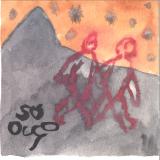
Genre-blending songwriter, arranger, and guitarist Wolfgang Pérez is set to release his highly anticipated new album Só Ouço in July 2025 on Hive Mind. Known for his unique fusion of influences, the German-Spanish artist first captured attention with his 2021 debut WHO CARES WHO CARES (Fun In The Church), followed by the critically acclaimed Spanish-language album AHORA (BAUMUSIK, 2024).
Só Ouço is the fruit of an 18-month creative residency in Rio de Janeiro, where Pérez collaborated with a group of young Brazilian musicians. Deeply inspired by the city's sounds and rhythms, the album marks an exciting chapter in Pérez’s evolving artistic journey.
In 2022, Wolfgang Pérez arrived in Rio de Janeiro on a university exchange to study composition, and quickly found himself immersed in the city’s rich musical landscape. Introduced early on to Rio icons like Thiago Nassif, Arto Lindsay, and Ana Frango Elétrico, what began as a semester turned into a transformative three-semester stay. Pérez absorbed the city's contrasts - it's beauty, its people, it's chaos and violence, all it's contradictions and life - while deeply studying Brazilian music at UFRJ/UNIRIO under the guidance of masters Josimar Carneiro, Marcello Gonçalves and Almir Cortes.
Wolfgang spent the first 6 months or so soaking in as much as possible, going to shows, to the baile funk parties, walking the streets, hiking the mountains in and around Rio, listening to music, making friends, learning where to go and where not to, learning the language, learning the slang, incorporating the culture. He used the time to forget himself in the vibrance of the city.
After this the band came together through a series of chance encounters and happy accidents...some loose jam sessions led to shows around Rio, where Wolfgang, alongside Luis Magalhães (bass), Pedro Fonte (drums) and Paulo Emmery (electric guitar), started to flesh out some of Wolfgang's compositions. At a show at Audio Rebel they met Angelo Wolf (owner of Wolf Estúdio and engineer for artists such as Bala Desejo, Dora Morelenbaum, Zé Ibarra, Marcos Valle, Antonio Neves and Ana Frango Elétrico); moved by the music, Wolf offered Pérez residency and studio time at Wolf Estúdio, providing the foundation for Só Ouço. Angelo was a catalyst for the production of Só Ouço, his openness and generosity helping to shape the sound of the record. Carol Maia, a young guitarist, lyricist and singer brought a sensitivity and tenderness to the songs, while Antonio Neves helped to pull together the brass and woodwind players who would complete the lush sound of the album.
Meticulously arranged, and beautifully composed, Só Ouço is a joy to listen to and surprising at every turn. Classic songwriting and cutting edge production blend to produce an album that is by turns tender and gentle, abrasive and unsettling, a joyful celebration of life in all its complexity."

Mark "Shaboom" Bell's classic Mecca Funk album is best known for its standout cut 'Woman Cry' and it is that fan-fav which gets pressed up here with three fresh reworkings. The classic cut famously opens Andrew Weatherall's iconic Heavenly Social DJ mix and is ripe and ready for these bold reinterpretations from Ricardo Villalobos, DJ Sneak, and Spatial Awareness. Villalobos transforms the 1999 original into a deep, hypnotic journey full of his signature minimal textures, while Sneak delivers a bass-heavy, dub-soaked house bomb made for peak-time floors. Rounding things out, Spatial Awareness offers a respectful yet electrified remix imbued with some fresh sonic flair.
Ruben Rada played a pivotal role in the development of Uruguayan music. By blending Afro-Uruguayan traditions with rock, soul, jazz, and funk, he paved a new musical path that began in the 1960s and continues to evolve today. Throughout his career, he has consistently been surrounded by talented musicians who have been integral to his sound. This was especially true with Daniel "Lobito" Lagarde, bassist and founding member of the iconic band Totem in the early 1970s; Ricardo Nolé, keyboardist, arranger, and musical director of Rada's band in Argentina during the 1980s; and Nelson Cedréz, the drummer who has been by Rada's side since the 1990s. In 2016, these three musicians reunited to form Rada's Old Boys, releasing an album of jazz-infused reinterpretations of Rada's songs that earned rave reviews. Now, they return with Manos, a bold new album that reimagines Rada's works from every phase of his career, featuring deeply personal renditions and a special guest appearance from Rada himself on one track.
Buh Records presents "El tiempo quiere cantar" ("Time Wants to Sing") the debut album by Pacha Wakay Munan, a duo formed by Peruvian musicians and researchers Dimitri Manga Chávez and Ricardo López Alcas. This album explores the sonic possibilities of pre-Hispanic instruments in a contemporary musical context. Through their performance, they explore their tonal possibilities, the interaction between their frequencies, and their ability to generate new dialogues. The work of Pacha Wakay Munan aligns with the tradition of sound explorers such as the Peruvians Arturo Ruiz del Pozo and Luis David Aguilar or the Colombians Yaki Kandru. The album's repertoire consists of pieces that explore diverse sonorities and musical concepts. "Pacha Wakay Munanqa" introduces the timbral variety of the instruments used. "El Taki Onkoy" draws inspiration from historical accounts and the meaning of its name ("Sick Song"), based on a Culina chant documented by Rodolfo Holzmann. It features vocals by the experienced singer Ximena Menéndez. "Mundo Posible" is a reinterpretation of an improvisation session with musicologist Chalena Vásquez Rodríguez, where the piano dialogues with ceramic antaras. Other pieces delve into the sonic construction of these instruments in relation to their cultural contexts. "Machu Tara" explores the concept of tara, a rough and vibrant sound quality found in certain Andean musical traditions. "Túpac Huaca" references the Huaca Aliaga in Lima, creating a sound palette where pututos, whistling vessels, and quenas converge. "Agua, Cuarzo y Viento" introduces quartz sikus and bowls tuned to different frequencies, evoking the interaction between natural elements and resonant vibrations. In the piece "Qinray Tema", Camilo Angeles plays the metal transverse flute, creating a contrast with the pre-Hispanic ceramic flutes and pelican bone flutes.
A true embodiment of Brazilian Boogie, this is the first official reissue of Brylho's album, founded in Rio de Janeiro in 1978 as Brylho da Cidade. The group was influenced by the Black Rio movement of Tim Maia, Cassiano, and others. Members included Arnaldo Brandão (vocals/bass), Paulo Roquette (guitar), Cláudio Zoli (guitar/vocals), Robério Rafael (drums), Bolão (percussion), and Ricardo Cristaldi (keyboard). Claudio Zoli stands out as an important funk artist of the 1980s, during a time when Pop Rock bands dominated the Brazilian music scene. This album features one of the biggest hits of 1983: the soulful reggae groove "Noite do Prazer." Often described as Rio de Janeiro's answer to George Benson's "Give Me the Night," it's a timeless classic that bridges funk, soul, and Brazilian grooves. On "Se Você For a Salvador," a sun-soaked, feel-good boogie track, younger generations have embraced a new term to describe the sound: Brazilian City Pop. The record also delivers dancefloor heat like the stomping "Jóia Rara," the vibrant soul-reggae fusion "Destrava Maria," the ahead-of-its- time rap-funk hybrid "Cheque Sem Fundo," and the electrifying samba-reggae "Pé de Guerra," rich with Bahian rhythms and energy. Closing out the album are two under-the-radar jazz-funk gems: "Meditando" and "171." Though often lumped into the boogie category, these tracks lean more toward the sleek 1980s jazz-funk sound, reminiscent of UK acts like Level 42.

- Life Rhythm
- Balance
- Joy Of Life
- Eternity
- Desert Move Feat. Shantel & Thomas Konstantinou
- Second Nature Feat. Dominic Miller
- Open Land
- Full Circle Feat. Bill Evans
- Silence And Sound
- Supernova
- Home
»Ich denke immer wieder aufs Neue darüber nach, wie ich mich als Schlagzeug-spielender Bandleader so positionieren kann, dass das Instrument eine tragende Funktion einnimmt, dies aber auf eine musikalische Weise geschieht und auf keinen Fall als Zurschaustellung von Virtuosität«, sagt Wolfgang Haffner. Diese Haltung zieht sich als roter Faden durch seine gesamte Karriere - und auch durch »Life Rhythm«, sein zehntes Album auf ACT.
Und obwohl Haffners Musik gängigen Vorstellungen virtuoser Schlagzeug-Leader ganz bewusst widerspricht, steht das Instrument diesmal besonders im Fokus. Ausgangspunkt dafür war Wolfgang Haffners allererstes Solokonzert im Jahr 2022 auf Schloss Elmau. Er erinnert sich: »Das war eine Wahnsinns-Herausforderung bei der ich auch vor der Entscheidung stand: Spiele ich jetzt eine Stunde Schlagzeugsolo? Natürlich nicht! Also habe ich habe eine Menge melodisch klingender Perkussionsinstrumente eingebaut, Passagen live geloopt, mit Echos und Delays gearbeitet – im Grunde wie im Studio, nur eben auf der Bühne.« All dies brachte Haffner dazu, sich noch einmal auf ganz intensive Art mit dem Thema mit dem Instrument zu beschäftigen, welches ihn sein Leben lang begleitet. Und so haben alle Stücke auf »Life Rhythm« diesmal ihren Ursprung, nicht wie sonst bei Haffner, am Piano, sondern am Schlagzeug.
Das Ergebnis dieses Prozesses kann man gleich zum Auftakt von »Life Rhythm« auf dem Titeltrack erleben: Das Stück basiert auf einem hypnotischen Groove, bei dem nicht die Becken, wie sonst im Jazz üblich, die Time angeben, sondern vor allem die Trommeln. Das dieser Groove direkt Phil Collins und besonders an dessen Stück »Take Me Home« erinnert, ist kein Zufall: Collins' Art, Drum-Parts zu elementaren Teilen des Songwritings zu machen, ist bis heute eine von Haffners größten Inspirationen. Und auch jedes weitere der elf sehr kompakten, Song-haften Stücke auf »Life Rhythm« öffnet eine eigene Welt des musikalischen Schlagzeugspiels: Mal mal trocken-reduziert mit Besen wie auf »Balance«, poppig bei »Joy of Life«, mit filigranen Becken-Grooves, dezenter Elektronik und Percussion auf »Eternity« oder minimalis-tisch bis kurz vor der Stille in »Silence and Sound«.
Das aus all diesen Stilistiken ein so stimmiges Ganzes ent-steht liegt daran, das Wolfgang Haffner diese im Laufe seiner Karriere bis in die Tiefe durchdrungen hat - an der Seite von stilbildenden Charakteren wie Al Jarreau, Chaka Khan, Pat Metheny, Jan Garbarek, Esbjörn Svensson, Nils Petter Molvaer, Albert Mangelsdorff, Ricardo Villalobos und vielen, vielen mehr. All diese Kollaborationen haben Wolfgang Haffners Voka-bular am Instrument und auch als Komponist geprägt und die da-mit verbundenen, unterschiedlichsten Stile sind gleichermaßen Teil seiner musikalischen Persönlichkeit.
Vielseitigkeit und höchste Musikalität sind auch die Eigen-schaften, die Wolfgang Haffner und seine Mitmusiker auf »Life Rhythm« verbinden. Die Basis bildet ein bestens einges-pieltes Trio zusammen mit Keyboarder Simon Oslender, selbst auch Drummer und Bandleader, und Thomas Stieger, einem der gefragtesten deutschen Bassisten in Pop wie Jazz. Dazu kommen Trompeter Sebastian Studnitzky, Mitstreiter Haffners seit seinem ACT-Debüt »Shapes« und der Finne Arto Mikälä, eine echte Entdeckung in Sachen Klangvielfalt an der Gitarre. Diese Band herausragender Allrounder erweitert Haffner um eine Reihe musikalischer Charaktere, die der Musik ihre ganz eigene Farbe verleihen: Nils Landgren, Freund und Weggefährte seit mehr als 20 Jahren, Saxofon-Ikone Bill Evans, Sting-Gitarrist Dominic Miller, Balkan-Beat-Star Shantel, Bass-Feingeist Nicolas Fiszman, Oud-Virtuose Thomas Konstantinou und Bruno Müller, einer der besten deutschen Jazzgitarristen.
»Life Rhythm«, sagt Wolfgang Haffner, »ist für mich eine Fortsetzung, keine Wiederholung«. Die Musik trägt mit ihrer Wärme, Kraft und Klarheit die charakteristische Handschrift, die Haffner mit seinen Alben und auf tausenden von Konzerten in mehr als 100 Ländern zum wohl populärsten Schlagzeug-spielenden Leader Europas gemacht hat. Und gleichzeitig ist es eine Evolution seiner Musik. Gut möglich, dass Haffners Erfolg genau darin begründet ist, dass seine Musik immer etwas Ver-trautes und etwas Neues beinhaltet und dass Haffner sein Publikum so immer »mitnimmt« im Fluss seiner Ideen - und in einem gemeinsamen »Lebensrhythmus«
Following Sydenham, Njai and Punchard’s fresh take on Kraftwerk’s classic earlier this year, which picked up support from the likes of Optimo, India Jordan, DJ Bone, and more, Radio Slave recruits a pair of all-star remixers in Ricardo Villalobos and Gerd Janson to deliver a scintillating set of interpretations for his Rekids imprint.
Running Back’s Gerd Janson injects slap bass, funk-laden guitars, and twinkling synths over the original’s vocals for the ‘Dance’ mix, followed by a stripped-back instrumental version to kick off the A side. On the flip, Villalobos delivers a typically trippy affair, bringing constantly evolving strokes of modular mayhem and zapping percussion for over ten minutes, nervously settling into a chugging and deeply satisfying halftime groove.
- A1: M E.a Group - Onda Nueva
- A2: Mr Myers - So Long
- A3: Alberto Wolf & Los Terapeutas
- A4: Ricardo Bomba - Só Sentindo O Momento
- A5: Flaire - Winter’s Gone
- B1: Dean A Crawford - Laguna
- B2: Raphael Holder - That’s Why I Listen To My Heart
- B3: Richard Bowen - Sorcery
- B4: Neal Davis - Jealous Sea
- B5: Havanna Club - Laura
Heated compilation of 81-1990 rarities.
"Club Méduse’s Charles Bals joins forces with Norman Gervais of Bayetë fame to deliver a 10-track melange of languorous seaside serenades and beach-kissed AOR slow burners/bangers.
Each song evokes wave glimmer and synthetic textures on this first drop by Beirut-via-Saint Tropez label Pocket of Light, one for the listener that’s crossed the last frontier of the registry and needs just a little more.
Is it the Baleares or the Caribbean? Is it hopeful anguish or mature happiness? And with captains like this, does it matter at all…?”