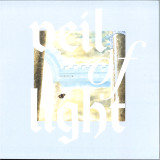
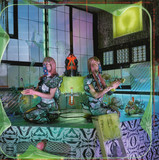
The light is at the end of the tunnel. The light is shining bright because of love. The love is the answer to the darkness + the remedy for the experience which might bring unclearness and letting drown in the metaphorical swamp which every single human has felt during the journey they are on. The EP by the Switzerland based mastermind Dan Piu is dedicated to the love and to the love only. The tracks that were produced from the artist’s creative inflow are from the year 1995 to our present days and are telling the story of hope and compassion. Starting from A side we have a demonstrative rollercoaster which is ‘Selfish War Machine’ gracing before the ‘Made in Japan’ which is inspired by the early arcade machines and the ethos they were bringing with them. Side B starts with seductive house number straight up from the year 1995, followed by Robotic tool ‘Robota’ and finishing off on the perfect and soul caressing track going by the name ‘Equinox of Ceres’. This precise body of work which has found its home with Sakskøbing is pure and direct message of love, in a way when things are seem bleak the light can be sparked again. The answer how this spark gets obtained is the four-letter word which is mentioned frequently in this text
Buscar:rob base
Terry Farley & Wade Teo ‘Why We Dance’ on Rekids featuring Kameelah Waheed.
The jacking house track, out this October, is backed with alternate mixes and a remix from Kevin Swain (DOP).
Founder of Boy’s Own and Junior Boys Own and an active part of Defected sub-label Faith, Terry Farley is a bonafide house legend. Teaming up with XOYO and Music Box Radio resident Wade Teo, the duo recruit New York-based spoken word artist Kameelah Waheed for a party-starting house cut on Radio Slave’s Rekids.
Across the A-side, robust drums, rocking low end, and piano stabs combine to provide the perfect backdrop for Kameelah Waheed’s infectious vocal performance. On the flip, Farley and Teo deliver their ‘Lonely Dancer Remix’ to kick off the B-side, adding subtle percussions and floating pads for a grooving rework. Rounding out the release, Farley recruits Kevin Swain for the collaborative ‘Angels Take Control’ remix, with dubbed-out claps, menacing low-end combining for a heads-down closing track.
Originally released in 1994 on Calypso Records / Irma Records in a triple vinyl promo white label version, Don Carlos's album Aqua is the
second album by the Varese-based DJ producer, already then known for his first two singles Alone and Mediterraneo, then both included in
his first album entitled Mediterraneo and released only in Compact Disc format in 1992 for the American market printed and distributed by
IRMA U.S.A., the American subsidiary of IRMA Records Italy.
The same fate will also have the Compact Disc format of the Aqua album, again printed only on the American market.
But the triple vinyl, printed in a limited edition of 500 copies in a white generic envelope, was never reissued and has become a rare record
over the years.
After almost thirty years, after countless requests for reissues, especially in the last few years in which the name and music of Don Carlos
has made a comeback, Irma Records has decided to reissue the vinyl in exactly the same original triple version.
DJ Don Carlos (born Carlo Troja) with his productions in the 90s has become one of the cult producers for DJs around the world.
His track Alone released in 1991 for Calypso was and still is one of the classics of House Music, played by all the major American and British
DJs.
At the time of its publication it was considered an underground song and therefore did not sell very much, but over the years its myth has grown
thanks to its subsequent productions as for example his second single, the EP entitled Mediterraneo, title which it will then inspired his first CD
album printed in the USA with the same title.
Several other singles followed, another album, always printed only in the USA, entitled Aqua, from which a triple promo vinyl was extracted which
today is one of the artist's most requested rarities.
In Italy his third album was released in 2002 entitled The Music In My Mind where Kim Mazelle, Michelle Weeks, Taka Boom and Kevin Bryant
were present as vocal guests. In 2009 a collection of the first two albums released in the USA titled Mediterraneo-Club Favourite Collection '90-
98 and in 2010 his fourth album entitled The Cool Deep which reproduced the sounds closest to his first productions.
Also active as a remixer for Italian and international labels, one of his most important works is the remix of Byron Stingily of the song You Make
Me Feel of which he made a worldwide hit. As a producer he also used other pseudonyms such as Montego Bay, Aquanuts, Sotterranea and
Love 2 Love Orchestra. He has played and plays in different countries such as London, New York, Miami and at various festivals, such as the
Robot and the Stickermule Festival in an evening with Apparat, Derrick May, DJ Koze, Lil 'Louis, Young Marco and Ellen Allien, LTJ Xperience
It might seem tongue-in-cheek on the surface, but the fact that the title of Eldritch Priest's sprawling debut vinyl release, Omphaloskepsis, is the Greek translation for “navel-gazing” unlocks something essential to the Vancouver-based composer and writer's singular outlook.
Perhaps even more telling is the title of Priest's 2013 book Boring Formless Nonsense: Experimental Music and the Aesthetics of Failure (Bloomsbury), whose 300-odd pages read as though you've been dosed with potent hallucinogens. Throughout the text Priest addresses—celebrates, even—the titular elements via various musical examples, including that of his peers. What's so bewildering it is that his descriptions of how boredom, formlessness, and nonsense manifest are laced with the very tactics he's depicting. Passages tie themselves in knots, footnotes engulf the “primary text,” he even deliberately misleads the reader.
The restless stasis of Omphaloskepsis could be regarded as an extension of this book's wayward spirit. Things unfold fairly slowly and consistently but it'd be a stretch to describe it as properly contemplative. Like attempting to meditate with a high fever, any sense of tranquility is constantly derailed as one succumbs to queasy agitation. The piece's foundation is a seemingly endless guitar melody; an organic meander that neither seems to repeat or offer any concessions to narrative directionality. Priest unfurls this rambling cantus firmus in a rich, clean, jazz-like tone, but as it's played, it's repeatedly tangled with snarls of dense digital processing and shadowed by stumbling virtual “band.” These strident interjections blatantly contrast with the guitar, yet they aren't so violent as to offer more than a faint itch of distraction. As such, the distinctive amorphousness that this piece asks us to inhabit for its 54-minute duration leaves a strong impression, but also feels utterly intangible.
In addition to his recorded forays, Priest's disorienting music has also been performed by top-tier interpreters such as the Arditti Quartet, Quatuor Bozzini, Philip Thomas, Anton Lukoszevieze, and Continuum. While living in Toronto he co-founded the collective neither/nor with John Mark Sherlock, which featured a cross section of musician-composers playing each other's work including Eric Chenaux, Doug Tielli, Eric KM Clark, Heather Roche, and Rob Clutton. “Though the name refers specifically to a loosely knit group of composers and performers,” remark's the collective's website “neither/nor is also a sensibility that refuses art’s messianic pretensions and the gaping maw of commercialized society, opting instead for art’s right to be esoteric.” In 2021, when Eric Chenaux and Martin Arnold relaunched their neither/nor-adjacent Rat-drifting imprint, an album by Priest, Many Traceries, was among the first to be released. Perhaps unsurprisingly, Priest was a student at the University of Victoria, a school that's come to be known for fostering such staunch individualists as Arnold, Linda Catlin Smith, Allison Cameron, and Anna Höstman.
As a scholar, Priest writes from a 'pataphysical perspective and deals with topics such as sonic culture, experimental aesthetics and the philosophy of experience. Priest brings these interests to his job as an Associate Professor in the School for the Contemporary Arts at Simon Fraser University, interests that also inform his work as a member the experimental theory group The Occulture. In addition to Omphaloskepsis, his new book, Earworm and Event: Music, Daydreams and Other Imaginary Refrains,
"This very first release on "Oonops Drops" has its very own story behind it. I planned to found my own label for more than half a year when my wife Lisa worked on her songs and when the idea came to me how this would sound if Japanese Jazz trio Nautilus would arrange some of them. I have known Toshi for six years now, met him personally here in Hanover and he's such a magnificent musician, so the idea became reality and they started working on the first two tracks until a total amount of nine songs was created. I'm so proud to share this very personal project with you (which was finally produced and mastery simultaneous to the foundation of my label by accident) and I hope you like it as much as we do.
For the first single release of the album I directly had the uplifting track "Everytime" in my mind and a remix which should transport the good vibes in a different direction. Pat Van Dyke, a longtime known producer and multi-instrumentalist from New Jersey took his hands on it and created a horns-loaden feel good version of it including a little guest appearance by Brooklyn based lyricist John Robinson.
You can get this release on LP, 7", CD or digital or get the reduced bundle of the LP including the 7".
Yours truly, Oonops."
About Lisa:
Starting with music from an early age, Lisa Decker wrote and pre-recorded some of these nine songs at least 25 years ago when she was a teenager. In the last years the songs got several times reviewed, reworked and complemented with new works by her besides being a full time (music) education teacher. You could describe the final results as a Pop album with many influences from Jazz, Hip Hop, Funk to Reggae surrounded by a Japanese sound spirit. The original demo tapes from back in the days are still alive.
Baby Buddha is David Javelosa and musical partner Charles Hornaday playing instruments and providing their own whacked-out vocals. Baby Buddha really was less of a band than a project; a side project in fact, for some members of another group, Los Microwaves. Baby Buddha would eventually record and release an album, 1981's provocatively-titled Music for Teenage Sex on Robbie Fields' L.A.-based Posh Boy label.
Happily, the project's guiding creative light, David Javelosa has recently seen to a vinyl reissue of the now-40-year-old record, mystifyingly retitled Music for Teenage Sects. Definitely among the stranger releases of the new wave era, Music for Teenage Sex/Sects could perhaps only have been created when and where it was made. But on the occasion of its 40th anniversary, the music sounds as weirdly wonderful as ever. "We Are Not" sounds like Human League stuck in a car with The Residents. And their cover of "All Shook Up" sounds like a musical kin to those inscrutable eyeball guys too; it wouldn't be out of place on Meet the Residents. "Little Things" is a house-of-mirrors, scary track, with spoken-word vocals by Los Microwaves' Meg Brazill and label head Fields.
The album cover is slightly different as well: it displays a bedroom scene like the original LP, but with the young female model absent. The new release (on Javelosa's own Hyperspace Communications label) is pressed on beautiful translucent blue vinyl and comes in a gatefold sleeve with a lively collage of photos, buttons, gig posters. Limited to 500 copies.This playfully titled release features David Javelosa (on synth and vocals) along with Meg Brazill (on bass and vocals) plus drummer Todd "Rosa" Rosencrans. Side One features five studio tracks, none of which were included on the band's 1981 Posh Boy LP, Life After Breakfast. Three of these tracks were recorded in '82; there's no information regarding the provenance of the other two songs. The records' second side collects five live recordings, capturing Los Microwaves onstage in New York City (The Peppermint Lounge) and Boston as well as at San Francisco's own I-Beam, a venue that often played host to the band. Those tracks date form roughly the same ear, 1980-83. Sonically the songs variously recall Blondie, Flying Lizards, Gang of Four and a far less dour Human League. Importantly, the band rocks, even when it's employing a spare drum kit, solid but elemental bass, and monophonic analog synthesizers. The stripped down aesthetics of the group – necessitated by its minimalist instrumental approach – are nonetheless thrilling. Even if you weren't there in 1980, this'll take you back.
The independent label Six Nine Records Ltd. UK, based in Newcastle upon Tyne, proudly presents the second release from Tedi “Son Of Pearl” Robinson!
Florida native Theodore E. Robinson aka Tedi Robinson aka Son Of Pearl is back with two brand new stunning tunes! His “mellowfunkism” signature sound and brand is all over these two beautiful tracks, with his bass playing skills being right on point. And as the man himself sings: “all we have to be is wonderful”!
Definitely not to be missed as it is a limited UK press with small hole
and full colour printed picture cover!
Following up to Rob Belleville's inaugural delivery, Fluid Electronics returns in 2021 with a new collaborative EP courtesy of Dutch veteran Jarno, the man behind Trouw's infamous Below evenings, and Fluid Electronics' co-founder and owner Shirazi, back in full swing after a ten-year break from production. The EP features remixes from Amsterdam's Love Over Entropy and seminal Rotterdam-based duo, Duplex.
The A-side finds Shirazi and Jarno dishing out a vaporous dub with the focus track, "Late Night Thoughts". Engineering a mix of reverb-drenched atmospheric techno laced with hedonistic house accents and mystique-imbued melodies on a dreamy tip. Upping the tempo and overall vibe of the track, Love Over Entropy's remix propels its listener in a blazing corridor of synth arpeggios and luminous chords.
The flip side sees Shirazi go solo on the ethereal "Continue Learning", all in evocative spaciousness and textural finesse, as it merges the immersive depth of Basic Channel-esque envelopes with further straightforward floor dynamics. Clone-affiliated duo Duplex provides a tighter, jacking match to the original's vaster headspace, tweaking it into a proper clinical club-ready weapon.
The established favourite Nicolas Laugier AKA. The Reflex has been a crucial name in the fabric of electronic music, and is widely praised for his masterful production style which has gained the seal of approval of heritage artists such as Nile Rodgers, Giorgio Moroder, Nina Simon, Kid Creole, Kathy Sledge, Noel Gallagher, Bono and Paul Weller - morphing some of the world classics into contemporary; certified rave anthems. Loved by tastemakers alike including Rob Da Bank, Gilles Peterson, Craig Charles and Mistajam, The Reflex is responsible for unleashing some of the best remixes to date.
Returning off the back of his latest revision of Norman Doray and Darren Crook's 'Sweet Freedom', which has so far gained nearly 150 worldwide radio spins since it's release on 6th November, The Reflex now puts forward an incredible 2021 revision of two time Grammy award winner Nile Rogers' 'Do What You Wanna Do'. A modern disco anthem, the track has since been remixed by producers like MK, Eats Everything and Rob Da Bank. With an already established repertoire of essential remixes and re-edits, the London based producer combines his unique Disco and Soul blend with his acclaimed musical initiative to create what will be an intricate and exceptional upgrade, and a key selection of an already impressive arsenal of releases.
A percentage of the royalties from this release will be donated to Nile Rodgers' 'We Are Family Foundation' - who collaborate with forward thinking organisation who believe in youth and together, build creative programming and content, empowering young people to take humanity forward.
Children, the one and only instrumental song that breaks all the rules, created by Robert Miles. The netherlands producers Tinlicker signed the new remix of Children.
Bio:
Tinlicker are Utrecht based duo Micha Heyboer and Jordi van Achthoven who have been crafting their computerized soul together since 2013. Before joining forces, they individually honed their skills as part of world renowned drum 'n bass act Black Sun Empire (Heyboer) and as producer, songwriter and music editor for many artists (Van Achthoven). Their previous experience was apparent from day one of their collaborative project, resulting in an impressive
string of highly mature and deeply emotive tracks. Since starting working together they’ve quickly become a household name in the world of electronic dance music previously releasing on Armada,
mau5trap, Anjunafamily and Astralwerks. They have released their first full length album 'This Is Not Our Universe' last fall and released their remix album this past spring from the likes of Dosem, Joris Delacroix and Grum.
- A1: Ryuichi Sakamoto - The End Of Asia
- A2: Mariah - Shinzo No Tobira
- A3: Chika Asamoto - Self Control
- A4: Jun Fukamachi - Treasure Hunter
- B1: Yumi Murata - Watashi No Bus
- B2: Hitomi 'Penny' Tohyama - Rainy Driver
- B3: Yumi Seino - La Maison Est En Ruine
- B4: Kyoko Furuya - Tokyo
- C1: Kazue Itoh - Chinatown Rose
- C2: Kazumi Watanabe - Tokyo Joe
- C3: Juicy Fruits - Jenie Gets Amgry
- C4: Haruo Chikada & Vibra-Tones - Soul Life
- D1: Colored Music - Heartbeat
- D2: Akira Sakata - Room
- D3: Yasuaki Shimizu - Semi Tori No Hi
- D4: Shigeo Sekito - The Word Ii
Repress!
A MAJOR EXPLORATION OF TOKYO'S CUTTING EDGE 80S SOUND THROUGH THE MUSIC OF CULT JAPANESE LABEL NIPPON COLUMBIA AND ITS BETTER DAYS IMPRINT, SELECTED BY BRITISH RADIO PRESENTER AND DJ NICK LUSCOMBE.
‘Tokyo Dreaming’ is a superb selection picked from the highly collectible Nippon Columbia label and its Better Days sub-label. For the occasion, we’ve teamed up with journalist and Japanese music expert Nick Luscombe who was granted rare access to the much-guarded Nippon Columbia's vaults for a masterful selection encapsulating the fascinating sound of Tokyo in the late 70s and 80s. The selection mixes electro, synth-pop, funk and ambient and features such artists as Ryuichi Sakamoto, Mariah, Shigeo Sekito, Juicy Fruits, Hitomi "Penny" Tohyama and Yumi Murata. The tracklist includes many sought-after rarities and hidden gems which have never been released outside of Japan and the set has been newly remastered by Nippon Columbia. The album has been designed by famed London-based designer Optigram and is annotated by Nick.
Nippon Columbia, one of Japan's oldest music labels is also one of its most collectible thanks to its sub-label Better Days which, in the late 70s, became a hotbed for Tokyo's new generation of pop artists eager to experiment with ambient, electro and funk. Armed with a string of new Japanese-made synthesizers and drum machines that would soon take the world by storm, they made cutting-edge music, which has since become highly sought-after by a new generation of Japanese music lovers. Nick Luscombe, who has long been a leading advocate of Japanese music from this era, has handpicked a selection of some of the sharpest music released on these labels at the time.
According to Nick, “Tokyo Dreaming is a look back to an incredible era of Japanese music, that still sounds and feels like the future. It was a moment when brand-new music tech from Japan helped forge new ideas and experiments that permeated pop, soul and jazz and helped create new forms of music including electro and techno. The perfect meeting point that would help create a new soundtrack for modern living.“
?The selection starts with "The End of Asia" by Ryuichi Sakamoto from his 1978 ground-breaking debut "Thousand Knives Of" (reissued last year by Wewantsounds). The track became a staple of Sakamoto's and YMO's live shows and was even re-recorded by the group for their 1980 album 'X Multiplies'. The track is followed by Mariah's cult Armenian folk flavoured synth pop classic "Shinzo No Tobira" (1983), which first spread outside of Japan when the Scottish DJ duo Optimo started playing the track regularly at their shows.
?Chika Asamoto's "Self Control" (1988) and Jun Fukamachi's "Treasure Hunter" (1985) are perfect songs in the synth-pop canon, while Yumi Murata's rendition of Akiko Yano's "Watashi No Bus" and Hitomi "Penny" Tohyama's "Rainy Driver" both from 1981, move closer towards the slicker, funkier sound of City Pop.
?'Tokyo Dreaming' superbly showcases the breadth of 80s Japanese music and the way electro pop was a playing ground for musicians to experiment with many styles, as showcased by Akira Sakata's dub-enfused "Room" from 1980, Kazumi Watanabe's discoid "Tokyo Joe" (1980) and Juicy Fruits' "kawai" robotic Techno pop song "Jenie Gets Angry".
?The selection flows effortlessly between many shades of synth and ends with two cult classics in the form of Yasuaki Shimizu's "Semi Tori No Hi" and Shigeo Sekito's ambient-jazz masterpiece "The Word II" from his highly sought-after album "Kareinaru Electone (The Word) Vol.2" which, although recorded in 1975, perfectly announces the synth revolution to come. Tokyo Dreaming showcases the groundbreaking sounds of a city turned giant sonic lab which was restlessly inventing the music of the future.
Nick Luscombe is a highly respected and in-demand music influencer who discovers great music from all over the world and shares it internationally through his many radio shows and DJ sets. He has been in charge of music selection for various radio programs since 1999, and from 2010 - 2019, was the DJ for the popular BBC Radio music program "Late Junction”. He has also curated and presented music shows for Monocle and British Airways radio stations. He has worked as both Chief Music Editor at iTunes and Director of Music at London’s Institute of Contemporary Art, and is the founder of MSCTY.
Berlin club and party-starters Sameheads return to black wax on April 10th with “ZEUG!”, a 4-track EP from various celebrated artists, who join forces in new and unheard ways for a stack of outernational and spaced-out dancefloor jams for creative dance floors worldwide and beyond.
Berlin-based CROSSLUCID, AKA Sylwana Zybura and Tomas C. Toth, have delivered another stunning example of their perception-bending otherworldly viewpoint with the artwork for the release. A purely analog production, fusing clever lighting tricks, hand-made props, and a healthy dose of shaving foam and dry ice… This “Cult of the Cosmic Swamp” chimes with the weird tribal rhythms contained on the record.
First up is Mameen 3 (a side-project from Brussels selector DJ Sofa) & Romanian pioneer Rodion G.A with ‘Planet Cluj’, a suitably off-world excursion through a fun-packed disco hall in some far-off colony where layered synths are stacked, elements seeping through one another to form a mesh of groove.
Anatolian Weapons’ cosmic fireside ritual, ‘Chant 3’, heats up the A2 with vibrant and punchy percussion loops woven together with a worldwide chorus of chanters. Building continuously, the tough workout is dosed up with a bassline saturated in attitude for a high-energy finish.
Picking up on the B side are KRENG (a morphic form composed of Don’t DJ and Dane Close), who slow the pace down with a latticed beatwork combining robust dance formulas and blasting syncopation. Letting the rhythm do the legwork for the first half of the track, the pair then pour out a sludged mess of grime-infused bass over the percussive chaos.
Silvia Kastel and Wilted Woman close proceedings as SHAKEY with a dubwise workout that straddles b-side house obscurity and stoned live dub improvisation: steel drums patter at the windows of Paradise Garage as Larry Levan fights off the vampires alongside Scientist.
The release is celebrated at Sameheads on April 10th with an extremely rare live show from Rodion G. A., an appearance from INVERSIONS label owner Milo Smee, and a b2b from Don’t Dj & Dane Close. Limited to 300 pieces, this record will find a home in the stacks of DJ’s willing to step outside genre and convention.
The Liverpool-based DJ and producer ASOK returns to DVS1's Mistress Recordings with his most diversified EP yet: "Mistress 14" unfolds ASOK's raw, analog-heavy sound aesthetic full of broken kick drum patterns, stepping basslines, and lush synths.
With 25 years of record collecting, DJing, and promoting parties around the UK, there is little of the dance music spectrum that Stu Robinson has not been involved with. The Liverpool-based artist has amassed a fine understanding of a wide array of scenes, styles and sounds from drum & bass to electro-funk, disco to house and techno – underpinned by a love of breakbeat. The music under his alias ASOK is an amalgamation of this diversity that has found favor with labels like M>O>S, Lobster Theremin, Crème Organization, and Mistress Recordings.
"Mistress 14" opens with "Space Rockets" which is a nod to his breakier love affairs without using actual breakbeats. While second track "Is Anyone" displays his take on classic Chicago House with a little Roland JD-800 euphoria thrown in. On the flip, "Last Refuge" explores driving, rhythmical techno with ASOK's typical ravey pad-like break in the middle until "The Alchemist" closes the 12-inch by laying more focus on melody and texture with a growing, always changing bassline and an ethereal synth that carries the track's energy. The digital bonus track "Apano Sin" concludes the package with a scruffy somewhere in between everything vibe.
ASOK about Mistress 14:
"Mistress 14 is probably the most important EP I have ever made in terms of showing all the different things I am into. I’m difficult to pin down because I’m not really a techno DJ, or a house DJ, or anything like that. I like all forms of electronic dance music. As a DJ, I mix up old and new, familiar with unfamiliar, playing everything from Italo disco to really dark high-bpm breakbeat. As a producer, it’s not easy to put an EP together that covers a little of everything, yet still sounds cohesive. Especially considering that all my tracks were recorded in long live takes, then edited down with no ability to change parts. Sometimes that requires some pretty heavy editing, but that’s one of the good things you get when making music this way. I’m in control of the creative process, rather than feeling like some kind of colored block administrator drawing blocks out on arrangement view of my computer."
2022 Repress
In future times, culture historians will refer to Gabor Schablitzki aka Robag Wruhme as a creator of a singular techno sound, a rock in the murky sea of arbitrary musical dullness that befell mankind in the early 21st century.
Furthermore, a lesser known quality of Schablitzki will be praised and explored: He was a relentless wordsmith, a deeply passionate inventor of elegant idioms that enriched German language. Take ‘Freggelswuff’ or ‘Wemmel’ as shining examples.
It’s within this context that a certain cultural artefact released on a Cologne based record label called KOMPAKT (which towards the end of the 21st century made a hardly publicised turn to manufacturing CO2-neutral wall plug systems) that went by the sonorous title ‘Topinambur’ has to be mentioned. Legend has it that Schablitzki claimed to have created the word ‘Topinambur’, unknowingly that local farmers have been marketing a root tuber under the same name since it got imported from America in 1610 AD. The following tenacious copyright lawsuit between Schablitzki and a large agricultural consortium lasted for many years. It isn’t considered as a highpoint in Schablitzki’s turbulent life but it still serves a staircase wit that is passed on from generation to generation amongst Black Forest moonshiners.
Kulturhistoriker künftiger Generationen werden Gabor Schablitzki alias Robag Wruhme als Schöpfer eines singulären Techno-Sounds preisen, als einen Fels in der Brandung der im frühen 21. Jahrhundert vorherrschenden Beliebigkeit. Als DJ und Produzent war ein Meister des deepen Abrisses, werden sie weiterhin formulieren, obschon es weitere 136 Jahre dauern wird, bis die subkulturelle Bedeutung des Wortes 'Abriss' zweifelsfrei geklärt werden konnte.
Es wird aber auch eine weitere einzigartige Qualität Gabor Schablitzkis hervorgehoben werden: Er war ein unermüdlicher Wortschöpfer, der die deutsche Sprache um elegante Idiome wie Freggelswuff oder Wemmel bereicherte. In diesem Zusammenhang findet meist eine Veröffentlichung des Kölner Labels KOMPAKT (welches im ausklingenden 21. Jahrhundert einen wenig bemerkenswerten Wandel zum Hersteller von CO2-neutralen Dämmstoffdübeln vollzog) Erwähnung. Diese Veröffentlichung erschien unter dem klangvollen Namen "Topinambur" und die Legende besagt, dass Schablitzki behauptete auch hier der Nachwelt eine neue Wortschöpfung hinterlassen zu haben, nicht wissend, dass europäische Landwirte bereits seit 1610 A.D. unter diesem Namen ein aus Amerika importiertes Knollengewächs vermarkteten. Der sich daran anschliessende Copyright-Streit zwischen Schablitzki und einem mächtigen Agrarkonzern, zählte nicht zu den rühmlichen Episoden seines bewegten Lebens, sorgt aber seit Generationen als Treppenwitz unter Schwarzwälder Schnapsbrennern für viel Geschmunzel.
Deep in the Romanian wilderness, beyond the foggy wastelands and the drab greyness of the metropolitan district you can find the base of two musical wizards who invoke the spirit of the past to transmit a very modern interpretation of their nation's musical traditions.
They are known as Livio & Roby and they have been putting their own supernatural twist on house and techno for the past 10 years. Their connection with the global electronic music movement has been channeled via highly influential outlets such as Desolat, VIVa, Saved and Fumakilla. While their physical presence has been felt in a myriad of venues from Buenos Aires to Detroit, and across much of Europe. From dynamic DJ sets and innovative live performances to album projects and a constant flow of cutting edge, dancefloor-based productions the duo remain one of their nation's leading lights in the field.
The tribal rhythms, inspired by Romania's colourful history, penetrate your psyche: the organic instrumentation lifts your spirit; flutes and vocals combine with delicate chimes, while groovy basslines and solemn melodies create a magical concoction. It's a formula that caught the ears of their early supporters, Steve Lawler signed them up to VIVa Music and Berlin stalwart Woody introduced them to the city's music scene via his highly-respected Fumakilla label.
with »redsuperstructure«, robert lippok created a new foundation for his musical endeavors. now - 7 years later - this system properly comes to life on »applied autonomy«. the title of the new album is a clear indicator as to what the berlin-based producer has been up to during the last couple of years, both on a conceptual level as well as how he molds his ideas into tracks.
»applied autonomy« orchestrates a certain state of frantic standstill, which occurs once a structure is set. has this state been reached, the artist is free to focus on other equally important aspects, balancing the various shades, pushing ideas even further to really make them shine and blossom in their self-declared autonomy. the more light one lets in, the more layers become visible.
layers are key when it comes to understanding »applied autonomy«. big chunks of the material with which the album has been produced derive from sketches specifically made for a club performance. rather than meticulously devising each and every detail, lippok focussed instead on recording as many fragments as possible in a short period of time, elements which he could later combine and layer on stage. based on this material and his experience experimenting with it in a live environment, the album slowly began to shape. an album culminating in a collaboration with klara lewis, with whom lippok spent 2 days at the EMS studios in stockholm, approaching the idea of autonomy from yet another angle. during the session, both musicians played and performed simultaneously, yet not explicitly together, lost in their own thoughts and ideas, only subconsciously taking in what the other one was coming up with. the result is »samtal«, 14 minutes of a constantly evolving state of poise, magically connecting all the dots Lippok had already defined as »applied autonomy«.
Eight releases in, Leonidas & Hobbes have honed a mutual love of soundtracks, disco, jazz, house, techno, acid, psychedelic, African and dub sounds.
Web Of Intrigue is one part tribute to lost 70s soundtracks, when music was created on the finest analogue hardware, featuring full bands, session players and lush orchestrations, one part tribute to 70s disco gods Nile Rodgers and Bernard Edwards (Chic) and one part mid-tempo but nonetheless cosmic house. The three parts fuse to form an instrumental track sounding as fresh as a whole meadow of daisies in 2017 and one that's been going down extremely well with international DJs who have road-tested the material.
Heavy Weather flips the script for a deeper workout in a 3/4 time signature - more of a cosmic waltz. Taking its main cue from 70s jazz fusion heroes Weather Report and The Doors' Ray Manzarek, it incorporates rich African percussion, spaced-out flourishes exhibiting the duo's love for the dubs of Lee Perry, King Tubby et al, and a good old fashioned arpeggio of an acid line - definitely a more esoteric number, all told.
The 'Dawn' and 'Acid Rain' mixes push different buttons for the heads, as suits the mood. It all adds up to a very Balearic confection, fitting snugly in with the burgeoning revival for this somewhat ineffable sound - a trend that seems to be getting stronger/bigger every year, popping up every time the sun gets his hat on and we all remember how to party like the lucky residents of that infamous White Isle....
MORE INFO
London/Edinburgh analogue electronic duo Leonidas & Hobbes released debut EP "Machines, Tapes & Electronic Setups" via the Hobbes Music label back in May 2013, picking up plaudits and support from the likes of Resident Advisor, Mixmag, Erol Alkan, Ashley Beedle, Alan Braxe, Shadow Child, Jimpster, Nick Warren, M.A.N.D.Y., Leftside Wobble, Mr G, Auntie Flo, Sasha, John Digweed and many more... The duo were consequently commissioned to remix the Pet Shop Boys.
Second EP "Mo' Machines" came out on the label in April 2014 and received equally high praise, with i-D Magazine inviting the duo to record a DJ mix which has to date chalked up a whole lot of love on Soundcloud.
Leonidas has released two other collaborative EPs with London-based Japanese DJ/producer Kay Suzuki via his Round In Motion imprint, equally winning fans worldwide, with a track now forthcoming on new label YAM Records' You And Music Volume 1 EP plus much more in the pipeline for 2017. Leonidas also has his own lovetoparty label, releasing edits of much-loved disco tunes on limited edition 12" vinyl format and free download. Previously, Leonidas made a name for throwing word-of-mouth parties around east London on his audiophile 'lovetoparty' sound system (providing some of the inspiration for much-admired late-night watering hole Brilliant Corners).
Equally, Hobbes ran the widely acclaimed Trouble nights for ten years in Edinburgh/Scotland, working with the great and the good from across the soul/jazz/dance spectrum since '02, and championed up-and-coming live talent via his Limbo 'gig-in-a-club' nights at The Voodoo Rooms for nine years since '07. Hobbes has toured his DJing style to the various corners of the dancing planet, including gigs in the Far East, much of Europe and across the UK. The Hobbes Music label has otherwise featured artists as diverse as Auntie Flo, JD Twitch (Optimo), Neil Landstrumm, Craig Smith (6th Borough Project), Ali Renault, iO Sounds, Joe Howe, Debukas, Fudge Fingas, Marco Bernardi, Dimitri Veimar, Mick Wills and Nightwave, with further support from Ben UFO, Justin Robertson, Motor City Drum Ensemble, KiNK, The Revenge, T.E.E.D, Kiki, Groove Armada, Maceo Plex, OOFT!, Domenic Capello (Sub Club), XDB, Ben Mono, Masa Sutela, Bawrut/Scuola Furano, Numbers, John Heckle and many more...
Stefan Robbers is one of the most known and respected non-U.K.-based European techno producers, and (along with Speedy J) one of the only Dutch techno artists to reach a wide audience outside of Holland. Recording as Terrace, Florence, and under his own name, Robbers has been responsible for some of the most memorable moments in experimental dance music in the last few years, from the first release on the now-commanding D-Jax label (Terrace's 1990 EP 916 Beuna Avenue) to recent Terrace and Florence full-lengths released on his own Eevo Lute imprint. Although tracks have appeared through GPR and New Electronica as well, his focus since 1994 has been on Eevo Lute, likely in an effort to raise awareness about Dutch techno artists and which also prompted the astablishment (by Robbers and Speedy J's Jochem Paap) of a Dutch remix network. Most often cited in connection with the sort of "listening techno" associated with the Warp, GPR, and New Electronica labels, Robbers' recent releases have moved increasingly toward the incorporation of du jour electronica hybrids such as trip-hop and ambient jungle, although his trademark mixture of intricate, off-kilter rhythms and sweet melodies has remained. Along with Robbers' own releases, Eevo Lute has also issued material from David Caron, Max 404, and Wladimir M., as well as two label compilations (Agenda 21 and Agenda 22). A remixed version of Terrace's 1996 Konnekt LP, entitled Re-Konnekt, was released in 1996, featuring Speedy J, Global Communication, Sean Deason, Kirk Digiorgio, Orlando Voorn, and Thomas Heckmann.
Barcelona-based Rob Clouth returns to Leisure System with the Deep Field 12', a stomping showcase of his focused sound design and knack for memorable melodies with additional remixes from Kowton and Vessels.
Deep Field is Clouth's Leisure System follow-up to the Clockwork Atom EP, which was named one of the top EPs of 2014 by Bleep and introduced his electronic wizard by to a wider audience following prior releases as Vaetxh and under his own name. Debuted on Max Cooper's Boiler Room and appearing again on his Essential Mix, 'Deep Field' is tactile and threatening, with disorienting glitches weaved into the 4/4 structure. The belching low-end brings to mind a talkative machine that's been muzzled, eager to burst from its restraints.Livity Sound boss Kowton inverts the original into a gelatinous mass, adding jackhammering drums to the cloudy atmosphere and creating a spacious and stuttering lesson in tension and release. Fresh off the release of their LP Dilate, Leeds band Vessels put their own euphoric electronic magic to work with a housier take, drawing out Clouth's propulsive percussion with an added dose of lush melodicism that
should make it a new favorite for house DJs looking for a spirited twist on the typical. Deep Field is the third in Leisure System's new GRIDLOCK series, melding the freaky and functional
for modern dance floors.