Steve Moore reprises his beloved Lovelock guise by presenting his unique riff on the library breaks genre. Business And Pleasure contains grimy groove and sleazy, funk-laden lounge music.
This vinyl release is hyper-limited, with just 500 pressed for the world.
The LP is ushered in by the spacey synth-funk of the sleazy, woozy title track. This is that serious slo-mo cosmic-balearic head-nod shit. Laidback bass, heavy funk with dreamy synth and electric guitars. An outstanding opener. Up next, the dynamic, swaggering "Last Call" is a sophisticated, elegant stroll - sweeping, mellow strings, a smooth bassline and gorgeous percussion with urgent keys and swelling synths.
"Slinky Strut" is another spaced-out, sleazy funk groove with jazz rock by way of a heavy, heavy guitar riff, mellotron and bass breakdowns which build to brass crescendos. Gigantic. "First Class" closes out the side, and, like classic Hawkshaw / Bennett noir, it's got that mysterious and murky stretched out sleuth / detective soul with a great bassline and percussive elements, with swelling strings, ace synths and smooth Rhodes piano melodies entering the mix halfway through. Dramatic guitars and groovy percussion add extra intrigue. It's 7 minutes of funk!
Side B opens with the stretched-out psychedelic funk and jazz groove of "Stank 49". It takes its sweet time to unfurl, creating enormous - almost sensual - anticipation for the ensuing beauty but, as it does, we're left beguiled and straight-up hypnotised. Heaven-sent synth flourishes and a laidback bassline over smooth drums cement its simple, vivacious grace. "Dangerous Man" is that creeping crime funk we all love; heavy bass and fuzzy guitar riffs, mellow strings and sumptuous piano/synths. It's irresistible, it's ominous and it's pretty gargantuan. It's basically like an El-P hip-hop instrumental. We need to get some rappers over this stuff, stat!
"Stinkbug" is a dazzling and funky groove-fuelled jazz-rock workout with fizzing synth riffs joined by full percussion and drum breaks, building with strings to a strong swagger. Vigour! To close out this remarkable set, the breezy "Win Or Lose" is laidback soul-inflected funk, utilising urgent, skipping drums and galloping basslines. Just stunning.
This collection was written and recorded in Spring and Summer of ’24. Everything was tracked at Steve's home studio in Albany, NY except the drums and percussion, which were recorded by Jeff Gretz at his space in NYC. The whole collection is basically a rhythm section feature, so Steve's Rickenbacker 4003 and Fender Jazz Bass play very prominently. The bass guitar serves as lead instrument in a lot of these tracks. Also, lots of Rhodes and stringers (Solina, Logan etc) and guitar (Strat and Les Paul). He even dusted off my sax for this one, which he doesn’t do as often as he’d like!
This type of groove-oriented library music has been a steady part of Steve's diet since the late 90’s. In heavy rotation while writing this collection were the following classics: “Time Signals” by Klaus Weiss, “Tilsley Orchestral No. 10” by Reg Tilsley, and “Heavy Truckin’” by Simon Haseley. “Voyage” by Brian Bennett was also a big one.
Lovelock started as a dedicated Italo-disco project, but over the years Steve expanded it to include anything directly informed by the commercial/pop side of the music of his childhood (70s/80s). Writing and recording this album was, like a lot of Steve's music these days, basically a test to see whether or not he could do it.
The song titles, like the music, are meant to be evocative yet vague. But there is a bit of a travel theme. Steve imagined this record being the soundtrack to a sleazy salesman’s business trip. The kind of guy who, when asked if he’s traveling for business or pleasure, responds “both.” Beyond the traveling salesman comparison, the title directly relates to the creation of this album. This was something he wanted to do just for his own enjoyment. Yet, like our sleazy salesman, he still found a way to get paid.
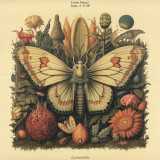
The album’s cover was designed by Chris Stevenson, with no little direction from Steve. He knew that he wanted to go with something photography-based for this cover so, in true DIY/cheapskate spirit, Steve started by looking through his own photos. He found the cover image on his phone, taken through an almost empty bottle of beer, and it clicked. The whole album has a very boozy vibe (especially with titles like “Last Call”) so this shot seemed appropriate. We, hic, agree.
Mastering for this vinyl edition was overseen by Be With regular Simon Francis, and it was cut by the esteemed Cicely Balston at Abbey Road Studios to be pressed in the Netherlands by Record Industry.
'Transplant Rejection’ is the work of Estonian artist and IDA Radio co-founder Robert Nikolajev, this collection of seven ‘almost’ dark ambient tracks embody the melancholy of autumn whilst hinting at the forthcoming eternal winter. A man with many hats, Nikolajev operates on the fringes of the leftfield house underground for labels such as Incienso, Collect-Call and Sad Fun as well as being one half of the sporadic DIMA DISK act with Ragnar Rahouja. Eschewing the more rhythmic side of his productions for this Muscut tape, Nikolajev taps into the fictional soundtrack atmospheres the label is known for and brings his own brand of wistful, introspective world-building by way of machine harmony to the now Tallinn based imprint.
There’s a lo-fi, grainy quality running throughout the collection, a kind of sepia-toned nostalgia that envelops the listener and disorientates any perception of time or place. Buried vocal fragments sit in the mix on ‘Stifled’ alongside decaying synthesiser drones whilst ‘DDM’ channels an edgy post-rock dirge with its use of sagged bass guitar. Overall, an inspired look into the more ‘at home’ side of this increasingly prolific Estonian artist.
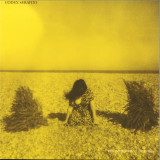
One of the most popular French TV extracts of all time is the black and white image of a young and extremely nervous-looking Françoise Hardy being given a firm dressing-down by Mireille Hartush (the famous music teacher who ran La Petite Conservatoire de la Chanson in the 1960s). Presented here is her debut studio album Françoise Hardy (issued as The Yeh-Yeh Girl from Paris! in the USA). It was released in France in December 1962 by Disques Vogue with the catalogue number LD 600-30. Originally issued with no title, except for her name on the cover, the album has therefore colloquially become known by the title of its most successful song, Tous les garçons et les filles, and later reissues added this title. This sensational album compiles the twelve original French versions from her first three EPs released by Vogue during 1962. Hardy would also record versions of songs from the album in Italian (1962, four tracks released on singles have been added here as a bonus), English (1964) and German (1965). The iconic LP combines rockabilly, folk, jazz and blues, and has been noted for its simplicity, featuring a minimalist jazz percussion, bass, and both acoustic and electric guitar. 180 GRAM - GATEFOLD COVER - LIMITED EDITION
Sélavy is Prosper’s debut album. It features 13 tracks that range from fairly traditional French chanson to more techno, rap, rock, punk, and even pop styles. Wordplay and stylistic devices play a central role in the lyrics. Much like his work as a visual artist—where he cuts and assembles elements that seem to have little in common at first glance.
Prosper uses the French language as a tool to express his emotions and reflections on life, with all its sorrows and joys. In doing so, he dissolves the boundaries between poetry, song, and artwork.
This is the fourth volume in the collection dedicated to the Arlecchino nightclub in Santa Maria Codifiume, in the province of Ferrara. It's once again a double-vinyl set that gathers the best of Afro, Funky, Rare Groove, and Black Music, as played at the club by resident DJs Giancarlo Lelli, DJ Ghello, and DJ Frank.
DJ Support: Laurent Garnier, Archie Hamilton, Radio Slave, Mark Farina, Horse Meat Disco, Ilario Alicante, DJ Harvey, Harri, Ame, Inland Nights, Massimiliano Pagliara
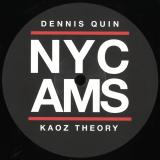
The Netherlands Dennis Quin makes a welcome return to Kaoz Theory this September with ‘New York To Amsterdam’, featuring one collaboration with the legendary Mr. V and accompanied by remixes from Rotterdam’s underground royalty, Benny Rodrigues. Dutch house maestro Dennis Quin returns to Kerri Chandler’s Kaoz Theory imprint with a brand-new EP, reaffirming his position as one of Europe’s most consistent purveyors of groove-led, rhythm-driven house music. With a career spanning acclaimed releases on PIV, Beeyou, Dungeon Meat and on his own label Eardrums, Quin’s work seamlessly bridges deep house heritage with contemporary dancefloor energy.
Opening the EP, ‘New York Accent’ sets the tone with a classic New York house vibe—raw drums, choppy chords, and snippets of street-level vocal samples. ‘Hard Days Work’ dives deeper into house territory with shimmering piano keys, dreamy chord progressions, and crisp percussion layered with twitchy synths, sax flourishes, and soulful vocal hooks. Dennis Quin - New York to Amsterdam ft. Mr V (Incl. Benny Rodrigues Remix)
Next up, ‘My Amsterdam Legacy ft Mr. V’, Quin tells us “My Amsterdam legacy tells the story from hitting the clubs in the early ’90s as a House music loving teenager to rocking stages worldwide right now. Mr. V captures that journey in a track that’s as soulful as it is raw. It’s my past, present, and future all in one”. Rounding off the release, Benny Rodrigues reworks ‘New York Accent’, retaining its essence while injecting his signature rhythmic grit and intricate dynamism.
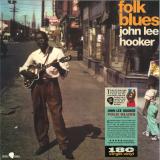
A remarkable release in John Lee Hooker's vast catalogue, Folk Blues, released by the Crown label in 1962, puts together tracks originally recorded for Modern Records between 1951 and 1954.
Among its many highlights are Bad Boy, one of the finest examples of Hooker's wordless humming and singing in unison with his guitar figures, and Rock House Boogie, which offers a sampling of Hooker's use of bottleneck style.
"Essential in any collection of postwar blues." - ***** Downbeat:
On Tuesday 3rd September 1963, the Beatles recorded all eighteen tracks for the last three Pop Go The Beatles shows. The venue was the Aeolian Hall in Mayfair, used by the BBC for the recording and broadcast of concerts and recitals. The standout track here is a very confident sounding Misery with Duane Eddy-style ending.
Along with From Me To You and Till There Was You from that session, we include here the rock’n’roll instrumental version of Pop Goes The Weasel that started and finished each show. Also featured on this EP is a seasonal medley version of Eddy’s Shazam plus some a cappella tunes sung by the boys for Saturday Club on 17th December 1963, including All I Want For Xmas and You Were Made For Me.
Move recordings continue the relaunch with this wonderful MV06 from By:Them, new duo former by Ludwig Buez & Jerome Lipani. Including a fantastic remix from the sound designer, DJ & Producer Hermanez. A 100% Belgian product!
"Never too old to dance," evolves with a big intensity, layering elements that cultivate an incredible atmosphere. The track unfolds through melody songs, progressing towards rich, deep chords punctuate, the experience with a sense, till a melodic break.
The Hermanez remix for Move recordings is an amazing sunny tune. Following his refreshing style, Hermanez remixing "never too old to dance" with grace and unequivocal individuality. With his captive melodic, he empowers the atmosphere, with a high-energy and a sexy flavor. A pure track to rock the summer.
Through defined grooves and rolling bass lines blends, "Rising away" melodic and atmospheric sounds to create a transcendent listening experience. With an energic groove, this track showcases an exceptional range, to craft atmosphere that goes beyond the dancefloor.
By:them truly strikes for his first ep and presents us with two dance floor weapons with a fantastic Hermanez reinterpretation.
Support by, Timo Maas, Joris Voorn, Alex Neri, Nick Varon, Just Her, Paco Osuna, Danny Howells, Ilario Alicante, Sahar Z, Nhar, Michel De Hey, Sasha, Adriatique, The Micronauts,
We Release JAZZ is honored to announce the release Shoals, a magnificent full-length album from Earth and Bones, the duo consisting of Liran Donin and Idris Rahman of acclaimed jazz outfit Ill Considered. Their majestic offering is available in an ultra limited edition 180g vinyl LP housed in a heavyweight sleeve with an original artwork by Dutch artist Vincent de Boer.
Carried by Liran Donin on double bass and shakers, and Idris Rahman on bass clarinet, tenor sax, shell, and Tibetan singing bowl, the 5-track album is a deeply entrancing meditative-shamanistic-ambient-jazz journey. The members of Earth and Bones poured their heart and beliefs into the project:
"From shamanic cultures and forgotten traditions, we delved deeper searching our ancient healers, exploring who they heal, what they heal, and how they do it. We wanted to focus on the poisonous human attributes that affect our animal kingdom, as well as how we can heal ourselves by balancing darkness and light. We express our forever gratitude to our community, tribe and animal kingdom.
Despite how governments and multinational corporations try to isolate us from one another, we can't make it alone without our shoal. To truly have a shoal, we need to accept each other for what we are."
Their friend, Vincent de Boer, delivers the visual side of Shoals:
"The living world and all its particular (eco)systems s increasingly a source of inspiration for my art process. When Idris and Liran showed me the new recording and the thoughts behind it, it immediately fell onto good grounds. A school of fish is eminently a metaphor for collective improvisation, something we are all engaged in on an artistic level. The group decisions go beyond causality, the energies provide a simultaneous awareness for choices of direction. The space between the entities thus form a new entity. Non-matter becomes matter and vice versa: an area where music and visual art meet.
I drew a school of fish and tried to make it look like a fixed entity, so that multiple lives become one collective. As a bird and perhaps as a rock or cave: outside becomes inside becomes outside: so that all domains of the living world are linked: the swimming, the crawling, the flying and the playing. The spiritual connection with the music of Idris and Liran is grand, the places it takes me are at once very distant and extremely close. From otherworldly to within the body: the opposites as well as the harmonies are of shamanistic proportions."
Points of interests
For fans of ambient-jazz, meditative music, shamanistic rituals, improvisational process, deep vibes, Ill Considered, Vincent de Boer, heartful connections, healers and healing, the body, the otherworld, life within and outside.
.Super limited edition vinyl of Earth and Bones' debut !
The original creators of Psychobilly Music, The Meteors began as a reaction against soft neo-rockabilly music of the late 70’s rock revival era. Since then the loud, sneering lovers of horror, perversion and death have released a few dozen records and are still going strong, 40 years into their career of evil. Svart Records are overwhelmed with psychotic joy to present an official reissue of The Meteors’ 2003 album Psychobilly. Long out of print on physical formats, this authorised reissue comes with a secret bonus track, all pressed on pitch black or poisonous green vinyl and wrapped in a gatefold jacket.
The KNOW was an early 80's electronic duo, comprised of brothers Garry and Neil Todd from Stoneydelph, Tamworth (near Birmingham), UK. After playing in a conventional rock group and having to deal with the issues of too many cooks spoiling the broth, they decided to stay a two piece while the affordability of synthesisers and drum machines came in handy to replace additional human band members – shall we say for the better in the end?!
Regarding the name, Neil says: “Garry and I came up with this name in relation to the saying, oh you know he’s in “The Know” you know.“ The KNOW released only two tracks “Times Change“ and “Knights of Pleasure“ on a 7“ single in 1982, which is ultra rare now (only being sold once on Discogs for almost €300). Neil used Korg Micro Preset M-500, Moog Liberation, Roland Jupiter-8 synthesisers, and a Roland CR-8000 drum machine to create these two minimal synth pop anthems.
The original masters have been lost over the years, but the recordings have been carefully digitized from vinyl and meticulously restored and remastered and sound better than ever before. Additionally, five cover versions have been added by no less than minimal electronic synth pop heroes BLIPBLOP, doing both tracks, the THE SILICON SCIENTIST adding his dreamy synth pop melancholia signature sound, FLASHBACKS (aka Echo West, Silent Signals) with his icy cold yet playful minimal electronics, and TWINS NATALIA featuring KRIISTAL ANN delivering a rather faithful to the original yet up-to-date version while adding lots of new bits like a choir, vocoder, and one of Dave Hewson's unique synth solos.
All of this is pure and classy 80s electronic synth pop bliss!
When billy woods released Today, I Wrote Nothing ten years ago, it was an unexpected departure from a rapper who was just starting to make waves in the indie rap scene. After spending the earlier part of his career in the wilderness, woods had managed to crawl out of obscurity with the minor success of 2012’s History Will Absolve Me. Dour Candy, 2013’s collaboration with underground legend Blockhead drew accolades, which only increased with Armand Hammer’s debut Race Music.
Then, woods dropped out of sight for two years before returning with Today, I Wrote Nothing, a record that deviated significantly from what had come before. Where Dour Candy had been concise and focused, TIWN was a sprawling 24 tracks. Where History Will Absolve Me was anchored by hard-hitting beats, anthemic songs, and a couple high powered features, TIWN was comprised of short vignettes, quietly eclectic production, and the only guests were his Backwoodz label-mates. Only one video was released; the claustrophobic “Flatlands”, shot on a shoestring budget in a Brooklyn housing project. Reviewers didn’t know quite what to make of the record, and in many cases, neither did fans.
As is often the case for woods’ albums, many perspectives shifted as the years passed. Listeners came to see the sad, quiet beauty of Today, I Wrote Nothing; a road trip album that doubles as a meditation on life’s journeys and death’s hiding places. The album’s power is in it’s intimacy, it’s insistence on holding your hand through the darkness. Now, TIWN is considered one of the more unique and vital records in woods catalogue. The dynamic woods created with TIWN vis-a-vis History Will Absolve Me and Dour Candy is one that would come to define his ouerve; constant experimentation, a refusal to be pigeonholed, and an unwavering search for the emotional heart of his subject. For us at Backwoodz, being able to repress this album on it’s ten year anniversary is especially sweet, because we remember how long it took us to sell that original run of 500. To everyone who copped one of those and helped us keep the lights on, this is for you too, we couldn’t have gotten here otherwise.
Demon Music group in conjunction with the Hughes family are proud to present the first official compilation of music
from the movies of legendary filmmaker John Hughes, covering the classic eighties period 1983 – 1989.
For anyone growing up in the 1980s, the films of John Hughes are some of the most iconic of the decade and have
created a lasting cultural impact still felt and referenced across TV, film and music. As well as the characters and
stories created in these iconic movies, what made John Hughes’ movies different from the rest was the symbiotic
relationship between scene and music. Whether Cameron Frye staring at the painting in Ferris Bueller’s Day Off set to
The Dream Academy’s “Please, Please, Please Let Me Get What I Want (Instrumental)”, Duckie and Andie from Pretty
In Pink at prom set to Orchestral Manoeuvres In The Dark’s “If You Leave”, or even Neal and Del’s classic “Those aren’t
pillows” scene from Planes, Trains and Automobiles set to Emmylou Harris’ “Back In Baby’s Arms”.
“Music was a huge part of filmmaking for him, it was a thing he seemed to like the most.” Matthew Broderick
Curated by John Hughes’ music supervisor Tarquin Gotch, this 6LP vinyl boxset includes 73 tracks from the movies
National Lampoon’s Vacation, Sixteen Candles, The Breakfast Club, Weird Science, Pretty In Pink, Ferris Bueller’s Day
Off, Some Kind Of Wonderful, Planes, Trains And Automobiles, She’s Having A Baby, The Great Outdoors and Uncle
Buck.
“Back when we were working on these movie soundtracks, the best way to send music around the world was the
cassette, by Fedex. We sent John cassettes of newly released music, of demos, of just finished mixes (and in return he
would send VHS videos of the scenes that needed music).” Tarquin Gotch
The films of John Hughes spawned many classic tracks, some licensed for the films, some commission specifically, and
many going on to become huge international hits from acts such as Simple Minds, Kate Bush, Furniture, Yello, and
The Psychedelic Furs.
“It serves as a reminder not just to the musicians he championed in the 1980s, but to how intensely his search for
music expanded beyond this era. Until his final days, he was still collecting outrageous amounts of music from around
the world, galaxies removed from the New Romantic and new wave sounds that, to many, still define him.” James
Hughes
Also includes an extensive 24-page booklet including memories from Matthew Broderick, James Hughes, Tarquin
Gotch, Ron Payne, plus track-by-track sleeve notes.
“John said he only made movies so he could choose what music to put in them, so as his success at the Box Office
grew, and thus his power with the studios, the number of tracks in his films, by up and coming UK bands, steadily
grew.” Tarquin Gotch
Billy Idol - "Catch My Fall" (From The 1987 Movie 'Some Kind Of Wonderful')
The Association - "Cherish" (From The 1986 Movie 'Pretty In Pink')
Penguin Cafe Orchestra - "Music For A Found Harmonium" (From The 1988 Movie 'She's Having A Baby')
Zapp - "Radio People" (From The 1986 Movie 'Ferris Bueller's Day Off')
Blue Room - "Cry Like This" (From The 1987 Movie 'Some Kind Of Wonderful')
Ray Charles - "Mess Around" (From The 1987 Movie 'Planes, Trains & Automobiles')
Joe Turner - "Lipstick, Powder & Paint" (From The 1989 Movie 'Uncle Buck')
Darlene Love - " (Today I Met) The Boy I'm Gonna Marry" (From The 1984 Movie 'Sixteen Candles')
Marvin Gaye - "How Sweet It Is (To Be Loved By You)" (From The 1988 Movie 'She's Having A Baby')
Perry Como/Mitchell Ayres & His Orchestra/The Ray Charles Singers - "Juke Box Baby" (From The 1989 Movie 'Uncle Buck')
The Chordettes - "Mr Sandman" (From The 1989 Movie 'Uncle Buck')
Ray Anthony & His Orchestra - "The Peter Gunn Theme" (From The 1984 Movie 'Sixteen Candles')
Lindsey Buckingham - "Holiday Road" (From The 1983 Movie 'National Lampoon's Vacation')
Emmylou Harris - "Back In Baby's Arms" (From The 1987 Movie 'Planes, Trains & Automobiles')
Hugh Harris - "Rhythm Of Life" (From The 1989 Movie 'Uncle Buck')
Spandau Ballet - "True" (From The 1984 Movie 'Sixteen Candles')
Propaganda - "Abuse" (From The 1987 Movie 'Some Kind Of Wonderful')
The Dream Academy - "The Edge Of Forever" (From The 1986 Movie 'Ferris Bueller's Day Off')
Yello - "Lost Again" (From The 1987 Movie 'Planes, Trains & Automobiles')
Bryan Ferry - "Crazy Love" (From The 1988 Movie 'She's Having A Baby')
The Rave-Ups - "Positively Lost Me" (From The 1986 Movie 'Pretty In Pink')
Los Lobos - "Don't Worry Baby" (From The 1985 Movie 'Weird Science')
Steve Earle - "Continental Trailways Blues" (From The 1987 Movie 'Planes, Trains & Automobiles')
The Revillos - "Rev Up" (From The 1984 Movie 'Sixteen Candles')
Boston - "More Than A Feeling" (From The 1988 Movie 'She's Having A Baby')
Balaam & The Angel - "I'll Show You Something Special" (From The 1987 Movie 'Planes, Trains & Automobiles')
The Rave-Ups - "Rave Up/Shut Up" (From The 1986 Movie 'Pretty In Pink')
Pop Will Eat Itself - "Beaver Patrol" (From The 1988 Movie 'The Great Outdoors')
The Vapors - "Turning Japanese" (From The 1984 Movie 'Sixteen Candles')
Silicon Teens - "Red River Rock" (From The 1987 Movie 'Planes, Trains & Automobiles')
out
The writer Max Sebald often pondered over the nature of human memory, specifically, how our thoughts and desires - and their results - overlap and mutate over time. In A Place in the Country, he writes of the significance of what see as “similarities, overlaps and coincidences”. Are they the “delusions” of the self and senses, or manifestations of “an order underlying the chaos of human relationships, ... which lies beyond our comprehension”?
Song of the Night Mists, the new album by post-classical composer Stefan Wesołowski, often feels it draws on Sebald’s premise.
On a simpler plane, the one where the market dictates the neatly ordered information we consume, Song of the Night Mists can be described thus: recorded in the main by Stefan Wesołowski in Gdańsk, both in his studio and in Saint Nicholas' Basilica, the album incorporates acoustic instruments - piano, violin, double bass - and classic synthesizers such as the Roland Jupiter-8, the Soviet Polivoks. A Roland Space Echo RE-150 tape delay was also pressed into service as an instrument. We also hear the basillica’s organ and field recordings from the Tatra Mountains. Other musicians were Maja Miro, who played the flute parts on ‘Glacial Troughs’ and brother Piotr Wesołowski, who played the organ on ‘Wilhelm Tombeau’. Sound engineer was Marcin Nenko, who was also on hand to record the basilica organ parts. The album was mixed in New York by Al Carlson (Oneohtrix Point Never, Jessica Pratt, Zola Jesus, Lady Gaga, and Liturgy) and Rafael Anton Irisarri handled the mastering.
Ostensibly, Song of the Night Mists is the last in a trilogy, following on from albums Liebestod (2013) and Rite of the End (2017). All three deal with existential matters such as love, death, decay and “an ultimate end”; apocalyptic and Promethean in spirit, and betraying very human conceits. The Sebaldian nature of the new record starts to make itself felt when Wesołowski talks of how he used sampling. One element is unexpected, that of sampling himself: “I go back to dozens of my own unused sketches and recordings, treating them as raw material to cut, slow down, reverse, and transform in every possible way.” Memory as sound, to be reemployed by the listener through their own imaginings.
Another set of samples made by Wesołowski plays another role. These are field recordings, originally created for an audio illustration of the formation of the Tatra Mountains, and used in a film by sound designer Michał Fojcik. Wesołowski: “You can hear cracking ice, streams, footsteps in the snow and the wind, and a real avalanche, recorded from the inside.” The “Tatra connection” on the album is also found in samples referencing composer Karol Szymanowski. The album’s title alludes to a poem about the mountains by Polish poet, Kazimierz Przerwa-Tetmajer.
Wesołowski’s Tatra recordings are “about a world without humans - about the fact that the world existed, was beautiful, and had meaning long before people arrived, and for the vast majority of its history, it was a place without us.” Wesołowski, using one iteration of the natural world, plays out in sound Sebald’s idea of another order, underlying the chaos of human relationships lying beyond human comprehension.
These feelings play themselves out on the five album tracks. Sonorous and rich, they illustrate tectonic shifts we have no control over. Wesołowski hints that the overall sound is a “meditation on the metaphysics of the non-human set against the spirituality that human presence has brought into it.” In that light, the opening number, ‘Core’, with its slow build, and crackling and straining sound effects, create an effect of the earth groaning into life in a creation myth. Once the piano part raps out a simple melody and modulated tonguing trumpet samples add to the overall atmosphere, the listener can certainly find a cue in the “spiritual”, or “human” side of the story. Human versus nature: from the strains and harmonic muscle stretches of the second number, ‘Glacial Troughs’, through to the powerful and filmic ‘Stalagmite’ and heart-on-sleeve romance expressed in closer, ‘Wilhelm Tombeau’, we listeners are cast as Friedrich’s wanderer, looking out over a landscape that will appear only if we engage with it.
Formations of melody appear incrementally, almost appearing by chance - like hidden footings in the rock shelves to give us something to grasp onto. Rhythms are used sparsely: the prolonged percussive taps on ‘Glacial Troughs’ are an anomaly and maybe there to give pace to the album to come; essentially to keep the listener strapped in. Elsewhere, percussion is used as an aid to mood, the two thudding, timpani-style passages on ‘Peak’ there to offset the short, beautiful, kosmische passage that splits them.
Elements of the borderline religious spirit that drove German electronic music in the late 1960s and 1970s also find a place on Song of the Night Mists. The swells and recessions of the organ find their emotional climax on ‘Wilhelm Tombeau’, a track which summons up echoes of the “mountain magic” vistas created by Popol Vuh or Tangerine Dream, especially with the slightly atonal wobble of the Mellotron that counters it.
This is a dramatic album, but it does feel a strangely short, or curtailed listen on ending, evoking the feeling one gets when waking from a dream, and, for all its incipient grandeur, a track like ‘Stalagmite’, for instance, ends on a minor note. Wesołowski admits that Song of the Night Mists is born of the all too human process of temptation, doubt and recalibration - Sebaldian overlaps and coincidences forming something that must live another life, away from its creator. In Wesołowski’s words, the album is “a newborn foal must stand up and walk right after birth.” Now it is yours to ponder.
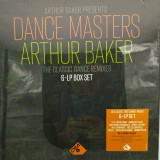
Rocker’s Revenge was a studio musical project, assembled by producer Arthur Baker in 1982. The band comprised of Baker himself plus Donnie Calvin, Dwight Hawkes, Tina B and Adrienne Dupree Johnson. They are most remembered by their 1982 post-disco hit "Walking on Sunshine", which peaked at number 1 on the US Dance Chart and number 4 in the UK.
On the A side of this release, the track is reset for 2025 with a remix by post punk indie rockers Yard Act, where they have include their own guitar, synths & vocals to give their unique stamp to it. – It’s become a track they have been performing live. On the other side is an unreleased 9 minute remix by New York’s legendary Sound Factory co-founder Junior Vasquez back from 1988, to make it proto acid house bassline & driving percussion journey.
Boston-born Arthur Baker launched his music career as a Disco DJ, but soon made his way into music-making, producing classic Disco for legends Northend and TJM. Arthur is one of the most visible and widely imitated early Hip-Hop/House producers; masterminding breakthrough experimentation with tape edits, sampling and synthetic beats on such records as Afrika Bambaataa's 'Planet Rock', New Order's 'Confusion', Freeez's ‘IOU’, and his own break Dance classic ‘Breaker's Revenge'. Baker would go on to become an award-wining DJ, music and film producer, working for and with the likes Dylan, Hall & Oates, Al Green, Springsteen, The Rolling Stones, Fleetwood Mac, Diana Ross, &many more; on film music for 80s/90s classics such as Beat Street, Ferris Bueller’s Day Off, and Life Less Ordinary. Turning his hand to film documentary’s, Baker has produced Finding The Funk and 808 the Movie. Baker has also directed a documentary on Rocker’s Revenge ‘On A Mission’ along with completing their debut album.
Brooklyn Sway's 7th drop might best be described as the black market edition, but as always we leave the gumshoe work to those heads out there savvy enough to figure it out themselves. Thugfucker alum Acid Tourist and BKS stalwart DeWinter remix celebrated West Coast sideman ROC's cover of a tune that needs no intro, transforming a torch song into an acid belter while keeping its quality intact. Charles Levine, best known as Charlie from Soul Clap, steers close to his usual antics with 'Ocean Waves & Ashtrays', his ashtrays obviously full of blunt ends as he runs the voodoo down on a sultry funk number laced with fat lead keys and ideal for beach party afterhours or smoky late-night sessions. Returning for a second BKS appearance, Ohm Hourani's 'SupaDupaFly' fetches the funk again with rap vocal samples sliding just inside the industry 10% rule set amidst seesawing synths for a woozy, extended effort sure to influence sobriety decisions. On 'Hearts & Diamonds,' label honcho Jay Prouty and mainstay David Paglia join forces jailbreaking two legendary NYC freestyle anthems into a combination that rocks more like high period New Order, so when you catch Fumero's psychedelic painting winking at you off the plate after a few spins, you'll understand exactly why the sway resides in Bucktown.
Another edition of mental dance floor demolishers cut to ribbons and reassembled from the mind of the one-and-only MEMBERS ONLY. In the hands of a skilled selector, stand out cut "THEM ROCKS" is capable of inflicting immense damage to even the most hardened dance floor. Use with caution
Demon Music group in conjunction with the Hughes family are proud to present the first official compilation of music
from the movies of legendary filmmaker John Hughes, covering the classic eighties period 1983 – 1989.
For anyone growing up in the 1980s, the films of John Hughes are some of the most iconic of the decade and have
created a lasting cultural impact still felt and referenced across TV, film and music. As well as the characters and
stories created in these iconic movies, what made John Hughes’ movies different from the rest was the symbiotic
relationship between scene and music. Whether Cameron Frye staring at the painting in Ferris Bueller’s Day Off set to
The Dream Academy’s “Please, Please, Please Let Me Get What I Want (Instrumental)”, Duckie and Andie from Pretty
In Pink at prom set to Orchestral Manoeuvres In The Dark’s “If You Leave”, or even Neal and Del’s classic “Those aren’t
pillows” scene from Planes, Trains and Automobiles set to Emmylou Harris’ “Back In Baby’s Arms”.
“Music was a huge part of filmmaking for him, it was a thing he seemed to like the most.” Matthew Broderick
Curated by John Hughes’ music supervisor Tarquin Gotch, this 6LP vinyl boxset includes 73 tracks from the movies
National Lampoon’s Vacation, Sixteen Candles, The Breakfast Club, Weird Science, Pretty In Pink, Ferris Bueller’s Day
Off, Some Kind Of Wonderful, Planes, Trains And Automobiles, She’s Having A Baby, The Great Outdoors and Uncle
Buck.
“Back when we were working on these movie soundtracks, the best way to send music around the world was the
cassette, by Fedex. We sent John cassettes of newly released music, of demos, of just finished mixes (and in return he
would send VHS videos of the scenes that needed music).” Tarquin Gotch
The films of John Hughes spawned many classic tracks, some licensed for the films, some commission specifically, and
many going on to become huge international hits from acts such as Simple Minds, Kate Bush, Furniture, Yello, and
The Psychedelic Furs.
“It serves as a reminder not just to the musicians he championed in the 1980s, but to how intensely his search for
music expanded beyond this era. Until his final days, he was still collecting outrageous amounts of music from around
the world, galaxies removed from the New Romantic and new wave sounds that, to many, still define him.” James
Hughes
Also includes an extensive 24-page booklet including memories from Matthew Broderick, James Hughes, Tarquin
Gotch, Ron Payne, plus track-by-track sleeve notes.
“John said he only made movies so he could choose what music to put in them, so as his success at the Box Office
grew, and thus his power with the studios, the number of tracks in his films, by up and coming UK bands, steadily
grew.” Tarquin Gotch
Red Vinyl. Jim Jarmusch's crypto-vampire love story film, "Only Lovers Left Alive" won the 2013 Cannes award for best soundtrack. The soundtrack, predominantly by Jozef Van Wissem and SQU"RL, also features Zola Jesus, Yasmin Hamdan and Madeline Follin (of Cults). "Only Lovers Left Alive" which is set against the romantic desolation of Detroit and Tangier, features an underground musician (Adam, played by Tom Hiddleston), who is deeply depressed by the direction of human activities. He reunites with his resilient and enigmatic lover (Eve, played by Tilda Swinton). Their love story has already endured several centuries at least, but their debauched idyll is soon disrupted by her wild and uncontrollable younger sister (Ava, performed by Mia Wasikowska). Can these wise but fragile outsiders continue to survive as the modern world collapses around them?The physical formats of the soundtrack have been out of print for years and the vinyl will cost you a pretty penny on Discogs. Sacred Bones is thrilled to bring this incredible soundtrack back in print on several variants including clear and red splatter vinyl.SQU"RL are: Carter Logan, Jim Jarmusch, and Shane Stoneback. An enthusiastically marginal rock band from New York City who like big drums & broken guitars, cassette recorders, loops, feedback, sad country songs, molten stoner core, chopped & screwed hip-hop, and imaginary movie scores. Jozef Van Wissem is a Dutch minimalist composer and lute player based in Brooklyn.
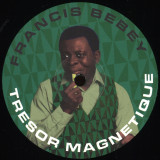
Francis Bebey was a visionary who explored the intersection of African traditions and global music long before it became a global trend. Born in Cameroon, Bebey's sound was an eclectic blend of his rich cultural heritage and his deep exploration of modern music, spanning genres from traditional folk and jazz to funk and electronic experimentation. As an artist, Bebey was ahead of his time, using his unique voice and instruments to forge new paths for African music to be heard worldwide. His legacy is not just in the music he created but in the way he opened doors for the global recognition of African artists, influencing generations of musicians, producers, and fans alike.
This release marks an exciting moment, as we introduce remixes of bebeys iconic productions by contemporary electronic producers, giving new life through creative re imaginings.
Tracks:
Le Grand Soleil De Dieu (Psychemagik Remix): The UK-based musical duo are known for their eclectic blend of electronic music, psychedelic rock and mystical global sounds. Formed by Danny McLewin and Tommy McLewin, the duo has carved out a unique niche within the global music scene though their intricate arrangements. Their Remixes and Collaborations have been with artists like Fleetwood Mac, Tame Impala, and Hercules & Love Affair. Their psychedelic dub remix has otherworldly qualities, with dreamy atmospheres and bouncing baselines throughout this brilliant opening track.
Guinee (Turbotito Edit): The Berlin-based DJ and producer known for his infectious blend of house, disco, and funk. With a knack for smooth, groovy beats and a deep love for melody, Turbotito's music brings a fresh, energetic vibe to the dance floor. On this track, he effortlessly re-imagines and elevates the world of Guinee to match his signature sound. A combination of a great pulsing base line, ethereal vocals and bird sound effects incorporated into the percussion makes this track an absolute stand out.
Agatha (Voilaaa Remix): Bruno "Patchworks" Hovart from Lyon is the brains behind the Voilaaa project. Fusing soulful grooves, funk, and disco with an unmistakable French touch, Voilaaa creates infectious, feel-good rhythms that blend classic and contemporary influences. In this track we find the first big hook of the album vocally, coupled with Bebey's lively humour in spoken French on top of joyous instrumentation. The smooth vocals, catchy melodies, and vibrant arrangements, bring a fresh energy to the original hit track - a brilliant homage.
Forest Nativity (Red Axes Edit): Red Axes are a dynamic electronic music duo from Tel Aviv, blending disco, house, and psychedelic influences into infectious, genre-defying tracks. Known for their unique sound, warm analog textures, and hypnotic rhythms, Niv Arzi and Dori Simao craft music that moves both the body and the mind. Forest Nativity arrives as a full circle closer, incorporating some of the most authentic African instruments such as a Balafon, an instrument similar to a xylophone and a Djembe, a hand drum central to many West African traditions. The 7 minute track is guaranteed to take you on a fascinating journey through Bebey's culture and livelihood.
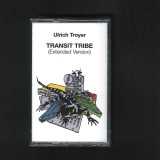
Synaptic Cliffs is committed to discovering unknown and unreleased music in the future, testing it in the past, and selling it in the present. This is the only way to ensure that art is timeless. The recordings on this cassette, however, were purchased in 2073 from a beautiful woman named pdqb at the Marché aux Puces in Paris for only 0.0000000000000000001 Bitcoin, but on the condition that all the material is distributed on one cassette, namely exactly as described hereinafter: The short tracks from the years 1984 to 1989 are on the A-side, and one of these recordings must be supplemented with vocals by Max Müller, the singer of the infamous Berlin band Mutter. On the B-side, there will be a binaural 16.7-tone music composition from the year 2047. Furthermore, all recordings must be mastered by Mike Grinser. Last but not least, only high-quality chrome tape may be used for production. In August 2027, the music magazine Melody Maker, which will be published again from 2026, will write: " ' Vor dem Punkt ist nach dem Punkt' is a surprisingly singular work with a creative force of near-unprecedented degree. It is one of the most beautiful and best-sounding post-punk albums of the last 40 years, and it is certainly the main reason why we are currently experiencing a huge comeback of post-punk, shoegaze, and goth rock."
"Throughout all my time as a musician and producer, ever since Jack the Tab, I've been focused on developing a single idea: Blending psychedelic sounds and effects with rhythm." Richard Norris, Strange Things Are Happening White Rabbit 2024
Over the past few years Eskimo Recordings have invited some of thebest crate diggers around to curate compilations that don't just reveal the hidden contents of their record bags but something about themselves too. Now, following in the footsteps of the likes of Bill Brewster and Psychemagik, producer, musician, DJ, writer and more, Richard Norris, takes us on a globetrotting psychedelic journey with the epic 42 track collection, Mr Norris Changes Brains.
For over forty years Richard has played a part in many of the UK's most important music subcultures. Whether sharing stages with the likes of Tracey Thorn as a pubescent punk in St. Albans, or running freakbeat nights in Liverpool and working at the pioneering psychedelic label Bam Caruso, co-producing the UK's first acid house inspired LP with Throbbing Gristle's Genesis P. Orridge or riding the wave of creativity that the second summer of love unleashed all the way to the Top of the Pop studios as The Grid, Richard's career has continually seen him work to expand both his own and the public's musical horizons.
With Mr Norris Changes Brains it's the most recent part of his mercurial career that he's focused on. Drawing inspiration from his post 2006 adventures as one half of Beyond the Wizard's Sleeve, alongside Trash's Erol Alkan, this compilation shows how a more connected world has blown the dust off a paradoxically sometimes straightjacketed scene. The result is a dizzyingly wide-ranging collection that explores the further out there reaches of worldwide psychedelia and dancefloor mayhem.
"A lot of these tracks are fairly recent discoveries, things that I've discovered from around the time I started working with Erol and going right up to today," Richard explains. "Whether that's from going out to play and finding new records in places like Istanbul or just connecting with people online from all around the world. Psych can sometimes be a sort of narrow-minded field, with everything having to sit in its specific niche, but more and more people are open to new sounds and that's allowed for a much broader selection."
Despite their disparate origins what does unite these tracks is that they aren't just there to zone out to on a bean bag as projections of swirling coloured oils and psychedelic patterns wash over you. Mr Norris may change brains but his DJ sets also move feet, and whether it's their killer guitar riffs, oscillating synths floor shaking drums or soulful Hammond organs these are all cuts that from festival tents to underground clubs have proven time and time again to get people dancing.
"With a lot of these tracks there's a kind of fun element in them," says Richard. "It's still psychedelia, but they've also got these solid, funky grooves. They sound phenomenal on the dancefloor and as much as these records might excite old psych heads, this compilation is also for a new generation out there who might have never heard anything like this before and, just like when I was 18 and heard The 13th Floor Elevators for the first time, think 'Oh, my God, what on earth is this and more importantly what else is out there?'"
Do minerals dream of becoming semiconductors? Do they yearn to carry charges, amplify, switch, and convert energy into emotions comprehensible to humans? And what if, from the darkness of the underground, they had been listening to us sing in caves before the emergence of the first flute? Could they have guided us, through the course of history, to find them, extract them, and create new sounds through sinusoidal waves, to form valves and bend circuits?
If so, minerals would transition from what philosopher Eugene Thacker defines as the ‘planet’—that virginal and unreachable realm for humans that we study through geology, paleontology, and environmental sciences—to the ‘world,’ the space we inhabit, interpret, and synthesise in our daily lives. Sadly, we only remember the world when it erupts violently, through climate catastrophes or when a new virus emerges. Sometimes a tsunami collides with a nuclear plant, or viruses are cultivated as biological weapons in high-security laboratories, provoking a deep biological anxiety, hard to quell, which we all feel beneath our skin.
There exists a third realm, disconnected from both the world and the planet: the ‘earth’, an immense, dense rock floating in space alongside other planets, situated in the cosmological dimension. Relating to the earth is so complex that we only do so through theoretical speculations of a scientific nature or through science fiction, interweaving until one becomes the prophecy of the other, in an infinite, pendular dance. Beyond the darkness of space and Lovecraft’s cosmic horror, the fantasy of human extinction is the most recurrent: to reach a collapse so devastating that we do not survive it, even though the earth does, without us.
In a world where we quantify everything through body sensors, financial algorithms, nanometre-scale robots, and surveillance drones—a world in which everything that can be domesticated and controlled can also be commodified—a superior artificial intelligence would survive the collapse of the species (some speculate it might even cause it) and learn from our mistakes, thanks to our obsessive gathering of data.
Long after our voices fade, minerals will persist in the darkness of screens, in the silicon of chips, and in their pure form, still unexploited underground. Over the millennia, this intelligence might piece together fragments of our reasoning, as if an alien civilization finally connected with one of our spacecrafts loaded with messages cast into the void. It would sort through endless streams of data, unable to grasp the depths of emotion behind what it quantified, recreating simulations of our past, stripped of the nuance that once defined us and conducting experiments in sandboxes.
Some remnants of our existence—faint echoes of forgotten beauty—would be pieced together in an atlas of loss, buried beneath layers of numbers, decayed bots, and corroded hard drives. What will follow? Perhaps bison will once again roam—trotting to the strange pulse of techno, their ancient forms framed by the ruins of our cities.
Buildings will crumble, slowly dissolving under the soft touch of ambient music, and a thousand flowers will bloom with that ancient music created through electrical signals and computation. 7 songs for a future both improbable and inevitable—a final message from a world lost to itself, from planet Earth to planet Earth.
When you’re running a label, a demo occasionally comes across your desk that makes you reconsider everything you thought your label was all about. For Balmat, such was the case with this stunning album from Stephen Vitiello, Brendan Canty, and Hahn Rowe. It sounds like nothing we’ve released so far—and that very otherness opened up a whole new world of possibilities for us.
Fans of ambient, experimental electronic music, and sound art will be familiar with Vitiello, a New York native, long based in Virginia, who has collaborated with a cross-generational list of greats: Taylor Deupree, Steve Roden, Lawrence English, Tetsu Inoue, Nam June Paik, Ryuichi Sakamoto, Pauline Oliveros, and many more. On labels like 12k, Room40, and Sub Rosa, he has explored a wide range of minimalism, microsound, lowercase, ambient, improv, and other styles. But this album is something different. It may begin in ambient-adjacent territory, but it quickly veers off, and it just keeps zigzagging, taking on elements of krautrock, post-punk, dub, and the groove-heavy interplay of groups like Natural Information Society and 75 Dollar Bill.
This stylistic turn is thanks in large part to Vitiello’s choice of collaborators. “We’re coming from three different schools,” Vitiello says: “sound art, art rock, and punk rock.”
Active since the early 1980s, Rowe—a violinist, guitarist, and producer/engineer—has played with, or manned the boards for, a frankly jaw-dropping list of musicians: Herbie Hancock, Gil Scott-Heron, the Last Poets, Roy Ayers, John Zorn, Glenn Branca, Swans, Live Skull, Brian Eno, David Byrne, Anohni, R.E.M., Yoko Ono, and many more. But he might be most closely associated with Hugo Largo, a one-of-a-kind New York quartet—two basses, vocals, and Rowe’s violin—that in the late 1980s helped lay the groundwork for what would eventually become known as post-rock.
Canty, of course, is the legendary drummer of Fugazi, the visionary DC post-hardcore group, as well as Rites of Spring before them, and, currently, the Messthetics, a Dischord-signed instrumental trio with guitarist Anthony Pirog and Fugazi bassist Joe Lally.
Vitiello’s trio first collaborated on First, a 17-minute piece released on the Longform Editions label in 2023. Second picks up where the freeform drift of First left off, channeling the trio’s exploratory energies into more intentionally structured tracks and—in a real first for Balmat—some almost shockingly muscular grooves. “Sometimes my projects are more conceptually driven,” Vitiello says, “but I think this was more musically geared. I just wanted to open up the references and bring in an incredible drummer, bring in some melodies, and I’m sort of the center.” But his collaborators, he stresses, are “vastly creative in making anything I might suggest better.”
Like its predecessor, Second took shape in phases, shifting between improvisation and collage. Vitiello laid down the skeleton of the music at home, sketching out initial ideas on Rhodes keyboard and acoustic and electric guitar; he then fed the parts through samplers and his modular system, recording 10- or 20-minute jams. Once he had edited them into more structured forms, he hit the studio with Canty, who added not just drums but also bass and piano; finally, Vitiello took the results of those sessions to Rowe, who played violin, viola, electric bass, and 12-string acoustic and bowed electric guitar, and assisted in some of the final structuring and mixdown.
A few more surprises along the way: Reanimator’s Don Godwin, the studio engineer where Vitiello recorded with Canty, contributed what he calls “resonant dustpan”; and none other than Animal Collective’s Geologist, who just happened to be in the studio that day, sits in on hurdy gurdy on “Mrphgtrs1,” the album’s gorgeous, stunningly atmospheric drone closer. “I love these chance encounters,” Vitiello says. “Somebody I admire, a group I admire—that was an unexpected gift.”
An unexpected gift is a great way of describing Second as a whole: three veteran musicians venturing outside their usual zones and finding a new collaborative language together. The results can’t be neatly slotted into any given genre; they belong not to any given category, but to the spirit of conversation itself.
Marcos Valle is one of the few artists you cannot miss if you have the slightest interest in Brazilian music. Whether your taste is focused on bossa jazz, samba, psych folk or soul, Valle has surely recorded a great album for you. “Garra” was originally released in 1971 and brought us Valle’s classics such as ‘Com Mais De 30’, ‘O Cafona’, ‘Vinte E Seis Anos De Vida Normal’ and the rare groove classic ‘Wanda Vidal.’ Remastered from the original tapes and pressed on 180g vinyl. This release is part of our new reissue series that comprises many other outstanding Brazilian classics by the likes of Evinha, Cassiano, Gerson King Combo, Hyldon... By the late 60s he had already put out enough quality records to secure a place within the top Brazilian songwriters of all time, but his career luckily did not stop there and he continued releasing amazing music over the following decades until this day. By the dawn of the 1970s, the multi-talented Valle was entering a new era, ready to test the government censors (Brazil was under strict military rule since a coup d’état in 1964) and express a socially aware stance and a playful hodge-podge of musical styles including samba, bossa nova, baião (a rhythmic beat from the rural northeast of Brazil), black American music, and rock. “Garra” was originally released in 1971 and maintains the same socially conscious content as in his previous album while also combining diverse musical styles and influences. Recorded amongst sessions for a steady stream of popular TV soap opera soundtracks, it brought us Valle’s classics such as ‘Com Mais De 30’, ‘O Cafona’, ‘Vinte E Seis Anos De Vida Normal’ and the rare groove classic ‘Wanda Vidal.’
"Carrycroch'" is the title of the first album by the Alsatian progressive rock band WLUD. This French band is composed of Philippe Wendling on keyboards, Bernard Labroche on guitars, Gigi Untersinger on bass and Gianni Drago on drums. WLUD is the acronym of the musicians' names, W for Wendling Philippe, L for Labroche Bernard, U for Untersinger Gigi and D for Drago Gianni. All compositions are by WLUD. The original vinyl record released in 1978 was as successful abroad (notably in the USA and Japan) as in France. This record is a reissue of the original production at the time but for this reissue, a bonus track has been added on the B-side which did not exist on the original 1978 version. Another vinyl album followed in 1979 under the name “second”, also reissued in its original form.
“Second” is the title of the second album of the Alsatian group WLUD This French band is composed of Philippe Wendling on keyboards, Bernard Labroche on guitars, Gigi Untersinger on bass and Gianni Drago on drums. WLUD is the acronym of the musicians' names, W for Wendling Philippe, L for Labroche Bernard, U for Untersinger Gigi and D for Drago Gianni. All compositions are by WLUD. The original vinyl record released in 1979 was as successful abroad (notably in the USA and Japan) as in France. This record is a reissue of the original production at the time. A first album called "Carrycroch'" was released in 1978.
Isle of Jura teams up with French digger Switch Groove on the next compilation titled ‘Archipelago – Cosmic Fusion Gems from France (1978-1988)’.
Switch Groove explains the concept “When I seriously began to search for and collect records, I was mostly interested in sounds from african-american, afro-latin and UK contemporary scenes. Sounds from distant territories, faraway from my native Massif Central, a highland region in the middle of France. The grass is always greener, I guess however, as I was digging in fleamarkets in the early sunday morning light, as well as spending regular sessions in second hands record shops, I began to discover hidden treasures, underground gems and side-projects of an unknown French musical repertoire.
French music is often reduced to its most famous musical forms, characters and signatures : French songwriting and voices, 60s yéyé, prog rock concept albums and soundtrack explorations, 80’s indie rock scene or more recently electronic French touch. All these sounds have a common feature : a geographical link, forged on mainland French territory, following the contour of the so-called Hexagone, the border that shapes the grounds for an homogeneous cultural expression. But beyond this showcase lie more complex, hybrid and global French productions. From French Caribbean Antilles to Parisian suburbs - especially during the ‘Sono Mondiale’ era -, in French areas outside urban cultural centers, musicians have created fusion and cosmic musical expressions. As the mid-seventies meant a greater freedom to make and record music, a wider use of electronic instruments like synthesizers and drum machines helped to deliver some magical projects you could only find lost in the middle of cheap records during a sunny record digging session. I selected these tracks, in an attempt to shape an ARCHIPELAGO that highlights significative contributions of African diasporas and ultramarine territories into French musical borders. It is the map of a land I have gradually drawn, thanks to deep listening of amazing cosmic and fusion tunes. I hope you enjoy the journey.”
DJ Support: Jamie Cullum (BBC Radio 2), Huey Morgan (BBC Radio 6), Gilles Peterson (BBC Radio 6), Deb Grant (New Music Fix, BBC Radio 6)
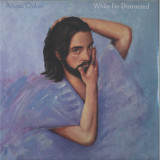
On debut album ‘While I'm Distracted’, London-based New Zealander Arjuna Oakes draws inspiration from contemporary soul and jazz, touches of global folk, electronica, modern classical, and post-rock, with dynamic arrangements and production. ‘While I'm Distracted’ is an album about fighting for your innocence and right to be a vulnerable and honest human. Arjuna’s songwriting explores themes of identity, depression, existentialism, social media, loss of innocence, and finding hope for the future through artistic expression.
'I'm obsessed with albums,' says Arjuna. 'I've made seven EPs, but needed time to tackle a full length record. I was using the EPs to learn the craft of how to make a great album, much like a director will make short films before they make a feature. I wanted to take the listener on a journey and spark their imagination. Hopefully the album expresses complex emotions, rather than having an intellectual concept. I'd rather ask questions than answer them'.
Across the album, Arjuna performs vocals, piano, keyboards, synths, production, and wrote the string arrangements. He’s joined by Harrison Scholes on bass, Jo Jenkins and Andre Smith on guitar, Sam Notman on drums, Louisa Williamson on saxophone, Nathan Haines on flute, Kate King on french horn, Leah Thomas on clarinet, Hilary Hayes and Emma Colligan on violin, Chris Van Der Zee on viola, Charley Davenport on cello, Zane Hawkins on percussion, James Macewan on trumpet, and additional production by Callum Mower.
180 G. BLACK VINYL WITH LINER NOTES IN CREOLE, FRENCH, ENGLISH
Originally released in 1979, "Spiritual Sound" lives up to its name, a soaring, triumphant album, six tracks of spirit magic from Guadeloupe.
Telluric, intense, terribly alive, the gwoka drums of Guadeloupe carry the identity of a painful and fervent island. Marked forever by the crime of slavery, Guadeloupe's créolité cherishes the ka drums and their natural environment: the low-pitched boula drum with male goatskin, the high-pitched soloist makè drum with female goatskin, the chacha, ti bwa, triangle, calabash and other percussion instruments that surround them, and the voices - the fiery, proud, timbred, urgent voices of the gwoka.
This album is also a legend for its voices: in his then dazzling youth, singer Lukuber Séjor was one of the first gwoka artists to largely feminize the chorus of répondè, who converse with his text delivered in a straight and powerful voice.
And everything here sets new standards. In 1979, Mizik Filamonik - Spiritual Sound proclaimed a spiritual patriotism of ferocious intensity. The album by Lukuber Séjor - whose spelling alone is a battle - sets out to give Guadeloupe the intangible weapons of self-respect and self-knowledge, through a singular practice of traditional music.
The genesis of gwoka music is less straightforward than one might imagine... The drums performed the servile task of accompanying the work of slaves in the fields and during the “corvées” imposed by the administration, before being freely practiced by the common people after the abolition of 1848. At the heart of the conviviality of the Guadeloupeans furthest from the cities - geographically and socially - the gwoka drums come out for carnival, funeral wakes and neighborhood celebrations, but also during strikes, fits of anger and armed vigils of the riots and revolts that have punctuated the island's history. For generations, governors of the colony and then the prefects of the overseas department of Guadeloupe have been viewing the gwoka as a potential for turbulence and a threat to public order.
But as the Beatlesmania, “chanson engagée” and rock revolutions unfolded in Europe, young people turned to the drums of mizik a vié nèg (“bad negro music”, in Creole), which Guadeloupeans had learned to despise by following the “assimilation” process advocated by the school system and most of the political class. At the end of the sixties, in a Guadeloupe mourning the deadly repression of the May 1967 social movement, they played traditional music, refusing to wrap it up in tourist prettiness and madras folk costumes. Instinctively, they played a rough and contemporary gwoka, led by the incendiary Guy Konkèt. This was the era of decisive 45 rpm records such as Robert Loyson's Kann a la richès, which brought to light the fieriest words of union rallies.
At his home in Sainte-Anne, Lukuber Séjor played with flautist Olivier Vamur and his brother Claude Vamur, who cobbled together a drum kit from tin crockery and became, a few years later, the most influential drummer in Kassav'.
These were the years of the Bumidom program, when young Guadeloupeans were encouraged to emigrate to mainland France. At the age of twenty, Lukuber Séjor embarked on the liner Irpinia, disembarking at Le Havre and taking the train to the Gare Saint-Lazare - the route taken by thousands of young West Indians who went on to study or looked for work, all the while trying to maintain a link with their homeland. In this case, it's at the Antony university residence, where Lukuber played the drum and participated in a thousand gwoka updates and aggiornamentos, while exile reinforced the need for a spiritual link with the native land.
In 1978, Guy Konkèt played at the Salle Wagram, a historic event for West Indian music. After serving as répondè - i.e. backing vocalist - on one of his home-recorded albums, Lukuber joined his live band. Little by little, he became one of the key artists on a circuit parallel to French show business. At a student party in Caen, he met a young woman from Martinique who, at the time, was more motivated by her ambitions as a visual artist than by her vocation as a musician. Her name was Jocelyne Béroard and, a few years before she plunged into the Kassav' adventure and became the greatest West Indian singer of her generation, she designed the cover of Lukuber Séjor's LP.
This ambition was obvious and imposed its will. A more or less regular band was formed, with Roger Raspail, Rudy Mompière and Éric Danquin on ka drums, Claude Vamur on ti bwa, Olivier Vamur and Françoise Lancréot on flutes and Annick Noël on keyboards. Lukuber Séjor is set on wanting to extend the gwoka palette to other instruments, as the jazz-rock revolution opens a thousand new doors. Annick Noël will play a wide range of timbres and textures on electric piano and synthesizer. Another novelty: the répondè are two men and two women, Roger Raspail, Olivier Vamur, Françoise Lancréot and Maryann Mathéus ...
Mizik Filamonik - Spiritual Sound is a self-production in which the singer and leader sank all his savings, allowing him no more than a single day in the studio. The first side is more of a musical manifesto, with the first two tracks, Éritage and Penn é plézi, being instrumentals. The third, Son, forcefully celebrates the need for Guadeloupeans to connect with the gwoka. In fact, Jocelyne Béroard's cover shows a tambouyé in the shadow of a cloudy sky, against which a radiant sun is rising and whose light will soon flood the entire landscape. The silhouette and face of this man strongly evoke the immense Vélo, master of the ka, rejected at the time on the fringes of society.
The second side of the LP is surprising. Formally, three tracks are explicitly linked like the three parts of a triptych. Primyé voyaj evokes the appalling tribulation of Africans deported as slaves to Guadeloupe; dézyèm voyaj speaks of the Bumidom program and the economic, political and social forces driving young Guadeloupeans towards the mirage of prosperity in France; twazyèm voyaj closes the cycle with the emigrants' return from Europe after years away from their island...
This gwoka, obsessed with the need to save Guadeloupe spiritually, appeals far beyond the politicized audience. Mizik Filamonik - Spiritual Sound instantly became a classic, although Lukuber Séjor never really made a career for himself as a musician.
After all, the album was released in 1980, with no promotional resources in France or Guadeloupe - and therefore no concerts. The thirty-two-year-old author, composer and performer made his own third trip back to Guadeloupe. He set up a small woodworking business, which he lost in Hurricane Hugo in 1989. His other activity, teaching in a medical-educational institute, became the core of his professional life. He continued to be an active campaigner - a campaigner for the Creole language, a campaigner for the reawakening of identity, a campaigner for special education, a campaigner for a thousand causes that he ignited with his generous and perceptive enthusiasm, such as the defense of breadfruit fries...
The echoes of his 1979 album have not died down. Of course, the use of Penn é plézi as the theme tune for Radio Guadeloupe's funeral notices from 1980 to 1992 kept him in the collective memory, but he continues to sing and compose sporadically, as with his all-female
vocal group Vwapoulouéka... Still convinced that music is a means of liberating the spirit, he continues the journey of a young man eager to deploy the power of Creole music and language.
We all remember with mixed feelings the past two years of domestic isolation: a temporary anomaly in which the world had to adjust to a new routine, a new rhythm. In these daunting yet precious circumstances, Italian producer Markeno has found his rhythm back, dusting off old records and re-approaching his past musical love affairs that he believed to be long forgotten. Here, in the fertile limbo that connects past and future, “Dock lown (exploring)” is born: a 3-tracker release with a chameleonic nature and an undeniable groove, in which Markeno is able to tactfully combine different genres such as indie, post-rock, African mu- sic, electro and funk.
In the contemporary music scene, overly saturated with catchy melodies and seductive lyrics, it is refreshing to encounter a composition like “Fase 01”, which starts from a purely percussive structure. Just when the ear is settled and well inserted into the tangle of drums, here comes the melodic twist, no less than at the fourth minute, injecting an unexpected groove and chalking out the contours of a track with multiple personalities: a little esoteric, a little synth-wave, quirky and badass. The temperature rises with “Zona Ros- sa”, in which the electro hint sketched in “Fase 01” becomes more pronounced, opening the doors to a dense psychedelic scenario. A shamanic loop accompanies the electric bass and escorts us through the smoke of the bonfire, veils swayed by the wind and colored lights that sparkle in the night. The ritualistic humming of ‘’Zona Rossa”’ is still hearable, floating in the rarefied atmosphere, while the last track “Limbo” makes its entrance and confirms once again the poliedric but congruous essence of this release, whose percussive attitude lures you in and whose hypnotic and groovy body makes you stay. At least for one more dance.
Over the last ten years, Brazil’s Millos Kaiser has cultivated a reputation as a top-ranking selector passionate about bringing his home country’s underappreciated music to the world. After starting as a punk and indie musician in Niterói, Rio de Janeiro, he turned his hand to DJing in the late 2000s and relocated to Sāo Paulo. There, he spent the 2010s rocking city squares, warehouse parties and street parties with DJ Trepanado in the Selvagem duo before cofounding the celebrated Selva Discos label in 2017.
Since 2019, Millos’s focus has shifted to his solo DJ career and ventures as an edit maker, reissue compilation curator, audiophile bar co-owner, and now producer. Planet Trip Records has been very good friends with Millos for a long time and is very pleased to present his first original release, the Te Quero Perto (I Want You Close) EP, available in vinyl and digital formats.
Assembled like a DJ-friendly 12” for late 20th-century nightclub specialists, Te Quero Perto kicks off with Millos’ original ‘club mix’ and an accompanying ‘instrumental’ version (digital.only). Driven by an uptempo machine beat straight out of the mid-'80s, rave pianos, 303 acid bass, and an explosive Brazilian pop vocal sung by Juju Bonjour, it’s an absolute belter of a tune and a masterclass in in-period styling.
Elsewhere on the EP, Millos’s European friends Lipelis & Orion Agassi turn in an equally belting Latin Freestyle remix in vocal, dub and instrumental mixes (instrumental is digital only). Rounding things out, fellow Rio de Janeiro producer Paco Cabana throws the tune into a cocktail shaker before pouring a sunkissed, percussion-heavy reimagining for us to sip on. Front to back, it’s an all-killer, no-filler debut from a generational talent.
Synaptic Cliffs is committed to discovering unknown and unreleased music in the future, testing it in the past, and selling it in the present. This is the only way to ensure that art is timeless. The recordings on this cassette, however, were purchased in 2073 from a beautiful woman named pdqb at the Marché aux Puces in Paris for only 0.0000000000000000001 Bitcoin, but on the condition that all the material is distributed on one cassette, namely exactly as described hereinafter: The short tracks from the years 1984 to 1989 are on the A-side, and one of these recordings must be supplemented with vocals by Max Müller, the singer of the infamous Berlin band Mutter. On the B-side, there will be a binaural 16.7-tone music composition from the year 2047. Furthermore, all recordings must be mastered by Mike Grinser. Last but not least, only high-quality chrome tape may be used for production. In August 2027, the music magazine Melody Maker, which will be published again from 2026, will write: " ' Vor dem Punkt ist nach dem Punkt' is a surprisingly singular work with a creative force of near-unprecedented degree. It is one of the most beautiful and best-sounding post-punk albums of the last 40 years, and it is certainly the main reason why we are currently experiencing a huge comeback of post-punk, shoegaze, and goth rock."
In October 1987, four months after the release of their critically acclaimed Sister LP, Sonic Youth showcased their latest work in a blistering set at Cabaret Metro, Chicago. The concert was introduced by Big Black's Steve Albini (who at the time was banned from the venue) and subsequently released as a semi-official bootleg under the title Hold That Tiger on writer/provocateur Byron Coley's impishly Geffen-baiting label Goofin' (years later the band would use this nom de guerre for their own imprint).
Hold That Tiger's sterling reputation among the Sonic Youth faithful is well deserved. In fact, it isn't a stretch to suggest that the album is to the first handful of SY releases what It's Alive is to the first three Ramones LPs – a feral and liberatory public snapshot of a band's blossoming imperial phase. Indeed, HTT is the sound of a group at the peak of their powers, presenting new songs alongside a handful of older ones with the kind of wild, cathartic enthusiasm common to rock 'n' roll's most revered live albums.
Taking nothing away from Sister – inarguably one of indie rock's first true masterpieces – it is reasonable that many fans prefer the live versions heard on Hold That Tiger to their studio counterparts. On HTT, Sonic Youth is a spiky, pummeling and confident force, alternately mammoth and meditative. Sister and its predecessor EVOL notably added an airy, dreamlike reverie to the band's turbulent doom-lurch, a stylistic evolution that seems to crystallize on HTT. Throughout, Kim Gordon's sinewy, sumptuous bass and Steve Shelley's propulsive, tom-heavy percussion provide the bedrock groove for Thurston Moore and Lee Ranaldo's ferocious barrages of noise-guitar crunch.
By 1987, the band was confidently articulating their dual lexicon of punk-noir dissonance and supernal, psychedelic sonic calligraphy – bending their jagged, streetwise gnarl into balloon animals of dazzling and beautiful songs. This collision of splendor and chaos would become a hallmark of the group's singular alchemy as well as provide a blueprint for the post-SST American underground they would help invent and ultimately nurture.
Hold That Tiger's encore – four songs by the band's beloved Ramones, which Thurston would later astutely compare to "the perfect pudding after a hearty meal" – serves as a reminder that, like any true punks, Sonic Youth never could resist a good, rousing anthem to send the kids home with their ears ringing, their hearts hot-wired.
This first-time reissue with speed-corrected master comes in a gatefold tip-on jacket. Mastered by Bob Weston from the original tapes. Recorded by Aadam Jacobs. Audio repair/editing by Aaron Mullan.
At the start of the 60s, a new wave of gospel-influenced jazz started to emerge, with hits such as Art Blakey & The Jazz Messengers' "Moanin'" and Cannonball Adderley's "Work Song" epitomizing this evolution in the genre. The terms "soul jazz" and "funky jazz" were coined as a way to describe this new sound that was making an impact in the US and also on the other sides of the Atlantic and Pacific oceans.
In 1964, Ray Charles made his first visit to Japan. Then, in 1968, Martha & The Vandellas and Stevie Wonder set foot in the country, followed by Sam & Dave in 1969, Ike & Tina Turner in 1970, and B.B. King in 1971. The TV show "Soul Train" also began airing in Japan in the early 1970s. A watershed moment happened in 1973 when Sammy Davis Jr. was cast in a TV commercial for Suntory whisky — and the influence of the US Black entertainment world had really landed, with soul, jazz, and funk artists becoming household names.
Nippon Columbia played a pivotal role during this turning point. The company had contracts with Buddah Records and Blue Thumb Records, releasing notable works by artists such as Gladys Knight & The Pips, Curtis Mayfield, The Crusaders, and The Pointer Sisters. At the same time, the label was also releasing several Japanese soul, jazz, and funk projects under the lead of music director Jiro Inagaki. Inagaki, a saxophonist who began his professional career in the early 1950s, honed his skills at U.S. military camps, where he shared his love of music with the Black servicemen. In the 1960s, he played with drummer Hideo Shiraki's band, which was widely considered to be Japan's representative group of the funky jazz movement. Later, Inagaki went on to pursue more cutting-edge sounds with his Soul Media project, including being a pioneering figure in the "jazz rock" genre. By working closely with Inagaki and his various musical projects, Nippon Columbia really placed the company at the center of an exciting and important period in Japanese music.
In 1965, Nippon Columbia opened a recording studio in Tokyo's Akasaka neighborhood. Akasaka was also home to the first ever discotheque in Japan, the legendary MUGEN, which ran from 1968 to 1987 and where many acts performed, including Con Funk Shun, the Bar-Kays, Ike & Tina Turner, B.B. King, Sam & Dave, Three Degrees, and Edwin Starr, as well as many local Japanese singers and musicians. This melting pot of creativity in the area led to the recording of many singles and albums by Japanese artists that were infused with the sounds of soul and funk. Most of these recordings were not available outside of Japan and remain rare and unknown musical gems. The selection you are holding in your hands is an explosive collection of 10 essential tracks released by the legendary Nippon Columbia label between 1969 and 1977, capturing the raw, unapparelled energy that was flowing through the air of the Akasaka streets at this electrifying time. Enjoy!
---
180GWALP07 - Manufactured and distributed by 180g.
Marbles is the legendary 1970 proto punk / dance classic from John McLaughlin’s US debut album 'De?otion', recorded at the time in which he played on Miles Davis' Bitches Brew and taped the Record Plant session with Jimi Hendrix.
Marbles didn't just deliver jazz rock's most danceable 4/4 beat, played by Band of Gypsies / Electric Flag drummer Buddy Miles. It is also centered with a once-in-ageneration bass line performed by Billy Rich. Larry Young's otherworldly Hammond textures predate a lot of what synthesizers were about to do much later, and the blowtorch energy emanating from John McLaughlin's cranked amp went beyond what most would had dared during the defining era of heavy rock guitar. An apex achievement at the intersection of jazz rock, guitar rock and dance music without parallel, before or since.
Background: John McLaughlin arrived in New York in 1969 to join Tony Williams' new group Lifetime which also featured Larry Young and eventually Jack Bruce (of Cream). On the second day in town he found himself in the studio with Miles Davis, recording 'In a Silent Way.' His playing would also take center stage in Bitches Brew, Jack Johnson, On The Corner and several other Davis key works of his much beloved first electric era. In between a busy schedule with Lifetime and Davis, McLaughlin also recorded two solo albums in 1970, 'De?otion' with an all-electric group and ‚'My Goa|’s B?y?nd' as its acoustic counterpart. By the time he formed his group Mahavishnu Orchestra in 1972, John McLaughlin was firmly established as the most important practitioner of his instrument of his generation within and well beyond the emerging jazz rock / fusion genre, and he has continued to evolve and surprise until today.
Here, a thorough remaster is supplemented by a new and throbbing techno version by Stefan Goldmann.
Polish saxophonist, producer and composer Jerzy Mączyński fuses utopian electronics and organic improvisation on sci-fi jazz odyssey, DO 555ps. Building on his 2023 collaboration with Jamal Moss aka Hieroglyphic Being, DO 555ps is Mączyński’s first self-produced album – a tour de force of spacious, galactic sound design that leans into drone, minimalism and the rich history of sci-fi soundtracks for a 10-track suite of astral proportions.
Mączyński’s sound is both maximalist and restrained, sensitive to detail and atmosphere, defying categorisation and swirling in an orbit of its own making.
Set to be released on Eivind Vullum’s Vibrasjon label in Norway, DO 555ps follows the 2023’s TUNE IN, made under Mączyński and Hieroglyphic Being’s Universal Harmonies & Frequencies moniker.
Described by The Quietus as one of the most interesting records of the year (“as bold as it is massive”), TUNE IN laid the foundations for Mączyński to strike out alone on DO 555PS, inspired by Moss’s skewed production and arrangements to striking and unique effect. - Anton Spice
Here at Four Flies, we kind of feel we need a bigger word than 'proud', this time, to present, in collaboration with Beat Records, the first-ever release of the original soundtrack written in 1976 by Guido & Maurizio De Angelis for the legendary Squadra Antifurto, the second chapter of the comedy-infused crime saga directed by Bruno Corbucci and starring Tomas Milian as the iconic Italian Police Marshal Nico Giraldi.
The excitement in this case is nothing short of gigantic, difficult to rein in for those who, like ourselves, grew up adoring the character played by Milian as one of our cult heroes, and dreaming that the soundtracks of the first three films in the saga – the only ones composed by the De Angelis brothers – would one day be released.
Since the launch of our label, Squadra Antifurto has been at the top of the list of film scores we most wanted to release. Until a few months ago, this dream of ours seemed destined to remain just that, so strong was the conviction in all of us that the master tapes were definitively lost, that they had forever vanished into thin air. That's why their recovery, made possible by Maurizio De Angelis himself and the persistence of our friends at Beat Records, is an extraordinary feat.
Nearly 50 years after it was first heard in cinemas, the soundtrack penned by the De Angelis brothers is resurrected in its entirety and can finally shine its incredible power all over us.
Beautifully seeping through this score – like many others composed by the golden duo in the 1970s – are elements from the Italian, and especially Roman, folk tradition, for instance in the warm, heartfelt ballad sung by Alberto Griso, "E nun ce voio sta," which first plays in the opening credit sequence and is then reprised in various forms throughout the film, culminating with the soul-stirring orchestral version that closes the album's tracklist.
But as in any Italian crime film worthy of that name, a different soundscapetakes centre stage: it's the music that accompanies the countless scenes of tension, action, and pursuit that punctuate the film, and which has made us fall madly in love with this score.
The main theme is a prog-funk joyride, drawing inspiration from the traditional tarantella but elevated to irresistible energy thanks to a rock orchestration featuring psychedelic flutes, wild percussion, distorted electric guitars, piano chords, and various feedback and delay effects.
The resulting groove is just mind-blowing, and we almost can't believe it's finally available on a record, completely remastered for vinyl.
We really couldn't be prouder, and dedicate this release to all passionate fans of Italian crime films, the De Angelis brothers, and Tomas Milian aka Nico Giraldi.
Available starting April 12th on standard black vinyl and limited coloured vinyl (transparent amber, limited to 300 copies).
The NOW Yearbook series continues with the ultimate soundtrack to one of pop’s most dynamic years: 1998 - out February 14th! This collection brings together the biggest and most iconic tracks from the year, presented across three stunning coloured vinyl discs, pressed in neon violet with 43 tracks from the era and two CD editions available as a standard 4-CD set, and as a special edition 4-CD set in ‘hardback book’ packaging, which includes a 28-page booklet packed with notes about all of the 80 featured tracks that capture the unforgettable sounds from the year. Whether you’re reliving the hits or discovering them for the first time, this collection brings you the best from the singles charts of 1998.. Whether you're revisiting these unforgettable hits or discovering them anew, NOW - Yearbook 1998 brings you the best from the singles charts of 1998!
The critically acclaimed Colours & Light, Project Gemini’s second album, takes on a new life in Deluxe Edition format. Firmly rooted in the mood and melodies of the original album, the Deluxe Edition features an unreleased album track, alternate versions and a whole host of remixes from friends of Project Gemini. To accompany the digital release, Jack Sharp’s (Wolf People/Large Plants) distinctive, distortion-heavy remix of ‘After The Dawn’, and the previously unreleased ‘Darkness Rising’, receive a special 7” pressing.
On the A side, Jack Sharp of the psychedelic, folk rock bands Wolf People and Large Plants, takes on ‘After The Dawn’. Sharp, who featured heavily on Colours & Light, dials up the distortion with this all-consuming, darker shade of a remix. Sucking you down into a wormhole of layered guitar reverberations and Paul’s spiralling, echoed vocals, it’s an intoxicating, driving hit of mind-bending, progressive rock.
Taken from the Colours & Light album recording session, the B side features ‘Darkness Rising’. A previously unreleased, original track that didn’t make it onto the album, Project Gemini leans in on the wah-wah fuzzed guitars, using it as the basis for a sonic brew of synths, percussion and bass-heavy, psychedelic rock synergy.
The first-ever vinyl reissue of the classic 1986 debut album from perennial pop icon and pin-up Samantha Fox. The only British female solo artist to score three Top Ten hits on both sides of the Atlantic in the 1980s, Samantha made her name as the nation’s favourite Page Three girl before launching an enviable music career.
Touch Me features four hit singles: the international smash ‘Touch Me (I Want Your Body)’ (#3 UK and #4 US), ‘Do Ya Do Ya (Wanna Please Me)’ (#10 UK), ‘Hold On Tight’ and ‘I’m All You Need’. Immediately establishing Samantha’s signature pop-rock sound, on its original release the album hit #17 in the UK, going silver, before reaching #24 in the US with a gold certification. Pressed on striking black vinyl with white and pink splatters to complement the original aesthetic, this edition boasts painstakingly rebuilt artwork and a newly designed inner bag featuring full lyrics. A strictly limited-edition picture disc is also available. Touch Me is reissued alongside Samantha’s self-titled second album and 1989’s I Wanna Have Some Fun.
Ant To Be returns to Knitebreed with his usual mix of incredible deep jungle vibes and rockin' party tunes that hit the spot exactly for any dedicated raver or junglist!
Last May, Hard Times captivated us with The Lost D.A.T.S (Part One)—a remarkable collection of unreleased and freshly unearthed gems from the vaults of NYC legend DJ Romain. But the story didn’t end there. To our surprise and delight, Romain had delivered an even larger treasure trove of beats—too many to reveal all at once.
Now, Hard Times is proud to present the next chapter: DJ Romain – The Lost D.A.T.S (Part Two).
"1996-97? Yeah, that’s when New York was still NEW YORK!
That was around the time we really started to get hold of exotic herbs. Copper Haze, hydroponic! The vibes in the studio were always lovely. I had hair at the time! Dread-Locs down to my shoulders... I was still rockin’ the Wallabees, or British Walkers as we called them - representing for Brooklyn and my West Indian roots!
There was no social media, no supervision, nobody all up in our business… It was classic "mind your own business" NYC Vibes! I was DJing at a lot of the hot clubs and THE hottest afterhours in the city. There were nights when I saw Micheal Douglas roll into the afters with Grace Jones - they were there to party and unwind and I was there dropping the dope tracks for the people.
When it was studio time, with my homie Matt Echols...I was probably setting things off with some quality herbage, a big ass bag of Funyuns and my trusty SP-1200, lol. I had picked up some tips and tricks from Todd Terry and by '96-'97 I was a Shaolin with it myself! This was around the time tracks like "Flowers" and "Only Love Can Break Your Heart (Dub)" were tearing up the clubs. I wanted to be able to get my ideas out with no problem, and by then I had a lot of confidence...
Being able to Dj in some of the hottest NY hot spots at the time, I was able to really see what worked and what didn't on the dancefloor. The best House Dancers from around the world and around the Tri-State area would be at my jams. I'm talking Ejoe, Voodoo Ray, maybe kids from the Mop-Top Crew... I was definitely taking note of the kind of rhythms and sounds that would make them go crazy on the dancefloor!
And that's how we went about it - I laid down the rhythms that made it happen in my sets and translated the vibes I was picking up from NYC itself. Matt threw down musically and we were just being as creative and inventive as possible! But we always kept in mind that our job was to make the people on the dancefloor jump!
A lot of the jams from those days got signed to various record labels, we dropped a lot of them on our own label...and some of them ended up in the archives - until now!"
Fresh off the back of his Glitterbox remix of CamelPhat & Elderbrook's hit 'Cola', Mousse T. drops his first original release on the Glitterbox label, showing off the depth of his production skills in this sparkling genre-binding track 'Rock The Mic'.
Mousse T. enlists the help of artist TAZ, the man who became the first UK rapper to sign to hip hop mecca Def Jam, also earning a prestigious Ivor Novello award nomination for his writing skills. 'Rock The Mic' reunites Mousse with American song writer Inaya Day, best known for her unforgettable vocals on the German producer's biggest record, 'Horny'.
The catchy hook and toe-tapping groove of intertwine perfectly over smooth strings to make this an irresistible record. The killer collaboration combines hip hop with disco, giving us the best of both worlds. 'Rock The Mic' lives up to the hype, delivering six minutes of bliss alongside a percussive remix courtesy of Kon. Kon's Accapella and Instrumental versions round off this full rocking package.
Livy Ekemezie’s Friday Night is widely recognised by DJs and afro-funk aficionados as a UFO (Unidentified Flying Object) grail record. It is one of those rare dance music albums that sounds like a record of its’ time but also has a timeless quality that makes each listen an immensely rewarding experience.
Fueled by teen spirit, every track slaps leaving little or no opportunity to skip. The song concepts circle around sweaty, afropolitan nightly excursions into the nightclubs of Aba, Port Harcourt and Lagos. But they could easily have been the soundtrack to Basquiat and Grace Jones grooving to DJ Larry Levan at Studio 54.
Digital Multitrack Sound Production combined with 80s synths and keyboards ushered in a new era. But what made this different is the bombastic but never overbearing "mélange" of slapping, funky bass lines, choppy synths, crazy, carefree vocals contributing to an intense dance-driven musical experience.
Livy and his friend Franklin Izuora teamed up with Jules Elong a seasoned keyboardist to create the LP in 1982, Franklin was a student in the US and already the experience of producing an album (Be Nice To The People, 1977, EMI) with the soundmaster, Odion Iruoje in the teenage afro-rock band, Question Mark. This gave Livy the confidence to leave most of the creative direction to him.
Livy had completed his secondary school cursus and was waiting to attend college. Jules Elong’s role was to make the record sound professional. The Quincy Jones influence created a reference point, Goddy Oku’s studio, Godiac was the mother ship for this 80s dance music masterpiece.
Ulrich Troyer has been producing music now solidly for over twenty years within a largely genre free framework, but whilst navigating forms such as avant-garde, techno, leftfield, field recording, electronica, glitch and ambient it is the aesthetics of dub that guide his creative direction. Not really recognisable in an orthodox form as remixed versions of roots reggae songs but in the way sonics are manipulated with space, the application and layering of delay, reverb and echo that fixes his output well within the scope of what might be called futurist dub.
The nearest comparisons to his new album TRANSIT TRIBE can only be established by a synthesis of some of the more adventurous explorations in modern music such as African Head Charge, Jon Hassell, Pole (Stefan Betke), Bill Laswell or even Miles Davis; featuring a diverse selection of artists and friends not only from Vienna and environs but also from around the world, sounds are not so much fused but allowed to float along the continuous flowing tide of warm waves of bass.
Rather than to allow the names of Ulrich Troyer's collaborators be merely listed in the album credits, what they bring to this joyful affair needs to be outlined, albeit briefly: Co-producer credits go to Osman Murat Ertel from Istanbul, who employed a variation on the old foolproof Nick Lowe method for checking out the impact quality of his own sound productions by playing tracks through his car sound system speakers!
Murat is a member of the electro-psych-folk group Baba Zula where he plays electric saz, oscillators and theremin and played a key part in the creative development of the album. Mamadou Diabate, the balafon master originally from Burkina Faso and now resident in Vienna, has developed his own unique technique of playing solos that replicate the sound of three instruments playing in unison; however the multi-talented Mamadou is engaged here on singing and playing the talking drum. From South Tyrol Reinhilde Gamper is a member of the experimental trio Greifer who are bringing the sound of the zither into the twenty-first century using new playing techniques and electronic gadgets. Susanna Gartmayer is an Austrian composer and bass clarinetist specialising in improv and multimedia sound research. Diggory Kenrick has been engaged with creating new dub fusions and also re-energising classic rocksteady and roots reggae classics, renowned for his interventions on flute. Didi Kern is an electronic dance musician and drummer from Vienna with a focus on free improvised music. Hamidou Koita, a singer and multi-instrumentalist, is from a traditional Griot family in Burkina Faso but now resident in Vienna and a regular musical partner of Mamadou Diabate playing drums and calabash. Austrian Lukas Lauermann is both a studio and live musician playing cello, also working on electronic sound design and writing string arrangements. He has recorded extensively and appeared on stage with both Mark Lanegan and Hans-Joachim Roedelius. Martin Mallaun is a Tyrol-born specialist in both the development of the zither in modern music and also as a researcher in the effects of climate change on the vegetation of Alpine ecosystems. Mystica Tribe is the musical alias of Tokyo-based dub/techno producer Taka (Takafumi) Noda. He collaborated with Vienna's own Vegetable Orchestra on 2020's "Transplants (Mystica Tribe Version)". After studying classical percussion Flip Philipp is now a jazz vibraphone player and member of the Vienna Symphony Orchestra. Wolfgang Pfistermüller is a member of the Vienna Trombone Quartet and the developer of the incredible bass-trombone Aurora with its uniquely warm and resonant sound. Roger Robinson is a renowned British poet, winner of many contemporary poetry prizes and member of the experimental music group King Midas Sound. Kwame Yeboah is a Ghanaian born UK based keyboard wizard who tours regularly with Yusuf / Cat Stevens, Ms. Dynamite and Pat Thomas.
So contained on the album is an astonishing mix of musicians and instruments: sounds of cowbells recorded in the South Tyrolean alps processed by modular synthesizers and heavy analogue bass synths combined with instruments such as zither, bass-zither, electro saz, flute, talking drum, trombone, cello, vibraphone, marimba, djembe, contra-alto clarinet, melodica, Farfisa - all bound together by organic live-drums and dub effects.
RIYL: Sufjan Stevens, Pearls Before Swine, Richard Dawson, Incredible String Band, Scott Walker. When Dominic Harris started work on the follow up to 2017’s “Rural Tonic”, he had a different kind of landscape in mind than the bucolic inspiration he’d mined for that album and its predecessor (2013’s “Woodland Casual”). Instead it was nostalgia for winters of a youth (mis)spent in 90’s Berlin.
With a lucky find of a Hohner Guitaret, (a 1960s electric thumb piano), Harris began writing lyrics around its sparse and austere accompaniment. And after reconnecting with an old friend from Edinburgh, Ricky White, now living in the USA, the plan became clearer: a winter-journey to the rural Mid-West to write and record an LP. Convening in White’s new hometown of Bloomington IN, Harris would work each morning in the county library, the pair then venturing out on long, aimless drives down country roads before returning to put their ideas and conversation into music. With songs written over two weeks, Harris and White headed to a small studio space in a derelict strip mall in Indianapolis, to capture the album in as minimalistic a form as was fitting to the wintry feel of much of the music; glimmers of pedal steel and recorder shining out amid the dual acoustic guitars and piano arrangements. After the pandemic cut its swathe through all plans, the recording sessions decamped to Scotland.
By then Harris’s longtime collaborator Robert McFall had written string arrangements for each song, effortlessly capturing the spirit of the original vision whilst elevating each song towards the universal. Still there were the frosty hedgerows and abandoned factories of the rural Rust Belt. But also now the sandstone architecture and cobwebs of Edinburgh, and the cold grey of the Firth of Forth. Diminuet, the cover artwork showing a catheter transformed into a flower, captures that fragile moment where the world seems forever frozen in time, even as the Spring prepares to transform us all once again
“Raggamuffin Soldier” was recorded at Channel One Recording Studio in 1983 with Soldgie as engineer and a rhythm track played by Jolly Stewart and Daniel “Axeman” Thompson. Growing up in the Waterhouse neighborhood of Kingston, Jolly Stewart obviously developed this singing style and gave us a killer early digital dancehall missile with pure conscious lyrics “Raggamuffin soldier, big ina your area...me no deal with badness, me nah deal inna war, me is a raggamuffin soldier...mi raggamuffin ina foreign, raggamuffin sit down pon di riddim...how you know the raggamuffin? Me no wear no gold chain, me no wear no gold ring...”. “Raggamuffin Soldier” was produced by Fitzroy Peterkin who also produced the digital lover tune "Angie".
The Waterhouse style is a particular style of singing that emerged in the late seventies and early eighties within the Jamaican reggae scene. The Waterhouse style is commonly described as a plaintive, groaning and fluctuating vocal style, often nasal and strident, characteristics that will give it a sound that is distinct from the rest of the reggae singers. The commonly recognized founders of the Waterhouse style are the singers Michael "Mykal" Rose, Junior Reid and Don Carlos. The name derives from the famous neighborhood of the same name in Kingston, the capital of Jamaica, the place where the three pioneers were born and emerged. The Waterhouse style influenced many dancehall reggae artists of the eightiesvsuch as Tenor Saw, Half Pint, Nitty Gritty, Anthony Red Rose, King Kong, Yami Bolo, Andrew Bees...
Vincent Stewart aka “Jolly Man” is a reggae singer from Kingston 11, born december 16 1960 at Hunts Bay Lane, 4 Miles, Jamaica. Jolly started singing at age 13, he was placed in an approve School for 3 years and at the age of 16 he was released.
He started his musical career in the late 70's with Ossie Thomas, Phllip Morgan and Tristan Palmer from Black Solidarity label. Jolly Stewart recorded his first song entitled "Money Pyaka" on the classic "Pretty Looks" riddim which was recorded for Oswald Thomas on Ganja Farm label and released in 1979. Tristan Palmer who has another tune "Disappointed Lover" on the same riddim backed by The Soul Syndicate made the link with Jolly Stewart because he liked his style of song writting.
Jolly Stewart wrote three songs for Black Solidarity label: "Collie Man", "Bad Minded" and "Symbol Of Justice". All three tracks were covered by Triston Palmer. As a song writter, Jolly Stewart is behind Yami Bolo's hit on Stalag riddim “When A Man Is In Love” released on Winston Riley's label Techniques.
Jolly Stewart then decided to move on with his singjay career. He ventured to Tuff Gong studio where he met two producers. One was Prince Jazzbo from Ujama label, and the other was John John who owned the Bun Fi Bun label. He recorded "Praise jah" for Ujama and "Poverty Rush" for Bun Fi Bun. Still not satisfied with how his career was heading, he moved on to Lannaman's Preparatory School. There he learned to play guitar from a man named Fred McMurray aka Faf and Donald Jackson. Later he learned to play the keyboards by watching other musicians.
In the late 80's and early 90's, Jolly Stewart recorded many songs for various labels such as “Do Me Like So” for Bunny Gemini's label “Bun Gem Records” in 1987, “Late Last Night” and “War” for producer Zelma Rust and his label Myotta Ruff.
He also recorded for Augustus Pablo on his label Rockers International just before he died in the late 90's but we never heard about this release so probably Addis Pablo have it on old master tapes in the Rockers International archives....only Jah knows!
" What Are You Going to Do with Your Life?' is the eighth studio album by British post-punk legends Echo & The Bunnymen, released on April 16, 1999. The album saw the band continue a trajectory set with 1997's 'Evergreen', embracing more introspective themes and melodic approach to its arrangements.
" Featuring an inspired selection of collaborators including strings from the London Metropolitan Orchestra and two songs featuring the American rap rock band Fun Loving Criminals, 'What Are You Going to Do with Your Life?' featured two singles, the title track, and the atmospheric fan favourite 'Rust', which would mark the band's final Top 40 UK single.
" Celebrating 25 years of 'What Are You Going to Do with Your Life?', the album is issued on vinyl for the very first time, alongside expansive 34-track 2CD and digital editions (18 tracks previously unreleased!), which feature B-sides, alternative versions and previously unreleased live versions of both tracks from the album and classic Bunnymen tracks.
As the tenth candle flickers atop the torta alla panna, Archeo Recordings play the Uno reverse card, breaking with tradition to give us a gift in celebration of its birthday: the first in a series of exquisite EPs on which the label's favourite contemporaries pay homage to past masters. Each re-polished gem is plucked either directly from the beatific back catalogue of the fine Florentine label or is at least Archeo-adjacent, perhaps a sign of future wonders to come. Like a musical version of Janus, who can be found at the heart of Bertoldo di Giovanni's frieze in the Medici villa, Archeo Recordings will continue to look forwards and backwards to provide sublime sounds for us all.
Pepe Maina officially joined the Archeo family in 2019 with the much-needed reissue of his 1979 masterpiece Scerizza (AR015), but his astounding music has been a constant companion to label head Manu for much longer. An inter-dimensional, multi-instrumental maverick, Maina weaves the frayed edges of prog rock, new age, organic jazz and global minimalism into a shimmering tapestry all of his own. The results are spread across fifty years and almost as many albums, largely self-released and always absolutely untarnished by commercial concerns.
Based in a small village in the hills of Brianza, just north of Milan, Maina translates the beauty of his surroundings into transformative tone poems, and the folkloric fusion of "The Infinite", originally released on his 2014 CD Tales From The Hill, is the perfect example of his practice. It opens with a recitation of Giacomo Leopardi's 1825s poem "L'Infinito" by famed Italian actor Vittorio Gassman. A leading figure in the romantic movement, Leopardi explores the idea of time and space within the natural world, and the peace that comes with an appreciation of the immensity of eternity. Manu, longtime digger and now a burgeoning producer, expands upon the original with tribal percussion, chirping electronics and a spheric bassline, folding Maina's elegant strings and gossamer pads into a new arrangement suited for a slow dance under the stars.
Unless you had a well-trained ear tuned to Italy's avant-jazz scene, chances are your first encounter with innovative flautist Roberto Aglieri came via the 2017 Archeo reissue of hisalmost untraceable LP Ragapadani (AR011). It's a true testament to Manu's digging credentials that he snatched this masterpiece out of the esoteric atmosphere and brought it attention it so richly deserved. A delicate union of digital synthesis and versatile flute - be it soft and silvery or
brilliant and clear - the 1987 album was a shapeshifting masterpiece, replaying scenes from Virgil, Verdi, Visconti and Pasolini with a neon glow. Quintessentially Italian, but uncanny and previously unimagined - Penthouse and Portico perhaps. Powered by a percolating prototechno sequence, cascading keys, hallucinogenic vocal snippets and a variety of tonal timbres from Roberto's reed, "Danza N. 1" long deserved the praise reserved for Jean-Luc Ponty's pinnacle, so many thanks to Manu for our collective introduction. The tall task of reinterpreting this particular paragon falls to Perugian polymath Daniele Tomassini AKA Feel Fly, whose peerless skills as both producer and musician have delighted DJs and dancers alike. Hot on the heels of his diverse and definitive remixes of Tony Esposito for AR027, Daniele delivers a radical rework of "Danza N. 1" perfect for both day rave sunshine and full moon party alike. Enhanced by snapping breaks and a rattling kick, the bassline gurgle emerges as a progressive powerhouse, laying the foundation for the trilling flute and circular keys to cast a psychedelic spell. As the slow-Goa revival picks up pace, this one is way ahead of the pack.
Archeo take us all the way back to the start of its story here - well almost. Though it bore the stamp AR001 (2015), this Radio Band reissue actually hit shelves months after Tony Esposito's "Je-Na' / Pagaia"; a false start perhaps but a true classic all the same. Radio Band were a group of DJs from Florence who all sailed the airways of Radio Fantasy in 1984 and whose one and only release was this super groovy slice of Italo-boogie. Following the example of Milanese DJs Band of Jocks but far surpassing their formulaic funk fizzle, Radio Band employed an intergalactic bassline, cosmic keys and that undeniably Italian style of rapping to deliver a sophisticated party-starter which even found its way to disco deity Ron Hardy. Back to the here and now, and if you've found yourself pumping an ecstatic fist to a supercharged Italian epic of late, chances are its from the mind of the mysterious Radiomarc. Operating on the ascendent Popcorn Groove imprint, this shadowy figure steers his country's lost classics into peaktime territories, finding a sweet spot between late Italo-disco, early Italo-house and contemporary cool. Pushing the tempo with a club-ready 4/4, setting the sequencer to stun and supplementing the original melodies with a series of synth riffs, the mystery producer send this one into orbit. Radio Band - Radio Rap - Radiomarc, the circle is complete.
Few have done more to develop cross-cultural musical exchange than Futuro Antico. A collaborative venture from musician, archeologist and ethnomusicologist Walter Maioli, keyboardist and tonal theoretician Riccardo Sinigaglia and multi-disciplinary artist and composer Gabin Dabiré, Futuro Antico formed in Milan in 1979, combining ancient international folkloric traditions with otherworldly electronics. The result is an arresting melange of Mediterranean, African and Asian instrumentation, mimicked by esoteric synth tones and hypnotic minimalism, which the group perfected on their acclaimed 1990 LP Dai Primitivi All'Elettronica. The meditative and transportive "Pan Tuning" belongs to their largely overlooked 2005 CD only release Intonazioni Archetipe, and has been amongst Manu's most loved tracks from the first moment he heard it. Who else is better placed to reshape this evocative opus into an immersive, transcendental dance floor journey than label favourites Mushrooms Project? The duo sows the original elements into a sprawling fifteen minute fusion of séance and science, at times propulsive with a ritualist rhythm of tuned percussion and crunching drum machine at others drifting off into ethereal ambience. Mushrooms Project continue to push the boundaries of the Afro-cosmic style, and this remix marks a new zenith.
Here at Mr Bongo we have been inundated with people asking us to reissue this release. Ana Frango Elétrico's petit cult classic masterpiece 'Little Electric Chicken Heart' from 2019, which was only ever released on vinyl and CD in Brazil and Japan, has fast become a collector's item.
Well received by fans, DJs, and reviewers on release, The Needle Drop expressed "Ana Frango Elétrico's authentically vintage fusion of chamber pop, rock, samba and jazz is a real blast!" listing it as one of its Top 50 Albums of 2019. The album's reputation has been slowly building ever since, gaining a Latin Grammy nomination in 2020, and now solidly cementing itself as a gem of contemporary Brazilian music.
Across the albums nine tracks, Ana blends elements and influences from MPB, Tropicália, indie rock, punk and pop, forging them together with a sumptuous dose of her signature style. The finesse of 'Saudade' kicks off the LP, one of Ana's most known tracks to a non-Brazilian audience. A sublime opener, beginning with a spellbinding piano solo before transcending into a beautiful dream-laden slice of warmth, complete with luscious jazzy horns and deft vocal delivery. ‘Promessa e previsões’ follows, the only track on the album not to be written by Ana, instead being penned by Chico França. It’s a swelling and sweeping twilight groover, building and breaking across absorbing peaks.
Other highlights on the album include the anthemic 'Chocolate', which was a firm favourite with a packed sing-along crowd when we heard Ana perform it live. Elsewhere, 'Se No Cinema' hits with its quirky allure, charm and catchy melodies before transforming into a carnival spirit.
Tapping into the richness of Brazil’s new wave of musical energy, the album also includes a heavyweight lineup of collaborations with artists such as Dora Morelenbaum (Bala Desejo), Tim Bernardes, Antonio Neves and Guilherme Lirio to name but a few.
A short, sweet and refreshing record, that leaves nothing to waste, marrying playful ideas with poignant themes. 'Little Electric Chicken Heart' is a future classic and will beguile fans of ‘70s Brazilian recordings, Gal Costa, Mac DeMarco, Stereolab, Superorganism, Caetano Veloso and more.
Ulrich Troyer has been producing music now solidly for over twenty years within a largely genre free framework, but whilst navigating forms such as avant-garde, techno, leftfield, field recording, electronica, glitch and ambient it is the aesthetics of dub that guide his creative direction. Not really recognisable in an orthodox form as remixed versions of roots reggae songs but in the way sonics are manipulated with space, the application and layering of delay, reverb and echo that fixes his output well within the scope of what might be called futurist dub.
The nearest comparisons to his new album TRANSIT TRIBE can only be established by a synthesis of some of the more adventurous explorations in modern music such as African Head Charge, Jon Hassell, Pole (Stefan Betke), Bill Laswell or even Miles Davis; featuring a diverse selection of artists and friends not only from Vienna and environs but also from around the world, sounds are not so much fused but allowed to float along the continuous flowing tide of warm waves of bass.
Rather than to allow the names of Ulrich Troyer's collaborators be merely listed in the album credits, what they bring to this joyful affair needs to be outlined, albeit briefly: Co-producer credits go to Osman Murat Ertel from Istanbul, who employed a variation on the old foolproof Nick Lowe method for checking out the impact quality of his own sound productions by playing tracks through his car sound system speakers!
Murat is a member of the electro-psych-folk group Baba Zula where he plays electric saz, oscillators and theremin and played a key part in the creative development of the album. Mamadou Diabate, the balafon master originally from Burkina Faso and now resident in Vienna, has developed his own unique technique of playing solos that replicate the sound of three instruments playing in unison; however the multi-talented Mamadou is engaged here on singing and playing the talking drum. From South Tyrol Reinhilde Gamper is a member of the experimental trio Greifer who are bringing the sound of the zither into the twenty-first century using new playing techniques and electronic gadgets. Susanna Gartmayer is an Austrian composer and bass clarinetist specialising in improv and multimedia sound research. Diggory Kenrick has been engaged with creating new dub fusions and also re-energising classic rocksteady and roots reggae classics, renowned for his interventions on flute. Didi Kern is an electronic dance musician and drummer from Vienna with a focus on free improvised music. Hamidou Koita, a singer and multi-instrumentalist, is from a traditional Griot family in Burkina Faso but now resident in Vienna and a regular musical partner of Mamadou Diabate playing drums and calabash. Austrian Lukas Lauermann is both a studio and live musician playing cello, also working on electronic sound design and writing string arrangements. He has recorded extensively and appeared on stage with both Mark Lanegan and Hans-Joachim Roedelius. Martin Mallaun is a Tyrol-born specialist in both the development of the zither in modern music and also as a researcher in the effects of climate change on the vegetation of Alpine ecosystems. After studying classical percussion Flip Philipp is now a jazz vibraphone player and member of the Vienna Symphony Orchestra. Wolfgang Pfistermüller is a member of the Vienna Trombone Quartet and the developer of the incredible bass-trombone Aurora with its uniquely warm and resonant sound. Roger Robinson is a renowned British poet, winner of many contemporary poetry prizes and member of the experimental music group King Midas Sound. Kwame Yeboah is a Ghanaian born UK based keyboard wizard who tours regularly with Yusuf / Cat Stevens, Ms. Dynamite and Pat Thomas.
So contained on the album is an astonishing mix of musicians and instruments: sounds of cowbells recorded in the South Tyrolean alps processed by modular synthesizers and heavy analogue bass synths combined with instruments such as zither, bass-zither, electro saz, flute, talking drum, trombone, cello, marimba, djembe, contra-alto clarinet, Farfisa - all bound together by organic live-drums and dub effects.
Osaka based psych-rock three piece Hibushibire return after a long break, with a new line up and a stunning third album. Produced by Acid Mothers Temple/Mainliner guru Makoto Kawabata who also guests on the album.
Following the successes of their debut album 'Freak Out Orgasm!' (2017), the follow up ‘Turn On, Tune In, Freak Out’ (2019) and two very well received UK tours. The band headed home to Osaka, Japan and then, the pandemic hit.
During this downtime, guitarist/vocalist Changchang decided to create a new power trio. Enter Tetsuji Toyoda (Bass/Vocals) & Aoi Hama (Drums/Vocals). The new trio have spent the last three years writing new music, playing live and honing their sound in Japan, and a short well received tour of Taiwan with Riot Season labelmates Dope Purple. And now finally, Hibushibire mark 2 is born properly.
“Hibushibire has returned after a change of members. A psychedelic, progressive work, suitable for a new beginning"
Entering the studio with Acid Mothers Temple/Mainliner guru Makoto Kawabata in the producer chair (and also as a guest musician) once again, the band recorded album number three, 'Magical Metamorphosis Third Eye’. Makoto also adds some of his own trademark guitar howls throughout the album, perfectly complimenting Changchang’s own growing prowess.
Here the band have taken their trademark psych-rock blasts and blended them perfectly with some more trippy, dare I say sweet progressive psychedelic sounds.
“The idea of this album is based on the theme of "occultism and mysticism". But it's not a serious thing, it's about the things we like (UFOs, pyramids, psychic phenomena, shamanism etc) and we all had fun while making it. In terms of what makes it different from the previous Hibushibire albums, it’s where AOI HAMA's vocals are present. I had wanted to use a female vocalist for a long time, so it was a good feeling!”
Like the band's first two albums, 'Magical Metamorphosis Third Eye’ is very much an album of two halves. Side one again is full of killer shorter tracks, while side two is reserved for a blinding majestic 20 minute epic ‘Ayahuasca Witch Abduction’. Perhaps the biggest musical surprise here though is probably track two, the beautifully mellow tripped out ‘We Won't Go Back To The Past’, which sounds like it’s been beamed straight out of the late 60s/early 70s.
The band also tip a nod to the Beatles psychedelic classic ‘Tomorrow Never Ever Knows’, but with their own twist of course.
It’s clear with the line up changes, Changchang has decided to expand the band's musical pathway, and he’s achieved stunning results.
The band plan to return to the UK and Europe in 2024 to see friends old and new.
Releasing as a vinyl 45, Bad Night is the lead offering from The Cromagnon Band's new album Mode. This is the band's second LP and the first of theirs to be released on BBE Music. Mode itself is an album of cinematic and psychedelic dark Funk tinged and tinted with Nordic psych/jazz, classical, boom-bap Hip-Hop breaks and riff heavy rock. Bad Night is backed with Quadrant, a stand alone track that won't be on the album, thus making the vinyl single release a unique addition to the music lover's record collection. That said, these are are two tracks which give both a genuine flavour of the forthcoming album as well as the band's own musical influences and heritage as instrumentalists and producers. The Cromagnon Band's recording technique of taking breaks, riffs and melodies from favourite tracks and then improvising from there with completely live jam sessions in the studio allows them to record in their distinct and trademark 'reverse engineering' style. The trio of Drummer Tom Watt, Bassist Lenny Walker and multi-instrumentalist Bert Page work by making music as a team, playing for hours and united by a love of Hip-Hop breaks and psychedelic Jazz/Rock/Funk and classical music. They choose to record only instrumentals which allows space for Bert to weave intricate soundscape with Fender Rhodes, Moog, Sax and Clarinet over the beats and breaks they have written from their improvised jams. Bad Night b/w Quadrant are the lead releases from The Cromagnon Band's new album Mode. They will be released as a 7" vinyl and digitally.
Michael Mayer albums don’t come round too often, which is one of many reasons why his fourth collection, The Floor Is Lava, is a genuine event. It’s been eight years since his last one, the collaborative & released on !K7; its predecessors, Mantasy (2012) and Touch (2004), took their sweet time, too. It’s no real surprise, given the many hats Mayer wears – globetrotting DJ, revered remixer, inveterate collaborator, and boss of both Kompakt and Imara – that his solo productions are relatively sparing. But this also speaks to their quality: Mayer’s name on a record sleeve is a sign of quality, of music that’s both looking to the future and calling back to the past, that balances the imperatives of the dancefloor and the loungeroom, that’s as exploratory as it is functional.
On The Floor Is Lava, Mayer seems to be taking the temperature of both the music that surrounds him (past and present), and the ides of the industry he works within. There’s that iconic album title, for a start. “The album’s mindset,” he says, reflecting on those four words together. For Mayer, it’s partly a critique of the way the industry boxes in both producer and listener, focuses them on genre, on market, on the next new thing: “Being a free minded spirit that transcends genres has become an uphill battle.” A battle worth fighting, though, and with The Floor Is Lava, the result is an album that’s varied, quixotic, idiosyncratic, charming, and deeply, addictively listenable.
Throughout, Mayer finds thrills in exploration and juxtaposition, allowing unexpected things to blossom and giving them their life, their platform, throwing the listener exciting curveballs: “It’s a DJ album by a DJ that’s easily bored.” Either easily bored, or endlessly curious, The Floor Is Lava is rich with ideas. It opens with “The Problem”, which looks back to look forward, embracing the rickety way early house productions threw samples together with gleeful abandon. Mayer mentions Pal Joey, and the scene around Rockers Hi-Fi and their Different Drummer imprint, as reference points, and you can hear that freewheeling spirit throughout.
It’s followed by “Vagus”, a slinky, sensual minimal house number that Mayer describes as his “musical catnip”. The flow of these two opening cuts defines the dynamic of The Floor Is Lava, defining the dialectical drive at its core: thesis and antithesis leads to synthesis, but with a welcome prickliness that means you’re always excited, always engaged. It’s also productive in the way it derives energy from rubbing genres and sounds against each other, in unexpected ways, for maximum musical frisson. There’s psychedelic techno on “Feuerstuhl”, more minimal techno with “Ardor” (Mayer mentions ‘Immer 1’ era 90s minimal as inspiration), slippery, Shepard-tone breakbeat through “Sycophant”, a lovely, lush vocal turn on the poppy “The Solution”.
The album closes with the melancholy “Süßer Schlaf”, where Mayer sets a poem by Goethe to one of his most haunted, moving pieces of music yet, in abstract tribute to a lost friend. It’s one of the most affecting moments on The Floor Is Lava. There’s also an update on 2020’s wild Brainwave Technology EP, with the surrealist glitter-stomp of “Brainwave 2.0” (check out those handclaps!),where Mayer’s thinking about the socio-political precipice of the now: “I’m reading with great interest about this whole complex of how humanity is about to cross so many lines and the implications that the resulting financial and educational inequality will bring.”
That’s The Floor Is Lava: then and now, brainwaves and nerve structures, problems and solutions, genres on fire; the real, the unreal, and the surreal. An album for the easily bored and the endlessly curious. Mayer has the last word, telling us all you need to know about the album’s spirit: “Burning for the cause, being zealous, being addicted to the heat of the night, the exuberant powers of music.”
Michael Mayer veröffentlicht nicht oft Alben, was einer von vielen Gründen ist, warum ‘The Floor Is Lava’ ein echtes Ereignis ist. Es sind acht Jahre vergangen seit seinem letzten Werk, dem Kollaborationsalbum &, das auf !K7 erschien; seine Vorgänger, Mantasy (2012) und Touch (2004), ließen ebenfalls auf sich warten. Es überrascht nicht wirklich, da Mayer viele Rollen gleichzeitig erfüllt – weltreisender DJ, vielbeschäftigter Remixer, unermüdlicher Kollaborateur und Chef von sowohl Kompakt als auch Imara – weshalb seine Solo-Produktionen eher sparsam ausfallen. Doch das spricht auch für deren Qualität: Ein Album mit Mayers Namen auf dem Cover steht für Qualität, für Musik, die sowohl in die Zukunft blickt als auch auf die Vergangenheit verweist, die das Gleichgewicht zwischen den Anforderungen des Dancefloors und des Wohnzimmers hält, die genauso erforschend wie funktional ist.
Auf The Floor Is Lava scheint Mayer sowohl die Musik um ihn herum (vergangen und gegenwärtig) als auch die Strömungen der Branche, in der er arbeitet, zu reflektieren. Da wäre zunächst der ikonische Albumtitel. „Die Grundhaltung des Albums“, sagt er, drückt sich in diesen vier Worte aus. Für Mayer ist es teilweise eine Kritik daran, wie die Industrie sowohl Produzenten als auch Hörer in Schubladen steckt, sie auf Genres, auf den Markt und auf das nächste große Ding fokussiert: „Ein freier Geist zu sein, der Genres überschreitet, ist zu einem steinigen Weg geworden.“ Ein Kampf, der sich jedoch lohnt, und mit The Floor Is Lava ist das Ergebnis ein Album, das vielfältig, eigenwillig, charmant und tiefsinnig, aber auch süchtig machend ist.
Im gesamten Album findet Mayer Freude an der Erforschung und Gegenüberstellung von Stilen, lässt unerwartete Dinge erblühen und gibt ihnen Raum, überrascht den Hörer mit spannenden Wendungen: „Es ist ein DJ-Album von einem DJ, der sich schnell langweilt.“ Entweder langweilt er sich schnell oder er ist unendlich neugierig – The Floor Is Lava ist reich an Ideen. Es beginnt mit „The Problem“, das in die Vergangenheit blickt, um nach vorne zu schauen, und die wilde Art, wie frühe House-Produktionen Samples mit fröhlicher Unbekümmertheit zusammenwarfen, aufgreift. Mayer nennt Pal Joey und die Szene um Rockers Hi-Fi und ihr Label Different Drummer als Referenzpunkte, und dieser freie Geist zieht sich durch das gesamte Album.
Es folgt „Vagus“, eine sinnliche Minimal-House-Nummer, die Mayer als seine „musikalische Katzenminze“ beschreibt. Der Fluss dieser beiden Eröffnungstracks definiert die Dynamik von The Floor Is Lava und den dialektischen Antrieb im Kern: These und Antithese führen zu einer Synthese, jedoch mit einer willkommenen Schärfe, die dafür sorgt, dass man immer aufgeregt und engagiert bleibt. Zudem gewinnt das Album Energie, indem es Genres und Klänge auf unerwartete Weise aneinanderreibt, um maximalen musikalischen Nervenkitzel zu erzeugen. Es gibt psychedelischen Techno in „Feuerstuhl“, mehr Minimal Techno mit „Ardor“ (Mayer erwähnt ‘Immer’ Ära Minimal als Bezugspunkt), gleitenden Shepard-Ton-Breakbeat in „Sycophant“ und einen lieblichen, üppigen Vocal-Auftritt im poppigen „The Solution“.
Das Album schließt mit dem melancholischen „Süßer Schlaf“, in dem Mayer ein Gedicht von Goethe vertont und eine seiner bisher eindringlichsten und bewegendsten musikalischen Kompositionen schafft, als abstrakten Tribut an eine verschiedene Freundin. Es ist einer der ergreifendsten Momente auf The Floor Is Lava. Ebenfalls gibt es ein Update der wilden Brainwave Technology-EP von 2020, mit dem surrealistischen Glitzer-Stampfer „Brainwave 2.0“ (hör dir diese Handclaps an!), in dem Mayer über den sozio-politischen Abgrund der Gegenwart nachdenkt: „Ich lese mit großem Interesse über diesen ganzen Komplex, wie die Menschheit dabei ist, so viele Grenzen zu überschreiten und welche Auswirkungen die daraus resultierende finanzielle und bildungstechnische Ungleichheit haben wird.“
Das ist The Floor Is Lava: Damals und heute, Gehirnwellen und Nervengeflechte, Probleme und Lösungen, brennende Genres; das Reale, das Unreale und das Surreale. Ein Album für die schnell Gelangweilten und die unendlich Neugierigen. Mayer hat das letzte Wort und sagt uns alles, was wir über den Geist des Albums wissen müssen: „Brennen für die Sache, leidenschaftlich sein, süchtig nach der Hitze der Nacht, den überschwänglichen Kräften der Musik.“
Occasionally an album comes along that seems to capture the mood of the time. "The K&D Sessions" was one. In the late 1990s no afterparty, smoking session or languid Sunday afternoon was complete without Kruder & Dorfmeister blasting from the Bang & Olufsen. Now approaching it"s 25th anniversary the lore around this iconic release, steeped in a silvery cloud of smoke, retains a star quality which only shines brighter as time hurtles on. With the original having sold well over a million copies by this point in time, it"s hard to imagine a mix or remix compilation being able to inform a movement like "The K&D Sessions" has. To celebrate this monumental milestone, we"ve created a limited boxset in 6LP and 3CD of "The K&D Sessions", mastered and cut by LA luminary Bernie Grundman for a luxurious listening experience, with newly designed inner sleeves using unseen photos from the original photo shoot. Inserted in the box is a forty-page booklet containing multitudes more never before seen photos from the same shoot and notes which recount humorous tales surrounding the duo and the people who spent time with them in this epoch. Included on the 6th LP is their legendary 11 minute shimmering remix of Madonna"s "Nothing Really Matters". The 6th LP also contains Peter Kruder"s Powercut Mix of Roni Size"s "Heroes" and K&D"s remix of U.F.O, "L.O.V.E.". In addition there are two cerebral alternate remixes of Lewis Taylor, one being completely dubbed and the other the using the vocal line for this beautiful gem, "Lucky" and a special remix of "Speechless" by Count Basic. These have been staples in K&D"s sets and now take their rightful place collected in the canon of "The Sessions".
(incl 40p fanzine written by Matt Annis with photographs by Simon Pyke and Ian Brodie) Postpunk Theory is a meticulously curated compilation by the legendary Tony Thorpe, known for his work with The Moody Boys, 400 Blows, and The KLF. These classic tracks were played at parties by Thorpe at the time, making them his personal classics. The compilation features 16 rare and sought-after tracks from the post-punk era, including works by Mark Stewart and The Maffia, Basement 5, 23 Skidoo and more.
Defining post-punk is no easy task. While punk was defined by a raw, rebellious simplicity, post-punk (1978-1986) expanded into a diverse array of sounds and ideas. It maintained punk's independent spirit but embraced experimentation, incorporating influences from various musical and cultural traditions, resulting in a movement far more eclectic and fragmented than its predecessor.
At its core, post-punk broke away from traditional rock structures, blending genres like industrial, goth, and punk-funk with emerging dance music cultures. This era's spirit of innovation and defiance against musical norms continues to inspire, making post-punk a pivotal moment in music history that defies easy categorization.
Tony Thorpe presents Postpunk Theory - Alpha ? is a meticulously curated compilation by the legendary Tony Thorpe, known for his work with The Moody Boys, 400 Blows, and The KLF. These classic tracks were played at parties by Thorpe at the time, making them his personal classics. The compilation features 16 rare and sought-after tracks from the post-punk era, including works by Mark Stewart and The Maffia, Basement 5, 23 Skidoo, African Headcharge, and more.
Growing up in a vibrant musical environment in South London, Thorpe was deeply influenced by the eclectic sounds around him, from jazz-funk to Brit-Funk, and later, the post-punk records he discovered. As Thorpe recalls, "Post-punk was a mishmash of different cultures and ideas. Out of post-punk came dance music culture. That period was the most creative time because the culture was in its experimental phase." This compilation captures that innovative spirit, offering a glimpse into the era that shaped Thorpe's musical journey.
The album comes as a limited 2xLP set, accompanied by an extensive 40-page fanzine. The fanzine, written by Matt Annis (Join The Future), dives deep into the post-punk movement, offering insight and context enriched with striking photographs by Simon Pyke and Ian Brodie.
Leaving the putrid confines of Pigfuck, TN's dankest basements, full time rock and roll heroes emerge. Prepare for battery acid guitar solos, Johnny Paycheck death screams, blackened humor, and a little old fashioned fuckin’ in the USA--all clocked in for a full 9-5. You don’t christen yourself FILTH lightly—forget the classics, forget poetry, forget respect. Don’t come here looking for an honest job. Take your punk and shove it and let the scene heads fracture. Welcome to Full Time Filth.
DJ support - Jeremy Underground, Alex Kassian, DJ Sprinkles, Willie Graff, Severino Panzetta, Rimarkable, Ella Knight
After a short hiatus To The Rock are back and it’s a lively one!
A repress of the definitive Danny J Lewis UKG classic Best Friends, this time around accompanied by 3 new remixes coming by the way of Chicago’s Garett David, newcomers Late Nite City and multi-instrumentalist Mom Tudie.
If you’re a Garage head, then you already know what the Spreadlove remix is saying. But for those hearing it for the first time it’s the sound of London 1999. Stripped back drums, choppy vocals, dubby synths that’ll transport you straight “back in the day”.
Garett David has done what he does best. Bringing Best Friends straight into 2024 with his unique style of garage and house influences. The elements hit hard on this, coupled with a full vocal it’s already getting love in all the right places
Late Nite City’s remix is a fresh 4x4 take on the original, giving a nod to the old (think 94 MK). Swinging drums, bright keys, thick choppy snares coupled with an organ that rings true of the glory days.
Last but by no means least, Mom Tudie flips the release on its head. This one takes us into new era soul territory that perfectly complements the preceding 3. Mom’s take gives the remix more space to breathe and in true Mom Tudie fashion the trumpet solo hits the spot.
Theme: collaboration. Or how to remain creative in the modern world. Nanocluster started as a bespoke one off pop up gig that turned into an album series. Built around Colin Newman from acclaimed UK post-punk band Wire and his partner in life and sound Malka Spigel from Minimal Compact with various guests, they define collaboration. Colin met Malka when he produced her band in 1985.The collaboration started there. They became a couple and created their own projects like the instrumental electronic duo Immersion in 1994 and Githead in 2004 - spaces where they both 'feel really comfortable.' Growing out of Immersion, Nanocluster was birthed as a series of one-off gigs at the Rosehill in their new hometown of Brighton in 2017 with an added cast of influential and cutting edge musicians. These were not ad hoc jams. The songs had been written and rehearsed prior to each performance. This adventure led to a debut album, Nanocluster Vol 1, released in 2021 with Stereolab singer/guitarist Laetitia Sadier, German post-rock duo Tarwater, electronic musician Ulrich Schnauss and experimental artist Robin Rimbaud (Scanner). Released again as double 10 inch with each collaboration taking up each disc, the new album Nanocluster Vol 2 has further developed this idea with a stark beauty that sounds like a future pop with sleek lines and unexpected great melodies. Disc one is built around Thor Harris, the charismatic percussion player from Swans and many other projects, who they met and performed with at South By South West in Austin, Texas in 2023. Thor adds ideas, his tuned percussion instruments, clarinet and trumpet to the sessions. Disc two is built around Cubzoa (Jack Wolter from the band Penelope Isles) who brings his musical craft, beguiling voice, guitar and much more. Meanwhile Matt Schulz from Holy Fuck plays drums across both combinations helping the resulting music become a third entity. What results is a true collaboration that, enhanced via Immersion's production, merges its elements to develop a new harmony. Key to the process is Colin and Malka's radio show for Slack City radio, 'Swimming In Sound' with its entertainingly diverse playlist that has widened their horizons. It's also helped build relationships not only with these collaborators but also musicians like ambient country masters SUSS, with whom they plan an extended Nanocluster tour in the USA with in 2025 and Brighton via Falmouth's "jangly pop punk" Holiday Ghosts with whom they will perform the next Nanocluster event in their hometown, as well as many more in the pipeline. Malka: 'Nanocluster is collaboration but in a very specific form. We don't have rules. It's a series of creative snapshots. We start as the gig with our collaborators with tracks that we rehearse because this is not a jam and where it stops is an album.' Colin: 'It's chemistry & music. Malka & I operate as a team and now we've taken it to another level. Malka comes from a band where they would stand in a room together and work out the material. In Wire, I would present the songs, so when Malka and I first started working together, we had to find a third path, and that was the concept behind our collaboration.' Nanocluster Volume 2 is a 21st century collusion of shared ideas, creating a momentary extended musical family. It's about musical and personal relationships and the meeting place in the middle. A temporary band of house guests. The place where Immersion happens.
Throughout their lifetime and a handful of releases, the trio have carefully fostered and perfected a style of music that is technical and beautiful but doesn’t shy away from any avant-garde, noisy, or punishing moments.
While you’re able to discern sounds brought from noise rock of the 80s and 90s, post-hardcore of the 90s and early aughts, as well as multiple waves of emo and screamo, Abandoncy’s affinity for abstract structure, strange time, and dramatic pause gives them a style all their own.
At its end it is breathtaking, addictive, and harrowing to experience.
On their third full-length, Assailable Agonism, you find the band pushing even further. All six songs boil over with masterful instrumentation and crushing composition.
Clocking in at just under 19 minutes, it feels like a brief but brutal haunting of all of your personal spaces.
Paranoid, blistering, and all-consuming, coated with the grime of drying riverbeds and dust storms. Through its juxtaposition of melodic and noisy elements, it has a presence that will draw in fans of all different styles of music.
"Assailable Agonism" is released by Vina Records (Italy), The Ghost Is Clear (USA), Learning Curve (USA).
Making her return to the stage after 44 years, with tour dates across the US, Australia and Europe, as well as iconic performances at Glastonbury and We Out Here, Asha Puthli’s lifelong career as an inspirational trailblazer has taken on a magical new chapter. We can’t think of many artists that have had as distinctive and diverse a journey as Asha, nor who have been involved in as many different genres of music as her. A musical pioneer who forged a path through ‘60s psych, free-jazz, pop, rock, disco, and more. To mark this golden hour in her stellar career we have repressed her legendary album, ‘The Devil Is Loose', on gold vinyl. Maybe her most well-known record, the 1976 LP features the psychedelic disco-funk-classic 'Space Talk’, where Asha's soaring vocals take listeners on a journey that mirrors her eclectic career. Championed by a wide range of musical scenes and movements, over space and time it has been commandeered as their own. Casting a unique spell on its listeners, each track on the album showcases Asha’s majestic, celestial style and sumptuous vocal range. Backed by breathtaking orchestral-infused, disco-enhanced instrumentation, it’s cinematic and captivating throughout. From the infectious funk of ‘Flying Fish’, to the cosmic transcendence of ‘The Devil Is Loose’ and the choir-channeling ‘Say Yes’, this album is a true masterpiece. At Mr Bongo we are thrilled to be releasing records by such an iconic, musical maverick as Asha. She has blazed a trail so that others could follow. Whether you are buying this album as a replacement for your worn-out original copy or it's the first time you've heard of Asha Puthli and you're just intrigued and drawn in by the cover, we hope you enjoy this quintessential slice of Asha's world.
** Includes fold out colour poster (40cm * 20cm), replicating the insert included in the original '76 release **
Only a decade ago Leong Lau remained a well-hidden Malaysian-Australian treasure, known only to small circles of Australian record collectors. In 2013 we met Leong in person at the Brisbane state library, where after a long and somewhat transcendental ‘conversation’, received his blessings to re-release his music.
In 2014, we reissued his sophomore album ‘That Rongeng Sound’ and later in 2021, his sole single ‘late Night Flyer. In 2024, we are going back to finish the triangle of Leong releases, with a repress of his debut 1976 album ‘Dragon Man’. A raw and electrifying album that continues to stand the test of time.
Dragon Man might best be described musically as psyc/rock, however the significant use of soul/funk and jazz melodies adds a unique musical depth that makes it hard to categorise. However, what truly sets Leong apart is his distinct vocal style, delivering half sung/half spoken lyrics in a stereotypical Aussie accent that comes across more like a sermon than what might be conceived as ‘traditional’ songs.
Moreover, in a time where the Australian music industry and its performers’ musical styles were dictated by major labels, Leong began to break down those barriers by self-releasing his music. This rewarded Leong creative control, where he was able to dictate the musical and cultural themes, with songs like ‘Dragon Man’ and ‘Deep In The Jungle’ that both pay homage to his unique Chinese/Malay heritage. That said, Dragon Man is both a significant musical and cultural statement that’s just as poignant today as it was then.
Dark Entries picks up Severed Heads yet again for Ear Bitten, a double LP reissue of some of the band’s earliest material. As originary Aussie industrial legends - although founder Tom Ellard would balk at being branded as such - Severed Heads shaped the continental subcultural sound with their kitchen electronics, chaotic tape loops, and quietly infectious nursery-rhyme-esque melodies. In 1979 Ellard, Richard Fielding, and Andrew Wright abandoned the moniker Mr. and Mrs. No Smoking Sign and adopted the edgier name Severed Heads “to pretend to be an industrial band such as Surgical Penis Klinik & Throbbing Gristle.” Noise-rockers Rhythmx Chymx had placed an advertisement in a local shop looking for a band to share the costs of pressing an LP. The Heads set about recording a Dadaist racket on a pair of open reel dictaphones and a cassette deck using a TRS-80 computer, Kawai Synthesizer 100F and Korg Mini Pops drum machine. Ear Bitten was released in 1980; original copies now fetch obscene sums, in part due to most of Severed Heads’ copies perishing in a fire at Richard’s home. The band’s next endeavor was a cassette titled Side 2, a collection of free-form experiments fashioned as Ear Bitten’s second side. For this reissue, Dark Entries has collected both Ear Bitten and Side 2 on the first disc, presenting the album in its full form. Disc two includes the original first version of Ear Bitten, which was only unreleased because it was recorded in a format not suitable for pressing. The album comes in a gatefold sleeve designed by Eloise Leigh and includes photos, liner notes, and reproductions of the original Xerox inserts from the 1980 issue. Ear Bitten delivers 22 tracks of pain you can dance to!
Grammy Award-winning band Phoenix returns with their next full length, Alpha Zulu, due out 11/4/2022. This follows their 2020 single "Identical,'' which went #1 at AAA radio, from the Motion Picture "On The Rocks". The project was recorded during the height of the pandemic in Paris, at the iconic Louvre museum. Phoenix are set to perform at festivals like Primavera Sound (Barcelona), We Love Green (Paris) and Austin City Limits (Texas) and will embark on a full headline tour in the US, UK, and EU in Sept 2022. The band has seen over 1.5B+ streams across their catalog, and have previously headlined Coachella, Governors Ball, Primavera Sound, Austin City Limits, and more. They've performed on Saturday Night Live, The Tonight Show with Jimmy Fallon, amongst others.
Released in 1981& the last in a decade-long run of Top 50 R&B albums, ‘The Electric Spanking Of War Babies’ was the band’s twelfth studio LP & featured several players new to the Funkadelic line-up, notably Sly Stone. With its allusions to the Vietnam War & US imperialism, George Clinton’s project was destined to court controversy from the start, not least for its uncompromising sleeve art which original label Warner Bros. censored. Described by Robert Christgau as “the solidest, weirdest chunk of P-Funk since one nation gathered under a groove” & originally conceived as a double LP, many tracks saw release on Clinton’s later P-Funk projects. Arguably, it is better for having been précised down to a single album while still spawning two hit singles, the title track (US R&B No. 60) & ‘Shockwaves’ (US R&B No.53). FUNKADELIC Masterminded by the larger-than-life figure of George Clinton, Funkadelic was a key component of his influential P-Funk empire. Funkadelic’s unique combination of Rock, Psychedelia, R&B & Soul led to the band crossing over to the pop mainstream & gaining a vast international following, becoming one of the most important & influential groups in music. On 6 May 1997, Parliament / Funkadelic were inducted into the Rock & Roll Hall Of Fame by Prince. To commemorate six decades of thrilling & delighting fans, George Clinton returned to the stage in 2022 for a series of concerts. To celebrate, Charly have reissued Funkadelic’s classic four albums ‘Hardcore Jollies’; ‘One Nation Under A Groove’; ‘Uncle Jam Wants You’; & ‘The Electric Spanking Of War Babies’ (originally released by Warner Bros during a golden period for the band between 1976-1981). Each album will be available as deluxe gatefold Digi-Sleeve CDs in PVC wallets + obi-strip & facsimile-edition gatefold LPs on 180-gram black vinyl & limited edition 180-gram colored vinyl + 1970s-style obi-strip in a protective PVC sleeve. “They played a HUGE role in creating the future of music.” PRINCE
25 killer library music cuts by the German film music maestro on audiophile pressing in deluxe 2x10" set. Uberrare and never released before material from 1968-1976, sourced from Peter Thomas' personal reel-to-reel tape archive. Limited edition of 500 pieces.
From brassy big band funk, space jazz, krauty synth experiments to proto-hiphop, cosmic schlagers, heavy easy listening, soulful soundtrack moods and absurdly dreamy LSD ballads, this compilation encompasses the composer's most obscure and yet most transcendent work.
Peter Thomas is widely acknowledged as Germany's most inventive film music composer of the 1960s and 1970, best known for his iconic soundtrack work. He scored over 600 films and episodes, from the crime blockbusters of Jerry Cotton and Edgar Wallace to indie arthouse films like Playgirl, Bruce Lee's The Big Boss and the extraterrestrial Space Patrol and Chariot of the Gods.
His recordings for music libraries often provided an even more leftfield approach. Their visionary 'dope beats' appeal provoked a keen interest from vinyl aficionados, beatmakers and rare groove DJs alike. Unavailable for the public, the original "for professional usage only" albums are now sought-after collector's items that fetch astronomic prices on the 2ndhand market.
This double 10" album is the definite selection of Thomas' best library cues from the Golden Ring Records, KPM and DeWolfe catalogues, many of them available publicly for the first time - plus four recently unearthed "lost" tracks from Warner Chappell's CPM Archive series that have never been released on vinyl before. All music was carefully transferred from Peter Thomas' private master tapes and cut in full dynamics, housed in a beautiful fold-out cover with liner notes and private pictures. The compilation was realised in cooperation with Peter Thomas' son Philip who takes care of the Peter Thomas Sound Orchester catalogue after his father's death in 2020.
"Rock Steady" was from the first album with Jahari, recorded with Needa on vocals and the first time using machines in the mix. During that session we had another song called "One Night Stand" that didn't make it on the album, but it should have looking back now. PPU Records fixed the instrumental for "Rock Steady". We didn't even know it was on the old tapes, we put it here as a bonus track.
Musician, composer, bandleader and musical rubik’s cube, Laurent Bardainne is a saxophonist who trained at The Paris Conservatory.
He’s collaborated with Pharrell Williams, Cassius and Philippe Katerine to name just a few and presents here his latest project, ‘Tigre d’eau Douce’ Also co-founder of electro rock band Poni Hoax (Tigersushi Records), Limousine, a duet with Camelia Jordana and more recently Sabrina & Samantha for Ed Banger. This album, sees a return to his first love of jazz, The Tigre d’eau Douce, represents a species doomed to disappear. So using melodies, chants and solos as an escape guide, his tenor saxophone takes us to a higher place,
one where John Coltrane and the great figures of jazz reside. These LP tracks bounce between the grooves and soul of the 1970’s, where
percussion and saxophone pave the way. ‘Marvin’ allows the fluffy keys of the Hammond organ to open out into a pensive melody that feels familiar. Carrying on the journey, the tough asphalt of hip hop is visited on tracks like ‘Bachibouzouk’ and ‘Felin M chant’, whereas more tropical themes are explored on tracks like ‘Kinshasa’.
DJ Support: Danny Howard, Annie Mac, Mistajam, Pete Tong, Charlie Hedges, Kraak & Smaak, Maxinne, Todd Terry, Alex Preston, Full Intention, GW Harrison, DJ Rae, Rudimental, Alaia & Gallo, Illyus & Barrientos, Johan S, David Penn, Sam Divine, Riva Starr, Claptone, Nice7, Dario D’Attis, Mousse T, S-Man, Huxley, KC Lights, Friend Within, Dombresky, Gorgon City, Chris Lake, Format:B, Pirupa, TCTS, Alan Fitzpatrick, Low Steppa, Mat.Joe, Raumakustik, Eskuche
Kicking things off on our next 4-track vinyl sampler series is Toolroom's very own Martin Ikin who returns to the label with ‘Make U Sweat’! He was the Best-selling Tech House artist on Beatport in 2020 and 2021 and has over 1m monthly listeners across streaming platforms. Recent studio collabs have included Noizu and Joshwa and tours have seen him travel far and wide to the US, Brazil, Bali, Ibiza, Italy, Croatia and of course, his hometown of London. This new record is the follow up to 'Oscill8' that dropped in March 2023 and sits in a similar lane, in that it's pure, unadulterated club weaponry! Next up is Italian house legend Flashmob with the frenetic, high-energy club vibe of new cut ‘My Body’. Flashmob's sound, production and go-for-broke DJ sets have changed with the game, embracing the vitality of new house music rather than hankering after sentimental sunsets. His ethic and aesthetic move relentlessly forward, using the old and new to craft unique sonic alchemy from big festivals like Tomorrowland to the intimacy of small clubs on the international circuit. ‘My Body’ is typical of Flashmob's current sound, combining solid drums and some insane synths and fx, alongside an earworm vocal sample that results in yet another memorable club cut from an established master. Canadian Tech House maestro Nathan Barato debuts on Toolroom kicking off the B-side to the vinyl alongside studio partner, Matheo Velez with 'Weapon'. A record that has already caught the attention of the underground elite with Michael Bibi premiering the track at his first appearance back at DC-10 in Ibiza last Summer. Both artists are enjoying great success across key labels such as Viva, Circus, Snatch and RAWthentic. This is an addictive, bumpy club track
that packs a huge punch on the dance floor and actually features Nathan's very own 'Move me… Rock me' vocals! Rounding things off is UK DJ/producer duo, Jenn Getz & Alfie who are residents at Dubai's #1 nightlife destination, Soho Garden, where they warm up for legends such as Sonny Fodera, MK, Claptone, Solardo & Fisher on a weekly basis. In their relatively short 3 year career they have already released on Solotoko, Abode and Toolroom Trax and now debut on Toolroom with 'Vibration'. Both girls are incredibly passionate about house music and are also big advocates for a life centered around well-being and meditation, and the idea of this record was to combine their 2 passions in life, so they proceeded to co-write these original lyrics to accompany the track, which in itself is very inspiring! This is a super cool club record that will excite fans and DJ's alike, welcome to the Toolroom Family, Jenn Getz & Alfie!
Countless radio plays on Radio 1 from Danny Howard, Sarah Storie, Pete Tong Other notable radio plays – Kiss FM, Toolroom Radio, Sirius XM, Data Transmission Radio, Radio 1 Dance Anthems, Radio 1 Party Anthems, Rinse FM, Select Radio, Tomorrowland Radio
LIMITED Quantity. Deep dive into the realm of electro music. Hypnotic multi-layered baselines, unpredicted drops and bursting beats would make precise, nevertheless not full definition of this EP. Following the
debut of the sequel with an exhibition showcasing artwork’s creation and conceptualization, we face SEQ002: False Destination, a new chapter where the story continues in an unexpected way. It holds the question, to which unknown territory did the agent headed from his collapsed dimention? – Side A takes you on a journey that echoes the spirit of interdimensional travel, a recurring theme in electro music. Impact One throws you into a captivating sonic environment, grabbing your attention with distinct sonic events, all layered over a foundation of subtly shifting rhythmic patterns. A2 is another mention of wrong dimention, hard alterations on early 90s Rave revivalism with peculiar artifacts and touch of blue note with breakbeat burst out conclusion. –
On the flip, a couple of heavyweights. Thick kicks jumping from 4 tothe-floor to broken beat, uncertain breakdowns and unexpected amen breaks driving audience on the edge. Hypnotic bassline for B1 was characterized as Giorgio Moroder on steroids. Last track is a calm blend in ending on a hybrid cosmic breaks combined with Yamaha DX7. – ABOUT ARTWORK This time comic-like backside artwork has an insert accompaniment to immerse within the world created by the artist behind the record. AI has been used to create artwork, generating imagery as a way to bring ideas to life. It offers a cryptic clue, a fragmented piece of the puzzle that complements the music to tell the story
DJ Support: Danny Howard, Annie Mac, Mistajam, Pete Tong, Charlie Hedges, Kraak & Smaak, Maxinne, Todd Terry, Alex Preston, Full Intention, GW Harrison, DJ Rae, Rudimental, Alaia & Gallo, Illyus & Barrientos, Johan S, David Penn, Sam Divine, Riva Starr, Claptone, Nice7, Dario D’Attis, Mousse T, S-Man, Huxley, KC Lights, Friend Within, Dombresky, Gorgon City, Chris Lake, Format:B, Pirupa, TCTS, Alan Fitzpatrick, Low Steppa, Mat.Joe, Raumakustik, Eskuche
Kicking things off on our next 4-track vinyl sampler series is Toolroom's very own Martin Ikin who returns to the label with ‘Make U Sweat’! He was the Best-selling Tech House artist on Beatport in 2020 and 2021 and has over 1m monthly listeners across streaming platforms. Recent studio collabs have included Noizu and Joshwa and tours have seen him travel far and wide to the US, Brazil, Bali, Ibiza, Italy, Croatia and of course, his hometown of London. This new record is the follow up to 'Oscill8' that dropped in March 2023 and sits in a similar lane, in that it's pure, unadulterated club weaponry! Next up is Italian house legend Flashmob with the frenetic, high-energy club vibe of new cut ‘My Body’. Flashmob's sound, production and go-for-broke DJ sets have changed with the game, embracing the vitality of new house music rather than hankering after sentimental sunsets. His ethic and aesthetic move relentlessly forward, using the old and new to craft unique sonic alchemy from big festivals like Tomorrowland to the intimacy of small clubs on the international circuit. ‘My Body’ is typical of Flashmob's current sound, combining solid drums and some insane synths and fx, alongside an earworm vocal sample that results in yet another memorable club cut from an established master. Canadian Tech House maestro Nathan Barato debuts on Toolroom kicking off the B-side to the vinyl alongside studio partner, Matheo Velez with 'Weapon'. A record that has already caught the attention of the underground elite with Michael Bibi premiering the track at his first appearance back at DC-10 in Ibiza last Summer. Both artists are enjoying great success across key labels such as Viva, Circus, Snatch and RAWthentic. This is an addictive, bumpy club track
that packs a huge punch on the dance floor and actually features Nathan's very own 'Move me… Rock me' vocals! Rounding things off is UK DJ/producer duo, Jenn Getz & Alfie who are residents at Dubai's #1 nightlife destination, Soho Garden, where they warm up for legends such as Sonny Fodera, MK, Claptone, Solardo & Fisher on a weekly basis. In their relatively short 3 year career they have already released on Solotoko, Abode and Toolroom Trax and now debut on Toolroom with 'Vibration'. Both girls are incredibly passionate about house music and are also big advocates for a life centered around well-being and meditation, and the idea of this record was to combine their 2 passions in life, so they proceeded to co-write these original lyrics to accompany the track, which in itself is very inspiring! This is a super cool club record that will excite fans and DJ's alike, welcome to the Toolroom Family, Jenn Getz & Alfie!
Countless radio plays on Radio 1 from Danny Howard, Sarah Storie, Pete Tong Other notable radio plays – Kiss FM, Toolroom Radio, Sirius XM, Data Transmission Radio, Radio 1 Dance Anthems, Radio 1 Party Anthems, Rinse FM, Select Radio, Tomorrowland Radio
Glasgow based Seated Records return with more 1980s Scottish Post-Punk / New Wave material. In this 8-track mini compilation the label introduces the work of Stirling band 22 Beaches, offering a deep dive into music recorded between 1980-1984 - the majority of which has never seen the light of day!
22 Beaches formed in Stirling in the late 1970s as an evolution of the short lived group ‘Alone at Last’ - drummer Fred Parson’s and guitarist Stephen Hunter being the two who spanned the divide. Out of the six members of 22 Beaches, many were school friends, and the rest naturally fell together. The band toured extensively and played at a truly diverse set of venues across the UK: from a local swimming pool boiler room, to small nightclubs and university parties, to several fundraisers for the miners strike. Maybe most notably of all, drummer Fred Parsons described playing at what he calls “the Grangemouth International”, organised by local promoter Brian Guthrie and which featured an all-star lineup of 22 Beaches, The Exploited and the first incarnation of The Cocteau Twins. A coach was hired to ship the audience to Grangemouth from Stirling, the cost of which was included in the ticket. The gig then paused halfway through for a 'help yourself' buffet. Young promoters take heed. This is how it's done!
Over the course of the 80s the band released music on three different, and now sought after, various artists compilation cassettes. “What Day Is It?” and “Sadie When She Died” were released on a compilation of local Stirling artists 'The A.N.K.L.E File'. The track from which the current record takes its namesake - “Dust” - was initially released on a compilation-tape for the fanzine 'Another Spark'. And ‘‘Zoo” (also featured on this record) was first released on Glasgow label Pleasantly Surprised via compilation, 'An Hour Of Eloquent Sounds', where 22 Beaches rubbed shoulders with early music from Scottish names Primal Scream, Cocteau Twins, The Wake and Sunset Gun. Unfortunately, 22 Beaches never met the same level of commercial success as these others and decided to retire the project in 1984 - leaving their recordings and demos to gather dust (hehe)…until now!
This compilation, “Dust: recordings 1980-1984” follows the band's journey and the changes in their sound over the years. It moves from the raw, punk energy of early DIY recordings through to the A Certain Ratio style Balearica of their later pieces. The record's opener and title track “Dust” is perhaps the most shining example of the latter. Characterised by the plenitude of sonic space in the mix, “Dust” has an almost dub sensibility that is communicated through centrality of Parsons’ drums, McChord’s percussion, and Fildes’ Bass while the harmonising vocals of Sharkey and McGregor chant over the top to give the track its distinctive psychedelic edge. This is an atmosphere only exacerbated by the lofi quality of the recording which sits the vocals in the same aural realm as much 1960s psych-folk. On “Cartoon Boy”, the band strips things down further. A droning bass line persists through the tape fuzz and is accompanied by the sounds of a sole looping guitar chord sequence and McGregor and Sharkey’s vocals - respectively and carefully dancing around one another before harmonising in the most beautiful way. The result is a haunting and abstract Marine Girls style heartbreaker. ‘That Girl’ again delivers a dub adjacent rhythm section similar to that of “Dust”. However, on this instance crisp guitar chords, a distant, phased organ and blue-eyed soul vocal delivery, produce a track that could easily have been a lost Orange Juice recording from their sessions with Dennis Bovel. On “Somebody Got It Wrong” and “One Of Us” the band employ a more macro approach where a jangling guitar with an almost highlife-influenced tone, vocal ad-libs and syncopated percussion give the music a Talking Heads-esque swagger.
Taken together these tracks illustrate a clear trajectory in the band's sound, moving from from the high energy no-wave quality of early recordings towards a more dub influenced, and stripped-back sound - a sonic trajectory followed by so many bands of the time, not least those emerging from the diaspora of Manchester’s Factory Records.
On “Breathing’’ we hear the beginning of this transition, with the strong influence of the oddball NYC disco styles of Was (Not Was) and ZE records. All of this is meshed together with the residual punk rock energy of 1980s UK. This combination is employed to excellent effect with the addition of the distinctly Scottish (and what the band confirmed to me to be spontaneous) vocal delivery of: “Do you love me? Do you want me?” “Aye!” “Do you love me? Do you need me?” “Naw!”.
On the record’s closing tracks, “Zoo” and “Talent Show”, we hear early examples of the band’s work, playing with their rawest all-in-one-take live energy where Hunter’s spiralling guitar riffs and McGregor's distorted vocal exclamations lead the charge. The band recalls that these initial-forays did not always translate so well into multitrack recording and overdubbing: “the deconstruction took away some of the band's natural feel”. On “Talent Show” the record ends with Sharkey delivering an almost unintelligible spoken word section over the top of the track, making for one final, disorientating, almost manic slice of post-punk.
These tracks from 1980-1984 chart the progress of a unique contribution to the world of Scottish Post-Punk and New Wave, encapsulating not only the musical trajectory of 22 Beaches but also echoing the broader sonic landscape of 1980s UK, a testament to the adaptability and creativity of the UK’s underground music of the time.
On 24th May, 2024, the exact day of its Golden Jubilee, Diamond Dogs will be issued as a limited edition 50th anniversary half-speed mastered LP. The first single from the album, ‘Rebel Rebel’, reached number 5 in the UK and the album would also reach similar heights on both sides of the Atlantic reaching number 1 in the UK and number 5 in the USA.
This new pressing of Diamond Dogs was cut on a customised late Neumann VMS80 lathe with fully recapped electronics from 192kHz restored masters of the original master tapes, with no additional processing on transfer. The half-speed was cut by John Webber at AIR Studios
The writing of the album was influenced by Bowie not being able to secure the rights for a theatrical production of George Orwell’s 1984 and the work of William S. Burroughs, whom Bowie had interviewed for Rolling Stone in November 1973. The songs on the album created an urban apocalyptic scenario with Bowie appearing on the cover as a controversial half-man, half-dog hybrid painted by the Belgian artist Guy Peellaert from photos by the world-renowned photographer Terry O’Neill. Since its release, tracks from Diamond Dogs have been covered by artists such as Beck, Tina Turner, Duran Duran, Def Leppard, Joan As Police Woman, Dead Or Alive and The Struts.
The story of Ultrasonic Grand Prix is one of two vintage 60s guitars and their owners. I love my 1967 Vox Grand Prix guitar,” declares multi-instrumentalist/producer Shawn Lee - creator, among other feats, of the soundtrack for Rockstar video game classic Bully, and one half of Ultrasonic Grand Prix. “It is a serious beast and an important part of my arsenal. Every tone you need…’For guitar maestro Barrie Cadogan - of Nottingham Freakbeaters Little Barrie, best known for the main title theme of ‘Better Call Saul’, The The, Liam Gallagher and playing on the soundtrack for Baz Luhrmann’s ‘Elvis’ - it was the Vox Ultrasonic, also from the same period, that caught his eye. “I first became interested in Vox guitars because of people who used them like Spacemen 3 and the James Brown band of the late 60’s”, he explains, “but it was when I was part of a recording session at Anton Newcombe’s studio in Berlin that I had chance to get to know the Vox gear better. I was borrowing an Ultrasonic from a friend for a while and Shawn already had his Grand Prix. I thought it would be a good name for our project whenever we got it going.’ It was with this shared passion for these weapons of vintage, psychedelic gold that the suave, velvety, and off-kilter cool of INSTAFUZZ was born. While a project born of recent times, the flames of INSTAFUZZ were first ignited all the way back in 2010, where the two met during mixing sessions for Little Barrie’s 2011 LP King of the Waves. Snap forward a decade and we find Cadogan ripping guitar licks on Instagram, the workaholic Lee using these as inspiration to lay down rhythm tracks on analogue drum machines. And not long after that, cut to the two trading files back and forth furiously online, birthing music together in ever more completed forms. And the music that did emerge was weird, startling, and insatiably groovy. With one foot dipped in the organ-warbling garage of 60s psych, and the other vibrating in the mind-expanding fractals of the British Acid House boom, INSTAFUZZ plies the earthly quintessence’s of blues, rock, soul and jazz, against the preternatural discomforts of programmed drums and unhinged synthesisers to produce something distinctly and nostalgically futuristic
Fierce and forlorn, Swarm Intelligence’s “The Shattered Self” delves into the complexities of human existence in an era dominated by technological advancements. In this thought-provoking exploration, the artist challenges listeners to confront the consequences of a near future where physical and mental augmentation are commonplace. In a world where limbs can be upgraded, where consciousness can be uploaded, where memories can be digitally archived and shared on social media, where our AI clones can liberate us from menial tasks… What remains of our selves? Who is our self?
Swarm Intelligence draws influences from black metal, industrial-tinged dub and post rock, splicing these with his distinctive take on techno to devastating effect. "Dejected," the inaugural track, unleashes grinding walls of feedback against a relentless broken beat, its foreboding atmosphere heightened by a menacing low growl of distorted bass that permeates the unease. It's a disquieting overture that sets the stage for the tumultuous journey ahead.
The second track, “Eros” envelops the listener in a visceral soundscape, where haunting atmospheres intertwine with grinding feedback and pounding percussion. Initially tense, the track evolves into an unexpected and almost euphoric climax, adding an unforeseen emotional depth to the sonic narrative. Yet, beneath the surface, an undercurrent of tension remains—an ever-present reminder of the fragility of our self.
On the flip side, "Inciter" channels inner fury through a guttural chant punctuating a Birmingham-styled broken beat, marching forth with unyielding force.
Finally, "Portal" offers a moment of quiet introspection, as haunting pads echo a mournful refrain while micro recordings of whirring machinery are assembled into the percussion section. It serves as a poignant curtain-closer.
Through "The Shattered Self," Swarm Intelligence challenges listeners to reconsider their perceptions of identity, consciousness, and agency in an age where the machine and the human converge. It's a haunting and profound journey—one that invites introspection and contemplation long after the final reverb tails fade into silence.
To describe an album as "electronic music" has long been an understatement. "Romanticismo siempre" is a good example. Recorded mainly using synthesizers, the album travels a territory that borders on the experimental and the dancefloor, entering at times in both fields.
Andrés Téllez, Delone, states in its title a clear commitment: "an ode to life, to never lose that passion that is the engine that pushes everything, no matter how many obstacles there are along the way, such as love, madness or death". The need to express this is at the origin of the record.
His musical language is rich and varied. Among synthesizers, analog experimentation, drones and psychedelia, many of the subcultures that have shaped what was once called "electronic music" appear. Flashes of trip hop, new age and proto-electronics are amalgamated throughout the album, together with hints of mutant house, breakbeats, IDM and trance. Other genres peripheral to club sounds, such as post-rock or kraut, also appear.
The idea of creating something that could almost be considered a soundtrack is present, but Delone's singularity has taken the album down a different path, using his own musical vocabulary to articulate a narrative that leads him towards his desired destination, keeping experimentation and dance culture, constants in his career, very much in mind.
In 2014 and together with his partner and friend Carlos Trujillo, Andrés created Riverette, a record label that became a record store in the center of Madrid, with his studio in the basement. From there he unleashed his productions as Dos Attack and his first works as Delone. Riverette quickly became a key creative pole in the Spanish electronic underground, and the label has released records by Legowelt, Kornel Kovacs or HAAi.
Throughout the eleven tracks of "Romanticismo siempre", a story materializes in which the protagonism falls on the adrenaline of passion. Through a very personal sound, with a certain introspective vocation, Andrés tells us a wonderful tale with the help of exquisite arrangements and a rich expressiveness.
"Romanticismo siempre" is a polyhedral album that can change with every listen, with every track, and reinterpret itself almost with every playback. It is a complex record, delicate and full of nuances, at the same time charged with a powerful and primitive energy.
“Tea House From Emperor Roscoe” by Dice The boss aka Pama Dice was first released as a B side of the early Reggae classic “She Caught The Train” by Ray Martell released in 1970 on the Trojan sublabel Joe (which we will also release separately on the 22nd of March 2024) whilst “Brixton Cat” was released in 1969 on the Duke Label under a Joe logo.
Both titles are skinhead reggae classics that have never been reissued and are very much demand.
About Dice The Boss/ Pama Dice:
Not much is known about Dice The Boss. His real name was Hopeton Reid and he was alternatively known as “Pama Dice”. But we know more about Pama Dice thanks to Gaz Mayall!
"Pama Dice was one of Prince Busters ‘no-shoes’ ‘Sunday school gang in west Kingston Jamaica. According to the Prince there wasn’t a car that Pama couldn’t nick. He used to nick the cars uptown with no shoes on & take them to the ghetto to teach the youth to drive. They were called the Sunday school or no-shoes gang as they were so poor that they only had one pair of shoes each & only wore them to church on Sundays. Pama Dice rose in the ranks to become one of Prince Busters main sound system DJs before emigrating to London in the late sixties where he MC’d for Duke Vin & recorded many great records for the UK/Jamaican booming new Reggae market in its infancy on the shoulders of the Bluebeat & Ska & Rock Steady music scene."
The Hammond organ was first manufactured in 1935. In 1954, the now famous Hammond B3 model was introduced with additional harmonic percussion feature. When the company went out of business in 1985, around two million of various models of the Hammond organ have been produced.
The Hammond B3 was originally marketed to churches as a lower-cost alternative to the wind-driven pipe organ. It quickly became popular with professional jazz musicians in organ trios. Jimmy Smith's use of the Hammond B3 inspired a generation of organ players, and its use became more widespread in the 1960s and 1970s in rhythm and blues, rock, reggae, and progressive rock.
This collection is centered on the exciting and dynamic sounds of the Hammond B3 organ!
The latest 7" single on Bob Stanley's MEASURED MILE label is a floor-filling double-sider.
The percussion-and-woodwind driven ‘Night Of The Wolf’ has been played out at northern soul nights in the UK, at Brooklyn discotheques in the mid-70s, and originally it was an Italian progressive rock album track. Much loved by everyone. It was issued as a super-rare US 45 in 1975 under the name the Al Foster Band, and this is its first official reissue.
ACT 1's 70s modern soul midtempo classic ‘It’s The Same Old Story’ also got played out in the early discos of New York, Chicago and LA, but it was only ever an album track. This marks its first ever release on a DJ-friendly 7". Get it while you can!
Coming from a diverse background of equal amounts hip hop and rock, the producer behind the alias of nrl:ndr got into dance music late in his musical career. After playing in kraut-oriented bands like So Many Mammals, parts of that group reformed into the live techno outfit Tren Né, with the goal of fusing techno elements with live drums. Playing for illegal raves with a punk-like energy, nrl:ndr has cemented his relationship with his machines in service of the dance floor.
But his solo debut on blundar is quite far removed from that scene. To understand this music, one should be aware of the conditions under which it was manufactured. Reluctant to consider himself an artist in the traditional sense, nrl:ndr makes his music free of anticipation and without apparent goals. To glean into this outré musical space is like putting one's ear to the boarded up windows of the photograph that adorn the front sleeve.
The album makes extensive use of the Roland JV-2080, a sample-based synth rack from 1996 with a distinctly clean sound. Our producer dives deep into the expansion cards (labeled after genres like “Hip Hop” and “World”) for curious and sometimes cheesy samples. But he also forces the JV-2080 to do things which are not its forte, like the arduous task of programming decent kick drums.
Another technique that is testament to his experimental view on music making, is the idea of using sketches of unfinished tracks with different time signatures, and mash them together into something new - of which the results of one of these experiments can be heard on the closing track and its bilingual conversation between ambient and tribal.
Full of stunted rhythms and eerie melodies, the unclassifiable nature of the music of nrl:ndr lies somewhere in the vicinity of IDM, classical avant garde and private press synth. From the epic opening track - echoing the post-kraut drumming style of Michael Shrieve - to juggling with chopped up vocal samples and treading into almost trap-like territories on A4, he crosses into a multitude of genres without getting his hands too dirty with nostalgia.
Hailing from Normandy (France), YOU SAID STRANGE offer an indie rock sound made up of psych pop-rock, shoegaze and proto-grunge. The band's music is the work of passionate musicians, combining the dazzling power of their instruments and the union of their voices to create a fusion of melancholy and energy. The band recorded their 1st album, Salvation Prayer, in 2018 in Portland (USA), with Peter G. Holmstrom from The Dandy Warhols. Seduced, the iconic Kevin Cole invites them to perform live in the studios of the prestigious KEXP radio, where their next project will emerge. At the end of 2021, Thousand Shadows Vol.1 is released. Then, after defending it on European and American stages, comes its sequel Thousand Shadows Vol.2 in 2023.
"TRADE YOUR SOUL" plunges us into the complex exploration of human relationships, love, trust and disillusionment, addressing several universal themes in an introspective way. This post-rock tale unfolds as a metaphorical journey of spirituality through life's most intense and intimate emotions and experiences.
YOU SAID STRANGE continues to combine abstract and concrete indie rock with psych-rock, post-punk, shoegaze and indus, inviting listeners to reflect ever more deeply. Nevertheless, "TRADE YOUR SOUL" marks a significant milestone for the band, with a more striking musical approach and a number of innovations, while remaining the work of passionate musicians who combine the dazzle of instruments and the union of voices to fuse melancholy and energy.
Hi-NRG synth pioneer Patrick Cowley moved away from his usual robotic steeliness on 1982’s “Primitive World,” drawing instead on the groove rock of early 1970s gay discos. It’s a percussion track influenced by Baba- tunde Olatunji’s 1959 hit “Jin-Go-Lo-Ba,” made more famous by Santana’s 1969 cover. Cowley updated the sound for the 1980s with electronics and drum machines but kept the playful attitude of the original. Two choirs of voices chant back and forth to each other, giving Cowley a chance to include many of his friends from the San Francisco dance music community.
This has been DJ Hifi Sean’s year, with a best-selling album with David McAlmont , count- less live gigs and high-profile remixes to his name. His interpretation of Cowley’s “Primitive World” can be counted among his best, bringing an intense TB-303 acid house vibe that perfectly complements Cowley’s weird electronic blips and bleeps. The effect is a disorienting mix of psychedelic 70’s groove, 80s synth pop, and 90s tacky house vibes. “Primitive World,” is one of the brilliant standouts on Cowley’s final record, Mind Warp, the so-called “death album” written as his health was rapidly sinking. Hifi Sean’s new remixes pay tribute to Cowley’s genius while fusing the track even more strongly to dance music’s electronic future.
There are two versions of the vinyl - classic black and triple-color limited Indie Shop edition.
Both have special insert inside with the bands bio and photos.
Generacja JAZZ is a project showing a fragment of the new wave of Polish jazz, treading its own path, creating, touring and jamming across Europe. Borders don't exist - especially musical - the new generation is engaging with nightclubs, festivals and playlists. The time has now come to show its broader perspective. We created a project which involves a handful of groups that have already racked up debut albums and festival wins, as they set out on their musical odyssey. The groups also have other things in common, like their passion, originality and, for the needs of the project, age - all the artists during the recording of this album were under 30 years old. This is the new generation - the Jazz Generation.
For the Jazz Generation record we invited five bands who had already released debut albums: Immortal Onion, Klawo, Rejoin, Twoosty Mayonez and USO 9001. We also reserved two spots on the compilation for the winners of our open call competition, whereby on the basis of the jury's choice (jury: Monika Borzym, Paulina Przybysz, Envee, Wojtek Mazolewski i Marcin Groh Grośkiewicz) we met the winning bands: Kosmos and quietet.
The sleeve artist is Kornelia Nowak, who won our open call for young designers and graphic artists. Here once again we could rely on the opinion of a prestigious jury comprised of: Beata Śliwińska Barrakuz, Bovska, Maciej Animisiewasz Grochot, Grzegorz Forin Piwnicki i Marcin Groh Grośkiewicz.
Generacja JAZZ LP is also a start of the new imprint - U JAZZ ME, which will be focused on jazz from Poland.
And here are the bands from the album:
1. Immortal Onion - A band from the Tri-City playing a broad spectrum of instrumental music.
The band Immortal Onion has already established itself as one of the most interesting projects of the new wave of Polish jazz, and is consistently being labelled as such abroad. After two well received albums ("Ocelot of Salvation" (2017) and"XD Experience Design" (2020) U Know Me Records) they released their third album "Screens" in 2022, which was recorded with the well known Tri-City composer and saxophonist - Michał Jan Ciesielski.
The inspiration behind the band's formation were such artists as: Esbjörn Svensson, Hiromi Uehara, Tigran Hamasyan and Tosin Abasi.
The group's guiding principle from the very beginning was the fusion of often disparate musical styles, which bore "post instrumental aggressive gay pop". Despite the stylistic discrepancies, between which they swim, the group has forged its own identifiable language, characterised by complicated rhythmical structures, energetic riffs and trance beats with lyrical melodies.
The trio has performed its original material at many venues and festivals around Europe and Asia.
2. Klawo - seven adventurous adventurers from Gdańsk, who were brought together by their love for music, halvah and throwing Frisbee. Their self-named début album, released in 2022 on the local label Coastline Northern Cuts, is an amalgam of the inspirations of each of the team members and played backwards contains tips on how to reach the Kashubian pyramids. After a win at the international competition Jazz in the Park, held in Cluj-Napoca in Romania, the band began work on their second album. Meanwhile, they were also travelling the length and breadth of Poland on a mission to infect people with the idea of Baltic Funk.
3. Kosmos is a Łódż based jazz quintet. It was formed in 2020 by Pianist Stanisław Szmigero, Saxophonist Iwo Tylman and Trumpeter Jan Ostalski. However, it wasn't until 2022 that Kosmos found its true form when Kamil Gużniczak (Upright bass) and Kacper Kuta (Percussion) joined the line-up.
Their compositions are influenced by Polish yass bands, electronic music and hip-hop. Kosmos music is a mix of lyricism, space, intensity and elements of experiment.
The band members are all eccentric characters possessing different means of musical expression - looking at them, one could even argue they are a group of oddballs. Despite this, for reasons unbeknownst to themselves, the members of Kosmos complement each other on stage and form a unified artistic vision of the world around them.
Kosmos officially released their début single "Ja" in June 2023. They regularly play concerts across Poland and recently were selected as distinguished artists at JAZZiNSPIRACJE (JAZZiNSPIRATION) - a competition held during the 13th Lublin Jazz Festival.
4. Quietet (formed at the beginning of 2023) is the result of meetings between five talented musicians with a deep passion for musical creation. Its sound is a unique blend of Jazz and classical music with a hint of hard rock. The band is inspired by the Scandinavian approach to making music, which brings a characteristic atmosphere and melodies to their work. Their music captivates listeners with its originality, refined improvisations and flawless technique. Both classical and modern musical trends feed their inspiration when creating passionate and emotional compositions.
Their works are full of sound experimentation, which equally surprise and expose new musical horizons. Through their compositions, "Quietet" aims to share their emotions evoked during performances, creating a musical journey that affects and inspires.
5. Connecting jazz with electronic music in fresh interpretations, six young musicians make up the group Rejoin. The group re-formed in 2020 after a four-year break, playing their debut concert at Lotos Jazz Festival Bielska Zadymka Jazzowa. The musicians in Rejoin have performed alongside such artists as: Urszula Dudziak, Krystyna Prońko, Marcin Masecki, Szczyl, Kuba Więcek and Paulina Przybysz.
Most of the members of Rejoin are students from the Katowice Music Academy, where they also develop their own projects. Rejoin was a recipient of the Fabryki Norblin Music Masterclass Foundation scholarship.
6. Twoosty Mayonez is something your grandad would listen to with his younger sister. The non-standard approach to jazz alongside a pursuit of strange sounds, culminated in the conceptual album entitled "Carmin". The material was created by Bartosz Wolerta (percussion) and Dominik Kaniewski (bass guitar/synths). "Triceradiplodocus" tells the story of a mechanical dinosaur that lives on the yet undiscovered planet Carmin.
Accomplished Spanish artist José Cabrera enters a fresh creative chapter with the new album Le Bateleur. The storytelling and hugely personal record arrives on his own A Harmless Deed label and is a deep dive into the house music he has always loved.
Over the last two decades and under several aliases, Madrid- born Cabrera established himself as a leading techno producer. He has released on influential labels like Fred P's Soul People Music, Tresor, Deeply Rooted and Ron Moreli`s' L.I.E.S. records and co-runs A Harmless Deed with friend Damian Schwartz. As a DJ he has toured Europe, Asia, North and South America and proven himself to be an experimental DJ with a long-standing residency at Tresor in Berlin.
When the pandemic hit in 2020, Cabrera felt detached from the techno world so used his time at home to explore new sounds. He has always had a love of house so set work on making a proper house record in the mold of greats who went before. He worked with other musicians and vocalists, made use of an array of Roland drum machines, Juno synths and Casio keys to cook up a raw and authentic sound and drew from a wide range of the back music that has soundtracked his life. The resulting album is packed with life and energy, skits from friends and timeless grooves.
The album opens up with cosmic synths radiating warmth and jazzy melodies then 'Endless Dream' is a steamy house thumper with aching r&b vocal fragments next to swirling pads. It's a passionate house cut followed by 'Live Your Life' feat Jae. This one brings classic piano energy and another gorgeous female vocal that explores dancers to cut loose and live. Following a dusty downbeat skit that features spoken word encouragement from former collaborator Fred P, 'Track For Clau' is hyper-speed future house with bumping kicks and busy synth arps bringing the light.
A prog rock guitar rings out in the cosmos during 'K-Brain Tribute' feat. NBlue and Damian Schwartz, and 'I Thought You Were the One' feat. Jae & Persa layers up booming kicks and claps with a spine tingling vocal and fat bassline. 'RL Stadium 92' taps into classic Chicago house and 'Halftime Report (For Little José)' gets down and dirty with a menacing bassline and dusty 909 sounds. Another US house heavyweight in DJ Qu features on the atmospheric ''Friends and Family Skit' alongside some of Jose associates and 'For Princess L (I Love You)' feat Jae is an exquisite deep house cut with crisp snares and a heart swelling that is loved up and blissed out. Another skit leads into the outro which is a melancholic ambient synth excursion that sends you off feeling utterly calm.
Le Bateleur is another captivating entry into the ever-evolving discography of José Cabrera.
When Cicadas appear in the area they cause a huge uproar. It’s hard to escape the distinctive noise these critters make, reaching up to 120 decibels. The hypnotic, trance-inducing sound disappears with the insects. A few months after Cykada's explosive debut, the world was hit by turbulence and from Cykada there was silence - fortunately only seemingly, because the next cycle began underground, in the privacy of the studio. It was there that the cicadas matured, waiting for a metamorphosis.
The year 2019 was very successful for Cykada, with a brilliantly received debut album, concerts at numerous festivals in the UK and Europe such as Glastonbury, Wilderness, London Jazz Festival, BAM Festival, La Defense Jazz Festival or Love Supreme Festival, along with constantly composing and preparing material for the second album. As the musicians entered the studio, the coronavirus pandemic was already in full swing across the globe. It was clear then that the world would never be the same. With increasing restrictions Cykada went underground, waiting for changes to surface again. Unfortunately the expected change that was happening seemed only for the worse - Brexit and its socio-economic consequences, worldwide disinformation, accelerating climate catastrophe and Russian invasion of Ukraine. The collapse of the old world order is the perfect moment for metamorphosis and with this message Cykada steps out again into broad daylight, matured and carrying a message with their long-awaited second album “Metamorphosis”.
The meaning behind the title is multifaceted. It refers both to changes taking place in our society and changes to our world as nature defends itself from human stupidity and greed. It is also a reference to the personal and musical development of the band members in that difficult period. It all became a foundation to bravely attempt to make new beginnings.
The metamorphosis is also clear in the musical aspect of Cykada. Their debut album was already difficult to shoehorn into specific genres with their sound that balanced jazz, electronics and elements of global music styles. With the second album their eclectic style has evolved into something distinct and innovative, combining folk/jazz song form and improvisation with heavier sounds inspired by sound system culture and rock. The band grew into a septet thanks to multi-instrumentalist Rob Milne, expanding the horn section to 3 instruments and galvanising its sound. But the biggest change that happened compared to the first album is the singing of Cykada leader Jamie Benzies in singles “So Divided” and “The Crack in the Bricks”. Both songs carry an important message, showing us that the changes in the world are already happening and that only we can make it head in the right direction. This unique sonic mix along with the message unleashes a powerful energy that the musicians want to send to and infect every listener.
Jackie Mittoo is one of the most important artists in the history of Jamaican music. As founding member of the legendary Skatalites, as in-house arranger/producer at Studio One and as a solo artist in his own right leading groups such as The Soul Brothers, Sound Dimension and Soul Vendors.
These classic and rare recordings were made in the mid 1960's at Studio One. The Soul Brothers bridged the gap between Ska and the arrival of Rocksteady mixing it all up with Funk, Jazz and Latin styles. The Soul Brothers recorded at Studio One between 1965-1967. This was the transitionary period between Ska and Rocksteady where the music was a mixture of Funk, Latin and Jazz sometimes with a reminder of Ska and the hint of Rocksteady.
The previous era of Ska had been dominated by the Skatalites, the first in-house band at Studio One who created classic hits such as "Guns of Navaronne", "Man in the Street", "El Pussy Cat" and many more. Unfortunately the strong personalities in the group meant that The Skatalites stayed together for less than two years. It was also around this time that the mentally unwell Don Drummond was arrested for the murder of his girlfriend, the dancer Margerita.
In August 1965, barely a week after the demise of the original Skatalites, The Soul Brothers (featuring ex-Skatalites members Jackie Mittoo, Roland Alphonso, Johnny Moore and Lloyd Brevitt) were up and running as the new house band at Studio One.
The Soul Brothers were essentially a collective, releasing material under their own name or under a nominal leader (usually Jackie Mittoo or Rolando Alphonso). The group line-up changed over time with Bobby Ellis (trumpet), Bryan Atkinson (bass), Dennis Campbell (Sax), Harry Haughton (guitarist) and Joe Isaacs (drummer) replacing various members alongside the ever present Jackie Mittoo.
REVIEWS
"Jackie Mittoo was a true star of Jamaican music; a founder member of The Skatalites, a prolific composer and the keyboard powerhouse behind many a classic tune. His simple, often hypnotic approach, to ska, rocksteady and reggae made him one of the most distinctive sounding musicians of the era." BBC.
"Jackie Mittoo was one of the great names in Jamaican music, manning the keyboards for the Skatalites, the Soul Vendors, and Sound Dimension-- three of the greatest house bands of the 60's
(and I mean anywhere, not just in Jamaica)." PITCHFORK.
Teenage twins Ruffy & Tuffy deliver an apocalyptic slab of synth drenched Rub a Dub with what could be the first use of Vocoder in Reggae for 1982’s If The 3rd World War Is A Must. This release draws from both the original 12” and the master tapes combining the best vocal cut and dub versions.
Though not prolific musicians, many may recognize the twins sparring in matching red Pony track suits in Ted Bafaloukos’ iconic 1978 film Rockers. Ahead of its time in almost every way, the lyrics dealing with global war and the nefarious use of technology, sadly seem as relevant now as they did in 1982 though some of the actors may have changed. Surrounded by elite reggae musicians from childhood it was nothing unusual for the brothers to be in the presence of elders like Gregory Isaacs, Burning Spear, Augustus Pablo, Jacob Miller and especially Bob Marley at recording sessions and in daily life.
If The 3rd World War was their first venture into the studio as solo artists in 1982 first at Channel One and then Tuff Gong where Wailers alumni Earl Wire Lindo and Tyrone Downie (keys and Vocoder) laid down their space age additions to the track creating a genre bending Reggae /Electro/ Dub concoction that still sounds fresh 41 years later. Wire Lindo & the twins took the mastertapes to Texas based mechanical engineer and producer Stephen “Iya” James who ran Marcus Garvey Records and the label African Unity Productions in the unlikely Reggae hub of Austin Texas. The track was not released until two years later in 1984 as a 12” which had a run of only 500 copies and is no easy find these days.
Four tracks from '20 Years Of Phonica' on limited 12" vinyl!
We start off with a collaboration from Paramida & E-Talking. Paramida is the well-respected head of the Love on the Rocks label whilst E-Talking is the pseudonym of Emmanuel Corre, one half of Nummer who have given us stunning releases over the year on their own label, AD93 and Going Good. ‘Read My Lips’ strikes the perfect balance of old-school warehouse acid and early morning Berlin dance floors.
Next up, Dauwd’s bass-heavy monster ‘Slam’. The US born, Berlin residing DJ & producer Dauwd has been pushing his sound through various styles and genres since the early 2010s. From dub-steppy and tech-house beginnings to his most recent house and dub-techno Psssh imprint outputs he has been driving record collectors crazy for his 12’s for over a decade!
On the flip, Daniel Avery's ‘Bell’ finds the Phantasy and Mute artist at his most contemplative and melodic; it’s streamlined stylings reminiscent of UK Artificial Intelligence 90s techno and Kompakt’s golden era.
Finally, Mancunian producer Willow’s ‘Willbush’ shows why she has been a leading name in the underground house scene for over a decade now, including releases on the renowned Workshop label.
'You got the stuff' is not 'Lovely day' - that much is true. This one's a wigged out, extended, trip into deep space from 1978 that is truly baffling.
Of course, it features Bill singing for the first half of the track but then all of a sudden we're launched into a cosmic wormhole as everything just falls back and the track is stripped of any earthly qualities. People find themselves asking 'this...... this is Bill Withers' as lazer guided synths and rock solid drums pull us into the sonic vortex. Truly amazing. Obviously a nugget like this has not gone unnoticed and has been edited and chopped and sampled deftly by the more sarcastic, left-field oriented crate diggers out there but it has never been reissued legitimately - Until now!
A hugely sought after and collectible gem right here, backed with the wistful slow jam 'Look To Each Other For Love' as per the original 1978 Columbia promo 12" version. This left-field, cosmic classic has been legally reissued by Above Board distribution in conjunction with the legal rights holders - Sony Music Entertainment. This high quality repress features original Columbia pink label Disco 12" artwork and has been remastered from Sony's original sources by Optimum Mastering, Bristol UK.
Hailing from Mexico City, Louie Fesco is as cool as his name states, he is never lame. Louie can make a Tiesto t-shirt cool, just by cutting off the sleeves and wearing it. Mr. Cool has graced many top labels over the last decade and made these labels even cooler, his outing on CV
Could be one of his best and coolest, #truestorybro.
On this crispy 12 inch he delivers a masterclass on party rocking grooves, proper basslines and drummy hooks (not to be confused with dummy hookers).
So to speak- a perfect weapon in your vinyl arsenal (not “Vinyl Arsenal” the amateur football team made up of various aging UK Djs).
On the remix duty, we get some heavy hitters from the ever mysterious Gathaspar. We heard he gets his inspiration from tiny elves that are only found in Munich catacombs. When asked about these tiny elves on Instagram, he leaves you on “seen”. His OP vinyl series are instant hits and collectors items among bearded vinyl nerds, and people who use a lot of bedroom hand lotion. These remixes are monsters- I know, I tested them myself in raves to people and they responded by dancing.
In short, if you are a Dj who likes nasty records to rock parties, this is a must, and if you’re a creepy Discogs shark, this is sure to go up in value.
Why do we even write these write ups?
I’m not sure, and if you are still reading this instead of listening to the 12 inch, I don’t know what else to say to you.
I guess I’ll give you the “ your good enough, your smart enough, and god darn it- people like you” words to get you thru the day.
Dope 4 tracker with some killer mashups made especially for the festival deejay crowd. "SMELLS LIKE EPA-DUNK", "BROWN EYED GIRL", "JUST A KISS AWAY" and "FAITH". The prolific Swedish producer busts out another alias and gives some classic rock jams new life. Limited pressing.
After reissuing Hedzoleh by Hedzoleh in 2022, a collaborative effort by Meakusma and Soundway, this new 12inch features remixes by Jimi Tenor, Mark Ernestus, Gavsborg and Waltraud Blischke, transporting and transfusing Hedzoleh's tracks into new spheres and circumstances. Hedzoleh Soundz were one of the first and most original ‘Afro’ bands from 1970s Ghana, playing an unusual mix of traditional music and western rock as part of the West African Highlife scene. The music for the Hedzoleh album was used by legendary South-African trumpeter Hugh Masekela as the backbone to his afrojazz classic, “Masekela – Introducing Hedzoleh Soundz”. The Hedzoleh Soundz Remixes 12inch features an eloquent, deep, deeply poppy even, dub by Mark Ernestus, Jimi Tenor taking the original Rekpete track into even more joyous territory, adding some subtly hypnagogic touches at the end, Gavsborg transforming Y Yes Baa Gee Wo into a beat-based drone of sorts, a toolin the right hands, and a majestic experimental twist by Waltraud Blischke, sampling one Hedzoleh track and one unreleased solo track by Sascha Todd, son of Hedzoleh bass player and vocalist Stanley Todd.
This record came about with the support of Ostbelgien.
This is the second time out for the Wormholes on AllChival following on from their You Never See the Stars When it Rains anthology release. This one is a previously unreleased album recorded in a concise burst of seven nights in Dublin’s Sun Studios in the spring of 1996. It was originally envisaged as being The Wormholes’ second album, the follow up to their 1994 debut Chicks Dig Scars. Unfortunately the end result of the sessions - Parijuana - would not only be ignored by their label of the time (Roadrunner Records) - but would also just as quickly be dismissed by the band themselves.
Eamonn Crudden, the manager of the band, had manged to extract some money from Roadrunner to record demos of new tracks as soon as the release cycle for their debut was over. The budget was so tight that it covered studio time but was not even enough to buy the master tapes. With things going south with the label – a classic 90’s tale of the A&R man who championed their cause heading off elsewhere the minute they signed - the intention was to go in and aim to record an album rather than demos - with the intention of releasing it on another independent label to keep the momentum around the band going.
However by this stage the Wormholes were totally wrapped up in listening to Can, Faust and generally exploring music based on casual recording, improvisations and extemporization. For them the album was too ‘rock’ and – having been dropped by Roadrunner - they no longer felt under any obligation to release it. To them it was time for a fresh start. Their next recordings would not be ‘for’ anyone but themselves. Today bassist Anto Carroll admits that “at times we were our own worst enemies” and with the benefit of hindsight both he and guitarist Graham Blackmore wish they had gone ahead and released this album at the time. However, back then, they thought they could do better and they did go on to make inventive and unique sounding versions of some of these songs with Stan Erraught producing just a short time later. These recordings were eventually released by Dead Elvis in 1999 - along with a couple of ‘adjusted’ tracks from the Sun Studios sessions - on Parijuana: 4 Years in Captivity.
It’s highly unlikely that listeners today will share the band’s view that the abum was too ‘clean’. This version of Parijuana is dirty, raw, messy with plenty of experimentation and extemporisation. The songwriting is as strong as that on their Chicks Dig Scars debut. The music is played with a new confidence and swagger, very much the sound of a band rooted in a wave of US ‘lo-fi’ finding their own sound. It’s the missing link between their conventional Pavement/Sebadoh influenced debut to the more drawn out, free roaming and extemporised second album proper Scorpio The Album.
Black Rainbows is a musical project inspired by the objects and artworks collected by Theaster Gates at the Stoney Island Arts Bank in Chicago. Situated at the Great Grand Crossing neighborhoods of Chicago's South Side, Stoney Island Arts Bank is a cathedral to Black Art, a curated collection of Black archives comprising books, sculpture, records, furniture and problematic objects from America's past. As well as being a site for archive, the Arts bank is also a place for convening. Bailey Rae attended The Black Artists Retreat there in 2017 and performed in the space. Wide ranging in it's themes, Black Rainbows' subjects are drawn from encounters with objects in the Arts Bank. Taking us from the rock hewn churces of Ethiopia, to the journeys of Black Pioneers Westward, from Miss New York Transit Queen 1957, to how the sunset appears from Harriet Jacobs' loophole. Black Rainbows explores Black femininity, Spell Work, Inner Space/Outer Space, time collapse and ancestors, the erasure Black childhood and music as a vessel for transcendence. The project will be released in various iterations - live performances, books, visuals, lectures, exhibitions, and more. Sonically, the album is a multi-genre mix of the progressive R&B, neo soul sound that will be familiar to fans but it also contains rock, jazz and electronic elements. The album was produced by S.J. Brown and Corinne Bailey Rae.
Der Londoner DJ/Kurator Sam Don hat mit seinen Comps 'For The Love Of You' neues Licht auf das Reggae-Subgenre des Lovers Rock geworfen. Seine tiefgründigen, aber zugänglichen Tracks haben vielen die Ohren für das Genre geöffnet. Mit der neuen Compilation 'Just A Touch' strahlt Sam seine Fackel auf den UK Underground Soul aus und präsentiert nach sorgfältiger Recherche einige der süßesten Soul-Schnitten aus dem UK. 'Während die USA vor allem für Soulmusik bekannt sind, hat Großbritannien aufgrund des Schmelztiegels der Kulturen und Musikstile seine eigene Sicht auf das Genre geschaffen.' - Sam Don
Mal- One’s new single tells us about the punk fanzines that initially appeared in late 1976, but really exploded in 1977.They provided vital information on the scene and later became a great artefact of the time. A quick, fast, format, put together by fans of the music. It provided a great way to communicate with likeminded people. A couple of interviews with band members, that were keen to encourage the support. Culled together with some reviews of gigs attended and reviews of new releases, then quickly photocopied, stapled together and away you go. It’s amazing how many fanzines there were. Some examples are listed in the lyrics of this track. If you got your fanzine copies to Rough Trade, who seemed to take them all !!!, man you got it made. The hard copy these days seems a thing of the past and is sadly missed. Today’s messages arrive mainly in digital format. To take another example from the lyric ..Punk Rock Fanzines way to go…. and only 25p a go…
E-Talking crashes onto Love On The Rocks with a 4-track EP that’s weirder, faster and harder than anything Paramida’s ever-evolving imprint has put out to date; pushing the label into new territory that’s simultaneously unexpected and unmistakably true-to-form.
The Berlin-via London-based French producer, one half of the duo & collective Nummer, released his studio debut on AD93 in 2018 and his first album on Going Good in 2021, with productions that are dense, intricate and intoxicating, overflowing with ideas and effortless finesse, qualities all on display on this EP in otherworldly abundance.
The ‘Cosmic Egg’ refers to our modern understanding of the universe as ever-expanding; extrapolated backwards in time, it implies a finite starting-time and a small starting-place, from which the entire cosmos metaphorically hatched.
‘Pads & Frogs’ finds E-Talking in the midst of this process; slowly awakening to find himself up to his eyeballs in a shimmering psychedelic rainforest, awash with swirling pads, lush percussion, tripped-out inter-species vocals and tribal rhythms, building and looping into each other in a joyous dance of life-giving. A cosmic field recording from the incubation of this special egg, recorded somewhere between whatever passes for a rainforest in Berlin and deep, infinite space, sat upon lovingly and diligently by Paramida and Alex while in the process of developing a close friendship with its birth-mother – the three of them keeping it collectively warm and preparing to hatch since early lockdown days.
The time, motherfuckers, is now. After a warm, fuzzy beginning, of course, comes a huge, shattering explosion: ‘Rise Up’ is the EP’s first big leap into new territory, turning up the pace considerably and wasting no time in serving up some seriously pounding cosmic techno, LOTR-style, with some unexpected twists and turns halfway through. It’s all in the switches and details here, and they are so good you will want to literally get naked and lick your speakers for momentary sonic relief.
Unfortunately for you, ‘Life Begins Now’ doesn’t let up, proceeding with the same intensity but a more house sensibility, with layers of percussion and grooves building off each other into a drop which could easily carry the track, but is really just a tease for another twist that sends this one off fully into intricate, exquisite orbit. ‘Neidan’ brings us slowly back to Earth for another slamming house workout with all the hallmarks of a future LOTR classic: sun on the horizon, cosmic energy to infinity, all your friends together on the dance floor. It doesn’t get better than this.
Previously, the universe was thought of as eternally old, with no start and no growth. Boring. This EP exemplifies just how wrong that is: an adrenaline-fuelled salute to the constant creative expansion of the universe, and all the weird beings who inhabit it.
Cover versions of international songs have long thrived in South Africa’s music industry. Often unable to license the original tracks (until the early 90s the result of an international boycott of the country) labels instead hired producers and session artists to re-record them for the local market. Early house music in SA was no different.
When Ron ‘Robot’ Friedman, former bass player for local rockers Rabbitt, was winding down his label On Records in the early 90s, he reached out for new inspiration as the popularity of ‘bubblegum’ disco waned. For one of the label’s final releases he hired young DJ/producer Quentin Foster, obsessed with the new soulful house sound coming out of the US, to take the reins on a studio project dubbed Citi Express.
On Robot’s insistence it included a cover of Stevie Wonder’s ‘Living for the City’ (from 1973’s Innervisions) as the title track. Foster set to work in his home studio, dubbed Tone Def, selecting and re-working other US and UK tracks — ‘It’s Too Late’ (originally released in 1989 by Kelli Sae), ‘Love is the Message’ (influenced by the 70s soul anthem and credited to Gamble & Huff but bearing a closer resemblance to Better Days’ 1990 release written by Steve Proctor), ‘People of The World’ (recorded by Sorell Johnson in the UK in 1990) and ‘Victim of Your Love’ (released in 1990 by Gary Vonqwest as ‘Victim of Love’) — adding some signature South African touches in the process that foreshadow the imminent rise of kwaito. One original composition was added for good measure, ‘Open Invitation’.
The result offers a glimpse into those early days of house, a uniquely South African take on a global sound that still resonates today — reissued for the first time on Afrosynth Records.
Borka's new 7" is a double single which features two tracks, taken from his new Places EP.
The A side features Todra, a track that builds up slowly, but before one knows it, it becomes a full-on neck breaker. The samples transport us to rocky Moroccan gorges, but do so with a killer hip-hop mood that bring to mind early Dimlite stuff.
On the B side we have Svetac, a track that swirls around a distinctively engaging folk sample, which immediately drops us on an island in the middle of the Adriatic sea. But Borka and his collaborator nikson manage to build a space portal around it that constantly flips between images of careless summer evenings and interstellar voyages.
"Memories in the corner of my mind
Flashbacks, I was laughin' all the time"
The package includes a download code for the full 8-track Places EP.
The Nashville, Tennessee, garage rock group were signed as teenagers to the prestigious XL in the UK and Thurston Moore's Ecstatic Peace label in the US, with whom they released two widely acclaimed albums. They went on to tour with the likes of Arctic Monkeys, Sonic Youth, Le Tigre etc and have been cited as influences for groups such as Paramore and Big Joanie. This is the first new album in 15 years.
Reissue of the 2011 album Tao of the Dead by American alternative rock band ...And You Will Know Us By The Trail Of The Dead. First time available on vinyl since its release year. Features a replica of the original comic book insert. Tao of the Dead is their seventh album. The band stripped down to its core four-piece lineup for the record, deviating from the past two records that featured a filled-out six-piece band. This resulted in a stripped-down record with heavy emphasis on guitar. It’s a two-part record, each side with a specific musical tuning; Part One in D and Part Two in F. The album can be listened to as 16 different movements or two lengthy tracks. Part One: Tao Of The Dead is split into eleven tracks, whereas Part Two: Strange News From Another Planet is five songs combined into one. Lead singer Conrad Keely described the album's composition; "It's the way I listened to albums when I was a kid, seeing as some of my favorite records were Pink Floyd's Dark Side of the Moon, Yes' Relayer and Close to the Edge... I always liked listening to records that were just a continuous piece, like an orchestra or a symphony."
David Byrne & Fatboy Slim’s acclaimed 2010 album Here Lies Love receives its first-ever vinyl release to coincide with a new production opening on Broadway this summer. Here Lies Love is a double-disc song cycle – improbably poignant, decidedly surreal, surprisingly thought provoking – about the rise and fall of the Philippines' notorious Imelda Marcos. It was conceived by David Byrne; composed by Byrne and DJ/recording artist Fatboy Slim, AKA Norman Cook; and performed by a dream cast drawn from the worlds of indie rock, alt country, R&B and pop. Byrne's taste in collaborators is as imaginative as it is impeccable, including Cyndi Lauper (who recounts, to lighthearted disco beats, Imelda's courtship with Ferdinand Marcos), Steve Earle (as the power-hungry Ferdinand), Dap-Kings vocalist Sharon Jones (recalling Imelda's introduction into New York society) and Natalie Merchant (as spurned Imelda confidante Estrella, anticipating the onset of martial law). Along with vocals turns from such stars as Tori Amos and the B-52's Kate Pierson, Byrne works with rising indie rockers St. Vincent and My Brightest Diamond; New York chanteuses Nellie McKay and Martha Wainwright; and dance-music divas Róisín Murphy and Santigold. Byrne himself appears as the voice of imperialistic America on ‘American Troglodyte’, a send-up that wouldn't have seemed out of places in Talking Heads' True Stories.
Byrne originally envisioned this as a musical theatre piece, to be mounted in disco and nightclub settings, reflecting the globe-trotting Marcos' taste for such velvet-roped spots as Studio 54 and Regine's. In 2006, he performed work-in-progress versions to enthusiastic audiences at New York City's Carnegie Hall and the Adelaide Festival in Australia. While plans for a US theatrical production continued to evolve, he delivered this unique recording. The award-winning theatrical production eventually premiered at The Public Theater in New York in 2013, travelled to London’s National Theater for a sold-out run (2014–15), and was remounted at the Seattle Repertory Theater (2017).
Here Lies Love has an effervescent disco feel, redolent of Fatboy Slim's own dance-floor anthems, with warm undercurrents of the Latin rhythms that have percolated through Byrne's recent solo work. The sunny arrangements act in counterpoint to the reality of the Marcos' increasingly repressive regime, reflecting the imagined inner life of the glamour-obsessed Imelda. Explains Byrne, "For me, the darker side of the excesses are, for the most part, a matter of record. A lot of the audience is going to come with that knowledge already. What's more of a challenge is to get inside the head of the person who was behind all of that, and understand what made them tick." Byrne offers no judgment and avoids the obvious – there is no mention of Imelda's infamous shoe collection.
Many of Byrne's lyrics are, astonishingly enough, constructed from actual Imelda quotes, including the project's title, the words that Imelda, now returned to the Philippines from US-assisted exile in Hawaii, would like to have inscribed on her gravestone. In addition to his new liner note, Byrne illustrates the story with archival photos. In a detailed preface, he reveals what drew him to this subject and the bumpy route he took to launch the project and, ultimately, record this album. The booklet is indeed a page-turner, just as Here Lies Love is a wonderfully old-school album that rewards start-to-finish listening. Once again, Byrne – beloved as musician, thinker and bicyclist-about-town – reveals the breadth and singularity of his vision.
The new production of Here Lies Love will premiere at the Broadway Theatre in New York City. Performances begin June 17, ahead of an official opening night on July 20. Tony Award winner Alex Timbers (direction) and Olivier Award nominee Annie-B Parson (choreography) reunite with Byrne (concept, music, and lyrics) and Fatboy Slim (music) to bring Here Lies Love to Broadway, continuing a ten-plus year collaboration on the project. Tom Gandey and J Pardo contribute additional music. Here Lies Love is produced on Broadway by Hal Luftig, Patrick Catullo, Diana DiMenna for Plate Spinner Productions, Clint Ramos, and Jose Antonio Vargas. The staging at the Broadway Theatre will transform the venue’s traditional proscenium floor space into a dance club environment, where audiences will stand and move with the actors. A wide variety of standing and seating options will be available throughout the theatre’s reconstructed space. The producers of Here Lies Love said, “As a team of binational American producers – Filipinos among us – we are thrilled to bring Here Lies Love to Broadway! We welcome everyone to experience this singularly exuberant piece of theatre. The history of the Philippines is inseparable from the history of the United States, and as both evolve, we cannot think of a more appropriate time to stage this show. See you on the dance floor!”
David Byrne’s recent works include the launch of Reasons to be Cheerful, an online magazine focused on solutions-oriented stories about problems being solved all over the world (2019); Joan of Arc: Into the Fire, a theatrical exploration of the historical heroine that premiered at the Public Theater in New York (2017); The Institute Presents: NEUROSOCIETY, a series of interactive environments created in conjunction with PACE Arts + Technology that question human perception and bias (2016); Contemporary Color, an event inspired by the American folk tradition of color guard and performed at Brooklyn’s Barclays Center and Toronto’s Air Canada Centre (2015); Here Lies Love; Love This Giant, a studio album and worldwide tour created with St. Vincent (2012); and How Music Works, a book about the history, experience, and social aspects of music (2012).
Byrne curated Southbank Centre’s annual Meltdown festival in London in 2015. A co-founder of the group Talking Heads (1976–88), he has released eight studio albums as a solo artist and worked on multiple other projects, including collaborations with Brian Eno, Twyla Tharp, Robert Wilson, and Jonathan Demme, among others. He also founded the highly respected record label Luaka Bop. Recognition of Byrne’s various works include Obies, Drama Desk, Lortel, and Evening Standard awards for Here Lies Love; an Oscar, Grammy, and Golden Globe for the soundtrack to Bernardo Bertolucci’s The Last Emperor; and induction into the Rock and Roll Hall of Fame with Talking Heads. Byrne’s work as a visual artist has been published and exhibited since his college days, including photography, filmmaking, and writing. He lives in New York City. In addition to 2019’s cast album for American Utopia on Broadway, Nonesuch has released eight other David Byrne records since 2003, including 2018’s American Utopia studio album and two versions of his musical Here Lies Love.
For fans of psych rock, space rock, psych-prog, noise rock etc
Their journey started a long time ago, some say on Saturn, some say in the subconscious of the human psyche, coming out in different manners through the ages, channelled by mystics, witch doctors, shamans, free thinkers, free spirits. But we do know that what has become Codex Serafini travelled here from their home world on Enceladus in 2019 and crash landed into the music scene of Sussex.
Invoking many styles of psychedelic rock from the recent human musical history to open the minds of their human audience to the other world, and higher plane.
After releasing two EP’s, ‘Serpents of Enceladus’ in 2020 and ‘Invisible Landscape’ in 2021 Codex Serafini embarked on their most immersive journey so far creating what would become ‘The Imprecation Of Anima’ an exploration of the self, the duality of the human existence. The album is heavy, much heavier than their previous output and the albums longest song, ‘Animus in Decay’ is longer than either of the bands previous EP’s.
It snakes and weaves an epic motif through the wilderness of the sometimes barren lands of the unconsciousness, focusing the mind with it’s almost heavy metal mantra and using this to open up the third eye to the realisation of our mortal existence. The whole album is a pilgrimage into one's inner self and its relationship with its own shadow in its truest form, two parts coming together as a whole.
La MegaCobla: an experienced traditional Catalan cobla wind quartet, born after an improvisation workshop with ZA! two years ago. Pep Moliner, Jordi Casas, Xavi Molina and Xavi Torrent are four of the most reputable and innovative cobla musicians, experts in hacking tradition and using their folk instruments in any modern musical genre.
Tarta Relena, young a capella trans-folk duet that have shook up theire scene. With their use of polyphony and voice FX, Helena Ros and Marta Torrella are digging in the deepest Mediterranean folk repertoire and placing it in the XXIst century with aesthetic renewal.
ZA!: Papadupau & Spazzfrica Ehd are European benchmarks of the underground Do-It-Yourself music community. Their uniquely intense shows, as well as their collective/collaborative work (wokshops, benefit shows, Do-it-Together cooperation) have allowed them to tour the whole world, from Tokyo to Maputo, from Tasmania to Sao Paulo, from New York to Saint Petersburg. Under the premise that avant-garde art is not incompatible with collective horizontal creation, ZA! mix cult, underground and popular music without asking permission.
These three elements come together with the purpose of portraying their own vision of Mediterranean music, filtered by distortion (so current in cognitive, social and identity terms) and psychedelia (so inevitable in an increasingly accelerated and saturated reality). A retro-futuristic journey from folk to free exploring the shores of the Mediterranean, claiming its power as a living core, never as a deadly border.
The TransMegaCobla fuses traditional Mediterranean culture -from bulería to kopanitsa, from gnaoua to sardana- with contemporary culture to create a fictional but deeply human and festive universe. Resurrecting the Phoenician language, the octet seeks common roots to fuse and remake them with contemporary molds such as rock, punk, free jazz and conducted improvisation. A timeless orchestra ready to invent, with real elements, a science-fiction Mediterranean in a parallel reality.
Along with the 3rd album, another excellent Sanullim album with the highest proportion of Kim Chang-hoon's songs. Based on a more stable and elegant performance than ever before, it is a work that attempted various experiments never before.
The guitar sound using rough fuzz tone and flanger effect, the strong rhythm and groove of the prominent bass line and dynamic drum, the keyboard expressing the rich string effect, and the stronger 'Korean' color are properly harmonized to each song. It conveys a kaleidoscopic, dramatic and refined fascination.
Mysterious and dreamy classic song Let’s Go To The Vineyard with a strong scent of progressive rock, and the Sanullim’s sounding hard rock A Portrait Of A Lady Shaman, the first song written by Kim Chang-wan, Why Are You Leaving Me? It contains songs that deliver new inspiration the more you listen to it.
The Udacha label might have been away for a while but is now back with a vengeance. First up for this return is a new long player by the mighty fine Kurvenschreiber quarter, which is made up of Sergey Komarov, Vlad Dobrovolski, Ilya Sadovski and Alexey Grachev. These sound artists have been excelling in their field for some 10 years now and use synths as well as found sound objects to create their work. Magnetic tape loops, various instruments, pre-recorded loops, shortwave radios, transformers and much more give rise to this unique record which mixes up Boolean jazz, kurventronika and post-rock.
This latest instalment of ARTHUR BAKER Presents DANCE MASTERS finds the production/ song-writing/ remixing maestro taking the spotlight for a long overdue snapshot of his own classic 12” mixes during a crucial evolution of dance music, club
and pop culture.
“I’ve always felt like I was on a mission to make music from the time I heard Motown, Philly and Sly and the Family Stone. My mission started as a hobby and still feels like one now. You’ve got to keep on pushing and hustling. It can be a drag sometimes but
if you really love what you’re doing, it’s worth the work. I still really love what I do.”
Arthur Baker helped codify the remixer as artist. His genre-fluid approach to projects
has resulted in a joyous myriad of classics that spans many decades. This ’80’s focused DANCE MASTERS collection offers a welcome glimpse at Baker’s illustrious career and many long out-of-print 12” versions and previously unavailable mixes.
This 35-track, six LP expanded edition includes a wide array of selections from the likes of Robbie Nevil’s “C’est La Vie,” Fleetwood Mac’s “Big Love,” Neneh Cherry’s “Buffalo Stance”, Jeffrey Osborne “Soweto”, Freeez “I.O.U”, Rockers Revenge “Walking On Sunshine” and of course the juggernaut “Planet Rock” with Afrika Bambaataa & Soulsonic Force.
Complete with in-depth liner notes by Bill Coleman, track by track notes written by Arthur Baker himself, previously unseen session photos from Arthur’s personal archives and a signed insert.
All tracks remastered by Nick Robbins at Sound Mastering
Mind Maze is, amazingly, Trees Speak’s fifth album to be released on Soul Jazz Records in the space of little over two years– an output matched only by the intensity of their music created during this short time.
The first pressing only of the album comes with a bonus seven-inch single containing two tracks that are not available on vinyl anywhere else.
As with all their previous releases, ‘Mind Maze’ is a mind-boggling tightrope walk across an array of musical influences that seamlessly create the unique present-day world of Trees Speak.
The band’s sound is characterized by a combination of German krautrock motoric-beat rhythms, angular New York post-punk attitude, 60s spy soundtracks, psych, rock, jazz, and 70s synthesizers and vocoders. There is also a cosmic spatial awareness to their sound; both personal inner space and galactic outer space, as well as a wilful pushing of sonic boundaries.
Trees Speak are a musical duo based in Tucson, Arizona, composed of Daniel Martin Diaz and Damian Diaz. Their music is heavily influenced by the cosmic magic of the natural desert landscapes of Arizona, creating a unique and captivating sound that is both experimental and innovative.
Here you will find the myriad sounds of 1970s German electronic music (everything from Can to Cluster, Popul Vuh to Tangerine Dream); 1980s New York post-punk and synthcore (from No Wave to Suicide); John Barry’s 1960s movies, John Carpenter’s 1970s horror. You will also hear the influences of French and Italian progressive rock (Magma, Goblin) as well as cosmic, new age and experimental space soundscapes …. an almost endless list of diverse influences that ebb and flow like an ocean of sound, in the process creating a truly unique soundscape that Trees Speak have made wholly their own.
The name Trees Speak reflects their interest in the concept of using future technologies to store information and data in trees and plants, with the idea that trees communicate collectively. This interest in nature and technology, combined with their passion for experimentation, has led Trees Speak to create a truly one-of-a-kind listening experience that is both unique and engaging.
If you ever wanted to hear Can, Neu!, Destroy All Monsters, Pere Ubu, electric eels, John Cage, Liquid Liquid, Tangerine Dream, Suicide, Laurie Spiegel, Art Ensemble of Chicago, John Barry, Mother Mallard’s Portable Masterpiece Company, Sun Ra, Stockhausen, John Carpenter, Electro-Acoustic and Musique Concrete and Mars in one band - then this is it! Trees Speak are a band that defies categorization and offer an eclectic listening experience, both exciting and memorable.
The two bonus tracks (‘Seraphim’ and ‘Orpheus’) included with the album give us a further window into the complex mind maze of the group - two stunning acoustic tracks that explore a distinct early 70s sound of Yes, Argent and other progressive rock accolytes.
From the mountains to the sea as the region they were born in. Sometimes it's better to listen than to speak. Dmfl post-rock instrumental band deals with dreams and desires through its oneiric and cathartic compositions. Dmfl once again collaborated for their visual representations with the international street artist Millo, whose cover artwork, tuned up and focused on how listening is a way to go deeper into the emotions, descending into the core of the sound.
"We entered the shadowy mouth of a new space, descending into a realm that precedes the underworld, the arcane, far from our time. We met beasts that gave us lessons about their language which we started learning without grammar."
'The animal world is a constant in the work of Milan improvisational duo Rosso Polare. If Cani Lenti was guided by the diaphanous birdsong integrated into their sparkling mix of folklore, ambiences and occasional humming, on Bocca D’ombra the themes go darker, textures are harder to pin down and the animal presence takes on new connotations.
Instead of an anonymous, patchworked outdoors we enter a cavernous space that invokes the collective unconscious with bestial and funereal undertones, as the animals take on the role of the psychopomps, ancient guides through the shadow realm.
The album is influenced by Timothy Morton’s Dark Ecology, a thinker who sees the constant exchange between the human and natural world as an ongoing dialogue, the two influencing each other, in a series of reverberating loops. This looping is also reflected in their compositions, where improvisations with traditional instruments like electric and acoustic guitars, monophonic synths, horns or flutes meet natural noise-making tools like branches, rocks or nuts that amount to lugubrious, often dissonant textures. Bocca D’ombra is built on a series of whispers, breaths, panting and rustling, creating a feeling of closeness sometimes verging on the claustrophobic, ingeniously set against sounds evoking space – fireworks crackling, crows echoing, church bells reverberating, indistinct cries from a children’s playground.
Distance and repetition are deeply ingrained in their own understanding of sound and their surroundings, becoming the building blocks of their practice. Just like Gregory Bateson in the ‘70s, the duo believes in a more romantic approach to ecology, seeking a porous border between self and environment, human and animal, internal monologue and external ambient hum.
If earlier releases were noisier and denser, Bocca D’ombra is tight and focused - every sound and melody is given room to breathe and develop on its own, enhancing the haunting, otherworldly aspect of the music. The result is heady, intoxicating mix which sublimates chaos into sparkling compositions of contemporary animism.'
Sampled by Jay-Z and Dr Dre, Italian band Calibro 35 announces the release of the new album NOUVELLES AVENTURES. The album will be available abroad on limited edition Crystal Clear vinyl next June 30th via Record Kicks.
Italian cult cinematic combo Calibro 35 are back with their new studio album NOUVELLES AVENTURES. The new album will be available abroad on a limited edition Crystal Clear Gatefold LP on June 30th, distributed worldwide via Record Kicks. The crystal clear vinyl edition is a Record Kicks exclusive and is limited to 1000 copies, which makes it an instant collector's item.
After last year's Scacco Al Maestro, the 2 tribute-albums dedicated to "il maestro" Ennio Morricone, followed by the "Calibro 35 plays Morricone" tour and the releasing of the ost of TV drama series Blanca, Calibro 35 are back with NOUVELLES AVENTURES, a new studio album of original material. NOUVELLES AVENTURES was recorded in Naples at Auditorium Novecento, the former Phonotype Records, one of the most legendary and fascinating Italian recording studios. The new LP sees the group making full use of their knowledge and resources, refined and enriched over the years, back to making "Calibro's music": a unique mix of funk, progressive rock, alternative jazz and wide-spectrum cinematic music the public has known them for in fifteen years of career.
"After a couple of intense and stimulating years playing Morricone and writing music for the TV drama Blanca", Calibro 35 said, "we had a great desire to make new inspired music. To do so, we left home and we shut ourselves up in the splendid space-time capsule that is the Auditorium Novecento studio. The result is a series of musical voyages in which we concentrated all our artistic and human experiences. As in Verne's imaginary and extraordinary journeys, we explored distant places where we had never been before. We then happened to return to more familiar shores and discover them with new eyes without realizing it. We borrowed the title NOUVELLES AVENTURES from György Ligeti, precisely because after fifteen years of building ourselves, we are ready for new adventures".
NOUVELLES AVENTURES was anticipated by the first extract "EXTRAORDINAIRE", an almost 6-minute song that once again confirms the band's aptitude for the exploration of unpredictable sound territories: a music that, on one hand sounds liquid and abstract, while on the other, it cuts through the psychedelic mists, with a complex architecture.
Described by Rolling Stone as "the most fascinating, retro-maniac and genuine thing that has happened to Italy in the past few years", Milan-based Calibro 35 enjoy a worldwide reputation as one of the coolest independent bands around. Active since 2007, during their long career they were sampled by Dr. Dre on Compton ("One Shot One Kill" feat. Snoop Dogg), Jay Z ("Picasso Baby"), The Child of Lov & Damon Albarn ("One Day") and Demigodz ("The Summer Of Sam"). They played major venues and festivals all over Europe and as unique musicians they collaborated with, amongst others: PJ Harvey, Mike Patton, John Parish, Stewart Copeland and Rokia Traoré.
Easy Star All-Stars return with their first new tribute album in over a
decade! This is the first single from the upcoming April 2023 release of ZIGGY STARDUB, a reggae re-imagining of David Bowie's entire The Rise and Fall of Ziggy Stardust and the Spiders from Mars album
his first single features the legendary Maxi Priest on vocals. As usual, the All stars bring an unparalleled attention to detail and creativity to their version of this timeless Bowie classic.
Erstes Soloalbum des Queenryche Sängers Todd La Torre. Die durch die Pandemie verschobene Queenryche Tour bot Todd La Torre die Gelegenheit,das lang geplante Soloalbum zu verwirklichen. Todd tat sich mit seinem langjährigen Freund Craig Blackwell zusammen. Wie bei Queensrÿche's The Verdict spielte La Torre Schlagzeug und übernahm die Vocals, Blackwell spielte Gitarre, Bass und Keyboards. La Torre und Blackwell produzierten das Album selbst, zogen jedoch Queensrÿche- Produzent Zeuss hinzu. Gastauftritte von Jordan Ziff (Age Of Evil, Metalhead, Ratt) und Al Nunn. Insgesamt zeigt sich der Solo-Output vielseitig, ohne die progressive Basis von Queensryche zu vernachlässigen. Die Grundlagen sind allerdings mehr im klassischen Metal verortet und werden mit verschiedenen Einflüssen kombiniert. . Der Opener "Dogmata" oder "Vanguards Of The Dawn Wall" kommen mit mächtig Speed um die Ecke und mixen Heavy mit Speed und Thrash. "Pretender" erhält einen leichten epischen Touch und La Torre bewegt sich stimmlich in überraschende Höhen. Metallisch klassisch wird es mit "Hellbound And Down", dem starken "Vexed" und "Rejoice In The Suffering". Der progressive Part kommt bei "Darkened Majesty", "Apology" oder "Critical Cynic" zum Tragen. Die Balladenfreunde hören in "Crossroad To Insanity" rein.Zum Schluss gibt es mächtig dunkle Töne zu entdecken - "One By One . Craig Blackwells Gitarrenspiel setzt den Gesang von La Torre musikalisch perfekt in Szene. Todd findet sogar Vocals, die noch nie zuvor von ihm gehört wurden, wie auf dem Titeltrack und dem bestechenden "Vanguards of the Dawn Wall" zu hören ist. 2021 nur in den USA veröffentlicht, macht ROAR dieses Juwel nun endlich auch in Europa erhältlich, zusätzlich in 2 luxuriösen Vinyl Versionen. "Rejoice The Sufffering"ist ein herausragendes Opus von einem spät berufenen Sänger, der völlig losgelöst beweist, wie man eine wuchtig-moderne und vitale Metal Scheibe schreibt, arrangiert und produziert Für alle Queensryche Fans und Liebhaber des klassischen Metal.
Wytch Hazel melden sich fulminant mit einem neuen Album zurück!
Ihre musikalische Ausrichtung wird meistens als Hard Rock mit mittelalterlichen Anklängen beschrieben. Als wichtige Einflüsse werden häufig Thin Lizzy, Wishbone Ash und Jethro Tull genannt. Die drei Vorgänger-Alben erreichten auch bei deutschen Musikkritikern aus der Hardrock- und Metal-Szene gute bis sehr gute Bewertungen, u.a. war das 2020er Album 'III: Pentecost' im renommierten Deaf Forever-Magazin 'Album des Monats'. Mit fieberhafter Kreativität, progressiver Dynamik und beflügelt von charakteristischem Twin Guitar-Salven sucht die englische Band nach dem perfekten Sound - und ihrer ganz eigenen Interpretation von klassischem Hardrock. Und diese glitzernde Schatzkiste von 'IV: Sacrament' erweist sich als überaus würdiger Nachfolger des gefeierten Vorgängers. Ist es nicht nur die beste Produktion des Quartetts aus Lancashire, sondern auch ihre durchgehend stärkste Sammlung von ergreifenden Hooks und zeitlosen Melodien.
Twin Cosmos is not only the name of the musical output of fraternal twins Morihito & Yasuhito Ito, but more philosophically, an album that encapsulates, “the universe of twins”.
The pair were born 1953 in Yokkaichi, Mie Prefecture. A port city 50 kilometres west of Nagoya, famous for its chemical plants. Despite their surroundings, they grew up in an environment that fostered learning and self-expression. From an early age, they began to carve out their own paths.
Morihito was fascinated with scientific endeavours, space travel and spirituality. His father, an electrician by trade - motivated him to build his own musical equipment. This led him to attend an acoustic engineering school in Tokyo from 1972-1974, after which, Morihito returned to Yokkaichi where he worked in the instrument and audio section of a department store. This helped him keep up to date with the latest equipment, while allowing him to simultaneously work on his own musical endeavours.
Morihito’s side of the ‘Double Action’ LP is a cohesive piece, which effortlessly drifts from one song to the next through samples of flowing water and rockets launching into space ,that were recorded while visiting his brother in the States. His music is carried by flowing vocal harmonies, guitar strums, and floating synths to create an eternal dreamlike ambiance.
In contrast, Yasuhito gravitated towards philosophy and the arts and in 1976 followed his Englsih teachers’ advice and moved to the ‘foreign world’ of the United States. It’s here that he further explored his interests in Christianity, sadomasochism and poetry. He was exposed to artists like John Cage and Sun Ra, as well as a variety of ‘Do It Yourself’ recording techniques that enabled him to record remotely.
Using samples, poetry, and an original approach to traditional folk & rock songs, he recorded his side of the LP. The outcome being provocative, dark and confronting realisations, which solely used English lyrics to represent his experiences in the ‘Western world’. In 1980, Yasuhito was wooed back to Japan by his brother and the prospect of a combined record release.
The self-released album ‘Double Action’, was completed at Victor studios in Japan. Without a distribution network, the release was sold mostly to family and friends and fell into obscurity. Despite not reaching commercial success, the pair have continued to make music over the past four decades, crediting it as their driving force in life. This 2022 release includes an insert with archival images & liner notes in both English & Japanese.
CALAMITA = KARKHANA members TONY ELIEH, SHARIF SEHNAOUI and Lebanese drummer MALEK RIZKALLAH join forces with the Egyptian singer AYA METWALLI - the result is the improbable meeting between free jazz / improv, punk rock & Oum Kalthoum!
CALAMITA is the "rock project" of SHARIF SEHNAOUI and TONY ELIEH, two of the most active musicians on the Lebanese experimental scene (among others projects, both are members of the "free Middle Eastern music" collective KARKHANA). SEHNAOUI comes from a jazz and improv music background, ELIEH is primarily a rock musician and founding member of the Lebanese post-punk band THE SCRAMBLED EGGS whose work in the last decade has covered many directions from pop-rock to plain experimental. They are joined by Lebanese drummer MALEK RIZKALLAH (WHO KILLED BRUCE LEE, ex THE SCRAMBLED EGGS). As trio they develop instrumental pieces that draw their inspiration from artists as diverse as Tony Conrad, Last Exit or Oum Kalthoum.
AYA METWALLI is an Egyptian singer/songwriter, composer and sound artist currently based in Beirut. Grown up in Cairo, her father would play non-stop Oum Kalthoum songs on road trips to the beach and Aya's mother; known to have the most beautiful voice in the family, she always sang at home and at family gatherings, so long before Aya was able to form her own music taste, immense amounts of Arabic classic songs and melodies already settled in her subconsciousness …
After her first EP "Beitak" in 2016, Metwalli (named "a musical enigma" by The Guardian) started to integrate more experimental and eerie sonic excursions into her avant-pop, so the collaboration with CALAMITA feels like a natural or logic step.
The roots for "Al Saher" ("stay awake") were laid when SEHNAOUI and METWALLI first worked together in "Night", a dance piece by ALI CHAHROUR which included a wide collection of Arabic songs and ancient poems, later Sehnaoui invited her to work with CALAMITA. The four met in a recording studio in Beirut, using songs by "The Voice of Egypt" Oum Kalthoum as starting point.Together they aim to fully revisit the song format and explore the possibilities of classical Tarab songs, extracted from their origins and reframed within the music of the twenty-first century. The result is a mix of various styles and influences that often seek to stretch the contrasts to towering extremes - animprobable blend between free jazz & improv, punk rock & Oum Kalthoum!
Since Interstellar Space, John Coltrane's posthumously released duo album with Rashied Ali, the combination of sax and drums has received an aura of sublime spiritual ambition. It is where tireless truth seekers come together to aim for something transcendental. Something too big for words. Of course, a lot has happened in the meantime.
The available options - philosophically, stylistically, temperamentally - are endless. Musicians are aware of those historical turning points, yet they also try to add their own twists and interpretations. Some of them succeed. One of reed player Mattias De Craene's many projects - MDC III - is a project involving drums and saxophone. A striking difference: De Craene invited two drummers (Simon Segers, Lennert Jacobs), that have been active in the worlds of jazz, pop, free improvisation and experimental music. They are the ideal foil for De Craene's vision, which seems to exclude no opposites. While the use of a recorder, electronics and percussion steers the music beyond the classic acoustic limitations, the result becomes strikingly rich with contrasts. What is abstract and introspective the first moment can switch - gradually or abruptly - to moments of fierce ecstasy the next.
The music feels free (free from limitations, free to choose its own logic), but also invites. Shifting moods and textures are combined with intricate rhythmical patterns, as the drummers lock together in dense, complex and/or ritualistic grooves. A minimal pulse, accompanied by murmuring hisses of brushes and a serenading sax is contrasted with moments of exuberance. The result is many things at once, but despite these wildly varying colors, sounds, textures, rhythms and moods, they are all linked, part of a generous, iridescent whole.
The trance-inducing trio MDCIII is back. And that equals yet another delicious load of modular drums, wildly processed saxophone sounds, improvisation & pulsating grooves.
After their first EP, MDCIII ft. Sylvie Kreusch, and their subsequent first (internationally) acclaimed album 'Dreamhatcher', the 'double drums' saxophone trio with Mattias De Craene, Simon Segers & Lennert Jacobs is all set to show what angle rock 'n roll can really come from. On their new album 'Drawn In Dusk' (release: end of September via W.E.R.F records) the trio delivers a whole new palette of sounds that are just as mystical, energetic and wild as 'Dreamhatcher'.
Brandee Younger will release her second album on Impulse! Records, ‘Brand New Life’. Younger is quite often noted for standing on the shoulders of the very women who ushered in the harp as a clear and distinct voice in jazz: Dorothy Ashby. This record is an amalgamation of original pieces from Brandee and select reinterpretations of Ashby’s work. Brandee Younger represents a generation of contemporary improvisational musicians who came of age in an era when hip hop commanded a strong presence in American popular culture and emerged as leaders of a new school. In ‘Brand New Life’, she brings progressive explorations of harmony, rhythm, and melody infused with styles from hip hop, rock and pop music.
‘At the turn of the 1990s, there were few more successful New York house producers than Victor Simonelli. Under a dizzying array of aliases – Solution, NY’s Finest, Groove Committee, Critical Rhythm and Cloud 9 being amongst the better-known – the Brooklyn-born DJ/producer delivered a string of underground club hits during the city’s early ’90s house boom.’
BTG presents “Victor Simonelli: The Early Years Vol 1” a collectors edition double Vinyl release - 2 X 12’s in each Vol
Launching the first Behind The Groove collectors edition vinyl series is New York’s finest Victor Simonelli with ‘The Early Years Vol 1 & 2’ double Vinyl releases. Featuring seminal house tracks such as Cloud 9’s ‘Do You Want Me’, Solution’s ‘Feel So Right’, Instant Exposure’s ‘Wanna Be With You’ and rare mixes of Raiana Page and EZ-AL, this collection brings together classic and rare Victor Simonelli cuts that reflect the early raw energy and buzz of the New York House scene. With ‘Vol 2” scheduled to follow shortly after, this is the most comprehensive collection of rare Simonelli cuts that firmly establishes his esteemed role in 90s House Music as well as introducing new fans to his inimitable sound.
Victor Simonelli is one of the early kings of NYC sampling In house music. The real deal - Victor danced at the legendary David Mancuso’s Loft sessions and developed a serious appreciation for good music. He interned for Arthur Baker at his renown Shakedown Studios (where Arthur worked with the iconic Afrika Bambatta on the seminal dance floor ’Planet Rock’ track) and went on to release hugely influential releases on seminal NYC labels 4th Floor and Nu Groove. Victor’s music was championed by the hugely celebrated iconic House Music DJ pioneers, Larry Levan and Tony Humphries at Paradise Garage & Zanzibar/WBLS/Kiss FM respectively.
Revered as a New York house heavyweight and prolific producer since the turn of the 1990s, Victor Simonelli grew up in Brooklyn, NYC, nurtured by a music loving family, with an avid record collecting father who also worked as a local party DJ. He took music lessons in piano, drums, guitar and bass, before discovering his first love, tuning into NY’s Radio Mix Shows on WBLS, WKTU and WRKS,98.7 Kiss FM) where he discovered the art of mixing and in his own words, ’I just simply got lost in the music’.
Graduating from NYC’s Centre For Media Arts, Victor got an internship in the legendary producer, Arthur Baker’s Shakedown Studios. Soon graduating to editing, mixing and then producing he worked for artists David Bowie, Quincy Jones, Debbie Harry, Sinead O’Connor and Talking Heads. Teaming up with fellow NYC producer Lenny Dee to become the Brooklyn Funk Essentials, they released records ‘Critical Rhythm’ and ‘Subliminal Aurra’ on 4th Floor before Victor went solo as Groove Committee releasing the classic ‘I Want You To Know’ on the legendary Nu Groove Records. Paradise Garage legend, Larry Levan broke ‘I Want You To Know’ rocking 2 copies on his last tour of Japan whilst King of NY House Music,Tony Humphries broke Victor’s new ‘Feels So Right’ across New York on his WBLS/Kiss FM Mastermix show and at his legendary Zanzibar club sessions. It was only a matter of time before Victor’s name became synonymous with quality House music ensuring a worldwide platform for his productions.
In the early 90s alongside his own productions, Victor Simonelli worked on high profile projects, including James Brown’s album, “Love Overdue” BeBe and CeCe Winans single featuring Mavis Staples “I’ll Take You There” and Quincy Jones’ “I’ll Be Good To You” featuring Chaka Khan and the legendary Ray Charles. Never straying too far from his clubland roots, Victor worked with Danny Tenaglia on his classic “The Harmonica Track”.
DJ gigs across the world started flooding in and Victor found himself recording for a dizzying array of labels including Tribal America, Sub-Urban, Bassline, King Street Sounds and Vibe, under a wide range of aliases. He also produced, wrote and remixed for artists such Nile Rodgers (Chic), Afrika Baambata, Hall & Oates, Frankie Knuckles, Kerri Chandler, Madonna and Michael Jackson. Famed for his own productions “It’s So Good” by Creative Force, “I Know A Place” as Sound Of One - the first release on Roger Sanchez One Records -, “Dirty Games” as well as the “Street Players Vol 1 EP”, Victor went on to set up Suburban Records with Tommy Musto and Bassline Records with two other partners. Notable releases on this label include “Do You Feel Me”, Connie Harvey’s gospel inspired, “Thank You Lord”, Urban Blues Project’s “Deliver Me”, Colonel Abrams “Not Gonna Let”, and Mone’s “Better Way”. Never ceasing to produce, DJ, run his own label and host radio shows like Groove Lift, Victor has worked with virtually every NYC producer and has nurtured a next generation talents including Angel Moraes, Jazz ‘N’ Groove, Urban Blues Project, Harlem Hustlers, Jay Jay and Julius Papp. Victor’s releases have also been used on M&S’s “Salsoul Nuggett” hit and Eddie Amador’s underground smash ‘House Music’.
In the late 90’s Victor launched his new Westside Productions, notable for the “Latin Impressions 1 & 2” releases, opened up a studio in Italy as he found himself increasingly working in Europe and now divides his time between New York and Italy. Suffice to say his unique sound of uplifting and spiritual music has kept him at the forefront of House Music and he is credited as one of its leading exponents with his string of classic releases and remixes.
Behind the Groove, branches out from its digital platform to embark on a programme of releases from the iconic pioneer producers of House Music. Esteemed for their high quality features and mixes that continue to explore, celebrate and venerate the contributions of highly respected, scene-shaping Labels, Artists, DJs and Special Events, BTG seeks to bring these talents and tales to the attention of the wider community. Unlocking the stories surrounding the pivotal roles they played and continue to play today in shaping the underground music scene we have come to know and love.
BTG presents “Victor Simonelli: The Early Years Vol 1” a collectors edition double Vinyl release, released on May 12th 2023. ‘Vol 2” follows on May 26th 2023 . These releases are the most comprehensive collection of rare Victor Simonelli cuts that firmly establish his esteemed role in 90s House Music and introduces new fans to his carefree sound.
LP COLOUR IS CLEAR. New vinyl edition of the second album from USA emo / indie rock band The Appleseed Cast. Originally released in 2000 on Deep Elm Records.
Mind Maze is, amazingly, Trees Speak’s fifth album to be released on Soul Jazz Records in the space of little over two years– an output matched only by the intensity of their music created during this short time.
The first pressing only of the album comes with a bonus seven-inch single containing two tracks that are not available on vinyl anywhere else.
As with all their previous releases, ‘Mind Maze’ is a mind-boggling tightrope walk across an array of musical influences that seamlessly create the unique present-day world of Trees Speak.
The band’s sound is characterized by a combination of German krautrock motoric-beat rhythms, angular New York post-punk attitude, 60s spy soundtracks, psych, rock, jazz, and 70s synthesizers and vocoders. There is also a cosmic spatial awareness to their sound; both personal inner space and galactic outer space, as well as a wilful pushing of sonic boundaries.
Trees Speak are a musical duo based in Tucson, Arizona, composed of Daniel Martin Diaz and Damian Diaz. Their music is heavily influenced by the cosmic magic of the natural desert landscapes of Arizona, creating a unique and captivating sound that is both experimental and innovative.
Here you will find the myriad sounds of 1970s German electronic music (everything from Can to Cluster, Popul Vuh to Tangerine Dream); 1980s New York post-punk and synthcore (from No Wave to Suicide); John Barry’s 1960s movies, John Carpenter’s 1970s horror. You will also hear the influences of French and Italian progressive rock (Magma, Goblin) as well as cosmic, new age and experimental space soundscapes …. an almost endless list of diverse influences that ebb and flow like an ocean of sound, in the process creating a truly unique soundscape that Trees Speak have made wholly their own.
The name Trees Speak reflects their interest in the concept of using future technologies to store information and data in trees and plants, with the idea that trees communicate collectively. This interest in nature and technology, combined with their passion for experimentation, has led Trees Speak to create a truly one-of-a-kind listening experience that is both unique and engaging.
If you ever wanted to hear Can, Neu!, Destroy All Monsters, Pere Ubu, electric eels, John Cage, Liquid Liquid, Tangerine Dream, Suicide, Laurie Spiegel, Art Ensemble of Chicago, John Barry, Mother Mallard’s Portable Masterpiece Company, Sun Ra, Stockhausen, John Carpenter, Electro-Acoustic and Musique Concrete and Mars in one band - then this is it! Trees Speak are a band that defies categorization and offer an eclectic listening experience, both exciting and memorable.
The two bonus tracks (‘Seraphim’ and ‘Orpheus’) included with the album give us a further window into the complex mind maze of the group - two stunning acoustic tracks that explore a distinct early 70s sound of Yes, Argent and other progressive rock accolytes.
Obscure and Rare album of Spacey Fusion grooves, played by a group that includes Robert Rockwell on reeds, plus Bobby Lyle on piano and electric piano. Lyle's presence gives the album a nice groove.
Bob Rockwell, born in Miami, Oklahoma, is an American jazz saxophonist who emigrated to Denmark in 1983 and has lived ever since.
Empress Enigma:
The contradictory language of speech, rhythm and melody generate this musical paradox.
Drivetrain (Detroit, USA)
It Can Never Be The Same (Parts 1 & 2)
Deep and moody, Part 1 is driven by a captivating bass groove with lush, silky pads constructing a mesmerizing wall of sonic euphoria. The vocal hook echoes the commentary with one simple phrase.
The stripped down Part 2 replaces the drums with hand percussion while Drivetrain shows off his bass guitar chops charismatically with an emotional solo throughout.
Rennie Foster (Vancouver, CAN)
Guiding Light
A ghostly banger, poised in atmospheric essence. Shifting layers of sound harmonize to the unyielding bass line as Alejandra Garcia sprinkles vocal seasoning on top.
I Haven't Forgotten
Built on the foundation of a rock-solid bass progression, the ambience of melodic strings and piano blend an audio sedative accompanied by an airy vocal presence and bits of acid integration.
Cremation Lily’s »Dreams Drenched in Static« exists at the horizon of consciousness and heavy experimental music. Through the use of frenetic vocal melodies, tape degradation, and guitar noise, the album documents the liminal moments at the edge of sleep, and the distressing thoughts that often accompany late-night R.E.M. disturbances. The lyrics were largely written at three in the morning and serve to evoke the depression and meditations on death that seem to haunt these early hours.
Based in London, England, Cremation Lily is the project of Zen Zsigo. Like many Flenser artists, the work of Cremation Lily is difficult to classify. The project began in 2009 as sample-based ambient music, but has evolved to incorporate more rock-oriented guitar instrumentation and influence from a wide range of genres such industrial, shoegaze, tape loops, noise, and power electronics.
Although rooted in electronic music, Cremation Lily shares similarities with Flenser artists like Planning For Burial and Have a Nice Life, as well as black metal. »Dreams Drenched in Static« is the first Cremation Lily album to rely primarily on guitar and vocal-based contributions, and is the project’s most intentional and developed work to date.
Wax Tailor announces the release of his new album "Fishing For Accidents" on February 10th, 2023, accompanied by a new international tour.
"The starting point of this record is a quote from the film director Orson Welles, which evokes the notion of accident in the creative process. I always thought that accidents were an integral part of creation and the job of a film or music director is also to know how to capture them in order to make the accident an artistic intention. I decided not to follow a well established concept but this more instinctive guideline and to go fishing for accidents".
In this new opus, Wax Tailor explores with his sampler a world of vinyls and cinematographic references, brandishing as a flag a stamped musical culture and multiplying references to the 7th art in a music written in 33 rpm and 24 images seconds. After the dark "The Shadow Of Their Suns" released in 2021, Wax Tailor takes us with "Fishing For Accidents", on a brighter and more colorful side without ever betraying his universe and his convictions.
A multi-recidivist talent scout, he gathers around him a prestigious cast ranging from hip hop (Mick Jenkins, Mr. Lif, Kuf Knotz, Lojii, Napoleon Da Legend, Ill Conscious, Voice Monet, David Bars, Mattic) to the indie rock scene (Jennifer Charles, singer of the legendary band Elysian Fields and Victoria Bigelow).
With one eye on the past and the other on the horizon, Wax Tailor instills the incandescence of an organic sound and distills his art of sound anachronism in a wide gap between nostalgia and modernity that has made him one of the leaders of the international electro hip hop scene for over 20 years.
Ava Max is ready to take her already extraordinary rise to the pinnacle of pop success to even greater heights with her first new single of 2022, “Maybe You’re The Problem,” and her upcoming album DIAMONDS AND DANCEFLOORS. With over 11B worldwide streams, an array of smash collaborations, and multiple RIAA gold and platinum certifications in the US alone, the first-generation Albanian American artist has fast proven a true pop superstar, hailed for her seismic voice, idiosyncratic high fashion mindset, and undeniable knack for cinematic, theatrical popcraft. 2018 saw Max make her explosive arrival with the blockbuster success of the RIAA 3x-platinum certified hit, “Sweet but Psycho.” Currently boasting more than 3.5B global streams, the track took the world by storm, spending three weeks in the top 10 on Billboard’s “Hot 100” while reaching #1 in more than 20 countries around the world and earning diamond certification in Brazil, France, Poland, as well as multi-platinum certification in Australia (5x), Austria (3x), Belgium (2x), Canada (6x), Denmark (3x), Germany (2x), Italy (3x), the Netherlands (2x), New Zealand, Norway (9x), Portugal (2x), Spain, Switzerland (4x), and the United Kingdom (3x). Joined by an official video that has now garnered over 770M views, “Sweet But Psycho” further earned Max a long string of international honors, including the 2019 MTV Europe Music Awards’ coveted “Best Push Artist” award, “Best New Artist” nominations at both the 2019 MTV Video Music Awards and the 2019 MTV Europe Music Awards, and an iHeartRadio Titanium Award marking over 1B spins in 2020 alone.
Max kept up the pace with a series of smash singles, including the RIAA gold certified “So Am I,” “Salt,” and “My Head & My Heart,” as well as the platinum certified title track to her acclaimed full-length debut, Heaven & Hell. The RIAA gold certified album made spectacular chart debuts around the globe, earning over 11B worldwide streams and gold, platinum, and multi-platinum certifications in over a dozen countries. 2021 saw Max unveil “EveryTime I Cry,” declared by PAPER as “an undeniably uplifting banger.” What’s more, Tiësto & Ava Max’s worldwide hit anthem, “The Motto,” has proven an undeniable international blockbuster since its November 2021 release, reaching the top 5 on Billboard’s “Dance/Electronic Songs” chart while earning close to 500M worldwide streams thus far.
Named to Forbes’ prestigious “30 Under 30” list in 2021, Ava has been feted with a wide range of media attention from such high profile outlets as VOGUE, Rolling Stone, Vanity Fair, Billboard, PAPER, to name but a few, while also delivering a long run of show-stopping performances on CBS’s The Late Late Show with James Corden, NBC’s TODAY, ABC’s Jimmy Kimmel Live!, Good Morning America, and Dick Clark’s New Year’s Rockin’ Eve with Ryan Seacrest 2020, the MTV Europe Video Music Awards, and more. A truly international artist, Max has teamed up with a stunning assortment of diverse musicians around the world, spanning Norwegian DJ/producer Alan Walker and Spanish superstar Pablo Alborán to David Guetta, Jason Derulo, AJ Mitchell (for the RIAA gold certified “Slow Dance”), and country stars Thomas Rhett & Kane Brown (the RIAA gold certified “On Me”). Now, on “Maybe You’re The Problem” – and more exhilarating new music to come – Ava Max is poised to push pop even further, setting a direct course toward the top and beyond with her newly announced upcoming album DIAMONDS AND DANCEFLOORS, out January 27th2023.
For this uniquely personal retrospective spread over twelve vinyl discs, Sven Väth takes us back to the early days of his DJ career. On What I Used To Play we meet great pioneers of electronic music, gifted percussionists, obscure wave bands, and innovative producers of a bygone 'new electronic' era. Rough beats and irresistible grooves from the identification stage of house, techno, and acid remind us not just how far electronic music has evolved over the past four decades, but how great it was to dance to EBM, techno, and house for the very first time.
If there is one protagonist of the electronic music scene who has remained curious, innovative and at the very cutting edge of music for over four decades, it's Sven Väth. His multi-layered artist albums and Sound of the Season mix compilations have been defining the genre for over two decades, and even today, he is constantly on the lookout for the next top tune to add to the highlights of his next set. At least, that's the case when he's not producing them himself as an artist or remixer. "Actually, it's always been part of my DNA to think ahead," and nothing had been further from his mind than looking back at his past, but when in spring of 2020 the international DJ circuit had to be scaled down to virtually zero, the 'restless traveler' suddenly had time. Time to stop and reflect on "how it actually was back then, at the very beginning of my career..."
"It was a great trip and with every track, beautiful memories came flooding back".
In the London apartment, he had just moved into, Sven has set up a "little music room", where he cocooned himself for several days, "to look way back for the first time and review my musical journey through the eighties, so to speak."
The interim result was six thematically oriented playlists with a grand total of 120 tracks from 'early 80s' to 'Balearic late 80s', together with excursions into afrobeat, European new wave, and EBM sounds and a few epochal techno/house tracks from the USA in between. From these 'Best of Sven Väth's favorites', the project What I Used To Play crystallized. Sven remembers how the Cocoon team reacted to his proposal: "They found the idea of making a compilation out of it MEGA from the beginning and everyone said 'Sven, go for it', but then, of course, the work really started, namely, to clear the rights and to get clean sounding masters of the up to 40-year-old tracks. There was also disappointment, of course. We couldn't clear certain titles because the rights holders in the USA had fallen out with each other or simply disappeared from the scene. In short, it wasn't easy, but now I can safely say we got the most important tracks."
Finally, after two years of research, curation, design, and administrative fine-tuning, the "little retrospective" from 1981 to 1990 is available. The exquisitely packaged, and three-kilo heavy box set is not only physically impressive, WIUTP is also the definitive record of Sven Väth's musical development. On each of the twenty-four sides of vinyl, you can trace track by track, what influenced him during which phase, and how he took off as a DJ from his parents' Queen's Pub straight into the spotlight at Dorian Gray. There and at Vogue (later OMEN), Sven became the style-defining player in the DJ booth that he still is today.
1981 - 1990: Future Sounds of Now
In the early eighties, the crowd in clubs like Vogue and Dorian Gray danced to what nowadays we call 'dance classics' - mainly disco, funk, soul, and chart pop. It was up to a new generation of DJs, including Sven Väth, the youngest protagonist in the Rhine-Main area at the time, to create their own club-ready music mix. Good new tracks and potential floor-fillers were rarities that had to be sought out and found, in order to prove oneself worthy.
Without MP3s, internet streaming, or other digital download possibilities, music didn't just gravitate to the DJ, instead, it had to be tracked down. In well-stocked record stores in Frankfurt and Wiesbaden or even in Amsterdam, London, or New York, Sven and friends sourced the material for countless magical nights. On WIUTP we can follow Sven's very personal journey through this wild, innovative era in which synth-pop, funk, hip-hop, and disco were successively replaced as 'club music' by house, techno, acid, and breakbeat. By the end of the decade, it was clear to see that these once exotic 'fringe' phenomena would soon become 'mass' phenomena.
Early 80s
Dirty Talk by the Italian-American duo Klein & M.B.O. represents the most innovative phase of the Italo-disco genre in the early eighties like no other track. Mario Boncaldo (I) and Tony Carrasco relied entirely on the original synthetic drum and percussion sounds of the Roland TR-808, coupled with the raunchy vocals of Rossana Casale and guitar accents of Davide Piatto. Of course, other tracks from this period were also influential in style, most notably Unit by Logic System, which worked as the perfect soundtrack to the laser lighting system at the legendary Dorian Gray club. With stomping beats and robotic rap interludes, Bostich by Yello also belongs on Sven's eternal playlist - after all, it caught the attention of Afrikaa Bambaataa, who invited the Swiss duo to perform at the Roxy in New York in 1983.
EBM Wave - Mid 80s
From today's point of view, the almost ten-minute-long, downtempo track Giant by Matt Johnson's band project The The, would probably not be considered an obvious club classic. However, a closer (re)listen reveals the rhythmic intricacies of the percussion overdubs by JG Thirlwell (aka Foetus) on Johnson's composition, and it becomes clear why this exceptional piece of music is one of Sven's absolute favorites. Other classics from this phase include Kaw-Liga by the mysterious The Residents, the hypnotic-synthetic Our Darkness by Anne Clark (and David Harrow), and last but not least, the somber, monotonous anthem Where Are You? by 16Bit, one of Sven Väth's projects together with Michael Münzing, Luca Anzilotti from 1986.
US House - Late 80s
You certainly can't talk about Chicago house without mentioning Frankie Knuckles. The resident DJ at the Warehouse not only gave the name to an entire genre, but also produced epochal floor fillers on the Trax label like the timeless Your Love, sung (and moaned) by Jamie Principle. Acid house protagonists Phuture also hail from Chicago, and on We Are Phuture (also released on Trax) we hear the chirping acid sounds of the legendary Roland TB-303 in full effect. Another featured classic is No UFO's by Detroit's Model 500 aka Juan Atkins, who is rightly considered the 'Godfather of Techno' even if the genre-defining track from 1985 still breathes with the spirit of hip-hop and electro from the first breakdance era.
Afrobeat
Le Serpent, by Algerian-born Abdelmadjid Guemguem, is a track that sounds completely different from everything else on WIUTP. Made in 1978, it's a monumental, rousing groove created without bass or synths, just with five congas! Even though Guem sadly passed away in 2021, his immortal, acoustic beats are understood all over the world and will continue to enrich many thousands of DJ sets for years to come. Another classic that not only Sven appreciates beyond measure is Hugh Masekela's Don't Go Lose it, Baby. In addition to being one of the most important jazz pioneers, the trumpeter and freedom fighter from Johannesburg was very experimental, integrating electronic sounds into his music in later years, in a similar vein to Miles Davis and Herbie Hancock. Dutch jazz pianist Jasper van't Hof's afrobeat project Pili Pili has also aged well. The trance-like, almost sixteen-minute-long track of the same name, manages to fill a whole side on the seventh of twelve vinyl discs in the WIUTP box.
UK-US-Euro - Late 80s
Time for a change of scene, in the truest sense of the word, and from a musical perspective, this section is like landing on another planet. First up is Andrew Weatherall's classic remix of Primal Scream's Loaded, featuring the iconic Peter Fonda sample (lifted from the 1966 biker film Wild Angels) that came to personify the mood triggered by the British Second Summer of Love in the late eighties: "We wanna be free to do what we wanna do, and we wanna get loaded...". This period also saw the emergence of M/A/R/R/S whose only single, 1987's Pump Up The Volume, became a club classic with support from DJ legend CJ Mackintosh. In this most eclectic of sections, we also encounter New York house and reggae producer Bobby Konders and his seminal Nervous Acid.
Balearic - Late 80s
Those who know him, know that Sven had already lost his heart to the 'magic island' of Ibiza as a teenager, so with that in mind, the WIUTP project couldn't end without a Balearic chapter. Inspired by Manuel Göttsching's E2-E4, the immortal, eponymously titled Sueño Latino belongs in there without question. Equally popular on the island was, and still is Break 4 Love by Raze, which thinking about it, would also fit perfectly into the house chapter. Last, but not least, there's an overdue reunion with Sven Väth himself, in his role as frontman of the successful Frankfurt trio OFF. Together with Michael Münzing and Luca Anzilotti (later of Snap!) this 'Organization For Fun' created the off-the-wall club hit Electric Salsa in 1986 which incidentally turned into an international chart smash, putting Sven in the enviable position of having to decide between pop stardom and a DJ career. Well, we all know how that decision turned out and the rest, as they say, is history. A not insignificant part of his story is What I Used To Play. Enjoy!
Nous'klaer audio presents Oceanic's debut album Choral Feeling. A rhythmically diverse electronic album full of sonic explorations and beautiful moments, all bound together by a sense of colour. The album touches on the core of what music can be for: a sense of togetherness, finding meaning in moments, a way to cope with loss and soundtracking dreams about a different future. The music on this album reflects that in the most personal way. Each track consists almost entirely of his friends' voices, recorded and transformed into the sounds you'll hear. No, you can But how Just think of anything How can it just be anything Why does it need to be more Because they're afraid of it. They're not afraid of the words Then what are they afraid of The power behind the words How can words have power If you say something, only you, maybe I can hear it. Perhaps someone sitting over near that tree can hear it too. If we say it together, maybe we can reach past that tree and reach that rock. But if us and a million others say them same thing, all at the same time. Then every tree and every rock everywhere will hear us. Trees and rocks don't have ears. No they don't but they do. Why don't they just cover their ears Because then they need to do that every time we use our voice. And use them we did and use them again we shall. They got tired of covering their ears, so they decided to cover our mouths. Won't they hear us now? We're safe here. For how long will we be safe? For now. Perhaps until later. Just try. Read the words like I've written, but do so like the birds in the trees. You are my sunshine A little louder You are my sunshine, my only sunshine, you make me happy When skies are grey You'll never know dear How much I love you Please don't take my sunshine away Beautiful. Shall we go teach the others When will we have enough to free ourselves We'll always have more than they do. We only need to not forget I'll never forget Sing it again. Artwork by Bob Verhoeven. Text by Gregory Markus.
The moons of Saturn are the inspiration for this brooding, often soaring and searching odyssey of dark electronica.
The second largest planet in the solar system after Jupiter, and the sixth planet from the sun, Saturn is orbited by 53 confirmed moons, with another 29 that are unnamed and still being studied.
Saturnian is a suite of thirteen choral tracks taking their names from some of Saturn's known moons; Dione, Daphnis, Phoebe, Prometheus, Rhea, Janus, Titan, Enceladus, Tethys, Telesto, Mimas, Hyperion and Iapetus, all named after figures from Greek and Roman mythology, each loaded with their own turbulent back stories. It is the debut release by Holmes + atten Ash, written, recorded and produced remotely in Edinburgh and Bristol by the duo Simon Holmes and Paul Nash.
Their project began during the 2020 lockdown. For Simon, time was spent exploring the Pentland Hills south of Edinburgh. For Paul, the Mendip Hills, south of Bristol. Both would experience the darker side of our human impact on the environment. Simon observed the wilderness as a wasteland, finding discarded, rusting metal littering the Pentland Hills while Paul witnessed the decimation of the ancient woodland of the Mendips' King's Wood due to the destructive tree fungus ash dieback.
These field trips fuelled a desire to navigate not just the landscape, but the duo's emotional place within it. Their collaboration led to a concept album that explores the outer reaches of the solar system, while simultaneously grounding them in a specific place. Looking inwards as much as outwards, theycreated soundscapes based on deeply imagined and felt connections to their surroundings.
After Simon had created a choral piece to accompany Luke Jerram's enormous, world touring artwork Museum of the Moon, Saturnian was a natural progression. When Simon was sent an initial score for the ethereal track Enceladus, composed by Paul in Bristol, he added choral arrangements recorded in Edinburgh. Their shimmering, tense opus continued to evolve from there. Just as the discarded bed springs and abandoned car parts that Simon stumbled upon in the Pentland Hills seemed to him at once "horrible but also oddly beautiful", Saturnian melds together melancholy and levity, fusing moments of dark angst with a celestial calm.
Opening with the glistening, hopeful brightness of Dione, increasingly urgent rhythms give way to digital, otherworldly calls from what might be rainforest creatures chirping into life with robotic squawks and delicate keyboard lines on Phoebe, followed by slowed down, monastic song on Rhea. Tethys is a hypnotic blur of synthesiser and soft chanting, while Rhea is a mysterious, echoing chasm, lifted by melodic, gentle male vocals. Janus has a glowing, effervescent energy, swiftly followed by a sense of tension on Titan, which throbs with driving percussive unease.
The album artwork is a pencil drawing created by Edinburgh artist Simon Kirby. It was made by a robot drawing machine, using custom algorithms that bring to life recordings of the sound of magnetic waves near Saturn's icy moon, Enceladus. The lines in the centre of the drawing are distorted by sound captured by the Cassini spacecraft which studied Saturn for over a decade.
Much like Saturn and its frozen, rocky moons, this debut album from Holmes + atten Ash is mysterious and beguiling, with a hint of foreboding in the depths of its powerful beauty and epic scale.
Red Hot Chili Peppers announce their brand new studio album, Return of the Dream Canteen which will be released October 14th on Warner Records. The surprise announcement was dropped at Denver’s Empower Field to rapturous response as the North American leg of their critically and commercially acclaimed global stadium tour kicked off.
The news of Return of the Dream Canteen's imminent release marks the band’s second album of 2022, hot on the heels of the platinum-selling chart topper Unlimited Love which was released in April debuting at #1 in the UK. It will also be the band's second Rick Rubin produced album of 2022, and reinforces their reputation as a band at their absolute peak, riding the crest of an undeniable creative wave.
Continuing to win over audiences across the generations, the band performed a run of sold-out UK/EU dates earlier this year, including two nights at London Stadium. "A scorching European touch-down from the California legends" – CLASH
We went in search of ourselves as the band that we have somehow always been. Just for the fun of it we jammed and learned some old songs. Before long we started the mysterious process of building new songs. A beautiful bit of chemistry meddling that had befriended us hundreds of times along the way. Once we found that slip stream of sound and vision, we just kept mining. With time turned into an elastic waist band of oversized underwear, we had no reason to stop writing and rocking. It felt like a dream. When all was said and done, our moody love for each other and the magic of music had gifted us with more songs than we knew what to do with. Well we figured it out. 2 double albums released back to back. The second of which is easily as meaningful as the first or should that be reversed. 'Return of the Dream Canteen' is everything we are and ever dreamed of being. It’s packed. Made with the blood of our hearts, yours truly, the Red Hot Chili Peppers.
25 years of KOMPAKT is no reason to get hysterical. Then again, it's a nice occasion to have a laid back look at the situation in electronic music today. Minimal techno in all it's varieties is now established as the worlds best dance music, as you may know. So far, so good. What's next Nothing. Dance on!
I've gain two essential insights with the passage of time. First off, that music which over the years only knew 'faster, better, stronger' and 'forwards ever - backwards never' can constantly repeat, quote and loop itself without killing itself. A music that suspends the meaning of time and eventually can set a parallel, better universe of fantasy against the twisted grimaces of reality. Again and again.
And secondly, that getting older living in/with this music is a quite relative term to which ideally a serenity of age can ring a bell. This shows that 25 years after 1993 so many protagonists, enthusiasts, DJs, musicians, relentlessly rave fighters - with all personal advancement - are still there and still celebrate, play or produce this/theirs music; and compete themselves and their music just with that.
Two such heroes of the neat and tidy bass drum culture are with no doubt T.RAUMSCHMIERE aka MARCO HAAS and REINHARD VOIGT. From day one, those two figureheads have given live-techno the glam of stage-diving rock 'n' roll, long before vodka and beer prevailed as alternative lube for ecstatic dancefloors.
Even better they both now raise the glass at the longest techno-bar in the world named KOMPAKT EXTRA/SPEICHER. With DREI MILLIONEN KO¨LSCH, Reinhard Voigt continues to establish his savvy 'way into sound', which he's pursued for a few years now on his many releases. He's turning genre cliche´s into a very personal take with his defiant mix of the deepness of a lonesome cowboy and his implicit faith in the dancefloor and gives the music a very personal touch of ennnoblement of the faith in itself. Technos dignity shall be inviolable.
For me, AUGEN ZU by T.RAUMSCHMIERE is one of the most beautiful masterpieces of bass-heavy 'Umta Umta' techno. A few strikingly brilliant vocal lines from the master himself, put through the machines and combined with a relentlessly sequencer that says it all. This cheers my heart and we will always need such tracks to remind us of ourselves. And to forget about ourselves. Smash hits of unreason! Or the prettiest declaration of love to a music which gets its magical moments from what's happening between the bass drum-beats. But only by this when the bassdrum remains linear and will do so forever. Both Marco Haas and Reinhard Voigt know that. Because after techno comes always techno.
Wolfgang Voigt - May, 2018 Wolfgang Voigt - May, 2018
25 Jahre KOMPAKT sind kein Grund sich aufzuregen. Aber dennoch ein schöner Anlass, einen gelassenen Blick auf die Lage der elektronischen Musik zu werfen. Denn der globale Minimal-Techno, in seinen unterschiedlichen Spielarten, hat sich bekanntlich längst als beste Tanzmusik der Welt etabliert. Recht so. Was nun Gar nichts. Weitertanzen.
Zwei essentielle Erkenntnisse haben sich bei mir im Laufe der Zeit durchgesetzt: Erstens - dass eine Musik, die über Jahre nur ein »Höher, Schneller, Weiter« oder ein »Forwards Ever - Backwards Never« kannte, sich ständig wiederholen, selbst zitieren und loopen kann, ohne daran zu ersticken. Die Bedeutung von Zeit und Vergänglichkeit im besten Sinne außer Kraft setzen und der hässlichen Fratze der Realität eine parallele, bessere Welt der Fantasie entgegensetzen kann. Immer wieder.
Und zweitens: dass »Altern in/mit dieser Musik« ein sehr relativer Begriff ist, dem bestenfalls Altersgelassenheit etwas sagt, Alter. Das zeigt sich immer wieder im schönsten Sinne, wenn 25 Jahre nach 1993 so viele Akteure, Enthusiasten, DJs, Musikanten, unkaputtbare Kampfraver, bei aller persönlichen Weiterentwicklung, immer noch da sind und immer noch diese/ihre Musik abfeiern, auflegen oder eben produzieren und sich und ihr Tun auch nur daran messen lassen müssen.
Zwei solche Recken der gepflegten Bassdrumkultur sind zweifelsohne T.RAUMSCHMIERE aka MARCO HAAS und REINHARD VOIGT. Zwei Rampensäue der ersten Stunde, die Live-Techno den Glam des Rock'n'Roll Stagedivings gegeben haben, lange bevor Vodka und Bier sich als alternative Gleitmittel eines ektatischen Dancefloors in der Breite durchgesetzt hatten.
Umso schöner, dass sich eben diese Beiden mal wieder an der längsten Techno-Theke der Welt, genannt KOMPAKT EXTRA/SPEICHER über die beiden Seiten einer Schallplatte hinweg musikalisch zuprosten. Mit dem Track DREI MILLIONEN KÖLSCH setzt REINHARD VOIGT seinen smarten »way into sound« fort, den er schon seit ein paar Jahren auf diversen Veröffentlichungen konsequent verfolgt. Mit einer trotzigen Mischung aus lonesome cowboyhafter Deepness und dem unbedingten Bekenntnis zum Dancefloor schafft er es, den Klischees des Techno eine sehr persönliche Note der Veredelung des Glaubens an sich selbst zu geben. Die Würde des Techno ist unantastbar.
Der Track AUGEN ZU von T.RAUMSCHMIERE ist für mich eines der schönsten Meisterstücke in der Tradition des oktavbassgeschwängerten Umta-Umta Techno. Einige wenige markant brilliante Textzeilen, vom Meister selbst in deutscher Sprache durch die Maschinen geschickt, gepaart mit einem Sequenzer der keine Gefangenen macht, lassen keine Fragen offen. Da geht mir Herz und Rucksack auf. Solche Tracks werden wir immer brauchen, um uns an uns selbst zu erinnern. Um uns immer wieder selbst zu vergessen. Smash-Hits der Unvernunft! Oder die schönste Liebeserklärung an eine Musik, die ihre magischsten Momente immer aus dem gezogen hat, was zwischen den Bassdrumschlägen passiert. Das funktioniert aber nur, wenn die Bassdrum gerade ist und es für immer bleibt. Und Marco Haas und Reinhard Voigt wissen das. Denn nach Techno kommt immer noch Techno.
Mr Bongo are delighted to present an officially licensed re-issue of this underground Japanese rock rarity 'Uganda (Dawn of Rock)' by Akira Ishikawa & Count Buffaloes. This album has become highly sought-after amongst psych, prog and acid rock collectors and due to the rare nature of original copies they come at a hefty price tag.
The respected Japanese jazz drummer Akira Ishikawa was not messing around when he recorded the 'Uganda (Dawn of Rock)' album with his band the Count Buffaloes. For this offering, originally released in 1972 on Toshiba Records, Akira Ishikawa takes us on a deep tripped-out journey. 'Uganda (Dawn of Rock)' is a fusion of progressive and psych rock with African percussion workouts, dergy-wah wah blues-funk, and jazzy sensibilities; with different genres morphing and uniting as they progress.
A long way from his funk and afrobeat album 'Back To Rhythm’, re-issued on Mr Bongo in 2019, this record has a darker, deeper, abstract and experimental stoned tone with the listener being pulled into its vortex for the ride. This record doesn’t pull any punches.
For this album, Akira is joined by Hideaki Chihara on bass, guitarist Kimio Mizutani, sounding at times like an early 70s Peter Green, percussionist Larry Sunaga and composer Takeru Muraoka.
The album has become highly sought-after amongst psych, prog and acid rock collectors and due to the rare nature of original copies they come at a hefty price tag.
We are delighted to present an officially licensed re-issue of this underground Japanese rock rarity.
Available in 2 formats: Original LP in Box version & Tip-on Sleeve with OBI version.
• Highly sought-after underground Japanese rock rarity, originally released in 1972.
• Feat. Hideaki Chihara, Kimio Mizutani, Larry Sunaga and Takeru Muraoka.
• Available as the original LP in Box version & Tip-on Sleeve with OBI version.
This boxset features remastered versions of all of Sade’s studio albums to date, on pure 180 gram black vinyl the first complete collection of their studio work up to the present day All six of the band’s acclaimed albums Diamond Life 1984 Promise 1985 Stronger Than Pride 1988 Love Deluxe 1992 Lovers Rock 2000 and Solder Of Love 2010 are packaged into the beautifully finished, white case bound box Revisiting the audio, the band worked from high resolution digital transfers of the stereo master mixes, from the original studio recordings, remastered at half speed at Abbey Road Studios The elaborate, half speed mastering process has produced exceptionally clean and detailed audio whilst remaining faithful to the band’s intended sound No additional digital limiting was used in the mastering process, so the six albums benefit from the advantage of extra clarity and pure fidelity, preserving the dynamic range of the original mixes for the very first time The six album sleeves have been meticulously reproduced in exact detail with authentic paper and printing methods, perfectly replicated for the first time since their original release.
Over an exceptional career spanning more than three decades, Sade’s six albums have amassed over 60 million worldwide sales and have been certified platinum 24 times over Producing singles such as ‘Your Love Is King’, ‘Smooth Operator’ and ‘By Your Side’, Sade have gone on to achieve Number 1 albums across the world, collected several Grammys, MTV Video Music Awards, and a BRIT Award along the way, quietly taking their "place in the pantheon of cultural influence” New York Times, October 2017. Their most recent studio album, Soldier Of Love, charted at number one in 15 countries, including the US, upon release in 2010.
From one of the most colourful and vibrant eras of music, comes “DISCO FLOORFILLERS”, a 28 Track DoubleLP set featuring some of the biggest hits of from the era.
Amongst the 24 top 10 hits, Artists/Bands include Chic, McFadden & Whitehead, Earth, Wind & Fire with The
Emotions, Shalamar, The Whispers, Sister Sledge, Edwin Starr, The Real Thing and Gladys Knight & The Pips.
The set also includes the #1 singles by Anita Ward, The Village People, Carl Douglas and George McCrae!
Over the past few years an increasing number of bands hailing from the former USSR have been appearing on the screens and the phones of the so-called Western world’s underground music enthusiasts.
With most of them being pretty obscure and only a very few ones having established a worldwide following (Motorama, Molčat Doma) the Sovietwave tag has worked usefully enough as a tool to identify a wide range of bands each one with a different sound and yet something in common. Whether it be the harsh weather or just the distance creating an exotic effect, there is some icy-cold touch with these bands that immediately makes you know they’re from Russia, regardless of the language they perform.
This goes for Blind Seagull too.
The trio from Kaliningrad, a small russian enclave on the Baltic Sea between Poland and Lithuania, has been around since quite a few years now, releasing tapes and limited edition vinyls on labels like Detriti, Sierpen and Pine Hill.
Finally taking up the challenge of writing a longer full-length (previous albums were seven or eight track long at best), the trio led by Denis Zarubin has created twelve new songs that shine a light on the impressive skills of this young combo to deliver very classic and yet extremely fresh and modern cold post-punk gems.
Keeping it short and sweet, their two-three minutes long compositions cut right to the chase of the darkwave soul: stomping drum machines, frozen guitar arpeggios, tense bass riffs. The formula is occasionally rocked by the intervention of laser synths, noise raids and gothic chorale, while the industrial pièce of the title-track and the IDM-tinged collaboration with experimental giants Xiu Xiu ‘Fear’ will show how this band stands out and how their upcoming, new album is the best proof of this.
Much deserved, remastered reissue of ‘We Are I.E.’ by Lennie De Ice, arguably the first proto jungle tune, now coming correct with fresh remixes from Solo & Blades alongside Borai, as well as the sought-after Horsepower Productions remix.
Released in 1991 on I.E. Records, an imprint based out of De Underground Records, a store in London’s Forest Gate run by Mike De Underground alongside Uncle 22 and Randall, it famously featured elements that paved the way for the Jungle sound. Centered around the Amen break, ragga style basslines, vinyl spinbacks and gun shot samples, it stood out as something different back in ’91, A certified classic, rinsed on dancefloors everywhere and anywhere, from back in the day to the present.
Solo & Blades are the first of the new versions, hitting hard with a heavyweight jungle remix, as Borai steps up with a beefy bassline rework. Horsepower Productions killer and sought after remix rounds off the package.
DJ Feedback:
Foul Play
Moving Shadow
"All the remixes totally land, great package, respectfully done. gonna hear a lot of these over the summer I think."
Jerome Hill
Super Rhythm Trax, Don't, Kool FM
"Was a little sceptical seeing these were remixes as its such an iconic track - BUT fair play ! Borai and Ed Solo & Blades both knocked it out of the park and i'll be playing both these, plus replacing my personal (slightly. crusty) vinyl rip of the original ! Bigups !!"
Om Unit
"Untouchable until now tbh"
jd Twitch
optimo
"even though I have probably heard it ten thousand times you can't beat the original. remixes are cool though."
Louise Chen
"this hits so hard it's tough choosing a fave mix!"
Emerald
BBC 1xtra/ Rinse FM
"Yeeeeeh found the dubstep remix vinyl of this in barcelona recently"
Werdna (Circular Jaw)
"Classic, lovely to see Hooj bringing in the big guns for the remixes. These are going off!"
Cortese
"Sick breaks on this one"
Truss/ MPIA3/ Overmono
"wicked"
Oli Warwick
Crack/ RA/ International Orange/ JunoJuno Plus
"Absolutely seminal bomb drop here, and the remixes are no joke either!"
Chris Farrell
"Always good to see this come round again, original and borai mix for me"
Smolny
"CLASICK !"
Doc Martin
Sublevel USA/Fabric UK.
"Complete Rave Warehouse Flashbacks!!!!"
Lil Mofo
The Trilogy Tapes / Tokyo
"wow!"
Moody Boyz
all over the worldstudio rockers records
"classic tune feeling the Filter Dread Remix"
Ciel
Rinse FM / Refuge Worldwide
"really nice collection of tunes!"
CircoLoco Records is proud to present the Monday Dreamin’ Vinyl Box Set, a 5-LP collection releasing on May 20, 2022.
Featuring heavy-hitting releases from visionaries of every era of CircoLoco’s 20-year party history, including Carl Craig, tINI, Kerri Chandler, Rampa, Sama' Abdulhadi, and other icons, the acclaimed debut compilation album from CircoLoco Records is presented in matte full color sleeves with box artwork designed by TOILETPAPER.
With support from DJ’s worldwide and accolades including back-to-back Essential New Tune awards from BBC Radio 1’s Pete Tong for Seth Troxler’s “Lumartes,” and DJ Tennis’ “Atlanta,” Monday Dreamin’ has already carved out a unique place in the world of dance music having been featured in the digital world of Los Santos in Rockstar Games’ blockbuster Grand Theft Auto Online: Los Santos Tuners which also featured Monday Dreamin’ artist Moodymann as a new character in the world.
Monday Dreamin’ is the first project from the pioneering partnership between global club culture icons CircoLoco and the creators of some of the world’s most popular and critically acclaimed video games, Rockstar Games, a partnership aimed at elevating and supporting dance music through the collective power of the two entertainment brands.
SAM Records was one of the labels at the forefront of the Disco Genre when the format was at its creative peak. This was the late 70’s and early 80’s, when the producers and artists involved were all using top notch professional recording studios with live instrumentation and their focus was on songs and rhythms that would make the dance floor move. Sam Weiss the founder of SAM was involved with various aspects of the music industry in addition to his role running the label, but the Sam Records imprint was his greatest passion, and that energy comes through in the songs that make up the catalogue. In this compilation we have engaged some of the world’s premier producers of the current disco inspired sounds that are blowing dance floors worldwide. They have used their talents and appreciation of the genre to mix, edit and master these classic jams into disco inspired productions that are fully equipped to ignite DJ sets and dancefloors worldwide.
The heat is rising with our 5th instalment coming from the volt of Meister Bert Ashra veteran from Berlin's 90s underground scene and active still in the city with his Mastering & Sound Design Studio and experimental audio production and studies.
The solo project B. Ashra has existed since 1993. B. Ashra is a live act, DJ, composer, sound designer and mastering engineer. The style is pretty cross-genre and ranges from ambient, experimental, soundscapes and trance techno to deep house and electronic jazz.
For his pure techno and house productions he uses the pseudonym Robert Templa and for the extremely experimental music, trash and gabba he calls himself Hackbert.
Furthermore, B. Ashra is active in several music projects and bands, including: Psychotikum, Cosmic Octave Orchestra, 70db, Morphon and Brain Entertainment Laboratory.
The collection is a double LP With a variety of sounds spacing between Ambient and Minimal - Techno vibes with deep bass-lines and layered melodic progressions written with special care to the evolution of the harmonies such to maintain those hypnotic feeling until the structure comes back together and releases a powerful groove.
A rich Album and a landmark in the growing of the label.
Since he started producing music, Berlin-based American sound artist Jake Muir has been obsessed with sampling. His 2018 album "Lady's Mantle" was based on manipulated chunks of vintage Californian surf rock, and its follow-up, 2020's midnight symphony "The Hum Of Your Veiled Voice" was sourced from a wide variety of old records, and inspired by the work of experimental turntablists like Marina Rosenfeld, Janek Schaefer and Philip Jeck.
On "Mana", Muir looks back to a misunderstood musical movement. Around 1995, a group of New York producers and DJs - including DJ Olive, DJ Spooky and Spectre - pioneered a genre-dissolving sound by unifying hip-hop techniques with ideas pulled from dub, jungle, ambient music and industrial noise. Badged "illbient", it was a short-lived genre that felt like a high-minded psychedelic cousin of the UK's trip-hop.
Muir uses illbient as the springboard for "Mana", utilizing a selection of samples to inform his frothy drones and foreboding atmospheres. He ushers the material into 2021 by diverting it through his own contemporary worldview, attempting to recreate the hyperreal fantasy histories of Japanese RPGs (think "Dark Souls" and "Final Fantasy") and nod to sensual, tactile soundscapes of European industrial labels Staalplaat and Soleilmoon. The result is a magickal, sensory journey that's as physical as it is representational.
If the illbient producers were encouraging a burgeoning experimental music landscape to emphasize the tactile feeling of turntablism and sample manipulation, Muir is doing the same with "Mana". Each track heaves and breathes not just with his cultural reference points, but with layered, complicated emotions. We can hear joy, sadness, desire and anguish, obscured by disintegrating noise, hallucinogenic harmonies and sub-aquatic bass. It's electronic music that's rooted not in technology, but in touch.
The Parisian jazz / funk collective The Big Hustle returns with the release of their third LP titled For Life published by Betino’s records. The Big Hustle here definitively asserts its identity, once again demonstrating the strength of the collective, and positions itself as the guardian of "real" organic music from the US jazz / funk tradition of the 70's.
The group has chosen for this new opus to refocus on the musical core of the band. However a few selected guests are present, for example the virtuoso saxophonist Baptiste Herbin, and Marie Sané, rising star of the Parisian soul scene.
The group returns to a musical approach close to their first LP, favoring instrumental titles to vocal pieces. The artistic orientation here has been to favor mastery and precision over spontaneity and the raw side of the beginnings. Funk in all its forms remains the essence of this album, especially on « 78 Funk ». We can also identify influences from jazz, afro pop, hip hop, modern gospel to rock. The overall sound of the album is marked by a more advanced and worked production. We can discover new sounds brought by the post production work that evoke the sound of dub, hip hop etc ... Nicolas Gueguen (Beat Assailant, NTM, Booster…) is once again in charge of the mixing process and brings his savoir-faire to reveal the best of each track and highlight all the subtleties of the arrangements and the interpretation.
For Life stands as the continuation of the artistic path of The Big Hustle : an odyssey in the making through the African American musical tradition of yesterday, today and tomorrow. The Big Hustle is definitely ready to evolve in the current musical world and well beyond. For Life!
In Time: The Best Of R.E.M. 1988-2003 is more than a greatest hits collection, it’s an opportunity to reflect on the astonishing creative and cultural influence of one of the most innovative and enduring bands of modern rock history.
This compilation of eighteen tracks serves to remind us all over again of R.E.M.’s key role in shaping the sound of the last three decades. With “Losing My Religion,” “Man On The Moon,” “What’s The Frequency, Kenneth?,” “The Sidewinder Sleeps Tonite,” “Orange Crush,” “Everybody Hurts” and many more, In Time lives up to its title as an indispensable musical document of our era. The set also features the tracks “Bad Day” and “Animal” which were released for the first time as part of this collection.
SUMMER OF SEVENTEEN are MONIKA KHOT (NORDRA, ZEN MOTHER), WILLIAM FOWLER COLLINS, DANIEL MENCHE, FAITH COLOCCIA (MAMIFFER), and AARON TURNER. (SUMAC, SPLIT CRANIUM).
Wildfires plagued Washington state during the summer of 2017, their smoke drifting westward toward the Seattle area and toxifying the air. Shortly before that trauma, MONIKA KHOT, WILLIAM FOWLER COLLINS, DANIEL MENCHE, FAITH COLOCCIA, and AARON TURNER had gathered at the latter two musicians' House Of Low Culture studio on idyllic Vashon Island with revered producer RANDALL DUNN. There they cut eight songs that capture the makeshift band's feelings of what COLOCCIA calls "a kind of doomsday lurking in the background." It's as if these highly attuned players had a premonition.
"Summer Of Seventeen" -which was edited and arranged by MONIKA KHOT, who records apocalyptic music solo as NORDRA and plays in the avant-rock band ZEN MOTHER—is a nuanced admixture of these musicians' sounds and a culmination of all of their previous collaborations. COLOCCIA and TURNER have created eldritch folk and chamber rock for over a decade in MAMIFFER while engaging in various solo and group projects that explore their profound spirituality in sound. MENCHE has been a fixture on the abstract composition scene for 31 years and COLLINS is a savvy explorer of drone and ambient forms. Their ephemeral summit meeting has yielded a masterwork for the ages.
A heaven/hell and beauty/beastliness dichotomy pervades the album—as if a titanic struggle was transpiring in that small studio. The fearsome trumpet fanfare that starts "Chorus Of The Innocents" heralds a baleful fate. With a subliminal industrial rhythm bristling beneath the eerie exhalations, the song submerges us in a slow-motion maelstrom, a horror-film facsimile of MILES DAVIS' "Bitches Brew". "Perceived Slight" threads death-metal screams through a stark, suspenseful atmosphere, with austere glints of guitar and beats like fists on a casket lid intensifying the dread.
Angelic chants and celestial drones perfume the air in several of the songs on "Summer Of Seventeen", countered with muted blast beats, serrated hums, jagged glitches, simulacra of grinding gears and lightning. It's as if no good deed goes unpunished. "Spirits Of Redeemer" could be an elegy for the human race while "Cultural Orphan" sounds like a symphony for a malfunctioning factory. The album ends with "Theatre Needs An Audience," a harrowing ballad somewhere between EINSTÜRZENDE NEUBAUTEN and MERZBOW; it's a savage rent in the space-time continuum.
"Thinking about this record now," COLOCCIA recalls, "it seems like we were all sort of anticipating something like this current pandemic happening, although we were thinking about it as fire in the hands of man (literal fire, and also gunfire) that would overturn the normal running of things and reveal the current false beliefs systems holding up most of America."
That grave aura infiltrates "Summer Of Seventeen", However, a hopefulness bubbles beneath the foreboding architecture of sound and noise summoned here. The bunker is the new penthouse.
Named "best kept secret of Canadian funk" by the Quebecois newspaper La Presse, The Brooks are a band of accomplished musicians, well-known in the soul/funk scene across the Atlantic. Expert instrumentalists led by Alexandre Lapointe create a dazzling combo with frontman Alan Prater— an incredibly energetic showman who has worked alongside some of the biggest names in the music industry. This passionate and experienced band fan the sacred fire every time they perform! Thanks to a solid realization, their musical message comes across beautifully. The Brooks go beyond mere interpretation and style exercises: they are a powerful groove machine and a driving force in their sector. 50 years of African American music are condensed in the band's aesthetic. In their live shows and in their records, you can hear James Brown's meticulousness, D'Angelo's delightfulness, Fela Kuti's radiance, Herbie Hancock's intergenerational openness, and J. Dilla's innovative spirit. These heroes of music didn't let rules and trends dictate their messages, and neither do The Brooks. Just like these history makers, they built their reputation with sweat and rigor, outside of conventional channels. The Brooks are incredibly hard workers united in a project where pleasure and complete artistic freedom are the only key words. After 8 years of existence, with an EP and two albums, they have already won many awards and nominations (GAMIQ, Independent Music Awards, ADISQ...) and built a solid reputation in the Quebec indie world.
Who are The Brooks? First, there's the icon, Alan Prater! This Florida-born musician can boast that he shared the stage with the Jacksons! Thanks to his many trips and experiences, he became a key member of Montreal jazz. He is the band's biggest asset: if The Brooks were a sports team, Alan Prater would be captain. Then, at the drums: Maxime Bellavance, one half of the Beat Market duo, whose "dancy and retro futurist" groove can be heard in several major and underground projects in Canada. Philippe Look aces guitar and vocals. His experience as a session musician working with famous bands for 20 years allowed him to take part in different projects: rock, downtempo, trip hop, electro… As one of the founding members of The Brooks, he also wrote many of the band's songs. Keyboardist Daniel Thouin is an integral part of the Montreal jazz scene. He is both an accomplished acoustic piano player and synthesizer player, well versed in writing as well as in improvising, in organic sounds as well as in the latest technologies. Thouin possesses a double vision, which allows him to both exalt and lead productions. Composer Sébastien Grenier wows us with his saxophone. Thanks to his theoretical knowledge and his 20 years of experience, acquired through continuous training all around the world, he is a true guiding force. French trumpetist Hichem Khalfa begun learning the instrument at 7 years old. He attended a musical conservatory before going to the Haute École de Musique and finally pursuing his studies at McGill University. He won prizes at Rimouski International Jazz Festival and received the François Marcaurelle prize at Montreal Off Festival. His successful jazz projects allowed him to work with famous musicians like Blitz the Ambassador, Nomadic Massive, Rhonda Ross and Kalmunity. Philippe Beaudin can be considered an apostle of Afro-Latin percussions, which he teaches and practices with great passion. Thanks to his participation in several projects, you can discover his talent both on stage and onscreen. The Brooks' philosophy is based on art in its rawest form, on perfectionism in musical practice. The choices they make and the directions they take are motivated mostly by instinctive feelings. This is how The Brooks recently crossed the path of Underdog Records during a trip in France. It was love at first sight for the two groups who share a passion for soul. Their chemistry allows them to be completely free in their creative process and natural as ever in their conception-creation-communication approach.
Soul Jazz Records' are releasing their long-out-of-print album 'Hustle! Reggae Disco' in a new expanded 2017 edition which now features five extra tracks. This ground-breaking album features non-stop killer reggae versions of original funk and soul classics in a disco style. Reggae disco updates of seminal classics by Anita Ward ('Ring
My Bell'), Chaka Khan ('I'm Every Woman'), Michael Jackson 'Don't Stop 'til You Get Enough,' Sugarhill Gang ('Rappers Delight' here performed by Derrick Laro and Trinity for producer Joe Gibbs) and more, all showing the hidden but inseparable link between the dance floors of New York, Kingston and London.
New bonus tracks to this collection include Derrick Harriott's funky take on Eddie Drennon's 'Do It Nice and Easy', the classic disco reggae of Risco Connection's take on McFadden and Whitehead's 'Ain't No Stopping Us Now' and the London rare groove lovers rock take on Barbara Acklin's soul classic 'Am I The Same Girl'.
'Hustle! Reggae Disco' has been one of Soul Jazz Records' best-selling releases since its first release 15 years ago (and subsequently featured heavily in the early Grand Theft Auto games!). This new edition comes complete fully re-mastered and with all original titles plus new tracks. This new expanded edition now comes a triple album (+ download code), CD and digital album.
'The effect of American R&B and soul music on Jamaican reggae is well documented, but the story doesn't stop there, for disco (and more so now for rap and hip-hop) have also been subsumed into the reggae mix, and while one might suspect that the resulting hybrid would die of its own implausibility, the feral mix of disco with reggae rhythms is so darn infectious that it hardly matters. Once you take your brain out of the frame and just let your feet go, this collection is a dancer's delight all done up in full-blown disco style, but with huge dub-style rhythm tracks ... if you're looking for an impossibly infectious dance collection, this is
it.' All Music
The Liverpool-based DJ and producer ASOK returns to DVS1's Mistress Recordings with his most diversified EP yet: "Mistress 14" unfolds ASOK's raw, analog-heavy sound aesthetic full of broken kick drum patterns, stepping basslines, and lush synths.
With 25 years of record collecting, DJing, and promoting parties around the UK, there is little of the dance music spectrum that Stu Robinson has not been involved with. The Liverpool-based artist has amassed a fine understanding of a wide array of scenes, styles and sounds from drum & bass to electro-funk, disco to house and techno – underpinned by a love of breakbeat. The music under his alias ASOK is an amalgamation of this diversity that has found favor with labels like M>O>S, Lobster Theremin, Crème Organization, and Mistress Recordings.
"Mistress 14" opens with "Space Rockets" which is a nod to his breakier love affairs without using actual breakbeats. While second track "Is Anyone" displays his take on classic Chicago House with a little Roland JD-800 euphoria thrown in. On the flip, "Last Refuge" explores driving, rhythmical techno with ASOK's typical ravey pad-like break in the middle until "The Alchemist" closes the 12-inch by laying more focus on melody and texture with a growing, always changing bassline and an ethereal synth that carries the track's energy. The digital bonus track "Apano Sin" concludes the package with a scruffy somewhere in between everything vibe.
ASOK about Mistress 14:
"Mistress 14 is probably the most important EP I have ever made in terms of showing all the different things I am into. I’m difficult to pin down because I’m not really a techno DJ, or a house DJ, or anything like that. I like all forms of electronic dance music. As a DJ, I mix up old and new, familiar with unfamiliar, playing everything from Italo disco to really dark high-bpm breakbeat. As a producer, it’s not easy to put an EP together that covers a little of everything, yet still sounds cohesive. Especially considering that all my tracks were recorded in long live takes, then edited down with no ability to change parts. Sometimes that requires some pretty heavy editing, but that’s one of the good things you get when making music this way. I’m in control of the creative process, rather than feeling like some kind of colored block administrator drawing blocks out on arrangement view of my computer."
We are honored to release the debut album from Violet, the alias of Inês Borges Coutinho, Lisbon born and raised DJ, producer boss of Naive records, co-founder of Rádio Quântica, and mina resident. Violet began producing music in 2012 and has released music on One Eyed Jacks, Love on the Rocks, Paraíso and Naive. Inês uses her seemingly boundless energy to amplify other artists all the while progressing her own creative practice.
‘Bed of Roses’ contains 10 songs made as a sort of childhood-teenage memories diary, a return to things Inês liked then and also the difficult things she’s been through. The feeling behind the album is self forgiveness in an optimistic way but also in an adult way, aware of the bruises (thorns) but also of the invaluable love and life experiences (roses). The title comes from the Bon Jovi song that Inês loved as a 9-year old and doubles as an intent of positivity paired with the inescapable darkness of life. Inês says, “I wrote this music as a healing device that I hope can somehow help heal others too.” All songs have been mastered by George Horn at Fantasy Studios. The jacket features an original design by Eloise Leigh that incorporates themes of self-inspection and hope mixing a teen bedroom girly vintage scrapbook aesthetic with contemporary 3D mapping techniques. Each LP contains a postcard featuring a childhood photo of Inês with notes.
Discovered, curated and managed by Exos, Planet X is the latest discovery in our solar system. Little is known about this mystical planet other than that it radiates sound waves on the rougher side of the galactic spectrum. This first release comes from Exos himself where he fuses together old and new material with remixes from his astro pals, Ben Sims and Antigone. The release takes off with an old 90’s Exos track which is then warped and mixed by Ben Sims in his signature hardgroove style. Next in orbit is Bingo, a brand new track for interstellar clubbing that sounds like a country theme where Exos sampled a live guitar from his father’s rock band. The outcome is a dark and raw mixture of a 909 beat with a dark space cowboy riff from the blackest hole of our galaxy. The Antigone remix takes us near the event horizon where there is absolute chaos between dimensions.
The second release from Planet X will launch off next autumn with fellow space cadet Lafontaine on a 4 track storming missile and signs off with a nuclear remix by the one and only Matrixxman.
Start the countdown for our journey to the center of the galactic dancefloor!
The sixth release of Form and Function, is the second one of the Function series. This time it's Qindek who provides his debut EP on the label. 'Reach For The Cosmica' is a lovely journey through Qindek's world. It's the perfect combination of both abstract and functional. The weird meets the wonderful. The package is topped of by Setaoc Mass who does an incredible job remixing Takes A pad.
On the A-side, the first track is 'Climate Shift'. A track that tells a story through dubby elements and chords, backed by a powerful and thumping low end. A movement of continuous energy and subtle but noticeable changes which have an impact on the track as a whole can be seen as the precursor for cosmic endeavors.
Next up is 'Reach For The Cosmica', the second track of this release. It's an epitome of the soundtrack of traveling through space. The minimalist build up tells us about how the journey just started outside of the atmosphere, transitioning into more depth that has been inaugurated by a sound that is the sonic equal of the rocket engine. As the beginning journey develops, there are few sudden bursts of power, together with the presence of the perpetual powers that cause the final move to outer space.
The arrival in outer space brings us to the 3rd part of the release and the first track of the B-side. Setaoc Mass gives the EP it's the concluding boost that gives us that last drop of power before the arrival. Elements of the original are still to be found, whilst given a little twist and a lot more of dancefloor energy. All while keeping the pace up to enter the final chapter of the journey.
'Take A Pad' exactly asks us what we need to do. Finding the ultimate balance between speed while preserving the right amount of power, is how sub-bass is working in harmony with the percussive elements.
Space is calling upon us with delicate voices. A beautiful ending of a classy and well crafted EP by Qindek.
B From E, an uncommon name but surely soon to be know. This young Danish/Mexican talent has already released a successful Ep on Copenhagen Underground Posse, but now heads for 2018 with a rock solid 3 track Ep at Traxx Underground! B From E delivers a classic and very melodic house sound, in a fusion of US Garage and Soulful Deep House. He is pointing for the stars and ready to spread love, all over the world!
Gidge is a production duo consisting of Jonatan Nilsson and Ludvig Stolterman. Based in the northern parts of Sweden, Gidge quickly built a solid fan base with releases of their albums Autumn Bells, LNLNN and Lulin. The music of Gidge seems to affect their audience in an emotional way, which eventually resulted in the duo taking the top spot as Best New Artist at XLR8R's readers poll, as well as having the 3LPs ending up on numerous end of year lists. Their main source of inspiration is the vast, snow-covered woodlands of the North. Gidge have for instance recorded all of their percussions in the forest, using only the sticks and rocks that can be found there. 'For Seoul' though came about after the duo went on a trip through Asia, and spent a number of days in the South Korean capital. They fell in love with Seoul, and later on created this two-part hymn for the giant city. Applescal created a remix for the track, which you can listen on the b side.
Soundgarden feiern das 20-jährige Jubiläum ihres bahnbrechenden Albums Superunknown mit einer neuen LP-Ausgabe des Meilensteins, bestehend aus zwei 180-Gramm-Vinylen im aufklappbaren Cover, auf denen sich die 16 Tracks der ursprünglichen Doppel-LP befinden.
Superunknown gilt als Soundgardens Meisterwerk. Mit ihm definierte die Grunge-Band aus Seattle 1994 den Alternative-Rock neu und stellten Weichen in der Musikgeschichte.
Die Albumtracks 'Black Hole Sun' and 'Spoonman' gewannen 1995 zwei Grammy-Awards. Superunknown war ebenfalls in der Kategorie Best Rock Album nominiert. Es wurde in den USA mit fünffachem Platin-Status ausgezeichnet, hat weltweit um die neun Millionen Exemplare verkauft, und ist damit Soundgardens kommerziell erfolgreichstes Album. 2003 reihte das Rolling-Stone-Magazin es in seine Liste der 500 Greatest Albums of All Time ein und platzierte es unter den 100 Greatest Albums of the Nineties.
Hier kommt eines der wichtigsten Rock-Alben der 1990er im Original-Doppel-LP-Format zurück, auf 180-Gramm-Vinylen im aufklappbaren Cover.
Today we bring the debut single from Gutti Legatto & Mike Denitz called - El Pasacalle . The exciting original is backed by two excellent remixes from Lucio Spain and Fideles.
- El Pasacalle crawls up your neck like dark anticipation. Delicate beats smoothly build to a deep bassline, this track is a pure dancefloor rocket. We already know that this track will raising some roofs throughout the summer.
Following that, it's Lucio Spain on the remix, dropping a different groove but with equal impact. Perfectly reflecting his style, deep but powerful and with passion. This techie edge gives the track a little more bite and drive, making it perfect for late night sessions.
The Fideles remix takes the original even deeper and with it's super-low bassline. Fideles brings his own distinctive sound to the track with high-hats that snap and clap over some ultra-funky, bouncing bass. This remix takes - El Pasacalle deep underground, rubs it raw, and delivers it back to us in a package that is, well, just fabulous!
- Pasamontanas the second original explores a deep, tribal vibe with darker elements that drive the tension to crowd pleasing levels. It is a straight up, in your face monster. There's no way to get around it, so we recommend to relax and undergo the sonic punishment.
These tracks will be absolutely essential to DJ's who want to go beyond the summer anthem clichés while giving dancefloors hungry for estival vibes something truly special. Enjoy!