Buscar:roland

Estilos
Todo
Lonnie Liston Smith/Adrian Younge/Ali Shaheed Muhammad, - Jazz Is Dead 17 LP

One of the most recognisable keyboard players of all time, Lonnie Liston Smith has been a crucial figure in the ongoing pollination of jazz for over fifty years. Having worked and performed with some of the genre"s biggest innovators, he is responsible for some of the genres" major stylistic shifts and taking Jazz-Funk into exciting new directions. His notable turns as sideman for heavyweights like Max Roach, Art Blakey, Got Barbieri, Miles Davis & Rahsaan Roland Kirk, along with his output as a leader of his own group stands as some of the most creative keyboard work of all time. He is revered by generations of musicians and continues to be a presence in shaping contemporary sounds.

No en stock

Haga su pedido ahora y le encargaremos el artículo en nuestro proveedor.

23,49

Ültimo hace: 2 Años
Digitalism - Back To Haus

Dial D for Digitalism. The return of Hamburg’s most prolific and bewitching production duo is a two-sided one. Back To Haus is their second outing for Running Back after Reality 2 in 2020. And on top of that, it does what it says on the tin. Based on the roots of house, which was the sound that Ismail Tuefekci and Jens Moelle started their DJ careers with, their modern day interpretation of it is far from nostalgic, boring or conservative.

Take the title track for instance. Now a track-id favorite, it was meant to be a sound test. It’s recipe is as simple as it is infectious. Mix some Roland drum machines with a few piano chords and expertly arrange the rest with a marathon intro and a corresponding break down. Voilá! Patience might be bitter, but its fruits are sweet.

Chicagostrasse is not only an existing street in the warehouse district of Hamburg’s harbor, but also a nod to all-time heroes Johnny D and Nicky P of Henry Street fame and their samplers-and-beats approach. Heavy hypno house.

4TH Floor sees the duo sampling themselves (again) for a fast paced and open-airy party jam the references one of their favorite New York labels, when they met at Hamburg’s late house music record store institution Underground Solution beginning of this millennium. Happiness is just a state of mind.

Closing it all off, but not winding it down is Warehaus and its convoying beat tool Empty Warehaus. Like Todd Terry visiting a Summer of Love rave in the UK. Descriptive and positively destructive. All in all, a worthy double, a DJ’s delight and a dancer’s delight.

No en stock

Haga su pedido ahora y le encargaremos el artículo en nuestro proveedor.

11,39

Ültimo hace: 16 Meses
Brother Charles featuring Kamal Imani - Moon in the 11th House EP

It’s been a while since Toronto based Hi Bias Records and Crash Records left their indomitable mark on house music, and although not noted for being as musically productive as its North American counterparts of Chicago, Detroit, New York and Jersey, there is none the less a bubbling underground scene there, of which Brother Charles is at the vanguard of. Yogi literally stumbled across Charles on social media and called Roual up right away to make him aware of this prolific producer’s talent, and to explore the possibilities of a vehicle to drop Charles’ incredible, Afro, deep, soulful music on the street. Roual was in agreement with Yogi after viewing Charles’ numerous online videos, all of which feature Charles’ urban freestyle street dancing friends and his skater lovin’ crew too. Is it too early to compare Brother Charles’ deepness to the likes of Kerri Chandler, Larry Heard, Roland Clark, or Osunlade? We think not, and we believe that Toronto is ‘bout to be put back on the musical map, where it belongs.

Space Lady Recordings is a brand new label born out of an irrational musical passion harboured by two industry hardened cronies. Roual Galloway is the A&R man behind Cordial Recordings, was also one of the proprietors at Love Vinyl and he is a man with a wealth of knowledge in the vinyl and CD manufacturing business. Yogi Haughton has worked in A&R at several labels over the years, including one of the U.K.s first modern soul labels, Move Records, as well as numerous respected house labels. He is also one of the U.K.s most influential tastemaker DJs and a record producer, and a former scribbler at DJ Magazine (16 years).

No en stock

Haga su pedido ahora y le encargaremos el artículo en nuestro proveedor.

15,84

Ültimo hace: 2 Años
Holy Garage - Surprise 2x12"

In its main mix, Surprise is a classic early nineties house track that heavily nods towards the Big Apple, house music’s disco roots and the power of swinging drum programming, albeit with meticulous production work and engineering. In short, it sounded and sounds as un-German as Germans can. The Holy Bassline Mix on the other hand is already in the shape of things to come. Carried by a Roland TB-303, sprinkled with trance bits and elegiac pads, its in perfect balance.
Others thought so as well. Heavily supported by David Holmes and Andrew Weatherall, it was the manager of the latter who licensed it to Eye-Q Records UK with the addition of the Fake Jazz Mix and ordered remixes by freshmen Isoleé and Losoul who became pillars of Playhouse. The first known for his idiosyncratic and sculptural ways of creating dance music meets the irresistible funk of his peer and both add spice to the already great menu. Here you have the chance to listen and digest Surprise in all its glory and entirety for the first time. Carefully remastered and processed by Lopazz and packaged by Running Back. Remember the good times and get some more.

No en stock

Haga su pedido ahora y le encargaremos el artículo en nuestro proveedor.

22,65

Ültimo hace: 8 Meses
Kuniyuki - Newwave Project LP 2x12"

2023 Repress

it was in february 2015 when japanese producer and sound designer kuniyuki takahashi, sometimes known as koss, releases with the ep 'newwave project '2' a record, that tapped some roots of his musical education: new wave, german electro punk from bands like a daf, ebm from acts like front 242 as well as industrial music.

styles, about kuniyuki claims that they are his 'favourite music'. now, nearly two years after his first newwave project ep, he drops an album that is leaning towards his musical love from the past. compared to his former work, that was rooted in worlds of classic, jazz, house, ambient, and electronic song-writing, his new tunes are full of melodic drifts and rhythmical shifts.

as usual all is loaded with tones and rhythms straight from the heart that filter and modulate human emotions without losing their natural source. to get a sound that is fresh but still leaning to the 1980ees, he used some old synthesisers like a roland jupiter 8, a juno 60, a korg ms 20, an old tape echo machine but also new instruments like the roland aira. furthermore, his modular synthesizers talk too.

instead of having a masterplan, kuniyuki just made sound, drifted on his machines and moved into a territory, that his far away from his former sound. also the use sampled voices and other alienated sound sources of unknown origin inject his new tunes otherworldly atmospheres.

his skills as a fine instrumentalist is evidence as kuniyuki also played the piano, percussions or flute, if he felt their warm sound is needed for his freely grooving tracks. some dance in a house or techno outfits.

other slam like a mix of funk and ebm. tunes like 'puzzle' or 'body signal' are twisted treasures that bemuse deeply. in-between you hear the echoes of cosmic spheres, the darkness of the cold war days and some bewitching tribal jungle vibes. a new, moving, unorthodox and yet catchy side of kuniyuki takahashi.

it is not totally novel to him, as he already released some industrial, ebm and electronic with the project drp in 1990 on the belgium label body records. but for his listeners, that know him for detailed house, jazz and classic or that love him as a man of collaborations who already worked together with artists like innervisions jazz house heavyweight henrik schwarz, the famous japanese pianist fumio itabashi or the british synth-pop protest spoken word icon anne clark, the 'newwave project' sheds a light on a different artistic side of kuniyuki takahashi.

it is diversified, has many rhythmical and atmospheric turns but stays stirring and compelling in all twelve tracks. a true new wave, formed, played in and envisioned with a view on the past that was filtered through the now while feeling the future. the cover art work comes from the swiss artist augustin rebetez - a man who also loves to generate unknown poetic universes in his drawings, sculptures, videos and installations.

No en stock

Haga su pedido ahora y le encargaremos el artículo en nuestro proveedor.

25,17

Ültimo hace: 2 Años
Liberation - Liberation LP

Liberation is the latest evolution by David West, a dedicated underground dweller and traveler with his groups Rat Columns and Rank/Xerox and previously spotted in Lace Curtain and Total Control. Many familiar elements of West's songwriting creep out from the speakers this time around, albeit in a sonically more adventurous and personal manner. Swathed in analogue and FM synths, pinned down by near-funk drum machines, and with a vision expanded into the past and future. While in previous incarnations, West's alienated and fragile vocal has battled with jangling guitars and distortion, Liberation sets free his woes and ruminations into space. Taking inspiration from the heyday of Mute Records, the beginnings of electronic dance music's rudimentary sampling, broken and sound art, Liberation's debut LP is 10 songs of the road, about the nameless ghosts on the highway, accidental lovers, the alienation of the stranger in a strange land, the unbearable weight of freedom.
Beginning with a curveball, Liberation's first vocal sets out the position of the forever-cuckold, the sad lover hanging on: Looking For A Lover combines a Roland 707's loping mid-tempo with creeped-out synth lines as West intones his intentions close to the ear. Continuing in a more baroque manner, Move Me makes astounding use of string samples and space, with esteemed engineer Mikey Young's (Total Control / Eddy Current Suppression Ring) production prowess making for a distilled yet inviting loneliness. Forget is the night-drive centerpiece of the album, a 7 minute that erupts into a nihilistic sub-disco darkness. A constant theme of Liberation is the friction between West's characters: a frustrated love in victim-status paired with a menacing intent. The adorable, fragile stalker in the moonlight, illuminated by Whatever You Want, a
subjugated protagonist offering they have while the city burns. The brightest pop moment of the album has this in abundance: Cold And Blue, a classic synth pop jam to be played on repeat til the end of time, like New Order played by one man in his bedroom, with no drugs for a cushion, coming down the stairs, she looks like a perfect fear and Im a monument to your existence. But West has moments of touching sincerity that speak direct to the listener, as in album highlight Leaves Falling; a sparse string arrangement frames his vocal, "why do I keep falling for you I must just really like to be alone." Liberation is the freedom from attachments, about how sometimes they're what you want most.

Reservar21.04.2023

debe ser publicado en 21.04.2023

17,02
Swing Family - Music Force LP

Swing Family

Music Force LP

12inchBEWITH124LP
Be With Records
21.04.2023

Swing Family's Music Force is dramatic mid-80s synth-funk. From the maverick mind of Sauveur Mallia, it's a thrilling and uniquely brilliant album from start to finish. It's undoubtedly known and revered for its unbelievable standout track, "Mission Africa". Those that know, know. And if you don't know, get to know. It's the reason this record has been hugely sought-after for the best part of two decades. Originally released on Tele Music in France in 1985 but now tear-inducingly rare, this is the definition of "a welcome reissue."

Swing Family is basically a supergroup of French Funk royalty. Led by French disco lord and Arpadys maestro Sauveur Mallia, they were augmented by trombonist Alex Perdigon from legendary French funk rock collective Godchild, trumpeter Kako Bessot from funky fusion group Synthesis and saxophonist Pierre Holassian, a member of Giant, Janko Nilovic's French jazz orchestra. So, about as heavyweight as it gets for funky French goodness. Mallia handles, of course, bass duties throughout, as well as utilising his arsenal of synths including his E-mu, Yamaha Dx7, Roland MSQ 700, Mini Moog and Oberheimm.

The maximalist disco fusion of "Exorcistor" is perhaps a bit too 80s French cheese for most tastes, so either linger on its singular style or head straight to the soundtracky typo-funk of "Greewich Boulevard". A deep, swaggering powerhouse, it comes on like mid-80s Chic jamming on the set of Beverly Hills Cop with Kashif. Yes, *that* good. It's followed by the vital "Music Force", a synthy, sleazy instrumental full of sax and flute and those 80s drum fills. Just the right side of acceptable.

OR! You can even choose to forget all the rest and just stick "Mission Africa" straight on. A rumbling, strutting, afro-cosmic low-profile banger. The slick drums hit hard, the synth strings warm things up, overlapping horns add swagger whilst electric guitar flourishes and a chanted refrain sit in the mix quite perfectly. A track that's almost impossible to describe and do justice to. You just need to hear it. Preferably as you saunter into your favourite after-hours club, after spotting all your friends at once, as you cut a swathe to the bubbling dance floor. A track quite like no other, it makes you sit up within its first bars and, to us at least, sound like something you'd have heard on a Print Thomas mix from the mid 00s. Basically, it's cosmo-galactic.

The B Side opens with "Musical Stars", an oh-so-80s funk-lite track which, at times, sounds like something Daft Punk may have left on the cutting room floor during their Discovery sessions. Another unimpeachable favourite of ours is the druggy brilliance of "Gentleman & Musician". You can almost hear the white powder through the speakers, as soaring, acidy synths, slick, heavy beats and the irresistible interplay of the primo horn players create a real sleazy wonder. "Film Action" follows, a galloping horn-heavy synth romp with moments of extreme bass breakdown brilliance before the drama-synths of "Episode Double" take things up another notch as it oscillates between gorgeous funky horns and urgent bleepy magic. Super tense, super funky and super stylish. Just ace. The elctro-tinged horn workout "Fatal Lady" closes things out majestically.

The audio for Music Force has been remastered by Be With regular Simon Francis, ensuring the punch of Sauveur's bass and those sick drums come through to the fullest. Pete Norman’s expert skills has made sure nothing is lost in the cut whilst the original and iconic sleeve - complete with perky Liberty Belle - has been restored here at Be With HQ as the finishing touch to this long overdue re-issue.

No en stock

Haga su pedido ahora y le encargaremos el artículo en nuestro proveedor.

23,32

Ültimo hace: 3 Años
Sam Wilkes & Jacob Mann - Perform the Compositions of Sam Wilkes & Jacob Man LP

Of all the things that can and should and will be said of Sam Wilkes’ & Jacob Mann’s Perform the Compositions of Sam Wilkes & Jacob Mann, let’s begin at the beginning and acknowledge that it is an aptly named record indeed. An ideal collaborative effort (which is to say, greater than the sum of its parts), here we have two longtime friends, two luminaries of the New Weird Los Angeles — the experimental, genre-encompassing underground—who have, at last, devoted a full-length record to their signature musical admixture.

Since their meeting as USC music students (Wilkes studied bass, and Mann, jazz/piano), the two have, with a kind of ceaseless abandon, chased the music to the ends the earth — oftentimes quite literally; travel is a recurrent theme in Compositions’ track titles (Pre-board, Soft Landing, and Around the Horn), and the record’s second track, Jakarta, was sketched out in a hotel room in the city of the same name, where Wilkes and Mann were performing at a jazz festival in 2019. Having initially bonded over a mutual and abiding appreciation for the Soulquarians, the two have spent over a decade playing and traveling, together and separately, their styles coevolving all the while.

Across its thirteen tracks, Compositions captures the relaxed creative flow of two consummate musicians. Most of the record’s sessions (“four-to-five-day summits” in an apartment studio, occasioned by “blasts of inspiration”) began with casual improvisation, and, indeed, roughly half of the final material was composed in this manner: Wilkes and Mann squaring off, a Yamaha DX7 facing a Roland Juno 106, alternating leads, two co-pilots with no set course. And though the songs are polished to a shine, there are artifacts of the intimacy of these sessions. Yes It Is concludes with a snippet of just-intelligible studio chatter: “…A flat minor, then A major.” A figuring-it-out-as-we-go moment that briefly renders explicit the warmth, friendship, and creative freedom that is the album’s heart.

Reservar21.04.2023

debe ser publicado en 21.04.2023

30,67
JIMETTA ROSE & THE VOICES OF CREATION - HOW GOOD IT IS LP

Beautiful, soulful jazz record by Jimetta Rose and The Voices of Creation, a Los Angeles-based community choir, a mainstay of the local scene. Highly recommended!!

The Voices of Creation are a community-based choir led by vocalist, songwriter, arranger, producer and mainstay of the Los Angeles scene Jimetta Rose. Made up of a multigenerational group of mainly non-professional singers backed by some of the city’s finest musicians,their music marries hip strains of gospel with layers of jazz, soul and funk. While aspects of their music might recall Kamasi Washington, The Staple Singers or Sly Stone, Jimetta’s unique vision has resulted in new spiritually-charged forms of music whose whole-hearted embrace of love, joy and peace act as sonic healing balms for the soul.

For Jimetta - whose resume includes collaborations with Miguel Atwood Ferguson, Georgia Anne Muldrow, Sa-Ra Creative Partners, Angel Bat Dawid, Shafiq Husayn, MED and Blu - the very act of creation was part of a healing process: “I was very low at the time and I wrote most of the songs going through hardship. But I found comfort in the songs and a way to adjust my mindset to where things got better. So I thought ‘if this music works for me, maybe it will work for other people’ I believe that every person has their own voice and their own note and that we can use our voices to heal ourselves. That’s the intention behind creating the project.”

After putting out a call on social media for people interested in joining her choir she was met with a sea of replies. Members were chosen in less-than conventional fashion: “I recruited people based on their interest in healing themselves and others, not necessarily on their musical experience or being seasoned performers” she says. Among those accepted into the ever-evolving collective, which was begun initially as a community choir, were the likes of Sly Stone’s daughter Novena Carmel, better known as a radio DJ for KCRW’s flagship breakfast show. Jimetta’s upbringing in the Pentecostal church, where she was a youth choir director, fed into her otherwise intuitive teachings of her songs and arrangements to the inexperienced members with help from the group’s seasoned organ player/co-musical director Jack Maeby.

Produced by Mario Caldato Jr. (Beastie Boys, Seu Jorge) and his wife Samantha Caldato the results show the incredible sense of togetherness and communal spirit that the group had built up over time in the rehearsal sessions. The six tracks of their debut album, a mixture of originals and rearranged covers, are performed in a wide-eyed mix of styles that reflect Jimetta’s vision for borderless music: “It’s new black classical music,” she explains. “It’s all the hodgepodge of being an African American but also with creativity and vision for the future. It has a taste of what is to come and what we can do. What we have gone through and who we are now.”

The group’s propensity for warm and buoyant sonics finds representation on album opener Let The Sunshine In, a sparkling rework of the Sons and Daughters of Lite’s deep jazz classic. Their version finds the group’s dynamic group harmonies offset with Allakoi Peete’s nimble afro-percussive touches and plenty of soul- drenched keys courtesy of pianist Quran Shaheed and organ player Jack Maeby. A similarly uplifting take on Rahsaan Roland Kirk’s choral jazz classic Spirits Up Above follows, with Maeby’s groove-laden organ lines inspiring some gorgeous group harmonies as well as prime solo turns from the likes of Kellye Hawkins, Zavier Wise, Tamara Blue, and Khalila Gardner.

Another Sons and Daughters of Lite cover follows as Jimetta leads the choir in the groove-drenched ode to self-affirmation Operation Feed Yourself. Written as a series of mantras for everyday living, the Jimetta-penned composition How Good It Is harnesses the full transformative power of music to generate a stirring and joyful ode to positivity - it’s chanted declarations bringing out some of the group’s most deeply-felt and affecting vocal performances over some superlative piano and organ accompaniment with a surprise feature vocal from Novena Carmel.

Jimetta’s talent for re-imagining songs in her own light is highlighted in Answer The Call, her vivid re-telling of Funkadelic’s Cosmic Slop: “When I listened to the original song, the Mom in the story was really going through it. I thought of how I could turn this into a song that can encompass the glorification of all mothers and I thought of the Egyptian cosmic goddess Nut. To that mother we’re all the seeds planted in the garden. Answering the call in your life is literally that. Finding out exactly what you’re here for through your heart.”

The album finishes with the standout original gospel number Ain’t Life Grand. Over swaying organs and clapped percussion Jimetta’s lyrical mantras serve to emphasise the good feelings that come to those with a grateful heart. Good feeling is an apt descriptor for the mood of the album as a whole. Its shining positivity provides a welcome ray of light in an increasingly dark world. “It’s a shortcut if you will to the better feelings” Jimetta says. “The hope that we need to keep pressing forward. We are saturated and inundated with images of chaos and destruction, death and hatred. There’s so much we can witness. So, I want to make sure that there is a representation sonically of the other parts that are still there to witness so that we can continue to build those things. So that the systems we support actually reflect what we want to experience. So it’s like: “Don’t give up and Let The Sunshine Into You” and then find out what your purpose is and answer the call.”

No en stock

Haga su pedido ahora y le encargaremos el artículo en nuestro proveedor.

25,17

Ültimo hace: 3 Años
Mocky - Overtones for the Omniverse LP

Mocky

Overtones for the Omniverse LP

12inchHEAVYSHEET011LP
Heavy Sheet
18.04.2023

Following up his score for the japanese Netflix Anime series “Carole & Tuesday”, Mocky returns to album mode with his new orchestral opus “Overtones For The Omniverse”. Just days before the first Covid lockdowns, Mocky brought a 16 person orchestra comprising of his usual who’s who of underground talent into LA’s Barefoot Studios (and into the same room where Stevie Wonder recorded “Songs in the Key of Life”) to record a pile of scores he had come up with during his previous year’s sabbatical in Portugal. The result is a stunning orchestral album recorded in 36 hours in one or two takes straight off the written page. Shunning the “possible perfection” of today's recording techniques, Mocky looked back as a way to find an alternate future.

According to Mocky:
“We had to do it quick with no rehearsal to capture that big open sound of people working together in a room - in all its imperfect glory. In the imperfections you find the humanity. And in today’s tech driven spaces you have to fight to preserve a space for humanity. I felt a deep desire to create a sonic trajectory path for us to follow as we ascend and evolve our understanding of love and what it means to be human. This is the inspiration for „Overtones for the Omniverse“”.

The album runs the gamut from Steve Reich infused minimalism overlaid with Dorothy Ashby style harp runs (“Overtures”) to atonal analogue synth sounds over Martin Denny style percussion (“Bora!”). There's a classic Mocky crooning number that gives a Jim Henson-esque take on the state of “Humans” and the album as a whole captures Mocky's skill of bringing together the joyful energy of a unique cast of LA collaborators.

Featuring:
Randal Fisher / Flute, Vicky Farewell / Piano, Vocals, Harry Foster / Bass, Vibraphone, Tubular Bells, Vocals Joey Dosik / Organ and Glockenspiel, Vocals, Guilermo E. Brown aka Pw / Percussion, Vocals, Jhan Lee Aponte (TossTones) / Percussion, Vocals, Timpani, Paul Cartwright / Violin, Molly Rogers / Viola, Gabe Noel / Cello, Contrabass, Liza Wallace / Harp, Coco O. / Vocals, Mocky / Compositions, Drums, Vocals, Roland Sh-1000

O for the O Choir :
Nia Andrews, Leslie Feist, Moses Sumney, Durand Bernarr, Eddie Chacon

Recorded at Barefoot Studios, Los Angeles March 6 + 7, 2020.
All songs written by Dominic “Mocky” Salole and published by Heavy Sheet Music/Warner Chappell except "Wishful Thinking" written by Dominic “Mocky” Salole and Matt Corby and "Bora!" written by Dominic “Mocky” Salole, Guillermo Brown, Aponte Poro.

Produced by Mocky, Justin Stanley and Renaud Letang. Mixed by Renaud Letang at Ferber Studios Paris
Mastered by Emilie Daelemans. Cover artwork by Rand Sevilla. Photo by Vice Cooler.

ABOUT MOCKY
Performer, producer, songwriter, composer and multi-instrumentalist, Dominic "Mocky" Salole came to prominence in the Berlin electronic scene of the mid 2000s, releasing three acclaimed solo albums, co-writing and producing classics like Jamie Lidell's "Multiply" and Feist's "The Reminder" and making waves on stage with close collaborators (and fellow Canadians) Peaches, Feist and Chilly Gonzales.
In 2009, his music took a jazz-inflected turn to the acoustic with the release of "Saskamodie" and in 2011, after work in Big Sur on Feist's "Metals", Mocky relocated to Los Angeles, where he quickly established himself as a co-writer with uncommon credentials and eccentric working methods collaborating with L.A.’s brightest breakthrough artists like Kelela, Joey Dosik, Vulfpeck or Moses Sumney.

Whilst in L.A. songs he has written have been sung by Mary J. Blige, Jill Scott and many more and he has collaborated with artists as diverse as Mali’s Bassekou Kouyate and the GZA. His monthly rooftops gigs at the ACE Hotel breathed new life into the LA live scene and Mocky channeled those new creative energies into his fifth full length album "Key Change" and four digital mixtapes/EPs "The Moxtapes" Vol. I-IV.

After co-producing and co-writing Feist's "Pleasure", Kelela's "Take Me Apart" and Joey Dosik's "Inside Voice", in 2018 Mocky released two albums: "Music Save Me (One More Time)" - a collection of the best of Japan-only/unreleased gems and favorites from his so far digital only "Moxtapes" series and "A Day At United", an instrumental jazz album, recorded in a single day in the legendary LA recording studio United Recording.

In 2019 Mocky delved into soundtrack work by collaborating with legendary Anime director Shinichiro Watanabe (Cowboy Bebop) on the first two seasons of the breakthrough show “Carole and Tuesday” (Netflix) for which he won Best Score at the Anime Awards 2020.

No en stock

Haga su pedido ahora y le encargaremos el artículo en nuestro proveedor.

17,44

Ültimo hace: 3 Años
Superski - Mondo Moderno LP

Superski

Mondo Moderno LP

12inchCRACKI083
Cracki Records
17.04.2023

Eliott Litrowski and Voiski’s could have done so 15 years ago, after a first meeting in Paris on the Island of Swans, during a ‘Free Party’ event shut down by the police. But it didn’t. Each one followed his own way, and if their paths crossed many times, they only began collaborating in 2021.

Cracki Records’s 10th anniversary Compilation was the trigger: the two artists locked themselves in the studio to create what has become since their signature sound: The Friendship Spacecake, a perfect alliance, driven by their common love for analogic synthesizers, between Eliott Litrowski’s hybrid electro and Voiski’s post-trance.

Neither of them wanted to stop at this stage. One is living in Copenhagen, the other in Paris, yetcreating an album together quickly became the next obvious step.
This common desire led to the beginning of the suitably called Superski duo: a great name that encapsulates both artists’ committed live performances, their unusual musical language, between electro, trance and Italo, and their vision of an uncompromising, colorful and positive club culture.

Oberheim 6, Jupiter 8, TR808, Roland JX8P, Microwave XT and FutureRetro XS, all synthesizers are limitlessly pushed to their last breath, creating an almost retro-futuristic decor for the artiststo evolve in.

Their debut album “Mondo Moderno” will be out March 31st

No en stock

Haga su pedido ahora y le encargaremos el artículo en nuestro proveedor.

27,52

Ültimo hace: 2 Años
PRINCESS CHELSEA - EVERYTHING IS GOING TO BE ALRIGHT LP

Die neuseeländische Musikerin und Produzentin Princess Chelsea präsentiert ihr kommendes "nervous breakdown album" "Everything Is Going To Be Alright", das im pastoralen Aotearoa Neuseeland aufgenommen wurde und eine Art Trostspender ist. Es sind keine traurigen Lieder, sondern die beiden Eröffnungs- und Schlusstracks erzählen von Chelseas Genesung und sind als kathartischer Hörgenuss für alle gedacht, die es brauchen könnten. "If you feel you want to die / trust me darling / it just takes time", singt sie in "Time". In der Zwischenzeit zeigen Chelseas sorgfältig geschichtete Gesangsmelodien über Mellotron-Flöten und Harfe, verwoben mit Live-Cello und Violine, ihre Fähigkeiten als Arrangeurin und Produzentin. Princess Chelseas cineastischer, verträumter Pop hat sich in elf Jahren, fünf Alben, einer EP und elf Singles weiterentwickelt. Ihre Vortragsweise und ihr Songwriting zeichnen sich dadurch aus, dass sie eine fast naive Ernsthaftigkeit mit zynischem, augenzwinkerndem Witz und akustischen Funken überlagert. Ihr Grunge-Girlgroup-Song "I Love My Boyfriend" aus dem Jahr 2018 und ihr von Nancy & Lee inspiriertes "Cigarette Duet" aus dem Jahr 2011 haben ihren Bekanntheitsgrad durch den Einfluss einer neuen TikTok-Generation in das öffentliche Bewusstsein gerückt. Für dieses Album wurden Chelseas Instrumentalarrangements von ihrer Live-Band inspiriert, die die Schlafzimmerdemoaufnahmen mit einem überraschenden Sound interpretiert hat. Es klingt anders, als man vielleicht erwarten würde. "The Forest" wurde live in einem Take mit Chelsea und der gesamten Band im beliebten neuseeländischen "The Lab" aufgenommen und zeigt dynamische Gitarrenwände und eine leidenschaftliche Gesangsperformance. Es ist eine markante Abweichung von ihrem bisherigen Schaffen und stellt eine weitere Einführung in das dar, was sie seit der Veröffentlichung der verträumten und doch düsteren Single "Everything is Going To Be Alright" im Februar als ihr "Gitarrenalbum" bezeichnet hat. Chelseas Fähigkeiten als Arrangeurin und Produzentin kommen auf dem Album voll zur Geltung, aber oft in Form von komplizierten Gitarrenarrangements, die an The Cars und die Breeders ("Forever is a Charm") und an klassische neuseeländische Flying Nun-Bands der 80er und 90er Jahre ("Love is More") erinnern. Obwohl das Album eine deutliche musikalische Entwicklung darstellt, sind ihre Markenzeichen immer noch da - klassische 80er Jahre Synths (Yamaha DX7, Roland D-50), vielschichtige Melodien, orchestrale Instrumente, verträumter Gesang, verdrehter Pop, der oft Vergleiche mit Julee Cruise oder Enya gezogen hat.

No en stock

Haga su pedido ahora y le encargaremos el artículo en nuestro proveedor.

20,63

Ültimo hace: 3 Años
NOAYAMA - ONSUME LAND FLEA MARKET 2x12"

Welcome to the "Consume Land Flea Market". This is the atmospheric setting and at the same time the luminous title of the debut album of young producer Noayama. "It centers on the contradiction between turbo-capitalist consumerism and the desire for vintage stuff in all kinds of shapes and colors to escape reality for a bit. I think it's quite a nice and suitable metaphor for the position my generation is in right now" says the 21-year-old producer, musician and interdisciplinary artist.

On about 40 minutes, Noah Berger, who grew up near Munich, spans a wide musical arc with his alter ego Noayama. He combines Hip Hop aesthetics with playful Electronica and acts skillfully in the interstices of Pop. Hints of 70s Funk hedonism, Old-School House vibes and modern J-pop sensibilities can also be found on "Consume Land Flea Market." The binding agent of the album is Noayama's "Punk Attitude" which comes through clearly on his tracks and beats and is an elementary part of his producer DNA. "I just like to drift, it's very central to the way I work" adds Noah.

Just as important for him are intergenerational collaborations, which adorn his debut work in numerous ways. An illustrious round of artists is therefore represented on CLFM. It starts with young female rap artist Maassai from the New York underground scene who can be heard on the pulsating opener "Get You Back". Also from N.Y.C is Hprizm, a member of the legendary avant-garde rap group Anti-Pop Consortium, who is featured on the dark and gritty "I Went Left" and the bouncer "War." Funkstörung is also involved here. Not too much of a coincidence as Noah has been encouraged since his teenage days by his father Michael Fakesch, one half of the Glitch-hop pioneers who became famous in the late 90s. With "The Legendary Godmother of Japanese Electronica" Coppe' on "Majesty" and the German singer-songwriter her tree on the song "Flâner", introverted pieces have also found their place on CLFM. In addition multilingual verses with Silo Inf3rnx from the townships in Gugulethu on "Ingozi" and on top "the homies from the neighborhood" Anothr and Taprikk Sweezee who give the album further facets through their contribution.

Noayama combines elements and working methods of the last five decades in a relaxed manner and bundles them into a genuine piece of work. Emblematic of this approach is the choice of features. So is the gear he uses. He incorporates old synths (Roland Jupiter 8, Nordlead) and drum machines (Roland 808, Roland 909) with playful ease with common software tools. It's also pretty convenient that he's currently studying Digital Arts at the Kunstuni Linz. In fact, his semester project is the visualization of his own album which means that every single track and every interlude gets its own video. Well, Noayama is just a gambler.

No en stock

Haga su pedido ahora y le encargaremos el artículo en nuestro proveedor.

24,16

Ültimo hace: 3 Años
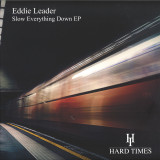
Eddie Leader - Slow Everything Down

Its been some years since HARD TIMES dropped new music in our laps, but having kick started a new wave with March’s release of Steve ’Silk’ Hurley’s stunning ‘All I Need’, featuring Sara Garvey on vocal duty, the label follows up swiftly with more precision groovemanship.. this time from Hudd Traxx label boss and core HARD TIMES family member, Eddie Leader.

As a DJ, producer, promoter and label boss Eddie has, over a twenty five year career, become a standard bearer for UK House Music. His own productions have graced seminal labels including Classic, Robsoul, Plastic City, Morris Audio and Balance Alliance, while his own Hudd Traxx imprint has become a go-to for many a discerning disc jockey. Its roster boasts releases that feature Matthew Herbert, Rolando, Jovonn, Rick Wade, Agnés and More.

Fresh from remixing Hurley’s ‘All I Need’, Leader now looks to ’Slow Everything Down’ with four fresh jams of his own that all stay true to the Hard Times ethos of quality, deep underground sounds.

Preaching from the front is ’Stand Up’, with its warm groove, piercing piano chords and soulful sermon. So come on… Stand up, to get down. On ‘Gratitude Power’ a seismic kick drum and bass combo pave the way, garnished with keys, synth stabs, bongos and a sprinkling of vocal as the track winds things on smoothly.

‘Slow Everything Down’ is where its at. A calmer, warmer groove, built from raw beats, spoken word and glistening piano. Coolness personified. This is where we're at. Leader slows and closes with final cut ’To Me To You’, icing the EP to perfection with its drowsy and hypnotising keys.

HARD TIMES continue to deliver the good times.

No en stock

Haga su pedido ahora y le encargaremos el artículo en nuestro proveedor.

16,60

Ültimo hace: 5 Meses
ALEX RODRIGUEZ - Busqueda LP

Alex Rodriguez

Busqueda LP

12inchVAMPI279
Vampisoul
23.03.2023

First time vinyl reissue of this awesome 1978 Latin jazz-funk gem by Venezuelan guitarist Alex Rodríguez, featuring top musicians like Jorge Dalto, Nené Quintero and George Benson’s band members Dennis Davis and Stanley Banks, among many others. Originally self-released and distributed in tiny quantities, “Búsqueda” has reached grail status among collectors worldwide. The album contains quite a few heaters for the dance floor, like ‘El Mercado’, and tight, keys and guitar punctuated fusion jams! (just check the groovy opener ‘Cumana’.) Rodríguez is a classical and jazz trained guitarist who in the early days of his career joined some of the best orchestras in Venezuela, including Aldemaro Romero’s Onda Nueva. He put together a brief project, La Retreta Mayor, in 1976 which only released one album and would later move to New York where he had the opportunity to record his own songs with renowned musicians of the city at
that time, like Víctor Paz, Charlie Camalliari, Sam Burtis, Mario Bauza, Guillermo Edgil, Bernard Purdie, Jorge Dalto, among others. It took him a little more than a year writing the songs and preparing the material for “Busqueda” but in 1978 Alex Rodríguez would return to New York City. Jorge Dalto had spoken with Dennis Davis (drums), Stanley Banks (bass) who played together with George Benson, and Víctor Paz contacted Alex with Ronnie Cuber (saxes), an excellent saxophonist, who later recorded ‘Cumana’ on his own album “The Eleventh Day Of Aquarius”. Before going to the recording studio they did a rehearsal to review the music, and the next day Dalto, Banks, Davis, Cuber and Alex Rodríguez were recording in the CBS studio on 52nd street in Manhattan. The production and mixing of the album were finished in Caracas, at Sono 2000 studios, with the participation of excellent Venezuelan musicians such as Nené Quintero, Lucio Caminiti, Edgar Saume, Carlos Acosta, Alberto Naranjo, Rolando Briceño, Leo and Frank Quintero, among others. The resulting album contains quite a few heaters for the dance floor, like ‘El Mercado’, and tight, keys and guitar punctuated fusion jams!“Búsqueda” was then self-released and distributed in tiny quantities, becoming over the years a very sought-after collectors item, probably one of the most obscure albums from Venezuela. It now gets reissued on vinyl for the first time, including notes by Alex Rodríguez. 180g vinyl.

No en stock

Haga su pedido ahora y le encargaremos el artículo en nuestro proveedor.

29,20

Ültimo hace: 3 Años
MAMMAN SANI - TAARIT LP

Mamman Sani

TAARIT LP

12inchSSLP23
Sahel sounds
22.03.2023

Cosmic synth. Polyphonic analog synthesizers and drum machines interpret ancient Saharan folk ballads in an imagined science fiction future. A proposed relaxation guide, sonically lying somewhere between ambient library music and minimal wave. Recorded in Niger and France in the late 1980s. All Recordings by Mamman Sani Abdoulaye. Recorded 1985 - 1988 at Studio Samira in Niamey, Niger and Studio Kham Mai in Paris, France. Instruments include Crumar Bit 99, RCA Victor 70, Yamaha RX5, and Roland TR-505. Painting by Maria Joan Dixon. Layout and design by Christopher Kirkley.

No en stock

Haga su pedido ahora y le encargaremos el artículo en nuestro proveedor.

23,49

Ültimo hace: 2 Años
Various - ce Notes 002

Various

ce Notes 002

12inchVN002
Voice Notes
21.03.2023

Voice Notes 002 – and this time , in time honoured memorial of our sister label London housing Trust (that we finished a few years ago after 10 releases ) . we present a 5 track Various Artist ep – featuring 5 artists – and introducing Dance , Rodney Bennet and Pyramids of Space to the label .

The A side begins with a track from label boss Toby / Alphonse – called Rujac – a deep bleepy( Roland Juno 60 for the nerds ) breakbeat trip that had a very early outing from Truly Madly in his Dimensions mix and picked up a few ID requests… followed by another Voice Notes behind the scenes facilitator… Rodney Bennet – with some straight up - old fashioned deep house goodness – rolling bass and just wait for that floating hook .

On the B side a track we ve been sitting on a long time finally sees the light of day – from Toby Tobias – Streets of Gold – with an Alphonse remix – a looping , hypnotic breakbeat acid builder with a huge bass line and a pleasant surprise at the end – this track features a hand from former LHT man Façade as well …
Next up is Pyramids of Space first outing on the label , watch out for much more of them on the next release , some early ambient techno pioneers from Cornwall – if you are one of the holders of the rare Green Tape then lucky you – also might know them from Mordant Music – anyway I digress – this track Quantis perfectly sums them up – deep and dark , soothing techno to transport you to another place .This unreleased gem comes from 1999, but a future version of 1999…

And finally friend of the label – head man of Blank Mind records and all round DON – Dance ( Sam Purcell ) –we managed to prise a favourite from his sick Blowing up the Workshop mix .. and gave it a slight extension – a wonderful way to finish off the ep , slow bassline orientated ambient house of the highest order .


Check your Voice Notes …

No en stock

Haga su pedido ahora y le encargaremos el artículo en nuestro proveedor.

12,23

Ültimo hace: 2 Años
Maral - Ground Groove

Maral

Ground Groove

12inchLR232
Leaving Records
17.03.2023

Ground Groove, the third full-length release from the LA-based, Iranian-American producer and DJ, Maral, begins with an invocation: the sprawling, achingly heavy Feedback Jam opens the floodgates of history. Conventional (linear) spacetime collapses, crushed beneath the track’s lumbering 4/4 heartbeat and successive waves of distortion. As each wave recedes, samples trickle forward in the mix — seeking, perhaps, to fill the void. Voices and instruments rise and fall in uncanny reverse. Overlapping, implied melodies flicker into focus, then flit away. Feedback Jam is at once an initiation ritual, and a thesis statement for the record that follows.

Drawing upon a vast personal archive of Iranian folk, classical, and pop recordings (some sourced from mixtapes made by her parents in the eighties/nineties), Maral presents, on Ground Groove, a further refinement of the signature “folk club” sound she developed as a live DJ— a sound she would later codify on Mahur Club (2019) and Push (2020). By collecting, dissecting, and re/presenting sonic fragments from Iran, Maral practices a kind of dance-floor ethnomusicology. The subject of her inquiry: Iranian


culture and contexts, throughout history and in the present. But, crucially, this inquiry is instantiated within and throughout the body of the listener, whether this listener is dancing in the club, or riding the train, nodding along with headphones on.

Maral speaks of being in collaboration with her samples, treating each as a distinct bandmate, often consulting with an artist’s catalog (or even a single recording) as one would a trusted creative partner. In so-doing, Maral claims to seek to transcend the self. In this regard, her output neatly triangulates contemporary dance and heavy music with much of the traditional religious music that she samples. Broadly speaking, each of these idioms addresses a desire —shared by audience and performer alike—to transcend the self through volume, repetition, and movement.

Having, in her youth, studied the Setar under Nader Majd (the founder of Virginia’s Center for Persian Classical Music), Maral cycled through various genres (ex: punk, emo, dub) in her adolescence and early twenties, all the while expanding her knowledge of, and appreciation for, Iran’s diverse musical traditions during regular summer trips to Tehran. In college, Maral taught herself to make beats with a ripped copy of Ableton (which remains her DAW of choice), eventually transitioning to playing and hosting various club nights. Forever abiding by an autodidactic, DIY impulse to create art and foster community, Maral relocated to Los Angeles in 2013, where she quickly immersed herself in the city’s numerous overlapping music scenes.

Collaboration (beyond sampling) has proven an important component of her process, with notable spoken word contributions from the likes of Lee Scratch Perry and Penny Rimbaud, as well as a 2021 Panda Bear collab track (On Your Way), which the Animal Collective founder co-produced. Maral is equally attentive to the visual components of her records (album art, music videos, etc.), drawing upon the work of peers and friends for inspiration.

Indeed, the genesis of Ground Groove can be traced back to an audio-visual collaboration between Maral and the artist Brenna Murphy, originally commissioned for the 2021 Rewire Festival — a project that would eventually serve as the album’s foundation. Tracks eight through eleven on Ground Groove comprise Maral’s half of this installation, with tracks one through seven composed afterwards, inspired by the fruits of Maral and Murphy’s collaboration. Murphy’s visuals will be released alongside Ground Groove as a visual accompaniment. Additionally, Murphy designed the album’s art, directed the video for the lead single (the aforementioned Feedback Jam), and is featured on track six, Shy Night.

Composed largely on Ableton, Ground Groove features more frequent and more prominent live recordings from Maral (guitar, bass, and vocals) than either Push or Mahar Club. The cult favorite Roland MC-909 groovebox rears its head on Mari’s Groove. Mixed by Trayer Tryon (Hundred Waters) and mastered by Daddy Kev, the attention to sonic quality on Ground Groove constitutes another significant step in Maral’s development as a studio artist.

Ground Groove’s eleven tracks are “grooves” in the obvious sense, in that they are each driven by a persistent, propulsive rhythm, but the album’s title may just as well suggest the glacial passage of time—the scope of human history, in which individual voices, like streams, carve paths (impossibly) through earth and stone, winding their way to the vast sea of the present.

Reservar17.03.2023

debe ser publicado en 17.03.2023

20,80
Aboriginal Voices - Instant Music

For a quarter of an hour, Zürich was the navel of the world. Let's look back: at New York's CBGB's, pre-punks were shredding away, Malcolm McLaren, as a man with a fine-tuned taste for the hip, imported the sound to London, where his sweetheart Vivienne Westwood dressed the test-tube band The Sex Pistols. A few pop magazines later (we are in an analog world!) punk bands sprouted everywhere, like shiny pimples on poorly fed teenagers. Contrary to legend, even back then, it was often those with a musical background who were the most successful. One such example, Henrich "Wüste" Zwahlen, who had learned the violin, attended a jazz school and went into prog-rock before joining the Nasal Boys, one of the first punk bands in Zürich. The scene included the female band Kleenex (cover: Fischli of art heroes Fischli/Weiss), whose minimalism was praised by the London music press, while the world's most important rock theorist, Greil Marcus, wrote an ode highlighting Zürich's role as the birthplace of Dadaism. A fertile ground for the militant youth movement that exploded in 1980 and stirred up the city of banks, protestantism and boredom with raw wit and expressive violence. Gathering at concerts of local bands and fueled by endogenous and artificial substances - they paid homage to exuberance and self-indulgence.
The mantra of "everything-is-possible" was driven forward on the musical front by progress in terms of means of production: analog electronic instruments were no longer reserved for hippie nerds, who sat in front of large plug-in boards like autistic-psychedelic switchboard operators connecting cables for their sound carpets. Now snazzy stage personnel elicited fast-paced sounds from handy devices often made in Japan. Kraftwerk was fashionable, the Zurich duo Yello experimented with new synthetic sounds, and the groundbreaking album "Alles Ist Gut" by the Düsseldorf based duo D.A.F. (Deutsch Amerikanische Freundschaft) was released, which chanted its program of provocation times danceability with lines such as "Tanz den Jesus Christus, tanz the Mussolini, tanz the Adolf Hitler." In England meanwhile, electronically backed New Romantic bands were replacing New Wave. The Human League, Heaven 17, Duran Duran, OMD, Depeche Mode or Visage stormed the charts.
In Zürich's underground, the duo Aboriginal Voices caused a stir at that time. A couple, good-looking, styled, looking cool into the cold neon light, with a danceable beat and sequenced electro sounds, to which Micheline gave a very unique touch when she sang in French and English. Micheline had a classical piano education, had left home early, worked as a lighting technician in a strip joint and at Booster, the hottest boutique in town (one of the relicts that still exists). Voilà: a musician who was as stylish as she was tough. She was already playing with Wüste in the band "Doobie Doos", a band where everyone played an instrument they didn't master. In 1980 the Aboriginal Voices were formed, initially with vocalist Magda Vogel (of later UnknownmiX fame), who was trained as a classical singer.

Frustrated by organizational friction and constant hassles with band lineups, Wüste and Misch decided to do everything as a twosome: self-mixed, self-styled, self-produced. With the top-of-the-line Linn drum machine clocking the beat, Wüste's guitar and Micheline on the Yamaha synthesizer created a unique sound of danceable electronic music. Whereby the Aboriginal Voices acted as a kind of proto-influencer, receiving the latest equipment to try out, especially since they made it a point not to work with tapes, but to design everything for live shows. They had an interface built for the legendary Roland MC-4B, who sequenced the modular Roland System 100M but where one output controlled a light show synchronized with the sound. A pioneering act that fit well into the DIY spirit of punk, with its self-distributed tapes and fuck-you attitude towards the cretins of the music industry. Consequently only two cassettes and an EP were released. There was something futuristic about the sound, the vestiary style and the electronics, while the attitude remained rebellious. Of course something so deeped in the Zeitgeist wasn't meant to last. Wüste moved to New York, Micheline stayed in Zurich, both still active in the music scene to this day.

Sven Regener, head of the band Element of Crime and one of Germany's most successful pop writer said a few years ago when asked if he knew of any Swiss music: "Of course! In 1983, a Swiss band called Aboriginal Voices played with us at a festival in Zurich. Great, avant-garde electro-pop. That was my first encounter."

If you ever saw them live, you never forgot them, and so over the years you belonged to a teeny-tiny circle of insiders, happy to be joined after all these years by new aficionados who appreciate the sound of that quarter-hour, when Zurich was ravishing, creative and exciting.

- Thomas Haemmerli

No en stock

Haga su pedido ahora y le encargaremos el artículo en nuestro proveedor.

21,47

Ültimo hace: 3 Años
Various - REGGAY UNDERCOVER – VOL. 1

In the 1950s, Jamaican dancehall regulars were crazy about the haunting sounds of American Rhythm & Blues. But in the mid-1950s, Rock 'n' Roll began to replace RnB in America, and Jamaican dancehall owners like Duke Reid and Clement Dodd turned to local musicians to record their own versions of American RnB.
The trend of covering foreign hits exploded during the Ska heyday of the early 60s and continued through the Rocksteady and Reggay eras. Jamaican musicians have covered virtually every genre of music, from jazz and rock to film scores, television soundtracks, pop, classical music and more. Over the years, they have also recorded many "versions" of already existing covers. Cover of cover of cover…
Admittedly, some of these covers were futile but many were sublime as this new and eclectic collection of Ska, Rocksteady and Reggay nuggets, compiled by the very competent and very charming D.J. Héléa, brilliantly demonstrates. Attention we are here "undercover", there are no well-known covers. Some of the tracks selected are rare, others unknown or forgotten - but all are excellent and blended in an impeccable mix, in line with previous the Harlem Shuffle compilations... All Killer, No Filler!
REGGAY UNDERCOVER is an exciting musical kaleidoscope of Jamaican and Reggae music from the early 60s through to the mid 70s.
We hope you will enjoy listening to this album as much as we had composing it for you.
All aboard for REGGAY UNDERCOVER!

Reservar09.03.2023

debe ser publicado en 09.03.2023

16,54
Muellie Messiah & Punk Not Punk - Exq I

Faitiche presents the album Exq I by Berlin underground techno legends Muellie Messiah & Punk not Punk, mainly known under their 100Records moniker. Weighing in at 36 minutes, the track was recorded in 2010, effortlessly intermingling dub, drone and collage, a blend achieved thanks to the duo’s jazz-inspired approach to improvisation.

_

100records is one of the last undiscovered treasures of the Berlin underground of the 1990s and 2000s. Like Elektro Music Department, 100records is unthinkable without techno and the club scene, but with a few exceptions the duo’s tracks are not aimed at the dancefloor. With a claim to universality and a broader frame of reference, 100records developed a more extensive understanding of sound that rests on three pillars: the understated analogue drums of the Roland TR-808, a blurred, dubby sound, and improvisation.

On first hearing, Exq I has little in common with the groovy, detailed, variation-rich sound usually associated with 100records. Recorded at the end of a highly productive decade, it is an echo speaking of exhaustion in which dub, drone and collage converge to form something whose jazz sensibility makes it readily identifiable as the work of 100records.

100records was founded in 1994 by Muellie Messiah (Dirk Budde) and Ekki 808 (Ekkehard Rau), who were joined in 1999 by Punk not Punk (Martin Osti). Around 2002, Ekki departed, leaving Budde and Osti to continue as a duo. Since then, their relationship has shaped 100records: Budde is the driven lone genius doggedly pursuing sounds, Osti the pragmatist who turns ideas into music.

As well as making music, Budde is also a musicologist. In 1997 he published his PhD thesis entitled Take Three Chords... Punk Rock and the Development to American Hardcore. As well as being his specialization, punk is also part of his identity: in the 1980s he sang and played keyboards in various punk bands in Kassel, the best known being Haunted Henschel.

After the fall of the Wall, attracted by the freedom of the newly reunited Berlin, Budde packed his bags and drove to the formerly divided city, having already become acquainted with techno at Kassel’s influential Stammheim club.

Reservar03.03.2023

debe ser publicado en 03.03.2023

21,64
Various - Acid Sampler

Various

Acid Sampler

12inchRBACIDEP1
Running Back
03.03.2023

Dial 303! The new and hopefully also durable sampler series on Running Back is here.

Dedicated to the twang of Roland’s silver baseline box with a varied string of artists: DVS1, Marko East & Jordi Chu (whose collaboration sparked the idea of a whole series), Like A Tim via Prins Thomas, Katerina and I:Cube.

The Parisian put it in a nutshell, too: „Although rinsed to death to the point of becoming a parody of itself, acid will last forever.“ Therefore, his Folie Noire is combining the original recipes with hypnotic European influences, while Marko and Jordi present a rough and direct 303-909 live jam, Prins Thomas puts his wickedest smile on Like A Tim’s Wonderline from 2005 and Katerina sets a lucid dream to sanguine music.

Finally, there is a rare and much desired musical outing by the unique DVS1. A direct ode to Chicago’s acid and beatdown styles and its Midwest companions, it is a heads-down-lights-down late night track made for driving up and down Lower Wacker Drive. Trippy trip artwork by the inimitable Gasius.

Trivia: If the piano is the bread of house music, the acid line is its butter!

No en stock

Haga su pedido ahora y le encargaremos el artículo en nuestro proveedor.

11,39

Ültimo hace: 3 Meses
ADN CKRYSTALL - DE UNICORNIS VERITATE

ADN Ckrystall is the pseudonym of French synth experimentalist Érick Moncollin. Armed with a Crumar, Multiman 52 with brass pedal and sustain/volume pedal, two Kawai Synthi 100-F, Roland CR-65, Korg PS-3200, Roland Jupiter-4, a Boss flanger, MXR phasing and a TEAC 8-track recorder he produced his first LP, Jazz'Mad, with the help of synth expert sound engineer benoit Hutin. The LP was self-released in 1982 to critic aclaim and generated a fan base that has turned it into a timeless classic, having been reissued four times since then.


But what most people don't know is that Moncollin produced a second album with songs written 1982/1983 that has remained unreleased ever since. Only recently he found the tapes in his parents' house and transfered them for it's first ever vinyl release.

Reservar24.02.2023

debe ser publicado en 24.02.2023

28,36
Joanne Brackeen and Ryo Kawasaki - Trinkets and Things

The album Trinkets And Things by pianist Joanne Brackeen and guitarist Ryo Kawasaki was recorded in 1978. Brackeen performed with jazz giants Chick Corea, Freddie McCoy, Ornette Coleman, Joe Henderson and later formed her own trio and quartet. Kawasaki was a Japanese jazz fusion guitarist and helped develop the guitar synthesizer in collaboration with Roland and Korp. The album features duets, while the song “Trinkets And Things” shows Brackeen using her piano skills and Kawasaki supports with guitar solos.

Trinkets and Things is available as a limited edition of 500 individually numbered copies on turquoise vinyl.

Reservar24.02.2023

debe ser publicado en 24.02.2023

33,83
The Abstract Eye - Nine Oh Nine EP

The Abstract Eye is back once again with his first offering on the Technoindigenous Studies label, and it’s a heavy one! Here he gives us another mega banger with his Nine Oh Nine EP. This record uses one of the most historically important drum machines throughout its entirety: the Roland TR-909. The classic drum machine used by his predecessors in electronic dance music also happens to have been released during the year of his birth. You almost surely know the sound of the TR-909 in other contexts, but, as he always does, he adds his atypical twist to it and uses it in a timeless context. Each of the record’s four pieces could have been released decades ago or far into the future. Another Gifted & Blessed production sure to please and set the dancefloor ablaze!

No en stock

Haga su pedido ahora y le encargaremos el artículo en nuestro proveedor.

11,72

Ültimo hace: 2 Años
Lovelock - Washington Park

Lovelock

Washington Park

12inchBEWITH107LP
Be With Records
17.02.2023

Steve Moore's Lovelock is back with Washington Park, a gorgeous suite of instrumental lounge music that can only be described as synth exotica. A real departure for Steve, this is a more mellow, soothing sound and can be regarded as Lovelock's response to these dystopian times.

New York-based multi-instrumentalist/producer/film composer Steve Moore is probably best known for his synthesizer and bass guitar work as Zombi, together with Anthony Paterra. Yet his Lovelock alias has been quietly blowing minds and warming hearts for a decade plus now. His latest effort, Washington Park, was not initially meant to be a Lovelock album. But Steve was posting little snippets of his work on Instagram and people started asking him: "is this new Lovelock?" It was at this point that Steve had an epiphany, of sorts. "It occurred to me that Lovelock can be whatever I want it to be. So yeah, maybe this new lounge/exotica record is, in fact, Lovelock."

Washington Park creeped out in a very low-key, early lockdown fashion and there wasn't much of a reaction. Says Steve, "I just self-released it and all my usual suspects were down with it, but it didn't really make it outside of my own circle." Yet many of the Balearic heads in Europe were indeed on it and Be With were most certainly listening. So, when we struck a deal to do the vinyl version of Burning Feeling, we couldn't resist asking about Washington Park.

Gentle opener "It Means Love" grooves along in the laconic style, conjuring carousel innocence and complimented by dreamy, spiritual sax and syrupy synth strings over a digi-soul beats. Title-track "Washington Park" glides smoothly in much the same vein, almost like a slightly more acidic, squelchier version of the preceding track with more insistent organ. Swoon. Closing out Side A, steady ambient gem "We'll See" is all gorgeous, soft pads with plaintive guitar and organ giving way to soaring digital strings over that metronomic drum machine soul.

Flip for the eerily brilliant "Seduction", a track which starts like a minimalist slice of Tommy Guerrero-esque guitar and drum machine soul but soon takes on a more menacing bent as Steve leans into his long-held predilection for horror by creating a slow-mo haunted house jam. The tempo (and temperature) rises with "Center Square", a Latin rhythm section and a sensual sax rubbing up against hot and heavy organ and string action. Steamy! To round things off, the ominous creeping groove of "Rhythm 77" feels like exotica-in-excelsis.

Washington Park was recorded over the first few months of the pandemic, during the spring of 2020, against the backdrop of his kids being out of school which meant daily walks and bike rides through Washington Park in Albany. It was during these moments of family activity and gentle movements, trying to make sense of the chaos engulfing his world, that Steve formed the ideas that led to this album. To make it manifest, he used all his old Roland beat boxes (CR-78, Rhythm 77 and Rhythm 330, Rhythm Arranger) plus a Chamberlin Rhythmate for all the percussion. Basslines were usually performed with his Moog Source or Minitaur and for pads and brass he used his Sequential Prophet 600 and Roland Juno 60. Strings came via a variety of old stringers - Korg Polysix, Elka Rhapsody, Crumar Orchestrator and Solina String Ensemble - and he also used his Fender Strat and Yamaha Custom saxophone.

Steve is a huge fan of exotica and that's clearly where this album is coming from. The likes of Martin Denny, Les Baxter and Henry Mancini can all be discerned here. As Steve explained, "I spent a lot of time listening to that stuff in the 90s and I figured it was time to let those influences show." You're going to be glad he did.

Mastering for the Washington Park vinyl edition was overseen by Be With regular Simon Francis before being cut by Cicely Blaston of Alchemy Mastering at AIR Studios and pressed in the Netherlands by Record Industry.

No en stock

Haga su pedido ahora y le encargaremos el artículo en nuestro proveedor.

23,49

Ültimo hace: 3 Años
Various - Boss Reggae

Various

Boss Reggae

12inchCLD-LP005
STUDIO ONE
17.02.2023

Studio One was founded by Clement "Coxsone" Dodd1 in 1954, and the first recordings were cut in 1963 on Brentford Road in Kingston.12 Amongst its earliest records were "Easy Snappin" by Theophilus Beckford, backed by Clue J & His Blues Blasters, and "This Man is Back" by trombonist Don Drummond. Dodd had previously issued music on a series of other labels, including World Disc, and had run Sir Coxsone the Downbeat, one of the largest and most reputable sound systems in the Kingston ghettos.
In the early 1960s, the house band providing backing for the vocalists were the Skatalites[3] (1964–65), whose members (including Roland Alphonso, Don Drummond, Tommy McCook, Jackie Mittoo, Lester Sterling and Lloyd Brevett) were recruited from the Kingston jazz scene by Dodd. The Skatalites split up in 1965 after Drummond was jailed for murder, and Dodd formed new house band the Soul Brothers (1965–66), later named the Soul Vendors (1967) and Sound Dimension (1967-). From 1965 to 1968 they played 9 a.m. to 5 p.m., 5 days a week, 12 rhythms a day (about 60 rhythms a week) with Jackie Mittoo as music director, Brian Atkinson (1965–1968) on bass, Hux Brown on guitar, Harry Haughton (guitar), Joe Isaacs on drums (1966–1968), Denzel Laing on percussion, and on horns (some initially and some throughout): Roland Alphonso, Dennis 'Ska' Campbell, Bobby Ellis, Lester Sterling, among others on horns during the era of Rock Steady. Headley Bennett, Ernest Ranglin, Vin Gordon and Leroy Sibbles were included among a fluid line-up, to record tracks directed by Jackie Mittoo at Studio One from 1966-1968.
During the night hours at Studio One from 1965-1968, singers like Bob Marley, Burning Spear, The Heptones, The Ethiopians, Ken Boothe, Rita Marley, Marcia Griffiths, Judy Mowatt, Alton Ellis, Delroy Wilson, Bunny Wailer[4] and Johnny Nash, among others, would put on headphones to sing lyrics to original tracks recorded by the Soul Brothers earlier each day. These seminal recordings included "Real Rock" (by Sound Dimension), "Heavy Rock", "Jamaica Underground", "Wakie Wakie", "Lemon Tree", "Hot Shot", "I'm Still In Love With You", "Dancing Mood", and "Creation Rebel".
Jackie Mittoo, Joe Isaacs, and Brian Atkinson left Studio One in 1968, recorded drums and bass for Desmond Dekker's and Toots' biggest hits at other Kingston studios, then moved to Canada. Hux Brown stayed in Jamaica to record on the soundtrack The Harder They Come, The Harder They Fall, and toured in Nigeria with Toots and the Maytals and Fela Kuti. The Soul Brothers (a.k.a. Sound Dimension) formed the basis of reggae music in the late 1960s, being versioned and re-versioned time after time over decades by musicians like Shaggy, Sean Paul, Snoop Lion, The Clash, String Cheese Incident, UB40, Sublime, and countless other Billboard originals and remakes trying to emulate their original Rock Steady sound at Coxsone's Studio One.
The label and studio were closed when Dodd relocated to New York City in the 1980s.

Reservar17.02.2023

debe ser publicado en 17.02.2023

35,92
Bolt Ruin - Ehkta

Bolt Ruin

Ehkta

12inchIM099
Infinite Machine
14.02.2023

Infinite Machine is proving again it's a label that refuses to sonically sit still. Having released everything from code-based compositions to bass-heavy techno in 2022, the imprint is readying the release of the black metal-tinged Ehkta by BOLT RUIN later this month. A musician whose work has been described as 'apocalyptic' more than once, on this new mini-album, the Belgian producer blends field recordings, twisted samples and rave signifiers with an eerie tonality born out of his nocturnal production sessions and time spent absorbing the silence of his studio garden.

Bridging the gap from his previous record to this one, 'Sktone' is a cinematic opener that unfolds like a bad dream in slow motion. Warped samples of Bulgarian choirs glide over synths wired in closed-circuit loops which feed back on themselves, degrading for infinity. Texture and space is added via field recordings of waves crashing over the ruins of Brighton West Pier. This track exemplifies the unexpected influence BOLT RUIN took from the wildlife he witnessed in the garden of his urban studio when working on Ehkta. Adapting to the material at their disposal, weasels and blackbirds create nests from organic waste and human trash - an astute metaphor for the Belgian producer's compositional approach.

Next up, BOLT RUIN drives up the tempo with the rave-ready 'Nehng', where a frenzy of trance arpeggios and frantic drum programming builds and intensifies over its 5-minute duration. Inspired by Yves Klein's 'Leap Into a Void', 'Nehng' definitely evokes that bodily rush of freefalling into the unknown. 'Nehng''s driving rhythm is switched out for the brooding 'Tzarhk' - an ode to the soundtracks of B-movies composed on a vintage Roland SH-2 (a prominent character of the Stranger Things soundtrack). BOLT RUIN runs thick, syrupy synth slabs and punishing drum patterns through a rain-soaked limiter the producer found lying on the street by chance.

Another master-class in self-destructive arrangements comes in the form of 'Rfohmdrá' as delicate pianos and synth tones atrophy through daisy chained pedals which erode the signal. Valgeir Sigurðsson's mastering skills shines through here, taking BOLT RUIN's sci-fi-meets-metal sonics and amping them up to a scale on par with the Björk or Ben Frost records he's previously worked on.

Conceived of as the mirror reflection of the LP's opener, 'Maevr' pushes the approach of 'Sktone' to an even more nightmarish extreme. Embracing chance, the clattering layers of beats are sampled of a knocked mic on a window as BOLT RUIN attempted to capture a recording of rain from his studio. A happy and very effective accident for the foreboding mood of the track!

BOLT RUIN rounds off Ehkta with 'Ekztamnh'; an ode to that specific sensation of entering through a corridor to a rave and hearing the rumble of a soundsystem from afar. Snarling melodies are run through a reverse granular delay effect which fragments the signal, reverses it and plays them back in irregular order; much like the shattered memories of a late night in a warehouse.

A musical magpie who finds inspiration in the most unlikely of sources, Ehkta is a restless exploration of salvage-punk aesthetics where doom-laden black metal melodies, amen breaks and an experimental approach to sound design sit in an irregular and uneven musical apocalypse. For fans of Blanck Mass or Caterina Barbieri - this is a must-listen material from a fresh producer establishing himself with a singular musical voice.

No en stock

Haga su pedido ahora y le encargaremos el artículo en nuestro proveedor.

16,60

Ültimo hace: 3 Años
Dub Specialist - Bionic Dub Part One

Studio One was founded by Clement "Coxsone" Dodd1 in 1954, and the first recordings were cut in 1963 on Brentford Road in Kingston.[1][2] Amongst its earliest records were "Easy Snappin" by Theophilus Beckford, backed by Clue J & His Blues Blasters, and "This Man is Back" by trombonist Don Drummond. Dodd had previously issued music on a series of other labels, including World Disc, and had run Sir Coxsone the Downbeat, one
of the largest and most reputable sound systems in the Kingston ghettos.
In the early 1960s, the house band providing backing for the vocalists were the Skatalites[3] (1964–65), whose members (including Roland Alphonso, Don Drummond, Tommy McCook, Jackie Mittoo, Lester Sterling and Lloyd Brevett) were recruited from the Kingston jazz scene by Dodd. The Skatalites split up in 1965 after Drummond was jailed for murder, and Dodd formed new house band the Soul Brothers (1965–66), later named the Soul Vendors (1967) and Sound Dimension (1967-). From 1965 to 1968 they played 9 a.m. to 5 p.m., 5 days a week, 12 rhythms a day (about 60 rhythms a week) with Jackie Mittoo as music director, Brian Atkinson (1965–1968) on bass, Hux Brown on guitar, Harry Haughton (guitar), Joe Isaacs on drums (1966–1968), Denzel Laing on percussion, and on horns (some initially and some throughout): Roland Alphonso, Dennis 'Ska' Campbell, Bobby Ellis, Lester Sterling, among others on horns during the era of Rock Steady. Headley Bennett, Ernest Ranglin, Vin Gordon and Leroy Sibbles were included among a fluid line-up, to record tracks directed by Jackie Mittoo at Studio One from 1966-1968.
During the night hours at Studio One from 1965-1968, singers like Bob Marley, Burning Spear, The Heptones, The Ethiopians, Ken Boothe, Rita Marley, Marcia Griffiths, Judy Mowatt, Alton Ellis, Delroy Wilson, Bunny Wailer[4] and Johnny Nash, among others, would put on headphones to sing lyrics to original tracks recorded by the Soul Brothers earlier each day. These seminal recordings included "Real Rock" (by Sound Dimension), "Heavy Rock", "Jamaica Underground", "Wakie Wakie", "Lemon Tree", "Hot Shot", "I'm Still In Love With You", "Dancing Mood", and "Creation Rebel".
Jackie Mittoo, Joe Isaacs, and Brian Atkinson left Studio One in 1968, recorded drums and bass for Desmond Dekker's and Toots' biggest hits at other Kingston studios, then moved to Canada. Hux Brown stayed in Jamaica to record on the soundtrack The Harder They Come, The Harder They Fall, and toured in Nigeria with Toots and the Maytals and Fela Kuti. The Soul Brothers (a.k.a. Sound Dimension) formed the basis of reggae music in the late 1960s, being versioned and re-versioned time after time over decades by musicians like Shaggy, Sean Paul, Snoop Lion, The Clash, String Cheese Incident, UB40, Sublime, and countless other Billboard originals and remakes trying to emulate their original Rock Steady sound at Coxsone's Studio One.

Reservar10.02.2023

debe ser publicado en 10.02.2023

29,37
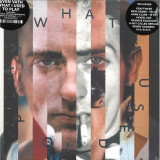
Sven Väth - What I Used To Play (12x12" boxset)
 
36

For this uniquely personal retrospective spread over twelve vinyl discs, Sven Väth takes us back to the early days of his DJ career. On What I Used To Play we meet great pioneers of electronic music, gifted percussionists, obscure wave bands, and innovative producers of a bygone 'new electronic' era. Rough beats and irresistible grooves from the identification stage of house, techno, and acid remind us not just how far electronic music has evolved over the past four decades, but how great it was to dance to EBM, techno, and house for the very first time.

If there is one protagonist of the electronic music scene who has remained curious, innovative and at the very cutting edge of music for over four decades, it's Sven Väth. His multi-layered artist albums and Sound of the Season mix compilations have been defining the genre for over two decades, and even today, he is constantly on the lookout for the next top tune to add to the highlights of his next set. At least, that's the case when he's not producing them himself as an artist or remixer. "Actually, it's always been part of my DNA to think ahead," and nothing had been further from his mind than looking back at his past, but when in spring of 2020 the international DJ circuit had to be scaled down to virtually zero, the 'restless traveler' suddenly had time. Time to stop and reflect on "how it actually was back then, at the very beginning of my career..."

"It was a great trip and with every track, beautiful memories came flooding back".
In the London apartment, he had just moved into, Sven has set up a "little music room", where he cocooned himself for several days, "to look way back for the first time and review my musical journey through the eighties, so to speak."

The interim result was six thematically oriented playlists with a grand total of 120 tracks from 'early 80s' to 'Balearic late 80s', together with excursions into afrobeat, European new wave, and EBM sounds and a few epochal techno/house tracks from the USA in between. From these 'Best of Sven Väth's favorites', the project What I Used To Play crystallized. Sven remembers how the Cocoon team reacted to his proposal: "They found the idea of making a compilation out of it MEGA from the beginning and everyone said 'Sven, go for it', but then, of course, the work really started, namely, to clear the rights and to get clean sounding masters of the up to 40-year-old tracks. There was also disappointment, of course. We couldn't clear certain titles because the rights holders in the USA had fallen out with each other or simply disappeared from the scene. In short, it wasn't easy, but now I can safely say we got the most important tracks."

Finally, after two years of research, curation, design, and administrative fine-tuning, the "little retrospective" from 1981 to 1990 is available. The exquisitely packaged, and three-kilo heavy box set is not only physically impressive, WIUTP is also the definitive record of Sven Väth's musical development. On each of the twenty-four sides of vinyl, you can trace track by track, what influenced him during which phase, and how he took off as a DJ from his parents' Queen's Pub straight into the spotlight at Dorian Gray. There and at Vogue (later OMEN), Sven became the style-defining player in the DJ booth that he still is today.


1981 - 1990: Future Sounds of Now

In the early eighties, the crowd in clubs like Vogue and Dorian Gray danced to what nowadays we call 'dance classics' - mainly disco, funk, soul, and chart pop. It was up to a new generation of DJs, including Sven Väth, the youngest protagonist in the Rhine-Main area at the time, to create their own club-ready music mix. Good new tracks and potential floor-fillers were rarities that had to be sought out and found, in order to prove oneself worthy.
Without MP3s, internet streaming, or other digital download possibilities, music didn't just gravitate to the DJ, instead, it had to be tracked down. In well-stocked record stores in Frankfurt and Wiesbaden or even in Amsterdam, London, or New York, Sven and friends sourced the material for countless magical nights. On WIUTP we can follow Sven's very personal journey through this wild, innovative era in which synth-pop, funk, hip-hop, and disco were successively replaced as 'club music' by house, techno, acid, and breakbeat. By the end of the decade, it was clear to see that these once exotic 'fringe' phenomena would soon become 'mass' phenomena.


Early 80s

Dirty Talk by the Italian-American duo Klein & M.B.O. represents the most innovative phase of the Italo-disco genre in the early eighties like no other track. Mario Boncaldo (I) and Tony Carrasco relied entirely on the original synthetic drum and percussion sounds of the Roland TR-808, coupled with the raunchy vocals of Rossana Casale and guitar accents of Davide Piatto. Of course, other tracks from this period were also influential in style, most notably Unit by Logic System, which worked as the perfect soundtrack to the laser lighting system at the legendary Dorian Gray club. With stomping beats and robotic rap interludes, Bostich by Yello also belongs on Sven's eternal playlist - after all, it caught the attention of Afrikaa Bambaataa, who invited the Swiss duo to perform at the Roxy in New York in 1983.


EBM Wave - Mid 80s

From today's point of view, the almost ten-minute-long, downtempo track Giant by Matt Johnson's band project The The, would probably not be considered an obvious club classic. However, a closer (re)listen reveals the rhythmic intricacies of the percussion overdubs by JG Thirlwell (aka Foetus) on Johnson's composition, and it becomes clear why this exceptional piece of music is one of Sven's absolute favorites. Other classics from this phase include Kaw-Liga by the mysterious The Residents, the hypnotic-synthetic Our Darkness by Anne Clark (and David Harrow), and last but not least, the somber, monotonous anthem Where Are You? by 16Bit, one of Sven Väth's projects together with Michael Münzing, Luca Anzilotti from 1986.


US House - Late 80s

You certainly can't talk about Chicago house without mentioning Frankie Knuckles. The resident DJ at the Warehouse not only gave the name to an entire genre, but also produced epochal floor fillers on the Trax label like the timeless Your Love, sung (and moaned) by Jamie Principle. Acid house protagonists Phuture also hail from Chicago, and on We Are Phuture (also released on Trax) we hear the chirping acid sounds of the legendary Roland TB-303 in full effect. Another featured classic is No UFO's by Detroit's Model 500 aka Juan Atkins, who is rightly considered the 'Godfather of Techno' even if the genre-defining track from 1985 still breathes with the spirit of hip-hop and electro from the first breakdance era.


Afrobeat

Le Serpent, by Algerian-born Abdelmadjid Guemguem, is a track that sounds completely different from everything else on WIUTP. Made in 1978, it's a monumental, rousing groove created without bass or synths, just with five congas! Even though Guem sadly passed away in 2021, his immortal, acoustic beats are understood all over the world and will continue to enrich many thousands of DJ sets for years to come. Another classic that not only Sven appreciates beyond measure is Hugh Masekela's Don't Go Lose it, Baby. In addition to being one of the most important jazz pioneers, the trumpeter and freedom fighter from Johannesburg was very experimental, integrating electronic sounds into his music in later years, in a similar vein to Miles Davis and Herbie Hancock. Dutch jazz pianist Jasper van't Hof's afrobeat project Pili Pili has also aged well. The trance-like, almost sixteen-minute-long track of the same name, manages to fill a whole side on the seventh of twelve vinyl discs in the WIUTP box.


UK-US-Euro - Late 80s

Time for a change of scene, in the truest sense of the word, and from a musical perspective, this section is like landing on another planet. First up is Andrew Weatherall's classic remix of Primal Scream's Loaded, featuring the iconic Peter Fonda sample (lifted from the 1966 biker film Wild Angels) that came to personify the mood triggered by the British Second Summer of Love in the late eighties: "We wanna be free to do what we wanna do, and we wanna get loaded...". This period also saw the emergence of M/A/R/R/S whose only single, 1987's Pump Up The Volume, became a club classic with support from DJ legend CJ Mackintosh. In this most eclectic of sections, we also encounter New York house and reggae producer Bobby Konders and his seminal Nervous Acid.


Balearic - Late 80s

Those who know him, know that Sven had already lost his heart to the 'magic island' of Ibiza as a teenager, so with that in mind, the WIUTP project couldn't end without a Balearic chapter. Inspired by Manuel Göttsching's E2-E4, the immortal, eponymously titled Sueño Latino belongs in there without question. Equally popular on the island was, and still is Break 4 Love by Raze, which thinking about it, would also fit perfectly into the house chapter. Last, but not least, there's an overdue reunion with Sven Väth himself, in his role as frontman of the successful Frankfurt trio OFF. Together with Michael Münzing and Luca Anzilotti (later of Snap!) this 'Organization For Fun' created the off-the-wall club hit Electric Salsa in 1986 which incidentally turned into an international chart smash, putting Sven in the enviable position of having to decide between pop stardom and a DJ career. Well, we all know how that decision turned out and the rest, as they say, is history. A not insignificant part of his story is What I Used To Play. Enjoy!

No en stock

Haga su pedido ahora y le encargaremos el artículo en nuestro proveedor.

184,83

Ültimo hace: 10 Meses
ROY HAYNES QUARTET - OUT OF THE AFTERNOON

Recorded at the Van Gelder Studio in May 1962, this classic quartet
album features Roland Kirk on saxophones and several famous Haynes drum solos, most notably on his own composition ‘Snap Crackle’.

No en stock

Haga su pedido ahora y le encargaremos el artículo en nuestro proveedor.

16,77

Ültimo hace: 6 Años
VARIOUS - Who Wants Some LP

Various

Who Wants Some LP

12inchVPRL4244
VP Records
27.01.2023

• Bunny Lee was the first to actually use reggae in the title of a record with ‘It’s Reggae Time’ Striker’s propensity for creating hit records during this period was unmatched and he was awarded the prestigious “title of Jamaican Producer Of The Year in 1969, 1970, 1971 & 1972” the years covered by this new Boss Reggae focused compilation.
• Striker’s complete mastery of the new reggae rhythms and “versioning them over” are showcased on this release with the emphasis placed on the outstanding contribution of the cream of Kingston’s session musicians

Reservar27.01.2023

debe ser publicado en 27.01.2023

20,55
Warren Zevon - A Quiet Normal Life: The Best Of Warren Zevon
  • 1: Werewolves Of London
  • 2: Play It All Night Long
  • 3: Roland The Headless Thompson Gunner
  • 4: The Envoy
  • 5: Mohammed's Radio
  • 6: Desperados Under The Eaves
  • 7: I'll Sleep When I'm Dead
  • 8: Lawyers, Guns And Money
  • 9: Ain't That Pretty At All
  • 10: Poor Poor Pitiful Me
  • 11: Accidentally Like A Martyr
  • 12: Looking For The Next Best Thing

A Quiet Normal Life: The Best Of Warren Zevon is a greatest hits album by American musician Warren Zevon released in 1986.
This compilation covers Zevon's four studio albums with Asylum Records. It was mastered by Barry Diament.
A Quiet Normal Life highlights the best of Warren Zevon's Asylum albums. Includes "Werewolves of London" and

Reservar27.01.2023

debe ser publicado en 27.01.2023

36,09
Groupshow - Greatest Hits

Groupshow

Greatest Hits

12inchFAIT-29LP
Faitiche
26.01.2023

Faitiche presents Groupshow’s Greatest Hits: The ten tracks on this first vinyl album by Groupshow (Hanno Leichtmann, Andrew Pekler, Jan Jelinek), recorded between 2005 and 2018, document concert recordings and studio improvisations by the trio.

In improvisation there are no mistakes, only missed opportunities. Groupshow found their first opportunity in the routines of live performance and they used this opportunity to break with these routines. The trio consisting of Jan Jelinek, Hanno Leichtmann and Andrew Pekler came together in the context of Kosmischer Pitch, playing live versions of the music from Jelinek’s 2005 studio album of that name. During this project, the musical interaction between the three participants quickly emancipated itself from the original programme, departing from fixed roles and finding a distinct form in constant change.

Groupshow sessions – rehearsal, concert or recording – are always improvised. The interplay of the various sound sources, converging from the directions of “electronics”, “percussion” and “guitar”, does not follow the Krautrock wave logic of crescendo and morendo. Jelinek, Leichtmann and Pekler have established a method of transparent density in which links and breaks are not concealed but remain audible. The music works through attraction and repulsion, with a loosely organized structure that always leaves enough room for the next intervention.

The principle here, repeated even in the smallest units, is that of duration. Groupshow think of their music in terms of an installation: no starting point, no dramaturgy, and ideally no end. Concerts take place not raised up on a podium, but in the middle of the room on a level with the audience, who only enter the space with the musicians and instruments once their interaction is already underway. In 2008, Groupshow used this approach to create a live soundtrack for Andy Warhol’s film Empire, over the full length of eight hours and five minutes.

Recordings in general and the “Greatest Hits” format in particular are another key aspect of this ongoing work on a collectively modulated continuum. The ten tracks on this first vinyl album by Groupshow, recorded between 2005 and 2018, document the ephemeral capturing of opportunities that were not missed. Extracts and essences of an endless movement of searching. The sprawling form of the whole, suspended in succinct, separate units.
To paraphrase Lao Tzu and Roland Barthes, one might say: Once their work is done, they are no longer attached to it. And because they’re not attached to it, it will remain.

Arno Raffeiner, 2022

No en stock

Haga su pedido ahora y le encargaremos el artículo en nuestro proveedor.

21,64

Ültimo hace: 3 Años
The Skatalites - Essential Artist Collection – The Skatalites (2x12")
 
28
No en stock

Haga su pedido ahora y le encargaremos el artículo en nuestro proveedor.

36,93

Ültimo hace: 3 Años
Count Ossie And The Mystic Revelation Of Rastafari - Tales Of Mozambique (Reissue) LP 2x12"

Soul Jazz Records are releasing Count Ossie and The Mystic Revelation’s seminal 1975 album Tales of Mozambique in an expanded double album/single CD/digital format, fully remastered and with the inclusion of two bonus rare single-only tracks, full sleevenotes, exclusive photographs and interview.

Count Ossie is the central character in the development of Rastafarian roots music, nowadays an almost mythical and iconic figure. His importance in bringing Rastafarian music to a populist audience is matched only by Bob Marley’s promotion of the faith internationally in the 1970s.

Count Ossie’s drummers performed on the first commercially released single to integrate Rastafarian traditional music with popular music: the vocal group The Folkes Brothers’ groundbreaking song ‘Oh Carolina’, recorded for producer Prince Buster in 1959. In 1966 his drummers greeted the momentous arrival of Haile Selassie at Kingston airport.

His legendary jam sessions up in his Rastafarian compound in the hills of Wareika, Kingston, are famous for the many Jamaican musicians who attended including The Skatalites players – Roland Alphonso, Don Drummond, Johnny Moore, Lloyd Knibbs – and many others.

The Mystic Revelation of Rastafari formed in Kingston, Jamaica, in 1970, a union of Count Ossie’s Rastafarian drummers – variously known as his African Drums, Wareikas or his Afro-Combo – and the saxophonist Cedric Im Brooks’ horns group, The Mystics.

The Mystic Revelation of Rastafari are the defining group in bringing authentic Rastafarian rhythms into the collective consciousness of popular music, their unique music is at once rooted in the deep traditions and rituals of traditional drumming and chanting alongside a forward-thinking, even avant-garde, artistry influenced by the likes of John Coltrane, Sun Ra, Pharoah Sanders and other pioneering African-American jazz artists radicalised and charged by the civil rights movement of the 1960s.

Tales of Mozambique is a truly unique and fascinating ground-breaking album.

Count Ossie and The Mystic Revelation of Rastafari are the central group featured on Soul Jazz Records recent "Rastafari - The Dreads Enter Babylon” a collection showing the influence of Rastafari in Reggae and Jamaican popular culture.

Soul Jazz Records will also be releasing Count Ossie and The Rasta Family 'Man From Higher Heights’ in the near future.

* Bonus tracks

REVIEWS

" All roads in Rastafarian roots music lead to Count Ossie.He’s the lead character in this compelling subplot, the musician who was one of the first to put Rasta tenets into the heart of popular music.

He did so from his camp in the hills above Kingston, Count Ossie and his drummers casting a spell on the musicians who gathered to check him out and then went on to spread the word about the powerful nyabinghi rhythms and mesmerising percussion.

This is a reissue of the 1975 album Count Ossie made with his Rastafarian drummers and saxaphonist Cedric ‘Im’ Brooks’s group The Mystics.

It’s a groundbreaking, majestic work, by turns righteous in tone and joyous in execution. It’s the sound of Ossie and his ensemble narrating a history lesson and you’d be daft not to want to find out more." IRISH TIMES

Reservar20.01.2023

debe ser publicado en 20.01.2023

31,89
Emanuel Harrold - We da People

“We Da People” follows Emanuel's recent EP “Funk La Soul” and will be released via London tastemaker label and analogue specialists Gearbox Records (Binker Golding, Roland Kirk, The Cookers, Abdullah Ibrahim). Alongside the announcement, Harrold has shared a new single titled “I Think”, which features two-time GRAMMY-winner, Gregory Porter. Having made a name for himself both live and record collaborating with the likes of Damon Albarn, Keyon Harrold, Hypnotic Brass Ensemble, De La Soul, and Gregory Porter, “We Da People” marks a new chapter in Harrold’s solo career. The LP is a positive combination of uplifting messages and improvisational sounds that transcend R&B, jazz, soul, gospel, and funk. The release also sees Harrold bring in a number of estimable guest musicians including Gregory Porter, Charles Ransom II & Crystal ‘Crissy’ Ransom, Jahmal Nichols, Carlos “Scooter” Brown, Tivon Pennicott, Joel Holmes, Brian Owens, and more. Featuring lead vocals from his long-time friend and collaborator Gregory Porter, the new single and album opener “I Think” perfectly encapsulates the sound of the album by combining gospel-tinged soul vocals, with jazz-funk inflected guitars, uplifting orchestral strings, groove heavy bass that is interweaved with Harrold’s precise, high energy drumming.

Reservar20.01.2023

debe ser publicado en 20.01.2023

27,69
A Blaze Colour - Against The Dark Trees Beyond

The Belgian minimal synth band's three releases – a cassette and two vinyl EPs – were all titled »Against The Dark Trees Beyond«. This compilation collects the songs from these records.

"They were interesting times, the early eighties. Against a backdrop of cold war and economic crises, the DIY attitude of the earlier punk movement had spawned near countless new genres where artists and bands broke the three-chord guitar mould and experimented with new content matter, singular song structures and – in many cases – new instruments. Synthesizers became affordable and were no longer the sole privilege of rock millionaires. All around the globe, musical creativity boomed as never before, and Belgium was no exception: Digital Dance, Snowy Red, The Names, Pseudocode, Marine, 1000 Ohm, De Kommeniste, M.Bryo & D.M.T., De Brassers, Struggler, Siglo XX are but a few legendary names of bands and artists who started making a name for themselves.

In Leuven, things were happening as well. Until then, the music scene in this rather provincial town had been dominated by straightforward rock and blues acts. Not for much longer, though: in places like Arno'z and (later) The Gladhouse, where young budding artists met with kindred spirits, bands were often formed on the spot and, more importantly, started to make ripples.

Ludo Camberlin and Karel 'Bam' Saelemaekers already had a certain track record in Leuven's burgeoning music microcosm. But what they shared would become the cornerstone of A Blaze Colour (Against The Dark Trees Beyond): a fascination for new forms and instruments, a penchant for sonic adventure and a profound love for gripping songs. The full band name, by the way, was inspired by a phrase from the Irish-American novelist J.P. Donleavy, a writer who belongs in the definitely-worth-checking-out section.

After appearing on the first No Big Business LP (1981) with the instrumental 'Fisk', A Blaze Colour's first proper release, as was so often the case in those days, was a self-produced cassette. The music – which would later be dubbed 'minimal' – was characterized by the use of basic rhythm machines (Boss Dr. 55, mainly) and analog synthesizers (for the synth geeks: Korg Delta and MS20, Roland SH-2 and Jupiter IV, and the infamous Casio VL-1). Camberlin’s vocals, meanwhile, displayed an aloofness totally in sync with the zeitgeist. Equally important, though: all five tracks on this cassette were bona fide songs with a clear sense of structure, aided by a sonic mastery that demonstrated a high level of experience: 'Means To An End' started out as a proto-industrial track before bursting out into a moroderesque finale. The remix of 'Fisk' was as sprightly as the next river salmon, while 'Or Lie Again' proved the perfect soundtrack to a nightly walk through wet deserted streets. On the other hand, 'Through With Life', rife with disturbing sound effects countered by a slow portamento, could have been a prize track on a post punk 'Lamb Lies Down On Broadway'. And in true dramatic fashion, 'Follow The Signs' was the perfect ending of this five-song cycle: a driving sequencer and gripping chord progression coupled with a simple but powerful vocal line. Considering the limited technical means the duo was working with, this was no less than a triumph.

A few months later, the band released a seven-inch single on its own ABLACO label. 'Dark Trees Beyond', a quirky pop song, was coupled with 'Addict Of Time', a dark and brooding spoken word piece. Not the kind of single to storm hit parades, but it didn't go unnoticed. The Minny Pops' Wally van Middendorp, who had founded the Plurex label in 1978, invited A Blaze Colour to his studio in the Netherlands, to record an EP. It would prove to be a massive step forward: recording in a semi-professional studio offered great possibilities, the recently acquired TR-808 drum machine allowed for a broader rhythm palette, and the three new tracks (next to the re-recording of 'Through With Life') showed a band on the top of their game: 'The New Ones' was a wry and haunting song built around a live drum loop and an ominous bass pattern, while 'Nowhere Else' was a near-pop track with very un-minimal vocal harmonies. And it's a mystery why 'Altitude' – another instrumental – was never used in a stylized, high-profile detective soundtrack.

Another song from these sessions, the revved-up 'Cold As Ever' turned up on the high-profile Plurex "Hours" compilation, where it shone brightly, next to songs of a.o. X-Mal Deutschland, Nasmak, Minny Pops and Section XXV.

Meanwhile, Camberlin had already carved out a bit of a reputation for himself as a producer, while Saelemaekers was a respected graphic designer. It remains uncertain if this played a big part in the end of A Blaze Colour, but the fact remains: as studio recordings go, 'The Ultimate Fight' on the "No Big Business 2" compilation, was to be their swan song. What a way to go, though: maybe their best song ever, this was a synthetic bastard funk groove, complete with shout-out chorus and punch-drunk middle-eight. It shut a door, for sure, but it did so with a resounding bang.

So there it is and there it was. Short, sweet, visionary, pioneering and highly influential. And as anybody listening to this first ever compilation will be able to assess probably one of the most colourful electronic acts of its time.

On a more a personal note, A Blaze Colour proved to be instrumental in my own coming of age as a lyric writer, when Ludo and Bam graciously adopted some of my earlier writings, warts and all. To hear them translated into songs was no less than magic, and it certainly gave me the confidence to start our own band a bit later. And the magic continued when Ludo became our producer and Bam designed our record sleeves. But that’s another story, obviously. Because this is the place and the time to dive back into the wondrous world of A Blaze Colour!"

Bart Azijn (Aimless Device)

No en stock

Haga su pedido ahora y le encargaremos el artículo en nuestro proveedor.

25,17

Ültimo hace: 3 Años
w1b0 - When Humans Ruled The Earth LP 2x12"

Debut album by Dutch producer w1b0, who passed away in August, to be released in November on U-TRAX.

Wibo Lammerts' sudden death on August 15thshocked the worldwide electro community, and also left the record label, that had been working on the debut album with the artist known as w1b0 for the past two years, dumbfounded and in grief.

Wibo had jokingly always called his upcoming debut album 'his legacy', which now sadly has become a painful truth. With the support of Wibo's family, U-TRAX is now doing the only thing that doesn't feel totally wrong: proceed as planned, and release 'When Humans Ruled The Earth' on November 11.

W1b0 made quite a name for himself with heavy electro tracks that he released on labels like Bass Agenda, Hilltown Disco and Discos Antónicos. Standing at 202 meters, and combined with a cheerful character, most people remember him as the gentle giant of electro.
For this album, Wibo wanted to steer away from the dark and heavy electro he mostly made until then. The idea of having a platform to create delicate electronic music in different styles, and make it a showcase of his versatility, was very appealing to him. And that is where he and U-TRAX found each other.

The full-length album (over 75 minutes on cd and digital) comes after 'The Pilex Program EP', released in October, that featured a remix by Detroit's Ectomorph of 'Pilex Driver' and saw 'Program Yourself To Feel' remixed by a well-known Dutch producer that recently created the new 'techno alias' Human Form.
As usual with U-TRAX, the album comes in three different editions, with the 11-track double vinyl version containing the Ectomorph and Human Form remixes. The CD and digital version boast original versions only, plus four additional tracks: 'Alternate Reality Interface', 'Mixed Matter Fluctator', 'Synthetic', and 'In There'. The cassette version more or less has the same track list as the CD/digi version, but has both aforementioned remixes and a bonus track in the incredibly hypnotizing 'I Wanted You', a track that unfortunately couldn't be on the CD and vinyl versions.

Buyers of the physical releases get treated on superior quality products, another trademark of U-TRAX. The vinyl edition boasts over one hour of music, on two 180 grams, green vinyl discs, in a black & white & neon green gatefold sleeve. The eye-catching artwork is created by Utrecht artist Leffe Goldstein, known amongst others for his psychedelic beer can designs for Utrecht brewery Maximus. Wibo, being the beer lover he was, had zero doubts about having Leffe Goldstein do the cover for his album. The CD has a total playing time of 75 minutes and comes in a beautiful 6-panel digipack, while the cassette will have full-color on-body print and comes in a plastic-free Maltese cross fold-up sleeve.

Buyers of the physical releases get treated on superior quality products, another trademark of U-TRAX. The vinyl edition boasts over one hour of music, on two 180 grams, green vinyl discs, in a black & white & neon green gatefold sleeve. The eye-catching artwork is created by Utrecht artist Leffe Goldstein, known amongst others for his psychedelic beer can designs for Utrecht brewery Maximus. Wibo, being the beer lover he was, had zero doubts about having Leffe Goldstein do the cover for his album. The CD has a total playing time of 75 minutes and comes in a beautiful 6-panel digipack, while the cassette will have full-color on-body print and comes in a plastic-free Maltese cross fold-up sleeve.

Opener 'Acid Whip' is one of the oldest compositions on this album, in which a dark 303 bassline hums over layers of spacey strings. Wibo named it after the legendary Whip It party in Amsterdam's De Melkweg. 'Alternate Reality Interface' then presents bouncy rhythms toying around with all sorts of analog (bass) synthesizers, before we go really deep with the epic ambient techno track 'Wandering Souls'.
Then things get a little lighter spirited: 'Mixed Matter Fluctator' is an electro track that builds on sounds created by Matt Buggins. It has very strong Detroit influences, the city Wibo loved so much and that he made a pilgrimage to with a group of friends that called themselves 'The Techno Tourists'. The tempo goes up a notch in 'Program Yourself To Feel', that halfway opens up in wide science fiction strings that evoke memories of Star Wars, the movie series that Wibo was a great fan of, and that was the source of many of his tracks' names. The Human Form remix opens the vinyl edition of this album and is a downright belter of a track.

Next is a somewhat experimental intermezzo named 'Synthetic'. Erratic beats and pounding bassdrums get accompanied by very subtle eerie-sounding strings, before melancholic synthesizers and piano chords take over. This is an excellent prelude to the epic 'Hologram Computing', a track that is one of our favorites. It slowly and softly builds and builds, before a pounding bassdrum breaks loose and a hypnotic arpeggio takes you to higher planes.
Not ready to letting the listener relax, w1bo then serves 'Beilstein Reference', which again presents his trademark cocktail of down-to-earth electro rhythms and catchy melodies, covered in all sort of little sounds and noises, giving the song a lot of energy. What follows is 'Hit me', a track loosely based on a song by Dutch indie rock band Mr. Joe Abe. Wibo met the band's singer on a camping site while being on holidays and the two decided Wibo should do a remix of one of their songs. Nothing was left of the original except the vocals, and the result is a remarkable cheerful, poppy electro song.

'Anticipated Input' is one of the more recent tracks Wibo made for this album, combining electro, acid and, yes: epic strings. But not all is peace and quiet on this album, as 'Pilex Driver' shows. This is w1b0 going experimental in a danceable fashion: Industrial sounds make the track sound like we're passing a construction site that is playing loud electro music. On the vinyl version of this album, Ectomorph totally decomposed the original and made it into a mysterious, almost subdued, and totally brilliant electro track that sees a main role for the retro Roland CR drum machines sounds.

TFHats, Wibo's fellow member of the Transhumanism collective, added lyrics to 'Cartesian Coordinates'. His vocals add a pleasant New Wave flavor to this song, that has breaks that remarkably reminds one of Nirvana's 'Smells Like Teen Spirit'. What follows is the most personal track on this album. 'Fornan' is a song that Wibo made for his wife Nanette, and was added as the last piece of the puzzle that creating an album is. The warm Detroit techno atmosphere in this electro song couldn't be a more beautiful tribute to his love, and mother of their two young boys.
The album then takes a surprising detour through a 1980s landscape with 'In There', that features the Joy Division-esque vocals of another one of Wibo's friends, indicated only as Vincent. The super slow and gloomy track is a treat for anyone that loved the darker side of New Wave. The album has a worthy closer in the sensitive, yet playful 'Schlegel Diagram'.


h 08: Hit Me (w1b0's Slugfest Assault Dub) feat. Mr Joe Abe

No en stock

Haga su pedido ahora y le encargaremos el artículo en nuestro proveedor.

9,87

Ültimo hace: 3 Años
ROY DAVIS JR - WIND OF CHANGE

Back in stock !

Dope oldschool house goodness by Chicago legend Roy Davis Jr!

Friendsome Records is a fresh imprint born out of the historic parisian dance music scene. A label whose aim is to create a balanced platform across gender, race, age and background. Launching a label in 2022 isn’t easy but what a way to kick things off, with this beautiful three track E.P with the legendary ROY DAVIS JR....

"I'm really excited to be putting out some of my raw electronic house tracks with my Friendsome buddy's in Paris, These tracks I have been vibing to, finally have a goodhome..The EP is a reflection of my more analog vision that got me into house music in the first place so I brought out my classic MPC 60 with my Roland Tr 808,TB 303 & Moog to transcend what house feels like to me."

180gr limited eco-responsable yellow record (500 copies)

No en stock

Haga su pedido ahora y le encargaremos el artículo en nuestro proveedor.

15,08

Ültimo hace: 2 Años
TIMOTHY J. FAIRPLAY - CHARIOTS IN THE SKY EP

Timothy J. Fairplay is a producer based in the UK with a back catalogue of releases under different aliases and as a member of various groups – most notably, The Asphodells with Andrew Weatherall. His EP Chariots In The Sky was made with cult hardware synthesizers (Roland TR-808, SH-5, SH-09 and many more) and is the debut vinyl release on Archaic Future Sounds. Influenced by the Dark Wave side of Italo-Disco, John Carpenter’s soundtracks and electronic Krautrock, it features 4 Science Fiction themed tracks perfect for all sophisticated dancers, DJs and connoisseurs of pure analog sonic bliss!

No en stock

Haga su pedido ahora y le encargaremos el artículo en nuestro proveedor.

13,24

Ültimo hace: 13 Meses
Various - Future Trance 100 LP 4x12"
 
51

The last flight – we have arrived! Fasten your seatbelt and buckle up – Denn die erfolgreichste Dance- & Trance-Compilation unseres Planeten setzt einmalig zu ihrem letzten Landeanflug an.

Anlässlich des 100. Jubiläums erscheint die beliebte Produktreihe als galaktische Sonderausgabe und Fans dürfen sich neben der 3CD und dem eAlbum auf eine streng limitierte Fan-Box mit 3CD, galaktischem Comic-Poster, Fan-Socken und Schlüsselanhänger freuen. Damit aber noch nicht genug: Diese letzte Ausgabe unserer FUTURE TRANCE erscheint am 25.11.2022 zudem exklusiv als 4LP inkl. Comic-Poster!
Echte Fans werden zudem bei der besonderen Optik ein Flashback erleben – das erste Mal seit der Landung der FUTURE TRANCE Vol. 60 erlebt die Reihe wieder ein Alien-Revival und erscheint in außerirdischem Design.

Die FUTURE TRANCE 100 besticht durch ein randvolles Aufgebot mit den größten Stars der Szene und ihren aktuellen Bangern. Ein letztes Mal zünden wir die Trance-Booster - mit dabei sind z.B. Scooter,
Pulsedriver, Armin van Buuren, Rocco und und und. Abgerundet wird dieser Senkrechtstarter mit einem exklusiven FUTURE TRANCE UNITED Mix „The last flight – we have arrived!“ Hier ist Gänsehaut vorprogrammiert!

No en stock

Haga su pedido ahora y le encargaremos el artículo en nuestro proveedor.

39,45

Ültimo hace: 14 Días
Mr. K - Acapella Anonymous 7-Inch Box Set by Mr. K 5x7"

The essential series from the ’80s has been rebuilt, remastered, and carefully portioned onto a five disc set of 7-inch singles, including all the classic vocal bits that became iconic samples, and more than a few new additions to bring things up to date.

Where would dance music be without Acapellas Anonymous? Although many records claim to have changed the game, the arrival of the Acapellas Anonymous series in the mid/late ’80s actually did just that. A hugely popular, multi-volume set of vocal tracks sourced from a wide variety of dance classics, AA was used extensively at the dawn of sampled music to provide hooks for numerous hits. “I’ve Got the Power,” “Ride On Time,” multiple Clivillés and Cole tracks, Pal Joey’s “Party Time,” ’90s Italo house and rave cuts, and untold others all found their choruses among the many acapellas collected on the series. As Ultimate Breaks & Beats was for funk and hip-hop sampling, so was AA for dance music, both for producers and as a must-have for the creative DJ. Sure, before these records came along, DJs had their own choice vocal bits that they used in sets or layered into edits. But suddenly, much like Ultimate Breaks, these carefully guarded secret sources were available easily, and in convenient form, for the first time. And the response, from DJs and a new generation of producers, was immediate.

That part of the story is widely known, and indeed, was widely experienced by anyone paying attention to music of the time. But the questions linger: who was it that found these acapellas, many of them only existing on promo singles, or as tiny fragments buried on obscure B-sides? Who edited and put them together? By now, you may have guessed that once again we owe an enormous debt to the maestro of edits and our hometown hero, Danny Krivit. And it’s to him we must tip our collective caps for this latest release, a carefully revised, fully remastered, and immaculately executed update to the series — this time on 7-inch.

All of the classics are here, rinsed but still powerful: “Let No Man Put Asunder,” “Weekend,” “Don’t Make Me Wait,” “You Don’t Know,” and dozens more. New additions make a few clever appearances as well, with Roland Clark’s “I Get Deep” (used for Fatboy Slim’s “Star 69”), and Rickie Lee Jones’s stoned rambling known as “Little Fluffy Clouds” showing up for the first time. This is no nostalgia trip — Acapellas Anonymous was recently tapped for a Cardi B megahit, and naturally you’ll find that source, Frank-Ski’s “Whores In This House,” included. All in all, an astounding 80 high-quality acapellas and vocal hooks are spread across the five 7-inch, 33RPM singles, which have each been sequenced thematically with attention paid to timings and tempos to provide maximum utility for the working DJ. And if the past is any indicator, we will likely see a new crop of tracks spring up as these find their way into the production toolkits of the world’s track-makers.

No en stock

Haga su pedido ahora y le encargaremos el artículo en nuestro proveedor.

57,10

Ültimo hace: 5 Meses
Bitchin Bajas - Switched On Ra LP

It’s almost four years since their last opus - two years since the most-recent run
of live shows. Now, Bitchin Bajas return from whatever kind of rare ether they
occupy when they’re at home, bearing the riches of the whole cosmos in their
hands. And strictly OG as well - on cassette only.
 ‘Switched On Ra’ is the outcome of a typical Bajas exercise: pouring some out
for the pioneers that came before (as they’ve done with Bitchitronics and their
participation in the annual Chicago performance of ‘In C’ over the years). It’s a
nice way to get a flow - they play a little of themselves, then some for the
pioneers, then a little more for the band. Before long, they’re playing with the
inspirations twined, as they can only come from within.
 For ‘Switched On Ra’, this meant a deep delve into the song-book of one of their
soul-predecessors, Sun Ra, whose music is literally written in the Bajas DNA.
Digging into this music sounded wild on paper: the drone synth group taking on
the Arkestra harmonies and Ra’s loose grooves? The trick was to get that sense
of rhythm to translate across the spectrum from Ra to Bajas, in a way that
worked for them both.
 Their rearrangements of the tunes went good - up and down the EQ band, they
were finding the round sounds and jagged edges that brought Ra’s music into
their own thing. Then at the last minute, there was another twist - why not pay
tribute to the Queen herself, and think of the arrangements with a Wendy Carlos
vibe? A little side homage? After all, ‘Switched on Bach’ was visionary, bringing
analogue synths from the outside all the way into the mainstream in the late 60s -
and this take on Ra is meant to take him to new ears everywhere.
 Sun Ra of course was his own kind of original keyboard visionary, using electric
keyboards in the late 40s and 50s to fill a role in jazz that had traditionally been
played on acoustic piano only. Once he’d done so, he took his writing in
directions inspired by the electricity, places no one had thought to go before
then.
 Bitchin Bajas have been content to dominate in a microtonal world, usually
without a single chord to be found anywhere. But here, they step up righteously,
their vibe triangulated as they bring Ra’s music forward with some Wendy C
style, making an unexpected space for all to thrive. There’s a real feeling of joy
as these collected signals bounce off the tape and through the speakers into
your space.
 To get this unique colloid exactly right, Bitchin Bajas used nineteen different
keyboards. They abstained from deploying their arsenal of reed and woodwind
instruments: everything had to be on the keys. This meant Yamahas, Rolands,
Korgs, Casios, a MicroMoog and of course their trusty Ace Tone organ. They
even broke out the Crumar DS-2, to have some of Ra’s chosen tone in the mix.
Then Jayve Montgomery added an EWI as a solo voice on a few tunes, just to
get some air-blown signal (and a natural shout out to EWI master Marshall Allen)
in there, after all. It felt like somewhere in the universe, Ra was decreeing it.

Reservar18.11.2022

debe ser publicado en 18.11.2022

37,77
Exploratorium - Exploratorium (Expanded)

Originally released in 2006 as a mini-CDr in a limited edition of 300
signed and numbered copies, this immersive selection of solo recordings
by Savage Republic, Scenic and Independent Project Records founder
Bruce Licher finally gets the expanded reissue treatment
Newly packaged in oversized die cut pocket folders complete with various inserts
to give a more complete artistic presence to the unique and special music that is
being shared. CD packaging is designed by world-renowned graphic design artist
Bruce Licher.
The three original tracks "recorded in the summer of '97 on a cassette 4-track" are
now accompanied by a fourth instrumental that ventures into atmospheric
electronic territory. The bonus track was composed on an old Roland SH-2000
synthesizer Licher found while living in Arizona; it is, rather fittingly, named
"Number 09" "an homage to the Beatles' most adventurous piece of
experimentation. 'Exploratorium' reclaims equal fondness for the natural and the
industrial. This inquisitive approach is made clearer "and intriguing" by the
unexpected pairing of the original three tracks with "Number 09". Whereas "Peak",
"Going Home" and "The Penstemon Field" eagerly play with stretching the role of
guitars and bass, "Number 09" takes its cue from the hypnotic synths of the
Human League's 12" from 1979 'The Dignity of Labour' and sets off for an
unconstrained sonic trip that goes from the jarring to the meditative. It's a
mesmerizing blend of ambient and post- rock, noisy shoegaze and pastoral
melodic structures, droning avant-garde and soundtracks at their most.

Reservar18.11.2022

debe ser publicado en 18.11.2022

18,07
Bebo Valdes - The Very Best Of Bebo Valdes - Lagrimas Negras

27 of the greatest hits by the central figure in the golden age of Cuban
music and multiple Grammy Award winner, Bebo Valdes
Includes the classics 'Lágrimas Negras', 'El Manisero', 'Descarga Caliente', and
'Ansiedad'. Package comes with a comprehensive 12- page booklet. Presented
here are Cuban pianist and legend Bebo Valdés' greatest hits recorded during the
most prolific period of his career from the mid-'50s to the beginning of the '60s.
Bebo is the leader on all of these recordings, which feature diverse formations
and include many of the greatest Cuban jazz musicians, as well as the singers
Celeste Mendoza, Pacho Alonso, Rolando Laserie, Fernando Alvarez, and Pío
Leyva.

Reservar11.11.2022

debe ser publicado en 11.11.2022

23,32
TOM CHASTEEN - Selected Productions

Selected Productions is a collection of tracks produced by Tom Chasteen in the late 90s and released on the Exist Dance label.
Exist Dance started in Los Angeles in 1991 and was among the first labels to emerge from the LA Rave scene of the time, although musically the label pursued its own path , sometime in tune with rhythmic warehouse madness, sometimes heading elsewhere.
These tracks emerge from later in the Exist Dance story, when Tom Chasteen was living in Prescott, AZ, performing at Phoenix and Tucson raves and clubs and steadily releasing small pressings of 12” singles and EPs.

Ghost Story is a high desert tale, emerging from the hours long Roland 303 and Space Echo based live performances Tom was doing at the time, condensed into a dramatic vinyl side and featuring guest guitar work from Clive Wright.

Champion Sound is a remix of a 1991 Exist Dance release, the original being perhaps the first “Breakbeat” track from the West Coast. This version expands the concept of remix to its limits, keeping only some vocals from the original and setting them free in a new psychedelic landscape.

The Accident Of Birth takes the breakbeat style to a darker galaxy.

No en stock

Haga su pedido ahora y le encargaremos el artículo en nuestro proveedor.

13,40

Ültimo hace: 11 Meses
Various - 14 MAGFICOS BAILABLES LP

This sampler compiles 14 killer tropical tracks for the dance floor, all taken from the vaults of Peru's MAG records, including cumbias to descargas, boogaloo to salsa. Classic songs such as 'Arroz Con Coco' or 'Aprieta (Oye Como Va),' and also obscure recordings like the stunning 'Ritmo Veregua' by Tito Chicoma or the totally under-the-radar -recorded in Lima- 'Mi Son Combinado' by Cuba's legendary Orquesta Revé. MAG will turn 70 in 2023 and is a pivotal label in Peruvian music, mainly focused on tropical rhythms although its extensive catalogue also includes rock, pop and jazz recordings. This compilation celebrates the recent addition of Discos MAG to the Vampisoul family, where the best and most elusive titles from the MAG archive will become available again. MAG has been, since its foundation in 1953, an essential label in the music scene of Peru, allowing the development of the careers of both tropical artists and musicians of other genres. At the head was Don Manuel Antonio Guerrero, its founder, whose name comes from the acronym of the label itself (M.A.G.). In 2021 MAG was acquired by the Spanish company Distrolux SL, owner of the Munster and Vampisoul record labels, after years of previous collaborations in which some of the most emblematic titles in the catalog were already reissued for the international market: Nils Jazz Ensemble, Sonora Casino, Traffic Sound, Al Valdez, Pax_ "14 MAGníficos" is a 14-track compilation that celebrates a new era in the history of the label, now under the Vampisoul umbrella, with a selection of astonishing dance floor-oriented gems. This is also a perfect introduction to MAG, showcasing the amazing musical variety sported by the Peruvian label throughout the years. The comp includes juicy Cuban songs like 'Mi Son Combinado', an outstanding original taken from the extremely scarce LP recorded by Cuba's finest Orquesta Revé for MAG in Lima, and the explosive guaracha 'Tin Marin' by Los Kintos, a group lead by guitarist Pancho Acosta. Also classic songs such as 'Arroz Con Coco' or 'Aprieta (Oye Como Va),' and obscure recordings like the stunning 'Ritmo Veregua' by Tito Chicoma.

No en stock

Haga su pedido ahora y le encargaremos el artículo en nuestro proveedor.

19,29

Ültimo hace: 3 Años
Maastricht Research - Idle Animation LP

Following the Kota Motomura and Exterior debuts earlier this year, it’s another first from Hobbes Music. Maastricht Research is a brand new project from Scottish artist Jonathan Hunter producing ambient/drone style material. Jonathan was part of the quartet behind the much-loved Slabs Of The Tabernacle parties at Glasgow's now-legendary La Cheetah club back in the late 00s/early 10s. He's also one half of The Three Lives, whose debut EP, Mud & Flame and follow-up Across & Beyond were released recently by Glasgow's Full Dose label.

Written and recorded over a number of years, whilst living in Amsterdam, Glasgow and Dublin, the Maastricht Research vibe is about as horizontal as it gets and is the perfect soundtrack to long, lazy days and balmy eves in the park, by the pool, in the bath etc! There are zero beats. It's proper ambient / drone music and could well have been beamed in from another dimension, planet or century altogether, including field recordings, atmospheric fx, lush and eerie pads, with the occasional snatch of a weird vocal and generally other-worldly sounds.

The record owes a debt to the likes of Manuel Gottsching, Cluster, Susumu Yokota, Detroit Escalator Company, Astral Industries and Alessandro Cortini, among others…

Mastered by Keith 'Radioactive Man' Tenniswood, Idle Animation will now be out at the end of October on extremely limited edition 12" vinyl, with CMYK printed labels, contained in a plain white sleeve with 3mm spine (reverse board for natural finish) including full colour artwork plus titles* printed using a Risograph on 135gsm ‘Context Natural’ A3 paper and finally all packaged in a polyurethane bag. *printed on the ‘Obi flap’ - excess paper folded around the spine.

"Loving it. Beautiful stuff here - all tracks doing it for me" ROLANDO (UR)

"This is great! Will use in on Ambient Flo" AUNTIE FLO

"Really diggin the MaastrichtResearch release" INTERGALACTIC GARY

"Love this, thanks for sending" DOMENIC (Sub Club)

"This sounds fantastic!" NICK CRADDOCK (Gateway To Zen)

"Really liking the sound of the record. Dublin air tugging on his emotive side by the sounds :)" JOHN HECKLE

"Mesmerizing music, something we all need to listen to because of so much chaos and stress in the world...with this, just sit back and zone out for a bit and regain balance...." DAN CURTIN

"This is nice music, thank you for sharing it with me. A3 is the one for me, really nice vibe" ARIO (Astral Industries)

"More emotive and soulful ambience and drone from this red hot label. Maastricht Research have been reviving the Poolside revellers at Pikes morning sessions this summer" DRIBBLER (Pikes, Café del Mar, Ibiza)

No en stock

Haga su pedido ahora y le encargaremos el artículo en nuestro proveedor.

35,25

Ültimo hace: 3 Años
Theo Parrish - DJ-Kicks 3x12"

Theo Parrish

DJ-Kicks 3x12"

3x12inchK7414LP
!K7 Records
27.10.2022

Growing up in Chicago, later Detroit-based music producer, Theo Parrish is internationally well known for his own inimitable downtempo house music style. The approach Parrish took to compiling DJ-Kicks was very ambitious, inviting his Detroit peers to produce a collection of brand new material, and in turn creating the first ever all exclusive entry to the esteemed series.

"Detroit creates. But rarely imitates. Why? We hear and see many from other places do that with what we originate. No need to follow. Get it straight. In the Great Lakes there are always more under the surface than those that appear to penetrate the top layer of attention and recognition. What about them that defy tradition? Those that side step the inaccurate definitions often given from outside positions? This is that evidence. Enjoy."


First official compilation by Theo Parrish
All exclusive unreleased material
Includes new music from Theo Parrish
Triple LP sampler containing 15 full length tracks

No en stock

Haga su pedido ahora y le encargaremos el artículo en nuestro proveedor.

36,09

Ültimo hace: 3 Años
Herbert Bodzin - Revival II - The Electronic Tapes 1979-1982

Herbert Bodzin's "Revival II" is the next exciting vinyl highlight on our young label. It features completely unreleased electronic music which was recorded between 1979 and 1982. On the album we can hear the sounds of legendary analogue machines like the ARP 2600, the Korg PS-3300, the Roland System-700 Modular synthesizer, the PPG Waveterm and the PPG Wave 2.2 as well as classic synths like the Roland Jupiter-8, the Polymoog and the Prophet-5. The album additionally features Bernd Hollendiek, as well as Bodzin's two sons, Stephan and Oliver Bodzin. Most of the music they performed was completely synthesizer based while Oliver Bodzin played drums on a few tracks. The songs are a mixture of mostly ambient, deep, psychedelic, yet experimental and futuristic sounds as well as more vibrant recordings that featured the complete band. One of these vibrant tracks is "Lifting Blue" which qualifies as a unique version of space rock. On other tracks like "Voices of the Mind" we hear deep melodies topped with dreamy vocoder voices. "Against the Wall" sounds like it could be taken off of an Italian horror movie soundtrack while the mid-tempo "Orbital" pre-dates the sounds of techno and trance. As a side note, the album may also show early musical influences of Stephan Bodzin, who became world famous in the 1990s as one of the leading techno producers. Without any doubt, "Revival II" should be an exciting lost masterpiece of German electronic (rock) music and a must have for synth music lovers - revived and finally alive!

No en stock

Haga su pedido ahora y le encargaremos el artículo en nuestro proveedor.

12,56

Ültimo hace: 3 Años
Colin Potter - Ago

Colin Potter

Ago

12inchBFE072
B.F.E Records
21.10.2022

An original and particular approach to rhythmic electronics, with an incredible sound, like in all of Potter's works. Six hypnotic tracks from Colin's archive of rarities, for the first time on vinyl, perfect to play really loud.

These six pieces were recorded between the late 80s & mid-90s at IC Studio, which was then located in Tollerton, North Yorkshire.

“I wanted to make some tracks which were much more rhythmic. By then the studio was a 16-track and I had acquired more equipment for making sounds and changing sounds. There was an Akai S950 sampler, an Emulator II, Roland TR727 and Yamaha RX11 digital drum machines, a Roland Juno 60, and some new effects processors. I even, briefly, used an Atari for MIDI sequencing, but using a computer in the studio felt a bit weird in those days. Ironic really, given the situation now. There were a lot of new methods to learn and the tracks on this album were the result of some of these experiments, during which I also found ways of integrating the old analog synths with the newer machines. Mixing was still done hands-on, in real-time, with alternative and often radically different takes being made of the same multitrack. Very different to the way things are done now. Better or worse? Who knows? But different.” - Colin Potter, IC Studio, London 2022.

Colin Potter is a sound engineer and musician currently based in London. He has worked within the fields of electronic and experimental music for over 40 years, collaborating with the likes of Current 93, The Hafler Trio, Organum, Andrew Chalk, and most notably as a key part of Nurse With Wound alongside Steven Stapleton. He started the esteemed ICR (Integrated Circuit Records – still active today) label in 1981 releasing a several wonderful home studio recordings of his own, as small run cassette releases.

Reservar21.10.2022

debe ser publicado en 21.10.2022

20,97
Lee Tracy & Isaac Manning - Is it What You Want

As the sun sets on a quaint East Nashville house, a young man bares a piece of his soul. Facing the camera, sporting a silky suit jacket/shirt/slacks/fingerless gloves ensemble that announces "singer" before he's even opened his mouth, Lee Tracy Johnson settles onto his stage, the front yard. He sways to the dirge-like drum machine pulse of a synth-soaked slow jam, extends his arms as if gaining his balance, and croons in affecting, fragile earnest, "I need your love… oh baby…"

Dogs in the yard next door begin barking. A mysterious cardboard robot figure, beamed in from galaxies unknown and affixed to a tree, is less vocal. Lee doesn't acknowledge either's presence. He's busy feeling it, arms and hands gesticulating. His voice rises in falsetto over the now-quiet dogs, over the ambient noise from the street that seeps into the handheld camcorder's microphone, over the recording of his own voice played back from a boombox off-camera. After six minutes the single, continuous shot ends. In this intimate creative universe there are no re-takes. There are many more music videos to shoot, and as Lee later puts it, "The first time you do it is actually the best. Because you can never get that again. You expressing yourself from within."

"I Need Your Love" dates from a lost heyday. From some time in the '80s or early '90s, when Lee Tracy (as he was known in performance) and his music partner/producer/manager Isaac Manning committed hours upon hours of their sonic and visual ideas to tape. Embracing drum machines and synthesizers – electronics that made their personal futurism palpable – they recorded exclusively at home, live in a room into a simple cassette deck. Soul, funk, electro and new wave informed their songs, yet Lee and Isaac eschewed the confinement of conventional categories and genres, preferring to let experimentation guide them.

"Anytime somebody put out a new record they had the same instruments or the same sound," explains Isaac. "So I basically wanted to find something that's really gonna stand out away from all of the rest of 'em." Their ethos meant that every idea they came up with was at least worth trying: echoed out half-rapped exhortations over frantic techno-style beats, gospel synth soul, modal electro-funk, oddball pop reinterpretations, emo AOR balladry, nods to Prince and the Fat Boys, or arrangements that might collapse mid-song into a mess of arcade game-ish blips before rallying to reach the finish line. All of it conjoined by consistent tape hiss, and most vitally, Lee's chameleonic voice, which managed to wildly shape shift and still evoke something sincere – whether toggling between falsetto and tenor exalting Jesus's return, or punctuating a melismatic romantic adlib with a succinct, "We all know how it feels to be alone."

"People think we went to a studio," says Isaac derisively. "We never went to no studio. We didn't have the money to go to no studio! We did this stuff at home. I shot videos in my front yard with whatever we could to get things together." Sometimes Isaac would just put on an instrumental record, be it "Planet Rock" or "Don't Cry For Me Argentina" (from Evita), press "record," and let Lee improvise over it, yielding peculiar love songs, would-be patriotic anthems, or Elvis Presley or Marilyn Monroe tributes. Technical limitations and a lack of professional polish never dissuaded them. They believed they were onto something.

"That struggle," Isaac says, "made that sound sound good to me."

In the parlance of modern music criticism Lee and Isaac's dizzying DIY efforts would inevitably be described as "outsider." But "outsider" carries the burden of untold additional layers of meaning if you're Black and from the South, creating on a budget, and trying to get someone, anyone within the country music capital of the world to take your vision seriously. "What category should we put it in?" Isaac asks rhetorically. "I don't know. All I know is feeling. I ain't gonna name it nothing. It's music. If it grabs your soul and touch your heart that's what it basically is supposed to do."

=

Born in 1963, the baby boy of nine siblings, Lee Tracy spent his earliest years living amidst the shotgun houses on Nashville's south side. "We was poor, man!" he says, recalling the outhouse his family used for a bathroom and the blocks of ice they kept in the kitchen to chill perishables. "But I actually don't think I really realized I was in poverty until I got grown and started thinking about it." Lee's mom worked at the Holiday Inn; his dad did whatever he had to do, from selling fruit from a horse drawn cart to bootlegging. "We didn't have much," Lee continues, "but my mother and my father got us the things we needed, the clothes on our back." By the end of the decade with the city's urban renewal programs razing entire neighborhoods to accommodate construction of the Interstate, the family moved to Edgehill Projects. Lee remembers music and art as a constant source of inspiration for he and his brothers and sisters – especially after seeing the Jackson 5 perform on Ed Sullivan. "As a small child I just knew that was what I wanted to do."

His older brother Don began musically mentoring him, introducing Lee to a variety of instruments and sounds. "He would never play one particular type of music, like R&B," says Lee. "I was surrounded by jazz, hard rock and roll, easy listening, gospel, reggae, country music; I mean I was a sponge absorbing all of that." Lee taught himself to play drums by beating on cardboard boxes, gaining a rep around the way for his timekeeping, and his singing voice. Emulating his favorites, Earth Wind & Fire and Cameo, he formed groups with other kids with era-evocative band names like Concept and TNT Connection, and emerged as the leader of disciplined rehearsals. "I made them practice," says Lee. "We practiced and practiced and practiced. Because I wanted that perfection." By high school the most accomplished of these bands would take top prize in a prominent local talent show. It was a big moment for Lee, and he felt ready to take things to the next level. But his band-mates had other ideas.

"I don't know what happened," he says, still miffed at the memory. "It must have blew they mind after we won and people started showing notice, because it's like everybody quit! I was like, where the hell did everybody go?" Lee had always made a point of interrogating prospective musicians about their intentions before joining his groups: were they really serious or just looking for a way to pick up girls? Now he understood even more the importance of finding a collaborator just as committed to the music as he was.

=

Isaac Manning had spent much of his life immersed in music and the arts – singing in the church choir with his family on Nashville's north side, writing, painting, dancing, and working various gigs within the entertainment industry. After serving in the armed forces, in the early '70s he ran The Teenage Place, a music and performance venue that catered to the local youth. But he was forced out of town when word of one of his recreational routines created a stir beyond the safe haven of his bohemian circles.

"I was growing marijuana," Isaac explains. "It wasn't no business, I was smoking it myself… I would put marijuana in scrambled eggs, cornbread and stuff." His weed use originated as a form of self-medication to combat severe tooth pain. But when he began sharing it with some of the other young people he hung out with, some of who just so happened to be the kids of Nashville politicians, the cops came calling. "When I got busted," he remembers, "they were talking about how they were gonna get rid of me because they didn't want me saying nothing about they children because of the politics and stuff. So I got my family, took two raggedy cars, and left Nashville and went to Vegas."

Out in the desert, Isaac happened to meet Chubby Checker of "The Twist" fame while the singer was gigging at The Flamingo. Impressed by Isaac's zeal, Checker invited him to go on the road with him as his tour manager/roadie/valet. The experience gave Isaac a window into a part of the entertainment world he'd never encountered – a glimpse of what a true pop act's audience looked like. "Chubby Checker, none of his shows were played for Black folks," he remembers. "All his gigs were done at high-class white people areas." Returning home after a few years with Chubby, Isaac was properly motivated to make it in Music City. He began writing songs and scouting around Nashville for local talent anywhere he could find it with an expressed goal: "Find someone who can deliver your songs the way you want 'em delivered and make people feel what you want them to feel."

One day while walking through Edgehill Projects Isaac heard someone playing the drums in a way that made him stop and take notice. "The music was so tight, just the drums made me feel like, oh I'm-a find this person," he recalls. "So I circled through the projects until I found who it was.

"That's how I met him – Lee Tracy. When I found him and he started singing and stuff, I said, ohhh, this is somebody different."

=

Theirs was a true complementary partnership: young Lee possessed the raw talent, the older Isaac the belief. "He's really the only one besides my brother and my family that really seen the potential in me," says Lee. "He made me see that I could do it."

Isaac long being a night owl, his house also made for a fertile collaborative environment – a space where there always seemed to be a new piece of his visual art on display: paintings, illustrations, and dolls and figures (including an enigmatic cardboard robot). Lee and Issac would hang out together and talk, listen to music, conjure ideas, and smoke the herb Isaac had resumed growing in his yard. "It got to where I could trust him, he could trust me," Isaac says of their bond. They also worked together for hours on drawings, spreading larges rolls of paper on the walls and sketching faces with abstract patterns and imagery: alien-like beings, tri-horned horse heads, inverted Janus-like characters where one visage blurred into the other.

Soon it became apparent that they didn't need other collaborators; self-sufficiency was the natural way forward. At Isaac's behest Lee, already fed up with dealing with band musicians, began playing around with a poly-sonic Yamaha keyboard at the local music store. "It had everything on it – trumpet, bass, drums, organ," remembers Lee. "And that's when I started recording my own stuff."

The technology afforded Lee the flexibility and independence he craved, setting him on a path other bedroom musicians and producers around the world were simultaneously following through the '80s into the early '90s. Saving up money from day jobs, he eventually supplemented the Yamaha Isaac had gotten him with Roland and Casio drum machines and a Moog. Lee was living in an apartment in Hillside at that point caring for his dad, who'd been partially paralyzed since early in life. In the evenings up in his second floor room, the music put him in a zone where he could tune out everything and lose himself in his ideas.

"Oh I loved it," he recalls. "I would really experiment with the instruments and use a lot of different sound effects. I was looking for something nobody else had. I wanted something totally different. And once I found the sound I was looking for, I would just smoke me a good joint and just let it go, hit the record button." More potent a creative stimulant than even Isaac's weed was the holistic flow and spontaneity of recording. Between sessions at Isaac's place and Lee's apartment, their volume of output quickly ballooned.

"We was always recording," says Lee. "That's why we have so much music. Even when I went to Isaac's and we start creating, I get home, my mind is racing, I gotta start creating, creating, creating. I remember there were times when I took a 90-minute tape from front to back and just filled it up."

"We never practiced," says Isaac. "See, that was just so odd about the whole thing. I could relate to him, and tell him about the songs I had ideas for and everything and stuff. And then he would bring it back or whatever, and we'd get together and put it down." Once the taskmaster hell bent on rehearsing, Lee had flipped a full 180. Perfection was no longer an aspiration, but the enemy of inspiration.

"I seen where practicing and practicing got me," says Lee. "A lot of musicians you get to playing and they gotta stop, they have to analyze the music. But while you analyzing you losing a lot of the greatness of what you creating. Stop analyzing what you play, just play! And it'll all take shape."

=

"I hope you understood the beginning of the record because this was invented from a dream I had today… (You tell me, I'll tell you, we'll figure it out together)" – Lee Tracy and Isaac Manning, "Hope You Understand"

Lee lets loose a maniacal cackle when he acknowledges that the material that he and Isaac recorded was by anyone's estimation pretty out there. It's the same laugh that commences "Hope You Understand" – a chaotic transmission that encapsulates the duality at the heart of their music: a stated desire to reach people and a compulsion to go as leftfield as they saw fit.

"We just did it," says Lee. "We cut the music on and cut loose. I don't sit around and write. I do it by listening, get a feeling, play the music, and the lyrics and stuff just come out of me."

The approach proved adaptable to interpreting other artists' material. While recording a cover of Whitney Houston's pop ballad "Saving All My Love For You," Lee played Whitney's version in his headphones as he laid down his own vocals – partially following the lyrics, partially using them as a departure point. The end result is barely recognizable compared with the original, Lee and Isaac having switched up the time signature and reinvented the melody along the way towards morphing a slick mainstream radio standard into something that sounds solely their own.

"I really used that song to get me started," says Lee. "Then I said, well I need something else, something is missing. Something just came over me. That's when I came up with 'Is It What You Want.'"

The song would become the centerpiece of Lee and Isaac's repertoire. Pushed along by a percolating metronomic Rhythm King style beat somewhere between a military march and a samba, "Is It What You Want" finds Lee pleading the sincerity of his commitment to a potential love interest embellished by vocal tics and hiccups subtlely reminiscent of his childhood hero MJ. Absent chord changes, only synth riffs gliding in and out like apparitions, the song achieves a lingering lo-fi power that leaves you feeling like it's still playing, somewhere, even after the fade out.

"I don't know, it's like a real spiritual song," Lee reflects. "But it's not just spiritual. To me the more I listen to it it's like about everything that you do in your everyday life, period. Is it what you want? Do you want a car or you don't want a car? Do you want Jesus or do you want the Devil? It's basically asking you the question. Can't nobody answer the question but you yourself."

In 1989 Lee won a lawsuit stemming from injuries sustained from a fight he'd gotten into. He took part of the settlement money and with Isaac pressed up "Saving All My Love For You" b/w "Is It What You Want" as a 45 single. Isaac christened the label One Chance Records. "Because that's all we wanted," he says with a laugh, "one chance."

Isaac sent the record out to radio stations and major labels, hoping for it to make enough noise to get picked up nationally. But the response he and Lee were hoping for never materialized. According to Isaac the closest the single got to getting played on the radio is when a disk jock from a local station made a highly unusual announcement on air: "The dude said on the radio, 107.5 – 'We are not gonna play 'Is It What You Want.' We cracked up! Wow, that's deep.

"It was a whole racist thing that was going on," he reflects. "So we just looked over and kept on going. That was it. That was about the way it goes… If you were Black and you were living in Nashville and stuff, that's the way you got treated." Isaac already knew as much from all the times he'd brought he and Lee's tapes (even their cache of country music tunes) over to Music Row to try to drum up interest to no avail.

"Isaac, he really worked his ass off," says Lee. "He probably been to every record place down on Music Row." Nashville's famed recording and music business corridor wasn't but a few blocks from where Lee grew up. Close enough, he remembers, for him to ride his bike along its back alleys and stumble upon the occasional random treasure, like a discarded box of harmonicas. Getting in through the front door, however, still felt a world away.

"I just don't think at the time our music fell into a category for them," he concedes. "It was before its time."

=

Lee stopped making music some time in the latter part of the '90s, around the time his mom passed away and life became increasingly tough to manage. "When my mother died I had a nervous breakdown," he says, "So I shut down for a long time. I was in such a sadness frame of mind. That's why nobody seen me. I had just disappeared off the map." He fell out of touch with Isaac, and in an indication of just how bad things had gotten for him, lost track of all the recordings they'd made together. Music became a distant memory.

Fortunately, Isaac kept the faith. In a self-published collection of his poetry – paeans to some of his favorite entertainment and public figures entitled Friends and Dick Clark – he'd written that he believed "music has a life of its own." But his prescience and presence of mind were truly manifested in the fact that he kept an archive of he and Lee's work. As perfectly imperfect as "Is It What You Want" now sounds in a post-Personal Space world, Lee and Isaac's lone official release was in fact just a taste. The bulk of the Is It What You Want album is culled from the pair's essentially unheard home recordings – complete songs, half-realized experiments, Isaac's blue monologues and pronouncements et al – compiled, mixed and programmed in the loose and impulsive creative spirit of their regular get-togethers from decades ago. The rest of us, it seems, may have finally caught up to them.

On the prospect of at long last reaching a wider audience, Isaac says simply, "I been trying for a long time, it feels good." Ever the survivor, he adds, "The only way I know how to make it to the top is to keep climbing. If one leg break on the ladder, hey, you gotta fix it and keep on going… That's where I be at. I'll kill death to make it out there."

For Lee it all feels akin to a personal resurrection: "It's like I was in a tomb and the tomb was opened and I'm back… Man, it feels so great. I feel like I'm gonna jump out of my skin." Success at this stage of his life, he realizes, probably means something different than what it did back when he was singing and dancing in Isaac's front yard. "What I really mean by 'making it,'" he explains isn't just the music being heard but, "the story being told."

Occasionally Lee will pull up "Is It What You Want" on YouTube on his phone, put on his headphones, and listen. He remembers the first time he heard his recorded voice. How surreal it was, how he thought to himself, "Is that really me?" What would he say to that younger version of himself now?

"I would probably tell myself, hang in there, don't give up. Keep striving for the goal. And everything will work out."

Despite what's printed on the record label, sometimes you do get more than one chance.

No en stock

Haga su pedido ahora y le encargaremos el artículo en nuestro proveedor.

11,72

Ültimo hace: 3 Años
Buscrates - Internal Dialogue / Early Morning

Pittsburgh, PA-native Buscrates returns to Bastard Jazz with a synth-heavy 7" single, "Internal Dialogue." The two-tracker sees the artist take an easy-going approach to his signature funk-filled sound, with a slowed-down tempo and melodic key riffs. "Internal Dialogue" is a mellow boogie joint that combines plenty of Moog, rich ARP strings, and syncopated clavinet chord stabs; "Early Morning" is reminiscent of a late-90s neo-soul beat, with rich Rhodes chords, while a squelching bass line evokes 70s electro-funk. Both tracks are undeniably Buscrates and are sure to have your head bobbing.

Buscrates - aka Orlando Marshall - is a DJ, producer, and multi-instrumentalist based in Pittsburgh. He draws influences largely from 90s hip hop and early-mid 80s electronic funk, which is evident in the boomy, swinging drums and bubbly Minimoog bass lines heard throughout some of his productions. He works locally and sometimes internationally either behind a pair of turntables spinning 45s or working his trusty Roland SP-404SX sampler and various other little portable gadgets at one of his beat sets. Some of his production credits include Phonte & Eric Roberson, Wiz Khalifa, and the late great Mac Miller.

No en stock

Haga su pedido ahora y le encargaremos el artículo en nuestro proveedor.

9,20

Ültimo hace: 3 Años
Ton Lebbink - Wat Doe Je Met Me?

Ton Lebbink

Wat Doe Je Met Me?

12inchRUBBER011
Rubber
12.10.2022

By the late 1980's Ton Lebbink was a well respected figure in Amsterdam's alternative scene: he was the drummer for the Amsterdam post punk group Mecano, a true punk poet and worked as a bouncer at Amsterdam's main music venue Paradiso. He released two solo albums, both in his unique narcotic style: laying absurd Dutch wordplay over stripped down frigid instrumentals. As the decade came to an end, Ton - already well in his forties - moved away from the often destructive and dangerous nightlife. After a series of odd jobs Ton started as a fitness instructor at an Amsterdam gym called Splash. Meanwhile, the 90's brought the latest musical craze to Amsterdam: House music began to flourish through clubs like RoXy, iT and Mazzo. With House being the ideal score for his fitness classes, the once well known cult figure faded into anonymity at a 120 beats per minute. His musical endeavours were focusing more on finding the right beats for aerobics exercises with self-devised exercise - eventually leading Ton to bootleg some of them on cassette tapes himself. In parallel to this radical shift, Ton did not stop making music. On the contrary, piles of demos showed high activity but in a direction no one was looking. Inspired by music to move to, Ton recorded hours of music that activated the body while staying true to his playful mindset. Discarding his voice as an instrument, the Roland W-30 sampler became his tool to communicate. Gathering vocal snippets from close friends, barflies and pets, a repertoire developed where witty repetitiveness could exist. Going through a vast collection of demos, pictures and many anecdotes, Rubber has been able to create an EP that gives insight into Ton's overlooked 90's era. Three playful dance tracks by Ton Lebbink taking his complete own take on the Amsterdam House revolution of the 90's. Full of inventiveness: hip-shaking grooves, hypnotic beats and rousing vocals. Tracks to move to and tracks to groove to. Essential dancefloor workout tunes for you and me. Ah yeah!

No en stock

Haga su pedido ahora y le encargaremos el artículo en nuestro proveedor.

11,72

Ültimo hace: 3 Años
Various - Brazilian Chill
No en stock

Haga su pedido ahora y le encargaremos el artículo en nuestro proveedor.

19,96

Ültimo hace: 3 Años
MRT (MARCUS CUMMINGS, RUBEN MAHER, TONY MAIMONE) - MRT

repress

The music veers from post industrial heavy electronics with doomsday guitar punctuated with free jazz like woodwinds to ambient drone surf guitar found sound collage and back again.
One night Reuben Maher and Tony Maimone were sitting in a Brooklyn bar called Troost watching Marcus Cummins play solo soprano sax accompanied by one of those wind up toys that is a monkey playing cymbals. Several weeks later the trio met at Studio G Brooklyn and recorded several hours of improvised music. There were no overdubs. Mixes were done quickly and without much edititg. Tony (Pere Ubu) plays an old EML synthesizer which goes from pastoral clouds to industrial wreckage.Occasionally slide bass slinks through these mixes as well as a 70’s RMI electric piano playing ambient chords that cycle around and around.

Reuben Maher (FCAC) plays acid drenched psychedelic Fender Jazzmaster through pedals and loopers and two Fender Princetons, add to that Moog and Roland synthesizers all live. Throughout this weaves Marcus playing soprano, and alto saxophones sometimes individually sometime together ala Rahsaan Roland Kirk.

No en stock

Haga su pedido ahora y le encargaremos el artículo en nuestro proveedor.

13,03

Ültimo hace: 3 Años
The Comet Is Coming - Hyper-Dimensional Expansion Beam LP

Shabaka Hutchings am Saxofon, Danalogue (Dan Leavers) an Percussion, Roland SH−09, Roland Juno−60, Roland SH−101 und Moog Sub Phatty, und Betamax (Max Hallett) an Drums, Percussion, Roland TR−808 und JHS Pro-Rhythm, haben mit ihrer Mischung aus Synthesizer-Sounds der 80er, Saxofon und Schlagzeug, gespickt mit Punkrock, Jazz-Blasts und Dancefloor-Trance schon reichlich Fans gewonnen.

Für sein viertes Album ging das Trio THE COMET IS COMING diesmal in Peter Gabriels Real-WorldStudio, zusammen mit ihrem langjährigen Toningenieur Kristian Craig Robinson unterzogen sie sich einem
viertägigen Aufnahme-Marathon, angetrieben von Intuition, Können und Improvisation.

No en stock

Haga su pedido ahora y le encargaremos el artículo en nuestro proveedor.

7,77

Ültimo hace: 2 Años
Lee Tracy & Isaac Manning - Is it What You Want LP

As the sun sets on a quaint East Nashville house, a young man bares a piece of his soul. Facing the camera, sporting a silky suit jacket/shirt/slacks/fingerless gloves ensemble that announces "singer" before he's even opened his mouth, Lee Tracy Johnson settles onto his stage, the front yard. He sways to the dirge-like drum machine pulse of a synth-soaked slow jam, extends his arms as if gaining his balance, and croons in affecting, fragile earnest, "I need your love… oh baby…"

Dogs in the yard next door begin barking. A mysterious cardboard robot figure, beamed in from galaxies unknown and affixed to a tree, is less vocal. Lee doesn't acknowledge either's presence. He's busy feeling it, arms and hands gesticulating. His voice rises in falsetto over the now-quiet dogs, over the ambient noise from the street that seeps into the handheld camcorder's microphone, over the recording of his own voice played back from a boombox off-camera. After six minutes the single, continuous shot ends. In this intimate creative universe there are no re-takes. There are many more music videos to shoot, and as Lee later puts it, "The first time you do it is actually the best. Because you can never get that again. You expressing yourself from within."

"I Need Your Love" dates from a lost heyday. From some time in the '80s or early '90s, when Lee Tracy (as he was known in performance) and his music partner/producer/manager Isaac Manning committed hours upon hours of their sonic and visual ideas to tape. Embracing drum machines and synthesizers – electronics that made their personal futurism palpable – they recorded exclusively at home, live in a room into a simple cassette deck. Soul, funk, electro and new wave informed their songs, yet Lee and Isaac eschewed the confinement of conventional categories and genres, preferring to let experimentation guide them.

"Anytime somebody put out a new record they had the same instruments or the same sound," explains Isaac. "So I basically wanted to find something that's really gonna stand out away from all of the rest of 'em." Their ethos meant that every idea they came up with was at least worth trying: echoed out half-rapped exhortations over frantic techno-style beats, gospel synth soul, modal electro-funk, oddball pop reinterpretations, emo AOR balladry, nods to Prince and the Fat Boys, or arrangements that might collapse mid-song into a mess of arcade game-ish blips before rallying to reach the finish line. All of it conjoined by consistent tape hiss, and most vitally, Lee's chameleonic voice, which managed to wildly shape shift and still evoke something sincere – whether toggling between falsetto and tenor exalting Jesus's return, or punctuating a melismatic romantic adlib with a succinct, "We all know how it feels to be alone."

"People think we went to a studio," says Isaac derisively. "We never went to no studio. We didn't have the money to go to no studio! We did this stuff at home. I shot videos in my front yard with whatever we could to get things together." Sometimes Isaac would just put on an instrumental record, be it "Planet Rock" or "Don't Cry For Me Argentina" (from Evita), press "record," and let Lee improvise over it, yielding peculiar love songs, would-be patriotic anthems, or Elvis Presley or Marilyn Monroe tributes. Technical limitations and a lack of professional polish never dissuaded them. They believed they were onto something.

"That struggle," Isaac says, "made that sound sound good to me."

In the parlance of modern music criticism Lee and Isaac's dizzying DIY efforts would inevitably be described as "outsider." But "outsider" carries the burden of untold additional layers of meaning if you're Black and from the South, creating on a budget, and trying to get someone, anyone within the country music capital of the world to take your vision seriously. "What category should we put it in?" Isaac asks rhetorically. "I don't know. All I know is feeling. I ain't gonna name it nothing. It's music. If it grabs your soul and touch your heart that's what it basically is supposed to do."

=

Born in 1963, the baby boy of nine siblings, Lee Tracy spent his earliest years living amidst the shotgun houses on Nashville's south side. "We was poor, man!" he says, recalling the outhouse his family used for a bathroom and the blocks of ice they kept in the kitchen to chill perishables. "But I actually don't think I really realized I was in poverty until I got grown and started thinking about it." Lee's mom worked at the Holiday Inn; his dad did whatever he had to do, from selling fruit from a horse drawn cart to bootlegging. "We didn't have much," Lee continues, "but my mother and my father got us the things we needed, the clothes on our back." By the end of the decade with the city's urban renewal programs razing entire neighborhoods to accommodate construction of the Interstate, the family moved to Edgehill Projects. Lee remembers music and art as a constant source of inspiration for he and his brothers and sisters – especially after seeing the Jackson 5 perform on Ed Sullivan. "As a small child I just knew that was what I wanted to do."

His older brother Don began musically mentoring him, introducing Lee to a variety of instruments and sounds. "He would never play one particular type of music, like R&B," says Lee. "I was surrounded by jazz, hard rock and roll, easy listening, gospel, reggae, country music; I mean I was a sponge absorbing all of that." Lee taught himself to play drums by beating on cardboard boxes, gaining a rep around the way for his timekeeping, and his singing voice. Emulating his favorites, Earth Wind & Fire and Cameo, he formed groups with other kids with era-evocative band names like Concept and TNT Connection, and emerged as the leader of disciplined rehearsals. "I made them practice," says Lee. "We practiced and practiced and practiced. Because I wanted that perfection." By high school the most accomplished of these bands would take top prize in a prominent local talent show. It was a big moment for Lee, and he felt ready to take things to the next level. But his band-mates had other ideas.

"I don't know what happened," he says, still miffed at the memory. "It must have blew they mind after we won and people started showing notice, because it's like everybody quit! I was like, where the hell did everybody go?" Lee had always made a point of interrogating prospective musicians about their intentions before joining his groups: were they really serious or just looking for a way to pick up girls? Now he understood even more the importance of finding a collaborator just as committed to the music as he was.

=

Isaac Manning had spent much of his life immersed in music and the arts – singing in the church choir with his family on Nashville's north side, writing, painting, dancing, and working various gigs within the entertainment industry. After serving in the armed forces, in the early '70s he ran The Teenage Place, a music and performance venue that catered to the local youth. But he was forced out of town when word of one of his recreational routines created a stir beyond the safe haven of his bohemian circles.

"I was growing marijuana," Isaac explains. "It wasn't no business, I was smoking it myself… I would put marijuana in scrambled eggs, cornbread and stuff." His weed use originated as a form of self-medication to combat severe tooth pain. But when he began sharing it with some of the other young people he hung out with, some of who just so happened to be the kids of Nashville politicians, the cops came calling. "When I got busted," he remembers, "they were talking about how they were gonna get rid of me because they didn't want me saying nothing about they children because of the politics and stuff. So I got my family, took two raggedy cars, and left Nashville and went to Vegas."

Out in the desert, Isaac happened to meet Chubby Checker of "The Twist" fame while the singer was gigging at The Flamingo. Impressed by Isaac's zeal, Checker invited him to go on the road with him as his tour manager/roadie/valet. The experience gave Isaac a window into a part of the entertainment world he'd never encountered – a glimpse of what a true pop act's audience looked like. "Chubby Checker, none of his shows were played for Black folks," he remembers. "All his gigs were done at high-class white people areas." Returning home after a few years with Chubby, Isaac was properly motivated to make it in Music City. He began writing songs and scouting around Nashville for local talent anywhere he could find it with an expressed goal: "Find someone who can deliver your songs the way you want 'em delivered and make people feel what you want them to feel."

One day while walking through Edgehill Projects Isaac heard someone playing the drums in a way that made him stop and take notice. "The music was so tight, just the drums made me feel like, oh I'm-a find this person," he recalls. "So I circled through the projects until I found who it was.

"That's how I met him – Lee Tracy. When I found him and he started singing and stuff, I said, ohhh, this is somebody different."

=

Theirs was a true complementary partnership: young Lee possessed the raw talent, the older Isaac the belief. "He's really the only one besides my brother and my family that really seen the potential in me," says Lee. "He made me see that I could do it."

Isaac long being a night owl, his house also made for a fertile collaborative environment – a space where there always seemed to be a new piece of his visual art on display: paintings, illustrations, and dolls and figures (including an enigmatic cardboard robot). Lee and Issac would hang out together and talk, listen to music, conjure ideas, and smoke the herb Isaac had resumed growing in his yard. "It got to where I could trust him, he could trust me," Isaac says of their bond. They also worked together for hours on drawings, spreading larges rolls of paper on the walls and sketching faces with abstract patterns and imagery: alien-like beings, tri-horned horse heads, inverted Janus-like characters where one visage blurred into the other.

Soon it became apparent that they didn't need other collaborators; self-sufficiency was the natural way forward. At Isaac's behest Lee, already fed up with dealing with band musicians, began playing around with a poly-sonic Yamaha keyboard at the local music store. "It had everything on it – trumpet, bass, drums, organ," remembers Lee. "And that's when I started recording my own stuff."

The technology afforded Lee the flexibility and independence he craved, setting him on a path other bedroom musicians and producers around the world were simultaneously following through the '80s into the early '90s. Saving up money from day jobs, he eventually supplemented the Yamaha Isaac had gotten him with Roland and Casio drum machines and a Moog. Lee was living in an apartment in Hillside at that point caring for his dad, who'd been partially paralyzed since early in life. In the evenings up in his second floor room, the music put him in a zone where he could tune out everything and lose himself in his ideas.

"Oh I loved it," he recalls. "I would really experiment with the instruments and use a lot of different sound effects. I was looking for something nobody else had. I wanted something totally different. And once I found the sound I was looking for, I would just smoke me a good joint and just let it go, hit the record button." More potent a creative stimulant than even Isaac's weed was the holistic flow and spontaneity of recording. Between sessions at Isaac's place and Lee's apartment, their volume of output quickly ballooned.

"We was always recording," says Lee. "That's why we have so much music. Even when I went to Isaac's and we start creating, I get home, my mind is racing, I gotta start creating, creating, creating. I remember there were times when I took a 90-minute tape from front to back and just filled it up."

"We never practiced," says Isaac. "See, that was just so odd about the whole thing. I could relate to him, and tell him about the songs I had ideas for and everything and stuff. And then he would bring it back or whatever, and we'd get together and put it down." Once the taskmaster hell bent on rehearsing, Lee had flipped a full 180. Perfection was no longer an aspiration, but the enemy of inspiration.

"I seen where practicing and practicing got me," says Lee. "A lot of musicians you get to playing and they gotta stop, they have to analyze the music. But while you analyzing you losing a lot of the greatness of what you creating. Stop analyzing what you play, just play! And it'll all take shape."

=

"I hope you understood the beginning of the record because this was invented from a dream I had today… (You tell me, I'll tell you, we'll figure it out together)" – Lee Tracy and Isaac Manning, "Hope You Understand"

Lee lets loose a maniacal cackle when he acknowledges that the material that he and Isaac recorded was by anyone's estimation pretty out there. It's the same laugh that commences "Hope You Understand" – a chaotic transmission that encapsulates the duality at the heart of their music: a stated desire to reach people and a compulsion to go as leftfield as they saw fit.

"We just did it," says Lee. "We cut the music on and cut loose. I don't sit around and write. I do it by listening, get a feeling, play the music, and the lyrics and stuff just come out of me."

The approach proved adaptable to interpreting other artists' material. While recording a cover of Whitney Houston's pop ballad "Saving All My Love For You," Lee played Whitney's version in his headphones as he laid down his own vocals – partially following the lyrics, partially using them as a departure point. The end result is barely recognizable compared with the original, Lee and Isaac having switched up the time signature and reinvented the melody along the way towards morphing a slick mainstream radio standard into something that sounds solely their own.

"I really used that song to get me started," says Lee. "Then I said, well I need something else, something is missing. Something just came over me. That's when I came up with 'Is It What You Want.'"

The song would become the centerpiece of Lee and Isaac's repertoire. Pushed along by a percolating metronomic Rhythm King style beat somewhere between a military march and a samba, "Is It What You Want" finds Lee pleading the sincerity of his commitment to a potential love interest embellished by vocal tics and hiccups subtlely reminiscent of his childhood hero MJ. Absent chord changes, only synth riffs gliding in and out like apparitions, the song achieves a lingering lo-fi power that leaves you feeling like it's still playing, somewhere, even after the fade out.

"I don't know, it's like a real spiritual song," Lee reflects. "But it's not just spiritual. To me the more I listen to it it's like about everything that you do in your everyday life, period. Is it what you want? Do you want a car or you don't want a car? Do you want Jesus or do you want the Devil? It's basically asking you the question. Can't nobody answer the question but you yourself."

In 1989 Lee won a lawsuit stemming from injuries sustained from a fight he'd gotten into. He took part of the settlement money and with Isaac pressed up "Saving All My Love For You" b/w "Is It What You Want" as a 45 single. Isaac christened the label One Chance Records. "Because that's all we wanted," he says with a laugh, "one chance."

Isaac sent the record out to radio stations and major labels, hoping for it to make enough noise to get picked up nationally. But the response he and Lee were hoping for never materialized. According to Isaac the closest the single got to getting played on the radio is when a disk jock from a local station made a highly unusual announcement on air: "The dude said on the radio, 107.5 – 'We are not gonna play 'Is It What You Want.' We cracked up! Wow, that's deep.

"It was a whole racist thing that was going on," he reflects. "So we just looked over and kept on going. That was it. That was about the way it goes… If you were Black and you were living in Nashville and stuff, that's the way you got treated." Isaac already knew as much from all the times he'd brought he and Lee's tapes (even their cache of country music tunes) over to Music Row to try to drum up interest to no avail.

"Isaac, he really worked his ass off," says Lee. "He probably been to every record place down on Music Row." Nashville's famed recording and music business corridor wasn't but a few blocks from where Lee grew up. Close enough, he remembers, for him to ride his bike along its back alleys and stumble upon the occasional random treasure, like a discarded box of harmonicas. Getting in through the front door, however, still felt a world away.

"I just don't think at the time our music fell into a category for them," he concedes. "It was before its time."

=

Lee stopped making music some time in the latter part of the '90s, around the time his mom passed away and life became increasingly tough to manage. "When my mother died I had a nervous breakdown," he says, "So I shut down for a long time. I was in such a sadness frame of mind. That's why nobody seen me. I had just disappeared off the map." He fell out of touch with Isaac, and in an indication of just how bad things had gotten for him, lost track of all the recordings they'd made together. Music became a distant memory.

Fortunately, Isaac kept the faith. In a self-published collection of his poetry – paeans to some of his favorite entertainment and public figures entitled Friends and Dick Clark – he'd written that he believed "music has a life of its own." But his prescience and presence of mind were truly manifested in the fact that he kept an archive of he and Lee's work. As perfectly imperfect as "Is It What You Want" now sounds in a post-Personal Space world, Lee and Isaac's lone official release was in fact just a taste. The bulk of the Is It What You Want album is culled from the pair's essentially unheard home recordings – complete songs, half-realized experiments, Isaac's blue monologues and pronouncements et al – compiled, mixed and programmed in the loose and impulsive creative spirit of their regular get-togethers from decades ago. The rest of us, it seems, may have finally caught up to them.

On the prospect of at long last reaching a wider audience, Isaac says simply, "I been trying for a long time, it feels good." Ever the survivor, he adds, "The only way I know how to make it to the top is to keep climbing. If one leg break on the ladder, hey, you gotta fix it and keep on going… That's where I be at. I'll kill death to make it out there."

For Lee it all feels akin to a personal resurrection: "It's like I was in a tomb and the tomb was opened and I'm back… Man, it feels so great. I feel like I'm gonna jump out of my skin." Success at this stage of his life, he realizes, probably means something different than what it did back when he was singing and dancing in Isaac's front yard. "What I really mean by 'making it,'" he explains isn't just the music being heard but, "the story being told."

Occasionally Lee will pull up "Is It What You Want" on YouTube on his phone, put on his headphones, and listen. He remembers the first time he heard his recorded voice. How surreal it was, how he thought to himself, "Is that really me?" What would he say to that younger version of himself now?

"I would probably tell myself, hang in there, don't give up. Keep striving for the goal. And everything will work out."

Despite what's printed on the record label, sometimes you do get more than one chance.

No en stock

Haga su pedido ahora y le encargaremos el artículo en nuestro proveedor.

23,49

Ültimo hace: 3 Años
Alden Tyrell - Microcomposer

Alden Tyrell dusts of the Roland MC202 MicroComposer for a 6 track EP based around just the one synth. Easily floating between techno, electro, IDM and ambient this collection shows the versatility of the machine and the producer. MC-202 MICRO COMPOSER The MC-202 is a 2 channel microcomposer incorporating a monophonic synthesizer and offers a total memory capacity of 2600 steps (approx. 150 measures with 8 steps in each measure). Also the display window tells you how many more steps you may enter. The LCD indicates the current information or tempo, etc. A beep wil be heard if the operation has been done correctly.

No en stock

Haga su pedido ahora y le encargaremos el artículo en nuestro proveedor.

11,39

Ültimo hace: 2 Años
Various - Right On Time Trojan Rock Steady 2x12"
 
24

Right On Time - Trojan Rock Steady is the 2nd part of the exclusive Music On Vinyl’s Trojan compilation series, which celebrates the best works from the legendary reggae label Trojan Records. It was compiled by Laurence Cane-Honeysett, who also wrote the linernotes. Some of Trojan’s finest are featured on this compilation; as there are The Gladiators, The Melodians, The Gladiators, Ken Boothe a.o.

No en stock

Haga su pedido ahora y le encargaremos el artículo en nuestro proveedor.

35,25

Ültimo hace: 3 Años
State of Grace - Touching the Times

Freestyle's run of reissues continues with the sought-after 1983 UK electro-funk of State of Grace's Touching the Times getting a freshly remastered 12" cut!

State of Grace were a trio formed at the start of the 80s, releasing a handful of singles between 1981 and '84. As SoG's David Inglesfield recalls, "in early 1982 we recorded 4-track demos of 'That's When We'll Be Free', 'Touching the Times' and a third song. When we played them to Mike Collier, who'd released our first single for his Flamingo label, he offered us a contract on the spot and licensed the finished tracks to for release on the PRT label"

Having released 'That's When We'll Be Free' in late 1982, 'Touching the Times' landed on 12" and 7" formats in early summer 1983. "For the demos, we'd used a TR-808 for the drums, and we kept the 808 for the final version of 'That's When We'll Be Free'", Inglesfield continues, "but for the full version of 'Touching the Times' we decided to use a Linn LM-1 for the drums. The keyboard sounds were from a Roland Jupiter 8, Roland SH-2 and Fender Rhodes"

Touching the Times was recorded at The Bridge studio near Putney Bridge, then mixed at The Sound Suite in Camden. "At the time, we were into the Sloane Ranger upper-class English look" says Inglesfield "and for the photo shoot for the original picture sleeve, we wanted an aristocratic type interior, and Broughton Castle in Oxfordshire was selected for this purpose."

The updated centre label image on our reissue shows State of Grace's Adrian & Pat Thomas, and David Inglesfield, in the Camden Mews outside The Sound Suite - located just a short walk from Freestyle's home in Kentish Town.

No en stock

Haga su pedido ahora y le encargaremos el artículo en nuestro proveedor.

14,50

Ültimo hace: 3 Años
Zanshin - In Any Case By Any Chance LP 2x12"

"What took you so long?" might be a valid question concerning the ten year gap between Zanshin's new album "In Any Case By Any Chance" and his first album "Rain Are In Clouds".

Of course it is a question that the Viennese musician has asked himself quite startled in his usual self-critical manner, just to realize at a closer look that it has not been a lack of creativity or laziness at least. He used the Zanshin moniker on four EP releases and several remixes, plus a game soundtrack. Not to forget all his output as one half of producer duo Ogris Debris (the album "Constant Spring" from 2016 and roughly two dozen singles and remixes) and the many, partly award-winning audiovisual installations and performances with Leonhard Lass as DEPART (depart.at). Furthermore he has also built two sound installations in 2021, "I Gong" at Elevate Festival and "Cymatic Sands" at Ars Electronica. In addition, Zanshin performs with the Max-Brand-Synthesizer from time to time as part of the compositions by Elisabeth Schimana, and together with label mate Dorian Concept he has also composed and performed the piece "Half Chance/Music for Moogtonium" for this unique instrument, built by Bob Moog himself.

Not spared by certain global developments of recent years, but rather invigorated by exploring his own resilience, Zanshin had a talk with Affine Records Operator Jamal in the beginning of 2021, speaking of future ideas and releases. And what was initially a single release spawned into a whole album in seemingly no time. An old skit ("Polar Polychrome") on the Roland MC-505 groove-box that had never really been forgotten, but was rather waiting patiently somewhere in the back of his mind, suddenly proved to be the initial spark for the album.

The term "Zanshin", roughly translated as un-focussed attention, is in fact more than just a pseudonym but rather a directive in the artists life. Zanshin really likes to go in several directions at once, kind of according to Wittgenstein's claim that "The world is everything that is the case.", to find out where his love for music might lead him this time. He also somehow went back to his roots with this album. Not necessarily in the sense of certain musical influences or genres, because then the album would be even more eclectic than it already is. More like a focus on the core values in the fabrication process of the music itself, the freedom to rather follow the structures and sounds than to shape them in a completely predetermined way. Somebody once called it, "to weave what the music demands."

In this regard, Zanshin often feels more like a sculptor and tries not toadhereto strongly to the rules of specific sub-genres of electronic music. Searching for sounds and designing them is one of the energies that fuels his interest the most, thus at the beginning of a lot of tracks there are small skits and ideas that have the freedom to grow in whatever direction.

Hence this album has no elaborate story to tell, there is no extensive "narrative" or big time "storytelling" at work. "In Any Case By Any Chance" is not a novel but rather a collection of short stories (which are certainly dense and have complex plots nonetheless). The result is a long-player where playful electronica, skillful songwriting, extrovert dance music and symphonic film music enter into a symbiotic relationship. Returning to another Wittgenstein quote, "Whereof one cannot speak, thereof one must be silent", the emotional impact of music is the main focus and the results can be quite solemn at times, but around the corner always lurks the next bone-breaking rhythm pattern and gnarly sound design.

The infamous saying, "writing about music is like dancing about architecture", is another brick in the wall of sound in Zanshin's approach to music. He rarely roots himself in traditions or uses them too overtly, he really likes to agglomerate sounds, to challenge the listeners. It seems like he tries to avoid classification on purpose, because he knows that everyone has their own perception anyway. The only thing that this music demands implicitly is a willingness to listen attentively.

Very dense, at times really heavy and massive, then again airy and playful. "Music for clubs that don't exist.", might be another fitting caption to describe this album, which lasts for a little more than an hour.

The opener "Heatseeker" rushes to a sudden head start with its steel pan extravaganza, tropical vibes meet a bass line drenched in electro funk, and electrified synth stabs support the declaration of love in the lyrics. Kind of Jamie XX meets Electro meets Diva House. The monster that is "Bronteroc Brawl" is up next, a serious test for the speakers and a wild ride with metallic, growling sounds. The aggressive sound design reminds of suspense ridden shark chases, vicious dogs and cunning dinosaurs, in any case a track for people who love a proper bass stomper.

A new approach for the "indie discotheque" brings the emotional roller-coaster "In Gloom" with snappy drums and hypnotic synth motives á la Alessandro Cortini, creating an epic atmosphere together with the multi-layered vocals. A psycho-acoustic treat is position 4, the crisp instrumental "Polar Polychrome", you could even go as far as calling this a Zanshin signature track. Like mentioned before, the roots of this track go back to 2002 and you can hear the unmistakable influence of beat wizards like Photek, a piercing bass line is supported by poly-rhythmic drums, while dense pads try to escape the claustrophobic lockdown mood of winter 2020/21.

Another round of intense pathos waits for the listeners in the ensuing track "In Search Of". Moderat say "Hello", a melancholy piano melody is rushed to a climax by a wild bass arpeggio and forceful drums, the desire for a perfect sunrise at the next after-hour to the max. Initially just an appendix to the preceding track, "Time After Thought" swiftly developed from a mere improvisation to an ambient epic with a croaking alien piano, as if Keith Jarrett were on his way to Alpha Centauri.

Up next is the first single "Because Why", a breakbeat driven, synth-heavy track with winged vocals and a popular film quote. The title refers to the movie "Alphaville" by Jean-Luc Godard, a dystopian science fiction film noir, in which an omniscient computer system named Alpha 60 is ruling society and humans can only say "because" but never "why". As if the gears of a galactic mechanism were spinning into motion sounds "Identity Slices". A raspy chord structure finds its counterbalance in a kind of stumbling, wonky beat, and Zanshin would never deny the huge influence that Autechre's sounds and structures always have had on his music. Micro- and macrocosm meet on the same level and this friction is also a metaphor for questions of identity and self-awareness, without using voices or lyrics.

Off we go into the IDM bubble bath of "Enzyme Enigma", the bass drum is stomping and a fizzy acid-line is twisting in all directions behind rolling dub-techno chords. "Corrosion Creak" is a kind of acoustic degradation process, the rave dogs are finally let loose and everything happens at once, funky synths shred, string sounds wail and then there is this bass that sounds like smashing a rusty metal plate in the junk yard with a vengeance.

Towards the end everything slows down a bit, the beat in "Whatever Words" is Warp school cerebral hop at its best and therefore loads of glittery, creaky sounds swarm out until the synapses are overloaded, cumulating in a mighty bass ending. Last but never least, "Rebus Redux" guides us into the limitless night sky, with long indulgent pads dotted by an aimlessly wandering piano, while a compact net of tamed resonances and meandering sub frequencies unfolds in the background, enticing navel-gazing imagination.

No en stock

Haga su pedido ahora y le encargaremos el artículo en nuestro proveedor.

25,17

Ültimo hace: 3 Años
3 Electro Knights - Rave One EP

3 Electro Knights

Rave One EP

12inchPOST07
Post.
07.09.2022

The second extended EP by London synth cyberneticians 3 Electro Knights is Rave One, which is human and machine in hot synergy. If Blixa Bargeld played the synthesizer he would probably come up with something like the crazed lead on Rave One. I Move In Another Dimension is a remix of very limited lathe cut single, which Rough Trade shops described as “Electro sqwonk and clatter meet Patti Smith style beat poetry’. This, the “Mandy” remix ups the psychedelic energy, with Mandy referring to the acid drenched Nicholas Cage starring film of the same name. The flip side track, I_tense, is a 14 trip into territory somewhere between Berlin School synth and early Aphex Twin driven by perhaps the greatest synthesizer ever made, the Roland System 100m, and was recorded in one take with no overdubs Very limited copies – 250 only – on white vinyl with orange swirl. The sleeve design is by acclaimed graphic designer Asif Khan. Destroy/Exist wrote of their cassette album Sketches For Another Future: “Through krautrock, psychedelic, synthpunk, and modern electronica passages, 3 Electro Knights fully realize their analog electronic sound, exposing their warm connection with their synths.” 3 Electro Knights are Daren Pickles (Supercharger, bushpilot), Nik Clifford (Jesus Licks, bushpilot) and Ross Holloway (bushpilot).

Reservar07.09.2022

debe ser publicado en 07.09.2022

19,54
Kim Myhr - Sympathetic Magic LP 2x12"

Kim Myhr

Sympathetic Magic LP 2x12"

2x12inchHUBROLP3648
HUBRO
07.09.2022

Sympathetic Magic is an ecstatic, delirious, and deeply touching piece of music; a towering new work in Kim Myhr’s increasingly substantial output as an artist and composer. Sympathetic Magic is the follow-up to Kim Myhr’s 2017 album You | me, which was widely praised and received an honorary mention at the 2018 Nordic Music Prize. While the immersive warmth of You | me is still present, Sympathetic Magic is more expansive than its predecessor. A band of eight musicians playing a wide variety of instruments including electric 12-string guitars, drum machines, vocals, synthesizers, organs and lots of drums and percussion, has created a work of a grander scale. The shimmering, oceanic waves of You | me has been traded for cosmic currents in Sympathetic Magic. Put simply, Sympathetic Magic is a collection of song-like structures that has expanded into symphonic proportions. “With You | me, I wanted to create an ocean of sound, where the listener is surrounded by a myriad of elements that has equal importance in the music. I wanted to challenge this a bit, to push certain elements forward. The result is a more song-like kind of music than what I’ve done before.” – Kim Myhr Just before starting working on Sympathetic Magic, Kim bought an old 70s Yamaha organ (the YC45d), after falling in love with the sound of it on different recordings. At first, he thought the organ would be a subtle element on the new record, but it ended up becoming a focal point: “It’s a brilliant in-your-face sound that brought an ecstatic quality to the music. Playing around with this instrument, along with an 80s Roland Juno synth and a new drum machine took the music in new directions.” – Kim Myhr. Thematically, Sympathetic Magic circles around a longing for collectivity and togetherness. While the world was locked down in 2021, thanks to a commission from Oslo Jazz Festival, Kim had the opportunity to delve deeply into this project, working with the members of the band, one at a time: “The music created a situation of unexpected positivity. It felt like a social project even if I spent most of the time on it alone. And all this positive, joyful energy felt quite magical, arriving like out of thin air in this otherwise grim situation. It all felt like a hallucination, which fed back into the music. Sympathetic Magic is like a dream within a dream.” – Kim Myhr The title of the record is a term coined by James Frazer in The Golden Bough. He writes: “things which have once been in contact with each other continue to act on each other at a distance after the physical contact has been severed”. “In a closed down world where all our connections with the outside suddenly are remote or absent, the line between the real and imaginary is blurred. I felt that the term perfectly summed up the thoughts, processes and sentiments that went into the making of this record”, says Myhr. “Kim Myhr is a master of slow-morphing rhythms and sun-dappled textures that seem to glow from the inside”. The Guardian 1/And I Thought These Are My People 2/Gifting Senselessly In Endless Lavishness 3/Move The Rolling Sky 4/Iridescent 5/Up To The Sun Shall Go Your Heartache 6/I Wonder If I Shall Fall Right Through The Earth 7/Heart Streams

Reservar07.09.2022

debe ser publicado en 07.09.2022

28,78
Alvin Curran - Drumming Up Trouble

Black Truffle is thrilled to announce Drumming Up Trouble, the first release of previously unissued music by Alvin Curran on the label. Collecting works recorded between 2018-2021 and a side-long epic dating back to the early 80s, as the title suggests, Drumming Up Trouble focuses on a hitherto almost unknown aspect of Curran’s encyclopaedic and omnivorous musical world: his experiments with sampled and synthesised percussion. As Curran’s wonderful, wildly sweeping liner notes make clear, his fascination with drumming belongs to the radical investigation of music’s fundamental elements that has marked his output since the beginnings of MEV, who aimed (as he says in a recent interview) to return ‘in some collective way to a non-existent start time in the history of human music’. Whatever kind of music our proto-human ancestors played, he writes, ‘drums were front and centre in the mix. Drums rule!’

In a paradox typical of Curran’s approach, Drumming Up Trouble interrogates this most ancient dimension of music with contemporary technology. On the first side, we hear recent pieces performed using the sampling software and full-size MIDI keyboard setup Curran has refined since the 1980s. Two of them are wild real-time improvisations, primarily utilising an enormous bank of hip-hop samples. Building from polyrhythmic layers of drum machine fragments to wild cacophonies of clashing vocal samples, scratching, and frantic pitch shifting, these energetic and at times hilarious pieces occupy a space somewhere between John Oswald’s Plunderphonics, Pat Thomas and Matt Wand in the Tony Oxley Quartet, and the propulsive Kudoro/Grime fusion of Lisbon’s Príncipe label. They are improvisations are accompanied by two austere, minimal compositions realised in collaboration with Angelo Maria Fallo: ‘End Zone’ for orchestral bass drum and high oscillator, and ‘Rollings’, where a snare roll is gradually stretched and filtered by digital means into ‘floating electronic gossamer’.

The incredible breadth of Curran’s output makes it pretty unlikely that a listener familiar with his work would be surprised to find it branching out in a new direction. But no degree of familiarity with his work can really prepare for side B’s epic and bizarre ‘Field it More’. It’s perhaps best to let the maestro describe this unhinged and infectious offering in his own words: ‘It features an 8 bar funky minimal riff à la James Brown, played on synth and an-out-of-tune piano, synced to a pre-paid patch on the Roland drum machine. Over this is laid a heavily processed track of the voices of dancer Yoshiko Chuma and movie-maker Jacob Burckhardt discussing an upcoming performance of theirs at the Venice film festival, capped by a track of my playing an increasingly out of control blues over the top of all of the above’. Only Pekka Airaksinen’s Buddhas of the Golden Light comes to mind as a reference point that might even vaguely compare to this wild home-brew of drum-machine funk, mad improvisation and squelching electronics, which eventually dissolved into a massive, layered cluster. Ancient and modern, synthetic and human, hysterical and rigorous, Drumming up Trouble is 100% Curran.

No en stock

Haga su pedido ahora y le encargaremos el artículo en nuestro proveedor.

21,72

Ültimo hace: 3 Años
Jack Mcduff - Live At Parnell's (3x12")

Jazz organist ‘Brother’ Jack McDuff (born Eugene McDuffy in 1926 September 17, 1926 – January 23, 2001) was second only to the infamous Jimmy Smith in terms of fame and the impact he made with the King of keyboard instruments - the Hammond B-3 Organ. Self-taught on the organ, he recorded with Willis Jackson & Roland Kirk in the late ’50s and early ’60s, cutting high calibre souljazz dates for Prestige Records, and later Argo / Cadet. Blue Note and Verve Records. McDuff can also take the credit for launching the career of a particularly gifted young jazz guitarist when he recruited George Benson to his own quartet, which resulted in Benson's first solo deal in the mid 1960’s.

‘Live At Parnells’ is made up of 15 tracks selected from a week-long engagement in June 1982, featuring Danny Wollinski on sax, guitarist Henry Johnson and Garrick King on the drums. Stylistically, Jack and his group cover a lot of ground, especially for an organ quartet – from beautifully old school funky, gritty blues with tracks like Walkin’ The Dog & Blues 1 & 8, jazz standards like April In Paris, and A Night In Tunisia through to some frenetic and distinctly edgy fast paced jazz fusion type numbers - Make It Good and Untitled D Minor - and this reflects how Jack's ears were open to the newer, freer sounds that had developed in jazz and reflected in some of his recordings as ‘The Heatin’ System’ – as several tracks have modal and fusion touches that sound remarkably current. Soul Bank’s Greg Boraman explains the 23 year old back story to how this amazing release of previously unreleased music by a bona fide jazz legend came about.

“I first heard these live recordings in 1999, when I came across Scott Hawthorn’s ’s jazz organ website, where he had made available his personal recordings of Jack and his band playing at Parnell’s in Seattle in 1982. It was amazing to have this music to check out – despite the obvious shortcomings with the condition of the recordings themselves”.

Reservar02.09.2022

debe ser publicado en 02.09.2022

38,03
Howard McGhee - Dusty Blue

Howard Mcghee

Dusty Blue

12inchNWLLP4
New Land
30.08.2022

Truly one of the great trumpeters of the bop era, Howard McGhee suffered with drug addiction his whole career which meant his band-leading recorded output was minimal. Although the 1950s had largely been a waste for McGhee, Dusty Blue, recorded in 1960, marked a strong return-to-form and is credited amongst fans as some of his best recordings. Featuring an all-star band of Bennie Green, Pepper Adams, Tommy Flanagan, Roland Alexander as well as the ever-touring Ron Carter, this is a collective of musicians at their very best. Mastered from the original tape transfers by Kevin Gray, this is a sublime recording from start to finish.

Features:

180g Vinyl
Remastered from the Original Analog Tape Transfers by Kevin Gray
Printed & Pressed at Pallas
12" Insert Featuring a Photographic Print
Deluxe Reverse-Board Jacket
Officially Licensed from Bethlehem/BMG

Musicians:
Pepper Adams baritone saxophone
Ronald Carter bass
Walter Bolden drums
Tommy Flanagan piano
Roland Alexander tenor saxophone
Bennie Green trombone
Howard McGhee trumpet

Reservar30.08.2022

debe ser publicado en 30.08.2022

58,78
NOVIDADE - VOARIA EP

Originally released in 1990 ‘Voaria’ was written by Benjamin Nhassavele and produced & arranged by the late Tata Sibeko, the revered South African producer and member of Kabasa. Taken from the LP of the same name ‘Voaria’ was released at a time when early house music was emerging as a key influence in the South African musical landscape, an evolement of the Bubblegum pop sound that had fused disco and boogie with township funk. Characterised by Roland kick drums, Yamaha DX7s and Juno Synthesisers the Kwaito sound is the musical heartbeat of ‘Voaria’.

As well as being in Novidade, Benjamin toured the world extensively as part of Alec Kaholi’s Umoja and ‘Voaria’ is a song about his desire to go back to Maputo, his hometown in Zimbabwe. Featuring Benjamin on lead vocals ‘Voaria’ comes in 2 versions, a main House mix on the A side and the Clubhouse mix on the flip which switches up the arrangement placing more emphasis on the magical groove. The 12” is housed in a full sleeve jacket by Bradley Pinkerton based on the original release design.

No en stock

Haga su pedido ahora y le encargaremos el artículo en nuestro proveedor.

12,40

Ültimo hace: 2 Años
Kid Who - Warez House EP

Kid Who

Warez House EP

12inchDS005
Dawn State
15.08.2022

UK label Dawn State continue their hot streak this summer with further eclectic moods for the dance floor and beyond. On the tools for the fifth outing on the label is KIDWHO, a blossoming talent who through the last years whilst enduring the pandemic found light by burying himself in his studio experiencing new creative flows. The “Warez House” EP varies in tastes, similar to the highs and lows of the times that just passed us by.

Diving into the deep end is the title track, “Warez House”, loopy and hypnotic, swaying between shades of low end leaned house and techno. Off kilter synths and pads maneuver their way around the driving force of the track. “It came together layer by layer, eventually turning into a dense (and at times, unruly!) groove. A final touch
of atmospherics from an old Roland ROMpler and the track was done - bar a generous helping hand in mixdown from Joel Kane (who also turned out a heads-down dub version which might make an appearance!).”

Leaning in a more hazy direction is the blissful cruiser, “Leploop Lagoon”, a deep and emotive vibe crafted especially for the early mornings. A sophisticated deep house energy from the talented producer. “‘Leploop Lagoon’ is the oldest track on the EP, a cleaned-up version of a rough jam I made around four years back. It takes its name from the Leploop, a quirky semi-modular analogue groovebox of sorts, hand-built in Italy. A very unique and unpredictable machine, it’s on bass duties here as well as providing some percussion sounds via the MPC sampler.”

On the flip side lies “Spectral Pattern”, and it packs a certain punch. The rolling arrangement converses in harmony with icy hi-hats that flash in and out teasing the energy, all of the elements having space to breathe and work their magic.“‘Spectral Pattern’ came together quickly one very productive weekend in the studio last year. It developed from the bass sequence, which comes from a Yamaha TG-33, an unassuming 80s digital synth known for its glassy mix of ROM samples and FM tones - very New Age sounding, or 90s computer game soundtracks. But when you strip it back to basics, it punches hard in the low-end.”

Slipping on to the B side is a five minute transcendental trip, offering yet another series of textures to this otherworldly EP. The final track “At Least We Hav Music” is an ethereal soundscape waiting to be explored, wandering amongst ambient realms throughout. “The label was keen to include an ambient track on the release, and I wanted to record something specially for them. At first I had in mind something droning and melancholic, but after a few experiments with cassette
loops and reverb pedals this was the one that stood out. It was recorded during one of the lockdowns, and I guess I needed to create something that sounded more hopeful than brooding. I messaged DS boss Tom Haus with a rough version, and we went on to have a grumble about the gloomy state of things, locked-down in our respective cities and missing friends, family, activities… At some point I wrote ‘at least we have music’ - and almost as soon as I had sent it I knew I had found the track’s title. I’m very lucky to have had my home studio as a refuge through the long months of lockdown, and I’m honoured to have the chance share some of my output from this period on this record.”
KIDWHO fitting the Dawn State ethos to a tee here as they set up shop for what looks to be another fantastic release. “Each of these tracks came about in quite different ways. Like many creative people, I had moments of struggle during the pandemic, where the lack of variety and day-to-day stimulation lead to periods of writer’s block, and so I used those times to focus on smaller, more manageable projects such as making synth patches, recording sounds and and throwing together short loops in my samplers for later use. A number of
these short loops eventually laid the foundations for title track ‘Warez House’. Big thanks to Dawn State, Joel Kane, El Choop and everyone else who has helped make this happen.” -

KIDWHO

No en stock

Haga su pedido ahora y le encargaremos el artículo en nuestro proveedor.

11,72

Ültimo hace: 3 Años
VARIOUS - STUDIO ONE MUSIC LAB LP (2x12")

This new Studio collection on Soul Jazz Records delves deep into a melting pot world of reggae and funk and dub created at the music laboratory of 13 Brentford Road, Kingston in the 1970s - an intense collaboration of crack musicians, singers, DJs and engineers under the guidance of producer Clement 'Coxsone' Dodd. Here you will find some of the deepest and rawest cuts to emanate out the Studio One factory - truly hypnotic rhythms, powerful funk guitar and bass, soaring horns and more interspersed with occasional vocals and toasting as musicians reach for the highest heights and deepest roots of reggae music.

No en stock

Haga su pedido ahora y le encargaremos el artículo en nuestro proveedor.

30,21

Ültimo hace: 3 Años
Various - Volume 7

Various

Volume 7

12inchWGD007
We're Going Deep
01.08.2022

Paul Wise aka Placid is the driving force behind ‘We’re Going Deep’ – a thriving online community and record label that’s showing no signs of slowing down as we pop, dip and spin into the spring season. As a label owner, Paul’s mission couldn’t be clearer - releasing new music for heads of all persuasions. Fresh cuts aimed squarely at the dance floor, your front room or even just the headphones. Rather than staying too hung up on the past, he continues to focus on serving up the best in new Acid, Electro, Techno, Deep House alongside scintillating slices of Downtempo music.

Sticking to the trusted format of 4 superlative cuts from equally talented producers, the quality and talent on show does not disappoint on WGD 007. Starting the dance with 303 maestro and label legend Tin Man, A1 “I Said Acid” is a tantalising twist on the classic combination of a Roland TR-707 and SH-101. As a metronomic pulsating kick carves out a squarely hewn path, slow opening filtered lead and hauntingly repetitive “Acid” vocals exert maximal pressure to create a sheer moment of joy. Balanced out by the dreamy atmospherics of A2 “I’ll Meet You On The Dancefloor”. UK Deep House supremo Rai Scott exerts her perfected knowhow: blending organically tinged percussion with profound melodic touches that meander across the borderlines of your consciousness.

On B1 “Necessary Order”, the machine mastery of Sound Synthesis collides in perfect harmony as Keith Farrugia demonstrates his deft turns of the dials that are becoming more in demand. A sprinkle of stargazing soul is woven around light touch acidic tweaks and snappy drums, echoing the twinkling embers of the cosmos. Not to be outdone, Dutch born German bred producer Roger Van Lunteren takes control with the final slice on B2 “Le Dee Trois Trio Prends Trois”. A wince inducing, sawtooth heavy jam that should not be taken lightly. As the saying goes, this one’s only for headstrong.

No en stock

Haga su pedido ahora y le encargaremos el artículo en nuestro proveedor.

11,30

Ültimo hace: 2 Años
Robyn Schulkowsky, Gebrüder Teichmann - Time Bends 2x12"

Turn up the volume and look how time bends before your eyes because that is what Robyn Schulkowsky and Andi and Hannes Teichmann do with their music. They bend time.
They make a ring out of it or some sort of ellipse, and then they pull it straight again, they transform it into a rope, and then, of course, they balance on it, forwards, backwards, half speed,
double speed, 33 rounds per minute, or was it 45? Just try both.

World percussion meets Techno and Berlin club culture, one might be tempted to say. One would be wrong to do so. This is not just crossover, this is just not an "encounter" between different generations, different experiences, different cultures, traditions and attitudes and form asossations of expressions, or, to put it in a more simple way, an "encounter" between drums and gongs and bells and stones and on the other side hardware-electronic and sequencing, delay and reverb. This is far more complex.No need to put a label on it.
by Roland Schimmelpfennig / excerpt

No en stock

Haga su pedido ahora y le encargaremos el artículo en nuestro proveedor.

25,50

Ültimo hace: 3 Años
Dj Click, Tziganiada, Click Here - Play It Again

Once again DJ Click will make you travel ! A Dancefloor post-world music killer, melting with House and Electro, keeping the spirit of the original styles alive ! Fat & Crazy stuff !!

No en stock

Haga su pedido ahora y le encargaremos el artículo en nuestro proveedor.

13,40

Ültimo hace: 3 Años
Uncrat - Xilo EP

Uncrat

Xilo EP

12inchBPX018
Bpitch Control
21.07.2022

Uncrat has a healthy preoccupation with machines that make music, which fed into the development of the Xilo EP. The title cut blends stirring pad work with a taut kick drum and a menagerie of bleeps and chirps, concluding with a beautifully enchanting melody. ‘Efien’ utilises the familiar squelch of an acid line, along with unusual percussive elements and haunting progression.‘Gemini Leaks’ places rugged beats with emotionallycharged strings and an earworm melody that appears after a short breakdown. Finally ‘SIT’ loosely pays homage to DJ Rolando’s ‘Knights of the Jaguar’, with spinetingling strings sparking an overall feeling of euphoria. Bellissimo!

No en stock

Haga su pedido ahora y le encargaremos el artículo en nuestro proveedor.

12,06

Ültimo hace: 2 Años
Jo-I - Brainmind Technology EP

Jo-I

Brainmind Technology EP

12inch11UTRJOI1NOCOVER
U-Trax
19.07.2022

What is probably the weirdest U-TRAX release ever, is now available again on original heavy weight vinyl and has been remastered for digital download and streaming.

Jo-I is Johan Sagel and nine of the drumtracks he made in the 90s with his quite un-hip Roland R-70 drumcomputer ended up on this heavyweight vinyl EP. Label boss DJ White Delight also abused Johan's R-70 together with DJ Zero One, adding a trancey acid re-interpretation of the Jo-I tracks to the EP.

Back in 1995, Johan was a young advertising professional, originating from the far Northern part of Holland, where only potatoes grow and very few people live. He later moved to the city of Groningen and became very active in the scene there, that included Thee J Johanz, of Bally Hoo fame. Johan teamed up with Reyer Caderius van Veen, who released a 12" as Lynx on the U-TRAX sublabel Phoq U Phonogrammen. Together they performed and recorded as Live Acid Performance (L.A.P.) 01 in the 90s.

Original release date: March 1995.
Available again on original 220 grams vinyl

No en stock

Haga su pedido ahora y le encargaremos el artículo en nuestro proveedor.

8,28

Ültimo hace: 3 Años
Roman Lindau & Roberto - Nerinea Trinodosa EP

Limited promo restock !

Both Roberto and his own Fossil Archive label continue to go from strength to strength. Roberto has consistently delivered at DJ bookings that have seen him return time and again to the likes of Tresor and fabric, while the label has fast become a favourite in DJ boxes and amongst Techno heads.

The label closed 2016 on a high with its first set of remixes from two Techno legends, Sterac and Rolando. And now for the first release of 2017 Roberto is thrilled to draft in the refined skills of Fachwerk's Roman Lindau. Roberto has of course released on Fachwerk in the past and been featured on the bill on more than one occasion when the Berlin label have taken over Berghain, so Roman is a fitting and very welcome addition to his UK imprint.

Teaming up for 'Nerinea Trinodosa' on the A-side, Roman and Roberto's production styles complement one another perfectly on this solid peak-time offering, bringing a depth and power that continues the Fossil Archive dedication to raw and unfaltering beats.

Roberto then goes it alone for 'Triage' on the B-side, a track which was already featured on Alan Fitzpatrick's recent fabric mix CD. With its tough tribal sound and deep bass, there's some serious funk in the groove, completing another essential release from the Fossil Archive camp.

No en stock

Haga su pedido ahora y le encargaremos el artículo en nuestro proveedor.

5,00

Ültimo hace: 20 Meses
Souleance - Guili Guili

First Word Records is pleased to welcome back Souleance with a brand new single for Summer 2022!

'GUILI GUILI' is a double AA side 7" single, with an additional remix by Art Of Tones on the digital version.

French slang for "tickle", 'GUILI' is an epic disco-funk piece inspired by the likes of Azymuth, Herbie Hancock and Marcos Valle, but incorporated with Souleance's trademark sounds of fuzzy bass-heavy electronica, synths and samples, giving the track a fresh contemporary twist. Meanwhile, the (digital only) Art Of Tones mix ramps up the disco elements heavily, incorporating some vocals, strings and horn stabs to create some sure fire heat for the summertime. The flipside 'TORO' is a much more tweaked-out, synth-heavy bomb, influenced by artists such as Prince, Parliament and French electronic club music. All tracks mark the evolution of the duo into a full live band, whilst remaining true to their sonic mission of producing music crafted especially for the dancefloor.

The band have been performing live at various festivals and venues across Europe, with upcoming appearances scheduled at the Pura Vida Festival, Greece in August and Jazz à Vienne in July.

This two-track vinyl 7" / three-track digi-single is released on First Word Records, worldwide on May 27th 2022. Another essential one for your record bags.

Credits:

Bass guitar, synths and programming by Fulgeance.

Scratches and programming by Soulist.

Wurlitzer, Moog grandmother, ASM Hydra synth & Roland Juno 60 by Vincent Choquet.

Mastered by DJ VAS.

No en stock

Haga su pedido ahora y le encargaremos el artículo en nuestro proveedor.

7,52

Ültimo hace: 3 Años
Unknown - 303 303 EP

Unknown

303 303 EP

12inch303303RP
Planet Rhythm
09.07.2022

2022 Repress

The Next Release In The 303 Series Is Here. These 'unknown' Artists Have Put Their Legendary Roland Tb-303's To Good Use. The Results Speak For Themselves: 4 Driving Acid Bangers. Pressed On Transparent Vinyl.

No en stock

Haga su pedido ahora y le encargaremos el artículo en nuestro proveedor.

10,29

Ültimo hace: 23 Meses
Artículos por página
N/ABPM
Vinyl