Léo Dupleix return to Black Truffle with Round Sky, following the enchanting Resonant Trees (BT119). The composer here performs on analogue synthesizer, harpsichord and spinet as one member of Asterales, a group that brings together four important figures in the international community of musicians working with just intonation: Dupleix, Jon Heilbron (double bass), Rebecca Lane (quarter-tone flute) and Frederik Rasten (guitars). The quartet perform three recent pieces by Dupleix, each of which is like a different view on the same landscape of unruffled calm, where the unique harmonic events made possible by just intonation flicker across melodies and harmonies like light on the surface of water.
The first side is dedicated to ‘Poème d’air’, composed while Dupleix was immersed in the music of 14thcentury ars nova composer-poet Guillaume de Machaut. A sustained study of the ‘sonic possibilities of low-pitched sounds in just intonation’, it begins with a long, rumbling pitch from Heilbron’s bass, soon joined by the organ-like tones of the composer on synthesizer. The piece is made up of cycling sequences of chords, each of which is repeated for several minutes before the music either freezes on a single harmony or silently pauses before the next episode begins. These structures are initially dominated by the bass and synthesizer, with Lane’s pure vibrato-less flute tone and Rasten picked harmonics adding flashes of colour. As the piece develops, flute and guitar become more prominent and the bass climbs to higher registers. The development culminates in a stunning episode around fifteen minutes in where the texture thins out, casting a spotlight on a melodic figure exploiting the uncanny sound of Lane’s quarter-tone flute.
On the second side we are treated to two briefer pieces, closer to the sound of Resonant Trees as they return harpsichord and spinet to the foreground. ‘Ghosts’ centres on a harpsichord melody that slowly expands as it repeats, growing from a haunting six-note cell to a flowing succession of notes whose shape become increasingly difficult to perceive. Alongside this melodic development, an increasingly lush accompaniment grows, with long tones from bass, flute, e-bowed guitar and synthesizer holding notes picked out the harpsichord melody in a swaying harmonic cloud. Dupleix notes that the concluding ‘Round Sky’ was written in the countryside in spring, a circumstance that seems far from irrelevant to the impression the piece makes when its euphonous spinet arpeggios emerge from a gentle synthesizer drone like a flower from a bud. Performed as a duo with Rasten, with both instrumentalists also singing, this title piece exemplifies what makes Dupleix’s music so unique: grounded in a rigorous application of just intonation principles yet as open as Harold Budd or Andrew Chalk to an uncomplicated, intuitive experience of beauty.
Emile Sornin has a robot in his life. It's not love, but it's not friendship either, and Forever Pavot is releasing an album documenting the affair on Born Bad. After a bunch of bold pop studio albums and a small stack of soundtracks, Emile needed a break. To put an end to it, he embarked with handyman extraordinaire Jonas Euvremer on the manufacture of an automaton destined to make his musician’s life easier. Melchior, who gave his name to the record, has the face of a ventriloquist's dummy, two plastic left hands, preppy clothes and a primitive logic circuit. This goodie two-shoes cousin of Bender’s is supposed to be doing the interviews and deal with socials for Emile. The plan worked admirably : Melchior is a perfect cover-boy, and his very existence has put our man back to work.
They set a path for phat electronic ventures (and by the way, mostly english-speaking). Sub- continental bass & massive drums, heavy-footed and unabashed : as much appreciated as unexpected. The half-android shares songwriting credits and vocal parts vocoded to perfection. Not a jealous lad, Melchior makes way for a guest of choice on “UFO” and “Waiting for the sign” : Lispector. Julie Margat sings and collaborated on the lyrics for these two bangers that provide a lot of context (robot angst is real). Kumisolo, our favorite Japanese « it » girl in Paris, also sent her “Postcard”, more vapour than song, unreal musical cotton candy of arrangements.
Domotic, who mixes and co-produces, gives a nice spin to “Count to 10”, a hip-hop/kraut crossover with a BEAK> flavour. The Forever Pavot, once a big-band, will be touring as a bass/ drums/keys & vocals trio, with Melchior as guest.
Record after record, Emile Sornin has become an increasingly literate musical illiterate. When needed, his music can still become a thicket of ancient and modern finds. « Le robot gentilhomme », a skillful pastiche of baroque composer Jean-Baptiste Lully, would stand a few rounds against Wendy Carlos. His love for oldies also shines through “Skyway”, a nod to the late Pierre Arvay, France’s Colonel Sanders of library music nuggets.
Forever Pavot may have gone wild, but remains indebted vis-à-vis the golden age of film music. Forebears deluxe Ennio Morricone & François de Roubaix make Hitchcock-style cameos: discreet appearances that you’ll watch out for (those syncopated cascades of syllables at the end of « UFO », and I guess we can indulge with some clavichord/ondioline Victoria sponge). His new flirt is all but a toxic relationship. « Melchior, Vol. 1 »: the robo-bromance is not over yet.
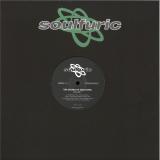
he next instalment from Soulfuric Recordings is the first edition of “The Sound Of Soulfuric Volume 1” taken from the vaults are four unearthed gems spanning two classics, two exclusives, and long-awaited vinyl debuts from house music specialists such as Hardsoul feat Ron Carroll, Urban Blues Project, The Thompson Project & Crackazat and Art Of Tones.
Stepping up first is Hardsoul featuring the legendary Ron Carroll with “Back Together” (Main Classic Mix) a track that should be found in every soulful house DJ’s set, with Ron’s alluring vocals this one is definitely made to keep the dancers moving and in case of dancefloor emergencies reach for this record.
Up next is Urban Blues Project featuring Bobby Pruitt “We Are One” (Art of Tones Extended Remix) which is being brought out for the first time on vinyl, the original mix was first released in 2001 and the now the Art Of Tones Remix has breathed new life into it making it a must have for anyone who is a fan of the original.
Flipping over to the B side, Urban Blues Project return once again with Love Don’t Live (The U.B.P. Classic Club Mix) with Michael Procter. A Soulfuric classic that has been championed time and time again, first released in 1996 and now being revived almost 20 years later on fresh wax.
Rounding off Volume 1 The Thompson Project & Crackazat featuring Gary L with “Messin’ With My Mind” (Crackazat Extended Remix) this has also never been on vinyl before, released earlier this year this soulful house banger got the touch-up from Bristol’s finest Crackazat who adds his touch to the Florida duo’s offering.
House heads can come together once again and seize the opportunity to get their hands on this outstanding EP.
out of Stock
Last delivered 47 days ago available to reorder, subject to availability
If there is one thing we at Real Gone have learned during our rollicking ride of reissuing The Donnas’ catalog, it’s that they never did anything halfway. And we’ve tried to do the same in bringing their music back to their devout fanbase. Now, by popular demand, and after years of pursuing the rights, we are thrilled to announce that we are releasing their last studio album, Bitchin’, in an expanded, newly annotated, and newly remastered edition! This 2007 release was put out by The Donnas’ own Purple Feather label, and marks a return to the girls’ glam metal and punk roots after the classic rock leanings of Gold Medal…they’ve escaped the major label machine, and are ready to have a good time! Singalong songs like “What Do I Have to Do” and “Don’t Wait Up for Me” have definitely entered The Donnas’ canon, and tunes like “Save Me” confirm that this band’s ability to set a hook in a chorus remains unabated. For this first-ever reissue, we’ve rounded up an entire side of bonus tracks, including the two songs (“Randi” and a cover of “Safety Dance”) that were only available on the vinyl release, a track (“New Kid in School”) that was previously available only as a download, two outtakes (“We Own the Night” and “She’s Out of Control”) that showed up on the Greatest Hits Vol. 16 comp, and a track that only came out in Japan (“Can’t Keep It a Secret”). The whole thing’s been remastered for vinyl by Mike Milchner at Sonic Vision, and our gatefold-plus-insert once again includes fresh commentary by Brett Anderson aka Donna A. Bitchin’ comes in a double scoop of strawberry with black swirl vinyl…we’re here for the party!
As trans-Atlantic alchemists pulling from a shared dialectic that somehow encompassed both postmodern deconstructionist tendencies and a delightfully subversive sense of poptimism, it’s easy to see how David Cunningham and Peter Gordon immediately hit it off upon initially meeting each other back in the late-1970s at the height of their youthful transgressions. Having initially worked together on the second Flying Lizards’ LP fourth wall, with its ingenious fusion of dismantled rhythms and rearranged melodies juxtaposed against the slyly sultry singing of Snatch’s Patti Palladin— with Gordon adding a few sprinkles of mischievous sax in the mix— it’s no wonder the collaboration would lead to further musical adventures.
Which leads us directly to the genesis of The Yellow Box. Embarking on a collaborative exercise in the structural repurposing of music as untethered puzzle pieces in need of rearrangement with no predetermined outcomes, the duo gave birth to a project that would see them move through both time and recording studios across Europe, taking nearly two years from 1981-1983 to complete. Enlisting the great Anton Fier on drums from The Feelies/Lounge Lizards nexus and John Greaves on bass from Henry Cow/Soft Heap lore to round out their dueling creative counterparts, the album would be something of a lost treasure until its eventual release on Cunningham’s Piano imprint in 1996.
Cinematic in scope, and filled with drifting drones, beautiful counter-melodies, eery minimalism, Kraftwerkian synthesizers, looped voices, skronky interludes, and other shifting undercurrents of sound, it was an album that utilized both a diverse array of expressive languages, as well as early sampling techniques and prepared instruments, well before most people were thinking in such expansive, integrated terms at the dawn of the 80’s. But such is life at the vanguard of new music. And one of the reasons that it likely sat on the shelf for so long before finally being released well over a decade later. Like a sparser, less groove-oriented version of My Life in the Bush of Ghosts, or a more radical take on the experimental work of Can’s Holger Czukay, The Yellow Box stands at the crossroads of time and technology, fusing multiple strands of musical thought and compositional techniques into a disjointed whole that somehow still comes off as a conceptually complete record.
Now, here it is again, over 40 years later, with perhaps even more historical resonance than it had before, remade and remodeled just waiting to be rediscovered again.
Sasha & Henry Saiz deliver evocative new single 'Love Is All You Need'
Henry Saiz and Sasha are two of electronic music’s most visionary figures, each renowned for blending emotional depth with cutting-edge production. Saiz is a DJ, producer, and live artist who crafts genre-defying soundscapes on his own Natura Sonoris as well as Sasha’s Last Night On Earth. His work resonates far beyond the dancefloor, much like that of Sasha, a pioneer with an enduring creative streak who continues to push boundaries, most recently through collaborations with forward-thinking producers like Artche, Jody Barr, and Joseph Ashworth. Together on this new single, the pair balance transportive grooves with meticulous synth work to perfection.
The wonderfully luminous 'Love Is All You Need' radiates breezy melodic charm while riding a light, uplifting rhythm that feels as airy and warm as the rush of a new romance. Shimmering, sun-kissed melodies evoke the glow of an outdoor Ibizan party with emotive female vocals drenched in reverb, adding a dreamy, blissful layer to round out this hazy and heartfelt electronic trip.
out of Stock
Last delivered 4 months ago available to reorder, subject to availability
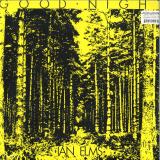
Ian Elms’s cult isolationist synth masterpiece Good Night returns via Dark Entries. Originally released in 1982, Good Night blends Berlin school minimalism and BBC Radiophonic weirdness with the aesthetics of then-nascent DIY punk electronics throughout its fifteen short tracks. According to Elms, these pieces were composed in two broad but interrelated modes: pieces with voice and synthesizer, which are obliquely narrative, and instrumental synthesizer pieces that aspire to capture fleeting emotions. Ian met with producer David Hoser at Octopus Studios and they began constructing pieces using a Polymoog Keyboard 280a, sampled drum tracks, and Elms’s synthesizer. On “The Street Enters the House”, live drums lurch along with skeletal motifs while Elms’s elliptical lyrics evoke domestic discontent. “A Light Moves Across Curtains” features metronomic pummeling and icy strings buttressing the scant cryptic lines from Elms. Instrumental gems like “Goodnight” and “Surrounded by Trees” are built around detuned riffs in round-like structure, both drifting and static like the motion of waves. With original pressings fetching three digits – if you can even find a copy – this reissue is essential listening for fans of John Bender, Transparent Illusion, and the early 80’s DIY cassette scene. Each copy of Good Night comes with a postcard featuring a photograph and notes by Elms. “This record is intended for anyone who by accident or design spends most of their time alone (whether in the body or in the mind).” – Ian Elms.
out of Stock
Last delivered 3 months ago available to reorder, subject to availability
Acclaimed electronic musicians, producers and sound architects Max Cooper and Rob Clouth team up for a new collaborative EP; a dark, playful four-track dive into ambient, breakbeat and techno’s subconscious flow, featuring a standout vocal performance from South London rapper FLOHIO.
Recorded over a series of spontaneous London sessions, “8 Billion Realities” channels years of creative exchange between two of the genre’s most quietly innovative artists and is a result of a decision between the longtime friends to refrain from conceptual overthinking in favour of instinct and joy.
As long-time admirers of each other’s audio/visual work, Cooper and Clouth collaborated in London together after both emerging from intense, idea-heavy album cycles. What followed was a series of exploratory sessions, half-improvised, half-built around half-formed thoughts.
The result is a club-ready EP that feels alive and human: imperfect and hypnotically rich.
“Rob Clouth has been one of my favourite electronic music producers since I first heard his work in 2011,” says Cooper. “His work is more full of ideas and structure than anyone else.” “We were both coming from extensive conceptual studio albums and both in the mood for simplifying things and having some fun with the music, so that’s what we did”.
For Clouth, no stranger to Max Coopers Mesh label having previously released an array of EP’s plus his 2020 debut album “Zero Point” this record marks a new chapter, both creatively and personally.“Something pretty new for me is collaborating,” he says. “You kind of have to when to stop, because if you develop an idea all the way to its endpoint, the other person has nowhere to jump in.”
The first “A Moment Set Aside” began as a break from another idea, a live, unplanned improvisation based around arps and ambience. “The track was written in about as long as it took to play it,” says Cooper. “It was pulled from a 1 hour recording session, more or less as you hear it… the energy and excitement grew as the unplanned moment bore some magic.”
“The lesson being that sometimes it’s helpful to set aside a moment without forcing results, and let the subconscious have something to say.” What followed was darker, heavier. “Asymptote” is detuned techno. Subversive and euphoric in its descent. “We found a sort of brain mangling, half consonant, half wandering detuned techno pulse, which we started chatting about being a sort of pit of spiralling body parts we were falling into,” says Cooper. “It was a lot of fun to work on and let loose with bigger kicks than I usually ever get to unleash.”
Then came “8 Billion Realities”, featuring a standout rap performance from FLOHIO; an emerging figure in the UK grime and rap scene. The track was inspired by conversations about algorithmic echo chambers and hyper-personalised online worlds. Frantic, direct, and South London to the core, FLOHIO brings this tension to life. Her sharp, intense flow cuts through distortion and rhythm, landing the track somewhere between chaos and control instantly making it one of the most striking moments in either artist’s catalogue. “A different reality for all 8 billion of us,” says Cooper. “We weren’t sure if it would work… but there was something about the energy of the percussive idea and the story which felt like it might fit.” “Then FLOHIO had a play with it and straight off the bat absolutely killed it, not just with the lyrics and energy, but the harmonising too, it was a beautiful process.”
The final piece on the EP “Candeleda” originated from Clouth’s solo experiments with a live rig made entirely of vocals and keys, using his self-developed “cheatbox” system. “He put forward a beautiful stumbling melodic sequence which we bounced back and forth adding harmonies and synth layers,” says Cooper. “It rounds off a collection covering some of the breadth of music that we both love.”
out of Stock
Last delivered 10 months ago available to reorder, subject to availability
A Place In My Memory Is All I Have To Claim is the new album by Australian atmospheric pop trio Hydroplane, the storied 'offshoot' formed by three quarters of independent pop group, The Cat's Miaow. On this, their first music after two decades plus of radio silence, Andrew Withycombe, Kerrie Bolton and Bart Cummings return to the gentle, close-quarters musical world they shared around the turn of the century.
Recorded during 2024 in Melbourne and Ballarat, A Place In My Memory… picks up the thread Hydroplane set down with its precursor, 2001's The Sound Of Changing Places, though you can hear echoes of their other releases, too, with Withycombe noting a through-line from the group's 1998 "Failed Adventure" single. There's little quite like A Place In My Memory…, then or now, though. Maybe you can draw some connections between Hydroplane and their sister group, The Cat's Miaow, while fellow travellers might include Empress, The Ah Club, and further back, Young Marble Giants, Veronique Vincent (the muffled, ticking drum machine also makes me think of Robin Gibb's Robin's Reign).
There's also an umbilical to the bedroom-crafted electronica doing the rounds in the late nineties and early noughties. Hydroplane hint at this through their approach to songwriting, which often builds creatively around loops as structural devices. Through all this, the trio achieve an effortless, organic weightlessness across these nine lovely songs. Many feature Bolton's clear singing voice, drifting along, while guitars, keyboards, drum machines and loops tickertape away. The constituent parts fit together, but they also have a curiously detached quality - think of abstract cloud formations sharing the same sky.
Hydroplane and The Cat's Miaow often dealt in emotional ambiguity and uncertainty, and the uncertainty of the nostalgic. This was always one of the most appealing facets of their music, and A Place In My Memory… is thus named perfectly. I couldn't dream up a better title for the album and its reflections on history, lived experience, and the inevitable tangle between these two phenomena. These reflections variously address such concerns as human cruelty, flight, space travel, adventurism and spiritualism. There's also "To the Lighthouse", not a direct reference to the Virginia Woolf book, but a great title, nonetheless. (They've always had excellent titles, often borrowed, for songs and albums.)
A beautiful collection of drowsy, sleepy pop, humble and quiet, but resolute in its craft, A Place In My Memory Is All I Have To Claim is dream work in practice; a lovely reintroduction. Welcome back, then.
out of Stock
Last delivered 10 months ago available to reorder, subject to availability
Introducing OBI02 – Plight of the Gifted EP by TB Shine, the second release on
Dutch-label OBI Trackz.
Operating under various aliases since the early 2000s, TB Shine is one of the many expressions of Norwegian artist Terje Bakke. Plight of the Gifted EP holds five tracks that drift between hypnotic minimalism and raw percussive workouts, told through disjointed rhythms, haunting atmospheres, and layered tension.
The A side kicks off with Dopamine Dungeon—a slippery, low-end-driven roller wrapped in hazy textures and unstable euphoria. The track traps the listener in a quirky haunt, like the title describes accordingly. Red Army Moody Troopers follows with a tougher edge: straight drums, spectral pads, and an undercurrent of unrest. It’s a track that marches forward but never fully lands, suspended in an unresolved urgency.
On the B side, Plight of the Gifted appears in two versions. The original leans into emotional melodic motifs and fragmented structures, evoking both vulnerability and defiance. The Haunted Version strips things back further—bleeding with space, odd grooves, and a kind of post-club phychosis that lingers long after. Closing the EP is Plague Doctor, a slow-burning piece where a hopeful melody echoes and distant percussion round off the release with a sense of closure while being wrapped in a warm blanket.
With Plight of the Gifted EP, TB Shine offers a layered and personal collection— one that walks the tightrope between control and collapse, rhythm and mood. A fitting next step for Obi Trackz: cryptic, cinematic, and carved with intent.
out of Stock
Last delivered 3 months ago available to reorder, subject to availability
"After years of exploring different realms of electronic music, Trinchera.XV opens the doors of its label with a vinyl EP that moves between dancefloor-driven energy and sonic abstraction. For this first release, two complementary visions converge: the renowned artistry of Radial, a key figure on the international scene, and the fresh, promising energy of Bendiak, an emerging talent from the local landscape."
a Radial - Roundabout Way TXV01
b Radial - Sly [TXV01]
[c] Bendiak - Cheat Codes (Time Mix) [TXV01]
[d] Bendiak - Niebla en la Trinchera [TXV01]
[e] Bendiak - Dos Copos de Nieve [TXV01]
out of Stock
Last delivered 12 months ago available to reorder, subject to availability
After his 2024 album The Spirit Continues, Tilman returns with Altered Spaces, a tightly focused four-track EP that distills his signature sound into a concise, club-ready format.
Opening track Make My Body Move sets the tone with soulful vocals, warm piano stabs, a rolling bassline and a breezy Balearic vibe. The Last Resort deepens the mood, layering pads, organ hits and shimmering strings over a steady, driving groove. Rounding out the EP are two reimagined cuts from The Spirit Continues. Dance Department (Spirit Mix) smooths out the rougher edges of the original, adding organ stabs and a more melodic sensibility.
Need It (Dance Dub) transforms the track into a softer, dub-tinged version - hypnotic, restrained and full of subtle movement. Altered Spaces is classic Tilman: warm, understated house music that's rich in detail and groove - made for dancers and deep listeners alike.
out of Stock
Last delivered 11 months ago available to reorder, subject to availability
Welcome to Pfefferkorn: a countryside studio hidden inside a former 1950s café. The stylish interior stayed, the cake display is gone, but the mountain panorama is still very much in place. Out of this unlikely combination came Obsolescence, Feater's new album and a record that wasn't supposed to happen, but insisted on doing so anyway.
Originally, Pfefferkorn hosted a merry-go-round of guests and genres: jazz, kraut, pop, experiments, even the occasional field recording. Among the many, Mara Oldofredi aka Mietze Conte became the most frequent and inspiring visitor. Their sessions set sparks, and one of them, "Trio," landed directly on the album.
The method? Call it instant archaeology: live jams on two-track tape, then pushed through edits, resampling, Fairlight IIX sorcery, and endless tape-laptop relays. Quick, raw, and without too much overthinking, more sketch than sculpture, more instinct than intent.
The result is Obsolescence, a record born out of detours, made for personal delight, and proof that side products can be main courses if you let them.
out of Stock
Last delivered 11 months ago available to reorder, subject to availability
Glow in the dark vinyl. Ida Maria returns in full force with Seven Deadly Sins + 3, a riotous, confessional, and deeply personal punk-rock opus that confronts our ugliest truths with blistering honesty and a wicked grin. Written and recorded with her longtime core band - Jan Ole Kristensen, Ruben Fredheim Oma and Alf Magne Hillestad, - alongside producer Martin Selen and engineer Hans Petter Heggli, Seven Deadly Sins + 3 is as immediate as it is fearless. From the volcanic fury of "STILL ANGRY" (co-written with Finnish rocker Joonas Parkkonen) to the unhinged groove of "LAZY", a brutally honest take on shame, duty and the paradox of living in a world that preaches modesty while idolizing fame and fortune. As such each track is a sin dissected, and shouted out loud with no remorse. DO NOT expect a sermon! - this is Ida Maria. It's punk rock, baby. For nearly two decades, Ida has set her own rules, building a legacy that resists every attempt at softening her edges. From her breakout debut Fortress Round My Heart to viral anthems like "I Like You So Much Better When You're Naked," her music has always offered a kind of sonic confessional - messy, bold, and impossible to ignore. With Seven Deadly Sins + 3, Ida Maria offers more than just a rock album - it's a confessional booth, a punch in the gut, and a kitchen table chat with a friend who's seen some things and still comes back with laughter, love, and rock'n'roll.
Trailblazing outlet for forward-thinking Danish Jazz, April Records proudly presents the debut from trumpeter/composer Rolf Thofte; a vivid and personal record that blends lyrical melodies, inventive rhythms, and subtle harmonic exploration. Written while Thofte adjusted to fatherhood - the album captures moments of joy, reflection, and experimentation, brought to life by a handpicked quintet of Denmark"s most exciting young jazz talents. Martha"s Dance is set for release on September 19th, 2025 via April Records. The title track is a tribute to Thofte"s three-year-old daughter - a playful, clapping, goat-hoof-stomping tune in quirky 5/4 that channels the spirit of childhood joy and spontaneity. "It"s just a fun tune to play, and I feel like it really captures Martha"s spirit," says Thofte. "This band came together at a time when I was trying to get a foothold in a new life situation as a father, so it felt perfect to make this the title track." The album moves between moods and textures with elegance: from the rich harmonic language of "Vice Versa" - inspired by Wayne Shorter"s ability to cast simple melodies in shifting harmonic light - to the understated power of "Changing Tides," a piece about imperceptible gradual changes in our lives, nature, and politics. "Bendico," written in 15 minutes as a conservatory assignment, showcases Thofte"s gift for strong melodic statements, while "Dunkelflaute" evokes melancholic Nordic greyness through sparse, emotive phrasing. From the swaggering second-line feel of "The Big 5" to the hypnotic pulse of "All...", the album explores rhythm as both a driving force and a canvas for creative interplay. Throughout, Thofte"s trumpet and flugelhorn lead the ensemble with warmth and clarity. The quintet features some of Copenhagen"s top next-generation players: Andreas Toftemark (tenor saxophone), a powerhouse improviser and composer who brings NYC-honed energy and detail to the group dynamic. Rasmus Sorensen (piano), a rising star of the European scene, known for his sensitive, exploratory playing and fearless interaction. Jakob Roland (bass) and Henrik Holst (drums) - two of Thofte"s oldest musical collaborators - round out the rhythm section with deep swing, taste, and musical empathy.
In Guadeloupe, many people think that jazz and ka music are like a ring and a finger. To some extent, the same could be said about so called Latin music and the music played in the French West Indies.
Both aesthetics were born in the Caribbean and bear so many connections that they can easily be considered cousins. In constant dialogue, there are lots of examples of their fruitful alliance and have been for a while. The English country dance that used to be practiced in European lounges came to be called kadrille in Martinique and contradanza in Cuba. They both featured additional percussion instruments inherited from the transatlantic deportation. Drawing from shared feelings about the same traumatized identity – later to be creolized – it would be hard not to assume that they were meant to inspire each other. The golden age of the orchestras that graced the Pigalle nights during the interwar period further proves the point. As soon as the 1930s, Havana-born Don Barreto naturally mixed danzón and biguine music in a combo based at Melody's Bar. In the following decade, Félix Valvert, a conductor who was born and raised in Basse-Terre in Guadelupe, also worked wonders in Montparnasse with La Coupole, which was an orchestra made up of eclectic musicians. Afro- Caribbean performers of various origins were often hired on rhythm and brass sections in jazz bands, which used to enliven the typical French balls of the capital. In the 1930s and onwards, Rico’s Creole Band was one of them.
Martinican violinist-clarinettist Ernest Léardée, who would become the king of biguine music as well as the main figure of French Uncle Ben's TV commercials (a dark stigma of post-colonial stereotypes), had musicians from the whole Caribbean sphere play at his Bal Blomet – and they all enchanted "ces Zazous-là" (according the words of Léardée's biguine-calypso piece). In les Antilles (French for French West Indies), music history started to speed up in the 1950s, when trade expanded and radio stations grew bigger. The Guadelupean and Martiniquais youth tuned in their old galena radio sets to South American and Caribbean music. As for the women traders, les pacotilleuses, they bought and sold goods across different islands (the "passing of items through various hands" was thought to be most pleasurable) and brought back countless sounds in their luggage. Such was the case of Madame Balthazar, who once returned from Puerto Rico with the first 45rpm and 33rpm to ever enter Martinique.
Out of this adventure was created the famous Martinican label La Maison des Merengues, a music business she opened and undertook with her husband and which proved to be a major landmark. At the end of the 1950s, in Puerto Rico, Marius Cultier competed in the Piano International Contest playing a version of Monk's Round 'Midnight. He won the first prize and this distinction foreshadowed everything that was to come. Cultier, the heretic Monk of jazz, was quickly praised for writing superb melodies, always tinged with a twist that conferred a unique sound to his music. It didn't take long for the gifted self-taught musician to get to play with Los Cubanos, making a name for himself thanks to his impressive maestria on merengues.
The rest is history. Besides, in the late 1950s, Frantz Charles-Denis, born into the upper middle class in Saint-Pierre and better known by his first name Francisco, went back home after working at La Cabane Cubaine – a club located rue Fontaine where he had caught the Latin fever. Francisco's music was therefore heavily marked by his Cuban cousins' influence, which gave the combos he led a specific style and also led to renewal. Things were swinging hard in La Savane, located in the main square in Fort-de-France. He set up the Shango club close by and tested out the biguine lélé there, a new music formula spiced up with Latin rhythms. Soon afterwards, fate had him fly to Puerto Rico and Venezuela.
As for percussionist Henri Guédon (percussions were only a part of his many talents), he was born in Fort-de-France in May 22nd 1944, the day marking the celebration of the abolition of slavery. As an old man, he could remember that in " his father's Teppaz, a lot of hectic 6/8 music was constantly playing...". In the opening lines of his Lettre à Dizzy, a small illustrated collection of writings published by Del Arco, he highlighted the huge impact that cubop had on him as a teenage boy, around 1960. He eventually turned out to be the lider maximo in La Contesta, a big band steeped in Latin jazz. He was also the one who originated the word zouk to describe music which brought the sound of the New York barrio to Paris. It was the culmination of a journey that started in Sainte-Marie: "a mythical place for bélé, the equivalent of Cuban guaguancó". In the early 1960s, the tertiary economy developed to the detriment of agriculture. Yet rural life was where roots music emerged in Martinique and in Guadeloupe.
Record companies played a major part in the process of Latin versions sweeping across the islands – before reaching everywhere else. Producer Célini, boss of the great Aux Ondes label, and Marcel Mavounzy, both the head of Émeraude records - a firm which was founded in 1953 - as well as the brother of famous saxophonist Robert Mavounzy, were big names to bear in mind. Although there were many of them - all of whom are featured on this record - Henri Debs was definitely the major figure in the recording adventure. He proved to be so influential that he even got compared to Berry Gordy. In the mid 1950s, when he acquired his first Teppaz, he worked on his first compositions: a bolero and a chachacha. Then, he became the one man who made people discover Caribbean music, from calypso to merengue. He was among the first ones to rush out to San Juan, Puerto Rico, to buy records and distribute them through a store run by one of his brothers in Fort-de-France. He had members of the Fania All Star come and perform there, which he was madly proud about. He was also the first one to pay attention to Haitian music, such as compas direct and various other rhythms which would soon flood the market. As a result, many of the combos hitting his legendary studio would end up boosted by widespread "Afro-Latin" rhythms. However, he never denied his identity: gwo ka drums were given a major role, although they were instruments which had long been banned from the "official" music spheres. The present selection bears witness to such a creative swarming. Here are fourteen tracks of untimely yet unprecedented cross-fertilization: all types of music rooted in the Creole archipelago have found their way, whatsoever, to the tracklisting. Whether originating from the city or being more rural, they all go back to what Edouard Glissant, in an interview about the place of West Indian music in the Afro-American scope, called "the trace of singing, the one which got erased by slavery." "It is so in jazz, but also in reggae, calypso, biguine, salsa... This trace also manifests through the drums, whether Guadelupean, Dominican, Jamaican or Cuban... None of them being quite the same. They all point to the idea of a trace, seeking it out and connecting to each other through it. This is the hallmark of the African diaspora: its ability to create something new, in relation to itself, out of a trace. It may be the memory of a rhythm, the crafting of a drum, a means of expression which doesn't resort to an old language but to the modalities of it." The opening track features one of the emblematic orchestras of this aesthetic identity, criscrossing many music types from the archipelago. The 1974 Ray Barretto guajira – Ray Barretto was a major New York drummer influenced by Charlie Parker and Chano Pozzo – is magnificently performed by Malavoi, a legendary Fayolais group (i.e from Fort-de-France). Additionally, the compilation ends on a piece by Los Martiniqueños de Francisco. It symbolically closes the circle as it is a genuine potomitan of Martinique culture which also functions as a tireless campaigner for Afro-Caribbean music. Practicing the danmyé rounds (a kind of capoeiria) to the rhythm of the bèlè drum, it delivers a terrific Caterete, a kind of champeta of Afro- Colombian obedience which was originally composed by Colombian Fabián Ramón Veloz Fernández for the group Wgenda Kenya. The icing on the cake is Brazilian Marku Ribas, who found refuge in Martinique in the early 1970s, bringing his singing to the last trance-inducing track. These two "versions" convey the whole tone of a selection composed of rarities and classics of the tropicalized genre, swarming with tonic accents and convoluted rhythms. It is the sort of cocktail that the West Indians never failed to spice up with their own ingredients. For instance, the Los Caraïbes cover of Dónde, a famous Cuban theme composed by producer Ernesto Duarte Brito, has a typical violin and features renowned Martinique singer Joby Valente and his piquant voice.
The track used to be – or so we think – their only existing 45rpm. The meaningful Amor en chachachá by L'Ensemble Tropicana, a band which included Haitian musicians among whom was composer and leader Michel Desgrotte, also recalls how Latin music was pervasive in the tropics in the mid-1960s. They were the ones keeping people dancing at Le Cocoteraie in Guadelupe and La Bananeraie in Martinique. Around the same time, another "foreign" band, Congolese Freddy Mars N'Kounkou's Ryco Jazz, achieved some success on both islands by covering Latin jazz classics – such as their adaptation of Wachi Wara, a "soul sauce" by Dizzy Gillespie and Chano Pozo whose interweaving of strings and percussions can have anyone hit the dancefloor. How can you resist Dap Pinian indeed, a powerful guaguancó by Eugene Balthazar, performed by the Tropicana Orchestra and published by the Martinique-founded La Maison des Merengues? It also acts as a symbol of the maelstrom at work. Going by the name Paco et L'orchestre Cachunga, Roger Jaffory used to play guaguancó too: his Fania-inspired Oye mi consejo is one example of his style. Baila!!!!! Dancing was also one of the Kings' focus points. Oriza is a Puerto Rican bomba and a "classic" originally composed by Nuevayorquino trumpeter Ernie Agosto, which reserves major space for brasses, giving it a special sheen.
Emerging from the New York barrios crucible was also La Perfecta, a Martinique group originating from Trinidad, whose name directly references the totemic Eddie Palmieri figure as well as his own band, also called La Perfecta. Here they borrow Toumbadora from Colombian producer and composer Efraín Lancheros and interpret it by emphasizing percussions, which set fire to the track even more than the wind instruments. The same goes for Martinique's Super Jaguars, who use Tatalibaba – a composition by Cuban guitarist Florencio "Picolo" Santana which was made famous by Celia Cruz & La Sonora Matencera – as a pretext for sending their cadences into a frenzy. In a more typically salsa vein, the Super Combo, a famous Guadelupean orchestra from Pointe-Noire that was formed around the Desplan family and had Roger Plonquitte and Elie Bianay on board, adapt Serana, a theme by Roberto Angleró Pepín, a Puerto Rican composer, singer and musician also known for his song Soy Boricua. Here again, their vision comes close to surpassing the original. In the 1970s, L'Ensemble Abricot provided a handful of tracks of different syles, hence reaching the pinnacle of the art of achieving variety and giving pleasure. They played boleros, biguines, compas direct, guaguancó and even a good old boogaloo - the type they wanted to keep close to their hearts for ever, "pour toujours", as they sang along together in one of their songs. Léon Bertide's Martinican ensemble excelled at the boogaloo which had been composed by Puerto Rican saxophonist Hector Santos for the legendary El Gran Combo.
Three years later, in 1972, Henri Guédon, with the help of Paul Rosine on the vibraphone, tackled the Bilongo made famous by Eddie Palmieri. Such a classic!!!!! And so were the Aiglons, the band from Guadelupe: choosing to execute Pensando en tí, a composition by Dominican Aniceto Batista, on a cooler tempo than the original, they noticeably used a wonderfully (un)tuned keyboard in place of the accordion. On the high-value collectible single – the first one released by Les Aiglons under the Duli Disc label – there is a sticker classifying the track under the generic name "Afro". Now that is what we call a symbol. Jacques Denis
out of Stock
Last delivered 6 months ago available to reorder, subject to availability
“'Lyceum' is a fountainhead of unqualified greatness. It’s a strange, sad sound harking back to old school tunesmanship – Aztec Camera, ‘Rattlesnakes’, prime-time Felt – but the whole affair is permeated with a resonant, almost tearful quality. ‘Lyceum’ is reminiscent of Galaxie 500’s ‘Today’ in that it sounds like it cost less than a round of drinks to produce. But the lo fi sound merely enhances the misty glazed-pop sound and raises the hallelujah choruses to the forefront. Rather than drowning them in production mush. Don’t pass it by”.
– Bob Stanley, Melody Maker 1989
Hailing from the suburbs of Glasgow, this five-piece are best known for their three starry-eyed albums on the renowned Sarah Records - this being an expanded version of their first (an eight-track 10” at the time).
By the tail end of the 1980s the independent music scene in the UK was turning its back on the polish and over-indulgence of the mid-80s with its gated drums and wallpaper production. And those who weren’t stretching the boundaries of sonic innovation had tuned back to the post-punk ethos of ramshackle charm and zealous melody, even dousing the spirit with some political fervour once more. Influences were more likely to be Television and the Television Personalities than MTV.
The Orchids and The Sea Urchins were the first two bands to release 7” singles on the Sarah label having previously begun their recording existence on a shared flexi disc in 1987 (The Sea Urchins went on to become Delta, whose classic album ‘Slippin' Out’ from 2000 will be the second release on Circuitry). The Scottish five-piece released ‘I’ve Got a Habit’ and ‘Underneath the Window, Underneath the Sink’ as EPs before really finding their feet with ‘Lyceum’; the tracks, remastered from the original Toad Hall tapes are included on this reissue as are the three songs from the ‘What Will We Do Next?’ 7” (this collection closes with the frazzled stretch that is ‘Yawn’). 'Lyceum' was originally released in August 1989.
The album opens with ‘It’s Only Obvious’ and its gloriously youthful chorus of “who needs tomorrow when all I need, all I needed was you”. James Hackett somehow appears both forthright and rejected, something that one of their musical heroes The Go-Betweens also had down to a fine art. It barely takes a breath until midway through side two where ‘Hold On’ (sounding suspiciously like an unlikely objective) descends into the intro of ‘Blue Light’, the counted-in ‘1, 2, 3, 4’ whispered like the most hopelessly dejected rally. If that sounds depressing it isn’t. This record by The Orchids was a spirited source of comfort for an 18 year old at the time and still shudders with the best type of melancholy, one that’s spirited not indulgent. If you’re not familiar with the band’s charm, this is where you should begin.
'Lyceum' is released on double black vinyl by new label Circuitry.
TRSN hits release number 36 with a statement from one of the Netherlands' most promising new names. Groef steps up for his full solo debut on the label, delivering four meticulously crafted originals that twist and stretch the parameters of hypnotic, high-impact techno. Fresh off the back of appearances on Delirium Vol. II and a breakout debut EP on Bipolar Disorder, Groef showcases his signature blend of raw textures, tightly-wound percussion, and heads-down momentum. Rounding out the EP are two heavyweight remixes from French powerhouses Bours? and Ferdinger, adding their own flavour while keeping the energy locked firmly to the floor. A bold and confident six-tracker that marks Groef as one to watch.
A disco-funk venture laced with balearic pop as nostalgic as it is buoyant, Dijon-based outfit FLAUR land their inaugural EP on Cosmocities Records. Comprised of three original songs shifting gears between electrifying grooves and washed-out downtempo, plus three remixes courtesy of Art of Tones, Gaettson and Faze Action, ‘Hold On’ speaks the language of lively waves and sun-streaked coasts. By turns explosive and contemplative, the duo’s vision covers a wide span of influences and styles, fusing Californian P-funk with a touch of Supertramp-esque disco and nuances of alternative pop lined with silky funk in the style of acclaimed Versailles band, Phoenix.
Full with suave Wurlitzer piano chords and ultra-syncopated slap bass, the lead-track ‘Hold On’ is an ode to 70s disco pop with its satiny textures, solar-powered melody and a swing bound to cause ravage on the dance floor. The perfect mix of luxuriant disco, vibrant boogie house and supra-sensual cosmic escapology. Even more elating, the layered funk of ’Now’ takes us into a choppy swirl of unshackled pizzicatos, iridescent envelopes and epic vocal flights. Recorded live at Mastoid Studio in Paris, ‘On My Mind’ trades the hi-velocity disco of the first two cuts for a poignant, introspective movement, revolving around the bewitching voice of Florian, a piano and riffs draped in melancholic reverbs. A sonic journey round the confines of soulful dream pop and further intimate songwriting.
In the hands of another rising Dijon-based artist, Gaettson, ‘On My Mind’ morphs into a dance floor-oriented missile, mixing a highly volatile strain of corrosive IDM, sharp breaks and nervy vocal samples. Remixing ‘Hold On’, South of France producer Art of Tones takes us on a proper cosmic trip, laying further emphasis on the original's funky impact through sun-drenched loops a la Alan Braxe and Fred Falke, and a buildup tailored for extended seaside afters; feet buried deep in the sand, head up in the clouds. UK groove legends Simon and Robin Lee, alias Faze Action, round off the package with a chiselled revamp of ’Now’. Slightly accelerated and built for the club, this remix treats us to a pure moment of dance-ready bliss, packed with sinuous rhythms, dynamic bass and fevered percussions.
out of Stock
Last delivered 8 months ago available to reorder, subject to availability
Five tracks of future electro-funk from Spanish DJ and producer Lefrenk, who makes his Gated debut.
Across five expertly warped tracks, the EP pulls from 80s Balearic sunsets, fried breakbeats, warehouse-scented house music, and electro that’s been lightly basted in funk and grilled over a lovely DAW.
‘Brainstorm’ kicks off with pummelling beats then goes widescreen, like a sci-fi epic barging into your set uninvited but winning you over immediately. It’s bold, abstractly beautiful, and absolutely means business.
‘Clocks’ loops squelchy bass and a twinkling melody that develops masterfully, intent on living in your head proudly — like a tenant who pays rent on time and doesn’t play the saxophone.
‘Funk Awake’ could soundtrack a very stylish chase scene between two people in vintage tracksuits.
‘Ocaso’ slows it down a little — warm and woozy, but with snappy, electrified beats holding it up like a drunk at a bar vying for the bartender’s attention.
Rounding things off, ‘Relative Point’ floats somewhere between VHS nostalgia and late-night contemplation, where the insistent beat and bass hold steady and the synths do the wandering.
out of Stock
Last delivered 11 months ago available to reorder, subject to availability