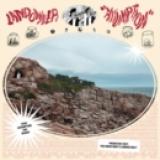
RRL and Lay-Far are back on GAMM with a killa 7" exploring the bridges between Jamaican sound systems and UK 90's club culture.
Side A delivers an uptempo dub vs breakbeat tune that probably could've been championed by someone like Grooverider or similar in the mid 90s.
On the B side we find a fierce original jungle version with those Amen drums hitting bang on.
Поиск:s systems
Все
Bristol-based producer Zobol lands on Brooklyn imprint Melodize with Killing Culture – a bold, four-track statement that fuses electro, breaks, and electronica into something raw, physical, and emotionally charged. Known as one half of the label Distorted Sensory Perception – a platform showcasing honest, forward-thinking electronic music – and as curator of the UK underground event series d3pth_p3rc3pti0n, Zobol brings a fiercely independent, hands-on ethos to his productions.
Built entirely on hardware – including the Korg MS20, Roland JX-3P, Prophet Rev2, Acidlab Drumatix, Behringer TD-3, Elektron Octatrack, Soundcraft Signature MTK12 console, and finished in Ableton Live – the EP captures a live-wire energy that feels both urgent and immersive.
The EP opens with “Uprising”, a track that sets a hopeful tone with flickers of brightness woven through its punchy rhythms – like the first sparks of something much bigger. Extrawelt reshapes the track with warm bass and swirling atmospheres, lending a more introspective, drifting character. Known for their decade-spanning contribution to electronic music – from their iconic debut on Border Community to defining live performances worldwide – the German duo once again deliver with a remix steeped in depth and analog soul.
The B-side turns heavier. “Weapon of Mass Distraction” unfolds from a looping synth fragment, slowly ramping into a tense, bass-driven groove that hits like controlled bursts of energy – Relentless, exacting & distractingly armoured with acidity. Closing track “Oppression” dives deeper into emotional terrain: the weight of distorted low-end channels the presence of authoritarian force, while fragile melodic elements flicker like voices struggling to be heard – eventually weakening, fading, and falling into silence.
“As shattered cultures bleed beneath a technocratic sky, the silenced cries of Palestine, Sudan, Yemen and other forgotten lands echo a world where humanity’s dawn is cruelly denied; a stark testament to faltering global systems, demanding urgent change before the irreversible erosion of our shared future.”
Berlin techno talent Regent channels his signature depth and drive into a new outing for MALoR Records. With each release since his inception in 2020, he demonstrates the versatility of his sound and his ability to convey profound narratives across a spectrum of techno sub styles.
After contributing a standout track to the label's Purveyors Of The Groove Vol. 3 compilation in 2023, he now returns with a highly cerebral yet anthemic and dance floor-destined 5-tracker EP: Cratea.
The A-side kicks off with the EP's standout cut, 'Refiction', a sinister, forward-marching piece laced with spooky, psychedelic vocals and dripping in LFOs and mind-boggling soundscapes.
It's followed by the title track 'Cratea', shaped by steady bleeps and an evolving, echo-drenched synth that bounces erratically from start to finish, driven forward by thick claps and floaty rides.
On the flip, 'Origins' delivers a steady, hypnotic tool built on organic bass sounds, gnarly percussion, and wet vocal chops, peaking with four-to-the-floor claps that are sure to lock in a busy dance floor.
'Null Model' follows with a signature Regent groove, fusing driving 909 drums with a clever interplay of short synth stabs and warped-out voices, resulting in a deeply trippy, almost paranoid atmosphere.
Closing the record is 'Stealthless', a stripped-back yet uplifting techno tool, offering moments of synth euphoria and harmony while remaining deliberately restrained and minimal by design.
A versatile release made for different moments in the night, designed to guide dance floors through profound, body-moving journeys.
Best served on powerful sound-systems.
Supa Jams are proud to present. For our, And their debut release, The CJP Band.
Two peak time Disco Soul Funk laced 'Supa™' jams. Ready for the floor, Whilst perfectly encapsulating the labels ethos core.
Disco by extension, Funk for guaranteed dancefloor retention. Music and lyrics for the soul will never not be the intention.
First up 'You and Me and the Music', for the dancers, and DJ's looking for them to 'Lose it' on the floor. This one has it all, Just wait for the strings and 'hat tip' refrain to a legend of the game.
On the flip 'We Can Never Go Back" brings us squarely back to 2025 lyrically. We ALL know 'The systems have changed' and indeed hope that nature will intrinsically "Remain the same".
Nolo asks the same questions clearly forgotten by Jay K in 1993 perhaps? How do we balance our 'Pleasure as an act of defiance in a world that runs on greed'?
In the meantime both tracks deliver the same time honoured essentials for dancing potential - Drum breaks for days, And the night time haze. Bass lines for the loose spined, Lyrical refined for the spiritual of mind. Hotter than the summer dance floors they'll be played on.
300 limited pressing - Hand Stamped Sleeve.
Don't Sleep!
- A1: Reise Der Schatten (Titles)
- A2: Sans Visages #1
- A3: The Wind Comes From The East #1
- A4: U?Berwacht #1
- A5: Pyrapulse
- A6: The Silver Tree #1
- A7: Tod Und Der Affe #1
- A8: The Wind Comes From The East #2
- A9: U?Berwacht #2
- A10: Candle With Wings #1
- A11: Tage Ohne Stunden #1
- A12: City Symphony
- B1: Candle With Wings #2
- B2: A Friend From The Deep #1
- B3: The Silver Tree #2
- B4: Paper Moon
- B5: Mechanocrab #1
- B6: Tage Ohne Stunden #2
- B7: Mechanocrab #2
- B8: Island Interlude
- B9: Mechanocrab #3
- B10: U?Berwacht #3
- B11: A Friend From The Deep #2
- B12: Mechanocrab #4
- B17: Tod Und Der Affe #2
- B13: Sans Visages #2
- B14: U?Berwacht #4
- B15: Assimilation
- B16: Sans Visages #3 (Credits)
»Reise der Schatten« (»Journey of Shadows«) is the soundtrack to the eponymous debut feature-length animation film by Swiss artist Yves Netzhammer. Composed by Anthony Pateras and released as a stand- alone album through Hallow Ground, the 29 pieces are based on »weird folk melodies ornamented with electro-acoustics to give the film a more fantastical, fairy-tale feeling,« as the composer puts it. His extensive international recording sessions with a slew of guest musicians results in a record imbued with a sense of mystical surrealism, otherworldly and haunting.
»Reise der Schatten« tells the abstracted story of a genderless being coming to terms with its identity and place in a world full of conflicts and systems of control. »The film was made with old animation software that only works on Mac OS 9. So already, we are in a very hermetic, unique space,« says Pateras. Having tried (and failed) to compose something »typically experimental,« he went for long walks in the Australian bushlands and came home with something else: the idea to create a soundtrack that would create »a kind of distance, or perceptual shift, but also a narrative drive and emotional context which is not always clear.«
While recording the album, the tētēma co-founder did not use digitally generated sound, instead workingwith live instrumentation whose sound palette was enriched by the use of feedback, tape delay, analogue synthesizers, and samples from vinyl records. Wanting to work primarily with acoustic instruments suchas the clarinet made Pateras embark on a complicated journey of his own. The initial recording sessions took place in Basel on metallophones that were designed by Domenico Melchiorre’s Lunason company and laid the foundation for everything that came after.
Pateras recorded with musicians such as guitarist Alexander Garsden, viola player Erkki Veltheim, clarinetist Aviva Endean, multi-instrumentalist Justin Marshall and Lizzy Welsh on the viola d’amore among other instruments. He recorded percussion and recorders with Rohan Rebeiro and Natasha Anderson in his hometown of Castlemaine, double bass with Benjamin Ward in Sydney, bass and flutes with Jon Heilbron and Rebecca Lane in Berlin, and electronics in Zürich with Netzhammer. »Reise der Schatten« was thus a literal journey, made with a »big, international electro-acoustic ensemble.«
As a stand-alone album, »Reise der Schatten« opens up a space of its own. Its stylistic diversity makes it atmospherically and emotionally multi-faceted. As its composer notes, »music for screen can be very virtuosic, sophisticated, and variegated!« His own work is a testament to that claim.
ele
In the previous episode, the Vibracid technique was discovered as a way to deactivate memories imposed by technocratic elites.
Now, with VIBRACID 2, its real deployment begins: a series of sonic attacks targeting control systems through rave vibrations.
Each track is a weapon. Each producer, a node of resistance. “Vibracid Advent,” the single that launched the assault, opens the mini album with acidic force — delivering the first sonic strike that breaks through imposed control. From the acidic and powerful aggression of Calagad 13 (Spain), through the modular precision and acid techno of C.C.O (Contra Communem Opinionem, Switzerland), to the dark, industrial electro of Mokotron (New Zealand). Atix brings the French 90s rave energy; Wicked Wes, from Florida (USA), builds grooves with bifasic rhythms and glitch textures; and Romphea (Greece) closes with distorted breaks exploring chaos and sonic escape.
Careful sound and mastering, and exceptional design for a limited edition of 150 copies on solid red vinyl.
2026 Repress
Due to high demand, MEU has revisited two of Mr. K’s classics, previously only available as 12-inch extended mixes, and asked the master editor to pare them down to 7-inch size.
A true top-five peak record at the Garage, Thelma Houston’s “I’m Here Again” was “a highlight whenever Larry played it,” Danny Krivit recalls, “and he played it a lot!” Danny’s edit is a homage to Larry and Frankie Knuckles – in particular a similar private edit that Frankie did back in the day and shared with Krivit. “It was on reel to reel and I didn’t copy it correctly and lost it,” Danny remembers. “Reels were problematic! When I tried to get it again from him, unfortunately he had lost it too.” The song (likely an attempt by Motown to capitalize on the previous year’s monster hit “Don’t Leave Me This Way”) is, in its original form, a virtual retake of Thelma Houston’s breakout single, from the subdued, schmaltzy intro to the “oooh BABY!” leading to the chorus. What sets “I’m Here Again” apart though, is the incredible second half of the song. Naturally, it is here that Mr. K’s edit focuses. Over a vicious groove reminiscent of the Originals’ “Down To Love Town” breakdown (Michael Sutton wrote and produced both “Love Town” and “I’m Here Again”) Houston delivers soul-stirring ad libs as the band crackles with electricity behind her, the piano chasing a descending string riff so eagerly. Pure dancefloor peak energy! And the very first time having all these parts on a 7"!
For our flip, Danny has reached deep into the earliest foundations of his voluminous collection, and come out with a psychedelic pop classic rearranged for today’s sound systems and setlists. Recorded in the Beatles’ Abbey Road studio at the height of the Summer Of Love, the Zombies’ “Time Of The Season” is firmly linked in pop culture to the late ‘60s and the Vietnam era, breaking big in the summer of 1969. Krivit’s edit highlights the parade of lush sonic textures that ornament the hip composition, from the iconic, exquisitely echoed bass-clap-exhale riff that opens the song to the cascading Hammond organ solos of Rod Argent. “It’s a song from my childhood that really struck a chord,” Danny says. “Over the years I often played a rough edit which always seemed to go over great. The song seemed to get better and better, and age like fine wine.” We agree!
These two songs have both appeared on previous (separate) MEU 12-inches, but are presented here in custom new edits for the 7-inch format.
2026 Repress
For their debut EP on Tectonic, Beatrice M. drops four deep, dubby cuts bringing weighted bass energy together with techno sensibilities and advanced percussive manoeuvres. Elegant but powerful tracks built for sound systems and curious ears!
Midnight Swim is an ode to the “softer” club sounds, repetitive aquatic grooves that remind Beatrice of their go-to sport: swimming. No phones, just back and forth in the cold water, settling into a mechanical groove. The opening track, Oval, carries its title from the appreciation of soft edges, little distortion, minimal rhythmic pattern.
Upon hearing Pinch’s tune 136 Trek, (itself a nod to Zinc’s 138 Trek), Beatrice decided to name a tune 132 Trek, to continue the lineage of their musical heritage. The tune was already called Trek because it was made after moving from France and spending their first months in London, and realising “everything is a bloody trek”!!
The EP’s title track is about warm-up music and enjoying the earlier hours of the party - a quick immersion and then time for bed, rather than banging club tracks all night long. Beatrice likes to show up early at the club, watch it fill and then leave as it packs out. Midnight Swim is a dip into a roller.
The last tune of the EP features Sub Basics, the first artist to have a vinyl release on Beatrice’s own label, Bait, and one of their biggest musical inspirations. Sub Basics’ immersive progressive sounds fit simultaneously in the deep techno world and the dubstep world. A beautiful in-between.
"After being praised as one of the best releases of 2025 by multiple platforms, the highly praised debut album from Obeka lands on vinyl via YUKU.
The rhythmic dynamics and emotive attitudes of A World No More captures the density of soundsystem culture in Obeka's ancestral roots. YUKU presents the Bermudians debut album capturing a Neo-Colonial dystopia, protest and Afro-Futurism hyperextended through decaying sonic structures of a dark past and its grievances which very much exist today.
Growing into adulthood within the walls of British and European Colonial systems meant the disconnection and lostness in a new country hid me from the world at a young age. Unlike London's vast and culturally engaging migrant communities, the industrial milling town of Stockport introduced a coldness towards people from other countries I experienced in my first year after relocating from Bermuda. I couldn't understand why. Whether cold words thrown towards me or actions upon other people who look like me, it has shown to be a dooming societal virus with no cure. The most comfort was found through what was familiar - drums and rhythmic spirituality of my homeland. It was a safe-haven, a place to empty the anger and confusion. It's been 15 years since relocating and as my sound evolved, it seems classism, racism, oppression and civil control of ethnic peoples has become worse - even now more legalised and normalised. Ogun (a powerful Yoruba deity associated with anger, justice and war) acts as the opening sequence of the record and its symbolism. Using distorted bass frequencies and dissected Regga-Dub immersed in live-sampled ghostly voices of the lost ones. This sonic exercising is also applied in Drillaman - a stampede of industrial framework and metallic instruments wielded over moody Dancehall MC'ing, magnifying two parallel worlds in cocooned evolution. The resurrection of Transatlantic African cultures and identity have never been silenced, rather carried elsewhere through trade routes of enslavement, which was pivotal when composing and completing the album upon returning home to the Caribbean for the first time ever. After reconnecting with my heritage my blurred vision of what's wrong in the world became so clear. Guidance in empty plains seek truth throughout the pain - A statement of finding oneself expressed on the poetic closing track A World No More.
On Fawohodie (A West African Adinkra symbol that represents independence, freedom, and emancipation stamped on the album cover) the motive and atmosphere begins to change. Afro-Caribbean idealism which refers to the philosophical concept that emphasizes the interconnectedness of individuals and the importance of community, often contrasting with Western individualism, begins to take shape in a new universe. We can co-exist. The track framework uses machine-led software forming frequencies we have no control over, then manipulated through decomposing soundscapes, scattered hand-drums and human-made weapons of control - exposing the hidden disparity that's been carried over generations whilst balancing hopeful and musical foundations towards equality and peace. On Pressure and Kuduro! the writing direction attempts to wake people up. Not settling for a composed approach like in past projects, quite the opposite. A call for native sonic awareness, dismantled vocals of protests, eroded percussion using chains, gears and motorised harmonies sculpted in challenging abstract behaviors far outside my comfort zone. A direct abrasiveness and weight I want people to feel, whilst finding hope and solace through enchanting choirs and hypnotic basslines in complete synchrony.
"Purity in sound manifests when you least expect it. The smallest memory or feeling grows from a seed into a sonic language that you, and only you can interpret and release back into the world." "
New Trance Pandemic, a dark, hypnotic release with deep, dense sound and atmospheric rhythms. A dive into a deep state through shadowy textures, pulsating groove, and minimalist energy that truly unfolds on big sound systems. Perfect for late-night sets and intimate dancefloors.
- A1: Wulomei – Takoradi
- A2: Conjunto Ana N’gola – Puxa Odoette
- A3: Zeal Onyia & His Music – Egbe Ne Lueli
- A4: Los Corraleros De Majagual – Remanga
- A5: Aquí Suena – Abel Llinas
- B1: Peacocks International Highlife Band – Igbala Oso
- B2: Pedro Lima Et L’orchestre Os Leonenses – Philomene
- B3: The Shoe Laces – Isitha Somunthu
- B4: Claudio Y Su Combo – Como Sea
- B5: Pa’ Entro Mi Gente – Ángelo El Auténtico
- C1: Zaire – I’m Tired Of Living In The Shack
- C2: Afous - Anavdhou (Edna Martinez Extended Edit)
- C3: Zaïko Langa Langa – La Tout Neige (Edna Martinez Edit)
- C4: Erick Cosaque Et Les Voltage 8 – Ajaccio (Edna Martinez Remix)
- C5: Picó Sin Fronteras – Abel Llinas
- D1: La Calandria – Como Duele Una Traición
- D2: African System International – Amina
- D3: Carlos Díaz Y Su Orquesta – Tres Meses De Vida
- D4: No Puedes Conmigo – Ángelo El Auténtico
Berlin-based Colombian DJ, producer, and curator Edna Martinez presents a sonic journey into the electrifying world of Picó—the vibrant and dynamic sound system culture that has defined the streets of Cartagena and Barranquilla for decades. More than just a musical movement, Picó is a way of life, a bold expression of identity, community, and resistance. From its roots in the working-class neighbourhoods of Colombia’s Caribbean coast to its deep connections with Africa and the Caribbean, this compilation captures the pulse of a culture where music is played at full volume, rhythms travel across oceans, and dance is both a form of celebration and storytelling. For those unfamiliar, Picós are hand-painted sound systems, often adorned with dazzling colours and striking imagery, each with its own name and sonic identity. These mobile discos became the heart of neighbourhood bailes, where the sounds of champeta, highlife, soukous, mbaqanga, zouk, soca, and cumbia would turn every street corner, market, and terrace into a dancefloor. Initially built by local craftsmen using modified speaker components, Picós became legendary for their powerful bass and exclusivity, with DJs sourcing rare vinyl from African and Caribbean ports and rebranding them with unique piconemas—new names adapted to local slang, making the tracks instantly recognisable within the community.
This compilation brings together a carefully curated selection of these rare and sought-after tracks, tracing the deep-rooted musical exchanges between Colombia, West and Central Africa, and the Caribbean. Featuring artists like Los Corraleros De Majagual, Peacocks International Highlife Band, Pedro Lima, Zaïko Langa Langa, and more, the album also includes edits by Edna Martinez, reimagining these timeless rhythms for contemporary audiences while staying true to their original spirit.
Strut presents ‘Picó! Sound System Culture From The Colombian Carribbean’ across 2LP Vinyl, 1CD & Digital focusing on a celebration of the raw, undiluted energy of Picó culture. Through Edna Martinez’s curation, and extensive liner notes, this compilation offers a powerful and authentic glimpse into one of the most vibrant musical traditions of the Colombian Caribbean
Big Disco Dub 12″ on the obscure Jahtari spin-off Jahmiga, exploring the sweet spot between funk bass and echo chamber with two certified heaters produced by LA axe master Dubsworth and disrupt.
UK dancehall veteran Speng Bond spins a big heart-shaped tale with ‘Empress’ on the A side, meshing his signature ragga-comedy flow with uplifting lofi jazz funk vibes into a sexy anthem that will put a big smile on faces and Reggae sound systems alike.
On the AA-side the enigmatic voice of Domino Slims takes you to an all too familiar scene: the DJ drops your favourite song – but suddenly someone tries to chat you up! ‘Don’t Talk To Me Now!’ can be the only answer when this thumping slap bass epic hits the floor.
Also watch out for the hypnotic Dub cuts, two groove-focused percussive workouts layered with mystical vocal haze by Kimchi Shocka and plenty of Space Dust sparkled on top.
2025 Repress
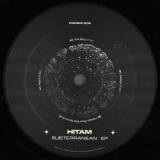
Conundrum Records delves into the depths of techno with a riveting release from Hitam, the Dutch producer who's renowned for his immersive soundscapes, stimulating textures and dynamic low-end. The "Subterranean EP" is a compelling journey through shadowy, bass-driven terrain, meticulously designed for powerful club systems. Despite the variety in tempo, the EP's relentless energy and thunderous low-end form a cohesive thread throughout.
The EP kicks off with "Nagini", where minimalist, driving drum patterns intertwine with glitchy synths and eerie atmospheres, setting the stage for what's to come.
"Hoia Baciu" intensifies the experience, maintaining a dark, brooding energy that envelops the listener in its foreboding vibe. "Kaelago" shifts gears slightly, slowing the tempo but upping the complexity with intricate sound design and broken beat transitions that showcase Hitam's deft production skills.
Adding to the EP's allure, renowned techno artist Rene Wise contributes a hypnotic, tribal-infused remix of "Kaelago," layering new depths onto the original and enhancing its already potent impact. For those seeking an even more intense experience, Hitam's alternative version of "Kaelago" serves as a digital bonus, pushing the boundaries of auditory immersion.
"Subterranean" is a masterclass in crafting dark, cerebral techno, with Hitam firmly establishing himself as a force to be reckoned with in the genre. This EP is not just a collection of tracks but an exploration of mood and atmosphere, making it an essential listen for those who appreciate techno's deeper, more introspective side.
For the seventh installment of his Hardspace series, Len Faki selects three standout tracks from his personal vault - polishing them up with signature flair for maximum impact.
The A-side features a powerhouse mix of Jimmy Edgar´s Strike. Len Faki brings extra drive and spatial depth to the mix: sizzling hi-hats pan sharply across a tight stereo field, vocal chops flicker in and out, and the groove is stripped, slick, and forceful. A subtle reverb treatment adds atmosphere without compromising punch.
On the B-side, Faki dives into Robert Armani's 1994 album Right to Silence, revisiting two Chicago-style jacking tracks that are nodding to the Dance Mania era.
Up rides on a fierce hi-hat shuffle and a pounding stomp, centered around a bold vocal loop that captures the rough, battle-cry attitude of classic Chicago jack tracks. Faki's edit sharpens the angles and tightens the structure, giving the track even more bite.
Road Tour originally leaned on a harsh, detuned lead synth. Len´s Hardspace version removes the abrasive top line and lets the looping arp take center stage, which subtly shifts in tone and pans across the stereo field. The groove doesn't push forward so much as it sways side to side, creating a warped sense of motion. A pitched-up vocal sample-half command, half tease-injects just the right dose of jack attitude.
HS007 channels the raw, functional energy of vintage Chicago trax through Faki's modern lens - respectful to its roots, but fully tuned for today's sound systems.
There’s a particular magic that happens when seasoned producers with global roots come together under a shared ethos - not for hype, but for connection. That’s precisely what MISINGO represents. A cross-continental studio experiment born out of Covid-era isolation, the group spans hemispheres and histories: Yorkshire's Doorly, L.A. legend Gary Richards (aka Destructo), and Australian duo Colour Castle. Their debut offering, Give You Love, lands via UK House Music institution Hard Times Records, and it’s as emotionally resonant as it is built for the floor.
Anchored by a slow-burning acid line and moody, immersive synthwork, 'Give You Love' carries the DNA of classic house without feeling like pastiche. DJ Rae’s smokey vocal, recorded in Doorly’s Ibiza studio, sets the tone - raw, intimate, immediate. Gene Farris enters with a gravelly, magnetic counterpoint, flipping the call-and-response into something spiritual. It’s a record that feels both new and deeply lived-in, a jam session from afar that somehow lands with unity and purpose.
For the remix suite, Hard Times dig into family ties and deliver a heavyweight lineup that spans generations of dance music lineage.
First up, DJ Pierre, the Phuture pioneer himself, brings a Wild Pitch revision that is pure summer sleaze and shimmer. Glistening keys, kinetic snares, and a syrup-thick bassline collide in a mix that’s tailor-made for golden-hour sets and open-air systems.
DJ Romain brings that New York swing. All velvet chords, stabbing pianos, and organ swells that spiral skyward. It’s gospel-house energy that doesn’t need to shout to be heard, a reminder that soul still moves the dancefloor.
Closing out the package is Charles Lavine of Soul Clap fame, whose Boston-bred funk sensibility steers things into new territory. He strips back the mix, lets Rae’s vocal ride the groove, and injects a subtle bounce that turns heads and hips in equal measure.
With 'Give You Love', MISINGO and Hard Times haven’t just released a single, they’ve bottled a moment: one born of distance, stitched together with soul, and destined for collective release on dancefloors worldwide.
The year is 2025, 30 years on from the release of the original “We Are Borg”, Bass Junkie’s first vinyl release under his Cybernet Systems alias. This seminal Electro Bass track, originally featuring additional production from the legendary Dynamix II out of Florida, was the first release on the short lived Panic Trax label. Using the same sounds salvaged from the original SP1200 disc, Bass Junkie has remixed this classic for the next generation…
Next up is “Bass Force”, delivering a heavy assault on the senses with its soaring synths and deadly Bass, pushing the envelope and bringing forth a new take on the Electro Bass sound.
Flip to side 2 for “Electron Spin Resonance”, a DMX driven track of relentless pounding rhythms, tape style edits and a ferocious marching bassline.
Finally Bass Junkie takes us back to the old school with “Proceed”, a homage to the 80s sound and the early trax that broke boundaries and made Electro a force to be reckoned with.
End transmission
The first new Electro Clash tracks from Break 3000 since 2003! After a string of re-issues of old gems on Italy's "Mondo Phase", the Argentinian label "Calypso's Dream" and his own "Electron Feel" last year, Break 3000 is finally back with some new original cuts!
The A-side "Electronique" has all the ingredients you would want from a hard-hitting Electro Clash track. EBM style drums and a powerful raw bass line topped with soaring rave leads and pads and added original (Vocoder) vocals by Break 3000 himself. This one is road tested already on dance floors and big systems and a guaranteed crowd pleaser! Second up is the driving "Continua", leaning more towards Break 3000 Techno classics like "Flash" and "Fix" this filtered rave lead will make a wild crowd go even wilder. Dark and twisted Electro Techno at its best.
The B-side opens with another aspect of the Break 3000 sound spectrum. We look back to the early years here and to songs like "The Wait" and "Spacemaschinenreise" that were produced in 1999. In a Detroit meets Rotterdam styled Electro setting this song uses a lot of the old sounds from 26 years ago, mostly coming from his original EMU sampler used at the time and a great 80s vocal sample gives this track it's title. We are transported back to the golden era of Cold Wave here. Closing out this new EP is the wonderful Marcello Giordani from Parma, Italy who build a strong reputation with his "Italo Deviance" label over the years. He gives the original "Electronique" a great funky "Proto House" bass line in best "Bobby Orlando" manner, what a brilliant crossover track this one is! With the Vermona drum sounds his - Dark Disco meets Early House - jam will certainly be on many DJ's want list.
We hope you enjoy these new tracks! There is more to come… stay tuned!
All tracks are mastered by Salz Mastering in Cologne. Music, Photography & Art by Break 3000.
co:clear is overjoyed to welcome Jonnnah to its fold, with a new long-form 12” edition. Featuring Pavel Milyakov (aka Buttechno) right off the bat, ‘Me, With You’ is an album that grips its listener tight with gleaming electronica, off-kilter trip-hop and swampy bass.
With past offerings to Soleil Rouge and Second End Records – a label which he heads – there's a thread that laces all of Jonnnah’s work. Although never sticking to a definable bracket, the Lyon-dweller effortlessly floats through various tempers, peddling impeccable electronics as equally suited to colossal sound systems, as they are to solitary early morning walks in headphones. It's ambient for the foreground that surprises with flurries of two-step and amen breaks – present-day sonics that doff their cap to what’s come before.
Out on limited edition 12” vinyl & digital, 30th May 2025. Limited to 200 copies.
Credits:
Written & Produced by Pierre Paumier
Featuring Pavel Milyakov
Mastered by Ike Zwanikken
Lacquer cut by Pitchcraft Mastering
Artwork by Conna Haraway
Distribution by Rubadub
The debut release of Collective Direction explores the incredibly broad and fascinating variety of work of Tasti Box, operating in San Francisco in the early 90’s.
This previously unreleased album, made in the early 90’s, captures the spirit of the San Francisco free party scene that exploded around that time. DJ Harvey, Doc Martin, the Hardkiss Brothers, the Wicked Crew and a host of international guests played at legendary all-night parties at locations such as under the Golden Gate Bridge, on huge custom-built sound systems. Helping to define not only the West Coast scene but also influencing the rest of the country throughout that decade. The cultural impact of this moment in time continues to inspire today’s dance music landscape.
Opening on the delicate and melodic ambient tracks Mim and Quetzcal, the A side closes on Dr Tripi, a house-infused track preluding the uniqueness and diversity of the emblematic Tasti Box sound, explored more broadly on the B side with the triptych of Desire, U Can Fly and Box, a trippy journey melting influences from breaks, house, experimental and techno, one that can be experimented at home or in a club setting. The C side opens with the killer trancey and psychedelic club track Feel It, one expected to be definitely heard on dancefloors over the Summer. It is complemented by the almost balearic Story of O and bleepy and esoteric Electrons. On the D side, some Daisy Glow tracks, showing strong late Tasti Box influence, close the musical journey with four tracks of joyful and melodic house music, a perfect ending to a night and to the double LP.
It’s a compilation for music collectors and dancers alike and those excited to explore the history of a sound not afraid to experiment. The vinyl includes a limited edition A4 design of the artwork cover, an exclusive conversation with the artists and two vinyl exclusive tracks. One not to miss!
Hands in the air, Uluru is back with another Reggae Hip Hop 7” Vinyl.
For the occasion we're so proud to welcome back legendary producer Jstar, this time in combo with Canadian reggae artist Dubmatix.
The duo deliver a punchy remix of the classic Scenario that will heat up the dancefloors during the upcoming summer.
Pull up guaranteed!
Pressed on high quality black and white vinyl (48 gr.)
Edition of 200, cut it loud and fat, highly recommended for big sound systems.
Produced by Jstar & Dubmatix
Hands in the air, Uluru is back with another Reggae Hip Hop 7” Vinyl.
For the occasion we're so proud to welcome back legendary producer Jstar, this time in combo with Canadian reggae artist Dubmatix.
The duo deliver a punchy remix of the classic Scenario that will heat up the dancefloors during the upcoming summer.
Pull up guaranteed!
Pressed on high quality black and white vinyl (48 gr.)
Edition of 200, cut it loud and fat, highly recommended for big sound systems.
Produced by Jstar & Dubmatix
Repress! Limited to 100 Copies
Garage Hermétique, returns with a new EP of music from Views, presenting the ‘Kyoto Love’ EP. An alias of Atilla Fidan - producer & live performer, founder of the Berlin label Tape Archive, and also known for releases as Waitress/ASWA - each of the four tracks hits a naturalistic groove driven by vintage Chicago-esque rhythms and warm, acidic tones.
On opening and title-track ‘Kyoto Love’, charming bird song flourishes into a rubbery bassline. ‘Go Well (Part 2)’ embarks on a similar tip, before loosening up into a soaring, somewhat new-age atmosphere, while never sacrificing it’s watertight drums.
On the flip, ‘Kimura’ and ‘Systems (Last Mix)’ move in deeper directions still; The former is a sparkling, detailed cut that rolls out nocturnal dance floor depth, while the latter rounds off the release with transcendent choral breaks.
Because of their mix of hellified gangster shit and progressive compositions, I once jokingly called Clipping "Deathrow Tull." Well, it's not a joke anymore. While Clipping's last few projects have been record-long concepts like classic prog rock, their cyberpunk-infused new album Dead Channel Sky is mixtape-like, a carefully curated collection in which every track is a love letter to a possible present. It sounds crisp and classic at the same time. When something strikes us as retrospective and futuristic at the same time, it's a reminder of how slipshod our present moment truly is. Juxtaposing high-tech, corporate command-and-control systems (the "cyber") with the lo-fi, D.I.Y. underground (the "punk"), cyberpunk proper starts in 1982 and ends in 1999, from Blade Runner to The Matrix. Concurrently, hip-hop matured, went through its Golden Era, then melted into further forms: it went from from Fab 5 Freddy to Public Enemy to Missy Elliott. While other genres flirted with it, hip-hop was fickle and fey. Rap and rock birthed mutant offspring maligned by most, and hip-hop's relations with electronica rarely fared any better. What if someone explicitly merged hip-hop and cyberpunk - those twin suns of the '80s and '90s - into one set and sound? After all, both movements are the result of hacking the haunted leftovers of a war-torn culture that's long since moved on. On Dead Channel Sky, Clipping texture-map the twin histories of hip-hop and cyberpunk onto an alternate present where Rammellzee and Bambaataa are the superheroes of old; where Cybotron and Mantronix are the reigning legends; where Egyptian Lover and Freestyle are debated endlessly, and Ultramag and Public Enemy are the undeniable forefathers; where the lost movements of 1980s and the 1990s are still happening: rave, trip-hop, hip-house, acid house, drum & bass, big beat-the detritus of a different timeline, the survivors of armed audio warfare. Clipping are no strangers to sci-fi: two of their records were nominated for Hugo Awards (one of science fiction's top literary prizes), and a novella spun-off from their music was nominated for a third. On Dead Channel Sky, Clipping's co-conspirators include everyone from the guitarist Nels Cline, to their labelmates Cartel Madras, rapper/actor Tia Nomore, and wordsmith Aesop Rock. Diggs is known for intricate lyrics and rapid-fire rapping, and the tracks that Snipes and Hutson build in the background are no less complex. All of the above serves to give us a glimpse of an adjacent possible present, where hip-hop and cyberpunk are one culture. Binary stars are often perceived as one object when viewed with the naked eye. Like those twin sun systems, it'll take some special equipment and some discerning attention to pull the stars apart on this record. As Diggs barks on the fire-starting "Change the Channel": Everything is very important!
Black Vinyl[11,98 €]
2025 Repress
RAWAX proudly presents the 3rd release by Gerald Mitchell on his own RAWAX MOTOR CITY - series.
This time we have the honor to present him under his Los Hermanos alias! "Remember Detroit" is a beautiful piece of Music which makes you feel the pulse of this City.
- A1: Heavy Systems Inc - Spine Tingler
- A2: Sunny & Deck Hussy - Genesis
- B1: Innercore - Want Your Soul
- B2: Sub Fundation - Close To Nowhere
- C1: Heavy Systems Inc - The Devil Feels So Real Tonight
- C2: Alk-E-D & Dj Beeno - Trevor Said
- D1: Dj Beeno & Alk-E-D - The Weekender (Paul Bradley Remix)
- D2: Ross Fader - Dream Catchers
Scanning Backwards, Phase Fatale’s second full-length album originally released on Berghain’s in-house label Ostgut Ton in 2020 is now reissued via his label BITE on limited edition pink marble vinyl after being long sold out and sought after. Using the connection between weaponized sound and psychological manipulation as a conceptual foundation, Hayden Payne explores the ways in which music – and sub frequencies in particular – are used to influence thinking and to synchronize emotions and behavior: from military technology to sound systems and the physicality and sexuality of queer techno culture.
Known for his innovative post-punk takes of dance music as featured on EPs for unterton and Ostgut Ton, the Berghain resident draws on his background as both a guitarist and sound engineer to create a heady mix of broken rhythms, noise-, and shoegaze-inflected techno, often at slower tempos. The result is music with space and pace to expand, highlighting the intense rushes of frequencies found in both sonic warfare and functional dance music. Over eight tracks named after a combination of historical and fictional narratives from literature and science fiction, Payne’s rhythmic excursions explore different manifestations of sound as power – specifically within the context of seeing Berghain as an instrument itself. This is also reflected in the album artwork, taken from an early flyer for the SNAX party series and an obvious ode to the fetishization of power dynamics.
In his own words: “All tracks on the album, no matter the style, were tailored to sound a certain way in Berghain – something I figured out through years of dancing in the middle of the floor, DJing as a resident and investigating what frequencies really penetrate the body. This includes speech and high-frequency, brain-penetrating instrumentation and drilling textures that I had not utilized so often before, but which I think also have an effect on thought and memory. It’s especially true in a space where gay and fetish roots combine with music in unexpected ways, almost in a cultish manner. A musical and physical deprogramming and reprogramming, psychic driving and de-patterning, the erasing and replacing of memories.”
Ultimately, Scanning Backwards surveys not only the manipulative properties of electronic music (mantras, loops, subliminal messages) but also how rhythm facilitates both moving and thinking in synchrony; a pulse of coordinated sound- and brainwaves.
We are very proud to announce the first full EP release on Fragrance by way of the Netherlands - “Leaving” by young prodigy Mees Javois.
At only 17 years old, Mees’ music is sophisticated and refined - minimal, yet still raw and uncompromising. Blending elements of purist house and techno, each track on the EP has it’s own personal identity, and introduces the many sides of Mees’ versatile and well-produced sound.
All of the tracks on this record have been privy to internet track ids for months now and having been tested on many systems since, we are very happy to share this 5 track EP and the beginning of Mees’ journey with you all.
Mark Hawkins has had a career in music spanning the past 25 years.
It has encompassed torturing Goa trance ravers with esoteric techno records on Welsh hillsides in the mid '90s, hanging with UK house heads like the DiY and Smokescreen sound-systems around quarries, fields, clubs and pubs in the Midlands, after which he found his initial niche in producing punky techno around the turn of the millennium for labels like Djax Up Beats and Mosquito.
After an eight-year stint producing, releasing and playing out proper underground house music as Marquis Hawkes on labels like Houndstooth and Aus Music, making techno records for DVS1's Mistress imprint and Len Faki's Figure recordings as Juxta Position, alongside other work under the names Contactless and Falcon Black Ops for Unknown To The Unknown, Hawkins now embarks on the next phase of his career, which will gradually amalgamate his broad influences into one unique sound.
The Dancefloor Records reissues on Emotional Rescue comes in the form a true House classic. Produced and released by the Chicago legend Andrew Komis, It’s You is an original Deep House bomb and an education to those increasingly misusing the term today.
Essentially a cover / updated version of the all-time early House classic in ESP’s Its You, this 1989 update shows how much the scene was progressing in just 3 years with a tougher, heavier and deeper 12” that was all about rocking club sound systems.
Coming out on Komis’ own (Dancefloor subsidiary) Big Shot Records, this might not of been as big as Dionne’s Come Get My Lovin’, but has long been an ‘in the bag’ record for the likes of Derrick Carter and Solar. Just one listen spread across the time-defining “Mixes” and it’s clear why.
The stepping bass of the New York – London Mix was so indicative of the time. As the latter’s ascent as a clubbing capital took hold, ears were pinned to what was emanating from across the seas, especially the clubs of NYC and ‘Windy City’. Trademark Komis bass and hats ride are all here to allow the breathy vocals space to do their magic.
However it is the Free House Mix that really shows where things were at. Skipping hats, electro-meets-Belgian bass and a dark synth line pull the track down before acid touches take the song to a much deeper place and has long been the favourite version for the discerning DJ.
Ending with what was indicative of the time, the title says it all with the NU Style Mix. A drum heavy work out, taking in elements of successful records of the time, we get Break 4 Love percussion arranged around a NYC influenced Konder’s style quick cut-up editing for a more 'freestyle' mix to round out what is simply, an underground bomb and therefore, worthy of what this label has always been about, bringing great records to new ears.
- A1: Delight For Old Chicken
- A2: Lobster Shwarama (Feat. Troy Berkley & Khoe Wa)
- A3: Back In Town (Feat. Jamalski, Bang On & N'zeng)
- A4: This Is How We Rock (Feat. Aaron Cohen)
- B1: Moving Along The Line
- B2: Thru' Di Groove (Feat. Little Harry & Thioum C)
- B3: Dirty Money (Feat. Skarra Mucci, Youthstar & N'zeng)
- C1: Madder Than Dat (Feat. Ruffian Rugged)
- C2: Puff Of Rhymes (Feat. Hatman Harry & Zeb Mcqueen)
- C3: All I Want To Do (Feat. Lmk)
- D1: Bandulu Supa Lova (50 Gipsy Edit)
- D2: Recordz Masta (Feat. Dj O'legg & Teekay)
- D3: Time To Grow (Feat. Gavlyn)
Breeding in open air since 1964, Sir James and King Johnny are the figureheads of the mysterious L'ENTOURLOOP collective. Feed with good grains from Sounds Systems, vinyle's culture (Scratchs / Beatmaking / Sampling) and rocked by the epic dialogues of a certain cinema, L'ENTOURLOOP concocte with love a music half-way between Kingston, London and New York! After rocking more than 300 scenes around the world, the two unflagging ambassadors continue to surprise us on stage. Well accompanied by the incredible Bermudian MC Troy Berkley and the maestro N'Zeng at the trumpet, L'ENTOURLOOP gives us an eclectic live and survitaminated at each of its outings!!
- A1: Madness
- A2: You Were Mine
- A3: Revolution Come
- A4: Man Free Dub
- A5: Days Of Old
- B1: Dubb Girl
- B2: Dubb Girl Rhythm
- B3: Official Sound
- B4: Fragile Rhythm
- B5: Kid Phil Rhythm
- C1: Zion City - Jacob Miller
- C2: Zion City Dub Wise
- C3: Lorraine Dub Wise - Jacob Miller
- C4: Rock My Soul Dub Wise
- C5: Trying Man - Johnny Clarke
- D1: You Were Dubbing
- D2: Sit And Cry
- D3: Iron Bird - Jacob Miller
- D4: Riding On A High & Windy Day (Alt. Take) - Breezy & Hugh Mundell
- D5: Riding Rhythm
This compilation is dedicated to the memory of the late great “Prince” Philip Smart - the first apprentice of King Tubby and the first engineer at Tubby’s studio besides Tubby himself. Alongside Tubby, Philip was integral to the innovation that took place at Tubby’s studio in the mid 1970s, where the mixing of new roots reggae revolutionized the sound of Jamaican music and created styles and techniques that are still being echoed today, nearly 50 years later.
Though rarely credited on records in comparison to Tubby, Philip also mixed a lot of the paramount music produced by those close associates of Tubby’s studio such as Bunny Lee, Yabby You, and Augustus Pablo. Philip was closely tied to Pablo due to their childhood friendship and was a partner in his stylistically significant early production works. In the early years of Tubby’s studio, both men were making and cutting custom dubs there for their sound systems before starting to produce their own tunes from scratch, and Philip becoming the second chair engineer.
Several of the songs on this compilation are a selection of the aforementioned work. All of the songs here are sourced from Philip’s personal tape archive, and basically all of these mixes and versions have been scarcely if ever heard, and never released before. This double album comprises a rare and genuine glimpse into the dubplate workings of the inner circle of Tubby’s studio in the mid 1970s, where the prime players and emerging giants of reggae music production and sound system versioned, remixed and voiced rhythms for custom and exclusive cuts. Some of the cuts heard here were formerly exclusive power plays on King Tubby’s own legendary sound system, and unlike some previous issues of such material, these are genuine mixes done at the time. Some other tracks clearly exude the youthful enthusiasm of the participants. In both cases we find this collection of tracks to be truly compelling, so please enjoy this glimpse into such rare air. Rest in power Prince Philip Smart.
-RB/DKR, Summer 2023
Since its founding back in 2014, Blume has carved a unique place in cultural landscape, issuing free-standing works, spanning the historical and contemporary, that represent singular gestures of creativity within the field of experimental sound. Joining their broad efforts in building networks of context and understanding that already includes the works by Werner Durand, Sarah Hennies, Bruce Nauman, John Butcher, Jocy de Oliveira, Mary Jane Leach, Valentina Magaletti, Alvin Curran, Julius Eastman, Alvin Lucier, and others, Blume return with the first ever vinyl release to attend to James Tenney’s legendary “Postal Pieces”, Marking the first ever appearance of five of the suite’s works - “Maximusic, for Max Neuhaus” (1965), “Having Never Written a Note for Percussion, for John Bergamo” (1971), “FFor Percussion Perhaps, or... Night, for Harold Budd” (1971), “Cellogram, for Joel Krosnick” (1971), and “Beast, for Buell Neidlinger” (1971) - on vinyl, drawing upon recordings made in 2003, by the Amsterdam based ensemble, The Barton Workshop, under the direction of James Fulkerson. Among the most important and highly regarded efforts in Tenney’s canon of compositions, as well as within the history of 20th Century music, these five pieces represent a crucial bridge between Fluxus-oriented conceptualism, minimalism, and the microtonal complexities that would emerge in their wakes. Issued in a highly limited vinyl edition of 300 copies, it includes exact replicas of the original postcard graphic scores, and features newly commissioned liner notes by Bradford Bailey, Blume’s brand new edition takes great steps to centring Tenney at the eye the storm during some of experimental music’s most important years.
A student of composition under Carl Ruggles, John Cage, Harry Partch, and Edgard Varèse - remaining close to all of them, and later performing in both Cage and Partch’s ensembles - as well as acoustics, information theory, and tape music composition under Lejaren Hiller, James Tenney carved a wide path within the contexts of experimental and avant-garde music during the second half of the 20th Century. Not only was he a tangible bridge between the generations of composer’s who laid much of the groundwork and the later movements of Fluxus, Minimalism, and the broader practices of experimental music, but Tenney is credited as having contributed one of the earliest applications of gestalt theory and cognitive science to music in 1961, before helping to pioneer the field of computer music at Bell Labs, during the following years.
Over the course of his career, Tenney produced music of such complexity and sophistication - paying little mind to the seductions of taste or dominant tropes of its own moment - that his work and legacy have largely remained under-recognised by the broader publics that have attended to most of his peers. Perhaps more pertinently, the body of work he produced can be perceived as too varied and complex to fit neatly within standard creative histories or critical frameworks, comprising harmonically complex works for acoustic instrumentation, musique concrète, the groundbreaking 1961 “plunderphonic” composition, “Collage No.1 (Blue Suede) (for tape)” - sampling and manipulating a recording of Elvis Presley - as well as algorithmic and computer synthesized music. Even here, within this single decade, a clear image of Tenney’s endeavours remains elusive. In addition to penning important theoretical texts, he collaborated and / or played with Max Neuhaus, La Monte Young, Steve Reich, Philip Glass, Michael Snow, Terry Riley, and numerous others; was an active member of Fluxus; starred in and composed music for Stan Brackage’s films; regularly worked with the Judson Dance Theater; co-founded and played in the ensemble, Tone Roads, with Malcolm Goldstein and Philip Corner; was a vocal advocate of the works of Conlon Nancarrow and Charles Ives, playing a significant part in the revival of both of their legacies; and regularly collaborated as a composer, musician, and actor with his then-partner, the artist Carolee Schneemann, notably co-starring in her film, “Fuses” (1965) and her legendary 1964 performance, “Meat Joy”, as well as creating sound collages for her films “Viet Flakes” (1965) and “Snows” (1970). Curiously, for a relatively absent figure in the historical and critical narratives, Tenney seems to have been the thread that bound multiple generations and disciplines of avant-garde practice in New York during this period.
Tenney was deeply invested in the quality and perception of sound. By 1970, this led him back to composing exclusively for acoustic instrumentation (though sometimes processed with tape delay) - in most cases utilising non-well tempered tuning systems to explore harmonic perception - a practice that he would remain steadfast to for the remainder of his life. This development roughly corresponded with his relocation to California, at the outset of the 1970s, following an invitation to teach at the newly founded music department at California Institute of the Arts (CalArts) in Valencia. Finding himself in regular contact with the harpist Susan Allen and the artist Allison Knowles, as well as at a great distance from many of his friends, in 1971 he completed (with the assistance of Knowles and Marie McRoy) “The Postal Pieces”, a project he had begun in 1965.
A suite of eleven compositions, “The Postal Pieces”, stands among Tenney’s well known and celebrated compositions, and illuminates the dualities embraced by the composer, notably his use of sound to develop consciousness in and of others, and his willingness to draw on elements and observations of everyday life; citing his strong dislike of writing letters as being the primary inspiration for their inception. In lieu, he conceived to send his friends - John Bergamo, Allison Knowles, Pauline Oliveros, La Monte Young, Harold Budd, Philip Corner, Joel Krosnick, Buell Neidlinger, Susan Allen, Max Neuhaus, and Malcolm Goldstein - short scores on the back of postcards. The suite is composed around three themes: Tenney’s concept of swell form (utilizing repetition and progressing through a structurally symmetrical arch), intonation, and the desire to produce “meditative perceptual states”.
A hugely important addition to Blume’s ever expanding efforts in context building and networks of creative practice, James Tenney’s “Post Pieces” is issued in a highly limited vinyl edition of 300 copies, which includes a exact replicas of the original postcard graphic scores, and features newly commissioned liner notes by Bradford Bailey.
- A1: World Is Dog
- A2: Cctv (Feat Creature)
- A3: Yottabyte
- A4: Bad Pollen (Feat Billy Woods)
- A5: Slum Of A Disregard
- A6: Rfid
- A7: Instant Transfer (Feat Billy Woods)
- A8: Ikebana
- B1: In The Shadow Of If
- B2: Skp
- B3: Hushpuppies
- B4: 14 4 (Feat. Skech185)
- B5: Voice 2 Skull
- B6: Xolo
- B7: Zigzagzig
Black Vinyl[35,08 €]
We’re teaming up with ELUCID and Fat Possum for a limited edition of 300 copies of a Rush Hour black ice coloured edition.
E L U C I D, one half of the illustrious duo Armand Hammer, is here with the full-length follow-up to 'I Told Bessie'. Further experiments in the sonic, expanding on the 'live' side of music paired with the embracing of chaos. Something you haven't heard, or not so for a very long time. E L U C I D is here to reveal the bleakness of reality.
---------------------------------------------------------------------------------
''There is never time in the future in which we will work out our salvation. The challenge is in the moment; the time is always now.''
James Baldwin
A raw, crackling urgency runs through rapper-producer ELUCID’s new album REVELATOR like an underground power line. There is no space here for sepia-toned reminiscences or indulgent self-mythologizing. Intellectual rabbit holes have been filled in with concrete and rebar ; there is nowhere to hide and no off ramp from the audio Autobahn that ELUCID has fashioned—a renegade Robert Moses with gold fronts, bulldozing the homes of the powerful and the complicit. REVELATOR brims with the energy of now, with a refusal to look away. Carpe diem in a murder one mask.
Born in Jamaica, Queens, ELUCID has been on the cutting edge of New York’s underground scene since the mid-2000s. From the beginning, he has defied both convention and expectation. He ran with Okayplayer darlings Tanya Morgan, but his own music eschewed their throwback charm for glitchy noise experiments and bass-swamped culture jamming. His 2016 debut studio project Save Yourself (re-released in a deluxe edition last year) announced him in earnest. But in recent years, his Armand Hammer releases with partner-in-crime billy woods have received significant attention and acclaim. Serving as a followup to his last solo album—2022’s comparatively balmy I Told Bessie—ELUCID hoped to “re-distinguish” himself with REVELATOR, setting himself apart amidst the increasing attention around the music he and his friends are making together.
For ELUCID, this meant setting bold new challenges for himself. One of these was diving further into live instrumentation than ever before—”getting my Quincy Jones on,” as he puts it. The testing ground for this approach was Armand Hammer’s most recent project, 2023’s We Buy Diabetic Test Strips’ Möbius strip soundscapes, warmed with instrumental flourishes and skin-shedding beat progressions. With REVELATOR, though, ELUCID strove to create an atmosphere of chaos, embracing experimental electronics and atonal sample bursts. He worked on much of the album with co-producer Jon Nellen, who comes from a background in avant-garde and Indian classical music. “I wanted to get as freaky as I could at this moment. I wanted people to hear things, maybe for the first time, or in a way they haven’t for a long while,” the rapper explains.
ELUCID arrived at the studio with a collection of noise sources: non-referential samples, glitches and noises. Together he, Nellen, and others created forms out of them and, as ELUCID recalls, “just started playing drums with it.” Their fried, distorted sound was directly inspired by Miles Davis at his most uncompromising—specifically, the tone-clustering funk track “Rated X” from his 1974 double LP Get Up With It. At times, the pairing of rap with avant-fusion sounds also brings Emergency! from The Tony Williams Lifetime to mind, perhaps in an alternate timeline where the late drummer was listening to Ice Cube’s AmeriKKKa’s Most Wanted.
“The World is Dog,” REVELATOR’s lead single, functions as the album’s aesthetic thesis statement. Like the Davis track, the textures are punishing, the tonality is in free-fall, and the driving breakbeat of a groove cuts in and out unceremoniously. Avant-jazz bassist Luke Stewart, who appears throughout the record, holds the whole thing together just long enough for ELUCID to tightwalk over the beat. This tension is exactly where REVELATOR sets itself apart; in a time of drumless loops, and safe soul samples, this is a high-wire act with no safety net. Similarly, the song announces the themes of the album within just a few phrases, evoking the way societies accept and adjust to new levels of debasement and brutality while suffocating under the weight of history: “Can’t clock the kill, all a mystery/Forced past will eating everyone eventually/The world is dog.”
Many of the songs on REVELATOR grapple obliquely with dissolution and disenfranchisement in America and across the world—the grim realities of our domestic sociopolitical climate and our involvement in foreign conflicts. “Much of my artistic and political sensibility comes from the Black arts movement here in New York,” ELUCID explains. “Recognizing the interconnected global struggles against oppression, artists and thinkers created works and actions in solidarity with freedom movements in South Africa and Palestine.” ELUCID cites intellectuals like Amiri Baraka, Kwame Nkrumah, Audre Lorde, Sonia Sanchez, and Nikki Giovanni among his heroes. (One track on the album is specifically inspired by Lorde’s work, “SKP,” citing the scholar’s paper “Uses of the Erotic: The Erotic As Power.”) Songs like REVELATOR’s insistent closer “ZIGZAGZIG,” find ELUCID applying up-to-the-minute messaging, making explicit reference to the conflict in Gaza: “Feed a war machine…from river to sea, in lieu of peace.”
Despite ELUCID’s preference for cacophonous system overload here, the rapper also provides moments of respite. Recorded at The Alchemist’s Los Angeles studio, the laid-back, wheezing “INSTANT TRANSFER” is a collaboration with billy woods, which crystallizes their shared sense of creative determination. “With much momentum behind us and even more on the horizon, I knew a purpose, and that every step was ordered to that purpose,” ELUCID said of the experience. Meanwhile, the jittery “HUSHPUPPIES” is a playful anomaly on the track list, providing a snapshot of ELUCID watching his grandparents in the kitchen while preparing for Friday night fish fry dinners.
“Love still rules over on this side,” ELUCID says. ”I’m raising a family. We are making meaning and finding joy in the midst of all the fucked up-ness of everything around us because the alternative is cowardice and slow death. We remain rooted. We celebrate our people and our wins. Struggle is necessary.”
“IKEBANA” is one of ELUCID’s strongest statements of purpose on the record, blending the record’s heaviest themes with its most hopeful sentiments. supported by a shoutalong refrain and an urgent prog-funk groove. Breaking away from images of dissolution and crumbling societal systems that populate REVELATOR, ELUCID notes that the only way to navigate life’s bleakest landscapes is to cling to love and believe in those around you—to look forward toward something better that may or may not be possible. For the rapper, one of the album’s most trenchant lines comes during a centerpiece of a beat drop: “Being alive/I must look up.”
“The lyric ‘being alive I must look up’ is important especially in the context of this album. Much of the album imagery is harsh and reflects the actual doom some of us experience. But still I/we exist,” ELUCID explains.
Every artist is, in one way or another, the product of their time, bound by life’s leaden gravity to operate within the space of that which is already known. But there are some who are able to shake free of these ties, to shape the culture as it unfolds, to make the present their own.
Revelation, as a concept, points to the scales falling from people’s eyes—something that has been hiding in plain sight becoming clear. “The revelator relates to things that have been talked about, things that have been forecasted,” ELUCID adds. “And now they’re really here, and everyone sees it. And there’s no escaping.” REVELATOR plays out with the unmitigated power of those storms, laying waste to any genre conventions in pursuit of a certain physicality. Here, ELUCID develops a wholly distinctive musical language to explore our fractured modernity.
REVELATOR's packaging was designed by longtime Armand Hammer / Backwoodz art director, Alexander Richter.
- A1: Annihilated(Force Of Gravity)
- A2: Shafted(Laws Of Attraction/Repulsion)
- A3: Sickness(Slowly Dying)
- B1: Vertical(Never See You Again)
- B2: Floored(Point Of Impact)
- B3: Drop(Machine Sex)
- C1: Hypnotised(F-Cked Up)
- C2: Inhuman(Let Machines Do The Talking)
- C3: Departed(Left The Body Behind)
- D1: Buried(Your Life Is Short)
- D2: Bodied(Send For The Hearse)
- D3: Exit(Wasteman)
Maverick UK producer Kevin Richard Martin (Zonal / Techno Animal / King Midas Sound) joins Relapse for the release of his devastating new double album Machine, his first solo instrumental record as THE BUG.
Machine started life as a series of self-released "floor weapons" (to use Martin’s description), landing in installments between 2023 and 2024 on the Bandcamp page of Martin’s own PRESSURE label. And now - always his intention - Martin has collated a single, powerful, unified statement from those EPs. The album detonates apocalyptic dread-tech mutations of crushing intensity, fusing a unique new strain of futuristic dub with deadly deep electronics and killer bass riffs worthy of the heaviest metal. It is, writes Martin, “ice cold and dystopian.” It celebrates “atmospheric pressure, and the joy of full body assaults, via oversized sound systems in undersized club rooms.” Machine also represents the latest metamorphosis of the "Macro Dub Infection" philosophy Martin germinated with the groundbreaking series of compilations he began curating for Virgin Records as early as the mid 90’s.
- A1: The Rickie Clark Company - Time To Throw Down (6 32)
- A2: The Troids - Boogie Troids (5 49)
- A3: The Packman - I'm The Packman (6 37)
- B1: Pretty Tony - Fix It In The Mix (5 57)
- B2: Jazaq - All Systems Go (5 26)
- B3: Rich Cason - Killer Groove (4 07)
- C1: The Jonzun Crew - We Are The Jonzun Crew (6 24)
- C2: Ozone Layer - Planetary Deterioration (Electro Mix) (4 53)
- C3: Bill Williams And Bileo - Robot People (3 31)
- C4: Extra T's - E T. Boogie (5.28)
- D1: Planet Detroit - Invasion From The Planet Detroit (4 21)
- D2: Professor X - Professor X (Saga) (4 24)
- D3: Mo-Jo - Jump, Stomp And Twist (Instrumental) (6 07)
Soul Jazz Records’ new collection, ‘Electro Throwdown - Sci-Fi Inter-Planetary Electro Attack on Planet Earth 1982-89’, is a journey into the outer reaches of electro, a galactic roller-coaster ride of turbo-charged sci-fi grooveology.
The album is comprised of mainly private-press and independent label electro jams of the highest calibre (with some as rare as space ships landing on Mars) all created in the 1980s, at a time when a vocoder, a Roland TR-808 drum machine and a groove was all that was needed to get the party started.
With a few notable exceptions (Michael Jonzun’s Jonzun Crew and The Packman) the album features mainly under-the-radar killer tracks from a host of one-off artists and back-room electronic pioneers – including Pretty Tony, Planet Detroit (James McCauley, aka Maggotron) and Rich Cason – who together helped shape the sound of electro across the USA from Miami to New York, Los Angeles and beyond during the 1980s.
This album is released on super-loud double vinyl, packaged in a gatefold sleeve complete with full sleeve notes (from Derek Walmsley of The Wire), plus download code and digital.
Eaux proudly announces a new collaborative mini-album from label boss Rrose and Polygonia. Containing six tracks and over 40 minutes of music housed in a fully printed sleeve with artwork by Jon-Paul Villegas, the record focuses squarely on the dancefloor while infusing it with the kinds of psychoactive drones, intricate polyrhythms, and relentless modulations that have come to identify both of their approaches to sound. Featured heavily are their shared interests in sonic shapes that resemble natural forms and conjure tactile feelings, in this case related to themes of skin-like surfaces and circulatory systems experienced simultaneously on a micro and macro level. While several of the tracks hover in a flexible tempo range between 125 and 130 bpm, "Stretcher" reaches up to 142, and the closing track "Vena Cava" trades the kick drums for spectrally processed percussion and endlessly diverging high-frequency pulses.
The story behind the release starts in 2022, when Rrose reached out to Polygonia after noticing that her tracks were appearing in their sets more frequently than any other artist. Never before had Rrose proposed a collaboration with someone they hadn't met before, but there was such an obvious connection in their approach to sound that it felt necessary. As it turns out, Polygonia had only become interested in techno after hearing Rrose perform at a festival in 2018. It all made sense, and they began sharing sketches and unfinished ideas with each other, trading them back and forth until they reached completion. Without any announcement of their collaboration, the two artists have since been asked to share the stage together several times. It seems there are other people out there sensing a connection...
Bios:
RROSE
Rrose is an alias of the multi-disciplinary artist Seth Horvitz, born and raised in California, and currently based in London. Active since 2011, the Rrose project explores the intersection of hypnotic techno, experimental composition and psychoacoustic phenomena with a meticulous touch. The first major breakthrough was 2012's "Waterfall" for Sandwell District which followed "Motormouth Variations," a collaborative project with composer, improviser, and activist Bob Ostertag. After the shuttering of Sandwell District, Rrose established Eaux, a home for further solo productions and collaborations. Building on his studies in electronic composition and history at Mills College, Rrose's electronic pieces blur the lines between thrillingly claustrophobic club tracks and destabilizing sound art explorations. In 2015, she released an extended version of James Tenney's postcard composition "Having Never Written a Note For Percussion" for solo gong, and in 2018 collaborated with Charlemagne Palestine on "The Goldennn Meeenn + Sheeenn" for two grand pianos. These works overlapped with the development of Rrose's singular techno: EPs like "Vanishing Pools," "The Ends of Weather" and "Arc Unknown" as well as 2019's debut LP "Hymn to Moisture" and last year's follow up "Please Touch." Rrose is also active as a touring DJ and live performer, equally comfortable commanding sweaty warehouse dancefloors and seated audiences in historic concert halls. Appearances include Unsound, Atonal, Semibreve, Dekmantel, Mutek, Sonic Acts, Nuit Sonore, Mostra, Parallel, Theatre Graslin, Nextones, and Berghain.
-----
POLYGONIA
Polygonia represents a multidisciplinary music and art project conceived by Lindsey Wang from Munich, Germany.
She draws inspiration from her many years of practicing various acoustic instruments and her keen interest for other cultural forms of expression, which she translates into the digital language of electronic music and art.
Her productions' soundscape exudes a mystical, organic quality, featuring intricate and compelling rhythms. Polygonia's sound palette ranges from energetic, groovy Deep Techno, Downtempo, Grey Area to textural and/or harmonic Ambient. Besides, she is not afraid to include influences from the genres House, Drum and Bass, Electro etc.. In addition inspiration from nature play a major role in many of her productions. Exemplary for her style are for instance her 'Otro Mundo' EP (2023) on Bambounou's Bambel Imprint, her 'Bloom' EP (2022) on the American record label Sure Thing, the release 'Deformed Human Nature' (2021) on her own label IO, as well as the album 'Abbilder einer vergessenen Welt' (2021) on the Korean label Huinali.
Her DJ and live sets too reflect her passion for different genres. Depending on the time of day and setting, Polygonia shows a different musical side. What unites all her dance music sets is the hypnotizing effect that invites to completely lose oneself in the world of sounds for a longer period of time. Several voices from the audience also confirm that the musician always tells a complex story within her mixes, allowing for very clear highs and lows. In the same set there can be very harmonic passages, which provide emotional moments and on the other hand extremely texture-heavy dark tracks, which establish a connection with the subconscious and put the listener in a kind of trance.
Polygonia has already visited numerous of prestigious venues. She is now a regular at Tresor or Berghain in Berlin and additionally started her residency in 2023 at Munich-based BLITZ club.
how do we live in times when nothing seems safe, how do we listen to music when rockets and bullets make the air scream, how do we produce music when the building with our studio is simply no longer there?
over the last 2 years, AMAS and KONSTANTIN KOST have been trying to produce a techno EP across the borders of the war in ukraine. KONSTANTIN KOST was never able to leave ukraine for this, while we were able to move freely through europe.
this ambivalence is part of this album, it is part of every note and every line of the poems that can be heard here. we all associate techno with bass-heavy and dancing through the night, but ODESSA is more, it is a journey without being able to travel, an experience without being able to experience, an escape without being able to escape and a life without really being able to live ...
neither AMAS was able to travel to odessa during this time, nor KONSTANTIN KOST to europe, neither was able to experience the other personally. however, the exchange of music and lyrics has built up a relationship to a country at war, as well as to its people, musicians, women and children.
while we were dealing with our everyday problems in germany, the situation in ODESSA became increasingly confusing. the constant fear of being drafted and producing videos and images for the album at the same time were extremely ambivalent moments.
how do you deal with your counterpart in such moments and what do you say to someone in a situation that we can hardly imagine? we often talked about friends simply disappearing and corrupt officials and soldiers embezzling money and in the next sentence it was straight back to the vinyl production. these conversations were very rational and at the same time extremely surreal.
this EP is not meant to be a political EP, it is meant to be a human album and to take away the feeling of powerlessness from the people who were and are involved. this production and its music is a triumph over the destructive and dark side of war, it is meant to show that art is boundless and that people are connected all over the world even in the darkest times.
in the first track RED GLOW our guest TANYA (musician and djane from Odessa) stoically repeats the words LOVE and FEAR, followed by the words: “i meet you with red glow, in your eyes i quickly dissolve!” the track is part of everyday life, everywhere you meet this red glow and yet everything has to flow on and yet people still live and dance ...
in NIGHTCALL we walk through the streets and follow the call of darkness. the words “through the night” are used here repetitively like a percussion. but the highs and lows also give us hope and the belief that we will wake up again tomorrow and start a new day. in the dark there is always light, which must be preserved and found.
OLD KINGS is also the title of the poem we have written, based on the poem OZYMANDIAS by percy bysshe shelley. OLD KINGS determine our times and our political systems, seemingly unteachable old men hold the world in a stranglehold and it seems as if there are an infinite number of them. yet we continue to fight against these people, we cannot and do not want to do otherwise ...
in TALK TO GOD, KONSTANTIN KOST reads from the well-known ukrainian poem “a cloud floating behind the sun” by TARAS SHEVCHENKO, a famous ukrainian poet and writer. he is considered the founder of modern ukrainian literature and, in part, of the ukrainian language. it is about red fields, the fog and its darkness, as well as the sea and the calmness of the heart in nature, the longing for peace and peace with god.
in addition to poetry and music, all photographs and videos are original recordings by KONSTANTIN KOST of his city ODESSA. although we cannot visit each other, we still share strong visual impressions of a city that, in all its beauty and resilience, will hopefully soon be open to the world again. the cover is therefore also a picture of the port of odessa, a place where people and goods from all parts oft he world will soon be able to sail in and out again.
Slave To Society (ex AnD) returns to Natural Selection with a white-hot industrial Techno EP, entitled 'Ai Invasion', accompanied by an IDM-infused remix from hard electronica duo; Somatic Responses.
Format : 12" Vinyl / Digital
Mastered by Dadub Studios, Berlin. Cut by Simon at The Exchange Vinyl.
After a decade of redefining techno dance floors as AnD, Andrew Bowen returned to his experimental, hardware-focused roots as Slave To Society in October 2019. Since then he has seen his music released by highly revered institutions in the world of hard techno, noise, breakcore, IDM and industrial electronica, such as PRSPCT, Pure Hate, Ohm Resistance and BANK Records NYC. After forming a close connection to Natural Selection in recent years, Slave To Society returns to the London based imprint after releasing via their VA compilation 'NSUKR' with his track 'Tundra', followed by his remix of Kamikaze Space Programme's 'Dust To Dust' from his physical EP entitled, "Ashes to Ashes, Dust To Dust", released on Natural Selection in 2022.
In the form of a 4-track physical and digital EP, 'Ai Invasion' is a sonic exploration of the symbiotic relationship between humanity and technology.
Slave To Society uses carefully designed futuristic soundscapes and atmospheric textures, layered with AI generated vocals, combined with heavy and fiercely unpredictable drum elements.
Expect advanced, experimental hard techno and noise, fused with powerful low-end muscle, raging hi-hats, fragmented percussion and augmented amens.
The release also features a razor sharp and well-placed remix of track B1 - 'Robot Dementia', courtesy of legendary hard industrial electronica duo; Somatic Responses.
In true Slave To Society fashion, all rules and boundaries are smashed to pieces and all tracks are equally suitable for blasting through the world's biggest club systems and rigs as they are for home listening.
'Ai Invasion' challenges listeners to question the impact of artificial intelligence on our society and the implications of our relentless pursuit of technological advancement.
Since its founding back in 2014, Blume has carved a unique place in cultural landscape, issuing free-standing works, spanning the historical and contemporary, that represent singular gestures of creativity within the field of experimental sound. Joining their broad efforts in building networks of context and understanding that already includes the works by Werner Durand, Sarah Hennies, Bruce Nauman, John Butcher, Jocy de Oliveira, Mary Jane Leach, Valentina Magaletti, Alvin Curran, Julius Eastman, Alvin Lucier, and shortly after returning with the first ever vinyl release to attend to James Tenney’s legendary “Postal Pieces”, the label is now offering a brand new, ambitious work by the American composer Ben Vida, entitled “Vocal Trio”, conceived, performed, and recorded in Bremen, Germany, during the Spring of 2022. A truly stunning work of compositional conceptualism, combining the ideas of systems based synthesis with real-time vocal collaboration - issued in a highly limited vinyl edition of 200 copies mastered by Stephan Mathieu, featuring specially commissioned liner notes by Bradford Bailey and a leporello insert offering the piece visual score - it’s a landmark in contemporary experimental practice and arguably the most forward-thinking and exciting piece by one of the most exciting American artists working today.
Ben Vida first emerged during the mid 1990s within a loose constellation of experimental musicians, centred around a performance series of improvised workshops at the Myopic Bookstore in Chicago, alongside Jim O'Rourke, Kevin Drumm, Chad Taylor, and the other future members of Town and Country - Jim Dorling, Joshua Abrams, and Liz Payne - the band within which he would gain widespread recognition over the following years. Like many other members of that scene, Vida remains a restless product of a fleeting context - Chicago during the 1990s and early 2000s - continuously undermining concrete notions of idiom and signifier within a practice that witnessed him rendering bristling abstractions within Pillow, glacial melodies with Town and Country, the art-rock mayhem of Bird Show Band, and the angular, driving indie rock of Joan of Arc, before becoming immersed in a practice of systems based synthesis, beginning in the 2010s, that guided much of his first decade of output as a solo performer and composer.
As early as 2013, he began to incorporate acoustic sound sources - specifically the human voice - into his work. It was this shift, evolving and refining itself over the last decade, that underscores radically the leap in his practice represented by “Vocal Trio”, a work that encounters Vida composing for the human voice with the ideas that allow for synthesis - transferring the underlying concepts and structures of both subtractive and additive synthesis to the acoustic realm - without using a synthesiser.
During the Spring of 2022 Vida was in Bremen, Germany, collaborating on a dance piece with the choreographer Fay Driscoll, when the production fell into delays. Finding himself with time on his hands, a space at his disposal, and the company of two dancers - Amy Gernux and Lotte Rudhart - who were also singers, the idea for the piece - to utilising the larynx as audio paths (multi-harmonic or harmonically pure) while conceptualising each person’s mouth as a filter to sculpt the timbre and resonance of a given tone - began to take shape in his mind. Considering how typographical scores might be developed into a non-linguistic social framework, Vida drafted a single page of text - what became the score for “Vocal Trio” - accompanied by a set of harmonic suggestion and loose parameters, seeking a core meaning from each word's phonic make-up by each of the three singers (Vida, Gernux and Rudhart) singing as slowly as possible.
At the core of the pulsing vocal drones - intoxicating, harmonically rich long-tones - that make up the duration abstraction of “Vocal Trio”, is Vida’s regard for music as a social space. It is an experiment that seeks liberation through the act of collective music making, by challenging the terms through which the act of composing is perceived and then relinquishing control. The piece’s rehearsals were simply the three performers hanging out, allowing their knowing each other and natural dynamics to contribute to its form as the score, before recording during a single afternoon at the end of a number of days sharing company and space.
Creatively visionary and groundbreaking on numerous terms, as well as being intoxicatingly beautiful and remarkably listenable, Ben Vida’s “Vocal Trio” represents a striking step forward for one of the most ambitious and outstanding sonic artists working in the United States today. Issued by Blume in a highly limited vinyl edition of 200 copies mastered by Stephan Mathieu, featuring specially commissioned liner notes by Bradford Bailey and a leporello insert offering the piece visual score, this is hands down one of the most important contemporary records we’re likely to encounter in 2024.
Nomadico's "Shards" remembers the future of Techno beginning with restlessness and urgency. A time where disco, funk, hip-hop and electro rocked hood parties via boomboxes, DIY recordings and sound systems.
Our culture has since been shattered into shards that must be reconstructed, reshaped, remixed and reconnected. The A-side launches with the broken techno of “Somos Cosmos” then onto the hi-tech funk of “Antivenom” and “Volcanismo” followed by the b-boy breaks of “Radiotron”.
The B-side explores UR inspired electro on “Disconnected” and “Electroreceptor” followed by dark and moody “Hyper Cypher” and “Tlalocan”.
Repress!
Early ‘80s boogie business from De De, ‘S & M (Sexy Music)’, gets a much-deserved, official reissue. OG copies regularly trade hands for £30+ so it’s high time this sweet sexiness found its way out of more sound systems.
With a title like ‘S&M (Sexy Music)’ it was only ever going to be a sleazy, sexy, synthy heater, drenched in tantalising keys, spacey arps, funk guitars and salacious vocals. And with the production prowess of George Kerr & Reggie Griffin behind it - who produced, wrote and arranged for the likes of The O’Jays, Treacherous Three, The Whatnauts and Patti Labelle to name only a handful – it had certified party starter written all over it!
Two mixes take either side of this full frontal 12 inch. The A side houses the ‘Rated G’ mix, where layered vocals trade off from male to female and sleazed up saxes parade through the later stages as that short but sweet rap rolls around. The B side’s ‘Rated X’ mix adds even steamier verses with ever more female power behind them and extra unadulterated, squelching bass into the pot.
Sensuous offerings from De De that will get any crowd crying out for more.
not many artists are able to develop a distinct sonic identity releasing just 5 solo records. through his selective output in the course of 5 years on nina kraviz's Trip, vladimir dubyshkin gained not only an army of loyal fans analysing his live sets for new music, he also inspired many who followed and continued to develop his unique sound.
his tracks, many of which became underground hits like "lady of the night", "ticket to childhood" or "russian porn magazine", always stand out and are immediately recognisable. be it weird syncopated euro dance reminiscent bangers with crazy vocal snaps or haunting hypnotic beauties on a techno side. his music always has that genius dubyshkin groove, a pinch of irony and the ability to make just anyone dance, from a small underground club to a huge festival dancefloor. this universal appeal ensures his tracks resonate across sound systems of all sizes, embedding themselves in the listener's consciousness long after the music stops.
on "ivanovo night luxe", his first double ep on Trip, vladimir sounds as amazingly unhinged as ever embarking on a surreal journey, from the eerie echoes of a haunted funfair ride to the core of a peak-time set.
"ivanovo night luxe" continues to captivate and intrigue, solidifying dubyshkin's standing as an artist of unwavering integrity and reminding us that sometimes 'less is more'.
Studio One was founded by Clement "Coxsone" Dodd in 1954, and the first recordings were cut in 1963 on Brentford Road in Kingston.
Amongst its earliest records were "Easy Snappin" byTheophilus Beckford, backed by Clue J & His Blues Blasters, and "This Man is Back" by trombonist Don Drummond. Dodd had previously issued music on a series of other labels, including World Disc, and had run Sir Coxsone the Downbeat, one of the largest and most reputable sound systems in the Kingston ghettos.
The label and studio were closed when Dodd relocated to New York City in the 1980s.
Introversion launches his own label, Makatao, with the powerful 4-track solo EP titled "Sea Of Life." Influenced by 90s chords and trance elements, alongside 2000s hardgroove drums, he establishes the label's sound as diverse yet consistently on point. All tracks are crafted for booming sound systems and energetic dancefloors exclusively.
Features
NEW in the MK2 version:
Newly developed top panel and reinforced housing construction
Reworked metallic buttons with improved feel & tactile response
Precision Pitch with selectable ranges of +/-8 %
Superior finish in deep black metallic
Quartz-driven DJ turntable with direct drive
Perfect for beginners
USB audio output for digitizing your records easily
Precise motor control with 2 speeds selectable (33 1/3 & 45 rpm)
Precision-engineered, die-cast aluminium platter with stable rotation
Statically balanced s-shaped tone arm with hydraulic lift and anti-skating - mechanism
Universal connection for pick-up systems (SME)
Extendible needle illumination
Built-in phono pre-amplifier (no grounding necessary)
Switchable phono and line level output
Shock-absorbing feet for vibration isolation
Sturdy, heavy construction with optimized damping features
Prepared for dust cover (available as optional accessory)
Incl. platter, OM Black pick-up system (by Ortofon), headshell, slipmat, counterweight, power cord, operating instruction manual
Technical Data
Turntable:
Type: direct drive turntable
Drive: quartz-driven direct drive
Motor: 8-pol., 2-phase, brushless DC motor
Turntable speeds: 2 speeds, manual (33 1/3, 45 RPM)
Starting torque: > 1kg/cm
Brake time: 50 dB (DIN-B)
Brake system: electronic brake
Platter:
Material: aluminium die-cast
Diameter: 332 mm
Tone arm:
Type: universal, statically balanced, s-shaped
Effective length: 230.5 mm
Overhang: 16 mm
Tracking angle error: < 3°
Applicable pick-up weight: 3.5 – 8.5 g (incl. headshell 13 – 18 g)
Anti-skating range: 0 - 7 g
Connections:
1x PHONO/LINE out (gold-plated)
General:
Power supply: AC 115/230 V, 60/50 Hz (US/EU)
Power consumption: 13 W
Dimensions: 450 (w) x 352 (d) x 144 (h) mm
Weight: appr. 6.76 kg
Tilman is back on Off Track with a four tracker for your
dance§oor pleasure. Raw and ready, these cuts will take you
back to the good ol’ days. The Mainz based producer has
been on ¦re with a string of 90’s Italo-House styled records
on his Pleasant Systems imprint and they just keep getting
better and better.
Studio One was founded by Clement "Coxsone" Dodd in 1954, and the first recordings were cut in 1963 on Brentford Road in Kingston.
Amongst its earliest records were "Easy Snappin" byTheophilus Beckford, backed by Clue J & His Blues Blasters, and "This Man is Back" by trombonist Don Drummond. Dodd had previously issued music on a series of other labels, including World Disc, and had run Sir Coxsone the Downbeat, one of the largest and most reputable sound systems in the Kingston ghettos.
The label and studio were closed when Dodd relocated to New York City in the 1980s.
Diffuse Reality presents their first full-print boxed LP.
Nine original Darqhorse tracks that will plunge you to the bottom of the ocean with its Electro sound and powerful basses to move the dance floor.
Includes a Wicked by Squaric and a powerful remix by LectrO cOd_E.
Limited edition, which goes directly to your collection.
- A1: Tobias - Know What You Expect
- A2: Christopher Ledger - Two Systems
- B1: Ricardo Villalobos - Diasoul
- C1: Arno & Raddatz - The People002
- C2: Edward - Pressure
- D1: John Dimas - 3@3
- D2: Patrick Klein - Acapulco
- E1: Dan Andrei - Bang Ya Head
- E2: Cedric Dekowski - Jetzt Aber3
- F1: Tripmaztaz - Naota Tripmastaz Enterprises
- G1: Frost - Something We Cannot Change
- G2: Alexis Cabrera - I Everything U
- H1: Andy Kolwes - You Can´t
- H2: Matthias Schildger - Polyphenix
10 Years Pressure Traxx. 10 Years of genre defining tracks like Suciu – Dusintors, instant classics like Ricardo Villalobos – Wispa or Dj Sneak – 3d Print. Forgotten gems like Nail – Sentipede or Transparent Sound – Punk MF. Now we celebrate 10 years of Pressure Traxx with a big compilation.
The 4 x vinyl box will be released in September and we are looking forward to share it with you.
La Monte Young was a primary influence on Minimalism, the Fluxus movement and performance art through his legendary compositions of extended time durations and the development of just intonation and rational number based tuning systems. With wife and collaborator, artist Marian Zazeela, they would formulate the composite sound environments of the Dream House. Seeing reissue for the first time since its initial 1969 release, Young and Zazeela's first full-length album is often referred to as »The Black Record« due to Zazeela's stunning cover design, complete with the composer's liner notes in elegant hand-lettered script.
One of Drumcode's solid MVP's Wehbba comes strong with a sci-fi themed trio of tracks to kick off 2023.
The Brazilian enjoyed another stellar year in 2022, with highlights include the excellent 'Dynamo' EP on Drumcode in April, a contribution to A-Sides ‘The Next Step' and collaborating with Adam Beyer to remix the classic Planetary Assault Systems cut ‘In From The Night’.
He likewise played Drumcode's WHP, our NYC event at Avant Gardner and Drumcode São Paolo to round out the year.
His latest EP on Drumcode ‘Premonition’ is an atmosphere-rich, intergalactic-themed trip that plays out deliciously over three cuts. The title track is imagined as a kind of travel through space and time, propelled by sci-fi synths, Wehbba’s trademark full bodied basslines and a cleverly placed sample from a David Bowie interview.
‘The Message’ is a dynamic beast of a track driven by robotic synth stabs, a catchy melodic riff and memorable vocal refrain ‘Mars Needs Women’ sampled from a 1950s sci-fi film. It has all the ingredients to be another classic addition to Wehbba’s discography. ‘Inertia’ is led by a hypnotising riff that builds over six minutes.
“I love to play this track after a series of rave bangers to keep the energy levels up while taking people on a trip,” shares Wehbba.
Fresh from DOTT’s “Puppy Luv EP” and Rudoh’s “Vinland In Space EP”, Jugaar Records is back and this time with a full-length, double-pack vinyl, and digital compilation bringing together friends from Asia and Europe. The record is testament to the healthy place the Asian electronic music landscape finds itself in and those intrepid producers who are willing to explore new scenes and sounds. It's energy-crew from the off - with UK beatmaker Joe Koshin’s “Astro Wax”, a techy electro work-out that conjures images of futuristic cityscapes and dense urban mazes. Up next, Pakistan-born and label co-boss Rudoh maintains the electro vibe with cut-up hip-hop vocals sprinkled on top of a pulsating bassline in his “KOF”. His records are being picked up by global tastemakers from Emerald to Roza Terenzi to DJ Masda. Don’t sleep!
Moving to the B-side, German-born, London mainstay Voigtmann shuffles and deals a steppy drum pattern and intricate synth-work, with a bassline drenched in that particular brand of funk to get the party going even at the most ungodly hour. Observatory resident Nic Ford closes this disk with an ambient excursion that summons spiritual rave voices from the deep laid atop a lilting synth loop. It’s typical of his ambient performances which have gained much notoriety in Vietnam of late.
Opening the second record is Egyptian gem Hassan Abou Alam whose recent outings on Naïve and Banoffee Pies have gained him much and well-deserved attention. Here, his “Gloom” combines twinkling IDM modes with heavy sub bass experiments primed to stop the most idiosyncratic dancefloors in their tracks. Up on C2, the Version, 3024 and Phonica Records graduate Yak adds breaks to the equation. His “Disk Full” brings together a haunting gated synth and razor-sharp beat programming to devastating effect. Melbourne based, Salt Mines Records honcho Shedbug concludes this side with his hopeful “A Lil Piece” whose soaring synth line will hit all the right emotional chords at all the right times.
On the final side Bangkokian Chalo reminds us why he is one of the masters of this increasingly fully formed scene. His Depth Charge is a muggy dub-laden, electro jam capable of rattling the weightiest sound systems in some of the most twisted raves at the end of some of the darkest Sois. The record is completed by New Delhi linchpin and Boxout.fm resident Monophonik, whose techno/electro “Tumbi” journeys out of the night into a euphoric sunrise moment that will be setting the dancefloors alight come festival season.
“Somaesthesia” is for the body, for how the body feels and how the body communicates with its soul. It was written through a year of growth and sickness, which stimmed inflection to a body at rest, a body aroused, a body communicating needs, a body happy, a homeostatic body, a friend body.
These four songs drift through different dimensions of somatic sensation. Deep corporal sensuality, spectrums of control of self, identity, and their relation to others, plateau, release, extra sensorial touch, extraterrestrial encounter, novelty, experiment, finding self where you thought you stood alone, finding self in bass, basing self in body.
Do not disembody, hold closeness to body, trust body, body as a litmus, body as a truth, truth as unmovable, unmovable as grounded, rooted, dense body, flesh body, REAL body, this is your body, feel your body feel.
Somaesthesia: the faculty of bodily perception; sensory systems associated with the body; includes skin senses and proprioception and the internal organs
SPF 50, real name Stephan Kimbel Olson, has graced New York’s finest sound systems with his deep, rolling club sets. In his numerous roles – DJ, engineer, party promoter, label head, producer and dancer – Stephan has become an essential contributor to New York’s nightlife culture, a fixture in the city’s extended sonic community.
On Social Life, his first release with NY label Bliss Point, Stephan has channeled two booming club workouts, each with modular synthesis evoking the organic: an unruly bassline snakes through the aural fauna of “Body Concept”, while breaks and acid fly by on “Liquid USB”, an intricate sonic constellation propelling through space, culminating in the release of classic house chords midway.
On the B side, Stephan takes us deeper into the unknown. “Grove Map” is world-building club ambiance aptly named after The Grove, a stage deep in the woods at New York’s Sustain-Release festival, where portals have long been known to be opened. “Iris (Bad Water Version)”, rounds out the offering, a drippy dub that time seems to slip off of, perfect for a melted warm up or come down.
Samuel L Session and Van Czar drop a four-track techno EP on Unrilis that showcases a deeper and more hypnotic sound with dystopian atmosphere and driving percussion. Rino Cerrone launched the Unrilis record label over 15 years ago, and part of the label's back catalogue is its iconic Rilis series. 2022 sees the relaunch of the Rilis series that has a focus on underground DJ tools with raw analogue sounds. The Rilis series was originally launched in 1999, and was restricted to a concept on only 10 releases, each pressing a limited run of vinyl. It was hugely popular with each one often selling out in only a week and picking up DJ support by people ranging from Jeff Mills to Richie Hawtin. Those first 10 releases were focused on Rino Cerrone's own music, but since his retirement from the industry, the revitalised Rilis series will welcome other artists whose sound matches the label's underground concept.
This latest release in the Rilis series features collaborative tracks by Samuel L Session and Van Czar who have previously teamed up for releases on other imprints ranging from Marco Bailey's MB Elektronics to Ben Sims' Hardgrooves. Both are also successful solo artists, Sweden's Samuel L Session being well-known for his headline DJ sets at clubs around the world, along with the music he has released via iconic imprints such as Slam's Soma, Shlomi Aber's Be As One, Len Faki's Figure and Emmanuel's ARTS plus his own imprints SLS, Cycle, New Soil, and Klap Klap Belgium's Van Czar is also an accomplished DJ who is well-established across Europe and he has also released music on respected record labels ranging from Kevin Saunderson's KMS Records as well as the classic imprint, Yin Yang.
'Air Raid' opens the release with its eerie pads, spine-tingling melody loop and machine-driven percussion. It's got a raw aesthetic with dramatic claps and snare fills that add to the building suspense.
'18-022' is a dark and stripped back track with modulating synth textures layered with fast-flowing high-end percussion. Its pounding kick drum and clap rhythms add rigid structure to its expansive atmosphere and dance floor focused groove.
'Route 200' has thrashing cymbals punishing claps and rippling pads that create a stripped back groove submerged in deep atmosphere. Rich with analogue textures and gritty sound design, its relentless energy is tailor made for club sound systems.
'Objectivism' closes out the release with it's funky bassline and bleeping melody. Whirling textures and fluttering percussion maintain an unrelenting tension that's driven forward by the pounding kick drum.
After a long hiatus, Rotate is back for its 8th release. "Inner Space EP" by the duo Abé & Lowris as Labello is a three-track 12-inch with a strong focus on psychedelic sounds, warped vocals, hypnotic synths and finely-tuned drum programming.
Like yin and yang, both tracks on the A-side of the EP display exquisitely opposed tones crafted for distinct dancefloor moments. The bright, funky and appropriately named 'Goodtimes' stands very different from the dark, cinematic and thrilling 'Invisible Red'. Still, ensembled, they serve as a statement on the raw potential of sonic hypnotization, where shuffling grooves, wacky melodies and cinematic atmospheres work together to set the dancer's minds into a seemingly perpetual state of flow. B-side's extended cut 'Pkaila' is one of the deepest arrangements here, reminiscent of the golden age of techno minimalism where dancefloors needed little more than a rolling groove, shuffling drums and impeccable sound design slapping from its sound systems.
Bandcamp buyers also get "FCT", an exclusive downloadable bonus 18-minute jam that further showcases Labello's explorational side, rounding off "Inner Space" in a delightfully varied manner.
"Contaminated Culture" is the next various artists on limited edition by Scena_731 Recordings. Are two collections with 7 artists and divided in one vinyl release. The contamination comes from the different culture of these artists, who found two similar genres into the techno music and who marry in a festival line up. On the Part I of the V/A on side a, we have three artists on the classic techno and deep sounds. As you will know the well-known sound of Ritzi Lee with a classic mix, Paul Birken with his unmistakable technique through modular systems, Booz equally a lover of the sound sought through spatial connections of the universe. On the Part II on the side b, we have the B2B of Yari Greco & Karah from Rotterdam with a totally raw and edgy version for the dancefloor with a mix of raw and pounding groove. Then you will listen to Aeit, with an industrial London sound with a raw electronic synth perfect for the rave crowd and the last track signed by Jassass, an earthquake that damages you with very fast grooves and changes of industrial scenarios.
Support the good techno music for his different culture. Enjoy!
Soma proudly presents Functional Designs, the latest collection of nocturnal environments from Deepchord, marking his first full length album release on Soma in 5 years. The enigmatic Detroit based producer once again transports us into his sonic realm via night-walks through numerous cities before being transmuted into aural excellence through field recordings, holographic synth tones, cosmic sounds and the hiss of electric wires. All swimming around in filtered 4/4 beats and subterranean basslines. The album is a perfect example of electroacoustic techno transmitted from undisclosed locations, the amalgamation of swirling tapestries of sound, deeper than night and lifeforms moving around underneath the grid.
The album glistens into existence with the beatless Amber breathing life into the project before the eventide of Darkness Falls offers a beautifully subtle and contemplative atmosphere. The guiding light of Transit Systems continues to offer up melancholy with echoing percussion and drifting soundscapes. The highly processed acoustics of Strangers brings a sense of intrigue to the album's journey as Modell works in the most percussive track so far. Panacast is exotic dub techno at it's finest, with warping and perfectly crafted synth work building gently over the top of sub heavy beats, glued perfectly together by the hiss of the collected found-sounds. In a slight rise in tempo, Cloudsat, makes a journey skyward, collecting mood and feelings from high altitude with its emotive synth work. The reverberating halls of Pressure again work as a testament to Modell's sonic crafting - honing in on specific artefacts from his field recordings, imbuing them with deeper purpose. The perfectly titled Ebb and Flow drifts effortlessly on a tide of evolving, blissful sound waves crashing to shore as each one overlaps the other. Beginning the descent into the final part of the album, you begin your ride across a cosmic plain, lit by the glistening and ethereal Sun. The meditative Memories opens a conduit to other realms as the album closes out with the elysian melodies of Drassanes.
Deepchord once again proves he is a producer like no other. A true sonic sculptor who uses his real world experience to create vast, unparalleled soundscapes that captivate and enthral the listener.
Four years in the making, Duct Tape Project is the new brainchild of Tripmastaz in the realms of Trip-Hop and Downtempo. And it's a project that makes perfect sense to anyone familiar with Andrei's background (making Hip-Hop beats since his teenage years), musical capabilities and decades-long experience. Duct Tape Project joins Andrei with a troupe of stellar musicians not only from many different corners of the world but also from acutely distinct genres - Guti, Argenis Brito, Mad Dim, Denis Kaznacheev, Krussia, Damien Vandesande of DOP, Sarkis Ricci, Andrey Orenstein, and vocals by Inga.
Featuring all sorts of live instruments, drum machines, synthesizers and modular systems, Duct Tape Project brings forward a complex work brimming with musicality. Using Hip-Hop, not only its rhythmic structures but also its sampling techniques, as a foundation, Tripmastaz created a vibrant and fascinating ecosystem with enough sonic texture to leave one captivated, enraptured and lost at the edge of words. There are 13 musical compositions in total that explore all things Hip-Hop, Downtempo, Trip-Hop, Chill Pop and Lounge, forming a cohesive and deeply soulful album.
Clear Vinyl
Tacit Group is an audio-visual group founded in 2008 with a vision of creating new art for the 21st century. Based in Seoul but working globally, the group comprises composer Jaeho Chang and electronic musician Gazaebal(Lee Jinwon).
With audio-visual art as its core content, Tacit Group has expanded in a contemporary and experimental way in multimedia performances, interactive installations, and music installations. Representative works such as ‘Hun-Min-Jeong-Ak,’ ‘Game Over,’ ‘Morse ㅋung ㅋung,’ combine a systematic worldview weaved through intuitive materials and technology inspired by normal everyday activities such as games and text chatting. In particular, works that utilize the beauty and communica- tion power of characters are among their most striking.
“It’s like wind chimes,” says Tacit Group’s Jeaho Chang. “The creator makes the pipes, but the wind makes the music.” He’s talking about the algorithmic music that Tacit Group creates. Jaeho and Gazaebal create audio/visual systems using code that the pair work within to unleash their utterly compelling AV performances, each show, each track, as unique as a snowflake. The pair met at Korea National University of Arts in 2006. Jaeho Chang was a media installation artist and composer who’d studied classical composition in Korea and electronic music at Den Haag’s Conservatoire. Gazaebal, who’d moved to the US as a teen, had worked at the renowned Quad group studios as a sound engineer, recording acts including Rage Against The Machine, Wu Tang and Janet Jackson. Returning to Korea, he had found success as a K-Pop producer, (founding the act Banana Girl, and writing their No.1 Korean hit ‘Shake Your Ass’) and DJing under the moniker Gazaebal, before deciding to go ‘back to school’ to learn to create more challenging music.
The quiet and reserved Jae and the more outgoing Gazaebal bonded over a shared vision, forming Tacit Group in 2008. And until recently, everything they have done has been through the medium of their globally acclaimed live shows, playing all over the world from Lincoln Center in NY, the Museum of Contemporary Art in Chicago, MMCA (National Museum of Modern and Contemporary Art) and Nam June Paik Art Center in Korea, Aarhus Festival in Denmark, Stereolux in France and NYU Abu Dhabi.
Each show an utterly unique and compelling event, a synthesis of music and visual art that has echoes of the concept of synesthesia: “we love the idea that the audience can ‘see’ the music.” says Gazaebal, “the way that you can hear a painting like Edvard Munch’s ‘The Scream’.” The frameworks and systems are created in advance using code such as C++ and max/M- SP(sometimes combined with analog and modular synthesizers), often growing out a of a simple idea (one of their first composi- tions, ‘Game Over’ explored the idea of a Tetris gameplay as a musical score) while on stage the pair react to the audience, creating new inputs and variables that can lead the performance in ways that are unexpected and even self sustaining - some of their installations could in theory continue to evolve and run on into infinity.
For Tacit Group, the process is as important as the outcome, and every bit as fascinating for the audience, who’ve been known to react like the crowd at a rock band gig to tracks / installations like ‘Hun-Min-Jeong-Ak’ which sees abstract geometric shapes based on the Korean alphabet evolve (through the process of live text interchanges between the pair) to become almost an immersive call and response.With that in mind, the duo have long been reluctant to commit to the idea of releasing via a ‘fixed medium’ it was actually the release of an acclaimed (and beautifully designed) book Tacit.print0_Anthology that convinced them to share their work more widely through an album.
Having crested the west coast modular-ambient wave in just a few releases - including 2018's Sharing Waves on the influential LA experimental imprint Leaving Records - Sean Hellfritsch has swapped the mossy analog synth improvisations of his prior output for refined melodic arrangements dressed in sprightly dawn-of-digital textures. Big Earth Energy plumbs the depths of Hellfritsch's multimedia mind and naturalist heart, spinning an impressionistic narrative world off of cultural touchstones like the PC game MYST, and the work of Studio Ghibli composer Joe Hisaishi. Inspired by the aforementioned, and guided by Hellfritsch's experience as an animator and filmmaker, Big Earth Energy is the soundtrack to a hypothetical video game with a pointedly ecological premise, and a twist of psychedelic charm. In Hellfritsch's imagined virtual journey, the player assumes the perspective of a treefrog sixty-five-million years ago, hopping epochs with each new level, forming a comprehensive picture of the massive changes the planet has gone through over the eons. The ultimate goal of the game is not to amass resources, defeat enemies, or gain power, but to fully witness the unfolding of one of the biggest systems of energy imaginable - or as the album's creator puts it - "to explore the incomprehensibly vast energetic expression and mystery that is Earth." Big Earth Energy is steeped in exploratory RPG intrigue, possibility, and contemplation, lovingly overlaid with Miyazaki-an sentiments and aesthetics. The through-composed, organic, meandering synthesis heard on previous Cool Maritime albums has been fully replaced by meticulous polygonal arrangements that recall the computerized sheen of late 80s work by composers like Hiroshi Yoshimura, and Yoichiro Yoshikawa - using true-to-period gear no less. Even given its referentiality, Big Earth Energy comes off as forward-facing where so much reminiscent music remains fixed to a bygone moment in pop culture. Hellfritsch has created a musical world where the endless verdancy of the biosphere finds its parallel in the golden age of early 1990s video games, and late 80s Japanese environmental music, all while pointing to a hopeful planetary and artistic future that vindicates the motives of all of these muses.
Suns of Arqa is a sonic mission created by luminary Michael Wadada, who began in 1979 after receiving higher guidance in Jamaica while working with roots reggae chanter Prince Far-I. It is a prolific traveling music collective that has seen over 200 collaborators, meant to connect people from all cultures and walks of life through a “deeply spiritual vibration that merges cultures, faiths and musical genres”. Wadada combines ancient Hindustani raga systems with Piobaireachd and Nyabinghi roots drumming, creating ritualistic world music infused with dub and reggae.
The lyrics combine both mystical and sensory elements, often including prayer and referencing a higher power but finding root in experiences common to all people- memory, sight, and physical sensation.
Their first album, Revenge of the Mozabites, was a collaboration between Wadada and On-U Sound creator Adrian Sherwood. Following its 1980 release,Peter Gabriel invited them to perform at the first WOMAD festival. Today, the record is regarded by some as a cult classic. Over the years they have played at many major music festivals including Glastonbury, Big Chill, Telerama Dub Festival, and Transmusicales, and released over 40 albums on Virgin, EMI, Interchill Records, Antler Subway, Red Rhino, and their own label, Arka Sound.
Suns of Arqa has had a seminal influence on the World Beat sound, and continued to make appearances at seasonal festivals and sacred ritual spaces all over the world until 2021. Michael Wadada passed away in the midst of planning their U.S. tour for this release. The record is a compilation of some of Wadada’s and Sleepers Record’s favorite old Sun of Arqa tracks, mixed by Youth and Adrian Sherwood, and mastered by Eroc (drummer of Grobshnitt).
Notable collaborating artists include: Guy Called Gerald, UK producers Youth and John Leckie, Greg Hunter, 808 State's Graham Massey, Finley Quaye, Sounds From the Ground, Bryn Jones aka MuslimGauze, Adrian Sherwood, John Cooper-Clarke, The late great Professor Stanley Unwin, Eric Random, New age guru Tim Wheater, Astralasia, Prince Far-I, The Orb's Alex Patterson, Zion Train, and Gaudi.
"And although the Great Spiritual being Michael Wadada has returned to source and his body to earth at our time, his music is alive and will continue to be a great force for higher spiritual realms and raising vibration through occult frequencies...Suns of Arqa will continue to raise the vibration of the hearts and minds of humanity" – Angela aka Angel-Eye (Wadada's wife and bandmate)
‘.dev’ was yet another collaborative piece from Agoria, aka Sebastien Devaud. As well as Blasé and STS, who returned after featuring on ‘Drift’, Devaud worked with Domino’s Ela Minus, flamenco innovator Niño De Elche, and the unique hip hop delivery of Rome Fortune across the LP, with additional collaborators including Sacha Rudy and Oscar winner (The Sound of Metal), Nicolas Becker.
Sonically, the LP saw Agoria presenting a kaleidoscopic haze of cinematic and evolving electronica that touched on house, techno, electro, hip hop, and beyond but beneath the aesthetics, ‘.dev’ was the work of an artist asking himself questions in order to create worlds out of his answers.
Beyond looking to question the very systems of the traditional album format, his holistic approach to AI and NFT’s within the thematic world of his work were laid out front and centre through the visual and conceptual identity surrounding the album.
25 years ago the undisputed Godfather of Australian techno dropped LSD - the track that is - and at the time it was massively supported around the globe.
Here we are in the year 2021 and its time for the anniversary edition to be released on his bespoke label REFLECTOR. This release features a reimagining by producer Steve Ward and his Acid Manipulation accompanied by the newly remastered version of the HMC original.
Vinyl purists rejoice as this will be released first with a limited edition sleeve deigned by Adelaide/Australian Style Writer Kab 101 - be quick to secure your copy.
There will be a complete digital package including additional remixes to follow.
HMC was never one for hype so we’ll keep this brief except to say that we’re so excited for this to be played LOUD - again - across the sound systems of the world.
In the late ‘80s, a wave of British musicians raised on ‘70s UK pop, Caribbean sound system culture, reggae, lovers rock and Motown/Philly soul music fell in love with synthesisers, drum machines and 8-track recorders. The street soul generation had arrived.
Originally released as a white label 12” in 1989, ‘You’ve Gone’ is the sole release from Bassline, the studio project of Southeast London-raised musician Tony Henry, not to be confused with Tony Henry from Manchester jazz-funk/R&B band 52nd Street. Featuring the singer Lorraine Chambers, it’s one of the true jewels of the UK Street Soul scene. As Lorraine’s heartsick soul vocal glides over sunrise synths, dusty drums, elegant electric piano figures and a reggae indebted bassline, ‘You’ve Gone’ captures the optimism and strength of the era perfectly.
‘You’ve Gone’ was championed by Choice FM UK (now Capital XTRA), Kiss FM, and DJ Trevor Nelson. Tony went from selling white labels out the trunk to booking in Live PAs for Lorraine with London sound systems like Rampage and up north in the street soul loving cities of Manchester and Birmingham. “When Lorraine did PAs up there, she went out on stage like she was Beyoncé.”
The son of a Jamaican father and an English mother, Tony grew up around the London sound system scene. He taught himself bass guitar, keyboards, and production, before playing in the reggae band Chakwanza (Swahili for “the first”). In Chakwanza, Tony rubbed shoulders with Aswad, Barry Boom, Steel Pulse, Maxi Priest, Gregory Issacs, Dennis Brown, Ghettotone and Saxon Sound, before focusing on a career in banking over music. “Music was my first love, but it couldn’t have afforded me the sort of level of - let’s be blunt and pragmatic about it - financial success that would have allowed me to support my family.”
Outside of office hours, Tony continued to work on music at home, sometimes serving as a session bassist with local bands. In the late 80s, a work colleague mentioned her sister Lorraine Chambers was a singer. Tony and Lorraine recorded “You’ve Gone” over two sessions. “Lorraine went into the booth, put her headphones on and got into the song. My daughter turned to me and said, ‘Daddy, she can really sing!’”
Despite the success of ‘You’ve Gone’, they never recorded together again. “The world changed, and for me, it changed as well. My younger kids were born, and work started getting more intense. I got a bit more successful and was living a mad, kind of crazy life.”
Thirty-two years on, ‘You’ve Gone’ finally receives an official reissue comprising the lauded original mix, an alternate version and Tony’s Back to Bass-ics remix. Fittingly, in recent months, Tony and Lorraine have re-connected in the studio writing new material.
Conform Re-Touched Series has delivered other 5 gems to collect with the Vol.IV! The result is brilliant thanks to the contribution of great artists such as Radio Slave, Honey Dijon, Mark Broom, Adriana Lopez and Shlomi Aber.
When it comes to Radio Slave, no one can ever remain indifferent to the quality of Matt Edwards' production. Once again it has hit the mark by re-interpreting "Inside" by Gaetano Parisio in a masterly way. The track is a continuous crescendo but always well anchored to its original groove. The great British producer, Mark Broom, once again leaves no doubt about his ability to create real dace-floor killers. Seems that his edit was created to challenge the sound systems of all clubs around the world. It is the dream of all DJs to play a track of such impact during a party. His version remains faithful to the original but it has that broomish which makes it super catching.
Honey Dijon, an absolute star in the world techno firmament, makes her debut on Conform with her Re Rub interpretation of a classic like Dual Ep by C&G Southsystem, the project created by Gaetano Parisio and Marco Carola. Honey puts all of her Chicago background into this version. By adding vocal she manages perfectly to make two such different schools coexist, the Neapolitan one and the Chicago one. The result is simply sublime.
Likewise, it's a debut on the label also for Adriana Lopez absolutely respected throughout the techno scene for her extreme quality music. Her interpretation leaves no room for doubt that she doesn't like middle ways. Her remix is dark and hypnotic at the same time. Adriana gave her best and the delivery is just outstanding.
The grand finale takes place with the digital bonus track. Ben Sims "Carnival part one" re-edited by Shlomi Aber. This is definitely the icing on the cake! If you are a DJ you'll immediately desire to play this track as soon as possible. His edit it's just perfect leaving intact the original vibe of the English legend's track. Its tribal groove echoes the early 2000s sound. For those who love the genre this is unmissable.
2022 Repress
In future times, culture historians will refer to Gabor Schablitzki aka Robag Wruhme as a creator of a singular techno sound, a rock in the murky sea of arbitrary musical dullness that befell mankind in the early 21st century.
Furthermore, a lesser known quality of Schablitzki will be praised and explored: He was a relentless wordsmith, a deeply passionate inventor of elegant idioms that enriched German language. Take ‘Freggelswuff’ or ‘Wemmel’ as shining examples.
It’s within this context that a certain cultural artefact released on a Cologne based record label called KOMPAKT (which towards the end of the 21st century made a hardly publicised turn to manufacturing CO2-neutral wall plug systems) that went by the sonorous title ‘Topinambur’ has to be mentioned. Legend has it that Schablitzki claimed to have created the word ‘Topinambur’, unknowingly that local farmers have been marketing a root tuber under the same name since it got imported from America in 1610 AD. The following tenacious copyright lawsuit between Schablitzki and a large agricultural consortium lasted for many years. It isn’t considered as a highpoint in Schablitzki’s turbulent life but it still serves a staircase wit that is passed on from generation to generation amongst Black Forest moonshiners.
Kulturhistoriker künftiger Generationen werden Gabor Schablitzki alias Robag Wruhme als Schöpfer eines singulären Techno-Sounds preisen, als einen Fels in der Brandung der im frühen 21. Jahrhundert vorherrschenden Beliebigkeit. Als DJ und Produzent war ein Meister des deepen Abrisses, werden sie weiterhin formulieren, obschon es weitere 136 Jahre dauern wird, bis die subkulturelle Bedeutung des Wortes 'Abriss' zweifelsfrei geklärt werden konnte.
Es wird aber auch eine weitere einzigartige Qualität Gabor Schablitzkis hervorgehoben werden: Er war ein unermüdlicher Wortschöpfer, der die deutsche Sprache um elegante Idiome wie Freggelswuff oder Wemmel bereicherte. In diesem Zusammenhang findet meist eine Veröffentlichung des Kölner Labels KOMPAKT (welches im ausklingenden 21. Jahrhundert einen wenig bemerkenswerten Wandel zum Hersteller von CO2-neutralen Dämmstoffdübeln vollzog) Erwähnung. Diese Veröffentlichung erschien unter dem klangvollen Namen "Topinambur" und die Legende besagt, dass Schablitzki behauptete auch hier der Nachwelt eine neue Wortschöpfung hinterlassen zu haben, nicht wissend, dass europäische Landwirte bereits seit 1610 A.D. unter diesem Namen ein aus Amerika importiertes Knollengewächs vermarkteten. Der sich daran anschliessende Copyright-Streit zwischen Schablitzki und einem mächtigen Agrarkonzern, zählte nicht zu den rühmlichen Episoden seines bewegten Lebens, sorgt aber seit Generationen als Treppenwitz unter Schwarzwälder Schnapsbrennern für viel Geschmunzel.
Modularz presents emerging artist Patrick Carrera to our family of producers. We are excited to present this next level release focused on pure analog manipulation and sonic hypnosis. The berlin based producer spent a year producing this project for us, its techno in the purest form and taking modern sequencing to a new level. We couldn't be more excited for this body of work to be hammered on the most highly regarded sound systems and venues around the globe. Highly recommended TIP!
Fourth issue of Shelter Press' annual publication series »Spectres« (in association with INA GRM), this time themed around ›voice‹. Featuring contributions from/about François J. Bonnet, John Giorno, David Grubbs, Yannick Guédon, Lee Gamble, Sarah Hennies, Haela Ravenna Hunt-Hendrix, Stine Janvin, Joan La Barbara, Youmna Saba, Akira Sakata, Pierre Schaeffer, Peter Szendy and Ghédalia Tazartès.
The book includes an essay about the essence of improvisation by Joan La Barbara, Lee Gamble looking at neural networks and vocal simulation systems, an untitled anecdote from Ghédalia Tazartès (RIP) and Stine Janvin on the necessity of singing, plus much more.
»The voice is everywhere, infiltrating everything, making civilisation, marking out territories with infinite borders, spreading from the farthest reaches to the most intimate spaces. It can be neither reduced nor summarised. And accordingly, when taken as a theme, the voice is inexhaustible, even when seen in the light of its very particular relation with the sonic or the musical, as is the case in most of the texts collected in this volume. There is no point therefore in trying to circumscribe or amalgamate the multiple avatars of the voice. We must rather try to apprehend what the voice can do, to envisage its landscape, its potential effects.«
— Extract from the editors' foreword.
The Illegal Disco Limited series never misses. It's all about the king of cheeky edits adding his own spin to a carefully curated mix of disco and funk nuggets and, once again, here Monsieur Van Pratt is back with the goods. Though he always nods to the past with these reworks, he beefs them up with grooves designed for loud systems and to move floors. This one opens with the funk licks and disco stylings of 'Watcha Gonna Do' then gets celebratory with the feel good hands in the air vibes of 'The Contest'. Last but not least, 'Dance With Me' explores a more lavish sound with big vocals and lavish string stabs for good times only. Another doozy from Mr Pratt.
José González has delivered a new album, Against the Dying of the Light, a companion and further meditation on the themes of his critically acclaimed album, Local Valley. Where Local Valley turned inward toward place, language, and personal reflection, this new record widens its gaze, becoming an urgent call to preserve the light of humanity with all its flaws, at a moment when, technology increasingly shapes how we think, feel, and relate to one another.
While José has always embraced technological advancement, he questions the assumption that every new possibility must be pursued to its maximum potential, especially when progress comes at the expense of human flourishing, attention, and empathy.
Keeping in the tradition of folk music as protest, José’s new single — sharing its title with the forthcoming album — urges listeners to resist systems that dehumanize and divide: “Disconnect from every algorithm, every perverse incentive that drags you down. Let’s rebel against the replicators, against the dying of the light. Kill the codes that feed the hate, keep the codes that make you thrive, celebrate the **king fact that we’re alive.”
Across the album, González works within a deliberately minimal framework, pushing his familiar palette to new heights through subtle variation, restraint, and detail. Each song unfolds with its own distinct character, proving how much emotional and musical range can be achieved within self - imposed limitations. Written in English, Swedish, and Spanish, the record reflects his Swedish - Argentine roots and frames its humanist message as a global one rather than a purely personal or political statement.
José González is one of the most quietly influential artists of our generation. The Swedish - Argentine artist has built a singular musical world from hypnotic, minimal guitar work and his unmistakably gentle voice — a sound that has become deeply personal to millions of listeners worldwide. With billions of streams across platforms and hundreds of thousands of physical records sold, González’s songs often act as emotional landmarks. Ask almost anyone, and they can name at least one of his tracks tied to a defining moment in their lives.
Andy Riley and Laurence Ritchie are Drop Music accomplices; the label is a natural outgrowth of yesterday's Smokescreen Soundsystem, one of the oldest and best-respected UK crews to endorse (sound-) systems thinking. In case you don't know, remember this: they were early 90s stanchions of pressure-dropping UK house heft. This rare new reissue hears their hugely in-demand classic 'Party Criminals' return to fully swung, gatecrashing mode. And boy, weren't they just. Their fourth ever Drop drop, it first surfaced in 1999 and turned instant heads for its crystalline blue inners and jacking, organic sound, not to mention a cameo from fellow duo Freaked on the A2's 'Rhythm By Nature'. But our favourite has to be 'Make Me Feel' with its soft-attack hi-hats, not tapping, more fizzing like metal leaf against the ears.
Tirakat brings together Jakarta-based trio Ali and Lebanese composer and multi instrumentalist Charif Megarbane in a collaboration rooted in long histories of cultural exchange between Indonesia and the Arab world. Ali are known for blending 1970s Indonesian psychedelic funk with Orkes Melayu, disco grooves, and Arab melodic forms, while Megarbane’s extensive catalogue has consistently explored similar cross-regional currents through jazz, library music, and Mediterranean-influenced arrangements. What connects the two is not genre alone, but a shared musical vocabulary shaped by overlapping histories, references, and lived cultural continuities.
The relationship between Indonesia and the Arab world stretches back over a thousand years, forged through Indian Ocean trade routes that carried not only goods, but languages, belief systems, instruments, and musical ideas. These exchanges were gradually absorbed into local traditions rather than replacing them. In Indonesia, Arabic musical elements entered through devotional practices and ensemble formats such as Gambus, Qasidah, and Orkes Melayu, where maq?m-derived melodic structures were adapted into local tuning systems and performance styles. Over time, these sounds became embedded within Indonesian popular music, shaping genres such as dangdut and informing a wider sonic landscape that remains audible today.
Berlin Based DJ & Producer Johannes Klingebiel returns to Claptrap with “Dolce” a four-track EP served sweet, rich, and ready for peak-time indulgence.
Three original cuts and a heavyweight remix combine for a release that’s equal parts playful and potent. Consider this your sugar rush warning.
The title track, “Dolce,” is a warm and irresistible disco-house groover. Creamy acoustic drums lay the foundation while spicy xylophones and syrupy flute lines weave through the mix, striking a perfect balance between sophistication and pure dancefloor pleasure. It’s smooth, infectious, and built to move bodies.
Next up, “Follow The Line” blends shuffled house rhythms with 303 basslines and grainy vocal stabs. On paper, it’s an unlikely combination, on the floor, it locks tight. The result is hypnotic, driving, and effortlessly smooth.
On the flip, “Pink Forest” ventures into more mysterious territory. Built around an elusive, shifting time signature (one that even jazz-trained drummer Johannes struggles to explain), the track somehow feels both unpredictable and deeply groovy. It bends perception without losing momentum, a heady but danceable excursion into the unknown.
Closing the EP, Sun Damage delivers a remix of “Follow The Line” that both sharpens and distorts the original’s trajectory. Chunkier, weightier, and slightly off-kilter, this rework injects a tougher edge while maintaining the track’s hypnotic core, primed for late-night floors and heavy systems.
“Dolce” is indulgent yet refined, a release that balances musicality with movement, sweetness with punch.
Consume responsibly.
In the heart of an ancient forest deep in Europe, the Council, a secretive assembly of goblins and trolls, convenes under the light of the dancefloor. These beings, often misunderstood by the outside world, harness the power of music and sound to weave potent magick. Their rituals, held on hidden sound systems resonate with the echoes of nature. As the goblins fiddle their enchanted samplers and the trolls beat their massive drumbreaks, the air shimmers with vibrant energy. drawing the attention of mystical forces. Bound by ancient traditions, the Council safeguards the balance of the hardcore.
- A1: Ska-Boo-Da-Ba The Skatalites
- A2: Alley Cat The Skatalites
- A3: Red Is Danger Johnny Moore
- A4: Cool Smoke The Skatalites
- A5: Non Stop Roland Alphonso
- A6: Stampede The Skatalites
- A7: Nuclear Weapon The Skatalites
- B1: China Clipper The Skatalites
- B2: Ali Pang The Skatalites
- B3: Yogi Man Johnny Moore
- B4: Throughfare The Skatalites
- B5: Ghostown The Skatalites
- B6: Surftide Seven The Skatalites
- B7: Magnificent Ska The Skatalites
Welcome to the SKA BEAT!.
The sound that came from Jamaica between 1961-67.
Based on the American RnB and Doo-Wop records that Sound Systems in Kingston Town used to play.
The American records style started to mellow out while the Jamaican preferred a more upbeat sound..
So to meet this demand the Sound System bosses became record producers to cater for this demand.
Sir Coxonne and Duke Reid lead the way by putting the top musicians on the Island in the studio to make this Ska Sound!!
Here for your enjoyment is a selection of the some of the top tunes that made Ska so great...
We hope you enjoy the best....
Active in London’s electronic underground since the late 80s, Paul Hierophant has long worked in the space between techno, ambient, and dub, preferring atmosphere, tone, and slow-burn tension to obvious dancefloor tricks.
The Elder Gods finds him further out on the fringes of electro, where the synths loom large and the delay and reverb units are given a proper workout. The result is widescreen, ominous, and immersive.
The title track is a monolithic slab of rhythm where corroded synth pressure and ritualistic percussion feel less like a groove than some ancient machine grinding slowly back into life.
Titans stalks forward on a cavernous half-step pulse, all foggy bass weight and fractured metallic vocal echos, like dub techno that has wandered into darker mythological territory and decided to stay there.
The Hydra coils around a lurching low-end spine, its tentacular FX flickering and mutating while the groove stubbornly regenerates.
Works and Days rounds things off with a standout alien vocal loop drifting through pulsing bass and drums, lending the track a meditative feel that works just as well for late-night headphone sessions as it does in the deeper end of a DJ set.
This is an EP for selectors who like their electro expansive, slightly strange, and built for proper sound systems.
- A1: Bells
- A2: St James St
- A3: The House Shook
- A4: Stay Six
- B1: Roulette Systems
- B2: Warms Chords
- B3: Own Up
- B4: We Lie Half The Time
- B5: Unorchestrated (Live)
Hey Mercedes, formed from members of Chicago's emo band Braid, included Bob Nanna, Todd Bell, Mark Dawursk, and Damon Atkinson. They debuted with a self-titled EP (Polyvinyl Records) in 2000 and followed up with extensive touring and two full-length albums: Everynight Fire Works (Vagrant Records) in 2001 and Loses Control (Vagrant Records) in 2003 along with two more EP's: The Weekend EP (Vagrant Records) in 2002 and Unorchestrated (Grand Theft Autumn) in 2004. Dawursk left at the end of 2001 and was replaced by Mike Shumaker. After 359 shows and several releases, the band disbanded in April 2005. They played a reunion show in 2007 and celebrated the 15th anniversary of Everynight Fire Works in 2016 with a remastered re-release and select live performances. In 2025, the band made their live comeback at Las Vegas's second annual Best Friends Forever Festival and will continue to play more shows in 2026. In March 2026, Polyvinyl Records will reissue the complete Hey Mercedes catalog. With several EPs and albums currently out of print, this release will provide Hey Mercedes fans with the opportunity to obtain every Hey Mercedes title on vinyl.
With RAUF001, Rauform Records steps out of the gate with a clean, floor-focused statement from label owner Markus Homm: The Cross, a 12" built for late-room pressure, long blends, and sound systems that love detail.
Homm’s writing here is all about restraint and intent: deep house warmth shaped by minimal discipline, tight drum architecture, and dub-leaning space that breathes without ever losing momentum.
Pressed on black vinyl and made for selectors who value depth over drama, The Cross marks a confident first chapter: timeless tools, finely engineered, quietly powerful.
Interstellar Echoes is a deep, hypnotic blend of Dub Techno and Dub House swing, built for late-night systems and long transitions. WM002 on Watermellow Music brings Benjamin Shock into full orbit mode: Warm chords drift through cavernous delays, low-end pulses stay locked and steady, and each track unfolds like a slow-moving spacecraft patient, spacious, and heavy with atmosphere. From the rolling drive of “Analog Odyssey” and the expansive glide of “Space & Time” to the tougher push of “Thunder Jam” and the weightless swirl of “Orbital Resonance,” this 12” is pure cosmic dubbing subtle, immersive, and endlessly repeatable.
With ADT026, Adroit Recordings deliver a focused, high-impact techno 12" built for late-night floors and proper sound systems. Remco Beekwilder leads the release with a driving, groove-forward aesthetic, tight percussion, raw pressure and hypnotic movement, while Tarkno, Toni Dextor and Unconformist add complementary perspectives that expand the EP’s range without losing its functional, club-ready edge.
Pressed on orange transparent vinyl, Skindeep EP is a straight-to-the-point tool for DJs: energetic, lean, and designed for momentum from start to finish.
- A1: Heart Made Of Stone - Raw Cut
- B1: Viceroys - Heart Made Of Stone Raw Dub
Part 2 of our 1980 Taxi showcase, and it's heavier than the first. Here is one of Sly & Robbie's most loved productions, in its initial raw dubplate form. In August 1980, this raw cut of the haunting lovelorn classic first started to make its way out there on dubplate, in this spare, cavernous heavy mix without the synthesizer and syndrum sounds that would eventually adorn the final released mix. As tapes of these type of early mixes made for sound systems more often than not were not saved or archived, we're overjoyed to have located this one and brought it out. Like our previous Viceroys Taxi releases, this is some of the heaviest music of its day, in its pure initial form like you would have heard Shaka or other serious sounds playing thru the end of 1980.
- A1: A Perfect Storm
- A2: Etyd
- A3: Against The Dying Of The Light
- A4: For Every Dusk
- A5: Sheet
- A6: Pajarito
- A7: Losing Game (Sick)
- B8: Ay Querida
- B9: U / Rawls Slöja
- B10: Gymnasten
- B11: Just A Rock
- B12: You & We
- B13: Joy (Can’t Help But Sing)
White Vinyl[28,99 €]
José González has delivered a new album, Against the Dying of the Light, a companion and further meditation on the themes of his critically acclaimed album, Local Valley. Where Local Valley turned inward toward place, language, and personal reflection, this new record widens its gaze, becoming an urgent call to preserve the light of humanity with all its flaws, at a moment when, technology increasingly shapes how we think, feel, and relate to one another.
While José has always embraced technological advancement, he questions the assumption that every new possibility must be pursued to its maximum potential, especially when progress comes at the expense of human flourishing, attention, and empathy.
Keeping in the tradition of folk music as protest, José’s new single — sharing its title with the forthcoming album — urges listeners to resist systems that dehumanize and divide: “Disconnect from every algorithm, every perverse incentive that drags you down. Let’s rebel against the replicators, against the dying of the light. Kill the codes that feed the hate, keep the codes that make you thrive, celebrate the **king fact that we’re alive.”
Across the album, González works within a deliberately minimal framework, pushing his familiar palette to new heights through subtle variation, restraint, and detail. Each song unfolds with its own distinct character, proving how much emotional and musical range can be achieved within self - imposed limitations. Written in English, Swedish, and Spanish, the record reflects his Swedish - Argentine roots and frames its humanist message as a global one rather than a purely personal or political statement.
José González is one of the most quietly influential artists of our generation. The Swedish - Argentine artist has built a singular musical world from hypnotic, minimal guitar work and his unmistakably gentle voice — a sound that has become deeply personal to millions of listeners worldwide. With billions of streams across platforms and hundreds of thousands of physical records sold, González’s songs often act as emotional landmarks. Ask almost anyone, and they can name at least one of his tracks tied to a defining moment in their lives.
A label long synonymous with raw, off-centre electronics and uncompromising club tools, Bjarki’s bbbbbb recors welcomes a producer whose approach feels cut from the same cloth, London’s Henry Greenleaf. In an era where functionality often outweighs feeling, ‘Brawn’ is a record that doesn’t court approval; it insists on impact. Built for high-pressure systems and low ceilings, it channels force not as spectacle, but as design.
Greenleaf’s catalogue to date, spanning labels such as Par Avion, YUKU, and ARTS, sketches a restless trajectory between precision and collapse. His productions operate where rhythm becomes architecture: kicks land like poured concrete, subs buckle and flex beneath shifting percussive grids, and textures are stretched until they fray at the edges. Sound is treated as a physical material, layered and stress-tested, reshaped until the familiar mutates into something tactile and strange.
Across the EP, that philosophy takes full form. A1 ‘Brawn’ sets the tone with dense, piston-like drums and tightly coiled low-end pressure, balancing brute force with meticulous spatial control. ‘Jump Up To Be’ follows with a more fractured swing, percussive shards ricocheting across a framework that feels perpetually on the verge of rupture. On the flip, ‘Gawk’ strips things back to skeletal components, carving negative space between distorted pulses and menacing, warped rhythmic figures, before ‘UNTUNTUNT’ closes the record in driving fashion, delivering a raw, functional workout that reduces the groove to its bluntest, most hypnotic form.
True to the label’s ethos, ‘Brawn’ doesn’t chase trends or smooth its edges. It folds air and pressure into motion, pares club music down to its working parts, and leaves room for spontaneous chaos to erupt within the grid; moments where structure splinters, energy misbehaves, and control gives way just enough to keep things volatile. Engineered yet unpredictable, utilitarian yet unruly, the EP embodies the tension, unpredictability, and uniqueness that have long defined bbbbbb recors.
Neuauflage des zweiten Albums 'You'll Be Fine' (2020) von Hot Mulligan, eine der vielseitigsten und zutiefst bewegenden Bands des US-Emo-Undergrounds, deren Musik ein kathartischer Aufschrei nach Wachstum einer Generation zukunftsorientierter Mittelwestler ist, die - in den Getrieben eines verrosteten Systems gefangen - verzweifelt nach Hoffnung suchen.
- 01: The Lake Will Give You Everything You Need
- 02: Sounding The Voice (Feat. Koleka Putuma)
- 03: The Poetry Of The In-Between
- 04: Iqhude: A Tale Of Horns And Bones
- 05: I Am Because You Are
- 06: Portals
- 07: A Basic Guide To String Theory (Feat. Shane Cooper)
- 08: Everything Is Connected To Everything (Feat. Ben Lamar Gay &Amp; Gontse Makhene)
- 09: We Oscillate, We Modulate
- 10: Mothers
Pioneering Swiss trombonist and composer Andreas Tschopp marries contemporary jazz with South African horns and homemade ocarinas, creating a record quite unlike anything you've heard before. "What if We Align Our Breath" disregards the curvature of borders, genre, and time itself - tugging a thread through the history of wind instrumentation with ghostly agility.
At the heart of the record lie spiralling, bonelike kudu (antelope) horns - instruments that have lent their stirring calls to indigenous South African rituals and signalling systems for millennia. These horns are clustered, harmonised and stretched beyond their godly usage by Tschopp - his extended techniques coaxing an array of melancholy, playful voices to canter through the album.
Flourishes of trombone, alpine flutes and a stellar supporting cast on double bass (Shane Cooper), cornet (Ben LaMar Gay), udu drums (Gontse Makhene) and spoken word (Koleka Putuma) bring groove, countermelody and a sense of earthy introspection to the proceedings. This is inconceivable music: a sighing tapestry of brass, clay and bone that hints at some preconscious connectedness, tracing figures that rejoice, exhale and embrace outside of time.
Recommended if you like Francis Bebey, quantum physics, peat bogs.
Another Squid inks its way into existence. The new project from northern operator
Accented Measures, whose synth tower stacks taller than the horizon it’s aimed at. A self
made groove patroller, Aqua Surf releases four well swung jewels of power, an ode to
motion, pressure, and late night systems thinking.
Each track is cut from the same cloth but bent at a slightly different curve, offering a
focused glimpse into the Aqua Surf orbit. You’ll find heavy nods to the Quasimidi
classics, early Korg rompers, quirky Roland workstations and lost dub style vocal
fragments strung throughout the EPs play through. Ultimately, the record is a multi
planetary trip built on MPC sequences, where swing does the steering and texture does
the talking.
Functional but curious, these are tracks designed to travel through rooms, through
bodies, through time slots where the lights stay low and the floor stays sweaty.
Two forward-thinking cuts, pressed loud and unapologetic, straight from the Bristol-based producer who knows exactly how to move a system.
“Paisley Breaks” is a break-driven speaker melter — restless drums, nuff low-end pressure, and just enough chaos to keep the dance on edge. Flip it over and “Sunday Monday”switches the mood: laid-back, hazy, and reflective, capturing that slow-burn feeling after a weekend that went a little too far (in the best way).
From the shadowy edges of Limbo into the basscomesaveme universe, this release balances raw energy with late-night introspection — made for sound systems, afterhours, and everything in between.
Ąnis is a Lithuanian producer and DJ working in the space between broken rhythms and atmospheric weight. His tracks blur the line between club tools and introspective pieces - raw, textured, and unpolished in the best way.
Ąnis’ debut album “I Swear I’m Not Delusional” builds from late-night sketches into fully formed pressure systems. Ambient passages fall into break-driven grooves, each track shifting like a mood swing. It's rooted in tension, repetition, and space - think the grit and movement of early Skee Mask filtered through a more personal, less polished lens. Tracks like “Mountain People” carry warmth without needing to explain themselves, while others feel like they were made at 3am with no lights on. It’s not chasing a scene - just locked into its own pulse. This isn’t background music. It asks you to sit with it - or move to it. Either way, it sticks.
Credits
Original tracks written, produced, arranged and recorded by Jonas Zubavičius in Vilnius. Mastering by Pranas Gudaitis aka audiomastering.lt. Artwork and design by Povilas Baranauskis.
This is the first release from the label, signed by Lukio (aka Luciano Gentile).
Four tracks built around a constant sense of depth and a clear focus on the dancefloor. The approach is straightforward: solid grooves, controlled saturation, and a sound palette designed for long sets and proper systems.
MPC-driven drums provide a strong backbone, while Blofeld pads and the vintage character of the Yamaha TQ5 add texture without cluttering the mix. The EP moves between minimalist passages and rougher, tech-driven sections, maintaining tension and cohesion throughout.
This record sets the foundation of the project: hardware-driven sound, deep dancefloor functionality, and a long-term vision.
A mutant beat manifesto from Miami luminaries Jonathan Trujillo (Jonny from Space) and Pablo Arrangoiz (El Gusano, DJ Fitness, Baüzer Vep), Crespi Drum Syndicate’s Colada Talk follows the duo’s debut on Sonido Isla with a freshly freaked collection of percussive oddities. Rooted in foundational clave rhythms and avant-garde experimentation, Crespi Drum Syndicate emerges from the amphibious underbelly of Miami’s Latin-infused club scene with their singular electro-acoustic vision.
Extensive live recording sessions, free improvisation, and a ritualistic studio practice
— countless hours spent twisting and rearranging sounds from found objects and Buchla modular systems — coalesce into new rhythmic forms. Atonal saxophone, bass clarinet, and slide whistle further expand upon Trujillo and Arrangoiz’s ever-evolving sonic palette, while NYC’s AceMo lends a hand on the heavily syncopated “Siu,” and closer “Boubow” might be the duo’s most hook-driven production to date with its mangled pop vocal and lewd drum-line bounce.
Landing somewhere between Steve Reich’s polyrhythmic “Six Marimbas,” Moebius & Plank’s industrial Krautrock sessions, and Ricardo Villalobos’ hypnotic techno minimalism, Colada Talk delivers on a world of subtropical rhythmic futurism and experimental body music that’s as heady as it is culo-shaking.
- Ntr1
- Ntr2
- Drg5
- Drn9
- Drg10
- SL12:
- Drg14
- Drg15
- Prn2#16
- Otr
- Prn2_9Ofm15Tb
- Prn2_9Ofm15Ta
- Prn2_M15T
- Prn2_M15T_Selforg_Tapecut
NYZ (David Burraston) presents this collection of generative music pieces carefully extracted from a PreenFM2 gifted to him by Aphex Twin. PRN2_M15t is being released at the same time as an LP titled Stria from Dr. John Chowning who invented the original FM synthesis algorithms which were sold to Yamaha and used in the creation of the DX series of keyboards. An interview with Chowning, conducted by David Burraston, will be published at the same time.
David Burraston is an award winning artist/scientist working in the areas of technology and electronic music, operating Noyzelab as an independent art/science music studio since 1981. Numerous research publications include a 2006 PhD thesis Generative Music & Cellular Automata, which developed and applied fundamental new concepts from generative music practice to a key problem in complex systems theory.
His experimental arts practice encompasses field recording, landscape-scale sound art, chaos/complexity, practice-based research, sound synthesis and electronic music. He performs, lectures, conducts workshops and creates art installations in Regional NSW and around the world. David also designs and builds sound synthesizers based on his theories of chaos/complexity science. He was recently interviewed by Bandcamp Daily and The Wire Magazine.
David has worked with many diverse collaborators such as Aphex Twin, Chris Watson, Doug Quin, Russell Haswell, Robin Fox, Oren Ambarchi, Sarah Last, Cat Hope, Garry Bradbury, William Barton, Alan Lamb, MIT Media Lab and the Australian Broadcasting Corporation. In 2014 he independently published the legendary "SYROBONKERS!", the most technical and in-depth interview ever given by Aphex Twin.
Farbige Neuauflage des zweiten Albums 'You'll Be Fine' (2020) von Hot Mulligan, eine der vielseitigsten und zutiefst bewegenden Bands des US-Emo-Undergrounds, deren Musik ein kathartischer Aufschrei nach Wachstum einer Generation zukunftsorientierter Mittelwestler ist, die - in den Getrieben eines verrosteten Systems gefangen - verzweifelt nach Hoffnung suchen.
- Matches
- Frightening Machines
- Sirius
- Hurricane
- Madeleine
- Atlas
- A Matter Of Time
- Table Four
- I'm Always Willing
- Could This Be Enough?
RED SMOKE COLORED VINYL[23,11 €]
The new record follows Priddy"s sophomore LP "The Pendulum Swing" which firmly established her as one of the most exciting artists on the contemporary British music scene. Produced by Rob Ellis (PJ Harvey, Anna Calvi, Bat for Lashes), "These Frightening Machines" was written over the course of a year as Priddy made the transition from her 20s to her 30s. The most sonically varied of her career, the songs span a full spectrum of emotions from anger and despair to hope, longing and lust, from reclaiming the voices of women silenced by history, to expressing solidarity and love, to confronting illness, disconnection, the vulnerability and importance of relationships, and the general ache of growing older and not always wiser. They explore what it means to keep going when things fall apart, to hold onto connections in a world that sometimes divides, and to figure out where we fit into the machines and systems we find ourselves a part of.
After laying low in the burroughs for a few years the NY Stomp is back! Reconnecting with the raw, driving spirit of classic New York house, the project delivers a heavyweight, floor-focused EP. Each cut captures the kind of club energy that once shook iconic early-'90s institutions like The Tunnel, Twilo, and Sound Factory. This is unapologetic, no-frills house music made for serious systems and peak-time moments.
Close Proximity lands on Second Sight with a four-track statement that spans the full spectrum of the label’s world. From upfront, peak-time club pressure to 90s-tinged house swing and Balearic-leaning warmth, the EP moves between late-night drive and sunlit release without losing momentum. Tight drums, bold hooks, and a vivid sense of space make it equally built for big systems and repeat listens — a focused package of energy, groove, and atmosphere.
"Western Massachusetts band Landowner play abrasively-clean minimalist punk. Singer Dan Shaw started Landowner in 2016, writing and recording the project's debut Impressive Almanac with a practice amp and a laptop drum machine. Shaw's initial concept was a made-up genre called “weak d-beat”, meant to sound intentionally absurd “as if Antelope were reading the sheet music of Discharge”. When Shaw joined with his current bandmates in 2017, they translated these early experiments in restraint, minimalism, and caricatured hardcore as a live band. This provided Landowner with its own unique set of blueprints: the guitars “slap hard” without using any distortion or effects, the rhythm section is tight, fast, and repetitious, and the song structures make space for lyrics that reflect on the global systems and dark absurdities our lives are tangled in. Comparisons could be made to The Fall, Lungfish, or Uranium Club, but across their five albums, they make it clear: Landowner just sound like Landowner.
Assumption is the band's fifth album. Sonically, it captures the vibrancy and intensity of their live performances. The album title “Assumption” encapsulates the album's multi-layered themes. We make assumptions, taking in information online through an overload of decontextualized snippets and headlines, and then quickly form conclusions, or we allow artificial intelligence to do the thinking for us. Assumption is the sound of a band that established its own musical identity and has reached a place of tightness with an ease gained from years of playing together, sounding mechanically precise and at the same time fully human. It may be the band's most cohesive and fully realized work to date."
On and on, the beat goes on. Sound System culture plays a huge part in the history of House music, shaping Mysticisms, its founders and the music it brings into the spotlight. Continuing the dive into that history, in all its forms and permutations, Tranquil Elephantizer’s 1995 classic Zombie Dawn is reissued here in its original form.
A name that has been getting noticed on recent releases for the likes of legendary San Francisco collective Wicked Records and Manchester’s cult Red Laser label, the project has, in fact, been around for several decades.
Morphing out of the late 80s Acid House revolution, members Alexis Worrall, brothers Caspar and Darius Kedros and focal point, David Jenkins aka DJ Shakra came together in the South London melting pot of free parties and DIY anything is possible ethos.
Born of a collaboration between the short-lived Camberwell Butterflies project – featuring Alexis Worrall and DJ Shakra amongst others – and the Kedros’ bothers downtempo/trip hop forbears Slowly. With a shared label, on the ground-breaking Chill Out Records, and Thursday late-night encounters at London’s legendary Megatripolis club, they decided to pool studio resources and Tranquil Elephantizer was born.
Mixing lo-fi 808 heavy analog jams of the Butterflies, with the studio sophistication from the Slowly crew, sparked something new and Zombie Dawn was the first result. Local producer Crispin J Glover dropped by the studio, riding high with his Caucasian Boy project’s hypnotic Northern Lights (featuring DJ Shakra on Roland 303) – recently out on Strictly Rhythm – he offered to remix both Zombie Dawn and the Slowly album cut No Slo Dub for release on his own Matrix label and an underground hit on the London and West Coast 90s party scene was born.
Coming in the original “Saxmental Mix”, alongside Glover’s storming “Nu Dawn Club Mix” Zombie Dawn was a correlation of the past, present and future in one record. The history of British House can be heard in the bumpin’ nature of the beats, the sharp hats encompassed around dub overtones that give it added warmth. The slightly quirky, left field touches of the tracks, set against the then weekly overload of sharp US imports, brought the mix of influences from the Tonka and Sugarlump Sound Systems they had partied and been involved with, on to vinyl, adding touches of jazz keys and disco’s heritage for good measure.
A bedfellow for the emerging UK House sound coming on the likes of Luxury Service (Rob Mello / Zaki Dee), Other (A Man Called Adam / DJ D) and Nuphonic (Faze Action / Idjut Boys), that shaped and defined London clubs and far beyond. Some 30 years later, with a new album on the way, here is debut Tranquil Elephantizer’s release, remastered especially for this reissue, ready to bring that optimistic thinking back.
Tranquil the Mystery.
For several years now, Young Kulcha has been establishing himself as the favourite of European sound systems. The young German-Congolese artist sets dub and reggae parties alight with his sharp lyrics and voice reminiscent of some of the most admired reggae artists such as Hugh Mundell, Dennis Brown and Garnett Silk.
With ‘More Work To Be Done’, Young Kulcha presents a track that encourages younger generations to remain optimistic and resilient despite the difficult times our societies are going through. Accompanied by the exceptional Swiss studio band The 18th Parallel, ‘More Work To Be Done’ plunges us straight into a Jamaican sound system party from the early 1980s, where the combination of Roots Radics and Scientist would have shaken the neighbourhood with their unparalleled heavy sound. With a dub B-side by Westfinga, the new European generation pays tribute to Jamaican legends with this musical bombshell!
- 1: Blue Chip Fever
- 2: Living Data
- 3: Chipset
- 4: Econet
- 5: Delta Waves
- 6: Zarch
- 7: Cog On Cog
- 8: Prismatics
- 9: Energens
- 10: Technology Suite
- 11: Future Free
The new solo album from Cate Brooks is a bright and bold collection of corporate electronica, partly inspired by commercial and TV music of the early to mid 1980s. It captures a moment in time where analogue technologies are just about giving way to computers and digital media.
Brooks is a prolific and accomplished composer and on Prismatics she brings to bear a deep experience and understanding of electronic musical equipment. As well as a seasoned production engineer she is an expert on early analogue synthesizers, so called West Coast systems like Buchla, early digital computer
systems like the Synclavier and contemporary modular systems.
Biog:
Cate Brooks is a solo electronic music artist working under her own name and several pseudonyms. She has released albums on Clay Pipe Music, on her own Café Kaput label and on Ghost Box Records as The Advisory Circle. She is part of The Pattern Forms along with Ed Macfarlane and Edd Gibson of Friendly Fires. She has also worked with vocalist Tim Felton as Hintermass, and with Belbury Poly and John Foxx she is part of The Belbury Circle supergroup.
Athens-based percussionist and sound artist Yorgos Stavridis makes a stark, physical debut for Heat Crimes with »Solo Percussion«, a set of one-take improvisations that approach percussion as a field of friction between body, objects, space, and sound. Working with membranes, metals, found objects, and feedback systems, Stavridis foregrounds timbre, texture, and spatial presence, collapsing distinctions between instrument, environment, and recording apparatus.
Microphones and speakers are treated as unstable instruments in their own right, introducing opaqueness, resistance, and feedback into the performative chain. Scrapes, low-end pressure, brittle metallic chatter, and sudden bursts of resonance emerge through close bodily engagement with surfaces and materials, each piece documenting a specific configuration of objects, gestures, and acoustic conditions. Performed and recorded live, »Solo Percussion« captures sound in its most contingent state; situational, physical, and irreducibly present. Eschewing narrative, pulse, or formal development, the record sits squarely in Heat Crimes’ lineage of process-led, uncompromising sonic research, where listening becomes an active, tactile act and sound itself is the primary event.
“Tubby did three original dub albums, ‘Dub From The Roots’. ‘The Roots of Dub’ and the third is ‘Brass Rockers’ with Tommy McCook ‘pon the flying cymbals. Where he mixed it with the horn going in and out in a dub way and one named ‘Shalom Dub’ you can call Tubby’s too because he mixed the versions as they were off forty fives’’
Bunny ‘Striker’ Lee
King Tubby and Producer Bunny ‘Striker’ Lee are intertwined in the birth of Dub Music. After discovering a mistake that made a ‘serious joke’ (more of which later...) they went on to release the first pressings of this new musical genre namely ‘Dub Music’. Tubby’s vast knowledge of electronics and Bunny’s vast catalogue of rhythms would lay the foundations of what today is taken as a standard... the Remix / Version cuts to an existing vocal tune.
Osbourne ‘King Tubby’ Ruddock was born in Kingston, Jamaica on 28th January 1941 and grew up in the High Holborn Street area of downtown Kingston. He studied electronics at Kingston’s National Technical College and also on two correspondence courses from the U.S.A... When he had qualified Tubby began repairing radios and other electrical appliances in a shack in the back yard of his mother’s home. His work in the early days included winding transformers and building amplifiers for Kingston’s Sound Systems. Tubby built his first Sound System in 1957 playing jazz and Rhythm & Blues at local weddings and birthday parties. His reputation as a man who knew and understood both electronics and music grew steadily and as the sixties drew to a close. Tubby
purchased his own basic two track equipment. He installed this alongside his dub cutting machine, a home-made mixing console, and his impressive collection of jazz albums in the back bedroom of his home at 18 Dromilly Avenue which he christened his music room.
Tubby and Striker were at Treasure Isle Studio’s one day while Ruddy from Spanish Town was working with the engineer Byron Smith....
“Tubby and myself was talking when Ruddy was cutting some dub but Smithy (engineer) made a mistake through we were talking and forgot to put in the voice. It was two track recording in those days. Ruddy said ‘No Man! Make it stay! and so they cut the rhythm. When I went over to Ruddy’s that Saturday night a dance was in progress and when they played the vocal to the tune... then he said we’re going to play ‘Part Two’. They never called it ‘Version’..and then he played the rhythm track. The song was a catchy song and everybody started to sing along and the deejay started to toast so everything went down well. On Monday morning I went up and I said ‘Tubbs the mistake we made was a serious joke.It mash up Spanish Town! The people went wild. So you have to start to do that now ‘cause when the man put on the ‘Part Two’ everyone start singing this song. It played about twenty times. I said you try Tubbs!’...Well the next Saturday night now when Tubby strung up down the farm U Roy said he’s going to play ‘Part Two’ but Tubby did it different now. He started with the voice then dropped it out and let the rhythm run and then he brought in the voice in the middle and from there Tubby started to get really popular.’’
Bunny ‘Striker’ Lee
Dynamic Sounds upgraded to sixteen track recording in 1972 and Tubby purchased, again with the help of a deal brokered by Bunny Lee. The old four track equipment and the MCI console from their Studio B. The four tracks now gave him far wider scope to work with and he began to create a new musical form where the bass and drum parts were brought up while the faders allowed Tubby to ease the vocal and rhythm in and out of the mix. It was only a matter of time before Tubby’s dub plate experiments began to make it on to vinyl and the first ever long-playing King Tubby releases would feature a collection of his mixes to a selection of Strikers rhythms. So please sit back and enjoy this historic set of sounds. Lovingly restored and with a few extra gems added to the CD Editions. These releases were the first to carry the name of King Tubby and the first to credit the great musicians that contributed so much to the rhythms that made these albums possible.
A chance meeting in Mexico City set Points of Inaccessibility into motion. When Ibero-American composer Rafael Anton Irisarri crossed paths with Dutch media artist Jaco Schilp at MUTEK in 2024, a conversation about how technology shapes perception revealed an unexpected common ground. Schilp invited Irisarri to a spring 2025 residency at Uncloud, the Utrecht-based collective he co-founded, where Irisarri's sound began to take form amid an environment shaped by Schilp’s visual research.
The Uncloud studio was located inside the former Pieter Baan Centre, a forensic psychiatric prison where suspects of violent crimes were once confined. Its long history of silence and containment shaped the atmosphere in which the project developed. Within this setting, Irisarri coaxed long bowed-guitar tones through a network of pedals and looping systems. The raw gestures thickened into a vaporous and architectural field of sound. Schilp processed the material through a custom point-cloud software patch that produced images in continuous flux. The visuals flickered, dissolved and reformed like memories that resist coherence, functioning as a digital Rorschach that reflected the observer’s own perception.
Amid these spectral echoes, the project evolved into an examination of how the past persists within present signals. Memory endures as residue and interference, continually shaping perception even when its source has faded.
Schilp’s visual process required a continuous stream of sound in real time. Irisarri improvised throughout the residency, generating material that allowed the visuals to develop in parallel. Once back in his New York studio, he began shaping the recordings by carving pathways through the improvisations and mapping selected passages into MIDI. This process allowed him to build outward from the bowed-guitar material with minimal overdubs, adding Prophet 5 textures, Moog bass and strings that expanded the harmonic field while keeping the original performances at the center. To refine the structure, Abul Mogard provided editorial input, working with Irisarri’s stems to guide transitions and strengthen the overall pacing. The material, originally created under conditions of immediacy and constraint, evolved into a fully realized work through careful revision, patience and sustained reworking.
The title engages the geographic concept of the Poles of Inaccessibility, locations defined solely by their distance from all surrounding points. Irisarri adapts this idea to the conditions of digital life, where new forms of inaccessibility arise through the informational enclosures that structure perception. What appears to be a fully connected network often produces a deeper kind of separation, one shaped by the filtering logic of the systems that mediate experience. In this sense, the digital sphere mirrors its geographic counterpart. We inhabit spaces saturated with signals, yet the possibility of genuine contact becomes increasingly remote.
At its core, Points of Inaccessibility considers what can be understood as the new rituals of capitalist realism. Irisarri uses the term digital shamanism to describe the forms of simulated connection that organize contemporary life. These systems promise comfort through algorithms, influencers and AI interlocutors, yet they often reproduce the same conditions that generate loneliness in the first place. What appears as connection becomes the echo of connection, a sequence of gestures that imitate solidarity while withholding it. Like the geographic poles, these rituals are defined by distance. They pull us into environments where everything is illuminated, yet meaningful proximity becomes increasingly rare. In this sense, the work approaches a hauntology of the present, a reflection on futures that have stalled and intimacies that have been thinned by the algorithmic infrastructures that surround us.
This thematic tension unfolds across the album’s four movements. Faded Ghosts of Clouds introduces the work with textures that rise and dissipate in slow cycles, creating an atmosphere that resists clear definition. Breaking the Unison occupies a pivotal position in the sequence and focuses on the moment when the individual and the system fall out of alignment. Its shifting patterns trace the scattering of signals that once suggested connection, revealing the instability at the heart of contemporary perception. Signals from a Distant Afterglow forms the center of the album and features vocals by Karen Vogt, whose presence enters the sound field like a fragile transmission shaped by distance and delay. The closing piece, Memory Strands, follows motifs that appear, recede and briefly intersect before returning to quiet. Across these movements, the album outlines a landscape in which emergence and disappearance continually inform one another.
Listening to Points of Inaccessibility is an encounter with a sound field that is constantly in flux. Elements surface briefly, shift position and recede, creating a sense of motion that resists stable interpretation. The music moves between closeness and vastness, carrying traces of memory while withholding a clear point of resolution.
The album’s visual identity completes the project’s conceptual arc. In Mexico City, where Irisarri and Schilp first met, Daniel Castrejón transformed stills from Schilp’s point-cloud visuals into the cover image. The final artwork captures a single suspended frame of the digital material, a moment extracted from a field that is normally in constant motion. Its surface recalls the texture and abstraction found in the work of Catalan artist Antoni Tàpies, where material presence and erasure coexist within the same plane.
What emerges is a work that examines the tension between technological systems and human presence. Points of Inaccessibility asks whether connection is still possible within environments shaped by mediation and delay, or whether we have become isolated points within the very networks that promise proximity. What possibilities for relation persist within environments organized by algorithms and interruption? And how are we meant to understand presence when so much of it is constructed at a distance?
Points of Inaccessibility will be released on BioVinyl on February 6, 2026, with audiovisual performances planned throughout 2026.
Mastered by Stephan Mathieu
Artwork by Jaco Schilp
Design and layout by Daniel Castrejón
Artist photo by Iulia Alexandra Magheru.
- A1: First Sequence
- A2: Second Sequence
- A3: Third Sequence
- A4: Fourth Sequence
- A5: Fifth Sequence
- A6: Sixth Sequence
- B1: Seventh Sequence
- B2: Eighth Sequence
- B3: Ninth Sequence
- B4: Tenth Sequence
- B5: Eleventh Sequence
- B6: Twelfth Sequence
- C1: Symmetry Systems (Porcelain)
- C2: Symmetry Systems (Gold)
- C3: Symmetry Systems (Amber)
- C4: Symmetry Systems (Violet)
- D1: Symmetry Systems (Indigo)
- D2: Symmetry Systems (Emerald)
- D3: Symmetry Systems (Shadow)
- D4: Symmetry Systems (Midnight)
- E1: Imagine The Truth
- E2: Axiom Haze
- E3: Discrete Time
- E4: Reality Engine
- E5: Blissgrid
- F1: State Space
- F2: Principle Dilution
- F3: Everything & Nothing
- F4: Echo Diffusion
- F5: Beyond The Hyperreal
Threewave is the complete synth trilogy from 36 and it unites three releases into a single, evolving statement shaped over five years. Spanning the Wave Variations, Symmetry Systems and Reality Engine releases, the project is rooted in self-imposed limitations and a carefully refined melodic palette that gave rise to a suite of interconnected transmissions. Minimalist sketches give way to warm, AI-era-inspired nostalgia, but always grounded by a distinctly human sensibility. Melancholic keys and glowing atmospheres balance precision with emotion before expanding into themes of perception, artificial intelligence and imagined realities. Together, these works make for a defining chapter in 36's partnership with the legendary Past Inside the Present.
- A1: Travelling
- A2: Travelling Dub
- B1: Revenge
- B2: Revenge Dub
Straight into 2026 with a new slab of heavyweight DUB in a sound system style. Two new tracks, one side featuring uplifting vocals from Nia Songbird, the other side is classic Vibronics style undiluted instrumental dub. This one one for all lovers of Iration Steppas, OBF, Channel One and all the Bass-heavy sound systems out there.
This release is pressed on 10” vinyl and presented in a full-colour printed SCOOPS label sleeve, making it a collector’s item as much as a sound system weapon.
Vibronics is one of the most established names in UK Dub/Reggae music achieving millions of views on YouTube, millions of Spotify streams and many tens of thousands of vinyl record sales. Collaborators include Michael prophet, Macka B, Iration Steppas, Soom T, Aba-Shanti and more.
Nia Songbird is a Leicester born UK vocalist, a rising star known for her work with Vibronics as well as the likes of OBF, Mr.Zebre and a host of worldwide Dub producers.
- 1: Invocation
- 2: Grotto That Returns The Echo Of My Cry
- 3: Face Of Unknown Stars
- 4: This Who Do Not Dance
- 5: Boiling Vortex
- 6: The Shining Host
The late pedal-steel guitarist Susan Alcorn leaves a final surprise hinting at new directions left underexplored on her collaboration with Nomad War Machine, the improvising metal duo of drummer Julius Masri and guitarist James Reichard. Their death-metal-influenced pummel adds new fire to her molten flow across a suite of improvised tracks that show off the vast range and simpatico of the trio. Julius Masri and James Reichard of Nomad War Machine: “An unexpected opportunity arose out of a catching-up conversation where Susan had revealed a recent fascination with death metal, confessing, ‘I’m 70 years old—I think about death!’ She had learned a couple of Arch Enemy songs on her pedal steel, particularly compelled by their frontwoman’s intensity and vigor as a performer. Voicing an appreciation for the hook-oriented sound of Swedish death metal made sense for a melodic thinker whose roots as veteran pedal steel player reached into the Texan Western swing circuit in the ’60s and ’70s. For her, ever the explorer, metal was a new, appealing point of departure into fresh musical territory. When she expressed an interest in playing with Nomad War Machine, it felt like there was a whole world of shared or complementary interests to explore.” Though known for her fluency in jazz, country, and free improvisation, Alcorn had also studied Arabic, the oud, and maqam, with all holding a deep curiosity for her. Pre-’70s country & western music had also been a lifelong presence for both members Nomad War Machine. Masri, a Lebanese free-jazz and metal drummer, and devoted fan of Texas swing legends like Speedy West, Jimmy Bryant, Leon Rhodes, and Joe Maphis, was also steeped in Arabic music traditions. James Reichard, before coming to “freely” improvised metal, xenharmonic music, and non-Western tuning systems, had grown up being subjected to countless singalongs to numerous pre-’70s country records, entranced by the pedal steel.
DJ support from Charlie Bones, Phil Mison, Balearic Social, Moe, J-Walk, Phat Phil Cooper, Trujillo & Simon Caldwell
Born a Dance in a Berlin basement in 2016. MANY HANDS have been dishing out soul-derived genre-fluid selections via their Podcast since 2019, now launch the MANY HANDS imprint. This package of Special Exclusive DJ versions, reflects the wide-angle music ethos that goes down in a MANY HANDS session. Inspired by those utility discs that don't leave the bag, for Dancers, Dark rooms, and Heavy sound systems. Unitaaay baby!
Hearts and Minds is a new vinyl-only label founded in 2025 by house-head Rich Carrick, named after his Northern UK club night of the same name (co-founded with DJ partner Rayees), and dedicated to showcasing the finest underground artists old and new who have influenced him over the past 30 years. First up is a hero of the scene who carries on his tradition of making 'sublime, sophisticated machine music' with something a little different, in the form of two deep chuggers that will sound equally as good on more discerning dance floors, or on home systems. Lead track 'Acid Cry' brings to mind the menacing, string-laden intensity of Underworld's 'Dark and Long', while the flip-side 'Feel That Vibration' is an uplifting euphonic workout reminiscent of a Spirit Catcher composition. The quality is, unsurprisingly, high, and there are more exciting releases planned for the near future. Definitely one to watch!
Prolific powers in rave and counterculture, Luca Lozano and Mr. Ho debut on Phantasy with the deliciously gnarly ‘WREKONS’ EP. Already locked in close collaboration at their own Klasse Wrecks label, this temporary migration to Erol Alkan's peerless London imprint with four outsider-electro variations that sit comfortably amongst the more bombastic moments in Phantasy's history.
‘Reach Out and Touch’ sets the tone, bursting sound systems wide open with an introduction that takes Lozano and Ho out of the basement and into the widest festival fields, overdriven with sheer energy and a flawless arrangement that sets up all manner of musical twists until the final chord. ‘Psycho Rasp’ expands from a simple cowbell beat to a circuit-frying melody, a machine rush that isn’t afraid to strip back to bare essentials for a devilishly simple, extremely effective breakdown.
On the flip, ‘WREKONS' pushes things further still, particularly on the lubricious ‘Grease Beat’, an unrelenting symphony of rubber-faced bass, crashing cymbals and demented drums, ideally composed to pair daring DJs with submissive dancers. ‘Tin Can Hustler’ closes off the EP with the duo’s leftfield take on jackin’ house, its dense groove bubbling up from underneath the strangest analogue signals.
The title and sleeve artwork for 'WREKONS' makes reference to the PERKONS HD01, a drum machine made by Latvian wizards Erica Synths, and one that was used heavily throughout the two-day session in which these tracks were recorded
NRV010 welcomes back Jay Tripwire with a focused, four-track EP that leans into what he does best: groove-led, understated club tools built for long blends and sound systems.
The release is anchored by Tripwire’s signature restraint and flow, alongside a Sublee remix that strips the material back even further, emphasizing hypnosis, reduction, and low-swing momentum.
This is functional, confident material — no excess, no forced moments — designed for selectors who value flow, patience, and control over obvious drops.
For DJs who play: minimal / microhouse / deep tech-influenced selectors who prioritize groove, tension, and longevity over peak-time theatrics.
Two years after their debut on Berlin-based Mannequin Records, Parisian duo Leroy Se Meurt returns with their second full-length album, Hier Pour Toujours. Far from any sense of nostalgia, this record offers no illusion of hope—history repeats itself, the future looks bleak, and their brand of electronic punk is the perfect soundtrack to it all.Drum machines dictate the pace while synths saturate the space, looping sequences grind relentlessly, and vocals lead this machine orchestra straight into the heart of the chaos. Drawing from their roots, Leroy Se Meurt pushes their fierce electronics further than ever—experimenting with bold slogans, spoken passages, and powerful sing-along choruses.The album opens with Pas Ma Croix, a commanding anthem built for the stage. It flows into Du Plafond à La Terre, driven by a monstrous electro beat and bassline, flirting with emotional vulnerability in its chorus before exploding into a synth solo. Alevlere Karşı once again taps into the duo’s EBM-meets-Turkish vocals signature style, hitting the mark with dancefloor precision.The title track, Hier Pour Toujours, closes side A with a more intimate, drumless moment—solemn but no less intense.That brief calm is shattered by Déviance, marking the return of guitars and an eruptive chorus brimming with raw energy. From there, the album launches into the furious Révolte Ardente, with its syncopated rhythm and vocals drenched in distortion, and continues with Pro Déclin, a stripped-down rhythmic skeleton carrying anti-growth mantras straight to the point. In a world clouded by confusion, the most direct messages often land the hardest.For a change of scenery, Fütürsüz dives into John Carpenter-esque territory—no drums, eerie night-streaked synths, and, for the first time in the band’s history, nearly clean vocals.Closing the record, Encore crawls at a BPM so slow it’s nearly in reverse. But what it lacks in speed, it makes up for in weight—a crushing incantation capable of toppling sound systems.With Hier Pour Toujours, Leroy Se Meurt isn’t offering optimism, but rather persistence. Nothing is settled yet—and perhaps, just perhaps—there’s still light at the end of the tunnel.
Rostøm, Tauceti and Kaiser go full pressure on Carne, four cuts of relentless, stripped-to-the-bone techno built for concrete floors and red-lined systems. No gimmicks, just drive, warped signals and brute force groove. Anothr World 02 is peak-time weaponry for the real heads.
A chopped-and-screwed love letter to the sounds of rebajada – half-speed cumbia, pioneered by Sonido Dueñez in the 1990s, and born from an overheated turntable motor that didn’t make the crowd stop dancing. With Debit’s treatment, rebajada becomes an ethereal, at times intense ambient tapestry that’s also a history lesson.
Spend any amount of time pacing the streets of Monterrey, the bustling city in the north of Mexico where Delia Beatriz, aka Debit, grew up, and you’ll be sure to catch traces of cumbia echoing from Bluetooth speakers, DIY soundsystems, or car stereos. An Afro-Latin dance form and »practica cultural« originating in Colombia in the early 19th century, cumbia evolved rapidly in the early 1900s, as a localised sound played on drums and flutes quickly modernised to integrate European instrumentation like the accordion. When it reached Mexico in the 1940s, the sound shifted again, fusing with mariachi styles and integrating further vallenato folk elements. Eventually, cumbia spread across the entirety of Latin America, splintering into a spectrum of different musical styles such as chicha in Peru, and cumbia villera in Argentina. And over in Monterrey, cumbia inadvertently found its own idiosyncratic groove.
From the 1950s to the 1970s, waves of immigrants from across Mexico and Latin America headed to Monterrey to find work, making a home in Colonia Independencia. Colombian cumbia records, shipped in from Mexico City, Houston, and Miami, became the soundtrack of the neighbourhood, relaying familiar stories to a rural working class adjusting to their new industrial reality. The sound struck a chord with locals, and huge street parties hosted by ramshackle soundsystems known as sonideros unified the diverse community. So when cumbia rebajada materialised serendipitously in the 1990s, it emphasised and highlighted the memory distortions at the heart of the immigrant experience. Local record collector, selector, and sonidero Gabriel Dueñez had been playing cumbia for hours one night when disaster struck: his turntable’s motor overheated and slowed down, turning the music into a warped groan, with half-speed voices echoing over wobbly accordion drones and splashy drums. But the crowd kept dancing, and Sonido Dueñez realised he’d struck gold – cumbia rebajada was born.
Over the next few years, he dubbed a popular series of mixtapes, hawking them at the flea market on the dried-up Santa Catarina riverbed beneath El Puente del Papa, the bridge that links downtown Monterrey with Independencia. These woozy archives became the stuff of legend, poetically but subconsciously shadowing DJ Screw’s series of epochal cassettes that appeared over the border in Houston. Beatriz uses Sonido Dueñez’s first two tapes as the starting point for »Desaceleradas«, entering into a dialogue with time, culture, and geography as she recalls the sonic ecosystem that surrounded her decades ago, long before she emigrated to the USA. If 2022’s acclaimed »The Long Count« was an attempt to recover concealed pre-Columbian history in the face of colonisation, »Desaceleradas« jumps forward, figuring out how memory and shared celebration can resist a more contemporary form of cultural erasure. As AI systems scrape, blend, and decontextualise culture around us, leaving vapid slop, »Desaceleradas« proposes a slower, more careful, and ultimately more human kind of engagement. It’s an archive with a pulse.
On »Empty Room,« David Granström works with slow transformations, cyclical and isometric patterns as well as just intonation as a way to create harmonic stability, allowing his long-form pieces to develop their own unique temporal and spatial qualities. A prolific figure in Stockholm’s experimental drone scene and a collaborator of Hallow Ground label mates Maria W Horn and Mats Erlandsson, the Swedish composer navigates through moments of quietude and crushing volume on these five tracks. Sonically and atmospherically, the pieces on »Empty Room« simultaneously call to mind Fennesz’s most meditative work or the physical experience of seeing Sunn O))) live, blending guitar recordings and synthesised sounds with forceful effects similar to those of Mario Díaz de Leon’s Oneirogen project while still being as moving and delicate as Alessandro Cortini’s solo work. The album is marked by melodies and harmonies that are the product of a peculiar working process that turned the composer into an intent listener collaborating with, rather than simply using technology.
Having been invited by the self-organising artist group The Non Existent Center for a residency to Ställbergs Gruva, a defunct iron ore mine in Sweden’s Bergslagen region, Granström took his guitar as a starting point for his compositional work that heavily relies on real-time sound synthesis. »I seldomly use the instrument as a sound source in the final compositions and rather transcribe and orchestrate the harmonic structures using sound synthesis,« he explains. »On this album however, I chose to include the actual recordings of the guitar in order to extend the spectra between non-referential synthetic sounds and embodied referential sounds.« Working with precise tunings in order to blend the timbre of the synthesis with the harmonic structures of the composition, he created composite sound objects in which the harmonic elements blend into each other.
Through the re-amplification of synthetic musical materials from the inside of the abandoned mine, his original compositions were enriched with site-specific sound qualities before he further refined them in a singular working process. Granström works with algorithmic and generative processes, using the SuperCollider programming environment and thus blurring the lines between generative and creative forms of composition. »One of the things that I like about this way of working is that it creates a distance between myself as a composer and myself as a listener of the music that is produced entirely by the system,« he says. Granström’s technologically aided eschewing of the conventions of composing doesn’t make the end result any less personal, however. By listening again and again to the newly generated output, Granström simply took on a different role in the process of finalising the music, with the technology and the sounds becoming his co-authors.
By creating systems that generate music, he gains a new perspective on (musical) time, says Granström. »There doesn't have to be a fixed length to the music at all,« he explains. »And by writing music with this in mind, my focus tends to shift towards writing cyclical structures that gradually change and transform over time.« Simple parts, in other words, that emerge as the five complex wholes that form »Empty Room,« a record that itself seems to take on different forms with every new listen.
Uluru is back with another Dibba production!
Italian dj and producer Dj Dibba open up to different sounds and surprise us with a contagious Uk Garage Remix.
On the flip, the producer from Albano Laziale (known as the italian Kingston) confirm himself as one of the reggae-hip hop raising stars with “Ego Skank”.
Pull up guaranteed!
Pressed on high quality black and transparent red vinyl (48 gr.)
Edition of 250, cut it loud and fat, highly recommended for big sound systems.
Kontakt Records presents KNT-47 “Chromatic Noise”, a deep exploration of dub techno and dub-infused house from Canadian producer Matt Thibideau. Across three extended cuts, Thibideau sculpts spacious, analogue-leaning grooves where every element has room to breathe. Subtle saturation, soft tape hiss and finely tuned low-end weight create that unmistakable sense of depth, while shimmering chords and carefully placed delays drift in and out of the stereo field. The result is music that feels both hypnotic and alive, built for long blends, late sessions and sound systems that reward detail. “Chromatic Noise” sits comfortably in the Kontakt Records tradition: timeless dub aesthetics, modern production values and a focus on atmosphere over obvious peaks. It’s the kind of 12" that works just as well as a DJ tool as it does for attentive home listening – patient, understated and endlessly playable. Tiny shifts in texture, filter movement and echo tails keep the tension moving forward without ever breaking the spell.
Peter Beyls (1950) works on the intersection of computer science and the arts. He develops generative systems in music, the visual arts and hybrid formats. Beyls studied music and computer science at EMS, Stockholm, the Royal Music Conservatory, Brussels and the Slade School of Art, UC London. Initially he was active in electronic music, as a composer of tape music. Later on, he developed various analog live electronic music systems. In close partnership with Michel Waisvisz, he designed and built the early prototypes of the crackle box synthesizer at STEIM, Amsterdam (1973-1975). Around the same time, Belgian composers Karel Goeyvaerts and Lucien Goethals were his mentors at the IPEM Studio. Over the years, Beyls’ work has primarily centered on generative systems, including extensive series of machine drawings, human-machine interactive music systems using machine-learning and interactive audiovisual installations on which he has also given worldwide lectures. His work has been widely performed and exhibited at various universities and art institutions. The four previously unreleased tracks on this LP are amongst his first electronic music compositions using the Crackle Box, the Synthi 100 and the VCS3, a combination of live improvised electronics with precise tape editing and effects.
Dream Sonic Research kicks off its self-titled imprint with a debut release of four tracks crafted for forward-thinking dancefloors. Ethernal Horizons opens with deep techno textures, 303 acid squelches and immersive ambient layers. Alchemic brings a vintage mood, a straight-to-the-point melody and ’80s-inspired snares, delivering a hard-hitting, dancefloor-ready cut.
On the flip side, Bleep Systems fuses Italian-progressive basslines with UK-style bleep rhythms, before the closing track Information Superhighway drives into faster territories, offering precise, hypnotic tools for movement. A first step for the artist and the label, and a clear statement of intent.
- A1: Verflossen Ist Das Gold Der Tage
- A2: Staub Und Sterne
- A3: Hinter Uns Die Wirklichkeit
- B1: Bedingungslos
- B2: Die Nächte Sind Erfüllt Von Maskenfesten
- B3: Umschlungen Von Milliarden
- C1: Sanft Verblassen Die Geschichten
- C2: Es Ist Alles Schon Gesagt
- C3: Schwarzer Regen Fällt
- D1: Jeder Gedanke Umsonst Gedacht
- D2: Welche Welt
- D3: Ist Es Das, Was Du Willst
II[29,37 €]
Reissue of the 3rd full length by Thomas Bücker aka Bersarin Quartett.
Melancholia. Longing. It is difficult to speak about these moods or states of the mind without invoking stereotypes. In ancient medicine, melancholia was considered to be one of the four temperaments, matching the four humours. In fact, melancholia, meaning "black bile" in Ancient Greek, was thought to be caused by an excess of this very body substance. By contrast, in more modern interpretations, literates and Freudians relate many variations of longing to the one primordial longing, the desire to return to one's mother's womb. In this context, the womb is considered to be the place of absolute comfort and cosiness, of total bliss. Thus it should not be surprising that to many of us melancholia is a mood which we like to invoke and to maintain, we like to envelop ourselves in it like in a warm blanket. Our brain and our sensory systems appear to be made for perceiving and emotionally responding to music in a very immediate fashion. Consequently music is the obvious drug for all of us melancholia-addicts. However, there is a thin line between melancholia and sadness, and music which is meant to be melancholic too often crosses this line by far. Only very few artists succeed in avoiding this crossing, and in creating music which is melancholia in its most pure form. It is safe to say that BERSARIN QUARTETT - the electronic music project of Thomas Bücker - is one of them.
After his debut in 2008 and the sophomore "II" in 2012 - album of the month in many magazines and in numerous "Best of the year" lists - Bücker in 2015 returned with his third BERSARIN QUARTETT album "III". Much like his two predecessors, III is a pure paradox. It is the creation of a perfectionist, an adamant control freak. Every element, be it a note, an ambience layer, a string arrangement, a field recording, a baseline, a vocal (Clara Hill on Track 11) or a beat, is meticulously modified and then assigned its place in Bücker's vast but still minimalistic arrangements. Thus, superficially Bücker's pieces seem to radiate a certain mechanical bleakness. However, there is a unique reduced warmth and liveliness emerging from these stainless compositions and transcending them. This transcendence is precisely the point where Bücker ironically looses control over his creations. In contrast to the first two BERSARIN QUARTETT albums, III offers a few darker shades and succeeds even further in narrowing down the arrangements to the absolute essentials without loosing the characteristic grandeur of Bücker's sound. Whereas BERSARIN QUARTETT's debut was merely a description of melancholia in its most pure form, III maybe even goes as far a defining what melancholia really is. It is the only emotion in the vast spectrum of human states of mind which one can bear forever.
From the heart of his own Safe Space imprint, Ackermann returns with a powerful new statement that traces a high-voltage line between techno and house. Known for his raw yet precision-tooled club cuts and a sound that moves from warehouse grit to late-night euphoria, the Stuttgart-based producer once again delivers tracks that are direct, functional and full of character, built for DJs who like it tight, driving and emotional at the same time.
On remix duties, Berlin icon Anja Schneider flips Ackermanns ideas into elegant, rolling peak-time material, balancing subtle tension with her trademark sense of groove and warmth. Rising force Confidential Recipe pushes things further into raw, percussive territory, upping the pressure with jacking drums and rave-soaked energy made for smoke-filled rooms and redlined sound systems.
True to the Safe Space motto, this release is all about the dancefloor: no filler, just stripped-back, high-impact tracks that lock you in and don’t let go.
- A1: Deluxe Capacitor
- A2: All You Wanted By Michelle Branch
- A3: I Hate The Gooey Disk
- A4: The Soundtrack To Missing A Slam Dunk
- A5: Pluto Was Never Really A Planet Either Even
- A6: Wes Dault Can’t Find The Madison Falcon
- B1: *Whispers* Thank You
- B2: Good Ol’ Mr. Rags
- B3: Scream Mountain
- B4: How Do You Know It’s Not Armadillo Shellso?
- B5: There Was A Semi Fight On I-69
Purple+White Vinyl[31,72 €]
Reissue des 2018er Debütalbums von Hot Mulligan, eine der vielseitigsten und zutiefst bewegenden Bands des US-Emo-Undergrounds, deren Musik ein kathartischer Aufschrei nach Wachstum einer Generation zukunftsorientierter Mittelwestler ist, die - in den Getrieben eines verrosteten Systems gefangen - verzweifelt nach Hoffnung suchen.
Swiss label TW Limited presents a refined 12" featuring Overt’s reinterpretations of Thomas Wood’s Simple Feelings. Blending deep house, dub, and tech-house aesthetics, this release captures an elegant balance between warmth and precision.
Each remix unfolds with fluid grooves, spatial detail, and subtle low-end movement, a timeless record designed for both intimate sound systems and late-night floors. Pressed on black 140 g vinyl, TWSNC001 marks another sophisticated step in TW Limited’s commitment to quality underground sound.
Kontakt Records presents KNT-47 “Chromatic Noise”, a deep exploration of dub techno and dub-infused house from Canadian producer Matt Thibideau. Across three extended cuts, Thibideau sculpts spacious, analogue-leaning grooves where every element has room to breathe. Subtle saturation, soft tape hiss and finely tuned low-end weight create that unmistakable sense of depth, while shimmering chords and carefully placed delays drift in and out of the stereo field. The result is music that feels both hypnotic and alive, built for long blends, late sessions and sound systems that reward detail. “Chromatic Noise” sits comfortably in the Kontakt Records tradition: timeless dub aesthetics, modern production values and a focus on atmosphere over obvious peaks. It’s the kind of 12" that works just as well as a DJ tool as it does for attentive home listening – patient, understated and endlessly playable. Tiny shifts in texture, filter movement and echo tails keep the tension moving forward without ever breaking the spell.
Manuel Di Martino carves fresh scars into the floor with Cicatrici EP on Parallel 41 – tense, driving techno and wired electro dreaming of Detroit and forged between Naples grit and Berlin basements. Futuristic, emotional and built for sweatbox systems, this one goes deep and hits hard.
- A1: Frequency Building
- A2: Don't F**K With My Sexwig
- B1: Last Night A Dj F**Ked Your Wife
- B2: Get F**Ked On Fishcakes (Battered Take)
- C1: Dark & Dirty (Bushwacka! Remix)
- C2: Dark & Dirty (Original Remastered)
- D1: Momentum (12” Mix)
- D2: Unreleased Kraut Jazz (A Different Blue Note)
- E1: De Icing
- E2: Hangover (Still Recovering)
- F1: One To Play Your Mum (One Last Round ..)
Unearthed from the original DAT at Strange Weather Studios in South London, Get Fucked's Unearthed Stash traces a chronological journey through the legendary group's earliest recording sessions, from the raw chaos of their 1999 debut album to the more refined dub house explorations that led into their second LP.
Sourced from the best surviving master DATs this collection brings together remastered classics, lost versions and previously unreleased edits, offering unfiltered look into one of the UK underground's most fearless creative period.
Each track has been carefully remastered to preserve the saturated punch, tape grit and raw energy of the original sessions, while expanding definition for modern sound systems.
Pressed on 180g heavyweight black vinyl, Unearthed Stash is strictly for collectors and true heads preserving the energy and attitude that made Get Fucked pioneers of the London underground sound. A raw document of a lost era, revived.
Archival Gold. From The Source. Unearthed at Last.
This fresh white-label serves up a well-known disco gem but lovingly reworked from the original multitrack tapes. It's been done by an absolute Stateside king of disco and soul edits who is a connoisseur of the art form and has long been known for uncovering hidden gems and elevating them with studio finesse. The result is a version that stays true to the soul of the original while sounding absolutely huge on today's sound systems with its feel-good vocal energy and rousing rhythms. Dub and instrumental versions make this an unmissable 12".
TIMEPOINT is the studio album distilled from Stéphane Bissières’ eponymous audiovisual performance, where modular synthesis meets generative real-time visuals. In the live show, sound and image are intertwined: each musical gesture informs a visual response, creating a dynamic, evolving environment where music and visuals interact organically.
Paris-based composer and new media artist Stéphane Bissières works at the intersection of electronic music, generative art, and cybernetics. He develops algorithmic systems that explore timbre, structure, and the interplay of energies, translating data into immersive sensory experiences.
For TIMEPOINT, Bissières transforms the live, algorithmic energy into a self-contained sonic journey. Using modular synthesis and generative composition, he builds intricate, evolving textures that balance chaos and structure — a sonic ecosystem reflecting movement, pattern, and organic order.
The music explores timbre as a central element, sculpting sounds that resonate with the visual patterns of the performance. Each track functions as a microcosm of the show: algorithmically generated sequences, cybernetic textures, and evolving layers converge to form a lush, immersive soundscape.
TIMEPOINT invites listeners to explore a world where technology, imagination, and organic structure coexist. It’s an intimate translation of a live audiovisual universe, now accessible as a focused listening experience.
A long-awaited dubplate finally sees the light of day. For years, heard only through a handful of the world’s most exclusive sound systems. Spirit World unites French dub pioneer Brain Damage with UK heavyweights Dub Dynasty (Alpha Steppa & Alpha & Omega), featuring the unmistakable voice of Tenastelin. Deep, meditative and powerful. A timeless vocal on one side, and a crushing, thundering dub on the other.
“One of the most prolific and inventive dub producers around.” Wire
“A serious player in the sound system world.” Mixmag
“Obliteratingly heavy bass.” Q Mag
- 1: Awakening
- 2: Under The Wire
- 3: Contact
- 4: Tug
- 5: Profess
- 6: Altar Of The
- 7: Ancestors
- 8: Quixotica
- 9: Postscript
He cast off his old skin, fundamentally altering his studies, homeland, and life, thereby charting a new future. Recorded at Sound on Sound Studios in Montclair, New Jersey, in January, 2024, 'Ancestral' was influenced, in part, by O'Gallagher's PhD studies into the music of John Coltrane, and reunites the versatile reeds player with guitarist Ben Monder while, notably, features the first-ever recorded collaboration between master drummers Andrew Cyrille and Billy Hart. "Basically, my PhD (available on O'Gallagher's website) is an analysis where I transcribed all of Trane's solos, spelling out what he does on his late recordings 'Interstellar Space' and 'Stellar Regions'. And it shows that free music is not free, not the way people think it is.
Trane was definitely thinking about organization in those records. This research definitely gave me ideas about how to be freer within the systems that I had developed, and how to perceive them in a more organic way." O'Gallagher's latest recording marks a significant artistic evolution, following a period of considerable personal change. After leaving Brooklyn, New York, he and his wife relocated to the UK before ultimately settling in Lisbon, Portugal. This journey, coupled with dedicated study, profoundly shaped his new music. O'Gallagher, Monder, Cyrille, Hart, and Coltrane: a potent brew. In an album consisting largely of first takes, O'Gallagher's compositions vary from through- composed pieces to skeletal charts to full- blown group compositions/ improvisations.
The Sound Systems of Jamaica were always the people's radio station.
Tunes were tried and tested in the lion's den of the dance to see which songs rose to the top and became the most popular.
This was the litmus test and the first step to a tracks commercial release to capitalise its hotness on the circuit.
Then the Dub/Version hit big in Jamaica in the early to mid 70's this was also the case and many times the version cut of a track would even prove more popular than its vocal counterpart.
We have compiled some great 70's dub plates that rocked the Sound Systems in fine style...
Hope you enjoy the set....
Meltdown Deejays Recordings welcomes Finnish producer Båssanova with Warrior, a 12" that blends deep techno energy, classic house drive and breakbeat motion.
Heavy basslines, dub textures and crisp percussion form the backbone of this record, powerful, hypnotic and built for big systems.
Each version takes the theme a little further, from straight club pressure to more spaced-out territory. A versatile and timeless EP for DJs who like their tracks raw and direct.
The Finnish imprint Vuo Records continues its exploration of deep dub techno textures with Split Dubs Vol. 2, an essential follow-up to the series that bridges timeless atmospheres and dancefloor-focused grooves. This time, Gradient, Star Dub, and label-head Tm Shuffle join forces for four heavyweight cuts that perfectly capture the label’s raw, analog spirit.
Gradient opens the record with “Stone Jungle”, a masterclass in restraint and tension, the kind of dub techno that feels alive in its own pulse, crafted from only the bare essentials yet rich in texture and movement. Tm Shuffle’s Housedubreshapes the original with reverb-soaked accents and elastic low-end energy, turning it into a deep, head-nodding trip tailor-made for late-night systems.
On the flip, Star Dub delivers “Rubber Dub”, a funk-infused roller driven by breaky percussion, floating echoes, and a deep-rooted bassline that vibrates straight through the chest. Once again, Tm Shuffle takes the controls for the remix, pushing the dub dimension even further: thick layers of delay, washed-out atmospheres, and sub-heavy pressure built for those endless outdoor jams and sweaty basement sessions.
Split Dubs Vol. 2 embodies everything Vuo Records stands for, authentic, handcrafted dub techno from Finland’s underground. Warm, analog, and irresistibly groovy, this record continues the label’s commitment to pushing deep frequencies into new, soulful territory.
Dimelow label boss Bony Fly steps forward with a seven-track cassette + digital release for Equiknoxx Music, marking a heavyweight link-up that’s been years in the making. No stranger to the Equiknoxx universe, Bony Fly has long been part of the extended family—hosting the crew in Geneva and premiering “Rivers Odyssey” on the collective’s NTS show back in April 2020. Since then, plans for a larger project have been quietly taking shape.
Now, in 2025, the vision arrives fully formed: seven Dancehall-meets-Reggaeton scorchers, built for sound systems, clubs, and global dance floors. Bony Fly’s long-time undisputed sparring partner Androo steps in on Dancehall Science to close off the project with style and elegance. A true cross-continental connection—Guatemala City meets Kingston City in fine style, delivered through Bony Fly’s unmistakable global-club energy.
Another serious Rapha Pico & Ray Ranking Combination; RASTAFARI
After being played as Dubplate on Sound Systems like King Shiloh, Shamba Lion and More, aswell as being incorporated in Rapha Pico's Live performance, RASTAFARI is finally being released!
Available on 12' Vinyl Record including a Heavyweight Dubplate Remix on the B-Side suitable for Sound System
A tribute to His Imperial Majesty Emperor Haile Selassie I and the Rasta Elders and Ancients; their teachings are still relevant today.
What We Do When in Silence is the trio of Nicola Ratti, Alessandra Novaga and Enrico Malatesta.
Imagine a series of small movements in an empty space. Imagine their shadows on the floor, there’s a natural light sliding in from the 3 windows on your right side. There’s no silence here. There are people outside waiting for others, waiting for the people since what we do is not visible, since we do it when in silence and there is no silence here. Synthesizer, piano, whistling, electric guitar and percussions.
Nicola Ratti is a versatile musician and sound designer who has long been active across diverse experimental fields. His sound production creates systems shaped by repetition and expansion, with a particular focus on building environments that resonate with the spaces and architectures we inhabit, and on balancing the emotional and perceptual orientations to which we are accustomed.
Alessandra Novaga is a guitarist who has been exploring, for years, the possible territories her instrument can lead her to. She has crossed through the most classical worlds, reaching into intangible abstractions without setting boundaries between the two. Sound, meanings, encounters, and narratives are the elements that guide her path.
Enrico Malatesta is a percussionist and independent researcher working within experimental contexts that intersect music, performance, and territorial investigation. His practice explores the relationship between sound, space, and movement, and the vitality of materials, with a particular focus on surfaces, listening modes, and the articulation of multiple layers of information through an ecological and sustainable approach to percussion instruments.
- 1: War Profiteering Is Killing Us All
- 2: Capitalist Suicide
- 3: Ghost On Sunset Strip
- 4: Junk
- 517: % 18-25
- 6: Capsule (Aka Requiem For The Stupid Human Race)
- 7: All Systems Fail
- 8: Red Flag
- 9: Nuclear Generators
- 10: Bottomed Out
- 11: Rebellion Is On The Clearance Rack (And I Think I Like It)
- 12: Hands Tied
- 13: I Went On Tour For Ten Years...and All I Got Was This Lousy T-Shirt
- 1495: % Of The World Is Third World
Cyphon Recordings proudly presents the latest release from Berwick, a Sheffield by Bristol
producer and DJ carving out a reputation for razor-sharp electro and forward-thinking club
sounds. With a background steeped in underground electronic music, Berwick has steadily built
his name through a string of uncompromising releases and energetic live and DJ sets, blending
the grit of classic electro with a modern rave-inspired touch. His new EP showcases his most
refined work yet—four tracks built for the floor, designed to move bodies and shake systems.
Opening with Fall & Melt, Berwick sets the tone with a punchy, contemporary electro cut. Its
driving percussion, crisp groove, and propulsive energy make it a peak-time weapon, balancing
raw dancefloor impact with seriously fat production finesse. Next up, Powerflip dives deeper
into the shadows. Gnarly synth lines, guttural bass, and clipped vocal hits collide to create a
darker, more menacing side of Berwick’s electro vision. With eyeball-rattling low-end, it’s a track
that demands a big system to unleash its full force.
On Impossible, Berwick shifts gears into an even faster lane. Elasticated bass and synths bounce
around the crisp drum groove, pushing the pace with an adrenaline-fuelled rhythm that’s as
urgent as it is infectious. Rounding off the EP, fellow Bristolian Sam Lester takes Powerflip into
new territory with a remix that leans towards wonky tech house. Stripping back some of the
raw menace of the original, Lester reshapes it with a 4 on the floor kick, layering in hypnotic
textures and a slick low-end that makes it a tripped-out weapon for house and techno sets
alike.
This release cements Berwick’s position as an artist unafraid to push electro into bold and
uncompromising spaces, while also opening the door to cross-genre interpretations.
French producer Fièvre drops his new EP *"Party Again"*, a bold fusion of dubstep and dub techno, featuring iconic grime MC Killa P. The project kicks off with an original mix laced with yardie vibes, followed by a deep, hard-hitting 2-step version. Special guest Hyas—one of the most exciting names in France’s breakbeat scene—jumps in with a razor-sharp, irresistibly catchy drum & bass remix. With *"Party Again"*, Fièvre delivers a UK-flavored EP built for sound systems!
- A1: Natty Dub Source: Natty Dread In A Greenwich Farm / Cornell Campbell
- A2: Lee's Dub Source: Lee's Dream / Derrick Morgan
- A3: Wonder Why Dub Source: Wonder Why / Cornell Campbell
- A4: I'm Gone Dub Source: I'm Gone / Derrick Morgan
- A5: Country Boy Dub Source: Country Boy / Cornell Campbell
- A6: True Believer Dub Source: True Believer / Johnny Clarke
- A7: Care Free Dub Source: Care Free / Mighty Diamonds
- A8: Rasta Train Dub Source: Mule Train / Johnny Clarke
- B1: Move Out Of Babylon Dub Source: Move Out Of Babylon / Johnny Clark
- B2: Give A Little Man A Great Big Hand Dub Source: Give A Little Man A Great Big Hand / Cornell Campbell
- B3: Feel So Good Dub Source: Feel So Good / Derrick Morgan & Paulette
- B4: For The Rest Of My Life Dub Source: Wonder Why / Cornell Campbell
- B5: When Will I Find My Way Dub Source: When Will I Find My Way / Owen Grey
- B6: I'm Leaving Dub Source: I'm Leaving / Derrick Morgan & Hortense Ellis
- B7: Feel Lost Dub Source: Feel Lost / Bb Seaton
- B8: Dawn Dub Source: Dear Dawn / Barrington Spence
2024 Reissue
“Tubby did three original dub albums, ‘Dub From The Roots’. ‘The Roots of Dub’ and the third is ‘Brass Rockers’ with Tommy McCook ‘pon the flying cymbals. Where he mixed it with the horn going in and out in a dub way and one named ‘Shalom Dub’ you can call Tubby’s too because he mixed the versions as they were off forty fives’’
Bunny ‘Striker‘ Lee
King Tubby and Producer Bunny ‘Striker’ Lee are intertwined in the birth of Dub Music. After discovering a mistake that made a ‘serious joke’ ( more of which later...) they went on to release the first pressings of this new musical genre namely ‘Dub Music’. Tubby’s vast knowledge of electronics and Bunny’s vast catalogue of rhythms would lay the foundations of what today is taken as a standard... the Remix / Version cuts to an existing vocal tune.
Osbourne ‘King Tubby’ Ruddock was born in Kingston, Jamaica on 28th January 1941 and grew up in the High Holborn Street area of downtown Kingston. He studied electronics at Kingston’s National Technical College and also on two correspondence courses from the U.S.A... When he had qualified Tubby began repairing radios and other electrical appliances in a shack in the back yard of his mother’s home. His work in the early days included winding transformers and building amplifiers for Kingston’s Sound Systems. Tubby built his first Sound System in 1957 playing jazz and Rhythm & Blues at local weddings and birthday parties. His reputation as a man who knew and understood both electronics and music grew steadily and as the sixties drew to a close. Tubby purchased his own basic two track equipment. He installed this alongside his dub cutting machine, a home made mixing console and his impressive collection of Jazz albums in the back bedroom of his home at 18 Dromilly Avenue which he christened his music room.
Tubby and Striker were at Treasure Isle Studio’s one day while Ruddy from Spanish Town was working with the engineer Byron Smith....
“Tubby and myself was talking when Ruddy was cutting some dub but Smithy (engineer) made a mistake through we were talking and forgot to put in the voice. It was two track recording in those days. Ruddy said ‘No Man! Make it stay! and so they cut the rhythm. When I went over to Ruddy’s that Saturday night a dance was in progress and when they played the vocal to the tune... then he said we’re going to play ‘Part Two’. They never called it ‘Version’..and then he played the rhythm track. The song was a catchy song and everybody started to sing along and the deejay started to toast so everything went down well. On Monday morning I went up and I said ‘Tubbs the mistake we made was a serious joke.It mash up Spanish Town! The people went wild. So you have to start to do that now ‘cause when the man put on the ‘Part Two’ everyone start singing this song. It played about twenty times. I said you try Tubbs!’...Well the next Saturday night now when Tubby strung up down the farm U Roy said he’s going to play ‘Part Two’ but Tubby did it different now. He started with the voice then dropped it out and let the rhythm run and then he brought in the voice in the middle and from there Tubby started to get really popular.’’
Bunny ‘Striker’ Lee
Dynamic Sounds upgraded to sixteen track recording in 1972 and Tubby purchased, again with the help of a deal brokered by Bunny Lee. The old four track equipment and the MCI console from their Studio B. The four tracks now gave him far wider scope to work with and he began to create a new musical form where the bass and drum parts were brought up while the faders allowed Tubby to ease the vocal and rhythm in and out of the mix. It was only a matter of time before Tubby’s dub plate experiments began to make it on to vinyl and the first ever long playing King Tubby releases would feature a collection of his mixes to a selection of Strikers rhythms. So please sit back and enjoy this historic set of sounds. Lovingly restored and with a few extra gems added to the CD Editions. These releases were the first to carry the name of King Tubby and the first to credit the great musicians that contributed so much to the rhythms that made these albums possible.
- A1: Anuradha Paudwal – Gayatari Mantra
- A2: Baba Zula – Arsiz Saksagan (Cheeky Magpie)
- A3: Orchestra Tout Puissant Marcel Duchamp – So Many Things (To Feel Guilty About)
- A4: Christopher Martin – Playing Games With My Heart
- B1: Geir Sundstøl – C’est Vide En Ville
- B2: Brother Ah – Transcendental March (Creation Song)
- B3: Les Abranis – Therrza Rathwenza
- B4: Sparkels – That Boy Of Mine
- C1: Maximum Joy – Stretch (7” Mix)
- C2: Chillera – Schax
- C3: Elijah Minnelli – I Hope The Goats Come Back (Ze-Hood De-Sham Lichdal)
- C4: Siti Muharam – Pakistan
- D1: Muriel Grossmann – Traneing In
- D2: Catford Gyrations – Land Of 1000 Presets **
- D3: Living Daylights – Let’s Live For Today
- D4: Natalie Bergman – Shine Your Light On Me
Orange Vinyl[41,98 €]
Crate digger and music enthusiast James Endeacott compiles ‘Unlock Your Mind With Morning Glory’ for Two-Piers Records – A glorious heady mix of the weird and wonderful eclectic music from his radio show ‘Morning Glory’
“One weekday afternoon towards the end of 2017 I sat in The Lyric pub on Great Windmill Street, Soho with my dear friend Raf. I’d just finished another of my weekly Soho Radio shows and was starting to think about the next one. Raf had been on as a guest playing some of his favourite tunes of the day. We had a few drinks, told a few stories and started to plot and scheme. It was always a dream of mine to have a daily radio show. Radio had always informed and excited me from my early teens listening to John Peel under the blanket when I should’ve been either sleeping or revising right up to the present-day musical excursions of NTS, WFMU and numerous internet based stations.
We decided to speak to Adrian and Dan who ran Soho Radio to see if they’d be up for us doing a daily morning show. To our surprise they were into the idea and within 5 minutes Adrain came up with the name Morning Glory. We all liked it. We were all excited. It was all systems go. In December 2017 Raf and myself started a daily 2 hour show. We did the show together, got guests in and the musical policy was whatever we felt like that day. After several months Raf found the mornings too much. Off he went into the distance occasionally coming back with a smile, and a bag of new music. I carried on alone and then suddenly in March 2020 the world stopped, and we went into lockdown.
We set up in my house in Catford, Southeast London and carried on. The show became 3 hours a day and I started to invite friends, record labels, record shops, bands etc.. to supply me with hour long mixes that I played every day. The show took off during this time. My musical tastes expanded as I spent all day long searching for new sounds from around the globe. People started to send me more and more music. I became obsessed with the show. The audience started to take to social media and ask for certain tracks or artists to be played. I got listeners to make me mixes to play on the show and I did several phone interviews with musicians while playing some of their favourite tunes.
I was grateful that Soho Radio left me to my own devices. They never told me what to do or what to play – they trusted ma and I trusted my instincts.
The music on this compilation is not a ‘best of’ it’s just how I felt when I compiled it at the start of 2025. Apart from a couple of tracks they are all things I’ve come across since the show started in December 2017. If I did a list of tracks now I’m sure it would be completely different. Surely that’s the point. We never stick in one place. We are always moving and searching. Always trying to unlock our minds. Put it on. Take your time and let it take you somewhere” James Endeacott 2025
Purple Vinyl[20,97 €]
Ben Pest and ARA-U unite for the next release on No Static / Automatic. Kaos Sympatic EP started life with the pair recording jams of various vintage studio kit, including an EMS VCS3, Roland VP330 and an Orgon Systems prototype known only as the “Silver Box”, which developed into full tracks over subsequent sessions. Ben Pest has been busy releasing high grade club tracks including collabs with Radioactive Man and Kursa for Asking For Trouble and Love Love Records last year, and with solo EPs dropping on Cultivated Electronics and Posh End music. Here he links with NS/A boss ARA-U, turning out some of their headiest material to date.
The EP kicks off with ‘Err Hello’, it’s wholly discordant, lairy, and unapologetically weird. ‘‘Get A Grip’ drifts in with hallucinatory wafts of sound over a warped riff, building into a granular, distorted headfuck of a hoover-bass moment. This one will make the subs rattle on the right side of distortion. On the B Side title track ‘Kaos Sympatic’ gets stuck in with a big broken beat and guttural sub that transforms into a techno drop to drive this track home. Finishing up, ‘Slapback’ serves up a cut of high energy electro funk, coming off like classic ERP on heat. Limited edition purple vinyl.
- A1: Displacement (Kmru Rework) Feat Kmru
- A2: Reprisal (Penelope Trappes Rework) Feat Penelope Trappes
- A3: Empire Systems (Kevin Richard Martin Rework - Iced Mix) Feat Kevin Richard Martin
- B1: Ausencia (Mabe Fratti Hiatus Rework) Mabe Fratti
- B2: Persistence (Abul Mogard Rework)Feat Abul Mogard
- B3: Secretly Wishing For Rain (William Basinski & Gary Thomas Wright Rework)
A decade after its release, A Fragile Geography returns transformed. This limited edition cassette accompanies the AFG10 anniversary reissue, offering an inspired re-envisioning of Rafael Anton Irisarri’s landmark compositions. Reworks presents distinctive readings of these pieces, with each artist leaving their personal mark on the material. The titles remain unchanged, with the sole exception of “Hiatus,” reborn here as “Ausencia.” Together, these reimaginings extend the emotional cartography of the album into new terrains.
KMRU reframes “Displacement” with expansive, glimmering layers that open into meditative ambient landscapes. Nairobi born and Berlin based, he is known for morphing field recordings into vivid aural experiences, often capturing the texture of footsteps, foliage, and distant city life and weaving them into contemplative soundscapes. In this version he introduces subtle new sounds, including stringlike synths that trace and heighten the piece’s emotional arc. The result invites close listening, offering enveloping tones where the organic and the synthetic gently collide and flow.
Penelope Trappes renders “Reprisal” as a voice-led invocation of the delicate and the intimate. Her wistful vocals bloom with fragile sorrow, rising over shimmering strands of strings to create a sound world at once sacred and shadowed. She is adept at channeling inherited grief into music that is transcendent and otherworldly. The interplay of her voice, the strings, and her use of space and depth draws those qualities into Irisarri’s orbit, imbuing “Reprisal” with the same spiritual weight and clarity that define her most powerful work.
Kevin Richard Martin (a.k.a. The Bug) transforms “Empire Systems” into a cavernous “Iced Mix,” driven by polyrhythmic double bass motifs and sculpted from subterranean pressure and negative space. Known for pushing sound to its physical limits, Martin brings the stark intensity of his dub and noise infused practice into Irisarri’s architecture. The track seethes with harmonic distortion and erupts in white noise rhythms, its brooding low end depth and icy reverberant textures amplifying the tension. Vulnerability and force are set in stark relief, as silences feel as heavy as the bursts of sound themselves. The result is a stark study in atmosphere, restraint and impact, reframed through Martin’s singular lens of sonic mass and low end intensity.
On Side B, Mabe Fratti opens with a cinematic, dreamlike, Lynchian reimagining of “Hiatus” in her native Spanish (“Ausencia”). She threads cello and voice so wondrously that her rendering feels at once hauntingly beautiful and disquieting. Emotionally charged melodies shift in unexpected directions, while her soft, intimate vocals hover above Irisarri’s brooding synth textures. Fratti’s gift for blending experimental and avant pop sensibilities with visceral, emotionally powerful expression shines resplendently here. She gives voice to Irisarri’s reflections on the passage of time and his growing desire to reconnect with his familial roots.
Abul Mogard stretches “Persistence” into a vast drone elegy. A master of patient sound sculpting, Mogard layers evolving waves of analog synths into a dense shroud that radiates its own internal light. Gradual surges of tone and subtle harmonic shifts emphasize the piece’s endurance and inevitability. Irisarri’s original composition, in Mogard's hands, becomes a rumination on time’s unrelenting flow. Melancholy and transcendence coexist in equal measure in this engulfing, cathartic rework.
William Basinski and Gary Thomas Wright close the cycle with a spectral version of “Secretly Wishing for Rain.” Basinski’s field recordings of Reseda rainfall and birdsong, which open and close the rework, add a personal touch and evoke the imagined sound of a grainy film reel flickering to life. The piece suspends Irisarri’s yearning for the Pacific Northwest, lodging it hazily between memory, place and an unreachable dream. It feels like a fading recollection, half forgotten and half felt. A final gesture that dissolves the album into vapor, leaving the listener adrift in its lingering afterglow.
Mastered with great care by Stephan Mathieu and featuring a remixed version of the original artwork by Daniel Castrejón, this edition refracts the language of the original through new prisms. Less a return than a passage, across time, across interpretation, into uncharted emotional realms.
Developed over three years across residencies, tours, and periods of deep listening, “Your Whistle Tells of Landscape” finds Australian sound artist Alexandra Spence continuing her investigations into the perceptual entanglements of sound, place, memory, and imagination. Like much of the artist’s work, it unfolds at the liminal edge between the real and the imagined — between what is heard and what is remembered.
Composed from a constellation of materials gathered across sites and seasons — snowscapes recorded in Vancouver, insect choruses from a Sydney backyard, ceramic fragments unearthed while mudlarking with tinysound — it renders an intimate cartography of experience: one shaped equally by ecological resonance and internal drift. Each piece traces a kind of imaginary geography, where sonic ephemera become proxies for topography, weather, or myth.
The album is informed by time spent at EMS (Stockholm) and MESS (Melbourne), where Spence deepened her engagement with microtonality and tuned feedback systems, and by dialogues with sympathetic artists such as Tashi Wada and Patrick Farmer. Sound materials were sourced from Serge Modular systems, a custom lyre built by Tim Wall, amplified objects, handmade electronics, and Spence’s own field recordings captured within rockpools, beneath sand, and among a flock of sheep in the French Pyrenees. On “Magenta,” a collaboration with Delphine Dora, the domestic and mythic intertwine, as layers of voice, environmental recordings, and Halldorophone feedback drift in and out of one another like overlapping weather systems.
Despite its diverse material palette, the album resists spectacle or accumulation. Instead, it moves with a quiet sense of continuity and a rich interiority — less a sequence of compositions than a set of situated attunements. Across its duration, sounds seem to murmur, glint, or hover right at the edge of presence, invoking a listening practice that is as much about orientation as it is about reception. These are pieces not simply about place, but of place — etched with the grains of time, vibration, and breath.
- A1: Ambition Of Men- Reuben Anderson
- A2: Come Down- Lord Tanomo
- A3: Yard Broom- Roland Alphonso & Don Drummond
- A4: Good News- The Skatalites
- A5: Birds And Bees- Ferdie Nelson
- A6: Please Beverly- Bibby And The Astronauts
- B1: Eastern Standard Time- Lord Tanamo
- B2: Lonely And Blue Boy- Ferdie Nelson
- B3: Let George Do It- Rico Rodriguez
- B4: Ska Down Jamaica Way- Ferdie Nelson & Ivan Jap
- B5: Sweet Dreams- Bibby & The Astronauts
- B6: Valley Of Green- Jackie Opel
SKA was the name given to the music that came out of Jamaica between 1961-1966. Based on the American R&B and Doo-wop records that the Sound Systems in Kingston Town used to play. However, the American records style started to mellow out, while the Jamaicans preferred a more upbeat sound. So the Sound System bosses became record producers to cater for this demand. Sir “Coxonne” Dodd and Duke Reid led the way putting the top musicians on the Island in the studio to make music unmistakably Jamaican. A lot of their early recordings were cut at Federal Records before they built their own studios.
Federal Records was the first domestic Jamaican studio, based at 220 Foreshore Road, Hagley Park, Kingston. It opened it’s doors in 1961 owned by Ken Khouri who first licensed American records to the island of Jamaica, before cutting his own tunes, which were some of the first Jamaican RnB and Ska singles. Ken Khouri initial studio was Records Limited but very basic so with the help of engineer Graeme Goodall built the new studio complex at 220 Foreshore Road which also contained a pressing plant and disc cutting room. The studio was not only the forerunner for Ska music but the music that followed and in 1981 Ken Khouri sold the complex now on the renamed road Marcus Garvey Drive to Bob Marley who renamed the premises Tuff Gong Studios whose legacy carries on today.
We have compiled some of the best SKA SOUNDS that came out of the Federal Vaults, with some of the best artists, musicians from the time. The great Lord Tanomo, Don Drummond, Rico Rodriguez, Roland Alphonso, alongside some lesser known artist. However, one thing is for sure, the quality never drops on this fine collection of Ska Hot Tunes……
- 1: Chinatown-The Skatalites
- 2: The Reburial-The Skatalites
- 3: South China Sea-Johnny Moore
- 4: Determination-Roland Alphonso
- 5: Love In The Afternoon-Don Drummond
- 6: Confucius-The Skatalites
- 7: Live Wire-The Skatalites
- 8: Ska-Boo-Da-Ba-The Skatalites
- 9: A Shot In The Dark-The Skatalites
- 10: El Pussycat-The Skatalites
- 11: Ska-Ra-Van-The Skatalites
- 12: Smiling-The Skatalites
- 13: Ringo Rides-The Skatalites
- 14: Vc 10-Roland Alphonso
Ska was the name given to the music that came out of Jamaica between 1961/66.Based on the American R&B and Doo Wop records that the Sound Systems in Kingston Town used to play.But the American records style started to mellow out while the Jamaicans preferred a more upbeat sound.So the Sound System boss's became record producers to cater for this demand.Sir 'Coxonne'Dodd and Duke Reid led the way putting the top musicians on the island in the studio to make music,its subtle twist that had an emphasis placed on the offbeat made the music unmistakably Jamaican.
W.I.R.L Records(West India Records Limited) was set up by the Jamaican politician Edward Seaga in the late 1950's.He had supervised the recording of an album of Ethnic Jamaican music and needed an outlet for its eventual release.In 1962 the year of Jamaican Independence ,Seaga became a member of Parliament, representing the Jamaican Labour Party and then decided to sell the label to Bryon Lee,the sale led to a name change from W.I.R.L to Dynamic Sounds.
We have compiled some of the best SCORCHING SKA SOUNDS that came out of W.I.R.L vaults...and it still sounds as fresh today as the day it was recorded...hope you enjoy the set
First official vinyl showcase from Untamed Sounds Studio featuring Lucadread on vocals. Digi Killer style.
Untamed Sounds Studio was established in 2015 in Northeast Italy as a sound system, hosting regular events for several years. In 2019, the physical system was sold, and the project moved to the UK, shifting its focus to music production. Since then, Untamed Sounds has collaborated with a wide range of sound systems, DJs, and singers, particularly in the dubplate field, providing exclusive tracks to sounds across the globe. Whether it's roots, dub, digital, or year 3000 style, Untamed Sounds continues to staying true to its foundation, rooted in Jamaican music.
Produced and Arranged by Untamed Sounds.
Mixed by Dougie Conscious at Conscious Sounds Studio, UK.
Mastered by Dubfiles.
"Eight tracks of jagged electronics, heavy basslines, and fractured spoken word collide in a body-jerking soundclash that is both raw and vital."
Good On Paper enjoyed "Baldauf’s crisp, distanced tones accompanied by Roe’s ominous, pulsating programmed bass line and four-to-the-floor whack, coaxing pure pop out of tension and incongruity." Electronic Sound Magazine hailed the LP as "a blistering, club-forward workout", with "top-drawer, nose-bloodying electronics,’" positioning the Stroud duo as "rather like a wonky Tom Tom Club with added grit."
- Combination #1 ( • | 6 | 4 | 3 | 2 | 6 )
- Combination #2 ( 4 | 2 | 1 | 4 | • | 1 )
- Combination #3 ( 7 | 7 | 2 | 1 | 6 | 1 )
- Combination #4 ( 7 & 3 | 3 | 7 | 6 & 2 | 1 | 2 & 6 )
- Combination #5 ( • | 6 | 6 | 3 | 4 | 7 )
- Combination #6 ( 5 | 3 & 7 | • | 5 | 3 | 3 )
- Combination #7 ( • | 6 | • | 2 | 4 | 5 )
- Combination #8 ( 1 | 5 | 3 | • | 7 | • )
- Combination #9 ( 6 | 7 & 4 | 6 | 2 | 5 | 4 & 7 )
- Combination #10 ( 2 | 1 & 3 | 4 & 5 | 7 | 4 | 4 )
frozen reeds presents Mark Fell’s ‘Psychic Resynthesis’, an instrumental work performed by Explore Ensemble. This double LP is the label’s 8th release, arriving 13 years after its foundation.
Fell is a multidisciplinary artist, composer, and theorist based in Rotherham, UK. Renowned for his rigorous and conceptual approach to electronic music and sound art, his work explores the limits of structure, rhythm, and perception through a blend of computational systems, philosophical inquiry, and cultural critique.
Over the last decade, Fell’s practice has visibly shifted from a world of technical intricacy and myopic microdetail to one of collaboration and community. He has purposefully sought out diverse musical partners from a wide variety of traditions and disciplines and found equally diverse ways to work and create together – not to integrate their playing into a musical fusion, but rather to discover how such combinations of approaches and experience can stimulate unique and heretofore unheard results.
The music here emerges from a commission for contemporary chamber group Explore Ensemble, situating Fell’s work in a new context entirely. Having been a notable critic of classical music’s slavish adherence to traditional musical notation, “the score”, and its associated issues of control and hierarchy, one might expect a provocative or abrasive approach. Instead, a work of deep, tonal introspection unfolds - an elegant structure navigating the artist’s antipathy for linear or timeline-based musical approaches.
In Fell’s selection of timbres and events, the dynamic of composer and performer is interrupted by his twin adoption of system and flexibility. Mathematical determination and sonic fixation vie for dominance. The conflict governing combinations. Upsetting preconceived strategies.
Published in an edition of 777 double LPs, with included digital download, the result, ‘Psychic Resynthesis’, represents both a prismatic object for repeated examination and an abstruse table of musical correspondences.
Ostinato as resistance: Rafael Anton Irisarri’s landmark work reimagined. Marking the tenth anniversary of the American composer’s critically acclaimed album 'A Fragile Geography', this new edition arrives renewed, both sonically and visually.
First released in 2015 (Room40) during a period of personal upheaval and creative reinvention, it endures as a testament to resilience, transformation, and the connection we hold with the places that shape us.
Written in the aftermath of a devastating theft, A Fragile Geography was born out of loss. Just days before a cross-country move to New York, Irisarri’s entire Seattle-based studio was wiped out. Instruments. Recordings. Archives. Gone without a trace. He arrived on the East Coast to an empty room and the daunting task of starting over.
“This album wasn’t just a record; it was a lifeline,” Irisarri reflects. “It became a way to process the emotional chaos that followed: uprooting, instability, and ultimately, the slow, intuitive rebuilding of a life.”
Composed and recorded in the rural woods of the Hudson Valley, the album took shape in seclusion, surrounded by nature, and through a process guided by improvisation. Embracing limitations, Irisarri wove textural layers of field recordings with half-remembered melodies from his Seattle years, piecing them together like fragments of memory. Tracks like “Displacement,” “Hiatus,” and “Persistence” juxtaposed haunting stillness with restless momentum, mapping an inner terrain of grief, catharsis, and rebirth.
Among its defining sounds is “Empire Systems,” a monumental centerpiece built around a simple four-chord progression, organ textures, and guitar drones. Gradually, the track expands into layers of immersive loops and thick, enveloping distortion that wash over the listener like a rolling wave. Often cited as the album’s most majestic passage, it captures Irisarri at his most sonically ambitious. With a harmonically saturated structure crafted from restraint and repetition, it remains one of his most recognizable compositions: an exercise in the art of maximal minimalism.
From the outset, “Reprisal” received praise from BBC’s Mary Anne Hobbs, who championed the track on her radio show. Her support played a key role in introducing Irisarri’s work to wider audiences and solidifying his place within the lineage of electronic, drone, and experimental sound artists. A slow-burning elegy, the piece emerges from a haze of distortion and sub-bass, with dense, unrelenting drones carrying a sense of mounting tension. Just as it seems to collapse under its own weight, flickers of guitar emerge like distant light through fog. It’s a meditation on dissonance, resolve, and the elusive possibility of release.
The closing track, “Secretly Wishing for Rain,” is steeped in saudade: a longing for Seattle’s dour grey skies, lush green landscapes, and desaturated sunsets. Through it, Irisarri mourns a vanished chapter of life bound to the city, a time documented in scattered mementos and cherished collections, now permanently gone. A reflection on what could never be recovered: an era lost to time. Julia Kent’s looped cello motifs added a melancholic warmth to the track, marking the first collaboration between the two artists and sparking a musical dialogue that would keep growing in the years that followed.
More than a career highlight, A Fragile Geography has laid the foundation for Black Knoll studio, which Irisarri rebuilt from the ground up. The studio has since grown into a creative hub for countless projects, with Irisarri engineering records for iconic music figures like Terry Riley, Ryuichi Sakamoto, William Basinski, MONO, Devendra Banhart, Grouper, Emeralds, Steve Hauschildt, Julianna Barwick, and many others. Carried by its lasting influence, the album has quietly captured the ear of a younger generation, its sound and emotional arc finding new listeners in unexpected corners.
The album’s new visual language was reimagined in collaboration with Mexico City–based designer Daniel Castrejón. Irisarri captured ghostly images at Gaztelugatxeko Doniene, a historic coastal site in Bermeo, Euskal Herria. Castrejón then treated the photographs with distressed textures and spectral overlays. The final artwork channels the rugged, elemental forces that shaped both the music and Irisarri’s aesthetic, renewing his ties to ancestral ground inspired by the Basque homeland of his bloodline.
Mastered by Stephan Mathieu with exceptional attention to detail, this anniversary edition uncovers every nuance in the sound design, enhancing clarity and presence. With each listen, new elements emerge, inviting discovery and reconnection.
“I don’t experience this album as a document of grief anymore,” says Irisarri. “I hear adaptation and I'm reminded that when everything falls apart, something meaningful, maybe even beautiful, can emerge.”
Ostinato as resistance: Rafael Anton Irisarri’s landmark work reimagined. Marking the tenth anniversary of the American composer’s critically acclaimed album 'A Fragile Geography', this new edition arrives renewed, both sonically and visually.
First released in 2015 (Room40) during a period of personal upheaval and creative reinvention, it endures as a testament to resilience, transformation, and the connection we hold with the places that shape us.
Written in the aftermath of a devastating theft, A Fragile Geography was born out of loss. Just days before a cross-country move to New York, Irisarri’s entire Seattle-based studio was wiped out. Instruments. Recordings. Archives. Gone without a trace. He arrived on the East Coast to an empty room and the daunting task of starting over.
“This album wasn’t just a record; it was a lifeline,” Irisarri reflects. “It became a way to process the emotional chaos that followed: uprooting, instability, and ultimately, the slow, intuitive rebuilding of a life.”
Composed and recorded in the rural woods of the Hudson Valley, the album took shape in seclusion, surrounded by nature, and through a process guided by improvisation. Embracing limitations, Irisarri wove textural layers of field recordings with half-remembered melodies from his Seattle years, piecing them together like fragments of memory. Tracks like “Displacement,” “Hiatus,” and “Persistence” juxtaposed haunting stillness with restless momentum, mapping an inner terrain of grief, catharsis, and rebirth.
Among its defining sounds is “Empire Systems,” a monumental centerpiece built around a simple four-chord progression, organ textures, and guitar drones. Gradually, the track expands into layers of immersive loops and thick, enveloping distortion that wash over the listener like a rolling wave. Often cited as the album’s most majestic passage, it captures Irisarri at his most sonically ambitious. With a harmonically saturated structure crafted from restraint and repetition, it remains one of his most recognizable compositions: an exercise in the art of maximal minimalism.
From the outset, “Reprisal” received praise from BBC’s Mary Anne Hobbs, who championed the track on her radio show. Her support played a key role in introducing Irisarri’s work to wider audiences and solidifying his place within the lineage of electronic, drone, and experimental sound artists. A slow-burning elegy, the piece emerges from a haze of distortion and sub-bass, with dense, unrelenting drones carrying a sense of mounting tension. Just as it seems to collapse under its own weight, flickers of guitar emerge like distant light through fog. It’s a meditation on dissonance, resolve, and the elusive possibility of release.
The closing track, “Secretly Wishing for Rain,” is steeped in saudade: a longing for Seattle’s dour grey skies, lush green landscapes, and desaturated sunsets. Through it, Irisarri mourns a vanished chapter of life bound to the city, a time documented in scattered mementos and cherished collections, now permanently gone. A reflection on what could never be recovered: an era lost to time. Julia Kent’s looped cello motifs added a melancholic warmth to the track, marking the first collaboration between the two artists and sparking a musical dialogue that would keep growing in the years that followed.
More than a career highlight, A Fragile Geography has laid the foundation for Black Knoll studio, which Irisarri rebuilt from the ground up. The studio has since grown into a creative hub for countless projects, with Irisarri engineering records for iconic music figures like Terry Riley, Ryuichi Sakamoto, William Basinski, MONO, Devendra Banhart, Grouper, Emeralds, Steve Hauschildt, Julianna Barwick, and many others. Carried by its lasting influence, the album has quietly captured the ear of a younger generation, its sound and emotional arc finding new listeners in unexpected corners.
The album’s new visual language was reimagined in collaboration with Mexico City–based designer Daniel Castrejón. Irisarri captured ghostly images at Gaztelugatxeko Doniene, a historic coastal site in Bermeo, Euskal Herria. Castrejón then treated the photographs with distressed textures and spectral overlays. The final artwork channels the rugged, elemental forces that shaped both the music and Irisarri’s aesthetic, renewing his ties to ancestral ground inspired by the Basque homeland of his bloodline.
Mastered by Stephan Mathieu with exceptional attention to detail, this anniversary edition uncovers every nuance in the sound design, enhancing clarity and presence. With each listen, new elements emerge, inviting discovery and reconnection.
“I don’t experience this album as a document of grief anymore,” says Irisarri. “I hear adaptation and I'm reminded that when everything falls apart, something meaningful, maybe even beautiful, can emerge.”
»Chitin« captures Berlin-based duo Narval (Peter Strickmann and Evgenija Wassilew) in a series of recordings made during a 2025 residency in the village of Schöppingen, Münsterland. Known for their use of everyday objects, self-built wind and percussion instruments, feedback systems, and small-scale electronics, Narval treat the performance space itself as a collaborator. In Schöppingen, this meant farmhouses, a parish church, a sculptor’s studio, and surrounding cornfields — each site imprinting its acoustics and atmosphere onto the performances. The result is a set of recordings where birds, insects, and ambient traces of rural life seep into the music, blurring the boundary between intentional gesture and environmental chance.
The title refers to chitin: the hard-yet-flexible material that forms insect shells, fungal walls, and crustacean exoskeletons. Like tape or rural matter, it is at once protective and permeable, tactile and intimate — qualities mirrored in the album’s sound world. By working with a deliberately limited palette of tools, Narval allow small sonic details to accumulate into shifting durations, giving each piece the strange, layered texture of surfaces both organic and mechanical. Chitin offers a portrait of site-specific listening where the line between instrument and environment continually dissolves.
Peter Strickmann – objects, smartphone, ceramophone, cornfield, iron bar Evgenija Wassilew – AM radio, prepared Stylophone, feedback, smartphone, Bastl Kastle, iron bar Recorded by Peter Strickmann and Evgenija Wassilew Mastered by Jacob Calland
- A1: Echoes Of Disintegration
- A2: Language Of Beings
- A3: Static Meditation
- A4: Irreversible Flow
- A5: Scattered Information
- A6: Crystalline Dissolution
- A7: Closed System
- B1: The Observer’s Dance
- B2: Animistic Resonance
- B3: The Assemblage
- B4: Living Systems
- B5: Sentient Horizons
- B6: Patterns Of Reciprocity
- B7: Stillness Beneath
Animistic Resonance marks a new stage for artist and electronic musician Leslie García, as it is her first album under her own name, following several releases as Microhm and her parallel work as founder of the contemporary art studio Interspecifics, where she has developed an extensive body of sonic projects presented in major museums and programs around the world. The album is the culmination of a profound and extended exploration of sound as language. It is also a statement against the classicism of long-form ambient pieces. Narratively, each track is conceived as a finely detailed work that functions as a condensed temporal fragment, each with its own individuality while simultaneously forming part of a broader universe.
The compositional language of the album draws on minimalist structures, deep listening strategies, and experimental approaches to electronic sound. Each track offers a meditation on repetition, density, and micro-variation, unfolding like a sonic landscape shaped by temporal tension and perceptual ambiguity. Animistic Resonance resists categorization, situating itself between ambient, noise, and abstract rhythm, while grounding its aesthetic in a Latin American sensibility that embraces technological poetics, affective depth, and critical imagination.
The album invites listeners to move beyond the surface and inhabit a world of vibrational and animistic temporalities. It offers a refuge in sound, a suspended space where calm can emerge. In the midst of contemporary turbulence, Animistic Resonance opens the door to imagining new ways of listening and feeling, demanding an embodied and visceral form of engagement.
Composition sound synthesis and programming by Leslie García. Composed between 2022—2024 in Mexico City.
Mastered by Rafael Anton Irisarri at Black Knoll Studio, NY. Artwork by Daniel Castrejón.
- A1: Love Is All I Bring
- A2: Cocaine In My Brain
- A3: Time So Hard
- A4: Don't Want To Wait In Vain
- A5: Money Alone Is Not Enough
- A6: Some More Love
- A7: Hear & Deaf
- B1: Marijuana In My Brain
- B2: Bathe In A Washpan
- B3: King Pharaoh Was A Bald Head
- B4: Dub It In A Three Mile
- B5: I Want To Squeeze You
- B6: Rastafari Rule
- B7: Concubine
Dillinger one of the most consistently successful DJ’s to come out of the Jamaica, fondly remembered for his massive ‘Cocaine In My Brain’ hit from the great CB200 album and the later reworked ‘Marijuana In My Brain’ which gave Dillinger crossover hits in both England and Europe. But the versatile DJ has many more strings to his bow.
Dillinger (born. Lester Bullocks,1953 Kingston, Jamaica) began his musical venture around 1971, working asa DJ to Sound Systems run by Prince Jackie and El Brasso.1974 saw his first vinyl release in the form of ‘Freshly’ for Producer Yabby U and in 1975 he came with the great ‘Brace A Boy’ for the young Mr Augustus Pablo.But his first album release was through Coxsone Dodd’s Studio One setup, where he let Dillinger fire some vocals over classic Rocksteady rhythms. It took the form of ‘Ready Natty Dreadie’. It was his time at Joseph ‘Jo Jo’ Hookim’s Channel One Studio that produced his second album set(a crossover release and fore mentioned) the timeless 1976 classic ‘CB 200’. It contained three big singles in ‘Plantation Heights’, ‘Cocaine In My Brain’ and ‘Crank Face’. The reworked ‘ Marijuana In My Brain’ even became a No 1 hit in Holland in 1979.
We have taken our set of tunes from his classic 70’s period when Mr Dillinger could do no wrong.Alongside the big ‘Cocaine’ and ‘Marijuana’ hits the great opening track ‘Love Is All I Bring’ sees him working over Alton Ellis ‘Still In Love With You’ which Itself turned into ‘3 Piece Suite’. ‘Money Alone Is Not All’ where he works over Barry Brown’s ‘Mr Money Man’, ‘Hear and Deaf’ working over Johnny Clarke’s ‘Nobodies Business’. ‘King Pharaoh Was A Baldhead’ has him working Frankie Jone’s ‘ Jesse Black’ cut. ‘Concubine’ reworks the Mighty Diamond’s ‘Mother Winney’ and ‘Time So Hard’ sees Dillinger telling it like it is over Ronnie Davis’ original ‘ Time So Hard’ cut, empathizing the points in fine style.
A classic set of tunes all ‘Killer No Filler’ from the master of rhyme himself we hope you agree…..


![The Council [Stekker & DJ Sofa] - We Must Proceed / On One](https://www.deejay.de/images/l/2/8/1126128.jpg)