Exos returns to Mutual Rytm for second standout EP, 'Icebreaker'.
A renowned global talent, Iceland's Exos was last on Mutual Rytm earlier this year with his successful 'Infrared' EP in April. The debut release on the label's new 10" vinyl X-Series, the EP picked up a wealth of high-profile plays while delivering an absorbing journey through techno soundscapes. The release was followed up by his 'Evil Nation' LP, exploring a harder, more intense approach to techno on his own Planet X imprint, ext to tunes on the likes of Figure and X/OZ. However, he returns with more skilfully crafted ammunition across five stand-out productions and two digital bonus gems on SHDW's burgeoning imprint for a second outing packed with his trademark sound spanning mystic yet driving and impactful spheres.
The package opens up with 'Voices Of Volcano', a powerful track with a monstrous low end and quickened drum kicks that compel you to march in time as the twisted synths peel away up top. 'Enter The Danger' has a steamy feel, as if racing through a humid jungle with the sounds of bird calls and haunting voices next to the loopy percussion and driving rhythms.
The brilliant 'Icebreaker' keeps up the intensity with more precision drumming working dancers into a meditative state while the cosmic synths grow up out of the groove to become bright and unsettling. 'Mocoa Beats' is another warm techno cut that fizzes with synth energy and unfolds like an ancient ritual, while 'Chicat' brings some sensuality to the party with whispered, intimate vocals over more macho and unrelenting drums. Bonus tracks 'Codebreaker' and 'Spliffmatch' round out this high-grade EP of timeless techno in style, offering a unique closing treat for digital purchasers.
Search:s tunes
Proudly presenting Maravilhosamente Bem the powerful, female-centred third album by Brazilian singer, songwriter, actress, and creative director, Julia Mestre.
Alongside being a member of the Latin Grammy-winning Brazilian supergroup, Bala Desejo, Julia has been steadily building a solo career where her unique vision and alluring soft, sultry voice take centre stage. Drawing inspiration from ‘80s ballads, MPB, pop and disco productions, each song on this third album finds Julia creatively exploring different characters and tones.
A love-song-driven LP at its core, Maravilhosamente Bem holds a playful mirror up to blissful days gone by, artfully reimagined with Julia’s own modern twist. An album filled with love and nostalgia, it pays homage to her love of classic female disco divas such as Donna Summer, Sade, Alcione, Lady Zu, and the Brazilian rock queens Rita Lee and Marina Lima. Of that latter pairing, the late iconic Brazilian vocalist and musician Rita Lee (Os Mutantes) is referenced in the music video for the first single, ‘Sou Fera’, blessing Julia with a magical guitar. Marina Lima then provides guest vocals on the album’s closing track, ‘Marinou, Limou’, with her name transformed into a mantra by Julia.
Channelling a lo-fi ‘80s ballad aesthetic, Julia navigates a multitude of themes across the nine sublime tracks. From the sexy, whispered performances on vintage horror movie-inspired tunes ‘Vampira’ and ‘Pra Lua’ to the delicate, fragile love lullabies of ‘Sentimento Blues’ and ‘Cariñito’, and the seductive disco diva embodiment on dance tracks ‘Veneno de Serente’ and title track ‘Maravilhosamente Bem’. Another hidden highlight is the palette-cleansing mini-suite, ‘Interlúdio dos Amantes’. A luscious strings instrumental piece that lends to the beautiful Sade-esque ‘Seu Romance’.
Produced by Julia and longtime collaborators Gabriel Quirino, Gabriel Quinto, and João Moreira, Maravilhosamente Bem sees Julia embarking on a new era of her musical career. This sensational third album is a captivating showcase of the creative vision and versatility of one of Brazil’s finest stars.
Released on Mr. Bongo (ROW) and Altafonte (Brazil).
- A1: Blue Rondo A La Turk
- A2: Strange Meadow Lark
- A3: Take Five
- B1: Three To Get Ready
- B2: Kathy's Waltz
- B3: Everybody's Jumpin
- B4: Pick Up Sticks
- B5: Audrey
Part of the Jean-Pierre Leloir 180 gram vinyl Collection, Time Out, released in 1959, was an unusual album from the start. While most tunes in occidental popular music are in 4/4, alternating with the 3/4 waltz form here and there, Time Out was devoted to rhythms that had never been previously heard in jazz.
Most of the songs were composed by Brubeck himself. However, one of the most catchy melodies, “Take Five”, was a Paul Desmond composition, and it would become the quartet’s most celebrated tune. “Dave Brubeck’s defining masterpiece,Time Out is one of the most rhythmically innovative albums in jazz history”, wrote Steve Huey in All Music Guide, giving the album five stars.
First 2x12" record with UPR by Le Talium.
The tunes were too good not to press them all !!
LIMITED QUANTITIES.
A familly story... sound is as noise as clear, and ritch as minimal...
Industrial Hardcore (end speedcore) is the thema, Even if industrial could be the domain.
Hypnofreak : un bon speedcore mental, très fin, qui embarque dans des vagues acides longues en bouches, soutenues par un kick de moins en moins discret :)
Go HardCore : si je ne me trompe pas on dirait du vieux Epiteth, avec une petite pointe d'indus à la Test-Dep dans les sons.. (mais là faut chercher longtemps avant de tomber sur "Brith Gof Goddodin" ^^).
Last Chance : Le kick sec, sans reverbe, dur dur ! Hardcore encore :)
Digital Error : Allez, on y va dans le noiseux speed, marque de fabrique du Talium :) Et son gros kick qui vient vous récupérer après des drops glissants...
No Planet : Dédoublons les kicks et voyons ou ça nous mène :)
Non Conforme : Prenez un kick et mettez le dans shaker. enregistrez les bruits du moteur. Et vous obtiendrez un truc dans le genre.
Quad Grinder : Une fois encore, le dédoublement de kick est au centre de l'affaire, ce morceau me semble dans l'esprit du
01100010 de No Name sur Fischkopf 16).. Mais c'est un feeling de Deejay ^^
XB09-Part One : toujours dans l'esprit du shaker, avec de grosses nappes ambient qui posent grave... Un contraste qui peut faire penser à du Flashcore... mais ou est la part 2 ? ^^
En gros ce skeud est une balle, ça pourrait bien être un des meilleurs skeuds de speedcore indus depuis un sacré bail !
BIG UP UPR !
Repress!
In the mid-1970s, a force of nature swept across the continental United States, cutting across all strata of race and class, rooting in our minds, our homes, our culture. It wasn’t The Exorcist, Goodbye Yellow Brick Road, or even bell-bottoms, but instead a book called The Secret Life of Plants. The work of occultist/former OSS agent Peter Tompkins and former CIA agent/dowsing enthusiast Christopher Bird, the books shot up the bestseller charts and spread like kudzu across the landscape, becoming a phenomenon. Seemingly overnight, the indoor plant business was in full bloom and photosynthetic eukaryotes of every genus were hanging off walls, lording over bookshelves, and basking on sunny window ledges. The science behind Secret Life was specious: plants can hear our prayers, they’re lie detectors, they’re telepathic, able to predict natural disasters and receive signals from distant galaxies. But that didn’t stop millions from buying and nurturing their new plants.
Perhaps the craziest claim of the book was that plants also dug music. And whether you purchased a snake plant, asparagus fern, peace lily, or what have you from Mother Earth on Melrose Avenue in Los Angeles (or bought a Simmons mattress from Sears), you also took home Plantasia, an album recorded especially for them. Subtitled “warm earth music for plants…and the people that love them,” it was full of bucolic, charming, stoner-friendly, decidedly unscientific tunes enacted on the new-fangled device called the Moog. Plants date back from the dawn of time, but apparently they loved the Moog, never mind that the synthesizer had been on the market for just a few years. Most of all, the plants loved the ditties made by composer Mort Garson.
Few characters in early electronic music can be both fearless pioneers and cheesy trend-chasers, but Garson embraced both extremes, and has been unheralded as a result. When one writer rhetorically asked: “How was Garson’s music so ubiquitous while the man remained so under the radar?” the answer was simple. Well before Brian Eno did it, Garson was making discreet music, both the man and his music as inconspicuous as a Chlorophytumcomosum. Julliard-educated and active as a session player in the post-war era, Garson wrote lounge hits, scored plush arrangements for Doris Day, and garlanded weeping countrypolitan strings around Glen Campbell’s “By the Time I Get to Phoenix.” He could render the Beatles and Simon & Garfunkel alike into easy listening and also dreamed up his own ditties. “An idear” as Garson himself would drawl it out. “I live with it, I walk it, I sing it.”
But as his daughter Day Darmet recalls: “When my dad found the synthesizer, he realized he didn’t want to do pop music anymore.” Garson encountered Robert Moog and his new device at the Audio Engineering Society’s West Coast convention in 1967 and immediately began tinkering with the device. With the Moog, those idears could be transformed. “He constantly had a song he was humming,” Darmet says. “At the table he was constantly tapping.” Which is to say that Mort pulled his melodies out of thin air, just like any household plant would.
The Plantae kingdom grew to its height by 1976, from DC Comics’ mossy superhero Swamp Thing to Stevie Wonder’s own herbal meditation, Journey Through the Secret Life of Plants. Nefarious manifestations of human-plant interaction also abounded, be it the grotesque pods in Invasion of the Body Snatchers or the pothead paranoia of the US Government spraying Mexican marijuana fields with the herbicide paraquat (which led to the rise in homegrown pot by the 1980s). And then there’s the warm, leafy embrace of Plantasia itself.
“My mom had a lot of plants,” Darmet says. “She didn’t believe in organized religion, she believed the earth was the best thing in the whole world. Whatever created us was incredible.” And she also knew when her husband had a good song, shouting from another room when she heard him humming a good idear. Novel as it might seem, Plantasia is simply full of good tunes.
Garson may have given the album away to new plant and bed owners, but a decade later a new generation could hear his music in another surreptitious way. Millions of kids bought The Legend of Zelda for their Nintendo Entertainment System back in 1986 and one distinct 8-bit tune bears more than a passing resemblance to album highlight “Concerto for Philodendron and Pothos.” Garson was never properly credited for it, but he nevertheless subliminally slipped into a new generations’ head, helping kids and plants alike grow.
Hearing Plantasia in the 21st century, it seems less an ode to our photosynthesizing friends by Garson and more an homage to his wife, the one with the green thumb that made everything flower around him. “My dad would be totally pleased to know that people are really interested in this music that had no popularity at the time,” Darmet says of Plantasia’snew renaissance. “He would be fascinated by the fact that people are finally understanding and appreciating this part of his musical career that he got no admiration for back then.” Garson seems to be everywhere again, even if he’s not really noticed, just like a houseplant.
The PS7 label continues to impress a year after first launching with more soul-drenched sounds and lazy grooves. P Sol is again the NYC beat maker behind this 7" which kicks off with the deep, laid back swing of 'Trust'. A range of vocals, from backing tunes to r&b females and smoky males, all coalesce around a most organic groove with hooky pads. 'Harlem World (7" edit)' then has even more of a noodling funk bassline and deconstructed, slow motion groove full of hip-hop style conscious lyrics and serene string sweeps. Two real heart warmers which will likely sell out, just like all previous releases.
- A1: Ain't No Dancer
- A2: Don't Leave
- A3: She Left
- A4: Don't Know A Thing
- A5: Sweet Vibration #1
- A6: Can't See The Sun
- A7: How I Love You
- B1: Don't Look At Me
- B2: Out Of Reach
- B3: You Should've Seen Her
- B4: Radio Plays Shit
- B5: Always Smiling
- B6: Sweet Vibration #2
- B7: Oh I Love You
- A1: My Boy Lollipop
- A2: Oh, Henry
- A3: Do-Re-Mi
- A4: Since You've Been Gone
- A5: I'm In Love Again
- A6: Sugar Dandy
- A7: Sweet William
- A8: Bluey Louey
- A9: Something Gotta Be Done
- B1: He's Mine
- B2: Tom Hark
- B3: Be My Guest
- B4: Walking To New Orleans
- B5: Let The Four Winds Blow
- B6: Don't You Know
- B7: Until You're Mine
- B8: I Want You To Know
- B9: See You Later Alligator
My Boy Lollipop is the debut album by Jamaican singer Millie Small, capturing the infectious energy of the early ska movement. Driven by the global success of the title track, a genre-defining hit, the album delivers a lively mix of upbeat rhythms, playful melodies, and Millie’s unmistakable high-pitched vocals. With a blend of ska, pop, and R&B influences, it's a vibrant showcase of the sound that helped bring Jamaican music to international audiences. A must-have for fans of classic ska and timeless feel-good tunes.
Max Schreiber is the more introspective guise of Mule Driver, reserved for drifting into fragile and haunted sonic territories. Variations on Memory Vol.2 deepens Schreiber’s exploration of collective sound and personal distortion.
This time, fragments of lullabies and children’s songs resurface along side memorial songs—distorted by time, memory, and a quiet sense of unease. Schreiber treats these melodies not as sacred relics, but as raw material: vulnerable to noise, decay, and reinterpretation.
Recorded in intuitive, often single-take sessions, the album challenges the listener’s sense of nostalgia. Sentimentality collapses into abstraction, and familiar tunes unravel into drifting soundscapes—like half-remembered scenes from a film that never existed.
Variations on Memory Vol. 2 is less about what these songs once meant, and more about what they might conceal.
By now an essential part of the Mindgames story, Kloke follows up his LP with Tim Reaper on Hyperdub with 4 tracks of Jungle vitality. As always with Andy's productions, there are fragments of memories that you can't quite identify embedded in the tunes framework, but the Kloke magic is using these familiar elements to build new tunes that enhance and embody this era of sound perfectly albeit with a distinctly recognisable identity. Of course this is the raison d'être of the Jungle revivalist producer set, but very few have mastered it like Kloke.
Slightly more floor-centric than his last Mindgames set, Mindgame 8 has a rugged vibe with punchy b lines and jagged breaks, doubling down on it's embedded authenticity.
New Traditions is a collection of pipe music, electronic music, mouth music and folk music from five emerging and prominent Scottish artists.
It started in Sutherland with a recording of The Waters of Kylesku. “Do you learn any Gaelic at the school?” asks Hamish Henderson of Christine Stewart. “No,” she answers. “That’s a shame,” he responds, “Isn’t it?” she says. Then she sings. Her voice is of the peat itself, grown from the earth as the language was. It soars raptor-like above drenched ground and scoured pink rock.
Next, to Nancy Dorian, a linguistic missionary of sorts, who came from America to watch a language die. She charted the decline of Gaelic in a cluster of Sutherland villages from 1963 to 2020 when the terminal native speaker passed. Gaelic has origins in nature, with each letter of the alphabet named after a tree. It seems significant that the land of the north is now all-but devoid of forest.
Enter Alan Lomax, who travelled the world documenting indigenous music. Material from his archives feature on (fucking) Moby’s platinum selling Play. Despite the record’s worldwide commercial success we know very little of the music he essentially exploited.
Then musician Martyn Bennett, who built tracks around Lomax recordings of Scots and Gaelic voices, and did so with love that shared his blood with the cancer that killed him. His records both popularised and preserved obscure indigenous Scottish music.
This collection of tunes has similar intent: to consolidate ephemeral words in physical grooves - real as the rigs that still scar the earth - but also a desire to interpret. These versions have the greatest reverence for the originals at heart, but like the architecture of a great gallery, serve to protect and elevate.
- Judgement Day
- Fast Pace
- Under The Streetlight
- Doesn't Matter Much Now
- Midnight Ferry
- Brassic
- Gaslight
- Don't Stand Alone
- Streetrat Skallywag
- Parasite
- It's A Mad World, Baby
- Doing Time
- Celine
- See You Around
- Bottom Shelf
50 years after the genre turned the music world upside-down, GRADE 2 bring the raw power of old school punk to a new generation. Their second release on Tim Armstrong"s legendary Hellcat Records is a thumping 15 track tour de force melding the uncompromising ethos of punk with the howl of contemporary injustice, personal identity and frustrations of Gen-Z youth, authentically told by three lads with punk coursing through their veins. Formed on their native Isle of Wight when they were just 14 years old, Jack Chatfield (guitar & vocals), Jacob Hull (drums) and Sid Ryan (bass & vocals) honed their craft covering punk pioneers before creating a sound uniquely theirs: ten years on, the eponymous Grade 2 is their magnum opus. The new album was produced by the band along with Tim Timebomb (Armstrong) and T.J. Rivers at Armstrong"s Ship Rec Studio in Los Angeles. "Returning to Ship Rec Studio resparked that magic dynamic" says guitarist Jack Chatfield. "When we"re in there I feel like we reach our full potential. Tim would offer tweaks and tips for some songs, while others he"d compliment as finished first time we played them." "We worked flat-out recording this record," says drummer Jacob Hull, "but we never felt pressured, Tim keeping us in the zone to make the best tunes of our lives.
The Last Question is the first album by electronics master Tim Clark. It collects his early works, when he was the Music Director of the Strasenburgh Planetarium in Rochester, N.Y. These tunes were the soundtrack to the planetarium’s adaptation of Isaac Asimov’s The Last Question short stoy. The idea was conceived by Von Del Chamberlain, director of teh Abrams Planetarium, and was taken to fruition in a joint venture bewtween the Abrams and Strasenbergh Planetariums, were the shows were premiered in 1972.
Clark composed and produced the works in the Strasenberg Planetarium’s own sound studio, equipped with three Ampex 440 recorders, a 4-channel mixing board with 18 inputs and a Moog Synthesizer. The album was released as a private pressing in 1973 and it has since become an elusive collector’s piece among electronic music afficionados. Comes with remastered sound and straight reproduction of the original artwork.
ULTRA RARE OUTER SPACE PRIVATE PRESS!
RIYL : Tonto’s Expanding Head Band, Iasos, Peter Davidson, Michael Stearns, Steve Roach...
The Last Question is the first album by electronics master Tim Clark. It collects his early works, when he was the Music Director of the Strasenburgh Planetarium in Rochester, N.Y. These tunes were the soundtrack to the planetarium’s adaptation of Isaac Asimov’s The Last Question short stoy. The idea was conceived by Von Del Chamberlain, director of teh Abrams Planetarium, and was taken to fruition in a joint venture bewtween the Abrams and Strasenbergh Planetariums, were the shows were premiered in 1972.
Clark composed and produced the works in the Strasenberg Planetarium’s own sound studio, equipped with three Ampex 440 recorders, a 4-channel mixing board with 18 inputs and a Moog Synthesizer. The album was released as a private pressing in 1973 and it has since become an elusive collector’s piece among electronic music afficionados. Comes with remastered sound and straight reproduction of the original artwork.
ULTRA RARE OUTER SPACE PRIVATE PRESS!
RIYL : Tonto’s Expanding Head Band, Iasos, Peter Davidson, Michael Stearns, Steve Roach...
- El Entierro De Un Hombre Rico Que Murio De Hambre
- Hello, I Love You (The Doors Cover)
This is one of the most obscure singles ever released in Venezuela in the 60s. It followed the global triumph of The Beatles that made the wave of beat groups get bigger and bigger and lots of new bands emerged, some of which would last while others would definitively go into oblivion, and a small number of them would leave at least one recording that today is considered a highly valuable collector's item. This is the case of The Pets. The band's only album, released in 1967, shows perfectly what the influences of the Venezuelan nueva ola (new wave) scene were at the time, including versions of The Doors, Beatles, Rolling Stones, Paul Revere & The Riders_ as well as the outstanding original 'El entierro de un hombre rico que murió de hambre', one of the finest garage tunes to emerge from Latin America that was also released as a 7" single. Their stunning take on The Doors' 'Hello, I Love You' takes the B side of this mega scarce 45. A garage DJs favorite! First time 45 reissue, audios remastered from the original master tapes.
Thomas Valverde unveils Polka, his second album. This new record dedicated to solo piano takes the approach of a pared-down, minimalist production. Both upright and grand pianos are used. The grand piano is used to develop a powerful, committed and liberating discourse, while the upright piano brings a more organic sound and allows an intimate experience. The tracks on the album are conceived as sidereal love songs. Songs without words, more apt to translate the invisible, the threads of love and beauty. Everything has to be said on the keyboard, in the notes and between the notes. The album was recorded at the prestigious La Fabrique des Ondes studio, with David Chalmin (collaborator of Thom Yorke, The National, Katia & Marielle Labèque) recording and mixing. The album's title is a nod to two of his teenage heroes: Serguei Rachmaninov (genius composer) and Vladimir Horowitz (legendary pianist), whose music haunts so many musicians and music lovers. It's also a pun on the name of DJ and producer Paul Kalkbrenner (Paul K), whose simple, powerful tunes influenced the title "Polka". Thomas Valverde is also the founder and artistic director of the Biarritz Piano Festival, which features some of the world's finest pianists.
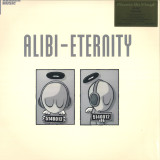
The legendary trance tune "Eternity" was originally released in 2000.
Webmedia "We Rave You" estimates that "Eternity" is "A beautiful mix of pounding dance-floor driven percussion progressing into a beautiful array of dreamy, melodic sounds, this is one of those tunes that sits as one of the benchmarks in trance and lives long in the memory of fans of the genre. An absolutely timeless chord progression runs throughout this tune and the climax is nothing short of epic."
To celebrate the 25th anniversary of Eternity,, Music on Vinyl in cooperation with Armada Music and Armin van Buuren present all 4 versions of Eternity on vinyl for the first time. The 12-inch is available as a 25th anniversary edition of 1500 copies on silver coloured vinyl.
- Listen To Me, Sister
- Haters Gonna Hate
- Ugly Me
- Craterface
- Don't Say It So
- Phone Call
- Hey, Man
- Monsters (In My Brain)
- Outro
- Pro Yarika
Ukrainian Riot Grrl Trio 'Death Pill' Return With 'Sologamy' Their Much Anticipated Second Album. Two years on from their sensational debut, Ukrainian 'Riot Grrls' Mariana, Anastasiia and Nataliia, aka Death Pill are back. And back in full force, locked and loaded with a mighty set of tunes, _ as they put it. 'A bold exploration of personal empowerment'. 'SOLOGAMY' is fierce, heavy and melodic. The album's 10 tracks mark a bold evolution in the band's sound and Death Pill really deliver with ferocity and belief through multiple gear changes and genres as if it were easy. Hardcore, punk, grunge, thrash, riot grrrl, emo, are just some of the touchstones this album moves through, and all with the accomplished ferocity and memorable melody the band introduced on their debut. There are cellos, piano's, sound effects and ornate arrangements that open out their sonic palette, there's a bit of pop and even a bit of prog. But rest assured _ It's all pure 'Death Pill'. Thematically 'Sologamy' is, at its core, a celebration of the self! DP says: "The title, inspired by the concept of marrying oneself, speaks to the importance of making a personal commitment to self-care, happiness, and emotional well-being. In an era where that can sometimes be misconstrued as selfishness, Death Pill pushes back against these misconceptions, inviting listeners to embrace the power of prioritizing their own mental and emotional health." "Each track on the album is quite different from the last, and we see this as a way of accepting and supporting yourself in any emotional state. You arrive in this world alone and you leave it alone. The bottom line is: You're the only person you've got. "Every song on the album is a story that happened to us. Maybe it'll happen to you too. But every story deserves to become a song." "Sologamy" is more than just an album-it's a call to action" The very special LP version is not only frosted clear vinyl, but comes w/ foiled sleeve art, poster, sticker and free dlc! CD is nice too.