Polish sonic alchemist Martyna Basta returns with her third album Winged in Collapse, out on 7K, the exploratory imprint of acclaimed dance/electronic label !K7 Records. A haunting exploration of duality where lullaby meets lament. Blending ambient, electronic, chamber folk and electroacoustic textures with an indie pop sensibility. The classically trained guitarist crafts intimate sound worlds from self-recorded instrumental samples, field recordings, and shape-shifting vocals.
out of Stock
Last delivered 4 months ago available to reorder, subject to availability
Ital Tek's new album 'Mind Abandon' takes a different direction from his recent run of releases, embracing a more human touch in contrast to the dense, world-building drone of his previous albums and film work. This time, he set out to compose away from the computer as much as possible _ working more instinctively and allowing himself to get lost in the music. Alan found the most natural starting point was his own voice, processing vocals into shifting pads and textures. His guitar sits at the centre of much of the record, joined by live, hand-played percussion and effects, often captured in quick, spontaneous performances. The result is an album of spacious, contrasting dynamics, with textures pressing against each other and rhythmic elements fighting to surface from glutinous, layered sound. "It feels like a very introspective record for me," Alan says. "Losing my sense of identity/self as part of the process - the increasing effort to calm my mind and embrace humanity/imperfection in the music. This path made sense as a jumping off point for a lot of the music to be vocal or guitar experiments - singing in ideas and then processing to become less identifiable." The album feels carved and three-dimensional, weaving industrial and shoegaze influences with the darker edges of post-rock. Subtly embedded in its architecture are traces of dubstep dynamics _ a sound that remains part of Alan's DNA. Opening track "The Ice Is Thin" is driven almost entirely by live guitar and keyboard, awash in reverb. On "A Hidden Path," everything apart from the drums stems from processed vocals and guitar, with a fleeting appearance from his daughter's toy ukulele. It unfolds like the beginning of a journey _ vast and cinematic _ nodding to the widescreen tension of Ennio Morricone before building into a towering wall of noise. "Killswitch" disorients with pounding kick drums crafted from twanging acoustic guitar, pushing through layers of static-charged chords. "Undertow" spirals outward on looping guitar figures set against a pulsing Rhodes. "Misted," built around a rare four-to-the-floor beat, uses guitar as a driving rhythmic device, opening with a bassline that wouldn't feel out of place on a The Cure record. "Imagined Landscape" introduces icy keyboard textures that foreshadow the dark closer, "The Pull," where an arpeggiated bassline reminiscent of DAF underpins unnerving, internalised sound design that feels as though it's scratching from within. Mind Abandon closes on a heavy, stalking note _ fresh sounds drawn from the body and the heart.
out of Stock
Last delivered 4 months ago available to reorder, subject to availability
The 1970s were Marion Brown’s most searching decade, a period during which he sought to move beyond the free jazz of the previous era and find more personal approaches to structuring improvisation and composition. After leaving New York for Europe in 1967, Brown began reshaping his music into what he described as “a more deliberate kind of music that had more structure to it,” pacing it so that moods and modes could develop over time. Albums such as In Sommerhausen, Afternoon of a Georgia Faun, Geechee Recollections, and Sweet Earth Flying trace this evolution: rhythmic structures moved to the foreground, harmony receded, and composition became a matter of orchestrating interlocking rhythmic parts as one would polyphonic lines.
Released in 1976, Awofofora is an overlooked but crucial entry in that sequence. At the time, its use of funk and reggae beats, electric guitars, and grooves drawn from contemporary Black popular music led some to misread it as a jazz-rock detour. In retrospect, it is entirely consistent with Brown’s methodology. As he admired in the Art Ensemble of Chicago, the stimulus comes from within the community. Here Brown filters Afro-Caribbean rhythms and funk through his own sensibility, abstracting their structural qualities rather than adopting surface style.
“La Placita,” making its first recorded appearance, layers distinct rhythmic phrases in a manner reminiscent of African drum ensembles, over which Brown and trumpeter Ambrose Jackson spin extended improvisations. The standard “Flamingo” is reshaped through diasporic rhythm and lyrical soloing, while “Pepi’s Tempo” and “Mangoes” harness crisp funk and reggae grooves to generate what Brown called a “manifestation of community” through collective improvisation. Even the overdubbed solo feature “And Then They Danced” reflects his structural thinking, ingeniously re-voicing a duet composition for two alto saxophones performed by one player.
This was the only recording by a short-lived band that briefly polarized audiences during festival appearances in 1976. Yet Brown consistently sought unity across change: different sounds, same principles — rhythm as structure, melody as architecture, collective improvisation, and above all, the primacy of tone. Awofofora stands not as a departure, but as a vivid synthesis of the elements he had been refining since the late 1960s, its grooves and golden alto lines conveying a sound drawn, in his words, “from life and from the world of experience.”
out of Stock
Last delivered 4 months ago available to reorder, subject to availability
妖精の通る道 (The Path Where Fairies Pass) is the debut vinyl release by Reimaki, the duo of Rei Yokoyama (Triggers Flowers, Stakaidan, Lapiz Trio, 新井薬師自警団, and Fujio, Chiko Hige and Rei), and Maki Miura (Tsubamegami, Les Rallizes Dénudés, Shizuka, Fushitsusha, Ohkami No Jikan and Katsurei). The duo has been an understated presence in Tokyo, playing occasional under-the-radar shows and self- releasing a few CD-Rs, but they’ve recently started to break cover, with a recent cassette on UFO Creations, released in support of a late 2024 tour of China. It’s also a welcome reappearance on the scene for both musicians; Miura’s musical history, in particular, is being reevaluated thanks to a recent string of welcome Shizuka reissues.
But the music Reimaki make together is a different thing entirely, much as it shares some psychological and aesthetic interests with both Miura’s and Nokoyama’s other projects. Their sound is split between two main interests – an extension of glacial, deoxygenating psychedelic improvisations, and a deep interest in medieval European music. They’ve also been known to cover compositions by English prog/improv musician Fred Frith. These various elements of the Reimaki aesthetic are all present through 妖精の通る道, from the fragility of the opening “Novel Amor” through to the smeared, hazy textures of the three extended pieces that comprise the album’s flipside.
There’s a beautiful sympathy in these performances, and a generous simplicity, too; you can sense that this music is informed by decades of finding just the right way to say the right thing in the clearest manner possible. Yokoyama and Miura never overstate things; make the statement, play the song, let it hang in the air for a while, and then move on to the next essential expression. The music is unburdened by self- consciousness. Their take on medieval music cuts to the core of melody and melancholy; their psych- improv side is blurred and drifting without ever lapsing into rote generic gestures.
There’s some shared space with other artists who suspend the timeless within the kaleidoscopic possibilities of the psychedelic – Kendra Smith & The Guild of Temporal Adventurers; Emmanuelle Parrenin; Rosina de Peira – and a tangled folksiness that might put listeners in mind of Jan Dukes De Grey, Comus, Current 93, and Tower Recordings. Accompanied by beautiful photography from street photographer Takehiko Nakafuji, who was also personally chosen by Mizutani to document Les Rallizes Dénudés, 妖精の通る道 is a most unique and necessary trip.
out of Stock
Last delivered 4 months ago available to reorder, subject to availability
For Metro Beirut’s latest release, Cem Mo steps forward with his debut vinyl EP, a record that bridges the roots of Chicago and Detroit house with his own deep and textured approach to groove.
Born in Ankara and having taken piano lessons at an early age, Cem drifted from classical into jazz, re-teaching himself harmony and improvisation before finding his way into production. After moving to Amsterdam in 2016, the city’s community and music scene expanded his horizon, shaping a sound that treats producing like improvising, with curiosity for grain, color, and repetition, where subtle shifts make all the difference. Along the way, Cem has released on Handy Records and Rhythm Section, while his project Nowhere People has appeared on Artisjok Records.
This EP brings together a tight circle of artists who deepen its character. Saxophonist Moritz Schuster, known for his work across electronic music and past work with Cem and Malik Kassim, formerly known as Retromigration, delivers a striking, free-flowing performance charged with raw intensity. On “The Hard Way”, Franco Corica joins Cem for a deep, soulful, jazz-leaning moment that feels both reflective and quietly defiant. Finally, longtime friend Malik pulls up with a dancefloor remix that preserves Cem’s melodic sensibility while adding his own loose, resulting in a circular dialogue between two artists who’ve grown side by side.
Artwork: Shahd Issa
out of Stock
Last delivered 4 months ago available to reorder, subject to availability
‘Warm Waves’ first appeared in 2020, ten years after Turn On The Sunlight’s debut self-titled album was first released in Japan. During that decade, Turn On The Sunlight’s Jesse Peterson and Mia Doi Todd welcomed their first child and co-founded a music venue in Los Angeles. When performance spaces were required to close at the start of the pandemic, Jesse’s focus shifted back towards home recording. Since ‘Warm Waves,’ five more Turn On The Sunlight albums have followed (including ‘Drives To The Beach,’ also on Tokonoma Records), all of which can be seen as an expansion of the musical direction set forth on this album.
The group heard on ‘Warm Waves’ consists of musicians who Mia and Jesse were regularly playing with at the time - Sam Gendel, Mitchell Brown, Andres Renteria & Gabe Noel - joined by Laraaji, Arji & Luis Pérez Ixoneztli, making their first recordings together.
The group’s blended signal was routed through Mitchell’s tape loops and modular synthesizer, which contributed to the unique communal sound of these recordings. Further extending this approach, Carlos Niño then reprocessed and reimagined ‘Passing Rain’ with Jamael Dean for his Elemental Beat Mix.
Originally released one week into the official lockdown period, some listeners found the warm, collective sound well-suited for the time of introspection and shifting priorities that followed. Now, in 2026, ‘Warm Waves’ returns on vinyl to once again encourage peaceful contemplation and open-hearted togetherness, in echo of the spirit of its creation.
Credits
Sam Gendel: Saxophone & Electronics on A1, A2, A3, B1, B2, B3
Laraaji: Voice & Zither on A3
Luis Pérez Ixoneztli: Bird Sounds on A1, Aerophones & Water Drums on B2
Mia Doi Todd: Voice on A1, A2, B2, B3; Piano on A3
Jesse Peterson: Guitar, Bass, Organ & Bird Sounds on A1; Organ on A2; Guitar & Bass on A3; Wooden Whistles, Guitar, Ukulele & Piano on B1; Ice Breaking on B3
Andres Renteria: Percussion on A1, A2, B1, B2, B3; Marimba & Percussion on A3
Mitchell Brown: Synthesizers & Magnetic Tape on A1, A2, A3, B2, B4
Gabe Noel: Bass on A2, A3, B1
Arji: Bells & Shells on A3
Carlos Niño: Production / Remix on B4
Jamael Dean: Additional Keyboards on B4
Produced, mixed & recorded by Jesse Peterson
Except B4, produced by Carlos Niño
‘Warm Waves’ first appeared in 2020, ten years after Turn On The Sunlight’s debut self-titled album was first released in Japan. During that decade, Turn On The Sunlight’s Jesse Peterson and Mia Doi Todd welcomed their first child and co-founded a music venue in Los Angeles. When performance spaces were required to close at the start of the pandemic, Jesse’s focus shifted back towards home recording. Since ‘Warm Waves,’ five more Turn On The Sunlight albums have followed (including ‘Drives To The Beach,’ also on Tokonoma Records), all of which can be seen as an expansion of the musical direction set forth on this album.
The group heard on ‘Warm Waves’ consists of musicians who Mia and Jesse were regularly playing with at the time - Sam Gendel, Mitchell Brown, Andres Renteria & Gabe Noel - joined by Laraaji, Arji & Luis Pérez Ixoneztli, making their first recordings together.
The group’s blended signal was routed through Mitchell’s tape loops and modular synthesizer, which contributed to the unique communal sound of these recordings. Further extending this approach, Carlos Niño then reprocessed and reimagined ‘Passing Rain’ with Jamael Dean for his Elemental Beat Mix.
Originally released one week into the official lockdown period, some listeners found the warm, collective sound well-suited for the time of introspection and shifting priorities that followed. Now, in 2026, ‘Warm Waves’ returns on vinyl to once again encourage peaceful contemplation and open-hearted togetherness, in echo of the spirit of its creation.
Credits
Sam Gendel: Saxophone & Electronics on A1, A2, A3, B1, B2, B3
Laraaji: Voice & Zither on A3
Luis Pérez Ixoneztli: Bird Sounds on A1, Aerophones & Water Drums on B2
Mia Doi Todd: Voice on A1, A2, B2, B3; Piano on A3
Jesse Peterson: Guitar, Bass, Organ & Bird Sounds on A1; Organ on A2; Guitar & Bass on A3; Wooden Whistles, Guitar, Ukulele & Piano on B1; Ice Breaking on B3
Andres Renteria: Percussion on A1, A2, B1, B2, B3; Marimba & Percussion on A3
Mitchell Brown: Synthesizers & Magnetic Tape on A1, A2, A3, B2, B4
Gabe Noel: Bass on A2, A3, B1
Arji: Bells & Shells on A3
Carlos Niño: Production / Remix on B4
Jamael Dean: Additional Keyboards on B4
Produced, mixed & recorded by Jesse Peterson
Except B4, produced by Carlos Niño
"All the tracks on this release come from a live concert at Sharmanka, a beautiful and unique museum of kinetic sculptures in Glasgow, and throughout the record, the sounds of the sculptures moving and emitting noises are incorporated into the music performed. The four pieces presented are entirely improvised. There was no discussion beforehand of what instruments or what approach would be taken, and each piece evolved as a musical negotiation as the performers individually made choices about what instruments to play and how to support and meet each other within the unfolding musical narrative. While Macdonald and Ferlaino both share a lifetime of work with their chosen primary instrument, the saxophone, they also share a passion for exploring other instruments and objects for their sonic and socio-creative potential. This record foregrounds both these aspects of their work: they use saxophones, but also incorporate bells, toys, bagpipes, accordions, percussion instruments and voice.
"Raymond MacDonald is a saxophonist and composer with an extensive career in music, cross-disciplinary arts and academia. He has played on and released over 100 albums, toured and broadcast worldwide and has composed music for film, television, theatre, radio and art installations. He is a founding member of the Glasgow Improvisers Orchestra, and his work is informed by a view of improvisation as a social, collaborative, and uniquely creative process that provides opportunities to develop new ways of engaging musically.
"Christian Ferlaino is an Italian saxophonist, bagpipe player, improviser, composer and ethnomusicologist. He composes for ensembles of improvisers, both from the jazz and improvised music scene, as well as for contemporary music ensembles. His work explores the relationships between composition and improvisation, and the expressive potential of improvised music. His musical research also focuses on creatively engaging with the sonic and musical realm of Calabria, with special attention to its performing techniques and approach to sound and music generation."
'Brooklyn-based pianist and composer Eva Novoa presents Eva Novoa Solo (I), her first solo piano recording and seventh album with 577 Records. Recorded at the legendary Sear Sound Studios in Manhattan, the album captures Novoa alone in the studio, embracing the artistic challenge of vulnerability, introspection, and creative freedom that defines the solo piano format.
'After several years working primarily within piano trio settings and other ensemble configurations, Novoa turned inward, embarking on a deeply personal sonic journey. Solo (I) marks a pivotal moment in her artistic evolution and establishes the foundation for a new series of solo recordings.
'An active and respected member of New York’s experimental and creative music community, Novoa prepared extensively for this session through months of solo performances - mostly in Brooklyn - leading up to the recording. These included a standout solo concert at the Brooklyn edition of the New York Forward Festival, where her approach to the solo format fully crystallized.
'On Solo (I), Novoa expands the traditional piano vocabulary. While the grand piano remains her primary instrument, she also performs on Fender Rhodes and electric harpsichord (the latter to be explored further in upcoming volumes), incorporating Chinese gongs, additional percussion, vocals, and even whistling on select tracks. The result is an intensely intimate and sonorous experience - raw, cinematic, and emotionally charged.
'Eva Novoa Solo (I) is the first installment in a planned trilogy of solo recordings. Across six original pieces, Novoa approaches the solo piano format with boldness, rhythmic fire, and fearless energy. Her percussive use of the instrument, expansive dynamic range, and deep command of tone transform the piano into both an emotional soundscape and a cinematic narrative.
'Recorded in Fall 2024, Eva Novoa Solo (I) captures an intimate session and deeply emotive music shaped by mature technical mastery and a highly compositional approach. Novoa dazzles on piano, Fender Rhodes, electric harpsichord, Chinese gongs, vocals, and whistle, revealing an expansive and deeply personal sonic universe.
'Originally from Barcelona, Spain, Eva Novoa has cultivated her distinctive musical voice since childhood. Now firmly rooted in New York, she has performed internationally and collaborated with some of the most adventurous voices in jazz and beyond.'
Very limited numbers, orders will need to be confirmed.
For his new album, Irreparable Parables, Andrew Wasylyk felt a strong desire to write a set of songs featuring an element hitherto rare in his work: the human voice. Equally strong was the conviction that he did not want to sing them himself.
The Scottish multi-instrumentalist and composer set about assembling a group of guest singers, sending out the songs to wherever they were in the world. The vocals were recorded remotely and then, like migrating birds, winged their way back to Scotland. The result is an album of great beauty which, perhaps preeminently in Wasylyk’s work, expresses the vulnerability and resilience of the human spirit.
Six singers appear on the record, represented by six songbirds illustrated on the sleeve by Clay Pipe Music’s Frances Castle. The cuckoo is a nod to Belle and Sebastian’s 2004 single ‘I’m A Cuckoo’, that band’s Stuart Murdoch being the first voice you hear on the new album. When the vocal for ‘Private Symphony #2’ arrived, says Wasylyk, “it was everything that I was looking for and more. But this is Stuart Murdoch. Of course he’s going to make something incredibly beautiful and thoughtful.”
The song lyrics were, for the most part, written by the singers. The music is Wasylyk’s creation. He navigates a sound world that lies somewhere beyond the borders of classical and jazz, ambient and abstract. It is difficult to describe, but easy to understand, which is to say to feel. That is the way Wasylyk’s work is experienced: as a feeling. It takes you back to childhood, perhaps, to feelings of comfort and safety, or to memories of walks at sunrise and sunset, or to the way a shadow falls on a particular field in a particular place at a particular time in your life. This is consoling music. That is why, though pretty, it is not merely pretty. These are songs to shore up the soul.
Wasylyk writes in a room, in his native Dundee, full of “half broken” instruments. He picks these up, plays a little, seeking an idea, a feeling, a door that lies ajar. The musical palette of Irreparable Parables includes brass and woodwind, a six-piece string section, guitar, bass, drums, vibraphone, Mellotron, Fender Rhodes, tape loops, synthesisers and percussion. The strings were arranged by the cellist Pete Harvey, a long-term collaborator.
Among the other guest vocalists are Gruff Rhys of the Super Furry Animals, Saya Ueno from Japan’s Tenniscoats and Peter Brewis from Field Music. Wasylyk himself takes the lead vocal on the title track, though a throat infection and touch of pitch-shifting have altered his singing in a way that even he, having fallen out of love with his own voice, finds acceptable.
The heart of the record can, arguably, be found in two tracks, ‘Love Is A Life That Lasts Forever’ and ‘Spectators In The Absence of God’, sung respectively by Molly Linen and Kathryn Joseph. The former, bright with trumpets, was inspired by the writing of Derek Jarman. “I was feeling deeply upset about the world and wanted to try and write some- thing that was obviously hopeful,” Wasylyk says.
‘Spectators …’ offers an emotional counterpoint. It is an “apocalyptic hymn” that seems to grapple with watching human suffering from afar, too distant to be at physical risk, but experiencing the psychological wounding, and feelings of helplessness, even complicity, that come with constant awareness of other people’s pain. “Kathryn’s a pal, I love her dearly, and she’s a brilliant artist who really feels what she writes,” Wasylyk says. “The cracked tenderness of her voice is spellbinding.”
The album closes with an instrumental piece, ‘Soul Enters The Ocean Sun Climbs Out Of The Sea’, all piano and strings, that offers a sense of resolution and ascension. A good moment, too, for Wasylyk to reflect upon the artistic companionship that he enjoyed while making this record – the songbirds that answered his call: “These humans are incredible at what they do. I’m deeply grateful and feel so lucky. It blows my mind.”
OH! is the powerhouse production duo of Massimo Paramour and Gianluca Pighi. Their
debut album, We Come In Peace (Huldigung Records), is a 19-track odyssey that fuses
the grit of post-punk with the neon hooks of classic Synth-Pop. Recorded entirely on
analog hardware at Italy’s Elfo Studio, the record features a global cast of vocalists
including Local Suicide, Sarah P, and iDA fLO. It is a love letter to the era of Tangerine
Dream and The Human League, reimagined for the modern dancefloor.
We Come In Peace is a masterclass in analog synthesis. Eschewing VSTs and samples for
the tactile power of the Moog Subharmonicon and Sequential Prophet Rev 2, OH! has
crafted a record that is musically audacious yet undeniably radio-friendly. From the dark
disco pulse of "Crush" to the shimmering pop of "Falling," this is a project built on
production flair and collaborative magic.
The Bug Club sind mit einem neuen Album zurück. Seit ihrem letzten Album sind ganze sieben Monate vergangen. Wo waren sie denn? Every Single Muscle, das fünfte Album der Band, ist das dritte, das von Sub Pop, dem angesehenen Label des walisischen Duos aus Seattle, veröffentlicht wird. Seit Very Human Features, das im Juni 2025 rauskam, sind die Lieblinge von BBC 6 Music und KEXP auf ihrer Nonstop-Tour quer über den Atlantik geflitzt, wie sie es früher auf der Severn Bridge gemacht haben. Verschiedene Festivalauftritte im Sommer haben sie davon abgehalten, Urlaub zu machen - wer braucht schon Urlaub, wenn man in Wales lebt? - bis es Zeit war, wieder ins Songwriting-Studio zu gehen. Das ist wahrscheinlich immer noch ein Schlafzimmer in Caldicott, das von einem Windhund namens Ted frequentiert wird (aufgepasst - er taucht in einem der Songs auf). Die Songwriter Sam (Gitarre, Gesang) und Tilly (Bass, Gesang) sind immer bescheiden und behaupten sogar, dass sie während des Songs ,It's Our Manager David" nur ,herumsassen und nichts taten". Das ist eindeutig eine Lüge. Every Single Muscle startet mit ,Miss Wales 2012" voll durch und bezieht sich dabei auf einen Wettbewerb, den sowohl Tilly als auch Sam tatsächlich gewonnen haben. Es ist der erste von vielen Tracks auf dem Album, die weniger als zwei Minuten lang sind, und gibt den Ton für das bisher punkigste Album von The Bug Club an, das sowohl an die kurzen, knackigen Snaps ihrer allerersten Singles als auch an das Grunzen ihrer jüngsten Veröffentlichungen erinnert. Das Album ist so vollgepackt mit Riffs und eingängigen Hooks, dass Sam tatsächlich um Erlaubnis bittet, im zweiten Track ,A Good Day For Dying" ein Solo einbauen zu dürfen. Er bekommt zwei Sekunden Zeit. Glücklicherweise fragt Sam später noch einmal und bekommt mehr Zeit. Auf achtzehn Songs gibt's genug klassisches Gitarrenspiel von Sam und Tilly, um selbst die lautstärksten Bug Club-Fans zufrieden zu stellen und die Behauptung der Band, sie seien ,nur technisch versiert auf ihren Instrumenten", klar zu widerlegen. Dieses Album ist ein Beispiel für effizienten Maximalismus - so wie wenn dein Vater das Auto für den Urlaub vollpackt. Bring mit, was du willst; der Platz ist knapp, aber sie kriegen es irgendwie rein. Zu den Texten: Während ,Very Human Features" hervorragend alltägliche Dinge aufzeigte und ihre Absurdität hervorhob, schauen The Bug Club auf ,Every Single Muscle" genauer auf sich selbst. Allerdings nicht so sehr auf introspektive Weise, sondern eher so, wie ein Außerirdischer ein gefangenes Exemplar auf einer intergalaktischen Trage untersuchen würde. Horrorfilme haben ihr ,Body"-Subgenre, jetzt bekommen auch Garage-Rock-Alben ihres. In einem völlig neuen Sinne des Wortes selbstbezogen, wird die menschliche Form und Verfassung im Laufe des Albums aus jedem Blickwinkel beleuchtet und untersucht. Wir spüren eine surreale Distanz zum Selbst, die den allgegenwärtigen, von Langeweile geprägten Humor hervorbringt; im letzten Song verkündet Sam, dass er ,es satt hat, ein Mensch zu sein". The Bug Club scheinen dem Konzept, ein Mensch zu sein, fast misstrauisch gegenüberzustehen - als wären sie in einem Kostüm aufgewacht, das sie nicht anziehen wollten und nicht ausziehen können. Ist drei die magische Zahl? Wahrscheinlich nicht. Aber Every Single Muscle - das dritte Sub-Pop-Album von The Bug Club - kommt dieser Vorstellung nahe genug, um den durchschnittlichen seltsamen Menschen davon zu überzeugen, dass es so sein könnte.
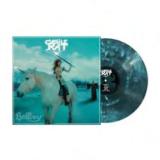
Castle Rat ist eine mittelalterliche Fantasy-Heavy-Metal-Band aus New York, angeführt von „The Rat
Queen“ Riley Pinkerton an der Rhythmusgitarre und als Leadsängerin. Auf ihrer Mission, „The Realm“
zu vergrößern und vor denen zu verteidigen, die es zerstören wollen, wird The Rat Queen unterstützt von
„The Count“ (Franco Vittore) an der Leadgitarre und als Backgroundsänger, „The Plague Doctor“ (Charley
Ruddell) am Bass und „The All-Seeing Druid“ (Josh Strmic) am Schlagzeug. Gemeinsam stellen sie sich
dem unerbittlichen Zorn ihrer Erzfeindin: dem Tod selbst – „The Rat Reaperess“.
Seit ihrer Gründung im Jahr 2019 haben Castle Rat 2024 ihr Debütalbum „Into The Realm“ veröffentlicht
und sind unter anderem bei Festivals wie dem RPM Fest, Hopsmoker, Desertfest, Hellfest und Copenhell
aufgetreten. Über die Jahre hat sich die Band eine treue Fangemeinde aufgebaut, indem sie fesselnde,
interaktive und traditionsreiche Live-Auftritte mit choreografierten Kampfszenen kuratiert und Fans rekrutiert, die sich nach Schwertern und Zauberei, Stoner und Doom, Kampfbabes und Bestien, Frazetta und
Sabbath sehnen.
Ihr zweites Studioalbum, „The Bestiary“, erschien Ende 2025 und wurde von Kritikern und Fans hoch
gelobt, wodurch die Band in bisher unbekannte Bereiche der Heavy-Musik vorstieß.
Josh Mason’s new collection, "Wave Salt +7," emerges from an oblique origin. Unearthed from a dormant hard drive, it documents a set of work sessions only partially recoverable, their original continuity and intent fractured by time and technical failure. What remains is a constellation of mercurial gestures that proves, against all odds, to be entirely consonant with Mason’s ongoing musical concerns.
In a sense, the very condition of partiality proves generative, with elision operating on multiple levels - structural, sonic, and archival - shaping both the music itself and the circumstances of its (re)appearance. Phrases surface only to be truncated or displaced, hovering at the edge of resolution, and transitions are implied rather than fully enacted. Absence functions not as a deficit, but as an important compositional resource.
Central to the album’s sound is a distinctive use of vocoding. Deployed not to simulate vocal presence but as a tool for tonal sculpting, it yields a shifting lattice of smeared harmonics, angular melody, and attenuated noise. Sounds are pressed through one another, their edges softened, shifted, or selectively erased, producing surfaces simultaneously articulated and porous. Rather than reconstructing a lost whole, the album posits a mode of listening attuned to gaps, interruptions, and unstable forms. Even so, in keeping with Mason’s broader practice, this music remains grounded in melodic logic and a distinctly human scale, ensuring that its fragmentary structures register not solely as experiments, but as expressions of proximity and feeling.
Moving Images is a collaborative album by composers Frank Maston and Greg Foat, and marks the inaugural release on Magic Hollow, the new imprint founded by Daniel O'Sullivan. Rooted firmly in the tradition of classic library music, the album draws from the deep, elegant end of the form: vintage keyboards, analogue synthesis, drum machines, and melodic economy, realised with clarity, warmth, and restraint. Recorded in February 2025 at Ritmo Studios in Leysin, Switzerland, high in the Alps, Moving Images unfolds as a suite of finely balanced cues, defined by restraint, texture, and a discerning sense of tone.Swiss bassist Elie Ghersinu features prominently throughout the album, his rich and fluid bass tone providing a continuous anchor. The record draws inspiration from the golden age of European library music, channeling the spirit of De Wolfe and Bruton releases such as Alan Hawkshaw's Frontiers Of Science, the Push Button albums by Karl Jenkins and Mike Ratledge, Edmondo Giuliani's refined orchestrations, and Alessandro Alessandroni's Romance and Drama for Coloursound. Rather than pastiche, Moving Images internalises the discipline and elegance of these recordings, translating their grammar into a contemporary context. Maston Frank Maston's work occupies a space where pop sophistication, orchestral writing, and library traditions intersect. His seminal album Tulips established a distinctive voice defined by melodic confidence and meticulous arrangement, while Panorama, composed for the KPM library, placed him firmly within the lineage of modern composers revitalising the classic library form.Maston's music is characterized by melodic generosity and meticulous arrangement, resulting in work that is elegant, florid, and richly detailed. Greg Foat Greg Foat is a central figure in the contemporary resurgence of library-influenced music, known for his prolific output and deep engagement with the form. A virtuoso pianist, his work bridges jazz, soundtrack composition, and classic library aesthetics, often favouring analogue warmth, strong melodic identities, and ensemble interplay. Foat approaches library music as both a craft and a living language, practical, expressive, and open ended. Moving Images Together, Maston and Foat treat Moving Images as a shared vocabulary rather than a showcase. The album prioritises mood, utility, and suggestion, music designed to serve images and narratives while remaining richly satisfying in isolation. Magic Hollow Magic Hollow is a London based record label founded by composer Daniel O'Sullivan. The imprint is dedicated to contemporary works that engage with library music as a creative practice rather than a fixed genre.Magic Hollow represents a parallel compositional practice in which the sonic self-portrait gives way to openness, economy, and concision.
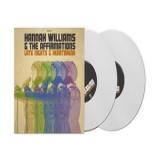
Record Kicks freut sich, die Vinyl-Neuauflage zum 10-jährigen Jubiläum von ,Late Nights & Heartbreak" zu präsentieren, dem Durchbruchsalbum von Hannah Williams & The Affirmations, auf dem der Song zu finden ist, der zum emotionalen Rückgrat von Jay-Zs wegweisendem Album ,4:44" wurde. ,Late Nights & Heartbreak" kam 2016 raus und wurde von Kritikern gelobt. Seitdem ist es ein moderner Soul-Klassiker. Sein Vermächtnis wurde besiegelt, als Jay-Z den Titelsong von ,4:44" komplett um Hannah Williams' Originalaufnahme herum aufgebaut hat. Der Song, der als unverfälschtes Geständnis der Untreue genutzt wurde, war Jay-Zs Antwort auf ,Lemonade" von seiner Frau Beyoncé und machte Hannahs unverwechselbare Stimme einem weltweiten Publikum bekannt. Aufgenommen im Quatermass Studio in London - der Heimat der Kulthelden The Heliocentrics - zeigt ,Late Nights & Heartbreak" Hannah, begleitet von ihrer neu gegründeten Band The Affirmations. Produziert wurde das Album von Malcolm Catto, der für seine Arbeit mit Künstlern wie Mulatu Astatke, Orlando Julius, Floating Points, Quantic, DJ Shadow und Madlib. Das Album wurde komplett analog gemischt und auf Band gemastert und bietet einen rohen, druckvollen und zutiefst eindringlichen Sound. Auf 13 Tracks erkundet ,Late Nights & Heartbreak" viszeralen, kraftvollen Soul mit einem subtilen psychedelischen Touch. Von der eindringlichen ersten Single ,Tame in the Water" bis zum unerbittlichen achtminütigen Groove von ,Still in My Head" zeigt das Album die schiere Kraft und Kontrolle von Hannahs Stimme in ihrer elektrisierendsten Form. ,Woman Got Soul" liefert fünf Minuten mitreißenden, kraftvollen Funk, während tiefgründigere Stücke wie ,Another Sunrise" und ,Your Luck Can Change" einen üppigen, emotionalen Hintergrund für Themen wie Liebe, Lust, Sehnsucht, Wut und Verletzlichkeit bieten. Alle Songs sind Originalkompositionen, die von dem in Bristol ansässigen Kollektiv um The Affirmations unter der Leitung von Musikdirektor James Graham geschrieben wurden - mit Ausnahme einer atemberaubenden, psychedelisch-souligen Neuinterpretation von ,Dazed and Confused", die stark von der Originalversion von Jake Holmes inspiriert ist. Hannah Williams, die schon früh von der verstorbenen Sharon Jones gesegnet wurde, eroberte 2012 mit ihrem Debütalbum ,A Hill of Feathers" die Soul-Szene. Die Single ,Work It Out" wurde ein Indie-Radiohit und ebnete den Weg für eine Karriere, die von moderner Soul-Mythologie geprägt ist. Aufgewachsen in einem musikalischen Haushalt, sang Hannah ab dem Alter von sechs Jahren im Kirchenchor und konnte Noten lesen, bevor sie richtig lesen konnte. Heute ist sie eine unaufhaltsame Kraft - eine Künstlerin mit einem seltenen Talent, wie es nur einmal in einer Generation vorkommt. Zehn Jahre später kehrt ,Late Nights & Heartbreak" in dieser speziellen Jubiläumsausgabe auf Vinyl zurück und bestätigt erneut, warum Hannah Williams & The Affirmations nach wie vor zu den kraftvollsten Stimmen des zeitgenössischen Soul gehören.
Singer/Songwriter Joshua Ray Walker’s made a name for himself with poignant, human portraits of flawed, fascinating characters. Now, on his latest album, Ain’t Dead Yet, Walker’s telling a more personal story – his own. “Human beings are super multi-faceted, and part of the reason I wrote about characters in the first place was because I could explore things about myself that I didn't feel comfortable exploring if I were to admit that it was really about me,” Walker says. “All my songs are about parts of me, I just didn't try to stick them on another fictional character this time.” Beneath the album’s flippant title resides some of Walker’s heaviest storytelling yet. Three years ago, when he started writing Ain’t Dead Yet (his sixth studio album, to be released May 29 via Thirty Tigers/East Dallas Records), Walker hadn’t yet received the cancer diagnosis that rearranged and threatened his life (he currently has a clean bill of health). But that year was still uncommonly fraught with mental, physical, and career stresses. Pulling the songs out of the can to finalize them for the album – including re-writing and re-working almost all the songs – Walker, who was then undergoing and recovering from cancer treatment, was surprised by their prescience.
Miles Davis's Kind of Blue was the number-one jazz album in history. It totaled five songs. There are four more songs from that same historic group, recorded in the same time period and at the same studio. And here they are. These songs deserve to stand on their own with artwork to highlight the quality of the music and that matches the time period of the recording. This is a rare opportunity to have a smash follow-up to what many consider the greatest jazz record ever!
Through the years, these four remarkable performances — all from a single recording session in 1958 and all exemplary of the sound of Miles Davis' legend-loaded sextet of that year — have not been served well. They have been largely treated as add-ons for other compilations. Now, for the first time, Analogue Productions, the audiophile in-house reissue label of Acoustic Sounds, Inc., together with Quality Record Prssings, has deservedly given these tracks a stellar stand-alone release for jazz fans to savor!
The once-in-a-generation lineup that recorded these tunes is the very same that would be immortalized for the enduring classic they would record almost a year later, Kind of Blue. Davis played trumpet sublime with his ensemble sextet featuring pianist Bill Evans, drummer Jimmy Cobb, bassist Paul Chambers, and saxophonists John Coltrane and Julian "Cannonball" Adderley.
Undervalued since their recording, the tunes on this album reflect historial and musical significance. They offer early glimpses into the modal jazz that Kind of Blue would bring to the forefront. Using modes common in modern classical music, rather than the chords of popular songs, Miles had begun to experiment with the new approach on the Milestones recording sessions previously.
Analogue Productions is proud to present Birth of the Blue in an exclusive first-of-its-kind stand-alone release that reflects our reputation for meticulous production, capturing authentic sound with clarity, depth and fidelity that exceeds the audiophile standard. 180-gram 45 RPM double LP pressed at Quality Record Pressings.
Features:
• Pioneering Ensemble: Captured the same rare and short-lived alignment of jazz legends including Miles Davis, John Coltrane, Cannonball Adderley, Bill Evans, Paul Chambers, and Jimmy Cobb, as heard on the historic Kind of Blue.
• Innovative Sound: The session represented a crucial transition in jazz, blending elements of hard bop with early modal jazz influences, showcasing the ensemble's experimentation and forward-thinking approach.
• Undervalued Legacy: Despite its historical and musical significance, the session's recordings have been historically overlooked, often relegated to being add-ons in compilations rather than recognized as standalone masterpieces.
• Modal Jazz Precursor: Offered early glimpses into the modal jazz that would later be fully realized in Davis's groundbreaking album "Kind of Blue," laying the groundwork for future jazz innovation.
• Impact on Artists: Served as a critical point of development and confidence for the musicians involved, particularly Bill Evans, who noted the significant impact of this experience on his own identity and style.
• Historical Context: Occurred at a peak moment in Miles Davis's career, following his signing with Columbia Records and his critical and commercial successes with albums such as ‘Round About Midnight and Miles Ahead.
A unique collaboration between Industrial Breakbeat pioneers Meat Beat Manifesto (Jack Dangers) and the undisputed king of Japanese noise, Merzbow (Masami Akita). "We may not speak the same language, but in the vortex of sound, there's a raw, primal understanding that transcends words. Noise can be art, a visual representation could maybe be Jackson Pollock's No 5, a plexus of chaos redefining what music can and could be. Pushing boundaries with Masami wasn't just a musical adventure, it was a masterclass in sonic anarchy"
(Jack Dangers, January 2024). 'Extinct' sees the duo take listeners on a transcendental journey, focusing on the dismantling of beat and structure and recycling the result through layers of beautifully crafted noise and feedback loops, giving birth to new rhythms buried deep in the dirt. The 20 minute opener 'FLAKKA' takes constantly evolving breakbeats which are gradually broken down over time, driven through a filter of harsh noise, destroying the old to give birth to the new. Raw and unforgiving, the track is a behemoth that blends mutant forms of broken beats and hints of dub, creating rhythmic noise of the highest calibre in the process. 'Burner' takes the record to its ultimate conclusion, the initial drum beat broken down so that it is barely recognisable. Pulsating distortion and high end audio fragments bleed into each other as the track lumbers forth and destroys everything in its path before slowly unravelling, degrading and falling apart. A harrowing yet somewhat cathartic trip through walls of harsh industrial noise and audio degradation, 'Extinct' is a masterful pairing of artists who have delivered something truly unique yet totally relevant. Don't sleep on this one! (Todd Robinson / Subunit) Composed, recorded and produced November 2023 - January 2024 by Jack Dangers and Masami Akita.
„Sayin’ What I’m Thinkin’“ erschien im Februar 2021 und wurde von vielen als eines der besten Alben des
Jahres gefeiert. Ganz im Sinne des Titeltracks ist das gesamte Album von Authentizität, Ehrlichkeit und
Tiefsinn geprägt – Eigenschaften, die Laineys Charakter widerspiegeln. Das Album enthält ihre Nummer-
1-Radio-Single „Things A Man Oughta Know“, die vom Magazin „Taste of Country“ als „Song, den jeder
Country-Fan gehört haben muss“ bezeichnet wurde.
The Beths occupy a warm, energetic sonic space between joyful hooks, sun-soaked harmonies, and acerbic lyrics. Their debut album Future Me Hates Me, forthcoming on Carpark Records, delivers an astonishment of roadtrip-ready pleasures, each song hitting your ears with an exhilarating endorphin rush like the first time you heard Slanted and Enchanted or 'Cannonball.'
Front and center on these ten infectious tracks is lead singer and primary songwriter Elizabeth Stokes. Stokes has previously worked in other genres within Auckland's rich and varied music scene, recently playing in a folk outfit, but it was in exploring the angst-ridden sounds of her youth that she found her place. 'Fronting this kind of band was a new experience for me,' says Stokes. 'I never thought I had the right voice for it.'
From the irresistible title track to future singles 'Happy Unhappy' and 'You Wouldn't Like Me,' Stokes commands a vocal range that spans from the brash confidence of Joan Jett to the disarming vulnerability of Jenny Lewis. Further honeying Future Me Hates Me's dark lyrics that explore complex topics like being newly alone and the self-defeating anticipation of impending regret, ecstatic vocal harmonies bubble up like in the greatest pop and R+B of the '60s, while inverting the trope of the 'sad dude singer accompanied by a homogenous girl-sound.'
All four members of The Beths studied jazz at university, resulting in a toolkit of deft instrumental chops and tricked-out arrangements that operate on a level rarely found in guitar-pop. Beths guitarist and studio guru Jonathan Pearce (whose other acts as producer include recent Captured Tracks signing Wax Chattels) brings it all home with an approach that's equal parts seasoned perfectionist and D.I.Y.
'There's a lot of sad sincerity in the lyrics,' she continues, 'that relies on the music having a light heart and sense of humor to keep it from being too earnest.' Channeling their stew of personal-canon heroes while drawing inspiration from contemporaries like Alvvays and Courtney Barnett, The Beths serve up deeply emotional lyrics packaged within heavenly sounds that delight in probing the limits of the pop form. 'That's another New Zealand thing,' Stokes concludes with a laugh. 'We're putting our hearts on our sleeves—and then apologizing for it.'
Full colour sleeve with rare use of the Italian only movie artwork.
A few years ago I issued the soundtrack to Virgin Witch, the score to an underground 1971
kinky British London / posh stately home horror that seemed more like an excuse to show as
many racy cars and devilish nude scenes as possible. This fleapit film was written by Hazel
Adair - the writer of legendary long-running TV series Crossroads, and her business partner at
the time Ken Walton (yes, the wrestling commentator). Virgin Witch was cheap and successful
enough to allow the whole team another go at the sexploitation game through their newly
formed production company Pyramid Films. Sex Clinic was the quick follow up; I say Sex Clinic,
the initial cinematic title was Clinic Xclusive, which was also called With These Hands, which
was also called La Masseuse Perverse. This film also came out in 1971 and they used the
musical services of Ted Dicks once again. Dicks had originally met Adair in 1960 through a cast
member performing in his first musical, Look Who’s Here.
If you are not aware of the great Ted Dicks, his quick bio reads as follows: born London 1928,
was educated through both grammar and art school and after National Service flirted with both
art and music. He worked with a series of very talented song writers - including Barry Cryer -
finally sparking properly with writer Myles Rudge. Together “Dicks and Rudge” had a hit with
their musical And Another Thing which starred Lionel Blair and Bernard Cribbins. Their talents
were spotted by producer George Martin and they followed this show success up with a series
of truly classic novelty pop chart hits, again with Cribbins - “Hole In The Ground” and “Right Said
Fred”. If you are not aware of the classic A Combination Of Cribbins LP they wrote, go and find
it. It includes “Gossip Calypso”, a triumph of novelty song writing that somehow manages to
squeeze in the lyric “Oxy-aceteline welder”, and is possibly the only song ever to do so. They
wrote further hits (winning an Ivor Novello for “A Windmill In Old Amsterdam”) and were in
constant demand throughout the 1960s and 1970s, working with artists such as Petula Clark,
Matt Munro, Bruce Forsyth, Topol and Kenneth Williams.
By the late 1960s Ted had also penned a handful of instrumental library cues including the
classic “Busy Boy” for the Standard Library company that got picked up as the theme for the
brilliant TV kids fantasy show Catweazle in 1970. It’s a light, kooky, hummable tune that lodged
its way deep in the mind of any child under 12 over the following decade.
When I first got the reels for Sex Clinic I’m not sure what I was sonically expecting - much of
Dicks’ music blends musical hall with jazz and some brilliant novelty - and maybe I was also
imagining a different kind of film to the one that was actually made. Turns out Sex Clinic is more
like a sleazy drama than an erotic adventure - I’ve read reviews that call it “nothing more than a
naked Crossroads”. Even knowing this I had no idea what the music was going to sound like. So
I was thrilled when it was almost the musical opposite of what I imagined. We have here a great,
easy jazz score. Not a proggy, wild or free jazz score, this is lightish, vibes-led, bluesy and really
charming, which gets slightly more lively when the naked pool party sequence kicks off, and
drifts effortlessly into more seductive midnight moods as and when required. And having now
seen the film, musically it’s unusually at odds with the on screen nudity, blackmail and revenge.
But like most of Ted’s work, the music sticks in your mind. Unlike the film. Which I suggest you
try and avoid unless you like watching plump randy middle aged men with terrible hair pursue
women half their age.
TRACKLISTING: There were no notes or titles to any of the cues on the reels. So I have just simply labeled the sides as per the reels that came in:
In the culinary arts, it’s easy to overcomplicate the final product. Theme, presentation, texture…they’re important but should work to complement the raison d'etre of any food. At the end of cooking a dish, it should taste good and feed people. Some dishes, like barbeque or provoleta, resist the tendency towards hollow showmanship. One of their expressions can be more or less aesthetic, but the first purpose is to be simple and tasteful. Argentinian provoleta goes so far as to blur the line between ingredient and dish. It relies on the inherent flavor of provolone being heated at the right speed for the perfect amount of time. You can add garlic or chives or red pepper to the slice, but ultimately they serve to bring out an essence that’s already there.
Los Angeles’ Cousin Feo has developed his rapping acumen in the five years since releasing Provoleta, but returning to the project today shows that he always had the penmanship, grit and delivery that christens an emcee worthy of remembrance. Like the bubbles rising up in the appetizer that is the album’s namesake, Feo showed that true profundity is found in the simple gestures.
Since dropping the project in 2019, Cousin Feo has expanded his vision of a world where hip-hop and football, two proletarian art forms, mingle in creative and compelling ways. He has collaborated across multiple continents, chronicled football histories, aided in canonizing legends, kept the flames high in age-old rivalries and constantly forced his audience to search for the last time they heard bars this hard. In anyone else’s hands it would be too great a task.
The maturity he showed on Provoleta wasn’t nascent, it was an inherent quality forcing itself to the surface. The songs refract his experience as a working class Angeleno through the archetypes of Argentinian football legends. The kernel that unites the two worlds is hustle. When Feo was coming up, missteps had greater consequences than crashing out in the group stage and street deals had the weight of a Boca-River Plate match.
Each track uses slightly different ingredients to let Feo’s underlying talent shine. “Maradona” feels salvific, fitting for a football legend canonized from the Andes to the Alps and a Los Angeles rapper looking to inspire similar hope in the neighborhoods that raised him. On “Di Stefano” Feo massages the instrumental with the same composure of the late forward, until he pierces through the headphones like one of Di Stefano’s arrows. It’s also refreshing to hear a song celebrating Messi before his meme-ification, focusing on the universal truths contained in his footballing talent instead of using number 10 as a stand-in to make a point in a fruitless argument. And he still finds space to show deference to Batistuta, Kempes and other members of the Argentinian pantheon who’ve been erased from the popular imagination by the national team's contemporary success.
Real ones know that true players, true rappers, and true artists will always stand the attacks of time and consensus. In Provoleta’s first verse, Cousin Feo says he moves with the hand of God. Maybe one day he’ll tell the whole truth and let us know how he was able to wrestle the pen away too. Limited edition of 300 hand-numbered copies.
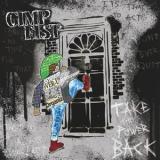
Kaum zu fassen - Gimp Fist sind nun schon seit 21 Jahren eine feste Größen der britischen Oi!-Szene. Das Trio hat sich als eine der angesehensten Street-Punk-Bands Großbritanniens etabliert, mit einem einzigartigen Songwriting-Stil fernab der üblichen Klischees, treffsicherem Gespür für mitreißende Songs und eigenem Sound, in Europa ebenso beliebt wie in Großbritannien. Und ihre Street-Punk-Hymnen füllen jedes Jahr den Empress Ballroom mit einer Kapazität von 3.000 Plätzen beim Rebellion Festival in Blackpool. Die Band stammt ursprünglich aus Bishop Auckland, County Durham, und hat seit ihren Anfängen im Jahr 2005 elf Alben, ein halbes Dutzend Singles und drei EPs veröffentlicht. Auch wenn es nicht immer leicht ist auch Anerkennung bei der größtenteils auf London fokussierten Musikpresse zu finden, haben sie doch eine treue Anhängerschaft in UK und ganz Europa gewonnen und sind vor allem dem Publikum des Rebellion Festivals bekannt, wo sie seit 2008 jedes Jahr auftreten. Zwei Jahre nach dem letzten Album "Losing Streak" erscheint nun das 12. Album "Take the Power Back", produziert von Jamie Wilson, mit insgesamt 15 brandneuen Titeln. "Wir haben das Gefühl, dass wir auf diesem Album viele unserer Einflüsse und Stile miteinander verschmolzen haben, ohne dabei das typische Gimp-Fist-Feeling zu verlieren", sagt Sänger und Gitarrist Jonny. Von der Auseinandersetzung mit der aktuellen Wirtschaftslage und den Kämpfen der Arbeiterklasse in Songs wie "Give Me A Reason" bis hin zu den angstgeladenen, an die frühen Rancid erinnernden Tiraden gegen Faschisten und Tyrannen in "Waiting For The Punchline". Mit einer Mischung aus Street-Punk, Ska und Dirty Reggae wird "Take The Power Back" alle alten Fans begeistern und ohne Frage neue Anhänger gewinnen. Als Digipak CD, LP klassisch schwarze (limitiert) oder zweifarbiges "Atomic" Vinyl erhältlich.
Kaum zu fassen - Gimp Fist sind nun schon seit 21 Jahren eine feste Größen der britischen Oi!-Szene. Das Trio hat sich als eine der angesehensten Street-Punk-Bands Großbritanniens etabliert, mit einem einzigartigen Songwriting-Stil fernab der üblichen Klischees, treffsicherem Gespür für mitreißende Songs und eigenem Sound, in Europa ebenso beliebt wie in Großbritannien. Und ihre Street-Punk-Hymnen füllen jedes Jahr den Empress Ballroom mit einer Kapazität von 3.000 Plätzen beim Rebellion Festival in Blackpool. Die Band stammt ursprünglich aus Bishop Auckland, County Durham, und hat seit ihren Anfängen im Jahr 2005 elf Alben, ein halbes Dutzend Singles und drei EPs veröffentlicht. Auch wenn es nicht immer leicht ist auch Anerkennung bei der größtenteils auf London fokussierten Musikpresse zu finden, haben sie doch eine treue Anhängerschaft in UK und ganz Europa gewonnen und sind vor allem dem Publikum des Rebellion Festivals bekannt, wo sie seit 2008 jedes Jahr auftreten. Zwei Jahre nach dem letzten Album "Losing Streak" erscheint nun das 12. Album "Take the Power Back", produziert von Jamie Wilson, mit insgesamt 15 brandneuen Titeln. "Wir haben das Gefühl, dass wir auf diesem Album viele unserer Einflüsse und Stile miteinander verschmolzen haben, ohne dabei das typische Gimp-Fist-Feeling zu verlieren", sagt Sänger und Gitarrist Jonny. Von der Auseinandersetzung mit der aktuellen Wirtschaftslage und den Kämpfen der Arbeiterklasse in Songs wie "Give Me A Reason" bis hin zu den angstgeladenen, an die frühen Rancid erinnernden Tiraden gegen Faschisten und Tyrannen in "Waiting For The Punchline". Mit einer Mischung aus Street-Punk, Ska und Dirty Reggae wird "Take The Power Back" alle alten Fans begeistern und ohne Frage neue Anhänger gewinnen. Als Digipak CD, LP klassisch schwarze (limitiert) oder zweifarbiges "Atomic" Vinyl erhältlich.
Kaum zu fassen - Gimp Fist sind nun schon seit 21 Jahren eine feste Größen der britischen Oi!-Szene. Das Trio hat sich als eine der angesehensten Street-Punk-Bands Großbritanniens etabliert, mit einem einzigartigen Songwriting-Stil fernab der üblichen Klischees, treffsicherem Gespür für mitreißende Songs und eigenem Sound, in Europa ebenso beliebt wie in Großbritannien. Und ihre Street-Punk-Hymnen füllen jedes Jahr den Empress Ballroom mit einer Kapazität von 3.000 Plätzen beim Rebellion Festival in Blackpool. Die Band stammt ursprünglich aus Bishop Auckland, County Durham, und hat seit ihren Anfängen im Jahr 2005 elf Alben, ein halbes Dutzend Singles und drei EPs veröffentlicht. Auch wenn es nicht immer leicht ist auch Anerkennung bei der größtenteils auf London fokussierten Musikpresse zu finden, haben sie doch eine treue Anhängerschaft in UK und ganz Europa gewonnen und sind vor allem dem Publikum des Rebellion Festivals bekannt, wo sie seit 2008 jedes Jahr auftreten. Zwei Jahre nach dem letzten Album "Losing Streak" erscheint nun das 12. Album "Take the Power Back", produziert von Jamie Wilson, mit insgesamt 15 brandneuen Titeln. "Wir haben das Gefühl, dass wir auf diesem Album viele unserer Einflüsse und Stile miteinander verschmolzen haben, ohne dabei das typische Gimp-Fist-Feeling zu verlieren", sagt Sänger und Gitarrist Jonny. Von der Auseinandersetzung mit der aktuellen Wirtschaftslage und den Kämpfen der Arbeiterklasse in Songs wie "Give Me A Reason" bis hin zu den angstgeladenen, an die frühen Rancid erinnernden Tiraden gegen Faschisten und Tyrannen in "Waiting For The Punchline". Mit einer Mischung aus Street-Punk, Ska und Dirty Reggae wird "Take The Power Back" alle alten Fans begeistern und ohne Frage neue Anhänger gewinnen. Als Digipak CD, LP klassisch schwarze (limitiert) oder zweifarbiges "Atomic" Vinyl erhältlich.
New album of one of the biggest Reggae/Dub french soundsystem starring MacGyver, Rooty Step & Pupajim (who worked with Alpha Steppa, Biga Ranx, High Tone, Mungo's Hi-Fi ...).
Since their inception at start of the 2000s, Stand High Patrol have rocked sound systems to their own riddim, assimilating and re-purposing the codes of the genre in their own unique style. From tiny bars in Brittany to huge festival stages, on independent radio or across national airwaves, the crew have quietly trod their own path, never compromising their core value of independence. Connoisseurs have long recognised Stand High’s credentials both as a dub group and a leading sound system, but they stand out from the crowd because of their ability to deliver the unexpected, whether live or on record. Their ability to draw such a diverse audience is testament to this atypical approach to making music.
In 2020, almost 20 years since their humble beginnings, the collective presents their fifth album, “Our Own Way”. As with their first two albums “Midnight Walkers” and “Matter Of Scale”, now considered as classics in their genre, this new opus asserts itself as the latest representation of the crew’s versatile approach to crafting sound. Their music, a blend of its own known as “Dubadub”, has always borrowed influences from multiple sources, and over the course of their career their roots in dub and reggae have intertwined with hip-hop, jazz, new wave, trip-hop and numerous other genres. The ‘Dubadub Musketeers’ have never ceased experimenting, forever seeking to increase the sonic territory they cover, day after day. Both live and recorded, they’ve made it a point of honour to never offer up the same thing twice. Any resemblance that “Our Own Way” might bear to those first two albums is a consequence of this obvious creative continuity, rather than of going “back to basics”.
In contrast to the last two Stand High Patrol records, the hip-hop inspired “The Shift”, or the Bristol indebted “Summer On Mars”, “Our Own Way” doesn’t have a unifying concept or theme. Rather than being limited to a single aesthetic, the LP pays respect to the entire canon of Jamaican music, all unified under Stand High’s inimitable production values. With the wealth of experience gained during the recording of their last two records, the collective decided to aim for a freer project, letting themselves be guided by their own music and their own instincts. The end result is a musical portrait of what Stand High Patrol is in the present moment.
The tracks that make up the new LP burst out of the studio, each born out of unbridled, impulsive creativity. Previously unheard compositions and specially re-tooled dub plates have been assembled into a tracklist that shifts and moves like a classic Dubadub Musketeer live set. Each step of the process has been refined by years of practice : composition, effects, and the final mix. Throughout “On Our Way”, the brutal dub stepper, though still a favourite for sound system sessions, is noticeable by its absence. Instead, it’s the full weight of the crew’s reggae heritage that’s expressed in the mix. It's not just the depth and weight of each tune that strikes the listener, but also the spaces heard between the notes that grab and hold their attention.. The sense of a trip, whether musical, internal or geographic, is omnipresent throughout the LP, linking each track to those before and after. “Our Own Way” finds Stand High Patrol exploring as usual, yet also narrating their journey as they’ve rarely done before.
out of Stock
Last delivered 4 years ago available to reorder, subject to availability
Back in 2023, Bruce was approached by a band of young and ambitious lads, who wanted him to mix their debut album 'Nacre'. Being fans of his music, they hoped to utilise his renowned, club-informed and emotive sound design to add a shade of hypnotism and psychedelia to their singular strand of post-rock. The band of course were Quade, and the union proved to make perfect sense: Bruce excelled in gracefully fulfilling the band's vision, sealing their relationship for projects to come.
A couple years on, both Quade and Bruce had really proved the scope of their abilities: the sophomore album 'The Foel Tower' won the hearts of fans and critics across the board, who celebrated its "gorgeous" and "tender" sound to great acclaim. The world they had built clearly stood defined and dignified, though at the same time, Bruce couldn't help but wonder if there was more to be said. Besides, the sheer abundance of emotion and rich textures therein, suggested a great deal of potential for further exploring. So with the band’s blessing, he embarked on versioning the album.
Bruce was off the leash: total freedom leant him the ability to dub in wild style, weaving and wrestling with drum, bass et al, connecting to the arrangements' true feelings and expanding them to full frame. The "doomer sad boy, ambient-dub, folk, experimental post-rock" of the original, was blown into a whole new, hypnotic realm: through rattling analogue distortion and huge spaced out effects, Bruce's efforts stand as an exploding supernova of dub and noise, refracted through the band's themes of grief, beauty and the great British countryside.
To be released on his label Poorly Knit, this remix album once again proves Bruce's deft of touch and skill in reworking material. Maximising the sonic potential of such a promising and talented band he marks his personal contribution towards what will surely continue to be a fulfilling and illustrious musical journey for Quade.
Available digitally and on super limited cassette (50 copies)
ounded in 1992 by the larger than life, Scottish punk-rock poet laureate, Mr Paul McKenzie, this merry band of miscreants has spent more than three decades circumnavigating the globe to bring the McKenzies gospel to an ever-expanding throng of rebels, scallywags and ne'er do wells. There's not many bands that can boast of a 30+ year career as staggeringly adventurous, wildly tempestuous and utterly death-defying as The Real McKenzies. It would be a serious mistake to write them off as just another Celtic punk band (they’ve been around longer than the Dropkick Murphys after all). They are an unstoppable juggernaut of touring mayhem. A ferocious troupe of insanely talented minstrels, storytellers and entertainers melding traditional acoustic and electric instruments to create a sound like no other. Their list of accolades is long. From sharing the stage with the likes of NOFX, Rancid, Flogging Molly, Metallica and Shane McGowan to appearing in film, books and video games to early releases with the almighty Fat Wreck Chords, their legendary status only continues to grow. On Yer Bike is an absolute beast of an album. A newly revitalized and laser-focused Paul McKenzie has never sounded better and his longtime bandmates have never been tighter. Boasting thirteen epic tracks, including the Sawney Bean trilogy (a trio of songs about Scotland's most infamous cannibal highwayman), the songs rage across topics including but not limited to love, literacy, historical sagas, eating sardines with your mother and, of course, cannibalism. Soaring bagpipes, heart pounding percussion and ultra melodic shoutalong Celtic punk rock are the orders of the day and are delivered piping hot from one of the most respected and adored pioneers of the genre.
CQ Wrestling are today announcing their sophomore album Resistance for release on 29th May.
There’s a saying that simmers beneath the sonic assault of Resistance, the new album from CQ Wrestling. “Nothing changes if nothing changes,” recites Jake Mac, who knew of this idiom before 2024; before the loss that turned his and bandmate Charlie Woods’ worlds upside down; before the “year of complete mayhem, mess and chaos” that followed. From the outside looking in, the Brighton-based duo may have seemed on the top of the world. Then known as Chappaqua Wrestling, the exhilarating energy of their debut album Plus Ultra had seen the band lauded as future British music scene conquerors. The pair had a major label record deal to their name. Sweat dripped from the walls at headline show after headline show, in front of rapturous fans – and yet something felt amiss.
“We were selling out tours and people were loving the music, but honestly, we just felt f****** lost,” says Woods. Then tragedy struck. “It completely derailed us,” says Mac, recalling how the sudden death of his father – “a big part of the project” since its inception – sank them both into a period of grief and introspection. Amid the mourning emerged a desire to transform.
RESISTANCE is an album forged in the embers of personal tragedy and hammered into shape by desire, resilience and resolve. Detailing a metamorphosis, new single ‘Pacifico’ draws a line in the sand for the band as they recover from a time of tremendous upheaval to find themselves following their own creative compass, with renewed vitality.
"This album is a collection of songs above all about trying to find joy and hope in dark times”.
Ten years ago, Adolph Robert Thornton Jr. planted his flag. Released on February 19, 2016, King of Memphis wasn't just a debut studio album; it was a bold declaration of independence and a flawless blueprint for self-made success. To celebrate a decade of this foundational Southern rap masterpiece, Paper Route Empire is honoring Young Dolph’s legacy with a series of exclusive, limited-edition 10th Anniversary vinyl variants.
Before King of Memphis, Dolph had already built a massive underground following through a relentless run of mixtapes. But this official debut elevated him from a local hero to a national powerhouse.
By bypassing the major label system and releasing the project entirely through his own Paper Route Empire (PRE), Dolph proved that undeniable talent, relentless hustle, and business savvy were all you needed to take the crown. The album peaked in the Top 50 of the Billboard 200, an incredible feat for a fiercely independent artist at the time, and cemented his status as a CEO who called his own shots.
King of Memphis is all killer, no filler. Over 11 tracks, Dolph's signature slow-flow delivery and larger-than-life charisma glide over heavy-hitting, trap-defining production from a legendary lineup of producers, including Mike WiLL Made-It, Zaytoven, TM88, and Cassius Jay.
With zero guest features, the project relies entirely on Dolph’s magnetic presence. From the motivational hustler's anthem "Get Paid" to the menacing confidence of "Let Me See It" and "Royalty," the album plays like a victory lap for a self-made king.
Das eindringlich schöne Album "On Leaving" von Nina Nastasia kam genau zum richtigen Zeitpunkt und zeigt die supertalentierte Singer-Songwriterin aus New York in Bestform. Nina Nastasias seltene Gabe, ihre Stimme, ist eine intime, beflügelnde Präsenz, die dein Herz entweder zum Stillstand bringen oder zum Schmelzen bringen kann, die kraftvoll aufsteigen und sich drehen oder dich ganz sanft streifen kann und dir plötzlich Gänsehaut beschert. Mojo kommentierte ihre Fähigkeit, "die Luft aus dem Raum zu saugen". Ihre Songs sind gleichzeitig hart und zerbrechlich, knistern und glühen vor intimer emotionaler Ehrlichkeit und einer dunklen Unterströmung. Anlässlich seines 20-jährigen Jubiläums im Jahr 2026 ist On Leaving zum ersten Mal seit fast zwei Jahrzehnten wieder auf Vinyl erhältlich. Diese Neuauflage von On Leaving wurde 2025 von Josh Bonati für Vinyl remastered und ist auf limitiertem, klarem, farbigem Vinyl gepresst.
■ Human is a deeply “human” cover album by Gota Nishidera (NONA REEVES), focusing on the world of 80s–90s Japanese kayokyoku and new music.
Following his well received 2023 solo cover album Sunset Rain, this new release features an unprecedentedly wide ranging selection of songs spanning works
by Kyohei Tsutsumi, Reiko Yugawa, and Eiichi Ohtaki, all of whom Nishidera either learned from directly or profoundly respects for their devotion to the study and
practice of pop music.
■ After experiencing major success across Asia including two China tours with NONA REEVES and solo performances in Taiwan Gota Nishidera revisited the essence
of Japanese pop music from a renewed perspective. The result is a meticulously crafted collection of eight ultimate tracks, tightly packed with the charm of Japanese
pop. Born in 1973, Nishidera absorbed the new wave of Japanese music that began in 1980 in real time, and here he updates that experience for the present day.
With arrangements and vocals filled with deep affection for the originals, he offers a modern and fresh reinterpretation of these classics.
■ The album is produced by long time collaborators Yuzuru Tomita, Tomoya Yamagata, and rising talent Yudai Ohi. On the track “Woman (from W’s Tragedy)”,
Nishidera performs a duet with Megumi Mashiro of Hicksville, a vocalist he has worked with for many years on NONA REEVES recordings and live shows.
■ Mastering is handled by ambient/balearic maestro Calm, delivering a stunning final sound.
■ The jacket design is created by Keita Fukumi, producer of the YouTube channel Gota Nishidera Channel NGC. Shot at Nishidera’s local barbershop in Sangenjaya
during his usual haircut, the artwork vividly captures the “human” essence at the heart of this project."
Zum 60-jährigen Jubiläum von Raumpatrouille - Die phantastischen Abenteuer des Raumschiffs Orion erscheint die siebte Veröffentlichung unserer Peter-Thomas-Reihe als erweitertes, klanglich überarbeitetes Reissue auf CD und LP. Der ikonische Soundtrack gilt bis heute als einer der prägendsten der deutschen TV-Geschichte - futuristisch, rhythmisch, wagemutig. Peter Thomas verlieh der Serie eine einzigartige Klangsignatur, deren Strahlkraft weit über das Bildschirmformat hinausreicht. Der legendäre Vocoder-Countdown und Titelthema wurden zahllos gesampelt, gecovert und neu interpretiert - u. a. von Pulp, Pizzicato Five, Die Fantastischen Vier und Mousse T. In Zusammenarbeit mit Philip Thomas konnten vier bislang unveröffentlichte Stücke aus dem Nachlass des Komponisten ergänzt werden. Die LP basiert auf der Philips-Originalausgabe von 1966, erweitert um die neuen Titel - und enthält ausschließlich Musik, die in der Serie zu hören war, mit einer Ausnahme: "Bolero on the Moon Rocks", dessen Sample Pulp 1998 zu This Is Hardcore inspirierte. Die CD bietet über 60 Minuten Originalmusik, inklusive rarer Outtakes, ohne später hinzugefügtes Füllmaterial.
Zum 60-jährigen Jubiläum von Raumpatrouille - Die phantastischen Abenteuer des Raumschiffs Orion erscheint die siebte Veröffentlichung unserer Peter-Thomas-Reihe als erweitertes, klanglich überarbeitetes Reissue auf CD und LP. Der ikonische Soundtrack gilt bis heute als einer der prägendsten der deutschen TV-Geschichte - futuristisch, rhythmisch, wagemutig. Peter Thomas verlieh der Serie eine einzigartige Klangsignatur, deren Strahlkraft weit über das Bildschirmformat hinausreicht. Der legendäre Vocoder-Countdown und Titelthema wurden zahllos gesampelt, gecovert und neu interpretiert - u. a. von Pulp, Pizzicato Five, Die Fantastischen Vier und Mousse T. In Zusammenarbeit mit Philip Thomas konnten vier bislang unveröffentlichte Stücke aus dem Nachlass des Komponisten ergänzt werden. Die LP basiert auf der Philips-Originalausgabe von 1966, erweitert um die neuen Titel - und enthält ausschließlich Musik, die in der Serie zu hören war, mit einer Ausnahme: "Bolero on the Moon Rocks", dessen Sample Pulp 1998 zu This Is Hardcore inspirierte. Die CD bietet über 60 Minuten Originalmusik, inklusive rarer Outtakes, ohne später hinzugefügtes Füllmaterial.
Caçador de Horizontes is the fourth and most ambitious album by Brazilian composer and songwriter Raphael Gimenes. Conceived as an expansive double album, it brings together voice and acoustic guitar with richly arranged strings, brass and a wide palette of percussion, engaging with the tradition of Brazilian songwriting while evoking the harmonic sensibility of artists such as Milton Nascimento, alongside elements of modern classical music.
Inspired by travels across the American continent, the album moves between intimate moments and large-scale instrumental passages, creating a cinematic and emotionally resonant atmosphere. Produced by Lucas Delacroix, Alexandre Andrés and Gimenes himself, it features more than 30 musicians from different countries and was supported by the Danish Arts Foundation (Statens Kunstfond).
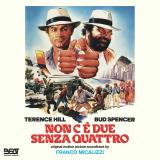
This expanded edition presents the soundtrack with previously unreleased material not included on the original vinyl release, offering a more complete overview of Micalizzi’s work. The package is further enhanced by an 8-page full-color booklet featuring original artwork, extensive liner notes on the film, direction, and score by journalist Fabio Babini, as well as a personal contribution from Franco Micalizzi himself.
Composed by Maestro Franco Micalizzi for the cult 1984 film Non C’è Due Senza Quattro, starring the iconic duo Bud Spencer & Terence Hill in a rare fourfold role, this soundtrack captures the playful spirit and global flair of the film.
Micalizzi delivers a vibrant and rhythm-driven score, infused with warm Latin influences, breezy melodies, and an unmistakable sense of lightness. The result is a richly entertaining listening experience that perfectly mirrors the film’s humor, energy, and escapist charm.
A joyful and sun-soaked addition to any collection, this release stands as both a nostalgic tribute and a testament to Micalizzi’s enduring legacy in Italian cinema soundtracks—best enjoyed, perhaps, with a well-mixed cocktail in hand.
Maybe it was inevitable that Vilhelm Bromander and Fredrik Rasten would find each other. A symbiotic musical alliance of suggestive combinatory magic that stretches back to the interstitial two day space that separates their dates of birth and manifests here as the movement between ‘perfect’ or ‘just’ intonation and the ragged, psychoactive energy of the slippages from and towards that togetherness that render otherwise simple patterns or generally understood repetitions as wildly other and alive.
Astral Twins shares ‘twin’ works by each composer. The patiently unfolding real time retuning of Fredrik Rasten’s guitars on the a-side’s Sojourns and Vilhelm Bromander’s quickened steps and spry looping melodies on the flip’s Partially Dancing.
Both artists have history of going deep into the aesthetic and acoustic impact of intonation (how you think about what is ‘in tune’). Where their first LP (...for some reason that escapes us, 2019, Differ Records) shared a gorgeous set of sustained tone colour fields, this time they lean more explicitly into the folk music traditions of Scandinavia and further afield, whilst echoing the zoned minimalist atmosphere of Arthur Russell’s classic Instrumentals.
Recorded up close and in real time at Fylkingen’s soon-to-be-abandoned temporary location in Stockholm’s southern suburb of Bredäng, Astral Twins sings with the possibility that one plus one can equal more than two.
Fredrik Rasten: Sojourns explores the live retuning of guitar and double bass in a sequence of just intonation harmonies. A guitar ostinato runs throughout the piece where the retuning becomes an integral part of the composition. The slow pace reveals every detail in the transition from one harmonic arpeggio to another — how interfering waves emerge and disappear as the tonal interactions settle in electric clarity. The double bass shadows the guitar's process and comments with occasional pizzicato tones and register jumps, at times providing a low foundation for the sound and sometimes soaring together with the guitar. This is music that is deeply listening; experimental and at the same time humbly inviting many kinds of being with sound.
Vilhelm Bromander: As the title suggests, this song has a partially dancing character. The title also has a double meaning with reference to the partials and harmonics that dance together. The basic idea was to write music in just intonation that instead of being drone-based is reminiscent of a lightly dancing folk music, where the joyous feeling of just being in the music — “musicking" — is allowed to lead the way.
The double bass plays repeated overtone double stops in an open harmonic progression with subtle modulations that is inspired in equal parts by Steve Lacy's persistent repetition of phrases as east-asian khaen music. The guitars and mandolin have a freer role, with plucked retuned strings that enhance the bass's modulations and provide forward movement. The music invites to both melodic and spectral listening, suddenly halting so that other focal points can reveal themselves. For example, a chord sequence suddenly transitions to a more spectral part where Fredrik is playing a bowed guitar with a chain, several plucking guitars, voices, and pitch pipes. I wanted to make something ‘orchestral’ with just two people and no overdubs: a dance of overtones and open resonant strings, where we seamlessly take turns standing in the foreground.
Eines der prägendsten Merkmale des Ansatzes der Blues-Newcomer GA-20 in Bezug auf traditionelle Bluesmusik ist ihr unerschütterliches Engagement, die Songs zu spielen, die sie lieben, oder wie Bandleader Matthew Stubbs es ausdrückt: ,Wir spielen die Musik, die wir selbst hören wollen." Kenner sind fasziniert von der mitreißenden Energie, die die Band in die Welt des Heavy Blues bringt, und von den Songs, die sie spielen. Mit ORPHANS hat die Band eine Sammlung von Blues- und Blues-nahen Titeln zusammengestellt, die perfekt in diesen Rahmen passen. Die Songs auf ORPHANS sind genau das - einzigartige Stücke, die man sonst nur bei Live-Shows hört, Singles, die zwischen den Alben veröffentlicht wurden, und einfache Favoriten, die die Band (Stubbs, Cody Nilsen & Josh Kiggans) schon lange aufnehmen wollte. Und genau wie der Blues eine Tradition des Ausleihens, Teilens und der Transformation ist, werden diese Melodien und Texte auf ähnliche Weise neu interpretiert und neu erdacht - Waisen und Streuner, die liebevoll adoptiert und mit neuem Leben erfüllt werden. Die Nachfrage der Fans nach einer richtigen Veröffentlichung dieser Songs in voller Länge sowie der Wunsch, Nilsens Gesang und seine Meisterschaft an der Begleitgitarre zu präsentieren, werden hier in physischer Form verwirklicht.
Chins For Lefty is the debut album and first recording by Gichard, a new duo chronicling the absurdities of end-stage capitalism and mouldering social rituals from their vantage point in Glasgow, Scotland. Recorded primarily in the band’s home studio straight to tape, Chins For Lefty combines gorgeous, ramshackle melody, DIY kosmische punk, drum machine + synth and, in vocalist/lyricist Lisa Jones, an absurdist commentator on the human condition as it navigates the anxieties of the modern world. Instrumentalist Chas Lalli’s swirling music accompaniment stitches an evocative mix of musical styles, the ragged wind beneath the lyrics’ wings.
Although the duo first collaborated in their previous group Dragged Up, their disparate musical and artistic backgrounds make for an alluring mix in Gichard. Lalli has spent the last 20 years in the Glasgow underground, most notably in the noise rock group VOM, while Lisa Jones’s practice was in poetry and spoken word. Beginning as co vocalist in her previous band, in Gichard her lyrics are centre stage; the vision concocted alongside Lalli amounts to a total world-build.
Chins For Lefty scans almost like a novel, with each track elucidating a skewed universe that bears only some resemblance to the one you and I partake in. Like all works of fiction Gichard’s songs are rooted in reality and the lived experiences of its authors, but here characters are exaggerated, social mores and habits are pulled apart to reveal their inherent alienness. Universal emotions are laid bare, the bright light of anxious examination searching out every hairline fracture in our relationships. Distorted and cracked, the mirror that Gichard hold up to our world is also pretty damn funny.
Opener Cholesterol Test launches an expansive, cosmic guitar and synth intro that belies the Tascam-tape recorder it was recorded onto, like a Chromatics cut substituting anxiety for overt sexuality. Here Jones intones an apology to a non-responsive recipient, in the medium of a long voice note forensically deconstructing an interaction from the night before. Over punk guitars and shuffling, lo-fi drum machine splutters, the narrator in Asking The Apes “prefers things to people” before being taken hostage in the city zoo to confess an obsession which consumes the protagonist, ending with the immortal two liner “I sleep in a cocoon of old newspapers at the end of your street / And I think I have been fired from my job,” On album standout Posthumous Hologram, the narrator is faced with a human simulacra, in this case an undead pop star; the face of the encroaching technological singularity. Yes, it does requests, it can do My Way in 200 different language options. But what are the implications? While you’re left pondering, the alternating deadpan verse delivery and undeniably catchy chorus keep you company.
By the time Break Up With Johnny Dogbirth rattles into view, the band are satirising a suburban inanity blown up to cartoon proportions, soundtracked with a drawled musicality that recalls Rowland S. Howard’s post-Birthday Party balladeering. This approach is furthered on Human Resources: over an angular guitar+bass track, Jones’s short story recalls Dry Cleaning’s erudite lyrical post punk. On Soft Face, Lalli’s guitar and drum machine are swathed in echo and delay, as Jones dissects dating rituals with a west of Scotland drollness. Hamming It Up brings a porcine perspective in a short story that begins with the line “I was breastfeeding discreetly in the service station. She didn’t mind.” What follows is a passage punctured with canned laughter and a narrative involving tribute acts, modern farming techniques.
Brilliant first single Your Private Hell closes the album, the closest the group get to earnest perhaps, filtered through a surreal central Scottishness. While Your Private Hell might seem like a sardonic take down of romance, perhaps it’s the very distillation of love in all its awkwardness, selflessness and weirdness. Here there’s a distinctive Glasgow-ness to this doomed romance: the protagonist falls for an outsider, offers them cheap jarred hot dogs and carbolic soap (the infamous, excoriating soap dished out in schools and government buildings throughout Scotland), offers to cover up a murder, stalks them in the all-night Spar. It’s a short story of intrigue, murder and the irresistible pull of self-sacrifice to share in someone else’s suffering. If that’s not love, what is it? You can see this vision mapped out in black and white on their video for 'Your Private Hell'.