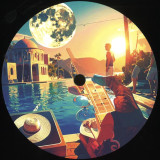
Founded in 2020 by Austrian producer Lee Stevens, Rising Seed has evolved into a joint venture with Ken Hayakawa and a collective of guest musicians. Blending Acid Jazz, Trip Hop, and Disco, the project bridges the warmth of live instrumentation with the depth of electronic production.
With a strong focus on recording and re sampling real instruments, Rising Seed crafts a rich, organic sound—where vintage samplers, drum machines, and analog textures meet hypnotic grooves and cinematic atmospheres. Inspired by artists like Moby, Kruder & Dorfmeister, and Massive Attack, their debut album True Lies unfolds like a layered collage, blurring the lines between past and future, truth and illusion.
The opening track, “Follow Me,” perfectly embodies this fusion: sampled instruments and vocal snippets blend seamlessly with live recordings of flute and saxophone, all set against a funky drum break. “Gone West” does the unthinkable—marrying a house groove with esoteric vocals, live sitar by Amrith Jan, and—why not?—a touch of harmonica. “Like A Lion” is a dub-infused downbeat track packed with crusty blues samples.
On “Freedom,” we hear a more minimalist side of Rising Seed, with a tight brush-drum arrangement and densely layered sitar melodies. Another high point is “Soldier of Peace,” featuring even more funky sitar and a subtle acid line, reminiscent of the early days of big beat. It’s followed by “True Lies,” which elegantly distills the downbeat sound of the late '90s while staying true to the Rising Seed formula.
“Psych Jazz” is, as the title suggests, both psychedelic and jazzy, albeit with a somber, low-slung trip-hop feel, while “Don’t Worry” is equally trippy yet more upbeat, carried by a moaning vocal sample that urges us not to worry. Finally, “Stay with Me” closes the album with a jazz-infused vibe that is both moody and uplifting, its shuffling drum groove and elegant piano melodies providing a fitting conclusion.
out of Stock
Last delivered 11 months ago available to reorder, subject to availability
Abstraxion unveils Void Sequence, a high-energy EP blending progressive house, early trance, and raw ’90s club aesthetics — featuring remixes by Bliss Inc. and Maruwa.
Out June 6th on vinyl via Biologic Records, the release delivers rolling basslines, hypnotic builds, and razor-sharp grooves — all engineered for peak-time impact.
A forthcoming remix EP will include Bliss Inc. and Maruwa’s unique interpretations of the original tracks.
Supported by: Jennifer Cardini, Massimiliano Pagliara, Alinka, Eoin, BELLA, Bliss Inc., Maruwa, Chloé, Pletnev, Bella Sarris, Blu:sh, Fabrizio Mammarella, Miguel de Bois...
out of Stock
Last delivered 3 months ago available to reorder, subject to availability
Der Italo-Disco Klassiker Dolce Vita meldet sich zurück — auf einer exklusiven, farbigen 12“ Maxi Single! Auf der A-Seite findest du die zeitlosen Original-Versionen, die den Kult-Song unsterblich gemacht haben.
Die B-Seite bringt frischen Wind: Hier erwarten dich brandneue, elektronische Remixes von Szenegrößen wie Klaas, DJ Blackstone, Block & Crown sowie BK Duke & Bootmasters. Die modernen Club-Edits verpassen Dolce Vita ein tanzbares Sound-Update, ohne den nostalgischen ItaloDisco-Charme zu verlieren.
Ein Muss für alle Vinyl-Sammler, DJs und Liebhaber von klassischen Melodien im neuen Club-Gewand!
out of Stock
Last delivered 3 months ago available to reorder, subject to availability
Melbourne's Sgt Slick returns with another killer 4 tracks EP.
The Sarge knows what works on the dancefloor and these edits showcase that to a T. Featuring some of the biggest names around mixed for the floor, as always Buy or Cry.
It's the quiet ones we should watch, they always say. Which is particularly astute advice right now, when loud, constant self-declaration and saturated 'brand' visibility have become the norm. But above the babble and brightness, some voices will always speak quiet volumes - with calm eloquence and the kind of certitude that comes from valuing the playing out, not just the prize.
Sweden's José González is just such a voice. He first charmed his way into the UK's earshot via the murmurous and elegant, classically finger-picked folk pop of his 2005 album, Veneer, which has since sold over a staggering 430, 000 copies in UK alone. Two years later came In Our Nature, a further exploration of José's influences (Argentinian Folklore, the '60s US folk tradition and the British pastoral folk-pop style of the same era), on which he resisted the temptation to beef up his alluringly introvert aesthetic. The albums made the UK Top 10 and Top 20 respectively.
Conceived as the natural third part in an acoustic trilogy, Vestiges & Claws is a(nother) hushed and delicate solo set that forefronts the artist and guitarist's compellingly intimate vocal style and intricate playing technique, but it's often strikingly rhythmic in nature and cohere's perfectly, with hand claps and taps on the body of his instrument underlining the songs' mantric rise-and-fall pattern, while elsewhere, over-dubbed guitar parts and multi-tracked vocal harmonies entwine to sweetly immersive effect.
The title refers to both cultural practices and biological features that survive despite having lost their original function, and to currently useful tools, ie the 'claws' of modern life.
Vestiges & Claws was recorded almost entirely by José and self-produced, mostly in his Gothenburg home, using computer plug-ins to achieve a warm, analogue sound. He prefers working alone, mainly for artistic reasons. 'There were a couple of things that enabled me to complete this record: one was curiosity, to be able to play percussion and do a lot of harmonies and also to produce and mix the album; the other was aesthetics. I love to listen to Arthur Russell and Shuggie Otis, to music that has been done mostly by one person in their solitary state.'
As José sees it, the record is his personal, 'zoomed-out eye on humanity on a small, pale blue dot in a cold, sparse and unfriendly space. The amazing fact that we are all here, an attempt at encouraging us to understand ourselves and to make the best of the one life we know we have - after birth and before death.
In December 2024, The Lost Recordings released the first volume of this legendary concert, recorded on October 11, 1960, at the Olympia by Miles Davis and his quartet, joined by saxophonist Sonny Stitt. Alongside pianist Wynton Kelly, bassist Paul Chambers, and drummer Jimmy Cobb, they formed an ensemble of exceptional musicality.
Now comes the second part of this remarkable concert.
In 1960, Miles returned to Paris for the fourth time in 12 years. Just months earlier, he had performed there with John Coltrane in a turbulent concert, marking the end of their collaboration. In October, at the Olympia, he rediscovered a stage he loved in a city he had fallen for back in 1949. "I loved being in Paris, I loved the way I was treated there," he would later say.
Since 1949, his music had evolved. From his immersion in Parkerian bebop to his collaboration with Gil Evans, he refined his style, developing a more spacious jazz inspired by Ahmad Jamal and enriched by his classical training. The soundtrack of Elevator to the Gallows in 1957 was a turning point, foreshadowing the pinnacle of Kind of Blue in 1959.
From the opening notes of Stardust, a previously unreleased piece, Miles sets the tone—seduction and lyricism. With a track attributed to Sonny Stitt, the swing settles in. The atmosphere intensifies with ‘Round Midnight, followed by Walking, where Stitt and Davis engage in a masterful exchange. If I Were a Bell and Fran Dance offer a more introspective moment before Two Bass Hit reignites the energy. The concert reaches its peak with So What and All of You, as Miles captivates the audience until the final notes of The Theme.
Our quest to recover the full concert began in 2022 when a friend sent us a photo of magnetic tapes in Brittany. A label reading "Miles Davis – Olympia 1960" caught our attention. After two years of research spanning France, the United States, and Stockholm, we are proud to present, for the first time, the complete version of this legendary concert.
"The restorations of The Lost Recordings are worthy of those devoted to master paintings." — Le Journal du Dimanche
"We discovered these previously unpublished tapes in the archives of the RBB — the Berlin radio. This discovery is absolutely major because these two incredible musicians had recorded too little together and because this recording offers us the possibility to listen to them in works that were unpublished so far in their discography — notably an extraordinary sonata by Prokofiev! And what can we say about this Bach sonata, with an Andante that brought tears to the eyes of everyone present in the studio at the time." — Frédéric D'ORIA-NICOLAS, Musical treasure seeker
János Starker, cellist, and György Sebok, pianist, were both born in Hungary early in the 20th century. They were welcomed into the formidable Franz Liszt Academy of Music in Budapest, and emigrated to the USA, where they both held the title of Distinguished Professor at the Indiana University School of Music in Bloomington. Both heavy smokers and sometimes reputed — unjustly — to be harsh, austere and insensitive to trends, they were drawn to music in all its varieties and fascinated by its many colours. They had one aim only, one noble objective: to showcase the works all composers, as evidenced by this recording made in the legendary Studio 3 of Berlin Radio on 24 October 1963.
Starker and Sebok were fully imbued with the aesthetics that Prokofiev proclaimed: "I cultivate melody and strive to introduce feeling and emotion into my works. No matter that some call me a cubist, adding that I systematically avoid any emotional or romantic elements in my quest to reach only objectivity."
Next, and at the opposite end of the spectrum, is the Spanish passion of the two pieces by Granados and De Falla, pieces that nevertheless also convey melancholy. Starker and Sebok launch into the works with enthusiasm and intensity.
The last piece, Bach's Sonata in G Major, BWV 1027 for Viola da Gamba and Keyboard, is one of three he composed, probably in Köthen. Because they may have originally been written for other instruments, they can easily be transcribed for the cello and piano. They reveal the rich influences that pervaded the German region during the first half of the 18th century. The two musicians give us a sublime interpretation of the beauty of the counterpoint in this Sonata.
These recordings attest to the importance that the two superb musicians attached to working in the service of the composers. We wonder if, in that enchanted studio in Berlin in 1963, they knew how much further they went to bewitch us and touch us so profoundly.
She had small, square hands. She was 1.52 m tall. As a child, she banged her head on the floor to be allowed to play the piano. She was Catalan. She was a pianist—one of the greatest. Her mission? To spread the Spanish repertoire. Her name was Alicia de Larrocha.
When she passed away in 2009 at age 89, Nelson Freire wrote, "I truly loved her; she was a modest woman, and her playing shone like the sun." Acclaimed worldwide, she stood alongside Victoria de Los Angeles as one of Spain’s finest artists.
Larrocha’s journey began at three, seated at a piano. At four, she studied under Frank Marshall, a student of Granados. By six, she was performing publicly; by eleven, she played Mozart’s Coronation Concerto with Madrid’s Symphony Orchestra, astonishing audiences. Despite her small hands, she developed an airy, precise touch, even daring to record Rachmaninov’s Third Concerto. But beyond technical mastery, her playing held a profound sense of life and imagination.
Though trained in Bach, Mozart, and Chopin, Larrocha fought to bring Spanish composers to global audiences. Albéniz and Granados owe much of their fame to her. Her international breakthrough came in the 1950s when an American impresario heard her Spanish recordings and invited her to the U.S., where she triumphed.
Her performances honored Spain’s musical heritage. From Soler’s sonatas to Granados' Goyescas, she infused each note with nuance. She brought Goya’s paintings to life in El Pelele and mastered the dark contrasts of Surinach’s Canción y Danza. Albéniz’s Iberia demanded both power and delicacy—qualities she commanded effortlessly.
Her final tribute was to her friend Francis Poulenc, performing his Toccata—a soaring farewell.
As one admirer put it in 1982, "She walked toward a piano too big for her, sat, placed her hands on the keys… and became the queen."
There are imagined landscapes we all carry within us—dreamed,
half-remembered, or just beyond reach. Lofoten, the new album by
Cate Francesca Brooks on Clay Pipe Music, is a musical reflection on one such place.
Located above the Arctic Circle, Norway's Lofoten Islands are known for their dramatic peaks, open seascapes, and distinctive red fishing cabins dotting the shoreline. Though Brooks has never visited this remote northern region, it became an unexpected source of inspiration.
The project began when Cate listened to a narrated "sleep story" set in the islands. Intrigued, she researched the region and found herself drawn to its stark beauty."I fell in love with creating an impression of somewhere I would probably never visit, but felt a real affinity with," she explains.
This ambitious album translates that connection into sound. Through carefully crafted electronics, melodic themes, richly layered textures and big production, Brooks captures the essence of Lofoten—its icy light, vast horizons, and profound quiet."The other thing that happened around the same time was the first lockdown here in the UK. I had taken the opportunity of having some extra time to learn a new (to me) method of synthesis; that of the Synclavier, which uses one aluminium wheel and an array of buttons to control every parameter of the sound.
"I took to it with intrigue and before I knew it, I had built up hundreds of original sounds, many of which were perfect for the textures I could hear in my head for Lofoten. So that (along with a Prophet synth and a TR-808) became the sound world." Lofoten stands as an evocative testament to how music can transport us to distant places, transforming geographical limitations into imagined creative possibilities.
Jazz Side Of The Moon is reissued on 180gram One Step Pressing LP and SACD Hybrid Stereo.
A homage to Pink Floyd's Dark Side Of The Moon, which celebrated its 50th anniversary in 2023, Jazz Side Of The Moon is one of the brightest jewels in the catalog of noted audiophile label Chesky Records.
It was recorded in 2007 in St. Peter's Church, New York, by a jazz supergroup consisting of organist Sam Yahel, drummer Ari Hoenig, guitarist Mike Moreno, and tenor saxophonist Seamus Blake. The quartet put a fresh spin on an old classic, giving it a transformative makeover that honored the spirit of the original 1973 LP while adding something new and refreshingly different. The record's highlights include sensational renditions of the Floyd favorites "Time," "The Great Gig In The Sky" and "Money."
The 1985 B Side Classic!! ‘The Creator’ Made famous from Mad Professor’s ‘Ffwd to Dub’ where he looped hook phrases of Aisha vocals. Then sampled by ‘The Orb’ in the 90’s & introduced to a new psychedelic audience. This is one of the first Roots songs made with a Drum machine! Coupled with lovers rock gem - ‘Dancing Time’
"At Newport" (Chess LP-1449) is one of Muddy Waters’ most celebrated albums. The blues portion of the 1960 Newport Jazz Festival took place on Sunday afternoon, July 3, at the end of the long weekend of jazz performances (and teenage riots too). The program included standout shows by John Lee Hooker, Jimmy Rushing, Sammy Price, Otis Spann, and Butch Cage & Willie Thomas, as well as Muddy Waters and his band, who were billed as “Muddy Waters and His Orchestra”.
Released in 1959, The Amazing Nina Simone marked her debut with Colpix Records, blending jazz, gospel, and folk with a striking orchestral touch. Unlike her piano-driven debut, this album leans on lush string arrangements led by renowned conductor Bob Mersey. A bold departure that highlighted her vocal depth, it showcased Simone’s ability to transcend genres with effortless grace.
DJ Support - Luke Una, Nikki Nair, Make A Dance, Boris Dlugosch, Gallegos
THIS YEARS BANGER IS HERE! After last years crossover smasher ‘Italo Disco Banger’, which picked up love from DJ Harvey, Gerd Janson and Fatboy Slim, Red Rack’em has been back in the lab, cooking up this years contribution to his ever growing, genre hopping series of ‘Bangers’. He’s hit discotheque paydirt once more with the euphoric tropical disco house burner vibes of ‘Secret Banger’. The feedback has been insane with early support from a wide range of tastemakers including Make A Dance, Nikki Nair, Luke Una, Boris Dlugosch and Gallegos, it’s a crossover, summer magic jam, perfect for those Adriatic or Balearic mornings. Secret Banger is an instant classic. Perfectly pitched for festival sunshine and late night heads down parties. It’s a ‘moment’ track, combining the biggest vocal hook this side of Daft Punk, ecstasy pads, tropical boogie strut and the trademark Rack’em club shaking sub bass. Secret Banger is a sureshot, guaranteed to give eyes closed moments to even the most frosty dancefloors. Monday is ostensibly ‘the deeper B Side cut’ but it’s also a certy club wrecker. Samples are being mad flipped people. A wacked out street soul snippet is sliced and diced before the track mutates into a huge pitched down late night jaw bothering incantation. The OG sample is hard cut into the track like a more clever than most DJ on the decks. You need this.
out of Stock
Last delivered 6 days ago available to reorder, subject to availability
Nach seinen Megaerfolgen der letzten Jahre mit der erfolgreichsten Radiosingle 2021 „Save Your Tears“ (Platin) und dem erfolgreichsten Song 2020 „Blinding Lights“ (3x Platin) beginnt The Weeknd nun sein
nächstes Kapitel.
Dieses kündigte der Superstar bereits im Herbst 2021 mit “The Dawn Is Coming” auf seinen Social-MediaKanälen an und bestätigte die Gerüchte für ein neues Album dann an Neujahr. Der erste Vorgeschmack auf sein neues Album erfolgte mit der Single „Take My Breath“. Diese stieg direkt in die Top 20 der deutschen Charts ein und erreichte Platz 2 der Airplay Charts.
Sein letztes Studioalbum „After Hours“, welches u.a. die Erfolgshits „Blinding Lights“, „Save Your Tears“ und „After Hours“ enthält belegte Platz 5 der Albumcharts. Seine anderen Alben „Beauty Behind The Madness” (2015) und “Starboy” (2016) sind in Deutschland beide mit Gold ausgezeichnet. Sein neues Album „Dawn FM“ erscheint nun am 07.01.2022 digital und enthält Feature-Artists wie Jim Carrey, Tyler The Creator und Lil Wayne.
Am 28.01.2022 erscheint es auch auf CD und wird ab dem 29.04.2022 auch als Vinyl erhältlich sein.
If there is one quality that best sums up the personality and music of Michel Petrucciani, it is generosity.
It was on stage, in the moment, in close proximity to the audience, in the warm intimacy of a club setting, that he most truthfully expressed his passion for sharing.
Many musicians, he confessed, play too selfishly. They play only for themselves and a few happy few. I play to please and to communicate. I’d like to think I’m a very happy person.
That’s why it’s essential for me to transmit and give others the generosity that is vital in art, music, and life.”
This is proven by these magnificent moments captured live in 1997 in Tokyo.
Accompanied by Anthony Jackson and Steve Gadd - two close friends with whom he shared an almost telepathic musical relationship - Michel Petrucciani delivers an intense hour of pianoforte, performing both standards and original compositions to unleash his boundless generosity and sensual lyrical expression live on stage.
Once again, one is struck by the solar clarity of his phrasing, the vigour and percussive precision of his touch (this master of tempo played ‘deep in the note’), and the breadth of his long lines where each note remains distinct and articulate. Michel infused everything he played with great emphasis and nuance - but above all, with sincerity. His heart sang immediately through the piano. This record is the most brilliant demonstration of that.
· Until now, this album had never been released on vinyl. Now available as a 180g double vinyl edition, mastered specifically for vinyl, housed in a 350g leather-textured sleeve with Struktura finish, offering an elegant texture and refined feel.
Max Schreiber is the more introspective guise of Mule Driver, reserved for drifting into fragile and haunted sonic territories. Variations on Memory Vol.2 deepens Schreiber’s exploration of collective sound and personal distortion.
This time, fragments of lullabies and children’s songs resurface along side memorial songs—distorted by time, memory, and a quiet sense of unease. Schreiber treats these melodies not as sacred relics, but as raw material: vulnerable to noise, decay, and reinterpretation.
Recorded in intuitive, often single-take sessions, the album challenges the listener’s sense of nostalgia. Sentimentality collapses into abstraction, and familiar tunes unravel into drifting soundscapes—like half-remembered scenes from a film that never existed.
Variations on Memory Vol. 2 is less about what these songs once meant, and more about what they might conceal.
A1 - 1NC1N - No Man’s Land (System Check Interlude) : It’s a vinyl exclusive part of the release.
After 14 years since the founding of Zinloos Geluid Soundsystem, the very first release on vinyl is finally here. Expect various styles, each with its own story, just like the raves of Zinloos Geluid.
In addition, you will receive an EXCLUSIVE sound system check, only available on vinyl, to make your speakers sound great at your own rave or free tekno!
The Isle Of Lewis is the largest such of the Outer Hebrides archipelago, and a place where myth and folklore are abundant, The Callanish Stones, a cruciform circle reckoned by tradition to be the forms of petrified giants who would not convert to Christianity, once prompted notable chronicler of the ancient Julian Cope to pronounce himself “Lashed by wind and rain but surrounded by vibe”.
This was where Holy Scum decided to take a pilgrimage for the recording of their second album proper for Rocket Recordings, All We Have Is Never. Frustrated by the physical and logistical challenges keeping the band members from collaborating, they decided the best way forward was at the residential Black Bay Studios on Great Bernera, a two hour plus ferry ride from anywhere. “The isolation of Black Bay was our salvation, a much-needed cleanse after a year of relentless misfortune” reckons the band’s Peter Taylor. Taylor describes the Holy Scum approach jokingly as ‘No riffs’ yet this belies an ability to carve abstraction and minimalism into monolithic and ominous shapes. Whilst the band are as handy as ever with excoriating and ear-splitting experimentation - as on the feverish guitar scree that underpins the taut‘Thieves’ - they also excel in a grittily vital charge as analogous to the ballsy kinetics of Fugazi and The Ex (the primal ‘I Am The Land’) as the overcast catharsis of Killing Joke and Voivod (the infectious ‘Witches’). “The title is a nod to the fact that everything ends - good, bad, ugly, beautiful “ reflects vocalist Mike Mare (Dälek) of their most focused work to date. “That is not a bad thing - it is a rebirth every time. We can spend a lifetime 24/7 together having shared experiences but living separate realities”. “I don’t think it is nihilistic,” he adds. “The despair turns into hope for sure”.
Pressed on 180g marbled/coloured vinyl. Each record is bespoke, no two records are the same. Some have lots of marble, some have barely any. Some are a darker shade, some are light. They could be green, orange or red, or any shade between those colour ranges! It will be a surprise!
out of Stock
Last delivered 15 months ago available to reorder, subject to availability
Mr Bongo proudly presents Ritmo Italiano ‘Unspoken Sounds of Italian Tamburo’ a captivating compilation of percussive-driven, Italian gems curated by Sardinian multi-instrumentalist, percussionist and producer, Gabriele Poso. A journey into the heart of Italian musical history, it celebrates Italy’s rich rhythmic traditions, showcasing a selection of genre-traversing, Italian treasures from the ‘60s to the early ‘90s. Honouring the timeless rhythms of Italian percussion masters, alongside a brand-new exclusive composition by Gabriele, ‘Ritmo Italiano’ shines a light on the universal, primal language of the drum.
A connection sparked from an early age; percussion has always deeply resonated with Gabriele. It led to years of studying percussion traditions across Cuba, Puerto Rico, and Brazil, crafting his own songwriting skills in the process. An acclaimed producer and compiler, his releases on Yoruba Records, BBE and Soundway Records have garnered global support. Yet a growing need to rediscover the essence of his country’s cultural heritage laid the foundations for this new compilation.
In Gabriele’s own words, “Italy has always been a crossroads of civilizations, with influences from the Mediterranean, North Africa, the Middle East, and Europe converging over centuries. Ports like Naples, Genoa, and Venice played a crucial role as gateways for musical exchange, a melting pot of sounds and cultures brought by sailors, merchants and travellers. These influences blended with Italy’s own folk and religious traditions, creating Italy’s unique and emotionally resonant rhythms.”
Across the 12 absorbing tracks, there’s jazz influences, Italian library music aesthetics and experimental beats mixing with Afro-Cuban and Mediterranean rhythms. It’s a broad selection anchored by the drums. The synth-heavy, ‘80s jazz funk flavours of Gegè Munari's ‘Police Man’, sit side-by-side with the samba-infused ‘Napulitano D' 'O Brasil’ by Don Marino Barreto Jr. Tribal, earthly energy radiates from Naco’s ‘Volando Con Milton’, with Tullio De Piscopo serving up cosmic disco brilliance, and blistering jazz funk mastery coming courtesy of Agostino Marangolo. Taking the name of the compilation, a new original track by Gabriele, ‘Ritmo Italiano’, blends traditional rhythms with contemporary energy, Afro-Latin influences with Italian jazz essence. Recorded live in one take, it captures a raw, unfiltered vibe.
“Each track tells a story, connecting the past with the present, and highlighting the deep-rooted traditions that shape Italy’s rhythms. The collection also offers a glimpse into the diversity of Italian music with a variety of styles from the organic, earthy beats to the more experimental and modern takes on traditional rhythms. It’s a reflection of how these rhythms have not only shaped Italian culture but also influenced global music.”
"Polymath artist, musician and iconoclast Raed Yassin releases Eternal Ghost, two long-form pieces of modular minimalism via Fourth Sounds. Drawing on influences of Terry Riley, Suicide, no wave and synth pop, the double A-side 12” reverberates with urgent, high-octane loops, repeating patterns and distorted vocal frequencies, each track unfurling over 15 frantic Minutes of maximalist electronics.
Born in Lebanon and based in Berlin, with a musical practice that spans free improvisation, Arabic pop and sample-based cultural archaeology, Yassin is an artist who refuses to be contained, working across disciplines to interrogate ideas of personal identity, collective memory and consumer culture.
Eternal Ghost is the latest addition to a shape-shifting body of work, released to accompany Yassin’s debut London exhibition of the same name at Cedric Bardawil in June 2025."
The Soulful Trio, a band from Barcelona made up of three musicians with an international background (Spain, Holland, Argentina, USA, France) after playing their repertoire live in different venues for several months, with their songs well shot, have decided to record "Said & Done", in one of the best studios of Barcelona, nine original compositions of Soul-Jazz with derivations towards funk and blues.
Music reminiscent of the classics of the Hammond B3 organ trio such as Jimmy Smith, Jack McDuff, Lonnie Smith, Richard “Groove” Holmes or Big John Patton, reinventing the sound and bringing it closer to today with their vibrant fusion of genres full of energy.
Enjoy this instrumental Soul-Jazz album with these young veterans Homero Tolosa (drums), Pablo Sánchez (guitar) and Lucas Herrera Fernández (Hammond B3) in all their splendor with their respective instruments including the exciting & dynamic sounds of the Hammond B3, the great electric guitar groove of solos and huge variety of rhythms, playing a music that is always intense and made from their hearts.
3rd limited edition vinyl EP in the series of EPs celebrating the 20th anniversary of the group Chinese Man and Chinese Man Records. For this 3rd opus, we take a look back at the various collaborations between Chinese Man and O.B.F over the years. Two versions of Salune included, plus two O.B.F.-Remixes of CM tracks. 20 years logo by Joan Oaï of Life. Available on limited transparent purple vinyl.
Die erste eigenständige Veröffentlichung des 1968er Northern-Soul-Klassikers "By Yourself" von Jay D. Martin, der bislang nur als Promo des Labels Tower und auf einer "Wigan Casino" CD-Compilation erschien. Ein echter Wigan-Floorshaker, dessen Promo heute für 350 Pfund verkauft. Sam Williams' "Love Slipped Through My Fingers" ist ein weiterer Northern-Soul-Klassiker von 1968, der ebenfalls nur als Tower-Promo erschien und heute Preise bis zu 2.000 Pfund erzielt.
"Different Talking", das sechste und bisher beste Album der vierköpfigen New Yorker Indie-Rock-Band Frankie Cosmos, scheint über Zeit und Raum hinweg zu existieren, so wie wir alle es irgendwie tun. Es ist eine Sammlung von Fragmenten und Erinnerungen, erinnerten Orten und neu interpretierten Gefühlen, die sich zu einem leuchtenden, summenden Ganzen zusammenfügen: eine robuste, weltgewandte Indie-Rock-Platte über das Altern und den Lauf der Zeit, die es dennoch schafft, sich hochaktuell zu fühlen. Die Sängerin, Gitarristin und Songschreiberin von Frankie Cosmos, Greta Kline, gilt seit langem als eine der gewandtesten und notwendigsten Autorinnen zeitgenössischer Indie-Musik, doch auf "Different Talking" werden ihre Texte etwas weicher, und der schräge Zynismus, der die letzten Alben prägte, weicht nun einer Anerkennung der großartigen und notwendigen Fehlbarkeit des menschlichen Gehirns und Herzens. "Different Talking" als Rückkehr zur alten Form oder zumindest zur üppigen Direktheit früherer Frankie Cosmos-Platten zu bezeichnen, wäre unhöflich, aber auch völlig falsch: Wie "Different Talking" deutlich macht, kann man nie mehr zu der Bequemlichkeit und dem Mut seiner frühen Zwanziger zurückkehren, aber diese Person lebt irgendwie immer in einem, egal wie sehr man sich verändert. Bei Different Talking geht es darum, diese Person zu finden, sie zu ehren und von ihr zu lernen. "Ein großer Teil des Albums handelt davon, erwachsen zu werden und herauszufinden, wie man sich selbst erkennt - wie zum Beispiel: 'Was ist ein Weitermachen?'", sagt Kline. "Wie kommen wir weiter, wenn wir süchtig nach einem Kreislauf sind, der uns in unserer Vergangenheit verfolgt? Das Schreiben von Songs ist nur ein Weg, um das zu überwinden". Kline ist seit ihren späten Teenagerjahren ein fester Bestandteil des amerikanischen Indie-Undergrounds. Ihre zahlreichen Bandcamp-Veröffentlichungen und ihr Debüt bei dem Indie-Label Zentropy aus dem Jahr 2014 führten dazu, dass sie als "Poet laureate of New York City DIY" bezeichnet wurde. Ein solches Etikett ist eine Menge für junge Schultern, aber es ist schwer zu leugnen, dass sie einen einzigartigen Einfluss auf die zeitgenössische Popmusik hatte. Wenn die Vorstellung, dass eine junge Frau in ihrem Schlafzimmer einen Synthesizer in die Hand nimmt, ein paar Songs ins Internet stellt und schnell zum Superstar wird, heute gang und gäbe ist, dann liegt das daran, dass Kline und ihre Kolleginnen das (weibliche) DIY-Genie normalisiert und verherrlicht haben, lange bevor sie in den Marketingbüros der Major-Labels an die Pinnwände geheftet wurden. Seitdem hat sich viel verändert: Nachdem Frankie Cosmos in den letzten zehn Jahren eine Handvoll verschiedener Permutationen durchlaufen hat, besteht die Band heute aus vier Mitgliedern: Greta Kline, Alex Bailey, Katie Von Schleicher und Hugo Stanley. Kline ist die einzige Konstante, aber Stanley, Bailey und Von Schleicher sind wichtige Mitstreiter, und es wäre falsch, die Namen "Greta Kline" und "Frankie Cosmos" synonym zu verwenden. Kline ist nach wie vor die primäre Songschreiberin, und die Musik auf "Different Talking" wurde von der Band als Ganzes arrangiert, aber dies ist das erste Album, das von der Band selbst aufgenommen und selbst produziert wurde. Nicht zufällig fühlt es sich wie eine reinere, destilliertere Aufnahme an. "Es fühlt sich an wie die beste Version von dem, was ich machen wollte, seit ich ein Teenager war", sagt Kline. "Obwohl dies in einem Wohnzimmer aufgenommen wurde, ist es so originalgetreu wie alles, was wir im Studio gemacht haben."
"Different Talking", das sechste und bisher beste Album der vierköpfigen New Yorker Indie-Rock-Band Frankie Cosmos, scheint über Zeit und Raum hinweg zu existieren, so wie wir alle es irgendwie tun. Es ist eine Sammlung von Fragmenten und Erinnerungen, erinnerten Orten und neu interpretierten Gefühlen, die sich zu einem leuchtenden, summenden Ganzen zusammenfügen: eine robuste, weltgewandte Indie-Rock-Platte über das Altern und den Lauf der Zeit, die es dennoch schafft, sich hochaktuell zu fühlen. Die Sängerin, Gitarristin und Songschreiberin von Frankie Cosmos, Greta Kline, gilt seit langem als eine der gewandtesten und notwendigsten Autorinnen zeitgenössischer Indie-Musik, doch auf "Different Talking" werden ihre Texte etwas weicher, und der schräge Zynismus, der die letzten Alben prägte, weicht nun einer Anerkennung der großartigen und notwendigen Fehlbarkeit des menschlichen Gehirns und Herzens. "Different Talking" als Rückkehr zur alten Form oder zumindest zur üppigen Direktheit früherer Frankie Cosmos-Platten zu bezeichnen, wäre unhöflich, aber auch völlig falsch: Wie "Different Talking" deutlich macht, kann man nie mehr zu der Bequemlichkeit und dem Mut seiner frühen Zwanziger zurückkehren, aber diese Person lebt irgendwie immer in einem, egal wie sehr man sich verändert. Bei Different Talking geht es darum, diese Person zu finden, sie zu ehren und von ihr zu lernen. "Ein großer Teil des Albums handelt davon, erwachsen zu werden und herauszufinden, wie man sich selbst erkennt - wie zum Beispiel: 'Was ist ein Weitermachen?'", sagt Kline. "Wie kommen wir weiter, wenn wir süchtig nach einem Kreislauf sind, der uns in unserer Vergangenheit verfolgt? Das Schreiben von Songs ist nur ein Weg, um das zu überwinden". Kline ist seit ihren späten Teenagerjahren ein fester Bestandteil des amerikanischen Indie-Undergrounds. Ihre zahlreichen Bandcamp-Veröffentlichungen und ihr Debüt bei dem Indie-Label Zentropy aus dem Jahr 2014 führten dazu, dass sie als "Poet laureate of New York City DIY" bezeichnet wurde. Ein solches Etikett ist eine Menge für junge Schultern, aber es ist schwer zu leugnen, dass sie einen einzigartigen Einfluss auf die zeitgenössische Popmusik hatte. Wenn die Vorstellung, dass eine junge Frau in ihrem Schlafzimmer einen Synthesizer in die Hand nimmt, ein paar Songs ins Internet stellt und schnell zum Superstar wird, heute gang und gäbe ist, dann liegt das daran, dass Kline und ihre Kolleginnen das (weibliche) DIY-Genie normalisiert und verherrlicht haben, lange bevor sie in den Marketingbüros der Major-Labels an die Pinnwände geheftet wurden. Seitdem hat sich viel verändert: Nachdem Frankie Cosmos in den letzten zehn Jahren eine Handvoll verschiedener Permutationen durchlaufen hat, besteht die Band heute aus vier Mitgliedern: Greta Kline, Alex Bailey, Katie Von Schleicher und Hugo Stanley. Kline ist die einzige Konstante, aber Stanley, Bailey und Von Schleicher sind wichtige Mitstreiter, und es wäre falsch, die Namen "Greta Kline" und "Frankie Cosmos" synonym zu verwenden. Kline ist nach wie vor die primäre Songschreiberin, und die Musik auf "Different Talking" wurde von der Band als Ganzes arrangiert, aber dies ist das erste Album, das von der Band selbst aufgenommen und selbst produziert wurde. Nicht zufällig fühlt es sich wie eine reinere, destilliertere Aufnahme an. "Es fühlt sich an wie die beste Version von dem, was ich machen wollte, seit ich ein Teenager war", sagt Kline. "Obwohl dies in einem Wohnzimmer aufgenommen wurde, ist es so originalgetreu wie alles, was wir im Studio gemacht haben."
Stepping up to the plate for the second release of our catalog, we are pleased to share 'Aura Protocol', a four-track collection that taps into the emotive and melodic depths of 90s influenced progressive house from Mexico based Producer, Mahkina.
The A1 track ‘God, How Do I Handle This’ kicks off the EP with an introspective mood, blending atmospheric pads and hypnotic bass-lines. The deep, melodic structure recalls the emotional core of 90s prog, while evolving into an intricate tapestry of sounds. The second track ‘Flavour & Spice’ plays into Mahkina's latin roots. A fusion of playful percussion, and lush chord progressions, evoking the vibrant energy of classic 90s house, with an added modern twist from the artist's production style.
Flipping over to the B-Side, ’Sacoodelo" takes listeners to a well placed euphoria. Combining driving rhythms with evolving loops and rich synth work, its experimental side takes influence from the rhythmic structures of classic trancey house. The final track ‘Connected’ feels like the emotional and sonic culmination of the EP. Taking the listener on a more expansive journey, weaving through moments of tension and release via atmospheric build-ups, emotional breakdowns, and a sense of resolution toward the end.
RLF002 is a well represented embodiment of Mahkina's ability to fuse classic styles with contemporary sounds, resulting in an immersive, dynamic listening experience that resonates with both the heart and the body.
out of Stock
Last delivered 12 months ago available to reorder, subject to availability
"Chasing the funky symphonies that filled my head and my dreams..."
December 25th, 2023 - an Instagram post. Stimulator Jones shared half a dozen FIRE tracks from his beat tape archive. We were immediately drawn to the rough hewn boom bap.
"I'd release that", Rob commented.
Hours of material was shared and the result is this: Cool Green Trees (1999-2005). A collection of beats and loops Stimulator Jones created between the ages of 14-20 at home in his basement, bedroom and computer room in Roanoke, Virginia.
You will not believe the profound soulful genius contained within these naive schoolboy melodies.
December 25th, 1998 - 25 years ago to the day and his much-coveted Yamaha SU10 sampler was finally bestowed upon young Stimmy AKA Sam Lunsford: "I immediately hooked up a CD Walkman to the input jack and looped the beginning two bars of Grover Washington Jr.'s "Mercy Mercy Me". I don't know what exactly was so thrilling about hearing two measures of music repeating over and over but it was so infectious and hypnotizing and enthralling to me. I'll never forget that ecstatic rush of making my first loop - an uncontrollable, gleeful smile plastered all over my face." When you hear the pocket breakbeat symphonies featured here on Cool Green Trees, you'll feel the same sense of frisson.
In the wake of his Stones Throw breakthrough - Exotic Worlds & Master Treasures - Stimulator Jones was pegged by many as a 90s throwback artist. However, he literally IS a 90s artist. He's been recording music most of his life and he's now 40. He created the bulk of Cool Green Trees as a teenager. Everything before 2004 was recorded when Sam was still in school. He was in 8th grade when he made the 1999 tracks - he didn't even have his learner's permit. This album is a snapshot of a young man in a simpler time. Things were still mysterious back then and he was flying blind, relying on his ears and having to figure things out for himself: "I had no road map for becoming a beatmaker. I have been collecting music since I was a kid, I am a lifelong digger and seeker of cool and interesting sounds. I was there in the golden age of Hip Hop, and while I may have been a suburban white kid in Roanoke, Virginia, I was tuned in and I bought so many classic albums when they came out. I was attracted to Hip Hop because of the musical and poetic quality. I was hypnotized by the rhythms, partially because I was a drummer. I didn't brag about collecting my breakbeat records or making beats - it was something I did in isolation. It wasn't something I generally wanted to bring attention to and it didn't really score me any cool points. I certainly wasn't flexing on social media about it."
Hell, he can do that now!
Opener "Pharoah Jones" was inspired by Yesterday's New Quintet and Madlib's ability to capture that classic 70s sound whilst playing all the instruments. Sam created this one stoned afternoon by laying down a 2 bar loop and a shaker loop on his Yamaha SU700 sampler. He hung a microphone from the ceiling and played his Yamaha Stage Custom drum kit over the top before adding ender Rhodes and playing his dad's Selmer tenor sax through an Electro Harmonix Memory Man echo pedal. Yes! Up next, "Ghost Gospel" utilises a dope loop from a gospel record and adds some soul-funk drums overtop, whilst working that filter knob. Says Sam: "The loop reminded me of something Ghostface would rap over. The sample was in 3/4 waltz time but I flipped it for a 4/4 groove, a technique I picked up from RZA. "Ill Feeling" uses sped-up pieces from a dusty old funk record and putting them over a classic NOLA drum loop; gain chopping up a slow, bluesy 3/4 time signature and bending it to a 4/4 groove. Classy shit. "Capital Punishment" features drums tapped in live, inspired by MF Doom's Special Herbs series. "Do Not Adjust" consists loops found on a compilation of 70s French music at Happy's Flea Market, a classic Roanoke digging spot.
The sublime, evocative title track, "Cool Green Trees" was created when Sam was still living at home. He dumped samples off his SU10 into the family desktop and arranged them in a demo version of Pro Tools: "This track was sort of my ode to the DJ Shadow style of sample based production. Super spacey, slow, and moody. The heavily filtered drums were inspired by Alec Empire's 'Low on Ice' album. I later added some scratches and sounds from a Spider Man storybook record." "Chill Scratch" snags the final bit of a bossanova record and pairs it with a drum loop before adding experimental scratching run through an Electro Harmonix Memory Man echo pedal. "Poisonous Fumes" was made using a sampler, mixer and a turntable; a kind of mixtape beat collage with added scratches and sounds from various records. Using dialogue from superhero records was a nod to Madlib. "Welcome Aboard The Starship" is dark, downtempo trip-hop with a spooky bent. Sam paired a slow, hard drum loop with a guitar sample grabbed off a psychedelic rock record. To finish, he added various backwards sounds and weird atmospheric effects and a little scratching. Swoon.
Side B opens with "Keep On Runnin", made on a borrowed Roland SP202 sampler. Having always loved the sound of the Lo-Fi filter on those machines, reminiscent of the Emu SP1200, Sam always imagined Del or another of the Hieroglyphics crew rapping over this beat. You can certainly hear why. "Sounds Impossible" sees Sam experimenting with layering multiple kick samples at different volumes to create patterns similar to those heard by Showbiz and Lord Finesse during their God-level 1995 period. "Painted Faces" was made by chopping up a REDACTED record which he had gotten from Happy's Flea Market and paired it with a REDACTED drum loop. By the time Sam recorded "The Knew Style", he had acquired a shitty old 1960s portable turntable off eBay. It didn't function properly when he bought it but his brother opened it up, cleaned it out and got it working: "I remember he told me that there was a bunch of sand inside of it when he opened it up, as if its previous owner had taken it to the beach. I would take that turntable on my Happy's Flea Market digs so I could preview records...that's how I found this loop."
"Chicken Wing Blues Sauce" loops up a classic blues joint and pairs it with some REDACTED drums. A bit of filtering and arranging et voilà! "Kool Breeze", from 1999, is one of Sam's oldest surviving beats, as is "Sexx Bullets". The Roots sampled the same record, leaving Sam frustrated yet vindicated. "Soul Child" was an early SU10 creation, looping a dusty old Soul Children 45 and pairing it with 70s rock drum loops to great effect. "Take Off Runnin" was another loop found digging with a portable turntable. Paired with some boom bap drums it makes for a hypnotic head-nod groove. "Centurian" was intended to be a little beat interlude a la Pete Rock. The sample is from a sun-dappled soft-psych record and it's paired with a Robin Trower drum loop that just happens to fit perfectly. Sometimes you slap things together kind of haphazardly and magic happens. "Bozack" was the first beat Sam made using Pro Tools, his first foray into using chopped sounds instead of loops, an exciting new world. "Church" is beat interlude using a Phil Upchurch loop with the "Long Red" drums - a favourite break of Dilla et al. Sam was really on a tear in late 2004, probably because he was unemployed and phoneless and able to just make beats all day. He made "Splash One" on a borrowed Yamaha SU700 and again was experimenting with tapping the drums in live with his fingers, instead of using a loop or sequenced pattern. Channeling 9th Wonder, Sam used a water splash sound effect from a Batman record as a percussive element, hence the title (also a 13th Floor Elevators reference). The main loop is a backwards portion of one of his favourite Roy Ayers songs.
"Hank" is another fun little beat interlude thing, created on a borrowed Roland SP202 sampler with the fantastic Lo-Fi effect that resembled the Emu SP1200 at a fraction of the price. "73 goatee", from 99, is another of his oldest surviving beats, created in his bedroom with his Yamaha SU10 and his brother's Vestax MR-300 4-track recorder: "This one will always feel special. I can remember having a feeling all the way back then on the night that I created it that this was a solid beat with a catchy loop. There was something in the Fender Rhodes melody that resonated with me emotionally, and I had never heard a producer sample that portion before. I felt like I had found my own unique sound, my own unique loop. It came from an Ahmad Jamal '73. I actually even recorded myself rapping and scratching over this beat way back then, I still have that version in all its imperfect sloppy glory."
Sam explains just how much these tracks mean to him: "They all have immense historical and sentimental value and I'm proud of them. These beats come from an innocent, simple time when I was just figuring out how to craft these sounds. They're something very personal to me. They are the initial part of a journey that I really was taking *alone*. There was no YouTube. I couldn't Google shit. I didn't even know any other beatmakers, producers or DJs in my town that could teach me anything. It was always just me, alone, in a room with some equipment - chasing the funky symphonies that filled my head and my dreams. What I was doing wasn't cool. Most of my peers thought I was a weirdo and couldn't care less. Creating these sounds was an anti-social endeavour. In a sense, I felt like it was me against the world, and all I had to instruct and assist me were the recordings produced by my heroes - RZA, DJ Premier, Erick Sermon, Beatminerz, Showbiz, Diamond D, Beatnuts, Prince Paul, The Bomb Squad, Pete Rock, Q-Tip, E-Swift, Mista Lawnge, DJ Shadow, Cut Chemist, Peanut Butter Wolf, El-P and so many more...I dedicate this collection to them, and to my older brother Joe who has always been a musical and technical guiding light for me.
This was a time before every kid was a self-described producer and beatmaker, before everyone had a DAW, before Kanye and "chipmunk soul", before Red Bull beat battles, before there was any social media beyond chat rooms and AOL Instant Messenger, before Soundcloud, before SP-404 mania, before lo-fi beats to study to, before Splice, before targeted ads for MIDI chord packs, etc. In 99 when I told people that I had a sampler and made beats I was mostly met with bewildered confusion and indifference. Kids and adults alike would wonder why I got this weird machine for Christmas instead of something worthwhile like a Playstation or a mountain bike or even a guitar for that matter because at least that could be used to make "real music". Back then, sampling was still not widely respected as an art form - it was seen as lazy, talentless and unoriginal at best and outright criminal theft at worst. I had gotten respect for playing drums and guitar and things of that nature but this was a step in the wrong direction in the eyes of many."
The cover photo is a picture of Sam standing on his back porch in the latter part of 1998, just before he got his first sampler. He was 13 years old, in 8th grade. His dad took the picture with his 35mm film camera: "I actually wanted to be pointing my dad's .22 pistol at the camera lens but he wouldn't let me. He gave me an old walking cane to use instead. The Tommy Hilfiger puffer jacket came from the lost and found at William Fleming High School where my mom worked as a secretary. I was thrilled when she brought it home because we never spent money on expensive name brand clothing like that - we were for the most part strictly a sale rack, bargain bin, thrift store, yard sale, flea market kind of family when it came to clothes. My watch is some cheap off-brand fake gold department store watch." Mastering for this vinyl edition was overseen by Be With regular Simon Francis and it was cut by the esteemed Cicely Balston at Abbey Road Studios to be pressed in the Netherlands by Record Industry.
out of Stock
Last delivered 15 months ago available to reorder, subject to availability
50 years after the genre turned the music world upside-down, GRADE 2 bring the raw power of old school punk to a new generation. Their second release on Tim Armstrong"s legendary Hellcat Records is a thumping 15 track tour de force melding the uncompromising ethos of punk with the howl of contemporary injustice, personal identity and frustrations of Gen-Z youth, authentically told by three lads with punk coursing through their veins. Formed on their native Isle of Wight when they were just 14 years old, Jack Chatfield (guitar & vocals), Jacob Hull (drums) and Sid Ryan (bass & vocals) honed their craft covering punk pioneers before creating a sound uniquely theirs: ten years on, the eponymous Grade 2 is their magnum opus. The new album was produced by the band along with Tim Timebomb (Armstrong) and T.J. Rivers at Armstrong"s Ship Rec Studio in Los Angeles. "Returning to Ship Rec Studio resparked that magic dynamic" says guitarist Jack Chatfield. "When we"re in there I feel like we reach our full potential. Tim would offer tweaks and tips for some songs, while others he"d compliment as finished first time we played them." "We worked flat-out recording this record," says drummer Jacob Hull, "but we never felt pressured, Tim keeping us in the zone to make the best tunes of our lives.
The first and most independent of all independent producers, Joe Meek needs little introduction. He was the first to chart in both the UK and the USA with an independently produced song -which was actually recorded in his home’s kitchen- when The Tornados' Telstar took the world in 1962. Meek was, of course, one of the most in vogue producers of the first half of the 1960s, providing the soundtrack to the evolution of UK Rock’n'Roll to Swinging London, scoring hits with actors like John Leyton (Johnny Remember Me), showmen like Screaming Lord Sutch and bands like The Outlaws and The Tornados. He also produced a wide stream of R&B and freakbeat 45s that are nowadays hardly sought after by the collectors with the biggest bank accounts.
Joe Meek experimented with all kinds of recording techniques in his home studio, his tricks and gimmicks won his productions chart placement and critical and public acclaim, but none of his projects was so advanced and way out as the avantgarde experimentation showed in his I Hear a New World electronic symphony from 1960. Aided by The Blue Men formed by Rod Freeman (group leader, guitar, vocals), Ken Harvey (tenor sax, vocals), Roger Fiola (Hawaiian Guitar), Chris White (guitar), Doug Collins (bass), Dave Golding (drums) -also known as Rodd-Ken and The Cavaliers- who provided a tight base to his electronically produced sounds, Meek came up with what he envisioned as the soundtrack of the future, the sounds he envisioned were to be heard in outer space. It was too way out for its time, certainly. To the point that of all the opus, only four tracks saw the light of day on a 7" EP released on Triumph, Meeks very own label. It wouldn’t be until 1991 that the whole recordings from the I Hear a New World sessions would see the light of day on a CD issued by the RPM label.
Wah Wah offers a new reissue of this now classic early electronics masterpiece, housed in a beautiful front-laminated back-flapped sleeve and offered as a limited 400 copies only black vinyl version and an ultra-limited 100 copies only transparent purple vinyl. Get yours before they fly!
RIYL : Delia Derbyshire and The BBC Radiophonic Workshop, Louis and Bebe Barron’s soundtrack to Forbidden Planet, Raymond Scott, Tom Dissevelt & Kid Baltan, Morton Subotnick…
The first and most independent of all independent producers, Joe Meek needs little introduction. He was the first to chart in both the UK and the USA with an independently produced song -which was actually recorded in his home’s kitchen- when The Tornados' Telstar took the world in 1962. Meek was, of course, one of the most in vogue producers of the first half of the 1960s, providing the soundtrack to the evolution of UK Rock’n'Roll to Swinging London, scoring hits with actors like John Leyton (Johnny Remember Me), showmen like Screaming Lord Sutch and bands like The Outlaws and The Tornados. He also produced a wide stream of R&B and freakbeat 45s that are nowadays hardly sought after by the collectors with the biggest bank accounts.
Joe Meek experimented with all kinds of recording techniques in his home studio, his tricks and gimmicks won his productions chart placement and critical and public acclaim, but none of his projects was so advanced and way out as the avantgarde experimentation showed in his I Hear a New World electronic symphony from 1960. Aided by The Blue Men formed by Rod Freeman (group leader, guitar, vocals), Ken Harvey (tenor sax, vocals), Roger Fiola (Hawaiian Guitar), Chris White (guitar), Doug Collins (bass), Dave Golding (drums) -also known as Rodd-Ken and The Cavaliers- who provided a tight base to his electronically produced sounds, Meek came up with what he envisioned as the soundtrack of the future, the sounds he envisioned were to be heard in outer space. It was too way out for its time, certainly. To the point that of all the opus, only four tracks saw the light of day on a 7" EP released on Triumph, Meeks very own label. It wouldn’t be until 1991 that the whole recordings from the I Hear a New World sessions would see the light of day on a CD issued by the RPM label.
Wah Wah offers a new reissue of this now classic early electronics masterpiece, housed in a beautiful front-laminated back-flapped sleeve and offered as a limited 400 copies only black vinyl version and an ultra-limited 100 copies only transparent purple vinyl. Get yours before they fly!
RIYL : Delia Derbyshire and The BBC Radiophonic Workshop, Louis and Bebe Barron’s soundtrack to Forbidden Planet, Raymond Scott, Tom Dissevelt & Kid Baltan, Morton Subotnick…