Jorge Ben’s 1963 debut, Samba Esquema Novo, introduced his infectious blend of bossa nova and samba, propelled by the timeless Mas Que Nada and Chove Chuva. While his later sound leaned more into rock and Afro-Brazilian rhythms, this album bursts with swirling melodies, rich harmonies, and big-band energy, all anchored by Ben’s distinctive, minor-key guitar work. A vibrant, era-defining classic.
Sasha takes charge of the 200th release on his influential label, Last Night On Earth.
The two richly detailed cuts balance cinematic emotion, club functionality and meticulous sound design and arrive on vinyl alongside the digital release.
Electronic music titan Sasha launched Last Night On Earth in 2011, and for 15 years, it has been at the forefront of the melodic underground. Breaks, house, techno, ambient and progressive have all been explored by a mix of original pioneers, new school innovators and Sasha himself, either solo or often in collaboration with friends, peers and exciting emerging talents. The label swiftly became a movement, with regularly sold-out showcases around the world and exclusive merch. Enduring tastemaker Sasha remains as busy and innovative as ever in the studio and on the road, and just weeks after his last outing here with Franky Wah, he returns with another standout single.
Majestic opener 'Hollow Sun 25' is a slow-burning seven-minute odyssey with an acid-infused bassline and Sasha's signature celestial touch in the spectral vocal fragments that infuse the mix. The wavy, fl uid grooves provide a constant, gentle uplift to this widescreen, immersive gem. 'Hollow Sun 24' reworks the same cut into something with a more epic and spine-tingling breakdown that douses dancers in classic Ibizan trance synths while the bassline is darker and the groove more heads down.
out of Stock
Last delivered 57 days ago available to reorder, subject to availability
Soul Music legend Candi Staton returns to her down-home Alabama roots on her 32nd album, Back to My Roots. The twelve-track Americana set features an array of Staton-penned originals and some well-chosen covers.
"These songs represent my roots," Staton adds as she reflects on her many trials and triumphs. "Even the new songs on some level represent something I've experienced and that's what real soul music is about." Back to My Roots was produced by Staton with her second eldest son, Marcus Williams, a professional drummer who has toured with the likes of Peabo Bryson, Isaac Hayes, and Tyler Perry. They brought in Mark Nevers of Lambchop fame, who produced three of Staton’s prior Americana albums for Honest Jon’s and Thirty Tigers, to sweeten certain tracks. “Some of the first songs I ever heard were songs like `Peace in the Valley’ and `It’s Gonna Rain,’” says Staton. “The new songs or cover songs are tracks that remind me of that era when I was growing up as a child and evolving as a young woman. That’s why I named the album Back to My Roots because I’m going back to the roots that made me who I am.”
Staton received the Americana Music Association UK’s highest honour, the International Lifetime Achievement Award, at the UK Americana Music Awards ceremony at Hackney Church in London last year for her southern soul work that stretches from her 1969 Muscle Shoals hits to her more recent collaborations with the likes of Americana kings Jason Isbell and John Paul White.
The album opens with a mid-tempo Bonnie Raitt-styled contemporary blues “I Missed the Target Again” that finds Harry Connick Jr.’s longtime guitarist Jonathan DuBose Jr. (aka the Prophesying Guitarist) showing off his skills that set the tone for the song and the album.
Staton’s older sister, Maggie Staton Peebles (who alongside Staton was a member of the Jewel Gospel Trio in the 1950s), joins her for two duets. The first, “It’s Gonna Rain,” features just a drum, steel guitar and vocals. “My mother used to sing that song to us all the time when I was a child,” Staton recalls. “It’s a really soulful kind of song I wanted to revisit.” They then take turns leading Thomas Dorsey 1939 gem “There Will Be Peace in the Valley” that Elvis Presley popularized in the 1950s.
“Hang on in There” is a new, mid-tempo song that has an old school gospel flavour and features vocals from veteran bluesman, Larry McCray.
While in Europe in 2023 for her farewell concert tour that took her to the Glastonbury Festival and Love Supreme, Staton and her British band, PUSH, went into a London studio to record a new version of The Rolling Stones’ 1972 gem, “Shine A Light.” “I love the way that came out,” Staton says. “We put a big choir on it and put our own twist on it.”
From there, Staton revives another Thomas Dorsey classic, “The Lord Will Make a Way Somehow,” with a bluesy vibe. When Al Green started recording gospel in the early 1980s, he re-introduced this song into the culture.
“God’s Gonna Use Me Anyway” is a new mid-tempo blues with subtle Caribbean influences.
The mood takes a turn on “1963.” It’s a poignant, spoken-word reflection on September 15, 1963, when four black girls were killed in the Birmingham Church bombing. “I was in the city that day and I remember the chaos and horror after the bombing,” Staton recalls. “Just thinking of how racism and hatred caused those men to kill those girls was so emotional for me that I could only do it in one take.”
It's a perfect segue into "Reach Down and Touch Heaven," a haunting, plea for divine intervention into the affairs of mankind. "That's straight Baptist," she says. "I used to be a church pianist back in the 1960s. I've never played piano on one of my records before so that's a unique song for me because I’m finally playing on one of my records. The message of that song is about the homeless. It came to me when a homeless person on the street asked me for $5. When God touches your heart to help somebody else that’s heaven to God’s hears. So, when we reach into our purse or wallet to help someone, we’re touching heaven."
Staton offers love as an antidote to hate on the bouncy, Motown-styled, “Love Breakthrough.”
Her publicist brought Aaron Frazer & the Flying Stars of Brooklyn NY’s 2017 cut “My God Has a Telephone” to Staton’s attention. She shifts the track from a retro 1960s groove to more of a 1980s Malaco Records arrangement, a subtle but distinct variation. Staton brought in her longtime friend and STAX Records legend, William Bell (“I Forgot to Be Your Lover” and “Trying to Love Two”), to add raspy seasoning to the track.
The album closes with the wistful, “In God’s Hands We Rest Untroubled,” that was originally written and recorded by the late country star, Lari White, who died in 2017 at the age of 52. “Lari sent me that song to consider at least ten years ago and I always loved it,” Staton says. “The record label didn’t want it on the album or something, so I just held it.”
Staton says, “I grew up hearing a lot of these old songs when they were new songs. I toured with the Jewel Gospel Trio in the 1950s and we got to know people like Mahalia Jackson, Sam Cooke and others who sang these types of songs. So, I’m sort of paying tribute to them and the influence they had on me by refreshing these songs and making new songs in the old style.”’
The Body"s landmark record Master, We Perish, originally released in 2013, found the acclaimed duo at a crossroads in their career. Recorded just before the duo of drummer Lee Buford and guitarist/vocalist Chip King were leaving their longtime home of Providence for Portland and released in between their breakthrough albums All the Waters of the Earth Turn to Blood and Christs, Redeemers, Master expanded on the duo"s love of layered worldbuilding with more precision and a stronger emphasis on percussive samples than ever before. The seeds of the duo"s celebrated collaborative inclination are evident as the album features Assembly of Light Choir leader Chrissy Wolpert, choir member Reba Mitchell, Otesanek vocalist Leslie Weitz, and guitarist David Lifrieri. With the expanded edition, the album"s striking cover painting by Providence mainstay Manifester aka Matt Brinkman (Mindflayer, Forcefield) is finally rendered in its original form. Master, We Perish is expanded with rare bonus tracks from The Body"s early days, taken from a pair of rare 7" singles Cop Killer/Dead Cops as well as a split with Get Killed. These storied singles mark the first time the band truly pushed the boundaries of sound in the studio and on record. It also marks the beginning of The Body"s practice of wielding the studio as a veritable weapon to translate their gargantuan sound with deeper impact on LP. The results are not only pushing the capacity of the album format but are sonically riveting. The bonus material was recorded at Machines with Magnets. The band described them economically: "NASTY."
The Body"s landmark record Master, We Perish, originally released in 2013, found the acclaimed duo at a crossroads in their career. Recorded just before the duo of drummer Lee Buford and guitarist/vocalist Chip King were leaving their longtime home of Providence for Portland and released in between their breakthrough albums All the Waters of the Earth Turn to Blood and Christs, Redeemers, Master expanded on the duo"s love of layered worldbuilding with more precision and a stronger emphasis on percussive samples than ever before. The seeds of the duo"s celebrated collaborative inclination are evident as the album features Assembly of Light Choir leader Chrissy Wolpert, choir member Reba Mitchell, Otesanek vocalist Leslie Weitz, and guitarist David Lifrieri. With the expanded edition, the album"s striking cover painting by Providence mainstay Manifester aka Matt Brinkman (Mindflayer, Forcefield) is finally rendered in its original form. Master, We Perish is expanded with rare bonus tracks from The Body"s early days, taken from a pair of rare 7" singles Cop Killer/Dead Cops as well as a split with Get Killed. These storied singles mark the first time the band truly pushed the boundaries of sound in the studio and on record. It also marks the beginning of The Body"s practice of wielding the studio as a veritable weapon to translate their gargantuan sound with deeper impact on LP. The results are not only pushing the capacity of the album format but are sonically riveting. The bonus material was recorded at Machines with Magnets. The band described them economically: "NASTY."
Delivering four precise, direct techno weapons with expertise and personality in abundance, Efdemin arrives on Dekmantel with Mirror Phase.
Phillip Sollmann has been an enduring source of inspiration and originality within the techno scene since he rose to prominence in the early 00s. As Efdemin he's found a sweet spot between warmly melodic expression and constantly curious textures, holding true to techno's original MO as a bittersweet soul music while delivering his own distinct take on the tradition. After last year's more introspective LP POLY he makes his Dekmantel debut with a sharp, incisive bundle of workouts that champion unfiltered techno of the highest calibre. In Sollmann's own words, it's a loving tribute to the original Detroit architects of the sound.
"All four tracks are based on studio jams using mainly analogue gear, and were done pretty quickly," he explains. "They all nod to the roots of my idea of techno, which is very much informed by the Detroit-Berlin legacy we all benefit greatly from in many ways. In a way, this EP is a deep bow to this."
The sense of tribute behind the music manifests explicitly on opening track 'Mirror Phase', which features a fully cleared sample of DJ Minx's sultry spoken word intro to Kevin Saunderson's 1997 entry into the seminal X-Mix series — a formative release for Sollmann on his journey into electronic music.
With adventurous synth lines and tweaked samples rubbing up against chiseled 909 drums and a generous serving of emotive machine soul, Mirror Phase EP is a perfectly-formed slice of techno done properly — classic, timeless, futuristic and eternal in equal measure.
out of Stock
Last delivered 85 days ago available to reorder, subject to availability
With their ever-mutating brand of jazz-and-country-laced punk, Opus Kink have always cut a singular figure in a saturated landscape. Making their name with incendiary, cult-like live shows, the band - formed in Brighton (UK) in 2017 — has developed a sound as elusive as it is recognisable. Underscored by a formidable horn section and ragged, sardonic delivery, the band bear passing resemblance to post-punk and no-wave acts like The Pop Group, Birthday Party and Lounge Lizards, but it’s the weaving of older, more traditional influences - choral, folk, country, Latin, Weimar cabaret, cruise-ship-crooning - into the fabric of their music that sets them apart. Their highly anticipated debut album 'The Sweet Goodbye' is set for release on 31st July 2026 via So Recordings and follows a series of EPs and singles which have earned acclaim from NME, DORK, DIY, CLASH, SO YOUNG, BBC Radio 1 and playlisting on BBC Radio 6 Music. The album is produced by Grammy award-winning producer and mixer Craig Silvey (Arcade Fire, Florence & The Machine, Baxter Dury, REM, Kronos Quartet, Sam Fender), with album track 'The Head Tree' featuring The New Eves (No.1 Independent album in 2025). Opus Kink brings their alluring live show to audiences around the UK and Europe later this year, including a headline show at London's 2,300-cap venue o2 Kentish Town Forum, while the Summer sees them supporting The Libertines at Rochester Castle, Kent. TRACKLISTING A1. Come Over, Do Me Wrong A2. Will It Come For You? A3. I'm A Pretty Showboy A4. The Sweet Goodbye A5. Peckham Nocturne B1. I Have To Shine My Sunday Shoes B2. The Head Tree (ft. The New Eves) B3. 448C (The Colour of Love) B4. Crucify! B5. Oh, Irony QUOTES - ?"Horn-fuelled filth-funk, where punk and jazz combine in grimy circumstances." - NME - "One of the UK’s most exciting new bands?...A raucous, intense blast of guitar pop...as equally anxiety-inducing as it is sublime." - C?LASH - "Barnstorming, infectious" - Steve Lamacq, BBC 6 Music - "One of the most enjoyable genre fusions I've ever seen." - Nels Hylton, BBC Radio 1 - "(Their) ferocious live performances have earned them a reputation as? one of the best live bands in the country?." - So Young
With their ever-mutating brand of jazz-and-country-laced punk, Opus Kink have always cut a singular figure in a saturated landscape. Making their name with incendiary, cult-like live shows, the band - formed in Brighton (UK) in 2017 — has developed a sound as elusive as it is recognisable. Underscored by a formidable horn section and ragged, sardonic delivery, the band bear passing resemblance to post-punk and no-wave acts like The Pop Group, Birthday Party and Lounge Lizards, but it’s the weaving of older, more traditional influences - choral, folk, country, Latin, Weimar cabaret, cruise-ship-crooning - into the fabric of their music that sets them apart. Their highly anticipated debut album 'The Sweet Goodbye' is set for release on 31st July 2026 via So Recordings and follows a series of EPs and singles which have earned acclaim from NME, DORK, DIY, CLASH, SO YOUNG, BBC Radio 1 and playlisting on BBC Radio 6 Music. The album is produced by Grammy award-winning producer and mixer Craig Silvey (Arcade Fire, Florence & The Machine, Baxter Dury, REM, Kronos Quartet, Sam Fender), with album track 'The Head Tree' featuring The New Eves (No.1 Independent album in 2025). Opus Kink brings their alluring live show to audiences around the UK and Europe later this year, including a headline show at London's 2,300-cap venue o2 Kentish Town Forum, while the Summer sees them supporting The Libertines at Rochester Castle, Kent."Horn-fuelled filth-funk, where punk and jazz combine in grimy circumstances." - NME - "One of the UK’s most exciting new bands?...A raucous, intense blast of guitar pop...as equally anxiety-inducing as it is sublime." - C?LASH - "Barnstorming, infectious" - Steve Lamacq, BBC 6 Music - "One of the most enjoyable genre fusions I've ever seen." - Nels Hylton, BBC Radio 1 - "(Their) ferocious live performances have earned them a reputation as? one of the best live bands in the country?." - So Young
Korlakang are four young friends from Thonburi, the quieter, canal-laced western bank of Bangkok, where temple bells and river rhythms shape everyday life. Formed from a bond that stretches back to high school hallways and shared university years, the band came together with a sound rooted in Thai traditional music and the warm haze of psychedelic rock.
Their debut 7-inch, Samong Sai, is that rare thing: a record that seems to arrive already aged, carrying the grain and warmth of a forgotten 70s pressing. It seeps in slowly, sweet and chill, like sound faintly coming through a neighbour's window. The kind of music that makes you stop what you're doing just to hear a little more of.
born (literally) in fire, soma flared briefly as the alchemical pairing of two unique and dynamic musicians. david thrussell and pieter bourke met through mutual friends in the artistic melting-pot of early 1990s elwood, melbourne, australia. bourke was an integral member of the gothically ambient eden, thrussell frontman of anarchic industrial combo snog. both admired each others work, and though some considered them an unlikely combination, something rather potent was brewing which drew them inexorably together.
initially bourke joined snog live and then in the studio, contributing mightily to their epic second album ‘dear valued customer’. as a natural result of their friendship and muse, thrussell and bourke instituted their own project, soma, to explore the intersections of arcane and mysterious technologies. the first soma album “hollow earth” was released to acclaim.
soon after, thrussell was awoken by a 3am knock on his door. bourke was now homeless - the result of a devastating fire that had just torn through his apartment and studio - and he needed somewhere to sleep. this is when work on ‘the inner cinema’ began, with bourke and thrussell ensconced in the same dwelling, able to write and record around the clock (often only leaving to plan the next session while dining at local vegan eateries).
at the time thrussell was obsessed by the testosterone bravado and haunting alienation of ‘spaghetti-western’ theme songs, while bourke brought his love of all things percussive and the other-worldly atmospherics of arvo pärt (with the outer-space dub of king tubby) to the mix. together, on a diet of blood-plum sago, fortean times and lingering smoke fumes, they concocted their dadaist brew.
magical and unforgettable, ‘the inner cinema’ stands apart and outside of the musical mainstream. since its 1996 release the album has developed a mythical reputation and is spoken of in hushed and adulating tones among acolytes of atmospheric and electronic music. you hold in your hands a lovingly remastered deluxe reissue of this sonorous gem.
time marches on, and after a few more sporadic soma recordings bourke and thrussell moved on to other pastures. bourke would work with dead can dance, lisa gerrard and hollywood auteur michael mann, as thrussell toured regularly with snog and black lung, cut some interesting soundtracks and birthed the idiosyncratic omni recording corporation.
expelled from its fiery crucible, this dark jewel of sound, this soundtrack of the mind, has lain in the soft earth awaiting rediscovery. fluid metabolic rhythms and breathy washes of timeless melancholy pulsing, inviting, in the warm soil. now is your chance.
Enamour returns to Crosstown Rebels with his latest EP ‘What U Said’, featuring SAM SHI. Featuring a remix from recent Crosstown signees Bonafique, the US producer continues his evolving relationship with the label following his 2025 contribution to SPIRITS VII and earlier remix work for bullet tooth.
LA-based DJ/producer Enamour has long operated outside of fi xed lanes and guidelines, shaping a sound defi ned by melodic depth and a psychedelic edge that translates across both club systems and through headphones. With regular support across his work from the likes of Solomun, CamelPhat, Hernán Cattáneo, Lee Burridge, and Damian Lazarus, alongside remixes for RÜFÜS DU SOL, RY X, and Lane 8, his catalogue reflects a balance of reach and individuality.
"What U Said" is about the moment language turns physical; when words create a chemical reaction you can’t take back” says Enamour. “It taps into the same quirky energy as my other records on the label, which I think heightens the feeling of surprise as the instrumental meanders underneath SAM SHI’s vocal It’s a track that pairs Enamour’s textured, immersive production with fellow LA-based artist SAM SHI’s vocal presence, shifting through atmospheres and rhythmic drive.
Making a return to the label, in-demand duo Bonafique step in on remix duties, reworking the original into a more hypnotic, groove-led interpretation built for deeper club moments. Closing track ‘Dip’ has already become a fixture in Enamour’s sets, operating as a trippy counterpoint to the vocal-led A-side and employing commanding drums, oscillating synths and a driving energy made to capture dancefloors. “‘Dip is a fan favourite and secret weapon that’s been a staple in mine and others’ sets for quite a while now,” he adds. “Balancing out the release with this one felt like the right time to finally get it out into the wild.”
out of Stock
Last delivered 11 days ago available to reorder, subject to availability
Second Skin is Nene H's declaration of liberated identity. Across nine tracks, Nene traces the metamorphosis from conformity to authenticity that unfolds after a breakup. They trace a step-by-step transformation: the shedding of imposed narratives and the layering of a new, liberated self. The result is a sonic diary of emancipation, where musical ideas move through noise, South West Asian modalities, trap, future bass, house, trance, minimal and deconstructed club music fusing and mutating freely. With their second album, Second Skin, Berlin-based artist Nene H deepens their commitment to radical honesty through sound. Where their debut was a tribute to their late father and a processing of personal grief, the second album turns inward toward identity, the fracturing and reassembling of the self that follows the dissolution of a long-term relationship. They carefully infuse shattered Southwest Asian motifs with their vocals. Vocals appear and disappear like traces of memory. The opening track, Where Was I, continues the story of their previous album Ali. From there, the question "where was I?" transforms into an existential inquiry. The starting point of both their personal journey and the journey of this album. After stepping through that door, the album unfolds into a deliberate balance: four deconstructed pieces and four more straightforward 4/4-driven tracks. The sibling tracks on A2-A3 and B3-B4 share the same DNA, though their destinies are not the same. Every element is placed with intention; every sound carries its own narrative thread. Each track gestures toward a different genre, a different world, yet together they form a coherent, flowing story. It's the story of closure and liberation.
Gold & Black Yolk Vinyl. 11 bit studios and Black Screen Records are teaming up for the soundtrack release of the iconic game success Frostpunk 2 on vinyl. For the first time the award-winning score by Piotr Musial can be enjoyed in its entirety on LP and for the occasion a luxurious set was created with the music on gold and black "yolk" vinyl, packed in a gold embossed gatefold sleeve. Develop, expand, and advance your city in a society survival game set 30 years after an apocalyptic blizzard ravaged Earth. In Frostpunk 2, you face not only the perils of never-ending winter, but also the powerful factions that watch your every step inside the Council Hall. "Frostpunk 2 isn't all about the change. It's about respecting the legacy so you may expect the return of your favourite motifs." - Piotr Musia? The atmosphere of the Frostpunk series (11 million players worldwide) would not be the same without the epic music by Piotr Musia? in which desperation mixes with poignant melancholy. Without question the same composer had to return to create the OST for the sequel. The music of Frostpunk 2 still evokes the same feelings of hopelessness and despair, yet has much more space to it. As the city in the frozen wastes grows so does the music that surrounds it matures in an exceptional way. Dive once more into the post-apocalypse with this orchestral masterpiece and_keep warm.
Shiverstruck, the latest album from IAN SWEET, finds songwriter and multi-instrumentalist Jilian Medford at her absolute best. Produced and mixed by Ben Allen (Deerhunter, Washed Out, Belle and Sebastian), the record centers a deliberate return to analog instrumentation, with acoustic guitars, piano, strings, and live drums at the forefront. Medford’s writing is more confident, direct, and emotionally exposed than ever, with soaring, melodic tracks like “Criminal Kissing” and “Jilian” revealing a striking new dimension of IAN SWEET.
IAN SWEET’s music has amassed millions of streams worldwide and earned praise from FADER, The New York Times, Stereogum, The New Yorker, Rolling Stone, and Pitchfork, which named Show Me How You Disappear one of the Best Rock Albums of 2021 and profiled Medford as a Rising artist that same year.
High Roller Records, reissue 2022, black vinyl, ltd 250, lyric sheet, poster, mastered for vinyl by Patrick W. Engel/ Temple of Disharmony
“Urm the Mad” was Protector’s sophomore album, recorded in the summer of 1989 at the Phönix Studio in Bochum, where the four-piece from Wolfsburg had already recorded their killer full-length debut “Golem”. Urm the Mad” was to become the last album before the split in 2003 that features Martin Missy; he should be replaced by Olly Wiebel in December 1989. Protector did not change too much about their style – genre-defining early thrash/death – but one of the most notable things about “Urm the Mad” was the sound: The album is famous for its heavy, noisy, dirty sound, for its raw production that makes the music all the more evil and menacing, with guitars in the front and Martin’s unmistakeable vocals lying on the riffs like poisonous mould. “Urm the Mad” is thrash metal walking the path of death. Protector’s special blend of thrash and death metal has always set them apart from their compatriots and even inspired German metal tabloid Rock Hard to declare Protector to be “Germany’s hardest band” – and this in 1989, the year both Kreator’s “Extreme Aggression” and Sodom’s “Agent Orange” were released! Protector, too, play fast and energetic thrash, but the overall feel of the album is that of creeping, lurking evil – crawling along on frequently slowed down, heavy riffs and Martin Missy’s sick death-like growls which seem to come straight from the charnel house. “Urm the Mad” does not sport that “positive” aggression usually found in 80’s thrash; on the contrary, the album is grim, dark and desperate, but nonetheless brutal and extreme. Back in the days, Protector’s contribution to the then-proliferating Teutonic thrash was mainly recognized within the underground scene, and the metal press played its own part in keeping Protector a bit below the radar: “We got pretty much the same response as we got for ‘Golem’: Good, positive feedback from our fans and ‘ok’-reviews from the bigger metal magazines.” Time to make up for that.
Hausu Mountain co-founder Maxwell Allison returns to the label under his moniker Mukqs with an hour-long progressive ambient statement entitled Juckport. Performed live on a solitary sampler in a single take, the album shifts from warp-speed blasts of glitch to iridescent jazz fusion piano sketches to expanses of ecstatic synthesis. Allison's improvised approach to live sound collage blends innumerable layers of texture and oblique harmony into a continually thrilling electro-acoustic mosaic. Each track begins as a bank of samples sourced from Allison’s collection of synthesizers, drum machines, and field recordings, arrows pointing in a direction but without established counterpoint. Spontaneity, and the sometimes chaotic juxtapositions it engenders, undercut any traces of machine logic in the music as it expands and contracts organically. It is the product of hands moving in real space, in real time, for an extended period. Juckport is animated by a duality of glitched-out abstraction and intangible bliss. Synthesizer pads stretch beyond the imagination’s horizon line, counterbalanced by a churn of clipped samples that scatter across the stereo field like rapidfire psychedelic flashbacks. Cohesion emerges through textural continuity and development rather than repetition or pattern-making. Blink and innumerable details might slip by unnoticed, and the landscape might have shifted entirely. Still, as more viscous sounds enfold the listener, they communicate a calm, settled mindset, reflecting the motion of a creative mental state; large amounts of information are synthesized into a focused stream that reacts intuitively with the introduction of each new complicating element.
A new solo album from Seu Jorge reveals his 'other side' on this new solo album featuring Beck and Maria Rita. Produced by Mario Caldato Jr. (Beastie Boys), the album moves between jazz and bossa nova and is the result of a 16-year musical journey.
Seu Jorge is ready to present to the world the most ambitious project of his international career. After 16 years in the making, “The Other Side” finally arrives on streaming platforms in May. A departure from the soul and samba that defined his solo career, the new album is a sophisticated orchestral celebration of Brazilian music, moving between jazz and bossa nova.
The seed for this meeting between the Brazilian soul and orchestral sophistication was planted by a longtime friend and admirer: the legendary producer Mario Caldato Jr., known for his work with the Beastie Boys and Jack Johnson. The partnership, however, goes back further. “It’s not often that you find a voice and talent as vibrant and powerful as Seu Jorge’s. That’s what I felt in 1999, when I met him in Los Angeles,” recalls Caldato. “Since then, our friendship and admiration have only grown, allowing us to create music together with total freedom.”
The spark for “The Other Side” came from a moment of pure sensitivity. “This album was born when I recorded Jorge playing a simple version of ‘Girl You Move Me,’ by the band Cane and Able, on a nylon-string guitar. The performance was very sensitive and dynamic, which moved me deeply,” says the producer.
It was then that Caldato had the idea to invite multi-instrumentalist and arranger Miguel Atwood-Ferguson to orchestrate that demo. The partnership, which began in 2009, blossomed organically. “I shared some ideas with Miguel, and he understood perfectly, creating a beautiful arrangement that elevated the song to a much more luxurious and sophisticated dimension. That experience planted the seed for this orchestral adventure. "
With his characteristically deep, velvety voice, Seu Jorge guides the listener through a repertoire that revives gems of MPB. The artist cites as references the catalog of the German label ECM Records and the arrangements of Claus Ogerman, a conductor who worked with Tom Jobim and João Gilberto.
Recorded in stages between 2009 and 2018, the album is a true work of musical
craftsmanship, created with calm and friendship. The live rhythmic foundations were
provided by Seu Jorge’s band. “Jorge has a lot of confidence in and pride for his musicians, allowing them to express themselves freely. Each one brings a special flavor to every song; this was their album too, ” notes Caldato Jr.
“It was a week of pure joy for me and for all of us, recording and capturing that magical spirit and vibe,” adds the producer, who saw the work come together with arrangements by Miguel Atwood-Ferguson. “When it came time for mixing, everything felt very natural. The album revealed itself and came together magnificently. For me, it’s a timeless album.”
The album features covers of songs such as “Crença” by Milton Nascimento (from his 1969 debut album); “Caboclo” by Arthur Verocai, in a version with psychedelic guitars; and, of course, “Girl You Move Me” by the Canadian band Cane & Able, which inspired the project. Among the tracks featuring guest artists, “Vento de Maio” by Márcio Borges (a hit with Lô Borges and Elis Regina) features an intense duet with Maria Rita. Another major collaboration is with American singer Beck, a self-proclaimed fan of Brazilian music and Grammy winner. Together, they perform “River Man” by the revered British singer Nick Drake.
out of Stock
Last delivered 89 days ago available to reorder, subject to availability
Following the first two singles by Freiwillige Selbstkontrolle (later F.S.K) from 1980 and 1981, as well as their debut LP “Stürmer” and the 1982 EP “Magic Moments”, A-Musik is now releasing “Ça c’est le Blues,” another of their early works, all of which were released on Alfred Hilsberg’s legendary ZickZack label and have long since become rarities. “Ça c’est le Blues” was originally released in 1984 and marks nothing less than a milestone in F.S.K.’s already impressive discography. While numerous bands from the West German underground of the early 1980s, following the “Summer of Pop” of 1982 and the associated breakthrough of the “Neue Deutsche Welle,” either moved toward the mainstream or began singing in English, Justin Hoffmann, Thomas Meinecke, Michaela Melián, and Wilfried Petzi took a different path.
The songs became more elaborate, the production – influenced by bands like Gang of Four and Dexys Midnight Runners – more opulent, and the instrumentation now included wind instruments for the first time, which have since become an integral part of F.S.K.’s sound. At the same time, the Munich-based band’s music-historically motivated focus was directed more toward the US than was typical of the bands in the West German scene of that era. To their signature blend of post-punk and experimental music, as already evident on “Stürmer,” they now incorporated funk (on the opener “Faire Le Chicken”) and jazz (on the heartbreaking cover version of “My Funny Valentine”). From then on, this “transatlantic feedback” was an essential component of F.S.K.’s musical practice. The discursive twists and turns, the incorporation of references, and the insistence on German lyrics would influence bands in the coming decades, not just those of the “Hamburg School.” At the same time, the album features legendary hits by Freiwillige Selbstkontrolle – such as “Move Ahead” and “Fragen der Philosophie (Völkerball)”– which are still played at every concert to this day.
With the reissue of “Ça c’est le Blues,” one of the most impressive releases in 20th-century German avant-pop history is finally available again. The reissue includes a comprehensive booklet featuring an in-depth interview about the album with all band members, as well as numerous previously unpublished photos.
A label compilation can be the first sign of a new cycle. After years shaped by individual trajectories, it brings the focus back to what made scenes powerful in the first place: shared language, mutual influence and a sense of collective movement.
For a label built on deep rhythm, organic textures and emotional drive, this carries an even stronger meaning. These musical spaces hold connection, memory and exchange at their core.
In this light, a compilation becomes more than a format: it becomes a statement of identity, a meeting point where different voices contribute to one evolving vision.
Following the previous chapters, “MoBlack presents: COLORS OF INDIA” marks the third instalment in the series. Built around hypnotic percussion, evocative vocals and textures inspired by Indian tradition, the collection moves between organic groove and club energy while maintaining a strong sense of atmosphere.
Rameff – “Ferena” opens the collection with rolling percussion and warm melodic details, establishing a hypnotic atmosphere that naturally sets the foundation for what follows. From there, Bull&Jems – “Asha” brings a brighter sense of movement, introducing expressive vocal textures and rhythmic lift while keeping the groove connected to the same organic pulse. The mood then becomes more immersive with Rameff – “Bondhu”, where repetition and subtle melodic shifts create a steady build in tension without breaking the flow of the journey. Closing the selection, Hefty (CA) – “Taka Dum” injects a more playful rhythmic energy, tying everything together through percussion-led movement and a vibrant late-night spirit.
With “COLORS OF INDIA”, MoBlack adds a new chapter to its compilation series, bringing together cultural references and club-driven energy through a shared rhythmic language. The result is a collection where tradition and contemporary interpretation meet naturally on the dancefloor.
Sacred Leather is a traditional heavy metal band from the heart of Indianapolis, consisting of Dee Wrathchild (vocals), Lynn St. Michaels (lead guitar), Cvon Owens (rhythm guitar), Magnus Legrand (bass) and Don Diamond (drums). Following a privately manufactured live cassette, 2018’s debut album »Ultimate Force« and numerous (digital) singles, the new »Keep The Fire Burning« is the band’s most definite statement yet. Produced by the legendary Arthur Rizk (Eternal Champion, Power Trip), every track on the record is a call to arms. High-octane compositions such as “Spitfire At Night”, “Phantom Highways” or “Malevolent Eyes” show that Sacred Leather are true defenders of the faith. All songs breathe the raw power of classic 80s metal. Bassist Magnus Legrand comments: “Judas Priest has been a massive influence on us - not just aesthetically or stylistically, but in their ability to cover a wide range of sounds while always remaining unmistakably themselves. That balance is something we actively strive for: to explore every facet of heavy metal without ever losing our identity. The same can be said for KISS, Scorpions, and Queensrÿche - bands that can rock, rip, soar, go epic, or strip it down to something tender, all while keeping their signature intact. That versatility, anchored by a strong sense of self, is the standard we hold ourselves to.” According to Magnus Legrand, »Keep The Fire Burning« is a clear progression from the debut album »Ultimate Force«: “It’s sharper in its songwriting, stronger in its musicianship, and more focused in its execution. Where »Ultimate Force« laid the foundation, this record pushes further into those same territories with greater intent and refinement. It builds on what we established before, expanding the scope while tightening the strike. As a whole, »Keep The Fire Burning« is a relentless ride through the heart of traditional heavy metal - familiar in spirit, but undeniably Sacred Leather in execution.“
and the second chapter in an ongoing improvisational document recorded inside one of Santa Cruz de Tenerife’s abandoned oil tanks.
Gaf & The Love Supreme Arkestra work outside conventional studio frameworks. Their music emerges from extended improvisation sessions that unfold sporadically, sometimes over several days. Built around drums, guitar, bass, modular synthesis and samplers, and expanded with vibraphone and winds (flutes, saxophone, Herreño whistle), the group continues to move between jazz, psychedelic rock and free-form experimental composition.
While Ganzfeld drew from the misty northern coast of Isla Baja, Retiro Espiritual turns toward Taganana, one of Tenerife’s most remote regions. Its isolation, Atlantic exposure and volcanic terrain inform the record’s pace and focus. The title reflects this shift: a space for retreat, collective creation and suspended time.
Sonically, Retiro Espiritual leans warmer and more reflective. Flutes drift over slow grooves, extended jams unfold patiently, and traces of 70s spiritual jazz surface throughout. The experimental core remains, now shaped by repetition, space and a calmer, sunlit atmosphere.
Another autonomous transmission from a band committed to ritual, territory and long-form collective improvisation at the edge of the Atlantic.
—
Recorded live in 2020 in Tenerife Canary Islands
Produced by Mladen Kurajica
Mixed by Jorge Lozano
Master by Daniel García
Artwork Felipe González Cabezas
If you have kept a keen eye on what is going on in German thrash these days, you cannot have missed the comeback of Protector, legendary thrash/death outfit from Wolfsburg, Lower Saxony. Formed in 1986, Protector first called it a day in 2003, only to return in 2011 and releasing their “Reanimated Homunculus” on High Roller Records in 2013. Protector are widely regarded as one of the most underrated outfits from the prolific German thrash/death scene of the Eighties. Their debut-EP “Misanthropy” from 1987 is a thorny gem of uncompromising thrash metal, raw and fast, and with a strong feel of evil blackness. This first official release laid the base for Protector's reputation as “Germany’s most brutal band”, as some people called them. Protector? Really? Some band from some far out place in Lower Saxony? It’s true, Protector never rose to the same heights of fame as Kreator, Sodom and the likes, but back in the days, they made a name for themselves by playing not only fierce and sharp thrash metal, but always being extremely harsh, brutal and very very evil. “Misanthropy” is a perfect testimony for this: In its six-tracks-brevity, Protector’s debut-EP is a violent attack on the listener, giving you six razor sharp cuts and leaving you behind, crushed and bleeding. “Misanthropy” was recorded in the summer of 1987 at the White Lines Studio in Braunschweig. While the band's main influences at that time were Slayer’s “Reign in Blood”, Possessed’s “Seven Churches” and Exodus' “Bonded by Blood”, “Misanthropy” actually sounds like none of these albums – but very unique; In part this is due to Martin Missy's extraordinary extreme vocal performance, which always bordered on the verge of death metal growls and thus added a lot to Protector’s very own way of evil. The reactions to “Misanthropy” were mixed: Fans and the underground media celebrated the release, while the bigger magazines were sceptical about Protector's brutal and aggressive style and sound. Anyway: “Misanthropy” made people aware of this four-piece who lived in the shadow of the then still intact German Wall, far away from the Ruhr-Area, the heart of Teutonic thrash. For the High Roller re-release, nothing will be changed about the sound, which makes total sense, given that “Misanthropy” is great just as it is. Instead, “Misanthropy” comes with a very special feature: To make the release as complete as possible, High Roller includes the two songs from the demo from 1986, “Protector of Death” and “Apocalyptic Revolution”, something Martin Missy totally appreciates: “I think this is a great thing to do. That way the fans get an idea about what Protector sounded like before the EP was recorded.” One thing is already clear: Protector never got any more aggressive, sharp and shattering than on „Misanthropy”.
Originally released in 2008. Although this album invites aesthetic comparisons to works by the likes of Philip Jeck, William Basinski, and Janek Schaefer – draped as it is in an obfuscating, soupy crackle – there’s a very specific conceptual agenda at work here.
Part of the success of »Persistent Repetition of Phrases« comes from the attention it pays to the function of »the loop«, not only as a narrative ordering system in modern music, but as a means by which the brain itself recalls and interprets information; it’s as old as recorded sound itself, but in this context the repetition of small shards of auditory information becomes an elegy to fading memory and the worn-out synapses of old age. The track titles offer signposts through Kirby’s labyrinth of faulty remembrances, pointing their way towards the peculiarities dictating the manner by which the mind stores and attempts to recover information: »Lacunar Amnesia« references a condition that leaves a specific event absent from the sufferer’s memory, and Kirby’s music sounds suitably stuck on a prelude to something that never happens.
Bathed in gusts of crackle, the piece gets stuck on what might be a start of something, but we never get to hear what. Many of the pieces refer to different ways the memory might find itself caught in a holding pattern: »Von Restorff Effect«, »Rosy Retrospection«, and the title track itself are all suggestive of reliving a single event or point in time – here, both music and memory are united by the notion of »glitch«, whereby a fault or fissure causes the replaying of the same pocket of data over and over again, but what distinguishes Kirby from so many other musicians operating within the field of loops and broken recordings is the unnerving, ghostly sentimentality that courses through this process. »Long Term (remote)« is particularly explicit in its reaching back through the first half of the 20th century, exhuming snatches of music hall romance, now warped into a sinister new form by the erosions of time. It’s like watching John Carpenter’s »The Fog« only to find that instead of vengeful phantoms emerging from the mist, it’s The Glenn Miller Band. Which is infinitely more disturbing. More eerie still is the detachment from authorship endemic to this sound – at no point do you really sense the presence of a composer’s hand; this album just... is. A remarkable thing that only seems to have improved with age (which is either highly appropriate or highly inappropriate, I can’t quite decide which), »Persistent Repetition of Phrases« is an even better fit on vinyl, a medium which itself wears and fades just as the memory does.
out of Stock
Last delivered 3 months ago available to reorder, subject to availability
Finnish jazz producer Valtteri Laurell reworks some of J Dilla’s most iconic beats into adventurous big band versions. With drummer/producer Teddy Rok (Teppo Mäkynen of Five Corners Quintet, Stance Bros. etc.), flutist extraordinaire Elena Pinderhughes and Laurell’s own 17-piece Ricky-Tick Big Band, he creates a big band album that you never thought you would hear. Using the sparse and visionary beats of J Dilla as a starting point, Laurell has composed and arranged material on top of the original versions, performed by Ricky-Tick Big Band. ”My original idea was to write very abstract big band moments, that would be like samples Dilla might have used in his work. During the process though, on some of the tracks I started to feel more of a Bob James or Henry Mancini vibe in the arrangements, so the end result is a hybrid of those worlds. Naturally, the spirit of Gil Evans and the later work of Duke Ellington is also floating in the air”. To create a strong connection with the original material, Laurell asked Dilla-aficionado and drummer/producer Teppo ”Teddy Rok” Mäkynen to work with him on the rhythmic side of the pieces. Teddy Rok also mixed the album. As a special guest star, flutist Elena Pinderhughes is featured on Won’t Do and Rico Suave Bossa Nova. Ricky-Tick Big Band, which Laurell founded in 2010 is also well on display here, with rising baritone sax star Linda Fredriksson featured on Beej-n-Dem and trumpetist Jukka Eskola featured on Y’All Ain’t Ready.
out of Stock
Last delivered 3 months ago available to reorder, subject to availability
LP1 New album
LP2 Available on vinyl for the first time
LP3/4 Debut album on green vinyl
LP5 Second album on red vinyl
When I recorded the first 2 Trickfinger records, I had recently discovered that you could make electronic music in a room with a bunch of synced machines going at the same time, record it on a
CD burner and have a finished track. I've heard this process described as “overdubbing into the air”. It was as exciting to me as my first 4 track was when I was 14. I wasn't trying to be good, or
original. I was just excited that music could be made that way; it felt like I was a whole group of musicians playing together… or like I was jamming with ghosts of myself. This has actually been a
very common way of making electronic music since the 80s, particularly in the main pioneering genres like Chicago Acid and Detroit Techno, but anyways I didn't figure it out until 2006. In 2007,
I started doing it myself, which resulted in what was eventually released as Trickfinger, and Trickfinger II. I was just home from tour and was still in the middle of recording The Empyrean.
A couple of years later I started making music by overdubbing onto a computer, but using the same machines. I tried to make music that didn't sound like anything else. I saw a way of combining
Progressive Rock and Synth Pop which nobody had done. And I was combining my songwriting and guitar playing with these old machines in a way which I was sure was unique. I had reached a point
where it was more important to do something original than to do something good, whatever “good” means.
Some of this music did not get a proper release, and is compiled here as the vinyl record High Low. I don't think I have ever tried so hard at making music as I did during that period. This in contrast to
those two Trickfinger records, where I wasn't trying at all. There’s something to be said for both mental states. When you're in one, the other seems impossible. I was really pushing myself on High
Low. Looking back, it was as if I had an audience inside myself, driving me to go beyond my abilities, while at the same time I had a total disregard for any concept of an actual audience. It
was one of those periods in life where things come together in a certain way that feels natural at the time, but seems foreign in retrospect. It felt like I was going to die if I didn't do something musically
different.
The fourth record in this box is me breaking in a new mixing console, making live-to-stereo music. The record is called Rotation, and it is all new music. These tracks are more in the “not trying”
category, since we're on that subject. I had just come home from tour, and was just really glad to be in the studio with my machines. Acid Test thought it would be nice to do a box set commemorating the 10th anniversary of the release of Trickfinger, and so we put together this box set, with homemade cover art.
John Frusciante 2026
out of Stock
Last delivered 85 days ago available to reorder, subject to availability
Ever since the late 1950s bossa-nova revolution, Brazil’s influence on French music has been undeniable. Pierre Barouh, Georges Moustaki and a vast array of lesser known artists, all made the Musica Popular Brasileira (MPB) an axis of promotion at the service of a cool and metaphysical, modern and mixed Brazilian lifestyle. Some were seduced by the poetic languors of the bossa, some were looking for fun, and others just loved the American hybridization of jazz-bossa, jazz-samba.
What is bossa nova? One of its creators, Joao Gilberto said: "Its style, cadence, everything is samba. At the very start, we didn't call it bossa nova, we sang a little samba made up of a single note - Samba de uma nota so .... The discussion around the origins of bossa nova is therefore useless”. It is nevertheless useful to remember that these magnificent Brazilian songs, which the guitarist describes as samba, were shifted and balanced around improbable chords. "I like things that lean, the in-betweens that limp with grace," said Pierre Barrouh, quoting Jean Cocteau.
With emotion, arrangements for violin and supple guitar licks, bossa nova rapidly changed. A transformation that can be heard in the Tchic, tchic, French Bossa Nova 1963-1974 compilation, the result of a cultural reappropriation, which traveled through the United States and supplemented itself in France.
A musical revolution that has remained significant, bossa nova was born in Rio. From 1956 to 1961, Brazil lived through its golden years. In five years, the country had invented its modernist style. Elected president in 1956, Juscelino Kubitschek de Oliveira, an elegant man with a broad forehead, brandished a promising slogan: "Fifty years of progress in five years". He quickly got to work. Not worried about increasing debt, he launched the project for a new federal capital, Brasilia, designed by the communist architect Oscar Niemeyer. Volkswagen opened state-of-the-art factories and created the “fusquinha”, the Beetle. In Rio, the Vespa made its first appearance. The Arpoador Surf Club crew run into the “girl” from Ipanema, Helô Pinheiro - the tanned garota ("chick"), between a flower and mermaid, who at 17 walked by the Veloso bar, where the fiery author and composer, Tom Jobim and Vinicius de Moraes, were getting drunk on whiskey. From then on, bossa symbolized cool.
In 1958, Joao Gilberto recorded Chega de Saudade, which the directors of Philips denied, calling it "music for fagots". The marketing director, who believed in it, secretly pressed 3000 78-inch vinyls and distributed them at schools around Rio, creating a tidal wave.
American jazzmen then took over. In particular, trumpeter Dizzy Gillespie and guitarist Charlie Byrd. In November 1962, the Brazilian Ministry of Foreign Affairs funded a "Bossa-Nova" concert at Carnegie Hall in New York, inviting the genre’s pioneers. Unprepared, the show soon turned to disaster. But the troupe was invited to the White House by Jackie Kennedy. The first lady loved "the new beat" and in particular Maria Ninguem, a song by Carlos Lyra, later covered by Brigitte Bardot.
In Brazil, the 1964 military coup quickly ended this euphoria. The destructive atmosphere that ensued pushed many Brazilian musicians to leave, if not to exile. Thus, Tom Jobim, Sergio Mendes and Joao Gilberto arrived to the United States. In New York, Joao Gilberto met saxophonist Stan Getz. At the time, he was married to the Bahianese Astrud Weinert Gilberto, who had a German father. She had never sung before, but she knew how to speak English. Getz therefore asked her to replace her husband on The Girl From Ipanema. The Getz/Gilberto record with Tom Jobim on piano, was released in March 1964. Phil Ramone, the "pope of pop" was in charge of sound.
Bossa nova arrived in Paris through the classic “guitar-voice” channel (Pierre Barouh, Baden Powell, Moustaki…) But France loved jazz and Paris had already welcomed its American contributors. All these good people were to pass through Saint-Germain-des-Prés. The cabaret l'Escale became the Mecca of Latin American sound where one could find Pierre Barrouh and his friends, such as the Camara Trio, samba-jazz aces, whose only record was published by the Saravah label. With a band strangely called Les Masques (a band that included Nicole Croisille and Pierre Vassiliu, among others), the Camara Trio recorded an interesting Brazilian Sound, including the track Il faut tenir which is present on this tasty compilation of rarities.
Other enlightened musicians can also be found on the compilation, such as Jean-Pierre Sabar (songwriter for Hardy, Auffray, Leforestier ...) and the French pop rock organist Balthazar. In 1975, Sabar recorded Aurinkoinen Musiikkimatka on a Finnish label, which featured the crazy Vai, Vai, included on this record. We are now following the footsteps of Brazilian electronic musicians such as Sergio Mendes, Eumir Deodato or Marcos Valle who created funk and disco sounds on their keyboards and synthesizers. A style that influenced Véronique Sanson when she wrote Jusqu’à la Tombée de la nuit in 1969 for Isabelle de Funès, the niece of Louis and a great friend of Michel Berger - Sanson did end up singing this track on her 1992 Sans Regret record.
The pinnacle of exoticism and travel, Sylvia Fels’ Corto Maltese includes bongos, sea mist and ocean sounds. The title was taken from Jacky Chalard’s concept album written in 1974, Je suis vivant, mais j’ai peur (I am alive, but I am scared), based on Gilbert Deflez’s science fiction novel.
However, bossa nova extended the scope of popularity. "In the 1970s, I was a fan of Sergio Mendes, Getz / Gilberto. I fell in love with this music that I knew because I had been an orchestral singer, " explained Isabelle Aubret, who in 1971 delivered a composite record of covers by the very funky Jorge Ben, Orfeu Negro, Tom Jobim, Vinicius de Morais and Jean Ferrat. "I recorded this album for Meys Records in Paris, far from Brazil, with wonderful musicians, François Raubert, Roland Vincent, Alain Goraguer...". The latter wrote the arrangements for Casa Forte, a very percussive title borrowed from Edu Lobo, one of the initiators of the bossa who spent time in California. "Jazz and bossa came together and produced very rhythmic music. I love singing, it allows me to dream, to have fun, to feel a high on stage, and these songs brought me joy, made me swing, my singing felt like a dance.”
The world tours of French singers and their desire for the tropics, often brought them to Rio with its hills, forests, caipirinhas and tanned bodies. There are surprises though, like this Iemenja (Iemenja is the goddess of the sea in the Afro-Brazilian candomblé religion). Not unlike the composer and musician Jean-Pierre Lang, based in Sao Paulo, Claire Chevalier taught Brazil to Brazil. In 1970, the singer and painter published a 45-inch vinyl, Mon mari et mes amants (My husband and my lovers), under the improbable pseudonym of Clarinha (little Claire). She was then living in Rio, with her husband, Joël Leibovitz, who founded a band called Azimuth, and who owned a record label specialized in "sambas enredos" songs for samba school parades.
For its B side, she asked Pierre Perret to come up with lyrics for a song composed by Carlos Imperial: "Oh goddess of the sea, o goddess Iemenja, I bring a white rose to adorn your long hair ..." . "Perret came to see us, and we had fun, remembers Joël Leibovitz. We wrote Lemenja for fun, we recorded it at the Havaí studio, behind the Central do Brasil the central station. Erlon Chaves, the arranger who worked with Elis Regina, joined us" adding his share of Afro-Brazilian percussions and funky brass to the mix.
There is a common misunderstanding in Franco-Brazilian history: that bossa, admittedly hedonistic, is perceived as funny, even though the poets who wrote the texts are often philosophizing on the human condition. Its French interpreters pull it towards a carnival inspired universe, far removed from its fundamental essence. Thus, Jean Constantin covered the famous Samba da minha terra, an ode to the art of samba written by the classic Bahian composer Dorival Caymmi, renaming it with the enticing title of Pas tant de tchi tchi pompon: "On your pier there is no tchi tchi / when you arch your back, you know everything is alright ”(lyrics by Gérard Calvi). This expedited bossa aims for the absurd, but retains a certain elegance.
Indeed, Jean Constantin was not an idiot, the rather large man had a huge mustache and liked fantasy, (Les pantoufles à papa, Le pacha, inspired by cha-cha-cha-cha, salsa and jazz) but he was also the lyricist of Mon manège à moi interpreted by Edith Piaf, the composer of Mon Truc en plume by Zizi Jeanmaire and the soundtrack of François Truffaut’s 400 Blows. Le Poulpe, published in 1970, from which this bossa is extract, was arranged by Jean-Claude Vannier, an accomplice of Serge Gainsbourg’s Melody Nelson. In short: "There is enough of samba / By looking at the parasol / Because my poor cabeza / Is going to die in the sun".
Even the American actress Marpessa Down, who was at the heart of the bossa nova revolution with her role as Euridyce in Marcel Camus’ film Orfeu Negro, winner of the 1959 Cannes Palme d'or, fed the clichée with Je voudrais parler au petit cuica - "Tell me how you manage to always make people want to dance / It's true, I must admit that I cannot resist your magic" - in consequence, once can hear the cuica, a little drum inherited from the Bantu.
But bossa nova had many angles. Societal, of course, pushing actresses who were symbols of women's liberation like Brigitte Bardot, Jeanne Moreau, or Sophia Loren to engage in the exercise of accelerated bossa. In February of 1963, Sophia Loren made a record in French in Rome, Je ne t'aime plus, featuring the song De jour en jour, a bossa written by two Italians, Armando Trovajoli and Tino Fornai, which was released a little later by Barclay. Bossa accompanied the 1960s, a decade of moral liberation. Ann Sorel, who interpreted La Poupée des favellas, caused a sensation with L’amour à plusieurs, a provocative song written by Frédéric Bottom and Jean-Claude Vannier. As for the actress Andrea Parisy, she displayed her bourgeois cheekiness in Marcel Carné's Les Tricheurs before interpreting Les mains qui font du bien. And Magalie Noël, the friend of Boris Vian, who sung Johnny fais-moi mal, was hired to sing Une énorme Samba, composed by Alain Goraguer (arranger to Gainsbourg, Bobby Lapointe and Jean Ferrat) with lyrics by Frédéric Botton.
But in the end, of what wood is bossa nova made of? The answer is given by Christianne Legrand, daughter of Raymond the conductor, and sister to Michel the composer: "With me, with jà" - jà means "immediately" in Portuguese. In 1972, the singer, an expert in vocal jazz and a member of the Double Six, published Le Brésil de Christianne Legrand. Two songs included on the Tchic Tchic compilation that demonstrate how bossa, jazz, funk, rock, etc. work like a swiss army knife: the music is used to denounce broken systems, or miracles, HLM et ciné roman, Cent mille poissons dans ton filet, two songs from the O Cafona soundtrack, a successful telenovela broadcast, at the time in black and white, on TV Globo. The first was adapted in French by the fighter and friend of the Legrand tribe, Agnès Varda. The second is content with a play on words, jostling them into a summer fun.
Véronique Mortaigne
out of Stock
Last delivered 3 months ago available to reorder, subject to availability
Step into the golden era of soul-jazz with the long-awaited vinyl reissue of “Vibrations” by Roy Ayers Ubiquity — a record that captures the unmistakable warmth, groove, and sophistication that defined Roy Ayers’ sound at its peak.
Originally released in 1976, “Vibrations” stands as a cornerstone in Ayers’ catalog, marking a moment where his signature blend of jazz, funk, and soul reached a refined, deeply cohesive form. Building on the foundations laid in earlier works, this album presents a tighter, more focused musical vision without sacrificing the lush textures and emotional depth that made his music resonate worldwide.
Roy Ayers was a pioneering vibraphonist, composer, and producer whose influence stretches far beyond jazz into R&B, neo-soul, and hip-hop. Often referred to as the “Godfather of Neo Soul,” Ayers crafted a sound that feels both timeless and forward-thinking, pairing silky vocals with hypnotic grooves and rich instrumental arrangements. His work throughout the 1970s helped shape the sonic DNA of modern Black music, and “Vibrations” is one of its purest expressions.
The album flows effortlessly between moods: from the jazz-inflected elegance of ‘Searching’ to the irresistible funk pulse of ‘The Memory,’ the dancefloor-ready ‘One Sweet Love to Remember,’ and the laid-back, atmospheric title track ‘Vibrations.’ Each track showcases a masterful balance between musicianship and groove, brought to life by a stellar ensemble of collaborators who elevate every moment.
Beyond its original impact, “Vibrations” has taken on a second life through hip-hop. Its grooves, breaks, and melodies have been extensively sampled by generations of producers and artists, becoming a foundational source for crate diggers and beatmakers alike. Tracks from the album have been reinterpreted and flipped by influential names such as A Tribe Called Quest, J Dilla, Dr. Dre, and Common, cementing its legacy as a vital bridge between 1970s soul-jazz and contemporary hip-hop culture.
After almost two decades out of print, we are pleased to present this much-needed vinyl reissue of an essential album in Roy Ayers’ career. Whether you’re discovering it for the first time or returning to a beloved classic, this album remains an essential piece of musical history. Pressed on 180g vinyl.
out of Stock
Last delivered 3 months ago available to reorder, subject to availability
New York-based Patrick Sullivan AKA P-Sol has long proven his credentials when it comes to editing hip-hop joints, mashing together classics, and generally pulling apart favourite jams and rebuilding them with a different perspective. Most of them come on the PS7, as does this new long player, which is a top-shelf example of how to sample properly. Tittle tracks make subtle hints at inspirations if not source material as the works through loopy, sketchy jams that are short but sweet, more club-ready rollers and loved-up beats that drip with sexuality and jazzy sophistication. A great accompaniment to a long journey or lazy afternoon.
out of Stock
Last delivered 3 months ago available to reorder, subject to availability
The perfect challenge for Saved My Life aka Siggatunez (Gooey) and Constantin Sankathi (The Healing Company). As a studio team, the two have spent the last decade transforming Italo disco, Brazilian samba, and French chanson into highly distinctive edits and remixes that stay etched in your memory.
For Crystal Grooves 803, the pair have refreshed Sharon Stoned's heartbreak anthem "Down" into an almost unbelievable track, a hybrid of garage and trance, anchored by Senpolya’s vocals, which capture the mood of the original with intense yet subtle precision: "Your favourite shirt I'll wear it everywhere." "Beauty & Thug" showcases another core strength of Saved My Life: reduce to the max. An R&B bootleg from the early 2000s is stripped of its slightly-too-mainstream choruses and rebuilt with string overdubs and studio craft into an hypnotic late-night jam. Soulful vocals always hit hardest when you least expect them: "So burgundy, the window to his soul." True to the spirit of SML's own imprint Downtown Romeo Records, the record comes complete with a sticker and an 8-page booklet including all lyrics. This release is dedicated to all people believing that music is more than just music: substance and meaning.
out of Stock
Last delivered 73 days ago available to reorder, subject to availability
For some time now, followers of Field Medic have been piecing together clues about Floral Prince. The name has been mentioned in late night Twitter hints, secret YouTube leaks, teaser riddles, Instagram live sets, and standalone single drops. This unconventional approach paints a bigger picture for the 11-track project as a whole, set for release October 2nd from Run For Cover Records. Part mixtape, part album, part collection, part musical patchwork quilt, Floral Prince is the latest offering from Field Medic, aka the preeminent Bay Area freak folk artist Kevin Patrick Sullivan. It’s a reflection of his unique approach to songwriting and a creative drive that can’t be contained to the traditional album format. Field Medic’s songwriting rarely slows down; even after the release of his 2019 full-length fade into the dawn and the busy touring schedule that followed, Sullivan still found himself flush with new songs and ideas. As he attempted to earmark certain songs for his next release Sullivan began to chafe at the pressures of a follow-up album. Longing for the spontaneity of Field Medic’s earlier work, Sullivan found inspiration in what he calls the “full-time freestyle” mindset where he writes and records songs on the fly with a four-track, usually with a self-imposed limit of three takes. “This style lends itself to more off-the-cuff lyrics and recordings that communicate their point much clearer to my ears,” he explains. “It’s also fun.”
The process proved surprisingly satisfying, often capturing the diary-like nature of Sullivan’s songwriting more accurately than some of the music he’d been poring over. “The songs born from this method aren’t always ‘hits,’ he says. “But they feel much more important to me…closer to how I really feel.” Some of these charming homespun missives made their way onto the internet, spurring fans to follow the breadcrumbs towards these first glimpses into Floral Prince and the ever-expanding Field Medic mythology. “I realized the songs I was saving for another album were much less focused and effective than some of the freestyles I had been creating and subsequently leaking,” Sullivan says. “I think that’s because I really enjoyed the process of writing and recording the freestyles, whereas the ‘hits’ I was attempting to make were being approached as more of a chore.” Floral Prince officially began to see the light of day through a series of stand-alone singles released throughout early 2020 in tandem with episodes of Sullivan’s homemade webseries, the field medic show. To invite fans further into Field Medic’s unique world of achingly beautiful melodies and conversational lyricism, songs like the atmospheric ballad “better way” and the Alex Menne (pickleboy/Great Grandpa) collaboration “talkin johnny & june (your arms around me)” were shared alongside the YouTube show’s accompanying live versions. Other tracks—like rousing opener “-h-o-u-s-e-k-e-y-z-” and the longing “i want you so bad it hurts”—were repurposed from the fade into the dawn sessions to finally find a home on Floral Prince. Elsewhere “it’s so lonely being sober” exemplifies the unvarnished appeal of the full-time freestyle attitude. The song’s direct lyrics and single-take phone recording preserve the deeply personal storytelling, relatable details, and palpable emotions that make Field Medic’s work so intimate and enthralling.
Although Floral Prince is culled from several years of Field Medic songs, its 11 tracks have a sense of cohesion that can be attributed to Sullivan’s singular vision and willingness to allow the listener into his life. “These songs were written through different seasons of my life but they all share a common theme of quiet, nagging, yet somehow defiant insecurity,” he explains. “To hear them all grouped together reminds me that I’ve always felt more or less the same way, and have had the same obsessive tendencies my whole life that have often led to self-destructive behavior. Maybe this is catharsis.” In the end Floral Prince is actually many things at once: a snapshot of an artist shaking off the perceived boundaries of his medium; a document of years of Sullivan’s life preserved in musical form; the closing of one songwriting chapter and the start of another. Or perhaps as Sullivan puts it, “All songs have their day…”
With their tenth studio album "X", Swedish melodic metal pioneers Narnia enter a new and powerful chapter, marking their 30th anniversary and nearly three decades of unwavering presence on the international metal scene. While "Ghost Town" (2023) reaffirmed the band's melodic metal foundation, "X" expands the sonic landscape. The album moves confidently between soaring arena-ready choruses and more adventurous, progressive passages, without ever losing the band's unmistakable identity. Songs like "Oceanwide", "Every Breath", and "Heaven's Calling" showcase Narnia's gift for strong hooks and uplifting melodies. At the other end of the spectrum, the high-energy "Remedy (SOS)" pushes the tempo to new heights, while tracks such as "God Under Fire" and "Jerusalem" explore more intricate arrangements and progressive textures. Multiple lead vocalists share the spotlight throughout the album. CJ Grimmark and Jonatan "Jono" Samuelsson both step forward on selected tracks, adding new tonal colors, while Christian Liljegren's unmistakable voice continues to anchor the sound. "The Man from Nazareth Pt. II" reconnects with the band's early era and serves as a continuation of a fan-favorite from the 2006 album "Enter the Gate", while "The War that Tore the Land (Reprise)" offers a reflective callback to 2019's "From Darkness to Light". "X" stands as both a celebration of Narnia's legacy and a bold statement of where the band stands today, musically sharper, more diverse, and more confident than ever. The album is produced and mixed by CJ Grimmark and mastered by Thomas "Plec" Johansson at Studio Bohus. - Narnia - pioneers of Scandinavian melodic metal since 1996. - Celebrating their 10th studio album "X" - marking nearly 30 years of legacy. - Part of the original Swedish melodic metal wave alongside HammerFall, In Flames and Evergrey. - Christian Liljegren - one of the most recognizable voices in melodic metal, fronting the band since day one. - CJ Grimmark - founding member, main songwriter and producer, widely regarded as one of Sweden's finest melodic metal guitarists. - Worldwide sales of several hundred thousand physical units plus strong global streaming presence. - Strong and loyal international fan base in Europe, South America and Japan. - Extensive touring history with Dio, Judas Priest, Europe, Sabaton, Saxon, Stratovarius, Sonata Arctica, Yngwie Malmsteen and Stryper. - Recent music videos approaching 1 million YouTube views combined.
The Mantecas represent one of the finest concentrations of experience and talent in Latin and Jazz music ever to be based in the UK. A pure uplifting Latin Jazz music celebration, limited edition 250 copies: not-to-be-missed, recorded at different locations in London during 2025/26 "On their fabulous fourth album, The Mantecas (formerly Manteca) have moved the needle all the way in the direction of Latin jazz (or jazz latino). In their early years, the London-based eight-piece played a mix of salsa, Cuban timba, boogaloo, Latin funk and descarga (jazzy, improvised Latin jam session), with plenty of vocals, strictly geared for the dance floor. Along the way, the jazz-descarga aspect emerged as a stronger force, though all sorts of other ingredients, from afrobeat to Afro-Cuban, cumbia to samba, ebbed and flowed throughout. Although there's nothing new with the concept of doing an album of instrumental Latin tracks in a jazz mode that's still dance-friendly (Machito, Sabú Martínez, Tito Puente and Tito Rodríguez all waxed jazz latino albums like that long ago), what's new here is The Mantecas' very fresh and confident interpretation of the idiom. And while they share something in common with the accessible, danceable Latinized soul jazz of someone like Mongo Santamaría or Willie Bobo, as well as the Afro-Cubop roots of Chano Pozo, they also bring to mind the more jazz-oriented improvisational legacy of Pozo's amigo Dizzy Gillespie, which is reflected in The Mantecas' explorations of a handful of 20th Century modern jazz giants as they rework timeless classics by John Coltrane, Miles Davis, Oliver Nelson and Wayne Shorter. For this release, all seven tracks are essentially Latin renditions of jazz standards or are Latin jazz originals. There's a mix of jazz and Latin rhythmic structures, instrumentation, arranging, and sensibilities at play, and it's a very natural sounding mélange. Like their previous albums, some of the tunes feature a club-ready blend of hot and cool, in a Latinized British acid jazz / soul jazz way." - Pablo "DJ Bongohead" Yglesias, 2026
H- side is etched
The American cable-television industry exploded in the 1980s, pushing broadcasts of diverse programming and emissions of low-laying cultures into homes. Community stations piggybacked on the digital developments of the time, extending their existence through telephony and broadcast a iliates. For those growing up in this time, in locations such as New York City, the localized communications beamed into their homes exposed them to an impressionable array of disparate sounds and visions.
Move into the 1990s and New York was filled to the brim of emergent cultures drawing from this ebullition of communication. From Rammellzee’s shapeshifting to the late Judy Russell and Frank and Karen Mendez’s Nu Groove imprint fusing reggae, poetry and house, nascent ideas emanated from the city walls, from within stores such as Sonic Groove store and on VHS releases such as Stakker’s The Evil Acid Baron Show, a legendary technicolor psychedelic trip along the wildest frontiers of acid house. As scenes expanded and identities developed, such individuals weather the events of the visceral now, expressing themselves right into an unpredictable future.
Function’s long career has seen him uncover a vast range of sonic identities, a mainstay through house, techno and industrial with collaborations with the likes of Regis, Damon Wild alongside his highly influential Infrastructure imprint. With influences deeply tied to pop art, rave and gay scenes, and early memories of block-parties emitting Kraftwerk and Strafe, he found himself seeking out the undercover illegal nights of the 90s on a quest of sexual unearthing, mixing the ever-yearning escapology mission of disco with the influential DJ sets of Jeff Mills.
For his new album Existenz, he marks a clear step away from the corporeal techno of his recent releases. Pivoting around themes of religion, sexuality, trauma and healing, it is a work expansive and celebratory, a clear liberation from a deeply internalized past. Formed from a collection of recordings made in a period from late 2016 to mid 2019, Existenz takes the form of a creative outburst in reaction to a number of traumas - recent, childhood and throughout Function’s life. Life partner Stefanie Parnow assisted the production process in its entirety, providing inspiration, spiritual healing and featuring vocal contributions.
Cosmic synths soar and swoop in ‘Pleasure Discipline’ through towering stacks of rhythm that stutter and creak to a halt before rebooting, a firm robotic response to human intervention. ‘Zahlensender’ reflects a spatial tetris of urban life, as digitalization set within an XYZ matrix confronts the sprawling city. Constant arpeggiated meditations echo synaptic transmissions, e ecting a dissolution of boundaries. ’The Approach’ recalls the unification of the self, a state of delirium non-subjective and smooth, as all connections and functions give way to simple intensities of feeling, crossing the threshold into spirituality. ’Golden Dawn’, featuring Stefanie Parnow, marks a further elevation of dubbed-out euphoria, as once more positive rays emerge. His ode to the effortless short-trip urban navigation 'Kurzstrecke' finds Function in motion, upfront and bold, snapshots of conversation and flickers of light. 'Ertrinken' finds metallic bass jabs swamping snipped synthetic voices, with hidden stores of emotion set as a nod to the history of vocoders as a tool for encrypted military communication. House icon Robert Owens features on 'Growth Cycle' and 'Be', entrenching a celebratory atmosphere over Function's clubwise leanings. Closing track 'Downtown 161' reflects the unmistakeable filtered and squashed interjections of television, and sampled dance vocals - a sound for the curious, dreamers and dancers.
With Existenz, Function reveals an essential body of work, spread over 4LP - thought experiments on the role of identity and spirituality after a lifetime of upheaval and trauma. Leading up until the release date, Function will undertake an album promo tour with select dates - A/V shows at Berlin Atonal and Rural festival in Japan, and three dates as part of his Bassiani residency.
out of Stock
Last delivered 32 days ago available to reorder, subject to availability
Crave Tapes is thrilled to announce the first vinyl release on the label which will be the second album from Frankfurt's underground post-punk/dark wave band Babes of Enola Grey, Krieg und Wohlstand.
Krieg und Wohlstand sees Babes of Enola Grey follow the path of their 2021 debut, Anfang vom Ende, and take a step further into the realm of melancholic and disillusioned soundscapes. While keeping a certain retro character to the songs, Deborah Vision, Salvador Islero and Fabian van Castorp focus on quite contemporary themes, which some might call the most German obsessions:
War and prosperity.
But this is not the only reference to the band's heritage. Sometimes more, sometimes less, there are musical allusions to various German influences and contributions to (modern) music and music history. While Doppelt Frei is a nod to EBM and bands like DAF or the early Die Krupps and Wie auf Schienen as well as Die Heuschrecken pay homage to German düster punk bands like Fliehende Stürme or EA80, Panik and the title track Krieg und Wohlstand refer to the romantic German art song tradition of the 19th century (not to mention the obvious hint at a certain successful German Schlager in Die Kugeln und das Herz).
This makes Krieg und Wohlstand not only a worthy epigone of the band's debut, but also takes the album and the artistic approach to another level.
Commenting on the chosen format (12" vinyl), the band members said: "It was clear to us that we wanted to release this album on vinyl. When you look atGerman history, war and prosperity have to be seen as two sides of the same medal, or in this case of a record".
Crave Tapes is thrilled to announce the first vinyl release on the label which will be the second album from Frankfurt's underground post-punk/dark wave band Babes of Enola Grey, Krieg und Wohlstand.
Krieg und Wohlstand sees Babes of Enola Grey follow the path of their 2021 debut, Anfang vom Ende, and take a step further into the realm of melancholic and disillusioned soundscapes. While keeping a certain retro character to the songs, Deborah Vision, Salvador Islero and Fabian van Castorp focus on quite contemporary themes, which some might call the most German obsessions:
War and prosperity.
But this is not the only reference to the band's heritage. Sometimes more, sometimes less, there are musical allusions to various German influences and contributions to (modern) music and music history. While Doppelt Frei is a nod to EBM and bands like DAF or the early Die Krupps and Wie auf Schienen as well as Die Heuschrecken pay homage to German düster punk bands like Fliehende Stürme or EA80, Panik and the title track Krieg und Wohlstand refer to the romantic German art song tradition of the 19th century (not to mention the obvious hint at a certain successful German Schlager in Die Kugeln und das Herz).
This makes Krieg und Wohlstand not only a worthy epigone of the band's debut, but also takes the album and the artistic approach to another level.
Commenting on the chosen format (12" vinyl), the band members said: "It was clear to us that we wanted to release this album on vinyl. When you look atGerman history, war and prosperity have to be seen as two sides of the same medal, or in this case of a record".
As long as she can remember, Jane Remover has practiced her own autonomy as much as possible. The nineteen year old songwriter is an omnivorous listener that produces everything herself. She has been lauded by fans and writers alike, for accidentally creating entire genres in the wake of her prolific two-year run.
The new album is more conceptually abstract than its predecessor as Jane sheds linear narrative writing. However, it takes place beginning at sundown and through the night, up until the next morningʼs earliest crack of dawn. Its winding songs are obtuse but carefully composed, and intimately follow Jane's train of thought.
Dynamic production is at the forefront. Noisy highs gleam, and are juxtaposed by dusky Post-Rock lullabies within the same songʼs runtime. Census Designated is a staggering display of maturation in every aspect when compared to her previous presentation, to a degree that makes it few and far between in the world of albums.
Despite the darker palette, Jane steps into a technicolor clarity for the first time. The album was made in both studios and at home—with recordings from Studio North (Kensington in Philadelphia), mixes from Kayla Reagan and mastered by Hector Vega.
A photo of her standing bareback while facing away towards the high plains, serves as the cover art for an album where she manages to simultaneously divulge her most confessional moments yet, and captivate the listener with unanswerable questions.
The shape-shifting sound of Low End Activist continues to pivot around an axis of bassweight pressure with the launch of their self-titled label – the appropriate vessel to take them deeper into sci-fi scented sonics with an ‘ardcore swagger. Previous drops on Sneaker Social Club and Seagrave have seen the shadowy technician mangling grime, jungle and dubstep tropes with all the grit and flair of the most visionary sample sorcerers. At times, they’ve built their beatscapes up around fierce MC spots from such legends as Flowdan and Trim, but while there’s more to come on the vocal tip for the LEA series, this first installment works in a strictly instrumental fashion.
Hi-tech breakbeat de/re-construction is the focus across all three tracks on LEA001, with atmospheres so densely rendered you can feel them sticking to your skin like the sweat of a well-slicked basement session. ‘Engineers Origins’ emits pure darkcore energy and icy stabs of future-shock industrialism, while ‘Look Up’ shivers with off-key orchestrations. ‘Probability 1’ gets deep in the break edit and throws in an iconic low end rumble that should spark intense reveries amongst anyone with even a passing appreciation for bass. Like the most potent foundational jungle, all three tracks swerve regimented structure in favour of moody exploration around a suite of themes and sounds, slipping time in style and setting up the LEA series for further intense sonic treatments to come.
out of Stock
Last delivered 3 months ago available to reorder, subject to availability
riginally released during the peak of Busta Rhymes' breakthrough era, "Dangerous (Soul Society Remix)" is one of the most sought-after alternative versions of the classic hit taken from the platinum-selling album When Disaster Strikes.... The remix delivers a heavier, club-oriented production while preserving the explosive energy, rapid-fire flow, and unmistakable charisma that established Busta Rhymes as one of hip-hop's most innovative artists of the late 1990s.
The Soul Society Remix became particularly popular among DJs and collectors thanks to its powerful bassline, built around the officially licensed sample of Queen's "Another One Bites the Dust", its undeniable dancefloor appeal, and its distinctive reinterpretation of the original track. Combining hard-hitting beats, a strong soulful chorus performed by Lalomie Washburn, and Busta's commanding vocal delivery, the remix perfectly captures the crossover sound that dominated urban clubs and radio playlists throughout the late '90s. With this newly remastered version, the track sounds fresher and more relevant than ever, proving its timeless appeal for both longtime fans and a new generation of listeners. A standout example of hip-hop remix culture, "Dangerous (Soul Society Remix)" remains a favorite among fans of classic East Coast rap, golden-era club remixes, and collectors of rare Busta Rhymes releases. The track showcases the creative remix approach that helped extend the success of the original single and further cemented Busta Rhymes' reputation as one of hip-hop's most dynamic and influential performers. Exclusive first time release on 7“/45 vinyl.
out of Stock
Last delivered 79 days ago available to reorder, subject to availability
BERLINCIAGAY launches its first vinyl release, welcoming DJ Beluga92 for a dreamy and twisted journey through house, tech and electro. Rooted in analog textures and emotions,
BCG001 captures a driving and cinematic side of Berlin nightlife while still carrying enough tension for the late-night hours.
Mastered and lacquer cut by Mike Grinser at Manmade Mastering and pressed by Matter Of Fact, the EP feels intentionally physical and warm, embracing the depth and movement of analog sound.
DJ Beluga92 recently delivered a live set at Rex Club Paris, which can also be heard through the BERLINCIAGAY #10 mix series. We are very excited to finally present this release on vinyl.
A1 “Rip Meine Maschine” is Labelheads Tom Peters’ absolute favorite from the EP. A twisted roller driven by a distinctive male vocal, hypnotic groove and restless energy. The track became a closing moment during Tom’s latest US tour, where he played BASEMENT’s Studio in NYC, Vice Underground’s warehouse party in Los Angeles and Midnight Service in Miami.
A2 “System Effect” moves into a more dreamy and emotional direction. Floating vocals repeating “this is the sound” drift through housy pads and spacious textures, creating a track that feels both euphoric and trippy at the same time.
B1 “GA_Entry after 7AM” rounds off the record beautifully with spacey atmospheres, analog synth work, echoes and reverbs. It feels like the afterglow of a long night, designed for the early morning hours on the dancefloor or the journey home afterwards.
BERLINCIAGAY is a statement. A different perspective on Berlin club culture. Less aggressive, less functional, more emotional, dreamy and intimate.
out of Stock
Last delivered 8 days ago available to reorder, subject to availability
Get In Where You Fit In, was originally released in October of 1993 and would be his fourth album in a row to be certified platinum. Production was handled by Ant Banks and The Dangerous Crew, which featured live instrumentation, incorporated P Funk samples, and G Funk synths. The lead single "I'm a Player" sampled Bootsy Collins' funky bass of "Hollywood Squares" and Quincy Jones' son QDIII produced the epic Bay Area G Funk laden classic track "Just Another Day". And it wouldn't be a Too $hort record without some pimp and sex tales like "Blow Job Betty", "All My Bitches Are Gone" and the upbeat "Gotta Get Some Lovin". Bay Area legends Spice 1, Ant Banks, and Mhisani aka Goldy join in on the posse cut "The Dangerous Crew" followed by a track with more Bay Area legends Rappin' Ron and Ant Diddley Dog dissin' ex Dangerous Crew member MC Pooh on the title track. Get On Down has repressed this Too $hort 90's fan favorite album on Purple-In-Clear Colored Vinyl.
out of Stock
Last delivered 3 months ago available to reorder, subject to availability



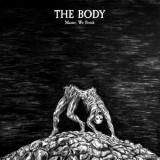


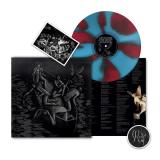
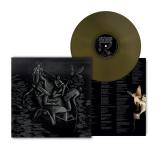


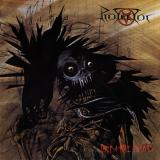



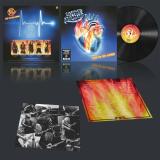



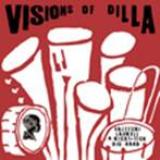


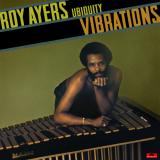





![Babes Of Enola Grey/artist] - Krieg und Wohlstand](https://www.deejay.de/images/l/4/3/1227043.jpg)
![Babes Of Enola Grey/artist] - Krieg und Wohlstand](https://www.deejay.de/images/l/1/7/1226617.jpg)