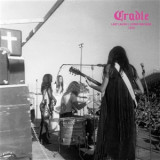
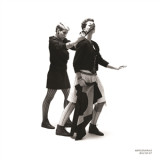
"Amir ElSaffar (b. 1977, USA) is a composer, trumpeter, vocalist, santur player, and modular synthesizer artist whose innovative compositions blend elements of jazz, classical, and traditional Arabic music. His newly established label, Maqām Records, released its first album earlier this year, Maqam Al-Iraq, by legendary vocalist, Hamid Al-Saadi and is now following up with an album of ElSaffar’s work, New Quartet Live at Pierre Boulez Saal. Recorded live in Berlin in 2023, the album captures the ineffable magic of ElSaffar’s first encounter with Greek pianist Tania Giannouli, a star on the European jazz scene, alongside his NYC-based collaborators: acclaimed drummer and bandleader, Tomas Fujiwara, and saxophonist Ole Mathisen, who is also a featured member of ElSaffar’s Two Rivers and Rivers of Sound orchestra. The quartet merges Arabic maqām with jazz harmony and features microtonal and prepared piano. In addition to the concert itself, the album features alternate takes that were recorded at Pierre Boulez Saal the next day without an audience.
RIYL: Classic artists: Miles Davis - “Sketches of Spain,” “Kind of Blue,” John Coltrane - “A Love Supreme,” “Ballads,” Don Cherry - “Relativity Suite,” Ahmed Abdul Malik - “Jazz Sahara,” “East Meets West,” Cecil Taylor, John Hassel, Hossam Ramzy, Ziad Rahbani.
Contemporary artists: Vijay Iyer, Ibrahim Maalouf, Ambrose Akinmusire, Rabih Abou-Khalil, Dhafer Youssef"
In between the folds of ceremony and commonality lies a perennial spring of musical expression.
A statement along the time continuum, or a testament to the resilient resourcefulness embedded in that truth, forms the philosophical approach of this album – the first outing of Dídac.
Studying an extensive archive of instruments, artifacts, and field recordings at the Musée d’ethnographie de Genève—a space steeped in folkloric gesture – Dídac encountered a cosmos of liturgical music and folk song. Anchored in reverance for tradition and transformation alike, this album navigates the old-world Mediterranean lore through a post-modern ambient lens, threading drone, gentle rhythm, electroacoustic textures and the crude tactility of archival material into one woven tapestry.
Under the guidance of Dr. Madeleine Leclair, Dídac was invited to work within one of the world’s most extensive ethno- musicological archives—L’AIMP. In the saturated basements and tape-lined backrooms of the museum, he submerged himself in the sounds of ritual and rural life: wax cylinders from the Eastern Mediterranean, tapes of liturgical hymn, the worn edges of communal song.
In a makeshift studio on the fourth floor of the museum, he sifted through the hours of material he collected, gradually discovering that the archive was no static source – It did not dictate; rather, it served as a companion—offering not answers, but questions. Not a beaten track, but a cluster of sonic clues and riddles. Samples do appear occasionally, tenderly interwoven into the dialogue of the songs. In Dídac’s self-titled debut, the past is not worn as ornament or kitsch; it is listened to and responded to. The museum, its archives, and the visit to Geneva became a foundational culisse of sorts, igniting a myriad of rough cuts and improvisational outtakes.
Dídac, or Diego Ocejo Muñoz, was born in Madrid in 1994 to a family of both Catalan and Castilian origin.
Brought up in a religious household, the influence of the Catholic Church innately shaped the social fabric, schooling and daily life. This lingering dominance led the adolescent Diego into a path of rejection of everything sacramental, promptly resorting to subversion in the shape of grafitti, skateboarding and underground music. Only later in life, after a rigorous venture as an acid and electro producer, the Church re-emerged before him in new light, invoking a deep fascination for its mysticism, iconography and choral tradition.
Spain in general and Catalonia in particular, has long served as a crossroads of the eastern–western Mediterranean continuum, with many of its cultures sharing aspects of way of life and ceremony. At the MEG, Diego found himself puzzled with this realization, resulting in a sonic amalgamation that reaches farther away from the rugged mountains of Catalonia than you might perceive at first encounter.
The deeply embedded memory of rite and public ceremony, religious hymn and landscape—sieved through the undercurrent of personal re-emergence, forms the emotional topography of this album. The record does not trace this landscape; it inhabits it. Its repetitive mysticism and ambient, wide-eyed gaze could possibly evoke (perhaps redundant) comparisons to artists such as Dimitris Petsetakis, or Popol Vuh’s late 70’s cinema scores.
The delicate lines between the sacred and the secular – between memory and re-invention – serve as a cipher to understanding this album in its entirety. Titles like Malpàs Mines or Pantocrator’s Portal Outro nudge toward a folkloric and devotional bedrock—places where labor and spirituality coexist, where names preserve both dust and veneration.
Nevertheless, this is far from mere nostalgia. It is a reclamation — singing alongside the spirits of the past, nurturing what still hums beneath the soil. It is an intimate reflection on tradition, rebellion, adolescence, ceremony and fantasy – a pastoral contemplation on what once was and what is to be.
out of Stock
Last delivered 10 months ago available to reorder, subject to availability
Straight from the streets of Rio, Fabio Santanna drops a double-shot of pure Brazilian funk fire with Funk da Asa and Sou Black Rio, pressed fresh on a Dippin’ Records 7 inch. Following the sold out success of his last 7 inch release, this sequel to his ASA album is fully loaded with dance floor spark, deep basslines, tight percussion and that signature Fabio touch that makes hips move on instinct. Pulled direct from his upcoming Asa Noite album, these two tracks are pure boogie fuel bathed in tropical heat.
out of Stock
Last delivered 8 months ago available to reorder, subject to availability
Verve // Remixed Holiday returns this season with a fresh spin on timeless cheer. Inspired by the beloved 2008 release, this vibrant reimagining of classic holiday tracks from Verve Records’ legendary catalog features five brand new remixes from a cutting-edge lineup of DJs and producers: Ginton, Bolden., Tourist, Two Another, and DARGZ. Their genre-blurring interpretations bring new life to beloved recordings, fusing modern electronic textures and grooves with jazz, soul, and holiday nostalgia.
This release offers a renewed celebration of the season—where vintage vocals meet forward-thinking production. From cozy fireside vibes to festive dance-floor energy, Verve // Remixed Holiday bridges generations of sound and spirit.
Pressed on “Crystal Clear” vinyl, this is a must-have for collectors and a holiday essential you will putting on all year long.
out of Stock
Last delivered 11 months ago available to reorder, subject to availability
Ein Sturm zieht auf. Ein riesiger Orkan, der in den vergangenen Jahren immer stärker wurde und der nun
droht, alles in die Tiefe zu reißen. Höchste Zeit also, endlich gegenzusteuern! Mit der kraftvollen ShantyRock-Ballade „Da braut sich was zusammen“ melden sich Santiano nun in gewohnter Stärke zurück, um
auf ihrer brandneuen Single eine deutliche Warnung in unruhigen Zeiten auszusprechen.
Mit „Da braut sich was zusammen“ meldet sich Santiano eindrucksvoll zurück. Die raue See wird zum
Sinnbild für stürmische Zeiten: „Da braut sich was zusammen und die Wolken ziehen übers Land.“ Santiano
bleibt ihrem markanten Sound treu, verbindet ihn diesmal aber mit einer besonderen Message. In einer Zeit
der politischen und gesellschaftlichen Umbrüche warnen Santiano auf dem bildgewaltigen „Da braut sich
was zusammen“ eindringlich davor, angesichts der dunklen Wolken am Horizont die Augen zu verschließen,
sondern aktiv zu werden und das Ruder noch einmal herum zu reißen, bevor es zu spät ist.
Santiano ist zurück mit ihrem siebten Studioalbum ”Da braut sich was zusammen” mit der gleichnamigen
Single als Nachfolger von acht Nummer-1-Alben.
This festive vinyl brings together the best of blues and R&B holiday spirit! From Sonny Boy Williamson's soulful "Sonny Boy's Christmas Blues" to Carla Thomas's sweetly nostalgic "Gee Whiz, It's Christmas," each track adds a unique flavour to the season. Detroit's wild Nathaniel Mayer shouts out in "Mr. Santa Claus (Bring Me My Baby)," while Chuck Berry gives us a laid-back "Merry Christmas Baby." The set captures raw teen R&B from the `50s with Cleveland's Hepsters and their catchy "Rock 'n Rollin' with Santa Claus," plus California's Youngsters spinning a cautionary tale with "Christmas in Jail." The classic Penguins bring warmth with "A Christmas Prayer," and Jimmy McCracklin's "You're the One" adds a bluesy, downbeat edge. Closing with the Ronettes' lush "Sleigh Ride," Big Dee Irwin and Little Eva's spirited duet on "The Christmas Song," and Babs Gonzales' jazzy New Year's ode "Watch Them Resolutions," this collection is the ultimate groove for a holiday celebration that lasts right through New Year's. Perfect for any record player, it's a swinging, soulful holiday feast!
Green vinyl. This festive vinyl brings together the best of blues and R&B holiday spirit! From Sonny Boy Williamson's soulful "Sonny Boy's Christmas Blues" to Carla Thomas's sweetly nostalgic "Gee Whiz, It's Christmas," each track adds a unique flavour to the season. Detroit's wild Nathaniel Mayer shouts out in "Mr. Santa Claus (Bring Me My Baby)," while Chuck Berry gives us a laid-back "Merry Christmas Baby." The set captures raw teen R&B from the `50s with Cleveland's Hepsters and their catchy "Rock 'n Rollin' with Santa Claus," plus California's Youngsters spinning a cautionary tale with "Christmas in Jail." The classic Penguins bring warmth with "A Christmas Prayer," and Jimmy McCracklin's "You're the One" adds a bluesy, downbeat edge. Closing with the Ronettes' lush "Sleigh Ride," Big Dee Irwin and Little Eva's spirited duet on "The Christmas Song," and Babs Gonzales' jazzy New Year's ode "Watch Them Resolutions," this collection is the ultimate groove for a holiday celebration that lasts right through New Year's. Perfect for any record player, it's a swinging, soulful holiday feast!
180 Gram Vinyl Celebrate the holiday season with this fiery collection of vintage R&B, gospel, and soul, guaranteed to bring the Christmas spirit to life! This vinyl release features a handpicked lineup of legends like Chuck Berry, Sonny Boy Williamson, and Charles Brown, delivering everything from foot-stomping hits to soulful serenades. Highlights include Freddy King's heartfelt "Christmas Tears," Lightnin' Hopkins' gritty "Merry Christmas," Carla Thomas' soulful "All I Want For Christmas Is You," and the lively classic "Run Rudolph Run." With rare holiday gems spanning raw blues, swinging gospel, and smooth soul, this album is the ultimate soundtrack for a cool Yule.
180 Gram, Yellow Vinyl Celebrate the holiday season with this fiery collection of vintage R&B, gospel, and soul, guaranteed to bring the Christmas spirit to life! This vinyl release features a handpicked lineup of legends like Chuck Berry, Sonny Boy Williamson, and Charles Brown, delivering everything from foot-stomping hits to soulful serenades. Highlights include Freddy King's heartfelt "Christmas Tears," Lightnin' Hopkins' gritty "Merry Christmas," Carla Thomas' soulful "All I Want For Christmas Is You," and the lively classic "Run Rudolph Run." With rare holiday gems spanning raw blues, swinging gospel, and smooth soul, this album is the ultimate soundtrack for a cool Yule.
Phylipe Nunes Araújo's songs are as rich and varied as the diverse landscapes they were written in. The hills of Pernambuco, the lagoons of Alagoas, and the beaches of Bahia are all woven into his stripped-back, folk-inspired Brazilian songwriting. As part of a wider movement of musicians originating from Brazil's Northeast, Phylipe sees the process of music-making as the search for beauty itself.
Collaborating with fellow Northeastern artists Bruno Berle, Batata Boy and Nyron Higor among others, Phylipe's debut album represents the latest flowering of this exceptionally talented community's creative search.
The Northeast holds an almost sacred importance in Brazil's collective cultural imagination. The region bore witness to the brutal histories of Portuguese colonization and the African slave trade, while simultaneously amalgamating the diverse cultures, religions and traditions of those who have called it home. Countless Brazilian music greats - Gilberto Gil, Caetano Veloso, Hermeto Pascoal, Djavan and Luiz Gonzaga - have emerged from this vast cultural melting pot.
Born in Caruaru, Pernambuco state, and raised in the city of Santa Cruz do Capibaribe (famed for its textiles industry), Phylipe describes his music simply as "Brazilian music from the Agreste of Pernambuco". His masterful compositions thread together regional rhythm, folk poetry and sophisticated harmony.
Phylipe's musical foundations were laid in youth, listening to the local elders rehearsing their forrós, attending São João street parties in front of his house and watching the Junina Quadrilhas dance through his neighborhood. At street fairs he would read the Literatura de Cordel (handcrafted pamphlets of Brazilian folk literature), and watch the rhyme battles between cantadores, violeiros, and repentistas, who improvise verses on daily life, social commentary and philosophy. This tradition of Northeastern folk poetry proved particularly formative for Phylipe as a lyricist. "I always try to write things as simply as possible. I believe that beauty must be easily understood. If I can facilitate the path to the message, there's no reason not to. It's something I learned from the traditional poetry here: it's more beautiful if everyone understands."
At the age of 11, Phylipe first got access to the internet. As he explains: "Still in adolescence I was also able to discover things like The Beatles and Nick Drake - I started to get to know music from the rest of the world and later to correlate that with my local musical experiences." Rich with extended chords and artful dissonances, it's clear from his compositions that jazz and bossa nova also took hold, but he's quick to eschew stereotypes. "Inevitably, people associate a Brazilian musician playing a nylon-string guitar with bossa nova..." "But the foundation is another story," he asserts, "It's the Northeast."
On the guitar Phylipe experiments with the binary rhythms inherent in traditional Northeastern music. Coco, frevo, maracatu and baião are recontextualised, placed alongside Brazilian popular music (MPB), gentle lullabies and stunning ballads. "In these 10 songs, I am experimenting with making pop music on a nylon-string guitar with my foundation in the Northeastern songbook."
The contemporary musical community which Phylipe belongs to developed initially in Pernambuco's neighbouring state Alagoas. Phylipe lived in its capital Maceió for three years, where he built friendships and musical bonds with Bruno Berle and Batata Boy who together produced his album. Bruno also sings in unison with Phylipe on the duet "Valise", a song Phylipe wrote aged just 15.
In recent years, Phylipe, Bruno and Batata have migrated south to São Paulo, where the majority of the album was recorded. Other collaborators on the album include Alici, who provides vocals for the ebb and flow of "Temperim", Nyron Higor who plays drums on lead single "Asa" and the sweet indie moment "Ziz"", bassist Meno Del Picchia who plays on the mystical baião "Bixin" and the propulsive "Subindo a Ladeira", and Raphael Coelho who joins Bruno and Batata on percussion for "Santa Cruz", Phylipe's hypnotically powerful portrait of his hometown.
out of Stock
Last delivered 11 months ago available to reorder, subject to availability
Get ready to trim your tree with a rollicking mix of mid-century Rhythm & Blues holiday gems. This vinyl is packed with everything from soulful longing to boisterous celebration, featuring legendary artists like Charles Brown's heart-wrenching "Please Come Home for Christmas" and the Dominoes' gorgeous "Christmas in Heaven" with a young Jackie Wilson on vocals. Dive into the bluesy mischief of Jimmy Butler's playful "Trim Your Tree" and the fiery gospel of Marvin Williams' "When Was Jesus Born." From the sweet soul stomp of Big Dee Irwin & Little Eva's "I Wish You a Merry Christmas" to Lightnin' Hopkins' funky "Happy New Year," each track captures a unique holiday spirit. This lively collection is sure to be a December favourite, filled with both cheer and heartbreak, grit and grace_an unforgettable Christmas party on vinyl!
Pink vinyl. Get ready to trim your tree with a rollicking mix of mid-century Rhythm & Blues holiday gems. This vinyl is packed with everything from soulful longing to boisterous celebration, featuring legendary artists like Charles Brown's heart-wrenching "Please Come Home for Christmas" and the Dominoes' gorgeous "Christmas in Heaven" with a young Jackie Wilson on vocals. Dive into the bluesy mischief of Jimmy Butler's playful "Trim Your Tree" and the fiery gospel of Marvin Williams' "When Was Jesus Born." From the sweet soul stomp of Big Dee Irwin & Little Eva's "I Wish You a Merry Christmas" to Lightnin' Hopkins' funky "Happy New Year," each track captures a unique holiday spirit. This lively collection is sure to be a December favourite, filled with both cheer and heartbreak, grit and grace_an unforgettable Christmas party on vinyl!
Limited edition PLUTONIUM vinyl 1000 copies worldwide. Remastered by Bob Weston at Chicago Mastering Service. Originally released in 1986 vinyl reissue includes 2 bonus tracks. "This is a bit different than previous records in that there's only a couple of songs with their distinctive bass licks and chunky melodies. So instead of bordering on redundancy, they prove their diversity by being more melodic, rockin', and even pop. This LP is more challenging than before and really great." - MaximumRockNRoll, April 1986 - // Naked Raygun were an extraordinary staple in the Chicago music scene - beginning in the early 80's and continuing until their quiet demise in the early 90's. Their music showed the world that punk rockers could play and be really good at it. Founded in Chicago in 1980, by Marco Pezzati, Jeff Pezzati and Santiago Durango, Naked Raygun released six albums during their eleven year career that would change the sound of punk rock indefinitely. The band is widely recognized as being one of the most influential punk bands of the 80's. Their anthemic style incorporated politics in a uniquely accessible way, melding pop and hardcore into one cohesive sound, that would later be dubbed, "The Chicago Sound". Shortly after their first release, Basement Screams, Durango left to join Big Black permanently, and was replaced by John Haggerty, whose unique style of buzzsaw guitar would define Raygun's sound for their next four albums. Additionally, Pierre Kezdy replaced Camilo Gonzalez and Eric Spicer took over drums for Jim Colao. In 1990, Haggerty left the band to start Pegboy. Bill Stephens joined the band for their final studio release entitled, Raygun...Naked Raygun.
Limited edition DARK TEAL vinyl 1000 copies worldwide. Remastered by Bob Weston at Chicago Mastering Service. Originally released as a 6-song ep in 1983 vinyl reissue includes 8 bonus tracks. "The long- awaited NAKED RAYGUN EP has finally been released, and musically it's a beauty. The songwriting is extremely imaginative, the vocals are unbelievably catchy, and the unique fuzzed-out guitar work sounds wonderful." - MaximumRockNRoll, October/November 1983 - // Naked Raygun were an extraordinary staple in the Chicago music scene - beginning in the early 80's and continuing until their quiet demise in the early 90's. Their music showed the world that punk rockers could play and be really good at it. Founded in Chicago in 1980, by Marco Pezzati, Jeff Pezzati and Santiago Durango, Naked Raygun released six albums during their eleven year career that would change the sound of punk rock indefinitely. The band is widely recognized as being one of the most influential punk bands of the 80's. Their anthemic style incorporated politics in a uniquely accessible way, melding pop and hardcore into one cohesive sound, that would later be dubbed, "The Chicago Sound". Shortly after their first release, Basement Screams, Durango left to join Big Black permanently, and was replaced by John Haggerty, whose unique style of buzzsaw guitar would define Raygun's sound for their next four albums. Additionally, Pierre Kezdy replaced Camilo Gonzalez and Eric Spicer took over drums for Jim Colao. In 1990, Haggerty left the band to start Pegboy. Bill Stephens joined the band for their final studio release entitled, Raygun...Naked Raygun.
Limited edition GRAPE CRUSH vinyl 1000 copies worldwide. Remastered by Bob Weston at Chicago Mastering Service. Originally released in 1988 vinyl reissue includes 4 bonus tracks. "Plenty of bands can claim Naked Raygun as an influence, from post-punkers to hardcore acts. All of them could learn a thing or two or three by studying the whoas. With Jettison... Naked Raygun achieved creative bliss. Here is an album that successfully combines dissonant instrumentation with supremely catchy vocals." - Punknews.org - // Naked Raygun were an extraordinary staple in the Chicago music scene - beginning in the early 80's and continuing until their quiet demise in the early 90's. Their music showed the world that punk rockers could play and be really good at it. Founded in Chicago in 1980, by Marco Pezzati, Jeff Pezzati and Santiago Durango, Naked Raygun released six albums during their eleven year career that would change the sound of punk rock indefinitely. The band is widely recognized as being one of the most influential punk bands of the 80's. Their anthemic style incorporated politics in a uniquely accessible way, melding pop and hardcore into one cohesive sound, that would later be dubbed, "The Chicago Sound". Shortly after their first release, Basement Screams, Durango left to join Big Black permanently, and was replaced by John Haggerty, whose unique style of buzzsaw guitar would define Raygun's sound for their next four albums. Additionally, Pierre Kezdy replaced Camilo Gonzalez and Eric Spicer took over drums for Jim Colao. In 1990, Haggerty left the band to start Pegboy. Bill Stephens joined the band for their final studio release entitled, Raygun...Naked Raygun.
Limited edition ORANGE SWIRL vinyl 1000 copies worldwide. Remastered by Bob Weston at Chicago Mastering Service. Originally released in 1990 vinyl reissue includes 3 bonus tracks. "We drove up there and my cousin Tracy had turned punk rock. And she said, 'I'm going to this show tonight. Come with me.' And so I went to this club called The Cubby Bear - it's right across the street from the baseball stadium - and a band called Naked Raygun were playing, and they're this legendary Chicago punk rock band. But I'd never seen live music. So my introduction to rock and roll was in a club that held about 150 people that was half full and I was belly up against the stage watching this incredible live band, like, sweat and spit and bleed in front of me." - Dave Grohl interview, The Record, 2011- // Naked Raygun were an extraordinary staple in the Chicago music scene - beginning in the early 80's and continuing until their quiet demise in the early 90's. Their music showed the world that punk rockers could play and be really good at it. Founded in Chicago in 1980, by Marco Pezzati, Jeff Pezzati and Santiago Durango, Naked Raygun released six albums during their eleven year career that would change the sound of punk rock indefinitely. The band is widely recognized as being one of the most influential punk bands of the 80's. Their anthemic style incorporated politics in a uniquely accessible way, melding pop and hardcore into one cohesive sound, that would later be dubbed, "The Chicago Sound". Shortly after their first release, Basement Screams, Durango left to join Big Black permanently, and was replaced by John Haggerty, whose unique style of buzzsaw guitar would define Raygun's sound for their next four albums. Additionally, Pierre Kezdy replaced Camilo Gonzalez and Eric Spicer took over drums for Jim Colao. In 1990, Haggerty left the band to start Pegboy. Bill Stephens joined the band for their final studio release entitled, Raygun...Naked Raygun.
Limited edition GREEN SWIRL vinyl, 1000 copies worldwide. Remastered by Bob Weston at Chicago Mastering Service. Originally released in 1985 vinyl reissue includes bonus track. "This band consistently defies categories. More than hardcore. More than rock. More than experimental. And this LP blazes out with a fury that's sharp, clean, and loud as fuck. The sound on this release is more concise and focused than earlier stuff but doesn't sacrifice any of their drive. Possibly one of America's most important bands." - MaximumRockNRoll, March 1985 - // Naked Raygun were an extraordinary staple in the Chicago music scene - beginning in the early 80's and continuing until their quiet demise in the early 90's. Their music showed the world that punk rockers could play and be really good at it. Founded in Chicago in 1980, by Marco Pezzati, Jeff Pezzati and Santiago Durango, Naked Raygun released six albums during their eleven year career that would change the sound of punk rock indefinitely. The band is widely recognized as being one of the most influential punk bands of the 80's. Their anthemic style incorporated politics in a uniquely accessible way, melding pop and hardcore into one cohesive sound, that would later be dubbed, "The Chicago Sound". Shortly after their first release, Basement Screams, Durango left to join Big Black permanently, and was replaced by John Haggerty, whose unique style of buzzsaw guitar would define Raygun's sound for their next four albums. Additionally, Pierre Kezdy replaced Camilo Gonzalez and Eric Spicer took over drums for Jim Colao. In 1990, Haggerty left the band to start Pegboy. Bill Stephens joined the band for their final studio release entitled, Raygun...Naked Raygun.
Limited edition BROWN & BLACK SWIRL vinyl 1000 copies worldwide. Remastered by Bob Weston at Chicago Mastering Service. Originally released in 1989 vinyl reissue includes 2 bonus tracks. "...one of the best examples of melodic hardcore just a step away from emo. The album is excellently played and is full of breathtaking anthems that, from time to time, even wink at metal soundscapes." - Debaser - // Naked Raygun were an extraordinary staple in the Chicago music scene - beginning in the early 80's and continuing until their quiet demise in the early 90's. Their music showed the world that punk rockers could play and be really good at it. Founded in Chicago in 1980, by Marco Pezzati, Jeff Pezzati and Santiago Durango, Naked Raygun released six albums during their eleven year career that would change the sound of punk rock indefinitely. The band is widely recognized as being one of the most influential punk bands of the 80's. Their anthemic style incorporated politics in a uniquely accessible way, melding pop and hardcore into one cohesive sound, that would later be dubbed, "The Chicago Sound". Shortly after their first release, Basement Screams, Durango left to join Big Black permanently, and was replaced by John Haggerty, whose unique style of buzzsaw guitar would define Raygun's sound for their next four albums. Additionally, Pierre Kezdy replaced Camilo Gonzalez and Eric Spicer took over drums for Jim Colao. In 1990, Haggerty left the band to start Pegboy. Bill Stephens joined the band for their final studio release entitled, Raygun...Naked Raygun.
Three lesbian sardines! Shouted by a heckler at a performance by the Dadaist Hugo Ball on stage at the Cabaret Voltaire. Is a perfect title for Nurse With Wound's final appearance at the `Great Monster Dada Show' at the legendary Henie Onstad Kunstsenter in Oslo, 2019. The largest exhibit of dada art and artefacts this century, over 250 artworks by 43 artists including Kurt Schwitters, Jean and Sophie Teuber Arp, Hannah Hoch, John Heartfelt, Tristan Tzara, Max Ernst, Francis Picabia, Raoul Hausmann, Marcel Duchamp, Man Ray. This electric performance captures the band at their most eclectic and playful. Here six tracks feature the classic line up of Steven Stapleton, Andrew Liles and Colin Potter including the toe tapping crowd pleaser `Flea Circus' - a mutant hybrid of Kraftwerk and Aphex Twin and is amongst the best the band have ever recorded. `Broken America' is timely reminder of the dire situation we are all facing with the arrival of Trump's America. The cover features stunning new artwork by acclaimed artist Babs Santini. 500 copies only in NEON GREEN VINYL.
Zum 20-jährigen Jubiläum von God of War präsentieren Sony Interactive Entertainment’s Santa Monica Studio und Laced Records erstmals die kraftvollen Soundtracks der griechischen Saga auf Vinyl. Der Score zum ursprünglichen God of War war ein musikalisches Manifest – episch, düster und von der Mythologie des antiken Griechenlands durchdrungen. Ein Komponistenkollektiv erschuf eine Klangwelt zwischen mediterraner Atmosphäre, tragischer Wucht und orchestraler Größe, in der antike Instrumente und monumentale Themen Kratos’ blutgetränktes Griechenland als Reich aus Magie, Göttern und Zorn zum Leben erwecken.
Zum 20-jährigen Jubiläum von God of War präsentieren Sony Interactive Entertainment’s Santa Monica Studio und Laced Records erstmals die kraftvollen Soundtracks der griechischen Saga auf Vinyl. Der Score zum ursprünglichen God of War war ein musikalisches Manifest – episch, düster und von der Mythologie des antiken Griechenlands durchdrungen. Ein Komponistenkollektiv erschuf eine Klangwelt zwischen mediterraner Atmosphäre, tragischer Wucht und orchestraler Größe, in der antike Instrumente und monumentale Themen Kratos’ blutgetränktes Griechenland als Reich aus Magie, Göttern und Zorn zum Leben erwecken.
Zum 20-jährigen Jubiläum von God of War präsentieren Sony Interactive Entertainment’s Santa Monica Studio und Laced Records erstmals die kraftvollen Soundtracks der griechischen Saga auf Vinyl. Der Score zum ursprünglichen God of War war ein musikalisches Manifest – episch, düster und von der Mythologie des antiken Griechenlands durchdrungen. Ein Komponistenkollektiv erschuf eine Klangwelt zwischen mediterraner Atmosphäre, tragischer Wucht und orchestraler Größe, in der antike Instrumente und monumentale Themen Kratos’ blutgetränktes Griechenland als Reich aus Magie, Göttern und Zorn zum Leben erwecken.
Presenting a joyous double dose of Brazilian pífano magic by João do Pife, taken from his iconic Folclore Alagoano LP and pressed for the first time on 7” vinyl. The infectious, uplifting energy of the instrumental track 'Garoto Do Pife' has been a dancefloor weapon for revered selectors such as Gilles Peterson, Cliffy and the Mr Bongo DJs, and we are proud to be reissuing it for the first time.
The pífano, pifaro or pife, which creates the distinctive melodies in these tracks, is a simple seven-hole woodwind instrument from the Northeast region of Brazil. Often made out of bamboo or taquara wood, they are rich in folkloric music tradition and paired with percussion instruments to form the Bandas de Pífanos groups, which originated from the Northeastern states of the country. "Pifeiros” such as João do Pife, Edmilson do Pífano, and Carlos Malta brought the pífano into a wider public eye through their albums and vinyl recordings.
A part of pífano maestro João do Pife’s rich legacy, these two mesmerizing and timeless tracks originate from his sought-after 1975 LP Folclore Alagoano, released on the Tropicana label. Born João Alfredo Marques dos Santos in 1943, in Riacho das Almas, João do Pife became an ambassador of Northern Brazilian culture and folklore through his music, which placed the pífano centre stage.
For this 7" issue, we have curated two of our favourite tracks from the album, 'Garoto Do Pife' and 'Homenagem a Ludugero', that exude a driving and joyous dancefloor energy. With lively accordion and organ accompaniments that weave around João do Pife's sublime pífano playing, they channel a folk spirit that will resonate deep within your soul.
As inspiration for the picture sleeve, we have adapted the original cover photo art for this 7 inch issue. João do Pife’s music, which is housed within, will sweep you away to Northeastern Brazil in an instant.
out of Stock
Last delivered 8 months ago available to reorder, subject to availability
Zum 20-jährigen Jubiläum von God of War präsentieren Sony Interactive Entertainment’s Santa Monica Studio und Laced Records ein monumentales 13-LP-Vinyl-Boxset, das die Musik aller Spiele von God of War (2005) bis God of War Ragnarök: Valhalla (2023) umfasst. In zwei aufwendig gestalteten Schubern befinden sich sieben Hüllen mit individuell bedruckten Innenhüllen und exklusiv für Vinyl gemasterten Aufnahmen. Die Sammlung zelebriert die musikalische Entwicklung von Kratos’ Epos – von den orchestralen und choralen Klanggewalten der griechischen Saga (u. a. Gerard K. Marino, Winifred Phillips, Tyler Bates) bis zu Bear McCrearys preisgekrönten, emotionalen Soundlandschaften der nordischen Ära. Erstmals auf Vinyl enthalten ist McCrearys Score zu Ragnarök: Valhalla, ergänzt durch drei entspannte Lofi-Remixe von Alex Moukala & Lawrence Ravagnan, die das 20-jährige Vermächtnis des Ghost of Sparta stimmungsvoll abrunden.
Uncharted musical terrains beyond jazz standards, precise and beautiful vocal arrangements, pop minimalism, Portuguese folk, R&B and playful loops. This is how we could define the first album “Un a Un”, by the Portuguese musician and singer based in Barcelona, Marta Garrett, which has been produced and multiinstrumented by Leo Aldrey and with the collaborations of guitarist Santi Careta and bassist Ramon Vagué. An album that tells us about the melancholic but hopeful search for a sense of belonging and the impulsive fight against fear and insecurity.
SHADOWY FIGMENTS OF UNRELENTING SONIC SEEKINGS
The magic lantern music of Razen spirals into ever more fanatic territory with the addition of turntablist Guilhem All from Brest. Vietnamese flute, oscillator, chopped-up vinyls and a range of
uncomfortable techniques bring about a series of sandblown, rock-encrusted desert mirages.
MORE INFO SOON
credits
releases October 15, 2025
Recorded by Mathieu Grillo, with assistant engineer Gaia Lufrano
Recorded at Echo Chamber in Volta, Molenbeek on March 4,5 & 6, 2025
Mixed by Mathieu Grillo, with assistant engineer Gaia Lufrano
Mastered by Frédéric Alstadt
Artwork: Aurora/ ChromaGrid drawing by Wilfried Pulinckx
STANDFIRST Titanic, the project spearheaded by Mabe Fratti and Hector Tosta (aka I. la Católica), return with a sumptuous and life-affirming new album.
In her sensational 1929 biography Tiger Woman, dancer and socialite Betty May claimed her ‘coster’s eye’ meant she liked to wear as many colours as possible. “Colours to me are like children to a loving mother. Each is my favourite, yet I can never bring myself to deny the others by preferring one.” May’s bold and inclusive strategy is one that manages to transfer itself, almost a century later, to Hagen, the new record by Titanic.
Many will know Titanic as the Mexico City-based brainchild of cellist and singer Mabe Fratti and multiinstrumentalist Hector Tosta who is now operating under the pseudonym, I. la Católica, (taken, rather unusually, from the name of the street the pair live on). With Hagen, and their previous release, Vidrio, (2023), the pair are creating a distinctive signature sound in modern alternative pop music. Nobody else sounds quite like them. Both records have an open hearted nature and simple, winning melodies that play off against a taste for drama, spectacular orchestration and a feeling of otherworldly mystery. Hagen is the more ambitious, sometimes more mystical effort. From the opening handclaps of ‘Lágrima del Sol’, (a wonderfully uptempo playground chant translating as a tear from the sun but, surely, not referencing the brand of pineapple wine?), the record dances its way through various mid-to-late-eighties inspirations, lush and widescreen passages of melancholy and vertiginous contrasts.
Mystery is often found in the simple but slightly odd song titles. English translations of various track titles give, ‘you swallowed the gum’, ‘leak’, ‘a tear from the sun’, ‘raising the trophy’ ‘digging dimensions’, ‘the owner’, ‘the decapitated hen’ and ‘the trap is exposed’. All denote striking images, metaphysical hints and emotional cues or simple, even childlike actions. Though Fratti and Tosta don’t reveal its provenance, the album’s title could even be a crafty play on words: the listener would be forgiven in thinking the moments of brash contrast and eyebrow raising theatricalism in the music constitute a musical nod to German punk chanteuse, Nina Hagen.
On Hagen, singer and cellist Mabe Fratti once again displays her brilliant knack of speaking to us directly. There is never the suspicion of her playing to the gallery, and the directness of many of the lyrics don’t allow it. Parallel to this, Fratti has an almost magical ability to give Hector Tosta’s melodies, and her and Tosta’s lyrics ones imbued with an insight and meaning that feels otherworldly. Tosta admitted it was “pretty wild to hear Mabe take the interpretations to a different place” and the listener can pick up on the delight Fratti takes in (literally) adding a voice to the many narratives.
Two examples can be shown here: ‘Gotera’ (Leak) uses harsh slashes of cello and tough, gunfire-like guitars and drums and multiple vocal lines that could be acting as a Greek chorus. They play off brilliantly against Fratti’s soft, slightly baleful vocal take that delivers lyrics such as: ‘nobody knows where the leak is / but I know where it is / they fight in front of the door and / nobody can go in’. With ‘La Gallina Degollada’ the somewhat blithe melody melody line, sung with what could be sarcastic brio by Fratti, plays against an itchting rhythm and rasping guitar part. The punch comes when you see that the song is about a chicken that has been decapitated and read lyrics such as: ‘I already saw it, it moved, the decapitated chicken’ / ‘could it be that I'm broken’ and ‘Two people hurt each other by thinking that they no longer agree’/ ‘Hours pass and the chicken represents what scares me’.
There may be death and fights to deal with, but there is also a quality of chirpy self-reliance about Hagen that is a key part of its nature. Like Betty May and her colourful outfits, Hagen’s sound often revels in its own sense of richness. Throughout, the record delivers vaulting string sections or glutinous guitar squeals that could, like the powerful, driving ‘Escarbo Dimensiones’ (Digging Dimensions) have come directly from a glossy 1980s TV series. Fratti sees this “glam sound” developed by Tosta on the aforementioned track and ‘Te Tragaste el Chicle’ (You Swallowed The Gum), as moments that were truly “revealing” for the album as a whole during its making.
What else? The thud and thump of ‘La Trampa Sale’ (The Trap is Exposed), and its sudden change of tempo and mood betrays a monstrously ambitious piece of music, the players almost greedily creating the sounds. Other moments are heart wrenching: ‘Libra’ ends on a poppy chord switch that cleverly ramps up the emotion inherent in the music’s notation. You could almost imagine a teenager in a bedroom forty years ago, rewinding the track over and over on a small, cheap cassette player, unable to get enough of that sugarsweet switch. Elsewhere, Oneohtrix Point Never adds stardust and an unearthly sense of space on the changeable, slightly moody meditation, ‘Pájaro de Fuego’ (Firebird). The record ends with ‘Alzando el Trofeo’ (Lifting the Trophy), a track that could soundtrack a state wedding, what with its beautiful cascading piano parts, a sugary vocal and short triumphal guitar riffs that add a rich patina to the overall sound. Fratti: “When I doubled those vocals on ‘Alzando el Trofeo’ I felt there was an epiphany happening, right at that moment.”
Making a good record is a team game. Tosta and Fratti recall seeing Randall from Circular Ruin Studios in NYC “tweak the drums in ‘Libra’ to make that amazing effect of the gated reverb”, or the shaping of ‘Gotera’, “when (recording engineer) Nate Salon added some synths to the track.” Drummer Eli Keszler, “an amazing and versatile player” had the songs down pat in a couple of days” and, according to Tosta, Oneohtrix Point Never “just came to one of the sessions and we hung out, and after all the recordings he and Nate were together in some studio and out of nowhere they sent us some beautiful tracks for ‘Pájaro de Fuego’! Fratti concurs. “He decided that he wanted to record because he was listening to the record (Nate works closely with him) and he really liked it! It was a total honour, indeed!”
Bedazzled by the playing, the skyscraping ambition in the arrangements and the giddy moments of contrast thrown up by Hagen, we could allow ourselves a brief moment of flippancy and state that Titanic’s new record is Yacht Rock meets Aeschylus, full-on. It’s also worth speculating that, in this hyper-sensitive, intemperate age, Titanic’s music has the power, however fleetingly, to heal hurts. Hagen is a brilliant showcase for a fresh and enriching form of pop music: displaying a magpie eye for what glints and plundering what has gone before.
Like Vidrio, Hagen was partially and additionally recorded at Fratti and Tosta’s house, aka Tinho Studios in Mexico City, as well as Golden Girl Studios & Circular Ruin Studios in New York City. Mixing was done by Santiago Parra in Pedro y el Lobo Studios, Mexico City and mastered by Rafael Anton Irisarri at Black Knoll Studios, New York City. The recording engineer was Nate Salon.
Hagen featured Mabe Fratti on cello, vocals & backing vocals, I. la Católica on guitar, keyboards, prepared piano, bass & backing vocals, drums by Eli Keszler and synths in ‘Pájaro de Fuego’ from Daniel Lopatin and Nate Salon.
All compositions on Hagen are written by I. la Católica, except ‘Escarbo Dimensiones’ & ‘Pájaro de Fuego’, which were composed by I. la Católica and Mabe Fratti. The record was produced by I. la Católica and co-produced by Nate Salon & Mabe Fratti. And all lyrics are by I. la Católica except ‘Escarbo Dimensiones’, ‘Gotera’, ‘Gallina degollada’ & ‘Pájaro de Fuego’, which were written by I. la Católica & Mabe Fratti.
out of Stock
Last delivered 11 months ago available to reorder, subject to availability
STANDFIRST Titanic, the project spearheaded by Mabe Fratti and Hector Tosta (aka I. la Católica), return with a sumptuous and life-affirming new album.
In her sensational 1929 biography Tiger Woman, dancer and socialite Betty May claimed her ‘coster’s eye’ meant she liked to wear as many colours as possible. “Colours to me are like children to a loving mother. Each is my favourite, yet I can never bring myself to deny the others by preferring one.” May’s bold and inclusive strategy is one that manages to transfer itself, almost a century later, to Hagen, the new record by Titanic.
Many will know Titanic as the Mexico City-based brainchild of cellist and singer Mabe Fratti and multiinstrumentalist Hector Tosta who is now operating under the pseudonym, I. la Católica, (taken, rather unusually, from the name of the street the pair live on). With Hagen, and their previous release, Vidrio, (2023), the pair are creating a distinctive signature sound in modern alternative pop music. Nobody else sounds quite like them. Both records have an open hearted nature and simple, winning melodies that play off against a taste for drama, spectacular orchestration and a feeling of otherworldly mystery. Hagen is the more ambitious, sometimes more mystical effort. From the opening handclaps of ‘Lágrima del Sol’, (a wonderfully uptempo playground chant translating as a tear from the sun but, surely, not referencing the brand of pineapple wine?), the record dances its way through various mid-to-late-eighties inspirations, lush and widescreen passages of melancholy and vertiginous contrasts.
Mystery is often found in the simple but slightly odd song titles. English translations of various track titles give, ‘you swallowed the gum’, ‘leak’, ‘a tear from the sun’, ‘raising the trophy’ ‘digging dimensions’, ‘the owner’, ‘the decapitated hen’ and ‘the trap is exposed’. All denote striking images, metaphysical hints and emotional cues or simple, even childlike actions. Though Fratti and Tosta don’t reveal its provenance, the album’s title could even be a crafty play on words: the listener would be forgiven in thinking the moments of brash contrast and eyebrow raising theatricalism in the music constitute a musical nod to German punk chanteuse, Nina Hagen.
On Hagen, singer and cellist Mabe Fratti once again displays her brilliant knack of speaking to us directly. There is never the suspicion of her playing to the gallery, and the directness of many of the lyrics don’t allow it. Parallel to this, Fratti has an almost magical ability to give Hector Tosta’s melodies, and her and Tosta’s lyrics ones imbued with an insight and meaning that feels otherworldly. Tosta admitted it was “pretty wild to hear Mabe take the interpretations to a different place” and the listener can pick up on the delight Fratti takes in (literally) adding a voice to the many narratives.
Two examples can be shown here: ‘Gotera’ (Leak) uses harsh slashes of cello and tough, gunfire-like guitars and drums and multiple vocal lines that could be acting as a Greek chorus. They play off brilliantly against Fratti’s soft, slightly baleful vocal take that delivers lyrics such as: ‘nobody knows where the leak is / but I know where it is / they fight in front of the door and / nobody can go in’. With ‘La Gallina Degollada’ the somewhat blithe melody melody line, sung with what could be sarcastic brio by Fratti, plays against an itchting rhythm and rasping guitar part. The punch comes when you see that the song is about a chicken that has been decapitated and read lyrics such as: ‘I already saw it, it moved, the decapitated chicken’ / ‘could it be that I'm broken’ and ‘Two people hurt each other by thinking that they no longer agree’/ ‘Hours pass and the chicken represents what scares me’.
There may be death and fights to deal with, but there is also a quality of chirpy self-reliance about Hagen that is a key part of its nature. Like Betty May and her colourful outfits, Hagen’s sound often revels in its own sense of richness. Throughout, the record delivers vaulting string sections or glutinous guitar squeals that could, like the powerful, driving ‘Escarbo Dimensiones’ (Digging Dimensions) have come directly from a glossy 1980s TV series. Fratti sees this “glam sound” developed by Tosta on the aforementioned track and ‘Te Tragaste el Chicle’ (You Swallowed The Gum), as moments that were truly “revealing” for the album as a whole during its making.
What else? The thud and thump of ‘La Trampa Sale’ (The Trap is Exposed), and its sudden change of tempo and mood betrays a monstrously ambitious piece of music, the players almost greedily creating the sounds. Other moments are heart wrenching: ‘Libra’ ends on a poppy chord switch that cleverly ramps up the emotion inherent in the music’s notation. You could almost imagine a teenager in a bedroom forty years ago, rewinding the track over and over on a small, cheap cassette player, unable to get enough of that sugarsweet switch. Elsewhere, Oneohtrix Point Never adds stardust and an unearthly sense of space on the changeable, slightly moody meditation, ‘Pájaro de Fuego’ (Firebird). The record ends with ‘Alzando el Trofeo’ (Lifting the Trophy), a track that could soundtrack a state wedding, what with its beautiful cascading piano parts, a sugary vocal and short triumphal guitar riffs that add a rich patina to the overall sound. Fratti: “When I doubled those vocals on ‘Alzando el Trofeo’ I felt there was an epiphany happening, right at that moment.”
Making a good record is a team game. Tosta and Fratti recall seeing Randall from Circular Ruin Studios in NYC “tweak the drums in ‘Libra’ to make that amazing effect of the gated reverb”, or the shaping of ‘Gotera’, “when (recording engineer) Nate Salon added some synths to the track.” Drummer Eli Keszler, “an amazing and versatile player” had the songs down pat in a couple of days” and, according to Tosta, Oneohtrix Point Never “just came to one of the sessions and we hung out, and after all the recordings he and Nate were together in some studio and out of nowhere they sent us some beautiful tracks for ‘Pájaro de Fuego’! Fratti concurs. “He decided that he wanted to record because he was listening to the record (Nate works closely with him) and he really liked it! It was a total honour, indeed!”
Bedazzled by the playing, the skyscraping ambition in the arrangements and the giddy moments of contrast thrown up by Hagen, we could allow ourselves a brief moment of flippancy and state that Titanic’s new record is Yacht Rock meets Aeschylus, full-on. It’s also worth speculating that, in this hyper-sensitive, intemperate age, Titanic’s music has the power, however fleetingly, to heal hurts. Hagen is a brilliant showcase for a fresh and enriching form of pop music: displaying a magpie eye for what glints and plundering what has gone before.
Like Vidrio, Hagen was partially and additionally recorded at Fratti and Tosta’s house, aka Tinho Studios in Mexico City, as well as Golden Girl Studios & Circular Ruin Studios in New York City. Mixing was done by Santiago Parra in Pedro y el Lobo Studios, Mexico City and mastered by Rafael Anton Irisarri at Black Knoll Studios, New York City. The recording engineer was Nate Salon.
Hagen featured Mabe Fratti on cello, vocals & backing vocals, I. la Católica on guitar, keyboards, prepared piano, bass & backing vocals, drums by Eli Keszler and synths in ‘Pájaro de Fuego’ from Daniel Lopatin and Nate Salon.
All compositions on Hagen are written by I. la Católica, except ‘Escarbo Dimensiones’ & ‘Pájaro de Fuego’, which were composed by I. la Católica and Mabe Fratti. The record was produced by I. la Católica and co-produced by Nate Salon & Mabe Fratti. And all lyrics are by I. la Católica except ‘Escarbo Dimensiones’, ‘Gotera’, ‘Gallina degollada’ & ‘Pájaro de Fuego’, which were written by I. la Católica & Mabe Fratti.
out of Stock
Last delivered 11 months ago available to reorder, subject to availability
Fresh techno from the Lowlands by two veterans of the Utrecht scene. Quince made his debut 20 years ago on the renowned Delsin label, while Sayne is the latest alias of DJ, producer and label owner Nuno Dos Santos. All three tracks are built around a single initial idea. Both producers expanded the idea independently, before coming together to forge the final result. The title track Orange has a nice Detroit vibe with its shuffle rhythms and bouncing rimshots, while Klonneplein 1 (an Amsterdam square all too familiar to visitors of a populair techno party) navigates the wobbly bridge between Sterac and Andy Stott. The closing track Work is one for sweaty basements, where bass lines tug viciously at your trouser legs. Raw, distorted jakbeat in a frayed techno jacket. If you like to lose yourself, this sixth EP on the Nowhere label is a good place to start.
out of Stock
Last delivered 7 months ago available to reorder, subject to availability
Zu seinem 87. Geburtstag trat der legendäre Jazz-Saxofonist und Flötist Charles Lloyd im März 2025 mit
neuem Trio im Lobero Theater in Santa Barbara auf. Direkt im Anschluss ging er mit Pianist Jason Moran
und Gitarrist Marvin Sewell ins Studio, um sein zwölftes Blue Note-Album, ”Figure In Blue”, aufzunehmen.
Das Doppelalbum gibt Lloyd Raum für eine musikalische Reise zu den Personen und Einflüssen, die seine
Karriere geprägt haben, mit wunderschönen Balladen und rohem Delta-Blues bis hin zu tief empfundenen
Hommagen an Duke Ellington, Billie Holiday und Zakir Hussain.
Belgian singer-songwriter Emma Hessels releases her debut EP 'Constant Distance' on October 24 via Unday Records. With a voice that lingers long after the song has ended and lyrics that feel like pages torn from a diary, Hessels has quickly carved out her place in the Belgian scene. She was named laureate of Sound Track in 2023, went on to play intimate yet arresting sets at Ancienne Belgique, Botanique, and the prestigious Cirque Royal, and appeared at Best Kept Secret this summer.
Milestones that signaled the arrival of a singular new voice in folk and soul.
'Constant Distance' gathers six songs bound by a recurring undercurrent: the presence of distance in its many forms - absence, longing, loneliness, the fear of loss, but also the desire for belonging. The songs weren't conceived around a single theme, but when brought together, a pattern revealed itself. Loss implies distance, longing implies distance, even love can. Yet the EP closes on 'Breaking', a gospel-tinged anthem of connection and alignment, written during a women's writer's retreat where community and music became inseparable.
Musically, 'Constant Distance' moves between folk and soul, carrying the feel of modern blues and occasionally leaning into gospel's call-and-response. The atmosphere is warm and nostalgic, drawing inspiration from Laura Marling, Damien Rice and Big Thief as much as from Aretha Franklin, Nina Simone and Richie Havens. Emma's voice remains the constant thread: soulful, unforced, quietly commanding. "I hope my songs can be like a warm blanket, something that keeps you company, that makes you feel a little less alone."
Though written solo on guitar, often during long train rides, the songs expanded into layered productions through collaboration with Aram Santy, Nard Houdmeyers and Fender Mackenson Rooms, with additional contributions such as Marthe van Droogenbroeck's evocative trumpet. Recorded over two intense days at Studio Beertje, the EP captures both intimacy and expansiveness. The result is music that carries the weight of Emma's fears and questions, but also the joy of collective creation.
With 'Constant Distance', Emma Hessels doesn't just deliver a debut - she opens a world where fragility and strength coexist, and where music becomes a way of closing the gap between people.
In-Correcto 15–25 marks the first vinyl compilation by Bogotá’s independent label InCorrecto, created in collaboration with Austrian imprint discos elgozo. Celebrating ten years of sonic exploration and creative resistance from the Global South, this special edition brings together a vibrant constellation of artists that define the label’s sound: La Muchacha, Ana María Vahos, Felipe Orjuela, Mau Gatiyo, Conjunto Media Luna, Briela Ojeda, Zarigüeya, Buha 2030, and many more. Between mutant cumbia, Latin American folk, introspective electronics, and borderless sonic experiments, 15–25 is both a party and a statement: a manifesto of the in-correct as an artistic and collective force.
Since 2015, In-Correcto has grown from a cultural magazine into one of Latin America’s most vital independent hubs, operating as a record label, publishing house, and creative collective. With more than 160 releases ranging from punk and ambient to trip-hop and experimental cumbia, the label has supported a generation of artists whose work is as socially engaged as it is sonically daring. Through compilations, anniversary concerts, and political projects, In-Correcto has solidified its reputation as a catalyst for collaboration, solidarity, and cultural cross-pollination in Bogotá and beyond. Based in Vienna with roots on Colombia’s Caribbean coast, discos elgozo shares this vision. Founded in 2024, the label works with Colombian artists and their diaspora, releasing music that fuses ancestral knowledge, queer-feminist expression, sonic experimentation, and joy as a political force—as a way to resist cultural erasure, reactivate traditions, and recover collective vitality. Its catalog spans salsa brava, bullerengue, psychedelic cumbia, and experimental jazz, with a strong focus on vinyl as an act of listening, memory, and resistance.
Carefully pressed, In-Correcto 15–25 is more than a record: it is a bridge between Bogotá’s underground and a global network of listeners. A sonic archive and an invitation to dance, it reaffirms that joy, experimentation, and community remain powerful tools to imagine the world otherwise.
out of Stock
Last delivered 12 months ago available to reorder, subject to availability
“New York’s Harlem River Drive is a dividing line, a highway where the rich zip past the poor,” says singer Jimmy Norman. Eddie Palmieri’s Latin-funk band of the same name tackled these hard truths, playing prisons and speaking to the common man. Ultimately, Norman and Palmieri made a powerful socio-political statement that continues to resonate to this day." Pablo Yglesias/Wax Poetics. When initially released in 1971, many critics panned Eddie Palmieri’s album Harlem River Drive. Those critics were wrong. Regardless of critical opinion, the release was not the crossover success Palmieri and Roulette Records had hoped for, at least in the immediate. Over the years the release has developed a following among listeners, DJs, and aficionados of rare-grooves. The record may have been recorded towards the end of the Latin soul era, yet it features that genre's wonderful mix of Puerto Rican soul, Spanish Harlem Latin, and New York funk. Palmieri worked with an incredibly talented crew of Latin and R&B session musicians to create this quintessential New York vibe, a synthesis of funk and Afro-Cuban sounds. Contributors include Victor Venegas from Mongo Santamaria’s band, Palmieri’s brother Charlie, an accomplished musician in his own right, Bruce Fowler who went on to join Frank Zappa’s band, Dick Meza who went on to great things with Tito Puente, Ray Barretto and Celia Cruz, as well as Andy Gonzalez who’s pedigree includes recordings with Barretto, Johnny Pacheco, Willie Colon and even Chico O’Farrill. Also appearing Randy Brecker and one of the all-time greatest of the greats Bernard Purdy. An over-arching theme of Harlem River Drive is the thought that, as Palmieri puts it “The U.S. is richest country, all this immense wealth, side by side with the most intense poverty, racial prejudice; how is that possible?” A question that’s perhaps more even more relevant today than it was in 1971. A question that can be further explored with Get On Down’s reissue of this seminal recording.
out of Stock
Last delivered 7 years ago available to reorder, subject to availability
It's spring of 2023 in the North Carolina Piedmont, and songwriter and singer M.C. Taylor - leader of the band Hiss Golden Messenger - is feeling alive. Joyful. Eternal, he might say. For the Grammy-nominated musician, whose albums have traced an internal path through adulthood, fatherhood, spirituality, and depression for well over a decade, this is something new. "The tunes on Jump for Joy were composed in free moments throughout 2022, a year during which Hiss was on the road more or less constantly," explains Taylor. "And perhaps because the post-pandemic energy out in the world felt so chaotic and uncertain, I found myself thinking a lot about the role that music has played in my life and how exactly I ended up in the rarefied position of leading a band and crew all over the globe through dingy graffiti-scrawled green rooms, venerated music halls, dust-blown roadside motels.
Sometimes playing in front of 5,000; sometimes 200. Sleeping sitting up. Laughing until my stomach hurts. Not being able to fall asleep at 3 a.m. in some anonymous bed because my mind is spinning with anxiety or depression or adrenaline, or because my ears are still ringing. Robbing Peter to pay Paul, then robbing Paul to pay Peter back. Over and over again. It's an outlaw life but one, I'm coming to realize, that makes me happy." The songs that make up Jump for Joy - the sharpest and most autobiographical that Taylor has written under the Hiss name - read as a sort of epistolary, postcards between the present-day songwriter and his alias Michael Crow, a teenaged dreamer very much like Taylor himself, who trips his way through the 14 tunes that make up the record. In this way, Jump for Joy is a meditation on a life lived with art, and the ways that our hopes and dreams and decisions bump up against_ and, with a little bit of luck, occasionally merge with real life. "Creating this character became the way that I could explore these vulnerable, tender moments that were so decisive in my life, even if I didn't know it at the time," explains Taylor.
Produced by Taylor and engineered by longtime Hiss compatriot Scott Hirsch over two weeks in the late fall of 2022 at the fabled Sonic Ranch studio in Tornillo, TX, just a short walk from the Mexican border, Jump for Joy dances with joyful, spontaneous energy that feels like a fresh chapter in the Hiss Golden Messenger oeuvre. Taylor is accompanied throughout the album by his crack live band: guitarist Chris Boerner, bassist Alex Bingham, keyboardist Sam Fribush, and drummer Nick Falk, a collection of musicians that have helped make Hiss Golden Messenger's live performances legendary affairs
out of Stock
Last delivered 12 months ago available to reorder, subject to availability
Vor zwanzig Jahren kam der Film „Brokeback Mountain“ heraus, der längst als jüngerer Klassiker Hollywoods gilt und mit seiner dramatischen und anrührenden Story ein riesiges Publikum erreicht hat. Oscars
gab es nicht nur für die beste Regie und das beste Drehbuch, sondern auch für die Filmmusik von Gustavo
Santaolalla (The Last Of Us, August: Osage County, Babel).
Das Soundtrack-Album zum Film wurde ebenfalls ein großer Erfolg, es enthält neben dem Score auch
Titel von u.a. Willie Nelson, Rufus Wainwright, Linda Ronstadt und Emmylou Harris. Zum zwanzigsten
Jubiläum des Films erscheint der Soundtrack jetzt weltweit erstmals als LP.
Dusted Angel is a band that likes to keep it in the family. Made up of a group of close friends that have known each since the early 80s, stemming from playing in various intertwined bands engraved in the extended Santa Cruz family of friends. Featuring Ed Gregor, guitar (hedgehog, no use for a name), Eric "Dog" Fieber, guitar (Mock, creature, fire sermon) Steve Ilse drums (creature, Herbert, Automatic Animal) Clifford Dinsmore vocals (Bl'ast!, Seized Up, Spaceboy) and Eliot Young (Lost in Line, Seance) on bass. Formed in 2009, Dusted Angel is a sleeping giant that awakens from time to time to enlighten people with their unique brand of heavy, heavy groove laden music. Now it's time for a new album via Heavy Psych Sounds Records!
Transparent orange vinyl, limited to 300 copies. Dusted Angel is a band that likes to keep it in the family. Made up of a group of close friends that have known each since the early 80s, stemming from playing in various intertwined bands engraved in the extended Santa Cruz family of friends. Featuring Ed Gregor, guitar (hedgehog, no use for a name), Eric "Dog" Fieber, guitar (Mock, creature, fire sermon) Steve Ilse drums (creature, Herbert, Automatic Animal) Clifford Dinsmore vocals (Bl'ast!, Seized Up, Spaceboy) and Eliot Young (Lost in Line, Seance) on bass. Formed in 2009, Dusted Angel is a sleeping giant that awakens from time to time to enlighten people with their unique brand of heavy, heavy groove laden music. Now it's time for a new album via Heavy Psych Sounds Records!
Indie exclusive Peak Edition on Orange & Black Swirl Vinyl, in a gatefold cover + poster.
It's spring of 2023 in the North Carolina Piedmont, and songwriter and singer M.C. Taylor - leader of the band Hiss Golden Messenger - is feeling alive. Joyful. Eternal, he might say. For the Grammy-nominated musician, whose albums have traced an internal path through adulthood, fatherhood, spirituality, and depression for well over a decade, this is something new. "The tunes on Jump for Joy were composed in free moments throughout 2022, a year during which Hiss was on the road more or less constantly," explains Taylor. "And perhaps because the post-pandemic energy out in the world felt so chaotic and uncertain, I found myself thinking a lot about the role that music has played in my life and how exactly I ended up in the rarefied position of leading a band and crew all over the globe through dingy graffiti-scrawled green rooms, venerated music halls, dust-blown roadside motels.
Sometimes playing in front of 5,000; sometimes 200. Sleeping sitting up. Laughing until my stomach hurts. Not being able to fall asleep at 3 a.m. in some anonymous bed because my mind is spinning with anxiety or depression or adrenaline, or because my ears are still ringing. Robbing Peter to pay Paul, then robbing Paul to pay Peter back. Over and over again. It's an outlaw life but one, I'm coming to realize, that makes me happy." The songs that make up Jump for Joy - the sharpest and most autobiographical that Taylor has written under the Hiss name - read as a sort of epistolary, postcards between the present-day songwriter and his alias Michael Crow, a teenaged dreamer very much like Taylor himself, who trips his way through the 14 tunes that make up the record. In this way, Jump for Joy is a meditation on a life lived with art, and the ways that our hopes and dreams and decisions bump up against_ and, with a little bit of luck, occasionally merge with real life. "Creating this character became the way that I could explore these vulnerable, tender moments that were so decisive in my life, even if I didn't know it at the time," explains Taylor.
Produced by Taylor and engineered by longtime Hiss compatriot Scott Hirsch over two weeks in the late fall of 2022 at the fabled Sonic Ranch studio in Tornillo, TX, just a short walk from the Mexican border, Jump for Joy dances with joyful, spontaneous energy that feels like a fresh chapter in the Hiss Golden Messenger oeuvre. Taylor is accompanied throughout the album by his crack live band: guitarist Chris Boerner, bassist Alex Bingham, keyboardist Sam Fribush, and drummer Nick Falk, a collection of musicians that have helped make Hiss Golden Messenger's live performances legendary affairs
out of Stock
Last delivered 12 months ago available to reorder, subject to availability
A first-time 7-inch release of Free Soul-style covers of classics by Bill Withers and Tania Maria!
Mallorcan DJ and trackmaker Pepe Link brings an exciting new 7-inch release! This limited-edition Japanese release includes specially edited versions by Pepe himself.
Side A features a Balearic-flavored cover of Bill Withers' 1977 classic "Lovely Day," featuring the soulful vocals of Glen Anthony Henry. Side B presents "Vem Menina", a devilishly slick samba-bossa nova version of the Brazilian funk classic 'Come With Me' by Tania Maria, poured over with flamenco guitars and the effortlessly beautiful voice of Brazilian singer Marta Santamaria.Especially for this release, Pepe himself handled the editing, making this the first-ever 7-inch release as a Japan-exclusive edition!
out of Stock
Last delivered 4 months ago available to reorder, subject to availability
Can you believe it? Devendra Banhart's Cripple Crow - originally released by XL in 2005 - is turning 20 years old. This was the 5th album from the Venezuelan American artist who is considered the pioneer of the "Freak Folk" and "New Weird America" movements. To celebrate - Devendra has compiled a reissue of the out of print release that features a 3rd Bonus LP (on Clear Green Smoke Vinyl) featuring 9 bonus tracks, including 1 B-Side, 5 previously unreleased demos, 2 previously unreleased live tracks, and 1 unearthed smash hit from the recording sessions. This release is the first on his newly created Heavy Flowers label. The album received a "Best New Music" 8.4 review from Pitchfork upon its release. The release date will fall 1 day prior to the actual 20th Anniversary, which will be the first time Devendra is early for anything. Now THAT is something to celebrate! Limited to 2000 units on 3xLP with Bonus LP on Clear Green Smoke Vinyl. 36 tracks of music and 1 track of .... well... you decide! "Cripple Crow is undoubtedly impressive, vastly singular but entirely accessible, and an inspired listening experience where Banhart again proves himself as one of the more talented and charismatic forces in modern music." - Pitchfork
In Guadeloupe, many people think that jazz and ka music are like a ring and a finger. To some extent, the same could be said about so called Latin music and the music played in the French West Indies.
Both aesthetics were born in the Caribbean and bear so many connections that they can easily be considered cousins. In constant dialogue, there are lots of examples of their fruitful alliance and have been for a while. The English country dance that used to be practiced in European lounges came to be called kadrille in Martinique and contradanza in Cuba. They both featured additional percussion instruments inherited from the transatlantic deportation. Drawing from shared feelings about the same traumatized identity – later to be creolized – it would be hard not to assume that they were meant to inspire each other. The golden age of the orchestras that graced the Pigalle nights during the interwar period further proves the point. As soon as the 1930s, Havana-born Don Barreto naturally mixed danzón and biguine music in a combo based at Melody's Bar. In the following decade, Félix Valvert, a conductor who was born and raised in Basse-Terre in Guadelupe, also worked wonders in Montparnasse with La Coupole, which was an orchestra made up of eclectic musicians. Afro- Caribbean performers of various origins were often hired on rhythm and brass sections in jazz bands, which used to enliven the typical French balls of the capital. In the 1930s and onwards, Rico’s Creole Band was one of them.
Martinican violinist-clarinettist Ernest Léardée, who would become the king of biguine music as well as the main figure of French Uncle Ben's TV commercials (a dark stigma of post-colonial stereotypes), had musicians from the whole Caribbean sphere play at his Bal Blomet – and they all enchanted "ces Zazous-là" (according the words of Léardée's biguine-calypso piece). In les Antilles (French for French West Indies), music history started to speed up in the 1950s, when trade expanded and radio stations grew bigger. The Guadelupean and Martiniquais youth tuned in their old galena radio sets to South American and Caribbean music. As for the women traders, les pacotilleuses, they bought and sold goods across different islands (the "passing of items through various hands" was thought to be most pleasurable) and brought back countless sounds in their luggage. Such was the case of Madame Balthazar, who once returned from Puerto Rico with the first 45rpm and 33rpm to ever enter Martinique.
Out of this adventure was created the famous Martinican label La Maison des Merengues, a music business she opened and undertook with her husband and which proved to be a major landmark. At the end of the 1950s, in Puerto Rico, Marius Cultier competed in the Piano International Contest playing a version of Monk's Round 'Midnight. He won the first prize and this distinction foreshadowed everything that was to come. Cultier, the heretic Monk of jazz, was quickly praised for writing superb melodies, always tinged with a twist that conferred a unique sound to his music. It didn't take long for the gifted self-taught musician to get to play with Los Cubanos, making a name for himself thanks to his impressive maestria on merengues.
The rest is history. Besides, in the late 1950s, Frantz Charles-Denis, born into the upper middle class in Saint-Pierre and better known by his first name Francisco, went back home after working at La Cabane Cubaine – a club located rue Fontaine where he had caught the Latin fever. Francisco's music was therefore heavily marked by his Cuban cousins' influence, which gave the combos he led a specific style and also led to renewal. Things were swinging hard in La Savane, located in the main square in Fort-de-France. He set up the Shango club close by and tested out the biguine lélé there, a new music formula spiced up with Latin rhythms. Soon afterwards, fate had him fly to Puerto Rico and Venezuela.
As for percussionist Henri Guédon (percussions were only a part of his many talents), he was born in Fort-de-France in May 22nd 1944, the day marking the celebration of the abolition of slavery. As an old man, he could remember that in " his father's Teppaz, a lot of hectic 6/8 music was constantly playing...". In the opening lines of his Lettre à Dizzy, a small illustrated collection of writings published by Del Arco, he highlighted the huge impact that cubop had on him as a teenage boy, around 1960. He eventually turned out to be the lider maximo in La Contesta, a big band steeped in Latin jazz. He was also the one who originated the word zouk to describe music which brought the sound of the New York barrio to Paris. It was the culmination of a journey that started in Sainte-Marie: "a mythical place for bélé, the equivalent of Cuban guaguancó". In the early 1960s, the tertiary economy developed to the detriment of agriculture. Yet rural life was where roots music emerged in Martinique and in Guadeloupe.
Record companies played a major part in the process of Latin versions sweeping across the islands – before reaching everywhere else. Producer Célini, boss of the great Aux Ondes label, and Marcel Mavounzy, both the head of Émeraude records - a firm which was founded in 1953 - as well as the brother of famous saxophonist Robert Mavounzy, were big names to bear in mind. Although there were many of them - all of whom are featured on this record - Henri Debs was definitely the major figure in the recording adventure. He proved to be so influential that he even got compared to Berry Gordy. In the mid 1950s, when he acquired his first Teppaz, he worked on his first compositions: a bolero and a chachacha. Then, he became the one man who made people discover Caribbean music, from calypso to merengue. He was among the first ones to rush out to San Juan, Puerto Rico, to buy records and distribute them through a store run by one of his brothers in Fort-de-France. He had members of the Fania All Star come and perform there, which he was madly proud about. He was also the first one to pay attention to Haitian music, such as compas direct and various other rhythms which would soon flood the market. As a result, many of the combos hitting his legendary studio would end up boosted by widespread "Afro-Latin" rhythms. However, he never denied his identity: gwo ka drums were given a major role, although they were instruments which had long been banned from the "official" music spheres. The present selection bears witness to such a creative swarming. Here are fourteen tracks of untimely yet unprecedented cross-fertilization: all types of music rooted in the Creole archipelago have found their way, whatsoever, to the tracklisting. Whether originating from the city or being more rural, they all go back to what Edouard Glissant, in an interview about the place of West Indian music in the Afro-American scope, called "the trace of singing, the one which got erased by slavery." "It is so in jazz, but also in reggae, calypso, biguine, salsa... This trace also manifests through the drums, whether Guadelupean, Dominican, Jamaican or Cuban... None of them being quite the same. They all point to the idea of a trace, seeking it out and connecting to each other through it. This is the hallmark of the African diaspora: its ability to create something new, in relation to itself, out of a trace. It may be the memory of a rhythm, the crafting of a drum, a means of expression which doesn't resort to an old language but to the modalities of it." The opening track features one of the emblematic orchestras of this aesthetic identity, criscrossing many music types from the archipelago. The 1974 Ray Barretto guajira – Ray Barretto was a major New York drummer influenced by Charlie Parker and Chano Pozzo – is magnificently performed by Malavoi, a legendary Fayolais group (i.e from Fort-de-France). Additionally, the compilation ends on a piece by Los Martiniqueños de Francisco. It symbolically closes the circle as it is a genuine potomitan of Martinique culture which also functions as a tireless campaigner for Afro-Caribbean music. Practicing the danmyé rounds (a kind of capoeiria) to the rhythm of the bèlè drum, it delivers a terrific Caterete, a kind of champeta of Afro- Colombian obedience which was originally composed by Colombian Fabián Ramón Veloz Fernández for the group Wgenda Kenya. The icing on the cake is Brazilian Marku Ribas, who found refuge in Martinique in the early 1970s, bringing his singing to the last trance-inducing track. These two "versions" convey the whole tone of a selection composed of rarities and classics of the tropicalized genre, swarming with tonic accents and convoluted rhythms. It is the sort of cocktail that the West Indians never failed to spice up with their own ingredients. For instance, the Los Caraïbes cover of Dónde, a famous Cuban theme composed by producer Ernesto Duarte Brito, has a typical violin and features renowned Martinique singer Joby Valente and his piquant voice.
The track used to be – or so we think – their only existing 45rpm. The meaningful Amor en chachachá by L'Ensemble Tropicana, a band which included Haitian musicians among whom was composer and leader Michel Desgrotte, also recalls how Latin music was pervasive in the tropics in the mid-1960s. They were the ones keeping people dancing at Le Cocoteraie in Guadelupe and La Bananeraie in Martinique. Around the same time, another "foreign" band, Congolese Freddy Mars N'Kounkou's Ryco Jazz, achieved some success on both islands by covering Latin jazz classics – such as their adaptation of Wachi Wara, a "soul sauce" by Dizzy Gillespie and Chano Pozo whose interweaving of strings and percussions can have anyone hit the dancefloor. How can you resist Dap Pinian indeed, a powerful guaguancó by Eugene Balthazar, performed by the Tropicana Orchestra and published by the Martinique-founded La Maison des Merengues? It also acts as a symbol of the maelstrom at work. Going by the name Paco et L'orchestre Cachunga, Roger Jaffory used to play guaguancó too: his Fania-inspired Oye mi consejo is one example of his style. Baila!!!!! Dancing was also one of the Kings' focus points. Oriza is a Puerto Rican bomba and a "classic" originally composed by Nuevayorquino trumpeter Ernie Agosto, which reserves major space for brasses, giving it a special sheen.
Emerging from the New York barrios crucible was also La Perfecta, a Martinique group originating from Trinidad, whose name directly references the totemic Eddie Palmieri figure as well as his own band, also called La Perfecta. Here they borrow Toumbadora from Colombian producer and composer Efraín Lancheros and interpret it by emphasizing percussions, which set fire to the track even more than the wind instruments. The same goes for Martinique's Super Jaguars, who use Tatalibaba – a composition by Cuban guitarist Florencio "Picolo" Santana which was made famous by Celia Cruz & La Sonora Matencera – as a pretext for sending their cadences into a frenzy. In a more typically salsa vein, the Super Combo, a famous Guadelupean orchestra from Pointe-Noire that was formed around the Desplan family and had Roger Plonquitte and Elie Bianay on board, adapt Serana, a theme by Roberto Angleró Pepín, a Puerto Rican composer, singer and musician also known for his song Soy Boricua. Here again, their vision comes close to surpassing the original. In the 1970s, L'Ensemble Abricot provided a handful of tracks of different syles, hence reaching the pinnacle of the art of achieving variety and giving pleasure. They played boleros, biguines, compas direct, guaguancó and even a good old boogaloo - the type they wanted to keep close to their hearts for ever, "pour toujours", as they sang along together in one of their songs. Léon Bertide's Martinican ensemble excelled at the boogaloo which had been composed by Puerto Rican saxophonist Hector Santos for the legendary El Gran Combo.
Three years later, in 1972, Henri Guédon, with the help of Paul Rosine on the vibraphone, tackled the Bilongo made famous by Eddie Palmieri. Such a classic!!!!! And so were the Aiglons, the band from Guadelupe: choosing to execute Pensando en tí, a composition by Dominican Aniceto Batista, on a cooler tempo than the original, they noticeably used a wonderfully (un)tuned keyboard in place of the accordion. On the high-value collectible single – the first one released by Les Aiglons under the Duli Disc label – there is a sticker classifying the track under the generic name "Afro". Now that is what we call a symbol. Jacques Denis
out of Stock
Last delivered 6 months ago available to reorder, subject to availability
In an ever-expanding musical universe, Azymuth have long existed as a celestial giant, drawing countless artists, musicians and followers into their orbit. Marking fifty years since their 1975 debut album Azimuth, their new album Marca Passo proves that the band’s alchemic brew of Brazilian jazz-funk and cosmic samba soul remains as vital as ever, as the group honours the profound legacy of their departed founders.
Recorded in Rio de Janeiro, Marca Passo is the first full-length release since the passing of founding drummer Ivan "Mamão" Conti in 2023, following the earlier loss of keyboardist José Roberto Bertrami in 2012. Alex Malheiros, the sole remaining original member, sees his stewardship of the band’s musical legacy as his spiritual duty. He is joined by the equally devoted Kiko Continentino (Milton Nascimento, Djavan) on keyboards, who has been with the group since 2016, and new recruit Renato Massa (Marcos Valle, Ed Motta) on drums.
Yet since their earliest recorded music, Azymuth have always been far greater than the sum of their parts. The "three-man orchestra’s" unmistakable sound is rooted in Brazil's MPB studio scene of the 1970s and early 1980s—a time when artists blended traditional Brazilian rhythms with global jazz, rock, and emerging psychedelic and progressive elements. Marca Passo continues this legacy, seamlessly fusing Brazilian musical traditions with global influences while showcasing the exceptional musicianship that powers Azymuth's distinctive, multi-dimensional sound.
The album is produced by studio mastermind Daniel Maunick, responsible for Azymuth’s two previous studio albums, Fênix in 2016 and Aurora in 2011. Daniel’s credits also include albums by Marcos Valle, Sabrina Malheiros and Terry Callier. Azymuth also invited Daniel’s father, British jazz-funk royalty Jean Paul “Bluey” Maunick, of Incognito, to play guitar on a new version of Azymuth’s eighties classic “Last Summer In Rio”, in tribute to the song’s composer, José Roberto Bertrami. Equally, “Samba Pro Mamao” is a new composition dedicated to Azymuth’s beloved original drummer, Ivan “Mamão” Conti.
Produced, Engineered, Mixed & Arranged by Daniel Maunick
Co-Produced & Arranged by Alex Malheiros
Executive Producer: Joe Davis
Recorded by:
Daniel Maunick & Leonardo Vieira @ Estúdio Nos Trilhos, Santa Teresa, Rio, Brazil
Daniel Maunick & Amadeu Signorelli @ Sigstudio, Niterói, Rio, Brazil
Daniel Maunick & Alex Malheiros @ Estúdio Basslab, Piratininga, Rio, Brazil
Mixed by Daniel Maunick @ The Sugar Shack, Carluke, Scotland
Artwork & Design: Tyler Askew
out of Stock
Last delivered 10 months ago available to reorder, subject to availability
Black Vinyl LP with insert (including the story behind the album and lyrics with English translation)
After their first LP, in 1987, Pedro gathered his usual band, Carlos Sousa on keyboard, Bulimundo on drums, Nuno Santos and Zézé on lead and rhythm guitars, Augusto Rasta on bass, Daló on sax and finally Dalú on percussions, for yet another project, one that carried both their names: Jacinta Sanches - Pedro Ramos. Eight days, no more, that’s all Pedro Ramos and Jacinta Sanches needed inside the Estúdios Musicorde. The process was natural, as with all their music, memories recollected and arranged by Pedro on café napkins, rehearsed and perfected at home with Jacinta. Together they imagined music where Cape Verdean saudade could dance together with Kingston’s skank, two island hearts beating inside European concrete.
His name is Pedro Correia Ramos Varela, born in Praia, Santiago, Cabo Verde on April 6th 1954; her name is Jacinta Lopes Veiga Varela, born in Cidade Velha, Santiago, Cabo Verde on January 22nd 1959. The two met in Praia, where a few exchanged words turned into long evening conversations; conversations into friendship; friendship into love; and love into six wonderful children. After the independence of Cabo Verde, they got married in 1978 and moved to Portugal, where Pedro started working as a welder for Lisnave and playing the guitar in a band in Ramada. Trading shipyard sparks by day for the after-hours pulse of Cova da Moura, his love for music proved harder than steel. And in 1982, after seeing Bob Marley and Peter Tosh in Rotterdam, he opened his own Dancing Bar just below their house, a pioneering space for the promotion of reggae music in Portugal.
Their Dancing Bar kept its doors open from 1982 to 1994, seeing the release of two albums and more singles. To this day, Pedro and Jacinta are still making music, one the inspiration of the other. They define themselves as simple people, living happy without prejudice, friends with the world.
Musique de Niche Vol.1 barked for a Vol.2. The second opus of any relevant trilogy (did I just spoil a Vol.3?) undergoes always the hardest trial by fire: but the bois, Pierre Marty and Admo, once again delivered these flavors you didnt know your collection was missing.
Same city, different district and new inspirations: following the world premiere in Berlin of their Liveset, they hit the home studio, refining the last bits of this new EP and giving it a new twist while still echoing the first volume.
Tech-house yes, but is it really ?
Indecisiveness feels like we could've said maybe yes but no but...
Well: Alpyren did the quite impressive feat of pressing this feeling on a record - that's A1. The haunting voice sample is this sassy inner self trying to tell you whats up. At least, you're not alone: the quirky bleeps and the punchy bassline are there lending you a hand to make that surely bad decision.
By flipping the record or the usb, you get to the two tracks where they let their new inspirations hit the speakers.
B1 is out before GTA VI, but it could've been in the soundtrack if the game was actually happening between Los Santos and Marseille.G-funk with the Alpyren touch: for the floor, a tune that will make you sway. Broken beats, almost broken legs.
B2 is the freaky one of the bunch: starts with the gloomy sound signature of the duo, but we're back with more 80's inspirations.Darker synth pop with a twist: you end up following the kick with the head bobbing in sync, while all the FX sounds bring to the track this extra spice.
It's 5pm here at the Ordinateuf HQ and we've just finished listening to the latest masters of the new E.P by Alpyren 'Musique de Niche vol2'. Before we're back to more phone calls, we'd like to thank all the friends that bought the first volume: the support has been quite amazing so far.
Enjoy this new one - its got our paw of approval.
out of Stock
Last delivered 7 months ago available to reorder, subject to availability
Scowl is a band that sounds exactly like their name implies. Venomous, fierce, antagonistic. A sneer not to be crossed. Over the last five years, the Santa Cruz, California, band has firmly planted their flag in the hardcore scene with their vicious sound and ripping live show, sharing stages around the world with Circle Jerks, Touché Amoré, and Limp Bizkit, and filling slots at prominent festivals like Coachella, Sick New World, and Reading and Leeds. But with their new album, Are We All Angels (Dead Oceans), Scowl is aiming to funnel all that aggression through a more expansive version of themselves.Much of Are We All Angels grapples with Scowl's newfound place in the hardcore scene, a community which has both embraced the band and made them something of a lightning rod over the past few years. Standout single "Not Hell, Not Heaven" outright rejects the narratives cast onto them by outsiders. "It's about feeling victimized and being a victim, but not wanting to identify with being a victim," explains vocalist Kat Moss. "It's trying to find grace in the fact that I have my power. I live in my reality. You have to deal with whatever you're dealing with, and it ain't working for me." The band breaks from a sense of disassociation to seek deeper connections on "Fantasy." "It's incredibly challenging to try to balance my love for the scene while also feeling, in some spaces, extremely alienated and hated," Moss says. "`Fantasy' is about feeling like I don't know how to connect with these people anymore, because I have shelled myself away so hard." The album ends in a philosophical place on the closing, titular track, "Are We All Angels," asking questions like, "Is this all there is?" and ultimately putting it on the listener to decide. "It's about the personal struggle between good and evil. It doesn't matter how `good' or `bad' you are, there are systems that will try to rewrite your narrative no matter what you actually do," explains Moss, noting that punctuation on "Are We All Angels" has been deliberately omitted in an attempt to leave the statement open-ended. Are We All Angels is the highly anticipated follow-up to Scowl's debut, 2021's How Flowers Grow, a 16-minute primal scream over punishing riffs. But amidst the pounding chaos, it was the record's sonic outlier, a cleaner interlude called "Seeds to Sow," that, true to its name, planted the seed for what was to come for the band. "It kind of laid out this destiny for us, and I feel like now we're fulfilling that," says drummer Cole Gilbert. The band continued to expand their sound on 2023's widely acclaimed Psychic Dance Routine EP, incorporating more pop hooks and favoring gentler singing over heavy screaming, paving the way for what would come next.Scowl's growth got a huge boost from producer Will Yip (Turnstile, Title Fight, Code Orange, Balance and Composure), who broadened the band's scope. "Will would say, `Everything you have here is correct, but it's in the wrong place,'" says Gilbert. Moss adds: "Will really helped restructure a lot of the material. Some songs he tore apart to make more space for the really good hooks and choruses." But even through this more eclectic approach, Scowl loses none of their edge, and still manages to convey the anger and frustration that lies underneath. They are deeply committed to carrying the ethos of punk and its sense of community. "Hardcore and punk have sculpted how we operate, what we want to do as a band, and how we participate," says guitarist Malachi Greene. "At our core, we are a punk and a hardcore band, regardless of how the song shifts and changes."
Cradle was a late-60s/early-70s Detroit rock band that evolved from the groundbreaking all woman rock group The Pleasure Seekers, led by the Quatro sisters-Patti, Nancy, Suzi, and Arlene, By the final lineup of The Pleasure Seekers, Nancy Rogers had joined as drummer, bringing a new thunderous presence with her double bass drum kit and playing a key role in the group's transfornation into their heavier sound under the new moniker, Cradle. With raw, intricate instrumentation and powerful dual vocals-Suzi's Joplin-esque edge and Nancy Quatro's Robert Plant-like wail-the band delivered socially relevant hard rock with grit and attitude. Touring extensively, they shared stages with legends like Mountain. Ten Years After, Jeff Beck, Santana, and Jefferson Airplane, cementing their place in Detroit's hard rock movement. Despite theit undeniable talent and determination. Cradle faced industry roadblocks, disbanding in 1973. But today, their music sounds better than, ever-and their legacy serves as an important chapter! in music history, helping pave the way for women in heavy rock.
They say the best thing for a new band to really find out who they are is to go out and play as much as possible. They see what works and what doesn’t with the crowd as well as watch their peers perform and can learn from the best. For the past 2 years, WORMWITCH, has done just that. Having toured North America with The Black Dahlia Murder, Numenorean and appeared at last year’s prestigious Psycho Las Vegas Festival with Danzig, Dimmu Borgir and many more, the Vancouver 3-piece took it all in and regrouped in the Fall of 2018 to start writing their new album. Heaven That Dwells Within is the follow up to 2016’s Decibel Magazine Year End charting, Strike Mortal Soil. The riffs are stronger, the overall feel the album darker and their love of black metal dimly shines through much more on their past release. The album was mixed and mastered by V. Santura (Triptykon, Schammasch), giving it that much of a gloomier touch. With a tour right out of the gate with Cloak and Uada followed by a European run, the future, though dark in music, can only be bright.
Car Button Cloth' is an extraordinary affair of musical and emotional extremes, a soundscape spanning “the most beautiful piano-led mourning in the history of the broken heart” that switches into perky jangle-pop for fleeting moments and contains the ultimate self-deprecating classic ‘The Outdoor Type’, penned by Smudge cohort Tom Morgan, as well as a cover of the bluegrass standard ‘Knoxville Girl’ and ‘If I Could Talk I’d Tell You’ co-written with The Vaselines’ Eugene Kelly. All bases are covered. “One of the most distinctive voices of the ‘90s” The New York Times. To further unravel where Evan’s head was at during the period of its creation, this deluxe double album comes with a record of exquisite and typically eclectic scene setting covers that occupied B-sides and alternative format versions, plus other super rare offcuts, live takes and remixes. A diet of Volcano Suns, Glen Campbell, The Jacobites, The Sir Douglas Quintet and Whitney Houston influenced Evan’s thinking and added further colour to an album that remains something of a Dorian Gray-style masterpiece. The first side of extras is rounded off with the never before released ‘Arise’, originally set for the remake of Great Expectations and later realised as Rancho Santa Fe on solo album ‘Baby I’m Bored’.
Heavily influenced by Motown and Stax soul sounds, Version is the second studio album by British DJ
and producer Mark Ronson, a triple platinum success in the UK that is by far his most successful and
helped to win him the BRIT Award for Best British Male Solo Artist.
Released in April 2007, it is entirely comprised of carefully selected cover versions produced with an
impressive cast of collaborators (from Ol’ Dirty Bastard to Robbie Williams) that produced three top
ten hit singles: ‘Stop Me’ with Daniel Merriweather, ‘Oh My God’ with Lily Allen and the timeless
Valerie featuring Amy Winehouse.
After impressions of Unguja and Borneo islands, Discrepant's chieftain Gonçalo F. Cardoso continues his sonic travelogue on insularity with 'Impressões de Várias Ilhas’.
Literally translated as "impressions from various islands", this third tome dwells on recordings and inspirations from three archipelagos of Macaronésia. Soaking in the sounds and recollections from Azores, Cape Verde and Canary Islands these diaristic endeavours spread throughout a number of real environments, from water caves and black stone beaches and lagoons to small harbours and everyday life scenarios, to project them into this not quite imaginary but not quite real memory haze that goes from a deeply personal impression to a resonating one.
Melding raw field recordings with processed ones and synthesized landscapes, Cardoso never falters into sonic tourism, conjuring small-ish takes both vivid and dreamy, infused with a sense of wonder that feels both bewildering, comforting and escapist. The breaking waves of 'Bufadeiros de São Vicente' soothing in their irregular pattern, mingling with the lone echoing tones not completely removed from Black Dice's 'Beaches & Canyon's most pensive passages, flow into the underwater ambience and suspended pads of 'La Cueva Scuba Livre', as reflections of the same sea crashing in on different lands, nature’s psychogeography. Further on, the queasy warm chord and scraping murmurs of 'Noite em Rabo de Peixe' mirror their nighttime framing while 'Rãs em Xoxo' veers closer to pure musique concréte, crossed by a subdued feeling of unease that lingers in the nostalgia of 'Cozido da Caldeira Velha', brimming within the haze of a Boards of Canada vignette. Summoning the past lives and future hauntings of its scenery, 'Salinas de Pedra Lume' is like the quiet epic of the album, meandering into the unknown among crackling field recordings, decaying synths and flute-like howls - or is it howl-like flutes? - recurring as glimpses from foregone existences, not necessarily Gonçalo’s own. Maybe ours?
Music & Photography by Gonçalo F. Cardoso
Artwork layout by Jeroen Wille
Master by Rashad Becker
With a room fulla fine pickers and a set of Hollywood orchestral cues to kill for, Cory Hanson proclaims I Love People! His 4th solo album drills down (baby) on a dryly parallax worldview, with songs about all those people he loves and all the crazy things they get up to. As ringmaster for a circus show of classic folk and rock tropes, Cory tugs at our heartstrings with expert misdirection, embracing tradition by throwing it out, into the wind.
With a room fulla fine pickers and a set of Hollywood orchestral cues to kill for, Cory Hanson proclaims I Love People! His 4th solo album drills down (baby) on a dryly parallax worldview, with songs about all those people he loves and all the crazy things they get up to. As ringmaster for a circus show of classic folk and rock tropes, Cory tugs at our heartstrings with expert misdirection, embracing tradition by throwing it out, into the wind.
Strut present a new single vinyl reissue of Vambe"s sought-after privately pressed album from 1982, Drumland Dreamland. A self-taught drummer, inventor, and sonic experimentalist, Vambe holds a unique place in British music. The creator of his own instrument, the drumgita (pronounced "drumguitar") or string-drum, he aimed to create music that had never been previously made to pursue access to the fourth dimension and forge a radical new musical language - intuitive, polyrhythmic and metaphysical. Drumland Dreamland is deep and haunting; a dense tapestry of layered percussion, time-warped tape loops, and spiralling drumgita figures, all underpinned by hypnotic improvisations from Brazilian pianist Rafael Dos Santos. It is both ecstatic and unsettling, a landmark recording in black British experimental music.
The Time Capsule label unites record collectors and DJs of Brilliant Corners and Beauty & The Beat communities in London. For each release, Kay Suzuki works alongside one co-curator to reinstate and repackage the music they hold dear into perfectly restored historic artifacts.
For the first release, Brilliant Corners regular and Meda Fury signing Ryota OPP curates the reissue of Il Guardiano Del Faro’s 1978 album Oasis.
Born 1940 in Milan, Federico Monti Arduini was a child prodigy who studied piano and was already performing at concerts from the age of eight. He composed pop songs for other artists which sold millions of copies, but his own solo success came after he encountered synthesizers in the early 70s.
Viewed as a precursor of New Age sound art, Arduini was one of the first producers in Italy to use the Moog synthesizer and a meeting with Bob Moog in New York only added to this obsession. He was also an early adopter of the tradition among electronic producers to use a moniker to disguise his identity. Il Guardiano Del Faro (translated as “the guardian of lighthouse”) is a nod to the small Italian fishing town Porto Santo Stefano, where Arduini created his studio in the mid-70s.
He produced a number of albums from this seaside idyl of electronic instruments and tape recorders, but Oasis stands out from the pack. Released in 1978, it became a cult classic for its experimental sounds and emotional expressions. Spiritual synth sounds cover the album in a dreamy haze, oscillating between ambient and psychedelic. Sparing deployment of the Roland rhythm box gives dance floor favourites ‘Disco Divina’ and ‘Oasis’ touches of space disco and even teases proto-house elements like the great Sun Palace.
“The passionate, sweet and dramatic sound of Il Guardiano Del Faro made me fantasise about so many romantic aspects of Italian culture. Oasis is sonically more interesting than his other albums and these exotic, eccentric rhythms sound quite familiar to the modern music fans.” – Ryota OPP
out of Stock
Last delivered 6 years ago available to reorder, subject to availability
Formed in 2012 by long-time musical companions Oyvind Holm and Hogne Galaen,
the band quickly grew into the six- piece musical force they are today. Their unique
sound fuses cosmic Americana and rich vocal harmonies with catchy melodies, highspirited improvisation, and contagious musical energy that will leave you craving
more.
The six members come from diverse musical backgrounds but are united by their
shared love of psychedelia and cosmic Americana. They draw particular inspiration
from the California sound of the late '60s, with bands like The Byrds, Crosby, Stills,
Nash & Young, and the Grateful Dead as key infuences.
Between 2012 and 2019, the band recorded and released fve critically acclaimed
albums, two of which were recorded in the California desert at the legendary Rancho
De La Luna, nestled among the Joshua trees. Like many other artists, the pandemic
shook their foundations, forcing the band into an involuntary hiatus. In the aftermath
of lockdowns and other imposed restrictions, the backlash from other projects kept
them from picking up where they had left off.
However, the fall of 2024 brought new opportunities. An unexpected email from Mike
Scott of The Waterboys reignited their spirit and motivation. While on tour in Norway,
Scott discovered one of their albums and was so taken by their sound that he invited
them to contribute vocal harmonies to 'The Tourist,' a track off The Waterboys' new
album Life, Death & Dennis Hopper.
Soon after, an even greater opportunity arose--an invitation to join The Waterboys on
tour in the UK and Scandinavia. To accompany the upcoming tour, we've put together
a beginner's guide to Sugarfoot.
The compilation album Cosmic Norse Americana features nine highlights from
Sugarfoot's career so far, along with a newly recorded cover of Emitt Rhodes' 1967
track "Time Will Show The Wiser."
Sugarfoot:
Hogne Galaen - guitars, vocals
Even Granas - drums
Thomas Henriksen - keyboards
Oyvind Holm - guitars, vocals
Bent Saether - bass
Roar Oien - pedal steel
THOUGHTS AND WORDS
The Sugarfoot story begins back in 2011. But before there was Sugarfoot, there were
the Dipsomaniacs, Kulta Beats, Motorpsycho, Too Far Gone, and Deleted Waveform
Gatherings--bands that, in one way or another, featured future members of what would
eventually become Sugarfoot. Six musicians from diverse musical backgrounds,
united by a shared love of psychedelia and cosmic Americana. Drawing deep
inspiration from the California sound of the late '60s, their musical compass points
toward The Byrds, Crosby, Stills, Nash & Young, and the Grateful Dead.
I say eventually, because Sugarfoot didn't start as a band--it began as a duo. Hogne
Galaen and Oyvind Holm had previously played together in Deleted Waveform
Gatherings. But when their drummer moved out of town, the group was put on ice. Not
ones to sit still, the two of them launched a side project to keep the creative wheels
turning.
Throughout the winter of 2011, they holed up in their rehearsal space, writing and
recording rough sketches of what would soon grow into a full album. And that's when
things got interesting. They drew up a wish list--a dream lineup of musicians they'd
love to bring into the fold.
Among the names on that list were Even Granas, Thomas Henriksen, Bent Saether,
and Roar Oien, all soon to be permanent Sugarfooters. Each was invited to contribute
to the project, adding their parts to the pre-recorded tracks--without knowing what the
others were doing. Like assembling a giant musical puzzle, Galaen and Holm later
pieced the album together from these blindfolded contributions. The result was This
Love That We Outwore, released in the fall of 2012.
From there, things escalated quickly. By the following year, Sugarfoot had become a
proper band. Big Sky Country-- written and recorded collectively-- landed in 2014,
solidifying the group's evolving sound, including favourites such as Dolphins Hotel and
Ego In A Bag. When it came time to record a third album, the band felt the itch for
something new. They wanted a change of scenery--somewhere that could spark fresh
inspiration and leave its own sonic fngerprint on the production. So they asked
themselves: where could they go that carried the spirit, the legacy, the stardust of their
musical heroes?
That search led them to the California desert, to the legendary Rancho De La Luna,
nestled among the Joshua trees. Their next two albums, Different Stars (2016) and
The Santa Ana (2017), were both recorded at the Rancho. In fact, The Santa Ana was
both recorded and mixed during a two- week stay in 2015, making it a true time
capsule in the band's discography.
BEST SELLERS IN VINYL CHARTS* Rather Christmas party than con- templative get-together? Rather mulled wine than hot milk and New York instead of Nuremberg? Then Santa Claus has the right soundtrack for your Winter Wonderland. The Christmas classics of the big stars for the most wonderful time of the year with the guarantee of entertaining, enjoyable and merry Christmas mood. Run, Rudolph Run!
CHRISTMAS & NEW ORLEANS Louis Armstrong set standards in jazz with both the trumpet and his extraordinary voice, influencing all generations to come. Armstrong loved the Christmas season, the festive spirit and Santa Claus. This joy is reflected in his Christmas recordings. With his dazzling trumpet solos and distinctive, raspy and unique voice, Armstrong‘s Christmas songs continue to enrich music selections for the holiday to this day. Complemented by outstanding Christmas songs by his companions Ella Fitzgerald, Nat King Cole, Frank Sinatra, Dinah Washington, Les Brown, Dean Martin, Louis Jordan, Peggy Lee and The Dukes of Dixieland, Christmas becomes COOL YULE!
HO, HO, HOWDY! Cowboys also celebrate Christmas! The biggest country stars present the most beautiful Christmas songs in country style, of course. A treat for all country fans, as well as for lovers of cozy Christmas atmosphere in the style of American Nashville romance. With punch and turkey, banjo and harmonica, fiddle and mandolin, Santa Claus can set off in a good mood. If you‘ve always wan- ted to spend the most wonderful time of the year with Johnny Cash, Marty Robbins, Chet Atkins and many other country greats, The Country Christmas Album will fulfill your Christmas wish
Recorded live in one session at age 18, this album helped launch Tania Maria's career as an acclaimed Brazilian jazz artist, celebrated for her virtuoso combination of piano and vocals. Produced by Romeo Nunes (Meirelles e Os Copa 5, Rio 65 Trio, Elis Regina, Elza Soares), the album features the pioneering Edison Machado, who transformed samba and was instrumental in the development of Bossa Nova through his groundbreaking "samba no prato" (samba on the cymbals) technique. His work helped shape the sounds of Jobim, Getz, and Milton Nascimento. On guitar is the legendary Neco, who played on over 500 albums. Initially self-taught, he later studied under maestros Guerra Peixe and Moacir Santos. He collaborated with icons like Elis Regina and Chico Buarque, and was a member of Os Ipanemas, Os Catedráticos, and Os Gatos. His solo work includes Velvet Bossa Nova (1966), which became an acid jazz favorite. The album features compositions by Caetano Veloso and Marcos Valle,alongside early samba classics.
Blending Brazilian rhythms with elements of samba, bossanova, and jazz fusion,it captures the early development of Tania Maria's signature style. Born in São Luís, Brazil in 1948,Tania Maria began playing piano at age seven. She learned samba, jazz, and chorinho through her father's weekend jam sessions. Leading her own band by age13, she performed across the region while collecting records from influential artists. Though she earned a law degree and started a family,her passion for musicu ltimately won out—she left law to pursue music full-time.
After the nostalgic disco album Lido Sirena and the spiritual housy Aqua Viva, Francesco Fisotti came back with his adriatic sound, this time inspired by the broken-beat scene from the 2000s accompanied by the young talented Italian singer Lauryyn, the musical genius Stefano De Santis and remixes by Steal Tapes and XL Regular. The sound from Apulia never been so bruk, blue and eclectic.
out of Stock
Last delivered 14 months ago available to reorder, subject to availability
Tracks include unearthed fragments of BLADDER FLASK, circa ’80s by Richard Rupenus, a founding member of THE NEW BLOCKADERS.
STEVEN STAPLETON, ANDREW LILES, RICHARD RUPENUS.
New studio album “Backside” on vinyl by Nurse With Wound, includes unearthed fragments of Bladder Flask by Richard Rupenus, circa ’80s, also released on Cd in 2024 (there is also a DIY “lathe cut”).
Cover art by Babs Santini.
The paths of Nurse With Wound and Bladder Flask first crossed in 1980 and the following year Bladder Flask’s debut album One Day I Was So Sad That The Corners Of My Mouth Met & Everybody Thought I Was Whistling (Orgel Fesper Music) was distributed by United Dairies.
Following the aborted project for a second Bladder Flask album, scheduled for 1981, some forty years later, Richard Rupenus approached Steven Stapleton to use fragments of old recordings he’d unearthed from “Bladder Flask”, an invitation that Stapleton accepted, and rather than simply remixing or reworking existing Bladder Flask tracks, Steven Stapleton and Andrew Liles have succeeded in reinforcing Nurse With Wound and Bladder Flask’s sense of the absurd in this new opus “Backside”.
“As the closest release style-wise to classic old NWW in decades, the album’s opening track ‘Backside’ could almost be a relic of the early 1980s, full of squeaky and crunchy noises, big plate reverbs, lots of plunderphonics meets musique concrete type cut-up work, bizarre vocals and all sorts of unfathomable sonic elements. It’s quite an intense listen, but totally enjoyable. ‘Chernobyl Picnic’ feels more like ‘Cooloorta’-era NWW, as it involves more use of extended tones, with lots of liberally chopped-up and totally messed about sounds, much of it fried and modulated in the most fascinating ways, a kind of harsher and more multi-faceted ‘Soliloquy For Lilith.’ An excellent release, especially for jaded old NWW fans who want more in the style of ‘the good old days’ (Alan Freeman)”.
Far Out Recordings continues its reissue campaign of the late Argentinian guitarist Agustin Pereyra Lucena's work with the first-ever vinyl reissue of his singular 1988 private press album, Puertos De Alternativa, now his most sought-after LP. The album features some of Agustin’s most uniquely beautiful compositions, including “Luces de Valeria” and “Preparativos Maritimos,” alongside Baden Powell's “Pequeño Vals” and “O Cego Aderaldo (Nordeste...),” and “Tema Barroco” by his longtime collaborator, Guilhermo Reuter.
By 1988, Agustín had established himself as one of Argentina’s foremost interpreters of Brazilian music. The seventies saw success with his group Candeias, and he gained recognition in Brazil, forming friendships and collaborations with luminaries such as Vinicius de Moraes, Baden Powell, Dorival Caymmi, Toquinho, and Maria Bethania. Following the era of dictatorship in South America, Agustín spent the late seventies and early eighties, living and touring in Norway as part of his European travels with his group Agustín Pereyra Lucena quartet.
Recorded after returning to his native Buenos Aires, Agustin Peyera Lucena’s Puertos de Alternativa emerged from this confluence of diverse experiences and influences, revealing an artist deeply connected to his environment. The album's title, meaning "Alternative Harbours," reflects Agustín's particular affinity for water. He observed that much of his favourite music originated from places with rivers and seas nearby, noting, "There is a flow near water that influences guitar playing for sure."
With a profound connection to both instrument and environment, Agustín’s music is often difficult to place. The album begins rooted deeply in South American soil, drawing clear inspiration from Brazilian guitar masters like Heitor Villa Lobos, Garoto and Baden Powell. But, as it progresses, a sense of journey unfolds, evoking new landscapes and horizons – from the crystalline beauty of glacial Norway to the gentle currents of the Rio de la Plata.
The ensemble on Puertos de Alternativa features notable Argentinian musicians, including drummer Osvaldo Avena, flautist Rubén Izarrualde, and saxophonist Bernardo Baraj.
Mastered by Stuart Hawkes at Metropolis Studios from the original master tapes which had been lovingly kept by Agustin’s nephew José Lucena Perreyra
Tracklist & Credits:
A1. Luces De Valeria (Agustin Pereyra Lucena)
Guitar, Vocals – Agustin Pereyra Lucena
Piano, Bass, Drums, Vocals – Guillermo Reuter
Tamboril – Julio Said
Gilles Peterson presents International Anthem is a compilation chronicling the legendary London-based radio host, DJ, label head, curator and cultural impresario"s long-standing affinity for and interaction with artists and music from the Chicago-born record label International Anthem. The tracks on this compilation were chosen by Peterson via an extensive review of track lists from his broadcasts on BBC Radio 6 Music, Worldwide FM, and various syndicated radio programs. The compilation also includes a previously unreleased track recorded live on the Peterson-founded online radio station Worldwide FM. This album is released via International Anthem as part of their "IA11" series of releases and events - where the label celebrates their eleventh year of existence by looking back on their first ten years while establishing new standards for the next ten years.
out of Stock
Last delivered 89 days ago available to reorder, subject to availability
Mit ,Backstage" hat Jay-Jay bereits sein 15. Album veröffentlicht, und seine Inspiration wird ständig erneuert. Hier finden wir die grundlegenden Elemente seines musikalischen Universums: Jazz, Triphop, Pop und sogar einen Hauch von Easy Listening. Die erste Single ,How Long Do You Think We're Gonna Last?" bietet einen köstlichen Soul-Sound, der auf den ersten 14 Alben von Jay-Jay nicht zu hören war. Auf ,Backstage" singt Jay-Jay zum ersten Mal in seiner Diskografie einen Song komplett auf Französisch, der Rimbaud gewidmet ist. Der Text stammt von dem französischen Schriftsteller Renaud Santa Maria. Schließlich liefert Jay-Jay eine persönliche Version von ,Lujon", dem Kultsong zum 100. Geburtstag des Komponisten Henry Mancini. Aufgenommen in Stockholm im Winter 2024, wurde das Album in Paris von Alex Gopher (Air, Phoenix, Bob Sinclar...) gemastert. Für JJJ-Hardcore-Fans: In der Auflage von 1000 LPs gibt es 20 goldene Tickets zu gewinnen, die nach dem Zufallsprinzip verteilt werden. Die goldenen Tickets berechtigen zu einer VIP-Einladung zu einem beliebigen Jay-Jay Johanson-Konzert + Backstage-Treff mit Jay-Jay Johanson. Die CD-Version hat indes zwei Bonustracks aufzuweisen.
out of Stock
Last delivered 15 months ago available to reorder, subject to availability
Santana Bridges the Divide Between Live and Studio Material on Moonflower: 1977 Double Album Features Extraordinary Performances, Soulful Vibes, and Dynamic Mix of Latin, Rock, Funk, and Blues
Sourced from the Original Master Tapes and Strictly Limited to 3,000 Numbered Copies: Mobile Fidelity’s 180g 33RPM 2LP Set Plays with Audiophile-Quality Detail, Balance, and Imaging
1/4” / 15 IPS original analogue non-Dolby master to DSD 256 to analogue console to lathe
Though it may seem strange now, Moonflower stood for nearly 15 years as Santana’s first and only live record released in the United States. This despite the fact that roughly half of the double album consists of new studio songs, including a zesty cover of the Zombies classic “She’s Not There” that reached the Top 30 of the singles charts.
However unconventional, the “split” strategy went over like gangbusters. Moonflower reached the Top 10 of the Billboard Top 200 and achieved double-platinum status — feats the group would not again replicate for 22 years. These, and the beautiful quality of the program itself, are among the reasons why the 1977 effort remains viewed by critics and fans alike as must-have Santana.
Sourced from the original master tapes, pressed at Fidelity Record Pressing in California, housed in a Stoughton jacket, and strictly limited to 3,000 numbered copies, Mobile Fidelity’s 180g 33RPM 2LP set of Moonflower presents the record in audiophile sound for the first time on a domestic reissue. Part of the MoFi’s Santana catalog restoration series, this collectible version features quiet surfaces and black backgrounds that expose the critical details, liquid tones, and dynamic interplay central to Santana’s music.
The enhanced sonics extend not only to Carlos Santana’s six-string wizardry, but to the rhythmic, melodic, and vocal elements that course throughout both the studio and live cuts on Moonflower. The grip and depth of the bass lines; the wash of the organ; the scope and carry of the vocals; the extension and weight of the low-end frequencies; the rich textures of the guitars, percussive devices, and keyboards: all appear amid wide, balanced soundstages and image with right-sized dimensionality.
Significantly rooted in the styles and approaches that inform the group’s first three records, Moonflower captures the final appearances of iconic percussionist Jose “Chepito” Areas and go-to keyboardist Tom Coster on a Santana album. As he did during the preceding five-year stretch, Coster inhabits a large role here, sharing songwriting credits on a majority of the new cuts and helping steer the arrangements toward spiritually minded albeit concise directions that encompass vibrant Latin, rock, and blues themes that began to escape the ensemble shortly after his departure.
Close your eyes and feel the warmth of the sun on the R&B-kissed “I’ll Be Waiting,” anchored by Carlos Santana’s gliding fretwork and Greg Walker’s creamy vocals. Enter the cosmic universe of “Zulu,” on which Coster’s nimble phrasing opens the gate to polyrhythmic beats, knotty grooves, and interlocking funk. Grab the album cover and drift off to paradise amid the equally evocative “Flor d’Luna (Moonflower),” a romantic slow dance that Carlos Santana ensures tiptoes en route to its blissful destination. Channeling a different spirit animal, the guitarist later lets loose on the hard-hitting “El Morocco,” on which he seemingly engages in a shootout with himself and wades into the rippling psychedelia that elevated the band’s early material.
Speaking of the past, Moonflower triumphs on that level as well. In more ways than one, the live selections — and the caliber of the performances — chosen for inclusion represent an abbreviated greatest-hits survey of the band up to that point. And, at the very least, a convincing argument about why Santana had progressed into one of the most formidable bands you could hope to see on a stage in the mid ‘70s.
Simultaneously representative and illustrative of the group’s breadth, tracks stem from the collective’s eponymous debut, Abraxas, and Santana III as well as the then-more recent Amigos and Festival. Whether you fall for the sidewinding spell of a spicy rendition of “Black Magic Woman/Gypsy Queen,” lose your head to the positively epic momentum of “Soul Sacrifice/Head, Hands & Feet,” or keep dropping the needle on the savory grace of the brilliant reading of “Europa (Earth’s Cry Heaven’s Smile),” this pressing of Moonflower puts you — and Santana’s first-chapter legacy — in good hands.
Sea Blue Vinyl. John Carpenter is a legend. As the director and composer behind dozens of classic movies, Carpenter has established a reputation as one of the greatest filmmakers in the history of modern cinema, as well as one of its most influential musicians. The minimal, synthesizer-driven themes to films like Halloween, Escape From New York, and Assault on Precinct 13 are as indelible as their images, and their timelessness was evident as Carpenter performed them live in a string of internationally sold-out concert dates in 2016. Anthology: Movie Themes 1974-1998 collects 13 classic themes from Carpenter's illustrious career together on one volume for the first time. Each theme has been newly recorded with the same collaborators that Carpenter worked with on his hit Lost Themes studio albums: his son, Cody Carpenter, and godson, Daniel Davies.
Named after a (US) West Coast grocery store chain, The Whitefronts started out in 1982 as a quartet of art and theater students attending UCSB. The band quickly mutated into a sextet. In 1984, they moved north to establish themselves as part of the SF DIY culture. Live shows usually consisted of open jams drawing from what the band was obsessing about at the time—free jazz, The Velvet Underground, Caribbean music, improv noise—as well as their own unheralded genres that popped in and out of existence like subatomic particles. Shows with local bands like Slovenly, Camper Van Beethoven, Caroliner Rainbow, Vomit Launch, Barnacle Choir and Barbara Manning provide some context as to their eccentric position within the indie scene of the era.
In 1985, the band released their sole LP, Roast Belief, on their own Bogden label. This was an ambitious attempt to document the various ideas that were happening live. Though practically unknown today, it’s an extraordinary record—a mid-80s classic serving up eclectic derangement on a par with contemporaries like the Butthole Surfers, Meat Puppets, Sun City Girls, Tuxedomoon and Eugene Chadbourne.
The Mamo Waves LP was compiled from recordings made between 1982-1987. As with Roast Belief LP, it’s a mind-melting jumble of the genres explored by Whitefronts throughout their existence. It was originally supposed to be released by Camper Van’s Pitch-A-Tent imprint, as a couple of WF members were touring with CBV in 1987, but the release fell through the cracks when CBV was airlifted to Virgin Records in 1988. Today, it’s clear that Mamo Waves belongs to the same 1980s Californian sub-underground aesthetic that nurtured mythical 80s bands like Departmentstore Santas and Prominent Disturbance. It’s a real WTF m.o. that still sounds like the future.
The new release on Flaneurecordings by Dana Shanti with her song 'Rain' promises an exciting sound experience. Dana Shanti is known for her remarkable musical talent and her ability to combine different instruments to create a unique sound. The remixes by Charles Webster, known for his deep and atmospheric soundscapes, add a special flavour to Dana's voice. Especially the 'Charles Webster Dub' is a highlight and perfect for the dancefloor.
A remix by Oliver Marquardt, also known as DJ Jauche, enriches the release. A representative and avant-garde of the early Berlin club scene, he brings his own creative influences to the track. With this combination of talented artists and innovative remixes, 'Rain' is sure to win the hearts of music lovers and clubbers alike.
out of Stock
Last delivered 14 months ago available to reorder, subject to availability
In 1966, Oscar Agudelo recorded this elusive and lesser-known collector's gem called "Pa' mi muñeca" for Discos Fuentes. It is a rarity where the artist took an unexpected musical turn and performed several porros, paseaitos, gaitas, and cumbias, evoking the swaying motion and rolling waves of Colombia's Caribbean sound. It resonates with the echoes of a romantic minstrel laced with an unexpected richness of nuance, a hallmark of the cumbia sound. It's exactly the kind of music that lights up a tambó or a fandango circle on carnival night. A dozen tracks, none of them new, but suffused with a consciousness that can be understood within the context of their time and with the personality of the artist bold enough to bring them to life. 'Madre cumbia' opens the album with a festive, nostalgic mood, infused with the simple beauty and the electrifying beat of the tropics that immediately makes you want to get up and dance. It's a fantastic example of how to perform a song with passion and make the listener fall instantly in love with an album. 'Pa' mi muñeca', the title track, is a fast-paced paseaito that explores new paths that took a shortcut to the dance halls. A showstopper on the dance floor. 'Está como mango' is a porro-cumbia that charms with a rich tapestry of compliments, the calling card of many old-school tropical songs. 'Cumbia de recuerdo', 'Cumbia suave', 'Cumbia de Santa Marta', are back-to-back cumbias. This is an album devoted to recreating the strength of a musical genre that's been the soundtrack of Colombian life for decades. It's a record dedicated to capturing good times, filled with simple dreams, steeped in joyful energy, and shining with the uninhibited flair, or better said, the quality of the sixties. This album represents a milestone on the route cumbia had taken, both for Discos Fuentes and maestro Agudelo. First time reissue. Includes liner notes by genre expert Don Alirio.
For All The World, the black watch's twenty-fifth (and first double) album is a darkly poppy, brightly moody, many-splendored take on a number of the great themes: Death and Sex, Memory and Lament and Hope and Love. And it is, arguably, this heralded Los Angeles band's most sonically ambitious and moving record yet, since front man/novelist/ex-English professor John Andrew Fredrick formed the group in 1988 in Santa Barbara after he'd seen a London-by-way-of-Canada band called The Lucy Show play to twelve-or-so people in his hometown.
Having recorded 2024's Weird Rooms with producer Misha Bullock and Fredrick's son Chandler at Bullock's studio in Austin, TX, the TBW founder was keen to repeat the experience with, he says, more straightforward, classic psych/jangle/shoegaze songs. The result, though artistically satisfying, spurred a yen in John to write more songs as a sort of reaction against the batch he'd carried with him from LA to Texas. "We had such a productive time recording ‘Weird Rooms’ that I wanted to repeat the experience... without repeating the experience. And once it was over and I left Misha to do what he pleased with respect to mixing and overdubbing, all I could think was 'I need to write another album now.'" So Fredrick brought longstanding producer/engineer and TBW-associate Scott Campbell (Stevie Nicks, Acetone) along this time to help out with engineering and good cheer.
Fredrick, who has been "accused" of being "astonishingly prolific," learned that bandmate Andy Creighton had recently become unemployed, seized the opportunity to have yet another multi-instrumentalist flesh out the new songs he quickly wrote after he came back from Austin. “Achilles Past,” the first single, is in fact a song that John wrote when the production team thought the album was done—and the front man avers that it’s often the case that a very strong song comes to him, as it were, in the eleventh hour. The same could be said for “Listen You Wait”—another number that came late to the Austin sessions.
Nevertheless, the recording of the first half of For All The World has Creighton's signature indelibly stamped on it - especially on such tracks as “Fainting” and “Surely You Rally”- just as the latter half highlights Bullock's formidable talents. "They're both not just brilliant musicians and they understand my aesthetic and bring their own sensibilities to bear on my stuff. Our respective tastes meet in, you guessed it, The Beatles' realm - the great shadow that hangs over all I do, at least."
"There's A Place," the final song on side two, serves in fact as a distinct homage that's been a long time coming for a band that included a cover of "It's All Too Much" as a bonus track and that release a quite punkish, uptempo version of "Eleanor Rigby" on a 7".
The House phenomenon of recent years captured in a very nice double vinyl package - Featuring some of the greatest artists of the genre: Kosheen, With U, David Guetta, Bob Sinclar, Themba, Pat Thomas, Ebo, Taylor Sasson, Armin Van Buuren
out of Stock
Last delivered 25 days ago available to reorder, subject to availability
a A1 Bull In The Heather, Other [Selected By] – Catherine Keener
[b] A2 100%, Other [Selected By] – Mike D
[c] A3 Sugar Kane, Other [Selected By] – Beck
[d] A4 Kool Thing; Other [Selected By] – Radiohead
[e] B1 Disappearer; Other [Selected By] – Portia de Rossi
[f] B2 Superstar; Other [Selected By] – Diablo Cody
[g] B3 Stones; Other [Selected By] – Allison Anders
[h] B4 Tuff Gnarl; Other [Selected By] – Dave Eggers, Mike Watt
[i] C1 Teenage Riot; Other [Selected By] – Eddie Vedder
[j] C2 Shadow Of A Doubt; Other [Selected By] – Michelle Williams
[k] C3 Rain On Tin; Other [Selected By] – Flea
[l] C4 Tom Violence; Other [Selected By] – Gus Van Sant
[m] D1 Mary-Christ; Other [Selected By] – David Cross
[n] D2 World Looks Red; Other [Selected By] – Chloë Sevigny
[o] D3 Expressway To Yr Skull; Other [Selected By] – The Flaming Lips
[a] A1 Bull In The Heather, Other [Selected By] – Catherine Keener
[b] A2 100%, Other [Selected By] – Mike D
[c] A3 Sugar Kane, Other [Selected By] – Beck
[d] A4 Kool Thing; Other [Selected By] – Radiohead
[e] B1 Disappearer; Other [Selected By] – Portia de Rossi
[f] B2 Superstar; Other [Selected By] – Diablo Cody
[g] B3 Stones; Other [Selected By] – Allison Anders
[h] B4 Tuff Gnarl; Other [Selected By] – Dave Eggers, Mike Watt
[i] C1 Teenage Riot; Other [Selected By] – Eddie Vedder
[j] C2 Shadow Of A Doubt; Other [Selected By] – Michelle Williams
[k] C3 Rain On Tin; Other [Selected By] – Flea
[l] C4 Tom Violence; Other [Selected By] – Gus Van Sant
[m] D1 Mary-Christ; Other [Selected By] – David Cross
[n] D2 World Looks Red; Other [Selected By] – Chloë Sevigny
[o] D3 Expressway To Yr Skull; Other [Selected By] – The Flaming Lips
In collaboration with Telekom Electronic Beats, HOMEAGAIN005 captures the spirit of this year's Home Again Club Festival 2025 with a forward-thinking selection of tracks from artists across the festival roster.
Spanning house, tech house, breaks, ambient, and progressive sounds, this 7-track VA is a deep dive into late-night euphoria, sunrise moments, and everything in between.
Side A opens with Thabo's "Cheza Mwili" featuring Nairobi's Brian Msafiri-a high-octane Afro-electronic anthem with Swahili vocals and dancefloor urgency. Miura follows with the punchy and introspective "Home Alone," while Meggy delivers pure Berlin house warmth on "Around." Soela & Module One close the side with "Obsidian," a deep, shimmering journey built for long-form sets.
On the flip, "Pull Me Back" by LUV ATTACK pushes progressive, fast-paced house to an emotional edge. Thalo Santana & Oran Ray shift gears into breaksy territory with the playful, rhythm-heavy "Sweet Potato," before All Shade rounds things out with "Something Like This"-a sleek, driving tech house roller built for peak-time sets.
Mixed and mastered by Matthias Millhoff, and adorned with artwork by Ken Hanamura, HOMEAGAIN005 is a celebration of the diverse sonic threads running through Home Again's dancefloor community.
out of Stock
Last delivered 16 months ago available to reorder, subject to availability
In an ever-expanding musical universe, Azymuth have long existed as a celestial giant, drawing countless artists, musicians and followers into their orbit. Marking fifty years since their 1975 debut album Azimuth, their new album Marca Passo proves that the band’s alchemic brew of Brazilian jazz-funk and cosmic samba soul remains as vital as ever, as the group honours the profound legacy of their departed founders.
Recorded in Rio de Janeiro, Marca Passo is the first full-length release since the passing of founding drummer Ivan "Mamão" Conti in 2023, following the earlier loss of keyboardist José Roberto Bertrami in 2012. Alex Malheiros, the sole remaining original member, sees his stewardship of the band’s musical legacy as his spiritual duty. He is joined by the equally devoted Kiko Continentino (Milton Nascimento, Djavan) on keyboards, who has been with the group since 2016, and new recruit Renato Massa (Marcos Valle, Ed Motta) on drums.
Yet since their earliest recorded music, Azymuth have always been far greater than the sum of their parts. The "three-man orchestra’s" unmistakable sound is rooted in Brazil's MPB studio scene of the 1970s and early 1980s—a time when artists blended traditional Brazilian rhythms with global jazz, rock, and emerging psychedelic and progressive elements. Marca Passo continues this legacy, seamlessly fusing Brazilian musical traditions with global influences while showcasing the exceptional musicianship that powers Azymuth's distinctive, multi-dimensional sound.
The album is produced by studio mastermind Daniel Maunick, responsible for Azymuth’s two previous studio albums, Fênix in 2016 and Aurora in 2011. Daniel’s credits also include albums by Marcos Valle, Sabrina Malheiros and Terry Callier. Azymuth also invited Daniel’s father, British jazz-funk royalty Jean Paul “Bluey” Maunick, of Incognito, to play guitar on a new version of Azymuth’s eighties classic “Last Summer In Rio”, in tribute to the song’s composer, José Roberto Bertrami. Equally, “Samba Pro Mamao” is a new composition dedicated to Azymuth’s beloved original drummer, Ivan “Mamão” Conti.
Produced, Engineered, Mixed & Arranged by Daniel Maunick
Co-Produced & Arranged by Alex Malheiros
Executive Producer: Joe Davis
Recorded by:
Daniel Maunick & Leonardo Vieira @ Estúdio Nos Trilhos, Santa Teresa, Rio, Brazil
Daniel Maunick & Amadeu Signorelli @ Sigstudio, Niterói, Rio, Brazil
Daniel Maunick & Alex Malheiros @ Estúdio Basslab, Piratininga, Rio, Brazil
Mixed by Daniel Maunick @ The Sugar Shack, Carluke, Scotland
Artwork & Design: Tyler Askew
out of Stock
Last delivered 7 months ago available to reorder, subject to availability
In an ever-expanding musical universe, Azymuth have long existed as a celestial giant, drawing countless artists, musicians and followers into their orbit. Marking fifty years since their 1975 debut album Azimuth, their new album Marca Passo proves that the band’s alchemic brew of Brazilian jazz-funk and cosmic samba soul remains as vital as ever, as the group honours the profound legacy of their departed founders.
Recorded in Rio de Janeiro, Marca Passo is the first full-length release since the passing of founding drummer Ivan "Mamão" Conti in 2023, following the earlier loss of keyboardist José Roberto Bertrami in 2012. Alex Malheiros, the sole remaining original member, sees his stewardship of the band’s musical legacy as his spiritual duty. He is joined by the equally devoted Kiko Continentino (Milton Nascimento, Djavan) on keyboards, who has been with the group since 2016, and new recruit Renato Massa (Marcos Valle, Ed Motta) on drums.
Yet since their earliest recorded music, Azymuth have always been far greater than the sum of their parts. The "three-man orchestra’s" unmistakable sound is rooted in Brazil's MPB studio scene of the 1970s and early 1980s—a time when artists blended traditional Brazilian rhythms with global jazz, rock, and emerging psychedelic and progressive elements. Marca Passo continues this legacy, seamlessly fusing Brazilian musical traditions with global influences while showcasing the exceptional musicianship that powers Azymuth's distinctive, multi-dimensional sound.
The album is produced by studio mastermind Daniel Maunick, responsible for Azymuth’s two previous studio albums, Fênix in 2016 and Aurora in 2011. Daniel’s credits also include albums by Marcos Valle, Sabrina Malheiros and Terry Callier. Azymuth also invited Daniel’s father, British jazz-funk royalty Jean Paul “Bluey” Maunick, of Incognito, to play guitar on a new version of Azymuth’s eighties classic “Last Summer In Rio”, in tribute to the song’s composer, José Roberto Bertrami. Equally, “Samba Pro Mamao” is a new composition dedicated to Azymuth’s beloved original drummer, Ivan “Mamão” Conti.
Produced, Engineered, Mixed & Arranged by Daniel Maunick
Co-Produced & Arranged by Alex Malheiros
Executive Producer: Joe Davis
Recorded by:
Daniel Maunick & Leonardo Vieira @ Estúdio Nos Trilhos, Santa Teresa, Rio, Brazil
Daniel Maunick & Amadeu Signorelli @ Sigstudio, Niterói, Rio, Brazil
Daniel Maunick & Alex Malheiros @ Estúdio Basslab, Piratininga, Rio, Brazil
Mixed by Daniel Maunick @ The Sugar Shack, Carluke, Scotland
Amuleto Apotropaico has a way to fend off demons by channeling a secular spiritualism rooted in a rigorous but playful connexion to the infinite possibilities of noise. The propulsion of their continuous music ebbs into and flows out of this primordial flux through their unique brand of brutalist liturgy.
Amuleto Apotropaico is a Portuguese duo consisting of António Feiteira (drums & electronics) and Francisco Pedro Oliveira (guitar, flute & electronics) formed in 2021. Having grown up together, saturated in the lore of their hometown of Santa Maria da Feira, the duo now resides in Porto and continues to moor their rhythmic rituals in the traditions of Northern Iberia.
None of this is a nostalgic look back to a time-that-never-was. Amuleto Apotropaico's cycles are ouroboric: every step forward invokes a simultaneous step backward such that their observance of sonic ceremony (seeming to invoke a now-forgotten tradition) becomes a constructivist gesture that shapes its own legacy. If time-travel exists, this duo has found out how.
For their self-titled first release (also the first release of the Perf label), António Feiteira has culled, recomposed and processed recordings from the band's last two years of concerts in order to create a exciting 4-tracker. Apotropia I & II, which open sides A and B on the vinyl release, are both textural meditations on subtle density. Feiteira's sensitive percussion flourishes are married to Oliveira's modular-enhanced flute and guitar patterns. Albedo e Rito showcases the duo's sense of melodic contour while crescendoing to a peak of lightness. Bruxa do Calhau Branco, lifts the whole journey into an astral dimension where multi-layered drums, synths and digital clicks breathe out, announcing that their moment of worship has settled back into the ubiquitous hubbub of room hum.
4-coloured marbled vinyl. DL-Card. Limited to 300 copies. Chakra Vimana's album is the debut collaboration of spoken word artist Shane Beck known as (The Last American Poet) from Astral Magic, Talking Clouds, Language of The Moon & more, Mark Cook from Herd of Instinct, Liquid Sound Company, The Forever Moment & more, Santtu Laakso from Dark Sun & Astral Magic. These three create a sound that delves deeply into different forms of space and prog rock with heavy influences of Porcupine Tree, Nik Turner, King Crimson, Bill Laswell, and Tangerine Dream.
Multi-instrumentalist and composer J.H. Burch gives new intensity to a neglected ethnographic and folklore reality: the rural Amazigh poets of the Ait Bouguemez valley of Morocco. His vision of cultural exchange led him to the vocal repertoire of the all-female Troupe Asnimer, whom for decades have been amongst the most important custodians of the various Amazigh oral art forms in the region. The Asnimer women recite in chorus songs written by numerous anonymous authors, some dating back centuries, making their tradition and a fluid and constantly evolving collective oeuvre. Each of the tribal forms has its own time and place, some like Tamawayt are poems of travel and lamentation, Timnadin of daily labour, others are sung as Sufi rites. From the Asia and the Pacific, J.H. Burch succeeds here through his knowledge of different sound traditions and a varied use of instrumentation (baglama, santur, tanpura, kamanche, organ, deyurey, electronics, percussion), and in becoming a conduit for Asnimer, frames the collaboration without distorting its ancestral and rural physiognomy. On the contrary, the songs of the Amazigh tribes of the Haut-Atlas are colored through afro-asiatic spiritual arrangements of meditative sensitivity. Limited to 200 copies.
Carlos Santana ist der große musikalische Kollaborateur, der seinen einzigartigen Gitarrenstil und seine weitreichende musikalische Vision mit einer großen Vielfalt von Künstlern verbindet, um etwas Neues, Einzigartiges und Transzendentes zu schaffen. Santanas Vision für Sentient war es, seine jüngsten Kollaborationen aus einer neuen Perspektive zu betrachten und sie zu einer klanglichen Pilgerreise durch Jazz, Hip-Hop, Soul, Rock und lateinamerikanische Rhythmen zu verweben. Er hat die Songs nicht nur so arrangiert, dass sie seiner Vision entsprechen, sondern viele von ihnen auch neu interpretiert und einige Aspekte der Tracks verbessert, um ein kohärentes Hörerlebnis zu schaffen. Die Songs auf Sentient reichen von aktuellen Hits und Kollaborationen mit Superstars bis hin zu seltenen, unveröffentlichten und übersehenen Tracks, die Carlos in einem neuen Kontext präsentieren wollte. Das Ergebnis ist eine spirituelle Reise durch die unendlichen Möglichkeiten der Musik, geführt von Santanas kompromissloser Muse.
Die Grammy-Nominierte Singer-Songwriterin Jessie Reyez veröffentlicht ihr drittes Studioalbum „PAID IN
MEMORIES“, welches mit ihrer einzigartigen Mischung aus R&B, Soul & zeitgenössischem Pop überzeugt.
Mit den Vorboten des Albums „RIDIN“ Ft. Lil Wayne, „JUST LIKE THAT“ Ft. Ari Lennox & „GOLIATH“
liefert uns Jessie die für sie typischen furchtlosen Lyrics und fesselt ihre Zuhörenden mit ihrer gefühlvollen
Stimme. Die gebürtige Kanadierin arbeitete in der Vergangenheit bereits mit internationalen Größen, wie
Calvin Harris („Hard To Love“), Dua Lipa („One Kiss“) und Sam Smith („Perfect“) zusammen. Ihr Debü-
talbum „Before Love Came To Kill Us“ erreichte kürzlich sogar den Gold Status bei der Recording Industry
Association of America (RIAA).
„PAID IN MEMORIES“ ist auf CD und Vinyl erhältlich.
out of Stock
Last delivered 17 months ago available to reorder, subject to availability
Grammy-nominated Canadian ensemble BADBADNOTGOOD present the latest edition of Mr Bongo’s iconic Brazil 45 boxset series.
Hailing from Toronto, the band, which now consists of Alexander Sowinski, Chester Hansen and Leland Whitty, made its name by crossing genres and developing a distinctive amalgamation of jazz, hip hop and psychedelic grooves. Their rise to the forefront of their scene has led to collaborations with icons such as Tyler, The Creator, Kendrick Lamar, MF Doom, Samuel T. Herring (Future Islands) and Ghostface Killah. With a penchant for an earworm hook, their sound takes cues from across the globe, both past and present, not least from the wealth of music that has emanated out of Brazil over the last 70 years.
Beatmakers, musicians and record collectors at their core, the influence of Brazilian music on BADBADNOTGOOD’s productions is clear to see, with previous collaborators including Arthur Verocai and Tim Bernardes. It seemed only right then, to hand them the reins for the next edition of our signature boxset series. As ever, the brief was simple, compile a selection of your favourite Brazilian cuts from the country’s rich musical makeup. A captivating collection of sought-after tracks crossing genres, decades and tempos, offering a glimpse into BADBADNOTGOOD’s eclectic tastes, whilst exploring ever further the richness of Brazil’s musical history.
out of Stock
Last delivered 17 months ago available to reorder, subject to availability
CAJU, THE SECOND ALBUM BY BRAZIL'S UPCOMING STAR - LINIKER
A SEAMLESS BLEND OF POP, SAMBA, JAZZ, R&B, AND HOUSE, FEAT. LULU SANTOS, PABLLO VITTAR, TROPKILLAZ, MELLY, PRISCILA SENNA, BAIANASYSTEM, AMARO FREITAS & ANAVITÓRIA
LIVE - JUNE 14 - ELECTRIC BRIXTON
VINYL IS A 2LP GATEFOLD with a 4Page Booklet
+ OBI & PRINTED INNER SLEEVES
BorninAraraquara/SãoPaulo,Liniker is a multitalented artist - singer, songwriter, music producer, and actress - whose passion for the arts began in childhood. Influenced by her mother and uncles, who were active in samba rock circles, Liniker's early musical experiences planted the seeds for her future career. Today she is one of the most exciting Brazilian artists. In 2022, she won the Best Brazilian Album category at the Latin Grammy Awards with Indigo Borboleta Anil. In 2023, Liniker became immortalized by the Brazilian Academy of Culture, taking the seat once held by Elza Soares, the eternal Brazilian singer. Liniker's sophomore album CAJU, released in August 2024, has quickly become a classic in Brazilian popular music. The album's 14 tracks—some extending beyond 7 minutes—demonstrate Liniker's commitment to artistic expression over commercial constraints. Liniker showcases versatility and artistic growth through a seamless blend of pop, samba, jazz, R&B, and house. Songs like "Veludo Marrom", "Tudo" and "Ao Teu Lado" shine for their musical complexity and emotional depth. Its success led to multiple wins at 2024 Multishow Brazilian Music Awards, including Artist and Album of the Year. The album features Lulu Santos, Pabllo Vittar, Tropkillaz, Priscila Senna, Melly, BaianaSystem, Amaro Freitas and ANAVITÓRIA.
Basing himself off the works of Cuban guitarist-composers José Angel Navarro and Hector Angulo, Italian guitarist Walter Zanetti intimately recreates sacred Afro-Cuban batá drum songs on guitar. Santería draws heavily on music for its ceremonies. This Afro-Cuban syncretic religion, sometimes called La Regla de Ocha, saw the Orisha deities of the West African Yoruba peoples codified with Catholic saints. Yoruba practitioners, brought by force to the West, continued to worship their gods under the nose of those who sought to dehumanize them by adopting their spiritual language. The chants that became Santería’s prayers were often accompanied by the beat of the batá drum. This heartbeat runs through every invocation, through every sacred song. In the same way that the shuffling chains on the feet of enslaved African peoples dancing defiantly in Colombia birthed the distinctive rhythm of cumbia, syncretism has been present in music as much as it has in religion. It has always been about challenging the odds, about creation, creativity, and heart.
Arriving as a standout group in the current American shoegaze renaissance, Phoenix four-piece Glixen transcend all expectations of what the genre should currently look and sound like. The band creates a profoundly heavy sonic experience with their music, paying respects to their predecessors but resulting in something completely modern. An amalgamation of influences like Björk, My Bloody Valentine, Godflesh, t.A.T.u, and Hum, their sound crawls with intensity and introspection to contrast lead singer Aislinn Ritchie's lulling vocals. Ritchie, began the project in 2020 enlisting guitarist Esteban Santana, drummer Keire Johnson, and bassist Sonia Garcia. Their approach to music has landed them on expansive tours and shows with rock music titans and contemporaries alike, supporting acts like Interpol, DIIV, Narrow Head and Nothing. Glixen has released a steady stream of music since their inception, with one EP and a handful of singles under their belt. She Only Said, was first released last summer with taste making Philly label Julia's War Records, bringing them to the attention of the national DIY scene. Working with producers like Jack Endino (Nirvana) and Sonny DiPerri (My Bloody Valentine, DIIV) for recent releases, this year has seen them take their sound to the next level, previewing a continuous sonic evolution.
Ltd. Fruit Punch Vinyl. Arriving as a standout group in the current American shoegaze renaissance, Phoenix four-piece Glixen transcend all expectations of what the genre should currently look and sound like. The band creates a profoundly heavy sonic experience with their music, paying respects to their predecessors but resulting in something completely modern. An amalgamation of influences like Björk, My Bloody Valentine, Godflesh, t.A.T.u, and Hum, their sound crawls with intensity and introspection to contrast lead singer Aislinn Ritchie's lulling vocals. Ritchie, began the project in 2020 enlisting guitarist Esteban Santana, drummer Keire Johnson, and bassist Sonia Garcia. Their approach to music has landed them on expansive tours and shows with rock music titans and contemporaries alike, supporting acts like Interpol, DIIV, Narrow Head and Nothing. Glixen has released a steady stream of music since their inception, with one EP and a handful of singles under their belt. She Only Said, was first released last summer with taste making Philly label Julia's War Records, bringing them to the attention of the national DIY scene. Working with producers like Jack Endino (Nirvana) and Sonny DiPerri (My Bloody Valentine, DIIV) for recent releases, this year has seen them take their sound to the next level, previewing a continuous sonic evolution.
Arriving as a standout group in the current American shoegaze renaissance, Phoenix four-piece Glixen transcend all expectations of what the genre should currently look and sound like. The band creates a profoundly heavy sonic experience with their music, paying respects to their predecessors but resulting in something completely modern. An amalgamation of influences like Björk, My Bloody Valentine, Godflesh, t.A.T.u, and Hum, their sound crawls with intensity and introspection to contrast lead singer Aislinn Ritchie's lulling vocals. Ritchie, began the project in 2020 enlisting guitarist Esteban Santana, drummer Keire Johnson, and bassist Sonia Garcia. Their approach to music has landed them on expansive tours and shows with rock music titans and contemporaries alike, supporting acts like Interpol, DIIV, Narrow Head and Nothing. Glixen has released a steady stream of music since their inception, with one EP and a handful of singles under their belt. She Only Said, was first released last summer with taste making Philly label Julia's War Records, bringing them to the attention of the national DIY scene. Working with producers like Jack Endino (Nirvana) and Sonny DiPerri (My Bloody Valentine, DIIV) for recent releases, this year has seen them take their sound to the next level, previewing a continuous sonic evolution.
Rotes Vinyl. Vier Jahre nach "Golden Staples" erscheint das dritte Album der Franzosen, diesmal als Kooperation von Kicking Records (F), Kidnap Music und Rookie Records. "Staring at the Sun" ist eine Ode an die Melodien des New Wave, eine Hommage an The Cure und Killing Joke, der Eckpfeiler einer Band, die mit halsbrecherischer Geschwindigkeit auf dem Highway der Unberechenbarkeit fährt. "Like Gods We Feast" oder "Secrets" fassen den fantastischen Wechsel der Gangwechsel: Hinzufügen von Loops und Synthesizern, Beharrlichkeit einer unverwüstlichen Bass/Schlagzeug-Kombination, eine Fülle kristalliner und kraftvoller Gitarren, eine Menge eindringlicher Vocals. Diese Jungs wissen, wie man gute Songs schreibt, das ist eine Tatsache. Und sie wissen auch, wie man sie zu spielen hat. Aber vor allem wissen sie, wie man ihnen eine Seele gibt, indem sie die Kraft der Klänge mit der Unmittelbarkeit von raffinierten Texten versehen. Die Texte mit klaren und kraftvollen Bildern, die sich mit radikalen Themen wie Scheitern, Einsamkeit, Isolation oder Geisteskrankheit befassen. Ein Alltag, der alles andere als einfach ist, mit einer Botschaft der Hoffnung. Wenn man Ed Scientist fragt, ob dieses Album die perfekte Mischung aus den ersten beiden Alben sein könnte, teilt der Gitarrist/Sänger diesen Standpunkt nicht: "Das würde ich nicht sagen. Ich betrachte Staring at the Sun als eine echte Weiterentwicklung unseres Stils. Mit der Hilfe von (Produzent) Santi, der eine echte Meisterleistung vollbracht hat, haben wir Dinge gewagt, die wir nie zuvor ausprobiert haben".
Jan Akkerman (b. 1946) stands apart as a singular figure in the realm of rock and beyond. A Dutch guitarist of unparalleled versatility, he earned international acclaim in 1973 when he topped the prestigious Melody Maker readers’ poll, surpassing icons like Eric Clapton (2nd), Jimmy Page (5th), and Carlos Santana (10th). His fame, however, has never defined his artistry. For Akkerman, it’s always been about the music—any genre, as long as it resonates. He’s a lifelong improviser who approaches each performance as a new adventure. Akkerman first rose to prominence with Focus, a band that embodied the grandiose instrumental rock spirit of the 1970s. Long compositions, dazzling technique, and adventurous arrangements made them a cornerstone of progressive rock. Despite the accolades, Akkerman remained true to his calling. When asked about his success, he has always brushed it aside, preferring to let his guitar do the talking. Side 1 of this record captures Akkerman’s stunning performance on July 10, 2011, at the Nile Hall in Rotterdam. Here, he showcases his ability to take listeners on a sonic journey. The mellow “Tranquilizer” offers a relaxed groove, followed by the heartfelt ballad “You Do Something to Me,” unfolding emotion without words. In “Piétons”—a gospel-tinged blues—trumpeter Eric Vloeimans delivers a fiery solo before the leader propels the piece into uncharted territory. Side 2 brings us back to an earlier moment, recorded in July 2005 at the Paul Acket Paviljoen in The Hague. “Streetwalker” delivers a funk-driven explosion featuring alto saxophonist Benjamin Herman, while “The Zebrah” sends Vloeimans soaring into the musical stratosphere, only to have Akkerman reignite the piece with blistering guitar lines, his band driving forward like a well-tuned Mercedes on an open highway. Akkerman’s live performances are as unpredictable as they are electrifying. Whether sharing the stage with legends or newcomers, his spontaneous creativity makes every concert unique—a master class in musical freedom. Jan Akkerman remains a touchstone for guitarists and fans alike, an authentic improviser whose name still elicits one universal response from any seasoned Dutch rock enthusiast: “He’s the best guitarist in the world.” The North Sea Jazz Concert Series includes officially licensed releases that will be released as standard on 180-gram white vinyl in a sleeve of heavy paper and printed on reversed board. The records are captured in mainly black-and-white artwork by Hans Pol in his signature style of the festival with inspiration from the covers of classic older jazz releases from the Blue Note label, for example. The liner notes are written by journalist and jazz expert Jeroen de Valk. For all recordings it’s a first time ever release on vinyl!
Trumpeter, santur player, vocalist, and composer Amir ElSaffar joins electronics performer and composer Lorenzo Bianchi-Hoesch in a new project exploring electro-acoustic spaces, maqam, microtonal harmonies, and improvised and composed structures in a modular musical composition that accommodates a variety of musical styles across genres. Together, they create an immersive sound that transcends notions of form, musical language, electronic, and acoustic categories in music. This new work will be a modular composition combining pre-determined structural elements with freely improvised sections, played live by ElSaffar and Bianchi-Hoesch. The work will explore electro-acoustic spaces in a microtonal environment that embraces the sonic spectra of multiple musical languages. Bianchi-Hoesch and ElSaffar are interested in creating a transcultural collaboration combining jazz, contemporary classical music, maqam, raga, and other musical backgrounds, inclusive of all the richness, complexity, and idiomatic expression, without compromising or oversimplifying in order to be compatible with others. They are in search of boundary-less spaces in music.
Mercenárias is an iconic band in the history of Brazilian punk and post-punk. They gained global recognition after being included in several compilations outside Brazil. Born in the vibrant alternative scene of 1980s Sao Paulo, Mercenárias is an iconic band in the history of Brazilian punk and post-punk. Formed in 1982 by Sandra Coutinho (bass and vocals), Rosália Munhoz (vocals), Ana Machado (guitar), and Edgard Scandurra (drums), the group stood out for their rebellious attitude, incisive lyrics, and raw sound that blended punk, post-punk, no wave and experimental elements. Their debut album, "Cadê as Armas?" (1986), is considered one of the most important records in Brazilian music history. Recommended for fans of The Slits, DNA, Malaria!, Kleenex, and Minutemen, the group stood out for their rebellious attitude, incisive lyrics, and raw sound that blended punk, post-punk, no wave and experimental elements. This is a compilation of rare tracks from 1983 to 1987. On the A side, there are 10 amazing songs that didn't make it onto their two albums. On the B side, there is a great live recording at the legendary Sesc Pompéia during their early days, as well as a "lost" studio session featuring some of their classic songs recorded for the cult film Vera. It has been remastered from the original tapes and includes an insert with previously unseen photos and a short text by Edgard Scandurra. .
Mit seiner Band Santiano hat Hans-Timm „Timsen“ Hinrichsen nicht weniger als acht #1-Alben in den deutschen Charts platziert. Am 25. April erscheint das Solo-Album: „Vun Hier“
Und doch ist der Sänger ein unglaublich bodenständiger Typ. Die Gründe dafür sind vielfältig – und haben doch alle einen Ursprung: seine Herkunft. Timsen wuchs als Bauernsohn in einem kleinen Dorf auf der schleswig-holsteinischen Geest auf. Noch heute lebt er in einem Dorf in der Nähe von Schleswig.
Seine Heimatverbundenheit ist nicht nur geographisch:
Plattdeutsch ist Timsens Sprache des Herzens und ein wesentlicher Teil seiner Identität. Wenn er zählt, heißt es nicht „Zwei und Zwei ist Vier“ sondern „Twee un Twee sünd Veer“. Mit seinem Soloalbum „Vun hier“ geht Timsen neue Wege und doch zurück zu den Ursprüngen. Ein Album voller Heimatklänge, aber auch voller Offenheit. Timsen zeigt sich hier als eigenständiger Künstler, der Tradition mit neuen Einflüssen verbindet – echt, direkt und ganz vun hier.
Vinyl repress of the sought after second album by Azuzena, queen of Spanish Heavy Metal. A powerful return to her Metal roots originally released in 1989. Originally released in 1989, "Liberación" is the long out of print second album by Metal Queen and ex-Santa frontwoman Azuzena. After a disappointing first effort, "Liberación" meant a return to true Heavy Metal form by Azuzena, a powerful statement and the great, last album by this legendary woman. Includes two bonus tracks, remastered audio, new cover and a foldout inner sleeve with extensive liner notes. Limited edition of 300 copies.
Das vierte Album der schwedischen Blues Rock Freaks featɍ Christian Carlsson (The Quill)
Produziert vom Gitarristen Franco Santunione (Electric BoysɎ Glory Bells Band)
Erhältlich als Digipak und schwarzes Vinyl
Catawba Records was born in the late seventies; a label founded by Richard Mack who ran promotions for CBS Records. Mack was responsible for breaking Gold & Platinum sellers including Earth Wind & Fire, The O’Jays, Wild Cherry, Emotions, Santana, Betty Wright and The Jackson’s. Catawba Records hosted some of the coolest up and coming names in dance music during the early to mid eighties, including Dutch Robinson, Jimmy Castor, Wilson Pickett, Jackie Moore and Brook Benton. Celebrating its 40 year anniversary, Catawba is back with a limited edition pressing featuring edits of the favourites, new and unreleased tracks and a gatefold packed with history.
out of Stock
Last delivered 17 months ago available to reorder, subject to availability
Far Out Recordings proudly presents a landmark discovery in Brazilian jazz: the long lost album by drumming pioneer Edison Machado. Recorded in New York City in early 1978 but never released, Edison Machado & Boa Nova captures a pivotal figure in Brazilian music history at the height of his artistic powers.
Combining North and South American jazz traditions with Machado's revolutionary samba innovations, Edison Machado & Boa Nova represents a triumph against the odds. After facing persecution under Brazil's military dictatorship and being forced to sell his drum kit in 1976, Machado found renewed creative purpose in New York with the Boa Nova ensemble. The resulting album captures the essence of his genius - sophisticated yet wild, controlled yet daring, leading an ensemble of some of the best jazz, samba and bossa nova players of the day.
At just fifteen years old, Machado revolutionized Brazilian music through an accident that would change everything - when his snare drum broke during a performance, he began playing samba rhythms on the cymbal. This innovation, known as "samba no prato" (samba on the cymbals), brought new layers of dynamism to samba and proved instrumental in the development of bossa nova alongside contemporaries like Antonio Carlos Jobim and João Gilberto.
A complex and passionate figure, Machado was notorious for his militant perfectionism and "attacking" style of drumming. Having spent some years of his youth in the Brazilian army, musicians often remarked that he played as if he were at war. But his innovative style, while exhibiting complete control and sophistication, somehow so often danced right on the edge of chaos and wild abandon.
After making his name in Rio's legendary Beco das Garrafas (Bottles Alley) in the 1950s and early '60s, Machado went on to form Bossa Três - the world's first instrumental bossa nova group. His influence spread internationally through collaborations with Stan Getz, Sergio Mendes, Antônio Carlos Jobim, Milton Nascimento, and Chet Baker, while his 1964 album Edison Machado É Samba Novo stands as a masterpiece of Brazilian jazz.
At 80 minutes in length, Edison Machado & Boa Nova, the lost 1978 New York sessions, is a singular achievement in Brazilian jazz. The format itself is a rarity in the canon. It’s packed full of exceptional technical precision and creative vitality, with sophisticated arrangements and masterful improvisation from its exceptional sextet of Brazilian and US musicians: Paulinho Trompete (flugelhorn/trumpet), Ion Muniz (tenor saxophone), Steve Sacks (baritone saxophone), Mozar Terra (piano), and Ricardo dos Santos (double bass).
The album features unheard compositions by Brazilian masters Dom Salvador (Salvador Trio, Harry Belafonte, Edu Lobo), Guilherme Vergueiro (Raul De Souza, Leon Ware, Joyce), Aloisio Aguiar (Arthur Verocai, Airto) amidst the plethora of captivating original material by the members of the Boa Nova ensemble.
out of Stock
Last delivered 18 months ago available to reorder, subject to availability
Die Vintage Sounds Vinyl-Reihe ist zurück mit einer neuen Ausgabe, die diesemal der kubanischen Musik gewidmet ist. Eine Auswahl mit 16 Tracks der größten klassischen kubanischen Songs. Darunter: COMPAY SEGUNDO, JOHNNY PACHECO Y SU CHARANGA, PÉREZ PRADO und viele mehr!
Presenting an official reissue of Coke’s audacious, engrossing self-titled album from 1972, originally released on Manuel J. Mato’s collectible Sound Triangle Records imprint. It’s a heavy hit of Miami Latin-funk, dosed up with psychedelic garage rock and gritty soul excellence, making for an intoxicating blend of styles and genres on this highly sought-after LP.
Predominately sung in English, Coke’s only album under this moniker is a sumptuous melting pot of influences, tied together with bright funk drumming, flavourful organs and zesty horns. With a garage band attitude and sensibility, the lineup consisted of Paul Garcia on guitar, Ariel Hernandez on bass, Ruben Perez on drums, Jose Rubio on the keys, a host of guest horn players and Peter Fernandez on vocals, whose tone and delivery was often mistaken for that of a woman.
Produced by Mato, the record and band were well-received in Miami and Southern Florida at the time. Due to a lack of promotion outside of Florida and the threat of a lawsuit from the Coca-Cola corporation for usage of their name, the band fell into relative obscurity, becoming Opus following the dispute.
They say the cream always rises to the top though, with Coke being rediscovered by diggers and collectors searching for a rare groove. One of the standout cuts on the album 'Na Na' was recently featured on the soundtrack to the Netflix drama 'Griselda' (a biopic of Miami/Cuban crime boss Griselda Blanco). Other highlights include the crooner-jazz-rock ‘Got to Touch Your Face’, the psych ballad 'You Turn Me On' with a guitar line reminiscent of The Doors, and the Latin-rock groover, 'Te Amo Mas'.
Coke is a sensational crossover record, that draws from a sea of different influences. Fans of early Santana, garage-pysch, Nu Yorican and Latin-funk productions should all investigate this cherished album - it will have something for you.
out of Stock
Last delivered 18 months ago available to reorder, subject to availability
Produziert von Will Yip (Turnstile, Title Fight, Mannequin Pussy, etc.), der auch schon an der 2023er "Psychic Dance Routine" EP der Hardcore-Band Scowl aus Santa Cruz mitgewirkt hat, findet man auf "Are We All Angels" die giftige und antagonistische Band, die ihre Aggression durch eine expansivere Version ihrer selbst leitet. Das Album wurde von Rich Costey (Fiona Apple, My Chemical Romance, Vampire Weekend, etc.) gemischt. "Are We All Angels" ist geprägt von Entfremdung, Trauer und Kontrollverlust, und setzt sich größtenteils mit ihrem neu gefundenen Platz in der Hardcore-Szene auseinander, einer Gemeinschaft, die die Band in den letzten Jahren sowohl umarmt als auch zu einer Art Blitzableiter gemacht hat. Auf "Are We All Angels" erkunden Scowl auf Schritt und Tritt ehrgeizige neue Richtungen und verbiegen Genre-Normen. Sängerin Kat Moss macht die am unmittelbarsten erkennbare Entwicklung, indem sie einen strukturierteren und manchmal zarten Ansatz wählt. Sie spielt mit Harmonien und melodischem Feingefühl, das selbst die eingefleischtesten Scowl-Fans überraschen dürfte. Moss nennt eine breite Palette von Einflüssen außerhalb des harten Rock - alles von Billie Eilish bis Radiohead, Car Seat Headrest bis Julien Baker. "Die meisten von uns waren wirklich keine geübten Musiker, als die Band begann", gibt sie zu. "Es war in dieser Hinsicht sehr Germs-esque, wie die erste Hardcore-Band eines Babys, was großartig ist. Jetzt wissen wir vielleicht immer noch nicht, was wir tun, aber wir haben eine bessere Vorstellung davon, was wir tun wollen." Instrumental gibt die Band Einflüsse von Negative Approach, Bad Brains, Hole, Mudhoney, Garbage, Ramones, Pixies, Sonic Youth, Rocket From The Crypt und anderen an. Bassist Bailey Lupo merkt an: "Das Songwriting für die neue Platte war das bisher kollaborativste in der Geschichte von Scowl. Jeder hat so viele Ideen eingebracht, und wir konnten sie alle in Ruhe analysieren und uns Zeit nehmen. Wir haben alle so unterschiedliche Geschmäcker, Einflüsse und Persönlichkeiten, und das kann man auf diesem Album wirklich in jeder Ecke hören." Selbst durch diesen eklektischen Ansatz verlieren Scowl nichts von ihrer Schärfe und schaffen es immer noch, die Wut und Frustration zu vermitteln, die dahinter steckt. Sie sind zutiefst dem Ethos des Punk und seinem Gemeinschaftssinn verpflichtet. "Hardcore und Punk haben uns geprägt, wie wir arbeiten, was wir als Band tun wollen und wie wir uns beteiligen", sagt Greene. "Im Kern sind wir eine Punk- und Hardcore-Band, unabhängig davon, wie sich der Song verändert." Das Album wird von dem bereits veröffentlichten "Special" eröffnet, einen Song mit großer, hymnischer Energie, der die rohe Intensität von Scowl beibehält. Scowl haben sich schnell als einer der dynamischsten und fleißigsten Acts in der Rockszene etabliert und ausgiebig in den USA und international mit Bands wie Limp Bizkit, Destroy Boys, The Bronx, Militarie Gun, Show Me The Body, Zulu, Touche Amore, A Day To Remember, Speed, Sunami und vielen anderen getourt, sowie Festivalauftritte beim Coachella, Reading & Leeds, No Values, Outbreak, Primavera und Sick New World, um nur einige zu nennen, absolviert. Die Band - Malachi Greene (Gitarre), Bailey Lupo (Bass), Cole Gilbert (Schlagzeug), Mikey Bifolco (Gitarre) und Kat Moss (Gesang) - gründete sich 2019 und feierte 2021 mit ihrem Debütalbum "How Flowers Grow" ihren Durchbruch. Seitdem sind sie unaufhaltsam auf dem Vormarsch.
Das fünfte, den Durchbruch für Evan Dando bringende, Lemonheads-Album 'It's A Shame About Ray', wird zum 33-jährigen Jubiläum wieder als Single Vinyl in klassisch schwarz mit der Original-Tracklist nachgepresst (mit Download Card für die zusätzlichen Bonustracks der Deluxe Edition von 2022). Beschrieben von Musikjournalist und Autor Everett True als "Ein 30-minütiger Einblick in das, was es heißt, hart und schnell und locker und glücklich mit gleichgesinnten Kumpels zu leben, angetrieben von einer gemeinsamen Liebe zu ähnlichen Bands und Drogen und Alkohol und Freiheit". It's A Shame About Ray" hatte in jenen berauschenden, sorglosen Tagen des Jahres '92 eine beträchtliche Wirkung. Die Platte fängt perfekt Dandos Fähigkeit ein, die Sehnsucht und Lust der Teenager mühelos in einem zweiminütigen Popsong zu verpacken. Singles wie "My Drug Buddy" und der luftig-perfekte Pop des Titeltracks mögen herausstechen, aber die eigentliche Stärke des Albums liegt in den Tracks dazwischen; das wirklich fantastische 'Confetti' (über die Scheidung von Evans Eltern) und die atemberaubend lässige Akustik-Coverversion von 'Frank Mills' (aus dem Hippie-Musical Hair), eine Version, in der jedes Quäntchen Pathos und Gefühl für die verlorene Generation der 1960er mitzuschwingen scheint. Wenn Evan Dando Zeilen wie "I love him/but it embarrasses me/To walk down the street with him/He lives in Brooklyn somewhere/And he wears his white crash helmet" singt, weiß man erst richtig zu schätzen, wie wunderbar und verlockend Popmusik sein kann. Und dann gibt es da noch den Ansturm von Aufsässigkeit und Unverfrorenheit im wunderbar verkürzten 'Bit Part'; das aufgedrehte 'Ceiling Fan In My Spoon'... das war Jungs/Teenager-Popmusik mit Stil auf einem Niveau mit The Kinks, den frühen Undertones und den Wipers. "Ray sounds revelatory in its restlessness, mixing college pop with country flair and relocating Gus Van Sant's Portland atmosphere to New England." Pitchfork *****½ (Download only adiitional extras: 1 Mrs Robinson 2 Shakey Ground 3 My Drug Buddy (KCRW Session, 1992) 4 Knowing Me, Knowing You (Acoustic) 5 Confetti (Acoustic) 6 Alison's Starting To Happen (Acoustic) 7 Divan. Demo Recordings - Download only. 8 It's A Shame About Ray (Demo) 9 Rockin' Stroll (Demo) 10 My Drug Buddy (Demo) 11 Hannah & Gabi (Demo) 12 Kitchen (Demo) 13 Bit Part (Demo) 14 Rudderless (Demo) 15 Ceiling Fan In My Spoon (Demo) 16 Confetti (Demo))
Scowl is a band that sounds exactly like their name implies. Venomous, fierce, antagonistic. A sneer not to be crossed. Over the last five years, the Santa Cruz, California, band has firmly planted their flag in the hardcore scene with their vicious sound and ripping live show, sharing stages around the world with Circle Jerks, Touché Amoré, and Limp Bizkit, and filling slots at prominent festivals like Coachella, Sick New World, and Reading and Leeds. But with their new album, Are We All Angels (Dead Oceans), Scowl is aiming to funnel all that aggression through a more expansive version of themselves. Much of Are We All Angels grapples with Scowl’s newfound place in the hardcore scene, a community which has both embraced the band and made them something of a lightning rod over the past few years. Standout single “Not Hell, Not Heaven” outright rejects the narratives cast onto them by outsiders. “It’s about feeling victimized and being a victim, but not wanting to identify with being a victim,” explains vocalist Kat Moss. “It’s trying to find grace in the fact that I have my power. I live in my reality. You have to deal with whatever you're dealing with, and it ain’t working for me.” The band breaks from a sense of disassociation to seek deeper connections on “Fantasy.” “It’s incredibly challenging to try to balance my love for the scene while also feeling, in some spaces, extremely alienated and hated,” Moss says. “‘Fantasy’ is about feeling like I don't know how to connect with these people anymore, because I have shelled myself away so hard.” The album ends in a philosophical place on the closing, titular track, “Are We All Angels,” asking questions like, “Is this all there is?” and ultimately putting it on the listener to decide. “It’s about the personal struggle between good and evil. It doesn’t matter how ‘good’ or ‘bad’ you are, there are systems that will try to rewrite your narrative no matter what you actually do,” explains Moss, noting that punctuation on “Are We All Angels” has been deliberately omitted in an attempt to leave the statement open-ended. Are We All Angels is the highly anticipated follow-up to Scowl’s debut, 2021’s How Flowers Grow, a 16-minute primal scream over punishing riffs. But amidst the pounding chaos, it was the record’s sonic outlier, a cleaner interlude called “Seeds to Sow,” that, true to its name, planted the seed for what was to come for the band. “It kind of laid out this destiny for us, and I feel like now we’re fulfilling that,” says drummer Cole Gilbert. The band continued to expand their sound on 2023’s widely acclaimed Psychic Dance Routine EP, incorporating more pop hooks and favoring gentler singing over heavy screaming, paving the way for what would come next. Scowl’s growth got a huge boost from producer Will Yip (Turnstile, Title Fight, Code Orange, Balance and Composure), who broadened the band’s scope. “Will would say, ‘Everything you have here is correct, but it’s in the wrong place,’” says Gilbert. Moss adds: “Will really helped restructure a lot of the material. Some songs he tore apart to make more space for the really good hooks and choruses.” But even through this more eclectic approach, Scowl loses none of their edge, and still manages to convey the anger and frustration that lies underneath. They are deeply committed to carrying the ethos of punk and its sense of community. “Hardcore and punk have sculpted how we operate, what we want to do as a band, and how we participate,” says guitarist Malachi Greene. “At our core, we are a punk and a hardcore band, regardless of how the song shifts and changes.