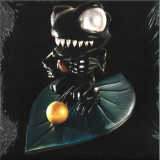
A special ‘Submerge” 12” EP featuring a bunch of reworks of this pivotal track from Apta's forthcoming ‘The Pool’ album on Castles in Space.
Kicking things off, Apta's own rework of the original sees the shadowy textures and droning wall-of-sound backdrop turned into a static-strewn dreamland of a piece, underpinned by a flickering guitar riff, cracked snare drums and fuzzed-out Odyssey strokes before launching into the euphoric half-time vocal refrain.
The follow-up sees Clay Pipe boss, illustrator and musician step into her Hardy Tree guise for a beautifully hypnotic waft of wistful folk-tinged electronics and shimmering ambient textures. It's warmly nostalgic, and packed full of all the feel of a lovely Clay Pipe release.
Following on from that, modular wizard Polypores takes pieces of the original and stretches them into an organic swell of texture and movement, warping the low basses and flickering modular plinks (and / or plonks) into a beautiful, undulating wall.
Flip over and It's none other than the brilliant Pye Corner Audio, providing an organically blooming suite of saturated percussion and woozy drifting oscillators, in peak PCA fashion. There are few artists that can do as much as with little as Martin Jenkins can, and hearing his audio sunshine underpinning the vocal line is breathtaking.
It's good to get the ears nice and soothed too before the aural assault and hypnotic spirit-cleansing heft of the legendary Gnod. Dubby throbbing bass and cavernous reverb tear the original into shards and piece it together as a churning, industrial powerhouse before shooting the rest into the endless reaches of space.
Closing things out on a space theme is the ideal way to do things too, with Field Lines Cartographer's remix taking things waaay into the outer reaches. Grounding bass churns and stellar synth sweeps float below the modulated vocal line, resulting in a perfectly crafted drone, rich in melody but untethered to the earth.
Suche:sat
- A1: Ligurian Storm
- A2: The Sunrise Fool
- A3: The Oat Milk Society
- A4: Dans Mes Rêves, Je Resterai
- A5: Trident (Jazz Not War)
- B1: For The Love Of Stripes
- B2: Generation Moisturised
- B3: The Seahorse
- B4: There Was A Boy
- B5: Subconscious Paddling Pool
- B6: B Train
- B7: Letting Go Of Forever
- C1: Love Lagoon
- C2: Moki
- C3: Moki Part Ii
- C4: Room Of Levitation
- C5: Tell Me Myths (Ft Elle Músa)
- C6: Sleepy Lou
- C7: Blueveins (Ft Melodiesinfonie)
- D1: The Pony
- D2: Yuturi
- D3: Saturn Moon
- D4: Goldalina
- D5: Flo & Joe
- D6: Combo
- D7: Live For Life
SHOLTO's 'Letting Go of Forever' is an expansive double LP that digs deep into his other-worldly blend of cinematic soul, and psychedelic library music. Drawing on influences spanning Mozart, Arthur Verocai, Piero Umiliani and David Axelrod, the record sits alongside contemporaries including Robohands, The Ironsides and Surprise Chef.
A captivating listen, well worth the investment of time across its 26-track run time, SHOLTO explores the concept of letting go as a painfully natural ritual, characterising the art of being able to do so as riddled with complexities and anguish. Morbid to some, but beautifully freeing to others, the art of letting go of the idea that anything should be forever can be relieving, allowing us to cherish what is in front of us in the moment.
Be it in the face of the deaths of friends and loved ones or weddings and celebratory moments, everything is just passing, and SHOLTO spins a delicate balance between this dark and light on the record, pursuing the narrative that you can always turn a negative into a positive.
- A1: El Michels Affair & Black Thought – Grateful
- A2: Bobby Oroza - The Otherside
- A3: Surprise Chef – Velodrome
- A4: Bacao Rhythm & Steel Band - The Healer
- A5: Synthia Feat Claire Cottrill - So Low
- A6: Lady Wray - Joy & Pain (Pete Rock Remix)
- B1: Holy Hive - Ain’t That The Way
- B2: Les Imprimés - Love & Flowers
- B3: El Michels Affair - Things Done Changed
- B4: The Shacks - Trip To Japan
- B5: Thee Marloes - Beri Cinta Waktu
- B6: El Michels Affair Meets Liam Bailey - Awkward (Take 2)
Vol. 2[22,65 €]
Big Crown is proud to present Crown Jewels Vol. 3. As we are approaching seven years as a label these compilations have given us an opportunity to put the different artists on the label together on the same release. These compilations are something of a calling card for the "Big Crown Sound" where we get to put the most well established next to the newest on the roster and through that paint a picture of the overall ethos of the label. It's been extremely satisfying for us when the fans of one Big Crown artist discover another one because they are label mates. We put out these Crown Jewels comps with the hope that it will continue that process. Even though not all BCR artists can be found in the same aisle of the record store, after listening to Crown Jewels Vol. 3, it should be clear how they all fit on the same record label. When we started Big Crown we wanted to have a label that's only boundaries were defined by our taste, not by genre. Seven years later, we can say we have been able to do that. There is a sound, but that sound stretches into a lot of different directions, but that sound is uniquely ours. Thank you to everyone who has supported us thus far and please stay tuned as we continue pushing our sound and putting out tunes we believe in.
A nugget of rare South African groove originally issued alongside Bra Sello on the Soweto label in Johannesburg in 1976. A self-titled offering and the group's only album, Themba delivers the quintessential blend of sophisticated jazz improvisation over hip-swinging township pop that gives South African jazz from the 1970s its timeless appeal.
Themba features a skilled ensemble led by Baba "Themba" Mokoena, who appeared on Dick Khoza's landmark Chapita album in 1975 and has gone on to earn a reputation (over the course of a career that spans into the 2020s) as one of the legendary guitarists of his generation. Reissued for the very first time on the cusp of its 50th anniversary, this edition of Themba is sourced from the original master tape under license from from As-Shams Archive.
Recorded at Satbel Recording Studios
Produced by Greg Siphi Ngcobo
Engineered by Paul Dobbe
Originally issued on the Soweto label
Under license from As-Shams Archive
- 1: Prepad
- 2: Svetski Osmeh
- 3: Daj Mi Sansu
- 4: Progresio Sam
- 5: Djuskaj
- 6: Kupatilo Je Shvatilo
- 7: Meterology
- 8: Otisli Smo
Original[30,88 €]
ŽUR (‘Zhure’, party) is absolute cult and one of the most rare Yugoslavian disco funk albums, originally recorded in 1981, reissued on Everland Music for the first time since the original vinyl came out more than 40 years ago. The album was carefully and brilliantly remastered by grammy nominated sound engineer Jessica Thomson.
Boban Petrović is a legend of Belgrade's sophisticated disco funk scene from the late 70s and early 80s.
Back in the second half of the 70s Boban started one of the first disco clubs in Belgrade and he was one of the biggest organizers of private house parties.
The finest balance between Boban Petrović's big-hearted party-maker-turned-philanthropist personality and his hustler one was achieved on Žur.
On Žur, he is at home, in his safe place, since the parties, the music and the people are the first out of many things he had completely figured out in his life. He is at the top of his game, occasionally bothered by a casual heartbreak, but always feeling himself, coming out playful and fundamentally peaceful, satisfied and ready to transcend himself in order to put the rest of the world in the limelight. In fact, Žur isn’t about the party, music, lyrics or its, hands down, beautifully balanced sonics. It’s about Boban and the funk he lived thoroughly. The funk before, but the funk he lived after this album even more so. All the ups and downs that he faced since the moment the first needle dropped on a Žur record to this very day are on this album as the unwritten destiny of that lighthearted character he played.
In short, ŽUR represents the essence of underground club life in Belgrade from the late 70s, when the album was recorded.
The quality of this trust is confirmed by the fact that Boban Petrovic's music is still actively listened to today, not just anywhere, but at the finest club events.
High end production and extremely authentic arrangements outside the mold of classic disco music, and lyrics that literally convey the vibe of his already jet-set lifestyle in Belgrade at the time.
Shortly after his musical career, Boban Petrovic became a businessman of the conscious class. He was living in Spain on his own luxury yacht for years, he had a private airplane, a car park. But all this time living on highest class level he never lost his identity. In all his offices, yacht, airplane and everywhere was playing loud funk music and he was dressed like a musician who just finished or need to start a gig.
Along the way Boban also wrote two books: Rokanje 1 & 2 describing the time when the album ŽUR was created.
The ŽUR album is one of the the holy grails of disco funk music releases on a global level.
ŽUR (‘Zhure’, party) is absolute cult and one of the most rare Yugoslavian disco funk albums, originally recorded in 1981, reissued on Everland Music for the first time since the original vinyl came out more than 40 years ago. The album was carefully and brilliantly remastered by grammy nominated sound engineer Jessica Thomson.
Boban Petrović is a legend of Belgrade's sophisticated disco funk scene from the late 70s and early 80s.
Back in the second half of the 70s Boban started one of the first disco clubs in Belgrade and he was one of the biggest organizers of private house parties.
The finest balance between Boban Petrović's big-hearted party-maker-turned-philanthropist personality and his hustler one was achieved on Žur.
On Žur, he is at home, in his safe place, since the parties, the music and the people are the first out of many things he had completely figured out in his life. He is at the top of his game, occasionally bothered by a casual heartbreak, but always feeling himself, coming out playful and fundamentally peaceful, satisfied and ready to transcend himself in order to put the rest of the world in the limelight. In fact, Žur isn’t about the party, music, lyrics or its, hands down, beautifully balanced sonics. It’s about Boban and the funk he lived thoroughly. The funk before, but the funk he lived after this album even more so. All the ups and downs that he faced since the moment the first needle dropped on a Žur record to this very day are on this album as the unwritten destiny of that lighthearted character he played.
In short, ŽUR represents the essence of underground club life in Belgrade from the late 70s, when the album was recorded.
The quality of this trust is confirmed by the fact that Boban Petrovic's music is still actively listened to today, not just anywhere, but at the finest club events.
High end production and extremely authentic arrangements outside the mold of classic disco music, and lyrics that literally convey the vibe of his already jet-set lifestyle in Belgrade at the time.
Shortly after his musical career, Boban Petrovic became a businessman of the conscious class. He was living in Spain on his own luxury yacht for years, he had a private airplane, a car park. But all this time living on highest class level he never lost his identity. In all his offices, yacht, airplane and everywhere was playing loud funk music and he was dressed like a musician who just finished or need to start a gig.
Along the way Boban also wrote two books: Rokanje 1 & 2 describing the time when the album ŽUR was created.
The ŽUR album is one of the the holy grails of disco funk music releases on a global level.
- 1: Black Magic Rites
- 2: Satanic Sex
- 3: Witchcraft
- 4: Satanic Ecstasy
- 5: Snakes
- 6: The Dominators
- 7: Devil's Herb
- 8: Satanic Forces
- 9: Group Sex
- 10: Sex Magick
- 11: Satanic Breeding
- 12: Satanic Ritual
Poet, novelist, musician and academic, Anthony Joseph teams up with legendary UK producer Dave Okumu for forthcoming album, ‘Rowing Up River To Get Our Names Back’
Dave Okumu, known perhaps best as frontman for The Invisible, though digging deeper into his production credits, huge names emerge such as; Grace Jones, Amy Winehouse, Jesse Ware, Rosie Lowe and Eska. On this album, the magic and alchemy of Dave’s production style showcase subtle sonics and deep layering resulting in a contemporary sound to carry Anthony’s afrofuturistic metrical meanings.
Anthony and Dave first came across each other when working with Shabaka Hutchings during Covid broadcasts, and then after Anthony performed some poems on Dave’s 2023 album ‘I Came From Love’, the seeds of collaboration were sown.
With a little more psychedelia, a little more experimentation, Dave’s eclectic vision focuses on the actual sounds on these pieces. Anthony stated that “The best producers guide you, not push you” now add to that the fact that both these humans were born on the same day, a concoction of laid back attitudes in people with strong purpose, some real magic can happen, naturally.
Early writing sessions for this record took place in 2022, around Mount Blanc in France. Anthony was away touring with long-time collaborator, Jason Yarde. Ideas were a little thin and they found themselves somewhat repeating previous work resulting in Anthony rethinking things a little, and so entered Dave Okumu.
LP opener ‘Satellite’ is a fine example of how this new partnership pans out. New musicians have been enlisted; Dan See (Drums), Aviram Barath (Synths), Nick Ramm on Fender Rhodes and Byron Wallen (Trumpet). Add to that the mighty vocal power house of Eska and we have a whole new dimension of soul and depth, to carry Anthony’s statements. “You build a wall, we go under, you build it higher, we go higher, like a satellite” .
On the album's second single, ‘Tony’ - there’s a nod to all drummers and creators of African rhythms, from the point of view of Afrobeat legend Tony Allen. Highlighting this is drummer’s drummer Richard Spaven as Dave’s choice of skin beater. He successfully reminds us that Tony was someone who understood the real power of rhythm and how it is used to unite people.
As well as the new musicians on this LP, Dave Okumu played all the guitars and used the studio as his tool. On ‘A Juba for Janet’ - a poem to Joseph’s mother, and a track so bass heavy that it feels as though it could sit in a deep dubstep set in Plastic People days, - Anthony’s voice reaches straight down your ear canals next to dark drums, huge synths and delayed saxophone stabs from Colin Webster. Slightly more introspective verses on ‘An Afrofuturist Poem’ see Dave’s beats show off the real future sound of this record, kalimba, moog bass and guitars all played by the man himself.
Mellower and deeper moments are also present, Anthony’s cryptic yet informative storytelling is at its absolute best on ‘Churches Of Sound (The Benetiz-Rojo)’ - Caribbean and Windrush history reeled off alongside a linear musical timeline of Black music in the diaspora.
A reminder that this body of work is first of 2 volumes, ‘Rowing Up River To Get Our Names Back’ is not a follow up to Anthony’s previous album, but more a development of his 2006 novel, ‘The African Origins of UFOs’ a book where experimental elements of afro-futurism, metafiction, science fiction, surrealism, mythology are rewritten in Anthony’s innovative language. Look out for Volume 2 also coming in 2025.
Anthony Joseph releases, ‘Rowing Up River To Get Our Names Back’ (Vol. 1) via Heavenly Sweetness 7th February 2025 and he will play live at Ronnie Scotts in London on 14th March 2025, with Dave Okumu as a special guest.
CREDITS:
Vocals - Anthony Joseph
Additional vocals, vocal arrangements - Eska Mtungwazi
Producer - Guitars, Bass, Moog, Synthesisers, Programming, Percussion - Dave Okumu
Drums - Dan See
Drums on ‘Tony’ - Richard Spaven
Synthesiser - Aviram Barath
Fender Rhodes, Synthesisers, Nick Ramm
Trumpet - Byron Wallen
Saxophones - Colin Webster
Trombones - James Wade Sired
- A1: Krystal Karrington
- A2: Luchini Aka This Is It
- A3: Park Joint
- A4: B-Side To Hollywood (Feat Trugoy The Dove Os De La Soul)
- B1: Killin' Em Softly
- B2: Sparkle
- B3: Black Connection
- B4: Swing (Feat Ish Aka Butterfly)
- C1: Rockin' It Aka Spanish Harlem
- C2: Say Word (Feat Jungle Harlem)
- C3: Negro League (Feat Bones & Karachi Raw)
- C4: Nicky Barnes Aka It's Alright (Feat Jungle Brown)
- D1: Black Nostaljack Aka Come On
- D2: Cool If High
- D3: Sparkle (Mr Midnight Mix)
Remastered from the original tapes & pressed on loud double vinyl! Hot of the success of Jay-Z’s Reasonable Doubt, producer extraordinaire Ski was on fire when he flipped Dynasty’s “Adventures In The Land of Music” for Camp Lo’s breakout 1996 smash single “Luchini aka This Is It”. The same year saw Camp Lo opening shows for De La Soul during their Stakes is High tour. Combine that with the fact that Ish aka Butterfly from Digable Planets had cosigned for the group’s reputation and would appear on of the tracks (in addition to Trugoy from De La), there became a huge buzz around their debut album Uptown Saturday Night. Fast forward a few months to January 1997 and the heavily anticipated release of Camp Lo’s first record, which did not disappoint. It struck the perfect balance between club tracks and underground bangers for the mixtape crowd. Critically acclaimed and fan approved, this late 90s must-have was complimented by the incredible cover art illustrated by legendary NYC graffiti artist Dr. Revolt that paid homage to Marvin Gaye’s 1976 classic I Want You. It’s hard to believe in the time of Puffy’s heyday, Camp Lo had developed and delivered a style of Hip Hop that was not only fresh and creative, but also straight up dope. Flipping intricate rhyme styles over some of Rap’s finer beats, the fact that Camp Lo got main stream radio play and love from big time club DJ’s is a testament to the essence of what Hip Hop was once about: raw talent and originality!
- A1: Edo River - Carnation
- A2: Futari Bun No Atsui Yum - Yakushi Nakanishi
- A3: Stardust Night - Jadoes
- A4: Don't Call Me On The Phone - Keiko Kimurai
- B1: Samugari - Tomoki Kikuchi
- B2: Mayonaka No Denwa - Yumi Seino
- B3: Fuyu Kitari Naba - Takaki Horigome
- B4: Spacewalk - Midori Hara
- C1: Me Ni Mienai Mono- Emi Necozawa
- C2: Umi Ni Ukabu Piano - Nanako Sato
- C3: Harumi Futo - Kyoko Furuya
- C4: Fly High - Escalators
- D1: Weekend Night - Mitsuko Horie
- D2: Moonlight, Starlight - Namihiko Ohmura
- D3: Nostalgic Spaceman - Chikako Ueno
- D4: F.w.y. - Hiroshi Sato
Ein prächtiges Doppelalbum (2x LP) im Gatefold welches die besten Beispiele eines bis vor kurzem sehr unterschätzten Genres enthält.
Jetzt ist es natürlich der angesagteste Sound überhaupt.
Aus dem umfangreichen Nippon Columbia-Katalog hat Cunimondo Takiguchi die heißesten Stücke der innovativsten Schöpfer des City Pop-Genres zusammengestellt.
Wenn man dann noch die berühmte hohe Produktionsqualität und Qualitätskontrolle von Gearbox hinzunimmt, hat man einen frühen Anwärter auf die Compilation des Jahres!
Years of simmering mutual admiration between Turbo and Architectural finally erupt with Good Night, Whatever That Is, the Asturian producer's first release on the label.
Nothing gets us hot and bothered like the prospect of featuring a true artist on Turbo. In fact, we are so f-ing jazzed to be working with techno genius Architectural that we even dropped scrappy “fun-house” producer Archie Textures from our roster to avoid confusion.
The Good Night, Whatever That Is EP imbues the timeless platonic forms of techno with an energy, craft and depth that will feel instantly familiar to anyone who has built a cathedral with their bare hands. And yet the unadulterated power of lead single “Steampunk” and the even-less-adulterated power of “Tubular Funk,” confirm that this release also has one foot squarely planted on the secular dance floor, coursing with the searing bio-fluids that drive and torment all sexual beings. Meanwhile, your deep human need for contrast will be sated by the IDM-ambient euphorics of “Eternity Land” and the highbrow breaks of “Rousing Rhythms”.
"Tchenbé !" The New Therapeutic Album from Dowdelin
This deeply introspective new opus tackles the personal and emotional challenges we all face at some point in our lives. Dowdelin explores themes of depression, life’s ups and downs and resilience, served up by Caribbean sounds and lyrics in Creole, French and English, at the confluence of jazz, electronic music and even the most percussive soul.
The first-ever vinyl reissue of perennial pop icon and pin-up Samantha Fox’s self-titled 1987 sophomore album. The only British female solo artist to score three Top Ten hits on both sides of the Atlantic in the 1980s, Samantha made her name as the nation’s favourite Page Three girl before launching an enviable music career.
Samantha Fox boasts five hit singles: the Stock/Aitken/Waterman favourite ‘Nothing’s Gonna Stop Me Now’ (#8 UK), the memorable Full Force collaboration ‘Naughty Girls’ (#3 US), ‘I Surrender (To The Spirit of the Night’, ‘I Promise You’ and ‘True Devotion’. Developing Samantha’s sound with a compelling mix of pop, rock and hip-hop stylings, the album made #22 in the UK and #51 in the US, gaining her second straight gold certification. Pressed on striking transparent caramel vinyl with gold and silver splatters to complement the original aesthetic, this edition boasts painstakingly rebuilt artwork and a newly designed inner bag featuring full lyrics.
A strictly limitededition picture disc is also available. Samantha Fox is reissued alongside the 1986 debut album, Touch Me, and 1989’s I Wanna Have Some Fun
The first-ever vinyl reissue of perennial pop icon and pin-up Samantha Fox’s self-titled 1987 sophomore album. The only British female solo artist to score three Top Ten hits on both sides of the Atlantic in the 1980s, Samantha made her name as the nation’s favourite Page Three girl before launching an enviable music career.
Samantha Fox boasts five hit singles: the Stock/Aitken/Waterman favourite ‘Nothing’s Gonna Stop Me Now’ (#8 UK), the memorable Full Force collaboration ‘Naughty Girls’ (#3 US), ‘I Surrender (To The Spirit of the Night’, ‘I Promise You’ and ‘True Devotion’. Developing Samantha’s sound with a compelling mix of pop, rock and hip-hop stylings, the album made #22 in the UK and #51 in the US, gaining her second straight gold certification. Pressed on striking transparent caramel vinyl with gold and silver splatters to complement the original aesthetic, this edition boasts painstakingly rebuilt artwork and a newly designed inner bag featuring full lyrics.
A strictly limitededition picture disc is also available. Samantha Fox is reissued alongside the 1986 debut album, Touch Me, and 1989’s I Wanna Have Some Fun
Chapeau Music presents its second vinyl release, this time by Resonances (IT). "Signal" is a record that connects diverse shades of electronic music: from jazzy undertones to industrial techno, from punchy and intricate rhythms to straight and clean grooves. It's a collection of tracks that showcases the vision of the "man behind the Octatrack".
The title track "Signal" develops naturally, immersing the listener in its dynamic layers of piano stabs and synth elements with a fast-paced groove. The subtle distortion of the rhythmic elements injects raw energy without compromising the track's underlying elegance. It reimagines the genre's darker roots, offering a bold and innovative perspective.
Gene Richards Jr's remix of Signal intensifies the journey, delivering a high-impact, hard-groove edge that perfectly complements the EP.
"Please" concludes the A-side with a pulsating rhythm and a cadence that keeps the dancefloor in motion. Its energetic progression completes the A-side with an undeniable dancefloor weapon.
The flip side begins with "Randomizer", an exploration of atmospheric and industrial textures. The track builds around a solid kick drum and spatial synths, with scattered elements orbiting like satellites to create an extraterrestrial experience.
To close, "The Stand" merges classic influences with melodic, Detroit-inspired elements. Wide, reverberated synths fill the space, crafting a fusion of rhythm and melodies to deliver a standout closing track that feels timeless.
- A1: Grand Soleil - Boulé
- A2: Buddy Sativa - Indomitable
- A3: Plage 84 - Ah Aͣhͪ Aͣhͪhͪhͪhͪ
- A4: Naajet - Gonna Getcha
- A5: Jumo - Oooooo
- B1: Fakear - Let U Go
- B2: Oogo & Akselaksel - Ma Bounce
- B3: Monkeyrobot - Like That
- B4: Nikitch - Knock Knock
- B5: De Phase - Maximum (Feat. Alexander Flood)
After releasing its first compilations since 2022, Nowadays is now coming back with a fourth compilation. The label is back in full force and will bring its audience to an even more diverse sonic journey, with never-seen-before collaborations, and new parties. Once more, Nowadays is giving us its definition of club music.
Jesse Hackett returns with another unclassifiable co-mingling of genres, this time made in collaboration with Durban-based gqom trio Phelimuncasi. The group met up in Nyege Nyege's Kampala studio last year, spending three days engineering a sequence of tracks that turned the acts' respective sounds inside out, stretching urgent vocals over mutating backdrops of time stretched electronic drums, saturated noise and unstable synths.We last heard from Hackett on last year's chilling 'Shadow Swamps', a chilly, surrealist blast of disembodied folk and vintage electronics that added a cinematic twist to industrial music. Phelimuncasi meanwhile followed their acclaimed debut with the enormous 'Ama Gogela', asserting their dominance with tight, dancefloor-fwd, hook-led jams produced by some of the scene's most important beatmakers. In collaboration, both Metal Preyers and Phelimuncasi materialized a few worlds outside their comfort zones, with the Durban trio's words frothing from Hackett's marshy productions like echoes from another universe.Opening track 'Gidigidi ka Makhelwane' erupts in a fizz of beatbox percussion that loops noisily alongside Makan Nana, Khera and Malathon's stirring vocals, delivered in their local isiZulu tongue. Hackett's process is relatively restrained, offering Phelimuncasi the space to work their rousing magic unimpeded and adding punctuation where necessary. But when he takes more of a destructive role, it's just as impressive: on 'Gqom slowgen Chant', he corrupts his rhythm into a ritualistic pulse, letting the trio's words melt into metallic clicks and nauseous atmospheres.Elsewhere on 'Mgiligi wableka', Phelimuncasi's words create a rousing rhythm against a low-n-slow gqom thud from Hackett, and on 'Coffin Roller' he brings to mind '80s video nasty soundtracks, toying with analog synth sequences against Makan Nana, Khera and Malathon's distant chants. 'Like A Corpse' might be the album's most hollowed-out banger, turning the beat into a chopped 'n screwed drag that scrapes clamorously against Phelimuncasi's gurgling raps. Needless to say, there's nothing else like this.Jesse Hackett returns with another unclassifiable co-mingling of genres, this time made in collaboration with Durban-based gqom trio Phelimuncasi. The group met up in Nyege Nyege's Kampala studio last year, spending three days engineering a sequence of tracks that turned the acts' respective sounds inside out, stretching urgent vocals over mutating backdrops of time stretched electronic drums, saturated noise and unstable synths.We last heard from Hackett on last year's chilling 'Shadow Swamps', a chilly, surrealist blast of disembodied folk and vintage electronics that added a cinematic twist to industrial music. Phelimuncasi meanwhile followed their acclaimed debut with the enormous 'Ama Gogela', asserting their dominance with tight, dancefloor-fwd, hook-led jams produced by some of the scene's most important beatmakers. In collaboration, both Metal Preyers and Phelimuncasi materialized a few worlds outside their comfort zones, with the Durban trio's words frothing from Hackett's marshy productions like echoes from another universe.Opening track 'Gidigidi ka Makhelwane' erupts in a fizz of beatbox percussion that loops noisily alongside Makan Nana, Khera and Malathon's stirring vocals, delivered in their local isiZulu tongue. Hackett's process is relatively restrained, offering Phelimuncasi the space to work their rousing magic unimpeded and adding punctuation where necessary. But when he takes more of a destructive role, it's just as impressive: on 'Gqom slowgen Chant', he corrupts his rhythm into a ritualistic pulse, letting the trio's words melt into metallic clicks and nauseous atmospheres.Elsewhere on 'Mgiligi wableka', Phelimuncasi's words create a rousing rhythm against a low-n-slow gqom thud from Hackett, and on 'Coffin Roller' he brings to mind '80s video nasty soundtracks, toying with analog synth sequences against Makan Nana, Khera and Malathon's distant chants. 'Like A Corpse' might be the album's most hollowed-out banger, turning the beat into a chopped 'n screwed drag that scrapes clamorously against Phelimuncasi's gurgling raps. Needless to say, there's nothing else like this.
- A1: Progetto Tribale - The Sweep
- A2: Onirico - Echo Giomini
- A3: Open Spaces - Artist In Wonderland
- B1: Alex Neri – The Wizard (Hot Funky Version)
- B2: M C.j. Feat. Sima - To Yourself Be Free - Instrumental Mix Energy Prod
- B3: Mato Grosso - Titanic Expande
- C1: Dreamatic - I Can Feel It (Part 1)
- C2: Carol Bailey - Understand Me Free Your Mind (Dream Piano Remix)
- C3: The True Underground Sound Of Rome - Secret Doctrine
- D1: Don Carlos - Boy
- D2: Lazy Bird – Jazzy Doll (Odyssey Dub)
Vol 2[28,99 €]
Volume 1 of this expertly curated project of 90s Italian House - put together by Don Carlos.
If Paradise was half as nice… by Fabio De Luca.
Googling “paradise house”, the first results to pop up are an endless list of European b&b’s with whitewashed lime façades, all of them promising “…an unmatched travel experience a few steps from the sea”. Next, a little further down, are the institutional websites of a few select semi-luxury retirement homes (no photos shown, but lots of stock images of smiling nurses with reassuring looks). To find the “paradise house” we’re after, we have to scroll even further down. Much further down.
It feels like yesterday, and at the same time it seems like a million years ago. The Eighties had just ended, and it was still unclear what to expect from the Nineties. Mobile phones that were not the size of a briefcase and did not cost as much as a car? A frightening economic crisis? The guitar-rock revival?! Certainly, the best place to observe that moment of transition was the dancefloor. Truly epochal transformations were happening there. From America, within a short distance one from the other, two revolutionary new musical styles had arrived: the first one sounded a bit like an “on a budget” version of the best Seventies disco-music – Philly sound made with a set of piano-bar keyboards! – the other was even more sparse, futuristic and extraterrestrial. It was a music with a quite distinct “physical” component, which at the same time, to be fully grasped, seemed to call for the knotty theories of certain French post-modern philosophers: Gilles Deleuze, Félix Guattari, Paul Virilio... Both those genres – we would learn shortly after – were born in the black communities of Chicago and Detroit, although listening to those vinyl 12” (often wrapped in generic white covers, and with little indication in the label) you could not easily guess whether behind them there was a black boy from somewhere in the Usa, or a girl from Berlin, or a pale kid from a Cornish coastal town.
Quickly, similar sounds began to show up from all corners of Europe. A thousand variations of the same intuition: leaner, less lean, happier, slightly less intoxicated, more broken, slower, faster, much faster... Boom! From the dancefloors – the London ones at least, whose chronicles we eagerly read every month in the pages of The Face and i-D – came tales of a new generation of clubbers who had completely stopped “dressing up” to go dancing; of hot tempered hooligans bursting into tears and hugging everyone under the strobe lights as the notes of Strings of Life rose up through the fumes of dry ice (certain “smiling” pills were also involved, sure). At this point, however, we must move on to Switzerland.
In Switzerland, in the quiet and diligent town of Lugano, between the 1980s and 1990s there was a club called “Morandi”. Its hot night was on Wednesdays, when the audience also came from Milan, Como, Varese and Zurich. Legend goes that, one night, none less than Prince and Sheila E were spotted hiding among the sofas, on a day-off of the Italian dates of the Nude Tour… The Wednesday resident and superstar was an Italian dj with an exotic name: Don Carlos. The soundtrack he devised was a mixture of Chicago, Detroit, the most progressive R&B and certain forgotten classics of old disco music: practically, what the Paradise Garage in New York might have sounded like had it not closed in 1987. In between, Don Carlos also managed to squeeze in some tracks he had worked on in his studio on Lago Maggiore. One in particular: a track that was rather slow compared to the BPM in fashion at the time, but which was a perfect bridge between house and R&B. The title was Alone: Don Carlos would explain years later that it had to be intended both in the English meaning of “by itself” and like the Italian word meaning “halo”. That wasn’t the only double entendre about the song, anyway. Its own very deep nature was, indeed, double. On the one hand, Alone was built around an angelic keyboard pattern and a romantic piano riff that took you straight to heaven; on the other, it showcased enough electronic squelches (plus a sax part that sounded like it had been dissolved by acid rain) to pigeonhole the tune into the “junk modernity” section, aka the hallmark of all the most innovative sounds of the time: music that sounded like it was hand-crafted from the scraps of glittering overground pop.
No one knows who was the first to call it “paradise house”, nor when it happened. Alternative definitions on the same topic one happened to hear included “ambient house”, “dream house”, “Mediterranean progressive”… but of course none were as good (and alluring) as “paradise house”. What is certain is that such inclination for sounds that were in equal measure angelic and neurotic, romantic and unaffective, quickly became the trademark of the second generation of Italian house. Music that seemed shyly equidistant from all the rhythmic and electronic revolutions that had happened up to that moment (“Music perfectly adept at going nowhere slowly” as noted by English journalist Craig McLean in a legendary field report for Blah Blah Blah magazine). Music that to a inattentive ear might have sounded as anonymous as a snapshot of a random group of passers-by at 10AM in the centre of any major city, but perfectly described the (slow) awakening in the real world after the universal love binge of the so-called Second Summer of Love.
For a brief but unforgettable season, in Italy “paradise house” was the official soundtrack of interminable weekends spent inside the car, darting from one club to another, cutting the peninsula from North to centre, from East to West coast in pursuit of the latest after-hours disco, trading kilometres per hour with beats per minute: practically, a new New Year’s Eve every Friday and Saturday night. This too was no small transformation, as well as a shock for an adult Italy that was encountering for the first time – thanks to its sons and daughters – the wild side of industrial modernity. The clubbers of the so-called “fuoriorario” scene were the balls gone mad in the pinball machine most feared by newspapers, magazines and TV pundits. What they did each and every weekend, apart from going crazy to the sound of the current white labels, was linking distant geographical points and non-places (thank you Marc Augé!) – old dance halls, farmhouses and business centres – transformed for one night into house music heaven. As Marco D’Eramo wrote in his 1995 essay on Chicago, Il maiale e il grattacielo: “Four-wheeled capitalism distorts our age-old image of the city, it allows the suburbs to be connected to each other, whereas before they were connected only by the centre (…) It makes possible a metropolitan area without a metropolis, without a city centre, without downtown. The periphery is no longer a periphery of any centre, but is self-centred”.
“Paradise house” perfectly understood all of this and turned it into a sort of cyber-blues that didn’t even need words, and unexpectedly brought back a drop of melancholic (post?)-humanity within a world that by then – as we would wholly realise in the decades to come – was fully inhuman and heartless. A world where we were all alone, and surrounded by a sinister yellowish halo, like a neon at the end of its life cycle. But, for one night at least, happy.
2 x black LP + LP Booklet
Die GRAMMY®-gekrönten Progressive-Music-Titanen Dream Theater melden sich mit ihrem 16. Studioalbum "Parasomnia" zurück - eine Ankündigung, die satte 15 Jahre auf sich warten ließ. Es ist das erste Album mit der legendären Besetzung Sänger James LaBrie, Gitarrist John Petrucci, Bassist John Myung, Keyboarder Jordan Rudess und Schlagzeuger Mike Portnoy seit "Black Clouds & Silver Linings" von 2009. "Parasomnia" wurde von Petrucci produziert, von James 'Jimmy T' Meslin aufgenom-men und von Andy Sneap abgemischt. Hugh Syme hat erneut seine kreative Vision für das Cover-Artwork beigesteuert. Vom Opener "In The Arms Of Morpheus" bis zum abschließenden "The Shadow Man Incident" kehren Dream Theater mit einer Samm-lung von Songs zurück, die zeigen, weshalb die Band seit vier Jahrzehnten eine treue Fangemeinde hat. Mit einer Spielzeit von 71 Minuten nimmt "Parasomnia" den Hörer mit auf eine musikalische Reise, die seit Beginn der Karriere zum Synonym für die Band geworden ist