The second solo record by Mike Polizze of Philadelphia psych-squallers Purling Hiss and Birds of Maya, a rainier and more pensive affair than its predecessor_despite its playful humor and plentiful hooks_affirms his status as a consummate (and now not-so-secret) craftsman of instantly memorable bucolic odes of languid beauty, deepening his fingerstyle acoustic guitar magic and finally manifesting the title of the classic Hiss anthem "Run from the City."
With two solo CDs and another three with Cahalen Morrison behind him, today he's become the master folk troubadour he was destined to be, and we're all the richer for it. The Pacific Northwest singer- songwriter met his wife, his beloved father has passed away, and his two children now shape his world around him. With age comes wisdom and, for master musicians, clairvoyance. His third album, The Shape of a Sway, reflects just that: A master telling tales of life lived honestly, amid paradox and reason, injected with change and growth, bruises and enlightenment: Life not just worth living, but worth lifting up in song. Gifted as a writer, singer, and instrumentalist (guitar, mandolin, banjo, pedal steel), West gets support from his equally stellar regulars, fiddler Patrick M'Gonigle and bassist Forest Marowitz. All three share intertwining harmony vocals. The Shape of a Sway, he says, "is an honest inventory of my life, possibly all of our lives, presented possibly with enough abstraction that listeners will see something of themselves, of their lives."
Hardcore Rap music is still here! Mike Redman is considered a cult legend known for his unorthodox music production in various genres. He's well known as an artist in the Jungle and Hardcore scene, as a renowned movie score composer and made a name for himself as organiser of the infamous 'Redrum Hip-Hop' events since the 90's which hosted international artists from Guru to Cannibal Ox, Public Enemy, Beatnuts and many more. He also set up Redrum Recordz, a pioneering independent record label focusing merely on anything musically unpolished. Even though Mike Redman (which is his name of birth by the way) was often linked to many Hip-Hop success stories and produced records for artists such as Public Enemy and Big Daddy Kane, Mike has just recently, after many years, decided to produce a solo record featuring the Rap artists he admires and form the foundation of his legacy. With great respect towards his mentors, in a non-profit manner, Mike now releases 'Redrum Relics' featuring Rap icons such as Kool Keith, Chuck D, Schoolly D, Sticky Fingaz, Young Zee, Chino XL, O.C. and many more. This album is truly exceptional and is not made with the intention to be commercially successful, but is a love-letter to a period in time where passion was the motivation. 'Redrum Relics' brings Rap music back to the golden era with a contemporary touch and keeps it unpolished and unyielding as ever. People that tend to say that Hip-Hop is dead might want to reconsider.
out of Stock
Last delivered 15 months ago available to reorder, subject to availability
Hardcore Rap music is still here! Mike Redman is considered a cult legend known for his unorthodox music production in various genres. He's well known as an artist in the Jungle and Hardcore scene, as a renowned movie score composer and made a name for himself as organiser of the infamous 'Redrum Hip-Hop' events since the 90's which hosted international artists from Guru to Cannibal Ox, Public Enemy, Beatnuts and many more. He also set up Redrum Recordz, a pioneering independent record label focusing merely on anything musically unpolished. Even though Mike Redman (which is his name of birth by the way) was often linked to many Hip-Hop success stories and produced records for artists such as Public Enemy and Big Daddy Kane, Mike has just recently, after many years, decided to produce a solo record featuring the Rap artists he admires and form the foundation of his legacy. With great respect towards his mentors, in a non-profit manner, Mike now releases 'Redrum Relics' featuring Rap icons such as Kool Keith, Chuck D, Schoolly D, Sticky Fingaz, Young Zee, Chino XL, O.C. and many more. This album is truly exceptional and is not made with the intention to be commercially successful, but is a love-letter to a period in time where passion was the motivation. 'Redrum Relics' brings Rap music back to the golden era with a contemporary touch and keeps it unpolished and unyielding as ever. People that tend to say that Hip-Hop is dead might want to reconsider.
Despite the outright denial in its title, death is present in every one of the songs on Never Die, the collaborative album from MIDWIFE’s Madeline Johnston and Matt Jencik (of Implodes, Don Caballero, and Slint’s live band). Jencik held the tenderest thought imaginable when he came up with that phrase—Never Die—the fact that the people he loves eventually would, a certainty that feels impossible and remote, until the day it absolutely doesn’t. Never Die represents Jencik’s desperate bid to hold onto everyone he loves, to keep them on Earth so fiercely that they might enter the grave with claw marks on their skin.
Johnston, who recognizes the grace of mortality (and who, as MIDWIFE once sang: “I don’t wanna live forever,” over and over) serves as the spiritual guide for the album, transmuting the fear of death into an incentive to live more keenly and dearly. Following a number of ambient drone instrumental albums, Jencik felt the need to set himself a new creative challenge: to write vocal-heavy songs. He worked on them alone in his basement, recording directly to a four-track cassette. He sent those demos to a different collaborator to tinker with before that partnership eventually dissolved. Then, he thought of Madeline: the way her voice tended to glower in her songs, as well as her commitment to minimalism, which fell squarely within the project’s aesthetic and spiritual impulses.
“I was immediately drawn to what she was doing,” Jencik says. In both of their work, Jencik and Johnston understand minimalism as a vehicle for enormous, desperate and universal emotions. Entire worlds come in and out of existence between each of their sparse notes; a great breadth of feeling is bedded into the simple structure of their songs. Never Die offers a calm confrontation with the dour inevitability that bookends our lives. When the fact of death looms over life, it tends to denature every experience we have and every relationship we know we’ll eventually have to forfeit back to the Earth. No one, no matter how hard we love, makes it out of this alive thing. But we feel anyway. And we love anyway. And we sing anyway. Here, Jencik and Johnston have sung ‘die’ over and over, snowglobing life in the process.
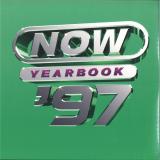
Step back into one of the most exciting years in pop history – a time when boundary-pushing alternative anthems, flawless dancefloor fillers, global megastars and fresh faces all collided on the charts. NOW - Yearbook 1997 celebrates an unforgettable year of hits with 43 massive tracks across a 3-LP set pressed on gorgeous green vinyl.
LP1 kicks off in style, with the stunning jazz-drenched ballad from legend George Michael, ‘Older’, before Natalie Imbruglia's huge debut single ‘Torn’. The Cardigans had a #2 smash with ‘Lovefool’ and Hanson hit the US & UK #1 with ‘MMMBop’. ‘Barbie Girl’ from Aqua and the Spice Girls’ anthemic ‘Spice Up Your Life’ were both #1s, and Boyzone’s ‘Picture Of You’ was a huge hit and featured in the film ‘Bean: The Ultimate Disaster Movie’. Eurovision glory happened for the UK in 1997, and winners Katrina And The Waves with ‘Love Shine A Light’ close the first side…while over on the other, a second George Michael classic from his ‘Older’ album, the beautiful ‘You Have Been Loved’, opens ahead of another contemporary masterpiece ‘Secret Garden’ from Bruce Springsteen. Texas scored a UK top 5 with ‘Say What You Want’, and Sheryl Crow had a top 10 hit with ‘A Change Would Do You Good’. Paul McCartney’s ‘Young Boy’ is next before ‘Ready To Go’ which gave Republica a Top 20 chart debut, and closing the first LP, Robbie Williams’ ‘Old Before I Die’, which became his second smash as a solo artist.
LP2 kicks off with Radiohead’s defining ‘Paranoid Android’, ahead of Kula Shaker’s hit cover of ‘Hush’, and alt-pop from Embrace (‘All You Good Good People’), The Charlatans (‘North Country Boy’) and The Seahorses (‘Love Is The Law’) before the side closes with Oasis’s huge #1 ‘D’You Know What I Mean?’ – the lead single from their third album ‘Be Here Now’… Flip the LP over and discover some of 1997’s dancefloor gold – opening with the club juggernaut and #1 ‘Professional Widow’ from Tori Amos, remixed for single release by Armand Van Helden, along with Olive’s UK #1 ‘You’re Not Alone’ and the huge ’97 ‘Now Voyager’ remix of ‘You Got The Love’ from The Source feat. Candi Staton. En Vogue’s powerful ‘Don’t Let Go (Love)’ is up next, ahead of ‘I Wanna Be The Only One’, a #1 for Eternal feat. Bebe Winans. LP2 finishes with pure pop gems from 911 with ‘Bodyshakin’, Backstreet Boys with ‘Everybody (Backstreet’s Back)’ and Steps with their debut hit ‘5, 6, 7, 8’.
The final LP opens with Pet Shop Boys’ and their brilliant version of the musical classic ‘Somewhere’, ahead of the genre-blending #1 ‘Your Woman’ from White Town, and the atmospheric ‘Out Of My Mind’ from Duran Duran. Suede’s plaintive ‘Saturday Night’ leads into three of the years’ electronic dance music highlights: Orbital provided the theme to the remake of ‘The Saint’, Moby with his re-imagining of the classic film-series theme: ‘James Bond Theme (Moby’s Re-Version)’ and The Chemical Brothers with the massive ’Block Rockin’ Beats’ completing the side…Turn the LP over for the final side featuring the debut from All Saints with ‘I Know Where It’s At’, and fabulous dance-pop from Whitney Houston with ‘Step By Step’, and both Ultra Naté and Dannii Minogue enjoyed euphoric hits with ‘Free’ and ‘All I Wanna Do’. Pan-European smash ‘Encore Une Fois’ from Sash! is followed by Ricky Martin’s global success ‘María’… but the final word on the collection goes to Elton John. His superb ‘Something About The Way You Look Tonight’ was one half of the biggest selling single of – not only 1997 – but of all time and ends the collection on a perfect pop high.
NOW – Yearbook 1997: A celebration of the diversity and creativity in the charts of a truly magical year in pop.
out of Stock
Last delivered 11 months ago available to reorder, subject to availability
Peaceful electronic ambient and tribal echo environments. Music that explores feelings of calm, spirituality, and ceremony. Long-form voyages to temple meditations, “trips in search of something,” looking in as looking out.
The artist himself says: “This is an attempt to look into the heads and souls of "unnecessary" people, inconspicuous people, but striving to make the world a better place. People who have lost the horizon and the outlines of reality are desperate and stuck in the middle of nothing... people who cannot accept the rules of this world and unpleasant aspects of daily life, boring and unfair into unreality, other existence... it's all about escapism, rethinking their inner world, and discovering new facets of the soul.”
FFO Jon Hassell, O Yuki Conjugate, Bitchin Bajas, Laraaji, The Chi Factory…
"soft brushes of undefinable sounds and tropical field recordings that almost create ASMR-inducing vibrations in the minds of the listener" - Simon Eliasson
out of Stock
Last delivered 15 months ago available to reorder, subject to availability
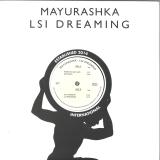
Known for her delicate, subtly psychedelic approach to production - all subtlety is thrown out of the window on the opener, “Parents and God”. We are immediately confronted with a slamming Chicago house style beat in style of Mr Fingers at his most utilitarian. It slams, jerking in and out of tempo like Ron Hardy in beast mode.
Out of nowhere a soulful church organ arrives - at first for a brief respite - but then for an extended solo, which gives way to an 80s electro style breakdown before reverting back to form. It shouldn’t work, but somehow it does - to a dizzying extent - and heirin lies Mayurashka’s magic: a blatant disregard for norms and a deft touch that makes the unorthodox so compelling.
“Notango" takes another big left turn - sitting somewhere between tribal seance and rain dance, it’s mostly organic drums and otherworldly sound effects that combine to drag us deeper into the wormhole before “ Vat Murmur” takes us back into the light with its uptempo disco energy and giving way to heavy chugging bass. This one is equally for fans of idjut boys and Larry Levan.
The EP rounds off with the title track “ LSI dreaming” - to try and describe it is almost impossible, but let’s say it starts of with a mid 2000s Perlon-era tech house energy before things quickly escalate beyond all recognition and then just hover with lysergic intensity. If I ever closed panorama bar, this is the track I’d end with.
out of Stock
Last delivered 5 months ago available to reorder, subject to availability
‘Time Flies… 1994 – 2009’ is Oasis’ complete singles collection.
Now available with remastered audio, this quadruple vinyl deluxe box set is released to celebrate its 15th anniversary and ahead of the band’s eagerly anticipated Oasis Live ’25 tour, and includes a limited edition print. Released on Big Brother Recordings, the tracklisting spans fifteen years across Oasis’ staggering seven consecutive number one albums. 1994’s ‘Definitely Maybe’, 1995’s ‘(What’s The Story) Morning Glory?’, 1997’s ‘Be Here Now’, 2000’s ‘Standing On The Shoulder Of Giants’, 2002’s ‘Heathen Chemistry’, 2005’s ‘Don’t Believe The Truth’ and ‘Dig Out Your Soul’ from 2008. Starting with their irresistible debut, ‘Supersonic’ and finishing with their last release ‘Falling Down’, this compilation features all 26 singles - including ‘Whatever’ and ‘Lord Don't Slow Me Down’, which have previously never appeared on an Oasis studio album.
Following on from last year's acclaimed ‘R.O.I.’ album, Manchester’s favourite sons Aerial Salad are set to return to the fray with a brand new 5-track EP titled ‘Roi de l’herb’ to be released June 27th via Venn Records.
Having released their ‘Dirt Mall’ album during lockdown, which was a pretty grim time to put an album out, the release still eventually opened up some exciting doors for the band and captured Aerial Salad at their most Aerial Salad; loud, brash, silly and emotive.
This led swiftly to 2024’s ‘R.O.I.’ album that marked a real evolution in the band’s sound and songwriting.
“R.O.I. is a concept album but rather than being about a band, it’s from the perspective of an individual pushed to the brink of insanity by the ever-present quest from commercial success,” explains singer and guitarist Jamie Munro. “The idea came from my job; I’ve been working in the tech industry in ‘sales’. ‘Return on investment’ was probably my most uttered phrase for a few years, I was sick of it, sick of having no positive impact on the world and sick of the tech bro, double espresso, thirsty thursdays, work hard - play hard bollocks culture that comes with it. ‘R.O.I.’ is me saying ‘know what, you can actually earn a lot of money in life, even without the fallacy of educational infrastructure and financial privilege, however, it comes at the cost of your soul, time and energy. ‘R.O.I.’ is called such because it’s in the opposite pursuit, it’s not about a return on a financial investment, it’s about doing something with your life that’s enjoyable.”
This brings us crashing into 2025, no longer in the same line of spirit destroying work, with some seriously exciting gigs on the horizon, Aerial Salad wanted to kick off the next era of the band with a short, fast and hard EP and have served up 5 absolute bangers that sit somewhere between ‘Dirt Mall’ and ‘R.O.I.’ The EP is called ‘Roi de l’herb’ because of the track ‘King Of The Grass’: “We tour and play a lot in France, we’ve played most of our “best” gigs in France, so out of curiosity I wanted to see if the title would translate well, naturally, when the translation contained both “ROI” and l’herbe” - I though, fuck it, that’s about as spot on a title for this EP as we can possibly muster.”
‘King of The Grass’ is about the band’s bassist Mike Wimbo who works for Rochdale council on the greens team, which means he spends his life in the pouring rain chopping down overgrown hedges and mowing lawns. Elsewhere on the EP, ‘Inject Your Blood’ is another romantic love song inspired by the TV series ‘True Blood’ (“I’d inject your blood, into mine just to feel you close”), ‘Wires’ rages against the world of AI and GPT, whilst the EP’s opening track ‘My Girl’ is a chaotic, high energy catchy punk song, nothing profound, nothing complicated. It’s a punk song as god intended, a few chords and a load of shouting.
“The EP is like the teaser for what’s next,” summarises Jamie. “The overall hook for this EP is one of hope, that by sticking to what you believe in you can do anything.”
In the mid-1970s, a force of nature swept across the continental United States, cutting across all strata of race and class, rooting in our minds, our homes, our culture. It wasn’t The Exorcist, Goodbye Yellow Brick Road, or even bell-bottoms, but instead a book called The Secret Life of Plants. The work of occultist/former OSS agent Peter Tompkins and former CIA agent/dowsing enthusiast Christopher Bird, the books shot up the bestseller charts and spread like kudzu across the landscape, becoming a phenomenon. Seemingly overnight, the indoor plant business was in full bloom and photosynthetic eukaryotes of every genus were hanging off walls, lording over bookshelves, and basking on sunny window ledges. The science behind Secret Life was specious: plants can hear our prayers, they’re lie detectors, they’re telepathic, able to predict natural disasters and receive signals from distant galaxies. But that didn’t stop millions from buying and nurturing their new plants.
Perhaps the craziest claim of the book was that plants also dug music. And whether you purchased a snake plant, asparagus fern, peace lily, or what have you from Mother Earth on Melrose Avenue in Los Angeles (or bought a Simmons mattress from Sears), you also took home Plantasia, an album recorded especially for them. Subtitled “warm earth music for plants…and the people that love them,” it was full of bucolic, charming, stoner-friendly, decidedly unscientific tunes enacted on the new-fangled device called the Moog. Plants date back from the dawn of time, but apparently they loved the Moog, never mind that the synthesizer had been on the market for just a few years. Most of all, the plants loved the ditties made by composer Mort Garson.
Few characters in early electronic music can be both fearless pioneers and cheesy trend-chasers, but Garson embraced both extremes, and has been unheralded as a result. When one writer rhetorically asked: “How was Garson’s music so ubiquitous while the man remained so under the radar?” the answer was simple. Well before Brian Eno did it, Garson was making discreet music, both the man and his music as inconspicuous as a Chlorophytumcomosum. Julliard-educated and active as a session player in the post-war era, Garson wrote lounge hits, scored plush arrangements for Doris Day, and garlanded weeping countrypolitan strings around Glen Campbell’s “By the Time I Get to Phoenix.” He could render the Beatles and Simon & Garfunkel alike into easy listening and also dreamed up his own ditties. “An idear” as Garson himself would drawl it out. “I live with it, I walk it, I sing it.”
But as his daughter Day Darmet recalls: “When my dad found the synthesizer, he realized he didn’t want to do pop music anymore.” Garson encountered Robert Moog and his new device at the Audio Engineering Society’s West Coast convention in 1967 and immediately began tinkering with the device. With the Moog, those idears could be transformed. “He constantly had a song he was humming,” Darmet says. “At the table he was constantly tapping.” Which is to say that Mort pulled his melodies out of thin air, just like any household plant would.
The Plantae kingdom grew to its height by 1976, from DC Comics’ mossy superhero Swamp Thing to Stevie Wonder’s own herbal meditation, Journey Through the Secret Life of Plants. Nefarious manifestations of human-plant interaction also abounded, be it the grotesque pods in Invasion of the Body Snatchers or the pothead paranoia of the US Government spraying Mexican marijuana fields with the herbicide paraquat (which led to the rise in homegrown pot by the 1980s). And then there’s the warm, leafy embrace of Plantasia itself.
“My mom had a lot of plants,” Darmet says. “She didn’t believe in organized religion, she believed the earth was the best thing in the whole world. Whatever created us was incredible.” And she also knew when her husband had a good song, shouting from another room when she heard him humming a good idear. Novel as it might seem, Plantasia is simply full of good tunes.
Garson may have given the album away to new plant and bed owners, but a decade later a new generation could hear his music in another surreptitious way. Millions of kids bought The Legend of Zelda for their Nintendo Entertainment System back in 1986 and one distinct 8-bit tune bears more than a passing resemblance to album highlight “Concerto for Philodendron and Pothos.” Garson was never properly credited for it, but he nevertheless subliminally slipped into a new generations’ head, helping kids and plants alike grow.
Hearing Plantasia in the 21st century, it seems less an ode to our photosynthesizing friends by Garson and more an homage to his wife, the one with the green thumb that made everything flower around him. “My dad would be totally pleased to know that people are really interested in this music that had no popularity at the time,” Darmet says of Plantasia’snew renaissance. “He would be fascinated by the fact that people are finally understanding and appreciating this part of his musical career that he got no admiration for back then.” Garson seems to be everywhere again, even if he’s not really noticed, just like a houseplant.
out of Stock
Last delivered 10 months ago available to reorder, subject to availability
Since first forming in 2016, London's High Vis have steadily polished their palette of progressive hardcore with shades of post-punk, Brit pop, neo-psychedelia, and even Madchester groove, mapping a middle ground between hooks and fury, melodies and mosh pits. Singer Graham Sayle describes their third album 'Guided Tour' as an axis of competing forces: "It's trying to be a hopeful record, while also being incensed." Rounded out by drummer Edward 'Ski' Harper, guitarists Martin MacNamara and Rob Hammaren, and bassist Jack Muncaster, the band's deep roots in the UK and Irish DIY hardcore scenes have kept them grounded but growing, inspired equally by restlessness and righteous anger. As Sayle puts it, "Everyone's scratching, everyone's working all the time, and their idea of relaxing is just getting fucked and avoiding reality. This album is an escape from that."From its opening seconds of a cab door slamming, a car revving away, and a baggy rhythm swinging to life, 'Guided Tour' sounds like a band reaching for new heights, bristling with energy. Recorded across a few weeks at Holy Mountain Studios in London with producer Jonah Falco and engineer Stanley Gravett, the results feel dynamic and dialed-in, like anthems burned into sense memory through sweat and repetition. Harper cuts to the chase: "We had a clear idea going in, every moment got used. Maybe when we're 60 we can sit around and get a drum sound right, but for now it's about getting things done."The album's 11 songs span the spectrum of contemporary guitar music, sharpened by experience, camaraderie, and societal frustrations. From swaggering street punk ("Drop Me Out," "Mob DLA") to jangling indie sneer ("Worth The Wait," "Deserve It") to heavy alt ("Feeling Bless," "Fill The Gap") to shoegazey spoken word ("Untethered"), the group's chemistry transmutes any style to their unique intensity. Sayle champions this evolving fusion: "For years coming from hardcore, we had pretty clear boundaries - other scenes were separate worlds. Now things are getting more blended, drawing from different places."Nowhere is this sentiment flexed more boldly than on "Mind's A Lie," a dance- punk anthem inspired by Harper's love of house, garage, and pirate radio. Stabs of sampled female vocals (by celebrated South London singer and DJ Ell Murphy) build into a razor wire rhythm of low-slung bass, tense drums, and sparkling guitar before Sayle's staunch voice starts barking harsh truths ("Face to face with all I've known / I can't call these thoughts my own"). After a sudden breakdown, the track regroups and takes off, cruising into the horizon in a haze of chiming guitars and Murphy's ascendant voice, from the streets to somewhere beyond.
Originally released on Shoebox in 1993, this wonderfully pink piece of vibrant vinyl comes with two hardcore/proto-jungle bangers made by SDR & Subsonic who also own Shoebox. They are also the artists behind the Digital Pressure release on A Guy Called Gerald’s label Juicebox (keep it locked to Vinyl Fanatiks in 2024 for this one).
This release has been sought after for a good number of years with the usual high-ticket price on Discogs. But now the opportunity is here to grab a copy at a fraction of the price with some saying it is also a better sounding release compared to the original pressing.
The fourth and final bubblegum pink vinyl release. Grab yours before they sell out.
Lock N Loaded…
out of Stock
Last delivered 2 years ago available to reorder, subject to availability
OVERVIEW: Daniel Johnston’s legacy is legendary. The quintessential DIY artist started his career in Austin, TX whilst hawking cassettes from his day job at McDonald’s. The rest, as they say, is history and fans of US alternative music from the 1980s onwards know about his work and the people he went on to inspire. This, however, is not a biography; it’s a simple piece of communication to let people know that from Friday 4th July the second pressing of Daniel’s radio sessions recorded for the BBC will released on translucent A project inspired by BBC Radio 6 Music’s Marc Riley, the tracks have been licensed from the BBC and approved by Daniel’s family, management and charity. The sessions were spread across an eight-year period with two sessions for Rob Da Bank and three with Marc Riley (both of whom are executive producers of this album). A few bootleg recordings of these sessions have been available across the years but now they have been lovingly mastered and cut by Frank Arkwright at Abbey Road Studios in London. Daniel was a lifelong fan of The Beatles and the overwhelming consensus from those who knew him was that he would be so proud and excited to have his music mastered above the legendary Studio 2 at Abbey Road. This project’s objective is to celebrate Daniel’s musical legacy, rather than explore further his well-documented mental health problems.
OVERVIEW: Daniel Johnston’s legacy is legendary. The quintessential DIY artist started his career in Austin, TX whilst hawking cassettes from his day job at McDonald’s. The rest, as they say, is history and fans of US alternative music from the 1980s onwards know about his work and the people he went on to inspire. This, however, is not a biography; it’s a simple piece of communication to let people know that from Friday 4th July the second pressing of Daniel’s radio sessions recorded for the BBC will released on translucent A project inspired by BBC Radio 6 Music’s Marc Riley, the tracks have been licensed from the BBC and approved by Daniel’s family, management and charity. The sessions were spread across an eight-year period with two sessions for Rob Da Bank and three with Marc Riley (both of whom are executive producers of this album). A few bootleg recordings of these sessions have been available across the years but now they have been lovingly mastered and cut by Frank Arkwright at Abbey Road Studios in London. Daniel was a lifelong fan of The Beatles and the overwhelming consensus from those who knew him was that he would be so proud and excited to have his music mastered above the legendary Studio 2 at Abbey Road. This project’s objective is to celebrate Daniel’s musical legacy, rather than explore further his well-documented mental health problems.
LA-based producer Real Bad Man and Detroit artist ZelooperZ release their joint album Dear Psilocybin via the pro-ducer’s own Real Bad Man Records. The album marks the duo’s first collaboration, culminating in a full-length project that also features guest appearances from Boldy James, MAVI and a verse from The Alchemist. On Dear Psilocybin, ZelooperZ invokes unconventional production out of Real Bad Man to match his own unpredictable and outlandish delivery, working outside of traditional song structures and existing in a lane of his own. The Detroit multihyphenate, who is an integral part of Danny Brown’s Bruiser Brigadecollective and also an accomplished visual artist, painted the album’s corresponding cover artwork as well.
“I definitely haven’t made anything like this before, it’s a very subtle version of my music as far as tone, ” ZelooperZ explained in a conversation with Real Bad Man for his RBM Radio show. He elaborates on the off-kilter approach to the way he recorded to say, “the album feels like a movie soundtrack for a film about a man losing his mind and getting spurts of memories along the way. ”
Speaking about how the project differs from the rest of his collaborative catalog, RBM says, “It’s trippy and it’s a little different – but the main goal was for it to be authentic to Z and his process. ” That dedication to authenticity rings true across his catalog, drawing back to the foundations of his beginnings as a producer, learning the fundamentals of sampling, experimenting with chords and learning to piece songs together by ear. RBM builds a cohesive production arc around each artist he works with, catered to their strengths as artists, working with a variety of lyrical stylists includ-ing Memphis rapper Lukah, Pink Siifu, Blu, Kool Keith, Elcamino & more.
Real Bad Man is the production moniker of visual artist and designer Adam Jay Weissman. A designer and visual artist first, he made his foray into music through his On High Alert series of imaginative, multi-generational compilations, which have featured the likes of Roc Marciano, ROME STREETZ, Pink Siifu, Maxo and more. In the years since, he’s partnered with some of hip-hop’s most talented and adventurous artists on full-length projects, refining and shaping the trajectory of some of rap’s most exciting independent artists.
“We go through life. We shed our skins. We become ourselves.”
This line from Patti Smith was going round and round Felix Manuel’s head as he gradually constructed Under Tangled Silence, his first album in six years and a record of a literal creative rebirth. Felix originally began it in earnest in 2020 Covid lockdown, but a catastrophic hard-drive meltdown destroyed almost all his work and sent him close to psychic collapse himself. However, ultimately this pushed him to rebuild from scratch and in so doing to confront and reassess every part of his musical and psychological processes.
The result is utterly extraordinary. Felix was a child prodigy as an instrumentalist and his advanced musicality has always been prominent in his music, but here he has put himself front and centre as pianist, harpist and more. And this sense of exposure as a performer interweaves with an unflinching emotional openness too. Where sometimes electronic production as advanced as this can use intellect and techniques as shields from soul-baring, this is the sound of someone who can boldly say “I feel things, I cry all the time, and I'm not afraid to say it or show it in the music.”
But this doesn’t mean there’s a move away from the soundsystems and dancefloors where Felix made his name as a uniquely innovative vinyl DJ. Even just in the opening track “A Tune for Us”, minimalist piano ripples and jazz drumming flow into the breaks of vintage jungle – and as the structure of the LP unfolds, a deep ambient meditation like “Hold” can sit very naturally in between the futurist dancehall of “L’Ancienne” and the high-definition acid house mind movie of “Galaxy in Silence”. In fact, as with the hands-on musicianship, that gutsy big-speaker electronic impact is delivered with more certainty, more expertise, more personal flourishes than ever. And all of those elements are more integrated than ever too: the sound of a total musical personality emerging afresh is truly something to behold. An already remarkable talent has been refreshed, reborn and is making the music of his life.
out of Stock
Last delivered 51 days ago available to reorder, subject to availability
Motor City great Omar S is not just a don when it comes to programming drums and laying down his irresistible synth lines and heart aching melodies. He can also play a wide array of instruments, and in fact does just that here as he plays all instruments played you can hear across all three cuts of this new one on his FXHE label. Things kick off with the wonderful 'Featuring Omar S (instrumental)' and then 'Sayoungaty Nig' is a hazy, lo-fi ambient sound with occasional synth smears and a barely-there rhythm implied by the odd kick drum sound. 'Featuring Omar S' is a signature deep house joint with bristling metal hi-hats, rickety drums and edgy drones that keep you on edge as more soulful chords rise up through the mix.
out of Stock
Last delivered 13 months ago available to reorder, subject to availability
It's the quiet ones we should watch, they always say. Which is particularly astute advice right now, when loud, constant self-declaration and saturated 'brand' visibility have become the norm. But above the babble and brightness, some voices will always speak quiet volumes - with calm eloquence and the kind of certitude that comes from valuing the playing out, not just the prize.
Sweden's José González is just such a voice. He first charmed his way into the UK's earshot via the murmurous and elegant, classically finger-picked folk pop of his 2005 album, Veneer, which has since sold over a staggering 430, 000 copies in UK alone. Two years later came In Our Nature, a further exploration of José's influences (Argentinian Folklore, the '60s US folk tradition and the British pastoral folk-pop style of the same era), on which he resisted the temptation to beef up his alluringly introvert aesthetic. The albums made the UK Top 10 and Top 20 respectively.
Conceived as the natural third part in an acoustic trilogy, Vestiges & Claws is a(nother) hushed and delicate solo set that forefronts the artist and guitarist's compellingly intimate vocal style and intricate playing technique, but it's often strikingly rhythmic in nature and cohere's perfectly, with hand claps and taps on the body of his instrument underlining the songs' mantric rise-and-fall pattern, while elsewhere, over-dubbed guitar parts and multi-tracked vocal harmonies entwine to sweetly immersive effect.
The title refers to both cultural practices and biological features that survive despite having lost their original function, and to currently useful tools, ie the 'claws' of modern life.
Vestiges & Claws was recorded almost entirely by José and self-produced, mostly in his Gothenburg home, using computer plug-ins to achieve a warm, analogue sound. He prefers working alone, mainly for artistic reasons. 'There were a couple of things that enabled me to complete this record: one was curiosity, to be able to play percussion and do a lot of harmonies and also to produce and mix the album; the other was aesthetics. I love to listen to Arthur Russell and Shuggie Otis, to music that has been done mostly by one person in their solitary state.'
As José sees it, the record is his personal, 'zoomed-out eye on humanity on a small, pale blue dot in a cold, sparse and unfriendly space. The amazing fact that we are all here, an attempt at encouraging us to understand ourselves and to make the best of the one life we know we have - after birth and before death.
In December 2024, The Lost Recordings released the first volume of this legendary concert, recorded on October 11, 1960, at the Olympia by Miles Davis and his quartet, joined by saxophonist Sonny Stitt. Alongside pianist Wynton Kelly, bassist Paul Chambers, and drummer Jimmy Cobb, they formed an ensemble of exceptional musicality.
Now comes the second part of this remarkable concert.
In 1960, Miles returned to Paris for the fourth time in 12 years. Just months earlier, he had performed there with John Coltrane in a turbulent concert, marking the end of their collaboration. In October, at the Olympia, he rediscovered a stage he loved in a city he had fallen for back in 1949. "I loved being in Paris, I loved the way I was treated there," he would later say.
Since 1949, his music had evolved. From his immersion in Parkerian bebop to his collaboration with Gil Evans, he refined his style, developing a more spacious jazz inspired by Ahmad Jamal and enriched by his classical training. The soundtrack of Elevator to the Gallows in 1957 was a turning point, foreshadowing the pinnacle of Kind of Blue in 1959.
From the opening notes of Stardust, a previously unreleased piece, Miles sets the tone—seduction and lyricism. With a track attributed to Sonny Stitt, the swing settles in. The atmosphere intensifies with ‘Round Midnight, followed by Walking, where Stitt and Davis engage in a masterful exchange. If I Were a Bell and Fran Dance offer a more introspective moment before Two Bass Hit reignites the energy. The concert reaches its peak with So What and All of You, as Miles captivates the audience until the final notes of The Theme.
Our quest to recover the full concert began in 2022 when a friend sent us a photo of magnetic tapes in Brittany. A label reading "Miles Davis – Olympia 1960" caught our attention. After two years of research spanning France, the United States, and Stockholm, we are proud to present, for the first time, the complete version of this legendary concert.
Novoa/Kamaguchi/Cleaver Trio Delivers Electrifying Second Volume
A Bold, Experimental Fusion of Density and Dialogue
"The wait is over. If you’ve been holding your breath since hearing Novoa/Kamaguchi/Cleaver Trio, Vol. 1, it is time to let it out. Vol. 2 is almost here! The group has returned to 577 Records once more, serving a heaping second helping of addictive musical brilliance that comes out in May.
Even The Wire magazine celebrated the trio's first album, calling it “a deep and thoughtful release” – and Vol. 2 is no different. Eva Novoa is the Barcelona-born pianist/composer taking the world by storm with her creativity and talent. And she is back to wow us again on the piano, Fender Rhodes, Chinese gongs, and a little whistling.
To complete the trio, she chose her longtime comrade and collaborator of some fifteen years, bassist Masa Kamaguchi, and Detroit drum wizard Gerald Cleaver. The group has performed live in NYC since 2017. They made their first record (Vol. 1) with 577 Records in 2024. Their highly anticipated Vol. 2 marks Eva's fourth album with the label.
In their upcoming release, Novoa steers the trio through elegant experimentation of its full potential, confidently grasping golden threads from great masters of music to shape her own melodic universe. The multi-instrumentalist says it’s where melodic density meets contrapuntal dialogue, a free interplay of rich textures and riveting, masterly improvisation. This smooth complexity is what gives rise to the group’s uniqueness.
Like Vol. 1, the album cover art features the work of Novoa’s friend and collaborator, popular street photographer Richard Sandler."
Eva Novoa - Piano, Fender Rhodes, Chinese Gongs & Whistling.
Masa Kamaguchi - Bass.
Gerald Cleaver - Drums.
Recorded on January 19, 2020 at Oktaven Audio, Mount Vernon, NY by Jeremy Loucas.
Mixed and mastered by Jeremy Loucas at Sear Sound, New York City.
Photography by Richard Sandler.
Graphic design by Sergio Vezzali.
Graphic support by Mark Smith.
New Delhi-based Peter Cat Recording Co. will release their debut album, ‘Bismillah’ on June 14, 2019 via French independent label Panache Records. Debut UK live shows are soon also to be announced by the band.
Peter Cat Recording Co. could almost have a question mark on the end of its name. Not least as founder & frontman Suryakant Sawhney refuses to explain where that name really comes from or what it means (perhaps a reference to the Tokyo jazz club owned by Haruki Murakami), but also since the very existence of the band itself raises a raft of questions. When was the last time we fell for an indie rock band for the right reasons? Not because the band in question nostalgically imitate a perceived ‘golden age’ but because they innately embody the fundamentals of such music: fantasy, sincerity and the freedom to make music without rules or career aspi- rations. And when was the last time this kind of band sounded like Sinatra, Barry White, the sweetest doo-wop, humid fanfares and a psychedelic wedding band, all at once? And all of this coming from India?
In truth, the story of Peter Cat Recording Co. was written within the triangle of San Francisco, Delhi and Paris.
In the first of these cities, Sawhney (a native of Delhi) pitched up to study film-making. More distracted by the city’s peaking live scene of the early noughties, this is where he started to make music and to sketch out an idea for the band.“
The people I lived with supported my idea of writing music, they introduced me to great mu-
sic. There used to be a great garage scene in San Francisco, like The Oh Sees also Ty Seagall, Mikal Conin, all those bands. This is a world I had never seen in my entire life. A big inspiration from San Francisco was that you could record yourself. You don’t need to be in a studio and spend a lot of money to make an album. You can do it”.
At the end of the 2000s, Suryakant returned home to New Delhi, and started his band for real, more or less the same band that plays today. “I wasn’t so concerned about will we be performing, will we be the greatest band, will we be trendy. I just wanted to make something that was consequential and important for us, I think. Something which would last, something people could listen to and be like « this is life changing ». It was for the sake of beauty”.
For the first few years and in India alone, this is exactly what Peter Cat Recording Co. did, in total indifference to the rest of the world. This was until young Parisian label Panache stumbled across the band online via Vice’s THUMP subsidiary, stupefied by the band’s cosmic video for seven-minutes-and-counting track, ‘Love De- mons’. And so in spring of 2018, ‘Portrait Of A Time: 2010-2016’ was released on Panache - making the first international release from Peter Cat Recording Co., bizarrely enough, an anthology of re-mastered, hidden gems from the band’s ramshackle back catalogue, previously recorded in Suryakant’s own living room. With Peter Cat’s off-kilter charm hitherto unheard of beyond the fringes of India, the release provided a gateway op-
Whilst the title track found its way onto Tracks Of The Year lists at the Guardian & NME, it was tricky for new PCRC enthusiasts to get a firm grip on the startling push/pull between the immediate, uncanny music this release gathered, and the cultural backdrop of New Delhi at which it was so startlingly at odds.
Opportunity for a wider fanbase to fall in love with their cloud-like, drunken songs for the first time.
If discovering your favourite new band via a ‘Best Of’ feels a curious premise, then ‘Bismillah’ does more than hint towards the promise of Peter Cat Recording Co’s future. Blending gypsy jazz, psychedelic cabaret, space disco, bossa supernova, Bollywood and uneasy listening with kaleidoscopic ease, in many senses, the band’s knack hasn’t altered. Always different, paradoxical, unpredictable yet somehow familiar. The new album opens to the strains of bird chatter, the whisper of a city’s soundscape and the first few notes from an instrument which seem to be calling us to the departure lounge, a fore-shadow of the flight ‘Bismillah’ launches its listener
on. Suryakant sings with the detached, rueful elegance of Sinatra marooned on a desert island, whilst his band create small space-time capsules which navigate their way through genres and eras – including the future – and between nostalgia and eccentricity.
Peter Cat recently trailed ‘Bismillah’ with the release of ‘Floated By’, an appositely titled musing on failure & missed opportunities, punctuated by the fulsome brass section which weaves through so much of the album.
The languid, blue quality to the track is offset by the attendant music video, created with footage shot, implau- sibly enough, at Suryakant’s own marriage ceremony (needless to say, the wedding band hired for the day was of course, Peter Cat Recording Co.) Sawhney dryly notes; “Hopefully it’s not a many-a-times-in-a-lifetime event. You can’t fake that set, those people actually having a good time, being really emotional and intense.” ‘Bismillah’’s colour-drenched album cover also captures Suryakant’s father-in-law making his wedding toast on that same day - a nod back towards the cover of ‘Portrait Of A Time’, itself a black & white image taken at the wedding ceremony of Suryakant’s own father.
A stumbling but gracious collection of songs rooted in a kind of drunken soul music, the melancholy nature of some of the songs on ‘Bismillah’ renders them almost liquid, before they develop into more dance-like shapes. Suryakant’s rangy voice swoops from the falsetto glide of ‘I’m This’ to the beat-up baritone blown along by the warm breeze of ‘Soulless Friends’. The elliptical structure of album opener ‘Where The Money Flows’ also al-
lows for the use of brief bursts of autotune effect on his vocal without feeling incongruous, whilst the desultory lyrics of ‘Heera’ (a Hindi word for diamond) - sharing something with the Morricone school of grand storytelling - have an emotional weight that would impress even coming from a native English speaker. Perhaps the most gleefully unpredictable moment on ‘Bismillah’ comes with the illusory, vocal loops on the intro to ‘Memory Box’, errupting into 8 exhilarating minutes worth of unbridled, string-backed disco joy. A cat might have nine lives, but on ‘Bismillah’ and beyond, Peter Cat Recording Co. are hinting towards an un- knowable multitude of dimensions. Throw them all together, and it equates less to a listening experience and more to an out-of-body experience.
After two decades, the indietronic veteran returns with a powerful sonic reflection on today’s sociopolitical climate and a poignant reminder of music’s enduring ability to heal, unite, and inspire. Blending experimental electronics with krautrock sensibilities, the album thrives on spontaneity, collaboration, and the beauty of ‘happy accidents’.
While many of Nitrada’s sonic trademarks remain — intricate, rickety beats; enigmatic field recordings; and gut-punching string melodies — EVERYTHING THAT IS NOT COUNTED WILL BE LOST marks a shift in approach. Experimenting with different constellations of musical machines, Christophe Stoll, the mind behind Nitrada, recorded hours of improvisations (some shared on his Instagram). These sketches became the raw material for more elaborate, carefully structured arrangements.
True to his collaborative spirit, Stoll brought in like-minded artists to shape the final album: Jan Sturm (aka STURM) lends his touch to the shimmering FRAGMENTS OF LIGHT. The euphoric dystopian WE DANCE IN THE CHAOS features Landobe (Marco Heinle) and Patrick Siegfried Zimmer on vocals. Luca di Mira (of Giardini di Mirò fame) contributes synths, cello, and delicate textures to some tracks, while Johannes Schardt’s guitar work brings a visceral, post-rock edge to NO HYMN FOR NOBODY and IL ROMANTICISMO DELL’APOCALISSE, nodding to Stoll’s roots in punk and indie.
“The goal is to take listeners on a journey through different timbres and sonic landscapes — a collage of diverse ideas and inspirations,” says Stoll about his album which effortlessly juxtaposes experimental ambient soundscapes, heavy jagged guitars, and minimal techno pulses, making them feel as though they’ve always belonged together. Because, in the end, they do – all part of the shared vocabulary of our universal language: MUSIC.
New R&B discoveries continue to emerge and entertain the many followers of the New Breed musical cult; nobody finds more than the Kent connoisseurs.
Berna Dean’s two previously unheard recordings are by far her best. They were laid down at Cosimo Matassa’s New Orleans’ studios by GNP Crescendo but eschewed in favour of two relatively average sides. The great 50s R&B songwriter Jesse Stone provides a rocker for the much-admired Jimmy Breedlove and a super-catchy ‘This Morning’ for an unknown mixed vocal group that has a joyous gospel feel. Jesse also penned ‘Private Eye’, a classic early 60s story-song, for Buddy Wilkins which was issued on Al Sears’ Tri-Ess imprint.
The title track is used twice, on two very different Fraternity recordings. Kenny Smith’s version was issued in 1964 and has many followers, but the equally meritorious Coasters-inspired composition by the Citations is newly discovered. Win Menifee’s ‘I’m Runnin’ Around’ from the same Cincinnati label comes complete with a fascinating back-story.
There are three cover versions. Vermettya Royster’s ‘All Around The World’ is backed by James Brown’s 1961 band, while Roosevelt Lee's 1970 update of the 1947-originated ‘Hey Little Girl’ funks the tune up a la Godfather of Soul. The cover that will make the biggest noise is undoubtedly west coast band the Afterglows’ version of Barbara Lynn’s evergreen dancer ‘I’m A Good Woman’ – this is a future monster.
Golden Crest provides two fabulous male vocal group sides – the swinging ‘What’s On Your Mind’ by Eddie Daye’s Four Bars and the delightful harmonies of the appropriately-named, but unknown Delights ‘Mary Don’t You Weep’.
Blues still thrived into the 70s as Albert Washington’s mean and moody ‘Case Of The Blues’ proves. Smokey Wilson took the music into the late 70s with the storming ‘Goin’ Away Baby (Round Like An Apple)’, which benefits here from a 45-style edit. His Pioneer Club on 88th Street in South Central L A provides the atmospheric photo for this collection.
More early 60s movers come from Wilbur “Hi-Fi” White with ‘Don’t Look Now’, future hit songwriter Johnny Madara’s raucous ‘You Make Me Mad’ and Big Boy Groves ‘Bucket O’ Blood’ which brilliantly describes the kind of club these tracks would fit right into.
The LP version loses a few tracks, but so many collectors have strong preferences we’ve thrown the vinyl junkies a lifeline.
New Traditions is a collection of pipe music, electronic music, mouth music and folk music from five emerging and prominent Scottish artists.
It started in Sutherland with a recording of The Waters of Kylesku. “Do you learn any Gaelic at the school?” asks Hamish Henderson of Christine Stewart. “No,” she answers. “That’s a shame,” he responds, “Isn’t it?” she says. Then she sings. Her voice is of the peat itself, grown from the earth as the language was. It soars raptor-like above drenched ground and scoured pink rock.
Next, to Nancy Dorian, a linguistic missionary of sorts, who came from America to watch a language die. She charted the decline of Gaelic in a cluster of Sutherland villages from 1963 to 2020 when the terminal native speaker passed. Gaelic has origins in nature, with each letter of the alphabet named after a tree. It seems significant that the land of the north is now all-but devoid of forest.
Enter Alan Lomax, who travelled the world documenting indigenous music. Material from his archives feature on (fucking) Moby’s platinum selling Play. Despite the record’s worldwide commercial success we know very little of the music he essentially exploited.
Then musician Martyn Bennett, who built tracks around Lomax recordings of Scots and Gaelic voices, and did so with love that shared his blood with the cancer that killed him. His records both popularised and preserved obscure indigenous Scottish music.
This collection of tunes has similar intent: to consolidate ephemeral words in physical grooves - real as the rigs that still scar the earth - but also a desire to interpret. These versions have the greatest reverence for the originals at heart, but like the architecture of a great gallery, serve to protect and elevate.
"Chasing the funky symphonies that filled my head and my dreams..."
December 25th, 2023 - an Instagram post. Stimulator Jones shared half a dozen FIRE tracks from his beat tape archive. We were immediately drawn to the rough hewn boom bap.
"I'd release that", Rob commented.
Hours of material was shared and the result is this: Cool Green Trees (1999-2005). A collection of beats and loops Stimulator Jones created between the ages of 14-20 at home in his basement, bedroom and computer room in Roanoke, Virginia.
You will not believe the profound soulful genius contained within these naive schoolboy melodies.
December 25th, 1998 - 25 years ago to the day and his much-coveted Yamaha SU10 sampler was finally bestowed upon young Stimmy AKA Sam Lunsford: "I immediately hooked up a CD Walkman to the input jack and looped the beginning two bars of Grover Washington Jr.'s "Mercy Mercy Me". I don't know what exactly was so thrilling about hearing two measures of music repeating over and over but it was so infectious and hypnotizing and enthralling to me. I'll never forget that ecstatic rush of making my first loop - an uncontrollable, gleeful smile plastered all over my face." When you hear the pocket breakbeat symphonies featured here on Cool Green Trees, you'll feel the same sense of frisson.
In the wake of his Stones Throw breakthrough - Exotic Worlds & Master Treasures - Stimulator Jones was pegged by many as a 90s throwback artist. However, he literally IS a 90s artist. He's been recording music most of his life and he's now 40. He created the bulk of Cool Green Trees as a teenager. Everything before 2004 was recorded when Sam was still in school. He was in 8th grade when he made the 1999 tracks - he didn't even have his learner's permit. This album is a snapshot of a young man in a simpler time. Things were still mysterious back then and he was flying blind, relying on his ears and having to figure things out for himself: "I had no road map for becoming a beatmaker. I have been collecting music since I was a kid, I am a lifelong digger and seeker of cool and interesting sounds. I was there in the golden age of Hip Hop, and while I may have been a suburban white kid in Roanoke, Virginia, I was tuned in and I bought so many classic albums when they came out. I was attracted to Hip Hop because of the musical and poetic quality. I was hypnotized by the rhythms, partially because I was a drummer. I didn't brag about collecting my breakbeat records or making beats - it was something I did in isolation. It wasn't something I generally wanted to bring attention to and it didn't really score me any cool points. I certainly wasn't flexing on social media about it."
Hell, he can do that now!
Opener "Pharoah Jones" was inspired by Yesterday's New Quintet and Madlib's ability to capture that classic 70s sound whilst playing all the instruments. Sam created this one stoned afternoon by laying down a 2 bar loop and a shaker loop on his Yamaha SU700 sampler. He hung a microphone from the ceiling and played his Yamaha Stage Custom drum kit over the top before adding ender Rhodes and playing his dad's Selmer tenor sax through an Electro Harmonix Memory Man echo pedal. Yes! Up next, "Ghost Gospel" utilises a dope loop from a gospel record and adds some soul-funk drums overtop, whilst working that filter knob. Says Sam: "The loop reminded me of something Ghostface would rap over. The sample was in 3/4 waltz time but I flipped it for a 4/4 groove, a technique I picked up from RZA. "Ill Feeling" uses sped-up pieces from a dusty old funk record and putting them over a classic NOLA drum loop; gain chopping up a slow, bluesy 3/4 time signature and bending it to a 4/4 groove. Classy shit. "Capital Punishment" features drums tapped in live, inspired by MF Doom's Special Herbs series. "Do Not Adjust" consists loops found on a compilation of 70s French music at Happy's Flea Market, a classic Roanoke digging spot.
The sublime, evocative title track, "Cool Green Trees" was created when Sam was still living at home. He dumped samples off his SU10 into the family desktop and arranged them in a demo version of Pro Tools: "This track was sort of my ode to the DJ Shadow style of sample based production. Super spacey, slow, and moody. The heavily filtered drums were inspired by Alec Empire's 'Low on Ice' album. I later added some scratches and sounds from a Spider Man storybook record." "Chill Scratch" snags the final bit of a bossanova record and pairs it with a drum loop before adding experimental scratching run through an Electro Harmonix Memory Man echo pedal. "Poisonous Fumes" was made using a sampler, mixer and a turntable; a kind of mixtape beat collage with added scratches and sounds from various records. Using dialogue from superhero records was a nod to Madlib. "Welcome Aboard The Starship" is dark, downtempo trip-hop with a spooky bent. Sam paired a slow, hard drum loop with a guitar sample grabbed off a psychedelic rock record. To finish, he added various backwards sounds and weird atmospheric effects and a little scratching. Swoon.
Side B opens with "Keep On Runnin", made on a borrowed Roland SP202 sampler. Having always loved the sound of the Lo-Fi filter on those machines, reminiscent of the Emu SP1200, Sam always imagined Del or another of the Hieroglyphics crew rapping over this beat. You can certainly hear why. "Sounds Impossible" sees Sam experimenting with layering multiple kick samples at different volumes to create patterns similar to those heard by Showbiz and Lord Finesse during their God-level 1995 period. "Painted Faces" was made by chopping up a REDACTED record which he had gotten from Happy's Flea Market and paired it with a REDACTED drum loop. By the time Sam recorded "The Knew Style", he had acquired a shitty old 1960s portable turntable off eBay. It didn't function properly when he bought it but his brother opened it up, cleaned it out and got it working: "I remember he told me that there was a bunch of sand inside of it when he opened it up, as if its previous owner had taken it to the beach. I would take that turntable on my Happy's Flea Market digs so I could preview records...that's how I found this loop."
"Chicken Wing Blues Sauce" loops up a classic blues joint and pairs it with some REDACTED drums. A bit of filtering and arranging et voilà! "Kool Breeze", from 1999, is one of Sam's oldest surviving beats, as is "Sexx Bullets". The Roots sampled the same record, leaving Sam frustrated yet vindicated. "Soul Child" was an early SU10 creation, looping a dusty old Soul Children 45 and pairing it with 70s rock drum loops to great effect. "Take Off Runnin" was another loop found digging with a portable turntable. Paired with some boom bap drums it makes for a hypnotic head-nod groove. "Centurian" was intended to be a little beat interlude a la Pete Rock. The sample is from a sun-dappled soft-psych record and it's paired with a Robin Trower drum loop that just happens to fit perfectly. Sometimes you slap things together kind of haphazardly and magic happens. "Bozack" was the first beat Sam made using Pro Tools, his first foray into using chopped sounds instead of loops, an exciting new world. "Church" is beat interlude using a Phil Upchurch loop with the "Long Red" drums - a favourite break of Dilla et al. Sam was really on a tear in late 2004, probably because he was unemployed and phoneless and able to just make beats all day. He made "Splash One" on a borrowed Yamaha SU700 and again was experimenting with tapping the drums in live with his fingers, instead of using a loop or sequenced pattern. Channeling 9th Wonder, Sam used a water splash sound effect from a Batman record as a percussive element, hence the title (also a 13th Floor Elevators reference). The main loop is a backwards portion of one of his favourite Roy Ayers songs.
"Hank" is another fun little beat interlude thing, created on a borrowed Roland SP202 sampler with the fantastic Lo-Fi effect that resembled the Emu SP1200 at a fraction of the price. "73 goatee", from 99, is another of his oldest surviving beats, created in his bedroom with his Yamaha SU10 and his brother's Vestax MR-300 4-track recorder: "This one will always feel special. I can remember having a feeling all the way back then on the night that I created it that this was a solid beat with a catchy loop. There was something in the Fender Rhodes melody that resonated with me emotionally, and I had never heard a producer sample that portion before. I felt like I had found my own unique sound, my own unique loop. It came from an Ahmad Jamal '73. I actually even recorded myself rapping and scratching over this beat way back then, I still have that version in all its imperfect sloppy glory."
Sam explains just how much these tracks mean to him: "They all have immense historical and sentimental value and I'm proud of them. These beats come from an innocent, simple time when I was just figuring out how to craft these sounds. They're something very personal to me. They are the initial part of a journey that I really was taking *alone*. There was no YouTube. I couldn't Google shit. I didn't even know any other beatmakers, producers or DJs in my town that could teach me anything. It was always just me, alone, in a room with some equipment - chasing the funky symphonies that filled my head and my dreams. What I was doing wasn't cool. Most of my peers thought I was a weirdo and couldn't care less. Creating these sounds was an anti-social endeavour. In a sense, I felt like it was me against the world, and all I had to instruct and assist me were the recordings produced by my heroes - RZA, DJ Premier, Erick Sermon, Beatminerz, Showbiz, Diamond D, Beatnuts, Prince Paul, The Bomb Squad, Pete Rock, Q-Tip, E-Swift, Mista Lawnge, DJ Shadow, Cut Chemist, Peanut Butter Wolf, El-P and so many more...I dedicate this collection to them, and to my older brother Joe who has always been a musical and technical guiding light for me.
This was a time before every kid was a self-described producer and beatmaker, before everyone had a DAW, before Kanye and "chipmunk soul", before Red Bull beat battles, before there was any social media beyond chat rooms and AOL Instant Messenger, before Soundcloud, before SP-404 mania, before lo-fi beats to study to, before Splice, before targeted ads for MIDI chord packs, etc. In 99 when I told people that I had a sampler and made beats I was mostly met with bewildered confusion and indifference. Kids and adults alike would wonder why I got this weird machine for Christmas instead of something worthwhile like a Playstation or a mountain bike or even a guitar for that matter because at least that could be used to make "real music". Back then, sampling was still not widely respected as an art form - it was seen as lazy, talentless and unoriginal at best and outright criminal theft at worst. I had gotten respect for playing drums and guitar and things of that nature but this was a step in the wrong direction in the eyes of many."
The cover photo is a picture of Sam standing on his back porch in the latter part of 1998, just before he got his first sampler. He was 13 years old, in 8th grade. His dad took the picture with his 35mm film camera: "I actually wanted to be pointing my dad's .22 pistol at the camera lens but he wouldn't let me. He gave me an old walking cane to use instead. The Tommy Hilfiger puffer jacket came from the lost and found at William Fleming High School where my mom worked as a secretary. I was thrilled when she brought it home because we never spent money on expensive name brand clothing like that - we were for the most part strictly a sale rack, bargain bin, thrift store, yard sale, flea market kind of family when it came to clothes. My watch is some cheap off-brand fake gold department store watch." Mastering for this vinyl edition was overseen by Be With regular Simon Francis and it was cut by the esteemed Cicely Balston at Abbey Road Studios to be pressed in the Netherlands by Record Industry.
out of Stock
Last delivered 15 months ago available to reorder, subject to availability
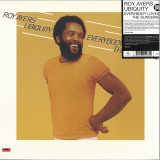
Mit "Everybody Loves the Sunshine" (1976) vermischt Roy Ayers nahtlos die Genres Soul, Funk & Jazz und erschafft einen zeitlosen Sound, der Musiker und DJs auf der ganzen Welt noch immer beeinflusst, mit dem Vibraphon als zentrales Instrument, ein Ansatz, der Ayers einzigartigen Stil definiert. Im Jahr 1976 veröffentlichte der legendäre Musiker und Komponist Roy Ayers mit ELTS eines der bedeutesten Alben seiner Karriere. Dieses Album festigte nicht nur Ayers' Stellung als Schlüsselfigur in der Welt des Jazz, sondern markierte auch einen Meilenstein in der Soulmusik und im zeitgenössischen Jazz-Funk. Es zeichnet sich durch eine raffinierte Mischung aus unwiderstehlichen Grooves, sanften Melodien und einem einzigartigen Sound aus, der über die Jahre hinweg nicht verblaaste und für mehrere Generationen von Musikern und Hörern zu einer Referenz wurde. Mitte der 70er Jahre hatte sich Ayers bereits mit seiner Band Roy Ayers Ubiquity und seinem unverwechselbaren Einsatz des Vibraphons, das zu seinem persönlichen Markenzeichen wurde, einen Namen gemacht. Und mit ELTS wagte sich Ayers an einen noch zugänglicheren Sound, auch als Reaktion auf den Aufstieg von Disco und das wachsende Interesse an Musik afro-amerikanischer Prägung überhaupt. In den zehn Tracks des Albums schafft Ayers eine Klangatmosphäre, die sowohl die Wärme des Sommers als auch die Raffinesse des Jazz jener Zeit heraufbeschwört, alles vor dem Hintergrund des modernen Soul. Produziert von Ayers selbst zusammen mit seinem Engineer und Freund David R. Williams zeichnet sich ELTS durch den wunderbaren Klang des Fender Rhodes Pianos von Phillip Woo sowie die kraftvolle Energie der restlichen Band aus, wodurch eine unverwechselbare Authentizität und Frische erreicht wird. Zu den bekanntesten Songs gehören der Titeltrack, "The Golden Rod" und "The Third Eye", die schnell zu Klassikern des Jazz-Funk und Soul wurden. Dieses Album ist für Roy Ayers' Karriere von entscheidender Bedeutung, da es seine Fähigkeit unter Beweis stellt, in einer sich ständig verändernden Musikindustrie relevant und kreativ zu bleiben. Im Laufe der Jahre wurde "Everybody Loves the Sunshine" zu einem Kultalbum, das häufig in DJ-Sets von Künstlern wie Gilles Peterson, Theo Parrish und Lefto gespielt Verwendung findet. Der Sommer-Soul-Klassiker jetzt wieder auf klassischem schwarzem 180g-Vinyl!
out of Stock
Last delivered 5 months ago available to reorder, subject to availability
Tobias Bernstrup is a contemporary musician and video artist born 1970 in Gothenburg, Sweden. He received an MFA from Royal College University of Fine Arts Stockholm in 1998. Using the visual language of pop culture, video games, sci-fi, classicism and gothic noir, he has created a stage persona with notorious live performances. Dressed in elaborate costumes of skin-tight rubber suits and fetish gear, Tobias' external appearance is androgynous. He raises questions about representation of identity, the body and physical space in both virtual and non-virtual realities. Between 1997 and 1998 he self-released two limited CD-R EPs. In 2002 his debut album 'Re-Animate Me' was released by Tonight Records followed by two limited 12' singles for the song 27' and the Italian version Ventisette'.
.
27' is a 5-song EP collecting 4 different mixes of the title track plus one unreleased song from the 'Re-Animate Me' recording sessions. The material on this EP is closely connected with the world of computer games which Bernstrup also inhabits. Bernstrup's music is influenced by 1980s Italo disco and synth pop, reminiscent of Kraftwerk, Depeche Mode and Ken Lazlo. On the A-side is the original mix at 115 bpm followed by the Lazer Mix set to an faster beat and additional arpeggiations and heavier bass drum beats. Lyrically the song tells the story of a good looking 27-year old boy from a small town searching for love with any man who can spoil him. On the B-side are both the vocal and instrumental of Ventisette', the Italian translation of the song 27.' Both versions of Ventisette' are stripped back compared to the A-side but keep the melodies in tact. Also released for the first time ever is the demo Dirty Money' a Pet Shop Boys influenced song about male prostitutes ready for a night out working the streets.
All songs have been remastered for vinyl by George Horn at Fantasy Studios. For the jacket Eloise Leigh transformed the original portrait of Tobias into a Warhol-like painted polaroid with a striking likeness to Liza Minelli with blue eye shadow and red lipstick. Each copy includes a photo postcard with lyrics and notes. I would rather create alternative routes to experiencing and understanding the world, understanding what it means to be human today,' says Bernstrup. We are more artificial than we want to admit.'
out of Stock
Last delivered 18 days ago available to reorder, subject to availability
C1: Sail On, Sailor, Backing Vocals – Enrique "Bugs" Gonzalez*, Drums – David Hidalgo Jr., Keyboards – Phil Parlapiano, Percussion – Camilo Quinones, Written-By – B. Wilson*, J. Rieley*, R. Kennedy*, T. Almer*, V. Parks*
C2: The World Is A Ghetto, Backing Vocals – Barrence Whitfield, Little Willie G., Drums – Jason Lozano (2), Percussion – Camilo Quinones, Vocals – Little Willie G., Written-By – M. Dickerson*, C. Miller*, H. Brown*, H. Scott*, L. Oskar*, L. Jordan*, S. Allen*
C3: Flat Top Joint, Drums – Jason Lozano (2), Written-By – Dave Alvin
C4: Where Lovers Go, Drums – David Hidalgo Jr., Written-By – Mario Paniagua
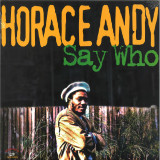
Horace Andy has always commanded a place high on the list of Reggae singers from Jamaica. His distinctive haunting vocal style stands strong on any rhythm,song or style he chooses to cover. Of the singers on that long list, he has managed more so than any other, to crossover to a new generation of listeners due to his individual style, helped also by his collaborations with the likes of Massive Attack. Horace Andy (b. Horace Hinds,1951,Kingston Jamaica) like many otherJamaican singers began his musical career at Coxsonne Dodd's Studio One. So impressed with the youth, Coxsonne decided on a name change for theyoung artist and called him after his top songwriter of the time Bob Andy. So Horace Hinds became Horace Andy. His first tune for Coxsonne 'Something On My Mind' was a slow burner in Jamaica, but his belief in his young protégé paid off when followed later by 'Skylarking' a tune that burst the singer all overthe radio and sound systems of Jamaica. After numerous singles and two albums worth of material, Horace moved on to work with many of the topflight Jamaican producers, among them Keith Hudson, Augustus Pablo and Niney the Observer, but it was his work with producer Bunny Lee in the 70's that he cut most of his hits for and from this stable of work, that we have compiled this set. Some of his late 60's classics were recut in the popular1970's style, working with the rhythm kings themselves, Sly Dunbar andRobbie Shakespeare. They have added some shine to the tracks, 'SomethingOn My Mind' and 'Skylarking' and made them hits all over again. Such wasHorace's delivery to the covers he sang like Delroy Wilson's version of theTams 'Riding For A Fall', the Heptones 'My Guiding Star', John Holts'Man Next Door' and Bill Wither's 'Ain't No Sunshine', that these finetunes were made his own. The roots end of his musical style was covered by
Andy originals such as 'You Are My Angel', 'Zion Gate','Money Money'and the cut which we have taken our edited title, the timeless 'Just SayWho'.A bass heavy cut to Bob Marley's 'Natural Mystic' works so well inthis style also. Another nickname Horace acquired was the affectionate title of Sleepy, as he was always hanging around the yards and studios of Jamaica waiting his turn, sometimes so long he would fall asleep. His enthusiasm to get back in the studio to work some more of his magic, to a catalogue of material that has developed into one of the finest in Jamaica. I hope you will agree, this fine set of 1970's classics will sit alongside.
O B8 | AIN'T NO SUNSHINE
out of Stock
Last delivered 13 months ago available to reorder, subject to availability
Benét betrachtet sein neues Indie-Rock-Album „Make `Em Laugh“ als eine Art Clue-Spiel. Er versucht herauszufinden, wann und wie genau eine Beziehung gescheitert ist. „Make`Em Laugh“ ist ein Dokument der Entdeckung und Selbstverwirklichung, das eher Fragen als Antworten enthält und Benéts Fähigkeit, viele komplexe und widersprüchliche emotionale Zustände zu durchlaufen, prägt auch den Klang der Musik: Das Album ist dynamisch, lebendig und genreübergreifend. Seine warme Stimme glänzt in nachdenklichen Indie-Rock-Stücken wie „Pieces Of Me“ und „Demon“. In „Too Scared to Say“ setzt er Autotune ein, um ein Gefühl der Verwirrung zu vermitteln, ein Gefühl, das in dem experimentellen elektronischen Stück „Slimmer“ noch verstärkt wird. Benét und die Sängerin AnnonXL tauschen ihre Strophen aus, während sich die Produktion von kristallin und sanft zu aufregend laut und energiegeladen wandelt. Benét genoss auch die Zusammenarbeit mit den Künstlern, die auf dem Album vertreten sind. Er entdeckte die Musik von Margaux, als sie in dem Brooklyner Lokal Baby's All Right auftrat, in dem er arbeitet, und war begeistert, als er feststellte, dass die Fans in den YouTube-Kommentaren zu seinen Videos bereits eine Verbindung zu ihrer Arbeit hergestellt hatten. Faye Webster ist seine beste Freundin und jemand, von dem er glaubt, dass sie zu seiner Begabung passt, scharfsinnige Fragen über Beziehungen zu stellen. Und der wirbelnde, vibrierende Vers von AnnonXL auf „Slimmer“ war so gut, dass er Benét kreativ anspornte. „Make `Em Laugh“ mag damit begonnen haben, eine Trennung zu verarbeiten, aber als Gesamtwerk blickt es weit über die Besonderheiten einer einzelnen Beziehung hinaus. Es ist Musik, die sich über die großen Fragen des Lebens Gedanken macht, die uns alle verbinden, und die Trost in der Gemeinschaft findet. Wenn das Album ein Clue-Spiel ist, dann eines, das alle Einsichten und Geschichten der unzähligen Spieler im Raum ebenso einfängt, wie es sich auf das Ergebnis des Spiels selbst konzentriert.
Benét betrachtet sein neues Indie-Rock-Album „Make `Em Laugh“ als eine Art Clue-Spiel. Er versucht herauszufinden, wann und wie genau eine Beziehung gescheitert ist. „Make`Em Laugh“ ist ein Dokument der Entdeckung und Selbstverwirklichung, das eher Fragen als Antworten enthält und Benéts Fähigkeit, viele komplexe und widersprüchliche emotionale Zustände zu durchlaufen, prägt auch den Klang der Musik: Das Album ist dynamisch, lebendig und genreübergreifend. Seine warme Stimme glänzt in nachdenklichen Indie-Rock-Stücken wie „Pieces Of Me“ und „Demon“. In „Too Scared to Say“ setzt er Autotune ein, um ein Gefühl der Verwirrung zu vermitteln, ein Gefühl, das in dem experimentellen elektronischen Stück „Slimmer“ noch verstärkt wird. Benét und die Sängerin AnnonXL tauschen ihre Strophen aus, während sich die Produktion von kristallin und sanft zu aufregend laut und energiegeladen wandelt. Benét genoss auch die Zusammenarbeit mit den Künstlern, die auf dem Album vertreten sind. Er entdeckte die Musik von Margaux, als sie in dem Brooklyner Lokal Baby's All Right auftrat, in dem er arbeitet, und war begeistert, als er feststellte, dass die Fans in den YouTube-Kommentaren zu seinen Videos bereits eine Verbindung zu ihrer Arbeit hergestellt hatten. Faye Webster ist seine beste Freundin und jemand, von dem er glaubt, dass sie zu seiner Begabung passt, scharfsinnige Fragen über Beziehungen zu stellen. Und der wirbelnde, vibrierende Vers von AnnonXL auf „Slimmer“ war so gut, dass er Benét kreativ anspornte. „Make `Em Laugh“ mag damit begonnen haben, eine Trennung zu verarbeiten, aber als Gesamtwerk blickt es weit über die Besonderheiten einer einzelnen Beziehung hinaus. Es ist Musik, die sich über die großen Fragen des Lebens Gedanken macht, die uns alle verbinden, und die Trost in der Gemeinschaft findet. Wenn das Album ein Clue-Spiel ist, dann eines, das alle Einsichten und Geschichten der unzähligen Spieler im Raum ebenso einfängt, wie es sich auf das Ergebnis des Spiels selbst konzentriert.
It takes grindin' to be a king and Houston's Mike Jones' work ethic of "You Don't Work, You Don't Eat, You Don't Grind, You Don't Shine" had his phone blowing up in 2005 with the release of his major label debut Who is Mike Jones? on Asylum/Swisha House/Warner Records. Mike Jones started rapping in the early 2000s and he released a couple of independent albums on his own label Ice Age Entertainment before linking up with Michael "5000" Watts of Swisha House. He recorded the underground single "Still Tippin" with Texas contemporaries Paul Wall and Slim Thug, which appeared on the Swisha House compilation The Day Hell Broke Loose 2. The song, full of southern hip-hop slang and braggadocio, was an ode to the classic car culture in Houston, Texas, and could be heard bumpin' out the trunks of cars nationwide with its heavy bass and classical string loops. Before the release of Who Is Mike Jones? girls would ignore him, but after the release of "Still Tippin" they were all up on him, which led to the release of the single "Back Then" where he shouted out his real cell phone number that played a major part in the marketing and promotion of the album.You could call 281-330-8004 and get his voicemail and leave a message, but sometimes he would answer, which led to spreading the word of Mike Jones' debut album. "Back Then" was also a top-selling ringtone because (back then) you had to buy and download ringtones, unlike today. Mike truly went viral before going viral was even a thing. After dropping the two hit singles, Who Is Mike Jones? was released on April 19th, 2005, and would sell over a million copies that year, leading to certified platinum status. Twenty years later, this Texas Rap classic still holds up with features from other H-Town legends including S.U.C.'s Big Moe (RIP),Bun B, Paul Wall and Lil Keke. Juicy J & DJ Paul of Three 6 Mafia added their Memphis touch to the "Got It Sewed Up Remix" and the album ends with a heartfelt dedication to Mike Jones' late Grandmother on "Grandma". Get On Down is proud to present the first vinyl reissue of Who Is Mike Jones? in a limited edition silver and red color-in-color pressing packaged with a full color printed insert tocommemorate the 20th anniversary of this H-Town classic
For All The World, the black watch's twenty-fifth (and first double) album is a darkly poppy, brightly moody, many-splendored take on a number of the great themes: Death and Sex, Memory and Lament and Hope and Love. And it is, arguably, this heralded Los Angeles band's most sonically ambitious and moving record yet, since front man/novelist/ex-English professor John Andrew Fredrick formed the group in 1988 in Santa Barbara after he'd seen a London-by-way-of-Canada band called The Lucy Show play to twelve-or-so people in his hometown.
Having recorded 2024's Weird Rooms with producer Misha Bullock and Fredrick's son Chandler at Bullock's studio in Austin, TX, the TBW founder was keen to repeat the experience with, he says, more straightforward, classic psych/jangle/shoegaze songs. The result, though artistically satisfying, spurred a yen in John to write more songs as a sort of reaction against the batch he'd carried with him from LA to Texas. "We had such a productive time recording ‘Weird Rooms’ that I wanted to repeat the experience... without repeating the experience. And once it was over and I left Misha to do what he pleased with respect to mixing and overdubbing, all I could think was 'I need to write another album now.'" So Fredrick brought longstanding producer/engineer and TBW-associate Scott Campbell (Stevie Nicks, Acetone) along this time to help out with engineering and good cheer.
Fredrick, who has been "accused" of being "astonishingly prolific," learned that bandmate Andy Creighton had recently become unemployed, seized the opportunity to have yet another multi-instrumentalist flesh out the new songs he quickly wrote after he came back from Austin. “Achilles Past,” the first single, is in fact a song that John wrote when the production team thought the album was done—and the front man avers that it’s often the case that a very strong song comes to him, as it were, in the eleventh hour. The same could be said for “Listen You Wait”—another number that came late to the Austin sessions.
Nevertheless, the recording of the first half of For All The World has Creighton's signature indelibly stamped on it - especially on such tracks as “Fainting” and “Surely You Rally”- just as the latter half highlights Bullock's formidable talents. "They're both not just brilliant musicians and they understand my aesthetic and bring their own sensibilities to bear on my stuff. Our respective tastes meet in, you guessed it, The Beatles' realm - the great shadow that hangs over all I do, at least."
"There's A Place," the final song on side two, serves in fact as a distinct homage that's been a long time coming for a band that included a cover of "It's All Too Much" as a bonus track and that release a quite punkish, uptempo version of "Eleanor Rigby" on a 7".
Mustang Island, the third album from Austin-based band Little Mazarn, is a gentle force. Waves of grief crest like surf on the Texas coast. Wild horses break through long-shuttered gates, only to come back around. Lead songwriter, vocalist, and multi-instrumentalist Lindsey Verrill (she/her) joins bandmates jeff Johnston (he/him) and Carolina Chauffe (they/thern), The tensong, collection continues work with Dear Life Records. A full-throated romp through the capabilities of community-minded songcraft, Mustang Island is both naturalistic and futuristic, completely recasting Little Mazarn's origins in primitive folk. Instead, the band reaches towards sonic experimentation and spacious expansion. Lindsey's heart-opening vocals and jeff's singing saw, both trademarks of the project, mix with unexpected bombastic drums, dissonant synthesizers, and a chorus of orchestral oddities. This mid-career ode dances confidently in the creative liberties granted by decades in the game - more dazzlingly lively, and honestly somber, than ever before. The band's crossroads branch across prominent Southern outsider music: On cello, Lindsey has recorded with Patty Griffin and Dana Falconberry. The longtime side player wouldn't write her first song until age 34, Jeff has played in Bill Callahan's band, as well as with LIl Capin Travis and Orange Mothers. Carolina is known for prolific solo project hemlock, Little Mazarn has also collaborated with Lomelda to release their last EP, Honey Island General store (2023), following past LPs Texas River Song (2022) and lo (2019). Alongside silliness and reverence, including covers from Kate Wolf and Bob Wills * His Texas Playboys, griet directs much of Mustang Island. Lindsey left her job of seventeen years teaching cello at a local school, Recording also aligned with the passing of Jeff's facher, a career educator in Jeff and Lindsey's hometown of Dallas. "Grief, and the avoidance of grief, is a big part of being human," says Lindsey. "You make a choice, and then you grieve for the other choice. Or you finish a meal and literally grieve that it was so good. If you really befriend griet, you re like, 'Oh, it's here, in this pancake, which I loved so much that I ate the whole thing, and now it's gone.**