Ride bassist Steve Queralt’s debut solo album Swallow is a beautifully brooding nine-track collection that combines the darkly textured soundscapes of early M83 and Sigur Rós with an electronic sheen reminiscent of Boards Of Canada. It also features guest vocals from Sonic Cathedral labelmate Emma Anderson (formerly of Lush and Sing-Sing) and Verity Susman (Electrelane, Memorials).Swallow has been slowly but surely pieced together between Ride albums and tours over the past five years and, perhaps as a result, has a slightly dystopian, Blade Runner feel that reflects the liminal spaces in which it was created.Despite the fact that the majority of the album is instrumental, there is plenty of power and emotion poured into these moody, moonlit soundtracks. When words do appear, an underlying anger and political slant emerges and amplifies the album’s dark intensity. This is most notable on the closing track, ‘Motor Boats’, where he overlays words from Julie Sheldon’s polemic poem The Same Boat (“We’re all in the same boat they say, but I would disagree”). According to Steve, these simple words of rejection “capture the reality of our times perfectly”. However, it was the collaborations with the two guest vocalists that tied the whole thing together and paved the way to the finished album. “After a few false starts, I had started to doubt the project altogether. It was going nowhere,” says Steve. “Then, out of the darkness, Emma got in touch to tell me that she’d found her voice and could I send her some tracks. A few files back and forth and an afternoon in the studio later and we had ‘Lonely Town’ and ‘Swiss Air’.”In the meantime, Verity from Electrelane had added vocals to the song ‘Messengers’ and transformed the track. Matthew Simms, now her bandmate in Memorials, would go on to mix the finished album.“Swallow has turned out so much better than I had hoped,” enthuses Steve. “I’d fallen out of love with it so many times I was thinking of calling it Loveless. But then, that wouldn’t be the whole story.”
2.0 is the fourth studio album by DIAMOND-selling Country artist Brett Young. Produced by Jimmy Robbins (Maren Morris, Thomas Rhett) and Dann Huff (Faith Hill, Rascal Flatts), the 11-track collection features Young’s signature Caliville style mixed with driving Classic-Country instrumentation of banjo, pedal steel and mandolin, offering a unique sonic backdrop to this new chapter.
Khadim is a stunning reconfiguration of the Ndagga Rhythm Force sound. The instrumentation is radically pared down. The guitar is gone; the concatenation of sabars; the drum-kit. Each of the four tracks hones in on just one or two drummers; otherwise the sole recorded element is the singing; everything else is programmed. Synths are dialogically locked into the drumming. Tellingly, Ernestus has reached for his beloved Prophet-5, a signature go-to since Basic Channel days, thirty years ago. Texturally, the sound is more dubwise; prickling with effects. There is a new spaciousness, announced at the start by the ambient sounds of Dakar street-life. At the microphone, Mbene Diatta Seck revels in this new openness: mbalax diva, she feelingly turns each of the four songs into a discrete dramatic episode, using different sets of rhetorical techniques. The music throughout is taut, grooving, complex, like before; but more volatile, intuitive and reaching, with turbulent emotional and spiritual expressivity.
Not that Khadim represents any kind of break. Its transformativeness is rooted in the hundreds upon hundreds of hours the Rhythm Force has played together. Nearly a decade has passed since Yermande, the unit's previous album. Every year throughout that period — barring lockdowns — the group has toured extensively, in Europe, the US, and Japan. With improvisation at the core of its music-making, each performance has been evolutionary, as it turns out heading towards Khadim. “I didn’t want to simply continue with the same formula," says Ernestus. “I preferred to wait for a new approach. Playing live so many times, I wanted to capture some of the energy and freedom of those performances.” Though several members of the touring ensemble sit out this recording — sabar drummers, kit-drummer, synth-player — their presence abides in the structure and swing of the music here.
Lamp Fall is a homage to Cheikh Ibra Fall, founder of the Baye Fall spiritual community. The mosque in the city of Touba is known as Lamp Fall, because the main tower resembles a lantern. Soy duggu Touba, moom guey séen / When you enter Touba, he is the one who greets you. After a swift, incantatory start Mbene sings with reflective seriousness. Her voice swirls with reverb, over a tight, funky, propulsive interplay between synth and drums, threaded with one-two jabs of bass. Cheikh Ibra Fall mi may way, mo diayndiou ré, la mu jëndé ko taalibe... Cheikh Ibra Fall amo morome, aboridial / Cheikh Ibra Fall shows the way forward, he gives us strength, he gathers his disciples... Overflowing with grace, Cheikh Ibra Fall has no equal.
Interwoven with Wolof proverbs, Dieuw Bakhul is a recriminatory song about treachery, lies, and back-biting. Over moody, roiling synths and ominous, lean bass, Mbene throws out fluttering scraps of vocal, as if re-running old conversations in her head. The music shadows her despair to the verge of breakdown, at one moment seemingly so lost in thought and memories, that it threatens to disintegrate. Bayilene di wor seen xarit ak seen an da ndo... Dieuw bakhul, dieuw ñaw na / Stop judging your friends and companions... A lie is no good, a lie is ugly.
Khadim is a show-stopper; currently the centrepiece of Ndagga Rhythm Force live performances. The song is dedicated to Cheikh Ahmadou Bamba, aka Khadim, founder of the Mouride Sufi order. Serigne Bamba mi may wayeu / Serigne Bamba is the one who makes me sing. The verses name-check revered members of his family and brotherhood, like Sokhna Diarra, Mame Thierno, and Serigne Bara. Though Islam has been practised in Senegal for a millennium, it wasn’t until the start of the twentieth century that it began to thoroughly permeate ordinary Senegalese society, hand-in-hand with anti-colonialism. The verses here recall Bamba’s banishment by the French to Gabon, and later to Mauritania, in those foundational times. During exile, his captors once introduced a lion to his cell: gaïnde gua waf, dieba lu ci Cheikhoul Khadim / the lion doesn’t budge, it gives itself over to Cheikh Khadim. Deep, surging bass, steady kick-drum, and simple, reverbed chords on the off-beat lend the feel and impetus of steppers reggae. A reed plays snatches of a traditional Baye Fall melody; the dazzling polyrhythmic drumming is by Serigne Mamoune Seck. Mbene compellingly blends percussive vocalese, narrative suspense, exultant praise, introspection, and grievance.
Nimzat is a devotional tribute to Cheikh Sadbou, a contemporary of Bamba, buried in a mausoleum in Nizmat, in southern Mauritania. Way nala, kagne nala... souma danana fata dale / I call upon you and wonder about you... If I am overwhelmed, come to my aid. The town holds special significance for Khadr Sufism. An annual pilgrimage there is conducted to this day. The rhythm is buoyantly funky; the mood is sombre, reined-in, foreboding. Punctuated by peals of thunder, Mbene sings with restrained, intense reverence; huskily confidential, steadfast. Nanu dem ba Nimzat, dé ba sali khina / Let us go to Nimzat, to seal our devotion.
Mbene Diatta Seck: vocals.
Bada Seck: bougarabou, thiol, mbeung mbeung bal, tungune.
Serigne Mamoune Seck: bougarabou, khine, mbeung mbeung, tungune.
Text by Mark Ainley (Honest Jons).
Mastered by Rashad Becker.
Everything else by Mark Ernestus.
out of Stock
Last delivered 3 months ago available to reorder, subject to availability
The record is largely sung in Scots language, one of Scotland’s three official languages along with Gaelic and English. “Scots gives me a way of expressing myself which is connected directly with the landscapes I love. It brings the songs alive and it is a fascinating language. The name of the record is in Scots - Forefowk means the people who came before, or ancestors. When we say ‘mind me,’ we can mean a few things- remind, remember, watch over or care for me. The record explores how tradition needs to be constantly reconnected with, built upon, looked after, and shared.”
Quinie sings with a style inspired by Scottish Traveller singers. “I began singing unaccompanied Scots Song in 2015 after hearing Scots Traveller singer Sheila Stewart on the radio. Initially I felt like I shouldn't sing these songs because I'm not a Traveller, and I saw people around me doing that in a way that made me uncomfortable. But on the other hand this music made sense to me and I felt driven to learn. Over the years I have met Traveller friends who taught me that settled people sharing these songs could contribute to raising awareness. Scottish Travellers are marginalised and discriminated against in modern Scotland, despite being custodians of so many of our important traditions. So I started to perform them and tell this story. From there I built on my repertoire and started writing my own songs”.
To develop this record, Quinie travelled across Argyll with her horse. They went on a pilgrimage of sorts through the ancient landscapes of the West of Scotland to explore the interconnected relationships between people, ancestors, animals, and place. The album’s vinyl release is accompanied by a book and film, documenting this unusual research process.
Forefowk, Mind Me was recorded in August 2024 at The Big Shed in Highland Perthshire with support from Creative Scotland. Quinie is accompanied by an ensemble of musicians: Ailbhe Nic Oireachtaigh (viola), Oliver Pitt (duduk, bouzouki, percussion), Harry Górski-Brown (small pipes, violin), and Stevie Jones (double bass, recording, and mixing). Each of these artists brings their own distinctive voice, bridging contemporary experimental practice with worlds of traditional and early music.
Michael Nau's solo career began with songs crafted and composed in private moments, later to be shared with musical compatriots and reimagined with auxiliary input on records like Michael Nau & The Mighty Thread, Mowing, The Load EP, and Some Twist. These early drafts were stashed away in the vault as Nau strode forward, but after a taxing spring of touring in support of his latest album Less Ready to Go, and recording and self-releasing the stripped-down informal release So On So On, Nau found himself hunkering down at home and rediscovering old gems in his archives. The search yielded a new digital collection of Nau's initial forays into solo work, bundled together as Demo Versions, 2014 to 2017. In their initial incarnations, these songs were less about the end result and more about the discovery. "They're the seed," Nau says of the material. "These recordings are essentially the writing of the songs_ written and recorded at the same time. There's something exciting about them for that reason. It feels magical any time the start of a song arrives, let alone gets `finished.'" These early drafts don't just serve to shed light on the creative process or expose the malleability of Nau's songwriting approach; they often frame the material in an entirely new context. Demo Versions' opening track "The Glass" is a bare-bones affair of acoustic guitar, bass, and vocals_a breezy Sunday morning song that sounds markedly different than the layered lounge-rock approach that later appeared on Mowing. "Light That Ever," with its wall-of-sound production, serves as a climax to Some Twist, but in its infant stage on this collection, it's a beautiful, intimate folk song. Ultimately, all ten songs off Demo Versions, 2014 to 2017 reveal a new side to these fan favorites, with Nau's lush arrangements and unorthodox accompaniments largely absent, and the simple beauty and grace at the heart of the material at front and center.
Bar Part Time launches its record label with none other than Toronto UFO hunter, certified bad boy DJ, and good friend Cal-C. Cal comes correct with a ripper of a 4 track EP, Bath Bomb. A deep digger and wild style DJ in his own right, Cal brings you a grip of tracks that a tasteful selector can make use of throughout all points of a night time music party. Title track "Bath Bomb" is a blissed out, downtempo joyride that would make a perfect companion for either sunset or sunrise. "Morning Dew" evokes sounds of all your favorite early 90s Italian records, with a particularly euphoric crescendo. Hey man, did you say this guy was from Toronto or Torino? Either way, molto bene! As we move on, "Blurry Moon" is a slice of dancefloor perfection that sounds like something Jose Padilla would've made if he were from San Pedro instead of San Antonio. And lastly, the aptly named "Wine 69" (nice) is an M1 organ cruiser that's practically begging to be heard in front of an azure sea in balmy temps. Vamos a la playa!
out of Stock
Last delivered 9 months ago available to reorder, subject to availability
Seit ihrer Gründung im Jahr 2016 haben die Londoner High Vis ihre Palette an progressivem Hardcore mit Nuancen von Post-Punk, Brit-Pop, Neopsychedelia und sogar Madchester-Groove verfeinert und einen Mittelweg zwischen Hooks und Wut, Melodien und Moshpits gefunden. Sänger Graham Sayle beschreibt ihr drittes Album Guided Tour als eine Achse der konkurrierenden Kräfte: "Es versucht, eine hoffnungsvolle Platte zu sein, während es gleichzeitig wütend macht." Die Band, die von Schlagzeuger Edward 'Ski' Harper, Bassist Jack Muncaster und den Gitarristen Martin MacNamara und Rob Hammaren komplettiert wird, ist tief in der britischen und irischen DIY-Hardcore-Szene verwurzelt und wird von Rastlosigkeit und rechtschaffener Wut gleichermaßen inspiriert. Sayle sagt: "Jeder kratzt sich, jeder arbeitet die ganze Zeit, und die Vorstellung von Entspannung ist es, sich zu ficken und der Realität zu entgehen. Dieses Album ist eine Flucht vor dieser Realität." Von den ersten Sekunden an, in denen eine Kabinentür zuschlägt, ein Auto aufheult und ein sackartiger Rhythmus zum Leben erweckt wird, klingt Guided Tour wie eine Band, die nach neuen Höhen strebt und vor Energie strotzt. Das Ergebnis der mehrwöchigen Aufnahmen in den Holy Mountain Studios in London mit Produzent Jonah Falco und Tontechniker Stanley Gravett fühlt sich dynamisch und einstudiert an, wie Hymnen, die sich durch Schweiß und Wiederholung in das Gedächtnis der Sinne eingebrannt haben. Harper bringt es auf den Punkt: "Wir hatten eine klare Idee, jeder Moment wurde genutzt. Wenn wir 60 sind, können wir uns vielleicht hinsetzen und einen Schlagzeugsound hinbekommen, aber im Moment geht es darum, die Dinge zu erledigen." Die 11 Songs des Albums umfassen das gesamte Spektrum zeitgenössischer Gitarrenmusik, die durch Erfahrung, Kameradschaft und gesellschaftliche Frustrationen geschärft wurde. Von schwungvollem Streetpunk ("Drop Me Out", "Mob DLA") über schrillen Indie-Spott ("Worth The Wait", "Deserve It") bis hin zu Heavy Alt ("Feeling Bless", "Fill The Gap") und shoegazeartigem Spoken Word ("Untethered") - die Chemie der Gruppe verwandelt jeden Stil in ihre einzigartige Intensität. Sayle setzt sich für diese sich entwickelnde Verschmelzung ein: "Jahrelang hatten wir, die wir aus dem Hardcore kamen, ziemlich klare Grenzen - andere Szenen waren getrennte Welten. Jetzt vermischen sich die Dinge immer mehr, wir schöpfen aus verschiedenen Quellen."
Space-surf-psych-rock quartet Japanese Television’s album ‘Automata Exotica’ has been remixed by invited friends and peers; including Goat Fool from GOAT, Factory Floor’s Gabe Gurnsey, and Edgar Breau from cult band Simply Saucer. Informed by UFO encounters, ritualism, robots, Northern Soul, and nuclear weapons, ‘Automata Exotica’ was released in March 2024 and was described as “Heavy but also joyful” by The Quietus, “A fuzzy blast of space-surf energy”in Shindig and “A remarkable and unique proposition” by Louder Than War.
Rather than having been transformed out of all recognition, “reimagined” is a more apt term to describe this new version of ‘Automata Exotica’. With the album’s eight tracks presented via considered, alternative mixes with pertinent sonic application, it hangs together incredibly coherently - albeit as a wild and feverish psychedelic experience.
JTV toured with GOAT while writing ‘Automata Exotica’, with the fat fuzz tones and extended middle percussion section of ‘Typhoon Reggae Police’ heavily influenced by their time watching and learning from side stage. Starting life as an uneasy mixture of scratchy 60s garage rock and 70s Afghan psych folk, Goat Fool from GOAT ripped the song apart and stitched it back together. Recognisable but weird and uncanny, it’s a stripped down, oppressive, shimmering voodoo nightmare.
“We used to go and see Gabe’s weird, excellent band Factory Floor playing dark little club nights in Shoreditch years ago and marvel at the racket” says JTV. “Gabe’s been a long time collaborator of ours, in fact he’s the only person to not only do more than one remix for us, but has featured on every remix release we’ve done. Our most ecstatic, cathartic song, ‘Tabadaboum’ was the perfect match for Gabe - the motorik krautrock bassline fits right in with the pneumatic grind of his vintage drum machine loops and synth flurries”.
It's hard to measure the impact cult 1970s Canadian space rock proto punk psych band Simply Saucer had on the formation of Japanese Television. The band reached out to Edgar Breau - the band’s founding member and guitarist - who guitarist Tim says was “really generous with his time, and really kind to an overly keen and slightly awkward Simply Saucer mega fan. It's a real honor to have him playing guitar on one of our records”. His cosmic reimagining of ‘Golden Birds’ layers on the delay, reverb and screaming guitars, launching the track into outer space.
‘Automata Exotica (Remixed)' is set for release on 6th June 2025 on limited edition LP and digital formats. Japanese Television tour in Europe through March and April. The album is released by cult underground label Tip Top Recordings (Jim Wallis, Mandrake Handshake, Pearl & The Oysters), run by Ben Rimmer and David Warn.
Ali Farka Touré trekked the world, bringing his beloved Malian music to the masses. Dubbed “the African John Lee Hooker,” one could hear strong connections between the two; both employed a bluesy style of play with gritty textures that elicit calm and fury in equal measure. While the influence of Black blues music prevailed, Touré created a West African blend of 'desert blues' that garnered Grammy awards and widespread reverence. Though he transcended in 2006, Ali’s musical legacy lives on through his son, Vieux aka “the Hendrix of the Sahara,” an accomplished guitarist and champion of Malian music in his own right. On Ali, his collaborative album with Khruangbin, Vieux pays homage to his father by recreating some of his most resonant work, putting new twists on it while maintaining the original’s integrity. The result is a rightful ode to a legend. Ali isn’t just a greatest hits compilation. It’s a lullaby, a remembrance of Ali's life through known highlights and B-sides from his catalog. It is a testament to what happens when creativity is approached through open arms and open hearts. “To me, music is magic, it is spontaneous, it is the energy between people,” Vieux says. “I think Khruangbin understands this very well.” The genesis of the album dates back to 2019, when Khruangbin, coming off their breakthrough album Con Todo el Mundo, was beginning to play to bigger crowds. The record was finished in 2021, as a global pandemic shuttered businesses and forced us to take stock of what Earth was becoming. Indirectly, Ali captures this as a moment of peace within a raging storm, a conversation between past and present without allegiance to suffering. Now, given Khruangbin’s reach as a unit with legions of fans (including the likes of Jay-Z and Paul McCartney), they’re poised to bring Malian music to broader groups of listeners. Ali is a masterful work in which the love surrounding it is just as vital as the music itself, driving it to unforeseen places; Vieux and Khruangbin are spreading the good word to a completely new generation. “I hope it takes them somewhere new, or puts them in a place they haven't felt or heard,” Lee says. “It is about the love of new friendship and making something beautiful together,” Vieux continues. “It is about pouring your love into something old to make it new again. In the end and in a word it is love, that's all.”
Introspekt’s hotly anticipated debut album Moving The Center comes nearly a year after the release of her latest EP Tectónica. Set to be released on June 20th, Moving the Center sees Introspekt play homage to dubstep’s point of genesis in South London in order to then shift the center of focus from a singular point of origin, to a more global narrative of bass and vibration. The album blends UK bass with contrasting genres like garage and ballroom, creating the perfect feminine blend of these historically masculine genres. The album merges the Black diaspora from across the Atlantic, crafting a sonic world where past, present and future are parallel and immersed in an early millennium type dubstep soundscape.
Speaking about the album, Introspekt says, “‘Moving The Center’ embodies an alternate perspective to that which has been dominant in dance music, particularly so-called ‘bass music’. The narrative it presents is one which throws a wrench in the seemingly common perception of Dubstep as a masculinist sensibility. ‘Moving The Center’ pushes a feminine physicality to the front of the bassbins. Femmes to the front!”
out of Stock
Last delivered 5 months ago available to reorder, subject to availability
F.G.S.–the musical project of Los Angeles artist Flannery Silva–announces the first-ever vinyl release of her debut album ‘Tinker Bell’s Cough’, arriving May 27 via Scenic Route. Alongside the release comes a new single, ‘The Punisher (Tinker Bell’s Edit)’, and an exclusive vinyl-only live track, ‘Passions (Live at Tinker Bell’s Clubhouse)’.
Co-created with musician and producer Chase Ceglie, ‘Tinker Bell’s Cough’ is a surreal Americana record that filters the language of girlhood, heartbreak, and fantasy through a warped, theatrical lens. It’s Lana Del Rey meets David Berman in a cartoon whirlwind, with traces of Dolly Parton, Arthur Russell, and David Lynch.
Silva describes the record as “fairy tale theatre”. It’s packed with alt-universe country hits (‘Beth’s Deth’, ‘American Shield’), uncanny ballads (‘I’m Growing A Cross Around My Neck’), and leftfield pop songs rooted in character and place. ‘Passions’, the opening track, was inspired by Mary MacLane’s ‘I Await the Devil’s Coming’, while the title track imagines Tinker Bell herself singing a lullaby to God.
New single ‘The Punisher’ is an anthemic road song about loneliness and transcendence. “It’s about driving north on I-5 in California, worrying my car will overheat, bargaining with God, and falling in love with dust tornados,” Silva says.
Raised in the woods of upstate New York and formerly one half of the cult duo Odwalla88, Silva brings a visual artist’s sensibility to music. She studied art in Baltimore and continues to make sculpture and performance work that informs her songwriting. ‘Tinker Bell’s Cough’ was written on the Rhode Island coast, where she and Ceglie met weekly to write and record—drawing from old texts, visual references, and poetry.
F.G.S. has drawn praise from NTS, The FADER, Gorilla vs. Bear, The Line of Best Fit, Artforum, Sex Magazine, and more. With the reissue of ‘Tinker Bell’s Cough’ and the release of ‘The Punisher’, Silva continues to expand the strange, magnetic world of F.G.S., one that feels both deeply American and entirely her own.
Buckcherry will release their 11th studio album Roar Like Thunder on June 13th, 2025. The 10-track record was produced by Marti Frederiksen, who previously produced the band's 4th album, Black Butterfly, and co-wrote one of their biggest hits "Sorry." Frederiksen also co-wrote the songs on this album with vocalist Josh Todd and guitarist Stevie D. The album was recorded in Sienna Studios in Nashville in 2024. Says Josh about the new album, “Roar Like Thunder is going to lift your spirits, shake you up, and remind you why the hell you started listening to rock ‘n’ roll!”
Third album by singer and producer Charlotte Marionneau. A collection of sonic trips that try to capture the spark of beat poetry. She is almost a magician who has captured the directness of punk and can do magic with the emotion of pop. And she is always in the experimental grab bag. On the track 'Two-Love' Noel Gallagher plays piano and bass. Further on there is a Daniel Johnston cover presented as a duet with Terry Hall and his son Theodore and here Noel plays guitar. Marionneau reminds one of a female Syd Barrett. She counts among her admirers: Kevin Shields, Mazzy Star, Noel Gallagher, The Television Personalities, Simon Raymonde, Grimm Grimm, Piano Magic and Cillian Murphy. Le Volume Courbe "Planet Ping Pong" is a collection of sonic trips echoing fulgurances of beat poetry. Charlotte is a magician who can weave the directness of punk with the emotions of pop while staying in the realms of edgy experimentation. The bunny comes out of the hat smoking a cigarette and looks you in the eye. The single "Two-Love" is a collaboration with Noel Gallagher on piano and bass and Lascelles Gordon on percussions. The album also includes a cover by Daniel Johnston "Mind Contorted" which is presented as a duet with Terry Hall, and also features his son Theodore Hall and Noel Gallagher on guitars. The originality of Charlotte's music shares something with outsider art: naïve, primitive, primal, rather than following the standard rules. The new album selfproduced and mixed by Brendan Lynch and Charlotte is no exception, It's a unique and compelling listen laced with surprises, subversions and a refreshing candour which sets it apart from anything else. Charlotte was born and raised in France and moved to London in 1995. She was first signed to Alan McGee Poptones label in 2001, and her debut "I killed my best friend" was released in 2005 on Honest Jon's Records. She has also worked with a number of other bands and musicians including Kevin Shields, Mazzy Star, Noel Gallagher, The Television Personalities, Simon Raymonde, Grimm Grimm, Piano Magic etc.. Her song "Born to Lie" was featured in Series 2 of Killing Eve and Spotify selected her song "Rusty" for their "best of the decade 2010-2020" alternative compilation. Cillian Murphy selected the same song for his BBC6 compilation. "She reminds me of a female Syd Barrett... she keeps running into me all over the place from concerts or serving me ice cream at the Curzon on a wet Saturday night or on Jools Holland with the High Flying Birds... I love Charlotte... a great talent and a real psychedelic soul musician." Alan McGee "Inspiring originality, fiercely independent beautiful music, always years ahead of its time. I remember hearing Charlotte's music for the first time and being immediately taken by the freshness, great melodies and utterly unique approach." Kevin Shields "When I first met her she was wearing a cape... she looked like a little piece of Lego. She told me she liked some of my songs but not all. (I hadn't even asked her opinion!!) She's beautiful, fearless and one hell of a tambourine player." Noel Gallagher. "Charlotte is bewitchingly talented, a true rarity that has inspired many creative people. The kind of woman songs are written about. She's an artist that steals your heart away and then comforts you with her stunning music." Hope Sandoval. "A true original and a truly unique artist. There is not many I can say this about, but I honestly think I love everything she's ever recorded! All hail the Scissor Queen!" David Holmes.
Collection' puts together Italia 90's first three EPs (2017-2019) originally released on very limited cassette runs. A chance to hear the South London radical post-punk purveyors at their rawest and most intense. Think The Fall, PIL, Uk Subs meets Wire with high doses of agit-pop and razor wire guitars.
Italia 90: "This LP is a collection of the three EPs we released on cassette from 2017 to 2019. They were our first three releases and they sketch the development as a band in its early years. We released these EPs ourselves and each cassette had a very limited run of only 50 copies, so we’re really pleased to have them remastered and available on vinyl for a wider audience.
We hope that some of these tracks will be granted a new lease of life and will be fresh discoveries for people that enjoyed our debut album, Living Human Treasure, but who haven’t heard our earlier work. There are also some tracks here that we’d rather forget all about: it’s fair to say that on this LP you can hear some of our best and worst music. We’ll let you work out which is which. In the interests of full disclosure, it’s all here."
‘You are behind the damn wheel every day and you don’t even know it’ , weightily remarks Powerplant’s band leader Theo Zhykharyev on the reading of his latest single. London-based project signals the return to signature formula of marching drum machines and wailing synthesisers, matured by life experiencing of prolonged touring. ’Car is life, brother. Sometimes you drive it, other times - the car drives you. And, statistically, we’ll all see the airbags go off sooner than later as consequence of choices made by us or onto us, consciously or not.’
Crashing Cars breaks out the gates to the heavy low end driven dance floor. ‘I was listening to a lot of Bladee when I wrote it and needed a similar thick kick to get you moving’, says Theo. Its an emotionally loaded cannon of a track that will keep you in its grip until it has run its course and told its story. Yearning from connection unfulfilled, rings out through the heartbroken and weeping synth and choir lines. The ever-morphing and dynamic bass works in tandem with razor sharp guitars. The instrumentation, through combined ‘no looking back’ forward charge and immediacy, conjure a manic and emotional forward momentum, which rings out in the song’s lyrics. The vocal performance ranges from the trademark Powerplant goblin squeaks, to more mature, tour-hardened singing. On a sonic aesthetic level, Crashing Cars vibrates in a familiar fashion to Powerplant’s biggest hit Dungen. However, this time far less playful and harder hitting. Described as the fallout of “avoiding, chasing and running away”, lyrically it paints a dead end in human relationships concluding it car-crash heading for the scrapyard. The song concludes with a loaded four line spoken word poetry segment, that hangs over the fleeting outro.
The B side of the single, Never Smile, rolls the speed back, but throws in jangly guitar hooks and bouncy bass lines. Zhykharyev’s vocals sit in a lower register, hence are more stoic and melancholic. If this track had to be a day of the week, it would be a calm, introspective Sunday. With lyrics about looking into evil omens, the sky and reading people as ‘not something different’, it paints an ambiguous, but heavy conclusion about the world and its people. It tells a story about circumstantially settling into an identity and playing the assigned part for the convenience of the external world. It’s easier to fit than to stand apart. It's a perfect balance of mid-tempo radio-rock that builds and changes, before exploding into a shaggy guitar solo, only to go into an unexpected ethereal outro and this 7”s crescendo.
‘Both of these songs are kinda old now, sitting at around 4 years old. And although I haven’t changed the lyrics since then, I somehow find new meaning in them as time goes on. Being Ukrainian and going into the fourth year of the full scale Russian invasion back home, the chorus “my death to you - a better price to pay” makes a lot of sense looking at how the world powers are trying to spin the devastation of my people for a quick profit and an easier life for themselves. This single coming out now at this very point in my life feels both profound and very ironic. Life never ends’, summarises Zhykharyev.
Available 13 June 2025 on double translucent orange vinyl, Trios captures the magic of Buddy Rich's legendary three- man jam sessions-- performances that have never been officially released until now. Recorded live during international concerts in 1976 and 1977, Trios showcases Rich alongside extraordinary talents: bassists Jon Burr and Tom Warrington, and young piano prodigy Barry Kiener. These trio interludes--recorded by Rich's alto saxophonist Alan Gauvin--feature Rich playing with brushes in an intimate setting, spotlighting his dynamic range and nuance. "These trio sets were often played to give the brass section a break," says Gauvin. "But what Buddy did with those moments was extraordinary. It was a masterclass in restraint, creativity, and musical interplay." Among the album's ten tracks are beautifully reimagined standards such as "Just Friends," "Stella by Starlight," and "My Romance." Each performance highlights Rich's desire to step back and allow the piano and bass to shine--something unheard of for a drummer of his stature. The release also serves as a tribute to Barry Kiener, the immensely gifted pianist who tragically passed away at 30. "Barry had been like a son to him," remembers Buddy's daughter Cathy Rich, who serves as an Executive Producer. "This album is a rare glimpse into Barry's brilliance and the deep musical bond he shared with my father." Trios was recorded and produced by Alan Gauvin, mastered by Tom Swift, with cover art by Michael Patterson, the award-winning visual artist and USC professor known for his work on a-ha's iconic "Take on Me" video.
José James just can’t leave the ’70s alone. Or maybe it’s the other way around. The singer, songwriter, bandleader, and producer was born in 1978, after all, but over his past 17 years of fundamentally forward-looking, blessedly mercurial music, he keeps getting pulled back in. His 2013 Blue Note breakthrough No Beginning No End revisited the hooky, funky, jazz-streaked songcraft of the time through a modern crate-digger’s ears. On 2020’s No Beginning No End 2 — James’ debut on his own Rainbow Blonde Records — he went back through the portal with a small army of fellow celebrated eclecticists. Just last year, there was the album 1978, a richly layered love letter to said year that felt deep, luxe, and cool. It’s as if — vested with the restless fluidity of jazz, the tuned-in sensitivity of soul, and the revisionist grit of hip-hop — he is trying to play his way into the exact moment when, culturally speaking, everything was about to change.
“I'm still so fascinated by the tension in that era of all these seemingly clashing things happening at once,” says James. “The loft scene, the jazz scene, Elton and Billy, Bob Marley, the Isleys, Funkadelic, disco being this behemoth in a way I don't think we even understand today… And then there’s where everybody went from there — into hip-hop, into punk rock, exploding jazz. It's like a summation of the ’70s, and it's about to transform. It's the peak of the rollercoaster.”
Literally breaking into history is impossible, of course, but James’ new LP, 1978: Revenge of the Dragon, does feel like breaking through or bursting out. In loving contrast to its predecessor, the fresh set plays hot, like a Friday night out at the Mudd Club in its prime. Though he’s dreamt up albums with collaborator counts approaching the dozens, James gathered a tight crew for this one. Himself and Taali on vocals. BIGYUKI on keys and analog synth. Jharis Yokley on drums. Bass split between David Ginyard (Blood Orange, Terence Blanchard) and Kyle Miles (Michelle Ndgeocello, Nick Hakim). And an all-star brass lineup: Takuya Kuroda on trumpet, young lion Ebban Dorsey on alto sax, and genre-spanning ronin Ben Wendel on tenor sax. They set up in Dreamland Studios near Woodstock, a restored 19th century church, and recorded live to tape, two tracks, drums pushed to the max — “a small homage to the rise of punk,” says James.
In that place out of time, the band laid down a handful of choice covers and some wild originals, like the single “They Sleep, We Grind (for Badu),” a decades-collapsing cut powered by an ugly groove. Steeped in dub, funk, and sampledelia, James chants an artists’ mantra (“They sleep, we grind / Man, f--- your nine to five”), makes lyrical callouts to Marley and Nas, and channels everything from George Clinton to J Dilla, not to mention the earthy mysticism of Erykah Badu. In 2023, James released and toured his Badu covers LP, On & On. “Living in her musical house for a year was transformative,” he says. “This is my summary of everything I learned through her, tying it to this idea that artists move differently. We are in society but we are outside, too, looking out and in at the same time. Our hours are different, our schedules are different.”
To that point, James and co. actually began each day in the woods, filming the album’s visual companion piece, Revenge of the Dragon, an honest-to-God kung-fu short complete with bad overdubs, training montages, camera tricks, and plot twists. The film pays tribute not only to the genre’s greatest year (1978, of course), but also its cinematic exchange with Blaxploitation, plus James’ own recent Shaolin training and admiration for Bruce Lee as a culture-bridging force (the LP’s cover recreates an iconic shot of Lee). On top of that, says James, “We had this immediacy in the studio. Live, one take, no overdubbing. I feel like that's where the martial arts piece comes in, where it's about being relaxed but also aware, and there's immediacy in your movements.”
Across the project, tribute takes that refracted, multifaceted form. From his personal late-’70s playlist, James chose four covers reflecting the era’s disco-fied churn: the MJ-meets-Quincy dancefloor masterpiece “Rock With You”; Herbie Hancock’s prescient vocoder fever dream, “I Thought It Was You”; and a pair of Black-radio hits from two bands whose fans typically wouldn’t have been caught dead in the same stadium: “Miss You” by the Rolling Stones and the Bee Gees’ “Inside and Out.” All of it gets filtered through a contemporary Black (and beyond) lens, coming out loud, free, funky, and buzzing — dynamic, yes, but also of a joyous piece.
1978: Revenge of the Dragon transports you to a crowded room where all this is playing out in real time. That feeling is helped out by opener “Tokyo Daydream,” a bass-driven swan dive into a neverending night of boutique bar-hopping and neon revelry. Later, “Rise of the Tiger” finds James bringing rare braggadocio to a propulsive track with growling synth lines and a hunger for whatever comes next. And then there’s the closer, “Last Call at the Mudd Club,” which with its upbeat energy and string of Stevie-inspired pickup lines, evokes the sort of unabashedly elated track the DJ throws on at 3:56 a.m. before everyone is kicked out. “I wanted to leave the album on that note,” says James. “If this was a night out in New York, this would be the last thing you hear before you get in that taxi and go back to your apartment.” Or, perhaps, back to 2025.
out of Stock
Last delivered 16 months ago available to reorder, subject to availability
When one makes mention of Deee-Lite, the 90's house-funk trio of Lady Miss Kier, and DJs Dmitry and Towa Tei, invariably their Billboard smash single “Groove Is In The Heart” will come up, and for good reason. With its Herbie Hancock-sampling bassline, some classic rhymes from Q-Tip, and guest vocals by Parliament-Funkadelic legend Bootsy Collins, the song became an indelible classic of 90s music, a massive commercial hit for Deee-lite and is widely considered one of the greatest dance songs of all time. Although a massive success for the group, “Groove Is In The Heart” led to some pigeonholing from critics and reviewers, who had specific expectations for future records. Rather than deliver more of the same free-wheeling, breezy dance music of World Clique, Deee-lite took a more politically-minded approach with their second album, spurred largely by front-woman Lady Miss Kier, who had a lengthy history of political activism prior to forming the group. 1992's Infinity Within rendered several Dance-chart hit singles, but was not as commercially or critically lauded as its forebear. Deee-lite were undaunted by their change in commercial fortune, regrouping with the addition of junglist DJ Ani, replacing the absent Towa Tei to record their third record. 1994's Dewdrops In The Garden was the result of their efforts, which struck a remarkable balance between the celebratory grooves of World Clique, and the social justice-driven Infinity Within. Lady Miss Kier had done a lot of world-traveling in the time between albums, and the material in Dewdrops was a reflection of her experiences, applying a spirit of global togetherness to their house-funk grooves. Regrettably, Dewdrops In The Garden was not a commercial success, yet it still managed to render its share of #1 Dance Chart singles; the atmospheric techno bounciness of “Bring Me Your Love”, and the spacious funk-house track “Call Me.” Though Deee-lite would disband soon after Dewdrops In The Garden's release, the record remains an unheralded favorite among dance music devotees for its coupling infectiously bright, and soulful melodies, with banging dance-floor grooves, and unshakably optimistic vibes.
out of Stock
Last delivered 16 months ago available to reorder, subject to availability
Samosa Records comes at you with all the elements for Earth, Wind & Funk Vol. 2 – a succulent double slice of vinyl heaven!
DeGama unlocks his ReGroove toolkit for A1 – Leslie Lello’s house stomper ‘R U Doing’. The bass does all the talking before a glorious synth arrangement washes over your ears. The filtered, soaring, time stretched breakdown will have you in raptures. Pure late night dance floor territory, ‘R U Doing’ is simply relentless.
Frank Virgilio gets his ‘Juice’ flowing for track A2. A fusion of furious acid style synth bass, rolling beats, organ stabs and bongos, ‘Juice’ doesn’t waste any time at all in revealing all of its glory. There’s so much goodness going on in this track – no less than the glorious, uplifting tribal vocal that weaves its way in and out.
A3 gives a reprise of Leslie Lello’s ‘R U Doing’ with the original cut making a welcome appearance on the disc. All the ingredients are here – tight bongo led rhythm, gorgeous sequenced synth and driving bass. ‘R U Doing’ is one of those smile inducing tunes that lights up the floor, be that sunset or sunrise.
On the B-side of this Part.2 we return to the company of Dirtyelements & Drunkdrivers with ‘Hey You’ and another DeGama Re-Groove. Coming in at 124pm, ‘Hey You’ leads you up the piano dazzler path – a pounding, funk fuelled story set in the big city after midnight with no cabs home available.
On B2 Iberian groove master Javi Frias bakes all his funk in one big pie with ‘The Big Dance’. At a heady 128bpm, ‘The Big Dance’ wastes no time in setting its stall out. Javi’s recipe is electric, elaborate and fast-paced – oodles of bongos, laser beams and a disco bass to die for, ‘The Big Dance’ does exactly what it says on the tin.
In Earth, Wind & Funk Vol. 2 Samosa Records has produced a stunning double slab release, featuring a good mix of some of the label’s most prolific artists and some welcome newcomers.
out of Stock
Last delivered 3 months ago available to reorder, subject to availability
o encapsulate the themes. “Aseurai means around you in the atmosphere, hard to reach, fading away,” Choi says. “It’s a poetic expression. You wouldn’t say it in normal conversation, but I like that.”
Following the four-piece band’s 2024 self-titled EP, Aseurai adds disco and city-pop influences while staying true to dream-pop roots. While Phoebe Rings was originally a solo project of Choi’s, Aseurai marks a shift with contributing songwriting credits from the whole band. The four musicians cut their teeth working on other notable NZ projects such as Princess Chelsea, Fazerdaze, Tiny Ruins, AC Freazy,, Sea Views and Lucky Boy.
With a more ambitious collection of instruments, Choi says this album heralds the start of true collaboration: “I feel more precious about this LP because it includes everyone’s gems.” Guitar/synthesist Simeon Kavanagh-Vincent spearheads unexpected arrangements, with bold fuzzy guitar textures, to spice up the mix. Benjamin Locke adds maturity to the lyrics, paired with perfectionist bass lines. And drummer Alex Freer’s slick production soars Aseurai to diverse and synergetic heights. The broth is richer with more cooks in the kitchen, and the brewing of textures creates a distinct ‘Phoebe Rings’ sound.
If the EP was spacey, then Aseurai settles on earth, rooted in tangible moments. “Without getting too gloomy, it’s a weird world out there. A lot has changed in the world since the EP came out,” says Kavanagh-Vincent on this transformation. The album delves into hope and longing across all possibilities, and this exploration of holding on and letting go is organically threaded throughout. Across ten songs, Phoebe Ring’s storytelling ranges from tongue-in-cheek musings on gentrification to tender autobiographical memories.
아스라이 흩어지는 하늘의 별이 (May the falling light of faraway stars) / 그대의 손 끝에 닿아 숨이 돼주길 (Reach your fingertips and let you breathe),” Choi sings in the title track “Aseurai.” Imagined as a breezy track inspired by a 90’s Korean pop band, Choi discovered, when fleshing out the lyrics, that it was about yearning for people she couldn’t see anymore. In the old-school disco track, “Get Up,” Locke addresses struggles with mental health in a Matrix-inspired driven mantra: ‘Just get up / Just get up.’ The groove persists with ‘Fading Star,” a quirky ballad filled with steely jazz/rock guitar solos dedicated to a suburban aging musician. Kavanagh-Vincent’s lead single ‘Drifting’ is an unrequited celestial love song with bouncing bass and playful synths.
The band wrote, produced, and engineered the album across studios and band members’ homes in 2023/2024 in Tāmaki Makaurau (Auckland). It features mixing/mix production by local legend Jeremy Toy (Bic Runga, Aaradnha, Princess Chelsea) and mastering by Kelly Hibbert. With Aseurai, Phoebe Rings mark out a brilliant new constellation in their sky, bringing their individual compositions to the fore whilst seamlessly threading them into one celestial body - launching skyward on Carpark Records in June 2025.
Domino hat heute die Wiederveröffentlichung von Pete Shelleys ersten beiden Soloalben "Homosapien" und "XL-1" für den 6. Juni 2025 angekündigt. Beide Alben erscheinen in einem Gatefold-Cover mit dem restaurierten Original-Artwork, einer zusätzlichen Disc mit B-Seiten, Dubs und erweiterten Mixes sowie neuem Bildmaterial und Sleeve Notes vom renommierten Autor Clinton Heylin. Beide Alben werden erstmals seit 2006 wieder auf CD veröffentlicht.
Die Alben markieren einen entscheidenden Wendepunkt in Shelleys Karriere, als er sich nach den Buzzcocks musikalisch neu erfand. Mit Produzent Martin Rushent entwickelte er einen elektronisch geprägten Sound, der sich radikal von seinen Punk-Wurzeln unterschied. "Homosapien" wurde 1982 veröffentlicht und sorgte für Kontroversen: Die BBC verbannte den Titelsong aus homophoben Gründen, doch in den Gay-Clubs wurde er zur Hymne. 1983 erschien "XL-1", auf dem Shelley noch weiter in elektronische und experimentelle Klangwelten vordrang. Er blieb zeitlebens ein Künstler, der musikalische Grenzen auslotete. Seine Soloalben zeugen von einem unermüdlichen Innovationsgeist, der weit über die Punk-Bewegung hinausging.
Am 6. Juni veröffentlichen Lifeguard aus Chicago ihr Debütalbum "Ripped and Torn" auf Matador Records. Das junge Trio, bestehend aus Asher Case (Bass, Baritongitarre, Gesang), Isaac Lowenstein (Schlagzeug, Synthesizer) und Kai Slater (Gitarre, Gesang), macht seit seiner Highschool-Zeit zusammen Musik, also fast ein Viertel ihres Lebens. Laut und direkt, kryptisch, aber mit Herz, lassen sie sich in ihren Songs von Punk, Dub, Power-Pop und experimentellen Klängen inspirieren und bringen alles in einem explosiven Sound of Now zusammen Das Album, das letztes Jahr in Chicago mit dem Produzenten Randy Randall (No Age) aufgenommen wurde, fängt eine klaustrophobische Verschrobenheit ein, die das Gefühl und die Energie von Hauspartys und dicht gedrängten Räumen heraufbeschwört, wo die Ohren leicht überwältigt werden und zerlumpte Improvisationen sich mit der gleichen Kraft verbinden wie melodische Hooks. Schon beim 2023er SWSW gehörte die Band zu den absoluten Geheimtipps und überzeugte mit ihren mitreißenden Live-Shows, von denen man sich letztes Jahr auch hierzulande ein Bild machen konnte. Im Zuge der Album-Veröffentlichung kehrt die Band für zwei Shows nach Deutschland zurück und spielt am Release-Tag in Berlin! Lifeguard gehören zur Speerspitze neuer Bands, deren kreativer Schmelztiegel sich in und um Chicago herum befindet und jüngst auch die Band Horsegirl hervorbrachte. Die Szene besteht aus Musikern, Fanzine-Machern und Konzertveranstaltern und ist inspiriert von der DIY-Indie-Bewegung der 90er.
65 years ago, on October 17th, 1959, Cliff Richard and The Shadows hit the No. 1 spot in the UK with ‘Travellin’ Light’. This was the first single credited to Cliff Richard and The Shadows – re-named from their original title - The Drifters.
This notable anniversary will be marked with a brand-new collection which focuses, for the first time, solely on Cliff’s output with The Shadows (or The Drifters for pre-October ’59 releases). All their classic hits are included going right the way up to their 2009 reunion; making it the most comprehensive Cliff Richard & Shadows collection to date.
I must admit to being a sucker for two-guitar bands. Ok, Hendrix pulled off a trio. But I don’t care what anybody says: The Yardbirds were a better band than anything that came out of them (Ok, maybe not Zep. But Cream?).
Maybe the reason I go back so far in my references is that, within the two-guitar band format, original new roles are difficult and rare. There’s the classic (socially problematic and often boring) “rhythm/lead” solution. There’s the JB’s or Nile Rodgers’ chicken pickin’ vs comping solution (which avoids chordal clashes by relegating one of the guitars to the role of single-note percussion instrument). There’s Ornette’s Prime Time division between Bern Nix’s rolled-off “jazz” tone and Charles Ellerbee’s trebly wah. Almost everything else is a variation on one of these.
In Ches Smith’s record Clone Row, each piece is built around a different concept for guitar interaction. The delightful and gifted weirdness of Mary Halvorson’s playing is counterpointed, contrasted, unisoned with, played off, juxtaposed (that is to say, enters every relationship possible) with Liberty Ellman’s equally amazing sound palette, chops, and imagination. This definitely ain’t your father’s guitar band.
The overall vibe of the record—despite Halvorson’s occasional noise outbursts or Ellman’s distorted guitar lines (see Mixed Fridge) is neither punk/funk, nor Zorn-ish metal—and certainly not the looser parameters of Ornette’s improvised harmolodics. Smith’s vibraphone playing, Halvorson’s guitar tone (whammy pedal squiggles aside), the brilliant electronics, and (most of all) the compositions themselves are somehow strangely West Coast cool. It’s as if I’m hearing a Jim Hall concert in which one of us did a lot of mushrooms, or (dare I write this?) some post-punk post-Dave Brubeck post-trip-hop experiment with classical form.
This recording is, most of all, about Ches as composer. He’s picked up a lot on his long, strange trip of the last few decades. The Haitian funkiness of his work with We All Break is audible—but deeply buried, encoded in the polyrhythms (check out Heart Breakthrough). His long-running side musician collaborations with John Zorn and Tim Berne are also evident but sublimated here into something new.
Not that improvising is absent. Check out the compelling collective statements in Sustained Nightmare and Ready Beat. Check out the brilliant interplay and bass soloing on Abrade With Me (a Weather Report for the age of extreme weather?) Nick Dunston is my favorite bassist of the new generation, and he plays brilliantly throughout. And Ches’ drumming here has all the groove, energy, and incredible range that have kept him in demand from Saturday night Vodou services to jazz and new music recording sessions (…the thinking man’s rock barbarian?).
The sus chords in Abrade With Me do build, for a moment, towards a fusion type of climax...but just at the moment I was gritting my teeth in anticipated defense against some horrible synth solo, the drums drop out, and we’re transported to the ambient lounge at the rave, and we suddenly understand we’re in the hands of a composer with the power to transport us just about anywhere.
So, this is a composer’s record most of all; a composer’s record performed by musicians who happen to be great improvisers. Ches Smith builds here on his reputation as a gifted new voice with an important vision, while showcasing some of the most creative musicians of our time.
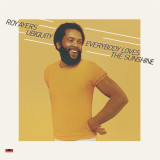
In "Everybody Loves the Sunshine" (1976), Roy Ayers seamlessly blends genres, creating a timeless sound that continues to influence musicians and DJs around the world. He makes the vibraphone the central instrument, a jazz-funk approach that defines his unique style. Over time, the album has remained an essential reference in Roy Ayers' discography and in the history of 70s Black music. Summertime soul classic! 180g vinyl.
In 1976, legendary musician and composer Roy Ayers released one of the most iconic albums of his career: "Everybody Loves the Sunshine." This album not only solidified Ayers as a key figure in the world of jazz-funk but also marked a milestone in soul music and contemporary jazz. It features a sophisticated blend of irresistible grooves, smooth melodies, and a unique sound that has endured over the years, becoming a reference for multiple generations of musicians and listeners.
By the mid-70s, Ayers had already established his reputation with his band, Roy Ayers Ubiquity, and his distinctive use of the vibraphone, which became his personal trademark. However, with this album, Ayers ventured into a smoother, more accessible sound, partly in response to the rise of disco music and the growing interest in more experimental sounds within the music scene. Throughout its ten tracks, Ayers managed to create a sonic atmosphere that evoked both the warmth of summer and the sophistication of jazz from that era, set against a backdrop of modern soul. The production was carried out by Ayers himself, along with his producer and friend, David R. Williams, and features the wonderful sound of Phillip Woo's Fender Rhodes and the powerful energy of the rest of the band, achieving an unmistakable authenticity and freshness. Some of its most well-known songs include the title track, ‘Everybody Loves the Sunshine,’ ‘The Golden Rod,’ and ‘The Third Eye,’ which quickly became classics of jazz-funk and soul. This album is crucial in Roy Ayers' career, as it demonstrates his ability to remain relevant and creative in an ever-changing music industry. Over the years, "Everybody Loves the Sunshine" has become a cult album, frequently featured in DJ sets by artists like Gilles Peterson, Theo Parrish, and Lefto. Summertime soul classic!
The Ottawa composer/performer and head of Black Bough Records plays every instrument on his CST debut: an accessibly avant-garde work of dark/ambient modern chamber music. Mark Molnar has been a linchpin of the Ottawa experimental music scene for over two decades, spanning contemporary classical, electroacoustic, industrial/noise, and improv. As a string player in a wide range of projects, an organizer and curator of innumerable shows, and via his own avantgarde label Black Bough Records, Molnar's unflagging contributions to independent music culture in Canada's capital city have been significant. EXO is his Constellation debut: a remarkable and bracing suite of post-classical composition on which Molnar plays every instrument. Meticulously self-recorded, primarily with strings, harp, and piano, EXO balances thematic melodicism, polytonality, and dissonance across three elegiac pieces of exquisitely expressive dynamism. This is exacting modern chamber music that blends formal and harmonic complexity with a solemn emotive sensibility accessible to a broad audience. Listeners that yearn for some edge and disquietude in a landscape of often all-too-approachable post-classical music should find EXO eminently worth their time and attention. While Molnar is a highly trained string player, and studied music under Aubrey Wolfe, microtonality with James Tenney, and composition with R. Murray Schafer, his trajectory has been entirely and intentionally outside the academy, signalling a socio-artistic commitment to DIY culture, forged from an early passion for the sonic worlds of post-hardcore, post-punk, no-wave, free improv, power electronics, and other independent/underground musics. His classically-informed works have been described as "tense currents of musical modernism invigorated with punk's raw vitality." EXO carries an undercurrent influenced by dark industrial and ambient metal in particular, with microphones purposely placed to pick up the low-end frequencies of the piano body, and of a bass drum positioned as a resonant skin in the acoustic space; an electroacoustic strategy organically meshed to the crisply defined and pristinely recorded pointillisms and polychords of strings, harp, and piano, which feed into this noisefloor of crepuscular sub-bass disquietude and decay. It's a production aesthetic that lends EXO a distinct undertow of tension and feeling, a sort of roiling maximalism where the chamber instrumentation traces arcs and waves of form and flow as if drawn from a dark, impervious ocean below. It also reinforces the profound hermeticism of Molnar's process, as a forbiddingly solitary creative act of immersion and navigation. The album artwork, featuring semiabstract stills of the sea by British photographer Ed Allen, further reifies this metaphor. The album's opening piece 'Sub Luna' (and its shortest at 8 minutes) showcases Molnar's adeptness at naturalistic and flowing complexity: tight cascades of climbing and descending chordal clusters hold their polytonal densities for various durations, yielding to more clarified harmonic suspensions and motifs, as melodic themes led primarily by violins in the higher registers provide a fractured lyricism. Molnar says: "the opening and closing figures of this piece act as opposing shorelines; the shorelines provide a reliable expression of range and key signature, and the tides come in and swallow them up, the motion of a body that addresses the relationship between states of lucidity and melodic figures." On 'Terre Sacer' everything happens in soupier waters, as a slow and doleful theme, anchored by grinding bass notes, circles in a gyre of dark resonances, until glistening strings gradually ascend to enrobe a plaintive and gently harrowing single-voiced ostinato over the composition's final third. Molnar's drone, ambient, minimalist, and goth-industrial influences are on display here. Side Two of EXO features the 18-minute multi-movement 'pallida Mors' (pale death): a waterfall of heterophony introduces dense chordal movements where strings are recorded and mixed to evoke pipe organ, in the album's most overtly dissonant and (anti)liturgical sequence. This gives way to ever more open and fragile spaces, before a resurgence of dark clusters and noise treatments introduces a final repeating piano coda, shrouded in devastated bass resonance, settling into what Molnar calls "a meditative hollow." Constellation is honoured to release this work by Mark Molnar, a longtime fellow-traveler whose selfless and boundlessly generous activities as an independent arts enabler sometimes obscure his own accomplished and uncompromising artistry. We trust EXO can help shed some much deserved light on this fine composer. Thanks for listening.
"Throughout all my time as a musician and producer, ever since Jack the Tab, I've been focused on developing a single idea: Blending psychedelic sounds and effects with rhythm." Richard Norris, Strange Things Are Happening White Rabbit 2024
Over the past few years Eskimo Recordings have invited some of the best crate diggers around to curate compilations that don't just reveal the hidden contents of their record bags but something about themselves too. Now, following in the footsteps of the likes of Bill Brewster and Psychemagik, producer, musician, DJ, writer and more, Richard Norris, takes us on a globetrotting psychedelic journey with the epic 42 track collection, Mr Norris Changes Brains.
For over forty years Richard has played a part in many of the UK's most important music subcultures. Whether sharing stages with the likes of Tracey Thorn as a pubescent punk in St. Albans, or running freakbeat nights in Liverpool and working at the pioneering psychedelic label Bam Caruso, co-producing the UK's first acid house inspired LP with Throbbing Gristle's Genesis P. Orridge or riding the wave of creativity that the second summer of love unleashed all the way to the Top of the Pop studios as The Grid, Richard's career has continually seen him work to expand both his own and the public's musical horizons.
With Mr Norris Changes Brains it's the most recent part of his mercurial career that he's focused on. Drawing inspiration from his post 2006 adventures as one half of Beyond the Wizard's Sleeve, alongside Trash's Erol Alkan, this compilation shows how a more connected world has blown the dust off a paradoxically sometimes straightjacketed scene. The result is a dizzyingly wide-ranging collection that explores the further out there reaches of worldwide psychedelia and dancefloor mayhem.
"A lot of these tracks are fairly recent discoveries, things that I've discovered from around the time I started working with Erol and going right up to today," Richard explains. "Whether that's from going out to play and finding new records in places like Istanbul or just connecting with people online from all around the world. Psych can sometimes be a sort of narrow-minded field, with everything having to sit in its specific niche, but more and more people are open to new sounds and that's allowed for a much broader selection."
Despite their disparate origins what does unite these tracks is that they aren't just there to zone out to on a bean bag as projections of swirling coloured oils and psychedelic patterns wash over you. Mr Norris may change brains but his DJ sets also move feet, and whether it's their killer guitar riffs, oscillating synths floor shaking drums or soulful Hammond organs these are all cuts that from festival tents to underground clubs have proven time and time again to get people dancing.
"With a lot of these tracks there's a kind of fun element in them," says Richard. "It's still psychedelia, but they've also got these solid, funky grooves. They sound phenomenal on the dancefloor and as much as these records might excite old psych heads, this compilation is also for a new generation out there who might have never heard anything like this before and, just like when I was 18 and heard The 13th Floor Elevators for the first time, think 'Oh, my God, what on earth is this and more importantly what else is out there?'"
out of Stock
Last delivered 16 months ago available to reorder, subject to availability
"Nilam" folgt auf das letztjährige Album "Daughter Of A Temple", das von Gilles Peterson zum BBC 6 Music "Album of the Year" gekürt wurde. The Guardian erklärte es ebenfalls zu einem der 10 besten Alben des Jahres 2024 und lobte GANAVYAs Fähigkeit, "die Kraft der gemeinschaftlichen Harmonie zu nutzen, um etwas Tieferes als den Gesang zu berühren". Wenn man sich das bemerkenswerte "Nilam" anhört, scheint es unwahrscheinlich, dass jemals Zweifel an seiner Entstehung bestanden haben könnten. Die Stille ist so erstaunlich, die Vermittlung von Gefühlen so tiefgreifend, dass man das Gefühl hat, dass es schon immer so gedacht war. Es ist eine Feier der Bande, die uns verbinden, und möglicherweise die zärtlichste Musik, die wir dieses Jahr hören werden. Sie ist intim und ehrlich, ein ergreifender Ausdruck der Dankbarkeit für die Segnungen, die uns auf dem Boden halten, wenn wir sie nur erkennen und willkommen heißen. In der Tat könnte es direkt von der Seele auf die Stereoanlage übertragen worden sein, von der Art und Weise, wie "Not A Burden" eine Last von den Schultern der Welt nimmt, bis hin zum friedlichen "Sees Fire", mit dem sanften Groove von "Land" voller Raum, dem heiteren "Nine Jeweled Prayer" und durchweg GANAVYAs Gesang wie Wellen in einer Lagune. New York-born, Tamil Nadu-raised singer and transdisciplinarian GANAVYA - "among modern music"s most compelling vocalists," according to the Wall Street Journal - has announced details of a new album, Nilam, due May 23, 2025. It follows last year"s Daughter Of A Temple, Gilles Peterson"s BBC 6 Music Album of the Year, similarly declared one of 2024"s Top 10 Best Global Albums by The Guardian, who applauded GANAVYA"s ability to harness "the power of communal harmony to touch something deeper than song." Co-produced by Nils Frahm at LEITER Studio in Berlin"s Funkhaus complex, the new album by "the singer whose work," says the New York Times, "feels like prayer...with listeners hanging onto her every word" will be released by LEITER on vinyl and via all digital platforms. Listening to the remarkable Nilam, it seems implausible now that its inception might ever have been in doubt. So astonishing is its stillness, so profound its communication of sentiment, it feels as if it was always meant to be. A celebration of the ties that bind, and possibly the most tender-hearted music we"ll hear this year, it"s intimate and honest, a poignant expression of gratitude for the blessings which keep us grounded, if only we"ll recognise and welcome them. Indeed, it could have been transmitted directly from soul to stereo, from the way "Not A Burden" lifts a weight off the world"s shoulders to the peaceful "Sees Fire", with "Land""s gentle groove full of space, "Nine Jeweled Prayer" serenely precious, and, throughout, GANAVYA"s vocals like ripples on a lagoon.
out of Stock
Last delivered 64 days ago available to reorder, subject to availability
Pierre Bastien and Michel Banabila return with Nuits Sans Nuit, their second collaboration following their Baba Soirée debut from 2023. Recorded as an intuitive exchange between Rotterdam and Valencia, the album emerged from a simple ping-pong process: Banabila sculpted sounds and atmospheres, to which Bastien responded with his distinctive instrumental palette: flute-augmented cornet, mechanised log drum, and more. Mixed by Banabila, the result is a raw yet immersive work that resonates with a somnambulant, wide-awake presence. Nuits Sans Nuit unfolds through shifting shades of melancholy. "I don"t know how to describe the feeling of these crazy times we live in," says Banabila. "Les plus désespérés sont les chants les plus beaux," Bastien quotes De Musset. Wordless yet deeply expressive, the album invites listeners into a space of contemplation, where meaning emerges through immersion - like ritual music carrying an unspoken message. Echoes of saudade, blues, fado, and soleá surface in the duo"s playful noise, reimagined through their singular vocabulary.
out of Stock
Last delivered 16 months ago available to reorder, subject to availability
Recorded in Kobe, Kyoto, Tokyo, September 2015 Photos by Jim O'Rourke. Layout by Shunichiro Okada Despite decades of activity and having crossed paths in various collaborations Editions Mego is honoured to release the first ever duo recording from two of the most highly regarded citizens of planet experimental electronic. Individually, Jim O'Rourke and Christian Fennesz have been responsible for numerous legendary works which merge the traditional avant-garde with contemporary sensibilities. On It's Hard For Me To Say I'm Sorry these giants of experimental electronic practice come together for an immensely powerful sonic experience. The signature of both O'Rourke and Fennesz cohabit this new release with O'Rourke's gurgling harmonies swimming amongst the shimmering frequencies and strummed melodies produced by Fennesz. Two side long tracks situate themselves as a warm electronic adventure. Simultaneously radical and comforting these works shift from gentle sonorities to fully distorted explosions all of which reside within a template of tension between musical and non-music matter. Timeless in execution and presentation It's Hard For Me To Say I'm Sorry is a deeply rewarding sonic experience from two of the most romantic gentlemen active in experimental music today.
Phonica Records welcomes Nuage back to its main label for release number 40: the 'Only You EP'.
The Armenia-based, Anjunadeep and 20:20 Vision affiliated producer has been busier than ever since his last Phonica outing (2022's 'Pink Television') with yet another 5 EPs and a 12th (!) LP under his belt in the meantime.
Needless to say, he's an extremely experienced producer, able to turn his hand to a multitude of styles, with this 'Only You' 12" showcasing another four tracks of his signature atmospheric melodic House.
out of Stock
Last delivered 84 days ago available to reorder, subject to availability
For years, whispers circulated through the jazz scenes of Denmark and Poland - rumours of a lost recording session featuring the legendary Polish trumpeter Tomasz Stanko and a group of Scandinavian and Polish musicians. Now, nearly a decade after the session and seven years after Stanko's passing, these long-awaited recordings are finally seeing the light of day. The project originated at Vallekilde Højskole in Denmark, where Stanko was invited to teach at JazzDanmark's annual Summer Session. A storied program that has hosted luminaries including Bill Frisell and Anat Cohen, the summer school became the birthplace of this unexpected ensemble. Here, alongside a dynamic ensemble of young musicians, Stanko found renewed inspiration, embracing their compositions as much as his own - a rare occurrence for an artist known for leading his own groups. Scandinavian Art Ensemble with Tomasz Stanko is the result: two albums of expansive, deeply expressive music that merge the melancholic depth of Polish jazz with the spacious, atmospheric qualities of the Scandinavian sound. As trumpeter Tomasz Dabrowski recalls, Stanko wasn't just a mentor - he was an equal, driven by curiosity and the desire to push boundaries. "He wanted to play our music. He was always listening, always searching." Across these two albums recorded at The Village Recordings in 2016, listeners will hear Stanko's unmistakable tone interwoven with compositions by both himself and the ensemble members. Pieces like 'The Dark Eyes of Martha Hirsch' and 'Before the Rain' showcase not just his signature lyricism, but also his willingness to step back, listen, and let the younger generation shape the sound. Beyond his unmistakable sound, Stanko's influence was about energy - his presence elevated those around him. Bassist Richard Andersson put it simply: "He brings together the energies, and makes us all play better than usual." This project captures that essence: a legendary artist meeting the next generation on equal footing, creating something entirely unexpected. A decade after the session, the members of the Scandinavian Art Ensemble have forged their own paths, shaping the jazz landscapes of Copenhagen, Malmö, Reykjavik, and beyond. But the impact of their time with Stanko remains profound. "Releasing these albums is about more than just the music," D?browski says. "It's about preserving the spirit of Stanko - his generosity, his curiosity, his way of bringing people together. Even after all these years, his presence can still be felt in every note we played."
out of Stock
Last delivered 8 months ago available to reorder, subject to availability
Zaimie, the exciting musical collective based in Glasgow & London, UK, is set to release their highly anticipated 2nd album, "Black Velvet," set to drop on May 23rd, 2025.
Following the success of their acclaimed single 'Feel The Rush', Zaimie's new album, "Black Velvet," sees the collective delving deeper into their signature sound. The album weaves together a rich tapestry of Jazz, Funk, Soul, and global influences, promising a sophisticated and immersive listening experience that showcases the band's exceptional musicianship and songwriting. From infectious grooves to soulful melodies, "Black Velvet" is a testament to Zaimie's artistic evolution and their commitment to creating music that resonates on both a visceral and emotional level.
out of Stock
Last delivered 12 months ago available to reorder, subject to availability
Crash! Boom! Bang! 30-year anniversary celebrated with a unique special edition: a double album in black and white vinyl with 18 tracks and an 8-page booklet.
30 years ago, Roxette released their fifth album "Crash! Boom! Bang!", including a stream of hit singles like "Sleeping In My Car", the title track, "Fireworks", "Run To You" and "Vulnerable". The album would sell more than five million copies and was followed by their second World Tour, which saw them perform for over a million people, including the second performance ever by an international act in China.
“Roxette were among the three most played artists on American radio during 1989, 1990 and 1991, and we were on top of the charts all over the world. So, it's no wonder we felt pretty confident when it was time to record the new album”, Per Gessle says. “Having had that kind of success made us feel that we had a perfect opportunity to stretch out into new directions. To show slightly different sides of what Roxette could be. And I still think "Crash! Boom! Bang" is our best album”. Crash! Boom! Bang! saw chart success upon release, No. 1 in Sweden, No. 2 in Germany and No. 3 in Australia and the UK.
Roxette – Marie Fredriksson and Per Gessle – came out of Sweden in the late 80’s. Their game was pop, their mission to conquer the world. With 33 chart-busting singles and total record sales exceeding 75 million, it seems safe to say “mission accomplished”.
out of Stock
Last delivered 15 months ago available to reorder, subject to availability
Mastered by Matthew Lutthans at The Mastering Lab from flat copies of the original U.K. and U.S. analogue master tapes Third studio album featured advanced studio recording techniques Featuring original U.S. tracklisting with bonus track "Alive And Well And Living In" from U.K. release Plated and pressed at Quality Record Pressings Gatefold old-style tip-on jacket by Stoughton Printing Jethro Tull's 1970 classic Benefit was their third studio album in as many years, following the successes of This Was (1968) and Stand Up (1969). For Benefit, Ian Anderson (flute, guitars, vocals), Martin Barre (guitars), Glenn Cornick (bass), and Clive Bunker (drums) were joined by John Evan on piano and organ.
Evan would go on to play on all of Jethro Tull's albums throughout the '70s. It was also the last to include Cornick, who was fired from the band upon completion of touring for the album. Recorded at Morgan Studios, where the band recorded Stand Up, the album featured more advanced studio techniques, such as a backward-recorded flute on "With You There To Help Me" and a sped-up guitar on "Play In Time." Frontman Ian Anderson said Evan had changed the band's style: "John has added a new dimension musically and I can write more freely now.
In fact anything is possible with him at the keyboard." Compared to Stand Up, although containing a similar mix of bluesy hard-rockers and melodic acoustic numbers, Benefit had, as Ian Anderson put it, a "harder, slightly darker feel" compared to previous material. The eclectic fusion of folk, rock, and progressive elements creates a sonic tapestry unlike any other. Anderson's virtuosic flute playing intertwines with Barre's electrifying guitar work, weaving intricate melodies that transport listeners to a world of introspection and imagination. From the hauntingly beautiful "With You There to Help Me" to the whimsical energy of "To Cry You a Song," each track invites exploration of both the inner self and the world beyond.
This Analogue Productions 45 RPM release, plated and pressed at Quality Record Pressings, gives this historic album the rich sonic presentation it deserves. The dead-quiet double-LP, with the music spread over four sides of vinyl, reduces distortion and high frequency loss as the wider-spaced grooves let your stereo cartridge track more accurately. Benefit stands as a testament to Jethro Tull's pioneering spirit, pushing the boundaries of musical expression and leaving an indelible mark on the landscape of rock music. This reissue is clean, balanced and richly detailed, the way an Analogue Productions reissue should sound.
Mia Zapata was the greatest rock singer of her time. She may have likely been the greatest blues singer in punk rock history, the woman who married the 78 and the '78. Tragedy did not make this true. Mia Zapata made this true, and the ferocious, spring-loaded shrapnel frame that was built around her by Andy Kessler (guitar: metronomic and furious), Matt Dresdner (bass: fluid, punching, beat-addicted and melodic), and Steve Moriarty (drums: martial and explosive) - who, with Mia, combined to form The Gits - made it true. The Gits were formed at Antioch College in Yellow Springs, Ohio in mid-1986, grabbing and swapping pieces of art, thrash, noise, punk rock, classic rock, and all the sorts of magical silly and bookish jingle bells that an old-school liberal arts education handed you; for the next few years they worked on turning it all into something tough, sensitive, both brutal and kind. Andy, Matt, Mia, and Steve moved to Seattle in middish 1989, landing in a house on Capitol Hill where they (and fellow travelers) wood-shedded and rehearsed for the next few years. The Gits put out three EPs in 1990 and '91 before signing with C/Z Records and releasing their first full-length album, Frenching the Bully. Seattle quickly claimed the quartet as their own and embraced the Gits blend of ferocious fangs and soft heart, the slug/slap of the guitars, and the gorgeous, soft underbelly of the poetic emotions. These qualities not only fit in with the doe-eyed/sharp-clawed grunge ethos but earned the Gits the respect of their peers, including Nirvana, who tapped them to open a major local show in 1990. Then other stuff happened, and their frantic, confessional barbed-heart snowball began rolling up hill very, very fast; the Gits "quickly" (hah! After half a decade learning to implode and explode hearts and stomping their boots on manifold beer-softened, Marlboro-weeded wood stages!) inspired rapture, awe, and the levitation that happened when peak emotion meets peak grindage in front of amps spitting out something that sounded like the mad marriage of Bolan swagger and Dischord tension_ all fronted by a genuinely incomparable woman who held her heart in her mouth and shared it, in all its celebration and fear, without hesitation. The Gits were an angry, inflamed slinky fully in tune with and tuned by the Bessie Patti Smith of her time, truly the only singer who could summon Joplin, Poly Styrene, Sam Cooke, Iggy Pop and Ian MacKaye all in the same goddamn song. In 1993, less than four weeks after accepting an offer from Atlantic Records, Mia died. I leave it at that, because this is not about death; it's about an extraordinary life. I do not say, "You should have been there," I say, "We are lucky so many of us were, and I am so glad we have this extraordinary evidence of the power and gifts of Mia and the Gits that you now can hold in your hands." And I note that Frenching the Bully, this extraordinary testament to the soul, shock, fury and feeling of the Gits, has been long out of print on vinyl and CD, and this new edition - remastered by legendary Seattle engineer Jack Endino - joyfully rectifies that. -Tim Sommer
For the first time ever available in record stores, the redesign recalls the mysterious, multi-layered sound of Flashy Python's Skin And Bones. The hidden covers revealed by die-cut and semi-transparency as well as translucent rouge vinyl pay tribute to the haunting yet playful spirit of an album that could (and should) have been another CYHSY record. The limited deluxe reissue is being released in the wake of the 20th anniversary of Clap Your Hands Say Yeah, the classic self- titled debut album, and its celebratory 2025 worldwide tour.