The studies with Goffredo Petrassi and the association with Gruppo di Improvvisazione Nuova Consonanza let the Avant-garde playing an important role in the career of Ennio Morricone,
who wrote many contemporary pieces for himself, but then the author composed soundtracks where dissonance played a major role.
For the Italian edition of the film SPACE: 1999 (1975), the cult British TV series, he composed a very neurotic Jazz with muted horns.
Also for the science-fiction film THE HUMANOID (1979) Ennio Morricone created hallucinating strings scores mixed with electronic effects. For SACCO E VANZETTI (1971)
an electronic score by Walter Bianchi evokes all the drama of the undeserved death sentence of the two protagonists.
Experimental music of great impact in the film and off the screen for famous thrillers such as THE DEATH DEALER (1974), SHORT NIGHT OF GLASS DOLLS (1971).
Avant-garde music has always been present in Elio Petri’s films set to music by Morricone such as PROPERTY IS NO LONGER A THEFT (1973).
Avant-garde music in the noir cinema of VIOLENT CITY (1970) and A PURE FORMAL- ITY (1994) and in auteur films such as GARDEN OF DELIGHTS (1967) and SARAH’S LAST MAN (1972).
“I’ve been wanting to make a record like this for a long time. The band, Franny and I produced it ourselves in my living room with no adults present. It’s all acoustic, not an electric lick on the album…banjos and mandos and string basses and stripped-down drums. I put a ton of work into the tunes and I’m pretty proud of this batch. Had a little help from my old co-writing pal Jaida Dreyer on a couple, also wrote a good one with my screenwriter buddy, Brian Koppelman. Lots of gambling songs and lots of minor keys. And my band guys absolutely killed it too, they’re all badasses. I’m dedicating the record to my old compadre, Ian Tyson, who passed away a few months back. I’ve named the album for him as well. ‘El Viejo’, or ‘the old one’ is what our mutual friend Tom Russell took to calling him in later years. The title track is a pretty special one for us. We had a blast making this thing, and we hope you enjoy it too.” - Corb Lund
'And Also The Trees' compelling new album, 'Mother-of-Pearl Moon', was born from a series of extraordinary electric guitar improvisations created by guitarist Justin Jones in the pre- and postdawn hours during a month of solitude in 2020. Each piece then developed in its own way - the guitar, often left in its raw, unaltered form, is accompanied by the voice of his brother Simon, bringing imagery and narrative, Colin Ozanne's clarinet and piano adding poise, colour and harmony, Paul Hill's percussion creating depth_ on occasion an autoharp, a Moog_ all leading the listener from the depths of the English countryside far out in all directions of the compass. The music is often filmic, reminiscent of various film genres from the '50s to the '70s. This is most apparent in 'This path through the meadow', a song that explores the intertwining of human nature and nature in its animal and botanic form, and in its video where the band appear to be performing to an imaginary screening. Elsewhere, the album title track transports the listener across the oceans to the Far East...and to its exotic gardens, still waters and the 'Mother-of-pearl moon'. And Also The Trees (AATT) formed during the original post-punk era in rural Worcestershire, an environment that has provided a constant inspiration to a group whose music has often explored the dark underbelly as well as the beauty of the British countryside. They are renowned for their captivating live performances, a unique style of mandolin-like electric guitar, evocative lyrics and dark jazz rhythms - not to mention a creative independence fiercely preserved for over four decades. Founded by singer Simon Jones and his guitarist brother Justin, AATT have maintained a continuous presence on the post-punk, alternative rock and Gothic scenes worldwide. They have released fifteen studio albums.
Before releasing their lone self-titled debut album, one of the most rare rock records to be released in Europe in the 1970s, Paternoster provided the soundtrack for a film that could only have been made while the psychedelic movement was still in its first wave. The group’s first recordings presented here are the soundtrack for Herbert Holbaís 1971 hippie sci-fi film Die Ersten Tage (The First Days), screened at the Berlin International Film Festival, and interestingly played on Austrian TV in August of that year. The material issued here is the genesis of Paternoster and set the stage for the release of one of the world’s great rock albums with their self-titled debut the following year. The music has been painstakingly transferred directly from master tapes.
This is a drug record, but not in the way you might think. Chances are, if you’re reading this you’re burnt out. You’re tired, you’re stressed, you’re working. You’re surviving. So what do we do? We consume. Turning to screens, alcohol, substances and transactional relationships for a quick fix of dopamine, a little endorphin rush, a sharp boost of oxytocin. As we move along, our tolerance for all of these things rises, and our capacity to operate without them falls. We block up our neurotransmitters, and need more and more hits just to function and feel human. Put simply, it’s addiction. It’s ruining our brains, taking over our lives, but it’s all so… gratifying. Set in a not-too-distant and - crucially - not-at-all-unrealistic future, Normandie’s fourth album, ‘Dopamine’ finds the band asking and answering two unsettling questions: what if we pushed our brains and bodies far beyond their limits? And what if we already are? “The whole album is about the chase for different highs and natural chemicals: oxytocin, serotonin, dopamine, endorphins, adrenaline…” starts frontman Philip Strand. “What if dopamine had to be clinically provided because we've burned through our receptors?” “Making this album futuristic and dystopian came very naturally when we started discussing the current state of the world. We’re all on overdrive. We’re upping the stakes all the time, and everybody has a higher tolerance now for stress in a way that nobody saw coming,” he explains.
Pink & Green Pinwheel Vinyl. Celebrate the 10 Year Anniversary of Pity Sex' breakthrough debut full-length record Feast of Love with this commemorative anniversary edition LP. This reissue features the album in full along with three bonus tracks: 'Euclid,' 'Acid Reflux' and a cover of Pixies' classic 'Gigantic.' The anniversary edition also features a gatefold jacket previously unavailable in the United States and an updated lyric sheet.Walking the razor's edge between overdriven navel gazing bliss and perfect pop sensibility, Ann Arbor's Pity Sex have crafted a breathtaking debut LP in 'Feast of Love' that's both awesomely beautiful and deftly evocative. Massive, harmonically distorted guitars and airy dual male/female vocals are hallmarks of Feast of Love, all drenched in warm, dreamy reverb. Most impressive however, is how the band utilizes pop conventions - both vocal and instrumental melody, and a strong and pounding rhythm section - while delving deep into the ethereal power of textured soundscapes. Guitars fuzz and flange, weaving between distinct, identifiable parts and simple brushes of colored noise. The voices similarly drift between carrying delicate melodies and delivering evocative feeling. Calling on the infectious, hooky inclinations of the Pixies, dreary melodies of the Breeders and sonic mass of My Bloody Valentine, Pity Sex's Feast of Love twists and churns with these beautiful yet fleeting vignettes captured in sound.
Georgia Claire Flipo, known professionally as G Flip and informally referred to as G, is an Australian singer, songwriter, producer, drummer, and musician from Melbourne, Victoria. 'Originally a session drummer by trade, their music starts from the drums up. Lyrically, G Flip writes of relationships, heartbreak, and acceptance. Authentic, relatable, and always energetic, G Flip is a bonafide powerhouse. “When I was searching for an idol as a kid I couldn’t find someone that resonated with me. All the females on the screen were sexy or sexualised. I struggled with my sexual identity and gender identity for years and years because there wasn’t representation for me when I was younger. “The singer, songwriter and drummers second album is a booming, big-hearted record guided by raw feeling and the instrument that started it all for them…. What’s most striking about ‘DRUMMER’ is how Flipo wields the sheer visceral power of drumming”. – NME.
FOLLOWING THEIR RECENT REUNION, THE DELGADOS REISSUE THEIR FOURTH STUDIO ALBUM HATE ON COLOURED VINYL AND CD TO MARK ITS 21st ANNIVERSARY
Ushering in a new era of emotionally vulnerable and cinematic songwriting for celebrated Glasgow group The Delgados, 2002’s Hate is the group’s most ambitious recorded statement to date. Recorded amidst a backdrop of personal change and international crisis, Hate’s internal alchemy transmogrifies darkness into light. It’s an enclosed universe full of tragedy and magic, a swirling galaxy of lush orchestration, misanthropy dealt with kindness and black humour. Above all it showed a band coming to terms with their fragility with a new power and grace.
In Hate, the band’s ambition saw them striving to reflect the breadth of human experience, both the joy and tragedy of living in tumultuous times. Initially commissioned by The Barbican in London to compose music for a film about artist Joe Coleman, the instrumental music that instigated Hate was laden with darkness from the outset. The Delgados’ worldview has always been informed by nuance, an oblique but incisive lyrical perspective but on Hate a new rawness is woven throughout the songs. Coleman’s original subject matter - portraits of troubled historical figures like Ed Gein, Mary Bell and Jayne Mansfield - influenced the tonality of the music but the songs were written against a backdrop of international tumult and personal life changes for the band members. Beginning writing sessions following a family bereavement in drummer Paul Savage’s family, Hate was then recorded while both Alun Woodward and co-singer/guitarist Emma Pollock were expecting new additions to their young families, the latter with drummer Paul Savage. In the background to the recording process were the attacks on the World Trade Center of September 2001 and their aftermath. In this context, it’s remarkable that an album was made at all, let alone one so grand and compassionate. It’s a masterclass in restraint and imagination.
Hate sounds like the world in all its ugly glory. Recorded in Glasgow and New York with Tony Doogan, Dave Fridmann and the band as producers and using over 20 additional musicians, Hate grabs the baton from the group’s breakthrough critical and commercial success The Great Eastern. Bolder, broader and more all-encompassing than anything the band had previously attempted, the album’s palette is furnished by a string section, brass and reed instrumentation, a choir and electronic elements augmenting the core group of Emma Pollock, Alun Woodward, Paul Savage and Stewart Henderson. Far from being over the top, the group’s skill is in attention to detail, in honing and refining each arrangement, allowing each element its space.
It’s a fine balancing act that pays massive dividends. Woodward’s new lyrical vulnerability is spotlighted on tracks like The Drowning Years, which throws elegiac string arrangements against the narrative of characters living in darkness, punctuated by couplets that bring a real-life documentary feel to the narrative. All Rise brings a black comedy to the idea of a confessional before a transcendent, choir-led refrain brings ecstatic resolution to Woodward’s vocal in its highest register. On the single All You Need Is Hate, Woodward’s trick of subverting the Beatles standard showcases the dark humour at the centre of Hate. Here The Delgados’ perversity is in full flow, nurturing a glowing light from darkness, the resolving melody and Fridmann production recalling contemporaries The Flaming Lips (whose Michael Ivins assisted in mixing) or Mercury Rev. The perversity is the surging serotonin induced by the group while singing the lines “Hate is everywhere, inside your mother’s heart and you will find it there. You ask me what you need? Hate is all you need.”
It’s a dark magic that pervades Hate, indeed it’s almost the driving force throughout the album. Flipping minor to major and back again, Favours is fuelled by fear and violence before blasting into the heavens with the gauche line “and you’re feeling fine,” operating in stark contrast to the verses’ tone. Album opener The Light Before We Land finds Emma Pollock in the aftermath of recent family trauma. Her vocal is effortless; a study in steady restraint against the massive, Fridmann-patented drum sound powering Savage’s playing and Henderson’s instantly recognisable melodic basslines. Coming In from the Cold is Pollock in full flight, lifted to the heavens by wide-screen, instrumental texture. Her presence on Hate highlights her knack for lyrical impressionism, the timbre of her voice lending itself to drama while always retaining a mystique. Never Look At The Sun, inspired by the Coleman painting The Big Bang Theory (itself an explosives-themed study), revels in paranoia, her performance ringing out in the eye of the storm conjured by the swirling arrangements. It reaches the peak of a redemptive arc while seemingly parodying the very idea of redemption.
Hate was the sound of The Delgados completely fulfilling their potential, a fully realised vision buoyed by the weight of coming through a darkness into light. For its 21st anniversary, the album is being reissued on the band’s own Chemikal Underground on coloured vinyl and CD. Hate is all you need
Contradictory accounts of Miles Davis’ creation of the soundtrack to Louis Malle’s film noir Ascenseur pour l'Échafaud have all become part of its legend. Rarely has a soundtrack been so decisive. Nearly seventy years on, beyond the myth, this taut, feverish recording, imbued with extreme dramatic tension, remains one of the Miles’ finest records. The basic outline remains: Jean-Paul Rappeneau suggested to Malle asking Miles Davis to create the film's soundtrack who agreed to record the music after attending a private screening. Davis was performing at the Club Saint-Germain in Paris in November 1957 and on December 4, he brought his four sidemen to the recording studio without having had them prepare anything. Davis only gave the musicians a few rudimentary harmonic sequences he had assembled in his hotel room, and, once the plot was explained, the band improvised without any precomposed theme, while edited loops of the musically relevant film sequences were projected in the background. Bassist Pierre Michelot recalled in 1988 that “Miles just asked us to play two chords, D minor and C7, 4 bars of each, ad lib.” Typically, Miles planned very little but know exactly what he wanted. François Leterrier, the film’s Second Assistant Director picks up the story: “The session started at around ten o’clock and went on until dawn. The screen in the auditorium was showing the scenes for which Miles had devised some harmonies, and they were edited into a loop. And that’s what makes this music unique: it was entirely improvised in conditions that went back to the days of silent films, while watching frames shot in black and white by cinematographer Henri Decaë: tracking shots of Jeanne Moreau wandering down the Champs-Elysées at night, passing in front of lit window displays or going into bars, while looking for her lover/murderer alias Maurice Ronet … All of us there in the dark auditorium were aware that something extraordinary was taking place, something that had definitely never happened before. … In the small hours we all met up again at the Pied de Cochon in Les Halles, and Louis was looking at Miles with the disbelieving eyes of a child … as if he couldn’t believe the gift he’d just received. Even in his wildest dreams he had probably never imagined what his film would be like once it had been as if illuminated by the trumpet of Miles, incisive or wrapped softly in cotton.” The music was released on 10” by Fontana and received the Grand Prix from France’s Académie Charles Cros. It was released in the USA on Columbia as the A-side of the 12” LP Jazz Track, which received a 1960 Grammy nomination for Best Jazz Performance, Solo or Small Group. This beautiful re-issue of the original recording is pressed on 180g vinyl at GZ, and packaged in a deluxe gatefold tip-on jacket with Boris Vian’s original liner notes and Jean-Pierre Leloir’s iconic studio photo of Miles and Jeanne Moreau, and an essay on the circumstances that led to this out-of-the ordinary music by Franck Bergerot.
Two sublime unreleased scores from Basil Kirchin. Need we say more.
So here we are. The next Trunk / Kirchin assignment. Basically some more unreleased music from the unpredictable and slightly chaotic Kirchin Tape Archive.
Very Limited Black Vinyl.
These tapes were labelled up as follows:
Assignment K (with lots of pencil scribbles everywhere). The Strange Affair (with lots of pen scribbles everywhere).
As usual with Basil tapes / things there is little else to go on, no tracklist, no list of musicians, no singer names, no dates or anything. I have actually tried to establish the name of the singer on the song from Side One (we have called it “Love Is To Walk Away “ as it is unnamed) but having played it to a handful of knowledgeable collectors and enthusiasts who I would count as experts in this field, no one has a clue who it might be. If you think you know please get in touch. We know who it isn’t.
We can tell you that Assignment K dates from 1968, was a film about a toy maker who has a double life as an international spy. It was directed by Val Guest, who’d just finished trying to rescue the cinematic hotchpotch that was Casino Royale - he had been brought in by the Bond producers after Peter Sellers had walked off the movie. We imagine Assignment K may have been a slightly less stressful few months of shooting. As for the Kirchin score that we have here, we can tell you very little indeed, apart from the fact that the bass player was Ron Prentice (an ex blacksmith turned musician and craftsman) who worked on several Bond scores, but we know little else. And we only know this because it says so in the academic tome “Jazz On The Screen” by David Meeker.
The Strange Affair is also from 1968, and was not only controversial but also a reasonably unsuccessful movie. Directed by David Greene who also directed, amongst other films, I Start Counting and the quite brilliant Sebastian. In this rather grubby flick a policeman called Peter Strange (played by Michael York) falls for an underage girl (played by Susan George), finds himself compromised by a pair of pornographers and gets lured into an errand for a smack gang. We can tell you little else because I have no more information about it all.
But we do know that this music has all the classic Kirchin mid-period sonic hallmarks that have always set him apart.
The new album The Commune Of Nightmares by noise artist David Wallraf is a tapeloop-based musical game of cadavre exquis, a technique developed by surrealist artists.
David Wallraf is a noise artist and theorist living in Hamburg. His artistic work deals with the repressed and uncanny sonic residues of quotidian life, crafting soundtracks for the creeping disaster we inhabit. His works have been released on numerous international tape labels. A recent interest of his is the live scoring of silent films, including works by Luis Buñuel, Maya Deren and Jean Genet. His PhD thesis Grenzen des Hörens. Noise und die Akustik des Politischen (Limits of Hearing.Noise and the Acoustics of the Political) has been published in German, an English translation is in progress.
The Commune of Nightmares stems from the idea that nightmares are the logical reverse of 'capitalist realism': an uncanny undercurrent of daily experiences and an algorithmic haunting of dreams that at the same time is a shared – communal – experience of everybody. All songs are based on tapeloops that were cut arbitrarily from a stash of cassettes, some of which found on the street, others from a stockpile of 4 track tapes recorded in the late 90s and early 2000s – a musical game of cadavre exquis played with random strangers and former versions of DW.
Credits:
All music composed and recorded by David Wallraf in Hamburg-Wilhelmsburg, first half of 2023
Sdban Records, the renowned independent groove & jazz label behind Funky Chicken, Hip Holland Hip, and Discophilia Belgica, is thrilled to announce the upcoming release of its latest compilation album, "The Belgian Soundtrack: A Musical Connection of Belgium with Cinema." Packed with the finest soundtracks boasting an unmistakable Belgian connection, this compilation takes listeners on a captivating journey through a collection of cinematic hidden gems from the early sixties to the late seventies.
Curated by the passionate duo Robin Broos and Tom 'Pélé' Peeters, known for their profound appreciation of obscure soundtracks, "The Belgian Soundtrack" showcases the exceptional talents of both local and internationally acclaimed composers and musicians. From obscure finds composed by lesser-known artists to Hollywood scores performed by world-renowned musicians, this compilation offers a vibrant blend of tracks, including the occasional contribution from renowned international artists who have lent their musical prowess to Belgian films.
"The Belgian Soundtrack" came into being as a serendipitous adventure. Former film journalist Jan Temmerman reached out to us one day, offering a treasure trove of vintage soundtrack albums discovered in his attic," recounts Robin Broos. "With 650 long players, mostly unheard of titles, we embarked on an extraordinary quest-to listen to every single one of them, totaling a staggering 29,250 minutes. It was like watching the original Star Wars trilogy 78 times!"
What started as a quest soon evolved into an intriguing investigation fueled by curiosity. Along the way, Broos and Peeters unearthed dozens of treasures, delved into the backgrounds of obscure composers and musicians, and witnessed an array of enigmatic films. "We encountered an abundance of (un)necessary nudity that we never could have imagined existed," Tom Peeters laughs. The outcome of their explorations is "The Belgian Soundtrack," a meticulously curated collection of funky, melodic, and uplifting tracks, each crafted exclusively for the silver screen and boasting an unexpected Belgian connection.
out of Stock
Last delivered 2 years ago available to reorder, subject to availability
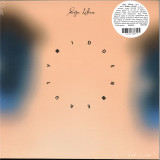
Sign Libra's third album Hidden Beauty is an intimate voyage through feminine nature, guided by the arts of subtext, musical collage, and mysterious allusions. Elegantly arranged, enigmatic, and mischievous, Hidden Beauty seeks to "release the invisible and bring fragility to the surface." From the rainforests of Closer to the Equator (Sounds of the Dawn, 2016 / Antinote, 2018) to the surreal lunar landscape of Sea to Sea (RVNG Intl., 2020), Agata Melnikova, the Latvian musician behind the Sign Libra symbol, has developed a signature blend of evocative composition with lyricless, ethereal vocalizing. Hidden Beauty attends to a closer space than her first two albums, a playfully layered pastiche of refined references, drawing musical inspiration from the assortment of Erik Satie, the early work of Mylène Farmer and Laurent Boutonnat, and 90s R&B. The first inklings of Hidden Beauty arrived in 2019, with the basic contours of the album sculpted in 2020 and early 2021. Like Sea to Sea, Hidden Beauty was invented as a solitary creative effort, but this time under uniquely hermetic impositions. Tethered to the world only by screen, the artist sought inspiration from an unlikely array of activities: new, unorthodox approaches at composing, learning French, a virtual pedagogical practice, and plenty of jubilant dancing in her flat, sunglasses on, to 90s dance music. Hidden Beauty moves inward from the distant spaciousness of Sea to Sea in favor of a "chamber-like" sound, reflecting the intimate environs of its creation. Balancing the New Age balletic resonance of Closer to the Equator and the cosmic-dancerly tracks of Sea to Sea, Hidden Beauty combines deft, postmodern arrangements with popular, contemporary suggestions. The reverb drenching her previous recordings is sponged up in the songs of Hidden Beauty, giving the exercises contained within a feeling of presence, and closeness. And always Agata's crystalline vocal furnishings, less a lead vocal than a first instrument, the ever-returning counterpoint in a beatific swirl. The other hidden elements of this work are plenty, and perhaps best left concealed for the listener's enjoyment. Or perhaps they are hidden in plain sight and sound, depending on what the puzzle pieces reveal to your imagination. Sign Libra's Hidden Beauty will be released in vinyl, Japanese import CD, and digital editions on November 3, 2023. A portion of the proceeds from this release will benefit Coral Guardian, a non-governmental organization working internationally and with local communities to protect coral ecosystems.
out of Stock
Last delivered 2 years ago available to reorder, subject to availability
“I wrote these six new pieces with simple French words that a student learning French can understand. It is always intended for fanciful dances and musical fantasies” - Bernard Fevre
Legendary Parisian disco pioneer and producer, Black Devil Disco Club is back and has announced the release of a new album via UK independent imprint Lo Recordings on the 1st December.
‘Etincelles’, which translates as ‘sparks’ in English, is the follow up to 2020’s ‘Lucifer Is A Flower’ and will be digitally available and released on limited edition coloured vinyl wrapped in screen printed sleeves with lazer cut triangles designed by the award winning Non Format team. A truly future perfect and infectious collection of electronic sounds and beats, the new album features six brand new tracks including the lead single ‘L Mer Sur L’enfer’ which was inspired by Salvador Dali and will be available from the 3rd of November.
With a story as deep and strange as the music itself, Black Devil is the alter ego of Bernard Fevre, a French composer of electronic library music with a highly sought after back catalogue that includes the magnificent ‘Strange World Of Bernard Fevre’.
Having grown up and worked in Paris, it was the African clubs and rhythms in the city that inspired him to make his celebrated debut album ‘Black Devil Disco Club’ with only a small arsenal of electronic keyboards, a vocoder and looped conga drums. One of the most enigmatic electronic masterpieces ever made, the record was so ahead of it’s time that no one could believe it was made in 1977 on it’s release in ‘78. When it was re- issued in 2004 on the Rephlex label many thought it was a hoax and that the music was made by Aphex Twin or Luke Vibert but when Lo Recordings put out the ‘28 After’ album in 2006, the truth was finally revealed.
out of Stock
Last delivered 2 years ago available to reorder, subject to availability
There are two versions of the vinyl - classic black and triple-color limited Indie Shop edition.
Both have special insert inside with the bands bio and photos.
Generacja JAZZ is a project showing a fragment of the new wave of Polish jazz, treading its own path, creating, touring and jamming across Europe. Borders don't exist - especially musical - the new generation is engaging with nightclubs, festivals and playlists. The time has now come to show its broader perspective. We created a project which involves a handful of groups that have already racked up debut albums and festival wins, as they set out on their musical odyssey. The groups also have other things in common, like their passion, originality and, for the needs of the project, age - all the artists during the recording of this album were under 30 years old. This is the new generation - the Jazz Generation.
For the Jazz Generation record we invited five bands who had already released debut albums: Immortal Onion, Klawo, Rejoin, Twoosty Mayonez and USO 9001. We also reserved two spots on the compilation for the winners of our open call competition, whereby on the basis of the jury's choice (jury: Monika Borzym, Paulina Przybysz, Envee, Wojtek Mazolewski i Marcin Groh Grośkiewicz) we met the winning bands: Kosmos and quietet.
The sleeve artist is Kornelia Nowak, who won our open call for young designers and graphic artists. Here once again we could rely on the opinion of a prestigious jury comprised of: Beata Śliwińska Barrakuz, Bovska, Maciej Animisiewasz Grochot, Grzegorz Forin Piwnicki i Marcin Groh Grośkiewicz.
Generacja JAZZ LP is also a start of the new imprint - U JAZZ ME, which will be focused on jazz from Poland.
And here are the bands from the album:
1. Immortal Onion - A band from the Tri-City playing a broad spectrum of instrumental music.
The band Immortal Onion has already established itself as one of the most interesting projects of the new wave of Polish jazz, and is consistently being labelled as such abroad. After two well received albums ("Ocelot of Salvation" (2017) and"XD Experience Design" (2020) U Know Me Records) they released their third album "Screens" in 2022, which was recorded with the well known Tri-City composer and saxophonist - Michał Jan Ciesielski.
The inspiration behind the band's formation were such artists as: Esbjörn Svensson, Hiromi Uehara, Tigran Hamasyan and Tosin Abasi.
The group's guiding principle from the very beginning was the fusion of often disparate musical styles, which bore "post instrumental aggressive gay pop". Despite the stylistic discrepancies, between which they swim, the group has forged its own identifiable language, characterised by complicated rhythmical structures, energetic riffs and trance beats with lyrical melodies.
The trio has performed its original material at many venues and festivals around Europe and Asia.
2. Klawo - seven adventurous adventurers from Gdańsk, who were brought together by their love for music, halvah and throwing Frisbee. Their self-named début album, released in 2022 on the local label Coastline Northern Cuts, is an amalgam of the inspirations of each of the team members and played backwards contains tips on how to reach the Kashubian pyramids. After a win at the international competition Jazz in the Park, held in Cluj-Napoca in Romania, the band began work on their second album. Meanwhile, they were also travelling the length and breadth of Poland on a mission to infect people with the idea of Baltic Funk.
3. Kosmos is a Łódż based jazz quintet. It was formed in 2020 by Pianist Stanisław Szmigero, Saxophonist Iwo Tylman and Trumpeter Jan Ostalski. However, it wasn't until 2022 that Kosmos found its true form when Kamil Gużniczak (Upright bass) and Kacper Kuta (Percussion) joined the line-up.
Their compositions are influenced by Polish yass bands, electronic music and hip-hop. Kosmos music is a mix of lyricism, space, intensity and elements of experiment.
The band members are all eccentric characters possessing different means of musical expression - looking at them, one could even argue they are a group of oddballs. Despite this, for reasons unbeknownst to themselves, the members of Kosmos complement each other on stage and form a unified artistic vision of the world around them.
Kosmos officially released their début single "Ja" in June 2023. They regularly play concerts across Poland and recently were selected as distinguished artists at JAZZiNSPIRACJE (JAZZiNSPIRATION) - a competition held during the 13th Lublin Jazz Festival.
4. Quietet (formed at the beginning of 2023) is the result of meetings between five talented musicians with a deep passion for musical creation. Its sound is a unique blend of Jazz and classical music with a hint of hard rock. The band is inspired by the Scandinavian approach to making music, which brings a characteristic atmosphere and melodies to their work. Their music captivates listeners with its originality, refined improvisations and flawless technique. Both classical and modern musical trends feed their inspiration when creating passionate and emotional compositions.
Their works are full of sound experimentation, which equally surprise and expose new musical horizons. Through their compositions, "Quietet" aims to share their emotions evoked during performances, creating a musical journey that affects and inspires.
5. Connecting jazz with electronic music in fresh interpretations, six young musicians make up the group Rejoin. The group re-formed in 2020 after a four-year break, playing their debut concert at Lotos Jazz Festival Bielska Zadymka Jazzowa. The musicians in Rejoin have performed alongside such artists as: Urszula Dudziak, Krystyna Prońko, Marcin Masecki, Szczyl, Kuba Więcek and Paulina Przybysz.
Most of the members of Rejoin are students from the Katowice Music Academy, where they also develop their own projects. Rejoin was a recipient of the Fabryki Norblin Music Masterclass Foundation scholarship.
6. Twoosty Mayonez is something your grandad would listen to with his younger sister. The non-standard approach to jazz alongside a pursuit of strange sounds, culminated in the conceptual album entitled "Carmin". The material was created by Bartosz Wolerta (percussion) and Dominik Kaniewski (bass guitar/synths). "Triceradiplodocus" tells the story of a mechanical dinosaur that lives on the yet undiscovered planet Carmin.
Repetitive actions, looping in your head forever. Forever? Never. Zero is endless. All flowers and fades. No permanence is ours. We are a wave, that flows to fit. And yet, “Music for a film”, a cassette tape by Swedish artists Sofie Herner aka Leda, inheres the power for perpetuity. A circulating dreamland, built on loop pedals, guitar, and tape manipulation.
The Malmö based artist, who is already famed in the global experimental, improvisational, lo-fi noise underworld for her own musical creations as well as being part of bands and projects like Enhet För Fri Musik, Källarbarnen, or Neutral, brings music made for the film “Dödfött“ - an interactive flick by director Niklas Hansson about failed online karate and caducity, screened with a stage art performance at Hypnos Theatre, Malmö, in early autumn 2022. Cinematic sounds for all the Velvets, that never awaken from their first DIY Super 8 dream.
Colorful, yet monochrome electrified and acoustic guitar melodies, monotonous, working like drones, getting all stranded in the zones. Six minimal compositions. Full of plenty, always friendly. Heavy, calm, dreamy, shredding, scratching, created for the woman of the world. And all other creatures, that seek features in unbroken repetition. As nobody keeps any of what he has, one day the eternal veil of forgetfulness will warp us all. Until that hour we dance in circles. Making karate moves, sidestepping caducity, reenacting ourselves, endless at the edges, through night and day, craving form that binds. As form is emptiness, emptiness is form itself. Welcome to the world of Leda, riff, 7/4, loop, the young, the middle aged, the old…
Tape is hand-stamped along the top, in printed card housing, with
Listen Here Limited-edition double green/ red vinyl. 12 tracks spread across three sides and a screen-printed fourth side. We are very pleased to announce a special 10th anniversary vinyl version of this classic Dean Wareham live album, recorded over two nights in London back in December 2013 and featuring a mix of songs by Galaxie 500 and Luna as well as solo material. It is pressed on double red and green vinyl, with the 12 tracks spread across three sides and a screen-printed fourth side. The recordings were mixed by Britta Phillips and have been remastered especially for this release by Mikey Young (of Eddy Current Suppression Ring, Total Control and others). The new artwork by Marc Jones includes a printed insert featuring photos from the shows, which almost didn’t happen at all after Dean and his band got stuck on a train between Manchester and London. “We left Piccadilly Station at 12:15 but stopped rolling after just 20 minutes,” he recalls. “A voice informed us that a tree had fallen on the track somewhere up ahead, and this tree was on fire. We sat there for a couple of hours and started to think about alternate ways to get down to London, someone sent out a plea on Twitter and one kind fan did offer to drive us, if only there was a way to get off the train. But at around 3 o’clock the train lurched forward at last, we made it to Euston and cabbed it straight to St Pancras Old Church. “I’m not a believer but there’s something special about playing in churches, especially one that dates to the 12th century; the cavernous spaces and wooden pews make you speak softly and play quietly too – if you play too loud the sounds will just bounce all over the place. And the engineer doesn’t need to add reverb to your vocals – it is there already. “Nat from Sonic Cathedral promoted the shows and had the presence of mind to record them to multi-tracks, and I’m so glad he did. When we got back to Los Angeles, Britta mixed the live tracks, and the result is this record
The history of Black, Brown & Beige began on June 23, 1943, when Duke Ellington premiered this extended work at Carnegie Hall. It wasn't Ellington's first attempt to create an extended work, which was longer than a typical jazz song and more related to the classical forms than to popular music.
While the soundtrack he made for the short 1929 movie Black & Tan Fantasy included works from a number of previously recorded songs, it was presented in a kind of suite form, with the themes from these songs coming and going and presenting a dialogue with the images on screen. His 1931 Creole Rhapsody' was a composition that went beyond the usual three-and -a-half-minute duration of a standard 78 r.p.m disc, and thus had to be divided onto two sides. A few years later, in 1935, his Reminiscing in Tempo' would occupy four sides and had to be divided onto two discs.
However, those were never his best selling records, and the reception of his 1943 suite Black, Brown & Beige was cold at best. This is due to the fact that apart from being an ambitious extended composition, it was thematically related to racial issues regarding the history of Afro-American people. Most critics could not accept the idea of Ellington composing long musical works
and preferred to confine him to simple jazz songs (even though Ellington's songs were never simple).
Hush Hush is thrilled to present the debut album 'No Such Thing As Free Will' by Los Angeles-based guitarist and composer Deniz Cuylan. "Deniz Cuylan seems to invent new languages for the guitar: nylon-strung takes on Reichian minimalism, fluttering arpeggios that recall Vini Reilly's spidery flamenco and atmospheric pieces pitched between Glenn Branca and Bert Jansch." -The Guardian "It's certainly an album that will soundtrack those moments when you sit and gaze at the world for a stretch, whether it is from behind a screen or in a park. An understated work, yes, but a miniature marvel." -A Closer Listen "A bright, studious, harmonic, pastoral gem. 'No Such Thing As Free Will' is a much prettier and more enveloping record than words can convey; it has a really nice poise between the disciplines of the leftfield, the guitar soli and that of bright folk melody." -Backseat Mafia
Since I started collecting records I have been slightly obsessed with underwater music. I could analyse this in many ways but the most obvious starting point for me was the weekly dose of Sunday afternoon TV onboard the Calypso with Jacques Cousteau throughout the 1970s.
My collection of underwater LPs and singles is now extensive - in the hundreds I reckon. But in amongst it all is only one underwater soundtrack from the UK. And this is it. It took me an age to track down Jezz, but I did. And now you don’t have to take an age to track down an original super rare copy of the 1981 pressing.
These days when there are so may represses, rediscoveries and reissues, I thought we’d make this stand out a little more, so I decided to take us all back to my childhood 1970’s when I used to get a little “Action Transfer” set on very special occasions, and stick the little transfers of scuba divers, fish and mini subs all over a small paper underwater landscape. Sadly we couldn’t get classic rub down Letraset style transfers but I think Kev (DJ Food) has done a miraculous job in creating a modern version.
So sit back (mess about with the stickers) and wonder at the beautiful, submersive electronic sounds created by Jezz all those years ago. Dive in, the water is lovely.
Jonny Trunk 2023
THE SLEEVE
To put together such a unique sleeve Jonny Trunk teamed up with Kevin Foakes / DJ Food who used AI programming to generate this underwater wonderland, the sleeve images and the record labels. The sticker sheet was generated using influences from vintage 1970s “Action Transfer” imagery and period graphic styles. The result is a magical clash of then and now tech and a totally unique sleeve for an incredible soundtrack.
THE MUSIC
As underwater albums go, this is the very peak. Made using the best cutting edge synth tech of the day (see tech list below - most used by Vangelis at the time too!!!), the result is a sublime wash of underwater ambience, emotions and more. IT GETS NO BETTER.
THE COMPOSER
Jezz Woodroffe (aged 29 when this LP was originally made), having played keyboards from the age of five and reaching musical distinction at the age of ten, has played in many bands.
Jezz left ‘Black Sabbath’ in his pursuit to find alternative ways to stretch his ability and because of his obsession with perfection released his first solo album “Opposite Directions” and single “Peace In Our Space” (Graduate Records). The resulted in the offer to score for the film ‘Wonders Of The Underwater World”. Faced with a difficult task, Jezz set up his complex of equipment at the foot of the screen (as in the silent movies) and played to the action. It soon became obvious that his talents and sympathy for the underwater environment were enhancing the filming beautifully.
Having been totally involved in this project from its original conception I could only sit back in awe and admiration during the three months it took Jezz to complete the soundtrack, which, when viewed with the film is a very moving experience. The music, listened to in its own right - as an album - is for me as much an amazing trip as the two years around the world it took to make the film!
THE STUDIO EQUIPMENT USED ON THE LP
Yamaha Polyphonic Synthesisers CS80 & CS60 ~ Yamaha Symphonic Ensemble SK20 ~ Yamaha Monophonic Synthesisers CS30, CS150 & CS20M ~ Yamaha Electric Grand CP708 ~ Roland Monophonic Synthesisers SH1, PRO-MARS ~ Roland Digital Sequencer CSQ600 ~ Roland Vocoder VP330 ~ Roland Organ / String Synth. RS09 ~ Mini Moog & Moog Prodigy Monophonic Synthesisers ~ Godwin String Concert 649 ~ H/H Electric Piano P73
out of Stock
Last delivered 2 years ago available to reorder, subject to availability
Music compilation and art book. We open the GLITZERBOX again and look into a glittering kaleidoscope of music and illustration. Crossing genres, in handmade editions and with great attention to detail, Jimmy Draht fuses artistic ideas into a new whole.
The vinyl contains beautiful folk songs, experimental collages, field recordings and lo-fi pop. All tracks are exclusive or have never been released on vinyl before.
Featuring music by: Maxine Funke, Tenniscoats, Mouth Harp Ensemble, How to count planets, A Happy Return, Benoit Pioulard, New North Wales, Dump, My Two Toms, Oro Swimming Hour, Matthew de Gennaro, The Gentlist, Andersens, Jam Money, Michael Tanner.
The artists, whether they paint, draw, scribble or cut, whether analogue or digital, whether they are graphic artists, illustrators or visual artists: they combine image and sound, discover connections and show that music can create images and vice versa.
Art by Petra Péterffy, Laurent Impeduglia, Nadine Spengler, Michael Dumontier, Tomoko Mori and Nicholas Stevenson.
A limited and numbered edition of 300, with hand-printed 3 color silkscreen book. Compiled by Markus Acher (The Notwist) and Jimmy Draht.
Since the late 90s JIMMY DRAHT publishes elaborately designed music-graphic-comic-text hybrids, most of them handmade and screenprinted. Initiated by Marion Epp, often in cooperation with a music label, artists from various genres are invited to participate. Each release is accompanied by exhibitions and music events.
Bands such as Calexico, The Notwist, Lali Puna, Neoangin, Pram, Otomo Yoshihide, A Million Mercies, Ted Milton, MS John Soda, Schwermut Forrest, Tied & Tickled Trio have participated (to name a few).
In terms of design we were lucky to showcase the works of ATAK, Anna Sommer, Knust, CX Huth, Katz & Goldt, Judith Zaugg, Thomas Ott, Jochen Gerner, Martin tom Dieck, Jim Avignon, Le Denier Cri, Elvisstudio and many more.
ALIEN TRANSISTOR was founded in 2003 by Markus & Micha Acher of The Notwist. The concept of the label is to produce music that has a musical or personal reference to the Notwist microcosm: From electronic soundscapes to abstract hip-hop to laptop-treated contemporary, from processed oriental music to Nick Drake-inspired songwriting. Alien Transistor respects no musical boundaries.
"66 years ago, the musical drama film directed by Richard Thorpe Jailhouse Rock premiered in Memphis, Tennessee on October 17, 1957, and was released nationwide on November 8, 1957. The film’s iconic soundtrack was written by songwriters Mike Stoller and Jerry Leiber. The dance sequence to the film’s title song is often cited as ”Presley’s greatest moment on screen.“ To celebrate this, find out this exclusive and limited Shaped Picture-Disc!"
Known for their ability to seamlessly traverse various musical genres while upholding a high standard for quality, Angis Music now presents a mesmerizing 5-track EP crafted by Igaxx, an exceptionally talented Japanese artist hailing from Tokyo. Igaxx's analog productions, while exuding an understated minimalism, possess an extraordinary depth, captivated by the hypnotic and lush atmospheres that define his signature style.
To enhance the experience, this EP is adorned with an artwork by Franco Grignani, a celebrated Italian artist and designer renowned for his groundbreaking contributions to the kinetic art movement in the 20th century. Dated back to 1963, Grignani's masterpiece is given new life with the gracious consent of his family, presented as a prestigious silk-screen print on the album cover. Prepare to be entranced by this absolute gem.
out of Stock
Last delivered 23 months ago available to reorder, subject to availability
Tin Fingers takes on a darker, melancholic direction on their second full album. Felix Machtelinckx' weeping vocals, preaching, searching, and trying to understand God, form the leitmotif. With rich melodies, haunting piano sounds, improvisations, first takes and no overdubs, Tin Fingers is searching for pureness and keeping things human and simple. The band is playing together intuitively, without a computer, without ego, just for the sake of music
The creation of the album was very fluent and spontaneous. Singer Felix wrote the backbones of the songs and the lyrics on acoustic guitar and piano. He wanted to have songs ready in order to be able to record and write arrangements fast. With an eye for details but without overthinking, keeping the ideas fresh. 'I wanted to stay in love with the music.' he explains. 'It needed to go fast, very fast, in just two weeks the entire album was recorded and ready to be mixed.'
In the studio, the band especially focused on picking the right mood rather than playing the right notes.
They were fed up with working on a computer for many hours, overthinking production choices, and adding instruments on top of each other as if they were Lego blocks. This time they decided to work in a more traditional way, going for first takes, jams, and essentially working with analog gear. No computers, no screens, no distractions. Only four humans in a studio trying to make a sound together by keeping things spontaneous and raw. They said goodbye to perfection and worked towards an unfinished product, a snapshot.
Tin Fingers also didn't want to sound like any other artist on this record. They decided not to listen to music during the sessions, and to never express ideas by referencing other bands. Just before the studio session, however, bass player Simen Wouters broke the rules and shared Bonnie 'Prince' Billy's, I See Darkness. Its dark and searching sound ended up inspiring the band unmistakably.
Once the recording was finished, the band decided to keep the volatile rhythm going and asked reputable NYC-based mixer and producer D. James Goodwin to finish the job. Goodwin, known for his analog folk productions with a real American punchy sound but a tender touch, proved the right man for the job. He opened up the songs and kept things poetic, minimal but impressive.
out of Stock
Last delivered 2 years ago available to reorder, subject to availability
Following much love for his EPs, remixes and club sets, the virtuosic DJ/producer Simo Cell’s debut album 'Cuspide des Sirènes' doesn’t disappoint. In fact, it takes things to a whole new level.
With a fantastical menagerie of anthropomorphism, sounds create characters and tools; the mermaid-like Sirens, the mind controlling Octopus and the Magic Conch Shell:
“Have you heard of the legend of 'Cuspide des Sirènes'? This is not a simple tale, but an incredible tapestry woven over many years and through countless wondrous adventures. I will recount the legend as it was recorded in the ancient scrolls.
The album’s story explores the themes of magic, enchantment, charm, and allure, but also personal fears. The protagonist (me) embarks on a quest to find the hidden lake and confront his own demons, in order to understand and master his own power.
The protagonist is armed with a powerful conch shell. As he embarks on his journey, he will encounter Sirens who will teach him various chants. These melodies hold unique powers and grant the main character the strength to confront and overcome any danger that may arise.” Simo Cell
Musically, the LP is a continuation of Simo’s journey that began with the ‘YES.DJ’ EP, with a synthesized/modernized take on noughties hip hop, bass music, trap, ghetto house and ghetto tech – but here he broadens the scope, massively.
Exploring new pathways through magical landscapes, via infused melodies, emo and pop, the sensations are bright and addictive, like a sugar and endorphin cocktail. There’s a screen sheen and video game quality too, sounding like the high-octane score to an action flick from the year 3000, with unimaginably wild SFX.
'Cuspide des Sirènes' is the kind of record to stop someone in their tracks, to ask “what IS this?”, provoking bass face, perplexion, fascination and manic glee, all at once. Not so much organised chaos as intricately-crafted-borderline-unhingement, the album is slightly bonkers, in a very good way. There’s a boundless sense of childlike, unencumbered imagination at play, and an abundance of fun, but there are moments of serious-deep-beat-science for the heads, and introspective passages too.
There’s a lot going on, with detail, layers, flourishes, arrangement, melodies and myriad fresh sounds – but it’s never too much; just a really engrossing listen – the kind that that ruins ones appetite for prosaic, vanilla dance music, rendering such 2D pursuits boring and obsolete.
Ideally, the album is meant to be experienced as a seamless narrative from start to finish, so leave any inhibitions or preconceptions at the door, and let the pied piper of electronic futurism lead you way down the rabbit hole.
out of Stock
Last delivered 2 years ago available to reorder, subject to availability
Shotmaker was formed in 1993 by three friends from the small towns of Tweed and Belleville in Ontario, Canada: Matt Deline (drums, vocals), Tim McKeough (guitar, vocals), and Nick Pye (bass, vocals). The band relocated to Ottawa in 1994 before ending its run in 1996. They are widely recognized for influencing the direction of emo and post-hardcore music. During their relatively short time together Shotmaker harnessed the collective creativity of the Canadian DIY community to make something special happen. They wrote and recorded two 7”s, two LPs, a split LP (with Washington, D.C., based Maximillian Colby) and numerous songs for compilations and other split records.
The band thrived on playing live shows and completed three coast-to-coast North American tours in addition to many smaller tours. They regularly shared the stage with bands like Policy of 3, Los
Crudos, Unwound, Rorschach, Cap’n Jazz, Indian Summer, Rye Coalition, Modest Mouse, Propagandhi, Hoover, Clikatat Ikatowi, Blonde Redhead and Fugazi. "A Moment in Time: 1993-1996"
is a band-curated, 3xLP box set on colored vinyl. Also included is a 12 page booklet with never before seen images from Canadian photographer Shawn Scallen who chronicled much of the band's history.
All the music has been mastered for vinyl by Brad Boatright at Audiosiege in Portland, OR.
This two-time Grammy nominee’s career has taken Cidny from singing back-up on tour with Elton John, working with Bob Dylan, Rod Stewart, and singing three lead vocals on the “Grease” movie
soundtrack to having nine critically acclaimed solo albums, including the award winning Somewhere Between Heaven and Earth. Cid’s friends on the albums include friends Bonnie Raitt, Lucinda
Williams, Steve Earle, Bryan Adams, Emmylou Harris, Delbert McClinton, and Sir Elton John himself.
Cidny has also co-written many Country songs in Nashville, including Radney Foster’s hit “Hammer and Nails”. Since 2007, Cidny has been one-third of “super-group”, The Refugees with Wendy Waldman and Deborah Holland. In 2011, Cidny made the difficult and daunting decision to start transitioning from female to male, from Cindy to Cidny. He has written and has been performing his one-person theatrical show Somewhere Between: Not An Ordinary Life all over the U.S. An award-winning documentary short about his life called The Gender Line screened at major film festivals around the world from 2019-2022. Cid will be releasing his first album as “Cidny Bullens” Little Pieces in the fall of 2023. Cid’s memoir, TransElectric: My Life as a Cosmic Rock Star, with foreword by Sir Elton John was released on June 6, 2023, and is now available for purchase at all major bookstore sites.
This October Melbourne/Naarm synth-punk five-piece screensaver return with ‘Decent Shapes’, their second album. ‘Decent Shapes’ is loaded with bubbling tension, a low grade but growing fever, a rising rage. The frustration is so tangible you can taste it. Detachment and dissociation become survivalist coping mechanisms.
Thematically, screensaver's latest offering finds them exploring existence on an ever-growing trash heap where we’re desperate for the new, the nice and the shiny. A world where materialism reigns supreme and corporate niceties litter the public dialogue but behind closed doors the sentiment is warlike, total domination is the only answer to the bottom line. All of which is underpinned by the band's sonic sense of urgency and a commitment to creating a sound that taps into the mood and spirit of post-punk whilst also allowing space for new wave elements and electronic experiments to shine through.
‘Decent Shapes’ was recorded and mixed by Julian Cue, who was also the recording engineer for Expressions of Interest. Defined by a kinetic energy, dynamic range and brooding atmosphere, the 10-track release comprises some tracks that were mainstays within the band's live shows - featuring in their US tour set-list - alongside others which were written later in the recording process. During the creation of ‘Decent Shapes’, the band also experimented with swapping instruments, allowing for different playing styles and song-writing approaches.
screensaver was formed in 2016 as a trans-Pacific project between Krystal Maynard (Bad Vision/ex Polo) and Christopher Stephenson (Spray Paint/Exek). Their debut album Expressions of Interest received support from the likes of Brooklyn Vegan, Beats Per Minute, DIY and Post-Trash and last September the band played a 12-date tour across the US.
French Psych-JAZZ-Soul-FUNK original soundtrack for initial soft erotic drama from 1973, later re-edited into "Sex Revolution" hardcore! "Jeu de Dames, la libération des femmes" (1973), a film by director Christian Lara, is a vaguely subversive charm flick that won't be remembered for a long time. An amusing detail, however, is that Georges de Caunes, father of Antoine de Caunes, the famous French TV personality, plays the lead role alongside Danielle Palmero. It's just one of a number of naïve films that, without being erotic, is sufficiently olé-olé that it failed to find a place in theaters on the traditional circuit. Faced with this commercial failure, the unscrupulous producer at the time, anxious to save his investments, decided to re-edit the film so that it could be screened in the X-rated circuit. He rechristened the film "Sex Revolution" in a more racy style, inserting more hardcore scenes to appeal to fans of the genre. Although Georges de Caunes is no longer credited on the poster or in the credits of "Sex Revolution", he finds himself, in spite of himself, promoted to lead actor in a porn movie, much to the delight of his son Antoine de Caunes, who is still dreaming 50 years later of finally being able to watch this forgotten masterpiece of the 7th art. The film seems to be a dud (pn: the author haven't seen it), but as for the music, Jean Claudric is particularly inspired and offers us one of the best French jazz funk soundtracks, which would not blush at the comparison with the best of the genre, such as Michel Legrand's "Un homme est mort", or Jean-Pierre Mirouze's "Le mariage collectif", previously released by Born Bad. Four short tracks, one with pyschedelic touches, the secomd more funky, the third a bit soul-jazzy, the fourth a French typical melancholic-melodic one makes a hot 7"-EP.
Zwei Millionen Umsatz mit einer einfachen Idee – das war der Plan beim Debüt der Kölner Rockband The Screenshots. Die Bilanz Chartplatz 45, Pandemie und Plus-Minus-Null. Zeit für ein neues Kapitel, das sich nicht mit Umsätzen, sondern dem Menschen beschäftigt. Mit viel Spielfreude, Leichtigkeit und einer neuen Direktheit: Herzlich willkommen im Wunderwerk Mensch!
Und so macht die latente Dauerironie der ersten Jahre Platz für eine andere Form von Wahrhaftigkeit. Von reinen Akustiksongs wie dem Opener “Wunderwerk Mensch” oder dem Closer “Großeltern” über Pop-Nummern im engeren Sinne, von “Wie es vorher war” bis zum licht- und chorusdurchfluteten “Die Sonne scheint”. Der energetische Screenshots-Sound, der mit der ersten EP “Ein starkes Team” etabliert wurde, wird in “DIN A8” wieder aufgegriffen; ein Song, in dem mehr oder weniger alles aufgezählt wird, worauf es im Leben ankommt.
Since Jesper Munk's debut album in 2013 the German singer-songwriter has made a name for himself as multi-instrumentalist , "in the paths of Jack White and Dan Auerbach," as the Rolling Stone Magazine puts it, playing music that ranges from Blues and Soul to heartfelt Pop and indulging Jazz, all this with a very unique, post-Punk
edge. His new album Taped Heart Sounds offers an evolution of Munk's sound: warm, gentle and soft vibes that go deep. "If there is a way to give you a hug in form of an album, this is how I'd attempt to do so," says Munk.
Recorded in an offbeat band room in Berlin with The Cassette Heads, the album brings together classics reaching from Blues to Rock'n Roll. Twelve songs of legendary artists who have influenced and inspired Munk since his early days, including Tom Waits, JJ Cale, Etta James, Hank Williams, Willie Dixon, Jacques Brel, and Mocky.
The entire album was recorded with a Tascam Portastudio 8-Track Cassette Recorder which brought an original and authentic sound to each song: "The technical limitations immediately liberated all other aspects of the recording," Munk says. "It shows how much of making music is just listening and without a screen to catch your eye, you really have no choice but to do so." All Songs face realness and live from these volatile moments that reveal vulnerability and musical generosity. The outcome of this analogue experiment is a very personal album, both inspiring and consoling.
Taped Heart Sounds courageously opens with Donnie & Joe Emerson's Baby; a song so iconic that it actually cannot be enhanced. However, Munk's interpretation stands out and has a presence that gives the song a life of its own - made for walking. Smoke Gets in Your Eyes, All the World Is Green, I'd Rather Go Blind, Head in the Clouds - what follows is a journey through Blues and Soul that is so vital and "now" that End of the Line may be the final track but certainly not the end of the story.
The album wouldn't be what it is without collaboration and partnership. Munk's special thanks go to his fans who helped to crowd-fund the recording. "On top of having had a real fun learning experience it all felt like a community project with real support from friends, the Cassette Heads, incredibly inspiring guests, and from Miles Deico, a wonderfully open and able engineer," so Munk about the making of the album.
Taped Heart Sounds is Jesper Munk's 4th album, following acclaimed debut album For in My Way it Lies (2013), CLAIM (2016), and Favourite Stranger (2018). Released via Billbrook Records, Hamburg-based Distributor Wordandsound's new label, the album is available for pre-order now - for purchase on vinyl and CD. The first single 'Baby' is going to be released on November 19, 2021.
out of Stock
Last delivered 4 years ago available to reorder, subject to availability