On-Ly is the solo and collaborative moniker of pianist and producer Joshua Smeltink. On-Ly has been playing local traps since 2017, varying across numerous bands, recently settling into the second line-up for his own On-Ly band: Carl Lindeberg, bass (Surprise Chef), Henry Hicks, guitar (Horatio Luna) and Bryce Zelno, drums (Astral Flex).
Belgian Kristof "(DJ) 4T4" Michiels has been around for a while, but this is only his second album under this name. It's practically impossible to categorize, since it holds elements of all eras of dance music. It switches effortlessly from new wave to electro, from punk funk to deep house, without ever feeling concocted. This album's got it all, but the main factor these 10 tracks share is soul. You can feel this wasn't thought up in lab, they're are organic sounds made with nothing but love for music, which grants Union Escapade a timeless feel. If you love club music of all ages, and have an open mind, you should check this out.
Greyscale's most personal release and perhaps the most important for label owner grad_u aka Aleksandr Martinkevič. Earlier this year, Alex was diagnosed with cancer. Certainly a horrible thing to hear and there has definitely been some low moments in certain stages of the journey. At just 36 years old, many of us are shocked that such a young person can develop cancer. After some research he found out that younger and younger people are randomly getting cancer studies show. An alarming trend to learn about. However, there has also been a lot of other learning and different new levels of appreciation for the simple things in life as a new higher level of inspiration in making music has manifested. And this new release encapsulates that. Alex has also felt a duty to make things better for others. Focusing on what can be improved as he wants to highlight research, treatment and the overall communication of this disease to more people in the electronic music scene. Part of the proceeds from this new album will be donated to the National Cancer Institute in his homeland of Lithuania.
Alex wants everyone to know that catching these signs early and getting regular checkups are your best chance at beating cancer. Thankfully Alex did this also and his treatments have gone well. Alex plans still stay steadfast with his label and his life. Simplifying things with the love from his family and friends, focusing on his hobbies
along with making sure he makes his health his #1 personal priority.
The name for this full length release is titled 'T2NO'. grad_u's most introspective work yet features 8 emotional tracks overall. The honesty expressed in this album is blunt and to the point. These tracks take you on an audio journey thru grad_u as he expresses his feelings thru the entire process in each stage.
Beginning with two wonderful ambient tracks named 'Genetic Mutation' & 'Carcinogen'. In the opener, Chords rain over you as a beautiful ambient melody peeks out underneath it followed by a more stark and hazy field of interference. From the gentle opener to the more tension filled follower, the personal journey of grad_u is
developing before your ears. The b-side of 'Neoplasm' is a bit more somber but also has a ray of light in it.
Introspective as it can get, this is a true journey through an uncertain future. 'MRI scan' needs no explanation....
The second half of the album begins the understanding of what grad_u was going thru. 'Malignant Transformation' gives off that feeling of the human body working thru the science. Fight or flight becomes the theme for this track. 'Adenocarcinoma' almost gives off the sound of cells rebuilding themselves. Sci-fi meets real life in this epic battle. 'Resection' continues this scientific sounding reflection on the body healing with sounds of movement and time. As if the body is working itself out. Lastly and triumphantly comes the closing
track 'Waking up to a New Life'....
The emotional journey of this album isn't for the faint of heart. It leaves nothing to the imagination. It works thru all the emotions that can come with such and life changing event like having cancer. We want to thank grad_u for sharing his story with us. This story can happen to anyone...
"I would like to take this opportunity to express my great gratitude to doctors A. Dulskas, G. Jurevičienė, V. Sidorov and all staff in Abdominal Surgery and Oncology Department at NCI. Thank you for your expert care and for saving my life.
Also, big big thank you my family and closest friends for all their love and support during this difficult period of time and always being there for me."
Special thanks to Lithuanian Council for Culture, associations AGATA and LATGA for support of this special project.
Part of proceeds from the album will be donated to National Cancer Institute, Lithuania
Alex Attias, El Mustang Project is back with a new album. This second opus features full of new collaborations with on vocals Cecilia Stalin, Rouhangeze and Desney Bailey. Alex worked as well with the keyboardist and instrumentalist genuises Sohan Wilson and Hajime Yoshizawa and with Saxophonist friend Arthur Donnot and Alina Bzhezhinska on Harp.
This Album has been made during a two years period between 2019 and 2021. This is a reflection of the various musical styles Alex was listening at home enjoying producing during the lockdown. The 8 first tracks feature a selection ranging from jazz to disco without the dancefloor in mind. It was a various and distant collaborations for the first time and the result is a selection of 12 tracks “ but only 8 for the limited vinyl album”. The remaing tracks are on the ep “life” that came out late december 2021.
"Dreams are painful experiences; they are not real, but they are true," says Metoronori, whose very own ‘Evenings’ will finally see the day of light on vinyl thanks to Spanish reissue label Glossy Mistakes.
The label’s first release of 2022, by Japanese musician Metoronori, whose electronic sounds have previously appeared on Orange Milk Records and Virgin Babylon Records, will mark the start of a busy year for Glossy Mistakes. After appearing for the second year in a row on the prestigious ‘Best reissues of the year’ list for The Vinyl Factory, the label continues its own discovery path with what is meant to be one of its most cherished releases to date.
‘Evenings’ is a unique and nocturnal collection of songs. The 13-track record came from an unstable few years for the artist, during which she found solace in the night-time atmosphere of the various Tokyo wards that became her home. A voiced ode to dreams.
With her musical alias as a fun play on words meaning 'metro rider', ‘Evenings’ is a seamless and insular night-time journey from Metoronori, real name Hikari Okuyama. The journey though isn't charting train tunnels and rail tracks, but various dreamscapes, as underpinned by electronics and hints of free jazz.
While musical influences are too broad to pin down for such a singular sound, ‘Evenings’ comes with visual inspiration from esteemed directors such as Michelangelo Antonioni, Kiyoshi Kurosawa and Fritz Lang. Surrealism and noir bleed through the sounds, making for the visual texture of an out-of-context movie scene, much like part of a dream.
Dream pop sounds merge with ambient pads, soft vocals and oniric instrumentals throughout the whole piece, on a rollercoaster of emotions and feelings. An album to enjoy from start to finish, paying attention to detail as every sound on the records sums up to the overall meaning of the concept.
Baby Buddha is David Javelosa and musical partner Charles Hornaday playing instruments and providing their own whacked-out vocals. Baby Buddha really was less of a band than a project; a side project in fact, for some members of another group, Los Microwaves. Baby Buddha would eventually record and release an album, 1981's provocatively-titled Music for Teenage Sex on Robbie Fields' L.A.-based Posh Boy label.
Happily, the project's guiding creative light, David Javelosa has recently seen to a vinyl reissue of the now-40-year-old record, mystifyingly retitled Music for Teenage Sects. Definitely among the stranger releases of the new wave era, Music for Teenage Sex/Sects could perhaps only have been created when and where it was made. But on the occasion of its 40th anniversary, the music sounds as weirdly wonderful as ever. "We Are Not" sounds like Human League stuck in a car with The Residents. And their cover of "All Shook Up" sounds like a musical kin to those inscrutable eyeball guys too; it wouldn't be out of place on Meet the Residents. "Little Things" is a house-of-mirrors, scary track, with spoken-word vocals by Los Microwaves' Meg Brazill and label head Fields.
The album cover is slightly different as well: it displays a bedroom scene like the original LP, but with the young female model absent. The new release (on Javelosa's own Hyperspace Communications label) is pressed on beautiful translucent blue vinyl and comes in a gatefold sleeve with a lively collage of photos, buttons, gig posters. Limited to 500 copies.This playfully titled release features David Javelosa (on synth and vocals) along with Meg Brazill (on bass and vocals) plus drummer Todd "Rosa" Rosencrans. Side One features five studio tracks, none of which were included on the band's 1981 Posh Boy LP, Life After Breakfast. Three of these tracks were recorded in '82; there's no information regarding the provenance of the other two songs. The records' second side collects five live recordings, capturing Los Microwaves onstage in New York City (The Peppermint Lounge) and Boston as well as at San Francisco's own I-Beam, a venue that often played host to the band. Those tracks date form roughly the same ear, 1980-83. Sonically the songs variously recall Blondie, Flying Lizards, Gang of Four and a far less dour Human League. Importantly, the band rocks, even when it's employing a spare drum kit, solid but elemental bass, and monophonic analog synthesizers. The stripped down aesthetics of the group – necessitated by its minimalist instrumental approach – are nonetheless thrilling. Even if you weren't there in 1980, this'll take you back.
Ian Pooley returns to Radio Slave’s Rekids with Studio A Pt. 2 this February. The second entry in a three-part series of music based around his studio, Ian Pooley’s ‘Studio A Pt. 2’ for Radio Slave’s Rekids imprint sees the bonafide house legend deliver another choice selection of grooving
hardware productions.
Leading the A-side is the fluttering synths and warped vocal samples of ‘JV Organ & Matrix’, which twists and turns through delightful FX and rumbling bass. ‘Version 2’ of the track follows, contorting elements of the original into a heads-down groover, with washed-out processing and stereo wizardry meeting classic dub techniques.
On the flip, ‘Back Up’ keeps it live and direct with hard-hitting, chunky drums and menacing acid lines, with an additional stripped back digital ‘Beats Bass’ version included. Rounding out the 12” is 101202, a dreamy slice of razor-sharp house, with gorgeous, filtered pads drifting in tandem with strung out low end and skippy percussion.
Active since the early 90s, the German DJ/producer has released on the likes of Force Inc, V2 Records, and his own Pooledmusic, remixing for the likes of Deee-Lite, Carl Cox and many more, as well as being one of the few to be remixed by Daft Punk.
HDSN is one of the most diverse young artists in recent times, and every new production that hits the shelves is proof of his endless exploration of the electronic music universe. “Low End Therapy” is the follow up to his first release on NBAST ́s sister label “ We Must Protect This House” , which kicked off a new era of sound on his second home label earlier this year. Now that the dust has settled WMPTH002 is here: straight to the point, pounding and euphoric, its a modern reimagined dream of an illegal 1992 warehouse rave anthem full of energy but also incredibly catchy and instantly recognisable.
Stuttgart based producer Detmolt returns to Underyourskin Records for his second EP, 'Memories', on the label this year. The EP's name giving track is a downtempo synth led pleasant fellow accompanying its listener through the different seasons of the year that are reflected by the various changes of chords within the track that still manage to connected each change in harmony. 'Kaos' hits off strong with a lead synth that changes within the course of the track and is subbed by different chords in the treble and bass frequencies to spread its atmospheric soundscapes on all possible musical levels. The EP's last track comes from Feines Tier label-boss Philipp Fein who remixed 'Memories'.
black.round.twelve presents the second release on its imprint, signed by the Romanian talent Pîrvu.
Dance Refuge EP’ is a 4-track EP spanning from minimal house to broken beat, showcasing a collection of music drenched in vibrant and sincerely playful energy – a sonic naivety of sorts, very akin to Pîrvu’s own personality.
Both ‘Twelve’ and the title track ‘Dance Refuge’ fill the A-side of this record with a positively warm tone where the groove is king. Razor-sharp drum programming shines through compositions with hints of acid, profoundly accurate sub-basses, and just the right amount of atmosphere, creating a musical spectrum very prone to those floating, early-morning dancefloors. The flipside’s ‘Space’ follows the same groove-led narrative introduced previously and infuses it with an extra dose of playfulness and feel-good sound design before toning it down to the introspective ‘Lver,’ finishing this EP with just the right amount of breaks and warmth.
As usual, the cover of the EP was (undoubtedly) drawn and painted by the talented Berlin-based Juli Jah, beautifully portraying Pîrvu.
The second installment of Synkroniq meticulously crafted by Vlad Caia, presents us with two distinct cuts. On the A side we find "Linear Movement", a rolling track with a deep bassline and a tech housey vibe. "Source of Certainty" builds nicely on the B side with its calming introduction and flavorful build-up, completing this well rounded release.
Some people are just not destined to have enough sleep.When you don't sleep enough the world appears to be a different place, compared to the way it is when the mind is fully rested. In such cases very different scenarios may occur.
Starting with a dreamy melody of Roma Zuckerman's 'Sleep not found', which inspired the entire 008 album, and ending with a thirteen minute live recording by a_000, the side project of Alex Backdrop, the entire record has a dreamy and tripped out flow. 008 continues the tradition of gatefold double EPs as conceptual album.All tracks are selected around a particular story, a trip, and presented as a continuous sonic landscape.All tracks are structured in a way that they can be mixed one with another an endless amount of times making a continuous loop, a trip, that needs only end when the party stops. Kraviz works without release dates or deadlines, enabling her to achieve a certain sound bank to shape the story, unmasking the thoughts and unravelling like a dream. A1. Roma Zuckerman - Sleep Not found (North Edit) Apart form the fact that he leaves in Krasnoyarsk in the middle of Russia, very little is known about Roma (short version of the name Roman). But listening to his music and engaging in random short conversations late at night makes it clear that there are really a lot of things going on Romas mind... Minimalistic yet emotionally complex, his music always stands out with it's murkiness and signature moodiness that Roma creates like nobody else.
A2. Deniro - G Deniro continues the record's journey with his new live cut that like pretty much everything he did so far is a beautiful sparse atmospheric groover. He says he wanted it to be angry and it its done with triggering synths from the tr909 and tr808.
B1. Maayan Nidam - Infinite Rattle
Maayan was born in Tel-Aviv. She does not like computers and prefers to record her music live using hardware only. In order to do so she built her incredible studio in Berlin where she recorded "Infinite Rattle'.There is much more to come from Maayan on
B2. Bbbbbb - Prins Polo Caramel milkshake.
Side project by Bjarki-bbbbbb. Like any other normal Icelander, Bjarki really likes ice cream. In Iceland they are absolutely crazy about it.They walk the streets, ice cream in hand, even when its freezing cold outside. But even more than that Icelanders like Milkshakes with all sorts of added cookies and candies. Bjarki's favourite is called Prince Polo after the name of a chocolate bar. He always believed Prins Polo was an Icelandic brand but a couple of months ago somebody proved him wrong.
C1. Exos- dub jazz
In Iceland Exos is a legend. Everybody knows him there. He's been playing incredibly powerful and technically advanced techno sets since the late 90s and releasing delicious dub techno on Icelandic label Thule. Nina always appreciated his subtler, dubbier side, and this short recording a the continuation of it.
C2. Maaayn Nidam - Justice for some
This second live recording was a perfect fit for this album. Maayan has managed to create a particular mysterious night time dreamer here. Sound wise it's even more unique. It took a few times to get the master right, because we wanted to keep the original breathing of the machine that has captured a seriously freaky vibe. Maayan has always been one of Nina's favourite DJs as they share a similar attitude towards music. But after this tune she has also reserved a place in Nina's collective of favourite producers. D1. A_000
This is a side project of Italian native Alessio Meneghello (Alan Backdrop) & Enrico Voltan. . A beautiful 13-minute sonic journey.
The debut collaboration between techno alchemists Ben Klock and Lucy will probably provoke quivers of anticipation before a single note has been heard. After all, both producers have carved out names for themselves as scene innovators at what they do, and both have already proven that they can more than capably work in a duo format without sacrificing an iota of their unique aesthetics: in Lucy's case, there has already been the sublime Zeitgeber pairing with Speedy J., and Klock has joined forces with the likes of Marcel Dettmann to craft some of the more memorable output from the Ostgut Ton label. This new release makes good on each producer's talent for working with epically unfolding tracks, maintaining a strong command of both 'drone' and melodicism, and envisioning sound as a kind of inter-dimensional mass transit. As the record indicates, things can get very interesting when the two working methods superimpose perfectly, but can be just as interesting when the two fall slightly out of phase with one another.
Listeners familiar with the classic kosmische feel will be taken immediately by the opening gambit "Bliss," whose feeling of floating through the coldness of space is accompanied here by nicely warm production values. The bassline that introduces the subsequent track ("War Lullaby") is close to being a continuation of the opener's leitmotif sequence, although with a change in atmosphere that will keep curious ears from turning away too soon: an FX-shrouded voice delivers a monologue at once seductive and foreboding, followed by a confident kick thump with ephemeral trailing clatters in tow. This affective orientation pulses through the whole record well, building up to the second rhythmic track ("Santeria") which is the busiest and most engaging of the bunch. Here a variety of sonic flavorings are ritually thrown into the pot and allowed to simmer - fleeting snatches of conga, phasing zaps and rhythmic ricochets all make for a rich concoction that epitomizes the progress that has been made in techno music within this decade. The closing "A Ghost Love story," like the opener, is a non-'dance' piece, but is no less compelling for that fact: as a foam of white noise pans between the listener's ears, a slurred / pitch-bent refrain conjures the feeling of either entering or exiting from some erotically tinged hypnagogic state.
Speaking of which, the overall impression given off by this record is that of a special kind of reciprocity: that is, of dreams influencing reality and reality feeding back into dreams. The rhythmic intensity of these tracks, at once an indicator of a hard and immediate reality, is regularly complemented by oneiric flourishes that make the partitioning line between these two realms of consciousness less distinct. As the next chapter in the Stroboscopic Artefacts saga, and in the personal journeys of both Ben Klock and Lucy, it will contribute to the ongoing mission of all these parties: giving longtime fans what they want while expanding their consciousness and inquisitiveness.
The Tel-Aviv centered Yotam Avni officially joined forces with Stroboscopic Artefacts last year, turning in a sensual an invigorating entry for the Monad series. Thanks to his personalized fusion of esoteric and worldly sound elements, Avni immediately made a case to deliver more work to the label, and now he has done so with 'Perlude to Dybbuk,' the second in a new series of S.A. releases to feature the Oblique Artefacts visual team's distinct, elegant portrayals of scanned foliage. As with Avni's previous Monad contribution, the new Perlude to Dybbuk makes references - both in title and in sonic content - to the ancient Hebrew folklore of his homeland (a 'dybbuk' being a kind of limbonic spirit attaching itself to the body of a living human until it has successfully reached its final destination). However, the atmospheric, rather than overt, use of these references gives this record a level of dignity and quality as well as a premonitory feeling that hovers over the proceedings.The opening 'Avka (New Life)' opens with the twin stimuli of chthonic, rolling percussion and ambience that has become a modern Stroboscopic tradition, but ever so gradually deviates from the realm of the easily anticipated. Some of the surprises to be found here are sharp, organic drum fills and sighing strings that have an uncanny vocal quality to them. By the time a surgically clipped acid synth sample comes into the mix, the track has reached a simmering level of excitement and the listener's imagination will have license to reside in a virtual world seamlessly combining elements both ancient and futuristic.Dybbuk' temporarily situates listeners back in brutal modernity, with the first sounds heard being something like insistently slicing helicopter blades. Avni merely uses this as the foundation, though, for a genuinely unique construction whose shamanic beats, throttled horn and undertow of frenzied electronics combine to give the feeling of being menaced and eventually overtaken by a spirit entity. This piece shows just what Avni is capable when operating in a more aggressive, 'post-industrial' mode, and the result stands up with some of the best exponents of that genre.The finale 'Modern Matters' is the most readily club-friendly selection from the disc. This potent, floor-shaking and perspiration-inducing number superimposes resonant vocals from traditional Middle Eastern folk song onto this alchemical mixture of machine oil and sweat, and provides a romantic flair without resorting to naïve, touristic 'ethno-techno.' Avni's skillful dedication to counterpoint, and determination to make a finished form is more than the sum of its parts, shines through here and throughout the duration of this record.
Six years on since his latest appearance on the label's main series, Stroboscopic Artefacts boss Luca Mortellaro, aka Lucy, returns with 'Dyscamupia' - an introspective, multisensory techno triptych revolving around the core sequence of Albert Camus' classic existentialist novel, 'The Stranger'. Also known as the 'killing of an arab', this pivotal moment in Camus' seminal book - which also inspired The Cure their song 'Killing An Arab' back in the day, is here evoked through three variedly intense, deep and hypnotic techno variations - flexing from 120 to 130, onto 140 BPM - each of them translating a particular step in the author's minute, focal-shifting depiction of the unknown man's murder on the beach.
Embodying Meursault for a minute, Jason Snell lends his voice to the narrator and his inner demons, casting a strange, ominous spell on the club and its crowd. Willing to explore and dig up further into the textural wealth and crucial warmth of organic sounds and synthetic treatments, Lucy made wise use of the binaural microphones technology during the vocals recording process, greatly enhancing the immersive force of his compositions to create thoughtful, dystopic narrative bubbles that stand in their own right.
The first number, ' Dyscamupia (Forward)', happens before and right until the actual killing - hence time flowing at a metronomic, heartbeat-like tempo; the second cut 'Dyscamupia (Pause)' takes place right after the nameless man's death, when the narrator enters a kind of existential 'pause' and a whole new flow of consciousness begins; the third sequence, 'Dyscamupia (Backward)', plumbs the depths of the action itself as played backwards, like an equally hazed-out and dizzying reminiscence of the sad encounter's mechanism. Don't let its seemingly conceptual framework fool you though, like most of his past output 'Dyscamupia' also aims to bring dancefloors to a steady simmer, whilst maintaining Lucy's ascending momentum towards an all-round genre-busting, thought-provoking apex.
On side A our travel starts with a driving track, find out for yourself where your travel leads you. The atmosphere is full of energy, that calls out for serious dancing! The second track is a classic track that goes in the direction of Acid. We love Acid – the whole night long!
On side B TCCM proves that robots can be funky! Shaped by the late 70s and Disco-Funk, a totally new corpus has been created. That’s what we expect from TCCM – always something different. The last track of this EP points towards dawn. It’s time to wrap up, to turn night into day and to relax before Afterhours starts again!
“Computer Controlled Minds” show a braid spectrum of electronic beats and an incredibly fantastic roadmap through the night, from dancefloor to dancefloor with different styles!
For their second release Breidenbach Label once more gathers six artists from their regional circuit. Connected by their floating and sometimes even hypnotic soundscape, pulsating pads and strong grooves, each of the four tracks has its own intimate style.
With Love Entropy Crécy delivers a powerful and emotional ambient introduction to the A-Side. His fellow artist and close friend Ami adds a poetic layer: spoken word which shimmers through the sound, adding to the sentimental vibe. An atmospheric first serve. KliX picks up the love theme and transforms it into a mesmerizing ear catcher called Give Me Love. The somewhat trancy elements accompanied by evolving patterns, vocoder-vocals and classy 909 drums give this track its enticing and unique character.
Spaceloop on the records B-Side marks a debute release for the Mannheim based duo Seeder. They teamed up with Benny Delara to deliver a hip shaking dancefloor weapon that captivates through its strong and pulsating baseline combined with atmospheric elements that carry the records narrative. The EP is accomplished by Tech Report from the promising live-due CVSO. While blending breaky grooves with atmospheric elements the listener may find himself surprised by a jazzy piano melody that is proof of their creative and forward-thinking musical mindset.
The Minneapolis-raised DJ/Producer’s second album following 2014’s ‘Monoliths’ lands on Radio Slave’s Rekids imprint in November.
Although based in Berlin for several years, Dustin Zahn has continued to exert influence over the fertile but steadfastly underground Minneapolis techno scene as part of the Intellephunk collective whilst cultivating a worldwide rep via releases for Blueprint, Token and his own Enemy Records. The ‘Gain of Function’ LP sees Zahn channelling the groove-fuelled techno of the late ’90s and early ’00s and shaping eight powerful but funky contemporary techno tracks that display the decades of experience under his belt.
Forged from a series of live jams with two drum machines and two synths, the album is a refined collection of raw, purist techno brilliance. Across the A-side ‘Tell Me About Paradise’ brings shimmering staccato chops under bright and airy percussion before ‘Tangie Groove’ picks up the pace with floating pads, vocal slices, and a rumbling bassline. On ‘Lucid Dreams’, scattered percussion plays with hypnotic synth licks, while ‘Smoking in Silence’ sees off-kilter leads dancing between emotive vocals and evolving drum loops.
Opening the second disc is the deep and shuffling ‘Crimson Cheeks’, with trance-inducing samples nestled between sharp drum hits and rolling synthesis, and ‘Days Like These’ takes a darker turn as twinkling arps and droning pads carry the track. ‘Shark Rodeo’ featuring Jeremy Black mangles samples into a dense rolling affair, before closing number ‘Next Level Looseness’ drops the 4/4 pattern for a raucous club track, combining oddball sound sources and unruly production techniques for a trippy finish to the album.
Since the late ’90s, Zahn’s hypnotic and driving techno has consistently caught the ears of top DJs and labels worldwide, with anyone catching his marathon sets at the likes of Berghain exposed to expansive sets. In addition to his techno-heavy catalogue and DJing prowess, Zahn has lent production and engineering skills to bands and singers, recently working with Poliça and on Carm’s Pitchfork approved eponymous album. Beyond this, his vital work with Intellephunk includes the nearly two decades long running Communion after-hours events, cementing his invaluable contributions to the scene.
"Phantom Seance Ballett is a boombox orchestra, Nō mimes, Vicky’s protection spells, Detlef’s psychic shuffles, a smoke machine, a strobe light chamber, painting, Margit Carstensen’s chiffre, Susie Greene’s insults, Schleim, Ebichu’s echoes and Anna Oppermann’s limbo."
Thus we welcome Lena Willikens & Sarah Szczesny's ethereal Phantom Kino Ballett project to Utter with 'Phantom Seance Ballett', an unusually tangible manifestation of what has become an on-going series of live performances and installations that incorporate sound, video, costume, still imagery and beyond. The themes explored weave in and out of grasp, touching on the otherworldly and mysterious, on hypnotic rites and ceremonies, on the fetishisation of cultural tropes and curios.
While carefully documented, these happenings had not been distilled or presented in a cohesive format until now. Of course, an attempt to harness and package such an experience required an imaginative leap beyond the traditional 'record-in-sleeve' approach and Lena and Sarah have overseen every aspect of this remarkable collection themselves.
Working with designer Till Sperrle, Lena and Sarah have conjured up a fold-out box containing an LP, a riso-printed credits poster detailing the samples and snippets collaged into the sound, a 36 page book with imagery from various shows and an essay by Thomas Vorreyer plus sticker pack. The limited 50 copy artist edition contains an additional 10 special riso-prints within an artist stamped hand-numbered box. For all, the LP contains twenty hidden locked grooves cut into the run-out on each side presenting snippets from the artists' archive.
The first of these pieces - 'Identikit Arkaden Seance' - took place on the 2nd of October 2019 at NAK Neuer Aachener Kunstverein and is a live recording. This performance was part of their exhibition "Chambers of Phantom Kino Ballett", where they showed new video works and displayed the now infamous costumes and slippers worn by Lena, Sarah and a rotating cast of guest phantoms.
At this performance, the seven performers carried boomboxes playing individual audio tracks inside and outside the Kunstverein, while Viktoria Wehrmeister and Detlef Weinrich improvised music alongside the phantoms' moving soundtracks of sonic snippets, poetry, field recordings and soundscapes.
The second piece - 'Studio Chamber Seance' - contains diverse audio tracks of performances that were held by Willikens and Szczesny in collaboration with Wehrmeister and Weinrich. It has been deconstructed and rearranged with additional sound material from the Lena Willikens & Sarah Szczesny archive, then edited and mixed by Lena and Sarah in Amsterdam and Cologne last year. Additional music by Detlef Weinrich and Viktoria Wehrmeister features throughout, recorded live in Aachen 2019 and Frankfurt 2020.
Mastered by Gordon Pohl. Transfer, additional mastering & lacquer cut by Helmut Erler at D&M.
We welcome back our good friend Karotte with his first release on Break New Soil in over a decade! „XTC“ is pure Karotte dancefloor fire - weird, powerful and beautiful! On remix duties, we are psyched to have our good friend Jeroen Verhej aka Secret Cinema, who really needs no introduction to techno heads around the planet, and he delivered exactly what we've been hoping for: A relentless big-room Techno rework - boom! The second original track by Karotte is called „Drive“, and it's on the deeper side of things, yet not less intriguing at all. Welcome back home, Peter!
The second edition of our ‘More Than Machine’ electro series. After the well-received first edition, we continue the same format, mixing old school with new school artists across two VA EPs. We have always been open-minded with Tronic and also have a deep passion for electro so it’s an honour to be able to release tracks from some legendary producers such as DJ Godfather, Carl Finlow, Samuel L Session and label head Christian Smith.
The independent label Six Nine Records Ltd. UK, based in Newcastle upon Tyne, proudly presents the second release from Tedi “Son Of Pearl” Robinson!
Florida native Theodore E. Robinson aka Tedi Robinson aka Son Of Pearl is back with two brand new stunning tunes! His “mellowfunkism” signature sound and brand is all over these two beautiful tracks, with his bass playing skills being right on point. And as the man himself sings: “all we have to be is wonderful”!
Definitely not to be missed as it is a limited UK press with small hole
and full colour printed picture cover!
Limited Clear Vinyl Pressing!
We are very happy to present a new series of limited releases in vinyl, called the Pattern Series. This series will consist of translucent pressings with specially designed artwork, and the first number 'Vertigo' will feature three tracks from label boss Oscar Mulero.
On the A side, the main track is 'Epley Manoeuvre', with funky components, solid drums and a repetitive synth workout which is reminiscent of classic Regis-style bleeps. This one is aimed directly for the floor.
On the B side there are two other cuts. First comes 'Gravity' flanged sequences on an hypnotic vein, sharp shaker driven percussions and a subtle but fat kick drum spiced with white noise details and 909 snares.
Closing the B side we find 'Particle Repositioning', which starts with a round kick drum and bleepy one bar sequences that are soon spiced with claps and reverb. A second percussive sequence appears after some bars, starting a rhythmic conversation until the shuffled hats and rides complete the beat.
Three abstract pieces of modern techno but with a solid step into tradition.
With her second full-length album, Zanias condenses her post-punk, techno and italo influences into a collection of simultaneously brooding and uplifting pop songs. ‘Unearthed’ explores the multiplicities of human connections, written at a time when connectedness was a resource more scarce than ever before. Field recordings from nature, vocal samples and an array of acoustic instruments are manipulated within a structure of catchy melodic synth maneuvers and driving rhythms, accompanied by her familiar and powerful voice conveying personal musings on hopeless desires and stoic acceptance. ‘Unearthed’ seeks the light and finds it within the exquisite pain of reckoning loneliness.
Haven are back with another storming delivery on their white label series, this time with a vinyl-only collection of past tracks from L.A. troublemakers 138 and DJ Angeldu$t that were previously only available as digital or tape releases.
The A1 kicks off the record with "Litty McGuire", previously released on Parisian collective RAW's "Second Breath" VA compilation. Crunching drums thump away with distinct rhythmic funk and groove, with an addictive syncopated snare propelling the track to a screeching acidic synth line at the track's half-way point. The punishment continues through to A2 track "Linebacker", previously released on NYC party-starters Whirlwind Trax's VA celebrating 3 years of Brooklyn rave The Black Hole. A cheeky synth line bubbles underneath swung yet aggressive drum rhythms in another slab of distorted dance-floor machine funk.
The B-side turns attention to three tracks from 138 member DJ Angeldu$t's 2020 solo cassette "Menace To Sobriety Vol. 1". The B1 gets straight to the point with "Fuck That Shit", a certified gravely electro killer with brazen drum overdrive and fluttering bleeps and vocal sampling that goes straight for the jugular. The B2 continues the bold ghetto disrespect with "Prescription Poolz (VIP Mix)". Expertly crafted pops and garbled vocals interplay with shuffling drum programming culminating in a crowd-pleasing rap refrain guaranteed to get feet moving. The B3 closes out the record with "Happiness Is A Cold Cup", another crunched-out electro smasher lean tribute assaulting the ears with nasty acid and snappy rhythmic syncopation to finalise another A-class collection from Haven.
Following on from their trailblazing debut, the second offering INT02 from Interpret, which comes out on vinyl in October, finds Upercent presenting a four-track showcase. Based in València, the Spanish artist has continued to delight forward-thinking music connoisseurs with his daring brand of electronic futurism.
An enthusiastic attitude towards experimentation, coupled with extraordinary creative vision has made Upercent one of the more unique artists to emerge in recent years. Continuing to explore and expand his sonic palate, the Valencia resident now returns with the much anticipated ‘Sentit Opost’.
Junki Inoue presents the second release on his recently founded label SAISEI from prolific Japanese producer Takuya Sugimoto under his COLOGNe alias. Deep Talk EP features 6 tracks originally released on Japanese CD only label Viola in 1999 and is a snapshot of the elevated warped-techno meets IDM productions Sugimoto is so respected for.
Famous for releasing under many synonyms including COLOGNe, Web and Sammansa it was his EVA EP - the first release on FatCat Records in 1996 that stands out in his recording history. The tracks were in fact licenced from Syzygy Records in Japan, which was one of the main Japanese labels including Viola that homed his work during the 90s era he was most productive in. More recently German label Acido released The Sound There, a mini album of previously unreleased Web material recorded between 1994 and 1995 which was released last year in 2020.
Deep Talk EP presents 6 tracks of intelligent and elevated techno, which show the balanced and intricate approach Sugimoto applies to his output. It has all the warmth and positive essence of the 90s era of electronic music - combining deep and beautiful sounds with headsy and intricate constructions. This is the first time this music has been made available on the vinyl format.
SAISEI is a Japanese word which translates to ‘reproduction’ and ‘to play’ (as in playing records). Japanese culture is widely known for its traditional nature just as much as it is for being forward into the future and this label’s concept does justice to exactly that. Having started digging for records as early as 16 years old, Inoue delved into productions from 1990s Japan to uncover these native gems. SAISEI’s core concept is to recapture and reintroduce unique
pieces of Japanese electronic music onto vinyl, to an audience it never reached before as most of this music was only released in Japan
For the second edition of Tessellate's VA series Teamwork, they have looked to Peru's SINM and Lithuania's S II P for a fast-paced breaks focused release. These are all tracks aimed at the dancefloor with SINM taking over the A side and S II P looking after the B side.
For their second release of 2021 Haven are proud to welcome four brand new talents to the label for the fourth edition of their "Sardonic Tonality" VA compilation series.
French production powerhouse and central Wrongnotes member Makornik launches the record at full-steam-ahead with his heavy roller "Funky Transfusion" on the A1. Perfectly tuned drum rhythms, tense risers and an addictive vocal loop propel this opener forward with precise production techniques guaranteed to give dancers itchy feet. This is followed by a quirky stomper from NYC-based party starter Buzzi, a founding member of Brooklyn's seminal Black Hole event series, with "Blablazo" on the A2. Driving Schranz kicks, an uplifting synth melody and squelchy alien percussion elements combine in another dance-floor number ripe for the return of nightlife over the coming year.
London-based Greek rising talent and Repitch signee MarcelDune picks up the tempo on the B1 with rave destruction in "Distorted Perception". Rolling basslines, relentless drum patterns, wailing synth design and crunchy vocals fuse together in another colourful smasher that demands moving feet. Finally upcoming Irish artist Ceili closes the record with his distinctive broken-beat bruiser "Intinn Do Cheann" following from his outing on Lobster Theremin last year. Peculiar, droning atmospheres, speedy drum programming, and a cheeky synth melody interplay to closer out another VA ready to light up international dance-floors.
London's SlothBoogie return with the second instalment of their 'Dancing With Friends' series this August, featuring exclusive new music from Kemback, Felipe Gordon, Mak z, Bill Mango, The Revenge and more.
Following the success of the inaugural 'Dancing With Friends', which featured the likes of Kassian, Letherette, Joe Cleen and Ruff Stuff amongst others, the crew are back with that ever so tricky... second album. This sequel however, will not disappoint. The team have scoured the four corners of the globe to provide listeners with a comprehensive follow up that showcases more brand-new music from their favourite producers.
'Dancing With Friends Vol.2' is a deftly curated selection of the diverse styles synonymous with the SlothBoogie sound, ranging from the hazy deepness of cuts by Amy Dabbs, DJ Counselling, Bill Mango, Metropolitan Soul Museum and Kristy Harper to Disco tinged, jazzy, bumpy numbers from the likes of Jesse Bru, T.U.R.F. and Felipe Gordon through to more tripped out acid workouts by The Revenge, Fede Lng & Mojeaux, Togethrs and Pablot.
With this latest collection you can trust SlothBoogie to bring some much-needed dancefloor unity and sun-drenched energy to the world for the summer of 2021. The perfect soundtrack to reconnect and begin dancing with friends once again.
The vinyl format will come as a Gatefold Cover with 2 x 12" cream speckled clear vinyl and will include the full digital album download cards.
Packed Rich is back with the second record on our beat series, but this time he brought his childhood friend Sleepy Boy for an intergalactic space trip.
For the second announcement of the upcoming sophomore Keinemusik album, Rampa, &ME and Adam Port teamed up with another threesome.
That's none other than Netherlands finest when it comes to emotively driven dance music - Cubicolor. And it shows it is a match made in hymn-heaven. "Before The Flood" delicately embodies that feeling its title automatically insinuates.
That calm, yet tensed up state, intensifying with every bar of that bassline driven, string kissed sonic foundation, shaping up the appropriate environment for Tim Digby's signature falsetto. It is a contemporary Pop jewel in its own right and in context of the body of work it's taken from, a hint towards one or another unexpected stylistic nuance.
Let's be honest. A record collection is hardly complete without a Soulphiction release, right?>
Michel Baumann's second release on 18437 is using his Soulphiction moniker and while 2021 is still young, he manages to pull off the one of the best house tracks so far with the opening track Ballin'
The phrase 'top-shelf material' springs to mind for sure.
Up next is 'What What ??!', an expertly constructed shuffling rhythm workout that fits neatly among a seriously funky bassline and piano hooks.
This is as close as you get sounding like a band doing their version of a Soulphiction track, from a one man band.
Finally 'Midi Funk' sounds like a dubbed out tribute to Shep Pettibone...enough said.
For the 11th installment of our ongoing Breaking New Soil series, we have an all-star compilation for you! First up is Patrick Siech, a core member of the BNS family from the beginning: „Basscamp“ has it all - it´s one of those late-night jams that locks the dancers into its irresistible groove after seconds and won´t ever let them go - we think it´s a timeless piece of classic, yet modern Techno. Next up is Petar Dundov, who really needs no introduction: „Feed“ is unmistakeably a classic Dundov production, yet it is more dark and hypnotizing than you would expect from the melody wizard. Oliver Deutschmann, who just remixed one of our recent releases, handed in "Physics", a relentless piece of raw Techno showcasing his signature production style! Next up, we have our friend Marco Effe returning to Break New Soil with a massive Warehouse Techno anthem! Then, P-Ben from France, one of our favorite artists of the moment, who continuously delivers one killer track after the other: We are more than happy to have his debut for BNS: „Wookit“! Enjoy „Breaking New Soil Vol. 11“!
Brazilian music at it's finest! 2x7" set with four beautiful songs from Piry Reis.
Disc one is a reissue of his 1975 "Heroi Moderno" and includes the sought after 7inch version of "Cisplatina". The second holds the rare cuts "Reza Brava" & "Céu De Manágua". The project came together with the blessing of Piry Reis himself and is released on the sub-label of Rush Hour recordings, New Dawn - set up for less electronic but equally adventurous releases by artists we love.
Artwork by Amsterdam's Sekan with a touch by Megin Hayden.
We’re excited to be launching a new release series: “Melodies Record Club”, a string of DJ and artist curated mini compilations in loud 12” format.
The first instalment was put together by Four Tet, selecting two big peak-time Jazz tracks he used to spin regularly at Plastic People.
On one side, we’ve got all time jazz greats Jackie McLean and Michael Carvin’s De I Comahlee Ah, taken from their seminal album Antiquity recorded in Denmark back in 1975. A year and a half ago, we visited Steeplechase, the original label in the outskirts of Copenhagen. They informed us that at the time, the track was cut short as it didn’t fit on the full LP. They were kind enough to provide us with the tape of the full original recording, allowing us to release for the first time the full extended version capturing twelve and a half minutes of studio magic. Speaking with Michael back in November, he told us that every song on that album was recorded without any overdubs. They had taken their shoes off and organised the studio in such a way that they could move from instrument to instrument during the take (!!)
On the flip, we have Chris McGregor’s Brotherhood of Breath – MRA. Back in 70s London, the Brotherhood had brought together musicians who had sought refuge from South Africa’s apartheid regime and the best of a new generation of British jazz musicians. Music journalist Richard Williams, who had originally reviewed the band in the 1970s tell us: “They made music that appealed in equal measure to the head, the heart and the feet, taking the jazz legacy of Duke Ellington and Charles Mingus and adding to it the fantastic dance rhythms and gorgeous harmonies of the townships and untethered collective improvisations of the new free music”.
Four Tet’s instalment is out early May in 12” format and digitally (stream & download), first press comes with a folded A2 insert with words from and about the artists. Graphic design by Studio ChoqueLeGoff, illustration and animation by Nevil Bernard and for the audiophiles out there, remastered and cut at half speed by Matt Colton at Metropolis Studios!
The second instalment curated by Ben UFO is scheduled shortly, which will be followed over time by a string of releases including selections from Hunee, Mafalda, Floating Points, Anya & Julia from Javybz, Daphni, Josey Rebelle, Charlie Bones, Gilles Peterson… and more, stay tuned!
It is with great joy that we present the Mr Bongo edition of Marcos Valle's 1983 self-titled masterpiece. A pure vintage that features the ultimate Brazilian-boogie cult-classic ‘Estrelar’ and iconic 80s cover art that sees a gloriously sun-drenched Marcos dressed in a pink v-neck t-shirt surrounded by a generous selection of deadly-looking neon cocktails.
The album was produced by the legendary Lincoln Olivetti and Marcos' brother Paulo Sérgio Valle. It showcases a real who's who of Brazilian music at the time, with stellar performances from vocalists and musicians such as Rosana, Serginho Do Trombone, Robson Jorge and Oberdan Magalhães to name but a few. This was Marcos’ second album, after having moved back to Brazil from his time living in Los Angeles, and that US influence is evident through its prominent boogie, soul and funk sounds. It also features collaborations with the US singer-songwriter, composer, pianist, keyboardist, and record producer, Leon Ware, who co-penned three tracks including 'Estrelar'. To complete the album there are tracks such as 'Fogo Do Sol', which is pure AOR / Balaeric vibes, and tracks that are more MPB and pop-inspired, making a well-balanced track list for both home-listening pleasure and dancefloor business.
What could we do to give one of Marcos' most celebrated albums the treatment it deserved and produce the most definitive re-issue possible? The answer was to enlist the services of Miles Showell, Abbey Road Studios Mastering and lacquer-cutting engineer and all-around audio-magician, to cut a special half-speed master edition. Miles had previously worked his half-speed magic on our Arthur Verocai album re-issue, and once again we are totally blown away by the richness which Miles has brought out in his mastering technique. He has enhanced the listening experience and taken this wonderful album to another level.
To celebrate the release we have pressed up several vinyl versions; both standard master, and Miles' half-speed mastering editions on Black vinyl, alongside special limited edition Rose and Mint-Green coloured vinyl variants that were inspired by the audacious-looking cocktails on the cover - sheer 80s excess!
The latest from Mr. K and Most Excellent Unlimited pairs lowdown and stomping disco from an unlikely source with a funked-out floorfiller from some very familiar voices.
Minnie Riperton’s 1977 single “Stick Together” was an outlier in her catalog of smooth modern soul, an intentional nod in the direction of the prevailing disco sound. Co-written with Stevie Wonder, “Stick Together” in its original single release was divided into two parts, the first a fairly conventional uptempo cut with all the catchy qualities you’d expect from Stevie and the husband and wife team of Richard Rudolph and Minnie. It was the second half of the song that caught the ears of DJs who played for funkier dancefloors, however. Freddie Perren, a former member of Motown’s legendary Corporation collective of songwriters and producers, and a man then red-hot off his success with Tavares’ “Heaven Must Be Missing An Angel” and the Sylvers’ “Boogie Fever,” was on production duties, and the song clearly benefits from his disco-friendly touch. In Mr. K’s epic edit we are treated to a lengthy exploration of the second part of “Stick Together,” featuring keyboardist Sonny Burke (veteran of Marvin Gaye’s band and fresh from playing on Candi Staton’s disco smash “Young Hearts Run Free”) working out an irresistible Jingo-esque piano part, Riperton’s sensual ad-libs, and, as if that wasn’t enough, a cameo appearance by Pam Grier on finger snaps! Krivit’s 8-minute-plus edit passes way too quickly to get enough of the hypnotic groove — rewinds are called for!
Our flip side, “Body Language,” originated as an album cut on the Jackson Five’s last album of original material for Motown, Moving Violation, recorded before Jermaine left to go solo and the remaining brothers joined Epic Records in a new incarnation as the Jacksons. For such an obvious heater it’s puzzling why the label never released it as a single; but regardless of that apparent misstep, “Body Language” has long been a sure shot in many DJs’ bags. With his new edit, Mr. K presents the track in its ultimate form, loud, remastered, stretched out and rippling with energy over a full six minutes. With an iconic bass line that just doesn’t quit, and Michael and the boys in fine form, it’s impossible to imagine a situation where this wouldn’t set the room on fire.
After several years of silence, Schema Records co-founder Luciano Cantone in collaboration with Gianluca Petrella and a new group of musicians, present The Invisible Session's second album "Echoes of Africa" on the newborn Space Echo label. This new chapter is borne out of afrobeat, Africa 70's records and Tony Allen's drumming; furthermore, other influences come into play, with melodiescentred on Eastern pentatonic scales, as well as funk, afrobeat, psychedelia, modal and Ethio jazz, plus forays into pop and cinematica. Ancestral melodies intersect and weave, encouraging escape and deeper feelings. Conceptually, "Echoes of Africa" deals with pacifism, human rights, anti-racism, nature and ecological themes. This is an album to be absorbed in its entirety – have a good listening!
A rare treat for Drumcode faithful: A-Sides Vol.10 is set to drop in December, the second edition of the beloved series to come in 2020.
Fuelled by the extra time and space to be creative during lockdown, Drumcode’s collective of artists have stepped up. Across 17 contributions, the producers have gone deeper into their sonic repertoire, crafting powerful, yet reflective works that capture the range of the label’s sound.
Jay Lumen leads the way with a rousing riff-driven weapon, ‘Galactic Rainbow’, while Ramon Tapia brings us the muscular gem ‘Drum Control’, mixing up ruffneck techno with a barrage of synapse-tickling synths in the second half. Both rousing highlights of the compilation.
Victor Ruiz, Drumcode’s most prolific contributor in 2020, dishes up ‘Love Story’, led by a huge vocal lead. Zimmz also returns with ‘Tension’, which deftly combines deep squelchy grooves with a silky synth interlude. Thomas Hoffknecht follows up his debut on Vol.9 with ‘Escape’, keeping listeners on their toes with dynamic, choppy shifts throughout. Veerus joins with another stirring addition ‘I Know’, reinforcing why Beyer rates him so highly.
Elsewhere a string of debutants feature: buzzy newcomer Lilly Palmer gives us ‘Amnesie’, a brilliantly pummelling and eerie cut; Alex Lentini & Stomp Boxx serve up ‘Expanders’ mixing up drone effects, trippy vocals and an unsettling melody line; and Patrik Berg’s ‘Activated’ is full-bodied techno that drops down into funky rhythms.
Long-time DC family member Bart Skils brings his A-game with the thrilling no-nonsense ‘Solid State’ that hits like a steam train. Likewise, Alan Fitzpatrick who brings a momentous slab of techno energy with ‘Rochus’, while Thomas Schumacher, now feeling like a regular on the imprint, crafts another dark techno opus, this time in collaboration with CAITLIN.
There’s even a special appearance by the chief Adam Beyer, who makes a welcome return with the progressive-tinged ‘Changes’, driven by organic tones and spacey atmospherics. The track stands as his first original contribution to A-Sides since 2017.
With „Time Machine EP“ Next Door launches a new motto vinyl record.
Dark, driving, Acid!
On the first track on “Eloi-side” you will find a completely astounded inhabitant of a far future world, who has no answers to the questions of a time-traveler. The second track takes place during a rapid trip - plunging into two worlds.
On the “Morlock-side” machines are working monotonically with the inhabitants in dark caves below the earth’s surface in a far future. Track two is a serious call for a wild dance in a driving ¾ beat.
Have you ever heard anything like it?
The Computer Controlled Minds deliver four remarkable tracks on vinyl. You must experience this!
Mit der Time Machine EP bringt Next Door eine weitere Mottoplatte an den Start.
Dunkel, treibend, Acid !
Auf der Eloi Seite findet Ihr im ersten Track eine völlig verblüffte Bewohnerin einer fernen Zukunft, die auf die Fragen des Zeitreisenden keinerlei Antworten hat. Der zweite Track spielt sich während der rasanten Reise beim Eintauchen zwischen den Welten ab.
Auf der Morlock Seite hingegen arbeiten im ersten Track die Maschinen monoton, in einer fernen Zukunft, unterhalb der Erdoberfläche in dunkeln Höhlen mit ihren Bewohnern. Track zwei dieser Seite ist ein eindringlicher Aufruf zum wilden Tanz im treibenden ¾ Takt!
Habt Ihr so etwas schon mal gehört?
The Computer Controlled Minds bringen hier vier vollkommen krasse Tracks auf Vinyl, das solltet Ihr euch unbedingt geben!
French techno artist Cøncenträte returns for his second vinyl release of Gynoid with a very deep and haunting track Semantika, that also gets a slightly more industrial rework by Jonas Kopp . The second track Timewarp is much fatter with lots of dance-floor punch and a bonus Developer remix.
The EP has already gained support from Ben Klock, Dave Clarke, Deep Space Helsinki, Drumcomplex, Kwartz, SLAM, Philippe Petit, Robert S (PT), Arnaud Le Texier, Rraph, Takaaki Itoh, Amelie Lens, Noaria, Advanced Human, Tom Hades, T-Dok, Unbalanace, Marcel Fengler, Cari Lekebusch.
A rare treat for Drumcode faithful: A-Sides Vol.10 is set to drop in December, the second edition of the beloved series to come in 2020.
Fuelled by the extra time and space to be creative during lockdown, Drumcode’s collective of artists have stepped up. Across 17 contributions, the producers have gone deeper into their sonic repertoire, crafting powerful, yet reflective works that capture the range of the label’s sound.
Jay Lumen leads the way with a rousing riff-driven weapon, ‘Galactic Rainbow’, while Ramon Tapia brings us the muscular gem ‘Drum Control’, mixing up ruffneck techno with a barrage of synapse-tickling synths in the second half. Both rousing highlights of the compilation.
Victor Ruiz, Drumcode’s most prolific contributor in 2020, dishes up ‘Love Story’, led by a huge vocal lead. Zimmz also returns with ‘Tension’, which deftly combines deep squelchy grooves with a silky synth interlude. Thomas Hoffknecht follows up his debut on Vol.9 with ‘Escape’, keeping listeners on their toes with dynamic, choppy shifts throughout. Veerus joins with another stirring addition ‘I Know’, reinforcing why Beyer rates him so highly.
Elsewhere a string of debutants feature: buzzy newcomer Lilly Palmer gives us ‘Amnesie’, a brilliantly pummelling and eerie cut; Alex Lentini & Stomp Boxx serve up ‘Expanders’ mixing up drone effects, trippy vocals and an unsettling melody line; and Patrik Berg’s ‘Activated’ is full-bodied techno that drops down into funky rhythms.
Long-time DC family member Bart Skils brings his A-game with the thrilling no-nonsense ‘Solid State’ that hits like a steam train. Likewise, Alan Fitzpatrick who brings a momentous slab of techno energy with ‘Rochus’, while Thomas Schumacher, now feeling like a regular on the imprint, crafts another dark techno opus, this time in collaboration with CAITLIN.
There’s even a special appearance by the chief Adam Beyer, who makes a welcome return with the progressive-tinged ‘Changes’, driven by organic tones and spacey atmospherics. The track stands as his first original contribution to A-Sides since 2017.
Nick Beringer debuts on INFUSE to open the label’s 2021 schedule, offering up his stellar ‘Blue Blood’ EP.
A rising DJ and producer at the heart of Berlin’s minimal house scene, Rubisco boss Nick Beringer has formed a growing reputation as a ‘go-to’ artist for quality productions across the genre in recent years, with his diverse
discography welcoming material via the likes of Raum…Musik, Taverna Tracks, Mulen Records and Berg Audio to name just a few. With a sound fusing classic Detroit house and techno with more modern shades, ranging from electro-tinged elements through to more dubby textures, the German talent kickstarts 2021 with an impressive debut outing on FUSE sister imprint INFUSE as he delivers his four-track ‘Blue Blood’ EP.
Lead cut ‘Concave’ is a perfect example of Beringer’s ability to fuse genres and nuances with ease and fluidity as skipping percussion licks guide skittering sci-fi electronics and sweeping atmospherics throughout an up-front EP opener, whilst vinyl only cut ‘Aint Got Nobody’ delves into deeper realms as squelching basslines merge with icy hats and infectious vocal iterations. The lively title cut ‘Blue Blood’ opens the B-Side in style as warping synths weave amongst aquatic melodies and deep sub-bass, before closing out proceedings via the dynamic, off-kilter tones of final production ‘Second Hand Emotion’.
The sublime songs comprising Los Angeles-based musician Ana Roxanne's second release, Because Of A Flower, germinated gradually across five years, inspired by interwoven notions of gender identity, beauty, and cruelty. She describes her process as beginning with “a drone element and a mood,” then intuiting melody, syllables, and lyrics incrementally, like sacred shapes materializing from mist.
The experience of identifying as intersex informs the album on levels both sonic and thematic, from spoken word texts borrowed from tonal harmony textbooks to cinematic dialogue samples and castrati aria allusions. It's an appropriately interstitial vision of ambient songcraft, a chemistry of wisps and whispers, sanctuary and sorrow, conjured through a fragile balance of voice, bass, space, and texture.
Despite a background studying at the prestigious Mills College in Oakland, Roxanne's music rarely feels conceptual, instead radiating an immediate and emotive aura, rooted in the present tense of her personal journey. She speaks of the flower in the title as a body, singular and sunlit, as many petals as thorns, an enigma beholden only to itself. But whether taken as surface or subtext, Because is a transfixing document of a rare artist in the spring of their ascension.
Brooklyn-based queer nightlife luminary Jasmine Infiniti self-released her debut album, BXTCH SLÄP, in March 2020. Dark Entries steps forward to present the album remastered and on double vinyl. Over the thirteen disruptive club cuts of BXTCH SLÄP, Jasmine conjures occult rave incantations with sub-tectonic bass and seductive harmonies. Audaciously championing R&B, vogue, and hip-hop sounds, Jasmine Infiniti’s latest collection of techno-hybrid dance tunes is built for the dancefloors of underground nightlife.
While SiS, her debut EP, was an ode to queer solidarity, community, and sisterhood, BXTCH SLÄP refines the art of personal myth-building. It is an unflinching and uncompromising album, but it also boasts surprising range, moving briskly between ethereal hardcore house (“HOTT”), anxious dark electro (“SPOOKED”), and certifiable techno bangers (“YES, SIR”, “WELLFAIR”). Meanwhile album standout “<3” hovers just above 100 BPM, a defiant statement of euphoric sensuality that’s no less gripping for its dramatic deceleration. Closing number “SHONUFF” clocks in at ten and half minutes, but not a second of this acid-laced adrenaline rush feels wasted. BXTCH SLÄP might be suited for the high-impact dancefloor, but this music takes on a new life in the moments we spend between the parties, alone and full of desire.
BXTCH SLÄP was mastered by George Horn at Fantasy Studios. The sleeve features photography from Guerrilla Davis and hand drawn Infiniti logo designed by Eloise Leigh with a 3-D chrome effect by Sebastian Ortega. Each copy includes a 3-D chrome die-cut sticker. The Queen of Hell is back and her powers are stronger than ever. All hail The Queen!
We celebrate our 20th release on Amphia with "Shattered Glass", a new EP from Amorf.
The first track, "Glass", debuts with a subtle piano motif that sets the mood, paving the way for a wide array of musical instruments to come into play. Throughout its steady development, rich modular sounds, rhythmical bass sequences, and synthesizer lead sounds can be easily discerned. A pivotal point of the track is its middle part, defined by the intertwining of a second rhodes motif and a distorted synth lead. Going full circle the track ends with a similar motif. "Shattered" is mostly based on improvisation and spur of the moment ideas. Quirky break beats and dense textural pads blend together to create an exciting pattern that immerses you further into the soundscape. The arrangement is a bit more straightforward and, because of that, the track's dynamics keep you invested from beginning to end.
The concluding chapter of Jamaica Suk’s 17-track ‘Uncertain Landscape’ series arrives with a bang, with another four explosive tracks to round it off.
Milton Bradley — aka Alien Rain — begins proceedings with a hammering assault in the form of ‘Driving Force’. Detuned, ravey synths produce a cacophonous barrage of sound as the rubbery kick groove intones more hardcore vibes. There’s a touch of John Carpenter vibes in the spooky arpeggios that permeate the more stripped back sections. Bone-crushing groove abounds throughout.
Italy’s Kill Ref delivers a distorted thumper on ‘Subbaculta’, slowly eeking out a rasping groove from the underbelly of his pummeling drums. The track keeps building throughout, the shuffling rhythm
bolstering some seriously raw machine funk in the latter half that emerges almost imperceptibly.
The ringmaster herself, Jamaica Suk, makes her contribution to the series on ‘Escape’. She conjures up a tripped-out soundscape where layers stack in potent combination. Squelchy acid licks do battle
with the stomping bass groove and heavily-reverbered sustained textures. It sounds as if there are monsters loose in the speakers.
Nicolas Bougaïeff closes this momentous four-part release with his second contribution, ‘Nocturne 3’. Rocking a stuttered kick pattern, it revolves around grunting swathes of industrial noise, on-beat
clap patterns and all manner of weird and wonderful sounds that pitch-bend, tweak and freak to delightful levels of intensity. It’s a very well arranged and sequenced track that keeps you guessing.
We are proud to present our second album “Cosmic Transmission”. In another time it felt like, only an unpredictable extreme event could change the way we choose to live together. Now it feels so crazy, it can be overwhelming, but always remember we are just a tiny micro spaceship traveling through a gigantic universe. When nothing is safe, all is possible. We are one - one love. M&D
Hidden in a world of anonymity we are craving for intimacy.
AI. The second output in the MAT editions series on CLIKNO is a double 12" separated into "Anonymity" and "Intimacy". The digital world and social media in particular change our perception and behavior; our values and morals undergo a transformation and
shift. How much are we still anonymous? How much are we still intimate (with us/with others)? What does anonymity and intimacy mean to us today?
MUSIC. Dr.Nojoke shows on AI his deeper, darker and trippier side.
A. Petar Plet Plete is a Bulgarian tongue twister sung by anonymous voices, which hypnotize through endless repetitions over a straight Maurizio-esque groove with odd melodic percussion. Nivin grooves elegantly with typical Dr.Nojoke clicks and sophisticated loops of a mysterious female voice reminding slightly to Kraftwerk's Man-machine era.
I. EOW and Nuknot are both intimate orgies of thick textures of reverberations and reflections as if space is folding in itself and time is on hold. EOW seduces with a heavy kick-drum groove and a triplet bassline underneath crawling through unconscious memories. Woe! Nuknot is carried by transcending atmospheres, a dubby low end bassline and a repetitious glassy sound, that can drive a crowd into madness - inspired by Moritz von Oswald and Deadbeat. Nuknot ends with an ambient lock groove.
ART. CLIKNO curates artworks from living artists. On MAT ed.02 CLIKNO is proud to present digital artist Lucas Gutierrez and his work "Your Mesh.sgl", originally part of the exhibition - Knowledge Of - at Aperto Raum Berlin, 2017. An exhibition and dialogue exploring the term "knowledge" and the manner in which self-studies are structured within contemporary artistic approach.
TEXT. MAT02 comes with writings to anonymity and intimacy from the Danish philosopher, actress and choreographer Marianne Kjaer Klausen.
The album celebrates also the 15th CLIKNOversary of Dr.Nojoke.
Spanish producer Pedro Vian is dreaming of the sea on “Ibillorca”, his third studio album.
Vian, whose Modern Obscure Music label is at the heart of the Barcelona electronic scene, moved to Amsterdam in 2018. While the Dutch capital has embraced this inventive producer and DJ, Vian says the new album is inspired by a feelings of absence and longing for his Mediterranean home. “On this album I explore my feelings of missing the light,” he says. “Ibillorca is a journey to a utopian island, a journey to a new state of mind.”
You can hear this displaced utopia on songs like “Can Mortera”, a dreamy reflection on house music, recorded in Ibiza in summer 2019, that brings to mind Larry Heard at his most meditative; or “Medusa” (featuring artist Rosalie Wammes), which sounds like Tangerine Dream drifting over the sea.
The Quietus called Pedro Vian’s debut album “Beautiful Things You Left Us For Memories” “the soundtrack to walking around the city at night”, while his eponymous second album was both deeply personal and more suited for the dance floor. “Ibillorca” is his Mediterranean album. “I love the Mediterranean sea,” Vian explains. “I come from there and I miss the light, the sun and the smell of the sea, so I dedicated this album to this feeling.” Fittingly, “Ibillorca”’s enigmatic cover art, painted by Spanish artist Blanca Miró, depicts the Mediterranean islands of Ibiza & Mallorca
“Ibillorca” is also Vian’s most varied release to date: “The Destiny Manifest” nods to drum and bass - albeit a touchingly Iberian take on the genre - while “Western Snow” has a hint of Erik Satie’s piano minimalism. Vian’s new home in The Netherlands also played a role in shaping “Ibillorca” .Vian recorded the album during his residency at HetHEM, a new contemporary space in Zandaam, 30 minutes from Amsterdam. “I have my studio at the top of the building, from there I can see all the boats going up and down the river IJ,” Vian says. “The art space is located in an industrial area, everything is grey, also the sky.” All the better, then, for dreaming of the sea.
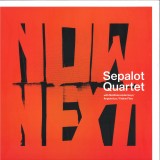
NOWNEXT is a voyage from the past to the future, from now to then, from what's behind us to what's waiting for us just around the next corner. In musical terms these are the gaps that appear when you drift between genres and take risks. Strolling far from the well travelled Zeitgeist path. The second album by the Sepalot Quartet floats through this timeless space and fills those cracks with a relaxed fusion of Jazz meets Indie meets Electronica, not once denying Sepalots hip hop roots.
This freedom of expression can also be considered a sign of our times, with a generation coming of age without rivalling youth phenomena. Where a jazz show is held in a techno club with no further explaination needed.
With their first release the Quartet still relied on remakes from the established Sepalot dicography, with their current work they laid the foundation for a truly solid form of musical self discovery.
NOWNEXT is enlivened by this spirit and offers a fascinating and confindent blend of varied sounds spanning time and space.
With all this being said, NOWNEXT is truly an up to date album of international format, feeding from the rich experience of its diverse members (Sepalot, Angela Aux, Fabian Füss, Matthias Lindermayr). Memories, associations and a well carved vision are melted into a masterpiece.
NOWNEXT is the latest offering by SEPALOT and his QUARTET and needs to experienced with all senses.
A « virage » is a curve more or less dangerous depending on the way you negotiate it! The 2020 virage, I took it while trying to shelve 40 years of musical culture and productive muddle, so as to compose these two tracks - and their extended version designed for club’s powerful speakers - in the most simple way.
In the "LVSP001" Vinyl, you can find House-Music (Regular, Mainstyle) & Acid for it's Substyle. This is a taste of Techno Culture! The French voice, it’s mine. I talk about sex – which is still the second best topic after love – without really talking about it.
These new tracks are for my old friend – who is probably getting a tan up there – so he knows that I am not giving up and that there are more surprises to come. In 2020 with le virage, I am going the distance...
- Hubert Blanc Francard.
Rocko Garoni knows what a techno dance floor wants. He’s learned it through countless hours spent on the floor himself as a punter, and through DJing at some of the best clubs and festivals in his hometown Berlin and all over the world. He knows exactly the type of productions that thrill crowds, and he brings this wealth of knowledge and experience to his third EP for Second State, Ammoniak.
The title and first track ‘Ammoniak’ drags you straight into the zone; a pounding, take no prisoners cut laced with stormy synths creating a vague sense of paranoia. ‘Gece‘ cranks the energy up with trancey, bouncing synths and a cool, clipped female vocal. Instantly, you’re pulled into the very sort of club that Garoni knows so well. ‘No Border‘ is the kind of expansive track that seems destined for huge warehouses or vast festival dancefloors. There’s an insistent, brooding bassline, robotic repeated vocals and a mid-track shift in tone that will send the crowd to a heightened state of reverie. The blend of post-punk vocals and eerie beats on ‘It’s All Yours‘, a track featuring Cook Strummer on the vocals, is at once highly unusual and completely compelling. It’s the track to play when the crowd are losing themselves in the best possible way. Closing the EP is ‘Helio‘, another completely different track that showcases the extent of Garoni’s range. Faint, echoed chanting lends the track an almost holy atmosphere. Combined with tunnelling synths and spindly percussion FX, the effect is euphoric, acting as a delicious palate cleanser between heavier tracks.
Put simply, Ammoniak is another first-class EP from a dynamic act who’s fast becoming a Second State star.
The long awaited second release on Obscure Unfound comes from the Manchester duo Kander.
Two original Straight up dance floor destroyers & two slamming remixes from RAW’s MAKORNIK & Peryl. The guys have enjoyed an absolutely storming year with gigs in New York, Philadelphia, London, Manchester & Berlin. Recent mixes for the Brvtalist & Instrument of Death along with smashing releases on Marked & ISMUS have gained worldwide support.
The Liverpool-based DJ and producer ASOK returns to DVS1's Mistress Recordings with his most diversified EP yet: "Mistress 14" unfolds ASOK's raw, analog-heavy sound aesthetic full of broken kick drum patterns, stepping basslines, and lush synths.
With 25 years of record collecting, DJing, and promoting parties around the UK, there is little of the dance music spectrum that Stu Robinson has not been involved with. The Liverpool-based artist has amassed a fine understanding of a wide array of scenes, styles and sounds from drum & bass to electro-funk, disco to house and techno – underpinned by a love of breakbeat. The music under his alias ASOK is an amalgamation of this diversity that has found favor with labels like M>O>S, Lobster Theremin, Crème Organization, and Mistress Recordings.
"Mistress 14" opens with "Space Rockets" which is a nod to his breakier love affairs without using actual breakbeats. While second track "Is Anyone" displays his take on classic Chicago House with a little Roland JD-800 euphoria thrown in. On the flip, "Last Refuge" explores driving, rhythmical techno with ASOK's typical ravey pad-like break in the middle until "The Alchemist" closes the 12-inch by laying more focus on melody and texture with a growing, always changing bassline and an ethereal synth that carries the track's energy. The digital bonus track "Apano Sin" concludes the package with a scruffy somewhere in between everything vibe.
ASOK about Mistress 14:
"Mistress 14 is probably the most important EP I have ever made in terms of showing all the different things I am into. I’m difficult to pin down because I’m not really a techno DJ, or a house DJ, or anything like that. I like all forms of electronic dance music. As a DJ, I mix up old and new, familiar with unfamiliar, playing everything from Italo disco to really dark high-bpm breakbeat. As a producer, it’s not easy to put an EP together that covers a little of everything, yet still sounds cohesive. Especially considering that all my tracks were recorded in long live takes, then edited down with no ability to change parts. Sometimes that requires some pretty heavy editing, but that’s one of the good things you get when making music this way. I’m in control of the creative process, rather than feeling like some kind of colored block administrator drawing blocks out on arrangement view of my computer."
* Following on from the hugely popular ‘Klavirni’ (Emika’s first solo piano album in 2015) her second installment of piano solos are a magical cluster of melodies, dreamy effects, obscure production mistakes with tape echo’s and other old analog gear.
* The pieces were recorded during the time she was pregnant with her first child Silvy, to whom she has dedicated this record ‘To Silvy who heard it first from the inside’.
* The collection of ‘Dilo’s’ which means moment in Czech, were recorded ‘in a state of ultra hyped up creativity combined with a massive fear about losing my identity or creativity as an artist once I would become a mother’ - says Emika about the album process.
* A truly personal affair and in keeping with the original style of the first Klavirni, all the Dilo’s were recorded improvisations by the composer on her home piano, this time in Berlin.
* Dilo 7 from the first album has been streamed more than 15 million times on Spotify and there will also be a ‘Red Edition’ repress of the album on vinyl.
* This release marks the 5 year anniversary of Emika Records, celebrating 5 years of independence since her days with Ninja Tune.
* Dilo Variations EP (not released previously before on vinyl) will come with the anniversary releases on a cute little 10’’ with updated artwork.
* This is also the final release in her Emika Records catalog before starting a new venture in 2020 with more details to follow later in the year.
* ‘Klavirni Temna’ which means dark piano in Czech, explores the relationship between dark and light, good and evil, death and rebirth.
* ‘Music is a powerful and sometimes unexplainable force.’ - Emika
It's been a while but the sharpened Label from Marseille is back for his second release : the Brawshleter EP .
This various hosts 4 tracks from 3 members of the D-Mood Squad and offers a nice trip around their universe.
FACE A is dedicated to KUMANOPE : A1/GLITTERING WOODS & A2/BREAK OF DAWN : two trippy tracks with jungle rhythmic signatures and chopped-reworked breaks everywhere. A well-known sample used with class coupled with a perfect ambient and vapored atmosphere which will bring you back for sure to the UK of 90'.
FACE B starts with a Dancefloor Friendly weapon by JOZ. B1/DON BREAK is a techy track with minimalists fx, dubby and delayed chords, breaks samples and an acid bass line to spice up the whole thing!
SUAVE occupies the end of the release with B2/LA MADONNE. A trip into the suavity and the deepness of this track is perfect to start the night or to let the dancefloor breath in the middle of it ! Exhilarating melody and endless acid bass line are the main ingredients of this little beauty made with love in our missed studio !
The "second limited vinyl edition on Scena_731 label, is a sharp weapon like the Blade Knifee, recorded by the talented "Yari Greco"
with a sound that screams like the 90's and with heavy industrial themes. On B side, amazing are the featuring with the incredible dutch
duo, "Noneoftheabove" with riding rides of drummer and to the end, the techno lord by "Mr. Endlec" it's pure industrial adrenaline.
Elma Rivaga back with the second release signed by Dj D.I.F . Outspoken stuff that works both as distinctive dancefloor material as well as intimate home listening. Enjoy it!
FUSE resident Seb Zito returns to home turf to close October as he delivers his ‘Trying To Start’ EP. A key member of FUSE since its inception ten years ago, London-based DJ and producer Seb Zito has remained at the heart of the city’s scene featuring as a core resident for the brand across their homes of Village Underground, 93 Feet East and beyond, whilst also serving as the A&R of sister imprint Infuse. Following a busy summer that welcomed outings and remixes on the likes of Four Thirty Two, Play It Say It, ORIGINS RCRDS and Moxy Muzik, plus material via his own Seven Dials Records and two collaborations as part of Enzo Siragusa’s ‘A Decade Of Rave Volume 2’, Zito now returns to FUSE to deliver his second solo EP of the year on the label as he unveils four new cuts in the form of his ‘Trying To Start’ EP. Title cut ‘Trying To Start’ opens proceedings with authority as bright vocals meet skipping percussion, bubbling sub bass and slick hats, whilst ‘Arped Edge’ harnesses a slightly more stripped back aesthetic, introducing infectious vocal snippets amongst hazy pads, sci-fi electronics and menacing low-ends. Next, ’10AM Fuse’ takes cues from its title as snaking bass patterns go to work alongside sharp drum licks to reveal a cut primed for some huge early morning moments, before rounding out the package with ‘Geo Theory’, a lively peak-time production armed with shuffling drums and a signature driving bassline at its core.
High quality laquer cut LP with silver and pink pantone colors on cover.
Mutual Intentions is proud to present "Astral Traveling" which is Byron The Aquarius' debut album. A stunning piece of fusion built from everything between jazz, soul, hiphop and house makes Mutual Intentions a perfect platform for the release. String compositions is an on-going theme throughout the album. From the first chord on "Love Is 4U", until the very last second of "Spazzing Out", where Byron raps over a beautiful backdrop consisting only of Fender Rhodes, electric bass & strings. Byron jumps seamlessly between different genres throughout the whole album. From the acid house inspired "Sorry Kari", to 70's prog jazz sounding cuts like "Lost In Love". Once you put the needle on side B, you'll hear "Deep In That ***** feat. MDMA" which sounds pretty much like if Dexter Wansel took MDMA in 2019, inside Legowelt's studio and tried to re-create his classic cut "Theme From The Planets".
Mid-July signals the arrival of Rossko’s debut solo EP on his home imprint FUSE, delivering two tracks accompanied by a remix from Burnski in the form of his ‘Blossom’ EP.
An artist immersed within London’s rich electronic scene for the last 20 years, Rossko remains a central figure at the heart of the city’s ever-evolving sound. A DJ first and foremost, known for his slick and powerful sets and his ability to unearth forgotten gems from across the electronic sphere, his journey as one of FUSE’s core residents now stretches over 10 years, with the Berlin-based talent also featuring as a head resident DJ and A&R for the label’s sister imprint Infuse as well as heading up his own label ‘Late Night Skanking’ and ‘Arkityp’, the project with Archie Hamilton. Following on from his recent collaborative EP alongside Swedish talent Per Hammar on Infuse, here we him step out on home turf to offer up his debut solo EP and the most complete and matured example of his sound to date via the aptly titled ‘Blossom’, whilst Constant Sound boss Burnski also joins on remix duties.
A-side production ‘The Step Up’ opens the EP in slick fashion, as rolling organic percussion arrangements weave amongst slinking bass licks to reveal a stripped back yet dynamic lead cut. Next up, second original ‘Cerca Trova’ takes things a little deeper as off-kilter sonics and vocal murmurs work amongst skipping hats and rich low-end tones, before Burnski’s remix of ‘The Step Up’ sees the production paired back even further to reveal swinging drum grooves, floating, hazy melodies and playful synth flourishes throughout.
Discovered, curated and managed by Exos, Planet X is the latest discovery in our solar system. Little is known about this mystical planet other than that it radiates sound waves on the rougher side of the galactic spectrum. This first release comes from Exos himself where he fuses together old and new material with remixes from his astro pals, Ben Sims and Antigone. The release takes off with an old 90’s Exos track which is then warped and mixed by Ben Sims in his signature hardgroove style. Next in orbit is Bingo, a brand new track for interstellar clubbing that sounds like a country theme where Exos sampled a live guitar from his father’s rock band. The outcome is a dark and raw mixture of a 909 beat with a dark space cowboy riff from the blackest hole of our galaxy. The Antigone remix takes us near the event horizon where there is absolute chaos between dimensions.
The second release from Planet X will launch off next autumn with fellow space cadet Lafontaine on a 4 track storming missile and signs off with a nuclear remix by the one and only Matrixxman.
Start the countdown for our journey to the center of the galactic dancefloor!
The prescient sound of an abstract never-coming future built from the everlasting commitment to the boundless experimentation. The prolific one-of-a-kind Terrence Dixon is back to 30D Records.
“Vertical Hold EP”, holds on his unlimited creative scheme: on the basis of the Detroit sound, he transforms that legacy in a fully refurbished approach wherein the true creativity smashes any possible stereotype.
Every track leads us to the unexpected. From the skillful Dixon’s mind, any sonic universe is possible. The straight low pad of “Due Process” flows on a kaleidoscopic background, energized by a danceable bass drum. Second cut, “Vertical Hold”, is a wicked amazing sequential madness from a dreamlike dance floor. “Transition Area” seeks and finds out the depth, a mental mantra to disappear in. The rhythmic and mechanical arpeggiator of “Total Vehicle” drive us to a dancing frenetic hypnosis. And, finally, “Assembly Building”, unfolds a fine-draw and imaginative minimalistic groove.
Five tracks that you cannot miss out. An essential state-of-art Techno work you must have
For its second installment, Tresydos presents ‘Description’, a selective, four track EP from US producer Matt Anderson. Normally working and releasing on the label Wex, he has shared with us a unique EP, a dive into the flavors and varied tastes he is inspired by.
Leading off on A1 is the title track ‘Description’. With an emotive melody & pushing jungle bass, this tune is a mixed and mangled, psy-hypnotic, peak time bouncer. A2 follows with ‘Small Talk’, which holds a smooth and liquidy touch, sprinkled with notes of jazzy bends & spacey arpeggios. On the flip side for B1 is ‘Gangsta.vox’, a playful tune, varied between a 4/4, acidic zooming, & airy, euphoric breaks. Last up is ‘Inside A Neutron Star’, a chugger that offers an acidic, yet smooth psychedelic theme to carry you on.
Soundscape Versions presents the second installment on its sub-label Mystic Versions with seven unknown cuts by different artists from across the globe - produced and performed by using analog hardware gear.
From ambient soundscapes to experimental bass music and driven techno excursions.
Mastering and Lacquer Cut by Stefan Betke
Distribution by Morr Music
The second part of 'Path Integral' paves the way for six new tracks. Ready to be discovered. Ready to be played out. Ready to hit the zeitgeist and ready to give a set an advanced whiff without sounding pretentious.
We are proud to showcase more Bay Area family with the release of a new EP by Doc Sleep who cut her chops as a DJ in San Francisco’s vibrant scene the past decade. In 2016 she made the move to Berlin and became a resident of Room 4 Resistance. Since 2013, she's been the co-owner of Jacktone Records, which specializes in techno, ambient, and experimental electronics. In 2016/2017 she released her first 12's on the Hot Mass-affiliated Detour Records and Bottom Forty. She also co-wrote a track with Bezier and Nicole Ginelli, titled “Stranger,” that we released on the ‘Primes’ EP in 2017. Her latest release, ‘Your Ruling Planet’, was released on Jacktone in March 2019.
We first heard “Creme Fraiche” on Doc’s soundcloud page and begged to release it. The track has the feel-good vibes you get on early morning dancefloors as things are winding down or up. Paired on the A-side is the pulsating dark jam “Never Eating Again” that previously appeared on ‘Run The Length Of Your Wildness V.2’ and, like that compilation, proceeds from this track will be donated to Ghost Ship Fire victim Cherushii's family. On the B-side are two remixes from close friends of Doc. First up is a fresh breakbeat remix from Violet: DJ, producer, boss of Naive records, co-founder of Rádio Quântica, and mina resident shaking up Lisbon's nightlife. Second is Berlin-based producer and fellow R4R resident, rRoxymore, who presents an innovative remix of future-facing techno and bass variations adding her own vocals on top. For this release we’ve teamed up with Jacktone to release a cassette version, our first in this format, featuring two peak-time bonus tracks. All songs have been mastered by George Horn at Fantasy Studios in Berkeley. Each copy is housed in jacket designed by Eloise Leigh with neon pink and lavender gradients echo morning sunrises with a collage of dreamy elements using a photo by Doc of Club Toilet in Detroit.
Kasper Marott is featured on the second release by Courtesy’s imprint Kulør, a label whose introduction to Copenhagen’s fast techno scene, Kulør 001, contributed a long-sought spin on contemporary techno. With his Forever Mix EP, Marott offers a 14-minute musical expedition through the slower-paced “Drømmen om Ø (Forever Mix ‘19)” and a personal take on his hometown’s accelerated blue euphoria with the floor-crushing “Sky Dreams”.
Artwork photography is by the Japanese artist Yoshinori Mizutani, and the vinyl will come with an A2 poster. Graphic design is by Spine Studio.
The sixth release of Form and Function, is the second one of the Function series. This time it's Qindek who provides his debut EP on the label. 'Reach For The Cosmica' is a lovely journey through Qindek's world. It's the perfect combination of both abstract and functional. The weird meets the wonderful. The package is topped of by Setaoc Mass who does an incredible job remixing Takes A pad.
On the A-side, the first track is 'Climate Shift'. A track that tells a story through dubby elements and chords, backed by a powerful and thumping low end. A movement of continuous energy and subtle but noticeable changes which have an impact on the track as a whole can be seen as the precursor for cosmic endeavors.
Next up is 'Reach For The Cosmica', the second track of this release. It's an epitome of the soundtrack of traveling through space. The minimalist build up tells us about how the journey just started outside of the atmosphere, transitioning into more depth that has been inaugurated by a sound that is the sonic equal of the rocket engine. As the beginning journey develops, there are few sudden bursts of power, together with the presence of the perpetual powers that cause the final move to outer space.
The arrival in outer space brings us to the 3rd part of the release and the first track of the B-side. Setaoc Mass gives the EP it's the concluding boost that gives us that last drop of power before the arrival. Elements of the original are still to be found, whilst given a little twist and a lot more of dancefloor energy. All while keeping the pace up to enter the final chapter of the journey.
'Take A Pad' exactly asks us what we need to do. Finding the ultimate balance between speed while preserving the right amount of power, is how sub-bass is working in harmony with the percussive elements.
Space is calling upon us with delicate voices. A beautiful ending of a classy and well crafted EP by Qindek.
Four years on since the landing of his immersive debut full-length "Marianne Brandt", Noorden main operator Alex Ketzer returns with his second studio album, "OTC"!
Perpetuating the non-linear narrative arc initiated by its forerunner, all the while establishing further club-functional bridges over the course of its eleven tracks, "OTC" weaves a fine tissue of lushly textured electronica, downtempo elegies and spacious tech-mospheres and old-school rave motifs through intricate combinations of sorts, marrying the entrancing primal power of the beat with a pastel-coloured palette of Rephlex-nostalgic electronics.
True to his genre-busting, non-formulaic standards of composition, Ketzer once again opted for the fragmentary rather than the straightforward, putting on a collection of variedly contemplative, dark, energetic and motion-inducing cuts in exploded-view.
Let's lower our heads in gratitude and move our feet in elation, it's the resurgence of Jennifer Touch on Riotvan. We've witnessed her dropping a substantial cycle named "Feeling C" on the label a couple of years ago and just praised her contribution to the second "Familiar Faces" Compilation. Now it's time for her second artist EP on the label, and what a display of evolution and further refinement of her unique style it is!
Techno's most influential label hits 200 releases with two powerful Amelie Lens interpretations of an Adam Beyer classic.
Over the course of its lifespan, Drumcode's vision has remained resolute, crafting techno that's both functional and forward-thinking. It's a philosophy that extends to the stable of artists who release on the label and play its showcases, with Adam Beyer's eyes and ears always focused on the future.
One artist in his viewpoint in recent years is Amelie Lens. Supporting her early productions on Lyase and Second State, a kinship naturally developed between the two artists, with Beyer asking her to contribute to 2017's A-Sides Vol.6 compilation.
Her blistering acid cut 'In Silence' blew the collective techno world out of the water.
Eighteen months on and now a regular on Drumcode showcase line-ups, Beyer has sought the Lenske Records boss to apply her energetic take on techno and remix 'Teach Me', his deep, Detroit-influenced cut from 2014.
The Main Mix highlighted the Swede's Drumcode Halloween set in London and is an exhilarating peak-team weapon driven by a grinding bassline that undulates with intensity, while Lens has made smart work of the vocal, teasing out the sample to harmonic perfection.
The Acid Mix sees the Belgian deliver a stripped back 303-led affair, utilising the looped vocal to build energy in the first half of the track, before rapid-fire percussion and squelchy stabs take control and push the atmosphere into darker and more ominous realms
And now for something completely different ! - The second vocal lead EP on FireScope - This time introducing KineStatics ... A collaboration between Steven Rutter and Karla Hajman/Stereochemistry.
Downtempo techno and quirky vocals are what this EP is about, covering challenging topics such as labyrinths and obstacles we place in our own heads ; war ; destruction ; and the end of the the world.
Labyrinth a lush techno vibe with a marching drum; a song about the twists and turns of our own minds; leading into Grmi Seva where a balkan vibe built around a conflict themed remake of a Yugoslavian children's song continues our journey. The last track on Side A 'Till The End Of The World is a very downtempo affair where a baseline provides the underpinning for Karla to tell her tale of a world on its way to its own demise.
The B Side provides the beats and baselines of Grmi Seva followed by a dubby alternate rendering of Labyrinth
Finished in Clear with Blue splatter vinyl with exclusive artwork by Mass Roman.
The fourth part of the EBM Manifest series contain the second array of remixes by some of the most respected contemporary artists of the genre and they delivered very fine new interpretations / remixes of Heckmann's classic EBM-Techno tunes !
The mysterious Kayroy appears on his second Whiskey Disco record bringing the heat by way of sampladelic dancefloor collages packed with funk and a slight left-of-center aesthetic. 'Like Damn!' and the titular, 'Pavlova Casanova', are both hands-up, disco gaiety that will rip the heart of your chest.
'Sandy Shackles' closes out the EP conjuring the disco dub vibes of editors like Idjut Boys or Ray Mang. Just who is Kayroy - and who was he on his first Whiskey Disco appearance
Dark Entries is honored to release a 4-track EP by Swiss musician Carlos Perón, founding member of Yello. Carlos was born in 1952 in Zurich and began collecting music at a young age. Inspired after attending a concert of Karlheinz Stockhausen in the 1960s, he began to compose Musique Concrete pieces using a 4-track reel to reel and found sounds. In 1979 Perón founded the trio Yello with musician Boris Blank and vocalist Dieter Meier. Yello released their first album in 1980 and the following year Carlos released his first solo album 'Impersonator'. In 1983 Carlos left Yello in order to pursue a solo career and released the soundtrack to Die Schwarze Spinne" and 1984 his second solo album Nothing Is True, Everything Is Permitted'. In 1988, Belgian label LD Records released a 4-song EP of instrumental tracks from 1984 that predated, influenced and became staples in the New Beat scene.
Dirty Songs' is a collection of songs from Carlos Perón recorded between 1980 and 1986. The recordings were made with the core set up of an ARP 2600, Roland's Drumatix, TB-303 and TR-808. Nothing Is True, Everything Is Permitted (Instrumental)' recorded in 1984 is a slow burner with dark, gloomy atmospherics, presented here in an extended version with a bonus intro. The song was inspired by William S. Borroughs' Naked Lunch' and paints a bleak futuristic landscape. Breaking In (Instrumental)', from 1984, is a crossover of electronic body music and pitched down Chicago acid house featuring overplayed snares by hand though an Ovomaltine Box. Originally featured on the soundtrack for Die Schwarze Spinne', the song is about breaking into a large pharmaceutical company to steal drugs. On the B-side is A Dirty Song (Instrumental)', originally recorded in 1986 and released by Play It Again Sam in 1988. The song uses one of the earliest Roland SH synthesizers, the SH-1 A, as a solo instrument and is strikingly aggressive with percussive rhythms. Et' was recorded in 1980 on a 4-track and later and remixed to 8-tracks in 1984 for the Frigorex' EP, which is where this extended version comes from. Featuring eerie, cut up vocals and Dadaist lyrics by Isa Nogara atop a proto-Techno beat.
All songs have been remastered for vinyl by George Horn at Fantasy Studios in Berkeley. The jacket features a never before seen black and white photo of Carlos taken in 1988. Each album includes an double-sided postcard featuring the cover art from the Frigorex' EP. Prepare to make your own movie to the Swiss John Carpenter soundtrack vibes of Carlos Perón.
Subtil proudly presents: IULY.B - Time Forms contains a minimalistic three tracker from the upcoming Romanian artist IULY.B.
Starting with 'Imaginary Forms' trippy sounds and a rolling bassline. The second track is called 'Gateway' which is more darker, produced exactly on point. On the flipside you will found
'Timeworn', a mystical trip, influenced by alternated voices. Early support by Rhadoo.
Stripped Down Records continues to make a big impression with its second release, this time coming from munimuni & Seelenwald and featuring stellar remixes from label founder Claudio Ricci as well as Sasse, Tiefschwarz and Kollektiv Turmstrasse.
Clikno Is Proud To Present The Second Strike Of Dr.nojoke's Double Ep 'zero'.
'aplose' Is A Straight 10 Minute-stomper, Which Sounds Like A Wild Horde Of Percussionists Clanging And Banging Cans And Pots. The Truth Is The Doctor Just Threw Glass Marbles On A Wooden Floor. Fun-time! For The Hips He Adds A Low Rolling Bassline And For The Head Some Freaky, Randomly Pitching Chords And Off It Goes! Call It Afro-kraut-jazz-tech Or Just Clikno - Aplose Is A Counter-action To Electronic Music Production With Electronic Machines - Marbles Do It As Well!
'kumuestu' On The Flipside Is The Antagonal Piece On Zero.two - More Dark And Deep It Is Music For A Fictional Ritual. Carried By A Hypnotic Fluctuating Bass-figure And Drones The Tune Slowly Mutates Into A Shamanic Rhythm Monster Creating A Resonating Field For Transcendental Dancefloor Action - From Here To Eternity.
Zero.two Is Purely Audiophile Electricity To Twitch Your Body In All Directions. Do The Clikno!
Again Zero.two Is A Limited Vinyl-only Release Pressed On Transparent Vinyl Coming In A Transparent Sleeve - Transparent As Light, As Ideas, As Music And As The World Should Be - No Borders, But Freedom, Peace And Equality For Everyone!
Aura Dinamica continues with it's second release so far. Label head 'Portrait' delivers some uncompromising cuts for the dance floor, featuring a remix by 'Rhyw'.
The second Wex release is now up for preorder. A special VA featuring four artists, Lexeme, Mr. Projectile, Olesia Elfa, and Nella. Deep House, Techno, Acid & Ambient blending all together on this record
After a debut outing on International Black last year with his best friend Mallard, LT graduates onto Rhythm Section INTL with a stunning debut solo effort: FOREST FLOOR.Aged just 20 years old, Lewis Taylor aka LT is another prodigal talent from the north of England, whose association with Rhythm Section goes back to his school days. A fan of the label from an early age, Lewis regularly made pilgrimages to the pool hall as soon as he was old enough to do so. It was these visits with his old school friend Mallard (who had recently moved down to London from Derbyshire to study music) which proved to be a formative influence, prompting him to try his hand at production...It turned out he was quite the natural, with his second ever effort as an 18 year old making it onto this very EP. Sitting somewhere between electro, house and techno with a healthy dose of breaks - LT constructs complex arrangements with as much of a nod to the retro summer of love stylings of Lone as to the new age bounce of the Pender Street Steppers. The piano house stabs of 'Untitled (Chesney)' reverberate around chopped breaks and screaming samples, anchored down by bouncy organ bass and FM lead synth which really begs the question: 'How did LT develop such a rich lexicon of club culture references in such a short time' We'd be tempted to believe it was just pure luck, if this mastery of rave aesthetics wasn't repeated throughout the EP...
Mesosphere fizzes with arpeggiated energy before giving way to a magnificent yet subtle drop that will serve festival main stages as well as it will back room clubs. Before the EP is over, LT has one more trick up his sleeve in Forest Floor - the titular track which is the musical equivalent of watching the sun rise through a misty glade after a night spent alone in the wilderness. With this gentle touch, LT proves he's more than another kid on Ableton making bangers - he has breadth, incredible musicality and a rare ability to transcript sceneries into sounds. Finishing with 'North Circular' possibly a reference to the free Parties on the London Orbital or merely just a coincidence you decide.
We couldn't be happier to welcome LT onto the RS INTL roster in what feels like a fulfilment of destiny. It's such a great honour to have nurtured and now introduce the next generation via the Rhythm Section platform.
Haven returns with their second EP with a split between Italian metalhead Ayarcana and resident Keepsakes. Ayarcana kicks off the A-side with 'Face Struck With An Axe', featuring chugging guitar-like synth work, tortured vocal wailings, and a monstrous kick, epitomising the Berlin-based producer's combination between techno and metal. The A2 then picks up the tempo with rhythms reminiscent of metallic double kick poundings, a cheeky acid line and a dissonant noisy melody coming in the latter half of the track in the Italian producer's 'Conflict'.
The - here & Now Ep' Is The Second Instalment Of A Three-ep-series Coming Up In 2018. Christophe Salin Is Taking Us On His Musical Journey And Paves The Way For Cooperation With Future Artists On His Very Own Imprint - salin Records' That He Runs With His Wife Daria Salin As A Platform For Electronic Music And Art.
No Intro Needed As - dreams Sometimes Come True' Instantly Takes Us On The Groove Line. - astra Perle' Keeps The Groove Alive With Some Heavy Jazz Samples. You Maybe Remember Sitting In Your First Car (christophe's First Car Was Named - purple Pearl' And Was An - opel Astra ) And Just Cruising Thru The City. Imagine To Be Suddenly Overwhelmed By A Creative Hole, - ohh No, Not You ... Turn Over To - can You Pay My Bills' The Journey Continues With More Jazzy Vibes To End Up With A Downtempo Lounge-dub-work Which Is Indeed - different But Sweet .
The Mighty Zaf & Phil Asher Present '80s, Their New Edit Label Specializing In Disco & Boogie, And Strictly Vinyl Only.their Second Releases Continues Their Strive For Edit Heaven With Three Scintillating Selected Cuts. Best Not To Sleep On This Because The First Sold Out Fast!
22 Digit LTD is the vinyl only off shot of UK based 22 Digit Records, and this new release is upfront House
music in the style of artists like Mr. G. This 22 Digit LTD release is a collaboration between UK stalwart Moodymanc and label boss William Welt
with solo remixes from Appleblim and Alland Byallo. Moodymanc also known to many as Dubble D, is a Manchester based artist who boasts seminal releases on labels including Tsuba, Local Talk and 20/20 Vision among many others of a similar calibre. William Welt is a young artist who now based in Manchester, cut his teeth in Newcastle upon Tyne, and has releases on labels including Traum and CONSTRUCT.
The first of the remixes comes from Appleblim, whose bass heavy sound has been a regular feature of
imprints inclouding R&S Records, Aus Music, Tempa and Skull Disco. Second of the remixes comes from Alland Byallo, who has previously released on labels including Third Ear, Get Physical, Poker Flat, Moodmusic, Dirt Crew and Rawax.
Following the massive buzz a round the label's last release (voted THE record of 2017 by some 400+ international DJs and tastemakers on Bill Brewster's DJ History Podcast/poll (2017 Furtive 50) , Hobbes Music kicks off 2018 with a heavy slice of warehouse techno backed with deeper electro flavours, a second double-A-side 12" outing by the anonymous DALI.
You may remember DALI (NB all caps in the spelling) released a debut 12" around this time last year. Support came from Ben UFO, Laurent Garnier, Domenic Cappello (Sub Club), John Heckle, Chris Duckenfield, The Revenge, Tom Findlay (Groove Armada), Sean Johnston and XDB (among others) and a repress happened swiftly, with Laurent Garnier and Avalon Emersonalso supporting most recently (on WWFM and at Berghain, respectively).
DALI has a passion for analogue synths, abstract, hypnotic dance music and all things psychedelic. Don't bother looking her up on the net, social media etc. DALI is eschewing all that, to let the music do the talking for now.
Oh so you thought that was it with RELO1 "Funny idea but we wont ever hear from those goofy guys again." You were so wrong. We spent 7 months in the studio and pulled another 3 pointer out of the hat with a bat. RELO2 is here from the Rebound Lounge label and production project brought to you by DJ Dog(aka DJ Fett Burger) & Double Dancer.
Signing on the second release of the label Blue Night Jungle, the duo DudMode disturbs its machines and inspirations around a wild and mystical acid techno - sometimes minimalistic, sometimes extravagant. Two faces of a same coin which the Lyon guys are trying to explore by inviting, for the whole B face, two french artists they feel very close with : Jibis, head-speaker of a new techno beat both dense and aerial , Vardae, owner of the label Allegorythme Records and great defender of a more mental and obscure vibe. « Une Nuit Dans l'Herbe » (« One Night In The Grass ») EP marks the strong come back of lyonnese rave culture's children, already sanctified by a long and sensual experience on the stage.
Meaning 'universe' or 'the cosmos' in Greek, Sýmpan is the second full EP from Lazaros, Cologne-based artist and long-time friend of the label.
Dive into the rich, musical universe of Lazaros with this EP - an intricately composed sonic world mostly made up of self-created sounds by the producer from scratch. With previous releases on KX (subdivision of Kompakt) and Nautilus Rising (label of Glasgow's Sub Club), the music of Lazaros is always deeply personal and a mirror of his inner self. From darker club tracks like 'Byzantion' to ambient electronica like 'Cold Faucet', the EP displays the versatility of Lazaros, unfolding yet another chapter in a story that begins with his roots in Greece.
A modular synthesiser and an urge to find interesting tones, textures and timbres...
ekke 's second LP Klangfarbenmodular is due to bevreleased by Detroit Underground . It is electronic music with compositions that deal with abstract textures, glitchy beats, nostalgic synth melodies, and sound design. Like the title of the album suggests, one of the main interests for ekke has been finding different interesting tone-colours, textures and timbres. Second very important inspiration for ekke while composing this material was his instrument - modular synthesiser. He has been studying free improvisation and composition on that instrument for years and the instrument has become like a good friend and music teacher for him.
The album was composed and recorded during 2015-2017. Most of the material has been recorded as studio jam sessions. All the pieces have then gone through many reincarnations. Although most of the material comes from machines, there is a track where all the sounds are field recordings registered in Tallinn, Estonia, which is a current home for ekke .
Cute Heels is the project of Victor Lenis, a contemporary electronic artist living in Berlin, Germany. He grew up in Bogotá, Columbia during the 1990s, surrounded by the radial punk scene. Over the years, Victor's passion and fascination for synthesizers and drum machines to produce and compose resulted in his debut album 'Spiritual" for Dark Entries in 2014 as well as the Third Skin' EP in 2016. Inspired by equal parts Liaisons Dangereuses, Drexciya and Black Devil Disco Club, Cute Heels connects the dots between Detroit techno, early Chicago house and Belgium electronic body music.State of Mind' is a 4-track EP featuring the vocal talents of Berlin artist Aga Wilk, of electro-punk projects Walkman Music and 77TM, on the the title track. On the A-side are two fresh compositions recorded in New York and Bogota between 2016 and 2017. Victor says, 'State of Mind refers to the subconscious as dominated by real facts, natural, unnatural ,metaphysical or virtual and dynamism of the body as physical shield.' The track is a slow building foray into techno, elegantly suited for intangible moments. 'Golden Tears' kicks off with Cute Heels' signature metallic EBM funk played with punchy, percussive analog synths. On the flip we present two banging club remixes. The first is from LA-4A, techno DJ and producer Kevin McHugh aka Ambivalent, who adds a strong kick drum and lacerating hi-hats that build up to a mind melting breakdown with a full on acid squelch attack. The second remix comes from Noncompliant, Midwest US-based producer Lisa Smith aka DJ Shiva, who creates a raw, thumping exercise though off-kilter mechanics and punishing percussion. All songs have been mastered for vinyl by George Horn at Fantasy Studios in Berkeley. The record comes in a custom-made die-cut jacket designed by Eloise Leigh featuring suggestive rope bondage graphic printed spot black matte on black hi-gloss finish. Each copy includes a postcard.
Most welcome to a world of handdrums and synthezisers. Spacious Present is the second release by Mount Analogue on Sunken Rock. A four track EP both suited for the livingroom and the evening at the club, wrapped up in a screenprinted cover for your delight.
For their 3rd release, Pulse Msc has traveled worldwide from Rennes to Vienna, Copenhagen, and Adelaide to create "Mind Trip", a detonating 4 tracks Lo-fi House EP with multiple influences.
The first track is signed by Subjoi, a young Australian artist well-known in the Lo-fi game. The man delivers "The Way I Feel", a subtle and emotional tune, embellished with devastating kicks which will leave nobody indifferent.
In the second position, there is an important contributor to the French Lo-fi scene, who has a lot of talent and is clearly to monitor: DJ Psychiatre! The guy has released of his imagination "Our Love Is Real", a wonderful piece conducive to escape with varied & nonlinear sonorities and powerful vocals.
Then Slim Hustla, a Danish duo with well-tempered personalities gives a big contribution to the project with "Ghostryda". The track is a sentimental and melancholic ballad, with beautiful vocals which brings the listeners in weightlessness and strays them into a dreamy universe.
To conclude, gutinstinct, an Austrian versatile artist, owner of Dream Raw Recordings ends the EP with "Blue Sea". The tune is a raw and dark dance-floor killer track, which plunges everybody into an abyssal atmosphere. Take a deep breath and enjoy the trip!
Meander turns 10! Beautiful representation of the past 10 years with previously unreleased music. The label celebrates their first decade with their second compilation, 5 years after the initial Family Jubilee. The result is a collection of 3 x 180g vinyl records. All discs are available individually, with limited special artwork. As a package it forms a distinctive reflection of Meanders momentum.
Now in its second decade, with a steady stream of the most forward thinking and cutting edge techno productions, Drumcode has one of the biggest selections of releases from industry heavy hitters, whilst not forgetting its future by bringing the newest talented producers into the limelight, where Layton Giordani is now a name firmly within that line up.
The young New York based producer first had recognition back in 2014, and his debut release came via Drumcode with his track "Rivington" on the A-Sides Vol5 compilation in 2016.
Full force into 2017, Drumcode has announced the release of Layton's debut album with "Where It Begins" Consisting of 12 original tracks, the album packs a punch when it comes to no-nonsense techno. Successfully weaving relentless drums and catchy vocal hooks into a selection of thick, brooding, atmospheric tracks.
Now in its second decade, with a steady stream of the most forward thinking and cutting edge techno productions, Drumcode has one of the biggest selections of releases from industry heavy hitters, whilst not forgetting its future by bringing the newest talented producers into the limelight, where Layton Giordani is now a name firmly within that line up.
The young New York based producer first had recognition back in 2014, and his debut release came via Drumcode with his track "Rivington" on the A-Sides Vol5 compilation in 2016.
Full force into 2017, Drumcode has announced the release of Layton's debut album with "Where It Begins" Consisting of 12 original tracks, the album packs a punch when it comes to no-nonsense techno. Successfully weaving relentless drums and catchy vocal hooks into a selection of thick, brooding, atmospheric tracks.
Fifth Interval gather together some of the most forward thinking minds in the dub techno sphere for this various artists EP. Those already acquainted with the label will be familiar with the likes of Federsen and Tomas Rubeck, who headed up the first and second releases respectively. They are joined by dub techno luminary Brendon Moller, aka Beat Pharmacy and Alessandro Crimi, for this four tracker of perfectly contrasting arrangements.
Federsen opens the proceedings with the sunset sequence of Bay Blues, cascading keys rolling through the gaps in a subtly broken drum arrangement, making for effortless and captivating listening. Beat Pharmacy contributes his first original material to the label after a brace of remixes last year. Showing true mastery of the board, chromed chord stabs are pushed and pulled around the mix in true dubwise style, drifting over a malleable bassline that packs a serious punch.
On the flip side, Tomas Rubeck crafts a tightly woven backdrop of constantly evolving, organic atmospherics and powerful drum work for IO, and this muscular workout is perfectly contrasted by the swung grooves and kaleidoscopic synthesis of Alessandro Crimi's Fractal Clouds, which closes the EP.
A year after his last outing on the label, Metamethod is back with a second EP for Nightime Drama. The man born Simon Haynes is a veteran of the scene who has worked under many different aliases and is now back at the techno frontline, creating the same sort of powerful grooves that made him so essential back in the 90s.
'Exoshift' opens things up with a lurching, low sung beat that rocks back and forth as frazzled synths and rusty frequencies skate about up top. It's body music that really makes a mark while 'Autofac' then slips into more of a forward moving groove with prickly percussion and woodpecker hits all driving along a bleak techno landscape. Last of all, 'SuperLifter' marries bulky, broken sounding drums with celestial pads that glow white amongst the murk and greyness of the rest for he track. It is atmospheric, grainy techno for serious heads only.
Megastar Bruno Mars has unveiled his new album 24K Magic (pronounced twenty-four karat magic), with lead single of the same title. Written and produced by Shampoo Press & Curl, with additional production by The Stereotypes.
The last time Mars dropped an album was December 2012 - four years ago, an eternity for a pop star. He's surfed the intervening years like a pro, with two Super Bowl halftime performances (headlining in 2014, and a cameo last February with Coldplay and Beyoncé), not to mention the biggest-selling song of the past few years, his collaboration with Mark Ronson, "Uptown Funk", spending 14 weeks at Number One - tying for the second-longest run in chart history - and winning the Grammy for Record of the Year. To date, it's sold more than 12 million copies, been streamed nearly 2 billion times and made several dragons want to retire.
This is Bruno Mars. Six Number One singles. Thirty combined weeks at the top of the chart (44 if you count "Uptown"). Two albums, 26 million in sales worldwide, four Grammys and counting.
Throughout 24K Magic , Bruno Mars re-creates the R&B he fell in love with as a child - the likes of Jimmy Jam, Terry Lewis, New Edition, Bobby Brown, Jodeci, Boyz II Men, Teddy Riley, and Babyface.
Announcing the first release by Shift Imprint, "Hynek's Scale"!
What magic results if we merge the spirits of Detroit, Chicago, Amsterdam and Lisbon, all in the same record
Hynek's Scale is a smoking' Audiopath collaboration with ex Parliament/Funkadelic member Jerrald James AKA Jerry The Cat, who, besides being an amazing percussionist and great vocalist, is also a serious old school DJ and producer with collabs with names like Derrick May, Theo Parrish and Moodymann.
Together they carefully crafted the main theme "Hynek's Scale" with raging synths, thunderous kick drums, heavy baselines and last but not least, Jerry's sweet voice. This one is a house track you will remember for quite a while! Besides the original mix, there are two remixes, one from a guy that needs no introduction, Mr. K-Alexi Shelby from Chicago (Transmat/Trax/Djax-Up-Beats). K turned the whole main idea upside down and produced a real funky big beat slammer! We love it and we know that you will love it too, trust us! The second is a remix coming from Mechanique (Kaos Records/Affin), a talented Portuguese producer based in Amsterdam. He takes his mix to a very far, deep and beautiful place, a totally different atmosphere from the title track. Finishing the record, Audiopath delivers a banger that he's been anxious to release, "Good Foot", a heavy, heavy, heavy electrofunk track; watch out for this one, it can bite! In short, we sincerely advise you to immerse yourself in the beats and atmospheres explored by these guys, we're sure that theres a track here for each and everyone of you. The record is an immediate encounter with nothing but exquisite music!
Big support by Laurent Garnier!
Australian label Nightime Drama, run by Peter Fincher (aka Vibrio) and Shaun Franklin (aka Trebek) now serves up its second standout release of 2016. This four track affair comes hot on the heels of the last by Yoshihiro Arikawa, and is a second release on the label by Aussie live act, DJ and producer Trinity, with Steven Tang and Italian based Andee on the remix. Trinity has also released on OOC, Coincidence and Android Muziq and regularly performs all round Europe. His sound deep and cosmic, heady and hypnotic, as the fresh tracks here prove. Cascade Drive is seven minutes of direct and elastic house with spacey pads and driving drums carrying you through the cosmos. From the Earthmothern label and one half of RK's, Andee strips it back to a slick rubber kick drum then layers in a forceful acid line and icy hi hats to really get you under its spell. The longform groove is physical and cerebral in equal measure. The next original is Expansion, and again finds Trinity serving up a hi tech and soul infused deep techno sound that is lithe and liquid, smeared with great pads and truly timeless. Emphasis boss Steven Tang is the perfect man to remix given his style, and his version flips the cut into a more heavyweight and banging techno effort, but one that is just as littered with sci fi sounds, spaceship trails and intergalactic energies.
Eclectic, raw, diverse and deeply driving - these 4 tracks are pure hypnotic Hreno vibes. New Life! That is what has inspired and influenced this EP on many levels. New life brings new inspiration and new energy often in beautifully diverse and unpredictable ways. Everest. Positivity throughout, heights, strength, light, potential and future instantly come to mind, when listening to these songs. We are happy to present Hrenos second release on Meander as the follow up of his well received 2012 Frank Barns record. 180g vinyl release, comes with fullcover artwork illustrating traditional indigenous art from Borneo.
For the second release on Alex Bradley's Utopia Records we see the return of London based producer Dominic Jacobson aka 'Modaji'. Dominic's initial Modaji and Harvey Lindo releases garnered acclaim from luminaries such as Francois Kevorkian, Derrick May and Gilles Peterson and after 10 years away from releasing to concentrate on composing music for film and television, Jacobson returns to the studio to delve further into his deep house and ambient soundscapes.
The first of two EP's, Belle Epoque touches on a more cinematic approach to production and showcases a warmer, more expanded sound.The aim is to create music that is as listenable during the dusky twilight hours as it is at sunrise. The rest we leave to your imagination and trust you will enjoy our offering.
Cute Heels is the solo project of Victor Lenis, a contemporary artist living in Barcelona, Spain. He grew up in Bogotá, Columbia during the 1990s, surrounded by the radial punk scene. Over the years, Victor's passion and fascination for synthesizers and drum machines to produce and compose resulted in various digital-only releases as well as his debut album Spiritual" for Dark Entries in 2014. Cute Heels has been called ''the new blood and spirit for the next step in techno music'' by Electro/Techno pioneer Juan Atkins. Third Skin' is a 4-track EP that connects the dots between Detroit techno, early Chicago house and Belgium electronic body music. Inspired by equal parts Liaisons Dangereuses, Drexciya and Black Devil Disco Club. On the A-side are two fresh compositions recorded in 2015. Third Skin' kicks things in a metallic EBM funk with a pounding bottom end. Lipstick Information' takes the listener on a dark, psychedelic and twisted journey through thrillingly intense arpeggiations. On the flip we present two remixes. The first is from Steffi, House and Techno DJ and producer born in The Netherlands and residing in Berlin. She picks up the pace for an uplifting, percussion-driven, DAF-eque dystopian stomper. The second remix comes from Michel Amato aka The Hacker, French born DJ and producer and frequent collaborator with Miss Kittin. His early musical influences of bands such as Cabaret Voltaire, Throbbing Gristle and Front 242 shine through on this pumping and sophisticated remix ready for any dance floor.
All songs have been mastered for vinyl by George Horn at Fantasy Studios in Berkeley. The record comes in a custom-made jacket designed by Eloise Leigh featuring a photograph by Corinne Schiavone printed with hi-gloss finish. Each copy includes a postcard with with notes and image for fetish lovers
The French electronic music scene is having quite a renaissance of late and Toulouse based Zendid's debut ep for Infuse, the Understellite EP is indicative of the renaissance currently afoot..
Kicking things off, Second Way is a razor sharp blend of groove led house music with a main room sensibility whilst title track Understellite is quirkier in its approach, its anarchic b-line snaking throughout the track to lend a tripped out edge. Disco Dance rounds things off with a heady slice of bottom heavy phunk.
How time flies. There are only a few months left till the summer begins. Right on time there is a new record on forTunea coming out too. Therefore we present our new members on the label. JAKOBIN & PELETRONIC will release this may their new EP called "Girlo"! The title track from this sympathetic Vienna based duo is a fluffy laid back tune, that will fit perfectly for this year's open air season. While the second track on the A-side features a more harder and faster version by Klaus Benedek. On the other hand "The Ghetto Code" focuses more on a darker note with its use of minimalistic drumpatterns, deep heavyweight synths and a thought-provoking speech. Last but not least on B2, MPC wizard Roman Rauch did a remix of that track aswell. In total a good diversified record that has useful material for everyone!
Limited to 300 copys --- Mastering by Patrick Pulsinger
Originally released by Legowelt's Strange Life on a CD-r back in 2007, 'Mons Testaceum' finally has its first vinyl press on Mannequin Records.
First full length released by Heinrich Dressel aka Valerio Lombardozzi, boss of the mighty Minimal Rome, 'Mons Testaceum' together with 'Escape From The Hill' and 'Completion Of The Amphoras Table ' represented the first of a trilogy dedicated to the 'Monte Testaccio', an artificial mound in Rome composed almost entirely of 'testae', fragments of broken amphorae dating from the time of the Roman Empire.
'Mons Testaceum' is the second appearance of Valerio Lombardozzi on Mannequin Records, after the noirish atmospheric 'Sighing Melodies Thru The Graves' mini lp released in 2012 as MNQ 027 on white vinyl.
The sound of the album is moving somewhere hidden between Fabio Frizzi ('Paura Nella Città Dei Morti Viventi') and Goblin ('Buio Omega'), thanks the extensive use of the Italian - better, Roman - legendary synthesizer Elka Synthex in every single track, with touches of the Berlin electronic school, 'mixed with irresistable futuristic soulfunk synth solos (Kool and the Gang goes cosmic!)'.
Impressive stuff, which influenced deeply the sound of Mannequin Records itself during the years after it was released. TIP! Mastered by Andrea Merlini.
Graphic design by Dave Grave and Alessandro Adriani.
Limited Edition of 400 copies.
The second chapter of the 'Startup Label' series starts with the dreamy 'OaaS'. It's gravitating ambient body music picks up right where Startup Label 1 left off. The sparkling dust of Quarry_S has
settled, and mutates into a liquid morphing bass drizzle. Moving on to 'Found_Weaver' the hazy synths find a more rhythmical form accompanied by a staccato groove. When the record is flipped a new world gets exposed on the track 'Wolf'. A more consistent and articulate track with a killer groove. Startup Label 2 explores the musical map of clubland travelling further than the dance floor, not afraid of venturing behind the 'Here Be Dragons' signpost.
The second release on Modern Cathedrals includes an original mix by Altstadt Echo supplemented with remixes crafted by Donor, Luigi Tozzi, and Asop. The inclusion of Donor's remix represents a continued effort to link together the Detroit and Brooklyn scenes, while the Luigi Tozzi remix connects Modern Cathedrals to the ghastly, dark styles of techno that Italian artists have become so respected for. As a core member of the Modern Cathedrals team and a primary force behind the label's event series, Asop's remix is the very first public release of work by this incredible new Detroit-based artist.
But while the artist names change from record to record, the philosophy does not. We continue in a desperate attempt to generate meaning during the short spasm of a lifetime we are given in a world that seems to conspire to prevent this effort's realization. This situation might be inescapable, but through the rejection of complacency and dogma, we can approach our end with the bitter comfort that we were at least willing to be honest about our situation.
Today we bring the debut single from Gutti Legatto & Mike Denitz called - El Pasacalle . The exciting original is backed by two excellent remixes from Lucio Spain and Fideles.
- El Pasacalle crawls up your neck like dark anticipation. Delicate beats smoothly build to a deep bassline, this track is a pure dancefloor rocket. We already know that this track will raising some roofs throughout the summer.
Following that, it's Lucio Spain on the remix, dropping a different groove but with equal impact. Perfectly reflecting his style, deep but powerful and with passion. This techie edge gives the track a little more bite and drive, making it perfect for late night sessions.
The Fideles remix takes the original even deeper and with it's super-low bassline. Fideles brings his own distinctive sound to the track with high-hats that snap and clap over some ultra-funky, bouncing bass. This remix takes - El Pasacalle deep underground, rubs it raw, and delivers it back to us in a package that is, well, just fabulous!
- Pasamontanas the second original explores a deep, tribal vibe with darker elements that drive the tension to crowd pleasing levels. It is a straight up, in your face monster. There's no way to get around it, so we recommend to relax and undergo the sonic punishment.
These tracks will be absolutely essential to DJ's who want to go beyond the summer anthem clichés while giving dancefloors hungry for estival vibes something truly special. Enjoy!
Its always exciting for us to be introduced to new artists. Here comes the next EP on Cellaa Music, this time from the irresistible electronic Duo formed by Fabio Neural and F.Sonik, whose previous outings have been on labels like SCI+TEC, Antura, Serkal, KD Music, K9 Records, Monique Music. Cellaa is very happy to welcome our Friends to the fold.
Lead track is - Calle Sevilla' that immediately commands attention with it's locked tight Groove, Piano licks and warm Rhodes Keys that lead us to the mighty bassline and we're already feeling the intensity. A Synth riff comes in and builds to the main break and creates an atmosphere that takes us on a trip to the sunshine coast of maybe Ibiza, right before it drops back in!
Second up is- Bario Viejo' which has rolling percussions and a attention grabbing groove that brilliantly leading into the playful piano chords and vocal hook. The break creates a feeling of suspense, hence the name, until the moment in which it explodes to create a track that is sure to cause mass devastation on dance-floors this summer.
Finally Fabio Neural and F.Sonik delivers - Tulside'. Another massive Groover from start to end. Featuring a solid pulsating basslines that works in harmony with an impressive array of percussions, chunky hats and tingling keys peppered with fascinating Vocals. Sunrise or sunset, - Tulside' create a quite stunning balearic moment thats sure to hypnotize any crowd.
The ep is supported with an excellent remix from Cellaa label mate Marc Faenger.
- Barrio Viejo Groovalicious' feeds off its infectious bassline and it is is built upon some deep, rolling grooves. Marc Faenger's remix picks up the pace, adding a signature percussion sound, stripping back the vocals to create a more techier focused version of the track.
Cellaa Music delivers a Winter Smash with this EP.
Panik Pop are back on Grain Audio with their second EP. The main track "Beat is Law" is a real primetimer while "Lost in Paradise" is more soulful tech house introducing female vocalist Sophie Zeller.
Panik Pop kehren mit ihrer zweiten Single auf Grain Audio zurück. Während "Beat is Law" eher ein kompromissloser Primetimer ist widmet sich "Lost in Paradise" (eine Zusammenarbeit mit der Leipziger Sängerin Sophie Zeller) eher dem gefühlvolleren Techhouse Genre.
following the success of the first parquet most wanted ep, here comes the second volume with another 4 future classics!
finest melodic house & techno by EINMUSIK, SOLEE, WHOMI, DALE MIDDLETON and MASHK! Already huge DJ support by MARCUS WORGULL (INNERVISIONS), HOT SINCE 82 (NOIR MUSIC), JOHN DIGWEED (BEDROCK), MAX COOPER (TRAUM), BETOKO, SASHA, OLIVER SCHORIES (DER TURNBEUTEL), HERNAN CATTANEO, DEEP DISH and many more...
The second installment from the Australian label Nightime Drama is a 3 track EP of solid dance-floor friendly grooves.
'Fair Game' - Put on your war pants as Christian starts off with a brilliant remix, infusing afro percussion and blissful strings that capture the feeling of the morning after.
'Hunting' - A real masterpiece from Cristian Vance, with detroit stabbing strings and deep pads setting the tone of this track.
'Shake That Bird Up' - Has a gritty, provocative deep house vibe with a tight disco bassline that will shake you up on the dance floor.
All tracks written by Christian Vance except A1 - Fair Game which is a remix by Christian Vance (original track written by Vibrio).
Cellaa Music are very happy to welcome our great friend Marc Faenger and Label Head Sven Jaeger back to the fold. This one - obviously called B2B Volume 1 features two artists, two universes, two different ways to approach the music theory to form a B2B Cellaa relationship.
Young, skilled and supremely talented, Marc Faenger, is an artist set for great things on the international scene. Marc´s - Nip' contains an infectious groove an elegant labyrinth of percussive dub textures and sinusoidal tones and fast shuffling hats. Deep, fresh and seductively satisfying, this tune was designed for the discerning dancefloor.
Sven Jaeger returns to Cellaa Music with his second release for his label. - Get The Fuck' is a track that immediately commands attention with it's rolling, rich bassline surrounded by punchy, organic drums that delivers a soothing atmosphere. The track is really powerful and works really well on all dance-floors. People love it!'
The first of the remixes comes from the in form, Reelow. His releases have been huge hits, ruling the DJ charts. Here he strips the oringinal of Marc Faenger to it's essential parts. The super dry kickdrum and percussion in combination with the deep subs together create Reelow´s own techno vision.
Next we have Dan Noel providing a soulful tech house surrogate to the original of Mr. Jaeger. His remix has a deeper twist with glittering sounds and a concrete percussive arrangement to convey a fantastic Remix.
If you are into techno, Svreca needs no introduction. This Spanish DJ and producer has been travelling around the world for a while and his label Semantica has earned its place amongst the best cult labels thanks to their support of the vinyl format and investment on incredible artworks. They also have one of the best artists rosters.
Oscar Mulero has released some tracks on Semantica and now it's time for Semantica's boss to release in Warm up... So we are really excited about this!
This release comes in two versions: a four-track EP and a six-track digital release with two
bonus edits by Oscar Mulero.
'Disorder' opens side A. A bleepy, repetitive exercise, with a solid kick and extra high-
frequency analogue percussions and sweeps.
Oscar Mulero's version follows as track A2, adding more pressure to the rhythm, more
atmospheres and some FM synth details, while preserving the original bleep.
The B side starts with 'Overgang'. Once again, an obsessing high-pitched sequence as the
absolute star, plus Svreca's traditionally insane high frequency noises, a concrete kick and
repetition as a formula.
OM's version of 'Overgang': more complex than the original, with 909 hats, more synth lines,
extra bleeps and a dynamic and constantly changing arrangement.
Closing the vinyl release is OM's version of 'Overgang': more complex than the original, with 909 hats, more synth lines, extra bleeps and a dynamic and constantly changing arrangement.
The digital version is completed with two extra versions of 'Overgang': by Oscar Mulero. The
first one, on a more straight techno vibe and trademark sound. The second one has a more
mental approach.
hey put it quite nicely in that song from Tocotronic: 'The youth have built it themselves.' Tim Vitá & oliver gehrmann
have been fans of Freude-am-Tanzen for a while now. currently these inexhaustible and nuts-and-bolts record-spin-
ning dudes - post their digital label debut '136 Tales' - have a vinyl edition on the way. oliver & Tim are known as solo-
artists in the world of warm beats. Tocotronic once more: 'we had a few words with them. From there we determined
that we like it around here.' a full-throated studio session all together brought about the maxim: let there be house!
First pressing LIMITED white vinyl+limited screen print covers. 300 only. 300+ will be black vinyl in standard jacket
Luis Flores' upcoming New Flesh EP is the Mexican producer's second release for the American powerhouse techno imprint: Droid Recordings.The title track, built around the "new flesh" vocal sample from cult horror movie: Videodrome, is a dark, trance inducing affair, constructed around the soundscapes the modulated voice renders and the subsonic groove that identifies Flores' productions.
Your dancing shoes aren´t smoking enough yet! Well then you can
now apply some extra yards with the Traumtanzen Bonus Miles
Edition to get rewarded by Raumakustik and einsauszwei (Ellie The Cat
/ Thirty5 Records). These two guys gained big attention in the past
weeks with their great & deep free downloadable edits of some
famous pop songs. And now they had their hands on Traumtanzen.
Second Bonus is a deep & melancholic piano track called "Kathleen".
Deine Tanzschuhe rauchen noch nicht genug! Dann bewirb Dich jetzt
für ein paar extra Kilometer mit der Traumtanzen Bonus Miles Edition
und du wirst von Raumakustik und einsauszwei (Ellie The Cat / Thirty5
Records) belohnt. Die zwei Jungs haben mit ihren freien Downloads
von fantastischen deepen Edits bekannter Popsongs für einiges
positives Aufsehen gesorgt und sich nun kurzerhand mal an
Traumtanzen vergriffen. Die zweite Belohnung heisst "Kathleen" - ein
sehr melancholischer Pianotrack.
Bali-based producer/DJ STAY GOLDEN makes his debut on All Day I Dream with Silent Covenant, a seven-track album exploring unseen connections, out now.
Silent Covenant traces a near 40-minute path through hypnotic indie-dance textures, melodic techno tones, and deep house grooves. The title track opens with funky drive and a quick-tongued topline before ‘Fragments of a Dream’ pushes into darker territory. From there, ‘RITUAL PAUSE’ and ‘Stay With Me’ return to organic rhythms and deep vocals, balancing cohesion and contrast across the project.
“A seven-track journey through emotions and the invisible connections that shape our lives. Each track is another step in the same journey. The strongest connections are often the ones that never need to be spoken. They live in shared moments and the memories we carry with us. Silent Covenant is my way of translating those invisible bonds into music.” – STAY GOLDEN
Collaborations with Alexey Union, Broken Hill, Kinky Sound, ÜNAM, ANTICALM, and David LeSal broaden the project's sound throughout its second half. ‘Synth Lines’ adds a deeper edge, while ‘In Your Heart’ turns toward airy melodies. Closing with ‘Everything Sacred,’ Silent Covenant brings its themes of memory, connection, and shared experience full circle.
Omasta step into their own voice with “Hits Different”, marking a new stage in their evolution as musicians and storytellers.
Following their debut “Jazz Report From The Hood", which proved a major success and brought attention to Omasta as one of the most distinctive groups emerging from the contemporary jazz scene, the musicians return with their second album, “Hits Different”. The record develops the language established on their debut, pushing it into new territory and shifting the perspective from that of the protagonists themselves to that of a narrator telling the story.
While the debut album was a story about the lives and emotions of the band’s members, “Hits Different” adopts the perspective of a narrator, giving the album a more cinematic structure. As on the first record, the story is never told explicitly. The track titles merely point the way, leaving space for listeners to bring their own emotions, imagination, and experiences to the music. Each track becomes another scene in a story that moves through a broad spectrum of emotions, from happiness and excitement to anxiety, tension, and disorientation. It is a story that allows everyone to create their own interpretation, but its ending leaves no room for doubt. There is no happy ending here.
Avatar: The Last Airbender is a Netflix series and live-action adaptation of the beloved 2005 Nickelodeon animated show. The series follows young Aang, the Avatar, as he learns to master the four elements and restore balance to a world threatened by the Fire Nation.
Following the successful and highly anticipated first season released in 2024, Season 2 continues Aang’s journey alongside Katara and Sokka as they travel across the Earth Kingdom in search of allies against Fire Lord Ozai. Along the way, Aang meets Toph, a gifted and fearless earthbending master who becomes his teacher as he begins to learn the element of earth.
Featuring an epic original score by Takeshi Furukawa, the music of Season 2 expands upon the themes introduced in the first season, accompanying the heroes through new adventures, breathtaking landscapes, and the mysteries of Ba Sing Se. This release presents the soundtrack from the second season, bringing Takeshi Furukawa’s score to life in a stunning physical format.
Netflix and Music On Vinyl celebrate the release of the series with an exclusive 2LP pressing in a special and unique pop-up gatefold sleeve.
The score of Avatar: The Last Airbender Season 2 is available as a limited POP-UP gatefold edition of 1500 individually numbered copies on green marbled vinyl. The gatefold sleeve is finished with a premium leather-laminate exterior, and also includes a 4-page booklet.
out of Stock
Last delivered 14 days ago available to reorder, subject to availability
Brazilian artist Rubel isn’t one to be pigeonholed and typecast into staying in one sound. Casas, the follow-up to his debut album Pearl from 2015, brought a bigger, more epic, and richer production quality to the table. Fusing the worlds of MPB and hip hop, Rubel’s sophomore LP built on the momentum of its predecessor, gaining a Latin-Grammy nomination along the way. Mr Bongo is proud to be giving Casas its first worldwide release on vinyl and CD outside of Brazil and Japan.
The cliché they say is that the second album is always the trickiest; however, Rubel doesn’t seem to have had any problems on Casas. It’s a fountain of creativity and originality, marking an artist in full flow.
Conceived after Rubel spent six months living in Los Angeles, Casas is MPB-leaning at its core but is also driven by a hip hop inspired pulse. There is a clear influence from hip hop’s aesthetic across the 2010s woven subtly but fundamentally throughout. Nods to Frank Ocean, Kendrick Lamar and Tyler, The Creator can be heard across an album full of playful edge and personality. Luscious string-led arrangements and tracks that explore the rich folkloric rhythms of Brazil, sit next to songs with low-fi drum machines and features from acclaimed Brazilian rappers.
One of the highlights of the album, ‘Mantra’, starts with a traditional Brazilian rhythm that morphs into a hazy hip hop beat. A sublime song with a hooky call and response chorus, it features a guest appearance and verse by the Brazilian MC Emicida. Another highlight is the epic ‘Colégio’ (College) which further showcases the melding of stripped back drum machine beats with cinematic, sweeping arrangements. Elsewhere, ‘Partilhar’ is a swaying, heartwarming hug. A tale of longing and love that has become a singalong fan favourite at Rubel’s concerts.
Casas also shines a light on a string of key players in Brazil’s new vanguard, such as Pedro Fonte, Gus Levy, and Brazilian rapper / poet Rincon Sapiência to name a handful. The record has pop sensibilities yet also feels underground. It beats with the heart of a singer-songwriter, a feeling that was felt so strongly on Pearl, yet this time is bolstered by a level of arrangement and richness of sound that take it to another dimension - soaring horn and string sections elevating the songs from home recording to stadium-ready anthems. Keeping that intrinsic beauty and simplicity of a well-constructed song yet reframing it within a pop context is the true gift of this album.
Casas cemented Rubel’s status as one of Brazil’s leading contemporary talents and a key figure enriching the country’s already effervescent scene.
out of Stock
Last delivered 14 days ago available to reorder, subject to availability
This LP, the second set from Soul4Real based on songs mostly associated with Jackson, MS label Malaco, is another stunning showcase of the breadth of soul music. Featuring tracks ranging from the 70s through to the new millennium and from the deepest of blues-tinged ballads to disco beats, there is something on this LP for all soul enthusiasts to relish. The biggest name here is undoubtedly Bobby “Blue” Bland. A towering presence in both soul and blues for over 50 years, his influence – and sales – were immense. Other hitmakers are here as well, such as the prodigious vocal talent of Shirley Brown, whose massive “Woman To Woman” kick-started her long and successful career, and the delightful Dorothy Moore, whose immortal “Misty Blue” saved Malaco from bankruptcy in the mid-70s. Moore’s lovely duet with star Eddie Floyd was a one-off, as was Natural High’s Malaco subsidiary Chimneyville album. Always welcome on sets like this are lesser-known artists like sometime funk band Solid Gold Revue member Ray Crumley, who released a small handful of solo 45s,New Orleans singer Richard Caiton, who has had Northern soul plays, and mystery Mississippi native J.J. Lewis. Cult southern soul heroes such as the outstanding Tommy Tate – memorably described by Malaco boss Tommy Couch as “America’s best kept secret” – and the gifted and prolific down home songwriter George Jackson, whose BMI catalogue runs to over 400 songs, are prominent here. Jackson’s effort is previously unissued, and the more obscure item from Marvin Morrow is a first time on vinyl. Like Jackson, Morrow earnt his living as a writer for such luminaries as Gladys Knight and Chaka Khan. A treat for all connoisseurs. Malaco gave themselves the byline of “The Last Soul Record Company”, and listening to their output of over 50 years and the way they outlasted every other southern independent label, it’s impossible to disagree.
This album is a glimpse into the creative outpouring from Todd in September and October of 2025. He returned to the Purple Building in East Nashville to perfect what he called “the sound of country music 10 years from now”. This meant taking his favorite country music tropes, dismantling and reassembling them over stretched-out, swampy grooves with New Orleans-style horns. He was so sure of this sound, feel, and his studio band's pliability that he insisted on recording his vocal and guitar first, with no accompaniment or click track. Todd wanted the band to record after him, so they would HAVE to follow his lead wherever it went. In his mind, he was attempting to write and record a double album. His excitement over the recordings and the push to capture that much material meant that by mid-October, Todd had recorded his vocal, guitar and the band's rhythm section for at least an album’s worth of material, with plans to continue recording. Sadly, Todd passed away before the remaining overdubs and additional songs could be completed. Fortunately all the notes, directions and encouragement he left behind in the form of emails, voice memos and demos provided an extensive roadmap for his band. Following that roadmap as closely as possible, his band was able to complete Todd's last work, My Second Rodeo, Part 1.
Blume returns to James Tenney's Postal Pieces with a second volume: the three Swell Pieces and Koan, written for Alison Knowles, Pauline Oliveros, La Monte Young and Malcolm Goldstein, on vinyl for the first time from one of the key suites of 20th Century avant-garde music.
In 1970, James Tenney (1934-2006) reversed the entropy of his own life and went west. After spending the majority of the post-war years at the centre of cultural ferment in New York, he accepted a position at the newly inaugurated California Institute of the Arts (CalArts), alongside Allan Kaprow, Simone Forti, John Baldessari, Nam June Paik, Alison Knowles, Morton Subotnick, Harold Budd and Charlemagne Palestine. While the move began an enduring period of relative obscurity, Tenney quietly remained one of the most distinct and groundbreaking composers of his generation, producing a remarkably focused body of work inquiring after the elemental character and perception of sound.
Among the most celebrated of his efforts are the Postal Pieces, a suite of eleven compositions completed in 1971. Citing his strong dislike of writing letters, Tenney sent his friends short scores on the back of postcards. The eleven pieces are composed around three themes: his concept of swell form (utilizing repetition and progressing through a structurally symmetrical arch), intonation, and the desire to produce "meditative perceptual states."
Composed for a group of friends - the visual artist Alison Knowles, the composers Pauline Oliveros and La Monte Young, and the composer and violinist Malcolm Goldstein - the four works on this second volume are intimate, poetic and discreet. They were written roughly contemporaneously with the formation of minimalism by many of Tenney's closest friends, and share its elements of chance, durational tone, repetition and constraint, but they approach them on different terms, anticipating the more complex forms of post-minimalism. Rooted in gestalt theory, they are music in which the composer almost entirely disappears, offering greater attention to the artists to whom they were sent and to the subjective experience of the listener.
A student of Carl Ruggles, John Cage, Harry Partch and Edgard Varèse, an active member of Fluxus, a pioneer of computer music at Bell Labs and a collaborator of Carolee Schneemann, Tenney represents a winding thread connecting the entire history of American avant-garde and experimental music. The second collection by Blume attending to the Postal Pieces, recorded by The Barton Workshop under the direction of James Fulkerson, follows the long sold-out first volume (BLUME 022). It comes with exact replicas of the original postcard graphic scores and newly commissioned liner notes by Bradford Bailey.
Creole Culture is the triumphant return of Dawn Richard’s King Creole era. Steeped in history but with its flag planted firmly in the future, Creole Culture pulls elements from Richard’s heritage as a Black and Native American woman who has spent a lifetime making and engaging with music. Following New Breed (2019) and Second Line (2021), Creole Culture is akin to a panel of a triptych: a fully-realized sonic and narrative universe in which Richard, as King Creole, rebuilds her hometown of New Orleans in her image. She not only honors her city for what it was or what it gave her, but stakes a claim for it as a cradle of global culture now and for all time.
Creole Culture follows two acclaimed avant-garde R&B albums with composer Spencer Zahn — the later of which, 2024’s Quiet in a World Full of Noise, found Richard exorcising the specters of grief and trauma in the wake of her father Frank Richard’s health struggles and the killing of her cousin Cisco. It is a softer take on the brass-soaked swagger of Richard’s previous King Creole efforts, an evolution brought about when she realized she had left a crucial viewpoint out of her exploration of New Orleans: her own. “New Breed was the story of New Orleans through my father’s eyes,” Richard explains. “I used his samples, his music, his cultures, his work with Chocolate Milk, his side of the family. Second Line was my mom — her interludes riddled the album with her depiction of what is meant to be a Creole woman in New Orleans. The masculine and feminine sides of King Creole had expressed themselves through them, but the story felt unfinished, like my version of the story was untold.”
That story is, for lack of a better word, complex: at turns triumphant and tragic, sexy and mournful, braggadocious and contemplative. Creole Culture presents Richard’s New Orleans as a utopian soundscape — an intoxicating blend of R&B, soul, hip-hop, pop, and jazz — that’s survived and thrived despite the dystopian circumstances visited upon it. Richard presents the melange of influence and artifact on Creole Culture with the care of a botanist nurturing new hybrids in a rose garden.
What emerges from that care is at once delightful and unexpected, enlisting a crew of guest stars including Big Freedia, Anjelika “Jelly” Joseph, Tarriona “Tank” Ball, and Durand Bernarr for features that play against type. Tank’s turn at spoken word verse on “l v r” serves to add dimension to King Creole’s New Orleans, as does Joseph’s undeniable voice on “chuuuurch.” “I’m not normally a features girl,” says Richard, ”but King Creole can’t build a world from scratch without help. What’s beautiful about the features here — which is also true of my band and producers — is they come from people who understand the materials of the world they’re from, they’re people I love, and they’re people who are just extraordinary at what they do. They’re part of the atmosphere of this place. You need them for the record to breathe.”
In the end, that’s what King Creole creates: a space where Dawn Richard can breathe, can be at peace with herself, and let loose with others. From finding love in opening single “enough” to relishing in the Afrocaribbean futurism of “fiesta,” Creole Culture is a tremendous, freeing breath of fresh air. It captures the resolve of a woman and a place who’ve survived the unimaginable and sees the future not as something to be endured, but as something to be created. Dawn Richard has been making that future one album at a time over the course of her career. Creole Culture is her most stunning one yet.
Creole Culture is the triumphant return of Dawn Richard’s King Creole era. Steeped in history but with its flag planted firmly in the future, Creole Culture pulls elements from Richard’s heritage as a Black and Native American woman who has spent a lifetime making and engaging with music. Following New Breed (2019) and Second Line (2021), Creole Culture is akin to a panel of a triptych: a fully-realized sonic and narrative universe in which Richard, as King Creole, rebuilds her hometown of New Orleans in her image. She not only honors her city for what it was or what it gave her, but stakes a claim for it as a cradle of global culture now and for all time.
Creole Culture follows two acclaimed avant-garde R&B albums with composer Spencer Zahn — the later of which, 2024’s Quiet in a World Full of Noise, found Richard exorcising the specters of grief and trauma in the wake of her father Frank Richard’s health struggles and the killing of her cousin Cisco. It is a softer take on the brass-soaked swagger of Richard’s previous King Creole efforts, an evolution brought about when she realized she had left a crucial viewpoint out of her exploration of New Orleans: her own. “New Breed was the story of New Orleans through my father’s eyes,” Richard explains. “I used his samples, his music, his cultures, his work with Chocolate Milk, his side of the family. Second Line was my mom — her interludes riddled the album with her depiction of what is meant to be a Creole woman in New Orleans. The masculine and feminine sides of King Creole had expressed themselves through them, but the story felt unfinished, like my version of the story was untold.”
That story is, for lack of a better word, complex: at turns triumphant and tragic, sexy and mournful, braggadocious and contemplative. Creole Culture presents Richard’s New Orleans as a utopian soundscape — an intoxicating blend of R&B, soul, hip-hop, pop, and jazz — that’s survived and thrived despite the dystopian circumstances visited upon it. Richard presents the melange of influence and artifact on Creole Culture with the care of a botanist nurturing new hybrids in a rose garden.
What emerges from that care is at once delightful and unexpected, enlisting a crew of guest stars including Big Freedia, Anjelika “Jelly” Joseph, Tarriona “Tank” Ball, and Durand Bernarr for features that play against type. Tank’s turn at spoken word verse on “l v r” serves to add dimension to King Creole’s New Orleans, as does Joseph’s undeniable voice on “chuuuurch.” “I’m not normally a features girl,” says Richard, ”but King Creole can’t build a world from scratch without help. What’s beautiful about the features here — which is also true of my band and producers — is they come from people who understand the materials of the world they’re from, they’re people I love, and they’re people who are just extraordinary at what they do. They’re part of the atmosphere of this place. You need them for the record to breathe.”
In the end, that’s what King Creole creates: a space where Dawn Richard can breathe, can be at peace with herself, and let loose with others. From finding love in opening single “enough” to relishing in the Afrocaribbean futurism of “fiesta,” Creole Culture is a tremendous, freeing breath of fresh air. It captures the resolve of a woman and a place who’ve survived the unimaginable and sees the future not as something to be endured, but as something to be created. Dawn Richard has been making that future one album at a time over the course of her career. Creole Culture is her most stunning one yet.
Black Truffle is thrilled to announce a second volume of unheard concert performances from legendary Pakistani kyhal singer Salamat Ali Khan, recorded at Berlin’s Neue Nationalgalerie as part of the MetaMusik festival in 1974. Like the first volume, the immaculate recording by Michael Hönig (of krautrock legends Agitation Free) captures Khan performing a single extended raag in the company of Shaukat Hussein Khan on tabla and Hussein Bux Khan on harmonium. In addition to his stunningly inventive and moving vocal performance, Khan is heard accompanying himself on a specially tuned alpine zither (in place of the traditional swarmandal, an Indian style of zither). The lack of an underlying tanpura drone gives the music its characteristic floating quality, with the three instruments and voice masterfully dancing around one another as they sketch the outlines of this grand, 40-minute Raag Chandrakauns.
If anything, this epic performance of the late-night Raag Chandrakauns is even more seductively spacious and psychedelic than the music heard on the first volume. Obeying the traditional shape of Hindustani classical vocal music performance, a gradual rise in both pitch and rhythmic activity, the music hovers for twenty minutes in a reflective calm, the pulse only gently stated by the tabla while harmonium ornamentation and zither strums float by. In this meditative space, Khan gradually orients us to the contours of the raag, beginning with long notes at the bottom of his register. His improvisation at once builds with a stunningly firm sense of internal logic and seems liberated to explore every melodic and ornamental byway that comes up along the way. By the time we turn to the record’s second side, the music has grown into something far more frenetic, with virtuoso tabla passages at times occupying centre stage between Khan’s increasingly rhythmic melodic variations. Concluding with a sequence of unison tabla and voice passages of breathtaking complexity, the performance is met with rapturous applause. Arriving in a blue-toned variant of the first volume’s sleeve, with acclaimed musicologist Peter Pannke’s liner notes in the original German, Metamusik Festival Berlin ’74 Volume II is not to be missed. Essential listening not just for Hidustanti classic aficionados, but for anyone who needs reminding of the magic of collective music making in the moment.
"Guitarize the World" lässt die außergewöhnliche Erfolgsgeschichte des genreübergreifenden Gitarrenduos Café del Mundo erstmals auf einem Album erklingen und versammelt einen Querschnitt der mitreißenden Arrangements aus Klassik, Filmmusik und Pop, mit denen Jan Pascal und Alexander Kilian ihr Publikum weltweit bei ihren spektakulären Live-Auftritten begeistern. Aufgenommen in legendären Studios wie Abbey Road und in Zusammenarbeit mit renommierten Ensembles wie dem Royal Philharmonic Orchestra oder dem Deutschen Filmorchester Babelsberg, präsentiert "Guitarize the World" den unverwechselbaren Sound des Duos in mehr als 20 Tracks. Von reduzierten Gitarren-Miniaturen bis hin zu opulenten Orchesterarrangements umfasst das Album eigene Kompositionen wie "Dance of Joy", "Space Gitanos" und "Smile", Adaptionen klassischer Titel wie "Clair de Lune" und "Air on a G-String", Arrangements von Filmmusiktiteln aus "Interstellar", "Cinema Paradiso" oder "Forrest Gump" sowie bombastische Cover von Pop-Hymnen wie "Viva la Vida", "With or Without You" und "Smooth Criminal". Darüber hinaus enthält das Album exklusiv ein Arrangement von Beethovens Klavierkonzert Nr. 5 für zwei Gitarren. Die 180-g-Color-Vinyl-Edition beinhaltet 23 Titel auf 2 Schallplatten in Grün und Pink im hochwertigen Gatefold. Exklusiv in diesem Format enthalten sind die Aufnahmen von "Blessing", "Easy" und "Smooth Criminal". Die limitierte 2-CD-Edition enthält die 20 Titel des Albums sowie als Bonus-CD "80s Unplugged" mit 13 Gitarrenarrangements legendärer Klassiker der 1980er-Jahre, darunter "Everybody Wants to Rule the World", "Time After Time" und "I Still Haven't Found What I'm Looking For".
Common Primitives is the second collaborative album between Andy Bell (Ride guitarist, Oasis bassist) and Essex-based harp and synth duo Masal. It’s a stunning, meditative collection which veers from kosmische to astral jazz by way of Turkish folk tunes and all the way back again.
Their first outing, 2023’s acclaimed Tidal Love Numbers, consisted of four lengthy and almost ambient tracks and is included here on vinyl for the first time as part of a two-record set with the new album. By contrast, the seven tracks that make up Common Primitives are almost concise, but also a lot more layered and complex.
“We tend to work from initial, free-jammed ideas, building form and arrangement from there,” explains Masal’s Al Johnson. “Above all, we believe you should go where the vibe takes you.”
For Andy, that vibe was very much jazz legend Pharoah Sanders’ classic 1977 album Pharoah, which was reissued a few years ago.
“It puts me into a hypnotic state,” he explains. “That’s why I worked with more guitar loops on this record. The Tisziji Muñoz part on ‘Harvest Time’ has had me in a vice-like grip for the last three years and it arrives here via the Vini Reilly filter.”
For Özlem Simsek, there is nostalgia, too, and she even adds vocals as well as her heavenly harp to the opening track, ‘After Kâtibim’, based on a traditional Turkish folk song she had sung as a child growing up in Istanbul.
From there, the album takes us on a real journey, with the apt, impressionistic titles added by Andy once it had all been pieced together. There’s the beautiful, elegant ‘I Swear We Are Infinite’; the atmospheric ‘Yuzuki Fighting Spirit’ and the beatific ‘Soap And Water’. ‘Tower Of Babylon’ was named after the novelette by Ted Chiang, its structured creation reflecting that in the story; first single ‘The Morning Of The Trip’ finds Andy playing his guitar “as if it was a waterfall”. The journey ends with ‘Rudi’s Dream – The Third Bardo’, the trio accelerating onto the autobahn for a krautrock crescendo inspired by their studio’s resident cat.
Common Primitives is the second collaborative album between Andy Bell (Ride guitarist, Oasis bassist) and Essex-based harp and synth duo Masal. It’s a stunning, meditative collection which veers from kosmische to astral jazz by way of Turkish folk tunes and all the way back again.
Their first outing, 2023’s acclaimed Tidal Love Numbers, consisted of four lengthy and almost ambient tracks and is included here on vinyl for the first time as part of a two-record set with the new album. By contrast, the seven tracks that make up Common Primitives are almost concise, but also a lot more layered and complex.
“We tend to work from initial, free-jammed ideas, building form and arrangement from there,” explains Masal’s Al Johnson. “Above all, we believe you should go where the vibe takes you.”
For Andy, that vibe was very much jazz legend Pharoah Sanders’ classic 1977 album Pharoah, which was reissued a few years ago.
“It puts me into a hypnotic state,” he explains. “That’s why I worked with more guitar loops on this record. The Tisziji Muñoz part on ‘Harvest Time’ has had me in a vice-like grip for the last three years and it arrives here via the Vini Reilly filter.”
For Özlem Simsek, there is nostalgia, too, and she even adds vocals as well as her heavenly harp to the opening track, ‘After Kâtibim’, based on a traditional Turkish folk song she had sung as a child growing up in Istanbul.
From there, the album takes us on a real journey, with the apt, impressionistic titles added by Andy once it had all been pieced together. There’s the beautiful, elegant ‘I Swear We Are Infinite’; the atmospheric ‘Yuzuki Fighting Spirit’ and the beatific ‘Soap And Water’. ‘Tower Of Babylon’ was named after the novelette by Ted Chiang, its structured creation reflecting that in the story; first single ‘The Morning Of The Trip’ finds Andy playing his guitar “as if it was a waterfall”. The journey ends with ‘Rudi’s Dream – The Third Bardo’, the trio accelerating onto the autobahn for a krautrock crescendo inspired by their studio’s resident cat.
Celebrating 50 years since the release of the iconic Cathedrals album, U.S. disco legend D.C. LaRue returns with never-before-released remixes of all four original classics—pressed on strictly limited vinyl.
Top contemporary disco producers The Reflex, Dr. Packer, and Mannix breathe new life into LaRue’s 1976 masterpiece:
The Reflex (Stevie Wonder, Cerrone) delivers dancefloor-driven edits using digitized analog multitracks.
Dr. Packer (First Choice, Loleatta Holloway) reinvents one of LaRue’s biggest hits with fresh, soulful energy.
Mannix, head of Dafia Records, adds deep, dubby textures to complete this dynamic remix package.
Each track is respectfully reimagined—maintaining the emotional depth of the originals while enhancing clarity, rhythm, and relevance with modern production.
Bonus: Includes two standout remixes from LaRue’s second LP The Tea Dance—"Overture" (The Reflex) and "O Ba Ba" (Mannix).
These remixes aren’t just nostalgic—they’re timeless. Essential for collectors, DJs, and anyone who lives for disco.
Grab your copy before it’s gone.
out of Stock
Last delivered 12 months ago available to reorder, subject to availability
Two decades have passed in the land of Gnod, yet the psychic travelogue only becomes more enthralling as it goes on. And whilst this band has flourished via dauntless conviction, hive-mind magic and a fierce and uncompromising spirit, one ingredient has served as a crucial fuel for the fire – the monolithic singularity of the riff.
This second chapter of Gnod’s sort-of-anniversary trilogy also originates in the same six day sessions as the first, at Hellfire Studios near Dublin with producer Spud Murphy (Lankum, Black Midi etc). Yet the focus this time is on the transcendental heaviness and repetition that the band have often used as a primary fulcrum of their approach. This volume captures the sound of strings flayed, throats shredded, skins punished by the organic chemistry of this formidably powerful band in a room.
The results are amongst the most fearsome and kinetic material that Gnod have summoned to date. As has often been the case for a band heavily driven by serendipity and intuition, the best plan is no plan at all. “We find quite regularly that spontaneity and the no thought approach works better than over analysis and detailed planning” clarifies the band's Chris Haslam
Maximal yet minimal, claustrophobic yet expansive, free in approach yet mercilessly disciplined in their intensity – Gnod like every truly great band are a mass of contradictions. On Chronicles Of Gnowt (Vol 2), this thunderous paradox has never sounded fiercer. To paraphrase Nietzsche: “Is man merely a mistake of Gnod's? Or Gnod merely a mistake of man?”
Ten years ago, Horse Jumper of Love released their self-titled debut, one that not only launched their career but also inspired a generation of shoegaze artists to come.
Recorded in a mill space studio by future longtime collaborator Bradford Krieger and first released in 2016 (before a re-issue by Run For Cover in 2017), Horse Jumper of Love introduced listeners to the band’s unique strain of expertly crafted minimalism and haunting lyricism. Tracks like “Orange Peeler” and “Ugly Brunette” capture a gritty melancholy and existentialism that is both youthful and timeless, angst-ridden and sincere. Now, a decade later, Horse Jumper of Love remains a beloved cult classic and a touchstone of the band’s continually developing brand of glacial, grungy indie rock.
This 10 Year Anniversary Deluxe Edition LP features new tri-fold packaging with collaged ephemera from singer and songwriter Dimitri Giannopoulos’ years in Boston while writing the record, a 20-page sewn-in booklet featuring never before seen photos and drawings, and handwritten tablature for the record’s original 9 songs. Disc one includes the original album fully re-mastered, and the brand new second disc features 13 bonus tracks recorded between the years of 2013-2015, mostly by Dimitri at home on a Tascam Portastudio, including single “Heathers (2013)” which was an early version of what would later become “i love you very much forever” and other never before heard demos, b-sides, and alternate versions of the original songs.
The record will also be released for the first time on CD, packaged in a 2-disc swing tray jewel case with a fold out poster.
Come Back Down, the new album by Nashville experimental-pop duo Total Wife, was born from the edge of sleep. When composer and producer Luna Kupper would begin to fall asleep during late-night mixing sessions, the songs would follow her into the halfway place between dream and lucidity. Like Dale Cooper in Twin Peaks, she'd wake with a new perspective on the puzzle she was piecing together. "I'm a psychological mixer - I'm trying to think of how someone's experiencing the sound, versus getting stuck in trying to make all these different tones and using all this gear to make something sound a certain way," Kupper says. And like a spiral from waking life into dream, the songs on Come Back Down are endlessly self-referential, building whole universes from a single point. Kupper sold all of her synths to make rent before she started working on the album, and so every inorganic sound is instead built from samples of the band's own work. A guitar on one song may be reprocessed and used as a synth on the next, while everywhere on the album vocal samples are taken from a single unreleased cover of Elliott Smith's 'Between the Bars.' In tribute to this process, the album was almost named The Julia Set after the mathematical equation which feeds into itself again and again, creating beautiful fractal images. The intention was to create something complex but accessible; experimental, yet precise and without abstraction. In her lyrics, too, lyricist and vocalist Ash Richter is as straightforward as she's ever been. She drew on her experience of pandemic isolation to write about connection and disconnection, using her lyrics as a tool for the communication that was missing in everyday life. On the soaring, shoegazey track 'peaches,' a storm that forced the cancellation of a recording session became a metaphor for emotional distance. 'still asleep' chronicles Richter's euphoria after Total Wife's first tour, and watches it begin to curdle into paranoia. "Thank the full moon, my heart is overflowing," she sings, before: "Is there such a thing as too happy?" The experience of isolation was prompting Richter to think back to her childhood, a time marked for her by solitude and natural play - climbing trees, making mud pies, getting lost in the woods. On tracks like 'in my head' and 'second spring,' she uses the imagery of nature to recall that time and forge a connection with her lonely inner child. "I feel connected with transcendentalist writing and magical realism - trying to convey things in a concrete way, but with that element of psychology and mystery," she says. Richter and Kupper, friends from high school, formed Total Wife in 2016, relocating from Boston to Nashville in 2020. Both are visual artists as well as musicians, which they incorporate into their work with Total Wife via layered and purposeful visuals. A DIY streak underpins everything that they do - from handling their own artwork and music videos to recording their own music, releasing tapes through their label Ivy Eat Home, and hosting house shows in the basement they've christened Ryman 2. In Nashville they've settled into a weirdo scene living under the record industry's floorboards, a hive of collaborative and creative energy that has made them excited to call the city home. They also assembled a live band for the first time shortly after moving to Nashville, consisting of Ryan Bigelow, Sean Booz and Billy Campbell - injecting their creative process with a jolt of spontaneity and aliveness that has fed back into Come Back Down.
Come Back Down, the new album by Nashville experimental-pop duo Total Wife, was born from the edge of sleep. When composer and producer Luna Kupper would begin to fall asleep during late-night mixing sessions, the songs would follow her into the halfway place between dream and lucidity. Like Dale Cooper in Twin Peaks, she'd wake with a new perspective on the puzzle she was piecing together. "I'm a psychological mixer - I'm trying to think of how someone's experiencing the sound, versus getting stuck in trying to make all these different tones and using all this gear to make something sound a certain way," Kupper says. And like a spiral from waking life into dream, the songs on Come Back Down are endlessly self-referential, building whole universes from a single point. Kupper sold all of her synths to make rent before she started working on the album, and so every inorganic sound is instead built from samples of the band's own work. A guitar on one song may be reprocessed and used as a synth on the next, while everywhere on the album vocal samples are taken from a single unreleased cover of Elliott Smith's 'Between the Bars.' In tribute to this process, the album was almost named The Julia Set after the mathematical equation which feeds into itself again and again, creating beautiful fractal images. The intention was to create something complex but accessible; experimental, yet precise and without abstraction. In her lyrics, too, lyricist and vocalist Ash Richter is as straightforward as she's ever been. She drew on her experience of pandemic isolation to write about connection and disconnection, using her lyrics as a tool for the communication that was missing in everyday life. On the soaring, shoegazey track 'peaches,' a storm that forced the cancellation of a recording session became a metaphor for emotional distance. 'still asleep' chronicles Richter's euphoria after Total Wife's first tour, and watches it begin to curdle into paranoia. "Thank the full moon, my heart is overflowing," she sings, before: "Is there such a thing as too happy?" The experience of isolation was prompting Richter to think back to her childhood, a time marked for her by solitude and natural play - climbing trees, making mud pies, getting lost in the woods. On tracks like 'in my head' and 'second spring,' she uses the imagery of nature to recall that time and forge a connection with her lonely inner child. "I feel connected with transcendentalist writing and magical realism - trying to convey things in a concrete way, but with that element of psychology and mystery," she says. Richter and Kupper, friends from high school, formed Total Wife in 2016, relocating from Boston to Nashville in 2020. Both are visual artists as well as musicians, which they incorporate into their work with Total Wife via layered and purposeful visuals. A DIY streak underpins everything that they do - from handling their own artwork and music videos to recording their own music, releasing tapes through their label Ivy Eat Home, and hosting house shows in the basement they've christened Ryman 2. In Nashville they've settled into a weirdo scene living under the record industry's floorboards, a hive of collaborative and creative energy that has made them excited to call the city home. They also assembled a live band for the first time shortly after moving to Nashville, consisting of Ryan Bigelow, Sean Booz and Billy Campbell - injecting their creative process with a jolt of spontaneity and aliveness that has fed back into Come Back Down.
"Back in 2022, Ban Ban Ton Ton raved about George T’s then digital-only release, “Roll On, Kings Cross”. We described it as a “dynamite dose of poetry and digidub.” Likening the prose – which describes a train journey from the coast to the city – to Michael Smith and Joe Duggan, while comparing the production to Dennis Bovell’s remixes of Jarvis Cocker’s “Swanky Modes”, and The Sabres Of Paradise’s “Wilmot”. Melodica-led with a hefty post-punk flavour, its dub, which focuses on manipulating and morphing the bass-line, we called “hollowed out house.”
These tracks have now been pressed to vinyl for the second release on new imprint Noetic Rhythm, where they’re joined by Leonidas’ “Great Northern” mix. Eschewing his usual futuristic ethno techno jacking, here he drops into roots reggae. Creating something more skanking, more stepping. An extended “discomix” showered in filtered, Mutron Bi-phased percussion, ghostly horns and peppered with the odd syndrum pop. Washes of sampled surf appropriately accompanying George informing us that “to the left there’s the sea.”
The 12 also features, “Dr Doctor”, a fresh collaboration with Yas Mine, The singer / guitarist’s French vocals countering George’s Matt Johnson-esque delivery, and a John Barry / “Midnight Cowboy”-like melodica melody serenading the song’s slow, squelchy, electronic skanking. The dub, instead, showcasing Yas’ fine fretwork." BAN BAN TON TON review
-
"These tracks are massive! I love Roll On King's Cross the best" KAY SUZKI (Time Capsule)
"I played the dub (Dub On, King's Cross) at a club in Oslo alongside some Maurizio and it sounded great. Bit of an oddball." Also played on NTS Radio and in Mixmag mix. JONNIE WILKES // OPTIMO
"Really digging Mr Demure when he drops into dubwise" DR ROB // BAN BAN TON TON
"Yes. Nice" NICK THE RECORD
"Awesome" JONNY ROCK
"I really like this EP... Love the Leonidas dub!" CEDRIC WOO (Beauty & The Beat, LDN)
"Love the blend of Augustus P vibes with a post punk dub feel. Bingo!" DICKY TRISCO
"I love it and will be playing" TREVOR FUNG (Ibiza Legend)
"Yes this is dark but kinda friendly.... brilliant...It's like ghost town ...I love Leo's mix" FOR MANKIND (Pikes Ibiza)
"Love the release and LOVE LOVE LOVE Dr Doctor!!!! Psyched to play this one out all weekend." ZILLAS ON ACID // James Weissinger (Philadelphia, US)
"This is amazing. Dub on kings cross is a banger - really love this one" ARVEENE
"Loving the Leonidas dub" ATEMI (Blackbush Orchestra / Abstrack)
+
PREVIOUSLY
"Melodica heaven" JD TWITCH/OPTIMO (RIP)
"I love this" IVAN SMAGGHE
"It's hot!!" JONNY ROCK
+ plays/support from:
DON LETTS (BBC 6Music)
TOM RAVENSCROFT (BBC 6Music)
HARRI (Sub Club)
[f] Roll On, King's Cross [Leonidas' Great Northern Mix] 06:54
[g] Dr Doctor [Instrumental Mix] 03:25
The pairing of two fiddles is a familiar sound in many folk traditions, but it has been heard less frequently in English traditional music. Morning of May, a new album from Sam Sweeney and Grace Smith, sets out to discover what happens when two fiddlers meet with this repertoire: taking turns carrying the melody, as the other takes a "seconding" role, weaving harmony and rhythm around the tune, elevating it and subtly reshaping the ground beneath it. Sweeney and Smith immersed themselves in a wide range of manuscripts and tune collections, delving into some of the more obscure sources. Within these archives, they found tunes that felt unexplored and rich with possibility. Some tunes arrived as complete hidden gems. Others required some restoration, their rough edges gently smoothed through the process of playing. Others were tiny fragments, inspiring almost total reimaginings. Alongside these old tunes sit a few original compositions by Sam Sweeney and Grace Smith, written in the same spirit of curiosity and continuity that informs their approach to archive material.
The pairing of two fiddles is a familiar sound in many folk traditions, but it has been heard less frequently in English traditional music. Morning of May, a new album from Sam Sweeney and Grace Smith, sets out to discover what happens when two fiddlers meet with this repertoire: taking turns carrying the melody, as the other takes a "seconding" role, weaving harmony and rhythm around the tune, elevating it and subtly reshaping the ground beneath it. Sweeney and Smith immersed themselves in a wide range of manuscripts and tune collections, delving into some of the more obscure sources. Within these archives, they found tunes that felt unexplored and rich with possibility. Some tunes arrived as complete hidden gems. Others required some restoration, their rough edges gently smoothed through the process of playing. Others were tiny fragments, inspiring almost total reimaginings. Alongside these old tunes sit a few original compositions by Sam Sweeney and Grace Smith, written in the same spirit of curiosity and continuity that informs their approach to archive material.
Seven and the Ragged Tiger - Originally released in 1983, Seven and the Ragged Tiger was the final Duran album with the original five members (until 2004). This third album was the first of Duran's to reach #1 in the UK charts. 'The Reflex' was remixed by Nile Rodgers and released as the third single on the album, it became the first US and second UK #1 single.
Southern Fried Records return with the second instalment of Refried & Tested, a three track EP built for peak time festival business. Bass heavy and attitude driven, this one brings together friends old and new for a run of dancefloor tracks that don't let up. It's Southern Fried doing what it does best - club ready energy with real personality behind it. Elado opens Refried & Tested 002 with 'Don't Stare' - a bass-heavy, attitude loaded cut built for the dancefloor. It's peak time energy with a real sense of swagger, setting the tone for the rest of the compilation. Jordan Peak takes on Elado's 'Don't Stare' and delivers a whopping remix, reworking the original into a festival ready peak time weapon. A standout moment on Refried & Tested 002. lau.ra teams up with Bag Raiders for 'back2back', bringing dance floor energy and attitude to Southern Fried's Refried & Tested 002 - a collaboration between friends old and new that delivers exactly where it counts. Van Damn closes out Refried & Tested 002 with 'Hit You', a bass driven cut that keeps the compilation's dancefloor energy running right to the last track.
out of Stock
Last delivered 7 days ago available to reorder, subject to availability
Nach drei Jahren und zehendtausend Höllen entfesseln SPIRIT POSSESSION am 2. Oktober ihr drittes Album in voller Länge: „Cathedral Speech“.
Sieben angreifende Labyrinthe weitreichenden Black Heavy Metals, bei denen alle Turmspitzen nach unten zeigen.
Wo „Of the Sign…“ aus dem Jahr 2023 noch einen messerscharfen Blick auf unberechenbare, abenteuerliche Hymnen warf, erweckt „Cathedral Speech“ die bisher stechendste, am stärksten deragierte und erzählerisch epischste Form von SPIRIT POSSESSION. Spiralförmige Gitarrenstürme und explosive Schlagzeug-Hämmerungen kanalisieren Black-/Death-Metal-Angriffe der ersten Welle im selben Atemzug mit ausladenden 70er-Jahre-Kompositionen.
Mit vier Schritten in den Wahnsinn, gefolgt von einer seitenlangen Suite, sind dies bösartige elektrische Gesänge, ebenso hochragend wie gotteslästerlich.
Besetzung: S. Peacock (Black Curse / Ulthar / Mastery) an Saiten und Gesang sowie A. Spungin (Ormus) an Schlagzeug und handgefertigten Synthesizern. Aufgenommen in den Tiefen des S•P-Dungeons und gemischt von Colin Marston in den New Menegroth, The Thousand Caves. Cover-Artwork von Luciana Lupe Vasconselos.
World Of Echo are proud to announce the long-awaited reissue of the self-titled debut album by Bristol’s Movietone. Originally released in 1995 by Planet Records and reissued on CD in 2003 by The Pastels’ Geographic Music imprint, this is the first time Movietone has been reissued on vinyl. An expanded double-LP edition, it includes the extra tracks from the 2003 CD (their first two singles, and an unreleased demo of “Chance Is Her Opera”), and adds three more unearthed gems: demos of “Alkaline Eye” and “She Smiled Mandarine Like”, and an early take of “Late July”, recorded in a garden by Dave Pearce (Flying Saucer Attack) in 1993.
Taken together, this is the definitive collection of music from the first phase of one of Bristol’s most remarkable groups. Movietone was the cumulation of a series of events, explorations, and discoveries, starting at secondary school – the group’s core membership of Kate Wright, Rachel Brook, Matt Elliott and Matt Jones met at Cotham School in Bristol. As for many other groups, their early years were all about experimenting, and finding ways to ‘make do’, a DIY sensibility that would inform Movietone through their decade-long lifespan. From formative rehearsals in a shed in the garden of Brook’s family home, to recording early material to four-track in Redland Library, and on into the Whitehouse and Mr Grin’s studio sessions for their debut album, Movietone’s music fell together in a creatively unpredictable, yet conceptually rigorous manner.
By the time they released Movietone, they’d found a home with Bristol’s Planet, run by author Richard King and James Webster, who had both released their first two singles, “She Smiled Mandarine Like” and “Mono Valley”. There was other music happening around them in Bristol, too, from the Jones brothers’ avant-rock outfit Crescent (who were Movietone’s closest conspirators), through Elliott’s jungle/electronica project Third Eye Foundation, and Brook and Elliott’s membership of Flying Saucer Attack. A closely knit community, Movietone are the centre of this nestling architecture of groups. The vision in the music, mostly, belongs to Wright, but Movietone ran in democratic creative consort. Listening back to Movietone, you can hear this democracy in action through the wildness of the music, which is balanced by the poetics of Wright’s lyrics and melodies.
Full of half-captured memories and entangled abstractions, there’s an elliptical, ruminative quality to much of the writing here that shows the deep influence of the Beat Generation writers, along with a twilight environment captured in the songs that’s pure third-album Velvets, Galaxie 500, early Tindersticks, Codeine. Unpredictable interventions – the crashing glass in “Mono Valley”, the sudden explosions of “Orange Zero” point towards the noise blowouts of My Bloody Valentine, the unpredictability of Sonic Youth; Wright’s understated vocal cadence suggest a deep, embodied understanding of John Cage’s Indeterminacy.
Movietone would go on to make 3 fantastic albums for Domino: Night & Day (1997), The Blossom Filled Streets (2000) and The Sand & The Stars (2003) and their Peel Sessions were released earlier this year on Textile. Still held in high regard by artists like Steven R. Smith, and The Pastels, whose Stephen McRobbie once described them as “one of the great unknown English groups,” it’s an absolute thrill to listen to Movietone anew – still inspired, still seductive, still magic, still mysterious.