Swan Song
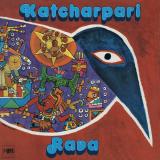
The vinyl LP at the heart of this éthiopiques 31 tracks 2 to 11 was one of the very last vinyl records ever released in Ethiopia. But above all it represents, we felt, the absolute masterpiece of the Ethiopian Groove – the Swan Song of Swinging Addis. The album leaves a clear idea for posterity of the level of sophistication and mastery that modern Ethiopian music had achieved, before being crushed under the Stalino-military heel of the Derg – as the bloody revolution that was unfolding came to be called.
Ethiopia1976.
The Revolution that broke out in February 1974 rolled on in a ruthless march. The whole of Ethiopian society was utterly stunned. The bouquets of flowers handed joyfully to the first tanks of the coup d'état were to wilt very rapidly. From September 1976 to February 1978, 18 months of Red Terror (the name given by the junta itself) spilled blood throughout the country. This fratricidal conflict took its heaviest toll among students and youth. The shift from feudalism to a cruel and primitive Stalinism left the country's citizens deeply traumatised, and snuffed out any pretence of activism, whatever the sector of society. This ice age was to last for seventeen long years.
ሙሉቀን፡መለሰ Mulukèn Mellèssè Muluqän Mälläsä
It was three tracks by Muluken that served as the opener for éthiopiques-1 more than 25 years ago. Seven more tracks appeared on éthiopiques-3 and 13, all accompanied by The Equators, which was soon to become the Dahlak Band.
The first track, Hédètch alu, also the very first piece that Muluken ever recorded, left audiences both unsettled and amazed. Reflecting the singer's extremely young age (he was just 17 at the time), this angelic voice mystified many, who thought they were in fact listening to a feminine voice. He was not yet 22 when he released his last vinyl record in 1976 with Kaifa Records (KF 39LP), one of the very last to be issued in Ethiopia, before the cassette tape became the dominant medium for music distribution – and before the new revolutionary regime put a stop to all independent musical life, via an unspeakable barrage of prohibitions and other persecutions.
Mulu qèn, literally, “A well filled day”. This tender maternal intention wasn't enough to ward off the cruelty of fate. His mother's premature death drove Muluken to leave his native Godjam, in northeast Ethiopia, to live with an uncle in Addis Ababa. Born Muluken Tamer, he took his uncle's last name – Mèllèssè.
The spelling Muluken appeared in his administrative records. Transcription of Amharic to the Latin alphabet, both in Ethiopia and for scholars, gives rise to controversies and quibbles that can never be neatly settled. French allows for a closer approximation of the original pronunciation, thanks to its battery of accent marks, confusing as they may be to anglophones.
Between rather accommodating administrative record-keepers and the various versions that pop up in interviews given by the artist, Muluken's year of birth oscillates between 1953 and 1955…
1954? One thing is certain: the artist's talent made itself known very early indeed, because he got his start in 1966-67, at the age of 13 or 14. Photos from the period attest to his extreme youth. It's a strange sort of initiation for a very young teenager to become a sensation in the heart of Addis's nightlife at the time, Woubé Bèrèha – the Wilds of Woubé. And what's more, in the club of the Queen of the Night, the Godjamé Assègèdètch Alamrèw herself, the very same that was portrayed by Sebhat Guèbrè-Egziabhér in his novel-memoir Les Nuits d’Addis Abeba2… The legendary female club owner who is remembered to this day by the capital's ageing boomers.
Muluken first tried his hand at the drums, before he grabbed the microphone. He emigrated briefly to the Zula Club, across the street from the old Addis Post Office, one of the ground-breaking bars of the burgeoning musical scene, before joining the Second Police Band in 1968, for around three years. He spent a few months with the short-lived Blue Nile Band founded by saxophonist Besrat Tammènè. As the musical scene grew increasingly successful, and pulled slowly but decisively away from its institutional ties, Muluken released his first 45rpm single in February 1972 (Amha Records AE 440). It was included in two LP Ethiopian Hit Parade compilation albums in September of the same year. All in all, Muluken released eight two-track 45s and the same number of original cassette tapes between February 1972 and 1984, the year that he departed for permanent exile in the USA. After converting to Pentecostalism in 1980, Muluken gradually abandoned all secular musical activity. In 1985, at the end of a concert in Philadelphia, he decided to quit concerts and recording for good. Mèlakè Gèbré, the historic bass player from the Walias band who was playing with him that night, recalls that everything appeared so irredeemably diabolical in Muluken's eyes, that it was to be the end of his contribution to Ethiopian Groove.
The end of the story, the beginning of a legend.
Dahlak Band, forgotten by History
Aside from his personal history and vocal talents, it must be remembered that Muluken Mèllèssè was one of the biggest names in the musical innovations that marked the end of the imperial period. These éthiopiques aim to convince those who are just discovering this hidden gem... As for Ethiopians themselves, they are to this day captivated by this singular and atypical figure in the Abyssinian pop landscape – even though he withdrew from public life some 40 years ago. Incorrigible devotees of poetic twists, of more or less hidden meanings, Ethiopians appreciate above all the care Muluken took in choosing his lyrics and the writers who penned them, such as Feqerte Haylou, Alemtsehay Wodajo and, here, Shewalul Mengistu (1944-1977). Love songs, written by women, a far cry from the conventional drivel that pleases sappy sentimentalists.
Muluken is equally acclaimed for his perfectionism when it came to music, the opposite of the overly casual approach that is all too common. He remained a faithful partner of musicians who came from a lineage that borrowed from several inventive and pioneering bands (Venus, Equators, Dahlak). Amongst them were certain artists who began their musical lives with Nersès Nalbandian at the Haile Sellassie Theatre and who come of age in around 1973 – at just the wrong time, you might say. Among them were the pillars Shimèlis Bèyènè (trumpet), Dawit Yifru (keyboards) and Tilayé Gèbrè (sax & flute). Most notably Tilayé Gèbrè, certainly one of the most important musicians, composers and arrangers of his generation, of the end of the imperial era, and of the early years of the Derg.
It was only in 1981 that a miraculous opportunity arose for Tilayé to escape the Stalinist paradise of the dictator Menguistou Haylè-Maryam. Once again it was Amha Eshèté (1946-2021) who provided a solution. The spirited and courageous producer, who had been in exile in Washington since 1975, succeeded, thanks to his incredible perseverence, in bringing the Walias Band to the USA. It was, in fact an extended Walias Band comprising ten musicians3, six of whom chose to slip away after a few concerts and the recording of an LP (The Best of Walias, WRS 100). Tilayé Gèbrè was one of these. He has been living in the USA ever since. There he joined the then-nascent Ethiopian diaspora, which lived largely unto itself, and was making only very modest headway in the American musical market. It seems unfair that Tilayé Gèbrè and the Dahlak Band were not able to benefit earlier from the public recognition that they do deserve.
A similar draining away of the top-rate talents would lead to the reorganization of the major groups of the “Derg Time”. The remaining artists spread themselves around between Ibex Band (renamed Roha Band), Ethio Star Band and a remodeled Walias Band. That spelled the end of the Dahlak Band.
With this record, produced by the essential Ali Abdella Kaifa a.k.a. Ali Tango, we can appreciate everything that the Derg not only destroyed, but also prevented from flourishing. This gem of Ethiopian-style afrobeat came out in 1976 (and, by way of a parenthesis, before the FESTAC 1977 in Lagos, which was attended by an impressive delegation of Ethiopian musicians — although Fela was already personna non grata in his own country). Despite everything that might distinguish this ethio-groove from Fela’s music – no colonial axe to grind, no question of political confrontation with the authorities, no claims to negritude or Africanism for the Ethiopian musicians, and less extrovertion! –, this LP fits beautifully into the saga of intense and electrified soul of the new “African” groove that Fela and Manu Dibango embodied so well from that point onwards.
In restoring this record to its place in the afrobeat epic, it can be seen that, if nothing else, the timeline bestows a legitimate pedigree and a historical primacy to works that had no international impact when they were originally released.
Warning! Masterpiece!
Search:second hand
»Hug of Gravity« is the second solo album by Raphael Loher and his first for Hallow Ground. The Swiss pianist and composer uses piano preparations, tape machines, and digital means to forge an aesthetic of playful reduction and rhythmic abstraction. The source material for these four sprawling pieces was culled from recordings of the artist performing the album’s predecessor, 2022’s »Keemuun.« Loher used them in a painstaking two-part working process to create an album that is both a product of and an ode to transformation, exploring themes of alternative temporalities and spatialities. »Hug of Gravity« oscillates between experimental electronic music, ambient, and minimal music and calls to mind the work of artists like William Basinski, Linda Catlin Smith, or label mate Andrius Arutiunian.
Loher laid the foundation for »Hug of Gravity« in 2020 with ten solo performances at his studio, during which he presented the pieces from his debut album. For these intimate concerts, he prepared the piano with modelling clay in order to move beyond the well-tempered tuning that dominates most of Western music. He then used a consecutive three-month residency in the Blenio Valley to refine the recordings. »I cut up and rearranged the material, then transferred the results—around 30 pieces—to a varispeed tape machine and then back to the computer. After that was done, I cut them up and rearranged them again,« he laughs. By radically reworking the material, he created an album that eschews traditional notions of time and space.
Loher points out the influence that his surroundings had on him. »The process created the music—and the place was essential to the process.« he says. He wandered through the mountains for up to nine or ten hours a day, which gave him a sense of what he calls expanded temporality. »Time just felt longer, my experiences seemed more diverse and nuanced, and it was as if I perceived my environment more clearly,« he explains. This shift in Loher’s perception of time and space—the latter also expressed in the album’s title—influenced his work with the varispeed tape machine. It allowed him to change the pitch of different recordings while layering them to let interference patterns emerge and emphasise the emotional qualities of the unconventional tunings he had used.
In this way, Loher constructed numerous interlocking narrative arcs throughout »Hug of Gravity,« an album that is ever-changing; an exercise in calm ecstasy that provides its audience with the feeling of being removed from conventional time and space. This approach is also reflected in the artwork for »Hug of Gravity,« which is based on drawings Loher made during his residency at Blenio Valley. Their fine hand-drawn lines run in parallel and let incidental patterns emerge, an effect that is only multiplied when the six different drawings that accompany each vinyl copy of the album are overlapping, forming ever-new visual constellations.
- A1: Disco Mania
- A2: Miniminiminiminijupe
- A3: Noise Boys
- A4: Hungriges Afrika
- B1: One Second Too Late
- B2: Sweet Jane
- B3: Ping Pong Lied
2025 Reissue.
Münchenbuchsee, a suburb of Bern, Switzerland. Stephan Eicher is the youngest of three children. His father, a radio and TV repairman, is also a jazz violinist and a sound tinkerer in his spare time. In the family home's converted fallout shelter turned studio, Mr. Eicher experiments with homemade sequencers, tortures handcrafted drum machines, and abuses reel-to-reel tape recorders—all under the fascinated gaze of young Stephan.
The boy quickly develops a musical curiosity, exploring sound through various experiments and wanderings. Alongside his younger brother Martin, Stephan crafts audio plays on a homemade multi-track recorder (essentially several cassette decks hooked together!), which they write, record, add sound effects to, and perform for family and friends. Just a couple of nice kids, really...
Then comes 1972, and Lou Reed's Transformer album changes everything for the Eicher kids. For 13-year-old Stephan, it's a revelation—especially "Vicious", the opening track, which he plays on repeat for months. He convinces his father to buy him an electric guitar. Not stopping there, his father also builds him a tube amp using an old radio.
Then comes adolescence. A rough one. Stephan leaves home at 16 and moves to Zurich. With obvious artistic talent, he persuades his art teacher to help him get into F+F, a radical, alternative art school—despite his young age. Accepted, he starts learning video techniques, determined to become a filmmaker.
At F+F, Stephan organizes Dada-style happenings and concerts with a group of friends known as the Noise Boys. Among them: one of his teachers on bass, Veit Stauffer on drums (who would later found ReR/Recommended Records), his girlfriend Sacha on vocals, and Stephan on guitar. In one of their early performances, they release a remote-controlled mouse covered in dull razor blades into the audience to create panic and chaos. Keeping with this aggressive, confrontational spirit, they once played a concert while wearing headphones blasting Tristan and Isolde, trying to perform their own songs simultaneously—to maximize the cacophony. The goal was always the same: clear the room.
Their “songs,” if you can call them that, followed suit. Take "Hungeriges Afrika", for instance—performed entirely with power drills and some drum feedback.
To make ends meet, Stephan returns to Bern on weekends to work as a waiter at the Spex Club, the city’s main punk venue. On September 16, 1980, during a show by proto-electro group Starter, the police raid the club and arrest everyone. Stephan, who manages to avoid arrest, seizes the opportunity to “borrow” Starter’s gear left behind. He suddenly finds himself in possession of a Roland Promars synth, a Korg MS20, and a gorgeous CR78 drum machine, which he runs through a Big Muff distortion pedal to get that perfect gritty sound.
He then sets out to reinterpret some Noise Boys tracks, reworking them during impromptu sessions recorded on a dictaphone (yes, a dictaphone—now the lo-fi sound makes more sense, doesn’t it?). He ironically titles the resulting cassette "Stephan Eicher spielt Noise Boys" ("Stephan Eicher plays Noise Boys"). This gem features seven tracks, which are the ones reissued here.
Back in Zurich, he visits his friends Andrew Moore and Robert Vogel, who have a DIY cassette duplication setup. They make 25 copies of Stephan Eicher spielt Noise Boys for Stephan and his friends. Robert encourages him to visit Urs Steiger of Off Course Records and play him the tape.
Without much hope, Stephan shows up at Urs’s office. But Urs is instantly hooked and suggests releasing a 7” single. Due to space constraints, they reluctantly drop two of the seven tracks ("Hungeriges Afrika" and "One Second"). As for the musical score featured on the cover—it was randomly chosen and remains a mystery to this day. Calling all music theory nerds!

The 7-inch is pressed in 750 copies and released in the first week of December 1980—a date Stephan remembers well, as it’s the same week John Lennon was killed. Smartly, Urs sends a promo copy to François Murner, Switzerland’s answer to John Peel, who hosts a show on alternative station Sounds. Murner falls in love with the record and starts giving it airtime. To Stephan’s surprise, sales follow—and people actually seem interested in his music.
Even this modest underground success scares Stephan a bit. He stops making music for a year and moves to Bologna, where he works as a programmer at Radio Città, a feminist radio station.
Meanwhile, Stephan’s younger brother Martin, who’s also involved in the punk scene, joins the band Glueams as a singer and guitarist. Glueams, named after the fanzine run by two of its members (drummer Marco Repetto and bassist GT), eventually rebrands as Grauzone. Stephan is invited to their shows to project hacked Super 8 visuals live on stage.
Urs Steiger, now working on a compilation titled Swiss Wave – The Album, asks Grauzone to contribute alongside bands like Liliput, Jack and the Rippers, The Sick, and Ladyshave (Fall 1980).
For the album, Martin tasks Stephan with producing their recording sessions. Under Stephan's artistic direction, two tracks emerge: "Raum" and "Eisbär". During "Eisbär", Martin plays a minimalist bass line borrowed from post-punk band The Feelies (just an open string). Drummer Marco Repetto struggles to keep time. Later that evening, unhappy with the takes, Stephan builds a four-bar drum loop from a ¼-inch tape and uses it instead of the flawed original. He then adds bleepy synths and wind sounds to complete the track’s icy vibe before handing it over to Urs.
The Swiss Wave – The Album compilation is released quietly at first, but things snowball thanks to "Eisbär", which eventually becomes a smash hit—selling over 600,000 singles.
Meanwhile, Stephan plays in a rockabilly band called SMUV (named after Switzerland’s social security agency) and begins producing artists, including the debut album of Starter (1981), which includes a more pop-oriented version of "Minijupe".
By early 1982, Stephan starts spending time with the post-punk girl band Liliput (formerly Kleenex). They’re older than him, and he happily drives them around in his Renault Major, acting as their roadie.
By 1983, Grauzone—signed to the major label EMI, which turned out to be a misstep—is falling apart. Stephan begins to pivot toward a more mainstream pop sound with his debut solo album Les Chansons Bleues.
But that... is already another story.
- A1: Get Up I Feel Like Being A Sex Machine
- A2: Brother Rapp (Part I & Part Ii)
- A3: Bewildered
- A4: I Got The Feeling
- B1: Give It Up Or Turnit A Loose
- B2: I Don’t Want Nobody To Give Me Nothing
- B3: Licking Stick
- C1: Lowdown Popcorn 9.Spinning Wheel
- C2: If I Ruled The World
- C3: There Was A Time
- C4: It’s A Man’s Man’s Man’s World
- D1: Please, Please, Please
- D2: I Can’t Stand Myself (When You Touch Me)
- D3: Mother Popcorn
James Brown wants to know one thing before he and his band begin Sex Machine. “Can I get into the thing, really?,” he asks. His cohorts enthusiastically respond in the affirmative. And for the next hour and change, Mr. Dynamite gets into it and more, turning in a sweat-soaked, feet-moving, hip-swiveling, emotion-purging, in-the-red, drop-everything-you’re-doing-and-dance performance for the ages. Ranked by Rolling Stone among the 500 Greatest Albums of All Time, the sweeping 1970 effort towers as a testament to Brown’s inimitable legacy as well as the peak powers of his voice, vibrancy, and bands.
Sourced from the original master tapes, pressed at Fidelity Record Pressing, and housed in a Stoughton gatefold jacket, Mobile Fidelity’s numbered-edition 180g 33RPM 2LP set presents Sex Machine in audiophile sound for the first time. It explodes with the energy the lightning-strike music demands. Dynamic, immediate, present, airy: Everything from the brassiness and fluidity of the horns to the snap and decay of the snare to the swell and carry of the organ comes across in full-range perspective.
Then there’s Brown’s superhuman singing, which here emerges with a purity, naturalism, and transparency that ensure you feel everything. Screeching, shouting, pleading, moaning, preaching, stinging, commanding, testifying, crooning, humming: The Godfather of Soul contributes one of the finest vocal performances known to man. This definitive 55th anniversary reissue of Brown’s monster funk statement further exhibits a combination of clarity, solidity, separation, and imaging that helps bring to light what he and his crack ensembles committed to tape. Both in the studio and on the stage.
Just how lifelike does this reissue sound? Senior Mobile Fidelity Sound Lab engineer Krieg Wunderlich, who handled the remaster, notes: “There were some artifacts that sounded a bit like mistracking. But they turned out to be breath blasts on the vocal microphone. That is part of history. JB was workin' hard, and breathin' hard. And there was an edit the timing of that was truly strange. Again, a part of history.”
Originally marketed as a live album, Sex Machine contains six songs recorded in the studio and later overdubbed with canned crowd noise and reverberation. Save for “Low Down Popcorn,” the tracks on the latter half stem from a phenomenal performance captured in October 1969 at Bell Auditorium in Brown’s adopted hometown of Augusta, GA. The special relationship between the singer, the audience, and the location is palpable.
As the 1960s gave way to a new decade, Brown experienced immense success and dealt with unexpected change. Soul Brother Number One soon expanded his idea for an official live album captured in Augusta when the ensemble that backed him on that date morphed into the original version of the world-famous J.B.’s just months after the show. The virtuosic abilities, sticky chemistry, and rhythm-forward nature of the J.B.’s prompted him to book a one-off session in Cincinnati, OH, on a late July night.
Anchored by brothers William “Bootsy” Collins and Phelps “Catfish” Collins, the group — as well as two different drummers — laid down a nearly 11-minute rendition of “Get Up I Feel Like Being Like a Sex Machine” and a thrilling medley of “Bewildered,” “I Got the Feeling,” and “Give It Up or Turnit a Loose.” A pair of then-recent studio singles cut in separate locations in 1969, “Brother Rapp” and “Low Down Popcorn,” each featuring his prior group, took care of the second LP worth of material that complements the originally planned live set.
Complicated? Somewhat. Unusual? Definitely. But just as he elevated the expectations for all present and future R&B artists, Brown not only makes it all work. He makes it positively electrifying.
“Get Up I Feel Like Being Like a Sex Machine” is alone deserving of a dissertation on the art of funk music, seeing it moves up and down akin to an oil derrick, witnesses Brown unleashing a trademark series of grunts, squeaks, and “good god” asides, and glides to a hypnotic groove that won’t quit. Or look to the syncopated rhythms of “Brother Rapp (Part I and Part II),” one of multiple pieces here that signify the point where Brown began viewing every instrument as a percussive tool. Brown closes the three-song medley with his new band with a skedaddling “Give It Up or Turnit a Loose,” which provides jolts on the order of sticking your finger into a socket.
Not that the actual live material falls short in any way. Setting an insistent tempo for the vitality that follows, “I Don’t Want Nobody to Give Me Nothing” positions Brown as a role model, leader, and self-sufficient entrepreneur. All simmer and boil, the short and sweet “Licking Stick” dares you to keep pace. The floating, almost comforting “Spinning Wheel” spotlights the instrumental prowess of Maceo Parker and company, and functions as a seamless segue into the tender, horn-saluted “If I Ruled the World.”
And Brown and his mates still aren’t done. Just try to resist the one-two closing punch of “I Can’t Stand Myself (When You Touch Me)” and “Mother Popcorn.” Mercy.
Ain’t it funky? Sure ‘nuff.
Black Vinyl[38,03 €]
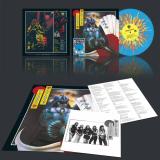
Die hochgeschätzten Euro-Metal-Pioniere Oz wurden ursprünglich 1977 in der kleinen finnischen Stadt Nakilla gegründet. Die Band bestand aus Mark Ruffneck (bürgerlicher Name Pekka Mark) am Schlagzeug, Sänger Ape De Martini (Eero Hämäläinen), Bassist Tauno Vajavaara sowie Kario Elo an der Gitarre.
Fünf Jahre nach ihrer Gründung legten Oz ihr Debütalbum vor. Mit Krachern wie “Saturday Night”, “Capricorn Man” oder dem schlüpfrigen “Second-Hand Lady” avancierten Oz schnell zur HM-Band Nummer eins in Skandinavien.
In der Folge zog man nach Stockholm um, wo 1983 der gefeierte Zweitling »Fire In The Brain« entstand. Die Platte enthielt höchst energetische Heavy-Metal-Hymnen wie “Fortune”, “Megalomaniac” oder “Gambler”. Der kanadische Journalist Martin Popoff verteilte in seinem »Collector’s Guide To Heavy Metal« 9 von 10 Punkten und schrieb: »Fire In The Brain« ist eine düstere, fast depressiv wirkende Platte, die den Hörer wie ein Güterzug trifft. Es ist ein sehr europäisch klingendes Werk – vom apokalyptisch anmutenden ‘Searchlights’ über das zähflüssige ‘Black Candles’ bis hin zum gewaltigen Titelsong werden absolut keine Gefangenen genommen.“
High Roller Records, silver vinyl, ltd 450, 425gsm heavy cardboard cover with 5mm spine, lyric sheet, 12 page booklet, poster
Tim Hutton and Thomas Melchior formed Vulva in 1993 in England. The experimental techno duo signed with the Rephlex label (home of Aphex Twin) and released From the Cockpit in 1993. Vulva's first domestic release was the Mini Space Vulvette EP, for Reflective Records. After a side project for the German Source label called Yoni ("Yoni" and My Little Yoni), Hutton and Melchior released their second full-length for Rephlex, Birdwatch, in 1996. Vulvic Yonification followed in late 1997.
- Tell My Why
- Gas Crisis
- Cold Sweat
- New Left
- I Hate Hippies
- Angry Youth
- All The President's Skin
- Fucking Zones
- (I Can't Take It) No More
HAND SCREENED SLEEVE/COL. LP/BOOKLET[27,31 €]
USA Hardcore/Punk Geschichte! M.I.A. wurden 1980 in Las Vegas gegründet, zogen 1981 nach Orange County und begannen im berüchtigten Cuckoo's Nest zusammen mit Fear, Shattered Faith, T.S.OL. u.a. Shows zu spieln. Ende '81 gingen sie in ein lokales Tonstudio in Costa Mesa und nahmen an einem Nachmittag neun Songs auf, bis ihnen das Geld ausging - 300 Dollar gut angelegt! Eine Kassette wurde rasch kopiert und herumgereicht. Eine Kopie der Kassette wurde KevinSeconds bei einem Gig mit 7 Seconds in Reno gegeben. Kevin gab sie an Tim Yohannan von Maximum Rocknroll weiter. Schließlich gelangte sie in die Hände von Felix Alanis von Smoke Seven und Greg Shaw von Bomp. Mitte 1982 waren M.I.A. dann auf drei Vinyl-Veröffentlichungen vertreten: "Tell Me Why" auf der Compilation American Youth Report von Bomp, "New Left" auf Maximum Rocknroll Presents: Not So Quiet On the Western Front von Alternative Tentacles und acht der neun Tracks landeten auf der berüchtigten Split-LP mit Last Rites auf Smoke Seven. Alle 9 Tracks des ersten Tapes sind hier versammelt, zum ersten Mal richtig abgemischt. Der Begin von M.I.A. (US) und gleichzeitig das letzte Lapitel der Moder City Records-Reissue-Reihe zur Band. « ...In one corner is M.I.A., a band originally from Las Vegas, the champions of punk's positive side. They've managed to fuse a super tight thrash sound with enlightened attitudes_"I Hate Hippies" is obviously meant as a satire with a moral, and the results are absolutely stunning. » _Jeff Bale's 1982 review of the Last Rites for...-Split-LP in Maximum Rocknroll #2 Farbiges Vinyl plus 24seitigem Booklet.
USA Hardcore/Punk Geschichte! M.I.A. wurden 1980 in Las Vegas gegründet, zogen 1981 nach Orange County und begannen im berüchtigten Cuckoo's Nest zusammen mit Fear, Shattered Faith, T.S.OL. u.a. Shows zu spieln. Ende '81 gingen sie in ein lokales Tonstudio in Costa Mesa und nahmen an einem Nachmittag neun Songs auf, bis ihnen das Geld ausging - 300 Dollar gut angelegt! Eine Kassette wurde rasch kopiert und herumgereicht. Eine Kopie der Kassette wurde KevinSeconds bei einem Gig mit 7 Seconds in Reno gegeben. Kevin gab sie an Tim Yohannan von Maximum Rocknroll weiter. Schließlich gelangte sie in die Hände von Felix Alanis von Smoke Seven und Greg Shaw von Bomp. Mitte 1982 waren M.I.A. dann auf drei Vinyl-Veröffentlichungen vertreten: "Tell Me Why" auf der Compilation American Youth Report von Bomp, "New Left" auf Maximum Rocknroll Presents: Not So Quiet On the Western Front von Alternative Tentacles und acht der neun Tracks landeten auf der berüchtigten Split-LP mit Last Rites auf Smoke Seven. Alle 9 Tracks des ersten Tapes sind hier versammelt, zum ersten Mal richtig abgemischt. Der Begin von M.I.A. (US) und gleichzeitig das letzte Lapitel der Moder City Records-Reissue-Reihe zur Band. « ...In one corner is M.I.A., a band originally from Las Vegas, the champions of punk's positive side. They've managed to fuse a super tight thrash sound with enlightened attitudes_"I Hate Hippies" is obviously meant as a satire with a moral, and the results are absolutely stunning. » _Jeff Bale's 1982 review of the Last Rites for...-Split-LP in Maximum Rocknroll #2 Handgedrucktes Lithographie-Sleeve, farbiges Vinyl plus 24seitigem Booklet (weltweite Limitierung 300 Stück).
c1 | NUCLEAR GURU (MANS RUIN EP VERSION)
c2 | HAND OF DOOM (BLACK SABBATH COVER)
d1 | BLACK SHAPES OF DOOM (TROUBLE COVER)
d2 | BLUE SNOW (BBC SESSION)
We're delighted to announce the release of all Orange Goblin's Rise Above Records releases on vinyl, many of which will be for the first time. Next in the series is their classic 1998 album, Time Travelling Blues. Goblin singer Ben Ward recalls the album: "Time Travelling Blues came very hot on the heels of Frequencies and is considered by a lot of people as their favourite Orange Goblin album. As a band we had found our niche, the songwriting was developing all the time and we were starting to get recognised by a wider audience. Again, we still play a lot of the material from this album live but a lot of the younger fans havent heard it so much as its been out of print. Were exceptionally proud that this record is being made available for the first time on vinyl from the original masters which really makes the songs stand out! Throw in the bonus tracks and the additional artwork and it makes for an awesome package." Deluxe vinyl edition of ORANGE GOBLIN's second album released for the very first time on vinyl from the original masters. British Doom/Stoner Metal legends. Features never before seen pictures & exclusive liner notes from singer BEN WARD. Hi quality 180gm vinyl. Gatefold sleeve with full colour insert. Includes a bonus 10 EP with 4 exclusive tracks! 10" Tracklist: Side A 1. Nuclear Guru (Mans Ruin EP version) 2. Hand of Doom (Black Sabbath cover) Side B 1. Black Shapes of Doom (Trouble cover) 2. Blue Snow (BBC Session)
Tina Records presents the apocalyptic visions of Nokuit. Constructing a hellish diorama across six tracks of industrial electronics, Gates of Horn and Ivory uses biblical allegory to map out our current End Times. With sleeve notes by Andy Sharp a.k.a The English Heretic.
Eurosleaze film composer by day, Nokuit has developed a distinctive cosmology over a mutating series of releases on underground labels including wannamarchi club and NKT. Alongside Cut Hands (William Bennett of Whitehouse), he remixed Roberto Musci on the inaugural Tina Records release, as well as having been remixed himself by schuttle, Kinn and Sonae. He has performed internationally, including at Cafe OTO alongside Mun Sing as part of a lineup curated by Flora Yin-Wong and has received radio support from Ad93's Nik Tasker and Ana Quiroga of Editions Mego's LCC, amongst others.
English Heretic is an autonomous creative research project helmed by writer, occultist and multimedia artist, Andy Sharp. Having released over a dozen albums and booklets since it's inception in 2003, the project culminated with the publication of The English Heretic Collection in 2020 by Repeater Books. Friend and collaborator of the late Mark Fischer, Andy has talked at academic conferences and counter-cultural events on a wide range of subjects drawn from his research.
This is the second release from Tina Records, following Cargo Cult by Roberto Musci. Featuring remixes from Cut Hands and Nokuit, that record received airplay from the likes of Surgeon and Not Waving on stations such as NTS, Noods, Resonance and Intergalactic FM. It was also named one of the best releases of 2024 by Bleep. Tina Records is based in London and Rome.
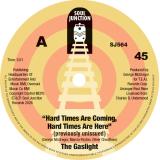
In 1978 a newly formed Augusta, Georgia group Marshall, Donovan and Broomfield chose to record cover versions of two songs previously recorded in 1973 and 1974 respectively by Florida siblings group Cornelius Brothers and Sister Rose. These Eddie Cornelius penned songs “Let me Down Easy” and “Since I Found My Baby” would form both sides of Marshall, Donovan and Broomfield’s first 45 single, released on group founder John Marshall’s own Augusta label. The flipside “Since I Found My Baby” would eventually gain popularity across the pond with aficionados of the UK modern soul scene of the early 1980’s and beyond.
John Marshall began his musical career in a high school group called The Fabulous Gardenias who recorded the doowop ballad “It’s You, You, You” backed with the up-tempo R n B mover “What’s The Matter With Me” released on Tommy Brown’s local Liz label (named after his wife future Motown recording artist, Liz Lands) in 1961.The Fabulous Gardenias featured John Marshall, the late Atlanta alumni Calvin Arnold, “Little” Joe Jones Jr (later of the Tams) and a fourth guy only remembered as Harold. John Marshall later sang with another Atlanta group The Tams of “Hey Girl Don’t Bother Me” fame from 1970 through to 1978.
Later in 1978, John Marshall having relocated to Augusta, GA the previous year was casually emptying the contents of his mailbox outside his home when a car suddenly pulled up. The driver called out “Hey I recognize you, you’re John Marshall you used to be with the Tams!” The driver continued to introduce himself as John Donovan stating that he too was a singer, followed by an impromptu performance, and hey! sure enough he could sing! A later introduction to Charles Broomfield (John Marshall’s next-door neighbour at that time) would lead to the formation of the group Marshall, Donovan, Broomfield with the addition of Mary Marshall and Pat Donavan (the then, two John’s respective wives) as backing vocalists. The previously mentioned group’s first release the John Donovan led “Let Me Down Easy/Since I Found My Baby” was recorded at the now defunct Jam Studio’s in Atlanta. Upon release, the “Let Me Down Easy “side received considerable local radio play but only led to the group performing a handful of local shows. On the strength of the group’s first release a second 45 release followed in 1980 “Let’s Dance/That’s Love” both sides of this 45 were penned by Charlston, South Carolina native, Harold Thomas who John Marshall knew from his time with the Tams, Thomas having once been part of Bill Pinkney &the Original Drifters and later the Tams management teams. This second 45 never gained the same local attention of “Let Me Down Easy” and after three years together the Marshall’s, Donovan’s and Charles Broomfield went their separate ways. John Marshall lost contact altogether with his former group members and left the music business taking up employment at International Paper Mill until his retirement in 2013.
Due to the current resurgence in popularity of “Since I Found My Baby” with copies regularly selling for four figure sums, Soul Junction have reacquainted ourselves with John Marshall to you bring you “Since I Found My Baby” backed with “Let Me Down Easy” with the addition of the excellent and lesser, known stepper “That’ Love” making this an excellent value 45 release.
Pat Orburn serves up a wicked nine-track offering for Cassette Blair — a project built from pure resourcefulness and raw imagination. His vocals glide over synth-driven textures crafted from all around, including a battered Yamaha psr 175 keyboard that his flatmate rescued off the street. Pat leans into the beauty of imperfection, shaping found sounds through analog tools, tape warmth, and gritty modulation.
“good” marks the second release on Cassette Blair — a label founded by Gavsborg, dedicated to uplifting his extended global family of artists. True to its mission, the record feels communal, handmade, and deeply personal: a celebration of creativity that thrives outside of traditional studios, born instead from curiosity, friendship, and the joy of sound exploration.
“Good news. Good it’s out, good of Gav to help, all round completely good!"
- Pat Orburn
Digi- Cover art & Design by Pat Orburn (London, UK)
Cassette- Cover art & Design by Gavsborg, Sherice Bromfield & Pat Orburn (Kingston Jamaica & London, UK).
Mixed by Pat Orburn (London, UK).
Mastered by Mario “Syantis” Lawerence (Kingston, Jamaica).
It was December 2015 when Simon Weiss delivered his first EP for Voyage Direct, an impressively intergalactic affair full of supersonic synthesizer arpeggio lines, Motor City influences and robotic drum machine hits. Two years on, the experienced Dutch producer returns to action for the first time since, in the process delivering another quartet of starry-eyed productions.
.
Through releases on Deepermotions, Rush Hour and Hometaping is Killing Music, Weiss has established a reputation for combining a deep understanding of dancefloor dynamics with a sci-fi inspired futurist aesthetic. Both of these complimentary traits are much in evidence on his second outing for Voyage Direct.
Weiss blasts off via Brain Fever', where raw, mind-altering arpeggio bass, fuzzy drum machine hits, spacey chords and alien electronics thrust our hero skywards. Think of it as techno for funk-fuelled, Italo-disco loving astronauts whose journey to the end of the universe is only just underway. This intergalactic funk blueprint is explored further on the deeper and more melodious You Want A Cigarette', where Weiss's vocoder vocals wrap themselves around mutant TB-303 lines, rush-inducing chords and clattering machine percussion.
On Space Ghetto (Booty)', our hero celebrates the discovery of previously unknown worlds in the only way he knows how. With kaleidoscopic, full-throttle electronic motifs and funk-fuelled synth-bass to the fore, Weiss offers his own unique take on electrofunk. Pleasingly fuzzy and tightly wrapped in the syncopated drum machine handclaps of ghetto-house, it's a typically far-sighted and attractive proposition.
With just two minutes to go until his spacecraft touches down on alien territory, Weiss rounds things off via the melancholic chord progressions and heartfelt vocoder vocals of Intro', a beat-free excursion just tailor made for dramatic set openings and spine-tingling mix endings. He may be stepping into unknown territory, but it won't be the last you'll hear from Simon Weiss.
BBE Music is proud to present the latest J Jazz Masterclass Series reissue, 1978 soul/jazz tour de force album ’Push’ by Noriko Miyamoto. For the first time, this critically acclaimed series that delves deep into the history of Japanese Jazz will be releasing an album by a Japanese female singer, Noriko Miyamoto produced by one of the legendary figures in Japanese Jazz, Isao Suzuki. The release of her incredible debut album, ‘Push’, coincided with a surge in popularity for local female jazz singers such Kimiko Kasai, Yasuko Agawa, etc. that crossed over into the pop market. It was originally released by the now-defunct label, Yupiteru Records in 1978. Since then, it has been reissued a few times in Japan but recently, along with a surge of worldwide interest in old Japanese music, ‘Push’ has been gaining a cult status among foreign music heads, with the price for an original pressing skyrocketing in the second hand record market. This reissue of ‘Push’ will be the first time ever that this album will be officially released worldwide. Long before R&B music went onto enjoy mainstream success in Japan, a soul music and disco loving lady, Noriko Miyamoto who started her music career working as a dancer at the legendary Tokyo disco, ‘Mugen’, was inspired by Tina Turner’s performance there and decided to became a soul singer. It was at a time in the early 1970s when there were only a handful of female songstresses who sang soulfully in Japan. In 1977, Miyamoto was scouted by Isao Suzuki to join his band, Soul Family and subsequently, with their backing, he produced Push, an album that kickstarted her career. It is an album that exquisitely combines her jazzy and soulful vocals with Suzuki’s acoustic bass and precocious playing from his youthful and vibrant group at the time. Along with Sadao Watanabe, Terumasa Hino, Masabumi Kikuchi and George Otsuka, bassist, cellist, multi-instrumentalist, composer, arranger, producer and band leader, Isao Suzuki was considered to be one of the most influential figures in Japanese jazz history. Beloved by many in the Japanese jazz scene as “Oma-san”- Suzuki was renowned for developing young talent.
- A1: I Am The Stars
- B1: My Blue Heart
Featuring the otherworldly vocals of the legendary jazz singer Norma Winstone whose vocals were recently sampled in Drake's 2023 chart topping single IDGAF (feat. Yeat) and Leo Taylor (Floating Points, Hot Chip, Joy Crookes) on drums, the EP is the amalgamation of Barrott's long term fascination with sunset music, and the ways the change of seasons impact the way we co-exist with the sun. As winter draws closer and we move on from the Autumn equinox to Winter solstice, Barrott's latest release captures the transformative yet paradoxical feeling of melancholy over the end of Summer and the start of winter while creating an eerie sensation of serenity.
The EP follows from the release of Barrott's critically acclaimed and deeply personal 2024 album Everything Changes, Nothing Ends.
The new EP sees Barrott return to his beloved sunset music, as he continues his eternal quest to find new ways to soundtrack this sacred Ibiza moment.
Crowned as the"master of sunset music"by Pitchfork, Barrott's new EP is filled with celestial grandeur that stops you in your tracks. A profound musical meditation and an homage to the sunsets of the Autumn months, the EP captures the sonic poetry of the changing skies and the seasons.
The haunting combination of Barrott's production & arrangement skills, Taylor's jazz drums and Winstone's endlessly ethereal vocals soar in a harmonious union across the title track of the EP while the openerI Am The Starssummons you in for a brief respite from the cacophony of the modern world. The wistful second trackMy Blue Heartlingers with you with its melancholic jazz horns swelling side by side with Winstone's vocals while the closing trackI Am The Airfloats through your ears with its sublime contemplativeness. I Am The Sun, You Are The Moonsees Barrott returning to his sonic ruminations on sunsets, however they are more profound and life affirming than ever.
"At the end of the summer, on a clear bright starry night I climbed to the top of a mountain in Ibiza with a pair of headphones and listened to these tracks and lost myself in the vastness of the night sky and the endlessness of Norma's voice. At that moment everything made sense in my world for the first time in a long while and it just felt right",Mark Barrott says.
"I was surprised and delighted to be asked to participate in this very musical project and to be given such a free hand. Trying to integrate the voice into what were already beautifully formed pieces was creatively very interesting", Norma Winstone says
Germany’s DJ Swagger returns to Dr Dubplate’s Original Pirate Material vinyl series. The fourth release on the celebrated sub-label nods towards a continued evolution in the ec2a sublabel’s sound - rooted in the darker corners of the bass, garage and 140 realms, OPM blurs the lines between genres - its main focus on bringing serious energy to the club. Continuing to showcase talented producers handpicked from the new wave pool of talent on Original Pirate Material, OPM004 comes following February’s celebrated release FTRRLT (Future Reality. No stranger to the ec2a / OPM camp. DJ Swagger’s second offering on the imprint is a majestic return, perfect for the heads-down, hands in the air return to the club.
Souldynamic swings back onto the Samosa label with the mesmerizingly rhythmic West-Side Of Afrika Vol. 2.
We kick off the A-Side with ‘Touma’ – a truly hypnotic tribal afro vapour that entices you into the fire-lit night. A heavy dub-style bass just about dominates above the rhythmic ensemble, whilst the haunting chanted vocals elevate the track to ethereal levels. Stunning. No wonder Ron Trent has been spinning this one in his sets for the past few weeks – it’s right in that spiritual zone where deep house meets ancestral ritual.
Second track on Side A is the happiness trip that is ‘M.I.L’. Rolling drums, marimbas and a killer bassline merge with the flighty guitar riffs and smiling vocals. You could be in a bar listening to the music live in the room, smoke filling the spaces and dim lights offering a glimpse of good times.
Heading over to Side B and you find the enchanting ‘DJA’ awaiting. A deep roller of a tune, Souldynamic shifts the gears whilst serving the entrees. A truly magnificent slice of West-African vibes, ‘DJA’ has it all from the gorgeous vocals to the chugging, hypnotic beat.
Track 2 on Side B is the sultry ‘N.T.F.P’. The BPMs are touched down a notch for this one but don’t let that fool you. ‘N.T.F.P’ is a musical celebration of joyous beats, slaps, claps, brass and Afro vocals. You don’t get it much more authentic than this.
West-Side Of Afrika Vol. 2 is like a shapely hand in the perfectly fitted glove that is the Samosa label. A truly stunning piece of vinyl with every track as strong as the last. A sure-fire winner.
Moving freely through time and space via experimental DIY recordings since 2009, Joasihno return with their fourth album "Spots".
“Find your spot in the shade,” a truly laid-back and incredibly soft-spoken MC once advised, yet in a world that seems to get shadier every day, it’s probably time to finally get out and face the sun. Southern German experimental pop duo Joasihno – initial solo founder Cico Beck (The Notwist, Aloa Input, Spirit Fest) and drummer/composer Nico Sierig (Instrument, Fehler Kuti) – seem to know exactly when it’s time to shine. Idiosyncratic genre tweakers since day one, they have been operating at their own pace, mostly staying in their own shady corner. Yet, almost a decade after their most recent “Meshes” (an album that came with a whole legion of tiny music robots), it’s high time for them to take over more corners, to reclaim even more spots between lo-fi and sci-fi, retro electronica and contemporary classic. Drawing upon influences as varied as Reich, Riley, and Ryuichi, múm, Meek, and Moondog, while also nodding to other experimental twosomes (e.g. The Books), the duo’s fourth full-length “Spots” is set to arrive via Alien Transistor in late 2025.
Leaving soulless automation and all things artificial to others, Joasihno launch the latest record on “2 Squares” that feel like a peaceful, almost bucolic version of retro space age: lights blink ever so softly as easy-going bass tones point at today’s introspective flight arc. Electronic shapes align and things lift off – with a majestic 8-bit sunrise soon appearing right in front of us. Whereas playful title song “Spots” is a miniature Rube Goldberg kind of device, with quirky plucked strings and glitches setting off more and more contraption layers, “Crackleboom” is uncharted energy, an open landscape, an expanding bonfire that leads to a long-forgotten piano, all dust-covered in some kind of saloon. Space might be only noise to others, here, it’s foreboding screeches (“Dizzle Whistle”) that make room for A-side center piece “Forest Lights”: a steady beat that lures us to a clearance in the woods. Things break and shatter in the distance, but this spot right here is for hypnosis, dancing, sylvan spirits. And yeah, it’s surprisingly hot down here in the undergrowth…
Opening side B with a fun banger that takes the unhinged dancing to the playground – “Characa Orb.” feels like French kids on swings going crazy, a tipsy, tongue-in-cheek electro blow-out between Oizo and Orbis Tertius –, things get even more cinematic throughout the second half. Even the cheapest, lo-fiest gear is sufficient to make “The Slow Hour” glow like true, timeless pop royalty. In fact, the very same pop spirits roam and celebrate freely in the chirpy coves of mesmerizing “Detune Lagoon” – more hand-crafted sci-fi/lo-fi loops you’ll only find after facing the ghosts of Lynch or Sakamoto on those night-time trails under the “Deep Moon”. It’s all DIY spots, spots that leave room to dream or dangle, drape yourself over or dive into. Returning to the leafy bower on a melancholy post rock tip, we eventually learn that “Death Is Real” – and so we’re left with a laterna magica that turns and turns and turns. It’s a beautiful spot where light and shadows keep on dancing, just like they’ve always done, ever since the dawn of this madcap universe.
After the highly successful release of their second album “March Of The Unheard” in January 2025, which charted #3 in Sweden, #4 in Germany and Austria, #8 in Finland and Switzerland, melodic death metal all-star group THE HALO EFFECT celebrated a triumphant series of shows on their first EU headlining tour (supported by fellow Swedes PAIN), now follows an EP with cover songs handpicked by each member of the band offering a stunning and surprising insight into THE HALO EFFECTS’ diverse influences.
Dekmantel welcomes Theo Kottis back for his second release on the label - three high-impact club tracks plus a remix from rising star Spray. Following Lighthouse - named “song of the summer” by Resident Advisor - Blue Supermoon carries the same melodic punch, rhythmic drive - and it’s already lighting up some of the world’s most treasured dancefloors.
The title track has been circulating for over a year, with early support from Batu, Call Super, Francesco Del Garda and Ben UFO and plays at Houghton, fabric and beyond. It’s a swirling, tension-loaded cut where pads and an arpeggiated topline intertwine over a weighty, driving bassline, underpinned by intricately layered percussion - the kind of track that stays with you.
What To Do was inspired by a night out at fabric’s 25th birthday party, linking back to Kottis’ recent release on fabric Records. Hyper aims for big-room euphoria, with a towering build-up and hands-in-the-air release. Spray closes the EP with a shimmering, progressive-leaning take on Hyper, adding his signature slow-burn tension and widescreen energy.
- A1: Identified Patient – The Female Medical College Of Pennsylvania (Marcel Dettmann Pitched High Version)
- A2: Tocotronic – Bis Uns Das Licht Vertreibt (Marcel Dettman Version 2 Remix)
- A3: Cristian Vogel – Untitled (Marcel Dettmann Cut)
- B1: John Bender – Victims Of Victimless Crimes (Marcel Dettmann Cut)
- B2: Clark – Dirty Pixie (Marcel Dettmann Edit)
- B3: Junior Boys – Work (Marcel Dettmann Remix)
- C1: Mutant Beat Dance - The Human Factor Ft. Naughty Wood (Marcel Dettmann Edit)
- C2: Experimental Products – Who Is Kip Jones (Marcel Dettmann Cut)
- C3: Marcel Dettmann – Water Feat. Ryan Elliott (My Own Shadow Remix)
- D1: Severed Heads – We Come To Bless The House (Marcel Dettmann Edit)
- D2: Albert Kuningas - Astraaliprojektio (Marcel Dettmann Edit)
- D3: K.alexi Shelby – Season Of The Real (Marcel Dettmann Edit)
- E1: Ian North – Sex Lust You (Marcel Dettmann Edit)
- E2: Ford Proco – Expansión Naranja (Feat. Coil) (Marcel Dettmann Edit)
- E3: Nitzer Ebb – Shame (Marcel Dettmann Edit)
- F1: Frank Duval – Ogon (Marcel Dettmann Edit)
- F2: Yello – Limbo (Marcel Dettman Version 2 Remix)
- F3: Conrad Schnitzler – Das Tier (Marcel Dettmann Edit)
Cassette / Tape[16,18 €]
2025 REPRESS
A DJ, producer and significant figure in contemporary electronic music, Marcel Dettmann steps forward to contribute to Running Back’s ongoing Mastermix series. Whereas previous editions of Mastermix have taken an ear to the sound of lapsed, legendary clubs such as Wild Pitch and Front, Dettmann’s curation deftly captures the man himself in ongoing perpetual motion, raiding the vault for his own precision-tooled edits, long-employed on dancefloors to devastating effect. Alongside a continuous mix, this release arrives as a 3LP gatefold, and as a limited edition cassette.
Closely associated with Berlin’s techno landscape, Dettmann was born and raised in the former GDR, then later immersed in the bleary-eyed counter cultural landscape of post-unification Berlin. Initially oriented by post-punk, industrial and new-wave music, Dettmann has been DJing since 1993, always expanding and perfecting his repertoire. He later began working behind the counter at the city’s tastemaking rave boutique Hard Wax, and a decade after he first dropped a needle, became (and remains) resident at notable local nightspot Berghain/Panorama Bar, where his instincts have helped sculpt the signature sound of both main dancefloors.
Of course, you’re probably not asking, “Who is Marcel Dettmann?” More importantly, you might want to know; just what treats has he gifted us here? The trip begins with a simple pitch-shift skywards, transforming Identified Patient’s creeping ‘The Female Medical College of Pennsylvania’ into a peak-time freakout, before an alternate take on Toctronic’s ‘Bis uns das Licht vertreibt’ emerges from the vaults for the first time. Dating from 1995, and one of Dettmann’s all-time favourites, Cristian Vogel’s ‘Untitled’ clambers back into the box with respectable cuts, while John Bender’s ‘Victims of A Victimless Crime’ kicks off the flip sporting a new arrangement, transporting us back to the foundations of a confident, stripped-back sound.
A few subtle edits to Clark’s perilously funky ‘Dirty Pixie’ takes us to Dettmann’s remix of Junior Boys. Produced in 2010, it transposes the Canadian duo’s sophisticated pop with our curator in his minimal prime, and has since become an irresistible prize for high-minded diggers. The same can be said for Experimental Products’ explosive proto-electro anthem ‘Who Is Kip Jones?’, empowered from pricey Discogs purgatory with just the slightest of tweaks. It’s deservedly sandwiched between the guiding influences of Chicago and Detroit in the form of Mutant Beat Dance’s raw ‘The Human Factor’ and a shimmering new version of previous solo production ‘Water’, featuring close friend and Ostgut Ton ally, Ryan Elliot.
The second half of the Mastermix seamlessly connects the mechanical past and digital present of EBM and industrial in the dance, with Dettmann’s instincts as a guiding hand. Severed Heads’ iconic ‘We Have Come To Bless This House’ emerges with mere nips and tucks, while Nitzer Ebb’s ‘Shame’ is significantly reimagined as a highwire act of rhythm and tension, setting up a sensual second take on a 2017 remix of ‘Limbo’ from Swiss synth heroes, Yello.
Core musical memories are shaken and stirred with a context-shifting take on Frank Duval’s emotional classic ‘Ogon’, while Ian North’s ‘Sex Lust You’ and Ford Proco’s notable Coil collaboration ‘Expansion Naranja’ effectively throb with only minor adjustments, respectfully imagined as “shadow versions”. Meanwhile, a simple breakbeat lifts Albert Kuningas’s ‘Astraalprojektio’ in the direction of wide-eyed dancefloors, while a fresh take on K-Alexi Shelby’s ‘Season of The Real’ inexplicably emerges somehow even funkier than before.
The conclusion of the compilation leads back to Das Tier from the prolific experimentalist Conrad Schnitzler, whose swirling synths and hypnotic vocals are duly tightened by Dettmann, but only as he puts it, “in conversation with the original.” Concluding three discs and thirty years of commitment to the dancefloor, this Mastermix not only offers us the opportunity to eavesdrop on this endless exchange, but to gain some sought-after material for our own record collections.
Kalita are proud to present a 2-year anniversary repress of Emerson’s 1988 mythical electro boogie grail ‘Sending All My Love Out’, accompanied by two remixes courtesy of the genre’s most respected innovators, Egyptian Lover and Detroit In Effect. Limited to only 500 copies, pressed on electrifying yellow 12” vinyl.
Originally privately released as an obscure 7” single on LAS Records, operated by visionary power couple Emerson and Leora Sandidge, ‘Sending All My Love Out’ has since transformed into a hallowed grail among dance music collectors, enthusiasts and DJs alike, commanding sky-high prices on the second-hand scene.
A late 80’s electro boogie anthem, featuring a heavy mix of synthesizer and drum-machine euphoria, overlaid with Emerson and Leora’s own vocals, the recording truly is in a league of its own.
And to do justice to its legendary status, Kalita has dusted off the original multi-track master tapes and enlisted two of the electro scene’s most revered figures, namely Egyptian Lover and Detroit In Effect, to remix and elevate the track in their own signature style.
A truly special release.
Downwards present Alexander Tucker in metamorphosis from psych folk to techgnostic bard, aided by notable guests – Justin K Broadrick, Regis, Phew, Karl D’Silva, JJOWDY, and Elvin Brandhi – in a quest for disordered convention and new thrills. One up to Tucker’s outings for Alter and The Tapeworm, and spiritual successor to his »Nonexistant« trio on Downwards, »Clear Vortex Chamber« is an enigmatic take on the brownfield edgelands where the eldritch intersects electronic heck. Decades of work spread between hardcore punk, psych rock, folk, and drone — including work with Stephen O’Malley (Ginnungap) and Neil Campbell (Astral Social Club, ESP Kinetic) — feed forward into this album’s unsteady machine rhythms and cranky junkyard atonalities, where Tucker panel-beats aspects of his previous sound with a newfound industrial thrust and cyber-punky lust that suits him dead well.
A crafty example of how to mutate without losing sight of yourself, the album’s eight parts feel like a cyborg patching itself into modernity. On opener »Udug« Tucker’s signature falsetto peals from a A Scanner Darkly-style scramble suit of stereo-strobing electronics, setting a melodramatic, neo-gothic tension that riddles the album thru the knotted, fractured industrial dancehall bullishness of »Mallets« with Yeah You’s feral gob Elvin Brandhi, via a pair of standout »Fedbck« parts with Tucker’s personal idol, Justin K Broadrick (Godflesh, Jesu, and the rest), featuring the Brum deity’s claw-handed riffs and howl on the first, and smeared with Karl D’Silva’s brass in its noctilucent second part.
Regis also proves a staunch foil for the album’s most robust, club-ready cut »Zona«, hammered out from buzzing metallic drums and monotone bass drones, and pitting his severed vox against Tucker’s own androgynous harmonies to recall aspects of The Ephemeron Loop via British Murder Boys, whilst scene legend, Can and Ryuichi Sakamoto spar Phew (aka Aunt Sally) ideally tempers the flow in a relatively soothing »Sansu«, sharing more cyber-romantic, recombinant sentiments with the channelling of Robert Wyatt gone Funk Bruxaria on »Folded«.
Back from ‘96 — Abacus’ legendary The Abacus EP returns, now reissued as Erotic Illusions. Deep, soulful and hypnotic house at its finest, straight from the Guidance era. Pure timeless heat — grab it before it vanishes again.
DJ Feedbacks :
Laurent Garnier : Classic <3 <3
Nick Hoppner : OOOOOH YES
Dan Beaumont (Chapter 10 / NTS) : Decadent dub for me! lovely
Louise Chen (NTS) : Huge fan, this is a wonderfully sexy reissue!
Joel Martin (Quiet Village) : Timeless Classic from one of the masters - Essential!
Kölsch (IPSO / Kompakt) : Still sounds so fresh
Sven von Thuelen (SVT / Work Them) : Sublime!
Josh Wink (Ovum) : Sounds just as great as when it first came out!
Satoshi Tomiie (Abstract Architecture) : Soooo good! Every details tuned precisely
Carista : sickkkk
Crackazat (Freerange / Local Talk) : yes. of course
Anthony Collins (Frank & Tony / Scissor & Thread) : fantastic record
Hunee (Rush Hour) : classic!
Call Super (Houndstooth) : lovely thxxx
Erol Alkan (Phantasy Sound) : Downloading Thanks!
Radio Slave (Rekids) : Such a big fan !!! Full support and congrats on the re-release. Peeps need to know about "Abacus".
Ben Sims : Now downloading... will check asap!
nd_baumecker (Ostgut Ton) : YAAAAAS! Finally I have this in a better quality than my vinyl rip from the original 12". Vinyl is preordered. Thanks!
Jonnie Wilkes (Optimo) : SEMINAL.
Lawrence (Dial) : OMG Fave Classic!
Fouk (House of Disco / Razor N Tape / Room With A View / Heist) : Ooooh yes! <3
Hector Romero (Def Mix) : Love it. H
Aleqs Notal : Lovely repress
Alinka (Twirl / Classic / Crosstown Rebels / Batty Bass) : Beautiful tracks
Terry Farley : fantastic reissue for those that missed the golden era
Ian Pooley (Pooledmusic) : Sooooooooo good !
Marcia Carr : The Dub without a lot less of the sleazy vocal is cool.
Nick Holder : FIRE
DJ Bone (FURTHER) : Poetic Illusions and Decadent Dub both work for me.
Nat Wendell (Depth of My Soul / Courtesy of Balance / Love & Loops) : classy!!
Luke Solomon (Classic / Freaks / Music For Freaks) : absolute classic Kenny Hawkes special xxx
ROD / Benny Rodrigues : !!!!
Domenic Cappello (Subclub) : still sounds fresh
Alexkid (Rawax / FUSE / NG Trax) : Total Dopeness
Jimpster (Freerange) : An absolute classic from the golden era! Got the vinyl but I'm sure these new masters will sound better than my well worn vinyl rip! Will keep on banging this beauty.
Bake (All Caps / Rinse FM) : the best! thank you for reissuing :)
Dj Deep (Deeply Rooted) : Nice to see this beautiful release available again
Kai Alce (Real Soon) : CLASSIK!!
Mr. V (Sole Channel / Strictly Rhythm / Salter / Defected) : Solid work on this classic Thanks
Baby Rollen (Holding Hands / Slump / Futureboogie) : timeless
DJ Gregory (Point G / Faya Combo) : Alwayes loved that classic
Tom Esselle (YAM / Rhythm Section / WOLF Music) : Killer reissue!
Harri (Sub Club) : nice, will play and support
Hifi Sean (Defected / Plastique) : Diggin' this dub big time
Jenifa Mayanja (Bumako Recordings) : This reissue sounds just as good second time around. Straight dance floor magic. Moody and dubby perfect to zone out to in a dark corner somewhere.
Demuja (MUJA / Let's Play House / Madhouse / Freerange) : nice!!
Marcel Dettmann : thx
Kosh (Syncrophone) : doesnt get any better than this
Dj Hutch (Ambers / Rinse FM) : Lovely deep business! Thank you!
Geir Aspenes (G-Ha / Sunkissed) : Kool, thanks
D'Julz (Bass Culture) : classic alert!
- A1: Cebe And Me
- A2: Love Comes Close
- A3: Life Magazine
- A4: The Laurels Of Erotomania
- A5: Heaven Was Full
- B1: The Trees Grew Emotions And Died
- B2: Hello Rats
- B3: Youth And Lust
- B4: I.c.d.k
Reissue des Debütalbums der US-Dark-Wave-Band Cold Cave aus Philadelphia auf Ruby Red Glitzervinyl. "Love Comes Close" (2009) entstand aus späten Nächten, Second-Hand-Synthies und der stillen Dringlichkeit selbst gebastelter Schlafzimmeraufnahmen und erschien zunächst bei Heartworm Press, um später bei Matador Records neu aufgelegt zu werden, als die Band langsam Kultstatus erlangte. Elf düstere Popsongs für Einsame und Suchende – zerbrechlich, romantisch und von kaltem Licht erfüllt. Mit Anspielungen auf die frühen Experimente von The Human League, Throbbing Gristle und New Order verbindet das Album Gothic-Untertöne mit Indie-Charme und Loft-Synth-Pop. Eisolds Gesang ist distanziert und intim zugleich – poetisch, verletzlich und durchdringend. Vom stechenden Puls des Titeltracks bis hin zu den zeitlosen Live-Klassikern "Life Magazine", "Heaven Was Full" und "Youth And Lust" fängt "Love Comes Close" den seltenen Moment ein, in dem Isolation einer Verbindung weicht und Einfachheit auf emotionale Schwere trifft.
- 1: Magical Connection 08:6
- 2: My Foolish Heart / Fly Me To The Moon 1:04
- 3: Az Eso Es En 08:48
- 4: Sombrero Sam 07:35
- 5: Django 00:48
- 6: Thirteen 08:48
- 7: My Love 06:04
- 8: Reinhardt 05:40
- 9: Concorde (Nightflight) 11:02
- 10: Magic Mystic Faces 09:11
- 11: Django 03:57
- 12: Stormy 06:09
- 13: Killing Me Softly With His Song 04:55
- 14: The Last Song 05:52
- 15: The Biz 04:43
- 16: From A Dream 05:07
For the first time in full, a unique anthology of Hungarian TV and radio recordings by the legendary guitarist Gábor Szabó, captured during his return visits to Budapest in 1974, 1978, and 1981. This historic collection documents the deeply personal reconnection of an exiled artist with his homeland, bridging musical worlds and emotional landscapes.
The first disc features both studio and concert recordings with some of Hungary’s top jazz players of the era, including the legendary double bassist Aladár Pege and renowned vocalist Kati Kovács. The second disc includes a rare televised concert from the Hilton Hotel (1978) and Szabó’s final known performance — a moving rendition of “From a Dream” recorded in 1981.
The music collected here captures a poignant duality: Szabó as both American and Hungarian, outsider and homecomer. This is one of the most intimate and emotionally charged chapters of his career and a musical homecoming, rich in atmosphere and soul.
As always with Ebalunga!!!, Gábor Szabó’s legacy is treated with great care and passion. This edition features a 2LP gatefold vinyl release, complete with an in-depth essay by Szabó’s official biographer Douglas Payne — a fascinating piece of cultural and musical research in its own right.
The visual design is the work of artist and industrial designer Anton Bogdanov. With no use of AI tools — just handwork, imagination, and deep respect for the material — the artwork invites the listener to spend long evenings in its layered atmosphere.
Mastering is by Grammy-nominated engineer Jessica Thompson, whose work has revived dozens of legendary archival recordings — including the previous four Szabó releases on Ebalunga!!!.
This album is also available as a 2CD set in an elegant 6-panel digipak, crafted with the same care and attention as the vinyl edition.
Two hours of sublime music, stunning sound, and timeless packaging — a true gift for fans of Szabó and those who cherish deep, living jazz traditions.
- Dig That Crazy Santa Claus
- Christmas Tears
- Hey Santa Claus
- Santa Claus
- Go Tell It On The Mountain
- Christmas Everyday
- White Christmas
- Twas The Night Before Christmas
- Christmas Morning
- Merry Christmas
- All I Want For Christmas Is You
- Christmas Time For Everybody But M
- Run Rudolph Run
- The Holy Baby
- Christmas Blues
- Be Bop Santa Claus
- Happy New Year, Baby
Yellow Vinyl[23,95 €]
180 Gram Vinyl Celebrate the holiday season with this fiery collection of vintage R&B, gospel, and soul, guaranteed to bring the Christmas spirit to life! This vinyl release features a handpicked lineup of legends like Chuck Berry, Sonny Boy Williamson, and Charles Brown, delivering everything from foot-stomping hits to soulful serenades. Highlights include Freddy King's heartfelt "Christmas Tears," Lightnin' Hopkins' gritty "Merry Christmas," Carla Thomas' soulful "All I Want For Christmas Is You," and the lively classic "Run Rudolph Run." With rare holiday gems spanning raw blues, swinging gospel, and smooth soul, this album is the ultimate soundtrack for a cool Yule.
- Dig That Crazy Santa Claus
- Christmas Tears
- Hey Santa Claus
- Santa Claus
- Go Tell It On The Mountain
- Christmas Everyday
- White Christmas
- Twas The Night Before Christmas
- Christmas Morning
- Merry Christmas
- All I Want For Christmas Is You
- Christmas Time For Everybody But M
- Run Rudolph Run
- The Holy Baby
- Christmas Blues
- Be Bop Santa Claus
- Happy New Year, Baby
Black Vinyl[20,97 €]
180 Gram, Yellow Vinyl Celebrate the holiday season with this fiery collection of vintage R&B, gospel, and soul, guaranteed to bring the Christmas spirit to life! This vinyl release features a handpicked lineup of legends like Chuck Berry, Sonny Boy Williamson, and Charles Brown, delivering everything from foot-stomping hits to soulful serenades. Highlights include Freddy King's heartfelt "Christmas Tears," Lightnin' Hopkins' gritty "Merry Christmas," Carla Thomas' soulful "All I Want For Christmas Is You," and the lively classic "Run Rudolph Run." With rare holiday gems spanning raw blues, swinging gospel, and smooth soul, this album is the ultimate soundtrack for a cool Yule.
- Delincuente
- Bli, Blu, Bla (Bla Bla Bla)
- ?Dnde Estn?
- It's Great
- La Cueva
- No Mientas Ms
- Copa, Raya, Paliza
- Dicen
- Piedras
- Help Me Find Myself
- Viva Link Wray!!!
Valencia-based band Wau y Los Arrrghs!!! is made up of five punk rock hooligans as raw and real as chaos itself - led by one of the wildest frontmen around, Juanito Wau. Yes, there's garage rock here, no doubt - but you'll also find blasts of punk, rock 'n' roll, pop, and even a splash of surf. After many years unavailable, we are now delighted to reissue their second album "¡¡¡Viven!!!" (2009) featuring new artwork by Mik Baro. It includes their classic originals 'Copa, raya, paliza' and 'Viva Link Wray!!!' as well as a bunch of wild cover versions of Los Mockers, The Lyrics, The Troyes, The Hatfields, Jonah & The Whales_ The album was produced by Jorge Explosion (Dr. Explosion) and Mike Mariconda (Raunch Hands, Devil Dogs), and recorded at the celebrated Circo Perrotti Studios in Gijón. Please welcome again the undisputed kings of garage punk!
INTEMPORARY AND INDETRONABLE FRENCH COLD WAVE CLASSIC in a SPECIAL EDITION to celebrate the 40th anniversary of this mythical album.
This edition includes a 45T with 2 previously unreleased tracks, available nowhere else.
Thierry Müller, who initiated the RUTH project, is not at his first try when the album POLAROÏD/ROMAN/PHOTO including the eponymous track is released in 1985. His older brother Patrick along with one of their cousins make his musical education and he quickly becomes familiar with contemporary and experimental music. He starts quite early to tinker sounds on old tape recorders by himself but it is in 1977 that Thierry launches with some friends his first group, ARCANE, while studying at the School of Applied Arts. Their sound is weird, a mixture of saturated scratches and feedback tapes: there is no discographic or scenic testimony of this experience.
Alongside ARCANE, Thierry is already working solo on his ILITCH project / concept, an experimental and innovative work, whose first album Periodmindtrouble is released in 1978 on the Oxigène label. Despite insubstantial sales, this album brings Thierry recognition and success in the very elitist circles of experimental and underground music.
ILITCH’s musical bias was too narrow for Thierry’s ceaseless experimental curiosity, parallel to these activities, he therefore develops a Punk project called RUTH ELLYERI with the author, actress and photographer Murielle Huster. The title is an anagram of Thierry Müller (the complete name is Ruth M. Ellyeri). The character is meant to impersonate one of his schizophrenic facets and allows him to extend his field of expressions to musical styles differing from those in ILITCH.
From this work, the very cult punk piece Mescalito emerges, song that can be found on the mythical but unfortunately very rare compilation 125g de 33 1/3 tours (1979) of the Oxigène label (first “french punk” sampler). At the end of 1978, he meets Philippe Doray at the Oxigene office. Doray is another big name of French experimental music. Thierry moves to his home near Rouen, a remote farmhouse with a music studio made of odds and ends.
They work on their respective creations but meet from time to time on experimentations in common, including CRASH (a tribute to JG Ballard) As early as 1982, a first version of the track Polaroïd/Roman/Photo is out under the name of the project RUTH. “I wanted to write a piece to make the girls dance and make fun of the boys. I plugged a small handmade clock on my Farfisa organ as a sequencer. I had a small Roland synth-guitar, I put the organ in it and that’s how it started.” Philippe is quite amused by the idea of working on a more Pop project and offers to write the text. Thierry works on other tracks for the future LP and asks some friends to write other texts : Edouard Nono, visual artist, writes the lyrics of Mots, Frédérique Lapierre those of Misty Mouse and Tu m’ennuies . It is her voice you hear on these 2 tracks and on the first version of Polaroïd/Roman/Photo. Later, Thierry settles down in the Anagramme recording studio to carry out acoustic sound recordings. But when the sessions are over, the 2 musicians are not too happy with the results of Polaroïd/Roman/Photo: according to them, they lack “flamboyance”. They decide then to record a new female voice with a professional singer and the sound engeneer Patrick Chevalot offers to mix the track in the Synthesis studio “so that it blows out”.
With his tape ready and the help of Jacques Pasquier (S.C.O.P.A. / Invisible records where Ilitch’s second album, 10 Suicides, is released) he starts to contact record companies. “I visited almost all the major record companies and was thrown out every time. Only at RCA’s I found someone interested in my music. It was Francis Fottorino who had signed Kas Product but when it reached the the big boss, no way! Philippe Constantin from Virgin records raised some hope but in vain.
The album was finally released in 1985 with Paris Album, a small independant label.” The album barely sells 50 copies in 1985, despite the eponymous title as a potential success. « In 2004, 2 DJs Marc Colin and Ivan Smagghe discover the track Polaroïd/Roman/Photo and decide to exhume it from oblvion. They release it on a compilation called So Young but so cold (Tigersushi) and then with Born Bad records on the BIPPP compilation in 2008. Thanks to them, the track and the album start a new life.
Alongside his activity as graphic designer, Thierry Müller carries on producing music under his name, those of ILITCH and RUTH for his own creations and various collaborations.
- Cement
- Dive Into My Sun
- Numb Yourself
- Heaviside
- My Favorite Color
- Weave Me (Into Yr Sin)
- Stain
- Ten
- Yellow Love
- Ring Of Chain
- Nail In Your Hand
- Heaviside (Wisp Version)
- Cement (Demo)
- Dive Into My Sun (Demo)
- Numb Yourself (Demo)
- Heaviside (Demo)
- My Favorite Color (Demo)
- Yellow Love (Demo)
- Ring Of Chain (Demo)
Cloudy Gold Vinyl. This 10 Year Anniversary Edition features new, gatefold packaging with updated photos, lyrics and liner notes. Disc one incldues the originial album in full and the brand new second disc features rare b-side "Nail In Your Hand," a re-done version of "Heaviside" with artist Wisp performing vocals on the song, and seven never-before heard demo versions of songs from Citizen's second album. Ten years ago, Citizen released Everybody Is Going to Heaven _ a record that marked a bold turning point in their career. Following the breakout success of Youth, the band could have stayed the course. Instead, they doubled down on darker textures, heavier moods, and a fearless sense of experimentation. Released in 2015, Everybody Is Going to Heaven expanded Citizen's sound beyond their emo and post-hardcore roots, weaving in elements of grunge, and alternative rock. Tracks like "Cement" and "Stain" captured a raw, unsettled energy that explored mortality, depression, and identity with an honesty that still resonates today. It wasn't a record built for easy listens _ it was built to last. Now, a decade later, Everybody Is Going to Heaven stands as a defining moment in Citizen's evolution _ a record that challenged both the band and their audience, and helped shape the fearless, genre-blurring artists they've become. As they celebrate its 10th anniversary, Citizen remains a band deeply committed to growth, refusing to be tied to a single sound or era. Everybody Is Going to Heaven didn't just mark where they were; it lit the way for everything that came next.
Returning with its final instalments, Die Schachtel's Decay Music series extends its explorations of inspired contemporary experimental efforts of the ambient, ethereal, and emotively abstract with Luigi Turra and Elio Martusciello’s “Liminale” and Sergio Armaroli and David Toop’s “And I Entered Into Sleep”, two astounding electroacoustic gestures of blurred space and time, plumbing complexity of meaning bound to sonority. Creatively groundbreaking and inspired, radically rethinking the terms of what ambient music can be perceived to be, they stand among the most striking efforts to appear within the series to date.
An aural bridge between two distinct generations of Italian experimental musicians, “Liminale” is the debut collaborative outing from the creative partnership of Luigi Turra and Elio Martusciello. Active within the context for roughly two decades, Turra (b. 1975) is a reductionist/electroacoustic composer, noted from his tense deployment of concrete and acoustic sources — particularly small sounds and noises — whose work threads the balance between silence, tactile auditory perception, and aleatoric music. Martusciello (b. 1959), on the other hand, is a musician and composer working across the fields of acousmatic and electroacoustic composition, sound installation, multi-media and audiovisual art, and computer music improvisation, who is widely celebrated for both his solo efforts and his collaborations with Eugene Chadbourne, Mike Cooper, Alvin Curran, Chris Cutler, Rhodri Davies, Iancu Dumitrescu, Michel Godard, Tim Hodgkinson, Lawrence D. "Butch" Morris, Jérôme Noetinger, Tony Oxley, Evan Parker, Z'EV, and others.
A single, nearly 40 minute work, extending across the two sides of the LP, “Liminale” — as its title eludes — is an exploration of the liminal through sonic means: “places that exist on the threshold, transitional spaces suspended between a before and an after, between the real and the evanescent” conceiving the soundscape as “a liminal place, a space to be inhabited without the certainty of where it leads.” Unfurling like a labyrinth navigated in darkness, the piece’s first half is marked by sparseness and restraint, as slow-paced guitar tones and harmonics thread silences and resonant ambience within a sprawling sense of space, delicately populated by tiny sounds, fleeting punctuations drawn from undeterminable sources, vocal utterances, and the unexpected appearance of intoxicating piano tones.
As “Liminale” progresses into its second half, Turra and Martusciello enter a more densely populated notion of the in between. No less defined by the presence of space and mystery, discreet textures rustle and writhe within passages of pure concrete abstraction and a fragmented, stretched sense of musicality: long-tones, metallic pulses, minimal vibrations, processed vocalizations, guitar harmonics, and deconstructed piano melodies, buried in spectral, gauzy hazes drifting from beyond arm’s reach within an imagistic and immersive landscape of profoundly meditative scope, where each sonic element flirts the line between emergence and disappearance.
Intimate, fragile, and achingly beautiful, “Liminale”, Luigi Turra and Elio Martusciello’s debut collaboration, is a masterstroke in sound-craft and composition, revealing the potency of meaning locked within transitional spaces and the undefined, and imbuing silence with monumental gravity and weight. Mastered for vinyl by Giuseppe Ielasi, and taking electroacoustic minimalism to an etherial extreme, “Liminale” is issued as the ninth entry in Die Schachtel’s Decay Music series, highlighting inspired contemporary experimental efforts of the ambient, ethereal, and emotively abstract.
"Bandleader Lina Langendorf has been known in Sweden for a long time as one of the most skilled and forward thinking saxophone players. She has been staying in both Mali and Ethopia for longer periods and has performed in concerts with legendary artists like Alemayehu Eshete, Vieux Farka Touré and...Mulatu Astatke who, at his club African Jazz Village (in Addis Ababa/Ethiopia), introduced Lina to people in the audience with the words: 'Amazing saxophone player, big respect! We should play together some day'. Some minutes later they go on stage together. Joined by the legendary piano player Dawit Yifru and the bass player from Roha Band, Giovanni Rico Bonsignori. 'Fantastic. You're so strong. Everybody loves you, they say you are ethio-jazz' was Mulatu's words after the jam session.
Lina has also been invited to the live club Le Hogon in Bamako numerous times for jam sessions and concerts with Toumani Diabaté and his band. And for Lina, these jam sessions in Addis and Bamako has been a crucial part of shaping (and sharpening) her musical vision. Last year she was also touring the UK as part of James Yorkston, Nina Persson and the second hand orchestra.
But it wasn't until feb 2023 we got to hear her own music. The debut album with her newly formed band Langendorf United was co-released between Italian label Black Sweat records and Swedish label Sing A Song Fighter and it immediately resonated with music lovers around the world (Radiohead drummer Philip Selway called it 'as if Tinariwen and Fela Kuti had a Blue Note session').
But the band is not just the composer/Saxophone star and band leader Lina Langendorf. Oh, no. The other four musicians are all highly praised musicians in various jazz bands in Sweden and Norway and together they form this sacred thythmic unity with the pulsating bass at the centre.
Langendorf United's music is vibrant and spiritual and on fire!"
Lina Langendorf - saxophone
Daniel Bingert (son of legendary South American musician Hector Bingert) - keys, guitars
Martin Hederos (The Soundtrack Of Our Lives, Tonbruket) - keys, viola
Ole Morten Vågan (Trondheim Jazz Orchestra) - upright bass
Andreas Werliin (Fire!, Wildbirds & Peacedrums) - drums
"Ensomheden Vi Deler" ("The Loneliness We Share") is the result of a dialogue between the collages and the music of øjeRum, initiated by IIKKI, between December 2024 and July 2025.
øjeRum is Copenhagen based musician and collage artist Paw Grabowski.
With his collages, the distinctive feature of øjeRum's works is their ability to combine different historical and artistic periods, such as ancient sculpture, medieval frescoes, classical painting and photography, and to make them interact with one another. øjeRum is also renowned for his work as a musician, where he stands out for his surreal, mysterious and poetic universe. His music and art are closely linked. These two sides of the artist's work are constantly intertwined.
In his øjeRum guise, he plucks and strums his treated acoustic instruments, sounding at times like church bells, at times like angelic harp, at time like drones, and suspends the listener in the magic of his melodies. With a deep back-catalogue of releases since 2014 - spanning labels such as eilean rec., Room40, Line, Opal Tapes and many more - he continues exploring his minimal, textural and deeply personal style of ambient music.
The collage and music project "Ensomheden Vi Deler" ("The Loneliness We Share") is an exploration of loneliness, closeness and distance. A meditation on the fragile architectures and hidden shapes of human connection. This is his second release on IIKKI.
Fine Art Book, Ltd. to 500 copies:
Hand numbered & hand stamped / first edition and only edition (no re-print) / hardcover book (15 cm x 21 cm) on Wibalin Natural Cotton White / 80 pages, 35 collages printed on Freelife Vellum 120g/m2 / Swiss Binding / Coloured edges with neon green pantone / Neon Green pantone on front and back cover (logo, slot and circle) / Sticker on front cover.
MUCH LOVED LOW ALBUM BACK IN PRINT ON VINYL…NB NEW PRICE.NON -RETURNABLE.
The second Albini recorded and engineered Low album, Things We Lost in the Fire features such hits as Sunflower and Laser Beam.
#14 on Pitchfork 30 Best Dream Pop Albums.
#117 Pitchfork Top 200 Albums of the 2000s.
#93 The Guardian 100 Best Albums of the 21st Century list.
#36 NME Top 50 Darkest Ever Albums.
“Measuring out grief and resilience with a steady hand, these are the best songs of Low's quiet career.” Mojo 9/10
“Low's original stark minimalism has gradually given way to a broader sonic range, without sacrificing their strangely accessible otherness.” Wire
“Low have always sought to make music that can both swell the heart like a gospel tune and capture the amplified absence of a funeral parlour. It's difficult to imagine a more perfect expression of their vision than this.” NME
The Keith Tippett Group's Dedicated to You, But You Weren't Listening is a landmark in cutting edge fusion/avant-jazz. A vital and profoundly adventurous Jazz-Rock record that still swings very hard, it was first released on Vertigo in 1971.
Original copies are now very tricky to score and, as most of you really should know, it’s aged ridiculously well.
A legendary work, this Be With re-issue has been newly remastered from the original Vertigo master tapes, demonstrating just why this deserves to be back in press. The stunning gatefold jacket fully restores Roger and Martyn Dean's original, arresting album artwork to complete this must-have reissue.
Alive and bursting with a joyful energy that has to be heard to be believed, Dedicated to You, But You Weren't Listening flirts with perfection. It's truly magical and forever essential.
A brilliant jazz pianist, composer, arranger and bandleader "who could make the outlands of modern music feel like the most hospitable of places" (The Guardian), Keith Tippett's second album is oft-regarded as his Canterbury album.
Indeed, not only does he draw heavily on Soft Machine members past, present and future but the album title itself archly references a Soft Machine composition. Ray Babbington handles bass alongside Neville Whitehead and the drums are shared between Brian Spring (Nucleus), Robert Wyatt(!) and Phil Howard (who would go on to replace Wyatt in Soft Machine). Gary Boyle (Isotope) is on guitar whilst the great percussionist Tony Uter is enlisted for his conga and cow bell expertise. Elton Dean on Alto Saxello, cornetist Marc Charig and Nick Evans on trombone round out this quite stunning ensemble.
Dedicated to You, But You Weren't Listening presents a collective of superhuman musicians really, *really* enjoying themselves in the studio. The sheer exuberance of the performance is totally infectious. It's wild, energetic, atmospheric and, bluntly, bordering on chaotic at points. In a word, it's beautiful.
Robert Wyatt's drumming opens the record with a bang on the majestic Be With favourite "This Is What Happens". Some have described his work here as "easily the most inspired of his career on record." It's an ultra-funky conga-driven groove that truly sparks via the duelling interplay between the three horn players. In the background, Keith's insistent piano, in conversation with those unignorable drums, is the anchor that keeps this piece rollicking away. Breathtaking.
The epic, energetic "Thoughts to Geoff" is a 10-minute jammer that tends towards the dissonant and improvisational but becomes more fluid, laconic and melodic as it unravels. The interplay between soloists and ensembles is particularly dazzling here - blazing solos by Evans, Charig and Tippett himself in a flourish of angular arpeggios interspersed with chordal elocution. Phew.
Up next, the no less-urgent Mingus-referencing "Green and Orange Night Park" is a soaring example of ambitious jazz mixed with rock aggression, with Dean strutting his stuff by launching into a scorching solo. An absolutely jaw-dropping piece. Arguably the highlight of this album of huge highlights!
Though much of the album tends to fall on the raucous side ("Gridal Suite" approaches free-jazz at its most chaotic and, dare we say it, "difficult"), there are a few more sedate, at times spacey numbers, such as the deeply impressionistic "Five After Dawn". The rhythmically complex "Black Horse" is the most accessible track here, a sort of swinging Big Band number with tight grooves, soaring horn & reed melodies, a sizzling Boyle guitar solo and tasty electric piano riffs from Tippett. An hypnotic climax to a staggering record.
This Be With edition of Dedicated to You, But You Weren't Listening has been re-mastered from the original Vertigo master tapes, Simon Francis’ mastering working together with Cicely Balston's cut at Abbey Road Studios to weave their usual magic with these wonderful recordings. The stunning gatefold sleeve has been restored in all its brainchild glory so you know you're dealing with the definitive reissue, here. Now, are you listening?
- Fine + 2 Pts
- Let's Play Clowns
- Dog Park
- I'm Totally Not Down With Rob's Alien
- Hey! Is That A Ninja Up There?
- Pony Up!
- Houston, We Have Uh-Oh
"Pop" is a tag that's been assigned to Minus The Bear throughout their career. It's been used to set a distinction between the unique brand of complex indie rock they introduced on their first EP and the more angular and aggravated sounds of their previous bands Botch, Kill Sadie, and Sharks Keep Moving. It's also a tag that was thrown around frequently in the wake of their streamlined fourth album, OMNI. And it's a descriptor that immediately comes to mind within the first few seconds of their classic second formal EP, They Make Beer Commercials Like This. Now celebrating its 10-year anniversary and first time in print since 2011, Beer Commercials is the evolutionary step between Minus The Bear's first two landmark albums, Highly Refined Pirates and Menos El Oso. Opening track "Fine + 2 Points" remains one of the band's strongest opening tracks in their discography,charging out of the gates with a syncopated stomp that comes across as a more agitated take on Kylie Minogue's "Can't Get You Outta My Head". If Minus The Bear were looking to make pop music without any of its major-scale bubblegum trappings, they nailed it here. The band follows it with "Let's Play Clowns" and "Dog Park" - nods to Highly Refined Pirates' formula of frenetic clean guitar work, bombastic choruses, and Jake Snider's lyrics of detached romantic nostalgia. These tracks may represent Minus The Bear's original trademark version of pop, but on songs like "I'm Totally Not Down With Rob's Alien" the band eschews it's restless energy for atmosphere and dynamics, creating a sound that's inspired more than a handful of contemporary melodic post-rock bands. By the time the band belts out "Pony Up!" the listener has watched the three-year sonic transition between Minus The Bear's first two full-lengths transpire within under half-an-hour, with the their earlier math rock predilections yielding to the tightly wound club-banging pedalboard trickery that defined their sophomore album. Even if Beer Commercials doesn't fit within your definition of pop music, the unorthodox energetic charm of this relatively low-profile release serves as an exciting reminder of why Minus The Bear became one of the most important and influential indie rock bands of the new century.
- Kyenkyen Bi Adi M'awu
- Gyae Mensu
- Yaw Barimah
- Susu Ne Won Nka
- Baabi A Obi Awuo
- Afe Nkyere Ba
- Obi Nnim
- Koforidua Nsuo
Black Album[22,65 €]
Two Seminal albums from cult Ghanaian musician Alhaji K. Frimpong and his group the Cubano Fiestas, recorded in 1976 and 1977 respectively and considered to be some of the best highlife albums ever recorded, at the pinnacle of West African musical tradition and innovation. Both originally self titled, they have become known by the colour of the covers - Blue and Black respectively. The Blue Album brings new arrangements to traditional Ghanaian melodies and features the masterpiece Kyenkyen Bi Adi M"awu (come back my love) - universally known in Ghana, covered and sampled by artists such as Chronnix, Gnarls Barkley and many more. The Black Album expands the electronic elements and features the equally visionary Hwehwe Mu Na Yi Wo Mpena, although the real gem is hiding on the B side: the extended groove of "Adam Nana". Sinuously evolving guitar lines, clavinet vamps, harmonised vocal snatches and otherworldly percussion expand and contract over a full quarter of an hour - a Ghanaian repost to the Afro Jazz experiments going on at the same time on the other side of the Atlantic. Although popular in Ghana at the time of the release, the albums were never distributed internationally and original copies of the album are extremely rare. The albums got a limited reissue in 2011 and have been unavailable since - even reissue copies sell for high prices on the second hand market.
- The Big
- Changing Tides
- All
- Bendico
- Vice Versa
- Martha's Dance
- Dunkelflaute
Trailblazing outlet for forward-thinking Danish Jazz, April Records proudly presents the debut from trumpeter/composer Rolf Thofte; a vivid and personal record that blends lyrical melodies, inventive rhythms, and subtle harmonic exploration. Written while Thofte adjusted to fatherhood - the album captures moments of joy, reflection, and experimentation, brought to life by a handpicked quintet of Denmark"s most exciting young jazz talents. Martha"s Dance is set for release on September 19th, 2025 via April Records. The title track is a tribute to Thofte"s three-year-old daughter - a playful, clapping, goat-hoof-stomping tune in quirky 5/4 that channels the spirit of childhood joy and spontaneity. "It"s just a fun tune to play, and I feel like it really captures Martha"s spirit," says Thofte. "This band came together at a time when I was trying to get a foothold in a new life situation as a father, so it felt perfect to make this the title track." The album moves between moods and textures with elegance: from the rich harmonic language of "Vice Versa" - inspired by Wayne Shorter"s ability to cast simple melodies in shifting harmonic light - to the understated power of "Changing Tides," a piece about imperceptible gradual changes in our lives, nature, and politics. "Bendico," written in 15 minutes as a conservatory assignment, showcases Thofte"s gift for strong melodic statements, while "Dunkelflaute" evokes melancholic Nordic greyness through sparse, emotive phrasing. From the swaggering second-line feel of "The Big 5" to the hypnotic pulse of "All...", the album explores rhythm as both a driving force and a canvas for creative interplay. Throughout, Thofte"s trumpet and flugelhorn lead the ensemble with warmth and clarity. The quintet features some of Copenhagen"s top next-generation players: Andreas Toftemark (tenor saxophone), a powerhouse improviser and composer who brings NYC-honed energy and detail to the group dynamic. Rasmus Sorensen (piano), a rising star of the European scene, known for his sensitive, exploratory playing and fearless interaction. Jakob Roland (bass) and Henrik Holst (drums) - two of Thofte"s oldest musical collaborators - round out the rhythm section with deep swing, taste, and musical empathy.