DRIFT. Is British-Italian producer Nathalia Bruno, releasing music under the guise since 2015. Her 'techno-pop' EPs 'Black Devotion' and 'Genderland' released with Avant! records were the first explorations in finding the sound of DRIFT. but as the name suggests, is in constant flux. In 2020 'Symbiosis' the debut record was released on Hamburg's Tapete Records, an assemblage of lo-fi futurism reflecting on the breakdown of communication and interaction Nathalia felt was increasing around her. Channelling classic industrial electronica, haunting melodies, using samples, field recordings and curated sound as a 'canvas to rewire the vision of the future as colourful and old, ceremonial and rust beaten. A shrine like ornament and clinical machine language plaited together.'. In 2022 DRIFT. Self released 'The nature of things', a 30 minute piece entitled 'CTRL/ Algorhythm of love' written and produced for designer Mona Cordes' 'Cellusion' show for London fashion week. "_a journey into the dark heart of the dancefloor. The glimmering bass-heavy trance of its opening section could be classic Underworld, while its ambient center is genuinely Eno-esque. And then it all kicks off again as a Berlin school style banger. It's terrific" says Electronic Sound Magazine. This year, 2023 will give birth to DRIFT.'s second album released with God Unknown records '11 points In Time' written for and based on disappeared artist Rosi Crucci, compiled of sounds/field recordings recorded onto cassettes found in the attic of the home she last lived at, interpreted into song using some of her poetry and journal entries of what was happening in the world around her, attempting to finally give Rosi a voice. PRESS Louder Than War album review 'Symbiosis' (2020) "...blends passion with precision to create a tapestry of machine-made sounds that are bursting with ideas and filled with emotion. "We live in times where nothing means nothing," she sings on Visualise The Invisible. "And nothing is true." Never more so than now...Over the course of its ten tracks, Symbiosis draws from pretty much every strand of electronic music throughout its 50-year history" Shindig Magazine review 'Symbiosis' 2020 "A brilliant, fascinating album" Post Punk Magazine review 'Symbiosis' 2020 "is an exercise in disjointed meditation, a trip through the doors of the spirit lodge and inner workings of the human psyche." Pop Matters Review 'Symbiosis' 2020 "...One track in particular, "In Orbit", speaks to this new disturbing unknown we are creating. A distorted, three-note death knell drives it as repeated knocking seems to come from a dank tunnel. If it sounds bleak, it's likely also to be therapeutic and finds common ground with the entrancing industrial thud of Throbbing Gristle or Third Eye Foundation..."
Cerca:second nature
For a few years Leo Robinson was the sort of hidden secret you sometimes come across in local music scenes. First in Manchester and now in Glasgow, he’d pop up regularly on DIY bills or as local support to a touring act, quietly blowing them off stage with his rich baritone vocal and homespun lo-fi tales of folklore and animism. With The Temple – his debut on PRAH Recordings – he looks set to cross over from being a cult concern.
“There's a spectrum within the album between fully mythologising or symbolising my lived experience, and just stating it in very matter of fact terms - that push and pull between the need to abstract and the need to break through the abstraction and have an honest moment with oneself” he explains. “This is one of the themes of the album as well as part of the process. The aim was to take all these anecdotal or symbolic elements and merge them into one narrative and one world, in a way that you can find your way through the record as if it were a landscape or language with its own logic.”
The record takes on a pastoral, slightly baroque nature that Robinson partly attributes to a friend screening a lot of ‘70s BBC material in his book shop that they used to hang out at. There are also elements of jazz, flickering to life in “The Spring”’s piano-led finale and coda.
Thematically, Robinson likens it to a Jungian ‘Hero's Journey’, his voice possessing a character who goes through several defined stages of consciousness. From conception and the beginning of an earthly life, the first half of the album recognises the development of the protagonist’s narrative and identity, before “The Pink Light”’s freeform departure from the hitherto more song-based suite devastatingly shatters this. The second half of the album then sees the protagonist witness “the uncontainable” water; learning that true divinity lies not in the individual self or lofty notions of gods and temples, but in the unremarkable nettles, insects and dogs on the roadside riverbank - referenced on tracks “The Cormorant” and “The Spring”.
Although now residing north of the border, The Temple was written while Robinson was finding his feet in Manchester, having moved there to go to art school as a teenager (as a visual artist, he has exhibited at the Tiwani Contemporary in London and Cardiff’s Chapter Arts Centre). As a result, many of the tracks bear out the shadows of his experiences in the northern city – at their most visible and explicit on the beautifully fragile storytelling of “The Pavement”. Written the day after the Manchester Arena Bombings, it recalls Robinson waking up to go to work on a hot summer’s day to discover that his street had been blocked off for terrorism investigations; it then progresses through the rest of his day, amidst the grimly surreal aftermath of the previous night.
Having written the chords, melodies and lyrics to the album, Robinson fleshed out the tunes by scoring out parts for the additional instrumentation, but it was only when a friend sent a demo to PRAH that he was able to fund its full recording. Guitars, vocals, piano and French Horn (the latter recorded by Lauren Reeve-Rawlings) were put down at Green Door Studios in Glasgow. Microphones were placed around the room and the sound of the musicians stepping on creaky floorboards and opening creaky doors were left audible to further the record’s live feel. The harpsichord heard on “The Serpent”, meanwhile, came from University of Glasgow lecturer David McGuinness. Strings were then recorded at PRAH Studios by Francesca Ter-Berg and Raven Bush, the Social Singing Choir adding their choral vocals to “Temple II”.
The result is an album that feels both luscious and yet intimately raw; as grand as Richard Dawson at his most panoramic but containing the rough edges and skeletal looseness of a Calvin Johnson work. At times Robinson lyrically moves towards the surreal, but ultimately this is a record grounded in reality; a true showcase of Robinson’s skill as a lyricist and songwriter.
After the immense success of ""Sofa Kings EP"", Royel Otis announce their debut album, Pratts & Pain. Produced by Grammy Award winner Dan Carey, the album was meticulously crafted in the cozy confines of South London's Pratts & Payne pub. The duo frequently sought refuge there to finish lyrics, and help bring forward the album's direction.
Pratts & Pain stands as a testament to Royel Otis' musical evolution, nurtured by trust and camaraderie. Musically, the album seamlessly fuses indie and psychedelia, inviting fans on an enchanting journey, celebrating spontaneity.
At its core, Royel Otis remains steadfast in their bond, as Royel puts it, ""We revel in each other's company and creative synergy. Trusting Otis's instincts and actions is second nature, and I wholeheartedly support them. When you support one another, greatness emerges.
From out of nowhere - if nowhere is the febrile, warped and twilit imagination of Julia McFarlane - comes Whoopee, the second album by J.McFarlane’s Reality Guest. Whoopee is an esoteric, kaleidoscopic movie in music form directed by Julia McFarlane and co-conspirator Thomas Kernot. Full of life, breakbeats and smokey vignettes on the fragile nature of interpersonal relationships, Whoopee is a stylistic evolution from everything McFarlane has done before. Surreal, beautiful in parts and replete with the aching wisdom McFarlane’s songwriting has always promised, this Reality Guest pulls back the curtain on a whole scene of naked truth. Recorded in Melbourne in bursts since the release of 2019’s Ta Da, Whoopee features a new sound palette and band member in Kernot. The duo dive deep into electronic pop tropes, mining digital synths, samples, breakbeats and deep bass grooves, largely dispensing with live instrumentation. If Ta Da took twists and turns with your expectations, offering a Dada-ist, monochromatic take on pop music, Whoopee is McFarlane’s subterranean love-sick pinks, reds, greens, purples and blues. Becoming something of a tradition, the album starts with an instrumental intro pilfered from a 90s’ spy film or cinema intro music, puffing up the listener for the heart-squeezing bathos of Full Stops. Over a bleary backdrop of walking bass lines, jazz- inflected keys and smoked-out atmosphere, McFarlane’s poetry narrates the fragile state of a relationship: “You put a full stop where I thought there’d be a comma, I want the story to continue even with all the drama.” Over a palpable pain, the narrator is revelling in the drama of a relationship, addicted to tumult and heightened emotion. On Sensory, a space age bachelor lounge pad ballad, the converse state of the previous song is explored, here the narrator is battling the numbness of being out of the drama, stuck in a sensory-deprivation tank, anaesthesized and battling to emerge from the fog. Wrong Planet explores an otherworldly pop music, hewing a bright hook out of a sense of confusion. A bona-fide, sing-along chorus bursts out of the narrator musing on the absurdity of existing in this reality. It speaks of one of Julia McFarlane’s main talents, her knack of inspecting human relationships and states with a clear perspective, like an alien visiting Earth and realising everything we are is really, really strange. Whoopee is both more accessible than previous Reality Guest work and somehow more obfuscated. Where the production on Ta Da was dry, sharp and strange, this Reality Guest is blurred, almost smeared with the effluvium of 90s+00s culture and existence. Through it all, it’s hard to deny the undeniable pull of the songs. Precious Boy carries on the lounge theme with a whole sampler of cut up sounds fading in and out of the haze as McFarlane’s voice is right up to the speaker cooing and free- associating, maybe in love or maybe in confusion... maybe they’re the same thing? Sometimes the listener is invited to just bathe in the tone of the vocal, as on Apocalypse, where the texture and timbre of the vocal is luxurious, bathing in piano tinkles and double bass throb. On lead single Slinky, a cut up beat reminiscent of Washingtonian Go-Go drum patterns leads, the song slipping through your fingers, elusive and presenting sound as pure pleasure. Closer Caviar jumps back into the broken breakbeats of a surreal funk, fuelled by the sensory pleasure of the music, a hedonistic whirl in rapture, the narrator now living life to the fullest in all its giddy heights and deep troughs. This is the album’s main character fully-actualised and in the terrible, beautiful moment.
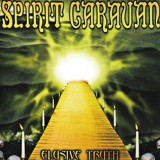
‘Elusive Truth’ was the second full-length record by D.C.-area doom rock Spirit Caravan led by the all time heavy lifer Scott ‘Wino’ Weinrich (The Obsessed, St. Vitus, Shrinebuilder, Probot). Originally released in 2001 and now remastered. “On this, Spirit Caravan's second foray into the long-player format, the band has collectively slowed down the tempo, and dropped the mood into even more contemplative territory. As the grandfather of modern stoner rock, Wino has certainly dipped his guitar picks in LSD this time around. Even though the engineering and production is bone dry and bottom heavy, Wino's psychedelic guitar work -- especially his stinging, busy leads -- has been ratcheted up a few clicks, even if the overall aesthetic is darker, and the superb musicianship from the trio simplified. The listener may be reminded of Hawkwind powered by an enormous diesel engine. As a title, Elusive Truth may indicate Wino's searching nature as a musician, and his attempt to continue down the sonic path through darkness, and through light. With this album, the listener is most certainly in darker territory.”
With "Onaida", Natascha Rogers shares a liberating folk spell that draws inspirations from Yoruba spirits, Afro-Latin rhythms and her Native American ancestry. Born in the Netherlands to a Dutch mother and a father with Amerindian origins, Natascha Rogers dares to be intimate and unveils a highly spiritual chiaroscuro record, raising purity, care and reconciliation to the level of the art, through folk enchantments. Sensitive to the ancestral call of the drums, she travelled the Black Atlantic for several years and received the teachings of the greatest Mandingo and Afro-Cuban master percussionists. As a distinguished percussionist and vocalist, she has graced the stage and has accompanied artists around the world, but for Onaida she set out on her own, retreating to a studio to escape the noise, rush and fast information cycles of our modern world. This album marks a rebirth for Natascha Rogers, as it symbolizes her return to the piano, her first instrument. Channelling these inspirations for Onaida, Natascha Rogers, has created a space of her own, where themes of humanity, spirituality, nature and womanhood are centre stage while also paying tribute to her ancestors. Sung in English, Spanish, or Yoruba, the album is a tapestry of intimate ballads and universal prayers, drawing inspiration from dreams, Amerindian poetry (Joy Harjo), and Cuban santería with ritualistic batá drum pulsations. On the powerful folk-tinged song "The West", she invited gifted singer-songwriter Piers Faccini. Onaida is a true initiatory experience, a second birth for Natascha Rogers who finds balance and accuracy with this singular opus. Natascha Rogers headed to the quiet commune of Pommerit-le-Vicomte, to write this new release, accompanied by sound engineer Joachim Olaya and published on acclaimed French imprint No Format!
Culled from three 1985 gigs in the UK during a transitional and transcendent time in the band’s story, Sonic Youth’s The Walls Have Ears appeared / disappeared as a 2LP set in 1986, not just a live album but an artful tapestry full of live experimentation with songs, between-song tape segues, darkness, humor and audio verité. It’s now issued for the first time officially under the band’s auspices.
The ’85 shows were the second time the band appeared on UK soil, Brits now getting juiced to the mythos of the emerging guitar-slinging American independent underground; an art / punk band from NYC sporting casual attitudes and tees sporting Bruce Springsteen, Madonna, and Prince made some good press copy on top of their bludgeoning stage appearance. Paul Smith of the newly-founded Blast First label acted as an overseas diplomatic envoy for Sonic Youth through their SST years as well as issuing their classic 1988 Daydream Nation outside the USA. However the Smith-produced ‘bootleg’ of their ’85 UK gigs surfaced much to everyone’s surprise, just before EVOL was to be released. It turned out to be a marker of the group’s dissatisfaction that ultimately led to the release’s deletion, and the band and Smith parting ways after Daydream.
In this 2LP set brimming with primitive classics like ‘The Burning Spear,’ ‘Death Valley 69,’ and ‘I’m Insane’ (uncredited on sleeve), segues and live guitar changes ooze together threaded by Madonna tapes and vocal loops off the board (somewhat a necessity for distraction until the band had a full fledged stage crew to prepare guitars). The first two sides of Walls are massive, cavernous, with newly-drafted drummer Steve Shelley. SY tear it up especially on one trash-fi excerpt of ‘Blood On Brighton Beach’ (actually ‘Making The Nature Scene’) from a legendary outdoor gig November 8th where Thurston Moore, Kim Gordon and Lee Ranaldo’s guitars treble-blast dissonant shockwaves over the black-stoned beach of Quadrophenia fame.
The record’s second slab spotlights an April 1985 at London’s Hammersmith Palais and was one of the final appearances live of Bob Bert on drums, again featuring some molten takes on ‘Brother James,’ ‘Flower’ (listed as ‘The Word (E.V.O.L.)’), and others. This document remains an essential representation of some lean and mean years of the quartet’s throttling march out into the world. (by Brian Turner)
Culled from three 1985 gigs in the UK during a transitional and transcendent time in the band’s story, Sonic Youth’s The Walls Have Ears appeared / disappeared as a 2LP set in 1986, not just a live album but an artful tapestry full of live experimentation with songs, between-song tape segues, darkness, humor and audio verité. It’s now issued for the first time officially under the band’s auspices.
The ’85 shows were the second time the band appeared on UK soil, Brits now getting juiced to the mythos of the emerging guitar-slinging American independent underground; an art / punk band from NYC sporting casual attitudes and tees sporting Bruce Springsteen, Madonna, and Prince made some good press copy on top of their bludgeoning stage appearance. Paul Smith of the newly-founded Blast First label acted as an overseas diplomatic envoy for Sonic Youth through their SST years as well as issuing their classic 1988 Daydream Nation outside the USA. However the Smith-produced ‘bootleg’ of their ’85 UK gigs surfaced much to everyone’s surprise, just before EVOL was to be released. It turned out to be a marker of the group’s dissatisfaction that ultimately led to the release’s deletion, and the band and Smith parting ways after Daydream.
In this 2LP set brimming with primitive classics like ‘The Burning Spear,’ ‘Death Valley 69,’ and ‘I’m Insane’ (uncredited on sleeve), segues and live guitar changes ooze together threaded by Madonna tapes and vocal loops off the board (somewhat a necessity for distraction until the band had a full fledged stage crew to prepare guitars). The first two sides of Walls are massive, cavernous, with newly-drafted drummer Steve Shelley. SY tear it up especially on one trash-fi excerpt of ‘Blood On Brighton Beach’ (actually ‘Making The Nature Scene’) from a legendary outdoor gig November 8th where Thurston Moore, Kim Gordon and Lee Ranaldo’s guitars treble-blast dissonant shockwaves over the black-stoned beach of Quadrophenia fame.
The record’s second slab spotlights an April 1985 at London’s Hammersmith Palais and was one of the final appearances live of Bob Bert on drums, again featuring some molten takes on ‘Brother James,’ ‘Flower’ (listed as ‘The Word (E.V.O.L.)’), and others. This document remains an essential representation of some lean and mean years of the quartet’s throttling march out into the world. (by Brian Turner)
black LP[36,09 €]
Eraldo Bernocchi and Hoshiko Yamane have come together again to create their second album - inspired by the Japanese concept of ""Sabi"". The record is a unique blend of electronic and acoustic music - with Bernocchi’s pulsating textures and Yamane's haunting treated violin melodies weaving together to create a captivating and emotional sonic landscape. ""Sabi"" is a Japanese aesthetic that celebrates the beauty of impermanence and decay. It is often associated with the simplicity, austerity, and solitude found in nature, and is said to evoke a sense of melancholy, nostalgia, and reverence for the passage of time.
Bernocchi and Yamane's ""Sabi"" explores these themes through a collection of minimalist compositions that combine electronic and acoustic instruments immersing the listener in a deeply cinematic experience. The album takes the listener on a journey through a series of atmospheric tracks, sometimes melancholic pieces that evokes the sense of solitude and simplicity often associated with the concept, other times more energetic and uplifting, optimistic ones that celebrates the beauty of transience. The artwork again was created by the renowned designer Petulia Mattioli.
orange LP[36,09 €]
Eraldo Bernocchi and Hoshiko Yamane have come together again to create their second album - inspired by the Japanese concept of ""Sabi"". The record is a unique blend of electronic and acoustic music - with Bernocchi’s pulsating textures and Yamane's haunting treated violin melodies weaving together to create a captivating and emotional sonic landscape. ""Sabi"" is a Japanese aesthetic that celebrates the beauty of impermanence and decay. It is often associated with the simplicity, austerity, and solitude found in nature, and is said to evoke a sense of melancholy, nostalgia, and reverence for the passage of time.
Bernocchi and Yamane's ""Sabi"" explores these themes through a collection of minimalist compositions that combine electronic and acoustic instruments immersing the listener in a deeply cinematic experience. The album takes the listener on a journey through a series of atmospheric tracks, sometimes melancholic pieces that evokes the sense of solitude and simplicity often associated with the concept, other times more energetic and uplifting, optimistic ones that celebrates the beauty of transience. The artwork again was created by the renowned designer Petulia Mattioli.
#40 ON ROLLING STONE'S 500 GREATEST ALBUMS OF ALL TIME: ANTICIPATES LATE 1960S TURBULENCE VIA PROPHETIC SONGS AND DARK THEMES
1/4" / 15 IPS analogue master to DSD 256 to analogue console to lathe
Any discussion about the finest psychedelic rock record ever recorded is incomplete if it doesn't grant consideration to Love's Forever Changes. Ranked by Rolling Stone as the 40th greatest album ever made, and named by Mojo the second-greatest psychedelic set in history, the effort is an internationally recognized seminal work of art. Transcending language and convention, its magnitude and magnificence need to be heard again and again. For here is an effort whose mind-boggling acoustic complexities and kaleidoscopic nuances are tailored for high-fidelity playback.
Nearly unlimited headroom, vast instrumental separation, transparent clarity, artifact-free atmospherics, and faithful balances appear out of jet-black backgrounds. Turn it up as loud as you want; the sole limitation will be your system's potential.
Commercially ignored upon release in November 1967, Forever Changes confronts the alienation, paranoia, violence, and strife that would soon plague the countercultural movement and send the Summer of Love into a tailspin. Apart from its lyrical themes and prescient malaise, the record's enduring nature equally owes to intertwined arrangements sewn together with Latin guitar-picked lines, finessed folk harmonies, mariachi-inspired horn charts, and subdued strings.
The seemingly opposing combination – ominous, dark reflections situated amidst lush, light melodic beds – affords Forever Changes a distinguished tension of claustrophobia and openness, dourness and ecstasy, ugliness and elegance enjoyed by no other record in the rock canon. Much of the contrast owes to leader Arthur Lee's mental state and pertinent observations. Lee, whose suppressed romanticism often surfaces even amidst the blackest shadows and most cynical moments, believed he would soon die, and hence channeled everything from lasting hopes to acid-addled decay to the chilling testimony of a Vietnam veteran in his narratives.
Alternatively sad and beautiful, the album-opening and flamenco-inspired "Alone Again Or" establishes the mood for what follows. Vocals overlap and soar; tempos rise and fall; surrealism trades places with reality.Forever Changes thrives both because of and in spite of a surfeit of labyrinthine chords and difficult notes that never repeat. Its ambitious construction almost forced the already fractured band to cede responsibilities to session musicians, which appear on two tracks. The quintet's resolve to not only complete the album, but to do so with such poignancy and curiosity, further enhances Forever Changes' standing.
No wonder that, in the twilight of his troubled career, Lee performed the record in its entirely during concerts met with overwhelming critical acclaim. It was, and will always be, a personal manifesto of timeless relevance and appeal.
Kallaikoi is the term used to refer to all the Celtic clans settled in ancient Gallaecia (northwest of the Iberian Peninsula). They were skilled in metallurgy and the production of tools and weapons, and worshiped a variety of deities, some of them related to nature
and war. Although they disappeared as an ethnic group in antiquity due to Romanization and subsequent consequences, their cultural legacy and Celtic influence in Galicia persist until today. Somehow, that ancestral legacy lingers between the grooves of this
release you have in your hands.
The double EP opens with The Transhumans: Techno, syncopated bass drums and industrial nuances appear in 'Ánima'. Ian Axide proposes robust and percussive Techno in 'Antro', while Obseth lets arpeggios fly in 'Pink Pills'. These tracks are indebted to that
Techno reminiscent of the late 90s golden years monolithic sound.
Side B opens with the local heroine and co-founder of Archaic, Proyecto Inopia, who opts for resounding rhythms and synth sequences sharp like shark teeth, seemingly paying homage to earlier decades in 'Hécate'. Mist Gasp also follows a metallic monotrax line in 'Standarte'. And the first 12” closes with Brai’s '75', where he unleashes Techno meets New and Synth Wave with a nod to the 80s.
The second EP lowers the intensity and tempo, opening with the calm and nostalgic Electro from Synth Alien in 'Pakhum'. Local artist Lefrenk raises the tempo and intensity in arpeggios in a propulsive Electro-Techno wave in 'Fenix'. And also from A Coruña, Roi controls the beats in an electro base that advances later towards obsessive and lacerating synths in 'Melusa'.
The last side of the double album is opened by David Karro with 'Ionosphere', a track with unsettling synths that doesn't need beats to shape its hypnotic and nebulous character. 27 003 delves into the sounds of classic Electro drum machines in 'Sweet', also with clear IDM and dreamy evocations. Corrosivo continues in that vein, with marked Sheffieldier echoes in 'Fast Food'. The EP is closed by Death Whistle with one of his usual opuses where darkness, beauty and epic coexist.
Denovali presents the second cooperation album of Italian composer, arranger, producer and guitarist ERALDO BERNOCCHI with Berlin-based Japanese violinist, composer, electronic producer and TANGERINE DREAM member HOSHIKO YAMANE.
Eraldo Bernocchi and Hoshiko Yamane have come together again to create their second album - inspired by the Japanese concept of "Sabi". The record is a unique blend of electronic and acoustic music - with Bernocchi’s pulsating textures and Yamane's haunting treated violin melodies weaving together to create a captivating and emotional sonic landscape.
"Sabi" is a Japanese aesthetic that celebrates the beauty of impermanence and decay. It is often associated with the simplicity, austerity, and solitude found in nature, and is said to evoke a sense of melancholy, nostalgia, and reverence for the passage of time. Bernocchi and Yamane's "Sabi" explores these themes through a collection of minimalist compositions that combine electronic and acoustic instruments immersing the listener in a deeply cinematic experience.
The album takes the listener on a journey through a series of atmospheric tracks, sometimes melancholic pieces that evokes the sense of solitude and simplicity often associated with the concept, other times more energetic and uplifting, optimistic ones that celebrates the beauty of transience.
Throughout the record, Bernocchi's electronics work provides a powerful, quite physical, backdrop for Yamane's violin melodies and harmonies , which are at once mournful and hopeful. Together, they again created a sound that is both beautiful and haunting, evoking the sense of nostalgia and reverence that is at the heart of the "Sabi" aesthetic. "Sabi" is a unique and powerful work of art that explores the beauty of impermanence and the passage of time. With its blend of electronic and acoustic elements, it is a record that is both modern and timeless, and is sure to appeal to a wide range of fans of electronic, ambient and experimental music. The artwork again was created by the renowned designer Petulia Mattioli.
Deafheaven’s monolithic second LP Sunbather, was not only a massive success in 2013, it created a radical shift in heavy music culture, an acceptance of the genre by previous outsiders, and a trailblazing sound that heretofore hadn’t been heard outside of learned circles. It was a reville introducing the changing of the guard in metal, featuring phenomenal reviews across the board, and breaking the mold used by buttoned-up indie types and false-flag musical dilettantes intent on keeping the status quo. A maverick release in every facet, the cornerstone for the triumph that is Sunbather truly lies in its world class songwriting. From the opening anthem “Dream House,'' it's clear to see that Deafheaven was soaring triumphantly into the unknown, through the emotional highs and lows, the fire and rain, and onto the unseen road ahead. Lyrically, Sunbather examines themes of existentialism, diving headfirst into the abyss, and the pursuit of self-discovery. The album's title itself is similar in scope, representing the embrace of the light and movement out of the dark unknown. Sunbather takes influence from the majesty of early Emperor and underground US heroes Weakling, the dark beauty of France’s Alcest, the introspective nature of post-rock and shoegaze gods like Mogwai and Slowdive, as well as the DIY spirit of punk ranging from Fugazi to Man is the Bastard to create a new realm for their emotional and expansive epics.
Mostly known for his work as founder, vocalist and main songwriter for The Legendary Pink Dots, Edward Ka- Spel has long forged an equally prolific career as a solo artist given to sometimes exploring similar sonic realms as his group but clearly working at such a pace the need to channel ideas and songs in this capacity must be enforced. And just as well too, because Edward Ka-Spel is one of those rare and exceptional artists whose high workrate doesn’t betray a keen sense of quality control. Long known as somebody unafraid to venture wherever he pleases, his work has for a few decades now long traversed the more outward-bound or so-called ‘fringe’ areas of electronic music, psychedelia, hypnotic rock, kosmische sounds and the avant-garde. Heartily sewn into all of this is Edward’s fantastic grasp of spinning a twilight tale or spiralling deep into the mind’s recesses to craft a song from comparatively nimble melodies and words of Kafka-esque proportions. It’s a strikingly rich blend that’s always deserved far more attention than the cult audience it thankfully at least has.'Tales from the Trenches' is the second release by Edward for Lumberton Trading Company. Following on from the abstract-flavoured ‘Permission to Leave the Temple’ 10” released at the start of 2023, this LP collects eight tracks of a personal nature mostly pinned into place by some refined electro rhythms, molten cosmic textures, plaintive strings, introspective keys and a late night hue that sways effortlessly between the beautiful, haunted and even, a couple of times, a steam-pumped and sweat-ravaged dancefloor. Limited to 500 only, 'Tales from the Trenches' delivers exactly as the title indicates. Everything may at first feel ominous or sombre in tone, but there’s also a glimmer of hope laid bare in all its sun-drenched glory poking between the cracks.
»Tropic of Capricorn« is the second album by Lawrence English and Werner Dafeldecker. Based on field recordings made by the prolific Room40 owner that were subtly but decisively altered with electroacoustic techniques through the German improv legend, these two long-form pieces blur the lines between acoustic ecology and aesthetic interventions, concrete local sound worlds and boundary-defying art. They put a focus on our relationship with nature as listeners as much as they call into question where nature ends and human perception begins. They are deeply confusing, disorienting perhaps, in the most beautiful ways.
English recorded the material that form the basis of the duo’s Hallow Ground debut on two different field trips. One led him from the Western coast to the Pilbara region in the North of the country called Australia, the other to the central desert into the lands of the Arrernte people. »These are vast spaces, and in some respects they shun contemporary ideas of civilisation which seek not to listen to the country,« says English. When recording the soundscapes, the artist put a focus on the residues of failed colonial aspirations. »The buildings and objects that remain from the failed cattle pastures and other endeavours create uneasy sound worlds of their own,« he says of the regions that are also places of extraction, especially the heavily mined Pilbara. »There is a distant drone of industry in even the most remote of places; an unsettled sense of heavy breath on the land.« He brought home a document of natural reclamation in time.
The rich source material was then given to Dafeldecker. Spatialising the recordings with transducers applied to different surfaces such as wood, stretched animal skin, glass, or metal surfaces and also re-recording parts of the recordings, he created discrete events that were inserted into, or rather enmeshed with English’s recordings. You’ll hear plenty of birdsong, insect noises and the sound of rain during these 39 minutes; the sounds of a life you can tap into if you tune into your environment. But there are also other things, things that are impossible to categorise even after repeated listens and that call into question whether or not those were really birds, insects, or the sound of rain in the first place. What »Tropic of Capricorn« invites its listeners to listen beyond the preconceived notions of how nature is supposed to be represented in sound and to instead embrace the immediacy of the sensation.
Grand River and Sofie Birch are set to unveil their collaborative EP, titled “Our Circadian,” on November 24, through Melantónia.
The two-track release follows Grand River’s final release under the now-discontinued Editions Mego label earlier this year, and Sofie Birch’s two solo albums from 2022. Our Circadian represents the second collaborative release on Melantónia, a platform founded by Hanna Maria & Mattia Onori in 2021, dedicated to music for non-dance environments, featuring early contributions from artists like Polygonia, Plants Army Revolver, and Melantónia co-founders Hanna Maria & Mattia Onori themselves, amongst others.
“Our Circadian” was conceived remotely in 2021 during the lockdown, with the aim of encapsulating two distinct moments of those days – early morning and late afternoon – along with their subtle emotional nuances. The first track of the release – 7PM – conveys dreamy atmospheres that flow into colorful rhythms, recalling the electroacoustic nature of the label’s melancholic sounds. The gloomier 3AM, on the other side of a 7“ record, offers a timeless introspection of a gently intensifying synth sound’s fling.
Grand River, a composer and sound designer, brings her background in linguistics to her work. She draws inspiration from minimalism and ambient music, resulting in atmospheric and rhythmically intricate compositions. Her artistic pursuits traverse the realms of art and electronic music, exploring forms of communication that transcend language, often influenced by nature, scale, and movement. Grand River’s impressive portfolio includes sound installations at 4DSOUND/Monom and Terraforma’s Il Pianeta, as well as performances at prestigious venues like Barbican, Rewire, MUTEK, Le Guess Who?, CTM, Draaimolen, and Atonal’s Kraftwerk. She has also worked on remixes for notable acts like Tangerine Dream. Since 2016, she has curated the label One Instrument, offering a unique creative challenge to artists: creating music using only a single instrument.
Sofie Birch, a celebrated sound artist and producer, is known for her lush ambient releases, art installations, live performances, DJ sets, and her NTS show “Ambient Abracadabra.” Her sonic creations can manipulate space, infuse it with a profound sense of calm, and invite listeners to engage in meditation and introspection through the healing qualities of sound and vibrations. Her music acts as a conduit for understanding the complexities of the mind and body through artistic expression, characterized by a distinct emphasis on stillness, suspension, and sustain. Sofie’s soundscapes open gateways to dream-like states of perception and heightened presence, providing a transcendental journey into an alchemical biosphere. Her extensive repertoire includes performances at renowned events such as Barbican, Roskilde Festival, MUTEK, Unsound, CTM, Rewire, Monom, and Terraforma, as well as award-winning compositions for VR experiences and animated films, in collaboration with artists like Baum & Leahy and animation director Pernille Kjaer.
As Our Circadian takes its final form, it promises a narrative of resilience, creativity, and the indomitable human spirit guided by the artistic mastery of Grand River and Sofie Birch.
"Keep You Close" ist das sechste Album der belgischen Rockband dEUS - ursprünglich erschienen am 17. September 2011. "Keep You Close" ist eins der erfolgreichsten dEUS Alben und hat Platinstatus in ihrem Heimatland! Im Rahmen des 40-jährigen Jubiläums von PIAS erscheint das Album nun endlich wieder auf Vinyl.
Take the 101 north out of Los Angeles, and you'll pass by Agoura Hills, where the core duo of the band Dub Thompson grew up. Whatever you see in that town won't readily prepare you for the music they wrote while there, but you're free to look."Most everyone who's in a group who's our age lives on the Internet," says guitarist Matt Pulos. "The kinds of things that have shaped our band aren't anchored to any one time or place."Pulos and his bandmate, drummer Evan Laffer, are currently both 19 years old, and are putting that line of thought to the test; their musical influences travel from the Midwestern malaise of Big Black and Pere Ubu, to Kraut pioneers Can and Kraftwerk, while bowing to the British belligerence of The Fall and This Heat.Recording the album while living with Foxygen's Jonathan Rado at his rented house in Bloomington, the band had its first taste of a heavy Indiana summer, and all the humidity and insect life that buzzes along with it. "We woke up every day, ate hard-boiled eggs and stood on a porch," says Pulos of the experience.Their first collection of songs slyly unties the shoes of genre and convention, shapeshifts mischievously, and tramples on the promises delivered on the name itself.There are only eight songs on this rangy debut.Intense blasts of hook-filled noise rock ("Hayward!"), rocksteady marionette stomp ("No Time"), hypnotic bouts of doomy poetics ("Epicondyles"), outlandishly sexy groove rock ("Dograces"), and a number of other bite-sized forays into parts unknown are made manifest across 9 Songs. The vibes are strong here. Pulos sings and plays like he's working out long-standing grudges, pulling the most sinewy tones from an acoustic guitar and ripping huge chunks of demon flesh out of his electric. Laffer matches him step for step on the drums, an exacting presence behind the kit who pushes even the band's more placid moments into bouts of tension. Together they succeed in animating their musical ideas to startling, almost unnatural life. Reverb units, keyboards, samples and processing gluing everything together, saturated in the August heat and worn in until they sound second nature, it's like somehow you've been listening to these songs forever.
The Moon Also Rises gathers songs that Johnny and Robert have written together since finishing their first joint album, Lost In The Cedar Wood (2021). At its heart are the oldest themes of all: death and renewal, darkness and light. The first five tracks are songs of burial, shadows and memory, while the final four are songs of awakening, light and love. The album turns around a central song, ‘The Sun Also Rises’, which stands with a foot in both dark and light. * Johnny Flynn's sixth album, and the second co-written with his friend Robert Macfarlane. Out 10th November 2023 on Transgressive * Gathers songs that Johnny and Robert have written together since finishing their first joint album, Lost In The Cedar Wood (2021). At its heart are the oldest themes of all: death and renewal, darkness and light. The first five tracks are songs of burial, shadows and memory, while the final four are songs of awakening, light and love. The album turns around a central song, 'The Sun Also Rises', which stands with a foot in both dark and light * Fuses poetry, story, landscape, history, nature and myth into a series of rich, strange songlines that criss-cross time and place, joining winter to spring, ancient to present and birth to death. As the Sun sets, so the Moon rises as its echo; as one light dies, another, altogether different light is born * Partly recorded in an old Methodist chapel -now the home of Johnny and Rob's friends, Cosmo and Flora Sheldrake * Produced by Charlie Andrew (Alt-J, Marika Hackman)
“Azazel” is the second vinyl release of this year and the EP debut from Priorato (MX), with some interesting and outstanding remixes by Colossio, Ludviq, and Chinosynth. This vinyl release will offer a diverse range of remixes, each bringing its own interpretation and style to the original track "Azazel".
A1. Led by Rubén Torres, a DJ and producer from Ciudad Juárez, Chihuahua, focusing on indie dance and techno, the original track for "Azazel" is characterized by a solid bass sequence, hypnotic vocals, and a blend of electronic and organic elements.
The song creates an enigmatic and immersive atmosphere, gradually building a powerful and addictive groove, it offers a musical experience that transports listeners to a trance-like state, inducing feelings of euphoria and escapism.
A2. For the first remix we have the honor to have again on board Colossio, he’s also known as one of Mexico's most talented producers, with previous releases on labels like Duro, Calypso, and Exit Strategy. His remix of "Azazel" is expected to bring a mix of high energy and darkness to the track, showcasing his signature style.
B1. Originally from Guadalajara, Mexico but now based in Barcelona, Spain, Head honcho Ludviq, delivers a remix that promises to be energetic, groovy and psychedelic, incorporating unconventional percussions and sounds recorded from the city chaos and nature calmness environments.
B2. Based in Culiacán, Mexico, Chinosynth's remix aims to infuse a human touch into the track by incorporating analog sounds from studio instruments such as guitars, bass, and synths, while maintaining a dance floor-oriented vibe.
Aho Ssan debuts on Other People with second solo album and book 'Rhizomes' featuring Nicolás Jaar, Moor Mother, Angel Bat Dawid, clipping., Blackhaine and more
Paris based composer Aho Ssan, the artist moniker of Niamké Désiré, presents his new full-length 'Rhizomes' on the Other People label following his debut LP 'Simulacrum' (2020) and collaborative record 'Limen' (2022) with fellow musician KMRU.
'Rhizomes' draws inspiration from a concept coined and developed between Gilles Deleuze and Felix Guatarri. The idea of an ever evolving structural model, constantly in motion and spreading out in all directions at once. It has no beginning and no end, but always remains in a middle, through which it grows and overflows.
"The root thought is the one that kills everything around itself while the rhizome is the root that stretches out to meet other roots," Désiré explains considering the works of French writer Édouard Glissant who addresses questions of identity, crossbreeding of cultures and its evolution.
Much like the name it borrows, Aho Ssan's 'Rhizomes' is a multimedia project that embarks on a myriad of disparate, unique musical and artistic partnerships. This piece adapts this concept to explore the influence of sound materials on creation, the appropriation of a sound object, and the collaborative nature of a composition that responds to modernity.
"Rhizome represents an underground stem system that fosters connections between various organisms and allows them to flourish collectively. It's an album that celebrates collaboration and brings together a diverse group of talented artists," Désiré continues.
Aho Ssan collaborated with a comprehensive cast of artists to create a musical rhizome including Nyokabi Kariuki, Josefa Ntjam, Blackhaine, Nicolás Jaar, Resina, R?n C?p ?uôi, Richie Culver, clipping., Lafawndah, 9T Antiope, James Ginzburg, Exzald S, Valentina Magaletti, Moor Mother, Angel Bat Dawid and Mondkopf. Cooperation and community are at the root of this project and the lens through which all the compositions can be understood through.
Aho Ssan will present 'Rhizomes' AV show together with visual artist Sevi Iko Dømochevsky at Berlin Atonal 2023. 'Rhizomes' received a Honorary Mention at Prix Ars Electronica 2023 Digital Music
Ouverture feat Nyokabi Kariuki
To make her new album, Light, Dark, Light Again, Angie McMahon had to walk through the fire. The Melbourne singer-songwriter’s second LP was written from the ashes of a tough but transformative few years of relationship changes, private breakdowns and core-shaking revelations about self. At times, McMahon felt like falling apart. But instead, she pushed through and found that hope, joy and relief lies on the other side of pain. Light, Dark, Light Again is a record about facing the fear and learning it can be a portal to something bigger and better. It finds that the only certainty in life is that everything ends, and everything begins again – that there is life and death and life again, that there is light and dark and light again.
- One Of Many Voices
- Dreams Of Lamp Filament Numbers
- The Full Del Monte Variety (Ft.malcolm Delmonte)
- Momma Mia! Imade You Some Sangria( Ft.malcolm Del Monte & Kadesha Drija)
- The Provocation (Ft. Malcolm Delmonte)
- Ajourney Towards Total Inward Isolation
- Then, Nothing
- Let’s See What You Could Have Won
- The Jolly Green Giant (Ft. My Name Isian)
- Milk Tray Man (Ft. Mathias Kom)
- Jet From Gladiator (Ft. Kadesha Drija)
- Malcolm, Come Back
- Plenty Of Fish In The Sea
- Better Than We Could Have Been (Ft. The Full Cast)
Orange vinyl, 100 only
Cardiff-based, DIY-folk-pop collective, Quiet Marauder, are set to release their 5th album at the end of October 2023. This follows on from their madcap 111-song debut album, MEN (2013), as well as the more recent Tiny Men Parts (2020) and The Gift (2021), and continues their long-established relationship both with their label, Bubblewrap Collective, and Canadian collaborators, The Burning Hell.
Recorded in a Snowbird Studios pop-up in Lourinha, Portugal, Introducing Malcolm Del Monte continues the band’s fascination with high concepts and musical, album-length storytelling. At its core, it is an album about self-identity, isolation, and our innate fluctuations as human beings. Set during the pandemic, the album's a very loosely autobiographical (read: almost entirely false) account of band leader Simon M. Read's day-to-day life during Covid lockdowns with partner, Kadesha Drija, and imaginary friend, Malcolm Del Monte.
Choosing to largely avoid the topic of the pandemic altogether, Introducing Malcolm Del Monte instead charts the highs and lows of these living arrangements. These range from outrageous daytime drinking (high) to disagreements on the nature of perversion (low), with the first half of the album covering Malcolm’s emergence and ultimate expulsion from the house. With his absence being sorely felt, the second half sheds light on the alternative voices looking to fill that Malcolm-shaped space: a murderous green giant; a despondent Milk Tray Man; and a broken-necked, hypersexual Jet from Gladiators.
As with their previous story-based albums, the foreground narratives act to enable background allusions to other core concerns: the power of nostalgia; advertising and cultural consumption; well-being and isolation; balancing acts of the self. Ultimately, the album’s message is of striking a balance between self-questioning and improvement, and most of all, not being too hard on yourself when things don’t feel quite right.
Sonically and seamlessly ranging from alt-folk to industrial synth to melodic indie-pop, Introducing Malcolm Del Monte covers a lot of ground. Injected with the musicality of Quiet Marauder themselves, as well as Canadian kindred spirits, The Burning Hell, instrumentation includes flute, piano, chunky bass, acoustic and electric guitar, programmed beats, synthscapes, bamboo clarinet, bongos, and a heap load of vocals. Indeed, alongside the main lead voices of Simon M. Read, Kadesha Drija and Malcolm Del Monte (Rowan Liggett) there are guest performances from My Name Is Ian and The Burning Hell’s Mathias Kom.
The album will be preceded by lead single and video Momma Mia! I Made You Some Sangria! on 22nd September,
His much-anticipated second album, Steady Away, moves inward and takes on a more self- reflective quality, whilst retaining glimmers of soaring figures and pastoral imagery.
Brain's distinctive warm vocal and finger- picked guitar style are sustained alongside expansive strings and delicate piano arrangements, taking shape through evolving and introspective impressions on tenderness, loss, pain and awe in nature.
The album was recorded at The Nave, an old refurbished church which is now a studio. Glancing off The Nave's eaved ceilings with natural reverb, Steady Away's 11 tracks, recorded by Tom Orrell, capture the intimacy of Chris' songwriting.
Musicians appearing with Chris on the album are, on piano - Simeon Walker, violin - Mary-Jane Walker and on double bass - Alice Phelps.
Steady Away further embeds Chris Brain within the contemporary folk scene, whilst gesturing towards the folk tradition. His commitment to folk is only deepened by the two folk clubs and folk festival in Leeds that Chris founded and runs, attracting a wide range of audiences and musicians alike.
Roger Eno’s second solo album for Deutsche Grammophon invites listeners to reflect on the nature of sound and silence. The Skies, They Shift Like Chords… contains a dozen tracks that express nostalgia for something lost while projecting a sense of something timeless, like the renewal of the seasons or the rise and fall of the breath. The composer-pianist builds here on the soundworld of The Turning Year, his debut solo album for DG, adding layers of instrumental and electronic colours and including a song for his eldest daughter, the artist, vocalist and image maker Cecily Eno. The Skies, They Shift Like Chords… connects with universal feelings for place and home. It also reflects the particular roots of Roger Eno’s music in rural eastern England, a landscape shaped by centuries of agriculture and marked in recent decades by dwindling biodiversity and troubling ecological change.
- A1: Alice George Perez & Sofa- Little Dogs 2 47
- A2: Jumbrel- Sintidesbald 4 38
- A3: T-Woc & Empress Of Nature- Rapper's Delight 3 54
- A4: Aroma Von Troisdorf (Feat Marla Bereska)- Das Ozeall 3 44
- B1: Puma & The Dolphin- How To Send Email 3 40
- B2: Mytron - Fajny Dzie? 4 19
- B3: Naomie Klaus- How Do We Make The Babies 4 20
- B4: Androo- Police Justice 1 03
- C1: A, C, And The Omni Ox3- Cyril's Stories 2 42
- C2: Felix Kubin Feat Bela Elektra- On Y Va 2 51
- C3: Sexo Y Fantasia- Gioca All'amore 5 33
- C4: Conny Frischauf - Ton Tour 5 11
- D1: Das Unkenduo- Fortifrogs 5 14
- D2: Oslo Karamell- T3 4 43
- D3: Little Boy & The Mindful Potheads- Krautkid 5 54
Belgian producer and curator soFa launches from Strangelove once again, this time with his celebrated compilation series. A second trip round the stars "elsewhere junior Vol 2" features a bunch of unknown and familiar offworld entertainers. Kosmische music lands amongst leftfield club krypton as our crew collaborate with young space cadets.
"I imagine myself playing these songs in a small club that is slowly burning," says A. Savage of his second solo record, Several Songs about Fire. After more than a decade in New York, the co-frontman of Parquet Courts has left the city, marking his exit with a masterpiece of maturity and a worthy corollary to his first solo venture, 2017"s Thawing Dawn. "Fire is something you have to escape from. This album is a burning building, and these songs are things I"d leave behind to save myself." Produced by John Parish on a 1" 16-track in just ten days in Bristol and studded by the support of Cate Le Bon and Jack Cooper (Modern Nature, Ultimate Painting) as well as saxophonist Euan Hinshelwood (Cate Le Bon), drummer Dylan Hadley (Kamikaze Palm Tree, White Fence), and violinist Magdalena McLean (Caroline), Savage"s outsize gifts as a lyricist and observer - a quality Parish calls "an emotional openness guarded by a laconic wit" - shine. Worrying questions of wealth and poverty, self and other, Savage displays the poet"s gift of knowing when to narrate and when to vanish, leaving the listener to their own emotional privacy rather than instructing them how to feel. The end result is tantamount to psychic odyssey, with "Elvis in the Army" placing us in a subterranean venue where the livid, ratifying cymbal raises the room"s blood pressure and "Mountain Time", evoking an austere waltz playing in a desolate house, returning those listening to life. Influenced by Sybille Baier and Townes Van Zandt, Savage joins a canon of songwriters constantly dilating aperture and perspective. In rendering the signage of laundromats and threats of debt collectors as glistering and totemic as the scope of mountains, rivers, seas, and skies, Savage finds hopes and curses in equal measure.
German musician Mary Yalex debuts on A Strangely Isolated Place depicting a storied transition from our recognizable surroundings, into a vision of the future.
With releases and music styles across a variety of labels over the years, it has been Yalex’s more experimental ambient work that has stood out amongst her catalog, and in Fantasy Zone, we find Mary fine-tuning this sound to reflect the work of a true architect of storytelling, mood and atmosphere.
Drawing influences from her day-to-day surroundings, Fantasy Zone begins with more vivid pieces; softer melodies and clearer instrumentation, represented as much in song titles such as Air, After Rain Comes Sun, and Half Light of Dawn. The second half of the album transitions into a future state, as Yalex draws on darker manifestations - perhaps intrinsically influenced by the state of the world, and in particular her love of nature, we play witness to more storied, haunting atmospheres, distant voices and slowly shifting gravitational chord movements. Dystopian-bound or pure fantasy, Yalex depicts a future that mirrors some of the more poignant, thought-provoking work of great synthesizer soundtracks of the past.
- A1: Forbidden City
- A2: Getting Away With It
- A3: Get The Message (Single Remix)
- A4: Feel Every Beat
- B1: Disappointed (Single Mix)
- B2: Vivid (Radio Edit)
- B3: Second Nature
- B4: All That I Need
- C1: Prodigal Son
- C2: For You
- C3: Imitation Of Life (New Edit)
- D1: Out Of My League
- D2: Like No Other
- D3: Twisted Tenderness
- D4: Late At Night (Radio Edit)
Electronic are proud to announce the release of ‘Get the Message: The Best Of Electronic’ on vinyl for the first time, available via Warner Music on 29th September.
First released in 2006, ‘Get the Message: The Best Of Electronic’ is the career spanning collection from the Johnny Marr and Bernard Sumner band who released a string of critically acclaimed hits including their debut single ‘Getting Away With It’, ‘Get The Message’ ‘Disappointed’ and ‘Feel Every Beat’.
This compilation captures the very essence of their groundbreaking sound, blending Marr’s distinctive guitar work with Sumner’s vocals and guest features from Pet Shop Boys’ Neil Tennant (Getting Away With It, Disappointed) and Kraftwerk’s Karl Bartos (For You, Imitation Of Life).
Omnivium is the third studio album released by German death metal band Obscura, and the second album of Obscura's four album concept. The album was recorded at Woodshed Studio in southern Germany with engineer Victor Bullok (also known as V.Santura). It was released by Relapse Records on 29 March 2011. The album is based on Friedrich Schelling's Clara: or On Nature's Connection to the Spirit World (1810). Obscura released the track "Septuagint" to the public on 19 January 2011. The second song from Omnivium, "Vortex Omnivium", was released to the public on 24 February 2011. Omnivium debuted at #11 on the USA's Top Heatseekers chart, and at #14 on Germany's Media Control Newcomer chart. furthermore, within the first week the album sold 2,000 copies the US
- A1: Ryuichi Sakamoto - The Revenant Main Theme 2 41
- A2: Alva Noto & Bryce Dessner - Hawk Punished 2 14
- A3: Ryuichi Sakamoto & Alva Noto - Carrying Glass 3 07
- A4: Ryuichi Sakamoto & Alva Noto - First Dream 3 05
- A5: Ryuichi Sakamoto - Killing Hawk 3 49
- A6: Ryuichi Sakamoto - Discovering River 1 11
- A7: Ryuichi Sakamoto - Goodbye To Hawk 3 41
- B1: Ryuichi Sakamoto & Alva Noto - Discovering Buffalo 2 43
- B2: Ryuichi Sakamoto - Hell Ensemble 2 38
- B3: Ryuichi Sakamoto - Glass And Buffalo Warrior Travel 1 51
- B4: Ryuichi Sakamoto - Arriving At Fort Kiowa 1 21
- B5: Ryuichi Sakamoto & Alva Noto - Church Dream 2 38
- B6: Ryuichi Sakamoto, Alva Noto & Bryce Dessner - Powaqa Rescue 5 35
- C1: Bryce Dessner - Imagining Buffalo 2 39
- C2: Ryuichi Sakamoto - The Revenant Theme 2 1 54
- C3: Ryuichi Sakamoto & Alva Noto - Second Dream 1 13
- C4: Ryuichi Sakamoto - Out Of Horse 3 57
- C5: Bryce Dessner - Looking For Glass 2 51
- C6: Ryuichi Sakamoto, Alva Noto & Bryce Dessner - Cat & Mouse 5 42
- D1: Ryuichi Sakamoto - The Revenant Main Theme Atmospheric 2 50
- D2: Ryuichi Sakamoto & Bryce Dessner - Final Fight 6 35
- D3: Ryuichi Sakamoto - The End 2 16
- D4: Ryuichi Sakamoto & Alva Noto - The Revenant Theme (Alva Noto Remodel) 4 00
- D5: Ryuichi Sakamoto & Alva Noto - The Revenant - Main Theme (Alva Not Remodel R)
Après le succès de Birdman (quatre Oscars dont ceux du meilleur film et du meilleur réalisateur), le réalisateur Alejandro G. Inarritu repousse les limites de l'art cinématographique avec ce western épique : The Revenant. Avec Leonardo DiCaprio (Titanic, Le Loup de Wall Street) et Tom Hardy (Mad Max: Fury Road, The Dark Knight Rises), tourné dans un Canada sauvage et glacé, à la lumière naturelle, The Revenant est une histoire de vengeance, de survie et de ténacité face à la fureur de l'homme et de la nature. Le film est en passe de devenir un grand favori de la critique, à l'aube de la saison des récompenses... Inarritu a choisi de sacrifier presque tout dialogue à un paysage sonore splendide et à une musique majestueuse. Un film de cette ampleur méritait un compositeur compréhensif de la création artistique pure et des passions déchaînées. Le Maître japonais Ryuichi Sakamoto (Furyo, Le Dernier Empereur - Oscar de la meilleure musique de film) a rempli le contrat haut la main. Avec son collaborateur Alva Noto (notamment au sein du Yellow Magic Orchestra), Sakamoto a créé une bande originale captivante qui sera assurément la bonne surprise de l'hiver. L'album contient également la musique additionnelle de Bryce Dessner (compositeur pour le Kronos Quartet et le LA Phil).
Margo Cilker's sophomore album, Valley of Heart’s Delight, refers to a place she can't return: California’s Santa Clara Valley, as it was known before the orchards were paved over and became more famous for Silicon than apricots. In this 11-song follow-up to 2021's critically acclaimed Pohorylle, family and nature intertwine as guiding motifs, at once precious and endangered, beautiful and exhausting. Cilker and Pohorylle producer Sera Cahoone brought most of that record's highly-acclaimed crew (studio players for The Decemberists, Band Of Horses, and Beirut) back to the studio with additional contributions from acclaimed Northwest traditionalist Caleb Klauder. Valley of Heart's Delight, Cilker's second record on Portland, Oregon label Fluff & Gravy Records, follows a year busily reaping the fruits of Pohorylle's success, with festival appearances at Pickathon, Treefort, and End Of The Road, and tours supporting American Aquarium, Hayes Carll, Drive-By Truckers, and Joshua Ray Walker. Margo Cilker lives near the Columbia River in Goldendale, Washington with her husband, songwriter and working cowboy Forrest VanTuyl, as well as their dog and some horses.
Leeds-based Frenchman Brawther, who is also one-half of Dungeon Meat for more raw grooves, shows off his mastery of deep house on this fresh new EP for B2 Recordings. 'Sundials' (feat Nathan Haines) immediately soothes the soul with its lunging chords and seductive sax lines. Occasional female coos add further lushness to this most heartwarming of tunes. 'Second Nature' has a little more height and drive to it but again the drums are warm and fuzzy, the chords smeared in artful ways and the overall vibe utterly heady. Last of all is the bubbly and dubby 'Gotta Let It Go' with its bottomless depths and chords that melt off into an infinite horizon. Gorgeous stuff from this always quality artist.
The house of Sakskøbing is witnessing a spawn of a sub label with the catalogue code RVZ. This is a coastal part of the main city, with abundance of nature & clear water, the rhythms in Zealand as one may say. The number one comes together as a four track Various Artists and consists of long-term friends of Sakskøbing as well new faces welcomed to the label.
The side A comes from a hardware live project Cattle Freq consistent of three musicians SIL, Keroz and BRTS. The trio have launched the project called Cattle Freq with performance of all original material recorded & rehearsed in the outskirts of their hometown in the end of 2021. Following up is the close friend of the label the Tommy Vicari Jnr, an artist highly praised not only in his native city Sheffield but is consistently played by hard working dj’s in the whole world. With “No matter what” the gentleman returns to label for the second time since 2016 which marks for a special date.
Wildly creative East Anglian musician Carl Brown is welcomed to the Love Love fold with great excitement. Carl has been consistently doing his own thing in music for quite a while and it’s high time some more people heard his sound. So many great ideas and lush feels are packed within. And while the sound palette is often electronic the tracks are positively human in nature, incorporating a wide variety of styles - playful, clever and eccentric, full of melodic shenanigans and top notch musicianship.
Upfront we get two rip-roaring braindance epics in the forms of title track ‘Koto アシッド’ and 2nd track ‘747 الرياض কলকাতা’, before ’S.E.T Ad '87’ changes the pace completely, cleansing the auditory palate ahead of the 2nd half of the EP with a spacey 80s dream. The pace settles out on the flip-side after the frazzling breakneck openers, slippery tones pirouetting atop a gracefully chugging bass line in ‘FWP’. Following this proceeds an unorthodox sequence of musical notes that somehow induces a series of highly concentrated fist-clenching emotions. ‘747 Red Eye Return’ slows its parent track down to a near still pace, its meditative tones bearing down like oppressive heat, before the final track provides a slice of brilliant musical escapism.
Surprising to the last second and brain-tingling throughout, this EP captures a colourful morsel of Carl’s work and should leave a lasting taste of what is yet to come from this sonic tinkerer.
Producer Scrappy Jud Newcomb and Cleaves teamed up for the third time in early 2022 between Covid surges to record a new batch of songs, Slaid's first in five years.
Familiar themes of struggle and resilience will be a surprise to no one. As Scrappy puts it, "This album speaks to the hopeful, the hard working, the battered, confused, and the sad. But above all to the believers in the city of freedom that we heard in the stories of our youth and all those FM radio hits."
The first single, "Through the Dark," was co- written with Slaid's long- time collaborator and life- long friend, Rod Picott ("Broke Down," "Take Home Pay").
Slaid describes it simply as "a song about offering comfort in hard times."
Joseph Hudak of Rolling Stone calls Cleaves "a master storyteller, one influenced not by the shine of pop-culture but by the dirt of real life."
"More than 20 years into his career, Slaid Cleaves just keeps getting better . . .
There are few contemporaries that compare. He's become a master craftsman on the order of Guy Clark and John Prine." - Austin Chronicle
For her second release on Northern Electronics, Vallmo (appellation of Melina ?kerman Kvie) strengthens her proficiency towards an electronic elevation with each and every track being a crevice offering kaleidoscopic gleams into a poetic narrative extracted from the slightly autotuned yet softly metallic voice.
What Virgil is to Dante, the piano is to the listener: a fragmented leitmotif and a guiding cicerone into the nimbus that is "Othem". Dual in nature, the album comprises seamless transitions between divergent idioms, figuratively as well as literally.
A false dichotomy conveying the opposing pairs tender and bold, distinct but evading and with a direction every so often forward as inward. "Othem" is an opus in equal parts melancholy, magic and mimesis.
GIL’s second release provides moments of lightness and euphoria,
offering a glimpse of the transcendental experiences that can be found in nature. Anam Cara, which means “soul friend” in Gaelic, sets the tone for the journey that listeners are about to embark on. Each track is a sonic tribute to the power and beauty of friendship, evoking the many moods and emotions that are part of this intricate relationship. The modular sounds add a sense of intricacy and complexity to the record, while the metallic textures add a raw and industrial edge that complements the softer, fluid movements of the aquatic elements. The blend of downtempo and deep techno creates a sonic landscape that is both contemplative and hypnotic, inviting listeners to reflect on the many nuances of friendship. From the ethereal modular sounds of “Henko (Ethereal Reshape)” to the shimmering metallic textures of “Henko (Tapasya Mix)” each track is a unique sonic journey that captures the essence of this powerful relationship. Written, produced and engineered by Gilmer Galibard Vinyl Mastered by Anne Taegert at D&M Artwork by Gilmer Galibard