Serenda is a London-based DJ and producer of Guyanese and Greek heritage, known for her rich, eclectic sound rooted in house but never confined by it. Her sets fold between soulful depth and experimental edge, always delivered with a bold, contemporary vision.
Her sets are grounded in rhythm and instinct, built less around genre than sensation. She blends percussive house, warped club music, and raw, organic textures; crafting dancefloors that feel immersive and visceral and emotioanlly charged . There’s a physicality to her sound that edges toward the primal. For Serenda, DJing is a form of play - fluid, responsive, and deeply connected.
She deconstructs and distorts house music with intent, letting in pressure, dissonance, and emotional rupture. Her sets draw on the “timeless mindless states” of Mancuso’s The Loft, unfolding as rituals that don’t smooth over the chaos, they work with it.
Following the release of her debut EP The Prophecy on Josh Caffe’s Love Child label, she made her mark with a headline show in Fabric’s Room 2 and a Rinse FM residency. A regular in London’s queer underground, Serenda is also shaped by New York’s experimental club scene, where experimental sound and unfiltered expression mirror her own ethos.
Afro-diasporic and South American ritual in tension with city life, instinctive rhythm against digital overstimulation. Her fascination with world-building and quantum physics runs through everything she creates, fusing sonic design and sensory experience into one evolving landscape
Second Skin is Nene H's declaration of liberated identity. Across nine tracks, Nene traces the metamorphosis from conformity to authenticity that unfolds after a breakup. They trace a step-by-step transformation: the shedding of imposed narratives and the layering of a new, liberated self. The result is a sonic diary of emancipation, where musical ideas move through noise, South West Asian modalities, trap, future bass, house, trance, minimal and deconstructed club music fusing and mutating freely. With their second album, Second Skin, Berlin-based artist Nene H deepens their commitment to radical honesty through sound. Where their debut was a tribute to their late father and a processing of personal grief, the second album turns inward toward identity, the fracturing and reassembling of the self that follows the dissolution of a long-term relationship. They carefully infuse shattered Southwest Asian motifs with their vocals. Vocals appear and disappear like traces of memory. The opening track, Where Was I, continues the story of their previous album Ali. From there, the question "where was I?" transforms into an existential inquiry. The starting point of both their personal journey and the journey of this album. After stepping through that door, the album unfolds into a deliberate balance: four deconstructed pieces and four more straightforward 4/4-driven tracks. The sibling tracks on A2-A3 and B3-B4 share the same DNA, though their destinies are not the same. Every element is placed with intention; every sound carries its own narrative thread. Each track gestures toward a different genre, a different world, yet together they form a coherent, flowing story. It's the story of closure and liberation.
"Second Skin" ist das zweite Album des Kölner Musikers Vomit Heat. Klang und Struktur dieses zehnteiligen Meisterwerks zeigen sich abstrakt betrachtet in einer überaus dichten Oberfläche, in dynamischen Rhythmen, in treibenden Bassläufen, flächigen Gitarren und Synthesizern, verbunden mit einer selbstsicheren und facettenreichen Stimme. Sie lassen eine Dichte erklingen, die Vomit Heat aus den zahllosen übereinanderliegenden Soundebenen erschaffen hat, die er in den letzten sechs Jahren aufnahm und immer wieder verwarf, bis er schließlich zu jener zweiten Haut gefunden hatte, die hier nun vorliegt. Die Produktion gelobt die teppichartigen, soghaften Soundflächen von My Bloody Valentine, der kluge und enthusiastisch auch an den Avantgarden geschulte Pop-Zugriff mahnt an Bradford Cox' Deerhunter, die Repetition zeigt sich inspiriert von Wolfgang Voigts frühem GAS.
Once upoun a time Fat Mike came up with the idea of calling up 101 of the best old and new punk rock band around, have them each record a 30-second long song, then put all the tracks out on one record to make the best punk compilation ever. And guess what, the dream came true. The 101 most famous punk rock bands around doing each a 30 seconds long song Back in print for the first time in ten years! Pressed to Lime Vinyl Features super rare songs (recorded exclusively for this compilation) by Green Day, The Offspring, Blink- 182, Pennywise, Rancid, Less Than Jake, The Vandals, Bad Religion, and more
In a blizzard of crushed breaks and dissonant tones, Shelley Parker lands on Sneaker Social Club with her third album, Screed. Taking a forensic approach to noise sculpture and harmonic interference, the UK-based artist maintains a fringe perspective on the legacy of hardcore-derived dance music, extrapolating the renegade spirit of the earliest innovators into unexplored zones where sound art and sound systems collide.
Parker's path through the underground has been informed by her art school background, equally at home in the parallel world of galleries, installations and institutions as she is in the club. This dualistic dimension to her practice charges her music with an outsider spirit that manifests across 10 striking new productions on Screed. Focusing on the sound over an umbrella concept, it's an album that rejects comfortable, functional formulae in favour of original expression.
There are plenty of forthright structures for DJs and dancers to lock onto, from the militaristic techno thrust and tightly clipped breakbeat loop of 'Relentless' to the splayed boom bap guiding the giddy string sequences of 'Stargazer Lily'. The insistent pulse of 'April' meanwhile offers only the faintest of paths to navigate dense thickets of jerky, swinging static and metallic clamour. 'Georgian Wire' closes the record out on dissembled drum licks with a brittle patina - a scooped out closer with the skeletal remains of a rave dialect that's second nature to someone with as much skin in the game as Parker.
In amongst those tracks lies a wide-ranging tapestry of rhythmic, textural and emotional approaches, from head-knocking beatdowns to billowing clouds of dub techno, angular stabs and industrial smudges. On Screed, Parker proves herself to be peerless and purposeful in her quest to find new forms within the well-worn canon of hardcore and rave.
The “Kisses at Midnight” remix is an explosion of pure energy, designed for those who experience music directly on their skin. The track stands out for its rich sound design of open, sharp, and percussive sounds, capable of filling the room and creating a magnetic atmosphere from the very first seconds—thanks in no small part to the high-quality original sounds that define its sonic texture.
The real driving force of the track is its driving, arpeggiated rhythm: a continuous, hypnotic flow that doesn’t let you go for a single second, sweeping the listener into a non-stop journey from start to finish.
A physical and overwhelming track that hits you straight in the chest, giving no respite to anyone who wants to feel like an active part of the dancefloor.
– INCOGNITO
There are sounds that transcend time, capable of evoking entire worlds without needing any introduction. “Incognito” is exactly that: a visceral and modern tribute to the golden years of Italian progressive techno—an era that rewrote the rules of global clubbing.
The beating heart of the track lies in its hypnotic power. From the very first beats, you are captured by a perfect interplay of tight percussive rhythms and magnetic arpeggios, elements engineered to lock the listener to the groove and never let go. It is a continuous evolution, a sonic flow that destabilizes and fascinates, carrying us on a unique, mental journey.
Angelo Bass is an Italian DJ and producer known for his seamless blend of sophisticated electronica, house, and techno. After rising as a resident for the Push collective, he has graced the decks of top-tier clubs like Cocoricò, Sankeys Ibiza, and Veniceberg Verona. His production footprint is equally strong, featuring the highly supported “Drawn to the Floor EP” (Trend Records), his latest “Raw Luv EP” (Sengiley Wax), and key releases on Less Is More and Blackboard. Currently based in Ibiza, Angelo balances international club gigs with his role as an instructor at Accademia Italiana DJ.
Following the critically acclaimed Fantômes… Futurs, praised by FIP, France Inter, Radio Nova, ARTE and International jazz press, double bassist and composer Kham Meslien returns with Vévés électriques, a deeply immersive second album where memory, landscape and improvisation merge into a singular sonic journey. Joined by Laurent Bardainne, Roger Raspail, Naïssam Jalal and David Neerman, Meslien expands the intimate language of his double bass with subtle loops and organic textures, weaving together echoes of Iceland, the Caribbean and imagined territories. Blending spiritual jazz, contemporary classical influences and ambient soundscapes, Vévés électriques is an invitation to drift beyond geography and into a profoundly personal exploration of emotion, identity and freedom.
Set upon an oil-smooth sea, an immense range of directions opens up before Kham Meslien for “Vévés Électriques”, his second album after “Fantômes… Futurs.”
With only his double bass and bow as vessel and sextant, a distant journey nevertheless begins to take shape. Vibrations and the striking of strings against wood quickly trace lines and winding paths across the surface of the water—so many routes to follow before leaving them behind, allowing the outward journey to become an inward voyage as well.
After an improvisation intended to shed light on the course ahead, isolated lands came into view: the shores of Iceland, the lands of the far north, places cut off from the rest of the world by vast expanses of water. Islands battered by a harsh climate that can only be endured by drawing warmth from deep within oneself.
Then the Caribbean arc appeared. The archipelago, a setting for joyful and unsettling experiences, takes Kham back to a childhood from which the passing years have carried him away. Rather than following the conventional channel of the music of these places, the West Indies emerge through memories whose colors are still vivid.
Through the morning mist, Roger Raspail’s percussion locks into the same frequencies of the groove. Double bass and struck skins then become companions on a road that intersects with Laurent Bardainne’s saxophone. Carrying a dreamlike message, David Neerman’s vibraphone also joins the narrative to write a few chapters of its own, while others are enchanted by the flute and voice of Naïssam Jalal, or struck by the metaphorical rhymes of rapper Rocé.
On the surface, through the themes along which the pieces navigate, landscapes slowly reveal themselves and change shape as the shore draws nearer or recedes. Straying from the marked course and allowing oneself to drift, breaking free from pure acoustic sound by adding loops first played live and then sampled, allows Kham to explore the depths. The depths of the ocean, as well as those of his soul. To enter a world of improvisation that reveals itself even as he explores it. Examined up close, feelings become shells to pick up and hold to one’s ear, so that they can be felt intensely until they take material form.
This sea, which had appeared peaceful, became the stage for a succession of stories and images, which then accumulated to give birth to a larger narrative.
Robag Wruhme, working on the material. On the very same piece. And performing two different movements. First, thinking in category Album: who will hear it where? also: mood, position, length. Second, thinking in category Maxisingle: a spinning-tool for the club – another form of another functionality: accelerating the rhythm, lowering the harmonicmelodious, still preserving the nature of the song. And each version should make you HOT for the other!
Nata Alma, a voice loses itself in the infinite, a car brakes, a horse whinnies, the sun scorches relentless. Further, further on, towards the flickering, stoically. Water, flames on the horizon, Fata Morgana, a mirage. »And you might say, we've got no place to go?« - okay? no notokay at all!: Shuffle!
Nata Alma, melancholic Eight-minute-forty. A love song, a wave good-bye: »And you might say, that you need me no more?« sings Sidsel Endresen alongside Bugge Wesseltoft's swells and ebb-aways – metal never sounded so longing; a buzzing swing, a siren call from afar.
Robag Wruhme takes a seat at the organ and plays minor bass notes. He gets up, leaves the room and lays down a dry rock of funk: wooden kick on wooden snare, tight-cut voices, driving hi-hats and shakers, gated synth danglers and percussion loops. Relentless, stoically. »And you might say, that it's over?« – relentless, maybe, but that's how he creates the Further: keep going! dance it off! a new day rising!
And right here. Flip it and keep on moving: Venq Tolep. A summer meadow, grass-stains, a gentle breeze, an early smell of hay. Venq Tolep. Endorphins tickle under the skin. A
percussive spectacle, dance of the insects. Hopping around in flat shoes, the beat is phat and reverberated by a cluster of trees. Stabs on the e-piano set in, picturing the euphoric moment when Loving-feelings walk hand-in-hand with a Hint of Melancholy.
Robag Wruhme, Nata Alma and Venq Tolep - music for dance floors, inside and outside, music for the summer, day and night, and for convertibles on the way there.
Coming correct with a heavily garnished follow-up to his first drop of neo-junglist delicacies, Skins is back with a second volume of Sauce Direct. The name tells you all you need to know about the school of breakbeat science he's coming from, but the learned craft of drum edits is offset by a mischievous thirst for disruption, presenting the matter on this platter as a stand-out serving on the plentiful menu of modern-day jungle.
'Strictly Hardcore' brings together the heavy weather of quintessential dub techno with deft, stepped breaks for a brooding heads down tear-out while 'Lost In The Sauce' revels in vintage synth melancholia as a unique backdrop to Skins' own brand of rabid Amen chops.
'Reaper's Kiss' switches stance with some heavy sub wobble and the teased flicker of Apaches in a patient half-time roll out of serious soundsystem reverence. There's space for some snappier breaks in the second half, but this cut is testament to Sauce Direct being a space for wider ideas beyond textbook jungle.
'Double Dose' keeps the stylistic dexterity on lock with a swerve towards trance-speckled lead lines, deployed with a necessary restraint to play nice on top of the nimble breaks. It's an approach which could be so easily overcooked - in Skins' hands the balance of flavours is on point, capping off another essential round in this must-check series of white label delicacies for heads with real taste.
On the Foolish Skin you will get a Dark Synth Wave sound, very 80's... Second tune, The Summit is a solid Dark Electro Synth track, one for Cassandra Complex dark age fans... The Dry Orgy is more cinetik and brings a heavy John Carpenter synth plus overdrived vocal. Reverbless sound.... Special visuals with Gold-ink serygraphy. Sleeve innersleeve plastic protection... NOE 09 rules !
Marking the second 12” on new Bristol label Northfield is the enigmatic Dalibor Cruz of Chicago. Pathos Peristaltica is a carefully calculated collection of 7 twisted & scuzzed out beats & interludes, expertly mastered by Beau Thomas @ Ten Eight Seven Mastering.
Echoes of Muslimgauze, Beau Wanzer, Laszlo Hortobagyi, 5 Gate Temple & Pablo’s Eye run throughout Dalibor Cruz’s work. However it seriously sounds unlike anything else out there, a true original in electronic music.
Previous releases of Dalibor Cruz have been on Natural Sciences & Chicago Research.
What's the point of the howl of string to speaker, the hammering of stick-on skin? Is it transcendence, elevating the human spirit by catharsis in sound? Or is it summoning chaos, a purgatory in which to bask in all that’s unclean, the better to feel alive?
Why not both? Because that’s what’s on offer on Diet Of Worms, the second Rocket release by The Shits, Leeds via Newcastle’s titans of disgust and deliverance. This is a feast for the senses in the worst way possible - primal rock boiled down to its essence and flung full in your face. Using repetition, tortured vocal invective and heads-down intensity as blunt instruments, these eight tracks are an unprecedented torrent of acidic salvation. Whilst lurking somewhere on the decadence-destruction axis between the nihilism of prime Stooges and the bloody blackout of Braimbombs, Diet Of Worms is possessed of a legitimately uncompromising hostility that both elevates and debases it to co-ordinates unknown.
There are revelations here in the riffage and the rancour, even if they are the kind that occur in the bleary miasma of the lock-in, or witnessing the streetlight blur of the subsequent stagger home. Even more single-minded and remorseless than the band’s Rocket debut ‘You’re A Mess’, this is a record that demands full immersion. Whether it’s ‘Then You’re Dead’ hammering on a pulverising garage-stinking riff until it begs for mercy, or ‘Change My Ways’, whose Creedence-In-Hell swagger and lurch is that of abjection transmuted into joy, this is psychedelia forcibly removed from its comfort zone of pastiche, and thrust into a bad-trip realm of the vivid and nightmarish.
But rarely has the process of making beauty and horror indivisible seemed like so much fun. If Werner Herzog was right, and the only harmony in the universe is that of overwhelming and collective murder, then The Shits are the true music of the spheres.
Luke Wyatt created Sladazj as a place for beat-driven cinematic downshift. These were darker doorways than Torn Hawk could step through. Beyond the arches were Sladazj’s favorite landscapes. We’re talking hovercrafts buzzing over dark marshes as Zartan the bad guy from GI Joe changes faces and plays cards with the guy who swings the cinder block on the axe handle. Cinders and ashes, axes and unbelievers. “Second Device” is the second real long-form proving ground for these moves, the second ash pit. Sladazj is the prince of the pit.
Between flesh and silicon. “Under My Skin” (2026) is the first album by IADI, released by Neo Life. A record like few
others, highly conceptual, cover art included. Its essence lies in the folds of the increasingly ambiguous relationship
between man and machine, where the former designs the latter and, perhaps without fully realizing it, is gradually
destined to adapt and be reprogrammed by it. Each track of “Under My Skin” is, in fact, a sort of interface, connector, or
any other imaginative point of contact between two creative phases, amid emotional impulses and binary calculations.
The sonic architecture oscillates between analog warmth and algorithmic coldness, constructing landscapes in which
pulsating synthesizers and mechanical rhythms seem to question each other. There's no linear narrative, but rather a
progressive immersion in a zone of near-friction, where the comfort of technology coexists with more than a faint
musical uneasiness, like a background noise that never ceases to remind you who's truly in charge. In “Under My Skin”,
the machine is neither an enemy nor a simple instrument: it's a real presence, intimate, even tactile, amplifying desires,
fears, and dreams of dawns beyond the digital realm. Intelligent dance music. Less noise, more sensations. Electronic,
but profoundly human.
The final result, then, is a music project that speaks to the present, yet sounds like an X-ray of the future, capturing that
fragile moment when humanity and technology stop observing each other from afar and begin to merge, track after
track. It's no coincidence that IADI's album opens with “Impulse”, an immediate expression of an electrical impulse, for
both humans and machines, which is also the language of the nervous system, as fast as it is vital—pure energy and
rhythm, a track as intense as it is irregular. And after this introduction, it's the turn of the equally erratic “Axon”, whose
title describes the neuron that transmits the signal over distance, telling the listener to sit back and relax for a new
journey through the notes toward the more melodic “Cortex”. The cerebral cortex, the ultimate seat of thought and
memory, becomes the source from which the musical flow of the first part of the work is drawn.
Then, suddenly, an automatic, or instinctive, response to the constant succession of impulses: “Reflex”, or zerotemperature techno, with a fragmented pace, featuring vocal samples, breaks, and restarts. In the producer's
imagination, the subsequent, and conversely placid, “Neuron” represents the emotional core of the second part of the
work, providing a kind of respite from the seething vibrations. While the neuron is the basic unit of the nervous system,
the synapse is the functional connection point between one neuron and another effector cell, essential for the
transmission of nerve impulses and communication in the nervous system, enabling functions such as learning and
movement. Likewise, a track like “Synapse” once again illuminates the path traced by IADI. The more experimental and
streamlined “Static” instead suggests true ordered chaos. “Dreamstate” is the conclusion suspended in the void, relating
to that dreamlike state between waking and sleeping, where consciousness fades toward infinity and visions begin. Pure
fading into the subconscious. Eternal return to where it all began. Dancing is a form of consciousness. Every beat is a
question. IADI, however, holds all the answers you need.
Following Parnell March’s Back Bar Grooves EP in February and November’s release of the Dust Tears (lead song from Sarah/Shaun’s debut) remixes, Edinburgh’s Hobbes Music label returns with a second EP of dream pop from husband-and-wife duo Sarah/Shaun (pronounced simply Sarah Shaun), alias Sarah and Shaun McLachlan (pronounced McLochlun), who wooed hearts and wowed critics with debut EP ‘It’s True What They Say?’ last year.
‘It’s True What They Say?’ attracted fans across the board: Artist Of The Week in The Scotsman, rapturous reviews from The Skinny and Tokyo's Ban Ban Ton Ton blog, BBC 6Music airplay courtesy of Nemone (Mary Anne Hobbs' Morning Show), more radio play from Radio Scotland's Roddy Hart & Vic Galloway, plus Simone Butler (Primal Scream) and Jim Sclavunos (Bad Seeds) via their respective Soho Radio shows, not forgetting ringing endorsements from the likes of David Holmes, Youth, Kevin Bales (Spiritualized), Brent Rademaker (Beachwood Sparks) and Julian Corrie (Franz Ferdinand).
They played gigs supporting Glasgow's huge Glasvegas, at festivals (Kendall Calling, Dunbar Music, Hidden Door), plus a slew of venues across the Scottish capital, ending the year with a trio of shows supporting Glaswegian 80s pop legends The Bluebells at Aberdeen’s Tunnels, Dunfermline’s PJ Molloys and Edinburgh’s Liquid Rooms, while The List magazine tipped them among their Ones To Watch For 2025, with journalist Fiona Shepherd suggesting they were “blending the starry-eyed pop of Sonny & Cher with the electronic experimentation of Chris & Cosey.”
Very much the companion piece to the debut EP but arriving a full twelve months later, Someone’s Ghost is emblematic of the duo’s desire not to rush things or release anything half-baked.
“I’ve always wanted to create the perfect pop record and I do really feel that we’ve achieved that with this one,” says Shaun. And he’s clearly not the only person who thinks so.
REVIEWS, FEEDBACK ETC:
"I LOVE that! Dreamy dreamy pop." ROY MOLLOY (Marvellous Crane/Alex Cameron) on BLAST RADIO, Sydney
“the Scottish music scene’s cream of the cool... buzzy drum beats, high, distant chimes, and heavenly electronics…. very ethereal.” THE SKINNY
"Listening to Sarah/Shaun is like eavesdropping on a noir dreampop, long-distance phone call between them both, across two separate sonic locations. On this stunning 4-song EP, Sarah’s voice, effortlessly mesmerising, draws you into these big beautiful and haunting passages of perfect dream-pop. All beautifully produced in a multi-layered-scape of low-fi analogue textures, epic cinematic crescendos, intense electro-pulse grooves and warped psycho-pop guitar riffs. Within the songs lurk a sense of unresolved emotions, longing and pathos. There are shades of classic Lee Hazelwood & Nancy Sinatra but also Post-Punk Electronica and Beach House. But what a unique sound they’ve created of their own. I love it" DAVID MCCLUSKEY (The Bluebells)
"Absolutely beautiful" SEAN JOHNSTON (A Love From Outer Space)
"Lovely stuff here! Total quality." MARTYN 'MASH' HENDERSON
"Ooooh. Everything the last record promised is here. Well done" GEORGE T aka George Demure (Accident Machine)
"Vince clark Era Depeche Mode in places" KEVIN BALES (Spiritualized)
"Sounds cool. Well done" PETE KEMBER (Sonic Boom, Spacemen 3)
"Glorious, it (Debbie Harry) grabs hold of you and doesn't let go." IAIN DAWSON aka RAVECHILD (Everyone Wants To Play The Hits Podcast)
SOMEONE’S GHOST
Born out of an incredibly anxious, stressful time, the songwriting process for these recordings has been something of a personal tonic for Shaun…
“There was a period when I was having nightmares,” he reveals. “Apparently I was saying there was someone in the room, I was talking to that person and Sarah was seeing all this while I was still asleep.
So, I was thinking that this was my ghost. I started writing songs because I was going through something and I was dealing with something and writing songs was a comfort. My ghost was a comfort, whether it was real or not. The idea of it was a comfort.”
“I firmly believe that everyone has someone who watches over them but all of the songs are essentially about being there for someone,” he says. “Everybody needs someone but also everyone needs to stay real and keep what you have, keep it close, never let it go. If you don’t have it, continue to tell people you’re there for them. It’s about loving and hoping people will be good to you in return.”
While Shaun took the songwriting lead on Filter Of Love and EP closer The Sound Which Stresses The Sound Of My Ears, Debbie Harry was originally instrumentally conceived by producer Jaguar Eyes, alias Ali Chisholm, later lyrically completed by Shaun, and the EP’s lead track, Anhedonia, and one of its stand-outs (much like Starbed on the debut) was conceived by Sarah, as a result of experiencing a bit of a spiritual epiphany of her own.
“When I first heard the word Anhedonia, I didn't know what it meant but when I found out I thought about it quite a bit. How sad it would be to have no enjoyment in anything,” she explains. “This song is really about my own personal beliefs. When I have been down, that's one of the things that helps me the most. It talks about trying to make amends but realising, for some things, you can't. But I think with any kind of faith comes hope… which is always a good thing.”
A record about hope, truth, honesty, a belief in something bigger than oneself… and all set to a soundtrack that wouldn’t feel out of place in a David Lynch or Eighties feature film. What more could anyone ask for, really?
There’s equally a desire to offer something universal and positive to anyone who tunes in. The labels for the 12” edition reveal the dual mantras “Who just wants to survive?” and “It’s about time to live a little”, with both messages also engraved in each record’s run-out grooves. T-shirts accompanying debut EP It’s True What They Say? bore the slogan “Kill Them With Kindness” - leading caps intentional. Shaun carries the acronym KTWK everywhere he plays, as a reminder: it’s stitched into his guitar strap. And this particular wee pebble has already caused a few ripples: people have been approaching him at gigs to acknowledge their appreciation and respect for it.
"We feel we have made an honest, open, colourful, body of work,” say the duo. “We hope to go out and play the songs with the guys (our band) and then potentially make more records. We are taking things as they come. Everything has been organic so far, after all. We are looking forward to whatever this brings."
The sun of Rio has never shined brighter in the streets of London. The human connection between Skinshape and Pedro has been growing for over a year now, leading to an incredible musical synergy between the two artists. Mostrando os Dentes is the second project born from this collaboration, once again offering a universe rich in colors and emotions.
Blending elements of Bossa Nova, MPB, and World Music, the distinct touch of both artists can be felt in every layer of this album’s narrative journey. A hint of sun-kissed melancholy brought to life by one of the key figures of the UK scene and a young prodigy deeply rooted in the classical influences of his culture.
Irradiated is the second LP on Appendix.files from Berlin-based sound artist and producer Kurt Reinartz Salgado. Across eight tracks, Reinartz explores the space between dub-techno lineage and ambient experimentation — what he describes as “ADHD-ambient.” Drawing from ’90s German techno and Chain Reaction-era dub, the album blends elastic 4/4 rhythms, fractured breaks, submerged bass pressure, and patient, detail-driven atmospheres.
The record moves from deep dub openings through porous rhythmic studies and warm melodic ruptures, before closing with hydrophone and geophone recordings from Berlin’s Kaulsdorfer See — grounding the LP in physical space and material listening.
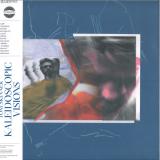
Drummer-composer Tom Skinner announces Kaleidoscopic Visions, his second solo album, out 26th September 2025 via Brownswood Recordings and International Anthem
Kaleidoscopic Visions unfolds across two distinct sonic landscapes. Side A presents entirely instrumental compositions performed by Skinner's live Bishara band—bassist Tom Herbert, cellist Kareem Dayes, and Robert Stillman and Chelsea Carmichael on various woodwinds and reeds—with electric guitar on two tracks courtesy of Portishead's Adrian Utley. A drummer-composer bringing his wealth of experience to bear on the role of bandleader, Skinner composed primarily on guitar, embracing the freedom that came with writing on his secondary instrument.
These compositions include "Auster," dedicated to late novelist Paul Auster, and "Margaret Anne," which honours Skinner's mother Anne Shasby, a former classical concert pianist prodigy who abandoned her own promising career in the face of systemic misogyny, only to impart on her son what Skinner calls "the gift of music."
Skinner’s musical world opens further on Side B, where a collection of poised vocal collaborations stretch out from jazz and improvisation towards a more dream-like, soulful sound. The centerpiece is "The Maxim," a ten-minute collaboration with Grammy Award-winning Meshell Ndegeocello, a dubby, spacious meditation on life and death, delivered with a free-spirited grace. For Skinner, working with Ndegeocello—whom he first saw at Glastonbury as a teenager in 1994—represents a full-circle moment, indicative of the indirect paths and inspirational detours that have shaped his life.
The album goes on to feature South Carolina-based singer Contour (Khari Lucas) who appears on the low-lit soul ballad ‘Logue’, and closes with ‘See How They Run’, featuring London keyboardist-vocalist Yaffra (Jonathan Geyevu). It is the album’s most overtly lyrical track, an articulate exposition of jazz-inflected spoken word that speaks not only to the genre-fluid nature of the music but the breadth of Skinner’s palette.
This should come as no surprise. On Kaleidoscopic Visions, one of London’s most vital musical figures gives us a sparkling glimpse of the multi-coloured lens through which his unique sound is now refracting.
Drummer-composer Tom Skinner announces Kaleidoscopic Visions, his second solo album, out 26th September 2025 via Brownswood Recordings and International Anthem
Kaleidoscopic Visions unfolds across two distinct sonic landscapes. Side A presents entirely instrumental compositions performed by Skinner's live Bishara band—bassist Tom Herbert, cellist Kareem Dayes, and Robert Stillman and Chelsea Carmichael on various woodwinds and reeds—with electric guitar on two tracks courtesy of Portishead's Adrian Utley. A drummer-composer bringing his wealth of experience to bear on the role of bandleader, Skinner composed primarily on guitar, embracing the freedom that came with writing on his secondary instrument.
These compositions include "Auster," dedicated to late novelist Paul Auster, and "Margaret Anne," which honours Skinner's mother Anne Shasby, a former classical concert pianist prodigy who abandoned her own promising career in the face of systemic misogyny, only to impart on her son what Skinner calls "the gift of music."
Skinner’s musical world opens further on Side B, where a collection of poised vocal collaborations stretch out from jazz and improvisation towards a more dream-like, soulful sound. The centerpiece is "The Maxim," a ten-minute collaboration with Grammy Award-winning Meshell Ndegeocello, a dubby, spacious meditation on life and death, delivered with a free-spirited grace. For Skinner, working with Ndegeocello—whom he first saw at Glastonbury as a teenager in 1994—represents a full-circle moment, indicative of the indirect paths and inspirational detours that have shaped his life.
The album goes on to feature South Carolina-based singer Contour (Khari Lucas) who appears on the low-lit soul ballad ‘Logue’, and closes with ‘See How They Run’, featuring London keyboardist-vocalist Yaffra (Jonathan Geyevu). It is the album’s most overtly lyrical track, an articulate exposition of jazz-inflected spoken word that speaks not only to the genre-fluid nature of the music but the breadth of Skinner’s palette.
This should come as no surprise. On Kaleidoscopic Visions, one of London’s most vital musical figures gives us a sparkling glimpse of the multi-coloured lens through which his unique sound is now refracting.
Backspin's new release comes from Obscure Shape, delivering a deep and versatile techno EP that lives up to its title: 'Zwei Gesichter' (German for 'Two Faces'). Across five tracks, the EP explores the tension between raw force and emotional depth, marrying the label's Hardgroove roots with a more introspective edge.
The A-side presents Obscure Shape's first face: It opens with 'Zwei Seiten', a no-frills banger that hits with immediacy and drive. 'Im Angesicht Der Zeit', the single, leans into groove and movement, offering a more fluid, time-aware flow. 'Die Haut In Der Ich Wohne' pares things back into a minimalistic, loopinghypnosis, evoking the idea of inhabiting one's own skin. On the B-side, presenting the producer's second face, 'Spuren Des Werdens' features producer AMIYE and introduces more melody and saw synths, a reflection on growth and transformation. The closer, 'Von Hoffnung Getragen' - also a collaboration with AMIYE - lifts off with ethereal vocals and a bouncing rhythm, embodying the hope that carries us forward.
With the 'Zwei Gesichter' EP, Obscure Shape crafts a powerful narrative through groove, form and feeling, perfectly aligned with Backspin's evolving reinterpretation of early 2000s techno.
Journeys are never just about distance. They stretch time, reshape perception, and demand transformation. With its latest vinyl split EP, Standard Deviation presents four tracks by Nastya Vogan and Phase Fatale that serves as a vessel for tracing displacement, memory, and the liminality of return. These melancholic yet powerful techno cuts serve both the concrete dance floor and moments of intimate self-reflection. Two artists--Nastya Vogan and Phase Fatale--approach Kyiv from different trajectories, but they both keep returning to the city. Vogan, a Ukrainian musician and resident DJ of Kyiv, and Phase Fatale (Hayden Payne), Berlin-based producer, Berghain and Khidi resident and founder of BITE Records, share a longstanding musical friendship. They've played B2B sets at K41 and Vogan, appeared on BITE's ''Shedding Skin'' compilation in 2023, and they share a vision for music selection, from aesthetics to philosophy. Vogan's 'Transitioning Territory' and 'This Is Not a Love Song' unravel the psycho-geography of transition. The first track captures the 24-hour journey to Kyiv as a rite of passage where 'time seems to fold; you are profoundly present yet paradoxically far from the world you left.' In this suspended state, memories surface and ordinary life recedes as the train's rhythm becomes its own meditation. Her second track explores Lacanian limerence--consciously falling for something not fully known, filling absences with personal projections as a way to discover what lies within oneself. Phase Fatale's contributions capture movement and distance with mechanical precision. 'Kekkai,' takes its name from the Japanese word for boundary, echoing 'respect my borders' ethos while reflecting on crossing into wartime Ukraine. The term also suggests a protective force field in Buddhist thought--much like Kyiv's current aura of resistance. 'Neosyazhna Rosa' (Unreachable Rose) honors Payne's Ukrainian grandmother Rose, weaving family history into his present connection with Ukraine. Both pieces balance melancholy with light, their sound palette of lush pads and rhythmic breaks crafted with K41's dance floor in mind.
For his second output on his own label, the Swiss electronic composer Robin Félix, takes this time the listener to West-Africa ; that said, Incantation is lightyears away from “world music”, but closer to the first “Fourth World” LP Jon Hassell recorded with Brian Eno. Moreover, Robin has teamed up with fellow Swiss sculptor, Christian Pauchon, who makes “woodoorina”, inspired by “bolis”, some rather objects used by the Bamanas in Mali and neighbouring countries, that ethnologists view as “fascinating mediators between man and his environment” ; a topic that led the Mauritanian Abderrahmane Sissako and Damon Albarn to compose the opera, The Theft of the Boli. Right from the outset of Goat Skin, one realises that Robin has applied his idiosyncratic way of (mis)treating field-recordings, to dissect and re-model an array of woodoorina calls (sometimes close to drones) entwined to a rhythmic pulse, conjuring up a starry night under which a shaman, adresses his incantations to the spirits of Nature. Robin Félix being who he is, as soon as Corten, his form of quiet electronics show that he is no stranger to Throbbing Gristle or Cosey Fanni Tutti, the self-explanatory Ritual Smoke taking it a little further. The spellbinding organic basses of Rains and Cauris, fused to textures that remind the experiments of David Toop and the electroacoustics of Pierre Henry, lead the listener even deeper into a contemporary avatar of a spiritual journey. In tune with the “call and response” mode, ubiquitous in African music, Pangi brings the EP even closer to the beating heart of the continent, the interactions of the sculptor and the composer blending to such a point that one may wonder if they have exchanged roles. As a meeting point of disciplines and art forms which are not supposed to meet, Incantation is also a convincing demonstration of what the word “inspiration” means, the superb visuals included ; of course, it requires a lot of finesse and respect on all sides
Poet, novelist, musician and academic, Anthony Joseph teams up with legendary UK producer Dave Okumu for forthcoming album, ‘Rowing Up River To Get Our Names Back’
Dave Okumu, known perhaps best as frontman for The Invisible, though digging deeper into his production credits, huge names emerge such as; Grace Jones, Amy Winehouse, Jesse Ware, Rosie Lowe and Eska. On this album, the magic and alchemy of Dave’s production style showcase subtle sonics and deep layering resulting in a contemporary sound to carry Anthony’s afrofuturistic metrical meanings.
Anthony and Dave first came across each other when working with Shabaka Hutchings during Covid broadcasts, and then after Anthony performed some poems on Dave’s 2023 album ‘I Came From Love’, the seeds of collaboration were sown.
With a little more psychedelia, a little more experimentation, Dave’s eclectic vision focuses on the actual sounds on these pieces. Anthony stated that “The best producers guide you, not push you” now add to that the fact that both these humans were born on the same day, a concoction of laid back attitudes in people with strong purpose, some real magic can happen, naturally.
Early writing sessions for this record took place in 2022, around Mount Blanc in France. Anthony was away touring with long-time collaborator, Jason Yarde. Ideas were a little thin and they found themselves somewhat repeating previous work resulting in Anthony rethinking things a little, and so entered Dave Okumu.
LP opener ‘Satellite’ is a fine example of how this new partnership pans out. New musicians have been enlisted; Dan See (Drums), Aviram Barath (Synths), Nick Ramm on Fender Rhodes and Byron Wallen (Trumpet). Add to that the mighty vocal power house of Eska and we have a whole new dimension of soul and depth, to carry Anthony’s statements. “You build a wall, we go under, you build it higher, we go higher, like a satellite” .
On the album's second single, ‘Tony’ - there’s a nod to all drummers and creators of African rhythms, from the point of view of Afrobeat legend Tony Allen. Highlighting this is drummer’s drummer Richard Spaven as Dave’s choice of skin beater. He successfully reminds us that Tony was someone who understood the real power of rhythm and how it is used to unite people.
As well as the new musicians on this LP, Dave Okumu played all the guitars and used the studio as his tool. On ‘A Juba for Janet’ - a poem to Joseph’s mother, and a track so bass heavy that it feels as though it could sit in a deep dubstep set in Plastic People days, - Anthony’s voice reaches straight down your ear canals next to dark drums, huge synths and delayed saxophone stabs from Colin Webster. Slightly more introspective verses on ‘An Afrofuturist Poem’ see Dave’s beats show off the real future sound of this record, kalimba, moog bass and guitars all played by the man himself.
Mellower and deeper moments are also present, Anthony’s cryptic yet informative storytelling is at its absolute best on ‘Churches Of Sound (The Benetiz-Rojo)’ - Caribbean and Windrush history reeled off alongside a linear musical timeline of Black music in the diaspora.
A reminder that this body of work is first of 2 volumes, ‘Rowing Up River To Get Our Names Back’ is not a follow up to Anthony’s previous album, but more a development of his 2006 novel, ‘The African Origins of UFOs’ a book where experimental elements of afro-futurism, metafiction, science fiction, surrealism, mythology are rewritten in Anthony’s innovative language. Look out for Volume 2 also coming in 2025.
Anthony Joseph releases, ‘Rowing Up River To Get Our Names Back’ (Vol. 1) via Heavenly Sweetness 7th February 2025 and he will play live at Ronnie Scotts in London on 14th March 2025, with Dave Okumu as a special guest.
Diagonal celebrates 13 years inbusinessvia a 4 x 12" run featuring label stalwarts and influential collaborators. This is LP2, the second in the series. Like LP1 before it, this 12" comes with a coloured, elastic H band. All four LPs will be accompanied by these meaning customers can combine the records and complete their own 4 x 12" set!
This plate welcomes Regis back tothe label he inspired into existence, this time turning his attention toPowell's "Nomad". The result is techno bliss! Streetwalker (Beau Wanzer & Elon Katz) offer up a gloomy ballad, StabUDown Productions, a label mainstay, delivers the beats we love him for. There's a gripping and unsettling DJ tool from Patino and a beat-fest from Novoline. DIAG050 LP2 has it all.
Groove To Grave Records is back with a second vinyl release, and for this one they are welcoming the Parisian trio Kitchen Plug.
From ghetto house to break and minimal these 3 silly boys love to produce tracks with nasty bass, metallic acid and raw drums. For their first solo EP on vinyl, they wanted to add a early 2000’ electro vibe to their ghetto style for a brainless result. Get ready for 4 bangers, including a tremendous remix from Karaba.
Our travel start with Hm that bass that tells the delicious story of a young pretty cuistot who discovers the secret for a round and saucy gourmet bassline. Next we have Amor da Franceca who is the class clown of this promo. Ready to throw all hopes of a bright future away only to entertain the class. Despite its quite chill demeanor, Meleee packs a devilish punch and boisterous accents of childhood, lost but not forgotten. And last, Karaba’s remix for melee, emphasises the french cancan aspect of our 3 majorettes. Dark red light, pale skin, round booties, dark blue eyes on a shady scene.
Locked-In's fourth release beckons you to dive deep into the distinctive sound of Session 4000 with the "Get Down" EP.
Launching the dancefloor manifesto on the A1 is 'Panaka,' a relentless groove brimming with infectious energy. The bassline asserts its dominance, while the synth patterns showcase a pure, playful mastery.
Progressing to the A2, 'Second Skin' unravels as a mind-bending revelation, leaving an enduring imprint. Session 4000 skillfully weaves intricate layers that captivate from the initial drop to the final fade-out.
Flipping to the B side, 'Get Down' lives up to its name, beckoning with a bumping rhythm and spraying synths. It's a decisive call to action, destined to be a certified dancefloor weapon tailor-made for late-night club escapades.
Concluding the EP on the B2 is 'Mr. Freeze,' as cool as its title implies. This track leaves an indelible mark, providing a memorable conclusion to this electronic narrative.
"Vermillion Plaza," the second single from Deastro's full-length debut, Moondagger, miniaturizes the album's best assets and shoots them out of a cannon. Plucky synth arpeggios, end-of-the-world choruses, joyously careening melody lines-it's all there, squashed into a life-affirming three minutes and 50 seconds. "Vermillion Plaza"'s hidden weapon is its songcraft, which may easily goes unnoticed as the pop-music blur flies by-the song lives uneasily in its skin, buttressing its fireworks display of a chorus with odd moments of synthesizer psychedelia, funk, and disco. And when Deastro's Randolph Chabot pleads for contact, singing, "Would you be my son / 'cause all of mine have died?," it's less a cry of self-pity than a salute to the power of human connection. The B-side is Mux Mool's lumbering, half-time remix of "Vermillion Plaza." The former Ghostly Swim featured artist plunges Chabot's vocal into a sinister electronic nightmare-scape, squelching through mud puddles of bass as synthesized strings circle the skies.
Cute Heels is the project of Victor Lenis, a contemporary electronic artist living in Berlin, Germany. He grew up in Bogotá, Columbia during the 1990s, surrounded by the radial punk scene. Over the years, Victor's passion and fascination for synthesizers and drum machines to produce and compose resulted in his debut album 'Spiritual" for Dark Entries in 2014 as well as the Third Skin' EP in 2016. Inspired by equal parts Liaisons Dangereuses, Drexciya and Black Devil Disco Club, Cute Heels connects the dots between Detroit techno, early Chicago house and Belgium electronic body music.State of Mind' is a 4-track EP featuring the vocal talents of Berlin artist Aga Wilk, of electro-punk projects Walkman Music and 77TM, on the the title track. On the A-side are two fresh compositions recorded in New York and Bogota between 2016 and 2017. Victor says, 'State of Mind refers to the subconscious as dominated by real facts, natural, unnatural ,metaphysical or virtual and dynamism of the body as physical shield.' The track is a slow building foray into techno, elegantly suited for intangible moments. 'Golden Tears' kicks off with Cute Heels' signature metallic EBM funk played with punchy, percussive analog synths. On the flip we present two banging club remixes. The first is from LA-4A, techno DJ and producer Kevin McHugh aka Ambivalent, who adds a strong kick drum and lacerating hi-hats that build up to a mind melting breakdown with a full on acid squelch attack. The second remix comes from Noncompliant, Midwest US-based producer Lisa Smith aka DJ Shiva, who creates a raw, thumping exercise though off-kilter mechanics and punishing percussion. All songs have been mastered for vinyl by George Horn at Fantasy Studios in Berkeley. The record comes in a custom-made die-cut jacket designed by Eloise Leigh featuring suggestive rope bondage graphic printed spot black matte on black hi-gloss finish. Each copy includes a postcard.
Cute Heels is the solo project of Victor Lenis, a contemporary artist living in Barcelona, Spain. He grew up in Bogotá, Columbia during the 1990s, surrounded by the radial punk scene. Over the years, Victor's passion and fascination for synthesizers and drum machines to produce and compose resulted in various digital-only releases as well as his debut album Spiritual" for Dark Entries in 2014. Cute Heels has been called ''the new blood and spirit for the next step in techno music'' by Electro/Techno pioneer Juan Atkins. Third Skin' is a 4-track EP that connects the dots between Detroit techno, early Chicago house and Belgium electronic body music. Inspired by equal parts Liaisons Dangereuses, Drexciya and Black Devil Disco Club. On the A-side are two fresh compositions recorded in 2015. Third Skin' kicks things in a metallic EBM funk with a pounding bottom end. Lipstick Information' takes the listener on a dark, psychedelic and twisted journey through thrillingly intense arpeggiations. On the flip we present two remixes. The first is from Steffi, House and Techno DJ and producer born in The Netherlands and residing in Berlin. She picks up the pace for an uplifting, percussion-driven, DAF-eque dystopian stomper. The second remix comes from Michel Amato aka The Hacker, French born DJ and producer and frequent collaborator with Miss Kittin. His early musical influences of bands such as Cabaret Voltaire, Throbbing Gristle and Front 242 shine through on this pumping and sophisticated remix ready for any dance floor.
All songs have been mastered for vinyl by George Horn at Fantasy Studios in Berkeley. The record comes in a custom-made jacket designed by Eloise Leigh featuring a photograph by Corinne Schiavone printed with hi-gloss finish. Each copy includes a postcard with with notes and image for fetish lovers
Two decades have passed in the land of Gnod, yet the psychic travelogue only becomes more enthralling as it goes on. And whilst this band has flourished via dauntless conviction, hive-mind magic and a fierce and uncompromising spirit, one ingredient has served as a crucial fuel for the fire – the monolithic singularity of the riff.
This second chapter of Gnod’s sort-of-anniversary trilogy also originates in the same six day sessions as the first, at Hellfire Studios near Dublin with producer Spud Murphy (Lankum, Black Midi etc). Yet the focus this time is on the transcendental heaviness and repetition that the band have often used as a primary fulcrum of their approach. This volume captures the sound of strings flayed, throats shredded, skins punished by the organic chemistry of this formidably powerful band in a room.
The results are amongst the most fearsome and kinetic material that Gnod have summoned to date. As has often been the case for a band heavily driven by serendipity and intuition, the best plan is no plan at all. “We find quite regularly that spontaneity and the no thought approach works better than over analysis and detailed planning” clarifies the band's Chris Haslam
Maximal yet minimal, claustrophobic yet expansive, free in approach yet mercilessly disciplined in their intensity – Gnod like every truly great band are a mass of contradictions. On Chronicles Of Gnowt (Vol 2), this thunderous paradox has never sounded fiercer. To paraphrase Nietzsche: “Is man merely a mistake of Gnod's? Or Gnod merely a mistake of man?”
For The Bobby Lees, their fourth album and Epitaph debut New Self marks a thrilling new chapter for the band while doubling down on what"s always made them so magnetic. The Bobby Lees don"t need much in the way of introduction. Within a few seconds of exposure to their furnace-blast live shows or their bottled-lightning studio records, it"s easy to hear why they"ve earned fans in legendary musicians like Iggy Pop, Debbie Harry, and Henry Rollins. They"re as uncompromising in their sound and generous with their energy as any of their punk ancestors who first rewrote the rules of engagement back in the 1970s. Led by singer and guitarist Sam Quartin, drummer Macky Bowman, and bassist Kendall Wind, The Bobby Lees bring wildness and danger back into punk rock. You can hear the band easing into a new confidence -- one that"s both looser and more towering -- all throughout New Self, from the seething, fiery "Napoleon" to the rambunctious, offbeat take on PJ Harvey"s "50ft Queenie." This is the sound of a band who"s scrambled over shaky ground only to come back stronger than ever: more confident, more connected, louder and fiercer and secure in their own skin.
Newly signed to Heist or Hit (Westside Cowboy, Her’s, Nature TV), Georgian's forthcoming debut EP 'Crackled Grounds' reads like an anthology in the vein of The Ballad of Buster Scruggs. These aren’t just songs, but scenes, self-contained worlds that glimmer with strange detail before dissolving into mirage. “We recorded on a farm just north of Amsterdam” states James. “It gave us space and focus and helped us channel the Western feel we wanted to impress upon the tracks. Arno gave us lots of pedal board options and guitar choices. Those things in particular helped us fine-tune the sound we were chasing.” The resulting collection chronicles the ups and downs of existence and blooms with natural imagery. ‘Strike a Wound’ seethes with revenge. The slow attack on the guitars has the onomatopoeic effect of enacting each blow. ‘Crackled Grounds’ conjures an apocalyptic wilderness that wouldn’t be out of place on the ‘Kill Bill’ soundtrack. ‘Medusa’ is a parable of strong women overcoming obstacles and jolts with the energy of those early Johnny Cash Sun recordings. ‘Gardens’ lingers on the awkward tenderness of running into a long-lost lover; while ‘Californian Jeans’ pays homage to denim as talisman, armour, and second skin.
Loukeman is a Toronto-based producer, DJ, and songwriter. His music pulls from folk, pop, rap, and R&B, creating his own warped yet familiar forms. He’s earned support from the likes of a wide range of artists including Fred again.., Obongjayar, Aminé, Skin on Skin, Ecco2k, and more. He’s delivered official remixes for PinkPantheress, Vegyn, and Obongjayar, and he’s shared stages with some of the most exciting acts in the underground. Most recently, he's produced 5 tracks on ASAP Rocky's long awaited record, 'Don't Be Dumb.' Having garnered praise for his self-released Sd-1, Loukeman followed up with Sd-2, which established his cultural and critical presence.
Sd-2 — the second of a planned trilogy -- continued his display of range as one of the most exciting producers in recent years. Following the release, praise followed from the likes of Pitchfork, Resident Advisor, Mixmag, and numerous others. He launched a series of club nights titled BRXZN WXRLD in 2024, which sold out across London, Los Angeles, Toronto, and NYC. A recent guest mix on Rinse.fm provides a glimpse into his eclectic mix style and range of edits. His music has been used by a multitude of brands from Burberry, and Stussy to Nike and Apple. With a forthcoming album in 2026, he's also caught the attention of several pop acts as a producer and co-writer.
out of Stock
Last delivered 4 months ago available to reorder, subject to availability
USA Hardcore/Punk Geschichte! M.I.A. wurden 1980 in Las Vegas gegründet, zogen 1981 nach Orange County und begannen im berüchtigten Cuckoo's Nest zusammen mit Fear, Shattered Faith, T.S.OL. u.a. Shows zu spieln. Ende '81 gingen sie in ein lokales Tonstudio in Costa Mesa und nahmen an einem Nachmittag neun Songs auf, bis ihnen das Geld ausging - 300 Dollar gut angelegt! Eine Kassette wurde rasch kopiert und herumgereicht. Eine Kopie der Kassette wurde KevinSeconds bei einem Gig mit 7 Seconds in Reno gegeben. Kevin gab sie an Tim Yohannan von Maximum Rocknroll weiter. Schließlich gelangte sie in die Hände von Felix Alanis von Smoke Seven und Greg Shaw von Bomp. Mitte 1982 waren M.I.A. dann auf drei Vinyl-Veröffentlichungen vertreten: "Tell Me Why" auf der Compilation American Youth Report von Bomp, "New Left" auf Maximum Rocknroll Presents: Not So Quiet On the Western Front von Alternative Tentacles und acht der neun Tracks landeten auf der berüchtigten Split-LP mit Last Rites auf Smoke Seven. Alle 9 Tracks des ersten Tapes sind hier versammelt, zum ersten Mal richtig abgemischt. Der Begin von M.I.A. (US) und gleichzeitig das letzte Lapitel der Moder City Records-Reissue-Reihe zur Band. « ...In one corner is M.I.A., a band originally from Las Vegas, the champions of punk's positive side. They've managed to fuse a super tight thrash sound with enlightened attitudes_"I Hate Hippies" is obviously meant as a satire with a moral, and the results are absolutely stunning. » _Jeff Bale's 1982 review of the Last Rites for...-Split-LP in Maximum Rocknroll #2 2.Auflage, Cover Metallic Blue, Vinyl Dirty Turquoise, plus 24seitigem Booklet.
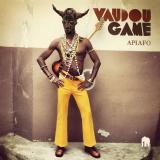
Repress of the 1 st album of the fresh Afro funk sensation ! Recorded on analog equipment in Lyon in 2014 !
Peter Solo is a singer and composer born in Aného-Glidji, Togo, the birthplace of the Guin tribe and a major site of the Voodoo culture. He was raised with this tradition’s values of respect for all forms of life and the environment. With his new band, Vaudou Game, Peter Solo claims, and spreads this spiritual and musical heritage. Chants are at the heart of the Voodoo practice, but for times immemorial, harmonic instruments have never accompanied them. No balafon, no kora - only the “skins” support the singers. However, in 2012, Peter, along with his band based in Lyon, France, decided to explore and codify the musical scales that are found in sacred or profane songs of Beninese and Togolese Voodoo so they can be played easily on modern instruments. Peter composed the album Apiafo, using the two main musical scales of this tradition. The first musical scale on Apiafo leans towards raw Funk with a sound similar to the famous 70’s bands, L’Orchestre Poly Rythmo De Cotonou and El Rego. Funk, is the skeletal structure of this record, and provided the opportunity for Peter to invite his uncle, Roger Damawuzan - the famous pioneer of the 70s Soul scene - on two tracks. Their collaboration on “Pas Contente” is a highlight on this 100% analog album. Apiafo was entirely recorded, mixed and mastered with old tapes and vintage instruments. The second scale, which had never before been transposed for instruments, evokes deeper feelings and a sacred ambiance. The moving song Ata, an invocation to a supreme divinity is another highlight of this record. Even if some can recognize similarities between this scale and Ethiopian scales, they are in fact different. Peter, the only African band member, introduced the other musicians to the universal values of Voodoo and he taught them his native language. On the recording of Apiafo and during their live performances, the musicians all sing and answer Peter in the Mina language. The strive for authenticity, the analog sound and vintage looks don’t mean that Vaudou Game is looking backwards. This is Togolese funk, born in the post-colonial era but that never before explored its ancient roots so deeply and proudly.
Writings on the topic that go off in all directions, mind-numbing lectures given by academics, and testimonies, most of them heavily doctored, from those who “lived through that era”: so many people today fantasize about the early days of punk in our country… This blessed moment when no one had yet thought of flaunting a ridiculous green mohawk, taking Sid Vicious as a hero, or – even worse – making the so-called alternative scene both festive and boorish. There was no such thing in 1976 or 1977, when it wasn’t easy to get hold of the first 45s by the Pistols or the Clash. Few people were aware of what was happening on the fringes of the fringes at the time. Malcolm McLaren was virtually unknown, and having short hair made you seem strange. Who knew then that rock music, which had taken a very bad turn since the early 1970s, would once again become an essential element of liberation? That, thanks to short and fast songs, it would once again rediscover that primitive, social side that was so hated by older generations? Who knew that, besides a few loners who read the music press (it was even better if they read it in English) and frequented the right record stores? Many of these formed bands, because it was impossible to do otherwise. We quickly went from listening to the Velvet Underground to trying to play the Stooges’ intros. It’s a somewhat collective story, even though there weren’t many people to start it.
The Guilty Razors were among those who took part in this initial upheaval in Paris. They were far from being the worst. They had something special and even released a single that was well above the national average. They also had enough songs to fill an album, the one you’re holding. In everyone’s opinion, they were definitely not among the punk impostors that followed in their wake. They were, at least, genuine and credible.
Guilty Razors, Parisian punk band (1975-1978). To understand something about their somewhat linear but very energetic sound, we might need to talk about the context in which it was born and, more broadly, recall the boredom (a theme that would become capital in punk songs) coupled with the desire to blow everything off, which were the basis for the formation of bands playing a rejuvenated rock music ; about the passion for a few records by the Kinks or the early Who, by the Stooges, by the Velvet mostly, which set you apart from the crowd.
And of course, we should remember this new wave, which was promoted by a few articles in the specialized press and some cutting-edge record stores, coming from New York or London, whose small but powerful influence could be felt in Paris and in a handful of isolated places in the provinces, lulled to sleep by so many appalling things, from Tangerine Dream to President Giscard d’Estaing...
In 1975-76, French music was, as almost always, in a sorry state ; it was still dominated by Johnny Hallyday and Sylvie Vartan. Local rock music was also rather bleak, apart from Bijou and Little Bob who tried to revive this small scene with poorly sound-engineered gigs played to almost no one.
In the working class suburbs at the time, it was mainly hard rock music played to 11 that helped people forget about their gruelling shifts at the factory. Here and there, on the outskirts of major cities, you still could find a few rockers with sideburns wearing black armbands since the death of Gene Vincent, but it wasn’t a proper mass movement, just a source of real danger to anyone they came across who wasn't like them. In August 1976, a festival unlike any other took place in Mont-de-Marsan – the First European Punk Festival as the poster said – with almost as many people on stage as in the audience. Yet, on that day, a quasi historical event happened, when, under the blazing afternoon sun, a band of unknowns called The Damned made an unprecedented noise in the arena, reminiscent of the chaotic Stooges in their early adolescence. They were the first genuine punk band to perform in our country: from then on, anything was possible, almost anything seemed permissible.
It makes sense that the four+1 members of Guilty Razors, who initially amplified acoustic guitars with crappy tape recorder microphones, would adopt punk music (pronounced paink in French) naturally and instinctively, since it combines liberating noise with speed of execution and – crucially – a very healthy sense of rebellion (the protesters of May 1968 proclaimed, and it was even a slogan, that they weren’t against old people, but against what had made them grow old. In the mid-1970s, it seemed normal and obvious that old people should now ALSO be targeted!!!).
At the time, the desire to fight back, and break down authority and apathy, was either red or black, often taking the form of leafleting, tumultuous general assemblies in the schoolyard, and massive or shabby demonstrations, most of the time overflowing with an exciting vitality that sometimes turned into fights with the riot police. Indeed, soon after the end of the Vietnam War and following Pinochet’s coup in Chile, all over France, Trotskyist and anarcho-libertarian fervour was firmly entrenched among parts of the educated youth population, who were equally rebellious and troublemakers whenever they had the chance. It should also be noted that when the single "Anarchy in the UK" was first heard, even though not many of us had access to it, both the title and its explosive sound immediately resonated with some of those troublemakers crying out for ANARCHY!!! Meanwhile, the left-wing majority still equated punks with reckless young neo-Nazis. Of course, the widely circulated photos in the mainstream press of Siouxsie Sioux with her swastikas didn’t necessarily help to win over the theorists of the Great Revolution. It took Joe Strummer to introduce The Clash as an anti-racist, anti-fascist and anti-ignorance band for the rejection of old-school revolutionaries to fade a little.
The Lycée Jean-Baptiste Say at Porte d’Auteuil, despite being located in the very posh and very exclusive 16th arrondissement of Paris, didn’t escape these "committed" upheavals, which doubled as the perfect outlet for the less timid members of this generation.
“Back then, politics were fun,” says Tristam Nada, who studied there and went on to become Guilty Razors’ frontman. “Jean-Baptiste was the leftist high-school in the neighbourhood. When the far right guys from the GUD came down there, the Communist League guys from elsewhere helped us fight them off.”
Anything that could challenge authority was fair game and of course, strikes for just about any reason would lead to increasingly frequent truancy (with a definitive farewell to education that would soon follow). Tristam Nada spent his 10th and 11th unfinished grades with José Perez, who had come from Spain, where his father, a janitor, had been sentenced to death by Franco. “José steered my tastes towards solid acts such as The Who. Like most teenagers, I had previously absorbed just about everything that came my way, from Yes to Led Zeppelin to Genesis. I was exploring… And then one day, he told me that he and his brother Carlos wanted to start a rock band.” The Perez brothers already played guitar. “Of course, they were Spanish!”, jokes their singer. “Then, somewhat reluctantly, José took up the bass and we were soon joined by Jano – who called himself Jano Homicid – who took up the rhythm guitar.” Several drummers would later join this core of not easily intimidated young guys who didn’t let adversity get the better of them.
The first rehearsals of the newly named Guilty Razors took place in the bedroom of a Perez aunt. There, the three rookies tried to cover a few standards, songs that often were an integral part of their lives. During a first, short gig, in front of a bewildered audience of tough old-school rockers, they launched into a clunky version of the Velvet Underground's “Heroin”. Challenge or recklessness? A bit of both, probably… And then, step by step, their limited repertoire expanded as they decided to write their own songs, sung in a not always very accurate or academic English, but who cared about proper grammar or the right vocabulary, since what truly mattered was to make the words sound as good as possible while playing very, very fast music? And spitting out those words in a language that left no doubt as to what it conveyed mattered as well.
Trying their hand a the kind of rock music disliked by most of the neighbourhood, making noise, being fiercely provocative: they still belonged to a tiny clique who, at this very moment, had chosen to impose this difference. And there were very few places in France or elsewhere, where one could witness the first stirrings of something that wasn’t a trend yet, let alone a movement.
In the provinces, in late 1976 or early 1977, there couldn’t be more than thirty record stores that were a bit more discerning than average, where you could hear this new kind of short-haired rock music called “punk”. The old clientele, who previously had no problem coming in to buy the latest McCartney or Aerosmith LP, now felt a little less comfortable there…
In Paris, these enlightened places were quite rare and often located nex to what would become the Forum des Halles, a big shopping mall. Between three aging sex workers, a couple of second-hand clothes shops, sellers of hippie paraphernalia and small fashion designers, the good word was loudly spread in two pioneering places – propagators of what was still only a new underground movement. Historically, the first one was the Open Market, a kind of poorly, but tastefully stocked cave. Speakers blasted out the sound of sixties garage bands from the Nuggets compilation (a crucial reference for José Perez) or the badly dressed English kids of Eddie and the Hot Rods. This black-painted den was opened a few years earlier by Marc Zermati, a character who wasn’t always in a sunny disposition, but always quite radical in his (good) choices and his opinions. He founded the independent label Skydog and was one of the promoters of the Mont-de-Marsan punk festivals. Not far from there was Harry Cover, another store more in tune with the new New York scene, which was amply covered in the house fanzine, Rock News (even though it was in it that the photos of the Sex Pistols were first published in France).
It was a favorite hang-out of the Perez brothers and Tristam Nada, as the latter explained. “It’s at Harry Cover’s that we first heard the Pistols and Clash’s 45s, and after that, we decided to start writing our first songs. If they could do it, so could we!”
The sonic shocks that were “Anarchy in the UK”, “White Riot” or the Buzzcocks’s EP, “Spiral Scratch” – which Guilty Razors' sound is reminiscent of – were soon to be amplified by an unparalleled visual shock. In April 1977, right after the release of their first LP, The Clash performed at the Palais des Glaces in Paris, during a punk night organised by Marc Zermati. For many who were there, it was the gig of a lifetime…
Of course, Guilty Razors and Tristam were in the audience: “That concert was fabulous… We Parisian punks were almost all dressed in black and white, with white shirts, skinny leather ties, bikers jackets or light jackets, etc. The Clash, on the other hand, wore colourful clothes. Well, the next day, at the Gibus, you’d spot everyone who had been at this concert, but they weren’t wearing anything black, they were all wearing colours.”
It makes sense to mention the Gibus club, as Guilty Razors often played there (sometimes in front of a hostile audience). It was also the only place in Paris that regularly scheduled new Parisian or Anglo-Saxon acts, such as Generation X, Siouxsie and the Banshees, the Slits, and Johnny Thunders who would become a kind of messed-up mascot for the venue. A little later, in 1978, the Rose Bonbon – formerly the Nashville – also attracted nightly owls in search of electric thrills… In 1977, the iconic but not necessarily excellent Asphalt Jungle often played at the Gibus, sometimes sharing the bill with Metal Urbain, the only band whose aura would later transcend the French borders (“I saw them as the French Sex Pistols,” said Geoff Travis, head of their British label Rough Trade). Already established in this small scene, Metal Urbain helped the young and restless Guilty Razors who had just arrived. Guitarist for Metal Urbain Hermann Schwartz remembers it: “They were younger than us, we were a bit like their mentors even if it’s too strong a word… At least they were credible. We thought they were good, and they had good songs which reminded of the Buzzcocks that I liked a lot. But at some point, they started hanging out with the Hells Angels. That’s when we stopped following them.”
The break-up was mutual, since, Guilty Razors, for their part, were shocked when they saw a fringe element of the audience at Metal Urbain concerts who repeatedly shouted “Sieg Heil” and gave Nazi salutes. These provocations, even still minor (the bulk of the skinhead crowd would later make their presence felt during concerts), weren’t really to the liking of the Perez brothers, whose anti-fascist convictions were firmly rooted. Some things are non-negotiable.
A few months earlier (in July 1978), Guilty Razors had nevertheless opened very successfully for Metal Urbain at the Bus Palladium, a more traditonally old-school rock night-club. But, as was sometimes the case back then, the night turned into a mass brawl when suburban rockers came to “beat up punks”.
Back then, Parisian nights weren’t always sweet and serene.
So, after opening as best as they could for The Jam (their sound having been ruined by the PA system), our local heroes were – once again – met outside by a horde of greasers out to get them. “Thankfully,” says Tristam, “we were with our roadies, motorless bikers who acted as a protective barrier. We were chased in the neighbouring streets and the whole thing ended in front of a bar, with the owner coming out with a rifle…”
Although Tristam and the Perez brothers narrowly escaped various, potentially bloody, incidents, they weren’t completely innocent of wrongdoing either. They still find amusing their mugging of two strangers in the street for example (“We were broke and we simply wanted to buy tickets for the Heartbreakers concert that night,” says Tristam). It so happened that their victims were two key figures in the rock business at the time: radio presenter Alain Manneval and music publisher Philippe Constantin. They filed a complaint and sought monetary compensation, but somehow the band’s manager, the skilful but very controversial Alexis, managed to get the complaint withdrawn and Guilty Razors ended up signing with Constantin with a substantial advance.
They also signed with Polydor and the label released in 1978 their only three-track 45, featuring “I Don't Wanna be A Rich”, “Hurts and Noises” and “Provocate” (songs that exuded perpetual rebellion and an unquenchable desire for “class” confrontation). It was a very good record, but due to a lack of promotion (radio stations didn’t play French artists singing in English), it didn’t sell very well. Only 800 copies were allegedly sold and the rest of the stock was pulped… Initially, the three tracks were to be included on a LP that never came to be, since they were dropped by Polydor (“Let’s say we sometimes caused a ruckus in their offices!” laughs Tristam.) In order to perfect the long-awaited LP, the band recorded demos of other tracks. There was a cover of Pink Floyd's “Lucifer Sam” from the Syd Barrett era – proof of an enduring love for the sixties’ greats –, “Wake Up” a hangover tale and “Bad Heart” about the Baader-Meinhof gang, whose actions had a profound impact on the era and on a generation seeking extreme dissent... On the album you’re now discovering, you can also hear five previously unreleased tracks recorded a bit later during an extended and freezing stay in Madrid, in a makeshift studio with the invaluable help of a drummer also acting as sound engineer. He was both an enthusiastic old hippie and a proper whizz at sound engineering. Here too, certain influences from the fifties and sixties (Link Wray, the Troggs) are more than obvious in the band’s music.
Shortly after a final stormy and rather barbaric (on the audience’s side) “Punk night” at the Olympia in June 1978, Tristam left the band ; his bandmates continued without him for a short while.
But like most pioneering punk bands of the era, Guilty Razors eventually split up for good after three years (besides once in Spain, they’d only played in Paris). The reason for ceasing business activities were more or less the same for everyone: there were no venues outside one’s small circuit to play this kind of rock music, which was still frightening, unknown, or of little interest to most people. The chances of recording an LP were virtually null, since major labels were only signing unoriginal but reassuring sub-Téléphone clones, and the smaller ones were only interested in progressive rock or French chanson for youth clubs. And what about self-production? No one in our small safety-pinned world had thought about it yet. There wasn’t enough money to embark on that sort of venture anyway.
So yes, the early days of punk in France were truly No Future!
out of Stock
Last delivered 6 months ago available to reorder, subject to availability
Silicon Scally and Fleck E.S.C. need no introduction at this stage. Both artists are veterans not just of Sheffield's Central Processing Unit label but of modern electro as a whole, with the pair having decades of skin in the game at this point. Their new release, a four-track EP entitledSlipwhere Silicon Scally handles the first half and Fleck E.S.C. the second, carries itself with the adventurous confidence of a record made by masters of their craft.
Slipopener 'Phased Array' is exactly the kind of top quality machine-funk tackle you'd expect from this meeting of minds. The beat programming is deliciously tactile from the off, hissing and clanking like machinery in an old Detroit factory. The feel of 'Phased Array' is altered, though, when the chords come in, a series of alternating floating sounds which give the track an altogether eerier feel. When all of this is coupled with the otherworldly synth blurts that periodically force their way to the front of the track, the overall effect is a piece of real depth assembled by an expert practitioner.
'Phased Array' is followed up by 'Stax', another brilliantly propulsive number. Here we find the drum beat - one which is a little reminiscent of that Kraftwerk tune about the numbers, no less - once more offset by some decidedly more shadowy synth work, all while arpeggiated keyboard licks work against an intricate web of basslines, chords and unidentifiable flying synth tones.
Fleck E.S.C. opens theSlipB-side with 'Good Ride', a number where the nudge-wink title is borne out by a track built around looped snippets of sighing vocals. That said, with a bassline that sounds like a blurting old landline telephone, a ghoulish synth lead and all manner of motion-sick breakdowns, the 'ride' in question could just as well be aWipeout-style whizz through hyperspace as anything more suggestive. 'Good Ride' also sets itself apart from the other joints here by showing off a swaying halftime breakdown.
'Intox Remedy',Slip's closer, wraps the EP in a manner which continues some of the trends of the record's earlier tracks - richly tuneful chords, precision-engineered broken beat drum programming and a wide palette of delightfully unusual synth tones are all present and correct. However, there is also something about the chords here which pares back the eeriness of previous joints for a bit more of a wide-eyed, stargazing feel, and as such 'Intox Remedy' sees the record out by placing the listener firmly back in the cosmos.
Tough enough for the dancefloor and intricate enough for home listening, theSlipEP is a fabulous collaboration from two of the most respected voices in the electro game.
out of Stock
Last delivered 34 days ago available to reorder, subject to availability