Five years on from their iconic debut album, the Red Robin posse return with another epic full length LP - this time featuring the ruffneck deejay styling of their longtime friend Tippa Lee.
With ten hardcore riddims from Naram stretching the full spectrum of 80s roots, rub-a-dub, and digi - and uncompromising street level lyrics from the LA-based Jamaican veteran Tippa Lee - Musically Bad is an absolute must-have for any discerning reggae collector.
The culmination of nearly a decade of collaboration, with multiple trips to LA where they improvised studio set ups at a range of cheap motels. Tippa takes listeners on a journey through his history in reggae, lamenting the rise of slackness and gun culture, firing shots at politicians and oligarchs, and shining a spotlight on the struggles of people of all colours and creeds suffering in the ghetto.
Despite the serious messages conveyed, and the heavyweight militant riddims, the album contains plenty of moments of humour and levity thanks to Tippa's lyrical nous.
With all riddims recorded and mixed to half inch tape in Naram's analogue Whanganui studio, and crisp mastering from Downbeat Studios, the LP is fine tuned to mash up any dancehall or living room.
quête:section 8
- A1: Retrospect - This World Is Not My Home
- A2: Hidden Fire Improvisation
- B1: Hidden Fire Blues
- B2: Hidden Fire Blues
- C1: My Brothers The Wind And Son #9
- C2: My Brothers The Wind And Son #9
- D1: Hidden Fire I
- D2: Hidden Fire Ii
Strut Records proudly presents the official reissue of Hidden Fire Volumes 1 & 2, the final album released by Sun Ra on his El Saturn label in 1988.
Captured live over three nights at the Knitting Factory in New York City, these performances mark the closing chapter of a 33-year odyssey of radical, independent music-making. Originally issued in tiny quantities with minimal packaging and cryptic artwork—often featuring hand-written labels or Ra’s own handmade designs—Hidden Fire was among the most elusive entries in Sun Ra’s vast discography.
Musically, these recordings stand apart from Ra’s other '80s compositions. Here, Hidden Fire plunges into darker, more dissonant territory. Ra performs exclusively on the Yamaha DX7 synthesiser, pushing its digital sound palette into alien dimensions. The Arkestra lineup is uniquely configured, featuring a rare and heavy string section with three violins, including the legendary Billy Bang, and the singular space vocalist Art Jenkins, whose eerie textures and vocalisations had not been heard so prominently since the early 1960s Choreographers Workshop sessions. The music is raw, unsettled, and often overwhelming.
“Retrospect / This World Is Not My Home” opens with a palindromic riff that evokes Ellington before unraveling into a stark sermon from Ra, warning of death’s dominion over Earth-bound minds. “Hidden Fire Improvisation” is a furious explosion of tone science, with Marshall Allen, Billy Bang, and John Gilmore delivering fire-breathing solos over relentless drumming and Ra’s cascading synth clusters. “Hidden Fire Blues” offers a warped, electrified version of Ra’s familiar blues feature, led by Bruce Edwards on guitar and Rollo Radford on electric bass, transformed through the haze of DX7 textures. “My Brothers The Wind And Sun #9” evokes the experimental weight of The Heliocentric Worlds with its crashing percussion, pulsing synth-vocal duets, and string- driven chaos that seems to spiral into oblivion.
Even the quieter moments—such as “Hidden Fire II,” a duet between Ra and Art Jenkins—feel thick with unease and shadowy beauty. These performances represent a Sun Ra less concerned with cosmic joy or outer-space swing, and more focused on conjuring portals to the unknown.
Remastered from original sources and presented with archival photos, new liner notes by Paul Griffiths, and restored artwork inspired by the original Saturn editions, this reissue offers a definitive window into the last creative surge of one of music’s most visionary figures across two Vinyl LP’s.
- A1: Before You Realise It
- B1: Cerebral Crack
The Mystery Lights return with a brand new, MC5-flavoured banger “Before You Realise It”. With its pummeling rhythm section, searing guitars and singer Mike Brandon’s frantic, shout-sing delivery, “Before You Realise It” is a rare example of a band at peak power, capturing the raw, chaotic energy of their live show onto 8-track tape. On the flip you’ll find the lysergic nightmare “Cerebral Crack”. A creeping, psychedelic hell-ride into the nether regions of the human psyche.
Continuing the sensational Spring Revisited series - Acid Jazz presents a new 12” release – Fatback Band: ‘Night Fever (Kenny Dope Mix)’ / ‘(Hey) I Feel Real Good (DJ Spinna Refreak). Spring Revisited is an exciting and unique mix project that explores the musical legacy of legendary New York label Spring Records, with a series of new mixes from top mix artists, using the original masters. Fatback Band are a disco/funk group that were at the peak of their success in the ’70s, and they were one of Spring Records’ most iconic artists. This is the second release in the series featuring the band’s classic work. ‘Night Fever’ is an electro-disco track released in 1976.
Keeping the soulful vocal and strings from the original, house legend Kenny Dope beefs up a looped section of the percussion that forms the backbone of his version. He lifts the tempo and creates a DJ friendly version, while keeping the improvised feel of the original. This rough and ready remix has the kind of bumping groove that’s infectious on a dance floor. On the flip, DJ Spinna gives a new take on the Fatback’s ‘(Hey) I Feel Real Good’. Presented in the signature Spring Revisited house-bag, looking as if it were hand delivered to you from a 1970s record pool.
Limited edition…
- A1: Malavoi - Te Traigo Guajira
- A2: Los Caraibes - Donde
- A3: Tropicana - Amor En Chachacha
- A4: Ryco Jazz - Wachi Wara
- A5: Eugene Balthazar - Dap Pignan
- A6: Roger Jaffort - Oye Mi Consejo
- A7: Les Kings - Oriza
- B1: Les Supers Jaguars - Tatalibaba
- B2: Super Combo De Pointe A Pitre - Serrana
- B3: L'ensemble Abricot - Se Quedo Boogaloo
- B4: Henri Guedon - Bilonga
- B5: Les Aiglons - Pensando En Ti
- B6: Los Martiniquenos - Caterate
In Guadeloupe, many people think that jazz and ka music are like a ring and a finger. To some extent, the same could be said about so called Latin music and the music played in the French West Indies.
Both aesthetics were born in the Caribbean and bear so many connections that they can easily be considered cousins. In constant dialogue, there are lots of examples of their fruitful alliance and have been for a while. The English country dance that used to be practiced in European lounges came to be called kadrille in Martinique and contradanza in Cuba. They both featured additional percussion instruments inherited from the transatlantic deportation. Drawing from shared feelings about the same traumatized identity – later to be creolized – it would be hard not to assume that they were meant to inspire each other. The golden age of the orchestras that graced the Pigalle nights during the interwar period further proves the point. As soon as the 1930s, Havana-born Don Barreto naturally mixed danzón and biguine music in a combo based at Melody's Bar. In the following decade, Félix Valvert, a conductor who was born and raised in Basse-Terre in Guadelupe, also worked wonders in Montparnasse with La Coupole, which was an orchestra made up of eclectic musicians. Afro- Caribbean performers of various origins were often hired on rhythm and brass sections in jazz bands, which used to enliven the typical French balls of the capital. In the 1930s and onwards, Rico’s Creole Band was one of them.
Martinican violinist-clarinettist Ernest Léardée, who would become the king of biguine music as well as the main figure of French Uncle Ben's TV commercials (a dark stigma of post-colonial stereotypes), had musicians from the whole Caribbean sphere play at his Bal Blomet – and they all enchanted "ces Zazous-là" (according the words of Léardée's biguine-calypso piece). In les Antilles (French for French West Indies), music history started to speed up in the 1950s, when trade expanded and radio stations grew bigger. The Guadelupean and Martiniquais youth tuned in their old galena radio sets to South American and Caribbean music. As for the women traders, les pacotilleuses, they bought and sold goods across different islands (the "passing of items through various hands" was thought to be most pleasurable) and brought back countless sounds in their luggage. Such was the case of Madame Balthazar, who once returned from Puerto Rico with the first 45rpm and 33rpm to ever enter Martinique.
Out of this adventure was created the famous Martinican label La Maison des Merengues, a music business she opened and undertook with her husband and which proved to be a major landmark. At the end of the 1950s, in Puerto Rico, Marius Cultier competed in the Piano International Contest playing a version of Monk's Round 'Midnight. He won the first prize and this distinction foreshadowed everything that was to come. Cultier, the heretic Monk of jazz, was quickly praised for writing superb melodies, always tinged with a twist that conferred a unique sound to his music. It didn't take long for the gifted self-taught musician to get to play with Los Cubanos, making a name for himself thanks to his impressive maestria on merengues.
The rest is history. Besides, in the late 1950s, Frantz Charles-Denis, born into the upper middle class in Saint-Pierre and better known by his first name Francisco, went back home after working at La Cabane Cubaine – a club located rue Fontaine where he had caught the Latin fever. Francisco's music was therefore heavily marked by his Cuban cousins' influence, which gave the combos he led a specific style and also led to renewal. Things were swinging hard in La Savane, located in the main square in Fort-de-France. He set up the Shango club close by and tested out the biguine lélé there, a new music formula spiced up with Latin rhythms. Soon afterwards, fate had him fly to Puerto Rico and Venezuela.
As for percussionist Henri Guédon (percussions were only a part of his many talents), he was born in Fort-de-France in May 22nd 1944, the day marking the celebration of the abolition of slavery. As an old man, he could remember that in " his father's Teppaz, a lot of hectic 6/8 music was constantly playing...". In the opening lines of his Lettre à Dizzy, a small illustrated collection of writings published by Del Arco, he highlighted the huge impact that cubop had on him as a teenage boy, around 1960. He eventually turned out to be the lider maximo in La Contesta, a big band steeped in Latin jazz. He was also the one who originated the word zouk to describe music which brought the sound of the New York barrio to Paris. It was the culmination of a journey that started in Sainte-Marie: "a mythical place for bélé, the equivalent of Cuban guaguancó". In the early 1960s, the tertiary economy developed to the detriment of agriculture. Yet rural life was where roots music emerged in Martinique and in Guadeloupe.
Record companies played a major part in the process of Latin versions sweeping across the islands – before reaching everywhere else. Producer Célini, boss of the great Aux Ondes label, and Marcel Mavounzy, both the head of Émeraude records - a firm which was founded in 1953 - as well as the brother of famous saxophonist Robert Mavounzy, were big names to bear in mind. Although there were many of them - all of whom are featured on this record - Henri Debs was definitely the major figure in the recording adventure. He proved to be so influential that he even got compared to Berry Gordy. In the mid 1950s, when he acquired his first Teppaz, he worked on his first compositions: a bolero and a chachacha. Then, he became the one man who made people discover Caribbean music, from calypso to merengue. He was among the first ones to rush out to San Juan, Puerto Rico, to buy records and distribute them through a store run by one of his brothers in Fort-de-France. He had members of the Fania All Star come and perform there, which he was madly proud about. He was also the first one to pay attention to Haitian music, such as compas direct and various other rhythms which would soon flood the market. As a result, many of the combos hitting his legendary studio would end up boosted by widespread "Afro-Latin" rhythms. However, he never denied his identity: gwo ka drums were given a major role, although they were instruments which had long been banned from the "official" music spheres. The present selection bears witness to such a creative swarming. Here are fourteen tracks of untimely yet unprecedented cross-fertilization: all types of music rooted in the Creole archipelago have found their way, whatsoever, to the tracklisting. Whether originating from the city or being more rural, they all go back to what Edouard Glissant, in an interview about the place of West Indian music in the Afro-American scope, called "the trace of singing, the one which got erased by slavery." "It is so in jazz, but also in reggae, calypso, biguine, salsa... This trace also manifests through the drums, whether Guadelupean, Dominican, Jamaican or Cuban... None of them being quite the same. They all point to the idea of a trace, seeking it out and connecting to each other through it. This is the hallmark of the African diaspora: its ability to create something new, in relation to itself, out of a trace. It may be the memory of a rhythm, the crafting of a drum, a means of expression which doesn't resort to an old language but to the modalities of it." The opening track features one of the emblematic orchestras of this aesthetic identity, criscrossing many music types from the archipelago. The 1974 Ray Barretto guajira – Ray Barretto was a major New York drummer influenced by Charlie Parker and Chano Pozzo – is magnificently performed by Malavoi, a legendary Fayolais group (i.e from Fort-de-France). Additionally, the compilation ends on a piece by Los Martiniqueños de Francisco. It symbolically closes the circle as it is a genuine potomitan of Martinique culture which also functions as a tireless campaigner for Afro-Caribbean music. Practicing the danmyé rounds (a kind of capoeiria) to the rhythm of the bèlè drum, it delivers a terrific Caterete, a kind of champeta of Afro- Colombian obedience which was originally composed by Colombian Fabián Ramón Veloz Fernández for the group Wgenda Kenya. The icing on the cake is Brazilian Marku Ribas, who found refuge in Martinique in the early 1970s, bringing his singing to the last trance-inducing track. These two "versions" convey the whole tone of a selection composed of rarities and classics of the tropicalized genre, swarming with tonic accents and convoluted rhythms. It is the sort of cocktail that the West Indians never failed to spice up with their own ingredients. For instance, the Los Caraïbes cover of Dónde, a famous Cuban theme composed by producer Ernesto Duarte Brito, has a typical violin and features renowned Martinique singer Joby Valente and his piquant voice.
The track used to be – or so we think – their only existing 45rpm. The meaningful Amor en chachachá by L'Ensemble Tropicana, a band which included Haitian musicians among whom was composer and leader Michel Desgrotte, also recalls how Latin music was pervasive in the tropics in the mid-1960s. They were the ones keeping people dancing at Le Cocoteraie in Guadelupe and La Bananeraie in Martinique. Around the same time, another "foreign" band, Congolese Freddy Mars N'Kounkou's Ryco Jazz, achieved some success on both islands by covering Latin jazz classics – such as their adaptation of Wachi Wara, a "soul sauce" by Dizzy Gillespie and Chano Pozo whose interweaving of strings and percussions can have anyone hit the dancefloor. How can you resist Dap Pinian indeed, a powerful guaguancó by Eugene Balthazar, performed by the Tropicana Orchestra and published by the Martinique-founded La Maison des Merengues? It also acts as a symbol of the maelstrom at work. Going by the name Paco et L'orchestre Cachunga, Roger Jaffory used to play guaguancó too: his Fania-inspired Oye mi consejo is one example of his style. Baila!!!!! Dancing was also one of the Kings' focus points. Oriza is a Puerto Rican bomba and a "classic" originally composed by Nuevayorquino trumpeter Ernie Agosto, which reserves major space for brasses, giving it a special sheen.
Emerging from the New York barrios crucible was also La Perfecta, a Martinique group originating from Trinidad, whose name directly references the totemic Eddie Palmieri figure as well as his own band, also called La Perfecta. Here they borrow Toumbadora from Colombian producer and composer Efraín Lancheros and interpret it by emphasizing percussions, which set fire to the track even more than the wind instruments. The same goes for Martinique's Super Jaguars, who use Tatalibaba – a composition by Cuban guitarist Florencio "Picolo" Santana which was made famous by Celia Cruz & La Sonora Matencera – as a pretext for sending their cadences into a frenzy. In a more typically salsa vein, the Super Combo, a famous Guadelupean orchestra from Pointe-Noire that was formed around the Desplan family and had Roger Plonquitte and Elie Bianay on board, adapt Serana, a theme by Roberto Angleró Pepín, a Puerto Rican composer, singer and musician also known for his song Soy Boricua. Here again, their vision comes close to surpassing the original. In the 1970s, L'Ensemble Abricot provided a handful of tracks of different syles, hence reaching the pinnacle of the art of achieving variety and giving pleasure. They played boleros, biguines, compas direct, guaguancó and even a good old boogaloo - the type they wanted to keep close to their hearts for ever, "pour toujours", as they sang along together in one of their songs. Léon Bertide's Martinican ensemble excelled at the boogaloo which had been composed by Puerto Rican saxophonist Hector Santos for the legendary El Gran Combo.
Three years later, in 1972, Henri Guédon, with the help of Paul Rosine on the vibraphone, tackled the Bilongo made famous by Eddie Palmieri. Such a classic!!!!! And so were the Aiglons, the band from Guadelupe: choosing to execute Pensando en tí, a composition by Dominican Aniceto Batista, on a cooler tempo than the original, they noticeably used a wonderfully (un)tuned keyboard in place of the accordion. On the high-value collectible single – the first one released by Les Aiglons under the Duli Disc label – there is a sticker classifying the track under the generic name "Afro". Now that is what we call a symbol. Jacques Denis
- 1: Hold The Road
- 2: Blue Eyes
- 3: Warlock
- 4: Just Carol
- 5: Grand Slam
- 6: Come Next Sunday
- 7: Stax
- 8: Pan Ram
- 9: Sue
- 10: Strike Rich
- 11: Theme For Marilyn
- 12: Mark Twelve
- 13: Rosebud Joe Version 1
- 14: Rosebud Joe Version 2
With influences ranging from Burt Bacharach to Quincy Jones, Tilsley Orchestral No.10 belongs on the shelves of all record collectors. Sweeping strings, pounding drums, leaping flutes, and polished horn sections take the listener on a sonic journey of late 60’s orchestral pop. Composed and arranged by the library legend Reginald Tilsley, this eponymous collection of recordings digs deep into jazz harmonies that adds a level of complexity while maintaining the simplicity of easy listening, highlighting the true genius of the composer.
Tilsley Orchestral No. 10 spans a spectrum of spirits, from the lows of lost love (Sue) to the highs of winning the big game (Grand Slam). This LP features a favorite of hip-hop producers, Warlock, which has been sampled in songs by artists including Cam’ron, KRS-ONE, Soulja Boy, and Jay Electronica.
Soundtrack work suits Thomas Dolby, who here turns in a variety of musical settings for a
computer animation video that include everything from moody electronic instrumentals and dance tracks to a ‘30s pop pastiche complete with horn section. Five of the nine tracks have vocals, two of which are contributed by Dr. Fiorella Terenzi. Dolby himself sings, raps. The Gate to the Mind’s Eye demonstrates Dolby’s continuing inventiveness.
Not quite as quirky as the Wireless album, not as moody as Flat Earth, not as wacky as Aliens Ate My Buick, but it has Dolby written all over it.
The Gate To The Mind’s Eye is for the first time available on vinyl as a limited edition of 750 individually numbered copies on silver coloured vinyl and contains an insert.
If anyone knows how to roll with the punches, it’s Travis Roberts. At 24, the Texas songwriter has already battled addiction, buried friends, and been so broke he couldn’t put a roof over his head. Hell, he even joined an underground fight club just to pay for studio time.
“Whoever won the fights took home the lion’s share of the money,” he explains, “but even if you lost, you made something. I lost a lot, but I got what I needed out of it.”
It should be no surprise, then, that Roberts comes out swinging on his blistering debut, Rebel Rose. Recorded with Roberts’ longtime live band, The Willing Few, the album fuses earnest country storytelling with rowdy rock and roll energy as it blurs the lines between roots, punk, folk, and power pop. The writing is raw and visceral here, built on gritty portraits of working-class underdogs just trying to get by, and the performances are nothing short of explosive, propelled by a relentless rhythm section, searing guitars, and infectious melodic hooks. The result is an exhilarating album that defies easy categorization, an alternately bruising and triumphant reflection on growing up, getting clean, and giving it your all from an artist who’s taken more than his fair share of hits.
Every fighter knows, it doesn’t matter how many times you get knocked down. All that matters is how many times you get back up
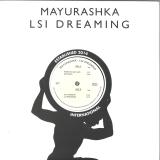
Known for her delicate, subtly psychedelic approach to production - all subtlety is thrown out of the window on the opener, “Parents and God”. We are immediately confronted with a slamming Chicago house style beat in style of Mr Fingers at his most utilitarian. It slams, jerking in and out of tempo like Ron Hardy in beast mode.
Out of nowhere a soulful church organ arrives - at first for a brief respite - but then for an extended solo, which gives way to an 80s electro style breakdown before reverting back to form. It shouldn’t work, but somehow it does - to a dizzying extent - and heirin lies Mayurashka’s magic: a blatant disregard for norms and a deft touch that makes the unorthodox so compelling.
“Notango" takes another big left turn - sitting somewhere between tribal seance and rain dance, it’s mostly organic drums and otherworldly sound effects that combine to drag us deeper into the wormhole before “ Vat Murmur” takes us back into the light with its uptempo disco energy and giving way to heavy chugging bass. This one is equally for fans of idjut boys and Larry Levan.
The EP rounds off with the title track “ LSI dreaming” - to try and describe it is almost impossible, but let’s say it starts of with a mid 2000s Perlon-era tech house energy before things quickly escalate beyond all recognition and then just hover with lysergic intensity. If I ever closed panorama bar, this is the track I’d end with.
Standard redefined The professional RMX-95 4+1 channel club mixer blurs the lines between analogue workflow and digital technology. The RMX-95 is a cutting-edge, extraordinarily versatile creative tool thanks to its dual-USB 2.0 interface, redesigned effects section, optional MIDI mapping of all controls and smooth integration of the djay Pro DJ software. The club mixer has a familiar and user-friendly interface, making it suitable for both professional and hobby DJs.
Surgical sound manipulation in every detail Will you go for ''Classic'' or ''Kill''? The RMX-95's 3-band EQ can be adjusted to allow maximum sound control for unique results. Echo, Reverb, Flanger, Phaser, Vinyl Brake, Loop Roll, Noise, Pitch Shift, Delay, Ping Pong Delay, Tape Delay, Bit Crusher and Transformer are just some of the many studio-quality effects included in the brand-new Beat FX unit. The dedicated FX frequency control (LPF/HPF) lets you apply the effects to a specific frequency range for a more unique sound. And that's not all: Each channel also features a bipolar filter unit (LPF and HPF) with real-time resonance adjustment. This allows for even more complex sound productions. Two digital displays show parameter changes in real time for precise control that goes beyond hearing. Connections galore The RMX-95 also excels in terms of connectivity: Four CD, two line, and two phono inputs are available on the four input channels. The separate microphone channel has two microphone connections (1 x jack, 1 x jack/XLR combination jack) and an additional AUX input. The master output offers RCA or balanced XLR cable connections. The booth output has two jack connections for stereo operation. However, it can also be used in mono mode.
A recording device can be connected to the Rec output via RCA jacks to record DJ sets regardless of the master output level. Last but not least, the DJ mixer has two jacks for headphones. Crisp cuts and smooth blending The adjustable curve of all faders provides DJs with the creative flexibility they want while mixing. Turntablists and scratch wizzards can also upgrade the crossfader with the contactless RMX innoFADER. Maximum flexibility: dual-USB audio interface Superior 24-bit sound quality is provided by the ten inputs and outputs of the high-quality dual-USB 2.0 interface. The two USB ports allow smooth transitions between DJs and maximum flexibility when using different setups in a single club night. In addition, the active USB hub enables the connection of additional USB devices. Fully digital architecture The RMX-95's digital architecture transforms the DJ mixer into an individually mappable MIDI controller. As part of this, the setup menu provides a wealth of customisable options, such as EQ frequency range, Neural Mix EQ mode, audio interface routing, and zone routing for the booth output. DVS-enabled for djay Pro & Neural Mix The RMX-95 works with Algoriddim djay Pro via plug and play. The DJ app's ground-breaking Neural Mix function lets you isolate beats, melodies, and vocals in the mix in real time. The RMX-95 supports djay Pro's advanced DVS integration with Mac, PC, iPhone and iPad.
The DJ software is also compatible with streaming services like Apple Music, Tidal, SoundCloud, Beatport and Beatsource. Indestructible design The club mixer's sleek black metal surface is not only eye-catching but also highly durable. The solid metal housing and hard-wearing metal shafts in all of the built-in potentiometers and switches provide a long service life, even with heavy club use. An internet connection and a separate Apple Music, Tidal, Beatport, Beatsource or SoundCloud subscription is required to use this service.
Professional 4+1-channel DJ club mixer - DUAL 10 In/Out USB 2.0 audio interface with superb, 24-bit sound quality
New Beat FX unit with multiple effects in studio quality: Echo, Reverb, Flanger, Phaser, Vinyl Brake, Loop Roll, Noise, Pitch Shift, Delay, Ping Pong Delay, Tape Delay, Bit Crusher,Transformer - FX frequency control (LPF/HPF) for manipulating effects in selected frequency band -
Sound filters: Bi-polar filter unit with LPF and HPF - Realtime resonance control for channel filters - Active USB hub to connect USB accessories
3-band EQ with adjustable behaviour (classic/kill) -
Two digital displays showing real-time information of parameter changes -
Digital mixer architecture with extensive adjustment options - Extensive setup menu, including:
- EQ frequency range (low, high)
- Neural Mix EQ mode
- Audio interface routing
- Booth output zone routing (matrix)
- Cue solo option
- RMX innoFADER compatible
- Adjustable linefader and crossfader curves
- MIDI-compatible control elements
- 2x High-retention USB 2.0 port, especially durable
- 2x Headphone outputs via 6.3/3.5 mm stereo jack with split cue
- 2x Mic inputs with dedicated MIC ON button
- Booth output in stereo or mono
- High-quality and hard-wearing, pure black metallic finish
- Sturdy construction in a metal housing with bolted metal shafts
- Kensington lock to secure the device
- Incl. instruction manual, power cord and USB cable
- Frequency Range: 20 Hz - 20 kHz +2/-3dB - Inputs: 7x line RCA, 2x phono RCA, 1x mic combo-XLR/jack, 1x mic 6.3mm jack (TR), 2x USB port - Outputs: master XLR (balanced), master RCA (unbalanced), booth (TRS) (balanced), rec RCA (unbalanced), 1x headphones 6.3mm jack, 1x headphones 3.5mm jack - EQ range classic at 70 Hz, 1 kHz, 13 kHz: -26 dB/+9 dB - EQ range isolator at 70 Hz, 1 kHz, 13 kHz: -90 dB (total kill)/+9 dB - EQ range mic at 100 Hz, 10 kHz: -12 dB/+ 12dB - EQ headphones at 100 Hz, 10 kHz: -29dB - Power Source: AC100-240V, 50/60Hz - Power Consumption: 29 W - Dimensions: 322(W) x 387(D) x 107.5(H) mm - Weight: 6.8 kg
dimensions (LxWxH) in mm
445x442x153
dimensions outerbox in mm
460x452x327
After persistently fine crafting their sound in the studio for two years, the dynamic duo Blame The Mono return to Molekul with a powerful second opus.
Pulse Persisters is an explosive 4-track EP showcasing their vision of fun, creative and genre-bending techno.
Podgorica sets the tone of the EP with its swelling lowend, 2000s evocative acid bassline and intense breakbeat build-up.
Flip The Phase sends you on a face melting journey strewn with stuttering dub chords, playful vocal chops and a jungle section that completely flips the script.
Digital Diva loops a catchy 80s pop diva vocal and combines it with a frantic dub-tinged groove for effective dancefloor results.
Molly Pop sees the duo collaborate with German producer Lifka on an unrelenting psy-influenced peaktime weapon that closes the EP on a strong note.
- 1: Soul Dressing
- 2: Tic-Tac-Toe
- 3: Big Train
- 4: Jellybread
- 5: Aw’ Mercy
- 6: Outrage
- 7: Night Owl Walk
- 8: Chinese Checkers
- 9: Home Grown
- 10: Mercy Mercy
- 11: Plum Nellie
- 12: Can’t Be Still
Throughout their history, Booker T. & The MG's racked up Top 40 hits, had their songs covered by artists as diverse as The Ventures, Count Basie, and Tom Petty & The Heartbreakers, were inducted into the Rock and Roll Hall of Fame, received a Grammy Lifetime Achievement award, and continued being the band of choice in collaborations with legends such as Bob Dylan & Neil Young. 1965’s Soul Dressing features the legendary The Mar-Keys’ horn section, who add gravity to their soul sound, while Side Two might be the most fantastic late-night come-down album side of all time. And bonus points for the hints of ‘mod’ sprinkled around (even the U.K.’s Small Faces covered their original track “Plum Nellie”).
Recital presents a new double album of rarely heard Robert Ashley compositions performed by baritone singer Thomas Buckner.
“(Robert Ashley) turned speech into music” - Alvin Lucier.
In the 1960s, Robert Ashley pioneered the American avant garde with the ONCE Group and festivals, before irrefutably changing the face of American opera later in the 20th century. Buckner, in addition to running the fabulous 1750 Arch record label in the 1970s and 80s, is a noted baritone who has collaborated for decades with the likes of Roscoe Mitchell, Annea Lockwood, and the late Noah Creshevsky, amongst countless others.
The title of the album, Spontaneous Musical Invention, refers to Ashley’s method of instructing the singer to do what he called “spontaneous musical invention based on the declamation of the text.” A vocal practice that Thomas Buckner perfected over the 33 years that he collaborated with Ashley. First performing in Ashley’s 1984 opera Atalanta (Acts of God), Buckner continued on as an integral performer in the ensemble until Ashley’s death in 2014.
The album is composed of two halves, the first is a new rendering of Ashley’s second opera Atalanta (Acts of God). Robert Ashley wrote about ten hours of music for the opera Atalanta, divided into three acts: ‘Max', for the surrealist artist Max Ernst; ‘Willard', for the composer’s uncle, Willard Reynolds, a great story teller; and ‘Bud', for Bud Powell, the great jazz pianist and composer. One is invited to construct a version using any material from these ten hours. Over the years they worked together, Thomas Buckner commissioned three reworkings of arias from Atalanta that he could perform in concert: the ‘Odalisque' aria from Max, 'The Mystery of the River' from ‘Willard', & 'The Producer Speaks' from ‘Bud'. So this first section of the album is one of many possible versions of Atalanta, albeit in strikingly different versions from the originals.
The second section of the album is dubbed Occasional Pieces, and holds two unpublished Ashley works. ‘When Famous Last Words Fail You' & 'World War III Just the Highlights' are not from any Ashley opera. However, each is highly dramatic and theatrical. They were written as standalone pieces for Thomas Buckner. Buckner’s distinct vocal cadence projects the sharp wit and wry storytelling of Ashley’s librettos.
A portion of the record was recorded live at Roulette in Brooklyn, NY, at an intimate memorial concert held for Robert Ashley in 2014. Spontaneous Musical Invention, in essence, functions as a tribute to both exceptional artists, and to their decades of collaboration.
Vinyl edition comes with a 24 page 12” x 8.5” booklet of Ashley librettos, scores, & program notes, with an introduction by Alvin Lucier.
REPRESS
New Delhi-based Peter Cat Recording Co. will release their debut album, ‘Bismillah’ on June 14, 2019 via French independent label Panache Records. Debut UK live shows are soon also to be announced by the band.
Peter Cat Recording Co. could almost have a question mark on the end of its name. Not least as founder & frontman Suryakant Sawhney refuses to explain where that name really comes from or what it means (perhaps a reference to the Tokyo jazz club owned by Haruki Murakami), but also since the very existence of the band itself raises a raft of questions. When was the last time we fell for an indie rock band for the right reasons? Not because the band in question nostalgically imitate a perceived ‘golden age’ but because they innately embody the fundamentals of such music: fantasy, sincerity and the freedom to make music without rules or career aspi- rations. And when was the last time this kind of band sounded like Sinatra, Barry White, the sweetest doo-wop, humid fanfares and a psychedelic wedding band, all at once? And all of this coming from India?
In truth, the story of Peter Cat Recording Co. was written within the triangle of San Francisco, Delhi and Paris.
In the first of these cities, Sawhney (a native of Delhi) pitched up to study film-making. More distracted by the city’s peaking live scene of the early noughties, this is where he started to make music and to sketch out an idea for the band.“
The people I lived with supported my idea of writing music, they introduced me to great mu-
sic. There used to be a great garage scene in San Francisco, like The Oh Sees also Ty Seagall, Mikal Conin, all those bands. This is a world I had never seen in my entire life. A big inspiration from San Francisco was that you could record yourself. You don’t need to be in a studio and spend a lot of money to make an album. You can do it”.
At the end of the 2000s, Suryakant returned home to New Delhi, and started his band for real, more or less the same band that plays today. “I wasn’t so concerned about will we be performing, will we be the greatest band, will we be trendy. I just wanted to make something that was consequential and important for us, I think. Something which would last, something people could listen to and be like « this is life changing ». It was for the sake of beauty”.
For the first few years and in India alone, this is exactly what Peter Cat Recording Co. did, in total indifference to the rest of the world. This was until young Parisian label Panache stumbled across the band online via Vice’s THUMP subsidiary, stupefied by the band’s cosmic video for seven-minutes-and-counting track, ‘Love De- mons’. And so in spring of 2018, ‘Portrait Of A Time: 2010-2016’ was released on Panache - making the first international release from Peter Cat Recording Co., bizarrely enough, an anthology of re-mastered, hidden gems from the band’s ramshackle back catalogue, previously recorded in Suryakant’s own living room. With Peter Cat’s off-kilter charm hitherto unheard of beyond the fringes of India, the release provided a gateway op-
Whilst the title track found its way onto Tracks Of The Year lists at the Guardian & NME, it was tricky for new PCRC enthusiasts to get a firm grip on the startling push/pull between the immediate, uncanny music this release gathered, and the cultural backdrop of New Delhi at which it was so startlingly at odds.
Opportunity for a wider fanbase to fall in love with their cloud-like, drunken songs for the first time.
If discovering your favourite new band via a ‘Best Of’ feels a curious premise, then ‘Bismillah’ does more than hint towards the promise of Peter Cat Recording Co’s future. Blending gypsy jazz, psychedelic cabaret, space disco, bossa supernova, Bollywood and uneasy listening with kaleidoscopic ease, in many senses, the band’s knack hasn’t altered. Always different, paradoxical, unpredictable yet somehow familiar. The new album opens to the strains of bird chatter, the whisper of a city’s soundscape and the first few notes from an instrument which seem to be calling us to the departure lounge, a fore-shadow of the flight ‘Bismillah’ launches its listener
on. Suryakant sings with the detached, rueful elegance of Sinatra marooned on a desert island, whilst his band create small space-time capsules which navigate their way through genres and eras – including the future – and between nostalgia and eccentricity.
Peter Cat recently trailed ‘Bismillah’ with the release of ‘Floated By’, an appositely titled musing on failure & missed opportunities, punctuated by the fulsome brass section which weaves through so much of the album.
The languid, blue quality to the track is offset by the attendant music video, created with footage shot, implau- sibly enough, at Suryakant’s own marriage ceremony (needless to say, the wedding band hired for the day was of course, Peter Cat Recording Co.) Sawhney dryly notes; “Hopefully it’s not a many-a-times-in-a-lifetime event. You can’t fake that set, those people actually having a good time, being really emotional and intense.” ‘Bismillah’’s colour-drenched album cover also captures Suryakant’s father-in-law making his wedding toast on that same day - a nod back towards the cover of ‘Portrait Of A Time’, itself a black & white image taken at the wedding ceremony of Suryakant’s own father.
A stumbling but gracious collection of songs rooted in a kind of drunken soul music, the melancholy nature of some of the songs on ‘Bismillah’ renders them almost liquid, before they develop into more dance-like shapes. Suryakant’s rangy voice swoops from the falsetto glide of ‘I’m This’ to the beat-up baritone blown along by the warm breeze of ‘Soulless Friends’. The elliptical structure of album opener ‘Where The Money Flows’ also al-
lows for the use of brief bursts of autotune effect on his vocal without feeling incongruous, whilst the desultory lyrics of ‘Heera’ (a Hindi word for diamond) - sharing something with the Morricone school of grand storytelling - have an emotional weight that would impress even coming from a native English speaker. Perhaps the most gleefully unpredictable moment on ‘Bismillah’ comes with the illusory, vocal loops on the intro to ‘Memory Box’, errupting into 8 exhilarating minutes worth of unbridled, string-backed disco joy. A cat might have nine lives, but on ‘Bismillah’ and beyond, Peter Cat Recording Co. are hinting towards an un- knowable multitude of dimensions. Throw them all together, and it equates less to a listening experience and more to an out-of-body experience.
Peter Cat Recording Co. are: Suryakant Sawhney (vocals/guitar/organ), Dhruv Bhola (bass), Kartik S Pillai (organ/guitar/electronics), Rohit Gupta (horns), Karan Singh (drums)
Killer and classic 80s Roots Rubadub from the wonderful Reggae diva, Melody Beecher! An obscure cover version, with a star-studded rhythm section, including the likes of Sly & Robbie. Some amazing stories about these days, when working with Paul Beecher on reissuing this gem. All the way from Houston, Texas!
- 1: Help You Believe
- 2: Something Good
- 3: There Will Be Us
- 4: Under The Stars
- 5: Streets Of New York
- 6: Energy Over Me
- 7: Master Plan
- 8: Set Out North
- 9: Airport
- 10: Down The Road
Formed on a rooftop in the East Village of New York City over a decade ago,
SKYFACTOR was born when the musical paths of longtime friends Bob
Ziegler and Jason Taylor (formerly of Michigan's Brother Rabbit) and brothers
Jon Rubin and Cliff Rubin (formerly of NYC's Sky Blues) finally crossed. Almost instantly the songs started flowing, and they knew they were on to something.
Their debut album Daydreams received much critical acclaim and notice, including that of MTV's hit show Teen Mom, who chose the track "OK" as their
season 2 finale theme, resulting in thousands of downloads and streams from around the world. The band then honed its musical chemistry and style for
Signal Strength, which further spotlighted personal, insightful lyrics backed by a big acoustic guitar and one very powerful rhythm section. The guys even
had a song from the album prominently (and humorously) featured on
Adult Swim's Eric Andre Show, resulting in even more buzz for the band.
Cut to 20 25 and just one listen to Master Plan proves these guys know how to craft memorable and powerful songs that grab you from the get-go-and
won't let go.
- 1: Don't Lie Back
- 2: (That's When) It's Worth It
- 3: Instant Touch
- 4: Sex Without Stress
- 5: Fiasco
- 6: Intact
- 7: Tongue In Cheek
- 8: Stepping Out Of Line
- 9: Shakedown
- 10: America
Sense and Sensuality (1982) was the second and final album by seminal British post-punk band The Au Pairs. The four-piece group from Birmingham were very much in tune with the early 80s growth pangs from the first punk explosion - stripping down their music from their debut LP to a funkier, more rhythmic essence, and shifting the focus of their lyrics to the personal rather than the political.
The addition of horns and imaginative synthesizers allowed for more satisfying sonic diversity, from the disco-informed dance-punk of “Instant Touch” to the cabaret swing of “Tongue in Cheek”. While “That’s When It’s Worth It” takes several elements of popular post-punk - looping auxiliary percussion rhythms and a sporadically used horn section - and crafts them into a wild sound that’s equal parts dance, psychedelia, punk and art pop.
Their distinctly punk take on sex and gender politics, meanwhile, was their strongest thematic strain - and that’s truly where Sense and Sensuality shined. Despite only reaching #79 in the UK when first released, it’s now widely seen as one of the best post-punk albums ever.
Sense and Sensuality is now available as a limited numbered edition of 750 copies on translucent magenta coloured vinyl and contains an insert.
2025 Record Store Day title - now available for general sale. A very special album to mark Room In The Sky’s 200th physical release. A selection of beautiful instrumental tracks, and featuring some of the best reggae musicians: Vin Gordon who basically played 90% of all the reggae hit horn lines , from Studio One to Bob Marley & the Wailers; Ernest Ranglin top jazz/reggae guitarist, now 93 yrs old and still playing, he produced the first Jamaican number 1 record “My Boy Lollipop” for Island Records; Dean Fraser, the number 1 Jamaican sax player; The Megahband - Michael Fletcher and Alborosies’ riddim section; Sly Dunbar the greatest reggae drummer; Alan Weekes - UK jazz reggae guitarist who played on most of UK reggae created in the late 70s, and 80s, and produced Carrol Thompson’s Hopelessly in Love LP; Jackie Mittoo responsible for 80% of all the biggest reggae riddims.
- A1: Crimson, Pt. 1
- A2: Crimson. Pt. 2
- A3: Crimson. Pt. 3
- A4: Crimson, Pt. 4
- A5: Crimson, Pt. 5, Section 1
- B1: Crimson, Pt. 5, Section 2
- B2: Crimson, Pt. 6
- B3: Crimson, Pt. 7
- B4: Crimson, Pt. 8
Transparent Red Vinyl[25,17 €]
Swiss saxophonist Gilles Torrent, perhaps known from our recent Spiritual Jazz collection 'A Tribute to 'Trane', leads the way with his new album 'Buleria'; a mesmerizing set of modal jazz pieces that will speak directly to any listener who has felt the other-worldly depths of John Coltrane. The album comprises of Torrent originals and explorations of Coltrane standards. It reaches for something beyond the mundane, and blends complex harmonic structures with raw, improvisational energy.
The Torrent original, 'Danse Tropical', opens the set with a contemplative tone. Led by a sax that pulls the listener through a maze of scales and modes, the rhythm section remains steady, creating a grounding space for exploration.
'Quannassa' drives the energy forward, and the band moves seamlessly through shifting tensions as Torrent's saxophone searches for answers within a pantheon of harmonic structures.
The standout track, "Buleria" is a daring 8-minute piece, with an evolving, meditative flamenco piece that showcases the saxophonist's raw improvisational skill, a spiritual journey that takes us to the windswept plains of Iberia.
The quartet is a faithful tribute to classic modal jazz, with the interplay between piano, bass, and drums feeling natural and organic. They provide a harmonic foundation that encourages the saxophone to glide and soar, pushing into new emotional territory, going from tender and melodic to fiery and free. This interplay gives the album its distinctive feel - while drawing from Coltrane's influence, it's clear the musicians are searching for something new, something personal.
- Troublemaker
- We Forgotten Who We Are
- Fantastic Justice
- Bastogne Blues
- Of A Lifetime
- Burning Bridges
U.K. progressive post-rock supergroup Crippled Black Phoenix is a musical collective that has featured nearly 30 members in it's rotating roster. The constant driving force is multi- instrumentalist Justin Greaves (Electric Wizard, Iron Monkey Se Delan), who formed the band in 2004 with Mogwai bassist Dominic Aitchison. Creating what they describe as "endtime ballads" to signify both the slightly macabre nature of their songs & the unusual blend of styles as the final evolution in music. The band have made live shows a focus by performing in unusual venues across the world as well as using Victorian-era instruments in tandem with more modern instruments, often involving more than a dozen members onstage. In 2006, Crippled Black Phoenix released their first album, 'A Love Of Shared Disasters', followed in 2009 by 'The Resurrectionists' & 'Night Raider', but it was their fourth album released in 2010 on Invada Records - 'I, Vigilante' - an album of uncompromising soundscapes that garnered the band & album widespread critical acclaim within the media worldwide. On 'I, Vigilante', CBP create songs that feel both sky-crackingly epic & intimate at the same time. "We Forgotten Who We Are" is an 11 minute thundering storm which powers through sections of head-nodding chugging guitars to a sunrise of happy melody & back, "Fantastic Justice" is a staggering display of songwriting, with twists & turns that make the band sound like a mini orchestra - horns, strings, crashes & swoons with Greaves the dark conductor. The spoken-word opening to "Bastogne Blues" is perfectly evocative for a genuinely troubled song, CBP's command of bleakness is at it's strongest here; cinematic doesn't come close to describing the song's emotional resonance. When 'I, Vigilante' threatens to disintegrate into a black hole of misery, a faithfully screaming version of Journey's "Of A Lifetime" shows a sense of humour & some sweet guitar tones. This edition of 'I, Vigilante' is presented on black vinyl LP & is the first time the album has been released on single vinyl
DJ Sodeyama returns to Sound Of Vast under his The People In Fog guise this June with the nine track 'Too Much Knobs And Cables' LP.
Over the past three decades DJ Sodeyama has been a staple in Japan's underground and beyond across the globe as a DJ and releasing material under his own name via the likes of Radio Slaves' Rekids, Dynamic Reflection, Nina Kraviz' трип and more. Here though, he makes a welcome return under his The People In Fog alias to Tokyo's Sound Of Vast, the platform that's played host to all of his material under this alias as well as others like The Mole, Shinichiro Yokota, San Proper and more.
Across the nine-track 'Too Much Knobs And Cables' LP, The People In Fog once again radiantly showcases his depth and understanding of true underground sounds. From the classic Deep House aesthetic of opener 'Red Morning', 'CC Love' and 'New Life' to more classic Chicago House inspired cuts like 'Animal Kingdom', 'Jack Out' and filtered Disco house jams like 'Dance To The Air', 'New Life' and 'Miraval'.
Sodeyama also dives deeper beyond House once again in true long player fashion to deliver the unique 80's tinged, funk-infused and vintage synth/drum machine laced 'Night Driver' and the cinematic closing piece 'Sun Moon Lake', which leans into a Balearic leaning sonic world via drifting guitar melodies, arpeggios, acid licks and a crunchy rhythm section.
- A1: Tekno Donuts Tomahawk - Sa Chi Mi Ricorda Lei
- A2: Akouphen Teknomad & Tikal Sound Records - Beat Freak
- B1: 4Q Total Resistance & Sound Conspiracy - The Beets We Represent
- B2: Nkod Oqp Crew & Sound Conspiracy - Section 23
- C1: Kesh Vs Damage Circuits Tikal Sound Records - Fresh
- C2: Khenda Lokomotaz Vs Fiero Repartee Recordz - Overlord
- D1: Freddy Frogz - Roots Riots
- D2: Virus Voice Tekno Mobil Squad - Axcidia
- D3: Le Troll A Roulettes Quin Te Bass - Galopage Incontrolle
- 1: Salvage Title
- 2: Tree Of Heaven
- 3: Betty Ford
- 4: Free Association
- 5: Hollow Skulls
- 6: Artex
- 7: Love Vape
- 8: Wildwood In January
- 9: Resident Evil
- 10: All Over The World
- 11: Fantasia
An album for sleeping and waking, walking and driving, hunting and fishing, for loitering outside a roadhouse on the haunted tundra. Okay in elevators, not great for dinner. On Caveman Wakes Up, Friendship’s new album and second for Merge Records, the band’s historically capacious definition of country music grows wider still. Shambolic guitars are offset by flute pads, bleary poetry is set against a Motown rhythm section, a song about Jerry Garcia and First Lady Betty Ford fades out with a drum solo, like if Talk Talk came from a dingy Philadelphia basement and was fronted by James Tate. Songwriter Dan Wriggins’ ragged baritone cuts through eleven murky, swirling country-rock songs with profound lyrical substance and sincerity. Like an alarm clock incorporated into the edge of a dream, Caveman Wakes Up belongs equally to the conscious and subconscious mind, fraught with background, steeped in reference and experimentation, delivered casually and as a dire warning, dedicated, above all, to music’s creative soul. Over the years, dedication has paid off. Friendship has become a kind of reverse supergroup,
wherein the band itself and each individual member are located centrally in an increasingly prominent scene of young folk and country musicians and songwriters. Drummer Michael Cormier O’Leary leads the instrumental collective Hour and, along with bassist Jon Samuels, runs Dear Life Records, home to friends and peers who count Friendship as a major influence including MJ Lenderman, Florry, and Fust. (Samuels also plays lead guitar in MJ Lenderman and the Wind). Guitarist Peter Gill’s band 2nd Grade records prolifically. Wriggins began writing the songs of Caveman Wakes Up on a downtuned classical guitar of Lenderman’s and finished on a barely tuned piano in an apartment he shared with Sadurn’s G DeGroot.
In the summer of 2023, Wriggins had just left the Iowa Writers’ Workshop, where his love for poetry and mistrust for the academic poetry world grew in tandem. A relationship fell apart, and Wriggins crashed for several weeks at Lenderman and Wednesday’s Karly Hartzman’s home in North Carolina, where he recorded the first demos of “Resident Evil,” “All Over the World,” and “Love Vape.” Wriggins returned to Philadelphia, and the band got to work on new ideas, finally tracking the album in five days with engineer Jeff Ziegler (Mary Lattimore, War on Drugs). Wriggins recorded vocals with Love the Stranger engineer Bradford Kreiger, and organ, violin (Jason Calhoun), and flute (Adelyn Strei) were recorded by Lucas Knapp in a West Philadelphia church.
Classic RootsReggae is the definitive influence on the music of Vibronics .. so it has been a true labour of love to bring together the powerful voice of Jospeh Lalibela, the intricate playing of the Mafia & Fluxy Band and the deep production skills of Vibronics to make this homage to classic Jamaican Roots Dub Reggae music.
The LP is a fine body of work with full production featuring live bass, drums, horns, guitars & flutes as well as up to the minute studio trickery to produce an album that is rooted in reggae history but sounds relevant right now.
5 vocals and 5 dubs - this album is original showcase style !
Vibronics is one of the most established names in UK Dub/Reggae music achieving millions of views on YouTube, millions of Spotify streams and many tens of thousands of vinyl record sales. Collaborators include Michael prophet, Macka B, Iration Steppas, Soom T, Aba-Shanti and more.
Joseph Lalibela is a Birmingham born UK vocalist who found fame through his work with OBF & King Earthquake
Mafia & Fluxy are the UK’s leading Reggae riddim section and recording artists working with Eek-A-Mouse, Jah Shaka, Luciano and the cream of worldwide Reggae artists.
NEIL ARDLEY’S HARMONY OF THE SPHERES RETURNS TO VINYL FOR THE FIRST TIME IN OVER 40 YEARS
Analogue October Records proudly presents the long-awaited LICENSED reissue of Harmony of the Spheres, Neil Ardley’s cosmic jazz masterpiece, originally released in 1979 by Decca. This marks the first vinyl reissue of the album since its original release, offering fans a rare opportunity to experience this extraordinary record in its purest form.
A Visionary Fusion of Jazz and Science
Recorded at the legendary Morgan Studios and produced by the esteemed Martin Levan, Harmony of the Spheres is another bold evolution in Ardley’s ever-expanding musical journey. A unique blend of jazz, electronic synthesis, and progressive rock, the album explores the ancient Greek concept that planets create celestial harmonies as they move through space. Using precise astronomical calculations, Ardley transposed planetary orbits into a nine-note chord—one that extends beyond the range of traditional acoustic instruments, making synthesizers the only means of fully realizing this cosmic sound.
The album features an all-star lineup, including the visionary John Martyn on guitar, saxophonist Barbara Thompson, Tony Coe, Ian Carr, and keyboardist Geoff Castle, alongside the formidable rhythm section of Billy Kristian (bass), Richard Burgess (drums), and Trevor Tomkins (percussion).
A True AAA Reissue – Cut Direct from the Original Master Tapes
Following the reissue success of Journey to the Urge Within (1986) by Courtney Pine (AOR-001-ST), Analogue October Records’ founder Craig Crane embarked on a mission to restore Harmony of the Spheres to its full sonic glory. Working with Gearbox and using Decca’s original 15ips 2-track stereo master tapes, this reissue is a true AAA release—an all-analogue production with no digital step. The album was meticulously cut directly from the tapes and pressed to the highest standards at Optimal in Germany.
Inside the deluxe package, fans will discover an 8-page booklet featuring an in-depth essay by Jazzwise magazine editor Mike Flynn, along with never-before-seen photos from the original recording sessions.
Continuing the Legacy
This reissue is just the beginning—Analogue October Records is committed to further explorations of Neil Ardley’s work, alongside other deep cuts from the UK’s vibrant 1970s jazz fusion and jazz-rock scene.
Whether you’re rediscovering Harmony of the Spheres or experiencing it for the first time, this release is a testament to the artistry and innovation of Neil Ardley.
"The 1958 Miles Davis group wasn't a quintet but a sextet, with the addition of Julian ""Cannonball"" Adderley on alto sax to John Coltrane on tenor sax, Red GaIrTlaEndMoSn piaMnoA, YPaul NChOamTbersBoEn bass, Philly Joe Jones on drums, and Miles on trumpet. Milestones was the first studio album made by the sextet. It was recorded on February 4 and March 4, 1958, and the rhythm section was the same as the classic 1956 quintet.
THE COMPLETE ALBUM – 180-GRAM COLORED RED VINYL - LIMITED EDITION"
Bells Are Ringing is the debut EP by Melbourne Funk 10 piece outfit Mondo Freaks, released following on from the single of the same name and a thrilling Dub Version by Harvey Sutherland.
Mondo Freaks formed originally as a concept band, equipped with an ever-evolving setlist of late '70s and early '80s Funk classics, their journey has seen them invited to be the backing band for the Australian tours of such luminaries as Leroy Burgess (the producer and artist behind Boogie and Disco favourites Black Ivory, Logg, Aleem, Inner Life, and Universal Robot Band) and the iconic Evelyn "Champagne" King. Having performed at the iconic local Meredith Music, Golden Plains and Panama festivals and at numerous residencies Mondo Freaks have carved their mark, returning now to ring in a new era of groove-soaked original music.
The band revolves around the rhythm section of in demand session bassist Luke Hodgson and drummer Graeme Pogson (GL, The Bamboos). Gathering some of the finest musicians from Melbourne's legendary Soul scene, they're accompanied by five incredible vocalists including Jade McRae, Susie Goble, Francisco Tavares, Aaron Mendoza and Jason Heerah.
New tracks on the EP include "Find A Way", which hits straight away with a percussion and synth hook, blending Jade McCrae's vocal delivery with an uplifting message about finding hope in trying times.
Also included is the Harvey Sutherland Vocal Mix of "Bells Are Ringing", which keeps much of the spaced out Larry Levan, Shep Pettibone re-edit approach that was on his much lauded Dub Version.
It's easy to see why his remix skills have been in demand and utilised by Disclosure, Khruangbin, BadBadNotGood, Tycho, Boston Bun, Lucius, Jungle Giants, Genesis Owusu and Franc Moody. On his own releases Sutherland has collaborated with the likes of DāM FunK and Nubya Garcia.Tightening its hold on the dancefloor, the beefed-up rhythm section rolls deep into the nocturnal hours, as mesmerising reverb loops elevate the track skywards.
Luke and Graeme got to know Harvey Sutherland when they played together backing Leroy Burgesson his Australian tour in 2018. After that Luke and Graeme played in Harvey's live band across the world and then contributed his 'BOY' album. "We were thrilled when he turned in his Dub of "Bells"", Luke said. "A kind of 'what would Shep Pettibone or Larry Levan do?' moment. It's like being transported to Compass Point Studios in '81!"
Mondo Freaks make Funk inspired by late '70s / early '80s era as it gently moved beyond Disco. That era has continued to inspire many artists, but what sets Mondo Freaks apart is their live instrumentation plus a focus on vocals and great songwriting, creating something beyond simply instrumental grooves.In the studio and in their full live lineup Mondo Freaks are a formidable ensemble who take their sound beyond mere homage, without a hint of irony or any knowing winks. Mondo Freaks simply breathe life into a timeless sound and make it feel more relevant than ever.
"This album was Duke Ellington and John Coltrane's only recorded encounter ever. For the occasion,Trane and Duke were accompanied by the bassist and drummer of their respective groups (who alternated from track to track), Aaron Bell and Sam Woodyard (from Duke’s rhythm section), and Jimmy Garrison and Elvin Jones (from Trane’s rhythm section). ""I was really honored to have the opportunity of working with Duke”, explained the saxophonist following their collaboration.
THE COMPLETE ALBUM
+ 1 BONUS TRACK
180-GRAM CRYSTAL CLEAR VINYL LIMITED EDITION"
- A1: Perpetua
- A2: Ciudad Blanca
- A3: La Chaleur De Nos Voix
- A4: Anonimo
- A5: La Réalité
- A6: Mi Disierto
- A7: Nuevo Mundo
- A8: Sur Les Sentiers De La Gloire (Ludwig Von 88 Cover)
- B1: Aficionados
- B2: En Mouvement
- B3: Guapa
- B4: Alta Mar
- B5: Asi Es La Visa
- B6: Es Una Pesadilla ?
LOS TRES PUNTOS : the enthusiasm of ska and the rage of punk rock inherited from the 80s french alternative movement, combined for an explosive cocktail to wake the dead! Unbridled rhythm, relentless brass section, unifying songs in French and Spanish ; the band has scoured concert halls in France and abroad.
This "live in Mexico" was recorded in November 2023 in front of 60,000 people at the Skatex Festival in Mexico City, celebrating the 30th anniversary of the group.
14 Tracks taken from the best of their discography, played with the energy and experience of the Los Tres Puntos gang.
- A1: Caravan (Tizol, Ellington) 5:50
- A2: Wishes (F. Sotgiu) 3:05
- A3: Ballad For Aisha (Tyner) 5:11
- A4: Stranatole (F. Sotgiu) 2:50
- B1: Black Bats And Poles (Walrath) 4:14
- B2: 7Th Street (F. Sotgiu) 4:48
- B3: Wise One (Coltrane) 3:24
- A1: Afro Blue (Santamaria) 3:37
- A2: Duke Ellington’s Sound Of Love (Miingus) 4:48
- A3: Take Five (Desmond) 5:00
- A4: Lotus Blossom (Strayhorn) 1:06
- B1: Passing (F. Sotgiu, L. Bonafede) 7:09
- B2: Calm (F. Sotgiu) 4:35
- B3: My Foolish Heart (Washington, Young) 6:37
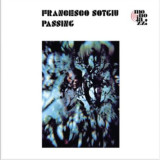
Francesco Sotgiu has forged a unique and very swinging project of songs. With a quintet consisting of Luigi Bonafede on piano, Emanuele Cisi and Riccardo Luppi on woodwinds, Salvatore Maiore on bass, Francesco on drums, and with special guest Paolo Fresu on trumpet to cap off this heartfelt collection. There is also a nice diversity of groups within this larger collection. A nice trio piece called “Calm” featuring Paolo Birro sitting in with Marco Micheli and Francesco. And one called “Lotus Blossom” where Francesco shows his considerable skills and soul on violin. But the bulk of the material is straight-ahead jazz and is totally swinging and soulful, proving that jazz has no borders and is a worldwide language to which Francesco has added to that tradition with this project and all the great voices he has included here. Bravo maestro.
This is the comment of Gil Goldstein, American accordion player who won 5 Grammys and collaborated with giants such as Gil Evans, Wayne Shorter, and Michel Petrucciani.
This record was recorded in the middle of the pandemic times, and most of the work for preparing this record took place via the telephone: the selection of the songs on paper, the exchange of ideas on arrangements, staff and instruments, a sort of “phone rehearsal” of the structure of the songs, with the choice of a solo; everything else, everything that will happen in the recording sessions, is the result of a controlled improvisation, a jam session masterfully captured in the studio through the use of well-positioned ribbon microphones.
This is why “Passing,” literally “passing” or “crossing”: because the musicians have gone through listening to these songs as teenagers, and find themselves today, as a mature meeting of old friends who create an informal game made of nostalgic fun, great personality, confrontation, and deep spirituality. In the classic “Caravan” by Ellington and Tizol or “Afro Blue” by Mongo Santamaria, Coltrane toning, the Latin accent of the rhythm section supports the interpretation of the theme and the interplay in the solos between the soprano and tenor saxophones by Cisi & Luppi, and the piano by Bonafede.
A certain elegance in the execution distinguishes pieces such as Duke Ellington’s “Sound of Love,” yet another tribute by Mingus to the Duke, with a calibrated solo on the double bass of Maiore and the flute by Luppi, the immortal “Take Five” by Paul Desmond, with the highlighted soprano by Cisi, “Wishes,” “7th Street,” and the eponymous “Passing,” all pieces composed by Sotgiu, characterized by the precise medium/fast drive of the drums and a certain “cinematic” taste of the main themes.
In songs such as “Black Bats and Poles,” composed by trumpeter Jack Walrath for the Mingus Orchestra, and in “Stranatole,” an original piece in which Sotgiu writes a theme of Monk’s influence and enjoys overturning the traditional “Anatole Jazz” structure, the quintet opts for an effective hard bop language, with exciting moments of dazzling virtuosity in Bonafede’s solo. While in Coltrane’s “Wise One” and McCoy Tyner’s “Ballad for Aisha,” we enter a modal, mystical, and ceremonial jazz, of a cosmic depth, which seems to hover in the sweet volume of the great hall of the recording studio. These are truly magnificent interpretations.
A special separate mention for two classics such as “My Foolish Heart” by Victor Young, performed in trio by Sotgiu, Maiore, and the unmistakable trumpet by Paolo Fresu, and the (unfortunately very short) “Lotus Blossom” by Billy Strayhorn and Duke Ellington, which in the piano-violin duo of Birro and Sotgiu, in a minute gives a suspended momentary magic, sums up the roots of African-American jazz music, and also referencing an old-fashioned Italian musical sensitivity, typical of Nino Rota’s music for Federico Fellini’s films.
*Repress*
180gr) 10 YEARS ON, ARTHUR VEROCAI'S ENCORE GETS A VINYL RELEASE. The highly anticipated follow up to Arthur's eponymous debut album from 1972, Encore saw Arthur joining the dots over 35 years to createa modern classic of Brazilian music that, like his debut, combined Brazilian influences with his take on American soul and cinematic experimentation, and shows Arthur's sound is as poignant now as it ever was.
To celebrate the album's 10th anniversary, Far Out Recordings announces the first ever vinyl edition of Arthur Verocai's 2007 masterpiece Encore. Remastered from the original tapes, Encore features 11 original compositions from Arthur with guest musicians including Azymuth, Ivan Lins and a nine-piece string section. The highly anticipated follow up to Arthur's eponymous debut album from 1972, Encore saw Arthur joining the dots over 35 years to create a modern classic of Brazilian music that, like his debut, combined Brazilian influences with his take on American soul and cinematic experimentation, and shows Arthur's sound is as poignant now as it ever was.
In the mid-2000's, following on from Marcos Valle, Joyce and of course Azymuth, Arthur Verocai joined the long-line of Brazilian musicians whose music was to be introduced to a whole new legion of fans by Far Out. The story of 'Encore' of course begins with Joe Davis, Far Out's head honcho who stumbled upon Arthur's debut in a dusty record store in downtown Rio in the late 80s. At the time of its release in 1972 critics panned Arthur's debut and both the album and artist subsequently vanished into obscurity. Fast forward to winter 2004 and Joe's at the studio of Far Out Recording artists Harmonic 313 - aka production duo Mark 'Troubleman' Pritchard and Dave Brinkworth - playing them some of his favourite Brazilian albums. Dave recalls the moment Joe put on Arthur's debut, 'As soon as the needle hit the record and we heard the fantastic arrangements, songs and sounds, Arthur completely blew our minds'.
Three months later and Dave was in Brazil with Arthur Verocai, and the plans for what was to become 'Encore' were being laid down. Produced by Dave, 'Encore' sees Arthur on incredible form, the 35 plus years between the recording of his debut and this the follow-up just melting away as Arthur picked up the (conductor's) baton once again to create 11 epic tracks of stirring samba-soul and experimental cinematic movements that sees him creating a record to rival his debut.
Born in Rio de Janeiro on 17 June 1945, Arthur Verocai began his professional music career in 1969 and over the next few years he was responsible for the orchestration of albums by Ivan Lins, Jorge Benjor, Elizeth Cardoso, Gal Costa, Quarteto em Cy, MPB 4 and Marcos Valle, among others. In the 1970s he was hired by Brazil's biggest TV station, TV Globo, as musical director and wrote the arrangements for many of the stations biggest shows. In 1972, following the success Arthur had with the production of Ivan Lins 1971 album "Agora", Arthur recorded his self-titled debut album on Continental Records. 'Arthur Verocai' challenged the musical conventions of the day, combining Brazilian influences with folksy soul and lo-fi electronic experimentations of American artists like Shuggie Otis or the orchestration of producer Charles Stepney.
FIRST TIME EVER ON LP
LIMITED EDITION CLEAR VINYL - ONLY 1000 UNITS PRESSED
COMPACT DISC BACK IN PRINT FOR THE FIRST TIME IN 10 YEARS - Now On 8 Panel Digi-Pak
FINAL SMITHEREENS ALBUM WITH ORIGINAL LEAD SINGER PAT DiNIZIO
PRODUCED BY DON DIXEN (REM, GIN BLOSSOMS, MARSHALL CRENSHAW)
“Crushing chronic chords with the dyne-rhythm section to fuel it all, are not only still here, but stronger than ever”. No Depression
"Everything in Smithereens' world is like a film noir shot in psychedelic colors. But this New Jersey band has a talent for creating fresh variations that prevent dust or mist from clouding their music. "Smithereens 2011" reaches a peak with the song that opens the album, the sour-tempered yet utterly transporting "Sorry.” Ken Tucker, NPR
"Wholly satisfying blast of classic Smithereens songcraft and melodicism, colored with Pat DiNizio’s impassioned vocals, Jim Babjak’s thick-toned, stinging guitar, Dennis Diken’s imaginative, powerful drum work and Severo “The Thrilla” Jornacion’s stylish bass. The entire collection sounds like a return to The Smithereens’ mid-to-late ’80s glory years, both song and performance-wise.” GOLDMINE MAGAZINE
“And 2011’s songs – the songs! – vintage! Picks up where Green Thoughts left off. Pop Dose
The very first Grammy winning artist in Reggae history, MYKAL ROSE is the voice of the greatest days of Black Uhuru. He’s responsible for hit songs such as ’Guess Who’s Coming To Dinner’, ‘Sinsemilla’ or ‘Sponji Reggae’. Thanks to Sly & Robbie, Mykal Rose and Black Uhuru have been a turning point into Reggae history, giving to the four corners of world the raw and brutal sound of Jamaica early 80’s violent political crisis, far from Bob Marley refined and sophisticated music.
40 years after he left the group, Mykal Rose returns with ‘Rain And Blood’, a new single that could have been taken from another Sly & Robbie-produced Black Uhuru album. In a 1986 proto- digital reggae style, Swiss reggae powerhouse THE 18TH PARALLEL recorded an early dancehall-roots-reggae riddim with none other than the legendary Robbie Shakespeare himself on bass. Mixed by today’s finest sound engineer from Jamaica, Gregory Morris (Protoje, Lila Ike, Mortimer,...), ‘Rain And Blood’ combines the best of modern reggae sound with an impeccable groovy riddim inspired from back in the days. On top of this, the finest horns section of the new Jamaican music scene, TOPP BRASS, graces us with a timeless instrumental cut called ‘Red Sky’. This is heavyweight reggae at its best!
180G vinyl pressing
After releasing their well-received 7” and 12” singles ‘Night Time’ and ‘Feel It / So Hot’, Isle of Jura is pleased to present Exotic Illusions, the debut album from D.D. Mirage, the Sydney-based duo of Josh Dives and Disky Dee.
Having first played music together during the mid-2010s in the indie-psyche and punky-shoegaze bands King Colour and SCK CHX, the two Australian musicians/DJs came up in the warehouse party scene that fermented in the wake of the Sydney lockout laws. While organising mixed media events under the Yeah Nah Yeah brand, they discovered the joys of disco, dance-punk and the Balearic beat through Pender St Steppers’ DJ mixes and reissue releases and found themselves changing direction in response.
Written and recorded with a range of vintage keyboards and preamps, instruments and digital studio software, Exotic Illusions is a cosmopolitan love letter to the immaculate blend of Italo disco, Neopolitan funk, Nigerian boogie, cosmic house, synth-pop, UK street soul and lovers rock sounds that have inspired D.D. Mirage since they began this iteration of their ever-evolving musical relationship.
“The name Exotic Illusions refers to our fascination with all of this music made in other parts of the world,” they explain. “During lockdown and thereafter, we indulged in these exotic sounds as an antidote to our lack of travel. This fascination continued as the world opened up again, and we started working on tunes together. It’s also a way of acknowledging that we feel like tourists partaking in these styles and established sounds. They aren’t ours and weren’t born out of the place we’re from, but we hope we’ve been able to add something unique to them.”
In recognition of this, rather than just reinterpreting genre motifs through an antipodean lens, D.D. Mirage opened up lines of communication with some of their favourite musicians from the Neapolitan scene, bassist Daniel Monaco (Rush Hour, Periodica Records) and drummer Andrea De Fazio (Parbleu/ Nu Genea), who recorded the rhythm section for ‘So Hot’. They also wrote to the Manchester-based singer/producer Private Joy, who graced ‘Night Time’ with a smoother-than-silk street soul vocal that helped the single secure crucial plays on NTS and BBC Radio 6.
Opening with the tropical melodies, post-disco machine beats and jilted art-punk singalong chants of the title track, Exotic Illusions unfolds as a series of sturdy, internationally-minded dancefloor excursions. ‘Piranesi’ is boogie with a South American shuffle. ‘So Hot’ is Neapolitan funk with a Leichhardt strut, and ‘Antenna’ (featuring Jofi) is D.D. Mirage’s love letter to ‘80s drum machine bossa nova from Brussels.
On ‘Feel It’, the duo hit a sparking groove that reaches into an eternal sunset of the mind before throwing out a bubbly disco-not disco spoken word bounce on ‘Cat’s Cradle’, featuring psychedelic-pop singer Jermango Dreaming. From there, D.D. Mirage bring it home with a cheeky Aussie drawl on ‘Living Upside Down’ and the nocturnal excellence of ‘Night Time’, making a case for themselves as a significant new force from Australian music to the world.
full sleeve artwork from Bradley Pinkerton.
- A1: Ritual (5:24)
- A2: Your Move (15:36)
- B1: All Burning (5:23)
- B2: Argot (12:01)
Pink Vinyl[16,60 €]
"Every night we've been listening to RATTLE. They have a stark yet deep trance percussion vibe that is both holistic and rocking." Thurston Moore
“Quietly dramatic and loudly intimate.” The Quietus
“Two drum sets. Two voices. One great idea.” MOJO
Rattle are Katharine Eira Brown and Theresa Wrigley, they formed in 2011 after meeting on the live circuit whilst both playing in other bands. Katharine was a guitarist who had recently started playing drums in the band Kogumaza, whilst Theresa was the drummer in Nottingham band Fists. They’ve since released two long-players, 2016’s self-titled debut album Rattle (Upset The Rhythm / I Own You) and 2018’s Sequence (Upset The Rhythm) to much critical acclaim in the music press, and with James Acaster discussing the debut on his BBC Sounds podcast Perfect Sounds!
Rattle have honed the four songs that make up ‘Encircle’ by playing them live over the last few years, adapting and stretching them into endlessly inventive new shapes, playing with the concept of time and expectation. ‘Encircle’ was recorded at Foel Studios, Wales, produced and mixed by Mark Jasper, and mastered at Liminal Audio by Shaun Crook. The stunningly colourful artwork was created by Martha Glazzard, who was also responsible for Rattle’s other mesmeric covers.
‘All Burning’ opens the album, a live favourite of cyclical tumbling and evolving wordplay. ‘All Burning’ was built up gradually layer by layer with Theresa’s cumulative snare work and Katherine’s urgent calls for action: “hold your doctor, hold your daughter, hold your horses”. If ‘All Burning’ represents fire, then it’s accompanying 12-minute long track on Side 1, ‘Argot’, is informed by the air. ‘Argot’ is a song about uncertainty, with Katherine singing wordlessly across the majority of the track. “I prefer to sing wordlessly often because it feels a bit more expressive and universal” asserts Katherine. The track feels truly epic with a satisfying release that comes with the eventual introduction of the bass drum and snappy hi-hat section.
Side 2 also pairs a shorter song with a long-form composition. ‘Ritual’ is worked up from a simple snare drum pattern which becomes more and more overlapped into an elliptical form of waltz. Katherine considers ‘Ritual’ as “very earthy song - lots of low lying mist on the ground swirling around and the drums coming together to summon something”! ‘Ritual’ was inspired by a visit to the ruins of Boleskine House so multi-dimensional themes and occult practice loom large. ‘Your Move’ is a step-up gear change with the band wanting it to feel like the tape had suddenly started to spin faster, urging movement, venturing action. Clocking in at over 15 minutes, ‘Your Move’, is mesmeric and boundless, hypnotic in its minimalism of doubled-drums and almost tribal vocal cycles.
With ‘Encircle’ Rattle have grown again, these songs are alive with elemental power. They build-up and disintegrate, existing in two places at once, embracing the nuance, tracing the circle’s edge. These are modes of song as pure gesture and eternal imagination, refined in mirrors after midnight.
Rattle has performed at The Barbican, London and toured the UK with Animal Collective and Thurston Moore Group and Europe with The Julie Ruin and Protomartyr, and performed with Hot Snakes, Bill Orcutt Quartetand Codeine.
Black Vinyl[16,60 €]
"Every night we've been listening to RATTLE. They have a stark yet deep trance percussion vibe that is both holistic and rocking." Thurston Moore
“Quietly dramatic and loudly intimate.” The Quietus
“Two drum sets. Two voices. One great idea.” MOJO
Rattle are Katharine Eira Brown and Theresa Wrigley, they formed in 2011 after meeting on the live circuit whilst both playing in other bands. Katharine was a guitarist who had recently started playing drums in the band Kogumaza, whilst Theresa was the drummer in Nottingham band Fists. They’ve since released two long-players, 2016’s self-titled debut album Rattle (Upset The Rhythm / I Own You) and 2018’s Sequence (Upset The Rhythm) to much critical acclaim in the music press, and with James Acaster discussing the debut on his BBC Sounds podcast Perfect Sounds!
Rattle have honed the four songs that make up ‘Encircle’ by playing them live over the last few years, adapting and stretching them into endlessly inventive new shapes, playing with the concept of time and expectation. ‘Encircle’ was recorded at Foel Studios, Wales, produced and mixed by Mark Jasper, and mastered at Liminal Audio by Shaun Crook. The stunningly colourful artwork was created by Martha Glazzard, who was also responsible for Rattle’s other mesmeric covers.
‘All Burning’ opens the album, a live favourite of cyclical tumbling and evolving wordplay. ‘All Burning’ was built up gradually layer by layer with Theresa’s cumulative snare work and Katherine’s urgent calls for action: “hold your doctor, hold your daughter, hold your horses”. If ‘All Burning’ represents fire, then it’s accompanying 12-minute long track on Side 1, ‘Argot’, is informed by the air. ‘Argot’ is a song about uncertainty, with Katherine singing wordlessly across the majority of the track. “I prefer to sing wordlessly often because it feels a bit more expressive and universal” asserts Katherine. The track feels truly epic with a satisfying release that comes with the eventual introduction of the bass drum and snappy hi-hat section.
Side 2 also pairs a shorter song with a long-form composition. ‘Ritual’ is worked up from a simple snare drum pattern which becomes more and more overlapped into an elliptical form of waltz. Katherine considers ‘Ritual’ as “very earthy song - lots of low lying mist on the ground swirling around and the drums coming together to summon something”! ‘Ritual’ was inspired by a visit to the ruins of Boleskine House so multi-dimensional themes and occult practice loom large. ‘Your Move’ is a step-up gear change with the band wanting it to feel like the tape had suddenly started to spin faster, urging movement, venturing action. Clocking in at over 15 minutes, ‘Your Move’, is mesmeric and boundless, hypnotic in its minimalism of doubled-drums and almost tribal vocal cycles.
With ‘Encircle’ Rattle have grown again, these songs are alive with elemental power. They build-up and disintegrate, existing in two places at once, embracing the nuance, tracing the circle’s edge. These are modes of song as pure gesture and eternal imagination, refined in mirrors after midnight.
Rattle has performed at The Barbican, London and toured the UK with Animal Collective and Thurston Moore Group and Europe with The Julie Ruin and Protomartyr, and performed with Hot Snakes, Bill Orcutt Quartetand Codeine.
- 1: Driving Time
- 2: I Couldn’t See The Light
- 3: I Will Be A Monk
- 4: The Great Man
- 5: Clearly Aware
- 6: Dawn Believes
- 7: Play Shadows
- 8: Fly Religion
- 9: The Well Known Soldier
- 10: Hers Purple
- 11: Independent Animal
- 12: 19Th Man To Fly An Airplane
- 13: Elfin Flower With Knees
- 14: Francisco
- 15: Aluminum Stingray Girl
- 16: Aesop Dreamed Of Lions
- 17: Everybody’s A Star
Universe Room is the eighteenth Guided By Voices album in ten years and packs a vast mix of energy levels and sounds into seventeen diverse tracks in less than forty minutes. The new record ventures into truly surprising territory, where barely any song segments and choruses are revisited and fidelity daringly shifts between lo-fi and hi-fi.
“I wanted to create, hopefully, an experience, kind of a wild ride, where the listener would want to hear it multiple times in order to grasp all the sections and fields of sound to discover something new with each listen,” says Robert Pollard. “I trimmed down the songs so that there wasn’t a lot of repetition, so you get a lot of sections that happen only once or twice.”
Universe Room embodies a realm of new horizons for Guided By Voices, who continue to redefine and expand as they blast off to unpredictable worlds.
- Amina
- Making Moves Feat. Arathejay, Kofi Jamar
- Su Nkwa
- Domebi
- Gyae Me How
- San Su
- No Money, No Honey
- Woara Wosempa
„Life has never been easy, so keep moving“ is the opening line of Making moves, the title song of SANTROFI‘s new album. Four years ago their celebrated debut ‚Alewa‘ introduced this 8 piece Highlife collective powerhouse from Accra to the world.
After five solid years on the road, SANTROFI is now ready to release some fresh material. co-produced and mixed by four-time Grammy Award winner Jerry Boys (REM, Ali Farka Toure, Buena Vista Social Club, Orchestra Baobab, Kronos Quartet). The band has continued an intense tour schedule, with 2024 seeing their first shows in the USA as well as a Japan tour of with 13 sold out shows 2024. where.
Making moves is both a celebration of SANTROFI’s roots and a leap into the future of Highlife. The opening track Amina is a Ghanaian childhood game turned Highlife Funk. It draws from the past, pushing it into the future. The title song Making moves sees Santrofi team up with the current booming Afrobeatscene in Ghana: It features Ghanas Newcomers Kofi Jamar and Arathejay. The song talks about trying to survive on the sometimes crazy streets of Accra without loosing your mind. Su nkwa sees Santrofi celebrating their love for typical Sikji Highlife music. And the nostalgic No money, no honey sums up yet another common truth from the streets of Accra. From the opening Highlife funk of Amina to the Ghanaian-childhood-game-turned- boogie-banger Gyae me how, this record will get you dancing.
Led by producer-bassist Kojo Ofori, SANTROFI unites 8 of Accra’s most gifted musicians with a passion for both vintage highlife grooves and a hip hop sensibility. Members of the band have played with leading Ghanaian artists including Ebo Taylor, Pat Thomas, Ambolley, AK Yeboah and highlife pioneer AB Crentsil with whom they recorded just before he passed away - watch out for that!
SANTROFI have shared stage and studio with rising stars of Ghana’s vibrant urban music scene such as Kidi, Yaw Tog, Black Sherif, AratheJay and even Nigerian superstar Wizkid (who has made Accra his second home). The upcoming album sees the band teaming up with some of the most exciting talents in Ghana‘s such as AratheJay and Kofi Jamar.
If you think it is impossible to play a funk groove (or even drill) over a pulsing Highlife clave: SANTROFI will prove you wrong. Listen to the phrasing of SANTROFI‘s horn section, hear the Highlife clave running through every bar of their music. Santrofi are pushing Ghanas Highlifegrooves into the future without loosing its sweet soul. And don’t forget to come and see them Making moves live in your city.
Franco Rosso’s epic cinematic opus of reggae social commentary, Babylon, landed in November of 1980. Moving through the film’s opening frames of grey dreary London, two spars – Blue and Ronnie – run with unrestrained anticipation to link with their Ital Lion Sound System brethren. Simultaneously the rest of the crew does what sound crews have done from time: Load them boxes up in the van and trod with vigor to the dance.
But that bassline…The soundtrack notes that carry the celluloid movements of the film’s opening scenes…That bassline…Upside down…Jazzy…Dubby…A bassline like no other reggae bassline the Ital Counselor has ever heard. The hook that got me deep into UK roots music from the band that is my number one inspiration.
If there is bassline that represents the core imperative of Ital Counselor Records, it would have to be Aswad’s Hey Jah Children. It seemed therefore only fitting to bring its absolutely resplendent glory to a new generation. Lovers of sounds and blues, it is time for the dread ital lion sound to once again rise to meet the day. So it is with the deepest of gratitude and respect to the legacy of Aswad (RIP Drummie Zeb) and Franco Rosso, that we present a deeper than deep next cut…Christened here…the Ital Lion Serenade.
In line with all IC releases, we have enlisted top tier session musicians and studio men. Long time IC collaborator, Inyaki BDF, is at the center of the action as the musical maestro. Hopping on the BDF sonic lorry are Aratz Diez on Trombone and James Zugasti on the dub mixes. This crew bring the original composition up-to-date with a heady dubwise weight. Syndrums ricochet while Inyaki’s bassline rumbles teetering as it does somewhere between a modern dubstep warble and its core roots-wise influence in Tony Gad’s original playing.
Diez’s trombone playing comes across like an x-ray of the Aswad Horn Section and keeps intact the jazzy abstraction of the original. In turn, Inyaki goes full 70s synth on the psychedelic dubwise of the B-side’s Operation Swamp 81. UK history buffs better you know the reference in that title and its thematic echoing significance from the UK depicted in Rosso’s film and carried on in remembrance on this here hotter than hot 12”.
A warning: the Zugasti dub cuts are devasting to speaker boxes.