Elastica’s iconic self-titled debut album is set to be reissued by Rough Trade Records on 2 October in a new edition boasting rarities and b-sides.
Striking their own, distinct path in March 1995, Elastica proved uniquely fresh-sounding as the London four-piece delivered on the reputation they had built up gigging around the capital beyond in the months ahead its release.
Home to the likes of Line Up, Waking Up and Connection, singles at once timeless yet in the moment, Elastica’s debut captured the fraying emotions, hazy experience and burning energy of life, love and after-hours adventure.
Absorbing atmospheres and attitudes of their post-punk and new wave forbears, Justine Frischmann (vocals, guitar), Annie Holland (bass), Donna Matthews (guitar, vocals) and Justin Welch (drums) poured their own identities into the album’s 15 tracks which balancing youthful swagger, with sage-like observation and a knowing cool that made Elastica and their debut effortlessly timeless.
Perhaps the most acclaimed pianist and composer from his generation in Norway, mostly known for his Lightning Trio and presence in a variety of bands - here with a new band playing in the crossroad between jazz, Norwegian traditional folk and improvisations from a very strong combination of musicians. Including Veslemøy Narvesen, Nicolas Leirtrø, Hans P. Kjorstad, Guro Kvåle and Brede Sørum.
'Quiet Pieces' initiates Abul Mogard’s personal imprint Soft Echoes with a definitive self-portrait of calm, contemplative, and discreet inner landscapes made audible. It is the first solo album on vinyl in four years. RIYL Alessandro Cortini, William Basinski, The Caretaker.
While sifting through archived material left idle from earlier projects, a chance encounter with a late uncle’s trove of beloved 78rpm classical and opera records prompted the reworking and completion of what would eventually become the album. Spinning dusty records at 33 and 45rpm, Abul Mogard recombined their enduring spectres with unfinished sketches from his archive. The resulting soundscape blurs distinctions between his memories and those of another, exquisitely short-circuiting the senses with its waking, dream-like lucidity.
This was a process I hadn’t explored in my earlier works. I began sampling brief moments from these records, altering them with studio effects and playing them at slower speeds. In many cases, I wasn’t entirely sure how the original music sounded. These fragments, once further processed, became a source of inspiration for my new compositions. Over time, I realised that the old pieces from the archive and the new material derived from the samples naturally complemented each other.”
The resulting pieces hover over a threshold, a liminal space that harmonises the old and older material. Voluminous waves of quiet and loud undulate between consonance and dissonance, conjuring imagery of a decaying grandeur that humanity’s decadence has surrendered to the elements. Abul Mogard’s seemingly abandoned yet vast landscapes are nevertheless intimate with timbral frissons of red-lined distortion. Elusive, yet as tangible as sea spray or smog, they affect the olfactory senses with a rarified, synesthetic quality that modestly engages one’s emotional register – a hypnotic, distinguishing feature long hailed as one of the hallmarks of his work. A fidelity to memory and dream recall is sensitively probed in the journey from the stately symphonic stasis of 'Following a dream' to the almost industrial, untethered brutality evoked by a looming silhouette that’s never fully visible in 'Constantly slipping away', culminating in the foreboding coda of 'Like a bird'. Those pieces appear to shield the album’s sentimental core, where the tempestuous play of light and shadow of 'In a studded procession' escalates to breathtaking, panoramic climax, while 'Through whispers' evokes an out-of-body-like experience encountered with visceral poignancy.
Looking back, Mogard notes an unexpected influence: “I realise being inspired by Phill Niblock, whose work I had barely known at the time but explored after his passing in 2024. His album 'Boston Tenor Index' changed the way I approached dissonance. It encouraged me to push my sound further, to the edge of a space where I began to feel uncomfortable.”
The album artwork, created by longtime collaborator Marja de Sanctis, features a photograph taken at the Temple of Jupiter Anxur, an archaeological site overlooking the Mediterranean Sea. Captured with an iPhone, the image traces the residual presence of construction techniques and architectural forms of the Romans, where material history is transcribed through contemporary tools. The convergence of ancient and modern technology aims to reverberate the site’s lasting spiritual presence – an echo persisting in what is now perceived as a quiet, emptied space. The spiral gestures towards infinity and light. Past and present dissolve into one another, reflecting 'Quiet Pieces' meditation on sound, memory, and time.
RIYL Alessandro Cortini, William Basinski, The Caretaker
out of Stock
Last delivered 9 months ago available to reorder, subject to availability
As Brice shares, "Anybody can see a sunset, but a sunrise, you gotta earn. Whether you're waking up or just pulled an all-nighter, I tip my hat to you, sunriser." Brice's sixth studio album delivers hopeful and resilient reflections on love, faith, and heartbreak for all sunrisers - from firefighters, nurses, and truck drivers, to blue- collar workers clocking out of graveyard shifts, to tired parents waking up to take care of little ones. Through the lens of what defines who he is -- God, country, and family -- the awardwinning Country star encourages listeners to keep rising.
Kukangendai are the innovative three-piece Kyoto based experimental rock band formed in 2006 with Junya Noguchi on guitar and vocals, Keisuke Koyano on bass, and Hideaki Yamada on drums. Since 2016 the band have set up shop in their studio and venue space, Soto, which houses an incredibly well tuned and powerful sound system that has become a well known destination for touring musicians. In March of 2025, Marionette was celebrating a belated 10 years of activity with label showcases across Japan in collaboration with Dotei Records, and Soto was inevitably one of the stops as many label alumni have set foot in the venue over the years. This is where I got to experience Kukangendai perform for the very first time and knew right then we were destined to work together.
Kukangendai embody an undeniable sense of timing and precision through collage-like repetition of minimalist phrases that manifest as a single unified rhythm. Their latest offering for Marionette, titled Baquet Wheel, is a purely acoustic endeavor, remarkably recorded live using Taku Unami's special binaural microphone. The trio seamlessly twist polyrhythms and melodies rooted in jazz, krautrock, blues, and Tuareg producing a timeless sound that preserves the primitive and memory evoking narratives buried deep within the music. Over the course of five tracks, the visceral nature of Kukangendai’s dynamic evolves from playful riffs that are seemingly familiar yet strikingly original, making it impossible to discern exactly when this material was conceived.
Kukangendai have maintained a prolific yet relatively low profile for the last two decades, with a handful of self-released editions on their own labels (Soto and Leftbrain) as well as a collaborative album with pioneering electronic music composer Ryuichi Sakamoto in 2018, then venturing outside Japan in 2019 to release their first widely distributed album on Ideologic Organ, a label curated by Sunn O)))’s Stephen O'Malley. Other collaborative projects to date include an album produced with rap group Moe and ghosts, live performances with Keiji Haino and with poet Gozo Yoshimasu, productions with the Chiten theater company, and most recently a remix album of their works featuring Carl Stone and Madteo.
World-famous pianist Tsuyoshi Yamamoto’s second East Wind release, "Life," appears in the lineup for "Spin This Now!" Vol. 9. Backed by a golden rhythm section with Sam Jones on bass and Billy Higgins on drums, Yamamoto delivers a supremely swinging performance. His delicate ballad playing on "If You Could See Me Now" is also essential listening.
East Wind was a groundbreaking jazz label established in 1974 through the full cooperation of Ai Music, as it was then known, and Nippon Phonogram, as it was then known. Over a period of about five years, the label produced albums not only by Japanese musicians such as Masabumi Kikuchi, Sadao Watanabe, and Terumasa Hino, but also by musicians who were engaged in creative activity on the global jazz scene at the time. In addition to the quality of the performances, the artwork, created with leading designers and photographers, brought a fresh new image to jazz albums and had a major influence on later record production.
Albert Bouchard is best known as one of the founding members of Blue Öyster Cult. The original band sold millions of albums for Columbia Records with such
classic songs as “Don’t Fear the Reaper” and the #1 hit on the Billboard Mainstream Rock chart “Burning For You”. As a songwriter, he wrote many BÖC songs including the very popular “Astronomy” (which was covered by Metallica on their 1998’s release Garage Inc) and the live staple “Cities on Flame with Rock and Roll”, which he also sang lead vocals.
Albert’s famous cowbell on “(Don’t Fear) The Reaper” was the basis of the popular SNL skit with Will Ferrell and Christopher Walken, which has gained over 32 million views and spawned the phrase “More Cowbell”. Imaginos IV–Rhyme Of The Starclock sees Albert continuing the story of Imaginos, a concept album about an alien conspiracy that is brought to fruition during the late 19th and early 20th century through the actions of Imaginos, an agent of evil. The album weaves scripts and poems by the late Sandy Pearlman. This is the follow up to the initial Trilogy and goes back to a young Imaginos. It features guests Blue Coupe, Ross The Boss (Dictators), Joe Cerisano (Silver Condor, TSO), and many others. The first single “Four Winds Bar” is due out July 31st, with the follow up single “Germany Minus Zero” coming on August 28th.
The Lp is ble marble be released on the 25th September Part celebration, part reflection, THE TIME OF OUR LIVES arrives as both the final release of Lancey’s twenties and the closing chapter of a creative world he has spent the last decade constructing. The most expansive statement of his career to date, moving freely between trap, alternative R&B, dance music, Afro-influenced rhythms and more, Lancey explores triumphant highs and lows of stark vulnerability across the album, interrogating ideas of success, freedom, loneliness and what it truly means to have the time of your life. Lancey Foux stands at the forefront of UK rap’s evolution, blending elements of hip-hop, cloud rap, trap, Jersey club, drill, and more into a sound that’s uniquely his own.
Since emerging from Newham, East London in 2015 with a clutch of freestyles and SoundCloud singles, Lancey has occupied a lane entirely of his own making. As he closes out his twenties, Lancey looks ahead to the next decade full of more unpredictable artistry as he continues to break the rules and change the game.
Some recordings herald the future in ways that are impossible to see in real time. Teodros Makonnen With His Organ (ቴዎድሮስ መኮንን ከኦርጋኑ ጋር), by the artist Teodros Makonnen, also known as Teddy Mak, is one of those. Today, electronic sounds, synthesizers, and digital production are taken for granted in Ethiopian music, but in the early 1980s, they were novelties that polarized opinion. Even to this day, the story of Teodros Makonnen’s legacy has never been properly told. He played a decisive role in defining the sound of the digital era of Ethiopian music that emerged in the 1980s and beyond, both as a keyboard player and as a producer, songwriter, performer, and sound designer.
Ethiopian music was at a crossroads in the early 1980s. Much like music in the rest of the world, technology and automation heralded either a quantum leap in musical development or the annihilation of musicianship, depending on who you’d ask. The changes were incremental nonetheless, but with the benefit of hindsight one can clearly see that the changes meant different things in different contexts. Drum machines and electric organs came to replace many hotel bands because, all of a sudden, one musician could control drums, melody, and accompaniment. Teodros was one of the first musicians in Ethiopia to explore the possibilities this opened up.
Teodros’ father, Captain Makonnen Beri, was a chief pilot at Ethiopian Airlines and a music enthusiast at that. This would prove important to his development, as Makonnen brought back a piano from Germany, which would lead to the first steps in Teodros’ long musical career. Captain Makonnen’s work as Head of Flight Operations and as a pilot exposed him to the wider world that was far from commonplace for most Ethiopians. In a house where music captivated the whole family, the piano gave Teodros’ talent an outlet. Not only was a piano at home rare in Ethiopian households, his father also brought an Indian teacher to their home to teach Teodros and his brother, Captain Samuel Makonnen, music theory (solfeggio or ear training) and piano. Teodros and his youngest brother, the late great Dereje, a member of both the legendary Ibex Band and the Ethiopian reggae group Dallol, took up music from that point onward, with Teodros beginning to develop his proficiency at the age of eight. His father encouraged him to practice tirelessly at home, and Teodros later received musical schooling at the German School in Addis Ababa. His obvious talent led to studies and formal education at the Yared School of Music, followed by continued studies in American jazz at Northern Virginia Community College in Virginia. Teodros cut his teeth professionally in his mid-teens, not only as a keyboardist, but also as an arranger for the Wabi Shebelle and Dahlak bands in the 1970s. He mastered electronic sequencing early, rising to prominence through the midnight recording sessions held during the military curfew. The pressures imposed by the curfew required precise and disciplined recordings, and Teodros delivered just that. This, in turn, led to collaborations with iconic artists such as Mulatu Astatke, Aster Aweke, Menelik Wossenachew, Tilahun Gessesse, Mahmoud Ahmed, and Alemayehu Eshete. In those days, he sat in as a keyboardist with the Dahlak Band when Dawit Yifru took a hiatus to study in Russia, and also with the Ethiostar Band. He secured a residency at the Wabi Shebelle Hotel with the Shebele Band, together with Zelalem Tadese (drums), later succeeded by Elias Bekele, Mulugeta Hailu (bass), Teferi ‘Bibisha’ Mengesha (guitar), Kumelachew G/Selassie (trumpet), and Teshome Deneke (saxophone). A friendly competition developed between the bands associated with the Ras Hotel (the Ibex Band), Ghion Hotel (the Dahlak Band), and Wabi Shebelle Hotel (the Shebele Band). The music scene at Wabi Shebelle saw teenagers commanding the spotlight in an industry otherwise dominated by musicians of an older generation. At the Wabi Shebelle Hotel, Teodros met a diplomat from Saudi Arabia and later visited him at his home in Addis Ababa, a meeting that had unexpected musical consequences. The man owned a Yamaha double-deck keyboard. That evening, they recorded Teodros Makonnen With His Organ (ቴዎድሮስ መኮንን ከኦርጋኑ ጋር) in one take. This recording, a cornerstone in the early digital sound of Ethiopian music, came about almost by chance, simply because Teodros got the opportunity. Traditional Ethiopian songs were cast in a wholly electronic style. Once freed from backing duties, Teodros’ keyboards could explore dreamlike soundscapes that took Ethiopian music in new directions. Even though the cassette contained well-known Ethiopian songs, they were given highly original arrangements, performed on an electric organ with drum machine backing and rhythm patterns that left the listener with suggestive, lingering sounds. “Libesh Kabashen” (also known as “Anchi Bale Game”) and “Odu Gol Golesa” wrap you in the very stuff that dreams are made of. Originally released on cassette only, this recording exudes a mystique that surpasses even some of the most obscure Ethiopian recordings of the day. It remained more or less unknown outside of Ethiopia until now. Some of the tracks, like “Addis Fikir,” are permeated with an almost naive buoyancy, free-floating sounds that lost contact with the ground the moment they were conceived. Others, like “Meche New Hageren Yemayew” and “Lelitu Alnega Alegn,” carry a moodier, quirkier timbre, with pulsating rhythms in the background. Yet even the darker pieces contain an unmistakable wave, something essentially Ethiopian. If most recordings of Teodros’s contemporaries at the time were teeming with atmosphere, his songs seem instead at home in the stratosphere, almost ethereal. Some of the music here could be filed under “lullabies,” were it not for the recurring, almost brooding feeling that engulfs the listener on the aforementioned tracks. You could easily be forgiven for drifting into a blissful haze as the music washes over you.
Up to the advent of electronic music production, Ethiopia was totally dominated by big bands on the one hand, and small groups on the other. The former were tied to large institutions such as the military, the latter emerged from the entertainment industry, in hotel bars and nightclubs. These groups were commercially driven, and bands ultimately had to foster a mercenary approach to employment, albeit not to the passion for music. In the light of this, Teodros’ musical legacy can be seen in two ways. On the one hand, he is a key player in Ethiopian music from the 1970s onwards, leaving an indelible mark through hundreds of compositions and arrangements, including soundtracks for numerous documentary films and advertisements for different companies. On the other hand, the way he and others employed electronics brought Ethiopian music onto a fork in the road.
The replacement of traditional instruments with electronic equipment was seen as impending doom by some. Others, like Teodros, saw new avenues for performance, production, and creativity. Just as later producers like Abegasu Shiota of Admas, Teodros was a trailblazer who opened paths that it took Ethiopian music as a whole more than a decade to rush into. The hotel scene had already been pushed toward electronic music by financial necessity and cost-cutting. Today’s revived global interest in Ethiopian music from the seventies and eighties, alongside a broader resurgence, has changed the reasons for using digital means of music production. They have become tools for musical dreaming. This is where the dreaming began.
out of Stock
Last delivered 13 days ago available to reorder, subject to availability
je prie pour que la goutte ne tombe pas
(I pray that the drop does not fall) is the first international release by Japanese trio Chi To Shizuku. While they have released five albums and a 7” in Japan, their spectral, haunted rock songs haven’t yet reached a much wider audience overseas. With this album, then, a live recording taken at Koenji HIGH, Suginami, Tokyo on 23rd November 2021, the unique, quartz-like character of Chi To Shizuku’s music is writ large, the bleak bliss of their songs carved onto twelve-inch vinyl.
Perhaps the best-known member of Chi To Shizuku, at least for audiences with an ear turned to Japanese psychedelia, is drummer Takahashi Ikuro, known for his membership of almost every group worth a damn from that scene – Fushitsusha, Nagisa Ni Te, Ché-SHIZU, Kousokuya, High Rise, Maher Shalal Hash Baz, LSD March, the list goes on. But the core of Chi To Shizuku’s music is the collaboration between vocalist, bassist and lyricist Morikawa Seiichirou, and guitarist and arranger Yamagiwa Hideki. Morikawa is a member of long-running punk/goth group Z.O.A., and has also played with YBO , Zzzoo, and as collaborator with Takeshi and Atsuo of Boris in A/N; he’s also recently been performing with Mitsuru Tabata. Yamagiwa’s history takes in stints with Katsurei and Cock C’ Nell, and he also recently guested with la scene 裸身.
All this contextual information does relatively little, though, to prepare you for the unique vibration of Chi To Shizuku’s lustrous songs. They shimmer in the same half-light, perhaps, as Shizuka and the quieter moments of LSD March, sharing a similar poise and classicism, and there’s a tenderness and wracked poetry to Morikawa’s voice that reminds of the emotional intensities both of traditional Japanese folk, and of British folk music: on “Musuu No Nemuri No Naka De Kumo Wo Tukamu”, the combination of his singing, backed with gorgeously plangent guitar, reminds of no-one so much as it does The Pentangle or Spriguns Of Tolgus. Chi To Shizuku’s love for the ballad as form gifts their music an archaic, sometimes arcane resonance, and from what you can hear on this album, it’s clear they’re in love with graceful melancholy.
But this is not a folk album, by any means; it just shivers with the same eternal spirit. There are also hints of prog rock, and you can catch some passages of scratchy, distended free rock, on the extended spirit invocation of “Nanhito Hanhito”. je prie pour que la goutte ne tombe pas is an extraordinary album, a melancholy surprise, that reminds dedicated listeners of the seemingly bottomless well of great music to be found via the Japanese underground in its many forms. Perhaps Michel Henritzi says it best, though, in his liner notes, when he writes, “Chi To Shizuku’s music reminds us that our life is a dream that lasts only a season, and that oblivion will follow.”
Recorded at Koenji High Suginami, Tokyo, 23 November 2021
Mix & Mastering: Taku Unami, photography : Noriko Akiyama
Liner notes by Jon Dale Printed by Alan Sherry
Japanese acid pop outfit Cho Co Pa Co Cho Co Quin Quin channel the globe-trotting spirit of Haruomi Hosono’s 1970s tropical boogie on their debut album, Tradition.
Named after one of the basic rhythms of Cuban folk music and drawing on influences from across the globe, Cho Co Pa Co Cho Co Quin Quin are quite simply a world unto itself.
Comprised of three childhood friends, Daido, Yuta and So, who reconnected during the coronavirus pandemic, Cho Co Pa initially emerged as a playful way for the three 23-year-olds to pass the time. Tapping into their youthful connection, they created a sound that exudes confidence and curiosity, a homage to the masterful world of YMO’s and Happy End’s Haruomi Hosono, rooted in the trio’s own idiosyncratic experience of the present.
Recorded at home and promoted on hugely popular DIY TikTok videos, their debut album Tradition is a technicolour exercise in armchair travelling – a kind of lockdown exotica for the housebound whose nostalgic flights of fancy are laced with a sense of whimsical melancholy for the lost freedoms of youth.
Referencing everything from Afro-Cuban percussion to lo-fi beats, Buddhist spirituality to trap, each member of the band brings different musical inspirations to the table. Latin American and Middle Eastern styles sit adjacent to a fascination for the electronic music of Aphex Twin, Dorian Concept, Underworld and Daft Punk. At times, the music verges on acid pop bliss, at others, it grooves with the instrumental funk sensibility of BADBADNOTGOOD.
“In the first place, when I create a song, my goal is to transport the listener to a mysterious place,” vocalist Daido explained in a recent magazine interview. Using lyrics as another sonic texture in the composition of ideas, Cho Co Pa paint beguiling sonic postcards of far-flung moods across 12 highly original tracks.
Marrying the organic and the electronic on rhythmically sophisticated compositions like ‘Chichibu’ and ‘Watatsumi’, it is on the album’s standout track ‘Gandhara’ that the experimental sound of Cho Co Pa comes to the fore. Referencing the ancient city of Gandhara through which Buddhism made its way from India to China, the track is a vocoder-trap-inspired, Udu drum-driven pop jam that lilts with unmistakable Balearic flair. If that’s difficult to imagine, then know simply that ‘Gandhara’ sounds like nothing else on this side of Saturn. Even Daido seemed surprised by the outcome: “I feel like we were able to create something that exceeded our abilities. That was huge!”
Hugely popular in Japan, with festival appearances lined up alongside BADBADNOTGOOD at Asagiri Jam in October, it's safe to say the success of Tradition has taken Cho Co Pa by surprise. You won’t have heard anything like it."
Riva Starr teams up with Australian duo Close Counters for a sun-soaked debut on Heist.
What do you get when you put an Italian house legend in the studio with 2 of the most talented artists from Melbourne? Have a listen to the newest release on Heist and you’ll find out. On their ‘Push your luck’ EP, Riva Starr, Close Counters and UK soul singer Andre Espeut bring a heavy dose of jazz & soul and most of all, upbeat dancefloor energy. Whether it’s the deep soulful vibe of the title track or the house meets jazz-funk energy of ‘Gearbox’, this EP brings together everything we love about house music.
‘Push your luck’ comes right in the middle of Close Counters’ world tour, just after Riva Starr’s album ‘Keep me on the dancefloor’ and is the follow up to their recent collab ‘Jinga’ on Riva Starr’s own Snatch Records. We all know Riva Starr from his 2013 Fatboy Slim collab ‘Eat sleep rave repeat’, his work with Groove Armada, and more recently his collab with Prunk on his PIV records debut album. Close Counters have already worked with Heist mainstays Fouk and had their breakthrough moment with their 2023 album ‘Soulacousta II’, which got wide support ranging from Gilles Peterson to Jyoto and Folamour.
Their ‘Push your luck’ EP kicks off with the title track featuring the silky vocals of Andre Espeut. When we first heard this song, we immediately got transported to the soulful sound of the mid 2000s led by Recloose’s unique track ‘Dust’ with Fat Freddy’s Drop singer Joe Dukie. It’s moody, stripped back, and bouncy at the same time. The lush chords, disco bassline, and vocal harmonies all make for a track that goes beyond genres and trends. This is a future classic.
‘Gearbox’ is a disco-tinged piano jam full of live elements, rolling congas and disco bleeps, where the musicality of the Close Counters boys comes in at full speed. This song takes its inspiration from the Brazilian jazz-funk of legends Marcos Valle and Azymuth, with a clear sense of modern-day dancefloors and a love for electronic noise. Also; 10/10 for creatively naming the track after the glitchy electronic sound that freaks & funks throughout the track.
On the flip, ‘Dizzy’ sees the trio go more into disco-house territory, again teaming up with Andre Espeut for a track that blends catchy vocal loops with a tight groove and lush chords. The EP finishes with a club dub of ‘Push your luck’ for those in favor of more groove and less vocals.
We’ve had Riva Starr and the Close Counters boys on our radar for a while, and they landed on Heist with the perfect combination of musicality and dancefloor power. We hope you like this release as much as we do!
As always, play it loud and share the music.
Lars & Maarten
out of Stock
Last delivered 18 days ago available to reorder, subject to availability
Continuing in its series of Yoko Ono reissues, Secretly Canadian has announced that Ono’s seminal 1982 album It’s Alright (I See Rainbows) will be released August 28, 2026, in expanded CD and digital versions, and on vinyl for the first time in more than forty years, with expanded and enhanced artwork. Influenced equally by 1960s girl group vocals and 1980s synthesizer experimentation, It's Alright (I See Rainbows) is an album of “adventurous… lush… committed and convincing avant-gardism” (Rolling Stone). As Ono said in her 1992 Onobox liner notes, “It was ’82 and it seemed as though I was finally in sync with the world.” Vacillating from a widow’s never-truly-over grief, to the necessary uplift for an artist and mother to continue her life’s missions, tracks like “Loneliness” and “Spec of Dust” make way for poptimism via “Let the Tears Dry,” and title track “It’s Alright.” As Ono said of the album in 1983, “It’s like my diary that I went through… and I’m just saying, hey, I’ve got the same kind of emotions that you’ve probably got too, and here I am saying hello… Around December 8th or whatever, I was feeling really heavy and feeling sort of down, you know… and then, side two, it’s all right… It was Sean Lennon who says, ‘Wake up, wake up, mommy.’ Like an angel that came and said, ‘Wake up!’… Wake up and dream love, and let the tears dry and I see rainbows. And sort of I’m saying all that. In result of Sean waking me up, see?” Lennon, speaking of his mother in a more recent interview with NPR in 2025, “She would say that energy is just energy, so you can turn it into anything you like. And she always said that she would take that negative energy and turn it into something productive and creative… It never stopped her from creating and putting herself out there, and I really think that it paid off… You never know how long it'll take for people to appreciate you if you just kind of hang on and don't give up.”
1984 als VHS erschienen, ist dies das allererste Mal, dass die Tonaufnahme dieses Konzerts veröffentlicht wird. Enthält Live-Versionen der Hit-Singles »New Song«, »What Is Love?«, »Hide And Seek«, »Pearl In The Shell« und »Like To Get To Know You Well« sowie Howards bisher unveröffentlichte Version des Weihnachtsklassikers »Ding Dong Merrily On High«, gesungen zum Backbeat seiner Hit-Single »New Song«.
For any collaborative project to succeed, the artists involved need a creative unifier – a meeting point, if you will, of their disparate interests and experiences. In the case of Mondo Love & Betrayal, the joint project of Nottingham musical mainstays Neil ‘Nail’ Tolliday and Henry Claude Scott, there were two creative unifiers: a mutual love of classic 1980s synth-pop, as well as shared admiration for each other’s work.
Even so, such shared interests and respect for prior mutual endeavours is no guarantee of success. Yet as their eponymous debut album emphatically proves, the duo’s disparate experiences, characteristics and musical strengths have not only dovetailed beautifully, but also resulted in serious sonic gold. Put simply, Mondo Love & Betrayal is a stunning debut album rich in emotive songs, colourful melodies, atmospheric chord progressions and infectious grooves. Throw in the sun-splashed warmth and saucer-eyed, loved-up tactility of late 80s dance beats, and you have a breakthrough album whose timelessness is evident from start to finish.
The project’s roots lie in Tolliday’s desire to work with Scott, a virtuoso guitarist, talented producer and secret songwriter best-known for his work alongside Huw Costin as Torn Sail, and John ‘Ming’ Thompson as Brown Fang – both projects known for prioritising organic instrumentation and sunset-ready soundscapes over dancefloor-rooted beats.
Tolliday, of course, is one of British electronic music’s true polymaths – a long-serving house producer best-known for his long-running Bent project alongside fellow Nottingham resident Simon Mills. He initially approached Scott with the idea of providing vocals on a house track he was working on, but quickly suggested something else: an exploration of a classic synth-pop sound inspired by his love of Pet Shop Boys, New Order, Depeche Mode and the producers who worked with them – the likes of Martin Hannett, Arthur Baker, Stephen Hague and John Robie.
Scott accepted the invitation, seeing it as an opportunity to explore a different side of his musical personality. Their first recording session resulted in the ear-catching and memorable brilliance of ‘Correspondence’ – a tongue-in-cheek breakup song inspired by the death of landlines and the rise of mobile communications – and soon they were working on their debut album.
The resultant 10-track set is simply sublime, with Scott’s expressive delivery of his own lyrics on life, love, heartache and rejection working in perfect union with Tolliday’s kaleidoscopic and pleasingly authentic backing tracks – gorgeous and beautifully rendered instrumentals rich in memorable melodies, bittersweet chords, and subtle nods to ‘80s and early ‘90s dance-pop culture, from Shep Pettibone style remixes and Bernard Sumner guitar licks, to Beloved-esque piano parts and Chris Lowe chord progressions. Some listeners may also draw favourable comparisons with 21st century synth-pop practitioners, particularly Parcels, Private Agenda and the deeply emotive songs showcased by Junior Boys.
For proof, wrap your ears around such album highlights as opener ‘Boo Boo’, where Scott warns that “love and betrayal will haunt you” atop sparkling synths and Vince Clarke style grooves, the Behaviour-era PSB melancholy of recent single ‘Your Latest’, the mid-tempo dreaminess of ‘Beyond The Rainy City’, the early Depeche Mode chug of ‘Whatever Happened To Me’ and the tactile warmth of ‘Across The Plane’.
We could go on. In truth, the whole album is – in Scott’s words – “magical musical alchemy”. Wherever they choose to go next, Mondo Love & Betrayal is a seriously good sonic statement of intent.
out of Stock
Last delivered 33 days ago available to reorder, subject to availability
The album title, Bachar Mar-Khalifé Plays Christophe, inevitably comes as a surprise: the Lebanese composer, singer, and multi-instrumentalist ventures into the world of the pop dandy who escaped the yé-yé era… From the very first notes, one thing becomes clear: splendor flows effortlessly from melodies restored to their fragility and simplicity. Bachar Mar-Khalifé explores the hypnotic melancholy of a world that is both sophisticated and crystal clear. A fascinating plunge “into this collapsing luxury,” as the lyrics of Paradise Lost say. Seven tracks with his collaborators Dogan Poyraz on drums and Aleksander Angelov on bass, seven narratives unfolding the musical richness of Christophe’s songs as much as that of Bachar Mar-Khalifé’s playing and singing. A captivating journey, both on record and on stage. It all started there, in fact. In April 2025, BMK dared to pay tribute to Christophe at the Fragile Festival, at the Cirque Zingaro, five years after his death. At first glance, it wasn't his familiar world. "I haven't idolized him my whole life," he explains. "I really knew Christophe personally before I knew his work in detail." During his childhood in Lebanon, and then after arriving in France in 1989 at the age of six, the music played at home left little room for Christophe's pop. "We listened more to Brassens, Brel, Ferré, Barbara. I hardly knew anything more than 'Les Mots bleus.' Then we met. Christophe loved the night, young musicians, exploring together..." In 2018, Bachar and Christophe recorded a Unik session for FIP, which involved recording a 45 rpm single live, followed by a concert at the Maison de la Radio. The younger brother has the opportunity to discover a legend, but also how it works: “His melodies allow you to go very far—even him, who seems to be searching for a new version with each interpretation, as if he wanted to return to the organic aspect of the song. A researcher who, out of a need for freedom, wants to escape the image people have of him.” So there was no question of overproducing these covers as one might do with the stage fright of tackling an intimidating work. “I tried to go very fast to deliver each song, as if I had composed it myself.” Working instinctively, very spontaneously, the bulk of the album comes from the trio's rehearsals and the concerts that followed. “I chose songs that moved me. Very beautiful melodies and very beautiful lyrics.” Whether the lyrics are by Jean-Michel Jarre or Alain Kan, “they often speak of love in danger.” “I like to hear this quote from Paradise Lost: ‘Dandy, a little cursed, a little aged / In this crumbling luxury.’ Here and there, he pruned the lyrics, as if to make them more audible, in Les Mots bleus, ‘The winter wind blows in April / I love the still silence’ – an evocation of the month of Christophe’s death. And he chose a little-known song from the yé-yé era, Les Amoureux qui passent, in which we hear the young trumpeter Siméon Petrov, who further expands the play on the archetypes of vintage romantic song. Between accepted fragility and the vertigo of feeling, between virtuosity of lightness and unfathomable depths, Bachar Mar-Khalifé unfolds an unexpected kinship with Christophe.” A kinship of silences and sonic surprises (a synthesized zurna sound in "Emporte-moi," for example) that will continue on tour. He is also preparing an album of original songs, his first since 2020, after many compositions for film and collaborations with other artists. He writes songs of love and dance, at a time when Lebanon and the world are experiencing such dark times. Perhaps this is yet another lesson from Christophe: to love and sing "in this crumbling luxury."
There was an immediate buzz surrounding This Is What I Know About Being Gigantic, the 2001 debut EP by Seattle indie phenomenon Minus the Bear. It wasn’t the kind of viral interest that translated into a string of sold-out tour dates, but it meant that the tuned-in crowd eagerly anticipated their next move. To help stir up the excitement for their first proper full-length, the band followed up Gigantic with a promo CD featuring two tracks from their upcoming album, a short instrumental interlude, an exclusive new song, and a demo version of another album track. Packaged in a cardboard slipcase, it was the kind of cheaply manufactured promotional item that could be handed out for free at shows or thrown in as a bonus in online orders—a relic of the final years of the CD age before the advent of the iPod and mp3. The sampler CD was christened Bands Like It When You Yell “YAR!” At Them in a nod to the upcoming album Highly Refined Pirates.
While these kinds of promotional items typically had an ephemeral existence, filed away in some neglected binder of CDs or tossed out during one of the many apartment-to-apartment moves of the band’s principal demographic of urban twentysomethings, Bands Like It When You Yell “YAR!” At Them had a curiously persistent presence. Perhaps it was because it was packaged more like a proper EP than a sampler. It certainly helped that it was a free release, meaning anyone who came to a show likely walked away from the evening with the cardboard slipcase tucked in their jacket pocket. It’s also noteworthy that the EP showcased three songs from the back half of Highly Refined Pirates rather than the album’s live staples and fan favorites from side A. Whatever the combination of factors at play, “YAR!” took on a life of its own and was ultimately re-packaged in a jewel case and sold as a proper EP in 2004 in the wake of Highly Refined Pirates’ success. And now in 2026, it’s getting its first proper release on vinyl.
Opening with the driving beat, chirping guitars, and funky low-end of “Spritz!!! Spritz!!!,” Bands Like It When You Yell “YAR!” At Them quickly cements Minus the Bear’s foundation of sophisticated revelry, a spirit further emphasized in the Highly Refined Pirates title choice. Part of the Bear’s lore involves them playing their first show three days after 9/11, and just as New York City’s indie rock scene took a sharp turn towards nightclub debauchery and a rejection of ‘90s rock’s dour fatalism in the wake of the World Trade Center tragedy, so did the Bear turn away from the Seattle’s scene’s penchant for gloom and angst towards a cerebral after-hours pop sound. The inclusion of “Women We Haven’t Met Yet” helped elevate what could have otherwise been seen as an album deep cut into a lead track. The fact that these first two songs essentially served as preview singles over future Pirates hits like “Monkey!!!Knife!!!Fight!!!” and “Absinthe Party At The Fly Honey Warehouse” speaks to the high quality of every song the band cranked out in their early years. The EP’s exclusive track “Drop It Like It’s Hot” presaged Snoop Dogg’s mega-hit single of the same name by two years, but whereas Snoop leaned into restrained minimalism, the Bear unleashes some of their fiercest work here, building off of interwoven riffs and electronic layers to a climax of stabbing guitars and hollered vocals. Much like Nirvana’s Hormoaning EP, Minus the Bear’s Bands Like It When You Yell “YAR!” At Them was initially more of a marketing gimmick than a proper release, but given the popularity of the pivotal studio albums that stemmed from the same recording sessions, these extended plays serve as compelling companion pieces that have earned a special spot in their respective fanbases’ hearts. Suicide Squeeze is proud to offer Bands Like It When You Yell “YAR!” At Them on vinyl on September 18, 2026, nearly 25 years after the band’s first show.
Remastered for vinyl by Bernie Grundman with lacquers cut at 45rpm, this limited edition pressing of 1000 copies on Puget Sound-colored vinyl helps document and preserve the exciting early years of one of American indie rock’s most beloved acts.
Chelsea Wolfe enters a new era with The Dark, forged in newfound sobriety and deep self-reckoning. Lead single "Cold" is the album's emotional doorway: the ache of being in relationship yet feeling utterly alone, of loving someone and still knowing they are toxic for you. It's about letting go of the person, the path, and the version of yourself that kept returning to the same wound — not dramatic escape, but the quiet terror of finally saying it plainly: "I'm letting you go."
Shaped in the shadows and sounds of the legendary Topanga Canyon, California. The debut album from Biita Houdei is buoyed by a magic that feels wildly and beautifully untamed; wild-hearted sentiments that are shaped by the world around it, fascinated by the enchantment of it all, and delivered via a collective (harmony layered) voice that understands the complex nature of what it means to be alive in the here and now.
Produced by Haley Heynderickx, 'This Bed Was Made For Me' is a striking collection of stirring, signature folk songs animated by subtle instrumentation and orchestral flourishes. It feels lived in: vocals weave together in a beautiful harmonic dance, seasons shift, sunshine appears and bold psychedelic colours warm the horizon.
In the early stages of making her debut album, Biita Houdei knew two things: that she wanted the recordings to feel distinctly and palpably warm, and that she would sew a unique patch for every song on the album. The first of those things is subjective, though brightness pours in from all corners of This Bed Was Made For Me. The second became a laborious task she undertook throughout the process, the completion of which is testament to the slow process of it all, to the physical commitment and patience required to make a full work of art.
The patches she crafted during the making of This Bed Was Made For Me became a full quilt, one that now adorns the album’s front cover. Beneath it sits a striking collection of Houdei’s stirring, signature folk songs, brought into fruition with the help of fellow songwriter Haley Heynderickx, in her first lead production role, and the album’s producer/engineer Sahil Ansari. It’s also the first release Biita (pronounced “bee-tah”) is releasing under her newly-taken name, one that was gifted to her by her auntie and means "unique" in the Farsi language. “I proudly take this name,” Biita says of the change. “It makes me feel that much closer to my Persian heritage.”
Recorded across ten back-to-back and full days, the album touches on themes of love and heritage, of taking chances, the preciousness of time and the impact we all have on the world around us. A number of the songs were written in Topanga, California, while Biita settled into a new home as wild fires raged, and as she adjusted to a life which no longer held distinct seasonal changes, far from the Ozark Mountain home she felt so attached to. Such themes reveal themselves in a variety of ways across the album’s fourteen songs, that key sense of warmth retained in the bones of the album whether they are stepping into darkness or seeking out light.
The album feels lived in and alive; dust swirls, seasons shift, sunshine appears and is held. Biita calls it ‘psychedelic’ and there is indeed a sense of that in the world building, in the way the bold colours are always shifting. Formed of fourteen songs, and filling nearly forty-five minutes, This Bed Was Made For Me not only builds a whole world for listeners to inhabit but also implores you to stay a while. This was deliberate, indeed it’s Biita’s wish that listeners give the album dedicated time; to learn its shape, to explore it fully, away from the instant grab of playlists and skewed algorithms.
“Many of my favourite albums didn’t reveal themselves instantly to me,” Biita, now based in the Catskill Mountains of New York, explains. “Some did, of course, but I had to work to understand the full scope of the piece as a whole. I encourage people to dive deeper into everything that they choose to consume. It is not my intention to sound pretentious, but instead, I am trying harder to explain the gratitude I have for being able to craft every part of this album— using my hands, my brain, my voice, my visions. To me, it is an all encompassing work of art,” she continues. “Making the quilt was laborious. Taking the cover photo was laborious. No shortcuts, but rather a manual and tangible approach. I am thankful for the time it took.”
Zuhause ist kein fester Ort. Es ist ein sich wandelnder Begriff, der in der Geborgenheit des Mutterleibs beginnt und sich dann in die Sicherheit der elterlichen Arme verlagert. In der Kindheit erweitert er sich auf Klassenzimmer und Freundschaften. Im frühen Erwachsenenalter entdecken wir unsere Unabhängigkeit und fangen an, Räume zu schaffen, die nur uns selbst gehören. Bei der Vorstellung eines ,Zuhauses für immer" geht es weniger um Beständigkeit als vielmehr um einen Rückzugsort. Dort fallen alle Masken ab, und wir finden zu unserem wahren Selbst. HOME ist ein Album, das auf der einzigartigen Chemie zwischen den Outer-World-Mitgliedern Kenneth Close (Positive No) und Tracy Wilson (Dahlia Seed, Ringfinger, Positive No) basiert - eine farbenprächtige Liebessprache, die synthetische Klänge und Samples mit Schlagzeug, Gitarre, Bass, Keyboards und Gesang überlagert und so die Grenze zwischen moderner Technologie, einer gemeinsamen Geschichte und einer einheitlichen emotionalen Wahrheit verschwimmen lässt. Zwei Jahre nach der Veröffentlichung ihres Albums ,Who Does the Music Love?" hat sich Outer World von einem Duo zu einer sechsköpfigen Band entwickelt, wobei ,HOME" sich wie der Soundtrack zu einem imaginären Spionagefilm anhört: hochdramatisch und spannungsgeladen, mit verhedderten Bettlaken als Höhepunkt. Hier gibt es keine Grenzen zwischen den Genres, es findet ein Dialog statt zwischen: ,Outernational"-Grooves, italienischen Western-Soundtrack-Komponisten, Hazlewoods Twang-Gitarren, Spectropop-Beat-Girls der 60er, Lagos-Highlife, zeitgenössischen klassischen Chorarrangements, isländischer Avantgarde, Bond-Bösewichten, Kunstobjekten aus der ersten Punk-Ära, östlicher Philosophie und der Kunstschule in Athens, Georgia, in den 80ern - all das ist darin enthalten, verwoben zu einer einzigartigen Stimme.
Liam Hayes is an acclaimed American musical artist known for his songwriting and uncompromising approach to making records. He started cassette multitracking while a preteen and made his first real studio recording at twenty one. This started an obsession that ultimately led to his releasing a 7” single (Found A Little Baby/Three Quarters Blind Eyes) on a small US indie label. Those tracks garnered the attention of the UK music press, and on the strength of those songs a career was launched. The follow up was highly anticipated by critics and listeners alike, but rather than playing to expectations he delivered a highly personal album of solo piano/vocal songs (More You Becomes You). Not one to repeat himself, Hayes started off the millennium by serving up the extravagant pop/soul opus (Fed). Both records are now considered to be masterpieces.
Hayes’ songs are recognised for their exquisite melodies, poetic lyrics and distinctive vocals. He’s released seven albums, two singles and a soundtrack, and applies his craftsmanship to a variety of genres from orchestrated pop to stripped down rock. Comparisons to Brian Wilson, Laura Nyro, Carole King, Harry Nilsson, Badfinger (and even Prince) are numerous. His music takes the best of radio and stellar classic pop records of the 60’s and 70’s and brings it into the present.
Along with making records Hayes has appeared on screen performing his music in High Fidelity (directed by Stephen Frears) and A Glimpse Inside the Mind of Charles Swan III(directed by Roman Coppola) which he also wrote the soundtrack for.
In this, their first production for Hayes, are (executive producer) Terrence Washington and (multi-instrumentalist/producer/arranger) Vincent Carlo with additional contributions from Terrence’s father, legendary arranger TOM TOM 2084 (Chi-Lites, Phil Collins, Plush).
His latest album, Dancing Backwards, sees Liam stepping through the shadows in his life and into a new musical day.
I’dgained some notoriety as a music producer and DJ but I hit a horrible case of writers block around 2018.
The problem I was finding was that I was trying to shoe horn every smart arsed clever dick musical reference I had into the music I was making, but the function of dance music is to make people dance, not to show people who broad your musical references are, so I was making pretty shitty music that landed in the middle and didn’t achieve either aim.
To tackle this I ended up committing to just trying to make the most expressive and wanky experimental stuff I could. I was immersed in club culture at the time so the whole enterprise started as a joke, hence the name “Bed Wetter”. However when I fully submitted to just naked exploration the really unexpected thing that happened was that I found myself unavoidably having to deal with a lot of my own bullshit. That bullshit turned into the “Billy Mill is Dead” album, which was essentially the sound of me excavating my own life and looking at how I felt about where I was from, where I was headed, my family, my history, my region and all of the things i have conflicting feelings about.
It was partially catharsis and also a bit of deprogramming around being able to call myself an artist after being raised to believe that wasn’t an option for me.
I self released Billy Mill is Dead in the months before the pandemic and it found it’s fair share of love in the places I hoped would connect with it, and just the right amount of being ignored by people who I’m pleased didn’t feel it. This all lead to me being emboldened enough to apply for an artist in residence position at a big regional opera house months later in the middle of lockdown.
My feeling was that if my DJ career was potentially over for the remainder of my lifetime then there was no harm in exploring this alternative method of expression to see where it could take me.
I submitted a ridiculously ambitious plan for what I would like to do as a project, and to my absolute shock I was selected for the position.
I was 40 years old and from a scarcity background so I had a potentially unique response to that kind of validation for the first time and what followed next was a process of me just coming back with bigger and more ridiculous ideas just to find out at whatstage they’d tell me to stop.
The thing is, nobody did. I got as far as suggesting writing a full symphony to be performed by an orchestra before my own nerve gave out and I decided that was probably as far as I should push things.
The problem with people giving you permission to do things is that you then need to go out and figure out how to do those things.
The biggest issue for me, beyond raising the money to pay for everything, was how does a person actually write a symphony?
I was introduced to Fiona Brice, a multi instrumentalist and orchestral arranger. She’s also a recording artist who releases on Bella Union. On top of that she’s a violinist who used to be part of the band Placebo and who used to appear regularly playing for other bands on things like Top of the Pops.
Not only was Fiona uniquely placed to not look down on the strange provenance of someone from an Acid House background wanting to write a symphony, but more to the point we really hit it off from day one.
Fiona coached me in the essentials of writing for an Orchestra, and then I went off and wrote the 8 movements.
I’d love to say I laboured for years over this bit, but it took about 2 weeks in total. I’d also love to say what I wrote was a complete symphony, but the version of this which is solely me feels like looking at something without your glasses on. The shape,feel and borders were all there, but the definition was absent. Fiona taught me the broad language of a symphony, but without her it would have lacked all intonation, nuance and detail. Where I had shaped ideas with a hammer, she brought out my meaning with precision using a scalpel.
I think the prodigiously quick turnaround for the music is as much proof of how conceptually and musically aligned Fiona and I are. I know we’re both incredibly proud of what we’ve created.
It took nearly 2 more years to stage the debut performance in what was potentially the most traumatic period of my life which saw me embroiled in an international crisis with my own family and the death of my father, all with the backdrop of COVID.
The work itself is inspired by the working class experience, but it’s also a comment on how we get to decide what we are and how we’re defined, and we get to choose what we do to prove these things.
The original recording was contractually impossible to ever share again, so we re-recorded it in a working men’s club with jobbing (albeit world class) players. In many ways it’s a record that feels like it shouldn’t exist, which is why we’re all so happy that it does.
Marion Poncet delivers his heartbeats in full length format as 2x12“ on Smallville's Fuck Reality.
While Traumer might be the most prominent moniker of Romain Poncet- and the one he is currently touring the world as- there is countless other musical projects that the artist is operating as. And its the lesser-known side-projects, that complete the picture of a truly versatile musical mind. So next to Traumer, you'll meet Brako, Amine Laje, Jinger, Redspecs- Marion Poncet - and even more side-projects within the world of Romain. He has always seen his monikers as a form of expression and to showcase his musical broadness. Of course there is House music in all different shades & moods- but Romain also released techno, downbeat & trippy things for the heads as well as broken beat material.
„The Raging Swells Crushing The Cliff Of My Love” was written during a period of longing for his love – so here is a deeply personal album as a musical dedication. Expect thoughtful-but-crunchy house music with a chunk, that sounds as if it was made for Smallville's Fuck Reality imprint.
Fuck Reality LP 02 comes as a 2x12”, as always with a full cover artwork by Stefan Marx.
Love from Smallville - stay positive – Fuck Reality!
out of Stock
Last delivered 10 days ago available to reorder, subject to availability
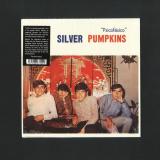
"Psicofásicos" by The Silver Pumpkins is a unique document: an EP that is virtually impossible to find in its original edition, offering an essential glimpse into Bolivia's thrilling 1960s rock scene-raw, wild, and unlike almost anything else. Beyond the ubiquitous covers of Cream and Jimi Hendrix recorded by countless South American bands, this EP features the far less common 'Pushing Too Hard' by The Seeds and, most notably, the dark, powerful 'You're Gonna Miss Me' by the 13th Floor Elevators. Bolivia boasts an extraordinary musical legacy of raw, garage-driven '60s sounds. Alongside Peru, it was one of the South American countries where the greatest number of recordings in this style were released-captured with limited resources but overflowing with spontaneity, energy, and attitude. The difficulty of obtaining the records that were shaping the latest Anglo-American rock trends of the 1960s in many Spanish-speaking Latin American countries led to a proliferation of local bands covering their musical heroes. Well-known artists such as Cream, Jimi Hendrix, and Iron Butterfly were reinterpreted by countless groups, making these songs available to local audiences without having to rely on imported records reaching their countries. By doing so, these bands helped spread the cutting-edge rock music already making waves elsewhere in the world. What makes this release particularly unusual is that the band chose to cover second-tier cult acts rather than the obvious classics-groups that only briefly cracked the U.S. Top 50 in the late '60s, such as The Seeds and 13th Floor Elevators. Originally released on the Bolivian Psicofásico label, this exceptionally rare EP pairs The Seeds' garage anthem 'Pushing Too Hard' with the ferocious, immortal 'You're Gonna Miss Me' by Roky Erickson and the 13th Floor Elevators. The raw power of the original songs is pushed even further here by the rudimentary recording techniques and the limited instrumental skills of the very young members of The Silver Pumpkins. The result is a one-of-a-kind document-virtually impossible to find in its original pressing-that helps complete the picture of Bolivia's fascinating '60s rock scene. First-ever reissue.
out of Stock
Last delivered 31 days ago available to reorder, subject to availability
As has been the case with a number of releases on Punctuality so far, Echo Chambered has already gained notoriety as a sleeper hit for those in the know. Fans of Evan Baggs and Rey Colino’s Radar stream from Dekmantel 2025 will instantly recognise Carousel, pulled from a white-label dubplate about half an hour into the set. Fast forward nine months and a flood of track ID requests later and PNCT011 is finally here: five expertly crafted rollers from a modern master of the craft, Bliss Inc.
It’s easy to see why there has been so much demand for Carousel. Its earworm vocal, delicate percussion programming, undulating low end and spacey sound design land it squarely in the sweet spot between the minimal, progressive and contemporary tech house that so many
diggers are seeking out.
While the A1 is an undeniable hit, each track truly sounds like a hard-to-find early 2000s gem—the kind of record a Discogs shark will flip for extortionate rates. Why? Maybe it’s the rolling basslines, the understated grooves, the organic but club-ready percussion, the vocal samples or the cerebral FX.
Maybe it’s the mature, floor-focused arrangements, or the way Bliss Inc. nods to different corners of the dance music spectrum while maintaining a distinct signature. Or more simply, perhaps it’s because each track is an expertly constructed club tool —built for DJs, but just as rewarding for listeners.
However you want to hear it, Echo Chambered has all the markings of a Punctuality classic. With all five tracks doing damage in equal measures, you know what to do…
out of Stock
Last delivered 26 days ago available to reorder, subject to availability
“I like to work with a variety of instruments and set ups,” says Mark Van Hoen, sometimes known as Locust or Autocreation but here working under his own name on the excellent Plan For A Miracle, his first physical release of solo music since 2018’s Invisible Threads. ”Sometimes it’s literally in my studio, with all the hardware electronics available. Sometimes the laptop, using software instruments. Some of the tracks on this record were recorded in the desert (Joshua Tree) using a 4-track tape machine and small modular synthesiser set up. Each track was recorded in different location using different instruments, which accounts for the distinction between each piece. It’s also about my own reaction to my environment, and what’s going on in my life at the time.”
The Croydon-born Van Hoen started musical life in the early 1990s, signing for R&S records in 1993 but developing his own, myriad and distinctive style across a range of releases on Touch, Editions Mego and other labels, using a battery of instruments, including analogue synthesizers and taking a number of different approaches to recording, rather than ploughing a single sonic furrow. He has worked on a number of collaborations, including with Nick Holton and Neil Halstead of Slowdive, under the moniker of Black Hearted Brother - their Stars Are Our Home was released in 2013. “I have known Neil Halstead since 1992,” says Van Hoen. “He shared a house with me for a couple of years, and the music I was making and listening to along with clubs I was attending had an influence particularly on Pygmalion, the final Slowdive album on Creation.”
Each track on Plan For A Miracle does indeed sound like a world unto itself, a mini-environment, a weather condition, an ecosystem created for the moment. It’s a collection of tracks recorded over the past few years, released on Bandcamp - despite his apparent absence, Van Hoen works constantly. Opener “Climates”, in its exquisite limpidity, feels like a homage to Brian Eno, one of his most formative influences in his teen years, commencing with Music For Films, which he bought in 1979. “This Is For Them”, feels like a ghostlike throwback to early drum & bass or electronica, reminiscent of his own, earliest outings. “There have been a number of requests from labels to make some more music like my very early releases on R&S,” says Van Hoen. “This is part of ‘letting go’ and realising that there’s nothing less creative about going back to those styles again.”
“Pencil Of Spheres” is something else again, a magnificent, imaginary glass structure, shimmering, refracting, without visible means of suspension, a thing of impossible beauty. “Electric Lights” evokes an abandoned fairground, its lights still pulsating, its music lingering. “The Underpass”, meanwhile, insofar as it reminds of anything at all, is faintly reminiscent of Cluster or Neu’s! West German ambience, the urban mundane rendered magical, the sodium lights, the whitewashed walls. The reverberant, faintly oriental chimes of “Insight” transport us yet again, burgeoning and intensifying.
The landscapes, the skyscapes rendered on Plan For A Miracle feel unpopulated as a rule - but when he does introduce vocal elements, Van Hoen has a history of doing so to spectacular effect - think of “Real Love” from 1998’s Playing With Time, the seductive intonation of its title recurring throughout like a series of massive holograms, echoing, stuttering, breaking up, surging. Here, there are just the faintest of vocals, barely distinct, disquieting. “There’s been a bit of a game changer in recent times,” explains Van Hoen. “AI software that enables you to extract vocals and instrument parts from virtually any recording. That means sampling individual parts from existing sources is no longer limited to the original mix exposing certain parts soloed. The vocal parts I use are from multiple sources and often pitch shifted altered rhythmically and melodically.“ There’s further vocal chatter on “I Really Do”, proceeding at a faster pace as if giving chase, or being pursued - distant, enigmatic. “The Music”, meanwhile, its beat tolling, lost in its own fog of static, features a curious intonation, like the ghost of a lost Walker Brother.
Sadly, the album’s title is in reference to a personal tragedy on Van Hoen’s part - the loss of his wife. Titles such as “I Won’t Give Up”, which faintly reminds of another Eno masterpiece, Another Green World, in its nautical hurly-bury, or the pastoral strains of “Mrs Who”, heavily clouded with sadness, seem to allude to this. “In fact the record was recorded entirely before she passed away,” says Van Hoen, “most of it before she even became very ill. The title was given to the album when it started to look like she wasn’t going to make it beyond a few months. It was something Osho said - “plan for a miracle” - so it was a statement of hope. Unfortunately it was not to be.” Although the album is non-thematic, non-specific in its atmospheres, sound paintings, elegant structures it most certainly stands as a magnificent monument to Osho’s memory.
-David Stubbs.
out of Stock
Last delivered 34 days ago available to reorder, subject to availability
Samosa Records brings the heat just in time for the summer months with Volume 3 of the electrifying ‘Earth, Wind & Funk’ series – landing a slick four tracker that will relieve you of your socks and undergarments…
Kicking Vol.3 off is Roberto Telll with ‘It’s Magic’ – an unstoppable, bass driven leviathan of a track with perfectly balanced vocals and groovy, punchy beats. ‘It’s Magic’ straddles that sweet spot of disco flavour expertly infused with a peppery funk spice. Mesmerising.
Track 2 sees the welcome return of label favourites and fellow Italian groove machine Dirtyelements with ‘Get On Down’ (De Gama Re-Groove). The mid-tempo calypso rhythm on this slice of leg-wobbling perfection is outrageously infectious. Dirtyelements has yet another solid, stomping disco builder bursting out of the lab with a mission to cause mayhem.
On Side B, Marco Corona swoops in with his 126bpm sonic torpedo ‘Eat Me!’ From the start, ‘Eat Me!’ drums its way into your subconscious with a powerful bass drum and tribal tinted percussion. Before you know it, you’re over the border into house territory – expertly picked vocal loops and builds make this one insanely irresistible.
Closing out the EP with ‘Hey Jee’ is Italian producer extraordinaire Frank Virgilio. Step into Mr Virgilio’s taxi whilst he whisks you through downtown Manhattan en route to the best night out in town. Soaring strings, slick bass work and nimble beats are the dress code – but, don’t worry, Frank always gets you in.
Raising the Samosa bar yet again, ‘Earth, Wind & Funk Vol. 3’ is a cool antidote for those hot summer nights under the stars – best served with your favourite cocktail.
out of Stock
Last delivered 12 days ago available to reorder, subject to availability
There is a pivotal scene in “August in the Water” (dir. Sōgo Ishii, 1995) where the surface of a pool turns into a stone wall. The water that gave the protagonist's life its meaning becomes a threat. As you fall through this stone wall, you appear in a set of underwater coral-reef corridors, and one of the most beautiful musical themes begins to play: Aquatic Ambience, composed by David Wise for Donkey Kong Country (1994). It's a theme that represents the weightless vibe of your new deep-sea life, where you go about your mundane errands, collecting bananas while driving on a swordfish, or, as HerzMayhem put it: "Poor monkey... always swimming, never going anywhere..."
Synthetic Water Music is the second of three compilations, following Synthetic Bird Music and timed to mappa's 10th anniversary. As with the birds, it gathers friends of the label, artists who have released with mappa or played our shows. Most of the music is new, made to measure for this compilation, much of it from Central and Eastern European hands. Birds and water mix well, so please feel invited to play them together, creating your own environments.
Where the birds were in one flock, water is dispersed across four chapters. You live your life as a droppity drop: vapour in the heavens, condensing in clouds, falling into a swamp, trickling into the deepest sea.
Tlālōcān (Cassette 1, Side A)
A place of eternal spring, of aquatic energy that nourishes everything and allows all things to bloom. Bubbly and splishy-sploshy, it is full of dripping sounds and moist caverns (“Emerald Pool” by Pauline Anna Strom), a landscape filled with living fountains (“Oh, to be a Fountain” by Eva Sajanová) and winding streams that flow through the area, forming part of its organic architecture. It is also a paradise reserved for those whose deaths were water-related, where the aquatic and terrestrial beings live in symbiosis and perspectives shift rapidly, from observing a single droplet (Shakali, Lau Nau) to dew (Feronia Wennborg & Lucy Duncombe) and on to flowing currents (Visible Cloaks) that gradually transform into river music (Ursula K. Le Guin & Todd Barton).
Nephelora (Cassette 1, Side B)
A celestial anti-gravity sound world made of evaporation, steam and the formation of clouds, as if looking at “The Sky At The Bottom of the Well” (by Natalia Beylis) or at “The Cloud That Never Rains” (by Henrique Vaz).
If a cloud never rains,
it is not a cloud at all, but a veil that parches the earth with its gaze.
It generates only its own shadow —
a looming mass of suspended longing,
a sky that hoards but never yields,
a reservoir that swallows every river and returns nothing but echoes.
The water in this world is often invisible but sometimes all the more present, as Bint Mbareh describes it: “Recently been obsessed with invisible waters because I come from a place where you have to imagine the water is there even though you cannot see a river, a sea, usually no rain, so water is in the air, the voice and the imaginal realm, drought is imagined to be negotiable.”
Žaboglach Zha-bo-glahch (Cassette 2, Side A)
A fusion of Scottish lochs and Slovak ponds: a misty, foul-smelling, swampy realm, the kind of place that swallowed Artax from The NeverEnding Story. Stagnant waters full of decay become a blooming habitat for sirens (“thereby losing the weightless delight of being swept along with it” by Adam Badí Donoval) and beings straddling the line between fauna and flora, inventing their own communication systems (“Water-lily phase” by Action Pyramid).
R'lyeh (Cassette 2, Side B)
A brooding sunken city at the bottom of the ocean. It’s a journey to get there. Let this chapter guide you, from the shore down to the depths, to the gates of an unexplored world that is inherently dark, unfathomable, and beyond the limits of human perception: starting with seasickness ("Seasick" by Nikolaienko), passing through a classic Poe-esque maelstrom ("Flurry at the Whirl-pull" by Atte Elias Kantonen), a gateway into the darkness and emptiness of the ocean floor, and finally traversing the city itself (“last waves of 2025” by Jules Reidy).
But what is pulling you to a place like this that only a few explore and even fewer leave? Maybe “the darkness that water can contain, the expanse of things we don't know and that can trigger fear instincts even as we try to rationalise them and think we are in control of the rest of nature” (“supercritical fluids” by Diane Barbé).
Dive in and surface wherever you like. Always swimming, never going anywhere. Just don’t forget to take water breaks.
P.S. Birds, then water, can you guess what comes next? Synthetic Soil Music, an elegy for insects and worms? Synthetic Glaciers, or maybe Pollinators? Which sounds would you miss the most if they disappeared? Or what if the third one never comes at all, and somebody, or something, makes Synthetic mappa Music instead. Don't you worry, with the right training data, it can all be replicated, better than the real thing.
They live! If this summer’s endless bout of heatwaves seems an odd setting for a new Altar Of Eden record, maybe we should consider that the fast-accelerating destruction of life on Earth is an appropriate setting for more deathrock. The eagle-eyed among you might recognise guitarist Ben Redman from recent lineups of symphonic noiseniks …And You Will Know Us By The Trail Of Dead, while vocalist Albert Efraim has been making a thrillingly unholy racket with Texan hardcore faves like the Creamers and Nosferatu - and they both played together in gothed-out sensations Altar Duata before that band’s untimely demise. Altar Of Eden have thus far produced two mighty LPs of smartly chilling post-punk for Drunken Sailor - 2020’s wondrous The Grotto Screams and 2022’s superb follow-up Chimeras - but now they return with a sequel to their debut: The Grotto Screams II.
In keeping with their previous offerings, it’s superb. Redman’s guitar is brittle and minimal, but lurches into eardrum-lacerating strafes of deafening, brutal noise without warning, while Jake Cloud brings driving, pulsating basslines to the fore, dripping with the influence of Killing Joke’s Youth as they hold it all together somehow. Efraim intones his lyrics solemnly over the top, drenched in reverb and tucked deep into the mix; as much a texture as a means of delivering hooks. He’s cited the poetry of Jean-Pierre Duprey and Rene Daumal as influences in the past, and tracks like The Erasure and Light And Shade certainly contain their own suffocating sense of surrealism and obfuscated reality. It all builds to the epic finale of closing track The Moon, which handles their signature tricks in moodily grandiose fashion - a bleakly compelling version of post-punk that sears and soars even as it chills the heart. Arguably Duprey’s most famous line goes, “I shouldn't have got stuck in this galaxy,” and as humanity brings about its own destruction, it’s worth suggesting that this applies to us all. But at least Altar Of Eden bring a hell of a soundtrack while we all burn.
On her debut album Switchbacks, Nashville-based artist Hannah Cole finds inspiration in the image of the switchbacks – sinuous twists in the road that obscure what's ahead. For a young artist making her way in the music industry, it's a powerful image: we can't really know what's ahead for us but – as Cole has learned – you should honk your horn to tell the world you're coming, and otherwise just enjoy the ride. Melding shoegaze and alternative rock with infectious pop melodies and strains of 90s nostalgia, Switchbacks is a commentary on the pursuit of success and how to protect the pure joy and love that lives at our core.
Across the ten tracks of Switchbacks, Cole swings her gaze at many unsettling aspects of the scramble toward success. Lead single "MMA" explores the ugly side of the music industry through the image of Las Vegas. On the brightly off-kilter "Give," she sings, "I feel like I've become an actor, / A TV pastor / climbing up a topless ladder," explaining that "the pursuit of success can feel like buying lottery tickets all the time for money that you'll never see." "Mechanical Bull" seethes with rage as Cole grapples with being seen as just the "girlfriend" in music settings and not being perceived as an equal to her partner, while on "Pitcher," she's paralysed in the face of wanting to achieve perfection. Later, she shrugs off the need to impress on "100 Bucks," reminding herself that she's enough for the people she loves.
Switchbacks is not only a finely-crafted debut album but also a deeply human artifact, tracing an arc that blazes like a comet to the height of ambition and then leaves you in the shimmer of self-acceptance and contentment. "Success is a moment that comes and goes," Cole concludes, "but I think the joy and experience that comes with making music is something I can take with me forever."
Poem by Alea Coble (February 2026) - Written for Andrew Weathers, Chattonooga Recording Project
Listen to my story and everything will come out true. - Bessie Smith
35° 02' 44.27" N -85° 18' 34.85" W:
Howl. Hammer strikes firing pin. Its echo ricochets over river bend. The woodpecker’s syncopated pop-pop-pop clink and thwap in time with cops practicing prayer at the firing range.
Quick. Sketch a few constellations onto a postcard: empty shotgun shells, these pre-forgotten fossils snaking rusted railroad spikes, like snagged rosary, fallen poplar petals draped over cerulean glass ashtray scattered along glittering fractures, ignored like a treaty. Train tracks reverberate necrophilic boomerang-hunger for mountain air without that coal dust. Eat. Eat. Everything is real estate. Even the air is for sale. Buy it cheap while I.C.E. carves through the valley along the Trail of Tears in unmarked SUVs, traffic stops.
Howl. Callback to estranged entanglements oscillating over holler and highway. Meet on the porch. Haint-blue ceiling. Some ghosts can’t get through anyway. They got tied up on the Walnut Street Bridge by a mob of white spit. Howl. The South should scare you.
But the woodpecker is still nesting, hungry, typing uncannied punctuation marks into black oak: a deed. Home? Takes a side-eyed knowing to call by name. The moon sickles in a sweating glass of iced tea.
Speculation cycle: symmetry as ancient as sour-dank betrayal of the tongue, bitter bones binding blood and lead, alchemical forgetting like I found a hairbrush in the yard while planting wild irises, like someone is charging $10 for an old glass Coke bottle, like semicolons itching restless under new sod from no-one-knows-where. Howl. Sing back. History is soil-in-stereo.
How will this line end? Like riverbank? Like atlatl arching hope smash-through a stained glass window? Words fall out of the sky, and 30 American flags snap at attention on the bridge. Howl. A shift in the wind gallops through the streets tossing her head back, laughing.
Tennessee River, who once kissed Pangea, how she softens at the knuckle-suck of it all, that secret-sweet stowed in the feathers of sandhill cranes lifting up on warm summer breeze: slow-shooting stars bending toward unbothered brevitas.
Howl. The red wolf knows her truest kin is always her shadow’s shadow.
This is a concept record that reflects on events that have had a calculable effect on a generation:
‘’By 83 and 84, it felt that nuclear war was going to happen. Not could happen but was going to.’’
Stephen Brotherstone
"What would you do in the event of a Nuclear war?"
I remember having discussions about what we would do when we heard the four minute warning siren. We would raid the sweet shop. I was 8 or 9 years old. The absurdity of this vivid memory encapsulates the concept of the record. It would take at least four minutes to get to the shop!
The record starts with an early memory of circling a church on a Raleigh Budgie (the smaller lesser known iconic Chopper bicycle) in 1981 and ends with staring up at a clear sky on Oldham Lows in 1990.
The record identifies and plays with the effects of an underlying fear of oblivion on a generation of children, but also society as a whole: The pieces take in media and government propaganda. Machinery (nuclear submarines) and buildings (nuclear bunkers) but also everyday activities of the civilian population, activities such as shopping, clubbing and staring at the sky. Thematically, the record is made up of personal memories mixed with historical events.
Instruments are mainly from 1980s. DX7 and 808 feature predominantly. The pieces feature numerous melodic motifs that develop and intertwine underlying ideas of espionage and layers of secret messaging. It also mirrors the ways in which governments and civilians interact. Decisions being made in the name of defence whilst people go about their daily lives. I am exploring the everyday experiences of the masses whilst major political decisions are taking place. For example, shopping on a Saturday afternoon versus heated Cold War tensions in 1983.
Although taking place conceptually in the years 1979-1991, this record mirrors current events. History repeating. It also mirrors the helplessness or maybe some oblivious everyday normality state that we adopt as a community whilst major political decisions are being made.
The idea that life goes on oblivious to larger scale politics, or on the other hand, the idea that we are all very aware but in a state of unreal normality. Adam Curtis goes into great detail about such things in his film 'Hyper Normalisation'.
Czarface opens another portal. On Czarface Meets Frankie Pulitzer, the boundary between comic book canon and hip-hop reality dissolves. Frankie Pulitzer, also known in certain dimensions as FacePuller, is no ordinary collaborator, character, or catalyst. He is a hybrid entity: part human, part alien force, fully embedded in the expanding Czarface universe.
Following landmark team-ups with MF DOOM and Ghostface Killah, Czarface continues its “Meets” saga with a full-scale crossover event that pushes deeper into story and sound. Frankie’s presence is both lyrical and mythological, bringing a chaotic, shape-shifting energy that challenges and complements Czarface’s razor-sharp precision. Dusty drums, cinematic soundscapes, and razor-edged bars bring the classic Czarface sound, yet mutated.
The universe widens with appearances from Busta Rhymes, Method Man, and El-P (of Run the Jewels), each adding their own gravitational pull to the project, thus grounding it in hip-hop legacy while amplifying its larger-than-life scope.
out of Stock
Last delivered 37 days ago available to reorder, subject to availability
»Ampersand Curve« initiates a brilliant new phase of work by North Manchester’s most elusive artist, best known as Michael J. Blood. His string of ruffkut club bangers, as well as jams with Rat Heart & Samizdat over the past seven years, have made his records a true cult property, and now find him signed to one of the UK’s most foundational techno imprints – more of which later this year.
But under the Sees aegis, he swims in very different waters, following his instincts to use the studio-as-instrument to produce his most impressive, deep-minded work, made from – and for – the heart. Where MJB was all about off-the-cuff club jams cooked for immediacy, his new stylistic switch reveals myriad worlds of influence swirling under the hood, where interrelated spheres of spiritual jazz, dub, ambient, and concrète more clearly light up his rich inner world.
As the story goes, MJB was burgled a few years back and lost most of his studio just as the project was hitting its stride. It prompted a personal review of his practice, re-learning new kit, allowing him to bend the rules. Adopting a sort of first-thought, best-thought approach to composition, the new methodology fuelled a renewed imagination in flux, or what he identifies as Sees: a personalised way of conveying complex emotions. That undoing of musical and mental conditioning opens the walls of his music to vast new horizons. Opener »Ithaca« fathoms sonorous midnight jazz with 10 mins of a plangent, searching sax solo in HD widescreen, like some alternate version to the Blade Runner Love Theme, while a resonant vocoder soliloquy, »Unseem«, reaches into space harmonised between Alvin Lucier and Ron Trent, and »Sheer« chases the devil out of labyrinthine dub dimensions.
The floating dream architecture of »Caprices« caps the LP’s underlying narrative and painterly qualities with a romantic conclusion of blushing pads and shivered, metallic echoes of the subtropical that suggest a coming-to-terms with worries, refreshed and good to go again.
out of Stock
Last delivered 3 days ago available to reorder, subject to availability
LIMITED THIRD PRESS. 300 ONLY CLEAR VINYL WITH RED BLOOD SPLATTER, HOUSED IN A RED AND METALLIC SILVER SLEEVE.
The Swedish underground legends return with a brand new album. Let this reddit user take over …
“Listening to Brainbombs has been one of my weirdest experiences with music. Brainbombs are most definitely a band. I guess at the core they’re a hardcore punk/noise rock hybrid I guess? But… It's so unlike anything I’ve ever heard and I still don’t know if it's good or bad. I saw the edgelord Ed Gein album cover, and it intrigued me, so I listened to their biggest song and it was easily THE WORST thing I had EVER FUCKING HEARD. I shut it off as soon as it got to the vocals. I was shocked by the fact that it had almost a half million streams. But, a few hours later, I clicked on it again and didn’t know why.
Over the past few days, I’ve listened to all of their discography and looped a lot of it. And I don’t even think I like them. The music is abysmal, it's the same single riff and verse repeating for 5 minutes. To make it worse, the vocals are just a guy with a swedish accent awkwardly talking about murder and rape. That sounds awful right? It is awful. But at the same time I want to keep listening? It’s so childishly edgy and obnoxiously repetitive but so.. intriguing? Catchy? I’m not even sure. It's one of if not the weirdest experience I’ve ever had with music and I don’t know how to feel about it.”
1998’s OPUS OF STELLAR DOOM ROCK FROM THE SWEDISH LEGENDS,
INCLUDING MICHAEL AMOTT OF ARCH ENEMY ON GUITARS.
FEATURES NEWLY REMASTERED AUDIO & PRESENTED ON LIMITED PEARL ARCTIC VINYL.
Candlemass was formed by bassist & songwriter Leif Edling in Stockholm, Sweden in 1984. Well known for their epic doom metal & continuing their legacy as genre leaders to this day, Candlemass has influenced a generation of the genre’s subsequent greats from My Dying Bride to Paradise Lost - Candlemass themselves taking a large influence from Black Sabbath.
‘Dactylis Glomerata’ was a come-back album of sorts, originally released in 1998, after the band had temporarily been laid to rest after the ‘Chapter VI’ album.
‘Dactylis…’ was an album of more stripped down dirty doom rock, with solid songwriting on display, evoking what some described as a strong stoner vibe, along with some hard rock elements. This was in contrast to the more epic heavy metal inspired compositions from previous albums, which the band were more known for. Having stood the test of time incredibly well, ’Dactylis Glomerata’ is a gem in the band’s rich history spanning four decades.
The album notably also features guitars by Michael Amott of Arch Enemy (ex-Carcass), & also a guest appearance by Ian Haugland from Europe.
This edition of ’Dactylis Glomerata’ is presented on limited pearl arctic vinyl, with newly band-approved remastered audio courtesy of Patrick Engel at Temple of Disharmony.
Celebrating 45 years since its original release, ‘I Love Rock ’N Roll’, Joan Jett and the Blackhearts’ seminal, groundbreaking album, is a landmark of rock history, selling over 10 million copies worldwide. The title track dominated the Billboard Hot 100 for seven weeks, becoming a global anthem and earning spots on multiple “greatest songs” lists. The album also delivered the Top 10 hit “Crimson & Clover.” Featuring its instantly recognizable, iconic cover, ‘I Love Rock ’N Roll’ remains a bold, enduring statement of raw attitude and timeless rock power.
In Walter Benjamin’s seminal essay “Art in the Age of Mechanical Reproduction”, he posits that the aura of art objects is destroyed by the ability to photographically reproduce them. When you had to make a pilgrimage to a work it remained elusive, charged, ever distant; but when you can easily see a reproduction, such aura dissipates. What Benjamin did not anticipate is that in the age of AI and the frictionless fount of digital content, we have imbued mechanical and analog means of media production with aura. Film cameras from the last 100 years are in high demand (the point and shoot Olympus Mju I featured in Wim Wenders film Perfect Days still sells for $200), vinyl sales continue to grow year by year, 35mm and 70mm film screenings have become aura-drenched events people travel across country for, and as to the world of vintage and analog synthesizers, when a friend asked for the price on the Yamaha CS-80 synth used on Toto’s “Africa”, the answer was a cool $60,000.
Despite the ability to simulate almost any synthesizer on a computer, the original physical units retain their mystique. Perhaps this lies in the physical process, many of these synths are temperamental and difficult to fully utilize, and the effort and ingenuity can be felt in ways that will always be absent from easy digital simulacra. Perhaps there is an aura in their imperfection, as Brian Eno wrote: “Whatever you now find weird, ugly, uncomfortable and nasty about a new medium will surely become its signature. CD distortion, the jitteriness of digital video, the crap sound of 8-bit - all of these will be cherished and emulated as soon as they can be avoided.” Some may call this nostalgia, but such sonic imperfections are the sounds of humans interacting with the physical world, and it is understandable to feel a pang of emotion and attachment in a time of exponential alienation.
Marche 22 was recorded over a week at the Museo Del Synth Marchigiano in Macerata, Italy. The museum is filled with rare and obscure synths (especially CRB, GEM & Elka) as well as salvaged materials from a nearby shuttered Farfisa organ factory, including MARS, an unfinished realtime audio processing application developed by IRIS - similar to the now well known MAX/MSP. Kyle Dixon and Michael Stein play a suite of pieces that encompasses the last sixty years of synthesizer music—there are nods to Cluster, Tangerine Dream, Jean Michel Jarre, and Morton Subotnick. Dixon and Stein are like jazz masters playing the American songbook with their own riffs and quotations. What shines through in these varied works that are sometimes rhythmic, sometimes melancholic, and sometimes both, is a soul, a spirit, an emotion vibrating through the tones like the charge of coming rain or the thrum of a distant train on the tracks. - Neil Fauerso
Formed in 1981 by two Rockford, Illinois, and two Brookfield, Wisconsin, natives in the midpoint of Milwaukee, Die Kreuzen (pronounced dee kroyt-zen) chose their name specifically to avoid stereotyping because “no one knows what it means. 'Die Kreuzen' roughly translates out of German meaning 'to intersect' or 'to hybridize,' which is exactly what they did on their five LP's for Touch and Go. Their self titled debut is considered one of the most seminal hardcore records of the early 80’s. As far as October File is concerned, remember that flannel shirt movement in the 90's? This is what those guys were listening to.
This Summer has never looked so bleak. Along with news of the album, Kulk have also released their new video single 'An Endless Kife': "An Endless Knife is about growing up. When we're younger, sometimes it feels like we're invincible. Like everyone we know and love are constant parts of the universe. When that reality is shattered, it changes how we see the world. You come to realise we are all just a couple of bad days from the worst. At the same time, it feels devastating. It reminds us to look after each other" - Kulk The band have toured across the UK extensively the past few years, playing amongst bands such as Part Chimp, Hey Colossus, Crowbar, Melt Banana, Iress, Big Brave, Gnoomes, Conan and Portrayal of Guilt... to name a few! They have toured twice with PigsX7, including shows at Electric Ballroom (London) and Rock City (Nottingham) and have appeared at the renowned UK festivals Arctangent and Desertfest