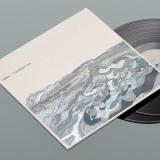
A long-lost Japanese acid folk gem, Niningashi’s 1974 private press debut Heavy Way shimmers with originality, deft song writing and a dream-like groove.
Although he was training as a pharmacist, Kazuhisa Okubo was much more interested in prescribing musical medicine.
A coming-of-age album, Heavy Way captured a turning point in Okubo’s life, and Japanese society more widely as a nostalgia for the pastoral calm of the traditional life, met the cosmopolitan thrill of coffee, sex and cigarettes in the big city.
Intoxicated by Tokyo, driven by a passion for music and surrounded by a thriving acid folk scene, the young student filtered his experiences through a psychedelic cocktail of soulful influences from the US and Japan.
Niningashi was his first band, and Heavy Way was their only album. It was honest and raw, deep and strangely funky, in an off-beat kind of way. Across nine tracks, Okubo and the 6-piece band put their own spin on the new folk sound of Japan, combining witty lyrics with electric guitar-driven solos and crisp, understated grooves.
Melancholy and profound, opening track ‘Ameagari’ feels like a synthesis of Harvest-era Neil Young and Haruomi Hosono’s Happy End. Then there’s the whimsical washboard country sound of ‘Semai Boku No Heyade’; the moody, low-lit charm of ‘Restaurant’; and ‘Hitoribotchi’, a sensitive portrayal of childhood, steeped in memories of rainfall that will resonate with fans of Woo and Mac Demarco.
While Okubo would go on to taste success with psychedelic folk bands Neko and Kaze, the latter of which scored three #1 albums, little is known about his mysterious debut with Niningashi.
Self-released by Okubo in 1974, and featuring album artwork by his brother, it has slowly generated a cult following online, intrigued by its soft and enchanting sound. So few records were ultimately pressed that those remaining have fetched up to £1,500 online.
Featured on Time Capsule’s era-spanning collection Nippon Acid Folk, Niningashi’s Heavy Way is a deep-cut grail of a vibrant time in Japan’s musical history, where even the pharmacists were making jams.
Поиск:sensi
Все
- A1: Somebody Knew
- B1: We Don’t Have To Be Alone
Thee modern masters of sweet soul return with two killer 6/8 ballads that explore the messy particulars of love lost and love found. The moody, blues forward “Somebody Knew” tackles the former as singer Josh Lane bares his soul with a tale about a sensitive subject many of us can relate to- processing the shame and pain associated with losing the one you love to another. Tracked during the sessions for Got A Story to Tell and a stand out in their live set, “We Don’t Have to Be Alone” is a gorgeous, floaty ballad that deals with two folks coming to terms with the fact that it’s ok to find comfort and joy in love at a provisional level.
For the fourth release on her celebrated record label Uppers and Downers, Dr.Rubinstein returns to the producer's seat with Take This Pill, a new 3-track EP that showcases the dynamic, ever-widening range of her signature acid sound. Lacing lively dancefloor cuts with a dose of personal storytelling and a playful yet honest take on mental health, Take This Pill delivers on Rubi's distinct ability to honor classic rave sensibilities while also always imparting her own unique twist.
The title track journeys from dark, acid-laced electro breaks into a shimmering wash of euphoric synths, energized along the way by drumrolls, hoovers, and a vocal refrain repeatedly voicing the Doctor's prescription: "Take this pill!" More than just a nod to classic XTC bangers, "Take This Pill" explores the emotional spectrum of neurodivergence and the pharmaceutical pathways many embark upon on a quest to "fit in," mirroring the lived experience of internal struggle giving way to external composure.
Things shift up a few gears on track two, the aptly-titled "No Brainer," a relentlessly energetic, no-nonsense stomper designed with the soul purpose of making you move. The track features sidewinding Goa-tinged acid lines swirling through a hard trance kick scape adorned by with soaring strings and shimmering cymbal rolls.
The EP concludes with a gorgeous, melodic rave-infused cut that shows a more tender, reflective side of Rubinstein's repertoire. Referencing one of Rubi's favorite tunes, The KLF's iconic "3 AM Eternal," diaphenous ambient vocals soar over a melancholic acid ballad that, never to be taken too seriously, is punctuated by humorous woops and cheeky rave whistles.
With Take This Pill, Dr. Rubinstein invites listeners into her world-one where vulnerability, humor, and acid rave euphoria collide. A perfect addition to her label's growing catalog, Take This Pill upholds the mission of Uppers and Downers: to collect and circulate timeless, tried-and-true tunes that celebrate the uplifting, affirmative power of rave music.
- 1: Saged Incantations
- 2: A Dark Carriage Led By Blind Men
- 3: Passage
- 4: Snake Healer
- Wild Host
- I Am The Howling
- Mountain
- Promethean Gallows
- Lurking Beneath The Pines
Rooted in acoustic instrumentation, their music features intricate melodies and
soulful vocals that resonate deeply with listeners. The band has toured the US and
Europe and contributed music to the Vikings series on Netfix, further cementing their
connection to Norse mythology.
Larvatus marks a return to the band's earlier, more mystical sound, evoking the
haunting qualities of albums like Uthuling Hyl and Nordlige Runaskog. This album,
which began taking shape during the uncertain years of 2020 and 2021, refects the
emotional turbulence of the pandemic. Despite the chaos surrounding its creation,
Larvatus is a demonstration of resilience and its introspective and contemplative
nature offering a sense of refuge amid a world in fux.
Over the past two years, Larvatus has been carefully revisited, refned, and expanded.
The album has taken on new layers of complexity, enriched with the addition of
Kakophonix's stunning cello work, which adds an ethereal depth to the intimate
soundscapes. The fnal mix, done by Greg Chandler at Priory Recording Studios,
brings out the full emotional resonance of the music, ensuring the band's earthy,
organic style is preserved while allowing every instrument and vocal to shine with
clarity.
At its core, Larvatus explores the passage of time, the fragility of existence, and the
quiet power of nature. It invites listeners to refect on their place in the world and fnd
solace in the timeless tradition of folk music. The fusion of Nordic folk melodies and
Americana storytelling creates a rich listening experience, staying true to the band's
signature blend of ancient sounds and modern sensibilities.
With Larvatus, Osi and the Jupiter offers a soundtrack for those seeking comfort in
difcult times, reminding us that even in the darkest moments, music can provide
solace, connection, and a sense of healing. It is a celebration of the enduring power of
music to unite and inspire, inviting listeners on a deeply personal journey into the
heart of both nature and self.
- 1: Saged Incantations
- 2: A Dark Carriage Led By Blind Men
- 3: Passage
- 4: Snake Healer
- Wild Host
- I Am The Howling
- Mountain
- Promethean Gallows
- Lurking Beneath The Pines
Rooted in acoustic instrumentation, their music features intricate melodies and
soulful vocals that resonate deeply with listeners. The band has toured the US and
Europe and contributed music to the Vikings series on Netfix, further cementing their
connection to Norse mythology.
Larvatus marks a return to the band's earlier, more mystical sound, evoking the
haunting qualities of albums like Uthuling Hyl and Nordlige Runaskog. This album,
which began taking shape during the uncertain years of 2020 and 2021, refects the
emotional turbulence of the pandemic. Despite the chaos surrounding its creation,
Larvatus is a demonstration of resilience and its introspective and contemplative
nature offering a sense of refuge amid a world in fux.
Over the past two years, Larvatus has been carefully revisited, refned, and expanded.
The album has taken on new layers of complexity, enriched with the addition of
Kakophonix's stunning cello work, which adds an ethereal depth to the intimate
soundscapes. The fnal mix, done by Greg Chandler at Priory Recording Studios,
brings out the full emotional resonance of the music, ensuring the band's earthy,
organic style is preserved while allowing every instrument and vocal to shine with
clarity.
At its core, Larvatus explores the passage of time, the fragility of existence, and the
quiet power of nature. It invites listeners to refect on their place in the world and fnd
solace in the timeless tradition of folk music. The fusion of Nordic folk melodies and
Americana storytelling creates a rich listening experience, staying true to the band's
signature blend of ancient sounds and modern sensibilities.
With Larvatus, Osi and the Jupiter offers a soundtrack for those seeking comfort in
difcult times, reminding us that even in the darkest moments, music can provide
solace, connection, and a sense of healing. It is a celebration of the enduring power of
music to unite and inspire, inviting listeners on a deeply personal journey into the
heart of both nature and self.
From Buenos Aires, Argentina, Dialektica Records presents its first release by Memory Operators, the duo formed by Mich & Vinz.
Dialogues EP is a creation born from communication. Each track is the result of a deep exchange of words, sounds, and emotions. The record dialogues between genres such as Synthwave, New Beat, Electro and Techno, exploring sampling, mysterious melodies, high-energy arpeggios, and a
nostalgic sensitivity.
The EP closes with a remix by Dani Labb, who true to his style, managed to give it a fresh twist without losing its essence.
Ma Haiping's "Mind Reader," on SCAN Records, the new label from Detroit legend SCAN 7, is an EP that extends his Detroit Futurism aesthetic, reimagining techno as a vehicle for paranoia and prophecy in the algorithmic age. It's a tense, synth-driven meditation on surveillance and synthetic reality. "Mind Reader" suggests our devices aren't just watching—they're thinking. The standout, "Sensitive Period" (with Shanghai Ultra), pulses with restraint, while "No Exposed" explores icy isolation. Classic 808s and funky basslines nod to Drexciya, but Ma's voice is unmistakable: cerebral, tactile, and deeply attuned to the present moment's fractured frequencies.
Das Debütalbum von Leroi Conroy, das zu gleichen Teilen von der Sensibilität des goldenen Hip-Hop-Zeitalters und verlorenen Filmszenen aus den 60er und 70er Jahren geprägt ist, wiegt schwer und hat Jahre der Entwicklung hinter sich. Die ersten beiden Tracks des Albums wurden 2017 als 45er veröffentlicht und in den folgenden Jahren von DJ Premier, Raekwon, Ghostface Killah, Macklemore, Phantogram und vielen anderen gesampelt. Aber nach der Veröffentlichung verbrachte Terry Cole alias Leroi Conroy einen Großteil seiner Zeit damit, sein Indie-Soul-Label Colemine Records zu vergrößern und Platten für andere zu produzieren (Okonski, Parlor Greens, Wesley Bright, BlackMarket Brass, Kendra Morris, Rudy De Anda, Delvon Lamarr Organ Trio, Andrew Gabbard), anstatt seine eigenen zu machen. Jetzt, acht Jahre nachdem viele der Rhythmustracks auf dem bewährten Tascam 388 aufgenommen wurden, erscheint Leroi Conroys Debüt-LP, "A Tiger's Tale". Das Album ist als hypothetischer Soundtrack zu einer alternativen Erzählung von Rudyard Kiplings The Jungle Book konzipiert. Die Erzählung ist das Bestreben des Menschen, die Natur zu zähmen und sie seinem Willen zu unterwerfen... und die Antwort der Natur. Das Album ist eine Mischung aus triumphalen Instrumentalpartituren und absolut düsteren, dunklen und manchmal dissonanten Moodytracks. Das zugrundeliegende Element der Hip-Hop-Sample-Kultur ist durchweg offensichtlich, und es besteht kein Zweifel, dass viele dieser Tracks in den kommenden Jahren geflippt werden. Klanglich reiht sich die Platte nahtlos in die Reihe vieler anderer Colemine Instrumentalisten ein: dreckige Lo-Fi-Drums, schmetternde Bläser, Wah-Gitarre, Hammond-Orgel und jede Menge cineastische Einsprengsel wie Flöte, Nylongitarre und Vibraphon. Das Schlagzeug stammt von Coles langjährigem Mitarbeiter Rob Houk und ist das Rückgrat des Albums. Und mit einigen Beiträgen der Colemine-Künstler Kelly Finnigan und Jimmy James ist die Platte wirklich eine Familienangelegenheit. File Under: To Be Sampled.
The debut album from Addy Weitzman, ‘Light Months Will Fly Over Us’ explores new-wave, romantic pop and art rock with elegance and ambition, drawing from Weitzman’s scattered network of collaborators, as well as a “frighteningly vast” personal archive of compositions. Sequenced by Seth Troxler and released on his Slacker 85 label, it represents a pivot in musical direction for the imprint, and a showcase for the songwriting craft Weitzman honed as a member of cult electro duo Footprintz, and Montreal synth-pop projects The Beat Escape and Dawn to Dawn.
The title Light Months Will Fly Over Us is derived from a line in a poem by the Russian writer Anna Ahkmatova. Weitzman was immediately struck by its “hopefulness, its mystery… it gives the feeling of being suspended, hanging in a dream-like state”. This interpretation has been translated to the album, rich in memorable songwriting that nonetheless invites the listener to lean in further. Delicately mixed by engineer Pierre Guerineau, known for his work alongside Marie Davidson, each of the eight tracks gently interrogates life’s greater mysteries; fear, love and salvation, each defining and revealing the human soul.
Opener ‘End of The Line’ invites us into an immediately lush space of lounge lizard existentialism, soft brass and piano helping Weitzman introduce “where the journey begins and the fantasy dies”. Across orchestral arrangements arranged by Adam Wilcox, whose sensitive, ambitious compositions are weaved throughout the album, ‘Beyond The Speed of Life’ brings to mind the laments of Scott Walker. Navigating vulnerability via grandeur, Weitzman’s earnest vocals flourish in wide-eyed call-and-response with the object of a transcendent love affair.
Alongside collaborator, Richard Lamb, the next chapter of the LP plunges into contrasting machine-driven moods; the wry, bubbling ‘Entertainment Is All I Wanted (And I Found It)’ is imbued with the playfulness and experimentation of 80s electronic pioneers such as Fad Gadget, while the tougher, icier ‘Stranger To Your Kind’ shifts in a more instrumental direction, recalling Weitzman’s dancefloor experience, as well as contemporaries such as Matthew Dear.
Album centerpiece and striking first single ‘Running & Returning’ is the first of a suite of three tracks in collaboration with Weitzman’s The Beat Escape and Dawn to Dawn bandmate, Patrick Boivin. Blending lush saxophones and angular guitars with a wistful melodic touch and lyrics, its irresistible art-rock rhythm provides the foundation for one of Weitzman’s most involving vocal performances.
It’s followed by an anthem for existential absurdity: ‘Ice Cream Candle’ provides a driving acceptance that “the more and more you learn, the less you understand”; Weitzman submits to this uncertainty with equal grace on ‘No Man’s Land’, as baroque invocations of “words swept through the fields” and meeting “where the water lilies grow” give way to a blistering guitar solo, humbly riding hypnotic percussion.
For the compassionate finale of Light Months Will Fly Over Us, Weitzman narrates the experience of ‘Gabrielle’, a woman slipping between rooms between shuttered blinds in the towering city, “where cigarettes and roses fill the air.”
As lyrically delicate as it is musically ambitious, Light Months Will Fly Over Us is a sublime debut album, enriched with care, love and much-needed enchantment.
- A1: Tayuta
- A2: Oshakasyama
- A3: Bagpipe
- A4: Nazonazo
- B1: Nana No Uta
- B2: One Man Live
- B3: Socratic Love
- C1: Mergen Und Gretel
- C2: Rain Sound Child
- C3: Order Maid
- D1: Magic Mirror
- D2: Shout
This is their first new album in almost two years, which is rather short considering the time it took them to prove this theorem.
The songs coexist with a vast amount of musical information, including funk, hip-hop, hard rock, gospel, southern rock, and electronica, and sound open in all directions.
Noda's talent is astonishing, but at the same time, he also uses the metaphor of word play to poke at the truth. Noda's sensitive gaze toward
love and life, which exist side by side with despair, nihilism, and death, cannot be faulted in a work that carefully and skillfully translates such detailed sensitivities into sound. It is an unquestionable masterpiece.
- African Blues
- Song For Mother E
- Sensuou
- Steal Away
- Ode To My Ancestors
- Voices
- Hymn For John Lee Hooker
- Twilight
- Cairo
- Beneath The Sun
Over sixty years into a life in music, Amina Claudine Myers revisits old compositions with a quiet force on Solace Of The Mind, her first solo record since receiving an NEA Jazz Master honours. Recorded for Red Hook Records and produced by Sun Chung, it hears Myers at the piano, Hammond B3 organ and mic, reinterpreting personal standards such as 'African Blues', 'Song For Mother E', 'Cairo' and 'Steal Away' with patient, spacious phrasing and the tonal sensitivity she's honed since her days with the AACM. Chung's production renders every harmonic shimmer and pause with startling clarity; a glistening move compared to last year's duo release with Wadada Leo Smith, adding a returnal layer to an otherwise eclectic discography, spanning free jazz and blues-rooted experimentalism. In her words, "I wanted to play (the originals) differently this time."
For her second full-length as Plume Girl, Sowmya Somanath crafts a space where boundaries of language, feeling, and sound start to dissolve. ‘Unnameable Glory’ ruminates on the limits of expression, and the luminous freedom that emerges when we let go of the need to name. Elaborating on the exploratory songs of her debut, Plume Girl continues to bring together Hindustani classical improvisation, ambient soundscapes, and experimental pop.
Somanath’s voice—from gentle murmur to radiant call—guides the listener through dreamlike arrangements: sunrise guitar arpeggios, humming choirs, heartbeat kickdrums, and synths tremble. Elsewhere field sounds and old family recordings are collaged, a woman’s giggle transposed into a piano melody, a sloshing body of water mirrored by synth bleeps. Plume Girl conjures moments of revelation, drawing from the natural beauty and intuition, that unnameable glory.
Is there a divinity or a wholeness that exists beyond language, belief, or tradition? Unnameable Glory both celebrates and gently challenges the notion: Can we honour the creative richness of culture while also seeing through the divisions it creates? Can we meet the world—and each other—without assumption, without fear, with eyes made new? In these songs, the sacred is found not in grand gestures, but in the anonymous freedom of simply being: the iridescence of oil and water on a street, the smile of a stranger, the hush that settles by a creek.
At the heart of the album is a sense of curiosity and surrender—a willingness to listen without judgment, to let the moment be unnameable, to allow wonder to arise and dissolve. And yet, as Somanath notes, there’s an impulse to capture that’s tough to ignore; a need to replicate and remember. Unnameable Glory dwells in this tension: between holding and letting go, between the urge to define and the beauty of what cannot be contained. There is a quiet, revolutionary joy in simply living and sensing together. Music becomes a meeting place for the whole, the holy, and the unnamable.
- Jealous God
- Good Submarine
- Clever Rabbits
- Lost On You
- Tangle
- No You Don't
- At Least It's Warm
- Mên- An- Tol
- False Hope
- Movement Of Standing Stones
- Gobbleknoll
Recorded with BRIT Award-winning producer Ethan Johns (Paul McCartney, Kings of Leon, Laura Marling, Ray Lamontagne) Ann's debut album Clever Rabbits explores the limits of prescribed identity in a timeless, brave and sensitive challenge of the zeitgeist - Inspired by the Chinese idiom "Clever rabbits need three burrows", and the imagery of three rabbits found in Devon's churches and China's caves, Ann Liu Cannon weaves Anglo-Celtic folklore, sacred texts, the sonic binaries of modern digital synthesis and her classic singer-songwriter roots, with integrity and precision - Clever Rabbits is a story told in her distinctive land of elegant, wonky folk
SIDE A. J. Diggns - Saturday Salsa with sizzling brass, deep pocket percussion, and a groove that’s pure motion. Whether you’re rocking the decks or rolling at the rink, this one brings that feel-good energy straight to your soul. It isn't Saturday without the "De La Brilla", Glow in Spanish —
SIDE B. King Most – BALLA EDIT From Radio Havana to West Africa, the spirit of Latin rhythm crossed oceans, bouncing oc antennas and into the soul of a continent. On BALLA EDIT, King Most channels that deep cultural echo—an infectious blend of clave, funk, and highlife sensibilities, flipped with modern finesse and analog warmth. Made to ride at block parties, or sets where borders blur and rhythms rule. Global grooves, rooted deep. Pressed heavy. Played loud
Debut album from French producer Sweetzak, half of the duo Rue des Garderies (whose album was acclaimed by some of the specialist media in 2024: Album of the Year by Inverted Audio ; Juno ; World of Echo ; Soundohm ...). An ambient epic of complex textures, sculpted with emotion and intuition.
Zach writes his dreams, his grand inner music emanating directly from his soul and offering it to the world, guided by his intuition.
Nine abstract, ambient, and celestial tracks, evolving with his sensitivity, conducted like an intimate orchestra, revealing his landscapes and skies.
Sweetzak takes us on a journey within himself and questions our emotions in this first album with complex textures, like a glimpse into what moves him.
Die junge Anne-Sophie Mutter auf Vinyl
Anne-Sophie Mutter, inzwischen eine lebende Ikone der internationalen Musikwelt, bestach schon in jungen Jahren durch ihr außergewöhnliches Talent und ihre unbedingte Hingabe. Als einstiges Wunderkind, gefördert von Herbert von Karajan, hat sie eine unvergleichliche Karriere hingelegt. Diese Vinyl-Veröffentlichung präsentiert zwei Meisterwerke für zwei Instrumente: Bachs Konzert für zwei Violinen und Mozarts Sinfonia Concertante für Violine und Viola. Die Aufnahmen von 1982 und 1991 zeigen Mutters unverwechselbare Interpretation, die in Bachs Werk noch von der jugendlichen Energie der damals 19-Jährigen geprägt ist. Ihre Spielweise, stets eine perfekte Balance aus Sensibilität und Kraft, bestätigt auch hier ihren Status als Ausnahmekünstlerin.
Genre please! `A .... few ́ moments of worldwide swirling. Four tracks of class-sensitive sonic expression, spiritual punk, and cosmic cure-work taken from Kundan’s multilayered album „A vantage granted but to few“. Field recordings and samples cluster around all kinds of instrumentation. Styles collide and never settle. Information hunts — and sometimes hurts. Expect Highlife on a Tresillo groove with an eco twist (TERRAR), a creepy tango warped by wartime novelty (VIVAN), Anatolian disco dub featuring Robert Beckmann on violin (NAHIN), and confessions from the voodoo backyard by deprived residents of Rostock ‘ganz unten’ (ES GIBT NICHTS).
After several killer EPs and tracks on labels such as Tresor, Multi Culti, Hard Fist, or Playground Records, Antonio De Oto aka A-Tweed finally delivers "Spring Music" his first solo LP via Abstrakce Records, changing perspective on his music and way of producing. A minimal approach, where echoes and reverbs become some of the main characters of the full journey, mixing up weird acid, experimental downbeat, electro, dub, and tribal vibes across a wide range of tempos.
Slow-motion beats pulse beneath swirling acid lines, while dubby echoes and reverberations sculpt a landscape that is both immersive and mysterious. A-Tweed’s meticulous production draws from the label’s tradition of organic textures and ambient vibes, yet carves a distinct path balancing deep bass, shimmering synths, and a subtle sense of psychedelia that lingers long after the needle lifts.
A cohesive journey, crafted for those who seek introspective voyages without giving up new forms of dancefloor communion. A manifesto about the power of slow rhythms, dub sensibilities, and acid-tinged experimentation, out of any hype and trend, aiming for a distinctive sound. An essential addition to the ever-evolving Abstrakce catalogue. The spring has just arrived.
- 1: I'm A Stranger Here/Stranger Blues
- 2: Nervous
- 3: I Just Want To Make Love To You
- 4: Born With The Blues
- 5: I Got My Eyes On You
- 6: John Henry
- 7: I Need Money
- 8: Everyday, I Have The Blues
- 9: Night Time Is The Right Time
- 10: My Own Fault
- 1: Baby, Won't You Please Come Home
- 2: Moanin
- 3: Money Honey
- 4: Kansas City
- 5: Bye Bye Baby
- 6: Medley : The Blues Ain't Nothin' But A Woman & Bye Bye Baby
- 7: Eyesight To The Blind*
- 8: Your Funeral & My Trial*
- 9: Bye Bye Bird*
- 10: Fattening Frogs For Snakes*
- 11: Bye Bye Blues*
- 12: Wake Up Baby**
The blues, born in the cotton fields of the American South, emerged from makeshift instruments and simple harmonies rooted in African heritage. It captured the struggles, hopes, and fleeting joys of laborers enduring harsh conditions, with its hallmark "blue note" adding a unique dissonance to this evocative musical style.
As industrialization progressed, the blues migrated to urban centers like Chicago and New Orleans, evolving with modern instruments and expanding themes to reflect urban struggles, sensual nights, and existential despair. This period birthed many of the musicians who later formed the American Folk and Blues Festival (AFBF), an initiative started in 1950s Germany to introduce Europe to the genre and counter its reductive reputation as a precursor to jazz.
The Lost Recordings celebrates these legendary artists through restored performances from the 1962 Olympia in Paris and the 1963 Stadttheater in Bremen. Featured artists include John Lee Hooker, Memphis Slim, Sonny Terry, Brownie McGhee, T-Bone Walker, Helen Humes, and others, showcasing the depth and evolution of the blues.
From intimate duos like Brownie McGhee and Sonny Terry’s harmonica-guitar interplay to T-Bone Walker’s electrifying group performances, each act demonstrates the genre's versatility and influence. John Lee Hooker’s solo mastery mesmerized audiences, while T-Bone Walker pioneered the electric guitar's place in blues, inspiring legends like B.B. King.
The album also highlights Sonny Boy Williamson, whose charismatic harmonica and profound sensitivity defined his performances. These concerts take listeners on a journey through the authentic sound of the blues, traversing America’s history and foreshadowing its transformative impact on global music.
- A1: Contact
- A2: Shut The Windows
- A3: Passing Thing
- A4: Petals
- A5: Romance Distractions
- B1: Sensitive Girl
- B2: New Machine
- B3: Shatter
- B4: Show A Flower A Candle And It Will Grow
- B5: Briefly
After two decades, the indietronic veteran returns with a powerful sonic reflection on today’s sociopolitical climate and a poignant reminder of music’s enduring ability to heal, unite, and inspire. Blending experimental electronics with krautrock sensibilities, the album thrives on spontaneity, collaboration, and the beauty of ‘happy accidents’.
While many of Nitrada’s sonic trademarks remain — intricate, rickety beats; enigmatic field recordings; and gut-punching string melodies — EVERYTHING THAT IS NOT COUNTED WILL BE LOST marks a shift in approach. Experimenting with different constellations of musical machines, Christophe Stoll, the mind behind Nitrada, recorded hours of improvisations (some shared on his Instagram). These sketches became the raw material for more elaborate, carefully structured arrangements.
True to his collaborative spirit, Stoll brought in like-minded artists to shape the final album: Jan Sturm (aka STURM) lends his touch to the shimmering FRAGMENTS OF LIGHT. The euphoric dystopian WE DANCE IN THE CHAOS features Landobe (Marco Heinle) and Patrick Siegfried Zimmer on vocals. Luca di Mira (of Giardini di Mirò fame) contributes synths, cello, and delicate textures to some tracks, while Johannes Schardt’s guitar work brings a visceral, post-rock edge to NO HYMN FOR NOBODY and IL ROMANTICISMO DELL’APOCALISSE, nodding to Stoll’s roots in punk and indie.
“The goal is to take listeners on a journey through different timbres and sonic landscapes — a collage of diverse ideas and inspirations,” says Stoll about his album which effortlessly juxtaposes experimental ambient soundscapes, heavy jagged guitars, and minimal techno pulses, making them feel as though they’ve always belonged together. Because, in the end, they do – all part of the shared vocabulary of our universal language: MUSIC.
- Les Maîtres Fous Part I
- Les Maîtres Fous Part Ii
LTD DIM GLEAM ED[24,79 €]
Haunting, discordant and deeply unsettling, `Les Maîtres Fous' (`The Mad Masters') was written by French post-metal collective Year of No Light in response to French filmmaker Jean Rouch's controversial 1950's docufiction of the same name. Commissioned by Musée Du Quai Branly in Paris for their 2012 `L'Invention Du Sauvage' exhibition, trance-metal pioneers Year of No Light approached the ritual practices of the Hauka movement as depicted in the film and responded with their uniquely hypnotic heaviness. Performed only twice, once at the exhibition on the 6th January, 2012 and again in Bordeaux on the 29th January, 2015; this release is a live recording of the second and final performance of `Les Maîtres Fous'. Whilst Year of No Light have a long history of collaboration with forward-thinking filmmakers and visual artists, the sensitivity of this documentary's problematic subject matter and the intensity of the band's performance made this performance both a physically and emotionally demanding experience; something that can be keenly felt upon listening. Founded in September 2001 by a collection of Bordeaux's heavy scene stalwarts as an ongoing side project encompassing elements of sludge metal and shoegaze, Year of No Light released their debut album, Nord, in 2006 to critical acclaim. The subsequent years however saw a significant lineup change with the band replacing their vocalist with a third guitarist to become a fully instrumental sextet incorporating aspects of black metal, drone electronica and dark ambient into their already formidable sound. 2010's four track epic Ausserwelt and the 2013 follow up Tocsin saw Year of No Light distilling their punishing sound even further; stalling the tempo to a glacial crawl and tuning guitars ever downwards to new uncharted depths. Consolamentum, the band's first full-length release in nine years and their first with Pelagic Records, brought the outfit's crushing double-drumming percussion to the fore as a masterclass in dynamic control saw Year of No Light embrace the highest highs and the lowest lows of the intervening years. Now approaching their 25th anniversary, `Les Maître Fous' is a pressing reminder that, despite the band's long and ongoing journey, Year of No Light have never been afraid to experiment, to take risks, to square up to life's ugliness and look it straight in the eye. FOR FANS OF Neurosis, Cult of Luna, SWANS, ISIS, Russian Circles, My Bloody Valentine, Chelsea Wolfe
Haunting, discordant and deeply unsettling, `Les Maîtres Fous' (`The Mad Masters') was written by French post-metal collective Year of No Light in response to French filmmaker Jean Rouch's controversial 1950's docufiction of the same name. Commissioned by Musée Du Quai Branly in Paris for their 2012 `L'Invention Du Sauvage' exhibition, trance-metal pioneers Year of No Light approached the ritual practices of the Hauka movement as depicted in the film and responded with their uniquely hypnotic heaviness. Performed only twice, once at the exhibition on the 6th January, 2012 and again in Bordeaux on the 29th January, 2015; this release is a live recording of the second and final performance of `Les Maîtres Fous'. Whilst Year of No Light have a long history of collaboration with forward-thinking filmmakers and visual artists, the sensitivity of this documentary's problematic subject matter and the intensity of the band's performance made this performance both a physically and emotionally demanding experience; something that can be keenly felt upon listening. Founded in September 2001 by a collection of Bordeaux's heavy scene stalwarts as an ongoing side project encompassing elements of sludge metal and shoegaze, Year of No Light released their debut album, Nord, in 2006 to critical acclaim. The subsequent years however saw a significant lineup change with the band replacing their vocalist with a third guitarist to become a fully instrumental sextet incorporating aspects of black metal, drone electronica and dark ambient into their already formidable sound. 2010's four track epic Ausserwelt and the 2013 follow up Tocsin saw Year of No Light distilling their punishing sound even further; stalling the tempo to a glacial crawl and tuning guitars ever downwards to new uncharted depths. Consolamentum, the band's first full-length release in nine years and their first with Pelagic Records, brought the outfit's crushing double-drumming percussion to the fore as a masterclass in dynamic control saw Year of No Light embrace the highest highs and the lowest lows of the intervening years. Now approaching their 25th anniversary, `Les Maître Fous' is a pressing reminder that, despite the band's long and ongoing journey, Year of No Light have never been afraid to experiment, to take risks, to square up to life's ugliness and look it straight in the eye. FOR FANS OF Neurosis, Cult of Luna, SWANS, ISIS, Russian Circles, My Bloody Valentine, Chelsea Wolfe. The Dim Gleam edition is kind of a beige vinyl colour
- Embraceable You
- Plainsong
- Law Years
- First Song
- The Surrounding Green
- Anticipation
- Palhaço
Das meisterhafte Zusammenspiel des Trios, das sich auf eine ausgefeilte Kommunikation zu dritt und einen raffnierten Sinn für Understatement stützt, macht Fred Herschs dritte Aufnahme für ECM zu einem unverzichtbaren Beitrag zum Klaviertrio-Kanon. Zusammen mit Drew Gress am Bass und Joey Baron am Schlagzeug, zwei langjährigen Weggefährten, die seit den späten 80er bzw. frühen 90er Jahren immer wieder mit ihm zusammenspielen, nimmt sich Hersch eine Handvoll Kompositionen des 20. Jahrhunderts vor - von Standards bis hin zu seltener gespielten Jazztiteln. Dazu kommen drei Eigenkompositionen, „Ich habe das Gefühl, dass man auf dieser Platte wirklich die Geschichte hört“, merkt der Pianist an. „Ich hoffe, dass die Leute die Reife der Interaktion, die Klangwelt und die Sensibilität im Spiel spüren können.“ Freds eigene Stücke bestechen durch ihre lyrische Intensität, leuchten mit ausgefeilten Harmonien und verwobenem Kontrapunkt in „Plainsong“, zeitloser melodischer Erfindung im Titelstück „The Surrounding Green“ und unwiderstehlichem Latin-Groove in „Anticipation“. Der Ansatz des Trios bei Ornette Colemans „Law Years“ ist eine frei swingende Angelegenheit, während Egberto Gismontis „Palhaço“ eine elegante Reise durchdachter Trio-Interaktion darstellt. Und bei „Embraceable You“ von den Gebrüdern Gershwin glänzen der Pianist und seine Begleiter mit ansteckender Nonchalance. Mit viel Hingabe an die eindringliche Qualität der melancholischen Melodie erkundet das Trio Charlie Hadens „
astia's NECHTO presents a new six-track release from DJ Dextro, including one collaboration with Portuguese producer Cardao. The project marks Dextro’s first appearance on the label, following years of his tracks being played by Nastia and a shared event in Lisbon in 2023. That connection gradually turned into a conversation about releasing something together. “It was a matter of time until I got to her ear,” Dextro says. “And from there, we talked about NECHTO — and here we are.”
The tracks on the EP are shaped by a mix of spontaneous ideas and observations on daily life, society, and broader themes like science and the unknown. Dextro explains that the track titles often reflect his current state of mind or something happening around him --- sometimes personal, other times completely random. Each one sits within his established sound: energetic, structured, and focused on rhythm.
One of the six tracks features Cardao, with whom Dextro shares what he describes as “a good harmony and easy understanding” in the studio. Known for his groove-led, percussive style, Cardao’s contribution adds another layer to the release while fitting seamlessly into its overall tone.
Shaped by both artists’ individual perspectives, this EP stays close to the club — direct, driving techno rooted in shared sensibilities and straightforward execution.
- A1: Concrete Jungle
- A2: Things In Life
- A3: Things In Dub
- A4: Love Like That
- A5: Love Like Dub
- A6: Turn My Love Around
- B1: Lend Me
- B2: Real Rock, Organ – Johnny Mittoo Moody
- B3: I Spy Trouble
- B4: How Long Rastafari
- B5: In This Time
- B6: He Said She Said
- C1: Sunshine Love
- C2: Sunshine Love Dub
- C3: Mellow Sensimilla
- C4: Sensimilla Dub
- C5: Kindness For Weakness
- C6: Kindness Dub
- C7: Hold You
- D1: Saturday Night
- D2: Respect
- D3: Gimme Little Sign
- D4: Seven Days A Week
- D5: In Your Eyes
- D6: Wicked A Go Feel It
- D7: Vision In Life
- A1: Mal De Mer
- A2: Surely You Rally
- A3: Not For Us
- A4: In The Dark
- 5: The Hook Stuck
- B1: Lord Marchpane
- B2: Effective Forthwith
- B3: Achilles Past
- B4: Fainting
- B5: There's A Place
- C1: Much More
- C2: Maybe Tomorrow Then
- C3: Madcap Girl
- C4: The Knife Cliche
- C5: Hope Davis' Face
- D1: Listen You Wait
- D2: Bright Blue Sun, Gold Sky
- D3: The Tents Around The Lake
- D4: Spanish Vamp
- D5: If Only 6. Early Departure
For All The World, the black watch's twenty-fifth (and first double) album is a darkly poppy, brightly moody, many-splendored take on a number of the great themes: Death and Sex, Memory and Lament and Hope and Love. And it is, arguably, this heralded Los Angeles band's most sonically ambitious and moving record yet, since front man/novelist/ex-English professor John Andrew Fredrick formed the group in 1988 in Santa Barbara after he'd seen a London-by-way-of-Canada band called The Lucy Show play to twelve-or-so people in his hometown.
Having recorded 2024's Weird Rooms with producer Misha Bullock and Fredrick's son Chandler at Bullock's studio in Austin, TX, the TBW founder was keen to repeat the experience with, he says, more straightforward, classic psych/jangle/shoegaze songs. The result, though artistically satisfying, spurred a yen in John to write more songs as a sort of reaction against the batch he'd carried with him from LA to Texas. "We had such a productive time recording ‘Weird Rooms’ that I wanted to repeat the experience... without repeating the experience. And once it was over and I left Misha to do what he pleased with respect to mixing and overdubbing, all I could think was 'I need to write another album now.'" So Fredrick brought longstanding producer/engineer and TBW-associate Scott Campbell (Stevie Nicks, Acetone) along this time to help out with engineering and good cheer.
Fredrick, who has been "accused" of being "astonishingly prolific," learned that bandmate Andy Creighton had recently become unemployed, seized the opportunity to have yet another multi-instrumentalist flesh out the new songs he quickly wrote after he came back from Austin. “Achilles Past,” the first single, is in fact a song that John wrote when the production team thought the album was done—and the front man avers that it’s often the case that a very strong song comes to him, as it were, in the eleventh hour. The same could be said for “Listen You Wait”—another number that came late to the Austin sessions.
Nevertheless, the recording of the first half of For All The World has Creighton's signature indelibly stamped on it - especially on such tracks as “Fainting” and “Surely You Rally”- just as the latter half highlights Bullock's formidable talents. "They're both not just brilliant musicians and they understand my aesthetic and bring their own sensibilities to bear on my stuff. Our respective tastes meet in, you guessed it, The Beatles' realm - the great shadow that hangs over all I do, at least."
"There's A Place," the final song on side two, serves in fact as a distinct homage that's been a long time coming for a band that included a cover of "It's All Too Much" as a bonus track and that release a quite punkish, uptempo version of "Eleanor Rigby" on a 7".
YES! Originally released in 2000, Mark de Clive-Lowe's Six Degrees captures the early essence of what would later be known as broken beat, club-jazz and future soul; bridging the sounds of 70s jazz-fusion, jungle, hip-hop, house and Afro-Cuban rhythms. With fender rhodes, synths and an MPC2000 at the core of his production, de Clive-Lowe blended live musicianship with beat-driven sensibilities in a way that was ahead of its time.
Originally released in New Zealand via Kog Transmissions, the album found its way onto the global stage when Universal Jazz UK picked it up. Now, 25 years later, Be With is proud to present a special anniversary vinyl reissue, celebrating a landmark album that laid the foundation for an international career spanning continents, collaborations, and countless musical evolutions. Limited to just 400 copies for the world, these are gonna fly.
In 1998, a 23-year-old Mark de Clive-Lowe set off on a year-long journey that would shape his career and musical identity. Fuelled by an insatiable curiosity and a grant from New Zealand supporting emerging artists, he traveled across the globe — digging through record stores in San Francisco, immersing himself in the rhythms of Havana, collaborating in London’s underground studios and experiencing the jazz legacy of New York. Along the way, he crossed paths with pioneers, mentors and kindred spirits who would deeply influence his sound.
Six Degrees is the sonic diary of that transformative year — a musical world tour distilled into one groundbreaking album. It's both a snapshot of a pivotal moment in de Clive-Lowe’s life and a timeless statement of creative exploration.
The jazzy jungle vibes of "Roundtrip" opens proceedings, inspired by de Clive-Lowe's deep love of drum & bass. It kicks off with a rhythm pattern picked up in Havana, combined with Lonnie Liston Smith-style Rhodes textures and a rolling jungle breakbeat. Sublime. Up next, "La Zorra" is a moving tribute to the folkloric 6/8 rhythms he was surrounded by in Cuba. Afro-Cuban music had a huge impact on his sound and this track reflects those deep grooves brilliantly. Hip-hop has also been a major influence since de Clive-Lowe's teenage years and Manuel Bundy’s scratches bring an essential turntable element to "Melodious Funk", giving it that raw boom-bap edge.
Underground favourite "El Día Perfecto" came about by de Clive-Lowe wanting to write something as catchy as Incognito’s "Colibri", combined with his deep love for Lonnie Liston Smith. Effortless as it sounds, it pretty much wrote itself, seemingly. "Cosmic Echoes" is a nod to house music, but on the chiller side. Named after Lonnie Liston Smith’s band, with bouncy bass, a steady 4/4 groove and chopped tabla percussion, the mood this track conjures up is special. The deeply soulful "Day By Day" became the biggest track from the album, partly thanks to DJ Spinna’s remix and Café del Mar featuring it on their compilation. Cherie Mathieson’s vocals shine here. The lyric came to de Clive-Lowe while hanging out at Cause Célèbre in Auckland: “Day by day, side by side, hand in hand, no turning back.”
"Restless" is a jazz-funk jam built on a classic drum break, heavily influenced by Roy Ayers and the Mizell Brothers. Named in homage to Phil Asher’s Restless Soul moniker, his impact on de Clive-Lowe's journey can’t be overstated. Following on, "Mindscape" is a darker, rawer drum & bass track. The chopped-up drum break and moody synths channel everything he loved about the deeper, more atmospheric side of the genre. "Control" continues the jungle influence — this one’s all about the heavy grooves and deep bass, inspired by nights out listening to Jumping Jack Frost and Grooverider in packed basement clubs.
"Por La Mañana" is a musical snapshot of walking the Malecón in Havana in the morning sun. The city had such a profound impact on de Clive-Lowe and this track captures some of that energy and movement. Penultimate gem "Motherland" is a nod to his Japanese heritage. The melody draws from Japanese scales, shifting between moody introspection and uplifting harmony. Built on a chopped live drum break he recorded in Tokyo years earlier. We end with "El Día Perfecto (Reprise)", a stripped-down reprise featuring percussion, vocoder, Rhodes and synths — leaving the listener with a warm, uplifting final moment.
Speaking to Be With, de Clive Lowe explained just how much celebrating the 25-year anniversary of this album means to him: "Since then, I’ve released so much more music, but Six Degrees still resonates — it captures a really special moment in my life. A turning point, a fork in the road that ultimately changed everything. It’s amazing to reflect on where this journey has taken me, and I’m incredibly grateful for it. I still remember the night I finished "El Día Perfecto". I took a minidisc of it to my friend Cian’s DJ set at Galatos in Auckland. He plugged it in, and I watched the dancefloor move to something I’d just created hours earlier — it was a magical moment.
When Six Degrees was first released, the internet was still in its early days. There was no YouTube, no streaming, no instant global access to new sounds. The album was my way of bringing together all the music and places I had experienced over that year, blending them into something uniquely mine. It introduced me to listeners around the world and opened the doors to a career that would take me to more countries, collaborations and experiences than I ever imagined.
25 years later, I’m so grateful for everything this record set in motion. It’s a document of a moment in time, but it still feels alive — and I’m thrilled to share it again in this special anniversary edition."
Mastering for this 25 year vinyl edition was overseen by Be With regular Simon Francis and it was cut by the esteemed Cicely Balston at Abbey Road Studios to be pressed in the Netherlands by Record Industry. The original artwork has been lovingly brought back to life by de Clive-Lowe himself, with updated liner notes written specially for this landmark reissue.
- Bar Open
- All This Violence - Live In Vienna
- All This Violence - Live In Dresden
Seit Mitte der 1980er Jahre prägt Caspar Brötzmann einen unverkennbaren Sound - infernal, radikal, kompromisslos. Unbeirrt verfolgt er seinen eigenen Weg, jenseits klarer Genregrenzen. Als Sohn des berühmten Saxofonisten Peter Brötzmann fand er früh seine künstlerische Identität und entwickelte eine einzigartige Klangsprache, die sich in brachialer Katharsis entlädt. Seine Musik ist keine Anpassung an Trends, sondern eine sensible, leidenschaftliche, fast autistisch anmutende Annäherung an Verzweiflung und Wut - und doch voller Hoffnung. Mit seiner virtuosen Eigenständigkeit am Instrument ist er eine Ausnahmeerscheinung. Ein atonaler Hendrix, made in Germany. Nach der Veröffentlichung seiner ersten Komposition "The Lovers And Destroyers" mit Caspar Brötzmann Bass Totem im Herbst 2024 veröffentlicht der international renommierte Gitarrist nun eine Platte mit seiner Band Massaker beim deutschen Label Exile On Mainstream. Es ist die erste Aufnahme der genreprägenden Band seit 26 Jahren nach dem letzten, 1999 erschienen Album "Mute Massaker". "It's a Love Song" besteht aus zwei unterschiedlichen Versionen seines Songs "All This Violence", die im Januar 2025 in Wien und Dresden mit Saskia von Klitzing (Drums) und Eduardo Delgado Lopez (Bass) aufgenommen wurden. Angesichts der aktuellen Weltlage entschied Brötzmann, mit "All This Violence" ein klares Zeichen zu setzen. Er selbst schreibt dazu: " Schon nach ein paar Augenblicken war klar: was ich hier hörte, hatte die Botschaft, die Kraft und spiegelt unser Zeitgeschehen wieder. Keine von meinen Studioaufnahmen hatte diese Power. Und das war nur die eine Seite, es bedeutete auch den Spalt zwischen Schwarz und Weiß zu finden, zwischen Hell und Dunkel und zwischen Leicht und Schwer, wohin mit all meinen anderen Songs? Lange, lange habe ich nach der Achse gesucht und völlig unerwartet stand sie plötzlich neben mir im Raum . . ."
Swingrowers are known for their mixture of JAZZ, SWING, POP and ELECTRO, they have extensively toured Europe and North America, opening sell-out shows for Parov Stelar, Chinese Man & Caravan Palace. On top of delivering official remixes for Caro Emerald and Swing Republic, Swingrowers also boast musical collaborations with The Lost Fingers, Gypsy Hill, DJ Pony Montana and have had their own songs remixed by Bart&Baker and Jamie Berry.
Following on from their debut album 'Pronounced Swing Grow'ers' in 2012, Swingrowers have released their second album 'REMOTE' in early 2015, followed now by 'OUTSIDEIN', the band's third full-length studio album. This new release shows their expert musicianship and most meticulous production to date, mixing genres from jazz to electronica, from gypsy-swing to full-on rock'n'roll with a melodic pop sensibility.
- A1: M Beat* With General Levy– Incredible 4:14
- A2: Barrington Levy & Beenie Man– Under Mi Sensi (X Project Remix), Remix – X Project
- A3: Ragga Twins*– Ragga Trip 4:34
- B1: Ninjaman, Bounty Killer, Beenie Man & Ninja Ford– Bad Boy Lick A New Shot (Jungle Bullet), Remix – Dj Monk (2)
- B2: The Source (4)– Rude Boy State Of Mind 4:50
- B3: Shut Up & Dance– No Doubt 4:40
- C1: Dj Massive– Final Conflict 4:23
- C2: Asher Senator– One Bible 5:00
- C3: Poison Chang– Press The Trigger (Half Breed Remix), Remix – Half Breed
- D1: The Ragga Twins– Illegal Gunshot 3:39
- D2: Ben Intellect– Oh Jungle, Featuring – Ragga G
- D3: Cutty Ranks– Limb By Limb (Dj Ss Remix), Remix – Dj Ss
- D4: The Ragga Twins– Tan So Back
- A1: The Cimarons– We Are Not The Same
- A2: Tenor Saw & Buju Banton– Ring The Alarm Quick
- A3: The Gatherers– Words Of My Mouth
- B1: Barrington Levy– Under Mi Sensi
- B2: Dennis Alcapone– Cassius Clay
- B3: The Maytals– 54-46 Was My Number
- B4: General Degree– Pot Cover
- C1: U-Roy– Stick Together
- C2: Honey Boy Martin– Dreader Than Dread
- C3: Jackie Mittoo– The Sniper
- C4: Don Carlos (2)– Lazer Beam
- D1: Lynn Taitt & The Jets– Soul Food
- D2: Granville Williams Orchestra– Hi-Life
- D3: Augustus Pablo– Cassava Piece ('79 Style)
- D4: The Versatiles– Children Get Ready
Having James Shinra back on AF is always a cause for celebration, and doubly so this time because we present 'Meteorites', his second album following the highly acclaimed Vital Heat (2018). During 2023-24, James uploaded a series of digital releases called 'Meteorites', a set of dreamy and introspective tracks where the artist showed his evolution and maturity, refining the emotive sound that's his trademark and has garnered so much praise in recent years. We should do justice to that material, giving it a worthy treatment/format, so we decided to release all together. James has revisited and reworked many of the tracks for the occasion, polishing, adding, removing... and the result is 'Meteorites', the album. A MUST for all braindance sensibilities and nonconformist electronic heads. We're sure it will remind you exactly why you loved this talented guy for so long and why he's one of the most uncompromising artists working in electronic music these days.
The always excellent Minimal Wave presents a rare EP from Greek electronic pioneers In Trance 95 here. Alex Machairas and Nik Veliotis formed the duo in 1988 and very much helped define Greece's early electronic scene with their minimal synth and EBM-inspired sound, all of it usually marked by analogue warmth, hypnotic melodies and a futuristic sensibility. This release captures their innovative spirit and cult legacy across six unreleased tracks recorded between the late 80s and early 90s in Athens. It sounds magnificent and is a long-overdue glimpse into their visionary archive for new fans, or a fine reminder of their roots for those who have always been tuned in.
Iori Wakasa, one of the leading lights of the Tokyo club scene is set to release his second 12” from his own label, “BOTANICA” which he established to express his own primal sensibilities.
The Concept of the Label:
Tokyo-based DJ/producer, Iori Wakasa launched BOTANICA to assert that his label’s activities in itself is art and a palette for his creative, self-expression. It is also based on 2 main concepts: To integrate the sensibilities of both "nature" and “artificial and human activities" and to “contribute music that presents a scenery from the listener's point of view”.
For Iori, his label is an interface of some sort and is also a symbol of his own personal musical expectations.
Iori produced these 2 new tracks during the recent pandemic when the world was under severe restrictions. While taking into account and focusing on both 'his current outlook' and returning to “the roots of his own production aesthetic', he strived to produce something that would substitute it and as a result, created these two new tracks and the artwork that are presented in the label's second release, 'The Party Is Here EP’.
In this EP, he also attempts to express the sentiment that 'the experience that music provides to people is invaluably infinite' and that 'if you truly want to go out and party, it will happen, then and there!’.
About the tracks:
For the track, ’Bedroom Disco’, Iori tries to express his memories of 'a virtual night of partying’ that he experienced during Covid and created this track while being ‘in a state of wanting to break free from oppression’ and reminiscing about a party in a bedroom at night.
He also wanted to express the idea that no matter what situation or environment you are in, you can go to anywhere you want if you really want to and with that sentiment, he wanted to express a scenerio that transcends it and at the same time, he also wanted to convey his feelings of nostalgia for the past, rebellion against the environment and his feelings of desire.
For this track, Iori did not use any sampled voices or field recordings and created it by layering pure sonic imagery repeatedly folded and desolved which triggered the creation of new developments while imagining the thought that “a party actually begins when you step out” and the swaying of emotions that take place from it.
’Tropica' is a track that Iori produced by heavily mixing a utopian feel that people have inside of them with his own sensuality and is designed to ‘guide you to a tropical seaside', regardless of what the listener may have experienced in the past.
Unlike 'Bedroom Disco', this track uses a variety of samples and envisages "many elements intertwining with each other, working together to create this sound structure”. And it also expresses that equal opportunity exists for anyone who wants to visit an imaginary tropical land as well as the hope that even a brief break of the mind can be created by yourself and those close to you, if one pursues it.
About the artwork:
The cover of this new EP, the concept text 'Is your window open?', and the label's logo was designed by illustrator, HILOSHI SHINOZAKI who also worked on the first release, BOTANICA EP. For over 10 years, he has been a regular visitor of Hawaii, where he tries to cultivate his "true way of life” in his art.
And, artwork for the cover and label design of the EP is complemented by the label design and art direction of the record by hiro, a graphic designer who has been his partner and best friend since the first Botanica EP.
hiro expresses Bedroom Disco track's shifting compositional changes and its complex series of sound waves by creating an intricately multi-layered design that is a perfect representation of the way he sees it.
Also initially inspired by the fluctuations of waves, islands, sun, rays, sky and time, the artwork of Tropica also found inspiration from a drawing that made by Iori’s daughter who drew a picture of a scenery when she listened to the track. So through this design, one of the label’s concept of “the label’s activities is in itself art” was realised via the surprising contribution coming from his own family.
- A1: Di-Da (Sahib Shihab) 5’10
- A2: Dance Of The Fakowees (Sahib Shihab) 4’14
- A3: Not Yet (Sahib Shihab) 3’25
- A4: Tenth Lament (Sahib Shihab) 6’20
- B1: Mai Ding (Sahib Shihab) 4’50
- B2: Harvey’s Tune (Sahib Shihab) 3’07
- B3: No Time For Cries (Sahib Shihab) 3’52
- B4: The Crosseyed Cat (Sahib Shihab) 3’34
- B5: Little French Girl (Sahib Shihab) 2’35”
Recorded August, 1965, Copenhagen, Denmark.
Original LP issue: OKTAV – OKLP 111
Sahib Shihab (Edmund Gregory) played with many of jazz’s finest musicians. Shortly after he became one of the first jazz players to change their names due to an Islamic conversion, he joined Thelonious Monk for his Blue Note sessions. He also played with Art Blakey, Dizzy Gillespie, Oscar Pettiforn and Quincy Jones. A unique musician, he was at home in every musical style, from the experimentalism of Thelonious Monk to the more direct hard bop of Art Blakey. Sahib Shihab’s distinctive sound was rooted in his modernist compositions and arrangements, complemented by an intense, soulful playing style.
In 1959 he toured Europe with Quincy Jones after getting fed up with racial politics in USA and ultimately settled in Scandinavia. He worked for Copenhagen Polytechnic and wrote scores for television, cinema and theatre. He remained there until 1973. During this period, he recorded several albums as leader for European labels such as Vogue, Storyville and Futura.
In 1961 he joined The Kenny Clarke-Francy Boland Big Band and remained a key figure in the band for the 12 years it ran. He married a Danish lady and raised a family in Europe, although he remained a conscious African-American still sensitive to racial issues.
This record, on the Danish Oktav label, his second as a leader and also his rarest is a true masterpiece !!!
Personnel :
Sahib Shihab (Baritone saxophone, Flute, Cowbell)
Poul Hindberg (Alto saxophone, Clarinet)
Ib Renard (Baritone saxophone)
Bent Nielsen (Baritone saxophone, Flute, Clarinet)
Niels-Henning Ørsted Pedersen (NHOP) (Bass)
Alex Riel (Drums)
Allan Botschinsky (Trumpet)
Fritz von Bülow (Guitar)
Bent Axen (Piano)
Bent Jædig (Tenor saxophone, Flute)
Niels Husum (Tenor saxophone)
Svend Åge Nielsen (Trombone, Bass trombone)
Torolf Mølgaard (Trombone, Euphonium)
Palle Bolvig (Trumpet)
Palle Mikkelborg (Trumpet)
Poul Kjældgård (Tuba)
Louis Hjulmand (Vibraphone)
Introspekt’s hotly anticipated debut album Moving The Center comes nearly a year after the release of her latest EP Tectónica. Set to be released on June 20th, Moving the Center sees Introspekt play homage to dubstep’s point of genesis in South London in order to then shift the center of focus from a singular point of origin, to a more global narrative of bass and vibration. The album blends UK bass with contrasting genres like garage and ballroom, creating the perfect feminine blend of these historically masculine genres. The album merges the Black diaspora from across the Atlantic, crafting a sonic world where past, present and future are parallel and immersed in an early millennium type dubstep soundscape.
Speaking about the album, Introspekt says, “‘Moving The Center’ embodies an alternate perspective to that which has been dominant in dance music, particularly so-called ‘bass music’. The narrative it presents is one which throws a wrench in the seemingly common perception of Dubstep as a masculinist sensibility. ‘Moving The Center’ pushes a feminine physicality to the front of the bassbins. Femmes to the front!”
Repress of 2018’s classic compilation from Brownswood.
A primer on London’s bright-burning young jazz scene, this new compilation brings together a collection of some of its sharpest talents. A set of nine newly-recorded tracks, We Out Here captures a moment where genre markers matter less than raw, focused energy. Looking at the album’s running order, it could easily serve as a name-checking exercise for some of London’s most-tipped and hardworking bands of the past couple of years. Recorded across three long, fruitful days in a North West London studio, the crossover between each of the groups speaks to the close-knit circles which make up the scene.
Surveying the way that London’s jazz-influenced music had spread outside of its usual spaces in recent years, this album bottles up some of the vital ideas emanating from that burgeoning movement. Giving a platform to a scene where mutual cooperation and a DIY spirit are second-nature, it’s a window into the wide-eyed future of London’s musical underground.
Ubiquitous, much-lauded saxophonist Shabaka Hutchings is the project’s musical director. His own recent projects span from South Africa-connected, spiritually-minded jazz players Shabaka and the Ancestors to Sons of Kemet, who match diasporically-connected compositions with viscerally-direct live shows. His entry on the album, ‘Black Skin, Black Masks’, is typically difficult-to-define: with an off-kilter, shifting rhythmic backbone, repeated phrases – mirrored between clarinet and bass clarinet – shape the track with an alluring hue. His input ties together a deft, genre-agnostic sensibility that’s shared through all the players on the record.
Theon Cross – who’s also part of Sons of Kemet with Hutchings – starts his track, ‘Brockley’, with the solo, distinctive low rumble of his tuba. Winding and mesmeric, it sees tuba and sax lines winding together in rhythmic and melodic parallels. Ezra Collective – whose drummer and bandleader Femi Koleoso has toured with Pharaohe Monch – run a tight, Afrobeat-tipped rhythm on ‘Pure Shade’, with the final third changing gear into a melodic, momentous closing stretch.
Joe Armon-Jones, whose ludicrous chops on the piano have seen him touring with the likes of Ata Kak, showcases earworm-like, insistent motifs on ‘Go See’, balanced with a playful, improvisatory approach with room for ad-libbing and solos a-plenty. Taking a softer tact than many of the other entries, Kokoroko – whose guitarist Oscar Jerome has been making waves with his solo material – spin a lyrical, steady-paced meditation on ‘Abusey Junction’, matching chanted vocals with gently-played guitar.
Nodding to spiritual jazz influences, Maisha’s ‘Inside The Acorn’ is a wandering, explorative rumination, balancing delicate washes of piano and percussion with sharp interplay between flute and bass clarinet. In contrast, Nubya Garcia’s ‘Once’ is taut and carefully-poised, her tenor sax guiding a carefully-built energy to an explosive conclusion. And finally, Triforce’s ‘Walls’ is a performance in two parts: starting with Mansur Brown’s languorous, lyrical guitar, the second half switches up to a low-slung, g-funk-tipped groove.
Released in 2015, Adventure is the debut studio album by French electronic music producer Madeon. Fusing electro-pop, house, and synth-pop, the album showcases Madeon’s signature polished production and vibrant soundscapes. Featuring guest vocals from artists like Passion Pit, Dan Smith of Bastille, and Kyan, Adventure blends infectious melodies with emotional depth. Standout tracks like ""Imperium"", ""You’re On"", ""Pay No Mind"" & ""Home"" highlight Madeon’s talent for combining electronic precision with pop sensibility. Critically acclaimed and commercially successful, Adventure solidified Madeon as a leading force in modern electronic music. Its cohesive flow, creative production, and emotive energy make it a defining release of 2010s EDM and synth-pop. A must-listen for fans of genre-blending electronic music with a cinematic touch. Adventure is available as 10th anniversary edition of 1500 individually numbered copies on blue coloured vinyl.
F.G.S.–the musical project of Los Angeles artist Flannery Silva–announces the first-ever vinyl release of her debut album ‘Tinker Bell’s Cough’, arriving May 27 via Scenic Route. Alongside the release comes a new single, ‘The Punisher (Tinker Bell’s Edit)’, and an exclusive vinyl-only live track, ‘Passions (Live at Tinker Bell’s Clubhouse)’.
Co-created with musician and producer Chase Ceglie, ‘Tinker Bell’s Cough’ is a surreal Americana record that filters the language of girlhood, heartbreak, and fantasy through a warped, theatrical lens. It’s Lana Del Rey meets David Berman in a cartoon whirlwind, with traces of Dolly Parton, Arthur Russell, and David Lynch.
Silva describes the record as “fairy tale theatre”. It’s packed with alt-universe country hits (‘Beth’s Deth’, ‘American Shield’), uncanny ballads (‘I’m Growing A Cross Around My Neck’), and leftfield pop songs rooted in character and place. ‘Passions’, the opening track, was inspired by Mary MacLane’s ‘I Await the Devil’s Coming’, while the title track imagines Tinker Bell herself singing a lullaby to God.
New single ‘The Punisher’ is an anthemic road song about loneliness and transcendence. “It’s about driving north on I-5 in California, worrying my car will overheat, bargaining with God, and falling in love with dust tornados,” Silva says.
Raised in the woods of upstate New York and formerly one half of the cult duo Odwalla88, Silva brings a visual artist’s sensibility to music. She studied art in Baltimore and continues to make sculpture and performance work that informs her songwriting. ‘Tinker Bell’s Cough’ was written on the Rhode Island coast, where she and Ceglie met weekly to write and record—drawing from old texts, visual references, and poetry.
F.G.S. has drawn praise from NTS, The FADER, Gorilla vs. Bear, The Line of Best Fit, Artforum, Sex Magazine, and more. With the reissue of ‘Tinker Bell’s Cough’ and the release of ‘The Punisher’, Silva continues to expand the strange, magnetic world of F.G.S., one that feels both deeply American and entirely her own.
- Heavy Paws On The Purple Floor
- Not Here, Not Near
- Eves Apple
- Polar Bear Standing And Ready
- Urban Kilt
- Snow
- Underneath You Can See Too Much
- The Shapes In The Clouds Aren't Always Happy
- New Dark Park
- Wild Horses
Polar Bear's groundbreaking debut 'Dim Lit' (2004) is being released on vinyl for the first time, marking over two decades since its arrival reshaped the UK jazz landscape
Led by drummer and composer Seb Rochford, the album introduced a band whose fearless approach to improvisation, rhythm, and texture would go on to influence a generation. Blending raw energy with intricate composition, 'Dim Lit' set the blueprint for Polar Bear's signature sound - expansive, unpredictable, and entirely their own.
From the outset, 'Dim Lit' positioned Polar Bear as one of the most forward-thinking groups of their time. The album bridged jazz, electronic elements, and avant- garde sensibilities, carving out a new space in the contemporary music scene. The interplay between Rochford, saxophonists Pete Wareham and Mark Lockheart, bassist Tom Herbert, and electronics specialist Leafcutter John created a dynamic, shape-shifting sound that blurred genre boundaries. With its hypnotic grooves, explosive improvisation, and unexpected sonic detours, 'Dim Lit' remains a vital document of a band redefining what jazz could be.
This first- ever vinyl release offers a new perspective on 'Dim Lit's deep, layered soundscapes, giving longtime fans and new listeners alike the chance to experience the album in a fresh, immersive format. Edition Records now represents all digital rights to the Polar Bear catalogue, ensuring the band's visionary work continues to reach audiences worldwide.
José James just can’t leave the ’70s alone. Or maybe it’s the other way around. The singer, songwriter, bandleader, and producer was born in 1978, after all, but over his past 17 years of fundamentally forward-looking, blessedly mercurial music, he keeps getting pulled back in. His 2013 Blue Note breakthrough No Beginning No End revisited the hooky, funky, jazz-streaked songcraft of the time through a modern crate-digger’s ears. On 2020’s No Beginning No End 2 — James’ debut on his own Rainbow Blonde Records — he went back through the portal with a small army of fellow celebrated eclecticists. Just last year, there was the album 1978, a richly layered love letter to said year that felt deep, luxe, and cool. It’s as if — vested with the restless fluidity of jazz, the tuned-in sensitivity of soul, and the revisionist grit of hip-hop — he is trying to play his way into the exact moment when, culturally speaking, everything was about to change.
“I'm still so fascinated by the tension in that era of all these seemingly clashing things happening at once,” says James. “The loft scene, the jazz scene, Elton and Billy, Bob Marley, the Isleys, Funkadelic, disco being this behemoth in a way I don't think we even understand today… And then there’s where everybody went from there — into hip-hop, into punk rock, exploding jazz. It's like a summation of the ’70s, and it's about to transform. It's the peak of the rollercoaster.”
Literally breaking into history is impossible, of course, but James’ new LP, 1978: Revenge of the Dragon, does feel like breaking through or bursting out. In loving contrast to its predecessor, the fresh set plays hot, like a Friday night out at the Mudd Club in its prime. Though he’s dreamt up albums with collaborator counts approaching the dozens, James gathered a tight crew for this one. Himself and Taali on vocals. BIGYUKI on keys and analog synth. Jharis Yokley on drums. Bass split between David Ginyard (Blood Orange, Terence Blanchard) and Kyle Miles (Michelle Ndgeocello, Nick Hakim). And an all-star brass lineup: Takuya Kuroda on trumpet, young lion Ebban Dorsey on alto sax, and genre-spanning ronin Ben Wendel on tenor sax. They set up in Dreamland Studios near Woodstock, a restored 19th century church, and recorded live to tape, two tracks, drums pushed to the max — “a small homage to the rise of punk,” says James.
In that place out of time, the band laid down a handful of choice covers and some wild originals, like the single “They Sleep, We Grind (for Badu),” a decades-collapsing cut powered by an ugly groove. Steeped in dub, funk, and sampledelia, James chants an artists’ mantra (“They sleep, we grind / Man, f--- your nine to five”), makes lyrical callouts to Marley and Nas, and channels everything from George Clinton to J Dilla, not to mention the earthy mysticism of Erykah Badu. In 2023, James released and toured his Badu covers LP, On & On. “Living in her musical house for a year was transformative,” he says. “This is my summary of everything I learned through her, tying it to this idea that artists move differently. We are in society but we are outside, too, looking out and in at the same time. Our hours are different, our schedules are different.”
To that point, James and co. actually began each day in the woods, filming the album’s visual companion piece, Revenge of the Dragon, an honest-to-God kung-fu short complete with bad overdubs, training montages, camera tricks, and plot twists. The film pays tribute not only to the genre’s greatest year (1978, of course), but also its cinematic exchange with Blaxploitation, plus James’ own recent Shaolin training and admiration for Bruce Lee as a culture-bridging force (the LP’s cover recreates an iconic shot of Lee). On top of that, says James, “We had this immediacy in the studio. Live, one take, no overdubbing. I feel like that's where the martial arts piece comes in, where it's about being relaxed but also aware, and there's immediacy in your movements.”
Across the project, tribute takes that refracted, multifaceted form. From his personal late-’70s playlist, James chose four covers reflecting the era’s disco-fied churn: the MJ-meets-Quincy dancefloor masterpiece “Rock With You”; Herbie Hancock’s prescient vocoder fever dream, “I Thought It Was You”; and a pair of Black-radio hits from two bands whose fans typically wouldn’t have been caught dead in the same stadium: “Miss You” by the Rolling Stones and the Bee Gees’ “Inside and Out.” All of it gets filtered through a contemporary Black (and beyond) lens, coming out loud, free, funky, and buzzing — dynamic, yes, but also of a joyous piece.
1978: Revenge of the Dragon transports you to a crowded room where all this is playing out in real time. That feeling is helped out by opener “Tokyo Daydream,” a bass-driven swan dive into a neverending night of boutique bar-hopping and neon revelry. Later, “Rise of the Tiger” finds James bringing rare braggadocio to a propulsive track with growling synth lines and a hunger for whatever comes next. And then there’s the closer, “Last Call at the Mudd Club,” which with its upbeat energy and string of Stevie-inspired pickup lines, evokes the sort of unabashedly elated track the DJ throws on at 3:56 a.m. before everyone is kicked out. “I wanted to leave the album on that note,” says James. “If this was a night out in New York, this would be the last thing you hear before you get in that taxi and go back to your apartment.” Or, perhaps, back to 2025.
Eight years ago exactly, in April 2017, the Australian soon-to-be dark synth maestro Buzz Kull released his first full-length album Chroma via Burning Rose imprint.
The seminal album is a mass of jagged synth lines and pounding drum machines, a testament to Marc Dwyer’s personal sonic exploration over time. Each song on Chroma transcends the traditional archetype of darkwave by pushing pop sensibilities, focusing on different emotional states and boundaries. Since his debut, Dwyer has given the world tewo more album tackled multiple tours abroad, and continues to remain an elusive but omnipresent figurehead of goth electronics global underground.
With this dark gem being out of print for years now, it was time to bring it to life!
New run of 500 on black vinyl LP housed in reverse board jackets.
Repress of 2018’s classic compilation from Brownswood.
A primer on London’s bright-burning young jazz scene, this new compilation brings together a collection of some of its sharpest talents. A set of nine newly-recorded tracks, We Out Here captures a moment where genre markers matter less than raw, focused energy. Looking at the album’s running order, it could easily serve as a name-checking exercise for some of London’s most-tipped and hardworking bands of the past couple of years. Recorded across three long, fruitful days in a North West London studio, the crossover between each of the groups speaks to the close-knit circles which make up the scene.
Surveying the way that London’s jazz-influenced music had spread outside of its usual spaces in recent years, this album bottles up some of the vital ideas emanating from that burgeoning movement. Giving a platform to a scene where mutual cooperation and a DIY spirit are second-nature, it’s a window into the wide-eyed future of London’s musical underground.
Ubiquitous, much-lauded saxophonist Shabaka Hutchings is the project’s musical director. His own recent projects span from South Africa-connected, spiritually-minded jazz players Shabaka and the Ancestors to Sons of Kemet, who match diasporically-connected compositions with viscerally-direct live shows. His entry on the album, ‘Black Skin, Black Masks’, is typically difficult-to-define: with an off-kilter, shifting rhythmic backbone, repeated phrases – mirrored between clarinet and bass clarinet – shape the track with an alluring hue. His input ties together a deft, genre-agnostic sensibility that’s shared through all the players on the record.
Theon Cross – who’s also part of Sons of Kemet with Hutchings – starts his track, ‘Brockley’, with the solo, distinctive low rumble of his tuba. Winding and mesmeric, it sees tuba and sax lines winding together in rhythmic and melodic parallels. Ezra Collective – whose drummer and bandleader Femi Koleoso has toured with Pharaohe Monch – run a tight, Afrobeat-tipped rhythm on ‘Pure Shade’, with the final third changing gear into a melodic, momentous closing stretch.
Joe Armon-Jones, whose ludicrous chops on the piano have seen him touring with the likes of Ata Kak, showcases earworm-like, insistent motifs on ‘Go See’, balanced with a playful, improvisatory approach with room for ad-libbing and solos a-plenty. Taking a softer tact than many of the other entries, Kokoroko – whose guitarist Oscar Jerome has been making waves with his solo material – spin a lyrical, steady-paced meditation on ‘Abusey Junction’, matching chanted vocals with gently-played guitar.
Nodding to spiritual jazz influences, Maisha’s ‘Inside The Acorn’ is a wandering, explorative rumination, balancing delicate washes of piano and percussion with sharp interplay between flute and bass clarinet. In contrast, Nubya Garcia’s ‘Once’ is taut and carefully-poised, her tenor sax guiding a carefully-built energy to an explosive conclusion. And finally, Triforce’s ‘Walls’ is a performance in two parts: starting with Mansur Brown’s languorous, lyrical guitar, the second half switches up to a low-slung, g-funk-tipped groove.
- Eternal I
- Incandescence
- Phosphoresence
- Between Us
- Drifters And Dreamers
- Surrounded By You
- Midnight Snow
- Devotion
- Reverie
- Dream Of What Was
- Eternal Ii
Reverie is a soundtrack of atmospheric chamber music for violin, cello, and piano by sisters Rebecca Foon and Aliayta Foon-Dancoes, and marks the first full-length album collaboration between the two players/composers. Reverie melds cellist Rebecca's post-rock and semi-improvised sensibility forged from over two decades playing in DIY/indie bands like Esmerine, Thee Silver Mt. Zion, and Set Fire To Flames, with violinist Aliayta's more recent trajectory from award-winning virtuosic performer to academically-shaped explorations of interdisciplinary composition. Following several years in London at the Royal Academy and Royal College of Music, Aliayta's move to Princeton in 2023 for a Composition PhD put the sisters back on the same continent, regularly meeting and collaborating at Rebecca's Lost River studio in Quebec's Laurentian mountains. Working with co-producer Jace Lasek (Godspeed You! Black Emperor, Patrick Watson, The Besnard Lakes), the result is an immersive suite of thematic variations that balances intimacy and detail with wide-spectrum spatial lushness. Subtle electronic interventions and gently blown-out acoustics ebb and flow throughout, further conveying Reverie's overriding mission to weave a meditative pastoralism with the underlying anxiety, sorrow, and tragedy of ecocide.
The Ottawa composer/performer and head of Black Bough Records plays every instrument on his CST debut: an accessibly avant-garde work of dark/ambient modern chamber music. Mark Molnar has been a linchpin of the Ottawa experimental music scene for over two decades, spanning contemporary classical, electroacoustic, industrial/noise, and improv. As a string player in a wide range of projects, an organizer and curator of innumerable shows, and via his own avantgarde label Black Bough Records, Molnar's unflagging contributions to independent music culture in Canada's capital city have been significant. EXO is his Constellation debut: a remarkable and bracing suite of post-classical composition on which Molnar plays every instrument. Meticulously self-recorded, primarily with strings, harp, and piano, EXO balances thematic melodicism, polytonality, and dissonance across three elegiac pieces of exquisitely expressive dynamism. This is exacting modern chamber music that blends formal and harmonic complexity with a solemn emotive sensibility accessible to a broad audience. Listeners that yearn for some edge and disquietude in a landscape of often all-too-approachable post-classical music should find EXO eminently worth their time and attention. While Molnar is a highly trained string player, and studied music under Aubrey Wolfe, microtonality with James Tenney, and composition with R. Murray Schafer, his trajectory has been entirely and intentionally outside the academy, signalling a socio-artistic commitment to DIY culture, forged from an early passion for the sonic worlds of post-hardcore, post-punk, no-wave, free improv, power electronics, and other independent/underground musics. His classically-informed works have been described as "tense currents of musical modernism invigorated with punk's raw vitality." EXO carries an undercurrent influenced by dark industrial and ambient metal in particular, with microphones purposely placed to pick up the low-end frequencies of the piano body, and of a bass drum positioned as a resonant skin in the acoustic space; an electroacoustic strategy organically meshed to the crisply defined and pristinely recorded pointillisms and polychords of strings, harp, and piano, which feed into this noisefloor of crepuscular sub-bass disquietude and decay. It's a production aesthetic that lends EXO a distinct undertow of tension and feeling, a sort of roiling maximalism where the chamber instrumentation traces arcs and waves of form and flow as if drawn from a dark, impervious ocean below. It also reinforces the profound hermeticism of Molnar's process, as a forbiddingly solitary creative act of immersion and navigation. The album artwork, featuring semiabstract stills of the sea by British photographer Ed Allen, further reifies this metaphor. The album's opening piece 'Sub Luna' (and its shortest at 8 minutes) showcases Molnar's adeptness at naturalistic and flowing complexity: tight cascades of climbing and descending chordal clusters hold their polytonal densities for various durations, yielding to more clarified harmonic suspensions and motifs, as melodic themes led primarily by violins in the higher registers provide a fractured lyricism. Molnar says: "the opening and closing figures of this piece act as opposing shorelines; the shorelines provide a reliable expression of range and key signature, and the tides come in and swallow them up, the motion of a body that addresses the relationship between states of lucidity and melodic figures." On 'Terre Sacer' everything happens in soupier waters, as a slow and doleful theme, anchored by grinding bass notes, circles in a gyre of dark resonances, until glistening strings gradually ascend to enrobe a plaintive and gently harrowing single-voiced ostinato over the composition's final third. Molnar's drone, ambient, minimalist, and goth-industrial influences are on display here. Side Two of EXO features the 18-minute multi-movement 'pallida Mors' (pale death): a waterfall of heterophony introduces dense chordal movements where strings are recorded and mixed to evoke pipe organ, in the album's most overtly dissonant and (anti)liturgical sequence. This gives way to ever more open and fragile spaces, before a resurgence of dark clusters and noise treatments introduces a final repeating piano coda, shrouded in devastated bass resonance, settling into what Molnar calls "a meditative hollow." Constellation is honoured to release this work by Mark Molnar, a longtime fellow-traveler whose selfless and boundlessly generous activities as an independent arts enabler sometimes obscure his own accomplished and uncompromising artistry. We trust EXO can help shed some much deserved light on this fine composer. Thanks for listening.
Ein dynamisches und erhabenes Werk voller Emotionen und Sensibilität, "From Where You Came" als eine Reihe nächtlicher Übertragungen, altertümlicher Verfeinerungen und lebendiger Geschichten, die reich an erhellenden Qualitäten sind. Die Kombination von programmatischer Musik des 19. Jahrhunderts mit Jazz aus der Mitte der 70er Jahre und ihrem unverwechselbar farbenfrohen und mehrdimensionalen Kompositionsansatz, der die Improvisation einschließt, ermöglicht Coverdale die Synthese mit Live-Instrumenten in einer genrefreien, aber deutlich erkennbaren Geste der Wiederverbindung mit Land und Körper durch Klang zu verbinden. Sie betrachtet Komposition als diagnostische Methodik zu spirituellen Zwecken, leitet emotionale Resonanz wie Ladungsströme und verdrahtet das rein Gefühlte in elektronische Signale. Obwohl sie auf mehreren Kontinenten komponiert und aufgenommen hat, unter anderem im GRM Studio in Paris und dem Elektronmusikstudion EMS in Stockholm, wurde "From Where You Came" im ländlichen Ontario, Kanada, fertiggestellt. Mit Beiträgen der multidisziplinären Klangkünstlerin und Cellistin Anne Bourne und dem mit einem Grammy ausgezeichneten Posaunen-Wunderkind Kalia Vandever, enthalten die 11 ausgedehnten und doch verdichteten Kompositionen des Albums Streicher, Holzbläser, Blechbläser, Tasten, Software und modulare Synthese, die eine musikalische Sprache einschreiben, die Animationen mit ungefilterter, beeindruckender Klarheit wiedergibt. ,Alles kann eine Stimme haben", sagt sagt Coverdale. ,Für mich ist die Stimme mehr als nur menschlich." Passenderweise ist es die eigene Stimme der Künstlerin die sich im einhüllenden Schwellwerk des Albumauftakts in Luft auflöst: ,Everything you know is real", singt sie in ,Eternity`, "I'm sorry, life is beautiful." Als zwischen Animismus und Animalismus oszilliert, ist das folgende Album absolut voll von Leben in all seiner atemberaubenden Komplexität. Coverdale rechnet mit der Erfahrung von Trauer, Entwurzelung und dem Druck der totalen Freiheit und Unabhängigkeit ab, und beweist eine übernatürliche Fähigkeit, die Trübsal in höchst fantasievolle und inspirierende Fantasy-Epen aus Klang zu verwandeln.
Recorded in Kobe, Kyoto, Tokyo, September 2015 Photos by Jim O'Rourke. Layout by Shunichiro Okada Despite decades of activity and having crossed paths in various collaborations Editions Mego is honoured to release the first ever duo recording from two of the most highly regarded citizens of planet experimental electronic. Individually, Jim O'Rourke and Christian Fennesz have been responsible for numerous legendary works which merge the traditional avant-garde with contemporary sensibilities. On It's Hard For Me To Say I'm Sorry these giants of experimental electronic practice come together for an immensely powerful sonic experience. The signature of both O'Rourke and Fennesz cohabit this new release with O'Rourke's gurgling harmonies swimming amongst the shimmering frequencies and strummed melodies produced by Fennesz. Two side long tracks situate themselves as a warm electronic adventure. Simultaneously radical and comforting these works shift from gentle sonorities to fully distorted explosions all of which reside within a template of tension between musical and non-music matter. Timeless in execution and presentation It's Hard For Me To Say I'm Sorry is a deeply rewarding sonic experience from two of the most romantic gentlemen active in experimental music today.
With over 2 decades of formal exploration and exhilarating abstraction Get On is, somewhat surprisingly, only the fourth solo Pita full length. Peter Rehberg has always been vouched for pushing the very limits of the technology du jour, be it software or in recent years a complex modular set. Rehberg’s motives are one of unbridled exploration often resulting in extreme and exhilarating audio works.
Having spearheaded the contemporary electronic sound with his uncompromising explorations of noise, rhythm and extreme computer music, he has also worked with numerous experimental musicians in collaboration. Rehberg stands in the wake of a sonic revolution, once fringe, which transformed over time into the sound of a generation of experimental geeks and club freaks worldwide.
Get On follows on from the 2016 release Get In. As with other titles in his ‘Get’ series we have an unwieldy blend of noise, abstraction, gnarled rhythm and blurred melody. Both analogue and digital tools are deployed as a means of expressing something outside of everyday electronics. ‘AMFM’ launches proceedings with some delightfully disorientating ricocheting electronics setting off a subversive sonic spectrum. ‘Frozen Jumper’ presents some ugly skittering electronics which rotate into exquisitely mangled forms before launching into an unsettling euphoria. The last piece ‘Motivation’ is a towering sensitive work, simultaneously haunted and emotionally moving. Get On marks another monumental work in the ongoing evolution from one of the ground zero pioneers of contemporary radical electronic music. As uncompromising as ever this is Pita in his prime. Emotion rung from the most twisted of frames.
Mia Zapata was the greatest rock singer of her time. She may have likely been the greatest blues singer in punk rock history, the woman who married the 78 and the '78. Tragedy did not make this true. Mia Zapata made this true, and the ferocious, spring-loaded shrapnel frame that was built around her by Andy Kessler (guitar: metronomic and furious), Matt Dresdner (bass: fluid, punching, beat-addicted and melodic), and Steve Moriarty (drums: martial and explosive) - who, with Mia, combined to form The Gits - made it true. The Gits were formed at Antioch College in Yellow Springs, Ohio in mid-1986, grabbing and swapping pieces of art, thrash, noise, punk rock, classic rock, and all the sorts of magical silly and bookish jingle bells that an old-school liberal arts education handed you; for the next few years they worked on turning it all into something tough, sensitive, both brutal and kind. Andy, Matt, Mia, and Steve moved to Seattle in middish 1989, landing in a house on Capitol Hill where they (and fellow travelers) wood-shedded and rehearsed for the next few years. The Gits put out three EPs in 1990 and '91 before signing with C/Z Records and releasing their first full-length album, Frenching the Bully. Seattle quickly claimed the quartet as their own and embraced the Gits blend of ferocious fangs and soft heart, the slug/slap of the guitars, and the gorgeous, soft underbelly of the poetic emotions. These qualities not only fit in with the doe-eyed/sharp-clawed grunge ethos but earned the Gits the respect of their peers, including Nirvana, who tapped them to open a major local show in 1990. Then other stuff happened, and their frantic, confessional barbed-heart snowball began rolling up hill very, very fast; the Gits "quickly" (hah! After half a decade learning to implode and explode hearts and stomping their boots on manifold beer-softened, Marlboro-weeded wood stages!) inspired rapture, awe, and the levitation that happened when peak emotion meets peak grindage in front of amps spitting out something that sounded like the mad marriage of Bolan swagger and Dischord tension_ all fronted by a genuinely incomparable woman who held her heart in her mouth and shared it, in all its celebration and fear, without hesitation. The Gits were an angry, inflamed slinky fully in tune with and tuned by the Bessie Patti Smith of her time, truly the only singer who could summon Joplin, Poly Styrene, Sam Cooke, Iggy Pop and Ian MacKaye all in the same goddamn song. In 1993, less than four weeks after accepting an offer from Atlantic Records, Mia died. I leave it at that, because this is not about death; it's about an extraordinary life. I do not say, "You should have been there," I say, "We are lucky so many of us were, and I am so glad we have this extraordinary evidence of the power and gifts of Mia and the Gits that you now can hold in your hands." And I note that Frenching the Bully, this extraordinary testament to the soul, shock, fury and feeling of the Gits, has been long out of print on vinyl and CD, and this new edition - remastered by legendary Seattle engineer Jack Endino - joyfully rectifies that. -Tim Sommer
- 1: Kuolematon Laulunhenki
- 2: Kuoleman Oma
- 3: Yönsynty
- 4: Unissakävijä
- 5: Kun Veri Sekoittuu Lumeen
- 6: Havukruunu Ja Talvenvarjo
- 7: Tavastland
- 8: De Miseriis Fennorum
Black Vinyl[23,11 €]
Havukruunu is the spirit of freedom, harbinger of oblivion, and it tells you: FLY, YOU FOOLS! Svart Records is set to release the band’s fourth album TAVASTLAND in February 2025 After three albums, the pieces of the puzzle fit, and Havukruunu, the favorite band of the sensitive and sorrowful returns with a vengeance to blur the line between the real and unreal. The sorrowful guitars of Stefa and Bootleg-Henkka draw threatening dark shadows on the wall, Kostajainen's drumming bombardement pulses like embers of a dying fire in the hearth. All the while, Humö's bass guitar is clanking and wailing like the icy wind rattling windows and banging walls, as Stefa roars and channels messages from the netherworld or preaches wisdom of ancient days, backed by a choir. Lords of Hell smile approving as the flames of hatred and cunning of their beloved sons drowns a dying old world, and heart of the earth trembles the birth of new and weird. Havukruunu is the spirit of freedom, harbinger of oblivion, and it tells you: FLY, YOU FOOLS! Havukruunu’s upcoming album TAVASTLAND tells the story of a small, strange people. ”-TAVASTLAND tells how in 1237 the Tavastians rose in a rebellion against the church of Christ and drove the popes naked into the frost to die. TAVASTLAND reveals our fathers’ centuries old sins and lies of consolation. TAVASTLAND speaks of him, who has become a prisoner of his home, alienated from the land of the forest and is now afraid of the dark with all lights on, surrounded by his smart devices. TAVASTLAND tells about the freedom we lost. TAVASTLAND haunts its listener to the grave, and I will personally open that grave one bleak night, and steal the fading light of your sempiternal soul.”, says Stefa. TAVASTLAND is available on Svart exclusive ice & blood vinyl edition, limited to 666 copies. Also available on limited amber & black smoke vinyl, classic black vinyl, CD, cassette tape, and digital platforms. All vinyl editions of the first pressing include a booklet and poster. New Havukruunu T-shirt also up for pre-order now at Svart’s webstore. Release date February 28th, 2025.
- 1: Kuolematon Laulunhenki
- 2: Kuoleman Oma
- 3: Yönsynty
- 4: Unissakävijä
- 5: Kun Veri Sekoittuu Lumeen
- 6: Havukruunu Ja Talvenvarjo
- 7: Tavastland
- 8: De Miseriis Fennorum
Limited Clear Vinyl[24,79 €]
Havukruunu is the spirit of freedom, harbinger of oblivion, and it tells you: FLY, YOU FOOLS! Svart Records is set to release the band’s fourth album TAVASTLAND in February 2025 After three albums, the pieces of the puzzle fit, and Havukruunu, the favorite band of the sensitive and sorrowful returns with a vengeance to blur the line between the real and unreal. The sorrowful guitars of Stefa and Bootleg-Henkka draw threatening dark shadows on the wall, Kostajainen's drumming bombardement pulses like embers of a dying fire in the hearth. All the while, Humö's bass guitar is clanking and wailing like the icy wind rattling windows and banging walls, as Stefa roars and channels messages from the netherworld or preaches wisdom of ancient days, backed by a choir. Lords of Hell smile approving as the flames of hatred and cunning of their beloved sons drowns a dying old world, and heart of the earth trembles the birth of new and weird. Havukruunu is the spirit of freedom, harbinger of oblivion, and it tells you: FLY, YOU FOOLS! Havukruunu’s upcoming album TAVASTLAND tells the story of a small, strange people. ”-TAVASTLAND tells how in 1237 the Tavastians rose in a rebellion against the church of Christ and drove the popes naked into the frost to die. TAVASTLAND reveals our fathers’ centuries old sins and lies of consolation. TAVASTLAND speaks of him, who has become a prisoner of his home, alienated from the land of the forest and is now afraid of the dark with all lights on, surrounded by his smart devices. TAVASTLAND tells about the freedom we lost. TAVASTLAND haunts its listener to the grave, and I will personally open that grave one bleak night, and steal the fading light of your sempiternal soul.”, says Stefa. TAVASTLAND is available on Svart exclusive ice & blood vinyl edition, limited to 666 copies. Also available on limited amber & black smoke vinyl, classic black vinyl, CD, cassette tape, and digital platforms. All vinyl editions of the first pressing include a booklet and poster. New Havukruunu T-shirt also up for pre-order now at Svart’s webstore. Release date February 28th, 2025.
- Motion (Feat. Jacob Collier And Seamus Blake)
- Chamego No Salao (Feat. Lenine)
- Nosso Amor Vadio (Feat. Zelia Duncan)
- Banzo (Feat. Omar Sosa)
- Hermanos (Feat. Yamandu Costa)
- Onde Nascem As Ondas (Feat. Ed Motta)
- Paisagem (Feat. Anat Cohen)
- Botero (Feat. Eduardo Farias)
- Nosso Valsa (Feat. Leila Pinheiro)
- Catarina E Teresa (Feat. Hermeto Pascoal)
The album "Plural" celebrates the remarkable encounters and partnerships that have shaped Gabriel Grossi"s 25-year career as a harmonica player, composer, arranger, and producer. Featuring 10 of his own compositions, Grossi"s renowned virtuosity flows with deep sensitivity through various genres, reflecting the solid trajectory of one of the greatest instrumentalists and most creative musicians in Brazilian music. Collaborating with prominent names from both the national and international music scenes, "Plural" showcases Grossi"s music without borders, offering the world a glimpse of his extensive career. For this celebration, outstanding guests were invited to join the musical journey. Including Jacob Collier, Ed Motta, Hermeto Pascoal, Seamus Blake, Omar Sosa and others.
Pianist Rob Clearfield, who has been a regular sideman for drummer Makaya McCraven, both live and in the studio, emerges from the shadows with an album that reveals the strength and originality of his talent.
In trio with double bassist and teenage friend Joe Sanders (Gerald Clayton, Charles Lloyd) and drummer Fred Pasqua, or in quartet adding trumpeter Itamar Borochov, the American pianist presents a dense, spellbinding opus as carefully produced as it is sensitively arranged, reconciling the creative heritage of the Chicago scene, of which he is one of the most fertile offspring, with a sense of lyricism that goes straight to the heart.
Includes two tracks produced by Makaya.
Horizon is a new collaborative album by Resavoir and Matt Gold. Across the 10 tracks the two Chicago-based producers combine their distinct sensibilities to create a hypnotic and inviting love letter to their shared admiration for "60s and "70s Brazilian music. Resavoir leading man Will Miller - the acclaimed trumpeter, composer, and producer who"s worked with SZA, Whitney, and more-makes room at the table for Gold - a seasoned multi-instrumentalist and accomplished guitarist who has collaborated with the likes of Makaya McCraven and Greg Ward - and the results are distinctly new for both of them. The sunny and expansive tunes on Horizon are as immersive as they are endlessly replayable, a dynamic and joyous body of work.
The first in a proposed series of transmissions, Surface Detail's mystifying debut introduces an incorporeal body that exists only through sound and sensation, prompting listeners to discern a spiritual realm beyond the physical. Its surging electro-acoustic compositions push past the material world to plunge into deeper sonic dimensions, slowly revealing a philosophy borne of near-death and out-of-body experiences that challenges perception itself.
Overhauling vintage experimental techniques with their bespoke modern methodologies and processes, Surface Detail rearrange the musical timeline, merging vastly different concepts to hint at questions rather than provide solid answers. Their uniquely immersive soundscapes use texture, rhythm and tonality to help brush away the superficial and contemplate the unknown, approaching its delicate, controversial subject matter with sensitivity and sensuality. Not just an auditory experience, 'Surface Detail' tests the potential of sound itself, eliciting visceral physical reactions with its uncanny subtleties.
Those principles are divulged immediately on opening track 'Marée Noire', as breathy saxophone notes loops and swirl over cosmic oscillations and microtonally tuned drones. It's music that cracks open a passage that snakes through various genres, suggesting silhouettes rather than affirming banal musical preconceptions. Skeletal rhythms appear in the ether for only a moment, disappearing into the sonic landscape, and Surface Detail's bespoke instrumentation materializes just to bring out the cellular intricacy of the music, concentrating the gaze on microscopic textures and irregularities that discompose the senses. As the album drifts forward, it bends material reality even further: on 'Southern Breach', warm, lower-register organ tones intermingle with sinewy guitar twangs, evaporating into warped, hypnotic oscillations and eerie echoes; and by 'Superbook of the Dead', the conspicuous details have almost disappeared completely, replaced by subterranean clangs, industrial ambience and other-worldly electrical interference.
It's in this way that Surface Detail softly assert their convictions, insinuating a narrative that subliminally ushers listeners down an hypnagogic River Styx by removing all traces of the familiar. On closing track 'Broken Silicates', distant lullabies, dissociated stutters and ghostly woodwind sounds blot fractal patterns on the wide open space, reincarnating the album in a liminal zone that's not constrained by somatic logic. Whisper quiet and utterly beguiling, it transcends material existence, dissolving barriers between surface and depth.
WOW. Daniel O'Sullivan's transcendent new album, Eros, is one of the greatest things we've ever heard. A simply stunning song cycle of hypnotic, experimental contemporary chamber music composed for a 14-piece ensemble. Combining minimalism, complex syncopation, detailed acoustic textures, weird intervals and samurai precision, this record will elegantly blow your mind. When Daniel first sent us this, he pitched it as “Liquid Swords meets Michael Nyman”. Trust us, he wasn't wrong. A "unique hybrid orchestral music", it presents a confluence of Daniel's longstanding fixations; indeed, there's elements of Nyman, Antonio Carlos Jobim, Magma, Aaron Copland and RZA. But this is wholly O'Sullivan's. Originally commissioned for the Sonoton Music Library in Munich, Eros now receives a deluxe vinyl release courtesy of Be With Records, bringing this meticulously crafted work to a wider audience. Limited to just 500 copies for the world, these are gonna fly.
An English composer and multi-instrumentalist, Daniel O'Sullivan’s career has been marked by versatility and innovation. In addition to his work with Sonoton, he has composed extensively for the legendary KPM music library, contributing to its storied legacy of production music. As a deep virtuoso and collaborator, O'Sullivan has also played in a number of influential projects, including Ulver, Sunn O))), This Is Not This Heat, Grumbling Fur and Miracle (with Steve Moore), leaving an indelible mark on the contemporary experimental music landscape.
O’Sullivan’s first foray into classically informed chamber music, Eros is a culmination of his long-standing fixations and expansive musical influences. The album features arrangements that are as detailed as they are emotionally resonant, showcasing his unparalleled ear for intervals and mastery of counterpoint. The music brims with complex rhythmic syncopation and a sensitivity to texture and space, resulting in a soundscape that is both intoxicating and dauntingly precise.
Recorded June 2023 and February 2024, in Brussels, London and Carmarthenshire, Wales, Eros features members of Echo Collective (Neil Leiter and Margaret Hermant), Thighpaulsandra (from seminal post-industrial band Coil), and jazz pioneer Oren Marshall. Daniel's sonic weapons of choice, in his own inimitable words, were "Big Bad Drum, Pee Anne Oh, Low End Brass, Willowy Winds & Samurai Strings." You get the picture. As a cyclical suite, this is a record that really needs to be heard in its entitreity, from start to finish, to truly appreciate the genius at work here.
A jaw-dropping statement of intent, the minimalist "Golden Verses" sets the tone with its complex cue which has your neck snapping right when it feels like it needs to. Listen and you'll understand. A syncopated tangle of sharp strings, crunchy bass, drums percussion and bright piano and mallets vie for position with French horn and woodwind melody in the most compelling and unexpected ways. Quite simply, it's one of the finest album openers I've ever heard. It's followed by the atmospheric rippling minimalism of "Lyre Lyre", a gorgeous gem with shimmering chimes, bright melody, human percussion and syncopated pizzicato strings. It kinda comes on like a less-abstract Boards Of Canada, bursting with typical wonderment. The piano and string-drenched "Dolorous Stroke" effortlessly builds its warm, pastoral orchestration with flowing piano arpeggio, steadfast drums, expressive string quartet, rich low brass, woodwind and lyrical flute. Just sublime.
The insistent frenetic propulsion of "Plain Paper" is utterly beguiling, featuring a determined string motif, urgent drums and percussion, driving low brass and breathless, energetic flute. The haunting, interweaving string arpeggios that propel "Grapes Draped" presents a claustrophobic minimalism for chaos and darkness, with growling low woodwind and brass, spiky harpsichord, skittering flutes and tight drums. Up next, "Xanix Annum" is a stately minimalist waltz with expressive lyrical string quartet and delicate woodwind, anchored by drums and percussion. "Painting Rose" is a bouncy stop-start track with angular syncopated strings and a piano pulse underneath bright harpsichord and flutes. "Rotunda Garden" presents ethereal textural minimalism for landscapes and reflection with flowing string arpeggios, warm, low woodwind drones, floating choir and cymbal swells. Closing out this extraordinary side of music, the glowing, flowing minimalism of "Flowry Orb" features urgent organ, piano and woodwind arpeggios, half-time drums with shimmering cymbals, a soaring, beautiful violin solo and hypnotic vocal chant.
Side 2 opens with "Theia Mania" a determinedly off-kilter, angular track featuring low wind, brass and drum stomp in dialogue with lively string trio, woodwind and solo horn. The light, airy minimalism of "Painting Percy" is built around an interplay of rhythmic motifs for piano, low brass, bassoon, fluttering flutes, urgent strings, drums and percussion whilst "For Archetypes" is a delicate, gently syncopated chamber cue for nostalgia, nature, reflection and moments of calm, with steady piano motif, intimate woodwind and French horn, and warm, graceful strings. The urgent Ars Memoriae is a propulsive march for progress, processes and industry, underpinned by driving tuba, with determined strings, resolute drums, and vivid, expressive flute, clarinet and French horn.
The syncopated energetic minimalism of "Mirrored Seven" presents layers of melodic and cyclical piano, drums, low brass, harp, flute and strings. "Pure Ornament" follows, a slowly evolving chamber cue with flowing clarinet, string and harp arpeggio, plodding tuba and percussion, fluttering flute and graceful, lyrical solos. Stunning! Up next, "Brave Boy" moves from its tender, warm, lullaby-like intro with lyrical flute, clarinet and strings before opening into a playful backend driven by a bouncy tuba riff and syncopated piano, woodwind, string trio, and drums and percussion. Rounding out this astonishing piece, "Waxen Waned" is a warm, pastoral chamber cue with light lyrical woodwind, tender French horn and subtly pulsing string trio.
The album's title is a reference to Plato’s conception of Eros, which is more than romantic or physical desire. It is a dynamic and creative force that drives individuals to seek perfection whether in art, relationships, philosophy or the pursuit of truth. Wholly appropriate, here, we think. When asked what his influences were in making this astounding record, he answered thusly: "Non-musical: Householding, Pythagoras, Goethe, Grail romances, Hermeticism, Doctrine of Signatures (Parcelsus, Bohme, Pliny), Eric Rohmer, John Stezaker, Yasujiro Ozu. Musical: Duke Ellington (late suites), Smile-era Brian, early RZA, Wagner (Parsifal Overture), Magma, Mancini, Axelrod, YMO, Hildegard, Nyman, Penguin Cafe Orchestra, Jobim (Stone Flower), Alessandro Alessandroni, Tavener, Moondog, Orthodox Music, Secular Music." That's some pretty deep shit. Makes you want to dive in, no?
Mastering for this vinyl edition was overseen by Be With regular Simon Francis, and it was cut by the esteemed Cicely Balston at Abbey Road Studios to be pressed in the Netherlands by Record Industry. Truly, Eros is a work of extraordinary depth and sophistication. It invites listeners to immerse themselves in its intricate layers, to lose themselves in its hypnotic rhythms, and to marvel at the precision of its execution. With this release, O’Sullivan reaffirms his position as one of the most inventive and uncompromising voices in contemporary music. Do. Not. Sleep.
Amuleto Apotropaico has a way to fend off demons by channeling a secular spiritualism rooted in a rigorous but playful connexion to the infinite possibilities of noise. The propulsion of their continuous music ebbs into and flows out of this primordial flux through their unique brand of brutalist liturgy.
Amuleto Apotropaico is a Portuguese duo consisting of António Feiteira (drums & electronics) and Francisco Pedro Oliveira (guitar, flute & electronics) formed in 2021. Having grown up together, saturated in the lore of their hometown of Santa Maria da Feira, the duo now resides in Porto and continues to moor their rhythmic rituals in the traditions of Northern Iberia.
None of this is a nostalgic look back to a time-that-never-was. Amuleto Apotropaico's cycles are ouroboric: every step forward invokes a simultaneous step backward such that their observance of sonic ceremony (seeming to invoke a now-forgotten tradition) becomes a constructivist gesture that shapes its own legacy. If time-travel exists, this duo has found out how.
For their self-titled first release (also the first release of the Perf label), António Feiteira has culled, recomposed and processed recordings from the band's last two years of concerts in order to create a exciting 4-tracker. Apotropia I & II, which open sides A and B on the vinyl release, are both textural meditations on subtle density. Feiteira's sensitive percussion flourishes are married to Oliveira's modular-enhanced flute and guitar patterns. Albedo e Rito showcases the duo's sense of melodic contour while crescendoing to a peak of lightness. Bruxa do Calhau Branco, lifts the whole journey into an astral dimension where multi-layered drums, synths and digital clicks breathe out, announcing that their moment of worship has settled back into the ubiquitous hubbub of room hum.
Shai Maestro ist einer der einfallsreichsten und einflussreichsten Pianisten seiner Generation. Seit seinem 2011er Debüt mit seinem Trio hat er eine unverwechselbare musikalische Stimme entwickelt - fließend, ausdrucksstark und zutiefst lyrisch. Sein künstlerisches Können hat ihn zu einer treibenden Kraft des zeitgenössischen Jazz gemacht. Er verbindet Improvisation, Komposition und globale Einflüsse zu einem Sound, der sowohl filmisch als auch zutiefst persönlich ist. Nun präsentiert er sein erstes Klaviersoloprojekt beim renommierten Label naïve. Das Album 'Solo: Miniatures & Tales' bewegt sich zwischen Komposition und Improvisation und lässt uns in die reiche Palette an Nuancen und Sensibilitäten eintauchen, die die einzigartige Klangidentität des Pianisten prägen. Mit seinen jüngsten Veröffentlichungen bei ECM Records, produziert von Manfred Eicher, reiht sich Maestro in die Riege legendärer Pianisten wie Keith Jarrett, Paul Bley und Chick Corea ein. Sein Quartett erweitert weiterhin die Grenzen des modernen Jazz. 2025 begibt sich Shai Maestro auf eine neue Reise: Seine erste Soloaufnahme markiert den Beginn einer fortlaufenden Reihe. Dieses Projekt erforscht die empfindliche Balance zwischen Struktur und Spontaneität und spiegelt seine sich entwickelnde Beziehung zu Komposition und Improvisation wider. LP-only auf schwarzem Vinyl!
- Everything Hurts
- Throat
- Slut
- You're Not My Real Sun
- Loser
- Burn Slow
- Ema Is In Love
- Heart Shaped Bed
- Ride (Here To Stay)
- My Hole
- Nico And Sol At Home
- Highway Pearl
BED ist eine neue in Berlin gegründete Band, im Kern ein queeres Musikprojekt mit einem Sound, der in Shoegaze, Dream Pop und Post Punk verwurzelt ist. BED's Texte sind traurig und sexuell, während sie Fäden von Verletzlichkeit und Begehren verweben und so ein Werk schaffen, das den normativen kreativen Ausdruck in Frage stellt. Dies zeigt sich auch in den Vocals, die absichtlich geschlechtsneutral sind und eine fließende Identität darstellen. In den Kompositionen von "everything hurts", dem Debütalbum der Band, eineComing-of-age Story, in der es ein Gefühl geht, ein bestimmtes Alter im Leben zu erreichen, eine zweite Jungfräulichkeit in ihrer musikalischen Praxis zu verlieren, Unschuld zurückzugewinnen und die Wunden des Erwachsenenlebens zu pflegen. Es gibt narrative Aspekte, die HörerInnen fesseln, Interludes, die ein Geheimnis flüstern und der Erzählung des Albums Tiefe verleihen. "everything hurts" ist ein zartes und doch raues, lautes und gleichzeitig dramatisches Werk, das einem sensiblen Publikum gehört - jemanden, der auf der Suche nach tief empfundenen Melodien und autobiografischen Geständnissen ist, gepaart mit post-produzierten vocals und druckvollen elektronischen Beats.
- 1: Synthtro
- 2: I'm So Tired (Of Living In The City)
- 3: Can't Get Through To My Head
- 4: Someone Else Is In Control
- 5: Goin' Down
- 6: Wish That She'd Come Back
- 7: Thick Skin
- 8: Too Much Tension
- 9: Watching The News Gives Me The Blues
- 10: It's Alright
- 11: Traces
Ltd edition in transparent yellow vinyl!
The Mystery Lights 2nd outing on Daptone's rock subsidiary, Wick, sees them digging deeper into their cavern of influences, taking on tips from Suicide, The Kinks and Television as they look to build on their already party fuelled, raucous sound.
The Mystery Lights story begins in 2004 in the small town of Salinas California when friends Michael Brandon and Luis Alfonso -whose shared fondness for groups like The Mc5, Velvet Underground, Dead Moon, and The Fall (just to name a few) -decided to join forces and craft their own brand of unhinged rock and roll. From there they spent the better part of 10 years touring relentlessly before migrating to Queens, New York in 2014.
With a live show known for its raw, visceral energy and relentless assault –leaving little to no stoppage between songs –they barreled through countless NYC haunts and DIY venues, quickly amassing a fervent local following. The buzz soon caught the attention of Daptone Records execs who were in the beginning stages of launching a new rock-centric imprint, Wick Records. Impressed by the groups’ musicianship, groove, endless supply of energy, and understanding of musical history the Mystery Lights were quickly signed to Wick. Though a rock band at heart, the parallels to what Daptone Records had traditionally looked for in their Soul artists was undeniable. Soon sessions were booked with Producer/Engineer Wayne Gordon, and the release of their debut single “Too Many Girls” b/w “Too Tough to Bear” launched to mass critical fanfare.
Upon the release of their self-titled full-length on June 24th 2016 The Mystery Lights were quickly crowned “one of New York’s finest garage rock bands” by NME. Extensive touring, including multiple stops in Europe, Asia and Australia followed which found the group graduating from support slots at hole-in-the-wall clubs to headlining stages at major festivals worldwide.
After two years of break-neck, non-stop touring, the group settled back into Queens to prepare for their second full-length record, Too Much Tension(out May 2019). With Wayne Gordon in the producer’s chair and several intense writing sessions under their belt the group were back at Daptone’s House of Soul and ready to track. While keeping the hard-hitting approach of the first LP, Too Much Tension finds the group digging deeper into their well of eclectic influences, enriching their sound without echoing the past. Mixing the eerie, insistent synth sounds of groups like The Normal and Suicide, the energy and swagger of punk’s golden age, the pop sensibility of The Kinks, and the stark, deliberate execution of Television -The Mystery Lights are taking their idiosyncratic brand of rock and roll to dizzying new heights.
Multi-instrumentalist and composer J.H. Burch gives new intensity to a neglected ethnographic and folklore reality: the rural Amazigh poets of the Ait Bouguemez valley of Morocco. His vision of cultural exchange led him to the vocal repertoire of the all-female Troupe Asnimer, whom for decades have been amongst the most important custodians of the various Amazigh oral art forms in the region. The Asnimer women recite in chorus songs written by numerous anonymous authors, some dating back centuries, making their tradition and a fluid and constantly evolving collective oeuvre. Each of the tribal forms has its own time and place, some like Tamawayt are poems of travel and lamentation, Timnadin of daily labour, others are sung as Sufi rites. From the Asia and the Pacific, J.H. Burch succeeds here through his knowledge of different sound traditions and a varied use of instrumentation (baglama, santur, tanpura, kamanche, organ, deyurey, electronics, percussion), and in becoming a conduit for Asnimer, frames the collaboration without distorting its ancestral and rural physiognomy. On the contrary, the songs of the Amazigh tribes of the Haut-Atlas are colored through afro-asiatic spiritual arrangements of meditative sensitivity. Limited to 200 copies.
- 1: White Walls
- 2: Skyscape
- 3: I Want It All
- 4: Goodbye
- 5: Home Is So Sad
- 6: Fall From Grace
- 7: Hands
- 8: Dis, Quand Reviendras-Tu?
- 9: Minor Detail
"I loved Julia Sabra’s Natural History Museum—it was released at the end of the year and is quietly devastating. Her lyricism and sensitivity in timbre and harmony is akin for me to the great Linda Perhacs. The songs are intimate and infinite feeling at the same time—I love the raw and soft poetic settings of love and death." Julia Holter (Best album 2024- Fader)
“This album is a collection of songs written between 2020 and 2024 in Beirut. I wanted to capture them the way they were written by keeping the rawness and fragility intact, like the late-night voice memos I send to my bandmates as soon as I have a first draft of a song. Fadi and I decided to record them live on tape, with no overdubs, barely any effect - with all the imperfections. Most of the tracks were done in one take only. Some were recorded in the studio, and some in the church I grew up going to every summer in Dhour Shweir.
This is a collection of songs that slipped through the cracks, and some of the most personal ones I ever wrote. Songs about the port explosion, its aftermath, picking up the pieces and trying to move on, coming to terms with the past, regret and nostalgia for a childhood that lives only in memory, the uncertain future, learning to love, getting married, watching a genocide unfold on my phone screen, having it fill my every waking moment, imagining a better send off for all the dead, processing the violence and terror, and finding solace in community.
These songs would’ve probably stayed in my “songs in limbo” folder on my laptop had it not been for Pascal and Fadi, who pushed me to release them. And for this I’m eternally grateful.”
[h] 8.Dis, quand reviendras-tu? [Barbara cover]
Deerhoof haben sich schon vor langer Zeit als eine der großartigsten Rockgruppen des Planeten etabliert - wer das für übertrieben hält, hat noch nicht genug Zeit damit verbracht, Deerhoof zu hören - das wahnsinnig erfinderische Quartett behandelt jedes seiner neuen Alben als eine Gelegenheit zur kreativen Wiedergeburt. Und doch sind sie irgendwie auch zutiefst zuverlässig, eine seltsame, aber wahre Beschreibung für eine Band, die so kreativ rastlos ist. Man weiß nie, wie ein neues Deerhoof-Album klingen wird, außer dass es immer nach Deerhoof klingen wird. Die Band wird durch solche Paradoxien definiert, wie "Noble and Godlike in Ruin" erneut bestätigt. Ihr neuestes Album ist entweder ein Porträt einer Welt, die in monströsen Hass, Entmenschlichung und Dollarzeichen abgleitet, oder ein eindringliches Selbstporträt der Band als Monster: ein intelligentes, sensibles, hybrides Wesen, das unermüdlich von Liebe singt, sich aber zunehmend von dieser Welt entfremdet. Die Musik ist fröhlich und ahnungsvoll, kybernetisch und zutiefst menschlich, alles zugleich. Streicher, die an avantgardistische Kammermusik und klassische Horrorfilm-Soundtracks erinnern, prallen auf Gitarren- und Basslinien. Das Schlagzeug ist manchmal gefiltert und klingt fast elektronisch, aber kein Computer könnte einen so funkigen und dynamischen Rhythmus erzeugen, bei dem jede winzige Variation von einem Snare-Schlag zum nächsten Welten der Möglichkeiten vermittelt. An der Spitze steht die unnachahmliche Altstimme von Satomi Matsuzaki. Eine Stimme der Einsamkeit, deren schlichte Ruhe seltsam außerhalb des Mahlstroms der Band zu stehen scheint, zu dem sie mit ihren zackig-präzisen Bassläufen selbst beiträgt. Als Einwanderin der ersten Generation in den USA hat sie nie versucht, ihren japanischen Akzent oder ihre Karaoke-esken Vortrag zu verbergen. Auf "Noble und Godlike in Ruin" wirkt dies abwechselnd als Ausdruck von Einsamkeit und als kühle Provokation gegenüber Systemen der Unterdrückung und Kontrolle. ,Kindness is all I needed from you", singt sie auf dem epischen Albumabschluss ,Immigrant Songs`. ,But you think we're in your house." Nicht lange danach explodiert der Song, sein eng gewickelter Art-Pop macht Platz für mehrere Minuten heulenden Lärm. Auch wenn das Thema düster sein mag - wie könnte es anders sein - tragen die Songs trotzigen Optimismus in ihrer Weigerung, sich den Konventionen oder überlieferten Weisheiten zu beugen. Da ist diese berühmte Zeile von Dylan Thomas über das Wüten gegen das Sterben des Lichts: "Noble and Godlike in Ruin" fühlt sich ein wenig so an. Die Welt mag untergehen, aber Deerhoof gehen schwungvoll unter.
Horizon is a new collaborative album by Resavoir and Matt Gold. Across the 10 tracks the two Chicago-based producers combine their distinct sensibilities to create a hypnotic and inviting love letter to their shared admiration for "60s and "70s Brazilian music. Resavoir leading man Will Miller - the acclaimed trumpeter, composer, and producer who"s worked with SZA, Whitney, and more-makes room at the table for Gold - a seasoned multi-instrumentalist and accomplished guitarist who has collaborated with the likes of Makaya McCraven and Greg Ward - and the results are distinctly new for both of them. The sunny and expansive tunes on Horizon are as immersive as they are endlessly replayable, a dynamic and joyous body of work.
'Quiet Pieces' initiates Abul Mogard’s personal imprint Soft Echoes with a definitive self-portrait of calm, contemplative, and discreet inner landscapes made audible. It is the first solo album on vinyl in four years. RIYL Alessandro Cortini, William Basinski, The Caretaker.
While sifting through archived material left idle from earlier projects, a chance encounter with a late uncle’s trove of beloved 78rpm classical and opera records prompted the reworking and completion of what would eventually become the album. Spinning dusty records at 33 and 45rpm, Abul Mogard recombined their enduring spectres with unfinished sketches from his archive. The resulting soundscape blurs distinctions between his memories and those of another, exquisitely short-circuiting the senses with its waking, dream-like lucidity.
This was a process I hadn’t explored in my earlier works. I began sampling brief moments from these records, altering them with studio effects and playing them at slower speeds. In many cases, I wasn’t entirely sure how the original music sounded. These fragments, once further processed, became a source of inspiration for my new compositions. Over time, I realised that the old pieces from the archive and the new material derived from the samples naturally complemented each other.”
The resulting pieces hover over a threshold, a liminal space that harmonises the old and older material. Voluminous waves of quiet and loud undulate between consonance and dissonance, conjuring imagery of a decaying grandeur that humanity’s decadence has surrendered to the elements. Abul Mogard’s seemingly abandoned yet vast landscapes are nevertheless intimate with timbral frissons of red-lined distortion. Elusive, yet as tangible as sea spray or smog, they affect the olfactory senses with a rarified, synesthetic quality that modestly engages one’s emotional register – a hypnotic, distinguishing feature long hailed as one of the hallmarks of his work. A fidelity to memory and dream recall is sensitively probed in the journey from the stately symphonic stasis of 'Following a dream' to the almost industrial, untethered brutality evoked by a looming silhouette that’s never fully visible in 'Constantly slipping away', culminating in the foreboding coda of 'Like a bird'. Those pieces appear to shield the album’s sentimental core, where the tempestuous play of light and shadow of 'In a studded procession' escalates to breathtaking, panoramic climax, while 'Through whispers' evokes an out-of-body-like experience encountered with visceral poignancy.
Looking back, Mogard notes an unexpected influence: “I realise being inspired by Phill Niblock, whose work I had barely known at the time but explored after his passing in 2024. His album 'Boston Tenor Index' changed the way I approached dissonance. It encouraged me to push my sound further, to the edge of a space where I began to feel uncomfortable.”
The album artwork, created by longtime collaborator Marja de Sanctis, features a photograph taken at the Temple of Jupiter Anxur, an archaeological site overlooking the Mediterranean Sea. Captured with an iPhone, the image traces the residual presence of construction techniques and architectural forms of the Romans, where material history is transcribed through contemporary tools. The convergence of ancient and modern technology aims to reverberate the site’s lasting spiritual presence – an echo persisting in what is now perceived as a quiet, emptied space. The spiral gestures towards infinity and light. Past and present dissolve into one another, reflecting 'Quiet Pieces' meditation on sound, memory, and time.
RIYL Alessandro Cortini, William Basinski, The Caretaker
Soul Clap and Haven Star join forces for vibrant collaboration ‘Gone Stumblin’ on Crosstown Rebels.
Landing on 23rd May 2025, the track brings together years of musical evolution, late-night studio magic, and the unmistakable essence of a true party anthem. Genre-blending US house visionaries Soul Clap return to Damian Lazarus’ Crosstown Rebels with a deeply groovy and emotionally charged new release, teaming up with South Florida’s rising star Haven Star for the striking ‘Gone Stumblin’ - ushering in a new chapter of collaboration and cosmic storytelling.
Rooted in a near-mythical session at Brooklyn’s legendary Marcy Hotel, ‘Gone Stumblin’ began its journey with keyboardist John Camp crafting the original chord progressions and top-line melody. After years of floating in digital limbo, the track resurfaced thanks to Soul Clap’s Charles Levine, who reimagined it with a fresh twist and brought in Haven Star—whose soulful delivery launched it into orbit.
At just 24, Haven Star brings fresh energy and vintage soul sensibility to the table—having shared the stage with legends like Patti LaBelle, Jeff Beck, and Sam Moore, while cutting her teeth across genres from orchestral pop to funk-fuelled house. The original mix merges heady keys and rich chords with a bouncing, crisp low end, while the ‘Dub’ strips it back and introduces trippy sonics and heavy low-ends for after-hours introspection. ‘Unifying Force’ leans into Soul Clap’s psychedelic ethos, before the ‘Bonus Version’ of the title cut offers yet another club-ready rework with added punch.
- 1: Spiritual War (Feat. Mazbou Q)
- 2: Doom Elevator
- 3: Figure It Out
- 4: Curly Hair
- 5: Brown Supremacy
- 6: Spiritual War (Stripped)
Inspired by the Zamrock movement of the 1970s, Immy Owusu & Sensible J’s swirling psych/afro/funk EP ‘Spiritual War’ is a rowdy, boisterous selection of songs about injustice, insanity, and the inanity of modern life in the burning house that is late capitalism. Owusu, a Ghanaian Australian singer and multi-instrumentalist, bonded with South African Australian drummer, beatmaker, and producer Sensible J (Sampa The Great, Cool Out Sun, Remi) over a shared love of the raw sounds of 70s African music, in particular Zamrock artists like Witch and Amanaz, and cooked up the EP in J’s iconic House Of Beige studio. Immy played guitar, percussion, and miscellaneous instruments, including the recorder, as well as vocals, while J provided drums, bass, and keys, and a roster of guests added vocals.
"Ars Moriendi" is the natural continuation of SlugoS' sound and his most ambitious work to date, taken to a new level of sophistication and sensitivity. This album not only stands out for its musical innovation but also as a conceptual piece that allows the listener to get closer to the artist's inner world.
Inspired by global funeral rites and shaped by industrial, dissonant, and distorted techno, Ars Moriendi unfolds as a spiritual and emotional descent, both brutal and transcendent. Aggressive yet elegant, this album flawlessly fuses elements: from apocalyptic dancefloor destroyers to introspective, IDM-tinged moments, the album offers more than just techno for the body; it is a ceremonial passage for the soul.
Composed of 12 original tracks, each gains new meaning as part of a whole, allowing for a listening experience that flows both from beginning to end and in reverse order. With a refined and detailed sonic palette, the album reaches an audience less attuned to the usual rawness of the artist's work.
In a musical landscape where intensity is often associated with a lack of sensitivity, Ars Moriendi comes as a breath of fresh air, proving that hardness does not have to be at odds with subtlety. With this release, Caedite Eos reaffirms its place at the forefront of uncompromising hard techno.
- Flush In The Cheeks 04:24
- Crow Speech 04:00
- Feiform Tabs 03:28
- So Light 05:25
- Orbital Rings 03:09
- Ivy 04:23
- Taoist Face Wash 03:26
- Blended Medal 02:32
- Alyosha 03:47
- Flintstone Meal
Quickly on the heels of their debut, Cuneiform Tabs return with Age, an LP that takes a massive leap forward in both melodic sensibilities and inventiveness. Bathed in late night psychedelia and the looping repetition of a drone sample, the group's experimental penchants remain, yet this time wrapped around tunes too sweet to be denied. In pulling back a little of the crackle and haze that made their first album so inviting, the Tabs have revealed more of their pop instincts. The overall effect is a perfect set of early Animal Collective demos or Syd Barrett attempting a Television Personalities cover at 3am.
The duo of Matt Bleyle and Sterling Mackinnon continue their system of trading 4-track tapes between the Bay Area and London, a furtive correspondence until sonic nuggets are fully formed. While these songs are very much the product of the Tascam and rudimentary software that is integral to the band, this album is truly the embrace of their songwriting talents – not unlike the recent breakthrough of labelmate Cindy Lee.
With the dream-like strum of "Ivy," slow shimmer of "Orbital Rings" and enchanting, madcap swirl of "Blended Medal," this is hypnagogic pop at its finest. Age is the record Bob Pollard hears in his head every time he steps down to the basement to pick up a guitar. This is the sound of riding in an elevator hearing McCartney singing "Blackbird" in the distance, only to have it draw closer and closer with each floor as you finally race down the hallway, putting your ear to each door searching for the source. This is Leonard Cohen smoking in the middle of the street outside a Suicide show. If all of this sounds phenomenal, it is.
clear vinyl[26,85 €]
Commemorate's self-titled debut album blends swirling guitars and dreamy vocals to create a hypnotic yet weightless sound, a longing that swells and fades gently. Emerging from Kuala Lumpur's hazy musical depths, Commemorate is a 5-piece ensemble creating their own ethereal soundscapes, while taking heavy influences from shoegaze titans and infusing modern dreampop with post-rock sensibilities. Available in clear and black vinyl.
- This Is The Way
- Never Never Go
- Don't Even Know Her Name
- Bee Bah Bee Bah Bee Boe
- Whole Weird World
- Dream By Dream (Parts I,Ii,Iii & Iv)
"The Lost EP" is back on vinyl for the first time in almost four decades, a cornerstone of New Zealand's 'Dunedin Sound' of the 1980s. Faithfully restored with original artwork and insert, the EP is pressed on single yellow vinyl, still running at 45rpm and features six tracks of sublime pop from the pen of The Chills' mainstay Martin Phillipps. "The songwriter that helped kick off indie rock as we know it." NPR. Originally released in 1985, after the master tapes had been mislaid for 12 months, "The "Lost" EP' is the perfect mix of Phillipps' pop sensibilities and his often-dark lyrics. Doffing a cap to dream pop, garage punk, psychedelic whimsey and old school indie along the way, it's a band truly finding themselves. "Even at his most cynical, the tone of Phillipps' voice and the major-chord bounce of the music makes him sound in love with the world." The Guardian. 1000 copies worldwide
"After a first appearance on the "Various 1" EP, Oshana now makes her full release debut on Altered Circuits. The "Origins EP" is, in the artist's words, a collection of old-meets-new four-to-the-floor club flavours. Originating from her live set practice, it's a proper representation of where she's currently at: making a push for the bigger and bolder. Her obvious talent for meticulously stacking textures doesn't stop her from shifting to the stripped-back and straightforward when needed. The constant throughout is a sensibility for the dancefloor, which never lets anything get in the way of groove and rhythm. "Above We Soar" drops right into the action with a menacing bassline and equally gloomy synthesizer layering. The cut's gothic-black palette works a charm merging palpable tension with restraint. It builds for 4 minutes towards a drop - and then a slamming acid line succeeds in cranking the energy even up another notch. "Space And Time Dimensions" is a loopy roller which, by the sound of its reverb levels and ambient noises, might have been recorded at a missile silo. The stretched vocal samples and ever-evolving drums propel it forward in a vintage, Chicago house type way. There's a moment of calm when those briefly fall away; one of its quirky basslines subsequently makes room for a slick little polyrhythm sine, and everything clicks even more. On the other side, "Girls In The Front" doesn't loosen the reins either, as hefty kicks and another sturdy bassline immediately set the tone. The air appears charged with static electricity, and Oshana's way of niftily adding and subtracting seamlessly draws the listener into a groovy trip. 5 minutes fly by, and then the lead still has to emerge. The one that eventually comes in is huge and hypnotic. Topped off with a selection of vocals that burst with impatience, the track hints at the anthemic. Closer "Origins" taps into a more progressive and trance side with its modulated formant bassline, jittery arpeggiator lead and heavily flanged flourishes. A gust of electronic flutes and sleek chords take a turn for the - almost - idyllic. Not for long: not uncharacteristically, it switches back to the main beat and back into more ambiguous yet familiar territory."
- In Der Stadt
- Havarie
- Brut
- Diorama
- Urlaub
- Jammertal
- Sensitiv
- Heute Nacht
- Melatonin
- Katamaran
Timbeau bezeichnet seine Musik schlicht als Pop - und meint damit seinen ganz eigenen Mix aus Synthpop, Neuer Deutscher Welle und Indie-Postpunk mit Discoeinflüssen. Als Multiinstrumentalist erschafft er intime und authentische Songs, die sich auf humorvolle und zugängliche Weise mit schweren Themen wie mentaler Gesundheit oder kritischer Männlichkeit auseinandersetzen. Seine Texte sind auf deutsch, wobei er es darauf anlegt, das Cringe-Gefühl der deutschen Sprache zu zelebrieren. Timbeau ist ein Grenzgänger, der großen Wert auf das Visuelle legt. Seinen Musikvideos ist das in der Liebe zum Detail deutlich anzumerken. Nach erster EP `Wundersam' in 2020 mauserte sich das Projekt Timbeau vom DIY-Bedroompop zur versierten Studioarbeit mit Bandintervention. Das Debutalbum `Sensitiv' ist nun da! In Der Stadt Havarie Brut Diorama Urlaub Jammertal Sensitiv Heute Nacht Melatonin Katamaran
- Consider This
- It Seems
- Talk To Me
- Rain
- Anxiety
- Sing
'Hand to Mouth' ist ein bewusster Umgang mit Raum und Zurückhaltung. Keeley Forsyth - Komponistin, Sängerin und Schauspielerin aus Oldham im Nordwesten Englands - und ihr langjähriger Kollaborateur Matthew Bourne schöpfen aus der Erfahrung, die sie in den letzten Jahren mit dem Zusammenspiel von Stimme und Harmonium gesammelt haben. 'Hand to Mouth' greift diese Sensibilität auf und verfeinert sie durch minimale, hypnotische Texturen und elliptische musikalische Strukturen.
Ein dynamisches und erhabenes Werk voller Emotionen und Sensibilität, "From Where You Came" als eine Reihe nächtlicher Übertragungen, altertümlicher Verfeinerungen und lebendiger Geschichten, die reich an erhellenden Qualitäten sind. Die Kombination von programmatischer Musik des 19. Jahrhunderts mit Jazz aus der Mitte der 70er Jahre und ihrem unverwechselbar farbenfrohen und mehrdimensionalen Kompositionsansatz, der die Improvisation einschließt, ermöglicht Coverdale die Synthese mit Live-Instrumenten in einer genrefreien, aber deutlich erkennbaren Geste der Wiederverbindung mit Land und Körper durch Klang zu verbinden. Sie betrachtet Komposition als diagnostische Methodik zu spirituellen Zwecken, leitet emotionale Resonanz wie Ladungsströme und verdrahtet das rein Gefühlte in elektronische Signale. Obwohl sie auf mehreren Kontinenten komponiert und aufgenommen hat, unter anderem im GRM Studio in Paris und dem Elektronmusikstudion EMS in Stockholm, wurde "From Where You Came" im ländlichen Ontario, Kanada, fertiggestellt. Mit Beiträgen der multidisziplinären Klangkünstlerin und Cellistin Anne Bourne und dem mit einem Grammy ausgezeichneten Posaunen-Wunderkind Kalia Vandever, enthalten die 11 ausgedehnten und doch verdichteten Kompositionen des Albums Streicher, Holzbläser, Blechbläser, Tasten, Software und modulare Synthese, die eine musikalische Sprache einschreiben, die Animationen mit ungefilterter, beeindruckender Klarheit wiedergibt. ,Alles kann eine Stimme haben", sagt sagt Coverdale. ,Für mich ist die Stimme mehr als nur menschlich." Passenderweise ist es die eigene Stimme der Künstlerin die sich im einhüllenden Schwellwerk des Albumauftakts in Luft auflöst: ,Everything you know is real", singt sie in ,Eternity`, "I'm sorry, life is beautiful." Als zwischen Animismus und Animalismus oszilliert, ist das folgende Album absolut voll von Leben in all seiner atemberaubenden Komplexität. Coverdale rechnet mit der Erfahrung von Trauer, Entwurzelung und dem Druck der totalen Freiheit und Unabhängigkeit ab, und beweist eine übernatürliche Fähigkeit, die Trübsal in höchst fantasievolle und inspirierende Fantasy-Epen aus Klang zu verwandeln.
Wie so viele Coming-of-Age-Geschichten mit nachhaltigem Eindruck spielt das neue Album der Brooklyner Band Momma in einem bezaubernden und turbulenten Sommer. "Welcome To My Blue Sky" wurde mit der gesamten Band live im Studio aufgenommen und von Bandkollege Aron Kobayashi Ritch produziert. Mit Hilfe des Drummers Preston Fulks gelangen Momma 12 kraftvolle Songs, die die rohe Dringlichkeit des Rock mit den eindringlichen Melodien und straffen Arrangements des Pop kombinieren – eine Dynamik, die aus ihrem Engagement entstand, das direkteste Ventil für ihren emotionalen Ausdruck zu finden. Jeder Track ist zugleich geteilte Erinnerung, gemeinschaftlicher Erguss und fesselnder Reisebericht voller Selbstbewusstsein und Sensibilität. Das Ergebnis ist ein mutiger Sprung nach vorne für eine der kreativsten, kompromisslosesten und einzigartigsten Stimmen im Indie-Rock.
- To Live And Die By Fire
- The Worst Is Yet To Come
- In Place Of Hope
- White Walls
- Bliss
- Cherished
- With What You Have
- Kelsey
- Recovery
- I Can Revive Him With My Own Hands
- Stare And Wonder
- Blossom, The Witch
In 2005, the Grand Rapids band Still Remains dropped their first studio album Of Love and Lunacy, and since that time its reputation has only grown as one of the great lost classics of the metalcore genre. Now, with full support of the band, we at Real Gone are releasing Of Love and Lunacy on vinyl for the first time to celebrate its 20th anniversary. It’s not just the musicianship that sets this record apart, though this band’s ability to punctuate pummeling passages with fantastically progressive melodic interludes is definitely one of its calling cards. It’s also the impassioned poetry of the lyrics, which often employ startling, spiritually-tinged imagery to express extreme states of emotion. Too sensitive for some? Maybe. But it also rocks like all get-out, especially in this remastered-for-vinyl (by Mike Milchner at Sonic Vision) edition. Jungle swirl pressing at Gotta Groove Records, limited to 750 copies, complete with a color printed inner sleeve with lyrics.
Aus Music founder Will Saul collaborates with Fink and James Alexander Bright on the final EP in the AUS200.
After music from the likes of Quantic, Dam Swindle, K-Lone and Cinithe, Will Saul brings celebrations around his label's 200th release to a close with one track alongside long-time friend Fink and one with James Alexander Bright, an artist he discovered and signed to !K7 during a 10-year stint A&Ring with the label.
Saul's music has provided the backbone of the label since day one. His club-ready EPs and more immersive, expansive albums have helped to define its melodically rich fusion of bass and house. Just as importantly, his A&R has helped it evolve over the last two decades so it remains as relevant as ever with the current generation while providing a platform for contemporary talents to shine.
First up here he links up with his old friend, singer, songwriter, guitarist and producer Fink who, as Sideshow, was behind the first-ever release on Aus back in 2006. Since then, he and Saul have continued a fruitful working relationship which now bears juicy musical fruit once more. Their 'Slo-mo Life' is six sublime minutes of deep, dubbed-out downtempo. It's powered by a prowling bassline with tender melodies and introspective chords next to subtle vocal loops that cannot fail to bliss you out. Fink then offers up a remix as Sideshow that rides on airy jungle breaks while evocative synths are smeared in painterly fashion before decaying in endless reverb to an angelic ambient sound.
British multi-hyphenate James Alexander Bright has built up a colourful body of albums and EPs that soundtrack everything from hazy daydreams to lazy afternoons in the park via dance floor trips. The singer has worked with, among others, Groove Armada’s Tom Findlay and Girls Of The Internet and always brings a lovably lo-fi and intoxicating sensibility.
'Blue' is a raw, live sound with crashing hits and broken kick patterns. Bright's nagging vocal speaks of emotional pain while shimmering chords bring the heat. Bright's remix reworks the track into a widescreen hazy breakbeat soul track that gives his vocals extra room to make their mark while the exquisite live drums from Joris Feiertag keep you moving.
In the depths of the underground, where the beat pulses through the concrete veins of the city and the soundscape echoes the soul of a movement, Infinity Plus One delivers the Reflexion EP – a raw and unapologetic nod to the gritty, underground roots of ‘90s techno and electro. Drawing inspiration from late-night warehouse parties, the machine-driven rhythms, and the futuristic sounds that emerged from the Motor City’s pioneers, Reflexion carries the essence of that golden era while pushing forward into new realms of sonic exploration. These four tracks, composed with deep grooves and dark, hypnotic sequences, offer a hard-hitting blend of electro-funk and house that will resonate with fans of both vintage and contemporary styles.
On Innocent Beginnings we find a bass-heavy, bouncy house rhythm mesh with haunting synth melodies, setting the tone for a journey through forward-looking machine soul. Next we have Dusk And Darkness which layers a breakbeat on an 808 electro groove to form a darker, ravey feel where all the emphasis is placed on the rolling beats and bassline. Flipping over we have Stand For Love which takes us on a deep house journey, showing a more sensitive and heartfelt side of the Infinity Plus One sound. Closing out this heavyweight four tracker you’ll find Ubiquity with its deep, atmospheric mood built around a snaking bassline whilst big synth stabs add an intensity to this club-ready groove.
Each track here is a manifesto, a declaration of sonic freedom, engineered for the DJs who understand the pulse of the underground. This is the music you feel in your chest, not just hear in your ears.
- Kick A Hole In The Sky
- Breaking Down
- Raise My Voice
- We're Coming Home
- Inside Out
- I Believed In You
- Dedication
- What The Hell
- Oh Carl
- Walker Needs A Hug
- Water And Plastic (What Went Wrong)
- Dogs On The Run
- To The Punx
- Shane Mcgowan Shot Me Down
- Pills And Capitalism
Jubiläums-Reissue! Die Schwedischen Punkfolker hauten 2015 mit ihrem zweitem Album 15 dermaßen geile Melody-Kracher raus, das es nur so eine wahre Freude ist! The Sensitives kombinieren Folk, Punk, RnR / Billy teilweise mit Country- und Offbeat-Elementen zu einem wilden Mix, bei dem sowohl live als auch auf Platte sofort der Funke überspringt! Vom Geheimtipp mit unzähligen DIY Pub- & Clubshows in ganz Europa, wechseln die Schweden mit ihrem Album Dogs on the Run jetzt auf die Überholspur, schon der Opener "Kick a hole in the sky" stimmt auf die weiteren 40 Minuten vortrefflich ein nd mit "To the Punx" schafft das Trio nebenbei eine Szenehymne, die sich gewaschen hat! Der charismatische Gesang von Paulina & Martin verbunden mit einem abwechslungsreichen Songwriting zwischen schnellen Pogo-Tracks und coolen Mid-Tempo Ohrwürmern zieht sich dann auch durchs ganze Album! Das hat mehr als nur Charme, ist verdammt authentisch und der Funke springt sofort über! Man kann ohne Übertreibung sagen, dass The Sensitives eine absolute Ausnahmeband sind!! Für wen Dropkick Murphys, Gaslight Anthem oder Baboon Show keine Fremdwörter sind, für den ist diese Scheibe wie gemacht! Mehrfarbiges Vinyl!
- A1: Sad Dance
- A2: Shine A Light
- A3: Lay Your Head
- A4: Strangers
- A5: Dance Again
- B1: The Water's Edge
- B2: Josephine
- B3: Oceans
- B4: Wave
- B5: Babylon Nights
Oi Va Voi verbinden Dance-Grooves, Singer/Songwriter-Sensibilitäten und kosmopolitische Rhythmen aus Osteuropa und Nahost. Trotz (oder gerade wegen) der zerrissenen Zeiten strahlt ihr neues Album "The Water's Edge" Optimismus aus und weckt Erinnerungen an ihr bahnbrechendes Debüt "Laughter Through Tears" (BBC World Music Award, NYT Top 10 Alben 2003). Oi Va Voi sind bekannt für prominente Kollaborationen wie mit KT Tunstall, Bridgette Amofah (Rudimental) oder der Violinistin Anna Phoebe. "The Water's Edge" wurde zum Teil von Mike Spencer (Rudimental, Tom Walker, Ellie Goulding) produziert und erscheint auf dem eigenen Label Parallel Skies. Es ignoriert Kategorisierungen zugunsten dauerhafter musikalischer und sozialer Werte und ist ein Ausdruck der Notwendigkeit, Spaltungen hinter sich zu lassen und eine gemeinsame Menschlichkeit zu finden.
Oi Va Voi fuse dance grooves, singer-songwriter sensitivity and a rock’n’roll sensibility with the group’s Jewish cultural heritage and a cosmopolitan rhythmic inspiration drawn from Eastern Europe, the Middle East and beyond. Despite the fractured times we are living in, a theme of optimism through pain is there throughout Oi Va Voi’s new album ‘The Waters Edge’.
We’re reminded of the title of the breakthrough first album, Laughter Through Tears. The Bacon & Quarmby-produced debut won a BBC World Music Award, was listed as a New York Times Top Ten Album Of The Year, and launched the career of a young KT Tunstall. The tradition of world-class musicianship continued with Bridgette Amofah (Rudimental) as the featured vocalist on Travelling the Face of The Globe, and noted violinist Anna Phoebe, who recorded and performed with the band for over a decade.
Every member evolves the Oi Va Voi sound; but through each change, the core themes and vision have remained constant. 2018’s album, Memory Drop, introduced the unique voice of Zohara Niddam, and it’s Zohara who returns here on The Water’s Edge, featuring on ‘Shine A Light’, ‘Lay Your Head’ and ‘Wave’. Also featuring across the new album is composer, violinist and singer Sarah Anderson, who co-wrote seven tracks on the album, with her emotionally poignant lyrics, evocative layered vocals and uplifting violin parts. Guitarist John Matts and Trumpeter David Orchant also return, with Orchant bringing deep colour and expression to the stirring waltz ‘Oceans’.
The album opener ‘Sad Dance’ was written after the devastating earthquake that struck Turkey and Syria in early 2023 impacting many of the band’s friends, fans and colleagues. Finding themselves in the studio the day after the tragedy, the band searched for ways to respond. Sarah’’s mournful, pulsating violins create an ever evolving soundscape on top of which her own vocal, and Steve’s earthy clarinet express sorrow and hope. Says Sarah - “It’s about human connection - a metaphorical hand held through trauma, and the preservation of ‘old worlds’ through relics, reminding us of where we came from”.
‘Shine a Light’ was also a chance to welcome back producer Mike Spencer (Rudimental, Tom Walker, Ellie Goulding), who produced their second album. Here his Pop experience can be felt in the hooky dance loop, which you can hear becoming one of Oi Va Voi’s trademark live encores. Along with the melodic pop sheen of ‘Lay Your Head’, this song shows the band in an uplifting mood, pointing at the years of high-energy tours which have become their signature. These tracks, and the poignant ‘Josephine’, offer a release - a more escapist mood and a sign of the hope underneath everything.
Oi Va Voi have never been easy to categorise, and they’ve made a point of ignoring genre in favour of more enduring musical and social values. The Water’s Edge is the first album to be released on the band’s own Parallel Skies label, which will sign artists from a diversity of cultures, nations and musics in the coming years. The album title refers to an old custom from the Jewish New Year of going down to the waterside - casting off the baggage of the past, and letting it wash away on the tide. As the first release on this label it’s an expression of the need to put divisions behind us, and find a shared humanity.
- Viva La Revolution
- Let’s Go
- Tango
- England
- Hurt
- Put Yourself In My Hands
- Change Joker In The Pack
- Just Like Me Rockers In Rags
- Chinese Takeaway
- Odd Couple
- Steamroller
- Numbers
- Bad Boy
- Ode To Joy
- Crazy
- Sensitive
- Rocking Wrecker
- Na Na Na
- She’s A Rocker
- Easy Way Out
- Shake Rattle Bang You
Limited edition milky-clear 2LP of The Adicts’ only official live album for RSD2025.
First time on vinyl for 35 years; now with bonus disc with 13 additional tracks!
Remastered, and with improved packaging with previously unseen photos.
The Adicts came from Ipswich on the east coast of England, dressed in white in an amalgam of The Joker and Clockwork Orange imagery. Their previous studio albums had made a big impact in the UK, with singles entering the lower reaches of the national charts on Sire Records – (who insisted they change their provocative punky name to ADX or The Fun Adicts for children's TV!).
With catchy, glam-punk singalong tunes and theatrical shows, they were dramatic and exciting live – the best way to experience them. The Adicts still continue to grow their audience and regularly tour the USA, UK and Europe.
Recorded live at the Alabama Halle, Munich, Germany. Mixed from multitrack by The Adicts.
- Hot16 - Water Ceremony
- Jumbo - Searchin
- Trox - Jack's Chicken
- Tony Ozier - North Albina Avenue
- Trox - Things Just Changed
- Hot16 - Secret Staircase
- Jumbo - Resonate
- Tony Ozier - Pdx Funk
- Jumbo - Something's Happening
- Trox - Body Groove
- Tony Ozier - Roses
- Hot16 - Heat Dome Syndrome
- Trox - Portland Ain't Dead
- Jonny Cool - The Mayor
Portland's contemporary music makers and the city's historic Black music community come together on this new remix project which draws from the Albina Music Trust's archive. Across the long player, the artist reinvents the sounds of Portland's Black musicians with a modern beat-based sensibility, all of which subtly pay homage to the 1968 "Soul Assembly" program by the Black Student Union which educated audiences about Black Portland's cultural identity. Among many standouts are reimagined works by Jonny Cool, Jumbo of The Lifesavas and Tony Ozier who do a fine job of bridging generations and highlighting Portland's rich heritage.
Dallas based producer Decoder lands on Delsin with four versatile techno interpretations. From deep and immersive techno hypnotica to emotive electro bliss. It's a well rounded EP with some type of elegance from a young producer who seems to have been doing this for decades. Decoder's sound palette is warm and forceful, very direct yet still sensitive.
Annie A, the one-off collaborative project between Félicia Atkinson, Time is Away, Christina Petrie and Maxine Funke, arrives on A Colourful Storm with an inquisitive, exploratory composition evoking questions of inconstancy and reconciliation, vastness and finitude and the sometimes cruel deception of human perception. Who will conduct our dreams if we never wake?
It is a geographically diverse yet like-minded ensemble whose seeds were sown during an A Colourful Storm show in London, where time on stage was shared by Atkinson, Time is Away and Petrie. Atkinson had previously found solace in Time is Away's Ballads (ACOLOUR041), Funke's Seance (ACOLOUR035) and particularly the voice of poet Petrie, whose delivery drifts from a wide-eyed stream of consciousness to crystalline sensory expression. It is the perfect accompaniment to Atkinson's hushed tones, spoken sensitively like a mother to a resting child.
Atkinson's evocative sonic landscapes are formed from keyboard, voice and organic materials collected from life on the dramatic coast of Normandy, as well as field recordings from places far and wide. She breathes life into liminal spaces, the sound of wind, whispers and the distant clatter of rocks conjuring visions of places both beautiful and eerily familiar. Time is Away delicately arranges the field of sounds, their weaving and layering likened to the assembly of an Anni Albers textile. The spirit of Albers guides the piece, Petrie's recounting of her loom and thread a symbol of her endurance, vitality and seeking wonder in intricacies. The piece also features an exclusive concluding track by Maxine Funke, whose meditation on vulnerability confronts and surrenders herself to the enchanting natural world.
A stellar collaboration between composer Michael Cashmore (Current 93) and vocalist Marc Almond of Soft Cell fame. Two complementary creative sensibilities in intimate interlock; supreme compositional and vocal talents fusing to make uniquely dramatic musical and vocal interpretations of searing beauty and insight. Specifically, this suite of songs feature the heightened lyricism of a stunning array of cult poets, both contemporary and of yesteryear. 'Feasting With Panthers' is a stellar collaboration between composer Michael Cashmore (Current 93) and vocalist Marc Almond of Soft Cell fame, in the nearest thematic echo and nod, in the latter's vast back catalogue, to the darker gothic influences of his celebrated Marc And The Mambas period and his acclaimed 'L'Absinthe' and 'Jacques' twisted chanson solo albums. This album's defining aesthetic is the setting of outsider poems to music. Poems by Count Eric Stenbock plus unique lyrical translations - by celebrated poet Jeremy Reed - of works by Jean Genet, Jean Cocteau, Arthur Rimbaud, Paul Verlaine, as well as Reed's own poetry. The emphasis throughout is on 'decadent' poems of thwarted love, ill-fated romance, self-destruction and death: many poems are woven with homo-eroticism, laced with opium dreamstates and all are accompanied by Michael Cashmore's haunting and melancholic music that lends the verses a deft yearning for beauty and a bittersweet, melancholic longing for lost innocence and youth. Originally released in 2011 and long since deleted, 'Feasting With Panthers' is now restored to back catalogue availability as a double vinyl album - it's first ever vinyl edition - with a variant of the original album artwork and two printed, full colour inner sleeves complete with lyrics and pictures and featuring four bonus tracks. The album was recorded over several years by the artists sending music files back and forth by e-mail and post; the artists never once recording together in the studio. Berlin based Michael Cashmore worked at home composing the music, playing all of the instruments and adding Marc's vocals from files recorded in London. The resulting album is a glorious union of sensual talents, both in voice and music, complementing the intriguing and evocative poetic texts. The project began after Current 93's David Tibet gave Marc a book of poems by the Baltic German poet Count Stanislaus Eric Stenbock. Marc was instantly attracted to the dark eroticism and the melancholic yearning of the verse and, so, contacted Michael Cashmore, whom he had previously worked with on Current 93's reading of 'Idumea'. He felt Michael would have the right understanding of the verse with his intricate, beautiful musical compositions. From this, the project developed to include many of Marc's favourite poems by some of his favourite 'outsider' poets with common thematic ground.
Cassette[15,08 €]
Lunchbox's legendary lost album "Evolver" is lost no more! Sparklingly remastered for the album’s twentieth (and a few!) anniversary and available on CD, cassette and (for the first time) vinyl, this psychedelic masterpiece fills a crucial hole in the band's discography. Recorded in the couple's 1990s Oakland basement between stays in Berlin, tour dates in London, and dreamy sojourns up the rugged Mendocino coastline, "Evolver" fuses jangle and jungle, ambient and dub into a striking pop statement.
Marrying refined songcraft to the serendipitous magic hidden in half-broken reel-to-reel tape decks and vintage synthesizers, the "Evolver" plants its pop flag on the terrain of magic and mystery. Dreamy jangle pop gems emerge seamlessly out of a sea of loops, drones, and dubbed-out horn fanfares, cascades of tape echo feedback and whispers from outer space providing a trance-inducing backdrop to the pop sensibility for which Lunchbox is well-known. Hook-filled and hypnotic, "Evolver" is a sublime slice of post-pop psychedelia that you won't want to miss.
For this special and long-overdue reissue we've raided the bands vaults for three previously unreleased tunes that add extra dimensions to the album's uniquely trippy flow. And for the vinyl heads we're pressing this as a double LP for maximum fidelity and playability, including a vinyl-only fourth side of beats, loops, interludes and puzzling aural ephemera, all taken directly from the original master tapes. Super cool!
Deerhoof haben sich schon vor langer Zeit als eine der großartigsten Rockgruppen des Planeten etabliert - wer das für übertrieben hält, hat noch nicht genug Zeit damit verbracht, Deerhoof zu hören - das wahnsinnig erfinderische Quartett behandelt jedes seiner neuen Alben als eine Gelegenheit zur kreativen Wiedergeburt. Und doch sind sie irgendwie auch zutiefst zuverlässig, eine seltsame, aber wahre Beschreibung für eine Band, die so kreativ rastlos ist. Man weiß nie, wie ein neues Deerhoof-Album klingen wird, außer dass es immer nach Deerhoof klingen wird. Die Band wird durch solche Paradoxien definiert, wie "Noble and Godlike in Ruin" erneut bestätigt. Ihr neuestes Album ist entweder ein Porträt einer Welt, die in monströsen Hass, Entmenschlichung und Dollarzeichen abgleitet, oder ein eindringliches Selbstporträt der Band als Monster: ein intelligentes, sensibles, hybrides Wesen, das unermüdlich von Liebe singt, sich aber zunehmend von dieser Welt entfremdet. Die Musik ist fröhlich und ahnungsvoll, kybernetisch und zutiefst menschlich, alles zugleich. Streicher, die an avantgardistische Kammermusik und klassische Horrorfilm-Soundtracks erinnern, prallen auf Gitarren- und Basslinien. Das Schlagzeug ist manchmal gefiltert und klingt fast elektronisch, aber kein Computer könnte einen so funkigen und dynamischen Rhythmus erzeugen, bei dem jede winzige Variation von einem Snare-Schlag zum nächsten Welten der Möglichkeiten vermittelt. An der Spitze steht die unnachahmliche Altstimme von Satomi Matsuzaki. Eine Stimme der Einsamkeit, deren schlichte Ruhe seltsam außerhalb des Mahlstroms der Band zu stehen scheint, zu dem sie mit ihren zackig-präzisen Bassläufen selbst beiträgt. Als Einwanderin der ersten Generation in den USA hat sie nie versucht, ihren japanischen Akzent oder ihre Karaoke-esken Vortrag zu verbergen. Auf "Noble und Godlike in Ruin" wirkt dies abwechselnd als Ausdruck von Einsamkeit und als kühle Provokation gegenüber Systemen der Unterdrückung und Kontrolle. ,Kindness is all I needed from you", singt sie auf dem epischen Albumabschluss ,Immigrant Songs`. ,But you think we're in your house." Nicht lange danach explodiert der Song, sein eng gewickelter Art-Pop macht Platz für mehrere Minuten heulenden Lärm. Auch wenn das Thema düster sein mag - wie könnte es anders sein - tragen die Songs trotzigen Optimismus in ihrer Weigerung, sich den Konventionen oder überlieferten Weisheiten zu beugen. Da ist diese berühmte Zeile von Dylan Thomas über das Wüten gegen das Sterben des Lichts: "Noble and Godlike in Ruin" fühlt sich ein wenig so an. Die Welt mag untergehen, aber Deerhoof gehen schwungvoll unter.
- A1: Look Away
- B1: It’s Just Love
This is a previously unheard, Kent Records exclusive release from the great singer/songwriter Valerie Simpson. ‘Look Away’ by the Shirelles on Sceptre was a big 100 Club play in the 80s. Now we have found the original version by the song’s writer - complete with a sensitive girl backing group, no doubt featuring some of those legendary NYC studio vocalists.
The flip is possibly even more relevant. There has never been a known US production of ‘It’s Just Love’ which is adored by collectors and dancers through the UK’s John Andrews’ super-rare and expensive 1966 Parlophone release. To have a female version by the song’s co-writer is exciting and advance DJ plays of this have already built big demand.
A1 - Planet Genesis
Chronicle makes his Spatial debut in style with Planet Genesis, opening with a beautifully crisp 2-step break over light atmospheric padwork, quickly accompanied by Hot Pants snares and dancing strings. Graceful hi-hats and insanely subtle vocal usage ebb and flow in the mix while soothing melodies enter and depart at will. The breakdown offers an intense change of tone before the breaks resume and continue the journey to a destination unknown.
A2 - Crystal Clear
Very much living up to its title, Crystal Clear sees Chronicle deliver a finely tuned assortment of beats with a remarkable clarity that truly shines in the "old school brand new" sensibilities of throwback atmospheric drum & bass. Snippets of various classic breaks can be heard in the mix with a superb attention to detail, taking you back with a style quite reminiscent of the golden era of late 90's Logical Progression.
B1 - Libra
Airy pads and a rousing yet subtle melody delicately introduce Libra, as Chronicle gradually builds towards a thrilling yet thoughtful amen workout set to blissful atmospherics. With a plethora of exquisite production techniques on show, the track showcases the versatility of Chronicle, offering something new to enjoy on each listen - the layers of detail are truly impressive.
B2 - Higher Limits
Echoing whirs and clicks dance playfully around light pads in the unique DJ-friendly intro to Higher Limits, a detailed, joyful track which celebrates a bygone era with sharp, expertly edited breaks and a smooth 808 bassline to die for. Micro melodies and long waves of delicious synths add texture and depth to the mix, resulting in the perfect closing track to a superbly varied and elegantly produced debut EP.
Words by Chris Hayes (Spatial / Red Mist)
Als Künstlerin, Sängerin, Songwriterin und Gitarristin hat Samantha Fish zahlreiche Auszeichnungen für
ihren einzigartigen Selbstausdruck erhalten (u. a. mehrere Blues Music Awards und eine GRAMMYNominierung), den sie durch explosive Riffs, eindringliche Rhythmen und mitreißenden Gesang vermittelt.
Ihr Talent wurde von keinem Geringeren als Eric Clapton erkannt, der sie einlud, bei seinem Crossroads
2023 in Los Angeles aufzutreten. Sie ist eine Festival-Headlinerin, die das Cover von Gitarrenmagazinen
ziert und international vor ausverkauften Häusern tourt. Fish beherrscht ihre kathartischen Shows mit ihrer
kantigen Stimme und ihrer unverblümten Slide-Gitarre.
Für ihr neues Album Paper Doll hat sich Fish mit dem legendären Produzenten Bobby Harlow zusammengetan. Mit der Hilfe der Co-Autoren Kate Pearlman, Jim McCormick, Anders Osborne und Harlow
hat sie ihre bisher stärksten Songs geschrieben. Ihre eklektische Sensibilität wurde in eine Reihe von Songs
kanalisiert, die sowohl emotional stark als auch wild entflammbar sind und dazu beitragen, ihre langjährige
Mission zu erfüllen, das Blues-Genre für ein völlig neues Publikum zu öffnen.
- 1: Blue Moon
- 2: Lake Charles
The 20th installment of Saddle Creek’s Document series features Dean Johnson, the Seattle-based singer/songwriter whose heartfelt storytelling and undeniable charm have been quietly building a devoted fanbase across the globe.
For years regulars at Al’s Tavern might murmur to each other about Dean Johnson behind the bar. There were nudges and whispers that he might just be the best songwriter in town. They spoke of his talent like a family secret –Seattle folklore. How many times, and for how many years, did Dean elusively reply to some variation of the question, “When will there be a record?”
In May of 2023, there finally was. Nothing For Me, Please, Dean Johnson’s debut album, was released on his 50th birthday.
Calling him a “hidden gem” doesn’t quite fit, because there’s nothing hidden about him—he shines in plain sight. It was only a matter of time before people stopped to take notice.
Dean’s music feels like a conversation with an old friend—warm, honest, and deeply human. His songs bridge the past and present, weaving modern sensibilities with a timeless appeal. With razor-sharp wit and an uncanny ability to make you laugh and cry in the same breath, Dean’s songwriting reminds us why music matters, offering proof that a song can be more than the sum of it’s parts. Hear just a phrase of his melody, catch even a moment of the sobering depth in his voice, and you’ll feel it—like a letter written, signed, sealed, and delivered just for you.
Go see him live, and you’ll understand. That’s how he won us over—one song, one story, one unforgettable moment at a time.
2x12" Vinyl[32,98 €]
Lunchbox's legendary lost album "Evolver" is lost no more! Sparklingly remastered for the album’s twentieth (and a few!) anniversary and available on CD, cassette and (for the first time) vinyl, this psychedelic masterpiece fills a crucial hole in the band's discography. Recorded in the couple's 1990s Oakland basement between stays in Berlin, tour dates in London, and dreamy sojourns up the rugged Mendocino coastline, "Evolver" fuses jangle and jungle, ambient and dub into a striking pop statement.
Marrying refined songcraft to the serendipitous magic hidden in half-broken reel-to-reel tape decks and vintage synthesizers, the "Evolver" plants its pop flag on the terrain of magic and mystery. Dreamy jangle pop gems emerge seamlessly out of a sea of loops, drones, and dubbed-out horn fanfares, cascades of tape echo feedback and whispers from outer space providing a trance-inducing backdrop to the pop sensibility for which Lunchbox is well-known. Hook-filled and hypnotic, "Evolver" is a sublime slice of post-pop psychedelia that you won't want to miss.
For this special and long-overdue reissue we've raided the bands vaults for three previously unreleased tunes that add extra dimensions to the album's uniquely trippy flow. And for the vinyl heads we're pressing this as a double LP for maximum fidelity and playability, including a vinyl-only fourth side of beats, loops, interludes and puzzling aural ephemera, all taken directly from the original master tapes. Super cool!
- Collection 001 - 001 A 23:46
- Collection 001 - 001 B 23:48
- Collection 002 - 002 A 18:12
- Collection 002 - 002 B 20:54
- Collection 003 - 003 A 22:14
- Collection 003 - 003 B1 09:33
- Collection 003 - 003 B2 05:25
- Collection 004 - 004 A 16:11
- Collection 004 - 004 B1 07:08
- Collection 004 - 004 B2 09:52
- Collection 005 - 005 A1 08:38
- Collection 005 - 005 A2 08:54
- Collection 005 - 005 B1 07:14
- Collection 005 - 005 B2 03:53
- Collection 005 - 005 B3 03:57
- Collection 005 - 005 B4 04:03
- Collection 006 - 006 A1 17:35
- Collection 006 - 006 A2 05:12
- Collection 006 - 006 B 23:12
- Collection 007 - Merzrock B1 + Dubbing 5 11:21
- Collection 007 - Merzrock A1 + Anemic Pop 1 02:00
- Collection 007 - Merzrock A1 + Anemic Pop 2 08:32
- Collection 007 - E-Study #3-1 + Merzsolo 1 15:49
- Collection 007 - E-Study #3-1 + Merzsolo 2 05:58
- Collection 008 - Concrete Tape Ph#1~ 05:19
- Collection 008 - E8 A1 + 006 A1 06:03
- Collection 008 - Merzsolo 10/6.81 A1 10:36
- Collection 008 - E8 B2/Concrete Tape Ph#1~ 06:28
- Collection 008 - Sans Titre Merz 1 + Tape Loops 04:54
- Collection 008 E6 A3 + Concrete Tape Ph#1~ 06:46
- Collection 008 - Merzsolo 10/6.81 A5 + Violin 03:21
- Collection 009 - N.a.m.4 + E-8 06:11
- Collection 009 - Telecom 1/3 + N.a.m.5 17:32
- Collection 009 - E-3-1-1 11:24
- Collection 009 - E-3-1-2 01:50
- Collection 009 - Tape Loop + Noise 1 (Concrete Tapes) 02:39
- Collection 009 - Tape Loop + Noise 2 (Concrete Tapes) 04:25
- Collection 010 - 007 B1 + Ah Corps 11:47
- Collection 010 - E3 B2 + Ah Corps 11:28
- Collection 010 - N.a.m.6 With Radio & Tapes 22:47
Carrying on their longstanding dedication to the seminal output of Merzbow, Urashima returns with what is unquestionably their most ambitious release to date: “Collection 001-010”, a deluxe, 10 LP vinyl box set limited to 299 copies, gathering together the entirety of the project’s first ten releases, originally released in 1981. Encountering the band in its early incarnation of the duo of Masami Akita and Kiyoshi Mizutani, raw, exposed and bristling with energy, foreshadowing numerous trajectories they would follow over the coming years, these astounding full lengths - the majority of which have never been released on vinyl - come housed in a beautifully produced, deluxe wooden box, with each LP in its own individual sleeve reproducing the original artwork, and a LP-sized 32-page book containing reproductions of artworls and collages by Masami Akita, an interview conducted by Jim O'Rourke, and liner notes penned by Lasse Marhaug, Thurston Moore, and Akita himself, amounting to what is unquestionably one of the most historically significant releases we’re likely to encounter in 2025.
Deluxe Edition of 299 copies, remastered from the original analog tapes by Masami Akita, each LP comes in its individual sleeve reproducing the original artwork, also includes a LP-sized 32-page book. ** Since its founding during the late 2000s, the Italian imprint, Urashima, has become a definitive voice in the landscape of noise. Bringing forth beautiful limited edition releases, they’ve sculpted a singular vision of one of the most vibrant and revolutionary bodies of experimental sound to have graced the globe. Among the many projects that they have supported over the decades, there has been an undeniable dedication to the output of the seminal Japanese noise outfit, Merzbow, making a significant amount of the project’s out of print back catalog available across a range of formats. Now they return with what is arguably their most stunning and ambitious release dedicated to the project to date: “Collection 001-010”, gathering the entirety of Merzbow’s first ten releases, largely privately released by the band on cassette across 1981, in a deluxe, 10 LP vinyl box set. Representing what is effectively ground zero in Japanese noise and collectively amounting to some of the most sought after releases ever produced within that movement, Urashima’s truly beautiful collection comes fully remastered by Masami Akita himself from the original tapes, presenting all but a small number in their first ever vinyl pressings, with each LP housed in its own individual sleeve reproducing the original artwork, alongside a LP-sized 32-page book containing reproductions of artworks and collages by Masami Akita, an interview conducted by Jim O'Rourke, and liner notes penned by Lasse Marhaug, Thurston Moore and Akita himself. Towering with energy and groundbreaking creative vision, within the realms of noise and experimental music, releases don’t get more monumental or historically important than this!
Merzbow came roaring onto the Tokyo scene in 1979, and remains, to this day, one of the most prolific and aggressively forward-thinking projects in experimental music. Eventually becoming the solo vehicle for the efforts of Masami Akita, in its earliest incarnation the project was the duo of Akita and Kiyoshi Mizutani, taking their name from German artist Kurt Schwitters' pre-war architectural assemblage, The Cathedral of Erotic Misery or Merzbau, and quickly set out to challenge entrenched notions of what music could be. Embracing technology and the machine, even in its earliest iterations, Merzbow pushed toward new territories of the extreme, arriving at a space of pure, unadulterated sonic onslaught that has continued, for over 40 years, to set the pace for the entire genre of noise, and has remained one of the movement’s most important, definitive voices, continuously laying the groundwork for countless artists who have followed in its wake.
When dealing with historical gestures, there’s an invertible aura surrounding original line-ups and early statements, and rightfully so. It is often within a band’s debut that we catch the purest glimpse of the raw energy and creative ferment that made them what they are. This is certainly the case when regarding the coveted early releases of Merzbow, capturing the emergence of the project in its form as the duo of Masami Akita and Kiyoshi Mizutani as they helped set the blue print from the then emerging movement of Japanese noise. Over the course of its nearly five decades of activity, Merzbow has always been noted for how prolific and ambitious the project is. This was no less the case in the very beginning. While they were active for roughly two years prior, in 1981 alone they issued ten self-released cassettes numerically titled “Collection 001-010”, albums which have both individually and collectively become holy grails in the realms of noise, with only two - “Collection 007” and “Collection 009” - ever receiving vinyl reissues prior to now.
As Lasse Marhaug deftly articulates in the newly commissioned liner notes for “Collection 001-010”, despite having been recorded in different location across a span of time, the sum total of Merzbow’s first ten releases might be best regarded as a single release to be listened to in the same, durational sitting, with the material standing well apart from what most came to expect from Merzbow, while foreshadowing numerous trajectories the project would take over the coming years. Not only do these recordings feature a vast array of instrumentation - tapes, acoustic and electric guitar, violin, drums, voice, recorder, organ, found sounds, clarinet, homemade and prepared instruments, a vast arsenal of effects and electronics, and piano, to only begin to scratch the surface - the majority of which would disappear from the project’s active sources of sound generation over the subsequent years, but there is a slow pacing and raw sense of openness and exposure that reveals strong connections to the avant-garde improvisations of groups like AMM, Musica Elettronica Viva, and Gruppo di Improvvisazione Nuova Consonanza, the psychedelia of groups like Taj Mahal Travellers and Flower Traveling band (both of whom Akita mentions having seen in youth within his interview with Jim O’Rourke), and rock in general - albeit in fully abstracted forms - unspooling as brittle, pointillistic, textural, raw and abrasive forms, that occasionally flirts with unexpected tonal sensibilities. As Marhaug describes it in his excellent liner notes: «Sonically, “Collection” sounds more sparse and stripped. It’s dry sounding, up-front, no reverb, and there’s less heavy low-end grime and thin on the signature frequency sweeps. Viewed in a 1981 context, musically, it’s more akin to what the LAFMS (Los Angeles Free Music Society) pool of artists were doing at that time than what was happening in industrial music... There’s a strong playfulness throughout, like the sound objects are being explored for the first time, without neither restraint nor hurry. Events are allowed to be fully examined before the music moves on, or simply cuts off. To a large degree, the music on “Collection” feels acoustic in nature, although a Electro-Harmonix ring-modulator features prominently throughout.»
Easily described as a rarely encountered revelation into the original and earlier documented studio sound of Merzbow, “Collection 001-010” collectively amounts to an engrossing sonic journey in its own right, while also allowing for important, often overlooked connections drawn from numerous other creative wellsprings, notably free jazz, underground rock, the output of European and Japanese avant-garde music, as well as Dada, Fluxus, and Mail Art, much of which, beyond the illumination made possible by the sounds, Jim O’Rourke’s fantastic interview with Akita, published in the booklet, further explores, offering great insights into the origins of Merzbow and the thinking behind the project, as well as aspects of the earliest days of Japanese noise.
Cult musician Paddy Hanna announces his forthcoming album Oylegate with the release of his new song ‘Oylegate Station’, out Wednesday, 29th January via Strange Brew Records.
In celebration of Oylegate, which arrives on Friday, 11th April, Hanna plays Whelans on Thursday, 17th April. Tickets are €21.95 + fees and can be purchased here.
After his fourth album, Imagine I’m Hoping, arrived to critical acclaim but not the mainstream success needed for him to continue on as a musician, Hanna found himself at a personal and artistic low point. However, thanks to support from the Arts Council and the encouragement of his family, ‘Oylegate Station’ sees Hanna returning as the intrepid captain of his own ship; he may not know the destination, but he’ll see us along the journey with his graceful pop sensibilities.
Speaking about the new track, Hanna’s cryptic explanation could be confused for a missive from a lonely cosmonaut: “Low rent fuel, caffeine of all shapes, the midpoint of hope and despair, engine still running at Oylegate Station.”
Elation and exhaustion. Love and terror. The weight of responsibility and the strange, disorienting beauty of watching life unfold before your eyes. OLYEGATE, the latest album from Paddy Hanna, is a journey through the euphoric highs and crushing lows of parenthood, delivered with his signature blend of melancholic wit and lush, off-kilter charm.
Determined to sidestep the usual sentimental trappings of writing about having a child, Hanna found an unlikely creative companion in grim Soviet-era cinema. As he wrote, films like Solaris flickered in the background—bleak, meditative landscapes that mirrored the depths of sleep deprivation and the existential wonder of bringing a new life into the world. This contrast of warmth and detachment, of intimate revelation and surreal detour, courses through the album’s DNA.
Despite its moments of cold introspection, OLYEGATE is sonically rich and enveloping—an effect captured in a single request to producer Daniel Fox: "sweet, sweet caramel." Hanna wanted the music to feel like satin lining the listener’s ears, wrapping them in warmth even when the themes tilt towards darkness.
True to form, OLYEGATE marks yet another creative leap for an artist who refuses to be boxed in. "One advantage of being an ‘artist’s artist’ is that you never have to worry about being creatively different between albums. There's real freedom in doing whatever you want and not being judged for it. And even if you are judged, who gives a shit?"
That spirit of fearless exploration—of finding joy in the unknown, the absurd, and the deeply personal—defines OLYEGATE. An odyssey of tenderness and turbulence, it’s the sound of an artist embracing life’s messiest, most beautiful contradictions.
- A1: アーミッシュ・アット・ダスク = Amish At Dusk
- A2: いそしぎ = The Shadow Of Your Smile
- A3: ジョニー・カム・レイトゥリー = Johnny Come Lately
- A4: ヘッズ = Heads
- B1: トワイライト・ゾーン,トワイライト・トーン = Twilight Zone, Twilight Tone
- B2: ラプソディー&ブルース = Rhapsody And Blues
- B3: シャムの子供のマーチ = March Of The Siamese Children
- B4: イン・ラヴ・アゲイン = In Love Again
Closing out the Special Sound Series in style, we are proud to present the long-awaited vinyl reissue of Shigeo Sekito’s 1985, an instrumental masterpiece that arrived nearly a decade after his iconic Kareinaru Electone Special Sound Series of the 1970s. A true pioneer in the world of Electone music, Sekito’s name—instantly recognizable in katakana—has left an indelible mark on the genre.
This album showcases his signature artistry across eight captivating tracks, blending originals and covers with his distinct sonic palette. The cosmic allure of the original composition “Amish At Dusk” stands out among the set, while the Manhattan Transfer cover “Twilight Zone, Twilight Tone” brims with dynamic, fast-paced arrangements. Meanwhile, Sekito’s take on The Crusaders’ “Rhapsody And Blues” unfolds with a laid-back groove, gradually building into an uplifting crescendo.
Drifting between chill-out and ambient sensibilities, 1985 captures a wistful, melancholic beauty—where the rich textures of the Electone transport listeners into a world of nostalgia and dreamlike introspection.
This final reissue in the series is a must-have for collectors and fans alike. Experience 1985 in its warm, analog glory—now on vinyl.
Narciso has been running parallel to most of his contemporaries, staying close to the main lane but researching in his own distinctive way. He takes pride in "being free from limitations and conventions. To me, music doesn't follow fixed rules; it is a field for experimentation, where any sound can be transformed into something pleasing to the ear". Depending on what one considers "pleasing", this is a pretty challenging set of tracks. The artist never loses the balance, though, mindful of a certain "dance" context in which this music thrives, but it is also that same context that is being constantly twisted and reshaped into other forms. Some of those provide fresh ground for others to follow; some are of such individuality that no one else dares disturbance; some quickly return to a safer way of communication.
"Diferenciado" does communicate, but like words can be changed to sound different and still mean the same, such are music and sound with Narciso. It's not about alienation of the listener nor alienation of the self from the surrounding areas. "I believe music is present in everything around us." And if anyone can say her/his/their music "reflects vision, experience and perception", you know the end result is not often surprising or even that different from previous examples. Well, we stand by "Diferenciado" in its obvious distinctiveness, and if all the blurb so far may read like a nervous justification it's just because of the excitement in helping put this out into the world.
As a founding element of RS Produções, where Nuno Beats, DJ Lima, DJ Nulo and Farucox are also found, Narciso has been contributing to a spiritual and creative atmosphere that permeates the environs of Lisbon where that golden, inspired air has to fight for space with many kinds of instability. The beauty and drama of opening tracks "Ziu Ziu" and "Cabelinho" (this one with mate Farucox) should be able to touch any sensitive soul that appreciates the quirkiness often attached to pure expression. As in "Pipipi" too, for example, where melody and rhythm gently and moodily lead you into a brief but sudden interruption feeling like a change into another state of being. Do not shy away. Narciso steps up as himself, not as representative of whatever or whoever.
- A1: アーミッシュ・アット・ダスク = Amish At Dusk
- A2: いそしぎ = The Shadow Of Your Smile
- A3: ジョニー・カム・レイトゥリー = Johnny Come Lately
- A4: ヘッズ = Heads
- B1: トワイライト・ゾーン,トワイライト・トーン = Twilight Zone, Twilight Tone
- B2: ラプソディー&ブルース = Rhapsody And Blues
- B3: シャムの子供のマーチ = March Of The Siamese Children
- B4: イン・ラヴ・アゲイン = In Love Again
Closing out the Special Sound Series in style, we are proud to present the long-awaited vinyl reissue of Shigeo Sekito’s 1985, an instrumental masterpiece that arrived nearly a decade after his iconic Kareinaru Electone Special Sound Series of the 1970s. A true pioneer in the world of Electone music, Sekito’s name—instantly recognizable in katakana—has left an indelible mark on the genre.
This album showcases his signature artistry across eight captivating tracks, blending originals and covers with his distinct sonic palette. The cosmic allure of the original composition “Amish At Dusk” stands out among the set, while the Manhattan Transfer cover “Twilight Zone, Twilight Tone” brims with dynamic, fast-paced arrangements. Meanwhile, Sekito’s take on The Crusaders’ “Rhapsody And Blues” unfolds with a laid-back groove, gradually building into an uplifting crescendo.
Drifting between chill-out and ambient sensibilities, 1985 captures a wistful, melancholic beauty—where the rich textures of the Electone transport listeners into a world of nostalgia and dreamlike introspection.
This final reissue in the series is a must-have for collectors and fans alike. Experience 1985 in its warm, analog glory—now on vinyl.
- A1: Searchin' Ft. Jem Cooke
- A2: Falling Down - Totally Enormous Estinct Dinosaurs & A-Trak
- B1: Y Don't U
- C1: Alive Ft. Bloom Twins
- C2: R U Dreaming? Ft. Mathew Jonson
- D1: So Low Ft. Zoe Kypri
- D2: La Hija De Juan Simon Ft. Mëstiza
- E1: Warrior Dance Ft. Jojo Abot
- F1: Sunrise Generation Ft. Fink
- F2: Force Ft. Jojo Abot
Audio alchemist Damian Lazarus continues to redefine the boundaries of electronic music with his fifth studio album, ‘Magickal’.
Renowned for his unparalleled ability to craft transformative sonic journeys, Damian Lazarus is a master of rhythm, melody, and vibration—a true pioneer among his generation’s visionary artists. Damian’s broad depth of experience encompasses a variety of disciplines: tastemaker, selector, label owner, A&R and a Grammy-nominated artist in his own right - each informed by his unique ear for sound. He is chief wizard of the hugely influential and culture-defining Crosstown Rebels label, a globally renowned DJ with a penchant for exotic outdoor locations and a highly regarded recording artist with four albums and a plethora of solo cuts, collaborations and remixes in his sprawling discography.
With his fifth album, ‘Magickal’, Damian steps into his next evolutionary phase, combining his newly found sobriety with a more mature outlook while still pushing boundaries and creating unforgettable moments. At the root of it all is the magical power of togetherness and human connection that only music can facilitate. Driven by this core ethos, Damian continues on his mission to share his heartfelt music, taking the dance floor into unexplored realms of experience, facilitating moments of transcendence, bliss and pure, unadulterated magic.
Damian Lazarus, the avant-garde architect of spiritually nourishing sounds, is joined by a stellar lineup of collaborators on his latest excursion. It’s imaginative and mystical, rhythmically captivating and daring in its own way, as is typical of Damian’s approach. Taking consideration of his past, the album references his previous work to create a tapestry of compositions that tap into the energy of key moments from his discography. Drawing on his existing catalogue creates cohesive through lines and thematically serves as a continuation of previous stories. November’s single, ‘Sunrise Generation’, for instance, works as a companion to ‘Vermillion’, which was recorded by Damian with his band The Ancient Moons and vocalist Moses Sumney back in 2015. ‘Sunrise Generation’, featuring the beautiful vocals of Fink, was Damian’s first major release since his Grammy-nominated 2021 collaboration ‘Don’t Be Afraid’ with Diplo and Jungle, and continues to take inspiration from global gatherings at solstice and those moments of collective awe at sunrise.
Indeed, the album’s themes of mental elevation and psychedelic sonic journeys are evident throughout. Damian channels this energy through tracks like the soulful ‘So Low’, featuring the incredible Zoe Kypri, and the luminous ‘Searchin’, with Jem Cooke, whose collaboration with Damian dates back to ‘Flourish’ (2020) and lead single ‘Into The Sun’. Uplifting is the operative word here, as Damian aims straight for our hearts and inner selves, stripping away the layers to take us on a trip inwards, and out into the ether all at once. There’s a clear nod to Damian’s appreciation of amapiano when he teams up with Ghanaian interdisciplinary healer Jojo Abot on ‘Warrior Dance’. Old friend and inspirer Mathew Jonson brings his virtuoso touch to ‘Are You Dreaming?’, while TEED and A-Trak form an awesome alliance for ‘Falling Down’ with its heartrending vocals. ‘Alive’ features the Bloom Twins, and also additional production from acclaimed producer Mark Ralph, who incidentally worked on Damian’s debut album ‘Smoke The Monster Out’ in 2009 and forms another throughline to the past. ‘Alive’ blends pop sensibilities and song structure with Damian’s inimitable sound - and could become one of Damian’s biggest moments to date. ‘La Hija De Juan Simon’ delves into the Latin energy synonymous with vibrancy and self-expression as Damian teams up with acclaimed Spanish flamenco-influenced duo Mëstiza. On a solo tip, he rolls out with the eight-minute-plus soulful funk flex ‘Why Don’t U’.
In a suitably aligned instance of serendipity, the arrival of ‘Magickal’ comes at a pivotal period in Damian’s life, just as it has been with previous album concepts. Albums made and released during big shifts in his life speak to the correlation between growth, personal evolution, creativity, catharsis and sharing that process musically. The last album ‘Flourish’, for instance, was recorded and released in the space of a few months during the first summer of the global pandemic. As a result, there’s a kind of vulnerability in the music, a subtle story that’s being told with emotional touchpoints that will be relevant to anyone listening. The universal human experience and spectrum of emotions are things almost everyone can relate to. With the enhanced clarity of his sobriety, Damian’s compositions embody the uplifting nature of simply being alive, connected and unified in our love for music and one another.
Day Zero, Damian’s iconic annual festival, is intrinsically linked to ‘Magickal’. It’s the setting for his imagination when producing the music, it’s the launchpad for each year’s kaleidoscopic adventures around the world, and this year’s edition will be the backdrop to the release of ‘Magickal’. As the pinnacle of Damian’s annual experiences, Day Zero marks a vital milestone for his artistry, an extension of his inner realm, carefully curated and created for his global family of lovers and dancers to revel in the awe-inspiring beauty of Mother Nature. Central to the ethos of Day Zero is its sustainability practices and deep consideration for the locality within which it is held. Connections with local elders embolden its depth, cultivating a strongly aligned purpose with the ritual, customs and energy of the land and its people.
‘Magickal’ will be released in the same week as Day Zero, tying the two projects together in a neat dovetail. 12 years since it started, Day Zero continues to play a significant role in the music Damian makes, curates and plays. For him, it’s the epitome of his vision: a stunning natural setting, the very best party people from around the world, an unparalleled lineup of friends and family, high production values, eco-centric policies and music from another dimension. With these interdimensional transmissions, Damian channels his inner alchemist, which, in turn, permeates into the vibrational framework of ‘Magickal’.
Never one to adhere to convention, Damian has opted for a disruptive album release. ‘Magickal’ is to be kept under wraps and then announced and released on Crosstown Rebels on 8th January 2025, bypassing the modern trend of prolonged single drops and ‘tombstone’ album releases. ‘Magickal’ is the embodiment of Damian and his intentional, against-the-grain approach and reinforces the album as a complete artistic statement, offering listeners the full cohesive experience from the very beginning. This is a return to the album as the pinnacle moment and not the afterthought. Singles, edits and remixes will follow the ‘Magickal album’ release, and, of course, there will be a world tour to promote the album (including Glastonbury and Coachella) and a chance to present the album in exciting, innovative and unique ways.
Forever dreaming, a sincere student of magic, new and old, social sorcerer, lover of nature and master of musical wizardry, Damian Lazarus is a potent force. With ‘Magickal’, he reaffirms his place as one of electronic music’s most influential figures, taking listeners on a profound journey into sound, spirit, and connection.
Presenting an official reissue of Coke’s audacious, engrossing self-titled album from 1972, originally released on Manuel J. Mato’s collectible Sound Triangle Records imprint. It’s a heavy hit of Miami Latin-funk, dosed up with psychedelic garage rock and gritty soul excellence, making for an intoxicating blend of styles and genres on this highly sought-after LP.
Predominately sung in English, Coke’s only album under this moniker is a sumptuous melting pot of influences, tied together with bright funk drumming, flavourful organs and zesty horns. With a garage band attitude and sensibility, the lineup consisted of Paul Garcia on guitar, Ariel Hernandez on bass, Ruben Perez on drums, Jose Rubio on the keys, a host of guest horn players and Peter Fernandez on vocals, whose tone and delivery was often mistaken for that of a woman.
Produced by Mato, the record and band were well-received in Miami and Southern Florida at the time. Due to a lack of promotion outside of Florida and the threat of a lawsuit from the Coca-Cola corporation for usage of their name, the band fell into relative obscurity, becoming Opus following the dispute.
They say the cream always rises to the top though, with Coke being rediscovered by diggers and collectors searching for a rare groove. One of the standout cuts on the album 'Na Na' was recently featured on the soundtrack to the Netflix drama 'Griselda' (a biopic of Miami/Cuban crime boss Griselda Blanco). Other highlights include the crooner-jazz-rock ‘Got to Touch Your Face’, the psych ballad 'You Turn Me On' with a guitar line reminiscent of The Doors, and the Latin-rock groover, 'Te Amo Mas'.
Coke is a sensational crossover record, that draws from a sea of different influences. Fans of early Santana, garage-pysch, Nu Yorican and Latin-funk productions should all investigate this cherished album - it will have something for you.
- Sincerely
- I Want You (Fever)
- Rodeo
- Stay All Summer
- New Friend
- How To Breathe
- Last Kiss
- Bottle Blonde
- Ohio All The Time
- Welcome To My Blue Sky
- Take Me With You
- My Old Street
Sky Blue Marbled Vinyl[27,61 €]
Wie so viele Coming-of-Age-Geschichten mit nachhaltigem Eindruck spielt das neue Album der Brooklyner Band Momma in einem bezaubernden und turbulenten Sommer. "Welcome To My Blue Sky" wurde mit der gesamten Band live im Studio aufgenommen und von Bandkollege Aron Kobayashi Ritch produziert. Mit Hilfe des Drummers Preston Fulks gelangen Momma 12 kraftvolle Songs, die die rohe Dringlichkeit des Rock mit den eindringlichen Melodien und straffen Arrangements des Pop kombinieren – eine Dynamik, die aus ihrem Engagement entstand, das direkteste Ventil für ihren emotionalen Ausdruck zu finden. Jeder Track ist zugleich geteilte Erinnerung, gemeinschaftlicher Erguss und fesselnder Reisebericht voller Selbstbewusstsein und Sensibilität. Das Ergebnis ist ein mutiger Sprung nach vorne für eine der kreativsten, kompromisslosesten und einzigartigsten Stimmen im Indie-Rock.
*180g virgin leaded vinyl in a deluxe textured heavy gatefold cover, with paste-on artwork and special anti-static innersleeve.* Note: The pressing is absolute on point!!!!
Vincent Gallo and Harper Simon with a beautifully recorded suite of songs and instrumentals.
" More than two decades since he blew minds with a suite of brilliant releases on Warp, Vincent Gallo returns to the world of music at long last in Butterfly, his duo with Harper Simon, with the project’s full-length debut, “The Music of Butterfly”. A gesture of gentle, DIY / bedroom left-field pop, falling within the rough territory for which Gallo became renowned during the late '90s and early 2000s, while interweaving fascinating flirtations with minimalism and experimentalism, it’s a truly captivating piece of work that’s hard to get off the turntable after the first needle drop.
In the arts, the lines between genius and madness, as well as fact and fiction, often blur. Such, it seems, has always been the life of the artist, filmmaker, actor, musician, and composer Vincent Gallo. A cult figure and a member of various creative undergrounds for the better part of half a century, Gallo has courted controversy, ruffled feathers, and made some of the most singular statements to flirt at the outer edges of popular culture that can be called to mind. Arguably most well known for his work in film, during the late '90s and early 2000s - notably with his soundtrack for “Buffalo 66” and a suite of releases on Warp - Gallo became something of a sensation in the world of independent music for a visionary, incredibly unique and sensitive approach to sonority. For a time, the world was abuzz, waiting on bated breath for more, and yet time passed. Bar a few fragments, appearing here and there, almost nothing has been heard from Gallo, within the world of music, for more than 20 years. That is, until now, with the release of “The Music of Butterfly”, the debut full-length of Butterfly, his duo with Harper Simon: beautifully produced and issued by Family Friend Records - Gallo’s own label, founded in 1981 - in a deluxe edition that simply left us speechless: 180g vinyl in textured heavy gatefold cover with paste-on artwork and thick anti-static innersleeve. More or less picking up from where we last encountered him, spinning captivating melodies and gentle song-craft within the quieter temperaments of DIY, left-field pop, once again, and at long last, Vincent Gallo, encountered in an incredibly successful collaboration with Harper Simon as Butterfly, reminds us that he’s as much a force within the realm of music as he is within film. Not to be missed. This one isn’t going to sit around for long.
Vincent Gallo’s biography reads like the stuff of blaring beauty: a figure of moderate fame in his own right, who has remained at the centre of cultural ferment as the decades have rolled by. Born in 1961, in Buffalo, New York, as the story goes he ran away to New York City at the age of 16 and fell into the brewing counterculture of the Downtown scene, William Burroughs and John Giorno, in addition to the cream of his own peers, and began making paintings, music, and experimenting with film. In addition to being a member of the now legendary band Gray, with the artist, Jean-Michel Basquiat, and the filmmaker, Michael Holman, Gallo appeared in the cult 1981 film “Downtown 81”, before slowly beginning a career as an actor and catching the eye of Claire Denis, who brought his talents into the broader cultural gaze. Catapulted into the public by his own subsequent career as a filmmaker with “Buffalo '66” (1998) and “The Brown Bunny” (2003), both of which were marked by controversy and praise, Gallo further captivated the public with a partially brilliant, if not relatively brief, flurry of activity in the realms of music.
While Gallo had already been making music for roughly two decades at the time of his release of the “Brown Bunny” soundtrack, and the four release issued by Warp in rapid succession between 2001 and 2002 - “When”, “Honey Bunny”, “So Sad”, and “Recordings of Music for Film” - the almost fanatical fandom reached a fever pitch at the moment, allowing him, for some, to be regarded as much, if not more, as a musical artist than an actor and filmmaker. Anyway you cut it, in a few short years, he proved himself to be a polymath of rare talent. Somewhere along the way, while both were working as members of Yoko Ono's Plastic One Band, Gallo met the New York based, highly regarded singer-songwriter, guitarist, and producer, Harper Simon, who also happens to be the son of Paul Simon. The pair fell into an incredibly fruitful duo collaboration, which came to be called Butterfly, and “The Music of Butterfly” being their debut full-length release.
Written, performed, and recorded by Vincent Gallo and Harper Simon in New York City between the winter of 2018 and the spring of 2019, the ten tracks comprising “The Music of Butterfly” are cumulatively a gesture of gentle, DIY / bedroom left-field pop, falling within the rough territory for which Gallo became renowned during the late '90s and early 2000s, making one feel like barely a moment had passed since we’d encountered his graceful hand at song-craft. Stripped back and raw, while retaining a sense of warmth and intimacy, across the length of “The Music of Butterfly” the duo of Gallo and Simon weave something completely captivating at the juncture of minimalism, experimentalism, and pop: meandering moments of texture and tone, slowly forming toward flirtations of melody that flower into song and back again. Somehow playful and light, while also remarkably emotive and personal, it’s almost as though each of these tracks crystallised out the air, unlabored and exactly as they should be without a note or beat more.
An engrossing immersion into both Gallo and Simon’s remarkably accomplished minds, having followed the path toward one another after radically different experiences and careers, “The Music of Butterfly” is one of those records that’ll be hard to get off the turntable after that first needle drop, and rarely leave the listening pile for some time to come. Issued by Family Friend Records in a beautiful deluxe edition that is unmatched even among the most stunning recent productions we can call to mind - 180g vinyl in textured heavy gatefold cover with paste-on artwork and thick anti-static innersleeve - it’s lovely to have Gallo back in the musical mix after so many years. "
Liz Stringer has been a steadfast and captivating feature of the Australian musical landscape over a six album career. Venerated by her musical peers and devoted fanbase alike, Stringer's world-class vocals, multi-instrumental prowess, notoriously powerful live performances and story-rich, genre-defying songs place her among the most important songwriters of her era. Mirroring the scope and complexity of Stringer's sensibilities and accomplishment as an artist, The Second High draws from Stringer's wider influences of jazz, funk and soul, and takes her ability to dissect the minutiae of the human condition through song - and connect with her audience - to a new level. The album is redolent with motifs of self-actualisation, lessons learned, sharp and ever-relevant commentary on social issues, and a strong and consistent focus on justice and equality. Fuelled by keys-driven grooves ranging from poignant grand piano lamentations (When You Met Me), the Rhodes-led jazz odyssey of On the Level, hip-hop flavoured keys brightening the bottom-heavy and deeply funky The Second High, to virtuosic keys that dance between strings and soaring multi-layered vocals in To Survive, Stringer's seventh studio album is a fresh and engaging ride to a destination yet uncharted, even by Stringer's standards - thrilling, stark and transformative. If 2021's First Time Really Feeling was an excavation, The Second High is an exorcism.
Flutter Ridder is the duo of Norwegian multidisciplinary artists Espen Friberg and Jenny Berger Myhre, both of whom play important roles in Oslo’s contemporary art and music underground. The pair first collaborated during the production of Friberg’s debut solo record, “Sun Soon” (Hubro, 2022), quickly recognizing in one another a creative kinship rooted in a playful, intentionally naive approach towards making art. In November of 2023, the pair decamped to the coastal town of Hvisten in southeastern Norway to record what would become this debut, self-titled album in an ancient wooden church. Drawing from a palette of Friberg’s idiosyncratic Serge modular system and the church’s resident pipe organ and intoxicating acoustic reverb, they began recording and sculpting music informed by the notion that air and electricity share a common flow, a continuous current that can be directed through valves and potentiometers. The pair came to think of the Serge and pipe organ as sibling instruments, the former yielding characteristically unpredictable and complex timbres that complement the wooly, reedy drones and strange, microtonal overtones of the latter. At once sublime, liturgical, and whimsical, Flutter Ridder offers its listener a series of moving, cinematic natural landscapes, affirming the sensibilities of its makers and the indelible influence of the environment in which it was produced.
Another foggy day in Yorkshire. A steel grey sky. Raindrops tracing one another down the windowpane. Kirk Barley sits in his studio and assembles compositions from scraps of found sound and live instrumentation. Melodies swell, withdraw and repeat like waves. Time slows. Accelerates. Slows again. The light bends, tweaked at the edges. Twisted by rhythms that never quite resolve.
Written, recorded and produced by Barley in Yorkshire in early 2024, Lux picks up where 2023 LP Marionette leaves off, conjuring a mystical, reflective space between formal minimalism and sonic imaginaries of northern landscapes.
And yet, where Marionette relied at times on more recognisable field recordings, Lux leans into Barley’s skill as an instrumentalist and sound designer, working from a palette of short samples and utilising a variety of alternate tuning systems to build, layer and coax his compositions into being. Most evident on tracks ‘Vita’, ‘Sprite’ and ‘Descendent’, these tunings create an otherworldly harmonic language that is easier to perceive than describe.
Alongside more familiar instruments of guitar, bass, drums, organ and clarinet, here Barley draws on plastic saxophones and bells, and recordings of glass, wood and metal sound objects to provide the organic matter. Rather than directly representative of the natural world, Lux enters into a dialogue with it which, like the grasses and flowers of the album’s cover, exists somewhere between reality and artifice.
On album opener ‘Cache’, Barley constructs his own sense of time from a recording of an umbrella crank, a sparse and spectral piece which hints at memories embedded in the track’s title. Introspection blossoms into new life on ‘Vita’, crumpling again into the percussive ambience of ‘Verre’. A track that takes its harmonic lead from the clinks of glass, it features Barley’s long-time collaborator Matt Davies on drums, whose nuanced, tonally sensitive playing gives ‘Verre’ a fizzing, ice-like quality.
There are several moments where Lux picks up on themes Barley explored under electronic moniker Church Andrews on recent works with Davies, stretching and distorting temporalities most explicitly on ‘Descendent’, whose ritualistic air unfurls around a pattern in exponential decline.
Embracing the surrealism Barley absorbed over years watching classic film noir and the works of David Lynch and Federico Fellini, Lux wends its way through the enchanted sound worlds of ‘Sprite’ and ‘Balanced’ before arriving at the album’s title track.
An expression of his recent experiments in live, prepared guitar, ‘Lux’ brings the album back to earth, returning us to the room where the rain has stopped, the clouds have parted, and the soft warmth of the spring sun is pouring in through the open window.
Japanese artists Yumiko Morioka and Takashi Kokubo unite for Gaiaphilia, a journey through ambient soundscapes that seamlessly blends Morioka’s graceful piano compositions with Kokubo’s immersive field recordings and atmospheric synthesisers.
This collaboration brings together two of Japan’s most influential pioneers in ambient and new age music, each with decades of groundbreaking work. Morioka, celebrated for her 1987 album Resonance—reissued to critical acclaim by Métron Records—infuses her introspective playing with Kokubo’s vivid environmental textures, creating a dialogue between nature and melody.
After releasing Resonance, Morioka stepped away from music, moving to America to raise her family. For years, her work was quietly cherished by fans, only gaining wider recognition with its reissue in 2020. A devastating wildfire destroyed her California home seven years ago, prompting her return to Tokyo where she became a chocolatier before rediscovering her passion for the piano in recent years, playing live shows and making new recordings.
Takashi Kokubo’s legendary discography spans over 30 years, and has found wider acclaim in recent years via YouTube algorithms and bootleg uploads, wracking up tens of millions of plays. Yet he is probably best known for his sound design work, specifically the Japanese earthquake alert sound as well as credit card payment jingles - his creations are pervasive in Japanese society.
“From our love and concern for our planet, we both offer a unique sensibility and spirit of inquiry which we express through our music.”
Rooted in shared philosophical interests, Gaiaphilia reflects a profound reverence for nature’s resilience and harmony. Themes of Gaia, Mother Earth’s renewal, and the interconnectedness of life are central, with inspirations drawn from cosmology, sacred geometry, and Japan’s mystical Katakamuna tradition. The album invites listeners into a meditative space where sound mirrors the delicate balance of the natural world.
A master of sound design, Kokubo enhances this vision with his distinctive field recordings, captured using a self-made binaural microphone shaped like a crash test dummy’s head. From the jungles of Borneo to the gentle rhythm of ocean waves, Kokubo’s globe-spanning recordings transform into immersive soundscapes that perfectly complement Morioka’s introspective piano compositions.
“The title, Gaiaphilia, is a newly created word to encompass our love and respect for nature and life, this feeling is the theme we hoped to express.”
Released on Métron Records on 12/03/25 and with artwork from Ventral Is Golden, Gaiaphilia marks a remarkable new chapter for Morioka and Kokubo. Recorded at Kokubo’s log house studio named Studio Ion in Yamanashi, their collaboration offers listeners a deeply emotional and transcendent experience, rooted in the timeless beauty of Japan’s natural landscapes.
Black Vinyl[33,82 €]
A crisp, spellbinding intro sets the mood for the first song on 'Maintenant Jamais', Population II's third album. With the guidance of producer Dominic Vanchesteing (Marie Davidson, Chocolat, Peter Peter), the turbulence of the band’s previous releases is structured and refined. The result is a sophisticated rock album that surprises with its languorous grooves, as heard on "Le thé est prêt", while staying true to the raw power for which the band is renowned, as demonstrated on vigorous tracks such as "La Trippance" and "Rédemption naturelle".
The album follows with "Prévisions", a song that ripples with finesse before abruptly transitioning into the instrumental number "Macavélique rock". While "Haut-fond" and "Cardinaux" are true feats of elegant prog rock, "Mariano (Jamais je ne t'oublierai)" and "homme étoilé" prove that Population II is also endowed with a profound melodic sensibility capable of creating catchy and explosive hooks.
On this new album, the trio fine-tunes the distinctive style they’ve been developing for several years, thanks in part to a fusion of shared influences – from Soft Machine to MC5 to L'Infonie – but also to a rare complicity that can only blossom between such close friends. This creative chemistry is what makes the band's complex songwriting seem so fluid and supple. Population II breaks through their previous sonic frontiers while remaining true to their roots. Therein lies the achievement of 'Maintenant Jamais'.
Coke Bottle Green Clear Vinyl[36,56 €]
A crisp, spellbinding intro sets the mood for the first song on 'Maintenant Jamais', Population II's third album. With the guidance of producer Dominic Vanchesteing (Marie Davidson, Chocolat, Peter Peter), the turbulence of the band’s previous releases is structured and refined. The result is a sophisticated rock album that surprises with its languorous grooves, as heard on "Le thé est prêt", while staying true to the raw power for which the band is renowned, as demonstrated on vigorous tracks such as "La Trippance" and "Rédemption naturelle".
The album follows with "Prévisions", a song that ripples with finesse before abruptly transitioning into the instrumental number "Macavélique rock". While "Haut-fond" and "Cardinaux" are true feats of elegant prog rock, "Mariano (Jamais je ne t'oublierai)" and "homme étoilé" prove that Population II is also endowed with a profound melodic sensibility capable of creating catchy and explosive hooks.
On this new album, the trio fine-tunes the distinctive style they’ve been developing for several years, thanks in part to a fusion of shared influences – from Soft Machine to MC5 to L'Infonie – but also to a rare complicity that can only blossom between such close friends. This creative chemistry is what makes the band's complex songwriting seem so fluid and supple. Population II breaks through their previous sonic frontiers while remaining true to their roots. Therein lies the achievement of 'Maintenant Jamais'.
- A1: Jungstötter - Waiting For Sleep (Short) 1 39
- A2: Gregor Schwellenbach - Vorspann 1 10
- A3: Gregor Schwellenbach - Ein Magischer Moment 1 30
- A4: Gregor Schwellenbach - Wie Eine Kathedrale 0 54
- A5: Gregor Schwellenbach - Freiheit Der Forschung 0 33
- A6: Gregor Schwellenbach - Verwildertes Zimmer 2 26
- A7: Gregor Schwellenbach - Körperkontakt 3 06
- A8: Gregor Schwellenbach - Da Ist Irgendwas 5 14
- A9: Gregor Schwellenbach - Rot 4 2 24
- B1: Jungstötter - Ploughing 1 39
- B2: Gregor Schwellenbach - Befreiung 1 2 23
- B3: Gregor Schwellenbach - Verrat 0 43
- B4: Gregor Schwellenbach - Bunte Pillen 1 37
- B5: Gregor Schwellenbach - Befreiung 2 2 21
- B6: Gregor Schwellenbach - Tischtennisball Walzer 1 11
- B7: Gregor Schwellenbach - Libidolos 1 18
- B8: Gregor Schwellenbach - Morgendämmerung 1 15
- B9: Gregor Schwellenbach - Am Rand Der Lichtung 1 56
- B10: Gregor Schwellenbach - Waldhaus In Flammen 1 35
- B11: Jungstötter / Isabelle Pabst - Waiting For Sleep 3 00
VINYL COMES IN A HIGH-QUALITY SCREEN-PRINTED COVER!
LIMITED TO 200 COPIES!
Coinciding the cinema release of ‘Der Wald in mir’, the soundtrack by Gregor Schwellenbach is being released in an exclusive edition in high-quality screen-printed covers by director and artist Sebastian Fritzsch. Microtonal strings in dialogue with electronic sounds, noise music, drones and ambient, complemented by improvisations by experimental string wizards Emily Wittbrodt and Matthias Kaiser. These different worlds of sound are linked by melodic motifs that come together in the final end credits song. This closing track was created in collaboration with indie artist Jungstötter, 'a singer, whose intense aura I associate with the sensitivity and emotional depth of the main character Jan, just as I hear the strength and unflinching devotion of the character Alice in co-singer Isabelle Pabst.’ (Gregor Schwellenbach)
Pünktlich zum Kinostart von „Der Wald in mir“ erscheint der Soundtrack von Gregor Schwellenbach in einer exklusiven Schallplattenedition in hochwertigen Siebdruck-Covern von Regisseur und Künstler Sebastian Fritzsch. "Um Jans Innenwelt gerecht zu werden, wollten wir uns einer enormen musikalischen Vielfalt bedienen: Mikrotonale Streicher im Dialog mit elektronischen Klängen, Geräuschmusik, Drones und Ambient, ergänzt durch Improvisationen von Emily Wittbrodt und Matthias Kaiser, bis hin zu New Wave und zur Indiepop-Ballade. Diese verschiedenen Klangwelten werden durch melodische Motive verbunden, die im finalen Abspannsong zusammenfinden. Dieser Schlusstitel entstand in Zusammenarbeit mit Jungstötter, einem Künstler, dessen intensive Aura ich mit der Sensibilität und emotionaler Tiefe der Hauptfigur Jan verbinde, so wie ich in Co-Sängerin Isabelle Pabst die Stärke und unbeirrte Zugewandtheit der Figur Alice höre." (Gregor Schwellenbach)
Sunset edition - 300 copies
Driving is Sam Wilkes’ Indie Rock record. Iit is the first release on Wilkes Records, an imprint borne of the artist’s emergent need to self-release. The songs presented here exist comfortably within the ever-expanding Wilkesian cosmos, characterized as they are by virtuosity, torqued experimentalism, and collaboration with a range of talented musicians. But Driving’s influences, its sincerity, and its allegiance to a certain pop sensibility reflects a departure for an artist who has primarily staked his claim within the experimental jazz idiom.
Take the first track, “Folk Home,” which inaugurates the album’s fecundity—a bright, green, humid, summer feel. A swirling, freakout coda of reversed vocals gives way, in no short order, to a caterwaul of flute work that conjures Van Morrison’s (in)famous Astral Weeks sessions. Standing beside Morrison, the usual suspects are all present, if somewhat abstractedly. Dylan, The Dead, Joni, the Fab Four. Wilkes has developed a reputation as an experimental jazz luminary, but his deep affinity for the pop/rock/folk idiom of the latter twentieth century rings clear throughout Driving. More so than any Wilkes release to date, Driving is a collection guided by and dedicated to the man’s attention to songcraft.
Written and recorded during a period of rain-damage induced renter’s itinerance (and the attendant desire to produce a kind of therapeutic, self-soothing, home-feeling music), Driving loosely charts the trajectory/experience of “a protagonist,” both Wilkes and not, “who has figured out how to live an enlightened and fulfilled life, but is unable to do so because he thinks about it too much.” This friction is surely relatable — a symptom of our compulsively self-aware present. But Wilkes avoids the obvious pitfalls of public hand-wringing. Rather, Driving’s nine tracks evince a genuine, and mature searching-ness, both sonically and lyrically. The ending refrain of “Own” serves like something close to a thesis— “Letting go // isn’t a concept // it’s an action.” In an attempt to beat back ego, hyper-cogitation, language itself, Wilkes arrives at an axiom that feels so true and familiar, you’d swear you’d heard it one hundred times before.
Driving’s final third is, fittingly, its most emotive and cathartic. Tracks seven and eight, “Again, Again” and “And Again,” form a diptych, joined most obviously by the jangling, recursive grooves of guitarist Daryl Johns. Wilkes is said to have encouraged Johns to go “full Lindsey Buckingham” (clearly a welcome and resonant prompt), but one also catches stray Knopfler vibes, some intermittent Fripp, and (perhaps more-so in tone than technique) the spirit of DIY prophet and jangling man himself, Martin Newell (the Cleaners from Venus). Wilkes has stated that he finds joy in creating musical environments suitable to the contribution and flourishing of his favorite musicians. Throughout Driving, and in these two tracks especially, he has more than succeeded.
The record closes with the titular track: a story-song that, according to Wilkes, poured out of him (melody, composition, and lyrics) in a single sitting. The tale is told plainly, bravely, starkly; a mistake was made, regrets have been had, and all is wrapped up in the recollection of a deeply felt adolescent heartsickness—a time when the narrator was first afire with music and automotive freedom. The song captures the moment when meaning inexplicably falls into place, when a long-nagging memory suddenly assumes narrative form, and the subsequent sense of lightness and unburdening. It is fitting that Driving, a record conceived as a form of self-therapy, should culminate with a sense of humble revelation. That Wilkes is plainly eager to share the vulnerable fruits of this labor constitutes Driving’s joyful offering.
Words by Emmett Shoemaker
Nach einem Jahrzehnt, in dem die Band das Beste aus improvisierten Aufnahmeräumen in Lagerhäusern, Wohnwagen und Lofts gemacht hat, ist „For Melancholy Brunettes (& sad women)“, das vierte Album von Japanese Breakfast, die erste richtige Studioveröffentlichung der Band. Produziert von Grammy-Preisträger Blake Mills, zieht sich Frontfrau und Songschreiberin Michelle Zauner von der hellen Extrovertiertheit des Vorgängers „Jubilee“ zurück, um die dunkleren Wogen zu erforschen, die in ihrem Inneren aufgewühlt sind, das launische, fruchtbare Feld der Melancholie, das seit langem als der psychische Zustand von Dichtern am Rande der Inspiration gilt. Das Ergebnis ist eine künstlerische Absichtserklärung: ein reifes, komplexes, kontemplatives Werk, das den romantischen Nervenkitzel einer Gothic Novel heraufbeschwört. „For Melancholy Brunettes (& sad women)“ folgt einer transformativen Periode in Zauners Leben, in der ihr zweifach GRAMMY-nominiertes Durchbruchsalbum ‚Jubilee‘ und ihre Bestseller-Memoiren ‚Crying In H Mart‘ sie in den kulturellen Mainstream katapultierten und ihre tiefsten künstlerischen Ambitionen erfüllten. Als sie über diesen Erfolg nachdachte, erkannte Zauner die Ironie der Sehnsucht, die so oft Glückseligkeit und Verderben miteinander verbindet. „Ich fühlte mich verführt, das zu bekommen, was ich immer wollte“, sagt sie. „Ich flog zu nah an die Sonne heran, und mir wurde klar, dass ich sterben würde, wenn ich weiterflöge“. Das Schicksal von Ikarus und anderen Verdammten verleiht „For Melancholy Brunettes (& sad women)“ sein beständigstes Thema: die Gefahren des Begehrens. Wie zerstreutes Licht führen seine spektralen Teile die Charaktere des Albums durch Zyklen von Versuchung, Übertretung und Vergeltung. In „Orlando in Love“ - ein Riff auf John Cheevers Riff auf „Orlando Innamorato“, einem unvollendeten Epos, das aus 68 Cantos des Renaissance-Dichters Matteo Maria Boiardo besteht - ist der Held ein gutmütiger Dichter, der sein Winnebago am Meer parkt und dem Ruf einer Sirene zum Opfer fällt, seinem 69. Canto (selbst im erhabenen Reich des klassischen Mythos hat Zauner ein Faible für Anspielungen). „Honey Water“ lotet die stille Wut einer Frau aus, die mit einem untreuen Mann verheiratet ist und zusieht, wie er immer wieder der Lust nachgibt wie ein niederes Insekt, das seinen eigenen Untergang herbeiführt Traurigkeit ist in der Tat die dominierende emotionale Tonart dieser Platte, aber es ist eine Traurigkeit der besonderen Art: die nachdenkliche, vorausschauende Traurigkeit der Melancholie, in der die Erkenntnis des im Wesentlichen tragischen Charakters des Lebens mit Sensibilität für seine flüchtige Schönheit einhergeht. Zauner findet in ihr genügend Raum für Hoffnungsschimmer. Es sind die Tröstungen der Sterblichen, die Dichter vor ihr gerufen haben und die Dichter nach ihr immer wieder neu entdecken werden: Liebe und Arbeit, und obwohl sie sich wie stärkende Vorsätze durch die vielen Episoden des Albums ziehen, erklingen sie am deutlichsten im letzten Song, „Magic Mountain“, einer Auseinandersetzung mit Thomas Manns berühmtem gleichnamigen Roman. Für sie fühlt sich jede Arbeit wie das Erklimmen eines Berges an, aber von der Spitze von „For Melancholy Brunettes (& sad women)“ aus blickt sie in die Zukunft.
- Here Is Someone
- Orlando In Love
- Honey Water
- Mega Circuit
- Little Girl
- Leda
- Picture Window
- Men In Bars
- Winter In La
- Magic Mountain
Nach einem Jahrzehnt, in dem die Band das Beste aus improvisierten Aufnahmeräumen in Lagerhäusern, Wohnwagen und Lofts gemacht hat, ist „For Melancholy Brunettes (& sad women)“, das vierte Album von Japanese Breakfast, die erste richtige Studioveröffentlichung der Band. Produziert von Grammy-Preisträger Blake Mills, zieht sich Frontfrau und Songschreiberin Michelle Zauner von der hellen Extrovertiertheit des Vorgängers „Jubilee“ zurück, um die dunkleren Wogen zu erforschen, die in ihrem Inneren aufgewühlt sind, das launische, fruchtbare Feld der Melancholie, das seit langem als der psychische Zustand von Dichtern am Rande der Inspiration gilt. Das Ergebnis ist eine künstlerische Absichtserklärung: ein reifes, komplexes, kontemplatives Werk, das den romantischen Nervenkitzel einer Gothic Novel heraufbeschwört. „For Melancholy Brunettes (& sad women)“ folgt einer transformativen Periode in Zauners Leben, in der ihr zweifach GRAMMY-nominiertes Durchbruchsalbum ‚Jubilee‘ und ihre Bestseller-Memoiren ‚Crying In H Mart‘ sie in den kulturellen Mainstream katapultierten und ihre tiefsten künstlerischen Ambitionen erfüllten. Als sie über diesen Erfolg nachdachte, erkannte Zauner die Ironie der Sehnsucht, die so oft Glückseligkeit und Verderben miteinander verbindet. „Ich fühlte mich verführt, das zu bekommen, was ich immer wollte“, sagt sie. „Ich flog zu nah an die Sonne heran, und mir wurde klar, dass ich sterben würde, wenn ich weiterflöge“. Das Schicksal von Ikarus und anderen Verdammten verleiht „For Melancholy Brunettes (& sad women)“ sein beständigstes Thema: die Gefahren des Begehrens. Wie zerstreutes Licht führen seine spektralen Teile die Charaktere des Albums durch Zyklen von Versuchung, Übertretung und Vergeltung. In „Orlando in Love“ - ein Riff auf John Cheevers Riff auf „Orlando Innamorato“, einem unvollendeten Epos, das aus 68 Cantos des Renaissance-Dichters Matteo Maria Boiardo besteht - ist der Held ein gutmütiger Dichter, der sein Winnebago am Meer parkt und dem Ruf einer Sirene zum Opfer fällt, seinem 69. Canto (selbst im erhabenen Reich des klassischen Mythos hat Zauner ein Faible für Anspielungen). „Honey Water“ lotet die stille Wut einer Frau aus, die mit einem untreuen Mann verheiratet ist und zusieht, wie er immer wieder der Lust nachgibt wie ein niederes Insekt, das seinen eigenen Untergang herbeiführt Traurigkeit ist in der Tat die dominierende emotionale Tonart dieser Platte, aber es ist eine Traurigkeit der besonderen Art: die nachdenkliche, vorausschauende Traurigkeit der Melancholie, in der die Erkenntnis des im Wesentlichen tragischen Charakters des Lebens mit Sensibilität für seine flüchtige Schönheit einhergeht. Zauner findet in ihr genügend Raum für Hoffnungsschimmer. Es sind die Tröstungen der Sterblichen, die Dichter vor ihr gerufen haben und die Dichter nach ihr immer wieder neu entdecken werden: Liebe und Arbeit, und obwohl sie sich wie stärkende Vorsätze durch die vielen Episoden des Albums ziehen, erklingen sie am deutlichsten im letzten Song, „Magic Mountain“, einer Auseinandersetzung mit Thomas Manns berühmtem gleichnamigen Roman. Für sie fühlt sich jede Arbeit wie das Erklimmen eines Berges an, aber von der Spitze von „For Melancholy Brunettes (& sad women)“ aus blickt sie in die Zukunft.
- A1: Caravan (Tizol, Ellington) 5:50
- A2: Wishes (F. Sotgiu) 3:05
- A3: Ballad For Aisha (Tyner) 5:11
- A4: Stranatole (F. Sotgiu) 2:50
- B1: Black Bats And Poles (Walrath) 4:14
- B2: 7Th Street (F. Sotgiu) 4:48
- B3: Wise One (Coltrane) 3:24
- A1: Afro Blue (Santamaria) 3:37
- A2: Duke Ellington’s Sound Of Love (Miingus) 4:48
- A3: Take Five (Desmond) 5:00
- A4: Lotus Blossom (Strayhorn) 1:06
- B1: Passing (F. Sotgiu, L. Bonafede) 7:09
- B2: Calm (F. Sotgiu) 4:35
- B3: My Foolish Heart (Washington, Young) 6:37
Francesco Sotgiu has forged a unique and very swinging project of songs. With a quintet consisting of Luigi Bonafede on piano, Emanuele Cisi and Riccardo Luppi on woodwinds, Salvatore Maiore on bass, Francesco on drums, and with special guest Paolo Fresu on trumpet to cap off this heartfelt collection. There is also a nice diversity of groups within this larger collection. A nice trio piece called “Calm” featuring Paolo Birro sitting in with Marco Micheli and Francesco. And one called “Lotus Blossom” where Francesco shows his considerable skills and soul on violin. But the bulk of the material is straight-ahead jazz and is totally swinging and soulful, proving that jazz has no borders and is a worldwide language to which Francesco has added to that tradition with this project and all the great voices he has included here. Bravo maestro.
This is the comment of Gil Goldstein, American accordion player who won 5 Grammys and collaborated with giants such as Gil Evans, Wayne Shorter, and Michel Petrucciani.
This record was recorded in the middle of the pandemic times, and most of the work for preparing this record took place via the telephone: the selection of the songs on paper, the exchange of ideas on arrangements, staff and instruments, a sort of “phone rehearsal” of the structure of the songs, with the choice of a solo; everything else, everything that will happen in the recording sessions, is the result of a controlled improvisation, a jam session masterfully captured in the studio through the use of well-positioned ribbon microphones.
This is why “Passing,” literally “passing” or “crossing”: because the musicians have gone through listening to these songs as teenagers, and find themselves today, as a mature meeting of old friends who create an informal game made of nostalgic fun, great personality, confrontation, and deep spirituality. In the classic “Caravan” by Ellington and Tizol or “Afro Blue” by Mongo Santamaria, Coltrane toning, the Latin accent of the rhythm section supports the interpretation of the theme and the interplay in the solos between the soprano and tenor saxophones by Cisi & Luppi, and the piano by Bonafede.
A certain elegance in the execution distinguishes pieces such as Duke Ellington’s “Sound of Love,” yet another tribute by Mingus to the Duke, with a calibrated solo on the double bass of Maiore and the flute by Luppi, the immortal “Take Five” by Paul Desmond, with the highlighted soprano by Cisi, “Wishes,” “7th Street,” and the eponymous “Passing,” all pieces composed by Sotgiu, characterized by the precise medium/fast drive of the drums and a certain “cinematic” taste of the main themes.
In songs such as “Black Bats and Poles,” composed by trumpeter Jack Walrath for the Mingus Orchestra, and in “Stranatole,” an original piece in which Sotgiu writes a theme of Monk’s influence and enjoys overturning the traditional “Anatole Jazz” structure, the quintet opts for an effective hard bop language, with exciting moments of dazzling virtuosity in Bonafede’s solo. While in Coltrane’s “Wise One” and McCoy Tyner’s “Ballad for Aisha,” we enter a modal, mystical, and ceremonial jazz, of a cosmic depth, which seems to hover in the sweet volume of the great hall of the recording studio. These are truly magnificent interpretations.
A special separate mention for two classics such as “My Foolish Heart” by Victor Young, performed in trio by Sotgiu, Maiore, and the unmistakable trumpet by Paolo Fresu, and the (unfortunately very short) “Lotus Blossom” by Billy Strayhorn and Duke Ellington, which in the piano-violin duo of Birro and Sotgiu, in a minute gives a suspended momentary magic, sums up the roots of African-American jazz music, and also referencing an old-fashioned Italian musical sensitivity, typical of Nino Rota’s music for Federico Fellini’s films.
- A1: Alfonso Zenga, Paolo Gatti – Sparklin' Conversation – 3:10 | From Sensi Caldi (1980) *
- A2: Gianni Ferrio – La Musica È – 3:21 | From L'infermiera Di Notte (1979) *
- A3: Carlo Savina – Una Vergine In Famiglia – 1:28 | From Una Vergine In Famiglia (1975)
- A4: Franco Campanino – Avere Vent'anni (Disco) 2:33 | From Avere Vent'anni (1978)*
- A5: Gianni Ferrio – Quando Vuoi Con Chi Vuoi – 2:52 | From La Liceale Seduce I Professori (1979)*
- B1: Don Powell – Amori Stellari – Giochi Erotici Nella Terza Galassia (Titoli) – 2:11 | From Amori Stellari – Giochi Erotici Nella Terza Galassia (Titoli) (1981)
- B2: Nico Fidenco – Eros Perversion (Orsino Rock) – 3:17 | From Eros Perversion (1979)
- B3: Nico Fidenco – Sexy Night – 3:09 | From Porno Holocaust (1977)
- B4: Pulsar Music Ltd. – Taxi Girl (Ritmico Disco) – 0:53 | From Taxi Girl (1977)
- B5: Stelvio Cipriani – Nude Odeon (Ritmico Funk) – 4:09 | From Nude Odeon (1978)
- C1: Riz Ortolani – L'erotomane (Beat) – 2:50 | From L'erotomane (1974)
- C2: Stelvio Cipriani – What Can I Do – 2:25 | From La Supplente Va In Citta' (1979)
- C3: Bruno Nicolai – Servizio Fotografico – 1:59 | From La Dama Rossa Uccide Sette Volte (1972)
- C4: Franco Campanino – Do It With The Pamango – 4:42 | From Una Moglie, Due Amici, Quattro Amanti (1980) °
- C5: Gianni Ferrio – La Settimana Bianca – 3:02 | From La Settimana Bianca (1980)
- D1: Giuseppe De Luca – Studio X – 2:35 | From L'altra Faccia Del Peccato (1969)
- D2: Giuseppe De Luca – Studio Z – 2:15 | From L'altra Faccia Del Peccato (1969)
- D3: Giacomo Dell'orso – I'm So Young – Versione Coro - 3:01 | From L'infermiera Di Mio Padre (1981)
- D4: Daniele Patucchi – Runnin' Around – 6:23 | From Bionda Fragola (1980)°
- D5: Stelvio Cipriani – Il Sesso Del Diavolo (Finale) – 2:51 | From Il Sesso Del Diavolo (1971)
Black Vinyl[33,82 €]
American director and actor Eli Roth takes you on a forbidden journey across the vaults of legendary Italian soundtrack label CAM Sugar. Setting the mood for his very own red light discothéque, Tarantino’s right-hand man and Italian B-movies connoisseur has sourced and selected 20 juicy tracks, spanning from kinky disco and funk to seductive bossa nova and psych, from Italian Sexy Comedy and softcore films (1969-1981). It includes 9 previously unreleased tracks with 4 previously unreleased on vinyl and music by some of Italian film music's most cult composers, including Stelvio Cipriani, Bruno Nicolai, Riz Ortolani, Franco Campanino, Gianni Ferrio, Nico Fidenco as well as unique vocal performances by actress and Italian sexy comedy actress Gloria Guida.
Sunburst Yellow/Red Vinyl[38,24 €]
Presenting the vinyl reissue of "French" by the legendary Buzzcocks, an electrifying live album capturing the band’s dynamic performance during their iconic Paris show in 1995. Known for their pioneering sound that fused punk’s raw energy with melodic sensibilities, Buzzcocks deliver a setlist packed with fan favorites and deep cuts, showcasing their impact on generations of punk and alternative rock. This album captures the intensity of their live presence, with Pete Shelley's unmistakable voice delivering heartfelt lyrics on love, desire, and disillusionment, supported by Steve Diggle’s powerful guitar riffs and the tight rhythm section of bassist Tony Barber and drummer Phil Barker. Buzzcocks have long been celebrated for their emotionally charged songwriting and high-energy performances, making "French" an essential recording that preserves their legacy. This vinyl edition invites both long-time fans and newcomers to experience the unfiltered sound of a Buzzcocks concert in its raw, analog glory.
- Endangered Species
- Living Dead
- Countdown
- Ambition
- Fear Of Girls
- Lie Down And Die
- Down On The Farm
- Sensitive Boys
- ÷8×5
- Ice Age
- I Robot
- Flesh Wound
Black Vinyl[29,87 €]
Introducing "Endangered Species" by U.K. Subs, a seminal punk rock album that has stood the test of time since its original release in 1982. This reissue brings back the raw energy and rebellious spirit that defined an era and solidified U.K. Subs' place in punk rock history. "Endangered Species" features hard-hitting tracks that showcase the band's distinctive sound, with powerful guitar riffs, gritty vocals, and relentless drumming. U.K. Subs, formed in 1976, quickly became a cornerstone of the punk movement with their uncompromising style and politically charged lyrics. The lineup for this iconic album includes Charlie Harper on vocals, Nicky Garratt on guitar, Alvin Gibbs on bass, and Steve Roberts on drums, each member contributing their unique energy and talent. This vinyl reissue offers a pristine listening experience, meticulously remastered to capture the original intensity of the recording. Fans of the genre will appreciate classics like "Down on the Farm" and "Flesh Wound" which continue to resonate with their raw honesty and vigor.
- A1: I Don't Mind
- A2: Who'll Help Me To Forget
- A3: Get On Our Own
- A4: Unthinkable
- A5: Strange Thing
- B1: Energy
- B2: Breakdown
- B3: Innocent
- B4: Roll It Over
- B5: Why She's A Girl From The Chainstore
- C1: Last To Know?
- C2: Running Free
- C3: Libertine Angel
- C4: Why Can't I Touch It
- C5: Noise Annoys
- C6: Isolation
- D1: Boredom
- D2: Do It
- D3: Harmony In My Head
- D4: I Believe
Black Vinyl[38,70 €]
Presenting the vinyl reissue of "French" by the legendary Buzzcocks, an electrifying live album capturing the band’s dynamic performance during their iconic Paris show in 1995. Known for their pioneering sound that fused punk’s raw energy with melodic sensibilities, Buzzcocks deliver a setlist packed with fan favorites and deep cuts, showcasing their impact on generations of punk and alternative rock. This album captures the intensity of their live presence, with Pete Shelley's unmistakable voice delivering heartfelt lyrics on love, desire, and disillusionment, supported by Steve Diggle’s powerful guitar riffs and the tight rhythm section of bassist Tony Barber and drummer Phil Barker. Buzzcocks have long been celebrated for their emotionally charged songwriting and high-energy performances, making "French" an essential recording that preserves their legacy. This vinyl edition invites both long-time fans and newcomers to experience the unfiltered sound of a Buzzcocks concert in its raw, analog glory.
- A1: Alfonso Zenga, Paolo Gatti – Sparklin' Conversation – 3:10 From Sensi Caldi (1980) *
- A2: Gianni Ferrio – La Musica È – 3:21 From L'infermiera Di Notte (1979) *
- A3: Carlo Savina – Una Vergine In Famiglia – 1:28 From Una Vergine In Famiglia (1975)
- A4: Franco Campanino – Avere Vent'anni (Disco) 2:33 From Avere Vent'anni (1978)*
- A5: Gianni Ferrio – Quando Vuoi Con Chi Vuoi – 2:52 From La Liceale Seduce I Professori (1979)*
- B1: Don Powell – Amori Stellari – Giochi Erotici Nella Terza Galassia (Titoli) – 2:11 From Amori Stellari – Giochi Erotici Nella Terza Galassia (Titoli) (1981)
- B2: Nico Fidenco – Eros Perversion (Orsino Rock) – 3:17 From Eros Perversion (1979)
- B3: Nico Fidenco – Sexy Night – 3:09 From Porno Holocaust (1977)
- B4: Pulsar Music Ltd. – Taxi Girl (Ritmico Disco) – 0:53 From Taxi Girl (1977)
- B5: Stelvio Cipriani – Nude Odeon (Ritmico Funk) – 4:09 From Nude Odeon (1978)
- C1: Riz Ortolani – L'erotomane (Beat) – 2:50 From L'erotomane (1974)
- C2: Stelvio Cipriani – What Can I Do – 2:25 From La Supplente Va In Citta' (1979)
- C3: Bruno Nicolai – Servizio Fotografico – 1:59 From La Dama Rossa Uccide Sette Volte (1972)
- C4: Franco Campanino – Do It With The Pamango – 4:42 From Una Moglie, Due Amici, Quattro Amanti (1980) °
- C5: Gianni Ferrio – La Settimana Bianca – 3:02 From La Settimana Bianca (1980)
- D1: Giuseppe De Luca – Studio X – 2:35 From L'altra Faccia Del Peccato (1969)
- D2: Giuseppe De Luca – Studio Z – 2:15 From L'altra Faccia Del Peccato (1969)
- D3: Giacomo Dell'orso – I'm So Young – Versione Coro - 3:01 From L'infermiera Di Mio Padre (1981)
- D4: Daniele Patucchi – Runnin' Around – 6:23 From Bionda Fragola (1980)°
- D5: Stelvio Cipriani – Il Sesso Del Diavolo (Finale) – 2:51 From Il Sesso Del Diavolo (1971)
Red Vinyl[55,67 €]
- A1: First Place Winner
- A2: It Ain't Easy Being Green
- A3: America
- A4: You Cared Very Little
- A5: Over You
- A6: Even When I Lose I Still Win
- A7: Ain't Enough Time
- A8: So Glad
- A9: Raindrops
- A10: Good Vibrations
- B1: Fade Away
- B2: Smile
Also known as "Portland's Pillar Of Soul", Ural Thomas is a widely esteemed Portland based r&b singer-songwriter and musician, active since the 1950s. Still going strong over almost three-quarter century's worth of performing and releasing, Thomas' breathtaking oeuvre comes to a recent head on this latest LP+7" via Cairo, 'Nat Ural'. Eschewing his latest incarnation with backing The Pain (making up Ural Thomas and the Pain), which was formed after a long hiatus, we return to Thomas' solo sensibility here. A new LP backed up by a sneaky extra 7", Thomas' distinctive, homely brand of strutting vocal soul is once more put on display here.
In the words of Hamlin Garland....I remember a hundred lovely lakes, and recall the fragrant breath of pine and fir and cedar and poplar trees. The trail has strung upon it, as upon a thread of silk, opalescent dawns and saffron sunsets. It has given me blessed release from care and worry and the troubled thinking of our modern day. It has been a return to the primitive and the peaceful. Whenever the pressure of our complex city life thins my blood and benumbs my brain, I seek relief in the trail; and when I hear the Coyote wailing to the yellow dawn, my cares fall from me - I am happy. Coyote wail away all your troubles. Their dub sensibilities to the fore and supported by ambient textures and chunky bounding percussive rhythms.Another unique listening experience from the IIB overlords
- Anonymous Iv
- Blest Age!
- Richmond Rd
- Courante
- Anonymous V
- Materiadiscipuli
- Novus Lumen
- Pentaarc
- Flit
- Arislei Bone
- Strewn
T. Gowdy returns with a major statement and luminous stylistic expansion on his third album for Constellation. Trill Scan is an exquisite suite of songs literally and figuratively about alchemy, where Gowdy melds his background in choral and medieval music with his trademark analogue electronics. Following the acclaimed Miracles (Bleep Album of the Week / Albums of the Year 2022), Gowdy's bar-raising new LP centers human voice for the first time. Choral set-pieces and solo lead vocals, along with his own lute playing, are novel elements in Gowdy's work, and draw on strains of Middle Ages polyphony and the Baroque "broken style" to further distinguish Trill Scan from anything in his discography to date. Gowdy sees "the modal language of medieval Europe as a less distant cousin to indigenous traditional music practice" compared to a Classical-colonial "patriarchal order of tonality that honours a system of domination." The 12th century Notre Dame School of choral music and 17th century style brisé each carry tonal materiality, heterodox technique, and cultural-historical symbolism central to Trill Scan's conceptual and compositional alchemy. Gowdy coheres these beautifully into his palette of serpentine slowburn electronics, a minimal analogue-driven techno shaped by aleatory strategies and tinged with post-punk grit. Gowdy's sound has been aptly described as "gently transportative, flickering like a busted halogen lamp" and his overriding pursuit of psychoacoustic immanence likened to "getting your brain massaged" and praised as "blissful work that bristles with effervescent energy, like brain waves coming in and out of focus." Trill Scan expands this sonic sensibility with more conspicuous harmonic complexity, stylistic variety, and humanistic narrative arc. Alternately sacramental and intimately personal vocals, sometimes wordless and sometimes lyrical, are worked into superlative instrumental tracks, yielding a warmly immersive concept album that's equally Gowdy's most musical. Gowdy sings explicitly of alchemy on the hypnotic album centerpiece "Novus Lumen" with lyrics that gesture at these medieval processes of material investigation. The tension between the scientific and esoteric is crucial; the separation and synthesis of physical substances in medieval alchemy maps onto his fixation with the interplay between the materiality of sound and psychoacoustics. Gowdy follows the Jungian interpretation of classic alchemical texts as an historical bridge to theories of the psyche, where consciousness itself is treated as materiality and similarly subjected to methodical analysis and experimentation, to deconstruction, dissolution, transformation, reintegration, metamorphosis. Song titles like "Arislei Bone" and "Materiadiscipuli" further reference these mythopoetic throughlines from medieval alchemy to modern psychology. Gowdy chooses disruptive forms from the history of Western music that symbolize and prefigure the modern psychological subject and its struggle for/against order, even as they also evoke liturgy and the Renaissance court. The sacramental adds a potent dimension to his pursuit of psychoacoustic activation, meditation, and transcendence, as choral passages intersperse with electronic drone and pointillism throughout the album. His gorgeous Fennesz-meets-lute rendition of the Baroque composition "Courante" by François Dufault offers idiomatic salon-secular counterpoint. Album closer "Strewn" is bookended by a final recurrence of choral invocation, with pulsing earworm motorik techno in between, over which Gowdy whisper-sings a dreamlike vision quest of mythic-alchemical imagery: "as I washed my eyes they turned to metal / and the memories melted to the metal / the metal of my heart." A mesmerizing final song that explicitly invokes Gowdy's search for materialized abstraction and substantive musical immanence wrought from his own psycho-therapeutic subjectivity, and encapsulates the album's turn towards more harmonic, historicized, and humanistic elements. Trill Scan commingles empyrean and earthly electronic songcraft to genuinely original and absorbing effect. Thanks for listening. RIYL: Coil, Nicolás Jaar, Alessandro Cortini, Pantha Du Prince, Fennesz, Visible Cloaks, Actress,
Joni Void, the artistic persona of Montréal-based French-British producer Jean Néant (he/them) returns to songcraft on their warmest and most welcoming record yet, where the acclaimed sampledelic sound collagist chills out with an emotionally resonant song cycle tinged by downtempo, lo-fi, avant-pop, and trip-hop. Guests include Haco, Ytamo, Sook-Yin Lee, Pink Navel and N NAO. Every Life Is A Light expands on Void's recent stylistic turn towards more languorous and mellow lo-fi production, foreshadowed by the drifting looseness and ambient bricolage of their preceding experimental sound-art record. This transitional sensibility now shapes more defined song structures and styles, with loops are given time and space to unspool, and rhythms shot through the softer-focus lens of trip-hop and dub. Every Life Is A Light swaps the twitchy insistence of Void's acclaimed early albums for a newfound lightness and suppleness, still imbued with all the restlessness, sonic detailing, and emotional resonance that made their name. The neurotic brokenmachine kinetics of earlier Void, summarized by Sasha Geffen as "drawing despair and wonder from within the vast unfeeling of digital communication" in an 8.0 Pitchfork review, may be chilling out, but Void is becoming an ever better conjurer of hauntological feeling. Every Life Is A Light summons this in a comparatively buoyant, benevolent, head-nodding journey more open to tenderness and modest joys. Perhaps it's the sound of Void at greater peace with themselves and the world, despite the bittersweet cost: even as it channels grief, memorializing comrades and companions recently deceased, this album wants light. Void's raw materials continue to draw heavily from samples (their own Walkman cassette fieldrecordings and songs by others) and from a wide community of musical guests. Vocalists Haco on "Time Zone" and Ytamo on "Cloud Level" help levitate what could be lost tracks from a mid-90s Too Pure Records compilation of skewed-lounge electronica. Canadian musician Sook-Yin Lee sings on lead single "Vertigo," a sinewy 80bpm tape-loop and bassline groove propelled by psychedelically-layered lyrics that eventually turn the song in on itself entirely, like Grace Jones' "Nightclubbing" covered by Animal Collective. One of Void's greatest hip-hop loves is the Ruby Yacht collective; charter member Pink Navel drops some brilliant verses on "Story Board." The album's two minimal tracks, an extended piano loop set to a slow beat and shimmering electronics on "Muffin-A Song For My Cat" and the languid sampled bass riff and breakbeat of "Event Flow," are perhaps most overtly `lofi chill.' Indeed the whole album could be said to sit adjacent to those viral (if not already AI-generated) genre trends, which maybe begs the question on a lot of our minds: can specificity and authenticity of musical materials still be heard, still meaningfully signify substance and difference, still matter? Perhaps a question that fades in comparison to the career break Void could catch by landing on generic streaming playlists. More likely, these tracks remain too off-kilter, too genuinely lo-fi and ineffable, and too disqualified by the status of its peasant rights-holders, to catch the algos. Context remains the poor cousin of content. Meanwhile Void marches on, as a tireless organizer of local music events, bouncing around and often living in DIY venue, depending on the latest apartment eviction. With an ubiquitous polaroid camera in tow, they also document each communal happening with a single shot (and often a blinding flash bulb): a memory and metaphor for lives illuminated preciously, singularly, `imperfectly' in the moment. Dozens of these polaroids adorn the album's back cover and inner sleeve art in grid-like montages, as a fitting analog for the careful construction, grainy intimate materiality, and ephemeral feeling of these songs. Every Life Is A Light is Joni Void's most coherent and congenial record while relinquishing none of their experimentalist acumen as a producer or emotional attunement as a composer. Instead these qualities flourish, on an album that lights a humble flame for the fragile promise of homespun creative collaboration as unalienated labour and therapeutic communion, making an enchantingly idiosyncratic contribution to downtempo sample music along the way. Thanks for listening.
- By The Line
- Casa Di Riposo, Gesu' Redentore
- Seventeen Fabrics Of Measure
- Bruststärke (Lung Song)
- Schloss, Night
- Neither From Nor Towards
Aunes is a rare solo album from peripatetic Australian cellist-composer-performer Judith Hamann, presenting six pieces recorded across several years and countries. Developing the collage techniques and expanded sound palettes heard on their previous releases, Aunes makes use of synthesizers, organ, voice and location recordings alongside the dazzlingly pure, enveloping tones of Hamann's cello. The record takes its name from an old French unit of measurement for fabric, varying around the country and from material to material. Unlike the platinum metre bar deposited in the National Archives after the Revolution as an immovable standard, an aune of silk differed from an aune of linen: the measure could not be separated from the material. In much the same way, in these six pieces_which Hamann thinks of as `songs'_formal aspects such as tuning, pacing, melodic shape and timbre are not abstractions applied universally to musical material but are inextricable from the instruments and sounds used, even from the places and communities in which the music was made. Audible location sound embeds the music in its place of making, as in the delicate duet for church organ and wordless singing `schloss, night', where shuffles and cluttering in the reverberant church space form a phantom accompaniment, gradually displaced by a uneasy shimmer of wavering tones from half-opened organ stops. `Casa Di Riposo, Gesu' Redentore' documents a walk up a hill to an outdoor mass in Chiusure, layering voices near and far with footsteps, insects and other incidental sounds. Like in the work of Moniek Darge or Luc Ferrari, location recordings are folded on themselves in space and time, their documentary function dislocated to dreamlike effect. On other pieces, it is the emphatic presence of the performing body that grounds the music, whether in the intimate fragility of Hamann's softly sung and hummed vocal tones or the clothing that rustles across a microphone on the opening `by the line'. The idea of a music inextricable from its material conditions is perhaps most strikingly communicated on the album's briefest piece `bruststärke (lung song)', composed from layered whistling recorded while Hamann suffered through an asthma flare up, the results halfway between field recordings of an imaginary aviary and the audiopoems of Henri Chopin. More than any of Hamann's previous solo works, a strong melodic sensibility runs through Aunes, even when, like on `seventeen fabrics of measure', the music hangs together by the merest thread. At other points, Hamann's love of pop music is more obvious: the rich synth harmonies of `by the line' could almost be a melting fragment of a backing track from Hounds of Love. The expansive closing piece `neither from nor toward' exemplifies the highly personal musical language that Hamann has developed in recent years through constant solo performance (and a rigorous discipline of instrumental practice), pairing two overdubbed voices with the boundless depth and harmonic richness of just-intoned cello notes, calling up Ockegham or Linda Caitlin Smith in its elegiac slow motion arcs. Hamann's most personal work yet, Aunes arrives in a striking sleeve reproducing a section of a painting made from sewn pieces of dyed wool by Wilder Alison, a friend and fellow resident at Akademie Schloss Solitude, one of the temporary homes where much of this music was recorded.
- Breath
- Your Final Word
- Pearls
- You Haunt Me
- Bleached White Skin
- Silver
- Feverpitch
- Solitary Sun
- Violent Silence
- For A Reason
Clear Vinyl[30,67 €]
Vazz, die die Euro-Pop-Sensibilität von Crepuscule und den ätherischen Goth von 4AD in sich vereinen, kamen in Glasgow an, als der Sound of Young Scotland gerade in Schwung kam. Bewaffnet mit einer Drum-Machine, Gitarre, Bass und Anna Howsons eisigem Gurren, bot das Duo eine düstere Variante einer Szene, die von den Pop-Timern Orange Juice, Josef K und Aztec Camera dominiert wurde. Diese Ausgabe zum 40. Jahrestag ihres Mini-Albums Your Lungs and Your Tongues aus dem Jahr 1986 versammelt die kompletten Cathexis-Aufnahmen und fügt eine Handvoll unveröffentlichter Minimal-Wave-Perlen hinzu. Kälter als Dalwhinnie an der Sommersonnenwende - nimm besser einen Parka mit.
- Marvis
- Fumarole
- Arpy
- Frica
- Hoe Down
- Jicama
- Unsure
- Fields
- Shwa
- Rewinded
- The Fool On The Hill
Black Vinyl[22,27 €]
Uhlmann Johnson Wilkes is the debut album from Gregory Uhlmann (SML, Anna Butterss, Duffy x Uhlmann, Perfume Genius), Josh Johnson (SML, Jeff Parker ETA IVtet & New Breed, Meshell Ndegeocello, Anna Butterss, Leon Bridges), and Sam Wilkes (Sam Gendel, Louis Cole, Chaka Khan). The three improviser/arranger/producers' impressive individual credits encompass such a wide stylistic pendulum swing that a collection of group music from the trio could mine any number of musical territories with masterful results. I n these 11 instrumental songs, the trio explores a spacious lyrical curiosity that could b e described as a jazz-informed take o n progressive electro-acoustic chamber music.
Conceived during two live shows at ETA and a session at Uhlmann's house in Los Angeles, the album maintains a focus on beauty, melody, and rhythm as the pieces unfold, with the trio pushing their instruments and highly-dialed effects to sculpt otherworldly sounds with the collective sensibility o f a rhythm section. The ethos of these instant compositions is arrangement-minded improvisation that showcases the mournful beauty of Uhlmann's fingerpicked electric guitar, the hybrid rhythm-lead of Wilkes' bass chording, and the textural harmonic worldbuilding of Johnson's effect-laden alto saxophone.
The debut recording from one of jazz music's most revered pianists! First U.S. vinyl release!
All-analog remastering by Bernie Grundman.
"Byard is absolutely brilliant...highly recommended." - All Music
Originally recorded in 1960, briefly released in Japan in the early ’70s, it wasn’t until 1988 that Jaki Byard’s solo debut, Blues For Smoke, was widely released. Even then it was more of a secret handshake among fans than the catalog cornerstone it should have always been. Now, Candid has finally created the definitive edition of this lost masterpiece for all to experience.
Byard backed generations of jazz icons, including Charles Mingus, Art Blakey, Roland Kirk, and Quincy Jones.
As a bandleader and soloist, he went on to build his own catalog of iconic recordings across three decades while establishing himself as an educator and mentor to the next generation of artists, most notably, Grayson Hugh, Fred Hersch, and Jason Moran. Blues For Smoke is where it all began.
Recorded as a solo-piano showcase for Byard’s incredible gifts as a player, composer, and jazz historian, the exquisitely engineered session is given new life by Bernie Grundman’s sensitive remastering. With this release, Candid is hoping to make Jaki Byard’s very first album the rosetta-stone of jazz piano it was intended to be.
An intimate recording from the Blues hall-of-famer that puts you in the room with 3 Blues legends!
Remastered by multiple Grammy winner Michael Graves.
One of Candid’s historic blues releases, Memphis Slim, U.S.A. finds the Blues Hall Of Fame inductee in a rare, relaxed setting with two close friends and fellow blues icons, Jazz Gillum and Arbee Stidham. The intimacy—from their loose interplay and improvisation to the eerie realism of the recording—is palpable and feels more like an invitation to their inner circle than a commercial release.
Grammy-winner Michael Graves’ sensitive remastering brings Memphis Slim, U.S.A. to life, letting listeners in as the piano legend and his buddies offer a musical history of the blues from its Southern juke-joint roots up to its Chicago-style move toward R&B.
Memphis Slim, U.S.A. is an essential document that Candid is proud to bring back to the blues canon.
Montreal mainstay Sabola (aka Adam Hodgins) brings his intricate sound to Garmo with Útilykt, a six-track odyssey through shadowy IDM textures, fractured techno rhythms, and breakbeat experiments. Spanning a wide range of tempos, the EP evokes the tension between isolation and expanse—its beats heavy with introspection yet reaching outward toward something vast and untamed. Rooted in the sensibilities of early 2000s drum and bass, Útilykt channels the raw energy of that era while weaving it into Sabola’s deeply atmospheric and modern sound.
44th Move is the combined creative force of pianist & composer Alfa Mist, alongside drummer & producer Richard Spaven. As individuals, the duo have solidified their unrivalled reputations as world class Jazz talents, as exemplified by Alfa’s hugely influential albums such as ‘Antiphon’ & ‘Variables’ and Richard's legendary drum work with the likes of Flying Lotus and Goldie. Initially causing a stir back in 2020 when their joint project first emerged with their genre busting forays into Dance and Hip Hop.
Moving into 2025, they now prepare to elevate the levels, and unleash their debut collaborative album ‘Anthem’ via trailblazing Bristolian label Black Acre. Presenting their debut LP, the pair strive to continue the tradition of adopting a mindstate centred around research and development - pushing themselves to continually learn and grow, raising the bar and uplifting the art form.
Launching with first single ‘The Move’, cascading chords elegantly pave the way for Detroit-based rapper Quelle Chris to take centre-stage and deliver purpose-driven lyrics, calling for grit and consistency through life’s challenges. Second single ‘Free Hit’ deploys a scattered junglist break, punctuated by mysterious chord progressions and an enticing, gradually unfurling brass section. Also featuring guest appearances from Bristol turntablist royalty Awkward, ‘Anthem’ moves seamlessly through diverse sonic terrains, the LP traverses Hip-Hop, Techno & DnB, whilst remaining firmly its Jazz-centric sensibilities. On the album’s creation, Richard Spaven says - "The essence of 44th Move is to take the traditional disciplines of live musicianship into electronic forms and compositions. Alfa and I have an aligned appetite to break new ground with every project we do and this is the core ethos of the album".A refined, shifting and accomplished album, it highlights the moment of magic waiting to happen when great minds meet
Vazz, die die Euro-Pop-Sensibilität von Crepuscule und den ätherischen Goth von 4AD in sich vereinen, kamen in Glasgow an, als der Sound of Young Scotland gerade in Schwung kam. Bewaffnet mit einer Drum-Machine, Gitarre, Bass und Anna Howsons eisigem Gurren, bot das Duo eine düstere Variante einer Szene, die von den Pop-Timern Orange Juice, Josef K und Aztec Camera dominiert wurde. Diese Ausgabe zum 40. Jahrestag ihres Mini-Albums Your Lungs and Your Tongues aus dem Jahr 1986 versammelt die kompletten Cathexis-Aufnahmen und fügt eine Handvoll unveröffentlichter Minimal-Wave-Perlen hinzu. Kälter als Dalwhinnie an der Sommersonnenwende - nimm besser einen Parka mit.
- A1: Into Dust Becoming
- A2: One Is Two
- A3: In Starless Reign
- A4: Our Serpent In Circle
- B1: Teeth To Sky
- B2: Lone Blue Vale
- B3: Landscape Of Thorns
- B4: Illumine
“We all grew up playing heavy music. For me personally, listening to artists like Swans, Godflesh, Neurosis and Kiss It Goodbye in my 20s was cathartic in a lot of ways. Identifying with people that have a similar world perspective, who are channeling their angst and frustration into the creative outlet of art and music — that was important.”
Josh Graham isn’t just talking about his decades-long career in heavy music, which has included A Storm of Light, Battle of Mice, and many years as the one-man visual department for Neurosis. He’s also talking about the formation of Guiltless, his new band with bassist Sacha Dunable (Intronaut), drummer Billy Graves (Generation of Vipers) and guitarist Dan Hawkins (A Storm of Light).
Guiltless released their debut EP, Thorns, via Neurot Recordings in early 2024. Crushing and cheerless, it seemed to welcome the apocalypse looming on our collective horizon. “The EP had a pretty narrow focus starting from my ideas,” Graham explains. “With this record, my main goal was to really collaborate with Sacha and Dan and Billy because those guys are great songwriters. The new album is meant to open up the sonic palette and explore more territory.”
That new album is Teeth to Sky, the band’s first full-length. Even more pulverizing and focused than its predecessor, the album’s collaborative songwriting approach was paired with an adjustment to the lyrical content.
You can hear it on “One Is Two,” which channels a tightly controlled Meshuggah churn through the more visceral lo-fi approach of Kiss It Goodbye or Swedish noise rock legends Breach. On “In Starless Reign,” Guiltless blend dissonant black metal and thundering doom while Graham invokes humanity’s inability to see the forest through the trees. Then there’s the bruising title track, which combines the gnarled sensibilities of The Jesus Lizard, Cherubs and Barn Owl into a rumination on Mother Nature’s revenge.
Teeth To Sky was recorded remotely by the members of Guiltless—except for the drums, which were recorded by Travis Kammeyer (Generation of Vipers) at Fahrenheit Studios in Johnson City, Tennessee. The album was mixed by Kurt Ballou at God City in Salem, Massachusetts, and mastered by Brad Boatright at Audiosiege in Portland, Oregon.
- How U Doing
- Stray
- 365:
- Looking For Clues
- Interlood
- Thinkin
- Yep (Waking Up)
- Cut It Up
- Old Friend
- Separate Nothing
- Something In The Water
- Coming Back Again
London based flypaper, the project of singer-songwriter Rory Sear, is back with his first ever vinyl release. The big nada / another orbit 12" collects flypaper's first two EP:s as well as new single"coming back again" on 12" black vinyl limited to 500 copies via PNKSLM Recordings (7ebra, ShitKid,Chemtrails etc.) As flypaper, Sears retain the melodic sensibilities shown in his work as frontman and chief songwriter of Brighton indie combo Beachtape, coupling them with a gentler soundscape which showcases his rising stock as a songwriter while firmly establishing flypaper as one to watch with a debut album due out in 2025. RIYL: Hovvdy, Sun June, Elliott Smith, Sam Evian, No Windows
Crafted from solo recordings of 42 top-notch improviser musicians mostly drawn from Berlin’s multi-layered experimental scene, the monumental Phantom Orchestra project by Raed Yassin is finally getting released on Morphine Records. More than 1000 minutes of source material, recorded at the Morphine Raum during the fall of 2021, is distilled into a cogent work marked by a dazzling display of editing and blending, and packed into a double LP containing 7 “movements” of the Phantom Orchestra composition.
The Lebanese composer, musician and visual artist Raed Yassin has built a career straddling artistic mediums and communities, his devotion to improvisation, his connection to experimental electronic music, and his interest in the archive distinguishing a progressive impulse rooted in historic exploration. In 2020 Morphine Records released his wildly ambitious Live in Sharjah, made by a kaleidoscopic expansion of Praed, his duo with clarinetist Paed Conca. He resumes his interest in large-scale projects with Phantom Orchestra, conceived during the pandemic when most European improvisers were forced to redirect their energies into solo work,
Each set of the Phantom Orchestra’s solos was cut on a Dubplate, ready to be performed on 12 turntables routed to a six-channel setup, to create a unified and breathtaking composition from the spontaneous material. The resulting material was then edited and prepared to be cut on a Double LP format, marshalling a staggering variety of improvised footage into an air-tight collage that locates abstract consonance, stunning sonic rhymes, and unusual harmonies without shutting out the sort of exhilarating collisions and fraught tensions inherent in collaborative improvisations. With this final stage of the composition, Yassin offers a vibrant testimony to the diversity of Berlin’s community of improvisers, to say nothing of his own refined artistic sensibility in achieving such a remarkable feat of blending so many contrasting voices into a truly unified piece of music. “For me it's about how to learn to be a community again,” he says. “And how to live in a world together again, which is a very difficult question for me.”
“This Album was published with the support of the Arab Fund for Arts and Culture – AFAC”
2025 marks the return of Cologne-based electronic outfit Urban Homes with their first new music in over eight years, following an unintentional hiatus driven by side projects, relocations, the pandemic, and the unpredictability of »life.« After over eight years, the duo is back with their first new material: a fresh batch of purely instrumental downtempo and dub-influenced tracks, marked by a somber and atmospheric vibe that distinctly separates this new material from their previous work. Inspired by themes of extraterrestrial life and the paranormal, the four new tracks compiled on the »U.F.O.« EP release were crafted during recording sessions split between Cologne and Berlin before languishing for years on neglected hard drives, finally »ripening« into their current form.
Formed in 2008, Urban Homes initially emerged as a post-punk group, debuting live in 2009. Their first release—a four-track demo tape recorded in late 2010—already hinted at an evolving sound that would soon embrace a more experimental and electronic direction. By 2011, the band swapped their live drums for a drum machine, a shift that would profoundly shape their sound in the years to follow. Over the years, Urban Homes has explored a broad sonic landscape, merging electronic production, rhythm-driven compositions, and experimental song structures. Drawing influences from early house, balearic, disco, dub, avant-garde electronica, and pop, their music continues to defy easy categorization.
In March 2013, the duo released their debut album »Centres«, earning the Pop NRW Prize for Best Newcomers that same year. Their 2016 follow-up, »Jams«, was met with critical acclaim. A love letter to dance music's roots, Jams fused pop sensibilities with open-ended experimentation, built from years of MIDI-driven jam sessions that were painstakingly edited and reconstructed. Both released by Altin Village & Mine, »Jams« was also licensed by the Japanese label Fennely / Moorworks for an exclusive CD edition in 2017. Over the years, Urban Homes supported their releases with numerous tours and festival appearances across Germany and a memorable tour of Japan in 2017.
- Geräusche
- I Tried So Hard
- A Little More Numb
- Pink Freud
- I Fucked Up I Was A Child
- I've X-Ed Myself From Your World
- Eon
- Interlude
- Mannen Utanför
A repress of Swedish psych quartet Les Big Byrd (featuring members of Caesars, Fireside, Teddybears, etc) long sold out second album Iran Iraq IKEA - a part of the PNKSLM Recordings 10 year anniversary repress series. On the album, which this time is released on pink vinyl with alternate artwork, Les Big Byrd found a middle ground between their pop sensibilties and kraut-y space rock.
The first in a two part series on Canopy documenting the work of the Beninoise supergroup, T.P. Orchestre Poly-Rythmo, who were responsible for an astonishing multitude of records, numbering well over 250 releases. While the group underwent numerous personnel changes over the course of their 40+ year legacy; the founder, composer, vocalist & multi-instrumentalist Clément Melome remained a constant and uniting force.
The title track, "Zo Tche Kpo Do Te", sung in Fon by bandleader Clément Melome translates as, "My Fire Will Not Go Out" and was taken from the self-titled LP "Melome Clement & L'International Orchestre Poly-Rythmo". It is here remastered and reissued by Canopy for the first time. This evocative song is a hybrid of soukous-like elements with a driving, almost disco beat and a relentless bassline shot through with funky guitars and triumphant horn arrangements. The atmosphere is given a cosmic sensibility with synth lines and psychedelic FX, culminating in a sonic cocktail that has often been described as "Voodoo-disco".
Accompanying the original version are two remixes by producers whose work Canopy has long admired.
Jose Marquez adds live bass and percussion to his "Mezcla", turning it into an uplifting opus that deftly dances the line between the original work and the modern elements, tastefully updating the sound to segue between the past and present.
Sol Power All-Stars up the ante with their powerful reinterpretation. Throbbing bass underpins a club focused yet dubbed out and psychedelic afrobeat over which Clement Melome's composition shines. The Ibibio Horns add complimentary horn arrangements and galactic synth solos. The end result is a master work in 21st century future-vintage afro funk creation.
The second part in the series looking at the works of the Beninoise super group T.P. Orchestre Poly-Rythmo and the compositions of bandleader Clément Melome. The title song, "Unité Africaine" was originally released domestically in 1977 on the LP, "T.P. Orchestre Poly-Rythmo de Cotonou Benin - Melome Clement, Chef d'Orchestre" and celebrates a message of unity across the African nations.
The single focuses on the modern interpretations for which Canopy again enlists the skills of Jose Marquez & Sol Power All-Stars.
Jose Marquez builds around the core elements of "Unité Africaine", deepening the mood with characteristic production prowess. Recruiting precise musicians who add live bass, percussion and synthesizer, Jose delivers an adaptation which effortlessly compliments the original arrangement and feeling with a thoughtfully executed sensibility.
Sol Power All-Stars step up with a sincere rendition of "Unité Africaine". No strangers to the work of Orchestre Poly-Rythmo, (having released a dynamite remix EP of Orchestre Poly-Rythmo on their own imprint "Sol Power Sound"), they were a natural fit for this project. The version presented here is respectful to the original, adding live drums, light disco FX and new arrangements to gently enhance the original composition, adding just the right amount of seasoning to their mix to bring it to a joyful and tasty simmer.
- 1: 3-28-8B
- 2: 9-19-17_B_Blackhole_Hifi_V3
- 3: B_Elijah_Therapy_V2 (Feat. Elijah Kessler)
- 4: 7-21-17_Substitute_Hifi_V3
- 5: Tron_New_Rose_Hifi_V2 (Feat. Old Grape God)
- 6: 5-11-15_Outdated_Hifi_V3
- 7: 1-2-1_Intro_Function_Wifi_V3
- 8: Zeiss_Hifi_V2 (Feat. Caleon Fox)
- 9: 4-26-18_Tonys_Drewbanga_Hifi
- 10: Castaway_Tron_Hifi_V2 (Feat. Old Grape God)
- 11: Atherton Hifi
- 12: Drip Bounce _ 7_24_18
Chaz Bear (formerly Bundick) has been immersed in music from a young age, shaped by a household rich with sounds ranging from Michael Jackson and Elvis Costello to The Specials. Growing up biracial in South Carolina, these diverse influences contributed to the unique blend of styles Chaz weaves into his work. Nominated for Best Dance Recording at the 2020 Grammy Awards for his collaboration with Flume on “The Difference”, Chaz’s genre-defying sound has won critical acclaim. His journey began in earnest with early home recordings that showcased his prolific nature, leading to over 10 Toro y Moi albums released independently before signing with Carpark Records in 2009.
Chaz’s debut album under Carpark, Causers of This, was a seminal release that sparked a movement of sample-heavy bedroom recordings. Its success led to early assumptions that he was limited to this sound, but Chaz quickly proved his versatility with 2011’s Underneath the Pine, recorded between tours and featuring entirely live instrumentation. This pivot set a pattern for Chaz’s career: each subsequent release explored new terrain, from the psych rock of What For? to the R&B-influenced Boo Boo, all tied together by his signature production and melodic sensibilities.
Following Boo Boo, 2019’s Outer Peace marked Chaz’s return to the Bay Area after a year in Portland, embodying a celebratory homecoming filled with collaborations and vibrant playfulness. Featuring friends and eclectic references to contemporary hip hop, funk, Eurodance, and ambient textures, Outer Peace was a sharp contrast to the contemplative, isolation-driven Boo Boo and solidified Chaz’s place on the cutting edge of music.
Five days post-release, Chaz teased Soul Trash on Instagram, sharing a cassette titled SOUL TRASH V1 with a Dropbox link, which was later removed. The mixtape was officially released digitally on October 29, 2019, and has since garnered over 39 million streams. This album was also his first collaboration with Elijah Kessler, who later released an album on Chaz’s Company Records. Now available on vinyl for the first time, Soul Trash epitomizes Chaz's experimental spirit, featuring ambient sounds, lo-fi loops, and contributions from Old Grape God, and Caleon Fox. Released alongside more recent projects like Mahal and Hole Erth, Soul Trash bridges his past with his ever-evolving artistry, proving Chaz’s creative well is far from dry.
Berlin-based producer EDE returns with the Odyssey EP, a forward-leaning release that stays true to house music’s roots while carving its own path. Following his Poptroit EP, known for its pop sensibilities and Detroit-inspired grit, EDE refines his dancefloor-focused sound with a cinematic edge.
“I Am Wavy” featuring Nowa is a true highlight of the EP, it digs into the core aspects of the genre—bass, groove, and an unrelenting "four-to-the-floor" drive—brought to life by a melody and vocal combination that makes the track a hot piece of music.
The title track, “Odyssey,” ramps up the tempo with bubbling, wafting elements and subtle acid touches. Closing track of the EP is “Paradox,” a collaboration between EDE, Nowa, and Samet Günal, delivering tool-like textures and energy to leave a lasting impression.
Few sounds transcend time and space quite like the driving pulse of Afrobeat, and few artists, for that matter, have defined their own domains quite as profoundly as Tony Allen—the very beat of Afrobeat itself. In 2011, Allen recorded one of his inimitable rhythmic dialogues as part of the Afrobeat Makers Series for the Parisian imprint Comet Records. Charged with the same fervour for uninhibited expression that defined his trailblazing career, Tony Allen’s drumming, free from convention and charting its own course, emanates a cadenced stream of consciousness that speaks its own truth.
If Allen’s language was his beat, then on this record, La BOA—La Bogotá Orquesta Afrobeat—becomes his latest and most fitting interlocutor. What began as a tribute—a song named after Allen—now feels like the prelude to a deeper dialogue in a meeting that seems more like fate than mere happenstance.
Led by producer Daniel Michel, the ever-evolving band has spent over ten years embodying the fluid, transformative spirit of Afrobeat, imprinting it with their distinctly Colombian sensibilities. From Casa Mambo in Bogotá, Michel’s Mambo Negro Records has become a cornerstone of Colombia’s underground scene championing Afro-Colombian and independent music throughout that time.
Across this LP, Allen’s recordings lay down the canvas upon which La BOA paints its own vision of Afrobeat—raw and expansive, locking step with his drum tracks while building around the unmistakable blueprint of their Colombian rhythms: exuding Caribbean beat, rolling with Pacific groove, and, above all, shaped by the rarefied air of the Andean melting pot that is Bogotá. What ensues is an enduring conversation that crosses eras, borders, even life and death—a celebration of the passing of the baton and the boundless nature of Afrobeat as a genre that refuses to settle. Where the beat of Lagos meets the brass of Bogotá, so too La BOA meets Tony Allen.
- 1: Prologue
- 1: 2 The Sweet
- 1: 3 Music Box - Philip Glass
- 1: 4 Row Houses
- 1: 5 Graffiti
- 1: 6 Rows And Towers
- 1: 7 What's Candyman?
- 1: 8 I Thought We Could/The Turn
- 1: 9 Joke Summoning
- 1: 0 End Of Clive And Jerrica
- 1: Brianna Finds Bodies
- 1: 2 Brianna's Mirror Dream
- 1: 3 The Library
- 1: 4 The Elevator
- 1: 5 Frantic Painting
- 1: 6 You Should Say It
- 1: 7 End Of Finley
- 1: 8 Frantic Cycles
- 1: 9 The Story Of Daniel Robitaille
- 1: 20 Brianna In The Studio
- 1: 2 The End Of The Kids
- 1: 22 Anthony's Arm
- 1: 23 Got Taken
- 1: 24 Called To Row Houses
- 1: 29 End Of Burke
- 1: 30 Brianna Says His Name
- 1: 3 Music Box (Reprised) - Philip Glass
- 1: 32 Cabrini Walk (Bonus Track)
- 1: 33 Cabrini Walk Ii (Bonus Track)
- 1: 34 The Bridge (Bonus Track)
- 1: 25 The Laundromat
- 1: 26 Young William
- 1: 27 Leaves A Stain
- 1: 28 William Chases Brianna
The Complete Film Music Composed by Robert Aiki Aubrey Lowe - 2xLP 180 Gram Colored Vinyl - Old-Style Tip-On Gatefold Jackets with Satin Coating and a Built-In Booklet Page - Composer Liner Notes - 12 Page Art Gallery Exhibit Catalogue // In partnership with Universal Pictures, Metro Goldwyn Mayer (MGM) and Monkeypaw Productions, Waxwork Records is thrilled to present CANDYMAN Original Motion Picture Soundtrack by Robert Aiki Aubrey Lowe. Directed by Nia DaCosta (next year's The Marvels) from a screenplay by Oscarr winner Jordan Peele, Win Rosenfeld and DaCosta, Candyman, currently in theaters nationwide, is a fresh take on the blood-chilling urban legend and a contemporary incarnation of the 1992 cult horror classic. About Robert Aiki Aubrey Lowe: Robert Aiki Aubrey Lowe (b.1975) is an artist, curator and composer who works primarily with, but not limited to, voice and modular synthesizer for sound in the realm of spontaneous music. Along with analog video synthesis works, he has brought forth an A/V proposal that has been a focus of live performance and installation / exhibition. The marriage of synthesis and the voice has allowed for a heightened physicality in the way of ecstatic music, both in a live setting and recorded. The sensitivity of analogue modular synthesis echoes the organic nature of vocal expression, which in this case is meant to put forth a trancelike state. Lowe's works on paper tend towards human relations to the natural/magical world and the repetition of motifs. The deluxe 2xLP vinyl release features 180-gram colored vinyl, old-style tip-on gatefold jackets with satin coating and a built-in booklet page, liner notes by composer Robert Aiki Aubrey Lowe, a 12-page art gallery exhibition catalogue, artwork by Sherwin Ovid and Julian Williams and puppetry art by Manual Cinema.
Two records came out in 1988 that forever changed the perception of "experimental" or "serious" music produced in Portugal. These were "Plux Quba" by Nuno Canavarro and "Música de Baixa Fidelidade" by Tózé (António) Ferreira. Both were released by the same label - Ama Romanta -, an influential independent imprint closely linked to avantgarde pop band Pop Dell'Arte. Because those records appeared in what could be perceived as an "alternative pop" framework, they rescued this difficult music from Academia. It helps that Canavarro played in a successful new wave pop band (Street Kids) during the period 1980-83. By association, being a friend since 1976, António was in close contact with many of the musicians and bands that were part of the equally celebrated and detested Portuguese Rock Boom (roughly 79-82).
He was not a musician then but through his friendship with Canavarro, who had the means to acquire electronic equipment, António became involved with that equipment and shared Canavarro's passion for experimentation and curiosity for knowledge. They tried to get hold of as many technical magazines as possible and learn while testing ideas. In 1983, Street Kids were about to break up, young lives drafted into the Army and maybe, in Canavarro's case, a whole new passion for challenging music similar to his bandmate Nuno Rebelo, by then in the process of discovering a wide range of "other" music mainly through Jorge Lima Barreto. Barreto, who had started Telectu with Vítor Rua, possessed a huge book and record collection and, like Rua before them, Canavarro, Rebelo and Ferreira became fascinated by the pool of knowledge they now had access to by frequenting Barreto's house in Lisbon. He was roughly a decade older, had published several books and other writings throughout the 1970s, cultivated an anarchic stance and a penchant for cultural indoctrination. Rebelo was the first to be introduced via his contact with Rua (who had invited him to play in his other band GNR).
Overwhelmed, he felt the need to share his enthusiasm with friends and eventually took a few to the house in true pilgrimage fashion. To see the Light. Among the few he led there was even João Peste, founder of Ama Romanta. Canavarro and Ferreira preceded him.
Ferreira recalls an exciting learning process added to his experiments with Canavarro's array of synths such as the Korg Ms 20, Korg polysix, ARP Axxe, Roland SH-01, the Ensoniq Mirage sampler... He read in a magazine article about someone who had studied at the Institute of Sonology (then in Utrecht, Netherlands) and went there during a vacation trip in the Summer of 1983. He became excited by the prospect of studying at the Institute but money was a problem. Canavarro, on the other hand, was admitted there in the following year. Back in Portugal, Ferreira eventually abandoned his Chemical Engineering studies in Lisbon's Technical Institute in favour of a more focused music practice. He collaborated with Telectu during 1984 and 85 as a sort of technical engineer, implementing some recording solutions and background tapes and went to work at a thermoelectric power plant in Sines, hoping to make enough money to fund his musical studies. He did and proceeded with the paperwork for admission at the Institute of Sonology, now based in The Hague. António studied there in 1986-87 and the present album includes two compositions developed at the Institute: "More Adult Music" and "This Is Music, As It Was Expected", both featuring the voice of Rodney Waschka II. Among other activities and talents, Rodney is an expert in computer music and to António his voice sounded similar to Robert Ashley's, whose work he admired.
What happened at the Institute was a systematization of António's self-taught practice. Computer software, Musique Concrète, noise and silence, organisation of abstract ideas and sounds. The original notes on the back sleeve of the LP give some indication of process and thinking, but a more detailed account was given by António in the liner notes of the CD reissue in 2002, which are also included in this 2025 LP reissue.
The music sounds deep and detailed, despite the fact of António calling it low-fi ("Baixa Fidelidade"). It flows like an improvised performance where several musicians might be responding to each other, respectful of their mutual space. Drama occurs, as a natural emotional connection is sought by the listener. Piano, bells, drone, processed voices, even the clear narrative of Rodney Waschka II, contribute to create a sort of alternative perceptual reality. The sounds are almost tangible, more a part of the physical world than ethereal manifestations and thus it would not be correct to invoke "ambient music" as a selling point. But although "physical" and distinct, this music is still alien, more so in Portugal's 1988 environment. In March, helped by Canavarro, António set up a home studio and there he recorded the remaining material for this album: "Algumas Pessoas Olharam O Sul E Viram Deserto", "Um Som, Seguido De Uma Cena Negra E Malva" and "O Verão Nasceu Da Paixão De 1921".
"Música de Baixa Fidelidade" stands not only as a proof of great resilience but as one of those magnificent works of art coming from someone who balanced technical inclination and emotional sensibility. Because of that, Tózé Ferreira is able to decode the phantom world of sound for anyone who cares to experience the sensation of inhabiting a version of the Future. First ever vinyl reissue, reproduction of the original artwork with an additional insert. Made in collaboration with the artist and the support of Paulo Menezes (Plancton Music), who provided valuable assistance. Remastered by Taylor Deupree.
Der Einstieg in die Musik von Q Lazzarus erfolgte für fast alle über „Goodbye Horses“. Der Song tauchte erstmals 1988 in Jonathan Demmes „Married to the Mob“ auf, aber er sollte sich erst dann vollständig im Bewusstsein der Menschen verankern, als er 1991 in Demmes „The Silence of the Lambs“ wieder auftauchte. „Goodbye Horses“ fühlte sich an wie ein in sich geschlossenes Universum - traumhaft und völlig ungewöhnlich, ein sofortiger Klassiker, der die Zuhörer fesselte und neugierig auf die geheimnisvolle Stimme dahinter machte. Diese Stimme gehörte Diane Luckey, einer einzigartig talentierten Künstlerin, deren Musik ihrer Zeit voraus war und die letztlich zu Lebzeiten weitgehend unerkannt bleiben sollte. In Verbindung mit der Veröffentlichung des Dokumentarfilms „Goodbye Horses: The Many Lives of Q Lazzarus“ von Aridjis Fuentes veröffentlicht Sacred Bones eine Sammlung von Songs, die die gesamte Karriere von Q abdecken und die verschiedenen Epochen ihres Schaffens und die ganze Bandbreite ihrer Persönlichkeit zeigen. „Goodbye Horses“ ist die erste Musiksammlung, die den Segen von Qs verbliebener Familie erhalten hat, und hat die Besonderheit, ihre erste und einzige Albumveröffentlichung in voller Länge zu sein. Aufgenommen zwischen 1985 und 1995, spiegelt diese Fundgrube bisher unveröffentlichter Musik einige der interessantesten Facetten der Popmusik der letzten vier Jahrzehnte auf eine Weise wider, die sowohl versiert als auch wild eklektisch wirkt Das titelgebende „Goodbye Horses“ bleibt ein einzigartiges Stück gespenstischer New-Wave-Perfektion, und man könnte sich ein ganzes Q-Lazzarus-Album vorstellen, das sich um diese Ästhetik dreht, aber ähnlich den Gesangsikonen Alison Moyet, Annie Lennox oder Lisa Gerrard eignet sich Qs chamäleonhafte Stimme perfekt für eine Vielzahl von Stilen und Settings. Ihre Coverversion von Talking aHeads' „Heaven“ verwandelt den Song in eine aus voller Kehle gesungene Power-Ballade mit klimpernden Klavierverzierungen, während ihre Interpretation von Gershwins „Summertime“ wie eine dubbige Club-Reduktion klingt, die zu einem Grace Jones Stück der Nightclubbing-Ära hätte passen können. Tracks wie „My Mistake“ und „Hellfire“ flirten mit House-Musik und zeigen, wie frech und glockig Qs Stimme sein kann, wenn sie sich richtig austobt, während „Don't Let Go“ wie eine bombastische Radiosingle klingt, die Cher vor einigen Jahrzehnten hätte veröffentlichen können. Andere Songs wie „Bang Bang“ und „I See Your Eyes“ sind von einer gitarrenbetonten Alt-Rock-Sensibilität, die in einem Paralleluniversum auch auf MTVs 120 Minutes Show hätte laufen können. „Goodbye Horses“ verkörpert das Potenzial für so viele verschiedene Arten von Karrieren, die, aus welchen Gründen auch immer, nie vollständig verwirklicht wurden. Dass wir jetzt diese Songs in der Welt haben und ein klareres Bild von der Person dahinter, ist nichts weniger als ein Segen.
- 1: Canto De Enramada
- 2: A Temple By The River
- 3: Exuviae
- 4: Burial Of The Patriarchs
- 5: Siphonophores
- 6: Despe?Aperros
- 7: O Rubor
- 8: Fiat Lux
- 9: Kwisatz Haderach
Coloured Vinyl[29,20 €]
Maud the moth, the solo project of Spanish-born and Scotland-based pianist, singer and songwriter Amaya Lopez-Carromero announces her new album, The Distaff, to be released via The Larvarium (digital +CD) and La Rubia Producciones (vinyl) Amaya has long used the mantle of Maud the moth as an alter-ego, a séance-like conduit to explore themes of rootlessness, identity and trauma. The Distaff in particular refers to the stick or spindle onto which wool or flax is wound for spinning, and an object which has historically been used across multiple cultures as a symbol wielded by the “virtuous woman”, an authoritarian ideal around which much of the trauma surrounding the feminine coalesces. The album takes the form of a sort of self reflective and surreal autobiography. It was in part inspired by the poem of the same name written by the Greek poet Erinna, as she mourns her friend's loss of individuality and agency in exchange for marriage - and therefore safety and acceptance in the eyes of society. The album exists in an ethereal but violent world of aesthetic overlaps where time stands still and fictional and reimagined folk sits at the table with Maud the moth’s usual sonic menagerie. It is the result of a lifetime of obsession with sound and music, where glimpses of musical genre offer insight into Amaya’s artistic interests and her participation in the underground European scene for many years, in bands such as healthyliving. Heavier, darker, and more exposed than any of her previous works it features some highly accomplished artists, such as Seb Rochford (Patti Smith, Polar Bear, Sons of Kemet, Pulled by magnets, etc.) on drums, Alison Chesley (Helen Money) on cello, Fay Guiffo on violin and Scott McLean (Ashenspire, healthyliving, Falloch) on guitar, saxophone and synthesiser. Maud the moth shares the video for "Siphonophores". About the track, Maud the moth says; I wrote "Siphonophores" on guitar, during the first lockdown, a period where I was kind of trapped between an almost empty flat in Edinburgh and Dresden. It was an incredibly harrowing time, but also one of hope and where important new things were being birthed. I felt incredibly sensitive to everything, almost like life was happening in slow motion. I´m not a confident guitarist since I am completely self-taught, but, probably because of this, I feel that this instrument allows me to focus on aspects of the songwriting that I normally overlook when writing on piano, and I think it was a necessary step for this song to exist. Something else which I've been really exploiting lately and features strongly in the album is the percussive capabilities of the piano, and in particular, of the sustain pedal when mic'd up. This can be heard very clearly at the beginning of "Siphonophores". Written and arranged by Amaya, with some contributions in the later role from the aforementioned collaborators, the album presents nine tracks originally written entirely on acoustic piano as accompanied voice pieces, in pure singer-songwriter fashion. The album was co-produced and recorded by Scott and Amaya in different studios across the UK between January and July of 2024, in a process that started shortly after the 2020 pandemic and finished alongside the album recordings in a detailed, organic and at times obsessive process aimed primarily at capturing the natural dynamics and expression of free performance. The Distaff was mixed in its entirety by Scott and mastered at Abbey Road by Alex Wharton (Radiohead, My Bloody Valentine, Aurora, Kathryn Joseph etc.) Despite being born of a very personal point of view, the album lacks a specific narrator and was conceived almost as a sonic trousseau, where the needle point, silks and other family heirlooms have been swapped for out-of-the-corner-of-the-eye memories of rural Spain by the vineyards, family disputes, old tales of wartime pains, generational breaches and finally the conflict of migration and estrangement. The songs paint dystopian pastoral scenes which evolve throughout the span of one fictional day outside of time and coherent locations and where imagination (often the only account surviving from traumatic events and gaslighting) has become indistinguishable from fact. The Distaff attempts to acknowledge past trauma, comprehend and process some of the more difficult aspects which have contributed to our darker self and offer closure and solace through creative catharsis.
‘4th DIMENSION’ is the last and probably greatest album ever recorded by Italian piano Maestro Mario Rusca. This monumental music produc"on features tracks in Nonet, Quintet and Trio. Along with the faithful rhythm sec"on composed by Riccardo Fioravan" on bass and Maxx Furian on drums, on this slamming cinema"c jazz album Mario Rusca teamed up with two extraordinary wind players: legendary Flavio Boltro (of Michel Petrucciani Quintet fame) on trumpet and Gabriele Comeglio on sax alto.
As far as the choruses are concerned, Nicole4a Tiberini, Mar"na Rossi and Alice Macchi, from Maestro Rusca’s ensemble music courses at the Civica di Jazz School, provide inspired and swinging backing vocals. The cherry on the cake, the element that gives to ‘4th DIMENSION’ a pulsa"ng and swinging’ drive, is the par"cipa"on on the album of Marco Fadda, one of Italy’s leading percussion players.
This heterogeneous ensemble has shaped, during 5 days of intense studio recordings, an absolute masterpiece full of swinging rhythms along with a few magical in"mate moments. In his 65 years career, Italian piano legend Mario Rusca has shared the stage and recording studios with luminaries such as Chet Baker, Cur"s Fuller, Gerry Mulligan, Lou Donaldson, Art Farmer, Lee Konitz, Dusko Gojkovic, Enrico Rava, Tullio De Piscopo, Kenny Clarke, Stan Getz, Toots Thielemans, Gianni Basso, Pepper Adams, Steve Lacy and Tony Sco4 (with whom he formed an indissoluble partnership).
Being accompanied in this album by extraordinary musicians, Rusca chooses to flow in a repertoire that, like in his most recent records for Mono Jazz, bridges between original pieces and revisited standards from the American Jazz Songbook, approached with unprecedented sensi"vity and depth.
The journey of ‘4th DIMENSION’ is an extraordinary cinema"c musical voyage across various styles ranging from Bop, Hard Bop, Cool, Funk and La"n Jazz. ‘4th DIMENSION’ is a perfect follow up to the interna"onally acclaimed Easy Tempo legacy! In these 13 tracks, “il Maestro” embraces and enhances a ‘cinema"c’ component in his music - an a4ribute he has long cul"vated through original soundtracks and library albums recorded for diverse cult Italian labels.
This, as we were saying, is achieved through the addi"on of percussionist Marco Fadda, who introduces a series of rhythmic nuances across several tracks, and of the extraordinary female vocal trio reminiscent of I Cantori Moderni of Alessandro Alessandroni & Edda Dell'Orso, used in the tradi"on of Italian composers of ‘60s and ‘70s film music.
This natural progression reflects Italy's history, where jazz musicians have long been involved in soundtracks and film scoring since the late ‘50s. Italian jazz has integrated this approach into its composi"on and arranging styles, as demonstrated in the first 10 volumes of the Easy Tempo series. A spirit and tradi"on that Rusca's ‘4th DIMENSION’ record con"nues. Listening to some of the tracks on the record evokes the legendary works created for cinema by Piero Umiliani, Piero Piccioni, Lelio Lu4azzi, Armando Trovajoli, Gianni Ferrio and others.
- A1: Dear John
- A2: Angel Artist Feat Tom Misch
- A3: Ice Water
- A4: Ottolenghi Feat Jordan Rakei
- A5: You Don't Know Feat Rebel Kleff & Kiko Bun
- A6: Still
- A7: It's Coming Home
- A8: Desoleil (Brilliant Corners) Feat Sampha)
- B1: Loose Ends Feat Jorja Smith
- B2: Not Waving, But Drowning
- B3: Krispy
- B4: Sail Away Freestyle
- B5: Looking Back
- B6: Carluccio
- B7: Dear Ben Feat Jean Coyle-Larner
Loyle Carner will release his highly anticipated sophomore record, 'Not Waving, But Drowning' on 19 April via AMF Records.
'Not Waving, But Drowning' follows Loyle's BRIT (Best Male, Best Newcomer) and Mercury Prize nominated, top 20 debut 'Yesterday's Gone'. The bedrock of honest and raw sentimentality that you heard on 'Yesterday's Gone' left an inextinguishable mark on music in general and UK Hip Hop in particular, standing out as an ageless, bulletproof debut.
'Not Waving, But Drowning', Loyle's new album, gives yet more evidence - as if it were needed - of his razor-sharp flow and his unique storytelling ability. Yes, he can rap, but he allies that with the sensitivity of a poet, the observational skills of a novelist, and warmth of your best friend. The album opens with 'Dear Jean', a letter to his mother in which he's telling her that he has found the love of his life, 'a woman from the skies', and he's moving out.
It goes without saying that Loyle's music is hard to categorise, but what is even more impressive is that for someone who grew up listening to Mos Def, Biggie Smalls, Roots Manuva, and Wu Tang Clan, he doesn't sound like any of them. Although he might from time to time give lyrical nods to them, he's no imitator.
Loyle loves cooking. There are two tracks on this album named after chefs. The British-Israeli chef Yotam Ottolenghi, and the now deceased Italian chef Antonio Carluccio. 'Ottolenghi' the first single from the album was featured on the BBC Radio 1 B-list, BBC 6 Music A-list and has already been streamed over 5 million times.
Loyle refers to real life for everything, the title of 'Yesterday's Gone' came from a song of his step father, the title of his new album 'Not Waving, But Drowning' comes from a poem by his grandfather, which in turn came from a Stevie Smith poem. What you hear on the track 'Krispy' is real. He is pouring his heart out to his best friend Rebel Kleff after their relationship went downhill, he invites him on the track to say his piece but he doesn't turn up, so we get a flugel solo instead.
Loyle also has his own personal black consciousness movement. When he refers to his 'fathers' in the track 'Looking Back' he really is referring to two fathers. His biological father, a black man who he knows, but knows very little of, and his step father, a poet and musician who happens to be a white man but died a sudden unexpected death from epilepsy (SUDEP). With no real emotional ties to his biological father, but a deep connection with a deceased step-father, where does a young child turn He succinctly captures many of the great, unspoken, cultural and historical paradoxes of multicultural Britain on 'Looking Back'.
An album like this is hard to find. It is for those who like their Hip Hop to have soul, and their soul to have spirit. This is because it works on so many levels, but it is reflecting the personality of its creator. There are a host of collaborators here, Jorja Smith, Rebel Kleff, Kiko Bun, Kwes, Jordan Rakei, Sampha, Tom Misch and more, but none are overpowering. They blend righteously into place.
Loyle is not bitter with people who have let him down, or a society that lets so many down, but the combination of anger and love he has gives his voice the perfect blend of strength and vulnerability. This might be a coming of age album, but it's also a coming of ageless album. Loyle's 2019 Spring tour - which includes London's Roundhouse - sold out within 20 minutes of being on sale.
Not Waving, But Drowning
A rapper that raps about family is hard to find. The boys in the 'hood' tend not to be that interested in how much a 'brother' loves his mother, or how much he misses his dad, or even how much he misses his best friend. The boys in the 'hood' tend to be obsessed with the size of their cars, girls, bank accounts, and other personal 'possessions'. Loyle Carner's Mercury and BRIT Prize nominated debut 'Yesterday's Gone' (Released 2017), made it clear that he wasn't that kind of rapper. In fact, every time I talk to him about his work we talk about the world, and we tended to confuse ourselves by calling his work rap, poems, or songs, sometimes in the same sentence. They are in truth all of these things.
Here's some poetry.
Honestly I need them.
I hate them but I grieve them
I think I've finally found the reason
Trust
Like the fire needs the air.
I won't burn unless you're there.
'Not Waving, But Drowning', Loyle's forthcoming new album, gives us yet more evidence, (if it were needed), that he still has what rappers call, flow, but he hasn't lost any of his story telling qualities. Yes, the boy can rap, but a rapper with the sensitivity of a true poet, the observational skills of a novelist, and warmth of your best friend. The album opens with 'Dear Jean', a letter to his mother in which he's telling her that he has found the love of his life, (a woman from the skies), and he's moving out. He really loves the woman from the skies, but he still loves his mum, and so he reassures her that there is no competition, and tells her that 'She's not behind me or behind you, but beside we and beside two', his words. Or to put it another way, moving out without moving out. My words.
It goes without saying that Loyle's music is hard to categorise, but what is even more impressive is that for someone who grew up listening to Mos Def, Biggie Smalls, Roots Manuva, and Wu Tang Clan, he doesn't sound like any of them. Although he might from time to time give lyrical nods to them, he's no imitator. He says finding his own voice was something he always found easy. Although young, (in terms of a musical career), he has confidence in his own words and his own voice, and has never been tempted to sound like he's been hanging out in the USA, or rolling in 'Grime' on the mean streets of East London. And so when it comes to the creative process he doesn't simply find a beat to jump on and ride. Beats are important, but they are tenderly layered with samples, keyboards, or live drums, all imaginatively assembled for the laying on of words. Some tracks start with the idea, some with poetry, and some with a verse from a singer or some other melodic inspiration, but there is no formula.
Here's some poetry.
Don't hold any memories of us
Rather hold you everyday until the memories are dust
Yo we only caught the train
Cos you know I hate the bus
A prolific reader, who has dyslexia is hard to find. Add ADHD (Attention deficit hyperactivity disorder) to that and life should become even more difficult. To deal with your difficulties you devise coping strategies, which can differ from person to person. Loyle loves cooking. There are two tracks on this album named after chefs. The British-Israeli chef Ottolenghi, and the now deceased Italian chef Antonio Carluccio. Loyle describes himself as 'weird' because he is happy to read a cookbook as if he was reading a novel or a book of poetry. He has opened a cookery school for young adults not just because he loves food and wants to make more of it, but because it is one of the few things that can focus the ADHD mind. And when it comes to his other love, football, his approach is the same. Focus. He wanted to be a striker he says, up front scoring goals, but found his best position was in midfield because he was able to focus, check options, and see passes ahead of time, providing passes for other players just when they needed them. He says, 'You don't grow out of ADHD, you grow into it.' Loyle is also working with Levi's® on their music project where he is mentoring young musicians over a six month period, culminating at Liverpool Sound City festival.
More poetry.
When the going is tough
I wait till it falls on deaf ears
Hearsay
Without the boundaries of love
He also said, 'Ask most people and they will say that they love their mothers, but most are not going to rap about her'. On his first album Loyle's mum Jean wrote about the 'scribble of a boy' that growing up would take things apart to see how they worked. On this album she speaks with pride about a man who has found his place in the world.
Yes, poetry.
I'm still looking for the answers
Trying to find the right questions
Still waiting for my fathers
But can't break them in to sections
This poetry is serious. Loyle has his own personal black consciousness movement. He told me that he always felt safe at home, and being the darkest one in the family never meant a thing, but then when he had to face the outside world he felt hostility. It shook him up. Now he had to start asking questions, but what were the questions. This is serious. When he refers to his 'fathers' in the verse above taken from the track 'Looking Back' he really is referring to two fathers. His biological father, a black man who he knows, but knows very little of, and his step father, a poet and musician who happens to be a white man but died a sudden unexpected death from epilepsy (SUDEP). So to whom would a young black (or mixed race) kid turn He succinctly captures many of the great, unspoken, cultural and historical paradoxes of multicultural Britain when he says, 'My great grandfather could of owned my other one.' We are a people descended from enslaved people on one hand, and enslavers on the other, something we are still struggling to come to terms with, and this can be apparent in one family. A big book could have told you that, but here we get it in one line on the track, Looking Back.
Loyle refers to real life for everything. The album is peppered with captured moments that he records on his phone. These moments can range from conversations with taxi drivers, to capturing the moment when England scores a goal in the world cup. The title of 'Yesterday's Gone' came from a song of his step father, the title of his new album 'Not Waving but Drowning' comes from a poem by his grandfather, which in turn came from a Stevie Smith poem. What you hear on the track 'Krispy' is real. He is pouring his heart out to his best friend after their relationship went downhill, he invites him on the track to say his piece but he doesn't turn up, so we get a flugel solo instead. Yes people, this is real.
An album like this is hard to find. It is for those who like their Hip Hop to have soul, and their soul to have spirit, this is an album for those who have, (I'm sorry, I'm going to say it), emotional intelligence. This is because it works on so many levels, but it is reflecting the personality of its creator. There are a host of collaborators here, Jorja Smith, Rebel Kleff, Kiko Bun, Jordan Rakei, Sampha, Tom Misch and more, but none are overpowering. They blend righteously into place. Loyle is not bitter with people who have let him down, or the society that has let him down, but the combination of anger and love he has gives his voice the perfect blend of strength and vulnerability. This might be a coming of age album, but it's also a coming of ageless album. His first album worked, and this second album is a continuation of that work. Not creating a form, but being formless, as someone like Bruce Lee once said.
And here's some poetry from mum.
We talked long in to the darkest hours
Until we saw the burnished sky
And our eyes stung
As our words blurred and became thoughts
As we were silenced by the dawn
We clung to each other like sailors in a storm
Seit ihrem Debüt als Brijean hat sich das Projekt der Schlagzeugerin/Singer-Songwriterin Brijean Murphy (der perkussive Herzschlag für Live-Bands wie Mitski, Poolside und Toro y Moi) und des Multiinstrumentalisten/Produzenten Doug Stuart mit Einfallsreichtum bewegt und Psych-Pop-Abstraktion mit Dancefloor-Sensibilität verschmolzen. Durch Körper und Geist, Rhythmus und Lyrik geben sie den Welten um sich herum und in ihrem Inneren einen Sinn. Das Album "Feelings" von 2021 zelebrierte die Selbstreflexion, die EP "Angelo" von 2022 verarbeitete persönlichen Verlust und fiel mit der ersten Headliner-Tour des Duos zusammen. "Macro", das im Juli 2024 auf Ghostly International erscheint, ist das zusammenhängendste, dynamischste, kollaborativste und songorientierteste Werk von Brijean. Hierzu holte sich die Band verschiedene Gastmusiker in ihr Wohnzimmer in LA, mit dabei sind u.a. Chris Cohen und Khruangbins "DJ" Johnson Jr.. Farbenfroh, kollaborativ, anspruchsvoll und mit viel Spaß belebt das Album einen Makrokosmos mit Charakteren, Stimmungen und Standpunkten, die in der Vorstellung verwurzelt sind, dass kein Gefühl endgültig ist und der einzige Ausweg ein Durchgang ist.
- 1: Pristine Christine
- 2: Get Out Of My Dream
- 3: Truck Train Tractor
- 4: Once More
- 5: Almost Prayed
- 6: If She Doesn’t Smile (It’ll Rain)
- 7: Talulah Gosh
- 8: Crash
- 9: It’s A Good Thing
- 10: Hang-Ten!
- 11: When It All Comes Down
- 12: Kaleidoscope World
- 13: Somewhere In China
- 14: I’ll Still Be There
- 15: Abandon Ship
- Someone Stole My Wheels
- 2: Dying Day
- 3: Hammering Heart
- 4: Why Does The Rain
- 5: Yesterday
- 6: Ten Miles
- 7: Sensitive
- 8: Brighter
- 9: Adam’s Song (Pour Fenella)
- 10: She Looks Right Through Me
- 11: Therese
- 12: Velocity Girl
- 13: Will He Kiss Me Tonight
- 14: Some Candy Talking
- 15: Candydiosis
Needle Mythology, the label founded by music writer, author and broadcaster Pete Paphides, is thrilled to announce the release of SENSITIVE the first ever vinyl anthology to cover the indiepop scene of the 1980s. SENSITIVE features 30 songs in total by artists who defined the indiepop aesthetic, among them The Jesus & Mary Chain, The Sea Urchins, Primal Scream, The Pastels, Talulah Gosh, Orange Juice, The Field Mice, The Primitives, The Wedding Present, Miaow, Razorcuts, Dolly Mixture, The Bodines, Shop Assistants, The Soup Dragons, The Loft, The Chills, That Petrol Emotion and The Railway Children. SENSITIVE takes its name from the single released by The Field Mice, and marks the first time that The Field Mice have allowed one of their songs to be used on a compilation released by any label other than Sarah Records, who released all their records at the time. Also features on SENSITIVE is Dying Day from Orange Juice’s hugely influential debut album You Can’t Hide Your Love Forever – marking the only time that Edwyn Collins and his wife and manager Grace Maxwell have given permission for an Orange Juice song to be featured on an anthology. Many of the records featured on SENSITIVE have become highly sought-after collectors’ items since their original release. The Sea Urchins’ Pristine Christine changes hands for up to £400. Original mint copies of April Showers’ only single Abandon Ship command up to £380. If you were to try and individually buy all the records featuring the songs on SENSITIVE, you can expect to pay something around £1150. SENSITIVE features 10,000 words of extensive track-by-track notes and an essay by Pete Paphides, who was and remains an avid proponent of the indiepop scene that this collection chronicles. All the songs on SENSITIVE have been newly mastered at Abbey Road by Miles Showell. SENSITIVE will be released on double LP and double CD Needle Mythology Records.
Coloured Vinyl[27,52 €]
The third album Fort Sensible by Brisbane alt-rockers Tape/Off is a genuine labour of love, a passionate dose of opinionated heart-on-sleeve rock’n’roll representing not just a place but a time with its cache of meticulously-crafted guitars, robust rhythms and socially-conscious lyrics mining both the personal and the political.
While musically they veer seamlessly between intricacy and intensity their words cut straight to the quick, the songs caustic and catchy in equal measure, making Fort Sensible by far the most ambitious and accessible album in the band’s storied decade-plus history.
Tape/Off’s first two albums - Chipper (2014) and Broadcast Park (2018) - were both longlisted for the prestigious Australian Music Prize, yet Fort Sensible takes the tried and tested Tape/Off aesthetic to a whole new level as the band seek to both share the creative load and fully harness their innate collective chemistry.
The guitars of Nathan Pickels and Ben Green weave together like an electric tapestry, the resultant soundscapes both intricate and ambitious whilst still entirely capable of busting out massive riffs with the best of them, their inherent simpatico now built upon by years of experience playing off each other. From a rhythmic perspective Tape/Off's propulsive drummer Branko Cosic's immense power and Cameron Smith's robust, expressive basslines combine to provide the perfect rhythmic bottom-end throughout the record.
Excitingly Tape/Off's sonic palette has been broadened substantially on the new album, with Pickels' angry and angst-laden diatribes throughout Fort Sensible now augmented by Green and Smith taking vocal turns at junctures, adding a whole new dynamic and dimension to proceedings.
At a time when our leaders seem lacking and the world needs the redemptive powers of art and music more than ever, Tape/Off announce themselves as a serious force to be reckoned with the uncompromising power and beauty of Fort Sensible!
Black Vinyl[27,94 €]
Brisbane, Australia’s own Tape/Off return with Fort Sensible, their highly-anticipated third album and a genuine
labor of love. A passionate dose of opinionated, heart-on-sleeve rock’n’roll, the record captures not just a place but a time, with meticulously-crafted guitars, robust rhythms, and socially-conscious lyrics that delve into both the personal and the political. Seamlessly shifting between intricacy and intensity, Tape/Off deliver a bold, caustic, and irresistibly catchy statement that cuts straight to the quick.
For fans of: McClusky, Sonic Youth, Explosions in the Sky
- Amina
- Making Moves Feat. Arathejay, Kofi Jamar
- Su Nkwa
- Domebi
- Gyae Me How
- San Su
- No Money, No Honey
- Woara Wosempa
„Life has never been easy, so keep moving“ is the opening line of Making moves, the title song of SANTROFI‘s new album. Four years ago their celebrated debut ‚Alewa‘ introduced this 8 piece Highlife collective powerhouse from Accra to the world.
After five solid years on the road, SANTROFI is now ready to release some fresh material. co-produced and mixed by four-time Grammy Award winner Jerry Boys (REM, Ali Farka Toure, Buena Vista Social Club, Orchestra Baobab, Kronos Quartet). The band has continued an intense tour schedule, with 2024 seeing their first shows in the USA as well as a Japan tour of with 13 sold out shows 2024. where.
Making moves is both a celebration of SANTROFI’s roots and a leap into the future of Highlife. The opening track Amina is a Ghanaian childhood game turned Highlife Funk. It draws from the past, pushing it into the future. The title song Making moves sees Santrofi team up with the current booming Afrobeatscene in Ghana: It features Ghanas Newcomers Kofi Jamar and Arathejay. The song talks about trying to survive on the sometimes crazy streets of Accra without loosing your mind. Su nkwa sees Santrofi celebrating their love for typical Sikji Highlife music. And the nostalgic No money, no honey sums up yet another common truth from the streets of Accra. From the opening Highlife funk of Amina to the Ghanaian-childhood-game-turned- boogie-banger Gyae me how, this record will get you dancing.
Led by producer-bassist Kojo Ofori, SANTROFI unites 8 of Accra’s most gifted musicians with a passion for both vintage highlife grooves and a hip hop sensibility. Members of the band have played with leading Ghanaian artists including Ebo Taylor, Pat Thomas, Ambolley, AK Yeboah and highlife pioneer AB Crentsil with whom they recorded just before he passed away - watch out for that!
SANTROFI have shared stage and studio with rising stars of Ghana’s vibrant urban music scene such as Kidi, Yaw Tog, Black Sherif, AratheJay and even Nigerian superstar Wizkid (who has made Accra his second home). The upcoming album sees the band teaming up with some of the most exciting talents in Ghana‘s such as AratheJay and Kofi Jamar.
If you think it is impossible to play a funk groove (or even drill) over a pulsing Highlife clave: SANTROFI will prove you wrong. Listen to the phrasing of SANTROFI‘s horn section, hear the Highlife clave running through every bar of their music. Santrofi are pushing Ghanas Highlifegrooves into the future without loosing its sweet soul. And don’t forget to come and see them Making moves live in your city.
- Amina
- Making Moves (Feat Arathejay, Kofi Jamar)
- Su Nkwa
- Domebi
- Gyae Me How
- San Su
- No Money, No Honey
- Woara Wosempa
After five solid years on the road, SANTROFI is now ready to release some fresh material. co-produced and mixed by four-time Grammy Award winner Jerry Boys (REM, Ali Farka Toure, Buena Vista Social Club, Orchestra Baobab, Kronos Quartet). Led by producer-bassist Kojo Ofori, SANTROFI unites 8 of Accra"s most gifted musicians with a passion for both vintage highlife grooves and a hip hop sensibility. Members of the band have played with leading Ghanaian artists including Ebo Taylor, Pat Thomas, Ambolley, AK Yeboah and highlife pioneer AB Crentsil with whom they recorded just before he passed away - watch out for that!
Mit ihrer beeindruckenden Technik und sensiblen Musikalität gehört die deutsch-japanische Pianistin Alice
Sara Ott zu den weltweit führenden Interpreten.
Auf ihrem neuen Album „John Field ff Complete Nocturnes“ widmet sich Ott den Kompositionen von John
Field: „Für mich war die Auseinandersetzung mit den Nocturnes eine große persönliche Bereicherung: Sie
berühren mich zutiefst mit ihrer Schönheit und Anmut.“
Von seinen Zeitgenossen (Chopin, Liszt, Schumann) hochgelobt, sind John Fields Nocturnes heute weitgehend unbekannt.
“Ich hoffe, mit dieser Gesamteinspielung der Nocturnes, die damit auch schließlich im Katalog der Deutschen
Grammophon präsent ist, vielleicht ein paar Menschen dazu zu bewegen, die Musik von John Field zu entdecken – dem Mann, der uns das Nocturne vermacht hat.”
- A1: Luigi Ceccarelli - Vientiane
- A2: Gin No Nami - Whispers Of Chikurin
- A3: Akira Mitake - Yasha
- A4: Akira Mitake - Modernism
- A5: Individual Sensitivity - Greece Ambientale
- A6: Steve Shehan - Evening In The Sahara
- A7: Private Joke - Peaceful Traffic
- B1: Adriano Maria Vitali - Velvet Blue Circles
- B2: Masami Tsuchiya - Nevermind
- B3: Akira Mitake - Spectrum
- B4: Gil Mellé - Mindscape
- B5: Gruppo Sound - African Interlude Ii
- B6: Ferris Wheel - Shipping Out
Collector, seeker and storyteller Charles Bals brings his curatorial finesse to Hamburg"s Bureau B with "Ambientale", a journey into otherworldly sounds from the years 1983 - 2000.
Drifting effortlessly between digital exoticism, mellow fusion, new age groove and library electronics, the pieces range from largely obscure to utterly un-google-able, and coalesce into a stunning soundtrack to tranquil seas, desert sand and starlit skies.
Cinematic & enigmatic, "Ambientale" is a stranger you"ve only just met but can"t stop thinking about.