The first album of Web Web is very uncut, raw, live and direct. Oracle is the first output of a German Supergroup. Check the musician credits below and you'll get the score. The initial idea was to record a spiritual-jazz type of album, with all its imperfection as far as intonation, sound, influences of tunes... just like from their big jazz-heroes in the 70ies (e.g. Strata East, Black Jazz).
Web Web's idea was to record a jazz jam session while to found and proclaim being a fictive band, a formation, which did not exist, while telling people, it would be a secret jam session recording of the Seventies. The prompt problem they were facing: Oh, we never would be able to play concerts, doing interviews, or placing photos on sleeves or post likeness images online. So they decided to reveal their real identities:
Web Web are: Roberto Di Gioia (Piano, Synth, Percussion), Tony Lakatos (Tenor- and Sopranosaxophone), Christian von Kaphengst (Upright Bass) and Peter Gall (Drums).
Roberto Di Gioia (Mastermind of Web Web): - The four of us set up very close in a big room, so we could hear and feel each other the best way. The music became more intensive, improvisations became more dynamic and it was impulsive .
The album Oracle' was recorded on one day, only first takes were used!
We want to keep the burning spirit and the loose vibe we had during the recording session. And we play concerts the wild and free way we recorded this album. Web Web will be on tour 2018, but playing a few concerts in 2017.
Furthermore, one main decision to blab their real identities was: The second Web Web album is recorded in June (with guests like the famous and unique Gembri-player and multiinstrumentalist and singer Majid Bekkas from Morocco).
Both albums were engineered, recorded and mixed by Jan Krause (Beanfield, Poets Of Rhythm).
Roberto Di Gioia: - Tony was tuning his Soprano too high, and his (overdubbed) tenor way too flat!
My synthesizers were somewhere in between...HA! We exactly had the sound we had in our minds, we had it exactly there were we wanted it: a bit of Sun Ra here, a bit of Horace Tapscott there. On some tunes Tony's soprano just sounds like a trumpet, since due to his weird tuning the soprano develops different frequencies in relation to other instruments.
Oracle' is the first live jazz release on Compost. Produced by Roberto Di Gioia and Michael Reinboth.
Roberto Di Gioia has been working with numerous jazz-legends, such as Woody Shaw, Art Farmer, James Moody, Johnny Griffin, Charlie Rouse, Clifford Jordan, Clark Terry, Roy Ayers, Gregory Porter and many more.
From 1990 to 2008: member Klaus Doldingers Passport. As a pianist he made recordings with Udo Lindenberg (MTV-Unplugged, 2011), Charlie Watts ( Music Of The Rolling Stones , 2005), Console ( Reset The Preset , 2003), The Notwist ( Shrink 1998, Neon Golden , 2002). Since 2007 he is working together with Samon Kawamura and Max Herre as KAHEDI: Max Herre ( Hallo Welt , 2012), Joy Denalane ( Gleisdreieck , 2017), u.v.m...His own group MARSMOBIL (produced by Peter Kruder) will release his fourth studioalbum in winter 2017.
Tony Lakatos originates from the world famous Lakatos-familiy from Budapest, Hungary. His father was a famous violinist, as well as his younger brother Roby. He started playing saxophone when he was 15 years old. Tony studied at the Bela-Bartok-Conservatory in Budapest, and made his degree in 1979. Since then he played on over 350 jazz albums (!!), to name a few: Al Foster, Kirk Lightsey, Randy Brecker, George Mraz, David Witham, Terri Lyne Carrington, Anthony Jackson. Tony was a member of Jasper Van´t Hofs PILI PILI. Since 1993 he is working with the HR Radio-Bigband as a soloist.
Christian von Kaphengst learned the piano at the Peter-Cornelius-Conservatory in Mainz when he was 6 years old. From 1988 to 1995 he studied upright-bass at the - Musikhochschule in Cologne. He was touring with his own Jazzquartett - Cafe du Sport to Pakistan, India, Turkey and West-Africa. Since 1999 he regularly plays with Patti Austin and The New York Voices in Europe. Von Kaphengst played with the greatest musicians, such as Randy Brecker, Nat Adderley, Roy Hargrove, Joe Sample, Charlie Mariano, Katja Ebstein, Xavier Naidoo, Roachford, Yvonne Catterfeld.
Peter Gall won some important German awards already when he was a youngster, like - Jugend Jazzt . He was touring with the famous - Bundesjazzorchester conducted by German jazz legend Peter Herbholzheimer. He studied at the Berlin University Of Fine Arts and at the Jazz Institute Berlin with John Hollenbeck. Gall made a masterclass at the Manhattan School Of Music with John Riley. He has been working with Seamus Blake, Ben Street, Gabriel Rios, Jasmin Tabatabai, Thomas Quasthoff, Peter Fessler.
quête:session records
France is the trio of Jeremie Sauvage on electric bass, Mathieu Tilly on drums and Yann Gourdon on amplified hurdy-gurdy. They play one note / one rhythm producing energetic performances reminiscent of the early collaborations between Faust and Tony Conrad. Creativly recycled influences result in intense shows with pounding overtones and repetitive pulsing rhythms. Loud straight and trance-inducing.
The pertinency of the recordings only slowly appear On Occitanie" in the mass of sound, the rhythmic repetition and the elongated drones. The hurdy-gurdy forces you deeper, highlighting points of microtonal flux, cracking open the single note, the nodding rhythm, to imply the presence of every note, every sound, inside it. The insensible evolution, lurks in a corner of noise and finally imposes itself slowly on careful listening.
The band members of France perform in various other projects: Tanz Mein Herz, Toad and Jérico, all are member of the collective La Novià, an organisation based in Haute-Loire which brings together professional musicians and is a place for reflection and experimentation around traditional and / or experimental music.
In 2009, France was invited to play in Pau, a city far south-west of France, next to spain, by the people running Pagans Musica, a like-minded traditionnal-oriented group of people, also bent on educational issues concerning the local music and dialect: Occitan and on fusioning traditional musics and rock related sounds and instruments. They had set up a show for France and their band Artus and originaly wanted to have Acid Mother's Temple join the bill. The japanese band had done versions of songs coming from their village (eg. "La Nòvia") but weren't touring near France so instead they invited Duo Ancelin Rouzier as the third act, a band both Artus and France were also very fond of.
Pagans had everything set-up for the concert to be recorded and as France had plenty of time for sound-check, they went on to record the Pau" album in the afternoon, taking a thirty seconds pause in the middle of the session so as to mark both sides of the vinyl. The Occitanie Lp is the recording of the live set later that night, with no cut and a longer, more savage performance.
“I think it’s a mistake to equate ‘perfection’ with flawlessness. To be human is to be perfectly flawed,” Johanna Warren observes while describing the joys of analog recording. Her new LP Lessons for Mutants was tracked live with a band to two inch tape—a revelatory new way of working for Warren. “Tape forces you to commit to a performance, eccentricities and all. The little glitches and anomalies that we’re tempted to ‘correct’ are often what make a thing magical.”
Lessons for Mutants is the prolific songwriter’s sixth solo LP and her second for Wax Nine/Carpark Records. The album’s running theme of metamorphosis (the title of the closing track, “Involvulus,” is Latin for “caterpillar”) reflects major changes in Warren’s personal life: after a decade of relentless touring, as the world was closing its borders, the American multi-instrumentalist unexpectedly found herself quarantining in rural Wales, where she’s now permanently homesteading.
Though tracking for the new album began in New York in 2018 in tandem with the sessions for 2020’s Chaotic Good, the majority of Lessons for Mutants was recorded in the UK surrounded by sheep, cows and a forager’s paradise of wild edible plants—a far cry from the urban jungle of LA that Warren had most recently called home. The body of work that emerged from this dramatic about-face is Warren’s most dynamic to date, shapeshifting seamlessly from searing punk screams to sparkly psych-folk soundscapes, from the bootleg ambivalence of Dylan’s Basement Tapes to cosmic stoner grooves reminiscent of Black Sabbath’s acoustic moments.
“Sometimes I can relate to myself/ I disassociate more than I’d like to, but what can you do?” Warren croons in “Tooth for a Tooth,” a wistful piano ballad that conjures the grainy romance of some smoke-filled 1940s jazz club. This kind of to-the-bone lyrical honesty has always been one of Warren’s strong suits, but these latest reflections are especially unflinching. Being forced to stop touring brought no shortage of self-examination for Warren, who quickly came to view her history on the road as an addiction from which she’s been detoxing. This sentiment dances through opening track “I’d Be Orange,” a drum-driven indie rock number replete with Beatles-esque male backing vocals: “Thirst for power, hunger for fame/ Always was a junkie for pain,” Warren confesses. This exploration of masochistic ambition and artistic martyrdom overflows into grunge anthem “Piscean Lover”: “It’s alright, we’re not ok/ We burn out not to fade away.”
“There’s this unspoken rule in modern music—modern life, really—that everything needs to be Auto-Tuned and ‘on the grid,’” Warren concludes. “This record is an act of resistance against that. There’s beauty and power in our aberrations, if we can embrace them.”
Auf Naked Truth ist Avishai Cohens Trompetenspiel von einer rauen Schönheit und Verletzlichkeit gezeichnet, die seiner bis dato improvisationsreichsten Aufnahme für ECM eine ergreifende Note einhaucht.
Eine Musik des Augenblicks, die während einer Aufnahme-Session in Südfrankreich entstanden ist und die Form einer ausgedehnten Suite annimmt. Für den Großteil des Albums gibt der israelische Trompeter den Ton an, dicht gefolgt von seinen langjährigen Weggefährten – Pianist Yonathan Avishai, Bassist Barak Mori und Schlagzeuger Ziv Ravitz – , die ein intuitives Verständnis für die vorsichtig auf und ab wogenden Bögen der Musik gemein haben. Zum Schluss trägt Cohen ”Departure”, ein Gedicht von Zelda Schneurson Mishkovsky, vor. Dessen thematische Schwerpunkte – Verzicht, Akzeptanz und Loslassen – spiegeln sich auf eindringliche Weise in der Stimmung der Musik wider. Naked Truth wurde im September 2021 in den
Studios La Buissonne, Pernes-les-Fontaines aufgenommen und von Manfred Eicher produziert.
Book of Psalms, the first ever release on the Kibir La Amlak label back in 2010. Originally voiced by Reality SoulJahs as an exclusive dubplate for Kibir La Amlak and Reality Sound System. However the You Tube video clip of the vibes in the studio received so much attention that it was decided to take the mixes back into the studio re-lick the rhythm track and put it out for release. After a session with the veteran bass and guitar player Jerry Lions (Lee Perry, Jah Shaka, Mad Proffesor) and the UK's most recorded bongo player Jonah Dan (Disciples, Inner Sanctuary) the Book of Psalms rhythm took on a new lease of life. It was then re voiced in the Kibir La Amlak studio and then taken to the mixing desk for some old school style dub mixes.
The first is the original, soulful yet bouncy and uptempo vocal piece 'Book of Psalms' from the Reality Souljahs. The vocal is a recital of Psalms 1 and Psalms 2 with a chorus that is so catchy you will find yourself still singing it days later.
This is followed by 'Meditation Dub' a dub mix of the vocal, flashing little pieces of vocal in and out with heavy delay and reverb giving the rhythm track a chance to shine through in between.
Then to offer another flavor 'Psalms 87:7' with the wonderful melodies of Ilodica as he makes his
melodica sing away in tune to the rhythm track.
Followed by 'King David Dub' a raw drum and bass centered dub mix, which shows off the bass playing skills of Jerry Lions and the razor sharp timing of Jonah Dan's bongo playing mixed and blended over the top of the steppers drum beat.
Hoshina Anniversary offers a new LP of fluid, alchemical dance music in the shape of Hisyochi, on Impatience. Moving well beyond the initial influence of jazz fusion, electronica and his Japanese heritage, Hoshina Anniversary continues to carve deeper into his own cosm, and Hisyochi arguably represents this prolific producer at his most singular, refined and potent yet.
With nowhere to go and little to do, Hoshina was making music at a seemingly unstoppable torrent throughout the pandemic, sometimes sketching close to 100 tracks in any given month. Opening up a session from a previous track, he would erase all but one element, using it as a starting point for a completely new experiment, lending the body of work a subtle yet tangible coherence. Hisyochi was pieced together from a swathe of productions that came out of a particularly fertile period in the first half of 2021, which also birthed his recent release on Patience, Hyakunin Isshu.
Roughly translating to “somewhere cool to relax during a hot summer” according to Hoshina, Hisyochi transcends seasons but undoubtedly runs hot. Drum patterns are crisp, varied and invariably body-moving, basslines ascend at vertigo-inducing velocity, and dimly-lit jazz-bar piano is often the only element anchoring the sound to terra firma.
Following the plaintive, palette cleansing introduction of Rakka, Irahu plots the course with a light arpeggiator over a chugging rhythm before a warbly piano line to creeps in the back door. Misebayana is a jolt of gyrating mutant dance, part video game suspense and part footwork for drums and koto, while Kokoro no Heisei (Peace Of Mind) sees Hoshina deliver a salvo to stillness over a meandering, dubby spacewalk. Roman is an invigorating cut of warped dancehall tango, while the closing title track perfectly encapsulates the essence of the record and Hoshina Anniversary in 2022 in one elegant, acidic rinse.
Hoshina Anniversary is Yoshinobu Hoshina, from Hachioji, outside of Tokyo. He’s released records as Hoshina Anniversary on ESP Institute, Alien Jams and Youth, under his Suemori moniker for Osare! Editions and as Shifting Gears for Toucan Sounds, amongst others.
Hisyochi was written, produced and mixed by Hoshina Anniversary. It was mastered by Josh Bonati in NYC, and artwork is by Luca Schenardi.
- 1: Losing Hold
- 2: Gray Traitors
- 3: Lost Without A Trace
- 4: Cafffkaff, The Country Psychologist
- 5: May Your Will Be Done, Dear Lord
- 6: Fairyport
- 7: How To Make It Big In Hospital
- 8: P.k.'s Supermarket (4-Track Demo)
- 9: Hot Mice
- 10: P.k.'s Supermarket
- 11: Fireside Aka Every Fold (4-Track Demo)
- 12: One More Try
- 13: Every Fold (Violin Mix)
- 14: Rockin' Ol' Galway (Violin Mix)
- 15: Rockin' Ol' Galway
- 16: Every Fold
- 17: The Night They Drove Old Dixie Down (Live Ruisrock 1970)
- 18: Losing Hold (Live On Swedish Radio)
- 19: Medley: Up On Cripple Creek...(Live Ruisrock 70)
- 20: Medley: A Day In The Life... (Live On Swedish Radio)
- 21: The Weight (Live Ruisrock 1970)
- 22: Rave-Up For The Roadies (Unedited Version) Part 2
- 23: Rave-Up For The Roadies (Unedited Version) Part 1
Deluxe Edition
We’re proud to present an extravagant 51st anniversary edition of Wigwam’s game-changing prog rock classic Fairyport. What began as a projected 50th anniversary release turned into a 51st due to the current manufacturing queues for vinyl. To create the anniversary package we teamed up with Jukka Gustavson and went through a plethora of material. Gustavson hand-picked the best possible bonus materials. The legendary jam Rave-up For The Roadies, featuring Jukka Tolonen, was located in its original 36 minute form. The truncated 17-minute version is the closing number of Fairyport, but here the full version received an entire LP. Most original reels to Fairyport are lost, but we salvaged a few demo session tapes plus some eight track reels of the album’s work-in-progress stage. Four tracks were chosen by Gustavson to be added here. It should be noted that the two album session tracks feature the original violin parts, which were left off the final product. All material was mixed from the original reels by Risto Hemmi at Finnvox. The box set also features a live LP. For this Gustavson picked material from a show the band played in Stockholm while working on the album’s demo sessions. There’s an earliest existing version of Losing Hold plus a 15-minute medley of several tracks. Also included is a 20-minute live set from the first ever Ruisrock in 1970, a couple of months before the band entered the studio. Here Wigwam perform three classics by The Band. The vinyl box set is limited to 1000 copies. All material has been remastered at Finnvox by Pauli Saastamoinen in 2022.
With Panorama, Frank Maston pays homage to the classic era of library records and Italian soundtracks of the 70s. A blissed-out, grooving collection of filmic cues, it continues the unique brilliance of Tulips and Darkland. Elegant and easy, subtle and stylish, breezy and beautiful; this is his Maston-piece. Commissioned by legendary label KPM, Panorama cements Maston as a master of modern classics and the most mesmeric of contemporary composers.
In early 2020, Be With suggested to Frank that he should make a KPM record. He wasn't aware that they were still putting out new library records - but he was super keen: "It was completely surreal and it still hasn't fully sank in that I have a record in that catalog, sitting alongside those incredible albums that were so influential to me."
Frank was visiting family in his hometown of LA in March 2020 when the world ground to a halt so the KPM project arrived at a fortuitous moment. Having fantasised about committing to a record with no distractions, with a proper budget, access to his gear and space to work in - to really dig in and try to write and arrange the best work he could possibly make - it was a real "be careful what you wish for" moment. But, as Frank explained, "it completely saved my year and sanity to have something to focus on and get excited about. It was my lifeline." He spent seven months on it, working almost every day.
Maston had already been making library-influenced music so when KPM outlined the criteria for the tracks it was exactly what he had been doing all along. He thought the best approach would be to make a follow-up to Tulips that had a parallel life as a KPM record. Enjoying complete creative freedom, “gave me the drive to power through and dig in deep. I'm not sure if I could have kept myself on such a rigorous recording schedule under my own steam, and I think the momentum I had writing and recording it is part of the strength of this record."
Maston’s sleek retro-groove instrumentals emulate the classic KPM “Greensleeve” reel-to-reel recordings that provided mood-setting music for mid-century cinema, television, and radio programs. Apparently in close conversation with the John Cameron-Keith Mansfield KPM pastoral masterclass Voices In Harmony, Maston's Panorama could be heard as that record's funky follow-up. Yes, it's *that good*. Another reference point from the hallowed library would be Francis Coppieter's wonderful Piano Viberations.
Opener "First Class" is a blissed-out groove, featuring the soothing vocals of Molly Lewis and a glistening harp over drums, a two-note bass motif (from Eli Ghersinu of L'Eclair) and an assemblage of guitars, synths, French horn and glowing vibraphone. Acid Lounge, anyone? The irresistibly funky "Easy Money" is a gorgeous cut led by more of Molly's vocals, pastoral flute and Rhodes, underpinned by drums and percussion, grooving bass, chilled guitars and synth strings. Kicking the tempo up, the percussive "Storm" is a vibin' filmic-fusion jam where psychedelic guitars (courtesy of Pedrum of Allah Las/Paint) organ, jazzy flute, Rhodes and vibes all compete for a place in the sun, over drums and walking bassline.
The heavenly "You Shouldn't Have" is a delicate, melancholic wonder; a dreamy instrumental where the melody is shared by a whistle, harpsichord and celeste, over a cyclical piano chord sequence and bass, synths, guitars, organ and distant French horn. The tempo rises again with the passionate, sticky "Fling", a summery, nostalgic groove with skipping drums and percussion, warm bass and electric guitar, yearning flute and synth strings. The brilliantly titled "Fool Moon" has that Voices In Harmony sound down pat. A romantic slow-mo dreamscape of Rhodes and harpsichord, piano, light drums and softly strummed acoustic guitar.
Side B opens with "Medusa", a hopeful, mellowed-out track with shuffling drums, feel-good flute, muted horns, glowing Rhodes and synth strings. The soft and gentle "Morning Paper" is an elegant way to start the day; a beatless blend of flute, guitar, percussion, ambient synths and vibes. The upbeat head-nod jam "Scenic" has that widescreen car-chase feel, uptempo drums and percussion, grooving bass, piano, synths and ambient electric guitar. "Adieu" is a smooth summer vibe, relaxing with brushed drums, Rhodes, flutes and horns. Molly Lewis's gorgeous vocals steal the show, alongside vibes, jamming organ and synth strings.
"Hydra" is another laid-back 70s-sounding retro cinema cue with light drums and percussion, walking bass, spacey synths, clavinet, glowing vibraphone, vintage organ and electric guitar. Closer "Jet Lag" is a laconic bow out; bass-driven drum machine soul, featuring hand percussion, Rhodes, vibes, synths and organ.
Multi-instrumentalist Frank played a bit of everything across Panorama. Yet, humble as ever, he believes the time, energy, and enthusiasm of all of the musicians invited to the sessions helped him realise his vision: "There were two Italian flautists who really understood what I was going for. Two french horn players, cor anglais, a vibraphonist and a flügel horn player. I've never involved this many people in my projects before, and yet the result is the most "me" record I've ever made."
Musically, a strong Italian theme runs through the record. Frank is fascinated by ancient Rome and both his parents are Italian (Maston was originally Mastrantonio before anglicisation). So, it felt natural to fully embrace these strands and tie everything together with the striking artwork. The Romans were influenced by Greek culture, emulating their art and architecture, which, in turn, influenced Renaissance era artists. Frank acknowledged this tradition when reflecting on his place in the lineage of library and soundtrack composers. He then asked his friend Mattea Perrotta, a painter and sculptor, for some sketches. What he received was exactly what he had in mind: "Especially the theater mask, which really captures the range of moods on the album". Frank arranged them as per the cover and it soon felt right: "I wanted to make a cover that was reminiscent of the classic KPM albums without making it too pastiche - so it has its own identity and looks at home alongside other library records, while still fitting in nicely in the KPM catalogue." The last step was for us to introduce Frank to Be With-KPM’s Rich Robinson, who helped put together the back and centre labels and align it all within the KPM standard.
Panorama is a perfect title for the album. With no opportunity to travel for tours or recording projects, Frank arranged postcards from his collection on his desk with beautiful views of the mediterranean coast, the Roman Colosseum and Cinque Terre. These also served as visual prompts: "That was part of the sonic concept - imagining myself driving down the mediterranean coast with this music on, with the top down." Additionally, the range of moods and vibes - "I tried to make each song very different from the previous one in terms of tempo and arrangement and feeling" - speaks to the idea of a Panorama of music and sounds and emotions. The last track was originally called Panorama, but KPM already had that title in their catalogue so it was changed to "Jet Lag", which, as Frank notes, "is perhaps even more fitting, since the trip is over".
2x LTD CLEAR VINYL
Limitiertes, durchsichtiges Doppelvinyl inklusive Downloadcode!
Grammygewinner RAC veröffentlicht sein lang erwartetes neues Album auf Counter Records!
Aufgenommen in Anjos' Heimstudio in Portland und bei Sessions in L.A., finden sich auf RAC's neuem Album Kollaborationen mit u.a. Rivers Cuomo von Weezer, Vampire Weekends Rostam, MNDR, ST. Lucia, KNA und Joywave. - EGO ist Anjos ambitioniertestes, geschlossenstes und persönlichstes Werk und zeigt deutlich seine organische Weiterentwicklung als Künstler auf. Geboren und aufgewachsen in Portugal, lernte Anjos in seiner Jugend Klavier und Gitarre und spielte in lokalen Bands. Später zog er in die USA, um Musikbusiness am Greenville College in Illinois zu studieren, bevor er sich in Portland, Oregon, niederließ. Anjos gründete RAC im Schlafzimmer seines Studentenwohnheims und gewann fortan ein stetig wachsendes Publikum für sich, wodurch offizielle Remix-Aufträge für u.a. Lana del Rey, Yeah Yeah Yeahs, Ellie Goulding, Foster The People, Phoenix, Imagine Dragons, Two Door Cinema Club und The Shins enstanden. Seine erste Grammy-Nominierung erhielt Anjos schon 2016 für seinen Remix von ODESZAs - Say My Name und bei den diesjährigen Verleihungen gewann er mit seinem Remix für Bob Moses' - Tearing Me Up .
Mit seinem ersten Song, - Hollywood , begann RAC 2012 eigenes Material zu veröffentlichen und unterstrich mit seinem Debütalbum - Strangers von 2014 seinen Qualitäten als Songwriter. Darauf enthalten waren die Singles - Let Go mit Kele von Bloc Party und MNDR sowie - Cheap Sunglasses mit Matthew Koma. Außerdem absolvierte er bereits gefeierte Auftritte auf den weltbekannten Festivals Coachella, Electric Zoo und Lollapalooza.
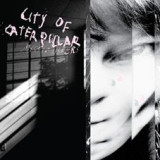
CITY OF CATERPILLAR return with their first new album in 20 years, Mystic Sisters! When guitarist/vocalist Brandon Evans, guitarist Jeff Kane, drummer Ryan Parrish and bassist/vocalist Kevin Longendyke unveiled their self-titled debut in 2002, their emotional, frenzied and often cinematic music was at the vanguard of the burgeoning screamo movement. Along with bands like Pg.99 (with whom they shared members), Majority Rule, Planes Mistaken For Stars and others, they helped develop a style of music that took hardcore into convulsive new territory. After years spent living in other parts of the country and playing in other bands—including Darkest Hour, Malady and Ghastly City Sleep, the long awaited CITY OF CATERPILLAR reunion shows snowballed into writing sessions. The result - Mystic Sisters, an album that recaptures the magic of old while taking the band’s music into exciting new territory! The winding and atmospheric title track that embodies CITY OF CATERPILLAR's experimental side features some noise violin from Evans’ former Pg. 99 bandmate Johnny Ward, while tracks like "Decider" and "Paranormaladies" showcases the band's roots with a flurry of viceral, noisey hardcore swagger. Tracked primarily at Montrose Recording in Richmond, Mystic Sisters was self-produced by the band and then mixed and mastered by Jack Shirley (Deafheaven, Bosse-de-Nage). Ultimately, CITY OF CATERPILLAR are more concerned with creating a mood than telling a story. “The band is always focused on mood,” Evans confirms. “To me, that’s the most important thing. I don’t really want people dissecting what we’re trying to say, because it’s not really about us. It never has been. What we cared about 20 years ago was innocent, raw emotion, and that’s what we care about now.”
Toots Thielemans was a jazz harmonica virtuoso from Belgium. Together with guitarist Philip Catherine, pianist Joachim Kuhn and other session musicians, he recorded the 1974 album Toots Thielemans/Philip Catherine & Friends, which was later reissued as Two Generations. The album features some of his best known works such as “Bluesette” and “Inner Journey”, which were previously cd-only compositions.
Two Generations is part of the Timeless Records 45th Anniversary Jazz Series and is available as a limited edition of 750 individually numbered copies on white coloured vinyl. The sleeve features the artwork of the
1996 reissue.
For Fans Of...El Michels Affair, Adrian Younge, Roy Ayers, Karriem Riggins, The Roots, Khruangbin. Deep, Hard Hitting Soul-Jazz Meets Dub Instrumental Analog Grooves For Your Psyche. In few words, Doctor Bionic can be described as Instrumental b-movie psych-hop. But that doesn't tell the whole story. Doctor Bionic is the brainchild of Cincinnati's Jason Grimes, formerly the producer of the hip-hop group MOOD (with emcees Main Flow & Donte). Having grown up in the Scribble Jam scene here in Cincy, and running in circles that included artists like Hi-Tek & Talib Kweli, Grimes' music has continued to evolve from sample-based loops, to live instrumentation with deep layering; provided by a revolving door of local musicians. The common thread in most Doctor Bionic tracks are the neck snapping drum breaks, but the tempo adjustments and varying instrumentation lends itself to a collection of non-genre specific songs - held together in unity by the flawless drums, often provided by Josiah Wolf (of indie-rock band Why?). The result of these recording sessions are a masterclass in musical juxtaposition. Spacious yet clustered. Futuristic nostalgia. Ideal for long car rides or setting the vibe during a laid back gathering of friends. Also Available From Doctor Bionic: The Invisible Hand LP. Tracks: 1.The Messengers 2. No Middle Ground 3. Purple Spark 4. Decades To Come 5. Shadows In The Sun 6. Snow Bird 7. In The Mirror 8. Dose Of Dank 9. The Things That We Love 10. History Lessons
Space Summit is a collaboration between the omnipresent Marty WillsonPiper (ex-The Church) and Minneapolitan Jed Bonniwell
Writing the music together, Marty handles the luminescent electric guitars and
the bass whilst Jed is in charge of lead vocal duties, and lyrics. The music
created on Space Summit's debut album is simultaneously modern and classic
dream pop – the subtle shading of dark and light with layered, sonic textures on
every track.Conceived in cyberspace, the album is produced by Marty and
producer/ engineer Dare Mason who also plays keyboards. Phoebe Tsen sings
harmony vocals, Olivia Willson- Piper plays the strings, Eddie John plays the
drums and Anekdoten's Nicklas Barker and Sophie Linder play Mellotron. All the
usual suspects from Marty's recent Noctorum and MOAT projects make an
appearance. Bringing together musicians from England, the USA, Sweden, and
even Borneo where Phoebe lives, is recognition of a new future in music.
This album is the first of Marty's intriguing Sessioneer Series working with newly
discovered collaborators from around the globe.
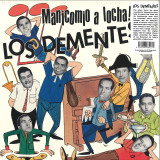
This album marks the debut recording for Venezuela's Velvet label by pianist Ray Pérez and his trombone-led salsa band Los Dementes. Heavy dance numbers and the distinctive vocals of Perucho Torcat make this historic 1967 rarity a sought-after collector's item. Now the LP has been lovingly restored, mastered from the original tapes, with its original artwork intact, preserving the legacy of Los Dementes for today's generation of salsa lovers everywhere. First time reissue. Salsa pianist, vocalist, composer and arranger Ray Pérez, acquired his nickname "Loco" by being a free, independent spirit, an innovator and iconoclast who was initially branded as "crazy" for the freshness and audacity of his sound. Amazingly, he is not that well known in the US, where he spent some time in the late 1960s and salsa was king during the 1970s. Yet he was quite popular in his home country from the beginning, especially amongst the working class of Caracas and Maracaibo, who adopted Cuban music played by New York Puerto Ricans as their own and called it "salsa" years before the term was employed by US labels like Fania as a marketing tool. Pérez is revered in Venezuela, as well as in Mexico and Colombia, and his storied career, which spans seven decades and thousands of concerts, has yielded more than 35 albums recorded by his various bands, including Los Dementes, Los Kenya, and Los Calvos, all of which are collector's items today. At the start of 1967 Pérez debuted Los Dementes, with vocalists Claudio Zerpa and Perucho Torcat backed by an ace band featuring only trombones in the brass section. Titled "¡Alerta mundo! Llegaron los 'The Crazy Men'" the record was released on the small Venezuelan label Prodansa. Soon after, Prodansa folded and Los Dementes were left without representation or much compensation for their efforts, being paid only in records. In the end of February of that year, Pérez returned to Caracas from a stint in Maracaibo in order to finish his first LP with the well-established and larger Velvet label, entitled "Manicomio a locha". In the first quarter of 1967, Velvet unleashed a trilogy of salsa records in order to compete with rival label Palacio and their recent success with Federico y su Combo Latino: "Porfi '67 Salsa & Boogaloo" by Porfi Jiménez y su Orquesta, "Guasancó" by Sexteto Juventud and lastly "Manicomio a locha". The LP begins appropriately with the boisterous title track, written by the band's conguero Carlos "Nené" Quintero, who would become a legend in coming years. Torcat describes a jam session in mental institution and introduces the band, with tasty solos by trombonist Rufo García followed by Ray on piano. Already you can hear something was different about Ray and his "Crazy Men"-a sound as wild and innovative as what was happening in New York with Eddie Palmieri, but with a more unhinged, raw feeling in line with Willie Colón and other younger Nuyorican bands. Next up is an intriguing track sung in a mix of Italian, English, Spanish and Papiamento by Pérez himself, performed in the complicated rhythm of the mozambique, an Afro-Cuban carnival beat developed in the early 1960s. This is followed by the heavy dancer 'Rico guaguancó', penned by Angelito Pérez, which changes from the guaguancó to the mozambique rhythm mid-way through, proving that Los Dementes were "different from the rest" as the lyrics say. 'Puerto Libre', sung by Torcat, is dedicated to the Venezuelan island of Margarita in the Oriente region, and the independent spirit of its working people. The rhythm changes from guaguancó to guajira and back again but remains danceable all the way through. The side closes out with a "3 in 1" medley inspired by the popular formula of the mosaicos of Billo's Caracas Boys, seamlessly knitting together several different tempos, rhythms, moods and compositions. Side two starts strong with the fierce yet satirical 'Corte e' patas', then 'Alma Cumanesa', a typical folk song refashioned as a guaguancó. This is followed by the funky 'Guajira con Boogaloo'. The tune echoes the sound of young Latin New York, pointing out the connection between Cuban and African American soul music. The pace picks up again with 'Fiesta de trombones', a hot descarga and then the album closes with another medley. Though this marks the end of a rather short album, it also signaled the emerging success of Los Dementes and their involvement with the salsa boom in Venezuela, quickly selling out of its initial run of 1000 records and making for a memorable debut on the Velvet label. Now this rare and sought-after LP has been lovingly restored, mastered from the original tapes, with its original artwork intact, preserving the legacy of Los Dementes for today's generation of salsa lovers everywhere.
Two insanely funky dancefloor bangers recorded in the late '60s in Peru by the long time Coco Lagos associate and top percussionist Mario Allison. Astonishingly hard-to-find boogaloo and descarga tunes from the vaults of MAG records. First time reissue on 7" vinyl. Peruvian artist Mario Allison was born into a family of musicians. One of his brothers was part of groups like Los Golden Boys, others were percussionists and singers. His North American ancestry familiarized him with the use of English from an early age. He met Coco Lagos through a mutual friend, César González, and the three of them soon became regulars at the recording sessions taking place at MAG studios. The connection between them was formidable to the point of coordinating without the need for prior rehearsals. Mario Allison was a self-taught timbalero and his performances are said to have been full of energy and passion. At concerts it was not uncommon for female audiences to react by screaming and freaking out every time Allison performed a solo. After years working at MAG's studio as session player, in the late '60s he was offered the opportunity of recording his own stuff under his name. Mario Allison then worked on a repertoire focused on boogaloo, descarga and, mainly, pompo. This single comprises two insanely funky dancefloor bangers recorded in that period; hard-to-find boogaloo and descarga tunes from the vaults of MAG records. First time reissue on 7" vinyl.
Elvis Presley,Carl Perkins,Jerry Lee Lewis&Johnny Cash
Million Dollar Quartet (The Complete Session In Its Original
The "Million Dollar Quartet" is a recording of a celebrated impromptu
session that brought rock & roll icons Elvis Presley, Johnny Cash, Jerry
Lee Lewis, and Carl Perkins together for the first and only time
2LP set in gatefold sleeve edition - 180g coloured vinyl (disc 1 red, disc 2 yellow).
On December 4, 1956, these four young musicians gathered at Sun Records in
Memphis for what would be one of the greatest jam sessions ever. This essential
double LP edition (gatefold open cover) presents that legendary event in its
entirety, while maintaining the original recording sequence.
Rock & roll was born of gospel, country, doo-wop, blues, pop, and cowboy songs,
all of which can be heard here. Included here are several popular numbers from
that period, such as "Rip It Up," "Don't Forbid Me," and "Out of Sight, Out of Mind,"
plus some of Elvis' own songs ("Don't Be Cruel," "Love Me Tender," and
"Paralyzed"), and covers of Chuck Berry's "Brown-Eyed Handsome Man" and "Too
Much Monkey Business," as well as traditional tunes, and some classic country
and bluegrass songs penned by Hank Snow, Faron Young, Gene Autry and Bill
Monroe.
The joyous spontaneity and the fly- on- the- wall feel of the occasion make for
fascinating listening. This set represents a memorable slice of American culture
and allows listeners to experience a historic moment of the original rock & roll
era.
- A1: Rock This Mother
- A2: Talk To Me Girl
- A3: You Can Find Me
- A4: Check This Out
- A5: Jesus Going To Clean House
- A6: Hope You Understood
- A7: Is It What You Want
- A8: Love Is Everlasting
- A9: This Is Hip-Hop Art
- A10: Opposite Of Love
- A11: Do You Know What I Mean
- B1: Saving All My Love For You
- B2: Look Out Here I Come
- B3: Girl You Always Talking
- B4: Have A Great Day
- B5: Take My Hand
- B6: I Need Your Love
- B7: Your Town
- B8: Talk Around Town
- B9: Booty Head/Take A Little Walk
- B10: I Love My Mama
- B11: I Never Found Anyone Like You
Cassette[11,72 €]
As the sun sets on a quaint East Nashville house, a young man bares a piece of his soul. Facing the camera, sporting a silky suit jacket/shirt/slacks/fingerless gloves ensemble that announces "singer" before he's even opened his mouth, Lee Tracy Johnson settles onto his stage, the front yard. He sways to the dirge-like drum machine pulse of a synth-soaked slow jam, extends his arms as if gaining his balance, and croons in affecting, fragile earnest, "I need your love… oh baby…"
Dogs in the yard next door begin barking. A mysterious cardboard robot figure, beamed in from galaxies unknown and affixed to a tree, is less vocal. Lee doesn't acknowledge either's presence. He's busy feeling it, arms and hands gesticulating. His voice rises in falsetto over the now-quiet dogs, over the ambient noise from the street that seeps into the handheld camcorder's microphone, over the recording of his own voice played back from a boombox off-camera. After six minutes the single, continuous shot ends. In this intimate creative universe there are no re-takes. There are many more music videos to shoot, and as Lee later puts it, "The first time you do it is actually the best. Because you can never get that again. You expressing yourself from within."
"I Need Your Love" dates from a lost heyday. From some time in the '80s or early '90s, when Lee Tracy (as he was known in performance) and his music partner/producer/manager Isaac Manning committed hours upon hours of their sonic and visual ideas to tape. Embracing drum machines and synthesizers – electronics that made their personal futurism palpable – they recorded exclusively at home, live in a room into a simple cassette deck. Soul, funk, electro and new wave informed their songs, yet Lee and Isaac eschewed the confinement of conventional categories and genres, preferring to let experimentation guide them.
"Anytime somebody put out a new record they had the same instruments or the same sound," explains Isaac. "So I basically wanted to find something that's really gonna stand out away from all of the rest of 'em." Their ethos meant that every idea they came up with was at least worth trying: echoed out half-rapped exhortations over frantic techno-style beats, gospel synth soul, modal electro-funk, oddball pop reinterpretations, emo AOR balladry, nods to Prince and the Fat Boys, or arrangements that might collapse mid-song into a mess of arcade game-ish blips before rallying to reach the finish line. All of it conjoined by consistent tape hiss, and most vitally, Lee's chameleonic voice, which managed to wildly shape shift and still evoke something sincere – whether toggling between falsetto and tenor exalting Jesus's return, or punctuating a melismatic romantic adlib with a succinct, "We all know how it feels to be alone."
"People think we went to a studio," says Isaac derisively. "We never went to no studio. We didn't have the money to go to no studio! We did this stuff at home. I shot videos in my front yard with whatever we could to get things together." Sometimes Isaac would just put on an instrumental record, be it "Planet Rock" or "Don't Cry For Me Argentina" (from Evita), press "record," and let Lee improvise over it, yielding peculiar love songs, would-be patriotic anthems, or Elvis Presley or Marilyn Monroe tributes. Technical limitations and a lack of professional polish never dissuaded them. They believed they were onto something.
"That struggle," Isaac says, "made that sound sound good to me."
In the parlance of modern music criticism Lee and Isaac's dizzying DIY efforts would inevitably be described as "outsider." But "outsider" carries the burden of untold additional layers of meaning if you're Black and from the South, creating on a budget, and trying to get someone, anyone within the country music capital of the world to take your vision seriously. "What category should we put it in?" Isaac asks rhetorically. "I don't know. All I know is feeling. I ain't gonna name it nothing. It's music. If it grabs your soul and touch your heart that's what it basically is supposed to do."
=
Born in 1963, the baby boy of nine siblings, Lee Tracy spent his earliest years living amidst the shotgun houses on Nashville's south side. "We was poor, man!" he says, recalling the outhouse his family used for a bathroom and the blocks of ice they kept in the kitchen to chill perishables. "But I actually don't think I really realized I was in poverty until I got grown and started thinking about it." Lee's mom worked at the Holiday Inn; his dad did whatever he had to do, from selling fruit from a horse drawn cart to bootlegging. "We didn't have much," Lee continues, "but my mother and my father got us the things we needed, the clothes on our back." By the end of the decade with the city's urban renewal programs razing entire neighborhoods to accommodate construction of the Interstate, the family moved to Edgehill Projects. Lee remembers music and art as a constant source of inspiration for he and his brothers and sisters – especially after seeing the Jackson 5 perform on Ed Sullivan. "As a small child I just knew that was what I wanted to do."
His older brother Don began musically mentoring him, introducing Lee to a variety of instruments and sounds. "He would never play one particular type of music, like R&B," says Lee. "I was surrounded by jazz, hard rock and roll, easy listening, gospel, reggae, country music; I mean I was a sponge absorbing all of that." Lee taught himself to play drums by beating on cardboard boxes, gaining a rep around the way for his timekeeping, and his singing voice. Emulating his favorites, Earth Wind & Fire and Cameo, he formed groups with other kids with era-evocative band names like Concept and TNT Connection, and emerged as the leader of disciplined rehearsals. "I made them practice," says Lee. "We practiced and practiced and practiced. Because I wanted that perfection." By high school the most accomplished of these bands would take top prize in a prominent local talent show. It was a big moment for Lee, and he felt ready to take things to the next level. But his band-mates had other ideas.
"I don't know what happened," he says, still miffed at the memory. "It must have blew they mind after we won and people started showing notice, because it's like everybody quit! I was like, where the hell did everybody go?" Lee had always made a point of interrogating prospective musicians about their intentions before joining his groups: were they really serious or just looking for a way to pick up girls? Now he understood even more the importance of finding a collaborator just as committed to the music as he was.
=
Isaac Manning had spent much of his life immersed in music and the arts – singing in the church choir with his family on Nashville's north side, writing, painting, dancing, and working various gigs within the entertainment industry. After serving in the armed forces, in the early '70s he ran The Teenage Place, a music and performance venue that catered to the local youth. But he was forced out of town when word of one of his recreational routines created a stir beyond the safe haven of his bohemian circles.
"I was growing marijuana," Isaac explains. "It wasn't no business, I was smoking it myself… I would put marijuana in scrambled eggs, cornbread and stuff." His weed use originated as a form of self-medication to combat severe tooth pain. But when he began sharing it with some of the other young people he hung out with, some of who just so happened to be the kids of Nashville politicians, the cops came calling. "When I got busted," he remembers, "they were talking about how they were gonna get rid of me because they didn't want me saying nothing about they children because of the politics and stuff. So I got my family, took two raggedy cars, and left Nashville and went to Vegas."
Out in the desert, Isaac happened to meet Chubby Checker of "The Twist" fame while the singer was gigging at The Flamingo. Impressed by Isaac's zeal, Checker invited him to go on the road with him as his tour manager/roadie/valet. The experience gave Isaac a window into a part of the entertainment world he'd never encountered – a glimpse of what a true pop act's audience looked like. "Chubby Checker, none of his shows were played for Black folks," he remembers. "All his gigs were done at high-class white people areas." Returning home after a few years with Chubby, Isaac was properly motivated to make it in Music City. He began writing songs and scouting around Nashville for local talent anywhere he could find it with an expressed goal: "Find someone who can deliver your songs the way you want 'em delivered and make people feel what you want them to feel."
One day while walking through Edgehill Projects Isaac heard someone playing the drums in a way that made him stop and take notice. "The music was so tight, just the drums made me feel like, oh I'm-a find this person," he recalls. "So I circled through the projects until I found who it was.
"That's how I met him – Lee Tracy. When I found him and he started singing and stuff, I said, ohhh, this is somebody different."
=
Theirs was a true complementary partnership: young Lee possessed the raw talent, the older Isaac the belief. "He's really the only one besides my brother and my family that really seen the potential in me," says Lee. "He made me see that I could do it."
Isaac long being a night owl, his house also made for a fertile collaborative environment – a space where there always seemed to be a new piece of his visual art on display: paintings, illustrations, and dolls and figures (including an enigmatic cardboard robot). Lee and Issac would hang out together and talk, listen to music, conjure ideas, and smoke the herb Isaac had resumed growing in his yard. "It got to where I could trust him, he could trust me," Isaac says of their bond. They also worked together for hours on drawings, spreading larges rolls of paper on the walls and sketching faces with abstract patterns and imagery: alien-like beings, tri-horned horse heads, inverted Janus-like characters where one visage blurred into the other.
Soon it became apparent that they didn't need other collaborators; self-sufficiency was the natural way forward. At Isaac's behest Lee, already fed up with dealing with band musicians, began playing around with a poly-sonic Yamaha keyboard at the local music store. "It had everything on it – trumpet, bass, drums, organ," remembers Lee. "And that's when I started recording my own stuff."
The technology afforded Lee the flexibility and independence he craved, setting him on a path other bedroom musicians and producers around the world were simultaneously following through the '80s into the early '90s. Saving up money from day jobs, he eventually supplemented the Yamaha Isaac had gotten him with Roland and Casio drum machines and a Moog. Lee was living in an apartment in Hillside at that point caring for his dad, who'd been partially paralyzed since early in life. In the evenings up in his second floor room, the music put him in a zone where he could tune out everything and lose himself in his ideas.
"Oh I loved it," he recalls. "I would really experiment with the instruments and use a lot of different sound effects. I was looking for something nobody else had. I wanted something totally different. And once I found the sound I was looking for, I would just smoke me a good joint and just let it go, hit the record button." More potent a creative stimulant than even Isaac's weed was the holistic flow and spontaneity of recording. Between sessions at Isaac's place and Lee's apartment, their volume of output quickly ballooned.
"We was always recording," says Lee. "That's why we have so much music. Even when I went to Isaac's and we start creating, I get home, my mind is racing, I gotta start creating, creating, creating. I remember there were times when I took a 90-minute tape from front to back and just filled it up."
"We never practiced," says Isaac. "See, that was just so odd about the whole thing. I could relate to him, and tell him about the songs I had ideas for and everything and stuff. And then he would bring it back or whatever, and we'd get together and put it down." Once the taskmaster hell bent on rehearsing, Lee had flipped a full 180. Perfection was no longer an aspiration, but the enemy of inspiration.
"I seen where practicing and practicing got me," says Lee. "A lot of musicians you get to playing and they gotta stop, they have to analyze the music. But while you analyzing you losing a lot of the greatness of what you creating. Stop analyzing what you play, just play! And it'll all take shape."
=
"I hope you understood the beginning of the record because this was invented from a dream I had today… (You tell me, I'll tell you, we'll figure it out together)" – Lee Tracy and Isaac Manning, "Hope You Understand"
Lee lets loose a maniacal cackle when he acknowledges that the material that he and Isaac recorded was by anyone's estimation pretty out there. It's the same laugh that commences "Hope You Understand" – a chaotic transmission that encapsulates the duality at the heart of their music: a stated desire to reach people and a compulsion to go as leftfield as they saw fit.
"We just did it," says Lee. "We cut the music on and cut loose. I don't sit around and write. I do it by listening, get a feeling, play the music, and the lyrics and stuff just come out of me."
The approach proved adaptable to interpreting other artists' material. While recording a cover of Whitney Houston's pop ballad "Saving All My Love For You," Lee played Whitney's version in his headphones as he laid down his own vocals – partially following the lyrics, partially using them as a departure point. The end result is barely recognizable compared with the original, Lee and Isaac having switched up the time signature and reinvented the melody along the way towards morphing a slick mainstream radio standard into something that sounds solely their own.
"I really used that song to get me started," says Lee. "Then I said, well I need something else, something is missing. Something just came over me. That's when I came up with 'Is It What You Want.'"
The song would become the centerpiece of Lee and Isaac's repertoire. Pushed along by a percolating metronomic Rhythm King style beat somewhere between a military march and a samba, "Is It What You Want" finds Lee pleading the sincerity of his commitment to a potential love interest embellished by vocal tics and hiccups subtlely reminiscent of his childhood hero MJ. Absent chord changes, only synth riffs gliding in and out like apparitions, the song achieves a lingering lo-fi power that leaves you feeling like it's still playing, somewhere, even after the fade out.
"I don't know, it's like a real spiritual song," Lee reflects. "But it's not just spiritual. To me the more I listen to it it's like about everything that you do in your everyday life, period. Is it what you want? Do you want a car or you don't want a car? Do you want Jesus or do you want the Devil? It's basically asking you the question. Can't nobody answer the question but you yourself."
In 1989 Lee won a lawsuit stemming from injuries sustained from a fight he'd gotten into. He took part of the settlement money and with Isaac pressed up "Saving All My Love For You" b/w "Is It What You Want" as a 45 single. Isaac christened the label One Chance Records. "Because that's all we wanted," he says with a laugh, "one chance."
Isaac sent the record out to radio stations and major labels, hoping for it to make enough noise to get picked up nationally. But the response he and Lee were hoping for never materialized. According to Isaac the closest the single got to getting played on the radio is when a disk jock from a local station made a highly unusual announcement on air: "The dude said on the radio, 107.5 – 'We are not gonna play 'Is It What You Want.' We cracked up! Wow, that's deep.
"It was a whole racist thing that was going on," he reflects. "So we just looked over and kept on going. That was it. That was about the way it goes… If you were Black and you were living in Nashville and stuff, that's the way you got treated." Isaac already knew as much from all the times he'd brought he and Lee's tapes (even their cache of country music tunes) over to Music Row to try to drum up interest to no avail.
"Isaac, he really worked his ass off," says Lee. "He probably been to every record place down on Music Row." Nashville's famed recording and music business corridor wasn't but a few blocks from where Lee grew up. Close enough, he remembers, for him to ride his bike along its back alleys and stumble upon the occasional random treasure, like a discarded box of harmonicas. Getting in through the front door, however, still felt a world away.
"I just don't think at the time our music fell into a category for them," he concedes. "It was before its time."
=
Lee stopped making music some time in the latter part of the '90s, around the time his mom passed away and life became increasingly tough to manage. "When my mother died I had a nervous breakdown," he says, "So I shut down for a long time. I was in such a sadness frame of mind. That's why nobody seen me. I had just disappeared off the map." He fell out of touch with Isaac, and in an indication of just how bad things had gotten for him, lost track of all the recordings they'd made together. Music became a distant memory.
Fortunately, Isaac kept the faith. In a self-published collection of his poetry – paeans to some of his favorite entertainment and public figures entitled Friends and Dick Clark – he'd written that he believed "music has a life of its own." But his prescience and presence of mind were truly manifested in the fact that he kept an archive of he and Lee's work. As perfectly imperfect as "Is It What You Want" now sounds in a post-Personal Space world, Lee and Isaac's lone official release was in fact just a taste. The bulk of the Is It What You Want album is culled from the pair's essentially unheard home recordings – complete songs, half-realized experiments, Isaac's blue monologues and pronouncements et al – compiled, mixed and programmed in the loose and impulsive creative spirit of their regular get-togethers from decades ago. The rest of us, it seems, may have finally caught up to them.
On the prospect of at long last reaching a wider audience, Isaac says simply, "I been trying for a long time, it feels good." Ever the survivor, he adds, "The only way I know how to make it to the top is to keep climbing. If one leg break on the ladder, hey, you gotta fix it and keep on going… That's where I be at. I'll kill death to make it out there."
For Lee it all feels akin to a personal resurrection: "It's like I was in a tomb and the tomb was opened and I'm back… Man, it feels so great. I feel like I'm gonna jump out of my skin." Success at this stage of his life, he realizes, probably means something different than what it did back when he was singing and dancing in Isaac's front yard. "What I really mean by 'making it,'" he explains isn't just the music being heard but, "the story being told."
Occasionally Lee will pull up "Is It What You Want" on YouTube on his phone, put on his headphones, and listen. He remembers the first time he heard his recorded voice. How surreal it was, how he thought to himself, "Is that really me?" What would he say to that younger version of himself now?
"I would probably tell myself, hang in there, don't give up. Keep striving for the goal. And everything will work out."
Despite what's printed on the record label, sometimes you do get more than one chance.
- 1: Radiant Boys
- 2: Steam
- 3: 1 2 I Love You
- 4: Grooving In Green
- 5: Crow Baby
- 6: The Undertow
- 7: Strange Head
- 8: Slow Drip Lizard
- 9: Walk Into The Sun
- 10: Deep
- 11: Kill The Delight
- 12: Big Soul Kiss
- 13: Lights Go Out
- 14: Love Hit
- 15: Don't Take It Lightly
- 16: Electric Shades
- 17: The Face Of The Dragonfly
- 18: Snake Dance
- 19: Deep
- 20: High Times
- 21: Close To The Heart
- 22: South Country
- 23: Avalanche Of Love
THE MARCH VIOLETS came out of Leeds in the early 80"s, label-mates of Sisters of Mercy. Releasing six singles, they were a constant presence in the UK indie charts, hitting the top two spots with Snakedance, Deep and Walk Into The Sun. They never got around to recording an album - their only "80"s long-players, Natural History in the UK and Electric Shades in the USA, were compilations. Eventually they signed to a major label and were groomed for a USA breakthrough, performing in the 1987 Some Kind of Wonderful movie. However they were asked to make too many compromises and split up. Their early eighties career was thankfully well-documented by the BBC, who broadcast six sessions between 1982-86 - three for John Peel, and one each with Kid Jensen, Janice Long and Richard Skinner. Chronicling their development with lead singers Simon Denbigh, Rosie Garland and Cleo Murray and backed by bassist Lawrence Elliot and guitarist Tom Ashton, these sessions include nine unreleased songs and alternative versions of their indie hits. Here is the unheard history of The March Violets.
El Goodo guitarist and songwriter 'Pixy Jones' has announced that his debut album entitled 'Bits n Bobs' is due for release on 16th of September via Strangetown Records.
After 4 albums with El Goodo, Welsh psych scene stalwart Pixy Jones has himself compiled a truly remarkable collection of tracks that fluctuate from 60's harmony-rich psych pop, to Alt-Country with ringing tremelo guitar.
The swaggering 'I'm Not There' is the first single to be taken from 'Bits n Bobs' accompanied by a magical version of Beatles track 'And Your Bird Can Sing' as it's B SIde, which will be released digitally on Friday 1st of July.
Pixy had this to say about the release:
The album was originally intended as a solo project under the pseudonym of “Wallace Russell”. I recorded it alongside the recording of Zombie (El Goodo) whenever I could get in the studio. There are some really old songs that have always been overlooked for 'El Goodo' albums for one reason or another, a few new ones which I wrote specifically for this, and a couple that would have probably ended up on the intended double album version of Zombie if we’d kept going with the double album idea. I’ve since ditched the 'Wallace Russell' name and gone back to 'Pixy Jones' as I figured there’s no need to have a pseudonym if nobody knows who you are in the first place. Even though I dropped the name I’ve kept the walrus mask for now as it is more photogenic than my actual face.
I had no recording budget so I had to fund it by quitting smoking and saving the money up to pay for studio time. It took, I think, two and a half years to record, which is by far the quickest I’ve ever recorded an album.
Originally I wanted it to just be a quickly recorded slap dash and get it out sort of thing but I had a year and a half during Covid to think about it a bit more and ended up taking more care to get it done properly. It was just me there so I played most of it myself apart from Stephen Black (Sweet Baboo) who played brass and woodwind on one song and Rhodri Brooks (AhGeeBe) plays some pedal steel on a couple.
Elliott and Canny from 'El Goodo' played drums and bass on Wind Street during the ‘Zombie’ recording sessions.
The album was recorded and mixed in Aerial Studios with Tim Lewis, (Thighpaulsandra), a couple of songs were finished in the house during the lockdowns.
COLD GAWD ist der Name, unter dem der in Kalifornien lebende Multiinstrumentalist Matt Wainwright stürmische, verletzliche Shoegaze-Musik mit offenen Stimmungen und R&B-Melodien kreiert. Inspiriert von diesen Klängen, präsentieren COLD GAWD eine verfeinerte, modernisierte Version des Genres. Das insgesamt zweite Album der Band, "God Get Me The Fuck Out Of Here", nahm im Winter 2020 Gestalt an, während Wainwright lange Solo-Schichten in einem Coffee Shop in Chicago arbeitete. Angetrieben von dem Traum, in seine Heimatstadt Rancho Cucamonga zurückzukehren und alte Freunde aus früheren Hardcore-Bands wiederzutreffen, verkroch sich Wainwright mit seiner begehrten rosa Jazzmaster, einer Reihe von Effektpedalen und einem Laptop und schrieb das gesamte Album in einem Monat. Im März 2021 zog er zurück in den Westen ins Inland Empire, wo er bei Gabe Largaespada im Open Ocean Sessions zum Aufnehmen und Abmischen buchte. Obwohl er jedes Instrument selbst einspielte, haben die Ergebnisse das lebendige Gefühl einer geübten Live-Band (was COLD GAWD jetzt sind, da sie zu einer sechsköpfigen Band angewachsen sind). Kaskadenartige Gitarrenwände wirbeln, wallen und plätschern, umrahmt von versunkenen Rhythmen und Wainwrights entfernter, geschlagener Stimme, die in violetten Dunst gehüllt ist. Wainwright nennt die thematischen Gemeinsamkeiten zwischen Shoegaze und R&B als zentrale Muse, die beide obsessiv auf Liebe, Lust und Sehnsucht fixiert sind, in abwechselnd grandiosen und molligen Formen. Textlich schwankt das Album zwischen schräg und verzweifelt, sehnsüchtig und resigniert - mit Ausnahme von "Comfort Thug", einem grüblerischen, größtenteils improvisierten Spoken-Word-Stück, das durch den bemerkenswerten Mangel an schwarzen Musikern im Shoegaze inspiriert wurde. COLD GAWD ist hier, um das zu ändern. "God Get Me The Fuck Out Of Here" kanalisiert Unwohlsein und Melancholie in hauchdünne, energiegeladene Hymnen über Flucht, Veränderung und Introspektion. Das erdrückende Schlussstück "Passing Through The Opposite Of What It Approaches" wabert und schwebt wie drohende Gewitterwolken, unter denen Wainright singt (und sein Bandkollege Arturo Ramirez schreit), was einem Mission Statement so nahe kommt, wie es das Album bietet: "leave what you know / and get grown / everyday / remember / why you left".
- A1: Burying Ground
- A2: Sunday
- A3: Clang Bang Gang
- A4: Out
- A5: Your Home Is Where You're Happy
- A6: Falling
- B1: Die Right Now
- B2: Two Weeks In Another Town
- B3: Plaster Caster
- B4: Come To The Window
- B5: Take Her Down
- B6: Postcard
- B7: Live Without
- C1: Sunday (Mp3)
- C2: Cease To Exist
- C3: Burying Ground
- C4: If Only You Were Dead (Early Mallo Cup - 1987 Live On Wers)
- C5: Out
- C6: Nib
- C7: Clang Bang Gang
- C8: Take Her Down
- C9: Falling
- C10: Instrumental
- C11: From Here To Burma (With Juliana Hatfield - 1988 Live On Wers)
Black vinyl LP with DL.
Note - Sleeve says contains a bonus CD, these represses do not have a bonus CD, they have a download card.
Hate Your Friends is the 1987 debut album by the Lemonheads, one of only three full-length releases to feature the original band line- up of Evan Dando, Ben Deily, and Jesse Peretz. The album showcases a hardcore-punk-to-pop-rock sound and sensibility as playfully fierce as it is surprising…especially to listeners who know the band only from their better-known major label recordings of the 1990s. The roots of Hate Your Friends begin with the genesis of the band itself: when high school friends Ben Deily and Evan Dando—inspired by a shared love of the 70’s absurdist comedy troupe the Firesign Theatre, literature, and punk rock—began playing their own songs together in 1985. Dando and Deily first started out as a two-piece ensemble: swapping back and forth between a shared Guild guitar (and a crappy amp) and vocal mic, and pounding a drum kit “borrowed” from the high school jazz band. With the addition of classmate and friend Jesse Peretz on bass, the two-man outfit quickly became a power trio. With a handful of original songs, a passionate love for their favourite bands—from Husker-Du, the Replacements, Black Flag and the Germs, to the Saints, Wire and ‘77 UK punk—and a tiny recording budget, the Lemonheads set about their first studio session within days of their high school graduation in June of 1986. During that summer, a significant amount of what would become the band’s debut album was recorded in Brookline, Massachusetts, with Deily and Dando sharing vocal, guitar and drumming duties. Above and beyond bass, Jesse proved pivotal as the band’s manager, booker and tireless promoter—helping arrange for the Lemonheads self-released debut EP, Laughing all the way to the cleaners, later that summer, and shortly thereafter helping establish the relationship with Curtis Casella of TAANG! records that paved the way to full-length LP Hate Your Friends. Finally, with the addition of full-time (and fairly short-lived) drummer Doug Trachten, the last songs of Hate Your Friends were recorded in the winter of 1986-7. BONUS TRACKS: This Fire Records re-issue features bonus tracks including 12 never-before-released live tracks from a 1987 radio session, rare tracks from the early compilation Crawling From Within, and additional tracks not included on the original release of Hate Your Friends (“Buried Alive” and “Gotta Stop”).
Micah is a special one. His playing has a restlessly inventive and futuristic tilt while simultaneously remaining deeply rooted in the history of the music – all delivered with curiosity, patience, humor and care. I make a point to hear him as often as I can, as he always inspires and is constantly evolving. Micah is one of the most exciting musicians of his generation. One who has a unique style as well as all the tools needed to make a major contribution to the world of jazz piano.
"When we decided to produce Micah Thomas, the project involved a recording of five titles only. In the first part of an approximately one hour session, Micah beautifully played first takes of up to ten titles, with fantastic artistic fervor and great freshness. Taken by surprise, joy and admiration, we decided on the spur of the moment to change our initial plans, so we could capture the magic of that
session for a little longer. Here is the result, a 12 titles double vinyl that takes you back to October 31st, 2020 at Big Orange Sheep studio in Brooklyn, NY. Twelve songs when we encountered the art of Micah Thomas as a solo pianist for the first time."
- A1: Mallo Cup
- A2: Glad I Don't Know
- A3: 7 Powers
- A4: A Circle Of One
- A5: Cazzo Di Ferro
- B1: Anyway
- B2: Luka
- B3: Come Back Da
- B4: I Am A Rabbit
- B5: Sad Girl
- B6: Ever
- C1: Strange (Mp3)
- C2: Mad
- C3: Sad Girl
- C4: Nothing True/Glad I Don't Know
- C5: Luka (Live On Vpro 1989)
- C6: Interview With Lemonheads (Holland 1989)
- C7: Mallo Cup (Live On Vpro 1989)
- C8: Glad I Don't Know (Original Ep Version)
- C9: I Like To (Original Ep Version)
- C10: I Am A Rabbit (Original Ep Version)
- C11: So I Fucked Up (Original Ep Version)
Repress!
Note - Sleeve says contains a bonus CD, these represses do not have a bonus CD, they have a download card.
Fire Records will be reissuing the first 3 albums by the Lemonheads, Hate Your Friends (1987), Creator (1988) and Lick (1989), featuring copious bonus tracks and many never-before released rarities and live recordings on the download card. Together, these seminal albums showcase the band's early punk rock roots and trace the Lemonheads’ transformation towards becoming one of the most successful and influential bands in indie rock. Before the 90s. Before the internet. Before Nevermind. Back when something called “independent music” first began reaching a wider audience, through college radio, word-of-mouth, and that small “underground” record store you seem to find in every town…there was a band from Boston called Lemonheads. High school friends Ben Deily and Evan Dando, Lemonheads’ primary songwriters, co-guitarists and co-vocalists, first recorded together on 4-track cassette in the spring of 1985; by the end of the decade they—together with bass player Jesse Peretz, sometimes-guitarist Corey Brennan, and successive drummers Doug Trachten and John P. Strohm—had created a body of recordings which would see them on MTV’s fledgling “120 Minutes,” beating out the Grateful Dead on college radio charts, and entering the consciousness of a generation of music fans. Cited as influences by artists as varied as Billie Joe Armstrong and Ryan Adams, these fledgling Lemonheads recordings—part rock, part pop, part unique hybrid of the 80s punk styles beloved by the band members—mark the start of the trajectory that would eventually lead to “mainstream” success and stardom for a later version of the band. But they also represent a distinct, never-repeated phase of the band’s history: one that is finally receiving the attention it deserves. Lick is the third full-length album by the Lemonheads, and the last to feature founding member Ben Deily. It was the group's last independent label-released album before signing to major label Atlantic. An odd mixture of brand-new, and considerably older, sounds, 1989’s Lick brings together the output of several distinct recording sources: six brand new songs recorded with Minneapolis-based band friend and producer Terry Katzman, and a collection of older, B-side and never-released material originally overseen by producer and engineer Tom Hamilton. The difficulties of writing and creating a new full-length album every year (Hate Your Friends and Creator were released in 1987 and 1988, respectively) are clearly in evidence on Lick. While the newest material (“Mallo Cup,” “A Circle of One,” “7 Powers,” “Anyway”) hints at promising new song writing directions for both Deily and Dando, there’s an almost valedictory sense of the past in the inclusion of versions of “Glad I Don’t Know” and “I Am a Rabbit” (from the band’s first-ever, self-released EP), and the now-classic track “Ever,” a previously-unreleased tune from the original 1986 Hate Your Friends sessions. At moments, Lick almost sounds like an elegy for itself—or an elegy for a band that has reached the end of the beginning. Also audible in the heterogeneous songs are the tensions of line-up changes—and inchoate, growing frustrations. After various band break-ups or threatened break ups (such as Dando’s brief departure to play bass for Boston band the Blake Babies), the Lemonheads convened to record new material for Lick now featured Dando on drums, Peretz on bass, Deily on guitar (and “piano,” according to the album credits) along with the addition of long-time band friend—and former member of TAANG! labelmates Bullet LaVolta—Corey Loog Brennan on lead guitar. And yet the frenzied, quasi-ironic hammer-ons of Corey’s axe provide some of Lick’s most entertaining moments—like the unaccountably-translated-into-Italian paen to 70s detective Ironside, “Cazzo Di Ferro.” (The song’s music was originally composed by Brennan for his Italian punk band, Superfetazione.) After the album’s completion, Deily opted out of the subsequent European tour, before leaving the band permanently. Jesse Peretz stayed on to record their Atlantic records debut Lovey, but left after the supporting tour in '91. Since then, Dando has been the Lemonheads' sole permanent member. BONUS TRACKS: Features bonus tracks including several never-before-released live tracks from a 1987 radio session, live tracks and an interview from the 1989 European tour, and the 4 tracks of the Lemonheads self-released debut EP, Laughing all the way to the cleaners.
WRWTFWW Records couldn't be happier to announce the release of Yutaka Hirose’s never-heard before 11-track collection TRACE: Sound Design Works 1986-1989, available on double LP and double CD, with liner notes from the artist.
TRACE is a collection of 11 unreleased tracks produced by Yutaka Hirose between 1986 and 1989, during the Sound Process Design sessions, right after the release of his classic Soundscape series album Nova. Sound Process Design was Satoshi Ashikawa's label, home of the Wave Notation trilogy (Hiroshi Yoshimura’s Music For Nine Postcards, Satsuki Shibano's Erik Satie 1866-1925 and Satoshi Ashikawa's Still Way). Following Wave Notation, Sound Process Design worked with museums, cafes and bars to create site-specific soundscapes, starting with the sound design of the Kushiro Museum. Yutaka Hirose was called to work on these projects.
Rather than simply providing pre-recorded compositions, Hirose sought to create a "sound scenery". To achieve this, he participated in the conception of the space and paid particular attention to the accidental combination of sounds by placing the speakers, using a multi-sound source, and following the concept of "sculpturing time through sound".
The composer explains: "sculpturing time through sound means that time, the space itself, the sound played in it, and the audience all become one sculpture. It is close to the idea of a Japanese tea ceremony where you use all of your 5 (or 6) senses to taste the tea."
TRACE: Sound Design Works 1986-1989 is divided into two parts. The Reflection segment is based on an ambient soundscape. It narrates "a sleep that starts with the sound of water droplets at dawn and slowly disappears into darkness" and feels like a natural and soothing progression of Nova. It was played in entrance halls, at events, in cafes and bars. The Voice from Past Technology segment expresses the dream world born out of that sleep and is based on what Yukata Hirose calls hardcore ambient, environmental music with a noise approach. It was played in museums and science centers.
All in all, TRACE is a crucial addition to every Japanese environmental music fan’s collection, alongside Midori Takada’s Through The Looking Glass, Hiroshi Yoshimura’s Green, Satoshi Ashikawa’s Still Way, Motohiko Hamase’s Notes of Forestry, Inoyamaland’s Danzindan-Pojidon, and Yutaka Hirose’s very own Nova.
REISSUE
Associated with Charles Mingus - with whom he recorded 10 albums between 1958 and 1961 - Booker Ervin is one of the great saxophone players of his generation. That"s It! is Ervin"s third outing as a band leader. The sessions are influenced by Ervin"s time with Mingus" Jazz Workshop, and indeed Mingus is quoted extensively in the album"s liner notes with singular praise for the saxophonist. This brand new reissue of the 1961 album is available on CD and LP, and has been remastered from the original Candid Records master tapes by Bernie Grundman.
REISSUE
This superb recording features a reunion of two of jazz"s finest - tenor-saxophonist Coleman Hawkins and clarinetist Pee Wee Russell. At the time of this session, the two had not been on a recording date together in 32 years. Here they revisit "If Could Be With You One Hour", a song they first recorded in a classic version back in 1929. Pee Wee Russell, though often mistakenly associated only with Dixieland jazz, defied classification. His unorthodox playing and highly individualistic and spontaneous clarinet style pushed boundaries. Coleman Hawkins is almost unanimously considered to be one of the first prominent saxophonists of jazz, and he had a crucial role in the development of bebop in the 1940s. This brand new reissue of the 1961 album is available on CD and LP (180g) and has been remastered from the original Candid Records master tapes by Bernie Grundman.
FATSO JETSON was formed in Palm Desert, CA, in 1994 and are often credited as one of the fathers of the desert strain of stoner rock made most famous by their slightly younger neighbours Kyuss and Queens of the Stone Age. While musically similar to some of their stoner brethren, FATSO JETSON incorporate a broader variety of musical influences that includes punk, blues, jazz and surf music. That is not to say that the band isn't capable of dishing out supremely heavy riffs... Certainly grounded in dense hard rock, FATSO JETSON experiment with many musical textures, angular instrumental epics, and bizarre lyrics to create a punk, blues art rock all their own. In 1995, the group recorded their debut "Stinky Little Gods" and followed that up in 1997 with "Power of Three" (both appeared on SST). Brant Bjork briefly joined up as second guitarist and appeared on two 7" releases. The band then teamed up with Bongload Records, who released FATSO JETSON's third full-length, "Toasted", in 1998. Guitarist and old friend Gary Arce joined the band to record their fourth LP "Flames for All" in 2000 for Artist Frank Kozik's Mans Ruin Label. FATSO JETSON also contributed to "The Desert Sessions" releases that Josh Homme organized, bringing desert musicians and other creative like-minded rock musicians together to collaborate. It was Homme's record label Rekords Rekords that released the next FATSO JETSON album in 2001 "Cruel and Delicious". For this session the band was joined by Vince Meghrouni on Sax and Harp, adding a new dimension to FATSO's hard to pin sound. The band continues with this line up in 2009. There must be something in the sand of sweltering Palm Desert, a California town that has birthed Kyuss and Queens of the Stone Age, as well as Fatso Jetson. Like Kyuss/QOTSA, Fatso Jetson built a name for themselves by putting their own unique spin on the Sabbath sound, but unlike their counterparts, larger than life singer/guitarist Mario Lalli's true love lies in both jazz (Thelonious Monk, Eric Dolphy) and experimental rock (Frank Zappa, Devo). On paper, this conglomeration of different styles sounds like the perfect recipe for a train wreck, but it somehow all comes together on disc, as evidenced by the trio's 2003 offering, Cruel & Delicious. Issued on old pal Josh Homme's label, Rekords Rekords, the trippy songs perfectly fit the feel of the album's cover (a sun-bleached photo of a long stretch of desert highway), especially such standouts as the saxophone free for all "Drinkin Mode," the melodic "Light Yourself on Fire," the bouncy instrumental "Heavenly Hearse," a barely recognizable cover of the Devo obscurity, "Ton O Luv," and the jazzoid freak-out, "Pig Hat Smokin." Cruel & Delicious is an enjoyable slice of hard rock, well off the beaten path. Originally released on CD via Josh Hommes rekords rekords label. Right in time for its 20th Originally released on CD in 2001 on Josh Hommes own Rekords Rekords-label and now on vinyl for the first time! 20th anniversary! Remastered for the vinyl release. This record is a classic and we’re happy and proud to put it out on wax! Track listing: Pleasure Bent; Drinkin’ MODE; Light Yourself On Fire; Died In California; Heavenly Hears; Ton O Luv; Pig Hat Smokin’; Superfrown; Iron Chef; Sunshine Enema; Party Pig; Stranglers Blues; Mountain Of Debt
Saib is the prolific producer and guitarist whose insatiable desire to create comes from his childhood: passionate about Bossa Nova, Japanese Anime Soundtracks, Jazz as well as old school Hip-Hop, he draws his inspiration from composers and musicians such as Yoko Kanno, Joe Pass and Nujabes. Bathing in the cosmopolitan culture of Casablanca, a melting pot at the crossroads of the two African and European continents. This diversity is a constant in his music, where groove and melody are skillfully mixed in a style inspired by the classic hip-hop productions of the 90s. Hip Hop beats form the backbone of Saib’s musical palette, as his style skips from Jazz flavors to lounge experiments and to upbeat four on the floor grooves ... and sometimes within a single track.
Saib’s hyper-productivity has allowed him to release, over the last five years, seven albums and more than a dozen EPs and singles, including releases on labels such as Chillhop Music, Cold Busted, Majestic Casual and Blue Note Records. Saib’s tracks are a regular fixture on Editorial Playlists including Spotify’s “Jazz Vibes” (2 million Likes) and “lofi beats” and have accumulated more than 500 million plays on streaming platforms.
Saib’s new LP, “Unwind” maintains the stupendous head-nodding grooviness that listeners have come to love from the young producer with a healthy added dose of Tropical and Lounge/Bossa-jazz influence. Album and single artwork done by star-Moroccan photographer Ismail Zaidy (IG: @l4artiste) who has seen his work featured in GQ Middle East, Art Basel, BASE Milano, Vogue Arabia, and has done partnerships with The Sims and Adobe. LP design work done by Jakarta label mainstay, Robert Winter. “Unwind” also includes features by Rotterdam’s ØDYSSEE and legendary Hip-Hop MC Masta Ace. Jakarta is ecstatic to share such a career-defining work, arriving digitally and physically September 16th, 2022.
The albums 1st single, “Mushroom Samba” arrives Wednesday, June 29th along with the vinyl pre-order announcement. The track is deliciously groovy, and is a perfect example of the kind of sunny, jubilant grooves to be encountered on the LP. Saib takes the lofi-expertise he’s become known for since his 2015 debut and brings a freshness to the beat-genre. The song is perfect for the onset of summer and will have you humming along to the brass refrain by the songs end.
2nd single, “Pennywise,” will be released July 13 and features legendary Hip-Hop MC Masta Ace on the album’s only vocal track. The track is a surefire splash of hip-hop that’s both nostalgic and forward-moving. Ace sounds as fresh as ever, flowing over a head-bobbing beat with lush, tropical guitar inflections. While the beat brings to mind sandy shores and sun rays, Ace’s two verses invoke skyscrapers and boomboxes, making “Pennywise” a perfect track for your summer hip-hop fix.
Saib’s 3rd single is the stunning, swirling, and utterly smooth “Cosmic Dust” with Rotterdam producer ØDYSSEE arriving August 10. Keeping with the tropical essence, the track comes and goes like waves on a beach. Soft sounds flow like water before the drums and bass wash in, building to a saxophone and piano heavy crescendo. Like the tide, the beat recedes and the track ends as gently as it began, leaving you wanting to hear it all again.
Single 4, the moody “Suave” arrives August 24 and is bossa nova at its core. What starts off with a familiar Brazilian groove quickly takes a hip-hop turn, with a smooth bass drop and crisp drums layered over bossa nova keystrokes. Warm / timeless saxophone punctuate the track, providing a mellow break between basslines and closing out the end. “Suave” is a sunny and soul-soothing fusion of bossa nova, jazz, and hip-hop, perfect for closing out the summer with.
“Unwind” is a project steeped in the beats that keep you moving and grooving but with a sonic and visual aesthetic palette that goes deeper and groovier than the surface level lo-fi artists that have proliferated in the last 5 years. Ranging from FloFilz and eevee imbued vibrations to Jonwayne-styled beats, Saib brings forth a sonic spa session that invokes a state of calm that leaves you an uplifting and energetic plateau. Dig it.
Gazelle Twin, Lali Puna, This Mortal Coil, Slow Walkers, Atlas Sound, Bowery Electric, Broadcast Press Release: Snakeskin is an album of visionary electronic dream pop, shapeshifting above ambient and industrial undercurrents. It is moody, unsettling, luminous – the culmination of a decade of collaboration and friendship between Lebanese producer/musician/ engineer Fadi Tabbal and singer-songwriter Julia Sabra from Beirut-based indie trio Postcards. The duo began working on Snakeskin in the aftermath of the August 2020 Beirut port explosion, which killed at least 218 people, injured 7,000, and left over 300,000 people homeless. Indeed, Julia's home was destroyed by the explosion and her partner and bandmate Pascal badly injured. The first song that they wrote together afterwards was 'Roots', which closes out the album and was composed for the Ruptured-curated series The Drone Sessions in the fall of 2020. Snakeskin utilizes tape loops, synthesizers, vocals, and drum machines, combining Julia’s pop-inspired melodies and choral roots (an echo from her religious upbringing) with Fadi’s affinity for minimalism and musique concrète. The album seamlessly incorporates the melancholy electro-pop of 'All The Birds', the quiet menace of 'In Our Garden' (long-lost treasures, ancient lies / another buried paradise), and the beat-driven 'Signs'. The title track sums up their frame of mind, beginning as a lullaby and evolving into a glittering tapestry of distortion and feedback. As the artists write, Snakeskin is a product of "the disappearance of life as we know it, and with it the decay of nature and living creatures. There is no rebirth, no renewal. It’s about what it means to feel at home in such a place." Some tracks were also inspired by events happening in the surrounding region, such as the invasion of Armenia by Azerbaijan and the Palestinian uprising of May 2021 in Sheikh Jarrah - both events shedding light on relationships to home and land across the wider region. That such compelling art can emerge from unceasing tragedy may be the ultimate testament to human resilience and the pursuit of freedom and justice. "The moon speaks in tongues we can't discern / A plastic dove hangs from a cypress branch / Haven't you heard? / Nothing grows here anymore / The air is burnt / Nothing grows..." Highlights: – This is the second volume in the Corrosion Series, a collaborative effort by Beacon Sound and Ruptured, and the sixth collaboration between the two labels. – Fadi used samples of Julia's voice on his fifth solo album Subject to Potential Errors and Distortions (2020, Beacon Sound/Ruptured) – The Tunefork Studios team, led by Fadi, administered the Beirut Musician's Fund after the port explosion, as covered by Pitchfork, NME, and the Financial Times. – Julia's band Postcards released their third full-length album After The Fire, Before The End on Berlin label T3 Records in 2021 and are currently touring Europe. Credits: All music composed, performed and produced by Julia Sabra and Fadi Tabbal between November 2020 and December 2022. Lyrics by Julia Sabra. Drum samples by Pascal Semerdjian. Recorded by Fadi Tabbal, mixed by Sary Moussa and Fadi Tabbal at Tunefork Studios, Beirut. Cover photo by Lujain Jo. Design by Josette 'ZOoz' Khalil. Mastered by Rashad Becker. Bios: Julia Sabra is a Lebanese musician, songwriter and composer. She co-founded acclaimed Lebanese dream-pop outfit Postcards in 2013 and is the band’s multi-instrumentalist, lead singer and lyricist. Postcards have released two EPs (2013, 2015) and three albums (2018, 2020, 2021) and have been regularly touring Europe and the Middle East since 2015. She has been the manager of Tunefork Studios since 2017. Lebanese musician, producer, and sound engineer Fadi Tabbal’s work consist of minimalist pieces ranging from ambient and electronic to drone and contemporary classical. He has released six solo albums and has collaborated with various musicians, artists and filmmakers through the years. Often referred to as “the hardest-working person in Lebanon’s alternative music scene”, Tabbal established Tunefork Studios, a collective of producers, engineers and musicians, which has helped shape Beirut's contemporary music scene since 2006.
Last year Sacred Bones released the groundbreaking album Sounds of the Unborn which was made by using biosonic MIDI technology to translate Luca Yupanqui’s in utero movements into sound. With the help of her parents, Psychic Ills bassist Elizabeth Hart and Lee Scratch Perry collaborator Iván Diaz Mathé, Luca’s prenatal essence was captured in audio. They designed a ritual, a kind of joint meditation for the three of them, with the MIDI devices hooked to Elizabeth’s stomach, transcribing its vibrations
into Iván’s synthesizers. They let the free-form meditations flow without much interference, just falling deeper into trance and feeling the unity. After five hour-long sessions, the shape of an album began to emerge. Elizabeth and Iván then edited and mixed the results of the sessions, respecting the sounds as they were produced, trying to intervene as little as possible, allowing Luca’s message to exist in its raw form.
Labyrinth is dark, brooding, beat-heavy, melancholic mood music courtesy of Ian Carr and the Nucleus crew. A favourite of Madlib, it goes without saying that this is one magnificent record. Originally released on Vertigo in 1973, Labyrinth was never re-pressed and of course those original copies are now very tricky to score. Like all the Nucleus records, it’s aged ridiculously well and this Be With re-issue, re-mastered from the original analogue tapes, shows off just why this deserves to be back in press.
Genius trumpeter and visionary composer Ian Carr was one of the most respected British musicians of his era. He was a true pioneer and saw the potential in fusing the worlds of jazz with rock, just as Miles Davis and The Tony Williams Lifetime did in the US. In late 1969, following the demise of the Rendell-Carr quintet, and tiring of British jazz, Carr assembled the legendary Nucleus. Regarding music as a continuous process, Nucleus refused to “recognise rigid boundaries” and worked on delivering what they saw as a “total musical experience”. We can get behind that.
Under bandleader Carr, Nucleus existed as a fluid line-up of inventive, skilled musicians. This constant evolution and revolution was all part of the continuous musical exploration and discovery that took jazz to new levels. And the music has kept relevant. To steal a line from a recent review of our re-issue of Roots, when it comes to anything Nucleus “it’s basically already hip-hop”.
At this point Carr had parted ways with guitarist Alan Holdsworth and as a result the Nucleus sound found itself returning to the core elements of groove and melody. Carr had become bolder and more self-confident in his compositions and it shows in the sheer ambition of Labyrinth. Composed by Carr, and with lyrics written by his wife Sandy, Labyrinth was the result of a commission from the Park Lane Group and funded by the Arts Council of Great Britain. Originally a live performance by an augmented Nucleus, some of the expanded cast were brought back for the recording sessions, including vocalist Norma Winstone. So as the front cover of the finished album says, this is literally “Nucleus Plus”.
Labyrinth is presented as a suite, based on the ancient Greek legend of the Minotaur with musical instruments representing the various elements of the mythology. According to the LP’s original sleeve notes, the bass clarinet represents the tragic element, the trumpet represents the heroic element and the voice represents the human element. The rest of the musicians represent the two societies of Athens and Crete and their comments on the story as it unfolds.
The album opens with the experimental, sumptuously dissonant “Origins”. Teasing strands of atmospheric bass clarinet introduce the first theme before swiftly fading out with a startling blast of staccato fanfares and big drums. Heavy. The album soon finds its rhythm as it alights on the spell-binding and groove-friendly “Bull-Dance”, showing off the best Nucleus has to offer: subtle trumpet melodies, compelling rhythms, a psych-rock vibe and tight soloing. And of course there’s Norma Winstone’s stunning wordless vocals, that also take the lead in the next track “Ariadne”, a spacey-jazz song with beautiful piano, flute and clarinet, and the only recognisable lyrics on the album. You might recognise a snatch of it being looped by Madlib on Quasimoto’s “Astro Travellin”. The first part of the improvised “Arena” closes out the first side of the album, a short experimental piece with piano and horns.
Over on the flip-side, the powerful second part of “Arena” introduces a new theme. It swiftly builds, with vocal melodies, piano and horns all pronounced over the thick drums snapping your neck. It comes on like an alternate take on “Bull-Dance”, noisier, with a looser rhythm. The triumphant, shuffling Latin-jam “Exultation” leans on more scintillating vocals from Winstone, and a chunky counter melody from the rhythm section. It’ll get you moving.
The final track, the haunting, twelve minute “Naxos”, is an incredible way to close out this remarkable record. A circling bass guitar loop inspiring the group to a meditative psychedelic jazz rock improvisation in a silent, Miles kind of way, with a great flugelhorn solo from Carr and an ace synth climax.
This Be With edition of Labyrinth has been re-mastered from the original Vertigo master tapes, Simon Francis’ mastering working together with Pete Norman’s cut to weave their usual magic with these wonderful recordings. Another great Keith Davis sleeve has been restored in all its airbrushed Golden Age of comics, gatefold splendour. Complete with Minotaur of course.
As pockets of new jazz scenes emerge around the world, it's apparent that New Zealand's bubbling microcosm in Wellington interprets the genre through a unique lens. Clear Path Ensemble bottles the energy of that burgeoning movement and distils it into moody morsels of differing styles. From electric jazz to ambient, experimental, house and funk - it's a DIY, jam-session attitude towards composition, as the band members freely cherry-pick from a vast orchard of influences. Citing inspiration from 70s ECM catalogue, the ensemble channels the "expansive and astral" elements of electric jazz, with an introspective dynamic. At times it's fused with catchy synth hooks, smooth basslines and shuffling beats, while other tracks morph into moody electronic soundscapes, and even Sun Ra-esque free jazz. Led by percussionist Cory Champion, the band released their debut self-titled album in 2020, followed by a headline performance at the 2021 Wellington Jazz Festival. Champion has played drums alongside some of New Zealand's most revered contemporary musicians (Lord Echo, Lucien Johnson and Mara TK to name a few), and also produces leftfield deep house and techno under the name Borrowed cs, which partly informs the ensemble's electronic production.
Presenting a brand new vinyl compilation featuring artists from the electic Funkiwala label – from Brasillian Afrobeat to Bengali Funk to Indo-Cuban-Nigerian Jazz to European Jazz Soul to traditional Baul Myticism - 3 newly released tracks by Phil Dawson, Cubafrobeat and Lokkhi Terra, with other tracks previously released digitally or on CD only - "if further proof were needed that London is a hotbed of cross-culturally inspired expression, it's new record label Funkiwala"Evening Standard
1. QUE BELEZA - Phil Dawson feat Nina Miranda and the +2s (Domenico, Moreno and Kassin)
A funky version of a Tim Maia classic from the legendary 'Racional' period. Guitarist Phil Dawson grooving with Brasillian musicians Moreno Veloso, Domenico Lancelotti and Kassin Alexandre (the +2s), vocalist Nina Miranda and co-producing with Marco Dalle Luche
2. ON A SUMMERS DAY - Archie the Goldfish -
A project co-led by trumpet player Graeme Flowers and guitarist Chris Bestwick. This track is a nod to the great Miles Davis electric albums of 50 years ago, taken from a 5-track EP "Water & Light' incorporating elements of jazz, drum & bass, funk and hip hop (released in 2021)
3. ENI AGEE - Cubafrobeat -
Formed out of the collaboration between London fusionistas LoKkhi TeRra ("probably the worlds best Cuban-Afrobeat-Bangladeshi group"Songlines) and UK's Afrobeat Ambassador Dele Sosimi ("A true legend"Clash), Cubafrobeat was initially the name of their critically acclaimed album from 2018 (" A total Stonking Blinder"All About Jazz). This has evolved naturally into an entirely new musical beast – and this is their first single.
4. HARMONIUZINHO - Lokkhi Terra
Taken from their debut CD album "No Visa Required" (2010), this is one of the tunes that put Lokkhi Terra on the map. Recorded in Kishon Khan's home studio the track captures the beginning of this London band's journey.
5. KANDE REVISITED - Lokkhi Terra
This a reworking of Lokkhi Terra's version of a classic Bangla Folk song written by Hason Raja. Maintaing the spirit of unique sound clashes, the track combines a typical London Afro Funkiness with the sublime Bengali vocals of Aneire Khan, Sohini Alam and Aanon Siddiqua. The original version was released on their 2012 CD album "Che Guava's Rickshaw Diaries".
6. NUORACLE - Justin Thurgur
Originally released as a digital single, this release from Justin Thurgur, composed in collaboration with Kishon Khan, is a Cuban Jazz track that features driving Timba bass lines and Afrobeat inflected horns and is a nod to the Nuyorican Latin Jazz scene of the '50's, '60's and '70's, which has been a big inspiration to them.
7. EU TOPO - Beiju
Beiju is the combined work of two unique practictioners: Firstly, Adma Macedo Newport from Salvador da Bahia, a singer who has integrated the great Afro-brazilian musical traditions of her native city with that of those she's lived in on her travels. Secondly, Phil Dawson, a London-based guitarist and music writer who has collaborated with many stylistic originators internationally, including those from all four corners of Africa. .
8. SHADHO KI RE AMAR - Shikor Bangladesh All Stars
Taken from their debut album "Soul of Bengal" - This Folk super group is made up of legendary session musicians from Bangladesh. This track features the late great Baul Rob Fakir and is written by the great mystic, Baul Lalon Shah, whose songs are still be found throughout the Bengal today.
- A1: Off The Rails
- A2: Ready Player One
- A3: Super Mode
- A4: Fast Travel
- A5: Floating Platforms
- A6: Moon Logic Puzzle
- A7: Sequence Break
- A8: Infinity+1 Blade
- B1: Non-Romanceable Npc
- B2: Bottomless Magazines
- B3: Lethal Lava Land
- B4: Fission Mailed
- B5: The Cutscene Boss
- B6: 11Th Hour Superpower
- B7: Motion Parallax
- B8: Endless Mode
Made in two versions - classic black and limited multicolor vinyl. Limitied Surprise Edition was pressed in 200 copies and has got an OBI.
After a six year hiatus Twardowski returns with his fourth album on U Know Me Records. The newest outing is a retrofuturistic trip to the author's two biggest influences: instrumental hip-hop and… video games. The new album eschews Twardowski's previous synth-heavy style in favor of multiple layers of chopped and mended together samples, topped off by cuts from U Know Me's own jazz guitarist/turntablist Żyńy. The album invokes video games with the track titles, the LP's title being a homage to coin-ops and via the overall sound: wonky, heavily shuffled, almost-out-of-sync rhythms sounding almost as if the tracks were done sampler in one hand gamepad in the other, over a lengthy, laid back gaming/sequencing session. Maybe if a gamepad was a sampler and instrumental hip-hop was a game, "One Coin Clear" could have been its soundtrack.
Red Marbled Vinyl
SOPHISTICADO LIVE SESSIONS follows up "FRAGILE" with "FEELIN IT" another masterpiece produced by VICK LAVENDER & JERE MCALLISTER. Fans of INCOGNITO, MAW and JOE CLAUSSELL should take notice. Also includes "FEELIN IT (BEATS)" as a bonus. Limited one-sided heavy weight colored vinyl.
White Vinyl
The 2nd release from Midlands based DnB, Breaks & Bass Label 'Something System Records' features a 140 Breakbeat track from Parallel Action & a DnB track from his alter ego ScanOne
Side A: Parallel Action 'Air' In a word.. DRUMS! Parallel Actions debut on SSR opens with this Jazz fuelled epic. The track has a real 'live session' feel with some insane drum editing. An eastern flavour compliments the cinematic overtones of this piece perfectly. A real 'Lights on' end of the night tune for sure.
Side B: ScanOne 'Unity' This time it's the turn of Parallel Actions alter ego 'ScanOne' In many respect's this is a remix of 'Air' A beautiful, rolling, atmospheric slice of Drum & Bass that encapsulates all the qualities of side A but a more peak time tempo.
- 1: World Peace
- 2: Your Child
- 3: For Fats
This previously unreleased album by the Horace Tapscott Quintet was unearthed from master tapes in the Flying Dutchman archives. Recorded in 1969 and was intended to be a follow-up album to the classic 'The Giant Is Awakened' which was released that year.
The iconic pianist and composer Horace Tapscott was one of the most unique and important figures in LA’s jazz world. This lost recording was produced by one of the pivotal figures in jazz, Bob Thiele, a leading behind-the-scenes star who worked with many of the greats in jazz, such as Quincy Jones, Duke Ellington, John Coltrane, Della Reese, Shirley Scott, Gil Scott-Heron, the list goes on. His name can be seen gracing, arguably the best, Impulse! releases and those released on his own Flying Dutchman imprint set up in 1969.
Joining Horace for this three-track, deep, heavy, avant-garde session is the same stellar cast featured on 'The Giant Is Awakened'; Arthur Blythe on Alto Sax, Everett Brown Jr on Drums, with David Bryant and Walter Savage Jr. on Bass. Kicking things off we have 'World Peace’, which starts with an almost baroque-esque melody, leading to an eruption in sound, it then ends in the same manner it began. The beautiful 'Your Child' is the jewel in the crown, skirting modal, deep jazz and introducing elements of free jazz. 'For Fats' with its bow bass and piano intro takes you on a journey, dropping into, at times dark, stormy melodies and developing a driving energy as the composition progresses.
After recording this album, Horace was said to be wary of the music industry, so he retreated and distanced himself from this world, recording only for the independent labels UGMAA, Interplay Records, and Nimbus West Records. He set up The Pan-Afrikan People’s Arkestra and reintroduced the pan-African-roots sound back into the heart of jazz. He also developed and promoted the art form through performances and recordings.
Thankfully, this session from these wonderful musical pioneers was preserved and finally has its time to shine.
Featuring brand-new artwork by the illustrious artist/designer/musician Raimund Wong (Total Refreshment / Floating World Pictures)
Deluxe 180gram vinyl edition comes in a foil-embossed and die-cut cardstock jacket with printed inner sleeve and additional 12x12 art cards featuring the collages of Maciek Szczerbowski. All the art interacts with the die-cut jacket framing. Edition of 300. Rooted in a distinct and immediately identifiable sound_with the cello of Rebecca Foon (Saltland, Set Fire To Flames, Thee Silver Mt Zion) and the marimba of ex-Godspeed You! Black Emperor percussionist Bruce Cawdron at its core_Esmerine has long embroidered emotive chamber works using threads of post-classical, post-rock, Minimalism, neo-Baroque, jazz, pop and a wide array of folk traditions. Multi-instrumentalist Brian Sanderson, who joined the group in 2012, has furthered Esmerine's melodic and ethnomusicological sensibility ever since, expanding the ensemble's palette as its third core member with guitars, ngoni, ekonting, hulusi, brass horns of all sorts, and more. Since 2003, six stately and filmic instrumental albums have inscribed compositional landscapes through epigrammatic miniatures, longform multi-movement chronicles, and all manner of evocative musical prosody between. Marked by an inimitably turbid yet tempered pastoralism, alternately lit by dappled dawn and disquieted dusk, Esmerine's musical narratives balance asceticism and romanticism, melancholy and hope, stillness and wanderlust. Esmerine now shares Everything Was Forever Until It Was No More, its seventh full-length album and first in five years. The band surprise-dropped the full album digitally on 06 May 2022, with the CD and Deluxe 180gram LP editions hitting stores on official release date 26 August 2022. Following an acclaimed run of mid-career records on Constellation through the 2010s_the last three of which have all been finalists or winners of Juno Awards for Instrumental Album of the Year and/or Album Packaging of the Year_Esmerine began working on new music at decade's end. Under the auspices of a grant from the Canada Council for the Arts, and a summer 2019 residency at Le Château de Monthelon (an artist commune in France where the band has cherished long-standing spiritual, creative, and personal connections), compositional seeds were planted_and then pandemic rooted everyone in place. In between lockdown waves, at the respective rural Québec homesteads of Cawdron and Foon, longtime co-producer Jace Lasek (The Bernard Lakes) began capturing the band in various stripped-down configurations with spartan remote equipment. More fulsome arrangement and overdub sessions at Foon's converted barn during the summer of 2021 brought the album to full fruition_where a notable increase in the use of acoustic piano also poured forth, with just about every band member having a go. The record also signals the definitive integration of bassist Philippe Charbonneau_having joined Esmerine as a touring member pre-pandemic, he plays throughout the album on upright and electric bass, with turns on piano and synth, as well as sound design contributions via tape echo and other processing. Everything Was Forever Until It Was No More grapples with the existential tensions between atmosphere and airlessness, seclusion and claustrophobia, forbearance and coalescence. In many ways it is one of Esmerine's most restrained records. Only a few passages are driven by full percussion. There is palpably less Sturm and Drang or overt crescendos compared to its recent predecessors. The new album roils with a different sort of dynamic intensity, where instrumental densities ebb and flow within an overtonal centre, melding into each other with gauzy timbral warmth, sometimes tracing fleeting tendrils outwards, but always rotating around a saturnine gravitational force. Everything Was Forever Until It Was No More is like a dark forest lit by a closely-orbiting opalescent planet; it could be the alternate score to Von Trier's Melancholia or Cormac McCarthy's The Road.
After Dinner’s Paradise of Replica is a concise nugget of tomfoolery that occupies a whimsical no man’s land between art pop, Japanese folk music and full-assed Art Zoydian avant proggery. Gentle, arcane and covertly sweeping, it typifies that friendly strain of experimentalism that Eastern music seems so predisposed towards and which curious minds find such great delight in.
Assembled by the enigmatic chanteuse and composer known simply as Haco, After Dinner was less a band and more of a loose art collective that utilized a plurality of different musical disciplines stapled together through free improvisation sessions. And some of this does come through on Paradise of Replica—the record is a scrapbook of bells, strings and koto humming under Haco’s ethereal vocals, and the effect, while perfectly tuneful, does come off more as a musical project than a conventional album.
But Paradise of Replica is far from an impenetrable scholastic endeavor—in fact, there’s something of an Elephant 6-like quality in its ability to warp conventions while still coming off more or less like pop music. Counter to the ramshackle hostility of much improvised music, After Dinner’s choices are melodious and feel deliberately sequenced. Even crescendos don’t tend to rise above a murmur, and there are even apparent hooks on tracks like “A Walnut” and “Ironclad Mermaid.”
Ultimately, there’s not much to be said about Paradise of Replica that can elucidate more than actually hearing it will be able to. Proggy, playful and lush, it’s a brief glimpse into something in the vicinity of genius, and just outside the realm of commercial music. It’s a quietly bold project that shows a softer side of the avant-garde, and makes a perfect companion to Stereolab and Magma at once.
(Cargo Collective Title) RIYL: Silver Mt Zion, Rachel’s, Grails & Do Make Say Think. 180g LP, custom window-cut letterpress jacket with artworked 300gsm inner + DL. Esmerine presents Everything Was Forever Until It Was No More, its first album in five years, following a celebrated run of Juno Award winning and nominated records throughout the preceding decade. Founded by ex-Godspeed You! Black Emperor percussionist Bruce Cawdron and cellist Rebecca Foon (Saltland, Silver Mt Zion, Set Fire To Flames), the acclaimed instrumental music ensemble and has long embroidered emotive chamber works using threads of post-classical, post-rock, Minimalism, neo-Baroque, jazz, pop and a wide array of folk traditions. Esmerine conjures a distinctive and immediately identifiable sound that consistently defies the trappings of “fusion”, forging emotive cinematic soundtracks under the overriding sonic sensibilities of postpunk grit, Wall-of-Sound, drone and dark ambient. Recorded by longtime co-producer Jace Lasek (The Besnard Lakes), the new album manifestly carries on in this fine tradition. Everything Was Forever Until It Was No More completes Esmerine’s “Anthropocene” triptych: a series of album-length meditations that began in 2015. The album title itself has minor meme status in eco-artistic circles, appropriated from its original context Alex Yurchak’s 2005 book about the collapse of Soviet Russia by several exhibitions and works interrogating artistic production in the age of environmental crisis. (Foon is also well-known for her climate activism as co-founder of Pathway To Paris.) The album grapples with existential tensions between atmosphere and airlessness, seclusion and claustrophobia, forbearance and satiation, scarcity and abundance; it is one of Esmerine’s most restrained and wistful works. Instrumental densities ebb and flow, melding into each other with gauzy timbral warmth, sometimes tracing fleeting tendrils outwards, but always rotating around the saturnine gravitational force of a darkly glowing sonic center. Everything Was Forever Until It Was No More is like a somber forest lit by a closely-orbiting opalescent planet; it could be the alternate score to Von Trier’s Melancholia or Cormac McCarthy’s The Road.Esmerine planted these compositional seeds before pandemic rooted everyone in place, under the auspices of a grant from the Canada Council for the Arts and a 2019 residency at Le Château de Monthelon in France. Lasek then began documenting the band between lockdowns in various stripped-down configurations with spartan remote equipment at the rural Québec homesteads of Cawdron and Foon, culminating in final sessions at Foon’s converted barn in summer/fall 2021, notably with extensive use of the barn’s resonant acoustic piano. Brian Sanderson appears on his fourth Esmerine album since joining in 2012, continuing to expand the ensemble’s ethnomusicological sensibility and melodic sound palette with guitars, ngoni, ekonting, hulusi, and brass horns of all sorts. Everything Was Forever… also signals the full integration of bassist Philippe Charbonneau, who joined Esmerine as a touring member pre-pandemic and plays throughout the new album, along with sound design contributions via synth, tape echo and other processing. Everything Was Forever Until It Was No More features the pandemic collage artwork of Maciek Sczcerbowksi, in a second Esmerine album art collaboration following their Juno award for Album Package of the Year for Lost Voices in 2015.
. All vinyl comes with a DL card. Seminal third album from one the greatest UK punk bands, Leatherface's 'Mush' is back on wax with brand new colour vinyl editions. Lovingly repressed, the album comes with extensive liner notes and includes 4 bonus tracks via download; a unique cover of ‘Message in a bottle’ and ‘Trenchfoot’ from the Not Superstitious 7” & ‘You Are My Sunshine’ and ‘Dreaming’ from the I Want the Moon 7” // "One of the most intense records of the '90s" AllMusic // "The truly perfect album" The Guardian // Teaming up with engineer Paul Tipler (who also worked on Stereolab and Chapterhouse), ‘Mush’ was recorded in Greenhouse Studios in North London (owned by Pat Collier of The Vibrators). Following praise from the music press, they soon found themselves doing John Peel and Mark Radcliffe sessions. Fully re-mastered, this collection includes extensive liner notes featuring interviews with Frankie, as scribed by The Big Takeover’s Jack Rabid, leaving no stone unturned. The release includes remastered bonus material via download, including a unique cover of ‘Message in a bottle’ and ‘Trenchfoot’ from the Not Superstitious 7” and ‘You Are My Sunshine’ and ‘Dreaming’ from the I Want the Moon 7”. Track listing Side A: A1 I Want The Moon A2 How Lonely A3 I Don't Want To Be The One To Say It A4 Pandora's Box A5 Not A Day Goes By A6 Not Superstitious Side B: B1 Springtime B2 Winning B3 In The Real World B4 Baked Potato B5 Bowl Of Flies B6 Dead Industrial Atmosphere…. Bonus tracks on LP DL & CD: Message in a Bottle (Not Superstitious 7"), Trenchfoot (Not Superstitious 7"), You Are My Sunshine (I Want The Moon 7"), Dreaming (I Want The Moon 7")
THE ICONIC 1993 MASTERPIECE OF UK GOTHIC DOOM PRESENTED ON
SINGLE BLACK VINYL. My Dying Bride has been the leading light of doom
metal since the debut album "As The Flower Withers" was released on
Peaceville Records back in 1992
Influenced by acts such as Celtic Frost & Candlemass, the band's heavy
atmospherics have carved a huge worldwide following over the years & they
remain at the pinnacle of the genre & one of the most instantly distinguishable
metal bands.
Originally released on Peaceville in October 1993 & recorded at Academy Studios
in Yorkshire, 'Turn Loose The Swans' saw the arrival of long- time session
musician & classically trained violin & piano player Martin Powell. The album also
saw the band stretching & pushing the grandiose textures & epic doom dynamics
to create an opus of previously unrivalled atmosphere & stark emotion.
Fans & critics have since hailed 'Turn Loose The Swans' as the blueprint for the
new Gothic Metal genre, with many often still citing the release as among the
defining albums of the band's distinguished career.
This edition of 'Turn Loose The Swans' is presented on single black vinyl, now
with cover artwork from the original CD edition.
- B1: Undercover Agent - Oh Gosh! (Daz '95 Dubplate)
- C1: M.t.s - Baad Boy Sound ('95 Vip)
- D2: M.t.s. - Hard Disk (Dj Zinc Remix Vip Dubplate)
- E2: Undercover Agent - Five Tones (97 Daz Vip Mix)
- F2: Undercover Agent & The Kriminal - Jah Works (Exclusive '95 Alternative Studio Mix)
- A1: Splash - Babylon (Original 94 Studio)
- A2: Splash - Babylon (Dj Trace Remix Part 2)
- B2: Splash Collective - Rebels (Studio Master Dat Source)
- C2: M.t.s. - Brothers & Sisters ('95 Original Remastered)
- D1: M.t.s. - Inspiration ('95 Original Remastered)
- E1: Undercover Agent - Dub Plate Circles ('96 Original Remastered)
- F1: Undercover Agent & The Kriminal - World Mash Up (Original '95 Studio Master)
- G1: Undercover Agent - Rougher Pt.3 ('94 Original Remastered)
- G2: Undercover Agent - Bass Kick Mix 2 ('96 Exclusive Unreleased Version From Dat)
- H1: Undercover Agent - Dangerous ('96 Original Remastered)
- H2: M.t.s. - Revolution ('96 Original Remastered)
A truly incredible collection of foundation Jungle / Drum & Bass from these ground-breaking labels. Splash aka Undercover Agent aka Daz has been with SubBase since the start, having signed to Suburban Base Publishing (including the iconic track Babylon) back in the 90's and remained with us ever since. As part of the SubBase Family we’ve collaborated once again to deliver a perfect package of in-demand classics and unearthed dubplate specials.
Daz Ellis, most commonly known as Undercover Agent, was a true pioneer of the emerging jungle scene back in the early 90’s. He was heavily involved in the pirate radio scene, setting up the infamous Cyndicut FM to transmit breakbeats & basslines across the airwaves of the South East of England, noted for having one of the strongest and widest reaching broadcast signals of the period.
Under various aliases he produced music that defined the sound of the dancefloor. Early releases featured on the genre-defining Suburban Base & Lucky Spin labels.
As Splash his seminal track Babylon set the standard for how amens and ragga infused samples should sound, a format that has stood the test of time and can still be heard today regularly getting played by the world’s biggest drum & bass DJ Andy C! This compilation includes the 2 most in demand versions of this foundation anthem.
In 1994 off the back of his success he launched Splash Recordings, then the year after Juice Records came into fruition. Under the guises of DAZ, M.T.S. and various releases as Splash Collective, all on his own Juice & Splash imprints he gained an army of dedicated fans, demand from whom has led to the creation of this special vinyl box set!
For this exclusive compilation project Undercover Agent went searching back through his original studio master tapes from his impressive back catalogue to find both the original recordings, and some of the alternative edits that never made it to vinyl back in the day. There were also a handful of special versions made exclusively for DJ’s to play on dubplate that are now available for the first time ever.
Exclusive to this collectors box set are 6 never before released versions of classics such as Oh Gosh, Five Tones, Jah Works, an alternative mix of DJ Zinc’s remix of Hard Disk & Bass Kick that were unearthed from the original session DAT’s!
This album features 16 of his most legendary tracks, remastered & pressed across 4 slices of vinyl.
c B1. Undercover Agent - Oh Gosh! (Daz '95 Dubplate) Unreleased
e C1. M.T.S - Baad Boy Sound ('95 VIP) Unreleased
h D2. M.T.S. - Hard Disk (DJ Zinc Remix VIP Dubplate) Unreleased
j E2. Undercover Agent - Five Tones (97 Daz VIP Mix) Unreleased
l F2. Undercover Agent & The Kriminal - Jah Works (Exclusive '95 Alternative Studio Mix) [Unreleased]
[c] B1. Undercover Agent - Oh Gosh! (Daz '95 Dubplate) [Unreleased]
[e] C1. M.T.S - Baad Boy Sound ('95 VIP) [Unreleased]
[h] D2. M.T.S. - Hard Disk (DJ Zinc Remix VIP Dubplate) [Unreleased]
[j] E2. Undercover Agent - Five Tones (97 Daz VIP Mix) [Unreleased]
[l] F2. Undercover Agent & The Kriminal - Jah Works (Exclusive '95 Alternative Studio Mix) [Unreleased]
- A1: Quad
- A2: Don't Know Yet
- A3: Chipped
- A4: Slow Down
- A5: U33
- B1: Television
- B2: Woke Up
- B3: Widowmaker
- B4: Taken Too Much
- B5: Coogan's Bluff
- C1: Chipped (Peel Session, Maida Vale 10/11/95)
- C2: Widowmaker (Peel Session, Maida Vale 10/11/95)
- C3: Theme (Peel Session, Maida Vale 10/11/95)
- C4: Woke Up (Peel Session, Maida Vale 10/11/95)
- C5: Spliff Riff (Peel Session, Maida Vale 10/11/95)#
- D1: Quad (Live Bbc Radio 1 Rock Show, Glasgow 31/03/96)
- D2: U33 (Live Mark Radcliffe Bbc Radio 1, Manchester 02/05/96)
- D3: Television (Live Mark Radcliffe Bbc Radio 1, Manchester 02/05/96)
- D4: Jellystoned Park ( B-Side Of Television 7")
BLACK VINYL REPRESS
ITS 25 YEARS Since the first Heads album was released.. .so.. for 2021..Rooster has decided to get the album back in print on vinyl.. but changing the artwork. With some silver foiling and bordering, the single sleeve has been boosted to a sweet gatefold, Rooster also got the Radio 1 sessions from the time remastered, and re-cut along with the huge b-side to their Television 7” “Jellystoned Park”.
So there you have it, a double vinyl silver jubilee reissue of a fantastic debut album!
From the original reissue sales notes:
“The Heads had self-released a couple of 7"', and then Cargo Uk's inhouse label Headhunter UK got to release a further 7", and then the Debut album in 1996. Amidst a world suffocating in Britpop smarm, the Heads cut a timely swathe with their unkempt rock psychedelique. The album contained 10 tracks of guitar driven, amp destroying rock, with cues taken straight from the US underground, Stooges, MC5, Mudhoney, Pussy Galore, early Monster Magnet too but with a disitinctly British stamp, some of the drone and fuzz from Loop / Spacemen 3, some of the attitude of the Fall, Pink Fairies and Walking Seeds and overlaid with the spaced rock of early Hawkwind. It was obvious that the four members of the Heads were music obsessives. The debut album was recorded at Foel studios (owned by Dave Anderson from Hawkwind) and engineered by Corin Dingley, it was mastered by John Dent at LOUD.”
We’ve asked for some new appraisal of the Heads for the Silver Jubilee edition from good friends....
Stewart Lee February 2021
“The Halley's Comet victory orbits of historic heavy artefacts from Detroit, like The Stooges or The MC5, leave grateful onlookers aghast. But, hidden away in Bristol, The Heads are still with us now, our homegrown acid-garage godfathers, an ongoing thirty-two year old concern with a back catalogue arguably more consistent than the super-dense psyche-rock groups that inspired them. The Heads arrived fully formed and have spent three decades becoming more like themselves, a musical black hole that sucks in all surrounding matter. I love The Heads “
Phil Alexander February 2021
“The Heads make music for freaks in the know. If you were there in 1996, you’ll know just what that means…
Back then, they were gloriously out of step with the pop-cheese of the time and geezerly lumpiness of Britpop. Theirs was an altogether different take on music – a take inspired by the glorious burn-out of the ‘60s, the sonic overdrive of the ‘70s and the axis of joy created by the combination of excess volume and repetition.
We could name-check some inspirations and kindred spirits: The Stooges, Hawkwind, Floyd, Loop, Sabbath, Amon Düül II, Spacemen 3, Walking Seeds, Mudhoney, Monster Magnet among them... But in all honesty, The Heads have always existed in a world of their own, surfacing as and when the mood takes them, before returning to their subterranean rehearsal room to jam their way through yet more mind-altering riffs and mood-altering rhythms.
Relaxing With The Heads is their first defining statement. It is also possibly their most straight-forward release, the sound of a band attempting to find structure in their playing rather than abandoning themselves to their wildest impulses. That would come later…
And yet, 25 years on, this album blasts forth like few records from that time, its slacker charm welded to super-fuzzed riffs that propel its 10 tracks ever onwards. Righteous is probably the only word for it…”
Cerrero, Llorona Records founder's solo project, joins young "Gaita flute" and trumpet wizard El "León" Pardo (Ondatrópica) for an acid cumbia infused dub journey to the underground electronic sound of south America. Blend of ritualism and futurism, rough ethereal sound, melancholic voices and analog dub mixing for a unique record that presents the work of the thriving electronic acts from Colombia. Llorona's in-house act, Cerrero, teaming up with another Colombian, gaitero and trompetista, El Leon Pardo. The enigmatic and cult like figure has featured on many-a-Colombian record in recent years, including, Ondatropica and Velandia y La Tigra. Though this might be one of the most exciting match-ups yet. Cerrero's minimalistic electronic beats channeled through an analogue console alongside the abraded howls of gaita and accentuated trumpet work. The deep and bassy four-track EP, Canción Para Un Amigo, was justly named to mark the meeting of these two brilliant minds. Mixed in the extemporaneous ambience of a live recorded session, it makes for a riveting listen. Six standalone tracks, bound through crescendoing loops which culminate in an ethereal and atmospheric ritual of sound which evokes Colombian ancestry. From the spellbinding opening of gaita-led "Canción Para Un Amigo", the EP evolves through "Todo Te Llevaste", a track skillfully stitched between its vocal interludes by the rat-a-tat of accented tambor, a fanfare of trumpets and underpinning bass line. Closing out via "Cumbia en Lejanía"'s, gaita / trumpet led interplay into "Despedida", a pining jazz melody soaked in reverb, it's as complete of a work we've heard yet from Cerrero and represents another glistening gem in the ever increasing bows of the Llorona catalogue. Inescapably mesmeric as it is a true delight.
Part of The Optic Sevens 4.0 Reissue Series.
Limited to 750 copies worldwide.
Pressed on Green Vinyl.
Includes postcard and poster.
Written by a 15 year old Etta Saunders and released in 1981 on Choo Choo Train Records as a one off by members of The 49 Americans and included Oisin Little of The Weather Prophets
There were no gigs, no sessions and there are no other recordings. These 2 tracks is the full discography.
The original is sought after by collectors.
The third release from Night Dreamer’s essential “Direct-to-Disc” sessions sees an incredible meeting between legendary US saxophonist Gary Bartz and leading UK spiritual jazz ensemble, Maisha, featuring two Bartz classics and three brand new joint songs written by both Bartz & Maisha in close collaboration.
Having cut his teeth playing with the likes of Charles Mingus, Max Roach, Art Blakey and finally in 1970, Miles Davis at the peak of his electric period, Gary Bartz became a leading figure of the early-to-mid 70s spiritual jazz movement, releasing a string of ground-breaking albums on legendary NYC jazz label Prestige Records with his NTU Troop, featuring classics such as “Celestial Blues”, “Uhuru Dance” and “I’ve Known Rivers”, before collaborating on Blue Note Records with the Mizell Brothers on the anthemic jazz funk of “Music Is My Sanctuary”. An oeuvre much loved by soul jazzers and hip hop fans alike.
Led by drummer Jake Long, Maisha have been central to the UK’s jazz explosion, and have fast become the UK’s most exciting and in-demand young spiritual jazz ensemble, from steller shows at Jazz re:freshed, Total Refreshment Centre & Church of Sound and supporting the Sun Ra Arkestra, to releasing their critically acclaimed debut LP, “There Is A Place” on Gilles Peterson’s Brownswood Recordings in 2018. Theirs is an organic & explosive sound that blends influences from afrobeat and broken beat to Persian music, with a deep love and understanding of jazz, particularly the heritage of spiritual jazz led by titans such as Pharoah Sanders, Alice Coltrane and of course, Gary Bartz.
Which makes this collaboration even more special. Bartz was first invited to share a stage with Maisha by Gilles Peterson to headline the inaugural We Out Here festival. Their chemistry was rich and instantaneous, certainly a two-way street, with the young musicians reinvigorating the legend’s performance and wowing the intergenerational festival audience. A European tour followed, including a London Jazz Festival highlight at the Royal Festival Hall, celebrating the 50th anniversary of his album “Another Earth”, originally featuring fellow legends, Pharoah Sanders, Charles Tolliver, Stanley Cowell, and John Coltrane’s own bassist, Reggie Workman.
Now the relationship has evolved into a special straight-to-disc recording for Night Dreamer Records, that captures the vitality of their collaboration. Whilst Bartz and Maisha reinvent classic Bartz compositions “Uhuru Sasa” and “Dr Follows Dance”, extending the pieces into long piece improvised grooves, their recording session gave birth to three brand new joint compositions, written the very same day. These include the propulsive “Leta’s Dance” that magically combines the Bartz’ soulful musical lyricism with Maisha’s African-jazz influences, and the organic jazz
funk of “Harlem to Haarlem”, featuring a hot solo from guest trumpeter Axel Kaner-Lidstrom of Cykada & Levitation Orchestra fame.
Like previous Night Dreamer efforts from afrobeat star Seun Kuti & Egypt 80, and the beautiful collaboration between Brazilian stars Seu Jorge & Rogê, the album was recorded in Haarlem’s Artone Studio, a stones throw from Amsterdam, in just one-take, straight-to-disc, avoiding post-production embellishments and retaining the purity of the performance lost in modern recording techniques.
This record really is an event, in and of itself, a meeting of talents, minds, generations and zeitgeist moments, captured in a unique and pure manner. The music does not disappoint, as Maisha have been inspired to reach new heights whilst we find Bartz truly reinvigorated, and both artists in tune to the spirit of the other.
Recorded direct-to-disc @ Artone Studio, Haarlem, The Netherlands on Tuesday 29th Wednesday 30th October 2019
Repressed !
Fuzzed out and psychedelic covers of rare and classic tracks performed by San Francisco's Monophonics.
Monophonics are back with a six-song EP that fuses the complimentary and explosive soul, rock and funk influences, proving themselves to be the rightful inheritors of the Bay Area’s impressive psychedelic soul sound. Mirrors is comprised entirely of cover tunes, except that I doubt you’ve ever heard of half the deeply funky and soulful originals that inspired these soulful, tastefully produced, and timeless Monophonics treatments. “We wanted to do a couple songs that were more familiar to people and then shine some light on groups we’re big into,” lead singer, keyboardist and co-producer Kelly Finnigan explains. It takes a lot of guts to cover your favorite songs, your van jams, that song you play as a shot of inspiration to break-up a marathon studio session. “Not only are these great songs, but these are artists that we listen to and are influenced by.”
“It’s not about making records that sound old, it’s about making records that sound cool,” Kelly says. Not that he and the other five members of Monophonics mind if you confuse their albums for classic-era recordings. Even musician friends regular mistake a sweaty and greasy Monophonics original for an unheard Bar-Kays’ side, or a deep soul cover tune might pass for an original to a novice ear, except that Kelly makes sure to give credit where credit is due, which is what they do explicitly on this EP, Mirrors.
Even the familiar tunes, iconic, better said, receive a fresh treatment as instrumentals, despite their ubiquity as vocal songs. The EP opens with a ‘tip of the cap’ to The Main Ingredient’s version of “Summer Breeze” before the band unfolds a hazy, mellow-funk opus worthy of inclusion on a Bob James CTI album. The next four songs, all featuring vocals, range from the lowrider soul ballad, a cover of the The Invicibles’ “My Heart Cries” with a pleading and plaintive vocal by Nicole Smith, to the psychedelic blues stomp, “Lying,” originally by the archetypical psychedelic soul band nearly signed to Motown, Black Merda. Add in Kelly’s monster vocal take on Frankie Valli and the Four Seasons Northern Soul classic, “Beggin” (to be released as a 7” single with an instrumental version on the b-side), and the deep-funk pop-soul of Nu People’s “I’d be Nowhere Without You” with back-up vocals by Jeanine Jones and Veronica Johnson, and you have a highly-entertaining, toe-tapping, backbone-slipping, masterclass in deep funk and soul.
The final tune is the band’s singular take on the Mamas and the Papas hippie standard, “California Dreaming,” as an explicit and heartfelt tribute to their fans in Greece. The discerning music lovers of Greece fell in love with Monophonics after their 2012 hit “Bang Bang” resulting in multiple tours of the Mediterranean, where these native Californians imbibed on the fine ouzo, good vibes, and Grecian hospitality. Gifted a prized bouzouki (a traditional Greek guitar) by a local fan, Monophonics’ guitarist Ian McDonald and band infused this classic pop song with a soulful cinematic air and Mediterranean flavor, evoking a tune from an imagined Fellini film with a soundtrack by David Axelrod.
Catch the band on the road this Spring to hear some of these songs, favorites and new tunes from their forthcoming LP.
The debut album from Jonathan Richman & The Modern Lovers and featuring the U.S. single tracks, “New England” and “Here Come The Martian Martians” This version of The Modern Lovers included drummer David Robinson (The Cars) and Greg “Curly” Keranen on bass (The Rubinoos) Co-Produced by Beserkley Records founder Matthew King Kauffman and Glen Kolotkin (Jimi Hendrix, Janis Joplin) Available CD & LP. Jonathan Richman formed The Modern Lovers in 1970 in Boston with Jerry Harrison (Talking Heads), Ernie Brooks and David Robinson (The Cars). The band recorded a series of demos, first with John Cale (The Velvet Underground) and later with producer Kim Fowley. Both sets of demos were eventually released, but not until the original group had disbanded. In 1975 Jonathan relocated to California and secured a recording deal with Beserkley Records. By 1976 he had pulled together a new version of The Modern Lovers. This group included the holdover David Robinson from the original band and added, Leroy Radcliffe and Greg 'Curly’ Keranen (The Rubinoos). The self-titled release delivered on Richman’s desire for more acoustic and harmony-based material. Unfortunately, nearly on top of the bands’ debut album release, the earlier demo material drawn mostly from the Cale demo sessions was issued, and Jonathan Richman & The Modern Lovers was overshadowed by “Pablo Picasso,” “Roadrunner,” and their—now classic—“debut.” Shortly after the release of their actual self-titled debut, Robinson departed to join The Cars. Needing a new drummer, the band found D. Sharpe (later of the Carla Bley Band) and this new line-up recorded Rock ’n’ Roll With The Modern Lovers which was released in 1977 and achieved some chart success in Europe with “Egyptian Reggae” making it to #5 on the U.K. Singles Chart. Greil Marcus called it “the purist Rock and Roll album I’ve heard this year.” However, another in the series of personnel changes, Keranen left the group. Modern Lovers ‘Live’ followed in 1977 with new bassist Asa Brebner. While the U.S. might not have caught on to the magic of Jonathan Richman & The Modern Lovers, the U.K. certainly did. Recorded at the Hammersmith Odeon, ‘Live’ features Jonathan and The Modern Lovers performing classics from their first two releases to an enthusiastic crowd. The set included the recent Top 5 U.K. single “Egyptian Reggae,” as well as tracks from The Modern Lovers’ previously releases plus an eight-minute version of “Ice Cream Man.” 1979’s Back In Your Life marked the end of any original versions of The Modern Lovers and closed the Beserkley era with Jonathan stepping back from music for a few years after its release.
Nastia presents Lee Holman's latest EP on her rising record label "NECHTO".
As an artist whose music is firmly rooted in techno, Lee is not shy of mixing the broad range of sounds the genre presents. When taking his machines on an auditory journey, the music producer strongly depends on his inner self and aims to stir a range of feelings through his work.
With a focus on the dancefloor in terms of its rhythm, the "Footprints on the Moon" EP released via "NECHTO", delves into the theme of the cosmos. The experience one has on the dance floor is set side by side with a dream-like voyage through the infinite galaxy. The EP also includes a vocoder - the first time the artist has used such an element in his music production.
In terms of the process, completing the EP took 18 months of hard and diligent work. "I had to dig very deep working on this EP. I made so many tracks throughout the process to arrive at something that worked for the label, Nastia and myself", says Lee. "I worked night and day and in between, while out of the studio, listened back to my day's work over and over, finding the small details and making mental notes on what to target for my next studio session. It was a process."
- A1: South Funk Blvd - Skying High (Getting Off On Your Lovin')
- A2: Ad Libs - Don't Need No Fortune Teller
- A3: Atlantis - Hung Up About You
- A4: Smoke Inc - Waitin' For Love
- B1: Mandisa - Summer Love
- B2: City Lites - Now You've Gone Away
- B3: Papaya - Favela
- C1: Alcione - Este Mundo Tem
- C2: Quintaessencia - Serrado
- C3: Superior Elevation - It Was September
- C4: Keith Chism & Light - My Life & Song
- D1: Belita Woods - Magic Corner
- D2: Spare Hare - Ain't No Doubt About It
- D3: Sammy Acuna - Never Found A Girl
- D4: Sweet Mixture - House Of Fun & Love
Black Vinyl[26,85 €]
Here we are at the dawn of a new compilation series and we’re kicking things off with an absolute gem that features a selection of hard-to-find records (some impossible to find) and some that have been hiding in plain sight all along. They all share common qualities, being that they are beautiful, soul quenched songs that sing of love, peace and unity.
‘With Love: Volume 1’ has been compiled by Miche and presents a curated selection of rare Brazilian, gospel, modern soul and jazz-fusion fire. We have Brazilian rarities by Alcione and Quientaessencia, UFO gospel by Keith Chism & Light, the jazz-funk/AOR sounds of City Lites taken from a Radio Station album, and the anthemic feel-good emotional soul of Belita Woods to name but a few.
Tracking down artists and musicians from the past is an art form. Like a seagull swooping for treats, sometimes the prizes are easily found, and at other times, it’s the result of very late nights trolling through Facebook profiles, message boards, hitting dead ends and following red herrings, and yet still the search goes on. This compilation is a true labour of love with all the artists tracked down and licensed by Miche. It has long been an ambition of the London based musical connoisseur to compile an album, and like anything that requires craft, care, and knowledge - it takes time. There are many twists and turns in the hunt for those records that make your jaw drop.
In 2018, when just 24, Miche became a music programmer for London’s illustrious Spiritland group of venues. From this musical sanctuary, he was able to listen, learn and meet some of the best selectors from around the world. It was a musical education, and he was particularly drawn to the deep sessions by DJs such as Mark Taylor, George Arthur, Kev Beadle, Patrick Forge, Dr. Bob Jones, and Colin Curtis to name a few. He also used this time to begin running his re-issue label Discs of Fun and Love with co-owner and friend Frederika.
Sometimes the cynical knock compilations, there is certain snobbery amongst some about the original pressing, but music shouldn't just be about lucky collectors giving over large sums of money to record dealers. It's also about a bridge to the past, a celebration of the legacy of somebody’s art, and a second chance for initially overlooked work to shine. As with all the best compilations, it has been compiled with love…
Repress 22.11.22 !
A STUNNING RHYTHMIC FUSION OF LATIN AND JAZZ WITH A UNIQUE SPIRITUAL PULSE.
If ever a record called be called a lost masterpiece then this record more than deserves that epithet. First released on an obscure French label in the 1970's it might have sunk further into obscurity and left no trace of it's passing but somehow a handful of copies turned up in various Jazz shops in London where it was snapped up by DJ Paul Murphy who was then playing to the embryonic jazz dance scene, based at the very first Jazz Room club: The Horseshoe in London's Tottenham Court Road, a decaying, seedy, sticky carpeted old West End ballroom that had seen better days. This and a select few records in a similar vein were being played to an appreciative audience who demanded tough raw percussive rhythms overlaid with some furious jazzy soloing and whenever this record hit the turntable it left even the most demanding groover sated.
It's a really fantastic collection from this barely known reedman and his excellent band which also features a guest appearance by American Legend Horace Parlan who is best known for his Afro-Cuban session "Headin' South" on Blue Note Records.
Superbly produced by drummer Peter Schmidlin, who has conjured up a spiritual modal mixdown of Afro-Cuban & Jazz extended percussive workouts that are uncompromising in their groove and which manage to sound both timeless and modern. The record is being re-released with the original striking artwork, guaranteed to be a talking point.
For an artist whose career is flush with enigma, myth, and disguise, Nashville Skyline still surprises more than almost any other Bob Dylan move more than four decades after its original release. Distinguished from every other Dylan album by virtue of the smooth vocal performances and simple ease, the 1969 record witnesses the icon's full-on foray into country and trailblazing of the country-rock movement that followed. Cozy, charming, and warm, the rustic set remains for many hardcore fans the Bard's most enjoyable effort. And most inimitable. The result of quitting smoking, Dylan's voice is in pristine shape, nearly unidentifiable from the nasal wheeze and folk accents displayed on prior records.
Mastered on our world-renowned mastering system and pressed at RTI, this restored 45RPM analog version zeroes in on the shocking purity and never-again-replicated croon of Dylan's vocals. Enhanced, too, are the images associated with the calmly strummed and picked acoustic guitars and decay connected to the fading notes. The dimensions and ambience of the Columbia studio translate via subtle echoes and natural blend of instruments melding with one another, akin to honey integrating with tea. Providing comparably soothing effects, relaxing vibes pour forth from this reissue, which affords this masterpiece the fidelity it's always deserved. Wider grooves mean more information reaches your ears.
"Is it rolling, Bob?," Dylan famously queries producer Bob Johnston at the beginning of "To Be Alone With You," indicating the laissez-faire feelings that surrounded the sessions and helped yield the laidback, convivial music defining the album – arguably the most unique in the artist's vast catalog. While he dipped his toes into country waters on the preceding John Wesley Harding, Nashville Skyline throws its collective arms around the style in bear-hug fashion and drops any obvious folk references. Everything from the songs' moods to the amicable arrangements reacts against the era's turmoil and popular sounds.
This beautiful and beautifully executed effort might stand as Dylan's most effective protest ever, even if many missed the point upon original release. Advocating peace, love, and old-world allure without calling attention to any characteristic in an overly forward manner, Dylan frames the songs as ballads, rags, lullabies, and gentle honky-tonk dances. He adheres to expeditious brevity, keeping the arrangements tight and free of any filler, thus allowing the melodies to immediately work their magic and place hummable memories inside listeners' heads.
Indeed, if any Dylan masterpiece is overlooked, it's Nashville Skyline. In addition to his superb singing and infallible songs, Dylan enjoys backing from a crackerjack assembly of Nashville session musicians including Charlie Daniels, Marshall Grant, W.S. Holland, Charlie McCoy, Ken Buttrey, and Norman Blake. Country pros, and their respective performances, don't come any better.
As much as on any of his records, Dylan resides in a good place, mentally and emotionally. The idyllic, warmhearted environs of Nashville Skyline stand apart now just as they did in the late 1960s. The sincerity conveyed on the inviting "Lay Lady Lay," relief sighed on the romantic "Tonight I'll Be Staying Here With You," and unlimited promise expressed on the jittery "To Be Alone With You" parallel the lessons-learned yearning and genuine desire found on "One More Night," bracing "I Threw It All Away," and eternal "Girl From the North Country," performed to perfection with Johnny Cash.
- A1: Lady Be Good 3’36
- A2: Back Home Again In Indiana 2’48
- A3: I Can’t Get Started With You 3’15
- A4: I Didn’t Know What Time It Was 4’20
- A5: Three Little Words 4’18
- A6: Pennies From Heaven 3’21
- B1: Tea For Two 3’31
- B2: I Cover The Waterfront 3’49
- B3: A. B. Blues 3’14
- B4: There’ll Never Be Another You 3’39
- B5: Almost Like Being In Love 4’01
- B6: Lullaby Of Birdland 3’43
In January 1959, Lester Young was in Paris for a series of concerts at the famous Blue Note Club. He plays with Rene Urtreger on piano, Kenny Clarke on drums, Jimmy Gourley on guitar and Jamil Nasser on bass. On March the 4th, 1959, Eddie Barclay decides to record Lester at Studio Barclay, which will be his last album.
This legendary recording session is poignant and moving in line with the from Coleman Hawkins ‘Sirius’ and the last recording of Billie Holiday. Lester Young is reduced but the grace and genius are still there! Some days later, March 15, 1959, Lester succumb at the Alvin hotel, a few hours after arriving in New York. A heart attack had just one defeat all musicians nicknamed ‘Prez’, The President.
On December 2013, during Alain Pilot's show “La Bande Passante” and as part of the celebrations for Manu Dibango’s 80th birthday, Radio France Internationale gathered around the African master a bunch of prestigious guests including the Ethio- Jazz ambassadors : Akalé Wubé.
The band decided to play live and on air African Pop Session and Ekedi - both written and recorded by the Cameroonian saxophonist in the early seventies - quickly joined by Manu Dibango and his saxophone. Two live recordings of this session will be taken out this pathbreaking and improvised meeting.
A great complicity shortly settled between them and, a few months later, Akalé Wubé invited Manu Dibango on their track Anbessa (The Lion in Amharic) composed as a tribute to him. This collaboration led them to share several stages together in the following years.
With this RFI session still in mind, Manu Dibango invited the band to join him in studio for Akalé Wubé to arrange and re-record 5 other unknown nuggets from his catalogue : La Colère des Dieux, Du Bush a Bush, Gentlemen de Camp Yabassi, Otetena Munja and Peaceful Homeland.
With a back catalogue that spans half a dozen studio LPs as Boom Bip,
plus another two as one half of electronic pop duo Neon Neon, Bryan
Hollon has already made a name for himself as a Mercury prizenominated producer and multi-instrumentalist
Equally impressive are the credits to Warpaint drummer Stella Mozgawa's name;
she's contributed percussion to albums by Kurt Vile, Cate le Bon, Courtney
Barnett, Sharon Van Etten, and Kim Gordon, among others. But as improvisational
techno duo Belief, the pair make music that harkens back to '90s acts like LFO
and 808 State – artists that indelibly, but near-anonymously, altered club and rave
culture, mostly identifiable by clean, bold logos on 12" sleeves. Without being
derivative of the era, they add their own instincts and experiences to grace the
musical universe with new answers to the question: What Would Mark Bell Do?
Hollon met Mozgawa just after she joined Warpaint, when Boom Bip shared a
rehearsal space in Echo Park with the band. The two quickly bonded over a love
of early Warp Records, drum breaks, acid house, and Y2K- era rave flyers. They
swapped playlists and ideas when Mozgawa played drums for Neon Neon's 2013
West Coast tour, but due to busy schedules, it would be another three years
before they packed every piece of gear they collectively owned into Eric
Wareheim's Absolutely Studios for an initial jam session. Instinctively playing to
each other's strengths and whims – and recording the session to build on later –
allowed Mozgawa to explore a style of music she'd long considered a dark art,
and pushed Hollon, known for his meticulous planning in previous work, to be
more spontaneous.
It was all in good fun – early shows billed the pair as 'Beef' with a comedic wink
to its pulsating minimalism. But as the two began committing themselves to
finalizing and recording more soulful, enigmatic tracks, the reverent nature of
what they were doing began to emerge: while Belief pays homage to the pioneers
of techno, the project is born out of an oddly divine foresight Mozgawa and
Hollon share, the synergy of two devout tastemakers building a shrine to inner
peace and outward pleasure
Originally released in 2020
In a time of made up genres and increasingly entwined music, Marcoca is not even trying to put themselves in to a specific category.
Generally they consist of four individual musicians with various tastes and backgrounds, that enjoy their differences and don't worry too much about the outcome.
Inspired by the ups and downs of everyday life, they underlay their words with a soothing combination of Jazz, Surf, Funk and Psychedelic. Whatever that is supposed to mean.
Their first project resulted of highly uncoordinated recording sessions over the course of almost two years. While some of the songs had been previously arranged, some instrumental parts developed during the recording process in order to preserve the natural flow of the music. They don't try to improve the world but hope to make it bit more bearable. And they are from Germany, in case you’re dying to know…
Multi-instrumentalist and Composer Eric Dolphy made a significant impact in the
world of Jazz over a period of half a dozen years running from 1958 until his
untimely death in 1964. He took part in many of the great recording sessions, both
as a leader and sideman, that moulded the sounds and outlook for modern Jazz
as it developed over subsequent decades. In addition, in his superior hands, he
gave a voice to the under-used Bass Clarinet – as heard on both the tracks
Eclipse and Serene, eventually taken up by equally adept Reedmen, and his Flute
playing became a model for those looking to expand the range of the instrument.
Examples of his leadership and fluidity as a Flautist are featured on 17 West and
Sketch of Melba where he shapes the character of both compositions. 1960
became his breakthrough year as Prestige Records gave him the chance to record
under his own name which resulted in 1961’s Out There. Dolphy emerges on this
album as a fully-fledged Modernist. His technique is impressive but the emotional
commitment he brings to the music is equally striking
- 1: Only Talking Sense
- 2: Niwhai
- 3: Where Is My Soul
- 4: Eyes Of The World
- 5: Mood Swinging Man
- 6: Bullets In My Hairdo
- 7: Paradise (Wherever You Are)
- 8: Last Day Of June
- 9: Suffer Never
- 10: Kiss The Road Of Rarotonga
- 11: Angel’s Heap
- 1: Weather With You (Demo)
- 2: Catherine Wheels (Demo)
- 3: Strangeness And Charm (Demo)
- 4: Prodigal Son (Demo)
- 5: Four-Stepping In 3/4 Time (Demo)
- 6: Four Seasons In One Day (Demo)
- 7: There Goes God (Demo)
- 8: In Love With It All (Demo)
- 9: It’s Only Natural (Demo)
- 10: How Will You Go (Demo)
Needle Mythology reissue a special expanded album edition of Finn, the album released by New Zealand’s most celebrated musical siblings Tim and Neil Finn to acclaim both from critics and long-time fans who had followed the pair’s work since their time in together in Split Enz. This is the first time Finn has received a vinyl release. Released in close collaboration with Tim and Neil, the newly-expanded Finn comes with an entire album The Finn Demos, which gathers together ten songs from 1989’s legendary Murchison St sessions, remastered by Miles Showell at Abbey Road Studios. Convening at Neil’s new Melbourne apartment with a view to making an album together, Tim and Neil embarked on an intensely productive period, writing several songs that would briefly result in Tim joining Crowded House for the resulting Woodface album. Assisted by the late Paul Hester on drums, the demos capture a host of songs that would go on to be played in arenas around the world in their newborn state: ‘It’s Only Natural’, ‘Catherine Wheels’, ‘Weather With You’, featuring a whole extra verse and the previously unreleased ‘Four Stepping in 3/4 Time’. For this release, long-time fan and collaborator on Neil’s 7 Worlds Collide project, Ed O’Brien (Radiohead) contributed liner notes, hymning the album’s “heavy” beauty and its “elemental energy.” Featuring brand new artwork designed by Needle Mythology’s James Gosling, the expanded Finn features newly-unearthed images of Tim and Neil taken by Darryl Ward during the sessions for the album. For this release, Tim and Neil have also shared the “listening notes” submitted by the brothers’ parents – something they would do for every song their sons wrote. For Finn, Tim and Neil enlisted the services of Tchad Blake, whose “feel”-based approach brought out the best in the brothers, who played every instrument on the record. Writing about the record for Mojo at the time, David Hepworth characterised Finn as a “warm and loose record” that hardcore fans would undoubtedly “adore”. Originally released on Parlophone Records, Finn spawned an unlikely top 30 hit, the mesmerising semi-improvised psych-rock fan favourite ‘Suffer Never’. The expanded double album edition of Finn has been cut at Abbey Road by Miles Showell and pressed on 180g vinyl at The Vinyl Factory.
Recorded under a loft bed in the guest bedroom of his Nashville home, Michael Ruth aka Rich Ruth’s “I Survived, It’s Over” starts in a humble space. And while many contemporary music projects are produced in such an environment, “I Survived, It’s Over” sets itself apart in its transformative properties as well as its transparency. What we have here is honest sound exploration, session musician-level instrumentation, and a true love for nature run through the fingers of a dude who can channel some acute and undeniable magic. This music goes deep. "I conceived much of this record amidst the quiet and tumult of 2020 in my neighborhood that had recently been ravaged by a tornado," Ruth recalls, "I spent most of my days working on these pieces between bicycle rides - watching the beautiful Tennessee ecosystem flourish in Shelby Park, listening to Keith Jarrett’s The Koln Concert and John Coltrane’s Ascension." Underneath the swell of the strings and the shredding of the guitars, this record has hard working, rustbelt, drum-heavy roots all over it (which makes sense as Ruth hails from outside of Toledo, the album was mixed by John McEntire from Chicago band Tortoise). Many of the flutes, saxophones, pedal steel, and other instruments were recorded remotely because we live in the future, but this only adds to the collage of sampled and sample-able material that Rich Ruth has to offer. The organic relationships between the artist and other musicians on the album is evident even in the compilation style sampling that needs to occur in putting such a project together. "Working on this music is a daily meditation," says Ruth. "I constantly experiment with sound until it reflects the way I am feeling and attempt to sculpt something meaningful from it. Through years of being a touring musician, it is a constant inspiration and privilege to collaborate with the individuals that graced this record with their voices." And those relationships pay off, because “I Survived, It’s Over” is a sonic meal. It’s rich (no pun intended) with massive instrumentation that’s usually reserved for more symphonic delights. But at the same time it’s simple and leaves space to breathe–space you didn’t know you needed. In his own words; "I Survived, It’s Over is a meditation on healing, confronting trauma, surrendering, and finding peace. I wanted to encapsulate the tranquility and disarray found within this process." Ruth’s heart and the peace that his presence produces is all over this album. And despite his midwestern humility and willingness to brush off any praise, he’s put together something really special that carries its own weight. It's the kind of record that only comes around every once in a while and it's worthy of all the head-bobs, acclaim, and celebratory potlucks that Mike and the gang have coming their way. “I Survived, It’s Over” is a record you should buy for your friend, your foe, and yourself. It’ll sit perfectly on your shelf between Alice Coltrane and Hiroshi Yoshimura.
NEW 45 BY DEEP-FUNK PIONEER LUCKY BROWN RECORDED DURING THE MYSTERY ROAD SESSIONS!
"Funk is a living, breathing, creative and generative entity and The New Lucky Seven celebrate its life with a mysterious and authentic sonic snapshot from the iconic Mystery Road sessions: WOODHEAD!"
Woodhead is a steady medium groover built around an acute chanky guitar part that Joel Ricci aka Lucky Brown composed while living in the "Woodhood" district of Bellingham Washington, USA in the fallout shadow of an industrial area on the outskirts of town. The Woodhood was so named because the streets were all named after different kinds of trees; Cottonwood, Alderwood, Birchwood, etc. Though members of the band had been performing Woodhead since as early as 2004, it had never been officially committed to tape. So during the 2013-2014 span of living room "Magik Carpet" sessions at drummer, Oliver Klomp's house in West Seattle, the combo dubbed by Lucky as "The New Lucky Seven" casually hit the head a couple times before calling it a night as Lucky rolled tape.
Opening with the now world-famous guitar player, Jabrille "Jimmy James" Williams dropping deftly into his rhythmic part, Lucky chants in the background the words "don't stop" as the tension builds up into the moment the whole band comes in. With Bob Heinemann on bass, Marc Hager on Rhodes and Oliver Klomp on drums, the thick but honest groove is instantly palpable. Trombone player Mars Lindgren and Sax player Thomas Deakin, along with Lucky on Trumpet lay down the 'head' to the tune right off the bat with everyone in the band giving that hard hit on the 4 count of the last bar of the repeated figure. This 'hit' returns again to form the breakpoint between soloists Jimmy James, Marc Hager, and on side B, Thomas Deakin, and Lucky Brown on the flute. The horn section microphone was situated on the dining room table and Lucky just had to lean over to reach it with his instrument! Michael Iris of Bell Creek Studio transferred and mixed these two tunes from Lucky Brown's cassette machine.
This tune was left off of the Mystery Road compilation album but comprises one of the last tracks created during those sessions therefore the concept, vibe, style, and intention should resonate and be interchangeable with the rest of the 45s from that epic Box Set TR-9043 released by Tramp Records on May 4, 2015.
As you spin and interact with the Mystery Road recordings, you are invited to allow Woodhead to take its rightful place specifically alongside the other "The New Lucky Seven" recordings and generally as a part of the suite of crude and naive living-room "Magik Carpet" funk of the rest of the Mystery Road.
As illuminated before in Lucky's artist statement regarding the Mystery Road sessions, the music contained therein was always intended to put emotion, vibe, feeling, and spirit before technical, spatial, or even performance constraints and to serve as a gift of discovery to lovers and aficionados of the deep funk idiom and the rare 45rpm format. Funk is a living, breathing, creative and generative entity and The New Lucky Seven celebrate its life with a mysterious and authentic sonic snapshot from the iconic Mystery Road sessions: WOODHEAD!
Very limited pressing of 300 units only. Following on from the two sold out records together, Freschard and Stanley Brinks come together for 12 brand new tracks. Lion Heart is an irresistibly charming collection of late night tales, woozy ballads and uptempo sing-alongs. Clemence Freschard’s beautiful vocal tones lend this a rich, French indiepop/chanteuse vibe, complemented by Stan’s wistful timbre and characteristic warm instrumentation. Stanley Brinks is renowned for his unique anti-folk style: both playful and suggestive, insightful and entertaining. Brinks was born in Paris, France, in 1973. He studied a bit of biology and worked as a nurse for a while. Half Swedish, half Moroccan, strongly inclined to travel the world, he soon began spending most of his life on the road and developed a strong relationship with New York. By the late 90s he’d become a full time singer-songwriter – André Herman Düne – as part of three piece indie-rock band, Herman Düne. Several albums and Peel sessions later and after a decade of touring Europe, mostly with American songwriters such as Jeffrey Lewis, Calvin Johnson and early Arcade Fire he settled in Berlin. The early carnival music of Trinidad became a passion, and in the early 21st century he became the unquestioned master of European calypso, changing his name to Stanley Brinks. Under this moniker he has recorded more than 100 albums, collaborated with the New York Antifolk scene on several occasions, recorded and toured with traditional Norwegian musicians, and played a lot with The Wave Pictures. Freschard grew up in a farm in French Burgundy. Aged 18 she moved to Paris, where she baked pies and cakes in a cafe. There, a local musician and regular customer called Stanley Brinks wrote a few songs for her to sing. Homeless in Paris, she saved up just enough money to get herself a ticket to New York. There she found an old electric guitar and started writing her own songs. In 2004 she moved to Berlin, where she recorded her first LP, "Alien Duck". Her second album, "Click Click", recorded in 2006, features electric guitar by Stanley Brinks. On her third album, she plays the drums herself. On her fourth “Shh...” she also plays the flute, and she breaks out the washboard on her fifth “Boom Biddy Boom”. On Midnight Tequila, Freschard brings it back to just drums and vocals // “an absolute joy.” Q // “...a set that’s as wistful and charming as it is playful and self-concious.” Uncut // “quietly charming” Pitchfork
How to Grow a Sunflower Underwater is the follow-up to Alex The
Astronaut's ARIA Music Award-nominated debut, The Theory Of
Absolutely Nothing
An unforgettably original lyricist, the music of Australian singer/songwriter Alex
the Astronaut cycles through a series of radiantly detailed slices of life. Alex
documents moments of both the seemingly mundane from a haircut, a therapy
session, a trip to the beach and to the supermarket to then utterly life-changing
experiences as a care giver along with the PTSD that followed and her recent
diagnosis with autism.
The 26- year- old artist imbues her songs with equal parts self- awareness and
sensitivity, imagination and idiosyncratic humor and in its intimate exploration of
post- traumatic growth, the result is a body of work affirming Alex as a truly
essential songwriter, capable of transforming the way we view ourselves and the
world around us..
LIMITED release (no repress) 300 units hand numbered, stamped copies with insert.
After the first Jam experiment back in 2019 here we have the second chapter of the Bosconi Gang Band session pressed on this limited white label hand stamped & numbered waxx.
This jam was recorded in front of an actual crowd in an event held at Manifattura tabacchi Florence on the 21st February 2020 just a couple weeks before the pandemic started and the first lockdown happened in Italy.
The concept is the same as the previous one with Fabio Della Torre on the mixer conducting the gang mysitc gulf this time with: from left to right Ennio Colaci from Minimono, Dukwa, Rufus, Andrea Giachetti & Antonio Pecori from "The Clover" and Dj Rou.
As it happened with the previous release, the actual jam follows the order of the live execution which naturally developed in a crescendo of speed and intensity.
The result is a collection of 5 of the best takes slightly mixed and revisited afterwards but very much faithful to those performed live.
This is another adventurous release that goes well off grid, plays with strange temps, original textures and moods.
Bosconi Gang Band aims to be an itinerant live improvisational project open to all artists who have released on Bosconi Records that sets the goal of always being unpredictable and special, naturally affected by the artists who perform always creating something unplanned new, and unexpected.
"A very exciting blueprint for the continued evolution of modern dance music!!"
- A1: Marvellous Cain - Hitman (Gun Talk Album Only Version)
- A2: Marvellous Cain - Hitman (Dj Stretch 95' Dubplate)
- B1: Marvellous Cain - Life Is Rollin
- B2: Marvellous Cain - Miss Out
- C1: Marvellous Cain - Will I See You? (95' Unreleased Promo Iq012)
- C2: The Runninz Kru - Hi Chaperal (Cain Dubplate Version 1995)
- D1: Marvellous Cain - Jump Up (Dubplate Special 1994)
- D2: Co-Cain - Homicide (Paul Z Remix 1996)
- E1: Marvellous Cain & Bizzy B - Everyday Junglist
- E2: Marvellous Cain - Believe It
- F1: Libra & Marvellous Cain - Nu Music (Unreleased Alternative Studio Version 1996)
- F2: Lion Man Aka Marvellous Cain - Wheel Up
- G1: Marvellous Cain - Cb4 (Still On The Block' Remix 2022)
- G2: Marvellous Cain - Dubplate Style (Freezeuk & Nicky Blackmarket Remix)
- H1: Marvellous Cain - Respect Down (Cain Unreleased Personal Dubplate 95')
- H2: Marvellous Cain - Da Power (Vip Duplate Version 96')
THE HITMAN aka MARVELLOUS CAIN delivers his most sought after tracks on vinyl!
RETURN OF THE HITMAN collects together 16 of the most exclusive cuts from Marvellous Cain’s extensive back catalogue, all remastered and presented as a collectable vinyl box set package.
This album has been a long time coming, much of that time spent by Marvellous Cain digging through his studio to find original DAT recordings of his most in demand hits, in the process unearthing some exclusive, never before released gems!
This album kicks off with 2 versions of arguably his most notorious track Hitman, a certified jungle classic from 1994! For this compilation, Marvellous Cain has selected the version of Hitman previously only available on his debut Gun Talk LP back in 1995 (released on Suburban Base). He’s also treated us to the very long overdue, unreleased, DJ Stretch Dubplate VIP, originally produced in ’94, but never pressed to vinyl!
On the flip are two cuts from the infamous Lucky Spin imprint... Life Is Rollin & Miss Out. Both tracks were originally available as a very limited white label press, but never got a full release. This has been selling for £90 on reseller sites due to its scarcity.
Record 2 is again packed with rare music, with 3 of the 4 cuts being unreleased to date. The first track Will I See You? has traded hands for an incredible £500 on Discogs, we can see many buying Return Of The Hitman for this track alone!
Our 3rd slice of vinyl see’s Marvellous Cain teaming up for studio collaborations with original jungle don Bizzy B on Everyday Junglist, also with Libra for an unreleased alternative version of Nu Music discovered on the original session DAT from 1996.
The 4th and final slice of wax in this package introduces new remixes of a couple of classic tracks. CB4 has been reworked for 2022 by Marvellous Cain himself. Dubplate Style has a fresh ‘22 lick by D&B’s hardest working DJ Nicky Blackmarket alongside production partner FreezeUK who’s recently released on Ram Records sister label Prog:Ram!
We close out with two dubplate exclusives from 95 & 96 respectively, taken from Marvellous Cain’s personal arsenal of DJ ammunition, and now available for the first time to the record buying public.
Mastered for vinyl from the original master tapes. Recorded around 1972, these tracks were
a result of Band Manager Robert Hosea Williams who had the foresight to preserve the
master tapes from those early sessions and these masterful tracks were released on a 2011
Numero LP. Permission was given for Soul Direction to Master these two tracks from the
original master tapes.
Jazz writer Walter Kolovsky has said that Friday Night In San Francisco "may be the most influential of all acoustic guitar albums." LPs of it have been a demonstration staple on turntables around the world for over 40 years. To celebrate the lasting impact of this singular album and the legendary concert that it represents, Impex Records is proud to announce the long-awaited follow up: Saturday Night In San Francisco.
Working with hours of original 16-track live session tapes, Al Di Meola and his team have brilliantly curated this musical tour-de-force, bringing to life for the first time on LP, SACD-Hybrid and CD the explosively virtuosic final performance of Di Meola, John McLaughlin, and Paco De Lucia at the Warfield Theater in San Francisco, December 6, 1980. In the exclusive essay by music historian Charles L. Granata, Di Meola says of that final night: "It's exciting because the audience was right there with us, savoring every single note of music. And, we were ripping. It was crazy good!"
Impex worked carefully with Di Meola, mixing engineer Roy Hendrickson (SPIN Studio), and mastering engineer Bernie Grundman to recreate the magic of Friday Night In San Francisco so these never-before-released solos and trios burst out of your system with striking clarity, dynamics and technical brilliance. "Crazy good," indeed.
Tim Pinch
Musicians
Al Di Meola guitar
John McLaughlin guitar
Paco De Lucia guitar
Selections
Debut full-length collaboration from Jack Burton and Rory Glacken (Tourist Kid)
Follows Jack Burton's solo LP on Analogue Attic and Tourist Kid's solo LP on Melody As Truth
Early support from Ben Fester, Best Effort/DJ Earl Grey, Biscuit (Good Morning Tapes), Brian Not Brian, Ewan Jansen, Kato, Merve, Sleep D & Wax'o Paradiso
Dentistry is the dual energies of Rory Glacken and Jack Burton, Boorloo originals now living in Naarm. The pair have previously released an EP, "Ribbons," on their own Deep Water label, and a track on its local showcase comp "Greenhouse Vol. I" at the end of 2021. This transmission is their debut full length offering, channeled through hometown beacon Good Company Records.
"LP1" was created in unusual conditions between September and December of 2020, when the duo's shared Northcote studio became a site of remote collaboration. One person would start working on a track and leave the session open for the other, with no overlap of physical space shared. Responding to an invitation from GCR to make a record, the initial impulse was to write dance music. But what dance floor were these incorporeal partners writing for?
The album takes a spectral approach to the dance space, wrapping up air in a strata of textural tech, pulsing dub house and fractal illbience. Drawing on dub production techniques, "LP1" combines the structure of an ambient record with intricate percussive elements. Results are both atmospheric and material, abstract and palpable: a synthesis which expresses sonic relations of surface and depth, with the correlating mirage of light and shadow.
At times tinkering methodically and others in mercurial lurch, there is an immediacy to this album that stems from the way it was produced, using a mixing desk and outboard gear to rich and living effect. When we listen, we commune with the artists in the heat of working out of an otherworldly space, and feel every tweak and and turn. "LP1" is a current which carries the substance of process in communicable form. Intuitive and moving, breathing, dancing.
Jazz writer Walter Kolovsky has said that Friday Night In San Francisco "may be the most influential of all acoustic guitar albums." LPs of it have been a demonstration staple on turntables around the world for over 40 years. To celebrate the lasting impact of this singular album and the legendary concert that it represents, Impex Records is proud to announce the long-awaited follow up: Saturday Night In San Francisco.
Working with hours of original 16-track live session tapes, Al Di Meola and his team have brilliantly curated this musical tour-de-force, bringing to life for the first time on LP, SACD-Hybrid and CD the explosively virtuosic final performance of Di Meola, John McLaughlin, and Paco De Lucia at the Warfield Theater in San Francisco, December 6, 1980. In the exclusive essay by music historian Charles L. Granata, Di Meola says of that final night: "It's exciting because the audience was right there with us, savoring every single note of music. And, we were ripping. It was crazy good!"
Impex worked carefully with Di Meola, mixing engineer Roy Hendrickson (SPIN Studio), and mastering engineer Bernie Grundman to recreate the magic of Friday Night In San Francisco so these never-before-released solos and trios burst out of your system with striking clarity, dynamics and technical brilliance. "Crazy good," indeed.
Tim Pinch
Musicians
Al Di Meola guitar
John McLaughlin guitar
Paco De Lucia guitar
Selections
A voice in the ether. A calm, clement drone. A gentle, pulsing throb. Like the ghost of a forgotten future as imagined by the distant past, Certain Creatures' sophomore LP Nasadiya Sukta is a study in timelessness - crystalline, heartfelt ambient music designed to push light through shadow. Nasadiya Sukta is the debut release on Mysteries of the Deep, a record label dedicated to total sensory immersion. Mysteries (as it's known colloquially and affectionately) launched in 2011 after a particularly fruitful late-night mixing session, first as a cult podcast series dedicated to narcotic music of all kinds, subsequently expanding into a series of seasonal events. Now, with the release of Nasadiya Sukta, Mysteries of the Deep becomes a full-fledged outlet for music to play in the dark. Certain Creatures is the alias of Brooklyn-based artist Oliver Chapoy, and Nasadiya Sukta was crafted especially for Mysteries of the Deep. Its genesis came when Grant Aaron, Mysteries' proprietor, tapped Chapoy to perform at Mysteries' Halloween event in 2015. His performance was the night's axis point, bridging earlier subdued sounds with late-night upbeat moods. Two years later, reworked and reconfigured, this performance is reborn as Nasadiya Sukta. Although divided into six tracks, Nasadiya coheres into a single extra-terrestrial mass, its beautiful understated elegance encouraging repeat listens. Simultaneously harking back to ambient classics from the '90s (you know who they are) while cementing Chapoy as a visionary artist with his own unique voice, Nasadiya Sukta is one for the space travellers indeed. Releases on Styles Upon Styles, Medical Records Label Promo + Tour
Red Vinyl[22,48 €]
Cabaret Voltaire co-founder Stephen Mallinder's second solo outing for Dais further distills his signature fusion of minimal synth, oblique wordplay, and "wonky disco" into a riveting rhythm suite ripe for our Age of Escalation: Tick Tick Tick. Channeling the temporal malaise of lockdown through a lusher palette of modular electronics and stereo strings, the songs embrace ambiguity and plasticity, loose systems of percolating circuitry and airless funk. Recorded across a handful of sessions at Meme Tune Studios in Cornwall with frequent collaborator Benge (aka Ben Edwards), Mallinder cites no guiding aesthetic premise for the collection beyond "cowbell on every track, and entirely no reverb." From the first coiled cybernetic groove of opener "Contact," the album's spatial dynamics are disorienting and asymmetrical, alternately cold and sensual, opiated and claustrophobic. But, throughout, "rhythm is the default, the bedrock, the building block-even the melodies are rhythmic." Across 40-plus years of electronic musicianship, Mallinder's sense of timing and tempo has honed into a rare tier of mastery, limber and fluid but knotted with strange frictions. Shades of Detroit technoid industrial ("ringdropp," "Shock To The Body") crossfade into now avy punk-funk ("Guernica Gallery," "Galaxy," "The Trial"), bad trip IDM ("Wasteland"), and jittery vapor house ("Hush"), at the threshold of modes both familiar and foreign. Lyrically the record is equally evasive, rich with allusions and associative linguistics, surveying liquid notions of societal noise, ecological ruin, art world pretension, and the trials of daily life. But the lack of fixed meaning remains Mallinder's main muse: "Music should draw you in; lyrics should make you think. Most interpretation is misinterpretation." This is music of countdowns and comedowns, fleeting pleasures and opaque futures, observing the great decline while dancing on its ashes. Flux is deathless and forever; the rest, illusion: "I will be a constant figure / Flickering a moving picture / Turning in your head forever / Split apart but held together."
Black Vinyl[21,22 €]
Cabaret Voltaire co-founder Stephen Mallinder's second solo outing for Dais further distills his signature fusion of minimal synth, oblique wordplay, and "wonky disco" into a riveting rhythm suite ripe for our Age of Escalation: Tick Tick Tick. Channeling the temporal malaise of lockdown through a lusher palette of modular electronics and stereo strings, the songs embrace ambiguity and plasticity, loose systems of percolating circuitry and airless funk. Recorded across a handful of sessions at Meme Tune Studios in Cornwall with frequent collaborator Benge (aka Ben Edwards), Mallinder cites no guiding aesthetic premise for the collection beyond "cowbell on every track, and entirely no reverb." From the first coiled cybernetic groove of opener "Contact," the album's spatial dynamics are disorienting and asymmetrical, alternately cold and sensual, opiated and claustrophobic. But, throughout, "rhythm is the default, the bedrock, the building block-even the melodies are rhythmic." Across 40-plus years of electronic musicianship, Mallinder's sense of timing and tempo has honed into a rare tier of mastery, limber and fluid but knotted with strange frictions. Shades of Detroit technoid industrial ("ringdropp," "Shock To The Body") crossfade into now avy punk-funk ("Guernica Gallery," "Galaxy," "The Trial"), bad trip IDM ("Wasteland"), and jittery vapor house ("Hush"), at the threshold of modes both familiar and foreign. Lyrically the record is equally evasive, rich with allusions and associative linguistics, surveying liquid notions of societal noise, ecological ruin, art world pretension, and the trials of daily life. But the lack of fixed meaning remains Mallinder's main muse: "Music should draw you in; lyrics should make you think. Most interpretation is misinterpretation." This is music of countdowns and comedowns, fleeting pleasures and opaque futures, observing the great decline while dancing on its ashes. Flux is deathless and forever; the rest, illusion: "I will be a constant figure / Flickering a moving picture / Turning in your head forever / Split apart but held together."
Pressing Info: 180g black vinyl, standard sleeve, printed inner sleeve. In dark, troubling times, maybe the most instantly gratifying solace one can seek is a wittily barbed diagnosis of the situation. “The fox has his den. The bee has his hive. The stoat … his stoat-hole,” Stewart Lee once remarked: “But only man chooses to make his nest in an investment opportunity.” Caustic retorts like this are what fuel the debut EP by dance-punk outfit Regressive Left, ‘On The Wrong Side of History’. For pervading through their dynamic and glitching music is a duty to report unflinchingly society’s ills. They are a staunchly political group, but far from your average po-faced by-numbers punk band. There is a gristly social commentary at the band’s core, but the songs themselves are characterised by a need to have fun, to find some kind of solace and escapism from the inevitable rapture. Recorded over an intense 5-day spell with in-demand producer Ross Orton (Arctic Monkeys, MIA, Amyl and The Sniffers) in Sheffield, Regressive Left’s debut EP ‘On The Wrong Side of History’ was immortalised over a handful of 11am-1am sessions in his studio. In many ways it is a time capsule of the maelstrom of ideas that got the group to this point in the first place – the infuriating, bleak political climate, and the urge to find escapism from it – consigned to vinyl in one herculean effort. Taking influence from the booming post-punk, funk and disco scenes of New York, Regressive Left’s sound is stark and danceable. Angular guitar scratches meet dirty synth basslines, whilst Simon Tyrie’s Edwyn Collins croon is chased around by effervescent drums. The banal horror of life in Tory Britain expressed with sharp and dry wit, and then set to truly barnstorming and infectious dance music Due out July 15th on Bad Vibrations Records, the new EP arrives following a trio of acclaimed singles (‘Eternal Returns’, ‘Take the Hit’, ‘Cream Militia’), tours with the likes of Bodega and Folly Group, festival appearances at End of the Road, Latitude, Great Escape and Wide Awake, and a sold out headline at The Windmill.
- A4: Eclipse A (Beginnings)
- A5: Eclipse B (First Movement)
- B1: Eclipse C (Hustle Bustle)
- B2: Eclipse D (Funky Side Of Town)
- B3: Eclipse E (Midnight)
- B4: Eclipse F (First Movement Continued)
- B5: Eclipse G (Home)
- A1: Think Positive (Feat Steve Garcia, Edward Garcia & John Ortega - Live)
- A2: Jennifer (Feat Steve Garcia, Edward Garcia, Vincent Anderson & John Ortega - Live)
- A3: Try It All Again (Feat Vincent Anderson, John Ortega, Edward Garcia & Steve Garcia - Live)
First ever repress of the sought after psychedelic tinged funk rock private press album 'Eclipse of the City' from 1980 New York. Originally recorded between 1975 and 1977 in Manhattan's garment district. Eclipse of the City lay dormant on a reel to reel player whilst frontman Carlos Fire Aguasvivas muddled through life working as a data entry clerk away from his fellow band members. It wasn't till he rediscovered the tapes that a sudden life affirming moment drove him to get the music pressed. Putting pen to paper Carlos created the artwork as a homage to his love of comic art and brought the band to life on the reverse with his spindly characters engrossed in the jam. Only 300 copies were pressed at the time leading to eye-watering prices for a copy. with a recent digital re-release from Indian Summer's Anthology Records, Sticky Buttons stepped up to repress the record with a limited run of 500, lovingly manufactured in the UK in all its vinyl glory.
Arriving in the Bronx from the civil unrest of Santo Domingo in the early 60's Aguasvivas was surrounded by the raucous sounds of rock, jazz and prog. Absorbing the humdrum atmosphere of life in New York, Eclipse of the City came from the minds of close friends Carlos Aguasvivas, Steve Garcia and Eddy Garcia. Meeting at Monroe High School the three of them quickly formed a strong bond over their shared interest in music. It wasn't long after that they began rehearsing in a basement under a neighbourhood cleaners and in the attic of Steve and Eddy's family home piecing together their extended sessions of tripped out cinematic psychedelia.
Recording got off to a rocky start as a car accident left the three band members in A&E after taking an early morning cab ride through Manhattan to watch the sunrise on their way into the studio (a theatrical artistic statement of intent conceived by Steve Garcia) - as Eddy mentioned "Eclipse was forged from a lot of pain". Their recording sessions were postponed but a few weeks later they were back and with the added energy of John Ortega on Bass and Vincent Anderson on electric piano and organ - with just a few microphones and a reel to reel recorder, Eclipse of the City was laid down as the stark bold homage to New York's downtown.
Influences ranged from the cinematic behemoth Jaws to the UK prog rock bands of Genesis, Yes and Emerson Lake & Palmer but only could Eclipse of the City take its unique form in the attics and basements of New York with the full band adding their Puerto Rican and Dominican slanted New York energy. Side one includes 3 fully formed tracks breaking out into eerie moments of calm before diving into well timed jolts of reprise as each element weaves over the top of one another whilst side two presents a 30 minute narrative work following the night adventures of a young group of friends exploring the vibrant nightlife of downtown New York. A rumbling half hour of wobbling guitar, tight drumming and synth organ licks jutting out from the glistening lights of the night before the sun rises down Manhattan's East-West axis as the lilt changes and the organ lulls the friends back home. A truly idiosyncratic take on the heady world of New York in the 70's and one that still resonates with our urban landscapes and love for the nights they bring today.
a 01: Think Positive (Live) feat. Steve Garcia, Edward Garcia & John Ortega
b 02: Jennifer (Live) feat. Steve Garcia, Edward Garcia, Vincent Anderson & John Ortega
c 03: Try It All Again (Live) [feat. Vincent Anderson, John Ortega, Edward Garcia & Steve Garcia]
[d] 04: Eclipse A (Beginnings) [Live] [feat. Vincent Anderson, John Ortega, Edward Garcia & Steve Garcia]
[e] 05: Eclipse B (First Movement) [Live] [feat. John Ortega, Steve Garcia & Edward Garcia]
[f] 06: Eclipse C (Hustle Bustle) [Live] [feat. Vincent Anderson, John Ortega, Steve Garcia & Edward Garcia]
[g] 07: Eclipse D (Funky Side of Town) [Live] [feat. Vincent Anderson, John Ortega, Steve Garcia & Edward Garcia]
[h] 08: Eclipse E (Midnight) [Live] [feat. John Ortega, Steve Garcia & Edward Garcia]
[i] 09: Eclipse F (First Movement Continued) [Live] [feat. Vincent Anderson, John Ortega, Steve Garcia & Edward Garcia]
[j] 10: Eclipse G (Home) [Live] [feat. Vincent Anderson, John Ortega, Steve Garcia & Edward Garcia]
Stolen Body Records is thrilled to announce the release of Mexican Doom Metal band Terror Cósmico’s first album in 4 years - Miasma.
Miasma is the fourth album from Mexico City based duo, Terror Cósmico. The record takes a different turn in production from past albums, having a more aggressive tone, having drums and guitar recorded separately in the studio, being able to create an intense and surrounding sound.
Miasma is made up of 8 tracks which deliver a great range of emotions, going through desperation, anguish and desolation mixed with an air of nostalgic mystery.
Recorded in January of 2021 in Testa Studio in Leon, Guanajuato, Mexico. The sessions held a vibe of doubt and fear to what the pandemic could bring. The album is charged with all the emotions of a very strange moment in our timeline. The artwork was a commissioned task by Portland artist Jason Barnett.
Tracks:
Back In Stock!
‘Cranes In The Sky,’ was originally written by Beyonce’s baby sister Solange alongside Raphael Saadiq, for her album back in 2016 that was cited by Rolling Stone as one of the most important 500 records of all time. The words exploring a fearless journey inward, pulling up the root of a problem, and the first glimpse of blue sky after the storm has passed.
Fast forward to 2022 - Ross Allen and Andy Thompson’s Foundation Music Productions enlist the expertise of Baltimore club legend, Dj Oji, together with Tracy Hamlin (Pieces Of A Dream), to take Solange’s breakout delivery to the dancefloor. Soulful vocals will heal you, while the mid-tempo moments will mellow the masses, and UK Funky grooves will keep the shuffle moving along way into the early hours. Three remixes come in the form of the ethereal DJ Pope Funkhut Reprise, a signature Joe Goddard groover and the Star One. KDA. Meltdown Dub.
DJ Feedback:
FRANCOIS K
Yes! I played the vocal version the other day again.
KAI ALCE
Dope re-interpretation from Baltimore stalwarts OJI, POPE & Tracy!
GREG WILSON
What's not to like? Love the orig Solange jam!
DANNY KRIVIT
Nice, I like a lot of DJ Oji.
SOUL CLAP/ ELI GOLDSTEIN
Fire right here
DAZ I KUE/ BUGZ IN THE ATTIC
Yea I love this one…cool vibes.
THATMANMONKZ
Oh yeah, love the Solange original, and I’m a big Oji fan! That reprise version might come in very useful for the right set!
TERRY FARLEY/ FAITH
Got to be contender for single of the month with that story x
HOT TODDY
Simply beautiful.
CRAIG SMITH/ 6TH BOROUGH PROJECT
Loved the original of this from Solange a few years back, this is a real nice interpretation of it. Liking the reprise and Dub, handy tools
CHARLES WEBSTER
Nice soulful groover. Like this.
FISH GOO DEEP/ GREG DOWLING
Lovely re imagining of one of my favourite tracks of all time
FRANK BOOKER
Love this package. Reprise mix is the one for me. Very cool!
NICK V/ LA MONA
Thanks a lot I actually prefer the dub version :)
JIMPSTER/ FREERANGE
Killer groove on this and really nice to hear a housed up version of Cranes which is such a stunning song in it’s OG form. Def something I’d like to play out.
FELIX JOY/ SWU.FM
Yes ! I flippin love a good reprise mix and this one is doing it for me. Love the original version by Solange and this is a really great rework!
STEVE PARRY / FOR SASHA
Really Smoove love it.
GROOVE ARMADA/ TOM FINDLAY
THIS IS LOVELY!!
RALPH SESSION/ HALF ASSED RECORDS
Wow the dubstrumental really gives it new life.
QUENTIN HARRIS
I love this package.
GRAME PARK/ THE HACIENDA
This is tremendous
HECTOR ROMERO/ DEF MIX
Good to see this one got picked up. I’ve played this a few times since 2018 but will get it back in rotation. Glad to see this song is getting some traction. I look forward to the unreleased versions.
ANDY BUCHAN
What a sun-dappled slice of beauty! Full support on this, what a gorgeous EP. And those drums are ace, really propulsive.
DANIELLE MOORE/ CRAZY P
Yeah I really like this. I mean I love the original but theres something quite interesting about this. Nice yeah x
MARC MEISNERE/ SOL POWER SOUND
Yes please! Can’t wait to play this one!
STEFANO TUCCI/ HELL YEAH
This is one of the best best vocal of recent times, I love It, the crescendo towards half of the track is nothing but gorgeous!
TREVOR FING/ GRAFITTI KINGS
Love these remixes.
MAX P/ HELL YEAH
Yeah, full pack is what I needed !
HORSE MEAT DISCO/ SEVERINO
Really into this!
SEAN JOHNSTON/ ALFOS
I wouldn't play it, but it's a beautiful piece of work
GRAEME PARK/ THE HACIENDA
I’m gonna enjoy playing this its lovely.
NICK V/ LA MONA
Thanks a lot I actually prefer the dub version :)
TREVOR FUNG/ GRAFITTI KINGS
Love this !!
QUENTIN HARRIS
Being a fan of the Original I love everything about this.
ALAN DIXON/ MIDNIGHT MAGIC
Killer!!!!
DAVE JARVIS/ FAITH
This is amazing! Absolutely love xx
NICK V/ LA MONA
This is a fantastic track!
MAX P/ HELL YEAH
Oh yeaahhhh
RICK GILL/ OUTLAWS YACHT CLUB
Beautiful soulful house. Quality production and top draw vocals.
MICKEY JUKES/ 1BTN
Ooof! Such a strong record to step to but i love this. Classy production, vocals are killer. All round winner!
TOMMY TURBO JAZZ/ JAXX MEDICINE
I was a fan of the OG but I really needed this cut!!
RUSSELL FORMAN/ PIKES/ HARRYS KEBABS
This is great .... I'm writing an article on the Coney Island Boardwalk house parties atm.
JIM LISTER/ 1BTN
Loving the reprise and the dub!I'm a big fan of the Solange original, so it's nice to hear a new angle on it
CHRIS DE BEURRE/ THE EAGLE
Gorgeous vocal! And such a deep production - really like this! Infectious x
DAIRMONT/ ROOM WITH A VIEW
Amazing track. Loving it!
STEVE PARRY/ FOR SASHA
Beautiful super smooth.
LES CROASDAILE/ FREIGHT ISLAND
Tune this, reminds of Southport weekender!
Since the initial release in 2003, Kurt Rosenwinkel’s Heartcore has been lauded by listeners and musicians alike for its forward-thinking vision and conception and seamless integration of electronic elements with acoustic jazz interplay
The album features Kurt Rosenwinkel on guitar, electric bass, voice, and synthesizer, Mark Turner on saxophone, Jeff Ballard on drums, Ethan Iverson on piano, and was produced by Q- Tip of A Tribe Called Quest. Much has changed since the early 2000’s- all of the musicians involved with Heartcore have since risen to the forefront of the global contemporary music scene, and the album itself has gained the status of a ‘cult classic’ in many circles. Now, Rosenwinkel and Heartcore Records are releasing an updated version of Heartcore, remixed, remastered and including a bonus track from the original sessions.
This new version of Heartcore promises to be even more spellbinding than the first iteration, and is now released as a top quality Double Vinyl LP in limited production.
Emerging from the dark recesses of the Chicago and London underground, in 2000 Omni a.m. relocated to New York. This EP marked their first release in their new surroundings, it's an intense and highly sought after 4 tracker that showcases the duo's continuing originality and guile.
First up 'Smurfette's Big Night Out' is imaginative in it's approach, there's punchy beats and cascading percussion that drive the track along and really deliver the funk. Psychedelic acid touches interweave with haunting pads and a super deep b-line creates a chemistry like no other. Next is 'Buckshot' a more stripped back rolling affair. Undulating synths and swathes of infectious bass build the track throughout, whilst spacious analog delays and dub influenced sonic tricks abound. Over to the flip where 'I On U' is a wonderful floor friendly roller coaster of a ride, intro'd by a super phat kick, there's stuttering snares that jack and swing, whilst warm synths bubble and filter. Lastly 'Sick Sense' sets the controls for deep space, the bold throbbing bass makes it proper heads down groovin' affair, and the expertly programmed spoken word vocals interplay to add intrigue and atmosphere.
New York Sessions is a cherished release from the Omni a.m. catalogue, a classic where all 4 tracks ooze class and character. This EP has certainly stood the test of time and has been lovingly remastered by Curvepusher for today's discerning minds and dance floors, full support already coming from Raresh and SIT.
Produced by Heidecker, Drew Erickson, Eric D. Johnson and Mac DeMarco, High School sees Heidecker emerging as an increasingly playful and poignant story teller, infusing childhood tales with new gravity. In conjunction, he announces Tim Heidecker Live! Featuring Tim Heidecker and The Very Good Band, his first two-act tour of comedy and music. Since 2016, Tim Heidecker has chronicled the annals of adulthood on a series of supreme singer-songwriter albums. The crushing devastation of divorce and the existential malaise of middle-age, the minutiae of home ownership and the ritual of family vacation, child rearing and global warming: Heidecker has handled it all with humor and heart. But, there’s one pivotal lodestar of human development he has yet to mine that’s right, High School. First single “Buddy” is a composite of a few woebegone friends, which finds Heidecker reminiscing on the familiar tragedy of the adolescent stoner, manifesting the destiny of undiagnosed depression and parents who didn’t care much. The song itself is a jangly delight, but it’s hard not to mourn for “Buddy,” then re-count whatever blessings you may have. After initial and fruitful sessions with Jonathan Rado, Heidecker started recording tunes with DeMarco and Erickson, who had also worked on 2020’s collaboration with Weyes Blood, Fear of Death. At DeMarco’s studio, they added drum machines and synths and sidewinding solos to Heidecker’s big strummed chords. Johnson (Bonny Light Horseman, Fruit Bats) helped Heidecker finesse the tunes even more, making the music as rich as the feelings. Kurt Vile contributed to one song, as well. Through all those sessions, it slowly became clear: Heidecker was writing not only about the adventures and misadventures of life as a Pennsylvania teen in the early ’90s, but also how it felt to lose a juvenile sense of mystery and possibility as an adult. He was writing about high school and, really, the way it helped shape everything else. Back at Pennsylvania’s Allentown Central Catholic High School, Heidecker dreamed of making it with one of his many rock bands — Time and Other Things, Shaggy’s Beltbuckle, and (incredibly) The Pulsating Libidos. Two years shy of his graduating class’ 30th anniversary, Heidecker admits he had little of substance to say when he was 17, like all but the rarest of precocious minds. In college, though, he found the friends with whom he built his comedy career, largely apart from music and without much thought for his time back at Central Catholic. He was focused on his future. It is fitting, then, that as Heidecker has become such a delightful singer-songwriter and collaborator, he returns to the first scene of his time as a musician. Maybe he’s right — he didn’t have anything to say or sing about life back then. But across the earnest and amusing High School, he finds plenty to say about those weird and wonderful and ordinary times.
Erstmals auf Platte: Die beiden Alben 'Wood, Brass & Steel' (1976) und 'Hard & Heavy' (1980) und damit die gesamte Diskografie der Disco-Formation Wood, Brass & Steel mit Doug Wimbish (bass) und Skip McDonald (git), die später mit Keith LeBlanc die Sugarhill Records-Houseband bildeten, bevor sie mit Adrian Sherwood Tackhead gründeten. Angereichert mit 5 bislang unveröffentlichten Aufnahmen eines nie erschienenen, dritten Albums. Mit den oft gesampelten Tracks 'Funkanova' (DJ Sneak, The Bucketheads, Black Science Orchestra), 'My Lady' (Pete Rock), 'My Darling Baby' (Erykah Badu), dem Ronnie Laws-Klassiker 'Always There' sowie der Extended Version von 'Welcome To The Party' (bislang 12inch-only). Remastered von den Original-Mastertapes.
Wood Brass and Steel waren die letzte und berühmteste Hausband der von Sylvia und Ehemann Joe Robinson geleiteten Labelgruppen All Platinum und Sugarhill Records, doch dieses Album wurde nie zuvor auf LP-Vinyl veröffentlicht. Die Musiker nahmen die Songs "Hey That's What You Say" und "A Love of My Own" auf, und als das Astroscope-Label von All Platinum sie als 7"-Single veröffentlichte, wurden sie zu Wood Brass and Steel. Die Gruppe vervollständigte dann dieses Album, das 1973 auf Astroscope LP5002 erscheinen sollte, aber nie veröffentlicht wurde.
Die Besetzung der Gruppe zu dieser Zeit ist nicht ganz klar, aber mit Sicherheit gehörten Harold Sargent, Bernard Alexander alias Skip McDonald (er nahm auch unter vielen anderen Kombinationen dieser Namen auf), Herman Tudi White am Bass und Otha Stokes am Saxophon und an der Flöte sowie Randy Bost an der Trompete dazu. Doug Wimbish und Craig Derry stießen zu dieser Zeit zur Band und sind zumindest an einigen, möglicherweise aber nicht an allen Titeln beteiligt.Die Band veröffentlichte zwei weitere hervorragende Alben: "Wood Brass And Steel" auf Turbo von 1976 und "Hard n Heavy" für Sugarhill im Jahr 1980. Wimbush, McDonald und der spätere Schlagzeuger Keith Le Blanc unterstützten die meisten Aufnahmen auf dem Sugar Hill-Label und machten anschließend eine lange und erfolgreiche Karriere im Musikgeschäft als Plattenkünstler und Session-Spieler.
The wiggy wanderings of Oog Bogo wind up on the same island of lost joys all at once, manufacturing a virtual jukebox of singles and side flips that won’t unplug, and just keeps reeling and raging on instead. A bright metallurgy of guitar pop, psych, post-punk and apocalypse disco embosses the sleek, multicoloured flash of ‘Plastic’.
Oog Bogo are a four-piece rock band from Los Angeles and their new album is ‘Plastic’, an electrifying set of songs and sounds that just don’t stop, working like a machine that makes joy and endless flips and repetitions, whether in front of the turntable or out in the real world.
In the past several years, Oog Bogo dropped two records that previewed this explosion in wildly divergent ways: 2019’s ‘Oogbogo’ EP, with wigged-out production, its contorted fun house mirror images pulling punk, psych and new wave in and out of focus in a chaotic procession of mutant tunes. 2021’s ‘EP2’ radiates a starkly different vibe, as chilled-out guitar-pop tunes conjure a flowing medley of plaintive echoes and atmospheres in a mellow mist of hiss.
Kevin Boog recorded these records in a largely hermetic state: at home on 4-track, playing all the parts, slowly drawing out the sounds. The songs for ‘Plastic’ were demoed this way too, as a starting point for a group interpretation - but when, for obvious reasons, logistics prevented everyone from getting in the same room to even rehearse, the planned recording session at Ty Segall’s Harmonizer Studios took on a different shape.
Starting off with only drummer Thomas Alvarez (Audacity) to accompany him, Kevin
realized that any obstacles to getting the record made were also opportunities, for
something else that was also right to happen. Rather than reach for the design of the
demos, he kept himself in the present moment, approaching every passage as fluidly
as possible, playing what he needed to play, staying open to what he needed to
know. It didn’t hurt that the laptop with all his songs crashed right after he walked into
the studio! There was no way possible but forward.
The direction was right on with the guys at Harmonizer - Ty Segall’s sense of
imagination made him the ideal production counterpart to walk together with Kevin
into this world, psyched to experiment and ready to get weird at any time. Ty and
engineer Matt Littlejohn met all requests and requirements in the form of sounds, with
gear and approaches that amazed and delighted, and an eternally ebullient spirit.
As this was Oog Bogo’s first time recording away from home, Kevin was a kid in a
candy store - where the store owner turns out to be a Wonka-esque philanthropist.
As band members Mike Kreibel (Dirty & His Fists) and Shelby Jacobson (Shannon
Lay) joined the session, there was a synchronicity and community with everyone
involved, finding an unexpected road to realizing the songs, with all the colours and
hues they added making everything pop that much harder.
Fluidity was key: ‘Plastic’’s tunes depict a polymorphic cast of characters. As in life,
they leap avidly from style to style; from pretty psych rock to new wave apocalypse
disco and harsh post punk bleakness, sometimes in a verse and a half. Corkscrewing
over and over like a riff-driven space-coaster, morphing in and out of each
successive moment with increasing momentum and gravity, ‘Plastic’ defines and
redefines Oog Bogo, with sweet tunes, barely-controlled intensity and sharp
production moves - a killer first album and an equally killer evolving state of mind.
The wiggy wanderings of Oog Bogo wind up on the same island of lost joys all at once, manufacturing a virtual jukebox of singles and side flips that won’t unplug, and just keeps reeling and raging on instead. A bright metallurgy of guitar pop, psych, post-punk and apocalypse disco embosses the sleek, multicoloured flash of ‘Plastic’.
Oog Bogo are a four-piece rock band from Los Angeles and their new album is ‘Plastic’, an electrifying set of songs and sounds that just don’t stop, working like a machine that makes joy and endless flips and repetitions, whether in front of the turntable or out in the real world.
In the past several years, Oog Bogo dropped two records that previewed this explosion in wildly divergent ways: 2019’s ‘Oogbogo’ EP, with wigged-out production, its contorted fun house mirror images pulling punk, psych and new wave in and out of focus in a chaotic procession of mutant tunes. 2021’s ‘EP2’ radiates a starkly different vibe, as chilled-out guitar-pop tunes conjure a flowing medley of plaintive echoes and atmospheres in a mellow mist of hiss.
Kevin Boog recorded these records in a largely hermetic state: at home on 4-track, playing all the parts, slowly drawing out the sounds. The songs for ‘Plastic’ were demoed this way too, as a starting point for a group interpretation - but when, for obvious reasons, logistics prevented everyone from getting in the same room to even rehearse, the planned recording session at Ty Segall’s Harmonizer Studios took on a different shape.
Starting off with only drummer Thomas Alvarez (Audacity) to accompany him, Kevin
realized that any obstacles to getting the record made were also opportunities, for
something else that was also right to happen. Rather than reach for the design of the
demos, he kept himself in the present moment, approaching every passage as fluidly
as possible, playing what he needed to play, staying open to what he needed to
know. It didn’t hurt that the laptop with all his songs crashed right after he walked into
the studio! There was no way possible but forward.
The direction was right on with the guys at Harmonizer - Ty Segall’s sense of
imagination made him the ideal production counterpart to walk together with Kevin
into this world, psyched to experiment and ready to get weird at any time. Ty and
engineer Matt Littlejohn met all requests and requirements in the form of sounds, with
gear and approaches that amazed and delighted, and an eternally ebullient spirit.
As this was Oog Bogo’s first time recording away from home, Kevin was a kid in a
candy store - where the store owner turns out to be a Wonka-esque philanthropist.
As band members Mike Kreibel (Dirty & His Fists) and Shelby Jacobson (Shannon
Lay) joined the session, there was a synchronicity and community with everyone
involved, finding an unexpected road to realizing the songs, with all the colours and
hues they added making everything pop that much harder.
Fluidity was key: ‘Plastic’’s tunes depict a polymorphic cast of characters. As in life,
they leap avidly from style to style; from pretty psych rock to new wave apocalypse
disco and harsh post punk bleakness, sometimes in a verse and a half. Corkscrewing
over and over like a riff-driven space-coaster, morphing in and out of each
successive moment with increasing momentum and gravity, ‘Plastic’ defines and
redefines Oog Bogo, with sweet tunes, barely-controlled intensity and sharp
production moves - a killer first album and an equally killer evolving state of mind.
It’s been a long way. All seems to blend naturally with ‘A Long Way’, the debut album from Parisian duo Jacques Bon & Drux.
Jacques is a long term friend, who was running the Paris branch of the Smallville record store for 13 years (2006 – 2019). He made himself a name also outside of Paris as a DJ and with music released on Giegling, Kann, Mule Musiq and of course Smallville. Jacques shares his studio in Paris with Vincent Drux, a producer and sound engineer, who recently started his own imprint Cabale Records. Both got together naturally in the studio for hour-long sessions to craft an album together. House music at its most meticulous form.
First, as a short form, in which every track captures another time zone of the dancefloor experience. And then as longform, as a whole album with a narrative that combines futuristic aesthetics, classic ethos and human warmth.
From the rolling percussion and windy-city style bassline of opener ‘Distant Voices’, with its cut yet longing distant voices, through deepy, dubby and raw ‘Celeste’, the haunting synths of ‘Mirage’; The snares that arrive mid through ‘Space Ways’ and launch into another level; ‘Radiance’’s Techy vibe ride; The late night chords and peak time beat programming of ‘Your Wings’; And then final couple stick the landing with enough energy, deepness and beauty - ‘Elevate’, which channels Bon and Drux’s inner Fred P, and ‘Sandstorm’, a mastery percussive tale with a long, repetitive chord that opens and closes, teases until it disappears and remains nothing but a whispery dying effect.
Words by Niv Hadas
All Tracks are written, produced and mixed by Jacques Bon & Vincent Drux
Experimenteller, spiritueller Jazz vom renommierten Multiinstrumentalisten Thomas Bergsten auf dem renommierten, norwegischen Label Apollon Records. Das Album entstand in einer zweitägigen Session in Taakeheimen Lydrike. Thomas Bergsten hatte eine Riege vertrauenswürdiger Musiker eingeladen, plus eine "Wild Card", sprich einen Überraschungs-Gast den nur einer von ihnen zuvor getroffen hatte. Der Plan war, einige lange Improvisationsstücke kombiniert mit kompositorischen Elementen zu spielen, und die Aufnahmen im wahren 'Tago Mago' / 'Bitches Brew'-Geist zu bearbeiten. Das Ergebnis waren fast 8 Stunden Aufnahmen, und sogar Teile vom Drum-Soundcheck landeten auf dieser Platte.
Für Fans von Sun Ra Arkestra, Miles Davis, Archie Schepp.
West coast new romantic icon Riki returns with her 2nd simulacrum of pitch-perfect synth-pop, aptly titled for the precious substance it is: Gold. Inspired by notions of symbolic power, letting go, and transmutable realms of the heart, the album further refines her rare gift for making swooning melancholia as anthemic as it atmospheric. Working with Telefon Tel Aviv co-founder Josh Eustis at his Pasadena studio, the sessions unfolded fluidly and fruitfully, focusing on “quieter moments” and refining the record’s palette and voice. Occasional interruption from a nearby flock of wild parrots infused a mood of California dreaming, purple sunsets dissolving into deepening neon night.
Midland are an American country music trio. Having released an EP last summer en route, Midland’s Cameron Duddy, Mark Wystrach and Jess Carson are on the verge of arriving at their ultimate destination with The Last Resort: Greetings From on May 6 via Big Machine Records. The trio spent the pandemic exploring their creative depths, from progressive Country that grew out of “Urban Cowboy” through Dwight Yoakam’s post-traditionalism and arrive with their third studio album. As Midland’s “Sunrise Tells The Story” rises at Country radio, the two-time GRAMMY® nominees dial in their Laurel Canyon-cum-Bakersfield sound for a tension that also promises release. Falling harder than the singer imagined throughout the spicy hook-up song, melting harmonies lean into a more erotically charged proposition. RADIO: BBC Radio 2, BBC local stations (session on BBC Radio Ulster), CountryLine's 'Artist Of The Month', Absolute Radio Country, Downtown Country, Smooth Country PRESS: Entertainment Focus (5* review), Building Our Own Nashville (5* review), Maverick, Americana UK, RNR Magazine, SW London Magazine, country specialist outlets Socials: TW: 62.3K, FB: 307.9K, IG: 276K, TikTok: 91.5K
"The album features the two sides of Mingus' compositional genius: the beautiful balladry that I always feel has a bit of a film-noir feel to it, alongside those joyous upbeat numbers that are filled with an organized chaos that categorizes much of the bassist's best work. ... Throw in the fact that it also features Jaki Byard (who is just phenomenal on this recording and remains criminally underrated), Booker Ervin, Dannie Richmond and Eric Dolphy and you have some of Mingus' finest sidemen driving his compositions to the fantastical places they seemed preordained to go. ... Mingus, Mingus, Mingus, Mingus, Mingus is a record that has more than stood the test of time and is an everlasting testament to the talents of Mingus and the players who had the ability to follow his musical vision." — The Jazz Record
Mingus, Mingus, Mingus, Mingus, Mingus was Charles Mingus' last major studio recording of the 1960s (the solo Mingus Plays Piano would also be released the same year in 1964) and it's a real treasure in the great jazz bassist's discography
Two of the tracks ("Celia" and "I X Love") were recorded at the sessions for The Black Saint And The Sinner Lady, while the rest were laid down eight months later with a group that included Booker Ervin, Eric Dolphy and Jaki Byard (Byard also played on the two earlier tracks). Both sessions featured groups of 11 players, all of whom were in top form in performing Mingus' notoriously complex compositions, writes jazzrecord.
All but two tracks on Mingus, Mingus, Mingus, Mingus, Mingus were re-interpretations of songs from the bassist's earlier catalogue, only "Celia" rates as a new original number, and "Mood Indigo" is a cover of the famous tune by Mingus's hero Duke Ellington. If you happen to have lost your Mingus decoder ring, the remaining tracks correlate to their past counterparts as such:
For Mingus, Mingus, Mingus, Mingus, Mingus Mingus collaborated with arranger/orchestrator Bob Hammer to score the music for the large ensemble of brass and saxophones. Recorded January 20 and September 20, 1963 in New York City.
THE CULT 1990 DEBUT ALBUM OF INFLUENTIAL UK GRINDCORE FROM
PROPHECY OF DOOM - PRESENTED ON THE VINYL FORMAT WITH
COVER ARTWORK FROM THE ORIGINAL 1990 PRESSING.UK grind/death
veterans Prophecy Of Doom formed in Gloucestershire, 1988, with
bassist Martin Holt & vocalist Shrew Schroder uniting to embark upon a
journey to create something challenging & memorable to stand out in the
UK scene
After a few personnel changes whilst looking to establish a permanent recording
line-up after their 1988 demo & the 1989 EP, 'Calculated Mind Rape' (which had
brought the band to the attention of legendary DJ John Peel), the time had come
to create their debut full- length album. And so 'Acknowledge the Confusion
Master' came to be & was released in 1990 on the burgeoning Peaceville Records
& their then newly established sub- label, Deaf Records. A highly effective
concoction of blasting amid a titanic wall of raw grinding riffs & chaos propelled
Prophecy Of Doom to the forefront of the scene, also leading to two recording
sessions with John Peel & further enforcing Prophecy Of Doom's position on the
map of notable British grind acts.
As a further distinguishing factor, there was a great depth & consideration to the
themes of the album, perhaps in stark contrast to how the tracks were presented
sonically. Written by mainman/vocalist "Shrew", there with a strong philosophical
element to the lyrics, an exploration of awareness & intuition amid an era of
increasingly suppressed feelings & an urge to rise above mental restrictions.
This vinyl edition of 'Acknowledge the Confusion Master' contains cover artwork
from the 1990 release with printed inner sleeve containing lyrics & receives its
first vinyl pressing on Peaceville since that initial 1990 edition.
Sean Thompson's Weird Ears self-titled full-length debut centers the
seasoned singer-songwriter/guitarist in the immediacy of he present
moment - Born and raised in Nashville, Thompson cut his teeth playing in
a slew of projects around the city's rock, folk, and experimental scenes
both as creative collaborator and session player, spanning from the
experimental math-rock of Gnarwhal to the psychedelic country rock of
Teddy & the Rough Riders, Promised Land Sound, or Skyway Man, to
more Recently joining singer-songwriter Erin Rae as a one-man-righthand band
When asked about the connective throughline in his projects, Thompson doesn't
hesitate: "From Gnarwhal to now, I've always wanted to make something that
feels alive." Taking equal inspiration from the improvisational grooves of the
Grateful Dead as well as the craft of songwriters like JJ Cale & Joni Mitchell,
Thompson's songwriting debut marks the arrival of a unique voice grounded by
wide-reaching, generous ears.
The Entertains were a vocal group from Cleveland Ohio whose line up at different times varied between four to five members. Initially signed to Belkin Productions in Cleveland the group were persuaded by Nick Holiday to move to his Pittsburgh Steel Town Records Label. The group had already been working on two songs penned by C-Way Productions Richard Calloway who had strong links with Cleveland through his work with Jesse Fisher and Lester Johnson at Way Out Records. The two songs in question being “Love Will Turn It Around” and Why Couldn’t I Believe Them”, demo cuts of both songs where touted around to several major labels with 20th Century showing some serious interest, but the owner reputedly turned down 20th Century’s advances and instead chose to release the songs on his own Steel Town Label. Recorded at Jerree’s Studio in New Brighton P.A with the musical arrangements being provided by Don Groton, The Entertains 45 received limited local airplay reputedly due in part to Holiday’s refusal to provide a set of Dining Room furniture for an influential local radio promotion man. Greater radio play was eventually received with “Love Will Turn It Around” gaining air time on WANN, Annapolis Maryland’s largest Black radio station, courtesy of Disc-jockey Charles “Hoppy” Adams. For a time, a popular tune throughout Baltimore, Washington and Delaware without breaking out nationally. Wider appreciation of the Entertains 45 would come from foreign shores as copies of the 45 found their way in the UK. The effervescent dance side of the 45 “Love Will Turn It Around” was heavily championed by Legendary DJ Colin Curtis and became a firm favourite with the dancers within the Highland Room of the Blackpool Mecca and subsequent Northern Soul venues of the time. The Entertains line up on the Steel Town sessions where Donald Rice, Howard Rice (the cousin of Donald) Alfred Wilson and Andrew Wright the lead vocalist on all The Entertains songs. During 1978 Richard Calloway held a second recording session on The Entertains again at Jeree’s Studio’s which yielded a further two songs “I’ll Answer You With Love” and “Your Love I Give It Up” which due to lack of finance at the time of their conception remained in the can. These two songs have now been brought to life through Soul Junction’s licensing deal with C-Way Production’s in the format they originally intended for. The A-side of the release is the emotional charge stepper “I’ll Answer You With Love” with the opening monologue parts been performed by Howard Rice. While the B-side “Your Love I Give It Up” is a punchier up-tempo version of Richie Merrett’s earlier C-Way Records recording “I Gave It Up”, the flipside to “You’ll Always Have Yesterday Standing By” (C-way 103).
In later life Donald Rice would perform with Lonnie Turner Jr a former member of the Detroit groups The Mighty Lovers (Boo-Ga-Loo and Soulhawk) and Innervision (Private Stock and Ariola America) and his daughter Africa Turner in a vocal combo known as The Ambassadors Of Soul, sadly Donald has now passed. It is believed that the other members of The Entertains are still out there performing solo or as members of other different groups.
Wave to Mikey, the fourth album from the Los Angeles-based actor, musician and photographer Danny Lane is a nocturnal, neon-lit ode to the friendships that shape us. “I made this album for my friend Mikey from back home,” Danny explains. “We were pretty much inseparable for a large part of our lives, and our musical and social minds were always in sync in a special way. Then with age, we drifted apart, especially since I moved to Los Angeles. This album is just a little wave hello to an old friend and a kindred spirit.”
Equal parts avant-garde composition, instrumental city-pop, ambient, Kankyō Ongaku (environmental music) and Fourth World music, Wave to Mikey is an impressionistic and reflective cycle of eleven richly detailed memory portraits. Throughout the album, the influence of Jon Hassell, Arthur Russell, Hiroshi Yoshimura and Yellow Magic Orchestra hangs in the air like late-night mist, adding character but never overshadowing the rhythmic ambience of Danny’s musical visions.
Wave To Mikey began as a series of sketches on analog synthesisers, guitar, sample and found percussion sketches, initially recorded in Danny’s home studio. Once he’d located the vibe, Danny called on his friends E Talley II, Solange collaborator John Carroll Kirby and Destroyer session musician Joseph Shabason, who respectively added flute, spiritual synth textures and saxophone to the record.
For Glossy Mistakes founder Mario G.R., who originally discovered Danny through his photography, Wave To Mikey captures a vivid feeling of melancholy and peace. “He's able to encapsulate emotions in a very straightforward way, either in his portrait or songs,” Mario says. “I think that's a kind of virtue or skill given to talented artists, no matter the field.”
Born and raised in Staten Island, New York, Danny began playing music with his friends when he was thirteen, before putting that passion on pause to study Fine Arts (Theatre) at Rider University in Lawrence Township in pursuit of an acting career. Acting led him to photography, after playing a photographer in a film, he was inspired to pursue the medium. Danny began shooting photos on film for magazines and lifestyle brands, spent a stint living in New York’s Chinatown neighbourhood, and eventually relocated to Los Angeles in 2017.
Four years ago, Danny started recording and releasing music under his own name, leading to the trilogy of releases that preceded Wave To Mikey, How To Empty A Cup (2019), Memory Record (2019) and CAPUT (2021). Over the course of these releases, he’s revealed himself to be a sophisticated composer and producer with a studied ear from years spent digging through record bins for ambient, experimental, new age, jazz and electronica records from around the globe, with a particular emphasis on Japan.
“Music is something that’s always been involuntary for me,” Danny reflects. “It’s unconditional, always there. It’s something I just have to do. I’ve taken breaks and it’s always gloomy when I’m not playing. I just want to get better and better and understand more and more.”
Here at Glossy Mistakes, Wave To Mikey marks our second contemporary album release, following on from Evenings by Japanese composer Metoronori. We’re proud to be able to present Danny, Metoronori and other modern musicians' work alongside reissues of classic works from Stevia aka Susumu Yokota, Akira Ito, Yuji Toriyama & Ken Morimura, and Takashi Kokubo.
Mastered by Damian Schwartz, Wave To Mikey will be released on Vinyl LP Glossy Mistakes on June 27 2022. Besides the regular black vinyl, a limited clear vinyl will be available in an edition of 100 copies. Both editions come packaged with original cover art photography shot by Danny.
- A1: California Girls
- D3: Wild Honey
- D4: Darlin
- D5: I Can Hear Music
- D6: Good Vibrations
- A2: I Get Around
- A3: Surfin' Safari
- A4: Surfin' Usa
- A5: Fun, Fun, Fun
- A6: Surfer Girl
- A7: Don't Worry Baby
- A8: Little Deuce Coupe
- B1: Shut Down
- B2: Help Me, Rhonda
- B3: E True To Your School (Single Version)
- B4: When I Grow Up (To Be A Man) (To Be A Man)
- B5: In My Room
- B6: God Only Knows
- B7: Loop John B
- B8: Couldn't It Be Nice
- C1: Getcha Back
- C2: Come Go With Me
- C3: Rock & Roll Music
- C4: Dance, Dance, Dance
- C5: Barbara Ann
- C6: Do You Wanna Dance?
- C7: Heroes & Villains
- C8: Good Timin
- D1: Kokomo
- D2: Do It Again
Expanded Edition[176,43 €]
Black Vinyl[9,12 €]
Blue Vinyl[10,29 €]
Black Vinyl[34,24 €]
Translucent Blue vinyl[35,92 €]
"To kick off the yearlong celebration and provide the perfect summer soundtrack, Capitol Records and UMe will release a newly remastered and expanded edition of The Beach Boys career-spanning greatest hits collection, Sounds Of Summer: The Very Best Of The Beach Boys, on June 17. Originally released in 2003, the album soared to no. 16 in the US and stayed on the chart for 104 weeks. Now certified 4x platinum for sales of nearly four and a half million albums, the collection has been updated in both number of songs and audio quality, expanding the original 30-track best of with 50 more of the band’s most beloved songs for a total of 80 tracks that span their earliest hits to deeper fan-favorite cuts and from their 1962 debut album, Surfin’ Safari through to 1989’s Still Cruisin’.
Assembled by Mark Linett and Alan Boyd, the team behind 2013's GRAMMY® Award-winning SMiLE Sessions and last year’s acclaimed boxed set, Feel Flows – The Sunflower and Surf's Up Sessions 1969-1971, Sounds Of Summer features nearly every US Top 40 hit of The Beach Boys’ incredible career, including “California Girls,” “I Get Around,” “Surfer Girl,” “Surfin’ U.S.A.,” “Fun, Fun, Fun,” “God Only Knows,” “Good Vibrations,” “Be True To Your School,” “Wouldn’t It Be Nice,” “Kokomo,” “Barbara Ann,” “Help Me, Rhonda,” “In My Room,” and many others. Fifty additional tracks showcase a broad mix of songs from across their wide-ranging catalog with some of the many highlights including “All Summer Long,” “Disney Girls,” “Forever,” “Feel Flows,” “Friends,” “Roll Plymouth Rock,” “Sail on Sailor,” “Surf’s Up,” and “Wind Chimes.”
The collection boasts 24 new mixes including two first-time stereo mixes, plus 22 new-and-improved stereo mixes, which in some cases feature the latest in digital stereo extraction technology, allowing for the team to separate the original mono backing tracks for the first time.
The expanded edition of Sounds Of Summer will be available in a variety of formats, including a 3CD softpack, and as a Super Deluxe Edition 6LP vinyl boxed set on 180-gram black vinyl in two options – a standard set or a numbered, limited edition version featuring a rainbow foil slipcase and four collectible lithographs. Both versions will feature color printed sleeves that replicate the original “Capitol Catalog” sleeves that highlight the entire Beach Boys discography, and all formats will include a booklet with new liner notes and updated photos. The original 30-track version will also be available in its newly remastered and upgraded form on single CD or double gatefold LP on standard weight vinyl or as a higher-end limited edition numbered version pressed on 180-gram vinyl with a tip-on jacket and a lithograph. "
FEAN II is the following of the first opus released on Moving Furniture Records in 2018, from some materials of the improvisatory collective FEAN based around Jan Kleefstra (voice, poems), Romke Kleefstra (guitar, bass and effects), Mariska Baars (vocals) and Rutger Zuydervelt (electronics) from Netherlands, joined by the Belgian musicians Annelies Monseré (church organ, keyboard), Sylvain Chauveau (tuned percussion, radio) and Joachim Badenhorst (acoustic and amplified clarinet, bass clarinet, saxophone). Like The Alvaret Ensemble, this project is the result of some improvisations in a Church. But at not the same place.
The FEAN project gets its inspiration from the ecological decay of peatland in the Dutch province Friesland and in other parts of Europe. Agriculture and peat extraction are threatening the landscape severely and with long term consequences. This forms the underlying thought for the improvised recording sessions, which were overseen by Jan Switters. Although the Piiptsjilling members are obviously used to perform and record together, adding the three Belgian guests (who didn’t play together before) added an extra dimension to the group’s dynamics, resulting in a concentrated yet playful series of improvisations, that were later mixed and edited for the project.
For laaps, that was an obvious choice to continue the exquisite corpse project with FEAN and a part of the same members than the first release, just before to move to the Spring season and some news bridges, colors and sounds imprints to come.
LOVE & FIRE is the seventh full-length studio album from the multi-platinum selling reggae hybrid band The Black Seeds. It was developed over the past few years, beginning with a series of creative sessions in 2018 at the band’s creative incubator The Surgery in Wellington, New Zealand.
The original plan was to then do a classic “band in a room recording,” which got thrown out the window once the pandemic hit and lockdowns began. At that point, the group got creative, working remotely between various home studios of the band members, and the result is as strong a record as they’ve ever done, managing to capture the feelings of the past few years in a cohesive set of new songs.
The Black Seeds continue to evolve musically while defying expectations, yet still always seem to sound like no one else but themselves.
- A1: Eine Symphonie Des Grauens
- A2: The Jet Set Junta
- A3: Love Zombies
- A4: Silicon Carne
- A5: The Ruling Class
- A6: Viva Death Row
- A7: The Man With The Black Moustache
- B1: He’s Frank (Slight Return)
- B2: Fun For All Of The Family
- B3: Lester Leaps In, Ici Les Enfants
- B4: Fat Run, Alphaville
- B5: Avanti (Ten Don’ts For Honeymooners) Love Goes Down The Drain
- B7: Noise (Eine Kleine Symphonie)
Includes 2 bonus tracks.
Originally released in 1983 this hugely rewarding record acted as a round up of the group’s career to date and was of immeasurable value to fans. It’s aged well, too.
Comprising of A and B sides from their Rough Trade released singles plus extracts from sessions for Radio 1, Capital Radio and EMI Records, this LP contains unique versions of such classic tracks as “The Jet Set Junta” and “He’s Frank (Slight Return)”.
Oddities, and jocular moments run through the album, including John Peel introducing “Fat Fun” and thinking aloud that those Monochrome boys might be having a pop at him. The fact that it includes a wish list of the band’s best songs to this point in their career is another reason to recommend it.
Previously they may have made a handful of slightly-off-target albums, but this 1983 compilation is a front-to-back joy, fast, restless and perfectly sequenced. It plays like a cohesive album.
Includes 2 bonus tracks from the February 1979 Peel Session ‘Love Goes Down The Drain’ & ‘Noise (Eine Kleine Symphonie)’.
The music world is most fortunate that the past two decades have witnessed the rediscovery of mind-opening music that went under-recognized when originally released, and the wellspring of musical content produced by a generation of brilliant musicians. One such musician was the late great drummer Steve Reid, whose reissued eclectic recordings on his own Mustevic Sound label gave his career a second wind.
Though teased on a well-received compilation, one Mustevic release never saw reissue: New Life Trio’s Visions Of The Third Eye, a tremendous collaborative effort between Reid, guitarist Brandon Ross and bassist David Wertman.
Due to overwhelming demand, Early Future Records and Finders Keepers Records are proud to announce a second limited edition pressing of the classic and final Mustevic recording. The release also includes a 20-page written zine featuring an in-depth testimonial and interview with Brandon Ross, and an explorative essay by Finders Keepers’ Andy Votel, as well as a wealth of archival photos, scores and reviews.
Reid’s long and varied career began in his native New York City, where he was involved early on as a member of the Apollo Theater House Band and the R&B scene of the 1960s, including recordings with Martha Reeves and James Brown. In the late 1960s, Reid spent three years in West Africa absorbing musical traditions and experimenting with artists such as Fela Kuti, Guy Warren and Randy Weston. After a stint in prison for dodging the draft as a conscientious objector, the drummer came out swinging in the 1970s. He worked regularly as a session and Broadway musician even while immersing himself into the jazz world, from the straight-ahead styles of Freddie Hubbard and Horace Silver to the otherworldly sounds of Sun Ra and Charles Tyler.
The do-it-yourself ethos of the New York Loft Scene inspired Reid to create his own label, Mustevic Sound, on which he began releasing his own recordings and those of a couple of friends. One of these trusted friends was David Wertman, a young bassist from New York who released his own Kara Suite on Mustevic in 1976.
New Life Trio’s story began when Wertman moved from New York to the more sedate but creatively vibrant town of Northampton, Massachusetts. Here Wertman met Brandon Ross, a young guitarist from New Jersey who had relocated there with his brother to join a coterie of New York expats who had found a comfortable, collaborative environment amidst the liberal college towns in the area, including avant-garde legends Archie Shepp and Marion Brown. Wertman and Ross became friends and began to perform together regularly, both formally and informally.
A string trio of Wertman, Ross and violinist Terry Jenoure was set to record, but Jenoure dropped out just prior to the date. This led Wertman to call his friend Steve Reid to come join the two at the Tin Pan Hollow Studios in Vermont to record what would become Visions Of The Third Eye on December 6, 1978. Originally conceived as an all-acoustic date, the recording would morph slightly when Ross added electric guitar muscle on a number of pieces. Reid would then take the helm and release the recording in 1980, giving a very auspicious birth to what has now become a classic spiritual jazz recording.
Fast forward to 1995…..New Life Trio gets a belated second wind from Stuart Baker’s inclusion of the Ross-voiced “Empty Streets” on his Universal Sounds of America compilation. The brief, haunting lead track just hinted at what the full Visions Of The Third Eye album had to offer. Audience awareness resulted in the pursuit of out-of-print original LPs, thus the rarity of Visions Of The Third Eye led to it becoming a kind of “holy grail” record for collectors of jazz and creative music. The album’s cover image was even incorporated into the cover of Freedom, Rhythm & Sound (SJB, 2009), a wonderful coffee table book presenting album covers from those revolutionary decades in Black creative music. The recording’s legend was cemented.
New Life Trio’s legend continues to grow partly due to the brevity of its existence. The triumvirate of Reid, Ross and Wertman would never work together again. Each member would continue along his own path, finding success in numerous projects. Reid’s career was reinvigorated with the reissue of the bulk of his Mustevic Sound recordings in the early 2000s, which led him to a rewarding partnership with Four Tet’s Kieran Hebden until Reid’s untimely passing in 2010. Wertman balanced life between Florida and Massachusetts as a regular in the local jazz scene, recording numerous projects with his wife, Lynne Meryl, before passing away in 2013. The fantastically creative Ross has remained active in the New York creative music scene with a number of projects, most notably with Henry Threadgill, Cassandra Wilson and Harriet Tubman, a wildly eclectic co-led band with underpinnings of rock, dub and free jazz.
- A1: Sleepwalkers
- A2: Money For All
- A3: Do You Know Me Now?
- A4: Angels
- B1: World Citizen - I Won't Be Disappointed
- B2: Five Lines
- B3: The Day The Earth Stole Heaven
- B4: Modern Interiors
- C1: Exit - Delete
- C2: Pure Genius
- C3: Wonderful World
- C4: Transit
- D1: World Citizen
- D2: The World Is Everything
- D3: Thermal
- D4: Sugarfuel
- D5: Trauma
REMASTERED
Grönland Records announce a revised, remastered reissue of “Sleepwalkers” by DAVID SYLVIAN. Available as a gatefold 2LP with exclusive art print and as a gatefold digipack CD, this new edition also features the previously unreleased track “Modern Interiors”.
in the 00s, DAVID SYLVIAN produced two of his strongest and most solitary statements, BLEMISH and MANAFON. but those records don’t tell the whole story. during that the same period, SYLVIAN created an alternate body of work: a series of collaborations and side projects with leading talents of pop and improv, electronic and contemporary classical music. the best of these recordings are gathered here on SLEEPWALKERS, meticulously sequenced and remixed: the fruits of one-off meetings and lifelong partnerships, they jump from bliss to intrigue, romance to sensuality, as arch experiments lead into the lushest pop.
the single ‘world citizen – i won’t be disappointed,’ written with RYUICHI SAKAMOTO, is a sublime example, with an impeccable melody and lyric warmed by SYLVIAN’S gorgeous tenor. SYLVIAN has worked with SAKAMOTO for close to three decades. by contrast, on ‘pure genius,’ a collaboration with CHRIS VRENNA aka tweaker, he sounds like he’s walked into a heist flick, singing the part of a delusional, dangerous bedroom genius. as sylvian explains, tracks like this ‘give me a chance to write in a way that’s completely non-personal, playful. it’s an exercise of some kind, working within the parameters of a given assignment.’
intrigue of a different kind drives ‘sugarfuel,’ with music by JEAN-PHILIPPE VERDIN, aka READYMADE FC. the lyrics offered ‘an opportunity to grapple with a more overt sexual theme than anything i’d previously attempted, as suggested by a vocal sample in the original track provided, a threateningly insistent ‘i’m on your side.’ so i took that as my point of entry and ran with it. i would love to write more on this subject should i find the right context. you’re always aware of walking a thin line exploring sexuality with language alone. the failings of the great and the good are strewn all around.’
NINE HORSES’ ‘wonderful world’ strolls in on a black tie bassline and the echoing coos of swedish chanteuse STINA NORDENSTAM, whose high chirps brush hands with SYLVIAN’S lead; there’s the blistering ‘money for all’ by FRIEDMAN and SYLVIAN, an oblique response to the fallout of 9/11 and the war on iraq. this is followed by the last known recording of SYLVIAN’S singing voice in over a decade, ‘do you know me now?’, a live studio recording later augmented by JAN BANG, EIVIND AARSET and ERIK HONORÉ. it’s certainly a title that’s become more relevant over time as SYLVIAN, in the latter stages of his career, repeatedly comes face to face with a new generation of admirers fixated on the life and times of the band formed by his younger self. SYLVIAN is one of only a handful of musicians to have successfully moved on from overt pop beginnings into a domain all his own but is consistently plagued by the misguided desires or expectations of some unfamiliar with his evolution to do a u-turn, pick up where he left off in the late 90s. although this compilation, as well as his writing for NINE HORSES, adequately shows SYLVIAN’S traditional love of melody is
intact, that it’s consistently remained part of his output, there’s no denying his focus has shifted, evolved.
the refusal to embrace complacency, the need to cover new ground ‘as older generations of popular musicians have a moral duty to explore despite, or because of, the greater possibility of failure’ will, i believe, lead to a reassessment of his later work that embraces a sightly more complex relationship with what we’re referring to as ‘melodic’, accompanied by an exploration of improvisation without dogma or beholden to any ‘givens’ for which he’s not infrequently been castigated. for SYLVIAN, there are no such boundaries. it’s obvious that different facets of his work co-exist without conflict but not necessarily for the majority of his audience. again, this places SYLVIAN in the odd, rare, unenviable(?) position of moving forwards leaving many in his devoted audience behind as, should he decide to return to music, it’s unlikely he’ll be aiming to placate an audience in love with work that preceded the 00s. in fact we’ve no idea where new work, should it surface, may lead.
SLEEPWALKERS also spotlights the innovators who contributed to MANAFON and BLEMISH. CHRISTIAN FENNESZ hangs a crackling, shimmering curtain behind the vocal on ‘transit,’ matching his signature mass of sui generis sounds to sylvian’s stately performance. and the title track began with an instrumental handed to SYLVIAN by MARTIN BRANDLMAYR of POLWECHSEL, soon after the first recording session for MANAFON. spite crackles in the gaps between the percussion, and onkyo artists TOSHIMARU NAKAMURA and SACHIKO M set the stage for the scathing lyrics in the chorus.
it cuts close to the bone and so do the two spoken word cuts, ‘angel’ and ‘thermal,’ produced by SAMADHISOUND recording artists JAN BANG and ERIK HONORÉ (and featuring ARVE HENRIKSEN on trumpet). SYLVIAN describes the latter work as a ‘love poem’ to his daughter. ‘‘thermal’ reflects on a period when our time in sonoma, ca was coming to an end. we’d stayed in temporary accommodation which had lulled us into a false sense of security. we had pear, apple, lemon, and figs trees growing in the yard. a small but exotic paradise. a cocoon. but the cracks were beginning to show in the relationship between ex-wife INGRID CHAVEZ and i which is where i think this underlying sense of anxiety, which runs throughout the poem, is derived from, coupled with the need to provide physical and spiritual stability to the children, the youngest of whom was just under two at the time. the poem is addressed to her. our world was dissipating, coming apart at the seams, but we were an island unto ourselves.’
‘five lines’ marked the start of a new partnership with acclaimed young composer DAI FUJIKURA, who at the time of recording was also working on remixes of MANAFON for what became DIED IN THE WOOL. the string quartet was performed by the celebrated ICE ENSEMBLE and written for SYLVIAN, who FUJIKURA cites as an early influence. says SYLVIAN, ‘the composition moves through numerous changes in time signature but as i had no knowledge of what these were i just relied on my gut instinct, and responded, as i always do, with what felt right to me, composing an entirely new melody in the process. some months later i was working in a studio in london and dai dropped by. i rather tentatively asked if he’d like to hear a rough mix of the song as it stood, painfully aware that my contribution might make no sense to him at all but, to my relief he loved the result.’
there’s one further new addition to this collection, the first official release of a track composed in response to the tsunami in fukushma, ‘modern interiors’, featuring SYLVIAN once again in collaboration with BANG and AARSET.
like 2000s EVERYTHING AND NOTHING, SLEEPWALKERS is a retrospective of a particular decade when SYLVIAN was free of major label interference and could follow his own instincts without having to explaining himself – but it’s also an eye-opening complement to his solo releases. as SYLVIAN explains, ‘some collaborations seem to be a one-off exchange but you can never be too certain of that fact. others have been long term. in this respect, RYUICHI comes to mind. there’s others with whom you hope to continue working as you feel you’ve barely scratched the surface. other times offers come out of the blue, welcome, inspired. regardless, it’s wonderfully explorative to have so many possibilities to juggle with. each collaboration seems timely. it’s as if there’s a rightness to the exchange at a given moment in time.’
in the meantime, we hope you enjoy the work presented here, personally selected, remixed and sequenced and entirely remastered. these are the orphans, abused, estranged, exotic, migrating from diverse corners of the globe, brought together under one roof which they're learning to share despite their differences.
‘as many of you will already be aware, despite relatively continuous work on solo albums, i’ve maintained strong ties with a number of musicians throughout my life in one context or another. on this new collection, let’s call it SLEEPWALKERS 2.0, a selection of collaborative work produced over the period encompassing blemish through to manafon, i’ve included compositions by nine horses as well as more fleeting flirtations and one-offs. neglected offspring. represented also is long term friend and writing partner, RYUICHI SAKAMOTO, as well as more recent but potentially equally productive partnerships such as CHRISTIAN FENNESZ, ARVE HENRIKSEN and contemporary classical composer DAI FUJIKURA.
i hope you enjoy the work presented here, personally selected, remixed and sequenced and entirely remastered. these are the orphans, abused, estranged, exotic, migrating from diverse corners of the globe, brought together under one roof which they're learning to share despite their differences.
we contain multitudes. we’re nothing if not contradictory.’
DAVID SYLVIAN, 2010
(consistency is contrary to nature, contrary to life: aldous huxley)
- 1: Scroll
- 2: Montana (Main Theme)
- 3: Noise Destroys Something
- 4: Wonderful
- 5: Pesticides
- 6: Revenge
- 7: Comtech
- 8: Greyhound
- 9: Second Test
- 10: Desecration
- 11: Tell Me Your Heart
- 12: Dark Materials
- 13: Becky's Theme
- 14: Blue Tunnel
- 15: Manifesto
- 16: Ranger Gary
- 17: At Peace - Freedom Club
- 18: Prophecy
- 19: Skidders
- 20: Montana (Reprise)
Ted K. Kaczynski is notorious for both tragically murdering three people (and wounding an additional 23) via bombs sent in the mail and for his numerous writings on the evils of technology he composed during his primitive residency in the woods of Montana. Film director Tony Stone's choice to have the renowned electronic artist Blanck Mass score the film is somewhat ironic and creates an obvious tension perfect for the controversial and complex subject matter. 2020 saw the first Blanck Mass movie score, for the soundtrack to Nick Rowland's acclaimed cinematic debut Calm with Horses. This expansion into new areas of melodic composition and textural exploration won Blanck Mass many new fans, with the BBC's acknowledged number one film buff Mark Kermode proclaiming the work the soundtrack of the year. In 2021, Blanck Mass won the prestigious Ivor Novello Award for Best Original Film Score and has firmly established himself at the forefront of the latest wave of experimental soundscape wizards. Recording during lockdown at his studio in Edinburgh, Scotland, Blanck Mass's Ben Power was in the perfect setting for a musical piece intended to capture the isolation central to Kaczynski's story. Power was also working with a director in a time zone 10 hours behind and thus many sessions required working in the middle of the night, which added a fitting intensity to the composition process. He said of the project "I wanted it to feel like an `epic'" and drew on the legends Sergio Leone and Ennio Morricone for inspiration in encapsulating the energy of the perceived good vs. evil. The gentle madness of sound achieved is exquisite and slowly builds in intensity and desperation as the score moves along. Power is able to perfectly capture the complexity, the terror and the deep emotionality of the film while presenting an often breathtakingly beautiful and always masterful album that stands on its own as a work of art. For Fans of Tim Hecker, Oneohtrix Point Never, DJ Shadow, Coil, Arca, Andy Stott, Fuck Buttons.
40-plus years since its original release, the pop-punk-new wave inventions of Anthony
Moore’s ‘Flying Doesn’t Help’ are freshly remastered, blasting the sparkling, angular
sounds into today with perfect vitality.
After spending the early years of the 1970s making experimental music first as a solo
artist, then with Slapp Happy and Henry Cow, 1976’s ‘OUT’ sessions had reinvigorated
Anthony’s youthful love of the naive pop melodies of pop radio, the undeniable excitement
of songs. While ‘OUT’ ultimately went unreleased at the time, the iconoclasm clouding the
late ’70s air was addictive and transformative for Anthony. England seemed to be roiled
as violently as it had been in counter-cultural days a decade earlier; the UK pop charts
breathlessly reflected the changing spectrum with equal parts aging hippie and prog
delicacies alongside new ascendant sounds: rough-hewn pub and punk rock, plus dub
reggae and disco and ska and Stiff and Krautrock. This proved to be an ideal environment
for Anthony to make records by exploring, as he puts it, the “deep connection between
minimalism, repetition, working with tape and celluloid and forming the modules of a
three-minute pop song.”
Caught up in a no-holds-barred era, Anthony was more than happy to play the out-of-hishead madman, raving through outrageous exchanges with the press, while ‘Judy Get
Down’ received Single Of The Week honours from the NME (with review penned by Brian
Eno). Represented by Blackhill Enterprises, Anthony did production work throughout
1978-1979, on Kevin Ayers’ ‘Rainbow Takeaway’, Manfred Mann’s Earth Band’s ‘Angel
Station’ and the first This Heat album, meanwhile cutting his own songs on a dead time
deal at Workhouse Studio with engineer / producer Laurie Latham. Through the wee
hours of countless nights, the two pieced together ‘Flying Doesn’t Help’, with a little help
from friends (an inspired bunch, including Bob Shilling, Charles Hayward, Chris Slade,
Robert Vogel, Festus, Matt Irving, Sam Harley, Bernie Clark, Edwin Cross and Martine
Moore on the telephone).
Building upon the axis of pop and experimental impulses that distinguished ‘OUT’, and
informed further by the raw sensibilities exploding everywhere, ‘Flying Doesn’t Help’
blasts out of the speakers with its own unique blend of sophistication and aggression,
Anthony’s keyboard flashes between arpeggiations and outright stabs among the noise of
slicing guitars, funk basslines and the reverbed blare of the drumkit. Opening with
Anthony’s greatest hit, ‘Judy Get Down’, and containing a noise-laden remake of the
Slapp Happy/Henry Cow number, ‘War’, among other delightful sweet-and-salty
confections, ‘Flying Doesn’t Help’ never stops moving, fuelled with raw outrage and dark
satirical intent, churning with the energy of next-gen types like Tubeway Army and DEVO,
while shimmering with the elegance of the still-challenging old guard types, like Cale and
Bowie.
Clearly, ‘Flying Doesn’t Help’ was steeped in the time, and the original release reflected a
deep mistrust of the corporation mindset. Information was a dubious concept, and
connections to any recognizable organization were seen as untrustworthy, so facts like
musician credits were left out of the package, and even Anthony’s name was altered (he
was credited as A. More on the album and Tony More on a single release). The label
name QUANGO was conceptual as well, standing for ‘Quasi Autonomous NonGovernmental Organization’; each record was sealed with red tape that the listener was
required to cut through in order to get to the music. Rather than recreate the conditions of
the original release of ‘Flying Doesn’t Help’, this reissue instead embraces the changed
environment of the current time and place: instead of no credits, now they are complete,
with Anthony’s full name restored and even the artwork subtly ‘relocated’ to reflect a new
set of relationships. All of which brings the forward-looking sounds of ‘Flying Doesn’t Help’
into the more independent-minded 21st Century syntax where it belongs.
Limited Edition 180g Vinyl LP! All-Analogue Mastering by Kevin Gray!
Pressed at RTI!
This mid-period masterwork from jazz piano's most uncommon voice finds Monk and his quartet (Charlie Rouse on tenor, Ben Riley on drums and Larry Gales on bass) exploring every texture, tone and melodic turn of seven expansive tracks. This group was subtle, mature and confident, easily supporting Monk's more idiosyncratic side-tracks (check out the solo on "Locomotive" or the restless exposition on "Japanese Folk Song") while allowing listeners freedom to move through or contemplate all the sublime subtexts Monk conjures from the endless well of his inspiration.
This emphasis on laid back and mature presentation aided the recording as well. These master tapes sound amazing and getting them to disc was a pure pleasure. Subtle changes in atmosphere, tone and melody fill the space between the speakers, a wide soundstage and expansive dynamics the gift of music indelibly played. This is one sonic powerhouse for the ages.
Available for the first time on 180-gram 2-LP with the full performances of the original tracks and including two bonus tracks, this new Impex release gets you closer to Monk's genius than ever before. Kevin Gray and Robert Pincus used analogue master tapes and minimal processing to great effect, while original session and jacket images were culled to create the deluxe gatefold jacket. Add in the sound-of-silence pressings from RTI and you have a can't miss jazz disc ready to delight and inspire every time it spins on your turntable. Impex has pulled out all the stops on this mesmerizing Monk classic. All you have to do is get one and enjoy before they're all gone.
10” Mini LP featuring outtakes and re-recorded B-sides from the 'Back In Mono' sessions!!! Back in Mono, The Courettes´ third album, was critically acclaimed worldwide and made it onto numerous best -of -the-year lists in 2021. If, like us, you can’t get enough of Back in Mono, here's some good news! Back in Mono - B-sides & Outtakes is coming out at the end of May, just in time for the band's UK tour! Bringing some more “spit ´n´ snarl garage-meets-Phil Spector pop” (Mojo) in three brand new unreleased tracks.Look forward to hearing the three new smash tunes 'Daydream', 'Tough Like That' and 'Talking About My Baby', all wrapped in a new mix by Wall of Sound aficionado Seiki Sato (Japan) and produced by the hit wizards Søren Christensen & C.T. Levine.Also included are the three non-album B-sides from the band's most recent singles. These B-sides have been newly spruced up with extra instrumentation. Making up the eight tracks is the inclusion of a Courettes rarity - 'So What' was previously only available on a split single with The Jackets released on Chaputa Records back in January.
- A1: Scroll
- A2: Montana (Main Theme)
- A3: Noise Destroys Something
- A4: Wonderful
- A5: Pesticides
- A6: Revenge
- A7: Comtech
- A8: Greyhound
- A9: Second Test
- A10: Desecration
- B1: Tell Me Your Heart
- B2: Dark Materials
- B3: Becky's Theme
- B4: Blue Tunnel
- B5: Manifesto
- B6: Ranger Gary
- B7: At Peace - Freedom Club
- B8: Prophecy
- B9: Skidders
- B10: Montana (Reprise)
Ted K. Kaczynski is notorious for both tragically murdering three people (and wounding an additional 23) via bombs sent in the mail and for his numerous writings on the evils of technology he composed during his primitive residency in the woods of Montana. Film director Tony Stone's choice to have the renowned electronic artist Blanck Mass score the film is somewhat ironic and creates an obvious tension perfect for the controversial and complex subject matter. 2020 saw the first Blanck Mass movie score, for the soundtrack to Nick Rowland's acclaimed cinematic debut Calm with Horses. This expansion into new areas of melodic composition and textural exploration won Blanck Mass many new fans, with the BBC's acknowledged number one film buff Mark Kermode proclaiming the work the soundtrack of the year. In 2021, Blanck Mass won the prestigious Ivor Novello Award for Best Original Film Score and has firmly established himself at the forefront of the latest wave of experimental soundscape wizards. Recording during lockdown at his studio in Edinburgh, Scotland, Blanck Mass's Ben Power was in the perfect setting for a musical piece intended to capture the isolation central to Kaczynski's story. Power was also working with a director in a time zone 10 hours behind and thus many sessions required working in the middle of the night, which added a fitting intensity to the composition process. He said of the project "I wanted it to feel like an `epic'" and drew on the legends Sergio Leone and Ennio Morricone for inspiration in encapsulating the energy of the perceived good vs. evil. The gentle madness of sound achieved is exquisite and slowly builds in intensity and desperation as the score moves along. Power is able to perfectly capture the complexity, the terror and the deep emotionality of the film while presenting an often breathtakingly beautiful and always masterful album that stands on its own as a work of art. For Fans of Tim Hecker, Oneohtrix Point Never, DJ Shadow, Coil, Arca, Andy Stott, Fuck Buttons.
- A1: Over The Edge
- A2: Doom Town
- A3: So Young
- A4: Messenger
- A5: Romeo
- B1: Now Is The Time
- B2: What Is
- B3: No One Wants An Alien
- B4: The Lonely One
- B5: No Generation Gap
- B6: This Time
- C1: Mistaken Id (Live)
- C2: No Solution (Outtake)
- C3: Doom Town (Alternate Mix)
- C4: The Lonely One (Alternate Mix)
- C5: Now Is The Time (Alternate Mix)
- C6: Romeo (Alternate Mix)
- C7: Our Past Life (Demo)
A unique talent with a remarkable voice, the German singer, composer
and lyricist Alma Naidu is an artist such as one rarely fnds, Jazzthing
magazine praised her "delicate, wonderfully clear voice with absolutely perfect intonation".
Renowned drummer and producer Wolfgang Haffner recognised her talent immediately; he discovered Alma for himself in 2019 and featured the Munich native on his album 'Kind of Tango'. "When I heard Alma for the first time at a jam session in early 2019, I was immediately inspired by her musicality and her way of performing on stage," says Haffner. " Alma is a very special talent with a strong
musical voice of her own."
With Alma now comes the promising debut on the Leopard Records label.
Recorded in Bonn during the pandemic (November 2020, March and April 2021) and produced by Haffner with guests Dominic Miller, Nils Landgren, Simon Oslender and others, this debut work of the 25-year old Naidu could just as well bear the title: A Star Is Born.
- A1: He’s Here For Us
- A2: A Long Ride Ahead
- A3: Wobani Imperial Labor Camp
- A4: There Are Spies Everywhere
- A5: The Detention Of Jyn Urso
- A6: Jyn’s Interrogation
- A7: Mission To Jedha
- A8: Trust Goes Both Ways
- B1: When Has Become Now
- B2: Jyn’s Memories Of Childhood
- B3: Jedha Arrival
- B4: Hearts Of Kyber
- B5: Ambush In Jedha City
- B6: Jedha City Ambush
- B7: Let Them Pass In Peace Part 1
- B8: Let Them Pass In Peace Part 2
- B9: No Friends Of The Empire
- B10: Imperial Departure
- B11: Reunion At Saw’s Hideout
- B12: Cassian’s Prison
- B13: Today Of All Days
- C1: Star-Dust
- C2: An Imperial Test Of Power
- C3: Apologies Are In Order
- C6: No Trust Among Rebels
- C7: Jyn’s Path Is Clear
- D1: Confrontation On Eadu
- D2: Krennic’s Aspirations
- D3: Rebellions Are Built On Hope
- D4: A Rebel Change Of Heart
- D5: Rogue One
- E1: Cargo Shuttle Sw608
- E2: Good Luck Little Sister
- E3: What Brings You To Scarif
- E4: Are We Blind
- E5: Scrambling The Rebel Fleet
- E6: At-Act Assault
- E7: Finding A Way Through
- F1: Project Star-Dust
- F2: Entering The Imperial Archives
- F3: Get That Beach Under Control
- F4: The Master Switch
- F5: We Have To Press The Attack
- F6: Antenna Alignment
- G1: Your Father Would Be Proud
- G2: Hope
- G3: Jyn Erso & Hope Suite
- G4: The Imperial Suite
- G5: Guardians Of The Whills Suite
- H1: Jyn Erso & Hope Suite (Alternate Open)
- C4: News From The Ashes
- H2: Guardians Of The Whills Suite (Alternate Ending)
- H3: A Long Ride Ahead (Alternate Ending)
- H4: Jedha City Ambush (Alternate)
- H5: Rebellions Are Built On Hope (Alternate)
- H6: Scariff Antenna Alignment (Alternate)
- C5: Approach To Eadu
Mondo, in partnership with Walt Disney Records and Lucasfilm, are proud to present an all new 4XLP expanded edition soundtrack to 2016's ROGUE ONE: A STAR WARS STORY.
In anticipation of its 5th anniversary, Michael Giacchino unearthed nearly over an hour of previously unreleased music and recording sessions from the film.
Featuring all-new original artwork by John Powell, new liner notes by Michael Giacchino, mastered for vinyl, and pressed on 180 gram black vinyl, this collector's set is essential for Star Wars fans.
Composed by Michael Giacchino and John Williams
Artwork by John Powel
Recorded over the course of 4 years during late-night, afterhours sessions at RCA's Studio @ Calle Carlos Maurrás in Madrid (one of Spain's best and bigger studio around that time), it was the result of the duo's interest in unorthodox sound-sources which they manipulated in a sort proto-sampling collage technique based on random tape-loops and best heard in their original percussive studies; their dreamy, surrealist-like lyrical passages or the sort of deep primeval atmospheres first conjured by Cluster or Kraftwerk in the early 70's.The studio as an instrument: pure sound alchemy at work.
The Wah Wah edition is the first ever vinyl reissue of this legendary LP reproducing the original gimmick cover, with sound mastered from the original tapes by Eugenio Muñoz, and featuring an insert with photos and info. It is a strictly limited edition of 500 copies only.
Giacomo “Mino” di Martino started his musical career in several early 1960s Italian beat bands. By 1968 he had found enormous success with pop superstars I Giganti. After a brief split in 1970 –during which Mino formed Il Supergruppo with Ricky Gianco and other greats of the Italian scene– he came back to I Giganti in 1971. With them and with new advanced ideas that set the band pretty far away from the sophisticated pop and beat sounds they had been so successful with, they would record the amazing Terra in Bocca conceptual LP, an adventurous experimental album that explored the obscure connections between the Italian state and the mafia. A delicate topic full of political criticism which also found them having to fight censorship –it was played only once in the radio. This fact, along with the advanced new sound probably being too far ahead from the mainstream audience’s taste, turned the record into a commercial flop. Nowadays Terra in Bocca is a highly regarded album among critics, afficionados and collectors, and a pretty seminal one for the Italian scene of the seventies, since it can even be seen as a precursor to the works on the Cramps label. Gianni Sassi, producer and photographer who founded Cramps was involved in the release of Terra in Bocca –his is the amazing cover concept.
After the Terra in Bocca experience, Mino’s will was to keep exploring new musical paths and free his mind to experimentation. Along with his wife, actress and singer Edda “Terra” di Benedetto, they formed the Albergo Intergalattico Spaziale, just after the brief post-Giganti project Telaio Magnetico (with Franco Batiatto, among others) was over. The Albergo was a venue where artists from diverse disciplines, mainly musica and theatre, could meet and create works together.
On the musical side of the community, Mino and Terra explored the cosmic sonorities that were coming from Germany and mixed them with the Italian experimental scene of names like Franco Battiato, Luciano Berio or Roberto Cacciapaglia. It is from the sessions that took place in the Albergo from 1974 onwards that the Albergo Intergalattico Spaziale LP came out. Originally released in 1978 the compositions had been made during those years of exploration, the goal not being the release of an album but the aim to explore new sounds and experiment with music. Eventually it was decided to present a sample of all that work, and a few copies of the Albergo Intergalattico Spaziale LP were privately pressed.
The record sleeve and notes on the insert reivindicate the fight against nuclear power. The music is dominated by Mino’s keyboards, creating amazing space sounds reminiscent of those from 1950s and 1960s science fiction B movies brought to the most avantgardist experimentation of the moment, exploring new sounds with the newest keyboards available. This intriguing background sets the athmosphere for Terra’s voice to improvise all over.
hree years after the release of their self-titled debut LP, Shark Toys follow it up with ten more bursts of weirdo punk. Nine originals and cover of the Mekons classic, “Where Were You.” Ever since forming in 2008, the band has developed a reputation for sharp and choppy live sets, developing a loyal following around their home town of Los Angeles and around the US, from playing shows with bands like Ty Segall, Protomartyr, Parquet Courts, Terry Malts, the Urinals and many others. This batch of tunes were taken from the same session as the recent 7” single, a split with Florida’s UV-TV, on Emotional Response, earlier this year, recorded by Dave Fox of the Traditional Fools (who also recorded Fuzz, Scraper, Vial, and Wand). "A treble fueled look at Los Angeles that certain fans of Tyvek will consume lovingly. Usually the word shambolic would be thrown in for effect when describing bands attempting to transmit a Homosexuals/Tronics/Desperate Bicycles air, but this band does not have a shambling manner to these ears. They seem very propulsive and on target, with shards of errant guitar whipped into shape by the savagery of the rhythm. … They have a driving down highways at night nihilism that is hard to conjure … with ear slicing guitar “solos” somewhere between sneaker squeak and door creak. … Super catchy bedroom punk for people that clutch the Astral Glamour box set to their hearts and know all the words to Swell Maps B-sides …"— Maximum Rock N' Roll // “Much love for this synth-punk masterpiece, highly recommended by Strangeworld for members of Ausmuteants fan club.” - Strangeworld Records, Australia
* In 1980 Gerald Moore - of G.T. Moore and the Reggae Guitars and Heron fame - was in Kingston, Jamaica working with Lee Perry on the `Return of Pipecock Jackxon' LP. Gerald went into Harry J's studio with James Lascelles (Global Village Trucking Company, The Breakfast Band) and Bud Beadle (Ginger Baker & Salt) alongside members of Zap Pow: Don Grant, Cornell Marshall and Dwight Pinkney.
* Of the four tracks recorded (two vocal and two instrumental) only `Utopia' was ever released (on the Black Star Liner label in 1980 and then reissued by Partial in 2014).
* The tapes sat around gathering dust for the best part of 40 years and are now finally unearthed. * Mixed directly from the masters by Dougie Wardrop are `Jerusalem', `Working For The Dollar' and `Constant Spring'. Also `Utopia' gets a fresh mix.
* A cuts followed by their respective dub mixes.
* Review confirmed in February's edition of The Wire magazine.
Am 20. Mai erscheint das neue Album „The Heart Is Strange“ von xPropaganda, dem gemeinsamen Projekt der ehemaligen Propaganda Mitglieder Claudia Brücken und Susanne Freytag.
Nachdem sich die ursprüngliche Formation von Propaganda 1987 aufgelöst hatte, verfolgten die einzelnen Bandmitglieder von Propaganda verschiedene Soloprojekte und musikalische Abenteuer. Im Frühjahr 2018 fanden sich Claudia und Susanne als xPropaganda wieder zusammen und spielten zwei ausverkaufte Headline Shows in London. Durch diese Erfahrung kreativ inspiriert, traf sich das Duo anschließend mit dem „A Secret Wish” Produzenten Stephen Lipson, um neue Musik zu schreiben.
Die Ergebnisse dieser Sessions, die sich über zwei Jahre erstreckten, sind auf dem neuen xPropaganda Album „The Heart Is Strange” zu hören. Es ist die erste Veröffentlichung nach dem Relaunch des ZTT-Labels und lässt den Stil und die Leidenschaft der Propaganda-Klassiker aufleben, während es mühelos zeitgemäß klingt. Mit seinen markanten Beats, die durch Claudias und Susannes ausdrucksstarken, leidenschaftlichen Gesang wunderbar unterstrichen werden, gehören „Chasing Utopia“, „No Ordinary Girl“ und „Don’t (You Mess with Me)“ zu den herausragenden Stücken.
„The Heart Is Strange“ erscheint als 1CD, Ltd. 2CD und als 1LP.
- 1: White Over
- 2: Time To Drink
- 3: Rites Of Spring
- 4: Interlude
- 5: I Think, I Think
- 6: Litres Into Metres/Susurrus
- 7: Ghost Story (Flexidisc - Bonus)
Repress[24,16 €]
This is the second Haress album, a five piece from Shropshire. They channel the sounds of Fairport Convention, Lungfish, Papa M, Earth, Robert Wyatt, John Fahey, and Talk Talk. Taking influence and making it their own. The first vinyl press comes with a bonus flexi disc telling the story of the week the band spent recording the album, the weirdness, the positively supernatural happenings. On this album the core duo of Elizabeth Still and David Hand are joined by David Smyth (Mind Mountain, Kling Klang) on drums, Chris Summerlin (Hey Colossus, Kogumaza) on guitar, Thomas House (Sweet Williams, Charlottefield) on vocals and Nathan Bell (Lungfish, Human Bell) on trumpet. In early 2020 the group travelled to a disused water mill in North Wales for a week to record with engineer Phil Booth (JT Soar) and his mobile studio. The stories of what occurred are told on the flexi disc that accompanies the LP but the group’s plans for a relaxing break in the country were scuppered by events that were either highly unusual, or positively supernatural (depending on your own beliefs in such things). Well-made plans were abandoned and the recording was forced to develop according to the location it was being made in. Chance and accident were welcomed as a collaborator rather than a saboteur and the group exited the sessions extremely freaked-out but with the makings of an album. Ghosts is an incredible piece of work and posits Haress on their own when it comes to developing new approaches to traditional musical forms. The music contains many moments of immediate joy - the relative pop of House’s vocals on White Over, the wild horns of I Think I Think, the rush of warmth as Time To Drink morphs into focus. But it also stretches the sound Haress have carefully developed almost to breaking point with sections of music that feel like somebody - something - else is steering the ship. The 2 final songs – Litres Into Metres and Sussurus – are joined together by a collage of site-specific sound. It was decided to add the output from a detuned long wave radio to this section on the final night of recording. Static hissed from the device but as soon as the record light illuminated, a rich male baritone voice sang loud and clear from the radio, taking a solo right where it was needed and then disappearing into space forever like the Ghosts of the title.
Repressed at last. The classic 1968 Debut Record, this is the Original MONO mix. The first time this has been reissued and its on Limited Green Vinyl. 1968 Debut album from the king of the psychedelic bayou – the hypnotic, mystical and powerful sound of the swamp coming to life. As he became Dr. John (real name Mac Rebennack), it was his LA session work with musicians like Sonny & Cher, Canned Heat, and Zappa that allowed him to start conjuring up his visions of guitar psych-pop to walk alongside his authentic New Orleans upbringing. While “Gris Gris” contains moments that make it a type stamped symbol of its era, it might have well been made in outer space. Recorded in its own psychic and stylistic vacuum, the album borrows as heavily from the New Orleans’ musical culture in which he grew up as it does the looming continuous pulse of war, heavy drugs, and the end of the free love/hippie movement. The album was taken under the wing of a small percentage of the “underground” upon its release in 1968 and did not find a true following for years. // Original 1968 Mono Mix // Sourced From The Original Master Tapes.
A new 6-track mini album from a musician with a long list of credits including South African trumpet legend Hugh Masekela, afrobeat co-creator Tony Allen and Ethiopian jazz originator Mulatu Astatke as well as many Brit-jazz and international roots artists. "It's Time" blends spiritual Afro-jazz groove with free improv, spoken poetry and other-worldly atmosphere, with lyrics and titles hinting at unorthodox takes on reality and the times we live in.
Phil Dawson is a top London guitarist who has worked and schooled himself extensively in many different African, Latin and Brazilian music traditions together with styles that more typically cross the radar of someone with a similar British background: roots reggae, punk rock, blues, soul, R'n'B, jazz and funk. As a sideman, he's played with a host of living legends of Afro-fusion music including South African jazz trumpet giant Hugh Masekela, Nigerian afrobeat co-creator Tony Allen, Ethiojazz pioneer Mulatu Astatke, the Algerian "king of rai" Khaled, and London based Ghanaian afro-rock dons Osibisa. Heavy company for sure.
Now he's releasing a new mini 6 track album of original compositions under his own name and band - Phil Dawson ٤-tet - and he's joined by a stellar cast of London's finest players who include Rowland Sutherland (flutes - Airto Moreira, David Murray, Carla Bley), Khadijatou Doyneh (spoken word - The Heliocentrics, Danny Keane), Gaspar Sena (drums - Alfa Mist, Maria Chiara Argiro), Marius Rodrigues (drums - Oriole, Hermeto Hermeto Hermeto), Lekan Babalola (percussion - Cassandra Wilson, Ali Farka Toure) and Matheus Nova (bass - Antonio Forcione, Ed Motta, Jazzinho). Phil himself features on guitars, Fender Rhodes and piano.
'This is great' - Gilles Peterson, BBC Radio 6 (on 'It's Time)
'Beautiful' - Kassin (producer Caetano Veloso, Sonzeira etc) (on 'It's
Time')
'Rapid-fire guitar work with variety and energy' – The Guardian, UK
'A great guitarist' – Tony Allen
'An absolute killer - irresistible' - Snowboy (on 'Gnostic Hilife')
'Phil Dawson and his (quintet) are really smoking at the mo. No wonder the London jazz young guns are ripping it up with bands
like this leading the way. Miss them at your peril' – Russ Jones (Future World Funk)
Jazzwise Review
The British guitarist Phil Dawson is a fixture of a plethora of Brit-jazz bands and international roots outfits; his nuanced stylings have graced the work of A-listers from Ethio-jazz guru Mulatu Astatke to such late African greats as Tony Allen and Hugh Masekela. Like any an in-demand session player worth his chops Dawson also fronts his own trio/quartet/quintet, all of which allow him to stretch out and do his own thing, which – with his quintet - he does to pleasing effect here.
Buoyed by flute, bass and percussion, It's Time is a six-track brew combining free improv and spoken word with Afro-spiritual groove and a far-out esotericism befitting these strangest of times. Opener 'It's Time (Radio Edit)' is a psychedelic romp through a beneficent cosmos where ringing chords and woodwind trills underpin Khaditjatou Doyneh's pathos-laden musings on love and the universe and one of three variations on a theme. Over three minutes longer at 9:34, 'It's Time (aka Ougama)' is a freewheeling instrumental made dazzling by Dawson's silver-fingered guitar work; Doyneh resumes her pronouncing on the more dissonant but equally mind expanding 'It's Time (Fully Spoken)'. Then there's 'Gnostic Hilife', whose three interpretations each juxtapose the structures of this West African lingua franca in ways tight, spacious and inventive
- A1: Yaw - Where Will You Be
- A2: Flying Lotus Feat. Andreya Triana - Tea Leaf Dancers**
- A3: Les Sins - Grind**
- B1: Noir & Haze - Around (Solomun Vox)**
- B2: Julien Dyne Feat. Mara Tk - Stained Glass Fresh Frozen
- B3: Jitwam - Keepyourbusinesstoyourself
- C1: Dopehead - Guttah Guttah
- C2: Talc - Robot's Return (Modern Sleepover Part 2)**
- C3: Peter Digital Orchestra - Jeux De Langues**
- C4: Jai Paul - Btstu**
- D1: Beady Belle - When My Anger Starts To Cry**
- D2: Daniel Bortz - Cuz You're The One**
- D3: Joeski Feat. Jesánte - How Do I Go On**
- E1: Nightmares On Wax - Les Nuits
- E2: Slf & Merkin - Tag Team Triangle**
- E3: Lady Alma - It's House Music ** Moodymann Edit
- F1: Tirogo - Disco Maniac
- F2: Kings Of Tomorrow Feat. April - Fall For You (Sandy Rivera's Classic Mix)**
- F3: Soulful Session, Lynn Lockamy - Hostile Takeover
NO.2 on the groove charts!
Following a year that saw the 50th entry in the long-running series released to wide acclaim, DJ-Kicks returns in 2016 another landmark edition. Iconic Detroit DJ and producer Moodymann is at the helm for his first ever multi-artist DJ mix compilation. Born Kenny Dixon Jr., Moodymann is a one-of-a-kind electronic music icon, hailing from, and wholly synonymous with the Motor City. He is an outspoken, impossibly charismatic artist who has been putting a distinctive and soulful stamp on house and techno since the early 90s. Melting together jazz, funk, soul, blues and rock in captivating ways, he is responsible for some of electronic music's most definitive tracks, EPs and LPs on labels like Planet E, Peacefrog and his own KDJ and Mahogani Music imprints. As able to serve up the sweetest and most sensual sounds as he is the darkest and most depraved grooves, his own unique voice and stream of conscious musings infuse expertly sought-out samples for music that is decisively alive and authentic.
Across 75 minutes and 30 tracks, Moodymann does not disappoint: despite being a notorious vinyl fetishist, Dixon's aim is to present music of quality, not to one-up fellow collectors. Rather than serving up ridiculously rare or hard-to-find records, he instead focuses on creating a libidinous, blues-drenched mood that takes in heart-breaking soul, gorgeous hip-hop and love-fuelled house. In addition to cuts from his own creative circle, the mix features 11 exclusive Moodymann edits. Like everything Kenny Dixon Jr. touches, DJ-Kicks showcases the taste, skill, and soul of a dance music original.
HIGHLIGHTS: 1967 descargas album by Peruvian percussionist Coco Lagos y Sus Orates, featuring Alfredo Linares, Charlie Palomares, Otto de Rojas, Mario Allison_ This album was recorded following the success of the descarga sessions released by New York label Alegre Records. It includes a version of Cal Tjader's 'Mamblues' and 'Brava pachanga', an original by the Father of Boogaloo, Joe Cuba, among many other stand-out tracks. Quality official reissue on 180g vinyl after years unavailable. Includes insert with liner notes. Details: 1966 was a prolific year for the MAG record label. The microphones were constantly on at the label's studios, recording timeless hits by Los Demonios de Corocochay, Betico Salas, Cholo Berrocal, Mario Allison, Alfredo Linares, Carlos Muñoz and Los Pacharacos, just to mention the most successful ones. The percussion playing by 29-year-old Peruvian Coco Lagos stands out on a number of these recordings. Coco continued his early career, and he played the conga drums for artists who passed through Lima, accompanying Pérez Prado, Oréfiche and Chano Scotty, among others. In the late 50s, he started working as a regular musician in the recently founded record company MAG, alongside musicians such as Ñiko Estrada, Mario Allison, Lucho Macedo...
- A1: The Llllloco-Motion
- A2: Some Kind A-Wonderful
- A3: I Have A Love
- A4: Down Home
- A5: Breaking Up Is Hard To Do
- A6: Run To Her
- B1: Uptown
- B2: Where Do I Go
- B3: Up On The Roof
- B4: Sharing You
- B5: He Is The Boy
- B6: Will You Love Me Tomorrow?
Pink Vinyl[14,50 €]
It would have seemed like a dream come true, when a young teenage country girl was drawn to New York landing work as a maid, nanny and sometime session singer, to suddenly find herself with a worldwide hit record. It should have changed her life from then on, but such is the fickle nature of the music business that she never managed to maintain the fruits of her record sales. Despite many fine single releases and this very fine and well respected album, she was soon to fall down the snakes as quickly as she had climbed the ladders. King and Goffin worked for Aldon Music, owned by Don Kirshner, where they were enjoying hits for the likes of Bobby Vee, The Drifters and Tony Orlando. Kirshner asked them to write a possible follow-up to Dee Dee Sharp’s #2 hit Mashed Potato Time, and they quickly came up with The Loco-Motion and had their live-in nanny Eva sing the demo with Carole herself playing piano and singing back-ups with her. Kirshner absolutely loved it and decided to keep the song for his own newly formed Dimension Records. Here for all to enjoy is her musical legacy in the form of this fine début album.
"This Is A Photograph", MORBYs siebtes Album, ist ein Loblied auf die Americana, das Leben und Tod und Blut auf der Leinwand zum Ausdruck bringt. Der kreativ gestärkte Songwriter hat es geschafft, seine besten Songs, seine besten Gesangsleistungen, seine prägnantesten Texte und seine üppigsten Arrangements auf "This Is A Photograph" zu vereinen. Dies ist zweifellos sein bisheriges Hauptwerk. Die Geschichte beginnt im Januar 2020, als MORBY im Keller seines Elternhauses in Kansas City geistesabwesend in einer Kiste mit alten Familienfotos blättert. Nur Stunden zuvor war sein Vater bei einem Familienessen vor seinen Augen zusammengebrochen und musste ins Krankenhaus gebracht werden. In dieser Nacht spürte MORBY noch immer den Schock und die Angst, die ihm in den Knochen steckten. Also sah er sich die Bilder an, bis ihm eines davon ins Auge sprang: sein Vater als junger Mann, stolz und stark und voller Selbstvertrauen, der mit freiem Oberkörper auf einer Wiese posiert. "In the photo he looks young and full of confidence, puffing his chest out at the camera as if he were looking for a fight," erklärt MORBY. "It was not lost on me that this was the same chest, just hours before, I had seen the ambulance put a stethoscope against as he lay on the kitchen floor of my sisters house." Während sein Vater wieder zu Kräften kam, grübelte er über diese Gedanken nach. Und dann machte er sich auf den Weg nach Memphis. Er zog in das Peabody Hotel und verbrachte seine Tage damit, den Träumern, die er bewunderte, Tribut zu zollen und sich vor ihnen zu verneigen; er ging hinunter zum Ufer des Mississippi, zu der Stelle, an der JEFF BUCKLEY sein Ende fand. Er schlenderte durch das Viertel, in dem JAY REATARD seinen letzten Tag verbrachte, und fuhr dann am Stax-Zelt vorbei, um seine Stimmung kurz aufzuheitern. Dann fuhr er an Graceland vorbei, bevor er den Highway 61 überquerte und die Geister zu sich rufen ließ, um seine eigenen Träume zu gestalten. Abends kehrte er in sein Zimmer zurück und hielt seine Ideen auf einem behelfsmäßigen Aufnahmegerät fest, das nur aus seiner Gitarre und einem Mikrofon bestand. Die schwermütigen Songs, die zu all dem passen, was er gesehen hatte, sprudelten nur so aus ihm heraus. Wiederum leitete Sam Cohen (der "Singing Saw" und "Oh My God" produziert hatte) das Projekt. Sie begannen in Cohens Studio im Bundesstaat New York, das sich noch im Bau befand, zusammen mit dem Schlagzeuger Nick Kinsey, und arbeiteten langsam an den Songs, da die Reise der Aufnahme der Start-Stopp-Qualität von 2021 selbst entsprach, mit magischen Momenten, die in die prekären Navigationen eingestreut waren. Mit der Zeit füllte sich die Besetzung. Der ehemalige Tournee-Pianist Oliver Hill sowie seine Mutter Meg und seine Schwester Charlotte sorgten für die Streicher. Die Tourneeleute Cochemea Gastelum (Saxophon), Jared Samuel (Orgel) und Alecia Chakour (Gesang, Tamburin) stießen zu den Sessions hinzu, ebenso wie Eric Johnson (Banjo). Und neue Mitstreiter*innen wie Schlagzeuger Josh Jaeger (Schlagzeug, Perkussion), Brandee Younger (Harfe), Makaya McCraven (Schlagzeug), Cassandra Jenkins (Gesang) und sogar Tim Heidecker und Alia Shawkat (die schrägen Lacher auf "Rock Bottom") fügten sich in das entstehende Bild ein. Und passenderweise fanden die letzten Sessions live in Memphis in Sam Philips Recording Co. statt, das von seinem Sohn Jerry Philips geleitet wird und das Erbe des ursprünglichen Sun Records Studios fortführt.
- 1: I’ll Never Not Love You
- 2: My Valentine
- 3: A Nightingale Sang In Berkeley Square
- 4: Make You Feel My Love
- 5: Baby I’ll Wait
- 6: Higher
- 7: Crazy (With Willie Nelson)
- 8: Bring It On Home To Me
- 9: Don’t Get Around Much Anymore
- 10: Mother
- 11: Don’t Take Your Love From Me
- 12: You’re The First, The Last, My Everything
- 13: Smile
28. Januar 2022 – Gut drei Jahre nach seinem letzten Album erfreut Michael Bublé seine weltweite Fangemeinde mit der Ankündigung eines neuen Werkes: „HIGHER“ wird am 25. März 2022 über Warner Records / Reprise Records erscheinen und ist das insgesamt 11. Studioalbum des mehrfachen Grammy-Gewinners, vielfachen Juno-Preisträgers und weltweiten Multiplatin-Superstars. Die erste Single „I’ll Never Not Love You“ erscheint bereits heute und zeigt den Kanadier stimmlich und kreativ in Bestform. Der neue Track wurde von Greg Wells und Bob Rock zusammen mit Allen Chang, Jason „Spicy G“ Goldman und Sir Paul McCartney produziert.
Zu den Highlights des Albums gehören ein magisches Duett mit Willie Nelson für dessen Song „Crazy“, Bublés gefühlvoll gesungene Interpretation von Sir Paul McCartneys Song „My Valentine“ (produziert von McCartney) und der Bob-Dylan-Klassiker „Make You Feel My Love“, außerdem die drei von Bublé neu geschriebenen Titel, zu denen auch die erste Single „I'll Never Not Love You“ zählt. Absolut gelungen sind auch Bublés Interpretation des Sam-Cooke-Klassikers „Bring It On Home To Me”, „You're The First, The Last, My Everything” und das beschwingte „A Nightingale Sang in Berkeley Square". Den Abschluss des Albums bildet eine dramatische und atemberaubende Version von „Smile“, bei der Bublé von einem Gospelchor begleitet wird.
Bublé kommentiert: „Ich habe mich diesmal komplett geöffnet, um neue Dinge auszuprobieren. Ich wühlte mich tief in die Materie ein, umgeben von einigen der großartigsten musikalischen Vordenker, die wir auf diesem Planeten haben – Menschen mit einer gigantischen Vorstellungskraft. Ob ich mich mit Ryan Tedder und Greg Wells für Songwriting-Sessions zusammensetzte, mit meinem Kumpel Bob Rock drei Songs an einem Tag aufnahm – zusammen mit 40 fantastischen Studiomusikern, die seit 15 Monaten nicht mehr musiziert hatten –, oder einfach nur in Unterwäsche lachend und weinend durch mein Homestudio tanzte, weil ein Song genau richtig klang – jeder Moment fühlte sich magisch an. Als hätte sich das Universum verbündet, um mich nach 20 erstaunlichen Jahren genau an diesen Punkt zu bringen. Ich war noch nie so aus dem Häuschen, nachdem ich ein Album fertiggestellt hatte.“
„Michael Bublé ist ein großartiger Tanzpartner“, kommentiert Greg Wells. „Er zollt mir viel Anerkennung, doch der wahre Respekt gebührt ihm – dafür, dass er das Vertrauen hatte, mit einem neuen Team zu arbeiten. Er ist ein phänomenaler Hitmaker.“
Bublés langjähriger Produzent Bob Rock sagt: „Ich habe Michael noch nie so fokussiert und inspiriert erlebt. Er hatte eine ganz bestimmte Vorstellung von dem Album, das er machen wollte, eine klar umrissene Vision. Als wir uns ans Werk machten, hängte er sich bei jedem Song so lange rein, bis er so klang, wie er ihn in seinem Kopf hörte.“
Vor vielen Jahren entdeckte ein damals vierjähriger Michael Bublé im heimischen Elternhaus in Burnaby, Kanada seine Liebe zum Singen – und ließ sie seitdem nie mehr los. Sein selbstbetiteltes Debütalbum bei Reprise Records erschien 2005, gefolgt von einer Serie an Multiplatin- und #1-Erfolgen, darunter „Call Me Irresponsible“, „Crazy Love“, „To Be Loved“ und „Christmas“. Sein letztes Album „Love“ (2018) erreichte u.a. Platz 1 in den USA und UK und Platz 6 in Deutschland. Im Laufe seiner erstaunlichen Karriere hat Bublé über 75 Millionen Alben verkauft, sein Weihnachtsalbum wird auch zehn Jahre nach der ursprünglichen Veröffentlichung weiterhin millionenfach gekauft und gestreamt und seine Stimme ist der Inbegriff von Weihnachtszeit. Auch live hat Bublé in den letzten Jahrzehnten herausragende Erfolge gefeiert und ausverkaufte Shows in über 30 Ländern gespielt. Seine jüngste Tournee „An Evening With Michael Bublé“ (2019 bis 2022) wurde von über einer Million Fans auf der ganzen Welt besucht. Michael liebt Eishockey, Fantasy Football, TikTok und – na klar – Singen. Er ist der stolze Vater von Noah, Eli und Vida.
RIYL: David Byrne, Guy Clark, Bob Dylan, The Flatlanders, Randy Newman, John Prine, Lucinda Williams, Townes Van Zandt. The first-ever vinyl reissue of Allen’s manifold, moving fourth album, remastered from the original analog tapes. Deluxe LP edition features 140g virgin vinyl; a gatefold jacket, inner sleeve with restored, new, and alternate art and photos by Terry and Jo Harvey Allen and friends, insert with lyrics and original notes & DL. Deluxe CD edition features a trifold jacket & inner sleeve. On his manifold fourth album, acclaimed songwriter and visual artist Terry Allen contemplates kinship the ways sex and violence stitch and sever the ties of family, faith, and society with skewering satire and affection alike. Bloodlines compiles thematically related but disparate recordings from miscellaneous sources both theatrical and historical: two songs written for plays; two full-band reprises of selections from Juarez; the irreverent hellfire-hitchhiker-on-highway ballad “Gimme a Ride to Heaven Boy” (featuring Joe Ely); and the poignant eponymous ode to the arteries of ancestry and landscape (the debut recording of eight year-old Natalie Maines, later covered by Lucinda Williams). Since 1970, when they met in Allen’s studio in his hometown of Lubbock, Texas, one of songwriter and visual artist Terry Allen’s great foils and friends was the sometimes cantankerous but always brilliant art critic and writer Dave Hickey, with whom he sparred on topics musical, visual, and beyond (and to whom this reissue is dedicated in memoriam, in the wake of his passing in 2021.) Hickey, a fellow Texan paddling against the currents of the hermetic New York centric art world, was an accomplished songwriter in his own right, and he and Terry pushed each other to refine their respective practices. In 1983, the two were thick as thieves brothers in blood and Hickey’s wry but big-hearted presence haunts the history and periphery of Bloodlines, the album Terry released in June of that year. Hickey’s commercial doubts notwithstanding, critical recognition was not in short demand. In a 1984 review of Bloodlines, the L.A. Herald Examiner called Allen “one of the most compelling American songwriters working today … making the most unique art-pop of our time,” elsewhere comparing him not only to Moon Mullican and Jerry Lee Lewis, but also to the Velvet Underground and Philip Glass (probably the first time that unlikely quartet ever appeared together in one sentence). In 1983, against all odds, such sentiments were growing in underground prominence, as Allen’s records gained a fanatical word-of-mouth following they weren’t easy to find in those days. Recorded piecemeal at Caldwell Studios in Lubbock, in sessions spanning August 1982 through January 1983, Terry self-released it, like all his previous records, on his own Fate Records imprint. Despite his frustration with the protracted timeline and some anxiety about the correspondingly higher budget, the production on Bloodlines courtesy, once again, of master guitarist Lloyd Maines is slicker, cleaner, and more dynamic than prior efforts, and it reached a broader audience than ever before. UK label Making Waves reissued it in 1985, facilitating semi-reliable European distribution for the first time as well as a 1986 UK tour, on which the great BJ Cole filled in for Lloyd on pedal steel. No veteran country songwriter sounds more attuned to the national mood. His songs still feel like little guidebooks for staring down a harsh universe. – The Washington Post // It has always been a fool’s errand to frame Allen in terms of other artists there was nobody like him before he showed up, and the subsequent 40 years have been equally light on plausible peers. Uncut
Strut continue their deep dive into the archives of Black Fire Records with a new reissue of Oneness Of Juju's Bush Brothers & Space Rangers, showcasing the band at the peak of their powers in 1977. Primarily recorded at Arrest Studios in Washington DC, the album ispacked with landmark Oneness tracks including 'Be About TheFuture' ("possibly the first ecology-themed song that I know of") the George Clinton-influenced 'Plastic', an acoustic alternative version of 'African Rhythms' and strong covers of Caiphus Semenya's 'West Wind' and Bobby Womack's 'Breezin''. Plunky continues, "The album is composed of several different sessions featuring different personnel and only first came out as an album in its own right when Black Fire MD Jimmy Gray started working with P-Vine Records in Japan during the '90s. For me, it's one of the hottest periods for the band."
"'AYII' is a collection of roadside Souvenirs on the rural highway of our
inevitable evolution," shares Jon Stone.
"Polaroids
Storms. Open fields. Tears. Therapy. Burning of fields to make way for new
growth. We've attempted to open personal doors that have been patiently waiting,
annoyingly, stubbornly waiting for a sliver of truth. Hopefully we've delivered."
Kristy Osmunson adds, "Parenthood. This album was created during the most
pivotal time in life made while creating two humans. If I could capture the
process this music brought about in five words I would say, sobriety, health,
growth, responsibility and joy. This last five years has been a massive transition.
Playing festivals, weddings, funerals, therapy sessions, and music lessons has
become the soundtrack of life. 'Gonna Be You' landed on this planet the same
weekend as my first son so I will love that song through eternity. As she always
does, this music brought about a full revolution in my existence as a human." The
11-track project was produced by American Young, Kyle Schlienger, Lee Brice, and
John Vesley.
Clear Vinyl repress
1987... for those lucky enough visiting a decent import shop in that year could have seen a US import record with pink label showing a darts board with small text next to the picture saying "Target records" and "Joe R Lewis". Pretty sure nobody at that time would be alarmed by this... reading further it said....1. Love Of My Own... Written and produced by Joe R Lewis... in even smaller text the label info continued; mixed by Larry Heard! And even that, at that time that would not have ringed a bell, except for maybe a couple of dj's who only just in the last couple months picked up copy of a Mr Fingers record and memorised the writter credits. We're talking the very early days of House music, the pre-internet era where new music and info didnt spread all over the globe within a couple of seconds.... Now more then 30 years later this is a holy grail for worldwide record collectors and house aficionados, still not all info is clear. Rumors go that this record was produced after a recording sessions of Larry Heard and he helped Joe Lewis with the mixdown... but like all good stories there is a cloud of mystery covering up the details!. On the flip side there is one of the best tracks ever produced by Joe Lewis,.... Life Immoreal... a track so elegant and beautiful that it hurts!! Two of the best tracks Chicago House music has to offer in remastered versions taken from the original master tapes on this latest outing of Clone Classic Cuts!!
South London based producer and multi-instrumentalist Neue Grafik announces his new EP 'Foulden Road Part II' from his Neue Grafik Ensemble band, released 25th March on Total Refreshment Centre. The sequel to their impressive 2019 release 'Foulden Road', Neue Grafik continues to incorporate 100% live takes with the ensemble, as well as solo productions that reflect Neue Grafik's past work with both the Rhythm Section and 22a labels.
Neue Grafik explains, "This EP is a reflection of the social context which surrounds me" – created in a year of much social isolation as well as political unrest, 'Foulden Road II' explores the complex feelings that he found himself battling. He adds "In 2019, we released 'Foulden Road Part I', which was a transitional album, exploring a new culture and navigating between two worlds: Paris and London. 'Part II' is a bit darker, closer to realness with a sprinkle of hope. I couldn't have predicted that I'd finish it encased in my flat, between four walls, in December 2020 after a year of lockdown, Brexit, George Floyd protests, and without London's brilliant culture mesmerising my mind. Everything was sad and closed. Hills were difficult to climb. But it also gave me the time to work hard and deliver this second part of Foulden Road, pushing it forward".
Combining an array of influences — from London, to Paris via New York, Nigeria and Cameroon — with well-measured confidence, ' Foulden Road II' allows you to reflect on the complexities of the last year, whilst braced with energy and hope to move forward positively. Heavy horns and hypnotic poetry form the backbone record, which will ignite any room. 'Foulden Road II' begins with the grounding poetry of MA.MOYO on 'Black Bodies'. The EP is dedicated to Adama Traoré, a black man who died in police custody in Paris. Neue Grafik explains "His name is not well known outside of France. I was shocked, devastated even, to learn that his story didn't cross the Channel". 'Queen Assa' is a heavily percussive dancefloor-hitter which honours French activist Assa Traoré, (Adama's sister) her family, and her struggle to support all families hurt by police brutality. Broken beat elements flow through the horn accompanied 'Officer, Let Me Go To School', while West London rapper Lord Apex offers an unapologetic and poignantly personal perspective on 'Step To It'.
Released on the Total Refreshment Centre label, based out of Stoke Newington's Foulden Road, the EP is a testament to his versatility as an ever-shifting figurehead. Engineered by Capitol K, recorded at Total Refreshment Centre, mixed by Marcus Linon at Greasy Records and mastered by Guy Davie at Electric Mastering – a significant pillar in Neue Grafik's musical career. Having played a DJ set there in 2017, he was convinced by TRC founder Lex Blondin to start a band after he was heard playing some compositions on the communal piano. After spending a couple of sleepless nights on the living room couch, his first gig was booked in the venue space downstairs a week later. The ensemble was established and he has remained in London ever since.
Neue Grafik Ensemble's musicians include; Matt Gedrych, Benjamin 'The Chief' Appiah, Jack Banjo Courtney, Chelsea Carmichael, Dougal Taylor, Yahael Camara-Onono, Xvngo, Rebekah Reid, Dan-Iulian Drutac, Jamie-lee Glinsman and Zara Hudson-Kozdój.
Neue Grafik hosts The Orii Jam Sessions, an energising weekly jam night at Hackney Wick's Colour Factory, which has become a pivotal weekly gathering, inspired by the likes of Unit 31 and Steam Down.
- A1: Bakeina's Dream (Feat Bocar Sana Coulibaly)
- A2: Golden Cage
- A3: Quicksand Blues
- A4: Mad Girl Lament (Feat Mariam Kone & Samba Toure)
- A5: Ghost Sands
- B1: Are U Satisfied (Feat Samba Toure)
- B2: The First Sone (Feat Anansy Cisse & Bocar Sana Coulibnaly)
- B3: Minamba (Feat Mariam Kone)
- B4: Heaven Sands (Feat Hugo Race)
- B5: Bankoni (Feat Djime Sissoko)
Based in Bamako for sixteen years, Philippe Sanmiguel has been the producer of albums by the famous Malian bluesman Samba Touré since his international debut. Over the years, Philippe has expanded his work with other artists such as the legendary Tuareg band Tartit, Anansy Cissé, Mariam Koné or Djimé Sissoko among others.
While working on the albums of these artists, he often had the inspiration to add influences from his original rock culture but in small measures. That's how Black Mango was born, to gather his favorite musical collaborators around his own compositions and expand the vision. It started with an EP released on Glitterbeat Records in 2014 from which the idea for a full-length album was born.
Black Mango's Quicksand album was recorded in Bamako over a period of several years, in various recording sessions, giving each musician free range to play on a rhythmic and melodic basis prepared in advance. The alchemy was immediate in all cases, often from the first takes.
Philippe originally met producer and musician Hugo Race with Chris Eckman during their stay in Bamako for the recording sessions of Dirtmusic's Troubles & Lion City albums. Hugo loved the raw feeling of the tracks and offered to remix the album in his Melbourne studio, bringing his own unique touch.
The fruit is ripe!
Recorded at Akan Studio & Funhouse Studio in Bamako, Mali by Konan Kouassi & Philippe Sanmiguel
Produced, mixed and mastered by Hugo Race at Helixed Studio
A few words about the main " stars " :
- Samba Touré is Samba Touré.
- Anansy Cissé is a young songhoy artist for whom Sanmiguel has produced two albums, including the recent and acclaimed "Anoura".
- Mariam Koné is one of the most beautiful voices of Mali, who has a self-produced album and teaches music at the conservatory of Bamako.
- Singer Bocar Sana Coulibaly & Ali Traoré are singer and guitarist from Niafunké, nephews of the great Ali Farka Touré and have a band called Espoirs de Niafunké
Ferocious JP / US free jazz bomb. A rare meeting between the NYC free jazz scene and the Japanese free music scene. Old-style Gatefold LP, with rare photographs & liner notes by Alan Cummings.
Following hot on the heels of the first, mid-sixties generation of Japanese free jazz players like Kaoru Abe, Masayuki Takayanagi, Yōsuke Yamashita, Motoharu Yoshizawa, etc., an exciting second wave of younger players began to emerge in the seventies. Two of its leading members were the saxophonist Kazutoki Umezu and multi-instrumentalist Yoriyuki Harada. Both were post-war babies and immigrants to the city, Umezu from Sendai in the north and Harada from Shimane in the west. They first met as students in the clarinet department at the Kunitachi College of Music, a well-known conservatory in western Tokyo. Harada was already securing sideman gigs on bass with professional jazz groups and was active in student politics, making good use of his connections to set up jazz concerts on campus. It was around this time that the two began to play together in an improvised duo, with Umezu on clarinet and bass clarinet and Harada on piano. They also experimented with graphic scores and prepared piano.
These experiments eventually led to the creation of a trio, with a high-school student called Tetsuya Morimura on drums, that they decided to name Seikatsu Kōjyō Iinkai (Lifestyle Improvement Committee) in joking reference to the Marxist discourse of the student radicals of the time. Around 1973, Umezu and Harada decided to call it a day and go their separate ways. Umezu began playing with the Toshinori Kondo Unit and Harada with the Tadashi Yoshida Quintet. In 1974 Harada formed his own trio and began to play at jazz coffeehouses across Japan.
Then, in September 1974 Umezu travelled alone to New York, where he set about building connections with the loft jazz scene in the city. It was a fortuitous moment to arrive in New York. Rents were cheap in the Lower East Side, possibilities for squatting existed, so many musicians and artists had moved to the area. Umezu soon became known on the scene as Kappo and he started to make connections with some of the young musicians like David Murray, Arthur Blythe, and Oliver Lake. He recalls making the rounds of the lofts every evening, checking out the performances, and getting the chance to sit in with many groups including Juma Sultan’s Aboriginal Music Society and trumpeter Ted Daniel’s orchestra.
Things were going so well that Umezu wrote to Harada and invited him to come to New York. He accepted and arrived in the city in July 1975. Harada and Umezu took the opportunity to resume their artistic collaboration. Their first concert together in over two years took place on July 20th at another loft, Sunrise Studios at 122 2nd Avenue. Umezu remembers Sunrise as an unusually sunny loft with the rarest of things, a grand piano. He invited along Ahmed Abdullah, a trumpeter he had got to know while playing with Ted Daniel. Abdullah led his own group and was a long-term Sun Ra sideman. William Parker, one of the key figures in the loft jazz scene of the period, was on bass. Abdullah also brought along Rashid Sinan on drums. Sinan drummed in Abdullah’s units throughout the seventies, but he had also played on Frank Lowe’s immortal Black Beings album and collaborated with Arthur Doyle, playing on Doyle’s Alabama Feeling album. By all accounts the evening was a huge success, with speed and dynamism of Harada’s piano playing gaining him lots of support.
Since they had managed to save some money from their day jobs, Umezu and Harada decided to set up a recording session with the same line-up on August 11 at Studio We, where there was a well-equipped studio on the third floor. Umezu recalls the session as follows, Of course, we recorded our performances in one take, with zero retakes as far as I remember. On all the tracks we recorded, we moved as one unit, sharp and fast. That was the nature of Lifestyle Improvement Committee, New York Branch.
Umezu and Harada would later become known for the elements of parody and entertainment that they brought to their music, a freewheeling blend of pastiche, humour and on-stage performativity that paralleled the approaches of the Art Ensemble, Sun Ra, and Holland’s ICP. But here, on their first recordings, the humour element is not yet present. Instead, there is a febrile sense of joy in creation and connection. On the Umezu-penned “Kim”, for example, Harada opens the piece with a speedy exploration of the full-range of the keyboard, hitting hard on the bass keys to create a rhythmic bed out of which patterns begin to emerge. Umezu enters at a much slower pace, longer held notes that at first float weightlessly over the urgency of the piano before they begin in splinter and accelerate. When Parker and Sinan kick in, it’s a rollicking tempo with Parker plucking deep and hard and the left-handed Sinan skittering hard across the topside of his kit. Abdullah kicks in a glorious solo twelve minutes in, bright and breathy at once. The piece slows and grows more spacious towards the end, giving Parker a chance to showcase some arco work that shades beautifully into the air against Abdullah’s trumpet.
180g audiophile pressing of guitar great Larry Coryell's 2003 album
'Tricycles', which includes 2 bonus tracks and has been remixed and
remastered from the original tapes
On 'Tricycles', we hear the one-time associate of Miles Davis, Sonny Rollins and
Dizzy Gillespie and many other superstars in an intimate jazz setting. For the In
+Out recording he teamed up with two very special companions. The merits of
bass player Mark Egan, a pupil of the late Jaco Pastorius, cannot be overstated.
Paul Wertico, praised as an "impressionist painter" among jazz drummers, not
only participated in many Pat Metheny Group records, but is also a much soughtafter session musician and producer who has worked with avant-garde trios and
popular artists like Terry Callier and Special EFX. The abilities of this exceptional
troika are impressively captured on this album.
Less than a year after the well-received release of “Quicksand”, Stand High Records presents “Midnight Rock”. A new fundamentally Roots 7” single, the result of a second collaboration between Joe Yorke, Eeyun Purkins and Stand High Patrol.
This brand new single was mixed the old school way at the Kerwax studio. In a true traditional roots reggae manner, the A side offers Joe Yorke’s vocal version while Pupajim’s “Deejay Style” reply sits on the flip. These two tunes address social divisions in our modern society, which is in contrast with the unity felt and temporarily expressed within the dancehalls. Grooving all together to the rhythm, fuelled and constrained by our individual social condition, as soon as the music ends we remain alone.
On the two sides, the words “Midnight Rock” resonate on a riddim built for soundsystem sessions. “Midnight Rock”, an invitation for all skankers to enjoy the moment and make it last after the lights come on, a call to fight together against what divides us. “Midnight Rock”, time to join the dance. “Midnight Rock”, time to engage in combat.
- A1: Three King Fishers
- A2: Love Is Blue
- A3: Theme From Valley Of The Dolls
- A4: Bacchanal
- A5: Sunshine Superman
- B1: Some Velvet Morning
- B2: The Look Of Love
- B3: Divided City
- B4: Theme From Valley Of The Dolls (Single Version)
- B5: Sunshine Superman (Single Version)
- B6: The Look Of Love (Single Version)
- B7: Bacchanal (Single Version)
The long-awaited reissue of this rare Eastern and psychedelic Jazz LP by the famous Hungarian guitarist, originally
released in 1968. For the first time and as extended Edition with four bonus tracks: radio version from 1968/69 7”
singles 7”. Deluxe 6-sided Digipak CD with 20 page booklet and Gatefold Vinyl comes with long, exclusively written
inner notes by the famous researcher and biographer Douglas Payne.
“The performances on this LP have a restrained, introspective quality. Szabo’s work is lyrical, rather economical, and
somewhat angular, and his tone is warm and glowing.” – Harvey Pekar, DownBeat
“Gabor Szabo is at the musical zenith of his career. This album could rank as his best to date.” - Billboard
“But for sheer lyrical beauty, few players are in Szabo’s class. His startling use of dissonance is a delight, too, and
time and again he will alter a final phrase just slightly, totally reorienting a familiar tune.” – Alan Heineman, DownBeat
“This is definitely one of my ‘go to’ Gabor albums.” Mike Stax, Ugly Things
"Gabor Szabo’s Bacchanal documents one of the earliest and finest examples of what was then known as “jazz rock.”
Years before this new jazz style evolved – or devolved, according to some – into “fusion,” jazz rock was mostly
fashioned by younger jazz players whose ears were open to the emerging sounds coming out of rock and roll,
especially those of the Beatles and, later, Jimi Hendrix. " - Douglas Payne
After recording four albums for Impulse in 1967, the distinctive guitarist Gabor Szabo cut three strongest records for
the Skye label in 1968-1969: "1969", "Dreams" and "Bacchanal" all of them became a legendary classic. This time
EBALUNGA!!! are rediscovers "Bacchanal". Szabo's regular group of the era is heard on record for the last time:
guitarist Jimmy Stewart, bassist Louis Kabok, drummer Jim Keltner and percussionist Hal Gordon. With the exception
of two Szabo originals, the material is comprised of current pop tunes including two songs by Donovan, "Love Is Blue,"
"The Look of Love" and "Theme from the Valley of the Dolls."
Gabor Szabo was one of the most original guitarists to emerge in the 1960s, mixing his Hungarian folk music heritage
with a deep love of jazz and creating a distinctive, largely self-taught sound.
Born in Budapest, on March 8, 1936, Szabo was inspired by a Roy Rogers cowboy movie to begin playing guitar when
he was 14 and often played in dinner clubs and covert jam sessions while still living in his hometown. He escaped
from his country at age 20 on the eve of the Communist uprising and eventually made his way to America, settling
with his family in California.
He attended Berklee College (1958-1960) and in 1961 joined Chico Hamilton's innovative quintet featuring Charles
Lloyd. Urged by Hamilton, Szabo crafted a most distinctive sound; as agile on intricate, nearly-free runs as he was
able to sound inspired during melodic passages. Szabo left the Hamilton group in 1965 to leave his mark on the popjazz of the Gary McFarland quintet and the energy music of Charles Lloyd's fiery and underrated quartet featuring Ron
Carter and Tony Williams.Szabo initiated a solo career in 1966, recording the exceptional album, Spellbinder, which yielded many inspired
moments and "Gypsy Queen," the song Santana turned into a huge hit in 1970. Szabo formed an innovative quintet
(1967-1969) featuring the brilliant, classically trained guitarist Jimmy Stewart and recorded many notable albums
during the late '60s. The emergence of rock music (especially George Harrison, Eric Clapton, and Jimi Hendrix) found
Szabo experimenting with feedback and more commercially oriented forms of jazz.
During the '70s, Szabo regularly performed along the West Coast, hypnotizing audiences with his enchanting,
spellbinding style. From 1970, he locked into a commercial groove, even though records like Mizrab occasionally
revealed his seamless jazz, pop, Gypsy, Indian, and Asian fusions. Szabo had revisited his homeland several times
during the '70s, finding opportunities to perform brilliantly with native talents. He was hospitalized during his final visit
and died in 1982, just short of his 46th birthday.
Billie Holiday's first recordings for Norman Granz' Clef Records present the vocalist at the top of her craft. Originally issued as a 10 8243; LP titled 'Billie Holiday Sings', this 1952 session placed Holiday in front of small piano and tenor saxophone-led groups that including jazz luminaries such as Oscar Peterson and Charlie Shavers.
Includes the song 'If The Moon Turns Green' from the same session but not included on the original LP.
- 1: Blue Prelude
- 2: Children Go Where I Send You
- 3: Tomorrow (We Will Meet Once More)
- 4: Stompin’ At The Savoy
- 5: It Might As Well Be Spring
- 6: You’ve Been Gone Too Long
- 7: I Loves You Porgy
- 8: Falling In Love Again (I Can’t Help It)
- 9: That’s Him Over There
- 10: Chilly Winds Don’t Blow
- 11: Theme From "The Middle Of The Night
- 12: Can’t Get Out Of This Mood
- 13: Solitaire / Willow Weep For Me
- 14: That’s All
- 15: The Man With A Horn
- 16: My Baby Just Cares For Me
Released in 1959, The Amazing Nina Simone was Nina Simone's first album for Colpix Records. In contrast to her debut album 'Little Girl Blue' (Bethlehem Records), which highlighted her piano playing as well as her singing, this production downplayed the piano in favour of string arrangements. The production also featured a variety of material, including jazz, gospel, and folk
songs.
"There is a remarkable amount of variety on this disc, Nina Simone's second recording. She does not play much piano (just cameos on two songs) and is backed by a subtle orchestra arranged by Bob Mersey that is effective accompanying her vocals. This session finds Nina Simone's voice in top form and with a few exceptions is generally jazz-oriented." - Scott Yanow, AllMusic
- 1: Nina Simone – “He’s Got The Whole World In His Hands”
- 2: Chris Conner – “Someone To Watch Over Me”
- 3: Carmen Mcrae – “Old Devil Moon”
- 4: Nina Simone – “I Loves You, Porgy”
- 5: Chris Conner – “I Concentrate On You”
- 6: Carmen Mcrae – “You Made Me Care”
- 7: Nina Simone – “For All We Know”
- 8: Chris Conner – “From This Moment On”
- 9: Carmen Mcrae – “Too Much In Love To Care”
- 10: Nina Simone – “African Mailman”
- 11: Chris Conner – “All This And Heaven Too”
- 12: Carmen Mcrae – “Last Time For Love”
Green vinyl[27,69 €]
Originally released by Bethlehem Records in 1959, NINA SIMONE AND HER FRIENDS was a compilation album comprised of the few remaining, unreleased tracks from the Little Girl Blue recording session plus songs recorded by two other former Bethlehem artists, the powerhouse jazz vocalist Carmen McRae and the elegant song stylist Chris Connor.
As Daphne Brooks explains in the release’s brand new essay, “Bethlehem clustered their work—tracks that had previously appeared on the label’s Girlfriends compilation—together with the younger, upstart Simone’s and essentially offered up a collection of songs that span a range of genres—folk, jazz, pop song staples, and torch song laments, plus a couple of provocative original compositions by McRae and Simone. Each track is a reminder
of the clear-eyed independence, verve, and confidence of three artists whose music, taken together, brims with the majesty and the assured talents of the late 1950s women artists who led with conviction and invention as musicians and song interpreters.”
Featuring a brand new stereo mix by four-time Grammy winner Michael Graves. Includes new essay by author of Liner Notes For The Revolution, Daphne A. Brooks.
With Fierce Bliss, the legendary Rock And Roll Hall of Fame inductee Ann Wilson -recognized as one of the greatest singers of all time and co-founder of multi-platinum stars Heart- has created a supremely lavish, warm and seductive slice of rock ‘n’ roll which provides an instant soundtrack whether on the freeway or in front of the fireplace. Recorded between Fame Studios in Muscle Shoals, AL and Power Station, Waterford, CT, Wilson got together with famed Nashville session guitarist Tom Bukovac and invited several friends (including Warren Haynes, Kenny Wayne Shepherd and Vince Gill) to help fashion an album which carries the glow of an ochre sunset and the pristine vocals of a rock legend who still has every single unique octave at her fingertips.
Fierce Bliss is truly an album which embraces all the finest qualities of classic American rock with the comforts and escapes that it can bring. Lead track “Greed” roars like a muscle car, Wilson’s rich voice hitting over drive, while “Love of My Life” is a beautiful rendition of the Queen classic featuring Gill on guest vocals which will strike empathy in all who hear who it. There’s the uniquely mysterious “Black Wing”, Wilson again the driver through a hazy, mystical journey, and a spectacular cover of “Bridge of Sighs”. The stomp ‘n’ roll thunders through “A Moment in Heaven” and Wilson takes charge of “Missionary Man” with a storming rendition that reframes the classic song.
With album art created by the famous fantasy artist Roger Dean (Yes, Asia) whose work has sold more than 150 million copies worldwide, Fierce Bliss is destined to be the American rock ‘n’ roll classic album that speaks to millions of people and provides them with quality, assurity and good ol’ goddamn comfort in these turbulent times.
- A1: Party Line
- A2: Rosy Won't You Please Come Home
- A3: Dandy
- A4: Too Much On My Mind
- A5: Session Man
- A6: Rainy Day In June
- A7: House In The Country
- B1: Holiday In Waikiki
- B2: Most Exclusive Residence For Sale
- B3: Fancy
- B4: Little Miss Queen Of Darkness
- B5: You're Lookin' Fine
- B6: Sunny Afternoon
- B7: I'll Remember
Memorial are a duo, Jack and Ollie. Neither are in any great hurry, with their songwriting process originally found spent solo, several hundred miles apart in Brighton and Manchester. Voice memos zipped across the internet, all half thoughts and feelings seeking the other's encouragement.
Headline shows in London and Brighton and supports in 2021: Bess Atwell, Chartreuse, Richard Thompson, Courtney Marie Andrews, Amber Run, Samantha Crain. Nominated for AMA's 'UK song of the year', award ceremony in January at Hackney Empire.RADIO:
Sessions on BBC Radio Wales with Janice Long Interview with Robert Elms on BBC Radio London Chosen as John Kennedy's Hot Ones and X-Posure Big One on Radio X Consistent radio plays on Radio 1's Chillest Show with Sian Eleri, Chris Hawkins on BBC 6Music and on Amazing Radio Further spot plays from Elton John on Beats, Roddy Hart on BBC Radio Scotland, Soho Radio and more.
On their third album »Constant Connection«, West Australian-based Erasers create hypnotic compositions of synth, guitar and voice, evoking the vast expanse of their native landscape and the shrouded emotions behind the senses. Comprising of vocalist, synth player Rebecca Orchard and Rupert Thomas on guitar and synths, Erasers have developed their earthly kosmische music into an open language based on drone, variation in repetition and minimal song structures. Based in Perth, regarded one of the most isolated cities in the world, Orchard and Thomas’s music has brewed in the city’s vibrant DIY/Outsider community and evolved into a meditation on landscape, power, the shadow-world of human emotions and stream of consciousness. »Constant Connection«, with its waves of sound and chant-like vocals evokes a trance that suggests an infinity just beyond the senses.
At the heart of each Erasers composition is the interplay between the instrumentation, played with stoic restraint and recorded directly with minimal effects and the transcendental states induced in the listener. It’s a magic that is performed in plain sight and all the more powerful for it. The recognisable vibrato of Fender Rhodes keyboards and simple drum machine loops, the subtle strands of analog synth melodies that snake in and out of the ear, above all the towering encantations of Rebecca Orchard’s undeniably Australian-accented hymns; all of this is presented with minimal ostentation and yet it instantly engenders a dream state, hints at an infinity beyond the material.
Shades of John Cale’s 70s work with Nico, early 70s German synthesists Kluster and even fellow Australians Fabulous Diamonds can be seen as stylistic touchstones for Constant Connection. Where Nico hinted at the macabre and gothic, Rebecca Orchard’s similarly gliding vocal is more zoned in to a kind of oceanic openness, with words becoming chants and spells that suggested themselves to the singer during recording sessions. It’s this hidden hand of improvisatory, automatic writing that lends a sense of expanse to the music. On opener I Understand, while the lyrics might hint at discontent the emotional spectrum it opens up is far more rich and complex, as layered as the waves of droning chords that are the bedrock of each Erasers track. The title track talks of flow, continuum and balance, the protagonist in the song seemingly weightless, gently pulled through a walking reality that borders on dream. In Erasers’ world, it seems, the borders between reality and dream, consciousness and sub-consciousness are blurred and eroded.
On Constant Connection, Erasers’ music might be deeply evocative of landscape but it’s never clear which one. The vast, open terrain that surrounds Perth is dusty, burned by the sun into desert and Constant Connection feels like the product of the heat and relative isolation, the altered states these elements can create. But it’s these altered states of mind that appear to be the real landscape described by Erasers. It’s a landscape that’s hazy, in-and-out of focus, with emotional undertows pushing and pulling you into a weightlessness. On album closer Easy To See the band dispense with percussion all together, field recordings of the water at the edge of their native city ushering in two duetting synths. Orchard’s vocal undulates with the flow, viewing both the geographical and psychological landscape from the perspective of a consciousness not bound by bodies and from a timescale measured in millennia. The album ends as it begins, with field recordings of the real world that the music seeps out from, temporarily, before regressing back into the other realm it feels like it belongs to.
Between these two recorded hints of reality, Erasers manifest a deeply sensual dreamscape that constantly feels like it’s dissolving at its seams. A desert psychedelia emanating from a real world that might not be that real in the first place.
- First vinyl reissue, available on LP for the first time in 20 years - Completely remastered audio and restored artwork - Side D lunar vinyl etching art // After leaving London in 1999 for the sleepy seaside retiree town of Weston-super-Mare, Coil co-founders John Balance and Peter "Sleazy" Christopherson set up shop in a palatial eight-bedroom estate to pursue the outer reaches of the group's heightening cabalistic chemistry. Among the staggering string of late-era masterpieces they produced is lunar opus Musick To Play In The Dark, widely hailed as an artistic zenith upon its release. The sessions that birthed it were in fact so fruitful that a second LP took shape during the creation of the first one. Aided by the recent addition of Welsh multi-instrumentalist engineer Thighpaulsandra, Coil mined further into the recesses of surrealist eldritch electronica Balance termed "moon music" - post-industrial spellcasting at the axis of narcotic and nocturnal energies. Musick To Play In The Dark² spans a full witching hour of bad acid sound design, synthesizer voyaging, opiated balladry, Luciferian glitch, and subliminal hymnals, alternately ominous, oracular, and absurd. Scottish gothic icon Rose McDowall guests on vocals for two tracks but otherwise the album is a hermetic affair, tapping into the group's limitless insular synergy. Opener "Something" is stark and incantational, a spoken word experiment for windswept voids. "Tiny Golden Books" unspools an aerial whirlpool of cosmic synth, both whispery and widescreen. "Ether" is an exercise in funeral procession piano and intoxicated wordplay ("It's either ether or the other"), while "Where Are You?" and "Batwings - A Liminal Hymn" lurk like liturgical murmurings heard on one's death bed, framed in granular FX and flickering candlelight. As a whole the collection skews more muted and remote than its predecessor, as if having grown accustomed to the nether regions of these darkening seances. But music box hallucination "Paranoid Inlay" captures the group's oblique comedic side, always glimmering beneath: over a warped, wobbly beat Balance intones an opaque narrative of serenity, Saint Peter, and suicidal vegetables, accompanied by spiraling harpsichord and stuttering squelches of electronics. "It seems concussion suits you," he repeats twice, like a macabre pickup line, before dictating a dear diary entry about risks and failures, finally concluding with as close to a self-portrait as Coil ever came: "On a clear day I can see forever / that the underworld is my oyster."
Linda Fredriksson (they/them) shares their debut solo album "Juniper" on We Jazz Records, 29 Oct 2021. Linda (of Mopo and Superposition) has been working on the compositions heard on the album for several years, composing them mostly on guitar, keys and by singing. Only later have they been arranged for the band heard on the album, including Fredriksson on saxes and various instruments, Tuomo Prättälä (of ilmiliekki Quartet) on rhodes, moog and piano, Minna Koivisto on modular synth, moog and OP, Olavi Louhivuori (of Superposition) on drums, and Mikael Saastamoinen (of OK:KO and Superposition) on bass, plus featuring the Swedish artist Matti Bye on piano.
At heart, "Juniper" is a "singer-songwriter album", performed by an instrumental jazz band. The end result is unique, personal, and as Linda themself puts it "quiet and introspective". The first single from the album is "Neon Light and the sky was trans", "a song from the shining streets – the beginning of something new", featuring field recordings of rain falling down behind the window of Linda's Helsinki working space.
It's a fitting introduction to an album full on wonders and carefully crafted secrets ready to be discovered. "Juniper" is a world unto itself, and Fredriksson describes the process as one of isolation and of learning slowly to do new things. After the demo stage, the songs were taken to the full band, but what's on the record often stays true to the minimal nature of the early demos. Linda credits their co-producer Minna Koivisto as a key ally in the process of maintaining the demo sessions' fragile beauty on the actual finished record.
With regards to instrumentation, those who have heard Linda Fredriksson in Mopo and Superposition are likely to be surprised by their credit listing including not only alto and baritone saxophones, plus bass clarinet, but also guitar, Rhythmic8 synths, ambience recordings and drum programming. Linda describes the way of finding new sounds through their beloved old guitar as follows: "It's an old acoustic guitar that has been hit by a car and is literally full of holes, but that makes the sound just perfect for this album and you can hear the instrument on 'Pinetree song' and 'Lempilauluni' (Finnish for 'My Loved Song')."
In fact, Linda began their music-making with guitar and vocals, and the debut of the hole-filled vintage acoustic guitar makes perfect sense here, while also describing the album's immediate sound perhaps better than any other individual instrument used. The influence list for the album name checks the likes of Feist, Neil Young, Susanne Sundfør, Alice Coltrane, Pharoah Sanders, Eric Dolphy and Fever Ray, yet the number one inspiration for Fredriksson prior to making the album was "Carrie and Lowell", the 2017 album by Sufjan Stevens. Different as the albums are in terms of instrumentation and general scope, it's fascinating to draw parallels between them by listening to the quietness and immediacy of the music. "Nana – Tepalle" also relates to the world of "Carrie and Lowell" in being a dedication to a lost family member, Linda's grandmother (she is featured in the digital single artwork).
Throughout the album, Linda plays their saxophones in a way that is serving music first and foremost. The musician's ego, so often at the forefront in jazz, takes a backseat, and the songs themselves remain. Linda thinks as a composer, utilising their instrument where and how necessary, not presenting "chops". "It's sometimes hard to play simple," they say, "but I tried to follow my instinct about what the songs need. The mood rules here, any solos or improvisations happen around that at all times."
"Juniper" can still be heard as a jazz album, but perhaps one reminding that the word doesn't need to mean any one thing in particular. At its best, jazz music is highly personal and "of the moment", both true on "Juniper". The album has been made in two different studios, three homes, two summer cottages and four working spaces. It was recorded with professional studio equipment but also with an iPhone and on a basic built-in laptop speaker. With that, "Juniper" stands as a remarkable musical diary of a creative musician and composer during the early 2020's.
- First vinyl reissue, available on LP for the first time in 20 years - Completely remastered audio and restored artwork - Side D lunar vinyl etching art // After leaving London in 1999 for the sleepy seaside retiree town of Weston-super-Mare, Coil co-founders John Balance and Peter "Sleazy" Christopherson set up shop in a palatial eight-bedroom estate to pursue the outer reaches of the group's heightening cabalistic chemistry. Among the staggering string of late-era masterpieces they produced is lunar opus Musick To Play In The Dark, widely hailed as an artistic zenith upon its release. The sessions that birthed it were in fact so fruitful that a second LP took shape during the creation of the first one. Aided by the recent addition of Welsh multi-instrumentalist engineer Thighpaulsandra, Coil mined further into the recesses of surrealist eldritch electronica Balance termed "moon music" - post-industrial spellcasting at the axis of narcotic and nocturnal energies. Musick To Play In The Dark² spans a full witching hour of bad acid sound design, synthesizer voyaging, opiated balladry, Luciferian glitch, and subliminal hymnals, alternately ominous, oracular, and absurd. Scottish gothic icon Rose McDowall guests on vocals for two tracks but otherwise the album is a hermetic affair, tapping into the group's limitless insular synergy. Opener "Something" is stark and incantational, a spoken word experiment for windswept voids. "Tiny Golden Books" unspools an aerial whirlpool of cosmic synth, both whispery and widescreen. "Ether" is an exercise in funeral procession piano and intoxicated wordplay ("It's either ether or the other"), while "Where Are You?" and "Batwings - A Liminal Hymn" lurk like liturgical murmurings heard on one's death bed, framed in granular FX and flickering candlelight. As a whole the collection skews more muted and remote than its predecessor, as if having grown accustomed to the nether regions of these darkening seances. But music box hallucination "Paranoid Inlay" captures the group's oblique comedic side, always glimmering beneath: over a warped, wobbly beat Balance intones an opaque narrative of serenity, Saint Peter, and suicidal vegetables, accompanied by spiraling harpsichord and stuttering squelches of electronics. "It seems concussion suits you," he repeats twice, like a macabre pickup line, before dictating a dear diary entry about risks and failures, finally concluding with as close to a self-portrait as Coil ever came: "On a clear day I can see forever / that the underworld is my oyster."
“They were so solid. They meant what they said, they did what they did… here’s two guys, a guitar player and a harmonica player, and they could make it sound like a whole orchestra.” – Taj Mahal
“It was perfect. What else can you say?” – Ry Cooder
Nearly sixty years after they first played together, Ry Cooder and Taj Mahal, longtime friends and collaborators, reunite with an album of music from two Piedmont blues masters who have inspired them all their lives: GET ON BOARD: THE SONGS OF SONNY TERRY & BROWNIE MCGHEE, on Nonesuch Records.
With Taj Mahal on vocals, harmonica, guitar, and piano and Cooder on vocals, guitar, mandolin, and banjo – joined by Joachim Cooder on drums and bass – the duo recorded eleven songs drawn from recordings and live performances by Terry and McGhee, who they both first heard as teenagers in California.
Explaining where Terry and McGhee took him musically, Cooder says, “Down the road, away from Santa Monica. Where everything was good. ‘I have got to get out of here,’ was all I could think. What do you do, fourteen, eighteen years old? I was trapped. But that first record, Get on Board, the 10” on Folkways, was so wonderful, I could understand the guitar playing.”
Taj Mahal adds, “I started hearing them when I was about nineteen, and I wanted to go to these coffee houses, ‘cause I heard that these old guys were playing. I knew that there was a river out there somewhere that I could get into, and once I got in it, I’d be all right. They brought the whole package for me.”
Taj Mahal and Ry Cooder originally joined forces in 1965, forming The Rising Sons when Cooder was just seventeen. The band was signed to Columbia Records but an album was not released and the group disbanded a year later. The 1960s recording sessions, widely bootlegged, were finally issued officially in 1992. GET ON BOARD is Taj Mahal and Ry Cooder’s first recording together since then.
Harmonica player Sonny Terry and guitarist Brownie McGhee, both originally from the southeastern United States, had active solo careers as well as collaborating with some of the most celebrated musicians of their time. But they were best known for their forty-five-year partnership, which began in 1939 and included mesmerising live performances around the world and numerous acclaimed recordings.
Their Piedmont blues style became popular during the folk music revival of the 1940s and ’50s, centered in New York City’s flourishing club scene for jazz, boogie-woogie, blues and folk music. Terry and McGhee traveled in the same circles as Woody Guthrie, Pete Seeger, Leadbelly, and Josh White, among others in a rich mix of writers, actors and musicians. As a new generation emerging in the 1960’s drew inspiration from folk and blues, Terry and McGhee toured the world as the foremost exponents of the acoustic music of the Piedmont. They were named National Heritage Fellows in 1982 in recognition of their distinctive musical contributions and accomplishments.
“You got the south on steroids, when you got the music of the south, the culture of the south, the beauty of the south, through Brownie and Sonny,” Taj Mahal says. He describes McGhee as a “solid rhythm player. To really play behind the harp like that. He would set stuff up. He wasn’t making many notes. Sonny had all the notes, running around. But Brownie, he laid it down.” Cooder adds: “This thing of squeezing the thumb and first finger and a little bit of the second finger, which I still do. I’d forgotten where it came from. That’s what Brownie did. I saw him do that and said, ‘I think I can do that.’”
Taj Mahal calls Terry “a wizard harmonica player”. Cooder says, “Sonny had incredible rhythm for one thing. Making sounds with his voice and the harmonica so you couldn’t tell quite which was which. He was good at that.”
“We’ve been doing this a while,” Cooder says. “Perhaps we’ve earned the right to bring it back. Taj Mahal concludes. “We’re now the guys that we aspired toward when we were starting out. Here we are now… old timers. What a great opportunity, to really come full circle.”
- 1: Pierre Sabine (Storm Over Europe) 03 38
- 2: Bowie (Not Quite For Strings) 05 1
- 3: Pyotr (Elegy) 0 5
- 4: F 600 (Effviersechshundert) 06 03
- 5: Pianoskizze (Incognito Recordings) 0 2
- 6: Atonales Schlaflied (Das) 01 43
- 7: Archie Waltz (Drums) 06 22
- 8: Dub Garden (Birds Why) 03 40
- 9: #2 (Improvisation For Two) 01 46
White Vinyl
The Duo met on a rainy day in Tilburg (NL) while working for a dance project — they came down from very different roads. Fhunyue, a stage director–performer–musician chameleon, works alone or collaborate with Annalena Fröhlich (Robinrobin, Just Another Woman In Space), Thom Luz, Unplush, Peeping Tom, Dorit Chrysler, Ko Murobushi, Damien Jalet, The Scottish Dance Theatre, Bern Ballett, for a most colourful variety of venues in Europe. She is a member of the music association Bongo Joe (Switzerland). Sven, an established musician living between Hamburg and Nairobi, who released several records on Honest Jons and Bureau B and collaborated with several artists like Shabaka Hutchings, Ogoya Nengo, Marc Ribot, John McEntire, Sofia Jernberg, Nils Frahm, Hauschka, F.S. Blumm and Stefan Schneider.
Their encounter quickly revealed that both their musical sensitivity and their instruments (Marimbas, Drums, Percussions, Electronics, Theremin, Buchla Synthesizer, Piano) matched stunningly, and that they had to play together. After a short while of rocky life adventures and theatre projects in which they collaborated, their off rehearsal sessions would become a lively necessity. The wish to give birth to a project entirely their own, grew so strong that they locked themselves in Sven’s studio at Jaffestrasse in Hamburg, and started working on the debut of their duet. They are happy to present and share with you their labour of love, in hope that it will be good to your heart.
- 1: Pierre Sabine (Storm Over Europe) 03 38
- 2: Bowie (Not Quite For Strings) 05 1
- 3: Pyotr (Elegy) 0 5
- 4: F 600 (Effviersechshundert) 06 03
- 5: Pianoskizze (Incognito Recordings) 0 2
- 6: Atonales Schlaflied (Das) 01 43
- 7: Archie Waltz (Drums) 06 22
- 8: Dub Garden (Birds Why) 03 40
- 9: #2 (Improvisation For Two) 01 46
The Duo met on a rainy day in Tilburg (NL) while working for a dance project — they came down from very different roads. Fhunyue, a stage director–performer–musician chameleon, works alone or collaborate with Annalena Fröhlich (Robinrobin, Just Another Woman In Space), Thom Luz, Unplush, Peeping Tom, Dorit Chrysler, Ko Murobushi, Damien Jalet, The Scottish Dance Theatre, Bern Ballett, for a most colourful variety of venues in Europe. She is a member of the music association Bongo Joe (Switzerland). Sven, an established musician living between Hamburg and Nairobi, who released several records on Honest Jons and Bureau B and collaborated with several artists like Shabaka Hutchings, Ogoya Nengo, Marc Ribot, John McEntire, Sofia Jernberg, Nils Frahm, Hauschka, F.S. Blumm and Stefan Schneider.
Their encounter quickly revealed that both their musical sensitivity and their instruments (Marimbas, Drums, Percussions, Electronics, Theremin, Buchla Synthesizer, Piano) matched stunningly, and that they had to play together. After a short while of rocky life adventures and theatre projects in which they collaborated, their off rehearsal sessions would become a lively necessity. The wish to give birth to a project entirely their own, grew so strong that they locked themselves in Sven’s studio at Jaffestrasse in Hamburg, and started working on the debut of their duet. They are happy to present and share with you their labour of love, in hope that it will be good to your heart.
Jacob Gorensteyn is an Israeli saxophonist and producer. Born in the USSR in 1980, his family emigrated to Israel when he was a child, with Jacob picking up the saxophone soon after. A long time member and one of the creative forces behind the well-known Israeli brass band Marsh Dondurma, he co-produced all seven of the band's albums, as well as a solo effort that was released locally in 2006. Over the years Jacob became well known in the Israeli music scene both as a potent multi-genre session player and a mixing engineer and music producer, lending his sound to many recordings over the last 20 years. His main focus in his solo work is funky jazz music, being influenced by soul, R&B and funk music, mostly from the 60s and 70s.
Wooden House is one funky record. It began, as many records did at the time, with a recording session arranged to not feel as useless during the early days of the pandemic, at a time when planned gigs and sessions were falling like dominoes, and most, if not all, working musicians across the globe were in a state of mild shock watching their creative outlets, as well as their livelihoods, crumble away. Jacob assembled a group of friends – all powerhouse musicians, and all some of the most favorite people in the world for him to play with – into a recording studio. Just before the pandemic, Jacob moved away from the city into a little wooden house in a village located in the picturesque Yehuda mountains near Jerusalem. The new location prompted some creative juices in the form of a string of funky tunes, written in his new project studio on the 2nd floor of that very Wooden House. Three of those were the tunes he brought into the studio that day. None of the musicians assembled, including Jacob, knew what the music they came out with would end up sounding like. The music was worked out during the session and then swiftly recorded, all of it live, all of it energetic and groovy. Two more similar sessions followed in the following months, often being rescheduled because of lockdowns. What came out became "Wooden House", a funky, brass-heavy instrumental album, a fun, instant mood improver. Put it on and groove with us.The album was recorded in 2020.
If your inspiration is Herbie Hancock's "Head Hunter", or any of The Meters or The Apples albums – This one is for you.
"Half a Klip" is a Vinyl Reissue of Kool G Rap's first solo release It was originally released in 2007: As is to be expected, G Rap fills out the lyrics sheet here with banana clips and stacks of body bags -- certainly not a disappointment (he played a big part in inventing this agenda after all), though the MC's steady, workmanlike approach and topical sameness leaves a lot of responsibility on the shoulders of his producers. t's open to debate as to whether there has ever been a rapper more influential, yet somehow less celebrated, than Kool G Rap. From his seminal work on Marley Marl's Juice Crew productions and Cold Chillin' Records, to the major contributions he gave to the blueprint of gangster storytelling in rap, the Kool Genius has remained relevant and consistent despite heaps of record label drama and the ever-diminishing attention span of the listening public. It's unlikely that the new Chinga Chang Records EP Half A Klip will do much to elevate G Rap's legacy, but there are still shining moments to remind us why the legendary MC is more than deserving of the little reverence he receives.IThus, the EP's best moments come when he is united with a strong hand behind the boards. Marley Marl's sinister keys and kettle drum composition for "With A Bullet" (inexplicably buried at track eight on this 11-track offering) is probably the best canvas for Rap's gangster mentality. DJ Premier contributes a strong track (merely serviceable by Premier standards, but a standout here) and the lesser-known Domingo also seems to be able to give G Rap room to run. Unfortunately, the rest is just middling with one true mistake, Critical Child's dismal "Turn It Out", which sounds like a cast-off from a Jim Jones studio session. In any event, this collection of new and unreleased material is not the next Road to the Riches. On the bright side, the MC behind Road to the Riches is still here (in every sense) and still doing it 20 years later.
The Hill District were a group of working musicians assembled by bassist Walter “Sonny” Hughes who following one afternoon rehearsal session together the very same evening recorded their only ever 45 outing the somewhat elusive and now sort after amongst group harmony collectors “Your Scared Of Falling In Love”. The other group members were Sonny’s brother Richard Hughes (Lead Guitar), Anthony Law (Keyboards), William M. Standard Jr (Piano), Mark Smith (Drums) and Daniel S. Lee Jr (Lead Vocals). The groups name was taken from a grouping of African American neighbourhoods in the city of Pittsburgh P.A. locally referred to as ‘The Hill’. The recording session was held under the direction of record producer and song writer James Richard Calloway (A.K.A) Rich Calloway. Calloway would go on to release “Your Scared Of Falling In Love” on his own ‘C-Way Records’ label featuring a instrumental version on the flipside. Rich Calloway hailed from Uniontown P.A. with Uniontown being known affectionately by the local black community as ‘Oniontown’ the name which Calloway adopted for his publishing company. Unfortunately for the Hill District the final mastering of their song left something be desired (a scenario we’ve now rectified with our release) and as a result local Pittsburgh Disc jockeys refused to plug their song leaving their one and only 45 outing to fade into obscurity with the group members going their own separate ways to continue their careers as session musicians with other ensembles. Producer and lyricist Rich Calloway also continued with his own C-way Productions company later composing both sides of The Cleveland Ohio group ‘The Entertains’1975 outing for Steel Town records “Love Will Turn It Around/Why Couldn’t I Believe Them”. Calloway was no stranger to Cleveland having been earlier employed by Way Out Records owner Lester Johnson to compose the lyrics to Jesse Fisher’s “Your Not Loving A Beginner”, the songs arrangement’s being originally laid down by members of the Way Out group The Soul Notes, William Bell (A.K.A Bill Spoon), John Washington and Ricki Dannison under the working title of “I’ve Been Waiting For Your Love”. Prior to the Hill’s District release Rich Calloway had penned and released a 45 single on another local Pittsburgh artist Richie Merrett. The 1973 outing You’ll Always Have Yesterday Standing By” b/w “I Gave It Up” (C-Way 103). Merritt a professional singer who performed with several groups including The Electron’s on their 1968 outing “Turn On Your Lovelight (Shock 209) recorded his first solo outing on the Nashville Deltron label “Can I Get A Rebate/It’s Never Too Late” which he later released again on his own R.A.M label followed by two early 90’s outings, the modern soul favourite’s “Where Did I Go Wrong” and “You Got Problems”. Richie still performs today doing one off shows in between his solo performances aboard 7 Day Cruise ships travelling between Los Angeles and Sant Cabos, Mexico. “You’ll Always Have Yesterday Standing By” was later produced by Walt Maddox under the shortened title of “Yesterday’s Standing By” on his own group ‘These Gents’.
Therefore Soul Junction brings you two 70’s soul/Lowrider in demanders back to back for your delectation.
7 years after debut album “Universes” on Ninja Tune, Seven Davis Jr. returns with the official follow up titled “I See The Future” on his own Secret Angels imprint.
The 11 song adventure provides a fun concentrated blend of deep house, soul, disco, funk, electronica and underground textures. The album brings together Sev’s different flavors into a finely aged familiar yet new atmosphere.
First two tracks “Records” featuring L3ni (member of Natasha Diggs Soul In The Horn collective in New York) and “U Already Know” featuring bassist Neil White (half of Canadian Rock duo The Carps), were originally produced in London early 2016 at a studio provided to Jr. by Domino Publishing located in the basement of a run down home rumored to formerly belong to The Rolling Stones.
Title track “I See The Future” was produced in Houston Texas early 2017 and features fellow Texan Oye Manny (Sure Shot, Secret Angels), who co-produced the track. “Figure It Out” featuring LA soulful house DJ Juliet Mendoza (Dusk Recordings), was recorded early 2021 post-lockdown. While “Escape The Matrix” was a demo produced around 2013 then reworked in 2020.
“Share Your Toys” featuring Toribio (front man of NYC live band Conclave), “Boys & Girls” and “N’Joy” were all produced in Los Angeles late 2019 pre-covid. “Mission Completed” was produced during 2020 in Seattle Washington, where Sev spent lockdown. “Let’s Travel...” the most recent of the recordings, was produced in Houston Texas over the summer of 2021 in a hotel room during a road trip.
Closing track “New Life, Who Dis” was produced in early 2019 and has a different origin. The moody instrumental was first made for a celebrity that Sev had been invited to ghost produce for. We cannot mention said celeb (because, NDA). After many sessions it became clear the celeb only wanted criminally watered down and copy cat ideas. So Sev respectfully declined the invitation and decided to save this track for something special.
All vocals were recorded between 2020 and 2021 after Sev recovered from Covid, gratefully with no long term damage. A situation that caused him to retrain his vocals and breathing skills. An experience that he considers to have had a rejuvenating effect on his life.
Cover art by Carlos Parra (a.k.a Kako, Sure Shot, Secret Angels)
“The album’s called *I See The Future* because it’s mostly a collection of songs I’d been keeping in my vault for whatever reason. Instrumentals I’d been really sitting on, letting cook longer than usual. Songs that needed more time, in this case years, to form. Usually it hasn’t taken too long to get ideas out but for this project I wanted different results. Plus so much happened in the world it’s made me become a different person/artist. So my process is different. All in all it’s fun uplifting vibes about enjoying life and moving on to better, hope people pick up on that. ” - Sev
Twice JUNO-nominated and two-time Polaris Prize listed, Toronto's soul songstress Tanika Charles unveils her album "Papillon de Nuit: The Night Butterfly".
"Papillon de Nuit: The Night Butterfly" is the third studio album from Canadian Soul/R&B powerhouse Tanika Charles and is slated to be released worldwide on Milan-based Record Kicks label on April 08th. Composed and recorded while in and out of lockdowns, "Papillon de Nuit" is an album anchored in growth and maturity. The thematic inspiration came from an unlikely source, a creature that soars after the sun sets, but often goes unnoticed until the light shines on it. It is the "papillon de nuit" to some, but drably referred to as a moth by others, revealing a bias in language alone.
"I always thought it was a strange insect. Once while in Paris, a friend swatted at one and I asked: 'Was that a moth?'. I was told: 'No, that's a papillon de nuit.' I thought that was the most beautiful description for this otherwise overlooked creature. When I later learned of the symbolism associated with it, I felt that really spoke to both my own situation and also what we've all been going through." Production on "Papillon de Nuit" was helmed by a mixture of old and new collaborators. The Safe Spaceship Records production team, consisting of Scott McCannell (Lydia Persaud, Claire Davis), Ben MacDonald and Chino de Villa (re.verse, Jessie Reyez), produced four songs on the album. The group also assisted as session musicians for songs produced by newcomer Todd "HiFiLo" Pentney (Allison Au Quartet, JUNO Award winner). "The Gumption" contributor Kevin Henkel ("Tell Me Something", "Look At Us Now") returned with three compositions, and old friend Jesse Bear (Sean Kingston, Stan Walker) contributed to one song.
Following the success of "Soul Run" (2016/17) and "The Gumption" (2019), Tanika had found a comfortable pace of releasing albums then hitting the road the following year to bring her show to new markets far and wide. So when things changed for all of us, and plans of touring "The Gumption" properly fell through, there was a realization that getting to work on the next project was the healthiest choice to make.
"I was in some dark places. My energy was stagnant and the only reliable constant was this perpetual uncertainty. I had gone from feeling like I was everywhere to only being in one place. From seeing so many new faces, to only my own, in the mirror, everyday and having to face that. Getting back to work on music allowed me to explore these feelings through the format I know best. And I wanted to make sure that when things were ready to resume, I'd be ready with something new for my audience too."
Tanika, who took part in the writing of most of the album, was also assisted by regular co-writer Robert Bolton ("Soul Run", "Remember to Remember") and accomplished solo performer Tafari Anthony (Priyanka, of RuPaul's Drag Race). Featured guests include the multi-disciplinary artist Khari McClelland and rising Toronto rapper, DijahSB. Both Dakarai Morris-James (Joanna Majoko, BeBe Zahara Benet) and Sean "D/SHON" Henderson ("Love Overdue", Serena Ryder) assisted with vocal arrangements across multiple songs.
"I think this album represents my best work to date. And yet, it also represents me coming to terms with who I am as an artist. For the first time I think I've actually accepted my own voice. I can hear beyond the imperfections, and I realized that when paired with the right music, it can sound pretty good. I still have my doubts and my dark places, but a little less of them."
Dear is Pauwel's big step forward. His debut album on Unday (due April 2020) is a mature collection of songs about loss in all its different facets. Pauwel openly confronts his demons, without ever losing sight of the essence: rock-solid and captivating folk songs between hope and despair, comforting and disquieting at the same time. Dear turns out a record to cherish and completely disappear into.
Shortly after Pauwel finished his previous EP, his mother passed away. A few weeks later, Europe went into lockdown for a second time. Pauwel wanted to cope with this turbulent episode on his debut on Unday Records, but the isolation during the pandemic only cast more doubts. During the darkest winter months, the 31-year-old songwriter realized that loss comes in many guises: lovers come to leave, suddenly leave or turn out to have become strangers. "Dear" is the account of this dark period in Pauwel's life. A reckoning with all the bad that happened to him and his peers. It is also a bridge to whatever comes next, a hopeful glance at the future.
On 'Dear', Pauwel expands his musical universe considerably, without losing his characteristic melancholy and distinctive voice. With the help of musicians Sander Smeets, Koen De Gendt and David Broeders - his new backing band - the rough folk diamonds were polished into mature songs. The stunning voice of Catherine Smet (aka Bluai) serves as a comforting echo on a handful of songs.
"Dear" was recorded at three different locations by producer Bert Vliegen (Whispering Sons, Sophia). The opening track "Murderer" and the haunting "Bones" were created in a hut in Walcourt. The bulk of the record was recorded during an intense week at the GAM Studio in Waimes. While the TV news showed apocalyptic images of the floods in the province of Liège around the clock, Pauwel and his band finished the songs. Rich, spacy arrangements ("Lazy"), rambling country-rockers ("Deer" & "Sister") or a tearful one-taker on Fender Rhodes ("Mother"): during this session "Dear" finally came together.
Joe Tatton, keyboard player with UK/US funk/soul jazz kings The New Mastersounds, releases this new 7 inch single in March 2022 and this time there is a lovely double A-side 7" physical vinyl option. Two tracks that showcase Joe's skills as a pianist and vocalist and confirm his talent for writing quality original compositions.
"Timeline" is Joe's spotlight on today's social media obsessed society delivered in the style of his musical hero Mose Allison. The latter was the legendary Mississippi born/New York based jazz/blues musician and singer whose wry and intelligent lyrics married to amazing original music shone a light on society and the world from the mid-1950s until his death in 2015. Mose was a huge influence on musicians like Georgie Fame, Van Morrison and Ben Sidran and was and still is one of Joe Tatton's favourite musicians of all time. This song is the title track for Joe's debut solo album due for release later this year on Rodina Music.
"Stomp" is a slow bluesy instrumental funk burner that has a New Orleans swagger about it and features Joe's grand piano solo followed by JTQ band member Gareth Lockrane cutting loose on the flute. If you like music by Allen Toussaint, Ramsay Lewis and Herbie Mann, you'll be feeling this one.
Joe Tatton has been a member of The New Mastersounds now for 16 years now and has recorded over a dozen albums and many singles with them playing organ, piano and keyboard. Annually, he tours 8-9 months a year with the band, mainly in the USA but also across Europe and Japan too. Prior to joining The New Mastersounds, Joe held down the keyboard role with UK jazz-funk kings The Haggis Horns appearing on their first two albums "Hot Damn!" and "Keep On Movin". He's also featured on piano/keyboards on the worldwide hit single "Put Your Records On" by Corinne Bailey Rae.
Over the years he has played live sets with Maceo Parker and Fred Wesley as well as Art Neville, George Porter Jr and Zigaboo Modeliste of The Meters. He's always maintained his own trio under his own name as a side project, releasing singles and EPs via ATA Records (UK) and Color Red Music (USA).
A few years ago, he needed to find the time and place to record them. So in 2020, between New Mastersounds gigs, he managed to book a few days at a studio near Nashville USA, "The Rockhouse", run by Grammy winning engineer Kevin Mckendree. He hooked up with a couple of Nashville session musicians, Steve Mackie (double bass - longtime Dolly Parton bassist) and Kenneth Blevins (drums), and put down all his original songs and also a cover of Mose Allison's "Ever since the world ended", the first single released last year
Now comes the second double A-side single and a further taste of what's in store from Joe and the band later this year when the "Timeline" album drops later in the year. However this time, there's a lovely little black vinyl offering for all the record lovers out there. Just a small first pressing which will no doubt sell out very quickly so people need to jump on it super fast. Once they're gone, they're gone.
"Time line / Stomp" double A-Side single by the Joe Tatton Trio. Released worldwide on Rodina Music - March 31st March 31st 2022.
In the vast musical archive that is Roman Flügel’s discography, Ro70 holds a special place. Written, performed and produced between January and July 1995, it is his debut album as a full-fledged solo artist. Enquired and inspired by a certain David Moufang from Heidelberg, who used to share a classroom with Jörn Elling Wuttke at the SAE Institute and revealed himself to be an Acid Jesus fan and also of the Roman IV 12“ project, it seemed like a good fit for his (and Jonas Grossmann’s) Source Records label.
In the days before file sharing that meant going back and forth with various DATs in his mom’s Volkswagen Polo Fox for actual listening sessions between Darmstadt and Heidelberg. The time was as special and idiosyncratic one as was the sound of Source Records and of course Ro 70 itself. While the rave-olution was ready to eat its kids with the commercial outlook of former underground phenomena looked bright and the scene’s prophecy seemed grim, enterprises like Source and artist like Roman Flügel were defying any competition out of those corners with their own means.
Listening back to the ten tracks of Ro 70, it proves them, their taste and artistic vision right. Probably still being put into the ambient, downtempo, electronica or chill out sections of most record shops, this music could have been made, relished and cherished anytime between 1995 and now. Made in Roman’s home studio in his parent’s house or in the Klangfabrik studio in Egelsbach, this was made for before or after the rave – or for people who din’t want to have to do anything with it at all. His signature is all over it. Well balanced soundscapes with an almost uncanny presence and clarity. Bittersweet symphonies that doesn’t seem to be in an inferior position to modern classical or electronic studies.
It is also a very personal testament to a time in the artists’s life that was ready to get caught in the maelstrom of the oscillating techno city called Frankfurt am Main and its halcyon days between the Delirium record shop, Sven Väth’s marathon sets, the early days of the label triumvirate Playhouse, Klang & Ongaku. In a musical journal without lyrics, those memories will have to stay pantomimic and private. All for the better, that we can at least still listen to them.
Clear Vinyl
The Psychedelic Romance experience is birthed, combining future-facing electronic music, art and healing. The venture is a collaboration between former Trouw & De School resident JP Enfant, energy practitioner & artist Cuevawolf and artist & label manager Maren Monika Brombeiss. It will offer an immersive sensory experience to its audience via an event series and label, with music produced at 432hz, a frequency known to uplift emotional wellbeing.
The trio linked in Amsterdam last year. JP had been previously running Psychedelic Romance events at the legendary Trouw, an opportunity he used to explore the musical terrain linking techno, UK bass and ambient. Over the years, the cream of the underground scene was invited to play, from Pearson Sound to boundary-pushing dubstep/bass producer 2562. He met Cuevawolf by chance mid-way through 2020, after fate would have the Mexican artist “stuck” in the Dutch capital during the pandemic. The click was instantaneous. Seasoned music industry professional and yoga practitioner Maren Monika completed the triangle. Together they seek to combine their passion for cutting-edge electronic music with consciousness-raising events and healing.
The label strand of Psychedelic Romance comes to life via JP Enfant’s ‘Somewhere Else EP’, a veritable musical Rubik’s Cube encompassing techno, ambient and bass. The five-track work includes a remix of lead track ‘Muzieklokaal’ from Bristol’s acclaimed experimental producer LCY, who reworks the playful original into a dynamic pastiche of industrial breaks and techno.
Dubbed a “local legend” of the Amsterdam scene by RA, JP Enfant has built up a credible reputation with gigs across Europe including Berghain, Melt Festival and fabric. His nuanced approach to techno has seen releases on Planet X, a.r.t.less and DGTL Records.
The conscious ethos of the project runs through every thread of Psychedelic Romance. Alongside the music being produced at 432hz, a frequency believed to support a calm body and mind, at upcoming Psychedelic Romance events, Cuevawolf will play the crystal singing bowls, which will transition the night from an uplifting sound healing session into an immersive electronic rave experience, led by JP. “Our goal is to create purposeful healing frequencies through music and art that ultimately raises and harmonizes our audience’s vibration,” Cuevawolf explains. “The idea is to marry electronic music and spirituality providing a safe space for transcendental and self-healing experiences that evolve onto a dancefloor.”
Psychedelic Romance hosted an intimate family and friends gathering during ADE week at Amsterdam’s Pamela, with music led by JP and emerging Amsterdam selector DJ Corridor. On the label front, other artists slated for appearances on Psychedelic Romance include Dutch techno artist Mary Lake and ascendant Austrian talent Arthur Robert.
HOROJO Trio is the soul-rocking rhythm and blues trio that won Best
Band at the 2020 International Blues Challenge in Memphis Drummer Jamie Holmes, singer/keyboardist Jeff Rogers and guitarist/singer JWJones (who also won Best Guitarist at International Blues Challenge 2020) have individually helped to create music that reached the Top 10 Billboard Blues Charts, was nominated for JUNO Awards, and have performed in live music venues internationally. Set The Record is their debut album.
The trio came together in a chance jam session that was so inspired, it left both the audience and the trio wanting more. Even before their first gig, the blues music media called them a "blues super- group". The band have performed at several top blues festivals and venues including a high profile spot on the stage of the Legendary Rhythm & Blues Cruise in January 2022.
In September 2021, VOLA performed an intimate show in a stunning live setting
'Live From The Pool' took place at the swimming pool of the abandoned Auderød military camp in North Zealand near Copenhagen, Denmark. Designed by the world-famous architect Henning Larsen this defunct building has become part of the Auderød nature park. A place where nature encounters the mysteries of a
once existing military base, ready to be explored.
Creating a unique experience, the bands' genre-melding music collaborates with visionary Danish audio-visual artist collective Vertigo, where light, nature, music, and concrete meet.
Old friends John Cravache and I:Cube teamed up to release Chimère Fm’s debut album on Versatile records.
Endless improvised studio sessions seamlessly blending electronic synthesis and post dada cinematics.
Dreamy synth funk rubs against pagan rhythms and minimalist electronic drones.
This album will take you to soundwave paradise.
Chimère Fm is an imaginary radio station broadcasting its stellar weirdness live from Paris !
Recorded in 1991 by the quintet of vocalist Billie Ray Martin and Birmingham-based electronic musicians Brian Nordhoff, Joe Stevens, Les Fleming and Roberto Cimarosti, Electribal Soul was conceived as the sequel to the band’s 1990 debut album, Electribal Memories.
Electribal Memories had yielded the hits ‘Talking With Myself’ and ‘Tell Me When The Fever Ended’ and pushed Electribe 101 to the forefront of a crossover electronic scene that fused dance music with pop savvy. They were snapped up by Phonogram, managed by Tom Watkins and hailed as “the next band to meet the Queen” by i-D. The band took the coveted support slot for Depeche Mode on their epochal World Violation tour and supported Erasure at Milton Keynes Bowl. Seen as the next big thing, everything pointed toward enduring critical success for Electribe 101, and the band settled into putting their second album together.
“There was a degree of confidence among us when we came to write the second album,” recalls Billie Ray Martin. “To me, the songs we put down sound like some of our finest moments.” More immediately lush and warm than the dancefloor-friendly structures of Electribal Memories, the clue to the sound of Electribal Soul lies in the second word in its title: soul. Songs like the aching sensuality of opening track ‘Insatiable Love’ or the emboldened defiance of ‘Moving Downtown’ showcase Billie Ray Martin’s distinctive vocal range as it moves from haunting quiet to dramatic, euphoric rapture. Lyrics from ‘Moving Downtown’ had found their way into ‘Pimps, Pushers, Prostitutes’ by S’Express, and the song would appear as ‘Running Around Town’ on Martin’s 1996 solo album. The strikingproduction on the version of the song presented on Electribal Soul suggests classic late sixties soul influences, such as those of legendary Motown producer Norman Whitfield, with the long shadow cast by Kraftwerk never being far away.
‘Deadline For My Memories’, the song that provided the title for Martin’s first solo album, was originally intended for the second Electribe 101 album. Its lyrics document a sense of freedom and liberation from the darkness of a bad relationship, accompanied by jazzy piano and organ sounds over a quiet rhythm and discrete electronics. In contrast, ‘A Sigh Won’t Do’ finds Martin in soothing vocal mode, despite its devastating message about the final ending of a strained relationship, her lyrics framed by restrained and subtle beats and sounds.
To spend time with Martin’s voice on Electribal Soul is to find yourself moved deep into the ordinarily impenetrable emotional corners of your own psyche. “I was into big ballads at the time and listening to all kinds of US and UK singers, and I was also young enough to want to prove myself as a belter of ballads,” explains Martin of the classic soul edge the album showcased.
Electribal Soul heads into darker territory with ‘Hands Up And Amen’. Originally written by Martin in Berlin in the period before moving to London and forming Electribe 101, the song was then perfected and enhanced by the band’s production nous. ‘Hands Up And Amen’ savagely documents the mugging of a woman in Queens, NY at gunpoint, only to resolve itself with a middle section that nods reverently toward gospel tradition. The song coalesces around a regimented break and burbling synths, finally ending with layers of urgent synth sounds.
Meanwhile, a cover of Throbbing Gristle’s ‘Persuasion’ takes us into a seedy world of sexual coercion and creepy infatuation, predating Martin’s chilling version of the track with progressive house unit Spooky two years later. Supported by a minimal, nagging rhythm and barely-fluctuating sounds, Electribe 101’s take on ‘Persuasion’ makes for uneasy listening, even though Martin manages to inject a sort of twisted sympathy for the protagonist as the song progresses.
That Electribe 101 were as comfortable offering complicated, nuanced tracks like ‘Persuasion’ alongside pop house bangers like ‘Space Oasis’ – written by Billie Ray Martin with Martin King before Electribe 101 was formed – is testament to the way the band wove their way effortlessly through electronic music reference points. Framed by light, jazzy piano melodies and string sounds, the energy of ‘Space Oasis’ soars so high that it could easily reach the moon, while highlighting how well-suited Martin’s voice has always been to club music. We hear the same reminder of her dance music credentials on ‘True Memories Of My World’, finding her describing a Hollywood actress who reflects on being used by directors to sell her ‘tears’.
Hooking up with the Birmingham-based Nordhoff, Stevens, Fleming and Cimarosti after placing a Melody Maker ad in 1988 (“Soul rebel seeks musicians – genius only”), it was clear that Martin had found a group that recognised the unique power and importance of her voice. Having worked with genres as diverse as reggae, rock and R&B, the four producers proved to be perfect collaborators, presenting carefully-sculpted backdrops that emphasised the towering emotional dexterity of her voice.
“Listening back to these tracks now, I was reminded of what a bunch of great musicians they were,” says Martin. “They had a rule that if a part still sounded good after a day or two then it could stay. If it bothered the vocals, it would go.” Even more so than on Electribal Memories, Electribal Soul places Martin at the captivating centre of these pieces, surrounding her voice with everything from dubby rhythms to chunky R&B beats to nascent trip hop breaks; wiry, acid-hued synths uncoil gently without ever dominating, while horn samples and lush, disco-inflected strings provide a rich, naturalistic accompaniment for Martin’s emotional outpourings.
The band finished mixing the album at London’s Olympic Studios in 1991. They were assisted by Apollo 440’s Howard Gray on production duties for ‘Deadline For My Memories’, ‘Insatiable Love’ and ‘Space Oasis’, with Gray supported by talented engineer Al Stone. Pre-release promo tapes were issued and an enthusiastic energy started to build around the band’s anticipated second album.
It was not meant to be. Against a backdrop of a worsening relationship with Tom Watkins, and a disinterested Phonogram, instead of receiving a positive reaction to the new tracks, Electribe 101 were swiftly dropped by their label. Electribal Soul languished, unreleased, and the band yielded to pressures that had been building and split up. After collaborating with Spooky and The Grid, Billie Ray Martin went on to release her seminal debut solo album in 1996, with it securing the era-defining hit ‘Your Loving Arms’, while the other group members continued to work together as The Groove Corporation.
Thirty years after the songs were recorded, we’re now finally able to hear what the second and final chapter of Electribe 101’s story sounded like. Electribal Soul shows that the band had really only just got started when they dropped their first album in 1990. Heard only by a select and privileged few, what followed elevated the band’s music to a completely new level, making Electribal Soul musical buried treasure of the most precious and rare variety.
Electribal Soul will be released on LP, CD and digital formats on 18th February 2022 through Electribal Records. The physical formats include extensive liner notes from Billie Ray Martin, and the album sleeve features unseen archive photographs by Lewis Mulatero from the original 1990 sessions with the band that were never used in the sleeve designs for Electribal Memories.
A harrowing classic, Billie Holiday's personal favorite among her '50s albums captures the singer 17 months before her death, her once honeyed voice, scarred and weakened from punishing life, its ravages highlighted by the 1958 session's crisp sonics and the contrasting "satin" of Ray Ellis' sleek string arrangements. Yet it is that very contrast that explains the power of these performances: In revisiting its torchy standards, Holiday reduces them to their core of pain and longing, transforming "I'm a Fool to Want You," "You Don't Know What Love Is," and "You've Changed" into naked declarations as mesmerizing and unsettling as a horrific accident. Any postrocker that presumes pop standards and string sections automatically translate to "easy listening" hasn't listened to this. This 1997 version adds unreleased takes and a beautiful 20-bit digital transfer to extract every shivering pang of Holiday's music. --Sam Sutherland