James Davison, the most startlingly talented UK brass player of his generation, joins this highly experienced team with brilliant results. Charlie Parker's 'Ornithology',Thelonious Monk's 'Straight No Chaser', Billy Strayhorn's 'Satin Doll' and Horace Silver's 'Peace are amongst the gems to be found here. This is the second Woodville Records release to be based solely around the brilliant arranging skills of world class trombonist Mark Nightingale. The first, Alan Barnes plus 11 (WVCD151) featured Mark's adept and characterful handling of a twelve- piece ensemble. Jazz Classics ...with a Twist displays equal inventiveness and imagination, showcasing a sextet line-up in a programme of individually re-thought takes on these ageless tunes. In Mark's hands this band frequently resembles a much larger ensemble such is his skill in manipulating tone colour and voicing.
Limited Edition Three Blind Mice Premium Re-issue Collection
180g vinyl LP with obi and insert
Remastered and cut by Bernie Grundman
Pressed and printed in Japan
Orig. Rel.: 1973
A memorable first album by the very accomplished yet restrained artist, Naosuke Miyamoto. Thrilling straight-ahead jazz with Takashi Furuya and other Kansai-based members!
KYOTO JAZZ SEXTET's new work is a folk song cover!
KYOTO JAZZ SEXTET, which will celebrate its 10th anniversary in 2025, has released an emergency 12-inch. It is a cover of "DOSOJIN NO UTA",
a folk song handed down in Nozawa Onsen Village, Nagano Prefecture, with a spiritual and danceable jazz arrangement.
In 2022, the demo version was used for the video distribution of the Dosojin Festival and secretly attracted attention, and was completed in 2025
with new recordings of drums and bass.
It was also selected as the commercial song for "THE GIN SODA", which uses gin from Nozawa Onsen Village Distillery and will be released at Lawson stores
nationwide in March 2025, and has attracted a lot of attention.
The coupling is Extra Freedom, which has been played more than 1 million times on Spotify and became KYOTO JAZZ SEXTET's biggest hit. In addition, the album includes a new jazz version of Still In Love, a cover of Shuya Okino's global anthem, featuring Navasha Daya and Tomoki Sanders.
This is a supreme album that breaks new ground for KYOTO JAZZ SEXTET and features their strongest songs.
This is also the first release from KJCC (Kyoto Jazzy Creative Council), a voluntary organization that Shuya Okino founded with Yukari BB (Jazz Sport Kyoto) and Masaki Tamura (DoitJAZZ!). Shuya Okino himself wrote the Japanese title on the front cover.
(EP, 12", 45RPM) In winter 1976, a few years before Olexandr Shapoval headed up the well-known band Vodogray, a jazz band called Shapoval Sextet recorded three pieces "Kobzareva Duma" in live at the Donetsk Jazz Festival. The tape has been lost for almost 45 years, until now. The most radical, experimental and psych jazz recording from the Ukrainian Soviet-era found to date.
pas en stock
Dernière livraison il y a 80 jours réapprovisionnement sans garantie
2LP, 180g clear vinyl. Stephan Thelen's music has grown beyond the Swiss Minimalist movement, as seen in his work over the past decade. His Fractal Sextet project exemplifies this evolution, deepening his original concepts while embracing new influences. Their second album, Sky Full of Hope, builds on the promise of their debut, showcasing a confident and cohesive group dynamic. The album features intricate polyrhythms and complex time signatures, but despite its mathematical foundations, the music remains accessible and engaging. Thelen credits the group's ability to blend technical precision with musicality, creating a sound that feels both refined and compelling.
2LP, 180g, magenta marble vinyl, limited to 200 copies. Stephan Thelen's music has grown beyond the Swiss Minimalist movement, as seen in his work over the past decade. His Fractal Sextet project exemplifies this evolution, deepening his original concepts while embracing new influences. Their second album, Sky Full of Hope, builds on the promise of their debut, showcasing a confident and cohesive group dynamic. The album features intricate polyrhythms and complex time signatures, but despite its mathematical foundations, the music remains accessible and engaging. Thelen credits the group's ability to blend technical precision with musicality, creating a sound that feels both refined and compelling.
Originally released in 1959, this is Blue Mitchell's third release as a leader. The brilliant trumpeter is joined by an all-star lineup that includes Wynton Kelly on piano, Philly Joe Jones on drums, Sam Jones on bass, Curtis Fuller on trombone, and Jimmy Heath on tenor sax. A great piece of forgotten late '50s hard-bop, it is truly a treasure of an album finally resurrected by Wax Love. This is one of the most precious jazz recordings of a year that would soon give sway to the Blue Note sound, and is in many real and important ways as much of a prelude as any other statement. It's a must-have for all serious mainstream jazz fans.
With his latest release, Swingin’ Live at the Church in Tulsa, Taj adds to his legendary legacy with an extraordinary set recorded at the Tulsa studio best known as the home base of the late, great Leon Russell. The ten songs reach across multiple genres that he has explored in his incomparable career, and feature his long-time quartet—bassist Bill Rich, drummer Kester Smith, and guitarist/Hawaiian lap steel player Bobby Ingano—augmented by dobro player Rob Ickes and guitarist and vocalist Trey Hensley. In a career spanning seven decades and almost 50 albums, Taj Mahal has not only helped popularize and reshape the scope of the blues, but he has also personified the concept of “World Music” since years before the phrase even existed. From a base of traditional country blues, Taj has explored and incorporated reggae, Latin, R&B, Cajun, Caribbean, gospel, West African, jazz, calypso, Hawaiian slack-key, and countless other musical styles into his astonishing body of work.
Swingin’ Live at the Church in Tulsa by The Taj Mahal Sextet, released 22 March 2024.
This version of Swingin’ Live at the Church in Tulsa comes as a 2xLP in a(n) Gatefold Sleeve packaging.
The vinyl is pressed as a splatter, white & gold disc. Another vinyl is pressed as a splatter, white & gold disc.
Esteemed pianist Masabumi Kikuchi enjoyed a long and illustrious career in jazz that encompassed many forms. After playing in Lionel Hampton’s Japanese touring band, he played on five Sadao Watanabe albums in mid-1960s and backed Sonny Rollins before studying at the Berklee College of Music. Matrix was the first of five albums recorded with his Sextet and is rightly rated one of the greatest of his entire career, the album mixing well-executed covers of songs by Chick Corea, Miles Davis, Watanabe, and the Black Orpheus theme with the enthralling originals ‘Little Aby’ and ‘In Fourth Way’. An excellent listen!
Originally released in 1957 Mal Waldron’s Mal/2 album features some of jazz music’s biggest names. Joining Mal Waldron (piano) are John Coltrane (tenor sax), Idrees Sulieman (trumpet) and Ed Thigpen (drums) amongst others. This new edition of the album is released as part of the Original Jazz Classics Series and is pressed on 180-gram vinyl at RTI with all-analogue mastering from the original tapes by Kevin Gray at Cohearent Audio and presented in a Tip-On Jacket.
Ben Glas (b. 1992) is an experiential composer based in Berlin. Through ephemeral compositions Glas' work questions preconceived notions between the acts of passive hearing and active listening. In seeking to discover open ended forms of music and pragmatic listening perspectives, Glas' compositions focus on the realms of subjective perception and cognition, via the use of acoustics, psychoacoustics and space as tools for sonic composition. His work has been exhibited and performed internationally, including the Portland Institute for Contemporary Art (PICA), Glasgow's Radiophrenia Festival, the Soundwave Biennial (SF) and the Czong Institute for Contemporary Art (CICA). He is currently receiving his M.A. in Sonic Studies at the UdK.
Ben Glas writes… "Anonymous Sextet for Perverted Piano is a conceptual performance piece that combines a traditional grand piano, six long-distance remote controlled vaginal/anal vibrators and the prolonged use of the piano's sustainer pedal.
The six vibrators were strategically (and preparedly) placed atop of the strings of a various grand pianos (and one harpsichord), while random strangers around the globe connected to and operated the sex toys remotely. After the random and unwitting performers had befriended and synced-up with a catfishing account linked to the six individual vibrators and controlled by three different smartphones, they then sent vibrational patterns and pulses to stimulate their assumed target. The then-kinetic vibrators bounced, slid and bopped aleatorically through the tonal possibilities that the piano and piano's soundboard itself permits. The piano's sustain pedal was held down throughout the performance, elongating the triggered notes and the good vibrations.
All tracks on side A are performed by those unwitting performers, while side B's single track was performed with (more than) a little help from my friends (Anonymous (1), Genesis Victoria, Harry Hudson-Taylor and Hayden Dean)." – Ben Glas, Berlin, 16 February 2023.
pas en stock
Dernière livraison il y a 3 ans réapprovisionnement sans garantie
One of the first true moments of genius from saxophonist Nathan Davis - a mid 60s European session cut for the tiny SFP label - and a record that's even rarer than his early classics for MPS! The sound here is similar to the MPS sides - a mixture of soul jazz and modal jazz - served up with a bit more freedoms than Davis might have gotten on the US scene, and featuring a lineup that includes Woody Shaw on trumpet, Jean-Louis Chautemps on baritone sax, Rene Urtreger on piano, Jimmy Woode on bass, and Kenny Clarke on drums. The tight rhythm of Woode and Clarke is a nice counterpoint to the modernism of Davis and Shaw - Davis works a bit on soprano, which sounds especially great!
Limited Clear Vinyl edition, 300 copies! This is Lee Morgan’s second release as a leader. At the time of the recording (1956) Morgan was just 18 and he was already shining like a mature soloist and solid band leader. Another attracting point in this set is that the most of the tracks are composed by the great Benny Golson. A beautiful hard swinging bop session featuring Hank Mobley on tenor, Horace Silver on piano, Paul Chambers on bass, Charlie Persip on drums – plus the obscure Kenny Rodgers on alto sax. Originally released on Blue Note in 1957 this album stands as a strong early piece in Lee Morgan discography
Side A: 1. Whisper Not - 2. Latin Hangover - 3. His Sister
Side B: 1. Slightly Hep - 2. Where Am I - 3. D’s Fink
Previously unavailable, this unearthed 1968 BBC session contains markedly different versions from Garrick's 1970 classic 'Heart Is A Lotus' album.
A Londoner's rain-soaked riposte to modal jazz exotica, this long lost recording is already being hailed as an essential release.
The acid-rock meets psych jazz title track is a bona fide 60s classic.
12" 180gram 33rpm LP includes free download code sticker
pas en stock
Dernière livraison il y a 4 ans réapprovisionnement sans garantie
Charlie Parker represents the maximum authority to be
claimed one of the most popular and influencial bebop
jazz's godfathers.
This records is an academic vademecum of what must be
done to track the path in the jazz history.
Parker runned this music adventure together with the
beloved friends:
Miles Davis (Trumpet), Tommy Potter (Bass), Max Roach
(Drums), Duke Jordan (Piano), J. J. Johnson (Trombone).
In sinthesys: the record you want to listen to when back
home.
A musical journey with Emile Parisien is an adventure, something way out of the
ordinary. The soprano saxophonist’s sound is instantly recognisable - as is the way
with the greats - and you know that you are in the best possible company to set off
for a destination shrouded in uncertainty.
For the past twenty years, the one-time child prodigy of Marciac has found ways to
astonish, to shake up and to enchant listeners with colourful and productive
experiments. His driving force is a passion which seems physically to take hold of
him as he plays.
Anyone who has seen his development as a performer knows what he’s about; there
is an element of the dance but also the tension of a coiled spring. And among the
musicians who seek him out are not only the very best of his own generation but also
the jazz masters, such is his reputation both as a leader and as an inspirational
partner.
As a musician he is one of a kind, with a power to be evocative and to bring
convincing shape to the unpredictable. His musical language can express sudden
frenzy, keeping the listener completely on tenterhooks, but there are also outbursts of
tenderness and a palpable emotional honesty.
‘Louise’ takes its title from Louise Bourgeois and more specifically her sculpture of a
spider, ‘Maman’. Her monumental work has motherhood as its theme, also conveyed
through the metaphor of weaving, an underlying thread that runs through Emile
Parisien’s creation.
He has assembled a group of musicians who bridge the two sides of the Atlantic. The
saxophonist has set out to combine the essence of jazz with his own purposes; so,
what shines through here are both his kaleidoscopic imagination and his appetite for
breaking down barriers. Three American musicians are in the group, all of them
friends whom he has got to know over time.
Their eagerness to engage in fruitful conversations with a trio consisting of Parisien
himself and two of his closest colleagues from France is miraculous. All kinds of
nuances and a confluence of influences are to be heard here. We find variations of
pace from skittering syncopations to the softly majestic.
Textures are meticulously calibrated, with a broad palette of instrumental colours
both in the original compositions and in a burning cover of Joe Zawinul’s
‘Madagascar’. This collective endeavour leaves plenty of room for individual
inventiveness, yet there is a happy balance between the different personalities as
well. Emile Parisien, always hyperalert, knows when to step back and to leave the
initiative to his partners, but will then re-enter authoritatively and be the catalyst who
completely re-energise them.
‘Louise’ is just magnificent in its twists and turns, and in the way it celebrates the
sheer joy of the groove. ACT have taken a path towards intoxicating freedom with a
team of artists in complete balance both individually and collectively. Through its
subtle amalgamation of diffidence and affirmation, this pellucid music tells us the
truth about life.
Recording with a sextet at the New York jazz club Sweet Basil in August 1977, McBee’s band included Chico Freeman on reeds, Dennis Moorman on piano, Joe Gardner on trumpet, Steve McCall on drums, and Famoudou Don Moye on percussion. Two complete albums of music were released by Enja Records from this engagement, the ground breaking recordings Music From the Source 1978 and Compassion 1979.
“Few groups today sound as fresh, generate as high an emotional charge, or leave as lasting an impression as McBee’s sextet,” Chris Albertson wrote upon the release of these recordings. “It is as if each member were a unique piece of a puzzle, carefully placed to complete precisely the breath taking picture intended. The music is adventurous enough to satisfy any aural daredevil who has not completely lost his or her sense of beauty, yet all the basic jazz values have been preserved with due reverence.” Chris Albertson
Classic Tubby Hayes Sextet LP ‘Tubby The Tenor’ pressed on limited edition
180g audiophile vinyl, with 2 bonus tracks.
One of the best-known of all British saxophonists, Tubby Hayes was invited in
1961 to play at the Half Note Club in New York. While in America, he recorded
this brilliant LP with Clark Terry, Eddie Costa, and Horace Parlan. This album
is released with the added bonus of two tracks from the same session not included on the original LP.
“Top English saxophonist and an excellent hard bop stylist, Hayes’ solos were
dynamic, expertly articulated, and imaginative.” ***** Thom Jurek, AllMusic
Trumpeter Bill Hardman (1933-1990) was a long-time front-line Jazz Messenger.
This New York session from the summer of 1989 became Hardman’s last recording and saw him joined by tenor saxophonist Junior Cook and trombonist Robin Eubanks.
Plus the rhythm section of Mickey Tucker (piano), Paul Brown (bass) and Leroy Williams (drums). Bill Hardman was one of the leading trumpeters in the hard bop era of 50s playing with Art Blakey, Horace Silver, Charles Mingus among others. Hardman lived in Paris in the last years of his life. “(Hardman) has cultivated a strikingly personal style, which emerges on this album.”
(Birger J rgensen - Arhus Stiftstidende on What’s Up)
“In 1989 he made an excellent sextet album, What’s Up (SteepleChase), reuniting with Cook and adding Robin Eubanks’ trombone. At about the same time he moved to Paris, where he died Dec. 5th, 1990 of a cerebral stroke at 57.” (from the article Lest We Forget by George Kanzler - New York City Jazz Record, Dec. 2020)
• BGP’s contribution to Ace’s 45th Anniversary are these two perfect examples of modal jazz in their super-rare 7-inch versions, both fine examples of the genius of saxophone great Yusef Lateef.
• First up is his incredible arrangement of Alex North’s ‘Love Theme From Spartacus’. Released on his “Eastern Sounds” album, it has long been a favourite of collectors and DJs. The rare 7-inch edit is incredibly expensive to buy on original release and is reissued here for the first time.
• Equally difficult to track down is the studio version of Lateef’s ‘Brother John’, which he recorded whilst he was a member of the Cannonball Adderley Quintet and which was only released as the B-side of the single ‘Tengo Tango’. Lateef’s own version from his live LP for Impulse is a jazz dance classic; this version is an under-appreciated gem.
pas en stock
Dernière livraison il y a 5 ans réapprovisionnement sans garantie
Nimbus Sextet are a major new talent on the UK jazz scene. Led by pianist/keyboardist Joe Nichols, the Glaswegian contemporary jazz outfit play infectiously original music that spans the musical spectrum. Nimbus Sextet’s fresh take on jazz blends instantly relatable melodic hooks with driving grooves, sophisticated musicianship and episodic compositions.
The core of the Nimbus Sextet sound comes courtesy of Joe with long-time collaborators Alex Palmer and Mischa Stevens. The trio met while studying at Edinburgh University and have continued to perform together ever since. Nimbus Sextet was fully formed in 2018 with the addition of Martin Fell and Euan Allardice joining the line-up with James Mackay arriving later.
It was around this point the band started to compose and record the first shoots of what would become Nimbus Sextet’s blend. A decidedly wellbalanced alchemy, arrived at somewhat naturally
by way of the varied musical influences and contributions from each of its culturally diverse members. You’re as likely to hear elements of
Herbie Hancock and Gil Scott-Heron as easily as The Roots and Robert Glasper.
In a perfect world one would expect to find the music of Klaus Waldeck in the genre of electronic music. With his new project "The Waldeck Sextet" he leaves this stereotype behind and surprises us with a very pleasant acoustic experiment.
It all began with an analogue recording session in Vienna´s legendary supersense studios.And although it is hardly a perquisite to form a new project for these kind of recording ventures, Waldeck - quite obviously enthused by the idea of this analogue adventure - founded his new project "The Waldeck Sextet". Such was his excitement that he lost track of the number of musicians and thus founded the worlds first sextet that consists of 10 members, including his main vocalist Patrizia Ferrara.
pas en stock
Dernière livraison il y a 6 ans réapprovisionnement sans garantie
2LP in gatefold with liner notes. 180gr vinyl. Download code included. A new, twenty-track compilation focussing on a twenty-year period (1950-1970) of modern jazz in the little kingdom, featuring the leading players from that era.
Due to the absence of its main players during the heydays of modern jazz, Belgium will not be remembered for a unique jazz sound or an extensive discography. However, the little country produced a number of highly talented musicians who played lead roles on the international jazz scene.
'Let's Get Swinging: Modern Jazz in Belgium 1950-1970' retraces their steps and presents some of their finest works, including guitarist Philip Catherine, saxophonist Jack Sels, multi-instrumentalist Jacques Pelzer and vibraphone player, percussionist and vocalist 'Fats' Sadi Lallemand.^
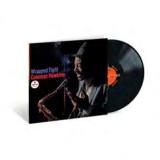
Bereits in den frühen 1920er Jahren hatte sich Coleman Hawkins in der New Yorker Jazzszene als einer
der ersten großen Improvisatoren auf dem Tenorsaxofon etabliert. Bis sich sein Gesundheitszustand 1966
rapide verschlechterte, hielt er stets mit der Entwicklung des Jazz Schritt. In seiner letzten Schaffensphase
zwischen 1960 und 1965 war er unter anderem auf Max Roachs Klassiker “We Insist!” und zusammen mit
Sonny Rollins auf dem gemeinsamen Album “Sonny Meets Hawk!” zu hören. Darüber hinaus spielte er
in diesen Jahren vier Alben für das damals trendsetzende Label Impulse! Records ein. Das letzte dieser
vier Alben, “Wrapped Tight”, war 1965 zugleich auch das letzte Album, das von Coleman Hawkins als
Bandleader noch zu Lebzeiten veröffentlicht wurde. Mit einem Sextett interpretiert er hier ein breitgefächertes Repertoire, das neben klassischen und zeitgenössischen Jazzstandards mit “She’s Fit” auch auch
ein Hawkins-Original enthält. Scott Yanow bewertete das Album in seiner Rezension bei AllMusic mit vier
Sternen und schrieb: “Auf Hawkins’ letzter starker Aufnahme improvisiert der Veteran - 43 Jahre nach
seinem Plattendebüt mit Mamie Smiths Jazz Hounds - kreativ über ein breit gefächertes Repertoire …
Glanzstück ist eine gewagte Version von ‘Out of Nowhere’, die zeigt, dass der Tenorsaxofonist auch 1965
noch neue Ideen hatte.”
Im September 1964 war es Miles Davis endlich gelungen, den Saxofonisten Wayne Shorter von Art Blakeys
Jazz Messengers abzuwerben und mit ihm sein Second Great Quintet zu vervollständigen. Shorters Solokarriere schien darunter nicht nur nicht zu leiden, sondern sogar noch beflügelt zu werden. Und zwar so sehr,
dass Blue Note mit dem Veröffentlichen seiner Soloalben kaum nachkam. Eines der Alben, die zunächst
archiviert wurden, war “The Soothsayer”. Es wurde im März 1965 mit einem Allstar-Sextett aufgenommen,
erschien aus unerklärlichen Gründen aber erst 1979. Denn laut AllMusic gehört es zu Shorters “besten
Werken aus dieser unglaublich fruchtbaren Zeit”.
The free folk/jazz sound of modern Los Angeles. Featuring a heavy bunch of musicians and vocalists including Moor Mother.
"Fearlessly Accessing the Divine Spirit From Here on Out" is the vinyl debut from pianist, composer, and producer Diego Gaeta. He has previously released projects as Club Diego and with the trio Human Error Club (whose members Mekala Session and Jesse Justice helped produce this record). He has quickly become a fixture in a number of Los Angeles musical environments, working with Lionmilk, The Pan Afrikan Peoples Arkestra, Carlos Niño, Black Nile among others. This album is a synthesis of these many LA environments, and carries chamber, jazz, ambient, and folk influences, ultimately giving it an uncategorizable feel similar to works by Arthur Verocai or David Axelrod.
Gaeta recorded the initial ideas for the album by himself after experiencing a burst of creativity during the lockdown of 2020, in the aftermath of a season of protests in Los Angeles, on a piano at his home in El Sereno. "I was constantly not in tune with myself, always awaiting outrage and tragedy in a very unstable world. However, hitting the streets in support of various ongoing pandemic community actions felt necessary and it marked a point in time that ushered in large societal changes. The weight of that era made me feel allergic to making art at the time. All of these ideas came after that period, expressing my reflections subconsciously. I remember that the ideas came in a short amount of time, and then they developed."
Once he had created the tracks as Ableton sessions, he realized the gravity and context of how he was processing his ideas so he, as he puts it, "felt like taking them outside the hands of midi and into the hands of friends." Gaeta was able to assemble his dream band, which ended up being a 9-piece ensemble, or a nonet. "I felt that at some point I was channeling the geometrical balance of that nonet...it's almost as if I had a sextet and then the three of the sextet that's not the rhythm section were doubled. It's a really dense sextet, that's how I see it."
The recording process began the following summer in June 2021 as the musicians were all adjusting to the newfound dynamic of getting tested for COVID, waiting a few days, and then meeting up to record. "We were eating Indian food, some of us were smoking, it was a nice memory, but I felt a little stressed, because I was the bandleader, and I felt the emotional weight of my music."
The title track and single, featuring vocals by Jimetta Rose, begins with a speech by Gaeta delivered when playing with Black Nile in 2019 at the Levitt Amphitheatre in MacArthur park. Gaeta provides the following account: "Even though it was in 2019, socio-political tensions and issues were at the forefront for me at that time. I wrote a speech that was intended to be critical of the US but it ended up becoming a collage inspired by different women that had messages of freedom that spoke to me the most. I quoted Nina Simone and Georgia Anne Muldrow, it wasn't something that I read but something that she said "kicking it with consciousness and style" that phrase stuck with me, so I used it in that speech. Although critical, the speech had a positive feeling to it, and it was hopeful. I gave that speech while fireworks were going off."
Moor Mother & Zeroh are found on their respective tracks, Memory Screen & Eccolo - both delivering a distinct, commanding vocal performance. Low Leaf colors the track Soft Spot with harp, a beautiful ballad nestled in the center of the album. Other players include Gregory Uhlmann on guitar, Jon Kaye on violin, Devin Daniels on alto saxophone, Caleb Buchanan on bass, Dante Luna on vibraphone, Patrick Behnke on viola, Bryan Baker on tenor saxophone/flute, and Mekala Session on drums.
"I’d like for us tonight to embody a freedom oriented life. Freedom isn’t just a dream, it’s a place we must all arrive at together, as one by one the people of the Earth help each other to be Free of power, hate, and insecurities. Let’s kick it with consciousness and style. Can y’all dig that? YEAH. I can too. So now we’d like to present to you a spiritual transmission I like to call: 'Fearlessly Accessing the Divine Spirit of Freedom From Here On Out.' YEAH" - Diego Gaeta
Since the late 1960s, jazz drummer Takeo Moriyama has been a dominant force in the free jazz scene, initially with the Yosuke Yamashita Trio, and more recently, collaborating with the KYOTO JAZZ SEXTET, earning respect from past to present. Recorded in 1980 with his quartet featuring Fumio Itabashi, this album is renowned for being the first to include the emotionally rich Japanese masterpiece "Watarase". Other highlights include the spirited "Exchange" and the beautifully poignant "Goodbye". Each track is a standout, offering a grand-scale performance where tranquility and movement organically intertwine, making it one of the top albums in the history of Japanese jazz.
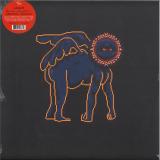
Das Avant-Rock-Sextett aus Beirut verschmilzt auf diesem großartigen Nachfolger seines gefeierten 2023er Debüts "Mais Um" Psych/Kraut, Improv/Skronk, Elektronik, Gothic und Jazzelemente mit traditionellem ägyptischem Gesang und moderner arabischer Poesie. Produziert von Radwan Moumneh (Matana Roberts, Sarah Davachi, Jerusalem In My Heart). Der Titel des zweiten SANAM-Albums ist ebenso vielversprechend wie die Musik der libanesischen Band. "Sametou Sawtan" bedeutet aus dem Arabischen übersetzt "Ich habe eine Stimme gehört". Spukhaft oder spirituell, wie auch immer man die Phrase liest, sie spricht von der Fähigkeit von Klang und Sprache, innezuhalten, Aufmerksamkeit zu stehlen und uns für den Moment zu öffnen. In ähnlicher Weise vermischt die Musik von SANAM zarte Rasereien und feuerverbrannte Balladen, indem sie frei fließende Rock- und Jazzgerüste mit der tief verwurzelten arabischen Tradition verbindet. Sie in vollem Flug zu hören bedeutet, in der Gegenwart gehalten zu werden und sich neu zu orientieren, um einen offenen Horizont zu eröffnen. Die Arbeit an "Sametou Sawtan" begann im Frühjahr 2024. Die ersten Ideen, die in den Tunefork Studios in Beirut entstanden, wurden im April während eines Aufenthalts in Beit Faris, einem mittelalterlichen Haus in der Küstenstadt Byblos, weiter ausgearbeitet. Das Sextett: Sandy Chamoun (Gesang), Antonio Hajj (Bass), Farah Kaddour (Buzuq), Anthony Sahyoun (Gitarre, Synthesizer), Pascal Semerdjian (Schlagzeug) und Marwan Tohme (Gitarren), wurde vom Produzenten Radwan Ghazi Moumneh (Jerusalem In My Heart) unterstützt. Die letzten beiden Tracks des Albums sind Aufnahmen aus den Beit Faris-Sessions, während der Rest in den La Frette Studios in Paris während der Europareise der Band im Sommer 2024 aufgenommen wurde. Die Platte verarbeitet Gefühle der Distanz und der Entwurzelung. "In den letzten fünf Jahren hatte ich das Gefühl, dass jeder den Libanon verlässt", erklärt Chamoun. "Das Album handelt nicht wortwörtlich davon, sondern von der Vorstellung, dass dich etwas verlässt. Eine Distanz zu den Ereignissen, obwohl du in ihnen lebst, eine Distanz zu deinem Haus, obwohl du in ihm wohnst." Ob in der sehnsüchtigen Ballade "Goblin" oder dem langsam brennenden, autotune-überladenen Freakout von "Habibon", Sametou Sawtan fängt das Streben nach festem Boden in einer Welt ein, die diesen nur selten bieten kann . Das Album hat die hypnotisierende Intensität des SANAM-Live-Erlebnisses, während es der Musik Nuancen, Tiefe und eine enorme dynamische Bandbreite verleiht. Wie bei ihrem Debüt sind die Texte vieler Tracks entliehen, Worte, die in neue Kontexte gestellt werden, um die Gegenwart zu verarbeiten. "Hamam" interpretiert ein ägyptisches Volkslied neu. In "Hadikat Al Ams" treibt der krachende Hardrock-Stampfer den Text des zeitgenössischen libanesischen Schriftstellers Paul Shaoul an. Und sowohl "Sayl Damei" als auch der Titeltrack verwenden Gedichte des iranischen Dichters und bahnbrechenden Mathematikers Omar Khayyam aus dem zwölften Jahrhundert. "Wenn man etwas von Omar liest, fühlt man eine Verbindung zur Gegenwart", sagt Chamoun. "Das Gefühl, dass es keinen klaren Weg gibt." "Sametou Sawtan" enthält auch zwei Lieder mit Chamouns eigenen Texten, darunter den Opener "Harik". Es war die Keimzelle des Albums, geschrieben von Chamoun im Februar 2024, wobei die Band den Track um ihre Worte herum aufbaute. Es beginnt mit einem Schauder, zerfetzter Elektronik und einer keuchenden Stimme, die das Schlagzeug durchdringt, bevor sich die Band zu einem triumphalen Aufstieg aufschwingt. Es geht um Eintauchen in "ein unendliches Feuer", verrät Chamoun. Den Text zu "Tatayoum" schrieb sie allein, bevor sie ihn der Band vorlegte. Er spiegelt eine andere Art von Intensität wider, "eine Schleife, eine Besessenheit", wie sie sagt. Buzuq webt durch schwebende Elektronik und drängende Trommeln, während Chamoun arabische Worte rezitiert, die die Liebe beschreiben. Die unaufhörlichen Energien, die in diesen Tracks erforscht werden, sind nicht unbedingt negativ. Sie vergleicht deren Intensität mit der eines Schriftstellers, der in einem Gedankengang gefangen ist, im Guten wie im Schlechten. "Es geht nicht darum, deprimiert oder traurig zu sein", sagt Chamoun. "Es ist eine Falle, aber sie kann auch magisch sein." "Sametou Sawtan" wurde von Farah Fayyad mit ikonischen Grafiken und Design versehen.