
No en stock
Haga su pedido ahora y le encargaremos el artículo en nuestro proveedor.
8,61 €
Ültimo hace: 2 Años
Haga su pedido ahora y le encargaremos el artículo en nuestro proveedor.
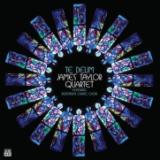
As keyboard maestro James Taylor arrives at his 40th year leading his Quartet, he has re-signed with his original label Acid Jazz and is embarking on a series of the most radical projects he has ever worked on. Following his first classical album ‘Shadows and Dreams’ earlier this year, he brings the Quartet together for a remarkable new album. ‘Te Deum’ sets the ancient, 4th-entury Christian text to intense jazz, funk, and Latin grooves. The music sees the James Taylor Quartet working alongside the children of the Benenden Chapel Choir, and a guest horn section and legendary Acid Jazz percussionist Snowboy. Lead track ‘Have Mercy On Us’ mixes Brazilian samba with Gregorian chants, ‘The Comforter’ sounds like a Donald Byrd with voices Blue Note Records experiment, and last year’s radio favourite ‘Wildflower’ mixes bossa nova with sunshine pop harmonies and a positive message. The JTQ is on tour throughout the year - as he always is and will be worth catching live.
debe ser publicado en 29.05.2026

Pink Vinyl[26,26 €]
Very limited numbers, orders will need to be confirmed.
For his new album, Irreparable Parables, Andrew Wasylyk felt a strong desire to write a set of songs featuring an element hitherto rare in his work: the human voice. Equally strong was the conviction that he did not want to sing them himself.
The Scottish multi-instrumentalist and composer set about assembling a group of guest singers, sending out the songs to wherever they were in the world. The vocals were recorded remotely and then, like migrating birds, winged their way back to Scotland. The result is an album of great beauty which, perhaps preeminently in Wasylyk’s work, expresses the vulnerability and resilience of the human spirit.
Six singers appear on the record, represented by six songbirds illustrated on the sleeve by Clay Pipe Music’s Frances Castle. The cuckoo is a nod to Belle and Sebastian’s 2004 single ‘I’m A Cuckoo’, that band’s Stuart Murdoch being the first voice you hear on the new album. When the vocal for ‘Private Symphony #2’ arrived, says Wasylyk, “it was everything that I was looking for and more. But this is Stuart Murdoch. Of course he’s going to make something incredibly beautiful and thoughtful.”
The song lyrics were, for the most part, written by the singers. The music is Wasylyk’s creation. He navigates a sound world that lies somewhere beyond the borders of classical and jazz, ambient and abstract. It is difficult to describe, but easy to understand, which is to say to feel. That is the way Wasylyk’s work is experienced: as a feeling. It takes you back to childhood, perhaps, to feelings of comfort and safety, or to memories of walks at sunrise and sunset, or to the way a shadow falls on a particular field in a particular place at a particular time in your life. This is consoling music. That is why, though pretty, it is not merely pretty. These are songs to shore up the soul.
Wasylyk writes in a room, in his native Dundee, full of “half broken” instruments. He picks these up, plays a little, seeking an idea, a feeling, a door that lies ajar. The musical palette of Irreparable Parables includes brass and woodwind, a six-piece string section, guitar, bass, drums, vibraphone, Mellotron, Fender Rhodes, tape loops, synthesisers and percussion. The strings were arranged by the cellist Pete Harvey, a long-term collaborator.
Among the other guest vocalists are Gruff Rhys of the Super Furry Animals, Saya Ueno from Japan’s Tenniscoats and Peter Brewis from Field Music. Wasylyk himself takes the lead vocal on the title track, though a throat infection and touch of pitch-shifting have altered his singing in a way that even he, having fallen out of love with his own voice, finds acceptable.
The heart of the record can, arguably, be found in two tracks, ‘Love Is A Life That Lasts Forever’ and ‘Spectators In The Absence of God’, sung respectively by Molly Linen and Kathryn Joseph. The former, bright with trumpets, was inspired by the writing of Derek Jarman. “I was feeling deeply upset about the world and wanted to try and write some- thing that was obviously hopeful,” Wasylyk says.
‘Spectators …’ offers an emotional counterpoint. It is an “apocalyptic hymn” that seems to grapple with watching human suffering from afar, too distant to be at physical risk, but experiencing the psychological wounding, and feelings of helplessness, even complicity, that come with constant awareness of other people’s pain. “Kathryn’s a pal, I love her dearly, and she’s a brilliant artist who really feels what she writes,” Wasylyk says. “The cracked tenderness of her voice is spellbinding.”
The album closes with an instrumental piece, ‘Soul Enters The Ocean Sun Climbs Out Of The Sea’, all piano and strings, that offers a sense of resolution and ascension. A good moment, too, for Wasylyk to reflect upon the artistic companionship that he enjoyed while making this record – the songbirds that answered his call: “These humans are incredible at what they do. I’m deeply grateful and feel so lucky. It blows my mind.”
debe ser publicado en 30.05.2026

DJ Pone returns to his roots with Bass Culture (out March 6, 2026), a new 19-minute mixtape. A renowned turntablist, DJ Pone delivers an immersive and mesmerizing mix. Following his success with Birdy Nam Nam, he has released several genre-blurring projects, including the cinematic Radiant and the deeply introspective 1978. These albums showcase a producer with a meticulous ear for detail, atmosphere, texture, and storytelling—at times overshadowing the full extent of his talent and charisma behind the decks. With this new release, he reconnects with his first love: sound collage, razor-sharp cuts, and the magic of real-time manipulation. The mix fuses a burst of tracks into a seamless journey, punctuated by precise breaks and UK and tropical inflections. The sound design feels both cathartic and transient—a subtle blend of beats and sonic landscapes that echo and dissolve into one another with remarkable finesse. From an opening manifesto paying tribute to DJ Shadow and DJ Qbert to a rawer section infused with urbex textures, recalling the energy of Company Flow, Pone crafts a narrative that is as thoughtful as it is intensely joyful—yet paradoxically soothing. Mostly instrumental but never lacking soul, Bass Culture is filled with glitched melodies and vocal samples, echoes of his recent travels to Barcelona and beyond. The project stands as a personal, tactile canvas—instinctive and unembellished—pushing back against an era dominated by digital excess. It resonates as a true statement of faith in the art of DJing, reminding us that, even as a producer, DJ Pone’s touch on vinyl remains grounded and almost magnetic, far removed from today’s passing trends.
debe ser publicado en 05.06.2026

Transmitting from deep in the Finnish underground, Nazar sends out a signal of mysterious, synthetic auras and shadowy, skittering sequences. From smoky outsider techno to rainy-day electro abstraction, the label’s emphasis is on expression and intrigue as each release reaches across the energetic spectrum of moody machine music.
The first release on Nazar presents a cast of protagonists from the Helsinki scene who share precisely the kind of nocturnal tendencies the label is seeking out. Seasoned duo General Electrix open up the A side with ‘Redshifter’, a silken web of 606-powered electro and warmly haunted synth work that nods to the early years of Autechre. Making an early step out into the public domain, Asyx follows up swiftly with the exquisitely detailed machine funk of ‘kVelorum ‘, where a vivid tapestry of noise, squelch and bleep techno gets smartly woven between airy pad tones and a rock-solid rhythm section.
On the B side, Helsinki mainstay Kaiunta brings a dramatic flourish to mid tempo creeper ‘Phantasm’, matching a densely packed rumble of live drums with sweeps of nervy atmospherics and a murky inversion of the classic gated trance lead. 53X rounds out the Nazar mission towards broad BPMs and fresh ideas with a crunchy swerve towards sample-heavy downtempo laced with a generous dose of psychedelics and angular noise.
NAZAR001 is the kind of record that yields surprises and slots into unexpected moments depending on when and where the needle drops, providing versatile moments for adventurous selectors and continuing the fine tradition of outsider electro and techno from Finland.
En el almacen y preparando para el envío

Prolific beat pharmacist par excellence Brendon Moeller continues his hot streak with a return to Samurai to serve up the exquisite craftsmanship of Shadow Language. Across 15 fresh productions the seasoned house and techno producer demonstrates yet more variations on his rejuvenated sound since pivoting towards 160 tempo zones. Heavyweight dub techno pulses collide with D&B pressure and dubstep snarl, delivered with devastating restraint and mediative warmth.
Moeller's dub-informed, high-grade production hit a hot streak as he started to experiment with faster tempos and more broken rhythms, reaching into thrilling new sound fields where fast-slow rhythmic intrigue meets with spatial subtlety and constantly evolving synth voices. The past year has seen him release a swathe of albums, from Further on Samurai to outings on Constellation Tatsu, ESP Institute and Quiet Details that all burst with inspiration, each distinct from the last and offering an original perspective on this rich seam of crossover electronics.
Shadow Language shows Moeller burrowing even deeper into this new era of his work, continuing the hypnotic approach set out on Further while edging more forthright ingredients into the mix. From the outset 'Division By Zero' hits with immediacy even as it dips into a dubwise breakdown, with snatches of vocal and even the iconic loom bird making the slightest of appearances. 'Feral Hymn' finds a curious kind of uplift in the synth chord that twists in and out of the mental techno murmurations of the rhythm section. 'Impermanence' has some snarling bass that belongs in the gnarliest tech-step, while the nagging hats ticking through 'Junkyard Syntax' hint at a shockout without resorting to brute force. The majestic dub techno chords of 'Driftform' create a through-line across Moeller's extensive catalogue, but here they dominate the mix above a spongy bed of sub bass throb and framed by the tiniest slithers of percussion.
Throughout the album, it's the implications Moeller suggests with the tools at his disposal that create a powerful energy. Restraint governs the delivery, guiding the listener in deeper until they find a maximal experience from each elegantly understated roller. The weight and presence is abundant across every track, fuelled by the invigorating power of each tone and frequency while avoiding the clutter of overloaded arrangements.
Finding the notes in between and half-hidden rhythms, Moeller himself perfectly summed up his latest opus as he continues to develop his own compelling Shadow Language.
En el almacen y preparando para el envío

Azu Tiwaline & Cinna Peyghamy, Amotik, Quelza, and Alarico remix four tracks from Ben Klock and Fadi Mohem’s collaborative album ‘Layer One’. Released last year on the pair’s label LAYER, each artist on the ‘Layer One Remixes’ EP retains the weighty, low-end edge that shaped the album, while reinterpreting four tracks through a myriad of techno, IDM, bass, and experimental shades.
Honouring the conceptual direction of ‘Layer One’, which delved into a post-human world and offered a serene reflection on a realm that continued to flourish in the absence of humanity, the ‘Layer One Remixes’ EP echoes the same theme. The remaining human survivors on Earth signal a remembrance of their sensibilities, told through the powerful lyrics and vocals of grime MC Flowdan and interdisciplinary artist Coby Sey.
Azu Tiwaline & Cinna Peyghamy open the EP with their remix of ‘Our Sector’ featuring the commanding vocals of Flowdan. Fragmented bass-driven textures skitter across the sparse soundscape, culminating in a track primed for the weirder hours of the night. On ‘Ultimately’, Amotik delivers his take on the original featuring spoken word by Coby Sey, and whips up a rolling four-four number pierced with bleepy percussion.
On the flip, Quelza’s reinterpretation of ‘Our Sector’ unfolds with zappy motifs and technoid flourishes, permeating the shadowy pads and spine-chilling harmonics that slink through the atmosphere. Alarico remixes ‘Clean Slate’, serving a potent techno track laced with equal parts restraint and release, enhanced by Coby Sey’s taut vocals.
While the original album represented the more exploratory sides of Ben Klock and Fadi Mohem, the ‘Layer One Remixes’ EP offers a further step into the void, led by five contemporary artists who are unafraid to delve into the murkiest corners of the dystopian world conjured up by Klock and Mohem.
En el almacen y preparando para el envío

When Chuck D proclaimed "Bass, how low can you go?" on Public Enemy's anthemic 'Bring the Noise,' maybe he was pre-empting or inciting the 10,000 fathoms-deep, spine-bending basslines and sub-quake tremors of 'Implosion.'
Implosion is a crushing split album, appropriately released on The Bug's own PRESSURE label. Mapping out a new form of spectral dub, the sound is deliberately immersive, introverted, and yes, definitely implosive. In pursuit of heavy lids, blurred vision, and merciless bass bin punishment, it’s one part meditation, two parts low-end theory, and essentially a confession of devoted sound system addiction.
As expected from a tag team featuring British soundlab explorer and 'London Zoo' composer Kevin Martin, aka The Bug, and Michael Fiedler, aka Jah Schulz—a long-time graduate of Germany's new school of sound system reggae culture—the duo approaches their target differently yet share the goal of keeping their sound "raw" (Fiedler) and "brutally minimal" (Martin). This proves that opposites can attract, even if their tools are different and their methods sometimes diverge.
From such a disparate combo, hailing from different geographical and aesthetic backgrounds, contrasts are certainly on display, even within each artist's own contributions. From the melancholia and transcendence of 'Alien Virus (West Indian Centre, Leeds),' to the duality of ascension and descension on 'Hope,' or the Sunn 0))) in dub, visceral drone of 'Dread (The End, London),' to the tripped-out repetitions of 'Midnight,' which reinvents Chain Reaction for post-millennials, the result is both sacred and narcotic. Each track illuminates the emotional impact and atmospheric pressure being explored across this deceptively sparse album—a mastery of tone and texture.
This collection might be as reduced, minimal, and deep as The Bug has ever gone, perhaps echoing the solemnity of his recent Kevin Richard Martin Black release and invoking the futurist steppas self-pioneered on his previous Pressure album. Alternatively, Fiedler‘s Ghost Dubs project ventures into his most heavyweight direction yet, which is no mean feat considering his previous, the critically acclaimed album Damaged, was a monstrously massive triumph of analogue weight and enviable sound design.
Implosion is ice-cool, a stark contrast to the warmth and sociability of traditional Jamaican roots and the current trends in digi-dub. Instead, the mood is soaked in tension and intense dread, finding an unexpected melting point where classic dub's stark rhythm attack, isolationist ambience's eerie drift, dub techno's floatation strategies, and even the relentless riffs of doom metal collide. As the bass-obsessed pair drop what is arguably the heaviest ambient dub album to emerge from any electronic sector—a moody counterpoint to The Orb's fluffy clouds, etc, Martin has cited The Roots Radics, Black Jade, and On U Sound's Pounding System as heavily influencing his approach to the album, while Fiedler has expressed his admiration for Adrian Sherwood's productions and Rhythm & Sound's enchanting soundscape. Yet, the super heavyweight pulsations, emotive resonances, and bone-rattling vibrations detonated here effortlessly go far beyond these influences.
Shadowy and elusive, there’s a mysteriousness at this record's core. A haunting moodiness oscillating between nostalgia and future shock. Despite the deadly fixation with SLOW and HEAVY, the album maintains a totally hypnotic swing throughout. Implosion and its lead single 'Imploded Versions' are testaments to being enveloped in bass, seduced by bass, submerged in bass, and utterly crushed by bass, as The Bug and Ghost Dubs seek to craft a new form of dub for zonal headz and Babylon seekers.
Mastered by Stefan Betke (a.k.a. POLE) at Scape Mastering studio, this record is heavy as f-ck without resorting to continuous distortion. It’s low-end worship taken to an absolute extreme, yet remains highly listenable and definitely danceable, albeit at the slowest of paces. Sacred and narcotic, this is low-end worship amplified to the max. Dive in if you dare.
En el almacen y preparando para el envío

Dutch record label, shop and club platform One Eye Witness presents a lively new entry in their V/A series with WITNESS08. Honing in on more fresh talent from across the globe, Amsterdam’s wandering eye gathers producers Sinqmin, Salomee, Kate08 and elusive duo The Evil B-Side Twins (DJ Tool & Yazzus) for another trip into tech house — and beyond!
Kate08’s “Sticky Toffee” is suitably viscous, burbling and oozing its way across shifting sections. The London artist delicately balances percussion atop warbling bass tones and synth lines that pop in and out. Salomee gets moody on “Night Behaviour”; lurking in the shadows, the track’s acid squelch and interlocking melodies point to the psychedelic, with a purring bassline that keeps things grounded.
The Evil B-Side Twins lay in wait on the flip, springing into action with the tightly-wound “Spindrift”. Propelled by a spiky break and cascading delays, its 303 lines sound like rubber, bouncing between the other synths deployed by the duo. All manner of FX trickery is woven into the production: the Twins layer up and load the track with intricate details. Supplying an unexpected respite from the club action, final cut “Aesthetics For Destination” marks the debut foray into hip-hop for OEW. Produced by Seoul-based Sinqmin and featuring the sultry vocals of 문선 (MOONSUN), the track’s sparse beat and ghostly samples make for a mellow, head-nodding end to another hit from the label.
WITNESS08 — More talent, more trax!
En el almacen y preparando para el envío

Roberto Musci, born in Milan in 1956, studied guitar, music and electronic instruments. From 1974 to 1985 he traveled the world studying African, Indian, Arabic and Oriental music, recording ethnic music “in the field,” studying and collecting ethnic musical instruments from all over the world. His self-produced debut album, “The Loa of Music,” is a seminal work of staggering originality and extraordinary beauty in which field recordings, musique concrète, electronics, synthesis and instrumentation are interwoven, drawing on the countless musics from around the world that he has recorded. The subsequent “Water messages on desert sand,” composed with Giovanni Venosta, was nominated for a Grammy in the UK in 1987. In the 1980s and 1990s he broadcast ethnic and electronic-experimental music from Rai and Radio Popolare radio stations. He has also composed and played music for videos, commercials, dance, poetry, theater, composed soundtracks and accompanied silent films live. From 1980 to the present, he has played with many Italian and European musicians: Giovanni Venosta, Claudio Gabbiani, Walter Prati, Giorgio Magnanensi, Massimo Cavallaro, Massimo Mariani, Moni Ovadia, Roberto Zorzi, Chris Cutler, Jon Rose David Moss, Steve Piccolo, Elliott Sharp, Keith Tippett and the Third Ear Band.
The theme of travel, ethnicities and mysticism are a pivotal point in this new album of his as well, demonstrating once again how music needs absolutely no sharp lines of demarcation. The music is one.
It goes from the search for deep meanings in a time spent in a Hindu monastery (Ashram) listening to mantras and studying Buddhist philosophy (The Principle Of Things) to space explorations and human settlements on the Moon or Mars wondering how man will live and what he will bring to the new worlds imagining that Sufism, an Islamic mystical religion, will accompany him in the discovery of new worlds (Derviches On Mars). In Goodbye Monsters, harmony and peace are sought. Memories Of A Piano Player is a tribute to Keith Tippett, a great pianist (King Crimson , Centipede, Mujician) with whom he played in several concerts and with whom I spent evenings talking about music, food and Italian wine. Quantum State focuses on how quantum mechanics is creating a revolution in the way of thinking and dividing reality into infinite Parallel Worlds. Panthalassa is the vast ocean that surrounded Pangea and blends South American marimba music and traditional Chinese music. Burn The Shadows is a tribute to the fascinating Indonesian shadow theater, from the stories told and the atmosphere created during the long plays told in the sacred Indian texts of Ramayana or Mahabharata. Shadows are also more or less pleasant memories to which one is attached, and to burn them is still to move on with one's life.
Torajan Funeral Chant: The Toraja are a people living in Sulawesi (Indonesia) who have a special worship of the dead. Funerals are festivals that last several days, the corpses are protected by Tau-Tau (small dolls that watch over cemeteries), and over the years, they exhume the corpses of their relatives and keep them in their homes with them for a time to remember them.
The experimentation goes all the way to modern Artificial Intelligence that 'interrogated' to create something new by inserting conflicting inputs joins them together but nonsensically creating interesting insights; hence A.I. In Confusion. Pangea, named after the continent that contained all the land that emerged between 540 and 200 million years ago, in the Paleozoic and Mesozoic periods, imagined as inhabited by man without divisions created by borders, wars, religions or ethnic groups, is also a tribute to Steve Reich, one of the fathers and a great musician of minimal music. Prophecies, a reading of sacred texts and religious songs from evangelical sects in the United States filtered into granular synthesis with percussion music from South India, closes.
En el almacen y preparando para el envío

he dynamic duo freq444 – known for their intricate soundscapes and thunderous rhythms – are ready to break new ground once again with the release of their "Desolation EP" on no•id. The two cousins and co-founders of the label, follow up their acclaimed "Dispersion EP" with another immersive journey that plunges deeper into the darker, industrial, and bass-laden sectors of electronic music.
"Desolation EP" comprises 4 meticulously crafted tracks, conceived and polished during the intense creative process for freq444's live A/V show. This release aims to immerse listeners in a shadowy atmosphere punctuated with powerful basslines and layered, industrial rhythms. With freq444 leading the charge, "Desolation EP" is not merely an auditory experience but a journey into the underbelly of electronic sound, echoing the experimental and boundary-pushing spirit of the no•id universe.
En el almacen y preparando para el envío

The EP FACE II is a continuation of the Faces EP series, of which the first EP was released in october 2022. The basis here is also a literary fixpoint with KAFKAS VER- WANDLUNG.
the examination of the urban modern man has its origin in the album JAHRE and is now explored in more detail here. What happens to us in a time of digital transparency as a glass human of the city and night.
It starts with THE VOID, which was originally intended as a poem about being lost. We go out into the night, some to search, some to forget and some to never come back as the same again. On our journey we often take substances that we expect to make this journey easier and faster. the escape from ourselves and from our relationships to the environment and humans can‘t just be skipped. a fast way is always a dangerous way and often leads to an even bigger EMPTINESS.
In THE GHOST something appears to us late at night, it is like a shadow of the previous hours, something that has followed us on the streets and accompanied us un- discovered until we reached our home. We wake up and at first it is unclear whether we are dreaming.
In half-sleep the dimensions blur together and the whole polyva- lence of the different existences gapes open. We blink into the DARKNESS and try to recognize something, the light remains far away and yet we hear this piercing sound, which in the end leaves us only with ourselves. we are the spirit of the night, trapped on an old tape in the chest of nothing.
The next section THE MOON shows us the light in the darkness. The shadows and ghosts give way for a moment and the light flows through our veins and molecules. The poem describes our unspoken longing to follow the light, in the light our fears disappear and everything blurs into an unknown familiarity. We stagger back and forget the encounters with our inner DAWN.
In the light the ghosts disappear like childhood memories left behind.
The last chapter is written by THE DAWN, a stanza from the poem of the same name as a spoken reconciliation with the world. In spite of everything, we seek harmony and connectedness. No one wants to become an exile, even if we can‘t always bring it about ourselves. We love LIFE and we hear and feel everything around us, if we let ourselves ...
ALL LOVE
AMAS_DHE / AMAS_PHI
En el almacen y preparando para el envío

Jazz music has more than its fair share of overshadowed figures that whilst contributing much to the music have little presence in its collective conscious. One such musician is the talented multi-reedist, Sahib Shihab. Born Edmond Gregory, as he was known before he adopted the Muslim faith in 1946, Sahib Shihab's music background shows a deep and significant evolution, influenced by Thelonious Monk, Dizzie Gillespie (his experience in Dizzie's band marked Sahib's switch to Baritone, the instrument he became most readily associated with), and above all by Charlie Parker's Bop. Had it not been for the post-war migration of many top American jazz musicians to Europe, it is quite likely that the legendary Clarke-Boland Big Band might never come into existence. Sahib, one of this musicians disillusioned with the politics and racism of the United States, accepted to join the band of Quincy Jones for an European tour in 1959. When the tour ended, Shihab he remained in Europe where he joined, in 1961, the Clarke-Boland Big Band. The collection 'Companionship', whose line up consists of seven elements which derives from this original band, spotlights the consummate musicianship and individuality of Sahib Shihab and is testimony to his special musical gifts - not only as a top-rank flautist and baritone saxophone but also as a composer. Furthermore, it provides a welcome reminder of the high quality of the Clarke-Boland Big Band's rhythm section, the lively style of vibraphonist Fats Sadi and the power and personality of two of the C-BBB's horn-playing stalwarts, Benny Bailey and Ake Persson. Here's a real rarity, surely a desert island disc. This double album has it all from frantic banging percussive workouts to modal numbers to beautiful ballads. It's a staggeringly good piece of music and worth every penny of the price tag it commands. Let's have a look to the most significant pieces. Francy Boland's "Om Mani Padme Hum", taken from a Tibetan prayer, shows Shihab in exuberant mood, playing against a vigorous percussion background and making dramatic use of his special technique of combining voice and flute. Boland contributes an incisive, effervescent solo. "Bohemia After Dark", a classic original by bassist Oscar Pettiford which he first recorded back in August 1955, finds Shihab in exultant form on baritone. "Companionship" has a Bossa Nova beat and features Bailey on flugelhorn and Shihab on flute, playing with a limpid, floating sound. Bailey's minor-key original, "Stoned Ghosts" was, he says, inspired by listening to some music written by Bela Bartok before he emigrated to the United States. The piece has an infectious back-beat pulse and showcases the superb walking technique of Jimmy Woode. In "Con Alma" Shihab's mellow flute set against a churning 12/8 beat in this stylish Boland arrangement. Woode's performance of the superb Mei Torme ballad, "Born To Be Blue", reveals his great affection for the song. "lt is the perfect combination," he says, "a beautiful melody married to a great lyric. I really love that tune." It is a song of rueful resignation, putting a brave face on the blues. "Balafon" is an up-tempo Francy Boland original written for the French mime artist, Marcel Marceau. The rhythm section really cooks on this track with Kenny Clarke's cymbal work outstanding. Boland's solo here is notable for its neat, left hand punctuations. "Calypso Blues" has been written by Nat King Cole and Don George. lt tells the wry and wistful tale of a Trinidadian in New York desperately homesick for the land where everything 5 so much cheaper (in New York "a dollar buy, a cup of coffee and a ham on rye") and the girls more natural than the artificial, painted beauties of New York. Woode's composition, "Sconsolato" is a haunting theme in A minor and it brings to a close a truly fascinating album. This is dynamic music played with vigour, verve and vitality - and it is an enormous pleasure to rediscover it. A shadowy fugitive from his home in the land of jazz, Sahib Shihab remains a true unsung figure, worthy of more attention. With his equally expert technique on Baritone, Flute, Alto and Soprano saxophones and his capacity to adapt easily to a variety of musical settings. His warm, individual, singsong sound in improvisation and his unusual and interesting compositions mark him out as a hidden treasure in the dusty corners of jazz archive.
En el almacen y preparando para el envío

2023 Repress
It's always a huge pleasure to have him back. Lewis Fautzi's astronomic ascension is well known and we are delighted that he decided to 'play home' one more time.
Although the years are passing by, Lewis is faithful to his principles. His personal style is almost a trademark and impossible not to recognize. Techno scene has evolved and he has evolved with it but always in a straight line, adapting himself perfectly to the new tendencies and keeping his touch and his vision.
This new ep is full of trippy pads and powerful bass lines. Mesmerizeng techno as its finest and with a small cherry on top of the cake: a remix by Rødhåd. His first time with us and there is no greater feeling, specially knowing the huge artist he is. Established nowadays as a techno force, the german producer combines the hypnotic with different theatrical approaches and came a long way demonstranting the uncontainable nature of his brand of shadowy dance creations, as someone once described his work. We couldn't be happier with the result.
In summary, the first ep by Lewis Fautzi on his own imprint with a remix by Rødhåd.
Lewis, welcome back home!! And thank you for bringing such an illustrious guest.
En el almacen y preparando para el envío

It might seem tongue-in-cheek on the surface, but the fact that the title of Eldritch Priest's sprawling debut vinyl release, Omphaloskepsis, is the Greek translation for “navel-gazing” unlocks something essential to the Vancouver-based composer and writer's singular outlook.
Perhaps even more telling is the title of Priest's 2013 book Boring Formless Nonsense: Experimental Music and the Aesthetics of Failure (Bloomsbury), whose 300-odd pages read as though you've been dosed with potent hallucinogens. Throughout the text Priest addresses—celebrates, even—the titular elements via various musical examples, including that of his peers. What's so bewildering it is that his descriptions of how boredom, formlessness, and nonsense manifest are laced with the very tactics he's depicting. Passages tie themselves in knots, footnotes engulf the “primary text,” he even deliberately misleads the reader.
The restless stasis of Omphaloskepsis could be regarded as an extension of this book's wayward spirit. Things unfold fairly slowly and consistently but it'd be a stretch to describe it as properly contemplative. Like attempting to meditate with a high fever, any sense of tranquility is constantly derailed as one succumbs to queasy agitation. The piece's foundation is a seemingly endless guitar melody; an organic meander that neither seems to repeat or offer any concessions to narrative directionality. Priest unfurls this rambling cantus firmus in a rich, clean, jazz-like tone, but as it's played, it's repeatedly tangled with snarls of dense digital processing and shadowed by stumbling virtual “band.” These strident interjections blatantly contrast with the guitar, yet they aren't so violent as to offer more than a faint itch of distraction. As such, the distinctive amorphousness that this piece asks us to inhabit for its 54-minute duration leaves a strong impression, but also feels utterly intangible.
In addition to his recorded forays, Priest's disorienting music has also been performed by top-tier interpreters such as the Arditti Quartet, Quatuor Bozzini, Philip Thomas, Anton Lukoszevieze, and Continuum. While living in Toronto he co-founded the collective neither/nor with John Mark Sherlock, which featured a cross section of musician-composers playing each other's work including Eric Chenaux, Doug Tielli, Eric KM Clark, Heather Roche, and Rob Clutton. “Though the name refers specifically to a loosely knit group of composers and performers,” remark's the collective's website “neither/nor is also a sensibility that refuses art’s messianic pretensions and the gaping maw of commercialized society, opting instead for art’s right to be esoteric.” In 2021, when Eric Chenaux and Martin Arnold relaunched their neither/nor-adjacent Rat-drifting imprint, an album by Priest, Many Traceries, was among the first to be released. Perhaps unsurprisingly, Priest was a student at the University of Victoria, a school that's come to be known for fostering such staunch individualists as Arnold, Linda Catlin Smith, Allison Cameron, and Anna Höstman.
As a scholar, Priest writes from a 'pataphysical perspective and deals with topics such as sonic culture, experimental aesthetics and the philosophy of experience. Priest brings these interests to his job as an Associate Professor in the School for the Contemporary Arts at Simon Fraser University, interests that also inform his work as a member the experimental theory group The Occulture. In addition to Omphaloskepsis, his new book, Earworm and Event: Music, Daydreams and Other Imaginary Refrains,
En el almacen y preparando para el envío

When five-time Grammy award winner Taj Mahal intersects with The Phantom Blues Band, it’s one of those rare joints that hits you before you even know you’ve been hit. They walk in, plug in, and the whole room shifts. Studio assassins, road lifers, groove keepers and somehow still hungry. They are an internationally renowned Two-Time Grammy Award winning group. Taj Mahal’s fearless, open-hearted spirit still shadows the whole thing with that genre-hopping joy. He leads you down the road with a history lesson and the Phantoms carry it with honor to the Griot.
Mahal sings and plays harp as he fronts an all-star lineup of legendary musicians with the three ringleaders for the Phantoms--Johnny Lee Schell, the soulful gunslinger with tone for days, Tony Braunagel keeps the whole ship steered straight and on time, every time, and Larry Fulcher, the anchor, the heartbeat, the quiet storm on bass. Additionally, Jon Cleary, with that unmistakable New Orleans piano swagger, Mick Weaver, a session master who’s playing slides in with an undeniable velvet magic, and in the horn section, Joe Sublett on sax and Les Lovitt on trumpet bring the orchestration into the full view of this genre. This band doesn’t ‘back” anybody. They lift you up, carry you, and dare you to rise higher. On this record they slide through blues, soul, R&B, and island color with the ease of men who’ve lived every bit of it. This is deep-groove, grown-folks music from a band that still plays like the night is young. ‘Time’ is their new release on Resonatin’ Records / Thirty Tigers and celebrates over thirty years of making this uplifting inspiring and aspiring music together.
debe ser publicado en 01.05.2026

White Vinyl[26,26 €]
Very limited numbers, orders will need to be confirmed.
For his new album, Irreparable Parables, Andrew Wasylyk felt a strong desire to write a set of songs featuring an element hitherto rare in his work: the human voice. Equally strong was the conviction that he did not want to sing them himself.
The Scottish multi-instrumentalist and composer set about assembling a group of guest singers, sending out the songs to wherever they were in the world. The vocals were recorded remotely and then, like migrating birds, winged their way back to Scotland. The result is an album of great beauty which, perhaps preeminently in Wasylyk’s work, expresses the vulnerability and resilience of the human spirit.
Six singers appear on the record, represented by six songbirds illustrated on the sleeve by Clay Pipe Music’s Frances Castle. The cuckoo is a nod to Belle and Sebastian’s 2004 single ‘I’m A Cuckoo’, that band’s Stuart Murdoch being the first voice you hear on the new album. When the vocal for ‘Private Symphony #2’ arrived, says Wasylyk, “it was everything that I was looking for and more. But this is Stuart Murdoch. Of course he’s going to make something incredibly beautiful and thoughtful.”
The song lyrics were, for the most part, written by the singers. The music is Wasylyk’s creation. He navigates a sound world that lies somewhere beyond the borders of classical and jazz, ambient and abstract. It is difficult to describe, but easy to understand, which is to say to feel. That is the way Wasylyk’s work is experienced: as a feeling. It takes you back to childhood, perhaps, to feelings of comfort and safety, or to memories of walks at sunrise and sunset, or to the way a shadow falls on a particular field in a particular place at a particular time in your life. This is consoling music. That is why, though pretty, it is not merely pretty. These are songs to shore up the soul.
Wasylyk writes in a room, in his native Dundee, full of “half broken” instruments. He picks these up, plays a little, seeking an idea, a feeling, a door that lies ajar. The musical palette of Irreparable Parables includes brass and woodwind, a six-piece string section, guitar, bass, drums, vibraphone, Mellotron, Fender Rhodes, tape loops, synthesisers and percussion. The strings were arranged by the cellist Pete Harvey, a long-term collaborator.
Among the other guest vocalists are Gruff Rhys of the Super Furry Animals, Saya Ueno from Japan’s Tenniscoats and Peter Brewis from Field Music. Wasylyk himself takes the lead vocal on the title track, though a throat infection and touch of pitch-shifting have altered his singing in a way that even he, having fallen out of love with his own voice, finds acceptable.
The heart of the record can, arguably, be found in two tracks, ‘Love Is A Life That Lasts Forever’ and ‘Spectators In The Absence of God’, sung respectively by Molly Linen and Kathryn Joseph. The former, bright with trumpets, was inspired by the writing of Derek Jarman. “I was feeling deeply upset about the world and wanted to try and write some- thing that was obviously hopeful,” Wasylyk says.
‘Spectators …’ offers an emotional counterpoint. It is an “apocalyptic hymn” that seems to grapple with watching human suffering from afar, too distant to be at physical risk, but experiencing the psychological wounding, and feelings of helplessness, even complicity, that come with constant awareness of other people’s pain. “Kathryn’s a pal, I love her dearly, and she’s a brilliant artist who really feels what she writes,” Wasylyk says. “The cracked tenderness of her voice is spellbinding.”
The album closes with an instrumental piece, ‘Soul Enters The Ocean Sun Climbs Out Of The Sea’, all piano and strings, that offers a sense of resolution and ascension. A good moment, too, for Wasylyk to reflect upon the artistic companionship that he enjoyed while making this record – the songbirds that answered his call: “These humans are incredible at what they do. I’m deeply grateful and feel so lucky. It blows my mind.”
debe ser publicado en 06.03.2026

Whilst remaining leftfield in spirit, there is a musical vulnerability to the latest iteration of Legss, and a newfound pop sensibility to their writing, which reflects a move to a more accessible sound. There is a security in inaccessibility, and shedding this cloak opens the band up to an earnestness at once exciting and nerve-wracking. Twinned with their signature world-building aesthetic, the new direction is reflected sonically by drummer Louis Grace, who co-produced the album with Balazs Altsach (Ugly, Katy J Pearson, Broadside Hacks) - set to be distributed by The state51 Conspiracy.
On the announcement of their debut album, Unreal, the band say:
“Unreal feels like the work of a lifetime. We can’t believe we’re still here to see it through, but we are and we couldn’t be prouder. The album is about miscommunication and feelings of unreality/the uncanny in everyday life; the tragic and the comic.”
ABOUT LEGSS
Merging intricate guitars, disquieting monologues and a rhythm section both technical and unruly, London’s Legss create a wholly unique sound.
After meeting and forming in London, Legss released their experimental, darkly satirical debut EP Writhing Comedy in 2019, which received heavy airplay on BBC 6 Music. A year later the band’s much-anticipated, genre-bending sophomore EP Doomswayers was released in the shadow of the pandemic, championed by BBC Radio 1’s Jack Saunders and BBC 6 Music’s Steve Lamacq.
After the release of their single ‘Hollywood’, Legss signed to The state51 Conspiracy and released their third EP Fester in 2023, recorded at The Church, which saw critical acclaim from the likes of the Sunday Times, Quietus, Independent, Line of Best Fit, So Young Magazine, DORK, L&Q, and DIY.
In 2024 the band were included by Simon Reynolds in the afterword to a republished edition of Mark Fisher’s seminal Ghosts of My Life (Zero Books).
Legss are Louis Grace (drums, synth), Ned Green (vocals, guitar), Jake Martin (bass) and Max Oliver (guitar)
debe ser publicado en 20.02.2026

If you’ve been following the wanderings of prolific psychedelic magicians Elkhorn, you might be surprised that Elkhorn guitarist Drew Gardner’s solo LP Wave Field is the most out and out “rock” record on VHF in many years. Working here in a small group with excellent players Tom Malach (guitar), Andy Cush (bass), and Ryan Jewel (drums), Gardner cuts loose on a set of propulsive and swinging material that allows him to greatly expand his sound into unexpected areas. “Rhizoid” starts with a sneaky groove riding the nimble bass and drums of Cush and Jewel before a leap into the ripping Sonic Youth/NEU! hybrid of “Space Ray.” “Shadow Casting Grass” brings things back down to end the side with some Elkhorn-adjacent gentle guitar weave backed again by the sly rhythm section. “Wave Field” kicks off side 2 with an extended buzzy guitar raga with Cush’s melodic and fat bass providing jammy counterpoint. The epic “Mayan Bees” closes the LP with an extended workout on another extremely fine drum and bass ostinato, a hypnotic minor key riff that slow builds over 10+ minutes.
debe ser publicado en 20.02.2026

Mit The Shadow of the Guest veröffentlichen Blonde Redhead eine traumwandlerische, leicht entrückte Neuinterpretation ihres gefeierten Albums Sit Down for Dinner (2023). Das Album ist seit dem 27. Juni 2025 digital erhältlich – die limitierte physische Edition erscheint am 24. Oktober 2025 über section1.
In Zusammenarbeit mit dem Brooklyn Youth Chorus entstanden neu arrangierte Versionen von „Before“, „Rest of Her Life“ und „Via Savona“, die das Originalmaterial auf überraschende Weise vertiefen. Hinzu kommen frische Interpretationen des Rick-and-Morty-Klassikers „For The Damaged Coda“, darunter eine ebenso hypnotische wie unerwartete mariachi-inspirierte Variante.
Ein besonderer Bestandteil des Albums sind mehrere ASMR-Tracks, komponiert von Kazu Makino – ursprünglich als Soundtrack für eine Modenschau von Isabel Marant gedacht. Was als akustisches Experiment begann, entwickelte sich zu einem intimen kreativen Projekt mit starker emotionaler Tiefe.
„Diese Veröffentlichung ist für uns etwas Besonderes“, sagt Kazu. „Es sind nicht einfach neue Versionen – sondern die Verwirklichung eines langen Traums.“
Für Fans von Art-Rock, atmosphärischen Klangwelten und mutiger musikalischer Neugier.
debe ser publicado en 24.10.2025

Strut Records proudly presents the official reissue of Hidden Fire Volumes 1 & 2, the final album released by Sun Ra on his El Saturn label in 1988.
Captured live over three nights at the Knitting Factory in New York City, these performances mark the closing chapter of a 33-year odyssey of radical, independent music-making. Originally issued in tiny quantities with minimal packaging and cryptic artwork—often featuring hand-written labels or Ra’s own handmade designs—Hidden Fire was among the most elusive entries in Sun Ra’s vast discography.
Musically, these recordings stand apart from Ra’s other '80s compositions. Here, Hidden Fire plunges into darker, more dissonant territory. Ra performs exclusively on the Yamaha DX7 synthesiser, pushing its digital sound palette into alien dimensions. The Arkestra lineup is uniquely configured, featuring a rare and heavy string section with three violins, including the legendary Billy Bang, and the singular space vocalist Art Jenkins, whose eerie textures and vocalisations had not been heard so prominently since the early 1960s Choreographers Workshop sessions. The music is raw, unsettled, and often overwhelming.
“Retrospect / This World Is Not My Home” opens with a palindromic riff that evokes Ellington before unraveling into a stark sermon from Ra, warning of death’s dominion over Earth-bound minds. “Hidden Fire Improvisation” is a furious explosion of tone science, with Marshall Allen, Billy Bang, and John Gilmore delivering fire-breathing solos over relentless drumming and Ra’s cascading synth clusters. “Hidden Fire Blues” offers a warped, electrified version of Ra’s familiar blues feature, led by Bruce Edwards on guitar and Rollo Radford on electric bass, transformed through the haze of DX7 textures. “My Brothers The Wind And Sun #9” evokes the experimental weight of The Heliocentric Worlds with its crashing percussion, pulsing synth-vocal duets, and string- driven chaos that seems to spiral into oblivion.
Even the quieter moments—such as “Hidden Fire II,” a duet between Ra and Art Jenkins—feel thick with unease and shadowy beauty. These performances represent a Sun Ra less concerned with cosmic joy or outer-space swing, and more focused on conjuring portals to the unknown.
Remastered from original sources and presented with archival photos, new liner notes by Paul Griffiths, and restored artwork inspired by the original Saturn editions, this reissue offers a definitive window into the last creative surge of one of music’s most visionary figures across two Vinyl LP’s.
debe ser publicado en 19.09.2025

2025 Repress
Loose Grooves & Bastard Blues is Tommy Guerrero's sublime debut. Of this beloved masterpiece, the legendary skater himself says: "my 1st album. It was never meant to be released. I was just recording for the fun of it.. still my fave. Oh so naive..." And you know what? It's definitely Be With's fave too. An astonishingly great record. A chill, blissful, deeply moving album, it was rightly garlanded as an instant classic.
A laidback, fusionistic ride replete with loopy drum tracks underpinning Tommy's trademark reflective guitar stylings, Loose Grooves & Bastard Blues remains powerfully evergreen. Originally released in 1997, there's elements of jazz, trip hop, rock and downtempo groove. All shot through with a heavy dose of soul. Thirteen tracks of lo-fi (mostly) instrumental freshness fused with Cuban, Latin and blues, it's a must for fans of Money Mark, J Dilla, RJD2, DJ Shadow and Pete Rock. As ever with Tommy's records, the title sums up the music contained within most aptly. And writing about his songs, his vibes, is one of the trickier things to do, it has to be said. It's just all gorgeous!
A total vibe throughout, to blast Loose Grooves & Bastard Blues is a majestic experience, one that suits a start-to-finish listen and renders the picking out of highlights totally redundant. Featuring nagging, deeply melodic guitar lines - both electric and acoustic - over simple rhythms with such sumptuous elegance, the hypnotic playing against unrushed percussion releases a crystal clear stream of healing frequencies. It's ust divine. This album laid the blueprint from which Tommy Guerrero would subsequently explore further on A Little Bit of Somethin' and Soul Food Taquiera.
Meticulously remastered and cut by both Simon Francis and Cicely Balston respectively, it has been pressed to the highest possibly quality at Record Industry in Holland. The original and iconic sleeve, designed by Natas Kaupas, has been restored here at Be With HQ as the finishing touch to this long overdue re-issue.
Haga su pedido ahora y le encargaremos el artículo en nuestro proveedor.

Black Vinyl[11,98 €]
Haga su pedido ahora y le encargaremos el artículo en nuestro proveedor.

It happens everytime. As soon as we get the news that Lewis Fautzi, label owner, will release with us, his own imprint, the excitement is hard to describe. First of all, his vision makes him one of the most exciting artists in the scene and last but not least, he's always able to surprise us. Leading us through his own landscapes and rythms, Lewis creates a world which is very much of his, with a motion and a pace that are remarkable and hard not to notice. This release he's been preparing for a while is another masterpiece that will echo in our minds for a long time. Through beatless pads or fierceful kicks, the precise cutting edge of his creations are a delight to our ears and makes us all embark in a journey with no limits or boundaries.
Haga su pedido ahora y le encargaremos el artículo en nuestro proveedor.

Red Vinyl[13,40 €]
Haga su pedido ahora y le encargaremos el artículo en nuestro proveedor.

REPRESS
New Delhi-based Peter Cat Recording Co. will release their debut album, ‘Bismillah’ on June 14, 2019 via French independent label Panache Records. Debut UK live shows are soon also to be announced by the band.
Peter Cat Recording Co. could almost have a question mark on the end of its name. Not least as founder & frontman Suryakant Sawhney refuses to explain where that name really comes from or what it means (perhaps a reference to the Tokyo jazz club owned by Haruki Murakami), but also since the very existence of the band itself raises a raft of questions. When was the last time we fell for an indie rock band for the right reasons? Not because the band in question nostalgically imitate a perceived ‘golden age’ but because they innately embody the fundamentals of such music: fantasy, sincerity and the freedom to make music without rules or career aspi- rations. And when was the last time this kind of band sounded like Sinatra, Barry White, the sweetest doo-wop, humid fanfares and a psychedelic wedding band, all at once? And all of this coming from India?
In truth, the story of Peter Cat Recording Co. was written within the triangle of San Francisco, Delhi and Paris.
In the first of these cities, Sawhney (a native of Delhi) pitched up to study film-making. More distracted by the city’s peaking live scene of the early noughties, this is where he started to make music and to sketch out an idea for the band.“
The people I lived with supported my idea of writing music, they introduced me to great mu-
sic. There used to be a great garage scene in San Francisco, like The Oh Sees also Ty Seagall, Mikal Conin, all those bands. This is a world I had never seen in my entire life. A big inspiration from San Francisco was that you could record yourself. You don’t need to be in a studio and spend a lot of money to make an album. You can do it”.
At the end of the 2000s, Suryakant returned home to New Delhi, and started his band for real, more or less the same band that plays today. “I wasn’t so concerned about will we be performing, will we be the greatest band, will we be trendy. I just wanted to make something that was consequential and important for us, I think. Something which would last, something people could listen to and be like « this is life changing ». It was for the sake of beauty”.
For the first few years and in India alone, this is exactly what Peter Cat Recording Co. did, in total indifference to the rest of the world. This was until young Parisian label Panache stumbled across the band online via Vice’s THUMP subsidiary, stupefied by the band’s cosmic video for seven-minutes-and-counting track, ‘Love De- mons’. And so in spring of 2018, ‘Portrait Of A Time: 2010-2016’ was released on Panache - making the first international release from Peter Cat Recording Co., bizarrely enough, an anthology of re-mastered, hidden gems from the band’s ramshackle back catalogue, previously recorded in Suryakant’s own living room. With Peter Cat’s off-kilter charm hitherto unheard of beyond the fringes of India, the release provided a gateway op-
Whilst the title track found its way onto Tracks Of The Year lists at the Guardian & NME, it was tricky for new PCRC enthusiasts to get a firm grip on the startling push/pull between the immediate, uncanny music this release gathered, and the cultural backdrop of New Delhi at which it was so startlingly at odds.
Opportunity for a wider fanbase to fall in love with their cloud-like, drunken songs for the first time.
If discovering your favourite new band via a ‘Best Of’ feels a curious premise, then ‘Bismillah’ does more than hint towards the promise of Peter Cat Recording Co’s future. Blending gypsy jazz, psychedelic cabaret, space disco, bossa supernova, Bollywood and uneasy listening with kaleidoscopic ease, in many senses, the band’s knack hasn’t altered. Always different, paradoxical, unpredictable yet somehow familiar. The new album opens to the strains of bird chatter, the whisper of a city’s soundscape and the first few notes from an instrument which seem to be calling us to the departure lounge, a fore-shadow of the flight ‘Bismillah’ launches its listener
on. Suryakant sings with the detached, rueful elegance of Sinatra marooned on a desert island, whilst his band create small space-time capsules which navigate their way through genres and eras – including the future – and between nostalgia and eccentricity.
Peter Cat recently trailed ‘Bismillah’ with the release of ‘Floated By’, an appositely titled musing on failure & missed opportunities, punctuated by the fulsome brass section which weaves through so much of the album.
The languid, blue quality to the track is offset by the attendant music video, created with footage shot, implau- sibly enough, at Suryakant’s own marriage ceremony (needless to say, the wedding band hired for the day was of course, Peter Cat Recording Co.) Sawhney dryly notes; “Hopefully it’s not a many-a-times-in-a-lifetime event. You can’t fake that set, those people actually having a good time, being really emotional and intense.” ‘Bismillah’’s colour-drenched album cover also captures Suryakant’s father-in-law making his wedding toast on that same day - a nod back towards the cover of ‘Portrait Of A Time’, itself a black & white image taken at the wedding ceremony of Suryakant’s own father.
A stumbling but gracious collection of songs rooted in a kind of drunken soul music, the melancholy nature of some of the songs on ‘Bismillah’ renders them almost liquid, before they develop into more dance-like shapes. Suryakant’s rangy voice swoops from the falsetto glide of ‘I’m This’ to the beat-up baritone blown along by the warm breeze of ‘Soulless Friends’. The elliptical structure of album opener ‘Where The Money Flows’ also al-
lows for the use of brief bursts of autotune effect on his vocal without feeling incongruous, whilst the desultory lyrics of ‘Heera’ (a Hindi word for diamond) - sharing something with the Morricone school of grand storytelling - have an emotional weight that would impress even coming from a native English speaker. Perhaps the most gleefully unpredictable moment on ‘Bismillah’ comes with the illusory, vocal loops on the intro to ‘Memory Box’, errupting into 8 exhilarating minutes worth of unbridled, string-backed disco joy. A cat might have nine lives, but on ‘Bismillah’ and beyond, Peter Cat Recording Co. are hinting towards an un- knowable multitude of dimensions. Throw them all together, and it equates less to a listening experience and more to an out-of-body experience.
Peter Cat Recording Co. are: Suryakant Sawhney (vocals/guitar/organ), Dhruv Bhola (bass), Kartik S Pillai (organ/guitar/electronics), Rohit Gupta (horns), Karan Singh (drums)
Haga su pedido ahora y le encargaremos el artículo en nuestro proveedor.

The Tubs' second album, Cotton Crown, sees the Celtic Jangle boyband venture into darker, more personal territor y while continuing to hone their highly addictive brand of songcraft. It 's a true level up album which sees the band expand their sonic palette to take in a kaleidoscopic range of influences: everything from soulful pub rock (Chain Reaction) to Husker Du aggression (One More Day) to melancholy sophisto-pop (Narcissist) gets a look in. As Pitchfork noted, The Tubs see jangle as a `vast world of moods and muses' and Cotton Crown sees them continuing to explore this world and creating a distinctly Tub-ular sound in the process. This is in no small part down to Owen `O' Williams' vocal performance- often compared to a young Richard Thomson- and his frank, bleakly funny lyric writing. Cotton Crown sees him delve further into his favourite themes of love-psychosis, unsympathetic mentally ill behaviour, and the humiliations of being a musician in London. This time around, however, there's a palpable sense of risk in his self assessments/confessions. No more so in the track's closing track Strange- an accounting of the clumsy, intrusive, well-meaning social interactions that took place in the period following the suicide of his mother (the folk singer Charlotte Greig.) As Williams says: "I'd tried a few times to write a song about it. The result had always seemed either mawkish, simplifying or like I was hawking my trauma. But then this one came out, and it felt right because it looked at something smaller: the weird, unsatisfying, strangely funny ways everyone, including myself, acted after the dust settled." The album artwork features an image of Williams as an infant being breastfed by Greig in a graveyard- a promotional shot taken around the release of her debut album (the re-issue of which was featured in The Guardian in 2023.) The essential trick Cotton Crown plays is to offset Williams' lyrical bleakness with joyous, hook-laden blasts of pop perfection. This is largely down to the guitar work of George Nicholls, who, across the album, effortlessly slips between the virtuoso jangle of Marr, the driving folk-rock of Pentangle and the chorus-heavy hi-fi grooves of contemporary bands like Tops or The 1975. Add to that the breakneck rhythm section of Taylor Stewart (Drums) and Max Warren (Bass)- who attack each song with power-pop ferocity, recalling Guided by Voices at their drunken-yet-tight best- and you've got yourself a recipe for indie rock greatness. The band's debut `Dead Meat' was a word-of-mouth sensation that saw the band earn accolades from Pitchfork, The Guardian, MOJO, SPIN and more. They even gained some celeb fans: the inimitable Mark Proksch (The Office (US), Better Call Saul, What We Do in the Shadows) starred in the video for their "Round the Bend" single & punk legend Iggy Pop has praised them on his BBC 6Music radio program. Standing in opposition to the UK norm of post punk, and hookless high-minded indie prog, the album was described by Kitty Empire (Observer) as a "shot in the arm for indie rock". The band's hard touring and raucous, beer y live show have seen them stand out at festivals like Greenman, End of The Road, Melbourne Rising and Canela Party. The band (minus Stewart) were previously members of Joanna Gruesome- who won the Welsh Music Prize, toured the UK and US extensively, and were praised in Pitchfork, Rolling Stone, The NY Times, The Guardian and others. Lan Mcardle (Joanna Gruesome, Ex-Void) also provides backing vocals on several tracks. The Tubs are part of the Gob Nation collective- the London-based network of bands, writers and promoters who were recently profiled in The Guardian.
debe ser publicado en 07.03.2025

The Tubs' second album, Cotton Crown, sees the Celtic Jangle boyband venture into darker, more personal territor y while continuing to hone their highly addictive brand of songcraft. It 's a true level up album which sees the band expand their sonic palette to take in a kaleidoscopic range of influences: everything from soulful pub rock (Chain Reaction) to Husker Du aggression (One More Day) to melancholy sophisto-pop (Narcissist) gets a look in. As Pitchfork noted, The Tubs see jangle as a `vast world of moods and muses' and Cotton Crown sees them continuing to explore this world and creating a distinctly Tub-ular sound in the process. This is in no small part down to Owen `O' Williams' vocal performance- often compared to a young Richard Thomson- and his frank, bleakly funny lyric writing. Cotton Crown sees him delve further into his favourite themes of love-psychosis, unsympathetic mentally ill behaviour, and the humiliations of being a musician in London. This time around, however, there's a palpable sense of risk in his self assessments/confessions. No more so in the track's closing track Strange- an accounting of the clumsy, intrusive, well-meaning social interactions that took place in the period following the suicide of his mother (the folk singer Charlotte Greig.) As Williams says: "I'd tried a few times to write a song about it. The result had always seemed either mawkish, simplifying or like I was hawking my trauma. But then this one came out, and it felt right because it looked at something smaller: the weird, unsatisfying, strangely funny ways everyone, including myself, acted after the dust settled." The album artwork features an image of Williams as an infant being breastfed by Greig in a graveyard- a promotional shot taken around the release of her debut album (the re-issue of which was featured in The Guardian in 2023.) The essential trick Cotton Crown plays is to offset Williams' lyrical bleakness with joyous, hook-laden blasts of pop perfection. This is largely down to the guitar work of George Nicholls, who, across the album, effortlessly slips between the virtuoso jangle of Marr, the driving folk-rock of Pentangle and the chorus-heavy hi-fi grooves of contemporary bands like Tops or The 1975. Add to that the breakneck rhythm section of Taylor Stewart (Drums) and Max Warren (Bass)- who attack each song with power-pop ferocity, recalling Guided by Voices at their drunken-yet-tight best- and you've got yourself a recipe for indie rock greatness. The band's debut `Dead Meat' was a word-of-mouth sensation that saw the band earn accolades from Pitchfork, The Guardian, MOJO, SPIN and more. They even gained some celeb fans: the inimitable Mark Proksch (The Office (US), Better Call Saul, What We Do in the Shadows) starred in the video for their "Round the Bend" single & punk legend Iggy Pop has praised them on his BBC 6Music radio program. Standing in opposition to the UK norm of post punk, and hookless high-minded indie prog, the album was described by Kitty Empire (Observer) as a "shot in the arm for indie rock". The band's hard touring and raucous, beer y live show have seen them stand out at festivals like Greenman, End of The Road, Melbourne Rising and Canela Party. The band (minus Stewart) were previously members of Joanna Gruesome- who won the Welsh Music Prize, toured the UK and US extensively, and were praised in Pitchfork, Rolling Stone, The NY Times, The Guardian and others. Lan Mcardle (Joanna Gruesome, Ex-Void) also provides backing vocals on several tracks. The Tubs are part of the Gob Nation collective- the London-based network of bands, writers and promoters who were recently profiled in The Guardian.
debe ser publicado en 07.03.2025

The Tubs' second album, Cotton Crown, sees the Celtic Jangle boyband venture into darker, more personal territor y while continuing to hone their highly addictive brand of songcraft. It 's a true level up album which sees the band expand their sonic palette to take in a kaleidoscopic range of influences: everything from soulful pub rock (Chain Reaction) to Husker Du aggression (One More Day) to melancholy sophisto-pop (Narcissist) gets a look in. As Pitchfork noted, The Tubs see jangle as a `vast world of moods and muses' and Cotton Crown sees them continuing to explore this world and creating a distinctly Tub-ular sound in the process. This is in no small part down to Owen `O' Williams' vocal performance- often compared to a young Richard Thomson- and his frank, bleakly funny lyric writing. Cotton Crown sees him delve further into his favourite themes of love-psychosis, unsympathetic mentally ill behaviour, and the humiliations of being a musician in London. This time around, however, there's a palpable sense of risk in his self assessments/confessions. No more so in the track's closing track Strange- an accounting of the clumsy, intrusive, well-meaning social interactions that took place in the period following the suicide of his mother (the folk singer Charlotte Greig.) As Williams says: "I'd tried a few times to write a song about it. The result had always seemed either mawkish, simplifying or like I was hawking my trauma. But then this one came out, and it felt right because it looked at something smaller: the weird, unsatisfying, strangely funny ways everyone, including myself, acted after the dust settled." The album artwork features an image of Williams as an infant being breastfed by Greig in a graveyard- a promotional shot taken around the release of her debut album (the re-issue of which was featured in The Guardian in 2023.) The essential trick Cotton Crown plays is to offset Williams' lyrical bleakness with joyous, hook-laden blasts of pop perfection. This is largely down to the guitar work of George Nicholls, who, across the album, effortlessly slips between the virtuoso jangle of Marr, the driving folk-rock of Pentangle and the chorus-heavy hi-fi grooves of contemporary bands like Tops or The 1975. Add to that the breakneck rhythm section of Taylor Stewart (Drums) and Max Warren (Bass)- who attack each song with power-pop ferocity, recalling Guided by Voices at their drunken-yet-tight best- and you've got yourself a recipe for indie rock greatness. The band's debut `Dead Meat' was a word-of-mouth sensation that saw the band earn accolades from Pitchfork, The Guardian, MOJO, SPIN and more. They even gained some celeb fans: the inimitable Mark Proksch (The Office (US), Better Call Saul, What We Do in the Shadows) starred in the video for their "Round the Bend" single & punk legend Iggy Pop has praised them on his BBC 6Music radio program. Standing in opposition to the UK norm of post punk, and hookless high-minded indie prog, the album was described by Kitty Empire (Observer) as a "shot in the arm for indie rock". The band's hard touring and raucous, beer y live show have seen them stand out at festivals like Greenman, End of The Road, Melbourne Rising and Canela Party. The band (minus Stewart) were previously members of Joanna Gruesome- who won the Welsh Music Prize, toured the UK and US extensively, and were praised in Pitchfork, Rolling Stone, The NY Times, The Guardian and others. Lan Mcardle (Joanna Gruesome, Ex-Void) also provides backing vocals on several tracks. The Tubs are part of the Gob Nation collective- the London-based network of bands, writers and promoters who were recently profiled in The Guardian.
debe ser publicado en 07.03.2025

Universe Room is the eighteenth Guided By Voices album in ten years and packs a vast mix of energy levels and sounds into seventeen diverse tracks in less than forty minutes. The new record ventures into truly surprising territory, where barely any song segments and choruses are revisited and fidelity daringly shifts between lo-fi and hi-fi.
“I wanted to create, hopefully, an experience, kind of a wild ride, where the listener would want to hear it multiple times in order to grasp all the sections and fields of sound to discover something new with each listen,” says Robert Pollard. “I trimmed down the songs so that there wasn’t a lot of repetition, so you get a lot of sections that happen only once or twice.”
Universe Room embodies a realm of new horizons for Guided By Voices, who continue to redefine and expand as they blast off to unpredictable worlds.
debe ser publicado en 15.02.2025

"KILLER KLOWNS FROM OUTER SPACE have landed at Waxwork Records! After much anticipation, we are thrilled to present the official 1988 Original Motion Picture Soundtrack by John Massari! In this '80's cult classic, teens Mike Tobacco (Grant Cramer) and Debbie Stone (Suzanne Snyder) have to fight both the diabolical bozos and the local law enforcement's disbelief to save themselves and their community from becoming victims of intergalactic killer klowns! The original score to Killer Klowns From Outer Space is kicked off by the classic 80’s horror movie theme track, Killer Klowns (From Outer Space) by California punk band, The Dickies. The ‘nightmare merry-go-round’ continues with a smattering of menacing electronic brass sections, electric guitar, bombastic drum machine beats, & harpsichord combined with sci-fi synth elements to capture the ultra-specific origins of the antagonists. Massari's score to Klowns is a retro-synth joyride from start to finish featuring immediately recognizable cues from the beloved 80's cult-classic! Waxwork Records is thrilled to present the official Killer Klowns From Outer Space double LP, released for the first time on vinyl. Complete with “Killer Klown” handpoured colored vinyl, deluxe packaging, new artwork by Ruiz Burgos, heavyweight gatefold jackets with matte coating, a heavyweight 12”x12” art print, and liner notes by composer Massari and Klowns co-creator Stephen Chiodo!
debe ser publicado en 31.01.2025

BACK IN PRINT ON BLACK VINYL
“To understand the significance of the word ‘featuring’ on Featuring Pharoah Sanders And Black Harold, consider how infrequently Sun Ra used it and the exact way it had been used.
“The October Revolution in Jazz, organized by Bill Dixon in the West Village in 1964, presented a vivid cross section of approaches to the new music, including a sextet led by Ra. For the October Revolution’s continuation, titled Four Days in December, held at nearby Judson Hall on the last days of 1964, the Arkestra performance presented Pharoah Sanders as well as a flautist (who was and remained obscure thereafter) named Harold Murray, nicknamed Black Harold.
“It wasn’t until long after Sanders had achieved worldwide acclaim with John Coltrane that Ra and manager Alton Abraham decided to issue the music they’d recorded at Judson Hall. After its first release in plain or hand-decorated covers in 1976, Featuring Pharoah Sanders And Black Harold remained an exceptionally rare item in the El Saturn discography, known to a few lucky collectors.
“We’re lucky to have this glimpse of what Sanders sounded like in such a different context, galvanizing the large group and in turn being inspired to make his first significant contribution on record.”
—John Corbett (excerpt from the liner notes)
El artículo no se ha publicado. Tú puedes reservar ahora el artículo y después de ser pagado se te será enviado.

After navigating the labyrinthine musical chambers of their 2023 modern exotica album 'Palace Of A Thousand Sounds', Reno. Nevada’s Whatitdo Archive Group has returned with their first-ever holiday offering—venturing into the darker side of Christmas folklore with their new ice-cold 45, 'Wild Man'. Drawing inspiration from a global archetypical myth of the same name, Whatitdo Archive Group examines the ancient story of the Wild Man—the hairy, half-human, half-beast that stalks the shadows of humanity’s shared primeval past. The myth of the Wild Man is a folktale that goes by many names: The Yeti of the Himalayas, the Bigfoot of North America, and, of course, Krampus of Eastern Europe—a yuletide beast with a reputation as a child-devouring "Anti-Claus" who now finds himself the subject of Whatitdo’s latest musical exploration.
‘Wild Man’ gives us a glimpse into the band’s newest sonic direction. With a heavy rhythm section carried by Alexander Korostinsky’s driving bass line, the sticky wah-guitar of Mark Sexton’s L-5, and the acrobatic lines of the Wurlitzer electric piano, “Wild Man” revels in the spiritual jazz flavors of Pharoah Sanders and grooves hard like the classic soul-jazz stylings of Ramsey Lewis. Much like the Krampus myth itself, 'Wild Man' is meant to weave an ominous spell over any Christmas cocktail party long after the kids have gone to bed. Hear the warning for yourself in the song’s haunting chant: "You better watch out for your life, when the Wild Man comes in the night".
But mythology isn’t abandoned on the B-side. The band takes the traditional English folk melody 'Greensleeves' and reimagines it through the musical lens of Ethio-jazz. Recorded live at the Archive Group Studios, the track exudes a dark, roomy atmosphere, drenched in unease and mystery courtesy of the wandering electric piano dancing above the hypnotic rhythm section and mesmeric groove of the distant Batá drums. This fresh reimagining taps into the ancient, cross-cultural lineage of the "Green Man" myth, a pagan symbol of rebirth and the power of the natural world, further blurring the lines between holiday cheer and the primal, elemental forces enshrined in our collective cultural memory.
After the band’s 'Palace Of A Thousand Sounds' was named 2023’s "Best Library Record" by PopMatters Magazine, their new 'Wild Man' 7” capitalizes on the same creative process that shaped their last record, while now exploring new conceptual territory. By drawing inspiration from archaic global folklore and again utilizing their peculiar recording techniques, W.A.G. has crafted a truly unique holiday offering that unearths the darker, more primal undercurrents of the Christmas tradition. The 'Wild Man' 7" is released as part of the Snowflakes Christmas Singles Club, pressed on snow-white bio-vinyl and limited to 300 copies.
debe ser publicado en 29.11.2024

Here we have the third LP by the excellent Guy Hamper Trio, featuring James Taylor on Hamond organ, and Guy Hamper on guitar (sometimes called Childish) and what a first-class LP this is! 'Instrument of Evil' in particular has a very eerie vibe. We asked the man himself what was the inspiration for it? G.H. The track is the sequel to '7% Solution', which featured on the last Guy Hamper Trio LP (with Thee Headcoats standing in as rhythm section). A 7% Solution being the amount of morphine Dr Watson administered to Sherlock Holmes. For 'Instrument of Evil' I took Sherlock Holmes' later designation of his syringe as "an Instrument of Evil". This is originally a quote from the bible- "Wicked men do at times reject God's purpose for the state, transforming the good of civil government into an instrument of evil." Point of interest: Morphine addiction happens to tie in with another aspect of the song. In the section that nods to Elmer Bernstein's main title theme to the film of the book The Man With the Golden Arm, in which the main character is also a morphine addict. Another ingredient - we added six-string bass to that section in tribute to Jet Harris - he formerly of top group The Shadows, who recorded a great version of Bernstein's classic. To top it all off the record sleeve references the fine graphics of the great Saul Bass. The track also features contributions from Tom Morley (trumpet) and Anna Jordanous (sax) . Both Were a pleasure to work with. My job at the wheel is to basically make a playground and let Jamie, Anna and Tom loose in it with very little direction, apart from pointing out the swings and location of the roundabout. I told Tom "you're a Spanish trumpeter stood on a hill in Spain." For Anna, I think we said "go low and nasty." Other titles are taken from early poetry chapbooks I made in my youth. 'The First Creature is Jealousy' and 'Dog Jaw Woman' being examples. The title 'Incense Rising From a Censer' comes from Dostoevsky's The Brothers Karamazov, a book I really recommend. Prayer rises to God on the smoke of the incense burning in the censer. I imagine this track being some kind of antidote to 'Instrument of Evil'. They are all excellent tracks. I imagine film companies will be queuing up to use many of them.
debe ser publicado en 15.11.2024
Camelot, the legendary seat of King Arthur's court in Early Middle Ages Britain, was probably not a real place. A corruption of the name of a real Romano-Briton city, the word "Camelot" accumulated symbolic, mythic resonances over centuries, until achieving its present usage as a near-synonym of "utopia." In the mid-20th century alone, Camelot inspired an explosion of representations and appropriations, among them the violent, affectless Arthurian court of Robert Bresson's 1974 film Lancelot du Lac and the absurdist iteration of Monty Python's 1975 Holy Grail, both of which feature armored knights erupting into fountains of blood; the mystical Welsh world of novelist John Cowper Powys's profoundly weird 1951 novel Porius, with its Roman cults, wizards and witches, and wanton giants; and the nationalist nostalgia of President John F. Kennedy's White House. Unsurprisingly there are fewer Camelots in more recent memory. Camelot, Canadian songwriter Jennifer Castle's extraordinary, moving 2024 chronicle of the artist in early middle age, charts a realer, more rooted, and more metaphorical place than the fabled Camelot of the Early Middle Ages (or its myriad depictions), but it too is a space more psychic than physical. In Castle's Camelot, the fantastic interpenetrates the mundane, and the Grail, if there is one, distills everyday experience into art and art into faith, subliming terrestrial concerns into sublime celestial prayers to Mother Nature, and to the unfolding process of perfecting imperfection in one's own nature. Co-produced by Jennifer and longtime collaborator Jeff McMurrich, her seventh record is at once her most monumental and unguarded to date, demonstrating a mastery of rendering her verse and melodies alike with crisply poignant economy. For all their pointedly plainspoken lyrical detail and exhilarating full-band musical flourishes, these songs sound inevitable, eternal as morning devotions. "Back in Camelot," she sings on the lilting, vulnerable title track, "I really learned a lot / circles in the crops and / sky-high geometry." The album opens with a candid admission of sleeping "in the unfinished basement," an embarrassing joke that comes true. But the dreamer is redeemed by dreaming, setting sail in her airborne bed above "sirens and desert deities." If she questions her own agency_whether she is "wishing stones were standing" or just "pissing in the wind"_it does not diminish the ineffable existential jolt of such signs and wonders. This abiding tension between belief and doubt, magic and pragmatism, self and other, sacred and profane, and even, arguably, paganism and monotheism, suffuses these ten songs, which limn an interior landscape shot through with sunstriped shadows of "multi-felt dimensions" both mystical and quotidian. The epic scale and transport of "Camelot," with its swooning strings, gives way dramatically to "Some Friends," an acoustic-guitar-and-vocals meditation in miniature on Janus-faced friends and the lunar and solar temperatures of their promises_"bright and beaming verses" versus hot curses_which recalls her minimalist last album, 2020's achingly intimate Monarch Season. (In a symmetrical sequencing gesture, the penultimate track, the incantatory "Earthsong," bookends the central six with a similarly spare solo performance and coiled chord progression, this time an ambiguous appeal to _ a wounded lover? a wounded saint? our wounded planet?) Those whom "Trust" accuses of treacherous oaths spit through "gilded and golden tooth"_cynics, critics, hypocrites, gurus, scientists, doctors, lovers, government, the so-called entertainment industry_sow uncertainty that can infect the artist, as in "Louis": "What's that dance / and can it be done? What's that song / and can it be sung?" Answering affirmatively are "Lucky #8," an irrepressible ode to dancing as a bulwark against the "tidal pools of pain" and the "theory of collapse," and "Full Moon in Leo," which finds the narrator dancing around the house with a broom, wearing nothing but her underwear and "big hair." But the central question remains: who can we trust, and at what cost faith, in art or angels or otherwise? Castle's confidence in her collaborators is the cornerstone of Camelot. Carl Didur (piano and keys), Evan Cartwright (drums and percussion), and steadfast sideman Mike Smith (bass) comprise a rhythm section of exquisite delicacy and depth. This fundamental trio anchors the airiness of regular backing vocalists Victoria Cheong and Isla Craig and frames the guitars of Castle, McMurrich, and Paul Mortimer (and on "Lucky #8," special guest Cass McCombs). Reprising his decennial role on Castle's beloved 2014 Pink City, Owen Pallett arranged the strings for Estonia's FAMES Skopje Studio Orchestra. On the ravishing country-soul ballad "Blowing Kisses"_Pallett's crowning achievement here, which can be heard in its entirety in the penultimate episode of the third season of FX's The Bear_Jennifer contemplates time and presence, love and prayer_and how songwriting and poetry both manifest and limit all four dimensions: "No words to fumble with / I'm not a beggar to language any longer." Such rare moments of speechlessness_"I'm so fucking honoured," she bluntly proclaims_suggest a state "only a god could come up with." (If Camelot affirms Castle as one of the great song-poets of her generation, she is not immune to the despairing linguistic beggary that plagues all writers.) Camelot evinces a thoroughgoing faith not only in the natural world_including human bodies, which can, miraculously, dance and swim and bleed and embrace and birth_but also in our interpretations of and interventions in it: the "charts and diagrams" of "Lucky #8," a daydreamt billboard on Fairfax Ave. in LA in "Full Moon in Leo," the bloody invocations of the organ-stained "Mary Miracle," and all manner of water worship, rivers in particular. (Notably, Jennifer has worked as a farmer and a doula.) The album ends with "Fractal Canyon"'s repeated, exalted insistence that she's "not alone here." But where is here? The word "utopia" itself constitutes a pun, indicating in its ambiguous first syllable both the Greek "eutopia," or "good-place"_the facet most remembered today_and "outopia," or "no-place," a negative, impossible geography of the mind. Utopia, like its metonym Camelot, is imaginary. Or as fellow Canadian songwriter Neil Young once sang, "Everyone knows this is nowhere." "Can you see how I'd be tempted," Castle asks out of nowhere, held in the mystery, "to pretend I'm not alone and let the memory bend?"
debe ser publicado en 01.11.2024

. For Fans Of: The Weather Station, Weyes Blood, Adrianne Lenker, Phoebe Bridgers, Joan Shelley, Lana Del Rey, Cass McCombs, Angel Olsen & Neil Young. Camelot, the legendary seat of King Arthur’s court in Early Middle Ages Britain, was probably not a real place. A corruption of the name of a real Romano-Briton city, the word “Camelot” accumulated symbolic, mythic resonances over centuries, until achieving its present usage as a near-synonym of “utopia.” In the mid-20th century alone, Camelot inspired an explosion of representations and appropriations, among them the violent, affectless Arthurian court of Robert Bresson’s 1974 film Lancelot du Lac and the absurdist iteration of Monty Python’s 1975 Holy Grail, both of which feature armoured knights erupting into fountains of blood; the mystical Welsh world of novelist John Cowper Powys’s profoundly weird 1951 novel Porius, with its Roman cults, wizards and witches, and wanton giants; and the nationalist nostalgia of President John F. Kennedy’s White House. Unsurprisingly there are fewer Camelots in more recent memory. Camelot, Canadian songwriter Jennifer Castle’s extraordinary, moving 2024 chronicle of the artist in early middle age, charts a realer, more rooted, and more metaphorical place than the fabled Camelot of the Early Middle Ages (or its myriad depictions), but it too is a space more psychic than physical. In Castle’s Camelot, the fantastic interpenetrates the mundane, and the Grail, if there is one, distills everyday experience into art and art into faith, subliming terrestrial concerns into sublime celestial prayers to Mother Nature, and to the unfolding process of perfecting imperfection in one’s own nature. Co-produced by Jennifer and longtime collaborator Jeff McMurrich, her seventh record is at once her most monumental and unguarded to date, demonstrating a mastery of rendering her verse and melodies alike with crisply poignant economy. For all their pointedly plainspoken lyrical detail and exhilarating full-band musical flourishes, these songs sound inevitable, eternal as morning devotions. “Back in Camelot,” she sings on the lilting, vulnerable title track, “I really learned a lot / circles in the crops and / sky-high geometry.” The album opens with a candid admission of sleeping “in the unfinished basement,” an embarrassing joke that comes true. But the dreamer is redeemed by dreaming, setting sail in her airborne bed above “sirens and desert deities.” If she questions her own agency whether she is “wishing stones were standing” or just “pissing in the wind” it does not diminish the ineffable existential jolt of such signs and wonders. This abiding tension between belief and doubt, magic and pragmatism, self and other, sacred and profane, and even, arguably, paganism and monotheism, suffuses these ten songs, which limn an interior landscape shot through with sunstriped shadows of “multi-felt dimensions” both mystical and quotidian. The epic scale and transport of “Camelot,” with its swooning strings, gives way dramatically to “Some Friends,” an acoustic-guitar-and-vocals meditation in miniature on Janus-faced friends and the lunar and solar temperatures of their promises—“bright and beaming verses” versus hot curses which recalls her minimalist last album, 2020’s achingly intimate Monarch Season. (In a symmetrical sequencing gesture, the penultimate track, the incantatory “Earthsong,” bookends the central six with a similarly spare solo performance and coiled chord progression, this time an ambiguous appeal to … a wounded lover? a wounded saint? our wounded planet?). Those whom “Trust” accuses of treacherous oaths spit through “gilded and golden tooth” cynics, critics, hypocrites, gurus, scientists, doctors, lovers, government, the so-called entertainment industry sow uncertainty that can infect the artist, as in “Louis”: “What’s that dance / and can it be done? What’s that song / and can it be sung?” Answering affirmatively are “Lucky #8,” an irrepressible ode to dancing as a bulwark against the “tidal pools of pain” and the “theory of collapse,” and “Full Moon in Leo,” which finds the narrator dancing around the house with a broom, wearing nothing but her underwear and “big hair.” But the central question remains: who can we trust, and at what cost faith, in art or angels or otherwise? Castle’s confidence in her collaborators is the cornerstone of Camelot. Carl Didur (piano and keys), Evan Cartwright (drums and percussion), and steadfast sideman Mike Smith (bass) comprise a rhythm section of exquisite delicacy and depth. This fundamental trio anchors the airiness of regular backing vocalists Victoria Cheong and Isla Craig and frames the guitars of Castle, McMurrich, and Paul Mortimer (and on “Lucky #8,” special guest Cass McCombs). Reprising his decennial role on Castle’s beloved 2014 Pink City, Owen Pallett arranged the strings for Estonia’s FAMES Skopje Studio Orchestra. On the ravishing country-soul ballad “Blowing Kisses” Pallett’s crowning achievement here, which can be heard in its entirety in the penultimate episode of the third season of FX’s The Bear Jennifer contemplates time and presence, love and prayer and how songwriting and poetry both manifest and limit all four dimensions: “No words to fumble with / I’m not a beggar to language any longer.” Such rare moments of speechlessness “I’m so fucking honoured,” she bluntly proclaims suggest a state “only a god could come up with.” (If Camelot affirms Castle as one of the great song-poets of her generation, she is not immune to the despairing linguistic beggary that plagues all writers.) Camelot evinces a thoroughgoing faith not only in the natural world including human bodies, which can, miraculously, dance and swim and bleed and embrace and birth but also in our interpretations of and interventions in it: the “charts and diagrams” of “Lucky #8,” a daydreamt billboard on Fairfax Ave. in LA in “Full Moon in Leo,” the bloody invocations of the organ-stained “Mary Miracle,” and all manner of water worship, rivers in particular. (Notably, Jennifer has worked as a farmer and a doula.) The album ends with “Fractal Canyon”s repeated, exalted insistence that she’s “not alone here.” But where is here? The word “utopia” itself constitutes a pun, indicating in its ambiguous first syllable both the Greek “eutopia,” or “good-place” the facet most remembered today and “outopia,” or “no-place,” a negative, impossible geography of the mind. Utopia, like its metonym Camelot, is imaginary
debe ser publicado en 01.11.2024

Jon Spencer teams up with Kendall Wind and Macky Spider Bowman - the rhythm section from Woodstock NY punk rock wunderkind The Bobby Lees - to chew bubblegum and kick ass. Two years after “Spencer Gets It Lit” (Marc Riley’s BBC6 Music Album of the Year, “hugely entertaining” MOJO, “a sonic witchdoctor who’ll blow your mind” UNCUT) there is still more work to be done saving rock'n'roll music. “Sick of Being Sick!” will be released on limited clear 45rpm Super-Stereo cut LP. Jon Spencer has been innovative force in the independent music scene since the mid-80s. An acclaimed live performer, he has toured all the continents except Antarctica and has amassed a dizzying discography as the leader of Pussy Galore, The Jon Spencer Blues Explosion, Heavy Trash, and Jon Spencer & the HITmakers, as well as with Boss Hog, The Honeymoon Killers, The Gibson Brothers, and Taxi Girls. His collaborations include (but are not limited to) working with Steve Albini, Add N To X, Nicole Atkins, Beastie Boys, Beck, Bomb The Bass, R.L. Burnside, James Chance, Coldcut, Chuck D, Dan The Automator, Jim Dickinson, DJ Shadow, Einsturzende Neubauten, Guitar Wolf, GZA, David Holmes, Japanese Popstars, Dr. John, Calvin Johnson, Steve Jordan, Khan, Moby, Money Mark, The Muffs, The North Mississippi All Stars, Princess Superstar, Puffy AmiYumi, The Sadies, Nancy Sinatra, Solex, Solomon Burke, Speedball Baby, Rufus Thomas, UNKLE, Unloved, Andre Williams, and Bernie Worrell. His production credits include: Cheater Slicks, Demolition Doll Rods, Experimental Tropic Blues Band, Perrosky, Mike Edison, Jesper Munk, Sunshine & The Rain, The Bobby Lees, and Samantha Fish & Jesse Dayton.
debe ser publicado en 06.09.2024

Suburban Architecture are pleased to announce the fourth in their 'Architecture Dubs' series of limited edition 10" vinyl releases, which sees some of the most revered names active during the mid 90s golden era of Drum & Bass deliver remixes of Suburban Architecture material in homage to that most innovative of periods.
Following on from the now sold out release of Architecture Dub #001 (featuring remixes from Peshay and DJ Trax), #002 (featuring Blame and DJ Trace), and #003 (featuring Nookie and DJ Crystl), edition #004 enlists two further legendary names to put their stamp on the duo's material.
Ray Keith is a DJ and producer who requires little introduction. From his beginnings in the Acid House scene of the late 80s through to the present day via Hardcore and, of course, Jungle, Ray's output has been a steady presence in UK dance music for over 3 decades. From manning the counters of legendary record stores including London's infamous Black Market Records to masterminding bonafide dancefloor hits such as 'Terrorist' and 'Dark Soldier', Ray has touched every corner of the scene. For this remix, Ray brings some of his trademark Dread flavour to 'The Drifter' injecting some tough Amen and Bassline energy to the track.
DJ Harmony is another DJ who cut his teeth behind the counters of some of the scene's pivotal record stores, having worked in Lucky Spin and Section 5, while releasing music on some of the most important imprints in the genre, notably including Moving Shadow. Today Harmony is best known as the driving force behind the brilliant Deep Jungle imprint which delivers classic, new and unreleased music from Jungle's heaviest hitters. Recent releases have come from names including Adam F, Dilinja, DJ Trace and, naturally, Harmony himself. Harmony's remix of 'The Believer' takes cues from classic Jungle with a half time break down, giving way to a smashing Amen workout accompanied by the rousing vocal refrain of the original.
Pressed on 10" vinyl and housed in brown Kraft paper sleeves, the series makes visual reference to the exclusive dubplate pressings which introduced so many classic cuts to the UK's dancefloors in the 90s.

Recorded in both Memphis and Texas and prominently featuring the amazing Bill Willis on Hammond B-3 (who doubles on bass pedals -- leaving this as one of the few blues albums without an official bassist), Jimmie's more subtle approach leaves lots of spaces to nail a groove that gets deeper as the album progresses.
Guests like James Cotton on harp and longtime associate singer Lou Ann Barton (who just about steals the show on the songs where she duets with Vaughan) inject extra spice, but the singer/ guitarist has crafted a compelling slice of contemporary blues that blends traditional elements in a distinctive way....Rootsy yet polished tracks like the R&B swamp of "Without You" and the Texas soul of Johnny "Guitar" Watson's "In the Middle of the Night" (featuring Stevie Ray's Double Trouble rhythm section) crackle with taut energy and low-down soul. By forging an individual musical style, Jimmie Vaughan not only avoids all Stevie Ray comparisons, but has produced a remarkable album that truly sounds like no one else."
debe ser publicado en 10.05.2024

Black Vinyl[25,42 €]
2024 REPRESS
To understand the significance of the word 'featuring' on Featuring Pharoah Sanders And Black Harold, consider how infrequently Sun Ra used it and the exact way it had been used. The October Revolution in Jazz, organized by Bill Dixon in the West Village in 1964, presented a vivid cross section of approaches to the new music, including a sextet led by Ra. For the October Revolution's continuation, titled Four Days in December, held at nearby Judson Hall on the last days of 1964, the Arkestra performance presented Pharoah Sanders as well as a flautist (who was and remained obscure thereafter) named Harold Murray, nicknamed Black Harold. It wasn't until long after Sanders had achieved worldwide acclaim with John Coltrane that Ra and manager Alton Abraham decided to issue the music they'd recorded at Judson Hall. After its first release in plain or handdecorated covers in 1976, Featuring Pharoah Sanders And Black Harold remained an exceptionally rare item in the El Saturn discography, known to a few lucky collectors. We're lucky to have this glimpse of what Sanders sounded like in such a different context, galvanizing the large group and in turn being inspired to make his first significant contribution on record.' —John Corbett (excerpt from the liner notes)
Haga su pedido ahora y le encargaremos el artículo en nuestro proveedor.

Superb 45 featuring two Hammond-led instrumentals! We caught up with Mr Guy Hamper for an insightful Q&A_ Q: What a cracking single this is! 'Instrument of Evil' in particular has a very eerie vibe. What was the inspiration for it? A: The track is the sequel to '7% Solution', which featured on the last Guy Hamper Trio LP with Thee Headcoats standing in as rhythm section. A 7% Solution being the amount of morphine Dr Watson administered to Sherlock Holmes. For 'Instrument of Evil' I took Sherlock Holmes' later designation of his syringe as "an Instrument of Evil". This is originally a quote from the bible: "Wicked men do at times reject God's purpose for the state, transforming the good of civil government into an instrument of evil." Point of interest: Morphine addiction happens to tie in with another aspect of the song. In the section that nods to Elmer Bernstein's main title theme to the film of the book The Man With the Golden Arm, in which the main character is also a morphine addict. Another ingredient - we added six-string bass to that section in tribute to Jet Harris - he formerly of top group The Shadows, who recorded a great version of Bernstein's classic. To top it all off the record sleeve references the fine graphics of the great Saul Bass. Phew! Q: The track features contributions from Tom Morley (trumpet) and Anna Jordanous (sax). What's it like working with them? A: They are great and easy to work with. I basically make a playground and let them loose in it with very little direction, apart from pointing out the swings and location of the roundabout. I told Tom "You're a Spanish trumpeter stood on a hill in Spain." For Anna, I think we said "go low and nasty." Q: On the flip side you have 'Incense Rising From a Censer'. A very evocative title for an evocative track. Do you have lyrics in mind for this for a possible later release? A: No lyrics have sprung to mind as yet - but it's always possible. The title is from The Elders observation in Dostoevsky's The Brothers Karamazov, a book I really recommend. Prayer rises to God on the smoke of the incense burning in the censer. I imagine this track being some kind of antidote to 'Instrument of Evil'. Q: This single marks your first time in the new premises of Jim Riley's Ranscombe Studio. What's the new place like? A: The studio is great - the sound - using my old Mighty Caesars drum kit, and Jim engineering, is pure, easy with a better sound than the old premises. Q: Any more Guy Hamper Trio releases in the pipeline? A third album perhaps? A: Again, anything is possible. Me and Jamie (James Taylor, Hammond organ) have talked of writing together in the future. Jamie is a truly great musician - the cherry on the cake if you will. We're just busted old eggs, sour milk, and some gunk. Q: A live Guy Hamper Trio show would be amazing. Any chance of that happening or will it remain a studio-based project? A: It could happen if someone came up with a very cunning plan.
debe ser publicado en 19.04.2024

To understand the significance of the word 'featuring' on Featuring Pharoah Sanders And Black Harold, consider how infrequently Sun Ra used it and the exact way it had been used. The October Revolution in Jazz, organized by Bill Dixon in the West Village in 1964, presented a vivid cross section of approaches to the new music, including a sextet led by Ra. For the October Revolution's continuation, titled Four Days in December, held at nearby Judson Hall on the last days of 1964, the Arkestra performance presented Pharoah Sanders as well as a flautist (who was and remained obscure thereafter) named Harold Murray, nicknamed Black Harold. It wasn't until long after Sanders had achieved worldwide acclaim with John Coltrane that Ra and manager Alton Abraham decided to issue the music they'd recorded at Judson Hall. After its first release in plain or handdecorated covers in 1976, Featuring Pharoah Sanders And Black Harold remained an exceptionally rare item in the El Saturn discography, known to a few lucky collectors. We're lucky to have this glimpse of what Sanders sounded like in such a different context, galvanizing the large group and in turn being inspired to make his first significant contribution on record.' —John Corbett (excerpt from the liner notes)
debe ser publicado en 19.04.2024

Wir haben so großartiges Feedback zur Future Sounds Of Kraut Vol. 1 bekommen, also kommt hier Volume 2: 17 moderne Kraut-Elektronik-Tracks (9 davon exklusiv und vorher unveröffentlicht) inspiriert von Kraftwerk, Can, Neu!, Cluster, Harmonia, Klaus Schulze und vielen anderen. Kuratiert und zusammengestellt von Compost-Künstler Fred und Luna. Die Collage auf dem Cover wurde - wie schon auf Vol. 1 - exklusiv von der fantastischen Künstlerin Norika Nienstedt aus der Kraut-Metropole Düsseldorf gestaltet.
Gar nicht einfach oder im Grunde unmöglich, den Begriff "Kraut" stilistisch zu beschreiben. Dennoch begeben sich Compost Records und Fred und Luna auf eine Zeitreise, um die unterschiedlichen Elemente deutscher elektronischer Musik der 1970er- und 1980er-Jahre und ihre Auswirkungen auf die neuere deutsche und weltweite Musikszene zu entdecken.
Nach dem großen Erfolg von Volume 1 wurde umgehend ein Nachfolger gestartet, der stilistisch an seinen Vorgänger anknüpft und darüber hinaus - da dies eine der Grundideen der Reihe ist - das musikalische Spektrum Schritt für Schritt um neue krautige Elemente erweitert. Auf Volume 2 finden sich deshalb nun auch ein paar cluborientierte und experimentelle Tracks.
Compost und Fred und Luna wünschen viel Pläsier beim Krautifizieren!
Format: - Schwarze 2LP mit Content-Sticker inkl. 9 exklusiven/unveröffentlichten Tracks
DJ Quotes:
- "A great compilation with a unique approach!" - Hans Nieswandt
- "Amazing contributions from all the artist involved ! Love this album ! Thank you Fred & Luna !" - Peter Kruder
- "Very interesting compilation ... Great music" - Laurent Garnier
- "Superb in every way" - Nick Warren
Haga su pedido ahora y le encargaremos el artículo en nuestro proveedor.

Danielle Boutet’s P »Pièces« is a mysterious artifact of Quebecois marginalia, self-released in 1985. Moving from languid ennui to high drama, »Pièces« is a dreamy gestalt, an album that borders Chanson, spoken-word, jazz noir, and minimalism, conjured from the chasm between acoustic and electronic realms. »Pièces« allows us a window into the highly intimate songcraft and compositional skill of an artist who longed to linger not in the public eye, but in relation with others and the world around her.
Born in Quebec City, Boutet studied music at the University of Montreal, where she focused on composition and percussion, before becoming involved in Montreal’s feminist and lesbian art scene. Primarily written, performed, and recorded by Boutet, with voice, guitar work, and technical assistance by Sylvie Gagnon, Pièces was created during a paradigm shift in home recording. Originally composed for the piano, Boutet and Gagnon utilized a consumer-friendly Tascam 4-track Portastudio and versatile Yamaha DX-7, alongside guitar, bass, marimba, and the human voice, to expand and contemporize the original composition’s scope.
Inspired by prog rock and British poet and musician Anne Clark, »Pièces« translates Boutet’s influence by moving between sunny, wistful fairytale and dark, wintry dirge. Filled with longing marimba, vertiginous, startling synth pads, and folk guitar, each track on Pièces offers a wholly unique proposition. Some are modal and rife with the ethereal psychological tension of a sci-fi soundtrack, while others are more like entering a smoke-laced lounge, the entertainer embodying seduction.
With the sprechgesang of artists like Serge Gainsbourg, there is an intense intimacy to Boutet’s delivery, sometimes as if she is performing for an audience of one. As one lyric goes, translated to English from French: “Like holograms/ Images from a world/ That inhales souls/ And exudes drama.” Another song contains an excerpt from The Tao of Physics: “The eastern sages specify clearly that they do not identify an ordinary void, but rather, a void having an infinite creative potential.”
To English-language audiences, the album’s title, »Pièces«, might seem to simply refer to the eleven different pieces. The title can also, of course, refer to parts of a larger whole, but Boutet is keen to point out that there is also another meaning: In French, a pièce is a room. On the cover of the original cassette, Boutet is seen sitting on a chair, alone in an empty apartment, a cable snaking at her feet. Listening to »Pièces« is like entering eleven different rooms: whether a study encased in shadow, a greenhouse left to wither in an eternal frost, or a divine nave.
Boutet sold a few dozen copies around Montreal, a scene mostly occupied by the new wave explosion de rigueur, but the inclusion of Pièces in the 1987 issue of Ladyslipper—the North Carolina-based mail order catalog that championed women musicians of all calibers and careers—led to more exposure throughout North America. “In the catalog,” Boutet says, “they included it in the New Age section, but I was, and still am, aware that this album is relatively unclassifiable.”
Boutet would release one more album, titled Musiques Urbaines, before getting pulled in the direction of interdisciplinary art and theory. “Although I never stopped making music, I lost all interest in public diffusion or performance,” Boutet says. Despite her departure from performance and publicly releasing music, she left behind a strange and enthralling document of Montreal’s 1980s feminist fringe, an aural document of the historic moment when self-recorded music and its practical potential became a prismatic reality.
Danielle Boutet’s Pièces arrives February 16, 2024 as part of uncommon¢ (“uncommon sense”), an open-ended, serialized endeavor from Freedom to Spend that provides new meaning for rarefied recordings from music’s outermost fringe.
debe ser publicado en 16.02.2024

The phoenix symbolizes a new beginning. The fire burns off the last vestiges of the past as the bird spreads its wings and takes flight into the future. The Polyphonic Spree harness the flames of rebirth on their 2023 full-length offering, Salvage Enterprise. Led by frontman, founder, producer, multi-instrumentalist, and visionary Tim DeLaughter, the group embark on their next season. They're reverent of their history, yet they're also ready for an even brighter tomorrow. "Across all of the music I've done, lyrically there's a sense of desperation and a moment of convincing myself I'm going to make it through regardless of how the music dresses up," notes Tim. "On this one, I struggled with the amount of vulnerability I was experiencing and was willing to share both musically and lyrically, but ultimately decided to let it play out. Now that it's done, I'm happy with the dance between the two. It's a `rising-from-theashes' record." Salvage Enterprise beckons complete immersion. Opener "Galloping Seas (Section 44)" affixes softly strummed acoustic guitar to an orchestral hum as Tim urges, "Hold on through the galloping seas." "We're all galloping through rough waters," he says. "I tried to describe the process as well as I could and encourage people to keep their heads above the storm and the waves. Ride it out. It's going to be okay. It starts off very calm and introspective, and you can envision where it's going." Flute echoes over nimbly plucked guitar during "Shadows On The Hillside (Section 48)" as keys twinkle. A glorious harmony amplifies the nostalgia of "Hop Off The Fence (Section 49)." It concludes with "Morning Sun, I Built The Stairs (Section 52)." Optimism strains through his hopeful intonation, "I learned to fly, the more that I become a new reason, I want to try," uplifted by boisterous horns and cinematic strings. It crashes into an Ennio Morricone-style crescendo bolstered even higher by operatic vocals. "There is an arc of leaving the world behind, stripping your old self away, and becoming new again," he offers. "You're shedding off this old world, and you're heading into the future. It's an epic ending. You've made it. You're going to be alright." In the end, The Polyphonic Spree are the soundtrack to that light at the end of the tunne
debe ser publicado en 17.11.2023

The phoenix symbolizes a new beginning. The fire burns off the last vestiges of the past as the bird spreads its wings and takes flight into the future. The Polyphonic Spree harness the flames of rebirth on their 2023 full-length offering, Salvage Enterprise. Led by frontman, founder, producer, multi-instrumentalist, and visionary Tim DeLaughter, the group embark on their next season. They're reverent of their history, yet they're also ready for an even brighter tomorrow. "Across all of the music I've done, lyrically there's a sense of desperation and a moment of convincing myself I'm going to make it through regardless of how the music dresses up," notes Tim. "On this one, I struggled with the amount of vulnerability I was experiencing and was willing to share both musically and lyrically, but ultimately decided to let it play out. Now that it's done, I'm happy with the dance between the two. It's a `rising-from-theashes' record." Salvage Enterprise beckons complete immersion. Opener "Galloping Seas (Section 44)" affixes softly strummed acoustic guitar to an orchestral hum as Tim urges, "Hold on through the galloping seas." "We're all galloping through rough waters," he says. "I tried to describe the process as well as I could and encourage people to keep their heads above the storm and the waves. Ride it out. It's going to be okay. It starts off very calm and introspective, and you can envision where it's going." Flute echoes over nimbly plucked guitar during "Shadows On The Hillside (Section 48)" as keys twinkle. A glorious harmony amplifies the nostalgia of "Hop Off The Fence (Section 49)." It concludes with "Morning Sun, I Built The Stairs (Section 52)." Optimism strains through his hopeful intonation, "I learned to fly, the more that I become a new reason, I want to try," uplifted by boisterous horns and cinematic strings. It crashes into an Ennio Morricone-style crescendo bolstered even higher by operatic vocals. "There is an arc of leaving the world behind, stripping your old self away, and becoming new again," he offers. "You're shedding off this old world, and you're heading into the future. It's an epic ending. You've made it. You're going to be alright." In the end, The Polyphonic Spree are the soundtrack to that light at the end of the tunne
debe ser publicado en 17.11.2023

The phoenix symbolizes a new beginning. The fire burns off the last vestiges of the past as the bird spreads its wings and takes flight into the future. The Polyphonic Spree harness the flames of rebirth on their 2023 full-length offering, Salvage Enterprise. Led by frontman, founder, producer, multi-instrumentalist, and visionary Tim DeLaughter, the group embark on their next season. They're reverent of their history, yet they're also ready for an even brighter tomorrow. "Across all of the music I've done, lyrically there's a sense of desperation and a moment of convincing myself I'm going to make it through regardless of how the music dresses up," notes Tim. "On this one, I struggled with the amount of vulnerability I was experiencing and was willing to share both musically and lyrically, but ultimately decided to let it play out. Now that it's done, I'm happy with the dance between the two. It's a `rising-from-theashes' record." Salvage Enterprise beckons complete immersion. Opener "Galloping Seas (Section 44)" affixes softly strummed acoustic guitar to an orchestral hum as Tim urges, "Hold on through the galloping seas." "We're all galloping through rough waters," he says. "I tried to describe the process as well as I could and encourage people to keep their heads above the storm and the waves. Ride it out. It's going to be okay. It starts off very calm and introspective, and you can envision where it's going." Flute echoes over nimbly plucked guitar during "Shadows On The Hillside (Section 48)" as keys twinkle. A glorious harmony amplifies the nostalgia of "Hop Off The Fence (Section 49)." It concludes with "Morning Sun, I Built The Stairs (Section 52)." Optimism strains through his hopeful intonation, "I learned to fly, the more that I become a new reason, I want to try," uplifted by boisterous horns and cinematic strings. It crashes into an Ennio Morricone-style crescendo bolstered even higher by operatic vocals. "There is an arc of leaving the world behind, stripping your old self away, and becoming new again," he offers. "You're shedding off this old world, and you're heading into the future. It's an epic ending. You've made it. You're going to be alright." In the end, The Polyphonic Spree are the soundtrack to that light at the end of the tunne
debe ser publicado en 17.11.2023

The Debut album from Finnish band Graven Sin is a modern classic of godly, Doom-laden Heavy Metal. Veil of The Gods is etched in granite via Svart Records on November 2023 Pristine new Finnish band Graven Sin stomp proudly on the shoulders of giants with their ravishing debut album, Veil of The Gods. Immaculate Heavy Metal, expertly delivered with stunning finesse and elegant Doom perfection, Veil of The Gods is a classic in the making. Rarely has a new band sounded so timeless, serving up a godly platter of first-class Heavy Metal, that Graven Sin seem chiselled in granite to sit side by side at a table with the greats from the very get go. From the galloping charge of opening barn-stormer Morrigan, with jaw dropping solo guitars courtesy of riff master Ville Pystynen, the epic and anthemic She Who Rules Niflheim with soaring vocals from Greek vocalist Nicholas Leptos to the formidable double bass canter of Ville Markkanen’s drums on songs like Beyond Mesopotamia, Graven Sin knows the true riddle of steel. Throughout Veil of The Gods’ eleven cast-iron tracks, we can trace veins of recent Finnish greats such as Sentenced, Amorphis, Reverend Bizarre or their nordic counterparts Grand Magus from Sweden, but there is much more at play here. Graven Sin offers up heavy, doom laden orthodox Heavy Metal in the true, chugging, monumental sense of the term. The knowledge and prowess of Heavy Metal craft on display in Veil of The Gods is second to none, from the Maidenesque command of melody to the swarthy Manowar rhythms, herculean Deep Purple keys and Messiah like Candlemass-rich voice of astonishing vocalist Leptos, these are songs to be inscribed into stone tablets. Where pitch dark mythical themes and occult leanings of the lyrics bring to mind the Heavy Metal running through Black Metal bands like Dissection, the song arrangements swing from gallop to thundering, head-banging mid-sections with such magnificence, you would think you were in the hands of a band with decades of heritage behind their backs. A “where have you been all my life moment” awaits Heavy Metal fans of all shades when Graven Sin hits the speakers, delivering a sound that cuts glass and steel. A refreshing tour–de-force through everything Heavy Metal is loved for, not shrinking from the dark but embracing it with gusto and fierce bravado. Veil of The Gods shows us that real metal lives forever, if crafted with true spirit and belief. Hear the cry of the seer of doom, by heeding Morrigan’s call now: Ville Pystynen - guitar, bass Nicholas Leptos - vocals Ville Markkanen - drums
debe ser publicado en 03.11.2023

The Debut album from Finnish band Graven Sin is a modern classic of godly, Doom-laden Heavy Metal. Veil of The Gods is etched in granite via Svart Records on November 2023 Pristine new Finnish band Graven Sin stomp proudly on the shoulders of giants with their ravishing debut album, Veil of The Gods. Immaculate Heavy Metal, expertly delivered with stunning finesse and elegant Doom perfection, Veil of The Gods is a classic in the making. Rarely has a new band sounded so timeless, serving up a godly platter of first-class Heavy Metal, that Graven Sin seem chiselled in granite to sit side by side at a table with the greats from the very get go. From the galloping charge of opening barn-stormer Morrigan, with jaw dropping solo guitars courtesy of riff master Ville Pystynen, the epic and anthemic She Who Rules Niflheim with soaring vocals from Greek vocalist Nicholas Leptos to the formidable double bass canter of Ville Markkanen’s drums on songs like Beyond Mesopotamia, Graven Sin knows the true riddle of steel. Throughout Veil of The Gods’ eleven cast-iron tracks, we can trace veins of recent Finnish greats such as Sentenced, Amorphis, Reverend Bizarre or their nordic counterparts Grand Magus from Sweden, but there is much more at play here. Graven Sin offers up heavy, doom laden orthodox Heavy Metal in the true, chugging, monumental sense of the term. The knowledge and prowess of Heavy Metal craft on display in Veil of The Gods is second to none, from the Maidenesque command of melody to the swarthy Manowar rhythms, herculean Deep Purple keys and Messiah like Candlemass-rich voice of astonishing vocalist Leptos, these are songs to be inscribed into stone tablets. Where pitch dark mythical themes and occult leanings of the lyrics bring to mind the Heavy Metal running through Black Metal bands like Dissection, the song arrangements swing from gallop to thundering, head-banging mid-sections with such magnificence, you would think you were in the hands of a band with decades of heritage behind their backs. A “where have you been all my life moment” awaits Heavy Metal fans of all shades when Graven Sin hits the speakers, delivering a sound that cuts glass and steel. A refreshing tour–de-force through everything Heavy Metal is loved for, not shrinking from the dark but embracing it with gusto and fierce bravado. Veil of The Gods shows us that real metal lives forever, if crafted with true spirit and belief. Hear the cry of the seer of doom, by heeding Morrigan’s call now: Ville Pystynen - guitar, bass Nicholas Leptos - vocals Ville Markkanen - drums
debe ser publicado en 03.11.2023

Edinburgh (via Bristol) producer, DJ and balearic psychonaut takes us on a playful exploration through his cosmic arboretum on the Memory of Stolen Bush EP, with four of his own tracks and a very tasty remix from Berlin’s Glenn Astro. Café Lotito draws us into a world of atmospheric chug with dreamy whistles, rich, saturated pads and sneaky acid lines sitting atop a tasteful break and a steady, thudding kick. Gottlieb's Lament drops the tempo further, into a shimmering, melancholic lagoon of dubby psychedel ia, with marimbas and melodicas dancing amongst the mournful, lysergic synth work.
The B side steps straight into the dance with the EP’s namesake In The Shadow Of The Oleander, a pulsing, acidic drum machine workout, bustling with percs and bleeps and cru nchy rhythms, all set to a backdrop of soaring pads and drifting harmonics. Glenn Astro’s remix of Oleander pumps things up into an epic, maximalist realm with huge synth lines and a squarely pounding rhythm section turning the playful roller into a peak ti me thumper. Finally the digital bonus track Memories of Hare uses surrealist snippets of colour to pay tribute to a much missed former Bristol haunt, dropping the tempo back down and putting melody and atmosphere front and centre, with a ghostly marimba l eading the procession beside staccato guitars and shimmering synths unknown
Haga su pedido ahora y le encargaremos el artículo en nuestro proveedor.

Before the Odysee, there was the Iliad; a tale of the golden age of heroes and warriors.'
The idea behind the new Iliads series is to return to the sound of the golden age of Jungle/Drum & Bass, and more specifically the original ‘heroes’ of the Odysee label.
This second in the series pays homage to the unique sound of the Mirage releases. The influence of these releases on the SD sound that followed has often been overlooked, principally because it was assumed that the ‘Mirage’ moniker was simply another pseudonym for Source Direct, when in actual fact it was a lethal combination of the powerful engineering and arrangement skills of Jim Baker (Source Direct) and the sound selection and co-production of Odysee’s founder, Tilla Kemal (T-Mirage).
Face In The Shadows immediately opens with that slightly darker feel, with tracks like Feel My Dreams and Stonekiller in mind. The trademark SD style of break switches (aptly named ‘call & response) are immediately evident, although the Funky Mule gives the track its primary momentum. The sound selection is eerie, focusing on the 70’s Film-Noire, and deep Electro in line with Tilla’s particular preferences. The spoken word quotes are also unmistakably ‘Mirage-esque.’
Regenesis is a classic Odysee B-side track; lighter, more experimental and Jazzy in it’s feel. It showcases intricate and crisp rolling break work, and a beautifully refined selection of real stand- out musical quotes; from the sweet R&B-esque vocal ad-libs to the lush 70’s style sleaze of the Rhodes rolls. The interaction of these elements is the glue that holds this tune together.
The Darkness Within is the final track of the E.P. and it is the arrangement of samples that really emulates the ‘Mirage’ sound. Tilla & Jim were very particular about grouping sounds to work with & answer each other in each section of a tune. Samples were often sourced from obscure Film OST’s or rare electro albums which had sample diggers scratching their heads for many years! This track is dubbed out deeper, with a punching & rolling Soulpride features as the hero break and a repetitive deep chord stab forming the foundation of the tune.
Look out for the final instalment Volume III, where we will be focusing on the dystopian Jazz sound of the Hokusai releases!
Haga su pedido ahora y le encargaremos el artículo en nuestro proveedor.

Box 2[78,19 €]
The influence that 80s gay nightlife had on electronic music, pop music in general and the evolution of clubbing for
subsequent generations is pretty much incalculable. In spite of the shadow of AIDs and reactionary political and media
forces both at home and in the USA, the period 1980 – 1990 bore witness to a dazzling explosion of dance music that
artfully drew a line from the peak of late-70s disco to the emergence of house and its 90s glory days. The art of the
12” single, the thrill of the remix, the rise of the superclub, the electronic spark of chart pop, the challenging of gender
barriers… all had their origin in the gay clubs. It’s not unreasonable to make the claim that by the end of the 80s,
virtually ALL chart pop music sounded like it had its origins on the dancefloors of Heaven nightclub!
Over 4LPs and 24 tracks, ‘Box Of Sin’ strives to tell the story of that decade, and to tease apart the strands of 80s gay
clubbing to show a period of unrivalled creativity and disco diversity. Via the box’s themed discs it shows how highenergy became house, how gender-bending synth bands took over the pop charts, how pop stars the whole world
over found a route to fame via the gay clubs, and how the era’s biggest producers aimed their masterworks purely at
the dancefloor. High energy, deep house, Eurobeat, synthpop, divas, acid house… all combine to paint a picture of a
rich and vibrant lifestyle. Along the way, ‘Box Of Sin’ unearths some overlooked gems rarely compiled today:
meanwhile some of the decade’s biggest names in club music gather to get into the picture – from Whitney Houston
to Dead Or Alive, Bananarama to Bronski Beat, Aretha Franklin to Inner City.
Based on the actual club charts at the time and with a stunning design package inspired by the small ads section of
80s gay press, ‘ Box Of Sin’ comes fully annotated and with an introduction by renowned gay author Paul Burston.
Throughout, it’s illustrated with photography documenting 80s gay clubbers in action, provided for Demon by The
Bishopsgate Institute, the UK’s LGBTQ+ archive. The project also resurrects the much-loved brand ‘Disco Discharge’, a
recognisable hallmark of quality among collectors and aficionados of club music heritage.
Haga su pedido ahora y le encargaremos el artículo en nuestro proveedor.
In Rumi's poem A Great Wagon he writes of a place of total acceptance. "Out beyond ideas of wrongdoing and rightdoing, there is a field. I'll meet you there," It is a boundless, liminal space where we can release the judgments we make and carry of ourselves, and the comparisons to others. When we think of this field, there is a sense of tranquility that only comes when we are undisturbed by the shadow self and see existence as neither bright nor dim, white nor black. But as lead singer Greg Bertens explains, arriving there is a whole different story. "This is a poem I've returned to over the years, and I love the idea of this place, but getting there is life's journey." Bertens adds "I think the longing for and elusiveness of this field is a recurring theme in our music." Field is enveloped by themes of regret, disconnection and frustration but with the space to understand that these feelings are a natural part of the struggle between reconciling the inner and outer self. The Los Angeles/San Francisco-based group have been indie shoegaze stalwarts since their formation in 2001. After two decades and a handful of line-up changes, their extensive discography presents a dynamically textural, lush psychedelic rock that has featured guest appearances by members of Pavement, My Bloody Valentine, and Snow Patrol, among others. 2021's LP We Weren't Here was hailed for its dense instrumental blanket, where unrelenting hi-hats and heavy kicks exist alongside dreamy drone guitar. This propulsive nature permeates Field, as members Bertens, Noël Brydebell (vocals), Nyles Lannon (guitar), Jason Ruck (synths), Justin LaBo (bass), and Adam Wade (drums) produce a kaleidoscopic sonic landscape. Patient, sprawling instrumentation builds a foundation in which Bertens' themes of endurance, perseverance and clarity can bloom with a considered poise. As a lyricist who writes in response to the instrumental arrangements, rather than a focus on a specific theme or person, Field is a testament to Film School's ability to create in the moment, and to showcase the magic that stems from when we are truly present. Album opener "Tape Rewind" is a swirling rush of color, as sustained guitars, darkened bass lines and urgent, percussive swells dance alongside each other. "This is the newest of all the songs on the record and feels like a new level of heaviness for the band," Bertens explains, noting that its lyrical context of struggling to move past trauma adds to its cathartic essence. Field is bookended by heavier themes, with closer "All I'll Ever Be" taking on the perspective of those we hurt when we embrace our own toxic behaviors. Originally written to be a simple acoustic guitar and vocals song soon turned into an ethereal, effects-laden composition, with Noël's hazy lead vocals ushering in a new-found acceptance. "It's all I want / To be released / And all I can be," she laments, cementing Field's message of accepting ourselves in whatever form we find ourselves in. "Defending Ruins" is a murky relentless underworld, inspired by the freewheeling tones of Texas-based band Holy Wave. "Defending the ruins, defending remains," Bertens spits, among a richly-layered outro. "Don't You Ever" confirms Film School's ability to merge both delicate and growling instrumentation throughout the album, with the song's softly spoken section hovering above sparkling guitar. "Is This A Hotel" bends towards the electronic aspects of the band, with wailing synths accompanying a story of bitter desire. With over two decades in the industry, Field cements Film School as a distinct, dominant force in the shoegaze scene. Soaked in an emotionally open, imaginative atmosphere, the album is both singular and expansive, and leaves the door open for a constantly evolving interpretation. Film School have never confined themselves to the rigidity of specifics, and it's on Field that they urge us to look beyond the binary of certainty, and to take a second look
debe ser publicado en 03.09.2023

Mysteries Of The World is the stunning final studio album from legendary Philly supergroup MFSB. Expertly co-written and produced with the mighty Dexter Wansel, it features the untouchable, sparkling masterpiece "Mysteries Of The World". The whole album is truly exquisite; a stylish, classy collection of pure Philly soul and orchestral jazz-funk.
MFSB, an acronym for Mother, Father, Sister, Brother, was formed by producers Gamble & Huff of Philadelphia International Records. The band's roots can be traced back to the house band at the legendary Sigma Sound Studios, where they played on numerous hit records by artists like The O'Jays, Harold Melvin & The Blue Notes and The Stylistics. Mysteries Of The World comprises slick jazz-funk grooves, mostly penned by Wansel, who produced a fair chunk of the album in a similar style to his space-funk records. MFSB's smooth sound is retained but it receives a fresh, elegant and jazzy upgrade. While this album is as mellow as the rest of the latter-period MFSB recordings, it never forgets the group's soul music underpinnings.
Swaggering, well-timed horn blasts, sweeping strings and a percolating, hard thumping slap-bassline combine to devastating effect on amazing opener "Manhattan Skyline". It's a sexy mid-tempo instrumental which sets us up nicely for what follows. Essays could be written analysing the perfection of title track. Arguably the finest jazz-funk instrumental ever made, it's absolutely magnificent. Featuring musicianship of the highest calibre, the band play with their trademark tight discipline, cooking up a syncopating rhythm with an array of exploratory keyboard riffs wrapped around a punchy bassline sent from heaven. It sounds like house music, it's that ahead of its time. The string intro is sumptuous, hypnotic and divine and that's all before the beat hits. The track fuses classical, jazz and funk into a musical journey that you never want to end. Absolutely flawless, it's a dramatic disco dancefloor killer.
Says Dexter Wansel himself: "You know, of all the songs I wrote/produced/arranged for MFSB, this is for me the most different. I think it's an experiment in rhythmic, soft sonic synth and live string and harp combinations. I composed it in an effort to blend a funky groove, along with synthesis, and orchestral sounds. There are 3 synthesizers: Oberheim 4 voice, Polymoog, and of course Arp 2600v. And, as I remember, I recorded the track with the rhythm section, string, harp and flute players first. Then I added synthesis."
The profound elegance remains in abundance on the slinky, harp-laced "Tell Me Why"; Carla Benson's beautiful voice truly shines on this sophisticated cut. The side closes out in dramatic style with the string-drenched "Metamorphosis". It's a staccato, Blaxploitation groove workout featuring wah-wah guitar, creeping basslines, rich horn solos and soulful vocals drifting in and out of the mix. The bouncy, irrepressible "Fortune Teller" opens the B side in the bass-heavy orchestral funk style before the beautiful "Old San Juan" glides in, a Balearic-adjacent track with intricate arrangements, building its mellow soul groove around an atypical flamenco guitar hook. Melancholy, guitar-led instrumental "Thank You Miss Scott" is a real highlight, with gorgeous flute, string and percussive elements whilst closer "In the Shadow" works an otherworldly synth line into its bossa nova groove.
An essential record for fans of Philly soul and groovy jazz-funk, Mysteries Of The World was mastered for vinyl by Simon Francis and cut by Cicely Ralston for Alchemy at AIR Studios. The stunning artwork, the work of renowned illustrator Robert Giusti, was restored at Be With HQ to round out this beautiful reissue.
Haga su pedido ahora y le encargaremos el artículo en nuestro proveedor.
2024 BLACK VINYL REPRESS.
One can hardly imagine the genre-busting, culture-crossing musical magic of Outkast, Prince, Erykah Badu, Rick James, The Roots, or even the early Red Hot Chili Peppers without the influence of R&B pioneer Betty Davis. Her style of raw and revelatory punk-funk defies any notions that women can’t be visionaries in the worlds of rock and pop. In recent years, rappers from Ice Cube to Talib Kweli to Ludacris have rhymed over her intensely strong but sensual music.
There is one testimonial about Betty Davis that is universal: she was a woman ahead of her time. In our contemporary moment, this may not be as self-evident as it was thirty years ago – we live in an age that’s been profoundly changed by flamboyant flaunting of female sexuality: from Parlet to Madonna, Lil Kim to Kelis. Yet, back in 1973 when Betty Davis first showed up in her silver go-go boots, dazzling smile and towering Afro, who could you possibly have compared her to? Marva Whitney had the voice but not the independence. Labelle wouldn’t get sexy with their “Lady Marmalade” for another year while Millie Jackson wasn’t “Feelin’ Bitchy” until 1977. Even Tina Turner, the most obvious predecessor to Betty’s fierce style wasn’t completely out of Ike’s shadow until later in the decade.
Ms. Davis’s unique story, still sadly mostly unknown, is unlike any other in popular music. Betty wrote the song “Uptown” for the Chambers Brothers before marrying Miles Davis in the late ‘60s, influencing him with psychedelic rock, and introducing him to Jimi Hendrix — personally inspiring the classic album ’Bitches Brew.’
But her songwriting ability was way ahead of its time as well. Betty not only wrote every song she ever recorded and produced every album after her first, but the young woman penned the tunes that got The Commodores signed to Motown. The Detroit label soon came calling, pitching a Motown songwriting deal, which Betty turned down. Motown wanted to own everything. Heading to the UK, Marc Bolan of T. Rex urged the creative dynamo to start writing for herself. A common thread throughout Betty’s career would be her unbending Do-It-Yourself ethic, which made her quickly turn down anyone who didn’t fit with the vision. She would eventually say no to Eric Clapton as her album producer, seeing him as too banal.
In 1973, Davis would finally kick off her cosmic career with an amazingly progressive hard funk and sweet soul self-titled debut. Davis showcased her fiercely unique talent and features such gems as “If I’m In Luck I Might Get Picked Up” and “Game Is My Middle Name.” The album Betty Davis was recorded with Sly & The Family Stone’s rhythm section, sharply produced by Sly Stone drummer Greg Errico, and featured backing vocals from Sylvester and the Pointer Sisters.
debe ser publicado en 25.08.2023

An incredible 45 of Latin disco – recorded in Peru during the late 70s by funk pioneers Black Sugar, and right up there with the best from New York and LA of that era! It’s taken over four decades 'Baila' to become a winner spin at international events in the soul and disco scenes, a sought-after collector's item and, above all, the dancefloor hit that should have always been. First time reissue. Black Sugar is a Peruvian band, considered a pioneer group in Latin America in mixing funk influences with rock and Latin rhythms. In 1976, following their gig at Coliseo Amauta in Lima, opening the night for the legendary Spanish band Barrabás, they started to show a growing interest in disco music, resulting in some line up changes with members leaving the project due to their lack of interest in the new sound and new ones joining in. Word is that Sono Radio, home to a bunch of local Tamla MoTown releases for the Peruvian market, thought that Black Sugar's prestige, and their credibility in the new orientation towards disco sound, would benefit from seeing their new single pressed with the labels of the famous record company from Detroit. And so it was. Under certain lights and shadows, ‘Baila’ was finally released in Peru only in 1978, sporting the same look as the releases of the likes of Marvin Gaye, Diana Ross, Commodores or Thelma Houston. A clever marketing ploy that however failed in boosting the sales of the single…Only a few original copies have survived to this day, of either the first and the second edition from 1979 released on the US label Libra, and reached the collectors market. It’s now, over four decades later, when the interest on this recording has gone stronger and ‘Baila’ is getting regular spins at international soul/disco scene events, having become a very sought-after collectors item and, on top of that, the dance floor anthem that should have always been. The stunning piano arrangements of the intro, the outstanding brass sections —faithfully copied from the disco recordings coming from the States—, a very catchy chorus… ‘Baila’ has all the necessary ingredients to become an addictive invitation to join the dance floor. On the B side, a cover version of Barry White’s hit ‘Sha La La (Means I Love You)’ —as appeared on the original issue of this record— shows what the interest of the band was at the time. First time reissue. TRACKLIST Side A Baila Side B Sha La La (Means I Love You)
Haga su pedido ahora y le encargaremos el artículo en nuestro proveedor.
Returning to his home base, Rotterdam based electro-techno mainstay Conforce presents a heavy pack of angular, experimental approaches on his latest offering into the Delsin databank.
Boris Bunnik's accomplished machine language has traversed deep and dubby soundscapes with punchy, club-focused fare alike, since 2010's Grace EP he has found a regular home on Delsin and it's always exciting to see what he comes up with next.
Where Conforce has commonly housed Bunnik's more melancholic, introspective work, the sound palette on Sins Of Synthesis is more tipped towards darker dimensions. The shadow of braindance looms large, guiding the music towards twitchy pattern manipulation, alien textural design and dissonant harmonics.
Bunnik's signature sense of melody can still be detected around the edges, from the distant, hazy pads of 'Charlatan' to the lingering chimes of 'Fragile', but this is a pointed new direction for Conforce and it's leading somewhere very interesting...
Haga su pedido ahora y le encargaremos el artículo en nuestro proveedor.

Now in its 14th year, the unique and constantly evolving Fire! Orchestra is back with their largest line-up so far, counting an international cast of no less than 43 members that includes mainstay singer Mariam Wallentin as well as newcomers David Sandström and Joe McPhee, both on vocals, McPhee also on tenor sax. The popular and widely praised Arrival is a highlight in both our and the band's catalogue, but this epic triple album ups the ante. While following in the great tradition of ensembles led by the likes of Carla Bley, George Russell and Keith Tippett, Echoes is firmly placed in 2022 and takes in elements of rock, jazz, folk, electronic, classical and contemporary music. Starting out with the working title Big Bang, the near two-hour piece had its concert premiere at Stockholm Jazz Festival in October to rapturous applause from a full house, with major national newspaper Dagens Nyheter calling it a feast for eyes and ears in their ecstatic review. The core elements of Echoes are the seven self-titled parts, each mostly over 10 minutes in duration, interspersed with shorter pieces where we find a string quartet, an "African" stretch and generally music of an exploratory and experimental nature. Considering the size of the orchestra and the somewhat intimidating working title, this is a very open, breathing, organic, detailed and dynamic recording with a lot of space. As previously, a defining base element in the music is the repetitive and hypnotic grooves from the main rhythm section of bassist Johan Berthling and drummer Andreas Werliin. Needless to say, the hand-picked musicians are all on a very high level and on top of their game, conducted by Mats Gustafsson but given free reign when it's called for. And Jim O'Rourke was given free reign when it came to the selections and the mix and is a big part in how the final album turned out. The album closes with a vigorous tribute from Joe McPhee to one of the late, great masters, McPhee being a pretty decent finger wiggler himself, to say the least. Echoes was mostly written by Fire! founders Mats Gustafsson, Johan Berthling and Andreas Werliin and recorded at the legendary Atlantis studio in Stockholm in March last year.It was mixed by Jim O'Rourke in Japan in the course of two autumn months. The mastering and vinyl cut was done by loop-o mastering in Berlin, making for a fantastic sounding album, especially the vinyl edition is a real treat.
debe ser publicado en 19.05.2023
New pressing on cream vinyl, 1000 copies only. Gatefold sleeve, and 2x180gm LPs. Originally put together by a couple of Belgian Joy Division experts to celebrate the 25th anniversary of the sadly missed Ian Curtis-and the year that the Ian Curtis Movie began to be made. Now the movie is out to much critical acclaim. This album contains extremely rare audio interviews with all members of Joy Division - some of which have never seen the light of day before plus spoken word contribution on one number from Martin Hannett and a rare Martin Hannett interview. The interview sections are interspersed with superb live performances from various venues through the career of the band including rarities from Dutch and Belgian concert performances and a couple of rare alternative studio outtakes. The gatefold sleeve contains lots of Joy Division images and a detailed biographical article on the band. Track sources: 01. Pennine studio version January 8th 1980 02. Ian Curtis interview excerpt - Castle Pub '79 03. RCA session May 1978 04. Ian Curtis / Steven Morris interview excerpt - Rock On, Radio 1 '79 05. RCA session May 1978 06. Ian Curtis interview excerpt - Castle Pub '79 07. RCA session May 1978 08. Martin Hannett interview excerpt - Rock On, Radio 1 '79 09. Warsaw demo July 18th 1977 10. Ian Curtis interview excerpt - Castle Pub '79 11. RCA session May 1978 12. Ian Curtis / Steven Morris interview excerpt - Rock On, Radio 1 '79 13. RCA session May 1978 14. Ian Curtis interview excerpt - Radio Blackburn '80 15. Live Amsterdam, Paradiso 11th January 1980 16. Martin Hannett interview excerpt, Rock On, Radio 1 '79 17. RCA session May 1978 18. Ian Curtis / Steven Morris interview excerpt - Rock On, Radio 1 '79 19. Live Amsterdam, Paradiso 11th January 1980 20. Ian Curtis interview excerpt - Radio Blackburn '80 21. Live Eindhoven, Effenaar 18th January 1980 22. Bernard Sumner comment about Martin Hannett - presumably an excerpt from a radio or TV documentary 23. Live Eindhoven, Effenaar 18th January 1980 24. Ian Curtis interview - Radio Blackburn '80 25. Live Eindhoven, Effenaar 18th January 1980 26. Live Eindhoven, Effenaar 18th January 1980
Haga su pedido ahora y le encargaremos el artículo en nuestro proveedor.

After last year's musical excursions to Central & South America and South Africa, Berlin-based reissue label "Matasuna Records" is once again making a detour to the USA for its first release in 2023. Two funk milestones by "United 8" and "Tony Alvon & The Belairs" have been selected from the archives of "Atlantic Records". Apart from a release as part of a Funk45's box set by Warner in 2004, the songs have only appeared on various bootlegs in the past.
Matasuna Records is thrilled tofinally release them as an officially licensed reissue with new mastering as a 7-inch vinyl single. This release is an absolute must-have for all funk enthusiasts, DJs and collectors.
"Getting Uptown (To Get Down)" by "United 8" is a funk classic released on Atlantic Records in 1972. The musicians of United 8 created an infectious sound with a combination of horns, guitars, drums and bass. The drums drive the beat and give the track its distinctive rhythm, while the bass provides a powerful, pulsating foundation. The horns add a jazzy note, while the guitar adds a funky touch.
The result is an energetic, danceable sound that still sounds fresh and exciting today. The song is timeless and has lost none of its appeal.It's no wonder that it has been featured on many funk compilations since the 2000s.
"Sexy Coffee Pot" by "Tony Alvon & The Belairs" is an explosive and energetic funk jointfrom 1969that immediately captivates the listener. The rhythm section lays down a steady, infectious groove, while the guitar and horns provide a funky, dynamic sound that complements each other perfectly.
It's no surprise that "Sexy CoffeePot" has been sampled and covered by so many hip-hop artists over the years, such as "Eric B. & Rakim", "Cypress Hill" or "DJ Shadow", to name a few. B-boys and B-girls also appreciate the upbeat vibe of this song, which has become a staple on battles.
Haga su pedido ahora y le encargaremos el artículo en nuestro proveedor.

‘Living Rooms’ is a full-blooded debut of rich, playful, experimental pop from the artist Fe Salomon – full of unabashedly big songs and sumptuously big sounds. Fe’s soulful and arresting lead vocals weave amongst soaring strings and big band brass sections; clattering percussion and disjunctive rhythms; dirty electro synth and butchered guitar. A collaboration with producer and contemporary classical composer Johnny Parry, ‘Living Rooms’ is a true pop album with a distinct, exuberant and deeply generous sound.
Born in Northampton, Fe moved to London at 18 for a place at Theatre College; but soon left to concentrate on music and songwriting, falling quickly into the Camden music scene, and earning her a prolific career as a singer. Building on her diverse musical background and honing her unusual sonic style, this album has been percolating at the back of Fe’s mind for a long time. The perfect storm of personal and external factors thus created the moment to make it. ‘Living Rooms’ tells stories of multiple lives lived and lost
in the city, of friendships that meant everything and the characters you’ll never meet again, of transience and loneliness, and of getting by and moving on.
At the forefront of the album is an organic and fiercely honest lead vocal performance. However, Fe permits her voice to be twisted and distorted into the fabric of the instrumentation. The un-doctored lead vocals are frequently haunted by angels and demons, created through Fe’s uninhibited willingness to this manipulation, and capturing the more visceral emotions within the expression of the human voice.
‘Living Rooms’ navigates a wide spectrum of sounds and emotions. Take album opener “Polka Dot”, a track that mixes emotive vocals with an avant-garde alt/pop production to conjure a cut as stylish as it is shrouded in shadowy mystique. A track “about mourning innocence, and the darkness that’s picked up along the way, with an ‘up yours’ sarcastic tone, and not wanting to grow old”, it sets the scene for a twisting collection that up-ends expectations at every opportunity.
Elsewhere, the chunky hooks of “Super Human”, the sci-fi/country/big band of “Wired of Caffeine”, or the intimately sung vocals and Vaughan-Williams-esque string sections of “Taxicabs”, all contribute to an album that evolves like a rich and constantly surprising tapestry.
Although the conception of the album was a frenzy of wild experimentation. The album is faithful too, and celebratory of many joyous pop traditions; but searches for ways to reinterpret the familiar. And no less so than on the off-kilter centre-piece “Quintessential England”. Through wry lyricism and vivid imagination, the track paints a lucid, if lonely, depiction of a life lived out in the sticks; one that ultimately arrives at the conclusion that perhaps “the grass isn’t always greener”.
Gifted with the kind of superpowers that have blessed Alison Goldfrapp with her unwavering glam-pop allure and Stevie Nicks with that invincible soul, Fe Salomon’s empowering first release will prove she’s cut from the same cloth and ready to be your newest musical hero.
debe ser publicado en 27.01.2023

Unholy Black Metal from the Holy Land, drenched in Middle-Eastern tones and mystique! An invocation of thousands of years of Darkness! Hailing from the urban Israeli settlement called Ma’ale Adummim in Israel, Arallu is a five-piece Black/Death Metal act that has been around the metal underground for twenty-five years. The band got the name Arallu from the Mesopotamian mythology, as it is the name of the underworld kingdom ruled by the goddess Ereshkigal and the god Nergal, where the dead are judged. Arallu’s music revolves around the traditional ancient Middle Eastern melodies of fellow countrymen Melechesh, the high speed savagery of bands like Angelcorpse and Absu, and the atmospheric feel of legendary acts like before mentioned Melechesh and Absu. In 2019 the band had released the record called “En Olam”, and that opus has solidified Arralu’s already known talent to the underground extreme metal community. “Death Covenant” is the band’s seventh full-length studio offering and the album offers the listeners a very stunning infusion of occult Black Metal music with the ancient Sumerian and Middle Eastern sound. The riffs found in here will satisfy the listeners with its frenzy of melodic tremolo picked riffs that is intertwined with some eerie folk instrumentation. The elements in the guitar department, thrown in with a few folk instruments such as a saz and a darbuka, reveals how the band had successfully stripped metal down to its core and added a personal touch of their own special flair. them and it provides that extra punch and low-end heaviness to the overall outcome of Arallu’s music. It basically lies steadily beneath the guitars as it backs them up with some thick lines that give a more deep feel to the strings and dispenses an ominous atmosphere to the tracks. The drum section also catches the audience’s attention with a variety of destructive pummeling double bass blasting to some Middle Eastern tribal drumming that helps a lot in terms of keeping the atmosphere intact. The record is filled with high-pitched piercing shrieks and screams which create a dark and raw soundscape. These vicious shrieks are sometimes jacked up with some uncanny backing vocals that tie together the brutality of extreme death and Black Metal music to the ancient Middle Eastern scales of the material. “Death Covenant” also parades the band’s strongest production to date in their twenty-five years of existence. Arallu had created a menacing and atmospheric beast in this style of metal with their release of “Death Covenant”. These Israelis had put out a savage album that is hardly comparable to its predecessors.
debe ser publicado en 11.11.2022

- The Complete 1988 Film Score by John Massari - Available For The First Time On Vinyl 180 Gram Violet and Blue Vinyl (Light In The Attic Exclusive Variant) - Exclusive Liner Notes by Composer John Massari - Exclusive Liner Notes by Killer Klowns Co-Creator Stephen Chiodo - Heavyweight 12" x 12" Art Print - Old-Style Tip-On Jackets with Matte Satin Coating // KILLER KLOWNS FROM OUTER SPACE have finally landed at Waxwork Records! After much anticipation, we are thrilled to present the official 1988 Original Motion Picture Soundtrack by John Massari for the very first time on vinyl! Would you believe someone if they told you a circus tent-shaped spaceship landed in your small town and was abducting your neighbors to store them in cotton candy cocoons? In this '80's cult classic, teens Mike Tobacco (Grant Cramer) and Debbie Stone (Suzanne Snyder) have to fight both the diabolical bozos and the local law enforcement's disbelief to save themselves and their community! The original score to Killer Klowns From Outer Space is kicked off by the classic 80's horror movie theme track, Killer Klowns (From Outer Space) by California punk band, The Dickies. The 'nightmare merry-go-round' continues with a smattering of menacing electronic brass sections, electric guitar, bombastic drum machine beats, & harpsichord combined with sci-fi synth elements to capture the ultra-specific origins of the antagonists. Massari's score to Klowns is a retro-synth joyride from start to finish featuring immediately recognizable cues from the beloved 80's cult-classic! Waxwork Records is thrilled to present the official Killer Klowns From Outer Space double LP, released for the first time on vinyl. Complete with 180 gram "Cotton Candy" and "Popcorn" vinyl, deluxe packaging, new artwork by Ruiz Burgos, old-style tip-on jackets with matte coating, a heavyweight 12"x12" art print, and liner notes by composer Massari and Klowns co-creator Stephen Chiodo!
debe ser publicado en 14.10.2022

Within the last ten years the resurgence of sixties Gallic Pop, once known as Ye-Ye music, has escalated beyond an inter-stellar dizzy height. What might have been a waning, embarrassing genre destined for a shelf life/death gathering dust amongst the Eurovisions of yesteryear, the ‘jerk-beat’ psychsploitation records of the latter day French-Disco had soon found new floor space in some of the most credible nightspots in London and Japan.
Without a shadow of doubt, the flagship LP with best odds on becoming a discerning household object was “Histoire de Melody Nelson” by one Serge Gainsbourg. An inimitable, 45-minute concept LP handcrafted by a bass-driven psychedelic rock group and a heaven sent, 1001 piece orchestral and choral symphony. The album left hip hop producers alongside progressive rock aficionados crying out for more and more for years to come. This LP was in a league of its very own… or was it?
The seldom-sung musical arranger for Melody Nelson has become one of the most enigmatic names in French-funk; lorded by many as the “French David Axelrod” Jean-Claude Vannier’s name is the lesser-spotted, tell-tale seal of sample-friendly quality when it comes to crate-digging ‘en Francais’. Suitably, when rumours amongst French record dealers claiming “the band who played Melody Nelson recorded a follow-up lp” became a legend of psychedelic folk-lore. Another unconfirmed rumour about JCV taking the remaining out-takes of the beloved Melody Nelson to create a promo-only experimental rock LP left sample hungry producers and DJs in turmoil…
For those in the know the answers to these mysteries lay flat between the anonymous gatefold sleeve of an undiscovered conceptual album bizarrely entitled “L’Enfant Assassin des Mouches” by a custom-built avant-rock entourage called Insolitudes. The rocking-horse manure treasure hunt began.
So here we have it. The mythical teen-tonic for all those suffering from Melody Nelson withdrawal symptoms. For record collectors looking for that special something, this LP contains the extra-special EVERYTHING. Peruse the following genres: Psychedelic, Classical, Soundtracks, Jazz, Hip Hop, Samples, Avant Garde, Funk. Then place a copy of “L’Enfant Assassin des Mouches” in each section.
History denotes that when ‘our man in Paris’ Msr. Gainsbourg first heard the initial bones of this LP he took his poetic pencil to paper providing bizarre liner notes, thus consummating the most extraordinary concept album of all time. The story “The Child Assassin Of The Flies” was to be included as the only information to grace the LPs highly collectible, concertina gatefold sleeve. The story in full is reproduced in its native-tongue on this very special re-release package. The CD also includes the bonus track “Je M’ Appelle Geraldine”, a beat heavy John Barry-esque track taken from Vannier’s super-rare 7? EP “Point D’Interrogation”.
DJs and Producers such as Jim O’Rourke, Stereolab’s Tim Gane and David Holmes have spent sleepless nights in perusal of original copies of this perfect release and now regard it as ‘One Of The Best’. Recent copies on eBay have commanded ridiculous price-tags, and is now one of the most sought-after articles amongst the vinyl hungry hip-hop community.
debe ser publicado en 23.09.2022

Highlighting the continuing evolution of Durban's globally influential gqom sound, this special trilogy of releases showcases three separate artists from South Africa's fertile musical landscape. The set captures a fresh wave of gqom innovation from veteran producer DJ Skothan/DJ Scoturn, DJ Scriby, and 20-year-old DJ MaRiiO. DJ Skothan/DJ Scoturn has been a key figure in Durban's underground scene for many years, producing alongside Phelimuncasi, Bhejani, Tweeyking, Lafaristo, MaRiiO and DJ MP3. His gqom and house tracks have quietly provided a rumbling engine for the city's scene, and "Nevegation" is his debut full-length, providing a complex diagram of his dancefloor versatility. This isn't the gqom you might expect to hear: immediately on opener 'The Gringo' familiar sounds - shovel kicks, chopped vocals, sampled gasps, horror movie strings - are shuffled into atypical patterns, creating jerky soundscapes rather than the expected four-on-the-floor bump. 'Salut to DJ Lag' pays respect to Durban's Beyoncé-approved pioneer, but twists the template into a propulsive new form, adding rolling and evolving percussion that teases fractal shapes each bar. But the album's most unexpected and forward-thinking moment arrives with the aptly titled 'The King of Gqom', a track that simmers the genre's percussive sounds into limber sci-fi club futurism, tweaking the bass sounds into patterns that nod to dubstep, Jersey club and ballroom. 25-year-old DJ Scriby has been working behind the scenes since 2013, assisting the first wave of gqom innovators promote their sound both inside Durban and beyond. In 2017 he joined London's Trax Couture to release "The Clermont EP", and here he introduces his long-awaited follow-up "Izingoma zeGqomu". Scriby's approach to gqom is well-studied and self-aware, which gives him the ability to stretch the sound's scope across the diaspora: just peep the Atlanta trap synths on the dynamic 'Friday 13th', or the absorption of tight grime snares on opening track 'Goi'. Scriby's engineering skill pushes his productions to the next level, lending slithering downtempo tracks like 'Ouuu1' and 'Igqom Libuye' a widescreen, big-room punch without losing the genre's undulating funk. And the producer even eyes the EDM mainstage with 'Qumqum!!', balancing saccharine synths with jerky kicks, claps and rolling toms. The youngest artist featured in the collection, DJ MaRiiO started producing when he was just 12 years old, watching YouTube production videos. "No one told me how to use FL Studio," he admits, "and no one helped me doing different genres." This might be why his music sounds so completely unique; the basic structure of gqom is still present, but MaRiiO augments these elements with youthful energy and carefree use of unusual sounds and production methods. "Zulu Man" opener 'GQom NyeGe' manages to mash together trance synths, DMZ bass and a driving woodblock rhythm that reminds you of its Durban roots, while the bizarre 'Ngom ya Phesh', featuring MaRiiO's regular collaborator Hot Chicks on vocals, pushes the gqom template into the red, with overdriven kicks and disorienting environmental sounds. All three records provide a 360 degree view of Durban's contemporary underground, nodding to the past, present and future of gqom. It's a genre that's constantly in flux as it moves from South Africa's bedrooms and basements to main stages and movie screens across the globe.
Haga su pedido ahora y le encargaremos el artículo en nuestro proveedor.

Shadows by The Mysterious Flying Orchestra (Remastered Edit) b/w Morning (Remastered Edit) / Acquarius (Remastered Edit) by Cal Tjader | Black Hole BLKG-3 | Fresh delivery via @galaxy_sound_company test pressing! Black Hole's 3rd release in the Sample Series finds Black Cash & Theo link up for a trio of #jazzfunk, #soul sounds, all served up as special remastered edits.
Side A’s “Shadows” by The Mysterious Flying Orchestra is taken from their self-titled & sole 1977 LP & Is a cover of a Lonnie Liston Smith tune from 1974. Sampled by the likes of @gangstarr, Curren$y, & others, “Shadows” a stand-out track from an obscure album by the legendary jazz producer Bob Thiele that is wonderfully moody. Smith's melody is rather slight, which requires TMFO, in Ott's arrangement, to create the right atmosphere, perfectly voiced by the horn section. Smith is heard beautifully dancing throughout the piece on electric piano, offering a voice that was already one of the instrument's most distinctive at this point. Marcus solos on tenor sax. It is funky fusion made by some of jazz's best improvisers of the time & an absolutely essential addition to your 45 crates.
Side B offers up 2 tasty #CalTjader tunes that many hip-hop & beat heads fans are more than familiar with. Tjader is known for his deep love affair with Latin music & his fusion with his jazz sensibilities to form an inimitable & intoxicating heady blend of grooviness. “Morning” is taken from his 1971 LP “Agua Dulce” & was sampled by the likes of Gangstarr, Pete Rock, the Beatnuts & Buckwild. “Aquarius”, from Tjader’s 1968 LP “The Prophet”) is a lullaby #90shiphop heads immediate recognize via @atcq’s use on an interlude for the 1993 hip-hop classic LP #MidnightMarauders.
Haga su pedido ahora y le encargaremos el artículo en nuestro proveedor.

Slyder Smith first swaggered onto the stage as lead guitarist with glam-tinged power popsters, Last Great Dreamers. After releasing four studio albums and one live album on Ray Records & having toured extensively throughout the UK & Europe with LGD, Slyder now takes centre stage leading Slyder Smith & The Oblivion Kids (Tim Emery, Bass and Rik Pratt, Drums) in an honest outpouring of grit, glamour and emotion. Stepping out of the shadows and into the spotlight, the self-confessed ‘frustrated lead singer’ has been forced to delve deep into his own psyche, to carefully craft lyrics and melodies that speak from the heart. Slyder’s emotive vocals are powerful, yet melancholic, the perfect balance of light and shade sitting effortlessly within the sonic landscape of his varied rhythm guitar sounds and highly melodic & anthemic lead lines. “This album has been a real labour of love for me, I’ve really put my heart & soul into it. Over the last year or so I’ve been working very hard developing my guitar playing, music & lyric writing pulling myself in all sorts of directions, really stretching myself. I feel I have accomplished what I set out to do, create songs from the heart in no specific genre & perform them to the best of my ability on the record. I guess for years I have been a frustrated lead singer so I have relished the opportunity to showcase what I can do vocally too.” – Slyder Smith - Stage left, Slyder is joined by Tim Emery, a towering enigma, whose stylish bass lines are the only thing to outshine his impeccable apparel and at the back sits the Oblivion Kids’ powerhouse and beat master, Welshman, Rik Pratt. A man of few words but whose presence is palpable in this rock steady rhythm section. But this is no ordinary guitar-based rock album; together with producer Pete Brown (George Harrison, Siouxsie & the Banshees, Marc Almond, The Smiths and Sam Brown), Slyder has allowed the songs to dictate the direction they have gone in; discovering melodies and hook lines along the way. Making use of Hammond organ and piano with the help of Neil Scully (Richard Davies & the Dissidents), a 1950s Phillicord organ, lap steel guitar & even a bit of banjo. A chocolate box of sonic sensations offering up a little something for everyone - from heavy riffage with walloping drums akin to the brothers Young to the anticipated sleaze rock shades of Hanoi Rocks. However, this band is not afraid to step away from their rock roots, instead, with nods to the likes of The Doors, Velvet Underground, The Stranglers and The Kinks from the past and the alternative rock sound of Manic Street Preachers, The Oblivion Kids have reimagined an 80s synth pop classic and mastered singalong pop, gothic, dark Americana, and dare I say it, funk rock?! There are a few firsts for Slyder on here too in the form of an instrumental track with a western feel and to a duet featuring the ethereal vocals of Nina Courson (Healthy Junkies). The result is an idiosyncratic 14 track album of outstanding versatility. A Charming debut, I’m sure you’ll agree.
debe ser publicado en 07.09.2022

repressed !
Surfing on the shores of Java and Casablanca! 2 unexpected tales from the Beat generation.
Tony Turpijn and his Evergreens fulfill the dream of every pantropical music lover with a silky instrumental rhythm ’n blues take on the Sundanese love song “Es Lilin” (Ice Lolly). Link Wray meets Mulatu Astatke meets Oslan Husein in Rotterdam, 1965.
Obscure formation Les Jaguar’s de Casablanca beat the Shadows with a boss version of the surf classic “Gonzales”. The band consists of a French/Spanish guitar section and a Moroccan rhythm section featuring the eccentric drummer/percussionist Jauk Armal, the “Okay Temiz from Casablanca”. “Gonzales” is originally recorded in 1962 and released by “La Voix Du Maghreb” in Morocco on an ultra collectible EP, which is now impossible to find.
Haga su pedido ahora y le encargaremos el artículo en nuestro proveedor.

Adopting a collaborative approach for the recording of their third album, Death Bells have returned Between Here & Everywhere, an effort that captures the cross-section of Southern California's shadowy hidden interzones, outside of the lights and luxury. The record features nine new songs that represent Will Canning and Remy Veselis' continual growth, as well as accompaniment by an experienced cast of contributors on keys, strings, piano, and operatic backup vocals. Recorded with Colin Knight at Paradise Studios, and mixed by Mike Kriebel at Golden Beat, Between Here & Everywhere bristles with immediacy and emotion, with every element tactile, balanced, and elevated. Between Here & Everywhere sets out to map the potent mess of Los Angeles. Canning cites the "vastness" of the band's adopted home as a constant muse, and much like the city itself, the album ebbs gradually from harrowing to hopeful over its 35-minute runtime. The lyrics are categorized as "narrative, but not autobiographical," born of intrigue, intimacy, and a sense of "looking outward." From the highly-strung blast of "Hysteria", to the hypnotic rhythms of "Lifespring", and the staunchly resonant hope displayed in "Last Days", "Space Without A Name" and "Eternity Street", Between Here & Everywhere encompasses Death Bells' most captivating work to date.
debe ser publicado en 29.07.2022

Adopting a collaborative approach for the recording of their third album, Death Bells have returned Between Here & Everywhere, an effort that captures the cross-section of Southern California's shadowy hidden interzones, outside of the lights and luxury. The record features nine new songs that represent Will Canning and Remy Veselis' continual growth, as well as accompaniment by an experienced cast of contributors on keys, strings, piano, and operatic backup vocals. Recorded with Colin Knight at Paradise Studios, and mixed by Mike Kriebel at Golden Beat, Between Here & Everywhere bristles with immediacy and emotion, with every element tactile, balanced, and elevated. Between Here & Everywhere sets out to map the potent mess of Los Angeles. Canning cites the "vastness" of the band's adopted home as a constant muse, and much like the city itself, the album ebbs gradually from harrowing to hopeful over its 35-minute runtime. The lyrics are categorized as "narrative, but not autobiographical," born of intrigue, intimacy, and a sense of "looking outward." From the highly-strung blast of "Hysteria", to the hypnotic rhythms of "Lifespring", and the staunchly resonant hope displayed in "Last Days", "Space Without A Name" and "Eternity Street", Between Here & Everywhere encompasses Death Bells' most captivating work to date.
debe ser publicado en 29.07.2022

NEW 45 BY DEEP-FUNK PIONEER LUCKY BROWN RECORDED DURING THE MYSTERY ROAD SESSIONS!
"Funk is a living, breathing, creative and generative entity and The New Lucky Seven celebrate its life with a mysterious and authentic sonic snapshot from the iconic Mystery Road sessions: WOODHEAD!"
Woodhead is a steady medium groover built around an acute chanky guitar part that Joel Ricci aka Lucky Brown composed while living in the "Woodhood" district of Bellingham Washington, USA in the fallout shadow of an industrial area on the outskirts of town. The Woodhood was so named because the streets were all named after different kinds of trees; Cottonwood, Alderwood, Birchwood, etc. Though members of the band had been performing Woodhead since as early as 2004, it had never been officially committed to tape. So during the 2013-2014 span of living room "Magik Carpet" sessions at drummer, Oliver Klomp's house in West Seattle, the combo dubbed by Lucky as "The New Lucky Seven" casually hit the head a couple times before calling it a night as Lucky rolled tape.
Opening with the now world-famous guitar player, Jabrille "Jimmy James" Williams dropping deftly into his rhythmic part, Lucky chants in the background the words "don't stop" as the tension builds up into the moment the whole band comes in. With Bob Heinemann on bass, Marc Hager on Rhodes and Oliver Klomp on drums, the thick but honest groove is instantly palpable. Trombone player Mars Lindgren and Sax player Thomas Deakin, along with Lucky on Trumpet lay down the 'head' to the tune right off the bat with everyone in the band giving that hard hit on the 4 count of the last bar of the repeated figure. This 'hit' returns again to form the breakpoint between soloists Jimmy James, Marc Hager, and on side B, Thomas Deakin, and Lucky Brown on the flute. The horn section microphone was situated on the dining room table and Lucky just had to lean over to reach it with his instrument! Michael Iris of Bell Creek Studio transferred and mixed these two tunes from Lucky Brown's cassette machine.
This tune was left off of the Mystery Road compilation album but comprises one of the last tracks created during those sessions therefore the concept, vibe, style, and intention should resonate and be interchangeable with the rest of the 45s from that epic Box Set TR-9043 released by Tramp Records on May 4, 2015.
As you spin and interact with the Mystery Road recordings, you are invited to allow Woodhead to take its rightful place specifically alongside the other "The New Lucky Seven" recordings and generally as a part of the suite of crude and naive living-room "Magik Carpet" funk of the rest of the Mystery Road.
As illuminated before in Lucky's artist statement regarding the Mystery Road sessions, the music contained therein was always intended to put emotion, vibe, feeling, and spirit before technical, spatial, or even performance constraints and to serve as a gift of discovery to lovers and aficionados of the deep funk idiom and the rare 45rpm format. Funk is a living, breathing, creative and generative entity and The New Lucky Seven celebrate its life with a mysterious and authentic sonic snapshot from the iconic Mystery Road sessions: WOODHEAD!
Haga su pedido ahora y le encargaremos el artículo en nuestro proveedor.

First Word Records is extremely delighted to present 'Torn : Tonic' — the sophomore album from singer, performer, poet and producer, Allysha Joy.
Delivered unfiltered, straight from the soul, ´Torn : Tonic' pulls us into a 10 track journey that weaves through the multiplicity of letting go, standing tall, and creating space all at once. The album's expansive and vivid exploration of healing examines the power that comes with accepting the complexity of change. Allysha walks listeners through the remedy she finds in sound and emerges empowered to share this healing with others. Deeply moving and lyrically compelling, 'Torn : Tonic' hosts a stellar line-up of artists, creating a world of collective power, growth, and hope.
Allysha Joy is an integral member of the vibrant Melbourne soul & jazz scene, well known for both her solo work and as lead vocalist for 30/70. A uniquely-talented soul, her husky voice, and formidable Fender Rhodes prowess have garnered attentive audiences around the world.
Her 2018 debut album 'Acadie : Raw' was named 'Best Soul Album' at the Music Victoria Awards, featured in Bandcamp's 'Top Soul Albums' of the year and received a nomination for 'Best Jazz Album' at the Worldwide Awards. An incredibly prolific artist, Allysha has released on labels; Rhythm Section, Gondwana, Future Classic, Total Refreshment Centre and now another drop for First Word, after her acclaimed 2020 EP, 'Light It Again'.
Allysha's production on 'Torn : Tonic' effortlessly arches across a sonic palette, comprised of shuffling broken grooves and exquisite celestial melodies. There are healthy swathes of skippy neo-soul boom bap sensibilities, entwined with stark swing-laden electronic percussion, Detroit-esque sun-saturated synths, and Antipodean bruk backbeats. And whilst this project was produced entirely by Joy herself, she is far from alone, inviting in an array of female and non-binary artists to bless assorted tracks with their own unique gifts. Ego Ella May, BINA, Rara Zulu, Belle Bangard and Dancing Water all appear, expanding upon the formulaic roles of featured artists to share the creative space as equal collaborators.
'Torn : Tonic' exudes vibes, from the opening whiplash snare of 'Peace, to the rolling jazz-bruk of lead single 'Let It!', to the sweet soulful sonics of 'Still Dreaming', to the closing triumphant shout of "All Joy!!" on 'G.N.D.', this is a 40-minute opus that will definitely require repeat listening.
Allysha's poetic introspection reveals the album's intention to demand space, purpose, and pleasure. Her words are deliberate and direct to the alarm bells and messages her artistic vision carries. Fluid, cross-genre, and spirited with generational stories embodied, 'Torn : Tonic' sits at the intersection of a feminist manifesto of Joy's momentous leap as an artist, and her exploration of what it means to be human in today's capitalist-driven world.
In Allysha's words, 'Torn : Tonic' is exactly as the name describes. "It is looking directly into the shadow of pain and overcoming it with joy. No love songs! Just social, political, emotional anthems for change! It is the first record I have produced entirely on my own and it feels like that perseverance that I have consistently had to conjure up is embedded in this music, overcoming my own conditioning in a society and industry that constantly tells me I can't, so I must!"
Haga su pedido ahora y le encargaremos el artículo en nuestro proveedor.

A Toolroom veteran of 15 years and longstanding member of the #ToolroomFamily, Dave Spoon (aka Simon Neale, or the better-known Shadow Child) made his label debut way back in 2005 with his 21st Century EP. Having released an incredible amount of music during his time with Toolroom, he is most known for his massive 2006 hit ‘At Night’ which saw a huge level of physical sales and massive radio support. Eventually being reworked with So Solid Crew’s Lisa Maffia on vocals, turning into ‘Bad Girl (At Night)’.
2012 onwards saw Simon shelve his Dave Spoon identity, creating the Shadow Child alter ego and his own Food Music record label. Having huge success with records such as 23, Climbing (Piano Weapon), Ooh Tune and his remix of AlunaGeorge – ‘Best Be Believing’.
He is a prolific artist and producer in his own right, having remixed records from high-profile artists Robyn, Paul van Dyk & Dizzee Rascal. As well as scoring multiple hit records under the Shadow Child moniker, the time is right to bring the Dave Spoon pseudonym back online. Taking form of ‘Steels’, a refreshingly new, fiery and fun party record that you won’t be able to get out of your head.
Legendary Polish Dance duo Catz ‘n Dogz are on remix duties for this one. The duo bring a refined, Disco-tinged, festival flavour to Dave Spoon’s summer hit, adding a slick groove with an emphasis on the insanely hooky records brass section. Throwing in similar elements such as the brass swells, melodic steel drum hits and the vocal cuts, Catz ‘n Dogz have created a remix that doesn’t stray too far from the original but lives completely in a world of its own.
A cut that has it all, Catz ‘n Dogz has nailed definitely nailed this remix by putting their own spin on the record whilst staying true to the originals fiery but fun feel. For sure, ‘Steels’ is a record you won’t be able to get out of your head.
Haga su pedido ahora y le encargaremos el artículo en nuestro proveedor.

180g vinyl pressing of Norwegian trumpeter Mathias Eick's 2021 ECM
album 'When We Leave'
Eick's expressive playing, which according to the New York Times radiates a
"pristine yet penetrating tone", is remarkably well complemented in the company
of his gifted supporting players and fellow travelers. Violinist Hakon Aase, one of
the outstanding improvisers of his generation, shadows the leader with lines that
reflect a profound background in folk as well as jazz. Drummers Helge Andeas
Norbakken and Torstein Lofthus mirror their exchanges, as they interact with
purring precision. Near the centre of the action, pianist Andras Ulvo and bass
guitarist Audun Erlien ferry ideas between frontline and rhythm section and make
statements of their own. On several tracks, the delicate swell of Stian
Carstensen's pedal steel guitar adds a dimension of mystery.
'When we leave' was recorded at Oslo's Rainbow Studio in August 2020.
Mathias Eick: trumpet, keyboard, vocals
Hakon Aase: violin, percussion
Andreas Ulvo: piano
Audun Erlien: bass
Torstein Lofthus: drums
Helge Andreas Norbakken: drums, percussion
Stian Carstensen: pedal steel guitar
debe ser publicado en 08.04.2022

Recorded in 1991 by the quintet of vocalist Billie Ray Martin and Birmingham-based electronic musicians Brian Nordhoff, Joe Stevens, Les Fleming and Roberto Cimarosti, Electribal Soul was conceived as the sequel to the band’s 1990 debut album, Electribal Memories.
Electribal Memories had yielded the hits ‘Talking With Myself’ and ‘Tell Me When The Fever Ended’ and pushed Electribe 101 to the forefront of a crossover electronic scene that fused dance music with pop savvy. They were snapped up by Phonogram, managed by Tom Watkins and hailed as “the next band to meet the Queen” by i-D. The band took the coveted support slot for Depeche Mode on their epochal World Violation tour and supported Erasure at Milton Keynes Bowl. Seen as the next big thing, everything pointed toward enduring critical success for Electribe 101, and the band settled into putting their second album together.
“There was a degree of confidence among us when we came to write the second album,” recalls Billie Ray Martin. “To me, the songs we put down sound like some of our finest moments.” More immediately lush and warm than the dancefloor-friendly structures of Electribal Memories, the clue to the sound of Electribal Soul lies in the second word in its title: soul. Songs like the aching sensuality of opening track ‘Insatiable Love’ or the emboldened defiance of ‘Moving Downtown’ showcase Billie Ray Martin’s distinctive vocal range as it moves from haunting quiet to dramatic, euphoric rapture. Lyrics from ‘Moving Downtown’ had found their way into ‘Pimps, Pushers, Prostitutes’ by S’Express, and the song would appear as ‘Running Around Town’ on Martin’s 1996 solo album. The strikingproduction on the version of the song presented on Electribal Soul suggests classic late sixties soul influences, such as those of legendary Motown producer Norman Whitfield, with the long shadow cast by Kraftwerk never being far away.
‘Deadline For My Memories’, the song that provided the title for Martin’s first solo album, was originally intended for the second Electribe 101 album. Its lyrics document a sense of freedom and liberation from the darkness of a bad relationship, accompanied by jazzy piano and organ sounds over a quiet rhythm and discrete electronics. In contrast, ‘A Sigh Won’t Do’ finds Martin in soothing vocal mode, despite its devastating message about the final ending of a strained relationship, her lyrics framed by restrained and subtle beats and sounds.
To spend time with Martin’s voice on Electribal Soul is to find yourself moved deep into the ordinarily impenetrable emotional corners of your own psyche. “I was into big ballads at the time and listening to all kinds of US and UK singers, and I was also young enough to want to prove myself as a belter of ballads,” explains Martin of the classic soul edge the album showcased.
Electribal Soul heads into darker territory with ‘Hands Up And Amen’. Originally written by Martin in Berlin in the period before moving to London and forming Electribe 101, the song was then perfected and enhanced by the band’s production nous. ‘Hands Up And Amen’ savagely documents the mugging of a woman in Queens, NY at gunpoint, only to resolve itself with a middle section that nods reverently toward gospel tradition. The song coalesces around a regimented break and burbling synths, finally ending with layers of urgent synth sounds.
Meanwhile, a cover of Throbbing Gristle’s ‘Persuasion’ takes us into a seedy world of sexual coercion and creepy infatuation, predating Martin’s chilling version of the track with progressive house unit Spooky two years later. Supported by a minimal, nagging rhythm and barely-fluctuating sounds, Electribe 101’s take on ‘Persuasion’ makes for uneasy listening, even though Martin manages to inject a sort of twisted sympathy for the protagonist as the song progresses.
That Electribe 101 were as comfortable offering complicated, nuanced tracks like ‘Persuasion’ alongside pop house bangers like ‘Space Oasis’ – written by Billie Ray Martin with Martin King before Electribe 101 was formed – is testament to the way the band wove their way effortlessly through electronic music reference points. Framed by light, jazzy piano melodies and string sounds, the energy of ‘Space Oasis’ soars so high that it could easily reach the moon, while highlighting how well-suited Martin’s voice has always been to club music. We hear the same reminder of her dance music credentials on ‘True Memories Of My World’, finding her describing a Hollywood actress who reflects on being used by directors to sell her ‘tears’.
Hooking up with the Birmingham-based Nordhoff, Stevens, Fleming and Cimarosti after placing a Melody Maker ad in 1988 (“Soul rebel seeks musicians – genius only”), it was clear that Martin had found a group that recognised the unique power and importance of her voice. Having worked with genres as diverse as reggae, rock and R&B, the four producers proved to be perfect collaborators, presenting carefully-sculpted backdrops that emphasised the towering emotional dexterity of her voice.
“Listening back to these tracks now, I was reminded of what a bunch of great musicians they were,” says Martin. “They had a rule that if a part still sounded good after a day or two then it could stay. If it bothered the vocals, it would go.” Even more so than on Electribal Memories, Electribal Soul places Martin at the captivating centre of these pieces, surrounding her voice with everything from dubby rhythms to chunky R&B beats to nascent trip hop breaks; wiry, acid-hued synths uncoil gently without ever dominating, while horn samples and lush, disco-inflected strings provide a rich, naturalistic accompaniment for Martin’s emotional outpourings.
The band finished mixing the album at London’s Olympic Studios in 1991. They were assisted by Apollo 440’s Howard Gray on production duties for ‘Deadline For My Memories’, ‘Insatiable Love’ and ‘Space Oasis’, with Gray supported by talented engineer Al Stone. Pre-release promo tapes were issued and an enthusiastic energy started to build around the band’s anticipated second album.
It was not meant to be. Against a backdrop of a worsening relationship with Tom Watkins, and a disinterested Phonogram, instead of receiving a positive reaction to the new tracks, Electribe 101 were swiftly dropped by their label. Electribal Soul languished, unreleased, and the band yielded to pressures that had been building and split up. After collaborating with Spooky and The Grid, Billie Ray Martin went on to release her seminal debut solo album in 1996, with it securing the era-defining hit ‘Your Loving Arms’, while the other group members continued to work together as The Groove Corporation.
Thirty years after the songs were recorded, we’re now finally able to hear what the second and final chapter of Electribe 101’s story sounded like. Electribal Soul shows that the band had really only just got started when they dropped their first album in 1990. Heard only by a select and privileged few, what followed elevated the band’s music to a completely new level, making Electribal Soul musical buried treasure of the most precious and rare variety.
Electribal Soul will be released on LP, CD and digital formats on 18th February 2022 through Electribal Records. The physical formats include extensive liner notes from Billie Ray Martin, and the album sleeve features unseen archive photographs by Lewis Mulatero from the original 1990 sessions with the band that were never used in the sleeve designs for Electribal Memories.
Haga su pedido ahora y le encargaremos el artículo en nuestro proveedor.

"Sonny Stitt & The Top Brass" - Sonny Stitt (as); Jimmy Cleveland, Matthew Gee (tb); Blue Mitchell, Dick Vance, Reunald Jones (tp); Willie Ruff (frh); Duke Jordan (p); Perri Lee (org); Joe Benjamin (b); Philly Joe Jones, Frank Brown (dr)
General opinion has it that Sonny Stitt always stood in Charlie Parker’s shadow. That, however, is unjustifiable. The legendary jazz critic Nat Hentoff wrote, for example: »Sonny has been one of the wholly involved players, well known and admired for his soul and the earthiness of his message only by musicians who feel and play like he does and by that part of the jazz audience that is most moved by naked, open emotion. He has made his mark with them as an honest yea-sayer who can’t help but play what he knows and feels.« The present recording is proof of this – a session which shouldn’t really have worked out so well. Sonny Stitt’s alto saxophone presides over a seven-man-strong brass group, and although the prospect of a Sonny Stitt big band does not sound too promising initially, this rendezvous is really enjoyable, thanks in part to Stitt’s superb solos. At this time he was on the top of his form and he plays freely over the basis provided by the brass section consisting of Blue Mitchell, Jimmy Cleveland and Willie Ruff. The arrangements by Tadd Dameron and Jimmy Mundy are closely-knit yet offer enough room for swing and a generous pinch of soul. Special highlights are contributed by the unknown, female organist Perri Lee –, little groovy additions that are really successful and infuse the arrangements with a slender sound and sparkle. Although "Sonny Stitt & The Top Brass" may not stand in the limelight like "Boss Tenors" or "Salt And Pepper", it is certainly on a par with these from an artistic point of view.
debe ser publicado en 25.03.2022

For Fans Of : LVL UP, Crying, Paear, Sheer Mag, Krill. When his primary music project, LVL UP, stopped working together in 2018, prolific multi-instrumentalist and illustrator Nick Corbo began working on a new body of music and visual art as Spirit Was. On his debut studio album Heaven’s Just a Cloud, haunting, beautiful scenes of the natural world feel just as represented in the warm, classic, wooden floors of country rock as they do in the dark, droning, shadows of doom and black metal. With new creative liberties, Corbo is allowed an opportunity to keep exploring the heavy, distorted instrumentation and experimental techniques that have shaped his music to date. His ability to focus on small details and weave them into vast networks has been evident in all of the music and visual art in his catalogue. In its density, Heaven’s Just A Cloud is threaded with memorable lyrics and recapitulating musical themes that guide the listener. Spirit Was feels at home among the technical, melodic songwriting of Harry Nilsson’s studio recordings, or the dusty, psychedelic oblivion of Earth and Wolves in the Throne Room. A departure from his previously collaborative recordings, the album features Corbo on drums, bass, guitar, and keyboards, weaving sweet, intentional melodies and vocal harmonies over a slamming, distorted rhythm section.
debe ser publicado en 11.02.2022

Highly innovative outsider folk-horror score by John Mehrmann receives lush vinyl and CD treatment from Svart Records. Honeydew is a rural cinematic scare written and directed by Devereux Milburn and stars Sawyer Spielberg, Malin Barr and Barbara Kingsley. Described by writer/director Milburn as a “modern-day Hansel and Gretel narrative,” Honeydew follows Rylie (Malin Barr) and Sam (Sawyer Spielberg) on a camping-trip-gone-wrong. Mehrmann’s soundtrack to this underground horror feast is an eerie organic assembly of human and animal groans, mumbles, vocals, meat and metal percussion. Mehrmann’s (Maine, USA) online biography lists him as a composer for choirs, movies, orchestras, soloists, kids’ shows, commercials, and churches; a pianist, singer, conductor, percussionist, and accordionist; the music director at Immaculate Heart of Mary Parish in Auburn, Maine; a member of the Bangor Symphony percussion section; and a teacher, at Bay Chamber Music School in Rockport, Maine, and at the University of Maine at Augusta. In the score’s accompanying notes Mehrmann explains: “When I started to write the soundtrack for Honeydew, my first few tracks were for fairly traditional instruments, but the director made it clear that he didn’t want that, and he encouraged me to get weirder and weirder. I recorded the entire album with a single mic in my living room, using whatever sounds were at hand namely, my voice, my body, long kitchen knives, glasses filled with water, little percussion instruments and sound effects.
debe ser publicado en 28.01.2022

Over the last twenty years Comeback Kid have been hailed as one of the major counterparts when it has come to shaping and pioneering both the Canadian and international modern punk and hardcore sound and scene alike.
After having released their first demo in 2002, before quickly drawing the attention of Facedown Records for the release of their debut, Turn It Around, the last twenty-one years have seen the band produce some of the most acclaimed records within the genre. Signing to Victory Records (Thursday, Refused) for 2005’s career defining records, Wake The Dead and Broadcasting, the five piece have undoubtedly over the years been able to balance a DIY ethos and dependability, with that of a humanitarian ethos, and genre defining musicianship which has broken down the boundaries of hardcore, and transcended the genre onto a global stage. With a back catalogue that would produce some of the most seismic and influential anthems to transverse across both punk and hardcore, 2017’s signing to Nuclear Blast Records (Hatebreed, Madball, Slayer) saw the release of powerhouse heavy hitter, Outsider.
Arguably noted as a record and turning point in both sound and the band’s career, this release would be a definitive moment in pioneering a new path of which an entire generation of new artists within the genre would follow, thus solidifying Comeback Kid next to the likes of NOFX, Terror, and Converge as both major headliners, and forefathers to set the course for what it means to be one of the most adverse punk bands of the 21st century. “We’re a hardcore band, but we don’t feel like we belong to any particular sect of that,” states Neufeld alongside band members, Jeremy Hiebert (guitar), Stu Ross (guitar), Chase Brenneman (bass), and Loren Legare (drums). “We don’t want to be limited in any sense and prefer to work on our own terms.”
Now one of the most volatile leaders within the global heavy music community and continuing to break down boundaries and champion new territories, Comeback Kid’s seventh studio album, Heavy Steps is solidifying the band’s revolutionary status.
Returning to their roots, literally, by recording in Winnipeg and co-producing with John Paul Peters (Cancer Bats, Propagandhi) as well as collaboration with prominent mixer Will Putney (Knocked Loose, Every Time I Die, Four Year Strong), Heavy Steps is no longer a prerequisite to realizing Comeback Kid’s influence on modern punk, but a delivery of pure anthemic chaos, sheer speed and force. It is a statement of intent. “It’s about hitting the ground running, not knowing when or where the ground could break from underneath you.” summarizes Neufeld. “It's heavy steps on thin ice. Heavy steps on hollow ground.”
debe ser publicado en 21.01.2022

The Cool Feedback Quartet’s music is quite similar to a philharmonic orchestra manipulating new material:
feedback, or in other words, the unexpected beauty of sound when it is let loose. Becoming its master so as to make the
best use of it, like a new instrument, the guitar pick up plays again on request. Harmonizing sounds like a string section
gone wild would, like light piercing through ether, tearing up the background and taking us for good to unknown territory.
The bandleader, Grégoire Garrigues, who first got the idea of the concept and got the ball to roll, is a well-known and
respected French guitarist.
Haga su pedido ahora y le encargaremos el artículo en nuestro proveedor.

The Bright Lights of America is the seventh album released by American punk rock band Anti-Flag. Released in 2008, the album marked a change in the band’s sound: although still very much punk, the album is their first to feature a string section and child choirs. Two singles were released from the album: both the title track and “The Modern Rome Burning”. Other popular songs from this album are “Good And Ready”, “Spit In The Face” and “Vices”. Produced by Tony Visconti, Anti-Flag sounds fiery and angry as ever on this album.
debe ser publicado en 10.09.2021

Kolonel Djafaar’s ‘Cold Heat’ packs a mighty punch, combining the irresistible charm of Ethio jazz and psych rock with the power of a big band brass section, that has made them a formidable live force across Belgium. As they come into their own cinematic sound, now is the time for them to be enjoyed more widely, thanks to masters of exotic groove, Batov Records.
Kolonel Djafaar’s debut release for Batov is an all-killer-no-filler EP. On "Bactrian Camel’’ the four-man brass section picks up a thundering groove, only for the organ-led rhythm section to answer with their own snaking retort. Joris Wendelen’s electric guitar riffing adds a further Middle Eastern flavour to the stew. Written by trombonist Willem De Mol, who delivered the song after two months alone in Russia, "Lamentation" continues the Ethio vibe with a little
Latin panache. The brass-led tone here is mysterious, the melody lingers. An almost surf-esque guitar solo transports the listener before the main groove on organ and brass recalibrates us to the solid rhythm.
Comparable to, but distinct from, The Budos Band and The Comet is Coming, the low-slung sounds of "Recording 68" in particular reveal Kolonel Djafaar coming into their own. The tempo drops, emphasizing the depth of the groove. The EP is appropriately closed in cinematic style on "The Heist". The pace picks up. Drums of death, in the mode of DJ Shadow or Unkle, hold up the distorted synths and that sharpest of horn sections. A song ready for the dirtiest of chase scenes. "Cold Heat" is suitably titled. Fast or slow, killer grooves that will take no prisoners. A taste of Kolonel Djafaar’s power on stage and the clearest picture yet of their direction in sound.
debe ser publicado en 04.06.2021

The Bright Lights of America is the seventh album released by American punk rock band Anti-Flag. Released in 2008, the album marked a change in the band’s sound: although still very much punk, the album is their first to feature a string section and child choirs. Two singles were released from the album: both the title track and “The Modern Rome Burning”. Other popular songs from this album are “Good And Ready”, “Spit In The Face” and “Vices”. The song “Wake Up The Town” features guest vocals by Billy Talent-songer Benjamin Kowalewicz. Produced by Tony Visconti, Anti-Flag sounds fiery and angry as ever on this album. This is a limited edition of 500 individually numbered copies on solid red vinyl. The lp’s are housed in a gatefold sleeve with a deluxe leather laminate finish, and contains a double-sided poster with lyrics and liner notes.
debe ser publicado en 30.04.2021

Public Release once again plunges into the deep well of dance music talent it's hometown of San Francisco has long fostered for Moon Replacement, the debut single by Anderson Chase, two originals wrapped around a couple remixes of its titular track.
Clocking in at over eight minutes, “Moon Replacement” is a tense, drawn-out affair. It coaxes you onto the dancefloor with hardedged drums that slap with a metallic clang, a steely bass throb that defines its backbone, and spindly synth noodles that creep around the crust on top. Chase’s previous life as a punk and metal drummer seeps through; this is a tenacious house boogie that trundles along at that Goldilocks BPM of 118, fast enough to snap you to attention, slow enough that you don’t lose stamina as you give into the groove.
Japanese house producer Gonno, known for his ability to graft scalpel-sharp minimal techno loops onto out-there, mindexpanding arrangements, puts his own spin on the song for the A2 slot.
He darkens the mood while zapping it with a static charge to quicken its pace. On the reverse is Mark E’s take, which goes in the opposite direction, applying some heat so the square structure’s joins start to melt, wiggle, wobble. The bottom is still stocky, a molten mass of heavy-duty bass energy, but the melody that dances around the top is airier and lighter, glints of sunshine through storm clouds.
And then “Between Us” arrives to stick the landing, get us back to where we started. Like “Moon Replacement,” it’s a blocky foot-stomper that directs you forward with its tireless rhythm section, though this time with an even longer shadow cast behind it.
Haga su pedido ahora y le encargaremos el artículo en nuestro proveedor.

Ellen Allien Keeps It Raw with the Third Release from Her UFO Label Ellen Allien returns with the third release from her label UFO. Focused on a raw aesthetic, UFO serves as a space for artists to explore the dark, rugged side of the music. On this third installment from the label we get three deliciously dark productions... First out of the block is 'La Musica Es Dios' (Music Is God), which comes in two mixes. The first works from the deep tremor of its juddering bassline, subtle beats tease this cut along with a contagious rhythm. As a master of vocal hooks, Ellen skillfully introduces a distorted clip that repeats over and over as the drama unfolds. Wistful pads and a sombre riff keep it melancholy. On the second mix the mood is a little more upbeat with brighter frequencies and skipping beats. Though, once the main body of the track comes in, a menacing swathe of analogue growls and snarls at you with aplomb. A breakdown tinged with 8-bit leads us into a rousing section of the track before another slight break ushers in more menace in the low end. Finally, 'Junge' penetrates our minds with its punchy drums and snares. The pace is quicker and more energi- sed with a pervading sense of dread emanating from the background. This cut is downright nasty, with a snee- ring riff and shadowy atmospherics. Rough, rugged and raw analogue technoid funk from an unknown future.
Haga su pedido ahora y le encargaremos el artículo en nuestro proveedor.

Aaaron continues his journey through mystic synthesis with his 5th ep for connected , “Cosmic Soul”. It seems with each release he gathers more depth to his music and minimises his style and production to naked artwork in sound where each instrument has its space for the the listeners imagination. Abstract yet magnetic , tribal and futuristic. Sink in the shadows and rise on the waves.
1.COSMIC SOUL A rhythm section playing robotic funk against an esoteric drone meets a melancholic piano refrain and pleading vocal monotones that go dubwise. The landscape of the track rises and falls to a vocal and piano breakdown with electronic flutes piping in the distance , peppered with percussive stabs throughout as the emotive waves surge to find earth. Quite beautiful. 2.MERCY Synthetic textures reminiscent of Blade Runner 2049 form a backdrop for a skeletal drum figure, as soft Kraftwerk like notes filter in and out and a skinny sequencer drifts across the track like crosstown traffic. A vocoder pulse and dreamy synth horns hold the scene in the shade of a hot sunny day as the city flies by in stop motion. 3.ITS NOT OVER Imagine a classical symphony based on 2 or 3 chords , revolving and hypnotising by its simplicity and gradually rising in sonic temperature. Set against a drumscape of toms and unnaturally pitched and distorted snares and phasing plastic synth percussion like a drifting cloud of locusts. The vocal “Its not over between you and me” is haunting and irresistible and the song draws you in, mystified by its simplicity . Devoid of frills , cold and heartbroken yet the embers of passion still glow. Innocently executed , Aaaron at his futuristic high.
Haga su pedido ahora y le encargaremos el artículo en nuestro proveedor.

LP comes pressed on 180 gram vinyl.
On 29th March, Reclaimed Records are proud to present pianist and composer Taz Modi's elegant debut solo album 'Reclaimed Goods', which brings to light his love for contemporary composition – something which may come as a surprise to fans of soulful dance music heavyweights Submotion Orchestra, and jazz trumpeter Matthew Halsall's Gondwana Orchestra - for both of whom Modi plays keys/piano. Whilst also gaining further demand as a musician, including for A-list studio and live work for funk 'n' soul legends Dennis Coffey and Fred Wesley, plus beatmaker heroes DJ Shadow and Mr. Scruff, Modi has been discreetly pursuing an additional passion during down-time for years – and his prolonged, patient crafting shows in the record's tasteful and beautiful spirit.
Calling to mind the piano music of Cage, Frahm, Hauchska, Sakamoto and Aphex Twin, 'Reclaimed Goods' is a graceful affair, in which lush strings and gently pulsing rhythmic flutters sit alongside prepared and plaintive piano, with the tunes ranging from sparse beauty to weightier moments of electronic rhythms. This allows the music to appeal equally to fans of heavier electronic acts such as Cinematic Orchestra and Bonobo, to devotees of ambient and contemporary classical music, as well as those familiar with Modi's work with both Submotion Orchestra and Matthew Halsall.
Positive review by John Lewis for the Guardian's contemporary music album of the month section: 'An even more effective exploration of solo piano territory comes from British pianist Taz Modi; best known for his work in various jazz and funk ensembles, his solo debut Reclaimed Goods features a host of introspective instrumentals that are reminiscent, variously, of Ryuichi Sakamoto (Libra), Nils Frahm (Time to Practise, Crystalline) and Hauschka (Ethical Tourist).
Featured in Music Week's Tastemaker section, 15th April 2019 with Haydon Spenceley: 'Listen to it; it'll lift you high above our care-worn world to a place of safety and grace'.
First single 'Ethical Tourist' featured as a premiere on 18 Feb 2019
Second single 'Crystalline' premiered on Boiler Room's 4:3 video channel, 12 Mar 2019
'A kaleidoscopic album that seductively pulls you in and leaves you curious about the inspiration behind the songs' - AAA Music
Positive review on Magazine Sixty
Support on Soho Radio, Dom Servini
Played on Worldwide FM, April 3, Gondwana Records show
Featured on Bleep's Spotify playlist 'For Your Ears and For Your Head', April 2019
Played by Mischa Kreiskott, NDR Radio Germany, ndr.de
Worldwide FM's Gondwana Records show on May 1 featured an interview with Taz Modi, along with multiple tracks from the album.
Musicians:
Taz Modi – piano, keyboards/electronics, arrangement and production
Natalie Purton – violin + viola
Liz Hanks – cello
Margit van der Zwan – cello
Seb Hankins and Jon Scott – drums
Haga su pedido ahora y le encargaremos el artículo en nuestro proveedor.

At 83 Years Of Age, Lee Scratch Perry Is Proud To Present To The World His Next Full Length Solo Album (with Dub Versions) , Continuing His Inimitable Roots Reggae Legacy.
Lee's Brief For The Album, Was To Blend The Vintage And The Obscure, During The Sessions Lee Referred To The Sound And 'black' And Wanted Space, Light And Darkness In The Songs And Their Respective Dub Versions.
The Result Sees Lee Having Mixed Up An Analogue Concoction Of Ultra-rare Effects, Sonic Wizardry And Deep Heavy Roots Rhythms.
Over 2017 and 2018, Lee Scratch Perry re united with Producer and Mixer Daniel Boyle, to start work on their second Solo album project for Lee.
Picking up where their last efforts ''Back on the Controls'' left off. Lee wanted to continue the raw analogue sound they had cultivated together over multiple past releases, and take it to the next level with new effects devices to create another sonic signature.
They entered the studio in 2017, to begin to put together ideas for the tracks, which were then taken to RAK studios in London with their ever changing Rolling Lion All Stars session band; to lay down the rhythm versions.
Using strictly vintage analogue equipment, they employed Neuman valve and RCA Ribbon microphones, and RAK's early model vintage API desk to record, the 'sound' for the album was sculpted in these sessions. Vintage, but punchy, which was then blended with Lee's choice of super rare and custom analogue effects. Ursa Major Space Station and Stargate delays and reverbs, old choruses, Plate and spring reverbs, and tape delays were used to create a tight vintage feel but retaining the rawness of the 'Low Fi' roots sound Lee was aiming for.
With the music coming together, the vocal sessions were held in Abbey Road studio 3, again using vintage RCA ribbon mics, over driving their EMI TG console and Fairchild compressors to create a pleasantly distorted Lo Fi vocal sound.
Lee and Daniel then returned to Daniels Rolling Lion Studio, to mix and Dub the album, live, on the mixing console.
'Rolling Lion All Stars' Musicians: Vocals: Lee 'Scratch' Perry Drums: Ed West Bass & Guitar: Hughie Izachaar Keys: Robbie Lynn Additional Keys: Calvin Bennion Percussion: Daniel Boyle Kete Drum: Mathias Liengme Hurdy Gurdy: Brian McCoy Horn Section: Rory Sadler, Robert Landen Melodica: Puraman Backing Vocals :
Haga su pedido ahora y le encargaremos el artículo en nuestro proveedor.

Lockjaw introduces his upcoming LP 'Human Research' with the release of the 'Human Research Sampler EP' on Locked Concept. A longtime curator of adroit, technical drum & bass through his Locked Concept imprint, Lockjaw now steps to the foreground, revealing four tracks from his forthcoming album that exemplify a continued dedication to this guiding principle, whilst displaying his expert abilities across an eclectic array of tracks that give a tantalizing taste of what is to come from the full LP.
The titular 'Human Research' opens with glistening chimes and a pensive drone, quickly joined by a wandering bassline that sweeps through the shadowy milieu of the track's opening, winding its way forwards amongst a series of increasingly sharp and distorted pulses towards the track's main section, where the combination is joined by a frantic drumbeat that rushes forwards with single minded determination.
'Without You' bears a tangible nostalgia, its opening drums carrying a classic, rave inspired piano riff and vocal reminiscent of an earlier era that reaches its climax amongst rising saw stabs, before locking into a dynamic bassline groove still rippling with the same jubilant energy introduced at the track's beginning.
'Velveteen' features the vocals of QUAILS, who provides an ethereal verse that daydreams about possible affection over soft, floating keys and a pulsating bassline, which drift aimlessly until the track grows with excitement in the second chorus amongst rising percussion & desirous guitar. 'Second Chance' considers the prospect of beginning again, as its sweeping pads grow from muted beginnings to produce an originally subdued drumbeat which exudes a humanizing growth in confidence that waxes as its complexity increases, with a rolling bass and stirring percussion introduced alongside wistful pads still wary from the outcome of the unspoken first attempt.
With the 'Human Research Sampler EP', Lockjaw, demonstrates in brief his unique ability to bestow deeply human qualities to his musical productions across a wide array of tones. In debuting these four sample tracks, he issues firm assurance that the forthcoming 'Human Research LP' will be no less mystifying as its researches the condition of humanity and the emotions most central to it.
Haga su pedido ahora y le encargaremos el artículo en nuestro proveedor.

The Cologne based Techno label 'Sector Music' starts with its first release from 'Sector Cologne' founder Kavaro and two stunning versions of his tracks from NX1 and Milton Bradley. Kavaro started the well known event series 'Sector' more than 4 years ago and plays as well as a resident dj there. After many years organizing his events and staying behind the turntables it was time for him to make music itself. At Sector he played along James Ruskin, Rrose, Paula Temple, Dasha Rush, Ancient Methods, Inigo Kennedy, Vatican Shadow and many more great artists. Milton Bradley from Berlin played already 3 times at Sector and the spanish duo NX1 played live in the first year of the event series. The new record label Sector Music will always have a connection to the Sector Events. This release will be first vinyl exclusive because Kavaro is known for his excellent all vinyl dj sets and he highly supports other vinyl djs.
Haga su pedido ahora y le encargaremos el artículo en nuestro proveedor.

Outta the shadows and into the strobe-light, Alex Lewis aka Turinn debuts on Modern Love with a highly rinsable debut double-pack of sawn-off brukbeats and anxious, nerve-riding grooves brewed in the ravines of North Manchester. Turinn emerges from a new generation of producers in the city that include longtime spar Willow, and upcoming producer Croww, soon to offer up his own debut recordings.
Crooked and rugged AF, but tempered by an acute emotive sensitivity, 18 1/2 Minute Gaps renders a bleedin' cross-section of mongrel, hybrid style 'n pattern in a breathless, deceptively freehand fashion that comes riddled with an electric blue energy all of its own.
Committing ten trax of fractious, mutant funk and sore feels, 18 1/2 minute Gaps serves to cap Turinn's formative phase of production like a lead lid on a nuclear rave implosion; trapping original 'ardcore 'nuum, Detroit booty and dank post-punk elements in a perpetual flux of in-the-pocket grooves which ravenously attempt to split at the seams, alternately pushing into Muslimgauze-like buffer zones of distortion or resoundingly wide ambient dimensions, and often both at once.
On the first plate, this ambiguous dichotomy is epitomised between the rare surge of quick/slow torque in Ovum, which almost sounds like Chris Carter sparring with Burial Hex, and then in his nod to the Italian new wave with Elba, which seems to find the square root between Lorenzo Senni and some skudgy as heck Kassem Mosse grind, whereas the bittersweet soul of 1625 finds compatible links with his close peer, Workshop's Willow as well as Japan's Shinichi Atobe and scene enabler Move D, while Parratactico swaggers into quantum dancehall meters.
The second disc is no less deadly: the album title track runs at a nexx level Detroit momentum like DJ Stingray flipping Derrick May and Carl Craig's Kaotic Harmonies, before ESO cuts in like a super cranky El-B wearing itchy Primark underwear, and the bone-rattling hardcore jungle of Spawn soon enough gives way to the sweetlad couplet of Petrichor and Ondine, where his elusive, distressed melodic touch really shines thru.
Haga su pedido ahora y le encargaremos el artículo en nuestro proveedor.

It's been five years since his acclaimed debut 'Severant' and time has proved it prescient, its futuristic trap influence is now ubiquitous. 'Slow Knife' seems to return to where 'Severant' left off, but with the intricate sound design of last year's haunting EP 'Assertion Of A Surrounding Presence' subsumed into the compositions, making them more exacting and beautifully crafted. Between albums Kuedo has been working as a sound designer and composer for hire and the application of intent and widescreen rigour that commercial work requires has definitely found its way into the new album. 'Slow Knife' has the subtlety, ambition and pacing of a brilliant soundtrack - a sense of an album of scenes, that easily lends itself to an impressionistic narrative. But, as with 'Severant', the title suggests relationship unease, with the slow knife being a metaphor for the building resentment in any close relationship. 'Slow Knife' is almost two albums, the first half, according to Kuedo, invokes the seduction of the city, taking the music of Michael Mann's 'Manhunter' as a cue, with the latter half being inspired by the bloody starscapes and voodoo wilderness of films such as 'Angel Heart', 'Night Of The Hunter' and more recently the 'True Detective' series. Both halves of the album are also in thrall to Mica Levi's inspiring 'Under The Skin' soundtrack, especially in the turbulence of the mid-section. The songs of the albums first half are synthetic and seductive, a gelatinous veil with shades of the pseudo-sophisticated trance of Enigma, of all things, underpinned with dusky unsettling shadows and atmosphere. 'In Your Sleep', perhaps surprisingly, features the vocals of Hayden Thorpe from Wild Beasts, who settles his dark, whispered vocals into the moonlit shadowy atmosphere. 'Floating Forest' is the first track to allow back some of Kuedo's experimentation with the Southern rap template, which he explored before it became commonplace, with echoed drum splashes and a sinister repetitive motif, ending with a haunting growl. The second half of the album enters wilderness territory with 'Approaching's slow descending notes, before 'Broken Fox - Black Hole' throws the record into the cathartic darkness, as undulating chords play hide and seek with riotous reeds and scratchy strings grown from challenging collaborations with cello player Koenraad Ecker (from Lumisokea). 'Breaking The Surface' shivers and coils, before metal and strings dominate while 'In Your Skin' feels like being lost in a vast hinterland before 'Warmer Light' introduces some memories of sunshine, with its plucked bassline and spiralling dub. 'Halogen Light' opens with the sound of crickets and a clear piano, cleansing the soul before 'Lathe' brings things down to earth with a short, yet powerful coda.
Haga su pedido ahora y le encargaremos el artículo en nuestro proveedor.

Volf's second EP for Dolly and it's on! Two fierce but club friendly rolling techno tracks featuring an epic Luke Hess remix. With their warm and euphoric chords 'Hydro Funk' and 'Shadow Section' will take you right back to the golden days of techno, reminding a bit of Aril Brikha and the likes. Detroit's Luke Hess on remix duties takes 'Hydro Funk' into even deeper territories. An hypnotic and melancholic, yet very driving detroit techno tool. Pure bliss on Dolly number 23.
Haga su pedido ahora y le encargaremos el artículo en nuestro proveedor.
