Following an outing on DJ Mag nominated breakthrough label of the year 10 PILLS MATE in October, Atlanta-based and NYC-born producer Xiorro readies his Lobster Theremin debut with four cuts of heavy yet varied techno, heavily influenced by the sounds you might hear at ALKHEMY - a collective co-founded by the artist, whose genesis is dedicated to spreading diversity within techno and making space for marginalised, people of colour and women to play - their The Black Hole parties helping to re-shape the NYC soundscape.
'A Quien No Le Gusta Duro?' - 'Who Doesn't Like It Hard?' - attempts to answer its own question across six minutes of ravey hardcore and industrial techno before diverting to a more soulful vibe on 'Get Down To This'; it's choppy vocal samples and groove giving off the energy of an NYC ballroom.
'Shock To The System' is trance-techno without the cheese; ethereal malfunctions and transcendental atmospherics create something that feels spiritual in its release, while 'Say It With Your Chest' closes with a deafening cry of protest on an uncompromising and inspired cut of concrete.
out of Stock
Last delivered 4 years ago available to reorder, subject to availability
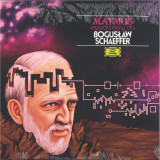
Matmos are one of the most prominent experimental electronic artists working today, crafting work by creating new conceptual frameworks & immediately testing those frameworks absolute limits. For Regards / Uklony dla Boguslaw Schaeffer they've focused on another artist known, in large part, for doing the same. Boguslaw Schaeffer was one of the first Polish artists creating electronic music. In step with American contemporaries like John Cage and Morton Feldman, he worked across the boundaries of classical composition, electronic experimentation, and radical theater in playfully form-breaking ways. Matmos are not the first ones to recognize the power of his catalog, from Solo (a 2008 documentary that garnered numerous international awards), to the annual Shaeffer's Era Festival (most recently celebrated simultaneously in Warsaw and Los Angeles) his work continues to inspire. Regards.. however, was not just inspired by his work, Matmos were given access to the entirity of Schaeffer's recorded works to use as they saw fit, commissioned by the prestigious Instytutu Adama Mickiewicza. They re-assembled & re-combined these recorded works with modern instrumentations in a way that only Matmos could, and what emerges is a composite portrait of the utopian 1960s Polish avant-garde and the contemporary dystopian cultural moment regarding each other across a distance. To facilitate the transcultural exchange that is the album's essential premise, all song titles and liner-notes are provided in both English and Polish. The album was mastered by Rashad Becker and features illustration and design by acclaimed artist Robert Beatty (Tame Impala, Osees, Mdou Moctar). Like the anagrams of the letters of Boguslaw Schaeffer's name that were re-assembled to create some of the song titles, the album itself is a musical re-assemblage of component parts into possible but unforeseen new shapes. Adding harp from Irish harpist Una Monaghan, erhu, viola and violin from Turkish multi-instrumentalist Ulas Kurugullu, and electronic processes from Baltimore instrument builder Will Schorre, and Horse Lords wunderkind Max Eilbacher, the resulting arrangements constantly toy with scale as they move from the close-mic-ing of ASMR and the intimacy of chamber music to the immensity of processed drones and oceanic field-recordings that close the album. Offering a "life review" of production styles, Regards / Uklony dla Boguslaw Schaeffer builds temporary shelters out of the panoramic wreckage of modernist composition, sixties tape music, seventies dub, eighties industrial music, nineties postrock and dark ambient, 2000s era glitch fetishism, and contemporary post-everything collage sensibilities.
out of Stock
Last delivered 4 years ago available to reorder, subject to availability
Released to coincide with a pan-European tour kicking off in the UK, themulti-platinum double Grammy Award winning group Arrested
Development deliver 'For the FKN Love', a true hip-hop tour de force, once again executively produced by charismatic veteran frontman Speech and British production maestro Configa.Significantly, it marks the first time that Arrested Development have worked with equally legendary collaborators, making this their biggest ever release
Big Daddy Kane, The Sugarhill Gang, Masta Ace, Freddie Foxxx, Monie Love, Kxng Crooked, G. Love, Tony Momrelle (Incognito), Dee-1 and Fatman Scoop all feature. Legends of this calibre rarely do features and yet have graced this album. Arrested Development have always been dedicated to supporting up-and-coming talent, and this trend continues with the likes of Twan Mack, Dell-P, Lish, Ke'Andra,
4ize, Twisted Royalty, Cleveland P. Jones, MRK SX and Jahah all adding weight to proceedings. When it comes to boom bap and classic rap, few artists come close to Arrested Development.
The two-time Grammy Award winning hip-hop group was the first hip-hop group to ever receive the Grammy for Best New Artist, while also receiving one for Best Rap Single. Showing the group's widespread appeal, its track 'Tennessee' was later named by the Rock & Roll Hall Of Fame as one of the Top 500 Songs That Shaped Rock & Roll, while the group was recognised at the Black Music Honors Awards in 2019. Meanwhile, 1993's 'Unplugged' album was not only Gold-certified
by the RIAA, but proved influential as one of the first hip-hop performances from the institution that is MTV.
'Vibe' is the latest single from Arrested Development, as featuring Big Daddy Kane, Cleveland P. Jones and Tasha LaRae. Part of the new studio album 'For The FKN Love', 'Vibe' was produced by the aforementioned boom bap specialist Configa. Configa had previously worked with Arrested Development on 2020's acclaimed 16-track studio album 'Don't Fight Your Demons'.
out of Stock
Last delivered 4 years ago available to reorder, subject to availability
2LP Gatefold (featuring liner notes). Limited Edition. Artwork by Meeuw.
A collection of personal recordings made on various synthesisers between 1989 and 2017, by Telesoniek Atelier. Huge Tip on this one!
Early feedback:
"Fascinating improvs. I loved 'Gruesse'. " Suzanne Ciani (Atmospheric)
"Beautiful music with real subtlety and depth” Anthony Child (Surgeon, Transcendence Orchestra)
"Lovely, pure synth music." Mark Pritchard (Warp Records)
"Chateuroux is mighty... A proper zoner. Flung on earth." John T. Gast
"This is a great release by Telesoniek Atelier - a musician unknown to me before now. I've been thoroughly enjoying playing this double vinyl release since i got it. Both discs are filled with amazing music that moves between abstract electronic experiments to melodic, DMT bent sounding, classical contemporary music and futuristic soundtracks from non-existing Sci Fi movies you'll wish you could see. It time-warps you from here to there then freezes the moment. It all sounds like its been taken straight from the ancient room .. you know, that one where the spirits of the great teachers live. This is very focused, unpretentious and highly emotive music . A wonderful and dreamy sound garden coming from what I imagine to be a beautiful mind . These discs will be camping out on my turntables for a while."
Tako Reyenga (Music From Memory)
"A deep sense of the symphonic permeates this record. While synthesizers form the basis of its sound, Hans Kulk shapes their timbre into uncanny acoustics and weaves them together like an orchestra. Just when you think you have understood what is happening, another layer reveals itself. Yet it keeps a floating sense of lightness throughout. A truly rewarding listening experience."
Hainbach
out of Stock
Last delivered 4 years ago available to reorder, subject to availability
Frances Castle is the illustrator/owner behind the Clay Pipe record label and The Hardy Tree is her on- going musical project. Common Grounds was started during the first 2020 lock down - when time moved very slowly and travel away from home became impossible.
The album was recorded at home by Frances, then mixed to tape with Ed Deegan at Gizzard Analogue Studios in East London. Ed plays drums on three of the tracks.
“Like many others with nowhere else to go, I walked the streets of my neighbourhood for exercise and well-being. I rambled like I might in the country side; stopping every now and then to take in the view, or notice something I’d missed before. I took to looking up local streets in historical newspapers, and read reports of mysteries and crimes that had happened here in the past. I researched the names of the people who had lived in my flat before me, viewed old census returns from the surrounding area, and noted the birth places and livelihoods of past residents. I began to see the ghosts of these people on my walks, and notice the things that they had left behind; shapes of ancient tram tracks creeping under the tarmac, an old gas street lamp in an alleyway, a tiny metal sign indicating a culverted river. I spent my evenings writing and recording the music on this LP, and then the following day would listen to the rough mixes as I walked, the music began to soundtrack the walks, and the walks began influencing the type of music I was creating.” - Frances Castle, 2022
1. A Garden Square in the Snow 2. The Spire of St Mary's 3. St Saviour's Through the Railings 4. Shop Fronts and Parked Cars 5. The New River Path, August 6. Railway Tracks 7. Mist on the Playing Fields 8. Face at the Window, Seaforth Crescent 9. Up on the Hill
For an artist whose career is flush with enigma, myth, and disguise, Nashville Skyline still surprises more than almost any other Bob Dylan move more than four decades after its original release. Distinguished from every other Dylan album by virtue of the smooth vocal performances and simple ease, the 1969 record witnesses the icon's full-on foray into country and trailblazing of the country-rock movement that followed. Cozy, charming, and warm, the rustic set remains for many hardcore fans the Bard's most enjoyable effort. And most inimitable. The result of quitting smoking, Dylan's voice is in pristine shape, nearly unidentifiable from the nasal wheeze and folk accents displayed on prior records.
Mastered on our world-renowned mastering system and pressed at RTI, this restored 45RPM analog version zeroes in on the shocking purity and never-again-replicated croon of Dylan's vocals. Enhanced, too, are the images associated with the calmly strummed and picked acoustic guitars and decay connected to the fading notes. The dimensions and ambience of the Columbia studio translate via subtle echoes and natural blend of instruments melding with one another, akin to honey integrating with tea. Providing comparably soothing effects, relaxing vibes pour forth from this reissue, which affords this masterpiece the fidelity it's always deserved. Wider grooves mean more information reaches your ears.
"Is it rolling, Bob?," Dylan famously queries producer Bob Johnston at the beginning of "To Be Alone With You," indicating the laissez-faire feelings that surrounded the sessions and helped yield the laidback, convivial music defining the album – arguably the most unique in the artist's vast catalog. While he dipped his toes into country waters on the preceding John Wesley Harding, Nashville Skyline throws its collective arms around the style in bear-hug fashion and drops any obvious folk references. Everything from the songs' moods to the amicable arrangements reacts against the era's turmoil and popular sounds.
This beautiful and beautifully executed effort might stand as Dylan's most effective protest ever, even if many missed the point upon original release. Advocating peace, love, and old-world allure without calling attention to any characteristic in an overly forward manner, Dylan frames the songs as ballads, rags, lullabies, and gentle honky-tonk dances. He adheres to expeditious brevity, keeping the arrangements tight and free of any filler, thus allowing the melodies to immediately work their magic and place hummable memories inside listeners' heads.
Indeed, if any Dylan masterpiece is overlooked, it's Nashville Skyline. In addition to his superb singing and infallible songs, Dylan enjoys backing from a crackerjack assembly of Nashville session musicians including Charlie Daniels, Marshall Grant, W.S. Holland, Charlie McCoy, Ken Buttrey, and Norman Blake. Country pros, and their respective performances, don't come any better.
As much as on any of his records, Dylan resides in a good place, mentally and emotionally. The idyllic, warmhearted environs of Nashville Skyline stand apart now just as they did in the late 1960s. The sincerity conveyed on the inviting "Lay Lady Lay," relief sighed on the romantic "Tonight I'll Be Staying Here With You," and unlimited promise expressed on the jittery "To Be Alone With You" parallel the lessons-learned yearning and genuine desire found on "One More Night," bracing "I Threw It All Away," and eternal "Girl From the North Country," performed to perfection with Johnny Cash.
A return to form after the departure that was 1980's muddled Panorama, the Cars' Shake It Up bursts forth with a rich assembly of synthesizers, drum machines, electronic blips, and catchy melodies that make it an early 80s pop staple. Known the world over, the famous title track proves the band's arrangement skills were in perfect shape and set the stage for a record overflowing with memorable hooks and complementary rock riffs.
Shake It Up also plays witness to primary songwriter/vocalist Ric Ocasek's increased cynicism and biting wit. While the Cars never took a rosy-eyed view of romance, the songs here impart a newfound sense of sympathy, regret, limbo, and reservation. The beauty of the Cars – and all ten tunes here – is that the music suggests something else entirely. Such subliminal emotions and dynamic contrasts act as a magnet, and the band plays as if it's in on the secret.
Apart from the party vibe of the title cut, the Cars aim for deeper targets and smarter undertones. Shake It Up is defined by an urban edginess and modern feel that comes alive on tunes such as "Cruiser" and circular "I'm Not the One," a pop gem laded with stacked vocals and keyboard lines that double as a horn section. The band's arrangements have never been better – or more involved. Absent the cheesiness that would mar the group's late-period work, the songs ride on the strength of keyboard-heavy lines and layered harmonies. You will not be disappointed.
Recorded at the band's Synchro Sound studios by famed Queen producer Roy Thomas Baker, the album takes advantage of electronic textures and varying timbres in immersing the listener in accessible albeit abstract washes of sound. MoFi's engineers made sure to capture every note and nuance; this marks the first time that Shake It Up has been remastered in any way, let alone from the original tapes.
When we can no longer move forward or look outward, some reflect and seek truth in themselves – some sharing, through the language of music, what might be impossible to say through words.
Amidst the budding tempest of 2020, Jeremiah Carter, hailing originally from Tennessee, found himself embroiled in a near suffocating air of uncertainty and anxious tension, mainly brought upon by the first spikes in a soon-to-be worldwide pandemic.
Only having recently relocated to the bustling city of New York, an unprecedented series of events took shape over the following months, isolating and dismaying the citizens around the globe in the process. It was during this time that Jeremiah turned his attention to music, discharging the emotional turmoil surrounding him, into a substantial wealth of newly composed work.
Beginning with the album »Rejoice«, which was completed in the wake of 2020 and released on A Sunken Mall that same year, two more albums took shape in a quasi-self-induced creative tremor, one that soon materialized a wealth of work, forming a triptych of three unique albums, produced within the span of only 6 months.
Finally, presented here is the second stage of the final triptych; »Speak, You Also«, dedicated to Paul Celan and giving us further insight into the heart of a beloved southerner, who amidst being tangled in the mesh of crisis, passion and communication, gave rise to a momentous yet equally timeless neoclassical body of work.
After three studio albums and over a decade deep into the music game, THE INTERRUPTERS deliver their new album, In The Wild. This 14-track opus is the real deal; it's a story of survival, a story of resilience, by a band being bold and rejecting the easy impulses of simply repeating what's worked before. Together during lockdown, Aimee Interrupter, partner and guitarist Kevin Bivona, and his younger twin brothers, Jesse (drums) and Justin (bass), decided to put idle hands to work. After building a home studio in their garage together, Kevin stepped up and took charge of production duties to become "the accountable one" this time around. The record took shape in an unforced and organic fashion, and the recording process was evidently a fun one, which is reflected in the sound of the album, gliding across a spectrum of breathless punk rock, doo-wop, gospel, dancehall, and the band's customary nods to the lineage of two-tone. It's further evidenced in the uplifting spirit and the glittering rollcall of guests (Tim Armstrong, Rhoda Dakar, Hepcat, The Skints) involved too. Thanks to the cocoon of the intimate environment they'd built and relaxed working practices, the results made for the most personal Interrupters album to date, as well as being the one all four feel most connected to. The follow-up to their 2018 breakthrough album, Fight The Good Fight, which spawned multiple singles including "She's Kerosene", with over 50 Million streams to date. This smash-hit sent the band to the top of the radio charts across the globe, playing live with everyone from Dropkick Murphys to Green Day. It was Spring 2020 as they were headed out on an 8-week Hella Mega stadium tour in support of Green Day, Weezer, and Fall Out Boy in the U.S., when like the rest of the world, the band's plans went kaput. The forced time at home gave them a period of much-needed rest, followed by an injection of creative energy that led the band to write over 80 songs, curate a live album and documentary film about their lives and their first trip to Japan. THE INTERRUPTERS will be back on the road in mainland Europe in 2023.
out of Stock
Last delivered 4 years ago available to reorder, subject to availability
After three studio albums and over a decade deep into the music game, THE INTERRUPTERS deliver their new album, In The Wild. This 14-track opus is the real deal; it's a story of survival, a story of resilience, by a band being bold and rejecting the easy impulses of simply repeating what's worked before. Together during lockdown, Aimee Interrupter, partner and guitarist Kevin Bivona, and his younger twin brothers, Jesse (drums) and Justin (bass), decided to put idle hands to work. After building a home studio in their garage together, Kevin stepped up and took charge of production duties to become "the accountable one" this time around. The record took shape in an unforced and organic fashion, and the recording process was evidently a fun one, which is reflected in the sound of the album, gliding across a spectrum of breathless punk rock, doo-wop, gospel, dancehall, and the band's customary nods to the lineage of two-tone. It's further evidenced in the uplifting spirit and the glittering rollcall of guests (Tim Armstrong, Rhoda Dakar, Hepcat, The Skints) involved too. Thanks to the cocoon of the intimate environment they'd built and relaxed working practices, the results made for the most personal Interrupters album to date, as well as being the one all four feel most connected to. The follow-up to their 2018 breakthrough album, Fight The Good Fight, which spawned multiple singles including "She's Kerosene", with over 50 Million streams to date. This smash-hit sent the band to the top of the radio charts across the globe, playing live with everyone from Dropkick Murphys to Green Day. It was Spring 2020 as they were headed out on an 8-week Hella Mega stadium tour in support of Green Day, Weezer, and Fall Out Boy in the U.S., when like the rest of the world, the band's plans went kaput. The forced time at home gave them a period of much-needed rest, followed by an injection of creative energy that led the band to write over 80 songs, curate a live album and documentary film about their lives and their first trip to Japan. THE INTERRUPTERS will be back on the road in mainland Europe in 2023.
New version on Solar Orange Vinyl. RIYL: Slowdive, DIIV, Electric Youth, The Cure, My Bloody Valentine. Solo project of Los Angeles based Matthew Doty (ex-Saxon Shore). For Matthew Doty, Deserta has always been about exploring a sonic universe that allows him to express a kaleidoscope of emotions, without having to say much at all. Through a patchwork of reverb-tinged textures – drone guitars, lingering synths and driving percussion – the Los Angeles-based singer/songwriter and multi-instrumentalist weaves together stories of care, frustration and catharsis that ultimately stretch to a gentle resolve. On new album Every Moment, Everything You Need, Doty chronicles the kind of year we all fear, full of uncertainty, tension and sustained pressure, and transforms it into a celebration of perseverance. It’s an essential reminder that we have the power to shape the stories we tell. The pandemic meant that Doty had to give up his studio and downsize a lot of his gear and instead, carve out a space in his two-bedroom apartment to craft the next chapter of Deserta. Sharing the space with his wife and son, Doty and his partner are also essential healthcare workers, which meant the couple would often have to tag-team childcare, along with 13-hour shifts in PPE and people constantly calling with questions about the ever changing guidelines and protocols. Once the blueprint for Every Moment, Everything You Need was set, Doty reached out to a number of collaborators to stitch together his vision for the sonic landscape. James McAlister (Sufjan Stevens, The National, Taylor Swift) came onboard to perform and record drums, while Caroline Lufkin (Mice Parade) wrote and performed vocals on the ethereal “Where Did You Go.” Elsewhere, the LP was mixed by Dave Fridmann (Tame Impala, Mogwai, Interpol), with Beach House and Slowdive producer Chris Coady engineering and co-producing, making this the first time Fridmann and Coady had worked together on a project. While the vocals are more prominent than Deserta’s previous albums, it’s their amalgamation with the instrumental aspects that secures Every Moment, Everything You Need as Deserta’s most confident and assured release to date. An affecting emotional candor teamed with persistent riffs and tenacious rhythms sees Doty unafraid to dive deeper; an unrestrained approach that ushers in a lustrous purging of agitation and anxiety. Showcasing those dark, exhaustive thoughts through crucial swells and looped, electronic soundscapes, it’s an LP that’s infinitely layered, with something new to discover with each and every enchanting listen.
Port Sulphur : In contrast to the methodology deployed on the first album,
'Speed Of Life' features no collaborations or vocals, the instrumental
pieces were recorded by Douglas MacIntyre, Paul Turnbull and Samuel
Joseph Smith (at the later's Green Door studios in Glasgow)
The album was constructed using 'automatic' writing and recording techniques
based on an reimagined soundtrack for Andrei Tarkovsky's film, 'Nostalghia'.
Photographer Gavin Fraser and film director Grant McPhee were very much part
of the 'Speed Of Life' team.Speed Of Life features 10 tracks, all of which were cut
live before being reconstructed by editing, in much the same way that Can and
Harmonia shaped their music.
Jacob Long’s third Earthen Sea outing for Kranky, Ghost Poems, further refines his fragile, fractured palette into fluttering arrhythmias of dust, percussion, and yearning.
Composed during the first wave of lockdowns in New York, the pieces took shape patiently from samples of piano, texture, and domestic sounds (sink splashing, room tone, clinking objects), filtered through live FX to imbue them with an intuitive, immaterial feel. Wisps of melody splinter, shimmer, and refract, like light on water; pulses accrue and dissipate, as if mapping shifting sands. Throughout, there’s a sense of matter made animate, of absences felt.
Long cites notions of “the studio as a dub instrument” and the melancholy of “7th chords on a fake Rhodes patch” as central elements in his process, transforming raw materials into rare thresholds of symbiosis and hypnosis. This is music for night skies in hollowed out cities, for views across rivers towards unknown shores: restless, placeless, and profound.
track listing:1. Shiny Nowhere 2. Stolen Time 3. Felt Absence 4. Oblique Ruins 5. Snowy Water 6. Rough Air 7. Slate Horizon 8. Ochre Sky 9. Fossil Painting 10. Deep Sky
press quotes for previous album Grass and Trees:
“Jacob Long’s vaporous, lo-fi ambient tracks feel like snapshots of stillness made of moving parts.” Pitchfork
“As light as a warm breeze on skin, Earthen Sea’s latest album for Kranky showcases Jacob Long’s natural sensitivity for low-key, enchanting electronic sound craft.” Boomkat
“It’s exciting to hear such a significant change in his sound without sacrificing a personal touch and sonic character.” Igloo
out of Stock
Last delivered 7 months ago available to reorder, subject to availability
Long-established house talent Bontan makes a much-anticipated return to Hot Creations in June. Gifting us with the two-track Gold Teeth, it showcases the UK-native at his best and continues a standout 2022 that has already seen him release on Hot Since 82’s Knee Deep In Sound last month.
Shamanic-like drums create a hypnotic sensibility right from the word go, as we’re graced with echoing vocals on Gold Teeth. There’s an air of tribalism throughout via shimmering maracas and rhythmic hi-hats, before Heart Shaped Leaf takes on a techy edge. Cow bell-esque percussion undulates beneath a low-slung bassline whilst spacey lyrics repeat nearby, forming a peak-time, club-ready cut.
Since first bursting onto the circuit in 2015, Bontan has become one of the best-selling acts on Beatport, a winner at the prestigious DJ Awards and has firmly cemented himself in the underground house scene. He has released on labels such as Crosstown Rebels, Defected and Origins and remixed for artists including Groove Armada, Booka Shade, Melé and Yousef. He kicked off 2022 with a remix of Agenda for Lazarusman, which reached Number 3 in Beatport’s Afro House chart, as well as releasing Stutterman on Club Bad. His releases this year have received support from Jamie Jones, Skream, Eats Everything, Agoria and Chris Lake to name a few, a testament to Bontan’s keen ear for production.
out of Stock
Last delivered 15 months ago available to reorder, subject to availability
Multi-instrumentalist and Composer Eric Dolphy made a significant impact in the
world of Jazz over a period of half a dozen years running from 1958 until his
untimely death in 1964. He took part in many of the great recording sessions, both
as a leader and sideman, that moulded the sounds and outlook for modern Jazz
as it developed over subsequent decades. In addition, in his superior hands, he
gave a voice to the under-used Bass Clarinet – as heard on both the tracks
Eclipse and Serene, eventually taken up by equally adept Reedmen, and his Flute
playing became a model for those looking to expand the range of the instrument.
Examples of his leadership and fluidity as a Flautist are featured on 17 West and
Sketch of Melba where he shapes the character of both compositions. 1960
became his breakthrough year as Prestige Records gave him the chance to record
under his own name which resulted in 1961’s Out There. Dolphy emerges on this
album as a fully-fledged Modernist. His technique is impressive but the emotional
commitment he brings to the music is equally striking
STRICTLY LIMITED COLLECTOR'S 'ART EDITION' OF THE ALBUM OF THE SAME NAME + TONS OF BONUS SONGS.
Elegantly electronic as ever, the new songs draw a remarkable strength from their monumental arrangements and foreboding aura. Embellished by a vague sense of nostalgia and enhanced by old family photos from the private Ljung vaults, "Orchestra Of Knives" is ZEROMANCER's dark night of the soul, an odyssey trying to coming to terms with the ineffable fact that we're all going to die. Instead of wallowing in misery and self-pity, however, the Norwegians chose to use this intense realization to craft some of their most touching, most heartfelt and easily most monumental songs ever.
The harsh and the mellow, the dark and the light, the depression and the elation all flow together on "Orchestra Of Knives", an album worthy of the turmoil of our age. Once and for all, ZEROMANCER are the masters of electronic melancholy, the designers of a musical world nourished by the shadows we cast. It's been too long since we felt understood and at ease merely by listening to a song.
- Multicoloured vinyl
- Black, red and white in the form of rotating rays
- Each record individually made by hand
- Differences in pattern shapes and colours are therefore possible
- Every copy is unique
- 2 x180g 12" vinyl
- In total 9 bonus tracks off the EPs 'Damned Le Monde', 'Mourners' and 'Terminal Love'
- Sumptuous gatefold sleeve
- Printed inner sleeve and containing lyrics
- Printed vinyl labels
- Strictly limited to 300 copies only!!!
Lasse Marhaug is one of those characters that operates at the nexus of so much stuff that’s important to us here - working as a producer (over the last couple of years alone he’s helped shape albums by Jenny Hval, Kelly Lee Owens, Okkyung Lee, Hillary Woods etc etc), a mastering engineer (far too many releases to mention), a prolific sleeve designer (likewise), publisher (his occasional Personal Best magazine is still going strong) and, perhaps most importantly - a recording artist in his own right. ‘Context’ is his most substantial release in years - a crushing assembly of bone-dry/darkside drone/machine malfunctions that’s bursting with a visceral, throbbing, mass of feeling. If yr into anything on the spectrum from Mika Vainio to Grouper to Kevin Drumm or Deathprod - this one’s as good as it gets
Over almost three decades of activity, Marhaug has carved out notoriety as a solo performer, a prolific collaborator (working with everyone from Sunn O))) to Jim O'Rourke) and as a busy producer, who's notched up credits on some of the most striking-sounding albums of the last few years. This new album was created as a swan song for the infamous Oslo studio that he's inhabited for 17 years, prior to his move back to the Arctic Circle where he originally came from. Recorded over a 14-month period and painstakingly edited from hours upon hours of material, it might just be the most impressive, moving record we’ve heard from him so far.
The interplay between piercing softness and deafening noise is the key to "Context", displaying a philosophy Marhaug has been exploring for years. Few other artists are able to balance chaos and harmony with such ease; Marhaug does it without grandstanding, it's music that sounds as simultaneously beautiful and as daunting as the Arctic landscape he's returning to. At any moment a sound can be alluring or treacherous, like the frozen sun reflecting on a snowy mountaintop. Marhaug's deftness with rhythm and bass emerges on 'Context 3', as he pairs Vainio-esque low-end pulses with crumpled noise and widescreen tones; as disquieting music-box chimes absorbed into the blasted soundscape on 'Context 5', while we're thrust into the freezing cold on 'Context 6', subjected to punctuating gusts of white noise and trapped string loops.
Trust it’s a rare and near-mythical beast, conjuring vast, treacherous soundscapes illuminated with pangs of sentiment that naturally weave strands of his non-musical practice in their psychosensual lustre and gritty attrition. As he steps into a new phase of his career, we're left with a concluding chapter that stands as a summation and open-ended post-credits reveal.
out of Stock
Last delivered 4 years ago available to reorder, subject to availability
Berlin talent Joplyn is next up on Crosstown Rebels making her debut release on the label titled We Will Forgive Ourselves featuring remixes from prolific producer MK and label-head Damian Lazarus. Serving up two remixes in the form of MK’s Dub and Damian Lazarus’ Re-Shape, it acts as another milestone release for the near twenty-year-old imprint.
We Forgive Ourselves is the perfect musical metaphor for Joplyn’s inspiration. The track opens proceedings with elegant drum pads which are paired beautifully with quaint hi-hats. A gentle, healing vocal, followed by a deep heavy bassline creates a profound juxtaposition. Galactic-like sounds fizz in and out, fusing everything together to create a real sense of utopia that truly embodies Joplyn’s vision.
Brimming with a signature MK sound right from the offset, we’re treated to six-and-a-half minutes of perfectly executed contemporary deep house. Warming, subtle and inherently groove-led, soft kicks open into Joplyn’s haunting vocal offerings before rhythmic hats coalesce alongside, forming a modern dance anthem that is sure to light up many a club setting this summer.
Damian Lazarus’ Re-Shape comes next. Shimmering with an ethereal quality, the nine-minute piece undulates between moments of spiritual bliss to pummelling, acid-laden danceability. Whirring synths help create a galactic quality, as we travel between feelings of introspection, euphoria and everything in between.
out of Stock
Last delivered 6 months ago available to reorder, subject to availability
On July 22nd Mutant Joe unveils his debut release for Evar, 'Wrong Way Out', an EP that twists rap, electro and breaks out of shape with cool malice.
Since his arrival on the scene with a pair of 2019 releases for UK-based label Natural Sciences, the Brisbane-based producer's output has spanned underground trap,gabber, electro, jungle,breaks and various global club mutations, repackaged and delivered with a unique sense of impending threat and unhinged delight.
Mutant Joe repurposes mechanical SFX, stock horror movie samples, feedbacking hardware and crunching percussion to create a dark and theatrical soundworld. Building on his earlier work with underground trap artists like Freddie Dredd and TRiPPJONES, opener 'Bangin On' sees Joe revisit his love for dirty-south-indebted electro hybrids, combining fizzing bass and steely beats, plus rhymes courtesy of a close friend, Atlanta rapper Apoc Krysis. 'Static Effect' deploys similar Drexciyan influences, its overheating 808s colliding with aquatic machinery and disembodied vocal chops.
'Eyes Without a Face' presents a unique take on some classical rave combinations, with rolling, metallic jungle breaks, footwork-esque kicks and tightly layered, redlining hardware. The pace eases off on the ominous and aptly-named 'The Living Dead', a low slung, off-kilter breakbeat weapon. The EP closes with a pair of remixes: a twisted dungeon-rave tool by Ukrainian D&B specialist Limewax, and a tightly wound, detailed broken techno workout by EVAR regular Wheez-ie.
'Wrong Way Out' offers six wildly different approaches, united by Joe's mastery of gothic-horror sound design and unique ear for soundtracking end-of-night deviance. It's a cross-section of the sound Mutant Joe has so quickly made his own: unclassifiable, unrelenting and darkly euphoric.
out of Stock
Last delivered 23 months ago available to reorder, subject to availability
Kontinuierlich hat sich Wolfgang Haffner weiter in das Vorderfeld der Top-Schlagzeuger gearbeitet. Deutschlands einziger Jazz-Superstar mit Pop-Anklängen, der Trompeter Till Brönner mag genauso wenig auf ihn verzichten wie Nils Landgren, wenn er Abba den Funk verordnet.
Norwegens aufregendste aktuelle Stimme im Jazz, Rebekka Bakken holt ihn immer wieder in ihre Band und selbst die No Angels riefen ihn an, als es an die Produktion ihrer Konzert-DVD ging. Die letzten Veröffentlichungen des Schlagzeugers waren aus den Jazz-Charts vieler Länder nicht wegzudenken.
Neben der Virtuosität des Instrumentalisten Haffner darf man aber nicht vergessen, dass er ein ausgezeichneter Songwriter, Arrangeur und Produzent ist. Auf seinen eigenen Alben hat er diese Fähigkeiten bereits zur Genüge angedeutet, mit dem vorliegenden Album jedoch liefert Haffner sein Meisterstück ab. Durchaus seinen Helden wie Pat Metheny, Esbjörn Svensson oder auch Dhafer Youssef verpflichtet, gelingt es ihm, eine überzeugende Mischung aus innovativen Sounds, tragfähigen Melodien und brillantem Gruppensound zu erzeugen, die erstmals rein europäische Züge hat.
Dabei hat er die Creme de la Creme europäischer Jazz-Musiker wie selbstverständlich zu einem Sound geformt, der das Zeug zum Klassiker hat. Die flirrenden Gitarrensounds von Martin Koller (Rebekka Bakken Band), elektronische Effekte, die an die besten Momente aktueller skandinavischer Produktionen erinnern, hier und da kompromisslose Rocksounds (»Corazon«) und natürlich auch immer wieder Jazz Soli auf höchstem Niveau. Trompeter Till Brönner trägt mit seinem Flügelhorn – Solo dazu bei, dass »Shape Of Peace« zu einem atmosphärischen Highlight gerät.
Der magische Sprechgesang von Rebekka Bakken macht »Somewhere Else« zu einem andachtsvollen Moment des Albums, in »Momo's Dance« werden die Basslinien von Tim Lefebvre spielerisch leicht von Nils Landgren an der Posaune umtanzt, »Seventy Five« glänzt durch Reminiszenzen an Krimis der 70er Jahre. Immer wieder sind es aber auch die elektronisch verfremdeten Sounds z. B. von Saxofonist / Bass Klarinettist Johannes Enders, die »Zooming« so zeitlos und aktuell erscheinen lassen. Andererseits hat noch kein Album des Nürnbergers derart facettenreiche Schlagzeug-Sounds eingefangen, man staune nur über die intelligente Einbettung seines Solos in dem Stück »Metropolis«, die in keiner Weise aufgesetzt sondern einfach nur organisch wirken.
Musikexpress:
"Statt der Zurschaustellung seiner Trommelkünste steht hier das Bemühen um einen homogenen Gesamtsound im Vordergrund. Dabei zeigt sich Haffner hier sowohl als cleverer musikalischer Architekt, der getragene Themen und flächige Strukturen effektvoll mit lebendigen Clubgrooves kontrastiert, als auch als sensibler Klangmaler. Elemente aus Ambient, Elektronik, Fusion, Drum'n'Bass und gelegentliche Worldmusic-Tupfer addieren sich hier zu einem eleganten und sehr europäi- schen Nu-Jazz-Entwurf (…) Wahrlich coole Musik, die dem Hörer ihre Brillanz nicht sofort an den Kopf schmeißt, sondern ihre subtile Kraft und Klasse nach und nach offenbart"
Stereoplay:
"Aktuelle Euro-Sounds statt abgenudelter US-Fusion - so lautet hier das Programm von Deutschlands bestem Allround-Drummer. Mit Tim Lefebvre, Bass, und vier wechselnden Keyboardern legt Wolfgang Haffner eine fabelhafte Basis für Johannes Enders' oft elektronisch verfremdetes Gebläse und die E-Gitarre von Martin Koller. Nils Landgren, Till Brönner und Rebekka Bakken setzen schöne Akzente in den Tracks, die Electro-Jazz mit HipHop poetisch verschmelzen."
Canadian born, Berlin based producer Aquarian debuts on Dekmantel Records’ UFO imprint with Mutations I & II, a series of two EPs following his debut album The Snake That Eats Itself and his collaborative records as AQXDM. The series marks his return to club focused solo material for the first time since 2017.
Originally written as inflection points for his typically boisterous and genre collapsing dj sets, Mutations deftly splices the foundational DNA of his earliest productions — electro, hardcore and broken beat techno – with new and vital influences.
Mutations I: Death, Taxes and Hanger finds Aquarian gleefully contorting mid-2000s dnb tearouts, wrong footed IDM and progressive trance euphoria into thrilling new shapes. Fast techno, hi-tek jazz, amphetamine-addled filter house and breakcore join the fray in Mutations II: Delicious Intent as he pushes intensity levels past breaking point. Whichever the touchstone, the results are clear: distinctly modern, highly-propulsive body music with an unapologetically emotive core.
out of Stock
Last delivered 87 days ago available to reorder, subject to availability
In 2020, a year shaped by stringent COVID-19 restrictions, many of us paused for thought about our collective futures. For First Light Records, this reflection, plus the support of Sound and Music's Composer-Curator programme, led to the development of Unbuilt Sound, a new series of commissions centred around acoustic ecology; the relationship between listener and environment. The first iteration of the Unbuilt Sound series sees Flora Yin-Wong retreat to an isolated cabin outside Machynlleth, North Wales, to collect the field recordings that provide the basis for her folklore-inspired album, The Sacrifice.
A collage of twisted field recordings, rich waves of synth, and whispered vocals, The Sacrifice oscillates between gentle familiarity and dreamlike distortions, inspiring a folkloric sense of place that extends across time. Softly dissonant drones envelop the sounds of rocks underfoot and rippling pools, a continuous call and response between artist and landscape. These themes are perhaps best captured on 'Willow Bends', which features spoken word written and performed by Berlin's Rachel Lyn. "Ride," she says, "these ancient and contemporary currents, carrying their secrets from up-stream. Wanderwaves, when pebbles skip across the ripples, I reflect upon it, this water mirror..."
out of Stock
Last delivered 4 years ago available to reorder, subject to availability
Austudy Records is proud to present it’s debut release Burning It Up: Australian Reggae (1979-1986). A
compilation surveying the influence of Reggae on Australia’s preoccupation with Rock, Pop and New Wave
between the years of 1979-1986. This selection of 8 obscure tracks originally issued on 7” records represent
some of the earliest examples of Reggae sounds in Australian recorded music.
out of Stock
Last delivered 3 years ago available to reorder, subject to availability
DJ Swagger Minor Major Grand Schemes Nearing that halfway mark into 2022, you'd think Bielefeld's most illustrious producer DJ Swagger would have begun losing steam. Following a successful string of releases throughout the New 20's - consistently solid slabs on Thirty Year Records, ec2a, Timeisnow, plus killer collaborations with LUZ1E as DJ DOOM - the young musician pulls out his second full-length on his own GODDESS MUSIC imprint in the form of a slick, multi-genre double-pack: Minor Major Grand Schemes. MMGS is as much a refinement as it is an expansion of Swagger's stylistic bag of tricks, maneuvering through modern styles of club music, pop sensibilities and sleek production techniques that ticks off boxes for both DJs and casual listeners alike. You got your cheeky intros/interludes and your trap-pop miniatures; dusky UKG street devotionals and bonkers dubstep tools; sexy vocal features, clickity-clack percussion, and biiiig low-end. This is what DJ Swagger says about his new LP: This album is the most DJ Swagger sound yet. It wraps up all my influences from techno over hiphop to breakbeat and IDM. I had such a great time working on this and watching the process. I'm beyond grateful for the features and beautiful people that consistently helped me shape this piece of music. As said this is my very own project on my own label. Probably the largest project I ever started and drove to finish. Minor Major Grand Schemes stands for the balance between objective and subjective reality. Your perception of things mirrors on how you see them, feel them and take them for yourself. Minor major, so to say, important or not-so-important, grand schemes, means that things might get more or less important on how you value them. This is at least what I learned for myself doing a long-term therapy late 2020 into early 2021 against depression and OCD. As my view changed, so did my surroundings. As my surroundings changed, so did my view. I found that to be a really important and crucial lesson on how to deal with fear, anxiety and feelings alike. The toughest thing is to learn how to shift your mind towards another, more positive direction. That might take time, a lot of hard work and a strong will. Be sure that it is okay to ask for help, always. If I didn't get the help I got during my down times, I don't know where I would be now. This is why I decided on that name for this album. Consider yourself important and beautiful at any given time. Have fun and enjoy listening to Minor Major Grand Schemes.
out of Stock
Last delivered 3 years ago available to reorder, subject to availability
"Still in shape, my methods refined", singt Paul Banks in "Toni", dem Eröffnungsstück und der ersten Single von Interpols siebtem Album "The Other Side of Make-Believe". Mit dem diesem Album betritt die Band Neuland: Parallel zur Erkundung der düsteren Unterströmungen des Zeitgeists sind die neuen Songs von Interpol von Sehnsucht und Anmut durchzogen. Daniel Kesslers Signature- Gitarren-Sound, Samuel Fogarinos messerscharfe Percussion-Präzision und Paul Banks sonore Stimme strahlen eine Verletzlichkeit aus, die viele langjährige Fans der Band überraschen dürfte. "Es gibt immer ein siebtes Mal für einen ersten Eindruck", so Banks darüber. Die Aufnahmen zu "The Other Side of Make-Believe" begannen im Jahr 2020 aus der Ferne heraus. Anfang 2021 trafen sich Interpol erneut, um in einem angemieteten Haus in den Catskills an neuem Material zu feilen, bevor sie es später im selben Jahr in Nordlondon fertigstellten. Dabei arbeiteten sie zum ersten Mal mit der Produzentenlegende Flood (Mark Ellis) zusammen und taten sich anschließend wieder mit dem ehemaligen Co-Produzenten Alan Moulder zusammen. Der Titel von "The Other Side of Make-Believe", das Cover und der lyrische Hang zu Fabeln, Nebelkerzen und der Wandelbarkeit der Wahrheit spiegeln Banks Abscheu vor den Verwerfungen des Informationszeitalters wider. Das Album wird sich im Bewusstsein der Interpol-Fans bald ebenso vertraut anfühlen, wie es für die Band bei den Aufnahmen zu der Platte der Fall war. Das Trio-Noir hat fast sieben Alben und mehrere Besetzungswechsel besser überstanden, als irgendjemand hätte vorhersagen können, und sich dabei nie selbst verloren. Heutzutage sind Interpol eine der am markantesten klingenden Rockbands des 21. Jahrhunderts. Seit nun mehr einem Vierteljahrhundert verfeinern Interpol ihre Methoden, womit sich dann auch der Kreis zum ersten Song des neuen Albums wieder schließt.
2000'S CLASSIC 'BREEDING DEATH' EP DEBUT FROM THE SWEDISH
MASTERS, PRESENTED ON MID-PRICE CD WITH BONUS TRACKS -
FEATURING THE LINE-UP OF ANDERS NYSTROM, JONAS RENKSE,
MIKAEL AKERFELDT & DAN SWANO.Bloodbath is a titan of death metal
from Stockholm, Sweden, notable for the inclusion of Katatonia & Opeth
members &, in their recent era, welcoming Nick Holmes of UK doom
legends 'Paradise Lost' to join in with the brutality
Formed in 1998 with a mutual fascination for horror & the glory days of death
metal from classic bands such as Entombed, Morbid Angel, Cancer & Autopsy,
Bloodbath has remained a leading light of extreme metal since their 'Breeding
Death' EP was unleashed back in 2000, & a formidable force for over 20 years,
cemented in recent times by their 'Grand Morbid Funeral' (2014) opus & its followup, the even blacker- hearted 'The Arrow of Satan is Drawn' in 2018. 'Breeding
Death' was the original catalyst to propel Bloodbath into the death metal sphere
with full force. Primarily dedicated to recreating the buzzsaw, high-energy sound
of mainly Swedish greats such as Entombed, Carnage & Dismember, 'Breeding
Death' was pure death metal worship to reignite the fading old school essence of
brutality as the 21st century dawned.
Bloodbath's initial line- up consisted of Anders Nyström & Jonas Renkse of
'Katatonia' joined by Mikael Akerfeldt of 'Opeth' on vocals & completed by Dan
Swanö of 'Edge of Sanity' on drums. The EP was recorded at The Sanctuary in
Sweden, with production & mixing duties also handled by Dan Swanö.
This edition of 'Breeding Death' is presented on mid-price CD & includes bonus
tracks in the shape of demo versions of the songs 'Breeding Death' & 'Ominous
Bloodvomit'.
Having been extensively road-tested this past year by DJs including Daniel Avery, HAAi and Gerd Janson, Highdive arrives with tangible anticipation. The work of less-than-shadowy figures Gramrcy and John Loveless, the pair have passed lockdown and beyond remixing artists such as WH Lung, Discovery Zone and Ghost Culture. Debuting their first original material, closely following Gramrcy’s recent appearance on Loveless’s own Hot Concept imprint, Highdive is a long-anticipated explosion of energy.
Built around a sonic-boom breakdown, glossy rave chords and pounding post-punk drums, Highdive feels immediately at home on Phantasy. Having worked closely alongside founder Erol Alkan in recent years to shape the imprint's diverse output, Loveless' collaboration with the Peach Discs founder nods to the electro landscape of the label's earliest days. Having never left dance floors since, Gramrcy & John Loveless take a golden opportunity to plunge dancers into the sublime and the ridiculous.
While a stripped-down ‘Beats Mix’ sees the pair adopt a less-maximal approach, leave it to Schacke to stretch Highdive into hardcore rave heaven. The already-influential Copenhagen artist underscores his refreshing funk in the ‘fast-techno’ scene through which he has risen, turning the screws and upping the tempo with intense but elastic results.
out of Stock
Last delivered 4 years ago available to reorder, subject to availability
‘Jim, I’m Still Here’ is the second album from James Righton under his own name; produced by David & Stephen Dewaele of Soulwax and released on their label DEEWEE, the album follows The Performer released in 2020. James’ musical past is well documented; as the frontman of the genre inventing Klaxons, he helped create a revolution in British music and spawned a youth subculture. ‘Jim, I’m Still Here’ is a captivating meditation on the artists experience of the pandemic as James looks to conceptualize the myriad of emotions and events into a fascinating third person narrative. One of the album tracks features Benny Andersson from Swedish pop legendary band ABBA, with whom James has been working on putting together their new live band.
"I wrote this record during the first few months of the pandemic. At the time I wasn’t intending to make any music. I’d just released ‘The Performer’ on what turned out to be the first week of lockdown. The outside world shut down and I was busy being Dad. Then. I started making notes on my phone. Just words. In moments stolen from family life I’d head downstairs to my garage studio and put the words to music. When I was happy with a song I’d send it to Dave and Stef. Demos and Pro Tools sessions were passed back and forth between my home studio and the Deewee studio in Ghent. I was nervous about their response to the music I was making. It was personal, raw: unlike anything I’d ever written before. A conversation with the outside world during these times of isolation. For the most part my life was centred on the domestic. Getting to spend so much time with my family was a blessing. Making music was my play time. Isolation opened me to memories and allowed me to dream of the future. As the outside world tried to adapt to the pandemic I was asked more and more to promote ‘The Performer’ in live stream concerts on various platforms. As the pandemic went on, demands on production increased (more camera angles, better lighting, higher quality audio recordings). It became a one man show. I’d head downstairs to my garage, put on my Gucci suit, comb my hair and become someone else. Jim. Jim the deluded rock star, living out his fantasies from the confines of his garage. A lonely stardom. And yet, Jim was part me. He made me feel like I still existed. Jim became the centre of the new album. Dave, Stef and I worked into the sessions over the following months. It was always exciting to see where they would take my initial demos. The working method and the restrictions of making music together but in separate spaces, separate countries shaped the sound and feel of the record.
I won’t make another record like this again”.James/Jim
out of Stock
Last delivered 4 years ago available to reorder, subject to availability
Eighteen sacred psychedelic suppositories from the laboratory of mad scientist and scalpel-happy pop mutilator Jean-Pierre Massiera. Includes
the rarest and most sought after fuzz funk, spooked surf and
interplanetary prog from ‘The French Joe Meek’ and all his schizoid splitpersonalities and freakish friends - The Maledictus Sound, Chico
Magnetic Band, Visitors, Human Egg, The Pirhana Sound and Jesus
himself.
Let Finders Keepers introduce you to some old friends of theirs - Charlie Mike Sierra, Jean-Pierre Areisam, JPM and Co. Erik, The Horrific Child, Jesus, Les Maledictus Sound, Human Egg... This might sound like they’re flicking through the imaginary LP racks in the record shop from ‘A Clockwork Orange’ or perhaps congratulating the runners up in a
Halloween fancy dress competition but for the previously uninitiated you
have just been ordained into the congregation of the many split
personalities of one Mr. Jean-Pierre Bernard Massiera. Bow down to the
nine-headed monster as he mutates and shape-shifts back through time
to his humble beginnings in a Buenos Aires province ravaging and
pillaging the music of the European people for his own twisted
benediction along the way.
This might, as intended, sound a little bit dramatic but if there is one
single ingredient that gives the eccentric Jean-Pierre Massiera his
distinct flavour it’s a large dollop of drama. Add sprinklings of
schizophrenia, shock, myth and macabre and you are on the way to a Bmovie broth with an acquired taste that has, like all the best cheese,
taken over thirty years to mature to perfection. Like all the best monsters,
his split personality is the key to his infamy and the secret of his blood
sucking success.
This is why Jean-Pierre Massiera is (un)commonly known for two key
periods in his career which, like a worm, can be split down the middle to
thrive and flourish independently. To cut a long story short, Massiera is,
above all, a lover and purveyor of musique fantastique, and is willing and
able to hijack whichever stylistic vehicle that passes him buy in order to
do feed his lust. In the earlier part of his career he honed his sordid craft
amongst psychedelic circles in Nice and Quebec. From late 1972
onwards he moved to Antibes and started a disco revolution and
became an in demand cosmic record producer. For years, prog rock
obsessives and disco aficionados have wondered if there was two
unrelated freak merchants called Jean-Pierre Massiera but, in this rare
instance, exploito-maniacs from both sides of the cosmic coin are united
by the work of this singular, single-handed monstrous music
manufactory.
Remastered and available once again on deluxe black vinyl since the
initial Finders Keepers limited edition 2009 pressing
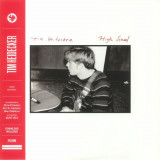
Produced by Heidecker, Drew Erickson, Eric D. Johnson and Mac DeMarco, High School sees Heidecker emerging as an increasingly playful and poignant story teller, infusing childhood tales with new gravity. In conjunction, he announces Tim Heidecker Live! Featuring Tim Heidecker and The Very Good Band, his first two-act tour of comedy and music. Since 2016, Tim Heidecker has chronicled the annals of adulthood on a series of supreme singer-songwriter albums. The crushing devastation of divorce and the existential malaise of middle-age, the minutiae of home ownership and the ritual of family vacation, child rearing and global warming: Heidecker has handled it all with humor and heart. But, there’s one pivotal lodestar of human development he has yet to mine that’s right, High School. First single “Buddy” is a composite of a few woebegone friends, which finds Heidecker reminiscing on the familiar tragedy of the adolescent stoner, manifesting the destiny of undiagnosed depression and parents who didn’t care much. The song itself is a jangly delight, but it’s hard not to mourn for “Buddy,” then re-count whatever blessings you may have. After initial and fruitful sessions with Jonathan Rado, Heidecker started recording tunes with DeMarco and Erickson, who had also worked on 2020’s collaboration with Weyes Blood, Fear of Death. At DeMarco’s studio, they added drum machines and synths and sidewinding solos to Heidecker’s big strummed chords. Johnson (Bonny Light Horseman, Fruit Bats) helped Heidecker finesse the tunes even more, making the music as rich as the feelings. Kurt Vile contributed to one song, as well. Through all those sessions, it slowly became clear: Heidecker was writing not only about the adventures and misadventures of life as a Pennsylvania teen in the early ’90s, but also how it felt to lose a juvenile sense of mystery and possibility as an adult. He was writing about high school and, really, the way it helped shape everything else. Back at Pennsylvania’s Allentown Central Catholic High School, Heidecker dreamed of making it with one of his many rock bands — Time and Other Things, Shaggy’s Beltbuckle, and (incredibly) The Pulsating Libidos. Two years shy of his graduating class’ 30th anniversary, Heidecker admits he had little of substance to say when he was 17, like all but the rarest of precocious minds. In college, though, he found the friends with whom he built his comedy career, largely apart from music and without much thought for his time back at Central Catholic. He was focused on his future. It is fitting, then, that as Heidecker has become such a delightful singer-songwriter and collaborator, he returns to the first scene of his time as a musician. Maybe he’s right — he didn’t have anything to say or sing about life back then. But across the earnest and amusing High School, he finds plenty to say about those weird and wonderful and ordinary times.
Greek genius Christos Chondropoulos’ stunning debut for The Death of Rave finally lands on vinyl - an incredibly imaginative masterwork rich with quartertone melody and meticulously chiselled production, shaped into a future-folk songbook that deeply expands on his wonders for 12th Isle and The Wormhole. Highly recommended if yr into Paul DeMarinis, Rashad Becker, Ryuichi Sakamoto, Kara-Lis Coverdale's 'Aftertouches', Jonathan Bepler’s soundtracks for Matthew Barney, Black Sabbath or Aphex Twin. Floors us every time!
Continuing Christos’ singular fascination with, and reappraisal of, Ancient Greek modes, ’Relics’ further excavates the deeptime topography of Greek music prior to the ban of “oriental” or 1/4 tone microtonal modes nearly 100 years ago.
Clandestine, euphoric, hyperreal and otherworldly; it takes shape as faintly familiar forms of new age folk, avant-techno and metal musicks, but with an alien appeal that treats the past almost like another planet, never mind a foreign land. Christos studiously raids the past for lost treasure, navigating his tuned instincts as an improvising percussionist, and lover of non-Western composition, to create a uniquely absorbing soundworld that resembles an AI’s dreams after ingesting encyclopaedia entries on thousands of years of Greece prior to 1936. In the process, the album acutely questions his and our relationship to the past, and what has become lost in translation with reliance on prelaid templates and the “wisdom” of elders.
Bursting to life with the iridescent arps and new age AI chorale of ‘First Love Fereter’, and concluding with bone-clacking raverie of ‘Jungle X’, the album offers a stunning advance of the themes and aesthetics in Christos' previous records, from the self-released free jazz of ‘Fingerpainting’ (2013) to 2021’s 12th Isle released ‘Athenian Primitivism.’
Thanks to meticulous detailing, ‘Relics’ allows a finer play of textured light and almost tangible - yet entirely generated - voices into his music: most strikingly on the sublime songcraft of ‘Regret’ and ‘I Dream Of You’, while the likes of ‘Asham’ are bathed in deeply uncanny atmosphere, and his percussive proprioceptions are most heightened in the delirious battery of ‘War Horns’ and ‘Sacrifice’, with ‘Cyber Crust’ calling up demonic, cthonic pagan spirits resembling Black Sabbath undergoing regression therapy.
Felicia Atkinson’s music always puts the listener somewhere in particular. There are two categories of place that are important to »Image Langage«: the house and the landscape. Inside and outside, different ways of orienting a body towards the world. They are in dialogue, insofar as in the places Atkinson made this record—Leman Lake, during a residency at La Becque in Switzerland, and at her home on the wild coast of Normandy—the landscape is what is waiting for you when you leave the house, and vice-versa. Each threatens—or is it offers, kindly, even promises? —to dissolve the other. Recognizing the normalization of home studios these days, she revisited twentieth-century women artists who variously chose, and were chosen by, their homes as a place to work: the desert retreats of Agnes Martin and Georgia O’Keefe, the life and death of Sylvia Plath. Building a record is like building a house: a structure in which one can encounter oneself, each room a song with its own function in the project of everyday life.
At times listening to »Image Langage« is immediate, something like visiting a house by the sea, sharing the same ground, being invited to witness Atkinson’s acts of seeing, hearing, and reading in a sonic double of the places they occurred. In an aching moment of clarity in »The Lake is Speaking,« a pair of voices emerge out of the primordial murk of piano and organ, accompanying the listener to the edge of a reflective pool that makes a mirror of the cosmos. "I open my feet to fresh dirt, and the wet grass. I hold your hand. You hold his hand. In the distance without any distance. The comets, the stars." At other times, listening to »Image Langage« is more like being in a theatre, the composition a tangle of flickering forms and media that illuminate as best they can the darkness from which we experience it. On »Pieces of Sylvia,« a noirish orchestra drones and clatters beneath and around a montage of vocal images, stretching the listener across time, space, subjectivities. Atkinson says that "Image Langage" is like the fake title of a fake Godard film. There is indeed something cinematic about Atkinson’s work—not cinematic in the sense that it sounds like the score for someone else’s film, but cinematic in the sense that it produces its own images and langage and narratives, a kind of deliberate, dimensional world-building in sound.
»Image Langage« is built from instruments recorded as if field recordings, sound-images of instruments conjured from a keyboard, instruments Atkinson treats like characters, what she calls “a fantasy of an orchestra that doesn’t exist.” And then, speaking of Godard, there are the monologues, operating as both experimental-cinematic device and a literary style of narration. Voice can be a writerly anchor or a wisp of a textural presence. Atkinson’s capacious and slippery speech plunges into and out of the compositional depths, shifting shapes, channelling the voices of any number of beings, subjectivities, or elements of her surroundings—not unlike her midi keyboard, able to speak as a vast array of instruments.
»Image Langage« is an environmental record, in the vastest sense of the world. It is about getting lost in places imagined and real; it registers, too, the dizzying feeling of moving between such sites. It puts forth a concept of self that is hopelessly entangled with the rest of the world, born of both the ache of distance and the warmth of proximity.
For Félicia Atkinson, human voices inhabit an ecology alongside and within many other things that don’t speak, in the conventional sense: landscapes, images, books, memories, ideas. The French electro-acoustic composer and visual artist makes music that animates these other possible voices in conversation with her own, collaging field recording, MIDI instrumentation, and snippets of essayistic langage in both French and English. Her own voice, always shifting to make space, might whisper from the corner or assume another character’s tone. Atkinson uses composing as a way to process imaginative and creative life, frequently engaging with the work of visual artists, filmmakers, and novelists. Her layered compositions tell stories that alternately stretch and fold time and place, stories in which she is the narrator but not the protagonist.
'Hallival' is the long awaited debut album from Leeds based folk singer
and songwriter Iona Lane, Having found herself fascinated by folklore
and folk stories from across the UK 'Hallival' is inspired by natural
landscapes, scientific discoveries, equality, human relationships and the
supernatural, all tied together by a strong sense of place and a love for
being in wild places - creating something truly special.The name 'Hallival'
is taken after one of the mountains on the Isle of Rum, which inspired the
writing for the opening track 'Western Tidal Swell'
Karine Polwart and Julie Fowlis, amongst others, selected 'Western Tidal Swell' to
win Feis Rois'/NatureScots' In Tune With Nature competition in 2020.With Andy
Bell on production, Iona and her band ventured to Watercolour Music (Ardgour,
Highlands) for a week of recording in April 2020. The studio was chosen due to
it's stunning location - every day the team woke up to herds of deers guarding the
studio, ever changing weather and phenomenal views over to Ben Nevis 'Hallival'.
The lead single from the album 'Humankind', featuring Jenny Sturgeon on
backing vocals, was written from the depths of the Lake District in Wasdale just
before the first lockdown. Being the closing track on the album, it reflects on how
important humans are to each other and the kindness that we can bring
particularly whilst feeling isolated, a feeling that we all know too well after the
past couple of years.
'Schiehallion' was written after discovering the Schiehallion Experiment that was
carried out in 1774. During the experiment scientists from the Royal Society used
the shape and location of Schiehallion to calculate the mass of the Earth for the
first time. After a summer of calculations on the hill, the scientists and locals had
a party in a nearby bothy. The fiddler got so drunk that they burnt their violin and
the bothy to the ground. 'Schiehallion' features Lauren MacColl on fiddle and
Rachel Newton on harp.
Stemmed from being read 'Stone Girl Bone Girl, The Life of Mary Anning' by
Laurence Ann Holt as a child, Iona's song 'Mary Anning' focuses on the life of the
groundbreaking paleontologist who lived and worked in Lyme Regis in the 1800s.
Mary made vast contributions to the scientific world, however, due to her being a
woman she was unable to present her findings and would often end up selling
them to her male colleagues. Up until very recently Mary Anning has had little
credit for her work.
Having studied under the tuition of Nancy Kerr, Jim Moray and Stuart McCallum,
Iona has been praised throughout the scene for her delicate yet powerful vocals,
which have captivated audiences up and down the country.
Iona was chosen by Karine Polwart to receive the Taran Guitars Young Players
Bursary 2020. Since receiving the bursary luthier Rory Dowling, of Taran Guitars,
has designed and built a bespoke instrument for Iona's music.
Owing to a focused period of growth as a home recordist and producer,
there is a distinct, refreshing current that charges outtakes from 'bad
summer', the latest full-length album from Philly-via-Portland's cool
original (FKA cool american)
What under other circumstances might have been a string of homespun indie
rock songs is instead an energized pop- focused collection of tracks born from
what Nathan Tucker describes as 'the contrast between total formlessness and
rigid claustrophobia'. As heard almost immediately on album opener 'monad, no
windows', an electric atmosphere envelops outtakes from 'bad summer'. Pitchshifted vocal samples and previously- scrapped drum recordings fill out the
overture, setting the table for a patchwork of repurposed, resampled ideas
shaped into songs that rarely end up in the same place they started. The
unhurried and sentimental 'i just need a second' boasts the full spectrum of cool
original's songwriting prowess: foregrounded, infectious melody over subtly
chopped and screwed drums comprise the foundation for Tucker's own take on a
classic road song'a marked contrast to 'breaking my own rules', an experimental
pop number unlike any previous cool original work. Similar contrasts abound
throughout outtakes, making for a listening experience that's equal parts
rejuvenating and unpredictable.
Even in its moodiest, most downbeat moments there's a spark of energy
that bursts out of A Face In Your Life, the new album from Pet Fox.Where
past efforts played around with after-the-fact layering of instrumentation,
the band's third full-length comes alive in the moment
Tracked live in one room, without the use of a metronome, the ten songs that
unravel across the album capture Theo Hartlett (Guitar/ Vocals), Morgan Luzzi
(Bass), and Jesse Weiss (Drums) in their rawest, most immediate form. Touching
upon notions of anxiety and self-doubt, A Face In Your Life travails the depths of
these themes while also offering little snippets of hope and guidance along the
way. Indeed, the album's sprawling opening track 'Settle Even' is billed as a selfhelp pamphlet, a reminder to the band themselves and those listening that there
will always be people in the world looking out for us, even when that feels like an
impossible feat. An inspired collection of riffs that twists and turns into varying
shapes throughout, Pet Fox never outstay their welcome in the half-an-hour or of
A Face In Your Life but do more than enough to make the kind of impression that
leaves you wanting to journey back through the shadows, to unpick the little knots
of the ideas they're exploring here. It was brought to life by just three people in
one room but it lends itself to something way beyond that; the never- ending
search for coping mechanisms in the messiest of worlds.
Matmos are one of the most prominent experimental electronic artists working today, crafting work by creating new conceptual frameworks & immediately testing those frameworks absolute limits. For Regards / Uklony dla Boguslaw Schaeffer they've focused on another artist known, in large part, for doing the same. Boguslaw Schaeffer was one of the first Polish artists creating electronic music. In step with American contemporaries like John Cage and Morton Feldman, he worked across the boundaries of classical composition, electronic experimentation, and radical theater in playfully form-breaking ways. Matmos are not the first ones to recognize the power of his catalog, from Solo (a 2008 documentary that garnered numerous international awards), to the annual Shaeffer's Era Festival (most recently celebrated simultaneously in Warsaw and Los Angeles) his work continues to inspire. Regards.. however, was not just inspired by his work, Matmos were given access to the entirity of Schaeffer's recorded works to use as they saw fit, commissioned by the prestigious Instytutu Adama Mickiewicza. They re-assembled & re-combined these recorded works with modern instrumentations in a way that only Matmos could, and what emerges is a composite portrait of the utopian 1960s Polish avant-garde and the contemporary dystopian cultural moment regarding each other across a distance. To facilitate the transcultural exchange that is the album's essential premise, all song titles and liner-notes are provided in both English and Polish. The album was mastered by Rashad Becker and features illustration and design by acclaimed artist Robert Beatty (Tame Impala, Osees, Mdou Moctar). Like the anagrams of the letters of Boguslaw Schaeffer's name that were re-assembled to create some of the song titles, the album itself is a musical re-assemblage of component parts into possible but unforeseen new shapes. Adding harp from Irish harpist Una Monaghan, erhu, viola and violin from Turkish multi-instrumentalist Ulas Kurugullu, and electronic processes from Baltimore instrument builder Will Schorre, and Horse Lords wunderkind Max Eilbacher, the resulting arrangements constantly toy with scale as they move from the close-mic-ing of ASMR and the intimacy of chamber music to the immensity of processed drones and oceanic field-recordings that close the album. Offering a "life review" of production styles, Regards / Uklony dla Boguslaw Schaeffer builds temporary shelters out of the panoramic wreckage of modernist composition, sixties tape music, seventies dub, eighties industrial music, nineties postrock and dark ambient, 2000s era glitch fetishism, and contemporary post-everything collage sensibilities.
out of Stock
Last delivered 4 years ago available to reorder, subject to availability
After two UK #1 albums, 2 million album sales and an array of international acclaim, you might’ve thought you knew what to expect from Royal Blood. Those preconceptions were shattered when they released ‘Trouble’s Coming’ last summer. Hitting a melting pot of fiery rock riffs and danceable beats, they delivered something fresh, unexpected and yet entirely in tune with what they’d forged their reputation with.
The reaction was phenomenal, with highlights including 20 million streams, a premiere as Annie Mac’s Hottest Record and a run on Radio 1’s A-list and earned alternative radio support and media attention across the globe. In short, Royal Blood are primed to be bigger than ever before. That feat is set to be realised when they release their eagerly anticipated third album ‘Typhoons’ on April 30th via Warner Records.
When Mike Kerr and Ben Thatcher sat down to talk about making a new album, they knew what they wanted to achieve. It involved a conscious return to their roots, back when they had made music that was influenced by Daft Punk, Justice, and Philippe Zdar of Cassius. It also called for a similar back-to-basics approach to what had made their self-titled debut album so thrilling, visceral and original.
“We sort of stumbled on this sound, and it was immediately fun to play,” recalls Kerr. “That’s what sparked the creativity on the new album, the chasing of that feeling. It’s weird, though - if you think back to ‘Figure it Out’, it kind of contains the embryo of this album. We realised that we didn’t have to completely destroy what we’d created so far; we just had to shift it, change it. On paper, it’s a small reinvention. But when you hear it, it sounds so fresh.”
Those traits pulsate throughout the new single and title track. Kerr’s spiralling bass riff casts an hypnotic allure as it grows in intensity, while his vocals switch at will between a raw rock roar and a soulful falsetto. It’s underpinned by Thatcher’s thundering beats, his taut rhythms infused with groove-laden hi-hats.
After setting the tone with ‘Trouble’s Coming’, the album opens in breathless, take-no-prisoners style with the fierce metallic grooves of ‘Who Needs Friends’ hitting an early visceral peak. Royal Blood further reference their fresh array of influences by deploying vocodered vocals on ‘Million & One’ before dynamically switching between the biggest contrasts of their sound with ‘Limbo’. Already a fan favourite having been a regular during the duo’s 2019 shows, ‘Boilermaker’ lives up to its reputation and is more than matched by ‘Mad Visions’, which evokes a hyper-aggressive Prince. It ends with a final surprise in the shape of the stark piano ballad ‘All We Have Is Now’, a vulnerable and revealing reminder to live in the moment.
That song’s unguarded sentiments gives the album a redemptive finale. Whether directly or allusively, the album focuses on exploring the flipside of success that they’ve experienced. It comes from the realisation that success is much more complicated than it seems and that having the time to regain perspective is a precious commodity which becomes ever more elusive. The situation called for reflection and change, which Kerr addressed in Las Vegas. He downed an espresso martini and declared it to be his last drink, and soon discovered that his new-found sobriety would have a positive impact upon his creativity and life as a whole.
That new approach manifested itself in the duo’s decision to produce the majority of ‘Typhoons’ themselves. ‘Boilermaker’ was produced by Queens of the Stone Age frontman Josh Homme, the two bands having first connected when Royal Blood supported them on a huge North American tour. Meanwhile, the multiple Grammy Award winner Paul Epworth produced ‘Who Needs Friends’ and contributed additional production to ‘Trouble’s Coming’.
out of Stock
Last delivered 4 years ago available to reorder, subject to availability
After having released solo albums on Western Vinyl and Preservation, Domes presents the first entirely instrumental work of the California based multi-instrumentalist Heather Woods Broderick.
Domes is a collection of meditative pieces based around the cello. While not being her primary instrument, the cello holds a very special place for the artist. Throughout the past 2 years, Heather often felt the need to find moments of respite in response to the chaotic and turbulent times we all faced in that period. Her days started or ended with the cello. A single melody initiated a process in which new elements were gradually added to the initial loop until the sounds filled her up. This process and the instrumental nature of these pieces opened the path for self-reflection and enabled her to express emotions outside the world of words or lyrics:
“The cyclical nature of the loop combined with the sound feeling like it’s surrounding me feels serene and safe. My hope is that listeners experience this as well.” - Heather Woods Broderick
Domes is a documentation of that period and offers 7 pieces which to the artist feels like dense masses – strong grounding sounds that can hold weight or be used to disperse weight - in an emotional sense. The album title, Domes, reflects this idea as domes are made out of triangles – the strongest shapes in the physical world. Coincidentally, there are 7 different triangles. As such, the pieces on Domes each reflect a different triangle, a different strongest shape which offers the listener a solid basis to find rest and calmness.
Heather Woods Broderick is a composer, songwriter, and multi-instrumentalist. Growing up in a family of musicians, music took root in Heather’s life at a very young age. Evenings spent singing along to her parents folk music collection began to shape her sense of song as a child. After many years of classical piano training, she began to expand her musical toolkit by learning to play guitar, cello, and flute among others. Deeply influenced by rich tapestries of the natural world, she excels at crafting sonic landscapes that reflect both lushness and intimacy. Heather has released three solo albums to date, and over the years has recorded and toured extensively around the world with a multitude of artists including Sharon Van Etten, Efterklang, Alela Diane, Horse Feathers, Damien Jurado, Lisa Hannigan, Laura Gibson, and more.
Far Out Recordings proudly presents Milton Nascimento's Maria Maria. Recorded in 1974 and unreleased until almost thirty years later, the album was written as the soundtrack to a ballet which dealt with the legacy of slavery in Brazil. Raw, atmospheric and emotionally charged, Maria Maria reveals one of Brazil's greatest ever songwriters at his creative peak. Featuring an all-star cast of fellow Brazilian legends including Nana Vasconcelos, Joao Donato, Paulinho Jobim, and members of Som Imaginario, Maria Maria holds what Milton considers to be the definitive versions of some of his classic songs, including 'Os Escravos De Jó' and 'Maria Maria'.
Originally released in 2003 as a double CD package, with Milton Nascimento's 1984 follow up ballet soundtrack Ultimo Trem, Maria Maria will be available on vinyl for the very first time from December 2019, with Ultimo Trem set for vinyl release early 2020.
Milton Nascimento possesses one of the most immediately recognizable voices in Brazilian music: high and sweet and as breathtakingly sublime as that of any soul singer. It was this voice that the legendary Brazilian singer Elis Regina fell in love with back in 1964, having heard Milton perform his song 'Canção do Sal (Sultry Song)' at a private party in Sao Paulo. Ellis went on to record the song in 1967 -giving Milton his first hit in Brazil and beginning a career that has spanned over 50 years.
Born in Rio on the 26th October 1942, Milton moved with his adoptive parents at the age of 18 months to Tres Pontas, a rural town in the state of Minas Gerais, 500 miles north of Rio. He began his musical career as a young teenager, singing in a crooner style he learnt from listening to Brazilian singers and US groups such as The Platters on the radio. Hungry for more opportunities to perform, Milton moved to Belo Horizonte, the capital of Minas Gerais, at the age of twenty. By the beginning of the 60s Milton had made a name for himself both as an accomplished singer and guitarist.
Milton became part of a local network of musicians, film makers, dancers, theatre directors and writers that included the journalist and song writer Fernando Brant as well as lyricist Marcio Borges and his younger brother Lo Borges. Together these four wrote and produced what would become Milton's milestone album, 'Clube da Esquina (Club on the Corner)'. The originality of 'Club da Esquina' shaped the local scene, and it reflects the essence of 'the Nascimento Sound'. Milton's religious upbringing as an Afro-Brazilian Catholic saw him exposed to church choral music from an early age. His love of this genre of music is apparent in both his celestial falsetto and vocal choral arrangements. This collection also displays his early fascination with evocative, non-verbal, scat-style singing, spare, harmonic guitar work and local folk music, jazz and rock.
In 1976, Milton and Fernando Brant teamed up with a new contemporary dance company called Grupo Corpo, whose Argentinian choreographer Oscar Araiz, would become a collaborator with the two musicians. Together, they conceived a show based on the composite life story of the daughter of a black slave called Maria. Nascimento wrote music to Brant's lyrics and "Maria Maria" was premiered in the main theatre of the Belo Horizonte Palacio das Artes that year. "Fernando wrote the lyrics for the ballet, but there were originally no lyrics for the theme song, "Maria Maria'". Milton and Fernando worked on the lyrics together, basing them on folk stories about black women of the countryside. Adds Milton "These memories are mostly things that we witnessed – Fernando and I – rather than what we experienced ourselves.
Milton's music is impressionistic, emotional and romantic. Relying on songs without lyrics as well as evocative vocalizing and choruses, Milton experimented heavily with Afro-Brazilian percussion and taped jungle sounds. His composing method for these recordings was highly unconventional: "I wrote the music for 'Maria Maria' in a tiny Rio apartment with friends and their kids running around and having fun! I love to be in noisy places, surrounded by people", he says.
The music on 'Maria Maria' was performed by an impressive group of young musicians who are today household names in Brazilian music, including Naná Vasconcelos (percussion and effects), Toninho Horta (guitars) and Paulo Moura (sax). Several vocalist including Naná Caymmi, Fafá de Belém, Beto Guedes, and Milton himself, had hits in years to come with reworkings of these songs.
Milton says his compositions follow his visions "like a movie", and he believes that reflects his long love affair with cinema. "I only began composing because of enjoying the movies so much," he says. "I wrote my first song "Peace for the Coming Love" after seeing 'Jules et Jim' (the cult 60s French film directed by François Truffaut), with my friend Marcio Borges. We went early in the morning and watched it four or five times in a row, then went to Márcio's home and wrote the song."
The songs also include solo spoken passages set to music, clearly influenced by this style of French art cinema. On the title track, Maria's story is narrated and translated to music through the use of African Percussion, drums and metal signifying the field slave tools of the day. 'Trabalhos (Works)' runs to work rhythms and whipcracks: no words, just pain. 'Lília' documents the beating of the slave woman. After 'A Chamada (The call)' and the triumphant 'Era Rei e Sou Escravo (I was a king now I am a slave' things begin to turn and Milton employs tropical jungle cries to symbolize freedom. 'Santos Catholicos x Candomble (Catholic Saints vs Candomble)' represents the battle between African and European religions through the music of both sides. Milton's heavenly falsetto pours into 'Francisco' and 'Pai Grande (Great Father)' and the outstanding 'Eu Sou Uma Preta Velha Aqui Sentada no Sol (I'm an old black lady, sitting under the sun)' conjures images of an old woman sitting deep in the forest, her memories painted in drums, piano and voices.
out of Stock
Last delivered 6 years ago available to reorder, subject to availability