While she was waiting for her last album 'Pripyat' to be released, Catalan composer and producer Marina Herlop was restless. She was concerned about her (by then) uncertain music career, and felt emotionally unmoored. "Some days I used to sit on the balcony of my flat to catch some sun," she explains, "I would close my eyes and start visualizing myself as a gardener, pulling out purple weeds from the soil, every bad memory or emotion I wanted to expulse being one of the plants." As the days dragged on, the fantasy deepened, and Herlop discovered that parts of the garden was withering; the energy she had been putting into the non-musical side of her life had seeped into her creative pasture and poisoned it. She knew what she needed to do to overcome the blight: plant some seeds and tend to her art to help it blossom and bloom once again. 'Nekkuja' is a place for Herlop's warmest, sweetest sentiments to rise to the surface and crack through the topsoil. She describes the record as a way for her to seek and affirm inner light, and it's undoubtedly her brightest, poppiest statement to date. The forward-thinking, experimental touches that nourished 'Pripyat' are still present, but blessed with a level of positivity that's rare to find in a scene so entranced by darkness and melancholy. Skittering fragments of ornate acoustic instrumentation provide a serene welcome to 'Busa', punctuated by precise electronic processes that shuttle the sound towards abstraction and fantasy. Herlop's voice grows over the tangle of sounds from a childish giggle into a layered, matted mantra, sounding passionate, hopeful and full of energy. The vitality spills over into 'Cosset', where she wraps powerful motifs around ricocheting beats and dramatic piano rolls. Herlop's garden opens up dramatically on 'Karada' when bucolic field recordings crack like sunlight over harp plucks and willowy vocals. Her voice seems to bend around the whooshing streams and chittering of birds as if she's singing to the manicured land itself - a utopian paradise that Herlop employs as a metaphor for the creative process. In contrast to the view that an artist is an isolated genius or an idol to be worshipped, Herlop believes that the garden helps us see the process as closer to devotion or perseverance. A gardener brings order to the wild chaos of the outdoors, collaborating with nature to arrange something vibrant and enduring. Blending familiar sounds with fanciful concepts, Herlop traces an imaginary garden, imploring us to wander and wonder. And by the album's billowing final track 'Babel', it's flowered into a flush of pruned vocal phrases and delicately groomed orchestral rushes, painted in orange, green, blue and red.
Buscar:side b
Daniel Avery returns to fabric Originals with his second EP of 2024 following on from the ‘Wonderland / Running’ EP back in March, Avery’s only officially releases for this year.
“Broken euphoria. The other side of Room 1 that will crush your skull and fill your soul in equal measure. Being blinded by the most beautiful light you’ve ever seen.”
Daniel Avery plays fabric, 15th November – ALL NIGHT – Divided Love Party
Vinyl lands 6th December
The Acidboychair music project started in the early noughties as a commentary on what journalist Simon Reynolds would summarise a few years later as Retromania. Initially conceived by Thomas Baldischwyler and Andreas Diefenbach as a performative revival travesty with large-format drum computers and synthesizers reconstructed from cardboard, everything took a surprising turn when DJ Mooner (the man behind the now defunct Munich music label Erkrankung Durch Musique) took an interest in the adventurous audio material produced by Baldischwyler. In 2005, the LP 1987 (EDM1016), produced almost exclusively with long-forgotten software (SoundEdit 16, RB-338, etc.), was released on Mooner's label. As a result of the growing number of bookings, Baldischwyler had to think about improving the performability of his intentionally amateurish productions. Fortunately, the Ableton Live programme became a DAW with a MIDI sequencer and support for VST plug-ins as early as 2004 - and this made it easier for him to execute his intuitive, error-friendly version of acid house. This can be heard on the first two sample-heavy tracks on the A-side of Come Down Easy, which were recorded in 2005 and 2006 respectively at Acidboychair gigs at Hamburg's Golden Pudel Club and Munich's Registratur. The first two tracks on the B-side (produced sometime between 2006 and 2008) were actually supposed to be part of a solo release on the Acido label run by Dynamo Dreesen, but this never materialised. However, the final tracks and the 133.3 BPM lock grooves that follow are the title and central to this catalogue number TBG123: Through ethno-musicologist Arthur Boto Conley, who had already released a one-sided 12 on his label with material from one of Baldischwyler's audio installations, he met Florian Meyer (Don't DJ) and Marc Matter (Spoken Matter), who introduced him to their collaborative project Institut F?r Feinmotorik (IFFM). Baldischwyler's attempt to approach the sound aesthetics of IFFM led to the tape 60 Minutes Of Barely Modified Lock Grooves (TCCC06), recorded in Rome in 2018. A buyer of this tape introduced him to the Detroit collective Pure Rave, which he immediately contacted and introduced to the work of the IFFM. It was important for Baldischwyler to have an analogue update made and so both the Detroiters and IFFM, who now live in Berlin, were given 8 copies of EDM1016's backstock to remix the material in their own way. At their jam in Detroit, Pure Rave opted for the almost identical material that IFFM had also used for a live performance in the Hamburg project space Beek. The dominant jumps in both arrangements come from the track Eightyseven, produced in the early 2000s for the LP 1987, an awkward remix of the Spacemen 3 track Come Down Easy, which is also referred to in the liner notes on the inner sleeve of TBG123. The almost two-decade-old revival idea thus turns into false memory syndrome and runs into a - in keeping with our times - clean-cut (endless) groove. Kassem Mosse (The KM of MM/KM) on Come Down Easy after a first listening session: I think it all works very well as a mix, no matter where you start it carries you further forward back in the loop. if I understand the liner notes correctly, it's about the music's turn from tradition preservation (doing everything right) to ecstatic delusion (not doing everything right when intoxicated). Now that I'm reading again instead of listening, the titles give me a different understanding of the connections; how the skipping belongs together, which playtime is connected. Now I can name my favourites. Thank you for the journey!
Moody cacophonies, sonic dispatches from Japan, crystalline breakbeats that are more environment than rhythm: Jake Muir’s enmixed, described by Muir as a “(re)mixtape,” is a mind-bending deep dive into the enmossed archive. Besides reflecting the history of the label, Muir’s mix is a production in its own right. A Los Angeles native based in Berlin, Muir is a DJ and field recordist who “sees mixes as a vehicle to explore narratives outside of the album format.”
In Bathhouse Blues (2023), where Muir sampled various sources to explore gay cruising culture and sensuality, his more expansive, conceptual approach to the form is illuminated. Mixes are not just a linear succession of tracks with transitions—they’re excavations that also result in the creation of new audio artifacts. Inspired by the psychedelic impulses of illbient, Muir uses DJ and sound engineering techniques to melt down genre distinctions and create alien atmospheres.
From the enmossed community, Muir pulls from artists like bad lsd trips, Angelo Harmsworth, Nick Klein, Tetsuya Nakayama, and Patrick Gallagher to coalesce a super-compendium of the global sonic underground, all viewed through his own unique lens. Muir takes major liberties with processing and effects automation to carve new worlds from the soil of these preexisting works. Some of the tracks and material on enmixed are heavily edited, emphasizing specific harmonics or bass frequencies, and some portions contain three or four layers, putting artists in direct conversation with each other.
This heady approach—using the tools of both mixtape and remix—results in a super textual and dense palimpsest of the enmossed catalog. “Because mixes are more open- source,” Muir says, “it’s easier to express some ideas since there is more material to pull from.”
- Rob Goyanes
Silver foil printed j-cards on heavyweight iridescent ('Lapis Lazuli') recycled paper Duplicated at a carbon-neutral facility
Haruomi Hosono's first solo album after the breakup of YMO, released on the Non-Standard label that he established in 1984.It was a masterpiece that drew attention as a work that took a step away from the sound that had been practiced by YMO up to that point, and quickly embodied the latest methodology of expressing techno digitally by making full use of computers.
Get to your destination in style and comfort with the Magma Riot Carry-On Trolley. Specially designed to meet international carry-on restrictions, the Riot Carry-On Trolley is the perfect companion for air travel. Featuring only the highest-grade materials, the Riot Carry-On Trolley provides smooth rolling precision inline wheels and solid construction to protect your valuable gear. It easily holds any battle or club mixer to 12”, or a mid-sized controller along with a laptop, records and accessories.
+ Fits
Laptop up to 17”
12’ vinyl
+ BASICS
Crafted from hardwearing and 100% waterproof PVC Tarpaulin
PVC-coated (waterproof zippers)
Smooth rolling, precision inline wheels and sturdy built-in tuck away handle
Integrated PVC body, 3 cm bottom and 1 cm side padding
Soft-fleece lining
Lockable zippers on main compartment
Main compartment includes 4 adjustment foams and 1 divider/protection panel
Built-in, fully padded laptop sleeve up to 19”
Large front compartment with mesh organizers for cables and small accessories + separate quick access pocket for traveling documents
Rubber corner protectors
Internal rain cover protects trolley handle access
Horizontal and vertical carrying handles
Hand luggage compatible
+ SPECS
+ Outer dimensions: 55 x 37 x 23 cm
+ Inner dimensions: 45 x 34 x 16 cm (Hauptfach)
+ Weight: 4,4 kg
From Karma Recordings comes their ninth EP. Another huge producer in Dead Dred brings his famous basslines and overhauls the track Tina by DJ Ande. Adding awesome brekbeats and you have a sure fire jungle anthem on your hands Oldskool style.
The second track on the A side is the creepy original Tina which builds to a scary crescendo. We are very proud to be introducing the first vinyl release from Dubious, an absolute jungle master and his track Iron Lung fits on this EP with ease.
Then last but not least we have an absolutely blinding Tina remix from the hardware extraordinaire 12Bit Jungle Out There who hails from down under. An absolutely brilliant 4 tracker not to be missed. Karma Recordings are going from strength to strength.
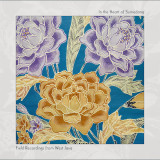
"We are delighted to be able to bring you these gorgeous field recordings from the Sumedang Province of West Java which, over their 50 minutes, present two distinct sides of Sundanese musical and devotional culture.
Although West Java is a Muslim country, these recordings highlight currents of pre-Islamic animist beliefs and practices that continue to flourish in the small towns and villages of the highlands of West Java. The recordings showcase two forms of trance music that are essential to the spiritual life of the Sundanese people in the highland regions.
Tarawangsa trance music is a traditional ceremonial genre known for its deep spiritual and hypnotic qualities. This music is made using only two instruments, the tarawangsa, a two-stringed fiddle, accompanied by the jentreng, a seven-stringed zither, creating a unique blend of resonant, droning sounds. Historically, tarawangsa music has been performed as part of sacred rituals and agricultural celebrations to honor local deities and ancestors, particularly associated with the Sunda culture. The minimalist, repetitive melodies gradually build, guiding participants and listeners into a meditative, trance-like state, during which dancers can be possessed by the spirits of ancestors or deities from the spirit realm, the music serving as a link between the two worlds.
In stark contrast to the calm, medititive sound of tarawangsa, we also present here two long pieces from Panca Buana Reak Group. Sundanese Reak trance music is like the punk rock of Sunda folk music, combining powerful and driving rhythms played on a number of hand drums and percussion instruments with the buzzing sound of the tarompet, a double reed wind instrument often amplified through whatever mobile speaker system might be at hand. Sometimes the group will play gamelan gongs, as heard on the first piece on the album, although this remains a music that is popular mainly with the working class youth of the rural villages, many of whom will also be fans of Indonesia's burgeoning metal and punk scenes. Reak performances are often wild, anarchic events that feature masked dancers, costumes, public trancing and spirit possession.
These recordings were made by Xenia At during her travels through West Java earlier this year. The tarawangsa recordings were made in a home in the village of Rancakalong on the evening of 17th January 2024, while Panca Buana Reak Group were recorded during rehersals in the village of Cinunuk on 19th and 20th January 2024."
Limited edition of 100 copies.
The musicians:
Overture (played by Panca Buana Reak Group, musicians: Rian Hidayat, Daffa, Rendi, Haswa, Doni, Aconk, Bayu, Zidan, Iwan Uwak, Mahadewa Sehu, Bebet, Adi, Bebet).
Reundeu - Master Yayat (kacapi), Tedi Kurniadi (tarawangsa).
Degung - Master Yayat (kacapi), Teguh Permana (tarawangsa).
Pamapag__Gelar Mataram__Panimang__Limbangan - Akbar Nendi (kacapi) & Tedi Kurniadi (tarawangsa).
Reak Lugay Pusaka Pajajaran (played by Panca Buana Reak Group, musicians: Aconk (tong), Rendi (brung), Hendrik (tarompet), Ade (kecrek), Riki (bedug), Doni (talingtit), Adi (badublag).
Xenia would like to extend gratitude to:
Master Yayat, Tedi Kurniadi, Akbar Nendi, and Teguh Permana for their incredible talent that turned this recording into a magical experience.
Ibrahim Adi Surya for technical support.
The Juarta Putra and Panca Buana Reak groups for explaining the cultural significance of local traditions.
Anggun Tresnasari for sharing her deep knowledge of regional music traditions.
Igor Moskalenko, Kate Snap, Stasya Frolova, Roman Gold, Misha Maltsev, Ilona Popychko, Galih Muhammad, Wildan Wiliansyah, Rizalu Ramadhan, Rahi Rahmat, Fahmi Solihin and Muhammad Ismael whose unwavering belief made this project possible.
Hive Mind would like to thank Luigi Monteanni (Artetetra) and Palmer Keen (Aural Archipelago) for their invaluable work and research in this region.
eve is the debut collaboration between Past Inside the Present label head zake and Benoît Pioulard captures the serene magic of a quiet December night. Spanning four side-length tracks, the album grew from a decade of sound fragments all layered up "like family album photos." zake shaped the sonic base while Pioulard added textures with guitar, voice, dulcimer, melodica and synths. The title track evokes a wintry stillness with low swells and turntable crackles, while 'Frost' drifts on reverent vocals and shimmering drones. 'Pine' conveys forest mystery and 'Slept' closes with haunting loops and a delicate resolution like snowfall on an open field.
Deniece Williams' refreshingly cool cover is reissued in a Japanese delusion-jacketed edition! This is a great cover of the mellow classic soul "Free" released in early 2000 by Natalie, a singer with a charming falsetto voice. Side A features a refreshing cover of Deniece Williams' mellow soul classic "Free," while Side B boldly covers Rose Royse's soul classic "Wishing On A Star."The beat is fast and furious, and the melody is mysterious. Both sides of this single are remarkable.
7" Release of 2022-2023 Singles from a London-Based Neo-Soul Singer of Ghanaian-British Descent!
The long-awaited analog release of past singles by Nectar Woode, a singer of Ghanaian and British descent whose debut EP 『Nothing To Lose』 became a smash hit!
Side A features "Waiting," characterized by delicate, enveloping harmonies and a relaxed swing. Side B offers "For The Best," a track filled with vibrant melodies and an organic, gentle vocal that radiates euphoria. This 7-inch record allows you to fully enjoy the music of female neo-soul and contemporary R&B artist Nectar Woode.
Analog cut from "Lovers Covers J-Pop 2", a reggae cover compilation of J-Pop hits.
Side A is a reggae cover of Judy and Mary's "Sobakasu,"(1996) which was used as the first opening theme for the anime Rurouni Kenshin and reached number one on the Oricon Singles Chart, sung with an ennui voice. Side B features R-Crown's smooth and touching R&B rendition of Every Little Thing's classic song "fragile" (2001), which was the theme song for the romantic variety TV show Ainori.
Analog cut from "Lovers Covers J-Pop 2", a reggae cover compilation of J-Pop hits.
Side A is a reggae cover of Chisato Moritaka's evergreen classic "Rain"(1990), sung with a vibrant and clear voice by Akiko Morishita. Side B features a reggae cover of Original Love's biggest hit "Primal,"(1996) also performed by Akiko Morishita.
It starts of with jacking proto ACID house song called Delayed Attraction. A song that would have made the kids crazy at the Music Box in the mid 80's. And are still as uplifting for all us house heds. The second song Tear Gas takes us back to Europe, with a slow Belgian beat that moves like a train and hits you straight in the chest, and on top of this a monotom synth pad on top of that it gives the song a some what a scary dream feeling. The third song Nasjiga is taking us further in to the complex dream but packaged in a Detroit electro vibe with sounds that makes me think of a hospital hart beat monitor but then mixed up with bit-crushd lo-fi dragon covers in a dubby inferno that keeps on building up without coming to a climax (in a good way). The forth song Verfolgung is a 8 minute stomping song that's starts of in a Burzum sounding flute but the quickly goes over to a freaky baseline that's sounds like its made out of a congas patch and a detuned bass on top of that. On top of that they put a march bands drum pattern that gives this song a freaky tivoli vibe and would be such a banger a the right time of a DJ set. /Jens W Limited numbered to 200x * Delayed Attraction - With a bumpy baseline that grooves, hard hits on the drum machine, this is are both funky and hypnotic. * Tear-Gas - A mid-tempo acid journey that blends funky drum patterns with psychedelic trance strings. Typical FRAK's acid-outed sound, with a hypnotic and thumping beat and bassline. * Nasjiga - The B-side kicks off with a deeply dubby and tribal vibe, with splashing hi-hats and echoed percussions. like the heartbeat of an underground train going of the rails. * Verfolgung - This track kicks hard with a marching beat that builds into a funky disco. It's playful yet progressive energy leaves you with a smile on your face and your feet moving on the dance floor. Honk Honk! // Dj Jespha Galore
Record includes 2 page insert and download
Flipping rhythms from Guadeloupe, Cuba, Senegal and Puerto Rico, Time Capsule founder Kay Suzuki releases an acid-soaked collection of remixes that transcends time and space.
From the blacked-out basement of Plastic People to the psychedelic dancefloor of Beauty and the Beat, Kay Suzuki’s musical world has been shaped by some of London’s most iconic sound systems. High quality audio, he says, can open portals to new universes. Rhythm is time made plastic and beauty is the space between the beats.
Spanning over fifteen years of music from the prolific DJ, producer, Time Capsule label boss and one time Brilliant Corners sushi chef, this collection of remixes is the logical conclusion of Kay Suzuki’s musical thinking. Drawn to unique percussive or syncopated rhythms, he describes remixes as conversations between the original artist’s sense of time and his own. Weaving broken beat, house and dub influences into rhythms from across the Black Atlantic, these four tracks find each other kinship on the dance floor.
The A-side begins with a dubbed-out rework of the Gwoka celebration rhythm ‘A Ka Titine’ by Guadeloupe’s Gaoulé Mizik that was originally released by Beauty and the Beat in 2022. Layering electronic flares, dub sirens and space echo reverb across the shuffling toumblak beat, Suzuki leans into the track’s creole heritage, turning the track into a sought-after dancefloor jam, played by everyone from Colleen Cosmo Murphy and John Gomez to Yu-Su and Bradley Zero.
Skipping to Puerto Rico, Broki’s ‘Es Que Lo Es’ emerged from a collaboration between Bugz in the Attic’s Afronaut and Seiji and local musicians. Here Suzuki reworks the Afro-Latin percussion into a subtle bruk, conjuring a third space between London and San Juan that remains both of and outside the era in which it was made.
Blackbush Orchestra’s ‘Sortez, Les Filles!’ opens the B-side, taking apart the original and kneading the Senegalese percussion into a chugging Balearic house track, buoyant and full of life. Also first released by Beauty and the Beat, the track features new synth and structural elements that bring out the innate dancefloor potential beneath the surface of the original.
The final track on the collection heads back to the Caribbean and the island of Cuba, where Sunlightsquare a.k.a. Claudio Passavanti worked with vocalist Rene Alvarez and expert in Afro-Cuban percussion, Giovanni Imparato, on ‘Oyelo’. Here, Suzuki strips out the kick completely, leaving an implied rhythm which he calls an “imaginary four-to-the-floor” - a groove that is felt rather than heard, leaving the listener floating in another universe entirely.
- 1: Opening Forest
- 2: Bow
- 3: Sideration 150
- 4: Lichen 70
- 5: Froggy
- 6: Sideration 180
- 7: Ombilic 41
- 8: Sideration 300
- 9: Mama's Death
- 10: Sideration
- 11: Ombilic 44
- 12: Trapped In The Closet
- 13: Lichen 14
- 14: Sideration 110
- 15: Ombilic 50
- 16: Never Let Go
- 17: I Love You Mama
- 18: She Loves Me More
- 19: Sideration 420
The Original Soundtrack by ROB
Blood Red & Black Swirled Vinyl with Forest Green and Yellow Splatter
Heavyweight Gatefold Packaging with Matte Satin Coating
Artwork by Creepy Duck Design
11"x11" Art Print
After the successful sell-out soundtrack release of the Oz Perkins (Longlegs) directed GRETEL & HANSEL, Waxwork Records is excited to team back up with composer
Robin Coudet, aka ROB, on his outstanding new score to Never Let Go. Known for his unique electronic compositions including 2012's MANIAC, HORNS, REVENGE, and GRETEL & HANSEL, ROB's career continues to grow in cinema, series, and documentaries with more than 40 original scores composed.
Waxwork Records is excited to release NEVER LET GO Original Motion Picture Soundtrack by ROB as a deluxe vinyl release including Blood Red and Black swirled vinyl with Forest Green and Yellow splatter, heavyweight gatefold packaging, artwork by Creepy Duck Design, and an 11"x11" art print.