‘Best tunes for your answering machine’ is the debut album of oblique, introspective electronic music by the mysterious solo artist Tekamolo.
Fusing melancholic synth pop and absurdist trip hop, ‘best tunes for your answering machine’ is a special assemblage of pitch-modified vocals, retrofuturist samples and freeform electronics that coalesces into music both outlandish and bittersweet, playful and profound.
Produced by a renowned artist, opting to conceal their identity under the guise of a new pseudonym, Tekamolo presents a series of curious, incognito confessionals with ‘best tunes for your answering machine’. An album led by a voice like a sentient, heavy-hearted android, the nine tracks collected here contend with themes of inertia, solitude and longing, revealing an inspired, affecting stream of messages from an unknown caller.
Without preconceptions tied to provenance, this is music liberated from the burdens of biographical detail. Music that eschews ego and the cult of the self. An album that can be heard purely for the strange, poignant sounds unfurled throughout.
For Tekamolo, the album signifies an attempt to navigate aesthetic reductionism, as well as an absolute sense of seclusion:
“An audio diary of a lonely soul. Broken, wounded mantra-songs. Memories of things that never happened. Dreams that never had the chance to be dreamed. Disassembled songs. As if testing the limits of emptiness — how much void can a song endure while still remaining a song? How much can be stripped away, how bare can it be, and still, the groove lingers, the melody pierces the memory, sinking into the listener's mind.
These are the skeletons of songs, an attempt to assemble music from the bare minimum — words, sounds, fragments of memory.
The songs are filled with desperate calm. They are not sung to the world, nor to anyone tangible, but solely to oneself and to the unseen. In a way, they could be considered songs of the end of the world: you wake up, and there is not a single person left in the world. At least, no one you can see. You wander through empty streets and deserted shopping malls, humming softly to yourself, hoping that someone — anyone — might hear you.”
‘best tunes for your answering machine’ is a sui generis conception of warped 21st century blues from an enigmatic figure, a work filled with surreal, indelible songs of modern isolation. Lost contemporary hymns, now recovered. Voicemails worth hearing.
New Surrender is the fourth studio album by American alternative rock band Anberlin, released in 2008. It marked their first album under a major label, Universal Republic Records, after signing with them in 2007. The album blends alternative rock and emo influences, featuring a mix of energetic and introspective tracks. Songs from the album are “Breaking”, “Miserable Visu (Ex
Malo Bonum)” and “Feel Good Drag” which was originally released on their earlier album Never Take Friendship Personal, but in this re-recorded version became the most successful single.The album peaked at number 13 on the Billboard 200 and number 5 on the Billboard Modern Rock/ Alternative Albums chart. It was produced by Neal Avron, known for his work with bands like Yellowcard and Fall Out Boy.
New Surrender is available on black vinyl and includes an insert with lyrics.
Greta Kline's musical output as Frankie Cosmos exemplifies the generation of musicians born out of online self-releasing. Kline initially built a reputation with her prolific catalogue of bedroom recordings and as a performer and advocate of New York's All Ages DIY scene. The beauty in Kline's writing does not lie within immense statements and large gestures, but instead can be found in her ability to examine situations and relationships with heartbreaking sincerity. In 2014 Kline released her first studio album, Zentropy. Within months of its release, Zentropy became one of the most critically acclaimed independent albums of the year and was named New York Magazine's #1 Pop album of 2014. In 2015 Kline signed to Bayonet Records, immediately releasing an EP where she experimented with writing in an electronic setting. The EP Fit Me In was well received and garnered a Best New Track from Pitchfork. Kline then began recording her next album appropriately titled, Next Thing. Like Zentropy, Kline approached Next Thing by fleshing out several old home recordings, and by writing half of the album from scratch. Next Thing explores new emotional and instrumental territory for Kline.
Chaz Bear (formerly Bundick) was a musician from birth. Growing up, it was normal to hear music across genres, from Michael Jackson to Elvis Costello to The Specials, in the Bundick household. These influences were quite unique for a biracial kid growing up in South Carolina, contributing to the complexity of Chaz’s self-understanding and expression through his own music.
Chaz began playing and recording original compositions in his preteen years, forming multiple indie bands starting in middle school and continuing until his personal project, Toro y Moi, was signed by Carpark Records in 2009. Before getting signed, he was already an incredibly prolific artist, having released over 10 Toro y Moi albums on his own (and undoubtedly retaining a vast compendium of unreleased songs). His personal work drew upon a vaster array of influences than did his full band. Early Toro work called upon Chaz’s childhood exposure to 80’s R&B, pop and electronic music, while also evolving with his discoveries of acts like My Bloody Valentine and J Dilla and his burgeoning interest in French house. Just before his graduation from the University of South Carolina, where he earned a degree in graphic design, Chaz caught the attention of music bloggers and record labels with his dreamy, bedroom recordings.
Outer Peace, was written and recorded in the Bay Area after Chaz’s return from a one year stint in Portland. It is somewhat of a homecoming celebration, filled with features by friends and saturated with a playfulness that had not previously been embraced in past Toro albums. Outer Peace stands in contrast to the more sparse and contemplative Boo Boo, an album recorded while in Portland in relative isolation. With Outer Peace, Chaz showcases his ability to remain on the cutting edge of music’s evolution while not taking himself too seriously. There are contemporary hip hop references mixed in with funk, Eurodance and ambient elements, all interwoven expertly and retaining that quintessential Toro y Moi aesthetic.
3XL boss and scene hyper-connector Special Guest DJ (aka uon, shy, Caveman LSD) lands on their own label with a debut album of hazed ambient noise and aquatic club anarchitextures, with a patented, heady style bent into new shapes.
For nigh on a decade, Berlin-based American producer, label boss, promoter and DJ Shy has operated at the centre of a scene that's still not fully defined. Their mythical DJ sets, where you're likely to hear precision-tweaked dubstep, dreampop, decelerated rap and dubwise ambient blended into vapour; gives some sense of the vibes at play, and a comb thru their spiderweb of a catalog - as Caveman LSD or uon, as part of Ghostride the Drift, Hoodie, crimeboys, virtualdemonlaxative and Cypher, or as the figurehead of 3XL, Experiences Ltd, xpq? and bblisss labels - further blurs that gist.
They've been caught in the crossfire of Big Ambient, sure, but there's always been something scrappier, sexier and more present going on under the hood. Shy and his network of associates - Huerco, Ulla, Perila, Ben Bondy, Naemi/Exael, Ponteac Streator and Arad Acid, among others - have asserted the interrelatedness of their discrete approaches. So-called "ambient" music doesn't exist in a vacuum, it un-focuses elements that undergird so many more corporeal sounds, and for Shy, their music reflects the druggy, DIY, genre-agnostic ethos of a trans-Atlantic neo-punk underground that exists in some liminal zone between the club, the bedsit and the basement.
Concerned with themes of “anger, sensuality, and dreaming”, the 40 minute roil of ‘Our Fantasy Complex’ frames Special Guest DJ at their most unapologetically oblique and illusive, expanding and contracting between whorls of shoegazing dynamics and extended portions of quasi-speed D&B x dub tech smeared on the mind’s-eye, with a vivid sense of bruised lushness that’s perfused all shy’s work thus far.
Joined by kindred collaborators Ben Bondy, Arad Acid and mu tate, and suspended in agitated bliss by Rashad Becker’s lucid mastering, the results feel out some of 2025’s most considered and distinctive within an amorphous zone that’s become a world unto itself. Ambient music’s fluffier signifiers are swapped out for a sort of sublime tension that, like the sound’s original ‘90s explosion, can be heard to reflect states of altered consciousness - both individual and collective.
Shy's layered, undulating productions are more like the chewed remnants of a thousand mixtapes cooked into a stream-of-consciousness hex. Save for the glistening, zoomed-out parting piece ‘Dream’, it all mostly avoids pretty melodies in favour of a spatio-textural sensuality that wraps us up, sometimes uncomfortably intimately, in shy’s thoughts. That oneiric closer is one of three gritty palate cleansers that swirl around its peaks, where elements of Reese-bass are suspended, writhing below looming atmospheric pressure in ‘How Long Can I Burn?’, emerging charred and flecked with rattled percussion on ‘Yoro (pt I & II)’, as though K-holing thru a blazing summer’s day.
In step with Perila’s notably darker turn of events on her ‘Omnis Festinatio Ex parts Diaboli Est’, album, or the unexpected ferocity of recent Space Afrika live shows, it’s not hard to hear a darkside gravitational pull on this one, where ambient music is no longer just a balm for troubled souls, but also suggestive of humanity’s most frightful odours.
out of Stock
Last delivered 13 months ago available to reorder, subject to availability
The discovery of Doris Dennison's score represents a genuine musicological breakthrough—what once would have been "a tree falling in the woods" thirty years ago now holds the potential to render "a thunderous clap in our minds." While researching Anna Halprin's lesser-known collaborators, scholar Tom Welsh uncovered the archives of AA Leath, one of Halprin's principal dancers. Buried within these materials was Dennison's handwritten score for Earth Interval, dated May 1956. Born in Saskatchewan, Canada, in 1908, and raised near Seattle, Dennison (1908-2009) encountered John Cage while teaching Dalcroze eurythmics at the Cornish College of the Arts. She joined Cage's earliest percussion quartet—alongside Margaret Jansen, the composer and his wife Xenia—in the group widely regarded as having performed the first complete concert of percussion music in the United States. This historic December 1938 concert was followed by tours and the landmark May 1941 performance at the California Club, comprising Cage and Lou Harrison's Double Music, the premiere of Cage's Third Construction, and Harrison's 13th Simfony.
As Bradford Bailey observes in his extensive liner notes, Earth Interval demonstrates "an extraordinary balance of elements that imbues the piece with a sense of clarity, directness, and constraint that is both distinct and ahead of its time." The work's most remarkable innovation lies in its approach to extended techniques, particularly Dennison's notation for the central movement: "In 2nd movement, 1st player lowers + raises a gong into a tub of water while beating." This technique, absorbed from Cage's experimental vocabulary, generates what Bailey describes as "fields of acoustic abstraction that bend and warp time through sustained resonances, beat, and space." The temporal sophistication of these manipulations anticipated Karlheinz Stockhausen's Mikrophonie I (1964) and Annea Lockwood's water-based sound investigations by over a decade. After joining Mills College as dance accompanist, Dennison maintained crucial connections to the Bay Area's experimental scene, collaborating with figures like Merce Cunningham and programming Cage's music throughout the 1950s.
Comprising three movements—Land Form, Air Tide, and Earth Play—Earth Interval is scored for recorder, drums, gongs, maracas, muted gongs, and bowl gongs. In total, the piece is just under eight minutes: "a fleeting glimmer of moment in time, a life spent at the cutting edge, and a singular creative vision that packs a powerful punch." When viewed in historical context, placed in contrast to roughly contemporaneous avant-garde percussion works by Cage, Harrison, Louis Thomas Hardin (Moondog), and Harry Partch, or important precursors like Edgard Varèse's Ionisation (1931) and Henry Cowell's Ostinato Pianissimo (1934), it's clear that Dennison was following her own path. Earth Interval is not derivative. It is a precursor to what was yet to come, alluding to developments of avant-garde and experimental music that wouldn't begin to appear on the cultural landscape until the 1970s and '80s, with the emergence of Post-Minimalism and more idiosyncratic artists and ensembles like Midori Takada, Ros Bandt, Peter Giger, Frank Perry, Christopher Tree, Michael Ranta, Gamelan Son of Lion, and Niagara.
This recording by Chicago's Third Coast Percussion, captured in March 2022, represents the first complete documentation of this pioneering work. The ensemble's interpretation reveals the piece's remarkable contemporaneity while maintaining its historical specificity. Where Cage, Harrison, and Partch employed "self-consciously off-kilter polyrhythms," Dennison's rhythmic sensibility anticipates minimalist developments by nearly a decade, yet integrates "forceful rests, as well as sharp shifts in sonic character, tempo, and meter, that break the momentum and breathe a sense of life into the piece's structure." This positions her work closer to Post-Minimalism decades before its emergence. The architectural approach demonstrates Dennison's understanding that "the composer almost entirely disappears" in favor of phenomenological listening experience, creating what might be called an egoless music that places its realities and meaning entirely in the ear of the beholder. The present recording, realized by Chicago's distinguished Third Coast Percussion ensemble, represents a significant achievement in experimental music scholarship and performance practice. As specialists in the Cage tradition and contemporary percussion repertoire, Third Coast Percussion approached Earth Interval with the historical sensitivity and technical precision required to illuminate Dennison's subtle compositional innovations. The March 2022 recording sessions, engineered by Colin Campbell, capture both the work's intimate chamber music qualities and its bold exploration of extended techniques. The ensemble's interpretation reveals the piece's remarkable contemporaneity—its ability to speak directly to current musical concerns while maintaining its historical specificity.
This recording serves multiple scholarly functions: it provides the first complete documentation of Dennison's compositional voice, offers insight into the broader network of experimental music practitioners surrounding Cage and Harrison, and demonstrates the sophisticated level of compositional thinking that was occurring within the Bay Area's dance-music collaborations of the 1950s. The work's emphasis on phenomenological listening—what might be called an "egoless" approach to musical experience—places it within a lineage of American experimental music that prioritizes perceptual process over compositional personality. The work's original obscurity—limited to AA Leath's performances at venues like the 1957 Pacific Coast Arts Festival at Reed College—paradoxically allowed it to remain "entirely on its own terms," free from the constraints of historical categorization. Drawing on Jacques Derrida's Archive Fever, the argument emerges that "the archive can acknowledge, celebrate, and resurrect" overlooked voices, transforming our understanding of experimental music history. The present Blume edition, featuring Third Coast Percussion's authoritative interpretation, includes a lavishly illustrated 16-page booklet designed by Bruno Stucchi / dinamomilano, containing complete scholarly apparatus, historical photographs, and detailed production notes. This recording enables "cross-temporal intersectionality," allowing Dennison to "belong to a newly formed and more dynamic understanding of the present and past," demonstrating how forgotten voices can reshape entire historical narratives when given proper scholarly attention and performance advocacy.
Mobile Fidelity's UltraDisc One-Step 180g 45RPM 2LP Set Plays with Authoritative Tonality, Airiness, and Clarity:
Pressed on MoFi SuperVinyl and Strictly Limited to
3,000 Numbered Copies
1/4” / 15 IPS Dolby A analogue master to DSD 256 to analogue console to lathe
Joni Mitchell is the only artist who could’ve made Hejira. The legendary singer-songwriter said as much when discussing the album decades after its release. Yet that fact seemed obvious from the moment the gold-certified effort streeted in fall 1976. An adventurous travelogue, probing narrative, and offbeat homage to freedom, Hejira remains an inimitable entry in the catalog of recorded music — a spare, gorgeous, meditative series of sonic vignettes comprised of floating harmonic pop, cool jazz, soft rock, and sensitive vocal elements that beckon feelings of motion, discovery, and self-examination.
Sourced from the original analog master tapes, pressed at Fidelity Record Pressing on MoFi SuperVinyl, and strictly limited to 3,000 numbered copies, Mobile Fidelity's UltraDisc One-Step 180g 45RPM 2LP set presents the record ranked the 133rd Greatest of All Time by Rolling Stone with definitive detail, richness, accuracy, and directness. Marking the first time the revered LP has received audiophile treatment, it's one of six iconic 1970s Mitchell records Mobile Fidelity is reissuing on vinyl and SACD.
Playing with a virtually nonexistent noise floor, dead-quiet surfaces, and superior groove definition, this collectible reissue reproduces in enveloping fashion the tones, textures, and craftsmanship that help Hejira function as the equivalent of a liberating trip down an open road with nothing but blue sky, natural landscape, and fresh air in the immediate vicinity. Passages bloom, carry, decay as they do amid an acoustically optimized environment. Soundstages extend far, wide, and deep, with black backgrounds and pinpoint images adding to the realism.
The reference-grade immediacy, airiness, and presence put in transparent perspective Mitchell’s dense strings of words, stream-of-conscious-like phrasing, and unhurried albeit forward momentum. Likewise, the instrumental contributions of her A-list support musicians — a cast that includes L.A. Express members John Guerin, Max Bennett and Tom Scott, plus Neil Young, Victor Feldman, and Abe Most — emerges with breathtaking clarity and dimensionality.
While Mitchell, whose intimate vocals and abstract guitar parts center everything, Mobile Fidelity's restoration of Hejira further reveals the visionary breadth of guitarist Larry Carlton and bassist Jaco Pastorius. Though heard on only four tracks, Pastorius' fretless bass epitomizes the fluid, subtle, flexible, roomy, and shape-shifting characteristics of songs that often appear to transpire out of nowhere akin to the formation of a puffy cumulus cloud overhead. In sync with Mitchell’s voice, Pastorius’ fusion hovers and floats, suspended in a fog you want to deeply inhale. The "grace notes" Mitchell desired on Hejira can now be heard in full. Ditto the luxurious tapestries of alinear lines, fills, and supplements unreeled on Carlton’s six-string.
Visually, the packaging of this UD1S set complements its identity as the copy to own. Housed in a deluxe slipcase, the LPs come in foil-stamped jackets with faithful-to-the-original graphics. This version is for listeners who desire to become immersed in everything about Hejira, including the unforgettable album cover — a pastiche of 14 different photos Mitchell used a Camera Lucida to assemble into one image that’s anchored by a portrait of her in a stoic pose — and the interior shots of Mitchell skating on a frozen Wisconsin lake wearing a pair of black skates, black shirt, and fur cape.
The notion of skating, feeling an awakening wind whipping against your face, and losing yourself to the surroundings are extremely apt for Hejira, which Mitchell wrote after a sequence of trips and relationships prompted her to reflect on the complicated conflicts between independence and marriage, success and satisfaction, duty and desire — and, more specifically, “the cost of being a woman.” The Canadian native delved into such themes before. But never as she does on Hejira, whose liberating, running-away aura doubles as another of Mitchell’s rejections of tradition as well as a suggestion of a better alternative.
At once observational and personal, expansive and insular, cheerful and poignant, Hejira spans a sea of human conditions, emotions, and circumstances. It addresses drifting, isolation, pleasure, place, time, and surroundings with strikingly poetic discourse matched with music that, save for the crooned ballad “Blue Motel Room,” forgoes conventional structures and choruses.
The jazz-based arrangements, marked by scaled-down percussion and all manner of bent, rounded, and unsettled notes, hint that Mitchell has no exact destination in mind. Excursions such as the moody “Furry Sings the Blues,” funky “Coyote” and edgy “Black Crow” throw open previously locked doors to possibility and journey. They signal it’s time for a welcome departure from norms and the past, one that leads to a heightened sense of clarity and perspective. Or, as Mitchell said upon choosing the album title, it’s time for “leaving the dream, no blame.”
We presenting the upcoming Posthuman album "The Mind Is A Heavy Burden" coming out on Netherlands based imprint Flatlife Records. The full album arrives as a 9-track purple 12" vinyl and 13 track digital / streaming. This isn't the usual club-ready acid house to be expected from Posthuman of recent years, but instead a callback to their output in the early 2000s and their cassette releases on The Dark Outside. There's still plenty of their signature 303+808+101 sounds throughout but it's overall slower, more introspective and darker.
out of Stock
Last delivered 11 months ago available to reorder, subject to availability
From the mind of Philadelphia legend Del Jones, the jazz-funk musician and social justice activist behind Positive Vibes and The Court Is Closed, comes a cult favorite finally getting its due. Originally released on CD in 1999, Dance of 'De Elder is a late-career epic where Jones' unmistakable vocals and undeniable funk deliver his signature blend of history, justice and Afrocentrism to reinforce his timeless command: 'DANCE // RESPECT YOURSELF.’
This 12-inch marks the track’s debut on wax and features five remixes for today’s dancefloors. Lil Dave lifts the song into an uptempo, deep and soulful house jam, Pheels flips the vocals over a heavy, psychedelic and percussive dub, Sweater adds bright, crescending synths that revive Jones’ chorus as a joyful decree, Universal Cave offer an extended, dubbed out, late night acid excursion, and Street Orchestra dials in a knocking MPC beat mix that could have fit right at home on the original release.
When we found a copy of the Dance Of ‘De Elder CD, the title track quickly became a Universal Cave crew anthem that we played every chance we got. Early doors, end of night, looped over party tracks, we couldn’t get enough of it and knew it had to get out to a wider audience. We hope this release helps get Jones’ music and message out to DJs and dancers worldwide.
out of Stock
Last delivered 4 months ago available to reorder, subject to availability
Fronted by brothers Peter O'Doherty and Reg Mombassa , Dog Trumpet have been playing, writing and recording their music since the early 90s. Reg and Pete were founding members of iconic Australian band Mental As Anything, who hit the charts around the world with “Live It Up”. The band made a mark with their left field mix of music, art, video and humour and leading eventually to ARIA awards and induction into the Hall of Fame in 2009.
Dog Trumpet’s new album Live Forever is the result of 2 years in the studio.
For this, their ninth album , the song writing brothers Peter and Reg have brought Peter’s multi instrumentalist son Declan in on drums, production and mixing duties, enhancing and expanding their sonic palette.
At times psychedelic and ethereal, the album weaves together Dog Trumpet’s signature acoustic and electric guitar and bass driven sound with melodic drums, synthesisers, mandolin, saxophone and added backing vocals by their touring bass player Bernie Hayes.
The original Madlib instrumentals to Georgia Anne Muldrow’s critically acclaimed album; “Seeds” which was released in 2012 on SomeOthaShip Connect. Heralded as one of her most captivating and immediate front-to-back statements of purpose, a deeply spiritual collection of songs. It was the first time in her career where she handed over all production duties to someone other than herself, that someone being the legendary Madlib.
The beats on “Seeds” are naturally heavy, funky, soulful, abrupt yet hypnotic. All the characteristics of Madlib’s signature sound we know and love.
On the B Side of the vinyl is a collection of Georgia Anne Muldrow instrumentals from across 3 Dudley Perkins albums, “Young Spirit”, “Self Study”, and “Holy Smokes.” Beats with synths reminiscent of J Dilla’s electronic era but with enough G-Funk influence to melt your Raiders hat. Bass lines that could get The Click back together. Georgia Anne Muldrow is a master of her craft on the beats and the microphone. This record is a testament to that. Rediscover “Seeds”, the magical powers of Madlib, and why beat tapes will never go out of style.
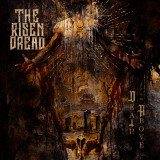
After making their mark with their debut album, The Risen Dread returns with their highly anticipated second studio album. Produced, recorded, mixed, and mastered by Marco Mastrobuono at Bloom Studios in Guidonia, Rome, Italy. This new record showcases the band's evolution, delivering an even heavier, darker, and more intense sonic experience.
While not a concept album, death looms large as the central theme, weaving through the lyrics with raw emotion and unsettling storytelling. From existential dread to violent ends, each track explores different facets of mortality, drawing the listener into a visceral journey through the inevitable.
The music delivers heavy riffs, dynamic drumming, and a mix of intensity and melody, further refining the band’s identity while pushing their sound forward.
Set for release on June 13, 2025, via Time to Kill Records, the album builds on the band's signature sound with a balance of aggression, atmosphere, and storytelling.
a lacerated hunk of metal and circuitry- “Iri.gram” charred on the side- comes back round to us again, still icy from the dark reaches of its orbit as it fades across the sky like memories of a bad dream. it’s throwing signals in all directions at once, jamming any possibility of a coherent rendering and keeping its exact boundaries unknowable. electronically, it arrives as does a storm: softly, first portended by a single drop. but pick any frequency band and listen in– the cadence of the pulses as they intensify feels viscous and decidedly unmechanical. there are discernible sequences, yes, and all at 133bpm, but crouched between the frames there lurks another organizing presence that seems to grab and mutate each repetition on the way past, spewing a stream of facsimiles as it travels, seemingly in an attempt to evade both pattern recognition and any subsequent defensive reactions.
out of Stock
Last delivered 5 months ago available to reorder, subject to availability
In the mid-1970s, a force of nature swept across the continental United States, cutting across all strata of race and class, rooting in our minds, our homes, our culture. It wasn’t The Exorcist, Goodbye Yellow Brick Road, or even bell-bottoms, but instead a book called The Secret Life of Plants. The work of occultist/former OSS agent Peter Tompkins and former CIA agent/dowsing enthusiast Christopher Bird, the books shot up the bestseller charts and spread like kudzu across the landscape, becoming a phenomenon. Seemingly overnight, the indoor plant business was in full bloom and photosynthetic eukaryotes of every genus were hanging off walls, lording over bookshelves, and basking on sunny window ledges. The science behind Secret Life was specious: plants can hear our prayers, they’re lie detectors, they’re telepathic, able to predict natural disasters and receive signals from distant galaxies. But that didn’t stop millions from buying and nurturing their new plants.
Perhaps the craziest claim of the book was that plants also dug music. And whether you purchased a snake plant, asparagus fern, peace lily, or what have you from Mother Earth on Melrose Avenue in Los Angeles (or bought a Simmons mattress from Sears), you also took home Plantasia, an album recorded especially for them. Subtitled “warm earth music for plants…and the people that love them,” it was full of bucolic, charming, stoner-friendly, decidedly unscientific tunes enacted on the new-fangled device called the Moog. Plants date back from the dawn of time, but apparently they loved the Moog, never mind that the synthesizer had been on the market for just a few years. Most of all, the plants loved the ditties made by composer Mort Garson.
Few characters in early electronic music can be both fearless pioneers and cheesy trend-chasers, but Garson embraced both extremes, and has been unheralded as a result. When one writer rhetorically asked: “How was Garson’s music so ubiquitous while the man remained so under the radar?” the answer was simple. Well before Brian Eno did it, Garson was making discreet music, both the man and his music as inconspicuous as a Chlorophytumcomosum. Julliard-educated and active as a session player in the post-war era, Garson wrote lounge hits, scored plush arrangements for Doris Day, and garlanded weeping countrypolitan strings around Glen Campbell’s “By the Time I Get to Phoenix.” He could render the Beatles and Simon & Garfunkel alike into easy listening and also dreamed up his own ditties. “An idear” as Garson himself would drawl it out. “I live with it, I walk it, I sing it.”
But as his daughter Day Darmet recalls: “When my dad found the synthesizer, he realized he didn’t want to do pop music anymore.” Garson encountered Robert Moog and his new device at the Audio Engineering Society’s West Coast convention in 1967 and immediately began tinkering with the device. With the Moog, those idears could be transformed. “He constantly had a song he was humming,” Darmet says. “At the table he was constantly tapping.” Which is to say that Mort pulled his melodies out of thin air, just like any household plant would.
The Plantae kingdom grew to its height by 1976, from DC Comics’ mossy superhero Swamp Thing to Stevie Wonder’s own herbal meditation, Journey Through the Secret Life of Plants. Nefarious manifestations of human-plant interaction also abounded, be it the grotesque pods in Invasion of the Body Snatchers or the pothead paranoia of the US Government spraying Mexican marijuana fields with the herbicide paraquat (which led to the rise in homegrown pot by the 1980s). And then there’s the warm, leafy embrace of Plantasia itself.
“My mom had a lot of plants,” Darmet says. “She didn’t believe in organized religion, she believed the earth was the best thing in the whole world. Whatever created us was incredible.” And she also knew when her husband had a good song, shouting from another room when she heard him humming a good idear. Novel as it might seem, Plantasia is simply full of good tunes.
Garson may have given the album away to new plant and bed owners, but a decade later a new generation could hear his music in another surreptitious way. Millions of kids bought The Legend of Zelda for their Nintendo Entertainment System back in 1986 and one distinct 8-bit tune bears more than a passing resemblance to album highlight “Concerto for Philodendron and Pothos.” Garson was never properly credited for it, but he nevertheless subliminally slipped into a new generations’ head, helping kids and plants alike grow.
Hearing Plantasia in the 21st century, it seems less an ode to our photosynthesizing friends by Garson and more an homage to his wife, the one with the green thumb that made everything flower around him. “My dad would be totally pleased to know that people are really interested in this music that had no popularity at the time,” Darmet says of Plantasia’snew renaissance. “He would be fascinated by the fact that people are finally understanding and appreciating this part of his musical career that he got no admiration for back then.” Garson seems to be everywhere again, even if he’s not really noticed, just like a houseplant.
out of Stock
Last delivered 11 months ago available to reorder, subject to availability
Knowledge The Pirate returns with a powerful new statement with his new album, The Round Table, which is now available. The Round Table is produced in its entirety by longtime collaborator and legend Roc Marciano through his Pimpire International imprint.
With roots in New York’s revered ‘90s hip-hop scene, Knowledge The Pirate has steadily built a reputation as one of the genre’s most consistent and authentic voices. A frequent Roc Marci collaborator and key figure in the modern un-derground renaissance, Knowledge fuses golden-age grit with new wave innovation—bridging generations while stay-ing firmly rooted in New York’s timeless sound.
Since his 2018 debut Flintlock, Knowledge has carved a lane entirely his own through his label Treasure Chest Enter-tainment, Inc. With five acclaimed projects under his belt, including the recent 5lbs of Pressure, he continues to deliver unfiltered street wisdom and personal reflection in every bar.
The Round Table stands as a testament to his evolution—an uncompromising body of work laced with Roc Marciano’s signature production and Knowledge’s lived-in lyricism. It’s not just a record—it’s a meeting of the minds, an audio council of kings.
“The Round Table is cinematic storytelling, teaching street knowledge, eating etiquette that will save your life” Knowledge professes. “This album is like an Honorable Elijah Muhammad book; How To Eat To Live. Produced fully by the true creator of the new wave sound, Roc Marciano, you are all invited to a seat at The Round Table; and break bread with the true Godfathers of this new wave rap renaissance.”
Back by demand and dirtier than ever, Apollo Brown & CRIMEAPPLE’s new underground classic This, Is Not That returns with the Dirty Money Edition — a fresh press on cream & green vinyl that bleeds grit and opulence. This updated release includes two brand new bonus tracks, adding new weight to an already no-nonsense body of work.
This, Is Not That pairs Detroit producer Apollo Brown’s signature soul-soaked boom-bap with New Jersey emcee CRIMEAPPLE’s razor-sharp wit and bilingual venom. The result is an album steeped in realness — raw, reflective, and resonant, laced with wordplay that sticks and production that slaps.
Whether you're just discovering the project or stacking your collection, this edition is a must-cop — a celebration of bars, beats, and the beautiful grit of hip-hop.
"Chasing the funky symphonies that filled my head and my dreams..."
December 25th, 2023 - an Instagram post. Stimulator Jones shared half a dozen FIRE tracks from his beat tape archive. We were immediately drawn to the rough hewn boom bap.
"I'd release that", Rob commented.
Hours of material was shared and the result is this: Cool Green Trees (1999-2005). A collection of beats and loops Stimulator Jones created between the ages of 14-20 at home in his basement, bedroom and computer room in Roanoke, Virginia.
You will not believe the profound soulful genius contained within these naive schoolboy melodies.
December 25th, 1998 - 25 years ago to the day and his much-coveted Yamaha SU10 sampler was finally bestowed upon young Stimmy AKA Sam Lunsford: "I immediately hooked up a CD Walkman to the input jack and looped the beginning two bars of Grover Washington Jr.'s "Mercy Mercy Me". I don't know what exactly was so thrilling about hearing two measures of music repeating over and over but it was so infectious and hypnotizing and enthralling to me. I'll never forget that ecstatic rush of making my first loop - an uncontrollable, gleeful smile plastered all over my face." When you hear the pocket breakbeat symphonies featured here on Cool Green Trees, you'll feel the same sense of frisson.
In the wake of his Stones Throw breakthrough - Exotic Worlds & Master Treasures - Stimulator Jones was pegged by many as a 90s throwback artist. However, he literally IS a 90s artist. He's been recording music most of his life and he's now 40. He created the bulk of Cool Green Trees as a teenager. Everything before 2004 was recorded when Sam was still in school. He was in 8th grade when he made the 1999 tracks - he didn't even have his learner's permit. This album is a snapshot of a young man in a simpler time. Things were still mysterious back then and he was flying blind, relying on his ears and having to figure things out for himself: "I had no road map for becoming a beatmaker. I have been collecting music since I was a kid, I am a lifelong digger and seeker of cool and interesting sounds. I was there in the golden age of Hip Hop, and while I may have been a suburban white kid in Roanoke, Virginia, I was tuned in and I bought so many classic albums when they came out. I was attracted to Hip Hop because of the musical and poetic quality. I was hypnotized by the rhythms, partially because I was a drummer. I didn't brag about collecting my breakbeat records or making beats - it was something I did in isolation. It wasn't something I generally wanted to bring attention to and it didn't really score me any cool points. I certainly wasn't flexing on social media about it."
Hell, he can do that now!
Opener "Pharoah Jones" was inspired by Yesterday's New Quintet and Madlib's ability to capture that classic 70s sound whilst playing all the instruments. Sam created this one stoned afternoon by laying down a 2 bar loop and a shaker loop on his Yamaha SU700 sampler. He hung a microphone from the ceiling and played his Yamaha Stage Custom drum kit over the top before adding ender Rhodes and playing his dad's Selmer tenor sax through an Electro Harmonix Memory Man echo pedal. Yes! Up next, "Ghost Gospel" utilises a dope loop from a gospel record and adds some soul-funk drums overtop, whilst working that filter knob. Says Sam: "The loop reminded me of something Ghostface would rap over. The sample was in 3/4 waltz time but I flipped it for a 4/4 groove, a technique I picked up from RZA. "Ill Feeling" uses sped-up pieces from a dusty old funk record and putting them over a classic NOLA drum loop; gain chopping up a slow, bluesy 3/4 time signature and bending it to a 4/4 groove. Classy shit. "Capital Punishment" features drums tapped in live, inspired by MF Doom's Special Herbs series. "Do Not Adjust" consists loops found on a compilation of 70s French music at Happy's Flea Market, a classic Roanoke digging spot.
The sublime, evocative title track, "Cool Green Trees" was created when Sam was still living at home. He dumped samples off his SU10 into the family desktop and arranged them in a demo version of Pro Tools: "This track was sort of my ode to the DJ Shadow style of sample based production. Super spacey, slow, and moody. The heavily filtered drums were inspired by Alec Empire's 'Low on Ice' album. I later added some scratches and sounds from a Spider Man storybook record." "Chill Scratch" snags the final bit of a bossanova record and pairs it with a drum loop before adding experimental scratching run through an Electro Harmonix Memory Man echo pedal. "Poisonous Fumes" was made using a sampler, mixer and a turntable; a kind of mixtape beat collage with added scratches and sounds from various records. Using dialogue from superhero records was a nod to Madlib. "Welcome Aboard The Starship" is dark, downtempo trip-hop with a spooky bent. Sam paired a slow, hard drum loop with a guitar sample grabbed off a psychedelic rock record. To finish, he added various backwards sounds and weird atmospheric effects and a little scratching. Swoon.
Side B opens with "Keep On Runnin", made on a borrowed Roland SP202 sampler. Having always loved the sound of the Lo-Fi filter on those machines, reminiscent of the Emu SP1200, Sam always imagined Del or another of the Hieroglyphics crew rapping over this beat. You can certainly hear why. "Sounds Impossible" sees Sam experimenting with layering multiple kick samples at different volumes to create patterns similar to those heard by Showbiz and Lord Finesse during their God-level 1995 period. "Painted Faces" was made by chopping up a REDACTED record which he had gotten from Happy's Flea Market and paired it with a REDACTED drum loop. By the time Sam recorded "The Knew Style", he had acquired a shitty old 1960s portable turntable off eBay. It didn't function properly when he bought it but his brother opened it up, cleaned it out and got it working: "I remember he told me that there was a bunch of sand inside of it when he opened it up, as if its previous owner had taken it to the beach. I would take that turntable on my Happy's Flea Market digs so I could preview records...that's how I found this loop."
"Chicken Wing Blues Sauce" loops up a classic blues joint and pairs it with some REDACTED drums. A bit of filtering and arranging et voilà! "Kool Breeze", from 1999, is one of Sam's oldest surviving beats, as is "Sexx Bullets". The Roots sampled the same record, leaving Sam frustrated yet vindicated. "Soul Child" was an early SU10 creation, looping a dusty old Soul Children 45 and pairing it with 70s rock drum loops to great effect. "Take Off Runnin" was another loop found digging with a portable turntable. Paired with some boom bap drums it makes for a hypnotic head-nod groove. "Centurian" was intended to be a little beat interlude a la Pete Rock. The sample is from a sun-dappled soft-psych record and it's paired with a Robin Trower drum loop that just happens to fit perfectly. Sometimes you slap things together kind of haphazardly and magic happens. "Bozack" was the first beat Sam made using Pro Tools, his first foray into using chopped sounds instead of loops, an exciting new world. "Church" is beat interlude using a Phil Upchurch loop with the "Long Red" drums - a favourite break of Dilla et al. Sam was really on a tear in late 2004, probably because he was unemployed and phoneless and able to just make beats all day. He made "Splash One" on a borrowed Yamaha SU700 and again was experimenting with tapping the drums in live with his fingers, instead of using a loop or sequenced pattern. Channeling 9th Wonder, Sam used a water splash sound effect from a Batman record as a percussive element, hence the title (also a 13th Floor Elevators reference). The main loop is a backwards portion of one of his favourite Roy Ayers songs.
"Hank" is another fun little beat interlude thing, created on a borrowed Roland SP202 sampler with the fantastic Lo-Fi effect that resembled the Emu SP1200 at a fraction of the price. "73 goatee", from 99, is another of his oldest surviving beats, created in his bedroom with his Yamaha SU10 and his brother's Vestax MR-300 4-track recorder: "This one will always feel special. I can remember having a feeling all the way back then on the night that I created it that this was a solid beat with a catchy loop. There was something in the Fender Rhodes melody that resonated with me emotionally, and I had never heard a producer sample that portion before. I felt like I had found my own unique sound, my own unique loop. It came from an Ahmad Jamal '73. I actually even recorded myself rapping and scratching over this beat way back then, I still have that version in all its imperfect sloppy glory."
Sam explains just how much these tracks mean to him: "They all have immense historical and sentimental value and I'm proud of them. These beats come from an innocent, simple time when I was just figuring out how to craft these sounds. They're something very personal to me. They are the initial part of a journey that I really was taking *alone*. There was no YouTube. I couldn't Google shit. I didn't even know any other beatmakers, producers or DJs in my town that could teach me anything. It was always just me, alone, in a room with some equipment - chasing the funky symphonies that filled my head and my dreams. What I was doing wasn't cool. Most of my peers thought I was a weirdo and couldn't care less. Creating these sounds was an anti-social endeavour. In a sense, I felt like it was me against the world, and all I had to instruct and assist me were the recordings produced by my heroes - RZA, DJ Premier, Erick Sermon, Beatminerz, Showbiz, Diamond D, Beatnuts, Prince Paul, The Bomb Squad, Pete Rock, Q-Tip, E-Swift, Mista Lawnge, DJ Shadow, Cut Chemist, Peanut Butter Wolf, El-P and so many more...I dedicate this collection to them, and to my older brother Joe who has always been a musical and technical guiding light for me.
This was a time before every kid was a self-described producer and beatmaker, before everyone had a DAW, before Kanye and "chipmunk soul", before Red Bull beat battles, before there was any social media beyond chat rooms and AOL Instant Messenger, before Soundcloud, before SP-404 mania, before lo-fi beats to study to, before Splice, before targeted ads for MIDI chord packs, etc. In 99 when I told people that I had a sampler and made beats I was mostly met with bewildered confusion and indifference. Kids and adults alike would wonder why I got this weird machine for Christmas instead of something worthwhile like a Playstation or a mountain bike or even a guitar for that matter because at least that could be used to make "real music". Back then, sampling was still not widely respected as an art form - it was seen as lazy, talentless and unoriginal at best and outright criminal theft at worst. I had gotten respect for playing drums and guitar and things of that nature but this was a step in the wrong direction in the eyes of many."
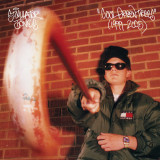
The cover photo is a picture of Sam standing on his back porch in the latter part of 1998, just before he got his first sampler. He was 13 years old, in 8th grade. His dad took the picture with his 35mm film camera: "I actually wanted to be pointing my dad's .22 pistol at the camera lens but he wouldn't let me. He gave me an old walking cane to use instead. The Tommy Hilfiger puffer jacket came from the lost and found at William Fleming High School where my mom worked as a secretary. I was thrilled when she brought it home because we never spent money on expensive name brand clothing like that - we were for the most part strictly a sale rack, bargain bin, thrift store, yard sale, flea market kind of family when it came to clothes. My watch is some cheap off-brand fake gold department store watch." Mastering for this vinyl edition was overseen by Be With regular Simon Francis and it was cut by the esteemed Cicely Balston at Abbey Road Studios to be pressed in the Netherlands by Record Industry.
out of Stock
Last delivered 15 months ago available to reorder, subject to availability
Unreleased electronic / jazz / madness from two titans of jazz and experimentation: JOHN SURMAN and KARIN KROG.
I could now write a load of blown up puffery about how amazing this is, but everyone does that, and a lot of the time it’s all a load of bollocks. But basically this was sent to me by Karin / John when I asked if they had anything hanging about that had not been released. This came through and blew my tiny mind. Like something from prime Annette Peacock “Pony” period. Here is what John Surman said…
John Surman writes:
Back in 2012/13 there had been some talk about a big futuristic open air urban dance/theatre production for about 80/100 actors/dancers with lasers and all kinds of lighting effects on different stages. I was invited to get involved and, together with Ben and Karin, we eventually decided to get to work on some ideas. I think that the original plan was that in performance there would be a mixture of live music and electronica.
Not altogether surprisingly, bearing in mind the complexity of the project, it never moved forward and developed into anything more than an interesting idea. It was probably over ambitious & I guess the funding never came through.
The only information I that I can find relating to the production refers to two silent movies made in 1927/1928 by the filmmaker Eugene Deslaw, entitled `La Marche Des Machines´ and `Les Nuits Électriques.These were clearly intended to act as inspiration for the project.
After months turned into years it became obvious that the project was going nowhere, and so the recorded music laid around gathering dust until Johnny Trunk asked Karin if she had any interesting music that he might be interested in releasing. One thing led to another and so, finally, Electric Element found a home!
For anyone interested in the equipment used this will have to be an approximation since the memory might be playing tricks. Karin was probably using a Yamaha Rex50 f/x unit, a Roland VT-3 Voice Transformer and an Oberheim Ring Modulator. I was playing Bass Clarinet and Contrabass Clarinet through various f/x units together with a Yamaha WX5 wind synth. All the instruments and voice were also processed through Ben´s equipment. After writing this I asked Ben for his recollections and he came up with the following:
John, Karin and I created this music in 2 or 3 days in the winter of 2013 at their studio in Oslo, Norway. I followed up with another 2 or 3 days of mixing, editing and post-processing . We kept a collaborative, improvisational and free-form approach to the sessions. I grew up immersed in music such as Cloudline Blue, the 1979 duo album of Krog/Surman, and this felt like a similar approach. I have mixed sound for many of their live duo concerts and I would use effects and electronics as an
accompaniment and counterpoint to the performed music. The relation of organic and artificial sound sources in music has always fascinated. In this case, I used some contemporary digital signal processing to introduce my own aesthetic into the conversation, in particular using granular synthesis to recombine small 'clouds' of sound into alternate forms. Some of the software tools I used included Ableton Live, Max/MSP and Reaktor.
out of Stock
Last delivered 14 months ago available to reorder, subject to availability
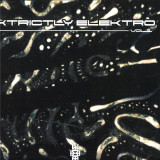
XTRICTLY ELEKTRO returns with Volume 2, further establishing its vision of innovative and forward-thinking Electro. Featuring six producers with razor-sharp sound design and solid trajectories across the international circuit, this collective work reinforces Cosmic Tribe’s commitment to rhythmic synthesis, harmonic tension, and the structural discipline of the genre — unafraid to step outside orthodoxy.
EC13 opens the release with another chapter of his retro-futurist signature, marked by strong conceptual intent and cinematic pulse.
Spectrums Data Forces, a side project of C-System, brings the most technical edge from southern Spain, blending depth, precision, and modular design.
Atix, hailing from Lyon, contributes decades of refined energy and craftsmanship, always with a club-oriented focus.
On the B-side, Calagad 13 returns with a deep, introspective electro bass cut, reaffirming his role as a central sonic pillar of the series.
Final Dream, one of Phil Klein’s aliases, delivers a powerful piece built on heavy low-end and epic atmospheres, in line with his legacy as a key figure in UK Electro.
Elektrotechnik, a German producer, closes the release with an industrial-leaning, bold, and uncompromising statement.
Six exclusive tracks showcasing the genre’s vitality and the diversity of creative visions driving its continuous evolution.
Limited to 150 copies.
out of Stock
Last delivered 4 months ago available to reorder, subject to availability
With Limited Edition A4 Heavy-Weight Space Art print (First 100 Copies Online) Signed & Numbered By Jon Savage (CTRUE48) Original Cover Artwork By Matt Sewell.
Jon Savage's Space - An amazing musical voyage through the theme and idea of Space - music for Space - Space - Music - Through West-Coast US Rock , Techno, Post-Punk , Jazz, Ambient & Experimental sounds-this is a journey like no other .. From Sun Ra to Mr Fingers and way beyond.
.
"We are taken to less familiar musical quadrants-fascinatedly & instructively so"
(Roy Wilkinson - MOJO Feb 2025)
out of Stock
Last delivered 16 months ago available to reorder, subject to availability
‘Well let me tell you a little something and it goes like this
Those New York Doll boys they were always looking for a kiss’
Those New York Dolls
The group that started it all back in those pre-punk days. The New York Dolls had it all, style, sass and the tunes to back it up. But as the title of their second and last studio album incurred they were simply `Too Much Too Soon’. For outside of New York and L.A. their humour and drag look was all too much for the mainstream listening public, so they imploded. But a few other bands were taking notes and by softening the edges they took over the world and as the title track of Mal-One’s latest 12” release points out;
‘But who wants a thrill without a little risk
I think we’ll just leave all that up to bands like Kiss’
Those New York Dolls
So Mal-One thought he ‘d better pay homage and let the kids know how great they were.
So we hope you enjoy this tribute to those New York Dolls that make you wanna go…
‘Yeah Yeah Yeah’.
"JPEGMAFIA, a trailblazing force in experimental hip hop, releases his latest solo project, I LAY DOWN MY LIFE FOR YOU. This album, his first since 2021, is a complex and innovative work that showcases his meticulous production skills. Featuring collaborations with Denzel Curry, Vince Staples, and Buzzy Lee, the album explores themes like capitalism, conscription, and propaganda through some of JPEGMAFIA’s most anarchic raps to date. The release is accompanied by an extensive global tour, reinforcing his status as one of the genre’s most incendiary talents. Since his last solo release, JPEGMAFIA has continued to push boundaries in the music industry, most notably with his 2023 collaboration with Danny Brown on Scaring the Hoes, which garnered critical acclaim and chart success. With I Lay Down My Life for You, JPEGMAFIA cements his reputation as a visionary artist, delivering a powerful commentary on the world through his unique lens. The album’s release is set to make a significant impact, both in stores and on stages worldwide."
Wilson Tanner come to shore with a new album of floating melodies, lightly salted. Throwing electroacoustic conventions overboard, Andrew Wilson (Andras) and John Tanner (Eleventeen Eston) recorded this new work aboard a 1950s riverboat with a resourceful array of weatherproof electronic instruments and a long extension lead. These eight compositions pull in a by-catch of maritime folklore; of Siren and Selkie, Seagull and engine oil slick. A change of course from their debut album 69 (Growing Bin Records, 2016), the ambient temperature drops as II casts out to sea in uncertain weather and returns to the safe harbours of Port Phillip Bay.
The seafarers head out to My Gull's poised optimism. The birds watch but do they listen? By the arrival of Loch and Key, the shoreline has dissolved completely, the boat floating in serene infinity as the rest of the world spins. Conditions soon take a treacherous turn on Killcord Pts I-III - a 12 minute odyssey that battens down the hatches as these sailors eye merciless waves and blinding ocean spray, jointly channelling Berlin-school electronics and sea legs. In the aftermath, the waterlogged bleeps of Idle survey the damage as our parched crew sound the distress signal and ultimately descend into delirium.
Known for navigating individual courses as solo musicians, Wilson and Tanner's collective storytelling is saturated in detail, buoying between tension and harmony. II modestly stands as some of both artists' most accomplished material.
out of Stock
Last delivered 6 months ago available to reorder, subject to availability
Singer James Ambrose Johnson, born on February 1, 1948, in Buffalo, New York, fled to Toronto, Canada, to avoid the draft. There, he started The Mynah Birds, a rhythm & blues band and changed his name to Rick James. In 1966, Neil Young joined the band, but their journey ended when James was exposed as a draft dodger and jailed. After serving his time, Rick James joined several bands, including The Great White Cane, and developed his unique funk style. In 1978, Motown signed him to their Gordy Records, releasing his debut solo album Come And Get It! featuring the hits “You and I” and “Mary Jane.” The album climbed to number 13 on the U.S. charts. Rick released multiple successful albums, such as Bustin’ Out Of L Seven and Fire It Up, with hits like “High On Your Love Suite' and “Bustin’ Out (On Funk).” His 1981 album Street Songs marked his internationally breakthrough, blending funk, rock, and new wave. It produced hits like “Ghetto Life,” the massive “Give It To Me Baby,” and “Super Freak,” earning gold records and Grammy nominations.
His follow-up albums included Throwin’ Down, featuring “Dance Wit’ Me” and "Standing On The Top" with The Temptations, and Cold Blooded, with “Ebony Eyes”a collaboration with Smokey Robinson. Furthermore Rick wrote and produced “Party All The Time” for Eddie Murphy, reaching number 2 on the Billboard charts. Also included on this Collected album are the hits “Glow”, “Loosey’s Rap” featuring the queen of hip hop Roxanne Shanté and his collaboration with Busta Rhymes of “In The Ghetto”
Rick James Collected includes most of his hits and early songs and the 2LP, is available on black vinyl and includes liner notes.
As time marched on, many of the DJs I had been working with such as Pete Tong, Paul Oakenfold, Trevor Fung, Simon Dunmore and Johnny Walker got involved in the world-leading UK dance scene, raking in cash by making records. I thought ‘I’ll Have some of that!’ This led to my first foray into the studio creating the proto-acid jazz classic 12”, ‘Psychedelic Jack (That’s Where It’s At)’, which cheekily sampled Frank Zappa, Soft Machine and Gong. With me and Gilles on vocals, it got us signed to Acid Jazz Records, who released in 1988 under the name of Extasis.
That was just the start and nearly 35 years later (gulp!) I’ve had a ball, producing Galliano and Paul Weller, working with Mick Talbot, Roy Ayers, Linda Clifford and Sharon Redd, remixing Will Downing, Ce Ce Rogers and Blaze. I’ve made house tunes with Faith’s Terry Farley, run the legendary Dadhouse Records label with Dave Jarvis. I also set up my own studio and released music under a variety of names, both for my own labels and Acid Jazz Records. Recent releases include my solo albums “Firebird” (2023) and “Dream World” (2024). There was also “Back To Business” with Mick Talbot, released in 2023.
After a year of scheming and crafting, building and destroying, Maisie Peters is ready to share what she’s been conjuring up – her brand new album ‘The Good Witch’, arriving via Gingerbread Man Records/Asylum on June 16th.
Recently heralded by vulnerable lead single, ‘Body Better’, Maisie’s second studio album ‘The Good Witch’, is the official follow-up to her No. 2 BRIT Breakthrough certified debut, ‘You Signed Up For This’, and in many ways the older, wise and scorned counterpart.
Exhibiting a newfound confidence, sharper storytelling and greater artistic ambition, Maisie created ‘The Good Witch’ across London, Suffolk, Stockholm, Bergen and LA, alongside the likes of, Oscar Görres (Taylor Swift, Troye Sivan), Two Inch Punch (Sam Smith, Jessie Ware), Matias Tellez (girl in red), Brad Ellis (Jorja Smith, Little Mix), Joe Rubel (Ed Sheeran, Tom Grennan) and Elvira Anderfjärd (Tove Lo, Katy Perry).
Beat Revolution is the new 14-song album by MUCK AND THE MIRES available April 25 from Dirty Water Records (London), featuring their smash radio singles “Cool Imposter” and “Beat Revolution” + 12 brand new revolutionary tracks.
On BEAT REVOLUTION, their 7th full-length album, we find the band marching forward into the sounds of Powerpop (“Overnight Delivery”), Punk Rock (“Julia’s Got a Boyfriend”), and pure Nuggets-era Garage Rock (“She’s Too Good For You”).
“With a blend of ‘50s kitsch, late ‘60s garage rock guitar and one of the most repetitious hooks ever, ‘Cool Imposter’ quickly marked out a place as one of their strongest tracks to date.”- Real Gone
“Now here's a political campaign we can all get behind! “ ‘Beat Revolution’ features the signature Muck sound — recalling '64 era Beatles if they'd somehow time travelled into the future and heard the Ramones. Be sure to volunteer today! Faster and Louder
“’Beat Revolution’ is pure classic early garage rock 'n' roll, and who doesn't need that sound more often? - If It’s Too Loud
Boston's Muck and the Mires, have been described as a blend of the HAMBURG era BEATLES and the CBGBs era RAMONES. They have built a worldwide following through relentless touring, radio and satellite airplay and a string of recordings (considered by many to be cult classics) produced by Kim Fowley and Jim Diamond. The band gained worldwide recognition when they were featured on MTV as the winners of Little Steven Van Zandt's (E-Street Band/Underground Garage) national battle of the garage bands contest. Beat Revolution is the followup to their highly successful album, Greetings From Muckingham Palace, which earned a Coolest Song in the World (“I’m Your Man”) on the Underground Garage SIRIUS XM show.
This was Don Thigpen's first recording as an artist, but he was no stranger to the studio. In fact he was the individual behind many heavy tunes that came out of the Jackson area. He and good friend Sam Anderson also cut a record on his CJR labelb (Capitol Jackson Records) called "Shirley Baby", also a highly coveted record if you got a copy to sell or record let us know). The name "LEO" became Dons preforming pseudonym. Leo was also his zodiac sign, which he deemed edgy enough to marquee this electro heavy track "Fee Fi Fo Fum". The inspiration for the song came from the computer craze of the 80s. Much like Zapp & Roger's track "Computer Love" an inanimate object is worshipped and then romanticized by a love affair. The song literally depicts a computer falling in love with a woman and attempts to communicate with her by seductively flashing the words "Fee Fi Fo Fum" on the screen.
out of Stock
Last delivered 17 months ago available to reorder, subject to availability
Doris Brendel & Lee Dunham take an unexpected yet electrifying turn into the world of Blues with their latest album, Big Blue Sky. Known for her powerhouse vocals and genre-defying style, Brendel—who recently won the HRH Prog Angel Award 2024—delivers 13 beautifully crafted Blues tracks that blend raw emotion, soulful melodies, and top-tier musicianship. Featuring a stellar lineup, including Sam Brown (Hammond), Sam Blue (vocals), and Sam White (drums), Big Blue Sky is a masterclass in Blues with a contemporary twist. From classic blues ballads (‘Under the Covers’, ‘Red Letter Blues’) to the humour-infused ‘Slow Wi-Fi Weekend’ and soul-stirring duets (‘Is This the Last Time’), the album is a fresh and dynamic take on the genre. Produced by Lee Dunham, Big Blue Sky is available digitally, on CD, and on vinyl (featuring a special 9-track selection). Doris Brendel has performed with some of rock’s greats, including Fish (Marillion), Wishbone Ash, and Nils Lofgren, and was even invited to tour with Pink Floyd. With Big Blue Sky, she proves once again that she refuses to be boxed into a single genre, bringing her signature husky, bluesy vocals to a project that is both timeless and innovative.
Hackney singer-songwriter Mychelle debut album Good Day is set for release on April 30 via FAMM (Maverick Sabre/Jorja Smith). In her own words "This album is inspired by the music I love to listen to, with lyrics that helped me release what wasn’t serving me.‘Good Day’ is my way of saying goodbye to the chapters in my life that created bad days.I’m incredibly grateful for every single person who played a part in bringing ‘Good Day’ to life, and for those who continue to help push it further. I’ve really enjoyed the entire process.Thank you, and have a ‘Good Day’. Raised in Stoke Newington, Mychelle grew up surrounded by music and first picked up a guitar at 10. Years later, she overcame her shyness through busking—spending over four years performing on London’s streets, where her raw and soulful delivery caught the attention of FAMM, leading to her signing.
Since her debut The Way (2021), Mychelle has released standout EPs, including Closure (2021), Someone Who Knows (2022), It’s Not You, It’s Me (2023), and Me & Gaz (2024). Her collaboration with ENNY on Forbidden Fruit has nearly 2.5 million plays, proving her ability to connect deeply with audiences. Having performed at Montreux Jazz Festival, Boardmasters, Deershed, and Michael Kiwanuka’s tour, Mychelle will soon join Jorja Smith on her UK & ERIE tour and take the stage at Across The Tracks and Mad Cool Festival in Madrid, promising an exciting summer of live performances. Beyond music, she thrives in movement—whether on the basketball court, football field, or running track—infusing energy and passion into everything she does. Good Day marks a bold new chapter, showcasing her evolution as an artist and her unwavering trust in her craft.
Russell / Guns marks the beginning of a fresh artistic partnership between legendary figures of Los Angeles Hard Rock: Jack Russell and Tracii Guns, accompanied by Johnny Martin, Shane Fitzgibbon and Alexxandro del Vecchio. For Jack Russell, this represents a long-awaited return to recording and new music, coming seven years after the release of "He Saw It Coming". Tracii Guns is a legend in his own right. He founded LA Guns in 1983, laying the foundation for one of the true giants of rock: Guns N' Roses.
After departing the band and reuniting with former Girl lead vocalist Phil Lewis to reform LA Guns, he signed with Vertigo Records and released 14 studio albums with the band. Jack and Tracii discovered a common thread in a collection of songs that draw from the bluesy power and heavy energy of their most celebrated material and roots, yet infused with a fresh, energetic drive and modern metallic production."Medusa" is an album that showcases the artistic integrity and commitment to Rock 'n' Roll from two extraordinary rock stars of the 80s and 90s.
Legendary New Zealand-born experimental composer and sound art pioneer Annea Lockwood returns to Black Truffle with On Fractured Ground / Skin Resonance, her third release for the label. Having recently celebrated her 85th birthday, Lockwood shows no sign of slowing down in her exploration of new sound sources and collaborations with an ever-growing intergenerational pool of performers – here with Vanessa Tomlinson. Her creative vibrancy is alive as ever on the two recent works presented here, which demonstrate both her engagement with the social dimensions of sound and the deeply reflective, meditative aspect of her art.
On Fractured Ground derives from material recorded with Pedro Rebelo and Georgios Varoutsos for the soundtrack of Maria Fusco and Margaret Salmon’s opera-film, History of the Present (2023). Working together in Belfast, Lockwood, Rebelo and Varoutsos made extensive recordings of the city’s ‘peace lines’, the dozens of walls erected since the beginning of the Troubles in the late 1960s to separate Catholic and Protestant areas of the city. Struck by the immensity of these barriers, ‘the brutal way they sever neighbourhoods’, Lockwood and her collaborators focused not on the sound environment of the city, but on the walls themselves, playing them as gigantic resonant instruments, using their hands and objects such as stones and leaves. Continuing to work in her studio with the material collected for the soundtrack after its completion, Lockwood composed the work presented here, occupying a space somewhere between her own extended-technique percussion music and the Cagean tradition of hyper-amplified small sounds. From deep, gong-like metallic tolling to dry scrapes and uneasy groans, the piece’s sustained attention to single sounds derived from unorthodox sources draws a line all the way back to Lockwood’s classic Glass World (1967-1970). Its spaciousness and delicacy are at odds with the dark historical background of the Troubles, creating a moving listening experience somehow haunted by the shadow of violence and conflict.
Skin Resonance is a collaboration with Australian composer and percussionist Vanessa Tomlinson. Developed through conversations in which the two discussed the idea of ‘sonic attraction’, the piece focuses on Tomlinson’s relationship to the bass drum, reflecting on the complex web of connections embodied in this seemingly simply instrument, which is at once ‘animal, wood, and metal’. Approaching the instrument in a suitably elemental fashion, Tomlinson’s performance strips away conventional technique to explore the resonance and timbral properties of skin, drum, and metal hardware, producing overlapping waves of texture that at times seem closer to wind swishing through leaves or the ocean than anything usually associated with a drum. Emphasising the symbiotic relationship between performer and instrument, Tomlinson’s voice is heard at times, exploring the field of associations and connections the bass drum suggests to her: ‘Maybe the bass drum skin is an ear as well?’
Accompanied by insightful liner notes on both pieces and photographs documenting the recording of On Fractured Ground and a performance of Skin Resonance, this LP is a moving testament to the engagement, generosity, and openness that sustain Annea Lockwood’s work, still finding new directions after more than fifty years of activity.
out of Stock
Last delivered 18 months ago available to reorder, subject to availability
Destiny of Illusion is a 24-track full length debut from Pretty V (aka. Voldy Moyo, v7backin2007, #Smokesito), a prolific artist from Wakefield, UK who has been frequently performing and releasing music & videos online for the past 9 years, building notoriety for his unique sound and prolific output and gaining support from artists such as MIKE & King Krule, both of which have brought Voldy out for many shows, and for collaborations.
The album will release on the 24th April 2025, along with a release show the same day at Ormside Projects.
The album is produced entirely by aloisius, a prolific artist & producer, as well as the founder of life is beautiful records). ‘Destiny of Illusion’ is a landmark album for both Pretty V & aloisius, being their first full-run vinyl release. The album will be available exclusively on Vinyl, Cassette & CD.
This album also holds additional historical significance being that it is the first official/ full-run vinyl release for life is beatiful records.
The first pressing of ‘Destiny of Illusion’ will be limited to 397 copies.
out of Stock
Last delivered 17 months ago available to reorder, subject to availability
Making a fresh comeback to Tresydos, Anderson needs no introduction. His latest EP is a strong display of his versatility, blending house, progressive, and electro elements, going through different moods without leaving out his signature sound.
out of Stock
Last delivered 6 days ago available to reorder, subject to availability
Cosmic Tribe Records proudly presents XTRICTLY ELEKTRO, a groundbreaking vinyl series dedicated to the raw energy and precision of Electro. This debut release brings together a stellar lineup of artists, including EC13, 5ZYL, Nachtwald, Spectrums Data Forces, Wicked Wes, and Calagad 13, each delivering their unique sonic signature to craft a dynamic and immersive listening experience.
Merging the razor-sharp precision of contemporary Electro with the timeless essence of its underground roots, this compilation offers a journey through deep basslines, intricate drum programming, and futuristic atmospheres. The result is a collection that not only pays homage to the genre’s pioneers but also pushes it into new, uncharted territories.
out of Stock
Last delivered 7 months ago available to reorder, subject to availability
Teen Jesus and the Jean Teasers are a powerhouse, celebrated for their raw emotion and incisive social observations. Their talent has earned them nominations for Best Independent Punk Album or EP at the AIR Awards, Emerging Songwriter of the Year and Song of the Year at the APRA Awards, along with nods from the J Awards and Rolling Stone Awards. Recognised as Spotify's RADAR Artist, their rising global influence is undeniable.
Following their award winning 2022 EP, Pretty Good For A Girl Band, their debut album I Love You charted at number 6 on the ARIA Albums Chart, marking a significant milestone. The accompanying tour saw them sell out iconic venues like 170 Russell in Melbourne, the Metro Theatre in Sydney, and The Triffid in Brisbane. They capped off the year supporting the Foo Fighters at AAMI Park in Melbourne and launched into 2024 by supporting The Vaccines across the EU/UK. They will support Pearl Jam on select dates in the United States mid-2025.
I Love You showcases the bands growth, with each member contributing to songwriting. It stands as a definitive statement of their sound—joy, rage, and euphoria, delivered with precision and heart. Teen Jesus and the Jean Teasers continue to make waves, solidifying their place in the music industry.
This re-issue of the Cocteau Twins' 1993 album has been remastered by Robin Guthrie and is pressed onto high quality 140g vinyl . Cocteau Twins vocalist Elizabeth Fraser, guitarist Robin Guthrie, and bassist Simon Raymonde formed in Grangemouth, Scotland in the late 70s. The brainchild of Guthrie and original bassist Will Heggie, by 1981 they had added Fraser and the following year signed to 4AD, one of the most illustrious of the indie labels. With Raymonde replacing Heggie in 1983, the trio went on to create some of the most unique and otherworldly music of the 80s, built around Guthrie's chiming guitar and Fraser's unmistakable soprano. By the early 90s, the group had just released their most successful album, the commercial Heaven or Las Vegas, but the relationship with 4AD was coming to an end. Mercury imprint Fontana was going through something of a purple patch, signing former underground bands, and by 1992, Cocteau Twins had joined The Fall and the House Of Love. The group's debut album for Fontana, Four-Calendar Cafe, was released in October 1993. Its gossamer melodies and largely upbeat pop bely the turmoil the group were going through. Barney Hoskyns, writing in Mojo, said that Four-Calendar Caf was "the most poignant, heartrending Cocteaus record of all, an album of naked confession and raw beauty . . . Sadness never sounded so luscious." Simon Raymonde agreed: "I think in time people will realise what a great album Four-Calendar Caf is. Because I think it's beautiful." Led by the single Evangeline, the reached No 13 in the UK album chart and is much-loved by fans.
out of Stock
Last delivered 19 months ago available to reorder, subject to availability
First things first - you don’t need me to tell you about the significance of Australia in the history of punk. I mean, what am I, Jon Savage? Google it yourself, FFS. Instead, let’s just agree that the speedy, feral racket thrown together by the likes of The Saints, Radio Birdman and The Scientists in the mid-late ‘70s is AT LEAST as deliriously entertaining as anything concocted by their UK/US counterparts, sowing the seeds for seemingly endless garage-inflected noisemakers in the land down under. No one likes using words like ‘tradition’ or ‘heritage’ here - the punk rock clusterbomb is far too messy for any of that business - but also emerging from Australian rock’s primordial soup is the addictive sneer of Stiff Richards. Like their predecessors, the band are a gleefully wracked mess of full throttle energy and barrelling power chords, with songs like ‘Kids Out On The Grass’ and ‘Point of You’ proving at least the equal of ‘(I’m) Stranded’ or ‘Aloha Steve And Danno’. Nine tracks in less than 30 minutes, all winners and all determined to leave you flipping over couches and smashing your TV set. And let’s face it, you may as well; there’s nothing good on. It all builds towards frantic closer ‘Fill In The Blanks’, which rattles around your speakers like the UK Subs trying to play Ed Kuepper riffs at the centre of an earthquake, before grinding to a halt as a voice says, “That’s the one.” Does it sound self-satisfied? Hey, it’s got good reason to - this is the best no-frills garage rock party since Gino & The Goons’ ‘Do The Get Around’, and the only appropriate response is to declare yourself betrothed to Stiff Richards because you can’t imagine your life without ‘em. Don’t believe me? Sort out your ears and get ‘State Of Mind’ in ‘em. Rock’n’roll as it’s supposed to be played.
out of Stock
Last delivered 19 months ago available to reorder, subject to availability
Early 1980, UB40 scored their first success with Food For Thought', reaching high in the charts. By the time they released their first album they were already so successful that they had signed off on unemployment benefit, leading to the stamped Signing Off featured on form 40, for the sleeve of their debut album. The first dub album ever to reach the album charts in the U.K. included One In Ten' and Don't Slow Down'.
In 1983 the band put on a new project, boasting ten cover versions of Jamaican hits and, contrary to low expectations, it became a huge hit and the band's first number one album. Tracks included are Cherry Oh Baby' and Please Don't Make Me Cry' and Red Red Wine'. The latter was a rather poppy song and became the band's biggest selling single ever, entailing their definitive worldwide break through.
There have been lots of collaborations through the years and most of these became huge hit songs. Together with Chrissie Hynde UB40 recorded two singles: I Got You Babe' (1985) and Breakfast In Bed' (1988). They teamed up with Afrika Bambaataa for Reckless' (1988) and with Robert Palmer the band released I'll Be Your Baby Tonight' (1990), just to name a few.
UB40 - COLLECTED has captured all the different phases of the band in one complete album, from classic hits combined with the new!