“Sol LeWitt is an artist whose work I’ve admired since I was a child — my mom took me to several exhibitions growing up and there are a couple LeWitts in the Nelson Art Museum in my hometown of Kansas City, Missouri.
In 2012 I was invited to perform at M-Museum in Leuven, Belgium, and was asked to pick the room where the performance would happen. There was a large Sol LeWitt exhibition up at the time of the performance with around 20 wall drawings. I visited the exhibition, chose a gallery of large black and white stripes and invited 6 cellists to perform in this room.
To prepare for the performance I revisited Sol LeWitt’s artist books, many of which contain the diagrams and lists of instructions that are used to execute the wall drawings. I made a score in photoshop: a tower of black lines, some broken, some continuous, extended across a sheet of A4 paper. I indicated that the lines are in the key of F. The 6 cellists performed this score reading left to right, top to bottom. There was a live audience. The cello ensemble performed the graphic score twice of the course of the evening. These are the 2 pieces on this record.”
– Christina Vantzou
Performed by Nelle Bogaerts, Mauro Sarachian, Anne Van Os, Lieselot Watté, Jasmijn Lootens, Tine Hubrechts. Recorded, edited and mixed by Christina Vantzou - Spatial sound design by John Also Bennett.
Only 2 more pieces to come to conclude this 7 x 7" series.
out of Stock
Last delivered 7 years ago available to reorder, subject to availability
After last year’s excellent ‘Insula’ album, Proc Fiskal returns to Hyperdub with the six track EP ‘Shleekit Doss’; in his own words, “a kind of representation of the time I was running the club night of the same name in Edinburgh. These tunes represent the night’s ethos of genre-defiance and high-energy futuristic sets, ecstatic and transcendent while still being fun and stupid. I was getting my friends to play and I made all the posters on my phone - like this EP’s artwork. I also started hoarding old FM synths which crop up a lot on the EP, and was reading a lot of sci-fi like Isaac Asimov’s ‘Foundation’, and ‘2001’. The night ran until last November when the bouncers and some punters got in a fight, the club got damaged, and unfortunately I got banned too.”
Through this mayhem and misdemeanour, ‘Shleekit Doss’ feels like an oasis of calm; light, bouncy and melodic, the EP sees Proc developing the depth and range of his music in satisfying ways. The beatless, processed male voice choirs of ‘Satan’ open the set, breaking into glitchy drums before the melodies are time-stretched into a pretty drone and gentle rolling piano. Clouds of bittersweet synths waft across cut-up voices and clattering drums on ‘Smith’s Deli’, while ‘Pico’ is a driving mix of tight, tiny micro-edits that feel like micro-house crossbred with jungle breaks. ‘2 Moros’ takes the Sinogrime developed on ‘Insula’ deeper into dense rhythmic abstraction, and on ‘4 minutes’, charming synth melodies and 8-bit bass lines are threaded through skeletal drum machine kicks and snares. ‘Prop-O-Deed’ finishes the EP, Proc Fiskal displaying his inimitable gift for heart-wrenching anthemic melody, built around tuned Asian percussion and scratchy synth violin.
out of Stock
Last delivered 6 years ago available to reorder, subject to availability
The Soulpop Continuum – by Arno Raffeiner
Six songs, one sound signature, one vision. Supreme Beats Series by Drei Farben House is an album
that firmly stands in the tradition of the big records of the disco era: a vinyl disc full of kicks and licks,
just as much as two sides in amazing sound quality can hold.
The album is the latest work of Michael Siegle, the Berlin-based producer and owner of Tenderpark
Records. 13 years after Drei Farben House's first full-length on the acclaimed Force Tracks label, it
features contributions by singer and songwriter Mavin and none other than Robert Owens who's voice
shaped house music forever. The trademark sonic elegance of Drei Farben House blends perfectly
with the timbre of the man behind Fingers Inc.'s Mysteries Of Love. Siegle's work as a producer is not
so much about turning this rich heritage upside down, but about refining it and creating a space within
that realm that's very much his own.
The title of the opening song with Owens states it: I’m Remaining Here. And Supreme Beats Series
invites you to come over and stay there, too, in a refuge of class and funkiness. The record offers
dense layers of rhythm, vintage keyboard sounds, chucking guitar, and vocal samples that indulge in a
many-voiced conversation. Not to forget the prominent, singing rather than walking bass lines
performed by the hands of Michael Siegle himself with his bass guitar.
New Release Information
You could think of Supreme Beats Series as a cross-section in time and space. It allows you to take a
closer look at the here and now of a much bigger picture, both aesthetically and socially. Siegle uses
the vocabulary of house music in a way that transcends its conception as merely a genre and speaks
of the historic evolution and the profound roots of this music as a movement. His record takes
inspiration from 60s Motown hits as well as the blue eyed soul of the 80s, you can discover influences
ranging from Philly's pre-disco craze to new jack swing and on to the heyday when house-pop divas
stormed the charts. By drawing these lines, Siegle deliberately opens up the space of a visionary
Soulpop Continuum.
In the 1950s, the American issue of Vogue magazine had their say about Coco Chanel's work and its
ever-lasting impression on fashion and design. They claimed it was all about “infinite variety within
narrow limits,“ and meant that as a compliment, of course. Michael Siegle likes to think about Drei
Farben House in a similar way. And you should, too.
Info about the artwork:
As far as the cover artwork of 'Supreme Beats Series‘ is concerned, the release of Drei Farben
House’s new album shows the second part of an image series which has been started with TDPR
release # 021 and which revolves around architectural photos taken by Achim Valbracht. Tenderpark
art director Till Sperrle and photographer Achim Valbracht like these pictures of various commercial
buildings erected in Berlin in the 1990s to be seen as a critique of investor-driven architecture which
has been dominating Berlin for several decades now.
The fascination of these pictures lies in their ambivalence of staging a normalised and globally
standardised kind of beauty, but at the same time revealing a strong sense of isolation - noticeable not
only but also in the absence of human beings. This new series of images is to some extent a
continuation of art director Till Sperrle's and label manager Michael Siegle’s interest in architectural
photography. However, at the same time the photo series also embodies a new angle on the subject
since all previous picture series on Tenderpark had been an affirmation of socially progressive
architecture which expressed a longing for socio-cultural utopia.
out of Stock
Last delivered 7 years ago available to reorder, subject to availability
The Black Keys’ long-awaited ninth studio album, “Let’s Rock”, their first in five years, is a return to the straightforward rock of the singer/guitarist Dan Auerbach and drummer Patrick Carney’s early days as a band. Auerbach says, “When we’re together we are The Black Keys, that’s where that real magic is, and always has been since we were sixteen.” The album includes the hit single ‘Lo/Hi’. The Black Keys’ touring begins in North America in September, with further international dates to be announced soon.
“Let’s Rock” was written, tracked live, and produced by Auerbach and Carney at Easy Eye Sound studio in Nashville and features backing vocals from Leisa Hans and Ashley Wilcoxson. “The record is like a homage to electric guitar,” says Carney. “We took a simple approach and trimmed all the fat like we used to.”
The “Let’s Rock” Tour will hit cities including Chicago, Nashville, New York, Los Angeles, and Austin. Special guests Modest Mouse will provide support on all dates, and Shannon & The Clams, Jimmy “Duck” Holmes, *repeat repeat, and Jessy Wilson will each open select shows on the tour. The band also headlines 2019’s Life Is Beautiful festival in Las Vegas on September 21.
Rolling Stone named ‘Lo/Hi’ a “Song You Need to Know” and said, ‘the Keys have officially returned, louder than ever’ and the New York Times calls the song ‘the kind of garage-boogie stomp that the band never left behind.’ In the words of the NME, ‘It’s the soundtrack to the type of party that doesn’t exist anymore, but one you still wish you were cool enough to get the invite to.’
Formed in Akron, Ohio in 2001, The Black Keys have released eight studio albums: their debut The Big Come Up (2002), followed by Thickfreakness (2003) and Rubber Factory (2004), along with their releases on Nonesuch Records, Magic Potion (2006), Attack & Release (2008), Brothers (2010), El Camino (2011), and, most recently, Turn Blue (2014). The band has won six Grammy Awards and headlined festivals including Coachella, Lollapalooza, and Governors Ball.
Since their last album together, both Auerbach and Carney have been creative forces behind a number of wide-ranging artists:
Dan Auerbach formed the Easy Eye Sound record label, named after his Nashville studio, in 2017, with the release of his second solo album, Waiting on a Song. Since its launch, Easy Eye Sound has become home to a wide range of artists including Yola, Shannon & The Clams, Dee White, Shannon Shaw, Sonny Smith, Robert Finley, and The Gibson Brothers; it also has released the posthumous album by Leo Bud Welch as well as previously unreleased material by Link Wray.
Patrick Carney has produced and recorded new music with artists such as Calvin Johnson, Michelle Branch, Damns of the West, Tobias Jesso, Jr., Jessy Wilson, Tennis, *repeat repeat, Wild Belle, Sad Planets, Turbo Fruits, and more. He also created the theme music for the Netflix TV show BoJack Horseman with his late uncle, Ralph Carney.
Soul Jazz Records are releasing this stunning new collection, The World of Keith Haring, featuring
music influential to the artist Keith Haring.
The art of Keith Haring is today one of the most recognisable of any visual artists of his generation,
defining 1980s New York during an intense period when downtown artists and musicians collaborated
like never before. Haring’s musical inspiration took in the punk/dance downtown sounds of clubs like
The Mudd Club, underground disco at Larry Levan’s Paradise Garage, as well the early days of hip-hop
and electro.
The album is released to coincide with the opening of the first major exhibition in the UK of Keith
Haring’s work at Tate Liverpool and which runs for the next six months.
Haring’s many friends included Jean-Michel Basquiat, Andy Warhol, Madonna, Fab Five Freddy,
William Burroughs, Jenny Holzer, Yoko Ono, Grace Jones, Larry Levan, Futura 2000.
If you were looking for a person to guide you through the wide variety of nightclub scenes of
downtown New York in the 1980s, then Keith Haring would have been your man.
This album comes in deluxe artwork and three formats – Double CD + 48-page book, a deluxe 3xLP +
bonus 7” + download code vinyl version, and a standard 3xLP + download standard vinyl version. All
formats of the album feature stunning photography, extensive sleevenotes and interviews.
The music here includes the work of a number of Haring’s close friends, including Jean-Michel
Basquiat, Yoko Ono, Larry Levan, John Sex and George Condo (The Girls), as well as healthy dose of
rare disco, early electro and New York punk/dance tracks.
out of Stock
Last delivered 5 years ago available to reorder, subject to availability
Unsurprisingly for a creator as prolific as Muslimgauze’s Bryn Jones was, when he was asked for a contribution for any sort of group project, he would tend to provide more options than necessary. In the case of longtime label Staalplaat’s 1996 compilation Sonderangebot, where Jones would find himself in the company of everyone from Charlemagne Palestine to Reptilicus, the selected track was the characteristically headspinning “Kaliskinazure”, nine minutes of insistent digital percussion bouncing the listener back and forth between samples of wailing women’s voices and a trebly, blurry little whirr that traces the percussion. It’s distinctive enough even among the vast Muslimgauze corpus, but as the continued excavation of DATs Jones submitted to his labels continues, sure enough there’s more to that track’s story, too.
An extended “Kaliskinazure” makes up the second of four tracks on Babylon Is Iraq, although it’s been lost to the mists of time whether an outside editor excised the more drifting, less needling coda that makes up the extra six minutes found here, or whether Jones simply submitted both versions of the track at different times. This more complete version of “Kaliskinazure” is surrounded by shorter tracks, with the opening “Kaliskinazure — Momada” sounding not very much like either track it references (instead being a barely-there wisp of far-away sampled wind instruments and what sounds like treated cymbal sounds) and the title track constantly coming to a full, roiling digital boil. The lengthy “Momada” closes out the album with a different, more tersely internal arrangement surrounding the same percussion pattern that will be familiar to any Sonderangebot fans, although the way the quieter atmosphere transforms the feeling of that rhythm indicates once more than Jones’ way of reconfiguring his pieces over and over was perhaps more purposive and even more effective than he’s sometimes given credit for. The result is a fascinating expansion on one of Muslimgauze’s strongest stand-alone moments.
out of Stock
Last delivered 7 years ago available to reorder, subject to availability
Pelican, the instrumental quartet whose singular vision of heavy music eschews classification, have announced their first full length in six years, Nighttime Stories, is due June 7th via Southern Lord Recordings.
The eight-song set marks the band’s first release written front to back with guitarist Dallas Thomas, who took over guitar duties upon founding member Laurent Schroeder-Lebec’s departure in 2012. In the process of writing the album the quartet endured a slew of realisations, tragedies, and glimmers of optimism that guided the creative process to the most potent work of their nineteen-year career.
Though the new material veers towards the darker tone characteristic of Pelican’s early songwriting, it’s hard to imagine a previous incarnation of the band writing songs as meticulously crafted and detail-oriented as those within Nighttime Stories, where the compositions recall everything from the triumphant call-to-arms of classic Dischord, to the vicious troglodyte battery of the Melvins, to the dynamic interwoven melodies of bottom-heavy indie cult heroes Chavez.
Nighttime Stories was an album title initially proposed for Tusk, the hallucinatory art-grind band that included Pelican members Trevor Shelley de Brauw, Larry Herweg, and Schroeder-Lebec, in addition to vocalist Jody Minnoch. The writing of Nighttime Stories was instigated shortly after Minnoch’s unexpected death in 2014, and some of the dissonant viscera and dark psychedelic structures that were characteristic of Tusk’s sound began to unconsciously inform the album’s direction. In homage to their departed colleague, Pelican applied the previously discarded title and pulled many of the song titles from notes Minnoch had sent to inspire the direction of the unrealized album. As the writing of Nighttime Stories progressed Thomas also experienced a heavy loss with the passing of his father, to whom the album pays tribute on opening track “W.S.T.” (on which Dallas performed his guitar parts on his father’s Yamaha acoustic).
Pelican have always excelled at vacillating between the savage sounds of various niches of metal underground and the more delicate and nuanced sounds of Midwest’s cerebral indie community, proving that they can make either end of the spectrum more vibrant and compelling through the art of contrast. With Nighttime Stories, the pendulum has swung back to the angst and ire of their younger years while delivering it with the nuance and wisdom that’s come with nearly two decades of writing and performing. Pelican head out on a ten date US tour in June with more dates in the works for later in the year (see dates below).
Stanislav Tolkachev is releasing a new double-LP through Krill Music called It Will Be Too Late Then.
The Ukrainian techno artist says he made the album by assembling tracks recorded over a three-year period, and he notes somewhat cryptically, "I think this record represents a phase."
As with most of Tolkachev's releases, the album will feature his own visual art on the cover. Krill Music, a Berlin-based label originally founded six years ago in Buenos Aires, is having it pressed in Argentina to support "the growth of the Latin American vinyl industry."
Tolkachev, who previously appeared on Krill Music with a track on a sampler 12-inch nearly two years ago, just put out a new EP on Mord. Rivet's Pohjola outlet repressed his 2011 ten-inch Why Are You So Frightened. He also recently shared a stream of an electro tune that's apparently coming out Umwelt's New Flesh label next year.
It's that time again. The skies are calling and its time to board our trusty jet for the 5th outing of Africa Seven's premiere class compilation Africa Airways. For volume 5 its time to brace yourselves for 10 slices of Afro boogie goodness.
We up the boogie time groove with The Black Bells Group (the first band of lead singer Sidney 'Patrick Duteil' who went on to become the godfather of French hip-hop and a well know TV presenter. Here the groove is swinging... the perfect opener. Next up is German-based Cameroonian musician and cousin of Manu Dibango, Charly Kingson with this bass-synth boogie stomper. Big brass and jazzy trumpets add layers of sparkle too.
Next its time for some highlife inspired boogie from Ghanian Gyedu Blay Amboley. Highlife fused with reggae, disco, boogie and jazz just as the lyrics say.
Next we pair up with Africa Seven friend Eko once more under his Dikalo guise. The Cameroonian master musician is on fine form with his heavy brass and deep percussion with a driving afro boogie groove. To round off Side A its off to Cameroon again to groove with Jean 'Mekongo President'. Think Bernard 'Chic' Edwards on the bass with some African style and you can see it's the bottom end groove and afrobeat drums that power this gem along.
We open the second side slowly and purposefully with the highly sought after 'French Girl' from Fotso. Drippy bass synth grooves and a wondrous percussion and drum shuffle pair with piano riffs to make this a unique sounding track. Our friend Tala AM is next with the foot-stomping 'Sugar Lump'. JK Mandengue is next with most definitely the catchiest chorus you will hear today. Nigerian Jide Obe gets synth and clavinet rich with his doe to sensible dating advice 'Too Young'. We close off the album with a track from label good friend Jo Bisso under his Mulamba guise. Sounding like a long lost TV theme from a late night TV show circa 1977. Let's get down and boogie with the brand new dance in town folks... the Dashiki.
Until Volume Six takes flight it is time to unbuckle those seat belts folks.
As Metronomy work on their forthcoming sixth album, they take a moment to reflect on the 10th anniversary of their breakthrough album 'Nights Out'. Metronomy's Joseph Mount has delved into the archives for 'Nights Out: 10th Anniversary Edition' which will be released on February 8th on Because Music.
It features the original critically acclaimed album alongside a second LP which expands upon Mount's vision with a set of unreleased demos, rarities and b-sides - many of which make their first appearance on vinyl. Two of the highlights come with alternative versions which have become staples of the Metronomy live set: a bedtime dub version of 'Holiday' which takes it into a darker, glitchier direction, and a French-language version of 'Heartbreaker'.
Mount's Francophile leanings are also explored in Breakbot's remix of 'A Thing For Me', which contrasts French touch vibes with Mount's distinctly English-accented vocals. Previously issued on an exclusive Rough Trade bonus disc, 'Over' is an instrumental of cinematic scale, while the disc closes with four previously unreleased demos including the leftfield minimalism of 'Das Booty'.
Although Metronomy's 2006's debut album 'Pip Paine (Pay The £5000 You Owe)' was discovered by those in the know, it was 'Nights Out' that captured the imagination of a much wider audience. Mount achieved the seemingly impossible: he highlighted both the joyous atmosphere of a big night out and a taste of the resultant comedown in a set that playfully veered towards being a concept album.
About Nights Out Joseph Mount says: 'Oscar reminded me the other day how I said to him on completing Radio Ladio 'I think I've just written my first number 1'. I hadn't. We also reminisced about the day we borrowed the Honda Insight for the album artwork: I found the owner on an enthusiast chat room, we gave his daughter two Kate Nash tickets and a meet and greet with Kate in exchange for a few shots with the vehicle... simpler times. Shout out to Myspace.'
Metronomy's most recent album 'Summer 08' was released in 2016 to widespread critical acclaim. DIY described it as a 'pure-pop odyssey' and NME concluded, 'Mount has done it again. He could write music about the impact of Brexit on the UK's trade with China and make it sound amazing. He's that good.'
Metronomy bring 2018 to a close when they play Edinburgh's Hogmanay Street Party on December 31st. The 65,000 capacity show is headlined by Franz Ferdinand and completed by Free Love.
It took a while before it was this. It was a place to find clothes made by people lost in a minefield of ideas who liked to party. It was a place for temporary visions that turned out to happen and were then forgotten. It was always a place to find a new circle of friends. A place for expression where the throttle had been loosened and we all careered into the next day and the day after that. We all need to meet in the flesh away from the pixels and connect our first thoughts. Somewhere to ruffle our own feathers and take off on a phantom flight. It has been all this and it still is. Only now there is a record label to try and actually document a little of all of that. Welcome to Sameheads.
This record is a morsel from the community. Novo Line, Twoonky, Kruton, Kris Baha and Antoni Maovvi and Balance Crew aka Dane Close & L. Zylberberg. Six acts whose sweat is in the carpet and who all owe more than seven euros to the place for one reason or another. Six songs that electrify a new way to no wave. Don't forget, this a mince based dish. Enjoy.
Part II The title of the project is: "An Intermediary Plane of Existence", an in-between world, a shadow zone, two universes, the place between the entrance and exit of a portal. Most electronic music producers probably know the feeling where they, after producing and recording a track they are extremely content with, are suddenly overcome with a slight fear: "what if my computer crashes, what if the file of the recording gets lost somehow and the music gets lost, it's gone forever...". That feeling and the fact that all music, ever written and even the music that has yet to be written, is "somewhere" when it's not
being played or made. It's either written down in notes, stored in
someone's mind, cut into a piece of vinyl, recorded on tape, converted into 0's and 1's hiding somewhere on a hard drive, a cloud, a CD or a USB stick. It's been taken form the place it was before it was made and stored in another place, in an intermediary plane of existence, waiting to be played, to come back to life and listened to again. We wanted to do this various artists album not with just any talented artist, but with people we've met the past years who became our friends and people we admire for their music and personalities. Friendship is also something that most of the time resides in an intermediary plane of existence. When a friend is not in the same room, city or even country it doesn't mean the friendship is not still there. If you've never even met
someone in person, it doesn't mean you can't be friends. Even if you haven't spoken to your friend for a long period of time, it doesn't mean the friendship doesn't exist anymore. The same goes for love I believe.
Some people you will never stop loving, alive, or dead. Both owners of P-RT-L lost their fathers within a week from each other last year, but I also know people who haven't seen or spoken to their dads or moms in over a year, yet somehow it feels completely different not seeing someone for a long time if you know a person is still alive, even though it's not sure you will ever see him or her again. Their dads went back to the place they were before they were born and they will never come back the way they knew them. Just like all music that went lost before we as humans had the ability to write it down, store it on a medium or pass it on otherwise. That exact music, just like their dads, is lost forever. I know this will probably sound a bit too philosophical for some of you readers, but it's something that keeps me awake at night, sometimes. This albums is a way for us to celebrate the fact that the music on it, will never be lost because we as humans have found a way to store and contain it in a place where we can easily reach it, for ever. We hope you will enjoy the music! P-RT-L Featuring artists: Alex Bau ,AnD,Anouk De Vos, D-Leria, Daniel Kane, Dasha Rush, Frame Six Micol Danieli
'Larry Jon Wilson He can break your heart with a voice like a cannonball.' - Kris Kristofferson. Larry Jon Wilson came to the party late. When he arrived in Nashville, country soul pioneer Tony Joe White had already made six albums. Townes Van Zandt had made seven, Mickey Newbury eight. Kristofferson, the accepted High Priest of the New Nashville, had made five. Larry Jon, by the time he arrived, had spent ten years in corporate America. He did not start playing guitar until the age of 30, but five years later he released his debut, New Beginnings (1975) and followed it just a year later with Let Me Sing My Song To You, both on Monument Records. A revelation among the hipsters and critics of Nashville, the LPs ensured Larry Jon was immediately embraced as part of the mid-70s 'outlaw country movement' that eschewed slick production in favour of a raw, gritty approach. When a film crew came to document this burgeoning sound, they made straight for Larry Jon's door. The legendary Heartworn Highways (1981) featured his mesmerising performance of 'Ohoopee River Bottomland'. He was a singer and writer of intensely private, painfully moving tales of southern life. With his deep, papa-bear voice, funky southern groove, and richly evocative narratives of rural Georgia, Larry Jon was a unique stylist but his gutsy, greasy sound did not translate into sales. Too funky for the country crowd, too heartfelt for pop radio, he fell between the cracks.
ADULT. '20 years ODD.'
Over the course of the last two decades, Detroit-based duo ADULT. (Nicola Kuperus and Adam Lee Miller) have released six albums and nineteen EPs and singles across some of our favorite labels: Mute, Ghostly International, Thrill Jockey, Clone Records, Third Man Records, and their own label, the revered Ersatz Audio. November 1998 marked their first release: the five-song 12" 'Dispassionate Furniture'. This September, twenty years later, Dais Records is proud to announce ADULT.'s seventh full length album: THIS BEHAVIOR.
The album began as 23 demos written and recorded in a remote cabin in the woods of Northern Michigan during the dead of winter. In total isolation, and with a reduced amount of gear (a modified version of their live setup) on the cabin's kitchen table, the duo were completely immersed in an incessant inescapable studio of their own making - looping, repetitive analogue sequences grinding away day and night. At the end of the intense demo session, a handful of peers were enlisted by the band for the difficult task of paring down the demos into the final album.
The result is 10 tracks of uncompromising dark electronics, showcasing ADULT.'s return to aggressive and energetic dancefloor mastery. Album opener 'This Behavior' alongside the follow-up 'Violent Shakes' (which ascends into synths wailing like warning sirens over Kuperus's commanding vocals) set the stage for an on-edge listen, while the heartbreaking 'Silent Exchange' unfolds as a beautiful sad synth dirge. 'Perversions of Humankind' breaks the mood - driving the listener into a slow and low groove before the frantic album midpoint of 'Irregular Pleasure'. 'Does The Body Know' is the album's post-punk anthem, with irresistible singalong 'we're out of order - we're undefined!' The latter half of the album drives forward with 'On The Edge (You Put Me...)' and 'Lick Out The Content', refusing rest and demanding movement and response. 'Everything & Nothing' emerges slowly from sparkling synth textures, snowballing with nervous energy into an acid techno stomper before the album comes to a close on the icy landscape of 'In All The Debris', a goose-bump inducing slow electronic mantra that closes the curtain on a massive album.
Artist statement on the album's writing process:
'It's confounding how often we negate the importance of disconnecting, getting weird, getting lost. Discomfort and joy intertwined. Day to day, theatrical self-presentation set to rest in our frantic social world. Public becomes private, almost too private. Looking out into frozen woods as you deliver your vocals. For who For what Taking walks along icy shorelines as you try to overcome writer's block, as you try to overcome yourself. Not seeing anyone for days and weeks on end. Overwhelming thoughts and feelings come rushing in; anxiety, fear, purpose, banality, futility of task, power structures, power struggles, pointlessness, collapse.You're faced to face yourself. Your awareness is heightened. You are neither here nor there. You are in a liminal state As you work in this isolated cabin your windows become mirrors.'
"Are we distortions. Are we distortions, perversions of humankind.Are we distortions. Are we distortions, twisted somewhere in time."
ADULT. '20 years ODD.'
Over the course of the last two decades, Detroit-based duo ADULT. (Nicola Kuperus and Adam Lee Miller) have released six albums and nineteen EPs and singles across some of our favorite labels: Mute, Ghostly International, Thrill Jockey, Clone Records, Third Man Records, and their own label, the revered Ersatz Audio. November 1998 marked their first release: the five-song 12" 'Dispassionate Furniture'. This September, twenty years later, Dais Records is proud to announce ADULT.'s seventh full length album: THIS BEHAVIOR.
The album began as 23 demos written and recorded in a remote cabin in the woods of Northern Michigan during the dead of winter. In total isolation, and with a reduced amount of gear (a modified version of their live setup) on the cabin's kitchen table, the duo were completely immersed in an incessant inescapable studio of their own making - looping, repetitive analogue sequences grinding away day and night. At the end of the intense demo session, a handful of peers were enlisted by the band for the difficult task of paring down the demos into the final album.
The result is 10 tracks of uncompromising dark electronics, showcasing ADULT.'s return to aggressive and energetic dancefloor mastery. Album opener 'This Behavior' alongside the follow-up 'Violent Shakes' (which ascends into synths wailing like warning sirens over Kuperus's commanding vocals) set the stage for an on-edge listen, while the heartbreaking 'Silent Exchange' unfolds as a beautiful sad synth dirge. 'Perversions of Humankind' breaks the mood - driving the listener into a slow and low groove before the frantic album midpoint of 'Irregular Pleasure'. 'Does The Body Know' is the album's post-punk anthem, with irresistible singalong 'we're out of order - we're undefined!' The latter half of the album drives forward with 'On The Edge (You Put Me...)' and 'Lick Out The Content', refusing rest and demanding movement and response. 'Everything & Nothing' emerges slowly from sparkling synth textures, snowballing with nervous energy into an acid techno stomper before the album comes to a close on the icy landscape of 'In All The Debris', a goose-bump inducing slow electronic mantra that closes the curtain on a massive album.
Artist statement on the album's writing process:
'It's confounding how often we negate the importance of disconnecting, getting weird, getting lost. Discomfort and joy intertwined. Day to day, theatrical self-presentation set to rest in our frantic social world. Public becomes private, almost too private. Looking out into frozen woods as you deliver your vocals. For who For what Taking walks along icy shorelines as you try to overcome writer's block, as you try to overcome yourself. Not seeing anyone for days and weeks on end. Overwhelming thoughts and feelings come rushing in; anxiety, fear, purpose, banality, futility of task, power structures, power struggles, pointlessness, collapse.You're faced to face yourself. Your awareness is heightened. You are neither here nor there. You are in a liminal state As you work in this isolated cabin your windows become mirrors.'
"Are we distortions. Are we distortions, perversions of humankind.Are we distortions. Are we distortions, twisted somewhere in time."
MANOID returns to Hafendisko this October with his debut long player 'Truth', comprising six original tracks on vinyl from the Polish producer and live act. Rising producer MANOID has been steadily developing his unique approach to electronic music for the past few years, releasing his first tracks in 2014 and co-producing material for fellow Polish artist Pola Rise, whilst taking his live act across the globe to The Netherlands, South Korea,Iceland and more. Here though, we see him marking a milestone in his career with his debut album for hafendisko, the Hamburg-based sublabel of hfn music. Across the Truth LP MANOID delivers an amalgamation of styles ranging from jazz-tinged electronica through to modern classical and techno- due to MANOID's origin often referred to as 'Forest Techno'. One half of Darkness Falls and Trentemøller collaborator Josephine Philip also delivers vocals on 'Take Me', adding yet another musical twist to the package, whilst further ideas came to fruition through field recordings such as 'When' which is based upon recordings from a textile museum in the city of Lodz, and 'For Roses' which was initially made as a lullaby for MANOID's niece but he felt was a little too dark so later developed it into this enchantingly eerie composition for the album. MANOID's debut album radiantly displays charm, maturity and musicality throughout and joins the thread of his musical influences and experiences perfectly.
If you check the credits of The Rolling Stones' Goats Head Soup LP from 1973 you'll find a certain "Pascal" listed on the percussion section. That is none other than Los Angeles based artist Nicolas Pascal Raicevik (1933-1994), aka 107-34-8933, aka Head, aka Nik Pascal, aka Nik Raicevic. Besides his hitting the bongoes on the Stones album, Nik was a great artist on his own, both as a painter and as a musician. As a musician, he was a pioneer in the use of synthesizers, preceeding the Berlin school by some years when his Head LP was released on on Buddah in 1970. Buddah probably saw in Head the opportunity to cash in some money from the remains of the psychedelic scene - the three tracks on the LP are named after drugs used in the late sixties. The sounds, however, are accomplished works that show Raicevic as one of the most interesting pioneers in the use of synths. The album probably didn't do too well, since Buddah didn't renew the contract with Raicevic, who instead took his own way releasing his works on his very own Narco Records and Tapes label. Between 1968 and 1975 Narco would issue 4 LPs credited either to Nik Raicevic (Beyond The End... Eternity) or Nik Pascal (The Sixth Ear, Magnetic Web and Zero Gravity) plus one credited to 107-34-8933 (Numbers, which is in fact the same LP as Buddah's Head, albeit with different cover art). Copies of these LPs came with an ironic sticker over the shrinkwrap that read "Do not listen to this LP if you are stoned".
1972 saw the release of The Sixth Ear (Narco NR666), this time credited to Nik Pascal. A more complex work than Beyond The End..., it adds consistent rhythmic patterns to the mix with the addition of bongoes and also explores some interesting chord progressions.
Besides his musical explorations, Nik was also an interesting painter. His paintings are auctioned from time to time, and are consciousness expanding works influenced by abstract cubism and surrealism, some kind of Salvador Dalí on drugs exploring the outter and inner space. All the artwork on the sleeves of his LPs is done by himself. Spacey landscapes and psychedelic colours that fit perfectly to the music they contain.
"Nik Raicevic's music is at the intersection of radical psycho-electronic weirdness and kraut kosmische music (in particular the scifi-hypno-minimal modules of Conrad Schnitzler in Grun, Rot and Blau). It presents mega epic & tripped out electronic improvisations.
"This is an absolute must for collectors and fans of visceral, neurotic soundscapes." (progarchives)
"As far as late-60s / early-70s American Bedroom' Electronic Music goes, these LPS have to be among the first transmissions from this sector, made all the more attractive when coupled with Raicevic's alien topographIes - the covers are high-color portrayals of Venusian lanes, knotted growths, & future-past architecture in a style you might equate with Vintage' sci-fi pulp-novel covers - & copious Downer' sentiment. This music is imbued with a sort of lonely, anti-social sensibility that's about as far as you can get from the Academic' Early Electronic vector. I will say that if the Steve Birchall, Cellutron & the Invisible, and/or Pythagoron™ seed your garden, this will likely do the same." (twoheadeddog)
Never reissued before on vinyl format, the Wah Wah reissue features original sleeve artwork made of paintings and drawings by Nik himself and reproduction of the famous ironic "Do not listen if you are stoned" sticker. Limited edition, 500 copies only.
If you check the credits of The Rolling Stones' Goats Head Soup LP from 1973 you'll find a certain "Pascal" listed on the percussion section. That is none other than Los Angeles based artist Nicolas Pascal Raicevik (1933-1994), aka 107-34-8933, aka Head, aka Nik Pascal, aka Nik Raicevic. Besides his hitting the bongoes on the Stones album, Nik was a great artist on his own, both as a painter and as a musician. As a musician, he was a pioneer in the use of synthesizers, preceeding the Berlin school by some years when his Head LP was released on on Buddah in 1970. Buddah probably saw in Head the opportunity to cash in some money from the remains of the psychedelic scene - the three tracks on the LP are named after drugs used in the late sixties. The sounds, however, are accomplished works that show Raicevic as one of the most interesting pioneers in the use of synths. The album probably didn't do too well, since Buddah didn't renew the contract with Raicevic, who instead took his own way releasing his works on his very own Narco Records and Tapes label. Between 1968 and 1975 Narco would issue 4 LPs credited either to Nik Raicevic (Beyond The End... Eternity) or Nik Pascal (The Sixth Ear, Magnetic Web and Zero Gravity) plus one credited to 107-34-8933 (Numbers, which is in fact the same LP as Buddah's Head, albeit with different cover art). Copies of these LPs came with an ironic sticker over the shrinkwrap that read "Do not listen to this LP if you are stoned".
Magnetic Web was released in 1973. It appeared under the Nik Pascal monicker and showed a clear evolution in sound, favoured by the addition of an Arp 2600 and some rhythm boxes. It also included percussions and cymbals. The Two Headed Dog site thinks "this is his masterpiece in all of its acid-laced glory."
Besides his musical explorations, Nik was also an interesting painter. His paintings are auctioned from time to time, and are consciousness expanding works influenced by abstract cubism and surrealism, some kind of Salvador Dalí on drugs exploring the outter and inner space. All the artwork on the sleeves of his LPs is done by himself. Spacey landscapes and psychedelic colours that fit perfectly to the music they contain.
"Nik Raicevic's music is at the intersection of radical psycho-electronic weirdness and kraut kosmische music (in particular the scifi-hypno-minimal modules of Conrad Schnitzler in Grun, Rot and Blau). It presents mega epic & tripped out electronic improvisations.
"This is an absolute must for collectors and fans of visceral, neurotic soundscapes."
"As far as late-60s / early-70s American Bedroom' Electronic Music goes, these LPS have to be among the first transmissions from this sector, made all the more attractive when coupled with Raicevic's alien topographIes - the covers are high-color portrayals of Venusian lanes, knotted growths, & future-past architecture in a style you might equate with Vintage' sci-fi pulp-novel covers - & copious Downer' sentiment. This music is imbued with a sort of lonely, anti-social sensibility that's about as far as you can get from the Academic' Early Electronic vector. I will say that if the Steve Birchall, Cellutron & the Invisible, and/or Pythagoron™ seed your garden, this will likely do the same."
Never reissued before on vinyl format, the Wah Wah reissue features original sleeve artwork made of paintings and drawings by Nik himself, and reproduction of the famous ironic "Do not listen if you are stoned" sticker. Limited edition, 500 copies only.
If you check the credits of The Rolling Stones' Goats Head Soup LP from 1973 you'll find a certain "Pascal" listed on the percussion section. That is none other than Los Angeles based artist Nicolas Pascal Raicevik (1933-1994), aka 107-34-8933, aka Head, aka Nik Pascal, aka Nik Raicevic. Besides his hitting the bongoes on the Stones album, Nik was a great artist on his own, both as a painter and as a musician. As a musician, he was a pioneer in the use of synthesizers, preceeding the Berlin school by some years when his Head LP was released on on Buddah in 1970. Buddah probably saw in Head the opportunity to cash in some money from the remains of the psychedelic scene - the three tracks on the LP are named after drugs used in the late sixties. The sounds, however, are accomplished works that show Raicevic as one of the most interesting pioneers in the use of synths. The album probably didn't do too well, since Buddah didn't renew the contract with Raicevic, who instead took his own way releasing his works on his very own Narco Records and Tapes label. Between 1968 and 1975 Narco would issue 4 LPs credited either to Nik Raicevic (Beyond The End... Eternity) or Nik Pascal (The Sixth Ear, Magnetic Web and Zero Gravity) plus one credited to 107-34-8933 (Numbers, which is in fact the same LP as Buddah's Head, albeit with different cover art). Copies of these LPs came with an ironic sticker over the shrinkwrap that read "Do not listen to this LP if you are stoned".
Nik's last album, Zero Gravity (Narco NR123) came under the Nik Pascal name and had a fantastic side long piece on the title track which reminisces of the works of Cluster. B side features four tracks that also bear some Conrad Schnitzler reminiscences. This was to be Nik's last LP before he would sell all his synths to ex car racer and future electronic/ambient music star Steve Roach.
Besides his musical explorations, Nik was also an interesting painter. His paintings are auctioned from time to time, and are consciousness expanding works influenced by abstract cubism and surrealism, some kind of Salvador Dalí on drugs exploring the outter and inner space. All the artwork on the sleeves of his LPs is done by himself. Spacey landscapes and psychedelic colours that fit perfectly to the music they contain.
"Nik Raicevic's music is at the intersection of radical psycho-electronic weirdness and kraut kosmische music (in particular the scifi-hypno-minimal modules of Conrad Schnitzler in Grun, Rot and Blau). It presents mega epic & tripped out electronic improvisations.
"This is an absolute must for collectors and fans of visceral, neurotic soundscapes."
"As far as late-60s / early-70s American Bedroom' Electronic Music goes, these LPS have to be among the first transmissions from this sector, made all the more attractive when coupled with Raicevic's alien topographIes - the covers are high-color portrayals of Venusian lanes, knotted growths, & future-past architecture in a style you might equate with Vintage' sci-fi pulp-novel covers - & copious Downer' sentiment. This music is imbued with a sort of lonely, anti-social sensibility that's about as far as you can get from the Academic' Early Electronic vector. I will say that if the Steve Birchall, Cellutron & the Invisible, and/or Pythagoron™ seed your garden, this will likely do the same."
Never reissued before on vinyl format, the Wah Wah reissue features original sleeve artwork made of paintings and drawings by Nik himself, and reproduction of the famous ironic "Do not listen if you are stoned" sticker. Limited edition, 500 copies only.
Alanis Morissette released some of her bestselling albums during the mid-90's, before writing some of her more complex songs in the zero's. Her sixth studio album So-Called Chaos deals with subjects like cynicism, bitterness and jealousy, but she acts in a happier way. The records reaches out to a more serious approach, but the catchy refrains stays intact. Romanced by her relationship with actor Ryan Reynolds she reaches out to unconditional love on her single Everything'. The opening track Eight Easy Steps' is layered in the ideas of self-destruction, while the new-age sounds of the synthesizers creates the imagination of Out is Through'. Allover it's an satisfying record in which she searches for answers in a more hopeful way.
Four years after her debut album Alanis Morissette released her million seller Jagged Little Pill, which includes her singles You Oughta Know', Ironic' and Hand in My Pocket'. She released eight studio albums and sold over 75 million records worldwide.
Way back in 1967, an animated superhero cartoon was released into the world. It was created by Grantray-Lawrence Animation and was based on a web-spinning, crime fighting blue and red dressed character that had originated in1962, in Marvel Comics by Stan Lee and Steve Ditko. This amazing series (that we're not allowed to mention the name of for legal reasons) ran on ABC TV in the USA, then Canada, then a few years later started to spread its web further, running here in the UK throughout summer holidays, after school and possibly early mornings at weekends in the late 1970s. The series then got released on VHS video (and probably Betamax too) in the mid 1980s and still continues to spin its animated magic around the world through further broadcasts, YouTube and DVDs.
The series was notoriously low budget, with animated errors everywhere and numerous scenes, sequences and backgrounds being re-used all the time, often across the same episode. Even a certain spider logo on a costume would appear with six legs, then eight legs later on, then back to six again in the same show.
Series One opened with a newly written spider theme, a classic, hooky song all about doing whatever spiders can, and had, as Big George (RIP) once pointed out to me, a set of session singers falling slightly out of time with the backing track after the first verse. Series One also featured background music by jobbing composers Bob Harris and Ray Ellis but these cues and master tapes are now believed to be lost.
After Series One the company Grantray-Lawrence went bankrupt, so the amazing spider series (that we're not allowed to mention for legal reasons) was taken on by producer Steve Krantz. He brought in new talent, including animation director Ralph Bakshi who later went on to turn a Robert Crumb strip cartoon into the feature Fritz The Cat. Krantz also slashed the already cripplingly small spider budget, and brought in the idea of using economic library music. Here, thanks possibly to an independent sync agent (it has been suggested that a company called Music Sound Track Services may have been the one) production turned to the KPM catalogue. This was one of the few really established library catalogues around at the time with a modern edge, it was full of fabulous, modern dramatic music tracks - often all on the same LP. But more importantly all the tracks were far longer than the one minute musical cuts that many of the fledgling USA library companies were issuing at the time. Not only would this KPM music be efficient, affordable and very easy to use, it would also mean syndication worldwide would not be held up by any future musical issues. Krantz produced two amazing spider series (that we're not allowed to mention for legal reasons), and both were smothered with KPM music. In fact barely a spider second goes by without music playing in either the background or foreground.
For many years I - and many nostalgic others - have been thinking about putting this vinyl album together. For many enthusiasts this really is formative music - a junior foray into hip swinging crime jazz and esoteric musical grooviness. I've also read on line accounts by DJs from WFMU on the trail of original spider master tapes, and there's even a whole forum dedicated to Spidey-Jazz'. Then recently I was looking at an old spider tracklist and realized that several of my favourite KPM cues were there including Syd Dale's Hell Raisers' and Walk And Talk', both from one of the most elusive and desirable KPM albums of all time (yes, you just try and find yourself a copy of KPM 1002 right now), so I decided to push on and get the album made.
So, what features on this Spider-Jazz Lp Well it's music from the amazing TV series we are not allowed to mention for legal reasons, BUT, not music from Series One. No, but it is all from Series Two and Series Three. From looking at archival cue sheets, over 50 tracks from various early KPM 1000 series albums were used across episodes. I've distilled this down into one exciting and enthralling LP, and if this works a further Spider Jazz album may well swing in to production. If you're interested (and I'm sure you may well be) cues here came from KPM1001, KPM1002, KPM1015, KPM1017, KPM1018 and KPM1043 and were composed by master library composers of the era - Dale, Hawkshaw, Hawksworth, Mansfield etc.
And if you are listening over there in the USA, you may well recognize many of the cues here not just from the amazing TV series (that we're not allowed to mention for legal reasons) but also from classic 1960s and 1970s NFL highlight shows that we are allowed to mention.
Second EP of the label Lowlife Cartel. An all star, six-track release from sixl key artists in various genres, from cutting edge techno to leftfield house, confirmes the versatility of Lowlife Cartel.
The EP begins with "Butt Dub Pregost", dubby downtempo atmospheric track, by one of most innovative and versatile artist of the last years: Buttechno (Rassvet records, Collapsing Market..)."Out For A Walk" by Fmy (Too Rough 4 Radio) is a leftfield house track, face covered and steps muffled through a deadening blizzard of tape saturation and white noisey envelops that find a balance between deepening the sense of immersion and a retained rhythm. "Unusual Mondai", hypnotic track by Sammy T Thompson, an alias of S.Olbricht (UIQ, Opal Tapes..), fits with an introspective melody and atmosphere.
"Mr Hodge Appreciation Society" is a quintessential Machine Woman (Ninja Tune, Peder Mannerfelt, Where to Now) club track, spanning sexy house and bold techno.
"Celestial Body" by PRESENTE oscillates between jungle and drone like a futuristic comet.
"Y'alll" by the rising producer Voyd, is a abstract house piece. Setting skittish drums and altered vox sample, smothered against a grey-ish canvas of blurry, washed-out pads.
Raw and indisputable quality of production.
To the beat of the drum! Contrary to its predecessor, the second volume of Rhythm Trainx only features only one drummer and one drummer only. Said drum is by courtesy of Ketiov (the brain child of Catz ‚n Dogz' Voitek Taranczuk) and what was initially expected to be just a contribution to a various artist compilation, mushroomed into a six-track exercise in bonus beats and rhythm tools, with propelling percussions, murky bass lines and tribal thrills. Channeling the heroes of the past with the means of today, Ketiov balances functionality with interestingness. Impressively crafted, brilliantly executed and perfectly pounding. Even deaf DJs could spice up their sorry lives with two copies of this. Blow your whistle!
out of Stock
Last delivered 88 days ago available to reorder, subject to availability
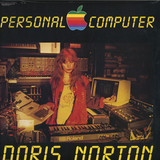
Mannequin Records presents a trilogy of reissues from the avantgarde Italian-born producer Doris Norton, "Nortoncomputerforpeace" (1983), "Personal Computer" (1984, originally released by Durium Records), "Artificial Intellingence" (1985).Apple's first music "endorsement" and Roland affiliate, Doris Norton is one of the most important women pioneer in the use of synths and in the early electro / computer music. Norton is the wife of Antonio Bartoccetti, progressive rock guitarist, and mother of the musician and techno producer Rexanthony. As a teenager, she was drawn to medieval, Renaissance and Baroque music, not to mention quantum physics, differential equations, organic chemistry, the experimentalism of John Cage and animated movie soundtracks. Her love for modules and circuits found expression through the waves of an old harmonium, the frequencies of a Minimoog, a Roland System 100M, a Roland System 700 and the ARP 2500/2600.
In 1980, Norton began her solo career by recording at Fontana Studio 7, the Milan studio of the composer and musician Tito Fontana, resulting in the electronic opera "Under Ground". Norton became more prolific, continuing her adventures in experimental electronics and computer music with Parapsycho (1981), Raptus (1981), Nortoncomputerforpeace (1983), PC (1984) - whose album cover prominently features Apple's colored logo - and Artificial Intelligence (1985).
While the beat-oriented style of Norton's music aligns her with such global fellow-travelers as Yellow Magic Orchestra and Kraftwerk, her championing of the personal computer as a tool for self-sufficient musical creativity also connects her to more artsy musicians such as Pietro Grossi, Laurie Spiegel, and the League of Automatic Music Composers. Norton's predilection for the bright, glossy timbres of early digital instruments also recalls Hubert Bognermayr and Harald Zuschrader's bizarre 1982 one-off Erdenklang.
Later, her talent and expertise attracted the attention of IBM, who in 1986 named her as an official consultant. Already the reigning queen of the Italian electronic scene, she recorded two CDs for IBM: Automatic Feeling and The Double Side Of The Science. Influenced by her son, the musician and producer Rexanthony, Norton brought her fascination with the early days of techno into the 1990s, when she released three volumes of Techno Shock on Italian trance/hardcore label Sound Of The Bomb.
While her music remains largely out of print and inaccessible, Norton's early records have recently begun to receive the inevitable rediscovery treatment.
"In the late sixties I had already conceived computers as personal.' I have always trusted in the benefits of solitude, (being) alone means freedom... What's better than a personal' computer for materializing ideas, by oneself" (Doris Norton)
Includes 12' Vinyl and Deluxe CD album, 30 page hard back book
Now that I've been to Nashville,' Kylie Minogue says with audible affection, I understand. It's like some sort of musical ley-line...'
Golden, Kylie's fourteenth studio album, is the result of an intensive working trip to the home of Country music, a city whose influence lingered on long after the pop legend and her team returned to London to finish the record: We definitely brought a bit of Nashville back with us,' she states. The album is a vibrant hybrid, blending Kylie's familiar pop-dance sound with an unmistakeable Tennessee twang. It was Jamie Nelson, Kylie's long-serving A&R man, who first came up with the concept of incorporating a Country element' into Kylie's tried-and-trusted style. That idea sat there for a little while, with Minogue and her team initially unsure about how to bring it to life. Then, when Grammy-winning songwriter Amy Wadge's publisher suggested Kylie should come over to collaborate in Nashville, a city Kylie had previously never visited, something clicked. You know when you're so excited about something,' she recalls, that you repeat it an octave higher and double the decibels I was like that. 'Nashville! Yes! Of course I would!'. I hoped it would help the album to reveal itself. I thought 'If I don't get it in Nashville, I'm not going to get it anywhere.''
Kylie's Nashville trip involved working alongside two key writers, both with homes in the city. One was British-born songwriter Steve McEwan (whose credits include huge Country hits for Keith Urban, Kenny Chesney and Carrie Underwood), and the other was the aforementioned Amy Wadge, another Brit (best known for her mega-selling work with Ed Sheeran). It was then a truly international project: Golden was mainly created with African-German producer Sky Adams and a list of contributors including Jesse Frasure, Eg White, Jon Green, Biff Stannard, Samuel Dixon, Danny Shah and Lindsay Rimes, and there's a duet with English singer Jack Savoretti.
However, the album's agenda-setting lead single Dancing was, significantly, first demoed with Nathan Chapman, the man who guided Taylor Swift's transition from Country starlet to Pop megastar. If anyone knows how to mix those two genres, Chapman does. Nathan was the only actual Nashvillean I worked with. He's got a huge studio in his house, which is probably due to his success with Taylor... there's plenty of platinum discs of her, and others on his walls.' There's something of the spirit of Peggy Lee's Is That All There Is, of Dylan Thomas' Do Not Go Gentle Into That Good Night, even of Liza Minnelli's Cabaret about Dancing, a song which not only opens the album but sets out its stall, providing a microcosm of what is to come. You've got the lyrical edge, that Country feel, mixed with some sampling of the voice and electronic elements, so it does what it says on the label. And I love that it's called 'Dancing', it's immediately accessible and seemingly so obvious, but there's depth within the song.'
The experience of simply being in Nashville was an overwhelming one, before Kylie had even arrived. Once I knew I was going to Nashville, people talked about the place with such enthusiasm. They said without doubt I would love it and, I would come back with songs. They were sending lists of restaurants, coffee shops and bars. It really was a beautiful and genuine response and it felt like I was about to have a life changing experience and in a way, I did.' The reality came as something of a surprise, when she found a far more modern metropolis than the vintage one she'd envisaged. I thought it would be like New Orleans: little houses and bars, with music spilling out onto the street. It reminded me more of Melbourne: apartment blocks going up everywhere! The main strip, Broadway, where the honky tonk bars are, that's where the street was filled with music and it was just amazing.' Mainly, Minogue remembers the heat and humidity. It was 100 degrees. It was like it was raining with no rain.' She also relished the chance to wander around unrecognised, visit a few venerable music bars and soak in the atmosphere. I didn't get to the Grand Ole Opry or the music museums but I managed to go to a couple of the institutions there like The Bluebird Cafe and The Listening Room, and just by being there, through some kind of osmosis, you get this rejuvenated respect for The Song, and the writing of The Song. There's no hoo-hah around it. There's a singer-songwriter there, talking about the song and singing the song, to an audience who are there to listen. Although, I have to confess I was guilty of starting to clap too soon during a long pause at the end of one of the songs. The guy made a bit of a joke out of it and got a laugh from it, but I thought 'Of all people in the audience, no...''
It's probably no coincidence, therefore, that every track on Golden is a Kylie co-write, making it arguably her most personal album to date. The end of 2016 was not a good time for me,' she says, referring to well-documented personal upheavals, so when I started working on the album in 2017, it was, in many ways, a great escape. Making this album was a kind of saviour. I'd been through some turmoil and was quite fragile when I started work on it, but being able to express myself in the studio made quick work of regaining my sense of self. Writing about various aspects of my life, the highs and lows, with a real sense of knowing and of truth. And irony. And joy!'
The songwriting process allowed Kylie to get a few things out of her system. Initially, she admits, it was cathartic, but it also wasn't very good. I think I was writing too literally. But I reached a point where I was writing about the bigger-picture, and that was a breakthrough. It made way for songs like Stop Me From Falling and One Last Kiss. It also meant I had enough distance to write an autobiographical song, like A Lifetime To Repair, with a certain amount of humour. The countdown in that song: 'Six-five-four-three, too many times...'. I don't know if that will be a single, but I can just imagine a girl with framed pictures of past boyfriends, and kind of going 'Oh god, when am I going to get this right'' When she listens back to Golden, Kylie can vividly hear the Nashville in it. It is, she'll agree, probably the first time that a Kylie album has sounded like the place it was made. You wouldn't normally relate my songs to the cities. Can't Get You Out Of My Head sounds more like Outer Space than London. But Shelby '68, for example, was written in London but it was done with Nashville in mind. It's about my Dad's car, and my brother recorded Dad driving it! I don't think I'd have written a number of the songs, including Shelby '68 and Radio On without having had that Nashville experience.'
The latter, she says, is about music being the one to save you.' Throwing herself into the making of the record, she says, crystallised that idea. If there's one love that will always be there for you, it's music. Well, it is for me, anyway.' That song, in particular, carries nostalgic echoes of the golden age of Country, as heard through Medium Wave transistors and tinny home stereos in the distant past. Like any child of the Seventies, Kylie had a basic grounding in Country music, mainly absorbed from older family members. My Step-Grandfather was born in Kentucky and though he lived most of his adult life in Australia, he never stopped listening to his beloved Country artists.' If there's any classic Country singer whose imprint can be heard on Golden, it's Dolly Parton.
Kylie saw Dolly live for the first time at the end of 2016, at the Hollywood Bowl. It was like seeing the light,' she beams. It was incredible. Everyone, whether they know it or not, is a Dolly Parton fan. When I was in Nashville, I did pick up a T-shirt that said 'What Would Dolly Do' Maybe that should be my mantra.' And, whether consciously or otherwise, there's a timbre and trill to Kylie's vocals on Radio On that is distinctly Parton-esque. My delivery is quite different on this album,' she says. A lot of things are 'sung' less. The first time I did that was with Where The Wild Roses Grow. On the day I met Nick Cave, when I recorded my vocals, he said 'Just sing it less. Talk it through, tell the story.' This album wasn't quite to that extreme, but a lot of the songs were done in fewer takes, to just capture the moment and keep imperfections that add to the song. I remember on my last album, a lot of producers were trying to take out literally every vibrato they heard. And that's not natural to my voice. I mean, I can make myself sound like a robot, but it's nice to sound like a human!' Working within the Country genre also gave Kylie permission to write in the Nashville vernacular. Because we were going there, I wasn't afraid to have lines like 'When he's fallen off the wagon we'd still dance to our favourite slow song', 'Ten sheets to the wind, I was all confused', 'I'll take the ride if it's your rodeo'. The challenge of bringing a Country element to the album made the process feel very fresh to me, kind of like starting over. I started to look at writing a different way, singing a different way.'
If ever Kylie lost confidence in the Country-Pop concept, and found herself pondering This is great, but back in the real world - my real world - how will this work', Jamie Nelson was there to badger her into sticking to the path. We found a way to make it a hybrid with what we'll call my 'usual' sound. It had to stay 'pop' enough to stay authentic to me, but country enough to be a new sound for this album. The closer we zoomed in, and the more we honed it, I knew Jamie was right. We sacrificed good songs that weren't right for this album, because we wanted it to be as cohesive as possible. The songs that were hitting the mark were these ones, so we decided to be strong, and that's how we wrapped up the album. What he said, that stuck with me, was that 'I'd hate to get to the end of this and really wish we'd gone for it.'' Having worked with Kylie for so long, Nelson was able to put this latest shift of direction into perspective. He said 'You've traditionally done it throughout your career. You had your PWL time, then you did a complete turn when you went to deConstruction, then another complete turn with Spinning Around, and R&B dance-pop, and then another turn with Can't Get You Out Of My Head, icy synth-pop, and this is another one.' He was right. It felt like the right time to have a change sonically. New label, new stories to tell, and a new decade almost upon me.'
Kylie Minogue will, it's scarcely believable, turn 50 this year. This looming milestone is partly behind the album's title, and title track. I had this line that I wanted to use: 'We're not young, we're not old, we're golden' because I'm asked so often about being my age in this industry. This year, I'll be 50. And I get it, I get the interest, but I don't know how to answer it. And that line, for my personal satisfaction, says it as succinctly as possible. We can't be anyone else, we can't be younger or older than we are, we can only be ourselves. We're golden. And the album title, Golden, reflects all of this. I liked the idea of everyone being golden, shining in their own way. The sun shines in daylight, the moon shines in darkness. Wherever we are in life, we are still golden.' One of the album's shiniest moments is Raining Glitter, an exuberant banger which ventures closest to Kylie's traditional dance-pop comfort zone. Eg White, who is one of the producers and writers and a great character, was talking about disco one day. I said 'I love disco, but you know the brief.' We needed to be going down the Country lane, so to speak. But we managed to bring them both together. When I wrote it, I was thinking about the Jacksons video for Can You Feel It where they're sprinkling glitter over everyone. And I think there's a Donna Summer record that's got that feel to it. I think that's my job: I basically leave a trail of glitter after every show I do anyway.'
Kylie is looking forward to the challenge of incorporating the Golden material into her live shows. Mixing these songs in with my existing catalogue is going to be fun. And it could be fun to do some of those songs with just a guitar. It'll make my acoustic set interesting...'Her incredibly loyal fans - to whom one Golden song, Sincerely Yours, is intended as a love letter' - will, she believes, have no problem with her latest stylistic shift. My audience have been with me on the journey, so I shouldn't be afraid that they won't come with me on this part. I've had fun with it, and I'm sure they will too.'
The time spent making Golden has, Kylie says, been a time of creative and personal renewal. I've met some amazing people, truly inspiring writers and musicians. My passion for music has never gone away, but it's got bigger and stronger.' And if there's an overriding theme to the record, it is one of acceptance. We're all human and it's OK to make mistakes, get it wrong, to want to run, to want to belong, to love, to dream. To be ourselves.'
I was able to both lose and find myself whilst making this album.'
Six fresh, nervy experiments with grime, ambient, d&b, garage and glitch, bristling with ideas and drama, by this up-and-coming producer from Monza, for the Milanese label Beat Machine, plus a heavy remix by Bristol prodigy Walton, stepping up from Hyperdub and Tectonic. Beautifully presented, too: white vinyl in hand-painted fluorescent sleeves.
Just as magnified record grooves reveal dust constellations and lunar landscapes, so too does Godblesscomputers' third album. 'Solchi' is a deep search into previous moments in Lorenzo Nada's lifetime, influenced by the presence and power of music. His process began with the recovery of some old cassettes, mixtapes nearly forgotten, audio recording of voices from his childhood, and lots of dusty jazz, soul, and hip-hop records. As the starting point of this travel merge with its end, past and present combine to form GBC's current sound. Warm electronic production rooted by grooving bass lines form the core of a kaleidoscope of sixteen tracks, colored by synthesizers, guitar echoes, scratches, samples, fading voices and kalimba. The album is a collection of sixteen stories, sixteen soundscapes; each of them GBC's tribute to the path taken thus far, an homage to his love for music. The recording and studio work took place over a year, with the adding and subtracting of many elements.
LP incl CD
Garden of Love' one of the first single tracks feat Peter Hook (New Order) On the cover of their new album Malamore, their first album for Because Music, Lionel and Marie Limiñanas are back in black, and looking ineffably cool, standing next to a classic silver Fifties trailer, shot at a beach festival in the French town of Paulilles by the Spanish border, just 30 minutes drive from the duo's home town of Perpignan. They'd been playing a DJ set, only with 45 rpm vinyl - Sixties punk, Italian pop, movie soundtracks and Seventies rock tracks,' they recall. The picture syncs well to the colour of Malamore, like the artwork of a movie soundtrack. The lettering on the cover is significant too.
French psych duo The Limiñanas today released their new single 'Istanbul Is Sleepy' through Because Music. Featuring Anton Newcombe (The Brian Jonestown Massacre) and produced at his Berlin studio, the single is taken from their 'Istanbul Is Sleepy' EP out 17th November. The band, who are set to release a new album early next year, will play their debut London show at Oslo on 5th October. Directed by Jean Luc Moly, the moody, Sixties-inspired video to 'Istanbul Is Sleepy' premiered on Brooklyn Vegan: link here
Reflecting on the single and their collaboration with Newcombe, Lionel explained, "'Istanbul Is Sleepy' is like the classic dream where you become the hero, the Captain Blood or Midnight Sultan(). The one who rescues and seduces Maureen O'Hara or Ava Gardner. Anton is singing and playing guitar on the track. He was inspired, in particular, by The Cult during their 'Rain' period. Last year, Mojo magazine asked us to record a cover for a special Kinks tribute. We chose 'Two Sisters'. Marie and I were thinking for the vocal part it would be great to approach Anton Newcombe, having opened for The Brian Jonestown Massacre at Le Trianon in Paris. The work began like that. We had an album to record and we decided to finish it with him. During the Christmas week we took our demos, flew to Berlin and recorded at Anton's studio. Six days later we had a finished album".
One of France's most beloved treasures, The Limiñanas are Marie (drums/vocals) and Lionel (guitar, bass, keyboards and vocals). Hailing from Perpignan, the duo straddles the boundary between psych, shoegaze, and yé-yé. With hazy, reverb-laden hooks, combined at times with noisy distortion, and fronted by effortlessly cool vocals, reminiscent of Serge Gainsbourg and Brigitte Bardot, the band is at once timeless and quintessentially French.
Grammy-winning singing sensation Gregory Porter - one of the most successful jazz artists of his generation - is back with a new album, 'Nat King Cole & Me', to be released on Decca/Blue Note on 27th October. It is a deeply personal tribute to Nat King Cole - the legendary crooner who ignited Gregory's love of music. It's only natural that I go to the root of my inspiration and where I come from. And that root would be my mother and gospel music and Nat King Cole,' he says.
Recorded at London's AIR Studios, the 12-track album features some of Gregory's favourite Nat King Cole tunes including 'Smile', 'L-O-V-E' and 'Nature Boy'. There is also a Nat-inspired arrangement of Gregory's own song 'When Love Was King', originally released on his million-selling hit album, 'Liquid Spirit'.
For Gregory Porter, the influence of Nat King Cole on his life and music runs deep, a through-line that reaches back into some of his earliest childhood memories, and culminates in the release of his new album 'Nat King Cole & Me'. Gregory explains, At five or six years old, Nat's music filled a void in me. My father wasn't in my life and wasn't showing interest in me or raising me and Nat's words were the life lessons, words of wisdom and fatherly advice I needed.'
Gregory's love for Nat's music blossomed so much that he wrote a semi-autobiographical musical, also called 'Nat King Cole & Me', which premiered in 2004. After the play, I felt a lighter feeling about my father and a deeper appreciation for both my mother and the great music of Nat King Cole,' says Gregory. He also found his voice through his own songwriting - It wasn't until I wrote the musical that I was fit to call myself a songwriter. Before that, I would write different poems but they had no music.'
'Nat King Cole & Me' is the follow-up to his Grammy-winning albums 'Liquid Spirit' (2013) and 'Take Me to the Alley' (2016). 'Liquid Spirit' took Gregory from being the biggest name on the jazz scene to being one of the most sought-after singers around today, performing sell-out shows across the UK and being invited to perform on high profile TV programmes including The Graham Norton Show, Strictly Come Dancing and the BBC Music Awards. He has become an adopted national treasure in the UK, having sung for the Queen multiple times, as well as major music festivals including Glastonbury, where he performed on the Pyramid Stage alongside the likes of Muse, Adele and Coldplay. Gregory's ability to transcend genres even extends to his surprise dance hit 'Liquid Spirit Claptone Remix' which became one of the most popular tracks in Ibiza.
After winning over audiences with his rich and soulful voice, there can be no better time for Gregory to return to the music which first inspired him to become a singer. On Nat's legacy and influence Gregory affirms, He was one of a kind. He left such great music - such beautiful things to listen to that you can't help but be influenced by that extraordinary timbre, style, and ultimate cool.'
Having made her mark on Brazil's rich musical legacy with three best-selling albums to date, Rio's original nu-bossa queen returns with a tour de force of golden-era Brazilian soul music. From the spiritual swing of the early pioneers of modern Samba, to the dizzying hedonism of Brazil's eighties disco/boogie craze, Clareia is a life-affirming journey through the rich and varied sounds Sabrina Malheiros has been immersed in since she can remember. For her most up-lifting and danceable album to date, Sabrina has (as always) enlisted her father Alex Malheiros - bassist of samba jazz-funk legends Azymuth - and visionary London based producer Daniel Maunick (aka Dokta Venom), son of Incognito's Bluey.
Sabrina Malheiros' career has often been characterised by her place in the succession of those special Brazilian women who, with unmistakable talent and effortless grace, have encapsulated the magical energy of Brazil with their voices. Elis Regina, Astrud Gilberto, and Joyce all had it, and Sabrina Malheiros has it in spades.'(MOJO) With her debut album Equilibria in 2005, Sabrina arrived on a wave of instant acclaim, carving out her place as the pioneering voice of a new brand of Brazilian soul music, rooted in the traditions of samba and bossa, but with an edge of contemporary electronic sophistication. Sabrina's innovative nu-bossa sound would continue with the 2006 remix album 'Vibrasons' followed by sophomore 'New Morning' - declared the best album of summer 2008'(Evening Standard), before 2011's best-seller Dreaming.
Six years on, Sabrina returns with Clareia. Itmeans to clear, light, brighten or illuminate, which, after seeing Brazil and the rest of the world go through some very difficult times, is exactly what the writing of this album brought to my life.' All tracks are written by either Sabrina, or in collaboration with her father Alex Malheiros and producer Daniel Maunick. Written and recorded in Niteroi, Brazil, overlooking Gunabara Bay and Rio's beaches, mountains and forests, the music basks in its surroundings and sings of ecological beauty, peace and sanctuary. Echoing Sabrina's emphasis on clarity, Alex notes that the album's title represents an appeal to the minds of our civilization today, to clear our thoughts for good and for peace.'
This pursuit of clarity continued into the studio: It took a little longer than usual' notes Sabrina, which was good in way, as all my previous albums were recorded in rush and we usually had a week for pre-production and another week in the studio, which always gave me the feeling that I could do better. With this album it was different... we took our time.'
Sabrina's unmistakable voice has never sounded better. Packed out with high-octane swinging samba-soul, like the title-track and 'Salve O Mar', the album also features some bottom-heavy Brazilian boogie cuts, like rejoicing album opener 'Celebrar' which harks back to some of Marcos Valle's cult '80s disco output, and 'Sol Ceu E Mar' is a Tania Maria-esque future classic of scorching latin-funk. Mellower moments are found in 'Em Paz', on which Sabrina's beguiling harmonies find an anchor in the rhythmic acoustic guitar of Ze Carlos', who Sabrina heralds as being the best guitarist I have ever worked with'. Azymuth's keyboardist Kiko Continentino's deft Rhodes, piano, organ and synth playing, add ever more textures of distinctly Brazilian brilliance throughout, while tropical brass and flute arrangements on cool bossa-jazz movers 'Vai Maria' and 'Sandore', come from Brazilian saxophone legend Leo Gandleman, a man who has worked with everyone from Gal Costa to Gilberto Gil. The rhythm section combines Daniel Maunick's seamless drum programming and the organic polyrhythms of Brazilian percussion legend Jakare, all punctuated by Alex Malheiros' inimitable (occasionally slapped) jazz-funk bass, giving the album its irresistibly danceable pulse.
Set for release at the height of summer this year, Clareia is an intergenerational masterclass of Brazil's soulful spectrum, led by a pioneering voice of today's scene on the very top of her game. The up-lifting compositions, which take inspiration from the stunning natural beauty amongst which the album was made, and the call for the clarity of mind needed to preserve it, are enriched by this special team of some of Brazil's most established musicians. Like the sun breaking through tropical storm-clouds, Clareia is a vessel of joy, as Sabrina puts it simply, I hope Clareia brightens the soul of whoever listens to it. That's the spirit of this album.'
The totality of the many in one: Cologne Tape, an on and off gathering band from all over the world, did not call their second album "Welt" without reason. The collective incorporates the nucleus of the label Magazine and consists of the artists Ada, Barnt, Jens-Uwe Beyer, Jörg Burger, John Harten, Philipp Janzen, Mario Katz, John Stanier and Axel Willner. All members live scattered between Berlin, Cologne and Hamburg. They meet rarely and abruptly, but each of them always has the feeling that something relevant needs to be done. The ensemble's name represents a city and the musical recordings that are made in it.
Their "rst release, "Render", marked the start of the label Magazine in 2010 and found the way into DJ sets by famed artists like Dixon with music, which does not necessarily have the dance#oor in mind. Subsequently, little, absolutely sublime pieces of Cologne Tape appeared in the public.
Sometimes in the middle of a Magazine mix for London's online magazine Dummy, or on compilations like "My Heart's In My Hand, And My Hand Is Pierced And My Hand's In The Bag, And My Heart Is Caught" a double-vinyl sampler for an exhibition by British video artist Phil Collins.
And now, after six years of more or less overwhelming silence, "Welt" arrives and brings the world eight musical arrangements, all of which answer to the same name and only differ numerically in their title. They were performed and recorded at the Dumbo Studios in Cologne as part of a happening, during which the nine Cologne Tape members gathered in a room to play a solemn concert for themselves without a given frame.
Un"ltered emotions, which were later, re"ned with drums and synth sounds by John Stanier and Axel Willner and then arranged into a dramatic story arc under the direction of Jens-Uwe Beyer. Furthermore some of the recordings feature friends of the collective such as Mexican artist Rebolledo, the guitarist Burkhard Mönnich and the singer Isis Lace, who all happened to be close by and joined the band spontaneously during in their musical ritual. Now the recordings of their time without time will see the light of the day.
They all tell - together and alone - stories of deeply felt musical
experiences, which quickly become profound experiences too for those who listen to Cologne Tape, when they play the grand piano, synthesizer,vibraphone, organ, drums, guitar and more while celebrating afreewheeling ceremony. Panoramic music that enables the listener to enter a world of sounds and rhythms, which all re#ect in depth what Cologne Tape is as a band and a piece of art.
Translated from Spanish as 'The Shade', Chip Wickham's debut album La Sombra drops after a 25-year career touring, recording and experimenting across three decades of jazz, funk, soul, hip-hop, Latin and electronica. La Sombra is a monumental record for Chip as it symbolises the moment he stepped out into the light as a director of his creations with freedom to explore his roots, express and tell his version of jazz and pay testament to his heroes Roland Kirk, Yuseef Lateef & Harold McNair.
Now living in Dubai after an intense and productive six years in Madrid, it was Manchester where Chip studied in the late '80s and became enmeshed in the chaotic and thrilling music scenes emanating from one of the world's most culturally prominent cities of the time. Recording and generally 'keeping things real' with Manchester's hip-hop collective Grand Central Records, Rae & Christian, The Pharcyde, Fingathing, Nightmares on Wax, Graham Massey (808 State), Chip was in a city that was undergoing a music revolution with the Haçienda as its temple. Yet it was the headlights of the M62 motorway and not the strobe lights that were lighting Chip's path during his student years ('88-'92). The lure of the jazz and funk clubs of Leeds, where The New Mastersounds were breaking out and building the blocks that would lead them to UK funk royalty status, proved too strong.
In the 1990s Chip continued to refine his craft in the rainy city and the gigs booked were growing in stature. It wasn't long before he was on the road with Roy Ayers and Badly Drawn Boy. Around that time Chip met up with trumpeter Matthew Halsall that was the beginning of a friendship that lasts to this day. Chip was a recording artist on Matthew Halsall's breakout album Sending My Love and continues to work with him, with live dates confirmed in spring 2017. This close connection with Halsall gave rise to other collaborations, such as with Nat Birchall and Go Go Penguin's Rob Turner.
Three decades after his late night excursions to Leeds, Chip found himself recording with Eddie Roberts from The New Mastersounds in Madrid, as part of their new band, The Fire Eaters, which he'd formed soon after he moved to sunny Spain in 2007 - the same year he released the Fried Samba album under his moniker Malena, his electronic Latin band that became a hit at the turn of the century for Freestyle Records. During his time in Spain he connected with the local scene and brought together many of his musicians colleagues from the UK to Spain and it was for a local and well established label, Lovemonk, that he released two 45s blending raw funk and Latin. These new roads and musical leanings led to an invitation to play for the prestigious Craig Charles Fantasy Funk Band. Based on a poll from Craig Charles' top rated BBC6 radio show, Chip was chosen to play alongside the cream of the UK funk & soul scene: James Taylor (JTQ), Snowboy, The Haggis Horns (Mark Ronson), John Turrell (Smooth & Turrell), and Mick Talbot (The Style Council).
La Sombra takes an altogether more rooted direction than Chip's recent collaborative work, with the jazz of the late '60s and early '70s a dominating influence to the recordings. Comprising of seven tracks recorded in Madrid with musicians assembled by Chip from Madrid's jazz scene, it combines contemplative explorations akin to Yusef Lateef's early work on tracks like 'La Sombra' and 'Pushed Too Far'. There's a fiery cover of Camarón de la Isla's classic 'La Leyenda Del Tiempo' and tracks like 'Sling Shot' and 'Red Planet' are locked in a groove harking back to Freddie Hubbard's Blue Note era and Luv N Haight's Nathan Davis.
The original Environments album was conceived and written back in 1993. It became one of the great lost albums by The Future Sound Of London before the guys took in back to the studio to complete and issue in 2008. Since then has come the success of further instalments and following additional studio work during a period of extreme creativity comes two further volumes. Released separately but simultaneously, Environment 6 and accompanying Environment 6.5, when combined, create a two CDs of 46 tracks. Sweeping between luscious dreamscapes to delicately melodically compositions to intensely highly programmed electronics sculptures Environment 6 and Environment 6.5 continue the journey towards the boundaries of the future of sound. Silent Around Them' exclusive to LP vinyl (no CD/digital)
ears ago he started putting together some selections for a friend of his: Luca. The intention was to pick songs to be played during car rides, and like any other kind of ritual, this too would come with strict rules. You'd have to go throw the whole selection of 100 tracks without skipping, because every single one was important. Be it the sounds, the arrangement or its creativity, each track was there for a very specific reasons. It quickly became a monthly event which for several years evolved in a deep musical research without genre boundaries: Disco and psychedelic, soundtracks, library music, exotica, electronic and dance music, italo, new wave, pop or prog. Tracks of each and any historical period and provenance had been featured in this special compilations. But it wasn't always that easy to come up with the right piece and eventually Francesco started producing a few on his own to fill in the gaps. After six tracks, it was quite clear that there was a project developing, one in which he could finally experiment freely, leaving behind the rules that often come with dance tracks. Of course, no name could have been better than the one of his friend that had inspired everything And so L.u.c.a was born. Now, while preserving the same mind set, L.u.c.a is back with an album that embraces a new-hippie vibe, strongly pervaded by a mystical naturalism. This is a whole new universe in the making, where rumbling magmatic atmospheres evolve gradually in a journey through an idealist new world, celestial interludes revealing a full take over of nature, with a pervasive library feel that dates back to the great Italian masters, carrying on Edizioni Mondo's legacy.
The Sound Of Young Jamaica - More Early Cuts From The Vaults Of Studio One 1959-63
This is the second collection to bring together many of the visionary producer Clement 'Sir Coxsone' Dodd's early recordings made with Jamaica's most exciting young artists and musicians who helped define the world of reggae music over the decades following Jamaican Independence. These recordings were made when Sir Coxsone ruled the dancehalls of Kingston in the late 1950s and early 1960s with his number one Downbeat Sound System, where songs were tested out on dub plates at a dance to see a crowd's reaction - the most popular of which were then released commercially. Featuring early material by Roland Alphonso, Don Drummond, Tommy McCook (all of whom would form The Skatalites), Toots and The Maytals, young singers such as Bob Marley and The Wailers, Delroy Wilson, Owen Gray all captured in their formative days. The music here spans a wealth of styles - Jamaican rhythm and blues, jazz, gospel, proto-ska, Rastafarian - all of which were drawn upon to create the future sounds of Jamaican reggae that Sir Coxsone and the artists featured would soon create at Studio One which opened its doors in 1963. This collection is released on heavyweight triple-vinyl plus download code and double CD with slipcase. Sleevenotes and text is by the author Noel Hawks.
Our sixth release marks the closing of a circle: Lucky Charmz—the man of our first release, Follow Me To Flottbeck Falls'-EP—returns to deliver his second full length effort. LHLT006 is the U Still Coming Over'-EP, a long overdue follow up to his first EP: More than anything else, it's a fresh slice of summer groovers. Opener Faceless Goat' instantly delights with it's majestic opening chords, only to unleash a smashing grandeur of sample fun and lustful grooves. It's a no-vocals-required anthem, rich in texture and yet subtly enchanting. While Faceless Goat is probably best enjoyed blasted out to vast, scenic landscapes on mediterranean costs from the terrace of a ancient estate, it is also tried and tested for Vorzech', houseparties and—of course—any club scenario (it won't fail you). We cannot help but to notice that Latency Jam''s stoic groove recalls the jungle books's march of the elephants, it's spacey synth madness points to outer space and, well, did we mention that It's super funky Yes, it's a funky spacewalk towards jupiter with your awesome, intergalactic elephant friends. Sonically charming with it's rapid fire hi-hat's, bubblegumspongecake melodies and zapping space laser's, that've all trickled out of a Nord Lead Young Lucky once laid hands on, Latency Jam' will also never let you down. On the flip we find Waffle Cut', yet another sun-oozing Lucky Charmz tune. Captivating trickle-down arpeggios radiate warmth, while soft pads sooth you into hypnosis. It's a bit like staring at the big yellow in the sky for too long—you get all frizzy, drizzy and a little silly.
This is the new digitally remastered 2015 expanded edition of Soul Jazz Records' biggest ever selling release, 100% Dynamite! Ska, Soul, Rocksteady and Funk in Jamaica.
Since the album's original release nearly twenty years ago, 100% Dynamite has become a cornerstone of reggae: eighteen killer tracks that show the influence that American Jazz, Funk and Soul music had on Jamaican Reggae.
The proximity of the West Indies to the USA meant that many Jamaican musicians were influenced by American styles of music whilst at the same time defining new styles of their own such as Ska, Rocksteady and Dub.
100% Dynamite features some serious Jamaican funk by Jackie Mittoo, The Upsetters and Toots & The Maytals, the cream of Jamaica's jazz musicians such as Tommy McCook, Cedric Brooks and Lennie Hibbert. Also included here are heavyweight Reggae versions to Soul classics by Marlena Shaw's 'Woman of the Ghetto', Aretha Franklin's 'Rocksteady', Syl Johnson's 'Is It Because I'm Black', William DeVaughan's seminal 'Be Thankful' and more.
100% Dynamite also features revolutionary tunes such as Johnny Osbourne's 'We Need Love', Sound Dimension's 'Drum Song' and Lloyd Robinson's 'Cuss Cuss', songs that helped define a unique sound for Jamaican music in the sixties and seventies. These influences went both ways - check Brentford All Stars massive 'Greedy G', the basis for Boogie Down Productions' 'Jack of Spades', or Willie Williams' 'Armageddon Time', later covered by The Clash.
This new expanded edition features seminal tracks from the greatest Jamaican producers - Clement Dodd, Lee Perry, Winston Riley (Techniques) and many more.
The album is available as CD, heavyweight double vinyl (+download), plus digital.
Within the House of Soul, the Daptone Staff is affectionately referred to as The Hate Crew,' a name they have earned from their years of ruthless evisceration of anything which doesn't meet their impossibly idealistic expectations. Armed with rolling eyes and barbs of sarcasm, they are the true guardians of the Daptone Sound.
The problem is, this new James Hunter single has turned them all into adorable little kittens. They spend all day mewing to the ballads and scampering about to the uptempo cuts instead of selling records.
In an effort to save the company, label Boss Neal Sugarman declared a Hunter Free Zone,' but when he tried to pry the test pressing of Hunter's latest single from the office turntable and replace it with something a bit more hate-able, the needle slipped and dropped back into the grooves of Something's Calling,' irreversibly morphing him too into a small playful kitten. Meow, James Hunter. Meow. grooves of 'Something's Calling,' irreversibly morphing him too into a small playful kitten. Meow, James Hunter. Meow.
Originally released as a strictly limited 10-inch vinyl record exclusive on Record Store Day 2012, this long sold-out must-have for fans of these two artists will finally be re-issued - this time in 12-inch format!
Erased Tapes label mates Ólafur Arnalds and Nils Frahm recorded and mixed their first collaborative record between Reyjkjavík and Berlin as a surprise release for label founder Robert Raths.
The ambient/electronic work 'Stare' is a true family effort with long-time collaborator Anne Müller joining in on cello and all graphics created by close label-friend and designer Torsten Posselt of FELD Studios.
Words by Nils Frahm: 'I heard 'Eulogy For Evolution' for the first time six years ago and I was totally captivated. Impossible to know back then that I was supposed to meet Ólafur many years later as my label mate. Later when he took me along a tour of his we also noted that we kind of like hanging out together, doing important things like cover versions of long forgotten songs or eating veggie pizza. Also he would join my live set for a jam and I would return the favour by playing along with his set.
All in all, I fell for Óli and after one memorable jam session we had in Berlin at Roter Salon in 2011, he finally proposed the idea to visit me in my studio in Berlin to work on 'some music'. I was happy and delighted about that idea, so we got together in April 2011 and after having a big pizza, I plugged in some old analogue synths and we played for four days until late in the night. Also queen Anne Müller stopped by after a show with Agnes Obel to record some cello at 5 am in the morning for 'b1'. Making music together with people is lovely!
The time I spent with Óli in Berlin made me very happy and the music wasn't like anything I have heard before. It was all very reduced and minimal and I felt like I couldn't have done this alone. So we decided to do another 4-day jam at Óli´s E7 studio in Reykjavik. So I flew there in the end of October 2011 to repeat the trick and record some out of this world ambient music. It didn't take us too long to write 'a1' and 'a2'. I can't wait for the follow up!'